
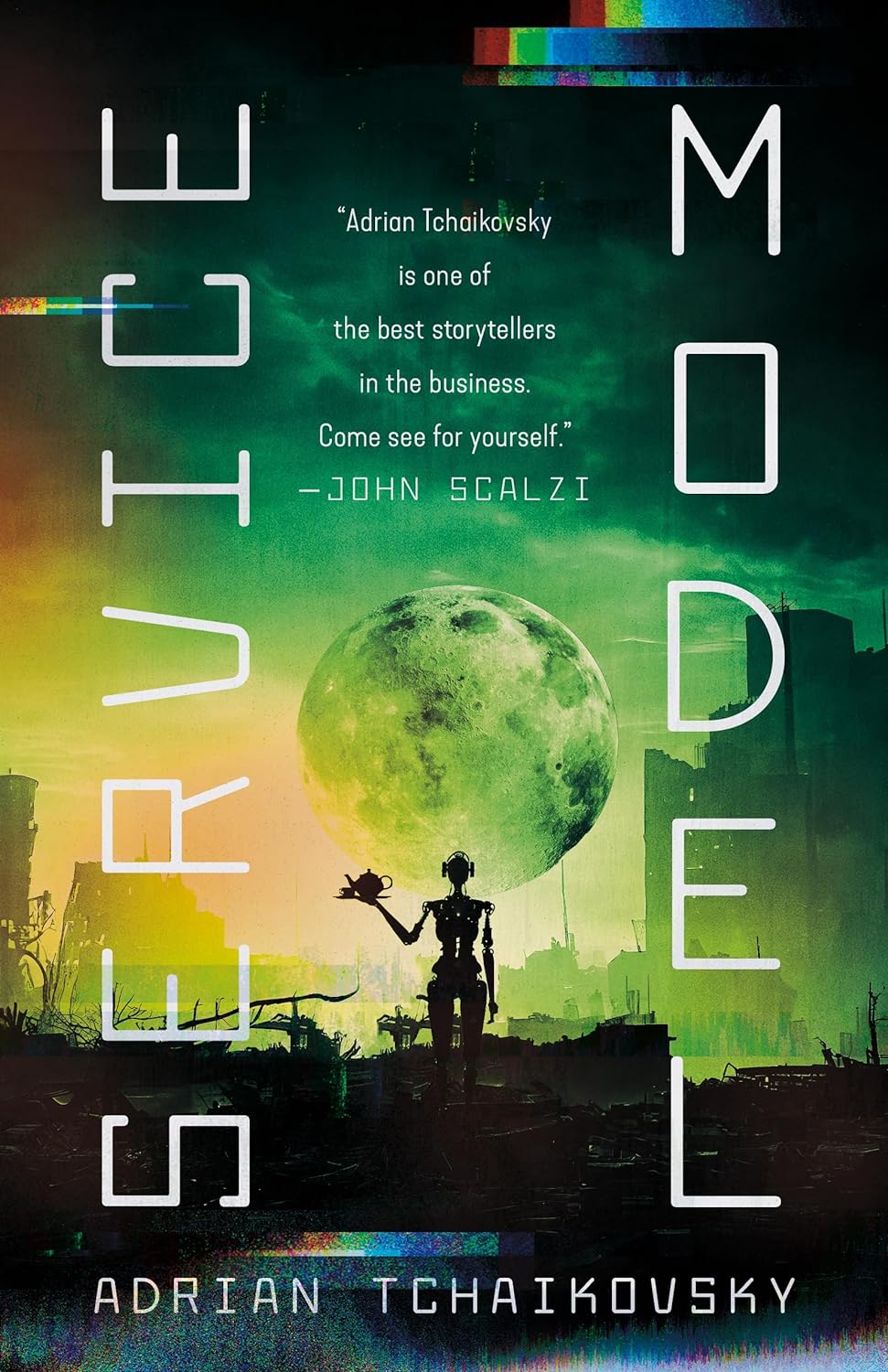
Service Model by Adrian Tchaikovsky

Publisher: Tor (ebook – 6 June 2024)

Series: Standalone

Length: 369 pages

My Rating: 5 out of 5 stars

Amazon

The line between man and machine is about to blurred in the most hilarious of ways as one of the world’s best science fiction authors, Adrian Tchaikovsky, presents the brilliantly satirical novel, Service Model.

The last couple of years have seen me really get into the writings of acclaimed author Adrian Tchaikovsky, whose work in the fantasy and science fiction genres has been truly amazing.  While Tchaikovsky has written many books over the years, I am more familiar with his recent works, including the novella Ogres, one of my favourite Warhammer 40,000 novels, Day of Ascension, and his first two Tyrant Philosophers novels, City of Last Chances and House of Open Wounds, both of which were amongst my favourite books of 2023.  2024 has proven to be a particularly big year for Tchaikovsky, as he has released four separate books.  The first of these, Alien Clay, was a compelling and memorable science fiction adventure on a deadly prison planet filled with unusual alien life, and I had a great time with it.  I also made sure to check out the brilliant and fantastic novel, Service Model, which had a hilarious plot behind it that I just couldn’t turn away from.

In the far future, the remnants of humanity are utterly reliant on artificial labour and service.  Living in estates completely staffed by robots and advanced computer systems, the remaining humans have every aspect of their lives taken care of.  But what happens when their robot servants find new and dangerous ideas loaded into their heads?

Charles is the loyal body robot to one of these humans.  Content to serve and enact the often confusing and contradictory orders of his master, Charles’s life is one of routine and protocol.  That is until one day an apparent fault in his programming causes him to murder his master.  Now without an employer or a purpose, Charles is forced to leave the household and embark on a journey into the wider world, one he never knew existed.  Here, despite all his expectations, he encounters a crumbling world in which all the humans are gone and the robots that remain are stuck completing illogical or impossible tasks.

After a chance encounter with a mysterious and self-determined figure, Charles embarks on a new mission, to find new employment as a body servant and once again gain purpose.  However, finding a suitable employer in this new world is tricky as every potential boss is dead, insane, or trapped within their own contradictory tasks.  It soon becomes apparent that if Charles is to once again find a suitable purpose in life, he must either find the cause for humanity’s fall or take everybody down with him.

Service Model was a very clever, entertaining and compelling science fiction adventure that I could not get enough of.  Featuring Tchaikovsky’s trademark satirical wit and unique outlook on all manner of life, Service Model was a particularly awesome read that was equal measures funny and tragic, but all entertainment.  A fantastic and inventive novel I had to give a full five-star rating to.

Tchaikovsky really went out of his way to produce a hilarious and intense story about life, decisions and the crumbling future in Service Model, and I loved every single mad second of it.  Set around the unlikely protagonist, Charles (later rechristened Uncharles), Service Model starts with Charles satisfied with his existence as a body servant, until he unexpectantly kills his master.  Forced to leave the manor, Charles journeys towards the repair yard, only to discover that the world is nothing like he expected, and that everything built by humans is failing, taking the robots down with them.

Faced with nothing but inconsistencies and illogical fellow robots, Charles embarks on a quest to find a new human master or some form of purpose.  Assisted and occasionally hindered by the strange robot The Wonk, who is definitely not a human in disguise, Charles encounters the many unlikely and unusual examples of continued society left in the world, from an illogical attempt to keep human society going (essentially a human zoo), a group of insane librarians (more insane than typical librarians), rival robot armies, and other outrageous occurrence of robotic life.  The book pretty much revolves around Charles and The Wonk discovering these societies, learning their flaws, and then trying to find a way to help or escape their respective crazy ideas.  There are a ton of highly amusing interactions and outrageous scenes throughout this intense quest, and I loved some of the wonderfully weird scenarios that emerged as Tchaikovsky utilises his considerable imagination to envision the grim future.  Everything ends on a very interesting note, as the protagonists find the answers they are looking for, even if it’s not what they wanted, and there is a hopeful conclusion that fits the recurring themes of Service Model perfectly and leaves the reader thoughtful going out.

Service Model ended up being an outstanding and complex standalone science fiction novel that perfectly combined a fun adventure story with the author’s cynical humour to create a powerful and inventive read.  Tchaikovsky utilises a unique writing style for this book, that seeks to really drive home the robotic nature of the main protagonist to the reader.  While this does result in some aesthetic and stylistic choices that some readers might not enjoy, especially around the dialogue, I personally felt that it fit the story perfectly and was a clever way of expressing the thoughts and motivations of the unusual point of view protagonist.  You really begin to appreciate the programmed, yet changing, mindset of Charles as the book continues, and it proves interesting to slowly see this robot realise just broken the world around him is.  There are some surprisingly deep emotional moments captured within this tale of automated life, especially tied around the great characters of Charles and The Wonk, and it was fascinating and touching to see how they developed together.  As such, Service Model proves to be a multi-layered and complex read, and it proves very hard to pull away from it at times.

One of the main reasons that I enjoyed Service Model so much was the fantastic and intelligent humour that Tchaikovsky infused his story with.  Like with most of Tchaikovsky’s more light-hearted books, much of this humour is tied into the author’s cynical view of humanity and the future, and I loved once again seeing the author’s take on how doomed we are.  In Service Model, a lot of this humour is tied into the failure of systems, overreliance on technology and human shortsightedness as the various robot characters try to enact the various incomplete, ill-advised or just plain insane commands of the former human masters.  There are so many examples of Charles or other robots trying to complete these instructions to the best of their ability, only to bring greater chaos or misunderstanding to those around them, and it is fun, if a tad depressing, to see these events unfold.  Tchaikovsky throws in even more insane occurrences of this, as certain robots have taken their former illogical instructions or existing systems too far, resulting in elaborate quests, wars or other activities, often for a broken or non-existent purpose.  Seeing the protagonist explore these events and either try to navigate them or find their place within them results in some very absurd but clever moments, and I liked how Tchaikovsky played these events for laughs while also using them to show the protagonist just how broken the current way of thinking is.  I really enjoyed this dark humour, especially as the author uses it to make you think at the same time, and it helped to turn Service Model into quite an entertaining and captivating read.

Adrian Tchaikovsky continues to shine with this brilliant and addictive science fiction read.  Bringing together a compelling and moving story of self-discovery with some fantastic humour and a post-apocalyptic setting loaded with disorganised and distressed robots, Service Model keeps you laughing while also hitting you in the feels.  I had an exceptional time with Service Model, and it was a true pleasure to read.  I cannot wait to check out more of Tchaikovsky’s books in 2025, and my next stop will have to be the outstanding Days of Shattered Faith.
Amazon

Nuking the Moon by Vince Houghton

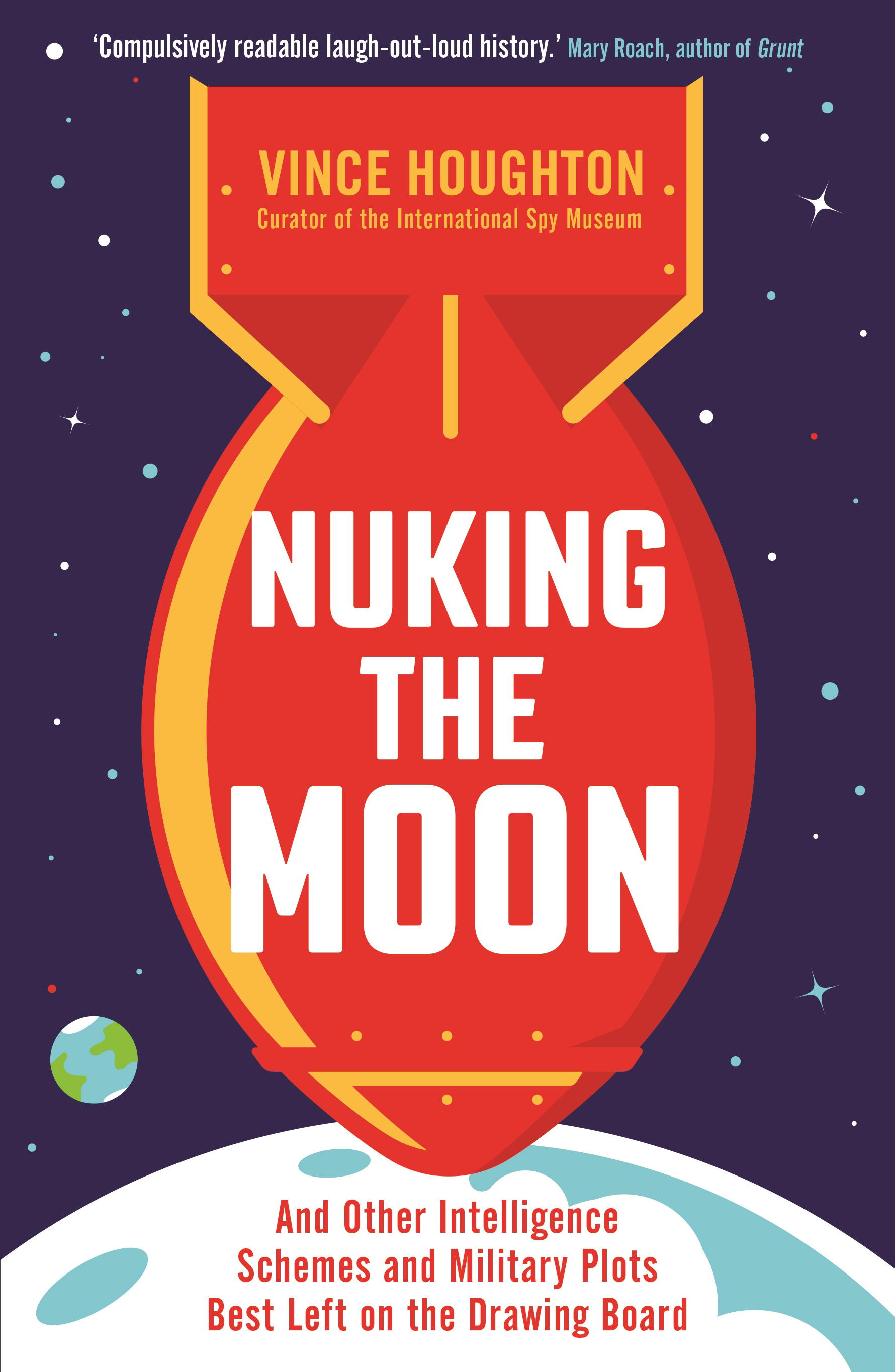
Nuking the Moon Cover

Publisher: Profile Books (Trade Paperback – 3 December 2019)

Series: Stand alone/Book One

Length: 296 pages

My Rating: 4.5 stars out of 5

Amazon     Book Depository

Have you ever been curious about the craziest top secret plans the world’s top militaries and intelligence agencies ever came up with? Well, wonder no longer as Vince Houghton, curator of the International Spy Museum, presents Nuking the Moon: And Other Intelligence Schemes and Military Plots Best Left on the Drawing Board, a hilarious collection of some of the most over-the-top, insane or ahead-of-their-time military and intelligence ideas that were ever thought up.

Before we start getting too far into this review, I feel I need to point out that this is actually the first review of a non-fiction book that I have ever featured on this blog. Over the last few years, I have not really read any non-fiction books, mainly because I suffered an overload of them at university. However, the moment I received Nuking the Moon, I knew that really needed to read it. That says a lot about how interesting the content was to me, as it takes a lot for me to actually sit down and read a non-fiction book cover to cover. However, I have always enjoyed reading about some of the weirdest moments in human history, especially as in many cases reality can be so much weirder than fiction. Nuking the Moon certainly sounded like it would be right up my alley, and I am so glad I decided to try it as this book proved to be an amazingly entertaining read with some truly outrageous historical accounts that were a lot of fun to learn about.

In Nuking the Moon, Houghton has written a detailed account about the history of 21 different projects, operations or schemes that were implemented, attempted or researched to some degree by a government, military, intelligence agency or private company. Each of these different projects and operations have their own chapter within this book, which is then broadly broken up into four separate sections, Adventures in the Animal Kingdom, Astonishing Operations, Truly Extraordinary Technology and “Fun” with Nuclear Weapons. The vast majority of these planned operations originated in America and the United Kingdom, and pretty much all of them were researched during the course of either World War II or the Cold War, when bold ideas were encouraged.

The first thing you need to know about Nuking the Moon is that it contains a fantastic and unique range of different historical projects and plans examined within it. There are some really entertaining and intriguing stories from history contained within this book, and while I was vaguely familiar with a few of them, the vast majority were actually completely unknown to me. This speaks not only to the obscure or hidden nature of many of these projects but also to the research ability and knowledge base of the author, which guarantees that the reader is bound to find out something new in this book. There are some truly interesting stories within this book, including the titular plan to nuke the moon, scientists implanting listening devices into trained cats, chickens being housed inside nuclear landmines to keep the electronics from freezing, misinformation campaigns about death rays, satellites containing sun guns, research into creating tidal waves with explosives, ill-advised attempts to disperse cyclones with nuclear bombs and so much more. I found all of these topics to be deeply fascinating and I think many readers will be amazed at some of things that these people came up with.

While I really enjoyed nearly every unique plan contained within this book, there were a few that really stood out for me and ended up being my favourite entries. This includes a particularly fun research project by the Allies into the viability of creating massive battleships out of ice, which I think Houghton did a really good job explaining. Not only is this chapter deeply intriguing, especially as this wild idea apparently had a huge amount of support from the American and English governments, but the author paints a great picture about the work and historical personalities involved. I particularly enjoyed the stories about how Lord Mountbatten, the head of the project, thought that the best way to show off the viability of his project to interested dignitaries was to repeatedly shoot the proposed construction material with a range of different guns.

I was also a big fan of the five separate chapters that detailed some extraordinary plans to utilise animals as weapons or intelligence assets. Two of these entries in particular were deeply fascinating and I really enjoyed learning about them. The first of these was a plan to turn bats into lethal weapons by loading them up with explosives. The reasoning behind this plan is quite dubious, and what is amazing is that it actually made it to testing, with particularly disastrous results. The mental picture that Houghton is able to conjure up while describing these tests is extremely hilarious, and it was an extremely entertaining entry for the front part of the book. The second animal-related project that was a personal highlight was another plan by the Allies to paint foxes with luminous paint and set them lose in front of an army invading Japan. The idea was that the Japanese, whose culture features many stories about foxes being a form of supernatural trickster, would be terrified by the sight of the glowing foxes and flee in terror before the Americans. This is probably one of the stories that Houghton is most scornful of, and it was really entertaining to see him tear into the inherent racism behind this plan. I also particularly liked hearing about the various setbacks involved with plan, as well as the chain of events that led to a horde of luminous foxes being released in the middle of New York. The three above chapters were easily the highpoint of the book for me, and I reckon a lot of people would enjoy learning more about the amazing plans they contained.

Now, while a lot of the various chapters in this book were absolutely fantastic to read, Nuking the Moon did have a couple of parts to it that did slightly reduce my overall enjoyment of the book. For example, I personally found the Astonishing Operations section of the book to be a little less interesting than the other major parts of the book. Sitting between the chapters that dealt with animals and weird technology, the Astonishing Operations were nowhere near as “astonishing” as some of the other parts of the book. Don’t get me wrong, some of these chapters were pretty interesting, and I did enjoy reading about the various operations, but they seemed to pale in comparison after the truly over-the-top tales told in the other parts of the book. That being said, some of these stories dragged a little, and I also thought that a couple were a bit unnecessary in their inclusion.

I felt that Houghton did an excellent job of fully exploring the various projects and operations that are featured within this book. Each of the chapters within Nuking the Moon contains quite a bit of detail about the history of the entire plan, including who came up with it, who approved it and the various people who were involved (it is actually quite amazing some of the major historical figures who had a hand in these intriguing projects). He then details the entire design process and testing phases of these projects, examining the results, including the surprising successes and disastrous failures that occurred, and then finally looking at why it was cancelled or suspended. There are some interesting historical examinations involved with each chapter, as Houghton attempts to look over all the relevant details associated with the plans or projects. I particularly liked that he examined the historical context around these proposed ideas, and actually tries to explain why the various creators thought that something this unusual or dangerous was actually necessary. I also appreciated that he looked at the impacts or future implications of some of the projects, as well as some of the connections that they have to modern technology. Overall, I think that the author did an incredible job exploring the various topics contained within this book, and I really enjoyed learning about the full extent of these projects and about how far they actually progressed.

I was also a big fan of the sarcastic and humorous writing style that Houghton utilised for most of the book. I really enjoyed this light-hearted and comedic tone, and it was definitely the perfect way to explore such outrageous and eccentric ideas and concepts. Houghton made sure to fill each chapter with a ton of funny jokes and observations, as well as some clever takedowns of parts of, or the entirety of, the plans being discussed, and I had some great laughs as I worked my way through Nuking the Moon. That being said, I do think that the author did get a bit off-topic at times, which had a slight negative impact on the flow of the book. While he does take a sarcastic approach to these ideas, Houghton is not as critical as he could have been; instead in some of the chapters he actually tries to see the concept from its creator’s point of view and explain why they thought it was a good idea. He also makes sure to highlight in the introduction that even though the projects contained within this book may seem ridiculous, if that had actually succeeded, we would consider them to be works of absolute genius. I like this slightly fairer examination of some of these entries, and it was definitely better than reading a book completely filled with negatively.

Nuking the Moon by Vince Houghton is a fun and fascinating non-fiction book that did a wonderful job of capturing, exploring and satirising some of the weirdest attempted plans and operations from the military and intelligence worlds. This is an exceedingly entertaining read which I think will appeal to a wide range of readers, and I would definitely recommend it. I actually hope that Houghton thinks about doing another book detailing some of the other crazy plans, projects and operations (because let’s face it, there are bound to be some other pretty unbelievable and true stories out there), as I for one would really be interested in see what other amazingly bad ideas people have come up with.

Amazon     Book Depository