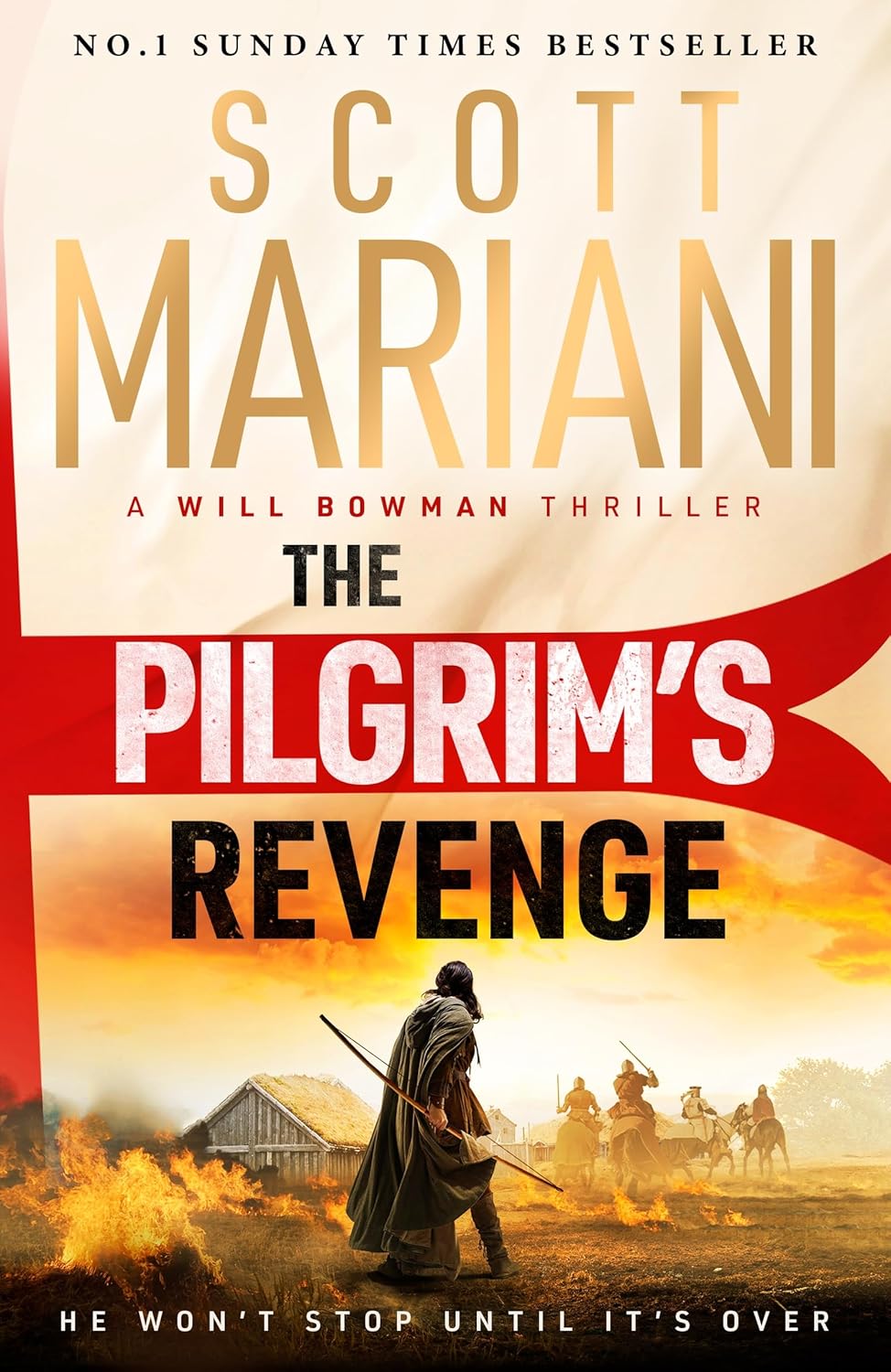
The Pilgrim’s Revenge by Scott Mariani

Publisher: Hodder & Stoughton (Trade Paperback – 26 August 2025)

Series: Will Bowman – Book One

Length: 323 pages

My Rating: 4.5 out of 5 stars

Amazon

Prepare for war in Scott Mariani’s compelling and action-packed historical thriller, The Pilgrim’s Revenge, an awesome read with some real heart to it.

Scott Mariani is a veteran author whose work I have been meaning to check out for a while.  A major thriller author, Mariani is best known for his long-running Ben Hope series which features modern spy fiction narratives with the protagonist unwinding puzzles and conspiracy theories from history.  While I haven’t had the chance to read any of Mariani’s thrillers, his 2025 release, The Pilgrim’s Revenge caught my eye, especially as it is the first time that Mariani has written a full historical fiction novel.  The first book in Mariani’s new Will Bowman series, The Pilgrim’s Revenge was an intense and captivating take on the classic medieval historical fiction adventure, featuring a great revenge twist.

Plot Synopsis:

1190 – Humble layman Will Bowman lives in the countryside with his pregnant wife, when soldiers from Richard Lionheart’s army tear through his home. Will is beaten unconscious, and awakes to find his wife murdered, his farm burnt down, and his life forever changed.

In vengeance, Will infiltrates Richard’s army to find the marauding gang, and finds himself swept along in the march of the Crusades. With the help of new allies and fuelled by his loss, Will crosses Europe with the King’s army.

Can Will avenge his wife? Or will he be swept away by the unstoppable force of Richard’s Crusade?

The Pilgrim’s Revenge was an outstanding and action-packed novel from Mariani, who dives into full historic fiction with great enthusiasm.  Setting the scene quickly, with an introduction to point-of-view protagonist Will Bowman, a minor landowner and skilled hunter, the book soon takes a dark twist when a group of pillaging soldiers kill his pregnant wife, burn his farm and leave Will for dead.  Determined to get revenge, Will takes up his bow and starts following the attackers, determining them to be pilgrims on the way to join Richard the Lionheart’s attack on the Holy Lands.

After a good initial period in England, where Will encounters friendship and additional heartbreak as part of his personal journey, the protagonist soon boards a ship towards the Holy Land.  This middle section of the novel is useful for introducing several great supporting characters and provides some compelling historical context to the events that Will is a part of.  After some exciting sequences at sea, as well as a sudden action-packed siege, the plot takes the protagonist into King Richard’s orbit in Sicily as part of some established historical events.  Mariani also gives Will the first glimpses of his goal, which ends in an exciting and tense series of encounters that add some excellent drama and risk.  Following some surprising developments, Mariani continues to explore the early parts of Richard’s crusade, including his landing in Cyprus, which provides some awesome fight sequences, before setting the protagonist up for the big confrontation of the novel.  While the development of the later part of this story isn’t too surprising, it features some fantastic and exciting moments, and plays into the established historical events really well.  Wrapping up on an excellent, if unexpectedly complete, note, Mariani leaves the story open for more adventures, which we’ll probably see very soon.

I think that the author provided a strong story for The Pilgrim’s Revenge, and this proved to be an excellent piece of historical fiction with a bit of a thriller flair to it.  Loaded with action, intriguing descriptions of the period, as well as some entertaining characters, The Pilgrim’s Revenge was a great historical adventure, which Mariani ensures stands out from the various other novels set in this period thanks to its central character and he’s unique motivations.  I particularly appreciated the author’s use of the third-person perspective through the eyes of protagonist Will Bowman, which really paints a personal and insightful look at the events of the Third Crusade.  Having a simple English farmer, who has relatively little knowledge of the land outside his local community, slowly learn about the lands of the later 12th century as part of his own personal journey, really allowed new readers with less historical knowledge to dive into the events of this book a lot easier.  At the same time, Mariani clearly puts the work in describing the historical elements of the book, whether it’s the details of the crusade, interesting depictions of real-life figures, or even complex depictions of day-to-day life and the social, technological and military element of the time.  Thanks to the exciting, action-packed plot, readers can power through The Pilgrim’s Revenge quickly, but for those who stop to savour the author’s compelling writing, there are some amazing details and compelling character moments to appreciate.

Overall, The Pilgrim’s Revenge was an outstanding and captivating novel, as Scott Mariani sets up an exciting new series.  Featuring an enjoyable, action-laden plot, The Pilgrim’s Revenge was an amazing novel to get through, especially with its compelling depictions of war and life in the 12th century.  A very exciting read, I quickly flew through The Pilgrim’s Revenge and is worth checking out especially if you enjoy intense and detailed historical reads.  I look forward to continuing the Will Bowman series going forward, and I’ve already got a copy of the sequel, The Knight’s Pledge, which I am hoping to read soon.

Amazon

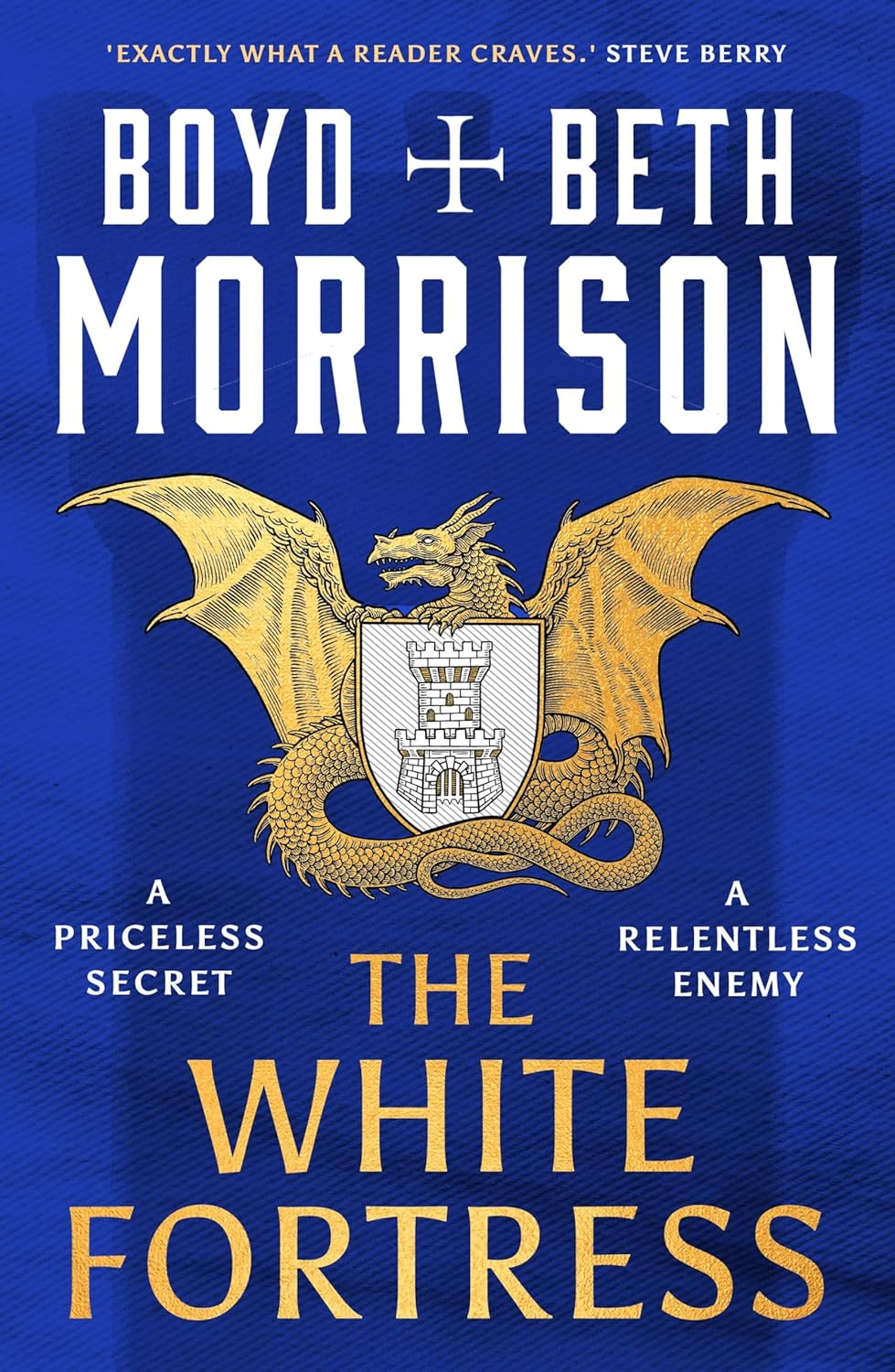
Waiting on Wednesday – The White Fortress by Boyd and Beth Morrison

Welcome to my weekly segment, Waiting on Wednesday, where I look at upcoming books that I am planning to order and review in the next few months and which I think I will really enjoy. Stay tuned to see reviews of these books when I get a copy of them.  For this latest Waiting on Wednesday, I highlight an awesome upcoming historical adventure novel with The White Fortress from the awesome writing team of Boyd and Beth Morrison.

Amazon

A couple of years ago I had the very great pleasure of the fantastic historical fiction novel, The Lawless Land.  Written by the sibling team of historian Beth Morrison and established thriller author Boyd Morrison, The Lawless Land was an intriguing historical adventure novel that saw an excommunicated knight and a fugitive lady take on a corrupt cardinal in 14th century Paris.  The Lawless Land ended up being one of my favourite novels of 2022, and I really got caught up in its exciting and compelling story.

After the success of their first book, the authors expanded their narrative out into the Tales of the Lawless Land series, which continued to follow the protagonists from the first book as they get involved in additional conflicts and adventures.  The first sequel to The Lawless Land was the 2023 release, The Last True Templar, which saw the protagonists enter into a thrilling treasure hunt around Italy to find a stash of missing Templar treasure.  This was a pretty amazing sequel to the first book, and it solidified my love for this cool new series.

As such, I am very excited to finally have details about the third book in the series, The White Fortress.  Continuing to follow the two protagonists as they journey around Europe, The White Fortress will see them involved in a series of historical hijinks in Croatia.  Set for release in March 2025, this sounds really intriguing read and one I know I’m going to like.

Plot Synopsis:

Croatia, 1351. Daring knight Gerard Fox and his adventurous wife Willa, fresh from a dangerous quest across Italy and Greece, soon find themselves embroiled in a new intrigue as they sail toward the walled city of Dubrovnik.

Having inadvertently hindered a rescue mission, Fox and Willa make amends by helping a desperate Croatian couple forced into a terrible dilemma: either they betray their hometown to a treacherous nobleman and the brutal warlord he serves, or their abducted child will be murdered.

A century-old prophecy and a lost codex written by fabled explorer Marco Polo are key to stopping the warlord’s conquest, which could spark a devastating war along the entire Adriatic coast. Fox and Willa race against time to devise a plan for saving a child, a town, and a country – knowing it could cost them everything if they fail…

Unsurprisingly, I love the sound of this new historical adventure from the Morrison siblings, and I am very interested in the new plot they have come up with.  It sounds like The White Fortress will follow the trends set out in The Last True Templar, with the protagonists helping a new group of supporting characters attempt to stop a deadly enemy by solving a historical mystery, this time around Marco Polo.  This worked really well for The Last True Templar, and I imagine this historical thriller set-up will result in another intense treasure hunt throughout a great historical setting.

Speaking of historical settings, Croatia should be a particularly interesting background for this plot, and I am looking forward to seeing it, mainly because I don’t know a lot about Croatian history.  The previous two Tales of the Lawless Land books were both loaded with historical detail about the settings, and I imagine that we will get some intriguing background in The White Fortress as well.  All of this, as well as the continued focus on the fun pairing of Gerard and Willa, should make for quite an exciting and captivating narrative, and I am very excited to check it out.

Based on how much I enjoyed the previous two novels in this series, there was no way that I am not going to grab a copy of The White Fortress next year.  The previous Tales of the Lawless Land books by Boyd and Beth Morrison have both been extremely good, and I cannot wait to see how this series continues.  I really love the sound of this new entry, and I have a feeling that The White Fortress is going to be one of the best historical fiction books of 2025.

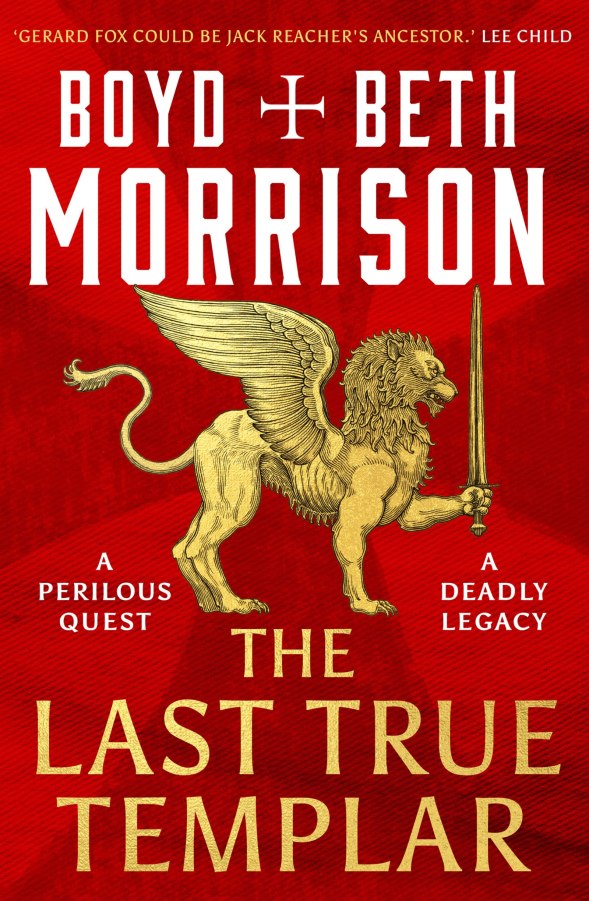
The Last True Templar by Boyd and Beth Morrison

The Last True Templar Cover

Publisher: Head of Zeus (ebook – 14 September 2023)

Series: Tales of the Lawless Land – Book Two

Length: 492 pages

My Rating: 4.5

Amazon

The impressive sibling team of Boyd and Beth Morrison return with an epic and compelling sequel to their first impressive novel, The Last True Templar.

Last year I had the very great pleasure of reading the first book written by the pair of thriller author Boyd Morrison and historian Beth Morrison, The Lawless Land.  Following an excommunicated knight and a noblewoman as they try to keep a sacred relic out of the hands of a corrupt cardinal, The Lawless Land was an outstanding read that blended fascinating historical detail with an intense thriller storyline.  The Lawless Land ended up being one of my favourite books of 2022 and I have been eagerly anticipating a sequel for ages.  This second book in their Tales of the Lawless Land series, The Last True Templar, sets the awesome protagonists on a compelling new adventure, an elaborate treasure hunt through medieval Italy.

Italy, 1351.  After their first exciting adventure together, exiled English knight Gerard Fox and his determined companion, Willa, have decided to embark on a journey throughout a Europe still recovering from the ravishes of war and plague.  Determined to get married, the two seek a way to escape their complex pasts and move on to a future free of violence and persecution.  However, fate has something far more adventurous planned for them.

Arriving in a small village between Florence and Siena, Fox and Willa suddenly find themselves witnesses to a deadly ambush.  A band of skilled, masked bandits are targeting Luciana Corosi, the wife of a prominent Sienna businessman, determined to kill her and steal the payment she carries for a lucrative deal.  Intervening, Fox and Willa manage to save Luciana’s life, before escorting her home.  However, it soon becomes apparent that not everything is as it seems, especially as Luciana’s scheming husband, Riccardo Corosi, is behind the attempts of Luciana’s life.

Escaping from Riccardo’s clutches with Luciana, Fox and Willa soon find themselves embroiled in a complex scheme that reaches all the way back to the fallen Knights Templar.  Years ago, Luciana’s father helped the Templars hide their vast treasure from the Church before being betrayed by Riccardo.  Determined to save her family’s legacy and finally expose her treacherous husband, Luciana recruits Fox and Willa to her cause and requests their help in solving a series of clues leading to the treasure.  But with Riccardo and his men hot on their trail, can Fox and Willa find the legendary treasures of the Knights Templar, or have they finally met their match?

The Last True Templar was an interesting and enjoyable follow-up that captures the heart of the original book while changing some key story aspects and the background setting.  The result is a fantastic and exciting read that I had a wonderful time reading and which I managed to power through in a very short amount of time.

The plot of The Last True Templar is pretty damn cool as it places the author’s established protagonists into a whole new crazy medieval thriller scenario, this time involving the warring Corosi’s and their respective legacies.  Fox and Willa’s inadvertent entry into the plot is well handled and nicely ties into their current wanderings, and their continued presence in events feels pretty natural, especially as they are both trying to help a friend and achieve their own personal goal of getting married.  The authors do an effective job at building up and injecting the intriguing characters and real-life history that led up the events of the book early on and the story, and you soon get swept up in the resulting treasure hunt that is rich in Templar lore.  The story is masterfully told from a range of different perspectives, including the antagonists, which allows for some compelling insights into everyone’s respective motivations, histories and plots.  Several chapters are also set in the past, either to strengthen the history surrounding the missing Templar treasure or provide backstory and added drama for the characters.

The main story of The Last True Templar turns into an exciting, clever, and action-packed romp, as the authors set out some major thriller antics within a historical setting.  Just like with The Lawless Land, the initial thriller aspect of this story involves the protagonists attempting to stay one step ahead of the villains while learning about the dark history that surrounds their motivation.  However, the characters also get involved in an elaborate historical treasure hunt which sees them decode a series of historical clues to find the location of the treasure.  A storyline involving riddles and the hunt for ancient treasures is classic thriller fare, and I really enjoyed seeing medieval protagonists undertake this, especially as it takes them across 14th century Italy.  The authors come up with a fantastic and elaborate series of mysteries, riddles and clues for this aspect of the story, and I loved the constant and desperate roaming through various well-described cities as they attempt to puzzle together dated references and hints.

The authors’ use of multiple perspectives really helps to enhance the race aspect of the story, as you get to see key events through multiple eyes, including the scheming and double-crossing antagonists.  I loved seeing all the different moves each character made in The Last True Templar, and you are constantly on your feet as both groups get closer to the treasure while working to outsmart or outplay their opponents.  There are also some amazing set pieces scattered throughout this novel, including an elaborate horse race through the streets of a city, several skirmishes, and even ship-to-ship boarding action.  Everything leads up to an exciting and intense conclusion as both sides fight for the potential treasure, and all the compelling story elements come full circle.  All the characters get a compelling conclusion to their storyline, whether they want to or not, and the book ends on a satisfactory note that leaves the series open for further entries.

I loved the fantastic historical detail that was contained in The Last True Templar as the authors really immersed readers in the period.  The impressive depictions of the various Italian locations and cites was well done, and I could honestly see the settings in my mind’s eye as the protagonists visited them.  Much of the background setting and character attitudes and actions, whether it be in battle, business, or exploration, had some noticeable historical accuracy, and I loved the elaborate descriptions that accompanied the narrative.  I particularly enjoyed the author’s depiction of a historical Palio di Siena, which the protagonist was forced to participate in, and it honestly was one of the high points of the story.  However, the best historical detail in The Last True Templar is reserved for the examination of the Knights Templar and the hunt for their treasure.  The authors do an excellent job of exploring the legacy of the Templars, and I found it fascinating to see characters talk about them only a few decades after their fall.  This examination of the Templars adds a great deal to the narrative, as not only is it strongly tied to several of the new character’s backstories, but it also proves to be very relevant to the various riddles the characters need to unravel.  Each of the riddles is tied into a specific location or has some relevance to the Templars, and it was awesome seeing the characters work out and trying to solve them.  There were even some very clever instances where the relevant landmarks referenced in the clues were no longer there or current, even after only a few decades, which added some intriguing difficulties into the larger treasure hunt.  All these details, and more, were extremely interesting to me, and I had a wonderful time with how well the authors incorporated them into the plot.

I had a lot of fun with the characters in The Last True Templar, especially as we got to see more of Gerard Fox and Willa, both of whom were so well set up in the preceding novel.  An excommunicated knight likely to be charged with heresy for not repenting for his unfairly given punishment and a brave, independent and highly capable former servant, Fox and Willa make for an intriguing pair, and I love the idea of an entire series dedicated to them wandering around helping people.  The authors do an excellent job of reintroducing them in this sequel, and I really enjoyed how they were worked into this exciting story.  Since both of their backgrounds were thoroughly explored in The Lawless Land, you don’t get a lot of extra history for them in this sequel.  Instead, there is an intriguing storyline regarding their adventures in Europe and the struggles they have faced on the road together as a couple.  Their main issue involves their desire to get married, however, due to Fox’s excommunicated status, something he takes seriously despite the unfairness surrounding the entire situation, they are unable to find a church or priest likely to approve the ceremony.  This leads to some real strain on their relationship, and I liked how the authors dived into such compelling historical concerns for their character arc.  Despite this, the two remain a strong duo with a fantastic blend of talents, and it was a real pleasure to see their second adventure together.

The rest of the character focus is completely reserved for all the new characters involved in The Last True Templar.  In particular, you spend a lot of time with Luciana Corosi, an Italian matron who has been betrayed and manipulated by her evil husband.  A smart businesswoman with a painful history, Luciana proves to be an excellent addition to the main cast, and she plays off Fox and Willa extremely well as they work together.  I loved the intriguing history surrounding Luciana, especially all the betrayals she has experienced in her life, and it was great to see her finally try and reclaim her life and her destiny.  While Luciana is great, this book is would be nothing without a fantastic villain, and this role is well filled by Luciana’s husband, Riccardo Corosi.  A scheming former Templar who betrayed his order and Luciana’s father and turned his ill-gotten gains into a thriving business which he uses to control his city, Riccardo is a despicable antagonist you have a very easy time hating.  The authors show much of the story from Riccardo’s perspective, so you get some great insights into his various schemes, and you quickly realise just how irredeemable he truly is.  Partnered with a surprisingly loyal, if murderous, English knight, and a scheming female associate who plots against everyone, Riccardo is a great foil to the main cast, and I loved the various betrayals he brings to the table, even when it comes to his own followers.  This proved to be quite a fun and compelling cast of characters and I loved seeing their fantastic story unfold.

Overall, The Last True Templar was an outstanding read and I loved seeing more adventures from the team of Boyd and Beth Morrison.  This second Tales of the Lawless Land novel was very exciting and I loved the great new characters, intriguing historical detail, and compelling thriller centric plot.  An impressive sequel from start to finish, I deeply enjoyed The Last True Templar and I hope we get more books from these amazing authors in the future.

Amazon

The Defector by Chris Hadfield

The Defector Cover

Publisher: Quercus (Trade Paperback – 10 October 2023)

Series: The Apollo Murders – Book Two

Length: 369 pages

My Rating: 4.5 out of 5 stars

Amazon

Former astronaut turned thriller author Chris Hadfield returns with his second excellent novel, the intriguing and clever historical read, The Defector.

Back in 2021, I was lucky enough to receive a copy of superstar astronaut Chris Hadfield’s cool and much-hyped debut novel, The Apollo Murders.  Set during the Cold War, The Apollo Murders depicted an alternate history adventure where a fictional Apollo flight mission to the moon suffered all manner of calamity, including murder, treachery, and unexpected Russian hitchhikers.  Thanks to Hadfield’s knowledge of history and spaceflight, this turned out to be quite the gripping read, and The Apollo Murders ended up being one of my top debuts for 2021.  As such, I have been eager to see how Hadfield planned to follow up his first book, and I was quite excited when I saw that his second novel was a sequel to The Apollo Murders.  This book, The Defector, was an excellent and compelling thriller which I had a brilliant time getting through.

Israel, 1973.  On the eve of the Yom Kippur War, a Soviet test pilot makes the bold decision to fake a crash in his state-of-the-art MiG fighter and secretly land in Israel.  Claiming that he wants to defect to the United States, the pilot, known by his codename, Grief, and his plane are traded to the Americans, who desperately want to know the secrets of the MiG and how it achieves such impressive altitude.

Having witnessed Grief’s defection while on holiday in Israel, NASA flight controller and former Navy test pilot Kaz Zemeckis is quickly drafted in to take carriage of the captured MiG and to work with Grief to fully understand the plane’s limitations and capabilities.  Their unlikely partnership eventually takes them to the most secure and secret location in the United States, Area 51, where Grief looks set to provide all the information the Americans have ever wanted about the MiG.  However, not everything is as it seems, and it soon becomes apparent that Grief has his own reasons for wanting to defect to the United States.  Can Kaz get to truth before it is too late, or has he let a wolf right into the heart of America’s most secret air base?

This ended up being an excellent and exciting novel from Hadfield that successfully follows up his original debut and provides a cool and intense new story that proves very hard to put down.  Hadfield tells a pretty tight and compelling story in The Defector that starts strong with the mysterious Grief defecting right in the middle of the Yom Kippur War.  This initial excitement morphs into an intense and gripping game of cat and mouse, as Kaz attempts to utilised Grief’s knowledge and keep his defection secret from the Soviets, while the Russian pilot works to initiate his own plans.

This continues for much of the book, and I thought this ended up being a much more focused and well-structured thriller narrative than we previously saw from Hadfield in The Apollo Murders.  The focus on espionage and military secrets was a great centre for the plot, and Hadfield did a good job on also utilising some intriguing characters, especially Kaz and the mysterious Grief.  The inclusion of a couple of fictional supporting characters from The Apollo Murders, namely a cosmonaut and a major Soviet antagonist, was also quite interesting, although as they were mainly there to set up a future entry in the series it did disrupt the narrative flow a little.  Everything leads up to the big conclusion, which Hadfield set up nicely throughout the course of the story.  While I do think that Hadfield might have considered utilising a twist to change the antagonist around, it was still really fun to see the full plan unfold, as well as the real reasons behind the defection.  Watching the manipulation and the resulting violence unfold was very impressive, and it led to a satisfying, if slightly predictable, final showdown with the protagonist that ended everything on a high note.

I really enjoyed how well The Defector came together, especially as Hadfield reused all his best writing elements from The Apollo Murders, while also strongly utilising his own personal experiences and knowledge as a test pilot.  The constant switching between perspective characters, as well as several interludes and flashback sequences, helped to produce a complex, multilayered storyline, and I liked seeing the various players in the plot attempt to work out what everyone else is doing.  It also allowed Hadfield to hide some good hints about the antagonist’s true motivations and feelings, which came out perfectly at the end of the book.  There was also some great character growth around the protagonist Kaz, especially as Hadfield successfully built on his personality and relationships from the first book, and it is clear that the author has some future adventures planned for him.

However, the real strength of The Defector lies in Hadfield’s encyclopaedic knowledge of military airplanes, Cold War espionage history and spaceflight, which was masterfully inserted into the plot.  Much of the plot revolves around the desire for both sides of the Cold War to get a better understanding of their opponent’s aircraft capability, and Hadfield expertly examines the history and mechanics around this.  The discussions about aircraft, fighter capabilities and more, are all quite fascinating, and Hadfield does a wonderful job of exploring them in a highly detailed way that readers unfamiliar with aircraft can easily understand.  His experience also allows for some highly realistic and intense aerial combat sequences, and I really enjoyed the elaborate scenes that resulted, especially the cool conclusion.  This grasp of aircraft, the history surrounding their development, and the espionage involved, are well worked into the plot of The Defector, and I loved how much it increased the authenticity of the book, making it so much better.

Overall, The Defector was an outstanding second novel from Hadfield that I had a wonderful time reading.  Containing a clever and well-paced spy thriller narrative loaded with intriguing details about aircraft and the cold war, The Defector had me hooked from its first awesome scene, and I managed to power through this book in no time at all.  Compelling and action packed, The Defector was an outstanding follow-up to The Apollo Murders and I cannot wait to see what Hadfield writes next.

The Defector Cover 2

Amazon

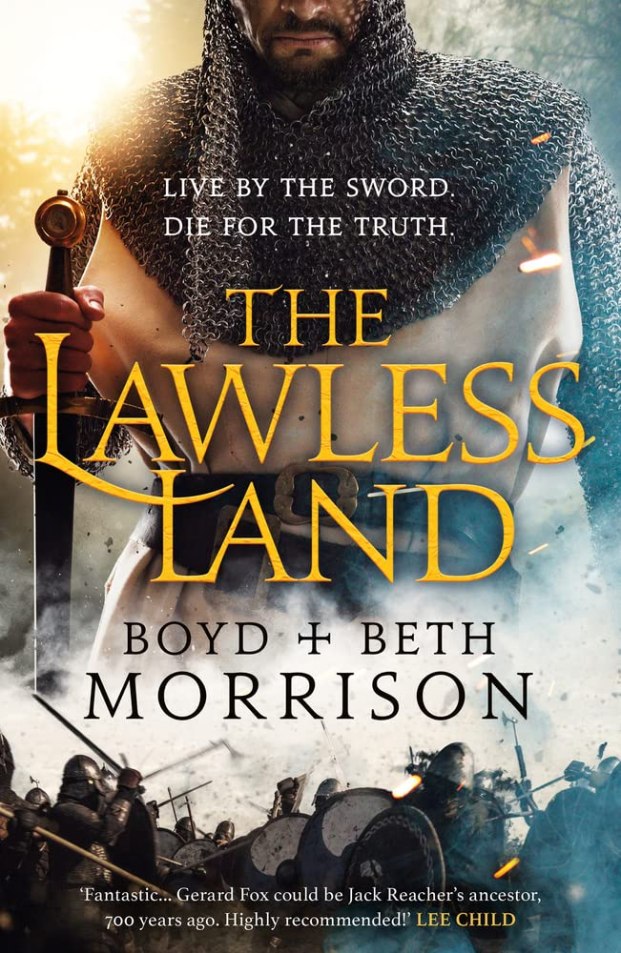
The Lawless Land by Boyd and Beth Morrison

The Lawless Land Cover

Publisher: Head of Zeus (Trade Paperback – 31 May 2022)

Series: Standalone/Book One

Length: 474 pages

My Rating: 5 out of 5 stars

Amazon

Get ready for one of the most thrilling historical adventures of 2022 with the wildly entertaining and deeply captivating medieval fiction novel, The Lawless Land, by the outstanding team of Boyd and Beth Morrison.

Despite my recent focus on other genres, historical fiction in all its forms remains one of my favourite book categories to check out, especially with awesome new novels coming out all the time.  One of the best examples of this is The Lawless Land, which I was lucky enough to receive a copy of a little while ago.  The Lawless Land was a fascinating read that takes some great protagonists on a bold adventure through medieval Europe.  This book was written by Boyd and Beth Morrison, a brother and sister team who have deeply impressed me.  This was a rather interesting combination of writers, as Boyd Morrison is an acclaimed thriller and historical fiction author, and Beth Morrison is the Senior Curator of Manuscripts at the J. Paul Getty Museum and has a PHD in history.  These overachieving siblings really cooked up something special here with their first book, and I loved the outstanding story it contained.

In 1351, Europe is in utter chaos as the Hundred Years’ War rages in France and the Pestilence ravages the countryside, depopulating towns and devastating cities.  These are dark days indeed, and only the desperate and the foolish can be found traversing the roads.  Unfortunately, this includes skilled knight Gerard Fox, whose lands and titles have been taken from him as punishment for a crime against the church, and who is now forced to wander the world by himself, desperate to reclaim his family’s honour.

Journeying towards the castle of Lord Tonbridge, the one man who may be able to prove his innocence, Gerard witnesses a band of armed men waylaying a noblewoman.  Impulsively jumping into action, Gerard saves the women, slaughtering her attackers and forever changing his life.  The young woman, Lady Isabel, is Lord Tonbridge’s betrothed, who has fled from her future husband, taking with her a sacred relic she is sworn to protect.  Forced to abandon his own quest, Gerard agrees to escort Isabel to safety, however, he is unaware of the chaos that is about to be unleashed upon him.

Tonbridge had promised Isabel’s relic to an ambitious Cardinal in Paris, one who is determined to rise to the station of Pope.  Desperate to reclaim the relic and use it to cement his position, the Cardinal and his pawn, Tonbridge, unleash their substantial forces to hunt down Gerard and Isabel.  Fleeing their pursuers, Gerard and Isabel traverse the breadth of England and France to find safe harbour for the relic.  Forced to contend with dangerous foes around every corner, Gerard, Isabel, and their faithful companions will face the worse that medieval Europe has to offer and more.  But worse lies in wait for Gerard, as he bears a dark connection with his pursuers that will ensure they will never stop hunting him.

Wow, now this was a really cool historical fiction novel.  The exceptional writing team behind The Lawless Land have produced an outstanding novel that is extremely exciting, action-packed, and character driven, while also being heavy on the historical detail and accuracy.  This results in an exceptional and epic historical thriller read that I had an absolute blast getting through and which gets a well-deserved five-star rating from me.

The Lawless Land was such a cool read, and I quickly fell in love with its brilliant and exceptional story.  Essentially an adventure thriller set in medieval times, the authors start The Lawless Land off very quickly, showing the protagonist in battle as he saves the damsel in distress, only to end up in even more trouble.  Effectively introducing the key characters early on, you get a real sense of the novels impressive style right at the start, especially with its gritty feel and intense action sequences.  The story soon evolves into a high stakes chase across Europe, as Gerard, Isabel and their companions try to outrace and outwit their opponents to save Isabel’s relic and get revenge for Gerard.  The authors make excellent use of multiple character perspectives here to showcase the chase from both sides, and you get a good look at the various schemes and ploys of the antagonists, as well as the full depths of their villainy.  These amazing and action-packed scenes are expertly interspersed with some flashback chapters that examine the full history and tragedy of the protagonists, especially Gerard, and work to fully establish the enmity between him and the antagonists.  This entire first half of the book is very well written, and the authors’ excellent style will appeal to wide range of readers, not just historical fiction fans, as anyone who enjoys a great adventure or gripping thriller read, can get really engrossed in this excellent story.

This perfectly sets up the second half of this epic novel, which sees the character involved in all manner of carnage and battle as they attempt to win.  I honestly powered through the last 250 pages or so in a day; I was having that much fun reading it.  This second part has everything, including jousting tournaments, prison breaks, desperate chases, elaborate skirmishes, political intrigue, skullduggery and more action than you can shake a stick at.  There is even a full-on judicial duel (think The Last Duel), which was one of the most impressive and gritty fights in the entire book.  There are some intriguing twists, clever reveals, major tragedies, and some outstanding action throughout this entire second half, and it was so much fun to see it all unfold.  I really must highlight the impressive action of The Lawless Land, as all the fights felt particularly realist and very epic, and you can honestly feel every powerful swing and strike of steel on steel.  The authors bring all the established story elements of The Lawless Land together extremely well in the end, and readers will come away satisfied, especially with the fun conclusion and the great ending for the characters.  While this is ostensibly a standalone read, and the authors do wrap up everything really well, there is potential for a sequel at the end, and I for one would not be opposed to seeing more from these characters in the future.

One of the most compelling parts of The Lawless Land was the brilliant dive into the history of medieval Europe.  The writing team clearly did their research when it came to this novel, which is hardly surprising considering the scholarly expertise of one of its authors.  As such, this novel is loaded with impressive and captivating historical detail which isn’t overshadowed by some of the more over-the-top action.  You get a great sense of the how bleak and brutal the continent was at this point in history, with some chilling depictions of plague and pestilence, as well as some intriguing looks at The Hundred Years’ War, including a full flashback chapter to the Battle of Crécy.  The authors spend time exploring a ton of fascinating stuff from this period, including knightly conduct, the power and influence of the church, day to day life for people in cities and the countryside, and so much more.  I particularly loved the scenes set around a tournament in France, where the protagonist engages in a series of jousts.  The sheer amount of detail and realism around these scenes are so very cool, and you can really picture how everything would have looked and felt.  There is also a great examination of medieval manuscripts (again, because of one of the author’s academic focuses), which become a key part of The Lawless Land’s plot, and it was really interesting to examine the significance and process behind them.  All this impressive work around the setting and other historical elements of The Lawless Land really enhanced the overall quality of the book, and I loved how seamlessly it was worked into the epic narrative.

I also must highlight the fantastic characters featured within The Lawless Land, which includes an awesome balance of likeable protagonist and maniacal villains who hunt them.  The story is perfectly split between the two groups, and you get some fun and intense competing views of events throughout the story as a result.  The protagonists are headlined by the awesome character of Gerard Fox, a wandering knight, banished from his family’s lands by the church following a confrontation with one of the antagonists years ago.  Dragged into this conspiracy by accident, Gerard becomes Isabel’s companion and protector, and tries to escort the relic to safety.  A man of action and honour, Gerard is haunted by his past and his many failures, which include watching his brother die in battle, and being tricked into losing everything.  He is also obsessed with discovering the true fate of his mother, and her mysterious disappearance and certain revelations draw him into this conspiracy even further.  A lot of the novel revolves around Gerard’s past, and it was fascinating to see him come to terms with it and try to balance this current quest with his own desires.  Gerard ends up being a pretty awesome protagonist to follow, especially with his martial prowess, unique weaponry, penchant for mischief and trickery (like a certain French fox), and his unbending desire to do the right thing.

Gerard is accompanied by some interesting companions, and the most prominent of these is Lady Isabel.  A noblewoman who was forced into marriage, Isabel seeks to protect her family’s most sacred relic from her betrothed and goes to great length to escape him.  Although she is initially seen as a bit of a damsel in distress, you soon begin to realise that there is a lot more to Isabel than what first appears, as she is an incredibly capable woman with some keen insights and strategies that prove invaluable to her companions.  The authors work some excellent storylines around Isabel in this novel, and you really come to appreciate and enjoy her pluck, courage and intelligence.  There is also a very clever twist about this character revealed in the second half of the book, which was set up extremely well by the authors, including in some flashbacks that both hint at and hide the truth from the reader.  I also should mention the fun supporting characters of Henri and Youssef, two friendly rogues who have substantial history and friendship with Gerard.  Henri and Youssef are excellent additions to the protagonists, and their fun personalities balance well with Gerard and Isabel’s to create a very likeable group of heroes that you become quite attached to, even if that leads to eventual heartbreak for the reader.

I also need to talk about The Lawless Land’s outstanding trio of villains who dog the protagonists’ steps throughout the entire narrative.  This includes the evil Lord Tonbridge, Isabel’s betrothed who she runs away from.  While Tonbridge is mainly hunting them for Isabel’s relic, it also becomes clear that Tonbridge is even more obsessed with righting the perceived slight to his honour and is eager for vengeance.  However, Tonbridge is also partially subservient to villainous French cardinal Molyneux, who has promised him power and a kingship if he succeeds.  Molyneux is particularly despicable, as an ambitious and immoral member of the church who is attempting to become Pope.  Using his influence and the protection of the church for his advantage, Molyneux gains large amount of money and land through unscrupulous means and has some dark history with Gerard’s family, which deeply impacts both his and Gerald’s motivations to confound each other.  The final villain is Molyneux’s vassal and bastard son Basquin, who serves as the protagonist’s main pursuer.  A skilled swordsman and tactician, Basquin is a worthy, if not superior, foe to Gerard, whom he bears a powerful grudge against.  There is some fascinating history behind Basquin that became quite an awesome part of the plot, and it was great to see the intense and captivating confrontations between the two.  The authors take Basquin in some intriguing directions in this book, especially when his own desires clash with that of his abusive father, forcing him to go rogue and enact his own ambitious plan.  All these villains were extremely well written, and it proved highly entertaining to see them go up against Gerard, Isabel and the rest throughout The Lawless Land.  I had such a great time with the characters in this book, and their intense relationships, rivalries and schemes added so much to the power of the novel.

Overall, The Lawless Land was an exceptional and impressive historical fiction read from the great new team of Boyd and Beth Morrison.  These two talented writers came up with something very special with The Lawless Land, and I loved the outstanding and highly addictive narrative contained in this book.  Featuring a ton of epic action, some amazing characters, and some superb historical detail, The Lawless Land was an incredible read that comes very highly recommended by me.

Amazon

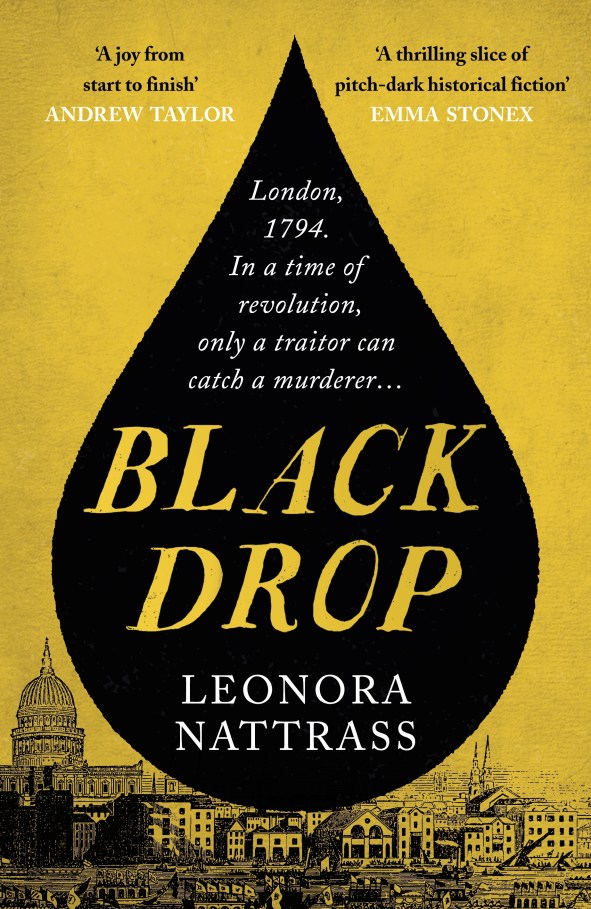
Black Drop by Leonora Nattrass

Black Drop Cover

Publisher: Viper (Trade Paperback – 15 February 2022)

Series: Laurence Jago – Book One

Length: 343 pages

My Rating: 4.25 out of 5 stars

Amazon     Book Depository

Intriguing and talented new author Leonora Nattrass presents a compelling historical thriller debut with Black Drop, a fantastic novel that drags readers into the conspiracies and issues of late 18th century London.

In July of 1794, as the terror of the French Revolution reaches its height and the war on the continent goes poorly for the British army, uncertainty and fear of violent change infect the people of London.  For Laurence Jago, clerk to the Foreign Office, his position is even more uncertain that those around him.  A young man with hidden French heritage, Jago fears the day that his connections to his mother’s nation will be discovered, especially after spending years serving as a spy for sinister French agent Aglantine.

Now believing himself to be free from Aglantine’s employment, Jago is thrust into an untenable situation when vital confidential information about the British army is leaked from his office to the press.  Suspected by his peers of leaking the information and under investigation, Jago fears that all his secrets and former dealings are about to come out.  His problems are only further compounded when he discovers the body of a fellow clerk in his rooms, supposedly dead by suicide.

When the blame for the leak is shifted onto the dead man, Jago is freed of the suspicion against him.  However, Jago knows that the dead clerk was incapable of stealing the letter and believes that he was murdered.  Determined to find out the truth behind the death, Jago finds himself investigating the highest level of the British civil service and their political masters.  Out of his depth and thwarted at every turn, Jago will risk everything to root out the culprit before they strike to disrupt England again.  However, can he succeed without revealing his own dark secrets, or will Jago hang as a traitor instead of the murderer?

Black Drop is an excellent and clever novel that I had a great time reading as Nattrass perfectly combines a compelling spy thriller/murder mystery storyline with intriguing and detailed historical fiction elements.  This resulted in one of the more unique and fantastic debuts of 2022 and I really enjoyed Black Drop’s impressive story.

This awesome debut novel has an excellent story that expertly combines intriguing spy thriller and murder mystery elements with a character driven historical narrative to create a compelling and impressive read.  Set throughout key events of 1794 and told as a chronicle from the perspective of central character, Laurence Jago, Black Drop presents the reader with an intriguing tale of murder, political machinations and the threat of revolution at the heart of the period’s government.  Nattrass sets the scene perfectly at the start, introducing the key characters while also highlighting the feelings of unrest and dissent as the fear and inspiration from the French revolution hits London.  From there, the story starts to unfold in some interesting directions as the protagonist finds himself involved in political and espionage adventures while also investigating the murder of a fellow clerk, which appears to be connected.  At the same time, the slow-paced story utilises some intriguing aspects from the protagonist’s life as he struggles with dark secrets from his past that have potential implications on the current events.

Following this introduction and the initial parts of the narrative, the middle of Black Drop starts to bring in certain key historical events and figures, which results in some fantastic moments and character interactions, especially once an antagonistic figure becomes more prominent.  While the middle of this novel did drag in places, I felt that Nattrass was providing the reader with the right blend of intrigue, mystery, historical detail and character growth to produce a great overall story.  You really get to grips with the protagonist and the key aspects of the setting during this part of the book, especially when Jago hits a major personal downturn earlier than expected, and interesting reveals enhance the reader’s attachment to the mystery.  The story really starts to pick up once it gets to Nattrass’s recreation of the infamous trial surrounding supposed radical and revolutionary Thomas Hardy.  The ridiculous, and mostly accurate depiction of the trial (with certain elements from other trials thrown in for greater effect), proves to be a great high point for the novel, especially as other key parts of the plot are slotted in perfectly around it.  I did feel that the novel started to come undone around the conclusion a little, especially when it came to the big reveal.  While there were a couple of good twists around certain characters, the solution to the main mystery and the intrigue seemed a little weak to me, and I was a little disappointed with how it turned out, especially as you barely get to see anything about the final confrontation.  Still, this did not affect the overall quality of the story too much, especially as the author throws in an excellent wrap-up for the protagonist’s storyline in this novel which has a lot of potential for a sequel.  While much of the story can be a little sluggish and lacking a lot of action, I had a great time getting through Black Drop, and I loved how the excellent interplay of elements came together so well.

One of the most distinctive parts of Black Drop is the sheer amount of fascinating historical detail that was fit into the story.  Nattrass has clearly done her research on the period and the reader is presented with a fantastic and powerful view of London in the late 18th century.  Not only are there some brilliant and vibrant depictions of historical London but the reader gets some fascinating views into the inner workings of the government at the time.  Substantial parts of the book are dedicated to examining the civil service and the political hierarchy of the day, with multiple influential figures featured as supporting characters.  This proves to be a deeply fascinating part of the book, and I loved how Nattrass was able to weave these intriguing details into the thriller plot, becoming a key part of Black Drop’s story.  I also deeply appreciated the way in which Nattrass explores the social and political issues of the day, especially where it relates to the concerns in London about an uprising similar to what happened in France.  As such, you get a full spectrum of personalities from across London, as royalists and loyalists clash with potential radicals who are targeted by the worried government.  This all cumulates in the fantastic court case of Thomas Hardy, a shoemaker accused of radical actions and attempted rebellion.  This historical trial is expertly recreated by Nattrass to include all of its most interesting parts, including several extremely ridiculous elements from history (a blowgun murder conspiracy).  Nattrass also cleverly combines in some elements from related trials that occurred around the same time as the Hardy case for some amusing dramatic effect, and this extended sequence ended up being one of my favourite parts of the novel.  The overall hint of discontent by many members of London’s society, as well as the innate fear of the established institutions, is portrayed beautifully, and you get a great sense of the public issues during this period.  All these impressive historical elements are handled extremely well by Nattrass, and while it did get a tad tedious in places, it was an excellent part of the book that I deeply enjoyed.

To back up her unique historical tale, Nattrass has furnished Black Drop with a compelling array of characters with some complex and compelling character arcs.  This book actually contains a great combination of original characters and historical figures, with many major figures in 18th century British politics and the civil service featured in substantial roles throughout the book.  Not only does this brilliantly enhance the already substantial historical details of Black Drop, but it also results in some fascinating interactions and depictions as the fictional characters, including the point-of-view character, observe them.  Due to the complexity of the story, Black Drop makes use of a pretty large cast of characters, and while a few of them blend together, most come across as pretty distinctive with some interesting and fun character traits.

The best character of Black Drop is the protagonist Laurence Jago, who also serves as the book’s sole point-of-view character.  Jago turns out to be a particularly complex and damaged individual whose emotional attachment to the case and the state of London society provides some intriguing drama and insight into the events of the book.  Already made quite distinctive by his unique green-glass spectacles, Jago proves to be an impressive and captivating figure, especially as he has some major issues.  Secretly half-French, Jago lives a conflicted and fear-filled life, especially with the intense anti-French attitudes sprinkling the city.  This, combined with his foolish youthful dalliance of being a spy for France, ensures that he has a powerful sense of guilt, and is constantly worried about being discovered, especially once other accusations are made against him.  The discovery of a dead friend, combined with his guilt, the pressures of work, and the constant fear of discovery really strain his mind, and while he doggedly tries to find out the truth behind the murder, he starts to crack and nearly blows his cover.  Watching him trying to hide his own secrets while uncovering the lies and machinations of those around him becomes pretty intense, especially as you grow quite attached to this damaged soul.  His mental state further deteriorates once he becomes addicted to Black Drop (an opium concoction), which dulls his worried and troubled mind, while also leaving him lethargic and susceptible to danger.  This proves to be a serious handicap to his abilities, and it is fascinating to see him try to balance all his issues with the hunt for the truth.  All these issues and concerns result in a very conflicted and emotionally drained character, who Nattrass portrays perfectly, and it was very powerful to see Jago’s entire story unfold.

Aside from Jago there is a rich cast of supporting characters, each of whom add to the story in their own distinct way.  I particularly want to focus on two who ended up being the best supporting figures in different ways.  The first of these is William Philpott, a fiction British reporter character, who arrives in England from and extended stay in America and sets up his paper and family residence next to Jago’s lodgings.  An eccentric, rambunctious and slightly uncouth fellow, Philpott stands in stark contrast to the various stuffy characters that make up the majority of the cast, which ensures that the reader is quickly drawn to him.  Not only does he serve as a lighter character in the novel and a firm confidant for the protagonist, but you also get an interesting viewpoint into his changing feelings about the events occurring throughout London.  Philpott starts the novel as a strong, patriotic figure who fully intends to support the government in his paper when it comes to the court cases against the supposed radicals.  However, upon viewing some of the injustices they are committing, such as their harassment of and unfair case against Thomas Hardy, Philpott becomes more sympathetic, supporting the dissenting voices and writing fair accounts of the proceedings.  This interesting middle ground perspective on the historical events of the book proves to be extremely interesting, and I loved how Philpott’s unique storyline unfolded, especially as it results in him throwing some valuable lifelines to the troubled Jago.

The other character of note is real-life historical figure and future British Prime Minister George Canning, who serves a much more antagonistic role in this novel.  Canning, who at this point in the time period was a young MP with connections to the sitting PM, William Pitt, gets embroiled in the case quite early in the novel, thanks to his connection to the dead man and the suspicions surrounding Jago.  Portrayed in Black Drop as an uncaring and malicious man, Canning is a menacing antagonist for much of the novel, constantly butting heads with Jago and complicating his investigation.  I loved the use of this intriguing historical character, especially as Nattrass turns him into a very unlikable figure, who you cannot help but hate.  Not only does Nattrass do a great job of examining some of the historical elements surrounding him at this period of time but she also layers in some fantastic references to future events in his life, such as the infamous duel that he would eventually take part in.  However, his real benefit is the impact he has on the story and the deep rivalry he forms with the protagonist.  Watching these two battle it out in different arenas is very amusing, especially as Jago is constantly outmatched by this influential politician, and I do hope that we see more of Canning in future books in this series.  These great characters, and more, all add a great deal to this intriguing novel, and I really appreciated how fantastic and compelling they turned out to be.

Overall, Black Drop by Leonora Nattrass is an impressive and captivating piece of historical crime fiction that I am really glad I decided to check out.  Making excellent use of some fascinating historical elements, Nattrass did an amazing job of producing a clever and enjoyable spy thriller/murder mystery storyline in 18th century London, which came together very well.  Filled with great historical events and compelling characters, Black Drop was an absolute treat to read, and I look forward to seeing how Nattrass’s next book will turn out, especially as the sequel, Blue Water, is apparently set for release in October this year.

Amazon     Book Depository

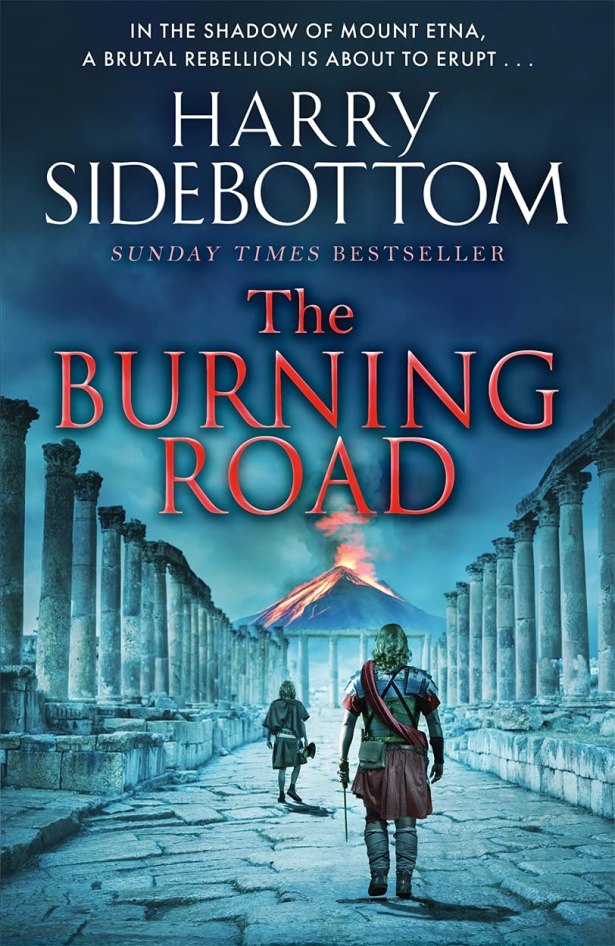
The Burning Road by Harry Sidebottom

The Burning Road Cover

Publisher: Zaffre (Trade Paperback – 5 January 2022)

Series: Standalone/Warrior of Rome

Length: 344 pages

My Rating: 4.75 out of 5 stars

Amazon

One of my favourite historical fiction authors, Harry Sidebottom, returns with another epic and intense historical adventure, The Burning Road, a fun-filled, action-packed thriller.

There are some amazing historical fiction authors out there now who focus on Roman history to create some excellent and compelling novels.  However, one of the best is the extremely talented Harry Sidebottom, a historian turned author who has been producing some awesome and unique reads.  I have been a major fan of Sidebottom ever since reading his debut novel, Fire in the East (an exceptional siege novel) back in 2008.  I really enjoyed his Warrior of Rome (which followed a Germanic Roman soldier, Ballista) and Throne of the Caesars series, both of which contained some exceptional historical elements.  Sidebottom has also had a lot of success recently with some standalone novels, especially his last three books, which cleverly combined his historical knowledge with elements from thriller subgenres.  This included his 2018 release, The Last Hour, which brought back Ballista and set him on a 24-esque romp through ancient Rome; The Lost Ten, which was reminiscent of special forces thrillers; and The Return, a dark and complex murder mystery that had interesting Scandi noir overtones.  I deeply enjoyed all these previous novels, and I was very excited when I received a copy of Sidebottom’s latest book, The Burning Road, a couple of weeks ago.

Sicily, 265 AD.  Throughout the strategic volcanic island, a call of freedom has been heard as a charismatic slave starts to rally his fellow enslaved workers.  The various estates and towns are in a state of uproar as vicious slaves and captured barbarian warriors rise up to kill their masters.  As the revolution gains strength and results in greater bloodshed, the fate of the island may rest in the hands of a legendary warrior, Marcus Clodius Ballista.

After years of fighting for corrupt emperors and battling deadly Roman politics, Ballista is finally free from his responsibilities, determined to enter retirement.  Whilst travelling with his eldest son, Marcus, to his estates on Sicily, their ship hits a terrible storm, forcing it aground on the west coast of the island.  Barely surviving the rough surf and destructive storm, Ballista and Marcus are soon thrust into even greater danger when a band of armed slaves mercilessly kills the other shipwrecked survivors.

Barely escaping the rampaging slaves, Ballista leads his son inland, hoping to discover what chaos has befallen Sicily.  They soon discover that the entire island is in revolution, with any non-slave at risk at being killed or brutalised.  Determined to keep his son alive and rescue his family on the other side of the island, Ballista and Marcus attempt to cross the entirety of Sicily on foot.  Constantly harassed by marauding bands of former slaves, the two Romans must find a way to survive and reach their family before it is too late.  But can the old veteran and rash youth work together to survive and save all of Sicily, or will one of Rome’s greatest warriors finally be finished off by rampaging slaves?

Wow, now this was a fun and intense novel from Sidebottom, who once again highlights his skill as a particularly inventive author of Roman historical fiction.  I deeply enjoyed The Burning Road, especially as Sidebottom once again combines compelling historical elements with an impressive and action-packed thriller storyline.

I had a lot of fun with the incredible and extremely fast-paced narrative that Sidebottom featured in The Burning Road.  While it took me a little while to get into this book (mainly because I couldn’t find any reading time), once I started, I honestly couldn’t stop, and I ended up powering through The Burning Road in less than a day.  The Burning Road has a brilliant story that pits Sidebottom’s best protagonist, Ballista, and his teenage son right in the middle of an intense slave revolt on Sicily.  Sidebottom sets this all up perfectly, with a quick prologue to establish that the slave revolt has occurred, before focusing entirely on Ballista and Marcus, who are shipwrecked off the coast of the island.  At first, the scenario reminded me of another historical fiction novel, The Gladiator by Simon Scarrow, which featured slaves revolting on Crete.  However, Sidebottom takes this in a very different direction, with a dark and non-stop story that sees the protagonist forced to navigate across the island, encountering all manner of odd characters and a ton of enemies.  The first two-thirds of the book see the protagonists on their own, walking a hellish volcanic landscape filled with murderous slaves, which was so damn cool.  Sidebottom was clearly trying to emulate some post-apocalyptic thrillers here, and there is even a scene that is a brilliant homage to The Road.  This makes for some intense and bloody sequences, and you will find yourself glued to the pages as you wait to see what danger they will encounter next.  The final third of the book sees Sidebottom return to his original writing element as Ballista is drafted into leading the defence of a besieged city.  This leads to an amazing and unique set of siege sequences, as Ballista and a small force of civilians attempt to hold back an overwhelming army of enraged slaves, which leads to a bloody and satisfying conclusion.  I loved this brilliant combination of story elements, especially the brutal walk across Sicily, and it makes for one heck of a story.

One of the best things about The Burning Road was the compelling central characters, especially as Sidebottom used it to tell a touching an enjoyable father-son story.  The first of these is Ballista, the protagonist of the Warrior of Rome series, who returns for another gruelling adventure.  As a former Germanic prince turned Roman soldier, siege expert and noble, Ballista is an old hand at danger and once again rises to the challenge even with his advancing age.  However, this time Ballista is forced to undertake his battled filled journey with his young teenage son, Marcus (also called Isangrim).  Setting Ballista and Marcus up as the main point of view characters, Sidebottom tells a fascinating tale that not only follows their desperate journey but which dives into their relationship and personality.  Due to Ballista’s military career, these two aren’t particularly close, with Marcus slightly resenting his barbarian father.  However, over the course of the book the two slowly grow closer as they face constant ordeal.  Sidebottom paces this growth in their relationship perfectly and you soon get really invested in seeing how much they begin to trust and rely on each other.  I enjoyed seeing this paternal side of Ballista, which enhanced his already complex character, and Marcus grows to become an enjoyable companion, especially as he begins to realise everything his father has done for him and how he has tried to prepare him.  This great father-son relationship becomes a major part of the book’s plot, and it put me in mind of some other similar adventures such as The Road, or even the recent God of War game (I may have imagined Ballista speaking in Christopher Judge’s voice).  This was a brilliant and powerful heart to the entire book, and it will be fascinating to see how much Marcus is featured in any of Sidebottom’s future novels.

I was also very impressed with the interesting historical detail that Sidebottom featured throughout The Burning Road.  The author has clearly done a ton of research on the various subjects contained within and there is a comprehensive reference section at the back, including a history book written by Sidebottom himself.  As such there is an amazing sense of authenticity to the setting and figures featured within The Burning Road which really helps to drag the reader into the story.  This period of Roman history has always been a rich ground for Sidebottom’s novels, and it was fascinating to see some more detail about the politics of the time.  I loved all the awesome detail about Sicily, which proves to be an exceptional and fascinating background setting for the story.  Sidebottom, who has visited Sicily many times, does a great job of filling in the historical blanks around the island and he portrays it as it would have appeared during Roman times.  All this impressive attention to environmental detail results in some cool romps through forests, mountains and ancient towns, and I think that the author really captured the historical soul of this island.  One of the big historical elements that Sidebottom invests a lot of time exploring is slavery during the Roman era.  The author includes a fascinating examination of how slaves are treated during this period, as well as some of the philosophical thought surrounding the entire process, both from the masters and the slaves.  The subsequent slave revolt really helps to highlight the Romans’ reliance on a large population of slaves to maintain their society and having the outsider Ballista explore this provided an interesting alternate perspective to the practice.  I also deeply appreciate the desperation and anger that the various slave characters had, which helped to turn them into a sympathetic enemy, even if you want the protagonists to survive more.  All this really added a lot to the overall story, and I look forward to seeing which area or historical period Sidebottom will explore next.

The Burning Road was another exceptional and epic read from Harry Sidebottom, who continues to flourish as one of the most inventive and exciting authors of historical fiction out there.  This latest novel features an intense and unique historical fiction tale chock full of action, character growth and some fascinating bits of period detail.  I had an absolute blast getting through this amazing novel, and The Burning Road comes very highly recommended as a result.

Amazon

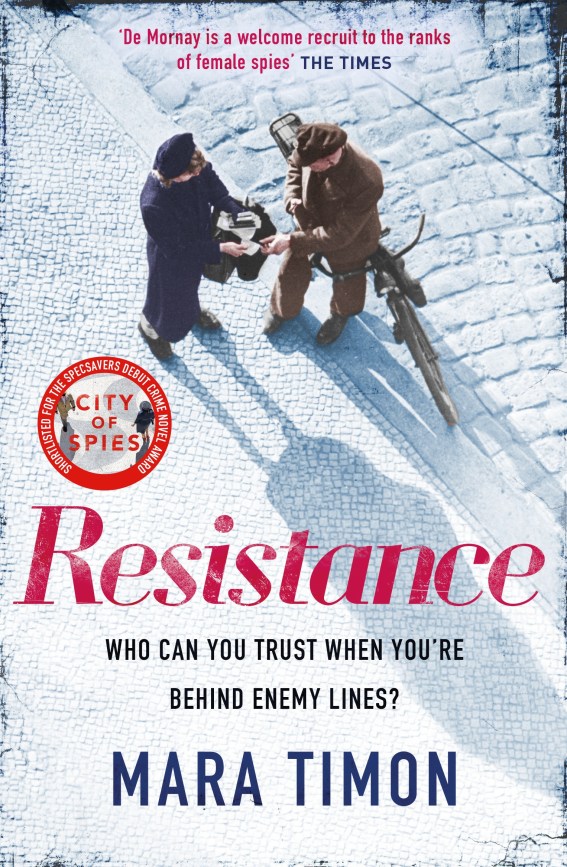
Quick Review – Resistance by Mara Timon

Resistance Cover

Publisher: Zaffre (Trade Paperback – 30 November 2021)

Series: City of Spies – Book Two

Length: 416 pages

My Rating: 4.25 out of 5 stars

Amazon     Book Depository

Prepare to dive into the intricacies of World War II espionage with a second fantastic historical thriller from Mara Timon, Resistance.

Timon is a brilliant author who debuted in 2020 with her intriguing novel, City of Spies, which followed a British agent sent to infiltrate neutral Portugal and encounter all manner of dangers and deceit.  Timon has now followed up this impressive debut with an intriguing sequel, Resistance, which follows the protagonist of City of Spies as she is sent to German-occupied Normandy days before the Allies invade.

Synopsis:

Three women. One mission. Enemies everywhere.

May 1944. When spy Elisabeth de Mornay, code name Cécile, notices a coded transmission from an agent in the field does not bear his usual signature, she suspects his cover has been blown– something that is happening with increasing frequency. With the situation in Occupied France worsening and growing fears that the Resistance has been compromised, Cécile is ordered behind enemy lines.

Having rendezvoused with her fellow agents, Léonie and Dominique, together they have one mission: help the Resistance destabilise German operations to pave the way for the Normandy landings.

But the life of a spy is never straightforward, and the in-fighting within the Resistance makes knowing who to trust ever more difficult. With their lives on the line, all three women will have to make decisions that could cost them everything – for not all their enemies are German.


Resistance
was an impressive and clever historical spy thriller that proves to be extremely addictive and exciting.  Set several months after the events of City of Spies, Resistance sees the protagonist and point-of-view character Elisabeth sent to infiltrate occupied Normandy under a new cover identity to assist the local French Resistance as a wireless operator.  Simultaneously gathering intelligence and investigating a potential mole in the French organisation, Elisabeth works with several other female spies in the area and is forced to contend with traitors, radicals and the Gestapo.  This story gets even more intense the further it goes, not only because a figure from the protagonist’s past comes into the picture and complicates events, but because the last third of the novel features the D-Day landings at the nearby Normandy beaches.  This forces the protagonist and her friends to encounter several attacks and betrayals amid the chaos of invasion and it leads to an incredibly exciting and captivating final section that is honestly impossible to put down.  While I did think that a couple of character arcs were a bit underdeveloped and unnecessary to the plot, this was an overall epic story and I really appreciated the complex and powerful narrative that Timon came up with.

I felt that new readers could easily get into Resistance with having read the preceding novel City of Spies.  Timon does an excellent job of explaining all the key events of the first novel, and readers are quickly informed of everything that would impact that plot of this sequel.  That said, fans of City of Spies will find this to be a pretty good sequel as several intriguing storylines are continued throughout the plot of the book.  Not only do key characters make significant reappearances but you also have a continuation of the fantastic romantic arc between Elisabeth and German officer Eduard Graf, who got married in the first novel.  Despite being an unusual relationship, this was an excellent storyline to continue and it was great to see the two interesting characters continue their forbidden love in the midst of war and intrigue, especially as both have major secrets (one is a spy, the other is planning to assassinate Hitler; it’s complicated) and are trying not to expose each other to their enemies.  I will be really intrigued to see where this series goes next, especially if Elisabeth is dropped into Germany either during Operation Valkyrie or the dying days of the war

One of the things that I most liked about Resistance was how this book ended up being a particularly solid and compelling historical thriller that emphasised its gritty and realistic spy elements.  Timon strives to strongly emphasise all the historical espionage aspects of the plot, and it was fascinating to see all the cool details about spy craft and being an undercover radio operator.  There was also a great focus on the abilities of Britain’s legendary female operatives, and Timon ensured that this book felt as realistic and compelling as possible.  Throw in some cool historical characters, such as members of the SOE and key German soldiers, like Erwin Rommel, and you have a particularly good historical thriller that was a lot of fun to explore.

With her second book, Resistance, impressive author Mara Timon continues to shine as a bright new figure in the historical thriller genre.  Perfectly combining realistic espionage elements with an iconic and dangerous historical setting, Resistance serves as an excellent sequel to Timon’s debut, City of Spies, and proves to be extremely addictive and compelling.  An awesome and highly recommended read.

Amazon     Book Depository

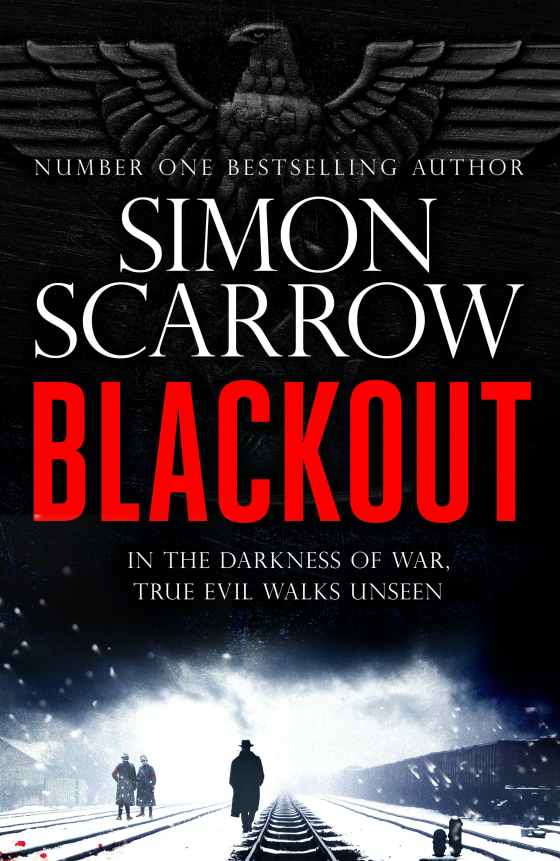
Blackout by Simon Scarrow

Blackout Cover

Publisher: Headline (Trade Paperback – 30 March 2021)

Series: Standalone/Book One

Length: 424 pages

My Rating: 4.5 out of 5 stars

Amazon     Book Depository

One of the leading authors of historical fiction, Simon Scarrow, breaks new ground in a thrilling and captivating historical murder mystery, Blackout.

Berlin, December 1939.  As the citizens of Berlin worry about a potential upcoming conflict with Britain and France, the Nazi party continues to sink their claws into every aspect of German society.  But as a bleak winter sets in and enforced blackouts plunge the city into darkness, a far more sinister threat begins to stalk the streets of Berlin.

A young woman has been found brutally murdered near a busy set of train tracks.  The victim is a former famous actress with a powerful husband.  Due to her marital connections, as well as a scandalous past with various high-ranking Nazi figures, including Goebbels, her case has dangerous political implications.  To that end, her case is assigned to Criminal Inspector Horst Schenke of the Kriminalpolizei, the Kripo, one of the few police officers not to join the party.  Due to his apparent disregard for the party and the importance of the victim, Horst is under intense pressure from the head of the Gestapo to solve this case.  However, what begins as an easy murder case swiftly devolves into something far more dangerous when a second body is found, and Horst is forced to face the reality that he is chasing a serial killer.

As the bodies of more young women are discovered, Horst rushes to find a killer before the government attempts to hush up the fact that a killer is loose within their perfect Nazi society.  But with the Gestapo interfering at every step and key suspects protected by the Abwehr, German Military Intelligence, this case proves difficult to solve.  When a survivor is found, Horst thinks this may be the opportunity to find the killer.  However, when the witness is revealed to be Jewish, Horst is forced to find a way to protect her from both the killer and the Gestapo.  Can Horst find the killer before it is too late, or will he discover that disloyalty to the Nazi government is considered a far worse crime?

This was another amazing novel from one of my absolute favourite authors.  Scarrow is best known as a Roman historical fiction author due to his long-running and impressive The Eagles of the Empire series, which I am a particular fan of (see my reviews for The Blood of Rome, Traitors of Rome, and The Emperor’s Exile).  However, Scarrow has also branched out into other historical periods with his Revolution quartet, the standalone novels The Sword and the Scimitar and Hearts of Stone, and a modern crime novel he wrote with his colleague Lee Francis, Playing with Death (which I really need to check out).  His latest book, Blackout, is an interesting change of pace from some of the previous Scarrow novels I have enjoyed, presenting a compelling murder mystery story with the dark historical setting of Nazi Germany.  Blackout, which was unfortunately delayed from last year, proved to be an excellent read, and I loved the complex and powerful story that Scarrow came up with.

Scarrow’s latest book has an outstanding narrative that starts with a Nazi social party scene quickly leading to the brutal murder.  This shocking opening in the dark of a blacked-out Berlin sets the scene for the rest of Blackout perfectly, and lets the reader know that they are in for an intense and dark tale.  The narrative then advances to the next day, with a great introduction to central protagonist Inspector Horst Schenke, who gets to showcase his deductive ability while also covering his personality and feelings about the Nazi government.  Once the case proper begins, Horst and his team are thrust into a lethal hunt for a serial killer, while also having to contend with the vicious politics and intrigue of the Nazi party.  Horst finds himself caught between the Gestapo, German Military Intelligence, and other influential Nazis, each of whom are attempting to manipulate the situation for their own ends.  This blend of mystery and dangerous political intrigue makes for a fantastic read, and I enjoyed the compelling balance that Scarrow produced.  The mystery itself is well crafted, with the author ensuring there is a complex and tangled web to unravel, with several promising suspects.  There are some very cool twists added into the plot, and I quite enjoyed the exciting conclusion and eventual reveal of the killer.  This is also a very effective standalone mystery, which would serve as a great introductory novel if Scarrow ever wanted to revisit this setting and characters in the future.  A series set around this book could go in some interesting directions, and I for one would be quite keen for that.

Easily the most captivating and fascinating part of this novel is the amazing historical setting that Scarrow used as the backdrop to his amazing mystery.  While several great mystery series have used World War II Germany as a setting before (the Bernie Gunther series by the late, great Philip Kerr comes to mind), I think that Blackout was a particularly good example of how it could be done, with Scarrow making sure that it really enhanced this already incredible story.  Scarrow skilfully works several fantastic and intriguing elements of this iconic setting into his narrative.  This includes the blacked-out winter streets and train lines of 1939 Berlin, which serve to hide the killer’s actions and ensures an easy hunting ground.  I also appreciated the air of worry and uncertainty that inhabited many of the characters as they are constantly left wondering if their country is heading towards a bigger war with Britain and France, not knowing of their government’s master plan.  There is also a certain amount of nationalism, patriotism and casual racism/anti-Semitism on the streets, which is a confronting and concerning aspect that the protagonist has to deal with.  There is also a fascinating focus on the way in which the Nazis infested all aspects of the German government and administration, particularly the police.  Inspector Horst is constantly butting heads with other members of the police force who were only promoted due to their party allegiances, rather than any skill or ability, which impacts the protagonists to successfully investigate his crime.  Add in the compelling depictions of German politics and Nazi interference that I mentioned before, and you have a very impactful and distinctive setting, which really helped to turn this crime novel into something very special.

Scarrow has a knack for creating some interesting and likeable characters, and this is certainly true for Blackout.  Inspector Horst is a fantastic protagonist, a former famous race car driver who experienced a traumatic crash several years ago.  He has since reworked himself as a talented police investigator and a rare man of honour in troubled times.  There is a lot to like about Horst, including his brilliant investigative skills, his courage in the face of danger, and his complete disregard for the Nazi leadership.  As one of the few senior police officers who has not joined the Nazi party, Horst is a bit of a black sheep amongst the ranks of his organisation, especially as he barely contains his disdain for the Nazis and what they are doing to his country.  This invariably leads him into a whole mess of trouble, which sees him in the crosshairs of the Gestapo and other Nazi figures, who seek to use his neutrality and skill for their own advantages.  I had a lot of fun following Horst throughout this novel, and it was great to see how a non-Nazi supporter would survive amongst the authoritarian ranks of German police in this period.  There are several great storylines surrounding this character, including about the trauma he is experiencing from his crash, as well as guilt at his failure to save the people closest to him.  I really enjoyed this character in Blackout, and it seems likely that Scarrow would have some very compelling storylines in place for this character if he ever revisited this series.

Aside from Horst, there are several other compelling side characters in this novel, which include a mixture of fictional characters and real historical figures.  One of the better characters is Ruth, the only apparent survivor of one of the serial killer’s attacks.  Ruth is a feisty and combative character, made so by her position as one of the few Jewish people still remaining in Berlin.  Despite being threatened by the entire German apparatus as well as a serial killer, Ruth remains strong throughout the book and is a very inspirational character to follow.  I also quite enjoyed the character of Liebwitz, a Gestapo agent assigned to Horst’s unit to spy on him and report back to the Gestapo commander.  However, Liebwitz proves to be a rather unusual Gestapo agent, more concerned with facts and analysis, rather than Nazi internal politics, and it was fascinating to see an honest and non-sociopathic member of the Gestapo.  While there is a lot of mistrust for Liebwitz in the beginning, he soon becomes a major part of the investigation, and Scarrow sets up some very interesting storylines for him.  Finally, I also quite enjoyed the killer of the story.  Several sequences in Blackout are shown from his point of view, although his identity is kept hidden towards the end of the book.  Scarrow paints an interesting picture of this killer’s mental state, and it was interesting to see his motivations run parallel to the goals of the Nazi party, which he uses to justify some of his actions, and indeed his actions are something that the Nazi leadership might approve of.  I felt that the author did a good job setting this antagonist up throughout the novel, and I rather liked the twist surrounding their eventual reveal.

Simon Scarrow continues to show why he is one of the leading authors of historical fiction with the outstanding and captivating historical murder mystery, Blackout.  Breaking into a whole new historical period and setting, Scarrow produces a fantastic and powerful murder investigation which makes amazing use of its complex characters and detailed historical setting.  Featuring all manner of twists, political intrigue and devious Nazi characters, Blackout was a compelling and intriguing read that comes highly recommended.  I cannot wait to get my next hit of Scarrow, and luckily I don’t have to be patient for long as the next Eagles of the Empire book, The Honour of Rome, is out in a few months time.

Amazon     Book Depository

The Paris Collaborator by A. W. Hammond

The Paris Collaborator Cover

Publisher: Echo Publishing (Trade Paperback – 4 May 2021)

Series: Standalone

Length: 312 pages

My Rating: 4.5 out of 5

Amazon     Book Depository

Amazing Australian thriller author A. W. Hammond presents his first historical read with The Paris Collaborator, a clever and exciting novel set in occupied Paris.

August 1944.  With Allied forces advancing towards Paris, the Nazi occupation of the city seems to be nearly at an end.  But just because the Germans are poised to leave does not mean that the city is any less dangerous, especially for those whose loyalties are in question.  Since the Germans arrived, former teacher Auguste Duchene has taken on a whole new profession to survive: finding missing children.  With his impressive observational skills, Duchene has proven to be a keen investigator, but his talents are about to get noticed by all the wrong people.

Despite his desire to only help reunite lost families, Duchene is forced into working for a violent faction of the French Resistance after they threaten the safety of his collaborating daughter, Marienne.  Recruited to find a missing priest and the cache of stolen weapons he was hiding for them; Duchene reluctantly begins his search.  However, hours after he begins working for the Resistance, he is approached by a senior Nazi officer who blackmails him into finding a missing German soldier.

Caught between two dangerous masters, Duchene has no choice by to comply with both if he and Marienne are to survive.  With only 48 hours until both groups will deliver on their deadly threats, Duchene scours Paris for both the missing men.  However, the more he discovers, the more he begins to realise that the cases may be connected, and that he may be only able to satisfy one of his employers.  Worse, the Gestapo have taken an interest in Duchene’s investigation and are determined to interfere for their own ends.  Can Duchene find his targets before it is too late, or will everything he love be taken away from him?

This was an awesome and fantastic novel from an impressive author who I was not too familiar with before I picked up this outstanding read.  A. W. Hammond has previously written two Australian thrillers under the name Alex Hammond.  These books, 2013’s Blood Witness and 2015’s The Unbroken Line, were intriguing legal thrillers that focused on his Will Harris protagonist.  The Paris Collaborator is the author’s first foray into historical fiction, and he did an exceptional job producing a clever and addictive historical thriller.  I had an incredible time reading The Paris Collaborator and I ended up finishing it off in a few short days once I got drawn into its cool and memorable narrative.

Hammond has come up with an excellent thriller storyline for The Paris Collaborator that is exciting and clever, and which also makes great use of its historical backdrop.  This is a very fast-paced story, and it really does not take long for it to take off, as unconventional missing child investigator Duchene is drawn into the conflicting webs of radical French Resistance fighters and an influential Nazi officer.  Forced to work on both cases on a very lean timeline, the protagonist conducts a hurried investigation, trying to find hints of two different missing persons while also trying to survive in the middle of a chaotic and failing city.  With the interference of the Gestapo, Duchene is trapped in the middle of a three-way battle for his loyalties, as each of these very dangerous groups threatens to kill him and his daughter unless he complies.  This results in a very epic final third of the book, as the protagonist runs around Paris, which is in the middle of overthrowing its German occupiers, trying to find the last pieces of the puzzle with everybody trying to kill or capture him.

This was a very captivating and high-stakes story, and I loved all the thrilling intrigue, action and suspense as the protagonist jumps from one bad situation to the next.  The overall investigation had some rather intriguing twists to it, many of which took me pleasantly by surprise, although they were very well set up in hindsight.  I absolutely lost it when the final twist was revealed, as it was so outrageous and surprising that I ended up laughing for several minutes.  This reveal, while a little hilarious, did fit nicely into the dark tone of the novel, and I felt it was an outstanding way to wrap up this novel, especially as it is guaranteed to stick in the reader’s mind.  I deeply enjoyed The Paris Collaborator’s clever story, and this ended up being one of the more entertaining and unique thrillers I have read all year.

While readers will definitely remember the amazing thriller story, I also must highlight the exceptional historical setting that was featured in The Paris Collaborator.  Hammond chose to set his clever story amid the final days of the Nazi occupation of Paris, which I really enjoyed.  The author does an outstanding job of portraying this intriguing historical setting, and I loved the exploration of an occupied city on the edge, with minimal resources, a thriving black market, a near-rebelling populace, nervous soldiers starting to pull out and a dangerous resistance movement planning their next strike.  Hammond makes great use of this unique setting throughout the story, and I really appreciated the way he featured historical elements like the Resistance, the Gestapo and the German army throughout the story.  The final part of the book is set during the French uprising to free Paris from the Nazis, and I loved how the protagonist had to overcome all the obstacles this put in his way, from tanks attempting to put down dissent, to crowds determined to kill any Germans they could find.  This was an outstanding depiction of occupied Paris and I felt that Hammond perfectly utilised it throughout this amazing book.

One of the most intriguing aspects of the historical setting of The Paris Collaborator is the compelling focus on the French mentality of collaboration and resistance.  Throughout the novel, the protagonist encounters a wide range of different characters who have survived the Nazi occupation by working for, engaging with, or falling in love with German soldiers, much to the disgust of their fellow French citizens.  The protagonist himself is considered by some to be a collaborator, not only because he has helped wealthy French collaborators find their children but because he finds himself working for various Nazis throughout the course of the book.  This forces the protagonist to walk a thin line, as he must appear to be a patriotic Frenchman disgusted with the occupiers while also making sure that he does not enrage any of the Nazis who are employing him, something he does not do particularly well.  As a result, Duchene, and several supporting characters, encounters dangerous reactions from some French characters and Resistance members, and this really adds to the tension and danger that he encounters.  I think that Hammond did an excellent job examining and portraying this mentality of anti-collaboration throughout the novel, especially as it is cleverly layered into nearly every interaction the protagonist has.  Some of the actions of French characters who were actively resisting against the Germans were also pretty intriguing, including one particularly over-the-top one that is definitely going to stick in my mind.  It was also fascinating to see what some people would do to avoid being labelled as a collaborator, even if that means completely changing who they are.  I really enjoyed the author’s examination of how collaborator would have been viewed during this turbulent period of history and it ended up being an excellent and compelling addition to The Paris Collaborator’s narrative.

The Paris Collaborator by A. W. Hammond is an outrageous and impressive historical thriller that comes highly recommended.  Hammond has written a fantastic fast-paced story that is heavy on action, intrigue, and amazing twists, all set amid Paris in the final days of the Nazi occupation.  I had a lot of fun getting through this awesome novel, and thanks to some outstanding reveals and exciting moments, The Paris Collaborator is really going to stick in my mind.  Readers are guaranteed a thrilling and clever time with this book and will power through it in no time at all.

Amazon     Book Depository