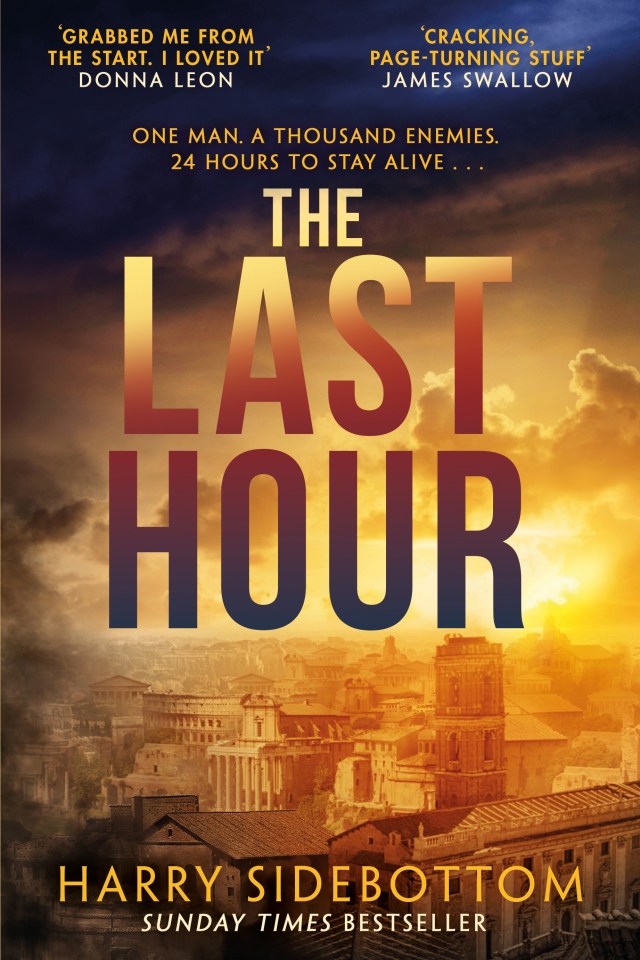
The Last Hour by Harry Sidebottom

The Last Hour Cover

Publisher: Zaffre

Australian Publication Date – 1 May 2018

World Publication Date – 8 March 2018

Amazon

Ballista is back, baby!  One of the best writers of Roman historical fiction, Harry Sidebottom, brings back his original protagonist for an incredibly gripping and action-packed novel that perfectly combines the thriller and historical fiction genres.

In Rome, in 265 AD, Marcus Clodius Ballista, former Dux Ripae of Rome and loyal friend of Emperor Gallienus, enters the Mausoleum of Hadrian to meet with an informant who wishes to talk to him about a plot to kill the emperor and usurp his throne.  But the meeting is a trap, the informant is murdered, and Ballista is forced to jump into the River Tiber to escape the horde of assassins sent to kill him.

Washed up outside of the city and pursued by killers, Ballista only has 24 hours until Gallienus is murdered.  With the conspirators still unknown to him, Ballista has no idea who he can trust and who can help him, but he must find a way to warn the emperor of the plot against him.  If he fails, not only will his friend will be assassinated but Ballista’s family will also die in the ensuing takeover.

Now alone, unarmed, and with no money, bodyguards or friends around him, Ballista must find a way to re-enter the city and transverse the entirety of Rome to get to the emperor’s side.  But the city is now a very dangerous place for him.  The city watch are fully mobilised and ordered to arrest Ballista at all costs.  In addition, mobs of disguised killers are searching for him everywhere, and they have no intention to taking him in alive.

As Ballista makes his way through the streets of Rome, he must find a way to avoid all the people searching for him while also overcoming the other dangers that lurk throughout the city.  Will Ballista be able to save his friend and his family, or will his final defeat take place in the heart of the empire he has spent his whole life protecting?

Harry Sidebottom is a renowned British historian and veteran author of Roman historical fiction, having previously written two best-selling series, Warrior of Rome and Throne of the CaesarsThe Last Hour is the 10th book from Sidebottom and a spinoff off from his Warrior of Rome series, featuring his original protagonist, Ballista.  Ballista is a heavily fictionalized version of a famous Roman prefect, and served as the main character of Sidebottom’s first six books.

I’ve always had a soft spot for Sidebottom’s works, as his debut novel, Fire in the East, was one of the first pieces of historical fiction that I ever read, and featured one of the best accounts of a siege that I have ever read.  His second book, King of Kings, was also one of the first books that I ever reviewed, and was a fantastic sequel that featured great story elements, set in an interesting and underused period of Roman history.  Sidebottom’s latest book, The Last Hour, is an amazing hybrid of the thriller and historical fiction genres, featuring an intense, high-stakes journey through the ancient city of Rome.

The thriller aspects of this book are exhilarating.  The protagonist is aware of a devastating assassination that is about to be committed and has only a limited time to reach and save the target.  Sidebottom incorporates a ticking clock element to the story, as Ballista is constantly aware of the passing of time and how short a period he has to complete his objective to save not only his friend but his entire family as well.  Needless to say, the author takes this story right down to the wire, and the reader has no idea whether Ballista will succeed or not; readers who are familiar with the previous books in the series will recall that King of Kings ended with Ballista and the previous emperor being both betrayed and captured by the enemy.  The story gains a significant amount of intensity as the protagonist has no idea of who he can trust, nor who is aligned against him.  Sidebottom also goes out of his way to ensure that the readers are in the dark about who the main conspirators are, even towards the end of the story.  This intrigue is compounded as Sidebottom gives his audience a tantalising view of the antagonists meeting while also frustrating the readers by ensuring that these characters use codenames when talking to each other.  As a result, the reader is intently drawn into the story by both the protagonist’s mad dash through the city and the immense desire to work out who the conspirators are and what their full plan is.

In addition to its electrifying thriller elements, The Last Hour also features an incredible exploration of ancient Rome and the range of people the protagonist encounters during his time in the city.  Sidebottom is determined to highlight several different groups of people that were a factor in the city, including the city watch, the Praetorian guards, the emperor’s Germanic bodyguards and the frumentarii, who served as the emperor’s secret police.  Each of these groups is an essential part of the emperor’s security and has a significant role to play in this novel, and the readers will be intrigued by Sidebottom’s descriptions of each of them.  Ballista also encounters a range of other Roman citizens, from simple shopkeepers and men of the street to members of the city’s criminal underground, cults of Egyptian priests, hidden Christians and even drunk Roman nobles looking to assault people they meet on the street.  Each of these adds to the rich tapestry of the historical city that Sidebottom has woven into existence.  This tapestry is further enhanced by Sidebottom’s determination to provide detailed examinations of several of ancient Rome’s buildings and locations.  These range from historically significant locations, like the coliseum, the Praetorian camp and the emperor’s palace, to more mundane locations that were a unique feature of the city of Rome, such as massive bathhouses and large apartment-style buildings.  All these historical elements serve as terrific background for this extraordinary thriller based story.

Readers of this book are also in for an action-packed treat as the protagonist rampages through ancient Rome, continuously fighting off either the people hunting him or the regular citizens of Rome attacking him for their own reasons.  As a result, The Last Hour is filled with innumerable action sequences that are guaranteed to amuse and delight all the action fanatics out there.  Readers will be gifted with sequences that include a crazy fight and flight across the rooftops of the city, and a down-and-dirty fight in the steamy and mechanical workings of a bathhouse.  There is also a siege on the roof of one of the city’s monuments and a large pitched battle in the streets of Rome.  These fight scenes are great fun and increase in intensity throughout the book as the protagonist’s countdown goes on.

Harry Sidebottom has once again produced an incredible, fast-paced and exceedingly exciting action novel that combines the very best elements of a first-rate thriller with all the research and detail of an excellent historical fiction novel.  A truly unique and utterly entertaining piece of literature, The Last Hour once again shows why Sidebottom is one of the very best authors writing about ancient Rome.

My Rating:

Four and a half stars

Amazon

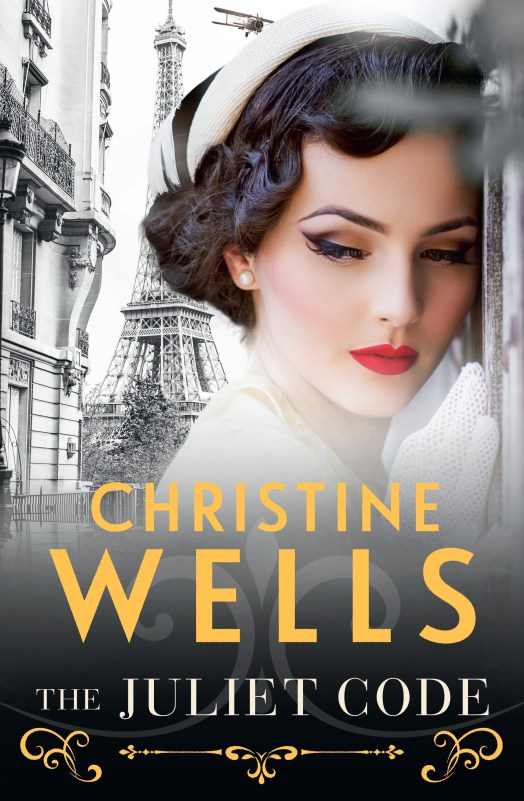
The Juliet Code by Christine Wells

The Juliet Code Cover

Publisher: Michael Joseph

Publication Date – 30 April 2018

Amazon     Book Depository

From acclaimed Australian author Christine Wells comes this touching and memorable tale of love, captivity and endurance in the darkest of times.

During World War II, Juliet Barnard was a British agent working for the Special Operations Executive.  A skilled wireless operator, she was one of the few female agents that were dropped into occupied France to meet contacts and pass intelligence back to the Allies.  While initially successful, she was only active in France for a short time before the Nazis captured her.  Trapped in a prison that specialised in interrogating captured spies and infiltrators at Paris’s Avenue Foch, Juliet endured torture, drugging and manipulation and came out of the prison a different person.

Now, two years after the end of the war, Juliet is still recovering from her ordeal and trying to continue a relationship with Felix, the man she fell in love with during her training.  Claiming to be suffering from memory loss, Juliet has managed to avoid providing any details about her time at Avenue Foch or about the man who held her captive, Sturmbannführer Strasser.  Finding Strasser is the last thing Juliet wants to happen, because he knows a dark secret about Juliet – a secret she would kill to protect.  However, when Juliet meets Mac, an SAS officer turned Nazi hunter whose sister served in the war with Juliet, her guilt compels her to return to Paris to help him locate Strasser.

This is the third book from Wells, who has previously written two English-based historical stories that feature a strong, female protagonist.  The Juliet Code is the second book from Wells that focuses on British spy activities during World War II; her previous novel, The Traitor’s Girl, focused on a World War II MI5 operative.  The Juliet Code is another excellent and intense romp into the history of World War II, and Wells has done an amazing job of creating this unique and emotional story.  This book is a combination of a great dramatic story and a two-stage historical spy thriller wrapped up with a poignant romantic subplot.

Wells has injected considerable drama and emotion into her story, especially through her main character, Juliet, who goes through substantial emotional changes throughout the book.  Before she is dropped into France, Juliet is portrayed as a shy girl, unsure of her abilities as a potential spy but eager to do her duty to her country.  After the war she is more hardened individual who is suffering from guilt, both due to being one of the few agents to survive capture and because of her own actions during the war.  These changes in the character are made obvious to the reader, not just because of Wells’s great writing ability but also because she switches between the mid-war and post-war scenes multiple times.  Wells slowly reveals the main character’s wartime secret, which is a central part of the plot.  While there are some hints to what this secret is early in the book, the full reveal is not done until later in the story, and makes use of a moving and artfully constructed confession scene.

The Juliet Code is set in the 1940s, and Wells has broken the story up into two distinct periods.  The first period starts in 1943 and continues for the rest of the war, examining the main character’s training, her infiltration of occupied France and her time as a captive at Avenue Foch.  The parts of the book set during the war are very intriguing and are some of the most appealing scenes from a historical fiction viewpoint.  The sections that feature Juliet training and actively spying in France were some of my favourite parts of the plot, and I loved reading Wells’s descriptions about the French resistance networks, the British covert activities, their espionage techniques and the counteroperations the Nazis were undertaking to catch the operatives active in France.  There are also some significant descriptions of how the British wireless transmitters functioned and British coding techniques.  These very technical parts of the book contain some fascinating information while also providing the reader with a good understanding of this technology and what the operators were doing with it.  There are also a number of scenes that follow Juliet after she is captured and held as an enemy spy in Paris.  These parts of the book are, by necessity, darker in nature, depicting how these spies, especially female operatives, were treated during this period.  There are also thorough descriptions of the historical locations used as prisons in Paris.

The second part of the book is set in 1947 and features Juliet and her companions revisiting the sites of Juliet’s captivity and attempting to hunt down her jailer.  This part of the book comes across as more of a traditional spy thriller, and contains some vivid descriptions of post-war France.  There are some examinations of how the Allies and the Soviets were attempting to capture or recruit former members of the Nazi regime, as well as some interesting looks into the post-war espionage that was occurring at this time.  Wells also revisits characters and locations encountered by the protagonist during the war, and these scenes are used to provide clues to locate Strasser while also providing additional hints about what happened to Juliet during her captivity.

Among the defining features of The Juliet Code are the realistic and detailed characters that the reader gets to enjoy.  They feel so realistic because these characters were inspired by real historical figures who served in similar capacities during the war.  This touch of realism adds a lot to the book and serves as an inspirational reminder of those unsung heroes of British espionage.  These fictional facsimiles do interact with a few real historical figures within the book, and readers will be captivated as they find out which of these unique wartime stories are actually historical fact.

Wells has included an enticing romantic subplot between the characters of Juliet and Felix.  Readers will be able to feel the affection that these two characters have for each other, as well as the loss they experience as a result of Juliet’s capture.  Their relationship is also masterfully woven into the main story, and elements of their romance become key plot points, such as some personal romantic poems that actually contain transmitter codes.  Thankfully, Wells decided not to invest too much time in a love triangle between Juliet, Felix and Mac, although she does include the initial and somewhat entertaining jealousy you would come to expect from this situation.  Overall, the romantic subplot is both absorbing and nicely subtle, as it does not overwhelm the rest of the story.

Australian author Christine Wells once again delivers an elegant piece of literature that makes full use of its well-paced dramatic story and an utterly stimulating historical setting and content.  Fans of historical fiction will love The Juliet Code’s dive into World War II spycraft and counterespionage, as well as the excellent and electrifying thriller that blazes through post-war France.  This is a phenomenal novel that sticks in the mind and will appeal to wide array of readers.

My Rating:

Four stars

Amazon     Book Depository

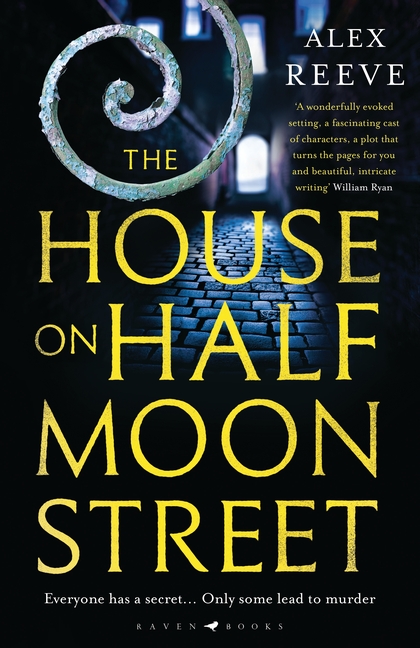
The House on Half Moon Street by Alex Reeve

The House on Half Moon Street Cover

Publisher: Raven Books

Publication Date – 3 May 2018

Amazon     Book Depository

Prepare yourself for an extraordinary tale of love, life and murder in Victorian London, all with a unique twist that will make this book one of the most talked-about pieces of historical fiction this year.

In London, in 1880, Leo Stanhope is a bright young man living the city life.  He is employed as an assistant to a London coroner and is in love with Maria, a high-class prostitute.  However, Leo also has a big secret: he was actually born Charlotte.  Born a woman, but knowing deep inside that he was a man, he ran away as a teenager and has been living as Leo ever since.  Only a few trusted people know this, and Leo fears the day he’ll be discovered.

When Maria is found dead, Leo finds himself accused of her murder.  With his life falling down around him, Leo starts his own investigation into the case.  But what does Maria’s death have to do with another corpse found drowned in the river, and how do Maria’s rich employers and an infamous London abortionist fit into the case?  Leo will risk everything to find Maria’s killers, even if that means revealing his biggest secret.

This is an outstanding debut from author Alex Reeve, who has created a fabulous addition to the historical crime genre.  The House on Half Moon Street has massive potential to expand out into a fantastic and iconic new series.

Without a doubt, the most distinctive and memorable part of The House on Half Moon Street is the main character, Leo Stanhope, who is a transgender man.  The first thing that needs to be mentioned is that Reeve has done a great job of writing this character and has produced an appropriate and non-controversial description of a transgender person.  There is a lengthy examination of the protagonist’s views about his identity, which includes descriptions of his childhood, memories of how he has always felt this way and internal monologues on how uncomfortable he felt behaving as a woman.  Reeve also does a fantastic job of portraying Leo’s fears and frustrations at the way he has to live and the way some characters, such as members of his family, treat him.  Overall, this is an emotional and insightful examination of a transgender character in a historical setting, and Reeve has chosen an excellent protagonist for his novel.

The focus on a transgender main character and gender issues works well with Reeve’s great use of the Victorian setting, as he explores how transgender people lived in historical times.  As described in the book, transgender individuals were not treated well within Victorian England.  In one scene Leo describes how someone who was living in a similar situation to himself had recently been discovered by the authorities and institutionalised as a result.  The views and responses of the people who discover his secret also reflect the attitudes of the time, although there are some obvious parallels with some modern opinions, resulting in thought-provoking social commentary.  There are also some interesting descriptions of the techniques, tools and clothing that the protagonist uses to hide his female characteristics and make himself appear more masculine.  Due to differences in technology and social expectations, these techniques are obviously different from modern alternatives and represent some interesting hypotheses from Reeve.

There are also some amazing descriptions of Victorian London, which serves as a great backdrop for this story.  Not only does the dingy Victorian setting help to highlight Leo’s dark emotional state throughout the book; it is also the perfect background for a murder mystery that revolves around the murky criminal underworld.

On top of the compelling protagonist and the wonderful use of setting, those who read The House on Half Moon Street will also be treated to a top-notch murder mystery that also delves into the criminal and policing elements of 1880s London.  The investigation into the deaths is an intense experience that takes the protagonist through a series of different suspects and clues, creating an intriguing and complex case.  The emotional impact of the case on Leo is plainly obvious due to superb story narration, and this proves to be engaging to the reader, who becomes invested in solving the case.  The final solution to the book’s mystery is very clever, and the readers will love how the case comes to its conclusion.

Historical fiction buffs will also enjoy the examination of law and order during the era, as Reeve examines several police institutions, including the work of the coroner during the time.  The protagonist also encounters some of the city’s criminal elements, and there are some surprising crimes that are covered within the book.  Reeve’s use of a transgender protagonist once again comes into play during the character’s investigations, and the reader will be drawn into the scenes where Leo attempts to hide his previous life from the police and criminals.

The House on Half Moon Street is a phenomenal new book that takes a deep and sensitive look at transgender issues in Victorian London whilst also making use of a dark and detailed historical setting and a first-rate overarching murder mystery.

My Rating:

Four stars

Amazon     Book Depository

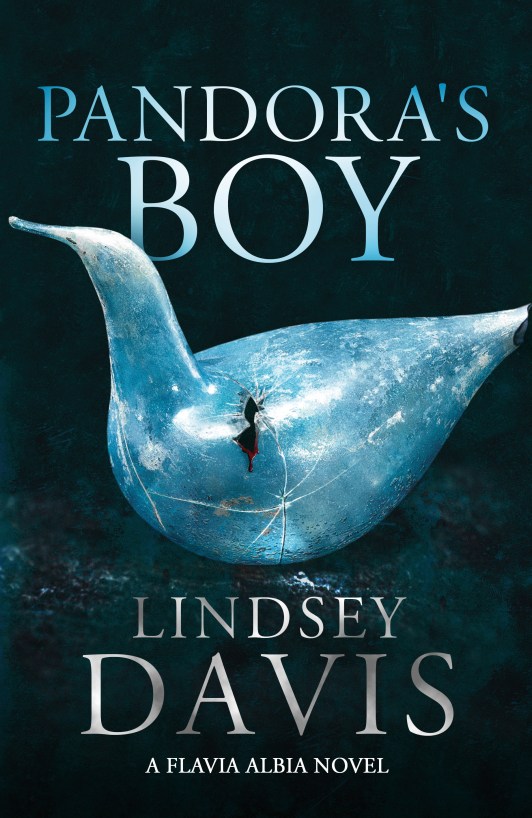
Pandora’s Boy by Lindsey Davis

Pandora's Boy Cover.jpg

Publisher: Hodder & Stoughton

Publication Date – 5 April 2018

Amazon

Ancient Rome’s premier female detective returns in the latest Flavia Albia mystery from veteran historical crime author Lindsey Davis.

Rome, 89 AD.  Flavia Albia, the daughter of the legendary investigator Falco, is now a proficient private investigator and informant in her own right.  When the ex-wife of her husband, Tiberius, brings a case of family drama to her, Flavia is tempted to refuse, but when Tiberius disappears she needs a distraction.

The case revolves around a teenaged girl found dead in the prosperous Quirinal Hill district of Rome.  The girl, Clodia, was the apparent victim of a poisoned love potion, and her parents and grandparents are blaming each other for her death.  What begins as a simple investigation quickly becomes complicated when the witch accused of supplying the potion turns out to be the sister of the city’s biggest crime boss.  No-one is talking, and everyone in the Quirinal Hill has a secret.

Flavia is forced to seek the truth from a variety of people, including warring grannies, concerned parents, criminal lawyers, secretive slaves, a lettuce salesman with an interesting religious statue and, worst of all, the overprivileged offspring of Rome’s elite.  However, as Flavia’s investigation continues and a friend of hers dies, it soon becomes apparent that a vicious gang war is imminent.  Can Flavia solve the crime without getting caught in the crossfire, especially when she has a terrible history with one of the gangs?

Pandora’s Boy is the sixth book in the Flavia Albia series, which acts as a direct sequel series to Davis’ Marcus Didius Falco series.  Davis is one of the most prolific authors of historical whodunits and has a particular focus on novels set in ancient Rome.  For example, her Marcus Didius Falco series contains 20 books, and she has produced some stand-alone books set in the same period.

Like the previous books in the Flavia Albia series, Pandora’s Boy takes a contemporary look at Roman culture and lifestyles.  The inhabitants of Davis’ books act in a very modern way despite their ancient surroundings, and this results in a very humorous interpretation of the ancient Roman characters.  Davis also uses this book to parody a specific group in modern society: the millennials.  Throughout the story, Flavia is forced to follow, interview and generally endure the victim’s friends, who are the offspring of the city’s rich and powerful.  These friends are exceedingly selfish, have sordid love lives and get into all sorts of mischief.  In other words, they act in a very similar way to how modern day millennials are often perceived and portrayed.  Their appearance is quite jarring in the ancient Roman setting and leads to a lot of the books humour.  In all, it is a fun, quirky addition, and an amusing examination of modern society through very ancient eyes.

The core of the book is the death of a young woman and its investigation by the main character.  This is a well-done mystery that takes many twists and turns to keep the attention of the reader.  Flavia’s investigation is done through interviews, trickery, observations and undercover work, and, like many other parts of the book, is infused with Davis’ trademark humour.  The investigation is wrapped up in a final scene that is a throwback to classic murder mystery dénouements.  All the interested parties are gathered together in one place and the investigator reveals their conclusions, eventually leading to their solution to the crime.  Davis provides a perfect parody of this, infused with her own unique touch.  As a result, there are several jokes about this well-used literary device, including discussions around the necessary prep work and tricks to keep the gathered parties’ concentration of the speaker that will greatly amuse many murder mystery buffs.

One of the more diverting and memorable aspects of the Flavia Albia series is Davis’ tendency to include big action sequences that devolve into near absurdity and provide some of the best laughs in the entire book.  For example, in Davis’ previous book, The Third Nero, the climactic scene was a battle in the heart of Rome that featured, among other things, a war elephant, Parthian cataphracts and one of the most improbable chase sequences in all of fiction.  While nothing will quite top this, Davis has striven to include one such scene in Pandora’s Boy, featuring an interrupted séance, an all-out brawl between legionnaires and Vigiles at a collapsing temple, all of which serves as a backdrop to a fight between two warring grannies.  This is an extremely entertaining scene and definitely a highlight to watch out for.

Another notable feature of the books in the Falco universe is the deeper examination of the Roman criminal justice system.  The investigators in these books often deal with the Vigiles and the Aediles, the ancient Roman equivalent of the police and magistrates, many of whom turn into key characters.  This is a unique feature, as most Roman historical fiction books neglect to focus on these institutions, only mentioning them if in the context of political gain.  Pandora’s Boy includes a detailed look at the Vigiles who patrol the Quirinal Hill district and their investigation into the death and other serious crimes.  Loaded up with a suitable modern twist, the inclusion of these characters is an intriguing addition that highlights an often-neglected side of ancient Roman life.

Pandora’s Boy is a wonderful addition to one of the best ancient crime series currently on the market.  Davis once again creates a fantastic murder mystery and infuses it with outrageous humour and a modernistic take on ancient Roman life.  This is an exceedingly fun and deeply absorbing novel that will appeal to a very wide audience of readers.

My Rating:

Five Stars

Amazon

Nucleus by Rory Clements

Nucleus Cover.jpg

Publisher: Zaffre

Australian Publication Date – 1 March 2018

World Publication Date – 25 January 2018

Amazon     Book Depository

In June 1939, war is on the horizon.  While many in England still hope to avoid another conflict with the Germans, it is becoming clearer that war may be unavoidable.  Nazi Germany is aggressively moving throughout Europe, while back in England the IRA has embarked on a new bombing campaign.

While the world watches and waits, many governments have turned their focus towards a dangerous new arms race.  Advances in nuclear fission have allowed scientists to envision a potentially game-changing weapon: an atomic bomb.  Many believe that the research at Cambridge’s Cavendish Laboratory will lead to the creation of the first bomb, and the laboratory is now the subject of intense scrutiny.

While holidaying in America, Cambridge professor Tom Wilde is summoned to the White House to meet President Roosevelt.  The president requests that Wilde use his position to spy on the research at Cavendish and report their progress to the Americans.  Upon his return to Cambridge, Wilde begins to suspects that Nazi spies may have infiltrated the laboratory when one of the Cavendish researchers is brutally murdered.  As he investigates further, he learns that the murder may be connected to a wealthy family with Nazi sympathies and the famous movie star sister of one of his colleagues.  Wilde is forced into a web of spies and assassins as he tries to discover what terrible plans the Nazis have for Cavendish.  What does his long-lost cousin have to do with this plot, and how do these attacks tie into a kidnapped child that Wilde’s girlfriend, Lydia, is searching for in Germany?

Nucleus is a pulse-pounding thriller that combines mysterious events and spycraft with a dark historical background and a grounding in nuclear physics.  This is the second book in Clements’ Tom Wilde series, and the follow-up novel to his 2017 bestseller, Corpus, which was a stunning historical thriller that featured a plot against the royal family.

Clements has a lot of experience with historical thrillers, having previously examined espionage during the Elizabethan era in his acclaimed John Shakespeare series.  In Nucleus, Clements combines several intriguing storylines into one compelling plot that will draw the reader into the book’s many mysteries.  With a series of hidden adversaries, twisting character loyalties and several shocking conclusions, Clements tells a first-rate thriller that combines well with his story’s historical setting and locations.

Clements uses his latest book to once again explore the period of calm immediately before World War II.  Clements does a masterful job of depicting the dread and apprehension filling England as the whole country found itself drawing closer and closer to war.  This bleak and foreboding historical period is the perfect setting for Clements’ thriller, especially as the characters realise the major repercussions their actions could have on the world.

The historical locations used throughout Nucleus are an essential part of the book and add a lot to the story.  Clements once again returns to the Cambridge backdrop that was one of the defining features of Corpus.  The academic background is used less during this book, but the reader is compensated by being able to see the famous Cavendish Laboratory.  There is also a harrowing journey into Nazi Germany for one of the characters, Lydia, which Clements uses to full effect, highlighting the terror many German citizens felt during that time and their attempts to flee the country before it was too late.  Another highlight of the scenes set in Nazi Germany was the interesting focus on some of the groups attempting to get refugees out of the country, such as the Quakers and the staff at the British Embassy.  The reader also experiences Lydia’s palpable dread as she comes into direct contact with the dark mechanisms of the Nazi machine, and these scenes contain an amazing and appropriate level of suspense.

Due to it being a major plot point for Nucleus, Clements spends a significant amount of time focusing on the state of nuclear science in the 1930s.  Clements does a good job of explaining the science in some detail without it getting too complicated.  As a result, the reader receives a basic understanding of nuclear science of the time, at least enough to appreciate what the spies and nuclear physicist characters within the book are up to and are attempting to achieve.  This is a good balance to have and it allows the reader to experience the fascinating early history of nuclear fission and the early arms race for the atomic bomb.

By infusing his excellent storytelling with a dark historical period, Clements once again delivers with an exhilarating historical thriller.  Featuring a gritty and captivating storyline and making full use of its excellent historical setting, Nucleus is guaranteed to blow you away.

My Rating:

Four and a half stars

Amazon     Book Depository

The Throne of Caesar by Steven Saylor

The Throne of Caesars Cover

Publisher: Constable

Australian Publication Date – 6 March 2018

World Publication Date – 20 February 2018

Amazon

Steven Saylor’s long-running ancient Roman detective series returns as Gordianus the Finder deals with the most infamous murder in Roman history: the assassination of Julius Caesar.

For decades, Gordianus the Finder has been the most respected investigator in all of ancient Rome.  After a lifetime of solving crimes and murders for the city’s rich and powerful, Gordianus is determined to retire from the investigative game and enjoy a life of luxury.  However, one last surprise has been thrust upon him: Gordianus’ adopted son Meto has spent years in the service of Caesar as his trusted aid and ghost-writer, and Caesar now seeks to reward Meto by making his father a senator.  Reluctantly accepting this rise in station, Gordianus’ ascension will take place in five days’ time, on the Ides of March.

Caesar has an ulterior motive for meeting with Gordianus.  Warned by visions and prophets, Caesar believes that his life may be in danger, and that disaster may strike before the conclusion of the Ides.  He requests that Gordianus keep his ears to the ground and quietly question leading members of the Roman nobility to see if there is any basis to his concerns.  While initially sceptical of any attempts on the dictator’s life, Gordianus’ suspicions are aroused when one of Caesar’s old rivals, Senator Cicero, also asks him to watch out for potential conspiracies.  As Gordianus begins his investigation, he finds himself in the middle of dangerous historical events, and even the legendary Finder may be unable to stop what is to come.  The Ides of March are approaching, and Caesar’s life isn’t the only one at risk.

The Throne of Caesar is the 16th book in the Roma Sub Rosa series, a series that also includes three prequel novels and two collections of short stories.  Saylor began in 1991 with Roman Blood, set in 80 B.C. some 36 years before the events of this book, and he has slowly been working towards the assassination of Julius Caesar.  Indeed, the last three instalments of the series were prequels produced while Saylor perfected his account of this famous murder.  It was definitely worth the wait, as Saylor has produced an extremely detailed and well-researched account of the infamous killing.

Gordianus’ investigation and social interactions are used to introduce the reader to many of the key people involved with the plot, as well as to discuss the political atmosphere that lead up to the assassination.  The Ides of March is the centrepiece of the novel.  It is clear that Saylor has consulted the key historical records of the killings, as he has made sure to include several of the lesser-known events that happened on the day.  For example, Saylor includes descriptions of the supposed visions Caesar’s wife, Calpurnia, had the night before, and Decimus Brutus’ intervention at Caesar’s residence the morning of the Ides.  Saylor also dedicates a good part of the book to examining the aftermath of Caesar’s death, including the political manoeuvrings that immediately followed, as well as the violent funeral.  As a result, the description of the killings and the surrounding circumstances are first rate, and this aspect of the book will appeal to Roman history buffs.

As Saylor discusses in the author’s notes, writing a murder mystery around the assassination of Julius Caesar is particularly hard, as his death is one of the most well-known events in Roman history, with all the conspirators condemned to historical infamy.  Saylor, however uses this to his advantage and manages to create a large amount of suspense by counting down the days until the 15th of March and hinting at the events that are to come.  All the reader can do is keep going through the novel, knowing that Gordianus will be unable to stop the murder, even as he gets closer and closer to the truth.

Saylor also compensates for the lack of mystery around the death of Caesar by including a second murder subplot.  Elements of this additional murder mystery are hidden in the background of most of the book, as the reader’s attention is directed towards the upcoming assassination, and the investigation into the second murder comes to the fore after Caesar’s death.  The actual events of the second murder are unique and will be of particular interest to fans of a certain Shakespearean play.

One of the best features of The Throne of Caesar is the significant incorporation of Greek mythology throughout the book.  Several Greek myths are discussed, and parts of the plot mirror elements of these myths.  Many of these myths are also included as centrepieces of two Roman epic poems written by Gaius Helvius Cinna, a famous historical poet, which are a major part of the plot.  While one of the plays featured is completely fictional and with no historical basis, the other play is Zmyrna, considered by Cinna to be his greatest achievement, the text of which is unfortunately lost to history.  Saylor provides an interesting possible narrative for the lost play, which flows into the plot of his mystery with great effect.  The overall effect of Saylor including these myths and legends is very striking, and it provides the reader another viewpoint into the lives of the ancient Roman characters who put great stock in these old and religious stories.

The latest addition to the Roma Sub Rosa series is a meticulously detailed and well-crafted book that acts as a unique and powerful chronicle of an important historical crime.  A suspenseful and compelling read, The Throne of Caesar serves as a great continuation of the story of Gordianus the Finder, and it will be interesting to see where Saylor takes the series next.

My Rating:

Four and a half stars

Amazon

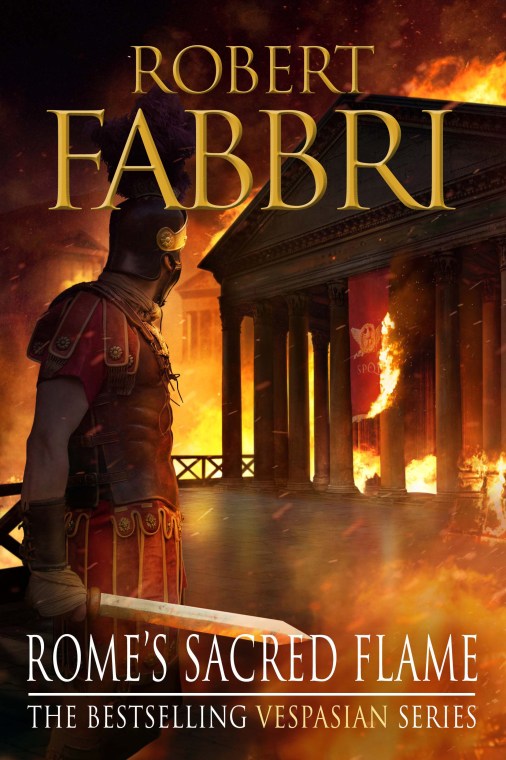
Rome’s Sacred Flame by Robert Fabbri

Rome's Sacred Flame Cover

Publisher: Corvus

Australian Publication Date – 1 February 2018

World Publication Date – 24 January 2018

Amazon

Explore the dark side of Roman history in the new novel from veteran historical fiction author Robert Fabbri.

In Rome, 63 AD, Nero reigns as Emperor.  Meanwhile, Vespasian has been given the lucrative appointment of Governor of Africa, exploiting the rewards of his previous adventures.  Before Vespasian can settle into the role of governor, he must first travel to the remote desert kingdom of Garama to negotiate the release of hundreds of Roman citizens held as slaves.  He and his companions, Magnus and Hormus, arrive on the eve of a slave revolt that threatens the entire kingdom.  Forced to flee across the desert with hundreds of freed slaves and few provisions, the Romans must avoid the chaos of Garama while also dealing with traitors in their midst and harsh desert conditions.

However, even revolting slaves and desperate conditions hold little danger compared to the problems brewing within Rome.  Nero’s reign has reached new peaks of insanity and chaos.  Like his predecessors, Nero is depraved and deranged, humiliating the citizens of Rome while destroying all who displease him. When he returns to Rome, Vespasian soon discovers that all the previous Emperors he had survived were nowhere near as dangerous as Nero.  Vespasian determines that it is time for the reign of Nero and the unstable Julio-Claudian bloodline to end.

However, Vespasian has made many enemies over the years, and all are plotting to use the unstable Emperor as a deadly weapon to destroy him and his family.  Vespasian must use all his skill and daring to survive while also trying to turn the chaos to his own advantage.  With conspiracies and danger all around, few will survive, especially with the Great Fire of Rome about to engulf the city.

Fabbri is a prominent and prolific author of Roman historical fiction whose distinctive books have one of the most entertaining examinations of Roman history.  Rome’s Sacred Flame is the eighth book in Fabbri’s Vespasian series, not including Arminius: The Limits of Empire, a recent standalone novel which runs parallel to the events of earlier books in the series.

This is an engaging series exploring the exploits of the future Emperor of Rome, Vespasian, during the earlier days of his life as he rose to power.  Fabbri makes use of what little is known about Vespasian’s early political career by including all the moments of his life recorded in the surviving Roman histories.  Fabbri also works the character of Vespasian into a number of key historical events that happened during his lifetime, such as famous deaths, ascensions, wars and other more infamous incidents.  All of the books in the Vespasian series describe a wide range of memorable episodes in Roman history, even though it is unlikely, but not impossible, that Vespasian, who was a prominent senator during these times, would have been involved.

Rome’s Sacred Flame continues this trend by inserting Vespasian right into the middle of some of the more interesting events of the Emperor Nero’s reign.  Through Vespasian’s eyes we see some of Nero’s infamous parties, one of the more significant plots against the Emperor’s life, the brewing persecution of the Christians, and, most importantly, the Great Fire of Rome, during which, some sources indicate, the Emperor played the lyre as the city burned.  Many fans of history will love the detail that Fabbri goes into when he examines all the events surrounding the fire: the politics of the time, the initial outbreak of the fire, the attempts to fight it, Nero’s supposed response, the fire’s conclusion and the eventual rebuilding of the city.

Readers will also be intrigued by Fabbri’s inclusion and interpretation of the Garmantes and their capital city of Garama.  The Garamantes were the people of a small kingdom that historians and archaeologists believe existed in south-western Libya around the same time as the Roman Empire was at its peak.  Many historical fiction writers have neglected the Garamantes in their works, instead favouring the more impressive enemies of Rome, so Fabbri’s use of the limited historical and archaeological facts available to create a unique society and civilization for his story is particularly interesting.

Like the other books in Fabbri’s Vespasian series, Rome’s Sacred Flame contains a large number of scenes that focus on the supposed depravity of Rome, especially during the reigns of last Julio-Claudian emperors.  This results in a compelling and engaging narrative, especially as Fabbri takes pains to describe these scenes in great detail, building a terrific story on what little historical evidence is available.  It is also offers something different to many of the other current Roman historical fiction series, which recently have tended to shy away from exploring these events to the same degree.

Once again, Fabbri has produced a highly exciting and thoroughly entertaining addition to his best-selling series.  Fans of Roman historical fiction will love the unique viewpoints and historical conclusions Fabbri explores in Rome’s Sacred Flame, as well as the exploration of Rome’s supposed dark side.

My Rating:

Four and a half stars

Amazon

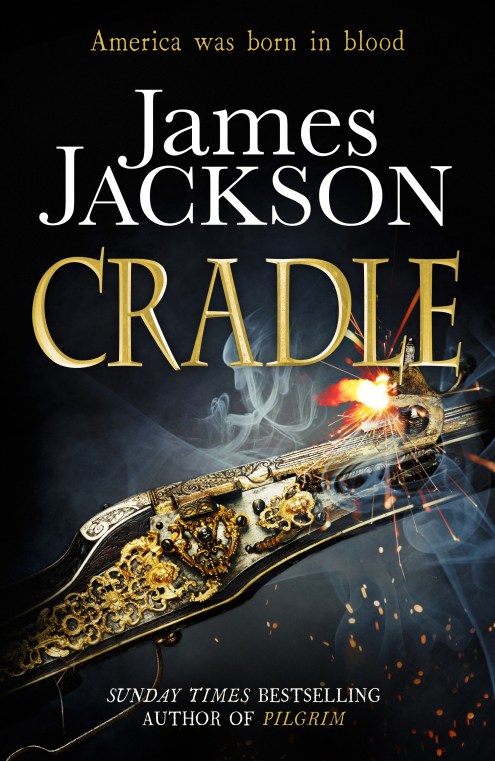
Cradle by James Jackson

Cradle Cover

Publisher: Zaffre

Australian Publication Date – 1 January 2018

World Publication Date – 2 November 2017

Amazon     Book Depository

Death, despair and political espionage!  Welcome to the dawn of America in Cradle, the latest book from historical fiction veteran James Jackson.

1607 AD. Jamestown, on the shore of Virginia, is England’s first colony in the New World.  Life is a dangerous struggle for survival, with the settlers forced to endure starvation, disease and relentless attacks from the natives.  Worse, Jamestown has the ire of its namesake, King James of England, who is violently opposed to the settlement.

However, while Jamestown suffers from the king’s displeasure, Prince Henry supports the mission and views Jamestown as a symbol of England’s ambition and colonial intent.  Resolute that Jamestown must succeed, the young prince instructs intelligencer Christian Hardy to travel to Virginia and ensure its survival against any threats.  In response, the king instructs his chief advisor, Hardy’s former employer, the spymaster Robert Cecil, to sabotage the colony.

Hardy finds Jamestown near starvation and constantly under attack by warriors of the Powhaten nation.  The town survives only through the actions of a brave few, including the legendary John Smith, while split loyalties, incompetence and dissent ensure that the colony moves closer to destruction.  As Hardy works to save the town, a far more insidious threat approaches: his old foe, the deadly renegade Realm.

This is the ninth book from Jackson and his third to feature the character of Christian Hardy as its protagonist.  A fourth book, Blood Rock, featured the Hardy’s father, also named Christian Hardy, as its protagonist.  Cradle is a direct sequel to Jackson’s previous novel, the action-packed Treason, which featured a captivating account of the Gunpowder Plot.

Jackson continues his examinations of some of the more interesting and unique areas of history, this time looking at the initial days of the Jamestown settlement.  The early settlement of Virginia falls within a turbulent time in world history, and creation of Jamestown itself is a fascinating example of colonisation gone wrong.  Jackson does an amazing job of capturing and conveying the brutality and depravation that the inhabitants of the town experienced during their ill-planned expedition.  The descriptive writing provides the reader with a vivid picture of the violent battles, ghastly conditions, cannibalism and torture that the settlers were forced to endure.

Readers will be love the large amount of well-researched historical detail about Jamestown that Jackson has included in Cradle.  The story covers a number of key events which occurred in America and England which affected the colony, and Jackson has made sure to include a large number of real life historical figures who were part of the Jamestown community.  Jackson’s dedication to historical detail shines through, as some of the events incorporated into the plot only have minor mentions in the historical record.  One particular inclusion that many will find enticing is a more accurate and realistic account of James Smith and Pocahontas.  People familiar with the Disney version of the story will find this retelling of events particularly enlightening.

A noticeable feature of Jackson’s novels, whether historical or contemporary, is his love of spies and espionage.  Many of his novels that focus on historical events include subplots or detailed examinations of espionage going on behind the scenes.  This is extremely prevalent in the novels featuring Christian Hardy, as they focus on the intelligence-gathering that started under the reign of Queen Elizabeth I.  Fans of this historical espionage will not be disappointed, as a large portion of Cradle is spent examining the espionage that may have been manipulating Jamestown, both in Virginia and back in Europe.  In addition, Jackson has done a superb job of combining the political thriller storylines into this historical fiction novel and including alternative but plausible motives for the actions of real historical figures.  The fictional character of Hardy is seamlessly inserted into this historical novel, and readers will enjoy watching him influence and bring about real historical events, like the brutal death of John Ratcliffe, who many may remember as the main antagonist of Disney’s Pocahontas.

The ninth book from James Jackson is an over-the-top account of the circumstances surrounding the original Jamestown settlement.  Featuring highly detailed and brutal descriptions of the formation of America and making full use for Jackson’s propensity for thrilling spy stories, Cradle is perfect for those looking for some exhilarating action and adventure in their historical fiction.

My Rating:

Four stars