Pacific Heights by S. R. White

Publisher: Headline (Trade Paperback – 25 March 2025)

Series: Standalone

Length: 279 pages

My Rating: 4.5 out of 5 stars

Amazon

Over the last couple of years one of the more compelling authors of Australian crime fiction has been S. R. White.  A former member of the UK police, White has been writing intriguing crime fiction novels since his move to Australia.  His main body of work has so far included excellent reads like PrisonerRed Dirt Road and White Ash Ridge (part of the Detective Dana Russo series), which featured complex mysteries centred around layered suspects.  I really enjoyed the compelling way in which White’s investigators break down the motivations and personalities of the suspects and the victim to get to the truth, and the author has a unique and striking writing style.  As such, I was eager to read his 2025 novel, Pacific Heights, which is a standalone spin-off of White Ash Ridge, featuring one of the supporting characters from the previous book in a more substantial role.

Plot Synopsis:

FIVE WITNESSES. FIVE DIFFERENT STORIES. WHO IS THE KILLER?

In the courtyard of the Pacific Heights building, a local waitress is found dead.
Five apartments overlook the murder scene. Five people witnessed a crime take place.
Finding the killer should be simple.

Except none of the witnesses’ stories match.
They all saw something – from a different angle, at a different time.
None of them saw everything. Anyone could be the killer.

Detectives Carl “Bluey” Blueson and Lachlan Dyson, each with their own careers in peril, must solve what others assume is a straightforward case. But to unmask a killer they must unpick a complex puzzle – where the motivations of the witnesses are as mystifying as the crime itself.

How can you solve a crime if anyone could be lying?

This was a very clever and addictive Australian crime fiction read that I had such a blast getting through.  White wove together a very compelling mystery narrative for Pacific Heights that cleverly explored a range of great characters and examined how people view events differently.

White starts Pacific Heights off well by introducing the detective protagonists and swiftly bringing them to the scene of the crime, where they attempt to ascertain the events leading up to the victim’s death by interviewing several people who either witnessed part of the murder or knew the victim.  The author takes his time with these initial interviews, ensuring that readers get a complete picture of what the witness’s account of events, as well as how they knew the victim.  It doesn’t take long for the reader and the protagonists to realise that the witnesses’ stories don’t match and none of them can definitively say who the murderer was.

By this point in the book, you’re strongly hooked, especially as the author has raised some interesting question about the victim and you are very intrigued by the main five witnesses and their potential secrets.  White rewards your interest with a series of insightful re-interviews, as well as bringing in new suspects and additional investigation methods to paint a larger picture of events, none of which quite fits together.  There is a great methodical style to the investigation, as the police chip away at all the inconsistencies and questions, although they are never quite as close to an answer due to the conflicting testimonies.

Everything leads up to the final third of Pacific Heights, which I honestly thought was a tad rushed, but which presented a solid and very clever ending.  Thanks to a brilliantly laid-out series of clues throughout in the plot, the protagonists are eventually able to solve the case, and I felt that the solution was extremely smart.  While I did predict who the killer would be, getting to their motivations behind the murder, as well as finding out how events unfolded, ensured that this was a powerful conclusion that fit the rest of the story really well.  I especially loved the twist around which of the witnesses were lying, and it tied in nicely to the complex character profiles White provided for the supporting cast, as well as utilising the protagonist’s own prejudices.  The result was an extremely impactful and captivating crime fiction story that I couldn’t stop reading and managed to power through in a couple of short days.

Pacific Heights proved to be an excellent read, and I really appreciated the intricate, character-focused mystery that White came up with.  Featuring a similar style to his Detective Dana Russo novels, the investigation is primarily based around understanding the people associated with the case, including the victim, witnesses, and other potential suspects.  This ensures that the author spends a lot of time carefully constructing and utilising his cast of supporting characters, and the array of motivations, personal issues and hidden histories, results in a particularly complex and emotionally charged read.  The focus on the various witnesses blends well with the character arcs surrounding the detective protagonists, and there is also a complex dive into the life of the victim, Tahlia Moore, even though she never actually appears alive in the plot.  Thanks to the protagonists diving into every aspect of her life, Tahlia comes to life through the descriptions of the other characters, and you soon begin to realise that she wasn’t as innocent or perfect as you are initially led to believe.  While I did feel that the author could have revealed some key history around certain witnesses earlier, for the most part I really appreciated how well White set up these compelling characters, and it helped to create a very powerful novel with some heavy emotional edges to it.

I also must commend how White worked this character-focused plot into Pacific Height’s police investigation narrative, as the protagonists are forced to wade through the conflicting testimonies to get the truth.  There is a certain amount of gritty realism to how White examines witness testimony and people’s motivations that really enhances the impact of Pacific Height’s plot, and I liked the underlying theme about how the way we see the world is flawed.  This focus on witness testimony blended well with the additional investigative tools featured in the plot, and this entire story came together extremely well. These combine nicely with the series of subtle clues that White lays down throughout the course of the book, and I loved how effectively this mystery came about.  While I did once again have minor issues with the author’s vagueness around where in Australia this book was set, this was honestly a very impressive crime fiction read that works well as both a standalone novel and a continuation of White’s existing series. 

Loaded with great characters, a deeply addictive mystery, and an excellent story hook, Pacific Heights was a very impressive read, and I had such an amazing time with this new novel from S. R. White.  Pacific Heights is White at his very best, and I really cannot recommend this book enough.
Amazon

A Death in Berlin by Simon Scarrow

Publisher: Headline (Trade Paperback – 11 March 2025)

Series: Berlin Wartime/Criminal Inspector Schenke Thriller – Book Three

Length: 385 pages

My Rating: 4.5 out of 5 stars

Amazon

One of the world’s leading historical fiction authors returns with another intriguing and captivating historical murder mystery with the outstanding read, A Death in Berlin.

I have made no bones about the fact that I am a major fan of historical fiction author Simon Scarrow, who has been diving into awesome scenarios from history for over 20 years.  While I probably know him best from his outstanding Eagles of the Empire Roman historical fiction series (see my review for the latest entry, Revenge of Rome), Scarrow has also written some other amazing series, including his current ongoing Berlin Wartime Thriller novels.  Set in Berlin towards the start of World War II, the series follows a studious and troubled police detective as he attempts to uphold justice in a city overrun with murderous Nazis.  The first two books in this series, Blackout and Dead of Night, were both very impressive, and I have been eagerly awaiting this third novel in the series, A Death in Berlin, for some time.

Berlin, May 1940.  As the German army prepares for its invasion of France and Western Europe, crime still roams the street of Berlin, and it falls to CI Horst Schenke and his investigative Kripo to keep order and maintain justice, a job made markedly harder by the dark policies of their Nazi overloads.  Despite his own dislike of the Nazi regime, which grows increasingly suspicious of him, Schenke is determined to do his job, especially when it comes to the criminals controlling the streets.

Assigned to find the source of forged ration coupons that are disrupting the war effort, Schenke and his team find themselves investigating a growing gang war when a prominent black-market operator is gunned down in the dead of night.  Convinced that the gangster’s murder is related to the forged coupons, Schenke leads the Kripo into investigating the criminal underworld that lies beneath Berlin.

However, this is no ordinary gang crime.  A dark series of events have led to the death of their victim, and the Kripo investigators soon uncover a dangerous conspiracy to profit from the war.  Worse, the gangster they are chasing are protected by powerful Nazi leaders, and Schenke must continue to walk a fine line in avoiding their attention.  But when his enemies uncover his deepest secret, can Schenke survive with his honour intact, or will he need to make a dark deal to get what he wants?

A Death in Berlin was another excellent novel from Scarrow, who cleverly combines exciting crime fiction elements with a compelling historical setting.  Clever, action-packed, and constantly moving, A Death in Berlin was an outstanding read, and I think this might be his best Berlin Wartime Thriller novel yet.

I really liked the cool story that Scarrow came up with for A Death in Berlin, especially as this latest novel features a complex narrative revolving around Berlin gangsters and crime wars.  Starting off fast and getting into the heart of the case, readers soon become invested in finding out who was behind the killing of the gang leader and what impact it is having on the larger criminal underworld of Berlin in the leadup to the invasion of France.  Thanks to an excellent early shootout, the stakes of the book become even higher, as the protagonist finds himself in the middle of a gang war, which he is forced to navigate to solve the main mystery of the book.  Scarrow also continues to focus on the complex life of protagonist CI Horst Schenke, who constantly finds himself coming to the attention of his Nazi superiors, despite his dislike of the party and his secret romance with Ruth, a Jewish woman hiding out in Berlin.

Following this great initial setup, Scarrow takes the plot of A Death in Berlin in some outstanding directions, especially as there is quite a compelling mystery here, with multiple potential suspects and motivations for the murder, many of which lead to other alternate crimes investing the Nazi controlled city.  Scarrow cleverly reveals the involved parties at key parts of the book, and while there aren’t too many surprises, it was very interesting to see how everything tied together.  The final third of the book is probably the best, as the protagonist finds himself trapped by his own secrets and is forced to make compromises to keep those important to him safe.  This leads to a massive and intense final confrontation, as the protagonist risks everything with some unlikely allies in a brilliant, action-packed set piece.  The final revelations revealed during this climax brought the entire story together nicely, and I really appreciated how the tight and complex mystery was resolved.  This was an overall fun and exciting narrative, and one that is quite easy to power through quickly, especially once you get caught up in the mystery.

Scarrow did an outstanding job pulling together A Death in Berlin, as the novel was a compelling and exciting read with a lot of awesome elements behind it.  The author successfully blends an excellent murder mystery storyline around the intriguing historical elements of his series, showcasing the potential hurdles a police detective needed to face during the Nazi regime.  At the same time, there is a fantastic emotional heart to A Death of Berlin, as the protagonist continues his ill-advised romance with Ruth, while also being forced to once again confront the dark side of the government he is wilfully working for.  I felt that Scarrow perfectly balanced these elements throughout A Death in Berlin, and there is a little something for everyone here, including a ton of amazing action and firefights, as the protagonist attempts to bring down a dangerous collection of emboldened criminal gangs.  As such, this is a very easy book to get into and follow, and while there are some references to the previous Berlin Wartime Thriller novels, for the most part A Death in Berlin acts as an accessible standalone novel, which allows for a wider audience.

For me, one of the more intriguing elements of A Death in Berlin was the author’s excellent examination of life in Berlin during the early days of World War II.  Scarrow has always done an amazing job showcasing the uncertainty, fear and underlying issues of Berlin in the early days of the war in this series, and I enjoyed how he further outlined the tension involved with the pre-invasion of France.  The overarching fear that certain members of the public have with the Nazi regime is still a key part of the plot, and while the protagonist isn’t as directly targeted by the Nazis as he was in previous books, he still has to play by their twisted rules, especially when invited to a party of the Nazi elite, where he meets some very high-level members.  However, it was the focus on the criminal element infesting Berlin during these years that I found to be particularly fascinating, as Scarrow explores the potential scams, nightspots and other enterprises that would have been run in early wartime.  While coupon forgeries have been mentioned in previous novels, it was fascinating to see the entire novel focussed on the control of this valuable wartime currency, and it resulted in some truly compelling scenes.  Despite this being a more crime-fiction novel than a book examining hidden Nazi plots or killers, the influence of the Nazi government still plays a big role in the murder investigation elements of the book, especially as the protagonist and his colleagues must worry about high-level party members protecting the criminals.  These elements proved to be an outstanding part of the book, and I really appreciated how well Scarrow worked it into the main plot of the book.

As with the rest of the series, Scarrow does some excellent character work in A Death in Berlin, bringing together a complex cast of characters to work the case, each of whom are dealing with their own issues associated with Nazi-controlled Germany.  The most prominent of these is the protagonist and main point-of-view character, CI Horst Schenke, a former race car driver turned police investigator.  While generally shown to be a studious and steadfast lawman, Schenke’s life has become even more complicated due to his growing dislike of the Nazis and his refusal to join the party, much to the displeasure of his superiors.  It is fascinating to see the seemingly strait-laced Schenke walking the line between doing the right thing and surviving the Nazis, especially as he has fallen in love with the fiery Ruth, a Jewish woman who has managed to stay hidden in Berlin after the first purges.  Many of Schenke’s more radical actions in this book are driven by his complicated relationship with Ruth, and you really grow attached to both characters, especially when their secret relationship causes great risk for them. 

Other great characters A Death in Berlin include Schenke’s main police backup, Sergeant Hauser and former Gestapo agent Liebwitz.  These two prove to be an excellent double act behind Schenke, as not only do the three form an effective crime fighting force, but they also showcase alternate viewpoints of Germany during this period.  Hauser is a former World War I soldier and family man, who is the classic everyman figure who supports the Nazi regime.  Despite this, he merely wants to support his country and has some doubts about the more extreme actions of Hitler.  Liebwitz is a more unusual figure, who honestly steals the show in some ways.  An exceedingly logical figure who has gravitated away from the Gestapo to be a police investigator, Liebwitz finds his life still bound by his Nazi training, despite the many flaws he sees in it, and he is well used as a compelling alternative point-of-view character.  However, as with the previous book, the influence of Schenke and the investigation of crimes that show the true evils of the Nazis are slowly changing Liebwitz’s way of thinking, and it will be fascinating to see where Scarrow takes his character arc in the future.  Throw in a series of entertaining and over-the-top Berlin criminals and the cast of A Death in Berlin is quite entertaining, and I really enjoyed how their complicated arcs impacted the overall narrative.

Simon Scarrow continues his outstanding Berlin Wartime Thriller series in a massive way with the captivating and impressive novel, A Death in Berlin.  Combining a great crime fiction narrative with a clever historical background setting, A Death of Berlin proved quite addictive, and I had an incredible time getting through it.

Amazon

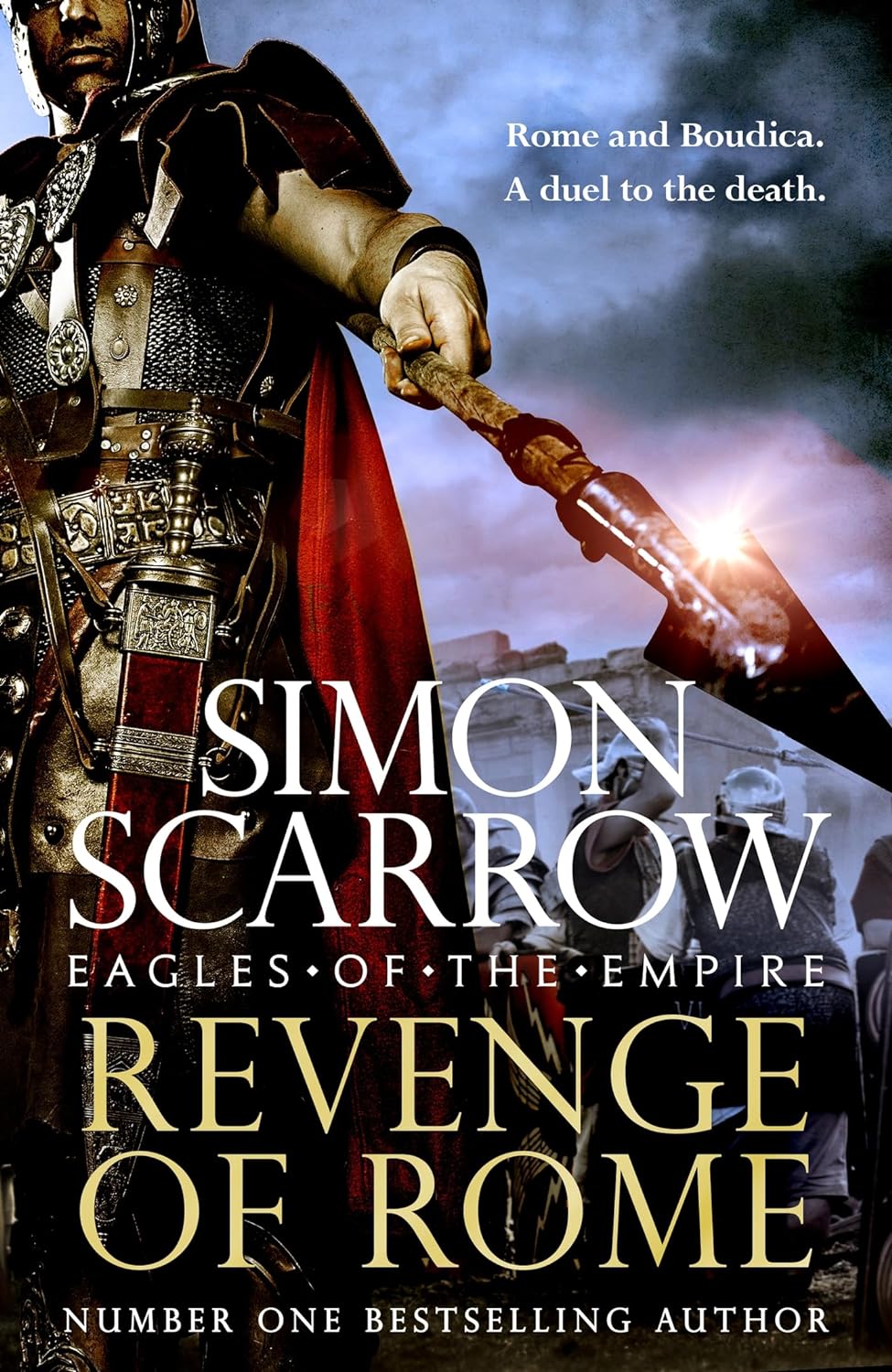
Revenge of Rome by Simon Scarrow

Publisher: Headline (Trade Paperback – 12 November 2024)

Series: Eagles of the Empire – Book 23 

Length: 411 pages

My Rating: 4.5 out of 5 stars

Amazon

The action continues in one of my favourite Roman historical fiction series with the outstanding and captivating read, Revenge of Rome by Simon Scarrow.

I have long extolled the ability of Simon Scarrow, who is one of the top current authors of historical fiction, as well as a personal favourite writer of mine.  I have had a blast reading and reviewing many Scarrow books over the years, including his Berlin Wartime Thriller series (see my reviews for Blackout and Dead of Night), as well as several great standalone reads.  However, his main body of work is the exceptional Eagles of the Empire series.  One of the premier Roman historical fiction series, the Eagles of the Empire books follow two elite Roman officers as they fight their way across multiple wars, provinces and battlefields.  I have been a fan of this series from the beginning, and the books within it have been a key part of my yearly review schedule, including The Blood of RomeTraitors of RomeThe Emperor’s ExileThe Honour of RomeDeath to the Emperor and Rebellion.  As such, the latest book in the series, Revenge of Rome, has been a highly anticipated read for me, and I have been very keen to get my hands on it.  The 23rd novel in the series, Revenge of Rome, follows on immediately after the events of Death to the Emperor and Rebellion, which covered the main events of Boudica’s uprising, and deal with the deadly aftermath of this massive conflict.

Britannia, 61 AD.  Following the final stand of the Roman army that broke the massive rebel horde, the uprising against Rome has ended but there is still no peace in Britannia.  Boudica, the warrior queen who sparked the rebellion, has escaped and still holds the eagle standard of the defeated Ninth Legion.  With the eagle in hand, Boudica and her Iceni tribe are living proof that Rome can be beaten and while she survives the flames of rebellion continue to smoulder.

Desperate to hunt Boudica down and make her pay for her crimes, Rome assigns two veterans to end the threat she poses, Prefect Cato and Centurion Macro.  Survivors of countless battles and campaigns Cato and Macro are the perfect soldiers to take down Boudica, especially as they share a long history with her.  Determined to do their duty, even with their conflicted feelings, Cato and Macro lead their troops into the lands of the Iceni to either capture or kill Boudica.

However, Boudica is no easy prey to capture.  Despite her defeat, she still has many skilled warriors fighting under her banner, each of whom holds great hatred for the Romans.  Worse, the war has made Boudica both cruel and cunning, and she soon engages in a brutal war of attrition, determined to break the Romans before they can overwhelm her.  To succeed, Cato and Macro will need all their cunning, grit and experience to finally bring Boudica down.  But can even these wily Roman officers contend with the wrath of an entire nation and their vengeful queen, or will Britannia rise once more to destroy the Roman invaders?

Revenge of Rome was another excellent and exciting entry in the Eagles of the Empire series that proved to be an absolute blast to get through.  A very intense, character driven read that focuses on an interesting period of Roman history, Revenge of Rome was an outstanding book that really drew me in.

Scarrow did an amazing job continuing the intense story from the last two books, and I frankly feel that this has been some of his best writing in years.  Starting off with a cool alternate look at the main battle from Rebellion, Revenge of Rome primarily explores the events immediately following the massive uprising and the destruction wrought on the Roman settlements.  Once again following Cato and Macro as they are given an impossible task, Scarrow presents a back-to-basics narrative as the two officers train up a new regiment (from the Second Legion, which was a nice callback to the first few books), to lead it into combat against the rebelling tribes.  The first half of the book follows Cato’s initial strategy of diplomacy and scouting, as he tries to figure out how to defeat Boudica with limited troops.  At the same time, Boudica works to reignite her rebellion, causing chaos amongst the other tribes and scoring some early victories.  This proves to be an intriguing first half of the book, especially as it nicely sets up the rest of the narrative, while also examining the aftermath of the rebellion, and the initial attempts of the Romans to regain control.

While the first half of Revenge of Rome was exciting, the best action occurs in the second half as Cato and Macro lead their troops against the Iceni and attempt to find their hideout.  There are some great small-scale conflicts the further we get along and Scarrow did an effective job showcasing Boudica as a truly dangerous foe.  Everything nicely leads up to the final battle, where the protagonists discover the Iceni’s fortress in the swamps (thanks to an excellent plot line about Cato trying to win back the hearts and minds of the locals) and engage in a deadly siege.  The action flies thick and fast here, and there are some awesome fight sequences as both sides initiate some clever tactics.  I really got caught up in the final battles and flew through the last 100 pages or so which detailed the siege.  While there is a natural focus on the brutal combat, Scarrow also provided some powerful character moments which helped to make Revenge of Rome even more intense and moving.  Scarrow ends everything on a final, if hopeful, note and it looks like the Eagles of the Empire series will be entering a new phase.  It will be interesting to see where Scarrow goes next, and I look forward to seeing how a certain new character is worked into the plot.

Scarrow always utilises a great and consistent style with the Eagle of the Empire books, which allows for some fantastic and exciting stories.  Revenge of Rome is no different, as we are presented with a compelling tale that sees the Romans taking on the local tribes of Britannia in a deadly game of cat and mouse.  I felt that Scarrow did a great job amping up the character emotions in Revenge of Rome, especially as we get some great alternate views of the main antagonist, Boudica, and her vengeful crusade.  The resulting carnage is well-written and intense, and Scarrow is very effective at portraying historical combat through his writing.  I really love the detail in which Scarrow showcases both the Romans and the Britannia tribes, and the compelling action sequences make for some brilliant reading.  The historical period featured within Revenge of Rome also proved to be very interesting, as Scarrow dives into the aftermath of Boudica’s rebellion and the state of Britannia at the time.  I really appreciated this fascinating focus; especially as most historical fiction authors tend to only portray the main rebellion and leave it at that.  I felt that Scarrow also did an outstanding job capturing the emotions of both the Roman soldiers and the surviving tribes throughout the book, and it was really intriguing to see some of the politics and logistics involved in the aftermath of the deadly occurrences of the previous novels.  Like most books in the series, Revenge of Rome can easily be read as a standalone novel, as Scarrow writes an inclusive narrative that cycles back to key events of previous books when necessary.  However, to get the full emotional impact of Revenge of Rome I would recommend first reading the prior two novels, Death to the Emperor and Rebellion, as their stories are extremely well linked.  However, even if you only read Revenge of Rome, you are in for a great historical adventure with some intriguing features.

I also felt that Revenge of Rome had some very strong character work in it as Scarrow brings back his classic protagonists alongside a few intriguing additions.  After 23 books, Cato and Macro are still the same characters we’ve come to know and love, although Scarrow does find ways to keep them fresh.  While Cato is his usual tactical and empathetic self, especially when it comes to finding ways to defeat the enemy, Macro is in his full-on non-commissioned officer mode, serving as the hard-boiled soldier’s soldier.  Thanks to some over-the-top drill sergeant scenes, Macro quickly steals focus, and he is the more entertaining of the two protagonists.  Scarrow also throws in some especially emotional sequences for Macro, as he deals with the continued conflict against his former love interest, Boudica, his guilt for the damage she caused, and the secrets she revealed to him in the previous novel.  One of these secrets comes to fruition nicely in the final part of the book, and it will be interesting to see how the evolves going forward.

Aside from Cato and Macro, there is a great array of additional interesting characters scattered throughout the novel who have their moment to shine.  This includes multiple Roman figures, many of whom previously appeared in previous novels.  Of these, I particularly enjoyed Scarrow’s portrayal of a young Tribune Agricola.  Agricola, a real historical figure destined to become a famous general, is shown here as a brash young officer eager for command.  His ongoing storyline of learning the ropes under Cato and Macro proves to be a lot of fun, and I liked the inference that Agricola’s later success can be attributed to the harsh early tutorage of the protagonists.  However, out of the all the supporting characters, I felt that Scarrow did his best work with Boudica.  Boudica, who has appeared in several earlier Eagles of the Empire books, has one of her best outings in Revenge of Rome.  Despite losing in Rebellion, Boudica is still a determined revolutionary, turned vengeful from the Romans treatment of her and her daughters.  As such, she is unrecognisable compared to her previous appearances as an ally to Cato and Macro, and she proves to be one of their most dangerous enemies.  I felt that Scarrow really captured her revenge-darkened heart in Revenge of Rome, and there are some great scenes where she continues to take her war up another notch.  It was honestly really moving to see her in this final showdown against the protagonists, and I appreciated how effectively Scarrow focused on this iconic historical figure in this latest book.

Simon Scarrow once again deeply impressed me with an Eagles of the Empire novel as Revenge of Rome was another captivating and exciting novel, loaded with awesome historical action.  An excellent addition to the series that provides an outstanding wrap-up of one of Scarrow’s best storylines, Revenge of Rome comes very highly recommended, and I look forward to seeing where the author takes the series next.  In the meantime, we have A Death of Berlin to look forward to from Scarrow early next year, which should be another dark and complex Berlin Wartime Thriller.

Amazon

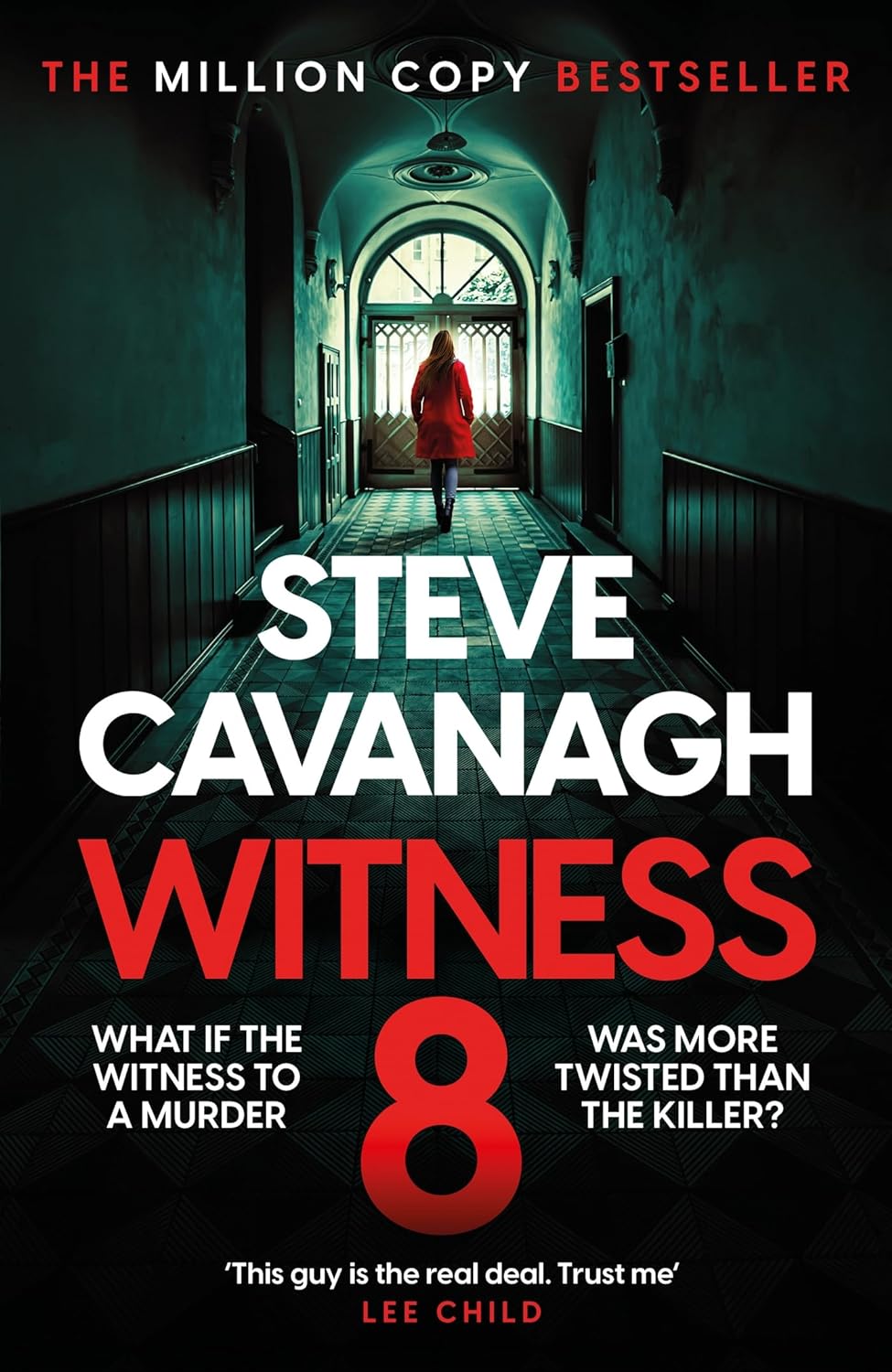
Witness 8 by Steve Cavanagh

Publisher: Headline (Trade Paperback – 13 August 2024)

Series: Eddie Flynn – Book Eight

Length: 392 pages

My Rating: 4.5 out of 5 Stars

Amazon

For those in the mood for a highly entertaining and exciting legal thriller, look no further than the latest book from the always impressive Steve Cavanagh, Witness 8.

Over the last couple of years, I have become a major fan of entertaining thriller author Steve Cavanagh.  A compelling writer with a flair for over-the-top narratives, Cavanagh has deeply impressed me with books like his twisty standalone novel, Kill For Me Kill For You, as well as his outstanding Eddie Flynn legal thriller series.  Following a former conman turned defence attorney, the Eddie Flynn books are always deeply enjoyable as Cavanagh brings some outrageous legal thriller scenarios and fills them with some fantastic characters.  The last two books in the series, The Devil’s Advocate and The Accomplice, have been a ton of fun, and the latest entry, Witness 8, has been one of my most anticipated reads of 2024.

Ruby Johnson is a seemingly ordinary nanny and maid who works for many of the wealthy families in Manhattan’s exclusive West 74 Street.  Memorising their needs, routines and secrets, Ruby has made herself indispensable to various families on this elite street, even though most of them look down on her due to her family’s past connection to the rich community.  However, Ruby is about to shake up the entire street when she witnesses the murder of one of their most controversial inhabitants.

The only person who truly knows who committed the terrible murder, Ruby sneaks away key evidence and places an anonymous call to the police, naming the killer.  However, Ruby lies about who the true killer is, and instead frames an innocent man for the murder and turns the entire street against him.  As chaos descends upon West 74 Street and an innocent family suffers the stigma associated with murder, it becomes clear that something is very wrong with Ruby, and that she will destroy anyone to get what she wants.

It soon falls to Eddie Flynn, former conman turned trial attorney to defend the innocent man accused of the crime.  Facing off against an ambitious District Attorney, the all-consuming secrecy of the West 74 Street’s inhabitants, and threats much closer to home, Eddie Flynn will need to bring every legal trick and con in his vast repertoire to keep his client out of jail.  However, can even Flynn and his expert team uncover what Ruby has done in time to save an innocent man, or will her dark secrets strike again and bring even greater tragedy?

Steve Cavanagh continues to impress as his latest book, Witness 8, was an amazing and compelling thrill ride that had me hooked the entire way through.  The eighth book in the Eddie Flynn series, Witness 8 was extremely fun, and I had an outstanding time getting through it.

Witness 8 has a fantastic story behind it that really drags the reader in with its outrageous plot, ambitious legal sequences, and eccentric characters, all of which is a trademark of the Eddie Flynn series.  Initially focusing on the character of Ruby Johnson, you witness the starting events of the plot that see the housekeeper become a central figure in a murder investigation, which serves as a great start to the book while also expertly introducing one of the novel’s most complex figures.  From there, the plot begins to focus on series protagonist Eddie Flynn, and his eccentric colleagues, as they are tasked with defending the man Ruby framed and uncovering the reasons behind his arrest.  Clashing with an ambitious district attorney, Flynn starts utilising his trademark unpredictable tactics to infuriate and confuse his opponents, which results in some fun early scenes.  However, Flynn faces lethal problems of his own when the leader of a gang of corrupt cops puts out at hit on him, believing him to be a threat to his organisation.

The story goes in some very interesting and unexpected directions as the protagonist finds himself forced to simultaneously defend his client and deal with the killers coming for him.  Cavanagh does a great job of breaking the story up across various distinctive characters, with the machinations of Ruby blending well with the legal manoeuvrings of Flynn and the investigations of his team.  The author also adds in several other great alternate perspectives, including that of the wonderfully sinister gentleman assassin, Mr. Christmas, who starts to take his own interest in several characters associated with the case.  These intriguing alternate perspectives allow for a more elaborate, yet still fast-paced novel, and I loved where some of the various character arcs went.

The second half of Witness 8 is loaded up with surprises, tragic blows, over-the-top moments and funny ploys from the protagonist, and you are constantly on the edge of your seat as you wait to see how everything unfolds.  I really appreciated the excellent way that Cavanagh builds up towards the big conclusion of the plot, and the resulting payoff comes together extremely well.  The closer you get to the end, the more you appreciate how the author had previously layered in clues and hints in the first half of the book, and I particularly enjoyed the breadcrumbs about Ruby’s motivations and what she hoped to achieve.  The author tops this off with some fantastic and entertaining cons and schemes from the protagonist, which results in some ironic comeuppances for several of he more morally dubious characters.  This proved to be a very fun ending, and it will be interesting to see where some of the storylines go from here, especially around some newly introduced characters.

Much like the previous entries in the series, Witness 8 can be read as a standalone novel, and new readers can have a wonderful and easy time exploring the accessible and interesting series and characters for the first time.  Witness 8 was the usual fun mixture of action, clever legal scenes and overall insanity that fans of the Eddie Flynn series are well use to.  I always like the unique legal scenarios that Cavanagh comes up with for his books, and the one in Witness 8 was pretty damn good, as the protagonist deals with the crazed witness who has her own schemes in this murder.  The story veers into psychological thriller territory at times when it comes to this main antagonist, and her twisted tale of revenge and recompense blended well with the thrilling adventures of Flynn and his cohort.  Cavanagh did a great job of keeping the story running at a fast pace, and the inclusion of several deadly assassins hunting after Flynn, ensured that the reader was constantly engaged with the book, especially with the inclusion of some well-placed tragedy.  While much of Witness 8 is light and is primarily dedicated to providing entertainment, Cavanagh throws in some particularly dark moments throughout the book, which provides some memorable and powerful moments for the reader.  This blend of tones, which includes some extremely troubling scenes, helped to ensure that Witness 8 was more than just a one-trick pony story, and readers will really love the book’s depth and dark humour.

However, for me the best parts of Witness 8, and indeed any Eddie Flynn book, were the excellent scenes that depicted Flynn engaged in his trademark legal cons and shenanigans.  Cavanagh’s well thought out courtroom sequences are always enhanced by the outrageous actions of his protagonist, as he uses unconventional tactics garnered from his conman past to trick and manipulate events to his advantage.  These ploys often play off the more conventional tactics of his opponents and the rest of Flynn’s legal team very well, and you are never quite sure what direction his trial strategy is going to go.  While I usually prefer a more straightforward courtroom sequence in a legal thriller, I deeply enjoy seeing Cavanagh’s more entertaining takes on the story element, and it is so much fun to see what outrageous ploy the author comes up with next.  These eccentric court scenes play off the rest of the book extremely well, and I felt that they were once again a great highlight of this Eddie Flynn book.  Indeed, I kind of wish that the author had ensured that more of the book was spent inside the courtroom rather than having the protagonist battle assassins, but I still really appreciate how the story came together.

A key part of why Witness 8 was so entertaining was the fantastic and memorable characters featured within it.  Cavanagh utilises an intriguing cast for Witness 8, that includes a collection of recurring characters from previous books, as well as several new figures who are cleverly inserted into this story.  I have already mentioned how much fun series protagonist Eddie Flynn was in Witness 8, and his entertaining ploys and determination to stick up to even the most dangerous people in the city, ensure that he is a hard character not to like.  While much of Flynn’s story revolves around him outsmarting the bad guys in humorous ways, Cavanagh also ensures that there are some darker moments for Flynn in Witness 8, especially as he finds his team under threat and someone close to him hurt as collateral damage.  The rest of Flynn’s team, including his legal partner Kate Brooks, the firm’s lethal private investigator Bloch and former serial killer hunter Gabriel Lake, are well represented throughout the course of Witness 8, with Lake’s unique past coming into play in some compelling ways.

While these protagonists are great, Cavanagh also spent a lot of time building up some outstanding and memorable antagonists who really fit the series’ unique vibe and proved to be major highlights of Witness 8.  The most prominent of these is Ruby Johnson, the seemingly innocent maid, who manipulates events around the murder for her own advantage.  Cavanagh does an excellent job selling Ruby as a conflicted and damaged being, haunted by her past and the terrible things she needs to do.  I really appreciated how effectively Cavanagh sets up Ruby as a particularly dangerous figure, and you really buy into her issues and dark persona, especially as Cavanagh throws in some interesting curveballs around what drives her.  In addition to Ruby, the other major antagonist I want to highlight is the assassin Mr. Christmas.  A deadly killer with curiosity, class, a dash of morality and a love for Marlon Brando films, Mr. Christmas steals nearly every scene he is in as he manoeuvres around the other players in the book.  A professional who likes to keep things sporting, Mr. Christmas enjoys interacting with his targets before he kills them, and his encounters with many of the characters, including Flynn and Ruby, are some of the most captivating parts of Witness 8.  Cavanagh did an outstanding job building up Mr. Christmas here, and I loved his genial threats and unique professionalism, as well as his connection to Gabriel Lake, which provides some much-needed seriousness around this figure.  Indeed, it seems like Mr. Christmas is a figure that is likely to return in future entries in the series, which is something I am rather keen for.  Throw in a raft of other desperate, greedy or easily manipulated figures, and Witness 8 had a truly amazing cast of characters that ensured this book was everything you could hope it to be.

Witness 8 was another amazing novel from Steve Cavanagh, who continues to produce some of the most entertaining and fun legal thrillers you are likely to read.  Filled with big characters, outrageous situations, and complex scenarios, Witness 8 had me hooked the entire way through, and I honestly could not stop reading this fantastic read.  I really cannot emphasise how much fun I have with the Eddie Flynn series, and I cannot wait to see what cool story Cavanagh comes up with next.

Amazon

White Ash Ridge by S. R. White

White Ash Ridge Cover

Publisher: Headline (Trade Paperback – 12 March 2024)

Series: Detective Dana Russo – Book Four

Length: 343 pages

My Rating: 4.5 out of 5 stars

Amazon

One of Australian’s most distinctive new crime fiction authors returns with a complex murder mystery the blends compelling characters with unique methods, White Ash Ridge by S. R. White.

Over the last few years, I have really been enjoying the works of new author S. R. White.  White, a former UK Police officer who emigrated to Australia, has been producing some amazing pieces of Australian outback crime fiction.  His work has so far been part of his Detective Dana Russo series, which follows the titular detective as she investigates complex cases out in the Australian bush.  This series has so far featured three impressive reads, Hermit, Prisoner and Red Dirt Road and these amazing books have been very fun to read, especially as White comes up with some unique crimes which require the protagonist’s more unusual methods to solve.  I have really enjoyed White’s previous books, and I jumped on his new novel, White Ash Ridge, the moment I got my hands on it.

Murder, deceit and controversy are all that are on the limited menu of the White Ash Ridge hotel, especially when tragedy strikes its guests.  An isolated and decaying hotel, hidden away in the Australian wilderness, White Ash Ridge has been booked out by the inner circle of a high-profile charity organisation for urgent discussions about its future.  As the relentless heat raises tensions, the body of one of the charity’s founders is found dead on the track outside, his death caused by a blow to the head.

Called to the scene, Detective Dana Russo anticipates another complex murder case.  With no one else spotted in the area and tensions running high amongst the charity’s founders, it seems likely that one of the four remaining guests at the White Ash Ridge is the murderer.  However, as she begins to investigate, Dana is unprepared for the chaos that is about to descend upon her small command.  The charity the victim work for was founded by two parents whose son was killed after intervening in a violent assault.  The subsequent failed police investigation sparked public outrage and launched the boy’s mother into Australia’s political orbit.

Now thrust into the centre of a controversial family familiar with the police, Dana must quickly solve the case before events get out of hand.  With a lack of physical evidence, Dana and her small team are forced to pull the truth from the four suspects to determine their history with the victim and why anyone would want to kill him.  However, they only have limited time before the overwhelming public interest forces her to let the suspects go, likely at the cost of her career and reputation.  Can Dana convince her suspects, none of whom have any love of the police, to cooperate before it’s too late, or will the killer walk free thanks to the will of the people?

S. R. White delivers another complex, impressive, and highly distinctive piece of Australian crime fiction with White Ash Ridge. Blending White’s unique murder mystery style with great characters and a compelling situation, White Ash Ridge was an amazing read that I could not get enough of.

I have always really enjoyed White’s take on the Australian murder mystery, as his focus is always on finding out all the details of the victims and the suspects to solve the case, often through the medium of interrogation.  This was once again the case in White Ash Ridge, as the protagonists, under pressure to solve the case quickly, need to find out which of the four suspects committed the crime.  As such, the story develops in a very interesting way, as the detectives both investigate in the traditional way, including finding witnesses and evidence, while also diving into the lives of everyone involved in the case.  Much of this revolves around the eight main interviews of the investigation as the protagonists talk to each of the suspects twice to gain the relevant insights into themselves and the murder victim.  White, through his main protagonist, Detective Dana Russo, has a very person-centric take on the interrogation progress, and the resulting character-driven focuses become a key part of the plot.

This proves to be a very clever way to set out this excellent mystery and subsequent investigation, and thanks to White’s expert writing ability White Ash Ridge ended up being an extremely clever and captivating book.  The focus around the charity and its anti-police sentiments added some great intrigue to the narrative, and I liked the ticking clock aspect of the plot it brought in.  All eight of the main interviews were very intense and compelling in their own ways, and you soon get a great idea of the various people drawn into the case.  White combines this expertly with the personal dramas of the protagonists, including some ongoing storylines from the prior books, although the overarching threat of Dana’s new supervisor is getting a little stale at this point.  At the same time, the reader gets the full blast of the Australian wilderness from the unnamed part of the country that White sets his novels in, which adds a lot of character to the story in its iconic and beautiful ways.  The central mystery of White Ash Ridge comes together extremely well, and the eventual solution is smart, intriguing, and very well set up.  The entire story comes together in a powerful way, and I loved this unique mystery which was another strong story from White.

As with all of White’s books in the series, White Ash Ridge is a hugely character-driven read, not only because of the compelling and damaged protagonists, but because his style of writing relies on diving into the lives of the various suspects and victims of the case to solve the crime.  This all results in some exceptional character development and focuses, and I loved how complex and powerful the various stories that emerged were.  Most of the protagonists focused development occurred around returning main character Detective Dana Russo, who serves as the solid and empathetic centre of the investigation.  Dana once again showcases her unique investigation style that focuses on character interactions, history and mindsets to solve the case, which proves to be quite effective at diving into the minds of her targets.  This time Dana is backed up by new detective, Mila Jelovic, who serves as a great support for the main character.  While the development around Dana is a little light in White Ash Ridge, you do get an intriguing and powerful examination of Mila, whose previous undercover work has cost her severely in more than one way.

Aside from the police characters, the reader also gets an intense look at five specific figures who become the focus on the investigation, with the murder victim and the subsequent four suspects.  All five of these people are members of a high-profile charity formed in the aftermath of a botched police investigation, with goals of stopping teen violence and keeping the police accountable.  Due to the way the mystery is set out, there is a lot of focus on these characters and the events that brought them together, which provides the reader with an intriguing backstory to get familiar with.  All five of these characters are interesting and complex in their own way, with various interactions, lies, manipulations and plans bringing them all together.  Probably the most interesting of these is the charity’s figurehead, Keena Flynn, a major public figure following the death of her child.  Due to her previous interactions with the police and politicians, Keena proves to be a tough nut to crack, and her pain, anger and distrust become a major obstacle to overcome.  White does a wonderful job exploring these five characters, and indeed you often get more about them than the police protagonists.  There is such a dark and compelling web of relationships surrounding these characters, and the subsequent reasons for why one of them was killed and by who was pretty impressive and helped to produce an incredible mystery.

S. R. White continues to flourish with another awesome entry in his compelling murder mystery series that is setting him up as one of Australia’s most distinctive crime fiction authors. Expertly combining his ability for complex murder scenarios and character-focused investigation methods to produce an outstanding story, White did an amazing job with White Ash Ridge, and I had an incredible time reading it. One of the cleverest mysteries of 2024 so far, this book comes highly recommended.

Amazon

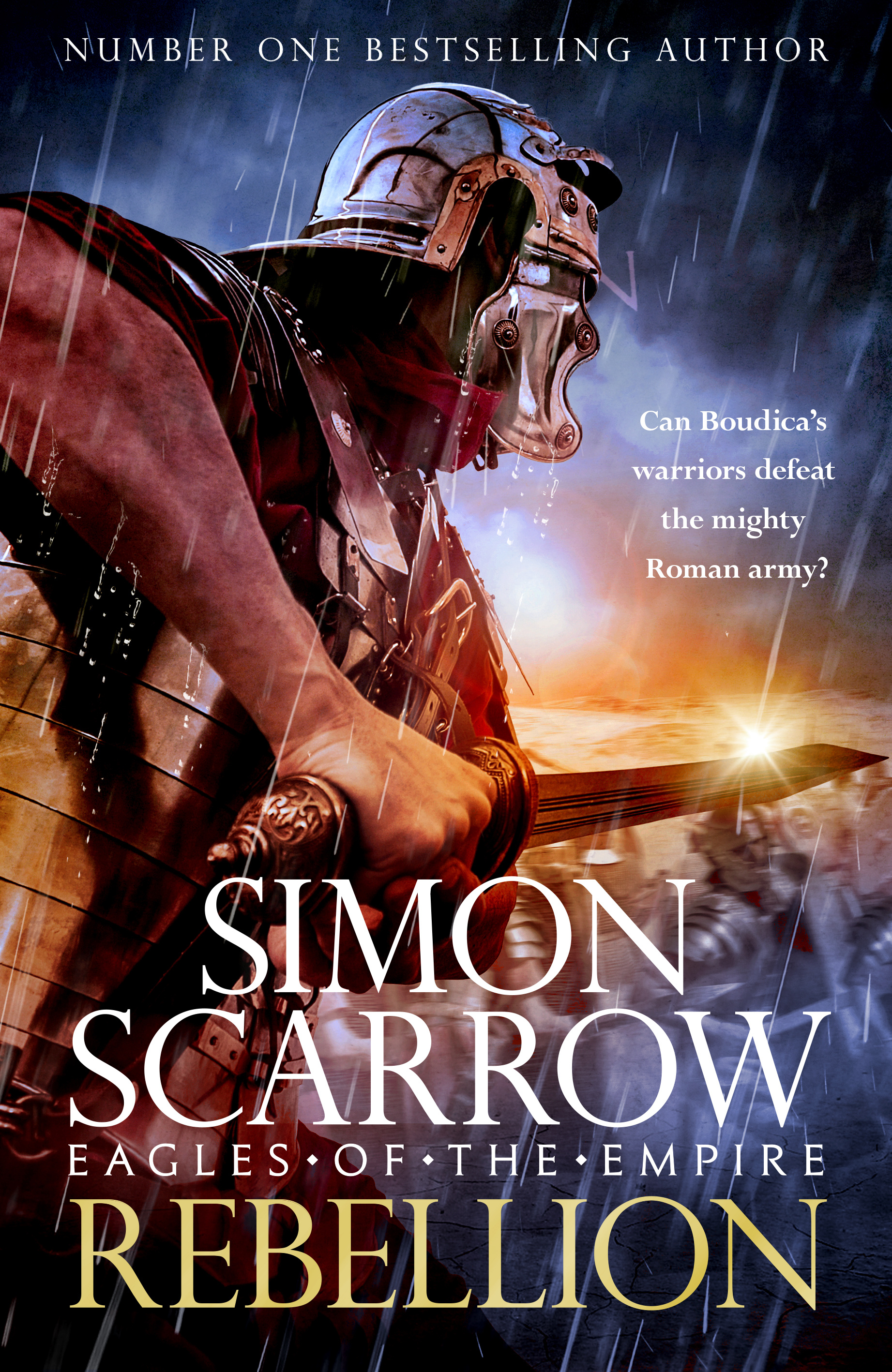
Rebellion by Simon Scarrow

Rebellion Cover

Publisher: Headline (Trade Paperback – 14 November 2023)

Series: Eagles of the Empire – Book 22

Length: 398 pages

My Rating: 4.5 out of 5 stars

Amazon

One of my favourite historical fiction authors of all time, Simon Scarrow, returns with another epic adventure that places his long-running Roman protagonists right in the middle of the deadliest fight imaginable with Rebellion.

I have made no secret of the fact that I am a massive fan of Simon Scarrow, especially when it comes to his main Roman historical fiction series.  While I have deeply enjoyed Scarrow’s books set in other periods, such as his awesome Berlin Wartime thrillers Blackout and Dead of Night, it is Scarrow’s Eagles of the Empire series that I come back to every time.  Following two veteran Roman officers who manage to find themselves sent to every battlefield imaginable, the Eagles of the Empire books have dominated the historical fiction market for over 20 years, and I have had such an incredible time reading every entry in this series.  Eagles of the Empire has been a staple series for this blog ever since I started The Unseen Library, and I have reviewed multiple entries, including The Blood of Rome, Traitors of Rome, The Emperor’s Exile, The Honour of Rome and Death to the Emperor.  Due to how much fun I have with these fantastic historical adventures, I always make time to read the latest Eagles of Empire book each year, and I finally managed to read the late 2023 entry, Rebellion.  The 22nd book in the series, Rebellion was an exceptional and bloody read that places Scarrow’s protagonists in their most dangerous battle yet.

AD 60, Britannia.  The Roman province of Britannia is in utter turmoil as the queen of the Iceni tribe, Boudica, leads her people in total rebellion after suffering the greed and cruelty of Rome too long.  Despite the best efforts of retired centurion Macro, Boudica’s growing force of Britons managed to destroy the veteran’s colony of Camulodunum, and now her army is emboldened to take back the entire province in a bloody spree of vengeance.

Campaigning on the other side of the province, Governor Suetonius desperately attempts to lead his army back to Londinium as soon as word reaches him about the uprising.  Forced to move ahead with a smaller force, led by Prefect Cato, Suetonius hopes to rally the rest of the troops in Britannia to make time for his army to arrive.  However, Suetonius is unprepared for the savagery of the desperate rebels and the incompetence of the officers he left behind, and he soon finds himself hopeless outnumbered.

As the Roman forces attempt to salvage the situation, Cato finds himself lost without his longtime comrade Macro beside him.  Convinced that Macro died at Camulodunum, Cato is determined to avenge his friend no matter the cost.  But Macro’s fate is far more complicated than the Roman’s realise, as he has been taken prisoner and is trapped in Boudica’s camp where everyone wants him dead.  As the Roman host desperately makes their final stand against the rebelling tribes, can these two grizzled soldiers survive this bloody battle, or has their luck finally run out?

Scarrow once again presents a fast-paced and powerful piece of historical fiction that proves impossible to put down.  Focusing on a particularly fascinating and iconic piece of history, Rebellion is an outstanding novel that once again thrusts Scarrow’s beloved protagonists right into the middle of the carnage.

The author had to achieve a lot in Rebellion, especially after the epic cliffhanger the prior novel, Death to the Emperor, left us on.  The events leading up to Boudica’s rebellion have been in play since the author’s very first book, and it was only a matter of time before Scarrow showcased it in this series.  Death to the Emperor did a really good job setting the rebellion in motion, and Scarrow needed to majorly capitalise on that in this latest novel.  Luckily, he was more than up to the task, presenting a captivating story that covers the key events of the rebellion.

After starting with a fun and bloody introduction that helps to highlight just how much trouble the Romans are in, Rebellion swiftly returns to the protagonists.  The first part of the book is told primarily from Cato’s perspective, as he accompanies the Roman general and a small force back to the imperilled capital in a desperate march.  This sets up a lot of the later narrative, especially as you get a sense of how out of position the Romans are and how desperate events have become.  Rebellion’s plot got even more interesting when the story spent several chapters focussing on Macro.  Now, I never for a second believed that Macro had been killed in the previous book, so I do not consider it a spoiler to mention that he was a major part of Rebellion.  His scenes were easily the highlight of the first half of Rebellion, especially as he endured being a prisoner of the rebelling tribes and his former lover, Boudica.  These scenes are so tense and emotionally charged, as Macro is forced to watch his comrades be butchered all around him, while also learning some surprising secrets.  Despite the horrors he witnesses, Macro still manages to be a bullish and utterly frustrating figure for his captors, and I loved seeing the various ways he tries to fight back.  Naturally, these two separate storylines converge as the book continues, although things only get darker once Cato and Macro are back together.

The second half of Rebellion is so damn fast-paced, exciting and intense that I honestly read the whole thing in a single night.  Everything about this second half is very impressive, as the characters go through hell time and again.  Much of this involves an extended chase sequence as the Romans are forced to flee the advancing wrath of Boudica.  The sheer desperation, despair and sacrifice involved in many of these scenes is extremely moving, and Scarrow did not sugarcoat just how brutal and bloody things got at the hands of the rebelling Britons.  The continued perspective spilt between Cato and Macro during these sequences works great, and Scarrow really captures just how fraught the situation is.

While I loved this long chase sequence and the brawls involved with it, the main highlight of Rebellion was always going to be the final battle between the Romans and Boudica.  Scarrow takes his time setting up this battle, which really heightens the anticipation, as the characters make their preparations and reflect on the fight to come.  The conclusive battle was everything you would hope it to be, and Scarrow showcases the epic confrontation, one of the bloodiest in Roman British history, in fantastic detail.  The action is intense, fast and shocking, and you are constantly on the edge of your seat waiting to see how events would unfold and whether the protagonists would survive.  Everything comes to a powerful and desperate finish, and readers will be thrilled by how this entire novel comes together.

As with most books in Scarrow’s Eagles of the Empire series, Rebellion can be read as a fun standalone novel, although in this case reading one or two of the previous entries might be beneficial.  This is because most of the storylines from the last few books have involved the events that led to Boudica’s revolt, and it was great to see it finally see this ongoing arc finally come to fruition.  At the very least, I would advise people to read the prior novel, Death to the Emperor, before getting into RebellionDeath to the Emperor was one of Scarrow’s best recent book in the series, and it ends with the battle for Camulodunum and a cliffhanger regarding Macro.  The two books form a powerful pairing, and I strongly believe that the impact of Rebellion was enhanced by reading the events of Death to the Emperor first.  However, if you choose to dive into Rebellion as a standalone, you will still be in for a good time because Scarrow ensures that the plot is very accessible and easy to follow for new readers.  This proves to be an awesome Eagles of the Empire book as a result, and I look forward to the next entry in the series, especially after some of the cool revelations that came out in this impressive novel.

I loved the historical aspects of Rebellion as Scarrow does an amazing job of exploring the events of Boudica’s revolt in detail.  As I mentioned above, the set-up for the revolt was handled flawlessly in Death to the Emperor, and Scarrow did a great job following it up with the main event here in this sequel.  Many of the key aspects of this conflict, including the sacking of Londinium, the forced march of the Roman army, and the general panic of the citizens in Britannia are shown in impressive detail, and Scarrow does a great job of setting the scene and showing just how close the Romans were to defeat.  The author does not pull any punches when it comes to how bad things got, and the inhuman actions both sides committed really raised the stakes of the book.  Scarrow also does an outstanding job of filling in historical details that were not effectively covered by the surviving sources.  For example, I liked his take on the destruction of the Ninth Legion at the start of the book, which was reminiscent of the Teutoburg Forest massacre.  Scarrow further enhances the story by providing an intriguing potential viewpoint on both sides of the revolt.  Interactions between Cato, Macro, and several different Briton characters really highlight how both sides thought they were in the right, and the differing views around the conflicts amped up the emotions of the story.  However, it was his fantastic depiction of the final battle that I particularly enjoyed.  Despite its fame, reliable details about this battle are scarce and I think that Scarrow presented a very reasonable depiction, showing the tactics the desperate Romans likely used.  This battle really came to life thanks to Scarrow’s outstanding storytelling, and you can just envision the fight between the tightly formed Roman legionaries and the massed hordes of Britons.  All this historical detail was just superb, and I loved how authentic and brutal it helped to make Rebellion.

In addition to the amazing and compelling historical elements, Rebellion also featured some moving character work.  The plot of Rebellion featured an interesting combination of long-running protagonists, real-life historical figures, and new characters introduced for this book.  I think this cool combination of characters worked extremely well, and it helped to tell an amazing and complex story.  Naturally, most of this focus goes towards the characters of Prefect Cato and Centurion Macro, who we have had so many adventures with over the years.  Cato is again showcased as the young but tough veteran campaigner and tactician, and I liked his intriguing storylines in Rebellion as he was involved in all the major battles and conversations.  While I am not sure that every key idea for Rome’s victory needed to come from Cato, it did allow him to serve a vital role in Rebellion, providing the reader with the best overview of Rome’s tactics and strategies during the war.

Due to Cato’s role as the leader, much of the more emotionally charged character work was left to the usually impassive and unflappable Macro.  Macro actually goes through a lot in Rebellion, as after losing several friends in Death to the Emperor, he is captured by the Britons.  Despite his steely resolve and fighting spirit, this imprisonment leaves its mark on Macro, especially when as he learns some disturbing secrets.  Macro also bears a certain amount of guilt in Rebellion, as he feels responsible for Boudica’s uprising, and he worries about all the deaths he seems to have caused.  I love this moving and powerful look at Macro, and it was great that Scarrow can still give him some additional depth this far into the series.  Throw in compelling and intriguing looks at the two opposing leaders of this war, Boudica and Roman Governor Suetonius, as well as some other great characters, many of whom do not survive the entire book, and Rebellion proved to be an exception novel that expertly showcased its amazing cast.

Simon Scarrow once again wows me with his outstanding Roman historical fiction novel, Rebellion.  This latest exceptional Eagles of the Empire book was everything I hoped it would be as Scarrow expertly places his protagonists in bloody heart of Boudica’s revolt.  Loaded with action, intriguing historical detail, and fantastic emotionally charged character moments, Rebellion had me hooked from the very beginning, and I loved every second I spent reading it.

Amazon

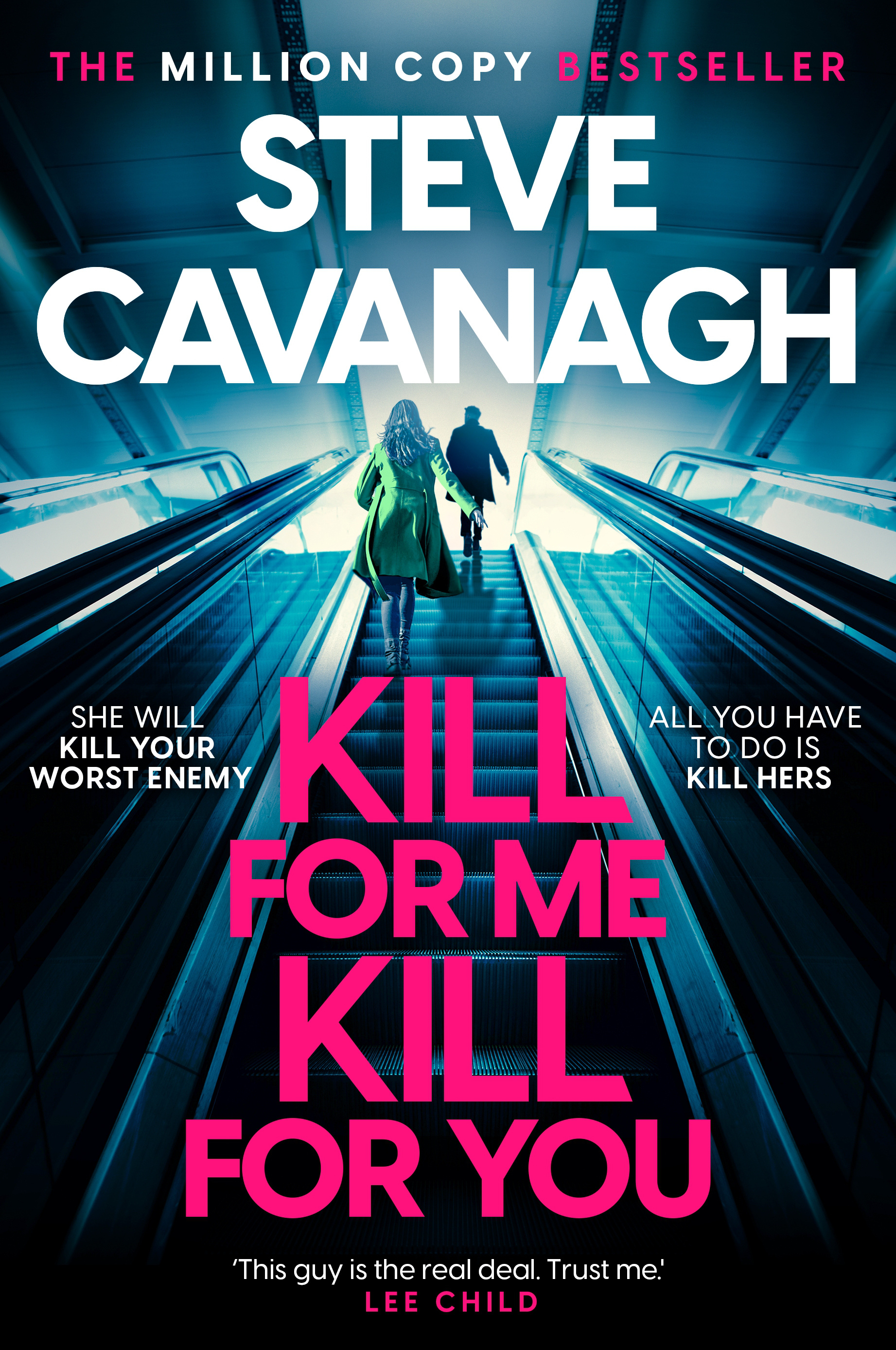
Kill For Me Kill For You by Steve Cavanagh

Kill For Me Kill For You Cover

Publisher: Headline (Trade Paperback – 25 July 2023)

Series: Standalone

Length: 356 pages

My Rating: 4.5 out of 5 stars

Amazon

The always entertaining Steve Cavanagh returns with another outstanding thriller, this time with an awesome new take on an old classic with Kill For Me Kill For You.

Steve Cavanagh is an outstanding author who I have been having a wonderful time reading in recent years.  Cavanagh is best known for his awesome Eddie Flynn legal thriller series that follows a former conman turned defence attorney as he uses his unique insights and tricks to win impossible cases, even when everything is stacked against him.  I have had a ton of fun with the last few books in the series, The Devil’s Advocate and The Accomplice, and Cavanagh is firmly on my yearly must-read list now as a result.  I had been hoping for another Eddie Flynn novel this year, but I was happy to receive a copy of Cavanagh’s new standalone thriller, Kill For Me Kill For You, which throws a grieving mother into a terrible situation.

Amanda White is a woman who lost everything in life when her young daughter was kidnapped and murdered.  Left helpless as the prime suspect is found innocent while her own husband killed himself out of despair, all Amanda has left is a desire for revenge.  But with her target aware of her hatred, and the police certain to arrest her if she tries anything, Amanda can only sit back and do nothing.

Required by the court to attend a trauma support group, Amanda has a chance encounter with another member, Wendy, who has her own desire for revenge.  Like Amanda, Wendy wants to kill the man responsible for her own child’s death but is determined to avoid police retaliation.  Together, the two women plot on how to take out the men that they hate, and soon draw inspiration from a classic Hitchcock film in which two strangers kill the other’s target.

However, when Wendy suddenly kills Amanda’s obsession, she is forced to act quickly and commit her murder for Wendy before the police come for her.  But nothing is as it seems, and Amanda soon finds herself trapped in a deadly situation with the police hot on her trail.  To survive, Amanda will need to dive into the past to discover a legacy of hatred, death and manipulation that will drive her to the brink of sanity and despair.

This was an excellent new thriller from Cavanagh that I managed to power through in no time at all thanks to its exciting and fast-paced plot.  Told from several different perspectives, Kill For Me Kill For You tells a clever and multi-layered narrative that proves very hard to put down, especially as Cavanagh loads it with his usual fun collection of twists, betrayals and compelling reveals.

Kill For Me Kill For You has a great character-driven narrative that follow several very damaged protagonists in a series of compelling situations.  The main storyline follows the character of Amanda White, whose desire for revenge against her daughter’s killer sees her form a friendship with Wendy, when they try to enact their Strangers on a Train inspired double murder.  At the same time, a good chunk of the plot revolves around the character of Ruth Gelman, who survives a brutal attack by a serial killer and is forced to deal with the traumatic consequences.  These two storylines are linked by a third major point-of-view character, Detective Farrow, who investigates both the assault on Ruth and the murder of Amanda’s daughter and finds himself getting drawn into both of their lives.

Both major storylines continue at a fast and compelling pace throughout the book, with Amanda’s storyline focusing on the clever intrigue, while Ruth’s storyline has a more emotional edge to it as she and her husband Scott are forced to deal with her injuries and ongoing fear of the killer’s return.  There are some fantastic developments in both, especially for Amanda when the Strangers on a Train plan goes out the window as expected.  I really loved the fantastic twists that surround Amanda at the middle of the book which completely change the trajectory of her entire plot as a result.  Both stories continue mostly unrelated for the rest of the book, and I think both develop in a great way independent of the other.  They do eventually come together towards the end of the book, and for me that was where Kill For Me Kill For You fell apart a little.  The joining twist of these two independent storylines is very predictable, even though Cavanagh did try to cover it up in a few clever ways.  Certain elements of this twist also stretch the feasibility of the plot to a degree, and while possible, it was a very unlikely.  Still, this only ruins the flow of the book a little and readers will still be hooked on the plot.  I loved the final few twists that Cavanagh loaded towards the end of the book, and the overlying emotional story writing and character moments that are utilised throughout the entire plot ensure that this is a very powerful read.  Readers will come away from this book very satisfied, and I honestly could not put Kill For Me Kill For You down the entire way through.

With the exception of the that problematic twist I discussed above, I mostly enjoyed how Cavanagh wrote Kill For Me Kill For You.  The excellent use of multiple character perspectives which shift from chapter to chapter works well to tell an expansive story with a lot more facets than I thought it would.  The different story focuses is very interesting and I liked the unique stories that both of the major characters (Amanda and Ruth) told throughout the book.  While I did find the chapters focusing on Amanda and her crisscross a lot more interesting, the Ruth storylines are more psychologically powerful and have some compelling edges to them.

I have to say that I was also very impressed with how Cavanagh made excellent use of the Strangers on a Train inspired murder plot throughout Kill For Me Kill For You.  Cavanagh makes some clever references to the classic film (and the book it is based on) throughout the novel, and I loved how he put his own spin on this classic tale.  I was worried in advance that it would be too much like other crime fiction homages to Strangers on a Train that I have seen before, but Cavanagh really made this plot element his own in Kill For Me Kill For You, working the film into his story in an excellent and memorable way.  The resulting compelling storyline was so much fun, and I cannot emphasise how brilliant and captivating this part of the book was.

In addition to the fun story elements, I also deeply appreciated the powerful character focus that Cavanagh featured throughout Kill For Me Kill For You.  There are four major point-of-view characters in Kill For Me Kill For You, and Cavanagh ensures that they have some complex and emotionally charged moments throughout the course of the plot.  All four of these characters are damaged by trauma or loss in their own unique way, including Amanda’s deep obsessive need for revenge, Ruth’s intense fear after surviving her traumatic attack, Scott’s guilt for not being there for his wife which leads to anger and despair and Farrow’s detrimental connection to his cases and the people impacted by them.  The author does an amazing job of diving into each of these character aspects throughout the course of Kill For Me Kill For You and you really grow to understand their individual traumas, obsessions and motivations throughout the course of the book.  Each character reacts to their damage and obsessions in different ways, and watching them overcome them, or succumb to them, are a key part of the plot.  This was probably the most emotionally charged and character focused book of Cavanagh’s that I have read so far, and I really appreciated how he dove into his complex protagonist’s psyches and attempted to highlight just how damaging death, violence and trauma can be on a person.

Kill For Me Kill For You was an outstanding read from Steve Cavanagh and one that I would very strongly recommend.  Featuring a unique and highly entertaining thriller narrative that cleverly balances intensity, twists, a wonderful homage to a classic piece of crime fiction, and powerful character moments, this is an excellent read that I really got attached to.  While I did have issue with a certain key point in the book, Kill For Me Kill For You was an overall strong and compelling novel that really showcases Cavanagh’s rising talents as an awesome thriller writer.

Amazon

Dead of Night by Simon Scarrow

Dead of Night Cover

Publisher: Headline (Trade Paperback – 14 February 2023)

Series: Berlin Wartime Thriller – Book Two

Length: 422 pages

My Rating: 4.75 out of 5 stars

Amazon

One of my favourite historical fiction authors, the always impressive Simon Scarrow, dives back into turbulent World War II Germany with his latest compelling read, Dead of Night, an excellent and intense historical thriller with a dark twist to it.

Readers of this blog will know that I have long been a fan of Simon Scarrow ever since I read his first exceptional novel many years ago.  I particularly enjoy his long-running Eagles of the Empire series, an outstanding adventure series that follows two Roman officers as they travel throughout the empire.  The Eagles of the Empire books are some of the best historical fiction I have ever read, and I have had the pleasure of reviewing several of them, including The Blood of Rome, Traitors of Rome, The Emperor’s Exile, The Honour of Rome and Death to the Emperor.  Aside from his Roman novels, Scarrow has also written several other series and standalone books set in various periods of history.  This includes his 2021 release, Blackout, a gritty and complex murder mystery set in Nazi-controlled Berlin.  Blackout was an awesome book, and I was very happy to hear that Scarrow was producing a sequel, Dead of Night, which turned out to be another outstanding read.

Berlin, January 1940.  As Germany’s invasion of Poland rolls along, the Nazis continue to take complete control of their own country.  While the people of Berlin wait to see how the Allies will retaliate, a mysterious death is about to occur with massive ramifications.  A prominent SS doctor and his wife return home, having had a seemingly normal night attending a concert with the Nazi elite of the city.  However, by the morning, the doctor will be dead in his study, the result of an apparent suicide.

After his last near-fatal brush with the Nazi state, Criminal Inspector Horst Schenke of the Berlin Kripo is determined to simply do his job and stay off the party’s radar.  However, when Ruth Frankel, the Jewish woman whose life he saved during his previous investigation, reappears, Horst is once again dragged into unwanted trouble.  The dead SS doctor is an old friend of Ruth’s family, and Ruth has promised his widow that she would help find out the truth behind his death, and Horst is her tool to do so.

Reluctantly agreeing to help, Horst looks into the case and quickly realises that the doctor’s death was no suicide.  However, his superiors soon pull him off the investigation and forbid him from digging any further.  But with his curiosity peaked, Horst cannot turn away, especially when he manages to connect the victim to the mysterious deaths of several children throughout Germany.  Determined to find the truth no matter what, Horst soon discovers a terrible secret that places him in the firing line of the entire Nazi party and other volatile factions in the city.  Can Horst survive this new case, or will the regime he despises finally take him off the board?

This was an excellent read from Scarrow, who has been on a real roll lately with his awesome books.  Dead of Night not only served as an incredible sequel to Blackout, but it also features an intense and historically powerful narrative that had me hooked from the very beginning.

Dead of Night follows several of the same characters from the first book, primarily Criminal Inspector Horst Schenke, who serves as the main protagonist and point of view character, in another intriguing and complex case.  Schenke must again work with Ruth Frankel to investigate the apparent suicide of a prominent SS doctor, which produces an intriguing and compelling early investigation storyline that I really enjoyed.  However, Schenke soon runs into political problems, as well as threats of violence, which force him to conduct a subtle investigation.  At the same time, Schenke’s socially crusading love interest, Karin, requests that he look into the mysterious deaths of several children at a remote medical institute.  This second investigation takes up a good chunk of the novel and the protagonists dive into really starts to enhance the intensity of the plot.  This is because Scarrow starts to utilise particularly sinister elements of Nazi history in the plot, which ensures that the novel gets fairly dark in tone and content.  Scarrow is very subtle in how he brings these elements to the character’s attention, and there is a lot of emotion and disgust that emerges in the story as the protagonists realise what is going on.

From there the two divergent investigations start to come together as subtle clues that the author introduced in the first half of the book are brought to light again.  The revelation of how the two cases are connected is pretty captivating, especially as it gives the ‘antagonists’ of the novel a very compelling and relatable motivation.  The protagonist is forced to make some hard decisions as they come to terms with just what is going on and this leads to some great scenes about the differences between duty and what is right.  Everything leads up to an emotionally charged confrontation which cleverly brings the entire story together and wraps up all the remaining mysteries and character arcs.  This final major sequence is pretty damn awesome and it results in some of the most dramatic and powerful moments in the entire novel.  I really liked how the entire novel came together at the end, especially as the protagonist is left in several unenviable positions while he watches his country descend further into darkness.  I felt that the entire novel was very well paced out, and it doesn’t take long for the readers to get hooked on the story, especially with the two quality mysteries that Scarrow came up with.  The blend of mystery, dark historical moments, and intriguing character interactions is pretty perfect, and it works to create a memorable and haunting tale.  Combined with some of the great twists, many of which are based around evil parts of real-life history, and I felt that Dead of Night surpassed is predecessor in some very awesome ways

For me, the best thing about Dead of Night was the fantastic and distinctive wartime setting that surrounded the plot.  Stories set in Nazi controlled Germany are always intense and dark for obvious reasons, but I felt that Scarrow did a particularly outstanding job of capturing it, especially as he pairs the dark mood with a gritty winter backdrop.  Just like with Blackout, there is a focus on the evils of the Nazi regime in Dead of Night, and quite a lot of the plot is devoted to seeing how normal citizens, including non-political police officers, view what their city and country has turned into.  There is a good focus on the fear and control that the Nazis blanket the city with, and the investigation angles of the narrative become even more complex and compelling due to the protagonist being constantly blocked by his Nazi and SS superiors.  However, the best, or worst, historical elements of the book revolve around one of the cases that Inspector Schenke is dragged into, specifically around the death of several children.  This case thrusts the protagonist right into the heart of some of the darkest things the Nazis ever did to their own people, which really gives this entire book a powerfully tragic edge.  Scarrow uses this historical inclusion to his full advantage, as not only does it provide an excellent motivation for some of the crimes being committed, but it also increases the emotional conflict of the protagonist.  Scarrow really does not hold back when it comes to showcasing these historical horrors and the readers get a full idea of what is going on and the sort of people behind it.  This dark historical inclusion really helped to turn Dead of Night’s narrative into something particularly distinctive and captivating, and I felt that Scarrow did a fantastic job of drawing the reader in by giving them knowledge of this terrible moment from history.

I also need to highlight some of the excellent characters featured within Dead of Night, several of whom carry on from the previous novel in the series.  Most of the focus is around Inspector Horst Schenke, one of the few senior police officers left in Berlin without a connection to the Nazi Party.  Dedicated to the law, Schenke, a man already traumatised by his past, keeps finding it harder and harder to do his job in the new regime.  Despite his best efforts, Schenke keeps getting dragged into the middle of the several Nazi plots and hidden schemes, which constantly place him in political danger.  I loved the deep conflict that this builds within him as he is forced to choose between ignoring what he discovers, or trying to get justice and doing something.  Further complicating matters are his relationships with the two women in his life, his girlfriend, Karin, and the Jewish women he previously saved, Ruth Frankel.  Both keep pushing him to do more to oppose the Nazis or get to the truth of crimes they are covering up, and he is forced to balance his desires to help them with his sense of pragmatism while trying to protect them from the Nazis.

Other great characters in this book include Schenke’s police backup, Sergeant Hauser and former Gestapo agent Liebwitz.  These two are great supporting characters and they provide interesting counterviews to German life, with Hauser being a more everyman figure, while Liebwitz is bound up by his Gestapo training.  Despite the apparent differences between Hauser and Liebwitz, the two work together well and serve as good support to Schenke, and I liked the fun odd-couple team that they formed.  They also have some intriguing moments throughout the book, especially when they encounter some of the horrors of the Nazi regime.  While Hauser has some great emotional reactions, especially when it comes to the death of children, Liebwitz has the more intriguing responses, as he balances his loyalty to the state with his own past experiences and conscious.  Watching him come to terms with some of the evils he witnesses makes for some powerful reading and I am glad that Scarrow added in these intriguing alternate characters.  I also really enjoyed the complex main antagonists of the story, as they had quite a powerful motivation for some of the crimes committed in the book.  While they are not as noble as they believe, the antagonist’s goal still serves to trouble the protagonist’s sense of justice, and interesting compromises have to be made as a result.  I deeply appreciated some of the deep characters that Scarrow featured in this novel and I look forward to seeing how they are utilised in any future books in the series.

Simon Scarrow continues to impress me as one of the best historical fiction authors out there with this incredible new read.  Dead of Night has a brilliant and powerful story behind it that takes full advantage of its bleak and historically rich setting.  Featuring an outstanding investigation narrative and some dark insights into the horrors of the Nazi regime, Dead of Night will easily grab your attention and ensure you will not forget it anytime soon.  A highly recommended novel from one of my favourite authors.

Amazon

Quick Review – Red Dirt Road by S. R. White

Red Dirt Road Cover

Publisher: Headline (Trade Paperback – 10 January 2023)

Series: Detective Dana Russo – Book Three

Length: 307 pages

My Rating: 4.5 out of 5 stars

Amazon     Book Depository

Impressive author S. R. White continues to lead the Australian outback murder mystery scene with his new and compelling release, Red Dirt Road, the third book in his Detective Dana Russo series.  I had the great pleasure of reading the second book in this series, Prisoner, back in 2021 and I really enjoyed his unique take on the outback detective novel.  As such, I have been rather excited to read his new book, Red Dirt Road, especially as it featured a particularly enthralling mystery.

Plot synopsis:

One outback town. Two puzzling murders. Fifty suspects.

In Unamurra, a drought-scarred, one-pub town deep in the outback, two men are savagely murdered a month apart – their bodies elaborately arranged like angels.

With no witnesses, no obvious motives and no apparent connections between the killings, how can lone police officer Detective Dana Russo – flown in from hundreds of kilometres away – possibly solve such a baffling, brutal case?

Met with silence and suspicion from locals who live by their own set of rules, Dana must take over a stalled investigation with only a week to make progress.

But with a murderer hiding in plain sight, and the parched days rapidly passing, Dana is determined to uncover the shocking secrets of this forgotten town – a place where anyone could be a killer.


Red Dirt Road
ended up being a very fun and captivating murder mystery novel and one I had a wonderful time getting through.  I really enjoyed White’s cool and clever plot scenario and the entire concept of a cop attempting to solve a mystery in a small town with limited suspects is a fun idea that harkens back to classic whodunits.

Red Dirt Road’s story itself hits the ground running quickly, as complex protagonist Dana Russo is forced to travel to the small town for the investigation and soon becomes wrapped up in its many foibles.  This includes the sheer isolation, the lack of modern comforts and the unusual locals, many of whom are hiding from the outside world.  There is also a set of creepy angel-themed statues that mysteriously move around town, the work of a guerrilla artist who has remained hidden since the murders began.  With time restrictions on her investigation and with minimal help from the local police, Dana initiates an unconventional investigation that focuses on understanding Unamurra’s society and its people to solve the crime.  After getting to grips with the various people living there, as well examining other clues and evidence, she is able to figure out which one of the town’s residents is the most likely killer and confronts them in a particularly fascinating reveal sequence.  The full explanation for why the crime was committed, as well as the ingenious and very distinctive motivation of the murderer, was exceedingly clever, and I felt that White set everything up perfectly.  While certain elements of the conclusion were a bit over-the-top, (a very unrealistic elite government SWAT team comes to town), I felt that the story was pretty damn impressive and I was absolutely blown away with the elaborate motivation that the author came up with.  The plot of Red Dirt Road also simultaneously continues some of the series’ ongoing storylines, such as Dana’s personal relationship with her co-worker and the internal police politics that are impacting her career, and this ended up being quite a gripping read as a result.

One of the most noticeable things about Red Dirt Road was the unique, society-orientated investigation method that the protagonist used to understand the people of Unamurra and find out who the killer was.  I personally thought that this was a very smart and intriguing way to frame a murder investigation that worked extremely well in the context of the setting and the series.  When I reviewed Prisoner I noted that White likes to highlight the interrogation side of policing with his writing and this was once again in full display when it came to how Dana gathers information in Unamurra.  The flurry of casual conversation she engages in ensures she picks up all the knowledge about the town and people she needs, while also putting the potential suspects at ease as they don’t understand her style or the subtle reasons behind her lines of inquiry.  This information, when combined with some observations and additional background she gets from headquarters, allows her to pull together a full mental picture of the town and by understanding them and their needs she finally gets the insight she needs to understand the entire situation.  This results in a very unique case, and I found myself getting really wrapped up in both the characters and the setting while trying to wrap the clues together in my head.  While this style of investigation probably isn’t going to fit every murder mystery fan’s taste, I felt that it worked extremely well and I loved how the elaborate motivation was teased out through these discussions.  The final confrontation with the killer and the various revelations it contained really ties all these previous discussions together perfectly and you quickly realise just how cleverly White structured his entire mystery.

On top of the cool investigation method, I also deeply enjoyed the dusty and desolate setting of Unamurra that served as the backdrop to the murders.  White really tries to show the reader the full experience of such a lonely and decaying town, and thanks to the excellent descriptive writing you can absolutely picture every cloud of dust, quiet night, and the lack of movement.  At the same time, the protagonist begins talking to each of the residents of Unamurra and you really get to understand the sort of people that would live in such a place, whether they are desperate, trapped, or have their own strange motivations.  This excellent use of setting and compelling supporting characters greatly enhances the book’s already complex murder investigation, and I felt that White did an amazing job of working it into the larger narrative and mystery.  The sheer isolation impacts every decision and insight that Dana has and you really come away trying to imagine what life in such a location would be like.  While White does overgeneralise some areas of rural Australia in his book, especially as he makes the location of these crimes geographically vague, this setting added a great deal to the impact of Red Dirt Road and I deeply enjoyed my time in the elaborate setting of Unamurra.

Overall, Red Dirt Road was an outstanding new book from S. R. White that perfectly highlighted his distinctive take on a murder mystery investigation.  Combining another outstanding outback setting with a unique case, Red Dirt Road will have you hooked all the way to the fantastic finale.  I cannot wait to see what complex stories White comes up with in the future, but if they are anywhere near as clever and enthralling as Red Dirt Road, I know I am going to love them.

Amazon     Book Depository

Death to the Emperor by Simon Scarrow

Death to the Emperor Cover

Publisher: Headline (Trade Paperback – 15 November 2022)

Series: Eagles of the Empire – Book 21

Length: 466 pages

My Rating: 4.75 out of 5 stars

Amazon

One of the world’s best historical fiction authors, Simon Scarrow, returns with another epic instalment in his brilliant long-running Eagles of the Empire Roman history series, Death to the Emperor.

I have made no secret of my deep appreciation for the works of Simon Scarrow, who is easily one of my favourite historical fiction authors.  A talented and compelling author, Scarrow has written several great series and standalone reads that cover historical subjects such as the Napolenic wars, World War II and even a cool historical crime fiction novel, Blackout.  However, his most substantial body of work is his Eagles of the Empire series, which is one of the best historical fiction series I have had the pleasure of reading.  Set during the reigns of some of Rome’s most infamous emperors, Eagles of the Emperor follow two Roman soldiers, Prefect Cato and Centurion Marco, who have fought on multiple battlefields across the empire.  I have had a wonderful time reading this series over the years, and it features some outstanding books, including the last four novels, The Blood of Rome, Traitors of Rome, The Emperor’s Exile and The Honour of Rome.  Naturally I started reading the latest book in the series (the 21st book overall), Death to the Emperor, pretty much as soon as I got it, and boy did that prove to be a smart decision.

60 AD, Britannia.  After years fighting side by side together, Prefect Cato and Centurion Marco are back in Britannia, the land they helped conquer at the start of their partnership.  Since their first time there, their lives have been transformed in ways they could have never believed.  While Marco is retired, serving a senior administrative role amongst the other retired veterans in Britannia, Cato is hiding out on the island, attempting to avoid Nero’s wrath for rescuing the Emperor’s former mistress from exile.  Determined to make their new lives in Britannia work, Cato and Marco are once again thrust into danger as tensions escalate throughout the island.

While the usual malcontents and druids stir rebellion and conflict against the Romans, tensions are higher than ever, especially as rumours spread that Emperor Nero wishes to pull out of the savage province.  However, Nero is also determined to squeeze the island for every bit of wealth it has, and he dispatches a ruthless and dangerous procurator to do this.  Worried that this move may destabilise an already fragile Britannia, Cato and Marco attempt to help their ally, the recently widowed queen of the Iceni, Boudica, whose tribe has caught the eye of the Emperor and his Procurator.

However, soon duty separates the two old friends again, as Cato is conscripted by Britannia’s ambitious governor, Gaius Suetonius Paulinus, in his latest campaign to destroy the druid stronghold at Mona.  Left alone, Marco can only watch as outrage and disrespect brings the Iceni to the brink of war with Rome, one that he and his forces cannot possibly defeat.  Soon, the fate of Britannia lays in hands of one woman, Boudica, who can bring peace to the lands.  However, when Boudica is pushed too far, will she declare war on Rome, its Emperor, and her old friends Cato and Marco?

Death to the Emperor was an outstanding and fantastic read that once again highlights Scarrow’s impressive ability as a historical fiction writer.  Continuing the long-running story of Cato and Marco, Scarrow expertly dives into a major historical event and brings it to life in a compelling way.  I had a wonderful time reading Death to the Emperor and I felt that it was one of Scarrow’s better novels in recent years.

I loved the incredible story that Scarrow wove around Death to the Emperor, especially as it provides the reader with an excellent blend of action, adventure, character development and a ton of historical detail.  Set shortly after the events of the last book, The Honour of Rome, Scarrow continues several threads from there, with Cato and Marco attempting to settle down in their old stomping ground of Britannia and find some peace.  However, the death of Boudica’s husband soon leads to chaos as the disgruntled locals start to push back against the increasing control and greed of Rome.  After a good introduction, which sets much of the scene for the rest of the book, the protagonists are split up, with Cato forced to accompany Governor Paulinus on his campaign to eradicate the druids, while Marco remains behind to attempt to keep the peace.  This results in a great split of storylines, and both of their exciting character arcs really paid off.  Cato’s story arc is a pretty typical Scarrow narrative, as Cato takes control of a new regiment and leads them into several battles as part of his campaign.  This results in several impressive action sequences, including a great and highly exciting extended siege sequence at the druid stronghold of Mona, which was one of the best battle scenes in the entire book.  At the same time, Marco bears witness to all the key events that lead up to Boudica’s rebellion, as the villainous Catus Decianus antagonises the tribes, despite Marco’s best efforts to stop him.  Marco’s storyline is a lot more intense and emotionally rich as the protagonist attempts to save all his friends against heavy odds.  However, despite his best efforts, Marco and his fellow veterans find themselves forced to fight Boudica’s army, which results in a pretty memorable ending.

I deeply enjoyed how this compelling narrative came together, and Scarrow was on excellent form as he provided the reader with everything they needed.  While the start of the book is a little slower, it sets the scene perfectly, before all the action and deadly developments ensue at a faster and more intense pace.  The author really built up the tension throughout the narrative, and you really knew that everything was going to go wrong, and boy did it.  The resulting battles, which includes several very fun sieges, were well worth the wait, and Scarrow did a wonderful job of showcasing all the carnage of these fights.  Separating the main characters created a much more complex and wider narrative, and I liked the excellent contrasts between the battles, as Cato’s successes with his forces are mirrored by Marco’s desperate fights with the small band of retired fighters under his command.  The intensity of the plot got even more pronounced as the narrative continued, and the reader really gets drawn in as a result.  I personally powered through the second half of the book in very short order as I wanted to see how everything would unfold.  The desperate and bloody conclusion to the narrative was pretty shocking, especially as there are some major series moments featured here.  The resulting cliff hanger finisher was just perfect, and you are left wanting more.  I am not entirely sure I’ll be able to wait a whole year to see how this series continues, but I am sure that the reader is for even more excitement and shocks when Scarrow brings out his next book.

One of things that really impressed me about Death to the Emperor was the level of historical detail that Scarrow put into it as he covers some of the early events of Boudica’s uprising.  The author does a remarkable job showcasing all the events that lead up to the rebellion, and he paints a compelling and unique picture around it.  Many events are discussed or shown in intriguing detail, including the general oppression of the local tribes, the attempts to embezzle money from the Iceni, the capture and humiliation of Boudica, and the disregard that Nero had for Britannia and his rumoured plans to abandon the province.  All these events, eventually lead up to the rebellion and it was fascinating to see them come about, especially through the eyes of a common soldier character like Marco.  The subsequent early battles of this rebellion, including the fight at Camulodunum, are very dark and brutal, and I deeply appreciated how Scarrow put his protagonists in the centre of these bloody conflicts, as they really raise up the intensity of the narrative.  At the same time, Scarrow also spends a good part of the book highlighting Governor Paulinus’s invasion of the druid stronghold of Mona.  This compelling campaign is often overshadowed by Boudica in history books, but it was an important part of the events at that time, especially as it left the rest of the province undermanned.  Scarrow covers this campaign extremely well through the book, especially as Cato is the officer usually at the front of the fighting, and it became quite a key part of the book.  I loved seeing this blend of historical events throughout Death to the Emperor, especially as Scarrow brings his usual flair for showcasing the Roman war machine throughout this book, highlighting the strategies and martial techniques of the Romans in exquisite detail.  I can’t wait to see the rest of Boudica’s rebellion in the next Eagles of the Empire book, as it is going to be epic.

Scarrow does another awesome job with the characters in Death to the Emperor, as he tells some intriguing character arcs that really helped to shape the narrative.  The primary focus as always is one of the series’ main protagonists, Prefect Cato and Centurion Marco.  Both have some intriguing character moments in this book which I had a great time with here.  Cato’s arc is pretty typical for much of the series, with the prefect forced back into combat, this time leading an auxiliary cohort on the campaign to Mona.  Cato’s arc is filled with a huge amount of action and intense battles as he fights from one end of Britain and back again.  It is always fun to see Cato in action, especially as he takes his units into some bloody battles, using a range of unique tactics to win.  While Cato is fun, the most intense character moments is focused on Macro, who remains behind and watches over the province while the army is gone.  Marco, who is mostly retired at this point, finds himself in a unique leadership position, and must work his force of reservists into a coherent force.  At the same time, he also finds himself greatly conflicted as he finds his loyalty to Rome tested due to his friendship with Boudica.  Forced to take military action against them, Marco tries to protect Boudica and her family, however, his orders and his slimy commander make that impossible, and he must decide whether he should continue to blindly follow Rome or do what is right.  His decision will have huge impacts on the story, and it places him in some dark situations.

Aside from Cato and Marco, who tend to be the primary point-of-view characters, Death to the Emperor has an awesome cast of supporting characters who really add a lot to the overall narrative.  This includes Boudica, who serves as Rome’s main antagonist in this arc of the series.  Boudica has actually been a friendly supporting character for many of her previous appearances, having formed a relationship with the two protagonists.  However, this book sees all that change as she is pushed too far, becoming the warrior queen we all know.  Scarrow handled her transformation from friend to deadly enemy extremely well, and it was fascinating to see her interact with Marco, especially as he keeps trying, but failing, to help her.  Aside from Boudica, I also liked seeing more of the fun supporting character, Apollonius.  Apollonius has been an interesting figure for the last few books, serving as Cato’s spy and advisor, and generally being a good secondary protagonist.  He has a very interesting time in Death to the Emperor as he remains behind to help Marco.  I loved seeing the continued relationship between the two, as Marco generally disapproves of Apollonius, and it was also quite intriguing to get some insights into why Apollonius chooses to stay and help Cato.  The final character I need to point out is Catus Decianus, the Roman Procurator who is generally considered responsible for Boudica’s rebellion.  Scarrow does an amazing job with Decianus, a real historical figure, and he turns him into a very despicable villain in Death to the Emperor.  The author paints him as an arrogant, greedy fellow, whose arrogance and general dislike of the Britannia locals, leads to the resulting war.  You really cannot help but hate Decianus, especially as he really is the main villain of this story.  These great characters, and more, turn out to be an amazing cast, and I had a wonderful time seeing the outstanding and dramatic narrative Scarrow wove around them.

Simon Scarrow continues to showcase why he is one of the best historical fiction authors in the world with the latest entry in his exceptional Eagles of the Empire series, Death to the Emperor.  Expertly showcasing the brutal events of Boudica’s rebellion with his long-running protagonists right in the middle, Scarrow tells a powerful and action-packed story that takes his characters into some dark direction.  Captivating, exciting and oh so bloody, Death to the Emperor will keep you relentlessly entertained and ensure you come back for more books in this epic series.  Highly recommended!

Amazon