Rebellion by Simon Scarrow

Rebellion Cover

Publisher: Headline (Trade Paperback – 14 November 2023)

Series: Eagles of the Empire – Book 22

Length: 398 pages

My Rating: 4.5 out of 5 stars

Amazon

One of my favourite historical fiction authors of all time, Simon Scarrow, returns with another epic adventure that places his long-running Roman protagonists right in the middle of the deadliest fight imaginable with Rebellion.

I have made no secret of the fact that I am a massive fan of Simon Scarrow, especially when it comes to his main Roman historical fiction series.  While I have deeply enjoyed Scarrow’s books set in other periods, such as his awesome Berlin Wartime thrillers Blackout and Dead of Night, it is Scarrow’s Eagles of the Empire series that I come back to every time.  Following two veteran Roman officers who manage to find themselves sent to every battlefield imaginable, the Eagles of the Empire books have dominated the historical fiction market for over 20 years, and I have had such an incredible time reading every entry in this series.  Eagles of the Empire has been a staple series for this blog ever since I started The Unseen Library, and I have reviewed multiple entries, including The Blood of Rome, Traitors of Rome, The Emperor’s Exile, The Honour of Rome and Death to the Emperor.  Due to how much fun I have with these fantastic historical adventures, I always make time to read the latest Eagles of Empire book each year, and I finally managed to read the late 2023 entry, Rebellion.  The 22nd book in the series, Rebellion was an exceptional and bloody read that places Scarrow’s protagonists in their most dangerous battle yet.

AD 60, Britannia.  The Roman province of Britannia is in utter turmoil as the queen of the Iceni tribe, Boudica, leads her people in total rebellion after suffering the greed and cruelty of Rome too long.  Despite the best efforts of retired centurion Macro, Boudica’s growing force of Britons managed to destroy the veteran’s colony of Camulodunum, and now her army is emboldened to take back the entire province in a bloody spree of vengeance.

Campaigning on the other side of the province, Governor Suetonius desperately attempts to lead his army back to Londinium as soon as word reaches him about the uprising.  Forced to move ahead with a smaller force, led by Prefect Cato, Suetonius hopes to rally the rest of the troops in Britannia to make time for his army to arrive.  However, Suetonius is unprepared for the savagery of the desperate rebels and the incompetence of the officers he left behind, and he soon finds himself hopeless outnumbered.

As the Roman forces attempt to salvage the situation, Cato finds himself lost without his longtime comrade Macro beside him.  Convinced that Macro died at Camulodunum, Cato is determined to avenge his friend no matter the cost.  But Macro’s fate is far more complicated than the Roman’s realise, as he has been taken prisoner and is trapped in Boudica’s camp where everyone wants him dead.  As the Roman host desperately makes their final stand against the rebelling tribes, can these two grizzled soldiers survive this bloody battle, or has their luck finally run out?

Scarrow once again presents a fast-paced and powerful piece of historical fiction that proves impossible to put down.  Focusing on a particularly fascinating and iconic piece of history, Rebellion is an outstanding novel that once again thrusts Scarrow’s beloved protagonists right into the middle of the carnage.

The author had to achieve a lot in Rebellion, especially after the epic cliffhanger the prior novel, Death to the Emperor, left us on.  The events leading up to Boudica’s rebellion have been in play since the author’s very first book, and it was only a matter of time before Scarrow showcased it in this series.  Death to the Emperor did a really good job setting the rebellion in motion, and Scarrow needed to majorly capitalise on that in this latest novel.  Luckily, he was more than up to the task, presenting a captivating story that covers the key events of the rebellion.

After starting with a fun and bloody introduction that helps to highlight just how much trouble the Romans are in, Rebellion swiftly returns to the protagonists.  The first part of the book is told primarily from Cato’s perspective, as he accompanies the Roman general and a small force back to the imperilled capital in a desperate march.  This sets up a lot of the later narrative, especially as you get a sense of how out of position the Romans are and how desperate events have become.  Rebellion’s plot got even more interesting when the story spent several chapters focussing on Macro.  Now, I never for a second believed that Macro had been killed in the previous book, so I do not consider it a spoiler to mention that he was a major part of Rebellion.  His scenes were easily the highlight of the first half of Rebellion, especially as he endured being a prisoner of the rebelling tribes and his former lover, Boudica.  These scenes are so tense and emotionally charged, as Macro is forced to watch his comrades be butchered all around him, while also learning some surprising secrets.  Despite the horrors he witnesses, Macro still manages to be a bullish and utterly frustrating figure for his captors, and I loved seeing the various ways he tries to fight back.  Naturally, these two separate storylines converge as the book continues, although things only get darker once Cato and Macro are back together.

The second half of Rebellion is so damn fast-paced, exciting and intense that I honestly read the whole thing in a single night.  Everything about this second half is very impressive, as the characters go through hell time and again.  Much of this involves an extended chase sequence as the Romans are forced to flee the advancing wrath of Boudica.  The sheer desperation, despair and sacrifice involved in many of these scenes is extremely moving, and Scarrow did not sugarcoat just how brutal and bloody things got at the hands of the rebelling Britons.  The continued perspective spilt between Cato and Macro during these sequences works great, and Scarrow really captures just how fraught the situation is.

While I loved this long chase sequence and the brawls involved with it, the main highlight of Rebellion was always going to be the final battle between the Romans and Boudica.  Scarrow takes his time setting up this battle, which really heightens the anticipation, as the characters make their preparations and reflect on the fight to come.  The conclusive battle was everything you would hope it to be, and Scarrow showcases the epic confrontation, one of the bloodiest in Roman British history, in fantastic detail.  The action is intense, fast and shocking, and you are constantly on the edge of your seat waiting to see how events would unfold and whether the protagonists would survive.  Everything comes to a powerful and desperate finish, and readers will be thrilled by how this entire novel comes together.

As with most books in Scarrow’s Eagles of the Empire series, Rebellion can be read as a fun standalone novel, although in this case reading one or two of the previous entries might be beneficial.  This is because most of the storylines from the last few books have involved the events that led to Boudica’s revolt, and it was great to see it finally see this ongoing arc finally come to fruition.  At the very least, I would advise people to read the prior novel, Death to the Emperor, before getting into RebellionDeath to the Emperor was one of Scarrow’s best recent book in the series, and it ends with the battle for Camulodunum and a cliffhanger regarding Macro.  The two books form a powerful pairing, and I strongly believe that the impact of Rebellion was enhanced by reading the events of Death to the Emperor first.  However, if you choose to dive into Rebellion as a standalone, you will still be in for a good time because Scarrow ensures that the plot is very accessible and easy to follow for new readers.  This proves to be an awesome Eagles of the Empire book as a result, and I look forward to the next entry in the series, especially after some of the cool revelations that came out in this impressive novel.

I loved the historical aspects of Rebellion as Scarrow does an amazing job of exploring the events of Boudica’s revolt in detail.  As I mentioned above, the set-up for the revolt was handled flawlessly in Death to the Emperor, and Scarrow did a great job following it up with the main event here in this sequel.  Many of the key aspects of this conflict, including the sacking of Londinium, the forced march of the Roman army, and the general panic of the citizens in Britannia are shown in impressive detail, and Scarrow does a great job of setting the scene and showing just how close the Romans were to defeat.  The author does not pull any punches when it comes to how bad things got, and the inhuman actions both sides committed really raised the stakes of the book.  Scarrow also does an outstanding job of filling in historical details that were not effectively covered by the surviving sources.  For example, I liked his take on the destruction of the Ninth Legion at the start of the book, which was reminiscent of the Teutoburg Forest massacre.  Scarrow further enhances the story by providing an intriguing potential viewpoint on both sides of the revolt.  Interactions between Cato, Macro, and several different Briton characters really highlight how both sides thought they were in the right, and the differing views around the conflicts amped up the emotions of the story.  However, it was his fantastic depiction of the final battle that I particularly enjoyed.  Despite its fame, reliable details about this battle are scarce and I think that Scarrow presented a very reasonable depiction, showing the tactics the desperate Romans likely used.  This battle really came to life thanks to Scarrow’s outstanding storytelling, and you can just envision the fight between the tightly formed Roman legionaries and the massed hordes of Britons.  All this historical detail was just superb, and I loved how authentic and brutal it helped to make Rebellion.

In addition to the amazing and compelling historical elements, Rebellion also featured some moving character work.  The plot of Rebellion featured an interesting combination of long-running protagonists, real-life historical figures, and new characters introduced for this book.  I think this cool combination of characters worked extremely well, and it helped to tell an amazing and complex story.  Naturally, most of this focus goes towards the characters of Prefect Cato and Centurion Macro, who we have had so many adventures with over the years.  Cato is again showcased as the young but tough veteran campaigner and tactician, and I liked his intriguing storylines in Rebellion as he was involved in all the major battles and conversations.  While I am not sure that every key idea for Rome’s victory needed to come from Cato, it did allow him to serve a vital role in Rebellion, providing the reader with the best overview of Rome’s tactics and strategies during the war.

Due to Cato’s role as the leader, much of the more emotionally charged character work was left to the usually impassive and unflappable Macro.  Macro actually goes through a lot in Rebellion, as after losing several friends in Death to the Emperor, he is captured by the Britons.  Despite his steely resolve and fighting spirit, this imprisonment leaves its mark on Macro, especially when as he learns some disturbing secrets.  Macro also bears a certain amount of guilt in Rebellion, as he feels responsible for Boudica’s uprising, and he worries about all the deaths he seems to have caused.  I love this moving and powerful look at Macro, and it was great that Scarrow can still give him some additional depth this far into the series.  Throw in compelling and intriguing looks at the two opposing leaders of this war, Boudica and Roman Governor Suetonius, as well as some other great characters, many of whom do not survive the entire book, and Rebellion proved to be an exception novel that expertly showcased its amazing cast.

Simon Scarrow once again wows me with his outstanding Roman historical fiction novel, Rebellion.  This latest exceptional Eagles of the Empire book was everything I hoped it would be as Scarrow expertly places his protagonists in bloody heart of Boudica’s revolt.  Loaded with action, intriguing historical detail, and fantastic emotionally charged character moments, Rebellion had me hooked from the very beginning, and I loved every second I spent reading it.
Amazon

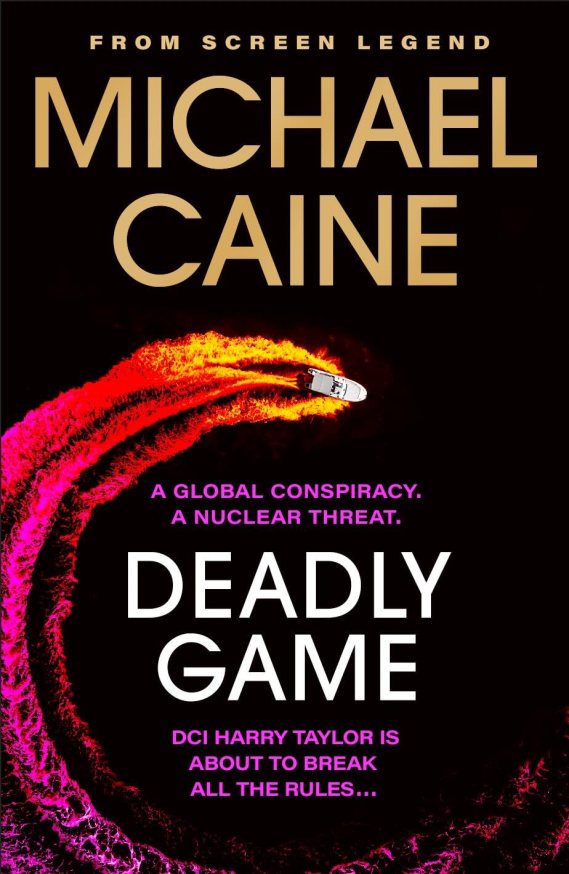
Quick Review – Deadly Game by Michael Caine

Deadly Game Cover

Publisher: Hodder & Stoughton (Trade Paperback – 28 November 2023)

Series: Standalone/Book One

Length: 327 pages

My Rating: 4 out of 5 stars

Amazon

Legendary actor Sir Michael Caine presents his debut novel, the fun and ultra-exciting thriller, Deadly Game, which follows a maverick cop investigating a case with world-changing implications.

I’m sure I’m not the only person who was surprised when they saw that Michael Caine was releasing a novel in late 2023.  While I absolutely love Michael Caine as an actor, I didn’t realise he had any aspirations as an author, so Deadly Game was easily one of the more interesting releases of last year.  As I am a fan of unusual thrillers, I naturally had to get my hands on a copy of this book, especially as it had an interesting plot behind it.  While I was mainly intrigued by its author, Deadly Game proved to be a wonderful and compelling book that I had a great time reading.

Plot synopsis:

DCI Harry Taylor has no respect for red tape or political reputations – but he’s great at catching criminals.

And all his unorthodox skills will be needed as an extraordinary situation unfolds on his a metal box of radioactive material is found at a dump in Stepney, East London, but before the police can arrive it is stolen in a violent raid.

With security agencies across the world on red alert, it’s Harry and his unconventional team from the Met who must hit the streets in search of a lead. They soon have two wildly different suspects, aristocratic art dealer Julian Smythe in London and oligarch Vladimir Voldrev in Barbados. But the pressure is on. How much time does Harry have, and how many more players will join the action, before the missing uranium is lighting up the sky?

Caine had an interesting story idea for Deadly Game that I think worked quite well.  The mysterious and violently taken radioactive material amps the stakes of the book right off the bat, and it perfectly sets up the story about DCI Harry Taylor’s team being let off the leash to hunt down the material without any oversight or restrictions.  The early goings of this story are a lot of fun, and I liked the build-up of different villains who might be involved in the theft.  The book got particularly fun when Caine introduced the two rival crime lords, Julian Smythe and Vladimir Voldrev, who come in as major suspects to the crime.  Due to their connections, it is likely that at least one has the material or knows where it is, and their extreme hatred for each other means that they are willing to trade stories about their rival to the police.  I loved the fantastic way that Caine portrayed both these over-the-top villains, and their introductory scenes with the protagonist, as well as some of the fun background that went into them, were highly entertaining, especially as they both played off the serious protagonist extremely well.

The second half of Deadly Game is where the fun really begins, as Taylor and his team get close to finding the material, only for their various opponents to get the drop on them in several ways.  There are some great scenes here, and I liked the efficient way in which Taylor and his team deal with the neo-Nazis for example.  However, things take a pretty major turn near the end, and it was a bit surprising just how far Ciane took this part of the story.  I loved the sudden darker tone that resulted, and it made for quite an intense final third of the book.  Everything leads up to the big confrontation with the hidden antagonist of the novel, and I really loved the fun, well-planned out and utterly over-the-top twist that resulted here.  It was somehow simultaneously smart and ridiculous, and I loved everything about it.  The story wraps up quite nicely from there, and there are hints that Caine might have some sequels in the works, which I personally wouldn’t mind, as I had a lot of fun with the outrageous narrative in Deadly Game.

Deadly Game had a quite a unique feel to it that revels in its roughness and over-the-top nature.  Something about how the characters talked and acted felt very cockney, and it honestly reminded me a lot of some of the author’s tough-guy roles in film.  While certain elements of this writing style aren’t going to appeal to everyone, I had a fun with it, and particularly enjoyed the amazing action scenes, the intriguing characters, and the elaborate and fun scenarios that emerged.  While some of the characters, both protagonist and antagonist, are a little silly and weird in places, they still proved to be a fantastic group of people to follow, and the resulting chaos from their actions makes for an excellent story.  The main character’s portrayal as a cop who hates politics and red tape and just wants to get the job done wasn’t amazingly original, but it worked for the story being told, and Caine did try to make him somewhat nuanced.  I think that Caine got the right balance of intrigue, mystery, suspense and action throughout the course of Deadly Game, and I was very interested in finding out who was behind the events and how things unfolded.  There was something cinematic in a lot of the resulting scenes, and it wouldn’t surprise me if Caine had a film adaptation in mind whilst writing it. Indeed, a Guy Ritchie directed version of Deadly Game could be pretty fun, especially if they got Hugh Grant in to play either of rival gangsters.

Overall, I had a great time with Deadly Game, and it proved to be an awesome and interesting debut from the legendary Michael Caine.  While not everyone is going to love this novel, I felt it was really entertaining, and it was great to dive into its outrageous plot, especially with some of the big moments and twists towards the end.  As such, I would recommend this book to anyone looking for something exciting, and if the idea of a thriller written by Michael Caine appeals to you, then you’ll probably enjoy Deadly Game.  It will be interesting to see what happens to this in the future, and I personally wouldn’t mind some sort of adaptation or sequel at some point.

Amazon

Saevus Corax Deals with the Dead by K. J. Parker

Saevus Corax Deals With the Dead Cover

Publisher: Orbit (Trade Paperback – 10 October 2023)

Series: Corax – Book One

Length: 359 pages

My Rating: 5 out of 5 pages

Amazon

One of the most unique and funny authors of fantasy fiction, K. J. Parker, returns with an outstanding and hilarious read about a likeable protagonist caught up in the middle of so much drama, with Saevus Corax Deals with the Dead.

Few authors have the comedic chops and inventiveness of K. J. Parker, whose work I have been deeply enjoying over the last few years.  A pseudonym of established fantasy author Tom Holt, Parker has written a ton of unique and compelling reads over the years, including some outstanding novels that set outrageous and clever protagonists against the stupidity of their world in some impressive scenarios.  I particularly enjoyed Parker’s recent The Siege series, which saw three very different men take advantage of a major siege in very different ways.  All three Siege books were extremely epic, and they all got five-star ratings from me because of their clever stories, entertaining characters, and fantastic comedy.  This includes Sixteen Ways to Defend a Walled City (one of my favourite books of 2019), How to Rule an Empire and Get Away with It (one of my favourite books of 2020) and A Practical Guide to Conquering the World (one of my favourite books of 2022).

Due to how much I enjoyed Parker’s last series, I was very excited when I found out that he had a fun new trilogy coming out in 2023.  This series, the Corax trilogy, follows Saevus Corax, a professional battlefield looter who runs afoul of multiple groups, nations and people in his quest for survival and the big score.  Parker, who seems to be an unstoppable force when it comes to writing, released all three Corax books in the space of around a month, which is pretty damn impressive.  I have so far had the great pleasure of reading the first of these, Saevus Corax Deals with the Dead, which proved to be an exceptional novel and one of my favourite books of 2023.

Saevus Corax is a man with a twisted and hidden past, who seeks to make a new future for himself by looting the many, many battlefields that scatter his world.  Leading a professional band of scavengers, Corax makes his living by selling recovered and repaired gear from the dead to warring armies desperate or greedy enough to buy from him.  While not the most glamorous work, it’s a job Corax excels at, and it allows him to escape his complicated history.  But the past always has a habit of coming back when you least expect it, especially when there is a great deal of money on the line.

Finishing up a lucrative job, Corax and his men are shocked to discover that they are being accused of committing a brazen heist and now have a price on their heads.  Assuming that he is the true target of this bounty, Corax soon finds himself targeted by the two most powerful banking organisations on the continent.  Forced to flee, Corax finds himself the most wanted man alive, with several nefarious organisations, as well as vengeful members of his own family, placing a massive bounty on his head.  But who is Corax really, and why does everyone want him either alive or dead?

To understand that you’ll need to unwrap Corax’s complex history, and the events that turned him into the most important figure in world politics.  But Corax is sick of being a pawn in everyone else’s game, and he soon starts to make his own moves to ensure his independence.  Will Corax survive, or will his attempts at upsetting the board result in chaos and destruction across the world?

This was an absolutely amazing read from K. J. Parker that placed a very likeable and relatable protagonist into one heck of an elaborate bind.  Filled with a wry humour, outrageous scenarios and constant treachery, Saevus Corax Deals with the Dead was an outstanding read that gets a very easy five-star rating from me.

Saevus Corax Deals with the Dead has a great story that is told in a first-person chronicle format from the perspective of titular protagonist Saevus Corax.  This is the exact way that Parker wrote The Siege trilogy, and indeed this book is set in the same world several hundred years down the line.  This results in a different landscape for the story, with the bulk of the technology, culture, and certain story elements reminiscent of medieval times rather than the previously seen Romanesque setting, and Parker uses this to his full advantage, especially as the protagonist finds himself caught in a battle between this world’s equivalent of the historic banking giants, the Knights Templar and the Knights Hospitaller.  While nominally a fantasy novel, as it is set in a different world, this series often comes across more as an alternate history novel with comedic undertones, which is highly fun.

The author comes up with an awesome tale surrounding this scenario, as the compelling protagonist is thrust into this conflict against his will thanks to certain aspects of his birth.  Corax recounts this entire adventure in detail, as he first attempts to ascertain who is trying to capture him after framing him for a crime, before eventually going on the run.  Despite promising the reader to always tell the truth, Corax proves to be a somewhat unreliable narrator, mainly because he doesn’t have a desire to share his own personal history unless he must.  However, this hidden history comes into play quite a lot, as his past ensures he is immensely important for just being him.

Inevitably betrayed and captured, Corax is sent off to experience his destiny, which results in some substantial carnage as the protagonist attempts to either escape or turn the situation to his advantage.  This leads to several amusing battles, impractical wars, and other major confrontations, as Corax and the other characters lie, backstab and manipulate to try and get what they want.  Watching a highly practical man with a professional understanding of warfare and a capable imagination face off against various foes who constantly underestimate him makes for some great entertainment, and the various twists and turns that emerge are so much fun.  This entire story comes together extremely well, and the sheer number of betrayals, changing loyalties and attempts by people to use the protagonist for their own advantage ensure you’re never certain who’s going to come out on top of every brilliant scene.  The conclusion of Saevus Corax Deals with the Dead’s plot is very clever, and it brings together a lot of the unique world and compelling story elements that have been built up over the course of the story.  The way that the protagonist overturns everything just to maintain his life is so much fun, and the fitting rewards all the characters get is very fun.

I have so much love for how this story comes together, as the protagonist’s recounting of events really works to give you a personal and complex take.  Every moment of the story is told through Saevus Corax’s cynical and distrustful eye, which adds a certain slant to events, and the author does a great job of providing some fun, but detailed, context to the events unfolding.  Much of this book’s excellent humour is lifted from these outrageous situations that the protagonist finds himself in.  The protagonist does a great job of expressing the ridiculousness of many of these moments, as well as the funny ways he manages to oppose them, often by using simple human nature or flaws in various systems to his advantage.  I loved how well Parker introduced his protagonist is this novel, and Corax’s excellent narration of current events, as well as the compelling and often emotionally charged retelling of his personal history, comes together well to tell an impressive story.  I really cannot emphasise enough how well this first-person narration works, and the detailed recounting of events from a grounded, sensible and exasperated figure really makes for a unique tale.

As the first book in this new trilogy, Saevus Corax Deals with the Dead is a self-contained book, and readers don’t need to have read any of Parker’s previous novels to appreciate it.  As a fan of The Siege series, I enjoyed that the Corax books are set in the same world, especially as the author slips in some fun references and allusions to prior events.  However, no prior knowledge of The Siege books is needed, as the protagonist provides all the relevant world history in his narration, with a few fun and ironic points about the unreliability of prior narrators.  Parker does a good job of quickly building and exploring the various nations and powers in this world, especially if they relate to the plot, and I liked some of the fun parallels that exist between some of them and real historical entities.  The interplay of politics, the rivalries between powers, and the simple desire many of these groups have to betray each other is well set out as a result, and this works into the plot of the book very effectively, especially once you begin to understand just who Corax is.  I really enjoyed how all these elements are explored in the plot, although I did on multiple occasions wish that Parker had included some form of map just so I could have kept track of locations and nations.  I honestly had such a great time returning to this amazing world, especially as we got to follow yet another unlikely leader who was able to change the world just by applying their own unique brand of knowledge and an understanding of how fallible humans can be.

Saevus Corax Deals with the Dead was an incredible novel from K. J. Parker that continues to showcase his exceptional and comedic writing style.  Setting a great protagonist down a chaotic road, Saevus Corax Deals with the Dead had an amazing story which Parker showcases in his well-honed and enjoyable style.  Immensely clever and exceedingly funny, Saevus Corax Deals with the Dead comes highly recommended, and I loved every second I spent reading it.  I already have both sequels, Saevus Corax Captures the Castle and Saevus Corax Gets Away with Murder (both with very intriguing titles), and I am hoping to read them as soon as possible as I know I will love them too.
Amazon

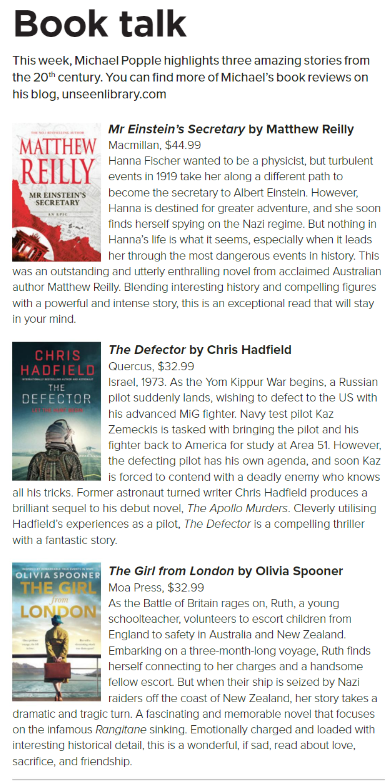
The Defector by Chris Hadfield

The Defector Cover

Publisher: Quercus (Trade Paperback – 10 October 2023)

Series: The Apollo Murders – Book Two

Length: 369 pages

My Rating: 4.5 out of 5 stars

Amazon

Former astronaut turned thriller author Chris Hadfield returns with his second excellent novel, the intriguing and clever historical read, The Defector.

Back in 2021, I was lucky enough to receive a copy of superstar astronaut Chris Hadfield’s cool and much-hyped debut novel, The Apollo Murders.  Set during the Cold War, The Apollo Murders depicted an alternate history adventure where a fictional Apollo flight mission to the moon suffered all manner of calamity, including murder, treachery, and unexpected Russian hitchhikers.  Thanks to Hadfield’s knowledge of history and spaceflight, this turned out to be quite the gripping read, and The Apollo Murders ended up being one of my top debuts for 2021.  As such, I have been eager to see how Hadfield planned to follow up his first book, and I was quite excited when I saw that his second novel was a sequel to The Apollo Murders.  This book, The Defector, was an excellent and compelling thriller which I had a brilliant time getting through.

Israel, 1973.  On the eve of the Yom Kippur War, a Soviet test pilot makes the bold decision to fake a crash in his state-of-the-art MiG fighter and secretly land in Israel.  Claiming that he wants to defect to the United States, the pilot, known by his codename, Grief, and his plane are traded to the Americans, who desperately want to know the secrets of the MiG and how it achieves such impressive altitude.

Having witnessed Grief’s defection while on holiday in Israel, NASA flight controller and former Navy test pilot Kaz Zemeckis is quickly drafted in to take carriage of the captured MiG and to work with Grief to fully understand the plane’s limitations and capabilities.  Their unlikely partnership eventually takes them to the most secure and secret location in the United States, Area 51, where Grief looks set to provide all the information the Americans have ever wanted about the MiG.  However, not everything is as it seems, and it soon becomes apparent that Grief has his own reasons for wanting to defect to the United States.  Can Kaz get to truth before it is too late, or has he let a wolf right into the heart of America’s most secret air base?

This ended up being an excellent and exciting novel from Hadfield that successfully follows up his original debut and provides a cool and intense new story that proves very hard to put down.  Hadfield tells a pretty tight and compelling story in The Defector that starts strong with the mysterious Grief defecting right in the middle of the Yom Kippur War.  This initial excitement morphs into an intense and gripping game of cat and mouse, as Kaz attempts to utilised Grief’s knowledge and keep his defection secret from the Soviets, while the Russian pilot works to initiate his own plans.

This continues for much of the book, and I thought this ended up being a much more focused and well-structured thriller narrative than we previously saw from Hadfield in The Apollo Murders.  The focus on espionage and military secrets was a great centre for the plot, and Hadfield did a good job on also utilising some intriguing characters, especially Kaz and the mysterious Grief.  The inclusion of a couple of fictional supporting characters from The Apollo Murders, namely a cosmonaut and a major Soviet antagonist, was also quite interesting, although as they were mainly there to set up a future entry in the series it did disrupt the narrative flow a little.  Everything leads up to the big conclusion, which Hadfield set up nicely throughout the course of the story.  While I do think that Hadfield might have considered utilising a twist to change the antagonist around, it was still really fun to see the full plan unfold, as well as the real reasons behind the defection.  Watching the manipulation and the resulting violence unfold was very impressive, and it led to a satisfying, if slightly predictable, final showdown with the protagonist that ended everything on a high note.

I really enjoyed how well The Defector came together, especially as Hadfield reused all his best writing elements from The Apollo Murders, while also strongly utilising his own personal experiences and knowledge as a test pilot.  The constant switching between perspective characters, as well as several interludes and flashback sequences, helped to produce a complex, multilayered storyline, and I liked seeing the various players in the plot attempt to work out what everyone else is doing.  It also allowed Hadfield to hide some good hints about the antagonist’s true motivations and feelings, which came out perfectly at the end of the book.  There was also some great character growth around the protagonist Kaz, especially as Hadfield successfully built on his personality and relationships from the first book, and it is clear that the author has some future adventures planned for him.

However, the real strength of The Defector lies in Hadfield’s encyclopaedic knowledge of military airplanes, Cold War espionage history and spaceflight, which was masterfully inserted into the plot.  Much of the plot revolves around the desire for both sides of the Cold War to get a better understanding of their opponent’s aircraft capability, and Hadfield expertly examines the history and mechanics around this.  The discussions about aircraft, fighter capabilities and more, are all quite fascinating, and Hadfield does a wonderful job of exploring them in a highly detailed way that readers unfamiliar with aircraft can easily understand.  His experience also allows for some highly realistic and intense aerial combat sequences, and I really enjoyed the elaborate scenes that resulted, especially the cool conclusion.  This grasp of aircraft, the history surrounding their development, and the espionage involved, are well worked into the plot of The Defector, and I loved how much it increased the authenticity of the book, making it so much better.

Overall, The Defector was an outstanding second novel from Hadfield that I had a wonderful time reading.  Containing a clever and well-paced spy thriller narrative loaded with intriguing details about aircraft and the cold war, The Defector had me hooked from its first awesome scene, and I managed to power through this book in no time at all.  Compelling and action packed, The Defector was an outstanding follow-up to The Apollo Murders and I cannot wait to see what Hadfield writes next.

The Defector Cover 2

Amazon

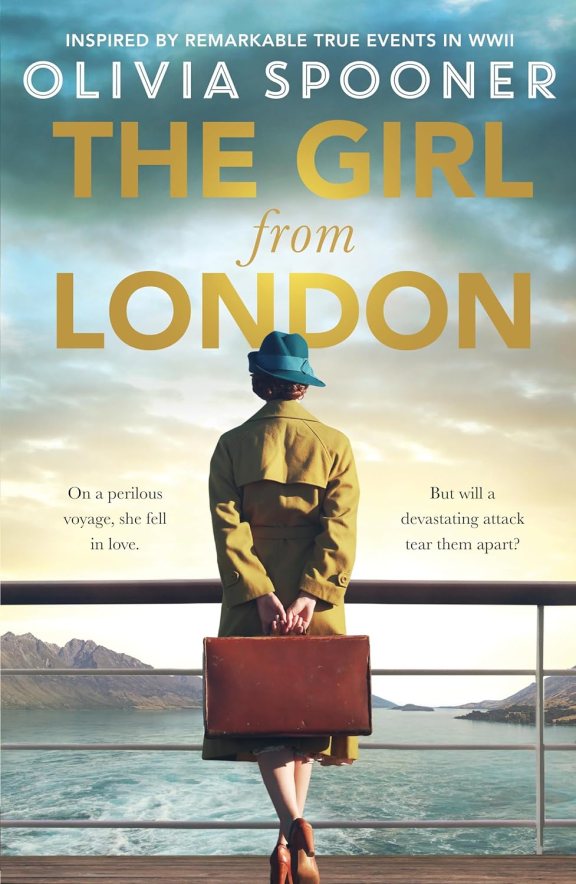
Quick Review – The Girl From London by Olivia Spooner

The Girl From London Cover

Publisher: Moa Press (Trade Paperback – 14 November 2023)

Series: Standalone

Length: 314 pages

My Rating: 4.25 out of 5 stars

Amazon

Fantastic New Zealand author Olivia Spooner presents her first dive into historical fiction, with the intriguing and clever historical drama, The Girl Form London, an outstanding read that proved quite fascinating.

Plot Synopsis:

London, 1940. Ruth, a young schoolteacher, volunteers as an escort helping to evacuate children from war-torn England to Australia and New Zealand. Her three-month voyage is fraught – their passage is perilous, and the children anxious and homesick. Nine-year-old Fergus is more troubled than most and Ruth forms an unexpected bond with the boy.

It’s not just Fergus who captures Ruth’s attention. Bobby, a fellow volunteer who initially infuriates Ruth with his laidback charm, somehow gets under her skin and throws her ordered life into chaos.

Tragedy strikes on their return voyage, when the Rangitane is attacked by German raiders. As the ship goes down, the surviving passengers are taken as prisoners of war aboard the German vessel. To the rest of the world, they are missing, presumed dead.

New Zealand 2005. Hazel boards a plane to London, eager to explore Europe. Sitting next to her is a man named Joe. On her lap is a treasured book from her grandfather, Fergus. A book that will finally reveal Ruth’s story.

A captivating, heart-wrenching story of love, loss, and the resilience of the human spirit that will stay with you long after you turn the final page.

This was an outstanding novel from Spooner that took the reader on an enchanting and tragic adventure during some very distinctive moments from World War II.  Spooner chose to tell The Girl From London’s narrative through the somewhat overused medium of a young person in modern times learning about the struggles their older relatives went through during the war.  However, I rather enjoyed Spooner’s take on this writing trope by having her modern characters getting invested in a novel that covers the adventure of Hazel’s grandfather and the people that were important to him as a child.  This not only allowed the author to dive back into the unique story generated in the past but also allowed for a quite good and heartfelt romance story to occur in the present as Hazel and Joe have a meet-cute which develops naturally into a compelling, complex relationship.

While this modern storyline was interesting, I much preferred the storyline set in the past surrounding Ruth’s journey from England to Australian and New Zealand and then the tragic events aboard the Rangitane.  That entire journey away from England was pretty darn fascinating, and I loved the captivating details of how the children were being transported to safety, the inherent tragedy of their journey, and the complicated figures who volunteered to help escort them to a new life.  Spooner covers the historical aspects of their journey extremely well and the first half of their story is quite powerful and lovely, especially as she takes the time to explore the various characters, their developing relationships, and their complex motivations for being on the ship.

The Girl From London takes a fascinating turn once the main characters start the second part of their journey aboard the Rangitane.  The historical events covering the sinking of this ship off the coast of New Zealand during the war is absolutely amazing, and despite a love for history and a good knowledge of World War II history, I had personally never heard of the Rangitane before.  As such I was really enthralled by this real-life tale, and Spooner told it magnificently, examining the taking of the ship in detail and showcasing all the remarkable events that followed.  While these events in themselves are fascinating, Spooner makes them even more compelling by tying her great characters into this historical event.  By this point of the book, you’ve come to care for the characters, so having them involved in this tragedy really raises the stakes for the reader, especially as you know something bad has to happen to Ruth at some point.  This entire part of the book was pretty remarkable, and I really got caught up in how everything unfolded.

I think that Spooner did a pretty good job of bringing the two separate storylines together in an effective and enjoyable way.  As I mentioned above, I liked Spooner’s version of the relative finding out their grandparent’s story here, and the constant breaks in the World War II storyline to explore Hazel and Joe’s burgeoning relationship gave the story a distinctive flavour.  Honestly having her grandfather’s story not become Hazel’s entire identity was quite refreshing compared to other historical dramas I’ve read and I liked the mixture of storylines that emerged.  Still, it was good to get some closure on the main storyline surrounding Ruth, and I liked the emotionally powerful way that Spooner chose to have her story be told.  The ending is both tragic and heartwarming in all the right ways and this ended up being quite an excellent read.

Overall, The Girl From London is a wonderful and compelling historical drama that I had a fantastic time reading.  Olivia Spooner produced a compelling and emotionally charged narrative, that examines romance, sacrifice and the power of choices across the generations, while also diving into a fascinating historical event.  This ended up being an amazing book and Spooner definitely showcased her ability as an author in her first foray into historical fiction.

Amazon

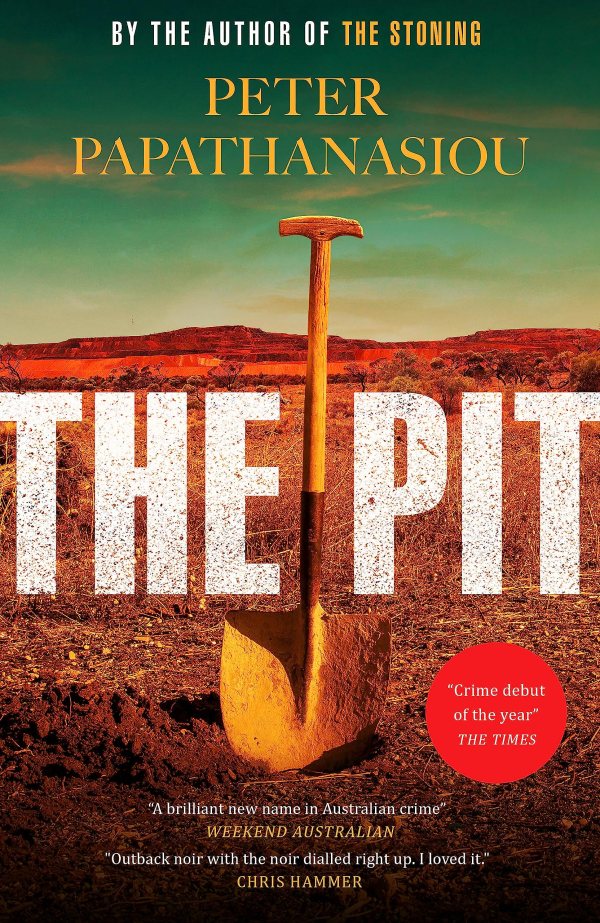
Quick Review – The Pit by Peter Papathanasiou

The Pit Cover

Publisher: Maclehose Press (Trade Paperback – 25 July 2023)

Series: DS George Manolis – Book Three

Length: 297 pages

My Rating: 4 out of 5 stars

Amazon

Australian author Peter Papathanasiou returns with his third DS George Manolis novel, The Pit, a complex and intriguing piece of Australian crime fiction that takes three unlikely companions on a memorable road trip.

Plot Synopsis:

A third outback noir from Peter Papathanasiou, following Special Constable Sparrow as he investigates a cold case in a barren mining region of Western Australia.

With DS Manolis on leave in Greece, Senior Constable Sparrow receives a phone call from a man who wants to turn himself in.

Bob is sixty-five years old, confined to a Perth nursing home. But thirty years ago, he killed a man in the remote northern Kimberley mining region. He offers to show Sparrow where the body is, but there’s a catch: Sparrow must travel north with him under the guise of being his carer.

They are accompanied on the drive by another nursing home resident: Luke, thirty years old, paralysed in a motorbike accident. As they embark on their road trip through the guts of Western Australia, pursued by outback police and adrenaline-soaked miners, Sparrow begins to suspect that Bob’s desire to head north may have sinister motivations. Is Luke being held against his will? And what lies in store for them when they reach their goal?


The Pit
proved to be quite an interesting and compelling novel which honestly was very different from what I was expecting.  I thought this would be more of a standard crime fiction/murder mystery novel in the Australian wilderness, but instead I got a character driven story that dove into one protagonist’s complex life, and I honestly think it worked out better this way.

The plot of The Pit is very far removed from Papathanasiou’s previous DS George Manolis novels, with the protagonist of the first two books not even actually appearing.  Instead we get an intriguing story about supporting character Special Constable Sparrow, who finds himself presented with an unusual opportunity by an old man, Bob, wanting to confess to a 30-year-old murder.  While I do think that Sparrow agreed to Bob’s strange request without backup a little too readily, it sets up an interesting and heartfelt storyline where Sparrow accompanies Bob and Bob’s unsuspecting young protégé, Luke, across Western Australia into the heart of mining country.  The narrative splits into two separate timelines at this point, with the main narrative focusing on the three companions as they travel across the Pilbara, getting into all manner of trouble and meeting a range of outrageous and unique outback locals.  The other main storyline is a series of intense flashbacks that examine the full life of Bob and the many hardships he experienced as a homosexual man in Australia from the 1960s onwards.  There is also a subplot that follows the friendship Bob formed with Luke in the nursing home and why Bob decided to take him on the road trip.

These different fantastic storylines are interesting and emotional in their own way, and the reader gets heavily invested in seeing both the past and the present.  Bob’s tragic and violent life story really drags the reader in, and it was fascinating to see his take on the homosexual experience throughout various periods of recent Australian history.  At the same time, you get quite entranced by the unique friendship that forms between the three road trippers, especially as each of them has their own secrets, personal issues and emotional turmoil.  I felt that the darker past storylines blended well with the unusual hijinks of the modern storyline, and the hidden clues in Bob’s recounting of events ended up having some interesting impacts on the central story.  These split storylines come together in an excellent way, and Papathanasiou really lays on the tragedy in the main narrative threads, especially when it comes to Bob and the tragedies he’s experienced.  The ending of the book is quietly poignant and ultimately unavoidable, and you will come away quite moved by how everything turned out and how the main characters developed.

Papathanasiou backed up this emotionally rich story with some fantastic and highly detailed background settings.  The Pilbara in particular is shown in all its red glory, and the author does a remarkable job describing its harsh beauty and the heavy burden of those who traverse it.  The anecdotes about the unusual people who worked in the Pilbara, both in the modern day and in the 1970s and 80s, are pretty over-the-top and very entertaining to absorb.  I do hope that Papathanasiou was exaggerating just how crazy everyone out in the Pilbara is, as there were a lot of unsettling and concerning characters involved who added some interesting spice to the story.  The memorable social interactions and courtship rituals of the repressed male Pilbara mining community back in the 1970s also seemed a bit unlikely, and I doubt I will be able look at a ute full of blokes the same way again after reading this book.  These outrageous scenes were quite entertaining, and I think they helped to enhance some of the more emotional parts of the book in greater detail.  Throw in other interesting historical locations, such as Sydney during the AIDS epidemic, and you have a fantastic background to this intense story that Papathanasiou used to full effect to tell his unique story.

Overall, The Pit was quite a memorable and compelling read by Papathanasiou, who told quite a complex Australian tale.  As a dramatic Australian tale with historical elements more than a pure crime fiction read, The Pit was a fantastic book that beautifully dove into some dark issues and showcased some amazing characters.  Charming and heartbreaking, The Pit was an excellent piece of Australian fiction that is well worth checking out.

Amazon

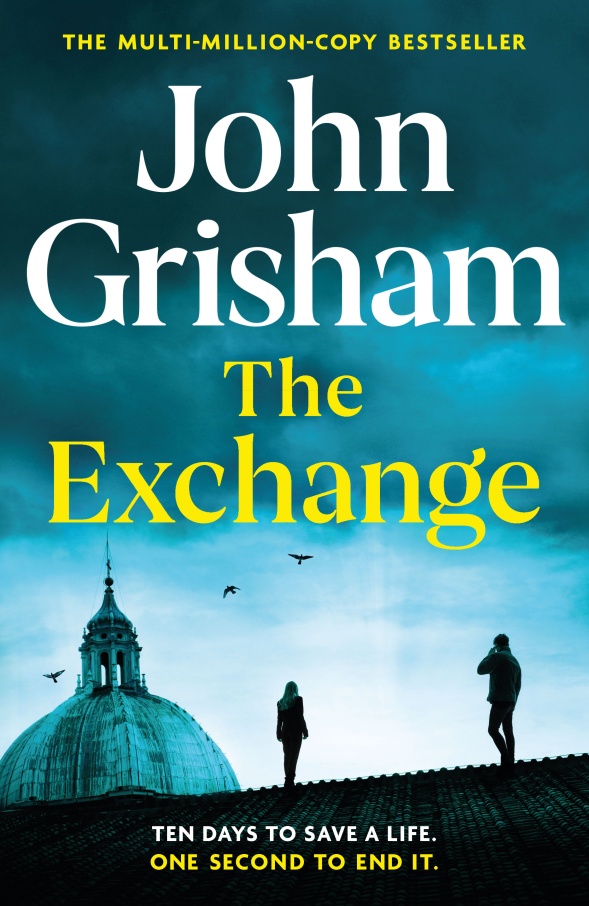
The Exchange by John Grisham

The Exchange Cover 2

Publisher: Hodder & Stoughton (Trade Paperback – 17/10/23)

Series: The Firm – Book Two

Length: 338 pages

My Rating: 3.75 out of 5 stars

Amazon

John Grisham presents an intriguing sequel to one of his best-known books with his latest release, The Exchange.

Grisham is a talented and well-respected author who needs very little introduction after wowing audiences for years with books (and their movie adaptations) such as The Pelican Brief, The Rainmaker, The Runaway Jury and A Time to Kill.  I personally came into Grisham’s novels a bit later than I probably should have, but I have had fun reading some of his latest releases such as The Judge’s List, The Boys from Biloxi and Sparring Partners.  I had a wonderful time with each of those books and I now make sure to grab the latest Grisham novel whenever they come out.  As such, I made sure to get a copy of Grisham’s new release, The Exchange, a fantastic legal thriller that serves as a sequel to one of his best-known novels, The Firm.

15 years ago, Mitch and Abby McDeere exposed the crimes of a corrupt Memphis law firm and its mobster clients, fleeing the country with a stash of the firm’s crooked money.  After spending years abroad in Europe fearing potential retribution, the McDeeres finally returned to America, taking up residence in New York, far away from their troubled past in Memphis.

Now, Mitch works as a partner in one of the biggest law firms in the world, sent to troubleshoot some of its most difficult cases.  A request from an old friend sees Mitch travel to Libya, where a Turkish construction company is suing the tyrannical Libyan government over failure to pay an extensive bill.  This is far from a routine case, and Mitch soon finds out just how dangerous that part of the world is when one of the firm’s young associates is kidnapped in a bloody attack.

Determined to save his associate before she is killed, Mitch desperately utilises all his contacts and legal knowhow to raise the ransom money needed and encourage governments to intervene.  However, the organisation that kidnapped the young woman is far more dangerous than anyone expected, and they soon launch a series of attacks against Mitch’s new firm while demanding an extravagant amount of money.  With his own family caught in the crossfire, Mitch must unwind the turbulent politics surrounding this event if he is to save everyone he cares about.

I must admit that I had some mixed feelings when it came to The Exchange, and it honestly wasn’t my favourite Grisham novel.  Let us start with what I liked about The Exchange, which for the most part was a pretty fun and exciting read.

Grisham wrote an intriguing and fast-paced narrative for The Exchange that is really easy to get into and proves very hard to put down in places.  There is a great set-up surrounding the Libyan deal, and it was fascinating to have a book set in Libya in 2005 during the Gaddafi regime.  Grisham ratchets up the tension early, as you know something bad is going to happen, and when it does, Grisham does not hold back with the brutality and violence.  The second half of the book, which primarily follows the protagonist as he uses all his contacts to try and negotiate for his colleague’s release, is also quite fascinating, and you can feel the fear and desperation of the characters, especially when Mitch’s family is brought into the situation.  Add into this the complex characters and the compelling, detailed and highly cynical examination of life in one of the world’s biggest law firms (in this case, a fictional law firm which has appeared in prior Grisham novels), and The Exchange has a lot going for it.

While I found it exiting and captivating to read, and I enjoyed a lot of how this story came together, most of my dissatisfaction came from the conclusion.  I won’t go into a lot of detail here to avoid spoilers, but frankly I found the end of the book to be rather underwhelming and a little lazy.  Despite setting up some intriguing storylines at the start that could have resulted in a great and engaging conclusion, Grisham instead chose to just resolve the storyline in a predictable manner and leave a lot of stuff hanging.  There are so many unanswered questions left over as a result, especially when it comes to the means and motive of the antagonists, and I was honestly surprised that Grisham did not tie it into the plot of The Firm somehow.  Frankly, this lacklustre conclusion put a damper on my enjoyment of The Exchange as a whole and I was a little disappointed about not getting a satisfying ending.

Another major element of the book that I am not sure hit home completely for me was its connections to Grisham’s previous novel The Firm.  I must admit upfront that I haven’t read The Firm, but I honestly don’t think The Exchange’s story really benefited from being a sequel.  While I am sure that some Grisham fans really appreciated getting a continuation of the McDeeres’s story, it didn’t do a lot for me.  For example, the first 50 or so pages are dedicated to Mitch returning to Memphis for the first time since the events of The Firm, which does serve as a good bridging element for new readers.  However, this opening scene had no connections to the main plot of the book, and it was just so unnecessary in hindsight.  I also never really connected to Mitch and his family throughout the course of The Exchange’s story, and it might have been better if Grisham had introduced an original protagonist instead.  Still, the author did do a good job of recapping the key events of The Firm to new readers, and I am sure dedicated Grisham fans will appreciate this interesting continuation after all these years.

While I did have a bunch of issues with The Exchange, I think overall it was a good book by Grisham and I did have a fun time reading it.  Much of the plot is very exciting and well set out, and there are some truly fascinating elements to it.  Probably best read by those fans of Grisham’s style and prior novels (especially The Firm), The Exchange is well worth a read, but I just wish it had a better ending.

Amazon

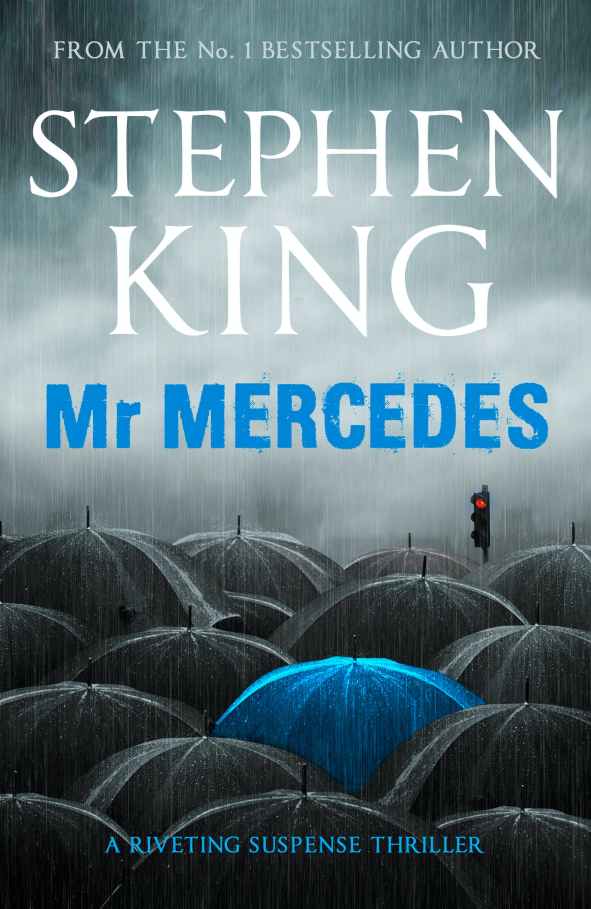
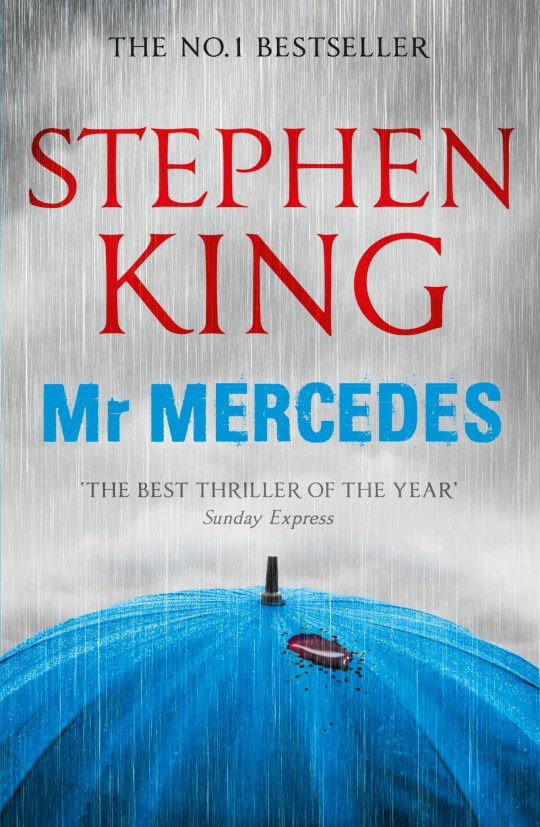
Throwback Thursday – Mr Mercedes by Stephen King

Mr Mercedes Cover 1

Publisher: Hodder & Stoughton (Paperback – 3 June 2014)

Series: Bill Hodges – Book One

Length: 407 pages

My Rating: 5 out of 5 stars

Amazon

Welcome back to my Throwback Thursday series, where I republish old reviews, review books I have read before or review older books I have only just had a chance to read. Is this week’s Throwback Thursday, I am going back to some of the older works of the legendary Stephen King lately, starting with his compelling and intense psychological thriller, Mr Mercedes, an excellent and captivating read that I had an outstanding time reading.

I have to admit that I don’t have a lot of experience with Stephen King’s books, having only read some of his more recent releases, such as Later, Billy Summers (one of my favourite novels of 2021), and Fairy Tale.  However, I have been keeping an eye out for King’s upcoming novels, including his next book, Holly, which is out very soon.  In preparation for Holly’s release, I decided to go back and read an earlier King novel, Mr Mercedes, especially as it serves as the introduction of the titular character from the upcoming book, and boy was I glad to try this fantastic novel out.

On a dark and cold morning in a depressed mid-western city, a desperate crowd gathers outside a jobs fair, hoping to turn their lives around.  However, many never got the chance, as a lone driver in a stolen Mercedes drives into the crowd, killing eight people and wounding more, before managing to escape.  This gruesome crime has haunted the community, and especially detective Bill Hodges, who was unable to catch the “Mercedes Killer” before he retired.

Years later, Hodges is living the solitary and depressed life of a former police officer who has seen too much.  Barely managing to get through each day, Hodges is suddenly revitalised when he receives a disturbing letter from someone claiming to be the Mercedes Killer.  Now more determined than ever to hunt down this killer and bring him to justice, Hodges jump-starts an unofficial investigation, hoping that his prey’s decision to contact him will be his biggest mistake.

Hodges’s new search leads him back to the owner of the Mercedes, who committed suicide from the guilt of her car being used in such a horrendous attack.  Teaming up with the dead woman’s sister and a band of unlikely helpers, Hodges begins to finally unravel the case.  However, the Mercedes Killer is a far more dangerous prey than Hodges ever realised.  Not only is he obsessed with killing Hodges, but he also has a nefarious plan that will rock the city to its core.  Can Hodges finally defeat his nemesis before it is too late, or will the Mercedes Killer once again get away with an outrageous act of violence?

This was a very impressive novel from King, who masterfully explores the psychological thriller genre the way only he can.  Featuring some powerful and complex characters, an elaborate cat-and-mouse plot, and King’s intense and addictive writing style, Mr Mercedes is a masterful novel that proves near impossible to put down.

I loved the powerful and captivating story that King pulled together for Mr Mercedes, as the author really dives into this dark story in a big way.  Starting with the gruesome and over-the-top Mercedes killing, which definitely sets the scene for much of the book, the main plot begins years later, with the retired Bill Hodges receiving a letter from the Mercedes Killer, who is attempting to persuade Hodges to kill himself.  However, Hodges instead enters into an off-the-books investigation, attempting to goad the Mercedes Killer into making a mistake while also connecting with the sister of the case’s key witness.  Half the book also focuses on the character of Brady Hartfield, the Mercedes Killer, who has become obsessed with ending Hodges, while also launching a new attack.  Disturbed, and determined to win, Brady’s perspective adds a great narrative edge to Mr Mercedes, and you are soon swept up in his complex emotional journey, especially once he realises that Hodges is on his tail.

The plot develops at a pretty fast and compelling pace, and you swiftly get drawn into each perspective character’s unique view on life and the grizzly events unfolding around them.  King really focuses on the dark and damaged minds of each of his characters, and the ongoing narrative is littered with compelling and fascinating dives into each of their pasts and the events that led them to where they are now.  The author also introduces several great supporting characters, each of whom adds their own unique elements to the book, whether it’s by helping Hodges with his investigation or by adding to the emotional fire that burns within both main characters.  Most of the story is devoted to the cat-and-mouse chase between Hodges and Brady, especially as they come closer and closer to confronting each other and digging at each other’s psyche.  King really moves the story along in the second half, thanks to a massive moment that really shatters the somewhat comfortable narrative that had been building at that point.  Everything leads up to the big and inevitable conclusion, as Brady attempts to unleash his master plan and Hodges and his allies close in on him.  This big confrontation is pretty damn interesting and intense, especially as a surprising third party takes the lead, but it leaves a fantastic and satisfying conclusion that readers will deeply appreciate and will leave you wanting more of the great characters and King’s unique style.

This awesome story was well backed up by King’s uncanny and wonderful writing style, and he really had me hooked the entire way through.  While early parts of the book where a tad slow in places, especially as King was building up the main two characters, once the full psychological dance between Hodges and the Mercedes Killer truly begins, you really cannot pull away from this great novel.  The mounting tension as these characters make their respective plays is so damn effective, and you get drawn into the dark mental battle between them.  King’s use of multiple perspectives really helps to enhance the brilliant story, and the captivating look into all the key characters’ minds is such an essential part of the book that it proves hard to turn away from these tragic and damaged figures.  I honestly could not put this book down in places, especially the last third, as the tension, emotional power and tragedy that King had built up by then was extremely palpable.  This was probably one of the better King novels I have read so far, especially as it had an excellent conclusion that fit the earlier themes of the book, and I deeply appreciated how well he explored the darker areas of the mind.

As I mentioned above, one of the main highlights of Mr Mercedes were the complex and highly damaged characters that were such a vital part of the plot.  King always excels at effectively utilising impressive and highly realistic character driven narratives in his books, and Mr Mercedes was no exception to this.  The major figures featured in this book were also highly unique and complex in their own way, often with some distinctive and understandable psychological damage that defines them and which they spend much of the book trying to overcome.  These highly personal and compelling character elements were really well woven into Mr Mercedes’ plot, and you really get drawn into each character’s own damaged journeys, as well as the intriguing relationships that they form.

The main character of Mr Mercedes is retired police detective Bill Hodges, who serves as a dogged and solid protagonist.  A rugged and tired figure who has seen too much, Hodges was an awesome retired cop character, and King did an outstanding job of capturing his loneliness and regret, especially in the early stages of the book.  However, this burns away when the killer contacts him, and he once again has a purpose.  I felt that this change in character focus was very well done and you easily understand why he dives back in the case, desperate to solve that one lingering case.  While initially driven by obsession, Hodges soon develops more reasons to live, as he connects with several of the other characters in the book and each connection makes him want to live that little bit more.  It was also interesting to see him revisit and reflect on his previous actions as a police officer, especially when he connects with the family of the witness he falsely accused of negligence, and the insights and empathy he develops now he is no longer a cop is quite touching.  You really grow to appreciate Hodges as a character as the book continues, especially as you see him once again enjoying life, and King’s portrayal of a man who suddenly rediscovers his purpose is very well done.  Of course, this opens him up to even greater tragedy, and watching him suffer cuts you to the core.  Thanks to the television adaptation of the book, I could only envision Hodges as Brendon Gleeson, which I think fit the depictions shown in the book, and I really enjoyed seeing this gruff, no-nonsense figure in action.

I also really need to highlight the excellent work that King puts into creating the antagonist of Mr Mercedes, Brady Hartfield, the titular Mercedes Killer.  I have read many good villains of the years, but frankly, the Mercedes Killer was one of the best, mainly because of how quickly and effectively King makes you despise him.  King does such a good job of introducing and utilising the character of Hartfield throughout Mr Mercedes, and his dual life and obsession with Hodges become a key part of his chapters.  The character’s sheer arrogance, distain and disregard for human life are so well written, and you understand just how deranged and damaged Hartfield is in just a few pages of his introduction.  King does take the time to build up Hartfield as a character, showcasing his traumatic past, formulative family events and unsettling relationship with his mother, all of which helps the reader understand how he become the monster he currently is and why he does the things he does.  However, even with that, it proves very hard to find any sympathy for the character, especially as every scene of his features an arrogant and hateful internal diatribe about the people he encounters and the world around him.  I deeply appreciated how King was able to capture Hartfield’s sociopathic superiority complex and inherent sense of greater intelligence with his writing, and it was such a key part of Hartfield’s character.  This ensures that when things do not go his way or when he is outsmarted by Hodges, a man he views as his inferior, he takes it badly, and watching Hodges manipulate Hartfield this way was a fantastic part of the book.  This is honestly one of the better King villains I have so far had the pleasure of reading and his obsession with Hodges and being the smartest man in the room, was so damn well written.

Aside from the main perspective characters of Hodges and Hartfield, King also features several other intriguing figures in Mr Mercedes who also add a great deal to the plot in a supporting role.  I personally really enjoyed the character of Janelle Patterson, who serves as Hodges’ main love interest.  Janelle was a feisty and highly likeable figure in the book, and I actually really enjoyed the heartfelt connection she formed with Hodges, especially as they filled an emotional hole in each other’s lives.  Janelle’s self-involved sister, Olivia Trelawney, also proves to be a great inclusion, despite being dead by the time the main plot starts.  King builds her into a complex and tragic figure, and it was intriguing to see her sense of reality combat with guilt and despair in several flashback scenes.  Jerome, the wisecracking teenager who serves as Hodges’s assistant and tech support added some great humour to the story, and his loyalty to Hodges ensured the reader grew quite attached to him, while also getting worried as Hartfield circled around.  However, probably the most unique supporting character was Holly Gibney, who, as I mentioned above, is getting her own spin-off story soon.  Initially shown as emotionally damaged and barely able to function, Holly doesn’t strike you as having protagonist potential.  However, thanks to her bond with Hodges and certain shocking events breaking her out of her trauma shell, Holly ends up becoming a key supporting figure, able to assist in the case due to her unique insights and life experiences.  Despite only being in the book for a relatively short amount of time, Holly really shines through as a complex and exciting figure who the reader quickly gravitates to.  As such, by the end of the book you very much understand why Holly goes on to become her own protagonist, and I look forward to seeing how much she further developed when I grab King’s next novel.

Overall, Mr Mercedes was just as good as I had been led to believe, if not better.  Stephen King did a masterful job with this powerful and captivating dark psychological thriller, and I got so wrapped up in the awesome battle of damaged minds that emerged.  Featuring an excellent story, some exceptionally complex protagonists, and King’s infallible character-focused writing style, Mr Mercedes was a joy to read from start to finish, and I have to give it a full five-star rating as a result.  I cannot wait to dive into King’s next book, Holly, when I get my hands on it in the next week, and I have no doubt that will also blow me away.

Mr Mercedes Book Two

Amazon

The Traitor by Anthony Ryan

The Traitor Cover

Publisher: Orbit (Audiobook – 11 July 2023)

Series: Covenant of Steel – Book Three

Length: 19 hours and 15 minutes

My Rating: 5 out of 5 stars

Amazon

Acclaimed fantasy author Anthony Ryan brings his epic and exceptional Covenant of Steel trilogy to an end in a massive way with the impressive third and final book, The Traitor.

Over the last three years I have had an outstanding time getting my first taste of the works of leading fantasy author Anthony Ryan.  A veteran author who has been enthralling fantasy audiences for over a decade, Ryan has several highly regarded series under his belt, including his Raven’s Shadow books, the Slab City Blues series, the Seven Swords series and The Draconis Memoria trilogy.  However, I have so far only had the opportunity to read his latest body of works, The Covenant of Steel trilogy, which has been more than enough to make me a major fan of this author.

The Covenant of Steel books are an outstanding series that follows an intriguing and well-developed protagonist, the notorious Alwyn Scribe.  Told in a chronicle format written by Alwyn, the Covenant of Steel books follow the protagonist as he embarks upon a powerful and exciting character journey that sees him overcome his bandit past to take on several new roles, including that of a scribe, soldier and knight, all while serving the mysterious religious figure, Lady Evadine Courlain.  I have had an epic time with this series over the last few years, and the first two books, The Pariah (one of my favourite books and audiobooks of 2021) and The Martyr (one of my favourite books and audiobooks of 2022) have been exceptional five-star reads that proved near impossible to put down.  Loaded with action, intrigue, a fantastic new world, and some complex characters, this series is so damn good, and I have been eagerly awaiting the third and final book for a while.  This third book, The Traitor, was one of my most anticipated reads for 2023, and I was so excited when I finally got the chance to listen to it.

Alwyn Scribe is a man in real trouble.  Now a renowned knight, general, spymaster, and trusted advisor, the former outlaw has relentlessly championed the cause of his lady, the Risen Martyr Evadine Courlain, and ensured she is now the most beloved and influential religious figure in all of Albermaine.  But what if he made a terrible mistake?

Cryptic visions from the past have warned Alwyn that, despite her claims to be a servant of the divine Seraphile, Evadine actually serves the Malecite, the source of all evil in the land, who will use her to bring about a cataclysmic future.  Blinded by love, Alwyn is convinced that these visions are false, and he is determined to keep Evadine alive and ensure that her vision of a united Albermaine are brought to life, even if that means starting another destructive war.

However, the closer Evadine gets to achieving her goal, the more Alwyn begins to realise that she is no longer the same woman that he swore his life to.  Her messages of peace and tolerance have been replaced by the fires of puritanical fury, and Evadine soon launches a brutal crusade to rid the country of her enemies and place herself on the throne as an Ascendant Queen.  But is she truly corrupted by the Malecite or is her brutal work a necessity to keep Albermaine safe from a greater evil?  As a devastating civil war is unleashed upon the kingdom, Alwyn will be forced to choose whose side he is truly on and what he is willing to sacrifice to keep the world from burning.

Well damn, Ryan really didn’t disappoint with this fantastic and powerful conclusion to the fantastic Covenant of Steel trilogy.  Weaving together all the elaborate elements from his first two books and then lighting everything you love on fire, The Traitor was a complex and deeply enjoyable read that I honestly couldn’t stop listening to.  Powerful, thrilling, and oh so beautifully dark, The Traitor was a perfect ending to the Covenant of Steel trilogy that got an easy five-star rating from me.

The Traitor has a heck of a powerful narrative to it that takes the protagonist and the reader to the emotional limit.  After an effective and entertaining recap of the previous two books, The Traitor starts in the immediate aftermath of the previous novel, The Martyr, with Alwyn leading Evadine’s army to war against the dangerous Ascendant Arnabus and his forces, resulting in a major, religious war.  This initial conflict is the focus for a good part of the early story, and it serves as a great warm-up for the rest of the plot, allowing for some much-needed character reintroductions and development, while also providing some intriguing new context for the main story.  This initial fight only serves as a taste for the wars to come, as Evadine seeks to overthrow the current order and rule herself.  This incoming conflict ensures that the first half of The Traitor has a range of great story elements to it, with a mixture of intrigue, political manoeuvrings, espionage, and battles, ensuring that every second of The Traitor at this point is highly entertaining.  This also serves as an excellent prelim for the anticipated change in the middle of the book, where the protagonist is finally forced to confront the fact that Evadine is no longer the woman he fell in love with.

Due to the reveal at the end of The Martyr, you had to know that Evadine was going to have some sort of fall from grace in this final novel, and when it comes, boy does it come hard.  The betrayals, shocks and losses at this point are exceedingly impactful, and you soon realise that Ryan intends to go full scorched earth with his storytelling, forcing the reader to deal with some major tragedies.  I liked the dark turns that occurred at this point in The Traitor, especially as Ryan had been hinting at them since book one, and it was awesome to get some payoff for the previous dark predictions.  This forces Alwyn to make some tough choices, and there is a major and compelling change in the protagonist’s objectives and loyalties for the second half of the book.  Thanks to the great setup at the start, as well as the major events in the middle, the reader will be very strongly caught in the narrative at this point, and even though the final half of The Traitor slows down in places, you really cannot put it down.  Ryan really dives into the lore of his land in this second half, which provides some very unique scenes and moments, even if some of these story elements got a little away from the author.  Still, this part of the book has some pretty impactful moments, and you will not be prepared for some of the key touching events.

Everything leads up to a final confrontation, which releases three books worth of pent-up emotion and revelations in some spectacular scenes.  While part of this confrontation is a bit more metaphysical than it needed to be, you honestly will be blown away with how it all comes to an end, especially as there is layer upon layer of tragedy involved, and I deeply enjoyed the compelling and satisfying resolutions that followed.  This entire story was a fantastic read from start to finish, and I really loved how Ryan wrapped up so many of his ongoing storylines and arcs here.  While most plot points are finalised here, a couple do remain unresolved, and it wouldn’t surprise me if we get a sequel series at some point.  I personally would be very keen for that, as I had such an exceptional time seeing this elaborate trilogy and ongoing narrative come together in some excellent ways.

I have always really enjoyed how Ryan set out the previous Covenant of Steel books, and he did a fantastic job of continuing his awesome writing style in this third and final book.  The author sets out The Traitor using a chronicle style told from the protagonist’s perspective, which is such an effective writing tool.  This deeply personal vision of events, combined with the author’s regretful insights of the future, really helps to drag the reader into the story, and Ryan really makes the most of this story format the entire way through.  Like with the rest of the trilogy, Ryan keeps up a pretty steady pace in The Traitor, and there aren’t a lot of quiet moments in the book.  The author really hit the right blend of powerful character focus, fantasy world building, and storytelling loaded with intrigue and action, and there is generally something for everyone here.

I loved the darker, more tragic feel that The Traitor had, especially compared to the earlier books, and it was easy to tell that this is the final book in the series.  While the detailed plot recap and cast list at the front of the book is very helpful at reminding readers of prior events, readers unfamiliar with The Pariah and The Martyr probably won’t be able to jump into this final novel too easily as there are so many details from the first two books that reader’s need to be aware of to fully appreciate the impacts of this story. As such, people new to the series should really head back to the start, and I guarantee you will have a great time doing so.  I really enjoyed how this awesome book came together, and Ryan’s ability to weave together an intense read with so many layers to it is very impressive.

One of the great highlights of the Covenant of Steel series has been the exceptional and detailed fantasy realm that the book has been set in, shown through the eyes of the narrator as he explores it.  The reader has been given a very detailed look at these settings throughout the last two novels, and it has served as a great background to the plot.  Primarily a medieval landscape dominated by a quasi-Christian religion, this background setting initially didn’t have a lot of fantasy elements to it except for a couple of wandering beings with strange powers.  But Ryan slowly built up the fantasy elements throughout the book, with cumulation of magic occurring about halfway through The Martyr, which I think was an excellent choice, as it allowed him to instead focus on character growth, other world building elements, and the general politics and wars of the realm, in excellent detail.  A lot of these political and religious elements are strongly explored throughout The Traitor, especially in the first half, and Ryan had a lot of fun showcasing the land’s dark turn towards religious conflict as his character’s embark on a bitter holy war.  The dark and destructive changes to this well utilised setting are very notable, disturbing and compelling, and it was fascinating to see how much everything changed throughout the course of the series.

The Traitor does get a lot more fantasy heavy in the second half of the book, as the protagonist returns to a hidden realm and fully experiences the mysterious magic and powers that reside there to counter the dark visions of Evadine.  I do think that there might have been a few too many magical inclusions here, as the plot did get a tad convoluted in places.  Still, Ryan definitely had some fantastic and unique ideas here, and many of these fantasy elements have been utilised in the past to great effect.  One particular ability that emerges actually brings part of the story around full circle, and it allowed for some very compelling interactions with characters from the past that I quite enjoyed.  The fantasy revelations that emerge during the big concluding confrontation are very over the top, which some readers might have issues with.  However, I quite enjoyed it, and it lead to a particularly dark final meeting between protagonist and antagonist that had me hooked the entire time.  This really was an awesome fantasy series, loaded with cool settings and unique features, and I hope that we might get to revisit them in the future, especially as the events of this book will leave Albermaine a much darker and traumatised setting.

Easily my favourite element of The Traitor, and indeed the entire Covenant of Steel trilogy, has been the complex, damaged and memorable characters that the story has focussed on.  Ryan has come up with an exceptional group of protagonists and villains over the course of the trilogy, and there are some deeply elaborate character arcs ongoing throughout the last two books.  Many of these continue and conclude here in The Traitor, and Ryan really went out of his way to finalise the development of his characters in some powerful ways that will really strike the reader in the feels.

The main character of The Traitor is once again Alwyn Scribe, who serves as the primary narrator of the trilogy as he recounts his historical adventures.  Alwyn has been a particularly compelling character throughout the series, mainly because you get to see him grow from a common outlaw to key advisor of the Risen Martyr as she begins her campaign across the country.  Ryan has done such a great job telling Alwyn’s unique tale in the previous books, and the reader should already be highly invested in his story before The Traitor even starts.  Of course, this ensures that the reader is hit even harder by some of the big moments of the book, as Alwyn goes through a lot here.  Not only is he still involved in a series of deadly wars and political battles, but now he finds himself being torn between love and his sense of right and wrong, as Evadine becomes more and more unstable.  Watching Alwyn continue to justify Evadine’s actions, even though deep down he knows she’s in the wrong, is both frustrating and understandable, as you realise just how much he is devoted to her.  This sense of frustration is only enhanced by the constant recriminations Alwyn throws towards his past self as he narrates his own story, and you can feel the regret pouring of the pages there.  While I won’t give too much away here, Alwyn ends up going through quite a lot in The Traitor, and the emotional toil that inflicts is pretty terrible, especially as he has to make some bitter and ruthless choices.  It was very touching and intense to see Alwyn’s story come full circle in some ways, especially as there are some intriguing callbacks to his past, and all the major impactful moments that affect Alwyn are expertly portrayed by the author.  Despite everything he goes through, Alwyn still maintains much of his humour, wit, ingenuity, and disrespectful attitude that were such a great part of the Covenant of Steel trilogy.  It was so much fun to once again get his unique take on events, and he ended up being a pretty perfect narrator for this fantastic series.

The other major character that I have to talk about is Evadine Courlain, the Risen Martyr and Alwyn’s love interest, who has been such a significant figure in the last two books.  A religious leader who inspired people with her visions, Evadine has always been a fascinating character, especially as you are never quite sure if she is actually divinely chosen, a delusional madwoman, or something even worse.  After the reveal at the end of The Martyr that Evadine might be an avatar of evil, you come into The Traitor naturally highly suspicious of her, and Ryan caters to these expectations by ensuring that she quickly starts to descend into further darkness.  Despite Alwyn’s continual attempts to restrain her, and justify her actions to the reader, Evadine becomes more of a darker figure as she pursues her various wars, although initially never going quite far enough to alienate her friends.  Of course, that changes about halfway through the book, and when she goes dark, she goes dark in a big way, turning into quite a fantastic and sinister antagonistic figure.  I really loved how Ryan turned Evadine here, and it is such an outstanding cumulation of so many key story arcs from the first two books.  Despite everything she does, there is still a powerful bond between Alwyn and Evadine that deeply impacts both of them, and it was fascinating to see these great characters walk the thin line between love and hate again and again.  The complex interactions between these two characters at various different points of The Traitor are beautifully written, and you have to appreciate just how damaged and dangerous their bond got at times.  Evadine honestly was the perfect counterpoint to Alwyn in The Traitor, and I cannot emphasise how impressive her entire story arc ended up being.

In addition to Alwyn and Evadine, Ryan has loaded The Traitor with an exceptional cast of supporting characters who add a great deal to the impact of the story.  This supporting cast is mostly made up of figures from the first two books, as Ryan brings back many of the old favourites and seeks to wrap up many of the intriguing storylines that have been such a fantastic part of the series.  Highlights include Alwyn’s returning comrades, such as the unstable but very likeable Ayin, disgraced knight Wilhum, former outlaw Tiler, outlaw queen turned legitimate Duchess Lorine, and Juhlina, also known as the Widow.  These characters, and more end up having some interesting roles throughout The Traitor, and it was fascinating to see the various sides that many of them chose, especially as the plot continued.  I liked some of the surprising directions Ryan took a few of these returning characters, and there are some interesting choices, romances and entertaining fates that were wonderful to see.  Ryan also features several great new characters who got a good introduction and utilisation in The Traitor, even if it was only for a single book.  Quite a few of these characters were cast in antagonistic roles, which I think worked really well, and it was amazing how quickly Ryan was able to turn some of these characters into quite hateable figures.

While I did really enjoy the return of so many great characters featured within The Traitor, readers should be warned that Ryan does go on a bit of a murder spree here.  While I won’t give too much away here, several great characters meet an untimely end in The Traitor, and this honestly gets pretty heartbreaking.  While I usually don’t love it when authors kill off most of their characters in a finale, I think it worked quite well in The Traitor, especially as each death served an important narrative purpose.  It also helped that for many of these characters, Ryan worked to resolve their storylines in advance, so readers got some closure with them, even as they were taken away.  As such, The Traitor turns into quite a bloody and impactful read at times, and you will not be prepared for just how grim and tragic it gets when it comes to your favourite Covenant of Steel characters.  I really cannot emphasise just how good Ryan’s character work is though, and I hope we see some of the surviving figures again in the future.

I ended up grabbing a copy of the audiobook version of The Traitor, mainly because it has been the format that I have enjoyed the rest of the Covenant of Steel books in.  Coming in at a bit over 19 hours, this is a decently long audiobook, but I absolutely flew through it once I got caught up in the exceptional story.  This format really lent itself to Ryan’s writing style and epic storytelling, and I deeply appreciated how listening to The Traitor allowed me to absorb all the key character moments, action and world building a lot better.  My enjoyment of this book was enhanced even further by the return of narrator Steven Brand, who has given his voice to most of Ryan’s audiobooks.  Brand is a very talented narrator with a great voice that fits this darker fantasy novel extremely well, especially as he perfectly encapsulates the protagonist, Alwyn Scribe.  Brand really brings Ryan’s chronicle style to life in Alwyn’s voice, and I really loved his take on the protagonist and all the other characters.  The sheer despair, weariness and self-loathing that Brand envisions in Alwyn’s voice at times is really moving, and I deeply appreciated how expertly he dove into the role of the main character.  The rest of characters in The Traitor also receive some great, fitting voices, and the entire cast really came to life, if but briefly.  I honestly had such a great time listening to The Traitor on audiobook and this is easily my preferred way to enjoy this fantastic book.  As such, this format comes highly recommended, and it will probably end up being one of my top audiobooks of 2023.

Honestly, after how much fun I had with the first two books in this series, as well as my lengthy write-up above, it should come as no surprise that I deeply enjoyed The Traitor.  Anthony Ryan brought his epic Covenant of Steel trilogy to a near perfect end, and I cannot emphasise enough how great and impactful this exceptional novel was.  Featuring some excellent dark moments, powerful character development, and an outstanding war-focused narrative, The Traitor delivered everything I wanted and more.  Easily one of the best fantasy books of 2023 so far, The Traitor was a joy to read from start to finish, and I am so glad I got the experience this awesome and amazing fantasy trilogy.

Amazon