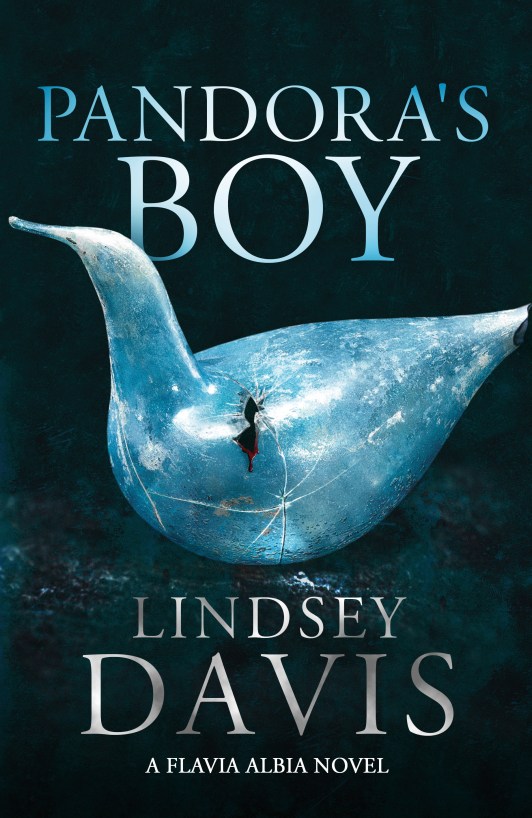
Pandora’s Boy by Lindsey Davis

Pandora's Boy Cover.jpg

Publisher: Hodder & Stoughton

Publication Date – 5 April 2018

Amazon

Ancient Rome’s premier female detective returns in the latest Flavia Albia mystery from veteran historical crime author Lindsey Davis.

Rome, 89 AD.  Flavia Albia, the daughter of the legendary investigator Falco, is now a proficient private investigator and informant in her own right.  When the ex-wife of her husband, Tiberius, brings a case of family drama to her, Flavia is tempted to refuse, but when Tiberius disappears she needs a distraction.

The case revolves around a teenaged girl found dead in the prosperous Quirinal Hill district of Rome.  The girl, Clodia, was the apparent victim of a poisoned love potion, and her parents and grandparents are blaming each other for her death.  What begins as a simple investigation quickly becomes complicated when the witch accused of supplying the potion turns out to be the sister of the city’s biggest crime boss.  No-one is talking, and everyone in the Quirinal Hill has a secret.

Flavia is forced to seek the truth from a variety of people, including warring grannies, concerned parents, criminal lawyers, secretive slaves, a lettuce salesman with an interesting religious statue and, worst of all, the overprivileged offspring of Rome’s elite.  However, as Flavia’s investigation continues and a friend of hers dies, it soon becomes apparent that a vicious gang war is imminent.  Can Flavia solve the crime without getting caught in the crossfire, especially when she has a terrible history with one of the gangs?

Pandora’s Boy is the sixth book in the Flavia Albia series, which acts as a direct sequel series to Davis’ Marcus Didius Falco series.  Davis is one of the most prolific authors of historical whodunits and has a particular focus on novels set in ancient Rome.  For example, her Marcus Didius Falco series contains 20 books, and she has produced some stand-alone books set in the same period.

Like the previous books in the Flavia Albia series, Pandora’s Boy takes a contemporary look at Roman culture and lifestyles.  The inhabitants of Davis’ books act in a very modern way despite their ancient surroundings, and this results in a very humorous interpretation of the ancient Roman characters.  Davis also uses this book to parody a specific group in modern society: the millennials.  Throughout the story, Flavia is forced to follow, interview and generally endure the victim’s friends, who are the offspring of the city’s rich and powerful.  These friends are exceedingly selfish, have sordid love lives and get into all sorts of mischief.  In other words, they act in a very similar way to how modern day millennials are often perceived and portrayed.  Their appearance is quite jarring in the ancient Roman setting and leads to a lot of the books humour.  In all, it is a fun, quirky addition, and an amusing examination of modern society through very ancient eyes.

The core of the book is the death of a young woman and its investigation by the main character.  This is a well-done mystery that takes many twists and turns to keep the attention of the reader.  Flavia’s investigation is done through interviews, trickery, observations and undercover work, and, like many other parts of the book, is infused with Davis’ trademark humour.  The investigation is wrapped up in a final scene that is a throwback to classic murder mystery dénouements.  All the interested parties are gathered together in one place and the investigator reveals their conclusions, eventually leading to their solution to the crime.  Davis provides a perfect parody of this, infused with her own unique touch.  As a result, there are several jokes about this well-used literary device, including discussions around the necessary prep work and tricks to keep the gathered parties’ concentration of the speaker that will greatly amuse many murder mystery buffs.

One of the more diverting and memorable aspects of the Flavia Albia series is Davis’ tendency to include big action sequences that devolve into near absurdity and provide some of the best laughs in the entire book.  For example, in Davis’ previous book, The Third Nero, the climactic scene was a battle in the heart of Rome that featured, among other things, a war elephant, Parthian cataphracts and one of the most improbable chase sequences in all of fiction.  While nothing will quite top this, Davis has striven to include one such scene in Pandora’s Boy, featuring an interrupted séance, an all-out brawl between legionnaires and Vigiles at a collapsing temple, all of which serves as a backdrop to a fight between two warring grannies.  This is an extremely entertaining scene and definitely a highlight to watch out for.

Another notable feature of the books in the Falco universe is the deeper examination of the Roman criminal justice system.  The investigators in these books often deal with the Vigiles and the Aediles, the ancient Roman equivalent of the police and magistrates, many of whom turn into key characters.  This is a unique feature, as most Roman historical fiction books neglect to focus on these institutions, only mentioning them if in the context of political gain.  Pandora’s Boy includes a detailed look at the Vigiles who patrol the Quirinal Hill district and their investigation into the death and other serious crimes.  Loaded up with a suitable modern twist, the inclusion of these characters is an intriguing addition that highlights an often-neglected side of ancient Roman life.

Pandora’s Boy is a wonderful addition to one of the best ancient crime series currently on the market.  Davis once again creates a fantastic murder mystery and infuses it with outrageous humour and a modernistic take on ancient Roman life.  This is an exceedingly fun and deeply absorbing novel that will appeal to a very wide audience of readers.

My Rating:

Five Stars

Amazon

The Throne of Caesar by Steven Saylor

The Throne of Caesars Cover

Publisher: Constable

Australian Publication Date – 6 March 2018

World Publication Date – 20 February 2018

Amazon

Steven Saylor’s long-running ancient Roman detective series returns as Gordianus the Finder deals with the most infamous murder in Roman history: the assassination of Julius Caesar.

For decades, Gordianus the Finder has been the most respected investigator in all of ancient Rome.  After a lifetime of solving crimes and murders for the city’s rich and powerful, Gordianus is determined to retire from the investigative game and enjoy a life of luxury.  However, one last surprise has been thrust upon him: Gordianus’ adopted son Meto has spent years in the service of Caesar as his trusted aid and ghost-writer, and Caesar now seeks to reward Meto by making his father a senator.  Reluctantly accepting this rise in station, Gordianus’ ascension will take place in five days’ time, on the Ides of March.

Caesar has an ulterior motive for meeting with Gordianus.  Warned by visions and prophets, Caesar believes that his life may be in danger, and that disaster may strike before the conclusion of the Ides.  He requests that Gordianus keep his ears to the ground and quietly question leading members of the Roman nobility to see if there is any basis to his concerns.  While initially sceptical of any attempts on the dictator’s life, Gordianus’ suspicions are aroused when one of Caesar’s old rivals, Senator Cicero, also asks him to watch out for potential conspiracies.  As Gordianus begins his investigation, he finds himself in the middle of dangerous historical events, and even the legendary Finder may be unable to stop what is to come.  The Ides of March are approaching, and Caesar’s life isn’t the only one at risk.

The Throne of Caesar is the 16th book in the Roma Sub Rosa series, a series that also includes three prequel novels and two collections of short stories.  Saylor began in 1991 with Roman Blood, set in 80 B.C. some 36 years before the events of this book, and he has slowly been working towards the assassination of Julius Caesar.  Indeed, the last three instalments of the series were prequels produced while Saylor perfected his account of this famous murder.  It was definitely worth the wait, as Saylor has produced an extremely detailed and well-researched account of the infamous killing.

Gordianus’ investigation and social interactions are used to introduce the reader to many of the key people involved with the plot, as well as to discuss the political atmosphere that lead up to the assassination.  The Ides of March is the centrepiece of the novel.  It is clear that Saylor has consulted the key historical records of the killings, as he has made sure to include several of the lesser-known events that happened on the day.  For example, Saylor includes descriptions of the supposed visions Caesar’s wife, Calpurnia, had the night before, and Decimus Brutus’ intervention at Caesar’s residence the morning of the Ides.  Saylor also dedicates a good part of the book to examining the aftermath of Caesar’s death, including the political manoeuvrings that immediately followed, as well as the violent funeral.  As a result, the description of the killings and the surrounding circumstances are first rate, and this aspect of the book will appeal to Roman history buffs.

As Saylor discusses in the author’s notes, writing a murder mystery around the assassination of Julius Caesar is particularly hard, as his death is one of the most well-known events in Roman history, with all the conspirators condemned to historical infamy.  Saylor, however uses this to his advantage and manages to create a large amount of suspense by counting down the days until the 15th of March and hinting at the events that are to come.  All the reader can do is keep going through the novel, knowing that Gordianus will be unable to stop the murder, even as he gets closer and closer to the truth.

Saylor also compensates for the lack of mystery around the death of Caesar by including a second murder subplot.  Elements of this additional murder mystery are hidden in the background of most of the book, as the reader’s attention is directed towards the upcoming assassination, and the investigation into the second murder comes to the fore after Caesar’s death.  The actual events of the second murder are unique and will be of particular interest to fans of a certain Shakespearean play.

One of the best features of The Throne of Caesar is the significant incorporation of Greek mythology throughout the book.  Several Greek myths are discussed, and parts of the plot mirror elements of these myths.  Many of these myths are also included as centrepieces of two Roman epic poems written by Gaius Helvius Cinna, a famous historical poet, which are a major part of the plot.  While one of the plays featured is completely fictional and with no historical basis, the other play is Zmyrna, considered by Cinna to be his greatest achievement, the text of which is unfortunately lost to history.  Saylor provides an interesting possible narrative for the lost play, which flows into the plot of his mystery with great effect.  The overall effect of Saylor including these myths and legends is very striking, and it provides the reader another viewpoint into the lives of the ancient Roman characters who put great stock in these old and religious stories.

The latest addition to the Roma Sub Rosa series is a meticulously detailed and well-crafted book that acts as a unique and powerful chronicle of an important historical crime.  A suspenseful and compelling read, The Throne of Caesar serves as a great continuation of the story of Gordianus the Finder, and it will be interesting to see where Saylor takes the series next.

My Rating:

Four and a half stars

Amazon

Blood of Assassins by R. J. Barker

Blood of Assassins Cover

Publisher: Orbit

Publication Date – 13 February 2018

Amazon     Book Depository

War, murder and magic return with R. J. Barker’s assassins in the sequel to his impressive debut, Age of Assassins.

It has been five years since assassins Girton Club-Foot and his master, Merela Karn, started a bloody civil war in the nation of Maniyadoc.  Since then, they have been in hiding, fighting in the borderlands as soldiers for hire to avoid the price on their heads.  However, when Merela is gravely injured, they have no choice but to return to Maniyadoc and seek shelter there.  Girton finds a far different land to the one he visited five years before.  War has turned much of the kingdom into a brutal hellscape, ruled over by war crazed marauders known as Nonmen, while giant flesh-eating pigs roam the wilds.

Amongst this chaos, three kings fight for power, their armies controlling what small tracts of inhabitable land remain.  Girton knows all three of the opposing kings, having spent time among them five years ago.  Two of them hate Girton and his master, falsely blaming them for the deaths of their relatives, the events which started the war.  However, the other of the warring kings, Rufra, owes Girton his life, and may be the only friend the young assassin has.  Since their last meeting, Rufra has turned into a noble king, weighed down by the responsibility of his office and personal grief.

Pledging his loyalty to Rufra, Girton immediately sets about trying to find a spy hidden among the king’s closest followers, navigating camp politics and the fragile alliances that hold the army together.  At the same time, Girton must also solve the murder of a fanatical religious leader whose dangerous followers demand retribution.  Rufra is the fractured nation’s best option for peace, but far too many people want him dead.  Each day the spy is active hastens Rufra’s defeat, and Girton must use every bit of his wit and skill to save his friend.

But the greatest threat to Rufra’s reign may be Girton himself.  Like all assassins, Girton uses forbidden magic to grant himself subtle advantages to aid him in his kills.  However, Girton’s magic has become far too powerful, and he can no longer control the terrible energies within him.  In a world were all magic is outlawed and feared, any evidence of Girton’s abilities would condemn him and everyone he loves to a bloody end.  The last uncontrolled sorcerer turned the kingdom of Maniyadoc into a barren wasteland, and Girton’s power may soon compel him to do the same.

This is the second book in Barker’s The Wounded Kingdom series and is the follow-up to last year’s successful and highly compelling debut, Age of AssassinsBlood of Assassins is a great addition to the series which builds up the anticipation for the upcoming King of Assassins, which is set to come out in Australia in August 2018.

The fantasy world that Barker has created is an interesting one with several unique features.  While most of the first book’s story was limited to the goings-on within one specific castle, Barker completely changes the script in this sequel by expanding the narrative to the whole realm of Maniyadoc and the fighting going on around it.  Readers of Age of Assassins will enjoy seeing how the devastation of the civil war has changed the kingdom.  The nation of Maniyadoc, which was already described as a fairly dismal place, is now haunted by a new range of monstrous creatures and humans created by neglect and the brutal fighting.  This noticeable change to the scenery of the story helps to affect the overall mood of the book and also acts as a mirror to Girton’s more depressed and hopeless mental viewpoint in the second book.

I often enjoy authors blending different genre types within fantasy books, and Blood of Assassins is a great example of this, as Barker has incorporated elements of political thrillers and murder mysteries.  The hunt for the murderers and traitors at the heart of Rufra’s camp is a well done and produces a compelling mystery that combines well with the book’s action, politics and magic.

Fans of action and battle will not be disappointed, as Barker makes full use of a range of fight scenes.  Action junkies will enjoy the numerous duels, clashes between assassins, larger pitched battles and one notable siege that sees that protagonist fighting to defend a village from a horde of crazed Nonmen while also attempting to hold his destructive magic at bay.  It is also interesting to see how Barker forgoes the enormous pitched battles that are a usual fantasy staple.  Instead this conflict is fought by small, desperate armies over limited amounts of land, which comes across as more realistic, considering the landscape.

Finally, Barker has also done a great job of showing how his main characters have developed since the last novel, particularly taking the time to illustrate how their relationships move and change throughout the book.  Girton has gone from a young and optimistic boy seeking the approval of his master to a taciturn and depressed man, actively resenting his master for the changes and problems in his life.  At the same time, Rufra has gone from a lowly squire seeking a friend and trying to avoid trouble to a man consumed by his responsibilities and personal grief.  These changes lie at the heart of the book and add emotional depth to the story.  It is also warming to see how the friendship between Girton and Rufra lightens both characters and helps heal their emotional wounds.

As a result, Blood of Assassins is a fantastic character-driven story that weaves together action and mystery in Baker’s excellent fantasy world to create a scintillating and addictive read.  This is a marvellous second outing from a bright new star in fantasy fiction.

My Rating:

Four stars

Amazon     Book Depository

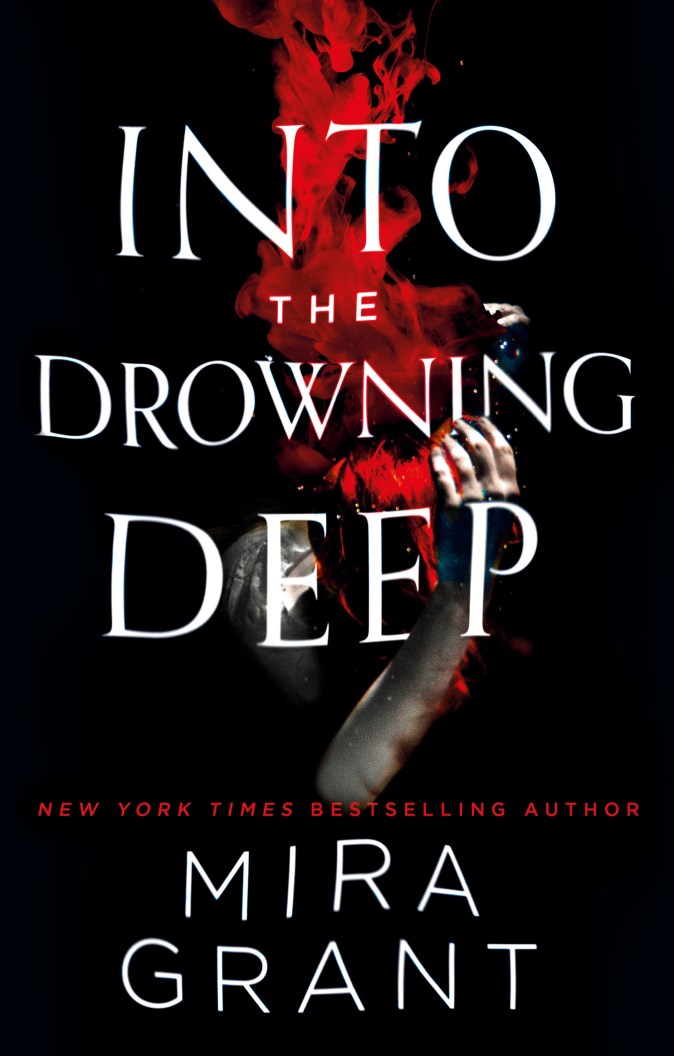
Into the Drowning Deep by Mira Grant

Into the Drowning Deep Cover

Publisher: Orbit

Publication Date – 14 November 2017

Amazon

From one of the brightest stars in horror and science fiction, comes a heart pounding and imaginative story about terrifying creatures in the deep.

Mermaids have always been the stuff of legends, whether they feature in sailors’ cautionary tales or children’s stories. Seven years ago, when Imagine Entertainment sent a mockumentary team out to the Mariana Trench about the Atargatis they found just how real mermaids were, but with no survivors and only unbelievable leaked video footage to tell their story, the incident is either considered a tragic accident at sea or derided as a hoax.

Now, Imagine Entertainment are planning a second expedition to the Mariana Trench to find incontrovertible proof of mermaids and show the world what happened to the crew of the Atargatis. Larger and better prepared, the second expedition sets out onboard the giant pleasure cruiser Melusine, hosting state-of-art research facilities and filled with the leading experts in a range of marine sciences.

Also onboard are Victoria Stewart, whose beloved sister died upon the Atargatis, and the world’s leading expert on mermaids, Dr Jillian Toth, who is still haunted by her decision not to accompany the original expedition.

Arriving at the Mariana Trench, it doesn’t take long for the mermaids to appear. But these mermaids are not the stuff of children’s stories. They are real, they are dangerous and they are very, very hungry.

Grant has impressive science fiction and horror credentials, including her zombie thriller series Newsflesh and her ‘science-gone-wrong’ inspired Parasitology series. Drowning in the Deep is another outstanding story of horror from Grant and is a worthy sequel to her exciting 2015 novella, Rolling in the Deep.

By far one of the best things about Drowning in the Deep is how Grant turns mermaids, long associated with fairy tales and Disney movies, into credible monsters for her book. Using a combination of suspenseful and descriptive writing, bestowing the creatures with several creepy abilities and loading the book with a range of scientific explanations to make them as plausible as possible, Grant has succeeded in creating scary mermaids.

An interesting feature of the book is the manner in which Grant introduces the mermaids to the story. Rather than taking the traditional path and gradually revealing the monsters over the course of the first half of the book, Grant discloses the mermaids in all their gory glory within the first few pages of the book. All the characters know what they will be up against well in advance; the thrills come in discovering whether that is enough to ensure their survival.

Grant also takes time to introduce all the key characters and explain their backgrounds and motivations. This adds to the story and creates a range of characters whose fates readers will be deeply concerned for. In addition, she makes good use of multiple viewpoints to tell the story. Chapters are presented from the perspectives of each of the main characters, some of the minor characters, the mermaids themselves and even a pod of dolphins. This results in an intricate tapestry of a story and allows for a wide variety of scenes and a deeper understanding of the mystery and horror that is the mermaid.

Grant adds several fun additions to the front of each chapter, such as biography extracts, descriptions of videos, blog posts, articles from a cryptozoology periodical and a number of sections of a lecture from one of the characters, Dr Toth. This is a great way to add a lot of additional background without disturbing the flow and suspense of the overall story. Grant also includes quotes from the characters at the front of the chapters. These quotes help set the tone for the overall book and for the individual chapters. An example of this can be seen in a quote set up at the beginning of the book: “Did you really think we were the apex predators of the world?” Attributed to the story’s mermaid expert, Dr Toth, this is a great way to draw in the reader’s initial interest while at the same time setting a tone of dread as the ship full of overconfident scientists drifts closer to the trench.

Overall, Into the Drowning Deep is an enthralling read and one of the standout books so far in 2018. It is guaranteed to make you think twice about swimming in the ocean.

My Rating:

Five Stars

Amazon