Days of Shattered Faith by Adrian Tchaikovsky

Publisher: Head of Zeus (Audiobook – 5 December 2024)

Series: The Tyrant Philosophers – Book Three

Length: 21 hours and 39 minutes

My Rating: 5 out 5 stars

Amazon

One of the current top authors of all things fantasy and science fiction, the improbably imaginative Adrian Tchaikovsky, continues to greatly impress with his outstanding and epic early 2025 novel, Days of Shattered Faith.

I think it is fair to say that few fantasy and science fiction authors are as consistently prolific and entertaining as the relentless Adrian Tchaikovsky, who has been continuously putting out clever books over the last few years.  While he has written many intriguing series and standalone novels throughout his career, I am more familiar with some of his more recent works, including the novella Ogres, the gripping interstellar novel Alien Clay, one of my favourite Warhammer 40,000 novels, Day of Ascension, and the hilarious and insightful robot apocalypse novel, Service Model (one of my favourite books of 2024).

While the above books are all quite exceptional, my favourite body of Tchaikovsky’s work has so far been The Tyrant Philosophers series.  A gripping, brilliant and highly amusing series, the Tyrant Philosophers novels are set in a cool fantasy world filled with magic, gods and demons, all with a fun Tchaikovsky twist to them.  With the first two books, City of Last Chances and House of Open Wounds, both of which were amongst my favourite books of 2023 (with City of Last Chances being one of the best audiobooks of 2023) the series has really grabbed my attention over the last couple of years.  Much of it is down to the author’s clever narratives that work to expand this intriguing fantasy world through some interesting overlapping characters and events.  In particular, the series examines the dark impact of the Palleseen, a conquering army of fanatics who violently supress superstition and belief in the gods in the name of expanding their own worldview of perfection and correctness.  Both the previous books in this series were quite impressive, and I was very eager to read Days of Shattered Faith when it first came out.  While I have been delayed in writing a review for this book, it proved to be an outstanding read, especially with its rich and powerful narrative.

Plot Synopsis:

Welcome to Alkhalend, Jewel of the Waters, capital of Usmai, greatest of the Successor States, inheritor to the necromantic dominion that was the Moeribandi Empire and tomorrow’s frontline in the Palleseen’s relentless march to bring Perfection and Correctness to an imperfect world.

Loret is fresh off the boat, and just in time.

As Cohort-Invigilator of Correct Appreciation, Outreach department, she’s here as aide to the Palleseen Resident, Sage-Invigilator Angilly. And Sage-Invigilator Angilly – Gil to her friends – needs a second in the spectacularly illegal, culturally offensive and diplomatically inadvisable duel she must fight at midnight.

Outreach, that part of the Pal machine that has to work within the imperfection of the rest of the world, has a lot of room for the illegal, the unconventional, the unorthodox. But just how much unorthodoxy can Gil and Loret get away with?

As a succession crisis looms, as a long-forgotten feat of necromantic engineering nears fruition, as pirate kings, lizard armies and demons gather, as old gods wane and new gods wax, sooner or later Gil and Loret will have to settle their ledger.

Just as well they are both very, very good with a blade…

Wow, what an incredible read.  Adrian Tchaikovsky continues to deeply impress with his elaborate and intense narratives, especially as he expertly continues his Tyrant Philosophers series in his distinctive and creative way.  Featuring a complex plot that follows various damaged and self-serving characters as they navigate the attempts to influence and control a mighty city, Days of Shattered Faith was an addictive read from start to finish, and I loved how the entire novel came together.  A very easy five-star read, Days of Shattered Faith was one of my favourite books and audiobooks from the first half of 2025, and I had such an exceptional time getting through it.

I really loved how Days of Shattered Faith’s story turned out, especially as Tchaikovsky managed to turn this into both a powerful standalone novel as well as a moving entry in the larger Tyrant Philosophers series.  This book has quite a complex and layered narrative to it, as it follows multiple intriguing characters through chaotic events that are about to overtake the city of Alkhalend.  Initially focusing on the two Palleseen characters, Sage-Invigilator Angilly and Cohort-Invigilator Loret, Days of Shattered Faith sees them as unlikely ambassadors in a city that mostly hates and fears the Palleseen and their attempts to subvert and control the world.  When the sudden death of Alkhalend’s ruler results in a brutal civil war, Angilly and Loret attempt to help the Palleseen supporting heir to retain the throne following a coup from his brother.  At the same time, various other figures in the city, including a familiar former priest and several unconventional doctors, attempt to survive the chaos engulfing their home.

Tchaikovsky does an excellent job building up a lot of complex storylines, details of the main setting, and character arcs in the first half of Days of Shattered Faith, all of which came into play in fantastic ways as the novel continued.  Following a large collection of complex character-driven storylines throughout the novel, Tchaikovsky moulds these together into a compelling overarching narrative, with these protagonists impacted by various major events.  This includes the brutal civil war at the centre of the novel, which completely changes the course of the narrative and sets several major characters down some compelling and dark spirals.  Due to the appearance of more Palleseen influence in the second half of the book, things in Alkhalend naturally go to hell in a variety of ways, especially when all the unconventional and imperfect methods of Angilly and her unusual Palleseen colleagues in Outreach are questioned and changed by her more by-the-book superiors, who also drop the subtle tactics when it comes to controlling the city.  This results in a darker, more intense second half of the novel, where every protagonist makes mistakes or experiences greater tragedy.  The author perfectly builds up the tension and suspense before leading up to the big revolution sequence where all the separate character arcs converge for the last time, which was as devastating and crazy as you would expect from Tchaikovsky.  Everything ends on a satisfying, heartbreaking note, especially as several characters find themselves in worse positions then when they started.  It will be very interesting to see where the wider narrative of the series goes from here, especially for the series’ recurring protagonist, but it’s clear that the events of Tchaikovsky’s universe can only get sadder from here.

Tchaikovsky has a very distinctive and compelling writing style for the Tyrant Philosophers novels that coveys his elaborate and entertaining narrative in some unique ways.  Once again relying heavily on multiple perspective changes to tell his layered story, Tchaikovsky embarks on providing a deep and personal story, set around a large collection of compelling supporting characters.  The author excels at creating elaborate and complex backgrounds for the various characters, which are worked into the larger plot extremely well, especially as each character has their own unique motivations and damage.  All these varied story elements are well woven together into one complex story, and it was fascinating to see all the different figures react to the continually changing events.  As with the previous books, Days of Shattered Faith has a range of tones within it, as Tchaikovsky works hard to produce the right balance of intrigue, action, world building and dramatic and moving character moments, all of which are done perfectly and work to create an impressive novel.  The elaborate battle sequences pair well with the subtle and often forced betrayals of the various characters, while deeper personal troubles and dark histories lurk just beneath the surface.  All these sequences are well laced with the excellent and often cynical humour of the author, which really ties the entire thing together quite nicely.  I loved how so many complex scenes were made better by the sarcastic and realistic commentary of either the characters or the narrator, which worked to highlight the dark, and often absurd nature, of so many of the fantasy elements of the story.

As with the last two books in the series, Days of Shattered Faith works well as both its own distinctive, standalone narrative and as a continuation of elements and character-focused storylines from the previous books.  Due to how it initially focuses on an original group of central characters navigating an unfamiliar setting in the series’ wider world, new readers can easily come into this series without any real pre-knowledge of the other books.  However, as the story eventually grows to focus on several major characters from the first two novels, I think those readers who know the full story of these figures and the complex events they’ve had to navigate will end up appreciating the plot of Days of Shattered Faith a little more, especially as Tchaikovsky continues to torture a certain former priest with even more tragedy and hardship.  The author also features references to events from the previous books throughout Days of Shattered Faith, and readers will find it fascinating to see how certain decisions or plots from the recurring characters, such as some vengeful religious conversion in House of Open Wounds, had larger, devastating impacts on the wider world.

Tchaikovsky once again pulls together an elaborate setting for his compelling narrative, as while Days of Shattered Faith is set in the same fantasy world as the other Tyrant Philosophers novels, much of the action occurs around the newly introduced complex city of Alkhalend.  Loaded up with cut-throat politics, various conflicting religions, distinctive magic, and various otherworldly beings who have migrated from other realities, Alkhalend is an exceptional focus for much of the plot.  Tchaikovsky excelled at introducing the various unique elements of Alkhalend and its surrounding nations in the early part of the book, and it was fascinating to see how they impacted the plot going forward.  Alkhalend honestly had so many fun and quirky unique fantasy features, and this had to be one of the more memorable settings I have had the pleasure to see in fantasy figure.

Of course, as this book is set within the Tyrant Philosophers universe, Tchaikovsky had to once again include the Palleseen, who serve as the main antagonistic group in the series.  Ideological zealots often bound by their own rules and processes as they slowly and greedily try to take over the world, all the books in this series are dedicated to examining their methods and serves as a humorous critique of militarisation and empire building.  While the previous books have either looked at the Palleseen as an occupying force or at their weaponisation of magical medical practices, Days of Shattered Faith focuses on their diplomats and how they influence conflicts in lands outside their empire.  This ends up showcasing a new side to the Palleseen machine, especially as the empire’s diplomatic department, Outreach, is made up of more fluid personnel, willing to go outside of standard practices to achieve their goals.  It was quite entertaining to see the differing methods of this empire conflict with each other, especially when it brings some conflict between the various Palleseen characters, and it added some great drama to the second half of the book.  I loved once again seeing the dangerous bureaucracy and insatiable desire for more magical material turn the Palleseen from reasonable allies to controlling occupiers as the plot continued, especially as it perfectly influenced various characters to take a new course of action.

As I have mentioned a few times above, Tchaikovsky loaded this novel up with an outstanding array of complex or damaged characters who are the true highlight of the plot thanks to their collective dark histories and layered motivations.  The sheer range of different characters in Days of Shattered Faith is very impressive, featuring a great mixture of locals of Alkhalend, Palleseen visitors, and other memorable figures seeking refuge in the sandy city.  Much of the plot was focused around the two members of Palleseen Outreach in the city, Sage-Invigilator Angilly and Cohort-Invigilator Loret, whose unique take on diplomacy often causes more chaos.  Angilly was a great lead for much of the plot as a pragmatic Palleseen operative, who finds her loyalty compromised by her romantic connection to the city’s crown prince.  This doomed romance leads to all manner of trouble for both characters, and the various betrayals and eventual end resulted in some of the author’s more tragic writing.  Loret, on the other hand, was a great fish out of water in this novel as she attempts to learn the rules of diplomacy and understand the many facets of Alkhalend, all while keeping her troubled past a secret.  I felt that Tchaikovsky used Loret well as a good stand in for the audience to showcase his new city setting in more detail, while her eventual development and tragic past connected to the events of the previous book proved to be a particularly compelling, if bloody, part of the plot.

The rest of the cast are also impressive, including a couple of opportunistic Palleseen operatives who have less issues with exploiting the people of Alkhalend for their own means.  I also personally enjoyed the return of several familiar figures from the previous Tyrant Philosopher novels, including the unusual batch of former military doctors who made their escape in the previous novel.  While given less focus in this novel, Tchaikovsky still makes excellent use of these fugitive doctors, and it was interesting to see how the most junior member of the troupe got upgraded to a major character now he’s a little older.  Accompanying the doctors is character now known as Happy Jack, who readers of the series may recognise as the priest of small gods from the first two novels, Yasnic.  Now bereft of his original petty deity, Jack has now found happiness and contentment in Alkhalend, especially thanks to an unlikely doomed romance.  Of course, that happiness can’t last too long, and Tchaikovsky soon returns to torturing one of his best characters, ensuring he’ll be even more compelling in the next book of the series.  Throw in the many other unusual denizens of Alkhalend, which includes pirates, necromantic priests, scheming nobles, and even a giant frog god, and the cast of Days of Shattered Faith is impressive, especially as the author carefully balances the many alternating character storylines to create an overall outstanding narrative.  I cannot wait to see what awesome characters Tchaikovsky comes up with in the rest of the series, but I’m expecting some truly fascinating figures going forward.

While I did end up buying a physical copy of Days of Shattered Faith, I ended up listening to its audiobook format instead, mainly because I had such a good time with the City of Last Chances audiobook.  Days of Shattered Faith also proved to be an incredible listen, with the audiobook format deeply enhancing the complex plot and showcasing all the excellent fantasy elements in even more detail.  Coming in with a notable runtime of nearly 22 hours, I was able to get through Days of Shattered Faith quickly, especially with the outstanding David Thorpe narrating the story.  A veteran narrator who has lent his voice to many of Tchaikovsky’s audiobooks, Thorpe did an excellent job bringing Days of Shattered Faith to life, especially as his tones and voices matched the style of the author’s writing.  Thorpe really dives into the various unique characters loaded into Days of Shattered Faith, coming up with a range of fun and fitting voices.  I felt that these voices, as well as his excellent narration of the complex fantasy plot details of this novel, turned Days of Shattered Faith into a very enjoyable audiobook, and it was such a good format to enjoy this unique story.  Easily one of the top audiobooks I have so far enjoyed in 2025, Days of Shattered Faith comes highly recommended in this format, and you are guaranteed to have an amazing time listening to it.

With even more crazy characters, distinctive fantasy elements, and a twisty and captivating plot, Days of Shattered Faith was another exceptional novel from Adrian Tchaikovsky.  A perfect continuation of the incredible Tyrant Philosophers series, Days of Shattered Faith had so many awesome elements to it, and I loved its complex story and compelling protagonists.  An outstanding read I loved so much, Days of Shattered Faith is one of the best fantasy novels of 2025, and I cannot wait to see how the rest of the series unfolds.  Indeed, the fourth book in the series, Pretenders to the Throne of God, is out in a few months’ time, and it is already shaping up to be another epic read.

Amazon

The Book That Wouldn’t Burn by Mark Lawrence

The Book That Wouldn't Burn Cover

Publisher: Harper Voyager (Ebook – 1 May 2023)

Series: The Library trilogy – Book One

Length: 570 pages

My Rating: 5 out of 5 stars

Amazon

One of the world’s inventive and compelling fantasy authors returns with one of his best novels yet, the highly addictive and ambitious novel, The Book That Wouldn’t Burn, which sets off his new The Library trilogy.

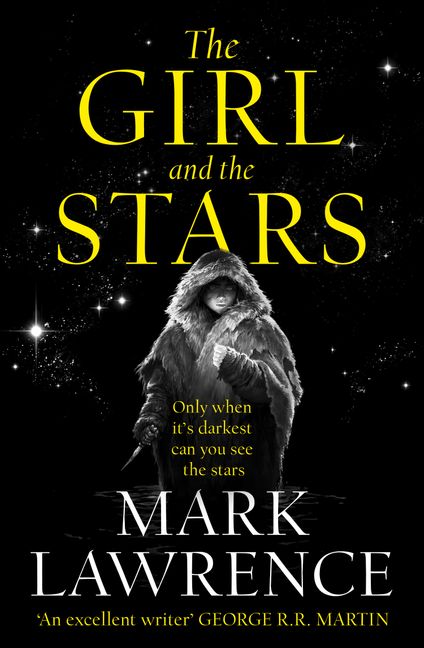
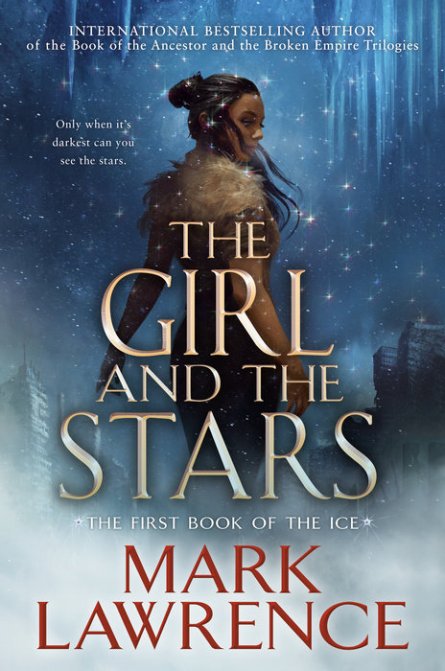
Few authors have had the impact on the fantasy genre than Mark Lawrence has in the last few years, as the author has truly impressed readers throughout the world with his unique and captivating novels that routinely blend fantasy and science fiction elements.  His series include The Broken Empire trilogy, The Red Queen’s War series, and The Book of the Ancestor series.  I myself only started reading Lawrence’s work a couple of years ago with his compelling The Book of the Ice series, which followed several powered teens on a grim frozen planet.  I had an outstanding time with this series, which included The Girl and the Stars and The Girl and the Mountains.  While I still have to read the third book, The Girl and the Moon, I really enjoyed these books, and it was a pretty clever series.  As such, I was very keen to check out Lawrence’s new novel, The Book That Wouldn’t Burn, especially as it had a very intriguing plot synopsis behind it.

Throughout the world, there is nothing more important, more significant, nor more permanent than the library.  Built inside a mountain near the great city of Crath, the library contains an impossible number of books fitted within innumerable rooms that no one person can access.  The sheer amount of knowledge contained within the library represents the greatest power in the world, allowing its keepers and the King of Crath to wield great control in the world.  Into this vast and elaborate repository of knowledge and secrets, two young people are about to meet in unusual circumstances.

Livira is a young girl raised in the Dust, the desolate wasteland that surrounds Crath.  Plucky, curious, and incapable of giving up, Livira is a rarity among her people as she seeks to know more about the world outside her home.  But when the alien sabbers destroy her village and kill her people, Livira finds herself lost in the wilderness.  Rescued and brought to Crath, Livira soon becomes certain that her future lies in the library.  Overcoming prejudice and her own humble background, Livira learns to navigate the library and soon begins to find out some of its deeper secrets.  However, the most mysterious of these might be another strange inhabitant of the library, Evar.

Evar and his small family have known nothing but the library their entire lives.  Released after unknown eons frozen as children inside the library’s mysterious Mechanism, Evar and his siblings have grown up in a vast chamber of the library, learning from the books and becoming masters of specialised subjects.  However, Evar has always desired more and has long tried to find a way to leave their book filled prison.  His discovery of a portal within his home soon leads him to a place outside of time where he meets an exploring Livira.  Together, the two attempt to find the true history of the library and the threats it has withstood over the years.  But dark evils haunt the library, and soon the two explorers must find a way to uncover the truth behind the sabbers, their own history, and other deadly threats waiting for them in the future.  Can these two children of the library survive the revelations in front of them, or will the truth tear them apart in ways they can’t even understand?

Well damn, now this was a seriously impressive and epic book.  Lawrence has honestly outdone himself here with this incredible read, and this might be one of the best books he is ever written, which is saying something.  The Book That Wouldn’t Burn features one of the most elaborate settings and narratives you are likely to see in fantasy fiction, and this results in a powerful and moving read that will keep you guessing time and time again.  I had an exceptional time reading The Book That Wouldn’t Burn, and it would be impossible for me to give it anything less than a five-star rating.

The Book That Wouldn’t Burn is told from two separate perspectives, that of Livira and Evar, and covers their very different lives and experiences within the libraries.  These two character-driven storylines are initially kept separate from each other as Lawrence spends a good chunk of the book introducing the protagonists, setting up their unique stories, and bringing together the elaborate setting that the story is based around.  Both of these storylines are very interesting and fun off the bat, with Livira having her life torn apart, only to find purpose in the library, while Evar details his life lived purely within the library.  While both storylines are really good, I initially got drawn into Livira’s the most, especially as her outsider perspective of the library allows you to really appreciate how alien and strange the massive house of books is.  Livira’s storyline advances at an extended clip, covering years of her life as she learns, grows, and fully develops her adventurous personality as she seeks to fully understand the secrets of the library and everything within it.  Evar’s storyline on the other hand is a little more sedate in its pacing, as it is set only along the course of a few days as he tries to finally understand the structure that has kept him prisoner for so many years.

The first half of the book that showcases these two characters’ initial introduction and growth are pretty damn entertaining, and it does a wonderful job of setting the scene for Lawrence’s elaborate story and background location.  However, the story doesn’t find its true strength until the two protagonists meet and their storylines becomes a lot more intertwined.  Due to the impossible physics and requirements of the library, there is a compelling time element to the meetings between the characters, which Lawrence captures masterfully, and which really alters their perspectives of each other.  Once they are able to properly interact, the two characters grow close and spend an interesting chunk of the novel exploring their respective worlds, as well as the history of the library.  Lawrence really lays the world building on thick during these parts of the book, and it serves to bring the two protagonists together, which just ensures the last act of the book is as tragic, moving and devastating as possible.  The author drops some massive bombshell twists around two-thirds of the way through, which completely throws you and makes you rethink everything you have thought about the preceding narrative.  I honestly was pretty damn shocked at this epic and devastating revelation, and while I had already been pretty damn addicted to the story by this point, this was the moment I realised what a masterpiece The Book That Wouldn’t Burn truly was.

The final third of the novel gets even better as certain background elements of Livira’s storyline finally come to fruition and her entire life begins burning around her.  This causes her and many of the supporting characters from her part of the book to end up interacting with the characters from Evar’s storyline, which is a very interesting change of pace from the previous parts of the book.  There are also some frenetic conflicts and some very dark moments as everything you have previously known about the settings, the characters and the history of the library is thrown around in some excellent and compelling ways.  There are several great new twists in this final section of the book, and Lawrence gets very metaphysical with the reveals, relying on his setting’s unique temporal properties to mess with your mind and bring you surprise after surprise.  I really loved just how cool and complicated this novel got towards the end, and Lawrence leaves an awesome and open conclusion for you to enjoy while drawing you in towards the next book in the series.  I came away from this narrative desperately wanting more, especially after being blown away by all the twists within the book, and I cannot wait to see what happens next.

Those who are familiar with Lawrence will know that he is a very impressive and talented author, and I really liked how he developed his story and displayed all its outstanding elements to the reader.  The Book That Wouldn’t Burn is a particularly complex read, loaded with damaged characters, elaborate storylines and an inventive major setting.  Lawrence approaches his latest novel with his usual flair and imagination, expertly showcasing every clever detail of this world to the reader and keeping them enthralled the entire way through.  Due to the complexity of the story, you really need to dive into every single word that Lawrence writes, and it honestly took me a little longer to get through this lengthy novel than I expected, mainly because of how much focus I needed to fully appreciate everything.  That said, it has a very good pace to it and there is never really a dull moment as you are constantly drawn into what is happening or the elaborate depictions of the library.

I felt that the author’s use of two narrators was particularly effective, especially as they give very different views of what is happening around them and the setting they find themselves in.  The extra expansiveness of the separate narration really helps to expand the scale of the book, and it takes some major temporal shifts for the two protagonist’s storylines to align.  Once they do, the two separate character arcs intertwine extremely well, and I loved seeing their interactions through each other’s eyes, as well as the elaborate adventures they find themselves involved with.

Lawrence also was very skilled at setting up some of the book’s big twists, and while many of them surprised me when I read them, looking back you could see the subtle clues leading up to them, and you really appreciate just how clever the author was in the earlier stages of the book.  The initial big twist is probably the best, and you really have to love how careful Lawrence was with some of the dialogue and character descriptions to pull that off.  Some of the subsequent twists are a little less shocking, mainly because you are on guard at that point, but I did like how well some of the reveals based around the protagonist’s journey through time were utilised and hinted at in earlier scenes.  The fact that there are completely different faces to some of the major early figures of the book was very cool, and it was clear that the author had a very impressive plan while writing the early stages of the book.  These excellent writing elements, and more, served to enhance an already captivating story, and I cannot get past how well Lawrence set everything up.

There is no way I can move forward without talking about the elaborate library setting that was such an epic centrepiece of The Book That Wouldn’t Burn.  I love how the author’s ultimate major setting is a library, which is something that all readers can really appreciate.  While we can all imagine a pretty massive or full library, Lawrence amped that imagination up to an 11 in this book, describing a seemingly impossible structure, made up of innumerable rooms filled with massive climbable bookshelves and a seemingly infinite number of books and tomes.  The sheer scale of this setting when described by Lawrence boggles the mind to a degree, and it really is an outstanding setting for this story as it is the perfect place for exploration, adventure, and even habitation.  The library naturally features Lawrence’s trademark blend of fantasy and science fiction elements, and the structure has a transdimensional or alien feel to it, as the protagonists find different mechanisms within the structure, as well as strange and unique ways to travel through it.  This blend of fantasy and science fiction elements worked particularly well, especially as you get to experience an intriguing contrast between ancient advanced technology and endless shelves of paper books.

The more unique elements of the library, including the portals, the robotic guardians, the locked doors, and more, are worked into the plot extremely well, and it was fascinating to see how they impacted the story, especially while the characters attempted to find out their origins.  The time travel aspects of the library proved to be particularly awesome, and I loved how Lawrence used them, and other cool features, to twist the narrative in some powerful and unexpected directions, completely changing everything you thought you knew.  It was also really effective how Lawrence explored the library through two very different sets of eyes, as Livira and Evar see it in different ways based on their respective history and cultures.  These alternate views added even more depth to the epic setting, and you have to love the continued focus on exploration, especially when it resulted in some of the best scenes in the book.  Honestly, I could go on and on for pages about just how impressive this outstanding setting is, so let me just be blunt and say: read The Book That Wouldn’t Burn, as you really won’t be disappointed when it comes to this elaborate library setting and the dark world it inhabits.

The final thing that I really need to highlight are the great characters contained within The Book That Wouldn’t Burn, which Lawrence did an outstanding job pulling together.  There is a rich and compelling cast of characters featured within this novel, and their unique stories and experiences play a big role in how the story develops.  However, most of the character work is saved for the point of view protagonists, Livira and Evar.  Both characters have intriguing and tragic backgrounds brought about by encounters with sabbers, and they have found sanctuary within the library as a result.  However, this is where their storylines differ as Livira seeks out the treasures of the library and works to get deeper within, while Evar looks to escape and find a whole new world to explore. This leads to some very conflicted character moments, and it was fascinating to see how these characters’ intriguing histories influences their understanding of the world and what they want.  Both protagonists are well established and utilized by the author in The Book that Wouldn’t Burn, and their distinctive character arcs give the book a different flavour chapter to chapter as you explore both their lives.

I personally enjoyed Livira a little more as a protagonist, as her adventurous spirit, drive to be the best and sheer pluck were quite entertaining to see, especially as it allowed her to uncover so many cool secrets about the library.  However, you also have to appreciate the darker background and narrative around Evar, a man trapped all his life in the library, and who has known only limited contact and love in his life.  Evar’s entire life has been nothing but uncertainty, abandonment and a certain amount of inadequacy as he has only known a few other people, each of whom are the absolute experts in their fields.  These two protagonists, when they meet, prove to be a powerful and interesting combination, and Lawrence was quite masterful and subtle when it came to weaving their chapters together.  You really appreciate the pain, loss and sacrifices that both protagonists make throughout the book, and the bond they formed together, soon becomes such a key part of the story.  While they do experience some major, mind-blowing setbacks, you grow really attached to both of them, and seeing them continue and dive even deeper into the unknowable heart of the library, makes for powerful reading.

Aside from Livira and Evar, The Book That Wouldn’t Burn features an extensive and compelling cast of supporting characters, whose interaction with the protagonists adds some intriguing elements to the plot, especially as many of them are filled with some great surprises.  Both Livira and Evar’s storylines had some excellent supporting figures whose appearances are primarily limited to their respective narrator’s timeline.  My favourite supporting character in the Livira chapters had to be Malar, a rough and tough solider who becomes Livira’s protector mostly against his will.  His gruff attitude is a fun contrast to Livira’s bright and curious nature, and they have some entertaining scenes together, especially as he grows to care for her, and Lawrence works in some particularly compelling story elements around him in the later part of the book.

Evar’s chapters also feature a great range of supporting characters, and due to the more constricted nature of his story and setting, you get to know them a lot better than some of the cast associated with Livira.  These characters include Evar’s adopted siblings, Starval, Kerrol and Clovis, who were also trapped in the Mechanism as children and grew up with him in the library.  However, unlike Evar, who emerged relatively normal, each of Evar’s siblings were warped by the knowledge of the Mechanism and are now masters of a particular subject, including assassination and espionage, war and psychology.  Each of these siblings is now fairly damaged as a result of their complex upbringings and childhood traumas, and it was fascinating to see their unique mindsets, especially through the eyes of Evar, who holds a special place in each of their hearts.  These characters were all raised by the animatronic constructs, the Assistant and the Soldier, servants of the library who took charge of them, and I liked the fun interactions that resulted from them, especially once Lawrence worked his twisty magic on them.  All of these characters and more are pretty damn interesting, and I loved how complex and emotionally charged their interactions became.

Frankly I could go on and on about this book, but I still do not think I would really be able to fully encapsulate just how much I enjoyed The Book That Wouldn’t Burn.  This complex and clever fantasy novel is a true masterpiece from Mark Lawrence, who utilised all his impressive writing skills and imagination to create a unique and powerful read.  The Book That Wouldn’t Burn’s elaborate narrative and massive library setting really grabbed my attention and I had such an epic time getting through this outstanding novel.  Easily one of the best fantasy books of 2023, you need to check The Book That Wouldn’t Burn out, especially if you are already a fan of Mark Lawrence’s amazing works.

Amazon

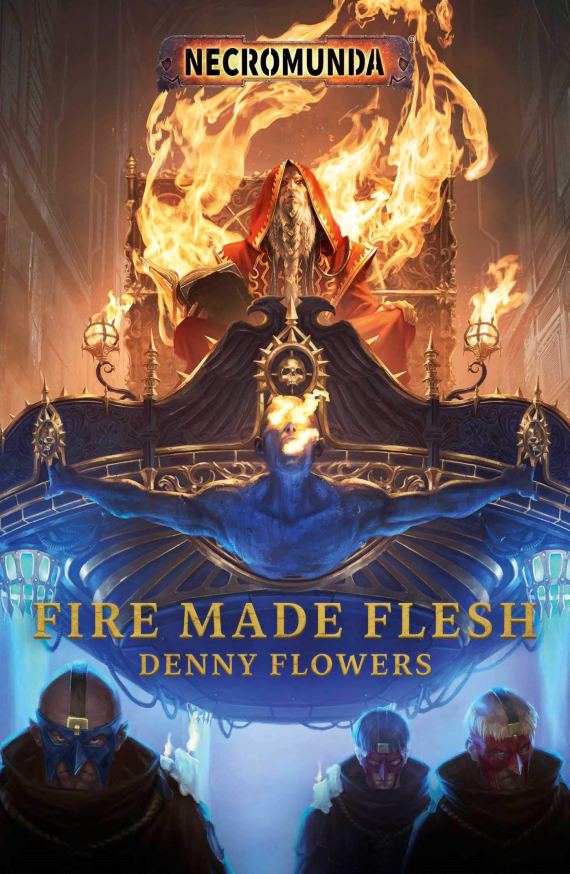
Fire Made Flesh by Denny Flowers

Fire Made Flesh Cover

Publisher: Black Library (Audiobook – 5 June 2021)

Series: Necromunda

Length: 13 hours and 29 minutes

My Rating: 4.25 out of 5 stars

Amazon     Book Depository

Prepare to return to the violent and deadly world beneath the hive cities of Necromunda, as Denny Flowers presents an outstanding and compelling entry in the Warhammer 40,000 universe with Fire Made Flesh.

Over the last year or so I have been having fun exploring the immense extended universe that has sprung up around the Warhammer 40,000 and Warhammer Fantasy tabletop games.  I have so far read several cool entries in the Gortrex and Felix fantasy series (Trollslayer, Skavenslayer and Daemonslayer), as well as the awesome science fiction reads First and Only and Deathwatch: Shadowbreaker.  However, my favourite Warhammer novel so far was the deeply entertaining Kal Jerico: Sinner’s Bounty, which was part of the Necromunda sub-series, another tabletop game set in the gothic Warhammer 40,000 universe.

The Necromunda games and extended universe are all set in and around the towering and immense hive city, Hive Primus, capital of the industrial planet of Necromunda.  Hive Primus is a city of billions, with the inhabitants crammed together in a massive hive structure located both above and below ground.  Necromunda fiction is primarily based in the Underhive, the foundational layers of the hive and below, made up of tunnels, habitation zones and caverns, most of which have been abandoned as the hive was built up.  The Underhive is filled with various gangs and feuding families who fight in these tunnels for riches, dominance and glory.  This unique landscape makes for some impressive stories, such as the awesome narrative of the latest Necromunda novel, Fire Made Flesh.

Deep underneath Hive Primus many secrets and treasures lay hidden in the darkness, waiting to be found by bold adventurers, but none are spoken of with more reverence than the lost habitation dome, Periculus.  Periculus was once a flourishing base of commerce where both sanctioned trade and illicit dealings were held, and vast wealth was accumulated.  However, Periculus was mysteriously abandoned years ago when its inhabitants were killed, and all knowledge of its location has been lost.  Now, after years of searching, someone has rediscovered the dome, and all hell is about to break loose.

Believing that the ruins of Periculus hold innumerable treasures and opportunities, various gangsters, Guilders, hive scum and opportunists have descended into the Underhive, hoping to stake their claim.  However, none of the people moving towards Periculus are more dangerous than the revered Lord Silas Pureburn of the Guild of Fire.  Holding a monopoly on energy production in the Underhive and gifted with a holy flame from the God Emperor himself, Pureburn inspires loyalty and religious fervour wherever he goes.  However, behind his holy facade of purity and flame lies a dark soul determined to dominate everything and everyone he encounters.  One of the few people to see the truth about Pureburn is young Guilder Tempes Sol.  Sol, a scion of the Mercator Lux, the Guild of Light, has found himself bested by Pureburn many times, and he is determined to discover the truth behind his improbable works.  After an unholy accident scars Sol and leaves him with an unusual power, he is forced to flee his guild and travel to Periculus, where his only hope of redemption lies in exposing Pureburn as a fraud.

However, upon arriving at Periculus, Sol discovers a settlement on the edge.  Pureburn has gathered around him an army of religious fanatics who control Periculus through fear, fire and bloodshed.  Determined to stop his insidious influence before it is too late, Sol attempts to forge alliances with other newly arrived inhabitants of Periculus who have been disadvantaged by Pureburn.  However, the deeper Sol dives into Pureburn’s actions, the more danger he finds himself in, as this seemingly holy man hides a dark and disturbing secret.  Worse, even more terrible dangers are affecting people within the dome, as twisted creatures roam the shadows, and the humans are struck with a dark rage that drives them to great acts of violence.  As the forces within gather for a final deadly confrontation, the fate of both Periculus and the entirety of Hive Primus hangs in the balance.

Fire Made Flesh was an interesting and impressive read that did an amazing job of bringing the twisted maze of the Necromunda Underhive to life.  This was actually the debut novel of author Denny Flowers, who has previously written some fun Necromunda short fiction and novellas but had yet to produce a full-length book.  This turned out to be a pretty awesome first novel from Flowers, and I had an outstanding time getting through the intense story, especially with its unique locales and outrageous characters, and it was a fantastic piece of Necromunda fiction.

At the heart of Fire Made Flesh lies a compelling and intense story that showcases the unique and deadly battle for control of Periculus.  After some set-up to show the rediscovery of the lost dome, Flowers starts establishing the various characters and their motivations, exploring how and why they are heading to Periculus.  Told from multiple character perspectives, the reader gets an interesting look at each point-of-view character, as well as the people they travel with.  While this was a good introduction to the many complex aspects and figures of the novel, it did make the pacing of the first third of Fire Made Flesh a tad slow, with a couple of difficult sections.  However, these pacing issues are resolved around halfway through Fire Made Flesh, once all the primary characters make it to Periculus.  From that point onward, the book really picks up, especially as the reader has grown attached to protagonists by this point.  From there the rest of the story is extremely fast, with a big moment two-thirds in, resulting in utter bedlam across Periculus and thrusting each of the characters into extreme danger.  After several intense and action-packed sequences, the entire narrative gets wrapped up extremely well in a satisfying conclusion, with each of the fun character arcs set up throughout the book coming together wonderfully.  I had an absolute blast with this narrative, and I felt that it had the right blend of action, intrigue, character development and Warhammer 40,000/Necromunda detail, to keep every reader happy.  I was really impressed by how Flowers was able to bring the disparate storylines together into one entertaining read, and I ended up powering through the last half of the novel in less than a day.  I also deeply enjoyed some of the cool twists and reveals right near the end, as they contained some excellent character moments.  Interestingly, the story is left open for a sequel, and I know I will be curious to see what happens in the Underhive next time.

Fire Made Flesh is an excellent addition to the Necromunda range of fiction, and I appreciated how Flowers attempted to examine and recreate the various elements of the unique landscape and culture featured within this fictional location.  Flowers really dived into the lore surrounding Necromunda, and the reader is soon engulfed in discussions about the social order, technology, and religious zeal of the Hive City.  While the author did a good job of trying to give context to this setting and its various features, readers may get a little overwhelmed with all the unique lore elements that are shovelled into it, especially at the front of the book when Flowers was trying to set everything up.  While I managed to keep my head around what was happening and what the characters were talking about, I could easily see a reader who has less experience with Warhammer 40,000/Necromunda lore, being a bit more confused and potentially getting lost.  Still, this ended up being a great Necromunda novel, and I loved the way in which the author featured the various gangs and controlling interests.  I especially enjoyed the in-depth examination of the Guilders, Hive Primus’s merchant class, who provide the various services to keep the settlements running.  Fire Made Flesh features members from the various guilds, each of whom have different professions, including slavers, energy providers, fuel dispensers and corpse grinders (people who process bodies to produce corpse-starch, the hive’s primary food source).  Readers get a pretty intense crash course in Necromunda lore in this book and will end up having a good understanding of how Underhive works.  There are a lot of details that will appeal to long-term fans of the Necromunda game and its associated extended fiction, and they will no-doubt love to see another entertaining and dark adventure.  While there are some connections to previous novels, including some of Flower’s short-fiction, I would say its easy enough for most people familiar with the Warhammer 40,000 universe to jump into this book without getting too lost, and even general science fiction fans should be able to have fun with this novel.

Flowers also makes great use of the dark and dangerous setting that is the Underhive throughout Fire Made Flesh.  The Underhive is already an awesome and well-established setting, but Flowers really tried to show just how hostile and unpredictable it could be.  There are some great descriptions of the tight walkways, giant caverns and isolated settlements which prove to be an outstanding backdrop to the dark narrative, and I had a lot of fun exploring some new locations in this novel.  Periculus itself is also an impressive setting, as the reader is treated to an intriguing look at a newly formed town that is slowly getting to its feet in the ruins of an abandoned settlement, and all the strife that comes as a result.  The depictions of the town surrounded by monsters, coated with powdered bone, and filled with fractious groups with enflamed personalities, really helps to set the mood for much of the novel, especially as it all comes crumbling down again.  I deeply enjoyed this cool setting and I think that it was an exceptional addition to a fun novel.

I also had a lot of fun with the compelling collection of characters featured in Fire Made Flesh.  Flowers made use of several entertaining point-of-view characters throughout this novel, including several protagonists of his previous short fiction reads, and this results in a vibrant and well set-up blend of personalities and compelling personas.  The central protagonist is Tempes Sol, the young Guilder genius who spends his days attempting to understand power, electricity, and technology.  Tempes has a rather rough journey in this novel, mostly brought on by his obsession with stopping the book’s antagonist, Pureburn, who has bested him in several prior encounters.  However, this time Tempes is suffering from the after-effects of a psychic attack, which has gifted him strange lightning abilities associated with his cybernetic upgrades.  Cast out of his guild and on the run, Tempes is a desperate figure in this novel, attempting to show the hypocrisy of Pureburn while also trying to redeem himself and understand his new powers.  I felt that Tempes had a very interesting storyline in this novel, and I found his personal growth and the exploration of his personal technology to be quite fascinating.  I wasn’t the biggest fan of his impulsive behaviour and self-righteous personality, but he did start to shed those as the novel progressed, while also developing a certain amount of savviness, especially when it came to some of his supposed allies.  It looks like Flowers is setting Tempes up for some interesting storylines in the future, and I would be quite keen to see this protagonist in another book at some point.

I was also a big fan of the antagonist of Fire Made Flesh, Lord Silas Pureburn.  Pureburn is another Guilder character who specialises in bringing fire and fuel to isolated communities, even when it shouldn’t be possible.  This, and his family’s legacy as keepers of a holy flame, sees him given religious reverence by the general population, as well a collection of devoted, if deranged, followers, who view him as a celebrated champion of the Emperor.  However, Pureburn is really a deceitful and manipulative being, who cares only for profit and his own selfish goals.  Flowers does an amazing job setting this antagonist up and the reader is soon pretty sick of his hypocrisy and arrogance, something that become really apparent after you read a few of his point of view chapters.  Pureburn ends up annoying or alienating every single protagonist in this book, which results in a loose alliance as everyone attempts to take him down.  I love a villain so evil that he brings different people together, and this was a great antagonist to hate, especially once you find out the true source of his power.

Aside from this compelling protagonist and entertaining antagonist, this novel also featured a great range of additional characters with whom the reader gets to spend time with.  My personal favourite had to be Lord Credence Sorrow, a corpse grinder contracted to bring food to Periculus against his will.  Sorrow is a lover of fine things, and his enjoyment of delicate items and gourmet food is at odds with his profession of turning corpses into edible powder.  This character has a brilliant amount of flair, and all his scenes are particularly entertaining, especially as he keeps finding himself stuck between some dangerous employers, resulting in quite a fun and fitting overarching storyline.  I also had a great time with the oddball partnership of Caleb Cursebound, the self-proclaimed ninth most dangerous man in the Underhive, and his silent Ratskin partner Iktomi.  These two make a great pair, especially as Caleb has all the bluster and personality, while Iktomi has a wicked amount of lethal skill, making them a surprisingly effective team, and I loved the entertaining odd-couple vibes that they gave out throughout the book.  I also must highlight Anquis, a member of the notorious Delaque family of spies and infiltrators.  Anguis spends most of the novel helping Tempes achieve his goals with her intelligence-gathering and manipulations.  However, it soon becomes quite clear that Anguis is playing her own games, and no one, especially Sol, knows what she is really after.  The final character I want to talk about is Virae the Unbroken, a Chain Lord (slaver) and pit fighter, who is hired to capture unlucky civilians and bring them to Periculus for labour purposes.  Despite initially appearing as a blunt and unforgiving figure, Virae soon proves to be one of the most complex and best-written characters in the entire novel.  Virae is a former slave herself, who proved herself to be tough and unbreakable, resulting in her title and her eventual promotion to slaver.  However, she really struggles with her profession in this novel, especially after many of her charges die on the journey to Periculus.  Her battles for survival, especially in the face of Pureburn’s evilness are pretty excellent, and I loved her eventually transformation into a bloody figure of vengeance.  This turned out to be an outstanding collection of characters, and I deeply appreciated how Flowers used them to enhance Fire Made Flesh’s great narrative and make it even more exciting and compelling.

I decided to grab the audiobook version of Fire Made Flesh.  This format has a decent run time of around 13 and a half hours, and I ended up powering through it in only a few days, especially once the story started to get very exciting and fun.  I had an outstanding time getting through this audiobook, and one of the main reasons for this was the impressive narration of Joe Jameson, whose work I have previously highlighted in awesome fantasy audiobooks like King of Assassins by R. J. Barker, and The Kingdom of Liars and The Two-Faced Queen by Nick Martell.  These previous works by Jameson have been some of best audiobooks of their respective release year, and Jameson is easily one of my favourite narrators.  He has an outstanding voice for fantasy and science fiction, and I love the way he can make a story move at a fast pace while also ensuring that the listener is absorbing all the detail and obscure lore with interest.  Jameson did a really good job of voicing each of the characters within Fire Made Flesh, and while some of the voices were very similar to those he used in the other books, I think that they fitted this new group of characters extremely well.  You get a real sense of the various emotions and personalities of each of these characters, and his affinity for voicing outrageous figures such as religious zealots and conniving businessmen proved very useful here.  I had a great time with this audiobook, and it was an amazing way to enjoy this dark and compelling story.

Fire Made Flesh by Denny Flowers is an exciting and captivating novel in the Necromunda series.  This is an entertaining and intense science fiction read that makes full use of the unique Warhammer 40,000 universe, the cool setting of the Underhive, and some great and memorable new characters, to produce an electrifying tale.  I had a fantastic time reading this book and I cannot wait to see what other adventures wait for this outrageous group of characters in any future Necromunda novels Flowers writes.

Amazon     Book Depository

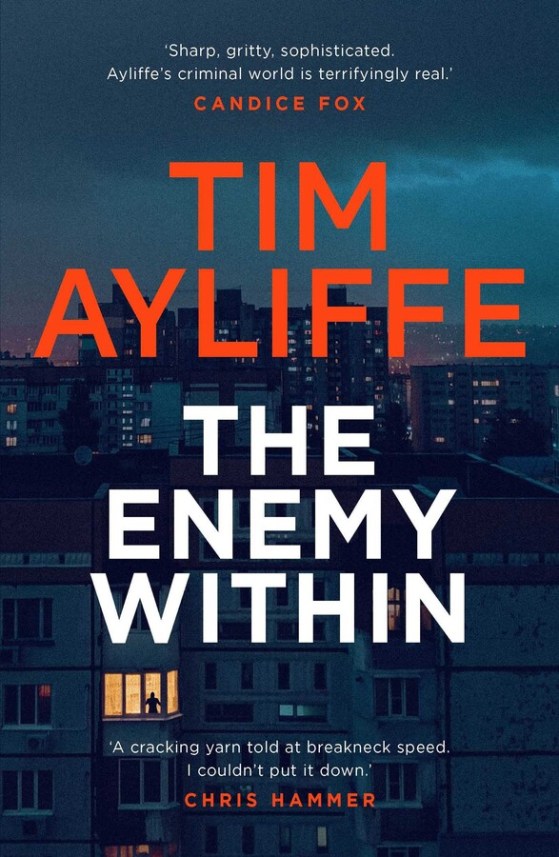
The Enemy Within by Tim Ayliffe

The Enemy Within Cover

Publisher: Simon & Schuster (Trade Paperback – 28 July 2021)

Series: John Bailey – Book Three

Length: 353 pages

My Rating: 4.5 out of 5 stars

Amazon

One of Australia’s fastest rising crime fiction authors, Tim Ayliffe, returns with another impressive and brilliantly relevant novel, The Enemy Within.

Ayliffe is a great author whose work I have been really enjoying over the last couple of years as he sets some fantastic stories around contemporary Australian subjects.  Debuting in 2018, this journalist wrote a compelling and intriguing first novel with The Greater Good, which looked at political corruption and the growing influence of China in Australia.  He followed it up in 2019 with State of Fear, which looked at Islamic terrorism and featured a dramatic and impactful story.  Now Ayliffe checks out the complete opposite end of the political spectrum in The Enemy Within, which features a look at growing right-wing radicals.

As the smoke from devastating January 2020 bushfires covers Sydney, investigative reporter John Bailey is covering a far more dangerous threat in the suburbs.  Barely recovered from the traumatic events that took the love of his life from him, Bailey is now working for a news magazine.  His first story will cover the re-emergence of right-wing nationalists and white supremacist groups in Australia.  Attending one of their meetings, where a controversial American social media star whose entrance into the country has gained much political opposition and protest, Bailey attempts to gain the pulse of this movement, only to face violence and an anti-media mentality from the crowd.

Working on his story, Bailey has no idea of the chaos that is about to rain down on his life.  After he meets with an old contact and informant, Bailey’s house is raided by the Australian Federal Police.  The police are investigating him for a story he ran back while he was a war correspondent that highlighted the alleged war crimes Australian soldiers committed in the Middle East.  Armed with a warrant granting them access to his phone, computer and all his files, the police tear through Bailey’s life and throw him in gaol for attempting to impede their search.

With the entire nation’s media covering his plight, Bailey is released from prison and soon discovers that someone orchestrated the police raid to delete evidence from the rally.  Attempting to investigate further, Bailey is shocked when his contact ends up dead in mysterious circumstances and the police fail to investigate.  With Sydney on the verge of a race war, Bailey continues his investigation and soon uncovers proof about a dangerous conspiracy that aims to shake the very foundations of Australian life.  With only his old friend CIA agent Ronnie Johnson as backup, Bailey attempts to stop this plot before it is too late.  But with a seemingly untouchable enemy targeting him from the shadows, has Bailey finally met an opponent even more determined than he is?

This was an awesome and captivating novel from Ayliffe who once again produces an intense, character-driven narrative.  Set around some very relevant and controversial topics, The Enemy Within is a powerful and exciting novel that takes the reader on a compelling ride.  I had a fantastic time reading this clever book and I loved the fascinating examinations of one of the more insidious threats facing Australia.

Set in the blistering, smoke covered streets of early 2020 Sydney, this story starts with protagonist John Bailey engaged in a controversial story about the rising far-right wing.  After a predictably violent confrontation, the narrative takes off like a shot, with the protagonist investigating a series of concerning events, including several murders, racial attacks, and a re-opened investigation into an old story of his that sees the AFP raid his house.  Each of these separate investigative threads are drawn together as the book progresses, and the reader is treated to an impressive and deadly conspiracy with several clever allusions to real-world issues and events.  This was a very exciting and captivating novel to get through, and I found myself reading it extremely quickly, nearly finishing it off in a day.  The story leads up to an awesome and intense conclusion, where Bailey uncovers the entire scope of the plot and races to stop it.  While the identity of some of the participants is very clear since the character’s introductions, their full plan, methods, and reach are more hidden and it was great to see the protagonist uncover them all, especially as several were cleverly hidden in innocuous moments earlier in the novel.  There is even an excellent twist towards the end of the book that reveals a well-hidden antagonist, which I particularly enjoyed as it was so skilfully inserted into the story.  I ended having an excellent time getting through this amazing narrative, and this might be one of the best stories that Ayliffe has so far written.

One of the things that I have always enjoyed about the John Bailey novels is the way in which so much of the amazing story was tied to how extremely damaged the titular protagonist is.  John Bailey is a veteran reporter whose previous life as a war correspondent has left him extremely broken, especially after being tortured by a dangerous terrorist leader.  This eventually led to him becoming an alcoholic, which ruined his career and separated him from his family.  However, since the start of the series, Bailey has shown some real character growth, although this is usually accompanied by some traumatic events or tragic moments.  In The Enemy Within, as Bailey is still recovering from the loss of his lover at the end of State of Fear.  Despite making some strides to recover, Bailey is still reeling from the loss, and this becomes a major aspect of his character in this latest book.  This is especially true as Ayliffe does an outstanding job of highlighting the grieving process and showing Bailey’s feelings of despair.  It was really moving to see Bailey in this novel, and I was glad to see him continue to recover from all the bad events of his life, including stopping drinking and getting a dog.  However, Bailey still has an unerring knack to annoy the subjects of his stories, and he ends up getting into all sorts of danger.  It was great to see him getting to the root of this story by any means necessary, and I continued to appreciate his impressive development.

I also love the way that the each of Ayliffe’s novels feature some fascinating contemporary issues facing Australia or the wider world.  In The Enemy Within, the main issue is the rise of Australian right-wing and white supremacist groups in recent years.  Like in the rest of the world, these groups have been becoming a bit more prominent recently in Australia, and Ayliffe does an excellent job analysing this issue throughout his novel.  The author does a deep examination of the movement as the story progresses, and the reader is given a good insight into their concerns, motivations, and the reasons why the movement has been gaining progress in recent years.  There are some clever parallels between the events or people portrayed in the novel and real life, which was interesting to see.  Examples of this include the government allowing controversial right-wing figures into the country despite protests, and the reactions of certain right-wing media groups.  I liked how Ayliffe once again featured the character of Keith Roberts, a right-wing commentator who is a pastiche of several Australian radio personalities.  It was also quite fascinating to see how the concerns and motivations of the right-wing groups were extremely like some of the Islamic terrorists featured in State of Fear, with both groups feeling disconnected from and attacked by mainstream Australian society.  Not only is this extremely fascinating and thought-provoking but it also serves as an amazing basis for Ayliffe’s narrative.  The author does a fantastic job of wrapping his thrilling story around some of these elements, and it makes the overall narrative extremely relevant.

I also must highlight another significant contemporary inclusion that was featured in The Enemy Within, and that was the Australian Federal Police’s raids on Bailey’s house.  This police raid is a direct reference to a series of controversial raids that occurred on several media organisations, including ABC News (who Ayliffe works for), in relation to articles they published.  Ayliffe uses these real-life examples to really punch up what happens within The Enemy Within, and he produces some realistic scenes that were comparable to this.  The subject of the articles that prompt the raids are also very similar and feature another topic that is quite controversial in Australia in the moment, that of alleged war-crimes by Australian soldiers fighting in the Middle East.  Just like with the other divisive topics featured in this novel, Ayliffe did a fantastic job re-imagining these events in his novel, and it produces some excellent inclusions that will particularly resonate with an Australian audience.  I deeply appreciated the way in which he was able to work these events into his story, and I think that it made The Enemy Within a much more compelling and distinctive read.

I have to say that I also really loved the author’s use of setting in The Enemy Within.  This latest book is set in early 2020, when Sydney was surrounded by some of the worst bushfires in Australian history and the entire city was covered in smoke for months.  Ayliffe does an excellent job portraying these terrible conditions, no doubt drawn from his own personal experiences, and the reader gets a good idea of how difficult life was under those conditions (it certainly brought me back to that time, although we didn’t have it quite as bad down in Canberra).  Ayliffe uses this unique setting to full effect throughout the book and it provides some fitting atmosphere for the narrative, especially as the landscape reflects the simmering tensions flaring up within the city.  This was one of the more distinctive features of The Enemy Within, and I really appreciated the way the author used it to enhance his great story.  I also quite enjoyed the throwaway references to COVID-19, with none of the characters particularly concerned about it considering everything else that was happening, and I have no doubt that Ayliffe’s next novel will make great use of the pandemic in some way.

With his latest novel, The Enemy Within, Tim Ayliffe continues to showcase why he is one of the best new writers of Australian crime fiction.  The Enemy Within had an awesome and incredible story that perfectly brings in amazing contemporary Australian issues and settings, which are expertly worked into a thrilling novel.  I had an outstanding time reading this fantastic read and it comes highly recommended.

Amazon

The Two-Faced Queen by Nick Martell

The Two-Faced Queen Cover

Publisher: Gollancz (Audiobook – 25 March 2021)

Series: The Legacy of the Mercenary Kings – Book Two

Length: 20 hours and 6 minutes

My Rating: 5 out of 5 stars

Amazon     Book Depository

Following his epic 2020 debut, one of the fastest rising stars in fantasy fiction, Nick Martell, returns with the second entry in his The Legacy of the Mercenary Kings series, The Two-Faced Queen.

Last year I was lucky enough to listen to a copy of Martell’s incredible first novel, The Kingdom of LiarsThe Kingdom of Liars was a gripping and impressive fantasy read set in Hollow, a crumbling city surrounded by an army of rebels, which followed the misadventures of the infamous Michael Kingman.  Michael is the scion of the legendary Kingman family, a noble clan of heroes and leaders who have guided Hollow for generations, serving as both supporters to the royal family and a check on their power.  However, the legacy of the Kingman family has been severely tarnished in recent years as Michael’s father was executed for the murder of the heir to the throne.  With their family disenfranchised, Michael grew up as an outcast in his own city, acting out against authority.  This changed when a chance encounter allowed him to investigate who was responsible for his family’s downfall and the death of the prince of Hollow.  While he was eventually able to discover the true murderer, his investigation also resulted in the King’s suicide, which subsequently saw him tried for regicide and sentenced to death.  The end of the book saw him manage to escape his execution, while also setting up several of the storylines for future entries in the series.  I deeply enjoyed the cool story of this first entry in The Legacy of the Mercenary Kings, and The Kingdom of Liars ended up being one of my favourite novels, audiobooks and debuts of 2020.  As a result, The Two-Faced Queen was one of my most anticipated reads of 2021.

Michael Kingman is a dead man walking.  Still accused of killing the King of Hollow, Michael is now under the protection of the Orbus mercenary company, serving as an apprentice under the mysterious mercenary Dark.  However, even with Orbus’s protection, everyone in Hollow still wants to either kill him or use him for their own dark ends.  The deadliest of these is the one person Michael is sworn to protect above all others, the heir to the throne, Princess Serena.  After spending years away, a vengeful Serena has returned to claim her throne and end Michael’s life.  Wielding great power, a lethal attitude and holding the keys to Michael’s heart, nothing will stand in the way of her wrath.

To restore his family’s position, save his home and convince Serena of his innocence, Michael needs to unravel the various conspiracies that have encircled Hollow and uncover the true motivations of the various power players in the city.  However, to succeed, Michael is forced to go up against a magnitude of foes, from the Corrupt Prince, the unhinged Rebel Emperor besieging the city, enraged royal guards, conspiring nobles, a scheming immortal, an insane serial killer, dangerous assassins and his former foster father, the man responsible for all his family’s ills.

But the more Michael attempts to understand Hollow’s hidden past and the dangerous plots surrounding his city, the more it becomes apparent that his is a mere pawn in a very dangerous game.  Immortals, monsters and mercenaries are all present in Hollow, and each of them has their own nefarious designs for Michael and his family.  Can he save everyone he loves before it is too late or has the Kingman family finally breathed its last?  Michael’s rise to become a Mercenary King continues, but who will truly wield power when the dust settles?

Now that was one hell of a sequel!  Martell absolutely crushed this second entry in this outstanding and exceptional fantasy series, producing a five-star novel that is extremely compelling, intense and so damn exciting.  I was absolutely enthralled with this book the moment I started listening to it and I loved every second.  The Two-Faced Queen is easily one of the best books I have read in 2021 and I think that any other fantasy novel coming out this year is going to be extremely hard-pressed to outdo it.

Martell has come up with a pretty incredible and intense narrative for The Two-Faced Queen, one that proves to be extremely addictive and insanely good.  Starting shortly after the events of The Kingdom of Liars, this novel starts fast and hard, with Michael following up on a number of storylines and revelations from the previous novel.  There is already so much going on right from the start of the novel, as the protagonist finds himself surrounded by enemies and conspiracies, both old and new.  While several secrets were revealed at the end of the first novel, there is still so much that Michael needs to understand.  However, as he attempts to learn these additional secrets, he must also try to avoid the deadly attentions of his beloved princess, end the rebellion plaguing the city, restore his family, defy a dangerous immortal, and make up with his betrayed friends.  While this is already a substantial amount of story, Martell keeps adding to it, as Michael also soon encounters a deadly assassin with a contract on him, and a deranged and unnatural serial killer.

While this may seem like too many story elements for one novel, it actually works extremely well, and the reader quickly becomes engrossed in Michael’s various adventures throughout the city.  I loved the inclusion of the serial killer storyline, as not only does it add some fantastic mystery elements, but it also proves to be a gateway to some intriguing world building, revealing more of the dark, immortal forces manipulating events from the shadows.  This storyline also results in several epic action scenes that place the protagonist and his friends in mortal danger from some unusual foes.  I had an outstanding time getting through this complex and well-constructed narrative, especially as every single scene has an intriguing revelation, intense character development or subtle clue to the future of the series.  Several key mysteries and secrets from the first novel are answered, partially or wholly, in this novel, although many more are introduced.  This really helps to keep the reader’s attention focused on The Two-Faced Queen’s plot, and I am not exaggerating when I talk about how addictive the secret-ridden narrative proves to be.  Readers are hammered with large amounts of lore and history in places, so I would recommend reading the first novel in the series, The Kingdom of Liars, before reading this book, although binge-reading this series is hardly a chore.  Overall, The Two-Faced Queen’s narrative is epic story writing at its best, and readers will love this terrific tale.

I absolutely must highlight the awesome and well-developed characters featured within The Two-Faced Queen.  The most prominent is series protagonist Michael Kingman.  Michael is an intriguing and distinctive figure through whose eyes most of the plot unfolds.  I have to admit that Michael was not my most favourite character in the first book, mostly because of his impetuous nature and selfish behaviour at times.  However, it was revealed that the reason for some of his annoying behaviour was due to some magic affecting his memories and personality.  As a result, Michael’s behaviour is substantially changed in The Two-Faced Queen and he comes across as a more considerate figure in this book.  He still has quite a few flashes of recklessness and stubbornness, but many of the rougher edges from the first novel are worn away here.  Still, a lot of people call Michael out for his crap in this book, including his friends and family, and it was great to see him finally heed their words.  There was also some additional exploration of how Michael deals with the legacy of being a Kingman; he is forced to live up to some big expectations.  There is a rather good scene where Michael is exploring the crypt of his ancestors with some of his friends, describing why some of them are famous and others are considered failures because they never achieved anything remarkable but just lived a normal life.  Seeing this, Michael’s friends, both of whom have been some of his greatest critics, start to understand just how much pressure he is under.  I really appreciated the way in which Martell continues to develop his protagonist, and it will be very fascinating to see how Michael’s story continues in the future novels.

Aside from Michael, there is an impressive collection of interesting supporting characters, each of whom have some fascinating storylines, as well as secrets or details from their past which helps to move the story along.  They also have their own motivations and plans to shape Hollow and the rest of the world to their advantage, which results in additional plots and conspiracies that the protagonists have to overcome.  The most prominent supporting character is probably Serena, the titular Two-Faced Queen.  Serena is Michael’s childhood friend and the royal he was sworn to, meaning that he was always destined to be her protector, advisor, and conscience.  However, after the death of her brother and Michael’s family were declared traitors, their relationship effectively ended.  Now returned, Serena is determined to destroy Michael for the apparent murder of her father, even if it leads to her own ruin.  The novel starts up with Michael visiting Serena only to find that she has hand-dug a grave for him, showing her resolve for killing him.  This forces Michael to attempt to change her mind, which is no easy prospect, and results in great calamity.  Naturally, these two characters share thorny romantic feelings for each other, which complicates Michael’s plans to stay alive, as Serena is a major blind spot in his defences.  Their entire joint character arc in this novel is extremely good, and I really appreciated the author’s take on their complex relationship.

Another key character is Dark, Michael’s mercenary master, who, aside from having his own mysterious past and motivations, is the son of Michael’s nemesis, Angelo Shade.  Due to Michael and Dark working together closely, the protagonist learns several of Dark’s secrets, especially those related to his troubled childhood and his encounters with the Heartbreaker serial killer.  While you don’t learn everything about Dark’s past in this novel (Martell is the master of dolling out just enough character detail to keep you interested, while also keeping plenty back for future novels), you do find out quite a lot, and what is revealed is extremely memorable.  Dark has a real dark side to him, no pun intended, and while Michael initially believes that Dark is his ally, he is soon faced with the possibility that he might have placed all his trust in a monster.  This results in a very interesting mentor/student relationship between the two, filled with much conflict and mistrust.  I really enjoyed learning more about Dark in The Two-Faced Queen, and it will be fascinating to see how the rest of his story unfolds in the future.

Other intriguing characters in this novel include Michael’s best friend Trey, who is attempting to forge his own path and take down both the nobles and the rebels, even if this leads him into conflict with Michael.  Trey has a fantastic arc as dangerous antihero in this book, taking control of the city’s criminal element in order to protect its citizens.  While a lot of his hostility towards Michael has ended, Trey and the protagonist still have a strained relationship, although Trey does go out of his way to help his friend.  Despite their friendship, it is clear that there is a major schism between the two planned in the future, which no doubt will result in all manner of pain and regret.  The ruthless immortal Charles Domet is still a firm favourite of mine, and it was fun to see his attempts to manipulate Michael, especially as Michael is now well aware of his true nature.  There are some interesting hints to Domet’s past in this novel, and he is clearly working up to something big.  The ambitious social climber Naomi also returns, although now she is suffering from a bad drug addiction which makes her even more entertaining, especially as she decides to torment Michael through embarrassment.  I also quite liked the expanded use of the chronicler, Symon.  Symon, who is determined to record and analyse every secret of Michael and his family, has taken to stalking them by living at the Kingman family home, and it is always entertaining to see his take on the events occurring before him.  He ends up actually narrating several interludes in The Two-Faced Queen, which are laid out as parts of his in-novel chronicles as part of a very clever and amusing supplement to the main story.  Symon really endeared himself to me in this novel, especially after his insulting descriptions of Michael in his proposed history book, and I deeply appreciated his increased presence.

I honestly could go on and on about the various characters featured within this novel; indeed, I have only just scratched the surface of the support cast in the paragraphs above.  However, it is more than clear that Martell does an excellent job in introducing and developing complex characters, and I loved the detailed and intriguing depictions of them throughout the novel.  Nearly every character featured within The Two-Faced Queen gets at least one big moment, and there are plenty of revelations and compelling backstories that are really cool to uncover.  I will say that you should probably not get too attached to the characters; however, I am very much looking forward to seeing what happens to each of the survivors, especially as Martell has set up some deeply captivating and powerful character arcs around them.

In addition to the fantastic story and amazing character work, Martell has also invested a lot of time in expanding his enthralling fantasy world.  The first entry in The Legacy of the Mercenary Kings did a great job setting up the key elements of Hollow, such as the noble families, the people of the city and the various problems they faced.  This unique setting of a besieged city filled with scheming nobles and set on a world where pieces of a shattered moon fall to the ground was so cool, and The Two-Faced Queen continues to expand on these previous elements, while also adding to the history and geography of the city and its surrounding nations.  Not only do you learn of several outside nations and locations but you also get to see how the key characters of this novel, or their ancestors, have impacted them, as well as the various dangers these realms represent.  However, some of the most substantial world-building revolves around some of the unusual creatures residing in this world, including a range of dangerous and destructive immortal creatures.  In the previous novel we only encountered one immortal (that we knew of), whose plots and schemes were a major part of the book’s plot.  This second novel, in contrast, is loaded with many more immortals, each of whom has their own unique abilities and plans for the world.  Martell introduces the lore around these immortals extremely well, and their various traits and schemes are worked into the plot extremely well.  It sounds like we are going to encounter a whole raft of intriguing and monstrous immortals in the future of this series, and I am very much looking forward to seeing what happens there.  The next book also looks like it will be set in a whole new location, and I will be extremely intrigued to see how that impacts the narrative.

One particular bit of world-building that I really enjoyed was the excellent expansions of Martell’s unique magical system.  The main magic of Hollow is known as Fabrication, which allows its users certain control over certain elements or phenomena at the cost of their own memories.  This is a really cool magical system, and Martell uses it to great effect throughout his novels, ensuring that there is all manner of destruction and manipulation throughout the narrative.  The Two-Faced Queen features multiple new Fabrication types, as Martell introduces unique Fabrications throughout the story, including several that even the protagonists have never heard of.  Examples include a particularly dangerous telekinetic Fabrication, which forces everyone to their knees (perfect for its user), while I was also very impressed with the disturbing blood Fabrication that one of the supporting characters pulled out.  In addition, Martell also introduces some different forms of magic from some of the other countries in his fantasy world.  While you only get to see one or two of these new magical abilities, they are still fun to see and they stand as an intriguing counterpoint to the already established magical abilities.  It looks like Martell is setting up some sort of mystery around the origins of all these different powers and it should prove pretty interesting to see how that turns out.

Martell also does an incredible job fitting the downsides of this magical Fabrication into the plot, as several characters experience memory loss, which affects their plans, reactions and relationships.  This is most obvious in Michael; as narrator, he loses several days of his life, resulting in him being unaware of plans he puts into motion or certain secrets that he learnt in these missing days.  Because the reader does not see these missing pieces of time either, this adds an extra amount of mystery and uncertainty into the narrative, as you try to work out both what is being deliberately hidden from Michael and what he has simply forgotten.  These bigger lapses in memory are a fantastic part of The Two-Faced Queen’s narrative, and it helps to make the flow of this book unique and compelling.  However, you also have to appreciate some of the smaller examples of memory loss throughout the book, some of which are quite heartbreaking in nature as the characters forget elements of their friends and families without realising it.  There is one extremely poignant scene in which Michael confesses to forgetting something very important to him, with the reader only then realises that a certain normal-sounding character description was evidence of memory loss all along.  Some of these subtle details are really impressive, and I deeply enjoyed seeing the hurtful side effects of this magical system.

To enjoy this awesome book, I ended up grabbing its audiobook format, mainly because I had such a great time listening to the first novel.  There were actually two audiobook versions of The Two-Faced Queen, and I ended up grabbing the Joe Jameson narrated version.  Jameson is a fantastic audiobook narrator who has previously lent his voice to amazing fantasy novels like King of Assassins by RJ Barker.  I loved his narration for The Kingdom of Liars last year and I was really keen to continue to listen to him in this sequel.  Jameson has a great voice for this complex fantasy read, and you swiftly become enthralled by the way he narrates the events occurring, as well as the fantastic voices he comes up with for his characters.  All the characters are given a unique voice in a variety of different accents, and each of them really helps to capture the character’s emotions and personality perfectly, whether it is the constant confusion and hurt in Michael, the raging anger of Serena, the cold menace of Dark or the calculating and manipulative voice of Charles Domet.  All this voice work is perfect and spot on and I really appreciated the effort that Martell put into this book.  Despite its runtime of 20 hours, I got through this audiobook in no time at all and I honestly wished it was a lot longer by the end.  This was another outstanding audiobook, and this format comes highly recommended to anyone interested in this fantastic novel.

With this epic and captivating second novel, Nick Martell has cemented his position as one of the best new fantasy authors out there.  The Two-Faced Queen was absolutely incredible, and I loved the complex and addictive story, set in a unique fantasy world.  There are just so many cool elements to this awesome novel and it really does not take long for the reader to become hooked on every single mystery, secret and hidden past that Martell features within this great read.  I cannot wait to see what happens next in this series, but it is already perfectly clear that The Legacy of the Mercenary King books are going to be one of the defining fantasy series of the next few years.

The Two-Faced Queen Cover 2

Amazon     Book Depository

The Bone Maker by Sarah Beth Durst

The Bone Maker Cover

Publisher: HarperAudio (Audiobook – 9 March 2021)

Series: Standalone

Length: 16 hours and 35 minutes

My Rating: 5 out of 5 stars

Amazon

One of the leading voices in fantasy fiction, the impressive Sarah Beth Durst, returns with another epic standalone fantasy read, The Bone Maker.

Sarah Beth Durst is an amazingly talented author who has been dominating the fantasy market for the last several years.  Initially debuting with several fun young adult and middle grade novels, such as the 2009 release Ice, Durst made the jump to adult novels in 2014 with The Lost, before writing her bestselling Queens of Renthia fantasy series.  I only recently started reading Durst’s work when I checked out her 2020 novel, Race the SandsRace the Sands was a gripping standalone fantasy read that featured a thrilling tale of adventure and redemption set around monster racing in a desert kingdom.  I absolutely loved Race the Sands, and it ended up being one of my top books and audiobooks of last year, and Durst was easily one of the best new-to-me authors I checked out in 2020.  As a result, I have been really keen to see what Durst would write next, and I was excited when I heard about her new book, The Bone MakerThe Bone Maker was one of my most anticipated novels of 2021, and I ended up having a wonderful time reading it.

25 years ago, the nation of Vos was threatened by a terrible foe, the rogue bone maker Eklor, whose nightmarish creations of animal bone and mechanical components sought to overwhelm everything.  In the end, Vos was saved by five heroes who led an army to Eklor’s door to destroy him.  However, their victory came at a steep cost, as one of the heroes died a tragic death, and only four walked away from Eklor’s tower.

In the years that followed, the leader of the heroes, Kreya, has lived a life of exile, determined to resurrect her husband, Jentt, who died to stop the evil assailing their realm.  Using Eklor’s notes, Kreya has succeeded in cracking the spells needed to complete the resurrection, but bringing the dead back to life has a heavy cost.  Not only does Kreya lose a day of her life for every day that Jentt lives, but Kreya also requires human bones to complete the spell,. The bones of the dead are ritualistically burnt throughout Vos specifically to prevent bone workers using them for dark magic, so Kreya is forced to look elsewhere for her materials.  In her desperation, she decides to return to the one place she swore never to go back to: the plains outside Eklor’s tower, where the bones of those fought against Eklor’s monsters still lie.

Making the arduous and forbidden journey to Eklor’s tower, Kreya makes a terrifying discovery that threatens everything she fought for all those years ago.  With the dangers of the past threatening to overwhelm her, Kreya has no choice but to reunite her comrades 25 years after their famous victory.  But will these damaged heroes be enough to face the evil threatening to overwhelm them, or will an evil long thought destroyed arise again to finish off what it started?

Wow, Durst definitely does not disappoint as she has created another impressive and powerful fantasy novel.  I had an absolute blast reading this fantastic new book and I managed to finish it off relatively quickly, especially once I got wrapped up in the outstanding story, clever setting and the lives of her amazing protagonists.  I really enjoyed this awesome standalone fantasy read and I have to give The Bone Maker a full five-star rating.

For her latest amazing fantasy novel, Durst has come up with a very complex and powerful story that dives deep into the hearts of her fantastic characters while also taking them on an epic journey of redemption.  I have to admit when I read some of the early descriptions of The Bone Maker I assumed it was going to be the central protagonist, Kreya, going up against her old companions as they tried to stop her from resurrecting her husband.  Instead, Durst works in a very different narrative that sees Kreya encounter the enemy from her past, which forces her to bring her friends back together herself.  Durst sets up this narrative really well, and the reader gets a sense of the tragedy of Kreya and the lengths she is planning to go to reunite with Jentt.  You also get a fantastic idea of the trauma from the protagonist’s past battles with Eklor and how this has shaped their lives.  There are some great moments in the opening half of this book, including several amazing and magically charged action sequences as the protagonists go up against a range of different foes, as well as some intense drama as the five are gradually reunited and come to terms with their past failures.  I loved how the narrative gradually morphed into a bit of a political thriller in the second half of the book as the protagonist encounters an old foe in a different setting.  The flow from the various sections of the story works extremely well, and Durst weaves together a really comprehensive and powerful standalone story.  I liked the excellent blend of action, fantasy elements and intense emotion exploration, which helped to produce a very comprehensive narrative, and The Bone Maker turns into quite an epic and exceptional read.

Easily the highlights of this book are the complex and damaged central characters that the story follows.  The five main characters are heroes who previously saved Vos from a great evil, and I loved this exploration of renowned fantasy heroes years after they saved the world, the usual climax of a story.  The central character of the story is Kreya, the group’s leader, who disappeared after ensuring their previous victory, mourning her dead husband.  Kreya performs multiple attempts at resurrection at the cost of her own life, and I really appreciated the author’s interpretation of this character’s grief leading her to risk it all.  Kreya has a rough and powerful journey throughout this book as she comes back to lead her team and is forced to deal with the expectations of all those around her.  Despite the immense amount of guilt, grief and regret that Kreya experiences throughout this story, Kreya proves to be a talented leader, directing them through several unique fights, and is the only person that can hold this ragged group of characters together.  The counterpoint to Kreya’s toughness and leadership is her deceased husband, Jentt, who, after his resurrection, proves to be the heart and light of the group.  Despite his more buoyant personality, Jentt has to deal with the consequences of his resurrection, especially when he finds out the cost of his continued life, and this leads him to several harrowing mental places.

The next member of the heroes of Vos is the bone wizard Zera, who specialises in creating the best magical talismans in the world.  Zera is the only member of the group who cashed in on her fame after their victory and has grown rich off her skills and reputation.  Zera is a fantastically sarcastic and entertaining addition to the cast, as she revels in her wealth and privilege, while also providing some of the best lines in the entire novel.  Despite a sense of intense betrayal at Kreya’s abandoning of her all those years ago, Zera agrees to help her with her mission, but finds herself constantly conflicted by her feelings of resentment, her own well-hidden damage, and her changed vision of what Kreya’s relationship with her was.  As a result, she has quite a journey throughout The Bone Maker and I loved her inclusion in this novel.

The other two major protagonists are the bone reader Marso and the warrior Stran, both of whom survived the battles with Eklor in very different ways.  While Stran is reasonably mentally healthy, having chosen to live a simple life with his wife and children, Marso has been broken by both his powers and the events of the past.  These two are a great contrast to one another, and both add some intriguing elements to the overall narrative.  I quite enjoyed seeing Marso slowly rebuild his sanity throughout the book while also coming to terms with a magical power he no longer trusts.  Stran’s apparent normality and stable family life is so amazingly different from the other characters in the book that it really stands out, and I liked seeing how each character was just a little bit different.  Overall, all five of these awesome protagonist really help to make The Bone Maker a powerful and impressive read and I am extremely glad that Durst took the time to build each of these great characters up.

One of the things I really must discuss is the outstanding setting that Durst created for this great book, especially as the author did such an impressive job coming up with yet another unique world.  The land of Vos is an amazing fantasy realm, loaded up with its own blend of troubles, culture and magic, which is living in the shadows of the tragic bone wars 25 years prior.  Durst sets this new landscape up perfectly in the early stages of the novel, and the reader gets a great sense of the people and mentality of this realm, especially when it comes to the trademark bone magic.  As the novel progresses, Durst visits several fantastic and compelling parts of this land.  This includes the gigantic and wealthy capital city where many terrible events take place, the hilly landscape that makes up the majority of Vos, a mist-shrouded valley loaded up with a collection of dangerous, gigantic monsters, and the plains surrounding Eklor’s tower, where deadly secrets lurk.  These landscapes are a lot of fun to explore, and Durst works them into her narrative perfectly.  I really enjoyed all of the major locations that the protagonists visit, although my favourite has to be the valley of monsters, as some intense and action-packed sequences take place there.

In addition to the amazing setting, I also really appreciate the rich and distinctive bone magic that Durst came up with for The Bone Maker.  This type of magic features three distinctive types of bone workers, including bone readers who can use animal bones to read the future, bone wizards who create powerful bone talismans, and bone makers who inscribe bones to animate a range of constructs.  Each of these magical disciplines is explored in great detail by the author and are all strongly utilised in the plot.  I loved seeing these magical elements at work throughout the action sequences in the book, and Durst uses them to great effect, with the characters gaining flight, stealth, strength and speed in every epic fight sequence.  The various examples of bone making are also pretty cool, and you get some great magical constructs.  I liked how there was a fun contrast between the protagonists’ cuter, yet still effective constructs, and the antagonists monstrous figures, and it makes for some great combat scenes, especially when the protagonist goes big towards the end of the book.  All of these magical elements are really exceptional, and I think it is an absolute testament to Durst’s sheer imagination and creativity that she is so effectively able to come up with a brand new style of magic and a new magical realm for every single one of her standalone fantasy reads.

I ended up enjoying The Bone Maker in its audiobook format, which proved to be a fantastic way to experience Durst’s epic story.  The Bone Maker audiobook has a decent run time of 16 hours and 35 minutes, which I ended up getting through rather quickly and is not too much of challenge for dedicated listeners to finish off.  One of the best things about this great audiobook is the amazing narrator, Soneela Nankani.  Nankani is a veteran audiobook narrator, but despite her prevalence as a narrator of fantasy fiction, I have not previously had the pleasure of experiencing Nankani’s vocal talents before, although she has worked on several other fantasy novels that I am keen to check out.  Nankani was an outstanding narrator whose voice really enhanced this already amazing novel.  Not only did Nankani provide a quick and exciting tone for the entire novel, moving the story along at a brisk and enjoyable pace that continuously kept the reader’s attention; she also provided several fantastic voices for the various protagonists.  All the voices that she used were pretty impressive, and I felt that they fit the damaged and dark personalities of each of the main characters very well.  As a result, I would strongly recommend the audiobook format to anyone interested in checking out The Bone Maker as it is an amazing way to check out this compelling novel.

The Bone Maker by Sarah Beth Durst is an exceptional and captivating standalone fantasy novel that I had an amazing time reading.  Durst has produced an epic and elaborate tale of life, death and magic, which follows five damaged and broken heroes years after their supposed great victory.  There are so many awesome elements to this fantastic book, and readers are going to fall in love with The Bone Maker’s addictive narrative, powerful characters and cool magical elements.  While I did enjoy Durst’s previous novel, Race the Sands, a little more, this was still an outstanding read, which comes highly recommended.

Amazon

A Deadly Education by Naomi Novik

9781529100860

Publisher: Del Rey (Trade Paperback – 29 September 2020)

Series: The Scholomance – Lesson One

Length: 323 pages

My Rating: 4.5 out of 5 stars

Amazon

One of the most popular authors of fantasy fiction, Naomi Novik, returns with another awesome and fun read, A Deadly Education, an entertaining alternative to the classic magical school novels.

Naomi Novik is a talented author was has been writing some intriguing and fun fantasy novels since 2006, when she released the first novel in her Temeraire series, His Majesty’s Dragon (also released as Temeraire), an intriguing fantasy based alternate history series that presents a re-imagined account of the Napoleonic War fought with dragons.  I have been meaning to check out the Temeraire books for a while now, but so far the only one of Novik’s novels that I have had the chance to read was the 2018 release, Spinning SilverSpinning Silver was a clever book that contained an interesting and compelling new take on the classic fairy tale Rumpelstiltskin.  I quite enjoyed Spinning Silver and I have been keeping an eye out for anything new from Novik for a while.  When I heard that Novik had new book coming out this year, I was quite excited, especially when I saw the cool concept that Novik was using as a basis for her story.

A Deadly Education, which forms the first book in Novik’s planned Scholomance series, is set in the Scholomance, the world’s premiere magic school.  But this is not your typical magical school!  Instead, the Scholomance is one of the most dangerous and deadly places on the planet.  There are no teachers, all the classes have a dark twist to them, and the halls are packed full of monsters, known as maleficaria, or mals, who are determined to eat each and every one of the students before they can escape.  Students must survive in there for years, learning what magic they can from the school’s unique learning devices and forming what alliances they can before they graduate, a gruelling process which sees the graduating class run through a gauntlet of the most dangerous mals in existence.  Few students survive their time in the Scholomance, especially if they do not have any friends, which is going to be a real problem for Galadriel “El” Higgens.

El is the school outcast.  Considered weird and naturally unfriendly, she seems a likely candidate to die when her year finally graduates.  However, El is hiding a massive secret: she has an unnatural affinity for extremely destructive spells and has the magical potential to level the school and everything in it, students and monsters included.  Desperate to keep control of her abilities and not succumb to her dark temptations to drain the student body of their magic and lay waste to everything she encounters, El seeks to find people who she can rely on.  And then Orion Lake bursts into her life, literally.

Orion is the school darling.  The scion of a powerful family whose magic allows him to destroy and absorb the powers of any maleficaria he encounters, Orion is worshiped in the school, especially as he has made it his mission to save as many students as possible.  But his attempted heroics have thrown a spanner in El’s carefully laid plans to survive graduation.  Now forced to accept Orion’s constant protection and company, El forms a new plan to gain allies, and even starts to make a few precious friends.  However, something even more sinister is afoot in the Scholomance.  More mals than usual are invading the school, and some surprisingly powerful creatures are finding a way in for the first time.  As Orion jumps blindly into danger, El attempts to help, determined to protect her best chance of survival.  But can she save herself and Orion with killing the rest of the students, or will a dark prophecy about her future finally come true?

A Deadly Education is an exceptional and outstanding novel from Novik that provides the reader with an exciting and deeply enjoyable fantasy story set within a unique and captivating magical school.  This proved to be an extremely fast-paced narrative that quickly sets the scene for the entire story and then sets the protagonist on a dangerous course as she tries to navigate a series of new trials and hazards within an already dangerous location.  Novik spins quite an impressive tale within this book, and I found myself hooked from the very beginning.  I loved the combination of magical learning (I’m a sucker for a good magical school story), dangerous action, the intrigue of the students’ intense jockeying for position and alliances, as well as the character growth that occurred throughout the course of the book.  All of these excellent story elements came together into one exceptional narrative that readers will quickly find themselves addicted to.  If I had one complaint about the story it would be that the ending was a little weak, with the big finale that was being built up for most of the story being resolved rather quickly, although I did like the build-up and its underlying causes.  Still, I did really enjoy where the story went, and all the details and story aspects in this book set the rest of the series up well.  Overall, I had an amazing time reading this book, and I actually managed to power through it in around a day, due to how much I liked it.  This was a truly impressive novel from Novik and I am extremely glad that I got the chance to read it.

This novel features an interesting range of different characters.  The book primarily revolves around the point-of-view character, El, and male lead, Orion Lake.  I personally really enjoyed the main protagonist, El (short for Galadriel, a fun and apt reference to The Lord of the Rings), the snarky, short-tempered and bitter character from through eyes we see the entire story unfold.  El proves to be an excellent narrator for A Deadly Education, and I liked her sarcastic and pessimistic view on the events occurring and the people she encounters, which results in most of the book’s fun humour.  El also has a lot of emotional and personal baggage weighing her down, which is very intriguing to unravel, especially as it stops her from getting close to people and gives her a vast independent streak in a location where individuals are killed off rather easily.  The most significant of these are her vast destructive powers and her ability to suck the magic and life from all those around her.  El is essentially a nuclear bomb who has the potential to destroy the entire school and spends the vast majority of the book trying to hide this fact from people.  This requires a careful balancing act from El as she attempts more mundane ways at building up her mana (exercise, knitting and so forth), while also battling the school’s attempts to cater to her affinity by providing her with destructive spells and school projects with evil potential, rather than the simpler tasks she desires.  I really appreciated this part of El’s character, and I found it fascinating to see her efforts to manage her power, especially in deadly situations.  In addition, El also has some major trust and social issues due to her childhood, as not only was El’s father killed in the school by one of the monsters but his family and the other major magical enclaves turned their back on her and her mother, due to El’s destructive potential.  This makes her hostile towards the various members of the elitist enclaves in the Scholomance, which finds her quite isolated throughout the book.  El also has a rather dark vibe to her that makes the people she encounters quite uncomfortable, and as a result she has trouble making friends.  Novik does an amazing job exploring this character throughout the novel, and El experiences some substantial development as a result.  It was great to see her grow as a person, especially as you come to really like the character, and I enjoyed seeing her finally make some much need connections and friendships.

The other major character in the novel was Orion Lake.  Orion is a powerful magical user who excels at killing mals and absorbing their energy.  At the start of the book, Orion is shown to be a typical noble hero fantasy character who is beloved by the school and appears to have a substantial following of friends and supporters.  However, Orion finds himself drawn to El, mainly due to the fact that El berates him and actually calls him out on his actions.  This results in an intriguing character dissection on Orion, as El discovers that Orion feels trapped in his role as a hero and he dislikes all the attention being levelled at him, as everyone treats him as a heroic being rather than a normal person.  I found Orion a bit flat at times, but he proved to be an entertaining addition to the narrative, and I enjoyed seeing his interactions with El, mostly because El levels all manner of hostilities towards him and he just shrugs it off, much to her frustration.

Easily the best part of A Deadly Education is the unique and impressive setting that Novik has spun together for her narrative.  Ever since my earliest days of fantasy fandom I have really enjoyed the magical school setting, and I still like seeing them in my fantasy novels, especially when they have the fun twists that the Scholomance does.  Novik did an incredible job coming up with this dark fantasy school, and I love the exceptionally creative and dangerous location that eventuated.  Every single detail of this magical school was really cool, from the teacherless classes, the somewhat sinister learning techniques which challenge the students in unique ways, the dangers that haunt the student body, the distinctive monsters that stalk the halls, and the overall layout and history of the facility.  All of this helps to create an excellent and memorable setting for the story, and I loved seeing this darker take on a typical fantasy school such as Hogwarts.  I especially liked all the imaginative ways in which the students are forced to navigate and survive the various trials and dangers they encounter as they attempt to survive and prepare for the deadly graduation that is about to occur.  I felt that Novik did an exceptional job introducing the myriad unique details of her new fantasy world to the reader, and at no point did I feel lost or confused about the elements that were key to the narrative.  I had an incredible time getting lost in this new fantasy universe and I cannot wait to see what secrets and new elements get developed in the future entries in the series.

It is very important to note that A Deadly Education is one of those books that will appeal to an extremely wide range of readers.  Due to its content and its focus on teenage characters, A Deadly Education has a lot of elements that mark it as a young adult novel, and many younger readers will have a great time reading it.  I personally think that this will be an awesome novel for teenage fantasy fans, and it is a book I think I would have really enjoyed as a younger reader.  However, A Deadly Education is not explicitly being marketed as a young adult fiction novel, and there is a lot in this book for older readers to enjoy.  Fantasy fans of all ages will no doubt really appreciate the fun take on the magical school storyline and many readers, especially those who grew up on the Harry Potter novels, will have a blast seeing this more deadly and brutal British magical academy.

A Deadly Education is an exciting and impressive novel from Naomi Novik that proved to be quite an outstanding read.  This excellent fantasy book is incredibly easy to enjoy and contains a clever and amazing take on the classic magical school storyline.  A highly recommended read; you are going to fall in love with this awesome book.

Amazon

The Girl and the Stars by Mark Lawrence

The Girl and the Stars 2

Publisher: Harper Voyager (Trade Paperback – 20 April 2020)

Series: Book of the Ice – Book One

Length: 473 pages

My Rating: 5 out of 5 stars

Amazon     Book Depository

From the mind of fantasy and science fiction superstar Mark Lawrence comes The Girl and the Stars, a superb and endlessly fascinating novel which takes the reader on an epic adventure in a unique new setting.

Mark Lawrence is a science fiction and fantasy fiction author who burst onto the scene in 2011 with his debut novel, Prince of Thorns. Since then, he has gone from strength to strength, having written several additional books across four intriguing series, all of which have received a lot of attention and praise. Indeed, when some of his latest novels were released (Grey Sister and Holy Sister in particular), you couldn’t escape reviews of his books even if you tried, as every single review site I followed seem to have some commentary about how much they enjoyed them. Despite seeing all this online praise about his work, I have not actually read any of Lawrence’s previous novels. This is not because his books do not interest me; quite the opposite! I actually consider this inadvertent exclusion of his work to be a major hole in my fantasy/science fiction knowledge. However, I just never seem to be able to fit his books into my reading schedule, even after I featured The Broken Empire series on my Top Ten Series I Want to Get Into list. So when I was lucky enough to receive a copy of Lawrence’s new book, The Girl and the Stars, I thought that I would take the opportunity to finally read something from this author, and I ended up getting really sucked into this cool and clever novel.

This book is set on the planet Abeth, a dying world that is slowly being frozen over by vast sheets of ice. Despite the cruel and harsh conditions, several human tribes exist out on the ice, scraping a living and managing to survive. However, there is no tolerance of variation or differences out on the ice, and only those people who are whole and normal are considered capable of living their lives out in the cold. For the rest, there is the Pit of the Missing, a vast and gaping black chasm that burrows deep into the ice and the earth from which no one has ever returned.

Every several years, the various tribes living on the ice gather around the Pit, and their children are inspected by the regulators. If a child is normal, they are returned to their parents and allowed to live their lives, but if a child is shown to be different, either because they are weak or they are in the process of developing unique abilities that may cause them to burn out faster on the ice, they are thrown into the Pit in what is considered a mercy killing.

Yaz has always known that she is weaker and not as resilient as the fellow members of her tribe, but she is able to survive thanks to a source of power only she can access. Prepared to be pushed into the Pit, Yaz is instead chosen by the regulators to be taken to their fortress and trained. However, when the regulator pushes her little brother down into the pit, Yaz does not hesitate before diving in after him.

Against all the odds, Yaz survives and finds herself in a strange and wonderful new world under the ice, illuminated the powerful gems, or stars, that provide heat and light deep beneath the surface. As Yaz explores the vast underground labyrinth, she discovers that the other children thrown into the pit over the years have survived and formed their own society. But as Yas searches for her brother, she soon discovers that life underground is not as the utopia it seems. Many dark and terrible things lurk under the ice, determined to claim the bodies and souls of those people it encounters. But Yaz is different; her power seems to affect the star-like gems surrounding her and may prove to be the tool needed to free those people trapped in the darkness. But Yaz’s potential has been noticed, and soon everyone is fighting to get their hands on her power, which can flip the war being fought beneath the surface. Can Yaz save her brother and escape the darkness of the Pit, or is she doomed to be consumed by the conflict?

The Girl and the Stars is a clever and addictive novel from Lawrence that serves as the first entry in his brand new Book of the Ice series. This latest book is set in the same world as the author’s bestselling Book of the Ancestor series and focuses on a new group of protagonists in a unique and compelling setting. Featuring a unique blend of fantasy and science fiction elements, The Girl and the Stars contains an elaborate and epic narrative. Lawrence once again excels at drawing the reader into his novel with the compelling story of a young woman discovering her powers in a strange world. Told with a deeply detailed writing style which forces the reader to absorb and enjoy every word of this epic book, The Girl and the Stars was an incredible novel, and I had an outstanding time reading it.

At the heart of this intriguing book is a compelling and sophisticated adventure story that sees the protagonist encounter all the dangers that live underneath the ice, whilst finding her own inner strength and resolve. This story, which at times reads a bit like a young adult narrative, turns intense rather quickly, as within the first 25 pages the protagonist has already jumped into the unknown to save her brother. What follows is a non-stop thrill ride which sees Yaz encounter a huge raft of crazy characters and strange horrors underneath the ice. The story continues a brisk and exciting pace, as the protagonist jumps from one situation to the next with intriguing plot developments every couple of pages. There are some big set pieces, plenty of daunting opponents, cunning intrigues and manipulations, fun side characters and a fast-paced storyline, all of which come together to produce a really captivating and exciting read, topped off with a shocking cliffhanger of a conclusion. Lawrence sets up a number of intriguing plot points for the future entries in this series, and I am rather curious to see what happens in the next book, and what adventures the protagonist will find herself on next.

The major highlight of this book has to be the incredibly inventive and intricate settings that Lawrence produced. The Girl and the Stars actually has two really cool settings in which the characters find themselves. The first is the wild ice fields of Abeth, a harsh and unforgiving landscape populated by hardy and practical tribes of humans, who are controlled by a wise and manipulative priesthood. Lawrence does an incredible job of introducing the reader to this setting in the first chapter, making it sound like a fun and intriguing location for the book. However, the second chapter sees the protagonist go into the Pit of the Missing, which takes her to a different world under the ice. This new landscape underneath the pit is far more complex and imaginative than the great ice setting at the start of the novel, filled with a huge collection of different landscapes, from icy caverns, fields of fungi, labyrinthine structures, ancient alien cities and areas of darkness. Into these clever locations, Lawrence installs a number of different groups, factions and monsters, which the protagonist needs to understand or avoid if she is going to survive. The sheer number of features and settings proves to be extremely beneficial to the story, as the reader is left wondering what new obstacle or ally the protagonist is going to meet next. I also rather enjoyed how Lawrence blended together fantasy and science fiction elements throughout the course of the book, with the characters tapping into seemingly magical abilities to survive, and with their major opponents appearing to be demons. However, there is a more scientific explanation to these abilities and antagonists that ties into the origins of the planet and its previous inhabitants. There are also a variety of pure science fiction elements, including mechanical monstrosities, sentient cities and ancient technology. All of these elements, whether they appear more fantasy or science fiction based, prove to be really fascinating, and I quite enjoyed seeing how they played into the book. Overall, this was a really unique and memorable setting, and I loved how the author cleverly wove his compelling story throughout it, allowing it to enhance the narrative with its inventive and distinctive elements.

I have to admit that I was initially a little hesitant when it came to reading The Girl and the Stars, mainly because it was connected to Lawrence’s previous series, which I have not read. From what I have heard, the Book of the Ancestor series contains quite an elaborate narrative and setting, and I was worried that my lack of knowledge about the previous books would impact my understanding of the plot of The Girl and the Stars. However, once I dived into this book’s compelling story my fears proved to be rather unfounded, as I had no trouble following the plot or understanding the unique elements. No prior knowledge of any of Lawrence’s previous books is needed, especially as the story follows a brand new protagonist who has no idea of the events of the Book of the Ancestor’s novels, and who herself needs a crash course in the planet’s history, the varied physiology of the humans who inhibit it and other integral plot elements. As a result, this is an extremely accessible book for readers unfamiliar with Lawrence’s work, and, based on my experiences, I would say that it is a good introduction the author’s writing style and wild imagination

That said, I could tell that The Girl and the Stars is also going to be extremely appealing to fans of the Book of the Ancestor’s series, who will no doubt appreciate the similarities this novel has to Lawrence’s previous work, following a young female protagonist who is new to her power through this unique world. While I did not personally understand the significance of them, this book was obviously chock full of references and world-building knowledge that people who are familiar with the previous books are going to really appreciate and find intriguing. I do have to admit that I was bit uncertain about when The Girl and the Stars occurred in relation to the Book of the Ancestors series, and I really have no idea about whether this book is a prequel, sequel or is running concurrently to the previous books. While this did not impact my enjoyment of The Girl and the Stars in any way whatsoever, I did feel that this is something that Lawrence could have made a little clearer for new readers, especially if there are some connections between this series and the previous books is revealed later in the trilogy. Overall, I would definitely recommend this new entry from Lawrence to any science fiction and fantasy fans, whether they are established readers of the author or new readers looking for something interesting to check out.

I also have to spend a little bit of time highlighting the amazing and eye-catching cover my copy of The Girl and the Stars had (see above). While the alternative cover (see below) was also cool, I really loved the cover that my edition had, which was done by artist Jason Chan. Chan, who has done work for several Lawrence’s previous novels, did a fantastic job with this artwork, producing a cover that is striking and which perfectly reflects the unique setting that the book’s protagonist finds herself in. I absolutely loved it the first time I saw it, and this appreciation only grew once I started reading The Girl and the Stars and fully understood what Chan is portraying. This is an excellent bit of artwork, and it is one of my favourite pieces of cover art I have seen so far this year.

The Girl and the Stars is an exceedingly inventive and exceptionally exciting novel that expertly blends together fantasy and science fiction elements to create a widely entertaining and compelling read. I absolutely loved the unique and imaginative setting that Lawrence came up with for this book, and it proved to be a fantastic background to the novel’s enjoyable story. This was easily one of my favourite books from the first half of 2020, and it has become clear to me that I must read more of Lawrence’s books in the future. Highly recommended.

The Girl and the Stars Cover 2

Amazon     Book Depository