The Shadow Casket by Chris Wooding

The Shadow Casket Cover

Publisher: Gollancz (Audiobook – 16 February 2023)

Series: The Darkwater Legacy – Book Two

Length: 32 hours and 37 minutes

My Rating: 5 out of 5 stars

Amazon

Chris Wooding continues The Darkwater Legacy in a big way with his second awesome and massive entry in this great fantasy series, The Shadow Casket.

I was recently in the mood for more epic fantasy reads, so I finally got around to checking out The Shadow Casket by Chris Wooding, which has been on my to-read list for most of the yearThe Shadow Casket is the sequel to Wooding’s exceptional 2018 novel, The Ember Blade, which I had a ton of fun reading back when it originally came out.  The Ember Blade followed a band of revolutionaries, including two young teens caught up in the carnage, as they fought to free their country from an evil empire that had conquered it a generation before.  Featuring a classic fantasy adventure plot with some awesome real-life overtones and loaded with a ton of great characters, a powerful story, and a fantastic new world, The Ember Blade was such a great read, and it got an easy five-star read from me.  I have been eagerly awaiting a sequel for some time now, and Wooding finally delivered his second Darkwater Legacy book this year with The Shadow Casket, which took the reader on another dark and captivating journey.

It has been three years since the destructive events at Hammerholt, when the ragtag band of revolutionaries, known as the Dawnwardens, managed to steal back the sacred Ember Blade and kill the Krodan Emperor’s son, seemingly lighting the fires of revolution.  However, despite the Dawnwardens’ hope that recovering the Ember Blade would encourage their people to rise in revolt, the powerful Krodan empire still reigns over Ossia, bringing new levels of terror in their occupation.  With revolution still as far away as ever, the Dawnwardens, and the Ember Blade’s champion, young Aren of Shoal Point, are forced to take a risk that could turn the tide of war.

Taking the Ember Blade out of hiding, the Dawnwardens travel to the Reaches in the far north of Osia, where the wild and rebellious clans of the Fell Folk fight amongst themselves.  Hoping to recruit the fractious clans to their cause, the Dawnwardens soon find themselves once again under attack from the Krodans and their deadliest weapons, the malevolent dreadknights.  Forced to flee with new allies and returning friends, the Dawnwardens embark on mission to find out what the Krodans are truly doing in Osia and just how far they are willing to go to maintain order.

Finding their first successes since the events of Hammerholt, the Dawnwardens form a new plan to finally strike back at the Krodans and start the revolution they have long hoped for.  However, no matter how hard they fight, the Dawnwardens constantly find themselves outmatched by the dreadknights and their foul magic.  To survive this insidious threat, the Dawnwardens hope to call upon the ancient magic of a lost artefact, the Shadow Casket, which has the potential to either save them or doom the world.  But with deadly foes facing them at every corner, and traitors within their own ranks, can the heroes succeed, or will their revolution finally be cut down?

Wooding continues his epic series in a big way with The Shadow Casket, producing an exceptional and captivating novel that was quite a treat to read.  Expertly following the existing storylines from the first book while also providing an awesome new adventure, The Shadow Casket was a gripping and powerful novel that I had an absolute blast reading.

I really loved the amazing story that Wooding came up with for The Shadow Casket, which is massive in every sense of the word.  Told from many different perspectives, The Shadow Casket has a very powerful character-driven plot that really gets you involved in the lives of all the protagonists while advancing the compelling main plot.  The transition to three years after the events of The Ember Blade was a very interesting overarching choice for this new book, but it was one that works very well, and I loved the realistic detail that the protagonist’s previous adventures didn’t magically save the day as they had hoped.  Wooding starts events off at a somewhat slow pace, which was definitely necessary as he had to re-establish all the key story elements, while also introducing the new setting of Northern Ossia and the Fell Folk.  This does mean that the initial chapters of the book might drag a little for some readers, especially those who did not read The Ember Blade first, although I appreciated the refresher on all the protagonists after all this time.  This early part of the book also sets up many plot points for the rest of The Shadow Casket, and Wooding did an outstanding job laying down a lot of groundwork here.

Things do speed up quickly after the reintroductions are done, as all hell breaks loose around the protagonists in some amazing scenes.  This early part of the book also brings back Cade and Klyssen, who were seemingly killed off at the end of The Ember Blade.  This honestly isn’t that much of a spoiler as both come back very early in the plot, and frankly it wasn’t too surprising considering the deliberate ambiguity of their “deaths” in the previous book.  Their return sets up some great character-driven plots which are very well explored in the first half of the book and have some major impacts on the overall story.  The protagonists soon find themselves involved in several distinctive character-focused quests, including the liberation of a prison camp, the machinations of a traitor, and an intriguing dive into a magical organisation that was only lightly featured in the first book.  These various storylines blend into one cohesive plot, and I liked the early focus on world building and character growth in the aftermath of the first book.  Wooding works in an interesting blend of intrigue, action, adventure, and even some horror elements, which really enhanced the classic adventure quest vibe he was trying to replicate.  I did have issues with an ungainly love triangle that got a lot of attention in the first half of The Shadow Casket, which sapped my enjoyment in places.  However, the other complex storylines that were occurring simultaneously did make up for this, and it thankfully does not last the entire length of the book.

The second half of The Shadow Casket is where things really picked up, and it features all the awesome story moments that the author had been expertly building up.  This includes a deadly adventure quest to a lethal island, which amped up the intensity of the plot, especially as secrets are revealed and tragedy awaits several characters.  These storylines and more, all lead up to epic final quarter of the novel, where the protagonists have their long-awaited mass confrontation with the enemy.  Wooding really set up everything leading up to this final quarter perfectly, and I was very excited going into it, especially as it featured a massive siege.  While there is a focus on the action in this final part of the book, Wooding also amps up the intrigue, as various parties make their moves to betray or mislead either side of the conflict.  The author plays this plot line about betrayal and intrigue perfectly, and there were times when you honestly didn’t know who was betraying who, which was so much fun to see.  This last quarter honestly has a bit of something for everyone, and I loved the inherent tragedy, the gritty battles, and the awesome resolution to so many different plotlines and character arcs.  I also really enjoyed the multitude of clever twists and reveals that Wooding layered in this part of the book, especially as I did not see several of them coming despite the great setup surrounding them.  The final play of the protagonists was particularly brilliant, and the unique siege tactics were quite inventive.  While I did think a few things were wrapped up a little too easily or positively at the end, this was honestly a very strong conclusion for this second entry, and it sets up many great storylines for the rest of the series.  I really came away from The Shadow Casket feeling very satisfied, and I cannot wait to see how my heart will get broken in the next book.

I felt that Wooding did a rather wonderful job of presenting his elaborate narrative to the reader, and his fantastic style definitely drew me into the story.  While there are a lot of positives to the author’s writing, the main thing that I was mostly grateful for was how easy he set everything up so that I could dive back into this series.  As I mentioned above, it has been over four years since I read The Ember Blade, itself a hefty read, so I was initially worried that I wouldn’t remember all the key details and get a little lost.  However, Wooding expertly led readers, both new and old, into his new book and those well-thought-out and slower paced introductory chapters really filled in all the gaps for me.  As such, there wasn’t a single moment that I was lost about what was going on, which considering how elaborate The Shadow Casket gets, is pretty damn impressive.

While The Shadow Casket is a great continuation of The Ember Blade, it also has a bit of a different tone to it.  The focus on failure, regret and fighting losing battles was quite interesting and reflected the continued failed rebellion nicely.  The book itself also comes across as more of an adventure novel, with the protagonists constantly moving and taking on new quests and journeys, rather than the more heist focused revenge plot of the first book.  This ensured that The Shadow Casket stood out a lot more than I was expecting, and it really didn’t feel like a sequel or a tired middle book.  Wooding has a great sense for pacing, and the fantastic mixture of action, character growth and betrayal and intrigue helped to turn this into quite an impressive read.  I have so much love for the multiple elaborate espionage storylines that emerged, and Wooding ensured that the reader never knew what was coming.  The excellent use of multiple character perspectives really helped with this, and it was compelling and often very moving to see the various internal struggles, history and biases that drove the characters to do what they do.  The clever alternate views of the same events also helped to create a much more expansive and captivating plot, and I think that Wooding did a great job of splitting the story up, ensuring that all the key characters got their time to shine.  There was the occasional rough chapter transition that added a touch of confusion at times, but this was usually pretty harmless, and I found the overall narrative to be very powerful and bound together excellently.  Throw in a ton of brilliant and brutal action sequences, including the extended battle at the end, and The Shadow Casket has so much going for it that you will find it very hard to put down.

One of the things I liked most about The Ember Blade was the elaborate and complex world that the book was set in.  In particular, the focal nation of Ossia was such an interesting main setting, especially as it was occupied by its stronger neighbour, who had ruled it for years.  This portrayal of Ossia had a lot of similarities to occupied France during World War II, especially as the invading Krodans were an obvious stand-in for Nazis/fascism.  This occupied fantasy nation had a certain realism to it that deeply enhanced the story, especially as the characters interacted with collaborators, rebels and locals who believed the Krodans were helping them, all while witnessing examples of Krodan cruelty.  These issues were further compounded by the fact that Ossia was already a rather fractious nation, and their lack of cooperation and unity helped the Krodan conquest years before.  Wooding continued to expand on this examination of occupied Ossia in The Shadow Casket, especially as revolution and uprisings were such an important part of the plot.  I loved the intriguing plot point about how, despite the protagonist’s actions in the first book, most of Ossia was still too cowed or wracked with infighting to join in the rebellion, making the sacrifices in the first book seem pointless.  This ensured that occupied Ossia continued to be a dangerous and compelling setting for much of the story, and Wooding doubled down on the Krodan comparisons to Nazis, especially as the Krodan’s engaged in massive retaliation strikes against the Ossian populace while also rounding up a minority group into concentration camps.  These intriguing details add a lot to the plot, and it was interesting to see how they continued from the first book.

Wooding also worked in quite a lot of world building as he sought to explore new areas within the larger fantasy realm.  This includes several intriguing and deadly new locations, such as a swamp full of dark spirits and the lethal island of Yaga, where ogres and magical slavers reign supreme.  These areas, which serve as cool settings for several key parts of the book, are great to explore, adding in some very distinctive risks, and it served as a compelling expansion of an already great world.  However, the most significant new setting is probably the northern area of Ossia known as the Reaches.  A hilly area populated by warring tribes, this part of Ossia was culturally segregated from the more urbanised southern setting before the Krogans arrived, and now is even more oppressed.  A large chunk of the novel revolves around the complex tribal politics and history of this region as the protagonists attempt to bring them together as allies while also striking back at the forces oppressing them.  Several of the best sequences, including the final battle, are set around here, and I loved the craggy and isolated feel that Wooding gave this setting.  The author also does a wonderful job expanding on some of the fantasy aspects of his series.  While there were quite a number of great and freaky magical and fantasy elements in the first book, The Shadow Casket really dives into this further, showing several different batches of magic.  This includes a fascinating examination of the Ossian druids, whose magical conclave in the first half of the novel serves as a major plot setting.  There is also a fantastic and dark examination of the magic being used by the Krogans to create their more elaborate weapons.  This look at Krogan mysticism is pretty fascinating and serves as a great contrast to their usual anti-magic dogma.  It also leads to some of the darker scenes in the book, including the exploration of a corrupted prison camp, which honestly bordered more on horror than anything else.  There are some fantastic and complex hints at the dangers to come, and I cannot wait to see how dark and compelling Wooding makes his setting in the future.

However, the most impressive and memorable part of The Shadow Casket has to be the outstanding and elaborate character work that Wooding expertly inserted into the story.  The Shadow Casket has an exceptional and memorable cast, which includes a great combination of characters from The Ember Blade, as well as several intriguing new figures.  All the characters are damaged and complex, especially after the events of The Ember Blade, and thanks to the author’s excellent use of alternating perspectives, you get to see into their minds and find out what drives them and what their intentions are.  I deeply appreciated how well the character stories altered and drove the main narrative and Wooding’s excellent character work really gets you invested in everyone’s personal journey.

As with The Ember Blade, the main character of The Shadow Casket is Aren of Shoal Point.  A teenager drafted into the rebellion by circumstances, Aren is trying to live up to his own legend after masterminding the Ember Blade heist and being declared champion.  Now a figurehead leader chafing under the responsibilities and expectations of everyone around him, Aren starts the book with a lot of his usual certainty and confidence gone, especially as the disappointments of the last three years are hanging over him.  Most of his arc involves him trying to decide whether he deserves all the fame and trust people are putting into him, as well as wondering what his destiny is.  I really liked this compelling character arc that Wooding came up with for Aren, especially as it is totally understandable that he would feel these doubts with his complex history.  While Aren probably was a more passive protagonist than some readers were hoping for, I felt his early mindset of following others fit nicely into the uncertainty he felt, and Wooding did a great job of portraying this and his eventual regained confidence.  Aren also proves to be a linchpin character for The Shadow Casket, mainly because so many other character arcs are defined by the relationships that Aren has formed over the years.  While a couple of these relationships do have some flaws in them, the rest are exceedingly emotionally rich and Aren’s connections help the other characters to grow and develop alongside him.  Aren continued to be an outstanding and complex protagonist for this second Darkwater Legacy novel and I look forward to seeing how he develops in the future.

One of the other major characters I need to highlight is Cade, Aren’s childhood friend who was forced into the adventures in the last book before heroically sacrificing himself at the end of The Ember Blade.  Cade returns quite early in The Shadow Casket, having spent three years away from his friends.  However, he is now carrying some dark secrets and a new hidden history that defines most of his actions throughout The Shadow Casket.  Cade had one of the best and most powerful character arcs in the entire novel, which I will not elaborate on too much here to avoid spoilers.  However, it was extremely well written and added some much-needed emotional depth to Cade’s character.  Wooding does an outstanding job of expanding on Cade’s character arc and story from the first book and the examination of the complex relationship between Aren and Cade resulted in some of the most moving moments in the book.

There are several great antagonistic characters in The Shadow Casket, including sinister Krodan officials and several hidden traitors, but my favourite villainous figure has to be the great character Klyssen.  A member of the Krodan secret police, Klyssen was the primary villain of The Ember Blade, and Wooding takes the opportunity to develop him further in some fantastic ways in the sequel.  Not only does he provide an alternative viewpoint to the Krodans but Wooding manages to make Klyssen into a surprisingly sympathetic character in The Shadow Casket.  Thanks to the events of The Ember Blade, Klyssen starts this new book scarred, disgraced, demoted and divorced, and is now at something of a moral and emotional crossroads.  Now driven by personal reasons, Klyssen has a bit of a redemption arc in The Shadow Casket, and it is honestly a sign of just how good Wooding is at writing characters that you actually feel sorry for this previously despicable villain.  Klyssen ends up being one of the more complex and damaged figures in the entirety of this second book, and I loved his more nuanced mindset and desperate motivations, which make his chapters particularly compelling and emotionally charged.  You really begin to feel for Klyssen, even if you don’t want to, and I really appreciated the complex additional development Wooding worked into him for this sequel.

Of course, I cannot talk about characters in The Shadow Casket without mentioning Grub, who honestly might be one of the most entertaining and hilarious figures I have ever had the pleasure to read.  Gruff, crude and inappropriate in every way imaginable, Grub is a slippery and self-obsessed figure who never fails to get a laugh thanks to his jokes, selfish mindset, fun observations on the people around him, and pure disinterest in what is actually happening.  Thanks to this humour, Grub has some of the best chapters in the entire book, and you always know you are in for a good time.  However, Wooding also creates a particularly complex and intriguing story arc around Grub that really resonates with the reader.  Coming from a culture that venerates heroic actions and tales, Grub was exiled from his people after claiming another person’s deeds.  As such, a lot of Grub’s sVVavsdtoryline involves him trying to redeem himself by become a hero, which really does not come naturally to him due to his selfish nature and upbringing.  This honesty proves to be one of the more complex story arcs in the entire book and you really get invested in his attempts to do the right thing.  A lot of this story revolves around his unlikely friendship with Aren, who serves as Grub’s moral compass, and their compelling relationship is one of the most heartwarming parts of the entire book.  I cannot emphasise just how much fun Grub is as a character, and it honestly is impossible not to fall in love with him, especially with the fantastic depth Wooding adds to his story.  While I would read an entire book about Grub, I think that Wooding did a good job not overusing him in The Shadow Casket, and blending in the other characters extremely well.

Other significant characters include Vika, a powerful druid whose connection with the spirits and the gods offers the only hope against the Krodan dreadknights.  Wooding weaves a fantastic narrative around Vika that dives into her unique and desperate personality while also using her as a focus for the more mystical elements of the book.  I quite enjoyed seeing Vika develop into more of a powerful magical user, although the emotional cost associated with it turns her into a bit of an unpredictable figure.  Wooding really laces Vika’s narrative with some powerful tragedy and distinctive moments, and while I felt that the ending of her arc could have been handled a little better, she was still an outstanding and enjoyable protagonist to follow.

I also need to highlight Mira, the team’s strategist and leader of the Dawnwardens, who comes up with elaborate plans and schemes in the name of liberation.  While Mira does not have as many chapters assigned to her as I would have liked, Wooding does a lot with her in a short amount of time, and I liked how dark the character got as the book progressed.  The dour knight Harod also proves to be an excellent protagonist, mainly because so much of his arc is based around his grief after losing the woman he loved in the last book.  Wooding does a good job expanding a bit on the typically emotionally devoid Harod in this book, especially when a fantastic new secondary character is introduced, and his martial focussed chapters have some heavy personal weight to them.  Throw in the team’s hunter, Fen, whose arc mostly survives an unenjoyable love triangle, and several great new characters, including a troubled revolutionary and a mysterious fighter with his own agenda and this proved to be an exceptionally rich novel in terms of outstanding characters.  This fantastic mixture of compelling cast members really helped to turn The Shadow Casket into an extremely powerful read and I cannot wait to see how these characters develop in the rest of the series.

Like with many epic fantasy novels, I chose to check out The Shadow Casket on audiobook, which I found to be an awesome experience.  Elaborate fantasy novels always come across better in the audiobook format for me, especially when there is a ton of detail and world building, and this was once again the case with The Shadow Casket.  Wooding’s deeply impressive setting was so much cooler when it was read out to me, and I definitely absorbed a lot more detail in this format.  It also helped that they brought back narrator Simon Bubb for this second audiobook in the series.  Bubb does such a good job highlighting all the cool action, fantastic detail, and unique features of this series in The Shadow Casket, and I really liked how effortlessly he moved events along.  Bubb also has a very good handle on the massive cast featured with this book, coming up with original and fitting voices and accents for all the characters, and bringing out all their inherent emotion and struggles.  Highlights for me include the amazing characters of Klyssen, Aren and Grub, all of who really shine through in this format in the most entertaining ways, and I cannot emphasise enough how well Bubb captures all these elaborate figures.  Coming in at over 32.5 hours, The Shadow Casket is a hefty audiobook to get through, and it is one of the longest audiobooks I have ever listened to (coming in at number five on the current list).  I did struggle a bit to get through The Shadow Casket quickly due to its length, and there were a few times where I got a bit fatigued and had to take a break for a while.  However, the compelling story kept dragging me back in, and I maintain that The Shadow Casket is very much worth checking out on audiobook, especially as this format gives you the very best experience.  The great voices, fun depiction of detail, and enhanced story absorption more than make up for the length, and The Shadow Casket audiobook comes very highly recommended as a result.

Overall, this is a very impressive book, and if I did not get it across with the massive review above, I really enjoyed The Shadow Casket.  Chris Wooding is really writing something special with his Darkwater Legacy series and The Shadow Casket proved to be an exceptional second entry.  While I did have a couple of issues with length and some character elements, the sheer power and complexity of the story ensures that The Shadow Casket gets a full five-star rating from me and I had such an incredible time getting through this amazing book.  This is easily one of the best fantasy series currently going and I cannot wait to see how it continues, even if I have to wait a while for the third book to appear.  Highly recommended, all fans of epic fantasy need to get into this series.
Amazon

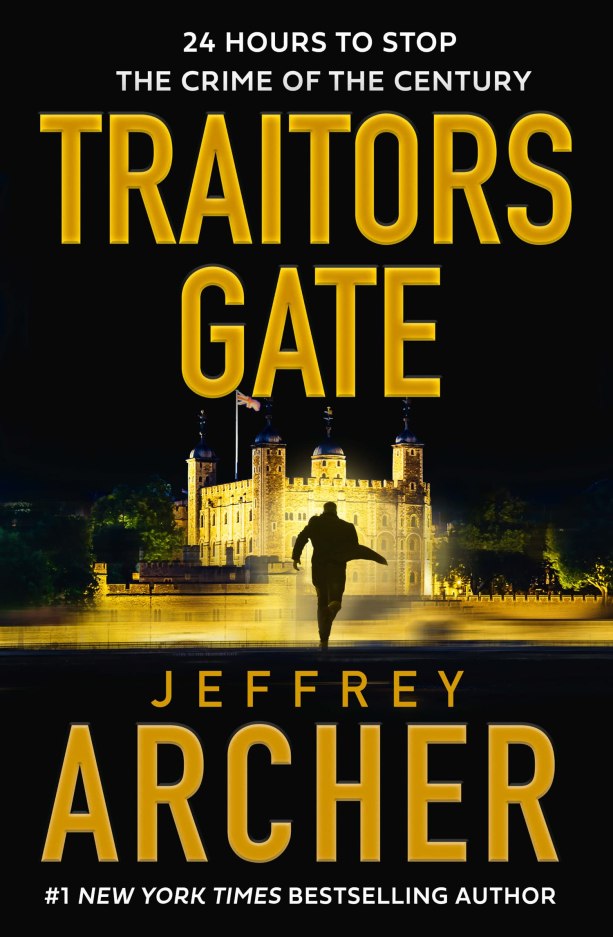
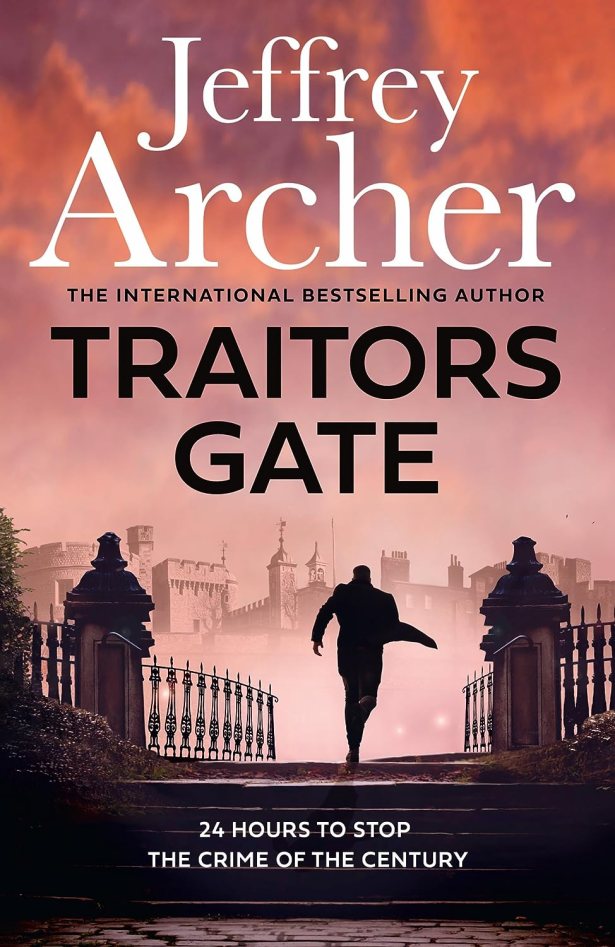
Traitors Gate by Jeffrey Archer

Traitors Gate Cover 2

Publisher: Harper Collins (ebook – 26 September 2023)

Series: William Warwick – Book Six

Length: 384 pages

My Rating: 4.5 out of 5 stars

Amazon

Bestselling author Jeffrey Archer returns with another exciting addition to his fun and compelling William Warwick series with Traitors Gate.

Jeffrey Archer is a well-known and interesting British figure: a former politician, a convicted criminal, a life peer and member of the House of Lords.  However, these days Archer is best known as a bestselling author, having written a large catalogue of novels that usually contain a historical or thriller element to them.  Some of his works include the Kane and Abel series, his well-known Clifton Chronicles and a range of standalone books like Heads You Win.  I particularly enjoy the William Warwick series, which is a fun and entertaining collection of historical thrillers.

The William Warwick novels, which originated within the fiction universe of the Clifton Chronicles series, follows the life and career of titular protagonist William Warrick, an idealistic London police officer who rises through the ranks while solving a series of dastardly crimes.  This series, which is defined by its character-driven plots, new criminal focuses for each novel, and the protagonist’s bitter rivalry with a notorious crook, are always very entertaining and feature some compelling stories.  I personally really enjoyed the first three books in the series, Nothing Ventured, Hidden in Plain Sight, and Turn a Blind Eye, although I unfortunately missed the next two books in the series.  Luckily, I was able to grab a copy of the upcoming sixth William Warwick book, Traitors Gate, which honestly might be one of the best entries in the series.

London, 1996.  There is nothing more sacred nor valuable in the entire realm than the crown Jewels of England.  Kept secure within the Tower of London, the jewels are only brought out once a year for the Queen to attend the State Opening of Parliament.  Providing security for the transfer between the Tower and the palace is one of the most important jobs done by the Metropolitan Police, and this vital duty is now overseen by Chief Superintendent William Warwick and his crack team.  Thanks to all the elaborate precautions around the transfer, the jewels are considered unstealable, but there is one audacious crook who is about to prove them wrong.

For years, William has sought to bring down notorious criminal mastermind Miles Faulkner, a gentleman thief and deadly rogue who has brought nothing but misery to William’s friends and family.  But despite the best effort of William and the men under his command, Faulkner has always managed to elude justice as he continues to hatch his despicable plots and thefts.

However, Faulkner also has a vengeful streak, and when William manages to finally get one over on his rival by recovering a stolen artwork, Faulkner decides it is time to get his final retribution against William and everyone close to him.  Pulling together a team of rogues and villains, Faulkner sets in place his boldest plan yet: steal the Crown Jewels and ruin the career of William and the other police involved in its protection.  Can William stop this plan before everything he loves is destroyed, or has Faulkner finally won their decades-long game of cat and mouse?

Archer continues to impress with his latest William Warwick book, which honestly had me hooked the entire way through.  An intriguing continuation of his fun ongoing series, Traitors Gate was a great character-driven thriller that was fun from start to finish.

Traitors Gate has a great story to it that expertly combines existing storylines from the series with an excellent and wildly entertaining new plot.  Once again focusing on protagonist William Warwick and fantastic antagonist Miles Faulkner, Archer sets up a great story that takes their rivalry to a new level.  The author does an outstanding job of setting this up, with the early parts of the novel recapping key events from the previous William Warwick novels whilst highlighting the protagonist’s current role in protecting the Crown Jewels.  The first half of Traitors Gate follows some intriguing story threads focused on several key existing characters that eventually lead to William getting one over on Faulkner in their long-running feud.  This first half of this book is very entertaining, especially as the rivalry between the protagonist and antagonist is so damn fun, and you really get drawn into the unique and continuing character stories.

The second half of the book really amps up a notch as Faulkner initiates a series of elaborate and daring revenge plots against those who wronged him, while also setting up his master heist.  These various storylines, which include a con job and a fantastically fun court sequence, work together well to tell an excellent overall story, and they play into the build-up for the big conclusion extremely well.  However, the crown jewel (pun intended) of the plot has to be the great heist scene, which was so damn tense and exciting.  Archer sets the entire thing up perfectly, and by constantly switching back and forth between various characters on both sides, you get quite the intense and captivating sequence.  This entire heist is a ton of fun from conception to implementation and leads to a compelling final part of the novel which sees the characters all desperately trying to come out on top.  The various elements of this, from the fun characters involved, the multiple elaborate steps the antagonists take, and the ticking clock the protagonists need to beat, are designed to keep the reader on their toes, and I had such a fun time seeing everything unfold.  The entire story honestly comes together extremely well, and frankly this was one of the more impressive and addictive stories that Archer has come up with yet.

Archer pulled this excellent story together in his typical style that focuses on the characters and makes great use of quick jumps between various perspectives.  I loved the multiple fantastic storylines that emerge as a result, and the author does a great job of balancing the various elements and character arcs.  Archer also proves very apt at building suspense and laying down the ground work for the key sequences for his story where the real magic happens.  Watching some of the more impressive scenes, such as the excellent entertaining court sequences (which are generally the highlight of all the William Warwick books) and the brilliant heist, are so much fun, and you really appreciate the planning and build-up he puts into it.  The author also makes excellent use of the 1990s London setting for the majority of the plot, and I have really enjoyed how the William Warwick books have moved from the 80s to the 90s, incorporating real-life events as they go.  The 1996 election plays a key role in the plot of Traitors Gate, and I loved the historical colour that Archer added to the plot, including a great in-story presentation about Colonel Blood and his own infamous Crown Jewel heist.  I also really need to highlight the way that Archer makes each of his novels inclusive and open so that new readers can easily dive into Traitors Gate.  Thanks to some quick and effective recaps and reintroductions, new readers can start the series at Traitors Gate without any issues, and indeed even after missing the last two books in the series, I was able to dive in without any pause at all.  This book comes together so well and I had a great time reading it.

I really need to highlight the fantastic and outrageous characters the plot of Traitors Gate follows.  Throughout the course of six William Warwick books, Archer has built up quite an intriguing cast of characters to follow, and he does an excellent job of breaking up the story between them.  There is a notable divide between the protagonists and the antagonists throughout the course of Traitors Gate, and watching the cast play off each other with their moves and countermoves is exceedingly fun.  Each of the protagonists, especially the police characters, are very righteous in their dealings (William goes by the nickname “Choir Boy”, for example), although they aren’t averse to breaking the rules if it gets them justice, which makes for some great scenes.  However, it’s the baddies are the ones who really make the book extremely entertaining.

Archer has done such a great job building up main antagonist Miles Faulkner throughout the course of the series, and the elaborate and spiteful rivalry he forms with William and his friends drives so much of the plot.  Faulkner honestly steals every scene he is in with his elaborate schemes, villainous persona, and sheer petty hate of the protagonists, and I have so much fun following throughout the book.  I also have a lot of fun with secondary antagonist Booth Watson QC, Faulkner’s lawyer, who seems to act for every criminal and villain in the William Warwick series.  A morally corrupt lawyer who specialises in every devious legal trick you can think of, Watson is nearly as bad as Faulkner, and he proves to be such a delightful thorn in the protagonist’s side.  Watching him legally manipulate and pontificate is so much fun, especially when he faces off against William’s straightlaced and proper father, Sir Julian Warwick, who he brings out the worst in.  These two characters are at their best when they face off against each other in the courtroom, and it so damn entertaining to see them get childish and outraged in the middle of a trail.  These characters, and more, add so much enjoyment to Traitors Gate and I look forward to seeing the epic rivalry between William and Faulkner continue in the future.

Jeffery Archer has produced a fantastic and awesome new addition to his always entertaining William Warwick series with Traitors Gate.  Featuring a fun and inventive narrative that makes great use of the bitter rivalries of Archer’s well-established cast, Traitors Gate is a highly addictive and exciting novel that has some outstanding moments to it.  Slick, hilarious and always compelling, Traitors Gate is an amazing novel that is well worth checking out.

Traitors Gate Cover

Amazon

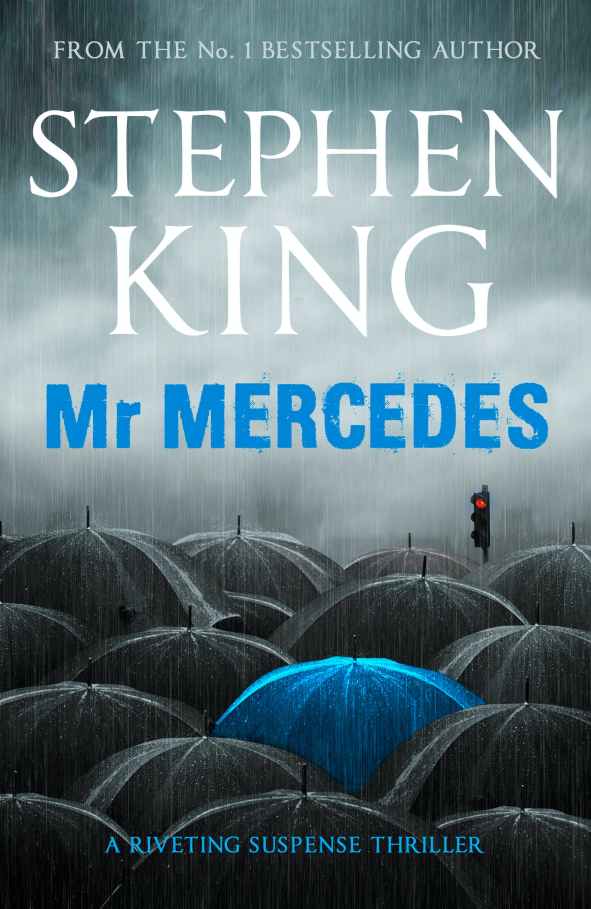
Throwback Thursday – Mr Mercedes by Stephen King

Mr Mercedes Cover 1

Publisher: Hodder & Stoughton (Paperback – 3 June 2014)

Series: Bill Hodges – Book One

Length: 407 pages

My Rating: 5 out of 5 stars

Amazon

Welcome back to my Throwback Thursday series, where I republish old reviews, review books I have read before or review older books I have only just had a chance to read. Is this week’s Throwback Thursday, I am going back to some of the older works of the legendary Stephen King lately, starting with his compelling and intense psychological thriller, Mr Mercedes, an excellent and captivating read that I had an outstanding time reading.

I have to admit that I don’t have a lot of experience with Stephen King’s books, having only read some of his more recent releases, such as Later, Billy Summers (one of my favourite novels of 2021), and Fairy Tale.  However, I have been keeping an eye out for King’s upcoming novels, including his next book, Holly, which is out very soon.  In preparation for Holly’s release, I decided to go back and read an earlier King novel, Mr Mercedes, especially as it serves as the introduction of the titular character from the upcoming book, and boy was I glad to try this fantastic novel out.

On a dark and cold morning in a depressed mid-western city, a desperate crowd gathers outside a jobs fair, hoping to turn their lives around.  However, many never got the chance, as a lone driver in a stolen Mercedes drives into the crowd, killing eight people and wounding more, before managing to escape.  This gruesome crime has haunted the community, and especially detective Bill Hodges, who was unable to catch the “Mercedes Killer” before he retired.

Years later, Hodges is living the solitary and depressed life of a former police officer who has seen too much.  Barely managing to get through each day, Hodges is suddenly revitalised when he receives a disturbing letter from someone claiming to be the Mercedes Killer.  Now more determined than ever to hunt down this killer and bring him to justice, Hodges jump-starts an unofficial investigation, hoping that his prey’s decision to contact him will be his biggest mistake.

Hodges’s new search leads him back to the owner of the Mercedes, who committed suicide from the guilt of her car being used in such a horrendous attack.  Teaming up with the dead woman’s sister and a band of unlikely helpers, Hodges begins to finally unravel the case.  However, the Mercedes Killer is a far more dangerous prey than Hodges ever realised.  Not only is he obsessed with killing Hodges, but he also has a nefarious plan that will rock the city to its core.  Can Hodges finally defeat his nemesis before it is too late, or will the Mercedes Killer once again get away with an outrageous act of violence?

This was a very impressive novel from King, who masterfully explores the psychological thriller genre the way only he can.  Featuring some powerful and complex characters, an elaborate cat-and-mouse plot, and King’s intense and addictive writing style, Mr Mercedes is a masterful novel that proves near impossible to put down.

I loved the powerful and captivating story that King pulled together for Mr Mercedes, as the author really dives into this dark story in a big way.  Starting with the gruesome and over-the-top Mercedes killing, which definitely sets the scene for much of the book, the main plot begins years later, with the retired Bill Hodges receiving a letter from the Mercedes Killer, who is attempting to persuade Hodges to kill himself.  However, Hodges instead enters into an off-the-books investigation, attempting to goad the Mercedes Killer into making a mistake while also connecting with the sister of the case’s key witness.  Half the book also focuses on the character of Brady Hartfield, the Mercedes Killer, who has become obsessed with ending Hodges, while also launching a new attack.  Disturbed, and determined to win, Brady’s perspective adds a great narrative edge to Mr Mercedes, and you are soon swept up in his complex emotional journey, especially once he realises that Hodges is on his tail.

The plot develops at a pretty fast and compelling pace, and you swiftly get drawn into each perspective character’s unique view on life and the grizzly events unfolding around them.  King really focuses on the dark and damaged minds of each of his characters, and the ongoing narrative is littered with compelling and fascinating dives into each of their pasts and the events that led them to where they are now.  The author also introduces several great supporting characters, each of whom adds their own unique elements to the book, whether it’s by helping Hodges with his investigation or by adding to the emotional fire that burns within both main characters.  Most of the story is devoted to the cat-and-mouse chase between Hodges and Brady, especially as they come closer and closer to confronting each other and digging at each other’s psyche.  King really moves the story along in the second half, thanks to a massive moment that really shatters the somewhat comfortable narrative that had been building at that point.  Everything leads up to the big and inevitable conclusion, as Brady attempts to unleash his master plan and Hodges and his allies close in on him.  This big confrontation is pretty damn interesting and intense, especially as a surprising third party takes the lead, but it leaves a fantastic and satisfying conclusion that readers will deeply appreciate and will leave you wanting more of the great characters and King’s unique style.

This awesome story was well backed up by King’s uncanny and wonderful writing style, and he really had me hooked the entire way through.  While early parts of the book where a tad slow in places, especially as King was building up the main two characters, once the full psychological dance between Hodges and the Mercedes Killer truly begins, you really cannot pull away from this great novel.  The mounting tension as these characters make their respective plays is so damn effective, and you get drawn into the dark mental battle between them.  King’s use of multiple perspectives really helps to enhance the brilliant story, and the captivating look into all the key characters’ minds is such an essential part of the book that it proves hard to turn away from these tragic and damaged figures.  I honestly could not put this book down in places, especially the last third, as the tension, emotional power and tragedy that King had built up by then was extremely palpable.  This was probably one of the better King novels I have read so far, especially as it had an excellent conclusion that fit the earlier themes of the book, and I deeply appreciated how well he explored the darker areas of the mind.

As I mentioned above, one of the main highlights of Mr Mercedes were the complex and highly damaged characters that were such a vital part of the plot.  King always excels at effectively utilising impressive and highly realistic character driven narratives in his books, and Mr Mercedes was no exception to this.  The major figures featured in this book were also highly unique and complex in their own way, often with some distinctive and understandable psychological damage that defines them and which they spend much of the book trying to overcome.  These highly personal and compelling character elements were really well woven into Mr Mercedes’ plot, and you really get drawn into each character’s own damaged journeys, as well as the intriguing relationships that they form.

The main character of Mr Mercedes is retired police detective Bill Hodges, who serves as a dogged and solid protagonist.  A rugged and tired figure who has seen too much, Hodges was an awesome retired cop character, and King did an outstanding job of capturing his loneliness and regret, especially in the early stages of the book.  However, this burns away when the killer contacts him, and he once again has a purpose.  I felt that this change in character focus was very well done and you easily understand why he dives back in the case, desperate to solve that one lingering case.  While initially driven by obsession, Hodges soon develops more reasons to live, as he connects with several of the other characters in the book and each connection makes him want to live that little bit more.  It was also interesting to see him revisit and reflect on his previous actions as a police officer, especially when he connects with the family of the witness he falsely accused of negligence, and the insights and empathy he develops now he is no longer a cop is quite touching.  You really grow to appreciate Hodges as a character as the book continues, especially as you see him once again enjoying life, and King’s portrayal of a man who suddenly rediscovers his purpose is very well done.  Of course, this opens him up to even greater tragedy, and watching him suffer cuts you to the core.  Thanks to the television adaptation of the book, I could only envision Hodges as Brendon Gleeson, which I think fit the depictions shown in the book, and I really enjoyed seeing this gruff, no-nonsense figure in action.

I also really need to highlight the excellent work that King puts into creating the antagonist of Mr Mercedes, Brady Hartfield, the titular Mercedes Killer.  I have read many good villains of the years, but frankly, the Mercedes Killer was one of the best, mainly because of how quickly and effectively King makes you despise him.  King does such a good job of introducing and utilising the character of Hartfield throughout Mr Mercedes, and his dual life and obsession with Hodges become a key part of his chapters.  The character’s sheer arrogance, distain and disregard for human life are so well written, and you understand just how deranged and damaged Hartfield is in just a few pages of his introduction.  King does take the time to build up Hartfield as a character, showcasing his traumatic past, formulative family events and unsettling relationship with his mother, all of which helps the reader understand how he become the monster he currently is and why he does the things he does.  However, even with that, it proves very hard to find any sympathy for the character, especially as every scene of his features an arrogant and hateful internal diatribe about the people he encounters and the world around him.  I deeply appreciated how King was able to capture Hartfield’s sociopathic superiority complex and inherent sense of greater intelligence with his writing, and it was such a key part of Hartfield’s character.  This ensures that when things do not go his way or when he is outsmarted by Hodges, a man he views as his inferior, he takes it badly, and watching Hodges manipulate Hartfield this way was a fantastic part of the book.  This is honestly one of the better King villains I have so far had the pleasure of reading and his obsession with Hodges and being the smartest man in the room, was so damn well written.

Aside from the main perspective characters of Hodges and Hartfield, King also features several other intriguing figures in Mr Mercedes who also add a great deal to the plot in a supporting role.  I personally really enjoyed the character of Janelle Patterson, who serves as Hodges’ main love interest.  Janelle was a feisty and highly likeable figure in the book, and I actually really enjoyed the heartfelt connection she formed with Hodges, especially as they filled an emotional hole in each other’s lives.  Janelle’s self-involved sister, Olivia Trelawney, also proves to be a great inclusion, despite being dead by the time the main plot starts.  King builds her into a complex and tragic figure, and it was intriguing to see her sense of reality combat with guilt and despair in several flashback scenes.  Jerome, the wisecracking teenager who serves as Hodges’s assistant and tech support added some great humour to the story, and his loyalty to Hodges ensured the reader grew quite attached to him, while also getting worried as Hartfield circled around.  However, probably the most unique supporting character was Holly Gibney, who, as I mentioned above, is getting her own spin-off story soon.  Initially shown as emotionally damaged and barely able to function, Holly doesn’t strike you as having protagonist potential.  However, thanks to her bond with Hodges and certain shocking events breaking her out of her trauma shell, Holly ends up becoming a key supporting figure, able to assist in the case due to her unique insights and life experiences.  Despite only being in the book for a relatively short amount of time, Holly really shines through as a complex and exciting figure who the reader quickly gravitates to.  As such, by the end of the book you very much understand why Holly goes on to become her own protagonist, and I look forward to seeing how much she further developed when I grab King’s next novel.

Overall, Mr Mercedes was just as good as I had been led to believe, if not better.  Stephen King did a masterful job with this powerful and captivating dark psychological thriller, and I got so wrapped up in the awesome battle of damaged minds that emerged.  Featuring an excellent story, some exceptionally complex protagonists, and King’s infallible character-focused writing style, Mr Mercedes was a joy to read from start to finish, and I have to give it a full five-star rating as a result.  I cannot wait to dive into King’s next book, Holly, when I get my hands on it in the next week, and I have no doubt that will also blow me away.

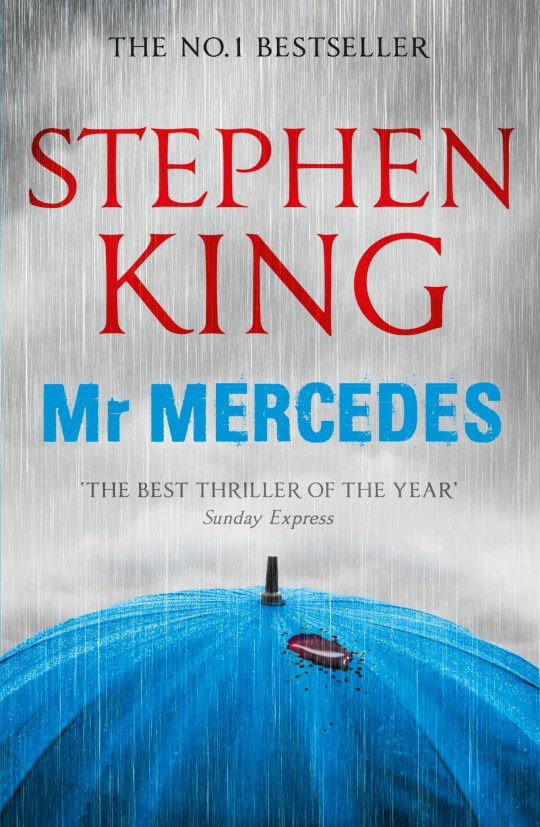
Mr Mercedes Book Two

Amazon

The Traitor by Anthony Ryan

The Traitor Cover

Publisher: Orbit (Audiobook – 11 July 2023)

Series: Covenant of Steel – Book Three

Length: 19 hours and 15 minutes

My Rating: 5 out of 5 stars

Amazon

Acclaimed fantasy author Anthony Ryan brings his epic and exceptional Covenant of Steel trilogy to an end in a massive way with the impressive third and final book, The Traitor.

Over the last three years I have had an outstanding time getting my first taste of the works of leading fantasy author Anthony Ryan.  A veteran author who has been enthralling fantasy audiences for over a decade, Ryan has several highly regarded series under his belt, including his Raven’s Shadow books, the Slab City Blues series, the Seven Swords series and The Draconis Memoria trilogy.  However, I have so far only had the opportunity to read his latest body of works, The Covenant of Steel trilogy, which has been more than enough to make me a major fan of this author.

The Covenant of Steel books are an outstanding series that follows an intriguing and well-developed protagonist, the notorious Alwyn Scribe.  Told in a chronicle format written by Alwyn, the Covenant of Steel books follow the protagonist as he embarks upon a powerful and exciting character journey that sees him overcome his bandit past to take on several new roles, including that of a scribe, soldier and knight, all while serving the mysterious religious figure, Lady Evadine Courlain.  I have had an epic time with this series over the last few years, and the first two books, The Pariah (one of my favourite books and audiobooks of 2021) and The Martyr (one of my favourite books and audiobooks of 2022) have been exceptional five-star reads that proved near impossible to put down.  Loaded with action, intrigue, a fantastic new world, and some complex characters, this series is so damn good, and I have been eagerly awaiting the third and final book for a while.  This third book, The Traitor, was one of my most anticipated reads for 2023, and I was so excited when I finally got the chance to listen to it.

Alwyn Scribe is a man in real trouble.  Now a renowned knight, general, spymaster, and trusted advisor, the former outlaw has relentlessly championed the cause of his lady, the Risen Martyr Evadine Courlain, and ensured she is now the most beloved and influential religious figure in all of Albermaine.  But what if he made a terrible mistake?

Cryptic visions from the past have warned Alwyn that, despite her claims to be a servant of the divine Seraphile, Evadine actually serves the Malecite, the source of all evil in the land, who will use her to bring about a cataclysmic future.  Blinded by love, Alwyn is convinced that these visions are false, and he is determined to keep Evadine alive and ensure that her vision of a united Albermaine are brought to life, even if that means starting another destructive war.

However, the closer Evadine gets to achieving her goal, the more Alwyn begins to realise that she is no longer the same woman that he swore his life to.  Her messages of peace and tolerance have been replaced by the fires of puritanical fury, and Evadine soon launches a brutal crusade to rid the country of her enemies and place herself on the throne as an Ascendant Queen.  But is she truly corrupted by the Malecite or is her brutal work a necessity to keep Albermaine safe from a greater evil?  As a devastating civil war is unleashed upon the kingdom, Alwyn will be forced to choose whose side he is truly on and what he is willing to sacrifice to keep the world from burning.

Well damn, Ryan really didn’t disappoint with this fantastic and powerful conclusion to the fantastic Covenant of Steel trilogy.  Weaving together all the elaborate elements from his first two books and then lighting everything you love on fire, The Traitor was a complex and deeply enjoyable read that I honestly couldn’t stop listening to.  Powerful, thrilling, and oh so beautifully dark, The Traitor was a perfect ending to the Covenant of Steel trilogy that got an easy five-star rating from me.

The Traitor has a heck of a powerful narrative to it that takes the protagonist and the reader to the emotional limit.  After an effective and entertaining recap of the previous two books, The Traitor starts in the immediate aftermath of the previous novel, The Martyr, with Alwyn leading Evadine’s army to war against the dangerous Ascendant Arnabus and his forces, resulting in a major, religious war.  This initial conflict is the focus for a good part of the early story, and it serves as a great warm-up for the rest of the plot, allowing for some much-needed character reintroductions and development, while also providing some intriguing new context for the main story.  This initial fight only serves as a taste for the wars to come, as Evadine seeks to overthrow the current order and rule herself.  This incoming conflict ensures that the first half of The Traitor has a range of great story elements to it, with a mixture of intrigue, political manoeuvrings, espionage, and battles, ensuring that every second of The Traitor at this point is highly entertaining.  This also serves as an excellent prelim for the anticipated change in the middle of the book, where the protagonist is finally forced to confront the fact that Evadine is no longer the woman he fell in love with.

Due to the reveal at the end of The Martyr, you had to know that Evadine was going to have some sort of fall from grace in this final novel, and when it comes, boy does it come hard.  The betrayals, shocks and losses at this point are exceedingly impactful, and you soon realise that Ryan intends to go full scorched earth with his storytelling, forcing the reader to deal with some major tragedies.  I liked the dark turns that occurred at this point in The Traitor, especially as Ryan had been hinting at them since book one, and it was awesome to get some payoff for the previous dark predictions.  This forces Alwyn to make some tough choices, and there is a major and compelling change in the protagonist’s objectives and loyalties for the second half of the book.  Thanks to the great setup at the start, as well as the major events in the middle, the reader will be very strongly caught in the narrative at this point, and even though the final half of The Traitor slows down in places, you really cannot put it down.  Ryan really dives into the lore of his land in this second half, which provides some very unique scenes and moments, even if some of these story elements got a little away from the author.  Still, this part of the book has some pretty impactful moments, and you will not be prepared for some of the key touching events.

Everything leads up to a final confrontation, which releases three books worth of pent-up emotion and revelations in some spectacular scenes.  While part of this confrontation is a bit more metaphysical than it needed to be, you honestly will be blown away with how it all comes to an end, especially as there is layer upon layer of tragedy involved, and I deeply enjoyed the compelling and satisfying resolutions that followed.  This entire story was a fantastic read from start to finish, and I really loved how Ryan wrapped up so many of his ongoing storylines and arcs here.  While most plot points are finalised here, a couple do remain unresolved, and it wouldn’t surprise me if we get a sequel series at some point.  I personally would be very keen for that, as I had such an exceptional time seeing this elaborate trilogy and ongoing narrative come together in some excellent ways.

I have always really enjoyed how Ryan set out the previous Covenant of Steel books, and he did a fantastic job of continuing his awesome writing style in this third and final book.  The author sets out The Traitor using a chronicle style told from the protagonist’s perspective, which is such an effective writing tool.  This deeply personal vision of events, combined with the author’s regretful insights of the future, really helps to drag the reader into the story, and Ryan really makes the most of this story format the entire way through.  Like with the rest of the trilogy, Ryan keeps up a pretty steady pace in The Traitor, and there aren’t a lot of quiet moments in the book.  The author really hit the right blend of powerful character focus, fantasy world building, and storytelling loaded with intrigue and action, and there is generally something for everyone here.

I loved the darker, more tragic feel that The Traitor had, especially compared to the earlier books, and it was easy to tell that this is the final book in the series.  While the detailed plot recap and cast list at the front of the book is very helpful at reminding readers of prior events, readers unfamiliar with The Pariah and The Martyr probably won’t be able to jump into this final novel too easily as there are so many details from the first two books that reader’s need to be aware of to fully appreciate the impacts of this story. As such, people new to the series should really head back to the start, and I guarantee you will have a great time doing so.  I really enjoyed how this awesome book came together, and Ryan’s ability to weave together an intense read with so many layers to it is very impressive.

One of the great highlights of the Covenant of Steel series has been the exceptional and detailed fantasy realm that the book has been set in, shown through the eyes of the narrator as he explores it.  The reader has been given a very detailed look at these settings throughout the last two novels, and it has served as a great background to the plot.  Primarily a medieval landscape dominated by a quasi-Christian religion, this background setting initially didn’t have a lot of fantasy elements to it except for a couple of wandering beings with strange powers.  But Ryan slowly built up the fantasy elements throughout the book, with cumulation of magic occurring about halfway through The Martyr, which I think was an excellent choice, as it allowed him to instead focus on character growth, other world building elements, and the general politics and wars of the realm, in excellent detail.  A lot of these political and religious elements are strongly explored throughout The Traitor, especially in the first half, and Ryan had a lot of fun showcasing the land’s dark turn towards religious conflict as his character’s embark on a bitter holy war.  The dark and destructive changes to this well utilised setting are very notable, disturbing and compelling, and it was fascinating to see how much everything changed throughout the course of the series.

The Traitor does get a lot more fantasy heavy in the second half of the book, as the protagonist returns to a hidden realm and fully experiences the mysterious magic and powers that reside there to counter the dark visions of Evadine.  I do think that there might have been a few too many magical inclusions here, as the plot did get a tad convoluted in places.  Still, Ryan definitely had some fantastic and unique ideas here, and many of these fantasy elements have been utilised in the past to great effect.  One particular ability that emerges actually brings part of the story around full circle, and it allowed for some very compelling interactions with characters from the past that I quite enjoyed.  The fantasy revelations that emerge during the big concluding confrontation are very over the top, which some readers might have issues with.  However, I quite enjoyed it, and it lead to a particularly dark final meeting between protagonist and antagonist that had me hooked the entire time.  This really was an awesome fantasy series, loaded with cool settings and unique features, and I hope that we might get to revisit them in the future, especially as the events of this book will leave Albermaine a much darker and traumatised setting.

Easily my favourite element of The Traitor, and indeed the entire Covenant of Steel trilogy, has been the complex, damaged and memorable characters that the story has focussed on.  Ryan has come up with an exceptional group of protagonists and villains over the course of the trilogy, and there are some deeply elaborate character arcs ongoing throughout the last two books.  Many of these continue and conclude here in The Traitor, and Ryan really went out of his way to finalise the development of his characters in some powerful ways that will really strike the reader in the feels.

The main character of The Traitor is once again Alwyn Scribe, who serves as the primary narrator of the trilogy as he recounts his historical adventures.  Alwyn has been a particularly compelling character throughout the series, mainly because you get to see him grow from a common outlaw to key advisor of the Risen Martyr as she begins her campaign across the country.  Ryan has done such a great job telling Alwyn’s unique tale in the previous books, and the reader should already be highly invested in his story before The Traitor even starts.  Of course, this ensures that the reader is hit even harder by some of the big moments of the book, as Alwyn goes through a lot here.  Not only is he still involved in a series of deadly wars and political battles, but now he finds himself being torn between love and his sense of right and wrong, as Evadine becomes more and more unstable.  Watching Alwyn continue to justify Evadine’s actions, even though deep down he knows she’s in the wrong, is both frustrating and understandable, as you realise just how much he is devoted to her.  This sense of frustration is only enhanced by the constant recriminations Alwyn throws towards his past self as he narrates his own story, and you can feel the regret pouring of the pages there.  While I won’t give too much away here, Alwyn ends up going through quite a lot in The Traitor, and the emotional toil that inflicts is pretty terrible, especially as he has to make some bitter and ruthless choices.  It was very touching and intense to see Alwyn’s story come full circle in some ways, especially as there are some intriguing callbacks to his past, and all the major impactful moments that affect Alwyn are expertly portrayed by the author.  Despite everything he goes through, Alwyn still maintains much of his humour, wit, ingenuity, and disrespectful attitude that were such a great part of the Covenant of Steel trilogy.  It was so much fun to once again get his unique take on events, and he ended up being a pretty perfect narrator for this fantastic series.

The other major character that I have to talk about is Evadine Courlain, the Risen Martyr and Alwyn’s love interest, who has been such a significant figure in the last two books.  A religious leader who inspired people with her visions, Evadine has always been a fascinating character, especially as you are never quite sure if she is actually divinely chosen, a delusional madwoman, or something even worse.  After the reveal at the end of The Martyr that Evadine might be an avatar of evil, you come into The Traitor naturally highly suspicious of her, and Ryan caters to these expectations by ensuring that she quickly starts to descend into further darkness.  Despite Alwyn’s continual attempts to restrain her, and justify her actions to the reader, Evadine becomes more of a darker figure as she pursues her various wars, although initially never going quite far enough to alienate her friends.  Of course, that changes about halfway through the book, and when she goes dark, she goes dark in a big way, turning into quite a fantastic and sinister antagonistic figure.  I really loved how Ryan turned Evadine here, and it is such an outstanding cumulation of so many key story arcs from the first two books.  Despite everything she does, there is still a powerful bond between Alwyn and Evadine that deeply impacts both of them, and it was fascinating to see these great characters walk the thin line between love and hate again and again.  The complex interactions between these two characters at various different points of The Traitor are beautifully written, and you have to appreciate just how damaged and dangerous their bond got at times.  Evadine honestly was the perfect counterpoint to Alwyn in The Traitor, and I cannot emphasise how impressive her entire story arc ended up being.

In addition to Alwyn and Evadine, Ryan has loaded The Traitor with an exceptional cast of supporting characters who add a great deal to the impact of the story.  This supporting cast is mostly made up of figures from the first two books, as Ryan brings back many of the old favourites and seeks to wrap up many of the intriguing storylines that have been such a fantastic part of the series.  Highlights include Alwyn’s returning comrades, such as the unstable but very likeable Ayin, disgraced knight Wilhum, former outlaw Tiler, outlaw queen turned legitimate Duchess Lorine, and Juhlina, also known as the Widow.  These characters, and more end up having some interesting roles throughout The Traitor, and it was fascinating to see the various sides that many of them chose, especially as the plot continued.  I liked some of the surprising directions Ryan took a few of these returning characters, and there are some interesting choices, romances and entertaining fates that were wonderful to see.  Ryan also features several great new characters who got a good introduction and utilisation in The Traitor, even if it was only for a single book.  Quite a few of these characters were cast in antagonistic roles, which I think worked really well, and it was amazing how quickly Ryan was able to turn some of these characters into quite hateable figures.

While I did really enjoy the return of so many great characters featured within The Traitor, readers should be warned that Ryan does go on a bit of a murder spree here.  While I won’t give too much away here, several great characters meet an untimely end in The Traitor, and this honestly gets pretty heartbreaking.  While I usually don’t love it when authors kill off most of their characters in a finale, I think it worked quite well in The Traitor, especially as each death served an important narrative purpose.  It also helped that for many of these characters, Ryan worked to resolve their storylines in advance, so readers got some closure with them, even as they were taken away.  As such, The Traitor turns into quite a bloody and impactful read at times, and you will not be prepared for just how grim and tragic it gets when it comes to your favourite Covenant of Steel characters.  I really cannot emphasise just how good Ryan’s character work is though, and I hope we see some of the surviving figures again in the future.

I ended up grabbing a copy of the audiobook version of The Traitor, mainly because it has been the format that I have enjoyed the rest of the Covenant of Steel books in.  Coming in at a bit over 19 hours, this is a decently long audiobook, but I absolutely flew through it once I got caught up in the exceptional story.  This format really lent itself to Ryan’s writing style and epic storytelling, and I deeply appreciated how listening to The Traitor allowed me to absorb all the key character moments, action and world building a lot better.  My enjoyment of this book was enhanced even further by the return of narrator Steven Brand, who has given his voice to most of Ryan’s audiobooks.  Brand is a very talented narrator with a great voice that fits this darker fantasy novel extremely well, especially as he perfectly encapsulates the protagonist, Alwyn Scribe.  Brand really brings Ryan’s chronicle style to life in Alwyn’s voice, and I really loved his take on the protagonist and all the other characters.  The sheer despair, weariness and self-loathing that Brand envisions in Alwyn’s voice at times is really moving, and I deeply appreciated how expertly he dove into the role of the main character.  The rest of characters in The Traitor also receive some great, fitting voices, and the entire cast really came to life, if but briefly.  I honestly had such a great time listening to The Traitor on audiobook and this is easily my preferred way to enjoy this fantastic book.  As such, this format comes highly recommended, and it will probably end up being one of my top audiobooks of 2023.

Honestly, after how much fun I had with the first two books in this series, as well as my lengthy write-up above, it should come as no surprise that I deeply enjoyed The Traitor.  Anthony Ryan brought his epic Covenant of Steel trilogy to a near perfect end, and I cannot emphasise enough how great and impactful this exceptional novel was.  Featuring some excellent dark moments, powerful character development, and an outstanding war-focused narrative, The Traitor delivered everything I wanted and more.  Easily one of the best fantasy books of 2023 so far, The Traitor was a joy to read from start to finish, and I am so glad I got the experience this awesome and amazing fantasy trilogy.

Amazon

The Book That Wouldn’t Burn by Mark Lawrence

The Book That Wouldn't Burn Cover

Publisher: Harper Voyager (Ebook – 1 May 2023)

Series: The Library trilogy – Book One

Length: 570 pages

My Rating: 5 out of 5 stars

Amazon

One of the world’s inventive and compelling fantasy authors returns with one of his best novels yet, the highly addictive and ambitious novel, The Book That Wouldn’t Burn, which sets off his new The Library trilogy.

Few authors have had the impact on the fantasy genre than Mark Lawrence has in the last few years, as the author has truly impressed readers throughout the world with his unique and captivating novels that routinely blend fantasy and science fiction elements.  His series include The Broken Empire trilogy, The Red Queen’s War series, and The Book of the Ancestor series.  I myself only started reading Lawrence’s work a couple of years ago with his compelling The Book of the Ice series, which followed several powered teens on a grim frozen planet.  I had an outstanding time with this series, which included The Girl and the Stars and The Girl and the Mountains.  While I still have to read the third book, The Girl and the Moon, I really enjoyed these books, and it was a pretty clever series.  As such, I was very keen to check out Lawrence’s new novel, The Book That Wouldn’t Burn, especially as it had a very intriguing plot synopsis behind it.

Throughout the world, there is nothing more important, more significant, nor more permanent than the library.  Built inside a mountain near the great city of Crath, the library contains an impossible number of books fitted within innumerable rooms that no one person can access.  The sheer amount of knowledge contained within the library represents the greatest power in the world, allowing its keepers and the King of Crath to wield great control in the world.  Into this vast and elaborate repository of knowledge and secrets, two young people are about to meet in unusual circumstances.

Livira is a young girl raised in the Dust, the desolate wasteland that surrounds Crath.  Plucky, curious, and incapable of giving up, Livira is a rarity among her people as she seeks to know more about the world outside her home.  But when the alien sabbers destroy her village and kill her people, Livira finds herself lost in the wilderness.  Rescued and brought to Crath, Livira soon becomes certain that her future lies in the library.  Overcoming prejudice and her own humble background, Livira learns to navigate the library and soon begins to find out some of its deeper secrets.  However, the most mysterious of these might be another strange inhabitant of the library, Evar.

Evar and his small family have known nothing but the library their entire lives.  Released after unknown eons frozen as children inside the library’s mysterious Mechanism, Evar and his siblings have grown up in a vast chamber of the library, learning from the books and becoming masters of specialised subjects.  However, Evar has always desired more and has long tried to find a way to leave their book filled prison.  His discovery of a portal within his home soon leads him to a place outside of time where he meets an exploring Livira.  Together, the two attempt to find the true history of the library and the threats it has withstood over the years.  But dark evils haunt the library, and soon the two explorers must find a way to uncover the truth behind the sabbers, their own history, and other deadly threats waiting for them in the future.  Can these two children of the library survive the revelations in front of them, or will the truth tear them apart in ways they can’t even understand?

Well damn, now this was a seriously impressive and epic book.  Lawrence has honestly outdone himself here with this incredible read, and this might be one of the best books he is ever written, which is saying something.  The Book That Wouldn’t Burn features one of the most elaborate settings and narratives you are likely to see in fantasy fiction, and this results in a powerful and moving read that will keep you guessing time and time again.  I had an exceptional time reading The Book That Wouldn’t Burn, and it would be impossible for me to give it anything less than a five-star rating.

The Book That Wouldn’t Burn is told from two separate perspectives, that of Livira and Evar, and covers their very different lives and experiences within the libraries.  These two character-driven storylines are initially kept separate from each other as Lawrence spends a good chunk of the book introducing the protagonists, setting up their unique stories, and bringing together the elaborate setting that the story is based around.  Both of these storylines are very interesting and fun off the bat, with Livira having her life torn apart, only to find purpose in the library, while Evar details his life lived purely within the library.  While both storylines are really good, I initially got drawn into Livira’s the most, especially as her outsider perspective of the library allows you to really appreciate how alien and strange the massive house of books is.  Livira’s storyline advances at an extended clip, covering years of her life as she learns, grows, and fully develops her adventurous personality as she seeks to fully understand the secrets of the library and everything within it.  Evar’s storyline on the other hand is a little more sedate in its pacing, as it is set only along the course of a few days as he tries to finally understand the structure that has kept him prisoner for so many years.

The first half of the book that showcases these two characters’ initial introduction and growth are pretty damn entertaining, and it does a wonderful job of setting the scene for Lawrence’s elaborate story and background location.  However, the story doesn’t find its true strength until the two protagonists meet and their storylines becomes a lot more intertwined.  Due to the impossible physics and requirements of the library, there is a compelling time element to the meetings between the characters, which Lawrence captures masterfully, and which really alters their perspectives of each other.  Once they are able to properly interact, the two characters grow close and spend an interesting chunk of the novel exploring their respective worlds, as well as the history of the library.  Lawrence really lays the world building on thick during these parts of the book, and it serves to bring the two protagonists together, which just ensures the last act of the book is as tragic, moving and devastating as possible.  The author drops some massive bombshell twists around two-thirds of the way through, which completely throws you and makes you rethink everything you have thought about the preceding narrative.  I honestly was pretty damn shocked at this epic and devastating revelation, and while I had already been pretty damn addicted to the story by this point, this was the moment I realised what a masterpiece The Book That Wouldn’t Burn truly was.

The final third of the novel gets even better as certain background elements of Livira’s storyline finally come to fruition and her entire life begins burning around her.  This causes her and many of the supporting characters from her part of the book to end up interacting with the characters from Evar’s storyline, which is a very interesting change of pace from the previous parts of the book.  There are also some frenetic conflicts and some very dark moments as everything you have previously known about the settings, the characters and the history of the library is thrown around in some excellent and compelling ways.  There are several great new twists in this final section of the book, and Lawrence gets very metaphysical with the reveals, relying on his setting’s unique temporal properties to mess with your mind and bring you surprise after surprise.  I really loved just how cool and complicated this novel got towards the end, and Lawrence leaves an awesome and open conclusion for you to enjoy while drawing you in towards the next book in the series.  I came away from this narrative desperately wanting more, especially after being blown away by all the twists within the book, and I cannot wait to see what happens next.

Those who are familiar with Lawrence will know that he is a very impressive and talented author, and I really liked how he developed his story and displayed all its outstanding elements to the reader.  The Book That Wouldn’t Burn is a particularly complex read, loaded with damaged characters, elaborate storylines and an inventive major setting.  Lawrence approaches his latest novel with his usual flair and imagination, expertly showcasing every clever detail of this world to the reader and keeping them enthralled the entire way through.  Due to the complexity of the story, you really need to dive into every single word that Lawrence writes, and it honestly took me a little longer to get through this lengthy novel than I expected, mainly because of how much focus I needed to fully appreciate everything.  That said, it has a very good pace to it and there is never really a dull moment as you are constantly drawn into what is happening or the elaborate depictions of the library.

I felt that the author’s use of two narrators was particularly effective, especially as they give very different views of what is happening around them and the setting they find themselves in.  The extra expansiveness of the separate narration really helps to expand the scale of the book, and it takes some major temporal shifts for the two protagonist’s storylines to align.  Once they do, the two separate character arcs intertwine extremely well, and I loved seeing their interactions through each other’s eyes, as well as the elaborate adventures they find themselves involved with.

Lawrence also was very skilled at setting up some of the book’s big twists, and while many of them surprised me when I read them, looking back you could see the subtle clues leading up to them, and you really appreciate just how clever the author was in the earlier stages of the book.  The initial big twist is probably the best, and you really have to love how careful Lawrence was with some of the dialogue and character descriptions to pull that off.  Some of the subsequent twists are a little less shocking, mainly because you are on guard at that point, but I did like how well some of the reveals based around the protagonist’s journey through time were utilised and hinted at in earlier scenes.  The fact that there are completely different faces to some of the major early figures of the book was very cool, and it was clear that the author had a very impressive plan while writing the early stages of the book.  These excellent writing elements, and more, served to enhance an already captivating story, and I cannot get past how well Lawrence set everything up.

There is no way I can move forward without talking about the elaborate library setting that was such an epic centrepiece of The Book That Wouldn’t Burn.  I love how the author’s ultimate major setting is a library, which is something that all readers can really appreciate.  While we can all imagine a pretty massive or full library, Lawrence amped that imagination up to an 11 in this book, describing a seemingly impossible structure, made up of innumerable rooms filled with massive climbable bookshelves and a seemingly infinite number of books and tomes.  The sheer scale of this setting when described by Lawrence boggles the mind to a degree, and it really is an outstanding setting for this story as it is the perfect place for exploration, adventure, and even habitation.  The library naturally features Lawrence’s trademark blend of fantasy and science fiction elements, and the structure has a transdimensional or alien feel to it, as the protagonists find different mechanisms within the structure, as well as strange and unique ways to travel through it.  This blend of fantasy and science fiction elements worked particularly well, especially as you get to experience an intriguing contrast between ancient advanced technology and endless shelves of paper books.

The more unique elements of the library, including the portals, the robotic guardians, the locked doors, and more, are worked into the plot extremely well, and it was fascinating to see how they impacted the story, especially while the characters attempted to find out their origins.  The time travel aspects of the library proved to be particularly awesome, and I loved how Lawrence used them, and other cool features, to twist the narrative in some powerful and unexpected directions, completely changing everything you thought you knew.  It was also really effective how Lawrence explored the library through two very different sets of eyes, as Livira and Evar see it in different ways based on their respective history and cultures.  These alternate views added even more depth to the epic setting, and you have to love the continued focus on exploration, especially when it resulted in some of the best scenes in the book.  Honestly, I could go on and on for pages about just how impressive this outstanding setting is, so let me just be blunt and say: read The Book That Wouldn’t Burn, as you really won’t be disappointed when it comes to this elaborate library setting and the dark world it inhabits.

The final thing that I really need to highlight are the great characters contained within The Book That Wouldn’t Burn, which Lawrence did an outstanding job pulling together.  There is a rich and compelling cast of characters featured within this novel, and their unique stories and experiences play a big role in how the story develops.  However, most of the character work is saved for the point of view protagonists, Livira and Evar.  Both characters have intriguing and tragic backgrounds brought about by encounters with sabbers, and they have found sanctuary within the library as a result.  However, this is where their storylines differ as Livira seeks out the treasures of the library and works to get deeper within, while Evar looks to escape and find a whole new world to explore. This leads to some very conflicted character moments, and it was fascinating to see how these characters’ intriguing histories influences their understanding of the world and what they want.  Both protagonists are well established and utilized by the author in The Book that Wouldn’t Burn, and their distinctive character arcs give the book a different flavour chapter to chapter as you explore both their lives.

I personally enjoyed Livira a little more as a protagonist, as her adventurous spirit, drive to be the best and sheer pluck were quite entertaining to see, especially as it allowed her to uncover so many cool secrets about the library.  However, you also have to appreciate the darker background and narrative around Evar, a man trapped all his life in the library, and who has known only limited contact and love in his life.  Evar’s entire life has been nothing but uncertainty, abandonment and a certain amount of inadequacy as he has only known a few other people, each of whom are the absolute experts in their fields.  These two protagonists, when they meet, prove to be a powerful and interesting combination, and Lawrence was quite masterful and subtle when it came to weaving their chapters together.  You really appreciate the pain, loss and sacrifices that both protagonists make throughout the book, and the bond they formed together, soon becomes such a key part of the story.  While they do experience some major, mind-blowing setbacks, you grow really attached to both of them, and seeing them continue and dive even deeper into the unknowable heart of the library, makes for powerful reading.

Aside from Livira and Evar, The Book That Wouldn’t Burn features an extensive and compelling cast of supporting characters, whose interaction with the protagonists adds some intriguing elements to the plot, especially as many of them are filled with some great surprises.  Both Livira and Evar’s storylines had some excellent supporting figures whose appearances are primarily limited to their respective narrator’s timeline.  My favourite supporting character in the Livira chapters had to be Malar, a rough and tough solider who becomes Livira’s protector mostly against his will.  His gruff attitude is a fun contrast to Livira’s bright and curious nature, and they have some entertaining scenes together, especially as he grows to care for her, and Lawrence works in some particularly compelling story elements around him in the later part of the book.

Evar’s chapters also feature a great range of supporting characters, and due to the more constricted nature of his story and setting, you get to know them a lot better than some of the cast associated with Livira.  These characters include Evar’s adopted siblings, Starval, Kerrol and Clovis, who were also trapped in the Mechanism as children and grew up with him in the library.  However, unlike Evar, who emerged relatively normal, each of Evar’s siblings were warped by the knowledge of the Mechanism and are now masters of a particular subject, including assassination and espionage, war and psychology.  Each of these siblings is now fairly damaged as a result of their complex upbringings and childhood traumas, and it was fascinating to see their unique mindsets, especially through the eyes of Evar, who holds a special place in each of their hearts.  These characters were all raised by the animatronic constructs, the Assistant and the Soldier, servants of the library who took charge of them, and I liked the fun interactions that resulted from them, especially once Lawrence worked his twisty magic on them.  All of these characters and more are pretty damn interesting, and I loved how complex and emotionally charged their interactions became.

Frankly I could go on and on about this book, but I still do not think I would really be able to fully encapsulate just how much I enjoyed The Book That Wouldn’t Burn.  This complex and clever fantasy novel is a true masterpiece from Mark Lawrence, who utilised all his impressive writing skills and imagination to create a unique and powerful read.  The Book That Wouldn’t Burn’s elaborate narrative and massive library setting really grabbed my attention and I had such an epic time getting through this outstanding novel.  Easily one of the best fantasy books of 2023, you need to check The Book That Wouldn’t Burn out, especially if you are already a fan of Mark Lawrence’s amazing works.

Amazon

Her Sweet Revenge by Sarah Bonner

Her Sweet Revenge Cover

Publisher: Hodder & Stoughton (Trade Paperback – 6 April 2023)

Series: Standalone

Length: 408 pages

My Rating: 4.75 out of 5 stars

Amazon

Last year I was lucky enough to receive a copy of the fun and twisty thriller novel, Her Perfect Twin by Sarah Bonner, an outstanding read that got a full five-star rating from me and which ended up being one my top debuts of 2022.  I have a lot of love for Her Perfect Twin thanks to its murderous plot and brilliant surprises, and I have been eager to see how Bonner was going to follow up her first book.  As such, I was pretty excited to see that she had a second cool thriller, Her Sweet Revenge, coming out this year, and I just finished it off.  Her Sweet Revenge was another outstanding read that blends complex characters with a fantastic and complex revenge plot to create an outstanding story.

Helena is a successful fashion blogger living in Exeter and married to a seemingly perfect man.  While her controlling in-laws seem to be her biggest problem, Helena is hiding a dark secret, one that could twist her entire life around and turn everyone against her.  When a series of notes begin to arrive, threatening to expose her, Helena desperately tries to keep her secrets hidden from her husband and evil mother-in-law.  But her attempts to stop the truth leaking out have lethal consequences.

Several years later, Thea is still mourning the loss of her best friend, Helena, and is convinced that her death was no accident.  Digging into the mysterious circumstances surrounding Helena’s demise, Thea is contacted by someone who claims to have known Helena and is also convinced that her death was deliberate.  Determined to get revenge for her friend’s murder, Thea dives even further down the rabbit hole and soon begins to create a lethal plot against those she thinks is responsible.  But not everything is as it seems, and the secrets surrounding Helena’s death are far more complex and dark than anyone realises.  As she gets closer to her target, Thea will need to determine just how far she is willing to go for revenge, and who truly deserves her wrath.

This was another exceptional novel from Bonner, who really looks set to make a name for herself in the thriller genre.  Her Sweet Revenge was another brilliant standalone novel which takes the reader on a wild and dark journey through death, bad relationships and revenge, and which proves near impossible to put down.

Bonner came up with quite the intricate and complex narrative for Her Sweet Revenge, and it really worked to tell a unique and powerful story.  Told in a similar style to her first book, Her Sweet Revenge is broken up into several parts and employs a series of time jumps and different character perspectives to tell a particularly intense story.  The first part of the book, which is one of the more substantial sections of Her Sweet Revenge, is told from the point of view of Helena in 2018 and Thea in 2022, with the story jumping between them chapter to chapter.  Both character-focused storylines set the scene extremely well, with the Helena chapters showing her turbulent life and the events that led up to her death, with the Thea chapters show the characters initial investigations into her friend’s death.

These two disparate timelines complement each other extremely well, and the reader is soon drawn into each character’s distinctive emotionally charged narratives.  Both storylines are pretty powerful in different ways, with Helena’s story focusing on her abuse by her in-laws and the trauma of being blackmailed for her secrets.  Watching Helena’s slow dive into instability is both shocking and moving, and you can’t help but feel for the injustices that the character is experiencing.  These feelings are further expanded on in the Thea chapters, as you feel the pain the character is experiencing at the loss of her friend, as well as the guilt that drives her to investigate Helena’s death and find the truth.  Bonner makes great use of this first part of the book to primarily set the scene for the rest of the plot, as well as introduce the key characters to the reader, and as such there are limited big reveals or twists at this point in the plot.  However, Bonner does do a good job of whetting the reader’s anticipation for what is to come by leaving several plot points unfinished and really showcasing just how bad all the people involved are.  The jump between 2018 and 2022 works really well, and it was interesting to see events from Helena’s chapters play into Thea’s storyline, especially when you know that there are still secrets being kept from both characters.

The second act of Her Sweet Revenge is where the plot really starts to fire up.  This section of the book is primarily focused on revenge, as Thea finds out some truths about Helena’s death and starts to plot about how to get her justice.  This section is solely shown from Thea’s perspective, and Bonner uses this to full effect to really dive down into the character and show how she got so vengeful and clever.  There are a lot of great moments here, especially when it comes to the plotting for revenge, and I loved the great character focuses that emerged.  There still aren’t a lot of twists at this part of the book, as Bonner is mostly building on what was revealed in the first half of the novel, but the author does do some good set-up here that works perfectly for the rest of the story.

The final third of the book is broken up into several separate parts, each of which is told from a different perspective character.  I won’t go into too much detail, but it works really well in the context of the story, and it is very interesting to see who gets focused on and why.  Bonner really starts to layer in her trademark twists and turns here, as everything you thought you knew about several characters turns out to be false, as motivations change, people are revealed to be something completely different, and the author includes some great dives into the past to show what really happened to Helena.  All the accompanying revelations have been masterfully set up in the earlier chapters, and I loved how the twists and turns seemed to build on top of one and other, with one betrayal or lie for a character followed by a bigger lie from another.  You honestly don’t know where the story is going at times, and I was extremely hooked for the last 150 pages as I waited to see who was going to come out on top and just who was getting revenge on whom.  While there are a lot of twists and reveals, Bonner keeps the story pretty tidy, and at no point did things get too convoluted or unbelievable.  I loved fully untangling the clever web that Bonner came up with, and the final result is pretty amazing and highly satisfying, especially as the very last reveals are some of the best, with everyone who should be punished getting what they deserve.  This was such a well-written and impressively crafted thriller narrative, and I guarantee that you won’t be able to stop yourself from reading more and more, just to see how everything ends.

In addition to the meticulously crafted narrative, I really need to highlight the outstanding characters featured throughout Her Sweet Revenge, each of whom is driven to edge in various different ways.  Bonner does an excellent job of introducing and building up several great characters throughout the course of her plot, and each of them was distinctive in their own way.  A good chunk of the plot’s focus is on the initial point-of-view characters, Helena and Thea, old friends who go through quite a lot during the novel.  Bonner introduces some excellent development to both in different ways, with Helena given a crash course in personal destruction, while Thea is slowly built up as a caring friend with a scary vengeful streak.  You get very invested in both of their respective storylines, one because of how sudden and emotionally crushing it is, and the other because of the reader’s natural sense of justice and loyalty, and I felt they were great focuses for so much of the book.  The rest of the cast is interesting and distinctive as well, mainly because so many of them are just naturally bad or dislikeable characters, with Helena’s mother-in-law, Geraldine, being an extremely good example.  Everything about Geraldine is designed to aggravate the reader and make them feel extreme sympathy for Helena, and Bonner made excellent use of her throughout the plot as a compelling side character.  These complex figures and more added a ton to the impact of the narrative, and I deeply appreciated Bonner’s ability to create intriguing characters with such fantastic nasty streaks behind.

Her Sweet Revenge was another outstanding thriller from Sarah Bonner, who produces a brilliant and captivating narrative, loaded with fantastic twists and surprising turns.  The revenge focused story is deeply addictive, and you find yourself quickly getting dragged into the intense and clever book.  I had a wonderful time reading Her Sweet Revenge, and it comes very highly recommended to anyone who wants a slick and memorable thriller read.

Amazon

Throwback Thursday – Justice League: The Flashpoint Paradox

The Flashpoint Paradox Poster

Studio: Warner Bros. Animation and DC Entertainment

Series: DC Universe Animated Original Movies – Film 18 / DC Animated Movie Universe – Film One

Director: Jay Oliva

Writer: Jim Krieg (Based on the comic by Geoff Johns and Andy Kubert)

Producer: James Tucker

Length: 81 minutes

My Rating: 5 out of 5 stars

Welcome back to my Throwback Thursday series, where I republish old reviews, review content I have enjoyed before or review older books I have only just had a chance to read.  For this week’s Throwback Thursday, I dive into a pretty damn awesome DC Comics animated film that is highly relevant at the moment with the awesome Justice League: The Flashpoint Paradox.

Like many comic book fans in the world, I went out last weekend for the epic new film offering, The Flash, which ended up being pretty damn good.  The film had a lot of great elements to it, including the return of Michael Keaton as Batman, the introduction of a great new Supergirl, and a fantastic examination of the Flash mythos.  I was also very happy to see a fresh new take on the iconic Flashpoint comic, and it will be interesting to see how that impacts any upcoming live action DC films.  While I liked what they did with the Flashpoint story, I don’t think that The Flash was the absolute best adaptation of the Flashpoint comic; instead that honour goes the focus of this article, the 2013 animated film, Justice League: The Flashpoint Paradox.

Before we talk about the film, I should give a little background about the Flashpoint comic.  Flashpoint was a major 2011 comic event, written by Geoff Johns, whose work I have deeply enjoyed in comics like Rogues’ Revenge and Teen Titans, and pencilled by Andy Kubert.  Flashpoint was a compelling alternate timeline story that ended up resetting the main DC Universe in a big way.  While I honestly have very little love for the resulting changes it caused (I will never forgive DC for The New 52), the Flashpoint comic itself is pretty good, featuring some unique and stunning ideas within it.

Flashpoint has been adapted a few times in recent years, including in several seasons of The Flash television series, and the current The Flash film takes a lot from it.  While these other adaptations are pretty good, I think that The Flashpoint Paradox did the most with it, mainly because it sticks a lot closer to the source material and provides a very gritty animated film with a brilliant cast behind it.  Directed by veteran animated film director Jay Oliva (who has directed several of my favourite animated comic book films) and written by Jim Krieg, The Flashpoint Paradox is pretty damn awesome film and it is one that I have rewatched multiple times over the years.

Barry Allen is the Flash, founding member of the Justice League, the fastest man alive and the greatest hero Central City has ever known.  However, despite all he has done and everyone he has saved, Barry still cannot shake the trauma of his mother’s murder, a tragedy that has haunted him since his childhood.  After defeating several of his greatest foes, including his archenemy, the Reverse-Flash Eobard Thawne, Barry awakens to find himself in a new world, one where his mother is still alive and the Flash never existed.  Despite the joy he feels about his mother, this new world is no paradise, instead it is on the brink of ruin.  The Atlanteans, under the command of Aquaman, and the Amazons, led by Wonder Woman, are at war, and their relentless battling and disdain for humanity, has seen the destruction of much of Europe and the death of hundreds of millions of people.

Determined to find out what is happening and to stop the war between the Atlanteans and the Amazons before it destroys the world, Barry seeks out the one man who he thinks can help him, Batman.  However, the Batman he encounters is far different from the one he knows and has very little desire to save the world.  Worse, it soon becomes apparent that the changes to the world have been caused by Thawne, whose obsession with destroying the Flash could lead to unbelievable destruction.  To save the day, Barry needs to find a way to regain his powers and unite the scattered heroes of this reality.  But with all-out war in front of him, and his own trauma catching up behind, can the Flash stop Thawne before it’s too late?  And even if he succeeds, is he truly ready for the revelations that await him?

The Flashpoint Paradox was a pretty epic film that I have a lot of love for, especially as it blends a compelling story with great aesthetics, slick animation and a brilliant cast to produce something pretty damn awesome and a lot of fun to check out.

The creative team behind The Flashpoint Paradox did an outstanding job bringing this film together and one of the main reasons it works is the fantastic and intense story behind it.  The film itself is an exceptional adaptation of the original Flashpoint comic and much of it is a close and deliberate match to the source material.  That being said, it’s not a straight adaption as they needed to make it more accessible and take the story out of the main comic universe.  The film starts off with an exceptional sequence where the Flash faces off against the Rogues and the Reverse-Flash, who ambush him at the Flash Museum.  This scene, which sees a series of bombs threaten Flash and Central City, manages to achieve a lot of essential story points, including introducing Flash, showcasing his bitter rivalry with the self-destructive Thawne, and presenting the established version of the various Justice League characters who will later appear in the alternate timeline.  It’s also a very entertaining scene in several great ways, not only because the banter between Flash and Thawne is pretty brutal, but because it shows each member of the Justice League in action as they disarm a bomb in their own unique way.  This great intro really sets up the rest of the film, especially thanks to the clever references to Barry’s mothers’ death, and while it does make it a little more obvious whose ultimately responsible for events, it was a pretty damn epic start.

The middle part of the film is where the meat of the story is developed, as Barry arrives in the alternate universe and attempts to find out what is going on.  This part of the film resembles the source material the closest as they are pretty much doing a straight adaptation of the Flashpoint comic at this point.  However, they manage to really show off the grim reality of this new timeline very effectively in a short amount of time, and you really get to appreciate just how murderous the Amazons and the Atlanteans are, as well as how dark a world without the Justice League can be.  The creative team tell a very impactful story in this part of the film, and you must love the powerful interactions between Barry and the new Batman, as well as the emotional impacts of Barry realising just how much his universe has changed.  Everything is well capped off by the infiltration into the lab holding Superman, which is honestly way darker than what they did in the recent Flash film, especially with the horrifying aesthetics around the captured Superman.  At the same time, the growing sense of doom in the world is intensifying as the two superhuman armies prepare for war in London, and the tension is well and truly ratcheted up before the final phase of the film.

Everything leads up perfectly to the final act of The Flashpoint Paradox, which frankly is the best and most impactful part of this entire exceptional film.  The final third of the film is essentially an all-out war sequence, as the various characters descend into a three-way battle in the ruins of London, with the Atlanteans, the Amazons, and the human resistance, which includes the protagonists, fighting to kill as many enemies as possible.  This sequence is dominated by several excessively brutal fights between the heroes, and so many characters end up dead in some pretty horrible ways.  Not only are these action scenes highly polished and exciting, but they are also emotionally powerful, as the various character arcs and elements come full circle.  The best scenes are probably shared between Barry and Thawne, as they fight through the battle, debating what has happened to the world.  There are some outstanding revelations here, especially if you aren’t familiar with the source material or the other Flashpoint adaptations, and the moment when Barry figures out what truly happened is just heartbreaking, especially with Thawne’s taunting.  There is so much dramatic tension floating around, especially as Barry witnesses the full onslaught of the battle in front of him, and everything tilts on the edge of destruction.  The final brutal moments of this fight are so damn epic, and it leads up to some painful farewells and some tough decisions from Barry that will shake him forever.  This built-up emotion remains to the very end of the movie, especially as Flash manages to get closure for himself and others, and I really appreciated just how well the film ended.

On top of the epic plot and amazing concluding third, I also need to really highlight the impressive animation, stylistic choices, and fantastic musical score that accompanied it.  The animation in particular is awesome, and I loved the brilliant and iconic character designs that it depicted, especially as there is a mixture of classic character depictions, and the alternate versions that appeared in the Flashpoint universe.  The grim nature of the Flashpoint timeline serves as a powerful backdrop to the plot of The Flashpoint Paradox, and it was fantastic to see the DC universe in an even darker and more desperate light.  The best animation is naturally saved for the multiple impressive fight sequences scattered throughout the film, especially in the big war sequence at the end, and the brutality and sheer ferocity of the fights and battles are quite distinctive.  The animators honestly show no hesitation in showing blood, gore, death and even brains throughout this film, and it is even more brutal than The Flash film or the original comics, as there is barely a second in the final war where someone isn’t dying in some dramatic fashion.  There is some outstanding attention to detail during these various battles, whether it be a brutal fight in the sky, an intense duel between Cyborg and Aquaman in the middle of a warzone, or a high-speed fight through the midst of over combatants, and these are expertly portrayed and guaranteed to keep your interest with its high concept impact.  The cool time travel sequences are also a great highlight, and the clever animation around them really dial up the intensity of the film, especially during certain seminal scenes.  I’m also a big fan of the way that the major characters are presented throughout this film, and I appreciated how their designs change at various points of the film depending on which timeline is being watched.  The alternate costumes or depictions are well contrasted by the classic costumes shown at the start of the film, and I also love the subsequent subtle changes that appear at the end of the film to represent the further changes that have been created.

I also must talk about the fantastic use of music throughout this film, which works perfectly in concert with the animated sequences.  There are some great orchestral scores and tunes that are featured throughout the film, often in the most impact scenes, and I really liked how well they were used to enhance emotion or drama in a very powerful way.  Some of the very best scenes, including several particularly tense or pivotal sequences at the end come across as so much better thanks to the music that was overscoring it, and this really drew me further into the plot.  Combined this great music with the excellent graphics and The Flashpoint Paradox turns out to be an exceptional watch that I cannot get away from.

While the adapted plot and amazing stylistic choices help to turn this film into something special, I cannot walk away from this review without talking about the incredible cast of actors who bring this elaborate story to life.  The Flashpoint Paradox features a pretty hefty and impressive group of voice actors who each dive into their respective characters and bring forth some of the more iconic figures from the DC universe, as well as their alternate versions, in some pretty epic ways.  There is a great combination of classic character depictions, as well as the more nuanced and, in many cases, evil versions from the alternate timeline, that are featured in The Flashpoint Paradox, and the creative team brilliantly balanced the two throughout the plot.

At the centre of The Flashpoint Paradox is the Barry Allen version of the Flash, who embarks upon one of the most important missions of his life.  Expertly voiced by Justin Chambers (of Grey’s Anatomy fame), this version of the Flash is much more closely related to the classic comic portrayals (rather than Ezra Miller’s quirky version) and is an experienced and competent crime fighter.  Despite being one of the more stable superheroes out there, Barry is still haunted by the murder of his mother and his failure to save her.  Chambers really dives into this role and perfectly voices the full emotional spectrum out of Barry, showing all the deep inner pain, as well as his inherent hope, all of which really comes out throughout the film.  There are so many powerful scenes featuring Barry in the film, from his initial confusion over the new timeline, the emotional meeting with his mother, the despair at how the world turned out, and his absolute shocked resignation at who is responsible.  I also felt that the writers did an outstanding job of capturing the entire personality, key history and mythos of the Flash within this film, and you really understand his decisions and how he interacts with the other heroes.  I particularly loved his shock and pain at seeing what his friends have become in this alternate timeline, and it is so damn compelling.  Honestly, there are so many powerful moments here and I have a whole new level of respect for Chambers thanks to this film as he honestly was just magical here.

On top of the Flash, I really need to highlight two figures from the new timeline who perfectly mesh with the main character and show off just how dark events are.  The most prominent of these is easily this universes Batman, who was voiced by another Grey’s Anatomy alumni, Kevin McKidd.  Rather than being an older version of Bruce Wayne, this version of Batman is his father Thomas Wayne, who took on the cowl after Bruce was killed in Crime Alley and Martha became this universe’s Joker.  McKidd goes full on growly here for Batman, and the result is a grizzled, violent, and very murderous Dark Knight who has given up on the world in many ways.  I loved this fantastic and clever take on Batman in The Flashpoint Paradox, and it is so damn epic to watch Barry attempt to work with this very different Batman.  The shared connection of knowing Bruce gives these characters a powerful emotional bond, and McKidd kills it in several emotionally charged scenes, showcasing this Batman’s hidden heart.

I also have a lot of love for the cool version of Cyborg that appears in The Flashpoint Paradox, and honestly this is probably the grimmest and most powerful portrayal you are likely to see.  Voiced by a young Michael B. Jordan, this Cyborg is the only real superhero left in America and has been modded out into a massive tank figure who runs national security.  Out of all the figures in the film, Cyborg has the most impressive change in characterisation between timelines, especially as he goes from teenage figure to actual adult, and this is one of the first animated films that really showed what he could offer the wider DC universe.  Jordan provides a pretty good and slightly robotic voice for Cyborg here, and I loved how he was portrayed as a level-headed peacemaker, trying to save the world.  While still a little naive and idealistic, he really lives up to all the hype surrounding him in his initial introductions, especially during the final bloody battle scenes.  He honestly goes full out in this war, and it was so damn cool to see just how dangerous he could be.

While the more heroic (or anti-heroic for Batman) characters above were great, this film would be nothing without its villains.  The most prominent of these is easily Flash’s archnemesis Eobard Thawne, better known as the Reverse Flash.  Voiced by the very talented C. Thomas Howell, Thawne is a brilliant and powerful figure in The Flashpoint Paradox, mainly because he has such a tangible hatred for Barry and his legacy.  While he is the main villain of the story, he only appears in a few short scenes, but Howell makes each and every one of them count.  The sheer contempt and bile that drips from every sentence is so important for the performance, and you quickly understand just how much he wants to destroy him, even if that means losing his own life.  Thawne’s best sequence occurs at the end of the film when he finally appears to mock Barry and reveal everything that has been done.  The joy, satisfaction and mocking appreciation for Barry is just perfect, and he has such a great villain monologue here.  Howell has one of the strongest performances in The Flashpoint Paradox and I deeply appreciated how he brought such a fun and compelling villain to life.

In addition to Thawne, The Flashpoint Paradox features two other outstanding and particularly unique antagonists in the form of militarised and anti-human versions of Aquaman and Wonder Woman.  Both characters have been twisted by a failed romance and the hatred that followed Wonder Woman’s slaying of Aquaman’s wife, and they are now brutally engaged in war to kill each other and the rest of the world.  I loved these darker and more murderous forms of these iconic characters, especially after they are shown in their more heroic guises at the start of the film, and their complex war is a destructive backdrop to the intense narrative.  Like Reverse-Flash, both are consumed by hatred, and they are willing to destroy the world rather than lose.  Despite that, there is still an obvious, if twisted, love between them, which makes their fight even more tragic.  I loved how both characters are portrayed, although I especially like how badass they make Aquaman here, especially as this was released in the pre-Jason Momoa days when Aquaman was still a bit of a joke.  Watching him destroy everyone in The Flashpoint Paradox really sets him up as a massive threat, and I deeply appreciated this fantastic change to the character.  I also loved the great casting behind these characters as well.  Aquaman is portrayed by legendary actor Cary Elwes, who honestly disappears into the role, providing a much more gruff and commanding voice than I have heard in his previous works.  The voice of Wonder Woman is provided by veteran voice actor Vanessa Marshall (Hera Syndulla from Star Wars Rebels), who is reprising the role she previously portrayed in Justice League: Crisis on Two Earths.  Both actors really get these iconic characters down perfectly, especially in their darker moments, and I loved how well they were utilised in the film, especially as they enhance the emotional power and looming threat of the narrative.

On top of the great performances above, I also must commend the use of several excellent supporting actors in smaller roles who did an outstanding job.  I as particularly happy that several actors who had previously voiced certain characters in other films and shows revisited their roles here, including some big names.  The most noticeable of these is the late great Kevin Conroy, who does an exceptional (as always) job of voicing the Bruce Wayne Batman at the beginning and end of the story.  Conway has several amazing scenes, including a particularly emotional sequence at the end that will have you in tears.  Other performers include Nathan Fillion providing a cocky voice to the Hal Jordan Green Lantern, Dana Delany once again voicing Lois Lane after voicing her the DC Animated Universe (Superman: The Animated Series, Justice League and Justice League Unlimited), and Ron Perlman revisiting his epic Teen Titans performance as Deathstroke for a short scene.  Other notable actors and characters include Danny Huston doing a quick dash as General Sam Lane and Dee Bradley Baker (the voice of all the clones in Star Wars animation, as well as several hundred other credits) doing a fantastic Etrigan the Demon.  However, my favourite of these side characters is Danny Jacobs’s portrayal of the Wildstorm Comics character Grifter.  Grifter is a brutally effective figure in the final third of the film, and he has some outstanding interactions with other characters like Batman.  This cast, and more, all add so much to the film with their brilliantly portrayed characters, and I am still blown away by the calibre of the cast that was brought together here.

I think it is pretty obvious from the lengthy rant above that I have a lot of love for Justice League: The Flashpoint Paradox, and it is one of those animated films that I have watched so many times.  Thanks to its amazing cast, fantastically adapted story, intense animation and general darker vibe, The Flashpoint Paradox is a pretty spectacular animated film, and I honestly think it has the best execution of the Flashpoint comic.  It also has an awesome legacy, especially as it sets up the DC Animated Movie Universe and has impacts that range all the way to the final film, Justice League Dark: Apokolips War.  As such, I really must give this film a full five-star rating and it is a must-watch for all comic fans, especially those who like their animation a little more adult and emotionally charged.

Throwback Thursday – Dead Beat by Jim Butcher

Dead Beat Cover

Publisher: Penguin Audio (Audiobook – 3 May 2005)

Series: Dresden Files – Book Seven

Length: 15 hours and 7 minutes

My Rating: 5 out of 5 stars

Amazon

Welcome back to my Throwback Thursday series, where I republish old reviews, review books I have read before or review older books I have only just had a chance to read.  For this latest review I dive back into the epic Dresden Files series by Jim Butcher with the seventh entry, Dead Beat.

Over the last couple of years, I’ve had a ton of fun finally getting into the iconic Dresden Files books by legendary author Jim Butcher.  Generally considered one of the very best urban fantasy series, the Dresden Files are a deeply captivating series that follows Chicago’s resident wizard, Harry Dresden, as he investigates a series of mystical cases throughout the city, often resulting in epic moments loaded with magic.  I started this series with the latest book, Battle Ground (one of my favourite books and audiobooks of 2020), and then went back to the start to experience the series from the beginning.  So far, I have managed to read Storm Front, Fool Moon, Grave Peril, Summer Knight, Death Masks and Blood Rites, as well as last year’s novella, The Law.  All these books have been extremely good in their own way, and I have loved the elaborate stories each of them contained.  As such, when I was in the mood for something I was guaranteed to love this week, listening to the next Dresden Files book on my to-read list was an easy choice for me, with the seventh book, Dead Beat.

Harry Dresden, private wizard detective and magical protector of Chicago is always willing to help a person in need no matter the cost.  But even he is unprepared for how far he’ll have to go when an old and merciless enemy imperils one of the people closest to him.  The ancient vampire Mavra has evidence that could destroy his best friend, Karrin Murphy, and threatens to unleash it unless Dresden recovers a powerful book of magic written by the legendary, long-dead necromancer Kemmler.

With no choice but to find the book, Dresden begins his search around Chicago, attempting to discover any trace of its location.  However, his search soon leads him into conflict with a new dark power arriving in the city.  Three of Kemmler’s students have their eyes on the book and the rituals it contains, and they are willing to destroy everyone and anyone to get it, including each other, especially when the prize at stake is godhood.

Caught between the three warring necromancers and their minions, Dresden needs to find the book first to stop their dark ultimate ritual before it can decimate Chicago.  However, each of Kemmler’s students far outclasses him in terms of magical ability and ruthlessness, and with only limited allies to call upon, it looks like even Dresden will have trouble saving the day again.  To survive, he might have to a make a dark deal with an even more malevolent evil, one that that has the potential to damn him forever.

I don’t know how he does it, but every single one of Jim Butcher’s novels that I read is so damn addictive and epic that I always struggle to put it down.  Dead Beat was another outstanding entry in the Dresden Files series, and honestly it might be one of the best I have read so far.  I absolutely powered through its clever and elaborate story as I tried to get to the end, and everything about it was highly enjoyable and fun.  Dead Beat gets another easy five-star rating and I have so much love for how amazing this seventh entry in the series turned out.

Dead Beat has an amazing story to it that effortlessly drew me in with the cool combination of magic, character moments and investigative angles.  Starting off quickly with Dresden drafted into the search for a powerful magic book, the protagonist begins his new investigation, only to discover the dangerous necromancers waiting for them.  Dresden soon has deadly encounters with all three necromancers in Chicago searching for the book, as well as their various minions and associates, which results in some brilliant scenes.  Dead Beat continues by setting Dresden and his allies on a dark course as they simultaneously attempt to find the book and the full extent of the warring necromancer’s plans, while also fending off their attacks.  Dresden keeps getting confronted again and again by his foes, barely escaping each time while also learning more about what is to come.  At the same time, he is forced to deal with certain personal issues, including trauma, complicated relationships, and a literal demon in his head, tempting him with power and knowledge.  There are some great twists, dark moments and emotionally powerful scenes set up around the middle of the novel, and I loved how well Butcher laid out the storylines and hinted at some big moments to come. Everything leads up to an epic concluding final third of the book as Dresden makes some hard decisions and compromises to save the day.  The final confrontation with the bad guys is pretty damn awesome, especially as the protagonist, utilising his usual restraint and good judgment, unleashes a very monstrous response to the antagonist’s minions.  This entire narrative was enthralling from start to finish, and I cannot emphasise just how addictive and entertaining the entire story was.

Dead Beat featured Butcher’s usual excellent writing style which once again lent itself extremely well to the elaborate narrative he came up with.  The pacing of this book was constantly fast and exciting, which guarantees that the reader is always paying attention, especially as every page has either action, some intriguing bit of lore or history, or some intense and compelling character development.  Butcher also ensures that this latest novel has the right blend of great story elements to it, and I deeply enjoyed how the fantasy and mystery elements are well featured as the protagonist is forced to do detective work to get the answers.  All this is overlayed by a great smattering of humour, mostly from the funny protagonist, who approaches the dark events and villains with his usual cockiness and disrespect.  The use of a first-person perspective from Dresden is also quite effective, and I loved seeing events through his eyes, as it allows readers to fully grasp the mystery, while also showcasing the great character developments.  While Dead Beat can be read as a standalone read, especially as Butcher is good at quickly recapping events, at this point in the series readers will benefit from going back and reading the earlier Dresden Files books first.  Dead Beat proves to be a key entry in the larger series, with multiple major events occurring here, and there are a ton of references to the preceding books, including the return of several fantastic characters.  I really got a lot more out of Dead Beat’s story for having read the previous novels, especially as you get to see how much Dresden has been through in the lead up to this book.  Overall, this was a very well-written and impressive novel, and Butcher really ensured that his cool story came through perfectly.

As with the rest of the Dresden Files books, I was really impressed with the blend of fantasy and urban fiction elements in Dead Beat, especially as Butcher has come up with such an elaborate world to set his stories in.  The author adds some cool new elements into his complex world throughout Dead Beat, as Dresden is forced to deal with a whole new branch of dark magic, necromancy.  Necromancy, or the control over the dead, is always a great villainous power in fantasy fiction, and Butcher makes excellent use of it in this book, with three rival necromancers vying for power.  Each uses a different form of necromantic magic in battle, and this results in some outstanding scenes where Dresden is forced to confront them.  The resulting magical mayhem is pretty epic, and Butcher’s unique depiction of zombies was both fun and a little scary.  This intriguing new form of magic ensured that Dead Beat really stood out, and I appreciated how Butcher turned it on its head towards the end when Dresden gets creative.  These excellent portrayals of magic fit within the fantastic setting of modern-day Chicago and it is always fun to see the elaborate balance of magical and mundane features that Butcher has set up within the city.  These great fantasy inclusions blend well with the character work and mystery elements of Dead Beat, and I look forward to seeing how Butcher further expands it in future books.

One thing that I felt Butcher did particularly well in Dead Beat was how he portrayed his brilliant cast of characters.  The Dresden Files always contain great protagonists and villains, but this novel had some of the best portrayals of them to date.  This is especially true for series protagonist and point-of-view character Harry Dresden, who had a great outing here.  Dresden has always been a damaged and conflicted figure in the series, but recent traumas are really weighing him down in Dead Beat as he struggles with a terrible hand injury, as well as the malign influence of the fallen angel bound to him, Lasciel.  The protagonist spends most of the book trying to deal with the influence of Lasciel who subtly manipulates him in many ways, tempting him with power or a solution to his many problems.  Each damaging and desperate encounter that Dresden survives in Dead Beat forces him to reconsider the wisdom of refusing her help, and the subsequent internal battles produce some of the most intense and compelling scenes in the novel.  This continued temptation and manipulation alters Dresden’s personality at times, and it was interesting to see how his allies and friends treat him, especially as Dresden begins to understand the different ways that members of the magical community view him.  Of course, Dresden hides most of his internal pain with his usual hilarious wit and humour, and his irreverent opinions, funny observations, and sheer ability to annoy anyone he encounters, results in most of the book’s humour and over-the-top moments.  Throw in other concerns, including complex relationships, unrequited love, and the character’s desire to prove himself and do the right thing, and this was some of the best character work that Butcher has ever done around his main protagonist.

On top of Dresden, Butcher also features a brilliant cast of support characters and villains that really help to enliven the book.  Dead Beat features a mixture of established supporting characters, as well as several great new ones, each of whom get some excellent moments to show off throughout the book.  I particularly enjoyed how well Butcher utilised the character of Waldo Butters in Dead Beat.  Butters, a kooky and big-hearted mortal medical examiner who had minor roles in a previous novel, is thrust into the limelight during this book, becoming a major ally to Dresden.  Butcher weaves some great storylines around him as he simultaneously finds his courage and begins to understand the magical world that keeps trying to kill him.  Butters proves to be a great supporting figure to Dresden in this book, and I loved their amusing team-up and developing friendship.  There is also a couple of great hints at some of the future storylines involving Butters, and I look forward to seeing more of him.

Aside from Butters, I also enjoyed the appearance of Dresden’s half-brother, the vampire Thomas Raith, who has been crashing at Dresden’s place.  Butcher paints a fun brotherly relationship between the two in this novel, which was quite entertaining at times.  However, the more humorous elements of their relationship are often overshadowed by the deep pain within Raith as he tries to overcome the emotional damage done to him in the previous novel.  I also loved learning more about Dresden’s skull spirit companion, Bob, in Dead Beat, and his dark history proves to be quite fascinating, especially as his former nature contrasts substantially with his usually entertaining persona.  The three necromantic villains, Grevane, the Corpsetaker and Cowl, each bring a certain level of sinisterness to the table, and they prove to be exceptional antagonists in their own way.  Finally, I must highlight the inclusion of Dresden’s new dog, Mouse, who has an awesome outing in Dead Beat.  A young and growing gentle giant, Mouse is a fun animal companion to Dresden and his allies, and I look forward to seeing more of his hijinks in the future.  Honestly, the entire cast of Dead Beat was pretty damn exceptional, and their powerful interactions and internal issues, added so much to the impact and power of this awesome novel.

As with all the Dresden Files novels, I chose to listen to Dead Beat on audiobook, which was an exceptional experience as the audio format helps to enhance the great characters and magical action.  Coming in at just over 15 hours, this is a substantial audiobook, however, I manage to knock it out in a few days, especially once I got caught up in fantastic story.  Naturally, the best thing about the Dead Beat audiobook is the return of actor James Marsters as the narrator.  Marsters, who is one of my favourite audiobook narrators thanks to his work on this series, did another brilliant job in Dead Beat and I have so much love for his outstanding performance.  After lending his voice to all the previous Dresden Files novels, Marsters has all the characters down, and each figure is given a fitting and powerful voice that carries through from book to book.  I particularly appreciated his portrayal of main character Harry Dresden, and Marsters perfectly captures the protagonist’s deep emotions and cocky demeaner, ensuring that you are both drawn to his pain and entertained by his antics.  In addition to the excellent voices, Marsters also has some noticeable and contagious enthusiasm in his narration, especially when it comes to the magical battles, and you can really feel his passion and excitement in parts of the story, especially when he loudly shouts out Dresden’s magical spells.  This narration from Marsters is so damn good, and it ensures that I had an exceptional time with Dead Beat’s audiobook, while is the absolute best way to enjoy a Dresden File novel.

In the seventh entry in his iconic Dresden Files series, Dead Beat, Jim Butcher has produced another exceptional read and one that I cannot recommended enough.  Featuring a particularly impressive and captivating narration, cool magical inclusions, and some of the best character work Butcher has ever done, Dead Beat is one the best Dresden Files novels I have read so far, and I loved everything about it.  This was such an amazing book, and I am very much intending to read several more entries in this outstanding series later this year.

Amazon

The Isles of the Gods by Amie Kaufman

The Isles of the Gods Cover

Publisher: Allen & Unwin (Trade Paperback – 2 May 2023)

Series: The Isles of the Gods – Book One

Length: 456 pages

My Rating: 4.5 out of 5 stars

Amazon

One of Australia’s best young adult fantasy authors, Amie Kaufman, returns with another impressive and captivating read that combines amazing fantasy elements with a great cast of teenage characters in The Isles of the Gods.

Amie Kaufman is an outstanding Australian author who has produced several amazing series over the years.  While she has written individual series, such as her Elementals trilogy, Kaufman’s career has been particularly defined by her collaborations with other impressive authors, including Meagan Spooner, with whom she cowrote the Starbound trilogy and Unearthed series, and Jay Kristoff, with whom she cowrote The Illuminae Files series.  I best know Kaufman from another series she wrote with Kristoff, the Aurora Cycle trilogy.  This outstanding trilogy, which featured the amazing books Aurora Rising, Aurora Burning and Aurora’s End, told a brilliant story about a squad of teenage space peacekeepers as they attempt to save the universe from all manner of dangerous threats.  I had a lot of fun with this series, and I have been meaning to read more from both Kaufman and Kristoff for a while.  As such, I was very excited when I received a copy of Kaufman’s new young adult fantasy, The Isles of the Gods, and I made sure to read it as soon as I could.

Following a devastating war between the gods that destroyed nations, peace has reigned in the world for five hundred and one years.  This peace was hard won, as the aggressive Macean, God of risks, was only brought to heel by the actions of the warrior God Barrica and her followers from the Kingdom of Alinor.  The sacrifice of Alinor’s king allowed Barrica to imprison her brother in a deep sleep, one that Macean has been unable to awaken from in half a millennium.  With the other gods stepping back from reality, only Macean and Barrica remain in the world, with Barrica serving as eternal sentinel over her brother’s sleep.  However, as tensions once again being to rise in the world and Barrica’s power seems to fade, the people of Mellacea, loyal followers of Macean, begin to plot war with Alinor and seek to bring back Macean once again.

Selly is a young and ambitious sailor whose many desires, be they the command of her own ship or of magic, seem always just out of her reach.  Trapped by circumstance in the Alinor capital of Kirkpool, Selly plots to sneak away from her controlling ship’s captain and try to reach her father.  However, her plans are ruined when she unexpectedly runs into the cocky and flamboyant Prince Leander of Alinor.  A powerful magician generally considered a fop by his people, Leander commandeers Selly and her ship for a secret mission to the legendary Isles of the Gods, where Leander needs to perform a ritual which could end the war before it even begins.

As the journey begins, Selly finds herself clashing with the prince, who she sees as spoiled and incapable of taking his responsibilities seriously.  But as they continue, they soon find themselves caught in the middle of a disaster.  Forces from Mellacea are plotting to start the war, and their first strike destroys the diversionary fleet Leander was supposed to be travelling on.  Fleeing from enemies on all fronts, Selly and Leander will need to work with a young scholar to survive and try to achieve their goal.  But to win, they’ll need to defeat a dangerous group of killers which includes an ambitious criminal desperate to prove herself to her sister and her god, and one of Leander’s former best friends, who is determined to get revenge.  Can Selly and Leander succeed and stop the war, or will the gods once again rise to devastate the world?

Kaufman produces another elaborate and captivating read with The Isles of the Gods, which I had an outstanding time reading.  Featuring an excellent new fantasy setting, a powerful young adult narrative, and some absolutely amazing characters, The Isles of the Gods is an epic read that I managed to power through in a few fantastic days.

The Isles of the Gods has an excellent and fast-paced young adult fantasy narrative that is guaranteed to drag you in and keep you hooked the entire way through.  Starting off with a bit of useful exposition, especially in a compelling prelude, the main narrative quickly introduces the reader to the five main characters of the story through their specific perspective chapters.  While each character has their own specific story, the main plot is practically split into two as three of the characters, Selly, Leander and Keegan, attempt to head to The Isles of the Gods, while the other two characters, Jude and Laskia, are involved in the plot to kill Leander.  Kaufman builds up an intriguing and powerful story around these alternate narratives, and the reader is soon caught in the captivating journey across the sea that each of them undertakes.  Split into four parts, the story has a good flow to it as all the characters find obstacles to overcome.  This includes a nautically focused first part, an intense second part with the protagonists trapped in enemy territory, a short third part which again is strongly nautically based, while the climatic fourth part brings everything together as the reader is engulfed in tragedy and the intriguing conclusion to several character arcs and storylines.  Each part of the story is pretty exciting and emotionally powerful the entire way through as the characters engage in their respective quests while trying to deal with their many personal dramas and relationships.  There are some very dark moments loaded into the narrative and I deeply appreciated the way that Kaufman slowly teased out revelations about each character ensuring that there was always more for the reader to learn.  The Isles of the Gods ends on a very interesting note as every character completes their respective arcs and a new potential chapter of their life is revealed.  It is very clear that there is a lot more of this story to go and it will be quite intriguing to see what happens in the author’s next novel.

Kaufman utilised an excellent and easy to enjoy writing style in The Isles of the Gods that complimented the complex narrative and ensured that the reader would get really caught up in all the relevant events.  The split of the story around five separate point-of-view characters worked exceedingly well, and I really appreciated seeing multiple sides to the same events, especially as you get the perspective of protagonists, antagonists, and reluctant followers, each of which brings something very different to the story.  The short, sharp chapters from multiple perspectives really moves the story along at great pace while also leaving plenty of room to develop the characters and dive into the compelling relationships and issues between each of the protagonists.  Kaufman hits a fantastic balance between action, intrigue, humour, world building, romance and character growth throughout The Isles of the Gods, and there was barely a second that wasn’t compelling in its own way.  I particularly enjoyed the many scenes set on the water as Kaufman had a lot of fun in a primarily nautical novel.  Nautically themed fantasy books aren’t always the easiest of things for an author to pull off, but I felt Kaufman did an outstanding job with it as she crafts multiple outstanding sequences out on the waves which is often enhanced by the character’s use of magic.

As I mentioned above, The Isles of the Gods is a young adult novel, which, thanks to its excellent teenage cast, is focused towards a younger audience.  This is one of those young adult novels that will appeal to quite a large audience of readers, especially as Kaufman has featured a lot of mature themes throughout the book, including war, death, sacrifice and finding oneself.  Teenage readers will really appreciate the way that Kaufman doesn’t pull any punches with her story and leaves a lot of complex elements for them to get to grips with.  At the same time, this more mature content, intriguing new fantasy setting, and complicated characters will ensure that older readers can still have a lot of fun with this novel, and any major fantasy fan will deeply enjoy and appreciate the fantastic story that Kaufman pulled together.  As such, I would strongly recommend The Isles of the Gods to a huge range of different readers, and there is really something for everybody here.

Something that always impresses me about Amie Kaufman as an author is the way that she can create new and sophisticated new fantasy realms for each of her excellent series.  The Isles of the Gods is a particularly good example of this as Kaufman sets her narrative around a great new fantasy realm with some intriguing backstory and elements to it.  I loved the cool history, which involves fallen gods and warring nations, that the author works into the overarching plot perfectly, ensuring that all these intriguing details become quite essential to the main story.  The resulting world gets some gets some substantial exploration throughout The Isles of the Gods, and Kaufman takes the time to visit some of the more fascinating and distinctive locales in this world, while leaving the door open for more to be explored in the future.  The world itself has a good mixture of steampunk technology and magic to it, and I liked how the authors dives into the mechanics behind both religion and the spirt based elemental magic that was so key to the plot.  The recurring focus on sacrifice, which proves to be essential for both magic and the gods, was particularly noteworthy, especially as it results in some powerful moments, and it really made these fantasy elements pop.  All this creativity from Kaufman helped to turn The Isles of the Gods into an outstanding read, and I look forward to exploring more of this realm in the future.

One of the big highlights of The Isles of the Gods for me was the exceptional collection of focal characters.  The plot of this impressive fantasy novel focuses around five teenagers, each of whom have multiple chapters shown from their perspective.  Kaufman develops some amazing and moving character arcs across the book and you really get drawn into the personal stories and the intriguing relationships that form between them.

A large amount of the plot revolves around the characters of Selly and Leander, who form the emotional heart of the book.  Selly is a sailor and failed magician who is desperate to escape her current life and finally become the captain she things she deserves.  She runs straight into the beacon of overconfidence and charisma that is Leander at the start of the book and their storylines end up intertwined the entire way through.  Leander is easily the most entertaining character in the entire book and his fun manner, exceptional magical abilities and ability to charm most people will swiftly have you falling in love with him.  This works in great contrast to Selly, who is one of the few people unimpressed with Leander, and the two enter a somewhat antagonistic relationship as they clash on everything.  Of course, this eventually leads to a romance (this is young adult fiction after all), but the build up to it works really well.  The two characters play off each other perfectly, especially as they call out each other’s flaws and mistakes, and you really grow to enjoy the banter between them.  Along the way, the characters both address some of their deeper issues, such as Selly’s failure when it comes to contacting spirits and Leander’s inner fears and guilt which drives him to act so over-the-top.  Kaufman works these compelling character issues into the narrative extremely well and it helps the reader to build a stronger attachment to Leander and Selly throughout.  Their joint arc ends up being a major highlight of The Isles of the Gods, and it will be interesting to see how Kaufman continues it in the future.

The Isles of the Gods features three other point-of-view characters, each of whom has their own distinctive and compelling story arc.  The first of these is Keegan, an Alinorish noble who has run away from his family and responsibilities to try and become a scholar.  A former classmate of Leander’s, Keegan is dragged into the adventure inadvertently when Leander charters Selly’s ship on which he is a passenger.  Portrayed as asexual and a little antisocial, Keegan is a solid member of the cast who is initially reluctant to help but eventually becomes a firm companion to Selly and Leander.  His scholarly knowhow and history with Leander lead to some big moments in the novel, and he is partially responsible for Leander’s growth within the book.  Another character with a complex history with Leander is Jude, a noble bastard from Alinor who was also at school with Leander and Keegan.  However, he has since moved to Mellacea after an apparent betrayal by Leander and now works for a crime lord.  Forced into the plot to kill his former friend, Jude goes through quite a lot of conflict throughout the novel as he finds himself getting dragged deeper and deeper into the chaos against his will while also trying to understand his complex past with Leander.  Jude serves as a quite a good alternate perspective within the antagonists’ ranks, showcasing a more conflicted and human view of their actions, and his story added a lot to the plot.  The final character is Laskia, who serves as the main antagonist of the story.  The younger sister of a notorious Mellacean crime lord, Laskia is an ambitious religious fanatic, desperate to prove herself to her sister and to her god Macean.  She leads the conspiracy to kill Leander, and despite her ruthless actions is shown to be troubled and unsure of herself.  However, her ambitious and righteous fury continue to drive her on, and she has a powerful and dark arc throughout the novel that really drew me in.  Honestly, all five point-of-view characters were pretty exceptional, and it will be very interesting to see how Kaufman continues their storylines in the future.

Amie Kaufman continues to dominate the young adult fantasy scene in a big way with her latest epic book, The Isles of the Gods.  This very talented Australian author has produced another amazing and awesome read that blends complex characters, a cool new setting, and an addictive and impressive young adult fantasy narrative, that had me hooked the entire way through.  I had such a brilliant time reading The Isles of the Gods and I’m extremely keen to see how Kaufman will continue it in the future.  This is an exceptional young adult fantasy novel that you need to check out!

Amazon

Throwback Thursday – Warhammer 40,000: Honour Guard by Dan Abnett

Warhammer 40,000 - Honour Guard Cover

Publisher: Black Library (Audiobook – July 2001)

Series: Gaunt’s Ghosts – Book Four

Length: 10 hours and 12 minutes

My Rating: 4.5 out of 5 stars

Amazon

Welcome back to my Throwback Thursday series, where I republish old reviews, review books I have read before or review older books I have only just had a chance to read.  For this week’s Throwback Thursday I’m still in a Warhammer 40,000 mood, so I decided to dive even further into Dan Abnett’s classic Gaunt’s Ghosts series with the fourth book, Honour Guard.

Readers of this blog will no doubt have noticed a fair increase in the number of Warhammer 40,000 novels I’ve highlighted this year, as this entire grim expanded universe has quite an addictive quality to it.  Foremost amongst these books have been the compelling works of veteran author Dan Abnett, who has written so many impressive and key parts of the Warhammer canon over the years.  I deeply enjoyed his Eisenhorn trilogy (Xenos, Malleus and Hereticus), all three of which were given pride of place in my recent post listing my favourite Warhammer 40,000 novels.  However, his best-known works are his Gaunt’s Ghosts series of books, which catalogue the adventures of the Tanith First and Only regiment of Imperial Guard, better known as Gaunt’s Ghosts.  I have had a wonderful time with the first three novels, First and Only, Ghostmaker and Necropolis, as well as the prequel novel The Vincula Insurgency, which showcased the bloody lives of the common soldier in this war-torn universe.  I have really gotten attached to this series and when I wanted a quick read, there was nothing I would rather turn to then the next Gaunt’s Ghosts book, Honour Guard.

Throughout the extended, system-spanning Sabbat World crusades, the men of the Tanith First and Only have fought against the dark forces of Chaos in every way imaginable.  Led by their heroic commander, Colonel-Commissar Ibram Gaunt, the Tanith soldiers, known colloquially as Gaunt’s Ghosts, have had many victories, but few failures.  So, when fighting on the holy Shrine World of Hagia, the Ghosts are devastated when they trigger a disastrous enemy trap that destroys a holy city and creates a psyker beacon that will draw a massive Chaos fleet down on their position.

Troubled by his failures to protect one of the most important planets in the Sabbat Worlds and made a scapegoat by his commander, Gaunt is left a broken man.  His one chance to save his career and his regiment is to lead the Tanith and an armoured company as an honour guard to a sacred shrine to recover the holy relics of Saint Sabbat.  If he can recover the relics and evacuate them from the planet before the Chaos fleet arrives, he may be able to keep the Ghosts under his command.

Beginning the arduous pilgrimage, Gaunt and his men soon discover that the road to the shrine isn’t as clear as their intelligence indicated.  A vast enemy army lies in wait for them, and the Ghosts will have to fight every step of the way to secure their objective and make their escape.  However, there are far more mysterious forces at work behind the scenes as Gaunt and some of his men soon find themselves being driven on by religious visions of Saint Sabbat herself.  Is the holy saint talking to them, or is something more sinister manipulating them?

Honour Guard was another epic science fiction military adventure that I powered through in no time at all.  Skilfully continuing the intriguing Gaunt’s Ghost story, Abnett has produced a thoughtful and intense read that throws the protagonists into a captivating action-packed scenario that really showcases the gritty nature of the Warhammer 40,000 universe.

Honour Guard has a somewhat typical Gaunt’s Ghosts story to it, and if you’ve read the series before then you know that means great characters, intense fights with big set-piece battles, and a compelling look at the common soldier in the Warhammer 40,000 universe.  This fourth book follows on from the events of Necropolis, and Abnett quickly and ably shows the changes to the regiment that the previous adventures have wrought, especially with all the new Verghastite recruits.  Abnett starts things off with an epic series of battles as the Ghosts attempt to take a Chaos controlled city.  This opening sprawl of fights is not only intense but it expertly introduces the new setting, sets up several key story points, and lets the reader know who the main characters of Honour Guard are going to be.  From there, the characters, especially the main protagonist, Gaunt, face a major setback as the city is destroyed, their allies are killed, and a massive Chaos fleet has been summoned to destroy the holy planet they are on.  There are some great moments in this early bit of the book, especially as Abnett really dives into the impacts of the failure on Gaunt.  It also sets up the intriguing story element that Gaunt is likely to lose his command and the Ghosts will be broken up as a result.

With that set up, Abnett then drives into the meat of the story, with Gaunt leading the Ghosts and an armoured regiment as an honour guard to retrieve the sacred relics of one of the Imperium’s most important saints before the enemy fleet arrives.  Framed as an easy mission to give Gaunt an honourable send off, the mission naturally goes to hell when the Ghosts discover a vast enemy army between them and their goal.  This results in several major battles on the road, and Abnett has a lot of fun combining infantry fighting with tank warfare to make the conflicts even more impressive.  Each battle is extremely fun in its own regard, and fans of action and military combat really won’t be disappointed by Honour Guard as a result.  At the same time, there is a real focus on the characters, as several of the protagonists are going through different personal struggles, especially Gaunt.  Abnett also introduces an intriguing and moving side storyline that sees several long-running Gaunt’s Ghosts characters, who were wounded and left behind, attempt to make their own way to the conflict, guided by religious visions.  Everything leads up to a final battle sequence at the objective as the honour guard are trapped with a massive enemy force coming towards them.  Abnett naturally spends pages detailing all the bloody fighting, which serves as a great backdrop to the main story elements.  While I did think that the big finale of the book was too sudden and coincidental, it did fit into the general theme of faith and miracles that were covered in a lot of the plot.  Overall, this was another great, action-heavy narrative that I was able to sit back and enjoy.

As with all Abnett’s work, Honour Guard is extremely well written, and readers who have enjoyed any of the author’s previous books will be aware of what they are in for with this fantastic novel.  The author features a great blend of action, universe building and character development throughout his novel, and readers are ensured of constant excitement or intense, character-driven moments.  The entire story is told from multiple character perspectives, as the entire cast is well represented.  Not only does this allow the reader to get interesting updates from all the intriguing characters, many of whom have been built up in previous books, but it also ensures that you get a wide view of events featured throughout the novel, including several different perspectives of each battle.  I do think that the book was lacking a good antagonist perspective (or honestly a real antagonist character), and if Abnett would have included that, the entire story would have felt a bit more complete.  Still, the sheer number of perspectives and supporting characters ensures that the reader sees every angle of the action.  That is really great, as the battle scenes are some of the best parts of the book.  Abnett never holds back when it comes to the carnage, and every massive fight, armoured vehicle engagement and or infantry push is covered in high detail.  The author really tries to highlight the brutality and trauma of war, as well as the hell each of the soldier characters goes through, and you ended up riveted to the plot as a result, especially as no side character is safe.  I am glad that Abnett keeps up his outstanding writing throughout the Gaunt’s Ghosts series and I ended up getting really caught up in Honour Guard as a result.

This proved to be another interesting addition to both the Gaunt’s Ghosts series and the wider Warhammer 40,000 universe, and fans of both are going to have a pretty great time with this new novel.  As with most of the books in the series, Honour Guard can be read as a standalone novel, although starting with the earlier books does give the reader more insight into the characters.  Abnett really tries to make each of his novels as accessible as possible, and readers new to the series or Warhammer fiction in general can easily dive in here and have a fun time with all the military action.  However, Abnett also has a lot of fun expanding out the canon in Honour Guard, especially as you get to see more regiments of the Imperial Guard in action against the forces of Chaos.  One of the most intriguing lore aspects of Honour Guard is the examination of key elements of the Sabbat Worlds, which have been the overarching focus of this series.  In particular, there is a focus on the legendary figure of Saint Sabbat, who is a personal hero of many of the characters.  This sends the story down an interesting spiral of faith and devotion in the Imperial Cult, as many have their religious beliefs tested due to the earlier events of the story.  As such, there are some great examinations of the Imperial religion, and it is fascinating to see the potential spiritual ramifications of several events throughout the novel.  I also quite enjoyed the main setting of the planet of Hagia, which is only really featured in this novel.  Abnett sets the entire world up very quickly and you soon find yourself caught up in the fight for this religious planet which is completely dedicated to worship of the Emperor and his saints.  Abnett works several religious elements of the planet into the story extremely well, and it proves to be quite fascinating backdrop for this awesome novel.

One of the best things about Abnett’s writing is his ability to construct multiple complex and intriguing characters who all go through some great development.  This is particularly true in the Gaunt’s Ghosts books, as he has constructed a pretty massive cast of characters throughout the first three books in the series who all come into play in Honour Guard.  I really enjoyed all the amazing characters in this fourth novel, especially as there is a very interesting change of dynamics due to the Verghastite recruits joining at the end of the previous novel, Necropolis.  Not only does that mean that some of the best new characters from the previous book are once again featured here, but it builds some fantastic rivalries between the soldiers as the new Ghosts attempt to gain acceptance from the men of Tanith.  Honour Guard ended up being a fantastic litmus test for Abnett’s expanded cast, especially as it introduces some compelling cultural and gender divides to the regiment, while also ensuring that all the fantastic characters the author utilised in Necropolis don’t go to waste.

Many of these great characters really stood out to me in Honour Guard, but of course most of the focus was once again on the central protagonist of Colonel-Commissar Ibram Gaunt.  This was a pretty significant novel for Gaunt, as readers get to see him at his very lowest point after he suffers a devastating defeat.  This pushes him into a depressive spiral, which is very surprising after how controlled and confident he has been in the previous novels.  Abnett really does a great job of showcasing Gaunt’s lost confidence and internal anger, and watching him overcome it becomes an intense part of the book.  The author really dives down deep into Gaunt’s motivations throughout Honour Guard, and you come away feeling a lot closer to the character as a result.  It isn’t always easy for an author to show their main protagonist dealing with defeat and loss, but Abnett did a wonderful job of it in Honour Guard, and I think it makes Gaunt a much stronger figure as a result.

Aside from Gaunt, a lot of the other characters are really well utilised throughout Honour Guard, with some great side storylines and adventures.  Colonel Corbec’s adventure with long-running Gaunt’s Ghosts characters Dorden, Brin Milo and Bragg, had some excellent moments to it, especially as many of them are still dealing with the loss of loved ones or their planet.  Abnett also makes great use of several notable characters introduced in Necropolis like Gol Kolea, Captain Ban Daur and Ana Curth in Honour Guard.  It was great to see the author spending time developing storylines around them which will continue to build throughout the series, and I enjoyed seeing them attempting to integrate into the Tanith regiment.  Even new characters like Viktor Hark, the regiments new Commissar, the slippery and entertaining killer Cuu, and troubled Trooper Vamberfeld, all added some awesome elements to the overall story.  I liked how Hark proved to be a compelling reflection of Gaunt, while Vamberfeld showcased the traumas war can have on a soldier’s mind, while also placing him right in the middle of key events.  However, some of the best character work in Honour Guard occurred around the always entertaining Major Rawne.  Rawne, who has sworn multiple times to kill Gaunt, bears witness to his commander’s fall from grace after his defeat.  However, rather than revelling in it, Rawne ends up having a big confrontation with Gaunt towards the end of the book to snap some sense in him.  Watching this cynical character be the voice of reason to Gaunt was just brilliant, and the resulting exchange added some fantastic layers to Rawne that I deeply enjoyed.  While I really would have loved some more named antagonists, the characters overall in Honour Guard were pretty exceptional, and I really loved how Abnett worked their unique personal narratives into the wider plot.

I doubt anyone is going to be too surprised that I checked out Honour Guard on audiobook, as that has been my preferred format for all Abnett’s books.  This is mainly because the action, characters, and grim setting are always translated across so effortlessly on the audiobook, and you can really appreciate all the cool detail that Abnett includes as a result.  Coming in a just over 10 hours, the Honour Guard audiobook has a pretty typical length for a Warhammer book, and I was able to quickly power through it.  As usual, I need to highlight the amazing narration of Toby Longworth, who has lent his voice to all of Abnett’s previous books.  Longworth has an outstanding voice that really captures the tone of the story and ensures that the reader can envision every single battle taking place.  His real talent is his ability to dive into every single character Abnett comes up with and give them a fitting voice that captures their personality and emotions.  There is some impressive continuation from the previous Gaunt’s Ghosts audiobooks as Longworth brings back all the voices he previously featured there, which I deeply appreciated.  He also employs an intriguing range of accents, which help to emphasise the different planets of origin for the various characters and regiments featured in the book.  This attention to detail and impressive voice work helps to make Honour Guard, and indeed all the Gaunt’s Ghosts audiobooks really stand out, and I had a wonderful time listening to the book in this format.  Easily the best way to enjoy this fantastic novel.

Honestly, there was no question about me enjoying Honour Guard, considering how much fun I have been having with the previous Gaunt’s Ghosts books.  This fourth entry has a great story and some brilliant writing by Abnett, and readers are in for an exceptional experience of bullets, blood and explosions in some the best military fiction in the Warhammer 40,000 universe.  This was an outstanding read, and I can give no higher compliment than to say that the moment I finished off Honour Guard, I started listening to the next novel in the series, The Guns of Tanith.  I honestly cannot get enough of this incredible Warhammer 40,000 series and it will be very interesting to see what unique storylines Abnett cooks up next.

Amazon