The Dark by Jeremy Robinson

The Dark Cover

Publisher: Podium Audio (Audiobook – 13 July 2021)

Series: Infinite Timeline

Length: 10 hours and 25 minutes

My Rating: 5 out of 5 stars

Amazon

Prepare for a literal journey into darkness with one of the most unique and insanely entertaining horror novels of 2021, The Dark by Jeremy Robinson.

Jeremy Robinson is a bestselling author of science fiction and horror who has been producing some amazing novels of the last few years.  Since his debut in the early 2000s, Robinson has written a massive number of novels, including several fantastic sounding series, such as his Nemesis Saga, as well as a big collection of compelling standalone novels.  I have been meaning to read some of Robinson’s books for a while, especially as one of his series, the Chess Team novels, are part of a somewhat shared universe with Jonathan Maberry’s Joe Ledger novels.  After seeing several mentions of Chess Team in Maberry’s novels, I got curious and had to have a look at Robinson’s catalogue of work.  I really love the sound of some of Robinson’s books, especially his Chess Team novels, which follow a special forces team at work against mythical threats, and the Nemesis Saga, which presents a new look at the Kaiju genre.  Before diving into these series, I thought it might be good to get an idea of Robinson’s writing style, and so I decided to read his latest standalone novel, The Dark.  I am extremely glad that I decided to check this out, as The Dark ended up being an incredible horror read that I deeply enjoyed.

Miah Gray is a messed up former army soldier, struggling with PTSD and other symptoms after his time in Afghanistan.  Now living with his mother, sister and stepfather in an upscale New Hampshire neighbourhood, Miah spends most of his time being the neighbourhood’s resident weirdo, avoiding his troubles with prescribed cannabis and holding out hopes that his crush, Jen, will notice him.  Managing to convince Jen to get high and watch a meteor shower on his roof one night, Miah thinks that his life is finally turning around.  However, nothing in his wildest dreams could prepare him for what is to come next.

Awakening the next morning, Miah and Jen are shocked to discover that the sun has been blotted out and the entire neighbourhood has been plunged into darkness.  With no communications, limited power, and no working artificial lights, Miah and his family attempt to adjust to the crazy events occurring around them.  All available evidence suggests that an obscure religious doomsday prophecy about three days and three nights of darkness is coming true, with the lore indicating that the only way to survive is to barricade yourself in your home and cover the windows.  Despite the blacked-out sun, Miah is dubious about this being a religious event, until a bright light from the heavens brands his forehead with an old Norse rune and an unholy army of demons invades.

Dark shapes are twisting their way through the neighbourhood, luring people outside and brutally dragging them away to an unknown fate, while even more terrifying figures lurk in the shadow.  Attempting to ride out the storm at home, Miah is forced into action when his parents are taken.  Leading a small group of survivors through the horrors outside, Miah attempts to save who he can while also trying to find a way to rescue those who were taken.  But as Miah and his friends flee through the surrounding demons and devils, a far more dangerous threat is waiting to assail them.  The rune on Miah’s head is starting to change him into something angry and inhuman.  Now forced to resist his own mind, Miah will need to dig deep than ever before if he wants to survive what is coming, even as it drags him straight to the gates of Hell.

Wow, now that was awesome.  When I started this novel, I strongly suspected I was going to love it, especially as it had a fantastic sounding plot, but I was unprepared for how much fun The Dark turned out to be.  Robinson has created an exceptional and dark horror novel that keeps you on the edge of your toes from the very start all the way to the finish.  I had an outstanding time listening to this book and there was no way I could give anything less than a five-star rating.

Robinson has come up with a pretty awesome story for The Dark, and I loved this unique horror tale.  The Dark has a great start to it, and the author manages to do a lot in a very short amount of time, thoroughly introducing the main character, Miah, while also setting up several of the other major supporting characters.  The novel’s big change from normal times to darkness occurs early in the novel, as soon as all groundwork has been established, so the protagonist can run right into the craziness.  It does not take long for events to go sideways, with danger and despair all around as everything goes to hell, literally.  The centre of the novel is extremely entertaining, as the protagonist meets a range of different people hunkering down through the apocalypse and slowly builds up a fun group of survivors.  At the same time, some of the characters, including Miah, are forced to face an inner evil that has been brought on by these dark events.  This internal battle for control and the elements that introduce it are very cleverly established, and it adds a fantastic new edge to the plot, especially as at times it seems like the only point-of-view protagonist is about to irrevocably snap.  All this leads up to an epic conclusion as the protagonist journeys to a very evil place and comes face to face with some startling revelations and immense horrors, as well as some interesting story threads for the future.

I felt that this was an exceptional story, and I deeply enjoyed the outstanding combination of action, horror and comedy that was expertly bundled throughout the novel.  It is rare to find a story that can alternately thrill, traumatise, and entertain in short succession, but The Dark does that in spades.  It was gloriously entertaining and there was honestly not a single moment in this book that failed to keep my attention.  The action sequences are crisp and fantastic, and you get a real sense of the intense violence happening all around the protagonist.  I also really loved the horror feel that this novel had, especially as Robinson is a master of building up tension and suspense.  Readers should be aware that there are a quite a few extremely gory scenes throughout the book, and Robinson does not hold back on the gruesome descriptions.  I liked how the author switched the tone of the novel around two-thirds of the way through, with the horror focus moving away from fear of the unknown to a more extreme and science fiction based narrative.  I did think that the sudden appearance of certain groups in the big finale were a bit coincidental and could have been telegraphed slightly better, but this really did not cut down on my enjoyment of the story, and I was still blown away with the cool action sequences that were featured in this part of the book.  This was a really good standalone horror story, and I was deeply impressed with the exceptional narrative that Robinson featured in this book.

One of the things that I really appreciated about The Dark were the cool monsters and horror elements that Robinson came up with.  The entire concept of the novel revolves around dangerous creatures who come out during an eclipse of the sun that covers the entire setting in darkness, while also wreaking havoc on human technology.  Not only are these monsters pretty freaky and deadly, but Robinson builds up an intriguing mythology around them.  Because the protagonists have no idea what they are facing, the entire phenomenon is attributed to a religious event, especially as there is a coincidental Christian prophecy about three days and three nights of darkness which will purge those who leave their house.  Once the monsters appear, the characters initially identify them as demons, due to their unique look, ability to replicate voices and their dark and disturbing laughter.  I found these attempts by the protagonists to understand what is happening to them to be really fascinating, and it involves some fun looks at mythology and ancient lore.  The character’s understanding of these creatures evolves and changes over time, as there are some new freaky bits of context, and I thought it was pretty cool the way that Robinson was able to adapt these horror elements.  I also must highlight the terrifying setting of Hell, where the protagonists eventually end up.  There are some pretty dark and excessively gruesome aspects to this location, and it was a very fitting location for the big finale.  Overall, I really liked the cool creatures and mythology that Robinson brings to The Dark and it was so much fun to see these monsters tear through a typical suburban neighbourhood.

Easily one of the best things about The Dark were the complex and impressive characters that the narrative was set around.  The most prominent of these was central protagonist and point-of-view character, Miah, a former soldier who returned from the war even more messed up then before.  Initially a bit of a weirdo loner, Miah soon evolves into a more heroic figure, especially as he takes the lead during the demonic invasion, saving several people he comes across and leading the survivors to either safety or battle.  Miah is a very deep protagonist, and I really enjoyed the impressive and powerful examination of his inner trauma and the mental burdens he carries after his time in the army.  Robinson really tries to make Miah as complex as possible, and he even works some of his own personal experiences with trauma into his protagonist’s psyche.  It was great to see him evolve throughout the course of the book, especially once he has the fate of several other people on his hands, and these events help him grow and overcome his previous experiences.  Miah is also an extremely entertaining protagonist to follow, especially as he has a great sense of humour, is constantly high and initially does not take anything seriously, even when all the lights go out.  This combination results in Miah doing some unusual things, including wearing one of his sister’s skirts for the first third of the novel (it’s weird, but it works).  Most of the book’s humour comes from his flippant narration of the weird events occurring around him, and even once stuff gets really serious, he still has plenty of fun jokes or odd observations about what he encounters.  I loved his outrageous outlook on the world, and I ended up really appreciating Robinson’s fantastic choice of protagonist.

Aside from Miah, Robinson also comes up with some other fantastic characters who go through these apocalyptic events with him.  All these characters are set up extremely well when they are introduced, and Robinson does a great job quickly examining their personalities and expanding on them throughout the course of the book.  There are several fun characters featured throughout The Dark, although my favourite two are probably Bree and Emma, two younger girls who end up part of Miah’s group.  Despite their youth, these two characters are extremely capable and quickly adapt to the weird new world that they live in.  This is in part due to them being branded like Miah, which slowly changes their personalities, turning them into something different.  Both characters react to their branding in different ways, with the eight-year-old Bree more swiftly losing her humanity.  It was pretty fun to see this young kid become more and more bloodthirsty as the novel progresses, and there are some great moments where Miah tries to control her.  It looks likes Robinson has some plans for both Miah and Bree in the future (Demon Dog and Laser Chicken for the win), and I look forward to them turning up again.

While I was checking out some of Robinson’s novels, one of the things that stood out to me was that all his novels have been converted to my favourite format, the audiobook, and that a good proportion of these were narrated by R. C. Bray.  Bray is a very talented and entertaining narrator, whose work I have previously enjoyed in some of Michael Mammay’s science fiction novels, Planetside and Colonyside (the latter being one of the better audiobooks I have listened to so far this year).  After seeing Bray’s name attached to The Dark, there was no way that I was not going to grab it on audiobook, which proved to be a very, very smart decision.

The Dark audiobook has a runtime of just under ten and a half hours, although I found myself absolutely powering through it, especially once I got into the story.  I felt that the audiobook format worked extremely well with The Dark’s first-person perspective, and the audiobook was able to progress at a really quick pace.  Bray really shined as a narrator in The Dark, and I loved the way that he presented the horrifying and intense events occurring around the characters.  Bray does an excellent job voicing the various characters in The Dark, and I particularly liked the way that he dove into voicing central protagonist Miah.  While I was initially a little dubious that Bray, who I have only previously heard voicing tough military characters, would manage with a more immature character like Miah, it ended up working really well.  Bray expertly gets inside the head of the main character voicing, and he quickly portrays Miah in all his doped-up, entertaining glory.  I think that Bray had a lot of fun voicing Miah (despite certain comments that the character makes about fancy audiobook narrators), and he did a great job presenting both the goofy side of the character and his more serious nature.  This ability to dive into Miah’s personality really enhanced the character and the overall story and I really enjoyed all the emotion that Bray threw into him.  I also liked some of the other voices that he did for The Dark, with all the characters ending up with some distinctive and fitting voices, even the younger ones.  This excellent voice work really helps to turn The Dark into an outstanding audiobook production, and I would strongly recommend this format to anyone interested in checking out The Dark.  Also, it has bloopers at the end, which were pretty damn fun.

While The Dark is a standalone novel that can be read with no prior knowledge of Robinson’s other works, it does have interesting connections that I need to mention.  There is a big reveal at the end of the book which ties The Dark together with a previous standalone novel that was a released a couple of years ago.  While I have not read this previous novel, it was a fun connection, and, after deeply enjoying The Dark, it got me in the mood to check out some of Robinson’s other books.  I also looked at Robinson’s website after finishing The Dark and there was a very interesting post about this that has made me appreciate this novel a little more.  Apparently The Dark is an entry in a wider joint universe, known as the Infinite Timeline, which already features several novels that Robinson has released in recent years.  The Dark is part of a sub-series within this universe, and it is linked together with the above-mentioned previous novel and an upcoming novel, Mind Bullet.  This sub-series will continue to become even more linked, eventually leading to another novel, Khaos, before it, and two other sub-series, made up of 11 novels in total, will have a big crossover in the 2023 novel, Singularity.  While this does not impact who can check out The Dark, I think it is pretty awesome that Robinson is attempting to create this massive joint universe, and it has really got me intrigued.  I am now extremely tempted to try and check out the rest of the entries in this joint universe before Singularity is released, and it should be a very interesting couple of years if I do.

Overall, The Dark by Jeremy Robinson was an epic and relentlessly exciting horror novel that I had an incredible time reading.  Thanks to its captivating story, complex characters and unique horror elements, The Dark was an outstanding book and it ended up being one of the most entertaining and compelling audiobooks I have enjoyed all year.  A definite must-read for anyone in the mood for a fun and intense horror novel, The Dark comes highly recommended and gets a full five stars from me.  I think I will end up trying some more of Robinson’s novels in the future, especially in their audiobook format, and I cannot wait to see what other crazy adventures and outrageous events he features in his books.
Amazon

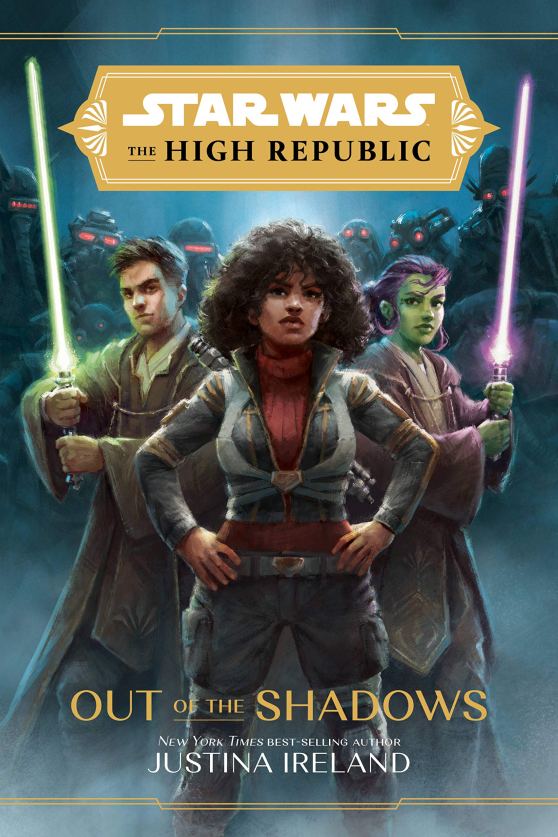
Star Wars: The High Republic: Out of the Shadows by Justina Ireland

Star Wars - Out of the Shadows Cover

Publisher: Disney Lucasfilm Press (Audiobook – 27 July 2021)

Series: Star Wars – The High Republic

Length: 10 hours and 50 minutes

My Rating: 4 out of 5 stars

Amazon     Book Depository

The marvels and terrors of the High Republic era of Star Wars history continues with the latest fantastic and exciting young adult tie-in novel, Star Wars: Out of the Shadows by Justina Ireland.

The High Republic is an interconnected collection of novels, comics, audio dramas and other pieces of media produced by top Star Wars authors, set hundreds of years before the films.  Starting in January 2021, this compelling multimedia project features several great pieces of fiction, including the awesome introductory novel Light of the Jedi by Charles Soule, the impressive The Rising Storm by Cavan Scott, and the entertaining young adult novel Into the Dark by Claudia Gray.  The latest High Republic novel, Out of the Shadows, is another compelling young adult novel that continues several key storylines from previous High Republic novels.  This was the second Star Wars book from author Justina Ireland, who previously wrote the High Republic junior novel, A Test of Courage.

Death, destruction, pirates, and plant monsters!  The Republic may be at the height of its culture and influence, but it is in some major trouble.  Following the devastation that occurred during the Republic Fair at Valo, the Republic are at war with the marauders known as the Nihil, with the Jedi leading the efforts to hunt them down.  But in the far corners of space, the Nihil are planning something new, something that could change the very fabric of the galaxy.

Sylvestri Yarrow is a young pilot and captain of a dilapidated ship, who is doing the best she can to keep her crew above water after the death of her mother.  However, when her ship is suddenly pulled out of hyperspace in a remote area of space with a boarding party of Nihil raiders waiting for her, she has no choice but to abandon her home.  Determined to get some form of justice, Sylvestri heads to Coruscant to convince someone of the dangers, but no one is willing to listen to a teenage pilot from the frontier until the unscrupulous and ultra-wealthy Xylan Graf appears and makes her an offer she cannot refuse.

In exchange for a new ship and a substantial number of credits, Sylvestri will accompany Xylan to the area of space where she lost her ship to help him disprove rumours of a dangerous Nihil weapon and to convince a senator into giving his family access to valuable hyperspace lanes.  Despite her misgivings about the plan, and the trustworthiness of Xylan, Sylvestri agrees to accompany him.  However, the Senator has a caveat: Xylan must take along some unimpeachable observers of her choosing, Jedi.  Now accompanied by young Jedi Knight Vernestra Rwoh, her Padawan Imri Cantaros, Master Cohmac Vitus, his apprentice Reath Silas, and, awkwardly, Sylvestri’s ex-girlfriend Jordanna Sparkburn, the team heads out to the wilds of space.  But the Nihil are always watching and waiting from the shadows, and their plans could spell doom for everyone.  Can Sylvestri and her new Jedi friends survive the dangers ahead of them, or will terrible secrets from her past threaten to overwhelm everyone once they are dragged out of the shadows.

Out of the Shadows proved to be a fun and compelling entry in this great new Star Wars series that I had a fantastic time listening to.  Featuring a great story and some excellent characters, this novel continues several key storylines from the previous High Republic novels and presents a strong and action-packed adventure.

Ireland has come up with a pretty good story for Out of the Shadows, resulting in a very exciting read.  Set around a year after Ireland’s last novel, A Test of Courage, and a short period after the events of the last major High Republic novel The Rising Storm, Out of the Shadows ties together several intriguing story threads set around some compelling characters.  The book starts out quick, with each major characters introduced in short order through a series of separate point-of-view chapters.  These early introductions do a good job of establishing the characters’ histories, personalities and motivations, and sending them on their various story paths.  The first third of the novel moves quickly, with each character getting some compelling moments, such as Sylvestri getting involved with unscrupulous businessman Xylan Graf, while Jedi Vernestra and her friends get a taste of the dangerous frontier life on their way to Coruscant.  This results in a fun mixture of plot inclusions, from some captivating political intrigue in Sylvestri’s storyline to some more action in Vernestra’s story combined with some interesting examinations of the Jedi and the Force.

These storylines combine around halfway through the book, with the key characters (except for one point-of-view antagonist) coming together and working as a team.  While it did have some good moments, I felt the middle part of the novel dragged a little, and there was not a great deal of excitement there.  However, it did set up the conclusion nicely, with Sylvestri and the Jedi coming face to face with the Nihil in less-than-ideal circumstances.  After a short confrontation, the story goes into overdrive, with the characters racing through several events all the way up to the end, including one event that might have some major ramifications for the High Republic storylines.  Strangely enough, while the second act was a little slow, the final part of the novel was way too quick, with a lot happening in a very short amount of time.  Still there were some great moments in these end scenes, including a couple of good twists, and it also sets up some further adventures extremely well.  All the key characters get gratifying conclusions to their various storylines, and readers are left feeling pretty satisfied with how events turned out.  Ireland makes sure to layer her story with some great action sequences, and there are some entertaining moments spread throughout the book.  I had a wonderful time reading this cool story, and it ended up being a rather good Star Wars book.

This latest Star Wars novel is marketed towards a young adult audience, and I felt that it was a particularly good read for teenagers.  Not only does it feature several teenage characters kicking ass, including a girl who became a Jedi Knight at age 15, but it also contains a clever and enjoyable story that does not pander to the younger age group or shy away from violence or controversial topics.  Ireland did a great job diving into the teenage mindset, and I felt that the various teenage characters featured in this novel were well portrayed as competent and complex figures.  I also liked the strong LGBT+ elements that Ireland featured throughout the novel, especially between Sylvestri and Jordanna Sparkburn, and it is cool that it is being shown so prominently in these novels.  Like many young adult Star Wars novels, this book is can be easily enjoyed by older Star Wars fans, who will appreciate the intriguing story and fascinating developments to the wider High Republic universe.  Younger readers will also probably have a good time with this novel, especially as Ireland does not go too over the top with the violence and romance, and as such I felt that this was an accessible novel to fans of all ages.

Out of the Shadows’ narrative is a continuation of several previous High Republic novels, which readers may need a bit of pre-knowledge about to fully enjoy.  Not only does this novel continue to expand the High Republic series and make frequent references to characters and events primarily featured in Light of the Jedi or The Rising Storm; it also serves as a direct continuation of two previous books.  This includes Ireland’s first Star Wars novel, A Test of Courage, as well as earlier 2021 release, Into the Dark, with key characters and storylines continued in Out of the Shadows.  Readers unfamiliar with these previous novels might also have a hard time following what is happening in Out of the Shadows, although I did think Ireland had a good go at making this novel accessible to readers, no matter their knowledge base.  Some key events of previous novels are explored in some detail, and I had no trouble following what was happening or who the characters were, even though I haven’t read A Test of Courage.  Ireland also blended the various existing storylines together extremely well, and this helped to turn Out of the Shadow into a key entry in the overall High Republic series, especially as it continues to show the galactic machinations of the Nihil.  It also looks like several storylines, mainly surrounding Ireland’s primary protagonist Vernestra Rwoh, will be continued in some future novels and I will have to try to read Ireland’s next novel, Mission of Disaster, even though I have avoided the junior High Republic novels in the past.

One of the things that particularly impressed me about Out of the Shadows was the excellent collection of characters that Ireland fit into her narrative.  There is a substantial central cast in this book, including some new additions and some characters who have appeared in previous High Republic novels.  The author does a good job of introducing and exploring these key characters throughout the novel, and you get some interesting and intense character development occurring, which really adds to the narrative.

These characters include Sylvestri Yarrow, a young pilot who finds herself dragged into the middle of this adventure.  Sylvestri is a tough frontier girl with a big independent streak and a massive chip on her shoulder when it comes to both the Nihil and the Jedi, and she goes through a lot in this novel.  Serving as one of the main point-of-view characters, Sylvestri offers a very interesting view on the events occurring and has some deep connections to the Nihil plot without even realising it.  She also forms an intense and fantastic relationship with Jordanna Sparkburn, her ex-girlfriend, who suddenly re-enters her life.  Jordanna is a frontier deputy responsible for defending her planet from Nihil raiders, which has seen her fight in quite a few battles.  Brought into the story after the Jedi help her to defend her home, Jordanna accompanies them to Coruscant and then gets wrapped up the main story.  Mainly introduced as the tough girl still interested in Sylvestri, Jordanna gains a lot of depth as a character as the story progresses, especially as she has experienced a lot of trauma after being forced into multiple battles.  A lot of this comes out when Sylvestri is in trouble, and Jordanna goes on a bit of a killing spree with a unique Nihil weapon she has obtained.  This scene really adds a lot to how the reader sees her, and it proves to be quite fascinating.  I was also a big fan of Jordanna’s giant alien cat, Remy, a dangerous creature who is just a big kitten at heart, especially when she bonds with some of the other characters.

I also enjoyed the great Jedi characters featured in Out of the Shadows.  These include Jedi Knight Vernestra Rwoh and her Padawan Imri Cantaros, who were the main characters of A Test of Courage and are now Ireland’s go-to Star Wars protagonists.  These two Jedi make for a unique pairing, as Vernestra is a brilliant Jedi prodigy, becoming a Knight at a very young age, while Imri is only slightly younger and has a unique ability to perceive emotions.  Vern is a particularly striking character, particularly with her lightwhip (a lightsaber modified to also be used as a whip) and I enjoyed seeing the challenges that a very young Knight would face.  Her unique connection to the force also connects her to another interesting character in the High Republic canon, and it sets her up for some big storylines in the future.  The other major Jedi characters are Jedi Master Cohmac Vitus and his apprentice Reath Silas.  Cohmac and Reath were previously heavily featured in a previous young adult novel, Into the Dark, and it was great to see them again.  Despite being the apprentice, Reath is the more prominent character, with several point-of-view chapters to himself.  While it was great to see more of Reath and Cohmac, they are a little underutilised, and I would have liked to see more about them, especially with Reath’s unique connection to one of the antagonists.

The other two characters who were a lot of fun in this book are Nan and Xylan Graf, two complex figures who are playing their own games.  Nan is a young Nihil spy and infiltrator who previously encountered Reath while the two were trapped on a space station together.  Serving as one of Marchion Ro’s most loyal soldiers, Nan is entrusted with an important treasure and is subsequently forced to navigate the Nihil’s internal feuding and plotting to survive.  Nan provides a fantastic alternate perspective for much of the events of the novel as she is used to show what is happening in the Nihil camp.  I liked her use in this book, and while I would have enjoyed a much more intense confrontation with Reath when they are inevitably reunited, I did enjoy how Nan’s story arc dramatically changed towards the end of the novel, which should be interesting for future High Republic novels.  The other character is Xylan Graf, the ultimate rich-kid master manipulator.  Xylan is the scion to the exceedingly powerful and rich Graf family, who organises the entire expedition, seemingly to gain rights to a valuable sector of space.  Xylan is an extremely flashy and stylish figure, and it is quite entertaining to see the other characters react to his eccentricities.  He is also quite a sly operator, cooking up plans and spinning tales to keep everyone happy.  He is so slippery that you honestly don’t know what he is planning for most of the novel, and I felt that he was a very compelling and fun addition to the cast.  All of the above characters were really fun and I hope they reappear in some of the future High Republic entries.

I made sure to grab a copy of Out of the Shadows’ audiobook format, which proved to be an interesting experience.  While I tend to really enjoy Star Wars audiobooks due to the cool production inclusions they usually feature, I ended up being a little disappointed with Out of the Shadow’s audiobook.  This was mainly because it lacked the iconic Star Wars musical score or background sound effects that all the other Star Wars audiobooks have, which made for a more subdued listening experience.  While this didn’t make Out of the Shadows impossible to enjoy, it was a very noticeable departure from the typical fun I have with Star Wars audiobooks, and several scenes could have benefited from being enhanced by some emotional music.  Still, I enjoyed the production, mainly because narrator Keylor Leigh does a really good job telling the story.  Leigh, who previously narrated Ireland’s A Test of Courage, has a great voice for teenage characters.  I felt that Leigh gave each of the key protagonists a unique and fitting voice, and she also ensured that the narrative moved along at a quick and exciting pace.  In addition, with a runtime of just under 11 hours, this is a relatively quick listen, which dedicated listeners can power through in no time at all.  As a result, this is a good format to enjoy Out of the Shadows on, although I really do wish that it had featured the usual strong Star Wars production values.

Star Wars: Out of the Shadows by Justina Ireland is an awesome and captivating High Republic tie-in novel, which continues to explore this unique period in Star Wars history.  Containing a fun story and some great characters, this novel serves as a key entry in the High Republic series, following several fascinating plot threads from some previous novels.  Readers are in for an excellent time with this novel, and Out of the Shadows proves to be an exciting and compelling experience.

Amazon     Book Depository

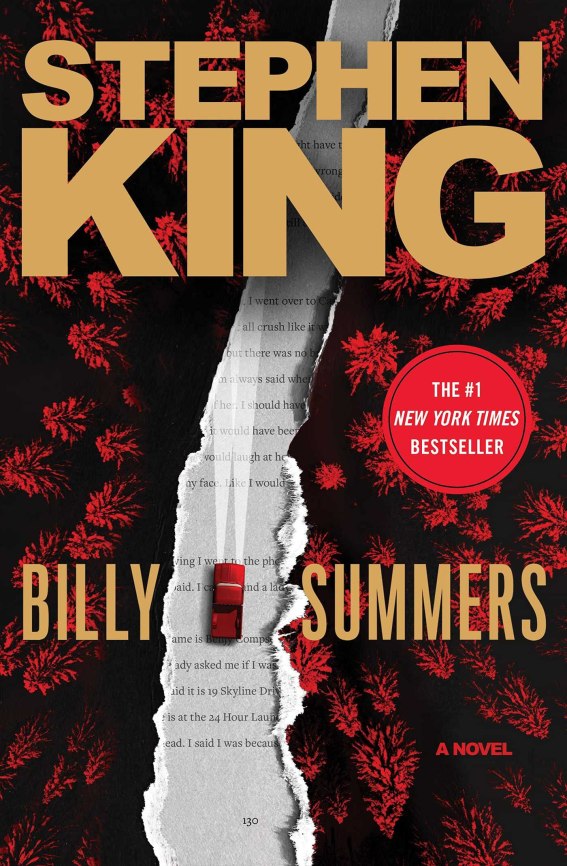
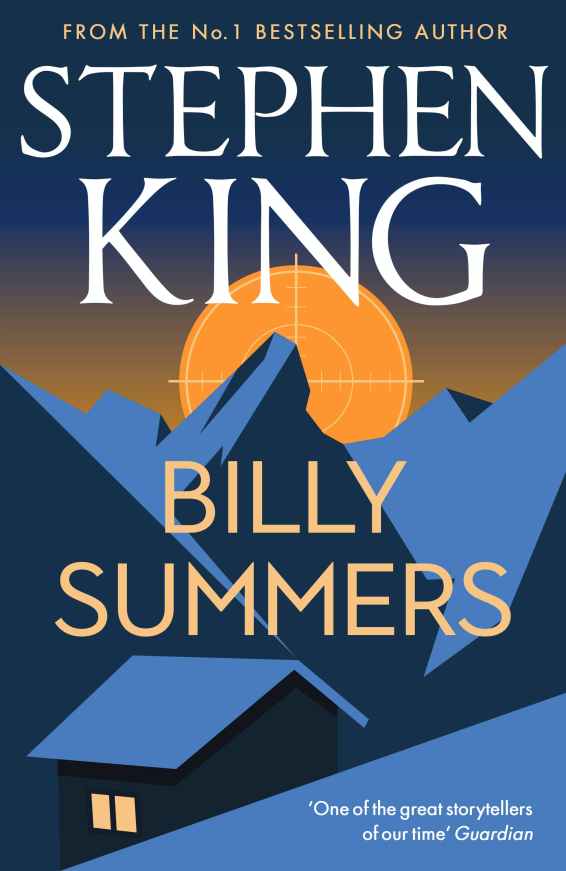
Billy Summers by Stephen King

Billy Summer Cover

Publisher: Hodder & Stoughton (Trade Paperback – 3 August 2021)

Series: Standalone

Length: 433 pages

My Rating: 5 out of 5 stars

Amazon

Stephen King returns with another exceptional read, Billy Summers, an awesome and memorable character driven thriller that has proved to be one of the best books of the year so far.

2021 has been quite an amazing year for Stephen King, who has released two outstanding and impressive novels in a short period of time.  His first book of 2021 was the interesting horror novel, Later, which followed a child who can see and talk to the recently deceased.  While I have not had a lot of experience reading Stephen King novels in the past, I really got into Later due to its likeable characters and thrilling narrative, and it ended up being one of the best audiobooks I listened to in the first part of 2021.  Due to how much I liked Later, I made sure to keep an eye out for any additional Stephen King releases, and I was extremely intrigued to see that he had a second book coming out with a great-sounding plot.  As a result, this second novel, Billy Summers, was one of my most anticipated reads for the second half of the year, and I was excited when I received my copy, especially as it contained a really cool story.

Billy Summers is an assassin and gun for hire.  A maestro with a sniper rifle and a master of elaborate escapes, there are few killers better than him.  However, for all his skills, Billy has one unusual quirk: he has a conscience and a moral code which limits him to only taking out contracts on targets he considers to be bad guys.  After a lifetime of killing, as both an assassin and a soldier, Billy wants out, and he is willing to take one final job to retire.  Luckily, his employer has a job that fits all his criteria.

Taken to the small city of Red Bluff on the East Coast of America, Billy is hired to kill a notorious gangster and killer who is currently locked up in Los Angeles but due to be extradited back to Red Bluff.  Billy’s boss wants the target dead the moment he arrives to stop him making a deal with the authorities ahead of his murder trial.  With a massive pay cheque on the line, Billy accepts the job, despite some odd stipulations.  As part of their plan to take out their target, Billy will need to take on the identity of an author working in the office complex overlooking the courthouse and maintain his cover for as long as it takes the extradition process to go through.

Despite misgivings about the job, Billy dives into the role as required and soon establishes himself as a regular figure in the office block.  As he waits for his target to arrive, Billy begins to get to know the people around him and takes the opportunity to write a memoir about his life and the decisions that led to him becoming a killer.  However, the closer he gets to the conclusion of the job, the more he suspects that nothing involved with this assassination is on the level, and that his bosses intend from him to die as well.  Making his own plans in case things go sideways, Billy prepares to end his career as an assassin on his own terms.  But then he meets Alice, and everything changes.

Well damn, how the hell does King do it?  After nearly 45 years of writing, you’d think the man would run out of unique and compelling ideas, but that apparently is not the case, as his latest book, Billy Summers, turned out to be quite an exceptional read.  King has produced an impressive and powerful story that follows a complex and well-established protagonist as he experiences life for the first time.  With some outstanding characters, a deeply thrilling storyline and some intriguing insights into the human condition, this was an outstanding read that was easily one of the best books I read in 2021 and which got a full five-star review from me.

Billy Summers contains a pretty addictive and powerful story that I found to be really cool.  The book is primarily told through the eyes of the titular Billy and shows him as he prepares to take on his final job.  King does a great job of introducing the character and the scenario, and you are soon placed into the midst of a very cool storyline as Billy moves into suburbia under an assumed identity to build his cover.  This results in some compelling character interactions, as Billy simultaneously prepares for his assassination mission with his employers while also getting close to some of the people he encounters and starts to see what a normal life feels like.  At the same time, he also builds up a third identity to use after the job is completed, which requires him to assume a different disguise and create some additional personal connections.  He also starts writing a personal memoir which tells a slightly altered version of his life story, including his rough childhood, his military career, and his early contract work.  This mixture of intriguing and fascinating story threads come together extremely well in the first half of the novel, and you get quite a unique and compelling narrative which perfectly blends thriller excitement with personal character growth.

After a big moment halfway through the novel, the entire storyline dramatically changes, especially as Billy is introduced to a key character, Alice.  While there is still a large amount of focus on the job from the first half of the novel and its consequences, the story noticeably morphs at this point, really diving into the relationship that develops between these two characters.  The storyline also moves away from some of the prior relationships that were introduced, and moves into a road trip, with Billy now accompanied by Alice.  There are some really good sequences in this second half of the novel, as well as a continued exploration of Billy’s past.  King does a fantastic job morphing the various story threads and plot ideas into a cohesive and captivating narrative, and I really enjoyed the powerful combinations.  The set pieces are a series of awesome action sequences, which help tie up several of the main story threads and lead up to the book’s epic conclusion.  While King is often criticised for his endings, I felt that Billy Summers had an exceptional and incredible conclusion that I deeply enjoyed.  This great conclusion is both tragic and memorable, and it ties together the entire novel extremely well, helping to turn Billy Summers into one of the best stories I have read all year.

I really enjoyed King’s writing style in this novel, especially as it focused a lot on character development and interactions between unique people.  The entire novel has a very philosophical bent to it, as King and his characters take time to explore the human experience, especially those aspects of life that people on the outside, such as BIlly, miss out on.  While you wouldn’t think that this would pair well with a thriller story about an assassin, it actually works extremely well, especially when combined with Billy’s journaling scenes, and readers are guaranteed to fall in love with this distinctive form of storytelling.  I also liked the author’s great use of various settings which help to show off the uniqueness of America’s landscapes.  King features several different locations, including suburbia, the inner city, the wide open road, the isolated Colorado mountains, and even some more famous locations, like fabulous Las Vegas.  Each location offers the reader and the characters something new to enjoy or appreciate, and King makes sure to capture both the beauty and the ugliness of these various settings.  While King does move away from some of his more extreme murder sprees in this novel, there are some dark moments in this book.  Not only are there some very graphic action sequences, but readers should also be warned about the sexual violence content, especially one scene where Billy enacts some justice.  I’m also slightly concerned that King might end up getting sued by Rupert Murdoch for a certain facsimile character who does some bad things.  Overall, though, I really enjoyed the way King told his latest unique story, and there is something for everyone in it.

As I mentioned above, I don’t have the most experience reading Stephen King novels, with only a few of his more recent reads under my belt.  Despite this, I was easily able to enjoy Billy Summers, especially as it is a standalone thriller with one-shot characters.  As a result, this is a book that any reader can easily pick up and get into, and I really liked how open the author made Billy Summers.  However, fans of King, as well as those people generally aware of his work, will probably have fun seeing the references to some of King’s previous books.  One of his more iconic works is referenced several times, especially as the protagonists end up spending time near a pivotal location.  While this is not particularly essential to the plot, it was a nice callback, and I think that most people will appreciate the fun self-homage.  I also found it interesting that both of King’s novels of 2021 had a compelling focus on writing, which becomes a key part of the plot.  While Later focused more on the publishing side of things, Billy Summers contains a fantastic examination of the difficulties of putting your ideas to paper as a writer, with the protagonist attempting to write his life story in his downtime.  While there are several fantastic advantages to the writing subplot, such as it being a great way to introduce the protagonist’s backstory in a compelling and episodic manner, I also quite enjoyed seeing the depiction of the writing process, and the various difficulties of telling a story.  It very much felt that King was pouring some of his own experiences with writing into these sections of the novel, and it was incredibly fun and insightful to see one of the world’s greatest authors depict the difficulties of writing in one of his novels.

Another area that Billy Summers excelled in is the fantastic central and supporting characters.  King does a remarkable job of introducing a diverse cast of characters, each of whom affect the character in various ways, either by showing him what his missing, or showing him what he is better than.  The most focused character is naturally the titular protagonist, Billy Summers, a brilliant contract killer who only kills bad people.  Billy is a remarkably complex figure, who builds several different personalities and personas around himself for professional reasons and protection.  I really enjoyed the intriguing portrayal of this character, mainly because you got to see at least four different versions of him in the first half of the book.  While the narrator is the calm and collected lover of classic novels who is basically a good guy, despite being an elite professional killer able to see every angle and work out the best way to kill someone and escape, that is a viewpoint that only the readers sees, at least at the start of the novel.  Billy hides this real side of himself from the rest of the world, effecting a less intellectual personality to his criminal associates, which he calls his “dumb self”, to fool them and think he’s less of a threat.

While his dumb self is usually enough to get by, his new assignment requires him to take up the identity of a struggling author who moves into a suburban neighbourhood and a local office block to focus on his upcoming bestseller.  Billy is forced to integrate into these social systems to keep his cover, and he soon makes friends amongst the people he meets, many of whom have an impact on him due to their honesty, innocence, and normality, all of which Billy has long given up.  He also builds up yet another identity to rent an additional house, which he plans to use as a safe house if the job goes wrong, which forces him to deal with additional normal people.  On top of that, he also takes the opportunity to write a memoir of his life, not only to maintain his cover but to satisfy his own curiosity about the writing process.  This proves to be a delicate balancing act, as he attempts to give an honest account of his past while also trying to keep up the charade of being dumb in case his employers read the story he writes.  This results in a unique, multifaceted character, and you get hints at the true nature of Billy, not just from the narration, but from seeing the similarities and differences between the various versions he presents to the world.

Billy’s life changes even further when he meets Alice, a woman who he meets at the very worst time of her life.  Saving her initially to maintain his cover, Billy soon finds himself drawn to protecting Alice, who has no-one and is having trouble getting over her trauma.  Billy soon works in a fantastic and touching relationship with Alice, as the two become close and help each other see the world in other ways.  Not only is Alice a great character in her own right, especially as King presents a very real and moving portrayal of a damaged and lost woman, but she also brings out the best in Billy.  While Alice does imprint on Billy due to her trauma, she also encourages him and gets him to continue writing his book.  This powerful bond they form soon becomes a central part of the book’s plot, and it is extremely fascinating and compelling to see what happens to them.  These exceptional characters and deep personalities really turn Billy Summers into an exceptional read, and I become severely invested in their story, even though I knew it was likely to end badly.

Stephen King has once again shows why he is the premier fiction author in the world today with another intense and exquisite read in Billy Summers.  Featuring a deep and captivating narrative about a complex character, Billy Summers was an absolute treat to read, and comes highly recommended.  Readers will swiftly fall in love with the unique narrative and compelling leading figures, and I guarantee that you will have trouble putting this excellent novel down.  Easily one of the best books of 2021, I cannot praise Billy Summers enough.

Billy Summers Cover 2

Amazon

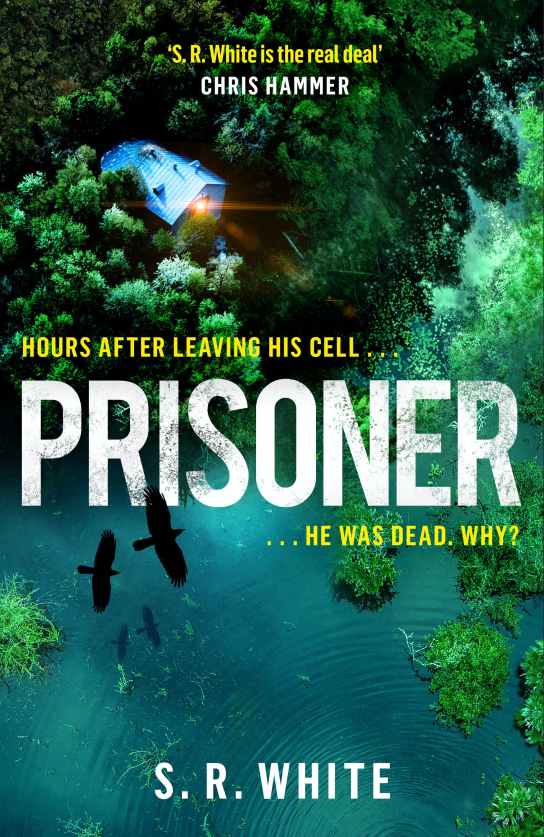
Prisoner by S. R. White

The Prisoner Cover

Publisher: Headline (Trade Paperback – 31 August 2021)

Series: Hermit – Book Two

Length: 421 pages

My Rating: 4.5 out 5 stars

Amazon     Book Depository

Prepare for a twisty and dark Australian murder mystery novel as author S. R. White presents the compelling and powerful Prisoner.

Deep in rural Northern Australia, a dead body has been found in the middle of a dank and dangerous swamp.  The corpse is staged to appear like a crucifixion, with the man’s arms and legs tied to poles, and his chest caved in with several blows.  Called to the scene of the crime, Detective Dana Russo soon discovers that the victim was a convicted rapist who had only been released from prison a few hours earlier and whose crime occurred only a short walk away from his murder site.

Determined to get to the bottom of this unusual murder, Russo and her team swiftly begin tearing apart the victim’s life in prison and find that he had been in communication with two local sisters who offered him a place to stay once he was released.  Investigating the sisters, they discover a unique pair of siblings who have been irreparably damaged by trauma and abuse and who live separate from the rest of society.  Believing that the solution to the mystery may lay with them, Russo brings them both in for questioning, but finds them uncooperative and elusive.

Under pressure to solve the crime, the detectives slowly unwind an intriguing case, concerning corruption, drugs and prison gangs.  However, the further they dig, the more apparent it becomes that the sisters are hiding some dark secrets about themselves and the victim.  Forced to dig deep within herself, Russo uses the memories of her own traumatic childhood to analyse the suspects and find some common understanding with them.  Can Russo break through these two unlikely suspects, or will the solution to this murder never be revealed?

This was a pretty cool and captivating novel from former British Police officer turned author S. R. White.  Prisoner is White’s second novel and serves as a sequel to his 2020 debut, Hermit.  This proved to be a fantastic read and I deeply enjoyed the intriguing and powerful narrative, especially as White loads his book with a complex mystery and some deeply damaged characters.  I got pretty hooked on this book as it progressed and ended up finishing it in only a couple of days.

Prisoner contains a very impressive and compelling narrative that I really found myself getting drawn into.  The novel mostly starts off focusing on the murder, with the discovery of the body in the first few pages, and then the protagonists immediately jump into the investigation, including the interrogation of one of the main suspects.  As the story progresses, you get some other interesting elements thrown in, mostly around Dana Russo and one of her other colleagues as they deal with some dark personal history.  There is also a captivating subplot regarding internal police politics that produces a real shakeup in the department and has some potential series-wide ramifications.  However, most of the story remains on the mystery, and I really appreciated the creativity and darkness that the author fits into the case.  Despite being a sequel to White’s first book, Prisoner can easily be read as a standalone novel, and no prior knowledge of the characters or the setting is needed.  I felt that the entire narrative progressed along at a great pace, and there were no slow bits throughout the book, as the reader was either reading about the case or dealing with the intense personal demons of the various characters.

I must highlight the fantastic writing style that White featured throughout this novel.  While most of the focus of Prisoner is on central character Russo, the author makes good use of multiple perspectives, mainly of the other detectives on the investigation team, to move the story along and provide some alternate points of view and different investigative threads.  White utilises a very detailed writing style, which encourages a slower reading pace to make sure you don’t miss anything, and I felt that enriched the mystery and increased the realism of the plot.  I also must highlight the incredibly detailed descriptions of the swampy landscape that surrounded the crime scene and the Northern Australian town where the plot is set.  White paints a grim picture of small, isolated community on its last legs, where even the landscape has turned against it.  You can really feel the stickiness and deadliness of the swamps, and it proves to be quite a haunting background to several scenes.  I also must mention the really fun and unique take that several of the characters had on the film Signs.  This film, which I personally rather enjoyed, is brought up several times and becomes a key plot point.  While that does sound a little strange, its inclusion worked surprisingly well, and the subsequent discussions and insightful analysis of the film and its themes, ended up fitting into the overall narrative quite seamlessly, helping to create quite a unique tale.

I also deeply enjoyed the crime fiction/mystery elements of Prisoner, which really helped to turn this into quite a compelling and exciting story.  White crafts together a really clever and psychologically intense mystery for this book, and I had a wonderful time seeing the protagonists unwind it.  The author sets up a great methodical criminal investigation, with the characters slowly uncovering clues, backstory and various suspects throughout the story.  While the police do achieve an impressive amount in just a couple of days, there is a gritty sense of realism to much of the story, and I really enjoyed seeing the police in action.  The best part of the investigation is easily the focus on interrogations as the protagonist engages two uncooperative suspects in several separate interviews throughout the course of the book.  These interrogation sequences are among some of the best parts of the entire book, as Russo really dives into the pasts and minds of her suspects, which also requires her to reach back and harness some of her own trauma to break through to them.  This, combined with the rest of her team’s investigation, proved to be quite fascinating, and I really enjoyed seeing the cooperative work and professional skills involved.  I also quite enjoyed the solution to the murder, especially as White comes up with quite a unique and dark motivation for the crime.  There are several good suspects and motivations for the murder, which at times made me question who the killer might be.  However, I thought the overall resolution of the mystery was extremely clever, and it really made great use of the dark psychology of some of the characters.

One of the biggest highlights of this book were the damaged and traumatised central characters, who White spent a substantial amount of time exploring throughout the course of the story.  This includes a mixture of characters who previously appeared in Hermit and some new characters brought in for Prisoner.  This includes central protagonist Dana Russo, the detective in charge of the investigation.  Dana had a very traumatic childhood, brought on by an abusive mother who beat and emotionally tormented her following her father’s death.  While this was revealed in the previous novel, it was recounted once again in Prisoner, especially as details of the case end up mimicking parts of Dana’s life.  The protagonist is forced to dive deep into her prior experiences to help solve this case, and it was fascinating to see how she could instantly spot signs of abuse, as well as rationalise the various reasons behind it and the impacts it can have on a young person.  The protagonist also uses her experiences to get into the minds of her two main suspects, resulting in some intense and extremely powerful interrogation scenes, where both suspect and interrogator are broken down at the same time.  White also produces some more revelations about Dana’s terrible childhood, including a certain reveal on the last page that was pretty memorable, and I really liked the compelling picture he painted around this impressive leading character.

The other characters who proved to be extremely compelling were the main suspects of the murder case, Suzanne and Marika Doyle.  The Doyle siblings are instantly identified as persons of interest in the case due to their house’s proximity to the crime scene and the fact that they wrote to the victim in prison and helped to organise his parole, despite having never met him.  Upon examination of their history, as well as an insightful look at their house, it soon becomes apparent that both siblings had a hard childhood because of their controlling mother.  Their life story becomes a key part of the overarching plot as Russo attempts to uncover their full history and personalities, as she believes it is important to solve the case.  The eventual reveals about the siblings and their relationship, their past and their emotional states is extremely captivating, and White paints quite a dark and troubled narrative around them that was really fascinating.  The way that this ties into the murder and their relationship with the victim is very clever, and White really outdid himself making these two sibling suspects.

I also must give a quick shout out to the character of Lucy Delaney, one of Dana’s co-workers and an invaluable resource in the case.  Dana and Lucy got quite close to each other in the previous novel, with Dana revealing some of her childhood trauma to her, something she rarely does.  In this novel, you get a much closer look at Lucy, who reveals some of her own personal issues, and the shared grief becomes a major part of her connection to Dana.  Unfortunately for Lucy, she gets dragged into some internal police politics, which impact her and her secrets quite severely and will likely become a recurring issue in the series, especially if the relationship between Dana and Lucy progresses.  Aside from Lucy, I felt that the police characters represented an interesting blend of personalities and skills, such as the wily veteran Mike or the similarly damaged officer Ali, who helped to give the film more personality.  It will be interesting to see how these characters are featured in the future, and I look forward to learning more about them.

Prisoner by S. R. White is a clever and moving piece of Australian crime fiction that proved to be a real treat to read.  White has produced a deep and compelling murder mystery narrative that focuses on a fantastic group of damaged protagonists and suspects, and who have some dark stories to tell.  I really loved the more methodical and grounded police investigation angle of this book, especially the inclusion of some powerful interrogation sequences, and I was impressed with how the narrative unfolded.  An excellent and captivating murder mystery, Prisoner comes highly recommended, and you will have a great time getting through the latest book from this fantastic Australian author.

Amazon     Book Depository

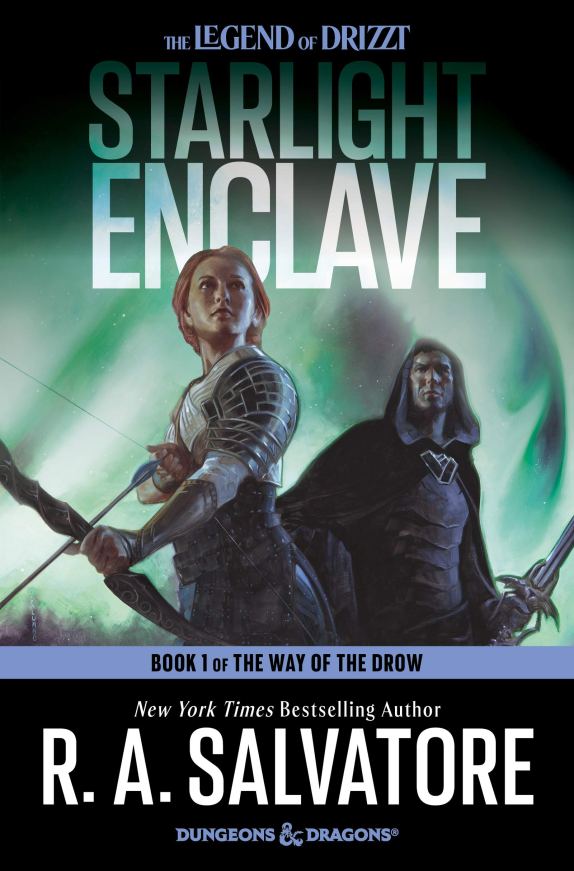
Starlight Enclave by R. A. Salvatore

Starlight Enclave Cover

Publisher: HarperAudio (Audiobook – 3 August 2021)

Series: The Way of the Drow – Book One

Length: 14 hours and 49 minutes

My Rating: 4.5 out of 5 stars

Amazon     Book Depository

The icon of the fantasy world, R. A. Salvatore, returns with a new adventure set in the world of his acclaimed Drizzt Do’Urden novels, with Starlight Enclave, the first book in The Way of the Drow trilogy.

Salvatore is an absolute legend amongst fantasy writers, having been an impressive leading figure for over 30 years with a massive catalogue of more than 60 novels.  I have long been a fan of Salvatore, who has written some of my absolute favourite fantasy novels over the years.  While he has written several great series, the author is still best known for his iconic, long-running Drizzt Do’Urden novels, which are set within the shared Forgotten Realms universe.  Salvatore has had a particularly busy couple of years, simultaneously writing two separate series, including The Coven trilogy (Child of a Mad GodReckoning of a Fallen God and Song of a Risen God), as well as the three books in the Drizzt focused Generations series (TimelessBoundless and Relentless).  All six of these recent novels have been pretty incredible, with Song of a Risen God and Boundless being amongst some of my favourite audiobooks of 2019 and 2020 respectfully.  As a result, I was pretty excited when I saw that Salvatore had another Drizzt Do’Urden novel coming out and I made sure to grab a copy of Starlight Enclave as soon as I could.

Two years after the miraculous end to the Drow siege of Gauntlgrym, peace reigns throughout the Forgotten Realms.  However, while some revel in the hard-won tranquillity, others worry about the future.  Despite having cemented his rule over the pirate city of Luskan, the Drow rogue Jarlaxle is deeply troubled by the difficulties plaguing his people.  Despite the apparent magical miracle that showed her as a false gold, the demonic Spider Queen Loth is still worshiped in the dark Drow city of Menzoberranzan, and civil war appears likely as the powerful Drow houses battle for the city’s soul.

Determined that Loth be thrown down once and for all, Jarlaxle looks for every advantage and weapon he can get his hands on.  One of his more ambitious plans leads him to arm his closest friend, the recently resurrected Zaknafein Do’Urden, with two mighty swords of power, including the notorious blade Khazid’hea, better known as Cutter.  With a sly and dark intelligence of its own, Khazid’hea has corrupted many wielders over the years, and its last master, the half-Drow Doum’wielle, may prove to be the missing piece in Jarlaxle’s latest master plan.  Unfortunately, Doum’wielle was lost years before, thrown through a magical portal to the far north, and to find her Jarlaxle will need to embark on another dangerous quest.

Gathering three mighty companions in Zaknafein, the human priestess Cattie-brie and the former assassin Artemis Entreri, Jarlaxle leads them to the extreme far north, a place few have travelled.  However, they are unprepared for just how dangerous this northern land can be, with new foes and mysterious phenomenon they have no idea about.  But there are far great surprises waiting in store for them, ones that could change the very fabric of the world and alter the course of the upcoming Drow civil war.

Starlight Enclave is another compelling and fun fantasy novel from Salvatore who continues to expand and polish his iconic characters and settings with another great adventure narrative.  This latest book contains a fantastic story that not only takes the series back to its bold adventurous roots, but which also sets up a great new trilogy that will no doubt be some of my favourite books of the next couple of years.

This new book contains a distinctive and powerful narrative that starts off a couple of years after the events of the previous novel, Relentless.  The story starts off by setting the scene for a substantial amount of the plot while also recapping some key events of the previous novels in this very long-running series.  It took me a little while to initially get into this book, but once the story got to a fantastic and intense sea battle around 50 pages in, I was pretty hooked.  From there, the story diverts into two distinctive paths, the first following Jarlaxle and his companions as they venture out into the north, while a second following main series protagonist Drizzt Do’Urden, as he takes his daughter Brie to meet his martial arts master, Grand Master Kane.  While initially pretty evenly split, the Jarlaxle adventure storyline quickly becomes the dominant narrative thread, with Drizzt’s storyline stopping about halfway through.  I personally was fine with this; by this point, I was really enjoying the unique and cool tale being told around the four adventurers as they discover new lands and great dangers in the far north.  This second half of the novel is very intriguing, and Salvatore ensures that there is a great blend of action, character development and world building.  Just like with most of Salvatore’s novels, the fight scenes within Starlight Enclave are a thing of beauty and the author does an amazing job bringing the various fantasy battles to life, so much so the reader feels like they are in the room with them.  The narrative eventually ends a bit of a cliffhanger that places most of the characters in mortal peril and which serves as a pretty cool conclusion to this great tale.  I had a wonderful time getting through this story, and I am very intrigued to see how the narrative continues in the rest of the trilogy.

Due to Starlight Enclave being part of the long running Drizzt Do’Urden series, there is a bit of a question about how easy it is for new readers to enjoy this latest book.  I will admit that there might be some difficulties for those unfamiliar with the series.  Salvatore has built up quite a lot of background lore in the last 30+ years, and large amount of this comes into play throughout the book as there are a substantial number of references to previous adventures and characters.  In addition, new readers might not be familiar with Salvatore’s writing style, which is very similar to how he wrote the original novels back in the 1980s, and as a result, they have a more classic fantasy adventure feel to them.  As someone familiar with the previous adventures (although I could use a refresher) and the author’s style, I managed to get into this novel quite well, although I could potentially see new readers having a bit of a harder time breaking into them.  Salvatore does take the time to explain the relevant bits of lore, and readers that pay attention should be able to follow the story without any substantial problems.  I do think that, at this point, most of Salvatore’s novels are probably best read by his long-term fans, but newer readers will probably find something that they enjoy within them.

Unlike the previous trilogy of novels, which was set in more established settings, Starlight Enclave takes the reader on a big adventure into some brand-new areas of this massive fantasy world.  Most of the story takes place in the far, far in the north of the planet, where very few southerners have ventured.  This is a pretty unforgiving land of ice and snow, which proves a real challenge to survive in.  Salvatore does a really good job bringing this snowy landscape to life, and it proves to be an excellent and treacherous setting for the story, especially as the protagonists soon discover that their magic does not work the same way as it does in the south, severely weakening them.  Salvatore also does some major world-building in this book, as he introduces some big new civilisations and opponents.  While I won’t go into too much detail about them here, I will say that it is a pretty major new inclusion, and it is clearly one that is going to have some significant impacts on the Drizzt Do’Urden series going forward.  Some of the new major locations and races are extremely cool and Salvatore has successfully introduced some great and intriguing new entries into this wider world.  I look forward to seeing how these elements are expanded in the future novels, and I have a feeling they are going to produce a few great surprises down the line.

You can’t talk about one of Salvatore’s novels without mentioning the fun and compelling characters.  Starlight Enclave is a great example of this, as it includes a fantastic range of characters, with both intriguing new characters to beloved long-running figures from the overarching series.  Over the last couple of Drizzt Do’Urden novels, Salvatore has noticeably moved away from some of his classic protagonists and has started to focus on the unique combination of the Drow characters of Jarlaxle and Zaknafein.  I quite like these two great characters, especially the constantly manipulative and canny Jarlaxle, and together they form a fantastic pairing who play off each other’s personalities perfectly.  The inclusion of other main characters, Cattie-brie and Artemis Entreri rounds out the main quartet nicely and presents a great group of veteran adventurers who are each looking for something very different, whether it be hope, redemption or the long-lost joy of adventure.  Long-term fans of Salvatore’s books may be a little disappointed that some major characters, such as Regis and Wulfgar, are overlooked in this novel, but I was personally more than happy with the four main characters Starlight Enclave ended up focusing on.

The other character who got a bit of attention in Starlight Enclave is the overarching series’ main protagonist, Drizzt Do’Urden, who is the focus of the book’s secondary storyline.  Like some of the other major characters, Drizzt has not been as heavily featured in the last few books as Salvatore experiments with different protagonists.  This is still true in Starlight Enclave, with less than a quarter of the book given over to Drizzt’s adventure.  Drizzt still shines as a character, especially as he is going through quite a lot.  Drizzt is facing a bit of a crisis of faith and self-identity, brought on by his unique experiences in the previous trilogy when he ascended to a higher plain of existence to escape a deadly foe.  Brought back by the love of his family, Drizzt still isn’t all there, and it is quite fascinating to see the more distracted and spiritual version of the character.  Due to this development, Drizzt’s scenes tend to be quite philosophical in nature rather than action orientated, and there are several detailed discussions and debates about religion and the morality of the Drow.  While not as exciting, Drizzt’s scenes are pretty interesting and form a great counterpoint to the other storyline.  Salavatore is clearly building to something big here surrounding Drizzt, and I feel like there are going to be some other major changes around him in the coming novels.  Still, it was nice to see a somewhat more peaceful Drizzt in this book, and after all these years, I had a smile to see him as a father rather than a warrior.

To enjoy this cool novel, I ended up grabbing the audiobook version of Starlight Enclave, which was narrated by Victor Bevine.  This audiobook has a pretty decent runtime of just under 15 hours, which I was able to get through in around a week.  I really enjoyed this version of the book, and I felt that it helped me get more entrenched in the landscapes and detailed fantasy world that Salvatore produced.  Bevine, who has narrated a substantial number of Salvatore’s previous novels, does another great job here, and it was great to once again here his take on the various characters, especially as there is a bit of continuity from the previous audiobooks I have enjoyed.  Bevine does a good job portraying each of the characters contained within Starlight Enclave, and I like the fun accents he does for the various races, especially the dwarves, who get some fun Scottish tones.  Bevine ensures that this audiobook moves along at a fast and exciting pace, and I always enjoy hearing his narration of these exciting and compelling adventures.

In the amazing Starlight Enclave, the iconic R. A. Salvatore continues to expand his impressive and long-running Drizzt Do’Urden series with another bold adventure novel.  This great novel does an awesome job setting up the cool new The Way of the Drow trilogy with a unique and exciting story and some compelling world-building.  I had a wonderful time getting through Starlight Enclave and it is an excellent read, especially for those established fans of the author who will no doubt love to see another classic fantasy tale.  An overall outstanding book, I am extremely excited to see how the rest of this new series unfolds.

Amazon     Book Depository

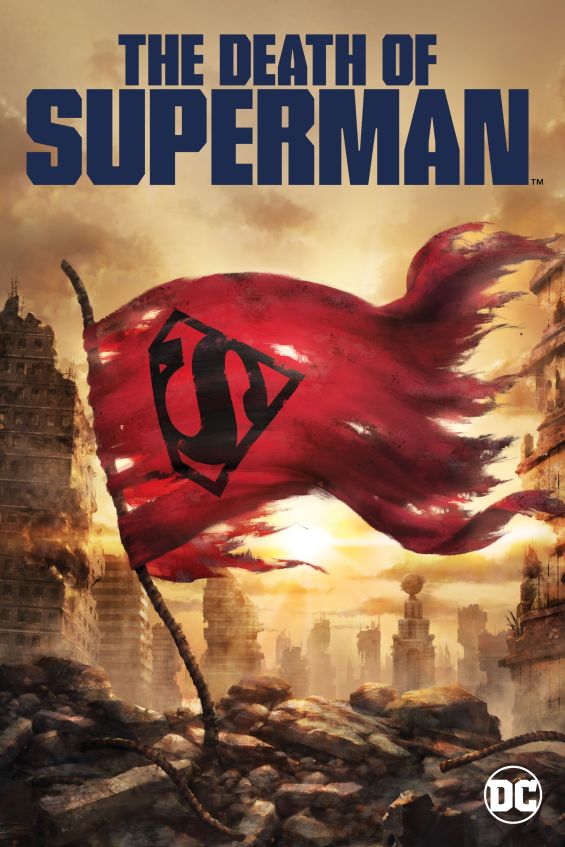
Throwback Thursday – The Death of Superman

Death of Superman Poster

Studio: Warner Bros. Animation and DC Entertainment

Series: DC Universe Animated Original Movies – Film 32 / DC Animated Movie Universe – Film 11

Directors: Sam Liu and Jake Castorena

Writer: Peter J. Tomasi

Producers: Sam Liu and Amy McKenna

Length: 81 Minutes

My Rating: 5 out of 5 stars

Welcome back to my Throwback Thursday series, where I republish old reviews, review content I have enjoyed before or review older books I have only just had a chance to read.  This week, after the fun I’ve had recently reviewing Batman: Assault on Arkham and Batman: Under the Red Hood, I continue to check out some awesome DC comic book animated features, with the impressive and powerful The Death of Superman.

Easily one of the most iconic comic book arcs of all time is the 1992/1993 storyline, The Death of Superman, which (spoiler alert) saw Superman die at the hands of new villain Doomsday.  Not only did the act of actually killing off Superman shock the world but the series was a massive financial success, becoming one of the bestselling comics of all time.  Due to its popularity, DC have attempted to adapt the storyline multiple times, with Smallville, the animated Justice League show, and Batman v Superman: Dawn of Justice, all using elements of it in one form or another.  There has even been another direct animated attempt at recreating the storyline, with the 2007 release, Superman: Doomsday, the very first film of the DC Universe Animated Original Movies.  However, in my opinion, none of them successfully conveyed the tone or the fantastic story as well as the 2018 animated film, The Death of Superman.

Directed by Sam Liu and Jake Castorena and written by Peter J. Tomasi, The Death of Superman is an incredible and amazing film that really gets to grips with the original comic, while also adding in some unique details to create a memorable and deeply moving experience.  As the 32nd instalment in the DC Universe Animated Original Movies, it also sat in the joint DC Animated Movie Universe, and was a major instalment in this series, setting up several storylines that would later be utilised in later entries, such as the final film, Justice League Dark: Apokolips War.  Featuring an awesome story, a fantastic voice cast and some exceptional animation, The Death of Superman is easily one of the best films in the entire DC Animated Movie Universe and is one of my all-time favourite animated comic book adaptions.

After saving the world multiple times, both by himself and with the Justice League, Superman reigns as one of the planet’s most popular superheros, inspiring the world with his spirit and determination to do good.  His latest act of heroics saved the mayor of Metropolis from the notorious Intergang, who made use of a large arsenal of advanced weaponry, likely supplied by an apparently incarcerated Lex Luthor.  However, despite his larger-than-life personality, Superman is also Clark Kent, a down-to-earth man from small-town America, trying to make his new relationship with fellow reporter Lois Lane work.  As Clark finally opens himself up to Lois and reveals his biggest secret to her, a brand-new threat arrives on Earth, bringing with it only death and destruction.

A mysterious meteorite has rapidly entered the solar system and crashed down on Earth, landing in the ocean.  When a team sent by Luthor and a group of Atlantean soldiers arrive, they find that the meteorite was a containment pod, and inside is something monstrous.  Killing everyone it encounters, the beast escapes the ocean and makes landfall, heading towards the largest population centre it can find, Metropolis.  With no-one able to slow it down, and even the Justice League powerless against it, it falls to Superman to engage it as Earth’s last standing defender.

Engaging in battle in the heart of Metropolis, Superman and the monster, Doomsday, begin a bloody battle that tears through the streets and levels buildings.  Superman may by the strongest person on the planet, but his new foe is a deranged and unstoppable killing machine, concerned with only death, destruction, and dominance.   Can Superman once again prevail and defeat his foe or has the Man of Steel finally met his match.  Whatever, happens, the world with never be the same again, and everyone who Superman has inspired may suddenly have to deal with the death of their greatest champion.

I must admit that when I first saw that they were doing yet another adaption of The Death of Superman comic, I was a little ambivalent, as I have not been too impressed by some of the other versions out there.  However, I still grabbed a copy as soon as it came out, and I was frankly blown away by how good it was.  This film has everything you could want in a brilliant animated feature, including an exceptional story and some amazing actors, but what this film has in abundance is heart.  Throughout its run time, you swiftly become attached to the great characters contained within, especially Superman and Lois, and then you are forced to watch as they suffer the most tragic moment of their lives.  This results in an extremely moving and powerful film, which became an instant classic in my book, and it is one that I have no problem awarding a full five-star rating.

When writing this film, Peter J. Tomasi had to do a lot with a limited amount of time.  Not only did he have to produce a pretty accurate adaption of the original Death of Superman comic, but he also had to work it into the wider DC Animated Movie Universe, which had already had its own unique history.  He easily succeeded on both fronts, as The Death of Superman contains an excellent and powerful story, that I have an extremely hard time faulting in any way whatsoever.  The story starts off with a shot of Superman saving the city and painting a pretty rosy picture of himself as Metropolis’s favourite son and defender.  After the title card, which contains the grim name of the film, the movie works to quickly introduce all the key characters, relationships, and settings, most of which had only been briefly touched on in the preceding DC Animated Movie Universe films.  This makes for a rather light-hearted start to the film; however, it also works to get you to know the characters and other key aspects of the Superman mythos and backstory, and all the setup is essential for you to get the full emotional and dramatic reactions during the second half of the film.  I also liked the way in which the film is tied into the other films of the universe, mostly using the Justice League, especially Batman and Wonder Woman, and it was great to see more of that version of the League.  All of this serves as a great set-up for the intense and action-packed second act, which is where all the action and mayhem begins.

About halfway through, the film really picks up the action with the Justice League, sans Superman, engaging Doomsday in a small town.  The action here is fast and furious, as the various members of the League get their best shots in and are then taken down in some quite brutal ways.  While this is happening, Clark is on a date with a frustrated Lois, where he finally reveals to her that his is Superman.  This date scene is done really well, and Lois’s reaction to the revelations runs the full range of emotions, especially once Superman, forced to leave to confront the threat reveals his other secret: that he loves her.  This is a great scene, and it is one that helps solidify the relationship and emotional bond between Superman and Lois while also making the viewer care for the characters just a little bit more.  However, the focus is quickly changed back to the fight with Doomsday, who has managed to take out the entire League, with only Wonder Woman hanging in.  As she falls, Superman steps in and begins a massive and brutal fight throughout Metropolis.  The creative team behind The Death of Superman really do not hold back here, as they present a knockdown brawl between the two, with Superman forced to also try and save civilians as they fight.  Their battle is a truly intense and amazing extended sequence, and there are some outstanding scenes featured throughout it.  You get some great reaction shots from the various supporting characters, and Lois and Lex Luthor have some outstanding moments as well, as they get involved for various reasons.  However, despite everything, it soon becomes clear just how indestructible and dangerous Doomsday is, and how even Superman doesn’t stand a chance.

The entire film leads up to the final climatic sequence, where the inevitable finally happens and Superman dies taking down Doomsday.  This entire scene is done perfectly, with a near-defeated Superman spurred on to make one final effort against Doomsday as the monster advances towards a seemingly hopeless Lois, who reveals to a downed Clark that she loves him too.  The blow itself is beautifully rendered with a powerful and lethal shot to Doomsday, but it is the aftermath that really turns this film into a five-star watch, as Superman is fatally impaled on a spike.  Watching a grieving Lois slowly release that the love of her life is dying in her arms is so hard to watch, and the creative team really turn up waterworks with Superman giving some touching last words: “what a lucky man I was”.  The eventual death is extremely moving, with the entire world witnessing his death and Lois’s grief, while standing in absolute shock.  Even the Justice League is moved to tears, with the usually taciturn Batman’s reaction being the most telling.  This entire sequence is deeply enhanced by a brilliant orchestral score that really plays up the emotion of the scene and strikes home every time you hear it.  This is such a powerful and impactful sequence, and it is swiftly followed by a moving funeral, with all the major characters in attendance, and then a final shot of several characters reacting in a post-funeral grief while Superman superfan Bibbo Bibbowski narrates a fitting final prayer for the character.  This entire sequence leaves me breathless, even after several re-watches, and it easily one of the most moving animated sequences I have watched.  The film then does a decent wrap-up, with several concluding sequences and post-credit scenes setting up the events of the sequel film.  However, it is the moving conclusion that will stick with you well past the films end, as it really brought everything about this movie together.

While I would be plenty happy with this film with only the outstanding story and amazing conclusion, The Death of Superman is also backed up with some incredible animation and a fantastic musical score which deeply enhance this fantastic film.  The animation is really great, and I loved the designs for the various characters, most of which hark back to their original comic book appearances.  The most impressive animation is reserved for the excellent and impactful action sequences involving Doomsday.  The animators show no hesitation in showing the blood and gore as Doomsday literally tears through everything in his way.  The initial fight with the Justice League is brilliant, especially as Doomsday brutally counters all their unique abilities and absolutely destroys them.  However, it is the giant fight with Superman which is the true highlight of The Death of Superman.  This fight is pretty extraordinary, and the animators really highlight the desperation and inspiration of the two participants.  Each of them is well and truly battered, and it is really shocking to see all the damage that Superman takes throughout the fight.  There is also some very dramatic damage to the city of Metropolis, with even the Hall of Justice being turned to a pile of rumble as these two duke it out.  I cannot emphasise how awesome this animation is, and it was so cool to see these battles unfold.

I also really need to highlight the fantastic use of music throughout this film, which works well in concert with the animated sequences.  The Death of Superman features an exceptional orchestral score, with the various tunes often harking back to classic Superman music.  This music is used perfectly throughout the various scenes in this film and help to really enhance the drama or emotion of the scene.  There are some great scenes with music throughout the film, although nothing tops the fantastic climatic sequence I mentioned above.  This animation and music are so very awesome, and it was an absolute joy to behold.

This film contains a pretty cool range of different characters, including iconic heroes, major Superman supporting characters and even a few more obscure characters.  This helps to turn The Death of Superman into quite a unique and fun film, and I really loved the range of reactions and character arcs that it contained.

Unsurprisingly, the most highlighted character in the film is Superman, who is voiced by Jerry O’Connell, who voiced the character in most of the DC Animated Movie Universe entries.  Up until this point, I felt that Superman was a bit underutilised.  Most of the previous films have focused on Superman’s relationship with Wonder Woman, while also featuring him as the League’s powerhouse.  However, this is easily Superman’s film, as the writers take substantial time to examine his history, relationships, inner personality and the duality between Superman and his Clark Kent persona.  You really get some intense insights into both versions of the same person, especially when you see his evolving relationship with Lois, and you swiftly grow to care for him in a way that some of the recent live-action films really didn’t make you.  His character really shines through during the battle with Doomsday, as he refuses to stay down, especially when people’s lives are on the line, and even risks himself to save his most hated enemy.  His sheer determination and intensity is really inspirational, and it starts to hurt a little inside to see him get beaten down by his opponent.  I felt that O’Connell does such a great job portraying Superman, and he really brings out the best of the character, showing his true heart and soul, and making him such a likeable character, who, despite his alien heritage, was still so very human.  I was really impressed and shocked by how much I grew to love Superman by the end of this film, which of course, ensures that you are so moved by the final scenes.  Seeing this character die in Lois’s arms in front of the world is just heartbreaking, and you guaranteed to be moved by his portrayal in this film.

While there is a natural focus on Superman, in many ways The Death of Superman is just as much a film about Lois Lane.  Voiced by the talented Rebecca Romijn, this version of Lois is bold and fearless in her career but also a little guarded in her personal life, especially as she senses that Clark is hiding something from her.  This film really builds up Lois extremely well in its short run-time, and you get a great sense of who she is and what she cares about.  I felt that the character had some amazing chemistry with Clark, which really isn’t surprising as Romijn is married to O’Connell in real life, so I’m sure they channelled a lot of that film.  I really was impressed by the way they showed Lois’s growing relationship with Clark as the film progresses, and the revelation about Superman’s true identity at the centre of the film really helps to solidify it, especially once Clark declares his love for her.  The subsequent battle sees Lois go through hell, as she chases the fight throughout Metropolis and has to watch Superman continuously get beaten up.  The scene where she tries to distract Doomsday and then gives up as he turns towards her is so dramatic, especially as she follows it up with her own declaration of love for Clark.  The final grief laden scene with Superman really moves me every time, and I felt that the sheer emotion coming off Lois was just amazing.  This might be one of my all-time favourite portrayals of Lois Lane, especially as Romijn does some exceptional follow ups in later DC Animated Movie Universe films.

The other major character I really want to highlight is Lex Luthor, who was voiced by the always entertaining Rainn Wilson.  Like Superman, Lex had been really underutilised in the DC Animated Movie Universe; his reveal in the Throne of Atlantis post-credit scene really did not pan out in a meaningful way in Justice League vs. Teen Titans.  However, this dramatically changed in The Death of Superman as they go out of their way to build up the showcase and show him as the maniacal yet brilliant businessman and criminal mastermind.  The creative team did a lot with Luthor in a short amount of time, and you get a really good idea of his genius, his various plans, and his unrelenting antagonism with Superman, born out of jealousy.  He proves to be a good secondary antagonist for the film, eventually turning into an erstwhile ally, abet for his own purposes, and he has some great scenes.  I was particularly impressed by Rainn Wilson’s voice work in this film, as he brings all the arrogance he can to the film, while also giving character a bit of a slimy edge.  I think he really captured Luthor’s various nuances, and ensures you see him lose his cool when faced with defeat.  I really liked the scene where Luthor can only watch in horror as Superman, despite being beat to hell, saves his life, and that results in some interesting changes in the later films.  I also liked how they captured a bunch of fun aspects of Luthor’s character from the 1990 comics, such as a nod to the Lex Luthor II persona that appeared in The Death of Superman comic.

I also need to highlight the main antagonist, Doomsday.  Despite not saying anything, Doomsday is a major presence, mainly due to his brutality and capability for destruction.  Doomsday is perfectly introduced and I loved the slow reveal of his true form, as the suit containing him is destroyed after several fights.  I must again really highlight how cool he looks in a fight, and the battles between the Justice League, Wonder Woman and Superman are just so damn impressive and pretty intense.  This was a really good portrayal of the character that perfectly harkens back to its comic origins, and it was a nice palate-cleanser after his cave-troll look in Batman v Superman: Dawn of Justice.

The Death of Superman also contains a pretty substantial supporting cast of characters, each of whom add a fair bit to the overarching narrative of the film.  Some of the most prominent of these are the various members of the Justice League, with most of the actors from the earlier DC Animated Movie Universe films reprising their roles.  Each of these characters and their actors have been perfectly introduced in the previous films, so they are inserted into The Death of Superman with minimal effort and form a fantastic cohort around Superman.  The leading two characters are probably Batman, voiced by Jason O’Mara, and Wonder Woman, voiced by Rosario Dawson.  Both characters have unique relationships with Superman, particularly Wonder Woman, and his death really impacts them both.  I also liked the combination of Green Lantern (Nathan Fillion) and Flash (Christopher Gorham), who form a fun comedic duo, while also having some great action moments.  I had a great laugh during the Justice League meeting scene where Flash does a good imitation of Batman joining the PTA of Damien’s school, and Batman’s glaring reaction is pretty funny.

I also loved the inclusion of a couple of unique Superman supporting characters.  Despite the role he played in the original comic, I was really surprised to see so much of Bibbo Bibbowski, Superman’s biggest fan, in this film.  Bibbo is a bit of a dated character, to be honest, but he slides into this film really well, and I loved the voice work done by Charles Halford.  His comedic interactions with both Superman and Clark Kent in the early parts of the film are pretty fun, and there is something amusing about a big, rough sailor type fanboying about a superhero.  It also proves to be quite heartbreaking to see this fan watch Superman die in front of him, and you can see it really breaks him.  I felt that Bibbo’s Hail Mary prayer at the end, which overscored some great visuals of people in mourning, and the subsequent breakdown on the dock was quite touching.  I also liked Erica Luttrell’s Mercy Graves, especially as she forms a great counterpoint to Luthor, especially as she calls him out on some of his more outrageous plans.  Overall, I think that this film was incredibly well cast, and I loved the fantastic group of characters that they brought together.

The Death of Superman is a truly great and powerful animated film that continues to reign as one of my absolute favourite animated comic book adaptions.  Featuring a near-perfect adaption of one of the most iconic comic stories of all time, The Death of Superman is intense, exciting, and downright heartbreaking, as it shows the greatest hero in his final battle.  I was moved to tears the first time I saw this film, and I have so much love and admiration for the work the creative team did to revitalise the character of Superman in one short film.  A highly recommend film to watch, this is one of the better Superman adaptations (live action or animated) I have ever seen.

Throwback Thursday: Batman: Assault on Arkham

Assault on Arkham Poster

Studio: Warner Bros. Animation and DC Entertainment

Series: DC Universe Animated Original Movies – Film 20

Director: Jay Oliva and Ethan Spaulding

Writer: Heath Corson

Producer: James Tucker

My Rating: 5 out of 5 stars

Welcome back to my Throwback Thursday series, where I republish old reviews, review content I have enjoyed before or review older books I have only just had a chance to read.  For this week’s Throwback Thursday I go back and check out one of the more intriguing DC animated movies, with Batman: Assault on Arkham.

As I mentioned in a recent Top Ten Tuesday, I have been in a DC mood ever since I saw The Suicide Squad on the weekend, which was easily the best film focusing on the titular Suicide Squad.  While people only familiar with the live-action films might think that this is a low bar, those who know about the awesome catalogue of DC Comics animated films will know that there are several awesome and outstanding films that perfectly capture the feel and tone of the supervillain team and are pretty fun to watch.  Therefore, this week I will look at one of these great animated films, with Batman: Assault on Arkham.

Assault on Arkham is an amazing and fantastic film that came out in 2014 and is set in the same universe as the Arkham video game franchise (set between Arkham Origins and Arkham Asylum).  Directed by Jay Oliva and Ethan Spaulding, written by Heath Corson and produced by James Tucker, this was a memorable and fun DC Universe Animated Original Movie, which contains some of the best comic book based animated films out there.  Despite the name, Assault on Arkham is really a Suicide Squad movie, with Batman strongly featured but acting more as a side character.  This was an excellent and impressive film, which makes use of a darker tone and more adult animation to create a fitting Suicide Squad experience.  Heck, this was a much better Suicide Squad movie than the 2016 live-action film as it embraced the team’s darker side and their propensity for violence, while also featuring an impressive and clever story.

Two years before the Joker took over Arkham Asylum, the Clown Prince of Crime terrorises Gotham City, this time by threatening it with a dirty bomb.  With the Joker locked up in Arkham Asylum and refusing to talk, Batman stalks the streets of Gotham, searching for those who helped him.  His mission leads him to save the Riddler from a black-ops team of soldiers, sent by shadowy government agent Amanda Waller.  With Riddler now locked up in Arkham Asylum, Waller assembles the one force capable of breaching Arkham’s walls to find him and the information she desires, Task Force X.

Task Force X, also known as the Suicide Squad, is made up of some of the most deadly and skilled villains in the world, each of whom have been forcibly drafted onto the team and offered reduced sentences if they complete their mission.  Recruiting a team made up of Floyd Lawton (Deadshot), Harleen Quinzel (Harley Quinn), George Harkness (Captain Boomerang), Eric Needham (Black Spider), Nanaue (King Shark) and Louise Lincoln (Killer Frost), Waller sends them into Arkham with bombs implanted in their necks.

Forced to work together despite their innate distrust and dislike of each other, the Suicide Squad arrive in Gotham and make their plans to infiltrate the asylum.  However, it doesn’t take long for petty rivalries, massive manipulations, and dangerous outside influences to put all their schemes in disarray.  Working their way through the most dangerous place on the planet, the Squad soon learns a deadly secret that will change everything and set them on a bold new path.  But with Batman wise to their presence, can the Squad achieve their goals and make their escape, or will they find themselves locked up in Arkham instead.  Worse, someone far more dangerous is stalking the halls of the asylum, someone with an insane sense of humour and a desire to claim back what is his.  The Joker is loose, and he wants to play!

This is an awesome film that really does the chaotic and dangerous Suicide Squad justice.  Featuring an excellent story and serving as a clever adaption of the Suicide Squad comics and other pieces of media, this is an extremely fun movie.  Throw in an exceptional voice cast, some great interpretations of iconic characters, and some powerful animated sequences, and you have a great and impressive movie that I have long been a fan of.

At the heart of this great movie is a very compelling and exciting narrative that takes its various characters on a wild and dangerous ride to hell in back.  Assault on Arkham starts off with an excellent scene, which sees Riddler being attacked by Waller’s goons, only to be rescued by Batman in an intense and brutal fight sequence.  This then leads into an entertaining introductory sequence for the various members of the squad, with a fun reel of shots with no dialogue showing each member of the Squad showing off some of their skills before getting captured by various law enforcement groups.  These dark and sometimes gruesome introductory scenes really set the tone for the entire movie, while also providing great summaries of each of the main characters.  What follows is a fun and captivating character-driven tale as the members of the Squad arrive in Gotham and make their play to break into Arkham.  There are some fantastic clashes of personality and deep personal moments in this early part of the film, as the team initially comes together, despite their crazy differences.  This leads to an intriguing central part of the film, where the characters begin their assault on the asylum, performing a reverse prison break.  After some great scenes, the team are at large in the asylum, which leads to even more chaos, destruction, and big fight moments.  All of this leads to an explosive and dangerous final act, as the characters need to escape while being pursued by Batman and the Joker.  Caught between these extremely dangerous forces, the fractured Squad attempts to escape, facing some major defining obstacles which really bring the entire film together.  I loved the fantastic and darker story that this film featured, and the writing team did an excellent job combining brutality, humour, character development and pure craziness into one enthralling tale.  There are so many fun and thrilling moments to this outstanding film, and viewers will found themselves really getting drawn into the cool story.

The animation in Assault on Arkham is very impressive, and the creative team behind it did a great job bringing the various characters to life and placing them in some outstanding action sequences.  The movement and action in this film is pretty damn seamless, and you are in for some very fast-paced scenes that look pretty superb, especially as they feature a great mixture of lighting and multiple unique characters.  Highlights include the opening shadowy encounter between Batman and the special forces soldiers, the massive fight between Batman and the entire Suicide Squad, and the final two confrontations that occur after a big helicopter crash.  I loved the cool character designs of the various characters, especially as they mix some new looks with classic drawings.  I also felt that the creative team combined this cool animation with the excellent musical score well, and the various tunes really helped to set the scene.  There is something very dark, bloody, and adult about the designs in the film, and the end result is definitely not a kid’s cartoon.

Part of the design that I really enjoyed was the way in which the creative team attempted to emulate the style from the fantastic Batman: Arkham video games.  This film serves as a canon entry between Arkham Origins and Arkham Asylum, and the team did a great job capturing the cool style and themes that the games are famous for.  This is particularly seen in the various scenes featuring Batman, the playable character of the games, and you get to see him whip out the various gadgets and viewscreens that appeared in the games.  I particularly enjoyed the opening scene where Batman takes out a squad of soldiers in much the same way that a player would in the games, from the flips to the use of a batline.  There are also several references to the games throughout the film, from a character trying to hide in a vent, to the layout of Arkham Asylum, where you spend significant time in the first film.  Despite all these references, this film can easily be enjoyed by comic fans who have not played the video games.  Assault on Arkham is very much framed as a standalone film, and no matter your familiarity with Batman or the Arkham games, you will have a fun time watching this movie.

As I have mentioned above, this awesome film contained a really impressive and memorable take on the Suicide Squad, producing a truly great movie.  Part of this is the choice of team, as it features a compelling blend of characters that are inspired by the team first introduced in the New 52 range.  Anchored by team leader Deadshot and wildcard Harley Quinn, it also features long-time Suicide Squad member Captain Boomerang, as well as a fantastic combination of Black Spider, King Shark and Killer Frost.  While the team structure is similar to the team in the first live-action film, Assault on Arkham actually predates this film by a couple of years, and also utilises them a lot better, really showing off some more complex aspects of their personality, mainly thanks to the excellent voice cast.  This animated film also takes itself a lot less seriously than the first live-action film did, and is less afraid to show blood, sex and death.  While some of this is a tad over the top (some of the female characters are way too sexualised), I really wish that the subsequent live-action film had taken some cues from how successful this animated feature was, as that would have resulted in a much better experience.

Easily the best part of this film is the amazing characters and sensational voice cast, which really help to make it stand out.  While it does feature a lot of Batman and Joker, the main characters of this film are the Suicide Squad.  The most prominent is team leader an assassin extraordinaire, Deadshot.  Voiced by the talented Neal McDonough, a man who has voiced quite a few villains in his day, this version of Deadshot is near perfect, and contains a lot of elements from the comics that the live-action version was lacking.  While the overriding love for his daughter is still there, this version of Deadshot is a lot colder and a lot quicker on the trigger, happily massacring everyone who gets in his way.  McDonough really captures the character’s menace, killer instinct, and determination, and this Deadshot serves as the tough and often exasperated leader of the Squad.  I loved that they captured Deadshot’s crazier side (he has a massive death wish in the comics), especially as this leads to one of the best scenes in the entire film: “Mate, you just out-crazied the Joker”.  It was also cool that Deadshot had one of the most satisfying character arcs in the entire film, ending Assault on Arkham on a very entertaining and memorable note, that showed that the character was a man of his word: “Bang!”

This film also features an amazing version of iconic character Harley Quinn.  Before Margot Robbie and Kaley Cuoco put their spins on the character, veteran voice actor Hynden Walch provided her impressive voice to Harley, resulting in a fantastic and crazed female-lead.  Walch, who is probably best known for voicing Starfire in Teen Titans or Princess Bubblegum in Adventure Time, does an excellent job going a little darker with this character, producing some excellent scenes of madness and humour as Harley manages to annoy the other characters while cracking up the audience.  I loved the introduction that this character had, biting off an ear in a halfway house with Looney Tunes music playing (it’s weird, but it works).  Harley proves to be quite conflicted in this film as she finds herself stuck between her abusive ex, the Joker, and her new love interest, Deadshot (all I am going to say about the later relationship is “Yahtzee!”).  While this starts off with a very concerted attempt to kill the Joker, Harley is eventually drawn back to him, which is kind of heartbreaking.  There is some of the typical abusive relationship stuff that comes out with Harley, as she blames everyone but Joker for her problems.  This was a great portrayal of this fantastic and complex character, and I was very happy that Walch came back to portray Harley in other films such as Justice League Dark: Apokolips War.

Other great members of the Squad include Captain Boomerang, voiced by Greg Ellis.  Boomerang acts as the Squad’s comic relief, and I liked the uncaring and selfish attitude that is such a feature of the character in the original Suicide Squad comics.  Ellis really brings out the character’s smarmy and arrogant side, and I loved the amusing rivalry he formed with Deadshot, which results in a brilliant game of darts.  This movie also features the outstanding Gincarlo Esposito in the role of Black Spider, a murderous vigilante who is less than pleased at being lumped in with a group of supervillains.  Esposito brings some real gravitas to the character, and he proves to be a skilled and fun member of the team, and his inclusion results in a pretty major fake-out.  The hilarious John DiMaggio does a great King Shark in this film, and I loved the somewhat more human design of the monster and his funny dim-witted mentality.  Despite being a source of some humour, King Shark is a brutal killer, which is very much shown in his introduction where he emerges from a bathtub full of blood.  Finally, the brilliant Jennifer Hale portrays a fantastic Killer Frost (not surprising, considering she’s voiced the character in nearly every film or animated television appearance).  This version of Frost is pretty cold-blooded and proves to be a murderous addition to the team.  I liked the fun friendship that she forms with King Shark, and they prove to be a great duo.

While the Suicide Squad takes most of the film’s focus, Batman is featured pretty extensively in this film, which is really cool.  I personally was overjoyed that they got the iconic voice of Kevin Conroy for the character, and this amazing actor reprises his role from the various animated series and the Arkham games.  Batman is mostly on the outside of the story for the first half of the film, only becoming involved when the Squad enters the asylum, but once he gets involved, the results are pretty damn awesome.  This version of the character perfectly highlights the various aspects of Batman, as he kicks ass, intimates everyone he meets, outsmarts his foes, and utilises his amazing detective skills to make some big assumptions.  Featuring Batman as a side-character in his own film was an interesting choice, but it is one that really works, and it was great to see him attempt to work out the various ploys of the Squad, Waller, and the Joker.  Conroy’s voice work is of course, perfect, which isn’t surprisingly considering all the times he’s portrayed the character.  Another excellent inclusion of the legendary hero.

While most of the cast of Assault on Arkham are villains, the one that sticks out the most is the master of anarchy, the Joker.  Voiced by Troy Baker, who reprises his role from Arkham Origins, Joker really stands out as a character, which honestly isn’t that surprising.  Joker escapes his cell and starts causing chaos all over the asylum, coming into conflict with both the Squad and Batman.  This version of the Joker is the usual awesome mix of scary insanity and corny humour, and the character has several hilarious scenes throughout the film, including one of the best lines: “Denzel, what have they done to you?”  I also enjoyed the new rivalry he forms with Deadshot, as he shows some uncharacteristic jealousy over the fact that Harley has moved on.  This leads to a brutal brawl in the film’s conclusion, which is a major highlight.  Baker, who would go on to voice the Joker in several other animated features, does a pretty good job in Assault on Arkham, and does well at replicating Mark Hamill’s take on the character.  This results in an excellent villain, and I loved seeing the insane Arkham version of the character once more.

The final character I really want to highlight controls Task Force X, Amanda “the Wall” Waller.  Voiced by the incredible CCH Pounder, the definitive voice actor for the character (she is so good in Justice League Unlimited), this manipulative bureaucrat is in many ways the true villain of Assault on Arkham, turning everyone against each other to get what she wants.   She has an excellent introduction, where she manages to outsmart the Riddler, while also giving a fantastic line about riddles: “I have Google, like the rest of the world!”  From there, she proves to be a consistent badass, dragging the ruthless killers together into her Suicide Squad, bending them to her will, and then unleashing them upon the world.  Despite her plans not going as well as she hoped, Waller still manages to have a great run in Assault on Arkham, and Pounder really dives into the character’s manipulative nature and inner anger: “No one screws the Wall!”  She also has a pretty badass stare-down with Batman, actually managing to win their confrontation.  This character has a pretty amazing final moment in the film, especially as it wraps up her entire arc with Deadshot in one fantastic word.  Overall, Pounder rounds out the awesome central voice cast perfectly, and it was an absolute treat to see their performance come together.

Batman: Assault on Arkham is a fantastic and memorable animated film that is so much fun to watch.  Serving as the definitive and best film about the Suicide Squad for years, Assault on Arkham makes full use of its intense and exciting story, its brilliant design and exceptional cast and characters.  I deeply enjoy this amazing film and I have watched it multiple times ever since it was released.  A highly recommended watch, especially if, like me, you loved the latest Suicide Squad movie and want some more crazy, villain-led chaos and destruction.

The 22 Murders of Madison May by Max Barry

The 22 Murders of Madison May Cover

Publisher: Hachette Australia (Trade Paperback – 30 June 2021)

Series: Standalone

Length: 322 pages

My Rating: 4.5 out of 5 stars

Amazon     Book Depository

From the unique mind of leading Australian science fiction author Max Barry comes the fantastic and very clever alternate universe thriller, The 22 Murders of Madison May.

Madison May has been murdered and she has no idea why!

Madison, a young real-estate agent suddenly finds herself on the wrong side of a knife wielding client with zero regard for keeping his identity hidden from the police.  His final act before killing her is to profess his undying love to her.  However, Madison has never seen her murderer before in her life, at least, not in this life.

When word of Madison’s death reaches the desk of the Daily News, it falls to rising reporter Felicity Staples to follow up.  Despite a dislike for murder cases, Felicity soon finds herself wrapped up in investigating the brutal killing of the beautiful Madison May, especially as some unusual designs have been carved into the walls.  However, things take a turn for the strange when Felicity sees the suspected murderer at the subway in a dangerous confrontation with another fugitive from justice.  Moments after seeing them, Felicity can only watch in surprise as they vanish before her eyes and her universe is turned upside down.

Returning to her apartment, Felicity notices several minor changes to her life.  Her boyfriend suddenly knows how to cook, one of her cats is missing, and no-one at work remembers anything about her story or Madison May.  As strange events keep occurring, Felicity is soon forced to face the fact that she has been transported to an alternate dimension.  Reeling from the revelation, Felicity is even more stunned when a slightly different Madison May turns up murdered, the victim of the same killer.  Chasing after the mysterious people hovering around the case, Felicity discovers that a dangerous stalker is moving from dimension to dimension, determined to find the perfect Madison May to fall in love with, and killing any version he doesn’t like.  Can Felicity stop the killer before he takes out another version of Madison May, or will her forays into interdimensional travel have consequences she could never imagine?

Wow, this was a very fun and captivating read that I really enjoyed.  The 22 Murders of Madison May is the latest novel from Australian Max Barry, an author of several intriguing science fiction novels, including Providence, Jennifer Government, and Machine Man.  This was the first novel of Barry’s that I have had the opportunity to read, and I am very glad that I did, as Barry has created an outstanding and fun science fiction thriller that makes great use of some cool alternate dimension travel to produce an exquisite and awesome story.

Barry has come up with an extremely exciting and compelling narrative for this fantastic novel, which makes excellent use of its unique science fiction hook.  The novel starts off with the brutal murder of the first Madison May, which leads to the involvement of protagonist Felicity.  It does not take long for Felicity to get dragged into an alternate universe after encountering the killer and a fugitive engaged in a fight.  Forced to deal with the unusual differences in her life and the revelations of what has happened to her, Felicity attempts to save the lives of several different Madison Mays, while also avoiding the attentions of a group of interdimensional travellers who jealously guard their secrets.  What follows is a series of thrilling scenes where Felicity and her ally, Hugo, jump from alternate universe to alternate universe trying to stop the killer, with varying degrees of success.  This all eventually leads up to a fantastic and impressive conclusion where Felicity is forced to make some major, life-altering decisions, while also facing off against the monster she’s been chasing.  This proved to be an extremely captivating and fascinating novel, which honestly takes no time at all to get hooked on.  I loved the brilliant blend of psychological thriller and compelling science fiction elements, which seamlessly work together to produce an outstanding and memorable standalone story.  I powered through this book in a couple of days, and I deeply enjoyed every second I spent reading this intense and cleverly written story.

I have to say that I deeply appreciated the fascinating concept of alternate dimensions and interdimensional travel that Barry features.  Not only does the author do a good job explaining the science and philosophy behind this science fiction feature, but he also ensures that it works to full effect within the narrative.  In this book, dimensional travellers move from one reality to the next, taking over the lives of the version of themselves living in that dimension.  This results in the travelling characters awakening in a world with slight deviations from the last one they visited.  Barry features several separate dimensions within The 22 Murders of Madison May, and it was always quite fascinating to see the slight differences that occur, good and bad.  This is most prominently shown through the eyes of protagonist Felicity, who ends up visiting several alternate realities, some of which severely shake her.  However, you likewise get to see several different versions of the titular murder victim, Madison May, which results in a fascinating examination of how decisions and missed opportunities can impact your life.  It was also cool to see the various ways in which the alternate dimension travel could be manipulated, most noticeably by the book’s antagonist.  This vicious killer was constantly manipulating events to find a version of Madison May that would love him the same way that he loved her, and it was both creepy and intriguing the way in which Barry combined an alternate reality story with a tale of a fanatic serial killer.  It was very interesting to see the way the villain was able to change the course of his dimensional travels to suit his needs, such as by framing one of his pursuers for murder, and then ensuring that they only travelled to dimensions where they were locked up in prison.  I felt that Barry did a great job introducing and utilising this cool concept, and it really worked to create an epic and powerful narrative.

The author has also come up with some fun and complex characters in The 22 Murders of Madison May, who are enhanced by the fact that you get a very detailed and compelling snapshot into various versions of their lives.  The main character is Felicity Staples, a bold and clever reporter who finds her entire life upside down.  Felicity initially lives an ordinary life, with a boyfriend and two cats, while hunting for political corruption.  However, the events of this story really mess her around, as she is bounced around slightly different versions of her life.  These various involuntary jumps really have an impact on her, especially as she experiences both positive and negative changes which make her question her choices and relationships.  At the same time, she becomes obsessed with saving Madison May and stopping the killer, so much so that she constantly throws her life in danger.  The combination of these choices and the changing realities proves to be quite wearing on her, especially as she is forced to make some major sacrifices in her own life to try and save Madison’s.  This makes for quite a strong and likeable protagonist, and I deeply enjoyed seeing her intense and tragic narrative unfold completely.

I also really enjoyed supporting character Madison May.  The Madison Mays are essentially nobodies who have the very classic backstory of being a struggling actress who moved the big city and is dealing with a terrible boyfriend.  However, in one reality she was given her big break and appeared in a film in a small role.  However, this big break was a double-edged sword, as it gained the attention of a stalker, who, upon failing to meet her in his world, travelled between dimensions and started hunting her down.  Throughout the course of the book, you see multiple versions of Madison May, each of whom has a slightly different life, whether she is still struggling as an actress, on the cusp of a big break, or has given up acting altogether.  The author does a really good job of quickly and concisely setting up each of these new versions of Madison May, and you quickly get a feel for who the character is and the choices that change her.  Because she is not travelling through alternate dimensions, it is always fascinating to see the different interactions she has with her killer, as well as the reactions to the strange events occurring around her.  As a result, you get a fairly detailed examination of this character’s life, and it proves very hard not to like her and hope that she is able to overcome the latest attempts on her life.

The final character I want to focus on is the novel’s main antagonist and the killer of Madison May, Clayton Hors.  Clayton is a compelling and intense villain who starts his journey as an obsessed fan who falls in love with Madison May after seeing her in a movie in his reality and starts stalking her, eventually getting caught.  While this would usually be the end of the story, Clayton was able to obtain an item that allowed him to travel through dimensions, so he started stalking Madison in every reality he can find, assessing each version to find the perfect match to the one he fell in love with, and then attempting to make them love him in return.  This is some deeply disturbing antagonist creation here, and I really appreciate the way in which Barry amps up a dangerous and obsessed sociopath by giving them the ability to stalk their victims across the dimensions.  There are so many elements to this character which turn them into quite a memorable villain, from his unwavering determination to get what he wants, his short and violent temper, an inability to be satisfied with the girls he finds, and an obsession that can withstand constant dimensional travel.  I particularly found the descriptions of his arms, which are scarred and cracked by the various bite marks of Madison May from across the dimensions, to be a horrific masterstroke from Barry, and it was very disturbing to see versions of Madison May who attempt to bite down on his arm in self-defence to find that their teeth already match the indentations there.  Clayton was an outstanding and disturbing villain, and he really helped turn this excellent science fiction thriller into something very special and dark.

The 22 Murders of Madison May is a brilliant and distinctive science fiction thriller that I had an amazing time reading.  Australian author Max Barry has written an exceptionally clever story that perfectly combines a disturbing tale of murder and obsession, with an adventure in interdimensional travel.  I loved this awesome story, and I will have to make sure I check out some more of Max Barry’s novels in the future because I had a fantastic time getting through The 22 Murders of Madison May.  A highly recommended read.

Amazon     Book Depository

Relentless by Jonathan Maberry

Relentless Cover

Publisher: Macmillan Audio (Audiobook – 13 July 2021)

Series: Rogue Team International – Book Two / Joe Ledger – Book 12

Length: 18 hours and 29 minutes

My rating: 5 out of 5 stars

Amazon     Book Depository

One of my absolute favourite series returns with an absolute bang as Jonathan Maberry produces another incredible, intense and thrilling Joe Ledger novel with Relentless, the second novel in the Rogue Team International series.

Readers of my blog will be well aware of how much I love Jonathan Maberry’s Joe Ledger series.  This science fiction thriller series, which follows the titular protagonist and his team of elite soldiers as they fight all manner of crazy scientific and supernatural threats, is so much fun and is one of my favourite series.  After reading one of these fantastic books a few years ago, I sat down and listened to the entire series, from Patient Zero, all the way to the final entry, Deep Silence.  It also led me to some of Maberry’s other novels, including last year’s excellent horror novel, Ink, which was one of my favourite books and audiobooks of 2020.  The author also started the Rogue Team International series in 2019 as a sequel series to the original Joe Ledger books, featuring the same characters and universe.  The first entry in this sequel series, Rage, got a five-star rating from me and was one of the best books and audiobooks of 2019.  Due to Rage’s epic conclusion, as well as how much I enjoy Maberry’s writing, I have been eagerly awaiting Relentless for some time now and I ended up being blown away by how awesome it was.

During Rogue Team International’s (RTI) first mission, Joe Ledger and his team faced off against the dangerous pairing of criminal mastermind Kuga and his fearsome enforcer Rafael Santoro, barely managing to stop their insidious, world-changing plot.  However, their victory came at a terrible price, as Santoro delivered fiery vengeance on his foe by killing every member of Ledger’s family in a revenge attack at Christmas.  Santoro and Kuga hoped that their destructive blow would mentally destroy their hated enemy forever; instead, it unleashed their worst nightmare.

After returning to the field, Ledger leads an RTI team to an advanced laboratory where terrible genetic, biological and cybernetic experiments are being performed.  While the mission begins as a textbook RTI operation, everything changes when Ledger comes across a room full of deformed lab subjects and their cruel tormentors.  With his already fragile psyche pushed to the limit by the death of his family, Ledger finally snaps and lets something dark and dangerous from deep within take control.  With blood and bodies trailing in his wake, Ledger abandons his team and goes truly rogue.

Accompanied only by his loyal combat dog, Ghost, Ledger rampages across Europe, killing and destroying anything related to Kuga’s operation and questioning anyone who knows where he and Santoro are.  Even more concerning for the villains, Ledger is also beginning to get close to their next major operation.  Utilising cutting edge technology, Kuga’s group have developed biologically enhanced super soldiers, equipped with some of the most destructive weapons available.  Their next plan will unleash a devastating attack within America that will change the political and social landscape for generations to come.  However, not even their most advanced troops may be enough to stop the dark thing that Ledger has become, and Kuga is soon forced to make a Faustian deal with someone, or something, whose evil eclipses Ledger’s insanity.  Can Ledger defeat his hated foes and save his own soul at the same time, or will he finally be overwhelmed by his own inner darkness?

Once again Maberry shows why he is one of the most exciting and impressive thriller writers out there as Relentless was another epic and wildly captivating novel.  This latest Rogue Team International novel contains a complex and thrilling narrative that sets its already complex main character into a horrific quest for vengeance and redemption.  Throw in an incredible amount of action, a very clever and well-written story, and some memorable characters, and you have an outstanding novel that gets a full five-star rating from me.

In Relentless, Maberry produces an extremely intense and fast-paced novel that is both character driven and loaded with some of the best action you will ever read.  Following up from the dramatic conclusion of Rage, Relentless is one of the darker and more inventive books in the Joe Ledger franchise, presenting the reader with a brutal revenge story as the protagonist puts the rogue in Rogue Team International to kill anyone associated with his foes.  Maberry once again makes great use of the unique writing style that has been such a hallmark of this series, with the novel made up of shorter chapters told from a vast number of different perspectives, including several interludes set in the past, to produce a more complex and multifaceted tale and showcase the elaborate plans of the antagonists.

However, the author also tries something new in this book, with a noticeable change of focus away from the protagonist for a good portion of the early novel to highlight some major character developments.  This results in a bit less humour during the first part of the book, but this is more than made up for with a darker and more powerful storyline.  The story focus does eventually revert to the series’ usual form about halfway through the novel, just in time for the protagonist to find himself with information about a complex and intriguing evil plot that only he can stop.  This leads to a pretty epic conclusion with some fun twists and several major moments of worry and surprise, especially as you get some massive concurrent scenes as Ledger and his allies battle the enemy in several destructive and dangerous battles.  The action throughout Relentless is typical Maberry, with some very detailed and graphic depictions of the techniques and damage done, and it is near impossible not to get sucked in the combat as the powerful scenes unfold.  Readers should be warned that parts of this novel can get a little dark and gruesome as Maberry pulls no punches, but it is very much worth sticking through the blood and guts to see the captivating narrative unfold.  I quickly became sucked into his awesome story, and I loved every second of it, managing to finish it off in extremely short order.  It looks like Maberry has some intriguing plans for the future of this series, and I for one am extremely excited for that.

Like most of the Joe Ledger/Rogue Team International novels, Maberry has made Relentless extremely accessible to new readers.  While I personally would suggest reading Rage first, due to the tragic ending that plays into the events of this novel, people unfamiliar with the preceding books can jump in here and still have an excellent time reading this book.  Maberry does an amazing job recapping all the key events of the prior novels, including character bios, descriptions of technology and summaries of various cases.  As a result, the reader is never left in the dark about what is happening and who is being talked about, although the certain significance of some characters or revelations might be slightly tempered until the protagonist describes them.  One thing I would note after having read all the Joe Ledger books in the last couple of years is that Maberry tends to reuse the same phrases and terms when it comes to describing certain characters or events.  While this was fine the first few times, by book 12 in the overall series, it is very noticeable and slightly detrimental to the flow of the story.  However, this was an overall incredible novel with more than enough unique features to make it really stand out from the rest of the books in the series.

One of the best parts of any of Maberry’s novels are the complex and likeable characters featured within them.  Over the years Maberry has produced some truly great and memorable characters for the Joe Ledger novels, and it was great to see so many of them return for Relentless, especially as most of them go through some major development.  The most prominent of these is titular protagonist Joe Ledger, who has one of his most significant roles here in Relentless.  Ledger has always been an extremely troubled and damaged protagonist, which has grown more and more apparent as the series progressed as he is forced to deal with additional traumas.  However, this is the book where he truly snaps, as he is dealing with the brutal death of every member of his family.  While Ledger starts the book mostly fine (by his already low standards), it doesn’t take him long to lose the plot.  Fans of this series will understand Ledger’s mind is already broken up into three distinct personalities, the Cop, the Modern Man, and the Killer, which together form his mostly balanced psyche.  However, the events of Rage have resulted in a fourth personality, the Darkness, which subverts Ledger’s mind and leads him to commit acts of terrible violence and destruction while massively freaking everyone out.  The Darkness completely takes over Ledger, ensuring that you don’t see into his head for a good portion of the novel, which is an interesting change considering that Ledger is the only character in the series with a first-person perspective.  While this really changes the tone of this novel, it perfectly highlights just how far-gone Ledger is.  Even when he regains control of his mind and becomes a prominent point-of-view character again, the Darkness is still there, and he has to fight hard to control it.  All this makes for quite a fantastic and deep read, and it was captivating to see the protagonist deal with the traumatic events of a previous novel in such a dramatic and destructive manner.  Maberry really amps up how dangerous Ledger can be in this novel, and there are some truly disturbing and concerning scenes when the Darkness takes over.  It will be really interesting to see how Ledger comes back from the events of this book in the future, and I am extremely curious to see what happens to the character next.

In addition to the outstanding central protagonist, Maberry fills up Relentless with great supporting characters, most of whom have been introduced in previous Joe Ledger novels.  Maberry really likes a wide spread of characters throughout his novels, resulting in an interesting group of perspectives as the various supporting characters and minor inclusions experience the events of the narrative.  It was great to see many long-running side characters return in Relentless, especially as they are severely impacted by Ledger’s walk on the dark side.  While a couple of usually major characters only have a couple of scenes in this book, the usual DMS/RTI mainstays are all there.  Ledger’s squad mates, Top and Bunny, have a particularly intriguing storyline in this novel, which sees them go undercover to infiltrate Kuga’s operation while being conflicted about Ledger’s actions.  It was also great to see more of mysterious RTI leader, Mr Church, the guy who totally isn’t some sort of avenging angel or benevolent god (those are my two top guesses at this point).  While Church doesn’t get as much focus as he has in previous books, he is still a major presence, and there some more hints at his past with one of the antagonists.  There are also a couple of fun new unique characters introduced who Ledger meets up with as he pursues his quest for vengeance.  Several of them are cool, and I look forward to seeing if they show up again.

Out of all the many supporting characters, there are two that I particularly want to focus on as they had some very strong arcs within this book.  The first is Alexander Chismer, better known as Toys, the former villain who is seeking redemption and is now a close friend of Ledger’s partner Junie.  Toys goes back into the field to find Ledger, even though they really dislike each other.  Toys is a pretty smooth operator, and it was fun to see him go back to his criminal roots, even though it was for a good cause.  When he eventually catches up to Ledger, their meeting doesn’t go amazingly well (someone gets shot), but they do end up having a rather fantastic and entertaining heart-to-heart.  The comparison between their respective paths to redemption is rather deep and fascinating, and it was very intriguing to finally see these two characters interact in an extended way.  The other character I absolutely must talk about is Ledger’s dog, Ghost, the bestest boy in all of fiction.  Ghost has a pretty rough time in this novel, as he is Ledger’s only companion during his master’s dark spells and ends up getting into some very violent confrontations.  Maberry is extremely good at writing canine characters, and most readers will find it next to impossible not to fall in love with this savage, sassy cuddle monster.  Due to the many bad circumstances that Ledger and Ghost finds themselves in, I found myself feeling a lot of worry for Ghost, especially as Ledger seemed crazy enough to hurt him at times.  The fact that I felt strongly anxious for a fictional dog should tell you all you need to know about Maberry’s ability to write likeable characters, and readers should be warned that they will be experiencing feels in this novel.

It wouldn’t be a Maberry book without some impressive and complex antagonists, and this novel is chock full of villains with an intriguing master plan.  The main antagonists of Relentless are the same as Rage, with the fun combination of Kuga and Rafael Santoro.  Both Kuga and Santoro are recurring Joe Ledger antagonists (Kuga was the main villain of Kill Switch under a different name, while Santoro was a significant antagonist in The King of Plagues).  As a result, they have an amazing amount of history with Ledger and the RTI, which makes them quite dangerous foes.  Both are a bit more unhinged in this novel, especially once it becomes clear that a deranged Ledger is on their tail, and it was great to see them slowly become a little more desperate.  Despite this, they have a pretty intense and detailed plot to make a large amount of money through the sale of their advanced weapons, technology and enhanced mercenaries.  Their master plan for destruction and manipulation is very clever and takes a while to fully become apparent to the protagonist and the reader.  Maberry lays the groundwork for this plan perfectly throughout his narrative and the eventual reveal of what they are hoping for is pretty cool and leads to several amazing scenes that play off current events really well.

In addition to the antagonists that appeared in Rage, Relentless also features one of Maberry’s most mysterious and sinister villains.  Going by the name of Mr Sunday in this book (which I assume is a fun little nod to Mr Church’s fake name), this antagonist is a very creepy and dangerous being who has had some impressive appearances before (Assassins Code, Predator One and Dogs of War for example).  The moment he appeared in this book, I knew that I was going to be in for a good time, as this character is essentially the devil incarnate (there is a strong chance he is the devil).  Maberry does an incredible job building him up once again in this novel, and he ends up terrifying his potential allies just as much as his enemies.  This character’s appearance has some major implications for Ledger and Mr Church, and it is highly implied that his appearance is causing some of Ledger’s instability.  While he is mostly just coasting off Kuga and Santoro’s plans in this book, he also has his own sinister plans which come into fruition perfectly.  As a result, he is a pretty fantastic addition to the plot, and I loved the entertaining interludes that featured his elaborate sales presentations.  It looks like Maberry has some big plans for this character in the future, and I am very excited to see what chaos he has in stall for the world next.

Aside from the main villains I mentioned above, Maberry also utilises some great supporting antagonists who act as assassins and henchmen.  This includes the deranged Eve, who was introduced in Rage and who lost her partner and lover, Adam, to Ledger.  This loss has driven her even more insane, and there are several crazy chapters shown from her perspective, and she represents the typical sexual degenerate antagonist that Maberry likes.  There is also a new henchman character in Michael Augustus Stafford, a hired gun considered one of the best assassins in the world and is often referred to as the anti-Ledger due to his similar appearance to the protagonist.  Stafford leads Kuga’s hunt for Ledger throughout Europe and America and is a dogged tail for much of the book.  There are some very intense cat-and-mouse scenes occurring between the two as they attempt to get the upper hand on each other.  I really appreciated the way in which the author took the time to building up these less prominent antagonists throughout the novel, and you get a great sense of their personalities and abilities.  I would say that they don’t live up to their full potential at the end of the novel, but it was still fantastic to see their entire storyline unfold.

Another hallmark of a great Maberry book is some of cool technology featured in the story, especially as it results in some excellent and over-the-top fight scenes.  The villains get some impressive and over-the-top toys in this novel, including biological enhancements, advanced body armour that has a lethal kick to it and massive armoured exoskeletons loaded with giant guns.  Maberry has some fun building up the capability of these devices through several of the interludes, and they do not disappoint, causing all manner of chaos and destruction around the world.  That ensures that when the protagonists encounter them they are in for a real fight, as it gives their enemies an edge against RTI agents who usually have the most advanced tech.  It was really cool to see this technology in action, and Maberry dreams up some outstanding scenes around them.  All the fight sequences featuring them in Relentless are ultra-impressive, and readers are in for some great scenes, especially as many of them involve the less destructive and sleeker RTI technology versus the purely destructive Kuga weapons.  I really enjoyed seeing these advanced weapons in use, and it helps to give some of the action scenes a major boost.

Just like I have with every other Jonathan Maberry book I have enjoyed, I ended up grabbing the audiobook version of Relentless.  I have a lot of love for the Maberry audiobooks, and in my opinion it is the best way to enjoy these cool novels.  The main reason for this is the amazing recurring narrator, Ray Porter, who has lent his voice to the audiobook versions of nearly every single one of Maberry’s novels.  Porter is one of my absolute favourite narrators, and if he is voicing something, I know I am going to love it.  This narrator always manages to deftly drag the listener in and keep their complete attention throughout the entire production.  He really dives into the various characters, ensuring every one of them has an appropriate voice, with cool accents and relevant speech patterns.  He is also extremely good at portraying emotion, and he always goes out of his way to highlight a character’s feelings in their speech patterns, whether it be excitement, grief, anger, or something darker.  This is particularly noticeable with protagonist Joe Ledger.  I have noted before at how effortlessly Porter inhabits the role of this complex character, ensuring that the reader gets his full range of feelings, including his boundless rage and outrageous sense of humour (he really gets Ledger’s sarcasm).  Porter does another amazing job in Relentless, and it was really cool to hear his take on the more unhinged Ledger, and he really helps to add an extra sense of menace and anger during the scenes where Ledger is out of control.  Each of the voices used in this book are extremely good (I would critique the voice of one Australian character, but it’s a fairly minor role), and it was an absolute joy to once again listen to his narration.  With a run time of just under 18 and a half hours, this is a rather long Joe Ledger novel, although I powered through it in less than a week due to how much fun I was having.  This version of Relentless comes highly recommended, and it is already one of the best audiobooks I have listened to all year.

Well, that was a damn impressive novel.  As you can see from my rather long and happy review above, I had an outstanding time reading Relentless by Jonathan Maberry, and I found it to be an incredible read.  The Rogue Team International series continues to be one of the most thrilling series out there, and I loved the complex damaged characters and intense storyline this latest novel contained.  Easily one of my favourite books of the year, Relentless gets a five-star rating from me and is highly recommended to anyone wanting guaranteed action, fun and comprehensive darkness.

Amazon     Book Depository

Throwback Thursday – First and Only by Dan Abnett

First and Only Cover

Publisher: Black Library (Audiobook – 1999)

Series: Gaunt’s Ghosts – Book One

Length: 10 hours

My rating: 4.5 out of 5 stars

Amazon     Book Depository

Welcome back to my Throwback Thursday series, where I republish old reviews, review books I have read before or review older books I have only just had a chance to read.  For this week’s Throwback Thursday, I check out the first entry in the Gaunt’s Ghosts series, First and Only, by Dan Abnett, which proved to be a very impressive Warhammer 40,000 novel.

You only need to look through my recent Throwback Thursdays to see that I have been in a real Warhammer mood lately.  I recently got into the Gotrek and Felix series by William King, and quickly made my way through the first three books, Trollslayer, Skavenslayer and Daemonslayer, all of which were incredibly awesome.  While I have got the fourth book, Dragonslayer, ready and waiting, I decided to take a break from the fantasy Warhammer novels and dive back into the science fiction Warhammer 40,000 universe.  While I only used to play Warhammer Fantasy, I have a great appreciation for the Warhammer 40,000 lore, and I have recently enjoyed two great books in this massive franchise, Deathwatch: Shadowbreaker and Kal Jerico: Sinner’s Bounty.

While there are several intriguing Warhammer 40,000 novels on my radar, I decided to listen to the very first entry in the acclaimed Gaunt’s Ghosts series by Dan Abnett, First and Only.  Abnett is an impressive and prolific author and comic book writer who has done a lot of work across several franchises and companies, including Marvel and DC.  While he has a massive back catalogue, Abnett is best known for his input into the Warhammer extended universe.  Abnett has written an immense number of novels for the franchise, including Warhammer Fantasy books, such as the Malus Darkblade series (on my to-read list).  Most of his work is in the Warhammer 40,000 range, where he has written several major series, including the Eisenhorn and Ravenor series, as well as several major novels in the Horus Heresy extended series.  However, the most iconic of these is the Gaunt’s Ghosts series.

The long-running Gaunt’s Ghosts series follows a regiment of Imperial Guard, the basic foot-soldiers of the Imperium of Man, a major faction in the Warhammer 40,000 universe.  Starting back in 1999 with this novel, the Gaunt’s Ghost series featured 15 individual books, as well as several short stories, and only recently finished in 2019.  The Gaunt’s Ghosts series is one of the most iconic entries in the entire Warhammer 40,000 novel range, and I have heard many positive things about it over the years.  First and Only was one of the first books published by the Black Library, the Games Workshop publishing arm, and is a major feature of their catalogue.  So I felt that I was going to take the plunge and read more Warhammer novels, this would be a pretty good place to start, and boy was I glad that I did.

In the grim darkness of the far future, there is only war….

Throughout the entirety of space, the armies of the Imperium bring the fight to their enemies on every planet, battlefield and hellscape they can find.  One of the most deadly and destructive theatres of war is the massive Sabbat Worlds Crusade, where Imperial forces fight and die to defeat the armies of Chaos and bring an entire sector back into the Emperor’s light.  Many regiments of Imperial Guard have been recruited to battle in this war, but none have a background more steeped in blood and tragedy than the Tanith First and Only.

Formed to serve in the crusades from the once verdant world of Tanith, the first regiment of Tanith Imperial Guards could only watch in horror as their planet was destroyed by the forces of Chaos, with them the only survivors.  Now under the command of Colonel-Commissar Ibram Gaunt, the men of the Tanith First and Only have taken to calling themselves Gaunt’s Ghosts, due to their superior stealth skills and in recognition of the pain they feel at being the only remnants of their planet.

Fighting in the latest phase of the crusade, the Ghosts find themselves where the fighting is thickest, using their unique skills and experiences to confound the enemy and bring about impossible victories.  However, the Ghosts are about to discover that not all battles are fought on the field, and not all enemies are in front of them.  A power struggle is brewing in the upper ranks of the Crusade’s high-command, and the Ghosts have fallen right into the middle of it.  Entrusted with a mysterious encrypted data transmission by an old friend, Gaunt soon finds himself targeted by the agents of an ambitious general.  After several devastating attacks, Gaunt is forced to choose a side, especially after he uncovers a deadly secret that could destroy everything his men have fought for.  His mission will lead him to the most dangerous battlefield in the crusade, where the lines between friend and foe have never been blurrier.

Now this was a really incredible and exciting novel.  Abnett has produced an outstanding story in First and Only, and I loved how he perfectly translated the unique feel of the Warhammer 40,000 universe into a captivating narrative.  Featuring some great characters, a dark setting, and a fantastic look at this great franchise, First and Only is a captivating and explosive novel and I had an amazing time getting through it.

Abnett has produced a pretty epic story for First and Only that not only serves as an excellent introduction to the characters and wider narrative but is also full of excitement, intrigue and action.  At its core, First and Only is a tough and gritty military action adventure, that follows the Tanith First and Only through several gory fields of battle.  The narrative is broken up into several distinctive sections, set across three separate planets and one massive spaceship, as well as several shorter scenes and flashback sequences that add context and strengthen character development.  These separate sequences flow together extremely well and form a tight and compelling overarching narrative.  I loved the way in which Abnett combined his fantastic military story with treacherous and thrilling political intrigue, as the protagonists are forced to deal with treachery from their friends and attacks from their own commanders.  The author really does a great job setting up the key plot points at the start of the book, and the entire narrative seamlessly flows on after that.  I was deeply impressed by all the amazing action sequences, and I loved the author’s use of multiple character perspectives to tell a complex and powerful narrative.  The entire narrative comes together extremely well into a big, explosive conclusion.  I really enjoyed some of the great twists that were revealed in the lead-up to the conclusion and I was pleasantly surprised by several fun turns and reveals.  An overall exciting and terrific narrative, I had an absolute blast getting through this awesome novel.

One of the best things about this fun novel is the author’s great use of the dark and gothic Warhammer 40,000 setting.  Abnett obviously has a lot of love for this universe, and he painstakingly recreates it in his novel in all its fantastic and gritty glory.  As a result, the reader is treated to some outstandingly portrayed background settings of destroyed worlds, bombarded warzones, and overpopulated Imperial worlds.  This proves to be really impressive to see, and the author makes sure to use this setting to full effect, enhancing the cool narrative and making it an excellent backing for the various fight scenes.  This attention to detail also comes into play perfectly during the book’s various action sequences, and I felt that Abnett perfectly captured the unique and chaotic feel of a Warhammer 40,000 battle scene.  I have to say that I also deeply appreciated the way in which Abnett introduced the reader to the Warhammer 40,000 universe.  I personally found that very little pre-knowledge of this extended universe is needed to enjoy this book, and while those readers familiar with the game or other Warhammer novels will obviously get a lot more out of First and Only, this is actually a pretty good way to experience Warhammer 40,000 lore for the first time.

Another cool aspect of this novel was the insightful and intriguing focus on the Imperial Guard.  The Imperial Guard are the basic grunts of the Imperial faction and are often overshadowed by the flashier Space Marines in both the tabletop game and the wider extended universe.  As a result, it was cool to see a novel that focuses on a regiment of these troopers and shows them during a deadly and bloody war.  Abnett does an outstanding job capturing this faction in First and Only, diving into the psyche of the common soldier, while also showcasing their tactics, weapons, machines and motivations.  Thanks to the author’s excellent use of multiple character perspectives, you get to see various aspects of the regiment from commander down, and I loved the fascinating combination of perspectives from all the different types of soldiers and specialists.  I also really appreciated the way in which Abnett highlighted different regiments of Imperial Guard throughout the novel, which corresponds with the varied regiments and styles that can be fielded in the tabletop game.  While most of this novel focused on the Tanith First and Only, Abnett also strongly features two other regiments, the Vitrian Dragoons and the Jantine Patricians, who act as allies and rivals to the Ghosts respectfully.  It was extremely interesting to see the variations in mentality, uniforms, and tactics between these regiments, and I really enjoyed the way in which the author highlights their diverse backgrounds and planets.  This ended up being an incredible introduction to the Imperial Guard, and I imagine that quite a few Warhammer 40,000 players gained a new appreciation for this army after reading this novel.

First and Only features a fantastic collection of characters that serve as the heart and soul of the narrative.  This book follows the adventures of the Gaunt’s Ghosts regiment, and you get to see various members of this squad in action, as well as some antagonist characters.  Abnett ensures that each of the characters featured within the novel have intriguing and well-established backstories and traits, and you quickly understand their motivations.  Much of First and Only’s focus is on the leader of the Ghosts, Colonel-Commissar Ibram Gaunt, who serves as the main protagonist. Gaunt proves to be an excellent and enjoyable main character, who serves as both the regiment’s leader and its inspirational political officer.  Abnett really develops Gaunt’s personality and backstory, and all of the flashbacks focus on his past, setting up his relationship with several of the characters featured in the novel and showing how several rivalries were formed.  Other fascinating and complex characters included Colonel Corbec, who was the main secondary antagonist; Major Rawne, an officer with a hatred for Gaunt who has a pretty traumatic time in this novel; Brin Milo, Gaunt’s adjutant with extreme perception (they are obviously setting up something there); and Colonel Flense, a guardsman from a rival regiment who bears a great grudge against Gaunt.  All these characters, and more, are really fun to follow, but readers are advised not to get too attached, as this is a brutal war story.  I will admit that I initially had a little trouble connecting to several of the characters and I lost track of who the different protagonists were.  However, once I got a further into the story, I grew to know each of the distinctive characters, and I appreciated their fun characteristics and capacities.

As I have tended to do with all Warhammer recently, I grabbed the audiobook version of First and Only.  This proved to be a fantastic decision, as the First and Only audiobook was an excellent and fun production that I was able to power through quickly.  First and Only has a decent run time of 10 hours, and features some amazing voice work from veteran narrator Toby Longworth.  Longworth, who has previously narrated a swathe of Warhammer audiobooks, does an outstanding job with this novel, and he moves the narrative along at a swift and exciting pace.  I love the range of great voices Longworth brings to First and Only, and each character is given a distinctive voice that fits their personality and background perfectly.  There is a certain grim nature to the voices of many of the main characters, which reflects the dark, gothic nature of the Warhammer 40,000 universe.  He also utilises a series of different accents for some of the various Imperial Guard regiments, which helps to distinguish their divergent backgrounds and the influence of their home world.  This amazing narration turns the First and Only audiobook into an absolute treat, and this was an incredible way to enjoy this excellent book.  As Longworth provides the narration for the rest of the Gaunt’s Ghosts audiobooks, I will probably check out the rest of this series in this format, and I already know that I will have an awesome time doing so.

First and Only by Dan Arbnett is an outstanding and fantastic novel that takes the reader on an exciting journey to the heart of the Warhammer 40,000 universe.  Featuring an incredible and epic war story that makes full use of its dark setting and amazing characters, First and Only serves as a captivating first entry in the Gaunt’s Ghost series.  I had a wonderful time listening to this book, and this was one of the best Warhammer tie-in novels I have so far had the pleasure of reading.  This novel comes highly recommended, and I full intend to check out the other entries in this series in the next few years.

First and Only Cover

Amazon     Book Depository