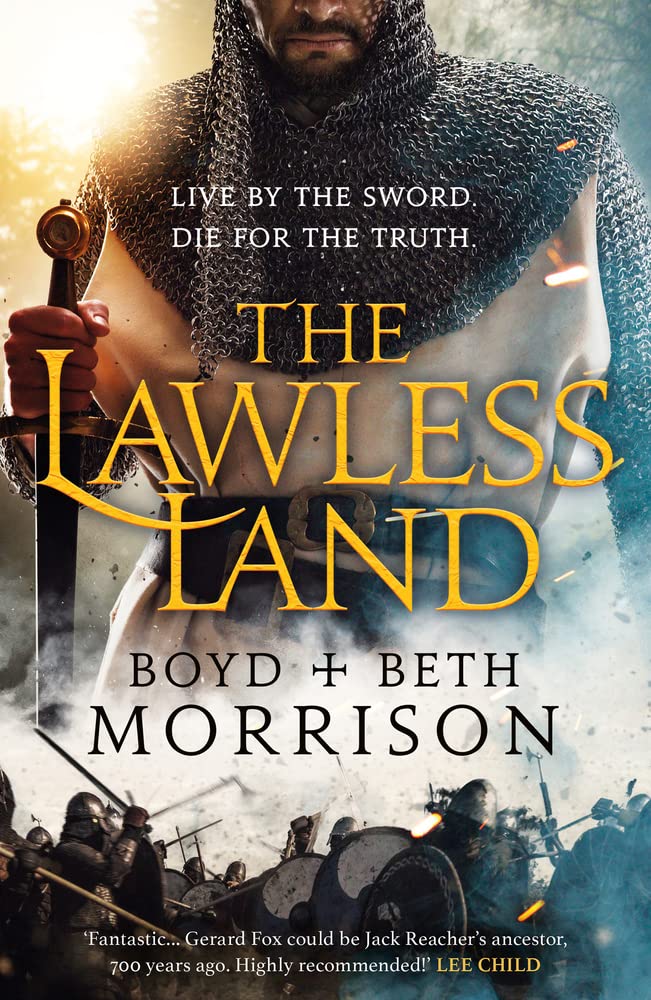
Death to the Emperor by Simon Scarrow

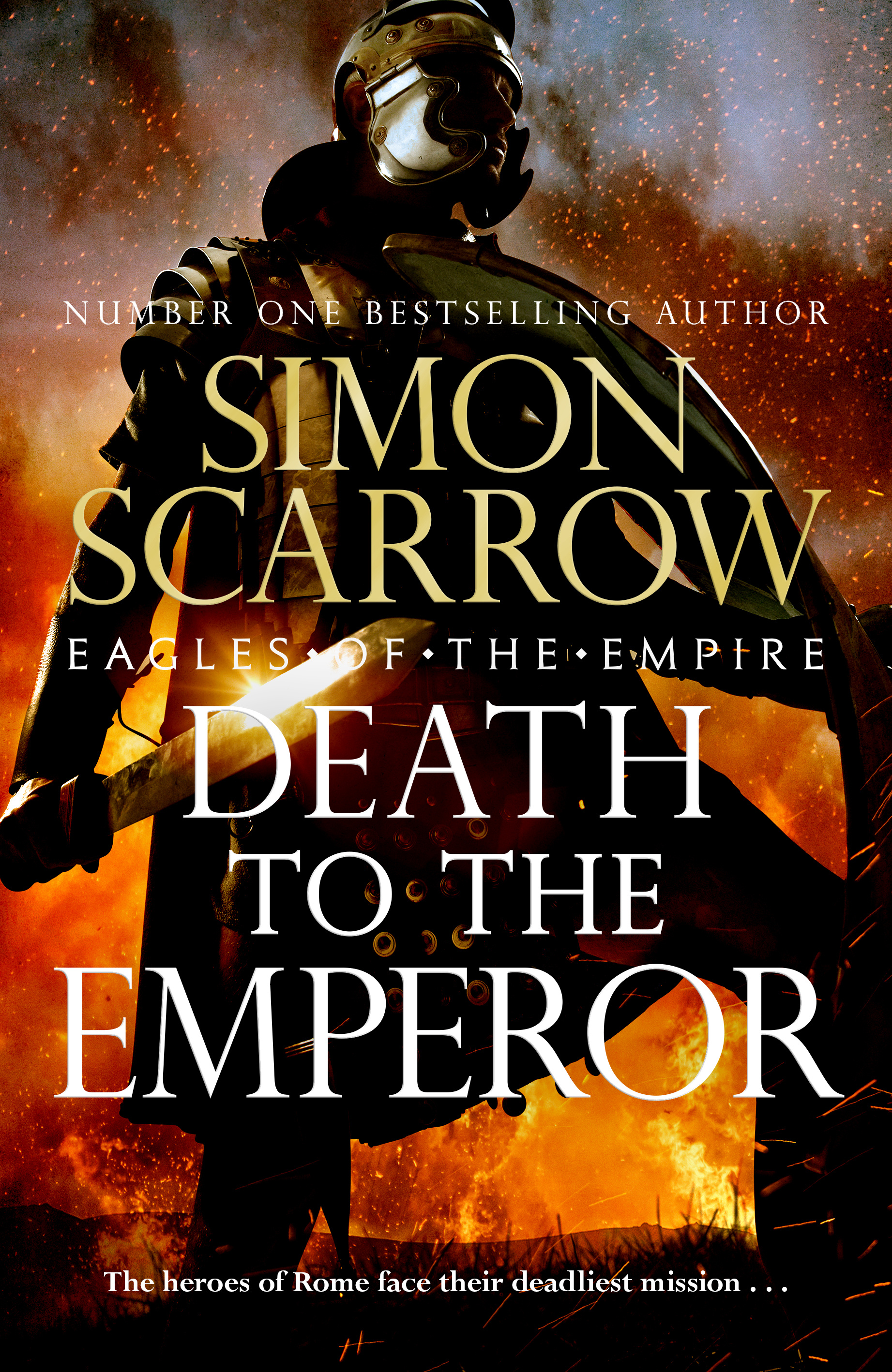
Death to the Emperor Cover

Publisher: Headline (Trade Paperback – 15 November 2022)

Series: Eagles of the Empire – Book 21

Length: 466 pages

My Rating: 4.75 out of 5 stars

Amazon

One of the world’s best historical fiction authors, Simon Scarrow, returns with another epic instalment in his brilliant long-running Eagles of the Empire Roman history series, Death to the Emperor.

I have made no secret of my deep appreciation for the works of Simon Scarrow, who is easily one of my favourite historical fiction authors.  A talented and compelling author, Scarrow has written several great series and standalone reads that cover historical subjects such as the Napolenic wars, World War II and even a cool historical crime fiction novel, Blackout.  However, his most substantial body of work is his Eagles of the Empire series, which is one of the best historical fiction series I have had the pleasure of reading.  Set during the reigns of some of Rome’s most infamous emperors, Eagles of the Emperor follow two Roman soldiers, Prefect Cato and Centurion Marco, who have fought on multiple battlefields across the empire.  I have had a wonderful time reading this series over the years, and it features some outstanding books, including the last four novels, The Blood of Rome, Traitors of Rome, The Emperor’s Exile and The Honour of Rome.  Naturally I started reading the latest book in the series (the 21st book overall), Death to the Emperor, pretty much as soon as I got it, and boy did that prove to be a smart decision.

60 AD, Britannia.  After years fighting side by side together, Prefect Cato and Centurion Marco are back in Britannia, the land they helped conquer at the start of their partnership.  Since their first time there, their lives have been transformed in ways they could have never believed.  While Marco is retired, serving a senior administrative role amongst the other retired veterans in Britannia, Cato is hiding out on the island, attempting to avoid Nero’s wrath for rescuing the Emperor’s former mistress from exile.  Determined to make their new lives in Britannia work, Cato and Marco are once again thrust into danger as tensions escalate throughout the island.

While the usual malcontents and druids stir rebellion and conflict against the Romans, tensions are higher than ever, especially as rumours spread that Emperor Nero wishes to pull out of the savage province.  However, Nero is also determined to squeeze the island for every bit of wealth it has, and he dispatches a ruthless and dangerous procurator to do this.  Worried that this move may destabilise an already fragile Britannia, Cato and Marco attempt to help their ally, the recently widowed queen of the Iceni, Boudica, whose tribe has caught the eye of the Emperor and his Procurator.

However, soon duty separates the two old friends again, as Cato is conscripted by Britannia’s ambitious governor, Gaius Suetonius Paulinus, in his latest campaign to destroy the druid stronghold at Mona.  Left alone, Marco can only watch as outrage and disrespect brings the Iceni to the brink of war with Rome, one that he and his forces cannot possibly defeat.  Soon, the fate of Britannia lays in hands of one woman, Boudica, who can bring peace to the lands.  However, when Boudica is pushed too far, will she declare war on Rome, its Emperor, and her old friends Cato and Marco?

Death to the Emperor was an outstanding and fantastic read that once again highlights Scarrow’s impressive ability as a historical fiction writer.  Continuing the long-running story of Cato and Marco, Scarrow expertly dives into a major historical event and brings it to life in a compelling way.  I had a wonderful time reading Death to the Emperor and I felt that it was one of Scarrow’s better novels in recent years.

I loved the incredible story that Scarrow wove around Death to the Emperor, especially as it provides the reader with an excellent blend of action, adventure, character development and a ton of historical detail.  Set shortly after the events of the last book, The Honour of Rome, Scarrow continues several threads from there, with Cato and Marco attempting to settle down in their old stomping ground of Britannia and find some peace.  However, the death of Boudica’s husband soon leads to chaos as the disgruntled locals start to push back against the increasing control and greed of Rome.  After a good introduction, which sets much of the scene for the rest of the book, the protagonists are split up, with Cato forced to accompany Governor Paulinus on his campaign to eradicate the druids, while Marco remains behind to attempt to keep the peace.  This results in a great split of storylines, and both of their exciting character arcs really paid off.  Cato’s story arc is a pretty typical Scarrow narrative, as Cato takes control of a new regiment and leads them into several battles as part of his campaign.  This results in several impressive action sequences, including a great and highly exciting extended siege sequence at the druid stronghold of Mona, which was one of the best battle scenes in the entire book.  At the same time, Marco bears witness to all the key events that lead up to Boudica’s rebellion, as the villainous Catus Decianus antagonises the tribes, despite Marco’s best efforts to stop him.  Marco’s storyline is a lot more intense and emotionally rich as the protagonist attempts to save all his friends against heavy odds.  However, despite his best efforts, Marco and his fellow veterans find themselves forced to fight Boudica’s army, which results in a pretty memorable ending.

I deeply enjoyed how this compelling narrative came together, and Scarrow was on excellent form as he provided the reader with everything they needed.  While the start of the book is a little slower, it sets the scene perfectly, before all the action and deadly developments ensue at a faster and more intense pace.  The author really built up the tension throughout the narrative, and you really knew that everything was going to go wrong, and boy did it.  The resulting battles, which includes several very fun sieges, were well worth the wait, and Scarrow did a wonderful job of showcasing all the carnage of these fights.  Separating the main characters created a much more complex and wider narrative, and I liked the excellent contrasts between the battles, as Cato’s successes with his forces are mirrored by Marco’s desperate fights with the small band of retired fighters under his command.  The intensity of the plot got even more pronounced as the narrative continued, and the reader really gets drawn in as a result.  I personally powered through the second half of the book in very short order as I wanted to see how everything would unfold.  The desperate and bloody conclusion to the narrative was pretty shocking, especially as there are some major series moments featured here.  The resulting cliff hanger finisher was just perfect, and you are left wanting more.  I am not entirely sure I’ll be able to wait a whole year to see how this series continues, but I am sure that the reader is for even more excitement and shocks when Scarrow brings out his next book.

One of things that really impressed me about Death to the Emperor was the level of historical detail that Scarrow put into it as he covers some of the early events of Boudica’s uprising.  The author does a remarkable job showcasing all the events that lead up to the rebellion, and he paints a compelling and unique picture around it.  Many events are discussed or shown in intriguing detail, including the general oppression of the local tribes, the attempts to embezzle money from the Iceni, the capture and humiliation of Boudica, and the disregard that Nero had for Britannia and his rumoured plans to abandon the province.  All these events, eventually lead up to the rebellion and it was fascinating to see them come about, especially through the eyes of a common soldier character like Marco.  The subsequent early battles of this rebellion, including the fight at Camulodunum, are very dark and brutal, and I deeply appreciated how Scarrow put his protagonists in the centre of these bloody conflicts, as they really raise up the intensity of the narrative.  At the same time, Scarrow also spends a good part of the book highlighting Governor Paulinus’s invasion of the druid stronghold of Mona.  This compelling campaign is often overshadowed by Boudica in history books, but it was an important part of the events at that time, especially as it left the rest of the province undermanned.  Scarrow covers this campaign extremely well through the book, especially as Cato is the officer usually at the front of the fighting, and it became quite a key part of the book.  I loved seeing this blend of historical events throughout Death to the Emperor, especially as Scarrow brings his usual flair for showcasing the Roman war machine throughout this book, highlighting the strategies and martial techniques of the Romans in exquisite detail.  I can’t wait to see the rest of Boudica’s rebellion in the next Eagles of the Empire book, as it is going to be epic.

Scarrow does another awesome job with the characters in Death to the Emperor, as he tells some intriguing character arcs that really helped to shape the narrative.  The primary focus as always is one of the series’ main protagonists, Prefect Cato and Centurion Marco.  Both have some intriguing character moments in this book which I had a great time with here.  Cato’s arc is pretty typical for much of the series, with the prefect forced back into combat, this time leading an auxiliary cohort on the campaign to Mona.  Cato’s arc is filled with a huge amount of action and intense battles as he fights from one end of Britain and back again.  It is always fun to see Cato in action, especially as he takes his units into some bloody battles, using a range of unique tactics to win.  While Cato is fun, the most intense character moments is focused on Macro, who remains behind and watches over the province while the army is gone.  Marco, who is mostly retired at this point, finds himself in a unique leadership position, and must work his force of reservists into a coherent force.  At the same time, he also finds himself greatly conflicted as he finds his loyalty to Rome tested due to his friendship with Boudica.  Forced to take military action against them, Marco tries to protect Boudica and her family, however, his orders and his slimy commander make that impossible, and he must decide whether he should continue to blindly follow Rome or do what is right.  His decision will have huge impacts on the story, and it places him in some dark situations.

Aside from Cato and Marco, who tend to be the primary point-of-view characters, Death to the Emperor has an awesome cast of supporting characters who really add a lot to the overall narrative.  This includes Boudica, who serves as Rome’s main antagonist in this arc of the series.  Boudica has actually been a friendly supporting character for many of her previous appearances, having formed a relationship with the two protagonists.  However, this book sees all that change as she is pushed too far, becoming the warrior queen we all know.  Scarrow handled her transformation from friend to deadly enemy extremely well, and it was fascinating to see her interact with Marco, especially as he keeps trying, but failing, to help her.  Aside from Boudica, I also liked seeing more of the fun supporting character, Apollonius.  Apollonius has been an interesting figure for the last few books, serving as Cato’s spy and advisor, and generally being a good secondary protagonist.  He has a very interesting time in Death to the Emperor as he remains behind to help Marco.  I loved seeing the continued relationship between the two, as Marco generally disapproves of Apollonius, and it was also quite intriguing to get some insights into why Apollonius chooses to stay and help Cato.  The final character I need to point out is Catus Decianus, the Roman Procurator who is generally considered responsible for Boudica’s rebellion.  Scarrow does an amazing job with Decianus, a real historical figure, and he turns him into a very despicable villain in Death to the Emperor.  The author paints him as an arrogant, greedy fellow, whose arrogance and general dislike of the Britannia locals, leads to the resulting war.  You really cannot help but hate Decianus, especially as he really is the main villain of this story.  These great characters, and more, turn out to be an amazing cast, and I had a wonderful time seeing the outstanding and dramatic narrative Scarrow wove around them.

Simon Scarrow continues to showcase why he is one of the best historical fiction authors in the world with the latest entry in his exceptional Eagles of the Empire series, Death to the Emperor.  Expertly showcasing the brutal events of Boudica’s rebellion with his long-running protagonists right in the middle, Scarrow tells a powerful and action-packed story that takes his characters into some dark direction.  Captivating, exciting and oh so bloody, Death to the Emperor will keep you relentlessly entertained and ensure you come back for more books in this epic series.  Highly recommended!

Amazon

Call of Empire by Peter Watt

Call of Empire Cover

Publisher: Macmillan (Trade Paperback – 25 October 2022)

Series: The Colonial series – Book Five

Length: 368 pages

My Rating: 4.5 out of 5 stars

Amazon     Book Depository

Australia’s master of the historical adventure returns with another deeply exciting and highly intriguing character driven read that follows one historical family as they embark on war and adventure across the world, Call of Empire by Peter Watt.

Towards the end of each year, I always know that I am about to have my historical action and adventure quota filled as the new Peter Watt is coming out.  Watt has been a particularly enjoyable and compelling Australian author for years, producing intriguing historical fiction books with a focus on Australian history.  His works have so far included the long-running Frontier series and his compelling Papua trilogy, both of which contained some remarkable historical adventures.  However, I personally have been really getting into his currently body of work, The Colonial series, which I have had a wonderful time reading in recent years.

The Colonial series started of back in 2018 with The Queen’s Colonial, an intriguing read that followed young Australian Ian Steele in 1845 as he switched places with an English nobleman to take up his commission in a British regiment.  Becoming Captain Samuel Forbes, Steele found himself drawn into several of England’s deadly 19th century wars, while also forced to confront several dangers back in England as the real Samuel Forbes’ family sought to have him killed.  This fantastic series continued for two more books, The Queen’s Tiger and The Queen’s Captain, both of which were excellent reads.  Watt continued the series last year with The Colonial’s Son, which jumped ahead a couple of decades to follow the main character’s oldest son as he followed in his father’s footsteps and become a soldier in the Queen’s army.  I had a great deal of fun with these exciting books, and I was very happy when I received the next entry in the series, Call of Empire.

Starting in 1885, several years after the conclusion of The Colonial’s Son, Call of Empire sees protagonist Ian Steele finally living the quiet life in New South Wales, enjoying time with his family and friends, and expanding his business empire.  However, the British Empire is constantly finding itself in conflict across the globe, and soon the young New South Wales colony is called upon to send troops to assist the British campaign in Sudan.

Determined to serve the Empire once again, Ian’s oldest son, Josiah, takes a commission in the New South Wales army and journeys to Africa to fight the Sudanese forces for the British.  However, his decision will alienate him from the love of his life, Marian Curry, who is determined that he stop fighting in imperialistic wars.  At the same time, Ian’s younger son, Samuel, is learning the family business out in the Pacific with the family’s friend, Ling Lee.  However, Samuel and Lee are soon dragged into a dangerous plot to smuggle guns for the Chinese, as Lee’s obsession with freeing China from European control leads them into mortal danger.

Soon the entire Steele family finds themselves in deep trouble across the world, and only the most daring of actions will help them survive.  But as the Empire’s wars continue and the Steele family and their friends are drawn into even more conflicts, can even their legendary luck continue?  Death and tragedy awaits them all, and soon the Steele family will face a loss they never expected.

This was another fantastic and deeply exciting novel from Watt, who continues to dazzle with his fast-paced writing and impressive historical insights.  I loved the awesome story contained in Call of Empire, and I ended up powering through this book in less than a day.

Watt produces another exciting and ultra-fast paced story for Call of Empire that takes the reader on a wild and captivating journey through some interesting parts of late 19th century history.  Starting in 1885, Call of Empire primarily follows the three male members of the Steele family as they attempt to overcome the various challenges they face in their respective endeavours.  Watt tells a multi-layered, multi-generational, character driven story that follows multiple characters simultaneously as they engage in their own story.  This means that readers are often treated to a range of different storylines in the same chapter, having one character engaged in war, while another deals with issues at home, and at the same time a third finds themselves caught up in adventures at sea.  This makes for quite a complex read, although the range of storylines are well balanced and never oversaturate or confuse the story.  Indeed, Watt is a pretty clear and concise writer, and the reader is able to have a lot of fun with several of the storylines at the same time.  Watt features an outstanding range of storylines throughout Call of Empire, and I loved the blend of war, politics, exploration, business, romance, character development and legal concerns that were featured at various points throughout the 15 year long plot.  This reminded me a lot of the author’s previous Frontier novels, especially the focus on one big family, and I had a wonderful time seeing the elaborate narrative he wove around his characters.  Watt really takes this story in some interesting directions, and there are a few big surprises, as well as some tragedies that established readers of this series will be hit hard by.  This proved to be quite an addictive read, and I loved seeing his characters continue to traverse through life in their chaotic and adventurous ways.  The book ends at the start of the new century, and it looks like Watt will be taking his characters in World War I next time, which I am sure will be suitably traumatic.

Easily my favourite thing about this book was Watt’s excellent dive into the always eventful colonial history of Australia.  In particular, Watt examines several lesser-known wars and conflicts from the 19th century, with a particular focus on the role of New South Wales.  This starts early in the plot with one of the characters getting involved in the Suakin Expedition in Sudan, which was part of the larger Mahdist War.  This deployment saw a battalion of New South Wales soldiers travel to Sudan as part of the war effort and was the very first military force to be raised and deployed overseas by Australia.  While there wasn’t a lot of fighting involved with this campaign, I was deeply intrigued by the history and the politics behind it, and Watt did a wonderful job of exploring it in great detail throughout the book by inserting his characters.  Watt continued this trend throughout the rest of the book, which saw several of his characters involved in both the Boer War and the Boxer Rebellion in China.  Both conflicts had Australian soldiers involved, fighting on the side of the British, and Watt took exquisite care to explore what role the Australians played in them, and how they came to be involved in the conflict.

Out of all of them, I particularly enjoyed the captivating examination of the Boer War in Africa, which was one of the more deadly wars Australians fought in during the 19th century.  This war, and one of the character’s roles in it, dominated a good part of the book, and Watt did an amazing job of bringing different parts of the conflict to life.  The author really captured just how dark and bloody this war was, from snipers in the African bush, to the horrors inflicted on the Boer settlers.  However, Watt saves some of his best writing for the Battle of Elands River, a protracted battle that saw the Boers surround a force of Australians and their allies in a brutal siege for 13 days.  Naturally, one of the characters is right in the middle of this fight, and Watt really showcased the carnage and terror that the Australians would have felt being surrounded and bombarded.  I honestly didn’t know a great deal about some of these early Australian military conflicts, and it was absolutely fascinating to see them come to life in the hands of this talented author.  Having this great historical background really enhanced the overall quality of the novel, and I had a wonderful time diving back into these sometimes overlooked parts of Australian military history.

As I mentioned above, Call of Empire was a very character focused book that featured a range of fantastic point of view protagonists through whose eyes the story unfolded.  Watt features a great combination of characters, with a compelling mixture of younger figures who were the focus of The Colonial’s Son, and even a few characters from the first three Colonial books.  There was quite a range of different character storylines in Call of Empire, and you swiftly get drawn into the various unique adventures of each of the characters.  It was fascinating to see how the older characters had evolved since their original adventures, and I liked how Watt started focusing more on the next generation, including by expanding the role of the younger Steele son, Sam, who had an amazing outing here.  There is a great examination of the events that help to form these figures character, and it was fantastic to see them overcome so much adversity at various parts of their life.  I will say that some of the male Steele characters did tend to blend personality wise as the book proceeded, mostly as they are cut from the same adventurous cloth, but you still grow to like all of them, and you ended up getting touched when bad things happen to them.  There are some very interesting and powerful developments that hit the main characters in this book, and this ended up being a very key novel in the family history.  I had a wonderful time seeing the latest exploits of the Steele family, and with the next generation being introduced towards the end of the book, you know that they have even more adventures to come.

Peter Watt continues to showcase his talent as Australia’s premiere author of the Australian historical adventure with his latest Colonial novel, Call of Empire.  Bringing back several of his fantastic protagonists from the previous books, Watt crafts together another exciting read that dives into some intriguing parts of Australia’s military history.  Fast paced and full of awesome action, Call of Empire is another amazing read from Watt, and one that I had a lot of fun getting through.

Amazon     Book Depository

Warhammer 40,000: The Wraithbone Phoenix by Alec Worley

The Wraithbone Phoenix Cover

Publisher: Black Library (Audiobook – 30 August 2022)

Series: Warhammer Crime

Length: 11 hours and 6 minutes

My Rating: 4.75 out of 5 stars

Amazon     Book Depository

The entertaining team of Baggit and Clodde return for another Warhammer Crime adventure in the rip-roaring and deeply exciting science fiction thriller romp, The Wraithbone Phoenix by the impressive Alec Worley.

Last week I presented a review that talked about the intriguing Warhammer Crime series that combined crime fiction narratives with elements of the iconic Warhammer universe to create some amazing reads.  While some Warhammer novels already feature some intriguing crime fiction elements, such as in Necromunda novels like Kal Jericho: Sinner’s Bounty by Joshua Reynolds, the Warhammer Crime books are a much more complete melding, with cool thriller plots and complex mysteries.  I was rather intrigued by this concept, especially as I love it when authors combine wildly different genres together, and I mentioned how I planned to try out one of those books next.  Well, that book was The Wraithbone Phoenix by Alec Worley, an awesome and captivating read set in the Warhammer 40,000 universe.  A follow-up to Worley’s 2020 full-cast audiobook, Dredge Runners, The Wraithbone Phoenix is a full-length novel that brings back the protagonists of the original audiobook and puts them in another unique and deadly situation.

In the far future of the universe, there are few places more corrupt and chaotic than the crime-ridden city of Varangantua.  Life is cheap on the mean streets of Varangantua, and death waits around every corner, especially if you have a massive bounty on your head.  Unfortunately, the most wanted in the city currently are the abhuman deserters turned criminals, Baggit and Clodde.  Baggit, a tricky ratling always looking for the next score, and Clodde, his ogryn friend with a rare facility for thought, have made an enemy of one of the most dangerous men in the city, and now everyone is after their heads.  Hiding out within one of the city’s industrial salvatoriums, Baggit and Clodde have taken on new identities until the heat dies down.  However, the twos natural inclination for getting into trouble soon breaks their cover, and they are soon forced out into the open.

Desperate to find a way to pay off their debts, Baggit hears an interesting bit of news that could change all their fortunes.  One of the nearby salvatoriums is dismantling the decommissioned Imperial Navy ship, Sunstriker, the reputed home of a long-lost treasure, a xenos artifact known as the Wraithbone Phoenix.  Guided by the rumours he heard when previously served about the Sunstriker, Baggit believes that the Wraithbone Phoenix is still hidden aboard, and its value is more than enough to get rid of their bounty.

But no secrets every remain safe in Varangantua, and as Baggit and Clodde make their preparations to sneak into the Sunstriker, news of their location and their potential treasure leaks out.  Soon every criminal, bounty hunter, treasure hunter and mercenary is on their way towards the Sunstriker, desperate to claim either the bounty on Baggit and Clodde’s head, or the Wraithbone Phoenix.  Forced to face off against the very worst killers that Varangantua and its main criminal cesspool, the Dredge, has to offer, Baggit and Clodde attempt to do the impossible, recover the artefact from the ship and get out with their heads intact.  But can even the clever Baggit and the indomitable Clodde escape the deadly wave about to crash down upon them?

Wow, now this was one of the most entertaining and thrilling Warhammer 40,000 novels I have read all year.  Worley has produced an amazing novel in The Wraithbone Phoenix that did a wonderful job blending Warhammer elements with an impressive crime fiction narrative.  Filled with a ton of action, some amazing humour, and so many outrageous characters, The Wraithbone Phoenix is an outstanding read that proves to be extremely addictive.

I had such a brilliant time with The Wraithbone Phoenix, especially as Worley pulled together an extremely impressive and intense narrative that is very hard to put down.  Set in a particularly crime-ridden and corrupt city, the novel sees the chaotic duo of the ratling (halfling/hobbit) Baggit and the ogryn (ogre) Clodde, get into all manner of trouble.  Featuring a range of character perspectives, the first third of the book is pretty firmly focussed on the main duo, with some fun scenes from the contemptable villain Lemuel Scratchwick.  Forced into hiding due to past mistakes, Baggit comes up with an ambitious plan to recover the Wraithbone Phoenix, a legendary xenos treasure that is rumoured to be hidden in a nearby ship being scrapped (the theft and hiding having been cleverly set up in some early interludes).  However, after Lemuel overhears and spills the beans in a very public way, the entire city knowns what the two are planning, and a horde of killers and thieves head towards the ship.  The book starts spreading its focus to several other outrageous figures, all of whom are interested in either the Wraithbone Phoenix or killing Baggit and Clodde.  The author does a wonderful job introducing each of the characters, and you soon become invested in their hunt, as all of them are pretty amusing in their own way.  The action ends up in the decommissioned ship, were everyone starts their search for the missing treasure, and it doesn’t take long for everyone to start fighting each other in a series of bloody battles.  You honestly have no idea who is going to survive the various encounters, and it is very fun to see the distinctive characters dying in surprisingly and compelling ways.  At the same time, the characters also attempt to solve the mystery of the hidden Wraithbone Phoenix, and the various hints about its initial disappearance are cleverly woven into the modern tale, requiring the protagonists to solve it.  Eventually, only a few characters are left, and there is a great series of twists and turns that sees everyone get what they truly deserve.  While I did think that Worley perhaps went one twist too far (the final one was a bit too metaphysical for my taste), the reader comes away extremely satisfied, and highly entertained.

I had a wonderful time with this awesome book, and I think that Worley did a great job setting the entire narrative out.  The combination of crime fiction elements and the great and grim Warhammer 40,000 setting worked extremely well, and you ended up with a high-octane thriller that saw futuristic and half-crazed killers go against each other in a deadly contest for money and treasure.  The use of various perspectives allows you to get to know the various outrageous killers and participants in a very short amount of time, and you are soon invested in them and their various personal struggles as they duke it out.  I was getting a very cool and cinematic vibe from this story that put me in mind of films and books like Smoking Aces, Snatch or Bullet Train, with big casts all working against each other for the same goal.  While you are generally rooting for the main two characters, it is also very fun to see the other players in action, and the multiple unique interactions all these crazy figures have results in an impressive and frenetic read.  Worley backs this up with a ton of brilliantly written and highly detailed action sequences, and you really won’t believe the range of destruction and deliciously devious deaths that occurs.  There are so many impressive and cleverly set up moments throughout this narrative, and the deaths of several characters are usually the result of some well-placed bit of trickery that occurred chapters ago.  All this action, intrigue and character development is perfectly bound together by the book’s overarching humour, which helps to balance out the more intense elements of the novel, while also keeping everything darkly funny.  There are so many good jokes or hilariously over-the-top moments scattered throughout the novel, and I had a lot of great laughs as I powered through it.  Heck, even the title, The Wraithbone Phoenix, is a play on the classic noir book/film, The Maltese Falcon.  Everything comes together so perfectly throughout the book, especially as Worley also includes several outstanding interludes, some brilliant flashbacks, and even some hilarious in-universe text excerpts and announcements, all of which add perfectly the funny, but grim, tone of the book.  This was an incredibly well written and captivating read, and it proves quite impossible to put down at times.

While The Wraithbone Phoenix does have an outstanding crime fiction narrative, this book wouldn’t be anywhere near as good if it weren’t set in the grim future of Warhammer 40,000.  Worley did a remarkable job setting the book in this futuristic world, and it was great to see the various technologies and factions from the game being utilised in a crime story.  The author really works to explain many different elements from the Warhammer 40,000 lore here, and readers new to the franchise can easily dive into this book and start appreciating its clever story and settings.  I particularly loved the primary location of the corrupt city of Varangantua.  The author expands on this city a lot in this new book, giving more depth than it had in Dredge Runners, and you see more of the massive industries the planet supports, and the terrible conditions the people forced to work there endure.  Worley continues to hammer home just how much of a dark, dystopian society Varangantua, and the larger Imperium, really is for ordinary human citizens, and that their supposedly enlightened rulers are in many ways just as bad, if not worse, than the various monsters and the forces of Chaos they fight against (at least Chaos worshippers are honest about their intentions).  You can really sense the woe and control that Varangantua’s rulers have over the populace, and this is only enhanced by the various propaganda announcements that are played at various intervals throughout the book.  The propaganda posts are very obviously biased in their attempted manipulations and exhalations for service and order, that they are all extremely funny, even as they show just how bad things are by denying them.  However, Worley takes this even further by showing the darker, criminal side that surrounds the city, and it was really cool to see just how much worse things could get.

One of the most intriguing Warhammer 40,000 elements that Worley explores in The Wraithbone Phoenix is how the Imperial abhumans are treated.  Abhumans are genetically diverse humans who come in many shapes and sizes, like the small and sneaky ratlings and the gigantic, but dumb, ogryn.  Tolerated by the Imperium for their usefulness, these abhumans are treated as second-class citizens, looked down on by everyone just for the way they were born.  While this has been explored in other books, Worley really hammers it home in The Wraithbone Phoenix, especially as the two main characters are both abhumans.  You get a brilliant examination of how abhumans are regarded throughout the Imperium, both in the Astra Militarum and in general society, and the results are pretty damn grim.  Not only do all the humans treat them terribly and generally tell them they are worthless (there is an entire litany they need to learn about them being abhorred, unclean, but forgiven), but there are multiple examples of abhumans being killed or maimed, just for what they are.  Not only is this fascinating, while also enhancing the dark nature of the Imperium and the supposedly righteous humans, but it also becomes quite a key plot point throughout the book.  There are multiple scenes that focus on the protagonists struggling to deal with the prejudice they have suffered throughout their life, which defines them and drives them.  In addition, the plot around the hidden Wraithbone Phoenix is down to a mistreated ratling trying to get his revenge after being unfairly targeted and left filled with hate.  This proves to be quite a fascinating and well-written aspect of The Wraithbone Phoenix, and I loved being able to see everything from the abhumans perspective.

I also have a lot of love for the excellent characters that Worley set his story around.  There is such a great range of distinctive and captivating characters throughout The Wraithbone Phoenix, and you really get drawn into their individual tales and battles for survival and redemption.  Most of the focus ends up going around the main characters of the book, Baggit and Clodde, abhuman Astra Militarum deserters turned criminal entrepreneurs who were introduced in Dredge Runners.  Worley ensures that new readers can quickly pick up who Baggit and Clodde are, and it was so much fun to follow this ratling/ogryn combination, especially as they continued their chaotic lives of crime.  Both protagonists have their own brilliant characteristics, including Baggit’s (I assume the name is a fun homage to Bilbo/Frodo Baggins) enjoyment of plans and schemes that never work out, and the surprisingly smart and philosophical nature of Clodde (that’s what happens when you get shot in the head).  The two characters play off each other perfectly, with Baggit taking on the role of leader and carer for his big comrade, and Clodde letting him, while also not allowing him to get away with anything, thanks to the increased understanding he has.  We get a bit more history surround these two characters, including their time in the army, and while it is not fully explored yet, you get to see the fantastic bond they have.  Baggit ends up getting a bit more of a focus in this book than Clodde, mainly because the central plot point is so tightly tied to the fate of a mistreated ratling.  Baggit, who suffered his own abuse from humans while serving, becomes obsessed with the fate of this long dead ratling, and he is determined to find out what happened to him and whether he got his revenge.  Baggit really emphasises with him as the story continues, and his obsession for answers lead him to make some big mistakes, especially once he learns all the ancient ratling’s secrets.  Both Baggit and Clodde are extremely likeable, and you can’t help but fall in love with the scheming ratling and the sweet, if brilliantly weird, ogryn.

Aside from Baggit and Clodde, Worley also fills The Wraithbone Phoenix with an eclectic mix of characters, with some very diverse storylines and characteristics to them.  The most iconic and heavily featured are the various assassins, bounty hunters and other individuals who are flocking to the Sunstriker for various reasons, be it money, treasure, or a chance of redemption (sometimes all three at once).  This list of crazy characters includes a genetically enhanced killing machine, a cult of phoenix-worshiping wackjobs, a team of elite mercenaries, an ageing bounty hunter trying to regain his reputation, a sadistic archaeologist with a love of whips, another ratling with a past connection to Baggit and Clodde, a disgraced and drunk Imperial Navy officer with a dream of finally impressing his dead mother, and the mysterious hooded assassin known only as Death.  Worley did a really good job of introducing each of these unique figures, and you swiftly get drawn into their compelling personal stories and outrageous personalities, especially after witnessing several scenes from their perspective.  While I could go on for ages about all of these dangerous people, I’m mainly just going to give a shoutout to the character of Lemuel Scratchwick, a steward at the plant Baggit and Clodde were working at, who really grows to hate the pair.  Dragged down from his high perch by them, Lemuel spends the rest of the book trying to get even and comes across as the most arrogant and detestable villain.  It is so amusing to see Lemuel in action, especially as his pride often gets the better of him and nothing goes his way, much to my delight.  He forms quite an unhealthy rivalry with Baggit which draws them both into taking stupid risks.  All these over-the-top, but deeply likeable characters, really enhanced my enjoyment of this book and I can’t wait to see what impressively outrageous figures appear in Worley’s next novel.

Unsurprisingly, I chose to listen to The Wraithbone Phoenix on audiobook, which is really one of the best ways to enjoy a great Warhammer book.  This was a moderately long audiobook, coming in at just over 11 hours, and I found myself getting through it in a relatively short amount of time, including powering through the last several hours in a day trying to get to the conclusion.  This was a very fun and entertaining audiobook, and I had a great time listening to the awesome humour and intense violence unfold, especially as the narration by Harry Myers painted quite an impressive picture.  Myers, whose work I previously enjoyed in another recent Warhammer 40,000 novel, Day of Ascension by Adrian Tchaikovsky, does a pretty epic job in The Wraithbone Phoenix, and I loved his narrative take on the captivating story.  Every character in this audiobook is given their own distinctive and fitting voice, which I deeply enjoyed, especially as it helps the listener to connect more to them and the story.  Myers clearly had a lot of fun when it came to voicing all the outrageous figures and some of the voices he came up with were very amusing.  I really appreciated the squeakier voice he used for the rattling characters, as wells as the deeper boom of Clodde, and the rest of the voices he came up with were not only distinctive and fun, but they also helped to enhance the inherent traits of the character it was associated with.  For example, he really conveyed the deep arrogance and distain contained within the character of Lemuel Scrathwick, as well as he dramatic decline in sanity as the book unfolded, and I really appreciated the narrator’s attention to detail with that.  Myers really impressed me as a narrator in The Wraithbone Phoenix, and I liked how some of his scenes, namely those depicting the in-universe propaganda, were enhanced with some serious and inspiration music and sound effects, which made the absurd declarations even more hilarious.  This was such a good audiobook, and I cannot recommend it enough as a way to enjoy this epic Warhammer novel.

Overall, this was an outstanding first Warhammer Crime novel from me, and I had such an incredible time getting through this book.  The Wraithbone Phoenix is an impressive and highly addictive Warhammer 40,000 read, and I loved the elaborate story that Alec Worley came up with for it.  Containing some brilliant characters, a highly entertaining story, and a great combination of crime fiction and Warhammer elements, The Wraithbone Phoenix comes highly recommended, and you are guaranteed to have an exceptional time reading this witty and intense read.

Amazon     Book Depository

Star Wars: The Princess and the Scoundrel by Beth Revis

Star Wars - The Princess and the Scoundrel Cover

Publisher: Del Rey (Trade Paperback – 16 August 2022)

Series: Star Wars

Length: 348 pages

My Rating: 4 out of 5 stars

Amazon     Book Depository

Outstanding author Beth Revis presents an intriguing and enjoyable new entry in the extended Star Wars canon, with the fantastic tie-in novel, The Princess and the Scoundrel.

2022 has been a rather interesting year for Star Wars fiction.  While the focus has primarily been on the High Republic sub-series, several great authors have produced some awesome reads set around the various film trilogies (such as Star Wars: Brotherhood by Mike Chen).  However, one of the most exciting recent Star Wars tie-in novels is a character-driven read that focuses on the relationship between Han Solo and Princess Leia, The Princess and the Scoundrel, which was written by exciting author Beth Revis.  Revis, who already has some experience with the Star Wars canon, having written the 2017 novel, Rebel Rising, came up with an awesome story in The Princess and the Scoundrel that I had a wonderful time reading.  Not only does The Princess and the Scoundrel explore an interesting period of the complex and inspiring Star Wars canon, but it also contained a fantastic romantic heart that will appeal to a wider range of readers.

Goodreads Synopsis:

The Death Star is destroyed. Darth Vader is dead. The Empire is desolated. But on the forest moon of Endor, amongst the chaos of a changing galaxy, time stands still for a princess and her scoundrel.

After being frozen in carbonite, then risking everything for the Rebellion, Han is eager to stop living his life for other people. He and Leia have earned their future together, a thousand times over. And when he proposes to Leia, it’s the first time in a long time he’s had a good feeling about this. For Leia, a lifetime of fighting doesn’t truly seem over. There is work still to do, penance to pay for the dark secret she now knows runs through her veins. Her brother, Luke, is offering her that chance—one that comes with family and the promise of the Force. But when Han asks her to marry him, Leia finds her answer immediately on her lips . . . Yes.

But happily ever after doesn’t come easily. As soon as Han and Leia depart their idyllic ceremony on Endor for their honeymoon, they find themselves on the grandest and most glamorous stage of all: the Halcyon, a luxury vessel on a very public journey to the most wondrous worlds in the galaxy. Their marriage, and the peace and prosperity it represents, is a lightning rod for everyone in the galaxy—including Imperial remnants still clinging to power.

Facing their most desperate hour, the soldiers of the Empire have dispersed across the galaxy, retrenching on isolated worlds vulnerable to their influence. As the Halcyon travels from world to world, one thing becomes abundantly clear: The war is not over. But as danger draws closer, Han and Leia find that they fight their best battles not alone but as husband and wife.

I had a fantastic time getting through The Princess and the Scoundrel as Beth Revis wrote a pretty awesome and captivating Star Wars novel that covered a lot of bases.  Split between the alternating perspectives of Han and Leia, The Princess and the Scoundrel takes off right after Return of the Jedi.  While the victorious Rebellion plans their next moves, Han and Leia decide to make the most of their sudden freedom to get married after their traumatic year apart.  While both are still reeling from the events of the original trilogy, they come together in a fun wedding scene, before leaving on a glamorous trip that will be part honeymoon part propaganda show.  While initially trying to enjoy their honeymoon, both quickly fall into their old patterns, with Han chafing at the formality, while Leia continues to try and do her work as an ambassador and planner.  Arriving at an isolated ice planet, Han and Leia soon discover a destructive Imperial plot and must come together as a couple to thwart it.  This ended up being a really distinctive read, as Revis worked a more romantic plotline into the always entertaining Star Wars canon.  I loved seeing this fantastic tale of Han and Leia’s first adventure as husband and wife, and Revis ensured readers got an excellent blend of action, intrigue, and character development, as you witnessed these two amazing protagonists try to come together as a married couple.  There is a little something for everyone in this great read, and I found myself getting caught up in the action and the impressive focus on two of my favourite fictional characters.  An overall brilliant book that is really easy to enjoy and appreciate.

The Princess and the Scoundrel proved to be a very interesting addition to the current Star Wars canon.  While the romance between Han and Leia was strongly explored in the previous Legends canon, the current Disney canon has not featured it as much, and as such you see some fascinating events from their lives here for the first time.  Revis paints quite a fun picture of the sudden wedding these two have, which features entertaining interruptions from several key characters, some tricky manoeuvrings from Lando to get Han into a nice outfit, and, of course, a ton of Ewoks, while the honeymoon is as chaotic as you would expect from these two.  As such, this is a pretty key book for all fans of these two iconic characters, and I think that Revis hit an excellent tone when it came to some of these key events.  The author also fits in a lot of fantastic references and moments that a lot of Star Wars fans will appreciate, most of which are covered in a very fun way.  For example, the characters finally address that infamous kiss between Luke and Leia at the start of The Empire Strikes Back, with Han and Luke having a rather awkward conversation about it, before agreeing never to bring it up again.  Revis also makes quite good use of an interesting Han Solo villain from one of the previous canon books, and it was great to see some continuation from the previous intriguing storyline.  That, and several other amusing references, help to make this quite a key book for Star Wars fans, and I had a wonderful, nerdy time getting through it.

Aside from the direct references to the book, I was personally intrigued to see more about the period of Star Wars history that occurred in the immediate aftermath of the Death Star’s destruction in Return of the Jedi.  Despite the death of the Emperor, the war between the Empire and the Rebellion (now renamed as the New Republic), is still ongoing, and indeed some of the toughest fighting is still to come.  Several authors have covered this frenetic period in the current canon with some recent books, such as the Alphabet Squadron trilogy by Alexander Freed (made up of Alphabet Squadron, Shadow Fall and Victory’s Price).  However, I particularly enjoyed how The Princess and the Scoundrel covered this period, as it shows events literally hours after the end of the film.  Quite a bit is shown of the Rebellion’s initial strategies following the battle of Endor, as well as the Empire’s reactions to the death of the Emperor and the sudden shift in power.  While some of the wider campaigns aren’t shown, you get an interesting idea of what the military and political situation was at the time, which I deeply enjoyed.  Revis also spends time examining how members of the general public reacted to the news, and there is an interesting variation of responses.  Not only did some people straight out disbelieve that the events even occurred, with many assuming it was fake propaganda from the Rebellion, others who were associated with the Empire, or who had members of their family aboard the Death Star, acted quite hostile to the change in the established status quo.  These diverse reactions not only reflected some current real-world societal issues, but also provided a compelling insight into just how much influence the Empire had, even on the way to its downfall.  Throw in some hints and previews of the upcoming Operation Cinder, and this proved to be a very interesting addition the Star Wars canon that many established fans will really enjoy.

One of the strongest elements of The Princess and the Scoundrel is its impressive focus on the two main characters, Han Solo and Princess Leia.  While this book does contain a lot of action, intrigue and fantastic Star Wars elements, at its heart it is a romance novel between two well-established and complex characters, both of whom have experienced a lot of trauma and anguish in recent years.  Revis does a remarkable job of diving into both characters throughout the course of The Princess and the Scoundrel, and you really get a sense of their feelings, concerns and traumas following their victory.  However, there is also a great focus on their relationship, and you can really see the strong bond they have, even if they are still coming to terms with their feelings and their wildly different personalities.  I felt that Revis painted a realistic view of their relationship, which contains some difficulties early on, especially with their independent streaks.  However, the author also shows that the two characters are much stronger together, and they can work through any issues that come their way.  I think that this much better than just showing them having a fairy tale relationship, and I really appreciated the authors compelling take on one of the most iconic relationships in fiction.

Aside from their relationship, Revis also did a great job of diving into the complex emotional issues facing both central characters.  For example, Revis makes sure to explore the trauma surrounding Han after being trapped in carbonite for over a year.  Not only did he miss out on a lot of key events in his friends’ lives, but at this point of the book he has only been awake again for a few days, and some of his decisions are based on his concerns and fears about being trapped again.  Leia is also going through a lot after the discovery that Luke is her brother and, more importantly, that Darth Vader was her father.  As such, Leia spends much of the book attempting to reconcile the fact that her real father was a genocidal maniac who tortured her and is partially responsible for destroying her home planet.  This proves to be quite a deep and intriguing part of her character arc, especially since, unlike her newly discovered brother, she is unable to forgive Vader for everything he did.  There is also an interesting look at Leia’s early attempts to connect with the Force, after Luke reveals her Jedi potential.  Watching her attempts at using the Force is very fascinating, especially as she battles with her feelings about Vader while doing so and is reluctant to even try to use the abilities that he could do.  All these unique character examinations, and more, really help to showcase just how complex and traumatised Han and Leia were at this period, and how much their relationship helped them get past it.

Star Wars: The Princess and the Scoundrel by Beth Revis is an amazing read that provides Star Wars fans with something a little different to the typical tie-in novel.  Featuring a continuation of one of film’s most iconic romances, The Princess and the Scoundrels is at times touching and romantic, while also exploring the grim realities of the war-torn galaxy, all topped off with some classic Star Wars action and humour.  With an outstanding focus and understanding of its two main characters, The Princess and the Scoundrel was a fantastic novel that is well worth checking out.

Amazon     Book Depository

Quick review – Warhammer 40,000: Dredge Runners by Alec Worley

Dredge Runners

Publisher: Black Library (Audiobook – 8 August 2020)

Series: Warhammer Crime

Length: 1 hour and 1 minute

My Rating: 5 out of 5 stars

Amazon

Prepare to dive into the dark and fun world of the Warhammer Crime subseries with the short but incredible hilarious audio drama, Dredge Runners by Alec Worley.

Fans of this blog will be well aware of my current obsession with all things Warhammer fiction, as I have been making an effort to try out a range of their recently released books, all of which have been highly entertaining reads.  One of the main things that I love about the tie-in fiction that surrounds the Warhammer tabletop games is the sheer range of different stories that can be told, especially as the various authors associated with this franchise often go out of their way to blend it with other genres and story types.  As a result, there are several great Warhammer sub-series out there at the moment, including the Warhammer Crime books, which dive into the criminal underbelly of the Warhammer 40,000 universe and presents the readers with some intriguing and unique adventures.

I have been meaning to check out some Warhammer Crime novels for a while, especially as there are some quite fascinating sounding books already part of it.  I love the idea of the grim and gothic Warhammer universe blending with a more traditional crime fiction read, and I know I am going to have a lot of fun with all of them.  As such, when I saw that a new Warhammer Crime book, The Wraithbone Phoenix by Alec Worley, was coming out, I thought that it would be a good entry point to the wider Warhammer Crime sub-series.  However, I noticed that The Wraithbone Phoenix was actually a follow-up to a previous short story by Worley, Dredge Runners, which was released in 2020 as a full-cast audio drama.  Well, I am a reviewer who likes the get the complete picture and considering that Dredge Runners was just over an hour long I figured I would listen to it quickly to get some context before diving into The Wraithbone Phoenix.  As such, I listened to the whole of Dredge Runners in one go this morning, and it proved to be quite an amazing and amusing listen.

Goodreads Synopsis:

A Warhammer Crime Audio Drama

Baggit the ratling and Clodde the ogryn fight to survive on the mean streets of Varangantua as powerful enemies close in from all sides.

LISTEN TO IT BECAUSE
Experience the sounds of a crime-ridden city and enjoy the twists and turns of a tale starring some of the more unusual inhabitants of the Imperium of Man.

THE STORY
Baggit is a fast-talking ratling sniper with a greedy eye and loose morals. Clodde is an ogryn, a brute with a core of decency and a desire for a better life. Two abhuman deserters turned thieves, at large in the monolithic city of Varangantua, where only the tough or the ruthless survive. Having landed in debt to a savage crime lord, Baggit and Clodde end up in the crosshairs of the meanest, most puritanical sanctioner in the city. Caught between two powerful enemies, and with innocent lives at stake, the unlikely companions must think fast and hustle hard before death points a las-pistol in their direction… 

Unsurprisingly, Dredge Runners turned out to be just as amusing and fantastic as the plot synopsis suggested.  I loved the idea of two abhumans, in this case a ratling (a futuristic halfling sniper) and an ogryn (ogre), getting involved in a series of disastrous criminal enterprises after getting caught between the city’s biggest crime lord and a puritanical sanctioner (law enforcement official).  Despite its short runtime, Worley achieves a lot with Dredge Runners, perfectly introducing his excellent protagonists and taking them on a wild science fiction thriller adventure that includes hilarious exchanges, failed undercover operations and explosive heists.

Told completely through dialogue (with some sound effects giving off extra context), Dredge Runners’ story draws you in within the first few minutes as the author blends the more outrageous elements of the Warhammer 40,000 universe with a dark but amusing crime fiction narrative.  Due to the length, you do not often get the full story of the events taking place, but the subsequent reaction by the characters allows you to imagine the full destructive scope of their actions, and it often proves funnier this way.  There is a real focus on humour in this short production, and I was constantly left in stiches at some of the fantastic antics that the main characters get up to as a chaotic team.  However, the story also has some real heart to it, especially towards the end when the protagonists are forced to make some tough decisions about their future, and they find their greed crashing up against their moral responsibility to other abhumans.  Throw in some memorable and deeply cynical propaganda messages from the city authorities that shows just how corrupt and repressive the entirety of Imperial culture is in the Warhammer 40,000 universe (the one that concluded the story had me laughing hard), and this proves to be an outstanding Warhammer production that I had an absolute blast getting through.

One of the main things that Worley achieved with Dredge Runners is the successful introduction of protagonists Baggit and Clodde, who serve as a fantastic central duo.  On the surface, Baggit is a thieving rattling who serves as the team’s leader and plan maker, while Clodde is the muscle, going along with Baggit’s plans and often messing them up by not understanding them.  However, there is a lot more to both of them.  Baggit is desperate to escape the dark life they currently have in Varagantua and feels a responsibility to Clodde due to their connected past.  Clodde, on the other hand, is a rather unique and amusing ogryn character, who has an unusual intellectual side after getting shot in the head (by Baggit).  As such, Clodde comes off as surprisingly deep and philosophical, and he is way smarter than he appears, especially when it comes to Baggit’s antics.  These two play off each other perfectly, especially with Clodde acting as the group’s conscious, and their eventual attempts to get justice and do the right thing, paints them in a much different light that makes them even more likeable.

I really need to highlight the outstanding way that this audio drama was presented, as the fantastic production melded well with Worley’s great script.  Acted out by a full cast of talented voice actors and narrators who tell the entire story through dialogue, this was a really fun Warhammer presentation to listen to, especially as the dialogue was also enhanced by some great sound effects and small bits of music.  I was particularly impressed by the voice actors, as each of them gave it their all when it came to their specific character/characters, moulding their voices to fit their distinctive traits and personalities.  The cast was led by Jon Rand (Baggit) and Paul Putner (Clodde), who I previously deeply enjoyed in Ghazghkull Thraka: Prophet of the Waaagh!.  These two actors did an outstanding job with their abhuman characters in Dredge Runners, and they play these two humorous figures perfectly, showcasing their different natures while also slowly revealing their outstanding hidden hearts.  These two are expertly matched by Emma Noakes and Kelly Hotten, who play the antagonistic crime lord and sanctioner respectively.  Noakes and Hotten both bring some outstanding menace to their roles, and I loved hearing these more serious characters attempt to deal with the chaotic main characters.  The voice cast is rounded out by veteran narrators, David Seddon and Andrew James Spooner, who narrate some of the fun supporting characters, and I loved some of the unique and compelling voices they brought to the table.  This entire audio drama comes together extremely smoothly, and listeners are constantly aware of all the actions going on in the story, especially with the fantastic cacophony of explosions, gunshots and screams that often happen around Baggit and Clodde.  I had a wonderful time listening to Dredge Runners in one go, and you will not be disappointed with this excellent audio production.

Overall, Dredge Runners was an awesome and highly impressive Warhammer 40,000 short, that is well worth checking out.  Not only did Alec Worley come up with a captivating and deeply hilarious narrative and script for this production but it features an outstanding and talented voice cast who perfectly perform it.  As such, Dredge Runners was a particularly epic introduction to the Warhammer Crime sub-series, and I had an outstanding time seeing just how amazing and unique crime fiction in the Warhammer 40,000 universe can be.  I am really glad that I chose to check out Dredge Runners first, and I honestly was surprised at just how perfectly entertaining this short audio drama turned out to be.  As such, I am giving it a five-star review and I am now extremely excited to see how the next adventure of Baggit and Clodde turns out in The Wraithbone Phoenix.

Amazon

Tribe by Jeremy Robinson

Tribe Cover 2

Publisher: Breakneck Media (Audiobook – 26 November 2019)

Series: Standalone/Infinite Timeline

Length: 10 hours and 36 minutes

My Rating: 4.5 out of 5 stars

Amazon     Book Depository

Gods, mortals and everything in between will clash in Tribe, the intriguing fantasy thriller from the always entertaining Jeremy Robinson.

Last year I decided to take a chance and check out an author whose work I was unfamiliar with, and boy did that work out for me.  Jeremy Robinson had a very impressive and extensive list of awesome books to his name, most of which straddled the border between thrillers and other genres like fantasy, science fiction and horror.  The first book of his I checked out was The Dark, which followed a very likeable protagonist who gets caught up in a terrifying and horrific invasion of his neighbourhood by a horde of demons.  The Dark was an outstanding read, and I really got drawn into its awesome story, intense pacing and fun characters.  After giving The Dark a full five-star rating, I had to make sure to grab the other 2021 release from Robinson, Mind Bullet, especially as it was in the same loosely connected series.  Mind Bullet was a fantastic and highly entertaining read that followed a psychic hitman being hunted by a series of unusual but deadly assassins.  Mind Bullet was another five-star read in my book, and I had such a great time reading it.  Indeed, I loved both The Dark and Mind Bullet so much that I included them both of my top books and audiobooks lists of 2021.

Naturally, this has made me quite eager to read some more of Robinson’s work, and while I had to miss one of his 2022 releases The Order (I need to read some of the lead-up books beforehand), I did recently decide to go back and try one of his older novels, the 2019 release, Tribe, from the same storyline as The Dark and Mind Bullet.  Not only does this allow me to better follow one of Robinson’s upcoming books in the Infinite series but it had a very fun-sounding story that I really wanted to check out.  It turns out Tribe was just as fun as I hoped it would be, and I had a wonderful time getting through it.

Sarah, a 20-year-old college dropout working at a donut shop in Boston, has long struggled with the bad turns her life has taken.  Constantly plagued by bad luck and misfortune, Sarah has no one in her life she can count on, until she runs into homeless teen street punk Henry.  Henry, a kid who literally knows no fear, has randomly blown into her life and the two find themselves with a strange attachment to each other that they can’t explain.  However, life is about to get much more complicated for both when they run into each other at the local bank.

Arriving at the same time, the two manage to work together to foil a robbery that seems focused on targeting a mysterious and wealthy woman named Helen.  Taking Sarah and Henry under her wing, Helen attempts to take them to her apartment, but before they can make it they find themselves under attack by members of an ancient cult who are determined to cause as much chaos and destruction as they can.

Separated from the incredibly capable and violent Helen, Sarah and Henry find themselves alone on the streets of Boston, pursued by the cult.  Forced to keep moving and face off against a stream of determined and dangerous foes, Sarah and Henry begin to realise that there is something special about them that allows them to fight back, and which is making them stronger.  However, if they want to survive, they will need to discover the truth about who they are and what dark legacy their blood contains.  But with a dangerous figure hunting them, can Sarah and Henry live out the day, or will they become links in a master plan spanning millennia?

Tribe was an extremely entertaining and action-packed novel from Robinson, who utilises his usual fun and thrilling style to create an excellent read.  Featuring a captivating and electrifying narrative based around a couple of interesting and damaged figures, Tribe was a truly unique and captivating read that I had a fantastic time with.

Robinson crafted together a very interesting and highly exciting narrative for Tribe, which is essentially a non-stop action adventure from the very first scene.  After a quick but memorable introduction to, Sarah and Henry, the story dives right into the action, when the protagonists chance upon a violent bank hold-up.  Thanks to the impulsive Henry, the two are forced to intervene, assisting the mysterious Helen, making them heroes.  While you would imagine that would allow them to have some quiet time, Robinson puts them into the next action set piece within a few pages, as they are forced to flee an army of angry and over-the-top cultists who are hunting them.  This results in a series of impressively violent and extremely compelling fight sequences and chase scenes, as the protagonists try to survive while their lives are changing in ways that they don’t fully understand.  These initial sequences fill up the first half of the novel well, and you quickly become pretty damn invested in the narrative, especially once Robinson finally reveals the reasons behind everything and how everyone connects into the wider plot.  This first half also does a great job setting up the novel’s style, and you soon get quite used to the fantastic combination of action, character development and slick humour as the outrageous characters experience an array of over-the-top situations.

There are some rather interesting dives into Greek mythology in the second half of Tribe, which alters the course of the story and impacts everything the protagonists thought they knew about the world and themselves.  After a couple of attempted separations, the characters find themselves in some pretty dark situations as they finally face off against the big bad of the story, who ended up being an extremely sinister baddie.  The action comes thick and fast in this second half of the book, as the protagonists keep going up against a series of unique and memorable foes.  These scenes really make you appreciate Robinson’s ability to write brilliant, fast-paced action sequences, and the fantastic detail and intriguing depictions of deadly fights are so much fun to see.  I also enjoyed the strong Greek mythological motifs and elements that are slipped into this half of the book.  I think that they melded with the thriller style of the plot extremely well, and a lot of the story felt like a cool fantasy/superhero combination.  Along with some powerful reveals, major trauma, and subsequent character evolution, the protagonists become ready for the final confrontation that lays everything on the line.  The entire narrative flowed into this intense and high-stakes conclusion extremely well, and readers are in for a fun and captivating time as the protagonists go all out.  I really liked how everything turned out, and while this wasn’t my favourite of Robinson’s narratives, it was pretty damn addictive and readers will come away extremely satisfied.

I had a lot of fun with Tribe, and I am very glad that I checked it out, especially with how it plays into Robinson’s wider universe.  As I mentioned above, Tribe is part of a loosely connected series of cool books that are part of the Infinite Timeline.  While most of them are standalone reads, the further you get into the series, the more the storylines start to blend a little more, and this will all lead to several massive crossover novels, such as one being released later this year.  This is one of the main reasons why I wanted to read Tribe, as the main characters from it have appeared in the two other Robinson books I have read and will also be part of the upcoming 2022 release, Khaos.  However, readers don’t need to do any pre-reading for Tribe to enjoy it; thanks to its relatively early position in the Infinite Timeline, it doesn’t noticeably feature characters or story elements from the other novels.  As such, it is a very accessible read, and anyone who likes a fun action story can have a great time reading it.  Still, those people who are interested in Robinson’s larger series will do well to read Tribe soon, especially as it sounds like the plot of Khaos is going to come back to key details from Tribe in a big way.

I also deeply appreciated how Robinson made use of some excellent and fun central characters, Sarah and Henry, two seemingly unconnected people.  The story is set up to continuously rotate between their perspectives, which really enhances the overall quality of the narrative, especially when you get two separate views of the same events, or the characters are dealing with separate outrageous events at the same time.  The author does a great job of building up both characters throughout the novel as they start to discover their destiny and their various shared connections.  A lot of the revelations around them result in some interesting abilities and moments for the characters and watching them react to it in very different ways was very entertaining.  They also go through a lot of trauma throughout the book, and again both of them deal with it differently, which I felt was an intriguing and realistic inclusion.  Both characters are quite interesting in their own way, and they serve to balance each other out in the narrative, with Sarah acting as the moral and sensible one (at least until she unleashes the inner beast), and Henry being the wildcard.  Henry is definitely the life and soul of the much of the book.  Due to a brain condition, he lacks any sense of fear whatsoever and has no filter when it comes to doing stupid stuff.  I have mixed feelings about this; while many of these random outbursts and actions are a lot of fun, they do start to get a little repetitive and annoying after a while.  I also felt that it ensured Henry started to overshadow Sarah in parts of the book.  Still, these were some great central protagonists you quickly get attached to, and with the fantastic supporting figures, you have a lot of fun characters in this book that really enhance the narrative.

One of the most appealing things about Robinson’s books is that they all make for an amazing audiobook.  Tribe was another excellent example of this, especially as listening to the story really allows you to get to grips with the incredible and powerful action sequences.  With a run time of just over 10 and a half hours, this is a relatively quick audiobook to get through, and it is very hard not to get attached to it, especially when it features brilliant narrator R. C. Bray.  Bray is a very skilled audiobook narrator who, in addition to providing his voice to most of Robinson’s books, has also narrated several other great books and series, such as Michael Mammay’s Planetside series (Planetside, Spaceside and Colonyside), all of which were excellent audiobooks.  Bray has an exceptional voice that works really well to tell high-stakes and powerful action orientated novels while also bringing a range of interesting characters to life.  He did another outstanding job in Tribe, and all the high-octane action fights are told perfectly, with Bray really highlighting the brutal fights with his telling.  He also provides powerful and insightful voices to all the characters, with all their quirks and interesting features perfectly brought to life as a result.  As such, I had a brilliant time listening to Tribe on audiobook and felt that Bray’s excellent narration really added to my overall enjoyment of this novel.  As such, I would very much recommend the audiobook version to anyone interested in trying out Tribe, as it was a lot of fun to listen to.

Overall, Tribe was a pretty fantastic and extremely entertaining book from Jeremy Robinson.  Loaded with all the intense action, clever references to Greek mythology and intriguing characters you need for an incredible narrative, Tribe was such an epic read and it comes very highly recommended, especially as an audiobook.  I had an outstanding time, with Tribe and it will be interesting to see how these characters, as well as the protagonists of The Dark and Mind Bullet, will feature in the upcoming Khaos.

Amazon     Book Depository

Star Wars: The High Republic: Midnight Horizon by Daniel José Older

Star Wars - Midnight Horizon Cover

Publisher: Disney Lucasfilm Press (Audiobook – 1 February 2022)

Series: Star Wars – The High Republic

Length: 10 hours and 5 minutes

My Rating: 4.75 out of 5 stars

Amazon     Book Depository

The first phase of The High Republic Star Wars novels continues to come to an intriguing end with the phase’s third young adult entry, Midnight Horizon, a deeply exciting and fun novel from the talented Daniel José Older.

Since the start of 2021, fans of Star Wars fiction have been granted a unique treat in the form of The High Republic books, a Star Wars sub-series set hundreds of years before the events of the films.  Set at the height of the Republic, the High Republic era is loaded with dangers for the Jedi, particularly that of the Nihil, dangerous raiders who seek to raid, pillage, and destabilise order, while their mysterious leader attempts a far more ambitious plan: the destruction of the Jedi.  Broken down into three phases, the first phase was pretty epic and set up the entire High Republic premise extremely well.  This phase has featured a great collection, including the three main adult novels, Light of the Jedi, The Rising Storm, The Fallen Star; some intriguing young adult books; the audio drama Tempest Runner; two awesome comic book series; as well as some other media releases.  However, this first phase has come to an end, and I just managed to finish off one of the novels that served as its conclusion with Midnight Horizon.

Midnight Horizon is the third young adult fiction novel set within the first High Republic phase, and it is probably the best.  This book was written by Daniel José Older, who has authored several great Star Wars novels over his career, including Last Shot, which was one of the books that started my recent obsession with Star Wars extended fiction, and who has been one of the key contributors to The High RepublicMidnight Horizon is set around the same time as the last adult book of the phase, The Fallen Star, and continues storylines from some of the previous books, including the other two young adult books Into the Dark and Out of the Shadows, as well as the Star Wars Adventures comic series and the junior novel Race to Crashpoint Tower.

Following the devastating Nihil attack on the Republic Fair, the Nihil raiders are finally on the run from the Jedi of Starlight Beacon.  However, not everything is as it seems, and several mysterious events and attacks are beginning to occur around the galaxy.  One of the more alarming rumours of Nihil activity has been sent from the planet of Corellia, home of the galaxy’s premier shipyards, where a now missing diplomatic bodyguard was attacked by mysterious killers wearing Nihil garb.

Determined to ensure that the chaos of the Nihil does not spread to the core planets of the Republic, the Jedi dispatch the small team of Jedi Masters Cohmac Vitus and Kantam Sy, as well as Padawans Reath Silas and Ram Jomaram, to investigate.  All four Jedi have substantial experience dealing with the Nihil, but each of them is going through their own personal internal battles as they struggle to deal with recent losses.  Nevertheless, the Jedi embark upon their investigation into Corellia and soon find unusual help from young security specialist Crash, the employer and friend of the missing bodyguard.

While Cohmac and Kantam attempt to investigate through official channels, Reath and Ram work with the chaotic Crash and her unusual security specialists to infiltrate Corellia’s high society.  Crash believes that one of her elite clients has knowledge about the Nihil infiltrators and embarks on an ambitious plan to draw them out, setting up Jedi associate Zeen as a famous singer.  However, nobody is prepared for the Nihil’s plans, both on Corellia and at Starlight Beacon, and chaos is about to be unleashed upon the Jedi and all of Corellia.  Can the Jedi stand against their foe when all hope seems lost, or will the Nihil continue to sweep across the entire galaxy?

Midnight Horizon was an exceptional entry in the High Republic series, and I was particularly impressed with the cool and epic story it contained.  Older came up with a brilliant and powerful narrative that combines a fast-paced story with great characters and some interesting High Republic developments.

This entry in the High Republic range had a very distinctive and compelling young adult story that sees all manner of chaos and action befall its protagonists.  Older wrote a very fast-paced, character driven narrative that takes the reader to the world of Corellia.  Drawing in an interesting team of entertaining and chaotic protagonists, all of whom are going through some major issues, Older sets them on a path to a major confrontation, while all of them try to come to terms with their roiling emotions.  The author sets most of the story up extremely well at the start of the book, and the reader soon gets quickly invested in seeing the Jedi investigate the Nihil on Corellia.  The story goes in some very interesting directions as everyone tries to identify the Nihil plot, with the best ones following the two Jedi Padawans as they team up with young bodyguard Crash.  Crash has some elaborate and over-the-top plans that she drags them into, including tricking a rare species eating diva named Crufeela, and this proves to be a lot of fun, while also setting up the final act of the story.  At the same time, Older also throws in some intriguing flashbacks to one of the character’s pasts, as well as showing a few scenes outside of Corellia, all of which adds some greater context to the story as well as adding to the amazing emotional depth of the novel.

Everything comes together brilliantly in the final third of Midnight Horizon, where the Nihil plot on Corellia is revealed, simultaneously occurring at the revelation of the fall of Starlight Beacon (which you knew was coming).  I must admit that until this final third, I kind of found Midnight Horizon to be a bit by the numbers, although undeniably fun, but the way everything came about near the end was pretty awesome, as the characters are thrust into an all-out war.  There are multiple pitched battles, tragic deaths and surprise reveals occurring during this part of the book, and you are constantly hit with big moment after big moment as it continues.  I honestly couldn’t stop at this point in the book, as I desperately wanted to see what happened next, and I was sure that I was seconds away from bursting into either tears or cheers.  My determination to continue really paid off, as Older saved the best revelation for right near the end as there is a really big moment that changes everything and is sure to get every Star Wars fan deeply excited.  Older leaves everything on an exciting and powerful note, and readers will come away feeling deeply moved.  It will definitely keep them highly interested in The High Republic as a whole.

The author really worked to give Midnight Horizon an extremely fast pace, and it is near impossible not to swiftly power through this book as it blurs around you.  Shown from the perspective of all the key protagonists, you get a great sense of all the impressive events occurring throughout the book, while also getting some powerful and intense examinations into their respective heads.  Older presents the reader with an excellent blend of universe building, character work, humour and action throughout Midnight Horizon, and there is a little something for everyone here, guaranteeing that it keeps your constant interest and attention.  I do think that the story as a whole could have benefited from greater development of the book’s villains.  They honestly came a bit out of nowhere towards the end and you really didn’t get an appreciation of who they were (some of it is explored in some of Older’s other works).  I really wish that Older would have shown a few more scenes from the villain’s point of view, highlighting the establishment of their plans a little better, and I felt that really would have increased the impact of the book, but I still had a lot of fun with it.

Midnight Horizon also proved to be a pretty good young adult novel, especially as it shows multiple compelling and well-written teenage characters in dangerous situations, and I loved the powerful exploration of their unique issues, especially the constant uncertainty and doubt about what they are doing.  There are also some major LGBT+ elements scattered throughout this novel, which I thought were done really well, as you get a range of different relationships, orientations, sexualities and fluid genders throughout the book, and I loved seeing this sort of inclusivity in Star Wars.  I also liked the easier flow that Older featured in the novel, which I felt was associated with the younger characters, and it worked quite well to quickly and efficiently tell this book’s fantastic narrative.  While this is a young adult book, there are some great darker themes that all readers will appreciate, and I loved how it developed into a brutal and powerful war at the end.

Midnight Horizon proved to be an interesting entry in the wider High Republic series, as it served as one of the last books in the first phase.  Since it is set alongside The Fallen Star, the readers get a whole other side of this key tragedy in Midnight Horizon, as the established characters all witness the fall of Starlight Beacon and the corresponding changes to the galaxy.  At the same time, it does some interesting exploring of the key planet of Corellia during this period, gives some hints about some events that will appear in the upcoming second High Republic phase, while also setting up some other key moments for the future.  However, the most significant thing that Midnight Horizon does for the High Republic is continue and conclude multiple key storylines and character plot lines that were started in other bits of work, such as the other High Republic young adult books.  It also provides an intriguing sequel to Older’s junior fiction novel, Race to Crashpoint Tower, and actually serves as the conclusion to The High Republic Adventures comic series, also written by Older.  The High Republic Adventures was one of the major comic lines for this phase of the sub-series, and fans of it really need to check this book out as it details the fates of several of its main characters.  I had a great time seeing how some of these storylines continue in Midnight Horizon, and Older did a great job of bringing everything together in this novel, while also making it quite accessible to newer readers who haven’t had a chance to read the comics.  That being said, good knowledge of the preceding High Republic works is probably a good thing to have for this novel, although Older does make sure to give as much background as possible as he goes.

As I have mentioned a few times throughout this review, Midnight Horizon was highly character focused, as the author brings in an interesting collection of main characters to base the story around.  All the major point-of-view characters have been featured in previous pieces of High Republic fiction before (mostly in Older’s work), and the author ensures that they all get detailed and compelling storylines in this novel that not only revisit their complex appearances in previous books, but also brings all their storylines to an intriguing close for this phase.  Older also spend a substantial time diving into the minds of these protagonists, which added some impressive emotional depth to the book, as all the characters experience deep traumas or regrets, especially after fighting the Nihil for so long.  This resulted in quite a moving read, and while I do think that Older might have used a few too-many supporting characters, this ended up being an exceptional character focused novel, and I really appreciated the clever way the author explored his protagonists and showed the events of this book through their eyes.

The best two characters in this book are the two Jedi Padawans, Reath Silas and Ram Jomaram, who serves as Midnight Horizon’s heart and soul.  I was particularly keen to see Reath Silas again, as he has been the constant protagonist of the High Republic young adult books and is a pretty major figure as a result.  Older is the third Star Wars author who has featured Reath as one of their main characters, and I do like how consistent the various authors have been while showcasing his growth and emotional damage.  Reath is going through quite a lot in Midnight Horizon, as he continues to try and balance his duty as a Jedi with the mass trauma he has experience in the last two books, his conflicted emotions, penchant for personal connections, and general uncertainty about what he is doing.  Despite this, he proves to be a steadfast and dependable character, and it is hard not to grow attached to his continued story, especially as he has developed so much from the first book from scholarly shut-in to badass warrior.  Reath’s narrative comes full circle in Midnight Horizon, and fans of this character will really appreciate how Older features him in this book.

I also had a lot of fun with Ram Jomaram, who was such a joy to follow.  Ram is an eccentric and unusual Padawan who first appeared in the concurrently released The Rising Storm and Race to Crashpoint Tower.  A mechanical genius with poor social skills and who is always accompanied by a group of Bonbraks (tiny sentient creatures), Ram brings most of the fun to the book with his antics and complete lack of situational awareness.  While I initially didn’t like Jam (mainly because I found out he was the Jedi who first came up with calling cool things “Wizard”), he really grows on you quickly with is exceedingly perky personality.  It was so much fun to see him in action throughout the book, and he gets into some unusual situations as a result.  Despite mostly being a friendly and cheerful figure, Ram is also going through some major emotions in Midnight Horizon, as he witnessed his home planet get ravaged by the Nihil in The Rising Storm, and he is now very uncertain about the emotions he feels while getting into battle.  This sees Ram form a great friendship with Reath throughout the book, and the two play off each other extremely well, bringing not only some fun humour but an interesting mentor-mentee connection.  Ram ends up showing everyone just how much of a badass he is towards the end of the book, and I honestly had an amazing time getting to know this character.

There is also an interesting focus on the two Jedi Masters, Cohmac Vitus and Kantam Sy.  Both go through some interesting and major moments in Midnight Horizon, and you really get some powerful insights from both.  Cohmac’s story is an intense and intriguing examination of trauma as you see this Master continue to struggle with his history and inability to process emotion.  These issues have been building within Cohmac since his introduction in Into the Dark, and it was fascinating to see them continue to impact him here, especially once he discovers what happened at Starlight Beacon to one of his closest friends.  Kantam Sy is a nonbinary character who has been primarily featured in The High Republic Adventures comic.  You get a much more in-depth look at Kantam in this book, especially as Older spends time developing several flashbacks around him that examine his complex past as one of Yoda’s students.  Kantam’s team-up with Cohmac proves to be an intriguing part of the book’s plot, and it was compelling to see the more balanced Kantam witness Cohmac’s building anger and frustration.

The final two major characters are Zeen and Crash, both of whom have some interesting storylines in this book.  Zeen, a Force-sensitive teen who assists the Jedi, is one of the main characters from The High Republic Adventures comic, and many of her storylines are finished off here a little abruptly although in some interesting ways.  Most of her storyline is focused around her growing romantic relationship with Padawan Lula Talisola, who she has been close with during the series, and the resultant internal conflict as she tries to decide whether to act on it.  There are also some more damaging emotional moments for Zeen as she comes to terms with the actions of her old friend Kamerat and the tragedy of Starlight Beacon.  The other character is Alys Ongwa, better known as Crash, a diplomatic protection officer who specialises in protecting Corellia’s fractious and deadly political elite.  Crash is an interesting character who was first introduced in a one-shot comic written by Older, Crash and the Crew Do What They Do, and it was interesting to see her brought back here.  A skilled bodyguard and leader, Crash is an intense and highly motivated figure who enacts multiple crazy schemes to get what she wants, while also trying to be a good friend and boss.  Crash hits some major crossroads in Midnight Horizon, especially when she is forced to balance her oath as a bodyguard against justice for her friend and the safety of her city, and she is constantly forced to keep her own intense emotions in check.  I found Crash to be one of the most entertaining and enjoyable figures in Midnight Horizon and watching her and her chaotic crew of bodyguards in action is a lot of fun, especially when she plays of all the other protagonists really well, bringing out the recklessness in all of them.  However, Crash is also quite emotionally vulnerable, and it was nice to see her try to become a better friend while also working on her romantic attachments to a beautiful alien singer and lifelong friend.  I had a wonderful time with all these major characters in Midnight Horizon, and Older did a remarkable job highlighting them and ensuring the reader was aware of their many issues.

As with most Star Wars novels I read, I chose to grab a copy of Midnight Horizon’s audiobook format, which was the usual exceptional experience.  Featuring a short run time of just over 10 hours, Midnight Horizon is a quick and fun audiobook to get through, and I loved the various ways this format enhanced the fantastic story.  As usual, Midnight Horizon features all the amazing Star Wars sound effects for lightsabers, blasters and ships, which are used to punctuate the story elements being described and perfectly bring listeners into the moment.  It also made good use of some of the classic Star Wars music, which, even though it was used a little more sparingly in Midnight Horizon, deeply added to the atmosphere of the book and perfectly enhanced the emotional impact of several key scenes.

While the sound effects and music where as cool as always, the thing that really impressed me about the Midnight Horizon audiobook was the great choice of narrator in Todd Haberkorn.  I didn’t realise that Haberkorn was going to narrate this book until I started listening to it, and I was pretty blown away the second I realised that I got to listen to an audiobook read by Natsu himself.  I am a massive fan of Haberkorn’s work as the English voice actor for dubs of awesome anime like Fairy Tail and Full Metal Alchemist Brotherhood, so it was really cool to have him narrate this audiobook.  Not only that, but Haberkorn did an outstanding job bringing the various characters to life in Midnight Horizon and moving the story along at a blistering and fantastic pace.  Haberkorn’s voice perfectly fit the frenetic energy of this story, and I loved the distinctive and very fitting voices he gifted to the novel’s eccentric characters.  He also had a lot of fun voicing some of the unique alien creatures featured in the book, such as the Bonbraks, and he got to do a particularly good Yoda voice as well.  I had an absolute blast listening to Haberkorn narrate this awesome audiobook, and when combined with the great music and impressive sound effects, this was an exceptional way to listen to Midnight Horizon.  I would highly recommend this format as a result, and it probably added a few points to my overall rating because of how impressive it was.

Overall, Midnight Horizon was an excellent High Republic young adult novel that was a real treat to read.  Daniel José Older came up with an outstanding and fun story that was both exciting and powerful as he dives into his various fantastic and damaged protagonists.  Loaded with some awesome moments and epic developments, this was a great addition to the Star Wars canon, and I loved every second I spent listening to it.

Amazon     Book Depository

Throwback Thursday: Warhammer: Vampireslayer by William King

Vampireslayer Cover 2

Publisher: Black Library (Audiobook – August 2021)

Series: Gotrek and Felix – Book Six

Length: 11 hours and 13 minutes

My Rating: 4.75 out of 5 stars

Amazon     Book Depository

Welcome back to my Throwback Thursday series, where I republish old reviews, review books I have read before or review older books I have only just had a chance to read.  For my latest Throwback Thursday I continue my recent obsession with Warhammer Fantasy fiction by checking out another entry in the iconic Gotrek and Felix series by William King, Vampireslayer.

I have been on a real roll with looking at the cool fiction associated with the now defunct Warhammer Fantasy tabletop game over the last few weeks, including the fantastic novels Runefang and Van Horstman.  However, few Warhammer Fantasy books have grabbed my attention or interest more than the Gotrek and Felix series, which serves as one of the central pillars of Warhammer fiction.  The Gotrek and Felix books, which were originally written by William King, follow the titular characters, dwarf slayer Gotrek Gurnisson and his sworn human companion Felix Jaeger, as they journey around the Warhammer Fantasy realm, finding monsters to fight and kill, all in the hope of finding a worthy death for Gotrek.  This is an awesome and unbelievably exciting fantasy series that take the reader to some of the darkest parts of the Warhammer Fantasy world and sees them face off against all manner of crazy foes.

I have had an absolute blast getting through the Gotrek and Felix books over the last year, as there have been some cracking reads in there.  The previous books, Trollslayer, Skavenslayer, Daemonslayer, Dragonslayer and Beastslayer, have all had their own unique charm, and all of them have been well written and compelling reads.  Vampireslayer is the sixth book in the series, and as the name suggests, it pits Gotrek, Felix and their allies against one of the most dangerous creatures in the Warhammer canon, an ancient and deadly vampire count.

Following their victory at the siege of Praag, Gotrek, Felix and their surviving allies, have finally been able to relax after a never-ending series of battles. However, the ever-restless Gotrek is still determined to find a worthy death to fulfil his suicidal oath, and Felix knows it is only a matter of time before they journey out to face the rising hordes of Chaos that are building around the realms of man.  But before Gotrek and Felix can head out, a new evil rears its head; one that is far more cunning and ancient than anything they have faced before.

After accepting a job from a wealthy Praag nobleman, Gotrek and Felix find themselves investigating a mysterious man who is attempting to steal one of their client’s treasured artifacts.  But the closer they look, the more apparent it becomes that their target is no ordinary man, but a powerful ancient vampire named Adolophus Krieger, who has been stalking the streets of Praag, feasting on the innocent.  Determined to slay this beast, Gotrek and Felix’s confrontation goes poorly, when the vampire outsmarts them, steals the artifact and takes their companion, Ulrika Magdova, hostage.

Determined to save Ulrika and get their revenge on their foe, Gotrek and Felix, as well as their allies, Snorri Nosebiter, Max Schreiber and Ulrika’s father, Ivan Straghov, pursue the vampire lord.  To kill Krieger, they will have to travel to one of the most dangerous places in the Old World, the haunted lands of Sylvania.  Controlled by the Vampire Counts for generations, Sylvania is a wicked place where the dead never rest, and dark creatures lurk around every corner.  Worse, their foe is powered by an ancient artefact forged by Nagash and has designs on becoming the supreme vampire ruler, leading them in a new war against the living.  With the odds stacked against them, Gotrek, Felix and their companions must dig deep if they are to kill Krieger, rescue Ulrika and save the world.  But after spending time trapped with the vampire, can Ulrika truly be saved?

King once again shows why his Gotrek and Felix books were the defining Warhammer Fantasy series with this epic and fast-paced read.  Vampireslayer is easily one of the stronger entries in the series and takes its distinctive protagonists on an intense and captivating adventure that I deeply enjoyed.

Vampireslayer had an amazing fantasy narrative, and I think this was one of King’s more impressive and enjoyable stories.  Taking off right after Beastslayer, the initial story sees Gotrek, Felix and their allies still at the city of Praag, planning out their next adventures.  They quickly find themselves dragged into another adventure when a distant relative of Ulrika reaches out to them for help with a mysterious threat.  This initial part of the book was rather interesting, and not only does it have some great follow-ups from the previous entry in the series but it also sets up the narrative and the current characters really well.  There is a fantastic cat-and-mouse game going on in the early stages of the novel, as the protagonists attempt to discern the new evil they are going up against, while their vampiric assailant, Adolophus Krieger, puts his plans into motion.  Following the first encounter between the heroes and the vampire, which is set up and executed to drive up anticipation for later interactions, Krieger escapes and the protagonists are forced into a deadly chase across the world.

The rest of the novel is primarily set in the dread realm of Sylvania, and sees the protagonists chase after the vampire and his kidnapped victim.  This second part of the book is filled with some fun and exciting classic horror elements as the protagonists go up against a variety of foes from the vampire count’s army.  There is a lot of great action, fantastic chases, and some substantial character development occurring during this part of the novel, as the author brings together many of the threads from earlier in Vampireslayer, while also introducing some intriguing new supporting characters.  King makes particularly good use of multiple character perspectives throughout this part of the book, and I loved seeing the conflicted thoughts of the main protagonists (minus Gotrek as usual), as well as the many plots of the villain and his new minion.  This all leads up to the big confrontation between the protagonists and their foe at the legendary Drakenhof Castle, as the heroes face off against an army of the undead and the vampire himself.  The action flows thick and fast here, and King pulls no punches, showing the brutal and dark nature of the Warhammer Fantasy universe.  I did think that the final confrontation was a bit rushed, with the anticipated battle against Krieger lasting only a short while, but it was pretty fun to see.  There are a couple of good tragic moments in this conclusion, as well as some interesting developments for some long-running supporting characters, and King brings everything to a good close as a result.

I think that one of the things that made this story particularly enjoyable was that it was a lot more focused than some of the other books in the series.  This was mainly because it was the first book since Skavenslayer not to feature a sub-story that focused on recurring villain, Grey Seer Thanquol.  While Thanquol’s perspective was good for Skavenslayer, its use in the following novels, while usually very fun and entertaining, seemed a bit unnecessary and often affected the pacing or stole the impact away from the book’s actually antagonists.  This became more and more apparent in Dragonslayer and Beastslayer, especially when Thanquol’s actions rarely had any impact on the main plot.  As such, not having a Thanquol focused side story in Vampireslayer was a bit of a blessing, and it really increased the impact of the remaining storylines.  It also ensured that the parts of the book told from Krieger’s perspective really pop, as he was the only villain you could focus on.  I had a brilliant time with this impressive story and it ended up being an excellent adventure to follow.

Vampireslayer proved to be a pretty awesome entry to the wider Warhammer Fantasy universe, and I loved the cool details and references that King added in.  Like most of the books in the Gotrek and Felix saga, Vampireslayer can be read as a standalone novel (probably more so than the last three books in the series), and very little pre-knowledge about the Warhammer Fantasy or the previous books in the series is required to enjoy this excellent book.  King does a great job of once again introducing the key elements, recurring characters, and wider evils of this universe, ensuring that new readers get the information they need without making it too repetitive or boring for established fans.

One of the things that makes Vampireslayer standout a little more from some of the recent entries in the series is the move away from Chaos focused opponents and instead brings in a new faction from the universe in the form of a vampire and his undead hordes.  This is a fantastic change of pace, and I rather enjoyed seeing one of the more compelling factions from the game, even though I have bad memories of facing my brother’s Vampire Counts army.  King does a brilliant job diving into the lore and history of vampires and the general undead in the Warhammer universe, and the protagonists get a good crash course on them, which new readers will deeply appreciate.  I loved seeing a vampire antagonist in this novel, especially as it is one of the classic Vampire Counts types (a Von Carstein vampire).  This vampire has a lot of the classic European elements associated with Dracula, and it was fun to see the protagonist deal with this sort of creature, especially as Krieger takes the time to taunt them in a way they’ve never dealt with before.  King also adds in several of cool units from the Vampire Counts book, and it was pretty fun to see them in action in some brilliant fight scenes.  I also deeply enjoyed the dark setting of Sylvania, where much of the story takes place.  Sylvania, a Warhammer realm based deeply on Transylvania and ruled over by vampires, has always captured my imagination and it was fun to see it used in Vampireslayer.  You really get the sense of fear and despair surrounding the countryside, and all the locals, many of whom are just a step away from becoming some form of creature, are a depressing and scared group.  Watching the characters attempt to traverse this land was really entertaining, and I think all these awesome Warhammer Fantasy elements helped to make this great story even more impressive.

I also found some of the character work in Vampireslayer to be pretty intriguing, as King examines several great characters in this book.  The central two characters are naturally Gotrex and Felix, although not a great deal of character development went towards them in this book.  Gotrex is his usual gruff, murderous and unreadable self, who is essentially shown as an unkillable beast at this point, and you really don’t get much more from him, especially as Gotrex’s perspective is deliberately not shown.  Felix also doesn’t get much growth in this book, although he does serve as a primary narrator, recording and observing the events of the book.  Despite this lack of growth, Felix is a great everyman character to follow and it is really entertaining to see his quite reasonable reaction to facing off against the evils that gravitate towards Gotrek.

A large amount of focus went to the supporting characters of Max Schreiber and Ulrika Magdova, who have been major parts of the series since Daemonslayer.  The attention on both has been growing substantially through the last couple of books, especially in Beastslayer, and they had a massive presence in Vampireslayer.  Max, the team’s wizard, is pushed to the brink in this book after investigating a dangerous magical artefact and having his companion Ulrika kidnapped.  Max, who has always had a crush on Ulrika (it was pretty creepy at first, but better now), becomes obsessed with saving her before its too late, and this drives him to some extremes in this book.  Ulrika, on the other hand, must survive the evil attentions of the book’s villain, especially once the vampire takes an unhealthy obsession with her.  I must admit that I have always found Ulrika to be a fairly annoying character (which isn’t great when she’s usually the only female figure in the books), however, this was one of her best appearances as she goes through a physical, mental and magical wringer.  Her attempts to resist the vampire are extremely powerful and her eventual fall to darkness is one of the more compelling and best written parts of the book.  This was an excellent outing for both these supporting characters, and it actually serves as a wonderful final hurrah, as I know they don’t appear in many books in the future.

The final character from Vampireslayer that I need to talk about is the book’s primary antagonist, the titular vampire Adolophus Krieger.  Krieger, a centuries-old creature with connections to Vlad von Carstein, serves as a brilliant villain for this adventure novel, especially as King takes a substantial amount of time to dive into his history, personality and motivations.  Rebelling against his sire and attempting to become the next vampiric master of the Old World, Krieger is shown as a complex and intense being with some major issues.  Not only does he have to temper his intense ambition, but he also finds himself mentally deteriorating towards savagery and must constantly fight for control as his afterlife’s goals comes to fruition.  King does a great job capturing this compelling figure throughout the book, and I particularly enjoyed his introductory chapters where his temper and inability to suffer fools is shown with gruesome results.  Krieger has a brilliant presence throughout the novel, and he was a great villain opposite Gotrek and Felix with his gentlemanly airs (he has a great comeback to a line from Snorri Nosebiter).  I deeply enjoyed all the outstanding characters in Vampireslayer, and King did some superb work with them throughout this novel.

After reading paperback versions of Dragonslayer and Beastslayer, I’ve finally gotten back onto the Gotrek and Felix audiobooks with Vampireslayer, which was a lot of fun to listen to.  The audiobook format did an amazing job of capturing the dark tone and fast-paced action of this intense novel, and I felt that listening to Vampireslayer on audiobook really helped me appreciate a lot of the book’s more interesting details.  With a runtime of just over 11 hours, this is an easy audiobook to power through, and I personally managed to get through it in a few days.  This great audiobook was further enhanced by the excellent narration of Jonathan Keeble, who has narrated most of the other Gotrek and Felix audiobooks.  Keeble has an amazing voice for this sort of novel, and I loved the fantastic way he was able to move the story along at a brilliant pace while also enhancing the book’s horror and action elements.  I particularly loved the range of excellent voices he attributes to the various characters, many of which are carried over from his previous audiobook experiences.  All the characters get some distinctive and very fitting tones here, which I think worked extremely well.  Examples of some of the best voices include Felix, whose calm voice of reason, serves as the narrator’s base tone for most of the story; Gotrek, who is given a gruff and menacing voice that contains all the character’s barely restrained anger and regret; and even the new vampire character, Adolophus Krieger, who is gifted a French/European accent to match the classic vampire vibe that goes with the Vampire Counts characters in Warhammer, and the character’s likely origins as a Bretonnian Knight.  This expert voice work was extremely good and I had a brilliant time listening to this version of Vampireslayer.  As such, this format comes highly recommended and it is usually one of the best ways to enjoy a cool Warhammer novel.

Vampireslayer was another epic entry in the fantastic and ultra-fun Gotrek and Felix series by William King.  Bringing in a great new opponent who pushes the protagonists to new lows, this was an excellent adventure novel that shows some of the best parts of the Warhammer Fantasy world.  With a captivating and fast-paced narrative, this was one of the better entries in the series and I had an outstanding time getting through Vampireslayer.  An awesome read for all Warhammer and general fantasy fans, especially on audiobook.  I love this series so much!

Vampireslayer Cover

Amazon     Book Depository

The Lawless Land by Boyd and Beth Morrison

The Lawless Land Cover

Publisher: Head of Zeus (Trade Paperback – 31 May 2022)

Series: Standalone/Book One

Length: 474 pages

My Rating: 5 out of 5 stars

Amazon

Get ready for one of the most thrilling historical adventures of 2022 with the wildly entertaining and deeply captivating medieval fiction novel, The Lawless Land, by the outstanding team of Boyd and Beth Morrison.

Despite my recent focus on other genres, historical fiction in all its forms remains one of my favourite book categories to check out, especially with awesome new novels coming out all the time.  One of the best examples of this is The Lawless Land, which I was lucky enough to receive a copy of a little while ago.  The Lawless Land was a fascinating read that takes some great protagonists on a bold adventure through medieval Europe.  This book was written by Boyd and Beth Morrison, a brother and sister team who have deeply impressed me.  This was a rather interesting combination of writers, as Boyd Morrison is an acclaimed thriller and historical fiction author, and Beth Morrison is the Senior Curator of Manuscripts at the J. Paul Getty Museum and has a PHD in history.  These overachieving siblings really cooked up something special here with their first book, and I loved the outstanding story it contained.

In 1351, Europe is in utter chaos as the Hundred Years’ War rages in France and the Pestilence ravages the countryside, depopulating towns and devastating cities.  These are dark days indeed, and only the desperate and the foolish can be found traversing the roads.  Unfortunately, this includes skilled knight Gerard Fox, whose lands and titles have been taken from him as punishment for a crime against the church, and who is now forced to wander the world by himself, desperate to reclaim his family’s honour.

Journeying towards the castle of Lord Tonbridge, the one man who may be able to prove his innocence, Gerard witnesses a band of armed men waylaying a noblewoman.  Impulsively jumping into action, Gerard saves the women, slaughtering her attackers and forever changing his life.  The young woman, Lady Isabel, is Lord Tonbridge’s betrothed, who has fled from her future husband, taking with her a sacred relic she is sworn to protect.  Forced to abandon his own quest, Gerard agrees to escort Isabel to safety, however, he is unaware of the chaos that is about to be unleashed upon him.

Tonbridge had promised Isabel’s relic to an ambitious Cardinal in Paris, one who is determined to rise to the station of Pope.  Desperate to reclaim the relic and use it to cement his position, the Cardinal and his pawn, Tonbridge, unleash their substantial forces to hunt down Gerard and Isabel.  Fleeing their pursuers, Gerard and Isabel traverse the breadth of England and France to find safe harbour for the relic.  Forced to contend with dangerous foes around every corner, Gerard, Isabel, and their faithful companions will face the worse that medieval Europe has to offer and more.  But worse lies in wait for Gerard, as he bears a dark connection with his pursuers that will ensure they will never stop hunting him.

Wow, now this was a really cool historical fiction novel.  The exceptional writing team behind The Lawless Land have produced an outstanding novel that is extremely exciting, action-packed, and character driven, while also being heavy on the historical detail and accuracy.  This results in an exceptional and epic historical thriller read that I had an absolute blast getting through and which gets a well-deserved five-star rating from me.

The Lawless Land was such a cool read, and I quickly fell in love with its brilliant and exceptional story.  Essentially an adventure thriller set in medieval times, the authors start The Lawless Land off very quickly, showing the protagonist in battle as he saves the damsel in distress, only to end up in even more trouble.  Effectively introducing the key characters early on, you get a real sense of the novels impressive style right at the start, especially with its gritty feel and intense action sequences.  The story soon evolves into a high stakes chase across Europe, as Gerard, Isabel and their companions try to outrace and outwit their opponents to save Isabel’s relic and get revenge for Gerard.  The authors make excellent use of multiple character perspectives here to showcase the chase from both sides, and you get a good look at the various schemes and ploys of the antagonists, as well as the full depths of their villainy.  These amazing and action-packed scenes are expertly interspersed with some flashback chapters that examine the full history and tragedy of the protagonists, especially Gerard, and work to fully establish the enmity between him and the antagonists.  This entire first half of the book is very well written, and the authors’ excellent style will appeal to wide range of readers, not just historical fiction fans, as anyone who enjoys a great adventure or gripping thriller read, can get really engrossed in this excellent story.

This perfectly sets up the second half of this epic novel, which sees the character involved in all manner of carnage and battle as they attempt to win.  I honestly powered through the last 250 pages or so in a day; I was having that much fun reading it.  This second part has everything, including jousting tournaments, prison breaks, desperate chases, elaborate skirmishes, political intrigue, skullduggery and more action than you can shake a stick at.  There is even a full-on judicial duel (think The Last Duel), which was one of the most impressive and gritty fights in the entire book.  There are some intriguing twists, clever reveals, major tragedies, and some outstanding action throughout this entire second half, and it was so much fun to see it all unfold.  I really must highlight the impressive action of The Lawless Land, as all the fights felt particularly realist and very epic, and you can honestly feel every powerful swing and strike of steel on steel.  The authors bring all the established story elements of The Lawless Land together extremely well in the end, and readers will come away satisfied, especially with the fun conclusion and the great ending for the characters.  While this is ostensibly a standalone read, and the authors do wrap up everything really well, there is potential for a sequel at the end, and I for one would not be opposed to seeing more from these characters in the future.

One of the most compelling parts of The Lawless Land was the brilliant dive into the history of medieval Europe.  The writing team clearly did their research when it came to this novel, which is hardly surprising considering the scholarly expertise of one of its authors.  As such, this novel is loaded with impressive and captivating historical detail which isn’t overshadowed by some of the more over-the-top action.  You get a great sense of the how bleak and brutal the continent was at this point in history, with some chilling depictions of plague and pestilence, as well as some intriguing looks at The Hundred Years’ War, including a full flashback chapter to the Battle of Crécy.  The authors spend time exploring a ton of fascinating stuff from this period, including knightly conduct, the power and influence of the church, day to day life for people in cities and the countryside, and so much more.  I particularly loved the scenes set around a tournament in France, where the protagonist engages in a series of jousts.  The sheer amount of detail and realism around these scenes are so very cool, and you can really picture how everything would have looked and felt.  There is also a great examination of medieval manuscripts (again, because of one of the author’s academic focuses), which become a key part of The Lawless Land’s plot, and it was really interesting to examine the significance and process behind them.  All this impressive work around the setting and other historical elements of The Lawless Land really enhanced the overall quality of the book, and I loved how seamlessly it was worked into the epic narrative.

I also must highlight the fantastic characters featured within The Lawless Land, which includes an awesome balance of likeable protagonist and maniacal villains who hunt them.  The story is perfectly split between the two groups, and you get some fun and intense competing views of events throughout the story as a result.  The protagonists are headlined by the awesome character of Gerard Fox, a wandering knight, banished from his family’s lands by the church following a confrontation with one of the antagonists years ago.  Dragged into this conspiracy by accident, Gerard becomes Isabel’s companion and protector, and tries to escort the relic to safety.  A man of action and honour, Gerard is haunted by his past and his many failures, which include watching his brother die in battle, and being tricked into losing everything.  He is also obsessed with discovering the true fate of his mother, and her mysterious disappearance and certain revelations draw him into this conspiracy even further.  A lot of the novel revolves around Gerard’s past, and it was fascinating to see him come to terms with it and try to balance this current quest with his own desires.  Gerard ends up being a pretty awesome protagonist to follow, especially with his martial prowess, unique weaponry, penchant for mischief and trickery (like a certain French fox), and his unbending desire to do the right thing.

Gerard is accompanied by some interesting companions, and the most prominent of these is Lady Isabel.  A noblewoman who was forced into marriage, Isabel seeks to protect her family’s most sacred relic from her betrothed and goes to great length to escape him.  Although she is initially seen as a bit of a damsel in distress, you soon begin to realise that there is a lot more to Isabel than what first appears, as she is an incredibly capable woman with some keen insights and strategies that prove invaluable to her companions.  The authors work some excellent storylines around Isabel in this novel, and you really come to appreciate and enjoy her pluck, courage and intelligence.  There is also a very clever twist about this character revealed in the second half of the book, which was set up extremely well by the authors, including in some flashbacks that both hint at and hide the truth from the reader.  I also should mention the fun supporting characters of Henri and Youssef, two friendly rogues who have substantial history and friendship with Gerard.  Henri and Youssef are excellent additions to the protagonists, and their fun personalities balance well with Gerard and Isabel’s to create a very likeable group of heroes that you become quite attached to, even if that leads to eventual heartbreak for the reader.

I also need to talk about The Lawless Land’s outstanding trio of villains who dog the protagonists’ steps throughout the entire narrative.  This includes the evil Lord Tonbridge, Isabel’s betrothed who she runs away from.  While Tonbridge is mainly hunting them for Isabel’s relic, it also becomes clear that Tonbridge is even more obsessed with righting the perceived slight to his honour and is eager for vengeance.  However, Tonbridge is also partially subservient to villainous French cardinal Molyneux, who has promised him power and a kingship if he succeeds.  Molyneux is particularly despicable, as an ambitious and immoral member of the church who is attempting to become Pope.  Using his influence and the protection of the church for his advantage, Molyneux gains large amount of money and land through unscrupulous means and has some dark history with Gerard’s family, which deeply impacts both his and Gerald’s motivations to confound each other.  The final villain is Molyneux’s vassal and bastard son Basquin, who serves as the protagonist’s main pursuer.  A skilled swordsman and tactician, Basquin is a worthy, if not superior, foe to Gerard, whom he bears a powerful grudge against.  There is some fascinating history behind Basquin that became quite an awesome part of the plot, and it was great to see the intense and captivating confrontations between the two.  The authors take Basquin in some intriguing directions in this book, especially when his own desires clash with that of his abusive father, forcing him to go rogue and enact his own ambitious plan.  All these villains were extremely well written, and it proved highly entertaining to see them go up against Gerard, Isabel and the rest throughout The Lawless Land.  I had such a great time with the characters in this book, and their intense relationships, rivalries and schemes added so much to the power of the novel.

Overall, The Lawless Land was an exceptional and impressive historical fiction read from the great new team of Boyd and Beth Morrison.  These two talented writers came up with something very special with The Lawless Land, and I loved the outstanding and highly addictive narrative contained in this book.  Featuring a ton of epic action, some amazing characters, and some superb historical detail, The Lawless Land was an incredible read that comes very highly recommended by me.

Amazon

The Crimson Thread by Kate Forsyth

The Crimson Thread Cover

Publisher: Vintage Books Australia (Trade Paperback – 5 July 2022)

Series: Standalone

Length: 360 pages

My Rating: 4.5 out of 5 stars

Amazon     Book Depository

One of Australia’s premier authors presents another compelling and powerful historical drama with The Crimson Thread by Kate Forsyth.

Kate Forsyth is a very talented Australian author whose work I have long been a fan of.  While Forsyth is best known these days for her intense historical dramas, I personally am a big fan of her The Witches of Eileanan series, which I read when I was younger.  The Witches of Eileanan books, which were Forsyth’s debut series, follows a group of powerful magical users in a troubled fantasy realm filled with dragons, mages and monsters, as they attempt to overthrow a dark anti-magic tyrant and save the world from multiple impending threats.  Filled with great characters, impressive magic, a complex setting and some brilliant and occasionally dark storylines, this was a particularly awesome and epic series, and it was among the earliest fantasy books that I ever checked out.  I deeply enjoyed The Witches of Eileanan books and the sequel Rhiannon’s Ride series, and I have been meaning to reread them all for a while.  In the meantime, I decided it would be good to check out one of her more recent works with The Crimson Thread.  This intriguing and captivating historical drama is a lot more consistent with Forsyth’s current writing focus and I was very interested in seeing something from this genre.

By May 1941, the Nazis have conquered Greece and the island of Crete lies before them as the next land to control.  As the island prepares for invasion, young Cretan woman, Alenka, attempts to find some semblance of normality amongst the chaos, but chance meetings with two Australian soldiers stationed on the island will change her life forever.  When the Germans finally invade Crete in a massive and long-running battle, Alenka finds herself stuck in the middle of the fighting and eventually chooses to hide the Australians when the Germans win.

These two soldiers are Jack and Teddy.  Lifelong best friends, the rambunctious Teddy and the shy, scholarly Jack, joined the army together to see the world, only to get caught up in the chaos of the war.  Separated during the retreat to Crete, Jack and Teddy manage to reunite on the island, with both falling for the alluring Alenka upon meeting her.  When the Germans invade and they are trapped behind enemy lines with no hope of escape, both go to ground, seeking out help from Alenka and her allies in Crete’s resistance movement.

As the Germans tighten their hold on the island, Alenka, Jack and Teddy find themselves in constant danger as they attempt to find some way for the Australians to escape.  However, their attempts to evade the Nazis are not their only trouble, as Jack and Teddy’s once close friendship starts to deteriorate through jealously and anger.  Worse, Alenka’s brother, Axel, is a dangerous Nazi collaborator, whose long simmering anger and resentment threatens everything Alenka holds dear.  As Axel searches for a way to destroy his sister and her friends, all will be forced to make some hard choices, both on the battlefield and in love.

This was a deeply moving and highly detailed historical drama from Forsyth that I had a wonderful time reading.  Balancing a captivating historical tale of invasion in a unique World War II setting with a powerful tale of romance, broken friendships and family betrayals, The Crimson Thread is an outstanding novel which really highlights Forsyth’s impressive skill as an author.

The Crimson Thread has an excellent and fast-paced narrative that quickly drags readers in with the wartime action and keeps them there with the subsequent drama and tragedy.  Told from various intriguing perspectives, The Crimson Thread does a great job of quickly introducing you to the key characters and settings before bringing the terror in the form of a sudden and devastating Nazi invasion.  What follows is captivating tale of survival, endurance and resistance, as the three central protagonists attempt to evade and outwit the occupiers while also dealing with their own simmering feelings of love, betrayal and jealousy.  Forsyth weaves together some hauntingly tense and moving scenes throughout this narrative, as you see the characters thrust into all manner of dangerous and tragic circumstances amid the horrors of war.  The entire narrative has an excellent blend of action, high-stakes espionage and deep personal drama that I found myself really drawn to, all of which fits together perfectly with the distinctive setting and period.  The entire narrative takes place over the course of several years, and I deeply appreciate the long-term storylines that Forsyth utilised as you got to see the various characters grow and change throughout the war, often for the worst.  I loved the focus on camaraderie, identity and historical pride that was worked into the story, and all the unique plot points come full circle by the end.  Forsyth ends the entire excellent story of survival and war on a tragic, but hopeful note, and while you may end up with some conflicting feelings about the fates of some of the focal characters, readers are going to come away from The Crimson Thread both moved and satisfied with the story conclusion.

One of the things that I have always appreciated about books set during World War II are the sheer number of unique stories that can be written, as there were so many different battlefields, conflicts and personal dramas that resulted from them.  While I am fairly knowledgeable about history and World War II, I honestly knew very little about the occupation of Crete during the war, nor did I realise that Australian and New Zealand soldiers were stationed there when the Germans invaded.  As such I was pretty in the dark when it came to the historical context of the novel, but Forsyth was well on hand here and spent substantial time exploring the entire Nazi conquest and occupation of Crete during the war.  Everything is covered here, including the initial 11-day battle to take control of the island, the subsequent disorganised evacuation of Allied forces, the harsh occupation of the Cretans, which included several massacres, the resistance movements, and everything else that occurred from first day to the end of the war.  I was particularly intrigued by the role that Australian troops played during this conflict, and Forsyth made sure to really highlight why they were there and the various hurdles they faced during this war, including being trapped behind enemy lines with few options to escape.  All of this is worked into the story in a clever and impressive way, and the various characters find themselves involved in many of the key events, either as witnesses or participants.  You really find yourself getting drawn into the midst of these compelling historical events, and I personally found it incredibly fascinating to see them, especially as Forsyth did some substantial research for this book.

I also really appreciated Forsyth’s dive into the culture, history and iconic landscape of the main setting of Crete.  Most of this book takes place on this beautiful island, and I felt that Forsyth really captured the heart and soul of Crete and its people throughout the story.  There are some compelling dives into the identity and culture of the Cretan people, including the importance of their dress, their customs, their speech, and their defiant nature.  Due to most of this explanation being done to show the undercover Australian citizens how to blend, it proves to be very informative, and readers without much pre-knowledge of Crete come away with a lot of detail and appreciation for its people.  There are also some fun dives into the history of the island, particularly its ancient association with legend of the Minotaur and palace of Knossos.  Due to my background in archaeology, I found this to be extremely interesting, especially as there are also some compelling depictions and discussions about the famous excavations that took place on Crete during this period.  Throw in some breathtaking and highly detailed descriptions of the various environments and settlements on Crete, including its treacherous and massive mountains, which serve as a great setting for some particularly intense scenes, and you get an outstanding appreciation for this island.  All of this is utilised in The Crimson Thread’s story really well, as the characters, like the reader, really get to know the island and how it impacts many of their decisions and actions.

Forsyth also came up with some excellent and distinctive characters for The Crimson Thread, and their unique and emotionally rich storylines are a powerful part of this great book’s story.  This includes Alenka, who finds herself caught between her culture, her troubled family past, and her attraction to the two Australian soldiers she grows close to.  Despite primarily being shown as a strong and clever woman, Alenka goes through some real tragedies and trauma in this book that slowly wear away at her psyche.  I found it fascinating to see her growth throughout the book, as well as her attempts to overcome the various obstacles and indignities that come her way.  Alenka was really well counterbalanced by her brother, Axel, a dark and dangerous youth who serves as the book’s central antagonist.  Initially shown as a youth who grows into a dangerous teenager throughout the narrative, Axel is a complex figure.  A half-Cretan boy who is the result of an extramarital affair with a German archaeologist, Axel has borne the shame of his heritage for most of his life and endured the ridicule and disdain of everyone on the island.  Focusing on his German heritage, Axel becomes obsessed with Hitler and the Nazis and quickly grows to be a valuable collaborator for the occupiers, helping them root out the resistance and hidden Allied soldiers.  While he is an extremely repulsive and evil figure, you fully understand while he idolises the Nazis and tries to join them because of how well Forsyth explored Axel’s motivations and past.  Forsyth writes a very dark storyline around Axel, and it was fascinating to see him corrupted by both his own unfair past and the invading Nazis.

The other two main characters are the Australian soldier protagonists, Jack and Teddy.  Despite being old friends, these two are very much the opposite of the other, with Teddy being a wild, confident and arrogant figure, while Jack is a kind and shy man with a stutter.  While you wouldn’t think that they would be friends, Forsyth does a good job establishing their bond, and you fully understand why they are close to each other.  Both characters are interesting in their own right, and I appreciated how Forsyth highlighted their differences and showed how their relationship eventually broke down over their mutual attraction to Alenka.  Teddy’s slow crawl from causal larrikin to arrogant jerk is subtle, but well formed, and the author shows some compelling, but damning, change in views in his mind throughout The Crimson Thread.  Jack, on the other hand, grows from unconfident scholar to strong-willed fighter, all thanks to his love of Alenka.  I loved how Forsyth showed all his artistic skills and passions, such as poetry, as a strength, and it was pretty fun to see him succeed in the specialised spy school both characters end up in.  This poetry actually had an interesting role in the wider book, and you can see a great example of it at the start of different chapters.  Forsyth really excelled at creating some amazing and captivating character arcs throughout The Crimson Thread, and I had an outstanding time getting close to these figures and experiencing their triumphs and dark pains.

Overall, The Crimson Thread was a wonderful and deeply moving read that ended up being one of the better historical dramas I have read this year.  Kate Forsyth continues to shine as an extremely talented Australian author, and I had fun exploring a book from her current genre of choice.  Featuring some damaged characters, a powerful story and some exquisite dives into Crete and its wartime history, The Crimson Thread is a captivating and clever novel that I had an outstanding time reading.

Amazon     Book Depository