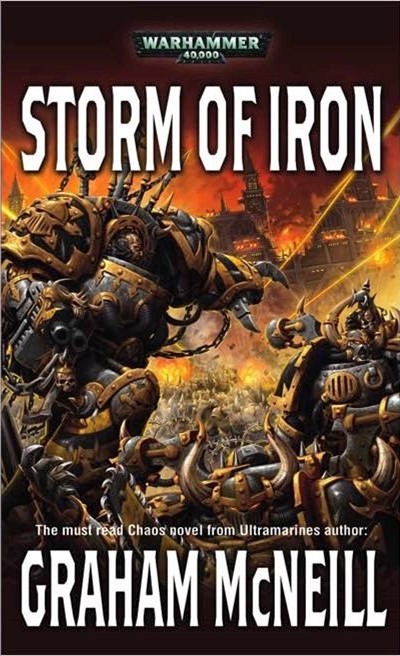
Throwback Thursday – Warhammer 40,000: Storm of Iron by Graham McNeill

Storm of Iron Cover 2

Publisher: Black Library (Audiobook – July 2002)

Series: Warhammer 40,000

Length: 11 hours and 3 minutes

My Rating: 4.5 out of 5 stars

Amazon

Welcome back to my Throwback Thursday series, where I republish old reviews, review books I have read before or review older books I have only just had a chance to read.  For this latest Throwback Thursday, I dive into some old-school Warhammer 40,000 fiction with the exceptional Storm of Iron by one of the most prolific Warhammer authors, Graham McNeill.

Readers of this blog will know that I have been really getting back into Warhammer fiction in the last few years, and I have had an outstanding time reading all the exciting and captivating reads the franchise’s extended universe contains.  I have been particularly impressed by the sheer number of talented authors who contribute to this extended universe, and I already have a few favourites due to how epic and complex their novels have turned out to be.  However, one of the main contributors to the current Warhammer canon I had not really explored yet is the superbly talented Graham McNeill.  McNeill has been writing Warhammer fiction for 20 years now, and he has produced multiple books for both the Warhammer 40,000 and Warhammer Fantasy sub-franchises.  Best known for The Ambassador Chronicles, Legend of Sigma, Ultramarines and Forges of Mars series, as well as his entries in the massive Horus Heresy series, McNeill has produced some outstanding sounding books throughout his career (including several books I really want to read) and had an incalculable impact on Warhammer fiction universe.  I however, have not had too much experience with his works, although I do have several of his novels sitting on my shelf.  I am hoping to read more of his stuff in the future, but I ended up starting with one of his earlier books, the standalone Warhammer 40,000 novel, Storm of Iron.

The Adeptus Mechanicus Forge World of Hydra Cordatus is a barren and desolate place, garrisoned by Imperial Guard of the 383rd Jouran Dragoons and members of Adeptus Mechanicus, who rule from one of the mightiest and seemingly impregnable fortresses in the galaxy.  No-one ever expected that the many wars that plague the universe would ever come to a planet as seemingly inhospitable as Hydra Cordatus, but hell has descended upon the planet in the form of Chaos Space Marines from the feared Iron Warriors legion.

Under the leadership of the dread Warsmith Barban Falk, the Iron Warriors have arrived on Hydra Cordatus in substantial numbers, determined to destroy all the Imperial defenders and take the planet’s main citadel.  After a blistering landing upon the surface of the planet that cuts off all hope of relief, the Iron Warriors deploy their full force of warriors, slaves, labourers and even several corrupt Titans to assault the enemy.  But they have not chosen an easy target, as the citadel of Hydra Cordatus is no ordinary fortress.  It is an ancient and mysterious stronghold, whose walls are designed to stymy any attack, and few foes would have a chance of defeating its defences.

However, the Iron Warriors have long been considered the greatest siege warfare specialists in all the universe.  Having honed their bloody craft for millennia since their betrayal of the Emperor, the corrupt Iron Warriors soon embark on an ambitious and fast campaign that soon threatens to completely destroy the Imperial forces.  Only the arrival of members of the Iron Warrior’s greatest enemies, the Space Marines of the Imperial Fists, gives any hope to the defenders.  But can even the legendary Imperial Fists stand against the ancient fury of the Iron Warriors?  And what secrets truly lay hidden in the depths of Hydra Cordatus’s citadel?

Well, this was a pretty damn awesome Warhammer book.  McNeill did a remarkable job with Storm of Iron, producing an intense and action-packed novel that might be one of the best siege novels I have ever had the pleasure of reading.  Loaded with impressive battle-sequence after impressive battle-sequence, as well as a ton of intriguing and fun characters, Storm of Iron was an outstanding read, and I had so much fun getting through it.

I will admit that one of the things that really drew me to Storm of Iron is that it showcases a massive siege in the gothic future of the Warhammer 40,000 universe.  I have always deeply enjoyed books with sieges in them, and the Warhammer universe is naturally filled with some good examples of this, although these mostly occurred in the fantasy focussed books.  As such, I was quite intrigued to see how a science fiction siege would occur, and McNeill really did not disappoint, painting a powerful and captivating picture and using the Iron Warriors and Imperial Fists, both of whom are known for their siege craft, as central figures in the narrative.

McNeill starts Storm of Iron off with a bang, showing the Iron Warrior’s initial move as they launch a lightning-fast raid and landing upon Hydra Cordatus in the opening chapters.  From there, the siege of the citadel starts in earnest as the Iron Warriors deploy their entire army towards it.  Told from multiple character perspectives of both the attackers and defenders, you swiftly get to know all the key players of the book and see their various personal and military struggles as the siege unfolds.  The author sets everything up perfectly, and you are soon engrossed in the novel-spanning siege, which McNeill explores in intricate detail, examining the various moves and countermoves that the two sides are doing.  You get some awesome scenes throughout Storm of Iron, and it really has everything you could want from a siege book, including artillery barrages, trench warfare, sapping, sallies, reinforcements, counterattacks and desperate fighting in breaches.  The entire story moves pretty quickly, and there are barely any pauses in between battle scenes.  Any delays that do occur serve an essential part of the plot, showing the various personal issues impacting the participants, introducing new characters, or exploring some of the hidden intrigue going on within the besieged citadel.

The story picks up even further around the middle, with the arrival of the Imperial Fists Space Marines who give the defenders more of a fighting chance.  As such, you are never quite certain how the book is going to unfold, and the battle really could go any way.  I liked how McNeill balanced the book between the Chaos and Imperial characters (or the attackers and defenders), and I deeply enjoyed seeing how each side conducted their war, especially as both had to deal with internal dissension and setbacks.  I think that the narrative had a great blend of cool story elements, and the combination of action, intrigue and character work fit the story very well.  Naturally, the best part of the book is the exceptional battle scenes, and thanks to author’s detailed depictions, it is extremely easy to envision all the intense fight sequences that unfold.  There are some outstanding scenes here, and there is a little bit of everything, included destructive ranged warfare, brutal close combat fights, desperate last stands and even some over-the-top battles between the massive Titans (essentially intense mecha warfare).  This entire story comes together pretty well, and I really liked the fantastic and dark notes that McNeill left it on.  While I wasn’t too shocked by one of the book’s main twists, there honestly wasn’t a moment where I wasn’t entertained by Storm of Iron’s story, and I had such a fantastic time seeing this entire epic siege unfold.  I managed to power through this book extremely quickly, and I had so much fun seeing how this protracted battle unfolded.  As such, this is a must-read for all those who love a good siege book, and I really appreciate the awesome story that McNeill featured here.

I love all the cool Warhammer 40,000 elements that McNeill was able to fit into this awesome book, and fans of the franchise will appreciate his attention to detail and fun depictions of the various factions and their iconic regiments/toys.  While the Imperial Guard, Adeptus Mechanicus and Imperial Fists are all featured here, this book is mainly about the Iron Warriors, and it was fascinating to see them in action.  These traitorous and corrupt siege specialists have a rich history of hatred, and while the author doesn’t go completely into their fall from grace, you get a good idea of why they turned and some of the terrors they have inflicted.  Indeed, all the depictions of the Chaos side are extremely powerful, and you get an impressive view of just how twisted and dangerous they and their dark gods are.  That being said, you get a much more nuanced viewpoint of the Chaos side here than most Warhammer books have, and it was utterly fascinating to see their views on the conflict.  That, combined with some of the secrets that the Adeptus Mechanicus are hiding, continues to reinforce one of the key concepts of the Warhammer 40,000 universe: that there really are no good guys here, just winners and dead people.  Thanks to author’s ability to highlight key universe and faction details, this is one of those Warhammer 40,000 books that could serve as a great introduction to Warhammer fiction, and if a massive and bloody siege doesn’t get your attention and make you interested in this franchise, nothing will.  As such, you don’t need to come into Storm of Iron with too much pre-knowledge of the Warhammer 40,000 universe to enjoy this book, although established fans will naturally get a lot more out of it.  I am personally glad that, of all of McNeill’s books, I chose to start with Storm of Iron, especially as it apparently sets up some of his future Warhammer entries.  In particular, it introduces one of the key antagonists of his Ultramarines series, which has long been on my to-read list, and I look forward to enjoying more of McNeill’s epic Warhammer books in the future.

I also deeply appreciated some of the excellent character work that was featured within Storm of Iron.  Due to how McNeill writes the story, the book features a huge range of different point-of-view characters, broken up between the Iron Warriors and the members of the 383rd Jouran Dragoons who are defending the citadel.  While the quick-paced story and multiple character perspectives cuts down on development a little, you do get to know all the key characters very quickly, and McNeill fits in some absolutely fascinating character arcs that I deeply enjoyed.  Three of the most interesting characters are the Iron Warriors captains who are leading the assault on Hydra Cordatus, Honsou, Forrix and Kroeger.  All three are pretty interesting in their own right, with Honsou the true believer ostracised by his comrades due to his heritage, Forrix the disillusioned veteran, and Kroeger the mad berserker who is slowly going insane serving the Blood God Khorne.  Their personal storylines are all amazing, but the real fun is seeing their interactions, especially as they all hate each other and are vying for their master’s favour.  McNeill spends a lot of time with these three villains, and you really get a sense of whole Iron Warrior’s legion through their disparate viewpoints.  I will say that I didn’t think any of the Imperial characters quite measured up to these Chaos characters, especially as McNeill really worked to make them as compelling as possible.  I did deeply enjoy the character of Guardsman Julius Hawke, a slacker who finds himself alone in the wilds and serves an interesting role in the battle.  I was also quite intrigued by Lieutenant Larana Ultorian, a defiant soldier who is captured by the Chaos forces and slowly driven insane by her forced service to them.  These characters, and more, all help to turn Storm of Iron into a much more complex and powerful read, and I had a great time explore all their unique stories and histories here.

I doubt anyone is going to be too surprised that I made sure to grab the recently released audiobook version, which in my opinion is one of the best ways to enjoy a cool Warhammer book.  The Storm of Iron audiobook was a pretty good example of this, as I quickly got drawn into it, especially as the awesome action sequences became even more epic when they are read out.  With a run time of just over 11 hours, this was a decent length Warhammer audiobook, although I managed to power through it in less than a week, mainly because of how much I got caught up in the story.  I was also pretty impressed by the narration from Michael Geary, who really dove into the various roles contained within Storm of Iron’s story.  Geary clearly had a lot of fun telling this dark tale, and I felt his fast-paced narration really added the intensity and excitement of the story.  I also felt that he did a great job bringing the various characters of Storm of Iron to life, and each of the main figures is given a unique voice or accent to help set them apart.  While I liked all the cool voices he did, Geary’s take on the various Chaos Space Marines was very memorable, especially as he really captures the cruelty, hatred and dark demonic influences that affect them.  An overall excellent Warhammer audiobook, I had such an exceptional time listening to this version of Storm of Iron, and this format comes highly recommended.

Overall, I am extremely happy that I chose to read this fantastic Warhammer 40,000 novel, and it was one of the more interesting older entries in the franchise I have so far read.  The extremely talented Graham McNeill did a wonderful job on Storm of Iron, and I had such an amazing time getting through its elaborate and action-packed narrative.  This book featured such an impressive depiction of a siege in the gothic far future, and readers are in for an intense and captivating time as they see this complex battle between besiegers and defenders unfold.  Clever, compelling, and filled with pulse-pounding fun, Siege of Iron was an excellent book and I look forward to reading more of McNeill’s Warhammer books in the future.
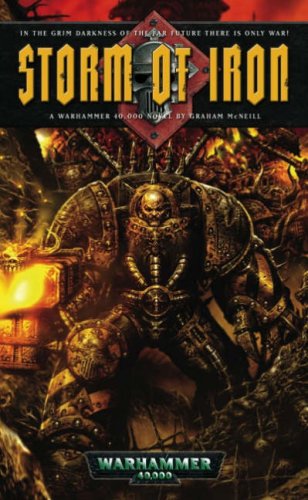
Storm of Iron Cover

Amazon

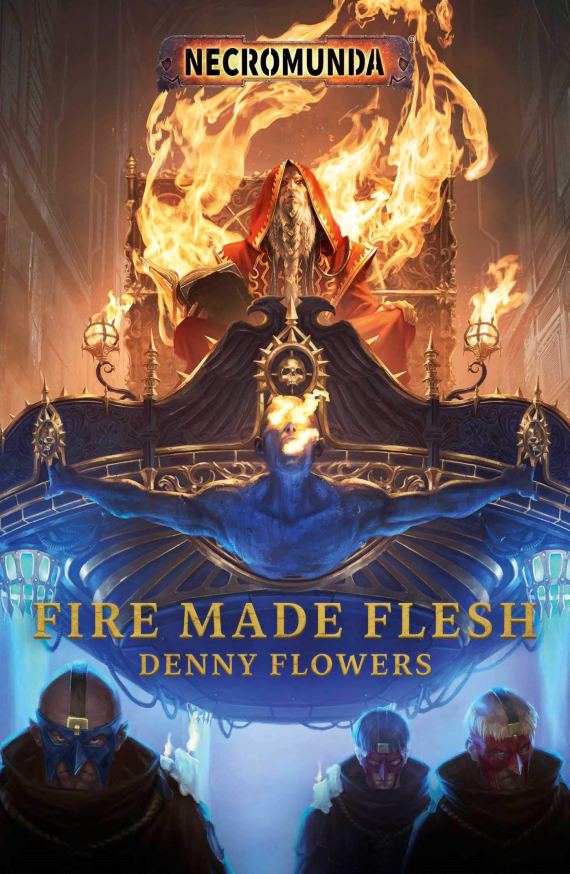
Fire Made Flesh by Denny Flowers

Fire Made Flesh Cover

Publisher: Black Library (Audiobook – 5 June 2021)

Series: Necromunda

Length: 13 hours and 29 minutes

My Rating: 4.25 out of 5 stars

Amazon     Book Depository

Prepare to return to the violent and deadly world beneath the hive cities of Necromunda, as Denny Flowers presents an outstanding and compelling entry in the Warhammer 40,000 universe with Fire Made Flesh.

Over the last year or so I have been having fun exploring the immense extended universe that has sprung up around the Warhammer 40,000 and Warhammer Fantasy tabletop games.  I have so far read several cool entries in the Gortrex and Felix fantasy series (Trollslayer, Skavenslayer and Daemonslayer), as well as the awesome science fiction reads First and Only and Deathwatch: Shadowbreaker.  However, my favourite Warhammer novel so far was the deeply entertaining Kal Jerico: Sinner’s Bounty, which was part of the Necromunda sub-series, another tabletop game set in the gothic Warhammer 40,000 universe.

The Necromunda games and extended universe are all set in and around the towering and immense hive city, Hive Primus, capital of the industrial planet of Necromunda.  Hive Primus is a city of billions, with the inhabitants crammed together in a massive hive structure located both above and below ground.  Necromunda fiction is primarily based in the Underhive, the foundational layers of the hive and below, made up of tunnels, habitation zones and caverns, most of which have been abandoned as the hive was built up.  The Underhive is filled with various gangs and feuding families who fight in these tunnels for riches, dominance and glory.  This unique landscape makes for some impressive stories, such as the awesome narrative of the latest Necromunda novel, Fire Made Flesh.

Deep underneath Hive Primus many secrets and treasures lay hidden in the darkness, waiting to be found by bold adventurers, but none are spoken of with more reverence than the lost habitation dome, Periculus.  Periculus was once a flourishing base of commerce where both sanctioned trade and illicit dealings were held, and vast wealth was accumulated.  However, Periculus was mysteriously abandoned years ago when its inhabitants were killed, and all knowledge of its location has been lost.  Now, after years of searching, someone has rediscovered the dome, and all hell is about to break loose.

Believing that the ruins of Periculus hold innumerable treasures and opportunities, various gangsters, Guilders, hive scum and opportunists have descended into the Underhive, hoping to stake their claim.  However, none of the people moving towards Periculus are more dangerous than the revered Lord Silas Pureburn of the Guild of Fire.  Holding a monopoly on energy production in the Underhive and gifted with a holy flame from the God Emperor himself, Pureburn inspires loyalty and religious fervour wherever he goes.  However, behind his holy facade of purity and flame lies a dark soul determined to dominate everything and everyone he encounters.  One of the few people to see the truth about Pureburn is young Guilder Tempes Sol.  Sol, a scion of the Mercator Lux, the Guild of Light, has found himself bested by Pureburn many times, and he is determined to discover the truth behind his improbable works.  After an unholy accident scars Sol and leaves him with an unusual power, he is forced to flee his guild and travel to Periculus, where his only hope of redemption lies in exposing Pureburn as a fraud.

However, upon arriving at Periculus, Sol discovers a settlement on the edge.  Pureburn has gathered around him an army of religious fanatics who control Periculus through fear, fire and bloodshed.  Determined to stop his insidious influence before it is too late, Sol attempts to forge alliances with other newly arrived inhabitants of Periculus who have been disadvantaged by Pureburn.  However, the deeper Sol dives into Pureburn’s actions, the more danger he finds himself in, as this seemingly holy man hides a dark and disturbing secret.  Worse, even more terrible dangers are affecting people within the dome, as twisted creatures roam the shadows, and the humans are struck with a dark rage that drives them to great acts of violence.  As the forces within gather for a final deadly confrontation, the fate of both Periculus and the entirety of Hive Primus hangs in the balance.

Fire Made Flesh was an interesting and impressive read that did an amazing job of bringing the twisted maze of the Necromunda Underhive to life.  This was actually the debut novel of author Denny Flowers, who has previously written some fun Necromunda short fiction and novellas but had yet to produce a full-length book.  This turned out to be a pretty awesome first novel from Flowers, and I had an outstanding time getting through the intense story, especially with its unique locales and outrageous characters, and it was a fantastic piece of Necromunda fiction.

At the heart of Fire Made Flesh lies a compelling and intense story that showcases the unique and deadly battle for control of Periculus.  After some set-up to show the rediscovery of the lost dome, Flowers starts establishing the various characters and their motivations, exploring how and why they are heading to Periculus.  Told from multiple character perspectives, the reader gets an interesting look at each point-of-view character, as well as the people they travel with.  While this was a good introduction to the many complex aspects and figures of the novel, it did make the pacing of the first third of Fire Made Flesh a tad slow, with a couple of difficult sections.  However, these pacing issues are resolved around halfway through Fire Made Flesh, once all the primary characters make it to Periculus.  From that point onward, the book really picks up, especially as the reader has grown attached to protagonists by this point.  From there the rest of the story is extremely fast, with a big moment two-thirds in, resulting in utter bedlam across Periculus and thrusting each of the characters into extreme danger.  After several intense and action-packed sequences, the entire narrative gets wrapped up extremely well in a satisfying conclusion, with each of the fun character arcs set up throughout the book coming together wonderfully.  I had an absolute blast with this narrative, and I felt that it had the right blend of action, intrigue, character development and Warhammer 40,000/Necromunda detail, to keep every reader happy.  I was really impressed by how Flowers was able to bring the disparate storylines together into one entertaining read, and I ended up powering through the last half of the novel in less than a day.  I also deeply enjoyed some of the cool twists and reveals right near the end, as they contained some excellent character moments.  Interestingly, the story is left open for a sequel, and I know I will be curious to see what happens in the Underhive next time.

Fire Made Flesh is an excellent addition to the Necromunda range of fiction, and I appreciated how Flowers attempted to examine and recreate the various elements of the unique landscape and culture featured within this fictional location.  Flowers really dived into the lore surrounding Necromunda, and the reader is soon engulfed in discussions about the social order, technology, and religious zeal of the Hive City.  While the author did a good job of trying to give context to this setting and its various features, readers may get a little overwhelmed with all the unique lore elements that are shovelled into it, especially at the front of the book when Flowers was trying to set everything up.  While I managed to keep my head around what was happening and what the characters were talking about, I could easily see a reader who has less experience with Warhammer 40,000/Necromunda lore, being a bit more confused and potentially getting lost.  Still, this ended up being a great Necromunda novel, and I loved the way in which the author featured the various gangs and controlling interests.  I especially enjoyed the in-depth examination of the Guilders, Hive Primus’s merchant class, who provide the various services to keep the settlements running.  Fire Made Flesh features members from the various guilds, each of whom have different professions, including slavers, energy providers, fuel dispensers and corpse grinders (people who process bodies to produce corpse-starch, the hive’s primary food source).  Readers get a pretty intense crash course in Necromunda lore in this book and will end up having a good understanding of how Underhive works.  There are a lot of details that will appeal to long-term fans of the Necromunda game and its associated extended fiction, and they will no-doubt love to see another entertaining and dark adventure.  While there are some connections to previous novels, including some of Flower’s short-fiction, I would say its easy enough for most people familiar with the Warhammer 40,000 universe to jump into this book without getting too lost, and even general science fiction fans should be able to have fun with this novel.

Flowers also makes great use of the dark and dangerous setting that is the Underhive throughout Fire Made Flesh.  The Underhive is already an awesome and well-established setting, but Flowers really tried to show just how hostile and unpredictable it could be.  There are some great descriptions of the tight walkways, giant caverns and isolated settlements which prove to be an outstanding backdrop to the dark narrative, and I had a lot of fun exploring some new locations in this novel.  Periculus itself is also an impressive setting, as the reader is treated to an intriguing look at a newly formed town that is slowly getting to its feet in the ruins of an abandoned settlement, and all the strife that comes as a result.  The depictions of the town surrounded by monsters, coated with powdered bone, and filled with fractious groups with enflamed personalities, really helps to set the mood for much of the novel, especially as it all comes crumbling down again.  I deeply enjoyed this cool setting and I think that it was an exceptional addition to a fun novel.

I also had a lot of fun with the compelling collection of characters featured in Fire Made Flesh.  Flowers made use of several entertaining point-of-view characters throughout this novel, including several protagonists of his previous short fiction reads, and this results in a vibrant and well set-up blend of personalities and compelling personas.  The central protagonist is Tempes Sol, the young Guilder genius who spends his days attempting to understand power, electricity, and technology.  Tempes has a rather rough journey in this novel, mostly brought on by his obsession with stopping the book’s antagonist, Pureburn, who has bested him in several prior encounters.  However, this time Tempes is suffering from the after-effects of a psychic attack, which has gifted him strange lightning abilities associated with his cybernetic upgrades.  Cast out of his guild and on the run, Tempes is a desperate figure in this novel, attempting to show the hypocrisy of Pureburn while also trying to redeem himself and understand his new powers.  I felt that Tempes had a very interesting storyline in this novel, and I found his personal growth and the exploration of his personal technology to be quite fascinating.  I wasn’t the biggest fan of his impulsive behaviour and self-righteous personality, but he did start to shed those as the novel progressed, while also developing a certain amount of savviness, especially when it came to some of his supposed allies.  It looks like Flowers is setting Tempes up for some interesting storylines in the future, and I would be quite keen to see this protagonist in another book at some point.

I was also a big fan of the antagonist of Fire Made Flesh, Lord Silas Pureburn.  Pureburn is another Guilder character who specialises in bringing fire and fuel to isolated communities, even when it shouldn’t be possible.  This, and his family’s legacy as keepers of a holy flame, sees him given religious reverence by the general population, as well a collection of devoted, if deranged, followers, who view him as a celebrated champion of the Emperor.  However, Pureburn is really a deceitful and manipulative being, who cares only for profit and his own selfish goals.  Flowers does an amazing job setting this antagonist up and the reader is soon pretty sick of his hypocrisy and arrogance, something that become really apparent after you read a few of his point of view chapters.  Pureburn ends up annoying or alienating every single protagonist in this book, which results in a loose alliance as everyone attempts to take him down.  I love a villain so evil that he brings different people together, and this was a great antagonist to hate, especially once you find out the true source of his power.

Aside from this compelling protagonist and entertaining antagonist, this novel also featured a great range of additional characters with whom the reader gets to spend time with.  My personal favourite had to be Lord Credence Sorrow, a corpse grinder contracted to bring food to Periculus against his will.  Sorrow is a lover of fine things, and his enjoyment of delicate items and gourmet food is at odds with his profession of turning corpses into edible powder.  This character has a brilliant amount of flair, and all his scenes are particularly entertaining, especially as he keeps finding himself stuck between some dangerous employers, resulting in quite a fun and fitting overarching storyline.  I also had a great time with the oddball partnership of Caleb Cursebound, the self-proclaimed ninth most dangerous man in the Underhive, and his silent Ratskin partner Iktomi.  These two make a great pair, especially as Caleb has all the bluster and personality, while Iktomi has a wicked amount of lethal skill, making them a surprisingly effective team, and I loved the entertaining odd-couple vibes that they gave out throughout the book.  I also must highlight Anquis, a member of the notorious Delaque family of spies and infiltrators.  Anguis spends most of the novel helping Tempes achieve his goals with her intelligence-gathering and manipulations.  However, it soon becomes quite clear that Anguis is playing her own games, and no one, especially Sol, knows what she is really after.  The final character I want to talk about is Virae the Unbroken, a Chain Lord (slaver) and pit fighter, who is hired to capture unlucky civilians and bring them to Periculus for labour purposes.  Despite initially appearing as a blunt and unforgiving figure, Virae soon proves to be one of the most complex and best-written characters in the entire novel.  Virae is a former slave herself, who proved herself to be tough and unbreakable, resulting in her title and her eventual promotion to slaver.  However, she really struggles with her profession in this novel, especially after many of her charges die on the journey to Periculus.  Her battles for survival, especially in the face of Pureburn’s evilness are pretty excellent, and I loved her eventually transformation into a bloody figure of vengeance.  This turned out to be an outstanding collection of characters, and I deeply appreciated how Flowers used them to enhance Fire Made Flesh’s great narrative and make it even more exciting and compelling.

I decided to grab the audiobook version of Fire Made Flesh.  This format has a decent run time of around 13 and a half hours, and I ended up powering through it in only a few days, especially once the story started to get very exciting and fun.  I had an outstanding time getting through this audiobook, and one of the main reasons for this was the impressive narration of Joe Jameson, whose work I have previously highlighted in awesome fantasy audiobooks like King of Assassins by R. J. Barker, and The Kingdom of Liars and The Two-Faced Queen by Nick Martell.  These previous works by Jameson have been some of best audiobooks of their respective release year, and Jameson is easily one of my favourite narrators.  He has an outstanding voice for fantasy and science fiction, and I love the way he can make a story move at a fast pace while also ensuring that the listener is absorbing all the detail and obscure lore with interest.  Jameson did a really good job of voicing each of the characters within Fire Made Flesh, and while some of the voices were very similar to those he used in the other books, I think that they fitted this new group of characters extremely well.  You get a real sense of the various emotions and personalities of each of these characters, and his affinity for voicing outrageous figures such as religious zealots and conniving businessmen proved very useful here.  I had a great time with this audiobook, and it was an amazing way to enjoy this dark and compelling story.

Fire Made Flesh by Denny Flowers is an exciting and captivating novel in the Necromunda series.  This is an entertaining and intense science fiction read that makes full use of the unique Warhammer 40,000 universe, the cool setting of the Underhive, and some great and memorable new characters, to produce an electrifying tale.  I had a fantastic time reading this book and I cannot wait to see what other adventures wait for this outrageous group of characters in any future Necromunda novels Flowers writes.

Amazon     Book Depository

Throwback Thursday – First and Only by Dan Abnett

First and Only Cover

Publisher: Black Library (Audiobook – 1999)

Series: Gaunt’s Ghosts – Book One

Length: 10 hours

My rating: 4.5 out of 5 stars

Amazon     Book Depository

Welcome back to my Throwback Thursday series, where I republish old reviews, review books I have read before or review older books I have only just had a chance to read.  For this week’s Throwback Thursday, I check out the first entry in the Gaunt’s Ghosts series, First and Only, by Dan Abnett, which proved to be a very impressive Warhammer 40,000 novel.

You only need to look through my recent Throwback Thursdays to see that I have been in a real Warhammer mood lately.  I recently got into the Gotrek and Felix series by William King, and quickly made my way through the first three books, Trollslayer, Skavenslayer and Daemonslayer, all of which were incredibly awesome.  While I have got the fourth book, Dragonslayer, ready and waiting, I decided to take a break from the fantasy Warhammer novels and dive back into the science fiction Warhammer 40,000 universe.  While I only used to play Warhammer Fantasy, I have a great appreciation for the Warhammer 40,000 lore, and I have recently enjoyed two great books in this massive franchise, Deathwatch: Shadowbreaker and Kal Jerico: Sinner’s Bounty.

While there are several intriguing Warhammer 40,000 novels on my radar, I decided to listen to the very first entry in the acclaimed Gaunt’s Ghosts series by Dan Abnett, First and Only.  Abnett is an impressive and prolific author and comic book writer who has done a lot of work across several franchises and companies, including Marvel and DC.  While he has a massive back catalogue, Abnett is best known for his input into the Warhammer extended universe.  Abnett has written an immense number of novels for the franchise, including Warhammer Fantasy books, such as the Malus Darkblade series (on my to-read list).  Most of his work is in the Warhammer 40,000 range, where he has written several major series, including the Eisenhorn and Ravenor series, as well as several major novels in the Horus Heresy extended series.  However, the most iconic of these is the Gaunt’s Ghosts series.

The long-running Gaunt’s Ghosts series follows a regiment of Imperial Guard, the basic foot-soldiers of the Imperium of Man, a major faction in the Warhammer 40,000 universe.  Starting back in 1999 with this novel, the Gaunt’s Ghost series featured 15 individual books, as well as several short stories, and only recently finished in 2019.  The Gaunt’s Ghosts series is one of the most iconic entries in the entire Warhammer 40,000 novel range, and I have heard many positive things about it over the years.  First and Only was one of the first books published by the Black Library, the Games Workshop publishing arm, and is a major feature of their catalogue.  So I felt that I was going to take the plunge and read more Warhammer novels, this would be a pretty good place to start, and boy was I glad that I did.

In the grim darkness of the far future, there is only war….

Throughout the entirety of space, the armies of the Imperium bring the fight to their enemies on every planet, battlefield and hellscape they can find.  One of the most deadly and destructive theatres of war is the massive Sabbat Worlds Crusade, where Imperial forces fight and die to defeat the armies of Chaos and bring an entire sector back into the Emperor’s light.  Many regiments of Imperial Guard have been recruited to battle in this war, but none have a background more steeped in blood and tragedy than the Tanith First and Only.

Formed to serve in the crusades from the once verdant world of Tanith, the first regiment of Tanith Imperial Guards could only watch in horror as their planet was destroyed by the forces of Chaos, with them the only survivors.  Now under the command of Colonel-Commissar Ibram Gaunt, the men of the Tanith First and Only have taken to calling themselves Gaunt’s Ghosts, due to their superior stealth skills and in recognition of the pain they feel at being the only remnants of their planet.

Fighting in the latest phase of the crusade, the Ghosts find themselves where the fighting is thickest, using their unique skills and experiences to confound the enemy and bring about impossible victories.  However, the Ghosts are about to discover that not all battles are fought on the field, and not all enemies are in front of them.  A power struggle is brewing in the upper ranks of the Crusade’s high-command, and the Ghosts have fallen right into the middle of it.  Entrusted with a mysterious encrypted data transmission by an old friend, Gaunt soon finds himself targeted by the agents of an ambitious general.  After several devastating attacks, Gaunt is forced to choose a side, especially after he uncovers a deadly secret that could destroy everything his men have fought for.  His mission will lead him to the most dangerous battlefield in the crusade, where the lines between friend and foe have never been blurrier.

Now this was a really incredible and exciting novel.  Abnett has produced an outstanding story in First and Only, and I loved how he perfectly translated the unique feel of the Warhammer 40,000 universe into a captivating narrative.  Featuring some great characters, a dark setting, and a fantastic look at this great franchise, First and Only is a captivating and explosive novel and I had an amazing time getting through it.

Abnett has produced a pretty epic story for First and Only that not only serves as an excellent introduction to the characters and wider narrative but is also full of excitement, intrigue and action.  At its core, First and Only is a tough and gritty military action adventure, that follows the Tanith First and Only through several gory fields of battle.  The narrative is broken up into several distinctive sections, set across three separate planets and one massive spaceship, as well as several shorter scenes and flashback sequences that add context and strengthen character development.  These separate sequences flow together extremely well and form a tight and compelling overarching narrative.  I loved the way in which Abnett combined his fantastic military story with treacherous and thrilling political intrigue, as the protagonists are forced to deal with treachery from their friends and attacks from their own commanders.  The author really does a great job setting up the key plot points at the start of the book, and the entire narrative seamlessly flows on after that.  I was deeply impressed by all the amazing action sequences, and I loved the author’s use of multiple character perspectives to tell a complex and powerful narrative.  The entire narrative comes together extremely well into a big, explosive conclusion.  I really enjoyed some of the great twists that were revealed in the lead-up to the conclusion and I was pleasantly surprised by several fun turns and reveals.  An overall exciting and terrific narrative, I had an absolute blast getting through this awesome novel.

One of the best things about this fun novel is the author’s great use of the dark and gothic Warhammer 40,000 setting.  Abnett obviously has a lot of love for this universe, and he painstakingly recreates it in his novel in all its fantastic and gritty glory.  As a result, the reader is treated to some outstandingly portrayed background settings of destroyed worlds, bombarded warzones, and overpopulated Imperial worlds.  This proves to be really impressive to see, and the author makes sure to use this setting to full effect, enhancing the cool narrative and making it an excellent backing for the various fight scenes.  This attention to detail also comes into play perfectly during the book’s various action sequences, and I felt that Abnett perfectly captured the unique and chaotic feel of a Warhammer 40,000 battle scene.  I have to say that I also deeply appreciated the way in which Abnett introduced the reader to the Warhammer 40,000 universe.  I personally found that very little pre-knowledge of this extended universe is needed to enjoy this book, and while those readers familiar with the game or other Warhammer novels will obviously get a lot more out of First and Only, this is actually a pretty good way to experience Warhammer 40,000 lore for the first time.

Another cool aspect of this novel was the insightful and intriguing focus on the Imperial Guard.  The Imperial Guard are the basic grunts of the Imperial faction and are often overshadowed by the flashier Space Marines in both the tabletop game and the wider extended universe.  As a result, it was cool to see a novel that focuses on a regiment of these troopers and shows them during a deadly and bloody war.  Abnett does an outstanding job capturing this faction in First and Only, diving into the psyche of the common soldier, while also showcasing their tactics, weapons, machines and motivations.  Thanks to the author’s excellent use of multiple character perspectives, you get to see various aspects of the regiment from commander down, and I loved the fascinating combination of perspectives from all the different types of soldiers and specialists.  I also really appreciated the way in which Abnett highlighted different regiments of Imperial Guard throughout the novel, which corresponds with the varied regiments and styles that can be fielded in the tabletop game.  While most of this novel focused on the Tanith First and Only, Abnett also strongly features two other regiments, the Vitrian Dragoons and the Jantine Patricians, who act as allies and rivals to the Ghosts respectfully.  It was extremely interesting to see the variations in mentality, uniforms, and tactics between these regiments, and I really enjoyed the way in which the author highlights their diverse backgrounds and planets.  This ended up being an incredible introduction to the Imperial Guard, and I imagine that quite a few Warhammer 40,000 players gained a new appreciation for this army after reading this novel.

First and Only features a fantastic collection of characters that serve as the heart and soul of the narrative.  This book follows the adventures of the Gaunt’s Ghosts regiment, and you get to see various members of this squad in action, as well as some antagonist characters.  Abnett ensures that each of the characters featured within the novel have intriguing and well-established backstories and traits, and you quickly understand their motivations.  Much of First and Only’s focus is on the leader of the Ghosts, Colonel-Commissar Ibram Gaunt, who serves as the main protagonist. Gaunt proves to be an excellent and enjoyable main character, who serves as both the regiment’s leader and its inspirational political officer.  Abnett really develops Gaunt’s personality and backstory, and all of the flashbacks focus on his past, setting up his relationship with several of the characters featured in the novel and showing how several rivalries were formed.  Other fascinating and complex characters included Colonel Corbec, who was the main secondary antagonist; Major Rawne, an officer with a hatred for Gaunt who has a pretty traumatic time in this novel; Brin Milo, Gaunt’s adjutant with extreme perception (they are obviously setting up something there); and Colonel Flense, a guardsman from a rival regiment who bears a great grudge against Gaunt.  All these characters, and more, are really fun to follow, but readers are advised not to get too attached, as this is a brutal war story.  I will admit that I initially had a little trouble connecting to several of the characters and I lost track of who the different protagonists were.  However, once I got a further into the story, I grew to know each of the distinctive characters, and I appreciated their fun characteristics and capacities.

As I have tended to do with all Warhammer recently, I grabbed the audiobook version of First and Only.  This proved to be a fantastic decision, as the First and Only audiobook was an excellent and fun production that I was able to power through quickly.  First and Only has a decent run time of 10 hours, and features some amazing voice work from veteran narrator Toby Longworth.  Longworth, who has previously narrated a swathe of Warhammer audiobooks, does an outstanding job with this novel, and he moves the narrative along at a swift and exciting pace.  I love the range of great voices Longworth brings to First and Only, and each character is given a distinctive voice that fits their personality and background perfectly.  There is a certain grim nature to the voices of many of the main characters, which reflects the dark, gothic nature of the Warhammer 40,000 universe.  He also utilises a series of different accents for some of the various Imperial Guard regiments, which helps to distinguish their divergent backgrounds and the influence of their home world.  This amazing narration turns the First and Only audiobook into an absolute treat, and this was an incredible way to enjoy this excellent book.  As Longworth provides the narration for the rest of the Gaunt’s Ghosts audiobooks, I will probably check out the rest of this series in this format, and I already know that I will have an awesome time doing so.

First and Only by Dan Arbnett is an outstanding and fantastic novel that takes the reader on an exciting journey to the heart of the Warhammer 40,000 universe.  Featuring an incredible and epic war story that makes full use of its dark setting and amazing characters, First and Only serves as a captivating first entry in the Gaunt’s Ghost series.  I had a wonderful time listening to this book, and this was one of the best Warhammer tie-in novels I have so far had the pleasure of reading.  This novel comes highly recommended, and I full intend to check out the other entries in this series in the next few years.

First and Only Cover

Amazon     Book Depository

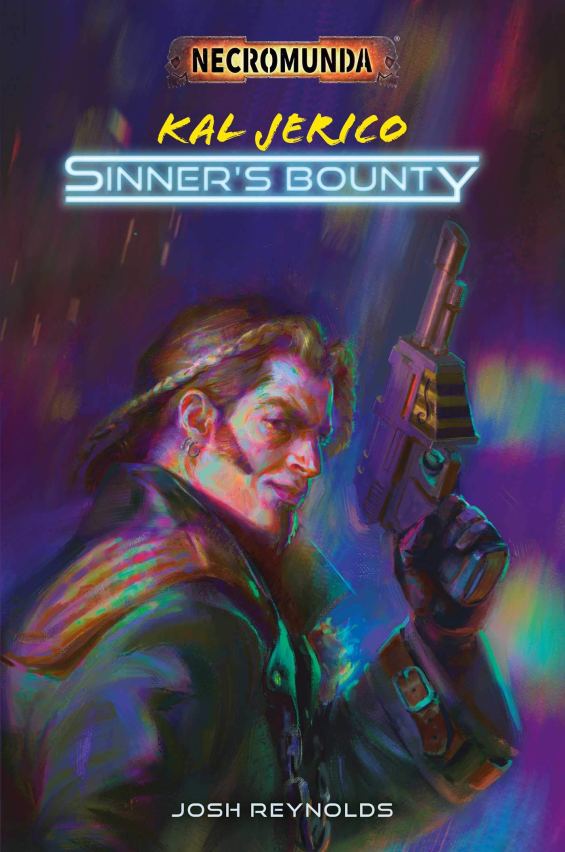
Kal Jerico: Sinner’s Bounty by Joshua Reynolds

Kal Jerico - Sinner's Bounty Cover

Publisher: Black Library (Audiobook – 29 February 2020)

Series: Necromunda – Book 11

Length: 14 hours and 43 minutes.

My Rating: 4.75 out of 5 stars

Amazon

After enjoying the exciting novel Deathwatch: Shadowbreaker by Steve Parker last year I once again dive into the intricate Warhammer 40K expanded universe with another fantastic tie-in novel.  This time however, I check out the awesome pulse pounding Necromunda adventure, Kal Jerico: Sinner’s Bounty by Joshua Reynolds, which reintroduces the iconic and entertaining bounty hunter Kal Jerico.

Warhammer 40K fiction is a particularly fascinating franchise built around Games Workshop’s tabletop war game of the same name, which follows armies, heroes and monsters as they fight for supremacy in a gothic far future.  While Warhammer 40K started as models and gaming, it has since evolved into a massive expanded universe, featuring comics, video games, board games, a film, an upcoming television show and a vast collection of tie-in novels written by an impressive group of science fiction authors.  This is a really fantastic universe that I have a great deal of love for as I was a major Warhammer nerd when I was younger (heck, I’ll admit it, I’m still a Warhammer nerd).  Thanks to an incredible amount of lore, history and character bios that have been created to accompany the various iterations of the tabletop game, this universe has so much potential for great fiction and stories that are a lot of fun to explore.

While my last dive into Warhammer 40K fiction focused on the wider wars of Space Marines versus aliens, this time I am looking at something very different as I check out my first Necromunda novel.  Necromunda fiction is based around the spin-off Necromunda game which was launched in the 1990s.  Set in the same universe as the rest of Warhammer 40K, this sub-franchise takes place on the industrial planet of Necromunda, a desolate husk of a world devastated by thousands of years of pollution and expansive industrial ambition.  The stories take place within and under the Hive Cities, vast multi-layered industrial hubs resembling termite mounds that reach both high into the sky and deep underground, and which are home to untold billions of inhabitants.  Broken up with the wealthy on the top spires and the poor on the bottom and below (the Underhive), control and influence of these cities is constantly fought over by powerful clans, families, and gangs, resulting in a huge range of different conflicts, which fuel both the tabletop game and the associated fiction.  With Game Workshop’s recent relaunch of the Necromunda game a couple of years ago, several new Necromunda novels have been published, including this novel which focuses on one of the most intriguing characters ever created as part of this game, Kal Jerico.

Kal Jerico, the self-proclaimed greatest bounty hunter in Necromunda, was introduced back in 1998 in the Kal Jerico comic strip, written by Gordon Rennie and drawn by Karl Kopinski, which appeared in the Warhammer Monthly magazine.  The Kal Jerico comic ran for 30 comic strips between 1998 and 2004, although the character subsequently appeared in three Kal Jerico novels written by Will McDermott (with Gordon Rennie co-authoring the first novel), Blood Royal, Cardinal Crimson and Lasgun Wedding.  I am a bit of a Kal Jerico fan, as I was lucky enough to receive several Warhammer Monthly magazines when I was a kid and I used to really enjoy all the cool and fantastic comics contained within.  Out of all the comics, the Kal Jerico ones were always my favourite and I absolutely loved seeing the outrageous and daring adventures of this cocky bounty hunter.  My love for this character is the main reason that I decided to check Sinner’s Bounty out, and I was really interested to see a more modern take on the character years after seeing him appear in comic book form.

In the sordid depths of Hive Primus, the biggest hive city on Necromunda, a daring crime has been committed and all hell is about to break loose in the aftermath.  The infamous and manic preacher, Desolation Zoon, led a brazen robbery on a guilder tithe-hall, stealing vast quantities of weaponry, credits, imported goods and other mysterious treasures.  Now, with his band of fanatical followers, Zoon is heading downhive in an armoured mining hauler, modified with an impressive amount of firepower.  However, these zealots are not the only ones heading downhive as they are being followed by every hired gun and killer in Hive Primus, each of whom wants a piece of the massive bounty that has been placed on Zoon’s head.

At the forefront of the rogues, killers and gangers chasing after Zoon is the infamous bounty hunter Kal Jerico.  Travelling with his faithful sidekick, Scabbs, the murderous woman he was forced to marry, Yolanda, and his cyber-mastiff, Wotan, Jerico is determined to catch up to Zoon and claim both the money and the accompanying reputation boost.  To claim their prize, this unconventional team will need to traverse some of the most dangerous locations in the Underhive and face off against giant monsters, dangerous tunnel creatures and mutant cannibals, as well as all their friendly bounty hunter colleagues.

However, as they get closer to capturing Zoon, Jerico and his cohorts will swiftly discover that is far from the simple bounty mission they thought it was.  Many powerful people, both inside and outside of Hive Primus, have a stake in Zoon’s capture, and soon Jerico will face off against some old rivals who are just as likely to settle old grudges as they are to claim Zoon’s bounty.  Worst, something dark and dangerous is rising in the deeps of the Underhive, and Kal is about to find himself in the middle of a massive fight that even his unnatural good luck may be able to save him from.

Now, that was a fun novel!  Sinner’s Bounty is an awesome read that not only successfully reintroduces a fan-favourite character but which also provides a pulse-pumping science fiction adventure for reader in the mood for an exciting and captivating story.  To tell this impressive new Kal Jerico novel, the Black Library has recruited veteran tie-in author Joshua Reynolds to continue the legacy started by authors like Renni and McDermott.  Reynolds is a talented author who is well-established in Warhammer fiction, having written a substantial amount of Warhammer 40K and Warhammer fantasy novels over the years, following a wide range of different characters and storylines.  I ended up really enjoying Reynold’s Kal Jerico novel and I was deeply impressed with the excellent combination of compelling narrative, great characters, and an iconic setting, all wrapped up with a fantastic sense humour, that helped to turn Sinner’s Bounty into such an exceptional read.

Sinner’s Bounty contains an epic tale of greed, adventure and friendship in the twisting tunnels of the Underhive that provides a ton of action and excitement.  Reynolds starts this story off with a bang (well, several bangs, a multitude of bangs if I am going to be honest), setting up first the main plot catalyst in Desolation Zoon and his mission, before introducing Jerico and his partners as they encounter their first obstacle on their hunt.  This entertaining first encounter serves as a fantastic introduction to the main protagonists, and Reynolds swiftly hurries them on their way, ensuring that they encounter more of the deadly elements of life in the Underhive, such as their lethal competitors.  At the same time, Reynolds starts introducing several additional characters who embark on the same mission of catching up with Jerico and Zoon.  These additional side characters introduce some intriguing alternate viewpoints and opinions, especially as each of them have their own agendas and motivations for being there.  These alternate viewpoints work extremely well in conjunction with the main narrative around Jerico, and Reynolds starts adding more and more in as the novel progresses, with nearly every supporting character and plot point coming together towards the end of the book.  Reynolds writes up a big conclusion with every major character in the same location forced to work together to survive in a scenario that was fantastically reminiscent of The Magnificent Seven.  At the same time, every character attempts to betray each other, resulting in some extremely entertaining and fun sequences, with the reader unsure who is going to end up on top and who is going to survive.  All of this is wrapped up perfectly, with a clever and fitting conclusion to the main story, while several open story threads set up some additional stories for the future.  All of this was deeply captivating, and while I personally got hooked on the cool story within the first few pages, there is so much intense action, clever betrayals and compelling plot points, that most readers will find themselves wanting to see how this awesome book ends as quickly as possible.

While many tie-in novels in the Warhammer 40K range have a somewhat limited audience, often requiring pre-knowledge of game lore, I felt that Sinner’s Bounty was extremely accessible and can be easily enjoyed by anyone interested in a fun science fiction adventure.  Reynolds does an exceptional job introducing all the relevant elements of Necromunda throughout the course of Sinner’s Bounty, and the reader is easily able to understand what is happening and why without any issue whatsoever.  Indeed, Reynolds makes this book so accessible that I would recommend Sinner’s Bounty as a fantastic introductory novel to anyone interested in seeing what Warhammer 40K fiction is all about, especially the Necromunda subset.  At the same time, Reynolds also ensures that Sinner’s Bounty caters for established fans, as there are a ton of references to the Necromunda game, previous Kal Jerico adventures and wider Warhammer 40K lore.  Not only do huge amounts of elements from the tabletop game make it into Sinner’s Bounty’s story, but Reynolds skilfully references events that occurred within both the Kal Jerico comics and novels, recapping them for new readers while also making some jokes about the events that occurred.  This great blend of references and detail makes Sinner’s Bounty an excellent Warhammer 40K novel for all readers and you are guaranteed to have a good time no matter how familiar you are with Kal Jerico or this fictional universe.

Without a doubt one of the best highlights of this entire novel was the incredible setting of the Underhive of Necromunda.  Reynolds goes all out throughout the course of this book to bring this grim, cavernous and incredibly deadly expanded setting to life in all its gory glory, and it is spectacular.  The reader gets a real sense of how life in the dark under a massive hive city must be like and the author has included all manner of details about crumbling façade, the unusual life forms and perilous living conditions that its many, many inhabitants must face.  Naturally, this turns out to be an outstanding setting for this action-packed storyline, and I had an amazing time seeing which horror or unique landscape would appear next.  Reynolds also loads up his novel with a huge amount of additional detail about the various gangs, families, and groups that control Hive Primus and inhabit the Underhive, which proves to be deeply fascinating.  The author really goes out of his way to provide a fantastic introduction to several factions that were featured in the tabletop game, allowing readers with limited knowledge of this universe to easily follow who these groups are and how they relate to wider story and world.  All of this proved to be extremely fascinating and readers are guaranteed to want to dive back into the depths to see more outstanding adventures here.

Another impressive part of Sinner’s Bounty was the extremely likeable and distinctive characters whose adventure the readers follow during this multi-perspective narrative.  Many of these characters were originally introduced in the previous comics and novels and Reynolds does an excellent job revitalising them and fitting them into his fantastic story.  The main protagonist of Sinner’s Bounty is the titular Kal Jerico, the Underhive’s most dashing and fashionable bounty hunter.  I really enjoyed the excellent version of Jerico that appeared in this novel, and the author has styled him as a particularly bold, resourceful, vain, and exceedingly lucky figure who moves from place to place bringing chaos and destruction.  Jerico is a very entertaining character, constantly delivering witticisms and fun one-liners to his compatriots, his enemies and himself, and you cannot help but enjoy seeing everything going wrong around him as he manages to annoy or enrage everyone he comes across.  It was particularly fun to see so many other characters get drawn into the events of this book partially out of spite towards Jerico, after being bested by him in previous adventures.  Despite his outer edge of pragmatism, greed and selfishness, Sinner’s Bounty shows that Jerico has a bit of a soul when it comes to some of the other people he encounters.  Not only is he shown to care about both his companions, despite several discussions where he implies he would sell them for his own benefit, but he also has a deeply ingrained sense of honour that drives him to do the right thing, even if it puts him in greater risk.  This makes for a fantastic and enjoyable character and I had a wonderful time seeing him scamper around in the Underhive making enemies and generally pissing everyone off.

In addition to his own vaunted self, Jerico also brought along two of his long-term associates Scabbs and Yolanda, both of whom have been part of the Kal Jerico series since the beginning (Scabbs appeared in Issue #1, while Yolanda was introduced in #2).  Both characters are heavily featured in Sinner’s Bounty and proved to be an excellent addition to the story.  The most significant inclusion is probably Scabbs, Jerico’s long-time friend and sidekick with a serious skin condition (hence the name Scabbs), who often unwillingly follows Jerico into danger.  Scabbs is a fun character who serves as a great counterpoint to Jerico’s insanity, often complaining about the terrible plans and generally looking for a more intelligent way to complete the mission.  Scabbs has a rather significant character arc within Sinner’s Bounty which forces him to examine his half-ratskin (a gang/clan in Necromunda) past, especially when he encounters Amenute, a ratskin mystic who is inexplicably drawn to him.  This forces Scabbs to re-examine his loyalties to Jerico, and it is intriguing to see this character act rashly as he faces off against powerful gangs to save his new acquaintance.

Next we have Yolanda, the dangerous and unpredictable wild woman who is currently Jerico’s wife (see the previous Kal Jerico novel, Lasgun Wedding).  Despite this marital relationship with Jerico, Yolanda is a just as likely to cut her husband’s throat as she is to help him, as she only serves her own best interest or her desires to kill as many people as possible.  Yolanda is another great character, especially as the reader is constantly left waiting for her inevitable betrayal of Jerico and Scabbs (I also had a good chuckle at an early joke about a poet trying to describe Yolanda, which does not go well for the poet!).  While Yolanda is a tad one-dimensional at times, Reynolds does a good job of trying to explore her inner psyche, showcasing some interesting parallels between her and Jerico, as both fled from a cushy life in the Spire to experience the joys of the Underhive, and there are some hints of some genuine feelings for Jerico, even though the two mockingly reference their sham marriage throughout the book.  I had a lot of fun with both these supporting characters and they proved to be an excellent accompaniment to Jerico’s antics.

Aside from these three protagonists, Reynolds has also loaded up Sinner’s Bounty with a raft of side characters, each of whom has their own agenda or plan, most of which revolve around killing Jerico (the guy is very popular).  The side characters featured within this book are an intriguing combination of established Necromunda bounty hunters and power brokers (I believe several are playable characters in the tabletop game), and original characters.  As a result, the reader gets to follow a range of religious fanatics, outrageous bounty hunters, scheming gangas, deranged mutants (including an entertainingly grandiose queen) and a whole range of other intriguing figures.  Thanks to the author’s excellent use of multiple perspectives, the reader gets a useful and suitable introduction to each of these characters, ensuring that they can be easily slotted into the narrative when necessary and cause their little bit of havoc.

Out of all these supporting characters, one of my favourites had to be the Adjurator (a fancy bounty hunter) Baertrum Arturos III, who serves as a major point-of-view character and secondary antagonist for this novel.  Baertrum is a slippery and treacherous hunter who is drawn into this chase not just for money but for the opportunity to one-up Jerico, who he has a deadly rivalry with.  Baertrum’s scenes are fun to read, especially as he is usually coming up with a new way to betray the other characters, and the reader has a great time hating him throughout the book.  I also liked the character of Desolation Zoon, the mad preacher whose brazen heist is the cause of all the events of this book.  Reynolds creates a particularly intriguing character in Zoon, showcasing him as a tired old preacher who, after a lifetime of piety and bloodshed, is starting to lose his faith and question his past actions.  However, this old dog still has some holy fire in him, and readers are in for a great time seeing him lay into his enemies with sword and blistering verse in equal measure.  Zoon has some particularly fantastic exchanges with Jerico in the second half of the novel, and I really enjoyed seeing this compelling figure come to life and be utilised throughout the book.  Overall, I thought that each of the characters in this exceptional novel were pretty damn fantastic and I had an exceptional time watching them attempt to survive and betray everyone they encounter.

I chose to grab Sinner’s Bounty on audiobook, which ended up being an amazing way to experience this fantastic and compelling novel.  The Sinner’s Bounty audiobook had a decent run time of just under 15 hours, which I managed to get through in about a week with a few extended listening sessions once I really got hooked on its outrageous tale.  I had a lot of fun listening to this audiobook and I found that the cool action sequences and gloriously gory setting of the Underhive were particularly awesome in this format.  A lot of this is down to the excellent narration of the talented Mark Elstob.  Elstob, who has previously narrated a small but interesting collection of audiobooks, has a lot of fun with Sinner’s Bounty as he comes up with some unique voices for this fantastic science fiction adventure.  All of the characters are gifted with a fitting and fun voice that really captures the depth of their personality, whether they be a scheming bounty hunter, a former aristocrat or a fantastical preacher, while also modulating to match their emotional state at that time.  This makes several of the battle scenes particularly fun, especially when you have characters like Desolation Zoon shouting out religious verse during a fight.  I also really appreciated the more nasal or gravelly voices the narrator came up for the various Abhuman or mutated beings featured within the book, and it was great to have some of the more different characters identified differently (I need to give a particular shoutout to one of characters, a mutant pirate captain, to whom Elstob gives a very enjoyable Scottish accent).  Overall, this was an outstanding way to enjoy Sinner’s Bounty and I would strongly recommend it to anyone interested in this book.

Kal Jerico: Sinner’s Bounty is an outstanding Warhammer 40K novel that reintroduces the epic Kal Jerico back to his adoring public after a lengthy absence.  The always impressive Joshua Reynolds has produced another outstanding Warhammer novel, containing an exciting and compelling adventure story, equipped with an incredible setting and some fantastic characters.  This results in an addictive and entertaining novel that I had an absolutely awesome time getting through and which made me so very glad that Kal Jerico is back.  Here’s hoping that we’ll get some more Kal Jerico novels in the future, especially if they feature more of Reynolds’s epic writing.

Amazon

Harrow the Ninth by Tamsyn Muir

Publisher: Recorded Books (Audiobook – 4 August 2020)

Series: The Locked Tomb – Book Two

Length: 19 hours and 51 minutes

My Rating: 5 out of 5 stars

Amazon     Book Depository

Sensational author Tamsyn Muir follows up her incredible 2019 debut with another epic, complex and infinitely entertaining hybrid novel, Harrow the Ninth.

Tamsyn Muir burst onto the writing scene with a real vengeance last year with her debut novel, Gideon the Ninth, the first book in The Locked Tomb series.  Gideon the Ninth was an extremely clever and compelling novel that followed a group of spacefaring necromancers who were summoned to the house of their Emperor and god, and given an opportunity to learn from him and become Lyctors, immortal beings with immense necromantic power who are considered to be living saints.  What they instead found was a haunted manor filled with secrets, weird experiments and mysterious hints at the past.  The protagonist of this first novel was the titular Gideon, a smart assed, foul mouthed lesbian swordswoman who was reluctantly serving the necromantic lady of the Ninth House, Harrowhark Nonagesimus.  I absolutely loved Gideon the Ninth and it was easily one of my favourite debuts of 2019.  As a result, I was rather intrigued when I heard about its sequel, Harrow the Ninth (which, as you can see above, featured another intense and beautiful cover by the talented Tommy Arnold) and I eagerly grabbed an audiobook copy of it when it came out.  I have to say that I am extremely glad that I decided to do so as Harrow the Ninth turned out to be a truly outstanding book and I had an incredible time reading it.

Harrow the Ninth is set shortly after the dramatic conclusion to Gideon the Ninth and switches the focus of the novel over to Harrowhark, who has succeeded in becoming a Lyctor at great personal cost.  Now alone, mentally scarred and more powerful than ever, Harrow finds herself in the personal care of the Emperor of the Nine Houses, who is determined to use his new Lyctor in a deadly war against an ancient and powerful terror, a Resurrection Beast, the insane and vengeful ghost of a murdered planet.

Travelling to the Mithraeum, the Emperor’s isolated sanctum, Harrow finds herself trapped aboard a desolate space station with her god and her fellow Lyctors.  Each of her companions on the station has their own agenda and motive for being there, and all of them are seeking to use Harrow for their own ends.  Worse, as Harrow attempts to learn the full extent of her new powers and abilities, it becomes apparent that something has gone wrong with her transition to Lyctorhood.  Her body keeps failing her, her swordcraft is shoddy, her blade makes her nauseous and her mind keeps presenting her with impossible scenarios.

As the Resurrection Beast comes ever closer to the Mithraeum, Harrow desperately attempts to understand everything that is happening to her and learn how to survive the oncoming attack.  However, she finds herself distracted with the machinations and plots of her untrustworthy rival and the attitudes of her three ancient tutors, especially as at least one of them is trying to kill her.  Can Harrow unwrap all of the dark secrets that lie hidden on the Mithraeum before it is too late, or will the entire Empire fall into ruin before them?

Well damn, now that was a truly enjoyable and incredible read.  Harrow the Ninth is a complex, clever, entertaining and exceptionally well written novel that does an awesome job following on from Muir’s impressive first novel.  I had an absolutely amazing time reading this fantastic book, which I think in many ways is somewhat stronger than Gideon the Ninth.  Not only does Harrow the Ninth have a deeply captivating story that successfully utilises elements from a range of different genres, but it also features some memorable and compelling characters, excellent universe building and a magical system that really stands out thanks to its descriptive necromantic powers.  Harrow the Ninth also serves as a marvellous follow-up to Gideon the Ninth, continuing the clever story from the first book with the same distinctive tone and writing style, while also featuring an intriguing reimagining of prior events.  All of these makes for an epic read which gets a full five-star rating from me.

At the heart of this amazing novel is an intense and multilayered narrative that presents a compelling tale of love, tragedy, treachery and self-discovery.  The story is actually split into several distinct sections, with the main storyline focusing on Harrow after her transformation to Lyctorhood as she spends time in the Mithraeum with the Emperor and the other Lyctors.  This part of the book expertly jumps back and forth through time and is an extremely entertaining part of the book, detailing Harrow’s education under the Emperor and the other Lyctors and her attempts to survive the various internal politics, plots and personal chaos.  The other major part of the story shows a curious alternate version of the events of Gideon the Ninth, shown from Harrow’s point of view, made distinctive due to the complete lack of Gideon, who appears to be erased out of existence.  This alternate version of the prior book is a really intriguing part of Harrow the Ninth’s story, and while I was initially a little confused about why it was included and where Gideon had disappeared to, it proved to be an extremely clever and compelling part of the book, especially when everything becomes fully revealed.  Due to this reimagining of already existing narrative, as well as the continued references to the events of the first book, readers interested in checking out Harrow the Ninth really do need to have read Gideon the Ninth first, as the story gets a little confusing and significantly less impactful without this established knowledge.

These separate storylines complement each other is exceedingly cleverly.  This novel does start off a tad slow, but this is mainly because Muir is re-establishing the narrative from the previous book and loading up the front end of the story with hints and foreshadowing about the multitude or revelations that come throughout the course of the plot.  A lot of big events and reveals occur towards the end of Harrow the Ninth, including a few reveals that were hinted at in the previous novel, and I felt that the author set all of these up perfectly.  This results in an extremely epic conclusion to the novel and I was really impressed by how it all turned out.  This novel contains a unique blend of genres, as Harrow the Ninth features elements from the fantasy, science fiction, psychological thriller and murder mystery genres.  All of these disparate features work together extremely well in the story and it helps to produce a distinctive and entertaining narrative, especially as Muir adds on a rather good comedic edge.  The end result is a fascinating and exceedingly captivating overarching narrative, and I had an outstanding time getting pleasantly blindsided by the inventive twists and turns.

This excellent and unique story is expertly supported by a distinctive writing style that I felt did an amazing job enhancing the narrative.  Perhaps one of the most noticeable elements is the clever narration that accompanies the story.  While Harrow is the point of view character for most of the novel, she is not actually the one narrating the story.  Instead Harrow’s actions, emotions and thoughts are identified, summarised, and relayed back to Harrow by an unidentified second person narrator.  Naturally, this proved to be an interesting and unusual way to tell this story, although it works well in the context of the overall narrative, even if it takes a little to get used to.  This narrative format plays into certain character reveals and plot points of the novel and it makes a lot of sense once you get further into the book, with the style itself actually being a hint about what is happening with Harrow.  This narration style changes at a certain point towards the end of the book in accordance with certain plot developments and the subsequent deviation is clever and reminiscent of past events.  I also really must highlight the author’s extremely descriptive form of story writing, as every event, person or location is described in overly vivid detail.  Not only did this ensure that the reader got the full breadth of certain magical action and developments but it also helped to enhance the overall gothic feel of the book and ensure that reader was able to easily imagine the various locations the protagonist found themself in.  This really helped the story to shine and I have a lot of love for how Muir was able to work story elements into this style.

In addition to the great story that Muir has come up with for this book, Harrow the Ninth also boasts an impressive array of amazing characters.  The central protagonist is the titular Harrow, who takes over from Gideon as the main character after the first book.  Harrow is a vastly different character to Gideon as she has a much more subdued personality, less self-esteem, and a more restrained, subtler sense of humour.  Due to Gideon’s somewhat biased narration in the first novel Harrow was mostly viewed as an extremely arrogant, confident, and brilliant person, and this is how Harrow attempts to act throughout most of the novel.  However, certain vulnerabilities in Harrow’s character that were previously explored in Gideon the Ninth once again come to the fore in this second novel.  Harrow was already an extremely complex individual, having been birthed by dark magic, ended up being responsible for the death of her own parents and having an interesting love interest.  However, following her alteration into Lyctorhood, Harrow is a much more damaged person due to the absorption of her cavalier.  Harrow’s already fractured psyche is made even worse throughout the course of the book, as she sees all manner of things that are not there and has some very different ideas of the past or how she perceives the world.  In addition, Harrow bears an immense amount of guilt on her shoulders as a result of various events in her past and the many deaths on her conscience.  Harrow needs to work through all these issues throughout the course of the story if she has a chance to survive, and this becomes a major and dramatic part of the story that was really intriguing to explore.  I had an amazing time seeing the story primarily through Harrow’s eyes and it was a refreshing and compelling change of pace from the first book.

Harrow the Ninth also focuses on a great collection of supporting characters who add some intrigue and drama to the story.  Perhaps the most distinctive side characters in this novel are the five beings that Harrow finds herself trapped with aboard the Mithraeum, the Emperor of the Nine Houses and his four other Lyctors.  This is an extremely fascinating collection of people and much of the story revolves around Harrow’s unique interactions with them as each of them attempts to teach her, manipulate her or kill her at various points within the book.  These characters are really entertaining and distinctive, from the seemingly kind, patient, and infinitely calm Emperor, to the three ancient Lyctors, the cool and confident Augustine, the exceedingly self-involved Mercymorn and the ultra-focused and lethal Ortus.  In addition, we see the return of the manipulative Ianthe, who became a Lyctor at the same time as Harrow and who forms a very distinctive relationship with her throughout the course of the book.  I really enjoyed the complex interactions and relationships that forms between all of these characters (including some wild relationships between various participants), with the Emperor acting as the father figure, the three existing Lyctors portrayed as older siblings who have a complicated power dynamic with each other, while Ianthe and Harrow are the younger sisters learning the ropes from the others.

I also have to highlight the inclusion of several other characters who previously appeared in Gideon the Ninth.  It was rather intriguing to see many of these characters return, especially as most of them died or appeared to die in the prior novel.  Muir does a fantastic job working them into the fabric of this novel, such as by featuring some of them in the alternate version of the events of the first book, changing their roles and impacts on the story as a result.  I particularly enjoyed the extended role of Ortus, cavalier of the Ninth House.  Ortus, not to be confused with the Lyctor mentioned above (although the names are actually a clever clue to a big reveal), died early on in the events of Gideon the Ninth.  But in this book the dour Ortus serves as a fantastic yet reluctant companion to Harrow, with surprising hidden depths and an entertaining obsession with gloomy epic poems and verse.  He is also essentially the complete opposite to Gideon, resulting in a very different dynamic between necromancer and cavalier then we saw in the prior book.  Overall, I have to say that I was exceedingly impressed with the characters featured within this amazing novel.  Each of these complex and memorable characters added a heck of a lot to the story and it was deeply fascinating to see each of their storylines unravel and come to their compelling conclusions.

One of the major elements of this series that I love so much is the weird and wonderful necromantic magical system complements the science fiction of the book.  Pretty much all of the main characters in this book are powerful necromancers, specialising in a different form or style of necromantic magic.  All of this magic is extremely cool, and it was really awesome seeing it utilised in fight sequences and other scenes throughout the book.  Most of the magical elements revolve around Harrow’s bone magic, as she creates skeleton and bone constructs, manipulates her own bones to either enhance herself or detach them to make weapons or other creations, as well as elements of biological alteration.  Muir does an outstanding job explaining the full range of different powers that Harrow has, and there are some amazing scenes where the young necromancer does some really inventive and clever things with her bones.  There is one sequence in particular that sticks in the mind, and I’ll certainly remember it when eating soup in the future. 

In addition to Harrow’s abilities, Muir also showcases the creative and impactful abilities and magical powers that some of the other characters have.  These various abilities are all biological or spiritual in nature, and it was quite fun to see what the different necromancers can do, especially when they go up against Harrow’s bone magic.  All these magic scenes feature some rather vivid imagery and descriptions from Muir as she tries to show the full biological manipulations that are occurring, which really help to make these scenes pop.  The author also does a truly fascinating deep dive into the origins and mechanics of her unique magical system.  A lot of these new magical elements are explained to protagonist in some detail from one of her teachers, so the reader is able to understand these elements really well, and a lot of the lessons and explanations of magic have major impacts on the story down the line.  This proved to be an extremely interesting and enjoyable part of the book and I have a lot of love for Muir’s creativity when it comes to her version of necromantic magic.

I also have a lot of love for the distinctive gothic settings that Muir has imagined up for this series.  Each of the central story locations are filled up with all manner of dark and macabre trappings and features, which the author does a fantastic job bringing to life with her descriptive writing.  This includes the dreary and dark Mithraeum, a vast and mostly abandoned space station where most of the story takes place, as well as an alternate version of the First House that appeared in Gideon the Ninth.  All of these locations are described in great detail and each of these fun and distinctive settings helps to present a darker vibe to story and helps makes this series more unique and memorable as a result.  Harrow the Ninth also contains some rather captivating and inventive universe building expansions as the author attempts to introduce new things into her universe.  All of these extensions to this universe are really clever, playing into the story really well and I loved learning more about this fun fictional setting which does so much to enhance the story. 

I found that the audiobook format of Harrow the Ninth proved to be an excellent way to enjoy this amazing novel.  With a run length of just under 20 hours the Harrow the Ninth audiobook does require a bit of a commitment to get through it, although I felt that it was really worth the time investment.  I do have to admit that it took me a little while to finish this audiobook, especially at the start.  However, I absolutely flew through the second half of the novel once I became extremely invested in the story, and I managed to knock out the final six hours in rather short succession.  I have to highlight the fantastic narrator for this audiobook, Moria Quirk, who does an outstanding job telling the story and bringing the various characters to life.  I felt that Quirk utilised perfect voices for each of the main characters and you get a real sense of each character’s personalities and emotions from this vocal work, from the calm, composed tones of the Emperor to the exceedingly petulant voice of the Lyctor Mercymorn.  This excellent voice work really added a lot to this audiobook. I really think that Harrow the Ninth translates well into the audiobook format, and listening to it really added to my enjoyment of this second novel, especially as I absorbed a lot more of the detail and gothic atmosphere through the narration.

Harrow the Ninth by Tamsyn Muir was an epic and exceptional piece of fiction that I deeply enjoyed, and which comes highly recommended.  Not only did Muir present an impressive follow-up to her amazing debut novel, Gideon the Ninth, but she was able to turn out a complex and beautifully written sequel that proved extremely hard to stop listening to.  Powerful, cleverly written and just generally outrageous, Harrow the Ninth is an outstanding read and you have no discovered Tamysn Muir and her fantastic pieces of literature, you are really missing out. 

Amazon     Book Depository

Demon in White by Christopher Ruocchio

Demon in White Cover 1

Publisher: Gollancz (Trade Paperback – 28 July 2020)

Series: Sun Eater Sequence – Book Three

Length: 776 pages

My Rating: 5 out of 5 stars

Amazon     Book Depository

One of the most impressive new science fiction authors on the block, Christopher Ruocchio, returns with the third incredible novel in his epic Sun Eater series, Demon in White.

Far in the future, most of humanity is part of the Sollan Empire, which controls vast systems of space and countless people within them.  The Sollan Empire has long reigned supreme and unopposed in the galaxy, but now it faces its greatest threat, a protracted war against the vicious alien race known as the Cielcin.  While the Cielcins typically engage in random raids and attacks at the leisure of their various chieftains, now a series of coordinated strikes are crippling the borders of the Empire.  The mastermind of these attacks is a powerful new Cielcin ruler, Syriani Dorayaica, who has managed to forge together a mighty alliance with one purpose, the complete destruction of the Empire and every human within it.

As the Empire struggles to combat this threat, all eyes turn to an unlikely hero, the rogue nobleman, adventurer and former gladiator, Hadrian Marlowe.  Following his infamous exploits across the galaxy, Hadrian has been made a knight in service of the Emperor and now finds himself stationed on the Empire’s capital, Forum.  Thanks to a series of successful campaigns against the Cielcin, Hadrian’s popularity and fame has spread across the Empire and many view him as the best hope to defeat the alien menace.  In addition, rumours of his unnatural survival of a lethal wound from a Cielcin prince and his prophetic visions of the future have created a cult-like following around him, heralding him as a divine saviour of humanity.

However, fame and popularity have a price, and Hadrian must now contend with threatened and jealous lords, politicians, and members of the royal family as they plot to undermine and disgrace him.  After several attempts on his life, Hadrian leaves to pursue his true agenda, research into the mysterious celestial being known as the Quiet, who has been manipulating Hadrian’s life while showing him terrifying glimpses of the future.  Hadrian’s mission will take him to some new and dangerous places throughout the universe, until finally he comes face to face with Syriani Dorayaica, who is determined to destroy Hadrian no matter the cost.  Hadrian’s road to the future seems set, but will he truly become the man who commits the greatest act of slaughter in the galaxy, or does a darker fate lie in store for him?

Now that was one heck of an awesome and expansive piece of science fiction.  Ruocchio has been absolutely killing it over the last couple of years ever since he burst onto the scene in 2018 with his debut novel and the first book in his Sun Eater series, Empire of Silence.  I loved this incredible debut and I was especially impressed when he managed to follow it up with an amazing sequel, Howling Dark.  I have had a blast reading Ruocchio’s prior novels, and both of them have been amongst my favourite books of 2018 and 2019 respectfully.  As a result, I have been really looking forward to Demon in White, and Ruocchio certainly did not disappoint as he has produced an outstanding and intensely captivating third entry in this series.

Demon in White is the third act in an expansive and compelling space opera that chronicles the life of Hadrian Marlowe, a man destined to destroy a sun, which will make him both humanity’s greatest hero and its most reviled monster.  The story is told in chronicle form from the perspective of an older Hadrian as he writes the account of his life after the events of this book.  Just like with Howling Dark, the story within Demon in White is set many years after the events of the previous book and details the next major stage of Hadrian’s life.  Ruocchio does an amazing job of reintroducing the readers to his universe and also examining the events that occurred during the gap between the two books (some of which occurred during the 2019 novella, Demons of Arae).  Despite the year-long gap between reading the second and third novels and the substantial amount of detail and information that they contained, I was able to pick up and continue the story without too many issues, quickly remembering who the characters where and what events they had experienced with the protagonist.  I do think that reading the prior two novels in the series first is a must, as I could easily see readers unfamiliar with the Sun Eater books having hard time following the expansive plot of Demon in White at this late stage of the overall story.  Still, this book’s ambitious and exciting narrative might prove enough to keep them going, especially if they make use of the substantial index and character list contained in the rear of the novel.

I really can not speak highly enough of the intense and clever story of Demon in White, as Ruocchio produced an epic and addictive narrative that drew me in and refused to let go.  The author does a fantastic job of bringing together a ton of great elements, including the tale of a doomed protagonist, a galaxy-spanning war, a deep dive into the history of the universe and so much more, into one impressive narrative that I had an absolute blast reading.  One of the things I liked the most about the book was the fact that the first half of the novel is primarily set on the capital planet of the Sollan Empire, essentially a science fiction version of Rome, which results in the protagonist getting involved in all manner of plots and political intrigue.  Due to the protagonist’s popularity with the people, and the rumours that he is unkillable, Hadrian is targeted by politicians, lords, members of the Royal Family, military administrators and the Empires powerful religious organisation, and he has to deal with a number of tricky situations.  I really liked this more intrigue and politics laden part of the story, and it was an interesting change from some of the previous novels.  Ruocchio also dives into some more cosmic and action based inclusions as well and there are some explorations of the universe, examinations of the unknown and a several major and enjoyable battle sequences.  All of this comes together extremely well, and I found myself powering through this 700+ page book to find out how it ended.

Another fantastic part of Demon in White’s story that I really enjoyed was the continued examination of the fascinating and compelling protagonist, Hadrian.  Hadrian is a fantastic and intriguing protagonist for the series, since the reader knows far in advance his story is going to end in fire and death.  The chronicling of his life story that is contained within these novels is always quite enjoyable, especially as the older Hadrian compiling these tales adds in his own spin to the story, ensuring that the novel is filled with his regrets and revelations made in hindsight.  The protagonist also goes through some interesting character development throughout the course of the book.  Not only is he introduced to a number of key figures who will have substantial impacts on his future life but he also starts to come to grips with his eventual destiny.  The younger Hadrian is given some tantalising and terrifying glimpses into the future and he struggles to comprehend his potential fate as a result.

The Hadrian in this book is also a very different character than in the prior novels.  Rather than the idealistic dreamer who hopes to one day make peace with the alien Cielcin, Hadrian is far more mature and battle hardened, especially after the traumatic events at the end of Howling Dark.  This version of Hadrian is convinced that there is no hope of peace with his foe, and he has become more ruthless and determined as a result.  However, despite these revelations, there are still fragments of the old Hadrian scattered throughout the novel, which contrasted well with his newer persona.  The sense of wonder he got at seeing a group of alien auxiliaries was very reminiscent of the Hadrian we saw in the first book, especially as this wonder ended up getting him in trouble.  I also liked the scenes that showed Hadrian trying to come to terms with his own legend, as his deeds and adventures have given rise to a cult-like following, with many people convinced that he is some form of divine champion or immortal being.  This proved to be a fantastic aspect of Hadrian’s character throughout Demon in White, as he does not want this attention or praise, not only because it will result in conflict with the various factions in the Empire but also because he does not want to be anyone’s worshipped hero.  However, many of the events that are focus of this cults worship, such as surviving being beheaded or his visions of the future, are actually true (in a sense), and he ends up having to rely on these abilities to survive the events of this novel, which is going to result in some interesting consequences.

There are also some major and fantastic emotional moments for the protagonist scattered throughout the book, such as when a long-running side character leaves him, or when he encounters a major figure from his past again.  I also enjoyed seeing more of his relationship with his main love interest, Valka, and their unconventional romance has flourished over the centuries that this series has been set.  Valka serves as a fantastic grounding force for Hadrian, and it is quite nice seeing them together, although the reader’s joy at seeing them together is somewhat tempered by the narrator’s hints that something tragic is bound to happen between them.  All of this makes for a very intriguing protagonist, and I have enjoyed seeing him flourish and grow over the course of the first three books, moving towards his eventual destiny.  I look forward to seeing how his story continues in the next novel, especially after the major events that occurred at the end of Demon in White.

I have always been impressed with the detailed and massive science fiction universe in which Ruochhio has set his series, and each of the Sun Eater books have added some new depth and unique features to this overarching setting.  Unlike the prior book, Howling Dark, which was set out in the wilds of space and alien planets, Demon in White returns to the confines of the Sollan Empire, a repressive, technophobic and tradition bound galactic kingdom that is stylistically based on ancient Rome.  I really enjoyed this creative science fiction setting, as it is a very dark and gothic location which clashes well with the mostly good-natured protagonist and narrator.  Demon in White adds a huge amount of detail to this universe, especially as the first two thirds are primarily set on new Imperial worlds, including the capital planet Forum.  As a result, there are a ton of intriguing new details and discussions about the politics, history and administration of the Sollan Empire, as well as the introduction of many significant characters, including the Emperor who Hadrian is destined to kill.  The later part of the book also contains some terrific new detail, and we get a really intriguing view about how this dark Empire was founded, including more details about the war against the machines created by the precursor empire, the Mericannii (Americans).  I really liked some of these dives into the past, especially as Ruocchio does a fantastic job of portraying a historical timeline that has been altered or hidden by war, destruction and political or religious censorship.  As a result, the protagonists believe in a very different version of history, and wildly incorrect discussions about historical events are often quite amusing, especially their ideas about American history.  Ruocchio also provides the clearest view of the origins and nature of the cosmic entity, the Quiet, who has been an overarching influence over the prior two books.  This was a rather intriguing, and at times metaphysical, examination of this being, and some of the revelations in this book, including about the connection the Quiet has with Hadrian, the Sollan Empire and the Cieclin, are rather major, and will have significant impacts in the next few books.  All of this proves to be exceedingly fascinating and I cannot wait to see how the author will expand on this setting in his future novels.

I also really have to highlight some of the incredible action sequences that occurred throughout Demon in White.  While a substantial amount of the plot is dedicated to the political intrigue that the protagonist finds himself involved with, there are some great action sequences in this book, including a major war sequence against the Cieclin in the last quarter of the book.  Ruocchio has done an amazing job building the Cieclin up as a major threat and the various bloody battle sequences against them help to reinforce this.  I particularly enjoyed the great scenes where the protagonist faces off against his foe in tight and confined spaces, such as on a ship or in the depths of a city, and the author ensures that the reader gets to enjoy them in all their claustrophobic glory.  Ruocchio adds to the horror by introducing a new form of antagonists in the form of giant Cieclin warriors who are cyborg hybrids enhanced with Extrasolarian (rogue human scientist) technology.  These terrifying hybrids act as very dangerous opponents for Hadrian and his allies, resulting in some dramatic and high-stakes battles.  Hadrian also gets some new combat abilities in this book, which add some intriguing new elements to the fight scenes and are generally quite fun to check out.  Overall, those readers who are interested in seeing some intense science fiction action will not be disappointed with this book as Demon in White delivers some impressive and memorable fight sequences that really help to get the heart pumping.

In this latest novel, Christopher Ruocchio has delivered another extraordinary and captivating science fiction epic that does a terrific job expanding on his fantastic Sun Eater series.  Demon in White contains an incredible and exciting story that sends its complex protagonist on a series of intriguing adventures throughout this rich and unique science fiction universe.  I had an awesome time reading Demon in White and I cannot recommend it highly enough.  This outstanding book gets a full five-star rating from me and if you are not already reading the Sun Eater series you need to start now!

Demon in White Cover 2

Amazon     Book Depository