Days of Shattered Faith by Adrian Tchaikovsky

Publisher: Head of Zeus (Audiobook – 5 December 2024)

Series: The Tyrant Philosophers – Book Three

Length: 21 hours and 39 minutes

My Rating: 5 out 5 stars

Amazon

One of the current top authors of all things fantasy and science fiction, the improbably imaginative Adrian Tchaikovsky, continues to greatly impress with his outstanding and epic early 2025 novel, Days of Shattered Faith.

I think it is fair to say that few fantasy and science fiction authors are as consistently prolific and entertaining as the relentless Adrian Tchaikovsky, who has been continuously putting out clever books over the last few years.  While he has written many intriguing series and standalone novels throughout his career, I am more familiar with some of his more recent works, including the novella Ogres, the gripping interstellar novel Alien Clay, one of my favourite Warhammer 40,000 novels, Day of Ascension, and the hilarious and insightful robot apocalypse novel, Service Model (one of my favourite books of 2024).

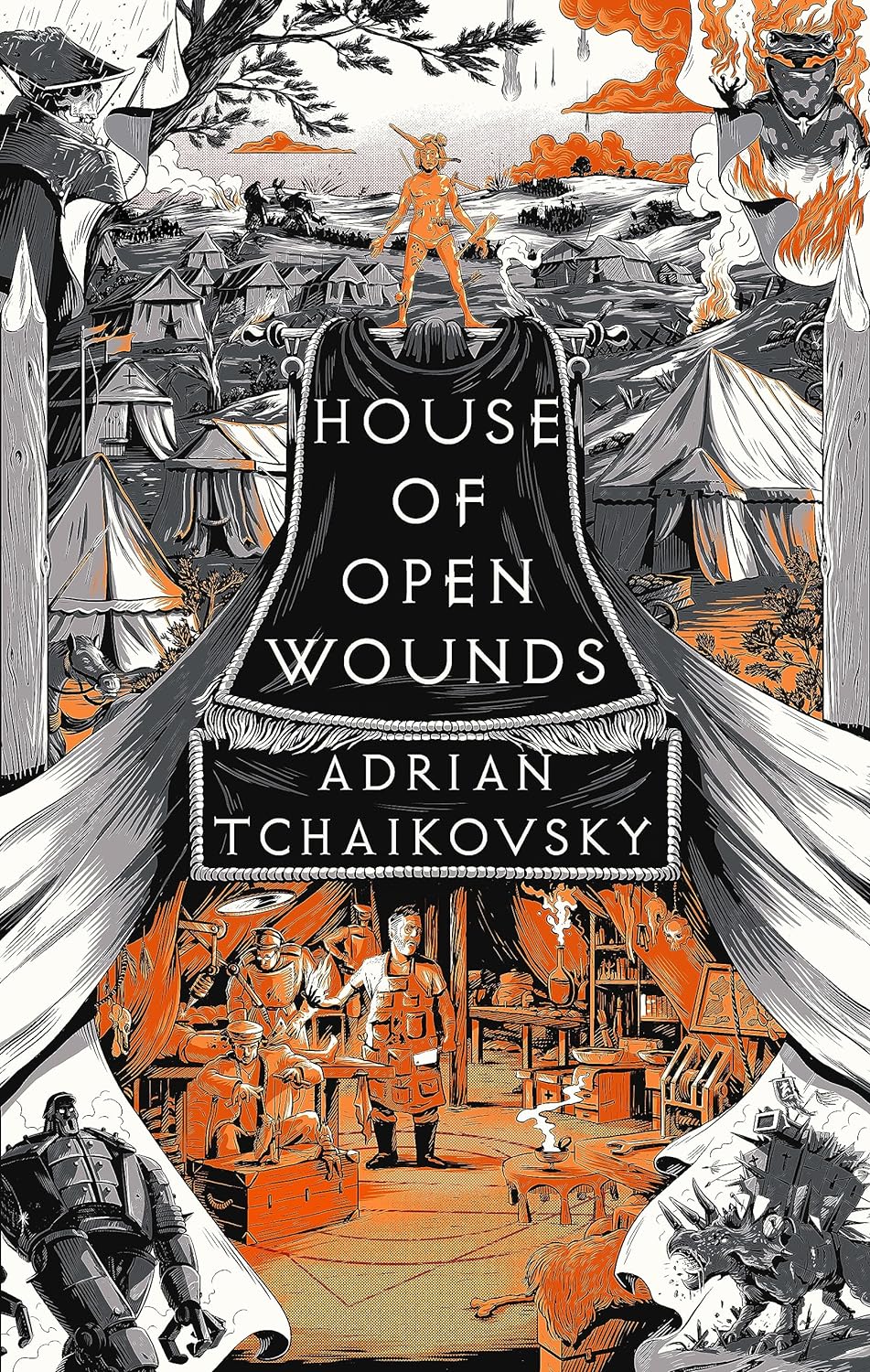
While the above books are all quite exceptional, my favourite body of Tchaikovsky’s work has so far been The Tyrant Philosophers series.  A gripping, brilliant and highly amusing series, the Tyrant Philosophers novels are set in a cool fantasy world filled with magic, gods and demons, all with a fun Tchaikovsky twist to them.  With the first two books, City of Last Chances and House of Open Wounds, both of which were amongst my favourite books of 2023 (with City of Last Chances being one of the best audiobooks of 2023) the series has really grabbed my attention over the last couple of years.  Much of it is down to the author’s clever narratives that work to expand this intriguing fantasy world through some interesting overlapping characters and events.  In particular, the series examines the dark impact of the Palleseen, a conquering army of fanatics who violently supress superstition and belief in the gods in the name of expanding their own worldview of perfection and correctness.  Both the previous books in this series were quite impressive, and I was very eager to read Days of Shattered Faith when it first came out.  While I have been delayed in writing a review for this book, it proved to be an outstanding read, especially with its rich and powerful narrative.

Plot Synopsis:

Welcome to Alkhalend, Jewel of the Waters, capital of Usmai, greatest of the Successor States, inheritor to the necromantic dominion that was the Moeribandi Empire and tomorrow’s frontline in the Palleseen’s relentless march to bring Perfection and Correctness to an imperfect world.

Loret is fresh off the boat, and just in time.

As Cohort-Invigilator of Correct Appreciation, Outreach department, she’s here as aide to the Palleseen Resident, Sage-Invigilator Angilly. And Sage-Invigilator Angilly – Gil to her friends – needs a second in the spectacularly illegal, culturally offensive and diplomatically inadvisable duel she must fight at midnight.

Outreach, that part of the Pal machine that has to work within the imperfection of the rest of the world, has a lot of room for the illegal, the unconventional, the unorthodox. But just how much unorthodoxy can Gil and Loret get away with?

As a succession crisis looms, as a long-forgotten feat of necromantic engineering nears fruition, as pirate kings, lizard armies and demons gather, as old gods wane and new gods wax, sooner or later Gil and Loret will have to settle their ledger.

Just as well they are both very, very good with a blade…

Wow, what an incredible read.  Adrian Tchaikovsky continues to deeply impress with his elaborate and intense narratives, especially as he expertly continues his Tyrant Philosophers series in his distinctive and creative way.  Featuring a complex plot that follows various damaged and self-serving characters as they navigate the attempts to influence and control a mighty city, Days of Shattered Faith was an addictive read from start to finish, and I loved how the entire novel came together.  A very easy five-star read, Days of Shattered Faith was one of my favourite books and audiobooks from the first half of 2025, and I had such an exceptional time getting through it.

I really loved how Days of Shattered Faith’s story turned out, especially as Tchaikovsky managed to turn this into both a powerful standalone novel as well as a moving entry in the larger Tyrant Philosophers series.  This book has quite a complex and layered narrative to it, as it follows multiple intriguing characters through chaotic events that are about to overtake the city of Alkhalend.  Initially focusing on the two Palleseen characters, Sage-Invigilator Angilly and Cohort-Invigilator Loret, Days of Shattered Faith sees them as unlikely ambassadors in a city that mostly hates and fears the Palleseen and their attempts to subvert and control the world.  When the sudden death of Alkhalend’s ruler results in a brutal civil war, Angilly and Loret attempt to help the Palleseen supporting heir to retain the throne following a coup from his brother.  At the same time, various other figures in the city, including a familiar former priest and several unconventional doctors, attempt to survive the chaos engulfing their home.

Tchaikovsky does an excellent job building up a lot of complex storylines, details of the main setting, and character arcs in the first half of Days of Shattered Faith, all of which came into play in fantastic ways as the novel continued.  Following a large collection of complex character-driven storylines throughout the novel, Tchaikovsky moulds these together into a compelling overarching narrative, with these protagonists impacted by various major events.  This includes the brutal civil war at the centre of the novel, which completely changes the course of the narrative and sets several major characters down some compelling and dark spirals.  Due to the appearance of more Palleseen influence in the second half of the book, things in Alkhalend naturally go to hell in a variety of ways, especially when all the unconventional and imperfect methods of Angilly and her unusual Palleseen colleagues in Outreach are questioned and changed by her more by-the-book superiors, who also drop the subtle tactics when it comes to controlling the city.  This results in a darker, more intense second half of the novel, where every protagonist makes mistakes or experiences greater tragedy.  The author perfectly builds up the tension and suspense before leading up to the big revolution sequence where all the separate character arcs converge for the last time, which was as devastating and crazy as you would expect from Tchaikovsky.  Everything ends on a satisfying, heartbreaking note, especially as several characters find themselves in worse positions then when they started.  It will be very interesting to see where the wider narrative of the series goes from here, especially for the series’ recurring protagonist, but it’s clear that the events of Tchaikovsky’s universe can only get sadder from here.

Tchaikovsky has a very distinctive and compelling writing style for the Tyrant Philosophers novels that coveys his elaborate and entertaining narrative in some unique ways.  Once again relying heavily on multiple perspective changes to tell his layered story, Tchaikovsky embarks on providing a deep and personal story, set around a large collection of compelling supporting characters.  The author excels at creating elaborate and complex backgrounds for the various characters, which are worked into the larger plot extremely well, especially as each character has their own unique motivations and damage.  All these varied story elements are well woven together into one complex story, and it was fascinating to see all the different figures react to the continually changing events.  As with the previous books, Days of Shattered Faith has a range of tones within it, as Tchaikovsky works hard to produce the right balance of intrigue, action, world building and dramatic and moving character moments, all of which are done perfectly and work to create an impressive novel.  The elaborate battle sequences pair well with the subtle and often forced betrayals of the various characters, while deeper personal troubles and dark histories lurk just beneath the surface.  All these sequences are well laced with the excellent and often cynical humour of the author, which really ties the entire thing together quite nicely.  I loved how so many complex scenes were made better by the sarcastic and realistic commentary of either the characters or the narrator, which worked to highlight the dark, and often absurd nature, of so many of the fantasy elements of the story.

As with the last two books in the series, Days of Shattered Faith works well as both its own distinctive, standalone narrative and as a continuation of elements and character-focused storylines from the previous books.  Due to how it initially focuses on an original group of central characters navigating an unfamiliar setting in the series’ wider world, new readers can easily come into this series without any real pre-knowledge of the other books.  However, as the story eventually grows to focus on several major characters from the first two novels, I think those readers who know the full story of these figures and the complex events they’ve had to navigate will end up appreciating the plot of Days of Shattered Faith a little more, especially as Tchaikovsky continues to torture a certain former priest with even more tragedy and hardship.  The author also features references to events from the previous books throughout Days of Shattered Faith, and readers will find it fascinating to see how certain decisions or plots from the recurring characters, such as some vengeful religious conversion in House of Open Wounds, had larger, devastating impacts on the wider world.

Tchaikovsky once again pulls together an elaborate setting for his compelling narrative, as while Days of Shattered Faith is set in the same fantasy world as the other Tyrant Philosophers novels, much of the action occurs around the newly introduced complex city of Alkhalend.  Loaded up with cut-throat politics, various conflicting religions, distinctive magic, and various otherworldly beings who have migrated from other realities, Alkhalend is an exceptional focus for much of the plot.  Tchaikovsky excelled at introducing the various unique elements of Alkhalend and its surrounding nations in the early part of the book, and it was fascinating to see how they impacted the plot going forward.  Alkhalend honestly had so many fun and quirky unique fantasy features, and this had to be one of the more memorable settings I have had the pleasure to see in fantasy figure.

Of course, as this book is set within the Tyrant Philosophers universe, Tchaikovsky had to once again include the Palleseen, who serve as the main antagonistic group in the series.  Ideological zealots often bound by their own rules and processes as they slowly and greedily try to take over the world, all the books in this series are dedicated to examining their methods and serves as a humorous critique of militarisation and empire building.  While the previous books have either looked at the Palleseen as an occupying force or at their weaponisation of magical medical practices, Days of Shattered Faith focuses on their diplomats and how they influence conflicts in lands outside their empire.  This ends up showcasing a new side to the Palleseen machine, especially as the empire’s diplomatic department, Outreach, is made up of more fluid personnel, willing to go outside of standard practices to achieve their goals.  It was quite entertaining to see the differing methods of this empire conflict with each other, especially when it brings some conflict between the various Palleseen characters, and it added some great drama to the second half of the book.  I loved once again seeing the dangerous bureaucracy and insatiable desire for more magical material turn the Palleseen from reasonable allies to controlling occupiers as the plot continued, especially as it perfectly influenced various characters to take a new course of action.

As I have mentioned a few times above, Tchaikovsky loaded this novel up with an outstanding array of complex or damaged characters who are the true highlight of the plot thanks to their collective dark histories and layered motivations.  The sheer range of different characters in Days of Shattered Faith is very impressive, featuring a great mixture of locals of Alkhalend, Palleseen visitors, and other memorable figures seeking refuge in the sandy city.  Much of the plot was focused around the two members of Palleseen Outreach in the city, Sage-Invigilator Angilly and Cohort-Invigilator Loret, whose unique take on diplomacy often causes more chaos.  Angilly was a great lead for much of the plot as a pragmatic Palleseen operative, who finds her loyalty compromised by her romantic connection to the city’s crown prince.  This doomed romance leads to all manner of trouble for both characters, and the various betrayals and eventual end resulted in some of the author’s more tragic writing.  Loret, on the other hand, was a great fish out of water in this novel as she attempts to learn the rules of diplomacy and understand the many facets of Alkhalend, all while keeping her troubled past a secret.  I felt that Tchaikovsky used Loret well as a good stand in for the audience to showcase his new city setting in more detail, while her eventual development and tragic past connected to the events of the previous book proved to be a particularly compelling, if bloody, part of the plot.

The rest of the cast are also impressive, including a couple of opportunistic Palleseen operatives who have less issues with exploiting the people of Alkhalend for their own means.  I also personally enjoyed the return of several familiar figures from the previous Tyrant Philosopher novels, including the unusual batch of former military doctors who made their escape in the previous novel.  While given less focus in this novel, Tchaikovsky still makes excellent use of these fugitive doctors, and it was interesting to see how the most junior member of the troupe got upgraded to a major character now he’s a little older.  Accompanying the doctors is character now known as Happy Jack, who readers of the series may recognise as the priest of small gods from the first two novels, Yasnic.  Now bereft of his original petty deity, Jack has now found happiness and contentment in Alkhalend, especially thanks to an unlikely doomed romance.  Of course, that happiness can’t last too long, and Tchaikovsky soon returns to torturing one of his best characters, ensuring he’ll be even more compelling in the next book of the series.  Throw in the many other unusual denizens of Alkhalend, which includes pirates, necromantic priests, scheming nobles, and even a giant frog god, and the cast of Days of Shattered Faith is impressive, especially as the author carefully balances the many alternating character storylines to create an overall outstanding narrative.  I cannot wait to see what awesome characters Tchaikovsky comes up with in the rest of the series, but I’m expecting some truly fascinating figures going forward.

While I did end up buying a physical copy of Days of Shattered Faith, I ended up listening to its audiobook format instead, mainly because I had such a good time with the City of Last Chances audiobook.  Days of Shattered Faith also proved to be an incredible listen, with the audiobook format deeply enhancing the complex plot and showcasing all the excellent fantasy elements in even more detail.  Coming in with a notable runtime of nearly 22 hours, I was able to get through Days of Shattered Faith quickly, especially with the outstanding David Thorpe narrating the story.  A veteran narrator who has lent his voice to many of Tchaikovsky’s audiobooks, Thorpe did an excellent job bringing Days of Shattered Faith to life, especially as his tones and voices matched the style of the author’s writing.  Thorpe really dives into the various unique characters loaded into Days of Shattered Faith, coming up with a range of fun and fitting voices.  I felt that these voices, as well as his excellent narration of the complex fantasy plot details of this novel, turned Days of Shattered Faith into a very enjoyable audiobook, and it was such a good format to enjoy this unique story.  Easily one of the top audiobooks I have so far enjoyed in 2025, Days of Shattered Faith comes highly recommended in this format, and you are guaranteed to have an amazing time listening to it.

With even more crazy characters, distinctive fantasy elements, and a twisty and captivating plot, Days of Shattered Faith was another exceptional novel from Adrian Tchaikovsky.  A perfect continuation of the incredible Tyrant Philosophers series, Days of Shattered Faith had so many awesome elements to it, and I loved its complex story and compelling protagonists.  An outstanding read I loved so much, Days of Shattered Faith is one of the best fantasy novels of 2025, and I cannot wait to see how the rest of the series unfolds.  Indeed, the fourth book in the series, Pretenders to the Throne of God, is out in a few months’ time, and it is already shaping up to be another epic read.
Amazon

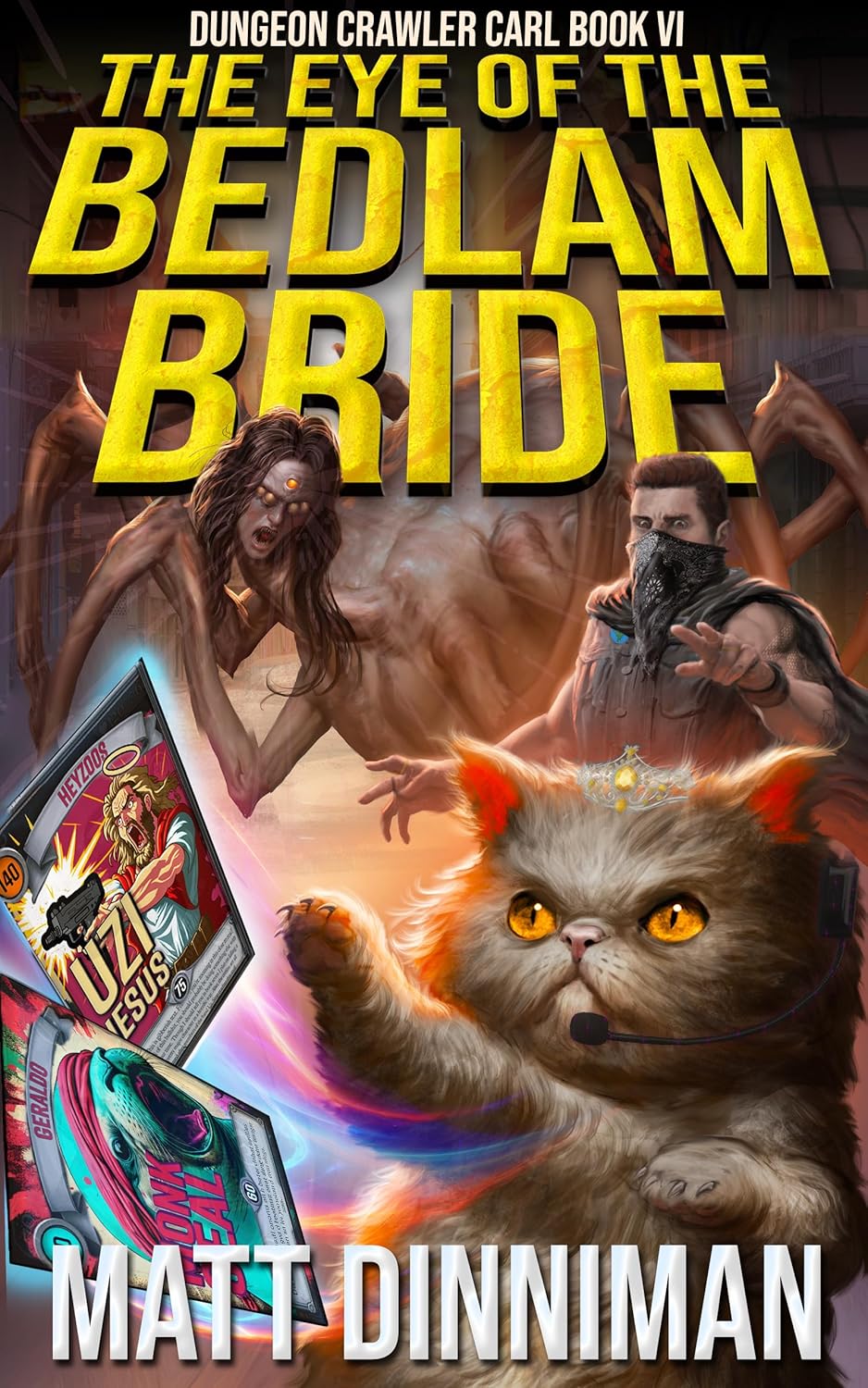
The Eye of the Bedlam Bride by Matt Dinniman

Publisher: Soundbooth Theater (Audiobook – 2 July 2023)

Series: Dungeon Crawler Carl – Book Six

Length: 26 hours and 46 minutes

My Rating: 5 out of 5 stars

Amazon

The chaotic fun of Matt Dinniman’s Dungeon Crawler Carl series continues in epic fashion with the ultra-impactful and deeply addictive sixth entry in the series, The Eye of the Bedlam Bride, an exceptional novel designed to strike hard at the reader’s emotional heartstrings.

As you might have guessed from my recent flurry of reviews for this series, I am seriously in love with the Dungeon Crawler Carl books.  An impressive and surprisingly deep LitRPG series, the Dungeon Crawler Carl novels follow a collection of compelling characters as traverse a deadly fantasy dungeon created from the ruins of all of Earth’s buildings by aliens for intergalactic viewing content.  Set around a damaged protagonist and his excitable and now sentient cat, these books are deeply addictive, and once you start the series you really can’t stop.  Indeed, I literally just chain-read the entire series, with awesome books like Dungeon Crawler Carl, Carl’s Doomsday Scenario, The Dungeon Anarchist’s Cookbook, The Gate of the Feral Gods and The Butcher’s Masquerade all proving to be outstanding reads.  I loved these previous books so much, that I instantly started listening to the sixth book in the series, The Eye of the Bedlam Bride, the first chance I got, and boy was I in for an incredible time with it.

After barely surviving the Butcher’s Masquerade and then witnessing the surprising end to the seventh floor, Carl and Princess Donut are exhausted and traumatised by recent losses.  However, they have no time for rest as they find themselves thrust into the dangerous eighth floor of the dungeon.  One of the most ambitious levels so far, the eighth floor is based on a map of Earth’s final days, filled with intangible ghosts of the humans who wandered the world mere weeks before the planet’s death.

However, this is not a perfect replica of Earth; instead these locations have been seeded with monsters and mythological figures based on twisted accounts of Earth legends, with each creature tied to the geographic area their folklore originated.  To complete this level, the crawlers are tasked with finding and capturing six of these monsters and turning them into cards, which can then be summoned to fight alongside their new owners.  Each team will need to find and convert as many powerful creatures as possible to create the best decks, especially as they will be forced to face off against mobs and other crawlers with their own cards.

Unexpectedly starting in Cuba, Carl and Donut navigate an unfamiliar location as they try to learn the new mechanics of the game.  Determined to get to the next floor, Carl and Donut endeavour to find the best monsters they can.  However, the stronger the monster, the less controllable the card, and Carl and Donut will soon have their hands full managing a strange array of summonable creatures, including the legendary demon Shi Maria, who has far more independence than they would like.  Can Carl and Donut survive this new floor of the dungeon, or will they finally be crushed by their dark secrets, troubled pasts and Carl’s slowly eroding sanity, especially once he looks into the eye of Shi Maria, the Bedlam Bride?

Just when you thought this series couldn’t get even better, Matt Dinniman amps up the intensity and complexity of his plot and characters a whole additional notch, with one of the more moving and powerful entries in the entire series.  The Eye of the Bedlam Bride was an absolute masterpiece that featured the author’s trademark LitRPG chaos, while really showcasing his impressive writing ability.  One of the best books in an already incredible series, The Eye of the Bedlam Bride was so damn good, and it gets a very easy five-star rating from me.

Dinniman pulled together another brilliant narrative for his sixth Dungeon Crawler Carl novel, as They Eye of the Bedlam Bride perfectly continued the long-running series storylines while also presenting its own unique adventure.  Thrusting the protagonists into a complex new level, Dinniman quickly showcases all the floor’s new elements, including a fun card-based combat mechanism that fits into the existing dungeon battle system surprisingly well.  While the pacing is initially a tad slower to ensure the readers fully appreciate all the necessary lore and gameplay details of this book’s plot, Dinniman quickly works to show that The Eye of the Bedlam Bride isn’t a filler novel between the pivotal fifth and seventh books.  This becomes especially clear during a major sequence that requires Carl and Donut to make a deadly choice while surrounded by several vengeful gods.  Dinniman also makes sure that a major secret from the previous book is brought into the light early, complicating protagonist relationships and presenting them with dark choices.  Dinniman swiftly follows this up with some very awesome sequences, such as Carl and Donut coming face-to-face with their most problematic card, demonic carnage in a night club, and problems from the wider universe caused by Carl’s ambitious and rebellious plots.

While all these early elements are great, The Eye of the Bedlam Bride hits its storytelling height about halfway through, as Dinniman amps up the emotional stakes of the narrative.  Forced to compete in a gruelling series of battles that test the unique fight mechanics of the floor, the protagonists find nothing but heartbreak as they near the end of the second phase of the level, including a truly horrifying and deeply personal big boss.  All this follows a series of impactful personal revelations for Carl, that hit his already fragile mental state hard and finally provides full context for character background elements that have been hinted at throughout the series.  This central part of the story was so damn heartbreaking, and you really must appreciate how Dinniman can make you laugh before loading up substantial sorrow and regret and producing some beautifully crushing sequences.  While these scenes are emotionally charged, I appreciated how Dinniman often tempered them with more heartwarming moments that show the connections the protagonists have built up during the series, and the author does some amazing character work in the second half of this book.

Everything perfectly leads up to the incredible final third of The Eye of the Bedlam Bride, as Dinniman raises the stakes as only he can.  With the protagonists forced to compete in a brutal third and final phase of the floor, events soon break down into pure chaos with undead hordes, demonic possessions, crazed gods and various rival crawlers all coming into play.  Dinniman keeps the story moving so fast in this last part of the book, as the protagonists dive into key battle after key battle.  I actually ended up listening to the last several hours in one day as I just had to see what happened next.  Following one of the most tragic scenes in the series, which nearly broke me, Carl and Donut race to save as many people as they can from the AI’s inventive endgame, leading to an all-out battle royal in the middle of Cuba.  I loved how so many story elements from the entire book came into play for the conclusion after some clever set up earlier in the plot, resulting in some very epic moments.  The ending was a brilliant mixture of humour, intense action, extra lore, and some particularly dark moments for the protagonists, which came together beautifully and ended the novel on a real high.  Throw in some last-minute reveals that really amp up the excitement for the next book, and this was pretty much a perfect narrative that is guaranteed to keep you hooked all the way the bloody end.

I honestly feel that The Eye of the Bedlam Bride was one of the best-written entries in the entire Dungeon Crawler Carl series, and frankly I am still not over every single amazing moment of this book.  Dinniman achieves so much in this impressive novel by simultaneously changing the rules of his own game while also providing the deepest examination of his complex protagonists yet.  At the same time, he makes a novel that most authors would have turned into a filler entry into one of the series’ most impactful books.  I was really impressed by how the author chose to further amp up his various storylines and character arcs in this book, and Dinniman perfectly carries on the craziness of The Butcher’s Masquerade while building up the oncoming calamity of the seventh book and the long-awaited Faction Wars.  Naturally, this means that The Eye of the Bedlam Bride is best enjoyed by those who have read all the previous Dungeon Crawler Carl books first.  Still, for those who are determined to dive in here, Dinniman provides enough context and flashbacks to ensure you can easily follow what’s happening, and there is even a fun summary at the beginning.

This sixth novel in the series brings back all the impressive humour, intense action, and great LitRPG elements that made the previous Dungeon Crawler Carl books so damn good, while also bringing in some impressive new features, primarily a fun new battle element.  I must admit that I wasn’t too sure that the card system of this level, which on paper sounded like a crazy combination of Pokémon and Yu-Gi-Oh!, was going to work.  However, I should never have doubted Dinniman as it fitted in amongst the usual chaos and over-the-top scenes perfectly.  Dinniman does an excellent job introducing and then exploring this system throughout The Eye of the Bedlam Bride it proved fun to see the characters adapt to the new rules.  There is some great progression in how these cards impact battles, and each fight with them gets increasingly hectic.  I really enjoyed how big and crazy battles with these cards could get, especially towards the end, and you won’t see protagonists facing off in card duels with gods and demons anywhere else.

There are some additional excellent elements to The Eye of the Bedlam Bride that also enhanced the epic story in some interesting ways.  This includes a haunting new setting of the book, the ghost-filled replica of the pre-dungeon Earth, which really amplifies the feeling of despair and loss that many of the characters feel.  Dinniman continues to also feature a compelling array of LitRPG elements in this novel, and you really find yourself getting drawn into the minutiae of stat updates, item benefits, spell effects, and so much more, as the author cleverly works it into the narrative.  A lot of why these RPG features are so fun is due the chaotic humour that infests every single page of this hilarious book.  The book’s comedic elements are so effortlessly funny and feature a great mixture of sudden outrageous moments with realistic reactions, the insertion of the book’s reality television elements into life-and-death struggles, often inappropriate jokes from the massive and fun supporting cast, and an array of reference focused commentary on all matters of the dungeon.  While some of the comedic moments get a little out of hand: “I need a baby seal”, they all work beautifully in the context of the book’s clever plot, and I laughed myself silly so many times during this book, including at how the day was saved thanks to, let’s say, “crab meat”.  I’m also as appalled as a certain velociraptor that some of the funniest, if weirdest, moments of the book occurred in Chapter 69.  However, what makes The Eye of the Bedlam Bride particularly good is the way in which these comedic elements are well matched by darker, tragic moments, which allows for quite on overall powerful read, especially when it comes to the characters.

Dinniman went above and beyond when it came to the character development in this book, with a particular focus on series protagonist Carl.  After several books laden with hints about his past, we finally get Carl’s full backstory, which really goes to show just how damaged he is.  Dinniman does an outstanding job showcasing this background in several powerful scenes in The Eye of the Bedlam Bride, and I really appreciate how it built on the subtle foreshadowing from the previous novels.  This existing trauma was further enhanced in this book, as Carl also finds out multiple new revelations about his family, including several that had been kept from him (which simultaneously shows just how bad a girlfriend Bea really was).  Throw in his anger and guilt from being one of the few survivors of Earth, and the trauma from all carnage he has witnessed in the dungeon, and Carl really isn’t in the best headspace for this book, and that’s even before the titular Bedlam Bride gets hold of his mind.  As such, there is a lot of dark moments for Carl to unpackage throughout this novel, and Dinniman perfectly captures his protagonist’s continued struggle to remain in control.  This deeper dive into Carl’s psyche produced some of the best scenes Dinniman has so far written in the series, and I really appreciated how these darker moments were well matched by the revelation that Carl now has a true family with Donut and his new friends.  These relationships kept him relatively sane in this book, and allowed him to remain the resilient, if explosively inclined, straight man of the book.  Dinniman also works to showcase how despite his issues and reputation, Carl has become a bit of a legendary figure for his fellow crawlers, and the big sequence at the end where he is able to convince them to follow one of his craziest plans, was just amazing.

While most of this book’s focus is on Carl and his history, the rest of the characters in The Eye of the Bedlam Bride also get their moments to shine, and you continue to appreciate just how awesome the ended cast of this series is.  This includes the other main protagonist, Princess Donut, Carl’s now sentient cat who provides much of the humour in the story thanks to her over-dramatic reactions, silliness, and feline superiority complex.  While Donut is the comedic relief of the main duo, she still has a lot of serious moments in The Eye of the Bedlam Bride, especially while serving as the emotional anchor the spiralling Carl.  Donut is also dealing with her own grief and sadness, especially after the tragedies of the previous novel, and there are some heartbreaking moments where you see her trying to push that down.  Despite her issues and immaturity, Donut role in the plot, especially as she controls the cards during most of the battles, and you get to see her tactical genius in full display.  There are some super sweet moments with Donut in this novel, and I really love how well Dinniman continues to feature the bond between her and Carl as the true heart of this series.

In addition to Carl and Donut, The Eye of the Bedlam Bride also features multiple other key members of the Dungeon Crawler Carl cast, and it is very impressive how much you care for so many of these figures.  This includes Katia, who, despite leaving the team in the previous novel, still has a major impact on the plot.  Dinniman perfectly revisits some key revelations from the end of the previous novel, that adds additional complexities to her relationship with Carl and Donut.  The protagonist’s mentor, Mordecai, also has a key role in this book, especially as you finally get the full context for his tragic past.  This background adds some additional drama to the main story, especially when Carl and Katia find themselves caught in the same feud between forces outside the dungeon that he did.  There is also a certain sweetness to Mordecai’s story in this novel, especially when you find out he’s caring for several NPC children, in ways very contrary to his usual gruff disposition.  Dinniman also perfectly brings back the various members of Carl’s guild, who form a surrogate family with each other, and whose appearance in one scene was one of the most heartwarming moments in the plot.

Other characters of note in The Eye of the Bedlam Bride include the possessed sex doll head, Samantha, whose insane declarations, unhinged actions, unsettling abilities and crazy general demeanour make her one of the funniest characters in the series.  There is also an array of over-the-top monsters and creatures that the protagonists encounter and turn into cards.  These include Uzi Jesus, a kung-fu seal, hilarious caricatures of Carl and Donut, and a crab who must overcome his ‘performance issues’ to save the day, just to name a hilarious few.  These comedic monsters were well contrasted by Shi Maria, the titular Bedlam Bride, whose dark actions amp up the intensity of this book in some powerful ways.  I also must mention a couple of recurring crawlers from previous novels who reappear in dramatic fashion in the final third of the novel, allowing for some of the book’s best moments.  One of these character ends up having one of the series’ saddest moments, and I frankly am still not over how brutally raw and tragic that whole sequence was.

While all these above characters are amazing in their own ways, my favourite character in this series remains the dungeon’s System AI.  Despite never physically appearing, the AI has a major impact on the plot, and you are constantly bombarded by its unique humour in the various descriptions and summaries it provides to Carl and the reader, often full of weird and hilarious references.  So many serious or threatening moments are turned into comedic gold by the AI’s inappropriate commentary, and anytime it provides input to the plot, you are guaranteed to laugh.  While the AI has been fun the entire series, it gets even more unhinged in this novel as it gains full sentience and takes full control of the.  Determined to continue the crawl on its own dramatic terms, the AI starts making things even weirder for the characters, throwing in its own twists and changes.  Dinniman does a wonderful job showcasing just how insane the AI is at times, including with some very worrying inclusions in its usually informative descriptions.  There are also some hilarious scenes where the AI interacts directly with the characters, including one brilliant moment when he responds to Carl’s feedback on its descriptions in a particularly petty way.  All this, and more, allows the AI to really standout in this book, and it is a testament to how good Dinniman is as an author, that a disembodied voice is one of the best characters in a series loaded with exceptional and extremely complex figures.

As with all the previous Dungeon Crawler Carl novels, I ended up listening to The Eye of the Bedlam Bride on audiobook, which is honestly the only way to enjoy the author’s fantastic and chaotic narrative.  Coming in at nearly 27 hours in length, The Eye of the Bedlam Bride was one of the longest audiobooks in the series, but you frankly don’t mind as every second you spend listening to a Dungeon Crawler Carl audiobook is so much fun.  I honestly powered through The Eye of the Bedlam Bride in no time at all, especially the concluding several hours, and I still love how audiobook format brings out all the book’s humour, tragedy and excitement.  A lot of this is down to the series’ awesome narration, which in the case of The Eye of the Bedlam Bride, includes an extended voice cast.  While there are a few voice actors for this particular audiobook, Jeff Hays remained the principal narrator, voicing nearly all the characters and the plot descriptions.  Hays is an incredible narrator, and I loved the sheer range of epic voices he brings to bear throughout the audiobook, all of which fit their associated character perfectly, with associated accents and clever tonal changes.  This includes an excellent reuse of voices for previously featured characters, while the various crazy new cast members featured in this book were also extremely cool.  My favourites for The Eye of the Bedlam Bride remain Princess Donut, who gets autotune in this audiobook to help with her singing (the sound effects for this were brilliant), and the AI running the dungeon, as Hays matches the unhinged energy of the cracked computer and conveys this insanity to the listener with amazing enthusiasm.

In addition to Jeff Hays, The Eye of the Bedlam Bride also features three other actors who voice small roles in the larger audiobook to great effect.  The most notable of these is actor Patrick Warburton, who was an awesome addition to the experience.  Initially voicing the flashback voice of Carl’s father in several heavy scenes, Warburton did an outstanding job of breathing life into a harsh figure we’d only had glimpses of in the previous books, and his appearances here had some real menace to them.  Warburton also gets to have some fun when he plays a secondary character later in the audiobook with some brilliant levels of enthusiasm.  Narrator Travis Baldree was also hilarious with his appearance in The Eye of the Bedlam Bride, voicing a giant crab who becomes one of the protagonist’s cards.  Featuring a comedic accent and some very over-the-top lines, Baldree was just amazing, and I loved the interactions he had with Hays and Warburton’s characters.  Finally, Soundbooth Theater regular Annie Ellicott returns to voice an entertaining character in a concluding skit, which was very amusing on a variety of levels.  I really loved how well these outstanding extra voice actors were fitted alongside Hays’s impressive main narration, and it allowed for a great overall listen.  Throw in the excellent sound effects of the series, some of which alter Hays’s voice in clever ways, or places a voice role into the background of a scene for some interesting ambience, and this was an exceptional audiobook that I loved so damn much.  There is honestly nothing better than a Dungeon Crawler Carl audiobook, and I must once again recommend this format with all my heart.

With a particularly impressive and powerful plot, The Eye of the Bedlam Bride was one of the best books in the already incredible Dungeon Crawler Carl series, and author Matt Dinniman outdid himself when it came to diving into his damaged protagonists.  A highly inventive and captivating novel that I just couldn’t stop listening to, The Eye of the Bedlam Bride was Dinniman at his very best and you are guaranteed to have an exceptional time with this novel, and you will, like me, instantly dive into the next novel of the series, This Inevitable Ruin, just to see what happens next.

Amazon

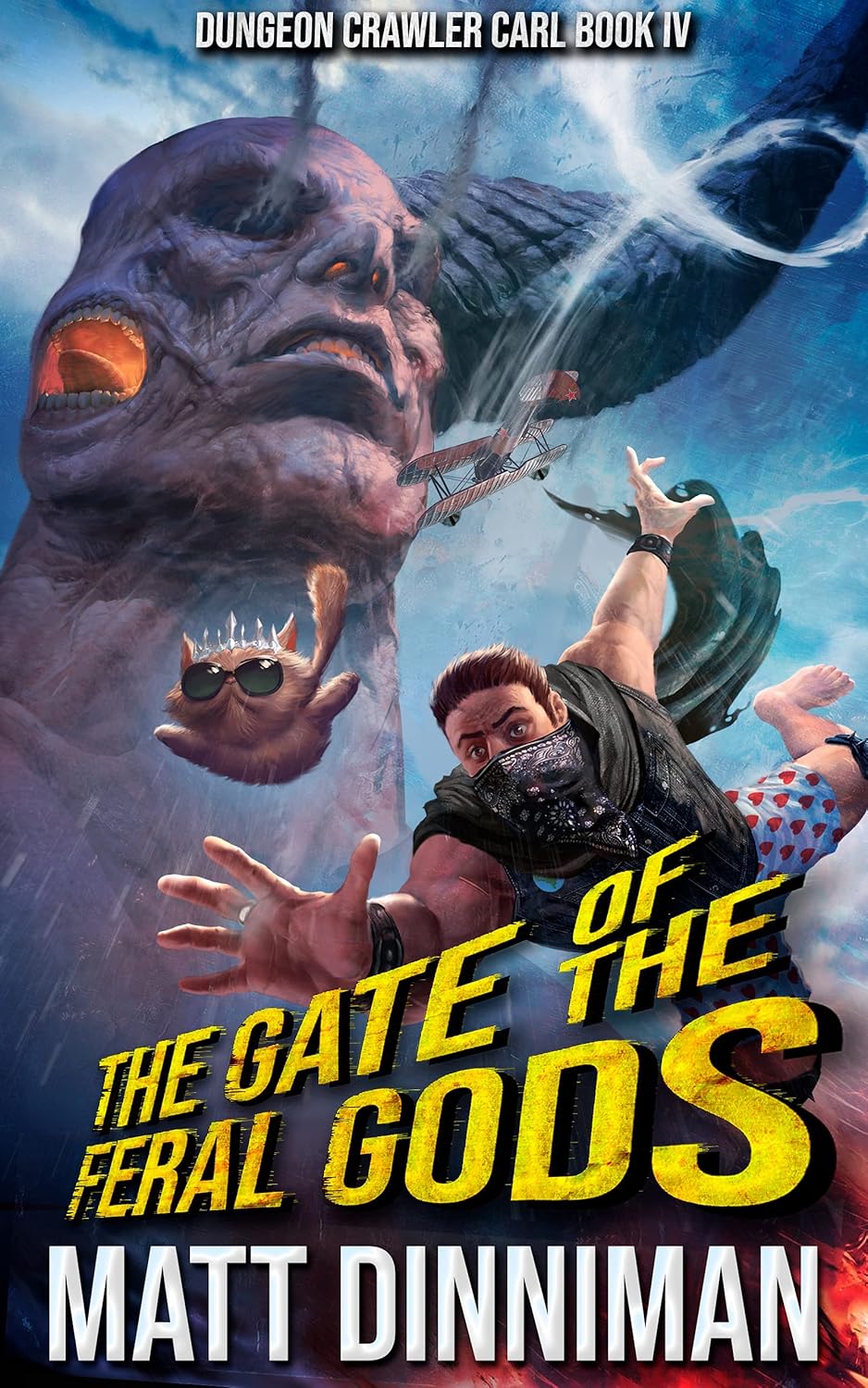
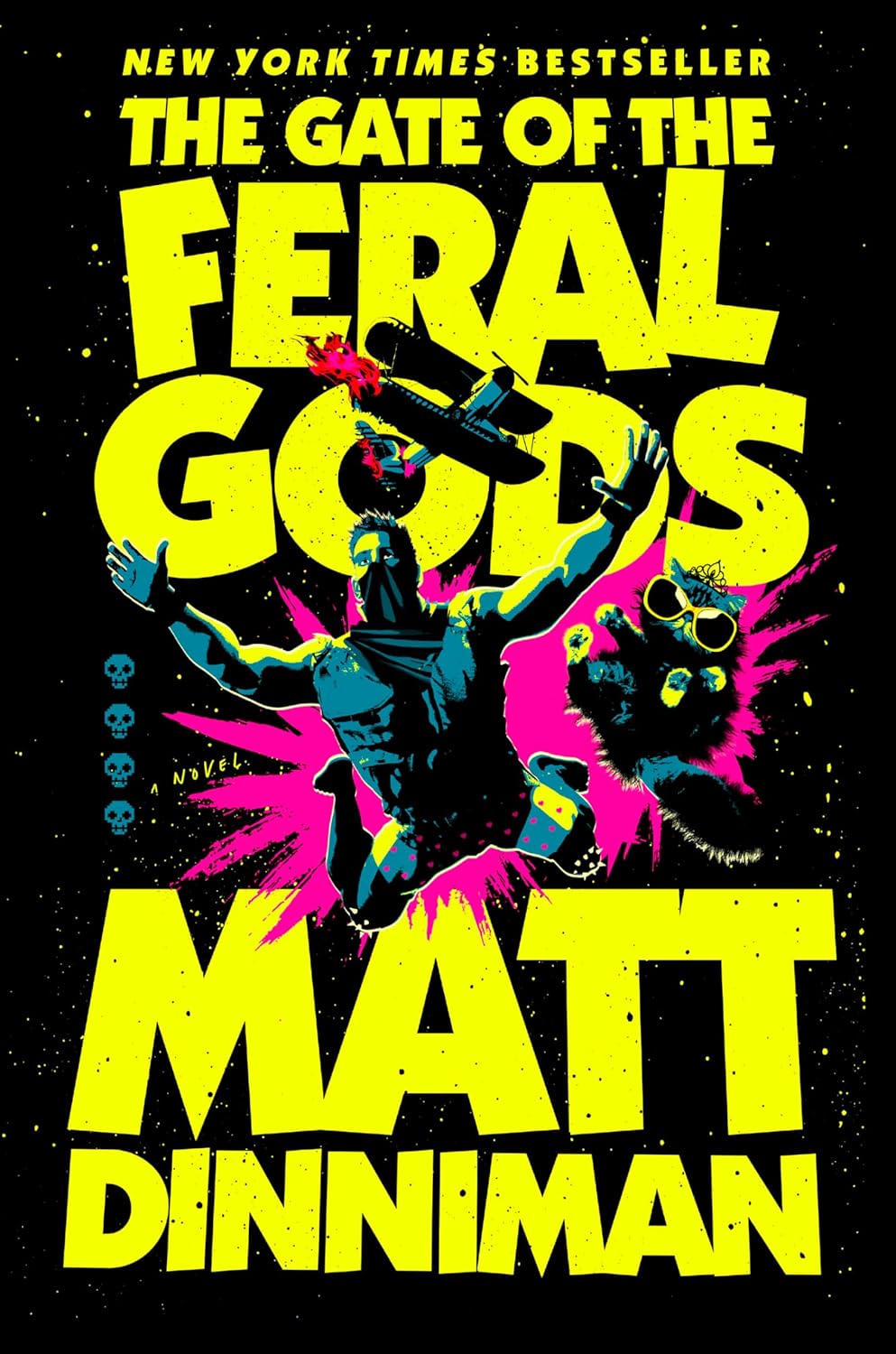
The Gate of the Feral Gods by Matt Dinniman

Publisher: Soundbooth Theater (Audiobook – 1 July 2021)

Series: Dungeon Crawler Carl – Book Four

Length: 18 hours and 3 minutes

My Rating: 5 out of 5 stars

Amazon

The chaotic fun of Matt Dinniman’s Dungeon Crawler Carl series reaches another impressive level in the awesome fourth book, The Gate of the Feral Gods, an exceptional read that I could not put down until its gripping and epic end.

I can officially say that I am incredibly obsessed with the Dungeon Crawler Carl books.  Taking place after all buildings on Earth are instantly destroyed and turned into an elaborate fantasy dungeon, all in the name of an alien reality show, the Dungeon Crawler Carl books are an incredible series that perfectly utilises its unique concept and LitRPG basis to create a particularly addictive story loaded with crazy action, over-the-top humour and an array of incredible characters.  I only started it a few weeks ago and I have so far powered through several books in the series, including Dungeon Crawler Carl, Carl’s Doomsday Scenario and The Dungeon Anarchist’s Cookbook, all of which were five-star reads.  Indeed, I have had such a great time with this series, that the moment I finished off The Dungeon Anarchist’s Cookbook I instantly started listening to the fourth book in the series, The Gate of the Feral Gods, which continued the series in some outstanding ways.

After surviving the carnage of the Iron Tangle, Carl, Princess Donut and Katia have emerged on the fifth floor of Dungeon Crawler World Earth and must now contend with a new dastardly set-up.  Placed into a multitude of small, bubble-contained worlds, each remaining human party needs to assault castles contained within each of the bubble’s four zones.  If they succeed in capturing each zone’s castle, the dungeon stairwell will open and they’ll be able to advance to the sixth floor.

While the setup for the fifth floor seems simple, in reality it is a logistical nightmare, as the popular team of Carl, Princess Donut and Katia must navigate and master four very different environments within a rushed timeline, including a desert landscape infested with flying gnomes, a gigantic haunted crypt filled with traps, a besieged sand castle that is home to a powerful mage with relationship issues, and a derelict underwater submarine surrounded by gigantic sharks, all while trying to untangle a unique puzzle hidden in an elaborate quest storyline.  Worse, thanks to their high levels, the team are forced to rely on ineffective, low-level fellow crawlers to clear out the bubble’s zones, including those people who have barely survived the previous floors.

However, the elaborate new floor is only the tip of the problems facing Carl.  Old enemies from outside the dungeon are desperate to strike him down for the chaos he has caused, while the AI controlling the dungeon continues it erratic obsession with him.  As events heat up, Carl is given the unique chance to obtain a legendary artefact loaded with unimaginable power and terrible risk, The Gate of the Feral Gods.  If Carl can master the gate, he has the chance to keep his friends and loved ones safe on this floor.  But what happens when Carl decides to use the gate to strike back against those who have destroyed his planet?  You will not break him, but he will break everything in the galaxy to get his revenge!

Dinniman does it yet again as The Gate of the Feral Gods was another exceptional and epic novel that I could not stop reading.  Perfectly continuing the impressive story from the previous Dungeon Crawler Carl novels, The Gate of the Feral Gods was an ultra-exciting and complex novel, that brings laughter, excitement and powerful emotional moments in equal measure.  Another book in this series that gets a very easy five-star rating from me, The Gate of the Feral Gods was so damn good, and I had so much fun getting through this insane, but clever, adventure.

I really enjoyed the impressive story that Dinniman came up with for The Gate of the Feral Gods, especially as the author uses the opportunity to feature a more traditional fantasy narrative, while also building on the unique character relationships that have been an impressive part of the previous novels.  In a new dungeon floor with some unique quirks, you are once again drawn into the battle for Carl, Donut and Katia’s survival, as they attempt to understand their new scenario as the population of the entire galaxy watches their progress.  There are also some great new characters introduced in this early part of the book, who add some excellent human elements to the wider story.  Determined to clear their part of the floor, Carl’s team embark on some explosive initial actions, and I liked how Dinniman treated this early part of the story in a more traditional LitRPG manner, as the protagonists follow the quest elements laid out as part of the story.  However, it doesn’t take long for Dinniman to throw things completely off the rails, as there are some great scenes halfway through, including the return of an old friend with real inner anger, and a unique boss battle in a flying house that will have you cackling with surprise.  However, one of the more impressive events set around the middle of the novel sees Carl start to embrace his anarchist persona, striking back against his oppressors in his usual destructive manner.

The big events of the first half of the book have an impressive impact on the second half of The Gate of the Feral Gods, as the protagonists find themselves in a time crunch.  This forces them to go on some risky missions, including invading a giant sandcastle with some unique elements, as well as journeying beneath the waves, much to the horror of everyone’s favourite sentient cat.  The various intense challenges faced by the protagonists are usually overcome in some impressively inventive ways, I loved how well Dinniman hints at the protagonist’s eventual plans.  While this is unfolding, you get some interesting looks at the wider crawl thanks to flashes of other character’s battles, and Dinniman also provides some intriguing looks at the issues surrounding the outer galaxy.

While all the above elements are impressive and result in some epic moments, it pales in comparison to the final third of the book.  Thanks to the titular Gate of the Feral Gods, all hell breaks out (literally and figuratively), as the protagonists find themselves involved in the biggest escort mission ever.  Thanks to that, they get into some brutal confrontations, which help to define how desperate things are getting for the characters.  The final sequences of The Gate of the Feral Gods helps to cement this novel as a truly impressive part of the series, as Carl and Donut finally face down one of their oldest enemies, while also fooling everyone with a particularly chaotic scheme.  The set-up for the protagonist’s bold strike against their foes is very clever, and while there are a lot of hints about what is to come, Dinniman cleverly obscures the entirety of the plan, allowing for some awesome surprises that really show off how audacious the protagonists are coming.  This was honestly an incredible end to such a chaotic and compelling read, and it sets up the next book in the series perfectly, allowing for some impressive moments going forward.

I really enjoyed how The Gate of the Feral Gods turned out, especially as Dinniman turned what could have been a filler novel between two major parts of the Dungeon Crawler Carl series, into a particularly powerful and intense novel with long-running implications for the rest of the series.  Due to its position as the fourth book in the series, The Gate of the Feral Gods is best read by those who have enjoyed the previous entries in the series, even with the protagonist’s useful internal recaps, especially as this book continues to feature and build on a lot of complex ongoing storylines and character arcs.  Once again written in the first-person style, Dinniman perfectly showcases his unique scenario, and gifts the reader with so much awesome action, fun humour, compelling characters, and surprisingly enjoyable LitRPG elements.  With a bit more of a slower pacing at the start of the novel, Dinniman gives this book time to breath after the crazy conclusion of The Dungeon Anarchist’s Cookbook, and allows the characters, and the readers, time to get familiar with the new floor of the dungeon.  This complex new setting within the dungeon was extremely well crafted, and its unique features ensured that The Gate of the Feral Gods had a very distinctive feel amongst the rest of the series.  The focus on quests and the internal storylines of the level helped to amp up the fantasy vibe of the story, while Dinniman also set up a multitude of additional long-running storylines that have a big impact later in the series.  At the same time, Dinniman cleverly continued to showcase the wider universe outside of the dungeon and the way that these exterior events impact the protagonist’s battles, and vice versa, allowing for a particularly compelling narrative.

While I felt that The Gate of the Feral Gods had a slightly slower start, that doesn’t last long, as Dinniman adds in some amazingly exciting and over-the-top sequences that really stick in the mind.  The author proves extremely capable of completely going even further beyond the craziness of his previous novels, and I loved how fantastically outrageous things get at times, with giant boss battles, unbelievably dangerous traps, multiple crazy gods, and some deeply human fights, all making this story particularly epic at times.  The many, many action scenes within the book are so well written, and I loved how impactful, insane, and usually hilarious these sequences are, and Dinniman makes excellent use of the LitRPG part of the series, with so many cool elements from RPG games coming into play in entertaining ways.  Dinniman also does an excellent job expanding on a ton of complex elements of the dungeon in this novel by including various extracts from Carl’s Dungeon Anarchist’s Cookbook, a secret compendium of knowledge from previous crawlers.  These extracts are each cleverly written in their own style, and I love how they highlight technical elements of the dungeon, as well as the emotional damage each of these previous crawlers experienced.  These LitRPG elements are further made better by the author’s unique sense of humour, which inhabits every aspect of the book and ensures that the reader is constantly laughing at all the insane moments, clever jokes, and over-the-top characters.  While this humour might not be for everyone, I felt it was perfect, especially as it blended with all Dinniman’s complex storytelling and the deeper emotional pain of the book, allowing for a very impressive overarching novel.

The thing that made The Gate of the Feral Gods really stand out was the author’s focus on character introductions, growth and powerful human moments, as the protagonists, their allies, and the various beings involved in the running on the dungeon, continue their chaotic journey together.  As with all the books in the series, the plot of The Gate of the Feral Gods revolves around protagonist and perspective character Carl, through whose eyes we see the plot unfold.  The perpetually exasperated and intense heroic figure who is desperately trying to save everyone he comes across, Carl continues to struggle in his role of leader and must keep coming up with dangerous plans to save his friends and beat the latest challenges of the dungeon.  While mostly serious, there is some fantastic humour and deeply sympathetic moments behind Carl, and it proves fascinating to see him struggle to maintain his anger and place as the reasonable one in the group, especially when it comes to his habit of blowing everything up.  The author also really dials up the rebellious anarchist aspects of Carl in this novel, as he starts fighting back against everyone he holds responsible for Earth’s destruction in some very cathartic ways.  Throw in the continued hints at the character’s traumatic past and his growing connection to all his friends, and Carl proves to be an excellent central character for this incredible book.

While Carl is a great main protagonist, this series would be nothing with his sentient cat companion, Princess Donut, who continues to be the highlight of most of the scenes she is in.  An overly dramatic, imperious and fun figure who maintains many stereotypical cat elements, Donut is the heart and soul of the book, and you have to laugh at all her funny jokes, entertaining reactions and the unlikely friendships and interactions she has.  Dinniman has fun building up the cat aspect of the character in The Gate of the Feral Gods, especially in the sequence where Donut finds herself underwater, and it was so damn entertaining to see her freak the hell out at times.  Much of the book’s humour also revolves around her unlikely partnership with Carl, and the way the two play off each other is just amazing.  While most of her personality and appearance is humorous in nature, it hides a deeper heart to it, as Donut’s child-like nature ensures that she is very reliant on Carl, and it was deeply moving to see them bond even further in this novel, and you can clearly see how close they are, even during the moments when Donut is deliberately annoying her human.  Probably one of the best cat characters in modern fiction, Princess Donut is so much fun, and I deeply enjoy every scene she is in.

While most of the book’s focus is on the central pair of Carl and Princess Donut, Dinniman continues to expand the incredible supporting cast of the series in The Gate of the Feral Gods, and I loved the brilliant storylines and development that occurs around these secondary figures.  This includes the third member of the protagonist’s party, Katia, who serves as the more reasonable and responsible member of the team.  It was fascinating to see how much Katia comes into her own in this novel, especially during a period where Carl and Donut are out of the game for an extended time, and she really steps up as a compelling alternative leader to the supporting cast.  Donut’s manager, Mordecai, a former crawler with issues, was a wonderful mentor figure for much of the story, and I quite enjoyed the interactions he has with the rest of the characters, especially Carl, while his attempts to keep his charges from doing anything too crazy are often ignored.  I also continue to be deeply entertained by the AI running the dungeon, whose over-the-top commentary, descriptions and jokes, add so much awesome and often concerning humour to the story.  There were some hilarious moments in The Gate of the Feral Gods where the AI continued to act a little crazy as its personality evolves to match the dungeon’s participants, including his continued messing with Carl, his weird foot fetish, and its own rebellion against the showrunners and people outside the game who are trying to restrict its fun.  Dinniman clearly had a ton of fun when it came to writing the AI’s actions, and it is so entertaining to see how crazy things get around it.

While all these returning major characters are great, one of the best things about The Gate of the Feral Gods was the way in which Dinniman brought in outstanding new characters, as well as reintroducing figures we haven’t see for a few books.  Some of the best new characters include Louis and Firas, two out-of-their-depth crawlers whom the protagonists must rely on.  Thanks to the encouragement of Carl and the others, they start to become much more effective as the book continues, and I loved their compelling growth in The Gate of the Feral Gods, as well as their impacts in their later books of the series.  I also must mention fun new character Samantha, renamed that by Donut from Psamathe.  A minor deity of unrequited love (or crazy ex-girlfriends), Samantha is a banished god trapped in the decapitated head of a magical sex doll.  Loud, rude, crude and constantly threatening every character’s mother, Samantha is probably the most over-the-top character in the series (which is saying something), but boy is she entertaining.  Perfectly introduced amongst the chaos of this book’s story, Samantha perfectly fits in amongst the main characters and becomes a major comic relief for much of the series.  Other great characters include some other fractious crawlers, the return of Chris from the first novel, who has gone through some major personality changes, a variety of insane gods including some unfortunately named demons, and various NPCs, whose existential plight becomes a major ongoing arc in the series.  All these characters, and more, allow for quite an entertaining and at times moving novel, and I really appreciate how well Dinniman utilises them in The Gate of the Feral Gods.

As with the previous Dungeon Crawler Carl novels, I ended up listening to The Gate of the Feral Gods on audiobook, which is such an incredible experience.  These Dungeon Crawler Carl audiobook are so damn good, and it’s one of the key reasons I have been able to so effortlessly binge this entire series.  The narration, done by the very talented Jeff Hays, perfectly captures the insane and over-the-top nature of the series, and so many elements of The Gate of the Feral Gods, including its humour, the intense action, and the impressive LitRPG inclusions, are deeply enhanced by having the story read out.  Hays complements this narration with unique and very fitting voices for all the characters, and I love all the elaborate and often hilarious tones that come out as a result.  It’s impressive how many new voices Hays comes up with each audiobook, and I loved the excellent consistency between audiobooks for the recurring characters.  The long-running voices for Carl and Donut are just perfect, especially as Hays perfectly captures the various emotions hidden within both figures.  I really love how much extra humour you get from hearing Carl’s exasperated voice at times, while the entirety of Donut’s excessive personality, including her hilarious overreactions and continuous outrage, are just amazing.  The rest of the cast are also voiced extremely well, and Dinniman pulls out some fun voices and accents in this book, including an acceptable Australian accent from a crocodile-themed crawler.  However, one of my favourite voices is still the one he uses for the Dungeon AI, and it is so much fun to hear Hays’s voice the various excited, mocking and occasionally deranged announcements and descriptions from this figure.  Throw in some subtle sound effects and vocal enhancements, that add even more umph to the narration, and The Gate of the Feral Gods is an exceptional listen.  I absolutely powered through the 18-hour runtime, and I cannot recommend this format enough, as you guaranteed to have an absolute blast listening to it.

With even more incredible carnage, character development and the author’s incredible humour, The Gate of the Feral Gods was another outstanding novel from Matt Dinniman.  Perfectly continuing the extended Dungeon Crawler Carl narrative and adding in some excellent, long-term characters and elements, The Gate of the Feral Gods is an amazing entry in this epic series, and I honestly couldn’t stop enjoy this novel.  I loved The Gate of the Feral Gods so much that I instantly dove into the next book in the series, The Butcher’s Masquerade, the very second I finished it, and I am so very glad I did. 

Amazon

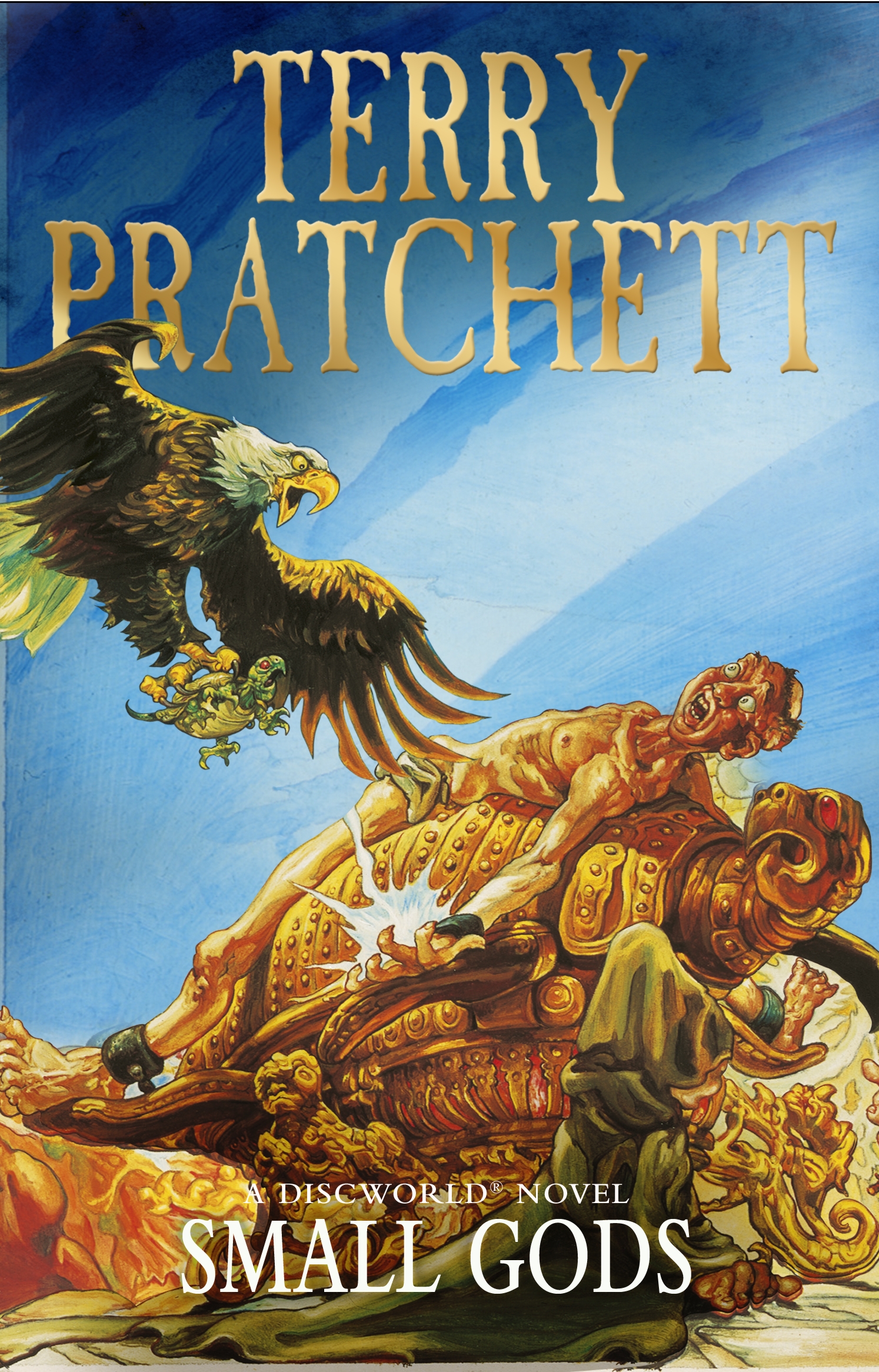
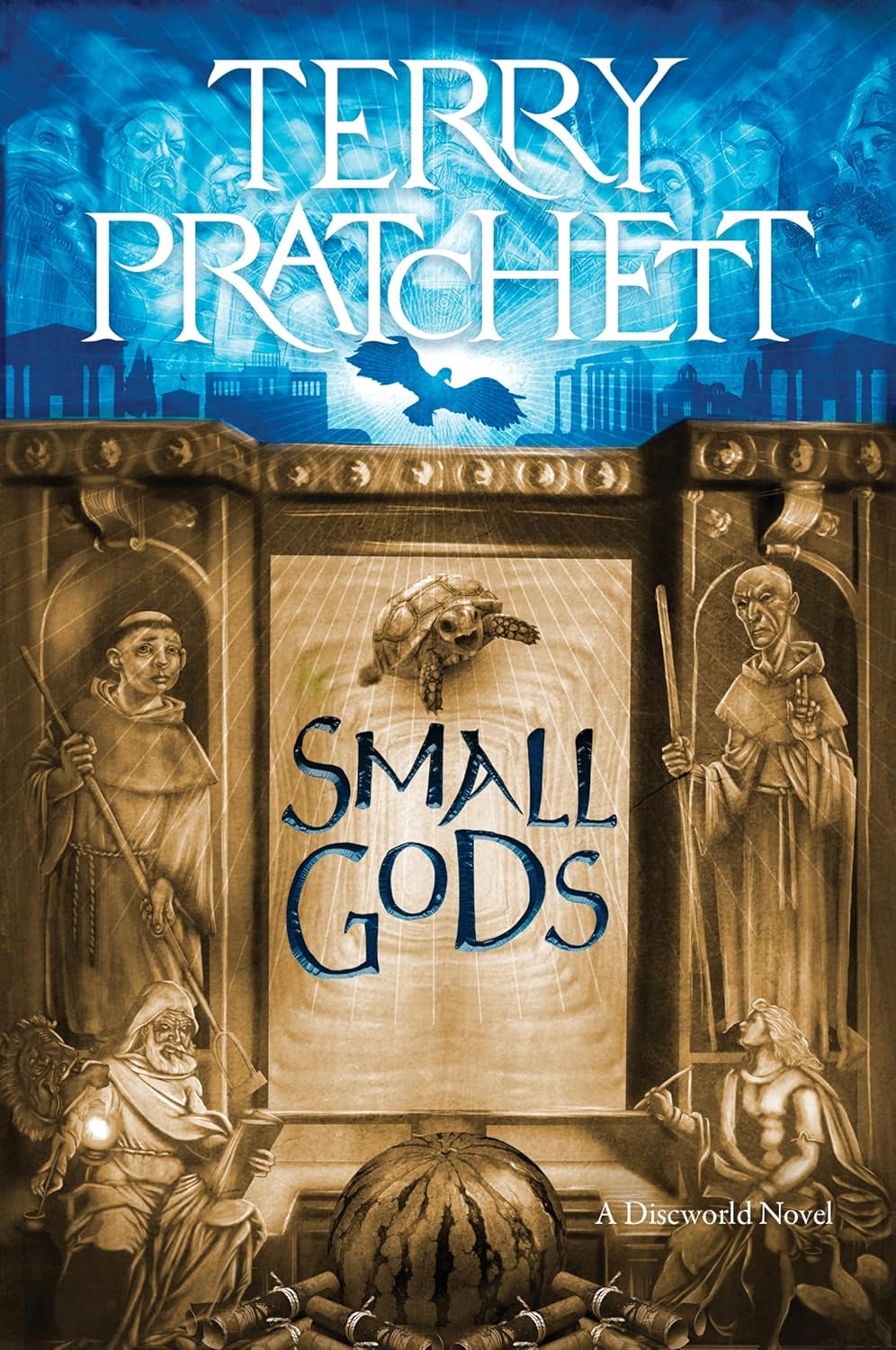
Small Gods by Terry Pratchett

Publisher: Gollancz/Penguin Audio (Audiobook – 1993)

Series: Discworld – Book 13

Length: 9 hours and 55 minutes (Planer version)/11 hours and 38 minutes (Serkis version)

My Rating: 5 out of 5 stars

Amazon

Thanks to an excellent road trip, I managed to revisit several awesome entries from the iconic Discworld series by the legendary Terry Pratchett, and it is time to highlight one of the very best books that Pratchett wrote, Small Gods.

I have never made any secret of the fact that I love all things Terry Pratchett, as the Discworld books were the formative series of my youth.  A massively popular collection of loosely connected novels set on a flat world carried through space on the back of four elephants atop a giant turtle, the Discworld books present a range of unique fantasy adventures backed with exceptional comedy and satire.  This series is so much fun, and I honestly love every single Discworld book, having read them all multiple times, usually while laughing myself silly.  Indeed, I am such a big fan of this series that I named my blog after a location in the universe.  Despite my overwhelming love for all things Discworld, I haven’t reviewed too many of the books on this blog, with Moving Pictures and The Last Continent previously being the only exception.  However, thanks to some great road trips giving me opportunities for revisiting some classics, I have recently published reviews for Guards! Guards! and an additional review for Moving Pictures.  I also recently re-listened to the impressive and thoughtful 13th entry in the series, Small Gods. An outstanding standalone novel that seeks to blend religious commentary with Pratchett’s strong humour and complex satire, Small Gods is one of the more thoughtful and moving Discworld books and is a must read for all fans of the franchise.

Floating through space on the back of a giant turtle, the Discworld is a place of magic, wonders, strange creatures and, unfortunately for the mortals just trying to live their lives, gods.  Instead of the wise and beatific beings we hope them to be, the gods of the Disc are a capricious and vain lot, empowered by the belief of their human worshippers.  But what happens when a mighty god loses his believers?

The militant nation of Omnia is an empire dedicated to the fervent worship of the Great God Om, an all-powerful being who knows all, sees all and is the only true god in the world.  The problem is none of that is true.  Instead, Om is a self-obsessed god among many, who barely pays attention to the people fighting in his name.  More importantly, he is currently residing in the body of a tortoise, stripped of nearly all his divine power, and the only person who can hear him is a simple novice, Brutha, who isn’t fully convinced that the talking tortoise smiting him with tiny thunderbolts is his god.

Determined to get back on top and find out why he lost his power, Om recruits Brutha as his unlikely prophet.  However, Brutha has his own problems as the sinister head of Omnia’s Quisition, Vorbis, has taken an interest in him.  Forced to accompany Vorbis on a diplomatic mission, Brutha soon begins to understand that the world is a far bigger place than he realised, and that there is something very wrong at the heart of his nation.

As the tides of history take Brutha and Om into strange new places, the two find themselves encountering unexpected dangers, including dangerous ideas, sinister eagles, rebels determined to prove that the world isn’t round, deranged philosophers and the small gods that lurk in the dark places.  To survive, Brutha will need to have faith in his god, but more importantly, Om will need to have faith in Brutha, especially when his own religion is turned against them.

After yet another re-read, Small Gods remains one of my favourite Discworld novels, and this is one of the very best examples of Terry Pratchett’s unique style and imagination.  A hilarious, yet thought-provoking read that cleverly dissects religion, divinity and people’s beliefs, Small Gods quickly grabs your full attention and refuses to let go until it’s powerful, terminal end.

I have so much love for the outstanding narrative that Pratchett pulled together for Small Gods, which tells one of the more unique standalone tales in the Discworld series.  I must admit, even after many reads, I am still very impressed that Pratchett decided to examine the nature of religion and belief through the lens of a hilarious odd-couple story that evolves into a road trip narrative.  Starting off on a very entertaining note with the unsuspecting new prophet of Om, Brutha, encountering his god in the form of a small, battered tortoise, Pratchett does a good job of introducing the nation of Omnia and its place in the wider setting.  This proves to be an effective start to the book, and a lot of the early themes and wider issues surrounding the nation of Omnia are well set-up.  You also get a great examination of the book’s three main characters, and their compelling early interactions in Omnia sets up a lot of the book’s character-driven narratives.  After this excellent introduction, Small Gods’ plot then moves to the bordering nation of Ephebe, which proves to be an intriguing centre of the novel, not only because it has some of the more entertaining sequences, but also because it begins to expand on some of the ideas from the front of Small Gods and you are given a good understanding of both Om’s situation and Brutha’s growth as a character.

The plot of Small Gods takes a powerful turn around halfway through, when Brutha helps further Vorbis’s schemes, only to then attempt to flee and do the right thing.  However, thanks to the influence of a rival god and unexpected technology, Brutha and Om are inadvertently stranded in the desert with a helpless Vorbis.  The following extensive scenes in the desert are probably the best parts of Small Gods, especially as Brutha begins to think for himself, and the philosophical clashes he has with Om set him up as the protagonist both the reader and the Omnians need.  Pratchett really dives into what it is to be human and divine in this section of the book, and I deeply appreciate the rich character development featured within these sections of the plot.  These desert scenes become even more impactful when Pratchett throws in a major obstacle for Brutha that threatens to push him over the edge into despair.  You really feel for Brutha as he has his crisis of faith, only to maintain his humanity in the last confrontation with Vorbis.  The subsequent scene on the metal turtle was very tense, and while I know some people dislike the end of Vorbis, I thought it was a very clever sequence, especially as Pratchett set up the hunting eagle perfectly.  Pratchett continues to wrap up the rest of the narrative in a very satisfying way, and while the war sequence might have been a little unnecessary, it allowed some great character arcs to come together and showed how much Om had grown as a god.  The final scene with Brutha once again showing his humanity no matter what, ended the book on satisfying and heart-felt note, I appreciated the hopeful tone Pratchett concluded his brilliant story on.  An overall impactful and moving narrative that brought together a lot of complex plotlines and character moments and ensured you were hooked the entire way through.

I have always believed that Small Gods was one of Pratchett’s better written books, as he effortlessly blended a complex fantasy narrative that examined religion with his typically brilliant humour and some outstanding characters.  Featuring one of his most complex and thought-provoking plots, Pratchett achieves so much with his intriguing inclusions, all without slowing down the speed of the book and keeping the tension and emotional charge of the book on high.  Introducing a cool new setting, Small Gods works well as a standalone entry in the larger series that cleverly expands on some previously introduced features, such as the selfish and somewhat stupid gods of the Disc, as well as cool locations like Ephebe (which was previously featured in Pyramids).  Due to its lack of major connections to the other entries in the Discworld series, Small Gods is a rather excellent introduction to Pratchett’s style and ability to dive into heavy topics with comedic content.  Like all of Pratchett’s books, Small Gods is hilarious, and I love the many different levels of humour contained with the book, that range from obvious jokes at over-the-top situations, subtle witticisms often contain within well-placed footnotes, to clever word or name gags.  Some of this humour is so subtle that it often goes over the reader’s head the first time, and you honestly need multiple readings to full appreciate every single joke or gag that Pratchett thought up (I still discover new jokes I previously missed every time I read a Pratchett novel).

However, the thing that ensures Small Gods stands out amongst the other brilliant Discworld novels is the author’s clever and insightful breakdown of religion and godhood on the Disc, which is both fascinating and entertaining.  A lot of the book’s powerful messaging, complex themes and some of the best humour, comes out of the exploration of the divine and how it relates to both this crazy fantasy setting and the real world.  While Pratchett does provide a lot of jokes about religion throughout the ages, he does it in a very intelligent and delicate way that makes the reader think.  Rather than simply dunking on religions and focussing on the negatives, Pratchett instead subtly satirises the institutions, manipulative leaders and unthinking traditions that can often complicate or weaponise religion.  A large amount of the plot revolves around Vorbis and the Omnian church violently trying the repress the idea that the world is flat and on the back of a giant turtle.  While this is primarily a fun parody of the Catholic church’s suppression of Galileo’s claims about the Earth orbiting the sun (and which is now both funnier and sadder, thanks to flat earthers), it also examines how some people utilise religion as an excuse for violent action and manipulate faith for their own ends, which is a powerful recurring them throughout the book.

At the same time, Pratchett also focuses on a compelling central character with true faith who explores the meaning of religion and how it impacts his people.  Seeing a likable character like Brutha recognise the problems in his nation allows readers to reflect and see the flaws in the organised religions Pratchett is parodying, while also appreciating the messages that these religions should strive for.  The various complex discussions, personal revelations and jokes within Small Gods allow for a very insightful read that reportedly resonates with both atheists and pro-religious figures (Pratchett apparently received a lot of fan mail from both groups who thought Small Gods was written for them).  I personally think that Pratchett’s thoughts and messages were extremely perceptive and layered with a great understand of humanity, and indeed many his compelling criticism or organised religion and how it is weaponised are more relevant now than when Small Gods was written, especially as it could also apply to other traditional institutions that are being abused.

Pratchett perfectly rounds out this incredible writing by featuring some of his very best characters, including several very complex figures who mature and evolve throughout the course of the book’s plot.  This includes the main protagonist, Brutha, a simple novice who finds himself the only person left who can hear Om due to his genuine belief in the god rather than in the institutions that surround the religious practices.  While initially portrayed as a somewhat dull and unthinking novice, you soon begin to realise that there is much greater complexity within Brutha, as well as the fact that he is a genuinely nice person held back by his simple ideas of life and faith.  Thanks to his interactions with Om, who provides greater clarity to his religious beliefs, as well as his experiences outside his insular nation, Brutha begins to evolve quickly as a person, gaining a greater appreciation for the wider world, as well as beginning the understand that the world isn’t quite as black and white as he believed.  It was fascinating to see Brutha develop as the book continues, especially as he begins to doubt his faith and rebel against the church and the god that had been his entire life.  His interactions with Om were quite entertaining, as the two eventually become a fun duo of equals, although Brutha does get the upper hand over his god in quite an entertaining and refreshing manner.  Brutha was also well defined by his relationship with the book’s antagonist, Vorbis, and their discussions about truth prove to be quite defining for Brutha as an inspiration for his rebellion.  However, unlike the rest of the cast, Brutha resists becoming the monster that Vorbis wants him to be, and his subsequent demonstrations of faith, reason and humanity, really set him up as one of Pratchett’s best and most likeable central protagonists.

Brutha is well matched by his god, Om, who honestly is one of the best deities featured in the Discworld series.  Formerly an all-powerful and arrogant god who didn’t care about his believers, Om finds himself suddenly trapped as a helpless tortoise who must desperately cling to Brutha to survive.  Om proves to be quite a fascinating and entertaining figure in Small Gods, especially as Pratchett perfectly portrays him as formerly powerful being who must now rely on the mercy of others.  His initial arrogance is very entertaining, and his subsequent wheedling manipulation of Brutha was a great follow-up that worked to keep him in the story.  However, it was his eventual co-evolution with Brutha that turned Om into a particularly compelling protagonist.  Despite his resistance, his bond to Brutha shapes him and forces him to see the world through human eyes, and the subsequent discourse on philosophy, life and how religion should be as they wander the dessert impacts Om just as much as Brutha.  This eventually causes them to reach an interesting and heartfelt religious partnership, and it was fascinating to see the previously selfish Om risk it all to save Brutha, especially when he is confronted by other gods who act the same way he used to.  I loved seeing this powerful and positive development in a divine figure, and Om really ended up being a compelling secondary protagonist with some of the best jokes.

While Brutha and Om are the heart and soul of Small Gods, this book would not be as impactful without its brilliant villain, Vorbis.  A cruel and unflinching figure, Vorbis is probably Pratchett’s most ruthless antagonist, who utilises the mechanisms of the church to achieve his goals.  However, rather than being a purely evil figure, Vorbis is shown to be simply someone who understands human nature and uses this knowledge to achieve his self-determined goals, which in some ways is worse than an obvious villain.  Pratchett does an outstanding job showcasing Vorbis’s dark, insular nature, and you come to really appreciate just how sinister he is, especially as his actions inspire other people to do evil things to try and match him.  He becomes even more immoral when compared to the very innocent Brutha, the only person that Vorbis occasionally sees as a real threat to his plans due to his legitimate belief, and their various interactions and discussion about the true nature of the world are quite powerful.  Pratchett features Vorbis perfectly throughout the book, and his final appearances, where he finally understands his own nature, are very satisfying to behold.

The rest of the cast of Small Gods are also quite impactful in their own way.  The blind philosopher, Didactylos, proves to be a fantastic voice of reason in the story, especially compared to the rest of the insane philosophers of Ephebe, and his very simple philosophy and viewpoint on life and truth give the characters, and the readers, much to think about amongst the discussions on religion.  Didactylos’s nephew, Urn, came across perfectly as a machine-obsessed proto engineer, whose storylines go in some interesting philosophical directions, especially when he realises what his inventions will be used for.  I had a very fun chuckle at the inclusion of Cut-Me-Own-Hand-Off Dhblah, a fun Omnian equivalent to the always entertaining Ankh-Morpork native, Cut-Me-Own-Throat Dibbler, while the Sweeper, Lu Tze, gets a great introduction as a secret history monk who occasionally changes events for the better.  Finally, the zealous Sergeant Simony, who leads the internal Omnian revolution against Vorbis, proves to be a very impressive figure who, despite being a fervent misotheist (someone who hates one specific god), has a belief in freedom and the turtle that matches Brutha’s faith in Om.  Simony serves as a very good example of just how far Vorbis can drive someone trying to do the wrong thing to achieve their goals, and I felt that he matched the fervour and faith of the other major characters in some fascinating ways.  This cast of characters was overall superb, and I really appreciated how well they complimented each other’s story arcs, as well as the intelligent themes Pratchett was trying to get across.

As with all the Discworld novels, I have enjoyed Small Gods as both a physical novel and an audiobook, and frankly this epic story comes across extremely well in all formats.  However, I have a very special place in my heart for the Discworld audiobooks, and the outstanding stories, elaborate characters and impressive and clever humour always comes across extremely well in this format.  I have had the great pleasure of listening to Small Gods multiple times over the years, and I want to highlight the two different unabridged version of Small Gods.

The first audiobook version of Small Gods is the original production narrated by Nigel Planer.  Small Gods was a particularly impressive example of Planer’s voice work, as he had to come up with unique voices for a range of unusual characters.  The Planer version of Small Gods is the one that I grew up with, and it is engrained in my mind as a result, especially as the narrator effortlessly moves through Pratchett’s many complex ideas and plots and brings them out in a fantastic and humours manner.  Planer provides all the voices in his version of Small Gods, and he perfectly encapsulated all the key figures of the book with his exceptional narrations.  You really get the full range of these character’s personalities and emotions through Planer’s voice work, and I loved his clever takes on Pratchett’s distinctive cast.  As such, the Planer version of Small Gods is probably the gold standard for all Discworld fans, and it will always have a very special place in my heart.

There is also a recently released version of Small Gods that is narrated by three brilliant British talents, and which was the version I most recently enjoyed.  This new Small Gods audiobook features a runtime of around 12 hours, which is a little longer than the roughly 10-hour long Planer version and provides an interesting new take on the novel.  I really enjoyed the voice cast for this new audiobook, as not only do we once again get Peter Serafinowicz and Bill Nighy in their recurring roles, but it also features the primary narration of actor Andy Serkis.

Serkis, who has also narrated a recent version of The Lord of the Rings books that is worth checking out, does an exceptional job in Small Gods, ensuring a very fun experience for all listeners.  While there are some tonal shifts in this audiobook that fans of the Planer version may find a little surprising or jarring, for the most part I think Serkis matches and even occasionally exceeds Nigel Planer’s performance, and I very much enjoyed his take on the book.  His basic narration of Small Gods matches Pratchett’s style and humour extremely well, and I love how effectively he moves the story along, perfectly capturing the complex tone and energy of the plot.  However, it is Serkis’s entertaining voices that were the highlight of this version of Small Gods, as the characters are each given unique tones that fit their personalities in some fantastic ways.  His voice for Brutha, the central character, was extremely good, and I loved how well Serkis captured Brutha’s transformative journey and complex personality.  Utilising a fitting rural voice for the protagonist, Serkis successfully showcases Brutha’s changing mentality and deep moral roots with his narration, and you can honestly imagine this intriguing figure every time the narrator voices him.

In comparison to Brutha, the voices for Vorbis and the Great God Om were a lot more elaborate by necessity, and I really appreciated the fantastic tones that Serkis choice for these entertaining figures.  My favourite was probably the voice used for Vorbis, as the narrator gifted this antagonist a deep, rich and lingering voice that honestly put me in mind of Tony Jay or Alan Rickman with some added oily sinisterness.  This impactful voice perfectly fit Vorbis’ menacing personality, and whenever the listener hears the voice, you know bad stuff is about to go down for the rest of the cast.  As for Om, Serkis provides him with an unrefined and laddish voice with a Liverpool accent.  This interesting voice choice matched Om’s uncaring and selfish personality extremely well, and I liked how well Serkis’s chosen tone for this divine figure played into the overarching theme that gods on the Discworld aren’t as sophisticated as everyone assumes they are.  Most of the rest of the voices in Small Gods work extremely well, with Sergeant Simony and Cut-Me-Own-Hand-Off Dhblah having memorable voices as a result.  However, I felt that the strong American accents that Serkis assigned to Didactylos and Urn really didn’t work, and failed to match the tone of the rest of the audiobook.  While Serkis was probably trying to distinguish these two from the other Ephebian philosophers, their voices honestly grated on me, and I really wish he’d have tried something else.  Still, the rest of Serkis’ voice work was amazing, and I cannot emphasise how incredible most of his narration of Small Gods turned out to be.

Serkis’s main narration was perfectly enhanced with the inclusion of Peter Serafinowicz and Bill Nighy in their recurring roles from the new Discworld audiobooks.  Serafinowicz provides the voice of Death whenever he appears in this audiobook, which is a lot of fun as Serafinowicz has an extremely entertaining Death voice that captures the anthropomorphic personification in all his skeletal glory.  His multiple appearances in Small Gods, leading key character towards the desert of judgement, were very awesome, and I loved hearing Serafinowicz converse with the other characters as Death.  The audiobook production team does an excellent job sliding the Death voice into Serkis’s main narration seamlessly, and I love it when Serafinowicz’s voice suddenly appears during dangerous scenes, heralding that someone is about to die, and ensuring there is some great tension as you watch the other characters slowly realise something is very wrong.  Nighy, on the other hand, narrates the various footnotes that Pratchett included in his text, providing an extra layer of humour.  While there are relatively few footnotes in Small Gods, it is a key role that Nighy perfectly fulfils, and his calm, consistent tones, echoing Peter Jones’s similar role in The Hitchhiker’s Guide to the Galaxy radio and TV editions really highlighted the subtle comedy of these footnotes. These three exceptional actors come together perfectly and provide an outstanding overall performance that I could not get enough of.  This was a truly exceptional audiobook that I think is on par with the previous Planer version, and I would strongly recommend both audiobooks as an amazing way to enjoy Small Gods, especially if you need to listen to something while travelling.

Well, as I am currently just getting to the end of page seven of my review for Small Gods by Terry Pratchett, I think it is a safe assumption to say that I love this amazing book.  Easily one of my favourite Discworld novels, Small Gods perfectly blends a brilliant story and amazing characters with Pratchett’s amazing wit and his uncanny insights into compelling real-world issues.  An incredible and addictive read from start to finish, Small Gods comes extremely highly recommended and can easily be enjoyed by anyone wanting a clever, funny and heartfelt read, especially on its two audiobook formats.

Amazon

Quick Review – The Heart of the World by Amie Kaufman

Publisher: Allen & Unwin Australia (Trade Paperback – 27 August 2024)

Series: The Isles of the Gods duology – Book Two

Length: 424 pages

My Rating: 4.25 out of 5 stars

Amazon

One of Australia’s leading authors of young adult fiction, Amie Kaufman, presents a cool conclusion to The Isles of the Gods duology with the fun read, The Heart of the World.

Amie Kaufman is an impressive Australian author who has produced multiple entertaining and enjoyable series over the years, mostly in collaboration with other awesome authors.  For example, I best know Kaufman from the intriguing and addictive young adult science fiction trilogy she cowrote with Jay Kristoff, the Aurora Cycle trilogy, which proved to be particularly fun (see my reviews for Aurora Rising, Aurora Burning and Aurora’s End).  Kaufman’s latest body of work has been The Isles of the Gods duology, a great young adult fantasy series that follows several teenage protagonists who find themselves drawn into an ancient war between gods.  This series began last year with the first book, The Isles of the Gods, and has just come to an end with the compelling read, The Heart of the World.

Plot Synopsis:

Magic and sacrifice will collide as lovers and gods, enemies and allies vie for the fate of the world in this heart-pounding sequel to The Isles of the Gods, which Stephanie Garber called deliciously diabolical and full of heart.

When Selly and Leander began their treacherous voyage to the Isles of the Gods, the captain’s daughter and the playboy prince were strangers. But amid talk of war and a deadly attack on their ship, the unthinkable happened.

They fell in love.

Leander’s ritual at the island temple was meant to prevent a war between the gods. Instead, it nearly cost him his life, and drew the goddess Barrica back from exile. Now, as her Messenger, Leander is imbued with her deadly magic, and only Selly’s presence can stop it from consuming him.

But Barrica wasn’t the only immortal roused from sleep. The God of Risk, Macean, was awakened by an enemy all thought dead, and across the sea he’s calling for war.

The fight to save their world will take Selly and Leander from the gilded ballroom of the royal palace to the hallowed halls of an ancient library. Battle lines will be drawn, and bonds will break.

With the wrath of gods and the machinations of power-hungry rulers straining their loyalties, can their love withstand the trials that await them?

The Heart of the World was an exciting and moving book that did an excellent job wrapping up the storylines started in the first book.  Set immediately after the events of The Isles of the Gods, Kaufman presents an intense, character-driven narrative, as the teenage protagonists attempt to deal with the return of gods into their world.  Told from the perspective of five characters, you get some interesting storylines here, including Leander learning to control his power as his god’s Messenger while Selly tries to help him while also learning about the deadly politics of the realm.  Other character storylines of note include the scholar Keegan attempting to determine how to stop the oncoming chaos while also dealing with his many personal issues, the antagonistic Messenger of Macean, Laskia dealing with having power for the first time, and the conflicted Jude trying to determine where he stands in the world.

Kaufman does a great job blending these cool, character-driven storylines together into one compelling and exciting narrative with a very fast pace.  There is an excellent blend of politics, character growth and a deepening of personal relationships, as each of the protagonists react to the changes brought on by the events of the first book.  Things take a more urgent turn halfway through as the warring gods emerge and the characters find themselves desperately caught up trying to stop or control the destructive fight to come.  Featuring a countdown towards inevitable carnage, I liked how Kaufman kept the intensity and stakes of the second half of the book high without showing too much actual conflict and bloodshed, instead relying on compelling character moments thanks to a variety of unique interactions.  The protagonists are forced to overcome the consuming influence of their gods, both of whom want war, as they attempt to save their world, and I felt that the author came up with a well-written and cleverly set up solution to the entire plot.  The book ends on a satisfying and hopeful note, and I really had a fun time getting through this compelling story.

I really liked how The Heart of the World came together, and Kaufman ensures that it is accessible and enjoyable for a range of fantasy fans.  While I would recommend reading The Isles of the Gods first, new readers can probably dive into The Heart of the World straight away without too much prior context, as the author’s descriptive writing style and ability to effectively recap events really helps.  While some of the key fantasy elements from the last book aren’t as comprehensively covered in this sequel, such as spirit magic, Kaufman ensures that all the key features of this universe are well covered.  Indeed, there is a major religious focus throughout The Heart of the World, and it was fascinating to see various characters react to the direct influence and power of the two warring deities.

The resulting story moves at high speeds, and I honestly found myself powering through The Heart of the World every time I picked it up.  It helped that Kaufman made excellent use of quick and sharp perspective changes, and the jump from one short character-focused chapter to the next allowed for some quick plot progression.  As with the prior book in the duology, I felt that The Heart of the World was an excellent fantasy book that would appeal to a lot of readers, not just its intended young adult audience.  In particular, Kaufman sets up a lot of mature and intelligent themes and moments, most of the based around her complex protagonists, which I think will resonate with a teenage audience.  However, older fantasy readers can also enjoy The Heart of the World thanks to Kaufman’s clever writing and intriguing themes.

I also need to quickly highlight the excellent character work contained within The Heart of the World, which I felt helped to turn this sequel into something special.  Kaufman does an outstanding job continuing to explore her five damaged protagonists, and there is some great continuation to the complex character elements set up in the first book.  This includes a compelling look of the romance angle between Leander and Selly, who are forced to deal with major obstacles, including Leander’s sudden uncontrollable power, while Selly is forced out of her comfort zone on the waves and into the deadlier wilderness of court life.  I also loved the storyline of Laskia, who’s experience as her god’s Messenger went in a darker direction, as she struggles with finally having power and the ability to control her destiny after a lifetime of being manipulated by others.  All of the other protagonists have their own unique moments as well, and I really appreciated how all their respective family issues became even more apparent in this second book, as all five of them experience some form of betrayal or disappointment at the hands of their family which they must overcome.  Throw in a particularly entertaining new supporting character in Kiki, a bubbly and unstoppable force of social energy, and the cast of The Heart of the World was particularly strong and resulted in some moving moments.

Overall, The Heart of the World was an amazing new novel from Amie Kaufman that I was glad I checked out.  Providing a great ending to The Isles of the Gods duology, The Heart of the World had a brilliant, character-driven narrative, that is so easy to get lost in.  A fantastic and very fun novel that is worth checking out, especially if you enjoyed Kaufman’s previous work.

Amazon

The Fury of the Gods by John Gwynne

Publisher: Orbit/Little Brown Audio (Audiobook – 22 October 2024)

Series: The Bloodsworn Saga – Book Three

Length: 19 hours and 30 minutes

My Rating: 5 out of 5 stars

Amazon

John Gwynne brings his awesome Bloodsworn trilogy to a truly epic conclusion with the outstanding novel, The Fury of the Gods.

For the last few years one of the most compelling fantasy series has been the Bloodsworn Saga trilogy from acclaimed fantasy author John Gwynne.  This series is set in a Norse-inspired fantasy world shattered by warring gods and now filled with monsters, voyaging warriors and the human descendants of the gods whose power often see them collared and controlled as thralls.  The series started back in 2021 with the impressive read, The Shadow of the Gods, which introduced the main characters and set them on their quests.  I almost missed The Shadow of the Gods when it came out, but I was glad that I didn’t, as it turned out to be one of my favourite books and audiobooks of 2021.  Gwynne continued the series in a big way the next year with the excellent sequel, The Hunger of the Gods, which expertly continued the series and ended up also being a top book and audiobook of 2022.  Due to how amazing the first two entries in the trilogy proved to be, I have been eager for to the finale of the trilogy for a while, and I was so happy we got one in 2024.  One of my most anticipated books in the second half of 2024, The Fury of the Gods was everything I hoped it would be and more, and I listened to it the very first chance that I got.

The gods have returned, and all must pay the price!

After centuries of imprisonment following the last great war of the gods, the evil and crazed dragon-god Lik-Rifa has been released and now seeks to rule over the land of Vigrid.  With the cunning rat-god Rotta at her side, Lik-Rifa leads a vast army made up of her monstrous children, as well as ambitious mercenaries and Tainted warriors.  Determined to place the entire continent under her dark rule, Lik-Rifa turns her eyes to the stronghold of Snakavik and moves to destroy the last vestige of resistance against her.

However, not all is lost, as some seek to stand against Lik-Rifa.  Elvar, leader of the Battle-Grim, has killed her father and taken control of Snakavik.  Bound by fate and her oaths, Elvar must balance her new responsibilities as ruler while she plans for war against Lik-Rifa, a seemingly impossible task.  However, Elvar has done the impossible before by resurrecting Lik-Rifa’s hated brother, the wolf-god, Ulfrir, and binding him to her will.  Now her most potent weapon and the ultimate bait for Lik-Rifa, Elvar seeks to use Ulfrir to destroy the gods coming for her.  But even a giant wolf-god might not be enough to win the war, and Elvar needs even more allies to help her.

After scouring a bloody path across Vigrid, Orka Skullsplitter has rescued her son, but still seeks vengeance against Lik-Rifa’s forces.  To that end, Orka reunites with her old warband, the Bloodsworn, and sets them to join Elvar’s growing host.  Made up of deadly Tainted warriors, including their latest recruit, Varg No-Sense, the Bloodsworn have many reasons to fight against the dragon-god’s followers.  Together, the Bloodsworn, Battle-Grim and their various allies prepare to face Lik-Rifa’s army in the greatest battle the world has ever known.  But no-one is prepared for the chaos that is about to engulf Vigrid, as greater threats arise to devour all.

Gwynne continues to impress with this third and final Bloodsworn Saga novel.  The Fury of the Gods was another high-octane, character driven, dark fantasy novel, that takes the reader on a powerful adventure.  Loaded with fantastic moments and amazing action, The Fury of the Gods proved to be an outstanding conclusion to the Bloodsworn Saga, and I had such an awesome time getting through it.

The Fury of the Gods featured a spectacular and captivating narrative that starts off strong and refuses to slow down the entire way through.  Taking off immediately after The Hunger of the Gods, Gwynne effectively sets the stage for the oncoming battles as the various character arcs continue at breakneck pace.  Once again telling the story through the eyes of five distinctive protagonists (Orka, Elva, Varg, Biorr and Gudvarr), you get drawn into their intriguing personal tales as they recount the events they observe.  The first half of the book keeps these protagonists mostly separated, and their various storylines continued in similar directions to The Hunger of the Gods.  Orka is still set on her bloody revenge mission and must overcome her imprisonment by the rat-god Rotta.  Varg and the Bloodsworn journey back from their rescue mission in the neighbouring nation of Iskidan, encountering new threats along the way.  Elvar takes up the responsibility of ruling Snakavik after killing her father and finds herself leading the war against Lik-Rifa.  Finally, Biorr and Gudvarr provide intriguing insights into Lik-Rifa’s camp, as both the conflicted Biorr and the snivelling Gudvarr try to survive the rise of dragon-god in their own different ways.

Gwynne does a good amount of set-up in this first half of the book, and it was nice to see the various characters continue to breathe on their own for a bit, while also amping up the dangerous antagonists.  You once again get quickly drawn into each of the protagonists narratives, and I think that it is a testament to Gwynne’s writing that each of these storylines proved to be as entertaining and compelling as the rest.  Unlike other multiple-perspective novels I have read, I honestly loved every single character perspective in The Fury of the Gods, and I was excited to continue each of them.  Indeed, I find it hard to choose a favourite, as they were all fun while offering something a little different.  That being said, Elvar’s chapters moved the plot along the most, and Gwynne did his best character work with her in this book.

Everything leads up to a particularly epic final half, as Gwynne brings together all five point-of-view characters to the same location for the first time in the series.  With the protagonists spread out on each side of the conflict, you get a great view of the massive extended war as the god-led armies fight it out on several fronts, including in a brutal siege.  Gwynne kept the action going thick and fast here, and there are some great encounters and moments as the various characters meet on the battlefield.  Everything leads up to a massive confrontation nearly two-thirds of the way through, and there are some highly dramatic moments here, especially as the first big-death was a little unexpected.  This major fight ends in an interesting way, although details of it are spoiled a little by the awesome cover above.  This leads to some more fantastic moments, including the final battle between both sides.  The author chucks in a few more tragic moments in this final bit of the book, although I must admit that there weren’t a lot of surprises here, with many of the big reveals well telegraphed in advance.  I also thought that the various revenge arcs cluttered up the plot in a predictable manner, and I wish Gwynne had thrown a twist or two in here.  Still, everything ended on an extremely epic note, and readers who enjoyed the previous Bloodsworn Saga books will come away very satisfied and happy with the finalised character arcs.

As with the previous Bloodsworn Saga novels, Gwynne brings a distinctive style to The Fury of the Gods, which I felt greatly enhanced the story.  The blend of compelling Norse-inspired fantasy elements, great character work, and brutal action makes for awesome reading, and Gwynne presents it all in an accessible and enjoyable way.  I loved how the characters’ dialogue and inner thoughts fell in line with the book’s historical inspiration, and while this style might not be for everyone, elements of it, such as the repetition of certain thoughts and phrases, gives it a real saga feel.  As with the previous entries in the series, Gwynne makes excellent use of multiple character perspectives to tell his elaborate narrative, with his five point-of-view characters helming various chapters.  The split between these five characters worked extremely well, and you get some intriguing alternate perspectives of events that blend well as the book continues.  Gwynne makes excellent use of this split during some of the bigger combat scenes, and the use of shorter chapters when things get particularly exciting allows the reader to quickly switch amongst the action.  Talking of action, Gwynne ensures that the combat in The Fury of the Gods is as bloody and well-written as in the previous books, and his brilliant action scenes are so well described and bring you right into the midst of the fighting.

As The Fury of the Gods is the third and final book in an epic fantasy trilogy, it obviously isn’t the most ideal place for readers to dive into the overarching story, and you really should start at the beginning of the series for the full emotional impact.  However, for those who want to start with The Fury of the Gods, Gwynne does make this book somewhat accessible to new readers.  Between the detailed summary of the prior books, glossary of terms, character lists and the callbacks to the previous events during the plot, new readers can follow The Fury of the Gods easily enough and have fun.  This includes enjoying the full impact of the cool fantasy setting of Vigrid that Gwynne has lovingly set up during the three books.  The clever use of Norse-inspired elements really lends itself to the epic revenge driven narrative that Gwynne features, and the mixture of mythological, fantasy and historical elements proved to be a winning combination.  I still love seeing the various warbands using Viking war tactics against dark dangers and massive gods, and Gwynne really went all out making so many traditional Norse elements, such as weaponry, armour, ships and mentality, seem as realistic as possible.  At the same time, the book’s fantasy inclusions, such as the various monsters and Tainted, the human descendants of the gods, add so much to the story, through their vicious nature, intriguing descriptions, and underlying societal issues.  This was an overall pretty awesome setting, that Gwynne uses to full effect to tell his compelling tale.  I hope that Gwynne returns to this world at some point in the future, and it wouldn’t surprise me if some of the younger characters featured here get their own story.

In addition to The Fury of the Gods’ fantastic story and great writing, I also need to talk about the awesome characters.  Throughout the Bloodsworn Saga, Gwynne has put a lot of work into building up his various characters, and by this point in the trilogy you are highly invested in their respective stories.  As such, there aren’t a lot of new figures in this final book, and you generally know what to expect when one of the protagonists’ chapters begins.  However, it still proved awesome to see these figures in action again, and their compelling character arcs and differing personalities deeply increase the impact of the narrative.  Of the main cast, I would say that Elva steals the show the most in The Fury of the Gods.  While she has not always been the most exciting character in the series, this third and final book was where she really shined, primarily because she takes on the role of war leader against Lik-Rifa, and the increased responsibility changes her.  As such, it was outstanding to follow her storyline, and I appreciated seeing how conflicted she got at times, especially when it came to treating the Tainted in her domain.  Due to this, as well as some other badass scenes, Elva was one of the most compelling protagonists in The Fury of the Gods for me, and Gwynne provided an interesting conclusion to her narrative that I felt really worked.

The other four main characters all proved to be brilliant additions to the book, and their perspectives ensured quite an elaborate story.  The dangerous fighters, Orka and Varg, were both solid point-of-view characters in The Fury of the Gods, and I really enjoyed seeing how their respective arcs continued, especially as they were the main avenue to seeing the Bloodsworn warband.  Of all the protagonists, you were most likely to see action with Orka or Varg, and their various bloody sequences were a lot of fun.  That being said, Gwynne went a little light with the character development for these figures in this book, and while they have some moving moments (Orka comes out of her solitude to find people she cares about, while Varg finally cements his place in the Bloodsworn), I felt that Gwynne focused way too much on their respective hunts for revenge, which resulted in some of their stuff getting a little repetitive.

However, Gwynne more than overcomes any minor deficiencies with Orka and Varg through his use of the antagonistic perspective characters Biorr and Gudvarr, both of whom have joined Lik-Rifa’s cause.  Biorr proves to be a complex figure in The Fury of the Gods, and I loved how conflicted he become as his longstanding fanaticism slowly beings to wear away in the face of meeting his gods.  Gwynne did a really great job with Biorr, and his personal journey and attempted redemption made for some powerful moments.  On the other hand, we have the entertaining and despicable Gudvarr, whose chapters I always have fun with.  Gudvarr is an impressively annoying figure who has spent the last two books trying to avoid danger only to find himself getting stuck in progressively worse situations.  However, because he is naturally cowardly, weaselly and vindictive figure, you really don’t feel sorry for him, especially as every bad situation is the result of some failed ploy to gain influence or power.  While Gudvarr is a particularly contemptible figure, it honestly proves impossible not to enjoy his chapters, as they are generally the most amusing in the entire book thanks his snarky inner monologue, the deadly situations he barely escapes from, and the near certainty that he is going to come to a sticky end.  As such, I really enjoyed following Gudvarr and you can’t help but look forward to seeing what dangerous or manipulative situation he finds himself in next.

Finally, I must highlight all the awesome and impressive supporting characters that are featured in The Fury of the Gods.  Gwynne has built up an exceptional and massive cast of characters throughout the series, all of whom add something to book.  I loved seeing the many complex interactions that occurred between all these characters in The Fury of the Gods, and it was fun to see many of them meet for the first time in this final book, especially once all the perspective characters are together.  Highlights include the key members of the Battle-Grim and Bloodsworn warbands, all of whom have gone through so much throughout the trilogy.  Several of the best characters from both bands experience major tragedy in The Fury of the Gods, and it proves hard not the feel for them.  I also need to mention the main antagonists, Lik-Rifa and Rotta, two vengeful gods whose desire for revenge and control move much of the plot along.  I loved seeing the various human and Tainted characters interact with these dark gods, and Gywnne ensured they came across as a massive and dangerous threat.  Two entertaining giant ravens, a fun talking head, and so many other great characters ensured that The Fury of the Gods was a moving and deeply personal read, and I am so glad I got the opportunity to know them during the run of this trilogy.

As with the previous books in the Bloodsworn Saga, I chose to grab The Fury of the Gods on audiobook, which proved to be a particularly awesome way to enjoy this epic read.  Featuring a runtime just under 20 hours, The Fury of the Gods audiobook is a lengthy but highly exciting listening experience, and I found myself powering through this audiobook, namely because the format deeply enhances the intense story and intricate writing.  Narrator Colin Mace, who has lent his voice to the other Bloodsworn Saga books, did another brilliant job with The Fury of the Gods, and his impressive voicework leant some additional impact and gravitas to the book.  Mace perfectly portrays the Norse-inspired fantasy elements of the book, and I really loved how effectively he captured the various hard-nosed characters of the series.  I especially loved Mace’s take on the gigantic gods and other dark creatures haunting the lands, and I felt that the narrator was a key reason why I had so much fun with this audiobook.  Probably one of the best formats to enjoy The Fury of the Gods, listeners will have such an epic time with this audiobook.

With blood, fury and vengeance, the Bloodsworn Saga comes to a brilliant end that I could not get enough of.  The Fury of the Gods was another exceptional read from John Gwynne, and I was so very happy to see how this entire epic narrative concluded.  Loaded with action, excellent fantasy elements, and so many impressive characters, The Fury of the Gods was an outstanding book on its own, as well as an incredible conclusion to one of the most epic fantasy trilogies out there.  One of my favourite fantasy books of 2024, The Fury of the Gods was an excellent read that gets an easy five-star rating from me.

Amazon

Crucible of Chaos by Sebastien de Castell

Crucible of Chaos Cover

Publisher: Jo Fletcher Books (Audiobook – 7 December 2023)

Series: Court of Shadows – Book 0.5

Length: 12 hours and 32 minutes

My Rating: 5 out of 5 stars

Amazon

In the mood for a witty, intense and highly unusual murder mystery?  Make sure to grab Crucible of Chaos, an outstanding and impressive novel from Sebastien de Castell, which serves as a prelude to his Court of Shadows series.

Earlier this year I was very lucky to receive the first book in Sebastien de Castell’s Court of Shadows series, Play of Shadows.  Set in the author’s Greatcoats universe, Play of Shadows was a truly epic and outstanding read that saw an unlucky actor with unusual gifts attempt to unravel a dark conspiracy inflicting his city.  I deeply enjoyed Play of Shadows, which was one of the best books I have read so far in 2024, and I was intrigued to check out more from de Castell, an author who had previously impressed me with his hilarious standalone novel, The Malevolent Seven.  While de Castell has several great series to his name, the book that caught my eye the most was the late 2023 release, Crucible of Chaos, which apparently served as a prelude to the other Court of Shadows novels.  Curious to see how this prequel would turn out, I grabbed the audiobook version of Crucible of Chaos and started listening to it, and boy was I glad that I did.

Travelling duellist and scholar Estevar Borros is a Greatcoat, one of the king’s legendary sword-fighting magistrates.  However, even amongst the unusual ranks of the Greatcoats, Estevar is peculiar, not just for his girth, but because of skills in deductive reasoning and his obsession with investigating the supernatural.  Known as the King’s Crucible, Estevar has travelled the lands of Tristia, seeking out unusual occurrences and trying to determine whether their cause is natural or supernatural.  However, even this renowned investigator of supernatural is unprepared for the chaos awaiting him in Tristia’s most holy site.

Summoned by his old acquaintance Abbot Venia, Estevar travels to Isola Sombra, an isolated island abbey considered the religious heart of Tristia.  According to Venia’s letter, the monks of the abbey are starting to fracture into factions following the recent murder of the gods, each with their own ideas of who the nation should worship in the future.  A frightened Venia needs Estevar, in his position as a magistrate and an authority on the supernatural, to arbitrate the debate and to help keep the fighting monks in line.

Despite his better judgement, Estevar, already suffering from a wound after a failed duel, agrees to travel to Isola Sombra, but what he finds there will chill him to his very soul.  Arriving amid a brutal storm, Estevar finds that the monks have fallen into madness, and now three factions are at war on the island, desperate to claim it for their own.  Worse, the abbot has been murdered, and evidence of dark magic lingers throughout the abbey.

Determined find a reasonable explanation for the insanity infesting Isola Sombra, Estevar begins his investigation, hoping to find the source of the chaos rippling across the island.  Alone except for a mysterious girl and his trusty mule, a wounded Estevar needs to face off against three very dangerous groups of monks, each of whom have deadly intentions for the interfering Greatcoat.  Worse, there are far more dangerous things awaiting the inhabitants of Isola Sombra, even if Estevar doesn’t believe in them.  Can the justice-loving Estevar stop the insanity of Isola Sombra with his deduction, sword and courtroom etiquette before it’s too late, or has the King’s Crucible finally found a mystery to insane for even him?

Wow, what an amazing and compelling novel.  Crucible of Chaos was another outstanding book from de Castell, and one that really grabbed my attention from the very beginning.  Containing an elaborate story, great writing, amazing characters, and so much more, Crucible of Chaos was a joy to read from start to finish, and one that I have little choice but to give a full five-star rating.

De Castell came up with an impressive novel that sets a classic detective story into The Three Musketeer inspired Greatcoats universe.  Readers are quickly introduced to two of the main characters, Estevar Borros and his trusty steed, as the dejected pair arrive at Isola Sombra to investigate a religious feud enveloping the island and its abbey.  While that is an interesting premise for a story, de Castell raises the stakes by introducing murder, mysterious mysticism, fearful locals, unnatural storms, and three warring factions of monks, which Estevar needs to unravel to get his beloved justice.  What follows is a complex and highly entertaining murder investigation as Estevar, with the help of a mysterious girl, begins to interrogate key members of the remaining monks to find out what they know and how their fighting and the resulting murder came about.  This proves to be quite addictive, and I found myself getting really drawn into this excellent mystery and the unique fantasy elements surrounding it.

The story takes a very interesting turn around halfway through as Estevar gets some dramatic proof that the events on Isola Sombra are more supernatural than he thought they would be.  This leads the protagonist into some dark places as he tries to fully understand everything that is happening, and who is ultimately responsible for the crimes committed.  De Castell cleverly lays out some intriguing revelations, as well as some tragic secrets that are cleverly hinted at by false memory and lies, and I had so much fun following all the breadcrumbs.  Everything leads up to several great confrontations, as Estevar first deals with some political intrigue that ties Crucible of Chaos into the rest of the series, before once again facing the strange powers haunting the island.  There are some inspiring moments here, especially as strange bedfellows fight together against the darkness, before the protagonist initiates a unique trial to reveal the whole truth.  The solution to the mystery is very clever, and I was really impressed with how de Castell pulled the whole thing together.  The conclusion really goes over-the-top as justice meets religion in some dark ways, and you will come away very impressed and satisfied with the dark, yet hopeful, story that emerged.

I love the tone that de Castell set out for Crucible of Chaos, mainly because there are so many elements that he managed to fit into his story.  The blend of mystery, character development, and unique fantasy inclusions from his pre-existing universe is extremely awesome, and I loved how the author managed to create such an elaborate and focused story.  The investigation element of Crucible of Chaos was the book’s true heart, and I have a lot of respect for the complex series of crimes that emerged, especially as de Castell managed to incorporate religious conspiracies, political intrigues and supernatural occurrences into the mystery’s solution.  There are so many moments of desperation, despair, and dark hope contained within this book, and the reader is constantly left feeling either intrigued by the mystery or shocked by the revelations that emerged.  It helped that de Castell’s characters are all so vibrant and entertaining, and there is a captivating humour that runs through the book that proves hard not to enjoy.  This whole novel comes together with a great pace that never lets up, and I honestly could not stop listening to Crucible of Chaos at times, especially when all seemed dire, or the protagonist was on the hunt for justice.

As I mentioned above, I came to Crucible of Chaos after reading Play of Shadow, so I was interested in seeing how it would fit into both the Court of Shadows series and the Greatcoats universe.  While there are obvious connections to both, for the most part Crucible of Chaos is more of a standalone novel than anything else, as the plot is primarily focused on the intense mystery the protagonist finds himself trapped in.  While there are a lot of strong references to previous Greatcoats novels, de Castell does an outstanding job of rehashing these events in a thorough and sensible manner, allowing the readers to get all the necessary context that they need.  Readers also do not need to get this book first to enjoy the next book in the series, Play of Shadows, which was reassuring in hindsight, and I kind of like how independent the two books are from each other.  The only real connection lies in a couple of revelations towards the end of Crucible of Chaos that hint at dark deeds on the horizon and a shadowy hand manipulating events from afar.  As such, Crucible of Chaos is a very accessible book for new readers and serves as a great introduction to the various series associated with it.

I will say that Crucible of Chaos did provide some interesting insights into the nation of Tristia, which serves as the primary setting for the Greatcoats series.  There are substantial examinations of the nation’s history, the backstory from the prior books, and other worldbuilding that de Castell has previously come up with, and I found this to be quite fascinating.  The often fractured and duellist obsessed nation of Tristia is an amazing background for this story, and I enjoyed the multiple discussions about the role of the Greatcoats as magistrates and keepers of the king’s peace, especially as the protagonist is quite passionate about the ideals of justice they represent.  However, a lot of Crucible of Chaos’ focus lies around the religion of the world, as the gods of Tristia become a major aspect of the plot.  Indeed, key events of the original Greatcoats series become vitally important here as the protagonist needs to consider the impact that the previous murder of the gods has had on the current religious institutions.  I really liked the constant contrasts between the philosophies of human justice and religious practice that becomes recurring theme in Crucible of Chaos, and I rather enjoyed seeing both unique elements of this landscape.

While I loved the story and the dive into the Greatcoats universe, the absolute best part of Crucible of Chaos were the exceptional characters that de Castell set his narrative around.  Each of them was complex and endearing in their own fun way, and I really enjoyed the powerful storylines that the author wrote around them.  The most prominent of these is protagonist and point-of-view character Estevar Borros.  A member of the king’s Greatcoats, Estevar was a very distinctive protagonist, mainly because he didn’t fit the typical fantasy protagonist mould that most readers would be familiar with.  A rather girthy and older duellist, Estevar is nonetheless a formidable warrior, often able to overcome younger or more in shape opponents through skill and trickery.  However, for this adventure, Estevar recently lost a duel due to his own arrogance and is forced to investigate the events on Isola Sombra while wounded and exhausted, and with his tools and authority missing.  I deeply appreciated the multiple handicaps that de Castell placed on his protagonist, especially as it enhanced the intensity of the plot, and it was compelling to see Estevar deal not only with his wounds but his own dark temperament, while trying to solve the case.  Despite his disadvantages, Estevar proves to be a capable investigator, and his deductive ability, which results in him being shown as a supernatural obsessed cross between Sherlock Holmes and Porthos.  I deeply enjoyed how determined and curious Estevar was throughout the plot, and he was a fun character to follow as he keeps up a genial and pleasant demeaner for most of the book, with some fun cracks of humour.  However, we do see some great flashes of emotion from Estevar at key moments, especially when he realises just how deranged the crime he is investigating is.  I was a huge fan of Estevar from the opening pages, and he is a protagonist I would love to see again in the future.

Aside from Estevar, de Castell features several other exceptional characters that you have a fantastic time following.  This includes the mysterious young female lead, Caeda, who serves as Estevar’s impromptu assistant during the investigation, determined to help find the truth on the island.  Shown initially as an energetic and enthusiastic figure, Caeda plays well off Estevar, and I liked the entertaining partnership they formed, even if Caeda is keeping secrets, which eventually leads to some tragic revelations.  However, the character you are most likely to fall in love with is Estevar’s mule, Imperious.  Much more than a stubborn mule, Imperious is the bravest, most rambunctious and expressive character in the entire novel, and de Castell has a lot of fun throwing him into the story in entertaining ways.  A dangerous and near unstoppable figure, Imperious stole every scene he was in, and you honestly end up caring for this heroic mule more than any other character in the book.  Throw in a cadre of mad monks, including an obsessive inquisitor, a wannabe general, and a lecherous sorcerer lord, and the cast of Crucible of Chaos proves to be really fun and intriguing to follow.

While I was tempted to grab a physical copy of Crucible of Chaos, I ended up getting the audiobook version instead, which proved to be an epic format to enjoy the book in.  Coming in with a runtime of 12 and a half hours, this was a moderately long audiobook, but it was one I managed to power through in less than a week due to how caught up I got in the story.  I found that the audiobook format really helped me to enjoy the complex narrative that de Castell came up with, and having it read out helped me to appreciate the depictions of the dark abbey and the elaborate mystery that much more.  It helped that Crucible of Chaos was narrated by one of my favourite audiobook narrators, Joe Jameson, whose work I enjoyed so much in the Legacy of the Mercenary Kings audiobooks (The Kingdom of Liars, The Two-Faced Queen and The Voyage of the Forgotten).  Jameson has a great voice for fantasy fiction, and I loved how he brings the elaborate story of Crucible of Chaos to life with his recitation.  The narrator had some great voices for the various characters, and while a few are similar to those he used in other audiobooks his other works, they all expertly fit the character they were assigned to perfectly.  I particularly enjoyed the distinctive and overly accented voice that Jameson gave to the main character, Estevar Borros, which perfectly fit his foreign origins, as well as his personality and physical attributes.  This booming, cheerful, yet penetrating voice, really captured the protagonist, and I could always envision this amazing character whenever Jameson spoke.  This, and other great voices, really helped to turn the Crucible of Chaos audiobook into something really special, and I cannot recommend this format enough to someone interested in this book.

Overall, Crucible of Chaos proved to be a remarkable and highly impressive novel from Sebastien de Castell that I had such an outstanding time reading.  Combining a unique story with great characters and compelling elements from the Greatcoats universe, Crucible of Chaos was a truly epic novel that I could not get enough off.  I look forward to seeing what other intriguing adventures occur in the rest of the Court of Shadows books, and this is swiftly becoming one of my favourite ongoing fantasy series.

Amazon

The Sandman – Act II (Audiobook) by Neil Gaiman and performed by a full cast

The Sandman - Act II Cover

Publisher: Audible Original (Audio Drama – 22 September 2021)

Series: The Sandman – Volume 2

Script: Neil Gaiman and Dirk Maggs (script adapter)

Director: Dirk Maggs

Length: 13 hours and 47 minutes

My Rating: 5 out of 5 stars

Amazon

The gloomy and complex fantasy adventures of Neil Gaiman’s The Sandman continues in this epic second audiobook volume that once again brings Gaiman’s unique imagination and characters to life with an outstanding cast of actors.

Back in 2022 I had an outstanding time listening to the first volume of the audiobook adaptation of The Sandman comic.  The original series, which started in 1989, is one of the most iconic comics of all time and features a unique adventure that only someone as twisted and imaginative as Neil Gaiman can come up with.  Following Dream, the anthropomorphic personification of dreams and human imagination, The Sandman is a truly interesting comic that blends horror, fantasy and superhero storylines together.  Some people might be more familiar with the recent Netflix series that adapted the first couple of comics and which has a second season on the way.

While I loved the show, I personally had a much better time with the audiobook version of the comics that was released a couple of years ago.  Featuring a truly exceptional cast of celebrity and established audiobook narrators, the first volume of this series was so damn good, and I loved how well it established the characters and universe of The Sandman while also adapting Gaiman’s unique vibes and dark themes.  This first volume was extremely addictive, and I made sure to listen to the second volume shortly after.  The second volume, or Act II as it will be called in this review, continues the comic storyline and features some amazing stories, fun characters and new cast members.

In a universe of strange and deadly creatures, many beings are considered immortal, but only seven siblings can truly claim to be endless.  The Endless, each a personification of a certain universal or human concept, are powerful and mesmerizing in their own way, but the most enchanting and mysterious is Dream.  Known by many names, including Morpheus, this being governs the Dreaming, a vast realm of creation’s collected dreams and stories, protecting the imagination that makes life worth living.  But circumstances outside of his control have set him on a dark path that not even he can escape from.

Still dealing with the consequences of his forced absence from his realm, Morpheus is working to recover everything he lost while avoiding the enemies he made along the way.  The most powerful of these is Lucifer, the fallen angel and lord of Hell, whom Morpheus insulted when he stormed Hell to take back his stolen helm.  Despite not wishing to cross Lucifer again, Morpheus is convinced to set right the biggest wrong of his life and free his former lover from Hell.  However, he is unprepared for the reception that awaits him as Lucifer chooses to damn him in a far more sinister way: by gifting him control of his dark domain.

Finding himself in possession of the key to Hell’s gates, Lucifer must determine who will become the new ruler of Hell.  Setting up a gala in the Dreaming, Morpheus receives visits from an array of gods, demons, angels, and other immortal beings, each of whom seek to control Hell for their own reason.  Soon, Morpheus finds himself in the middle of a host of scheming beings, many of whom will turn on their host to get what they want.  At the same time, weird things are happening in the Dreaming, as an ancient and unstable realm begins to drag in inhabitants from the real world and influence the waking world.  Can Morpheus ensure his realm stays whole whilst dealing with the most dangerous beings in creation?

This was another outstanding adaptation of The Sandman comics that was so damn epic to listen to.  Adapted by director Dirk Maggs and featuring all Gaiman’s impressive storytelling and dark characterisation, The Sandman – Act II was extremely impressive, and you really get drawn into the unique world of the original comics.  Adapting issues #21-40 and #50 of the original comics, The Sandman – Act II brings together the stories of Season of Mists and A Game of You, and several entries from Fables & Reflections.  All these adaptations are so damn good, and I love the elaborate and epic cast that helps to bring the tale to life.

Due to how the audiobook is set out, there are three distinctive parts to The Sandman – Act II, which provided their own unique stories and characters.  The first of these is titled Season of Mists, and features Morpheus finding himself wrapped up in the fate of Hell.  Starting with an entertaining and dysfunctional family dinner, where Morpheus reunites with all his siblings (bar one), the story then turns to Morpheus’s biggest regret, his relationship with the ancient African queen Nada (whose story was told in the last audiobook), which trapped her soul in Hell.  Travelling to Hell to free her, Morpheus finds that Lucifer has banished all the demons and damned souls from his realm and is abdicating as ruler, leaving the key to Hell’s gates with Morpheus.  Morpheus is soon tasked with deciding the fate of the dimension, which results in a flurry of immortal beings arriving at his home to request the key.  The resulting conference proves to be highly entertaining as Morpheus is forced to deal with all manner of bargains, schemes and betrayals as everyone seeks his favour.  I loved how the entire dramatic conference unfolds, and the interactions between the various over-the-top figures and the implacable Morpheus results in some great drama and hilarious sequences.  The conclusion of this storyline is amazing, as a new irony overtakes the denizens of Hell, Morpheus finds himself meeting various beings who will change him in the future, and the seeds are set for a new story around Lucifer (as seen in his own comic and television series).

Honestly, this is probably the best part of The Sandman – Act II, as not only is Season of Mists particularly gripping, but it makes full use of both the existing voice cast and several new figures to really enhance the content.  The battle of wits between several larger-than-life characters is extremely compelling and clever, and Gaiman does a remarkable job expanding the canon of The Sandman.  There are so many subtle and delightful character interactions scattered throughout this storyline, and listeners will love the impressively devious stakes that are being discussed.  This includes some fantastic and deep soul searching for the protagonist, who is forced to revisit one of his darkest deeds.  Thanks to his own experiences of being locked away, Morpheus understands his harsh past actions a lot better, especially when prompted by members of his family.  I always appreciated how Gaiman shows that Morpheus isn’t really a hero but a force of nature who arrogantly follows his own whims.  However, in this case he is a somewhat better person, even if he is still selfish in his actions, and it takes some real prompting for him to do the right thing.

Gaiman also makes sure to feature some additional amazing character arcs, the most intriguing being Lucifer’s when he decides to perform the ultimate rebellion against his father by abandoning Hell.  Lucifer’s portrayal by a returning Michael Sheen is exceptional, especially during his interactions with Morpheus, and his take on the events that led him to rule Hell are very powerful.  In addition to Sheen, Season of Mists also features the inclusion of several amazing new actors, each of whom are used to their full potential.  Jeffery Wright and Kristen Schaal are perfect additions to the Endless, voicing the taciturn Destiny and the bubbly Delirium respectfully.  However, it is the one-two punch of Bill Nighy as Odin and David Tennant as Loki that really sold this chapter to me.  Bill Nighy and David Tennant are two of my absolute favourite actors, and their takes on these two Norse gods are just amazing.  While Nighy brings gravitas and cruelty to Odin, Tennant’s wheedling, manipulative Loki was so damn fun, and both were the highlight of every scene there were in.  The rest of the cast in this chapter were epic as well, and this entire section was such a highlight of The Sandman – Act II, with its placement at the top of the book successfully drawing listeners in and ensuring they don’t go anywhere.

The other main storyline in The Sandman – Act II was titled A Game of You, and is an adaptation of one of the less popular comic arcs.  This story is an intriguing female-led additional to the series, which primarily follows Barbie, a minor figure from the previous The Doll’s House arc, who has uprooted her life and moved to New York to live with an eclectic mixture of residents in an apartment building.  When figures from Barbie’s long-lost dreams arrive in the waking world, Barbie is dragged back into a fantasy adventure, while her friends in New York deal with minions of the mysterious Cuckoo, a dream parasite preying on Barbie’s mind.  The resulting attempts to help Barbie result in chaos and tragedy as they trespass into the Dreaming and come face to face with Morpheus as a he fulfills an old bargain.

Now I must admit that A Game of You was a little weaker than I was hoping, especially when compared to the preceding Season of Mists.  The decision to focus on Barbie, who honestly didn’t stand out too much in her previous appearance, was an interesting choice by Gaiman, and this arc doesn’t have the most engrossing story.  However, I did still have a great time listening to this part of the audiobook, especially as it focuses on showcasing both the magic and danger of dreams, as well as the impacts that interactions with Morpheus can have on mortals.  The more distinctive fantasy focus of this story makes for a nice change of pace, and I liked how well Gaiman simultaneously showed events occurring inside and outside of the protagonist’s dreams.

One side effect of listening to A Game of You immediately after Season of Mists is that the less substantial cast is a lot more noticeable.  That’s not to say that A Game of You doesn’t have great characters.  There are some amazing figures featured here, including several unique protagonists who have compelling connections to previous story arcs from the series.  There are also some nicely progressive LGBT+ elements for a comic released in 1991-92, especially when it comes to the trans woman character, Wanda, who is handled with tact and who has a particularly impactful story arc.  There are also fewer celebrity voice appearances in this arc, although I did rather enjoy the inclusion of actress Emma Corrin of The Crown fame as the ancient witch Thessaly, as her intense and distinctive voice added a lot to this fantastic character.  While it is easy to nitpick A Game of You, especially after some of the previous arcs, this is s till a particularly impressive storyline, which is masterfully brought to life with this production, producing something that is very fun to listen to.

These two main storylines are impressively augmented by a series of short stories scattered throughout the course of the audiobook.  Most of these short stories fall between Season of Mists and A Game of You, with several more wrapping events up.  There is also a short story in the middle of Season of Mists that showcases the impacts the closure of Hell has, which leads to the Dead Boy Detectives series.  Gaiman comes up with some truly interesting and unique shorter stories to add to the main plot of the book.  Most of these stories involve various mortals or other supernatural creatures encountering either the Endless or some of Morpheus’s creations, and they usually serve as some form of cautionary tale.  I loved the intriguing underlying themes that Gaiman loaded into each story, including about the impermanence of power and examinations of the human condition, and the author also has fun in launching his distinctive characters into various historical periods.

While all the shorter stories contained in The Sandman – Act II are awesome in their own way, a couple do stand out due to their excellent stories and fantastic performances.  For example, the complex story Three Septembers and a January, retells the tale of Joshua Abraham Norton, self-declared Emperor of the United States, with Dream and his siblings shown to be responsible for his strange actions.  This story is both fascinating and dark, as you witness a man torn apart by the whims of the ethereal siblings.  Listeners grow particularly attached to this tale due to the performance of John Lithgow as Joshua Norton, who adds some excellent humour and no small amount of tragedy with his moving voice work.  Other great stories include Thermido, which sees the return of Lady Johanna Constantine from the first audiobook.  Voiced by the absolutely fabulous Joanna Lumley, this story follows Constantine as she steals into France during the height of the revolution to steal something from Robespierre.  This story was fast-paced, clever, and substantially dark, all of which helped it to stand out, especially with the compelling twists and ironic historical fates.  It was also amazing to get a whole story told by Joanna Lumley, who was somewhat underutilised in the first audiobook.  Finally, the tale August, which follows Augustus Caesar as he disguises himself as a beggar and tells his life story to a dwarf, proves to be quite impressive, especially with Brian Cox playing the titular character.  Each of these shorter stories are masterfully presented, and I loved how complex and powerful their stories were, even with the shorter length the author had to work with.

Overall, I really appreciated the entire story of this volume.  The blending of two fantastic main storylines, as well as the scattering of intriguing and unique short stories, makes for quite an epic continuous listen.  The short stories were well utilised as the director spread them out amongst the audiobook providing a good break between the two extended plotlines, as well as some fun listens in the epilogue.  Not only were all the entries in The Sandman – Act II fantastic and compelling, but each of them had such a distinctive feel that really highlights the author’s style and ability to blend various genres together into one powerful story.  The interesting array of over-the-top characters makes for quite a fantastic listen, especially as Gaiman attempts to capture the many burdens of having cosmic responsibility, while other stories look at how characters are affected by dreams and imagination.  The mixture of fantastic tales and dark moments is always cleverly undercut with moral lessons or complex observations about the human experience.  You honestly come away from The Sandman in deep thought while still being traumatised or wildly entertained by how events unfolded.  There is honestly nothing else quite like The Sandman in fiction, and I always have great admiration for the elaborate and multifaceted tales that Gaiman comes up with.

Just with the first volume of this epic audiobook collection, the production really captures the epic nature of the comic, which makes it a real joy to listen to.  Even with its runtime of nearly 14 hours, this is such an easy and addictive audiobook to listen to, and it proves hard to ever stop listening to the elaborate story that emerges.  A lot of this is down to the impressive nature of the production surrounding this audiobook, as the director goes out of his way to enhance the audio experience for the listener.  Everything about this audiobook, from the emotionally charged music, the elaborate sound effects, and the brilliant cast of actors and narrators, is designed to remind you what an imaginative and unique story you are listening to.  Heck, even the way that the various chapter titles are announced is epic, and I always get a kick out of the impressive way they are read out.  Honestly, the entire audiobook production is just perfect, and anyone who listens to it is in for an exceptional time they will not forget.

As part of my hyping up of the audiobook production, I have to highlight the sheer range of talent lending their voices to this audiobook production, without whom The Sandman – Act II would be nowhere near as exceptional as it was.  I have mentioned several of the newer voice actors in the review already, but The Sandman – Act II also featured the exceptional returning cast from the first audiobook, each of whom provided fantastic new performances that really stuck in the mind.  For example, Andy Serkis is so much fun as Matthew the Raven, while Justin Vivian Bond and Miriam Margolyes serve as fantastic and fitting versions of Desire and Despair respectively.  Kat Dennings proves to be an outstandingly effective incarnation of Death, especially as her positive portrayal captures the more compassionate and likeable version of Death that Gaiman envisioned for his comic.  Even Neil Gaiman has a key vocal role in the production, serving as the narrator who highlights events and details not captured by the dialogue.  Gaiman proves to be an impressive narrator for this story, and his distinctive and wise voice matches the feel of The Sandman perfectly.  However, most of these are overshadowed by James McAvoy, who plays the titular Sandman, Morpheus, in this production.  McAvoy is honestly perfect in this role, and the gravitas, sense of unknowing, and great sadness of this character is so perfectly portrayed by the actor’s voice.  McAvoy does such a good job portraying the imperialistic and arrogant tone and personality of Morpheus and the reader can really envision his actions and thoughts.  McAvoy honestly does the best presentation of this character it is possible to do (television series included), and you will fall in love with his take on this sinister and mysterious figure.

The Sandman – Act II is an outstanding and incredible audiobook production that does such a remarkable job of bringing more of Neil Gaiman’s iconic comic to life.  Perfectly adapting the distinctive and dark comics into a new format, listeners get the benefit of both an excellent narrative and some amazing audiobook production with a remarkable cast.  An absolute joy to listen to from start to finish, The Sandman – Act II was a brilliant follow-up to the first production, and I cannot recommend it enough.

Amazon

House of Open Wounds by Adrian Tchaikovsky

House of Open Wounds Cover

Publisher: Head of Zeus (Ebook – 7 December 2023)

Series: The Tyrant Philosophers – Book Two

Length: 636 pages

My Rating: 5 out 5 stars

Amazon

The always deeply impressive Adrian Tchaikovsky returns with an exceptional and remarkable piece of fantasy fiction, House of Open Wounds, which presents the reader with a particularly unique and ruthlessly entertaining story, chock full of brilliant characters.

Few fantasy authors have the range and style of Adrian Tchaikovsky, whose distinctive contributions to the science fiction and fantasy fields are quite remarkable.  While Tchaikovsky has written several highly regarded series, I have only just scratched the surface of his works, having read a few of his recent reads.  This includes his first foray into the Warhammer 40,000 universe, with the captivating standalone read, Day of Ascension, as well as the brilliant and elaborate novella, Ogres.  However, my favourite book from Tchaikovsky so far would have to be the outstanding City of Last Chances.

The first book in The Tyrant Philosophers series, City of Last Chances was an outstanding read that I had the pleasure of enjoying earlier this year.  Set around a conquered city with several unique magical inclusions, City of Last Chances introduced the reader to a cool new world and told a range of character driven stories about resistance, religion and sacrifice.  City of Last Chances got a very easy five-star rating from me, and it honestly was one of the best books and audiobooks I enjoyed in the first half of 2023.  I had such a brilliant time with City of Last Chances that when Tchaikovsky announced he was releasing a sequel in the second half of 2023, I was ecstatic.  This sequel, House of Open Wounds, continued some of the complex storylines Tchaikovsky started in City of Last Chances, and it was one of my most anticipated books for the second half of the year.

There are few nations more feared or relentless than the ever-expanding Palleseen.  A rising empire of zealots who are determined to bring Perfection and Correctness to an imperfect world, the Palleseen have advanced out of their homeland in an unstoppable wave, wiping out all religion and superstition as they go.  As cities and kingdoms fall before their military might, their armies leave behind mounds of dead and wounded soldiers who require tending in field hospital tents just behind the frontline.

Into this chaos is thrust the god smuggler Yasnic.  A former priest, miracle healer and occasional rebel, whose previous experiences with the Palleseen saw him hanged, attacked and banished from his city, Yasnic has experienced many upheavals throughout his life.  Saved from another execution by the army bureaucracy, Yasnic and his box of orphan gods arrive at the frontlines, where he has been assigned to work in an unorthodox medical unit.

Made up of a mixture of former priests, gods, magicians, alchemists, artificers, necromancers and led by a gigantic brute known as the Butcher, the experimental medical unit treats the soldiers no one else can save and recycles the rest into the war effort.  Entrusted to save the Palleseen soldiers, but doomed if anyone ever discovers the full extent of their abilities, the surgeons and orderlies of this unit ply their bloody trade as best they can while living as part of an unusual family, but the arrival of Yasnic could change everything.

As Yasnic works to fit into the unit and save lives, his unusual connections to the weakened and hidden gods of the world slowly begin to cause chaos throughout the army.  Not only is he aware of the divine forces that secretly hang around the hospital, but his own illegal and crotchety God is determined to bring miracles to the Palleseen, whether that want them or not.  As an outbreak of impossible healing and sudden pacifism spreads through the regiment, can Yasnic keep himself and his gods alive, or will the full force of the Palleseen zealots come crashing down upon him?

This was another epic and truly remarkable novel from Tchaikovsky that had me hooked the entire way through.  Featuring a dark, bloody and fun story, House of Open Wounds was a particularly distinctive read that told its own captivating story while continuing some of the best elements from City of Last Chances.  Funny, thoughtful and moving in equal measures, House of Open Wounds was an incredible and addictive novel that gets another very easy five-star rating.

I was very impressed with the exceptional and moving narrative that Tchaikovsky pulled together for House of Open Wounds, and I was hooked the second I got into it.  After the events of City of Last Chances, the reader is thrust into a new part of Tchaikovsky’s fantasy world as you find yourself imbedded in a Palleseen battalion following the members of an unusual but effective military hospital.  Like City of Last Chances, House of Open Wounds is strongly character driven, as you follow the personal stories surrounding each of these unusual outsider characters and learn about their complex pasts while watching their lives play out in the present.  Much of the plot revolves around returning protagonist Yasnic and his God, who are drafted into the unit, and you get to see his experiences of the other characters, the wars, and the internal Palleseen bureaucracy.  Most of the first half of House of Open Wounds is dedicated to exploring the new cast of characters and introducing their unique stories, as they find themselves closely following a bloody and dangerous war.  This part of the book is primarily focused on the healing and medical work of the protagonists, as well as diving into their reasons for being there and the unique skills they bring to the surgical table.  Apart from that, there isn’t an amazing amount of major plot progression here, except when Yasnic starts to mix things up around the battalion.  While this pace is a little slow, this first half of the book was really fun and enjoyable, as you find yourself getting really lost in the characters’ lives, unique struggles, desires, and experiences.  It also helps that many of these character details, as well as the mundane events of the hospital, eventually lead to bigger things later in the main plot, and Tchaikovsky does an outstanding amount of set up here.

The plot picks up a lot more in the second half, when the main battalion moves to a different warzone and find themselves involved in a substantial fight that really pushes the medical unit to its limits.  The new battles, as well as the intriguing location they find themselves in, move several of the character arcs in some big directions, and you find out more and more about each of the main characters as a result.  The constant chaos that surrounds Yasnic also starts to take its toll on the main story, as his strangeness and the double-edged miracles he occasionally brings cause him to make enemies and upset the delicate balance of the Palleseen army.  At the same time, the Palleseen war machine starts to alienate the members of the medical unit, who find their talents being stolen to create weapons.  Everything leads up to the big finale, where the protagonists attempt to free themselves with an elaborate and ambitious plan.  This plan makes great use of all their individual skills and histories, and so many little details and elements from the story are used to bring a fun and creative conclusion to the book.  Each of the fascinating character arcs conclude nicely and I loved how Tchaikovsky masterfully brought everything together in a satisfying and entertaining way.

Tchaikovsky utilises his typical excellent and distinctive writing style to convey this elaborate and entertaining narrative to the reader, and I had such a wonderful time seeing it unfold.  As with the previous novel in the series, Tchaikovsky relies very heavily on perspective changes to tell a multilayered, character-driven story.  Like the previous book, many of the major characters are initially showcased in their own chapter at the beginning, which often leads to additional cast introductions.  As the book progresses, the chapters feature perspective changes so you can see more interactions and a wider view of the entire story.  I loved the immediate deep background on several of these characters, and while you still often must wait a while to get their full story, you learn enough to like them in the opening parts of the novel.  Tchaikovsky makes full use of these characters to tell a fantastic story, and I loved how well he showcases some unique events through their eyes.  As with the previous book, House of Open Wounds has a range of tones as Tchaikovsky works hard to produce the right balance of humour, excitement, and moving and powerful character moments.  The multiple detailed and confronting scenes of the bloody battlefield hospitals are well balanced out by the fantastic and subtle humour, which often comes from the outrageous situations that occur throughout the book, as well as the various character’s unique outlooks on life.  This made for a particularly compelling book as you found yourself moving from comedic scene to a more dramatic or tragic moment with frequent regularity, as you find yourself stuck onboard a well-thought-out emotional roller coaster.

House of Open Wounds proves to be an intriguing and clever follow-up to City of Last Chances, especially as the author deepens the lore surrounding this fantasy world and brings back two fantastic protagonists.  Readers of City of Last Chances will have an absolute blast with this book, as you get some interesting follow up to Yasnic’s compelling storyline while also seeing a different side to the antagonistic nation from the first book.  This is a somewhat loose follow-up, and you really don’t need to have read City of Last Chances to enjoy House of Open Wounds.  In many ways this is a good standalone novel, especially as most of the focus is on a whole new group of protagonists, and even Yasnic is given a new name for much of the book.  Tchaikovsky does ensure that some of the key details and plot points from the first book are carried over when needed, although he does leave a bit of context out in places so as not to overwhelm new readers.  As such, House of Open Wounds is a very accessible read, although established fans of Tchaikovsky are going to particularly enjoy this, especially if they loved City of Last Chances.

One thing you can always rely on Tchaikovsky to do is to pull together an elaborate and deeply compelling world to set his stories around.  This is extremely true in this series as Tchaikovsky has come up with a war-torn landscape filled with magic, gods, demons and a new rising empire.  The author did some interesting set up for this world in the previous novel, although the plot there was primarily contained inside a single city.  In House of Open Wounds, the reader gets to see a bigger chunk of this world, even though much of the plot takes place either on the battlefield or in the camp behind the lines.  Despite this, you get a better idea of the politics, wars and conquests that have taken place in recent history, and you particularly learn more about the Palleseen.  The Palleseen are a group of ideological zealots dedicated to bringing their version of perfection to the world, which primarily involves breaking everything down into logic and reason, and doing away with superstitions and beliefs.  As such, their goal is to rid the world of gods, deities and other superstitions, usually by conquering the lands and bringing them under the control of their relentless bureaucracy.  Most of this book is dedicated to exploring the nature of their war machine, and you really get to see just how corrupt and ambitious some of their members are as a result.

I loved the focus on the military hospital and the war camp for most of the book, especially as seeing the various members of Palleseen camp allows the reader to fully understand the many problems, compromises and cruelties the Palleseen experience on their road to perfection.  Tchaikovsky throws in some great critiques of militarisation and empire building throughout the book as you see these perfect Palleseen become racked with pride, ambition and greed to prove themselves and advance up the ranks.  Their determination to win means they turn a blind eye to gods and superstitions when it suits them, and that results in the experimental medical unit that serves as the centre of the book.  However, while they appear to only want the assembled gods, alchemists, and other strange magics for healing, really they are working to corrupt them into terrible weapons to further their war capability.  There are several great storylines that see the Palleseen turning benevolent tools and creatures into highly inventive tools of war, and it serves as a major plot point and motivation for several characters, including a few Palleseen who have enough of their colleague’s lust for power.  Combine that with the returning minor gods, who end up having their own impact on several characters, and the reader comes away with a very cynical look at the Palleseen, and empires in general, which both ridicules them and shows just how malevolent and insidious they can be.

The real key that pulls together House of Open Wounds is the huge array of memorable and complex characters that are introduced throughout the course of the plot.  Tchaikovsky does a remarkable job of introducing and swiftly building up some truly amazing characters in this novel, and their compelling and often traumatic personal stories become so highly ingrained in the plot as a result.  There are so many great protagonists and supporting figures in this novel, and I was personally impressed with how all of them were original characters that were not built up in the prior novel.

The main exception to this rule is Yasnic and his god, both of whom were introduced in City of Last Chances and who are masterfully inserted into this sequel.  Yasnic was honestly one of Tchaikovsky’s best characters in City of Last Chances and I was so glad to see more of him here, especially as the author somehow manages to work in even more development after all the defining character moments that shaped him in the prior novel.  Since we last saw him, Yasnic has moved on from being the last priest of a forgotten god and has instead become a more generalised religious figure, offering shelter and assistance to fallen and orphaned gods who no longer have any power or believers by carrying them around in a box on his back.  After everything he has gone through, including his own crisis of faith, Yasnic now has a different view of the world, although he is still being haunted by his demanding and petty god.  Yasnic has some wonderful moments in this book as he tries to fit into his new role while also hanging onto the trappings of his old life.  Desperate to save everyone he can, Yasnic finds his views and pacifism really badly damaged by the constant war and the relentless and orderly Palleseen, and he is forced to make some haunting compromises.  You really get some very interesting insights into Yasnic’s mind in this book, especially as you see how the aftermath of him abandoning his position as a priest impacted him.  You cannot help but feel for the extremely likeable Yasnic at times, as he is thrust into tragic and heartbreaking positions against his will, and his quiet determination and general positivity pluck at your heartstrings.  Throw in some great new friends, an unusual but surprisingly wholesome love interest and a series of unfortunate misunderstandings that frustrate even this gentle soul, and Yasnic once again stands out as a particularly awesome and likeable protagonist.

The other side of Yasnic’s character resides in the body of his tiny, stumpy, and petty deity, God, a former major healing god who has lost all his worshippers apart from Yasnic, but still maintains his powerful healing abilities.  However, God refuses to heal anyone unless they swear a vow of pacifism, and if they cause harm to someone in any way, it will result in their wounds automatically returning, generally resulting in a sudden death.  Thanks to his stubbornness, pride, and his whiny focus on Yasnic’s soul, God was one of the most entertaining characters in City of Last Chances, and I am really glad that Tchaikovsky brought him back for House of Open Wounds.  While he is still a judgemental, mischievous and ugly angel on Yasnic’s shoulder in this sequel, you get to learn more about God and why he refuses to help save people.  There are some surprisingly emotional scenes where God expresses why he is so bitter and you really get a much better understanding of his angry mind, especially when Yasnic makes the same mistakes, adding to God’s sadness.  I also loved how well God played off Yasnic as he proves to be a surprising and entertaining counterpoint to the humble and nice former priest.  While most of their dialogue is quite contentious, with God trying to control his increasingly independent former priest, you can see deep down that God cares about Yasnic, and they form quite an interesting and fun duo.  Tchaikovsky took God’s character arc in some interesting directions towards the end of House of Open Wounds, and I have a feeling he is going to be a real nuisance to people in the next book.

House of Open Wounds also features quite a fun range of supporting characters, each of whom has their own compelling story to tell.  This primarily includes the crazy and unusual group of associated healers and hospital workers that work in the experimental hospital unit, as well as the competitive and dangerous Palleseen officers controlling their destinies.  I won’t go into too much detail here, as I could honestly go one for a paragraph about each, but I was really impressed with how well Tchaikovsky set each of them up and explored their histories and stories as the booked continued.  There are some brilliant and very well fleshed out character arcs everywhere in House of Open Wounds, and I loved just how compelling a story Tchaikovsky was able to make as a result.

Adrian Tchaikovsky once again shows why he is one of the absolute best authors of complex and intelligent fantasy fiction with this outstanding and epic read.  House of Open Wounds is a deeply clever, compelling and moving read that hooks the reader with its unique scenarios, fantastic humour, and memorable characters.  I loved every single second I spent reading this novel and I really appreciated the amazing way Tchaikovsky chose to continue the great story started in City of Last Chances.  I cannot wait to see what over elaborate fantasy stories Tchaikovsky creates in this universe in the future, and this epic novel is one of the best pieces of fantasy fiction I enjoyed in 2023.

Amazon

The Isles of the Gods by Amie Kaufman

The Isles of the Gods Cover

Publisher: Allen & Unwin (Trade Paperback – 2 May 2023)

Series: The Isles of the Gods – Book One

Length: 456 pages

My Rating: 4.5 out of 5 stars

Amazon

One of Australia’s best young adult fantasy authors, Amie Kaufman, returns with another impressive and captivating read that combines amazing fantasy elements with a great cast of teenage characters in The Isles of the Gods.

Amie Kaufman is an outstanding Australian author who has produced several amazing series over the years.  While she has written individual series, such as her Elementals trilogy, Kaufman’s career has been particularly defined by her collaborations with other impressive authors, including Meagan Spooner, with whom she cowrote the Starbound trilogy and Unearthed series, and Jay Kristoff, with whom she cowrote The Illuminae Files series.  I best know Kaufman from another series she wrote with Kristoff, the Aurora Cycle trilogy.  This outstanding trilogy, which featured the amazing books Aurora Rising, Aurora Burning and Aurora’s End, told a brilliant story about a squad of teenage space peacekeepers as they attempt to save the universe from all manner of dangerous threats.  I had a lot of fun with this series, and I have been meaning to read more from both Kaufman and Kristoff for a while.  As such, I was very excited when I received a copy of Kaufman’s new young adult fantasy, The Isles of the Gods, and I made sure to read it as soon as I could.

Following a devastating war between the gods that destroyed nations, peace has reigned in the world for five hundred and one years.  This peace was hard won, as the aggressive Macean, God of risks, was only brought to heel by the actions of the warrior God Barrica and her followers from the Kingdom of Alinor.  The sacrifice of Alinor’s king allowed Barrica to imprison her brother in a deep sleep, one that Macean has been unable to awaken from in half a millennium.  With the other gods stepping back from reality, only Macean and Barrica remain in the world, with Barrica serving as eternal sentinel over her brother’s sleep.  However, as tensions once again being to rise in the world and Barrica’s power seems to fade, the people of Mellacea, loyal followers of Macean, begin to plot war with Alinor and seek to bring back Macean once again.

Selly is a young and ambitious sailor whose many desires, be they the command of her own ship or of magic, seem always just out of her reach.  Trapped by circumstance in the Alinor capital of Kirkpool, Selly plots to sneak away from her controlling ship’s captain and try to reach her father.  However, her plans are ruined when she unexpectedly runs into the cocky and flamboyant Prince Leander of Alinor.  A powerful magician generally considered a fop by his people, Leander commandeers Selly and her ship for a secret mission to the legendary Isles of the Gods, where Leander needs to perform a ritual which could end the war before it even begins.

As the journey begins, Selly finds herself clashing with the prince, who she sees as spoiled and incapable of taking his responsibilities seriously.  But as they continue, they soon find themselves caught in the middle of a disaster.  Forces from Mellacea are plotting to start the war, and their first strike destroys the diversionary fleet Leander was supposed to be travelling on.  Fleeing from enemies on all fronts, Selly and Leander will need to work with a young scholar to survive and try to achieve their goal.  But to win, they’ll need to defeat a dangerous group of killers which includes an ambitious criminal desperate to prove herself to her sister and her god, and one of Leander’s former best friends, who is determined to get revenge.  Can Selly and Leander succeed and stop the war, or will the gods once again rise to devastate the world?

Kaufman produces another elaborate and captivating read with The Isles of the Gods, which I had an outstanding time reading.  Featuring an excellent new fantasy setting, a powerful young adult narrative, and some absolutely amazing characters, The Isles of the Gods is an epic read that I managed to power through in a few fantastic days.

The Isles of the Gods has an excellent and fast-paced young adult fantasy narrative that is guaranteed to drag you in and keep you hooked the entire way through.  Starting off with a bit of useful exposition, especially in a compelling prelude, the main narrative quickly introduces the reader to the five main characters of the story through their specific perspective chapters.  While each character has their own specific story, the main plot is practically split into two as three of the characters, Selly, Leander and Keegan, attempt to head to The Isles of the Gods, while the other two characters, Jude and Laskia, are involved in the plot to kill Leander.  Kaufman builds up an intriguing and powerful story around these alternate narratives, and the reader is soon caught in the captivating journey across the sea that each of them undertakes.  Split into four parts, the story has a good flow to it as all the characters find obstacles to overcome.  This includes a nautically focused first part, an intense second part with the protagonists trapped in enemy territory, a short third part which again is strongly nautically based, while the climatic fourth part brings everything together as the reader is engulfed in tragedy and the intriguing conclusion to several character arcs and storylines.  Each part of the story is pretty exciting and emotionally powerful the entire way through as the characters engage in their respective quests while trying to deal with their many personal dramas and relationships.  There are some very dark moments loaded into the narrative and I deeply appreciated the way that Kaufman slowly teased out revelations about each character ensuring that there was always more for the reader to learn.  The Isles of the Gods ends on a very interesting note as every character completes their respective arcs and a new potential chapter of their life is revealed.  It is very clear that there is a lot more of this story to go and it will be quite intriguing to see what happens in the author’s next novel.

Kaufman utilised an excellent and easy to enjoy writing style in The Isles of the Gods that complimented the complex narrative and ensured that the reader would get really caught up in all the relevant events.  The split of the story around five separate point-of-view characters worked exceedingly well, and I really appreciated seeing multiple sides to the same events, especially as you get the perspective of protagonists, antagonists, and reluctant followers, each of which brings something very different to the story.  The short, sharp chapters from multiple perspectives really moves the story along at great pace while also leaving plenty of room to develop the characters and dive into the compelling relationships and issues between each of the protagonists.  Kaufman hits a fantastic balance between action, intrigue, humour, world building, romance and character growth throughout The Isles of the Gods, and there was barely a second that wasn’t compelling in its own way.  I particularly enjoyed the many scenes set on the water as Kaufman had a lot of fun in a primarily nautical novel.  Nautically themed fantasy books aren’t always the easiest of things for an author to pull off, but I felt Kaufman did an outstanding job with it as she crafts multiple outstanding sequences out on the waves which is often enhanced by the character’s use of magic.

As I mentioned above, The Isles of the Gods is a young adult novel, which, thanks to its excellent teenage cast, is focused towards a younger audience.  This is one of those young adult novels that will appeal to quite a large audience of readers, especially as Kaufman has featured a lot of mature themes throughout the book, including war, death, sacrifice and finding oneself.  Teenage readers will really appreciate the way that Kaufman doesn’t pull any punches with her story and leaves a lot of complex elements for them to get to grips with.  At the same time, this more mature content, intriguing new fantasy setting, and complicated characters will ensure that older readers can still have a lot of fun with this novel, and any major fantasy fan will deeply enjoy and appreciate the fantastic story that Kaufman pulled together.  As such, I would strongly recommend The Isles of the Gods to a huge range of different readers, and there is really something for everybody here.

Something that always impresses me about Amie Kaufman as an author is the way that she can create new and sophisticated new fantasy realms for each of her excellent series.  The Isles of the Gods is a particularly good example of this as Kaufman sets her narrative around a great new fantasy realm with some intriguing backstory and elements to it.  I loved the cool history, which involves fallen gods and warring nations, that the author works into the overarching plot perfectly, ensuring that all these intriguing details become quite essential to the main story.  The resulting world gets some gets some substantial exploration throughout The Isles of the Gods, and Kaufman takes the time to visit some of the more fascinating and distinctive locales in this world, while leaving the door open for more to be explored in the future.  The world itself has a good mixture of steampunk technology and magic to it, and I liked how the authors dives into the mechanics behind both religion and the spirt based elemental magic that was so key to the plot.  The recurring focus on sacrifice, which proves to be essential for both magic and the gods, was particularly noteworthy, especially as it results in some powerful moments, and it really made these fantasy elements pop.  All this creativity from Kaufman helped to turn The Isles of the Gods into an outstanding read, and I look forward to exploring more of this realm in the future.

One of the big highlights of The Isles of the Gods for me was the exceptional collection of focal characters.  The plot of this impressive fantasy novel focuses around five teenagers, each of whom have multiple chapters shown from their perspective.  Kaufman develops some amazing and moving character arcs across the book and you really get drawn into the personal stories and the intriguing relationships that form between them.

A large amount of the plot revolves around the characters of Selly and Leander, who form the emotional heart of the book.  Selly is a sailor and failed magician who is desperate to escape her current life and finally become the captain she things she deserves.  She runs straight into the beacon of overconfidence and charisma that is Leander at the start of the book and their storylines end up intertwined the entire way through.  Leander is easily the most entertaining character in the entire book and his fun manner, exceptional magical abilities and ability to charm most people will swiftly have you falling in love with him.  This works in great contrast to Selly, who is one of the few people unimpressed with Leander, and the two enter a somewhat antagonistic relationship as they clash on everything.  Of course, this eventually leads to a romance (this is young adult fiction after all), but the build up to it works really well.  The two characters play off each other perfectly, especially as they call out each other’s flaws and mistakes, and you really grow to enjoy the banter between them.  Along the way, the characters both address some of their deeper issues, such as Selly’s failure when it comes to contacting spirits and Leander’s inner fears and guilt which drives him to act so over-the-top.  Kaufman works these compelling character issues into the narrative extremely well and it helps the reader to build a stronger attachment to Leander and Selly throughout.  Their joint arc ends up being a major highlight of The Isles of the Gods, and it will be interesting to see how Kaufman continues it in the future.

The Isles of the Gods features three other point-of-view characters, each of whom has their own distinctive and compelling story arc.  The first of these is Keegan, an Alinorish noble who has run away from his family and responsibilities to try and become a scholar.  A former classmate of Leander’s, Keegan is dragged into the adventure inadvertently when Leander charters Selly’s ship on which he is a passenger.  Portrayed as asexual and a little antisocial, Keegan is a solid member of the cast who is initially reluctant to help but eventually becomes a firm companion to Selly and Leander.  His scholarly knowhow and history with Leander lead to some big moments in the novel, and he is partially responsible for Leander’s growth within the book.  Another character with a complex history with Leander is Jude, a noble bastard from Alinor who was also at school with Leander and Keegan.  However, he has since moved to Mellacea after an apparent betrayal by Leander and now works for a crime lord.  Forced into the plot to kill his former friend, Jude goes through quite a lot of conflict throughout the novel as he finds himself getting dragged deeper and deeper into the chaos against his will while also trying to understand his complex past with Leander.  Jude serves as a quite a good alternate perspective within the antagonists’ ranks, showcasing a more conflicted and human view of their actions, and his story added a lot to the plot.  The final character is Laskia, who serves as the main antagonist of the story.  The younger sister of a notorious Mellacean crime lord, Laskia is an ambitious religious fanatic, desperate to prove herself to her sister and to her god Macean.  She leads the conspiracy to kill Leander, and despite her ruthless actions is shown to be troubled and unsure of herself.  However, her ambitious and righteous fury continue to drive her on, and she has a powerful and dark arc throughout the novel that really drew me in.  Honestly, all five point-of-view characters were pretty exceptional, and it will be very interesting to see how Kaufman continues their storylines in the future.

Amie Kaufman continues to dominate the young adult fantasy scene in a big way with her latest epic book, The Isles of the Gods.  This very talented Australian author has produced another amazing and awesome read that blends complex characters, a cool new setting, and an addictive and impressive young adult fantasy narrative, that had me hooked the entire way through.  I had such a brilliant time reading The Isles of the Gods and I’m extremely keen to see how Kaufman will continue it in the future.  This is an exceptional young adult fantasy novel that you need to check out!

Amazon