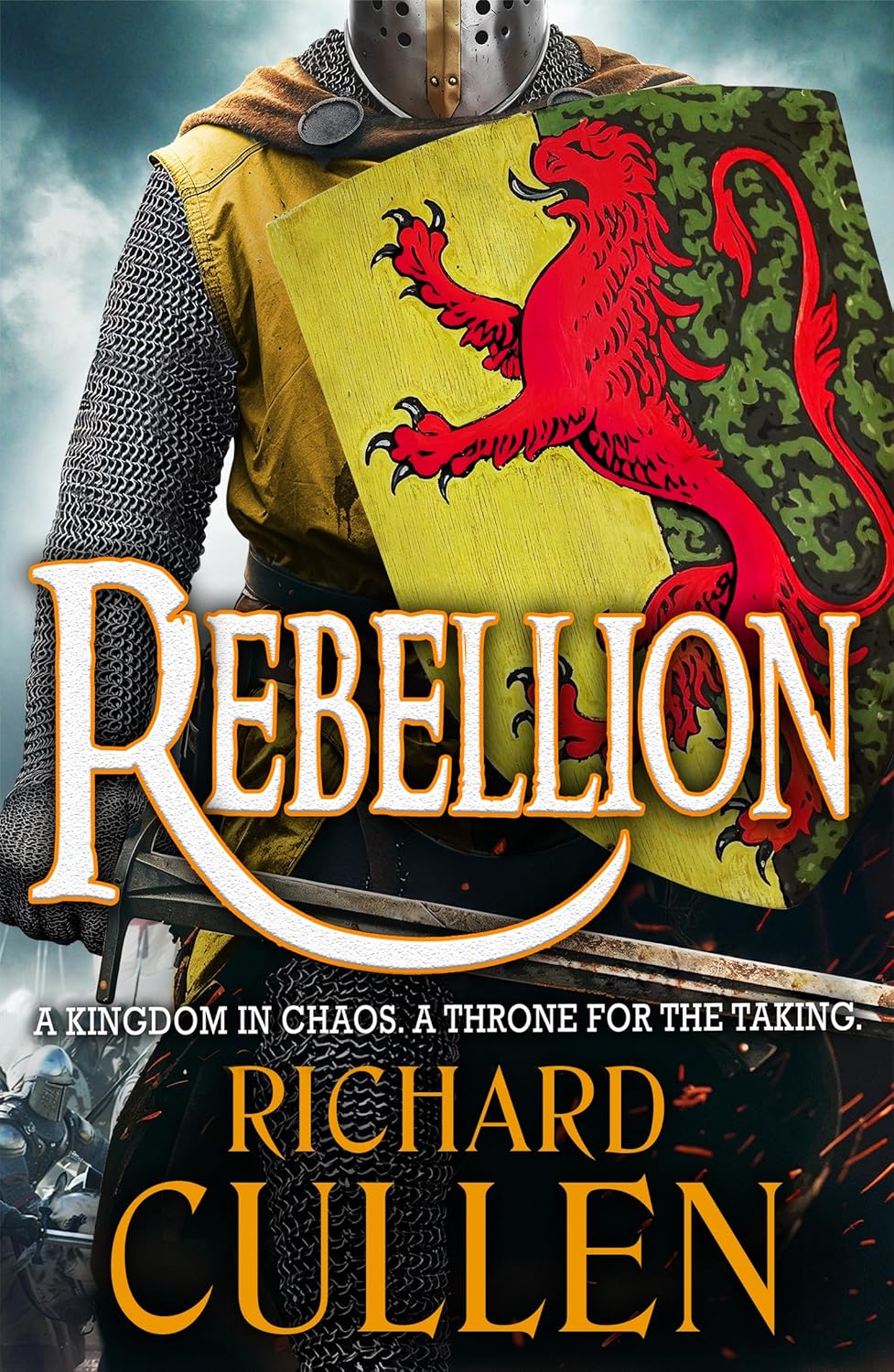
Quick Review – Rebellion by Richard Cullen

Publisher: Boldwood Books (ebook – 26 October 2024)

Series: Chronicles of the Black Lion – Book One

Length: 290 pages

My Rating: 4.5 out of 5 stars

Amazon

Prepare for an exciting and compelling historical adventure from excellent author Richard Cullen with the amazing read Rebellion.

Back in 2024 I was lucky to receive a copy of the awesome historical fiction novel Rebellion by Richard Cullen.  Cullen, who entered the historical fiction genre a couple of years ago with his Wolf of Kings series, may be better known to some readers as fantasy author Richard S. Ford, who has written several compelling series over the year, including The Age of Uprising series (check out my review for the first book in that series, Engines of Empire).  His latest release, Rebellion, is the first book in his Chronicles of the Black Lion series, that takes readers back to the early 13th century and deadly rebellions against the crown.

Plot Synopsis:

1213AD.

King Richard the Lionheart is dead, and his brother, John Lackland, sits uneasily upon the throne of England.

Across the sea, Prince Louis, heir to the powerful King Philip Augustus of France, looks to King John’s crown with a covetous eye.

But King John must be wary of rebellion, as well as invasion, for even his own barons would see their king unseated, and the French pretender put in his place.

Thrust amid this tumult is young Estienne Wace, orphan squire to Earl William Marshal – the greatest knight to ever serve the kings of England, and one of the few men who still holds faith in King John’s rule.

Raised by Marshal as his ward, Estienne must prove himself worthy of his adopted father’s name, but acceptance may be the least of his troubles. War is looming, as usurpers emerge from every quarter, determined to steal England’s crown from its most wretched king.

Rebellion was an outstanding novel that successfully wrapped around a character-driven tale of adventure and honour with a compelling historical background to form a fantastic and exciting read.  Told primarily from the perspective of Estienne Wace, new squire to legendary knight, lord, and royal regent Wiliam Marshal, you see the chaotic events that defined the last few years of King John’s reign, including the First Barons’ War, in compelling detail.  For the most part Cullen tells a classic historical coming of age/adventure tale around Estienne, as the young man first learns the ropes of being a squire, and then the reader follows him through several major battles and historical events, either as a fighting participant or a curious observer.  This allows for quite a bit of action and excitement, and the young protagonist soon learns the true horrors of war as he grows closer to the Marshal family.

This proves to be a fascinating and very intense historical narrative, and the author enthrals the reader with a great combination of fascinating historical detail, a ton of cool action, and some compelling character work as he features an intriguing mixture of new characters and many established historical figures.  I found this combination to work extremely well, and it proved interesting to follow the protagonist as he witnessed the turbulent history of the period and the dark conflicts it birthed.  The action flies thick and fast as the story continues, and I loved the awesome array of detailed sequences that emerged, including a lengthy and desperate siege.  The author also makes excellent use of some great alternate points of view as the story continues, including a jealous rival to the protagonist, and you are gifted with a compelling and highly intense look at the battles and politics unfolding.  While for the most part the main storyline around Estienne is typical historical fiction fare, Cullen throws in some interesting, if not entirely unsurprising, reveals at the end which should lead to some interesting developments in the future.  All this helped to produce a very cool story, and its one that I had a hard time putting down at times.

While I love all the above inclusions, my favourite part of Rebellion was the excellent historical details that Cullen worked his cool narrative around, especially as the author has clearly done his research on the subject.  It helped that Cullen chose to set his story around a truly fascinating period of English history that hasn’t been too over-utilised in other pieces of historical fiction.  As such, readers are gifted with deeply compelling look at the later years of King John’s reign as he lost land and refused to abide by the Magna Carter, and the resulting war that emerged as his various lords rebelled and tried to crown Prince Louise of France as King.  Cullen expertly places Estienne in the middle of many of the key events of this period, and through his eyes you get the full picture of the events that led up the war, as well as how it unfolded.  I honestly found this to be extremely fascinating, mainly because this war is often overshadowed by other events in English history, and you don’t see it utilised too often in modern fiction.  It was pretty damn interesting to see just how close England came to being ruled by a French king, and I honestly didn’t know that the French landed an army in England during this period, nor that Dover was besieged, and it was extremely cool to see it all unfold throughout the plot of Rebellion.

I personally also enjoyed how much Cullen focused on the awesome historical figure of William Marshal in this book, including examining the role that he played in stopping the war and saving England.  Marshal, a legendary knight who served several kings, is shown as an older man torn between duty and family, as he tries to save the cruel King John while his son chooses to support the rebelling barons.  I have always loved the history surrounding William Marshal and Cullen does a beautiful job bringing this aging example of knightly duty and honour to life and showcasing the complex roles he tried to balance for the sake of England.  This portrayal of Willaim Marshal, and indeed all the historical detail in the book, helps to make Rebellion a particularly captivating historical read, and I really appreciated how Cullen worked it all into the story.

Overall Rebellion was an awesome, fascinating and deeply addictive historical fiction novel that I could not get enough of.  Richard Cullen did a brilliant job of bringing this historical adventure together, and I had a wonderful time with the cool action and compelling history contained within it.  This is a very fun and exciting read that this very easy to get hooked on, and I ended up having an outstanding time with Rebellion.  Indeed, I enjoyed it so much that I have already grabbed an early copy of the sequel, Crusade, and I am hoping to read it soon.
Amazon

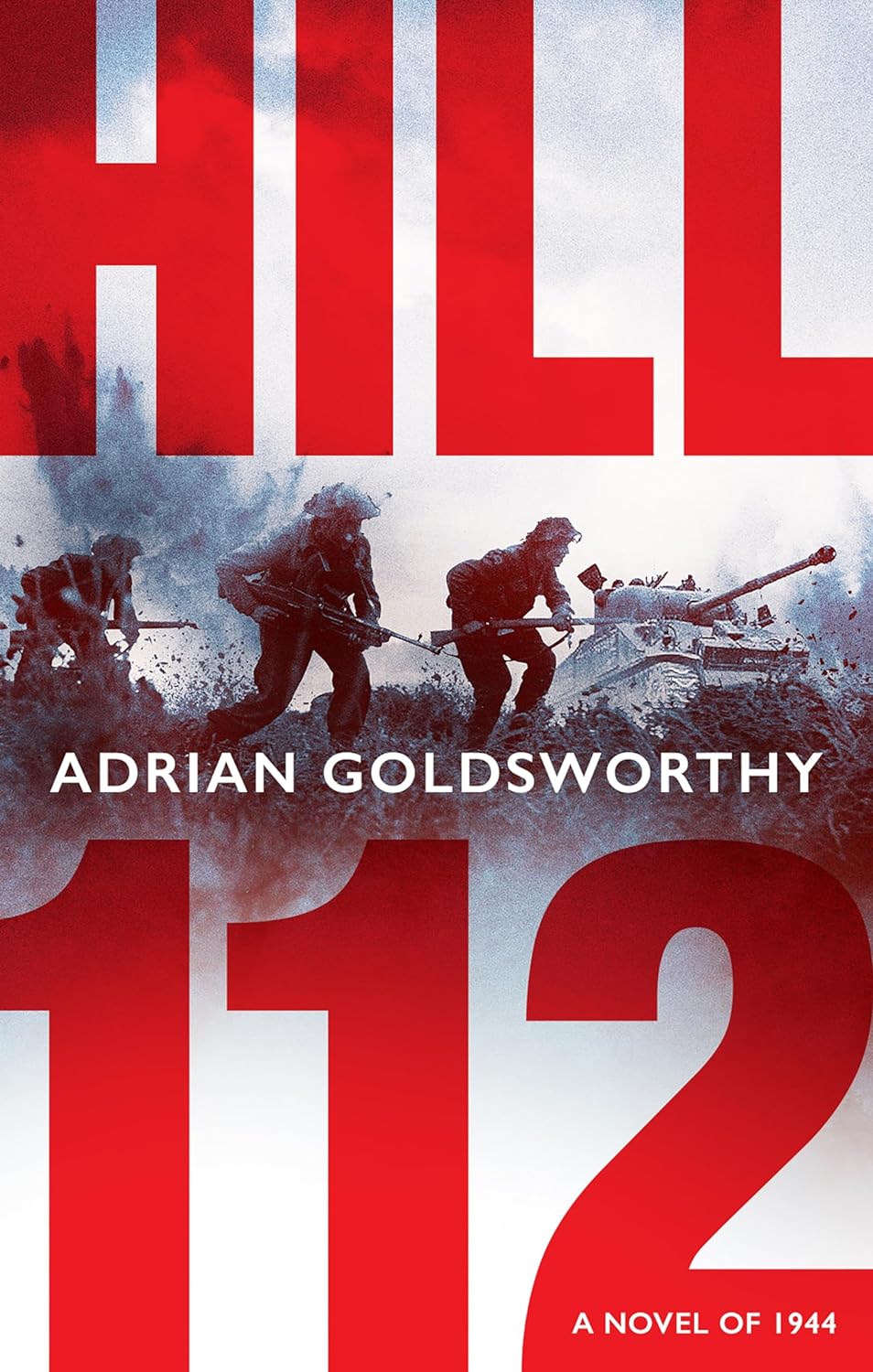
Hill 112 by Adrian Goldsworthy

Hill 112 Cover

Publisher: Head of Zeus (ebook – 23 May 2024)

Series: Standalone/Book One

Length: 495 pages

My Rating: 4.75 out of 5 stars

Amazon

Prepare to dive headfirst into the deadliest of struggles as acclaimed historical fiction author Adrian Goldsworthy provides a captivating look at the Normandy invasions with his epic novel, Hill 112.

Adrian Goldsworthy is an impressive historical fiction author who has been producing some great novels as of late.  A respected historian, Goldsworthy made the jump back to fiction in 2011 when he started his Napoleonic Wars series.  I had the great pleasure of reading the first few books in the series, including True Solider Gentlemen and Beat the Drums Slowly, and Goldsworthy prove to be an outstanding author who would focus his stories on intriguing historical elements.  His Napoleonic Wars series ended up featuring six novels before he dove into Roman historical fiction in 2017 with his Roman Britain series.  Starting with Vindolanda and also featuring six novels, the Roman Britain series sounds very awesome, and it is one I need to check out in the future.  Due to how much I enjoyed some of Goldsworthy’s previous books, I made sure to grab a copy of his latest release, Hill 112, which provides a compelling examination of the bloody invasion of Normandy during World War II.

June 6th, 1944.  After years of enduring the Nazi onslaught, the Allies are finally ready to begin their campaign to invade occupied France.  But to liberate France and free all of Europe, the Allies first must make a perilous landing and brave the full force of the German army waiting for them.  The destination for their fateful landing: Normandy!

As the Allies begin their invasion, three young soldiers, former classmates from south Wales, are amongst the troops landing in Normandy.  The charismatic James must put his previous experience as cricket captain into practice by leading a troop of Sherman tanks into fray.  The athletic Mark is forced to prove himself as the young officer in charge of a platoon of infantrymen, while Bill, the group’s resident firebrand, finds himself in the middle of the fighting as he serves as a private soldier.  However, none of these young men are truly prepared for the carnage to come.

The battle-hardened German army is determined to push the Allies back into the sea, and soon both sides find themselves caught up in a brutal battle for survival.  Into the middle of this, James, Mark and Bill find their courage and luck tested like never before as they finally experience the horrors of war and the seemingly unbeatable Germans.  Their fates, and that of the entire Allied war effort, will be decided in one of the most brutal fights of the Normandy campaign, the battle for Hill 112.

Goldsworthy brings together one of his heaviest and moving novels yet with the incredible Hill 112.  A gritty and realistic war story that seeks to capture the experiences of young soldiers during Normandy, Hill 112 was a fantastic and moving novel that drags readers right into the heart of the fighting.

Hill 112 has a great story to it that, while simple in concept, hits the reader hard and provides a powerful look into the realities of war.  Told from the perspective of three young soldiers as they experience their first taste of combat, Hill 112 is a very moving war novel that is hard to look away from at times.  Starting with the first day of the Normandy landings, you initially follow James, who leads the charge with his tank unit, while Mark and Bill wait back in England for their deployment to the front.  While this did make James’s chapters a lot more interesting and exciting than the others’ at the start of the book, I liked how Goldsworthy chose to start the remaining two characters off back in England.  Not only was historically realistic, but it allowed you to get to know these two protagonists and other supporting characters before the fighting, while also building up the tension, especially when you compared their experiences with what James was going through on the front.

It doesn’t take long for Mark and Bill to make it over to Normandy, and from there the reader becomes enmeshed in seeing all three protagonists facing the tough campaign in Europe.  There is a lot of action and a ton of tragedy in this part of the book, and it was fascinating to see them slowly adjust to the new normal of battle, as they experience the true horrors of war.  Goldsworthy continued to keep the three protagonists separated for most of the story, which allows each of them to grow, while also showcasing several different fronts at the same time.  Their storylines start to converge as the book continues, especially when they find themselves at the foot of the tactically significant Hill 112.  The last third of the book is essentially all out fighting as the three protagonists attempt to survive the desperate battle for the hill.  The carnage flies thick and fast in this part of the book, and you are constantly on edge as the three characters fight on, while also trying to understand the necessity and impacts of war.  I was deeply captivated for this entire part of Hill 112, and I couldn’t stop reading as I waited to see the fates of all three characters.  Goldsworthy did not disappoint, as the ending to this book was extremely shocking and powerful, and you come away wondering about the sacrifices, experiences and emotions of those involved in the fighting.  This was a such a great character-driven war story, and I came away very impressed with how it all unfolded.

I deeply enjoyed the compelling and powerful story that Goldsworthy created for Hill 112 that hits all the right notes for the reader.  Goldsworthy made the clever choice to provide the reader with a more insular look at the invasion, as the viewpoint is limited to the lower-ranked protagonists, more concerned with their own battles, rather than a look at the large war going on around them.  This proved to be an excellent choice of focus, and I deeply appreciated the way in which Goldsworthy was able to get into the mindset of the young soldiers fighting this war.  The constant switching between the three main protagonists allowed for a complex and intriguing story, as they experienced different battles while coming to terms with the fighting in their own ways.  Goldsworthy has a real talent for showing the chaos of war, and you are thrown into innumerable skirmishes, firefights and large-scale battles, all of which is captured in its full destructive glory.  You can honestly feel the bullets flying and the shells landing as you pour through Hill 112, and the constant conflict, danger and excellent portrayal of the fighting ensures that readers have a very hard time pulling their attention away from this amazing book.

Goldsworthy clearly did an exceptional amount of research for Hill 112 as this book is loaded with historical detail as the author meticulously covers key events of this initial invasion.  While the main regiments featured in Hill 112 are fictitious, Goldsworthy bases them on actual participants of the fighting, and you get incredibly detailed depictions of the early days of the Normandy campaign for the English and Canadian forces.  This includes events that followed from the initial landings on Normandy all the way to the conclusion of the fighting around the titular Hill 112, a key historical battle.  Readers get a very compelling and intensive look at how the campaign unfolded, and it was interesting to see how hotly contested this initial fighting in France was, especially as most modern war movies/television series usually show swift victory the moment the allies are off the beaches.  The battle of Hill 112 was naturally a compelling part of the book which the author covers in heavy detail, noting the movement of all the relevant units and the various attacks.  I got so engrossed in Goldsworthy’s recounting of this battle, and readers are left haunted and amazed that so much death occurred for a simple hill in the countryside.

The author really did not spare any detail when it comes to the fighting, and you get a comprehensive vision of the potential experiences of the participants in these battles.  Goldsworthy really dives into every single aspect of the solider experience, and you come away with insights into the conditions, equipment, training and attitudes of the troops, all of which greatly adds to the gritty realism of the story.  This is particularly true in the battle scenes, and it was very compelling to see how the soldiers would have fought, as well as other factors that came into play, such as the Allies’ overwhelming artillery.  I especially enjoyed the many scenes that focused on vehicular combat as one of the protagonists spends most of the book inside a Sherman tank, fighting against German armoured units.  The sequences in the tank are always a high-strung affair, and Goldsworthy expertly captures the cramped conditions, fast-paced fighting, and constant peril that the British crews experienced.  The author further increases the authenticity of the book by having his protagonists experience various incidents that were recorded to have happened during these invasions.  The author cleverly retells these events to feature his characters, and the various experiences, some of which are quite hellish, add a lot of intensity to the book.  Goldsworthy really pulls no punches when it comes to showcasing the experiences of Allied soldiers in Hill 112, and it proves hard not to deeply appreciate his ability to utilise a massive amount of historical detail to tell a good story.

I must also highlight the intriguing characters featured within Hill 112 who added a lot to the impact of the book.  The three main characters, James, Mark and Bill, are all quite intriguing in their own way, and I appreciated how they ran the gambit of young people who would have joined the war effort after leaving school.  Goldsworthy ensures that each of these main characters have a compelling backstory which contrasts in a moving way to their current experiences, and it was moving to see them grow up throughout the course of the horrendous ordeals they find themselves in.  These three main characters are also accompanied by a huge supporting cast of fellow soldiers, officers, tank crews and other figures, each of whom travel with the protagonists to engage in the fighting.  Many of these supporting characters are exclusive to the chapters told from the perspective of a particular protagonist, allowing for unique interactions, and Goldsworthy often provides relevant backstories for these supporting characters as well.  This cast of additional characters gets quite extensive as the book continues, which can make remembering everyone a little hard at times.  However, that proves to be a short-term problem at best, as the supporting players usually doesn’t last too long in the fighting.  This proved to be an excellent and intense character-driven novel, and I really appreciated how well Goldsworthy captured the experiences of these young soldiers in war.

Adrian Goldsworthy once again brings the past back to haunt his readers in the outstanding and moving novel, Hill 112.  A highly detailed and impressive war novel, Hill 112 does an incredible job capturing the experiences of young soldiers in the Normandy campaign and you will quickly become absorbed in the resulting story.  Highly recommended, especially for those fans of military history, Hill 112 was such an amazing read.

Amazon

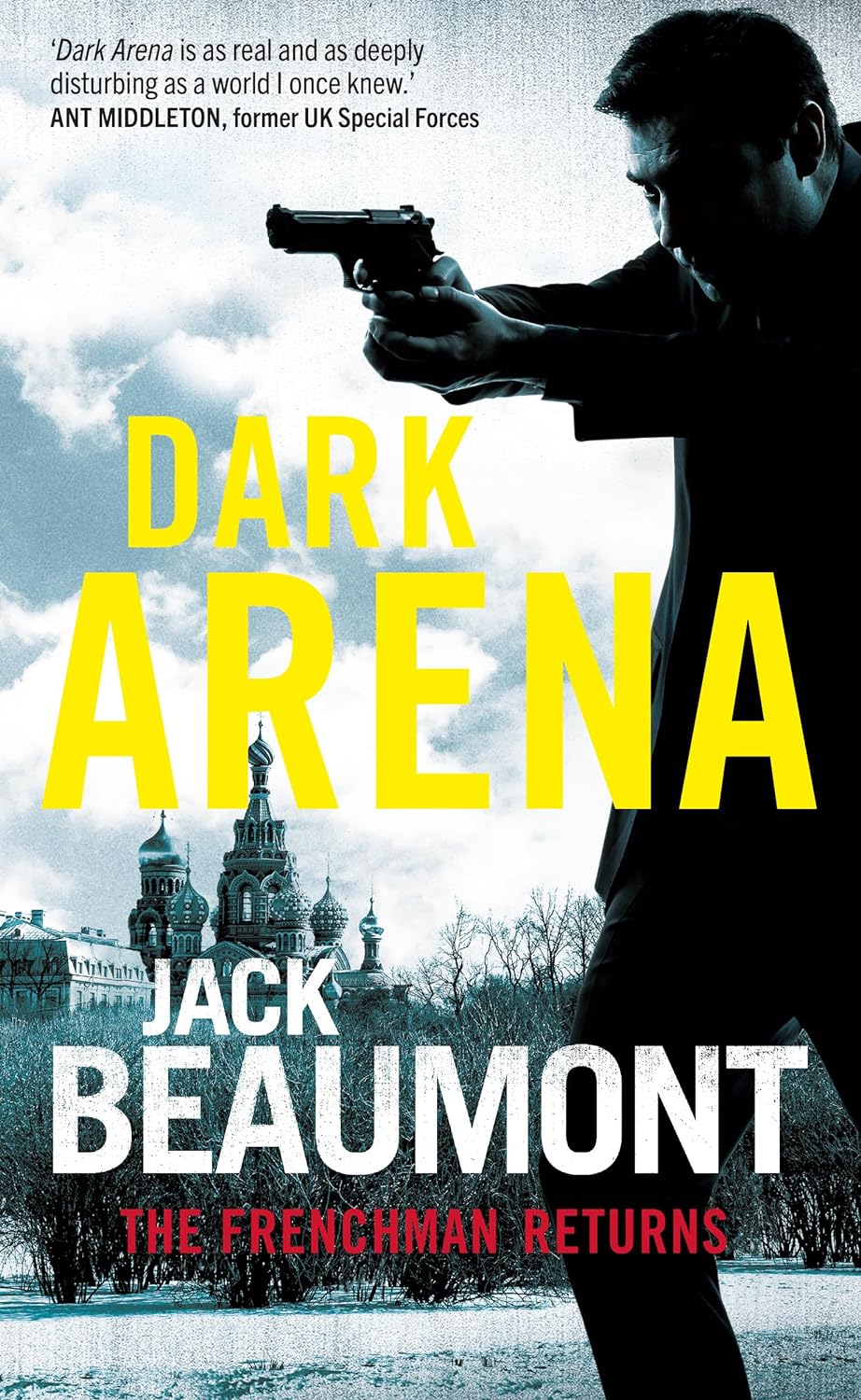
Dark Arena by Jack Beaumont

Dark Arena Cover

Publisher: Allen & Unwin (ebook – 3 January 2024)

Series: The Frenchman – Book Two

Length: 456 pages

My Rating: 4.75 out of 5

Amazon

Former French spy Jack Beaumont presents a powerful and captivating sequel to his awesome debut with Dark Arena, a gripping read with a compelling look at European espionage.

Back in 2021 I was lucky enough to receive a copy of an outstanding debut spy thriller, The Frenchman.  Written by Jack Beaumont, the pseudonym of a former operative in France’s foreign secret service, The Frenchman was an incredible read that followed a French spy who attempts to stop an elaborate terrorist plot.  Featuring some amazing authenticity and a great story, The Frenchman was an exceptional read and it ended up being one of my favourite debuts of 2021.  I have been eager for Beaumont to follow up The Frenchman for some time, and I was extremely excited when I received an advanced copy of this long-awaited sequel, Dark Arena, especially as it quoted one of my Canberra Weekly reviews up front.  The first new novel I read in 2024, Dark Arena was another outstanding read from Beaumont that combined a powerful, character-driven narrative, with a complex look at recent European events and the potential underlying intrigue surrounding it.

When a member of the DGSE, France’s foreign secret service, is brutally murdered in front of his family by a team of Russian agents, Alec de Payns is brought in to investigate the mysterious circumstances surrounding his attack.  De Payns soon discovers that this bloody operation is related to a recent piece of intelligence the DGSE recovered, which identifies hostile actions the Kremlin is authorising throughout Europe.

Infiltrating a secret meeting of businessmen, terrorists and Russian mercenaries aboard a luxury yacht in the Mediterranean, Alec discovers details about a mysterious assassination plot that could tip the balance of power in Europe.  Determined to intervene for France’s advantage, de Payns and his team attempt to uncover the target of the assassination, as well as the underlying reasons for the death sentence.  But the more they dig, the more they begin to suspect that someone is manipulating the DGSE into a confrontation with the Russians.

Closing in on their targets, de Payns soon discover the full extent of their opponent’s plans, and the DGSE are soon left with hard decisions, especially as intervening could impact France’s energy security.  Caught between dangerous superpowers and with a war on the horizon, can de Payns and his team make the right choice, or will doing the right thing cost their country terribly?

This was a superb and extremely clever spy thriller sequel from Jack Beaumont, who expertly follows on from his debut with another outstanding novel.  Dark Arena is an incredible read, which I think I enjoyed even more than The Frenchman, due to its excellent twists and compelling examinations of European politics and espionage.

Dark Arena proved to be quite a thrilling read that got more intense the further you get into it.  Starting off with a shocking but important introduction that shows a French agent killed for the information he recovered, Dark Arena quickly moves onto the main plain, as Beaumont’s protagonist, Alec de Payns, is reintroduced and set to investigate.  The initial chapters of the book are a little slow as Beaumont reasserts his steady and methodical pace, but there are some vital and fascinating story elements introduced here, especially around the conspiracy the DGSE are hoping to unravel and the protagonist’s fraught personal life.  I enjoyed the slow build-up that Beaumont showcased here, mainly because it added the authenticity of the plot.  The story really starts to kick into high gear once de Payns begins his infiltration of a luxury yacht, and the scenes set aboard there are loaded with risk, threat, cunny tradecraft and realistic depictions of information gathering.

Dark Arena’s plot speeds up a lot more in the second half as de Payns and his colleagues begin to investigate several different angles and potential enemy agents.  The reveal that the Russians are planning an assassination is quite intriguing, especially as Beaumont ties it into the invasion of Ukraine, and it adds a certain layer of extra realism and intensity to the overall plot.  While I won’t go into too much detail about this here, I felt that Beaumont did an outstanding job working his complex narrative into these major real-world events, and it was fascinating to his take on some of the events leading up to the invasion and the world politics that ensured it happened.  There are also some great reveals surrounding the origin of the information that the DGSE and other European intelligence agencies have been working off, especially as it appears they are being manipulated by outside sources.  The protagonist’s personal life also gets thrown front and centre in the narrative, and while I wasn’t the biggest fan of the many coincidences that brought together his family with his mission, it was compelling to see him balance the two.  The full discovery of the various plots being orchestrated around Europe proves to be quite clever, and the resulting chaos as the DGSE tries to intervene despite a dangerous political situation results in some captivating moments.  There are some intricate action sequences, encounters between rival spies, and some big reveals, including finally getting a payoff regarding a character introduction from The Frenchman.  This ended up being a fantastic and awesome story, and I hope that we get some form of sequel to it soon.

I deeply enjoyed how Dark Arena was showcased as Beaumont has a very distinctive writing style, that relies heavily on detail and authenticity to enhance his compelling spy thriller storyline.  The focus on tradecraft and the multiple complex aspects of real-life espionage and intelligence work is so damn fascinating, and the author does such a good job of making all these elements seem so realistic.  Nearly every action the characters makes is loaded with intricate detail as Beaumont explains the reality of the intelligence officer’s life, and you will be enthralled by the various intricate ways that the characters attempt to outwit and avoid their opponents.  While references to these actions might seem a bit repetitive at times, I thought it was a great way of hammering home just how careful these characters need to be, especially after the shocking opening scene.  I really loved how much detail Beaumont shoved into every page of Dark Arena, and it made the resulting plot pop as you absolutely believed this was the sort of thing real spies would go through.  This already elaborate narrative is further enhanced by the multiple layers Beaumont added to the plot as he follows various members of the DGSE as they attempt to unwind the multiple mysteries presented to them throughout the book.  While I did occasionally feel that Beaumont was using too many characters, the various betrayals, secrets, and complicated loyalties that emerge from the various perspectives, including from a few antagonists, helps to create a powerful espionage tapestry, and I loved how well this amazing story came about.  While Dark Arena is a sequel to The Frenchman, most readers should be able to dive straight into this second novel, as Beaumont makes the plot of this book quite accessible and any necessary details from The Frenchman are covered again here.  Everything about this book is so well written, and I have a lot of love for Beaumont’s meticulous and distinctive style.

While there are several great characters in Dark Arena, the one who gets most of the focus is protagonist Alec de Payne.  A dedicated DGSE field agent, de Payne is a fascinating figure who serves as the heart and soul of the series.  His depiction as an agent is always very fascinating as Beaumont channels most of the espionage authenticity through his scenes.  However, the most compelling aspect of de Payne’s character lies within the struggles he has balancing his secretive profession with his life as a husband and parent.  Already away for long periods of time and constantly forced to lie to his friends and family, de Payne finds himself struggling more than ever in Dark Arena, especially when it comes to his relationship with his stressed wife.  Thanks to the events of The Frenchman, which saw his family temporarily kidnapped, De Payne finds himself pushed even further to the brink as his is suffering from paranoia and anger following the threat to his loved ones.  This really impacts his personal life, and the conflicts he experiences at home provide a powerful layer of drama to the plot, which I felt contrasted nicely with the intrigue and espionage of the rest of the book.  While elements of de Payne’s personal life do blend into his professional career, it is mostly kept separate, and I loved seeing the dichotomy between a stressed family man and an accomplished spy.  De Payne was such an incredible protagonist to follows as a result, and I felt his amazing story was a major highlight of this exceptional read.

Jack Beaumont provides an outstanding follow up to his epic debut with Dark Arena.  Once again featuring his ultra-authentic take on spies and international espionage, Dark Arena has a captivating and realistic plot that takes his excellent and complex characters into the heart of a recent history.  Intense, addictive, and so damn intricate, Dark Arena was an exceptional read from a rising star in the spy thriller game.

Amazon

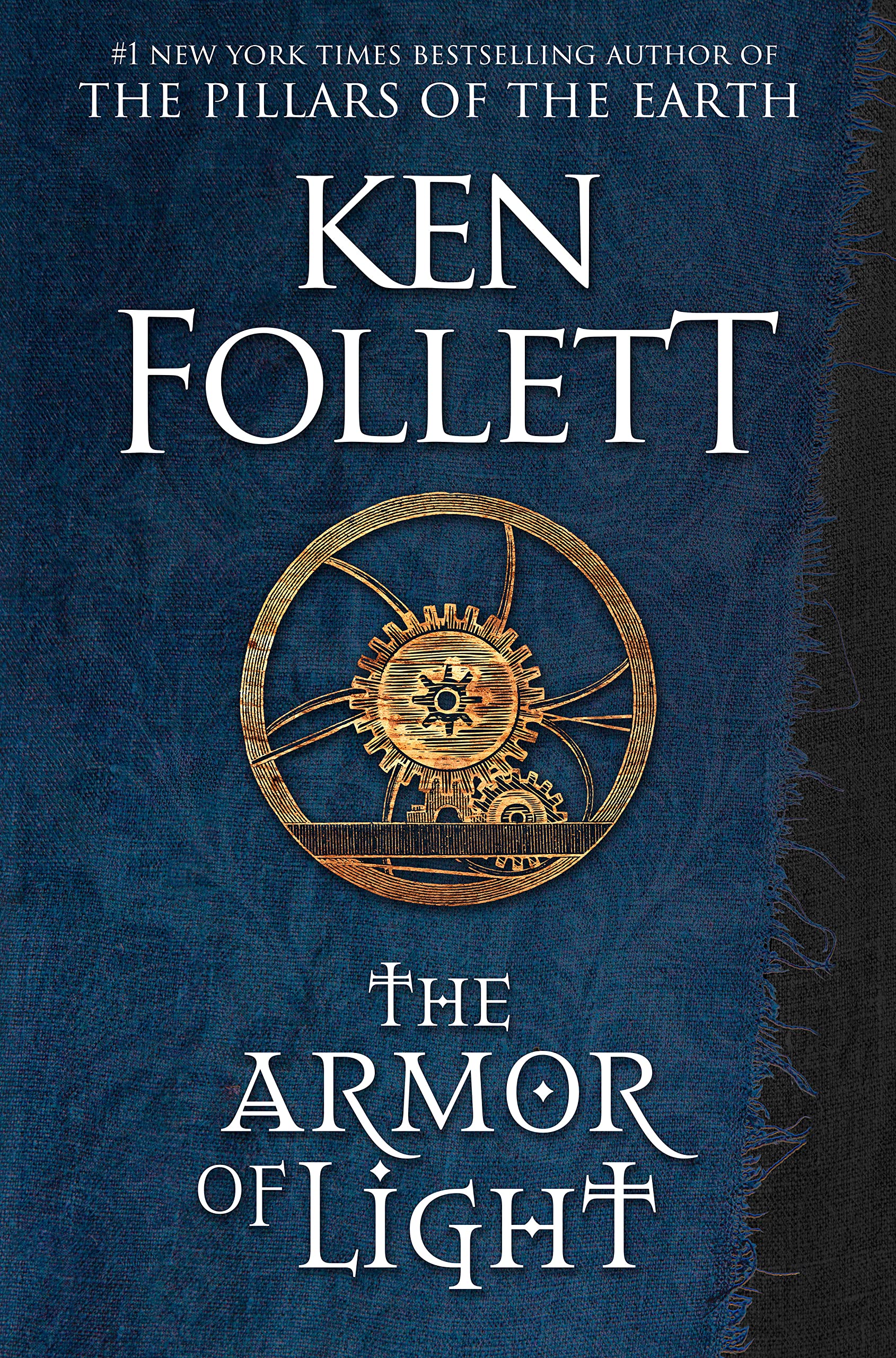
The Armour of Light by Ken Follett

The Armour of Light Cover

Publisher: Macmillan (Hardcover – 26 September 2023)

Series: Kingsbridge – Book Four

Length: 737 pages

My Rating: 5 out of 5 stars

Amazon

Acclaimed author Ken Follett returns with another exceptional addition to his iconic Kingsbridge historical fiction series with the fantastic and captivating The Armour of Light.

Out of all the authors who dive into the complex and impressive genre of historical fiction, few are as well-known or epic as Ken Follett, who has been dominating the genre for years with his massive and epic thrillers.  I have only really had the chance to explore Follett’s historical fiction books, with his Century trilogy being a particular favourite of mine (one of my favourite trilogies of all time).  However, Follett’s most iconic work is his Kingsbridge series, which has long gained mass recognition and accolades

The Kingsbridge books are a series of massive, epic novels that chronicle the complex lives of the residence of the town of Kingsbridge in historical England.  Each book follows the lives of several intriguing characters as they attempt to survive the various challenges and turmoil of the age, often coming into conflict with each other in some elaborate and extended ways.  The series started in 1989 with The Pillars of Earth, which is probably Follett’s most successful novel.  Set over the course of 50 years in the 12th century, The Pillars of Earth showcased a range of personal, political, economic and social issues that the characters spent their lives overcoming in different ways, often loaded with dramatic or historical significance.  An exceptionally epic book, The Pillars of the Earth is very highly regarded and was turned into a compelling TV miniseries with an awesome cast.

Follett has since followed up his original novel several times throughout his career, with each of the Kingsbridge books set in a different period of the town’s history.  For example, the 2007 release World Without End (which was also adapted into a miniseries), is set in the 14th century around the start of the Hundred Year’s War.  The 2017 novel, A Column of Fire, was another compelling sequel that mirrored the life and reign of Queen Elizabeth I and featured a compelling plot involving Catholic spies and religious conflict.  The fourth book was the 2020 novel, The Evening and the Morning (one of my favourite books of 2020), which served as a prequel to the rest of the series and showed the founding of Kingsbridge in the early years of Viking infested 11th century.  All four of these books have been exceptionally good, and I love following a whole new group of characters while exploring the unique aspects and conflicts of their historical era.  Due to how much love I have for this amazing series, I was pretty damn excited when I found out that Follet had a new Kingsbridge novel coming out in late the 2023 with The Armour of Light.  Set during the early years of the English Industrial Revolution, The Armour of Light sounded so damn good, and it was one of my most anticipated books of 2023 as a result.

England, 1792.  As Napoleon Bonaparte begins his rise to power in France, the people of England look on in fear and curiosity at the changes wracking their neighbour.  As the march towards progress continues throughout England, many people find their way of life changing faster than they can adapt.  Nowhere is this felt more keenly that the town of Kingsbridge.  A major hub of England’s cloth industry, Kingsbridge has been transformed by the rampant industrialisation and modernisation of ancient textile processes.  Now the cloth workers of Kingsbridge are forced to work in crowded factories, pushing out vast amounts of material in often unsafe conditions.  But with each new advance and new dangerous machine, the number of workers needers diminishes, and soon many in Kingsbridge find themselves out of work and thrust into poverty.

As the march towards war with France continues, many inhabitants of Kingsbridge will find themselves thrust into a conflict between the rich and the poor of England.  Spinner Sal Clitheroe tries to make an honest living, but her stubborn determination to get justice continues to put her into conflict with the town’s rich and elite.  Wool merchant Amon Barrowfield attempts to salvage his family’s business, only to find tough rivals on every front.  Weaver David Shoveller attempts to run a fair business, but an ill-advised love affair could ruin everything, while Sal’s son Kit finds himself obsessed with the new machines manipulating the wool.  These figures personal struggles will define the struggle of their generation, as the fight for freedom and enlightenment coincides with a much bigger war.

Ken Follett has another fascinating and impressive character-driven read with The Armour of Light that once again follows several complex figures as they live their lives in historical England.  Clever, powerful and chock full of historical detail, The Armour of Light was an outstanding addition to the Kingsbridge series and just had to give it a full five-star review.

Much like the other books in the Kingsbridge series, The Armour of Light follows a group of intriguing characters as they navigate life during a turbulent period of England’s history and attempt to change their destiny and the destiny of the people they love.  Set between 1772 and 1824 (although most of the main story ends in 1815), you get an intriguing examination of each of these characters as they overcome all manner of adversity, oppression, war and more.  The scope of The Armour of Light’s story is pretty damn epic as Follett really lays on the challenges and tragedies for his characters to endure and overcome.  There is intrigue, politics, imprisonment, business rivalries, unexpected deaths, conscription, unrequited loved and much more as many of the protagonists find themselves going up against the system and often coming off second best.  You really grow attached to these characters as you follow them throughout the decades and see many of them grow up, find their callings, fall in love, and more, only to often see them then at their worst as they encounter setbacks they can’t overcome.  While most of the story deals with the industrial changes the characters are trying to get used to, the plot does also tie into the Napoleonic War.  Naturally, pretty much all the characters find themselves over in Belgium in 1815, so everyone is involved at Waterloo to some degree or another.  This proves to be an impressive end to the story, and it was fascinating to see where all the various characters ended up, especially after experiencing the deadliest of battles.  I had an outstanding time getting through this elaborate story, which honestly had me hooked the entire time.  Despite The Armour of Light’s near 750-page length, I managed to power through it in a matter of days, its story was that damn interesting.

As I mentioned, The Armour of Light is part of the Kingsbridge series and serves as a sequel to all four previous novels.  However, due to compartmentalised nature of the book’s plot and the focus on completely new characters, readers do not need a prior knowledge of the rest of the Kingsbridge books to enjoy The Armour of Light.  The novel is very accessible, and due to the substantial gap between it and A Column of Fire, readers should really consider this a standalone novel that any historical fiction fan can easily enjoy.  However, long-term fans of Follett and the Kingsbridge series will no doubt appreciate seeing how the setting of Kingsbridge has evolved over the years, especially in the face of industrial revolution, which changed the nature of the textiles industry that has always been central to the series’ plots.  There are also a bunch of clever references and connections to the previous novels, although if you don’t pick these up it in no way ruins your flow or enjoyment of the story.  As such, The Armour of Light is a book most readers and historical fiction fans will be able to enjoy, while also serving as an intriguing continuation to the Kingsbridge series.

One of the main reasons why I enjoy the Kingsbridge books so much is because Follett excels at showcasing fascinating historical periods and working his characters into unique situations based on the events of the period.  The Armour of Light is an incredibly good example of this as it examines the impact of the early Industrial Revolution on a textile town like Kingsbridge.  Follett really dives into the intricacies of the mechanised weaving process that would have taken place in factories like this, and the various issues they caused.  As the book progresses, the characters are introduced to new machines more efficient than the last, which causes more of the characters and inhabitants of Kingsbridge to lose work.  This leads to discontent amongst the working classes, many of whom are trying to raise themselves up through any means possible, and the rich factory owners and the other elites try to hold them down using various legal and political angles.  As such, the story captures interesting aspects about the English legal system and the controversial politics at the time, especially as parliament was so against unionisation and other actions after seeing the revolution in France.  I quite enjoyed the discussions that occurred surrounding the French Revolution and Napoleon at various points of the book, and it was fascinating to see the various classes reactions to these events, such as fear from the wealthy, and interest from the poor.  Other intriguing historical elements were also examined throughout the book, such as the growing rivalry between the Church of England and the Methodist faith, and I had a wonderful time seeing them all introduced into the plot.  Follett did a remarkable job working so many of these historical details into The Armour of Light’s story, and it helped to make this a fantastic and fascinating read I couldn’t put down.

Finally, I need to highlight the great characters featured throughout the plot.  Follett came up with an intriguing collection of figures to follow in The Armour of Light, and each of them goes through some compelling trials and tribulations.  I really enjoyed the range of different characters featured within the novel, although most of them were tied into the wool trade to some degree to really hammer home the novel’s main point about change and industrial revolutions.  Follett came up with some very interesting personal stories for each of these characters, and their powerful journeys through life, love and loss, was the true heart of the book.  This includes Sal Clitheroe, the heart and soul of the book, Amon Barrowfield, the always hopeful young merchant, and David Shoveller, a mostly noble figure who works to help those he can.  I also loved the striking Alderman Joseph Hornbeam, who served as the book’s main villain.  The wealthiest man in Kingsbridge, Hornbeam is determined to expand his empire no matter who he must crush to do so.  As such, he comes into conflict with many of the protagonists, and his actions are usually the crux for much of the book’s plot.  I really enjoyed Hornbeam as an antagonist, and Follett weaves some interesting storylines around him, including a hidden backstory, and a redeeming examination of his love of family.  Pretty much all the characters in The Armour of Light were extremely well written, although I thought it was a bit odd that every major female character either committed adultery or lusted after another man while married.  I’m not sure if that was commentary on women’s lack of choice back in the 18th and 19th centuries or some particularly interesting choices from Follett, but it was weird that it happened at least four times.

Ken Follett did an outstanding job continuing his amazing Kingsbridge series with the wonderful book, The Armour of Light.  A compelling and historically rich novel, The Armour of Light was another great read and I had such a fantastic time getting through it.  I have so much love for the Kingsbridge series, and I cannot wait to see what period Follett decides to explore next.  Highly recommended.

Amazon

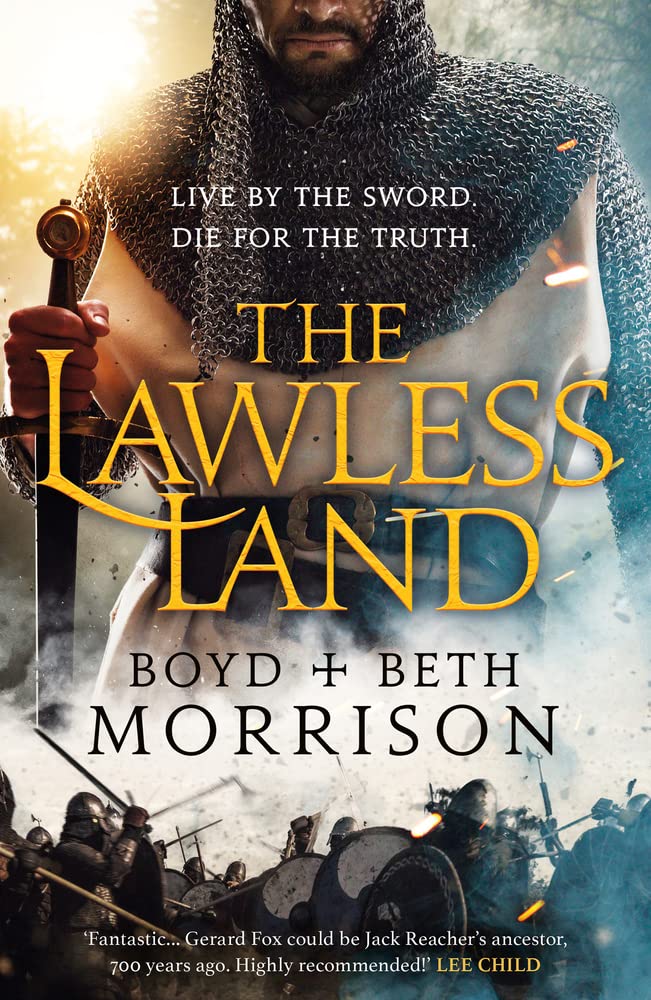
The Lawless Land by Boyd and Beth Morrison

The Lawless Land Cover

Publisher: Head of Zeus (Trade Paperback – 31 May 2022)

Series: Standalone/Book One

Length: 474 pages

My Rating: 5 out of 5 stars

Amazon

Get ready for one of the most thrilling historical adventures of 2022 with the wildly entertaining and deeply captivating medieval fiction novel, The Lawless Land, by the outstanding team of Boyd and Beth Morrison.

Despite my recent focus on other genres, historical fiction in all its forms remains one of my favourite book categories to check out, especially with awesome new novels coming out all the time.  One of the best examples of this is The Lawless Land, which I was lucky enough to receive a copy of a little while ago.  The Lawless Land was a fascinating read that takes some great protagonists on a bold adventure through medieval Europe.  This book was written by Boyd and Beth Morrison, a brother and sister team who have deeply impressed me.  This was a rather interesting combination of writers, as Boyd Morrison is an acclaimed thriller and historical fiction author, and Beth Morrison is the Senior Curator of Manuscripts at the J. Paul Getty Museum and has a PHD in history.  These overachieving siblings really cooked up something special here with their first book, and I loved the outstanding story it contained.

In 1351, Europe is in utter chaos as the Hundred Years’ War rages in France and the Pestilence ravages the countryside, depopulating towns and devastating cities.  These are dark days indeed, and only the desperate and the foolish can be found traversing the roads.  Unfortunately, this includes skilled knight Gerard Fox, whose lands and titles have been taken from him as punishment for a crime against the church, and who is now forced to wander the world by himself, desperate to reclaim his family’s honour.

Journeying towards the castle of Lord Tonbridge, the one man who may be able to prove his innocence, Gerard witnesses a band of armed men waylaying a noblewoman.  Impulsively jumping into action, Gerard saves the women, slaughtering her attackers and forever changing his life.  The young woman, Lady Isabel, is Lord Tonbridge’s betrothed, who has fled from her future husband, taking with her a sacred relic she is sworn to protect.  Forced to abandon his own quest, Gerard agrees to escort Isabel to safety, however, he is unaware of the chaos that is about to be unleashed upon him.

Tonbridge had promised Isabel’s relic to an ambitious Cardinal in Paris, one who is determined to rise to the station of Pope.  Desperate to reclaim the relic and use it to cement his position, the Cardinal and his pawn, Tonbridge, unleash their substantial forces to hunt down Gerard and Isabel.  Fleeing their pursuers, Gerard and Isabel traverse the breadth of England and France to find safe harbour for the relic.  Forced to contend with dangerous foes around every corner, Gerard, Isabel, and their faithful companions will face the worse that medieval Europe has to offer and more.  But worse lies in wait for Gerard, as he bears a dark connection with his pursuers that will ensure they will never stop hunting him.

Wow, now this was a really cool historical fiction novel.  The exceptional writing team behind The Lawless Land have produced an outstanding novel that is extremely exciting, action-packed, and character driven, while also being heavy on the historical detail and accuracy.  This results in an exceptional and epic historical thriller read that I had an absolute blast getting through and which gets a well-deserved five-star rating from me.

The Lawless Land was such a cool read, and I quickly fell in love with its brilliant and exceptional story.  Essentially an adventure thriller set in medieval times, the authors start The Lawless Land off very quickly, showing the protagonist in battle as he saves the damsel in distress, only to end up in even more trouble.  Effectively introducing the key characters early on, you get a real sense of the novels impressive style right at the start, especially with its gritty feel and intense action sequences.  The story soon evolves into a high stakes chase across Europe, as Gerard, Isabel and their companions try to outrace and outwit their opponents to save Isabel’s relic and get revenge for Gerard.  The authors make excellent use of multiple character perspectives here to showcase the chase from both sides, and you get a good look at the various schemes and ploys of the antagonists, as well as the full depths of their villainy.  These amazing and action-packed scenes are expertly interspersed with some flashback chapters that examine the full history and tragedy of the protagonists, especially Gerard, and work to fully establish the enmity between him and the antagonists.  This entire first half of the book is very well written, and the authors’ excellent style will appeal to wide range of readers, not just historical fiction fans, as anyone who enjoys a great adventure or gripping thriller read, can get really engrossed in this excellent story.

This perfectly sets up the second half of this epic novel, which sees the character involved in all manner of carnage and battle as they attempt to win.  I honestly powered through the last 250 pages or so in a day; I was having that much fun reading it.  This second part has everything, including jousting tournaments, prison breaks, desperate chases, elaborate skirmishes, political intrigue, skullduggery and more action than you can shake a stick at.  There is even a full-on judicial duel (think The Last Duel), which was one of the most impressive and gritty fights in the entire book.  There are some intriguing twists, clever reveals, major tragedies, and some outstanding action throughout this entire second half, and it was so much fun to see it all unfold.  I really must highlight the impressive action of The Lawless Land, as all the fights felt particularly realist and very epic, and you can honestly feel every powerful swing and strike of steel on steel.  The authors bring all the established story elements of The Lawless Land together extremely well in the end, and readers will come away satisfied, especially with the fun conclusion and the great ending for the characters.  While this is ostensibly a standalone read, and the authors do wrap up everything really well, there is potential for a sequel at the end, and I for one would not be opposed to seeing more from these characters in the future.

One of the most compelling parts of The Lawless Land was the brilliant dive into the history of medieval Europe.  The writing team clearly did their research when it came to this novel, which is hardly surprising considering the scholarly expertise of one of its authors.  As such, this novel is loaded with impressive and captivating historical detail which isn’t overshadowed by some of the more over-the-top action.  You get a great sense of the how bleak and brutal the continent was at this point in history, with some chilling depictions of plague and pestilence, as well as some intriguing looks at The Hundred Years’ War, including a full flashback chapter to the Battle of Crécy.  The authors spend time exploring a ton of fascinating stuff from this period, including knightly conduct, the power and influence of the church, day to day life for people in cities and the countryside, and so much more.  I particularly loved the scenes set around a tournament in France, where the protagonist engages in a series of jousts.  The sheer amount of detail and realism around these scenes are so very cool, and you can really picture how everything would have looked and felt.  There is also a great examination of medieval manuscripts (again, because of one of the author’s academic focuses), which become a key part of The Lawless Land’s plot, and it was really interesting to examine the significance and process behind them.  All this impressive work around the setting and other historical elements of The Lawless Land really enhanced the overall quality of the book, and I loved how seamlessly it was worked into the epic narrative.

I also must highlight the fantastic characters featured within The Lawless Land, which includes an awesome balance of likeable protagonist and maniacal villains who hunt them.  The story is perfectly split between the two groups, and you get some fun and intense competing views of events throughout the story as a result.  The protagonists are headlined by the awesome character of Gerard Fox, a wandering knight, banished from his family’s lands by the church following a confrontation with one of the antagonists years ago.  Dragged into this conspiracy by accident, Gerard becomes Isabel’s companion and protector, and tries to escort the relic to safety.  A man of action and honour, Gerard is haunted by his past and his many failures, which include watching his brother die in battle, and being tricked into losing everything.  He is also obsessed with discovering the true fate of his mother, and her mysterious disappearance and certain revelations draw him into this conspiracy even further.  A lot of the novel revolves around Gerard’s past, and it was fascinating to see him come to terms with it and try to balance this current quest with his own desires.  Gerard ends up being a pretty awesome protagonist to follow, especially with his martial prowess, unique weaponry, penchant for mischief and trickery (like a certain French fox), and his unbending desire to do the right thing.

Gerard is accompanied by some interesting companions, and the most prominent of these is Lady Isabel.  A noblewoman who was forced into marriage, Isabel seeks to protect her family’s most sacred relic from her betrothed and goes to great length to escape him.  Although she is initially seen as a bit of a damsel in distress, you soon begin to realise that there is a lot more to Isabel than what first appears, as she is an incredibly capable woman with some keen insights and strategies that prove invaluable to her companions.  The authors work some excellent storylines around Isabel in this novel, and you really come to appreciate and enjoy her pluck, courage and intelligence.  There is also a very clever twist about this character revealed in the second half of the book, which was set up extremely well by the authors, including in some flashbacks that both hint at and hide the truth from the reader.  I also should mention the fun supporting characters of Henri and Youssef, two friendly rogues who have substantial history and friendship with Gerard.  Henri and Youssef are excellent additions to the protagonists, and their fun personalities balance well with Gerard and Isabel’s to create a very likeable group of heroes that you become quite attached to, even if that leads to eventual heartbreak for the reader.

I also need to talk about The Lawless Land’s outstanding trio of villains who dog the protagonists’ steps throughout the entire narrative.  This includes the evil Lord Tonbridge, Isabel’s betrothed who she runs away from.  While Tonbridge is mainly hunting them for Isabel’s relic, it also becomes clear that Tonbridge is even more obsessed with righting the perceived slight to his honour and is eager for vengeance.  However, Tonbridge is also partially subservient to villainous French cardinal Molyneux, who has promised him power and a kingship if he succeeds.  Molyneux is particularly despicable, as an ambitious and immoral member of the church who is attempting to become Pope.  Using his influence and the protection of the church for his advantage, Molyneux gains large amount of money and land through unscrupulous means and has some dark history with Gerard’s family, which deeply impacts both his and Gerald’s motivations to confound each other.  The final villain is Molyneux’s vassal and bastard son Basquin, who serves as the protagonist’s main pursuer.  A skilled swordsman and tactician, Basquin is a worthy, if not superior, foe to Gerard, whom he bears a powerful grudge against.  There is some fascinating history behind Basquin that became quite an awesome part of the plot, and it was great to see the intense and captivating confrontations between the two.  The authors take Basquin in some intriguing directions in this book, especially when his own desires clash with that of his abusive father, forcing him to go rogue and enact his own ambitious plan.  All these villains were extremely well written, and it proved highly entertaining to see them go up against Gerard, Isabel and the rest throughout The Lawless Land.  I had such a great time with the characters in this book, and their intense relationships, rivalries and schemes added so much to the power of the novel.

Overall, The Lawless Land was an exceptional and impressive historical fiction read from the great new team of Boyd and Beth Morrison.  These two talented writers came up with something very special with The Lawless Land, and I loved the outstanding and highly addictive narrative contained in this book.  Featuring a ton of epic action, some amazing characters, and some superb historical detail, The Lawless Land was an incredible read that comes very highly recommended by me.

Amazon

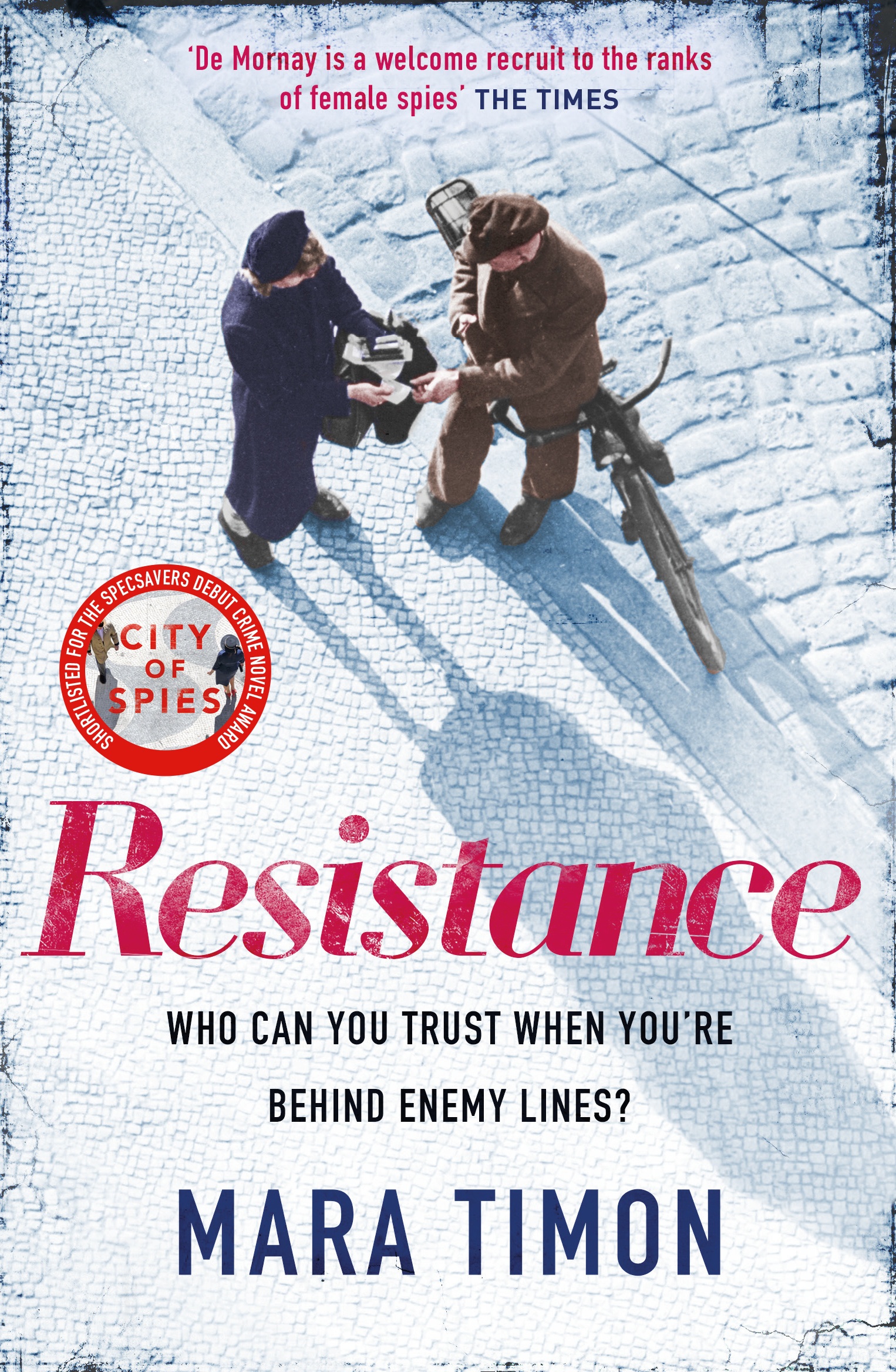
Quick Review – Resistance by Mara Timon

Resistance Cover

Publisher: Zaffre (Trade Paperback – 30 November 2021)

Series: City of Spies – Book Two

Length: 416 pages

My Rating: 4.25 out of 5 stars

Amazon     Book Depository

Prepare to dive into the intricacies of World War II espionage with a second fantastic historical thriller from Mara Timon, Resistance.

Timon is a brilliant author who debuted in 2020 with her intriguing novel, City of Spies, which followed a British agent sent to infiltrate neutral Portugal and encounter all manner of dangers and deceit.  Timon has now followed up this impressive debut with an intriguing sequel, Resistance, which follows the protagonist of City of Spies as she is sent to German-occupied Normandy days before the Allies invade.

Synopsis:

Three women. One mission. Enemies everywhere.

May 1944. When spy Elisabeth de Mornay, code name Cécile, notices a coded transmission from an agent in the field does not bear his usual signature, she suspects his cover has been blown– something that is happening with increasing frequency. With the situation in Occupied France worsening and growing fears that the Resistance has been compromised, Cécile is ordered behind enemy lines.

Having rendezvoused with her fellow agents, Léonie and Dominique, together they have one mission: help the Resistance destabilise German operations to pave the way for the Normandy landings.

But the life of a spy is never straightforward, and the in-fighting within the Resistance makes knowing who to trust ever more difficult. With their lives on the line, all three women will have to make decisions that could cost them everything – for not all their enemies are German.


Resistance
was an impressive and clever historical spy thriller that proves to be extremely addictive and exciting.  Set several months after the events of City of Spies, Resistance sees the protagonist and point-of-view character Elisabeth sent to infiltrate occupied Normandy under a new cover identity to assist the local French Resistance as a wireless operator.  Simultaneously gathering intelligence and investigating a potential mole in the French organisation, Elisabeth works with several other female spies in the area and is forced to contend with traitors, radicals and the Gestapo.  This story gets even more intense the further it goes, not only because a figure from the protagonist’s past comes into the picture and complicates events, but because the last third of the novel features the D-Day landings at the nearby Normandy beaches.  This forces the protagonist and her friends to encounter several attacks and betrayals amid the chaos of invasion and it leads to an incredibly exciting and captivating final section that is honestly impossible to put down.  While I did think that a couple of character arcs were a bit underdeveloped and unnecessary to the plot, this was an overall epic story and I really appreciated the complex and powerful narrative that Timon came up with.

I felt that new readers could easily get into Resistance with having read the preceding novel City of Spies.  Timon does an excellent job of explaining all the key events of the first novel, and readers are quickly informed of everything that would impact that plot of this sequel.  That said, fans of City of Spies will find this to be a pretty good sequel as several intriguing storylines are continued throughout the plot of the book.  Not only do key characters make significant reappearances but you also have a continuation of the fantastic romantic arc between Elisabeth and German officer Eduard Graf, who got married in the first novel.  Despite being an unusual relationship, this was an excellent storyline to continue and it was great to see the two interesting characters continue their forbidden love in the midst of war and intrigue, especially as both have major secrets (one is a spy, the other is planning to assassinate Hitler; it’s complicated) and are trying not to expose each other to their enemies.  I will be really intrigued to see where this series goes next, especially if Elisabeth is dropped into Germany either during Operation Valkyrie or the dying days of the war

One of the things that I most liked about Resistance was how this book ended up being a particularly solid and compelling historical thriller that emphasised its gritty and realistic spy elements.  Timon strives to strongly emphasise all the historical espionage aspects of the plot, and it was fascinating to see all the cool details about spy craft and being an undercover radio operator.  There was also a great focus on the abilities of Britain’s legendary female operatives, and Timon ensured that this book felt as realistic and compelling as possible.  Throw in some cool historical characters, such as members of the SOE and key German soldiers, like Erwin Rommel, and you have a particularly good historical thriller that was a lot of fun to explore.

With her second book, Resistance, impressive author Mara Timon continues to shine as a bright new figure in the historical thriller genre.  Perfectly combining realistic espionage elements with an iconic and dangerous historical setting, Resistance serves as an excellent sequel to Timon’s debut, City of Spies, and proves to be extremely addictive and compelling.  An awesome and highly recommended read.

Amazon     Book Depository

The Riviera House by Natasha Lester

The Riviera House Cover

Publisher: Hachette Australia (Trade Paperback – 1 September 2021)

Series: Standalone

Length: 452 pages

My Rating: 4.25 out of 5 stars

Amazon     Book Depository

Bestselling Australian author Natasha Lester returns with a powerful and intense historical drama that presents a multigenerational tale of love, loss, culture, and the horrors of the Nazi occupation of France, in The Riviera House.

Paris, 1939.  With the war about to start and fears of a Nazi invasion becoming more apparent, Éliane Dufort, a young art student who works part time at the Louvre, watches the staff store away the gallery’s most expensive artworks and begin to hide them throughout France.  Determined to survive the upcoming war, the last thing Éliane should have done was fall in love, however when she meets one of her brother’s friends, Xavier, she cannot help herself, and they soon begin a whirlwind romance.  However, with the Nazis right outside of Paris, Xavier leaves for England, breaking her heart.

With Xavier gone and most of her family killed by the Nazis as they tried to flee the city, Éliane vows to fight the invaders by any means necessary.  Her connection to the Louvre lands her a job working for the enemy in the vast warehouse the Nazis are using to store the artwork looted from France.  Working with the legendary Rose Valland, Éliane is tasked with recording every single piece of art that the Germans steal, as well as attempting to discover where they are being sent.  However, Éliane soon gains the unfortunate romantic attention of a powerful Nazi officer, while a returning Xavier, now a treacherous art expert working for Hermann Göring, threatens to destroy her cover.

Many years later, vintage fashion expert Remy Lang travels to the French Riviera and arrives at a beautiful house that was part of a mysterious inheritance from her unknown biological parents.  Hoping to escape from her intense grief at the loss of her husband and child, Remy soon becomes involved with a visiting family living at the neighbouring villa, including charming photographer Adam.  As she attempts to understand her feelings for Adam amidst her sorrow, Remy soon stumbles upon a shocking mystery when she chances upon a catalogue detailing artworks stolen from France during the war, which includes a painting that hung in her bedroom as a child.  Determined to get to the bottom of this mystery, Remy attempts to trace her past and the history of the unexplained painting.  But the story she uncovers is one of great tragedy and shocking revelations that will change everything Remy thought she knew about her past.

This was an outstanding and deeply impressive historical drama from Natasha Lester, who has previously written some great historical dramas, such as The Paris Secret and The French PhotographerThe Riviera House is a particularly compelling and intense novel that perfectly brings two separate timelines together into one moving narrative, while also focusing on two distinctive and complex groups of characters.  This results in a brilliant and moving read that is guaranteed to haunt you long after you finish reading.

Lester tells a deep and captivating tale in this novel that is moving, intense and very addictive to behold.  The author utilises a split timeline throughout The Riviera House, with one storyline set during World War II in Paris, while the other is based in the modern day and takes place in several locations, although primarily in the French Riviera.  The book jumps back and forth between these two timelines, with the speed of transition increasing the closer it gets to the conclusion.  Both storylines contain their own plot, characters, and interesting features, and they come together to form quite an intense overarching narrative.

The first storyline of The Riviera House is the World War II storyline, which follows the character of Éliane Dufort.  Éliane, after suffering several great losses because of the Nazi invasion, becomes embroiled with the French Resistance and soon gets a job working for the Nazis, assisting in their loot warehouse, and helping historical figure Rose Valland create her record of stolen works.  However, the story gets increasingly complicated as the book progresses, with Éliane torn between her remaining family, her love/hate relationship with the traitor Xavier, and her forced relationship with a powerful Nazi member who has fallen for her.  The entire story comes to a head in the closing days of the Nazi occupation, when Éliane is forced to risk everything dear to her, and soon encounters just how tragic the war is and how evil people can be, even those closest to you.

This part of The Riviera House is an amazing bit of historical fiction, exploring the history of the time while also featuring an emotional and moving tale of love, hope and courage.  I really connected with this half of the novel, due to the thrilling and intense story that shows a grim picture of the period and featuring some memorable moments.  The story of Éliane and her family is full of tragedy and suspense, and if you are looking for a happy read than you have come to the wrong place.  While I did see most of the major twists coming, I appreciated how this narrative came together, as well as the clever way it led into The Riviera House’s other timeline.  I also deeply enjoyed the unique historical aspects of this novel, particularly around the Nazis’ systematic looting of French art.  Lester really dove into this part of the war, providing a detailed account how the Germans stole the art, stored it, and eventually shipped it away as the war progressed.  This tale features several real-life historical figures who are worked into the plot extremely well and who add an extra layer of authenticity to the tale.  One of the most interesting historical figures is Rose Valland, the courageous art historian who risked everything to pull together a record of the looted artwork.  Valland, who has inspired characters in films such as The Train or The Monuments Men, was a fascinating character in this novel, and I liked how Lester tied Éliane’s story into that of Valland.  I felt that this examination of the Nazi art theft was both fascinating and cleverly utilised, and it helped to provide some extra power and intensity to the novel.

The other timeline in The Riviera House is based in modern times and follows Remy Lang, a fashion figure who is spending time in the French Riviera, trying to escape her grief over the tragic death of her husband and child, and soon meets some new people who help her move on.  This storyline was more of a pure dramatic tale and focuses on Remy’s grief, her new romance, and the friction brewing between the family she has just met.  I got quite attached to the potent emotional elements featured in this book, especially as Lester really focuses on the lingering impacts of grief, such as the guilt survivors feel when thinking about something new or considering moving on.  Add in quite a compelling mystery element to it, as Remy and her new friend Adam start investigating the connection that Remy had to the other story, such as her long-dead biological parents and several mysterious inheritances.  These connections to the storyline set in the past compliment the protagonist’s current issues and concerns extremely well, and it was really fascinating to see her work out how her life was shaped by the original protagonists many years before.

I ended up really liking both timelines within the novel, although I did prefer the storyline set in World War II due to its interesting historical research, complex characters riven by war, and terrible tragic moments.  I must admit that I am not usually the biggest fan of historical dramas that feature two separate timelines (it really is an overused device in historical dramas).  However, I think that it was utilised extremely well in The Riviera House, and the two separate storylines melded together into a fantastic overarching read.  I loved how Lester was able to provide subtle hints about the fate of the historical protagonists in the contemporary storylines, although the full revelations about them was often hidden and not revealed until later.  I also really appreciated finding out how the events of the World War II story led into the later plot, and the full truth about how everything occurred is not only great to behold in the historical storyline, but it also has some major impacts on the modern-day protagonist.  This really enhanced The Riviera House’s plot and the overall drama of the book, and it helped to produce an excellent overall narrative.

I also quickly wanted to highlight some of the cool and fascinating cultural elements that Lester slipped into her novel, particularly around art and fashion.  I already mentioned how much I enjoyed the interesting and in-depth examination of the Nazis’ looting and the plans to stop them, however, I also appreciated the way in which Lester examined the art itself, as well as the people who were fighting to protect it.  You really get a sense of the beauty and subtlety of the different artworks featured throughout the book, but more than that you also get to explore what makes people passionate for art.  This book contains several characters who appreciated the true value that this art had to themselves and the nation, so much so that they were willing to risk their lives for it.  This forms a major part of the historical storyline’s plot, and I think that Lester did a wonderful job exploring it.  In addition, the contemporary storyline features a compelling examination about the appeals of vintage fashion.  Lester, who has previously explored fashion in some of her past novels (for example, a major part of her previous novel, The Paris Secret, revolves around vintage gowns), did a good job explaining the current obsession with vintage fashion, as well as how people can make money off it.  While I usually care very little about any sort of clothing fashion, Lester’s descriptions proved to be very intriguing, and I found myself appreciating her obvious passion for the subject.  Both these cultural inclusions enhanced the story, especially as they were strongly related to the various protagonist’s motivations and obsessions, and I really appreciated they time that Lester took to feature them.

Overall, I felt that The Riviera House by Natasha Lester was an excellent and well-crafted historical drama with some powerful elements to it.  Lester did a wonderful job of crafting a compelling, multi-period storylines that combined historical and contemporary narratives into a single, moving tale.  I particularly enjoyed the cool focus on the Nazi occupation and art obsession, which resulted in a thrilling and very tragic tale.  The Riviera House is a highly recommended book and a must-read for all fans of historical drama.

Amazon     Book Depository

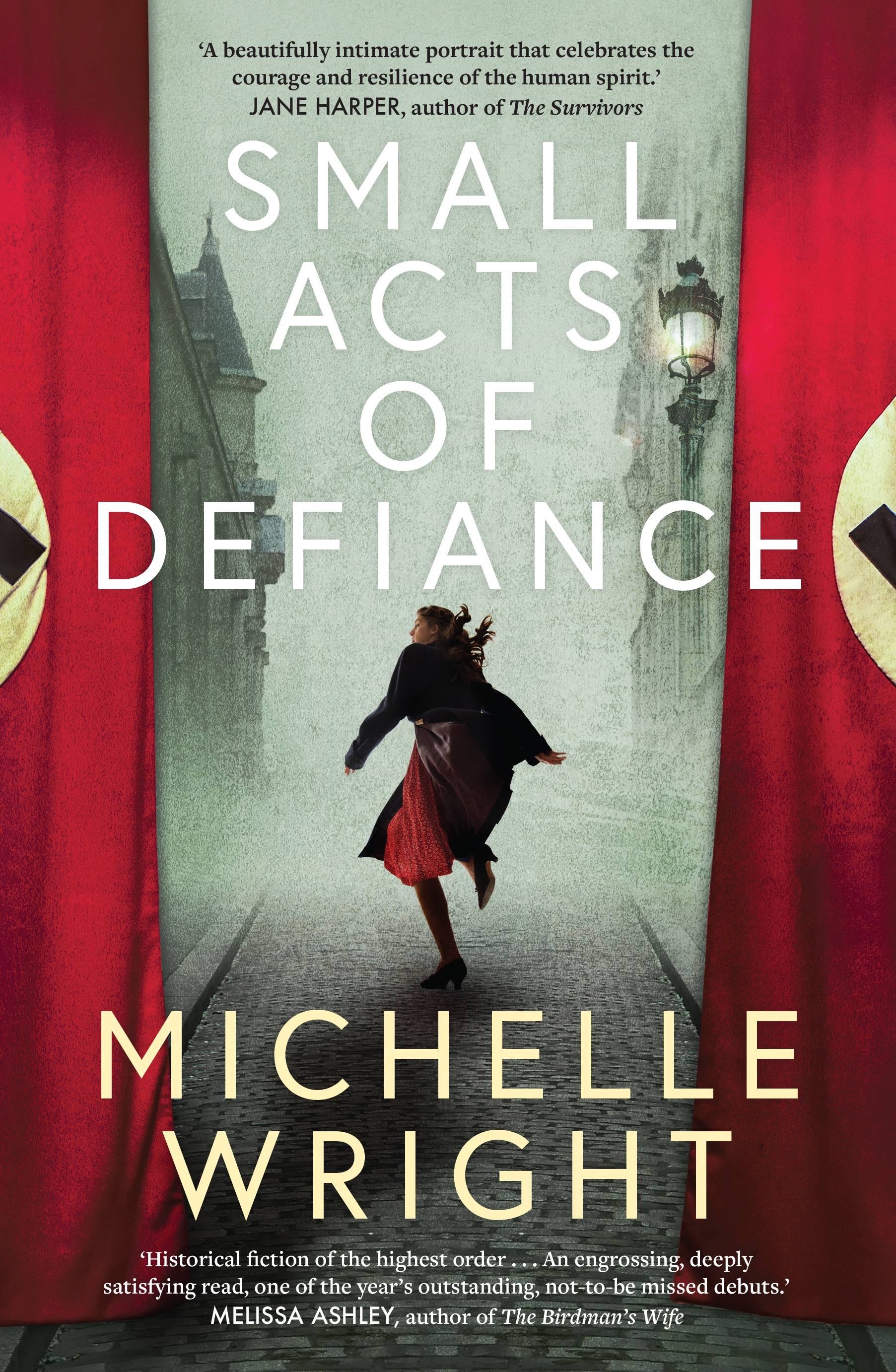
Small Acts of Defiance by Michelle Wright

Small Acts of Defiance Cover

Publisher: Allen & Unwin (Trade Paperback – 1 June 2021)

Series: Standalone

Length: 344 pages

My Rating: 4.5 out of 5 stars

Amazon     Book Depository

Impressive debuting Australian author Michelle Wright transports the reader back to the horrors and struggles of occupied Paris with the moving historical drama, Small Acts of Defiance.

May 1940.  Following the tragic death of her father, Australian teenager Lucie and her French mother Yvonne are left without any means of supporting themselves in Australia.  Reaching out to the only family they have left, Yvonne’s estranged brother Gerard, Lucie and her mother are convinced to journey back to Yvonne’s home city of Paris to live with Gerard in his apartment.

Despite having reservations about leaving for a Europe rocked by the early stages of war, Lucie is quickly enchanted by the beauty and culture of the city.  However, shortly after their arrival, disaster strikes and the French army suffers a catastrophic defeat, allowing the Nazis to invade France and occupy Paris.  Forced to adapt to the new regime, Lucie and her family attempt to survive as well as they can.

While wishing to remain safe and unnoticed by the Nazis, Lucie is drawn into the conflict when she befriends several people around Paris who resent the German occupation.  Encouraged by their strength and determination, Lucie experiments with using her artistic talents to engage in small acts of defiance against the Nazis and the puppet Vichy French government.  However, when she witnesses the Nazis’ increased attacks against Paris’s Jewish population and the attitudes of her authoritarian uncle, Lucie is drawn even deeper into the fight.  How far will Lucie go to save her new home, and what difference can even a few small acts of defiance truly have?

Small Acts of Defiance was a fantastic and moving novel from a promising new author that did an excellent job highlighting the horrors and troubles of occupied France.  Author Michelle Wright, an Australian who has spent considerable time in Paris, has written an outstanding novel with a story that is both beautiful and devastating, as she tells the intriguing and intense tale of Lucie and her experiences during the war.

Wright has produced a fast-paced and deeply moving narrative for Small Acts of Defiance.  The author swiftly sets the scene for the main characters of Lucie and her mother, who move to Paris right before the invasion while still dealing with the traumatic aftermath of Lucie’s father’s death.  It really does not take long for the historical horror to occur, as Paris is swiftly conquered by the Nazis, although Wright ensures that there is just enough time for Lucie, and the reader, to become enchanted with the city before its occupation.  Following the invasion, you are introduced to several great supporting characters who help Lucie to fully see how evil the Nazis and their French collaborators are, especially as some of her new friends are Jewish.  This centre part of the novel is great, and it was fantastic to see Lucie find her feet while also starting her initial acts of defiance.  However, while all appears mostly right, you know that tragedy is on the horizon, especially as the Jewish characters you become close to slowly have more and more restrictions placed upon them, which can only lead to disaster and despair.  Once the inevitable happens, the story really intensifies, as the protagonist witnesses true horrors and atrocities which slowly costs her some people she is really close to.  Readers will not be prepared for how dark and tragic the book becomes, although you cannot help but keep reading, especially as there is a little bit of hope for some characters.  The conclusion of Small Acts of Defiance is pretty intense and satisfying, especially as the protagonist achieves several great things while there is some good news for the other supporting characters.  This entire narrative very well written, and I loved the dramatic and powerful tale that Wright created here.  There is so much amazing and moving character development, especially around Lucie, which really grounds the novel and helps keeps the readers glued to the pages.  Wright has a real talent for writing hard and dark scenes, and I was utterly enthralled by this powerful story.

I was deeply impressed by the sheer amount of historical detail that Wright put into her debut novel, which is no doubt a side effect of all the time she spent in Paris.  The author covers the entirety of the Nazi occupation, from the French defeat, to the chaos of the invasion and the subsequent control of the city by the Germans.  There are so many interesting details and facets of history contained within the story, and I found myself getting really engrossed in the spectacular portrayal of this key historical location.  Wright spends time focusing on the various attitudes and reactions of the citizens of Paris, which ranged from outrage to acceptance or even outright support of the new regime.  The depictions of the puppet Vichy government and its actions was particularly intriguing, especially as the author examines the reason it had some support from the French.  This is particularly shown by Lucie’s uncle, an authoritarian former solider who respected the military general put in charge of the country, and who felt disenfranchised by the previous free French government.  There was also a lot of focus on the gradual crackdown and eventual deportation of the city’s Jewish population.  Due to the protagonist befriending several Jewish characters, you get to see the various restrictive laws come into effect, and the way that the Jewish population was dehumanised and destroyed one step at a time.  All of these proved to be deeply fascinating, and I loved how Wright was able to work it all into her intense and excellent story.

One aspect of this historical detail that I found extremely intriguing was the storyline surrounding the protagonist’s attempts at defying the Nazi and Vichy governments.  Unlike most historical fiction protagonists who fight back with guns, political speeches or brazen heists, the hero of Small Acts of Defiance at first uses art to subtly push back against authority.  This is achieved by drawing pamphlets or subtle symbols of French freedom in the postcards that she sells, small things that could still get her in trouble.  As the war progresses, the protagonist gets involved in other small ways, such as helping to pass information to the Allies or assisting the city’s remaining Jewish population.  I found these small acts of resistance to be a fascinating part of the book’s plot, and it was rather interesting to see the effect that even these minor actions could have on the character’s moral.  It also resulted in some compelling comparison to some of the more radical members of the French Resistance, especially some of Lucie’s friends, who take more drastic actions and face several physical and moral consequences as a result.  While Lucie does become more involved later in the book, I felt that it was really intriguing to see the various small, non-violent ways that French citizens could have helped in the war effort, and I think that it was a fantastic part of this captivating narrative.

Small Acts of Defiance was an incredible debut from Australian author Michelle Wright that does an amazing job capturing the tragedy, division and defiance that occurred during Nazi occupation of Paris.  Featuring a moving and captivating tale that surrounds one girl’s small attempt to help her friends and her new city, Small Acts of Defiance is an outstanding historical drama that comes highly recommended.  I am very intrigued to see what additional novels Wright creates in the future, and I am extremely glad I got the opportunity to read her fantastic first novel.

Amazon     Book Depository

The Paris Collaborator by A. W. Hammond

The Paris Collaborator Cover

Publisher: Echo Publishing (Trade Paperback – 4 May 2021)

Series: Standalone

Length: 312 pages

My Rating: 4.5 out of 5

Amazon     Book Depository

Amazing Australian thriller author A. W. Hammond presents his first historical read with The Paris Collaborator, a clever and exciting novel set in occupied Paris.

August 1944.  With Allied forces advancing towards Paris, the Nazi occupation of the city seems to be nearly at an end.  But just because the Germans are poised to leave does not mean that the city is any less dangerous, especially for those whose loyalties are in question.  Since the Germans arrived, former teacher Auguste Duchene has taken on a whole new profession to survive: finding missing children.  With his impressive observational skills, Duchene has proven to be a keen investigator, but his talents are about to get noticed by all the wrong people.

Despite his desire to only help reunite lost families, Duchene is forced into working for a violent faction of the French Resistance after they threaten the safety of his collaborating daughter, Marienne.  Recruited to find a missing priest and the cache of stolen weapons he was hiding for them; Duchene reluctantly begins his search.  However, hours after he begins working for the Resistance, he is approached by a senior Nazi officer who blackmails him into finding a missing German soldier.

Caught between two dangerous masters, Duchene has no choice by to comply with both if he and Marienne are to survive.  With only 48 hours until both groups will deliver on their deadly threats, Duchene scours Paris for both the missing men.  However, the more he discovers, the more he begins to realise that the cases may be connected, and that he may be only able to satisfy one of his employers.  Worse, the Gestapo have taken an interest in Duchene’s investigation and are determined to interfere for their own ends.  Can Duchene find his targets before it is too late, or will everything he love be taken away from him?

This was an awesome and fantastic novel from an impressive author who I was not too familiar with before I picked up this outstanding read.  A. W. Hammond has previously written two Australian thrillers under the name Alex Hammond.  These books, 2013’s Blood Witness and 2015’s The Unbroken Line, were intriguing legal thrillers that focused on his Will Harris protagonist.  The Paris Collaborator is the author’s first foray into historical fiction, and he did an exceptional job producing a clever and addictive historical thriller.  I had an incredible time reading The Paris Collaborator and I ended up finishing it off in a few short days once I got drawn into its cool and memorable narrative.

Hammond has come up with an excellent thriller storyline for The Paris Collaborator that is exciting and clever, and which also makes great use of its historical backdrop.  This is a very fast-paced story, and it really does not take long for it to take off, as unconventional missing child investigator Duchene is drawn into the conflicting webs of radical French Resistance fighters and an influential Nazi officer.  Forced to work on both cases on a very lean timeline, the protagonist conducts a hurried investigation, trying to find hints of two different missing persons while also trying to survive in the middle of a chaotic and failing city.  With the interference of the Gestapo, Duchene is trapped in the middle of a three-way battle for his loyalties, as each of these very dangerous groups threatens to kill him and his daughter unless he complies.  This results in a very epic final third of the book, as the protagonist runs around Paris, which is in the middle of overthrowing its German occupiers, trying to find the last pieces of the puzzle with everybody trying to kill or capture him.

This was a very captivating and high-stakes story, and I loved all the thrilling intrigue, action and suspense as the protagonist jumps from one bad situation to the next.  The overall investigation had some rather intriguing twists to it, many of which took me pleasantly by surprise, although they were very well set up in hindsight.  I absolutely lost it when the final twist was revealed, as it was so outrageous and surprising that I ended up laughing for several minutes.  This reveal, while a little hilarious, did fit nicely into the dark tone of the novel, and I felt it was an outstanding way to wrap up this novel, especially as it is guaranteed to stick in the reader’s mind.  I deeply enjoyed The Paris Collaborator’s clever story, and this ended up being one of the more entertaining and unique thrillers I have read all year.

While readers will definitely remember the amazing thriller story, I also must highlight the exceptional historical setting that was featured in The Paris Collaborator.  Hammond chose to set his clever story amid the final days of the Nazi occupation of Paris, which I really enjoyed.  The author does an outstanding job of portraying this intriguing historical setting, and I loved the exploration of an occupied city on the edge, with minimal resources, a thriving black market, a near-rebelling populace, nervous soldiers starting to pull out and a dangerous resistance movement planning their next strike.  Hammond makes great use of this unique setting throughout the story, and I really appreciated the way he featured historical elements like the Resistance, the Gestapo and the German army throughout the story.  The final part of the book is set during the French uprising to free Paris from the Nazis, and I loved how the protagonist had to overcome all the obstacles this put in his way, from tanks attempting to put down dissent, to crowds determined to kill any Germans they could find.  This was an outstanding depiction of occupied Paris and I felt that Hammond perfectly utilised it throughout this amazing book.

One of the most intriguing aspects of the historical setting of The Paris Collaborator is the compelling focus on the French mentality of collaboration and resistance.  Throughout the novel, the protagonist encounters a wide range of different characters who have survived the Nazi occupation by working for, engaging with, or falling in love with German soldiers, much to the disgust of their fellow French citizens.  The protagonist himself is considered by some to be a collaborator, not only because he has helped wealthy French collaborators find their children but because he finds himself working for various Nazis throughout the course of the book.  This forces the protagonist to walk a thin line, as he must appear to be a patriotic Frenchman disgusted with the occupiers while also making sure that he does not enrage any of the Nazis who are employing him, something he does not do particularly well.  As a result, Duchene, and several supporting characters, encounters dangerous reactions from some French characters and Resistance members, and this really adds to the tension and danger that he encounters.  I think that Hammond did an excellent job examining and portraying this mentality of anti-collaboration throughout the novel, especially as it is cleverly layered into nearly every interaction the protagonist has.  Some of the actions of French characters who were actively resisting against the Germans were also pretty intriguing, including one particularly over-the-top one that is definitely going to stick in my mind.  It was also fascinating to see what some people would do to avoid being labelled as a collaborator, even if that means completely changing who they are.  I really enjoyed the author’s examination of how collaborator would have been viewed during this turbulent period of history and it ended up being an excellent and compelling addition to The Paris Collaborator’s narrative.

The Paris Collaborator by A. W. Hammond is an outrageous and impressive historical thriller that comes highly recommended.  Hammond has written a fantastic fast-paced story that is heavy on action, intrigue, and amazing twists, all set amid Paris in the final days of the Nazi occupation.  I had a lot of fun getting through this awesome novel, and thanks to some outstanding reveals and exciting moments, The Paris Collaborator is really going to stick in my mind.  Readers are guaranteed a thrilling and clever time with this book and will power through it in no time at all.

Amazon     Book Depository

The Frenchman by Jack Beaumont

The Frenchman Cover

Publisher: Allen & Unwin (Trade Paperback – 19 January 2021)

Series: Standalone/Book One

Length: 392 pages

My Rating: 4.5 out of 5 stars

Amazon     Book Depository

Prepare to dive into the world of international espionage as debuting author Jack Beaumont delivers an impressive and deeply authentic spy thriller with The Frenchman.

In these turbulent times, France faces threats from innumerable international enemies and terrorist attacks, and it falls to the members of the DGSE, also known as The Company, France’s famed foreign intelligence service, to discover dangers in their infancy and eliminate them.  Alec de Payns is one of the top operatives of the top-secret Y Division of the DGSE, who take on the Company’s most dangerous international assignments.  With a speciality in manipulating targets into turning against their country or revealing their secrets, de Payns is the man on the ground in many of these missions, ensuring that terrorists operations and illegal weapons programs pose no threat to his country.

During his latest operation in Palermo, Sicily, de Payns attempts to infiltrate a dangerous terrorist group who have their sights set on attacking France.  However, before their planned contact and surveillance can begin in earnest, de Payns’s cover is blown and he is forced to flee from the scene, leaving behind two dead bodies.  Returning to Paris, de Payns begins to suspect that he was betrayed by a fellow agent, forcing himself to consider that his life and the lives of his young family may be in danger.

With the threat of a potential traitor hanging over him, de Payns is sent on another urgent mission to Pakistan to investigate a secretive biological weapons facility that is rumoured to be producing a weaponised bacteria for an attack on France.  In an attempt to gain information from within the facility, de Payns begins to establish a new identity to get closer to a person connected to the bacteria production.  However, when he is once again compromised, de Payns must find out who has betrayed him and what their sinister plans for Paris are.

The Frenchman is a clever and exciting spy thriller from an intriguing new author that takes a detailed and captivating look at French foreign intelligence.  This amazing new novel was written by Jack Beaumont, a pseudonym of a former French special operator who worked as part of the DGSE secret service.  Having relocated to Australia, Beaumont has utilised his experiences to create an enthralling spy thriller, packed full of impressive detail and with a central character strongly based around the author himself.  This results in an extremely thrilling and compelling novel that I found to be extremely addictive and which was a heck of a lot of fun to read.

This cool novel contains an epic and impressive story that sees the protagonist engage in a series of high-stakes espionage missions across the world.  Told primarily from the point of view of the main character, Alex de Payns, The Frenchman’s narrative starts of as one of standard international espionage, with the complex and damaged protagonist engaging in some standard missions.  However, the narrative quickly takes a turn into more dangerous territory when de Payns’s cover is blown and it is suspected that someone within his organisation set him up.  Now forced to not only investigate a dangerous weapons facility but also determine who betrayed him, The Frenchman quickly becomes an impressive tale of treachery, paranoia and deceit, with de Payns finding his attention drawn in several different directions.  Beaumont has crafted together an excellent and compelling narrative here, which unfolds in a methodical and deliberate pace.  Every story element is intricately connected, and the reader has an excellent time seeing the protagonist engage in his operations while also attending to his personal missions and his fears over the mysterious traitor in the organisation.  The author ensures that the story goes in some intriguing directions, with some captivating and suspenseful high-stakes scenes pulling the protagonist, his family and innumerable French citizens into lethal danger.  Beaumont sticks in some great twists, especially around the DGSE traitor subplot, and I particularly loved the clever, if somewhat dark, ending.  This amazing story blends in well with the author’s intriguing main protagonist and the insanely authentic detail to create an outstanding spy thriller that readers should be able to power through extremely quickly.

It is impossible to talk about The Frenchman without discussing the sheer level of detail that Beaumont shoves into the novel as he delves into the various aspects of spycraft and modern-day espionage operations.  Readers get a major crash course in every aspect of French intelligence work, from how the organisation works, what sort of operations they run and the sort of people who are employed as French spies.  There is also a huge focus on tradecraft, as the author meticulously details all the various tricks and procedures that operatives are required to perform during operations.  Beaumont features so many cool examples of tradecraft throughout this book, including the creation and maintenance of legends, coming up with cover stories while undercover in other nations, the manipulation and management of contacts for information and how to run a successful surveillance operation.  There is also a huge amount of focus on the various procedures operatives go through in everyday life, not just when they are on missions, including all the different countersurveillance and strategic movements that the protagonist utilises to ensure he is not being followed home.  I also liked how the story depicted espionage missions as relatively low-key and less exciting than people familiar with Hollywood blockbusters would expect.  Rather than the protagonist engaging in major action sequences or single-handedly taking out every single terrorist or spy he encounters, he instead performs complex surveillance operations or discrete undercover contacts, which allows his team to build up the intelligence they need to send in proper combat specialists.  All of this proves to be incredibly fascinating, if a little overwhelming, and I really loved the sheer amount of authenticity that Beaumont brings to The Frenchman by exploring this tradecraft.  While the story did occasionally get bogged down in jargon and acronyms, the author’s attention to detail and impressive insights made for a much more realistic story, which really stands out from some of the other spy thrillers out there.

In addition to this comprehensive examination of tradecraft and international espionage, I was also impressed with how Beaumont examined the psyche of an intelligence operative, highlighted the various struggles that people in this profession experience.  As the story is primarily told from de Payns’s point of view, the readers get a great view of how his job as a spy impacts him: increased stress, panic attacks and a major sense of guilt due to some of the deaths attributed to him.  The Frenchman also examines the strains that this job has on operative’s family life, and the author makes it clear that most marriages to spies do not last due to the constant secrecy and uncertainty.  Beaumont does a particularly good job exploring this through de Payns, as the protagonist is constantly forced to keep things from his wife, while also disappearing for days at end, reappearing mentally wearied and afraid.  These problems are further exacerbated by the overwhelming sense of paranoia that de Payns carries with him as he is constantly worried that his enemies will find out about his family and use them to manipulate or destroy him.  For example, he becomes increasingly suspicious of a new family friend who his wife and kids welcome into their lives, and he spends time investigating them and their family, trying to determine if they are threats.  Due to the story being told from de Payns’s perspective, this new character appears extremely suspicious, and the reader is uncertain whether they are an actual threat or a red herring brought on by the protagonist’s paranoia.  This portrayal of the mindset of the spy is deeply compelling, and I really liked that the author took the time to dive into this, especially as he probably utilised his own experiences to make it even more detailed and realistic.

Debuting author Jack Beaumont has produced an epic and exciting read with The Frenchman, a clever and deeply compelling spy thriller that ruthlessly grabs the reader’s attention and refuses to let go.  Filled with intense amounts of detail and dripping with authenticity, The Frenchman is an impressive and highly enjoyable novel that is strongly recommended.  I had an absolute blast with this debut and I really hope that Beaumont continues to write more intriguing spy novels in the future.

Amazon     Book Depository