Throwback Thursday – Grave Peril by Jim Butcher

Grave Peril Cover

Publisher: Buzzy Multimedia (Audiobook – 1 September 2001)

Series: Dresden Files – Book Three

Length: 11 hours and 55 minutes

My Rating: 5 out of 5 stars

Amazon

Welcome back to my Throwback Thursday series, where I republish old reviews, review books I have read before or review older books I have only just had a chance to read.  In my latest Throwback Thursday article, I continue my dive into the bestselling Dresden Files urban fantasy series by Jim Butcher by looking at the third chilling novel, Grave Peril.

I am really getting into the awesome Dresden Files novels, a major long-running urban fantasy series that follows Harry Dresden, a wizard living in modern-day Chicago, as he investigates supernatural crimes.  Generally considered one of the best urban fantasy series of all time, I started enjoying this series last year when I read the latest novel, Battle Ground.  I absolutely loved Battle Ground (easily one of the best novels and audiobooks of 2020) and I have since decided to go back and check out the earlier entries in the series.  I already enjoyed the very first novel, Storm Front, a couple of months ago, and Fool Moon, which I finished and reviewed last week, was so much fun that I had to immediately go and read another Dresden Files book.  I have just finished off the third entry, Grave Peril, and decided to feature it in this Throwback Thursday article.

Something is stirring in the dark of Chicago and it is bringing all manner of ghosts and spooks with it.  Harry Dresden, professional wizard, is used to facing the supernatural dangers infecting his city, but he has never experienced quite so much chaos as the spirit world has gone crazy.  Powerful ghosts and tortured spirits are popping up all around Chicago, causing the walls between our world and the Nevernever (the spirit world), to weaken and fray.  As Dresden attempts to find out who or what is behind the current upsurge in spiritual activity, he finds himself under attack from a powerful and unseen force that can strike through his nightmares.  Scared, weakened and full of self-doubt, Dresden is near powerless to stop this creature as it begins to target his friends and loved ones.

With a righteous Knight of the Cross at his back and his reporter girlfriend hounding him for a scoop, Dresden looks for the true source of the entity coming after him.  But in order to find the truth, Dresden must place himself in the very heart of Chicago’s supernatural underworld.  With old enemies, bloodthirsty vampires, howling spirits, deadly demons and his twisted fairy godmother coming after him, can Dresden survive this latest attack unscathed, or will his enemies finally succeed in destroying him, mind, body and soul?

Is it even possible for Butcher to write a bad Dresden Files book?  I have yet to see any evidence to suggest this as Grave Peril, the fourth Dresden Files novel I have read and the third book in the series, turned out to be another epic and powerful fantasy read.  Butcher has come up with a fantastic novel in Grave Peril, and I loved the dark and compelling story that sees Dresden face various demons from his past.  Utilising some great new characters and serving as a major entry in the overall series, this was an outstanding read which gets yet another five-star rating from me.

I deeply enjoyed the cool and complex narrative that Butcher came up with for Grave Peril, especially as it takes Dresden and his friends into some sinister and dangerous places.  This book starts quick, with a great extended sequence that sees Dresden and Michael face off against a powerful ghost in the Nevernever.  This amazing opening to the novel is then followed by an intriguing central story which forces Dresden to investigate a new and unusual antagonist, the Nightmare, who is feasting on his dreams and using the power it steals to go after Dresden’s loved ones.  This central story is very intense and compelling, playing to the series’ detective novel inspirations as Butcher sets up a fantastic mystery while also showing a desperate Dresden coming under attack in some unusual ways.  There are some fantastic moments in this part of the book, and I really appreciated the author’s inclusion of multiple supernatural suspects as you try to figure out who is involved and how they are pulling off their plans.  All this leads to the book’s most memorable sequence, a vampire masquerade, which sees Dresden and his closest allies trapped at a ball, surrounded by a dangerous array of enemies and, trying to work out motivations and plans on the fly.  The story is eventually all wrapped up with a dramatic and clever conclusion that is exciting, emotionally rich and a little traumatising to the reader.  I deeply enjoyed Grave Peril’s cool narrative and it honestly did not take me long to get fully engrossed in what was happening.  While this novel is not as action orientated as the previous book, Fool Moon, it has a much darker edge to it with a particular focus on manipulation, emotions and intrigue.  Readers should be warned that some of the scenes can be a bit over-the-top at times (I am pretty sure the protagonist gets raped by a vampire at one point) and are a little hard to read.  However, this is an overall exceptional narrative.

Like most books in the Dresden Files series, Grave Peril can be read as a standalone novel without any knowledge of the previous entries.  Butcher always makes his novels very accessible to new readers, and while there are some references to the character’s previous adventures, most of the relevant details and re-examined and explained throughout this book.  Grave Peril is a fairly major entry in the overall series as Butcher starts to introduce some important storylines, key supporting characters and lasting world-building elements which become quite significant in future novels.  In particular, Butcher introduces lore surrounding vampires, spirits, and fairies, with the protagonist coming into conflict with all three.  Each of these fantasy elements are set up extremely well and have a dark edge that fits into the series’ distinctive tone.  I loved the author’s depiction of the fairy creatures as monstrous and shadowy manipulators, and it was quite cool to see all the lore around vampires.  Grave Peril introduces three major vampire courts, with each court made up a different sub-species of vampire with their own specific powers and weaknesses, from the Dracula-esque Black Court, to the sexually and emotionally powered vampires of the White Court.  Each of these different types of vampires are strongly featured in Grave Peril and are a fantastic part of the story.  The highlight for me was probably the various battles between Dresden and the members of the Red Court, who can be pretty freaky and repulsive, and Butcher sets up an intriguing, long-running storyline with the Red Court here.

It is near impossible to discuss a Dresden Files novel without mentioning the incredible and well-written characters that appear in each book.  Butcher has a real talent for introducing and developing memorable protagonists and antagonists, and Grave Peril is a particularly good example of this.  Not only do several amazing recurring characters reappear in a big way but Butcher also introduces some intriguing new figures who make a big splash.

The key character as always is series protagonist and point of view character, Harry Blackstone Copperfield Dresden, the sarcastic and amusing maverick wizard who is constantly finding himself in trouble.  I always deeply enjoy following Dresden throughout these novels, mainly because he has a wicked sense of humour, an entertaining attitude and an uncanny ability to annoying and enrage everyone he comes across.  Most of Grave Peril’s humour comes from Dresden’s outrageous actions and observations, including his insane decision to arrive at a vampire’s ball dressed in a cheesy Dracula costume (that raised some eyebrows and lengthened some fangs).  Despite this fun and amusing exterior, Dresden is quite a damaged individual, and you really get to see that on full display in Grave Peril.  Dresden goes through some major traumatic events in this novel, several of which nearly break him as he is forced to encounter or do some very dark deeds.  Butcher really takes his protagonist to the edge in this novel, and there are some very intense scenes, including a glimpse of Dresden’s nightmares and deepest fears.  The author also continues to drip-feed hints of his protagonist’s dark past throughout this novel, especially when Dresden comes into conflict with an old enemy/mentor.  All this hurt and trauma is really touching and compelling, and the entire novel features a heartbreaking ending for Dresden, which really hits home, especially after you find yourself connecting with the character.

Aside from Dresden, there is a great collection of supporting and side characters I had a lot of fun seeing in this novel.  The most prominent of them is newly introduced protagonist, Michael Carpenter, Knight of the Cross.  Michael is a modern-day holy crusader, wielding a powerful blessed sword and his own unflappable faith to strike down evil.  Michael is a very intriguing character, and I deeply enjoyed the friendship he forms with Dresden.  Michael is a man of intense faith and goodness, who manages to balance family with his responsibilities as a knight, and this serves as a fantastic counterpart to the more flaky and irresponsible Dresden.  Like Dresden, Michael goes through some major traumas in this novel, several of which shake even his faith and resolve.  However, no matter how dark the situation, Michael manages to pull through and he and Dresden work together well as an enjoyable team with Michael serving as a mentor figure and conscience to Dresden.  I felt that Butcher did a great job introducing Michael in this novel, and I am excited to see how this noble knight develops in future Dresden Files’ entries.

Other great side characters in this novel include Dresden’s girlfriend, feisty reporter Susan Rodriguez.  Susan has not been my favourite character in the past, but she has a great story arc in this novel.  Not only does she attempt to do her own research into the case but she also serves as a major figure of emotional turmoil for Dresden as he struggles to prioritise her over his supernatural work.  While I did get a little annoyed at some of Susan’s decisions in this novel, I enjoyed the compelling story arc Butcher weaves around her, especially as it alters her in a big way.  My favourite haunted skull, Bob, returns once again and has several great scenes throughout Grave Peril.  I love Bob’s funny, if slightly pervy, personality, and all his appearances are very amusing.  There are some great new characters featured in this book as well, including Lea (The Leanansidhe), Michael’s fairy godmother.  Lea, who previously made a dark bargain with a desperate teenage Dresden, spends much of this book manipulating and hunting Dresden, attempting to claim him and his power.  I loved the use of this evil, manipulative and sexy fairy godmother through the novel, and she ended up being a pretty impressive secondary antagonist.  Grave Peril also sees the introduction of Thomas Raith, a White Court vampire who finds himself helping Dresden.  Thomas is a cool addition to the plot, and it was intriguing to see his introduction to the Dresden Files, especially as I know some spoilers about him.  All of these characters were pretty awesome and I had an outstanding time seeing their latest dark adventure unfold.

As I have with the previous entries in this series, I ended up listening to Grave Peril’s awesome audiobook format.  The Dresden Files audiobooks are a thing of beauty and I love how fun and exciting listening to these great books turns out to be.  The Grave Peril audiobook has a decent runtime of just under 12 hours, which is longer than the previous two Dresden Files novels, but readers will be too caught up in the amazing narrative to care.  I managed to power through it in only a few short days, mainly because of the outstanding narration from actor James Marsters.  Marsters, best known for his roles in shows like Buffy the Vampire Slayer, Angel, Smallville and Torchwood, narrates all the Dresden Files books and does an exceptional job bringing each of these novels to life.  I absolutely loved the incredible gravitas and energy he infused in the Grave Peril audiobook.  Marsters really gets into the heart and mind of Dresden, and you get an amazing sense of what the protagonist is thinking and feeling through the narrator’s voice and tone.  I also enjoyed the enthusiasm that Marsters exhibited in several key scenes, as he attempted to highlight certain weird and dangerous story elements.  For example, he does a fantastic enraged and shrieking ghost wail towards the start of the novel that gave me a start, and I loved the dark and dangerous voices he pulls together for some of the more monstrous creatures.  It was also very cool to hear Marsters yell out some of Dresden’s spells in the heat of battle, and it really enhances the excitement of the scene.  All of this and more makes the Grave Peril audiobook the perfect way to enjoy this novel, and I plan to check out the entire Dresden Files in this format.

Grave Peril by Jim Butcher is an exceptional and incredible fantasy novel that serves as an amazing third entry in the bestselling Dresden Files.  Butcher crafted together a dark and compelling character driven narrative for Grave Peril which proved to be extremely addictive and powerful.  I had an outstanding time getting through this novel, and I loved all the clever introductions and memorable sequences the author loaded into the plot.  A highly recommended read, especially as an audiobook, I cannot wait to see what other madness occurs in the rest of this fantastic series.

Amazon

Throwback Thursday – Fool Moon by Jim Butcher

Fool Moon Cover

Publisher: Buzzy Multimedia (Audiobook – 9 January 2001

Series: Dresden Files – Book Two

Length: 10 hours and 6 minutes

My Rating: 5 out of 5 stars

Amazon

In my Throwback Thursday series I republish old reviews, review books I have read before or review older books I have only just had a chance to read.  For my latest Throwback Thursday, I continue my exploration of one of the most highly regarded urban fantasy series out there, Jim Butcher’s The Dresden Files, with the awesome and deeply captivating second entry in the series, Fool Moon.

The Dresden Files are an outstanding collection of novels that follows professional wizard and private investigator Harry Dresden in modern-day Chicago as he battles magical creatures and practitioners that threaten innocent people.  Generally considered the gold standard of the urban fantasy genre, The Dresden Files have been going for over 20 years and currently consist of 17 novels and a massive collection of short stories and novellas.  While I have been meaning to check this series out for a while, I only started reading them last year when I received a copy of the latest entry in the series, Battle GroundBattle Ground was an epic and extraordinary read that featured a mass-supernatural war in the middle of Chicago.  I absolutely loved Battle Ground and it was easily one of my favourite books and audiobooks of 2020, while Butcher was one of the best new-to-me authors I read last year.  Because of how incredible I found Battle Ground to be I have decided to go back and start reading the series right from the beginning.  I started with Butcher’s first Dresden Files novel a couple of months ago, Storm Front, which proved to be another impressive read, and I am now extremely hooked on this series.  So when I was in the mood for a fun book to break up my reading schedule, I decided to start listening to Fool Moon, and boy am I glad that I did.

Business has been slow for Harry Dresden, Chicago’s only professional wizard, after his last investigation led to all out chaos and destruction.  However, his life is once again about to get very interesting when he is dragged to a murder scene.  One of the bodyguards of a notorious crime lord Dresden has dealt with in the past has been brutally torn to shreds.  With a full moon in the sky and bloody wolf prints surrounding the victim, Dresden comes to the only conclusion he can: there is a killer werewolf stalking the city.

Diving once more into a supernatural case, Dresden attempts to find the killer before the moon rises again.  However, this may prove more difficult than he initially believes, as Chicago is currently rife with wolf-based magic practitioners, enhanced criminal gangs and monsters, each of whom could be more than capable of committing the crime.  Worse, when an associate of his turns up dead, Dresden finds himself under suspicion for the murders by the police and the FBI.

Now on the run with his reporter girlfriend and a mysterious ethereal shifter, Dresden needs to find out who or what is responsible for the murders and why they have involved him.  But with the most bestial elements of Chicago’s criminal elements coming after him and an uncontrollable and seemingly unkillable monster hunting through the night, can Dresden stop the killers before it is too late, or will the next full moon be his last?

Wow, now this was a pretty awesome second entry in the outstanding Dresden Files series.  Butcher has crafted together something really special in Fool Moon, thanks to its compelling and intense story, amazing characters, great humour and impressive fantasy additions.  I had an absolute blast getting through this book in a few short days and it was so good I have no choice but to give it a full five-star rating.

At the centre of this incredible novel is a complex and exciting narrative that sets the protagonist on a deadly journey filled with murder, mystery and monsters.  Starting with an intriguing investigation into an apparent werewolf serial killer, Fool Moon’s story eventually devolves into a survival story for the protagonist as he finds himself on the wrong side of the law, the true killers and several different groups of criminals and werewolves.  This proved to be a really impressive and addictive narrative, and I loved the outstanding blend of a detective story with magic, wizards and wolves.  The mystery angle contained within Fool Moon is particularly good, and while the culprit is revealed about two-thirds the way through for excellent story reasons, it was still a fantastic and twisty case that I enjoyed.  Butcher really invested in several excellent and memorable extended sequences in this novel that were a lot of fun to get through, including a particularly intense brawl between several antagonistic groups with Dresden in the middle, and a fantastic high-stakes final confrontation where no one is safe.  However, my absolute favourite sequence occurred in the middle of the novel and saw Dresden forced to contend with a rampaging monster in the middle of a police station.  The sheer carnage and destruction that occurred in this sequence was really cool, and readers are left on the edge of their seats as the fates of several characters hang in the balance.  I deeply enjoyed this intense scene, and it absolutely cemented Fool Moon’s place in my dark heart.  This was an incredible and powerful story, and readers who check it out are in for a thrilling and captivating treat.

A particular strength of The Dresden Files as a series is the way in which the author makes it very accessible to new readers who can easily slip into any of the books in the series, even some of the later instalments, and easily follow what is going on.  Fool Moon is a great example of this, and I felt that people unfamiliar with the rest of the series should be able to enjoy this book without any problems.  All the recurring characters in the narrative are quickly and effectively reintroduced, often in a similar manner to how they appeared in the first book, and any relevant storylines, magical abilities or prior adventures are also covered in some detail.  As a result, new readers should have no trouble enjoying this great book, and indeed this will probably turn them into a fan of the series and ensure that they check out some of the other books.  However, there are some cool connections to the first novel that dedicated readers will notice, and I liked the underlying story thread of someone plotting and planning behind the scenes to mess with the protagonist.  Overall, this a great book for all fantasy and mystery fans, especially those who like a complex, multi-genre narrative.

I love all the awesome fantasy elements that Butcher slips into his novels, and it is always great to see the weird and magical in the midst of modern-day Chicago.  Fool Moon is no exception, as Butcher has a lot of fun expanding out some of the rules of magic in this book, as well as highlighting a few additional magical denizens and powers.  While this is very cool, the real magical highlight of Fool Moon has to be the werewolves.  Most fantasy authors who feature werewolves in their story would choose just one specific type that they like and leave it at that.  Butcher, however, is not the sort of person to do stuff by half measures (check out the massive fantasy war featured in Battle Ground) and instead features five separate subtypes of werewolves, all of whom are potential suspects for the murders.  I deeply enjoyed this use of multiple werewolves throughout the novel, not only because it really helped to enhance the book’s already fantastic mystery, but because it was awesome and fascinating to see the different creature subtypes.  Each werewolf or wolf-based magic user has their own unique abilities, source of power and personalities which Dresden has to learn about and overcome if he is to survive.  These wolves include shapeshifters, demon talisman powered wolves and humans with wolf-like mentalities that make them act like berserkers.  The standout, however, is the loup-garous, a cursed individual with no control over their actions; essentially a more monstrous version of wolf man from film.  Butcher paints his loup-garous as a particularly dangerous being which is practically invincible to everything and anything it encounters, including the protagonist’s most destructive magic.  This loup-garous causes some real carnage in this book, and watching Dresden attempt to defend himself from it is pretty crazy and makes for some excellent and intense scenes.  I deeply, deeply enjoyed the epic use of werewolves in this novel and Butcher really does the old lore surrounding them justice.

It is impossible to talk about a Dresden Files novel without discussing the incredibly well-developed characters featured within.  The most prominent of these is central protagonist Harry Dresden, Chicago’s resident wizard for hire.  Dresden is an exceptionally entertaining and likeable protagonist who provides pretty much all of the book’s great humour thanks to his outrageous personality, disrespect for authority and witty observations about the events going on around him.  As such, he is a fantastic character to follow, and you really appreciate his knowledge and insights into the supernatural and the people around him.  While much of the book shows Dresden as a confident and amusing being, we do get to see more of the character’s darker side as he deals with dark and dangerous magic.  Thanks to the author’s outstanding writing style, the reader is front and centre for all of the protagonist’s slips towards darkness and despair, especially as he encounters tragedy, loss and insane opposition.  I really appreciated this examination of the protagonist’s fragile psyche, and Butcher makes sure to take him to the edge in Fool Moon.  The author also makes some additional intriguing references to Dresden’s past which hint at some traumatic events and betrayals.  Fool Moon also shows of Dresden’s full magical potential, especially as he launches some incredible attacks here, even if they do leave him very drained.  It also shows the character at his most vulnerable, as he is forced to go it alone with only the bare amount of resources and abilities.  All of this makes for an intriguing and powerful character and I really enjoyed seeing more of this awesome protagonist.

In addition to Dresden, Butcher also makes excellent use of several great supporting characters, each of whom add some fun and compelling elements to the plot.  The most prominent supporting character was probably Karrin Murphy, Dresden’s liaison in the Chicago police.  Murphy, a hardnosed professional who is one of the few police officers to believe in the supernatural, has an intriguing character arc in this novel.  This is mostly because of Dresden’s actions in Storm Front, as well as his somewhat chauvinistic determination to protect Murphy from magic, both of which ruined have Murphy’s trust in him and placed her in some hot water with the police brass.  This fractured relationship becomes a key story point in Fool Moon, especially as it leads to Murphy being quick to jump on Dresden as a potential suspect in the crimes.  This adds some compelling difficulties for the protagonist in the story, and I really appreciated the excellent drama that emerged between the two as Murphy and a repentant Dresden attempt to work out their issues.

Aside from Murphy, you have the return of Susan Rodriquez, Dresden’s love interest and a reporter for a tabloid newspaper.  Susan is an interesting counterpoint to Dresden, being an ambitious reporter determined to find out the truth of the arcane no matter what.  She has a fun and fiery relationship with Dresden in this novel, and it was interesting to see her more involved with the story, especially as she sees Dresden at his darkest and most dangerous point.  I also loved seeing more of Gentleman Johnny Marcone, the sly and powerful gangster who Dresden has previously gone up against.  Macone is a fantastic villainous character, and I love the antagonistic relationship he has with Dresden, even when the two are on the same side.  You also have to have a laugh at Bob, a guiding spirit who resides inside a skull in Dresden’s basement, as he adds some intriguing exposition and laughs in his scenes.  There were also some intriguing new characters added in this book, although I will not go into too much detail about them as it could spoil some parts of the story.  None the less, they were all really fun additions to the plot, and having so many different new magical or shapeshifting beings ensured the reader was constantly trying to work out who was the actual villain.  All in all, a fantastic group of characters, and I felt that they really helped to turn Fool Moon into an excellent and first-rate read.

One of the reasons I have been enjoying The Dresden Files books is because they have some really awesome audiobook formats.  Each of these audiobooks I have listened to have been extremely amazing, and I love the way in which they portray these fun stories in a concise and exciting manner.  The Fool Moon audiobook has a runtime of just over 10 hours, and listeners will power through this in no time at all, especially as it is really easy to become addicted to the fantastic story.  However, the main thing that I love about these audiobooks is the perfect choice of narrator in actor James Marsters (Spike from Buffy and Angel).  Marsters does an outstanding job with his narration, imbuing the various characters with some fantastic and fitting voices that expertly convey their personality, emotions and actions.  I am particularly impressed by the way in which he portrays the story’s narrator and main protagonist, Harry Dresden, and the tone he uses for him perfectly represents the sarcastic and entertaining rogue wizard.  This is one of the best examples of an audiobook narrator matching their protagonist, and it makes for some fantastic listening.  I also appreciated the way in which Marsters started really getting into his narration of certain key events in this second novel.  While he did an excellent job in Storm Front, I felt that Marsters stepped up his game in Fool Moon, and while it was not quite at the level of enthusiasm and volume that featured in Battle Ground (he was really getting caught up in the action there), it was noticeably more exciting.  This enthusiasm added a lot to the enjoyment I felt while listening to Fool Moon and I strongly recommend this format to anyone who wants to check this book out.

Fool Moon by Jim Butcher ended up being another exceptional and spectacular addition to the author’s legendary Dresden Files series.  I had an outstanding time listening to the clever and exciting narrative that Butcher came up with for his second novel and I think that the author actually stepped up his game a little with Fool Moon.  Featuring some great characters and an addictive and thrilling mystery surrounding werewolves, Fool Moon is an incredible read that I powered through in no time at all.  I can think of no higher praise for this book than to say that the moment I finished it I immediately started the next novel in the series, Grave Peril, as I still had not gotten my fill of Dresden Files goodness.  I am already making some amazing progress with Grave Peril and I am planning to review in the next week or so.  Until then, readers are strongly encouraged to check this awesome second entry in the series out, as you will not regret it.

Amazon

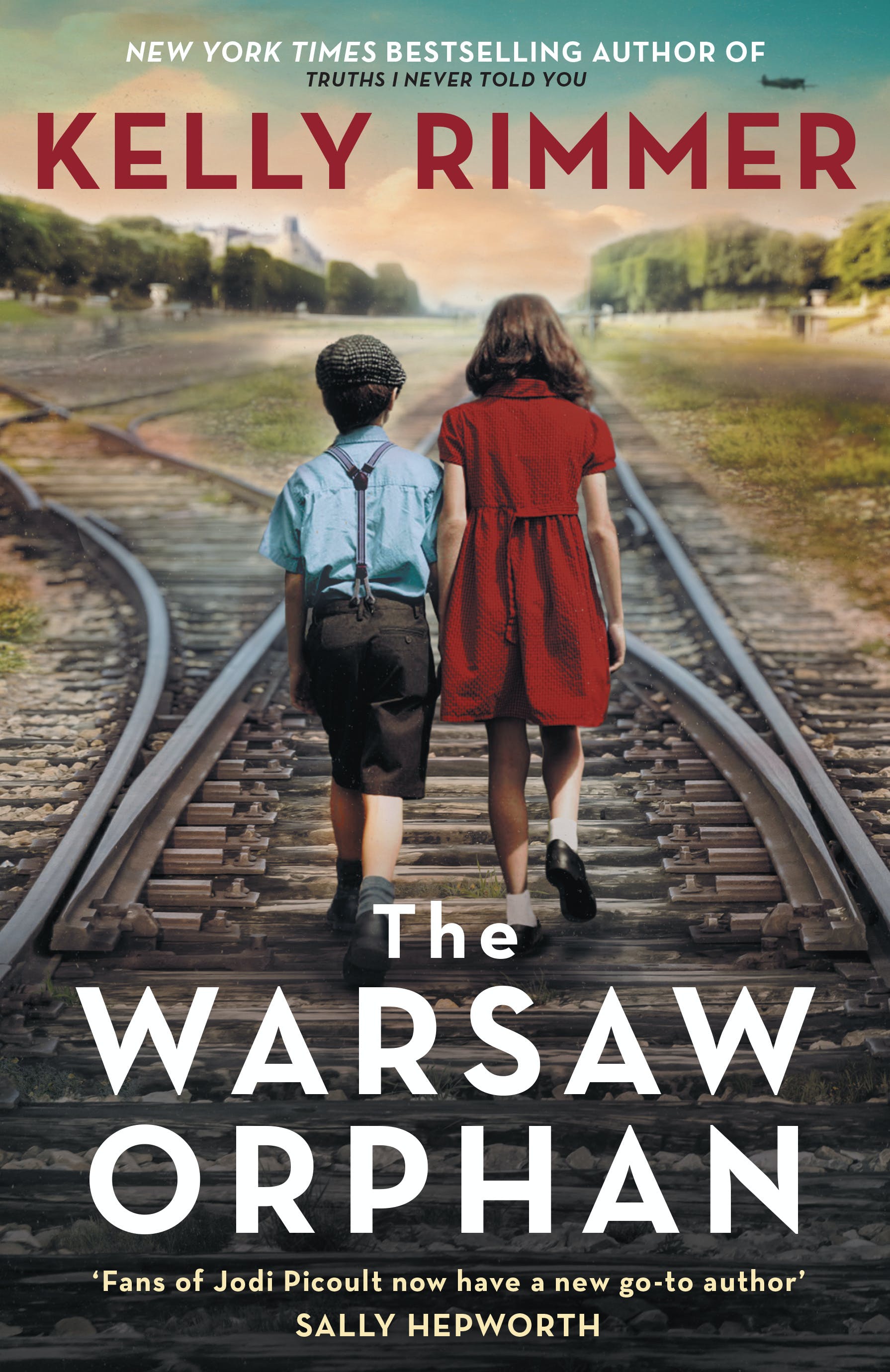
The Warsaw Orphan by Kelly Rimmer

The Warsaw Orphan Cover

Publisher: Hachette Australia (Trade Paperback – 28 April 2021)

Series: Standalone/sequel to The Things We Cannot Say

Length: 416 pages

My Rating: 5 out of 5 stars

Amazon

Prepare to have your heart broken again and again as Australian author Kelly Rimmer presents a captivating, powerful and dark historical drama, The Warsaw Orphan.

Warsaw, 1942.  The Nazis have a firm control over all of Poland and have moved the entire Jewish population into the infamous Warsaw Ghetto.  Vastly overcrowded and with limited supplies, life is extremely hard in the Ghetto, and many have given up all hope.  For Jewish teen Roman Gorka, all he can do is try to survive and earn enough to keep his family alive.  However, when rumours spread through the Ghetto about the Nazi plans to transport them to “work camps” out in the forest, Roman knows that it is time to act.  Knowing that the lives of himself and his parents are already forfeit, Roman attempts to find a way to save his younger siblings.

At the same time, a young woman, Elzbieta Rabinek, has just arrived in the city and appears to be a typical Polish girl living with her family.  However, Elzbieta is hiding a dangerous secret: her real name is Emilia, and she is the younger sister of an executed Jewish sympathiser.  Fleeing her village with her new family, Emilia is kept hidden from any potential pursuers.  But when Emilia discovers the truth about the Ghetto, she becomes determined to help and joins an underground group of women working to smuggle Jewish children to safety.

As Emilia becomes more involved with the secret work of her organisation, she soon encounters Roman.  Working together to save Roman’s younger sister, the two grow close and soon their fates are inevitably tied together.  But when a terrible tragedy strikes, both Roman and Emilia will be thrown into disarray.  As Warsaw becomes overwhelmed with fire and despair, can these two young people survive with hope, or will they be washed away in a flood of righteous anger?

Wow, just wow.  This was an incredibly touching historical drama that has really impressed me thanks to its moving story and striking portrayals of life in World War II Warsaw.  The Warsaw Orphan is the latest novel from Australian author Kelly Rimmer, who has previously produced moving novels such as Truths I Never Told You and Before I Let You GoThe Warsaw Orphan is actually a sequel to Rimmer’s previous book, The Things We Cannot Say, with some of the supporting characters from the previous novel appearing in more prominence in this latest novel.

I was lucky enough to receive a copy of The Warsaw Orphan a few weeks ago and thought it sounded like an intriguing novel, especially as it was from a new-to-me Australian author.  Based on the synopsis for the book, I knew going in that this would be a dark and emotionally rich novel, but I was very surprised with how compelling and poignant the narrative it contained would be.  Using the perspectives of the two narrators, Roman and Emilia, Rimmer paints a grim and powerful picture of the situation in Warsaw which the two protagonists find themselves in at the start of the book.  Both story arcs progress on their own separate way for a while, and it is intriguing to see the different experiences of two people living only a few streets away from each other in Warsaw.  It does not take long for the protagonists to encounter each other, combining the narrative together.  While the initial joining of their character arcs brings some hope to the story, Rimmer makes sure to quickly crush that with despair and heartbreak as both protagonists experiences tragedy after tragedy, as a series of different historical catastrophes engulf Warsaw and its people.  Every time the two central characters appear to be close to some sort of happiness, some new danger or disaster seems to befall them, and the reader is forced to sit back and watch as they endure their latest hardship.  While this novel is emotionally tough to read at times, Rimmer’s excellent storytelling ensures that you keep moving forward, especially as you become really invested in the lives of her two protagonists and the struggles of the various peoples of Warsaw.  While you may be left emotionally ragged and drained by the end of this book, readers will come away from this story extremely satisfied and with a little bit of hope.

I must really highlight the author’s outstanding and powerful depiction of historical events and places throughout The Warsaw Orphan.  Rimmer has clearly done her research on the subject and utilises a lot of fascinating and horrifying historical elements to great effect throughout the narrative.  For example, much of the story surrounding Emilia and the organisation she joins that helped to smuggle Jewish children out of the Ghetto is based on real life Polish hero Irena Sendler, with various features of Sendler’s work and personality imparted on some supporting characters.  The portrayal of occupied Warsaw is also extremely impressive, and you get a real sense of life in the city.  This is especially true of the Ghetto, as the author spends a significant amount of time exploring what happened within.  Rimmer pulls no punches when it comes to the horrors of the Ghetto and the brutalities the Nazi regime imparted on the Jewish population.  The various descriptions of the Ghetto are extremely harrowing, but through them the reader gets a sense of what the people within would have experienced.  I particularly appreciated the way in which she tried to capture the uncertainty that many of the characters, both Jewish and non-Jewish, had about the Nazis’ plans and you get a real sense of the fear and confusion in the lead up to the deportations.  Rimmer ends up covering all the key events that occurred in Warsaw between 1942 and 1947, and readers get some powerful and detailed views of the forced deportations to the camps, the Warsaw Ghetto Uprising, the Warsaw Uprising, the German retreat and the subsequent Soviet occupation.  The author shows every dark aspect of these historical events as her point-of-view characters find themselves involved in them, often to their great detriment.  All these powerful and remarkable historical events and locations serve as a great backdrop to this dramatic tale, and I found it fascinating to learn more about some of these events.

Rimmer has come up with an incredible pair of young point-of-view characters for this book, Roman and Emilia.  Roman is a Jewish teen living in the Warsaw Ghetto with his family.  Through his eyes you get to see many of the horrors of the Ghetto, starvation, Nazi oppression and the constant fear and death.  Rimmer does an impressive job of capturing the inner thoughts and feelings of someone caught up in these terrible events, and I really appreciated the strong sense of survival and desperation you get from him.  This quickly morphs in anger, righteousness and revenge when Roman experiences one tragedy too many, and he becomes in a number of dangerous fights against his oppressors.  Not only does this result in a number of brutal war sequences, but Rimmer paints a picture of a rebellious soul whose anger and moral outrage overwhelm his senses and force him to do darker and more dangerous deeds.  This depiction of anger and rage is quite powerful, and definitely fits an individual who loses everything and does not know what to do.

Emilia, on the other hand, is a somewhat more innocent figure, who, despite not being Jewish, has her own experiences with oppression after witnessing her brother dying in The Things We Cannot Say.  Due to the events of this previous book, she has fled to Warsaw with her adoptive parents, hiding under an assumed name.  Despite the troubles she is running from, Emilia chafes under the rules her guardians put in place, especially once she learns what is happening in the Ghetto.  Despite her fear, uncertainty and loyalty to her guardians’ wishes, Emilia soon becomes involved in the smuggling of children.  I really liked how Rimmer decided to utilise her previous character in this novel, and the author does a great job of revisiting parts of her story so that new readers can appreciate what has happened in her past.  Emilia proves to be a really interesting character throughout the book, and I loved the contrast in views between her views of Warsaw and Roman’s darker experiences.  Watching a non-Jewish citizen experience the horrors of the Ghetto for the first time is pretty moving, and the reader feels a certain kinship to her as they are also witnesses to the various tragedies.  I loved the storyline surrounding Emilia joining the movement to save Jewish children, and the author utilises her to tell this group’s very unique tale extremely well. 

Both Roman and Emilia have some fantastic storylines in The Warsaw Orphan, and I really liked the way their two separate character arcs come together.  These two characters experience an immense amount of grief, regret, violence and despair throughout the book, and their connection is one of the few things to keep them going.  Rimmer sets up both characters extremely well throughout The Warsaw Orphan and readers will quickly become obsessed with their unique tales and harrowing experiences.  I think both character storylines worked extremely well on their own, but together they tell an even more tragic story, as these two fall in love amongst the worst moments of human history.  Seeing the various tragedies and poor decisions that impact their relationship is pretty heartbreaking, and the reader is left in hope that they both survive in the end.  I think that Rimmer did an exceptional job creating and developing these two characters, and it is a mark of her writing ability that I ended up caring so much for them both. 

The Warsaw Orphan by Australian author Kelly Rimmer is an exceptional and incredible historical drama that comes highly recommended.  Rimmer has produced a first-rate story that perfectly utilises two tragic protagonists, an extremely dark and atrocious historical period and an addictive, if tragic, story of love, loss and survival.  The Warsaw Orphan is a powerful and compelling book that will stick in your mind long after you finish its final harrowing page.

Amazon

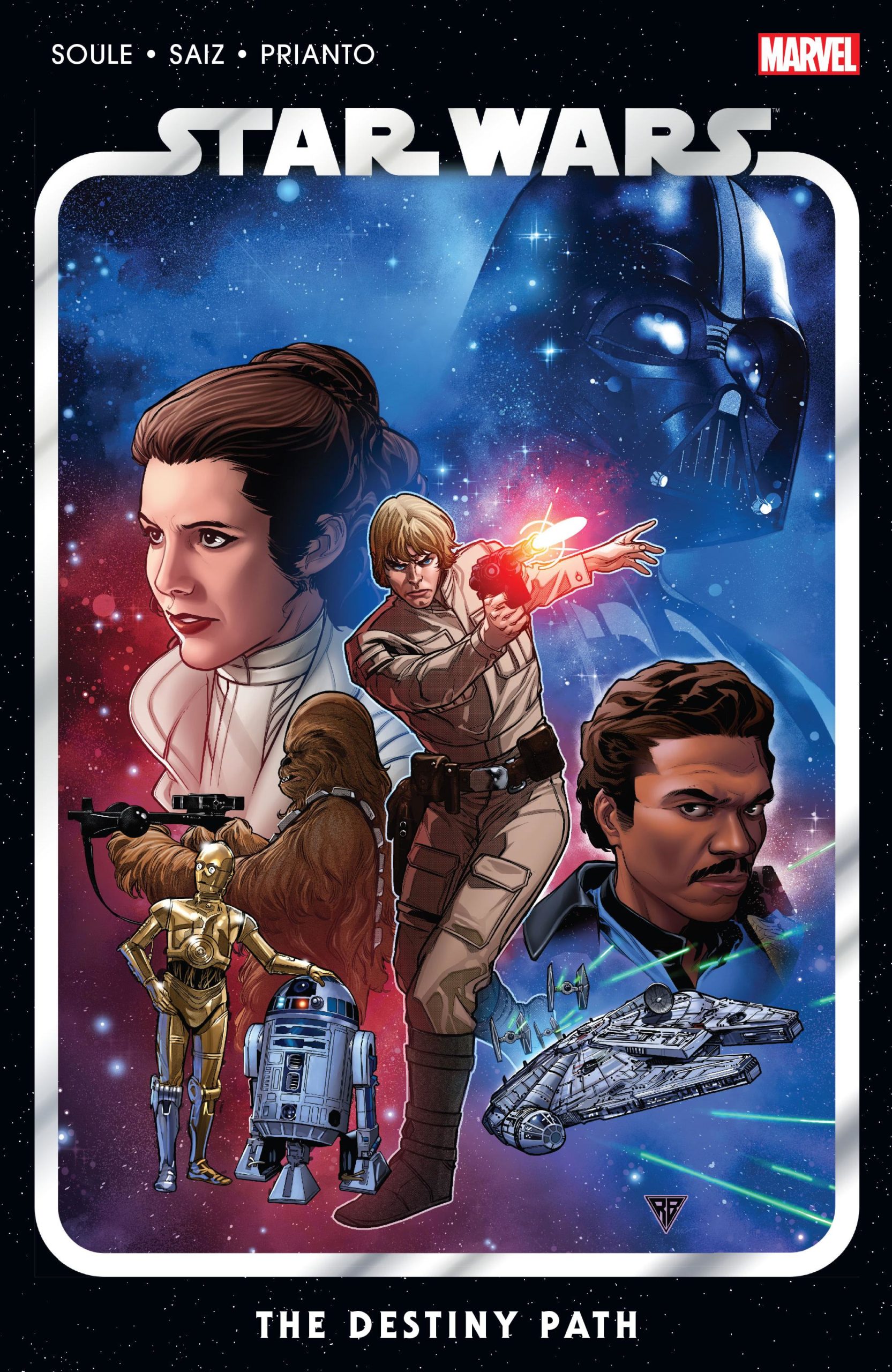
Star Wars (2020): Volume One: The Destiny Path by Charles Soule and Jesús Saiz

Star Wars (2020) - Volume 1 Cover

Publisher: Marvel Comics (Paperback – 10 November 2020)

Series: Star Wars (2020) – Volume One

Writer: Charles Soule

Artist: Jesús Saiz

Colour Artists: Arif Prianto, Jesús Saiz, Rachelle Rosenberg and Dan Brown

Letterer: VC’s Clayton Cowles

Length: 136 pages

My Rating: 5 out of 5 stars

Amazon

The next stage of the Star Wars comic universe continues as Charles Soule, Jesús Saiz and their team of talented artists present the first volume of the Star Wars (2020) series, The Destiny Path.

Star Wars (2020) #1 Cover

Shortly after the Disney buyout of Star Wars and their subsequent creation of a whole new canon, Marvel Comics started to develop a new range of Star Wars comics.  While there were several great series, limited series and standalone comics set during various periods of Star War history, the main series were set between the events of A New Hope and The Empire Strikes Back.  These key comics, which included the Star Wars (2015), Darth Vader (2015) and Doctor Aphra (2016) series, did a fantastic job of filling in the gaps between these two films and presenting readers with some clever and unique adventures.  All these series came to an end in late 2019, with their plots coinciding with the start of events from The Empire Strikes Back.  In the wake of their cessation, Marvel announced four new Star Wars comic series that would take their place (after suffering some pandemic-related delays), set in the aftermath of The Empire Strikes Back.  While I have already looked at some of these comics, including the first entry of the Darth Vader (2020) series, I think it is time that I explored the flagship series of this new run of comics, the Star Wars (2020) series.

The Star Wars (2020) series will explore what happens to the main cast of protagonists after the events of The Empire Strikes Back and is set in the year or so between that film and Return of the Jedi.  This looks set to be a long-running series that will not only tell its own tale but will tie in to the events of the other current comics, probably resulting in some crossovers.  This first volume, The Destiny Path, contains issues #1-6 of the Star Wars (2020) series and serves as an excellent and compelling introduction to the rest of the series.

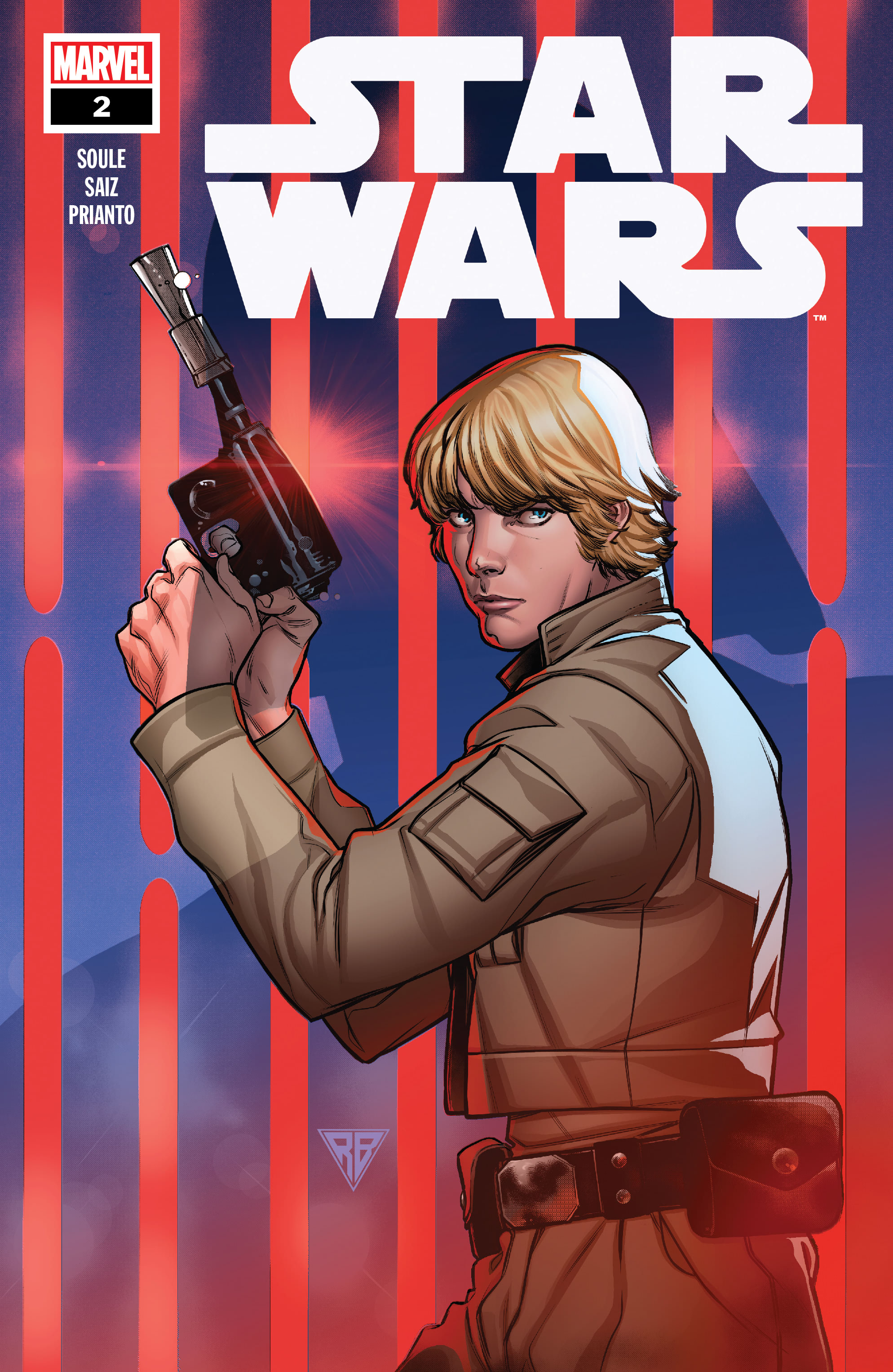
Star Wars (2020) #2 Cover

Following the battle of Hoth, the Rebel Alliance is in disarray.  With their fleet scattered around the galaxy and the might of the Empire reigning supreme, these are the darkest days the Rebellion has ever faced, especially as the Empire appears to have found a way to locate their ships and hiding places.  The hope of the entire Rebel Alliance may lie in the hands of its greatest leaders and heroes, but, after the events on Bespin, even these shining beacons of rebellion have been damaged beyond recognition.

With Han Solo captured by the Empire and handed over to the bounty hunter Boba Fett, those on the Millennium Falcon are dispirited and lost.  However, finding a Rebel cell under attack prompts them into action.  Despite missing the man she loves, Princess Leia is determined to rescue him and revive the Rebel Alliance by any means necessary.  At the same time, reluctant Rebel recruit Lando Calrissian attempts to make himself useful, despite mistrust from everyone around him.  Finally, Luke Skywalker, after losing a hand and finding out the horrible truth of his parentage is in shock.  Worse, his meeting with Vader appears to have damaged his connection to the Force, and neither of his masters will appear to talk to him.

Star Wars (2020) #2 Cover2

As the Rebel Alliance seeks a way to survive, each of these players, with the help of Chewbacca, C-3PO and R2-D2, begin the next stage of their journey.  As Luke seeks a lightsaber, Leia looks to find a way to save Han and Alliance, while Lando looks for redemption in all the wrong places.  All their journeys lead the back to the scene of one of the worst moments of their past, Bespin.  But how far will Luke, Leia and Lando go to achieve their goes, and will they be able to survive the dangerous enemies chasing them?

This is an outstanding and intense Star Wars comic that does a wonderful job of setting up a brand-new series of exciting adventures.  Charles Soule, who has written some of the best Star War comics out there, creates an exceptional and captivating tale that highlights the tragic consequences of The Empire Strikes Back.  Featuring some incredible artwork, amazing big moments, and a perfect portrayal of some of the iconic original trilogy cast, this is an outstanding and awesome comic.

Star Wars (2020) #3 Cover

For this cool first volume in the Star Wars (2020) series, the author has come up with an extremely compelling and clever multi-part narrative that I deeply enjoyed.  The Destiny Path has a strongly character-driven story, following Luke, Leia and Lando as they attempt to recover from the traumatic events of The Empire Strikes Back.  The narrative starts right after the heroes escape from the Cloud City at Bespin (technically before the closing scene of The Empire Strikes Back) and places the shell-shocked characters right in the middle of a firefight against an intriguing new foe.  The next stage of the story contains an intriguing couple of sequences aboard the Rebel medical frigate, showing off some new angles to the film’s final scenes, while also following Lando and Chewie as they head to Tatooine to scope out Jabba’s palace.  This part of the narrative is very clever and exciting, especially as it paints Lando as a bit of a wildcard, with unclear loyalties.  The next section of the comic takes Luke, Leia and Lando back to Bespin, each for a different reason.  There are some high octane and emotionally rich comic issues here, especially as all three of the characters are forced to face up to their recent mistakes and losses, while also taking on the Imperial garrison stationed there.  All of this leads up to the final part of the book, which is primarily focused on Luke, who journeys to several distant planets following a vision to find a new lightsaber.  There are some really cool sequences here as Luke continues to battle his own personal demons (and a real one, but we’ll get to that later), before eventually coming away with an unexpected prize.  All these disparate storylines work really well on their own, but their real strength lies in the way in which they tie together perfectly throughout The Destiny Path.  You end up getting a fantastic story as you follow one major event to the next, and I liked the unique tales contained within each section.  All of this serves as an awesome and powerful start to the Star Wars (2020) series, and there are plenty of hints of awesomeness to come as the Rebels bounce back while Luke continues to grow as a Jedi.  Epic Star Wars storytelling at its best!

Star Wars (2020) #3 Cover2

There is no way that I can talk about The Destiny Path without geeking out about some of the cool and memorable Star Wars elements and references featured within.  I deeply, deeply enjoyed seeing the intriguing and dramatic aftermath of The Empire Strikes Back that Soule envisions here, especially as he took the time to explore the various traumas and consequences of the events at Bespin.  This was a fantastic heart of the entire volume which is going to appeal to all fans of the Star Wars franchise.  Other cool Star Wars moments that fans will love include the mysterious events occurring around the Skywalker lightsaber.  This lightsaber, which disappears at the end of The Empire Strikes Back and reappears in The Force Awakens, is a major item throughout the Star Wars canon and I liked seeing Luke trying to find it in the bowels of Cloud City, only for it to slip into another mysterious person’s grip.  It will be interesting to see what happens to that in the future, and foresee it being a fascinating narrative thread throughout this entire series.

In addition to these elements from the films, Soule also fits in a lot of other cool references and call-backs to previous Star Wars comics, especially ones that he has had a hand in.  The most obvious of these was the appearance of Verla, who Luke encounters while trying to find a new lightsaber.  Verla is a Force-sensitive woman who first appeared in The Burning Seas volume of Soule’s Dark Lord of the Sith comic series.  It was great to see that Verla survived, and Soule does a good job working her into this story, portraying her as the damaged and cynical former Jedi student who is just trying to survive.  Verla’s inclusion allows Luke to learn more about Vader, both as a Jedi hunter and a Jedi named Anakin, and it was interesting to finally see him learn about the Jedi purges, Order 66, and the Inquisitors.  I also noticed a lot of mentions about the High Republic in this volume.  I really should not be too surprised about this, especially as Soule is one of the leading creative minds behind the High Republic range, having written the first novel in the series, Light of the Jedi.  It looks like Star Wars (2020) is going to rely on several events from the High Republic books, and I am intrigued about how Soule will work them into his cool story.  All of these Star Wars elements are extremely cool, and I think that they will deeply appeal to every fan of this franchise.  While mega fans are obviously going to love some of the more obscure references that Soule fit into this comic, this series is also very easy to enjoy if you have a more basic knowledge of Star Wars.

Star Wars (2020) #4 Cover

I do have to quickly highlight that one of my favourite parts of this entire comic is one of the final sequences in the volume.  In this sequence, Luke visits an abandoned Jedi temple which is filled with a mound of untouched treasures, including a lightsaber which he desperately needs.  However, it turns out that this entire building is a trap (Luke was warned, to be fair), as he is quickly attacked by the ghost of the Grand Inquisitor.  The Grand Inquisitor is an awesome character who served as the main antagonist of the first season of the Star Wars Rebels animated series.  Soule has previously utilised him in his Dark Lord of the Sith comic series, especially the first two volumes, Imperial Machine and Legacy’s End, but this current comic is set after his death in Rebels.  There are so many cool elements to the Grand Inquisitor’s return in this comic, including a fantastically drawn fight between him and Luke, where Luke encounters a double-bladed lightsaber for the first time, and I loved the Grand Inquisitor’s fiery, spiritual appearance.  However, the best part of this whole unique inclusion was the characters final interaction with Darth Vader.  Here it is revealed that Vader is the one trapping the Inquisitor’s spirit in this world, using him as a tool and a trap.  When the Inquisitor begs Vader for his release, Vader refuses, as the Inquisitor still has use to him.  The forlorn spirit starts to fade, but not before sadly uttering “there are worst things than death”.  This is an outstanding call-back to the character’s final words in Rebels, and it was so cool to see his morbid prediction come to pass.  This whole sequence really pushed The Destiny Path up a level for me, and I love how the creative team worked this into this fantastic and awesome comic.

Easily one of the best parts of this entire comic is the creative team’s portrayal of the iconic Star Wars characters who serve as the main protagonists of this amazing first volume.  Soule has done an incredible job writing a character-driven narrative around these protagonists, and I love his in-depth examination of their psyches and actions following The Empire Strikes Back.  The author pulls together some great storylines around these characters, and I loved seeing what amazing adventures they went on between these two films.

Star Wars (2020) #4 Cover2

One of the main characters explored during this book is the original Star Wars hero, Luke Skywalker.  Now, Luke is going through a lot at this point, having just had his hand chopped off and learned that his father is Darth Vader.  Luke spends most of the first part of the novel absolutely traumatised by these events and ends up doubting himself while also concealing this revelation from his friends.  To compound his issues, Luke finds his connection to the Force somehow damaged or fractured, as neither of his masters, Obi Wan Kenobi and Yoda, are reaching out to him.  This results in a more scattered Luke, and I loved the way that Soule dove into his damaged mindset.  There are some great and powerful moments throughout this comic that show off Luke’s trauma, as well some dramatic moments when he lashes out uncontrollably with the Force.  After receiving some visions and engaging in a hunt for a new lightsaber, Luke starts to come to terms with the events surrounding him, and it is great to see him recover somewhat, including by learning more about his father.  This slight reconciliation with his identity enables Luke to regain his control over the Force, and there are some very cool scenes where he uses his powerful and advanced abilities against the Empire.  Overall, this was a pretty spectacular look at Luke, and I really appreciated the cool story that Soule spun around him.  It will be interesting to see what is going to happen to Luke in the future entries of this comic, especially as he continues along his journey to become a full-fledged Jedi.  It will also be cool to see more of Luke’s new yellow lightsaber, which was an intriguing decision by Soule which I think is going to really pay off.

Star Wars (2020) #5 Cover

In addition to Luke, a lot of the story focuses on Leia.  Like the rest of the characters, Leia is pretty traumatised, as she discovered her love for Han only to lose him in seconds.  While at times she seems in control, especially as she works to salvage the Rebels fleet, she is clearly still impacted by this loss.  As a result, she desperately attempts to find a way to save him from Boba Fett, even if that means risking herself and her friends.  Her recklessness leads her back to Bespin with the others as she attempts to find more about the carbonite freezing process.  While Leia’s arc is possibly the least interesting (which isn’t a criticism; it’s just the other two main characters have some outstanding stories), she does have some great moments in this comic, and I especially loved the visual of her also trapped in carbonite.  It was also great to see more of badass Rebel leader Leia in this comic as she steps up and takes charge to protect those around her.  I imagine that the creative team have some great ideas for Leia in the future and I cannot wait to see what they are.

The other main character of this volume was the flashy and charismatic rogue, Lando Calrissian, who finds himself stuck with the other protagonists after helping them flee from Bespin.  Despite his attempts to do the right thing at the end of The Empire Strikes Back, Lando is still not trusted by anyone, as they blame him for his betrayal and the loss of Han.  As a result, Lando attempts to find some form of redemption with them, although he mostly comes across as a self-centred bastard.  Soule works a really intriguing storyline around Lando, and I loved seeing his meeting with Jabba the Hutt as he makes some initial inquiries into Han’s location.  Lando is able to talk his way out of a meeting with Jabba, although the reader is left wondering whether he plans to sell out the Rebels.  This nicely leads into his storyline on Bespin as he accompanies Luke and Leia back there.  It was great to see Lando returning to his city, especially as he manages to con his way through a range of different Imperial obstacles, and he was fully in his roguish element.  While Lando appears to return to Cloud City for selfish reasons, such as throwing a big middle-finger to the Empire, his jaunt does awaken his inner hero a little, and you get a glimpse of the person we eventually see in Return of the Jedi.  Lando is easily the most entertaining character in the entire comic and most of The Destiny Path’s humour is derived from his interactions with most of the other characters.  He is a very funny character, and it was great to see so much focus on him after barely featuring in the last stage of Star Wars comics.  I look forward to seeing what Soule and the creative team have for him in the future, and I think he is going to be the MVP character of the entire series.

Star Wars (2020) #5 Cover2

Aside from the three main characters above, The Destiny Path also includes a great range of other characters from various points in Star Wars history.  Like its precursor comic, Star Wars (2020) also follows Chewbacca, C-3PO and R2-D2, although I think these three great characters were a little overshadowed by Luke, Leia and Lando in this volume.  Chewie does have a bunch of fun moments throughout the comic, mostly in his interactions with Lando, and it is entertaining to see him be forced to deal with the cocky former friend.  R2-D2 does have a great sidekick time with Luke, and it was always fun to see him save the mighty Jedi’s life again and again.  There is also an interesting focus on a couple of new or lesser-known characters.  For example, it looks like Soule is going to spend a bit of time following Kes Dameron and Shara Bey, the parents of a certain Poe Dameron.  The Destiny Path also introduces an intriguing new antagonist in the form of Commander Zahra, a fanatical Imperial officer placed in charge of eliminating the remnants of the Rebel Alliance.  Zahra is tactical genius who I understand is going to have a major role in some upcoming comics.  This volume proves to be an excellent introduction to this cool new character, especially as it establishes her dangerous intelligence, murderous mentality and the insane grudge she bears against Leia, all while she commands the unique Star Destroyer, Tarkin’s Will, which still bears scars from being hit by wreckage of the original Death Star.  Zahra proves to be an outstanding antagonist, and I cannot wait to see what deviousness and insanity she brings to the rest of the series.

I definitely need to highlight the incredible and eye-catching artwork that was an outstanding and memorable feature of this awesome comic.  The artistic team behind this comic did an amazing job from start to finish, and every page was a visual treat for the eyes.  While all the art in this comic is great, there are a few things that really stood out to me, such as character design.  The artists do such an incredible job capturing the main characters throughout this comic, especially in the first issue where all their post-The Empire Strikes Back pain and emotion is on full display.  It was uncanny how similar these characters looked to their portrayal in the film, and it is a testament to the artists’ amazing ability.  There are also several awesome combat sequences scattered throughout the comic and I loved the way in which the art brought them to life.  A particularly good example of this was the opening space battle between the Empire and a small Rebel fleet.  The artists come up with an incredible background for this fight, which takes place between a sun and a concentrated barrage of green turbolaser bolts, which are being used to fence the Rebels in place.  This was so visually pretty, and it really enhanced the cool story and fighter combat that was taking place in front of it.  I also deeply enjoyed the way in which the artists have recreated several key scenes from The Empire Strikes Back.  These scenes, which include Luke losing his hand, finding out that Vader is his father and Han giving his iconic “I know” to Leia, are scattered throughout key parts of The Destiny Path.  Not only are these cool visually, but they are also clever from a writing point of view, dragging the readers back to the emotional impact of these events and driving how much they are still sticking in the mind of the protagonists.  I cannot overstate how awesome this art is and I had an absolute blast seeing every explosion, Force burst and clever flashback that they were able to fit in.

Star Wars (2020) #6 Cover

Well, if the above multi-page rant above didn’t give it away, then I’ll say it clearly here: this comic is incredible!  Soule, Saiz and the other talented artists have done an amazing job with this first volume of the Star Wars (2020) series, and The Destiny Path is an epic and awesome read.  I loved the in-depth examination of these key characters after The Empire Strikes Back and there are so many cool Star Wars elements worked into the story.  This is one of my favourite Star Wars comics and it gets a full five-star rating from me.  I cannot wait to see what extraordinary stories and powerful artform this fantastic creative team comes up with next and I need to order the next volume in now.

Amazon

The Bone Maker by Sarah Beth Durst

The Bone Maker Cover

Publisher: HarperAudio (Audiobook – 9 March 2021)

Series: Standalone

Length: 16 hours and 35 minutes

My Rating: 5 out of 5 stars

Amazon

One of the leading voices in fantasy fiction, the impressive Sarah Beth Durst, returns with another epic standalone fantasy read, The Bone Maker.

Sarah Beth Durst is an amazingly talented author who has been dominating the fantasy market for the last several years.  Initially debuting with several fun young adult and middle grade novels, such as the 2009 release Ice, Durst made the jump to adult novels in 2014 with The Lost, before writing her bestselling Queens of Renthia fantasy series.  I only recently started reading Durst’s work when I checked out her 2020 novel, Race the SandsRace the Sands was a gripping standalone fantasy read that featured a thrilling tale of adventure and redemption set around monster racing in a desert kingdom.  I absolutely loved Race the Sands, and it ended up being one of my top books and audiobooks of last year, and Durst was easily one of the best new-to-me authors I checked out in 2020.  As a result, I have been really keen to see what Durst would write next, and I was excited when I heard about her new book, The Bone MakerThe Bone Maker was one of my most anticipated novels of 2021, and I ended up having a wonderful time reading it.

25 years ago, the nation of Vos was threatened by a terrible foe, the rogue bone maker Eklor, whose nightmarish creations of animal bone and mechanical components sought to overwhelm everything.  In the end, Vos was saved by five heroes who led an army to Eklor’s door to destroy him.  However, their victory came at a steep cost, as one of the heroes died a tragic death, and only four walked away from Eklor’s tower.

In the years that followed, the leader of the heroes, Kreya, has lived a life of exile, determined to resurrect her husband, Jentt, who died to stop the evil assailing their realm.  Using Eklor’s notes, Kreya has succeeded in cracking the spells needed to complete the resurrection, but bringing the dead back to life has a heavy cost.  Not only does Kreya lose a day of her life for every day that Jentt lives, but Kreya also requires human bones to complete the spell,. The bones of the dead are ritualistically burnt throughout Vos specifically to prevent bone workers using them for dark magic, so Kreya is forced to look elsewhere for her materials.  In her desperation, she decides to return to the one place she swore never to go back to: the plains outside Eklor’s tower, where the bones of those fought against Eklor’s monsters still lie.

Making the arduous and forbidden journey to Eklor’s tower, Kreya makes a terrifying discovery that threatens everything she fought for all those years ago.  With the dangers of the past threatening to overwhelm her, Kreya has no choice but to reunite her comrades 25 years after their famous victory.  But will these damaged heroes be enough to face the evil threatening to overwhelm them, or will an evil long thought destroyed arise again to finish off what it started?

Wow, Durst definitely does not disappoint as she has created another impressive and powerful fantasy novel.  I had an absolute blast reading this fantastic new book and I managed to finish it off relatively quickly, especially once I got wrapped up in the outstanding story, clever setting and the lives of her amazing protagonists.  I really enjoyed this awesome standalone fantasy read and I have to give The Bone Maker a full five-star rating.

For her latest amazing fantasy novel, Durst has come up with a very complex and powerful story that dives deep into the hearts of her fantastic characters while also taking them on an epic journey of redemption.  I have to admit when I read some of the early descriptions of The Bone Maker I assumed it was going to be the central protagonist, Kreya, going up against her old companions as they tried to stop her from resurrecting her husband.  Instead, Durst works in a very different narrative that sees Kreya encounter the enemy from her past, which forces her to bring her friends back together herself.  Durst sets up this narrative really well, and the reader gets a sense of the tragedy of Kreya and the lengths she is planning to go to reunite with Jentt.  You also get a fantastic idea of the trauma from the protagonist’s past battles with Eklor and how this has shaped their lives.  There are some great moments in the opening half of this book, including several amazing and magically charged action sequences as the protagonists go up against a range of different foes, as well as some intense drama as the five are gradually reunited and come to terms with their past failures.  I loved how the narrative gradually morphed into a bit of a political thriller in the second half of the book as the protagonist encounters an old foe in a different setting.  The flow from the various sections of the story works extremely well, and Durst weaves together a really comprehensive and powerful standalone story.  I liked the excellent blend of action, fantasy elements and intense emotion exploration, which helped to produce a very comprehensive narrative, and The Bone Maker turns into quite an epic and exceptional read.

Easily the highlights of this book are the complex and damaged central characters that the story follows.  The five main characters are heroes who previously saved Vos from a great evil, and I loved this exploration of renowned fantasy heroes years after they saved the world, the usual climax of a story.  The central character of the story is Kreya, the group’s leader, who disappeared after ensuring their previous victory, mourning her dead husband.  Kreya performs multiple attempts at resurrection at the cost of her own life, and I really appreciated the author’s interpretation of this character’s grief leading her to risk it all.  Kreya has a rough and powerful journey throughout this book as she comes back to lead her team and is forced to deal with the expectations of all those around her.  Despite the immense amount of guilt, grief and regret that Kreya experiences throughout this story, Kreya proves to be a talented leader, directing them through several unique fights, and is the only person that can hold this ragged group of characters together.  The counterpoint to Kreya’s toughness and leadership is her deceased husband, Jentt, who, after his resurrection, proves to be the heart and light of the group.  Despite his more buoyant personality, Jentt has to deal with the consequences of his resurrection, especially when he finds out the cost of his continued life, and this leads him to several harrowing mental places.

The next member of the heroes of Vos is the bone wizard Zera, who specialises in creating the best magical talismans in the world.  Zera is the only member of the group who cashed in on her fame after their victory and has grown rich off her skills and reputation.  Zera is a fantastically sarcastic and entertaining addition to the cast, as she revels in her wealth and privilege, while also providing some of the best lines in the entire novel.  Despite a sense of intense betrayal at Kreya’s abandoning of her all those years ago, Zera agrees to help her with her mission, but finds herself constantly conflicted by her feelings of resentment, her own well-hidden damage, and her changed vision of what Kreya’s relationship with her was.  As a result, she has quite a journey throughout The Bone Maker and I loved her inclusion in this novel.

The other two major protagonists are the bone reader Marso and the warrior Stran, both of whom survived the battles with Eklor in very different ways.  While Stran is reasonably mentally healthy, having chosen to live a simple life with his wife and children, Marso has been broken by both his powers and the events of the past.  These two are a great contrast to one another, and both add some intriguing elements to the overall narrative.  I quite enjoyed seeing Marso slowly rebuild his sanity throughout the book while also coming to terms with a magical power he no longer trusts.  Stran’s apparent normality and stable family life is so amazingly different from the other characters in the book that it really stands out, and I liked seeing how each character was just a little bit different.  Overall, all five of these awesome protagonist really help to make The Bone Maker a powerful and impressive read and I am extremely glad that Durst took the time to build each of these great characters up.

One of the things I really must discuss is the outstanding setting that Durst created for this great book, especially as the author did such an impressive job coming up with yet another unique world.  The land of Vos is an amazing fantasy realm, loaded up with its own blend of troubles, culture and magic, which is living in the shadows of the tragic bone wars 25 years prior.  Durst sets this new landscape up perfectly in the early stages of the novel, and the reader gets a great sense of the people and mentality of this realm, especially when it comes to the trademark bone magic.  As the novel progresses, Durst visits several fantastic and compelling parts of this land.  This includes the gigantic and wealthy capital city where many terrible events take place, the hilly landscape that makes up the majority of Vos, a mist-shrouded valley loaded up with a collection of dangerous, gigantic monsters, and the plains surrounding Eklor’s tower, where deadly secrets lurk.  These landscapes are a lot of fun to explore, and Durst works them into her narrative perfectly.  I really enjoyed all of the major locations that the protagonists visit, although my favourite has to be the valley of monsters, as some intense and action-packed sequences take place there.

In addition to the amazing setting, I also really appreciate the rich and distinctive bone magic that Durst came up with for The Bone Maker.  This type of magic features three distinctive types of bone workers, including bone readers who can use animal bones to read the future, bone wizards who create powerful bone talismans, and bone makers who inscribe bones to animate a range of constructs.  Each of these magical disciplines is explored in great detail by the author and are all strongly utilised in the plot.  I loved seeing these magical elements at work throughout the action sequences in the book, and Durst uses them to great effect, with the characters gaining flight, stealth, strength and speed in every epic fight sequence.  The various examples of bone making are also pretty cool, and you get some great magical constructs.  I liked how there was a fun contrast between the protagonists’ cuter, yet still effective constructs, and the antagonists monstrous figures, and it makes for some great combat scenes, especially when the protagonist goes big towards the end of the book.  All of these magical elements are really exceptional, and I think it is an absolute testament to Durst’s sheer imagination and creativity that she is so effectively able to come up with a brand new style of magic and a new magical realm for every single one of her standalone fantasy reads.

I ended up enjoying The Bone Maker in its audiobook format, which proved to be a fantastic way to experience Durst’s epic story.  The Bone Maker audiobook has a decent run time of 16 hours and 35 minutes, which I ended up getting through rather quickly and is not too much of challenge for dedicated listeners to finish off.  One of the best things about this great audiobook is the amazing narrator, Soneela Nankani.  Nankani is a veteran audiobook narrator, but despite her prevalence as a narrator of fantasy fiction, I have not previously had the pleasure of experiencing Nankani’s vocal talents before, although she has worked on several other fantasy novels that I am keen to check out.  Nankani was an outstanding narrator whose voice really enhanced this already amazing novel.  Not only did Nankani provide a quick and exciting tone for the entire novel, moving the story along at a brisk and enjoyable pace that continuously kept the reader’s attention; she also provided several fantastic voices for the various protagonists.  All the voices that she used were pretty impressive, and I felt that they fit the damaged and dark personalities of each of the main characters very well.  As a result, I would strongly recommend the audiobook format to anyone interested in checking out The Bone Maker as it is an amazing way to check out this compelling novel.

The Bone Maker by Sarah Beth Durst is an exceptional and captivating standalone fantasy novel that I had an amazing time reading.  Durst has produced an epic and elaborate tale of life, death and magic, which follows five damaged and broken heroes years after their supposed great victory.  There are so many awesome elements to this fantastic book, and readers are going to fall in love with The Bone Maker’s addictive narrative, powerful characters and cool magical elements.  While I did enjoy Durst’s previous novel, Race the Sands, a little more, this was still an outstanding read, which comes highly recommended.

Amazon

Star Wars: Victory’s Price by Alexander Freed

Star Wars - Victory's Price Cover

Publisher: Random House Audio (Audiobook – 2 March 2021)

Series: Star Wars: Alphabet Squadron – Book Three

Length: 16 hours and 19 minutes

My Rating: 5 out of 5 stars

Amazon

One of the best Star Wars tie-in series comes to an epic and impressive end, as Alexander Freed presents Star Wars: Victory’s Price, the amazing third and final entry in the awesome Alphabet Squadron trilogy.

Since its inception in 2014, the current Star Wars extended universe has featured an amazing range of novels that tie into the various movies and television series.  One of the best has been the Alphabet Squadron trilogy from acclaimed author Alexander Freed.  Alphabet Squadron is a particularly compelling trilogy that follows a fantastic group of mismatched Rebel and Imperial pilots who continue to fight in the aftermath of Return of the Jedi.  This series has so far featured two excellent entries: the great introductory novel Alphabet Squadron, and the outstanding second entry, Shadow Fall, both of which I have deeply enjoyed.  As a result, I have been looking forward to seeing how the series ends and I think that Freed has left the best to last with this epic and powerful read.

The Emperor and Darth Vader may be dead, and the second Death Star destroyed, but the war is far from over.  Nearly a year after the battle of Endor, conflict still reigns in the galaxy between the forces of the New Republic and the remnants of the Empire.  In nearly every battlefield, the Empire’s forces are in retreat and disarray, apart from the notorious pilots of the 204th Imperial Fighter Wing, better known as Shadow Wing.  Led by the dangerous Imperial TIE Fighter ace, Colonel Soran Keize, Shadow Wing continue to bring death and destruction to the Empire’s enemies, slipping away when their vile deeds are done.

However, despite their skills and strategies, Shadow Wing is in constant danger as New Republic forces, under the command of General Hera Syndulla, are pursuing them.  Syndulla is determined to end the threat of Shadow Wing utilising the ragtag pilots of the unique unit known as Alphabet Squadron, each of whom has a score to settle with Shadow Wing, to lead the fight against them.  However, the members of Alphabet Squadron, Wyl Lark, Chass na Chadic, Nath Tensent and Kairos, are still recovering from their last traumatic encounter with Shadow Wing on Cerberon, as well as the revelation that their former leader, Yrica Quell, was an active participant of Operation Cinder, the Emperor’s genocidal last order to destroy multiple disloyal planets.

As Hera and Alphabet Squadron attempt to find their prey, they begin to discover just how dangerous the cornered Shadow Wing has become, as their opponents begin to enact a new version of Operation Cinder.  Worse, Alphabet Squadron are shocked to discover that Yrica Quell is still alive and has re-joined her old comrades in Shadow Wing.  As the two forces engage in battle again, the loyalties of Alphabet Squadron will be tested like never before while Quell attempts to determine just whose side she is truly on.  The conflict will finally end above the skies of Jakku, as the Imperial and New Republic fleets engage in their final battle.  Can Alphabet Squadron finally put an end to the evils of Shadow Wing, or will Soran Keize’s master plan change the entire galaxy forever?

Now this is what all pieces of Star Wars fiction should be like.  Victory’s Price is an exceptional and impressive novel that had me hooked from the very beginning.  Not only does Freed do an amazing job of wrapping up the Alphabet Squadron trilogy but he also provides the reader with fantastic action sequences and some outstanding characters.  This is easily one of the best Star Wars novels I have read in ages and it gets a full five-star rating from me.

For this final book, Freed has come up with a powerful story set within the iconic Star Wars universe.  Starting right after the events of Shadow Fall, Victory’s Price sees the members of Alphabet Squadron separated and traumatised as their protracted and personal conflict with Shadow Wing begins.  This leads into a series of exciting encounters and battles in space as Alphabet Squadron pursues Shadow Wing during their latest mission, while the leader of Shadow Wing hatches a plan to end the war on his terms.  At the same time, each of the characters attempts to deal with issues or distress raised in the previous novels, whether it be Quell’s conflicted loyalties or Chass’s post-fight trauma.  All of this leads to some epic and impressive final confrontations as the two sides meet for the very last time.  This was an extremely good character-driven read, and I loved the very cool way that Freed finished off this amazing series.

While it is an amazing Star Wars novel, Freed focuses more on the war part of the book, turning this into a gritty story of survival, loyalty and conflict, which makes for a powerful piece of fiction.  While obviously best enjoyed by those readers familiar with the rest of the series, Victory’s Price is a very accessible novel which new readers can follow without any trouble.  Thanks to the awesome use of multiple character perspectives, Victory’s Price has an excellent flow to it, and the readers are supplied with clever twists, cool action sequences and impressive character moments as the protagonists come to terms with their place in the universe and the constant fighting.  This ended up being quite an intense tale of war and life, which not only perfectly wrapped up the Alphabet Squadron series but which also had me engrossed from the very minute I started reading it.

One of the major things that I liked about this book was the way in which it added to the Star Wars expanded universe.  This series has always done a cool job of exploring what happened after Return of the Jedi, and it is always interesting and somewhat more realistic to see that the war did not end as soon as the Emperor died.  However Freed has painted this period as a particularly dark and deadly part of the war, and I love seeing how he envisioned what happened to members of the New Republic and Empire after Endor.  Victory’s Price focuses on the very end of the civil war, showing another side of the events that lead up to the battle of Jakku and fitting its original characters into this conflict.  This is a cool part of the book, and I loved seeing another version of the epic battle of Jakku, a major conflict that has been featured in several other novels and pieces of fiction.  Freed also takes the time to explore and answer several other intriguing questions, such as the mystery behind the Emperor’s messengers, the creepy red-clad droids who project holograms of the Emperor’s face, which sought out various Imperial commanders after Endor and ordered the various genocides of Operation Cinder.  The solution surrounding the messengers ends up being rather intriguing, and there are even some clever parallels to World War II in there.  Due to the intriguing elements of Star Wars lore featured within, Victory’s Price, like the rest of the Alphabet Squadron series, will probably be enjoyed most by major fans of the franchise, but there are a lot of compelling elements that readers of all knowledge bases will appreciate.  This was truly an exceptional piece of Star Wars fiction and I cannot wait to see what Freed adds to the canon next time.

I really must highlight the outstanding action scenes that Freed came up with for this book.  I am a man who likes his Star War’s action, and I have to say that Victory’s Price has some of the best sequences that I have ever had the pleasure of enjoying.  Due to the novel’s focus on fighter pilots, there are naturally a huge number of amazing combat scenes as the rival pilots engage in complex battles in space.  Freed has saved the best for last in this final Alphabet Squadron novel, as the opposing pilots find themselves fighting in a range of unique situations.  The battle scenes are extremely well crafted, filled with elaborate details and fantastic depictions of complex manoeuvres and clever tactics that are guaranteed to keep you on the edge of your seat with their intense action.  They are also quite emotionally rich, as you witness your favourite characters constantly face near-death experiences in this final entry in the series.  Highlights of these great battle sequences included two fantastic duels between the protagonists and the leader of Shadow Wing, which sees some fancy flying between some of the most skilled pilots in the series in some very distinctive landscapes.  I also really loved the final, elaborate battle set above Jakku, which proved to be a major part of the second half of the book.  Not only do you get the desperate and packed main conflict between the entire New Republic and Imperial fleets, which features destruction and death in every direction, but you also get a more private and quiet final battle between a group of Alphabet Squadron led New Republic fighters and Shadow Wing.  This smaller pitched battle between the two sides fits perfectly into the midst of the wider conflict and is filled with personal turmoil and antagonism as these two rival squadrons meet for a final time.  All these battles come out as being extremely epic and powerful, and I loved every second of the gritty and deadly fights they contained.

While I have a lot of love for Victory’s Price’s epic story, intense action, and clever Star Wars connections, easily the best thing about this book are the complex and well-written characters.  Each of the major characters featured in Victory’s Price have been introduced in the previous Alphabet Squadron novels with some complex and powerful storylines.  In Victory’s Price, all these great arcs reach a climax as the characters meet their final destiny and their stories comes to an end.  I really enjoyed the satisfying conclusions that Freed came up with for his outstanding characters, although in many ways it was sad to see their stories finish.  Still, I really appreciated all the great character arcs contained in this final novel, and Freed ensures they go through the emotional wringer before they go.

At the forefront of these outstanding characters are the five members of Alphabet Squadron who have served as the focal point for the entire series.  The pilots in Alphabet Squadron, so named for their use of a different Rebel Alliance fighter (A-Wing, X-Wing, B-Wing, U-Wing and Y-Wing), are layered and complex individuals, each of whom has experienced their own trauma or betrayal throughout the course of the lengthy war.  All five of these original characters have gone through significant development throughout the course of the previous two novels, and Freed does an exceptional job continuing their journeys in this final book.

The main protagonist of this series is Yrica Quell, a former member of Shadow Wing, who joined Alphabet Squadron in the first novel to help neutralise her former Imperial comrades.  However, it was eventually revealed that Quell, despite claiming she defected from the Empire after refusing to participate in Operation Cinder, aided in the destruction of a planet.  This revelation caused a massive rift in her relationship with the rest of Alphabet Squadron, and she ended up reuniting with Shadow Wing at the end of the second novel.  In this final book, it is revealed that Quell has infiltrated Shadow Wing to bring them down from the inside.  However, upon spending time with her Imperial comrades, she begins to experience doubts about her plan, especially as she sees that the Imperials are just as damaged by the war as she and the New Republic pilots are.  Her plans are further complicated due to her relationship with the leader of Shadow Wing, Soran Keize, her former mentor and the person who initially convinced her to defect to the New Republic.  Quell still has an immense amount of respect for Keize, and strongly believes in several of his plans.  This re-remembered loyalty to Shadow Wing strongly conflicts with her friendships with Alphabet Squadron and the guilt she feels for her role in Operation Cinder, placing Quell in a major quandary for most of the book.  This uncertainty and inner conflict is a really clever part of Quell’s story, and the reader is deeply impacted by her struggle and conflicted loyalties.  This was easily one of the best and most powerful character arcs in Victory’s Price and I really appreciated the outstanding character story that Freed set around Quell.

Victory’s Price also spends a significant amount of time following Quell’s fellow Alphabet Squadron members, Wyl Lark and Chass na Chadic, both of whom have compelling arcs that highlight different aspects of warring soldiers.  Wyl Lark is the young, optimistic member of the squadron who took over leadership at the end of the second novel.  Lark has developed a significant amount throughout the course of this series, and it is great to see him come into his own as a leader and pilot.  However, despite his apparent ease at the role, Lark is plagued by doubts and concerns about the morality of this fight, especially as it conflicts with some of the teachings of his race.  He spends a great deal of this final book coming to terms with his morals, and even attempts to once again contact the members of Shadow Wing to try and find some common ground or a way to end the conflict.  His actions go a long way to humanising the antagonists of the novel and his hope is a refreshing beacon of light in this darker Star Wars book.  I deeply enjoyed seeing the way in which Lark attempts to change the outcome of the war his way, and it was a fascinating addition to the story.

Chass, on the other hand, is easily the most damaged character in the entire series.  A music-loving veteran pilot who is more afraid of the end of the war and her inevitable slide into irrelevance and despair than her own death, Chass has always been on edge throughout the series.  However, in Victory’s Price, Chass is even more traumatised, especially after learning of the betrayal of her love interest, Quell (which is an intriguing LGBT+ relationship for a Star Wars novel) and has since turned to the teachings of a cult to gain some clarity.  Despite this, Chass is still driven by her anger and her rage and is constantly lashing out at everyone around her, with her death wish a constant anchor around her neck.  Freed has written a complex and moving story around Chass and her suffering, and I deeply appreciate the portrayal of her as a troubled veteran.  I think that Chass’s story comes to a fantastic end in this final novel, especially as she gets closure with several important people in her life.  Both characters are incredibly well written and are fantastic examples of Freed’s exceptional writing ability.

Next up are the final two Alphabet Squadron pilots, Nath Tensent and Kairos.  While both characters have been somewhat overshadowed throughout the series, Freed has developed some intriguing storylines around them which come full circle perfectly in this final novel.  Nath Tensent, a pilot who served both the Empire and the Rebels during the war, has an enjoyable and likeable personality and is the sort of guy who quickly becomes everyone’s best friend.  However, despite the easygoing façade he projects to the world, even Nath is feeling the effects of the war and the constant worry and responsibility is getting to him.  This is particularly exacerbated in Victory’s Price when he becomes a decorated military hero with greater responsibilities and is forced to balance his own selfish goals with the lives of people who look up to him, as well as his very strong concerns for Wyl Lark.  This results in a particularly clever and enjoyable arc, and it was great to see him finally take some responsibility in this war.  I liked the way in which Freed ended Nath’s storyline, especially as it potentially opens another series in the future.

The final member of the squadron is the mysterious Kairos, an alien of unknown origin with a strong hatred for the Empire and terrifying combat skills.  Despite her intriguing introduction in Alphabet Squadron, Kairos was somewhat left out of the second book after receiving an injury.  However, this is more than rectified in Victory’s Price, as Kairos is featured more prominently and we finally get to see some of her backstory.  Freed comes up with quite the intriguing, if tragic, story for Kairos, and it was fascinating to see her unique alien beliefs and culture, as well as a powerful story of renewal and redemption that accompanies her.  Kairos becomes quite close to two characters in this book, especially after the closest people in her life died in the previous novel, and it was great to see her finally connect, even if only for a short while.  Freed did a fantastic job setting up Kairos’ story in the previous two novels, and I personally loved finally getting some answers regarding this curious character’s identity.

Aside from the members of Alphabet Squadron, several other characters are also shown in great prominence throughout this book.  The one I liked the most was Hera Syndulla, the New Republic general commanding Alphabet Squadron.  Hera is one of the few characters in this novel who Freed did not come up with, as Hera originated in the Star Wars: Rebels animated series and serves as a bridging character to the larger franchise.  Due to how much I love Star Wars: Rebels, I have really enjoyed seeing more of Hera in this series, not only because I am very curious about her post-Rebels life but because she also serves as a great mentor character to the members of Alphabet Squadron.  Hera features a lot more prominently in this final novel and her perspectives are shown nearly as much as the members of Alphabet Squadron.  This extra perspective really added a lot to the story as a whole and I personally really enjoyed seeing Hera take charge and attempt to hunt down Shadow Wing, while also attempting to determine the course of the entire war.  I also really enjoyed the fact that this book shows Hera’s role in the battle of Jakku, which as the largest space battle in the entire civil war, you had to assume she would be a part of.  Hera is naturally a bit of a badass in this battle, as you would expect, and I appreciated that Freed featured more of her in this novel.

The other major character featured within Victory’s Price is Colonel Soran Keize.  Keize is a fantastically complex character who serves as the leader of Shadow Wing and Quell’s Imperial mentor.  Despite nominally being the antagonist of this book, Keize is portrayed as a more of a tragic and misunderstood figure, one who is sick of war and who only has the best concerns of his men at heart.  As a result, Keize is running his own game throughout Victory’s Price and works to get the best result for the members of Shadow Wing.  His convictions, sense of honour and understandable motivations make him a hard character to dislike, and his role in mentoring Quell ensures that she is extremely conflicted when it comes to betraying him.  Keize is also probably the best pilot in this entire series, as he is regarded as the Empire’s ace of aces, and Victory’s Price is where you get to see him soar as he engages in several great battles and duels.  Thanks to this, and his curious character development, Keize is a great character to follow, and I really enjoyed the unique tale Freed told through him.

Freed also focuses on some of the other pilots on both the New Republic and Imperial sides.  This results in a great combination of complex side or minor characters, each of whom have their own reasons for fighting in the war.  Freed attempts to show that, despite fighting on different sides of the war, these characters really are not that different.  Instead, all of them are soldiers, with several similarities, including their own trauma, PTSD and issues with the war that they are fighting in.  I think it is a testament to Freed’s writing ability that he was able to get me to care about members of the Imperial navy, and it was pretty spectacular the way in which he attempted to show the humanity buried deep within them.  It does mean that the action sequences more emotionally loaded and potentially devastating as you end up not wanting to see some of the pilots dying, but I really appreciated the way in which Freed took the time to explore these compelling side characters.

While I have previously enjoyed the first two Alphabet Squadron novels in their paperback format, circumstances required me to check out Victory’s Price as an audiobook instead, which was pretty damn awesome.  Not only did Victory’s Price feature the usual blend of iconic sound effects and music that makes all Star Wars audiobooks such a treat to enjoy, but I found that the story flowed incredibly well in this format.  With a lengthy runtime of 16 hours and 19 minutes, I absolutely blasted through this book as I became so engrossed in the awesome story and the way in which it was performed as an audiobook.  I also thought that the use of the iconic Star Wars music in the Victory’s Price was particularly impressive, and not only did the music make several of the extended space battle sequences even more epic, but they also really highlighted some of the most emotional scenes in the book and made them strike my soul even more emphatically.  I also really enjoyed the amazing narration from January LaVoy, who has previously provided her voice to the other Alphabet Squadron books.  LaVoy is a particularly skilled narrator whose work on the Star Trek: Discovery tie-in novel, Die Standing, I really enjoyed.  Not only does LaVoy present the awesome details of Victory’s Price in a quick and exciting manner, making each of the action scenes sound particularly cool, but she also provides some great voices for the various characters.  Each of the main characters gets a unique voice which fits them perfectly and which really helps the listener get to grips with their personalities and inner thoughts.  While all of the character’s voices were done extremely well, the best voice that LaVoy did was probably Hera Syndulla’s, which sounded extremely close to the character’s voice in the Star Wars Rebels animated series.  All of this helps to make Victory’s Price’s audiobook an immensely enjoyable experience and I would highly recommend this format to anyone and everyone.

Star Wars: Victory’s Price is an exceptional and powerful novel from Alexander Freed that is one of the best books I have so far read in 2021.  Featuring a dark and gritty war story set during a fascinating period of Star Wars history, Victory’s Price perfectly wraps up the impressive Alphabet Squadron trilogy while also providing some cathartic conclusions to outstanding character arcs that Freed has built up during the previous book.  I absolutely loved this final novel (hence the massive review), and I think that this was probably the best entry in the entire series.  A highly recommended read, especially if you have already enjoyed the rest of the trilogy, this was a truly epic Star Wars novel.

Amazon

Throwback Thursday – The Last Continent by Terry Pratchett

The Last Continent Cover

Publisher: Doubleday and ISIS Audiobook (1 May 1998)

Series: Discworld – Book 22

Length: 9 hours and 57 minutes

My Rating: 5 out of 5 stars

Amazon

This is part of my Throwback Thursday series, where I republish old reviews, review books I have read before or review older books I have only just had a chance to read.  For this Throwback Thursday I take a look at one of my absolute favourite books of all time, the incredibly funny and always enjoyable The Last Continent, by legendary author Sir Terry Pratchett.

I have never made it a secret that I absolutely love the works of the late, great, Terry Pratchett, who I consider to be one of the best authors of all time.  I love and adore every single one of Pratchett’s hilarious and captivating novels, especially the entries in the wacky and wild Discworld series, a comedy fantasy series set in an absolutely insane world of magic, monsters and outrageous personalities that lies upon a disc shaped world, borne through space on the back of four elephants, who themselves are on the back of a giant turtle.  I have so much love for this outstanding and hilarious series, and I have read each and every entry in multiple times.  Heck, even the name of my blog, The Unseen Library, is taken from a fictional institution in the Discworld series!  However, despite how much I love the series, I have so far only reviewed one Discworld novel on this blog so far (Shame! Shame! Shame!), Moving Pictures, and this is something I have been meaning to rectify for some time.

I recently did a Top Ten Tuesday list where I looked at some of the funniest books I have ever read, which included several Discworld novels, and this inspired me to do a review for another Pratchett read.  I ended up going with one of my favourite Discworld novels of all time, the incredible and wildly entertaining The Last Continent, which places one of the author’s most iconic characters into the most dangerous places imaginable, Australia.  I am reviewing this book slightly out of the order I originally planned, but I figured reviewing this one now may encourage me to get to others in the future.  I should admit that I have not read The Last Continent recently, but this is one of the many Discworld novels that I have read multiple times, either in its paperback (I’ve actually got a signed copy of this book) or its audiobook format, and at this point I have it pretty much memorised.

So the first thing I should cover is:

“This is not a book about Australia.  No, it’s about somewhere entirely different which just happens to be, here and there, a bit…Australian.

Still…no worries, right?”

Welcome to EcksEcksEcksEcks (XXXX), the Discworld’s last continent.  Made by a rogue creator who snuck in after the rest of the Disc was created and kept hidden away from its other civilisations by a series of massive storms, XXXX is a deadly and dangerous place.  Filled with some of the most lethal and confusing creatures on the entire Disc and populated by a friendly, if occasionally murderous, group of people, XXXX is a hell of a place to live.  Unfortunately, everything in it is about to die as the water dries out and even the beer is getting hard to find.

Luckily for the people of XXXX, a hero has been found, one who is battling his way through the wastes and towns of the country, his legend growing all along.  But who is this road warrior, sheep shearer, horse wrangler, beer drinker and ballad-worthy bush ranger, and why is he apparently so determined to run away from his heroic destiny?

That man is Rincewind, the Discworld’s most cowardly and inept wizard, who has been bounced from one end of the Disc to the other and been chased by every sort of monster, maniac and seller of regional delicacies you can imagine.  All Rincewind wants to do is go home, and he is determined to avoid any new adventures as a chosen hero, no matter what the talking kangaroo stalking him tries to tell him.  Despite his best efforts, Rincewind once again finds himself caught up in the special craziness of the locals, and if he wants to survive, he needs to find a way to save everyone.  What’s the worst that could happen???

So, as you may be able to tell from the above synopsis, this is a bit of a crazy novel, but it is one that is always guaranteed to make me laugh, especially with its fantastic Australian-based humour.  The Last Continent is the 22nd overall entry in the Discworld series and the sixth book to focus on the character of Rincewind.  I personally have a lot of love for this particular Terry Pratchett novel, and it is probably one of my all-time favourite Discworld novels.

Pratchett came up with a pretty clever and fantastic story for The Last Continent, which sees several of his established characters get involved in wackiness all around a newly discovered continent.  The main story follows Rincewind as he tracks across the wastelands of XXXX after getting sent there at the end of his previous novel, Interesting Times (there was an accident with a butterfly), and he is now primarily concerned with trying to find a way home.  However, mysterious forces soon work to turn him into the hero who will save XXXX from a thousand-year crippling drought.  Rincewind, who is more concerned with reaching the nearest port, soon gets involved with all manner of road bandits, deadly creatures, drunken locals and an annoying talking kangaroo, all of which lead him to the secrets at the heart of this lost continent.  At the same time, the wizard faculty at Unseen University are faced with a serious problem when their trusty orangutan colleague, the Librarian, falls ill, and they require his real name to work a spell to save him.  However, the only person who knows the Librarian’s real name is Rincewind, and so the faculty blunder their way through a magical portal to find him.  However, in predictable fashion, they find themselves trapped on a weird island thousands of years in the past and forced to deal with an immature and slightly beetle-obsessed god of evolution.

I really enjoyed both story arcs contained within this book, and Pratchett did an amazing job bringing them together.  Both have some fantastic and weird elements to them and they make great use of the particular adventures and attitudes of their relevant characters.  While Rincewind is forced to run away from all manner of deadly situations you typically see here in Australia (let me tell you, the dropbears and road gangs are murder), the wizard faculty blunder their way through all manner of unique situations, mostly by ignoring what is happening to them.  Each storyline is unique and has some fantastic highlights, but the real strength is the way in which Pratchett combines them together into one cohesive narrative.  Not only are both distinctive arcs perfectly spread out and separated throughout the course of the book, but Pratchett does a fantastic job combining them together in a clever way.  This ended up serving as a great near-final adventure for Rincewind (he’s more of a supporting character in his following appearances), and I think it did a wonderful job wrapping up his main arc.  While readers should probably read some of the earlier Discworld novels featuring Rincewind (especially the preceding Interesting Times), The Last Continent can easily be read alone, and readers will have an outstanding time reading this fun and compelling comedic adventure.

In my opinion, The Last Continent is one of Pratchett’s funniest novels, although I might be somewhat biased by my own personal humour and background.  I always have an outstanding time reading this book and there are so many clever jokes and amusing references that I cannot help but laugh, no matter how many times I hear them.  This book has a lot of Pratchett’s classic humour elements to it, such as the unusual quirks of his various characters and the funny little footnotes, filled with great references and punchlines.  The author goes off on some very entertaining segues during this book, and I love some of the great jokes he came up with, especially those that make fun of Australia.

Now, despite what the author says at the front of this book, The Last Continent is clearly a parody of Australia, and Pratchett clearly enjoyed utilising every single Australian reference or cliché he could think of to craft his funny book.  The continent of XXXX is an over-the-top fantasy version of Australia, with many of the outrageous stereotypes that you would expect, as well as some more subtle choices, and it serves as a truly amusing setting for this book, especially as Rincewind perfectly plays the part of clueless tourist.  While you could potentially discount The Last Continent as merely satirising Australia, I have always seen it as something cleverer, as I think that Pratchett was more making fun of the stereotypes that outsiders came up with rather than Australia itself.  That being said, Pratchett, as a Brit, did take a few good shots, although that’s only to be expected.  As an Australian myself, I always enjoy when comedy writers try to encapsulate Australia in their works, as it is quite amusing to see what they reference.  I always thought that Pratchett did this the best with The Last Continent, as he really dived into so many aspects of Australia life, nature and culture, and there are some truly funny jokes contained within.  Australian historical or cultural icons like Mad Max, Priscilla, Queen of the Desert, Skippy, The Man From Snowy River, Crocodile Dundee, and Ned Kelly are utilised in this book to great effect throughout The Last Continent, and there are some truly outrageous and clever references and jokes here.

While The Last Continent is filled with many, many funny Australian jokes, a few really stick out to me.  I personally always laugh so hard when Death, wanting to learn more about the continent his elusive prey Rincewind has landed on, decides to ask his library for a list of all the deadly animals on XXXX.  However, this results in him being buried by a massive pile of reference books, including “Dangerous Mammals, Reptiles, Amphibians, Birds, Fish, Jellyfish, Insects, Spiders, Crustaceans, Grasses, Trees, Mosses and Lichens of Terror Incognita: (Volume 29c, Part Three).  This is followed up by a request for a list of harmless creatures on the continent, and a single card appears bearing the sentence “some of the sheep”.  I love that over-the-top joke about how dangerous Australia’s wildlife is (it is honestly not that bad, although my editor was bitten by a sheep the other day), and that was one of the best ways I have seen it bought up.  I also loved the references to Australian hero worship of notorious criminals such as Ned Kelly or the jolly swagman from Waltzing Matilda.  There are some amazing jokes here, from people attempting to make catchy ballads, to the prison guards providing advice and help on last words and escape possibilities, all of which capture the rebellious Australian spirit.  I particularly liked Pratchett’s version of Waltzing Matilda, which was perfect in its rhyme, its satirical analysis of the original poem, and how it fit into The Last Continent’s narrative:

“Once a moderately jolly wizard camped by a waterhole under the shade of a tree that he was completely unable to identify.  And he swore as he hacked and hacked at a can of beer, saying ‘what kind of idiots put beer in tins?’”

Other great Australian comedic sequences for me include the scene where the Unseen University wizards attempt to design a duck by committee, resulting in the mighty platypus, an impromptu Mad Max road chase with horse-drawn carts and the constant references to a certain line in our national anthem.  All of these jokes, and more, were pretty amazing and I really enjoyed seeing some of the outrageous and over-the-top elements that British culture picks up about Australia.

While I really enjoyed all the fun references to Australia, some of Pratchett’s best jokes in The Last Continent occurred during the secondary storyline that followed the faculty of Unseen University as they go back in time and encounter the god of evolution.  The author uses this part of the book to make comedic observations about time travel, evolution and advanced biology.  Not only does include a particularly hilarious sequence in which someone tries to explain the grandfather paradox to a group of wilfully ignorant wizards, but there are some truly funny jokes about evolution and biology which cleverly reference some advanced concepts and historical basis of the science.  While I read this book years ago, it wasn’t until I took some specific biology classes that I fully grasped just how intelligent some of the jokes in this part of the book are.  I personally love a book which you can come back to time and time again and find some new joke or layer to, and this is the case with The Last Continent, which no doubt still contains elements or references I’ve missed.  All of this results in a comically brilliant read, and The Last Continent remains one of my favourite Disworld reads as a result.

I have always enjoyed the great character choices contained within this book, as Pratchett brings together some old favourites, as well as a few entertaining new ones, to tell the story.  The main character of The Last Continent is Pratchett’s original Discworld protagonist, Rincewind, the cowardly and inept hero who cannot even spell “wizard” properly, but who has served as a world-saving hero on multiple occasions.  Rincewind is always a particularly fun character to follow, not only because he constantly finds himself caught in all manner of unique situations which he heroically tries to run away from (he has become quite the expert at running away), but he has a certain realistic approach to life that allows him to see through the ridiculousness around him and address it in a funny manner.  At this point in the series, Rincewind has been bounced around from adventure to adventure against his will so much that he has developed a bit of knack for knowing when it is going to happen again, including figuring out all the signs someone gives off when they are trying to con him into being a hero.  It proves to be quite entertaining to see Rincewind try to escape from people trying to drag him into the narrative, especially as all his attempts to get out of dangerous situations generally put him in even worse trouble.  It is also really worth seeing Rincewind’s reactions to the various elements of XXXX life, especially as he soon begins to realise that everyone there has some very unusual ideas about how to live and die, most of which he is very opposed to.  I really enjoyed this more mature and somewhat resigned version of Rincewind and I have to say that this is one of my more favourite adventures of his (either this or Interesting Times).  It was definitely great to see the character get a happy ending towards the end of the book for once, which he frankly deserved after his last few adventures.

While Rincewind is tearing it up in not-Australia, Pratchett also dedicates around half of The Last Continent to the characters who form the faculty of the Disc’s premier wizard school, Unseen University.  Many wizard characters have featured in the Discworld books, but this current iteration of the faculty (with the exception of the Librarian) was originally introduced in the 10th book, Moving Pictures, and has remained pretty constant ever since.  This group includes the hunting-obsessed Archchancellor, Mustrum Ridcully; the quite insane Bursar; the incredibly obese Dean; the amusing team of the Senior Wrangler, the Chair of Indefinite Studies and the Lecturer in Recent Runes; the orangutan Librarian (working in a library is dangerous work); and the long-suffering Ponder Stibbons, the youngest member of the faculty and the only one with any common sense.  Pratchett had previously done an amazing job building up all of these characters in prior books, highlighting their unique quirks and issues, including the overwhelmingly stubborn, childish and traditionalist personalities of the older wizards.  This excellent blend of personality types really makes the older wizard characters really amusing and their adventures, especially when encountering strange gods and creators who they generally ignore, are extremely funny.  While an entire book about these characters would potentially be a bit overwhelming, I think that Pratchett got the balance right in The Last Continent, and they ended up serving as a fun counterpoint to Rincewind.  Stibbons was also a particularly good straight-man to his fellow wizards, and the contrast between keen intellectualism and entrenched “wisdom” is a fantastic part of the book.  I rather enjoyed Stibbons arc in this book, especially as you get to appreciate the true depth of his frustration with his fellow wizards, although he does gain a deeper appreciation for them as the book progresses.  Other amusing storylines with the wizards includes the Senior Wrangler’s obsession with housekeeper, Mrs Whitlow, which eventually gets shared with some of the other wizards, and the uncontrollable shapeshifting infecting the Librarian, which makes for some entertaining gags.  I also really enjoyed the fact that much of the book’s plot revolves around the fact that no-one actually knows the Librarian’s name, a fun feature from the previous books, and it was interesting to see the reasons why this was the case.

Aside from this fun collection of wizard characters, Pratchett makes great use of a fine selection of supporting characters, each of whom add some fantastic fun to the overall story.  This includes a very inventive group of new characters, each of whom represent various parts of XXXX life, whether they be depressed operatic chefs, police officers more concerned with getting their charges ballads and famous last stands, bushland drovers, belligerent drinkers, desert-wandering crossdressers in a princess-themed cart and even a crazed road warrior named Mad.  Despite most of them being the result of a punchline or extended joke, Pratchett sets each of these characters up really well and ensures each of them has a fun and satisfying character arc in the book.  I also quite enjoyed the return of fan favourite character, Death, who goes on a bit of a tourist phase through the book.  I really liked Death’s random appearances throughout The Last Continent, especially as he drops some amusing anecdotes about dying in XXXX, and it was also great to see his current viewpoint on Rincewind.  Whereas before he was always determined to catch and kill Rincewind, as he was the one mortal who constantly got away from him, in this book, Death, who no longer has any idea of when Rincewind is actually going to die and is now quite fascinated by him, keeps himself appraised of his progress and is generally friendly to him, even if that freaks Rincewind out.  I also loved the appearance of another member of the extended Dibbler clan, even if the XXXX version was a parody of a certain unpleasant right-wing political figure here in Australia.  The appearance of another ruthlessly mercantile hot-food dispenser with inedible food is a great continuation of a running joke Pratchett has been using for several books, and it is one that really pays dividends in The Last Continent, when Rincewind recounts all the terrible foods he’s eaten over the years from the various Dibblers he has encountered, which then runs into a fantastic diatribe about the dangers of national delicacies, especially XXXX’s meat pie floater (a real meal here in Australia, although there is no way in hell I would ever eat one).  All of these characters add so much to the book’s story, and I love the inventiveness that Pratchett puts into them.

While I have enjoyed all the Discworld novels in their physical paperback format at one point or another, my preferred way to experience a Pratchett novel these days is in its audiobook form.  All of the Discworld novels have been turned into excellent audiobooks over the years, and The Last Continent is no exception.  Narrated by the outstanding Nigel Planer, who ended up narrating over 20 Discworld novels (The Last Continent was the penultimate Discworld book he leant his voice to), and with an easily enjoyable runtime of just under 10 hours, this is a pretty fantastic audiobook that I regularly rush through in not time at all.  I find that all the awesome jokes in this book come across in the audiobook format extremely well, even the jokes traditionally contained within the book’s footnotes, and Planer’s witty voice is always pitched at the best tone to bring out the joke’s potential.  I really appreciate the way in which Planer utilised the same voices for the various recurring characters he has used in all their previous appearances, and each of the voices fit the characters very well.  I also really enjoyed the voices he came up with all the new characters, and it was exceedingly amusing to see him come up with a range of Australian voices and accents and have them belt out a variety of outlandish slang terms.  All in all, this turns out to be an excellent audiobook version of The Last Continent and it is pretty much the only way I enjoy this novel at the moment.

As you can see from the huge review I pulled together above (I have written university essays that were shorter), I really love The Last Continent.  This fantastic Australian parody is easily one of my favourite Discworld novels, and I deeply enjoy the outstanding and entertaining story that Pratchett wove around this outrageous version of my country.  Anyone who is familiar with anything Australian is going to have an incredible time reading this book, and I honestly do not think I could give this anything less than five stars.  A highly recommended read from one of the funniest authors of all time.

Amazon

Relentless by Mark Greaney

Relentless by Mark Greaney Cover

Publisher: Sphere/Audible Audio (Audiobook – 16 February 2021)

Series: Gray Man – Book 10

Length: 15 hours and 39 minutes

My Rating: 5 out of 5 stars

Amazon     Book Depository

One of the leading authors of the spy thriller genre, Mark Greaney, returns with the tenth epic book in his long-running Gray Man series, Relentless, an impressive and captivating read.

Mark Greaney is talented author who has been absolutely killing it over the last 10+ years ever since his 2009 debut.  While he has written some other books, including seven contributions to Tom Clancy’s iconic Jack Ryan universe (three cowritten with Clancy, and four written after Clancy’s death) and the military thriller Red Metal (cowritten with Hunter Ripley Rawlings, and one of my favourite books and audiobooks of 2019), Greaney is probably best known for his awesome Gray Man series.  Starting with The Gray Man in 2009, this series follows Court Gentry, a disavowed CIA operative turned assassin known as the Gray Man.  I am a major fan of this series, having read the last few entries, Mission Critical and One Minute Out (the latter was one of my favourite books and audiobooks of 2020), and I have been looking forward to this book for a while (indeed it was one of my most anticipated releases for 2021).

Around the world, several top intelligence agents are disappearing, and CIA deputy director Matthew Hanley wants to know why.  When a former American agent who was believed to be dead resurfaces in Venezuela under the protection of the local secret police, Hanley has no choice but to send in his most dangerous asset, Court Gentry, the Gray Man.  As the Gray Man, Gentry is feared around the world as a lethal assassin and rogue operative, but his real role is as a deniable hitter for Hanley at the CIA.  Journeying down to Venezuela, Gentry makes contact with the former agent, who spins a tale of conspiracy and espionage in the heart of Europe before being brutally murdered by a heavily armed team of assassins.

Barely managing to escape with his life and convinced of a larger conspiracy at foot, Gentry convinces Hanley to send him to Berlin to uncover the truth.  At the same time, Gentry’s fellow CIA agent and lover, Zoya Zakharova, is infiltrating a private German intelligence firm with connections to the dead man in Venezuela.  As Zoya attempts to find out who is really running the organisation, she finds herself once again in the crosshairs of her former masters in Russian intelligence, who send their most lethal assassin to kill her.

As Gentry and Zoya fight for their life in Berlin, they start to understand the full breadth of the conspiracy they have found themselves amid.  Someone is playing a dangerous game at a global level and they are willing manipulate the American and European governments to further their goals.  Can Gentry and his allies get to the bottom of this conspiracy before it is too late or will a terrible attack lead America into an unwinnable war?

The hits keep on coming from Greaney, as Relentless was a fantastic and incredible novel that is one of the best books of 2021 so far.  I loved the impressive and complex story contained within Relentless with all its twists and turns, and I swiftly became enthralled by the well-written and intense narrative.  I had an outstanding time reading this book and it gets an easy five-star rating from me.

At the heart of this awesome novel is an intense and fast-paced narrative that readers will quickly become addicted to.  Set shortly after the events of One Minute Out, this multi-perspective narrative sends protagonist Court Gentry to South America on a dangerous mission that has connections to the main conspiracy.  After a not entirely unexpected destructive fire fight from a third party, Gentry heads to Europe where he seeks to back up his love interest, Zoya, who is undercover in Berlin following another connected lead.  At the same time, the narrative expands out to showcase other groups involved in the conspiracy, including a manipulative spy master, two separate teams of killers who are hunting different protagonists, and an Iranian sleeper agent, just to name a few.  All their various storylines and character arcs are extremely interesting and exciting, as the author has crafted together some compelling narratives for each of them.  Greaney throws in a lot of amazing surprises and twists throughout the novel, and while I was able to guess how a few things were going to turn out, I could not predict the amazing scale and complexity of the overarching conspiracy that the characters find themselves involved with.  There is a comprehensive and captivating focus on international espionage throughout Relentless which fits into the story perfectly, and I loved all the cool details that author included, including a recreation of a recent real-life espionage event of great significance.  All these storylines come together extremely well, ending with a massive and memorable conclusion that was a lot of fun, and I ended up loving every second of this cool story.  Greaney also sets up some intriguing storylines for future novels in the series and I am really looking forward to seeing what happens next.

In addition to Relentless’s epic story, I really enjoyed Greaney’s cool writing style, which complemented the narrative perfectly.  The novel can be easily enjoyed by people unfamiliar with the series, and I really appreciated the amazing amount of detail and excitement loaded into the book.  There a particular focus on trade craft with this latest novel, with some great explanations about the various spy techniques utilised by the various characters, and this pumped some real authenticity into the story.  I also really enjoyed all the incredible action sequences featured within this latest novel.  Greaney has always had a talent for writing explosive and powerful action scenes, and Relentless contains some impressive examples of this as the protagonists duke it out with a wide range of enemies across the world.  Every action scene is well-planned out, realistic and very intense, ensuring the reader is constantly on the edge of their seat.

I also absolutely loved the author’s excellent use of multiple perspectives throughout the novel, which was a real highlight for me.  While there is an obvious focus on characters like Gentry and Zoya, nearly every other character, including many of the antagonists, have their side of the story shown.  I found this worked extremely well to tell a complex narrative, as the reader gets to see what everyone, from the mastermind of the conspiracy to members of the various kill teams hunting the protagonists, is doing and thinking.  Not only does this build up suspense, as you know in advance some of the dangers and threats coming towards the protagonists, but you also get to see the antagonists react to all of Gentry’s actions and watch them adjust accordingly.  This makes for a much richer and more impressive story, and it works particularly well in some of the combat sequences, as you get to see all the characters manoeuvring around the battlefield.  There are also some extremely awesome chapters where various characters are following each other throughout Berlin.  Watching several point-of-view characters engaging in surveillance and countersurveillance operations against each other, with some other interested parties thrown in for good measure, was very cool, and it ended up being one of the cleverest sequences in the novel.  I really loved how this awesome writing style enhanced the story and I think it worked really well.

As usual, Greaney comes up with an excellent selection of characters for Relentless, all of whom get explored in substantial detail throughout the book.  Most of Relentless’s focus is naturally on the series’ main protagonist, the titular Gray Man himself, Court Gentry.  Greaney continues to paint an interesting figure with Gentry, as a former official CIA operative who was forced to become an assassin with a conscience, before secretly re-joining the CIA in the Poison Apple program as a deniable asset.  Gentry has a great, action-packed story in Relentless, getting into all manner of dangerous situations, and I loved the cool ways he attempts to extricate himself from them, often by killing his opponents.  I also really liked how Greaney gave Gentry a significant handicap in this latest adventure, as he is suffering from a serious infection from a stab wound gained in One Minute Out.  This infection reduces his reaction speed and physical prowess throughout the book and forces him to seek continued medical care, all of which makes his mission even more dangerous and problematic, and which really raises the stakes for the entire book.  It was also great to see more of Zoya and Zack Hightower, the other two Poison Apple agents, both of whom were not featured that much in the previous novel.  Both these agents have some compelling and entertaining arcs in this book, and I always enjoy how well the former Russian knockout and the aging American special operator compliment Gentry as a team.  Interestingly, you also get to see a lot more of CIA deputy director Matthew Hanley, the man secretly running Gentry, as he even gets into the field for a particularly dangerous assignment.  Some big moments occur for Hanley in Relentless, and it will be interesting to find out what happens to him next.  I also quite enjoyed the wild Russian assassin, Maksim Akulov, a drunk lunatic with a death wish, who is assigned to kill Zoya, but eventually starts targeting Gentry, seeing him as the ultimate challenge.  All these amazing characters, and more, really added a lot to the story, and I look forward to seeing how the ones who survived are utilised in the future.

While I did receive a physical copy of Relentless, I ended up enjoying this book in its audiobook format instead.  I have had a lot of fun with Greaney’s audiobooks in the past and I generally find that the intense and epic action and espionage translates into this format extremely well.  Relentless was no exception, and I found myself really enjoying listening to all the cool sequences unfold and at times I almost felt like I was there witnessing it.  With a run time of 15 hours and 40 minutes, Relentless’s audiobook is pretty long and might take listeners a while to get through.  However, it is worth the time investment and you will find yourself quickly powering through it once you get caught up in the story (I personally listened to it for nearly five hours straight at one point).  This latest Gray Man audiobook also sees the return of Jay Snyder as narrator.  Snyder is an experienced and prolific audiobook narrator who has contributed his voice to a wide range of awesome audiobooks in the past, including all the previous entries in the series.  Snyder has a fantastic gruff voice that fits the tone of Relentless perfectly, and which he uses to great effect moving the story along and describing all the deadly action and chaos.  Snyder also produces some great voices for the various characters which I think encapsulate each person really well and proved to be very effective.  I was a little wary about a Minnesota accent that he had to do for one of the characters, but it grew on me as the book progressed and I think it was a decent attempt in the end.  All of this makes for an epic and enjoyable audiobook and this is definitely an amazing way to check Relentless out.

Relentless is another exceptional spy thriller from the always impressive Mark Greaney that comes very highly recommended.  The 10th entry in the always outstanding Gray Man series, Relentless contains another captivating and deeply exciting narrative, which, combined with Greaney’s impeccable writing and fun characters, makes for a truly excellent thriller.  I had such an awesome time reading Relentless, and this book is one of the best releases of 2021 so far.  I look forward to seeing how Greaney continues this series in the future, and I must really go back and check out some of the earlier Gray Man novels this year, especially as a movie adaption of The Gray Man is currently being made by the Russo brothers with Ryan Gosling and Chris Evans set to star (I mean, talk about a movie with some real potential).

Amazon     Book Depository

The Girls I’ve Been by Tess Sharpe

The Girls I've Been Cover

Publisher: Hodder Children’s Books (Trade Paperback – 9 February 2021)

Series: Standalone/Book One

Length: 361 pages

My Rating: 5 out of 5 stars

Amazon

From bestselling young adult author Tess Sharpe comes an outstanding and deeply impressive new novel, The Girls I’ve Been, an extremely clever and emotionally rich young adult thriller that is easily one of my favourite books of 2021 so far.

When young teen Nora O’Malley started her day, she thought that the worst thing she would have to deal with would be an awkward chance meeting with her ex-boyfriend at the local bank with her new girlfriend in tow.  However, things get decidedly worse when two armed men storm the bank, shooting wildly and demanding the manager.  When their plan goes awry, the two robbers take the staff and customers hostage, locking them in and barricading the doors.  With only a small police force in town, the nearest SWAT team hours away and the gunmen getting more and more antsy, things look grim for the hostages until Nora takes the lead.

Despite only being 17, Nora has a complicated and terrible past.  Born the daughter of a self-centred and manipulative con artist mother, Nora spent the first 12 years of her life helping her mother run her dangerous cons, first as a prop, then as an active participant, learning everything there is about lies, deceit and becoming a whole different person.  However, after their final job went terribly wrong, Nora eventually left her mother behind to escape and become Nora.  Despite living a relatively quiet life for the last five years with her long-lost sister, Nora is prepared to dive back into her past lives as a conwoman to ensure that everyone gets out this dangerous situation alive.

Using every trick and subtle deception at her disposal, Nora must try to manipulate the two robbers into letting them go, while also attempting to distract them from her friend’s escape attempts.  But as conditions in the bank get even worse, Nora begins to realise that these robbers have their own deadly plan, and that the only chance to survive is to reveal her true identity to her captors.  Nora has a deadly secret in her past, one that she has been running from for years, and which may prove to be far more dangerous than anything the robbers can throw at her.

The Girls I’ve Been is an impressive and captivating young adult thriller that I was lucky enough to receive a copy of a few weeks ago.  This is the latest novel from Tess Sharpe, an author who specialises in novels with strong female protagonists, including Barbed Wire Heart, Far From You and the Jurassic World: Fallen Kingdom tie-in novel, The Evolution of Claire.  I must admit that before receiving her latest novel, I was a little unfamiliar with Sharpe’s work, although I did hear good things about her Marvel Comics tie-in book, Captain Marvel: Liberation Run.  However, the moment I received The Girls I’ve Been, I knew that I had to read it as I really liked the cool synopsis and the fantastic-sounding plot.  I ended up powering through it in a few short days as I quickly became engrossed in the excellent and complex narrative that Sharpe weaved around her damaged protagonist.  I had an outstanding time reading this book and, considering how engrossing and powerful I found it, I have no choice but to give it a full five-star rating.

For this amazing book, Sharpe has come up with an exceptional story primarily told from the point of view of the book’s protagonist and narrator, Nora.  The author starts the story off quick, pushing the protagonist and her friends, the dramatic pairing of her hurt ex-boyfriend and her long-time crush turned recent girlfriend, into the midst of a violent and dangerous situation when the bank they are in is stormed by two gunmen.  After this explosive start, Nora quickly slips into action, plotting her escape while trying to find some way to manipulate their captors into letting them go, which in turn reveals her past as a conwoman’s daughter.  The author then starts layering in a series of fantastic flashback sequences or chapters loaded with details about the protagonist’s past or her relevant skills and experiences.  Not only do these become relevant to the current crisis that the characters find themselves in, but they also provide more context for Nora’s actions, as well as containing hints about her troubled past.  These flashbacks fit seamlessly into the main narrative, and as the book progresses and the situation in the bank gets worse, the reader becomes more and more aware of just how dangerous and messed up Nora’s childhood.  The depictions of the character’s past are exceedingly fascinating, and this entire flashback narrative proves to be an awesome addition to the plot, especially as some of her previous actions have severe consequences on current events.  Both the past and present come together extremely well to form an impressive conclusion, which also leaves open the potential for sequels in the future.  I really enjoyed this awesome overarching narrative, due to its fast-paced intensity, clever humour (I particularly liked the inclusion of text at the start of some chapters describing the progress of Nora’s various plans), and impressive character development, and it really did not take me long to get invested in the story.

Easily the best thing about The Girls I’ve Been is the extraordinary amount of character development that Sharpe puts into her point-of-view protagonist, Nora.  Nora (not her real name) is a character who has a unique outlook on life due to her past, which she is constantly haunted by.  When we are first introduced to Nora, the reader is shown a seemingly normal girl, albeit with a complex love life, but it does not take long for the reader to understand just how different she is.  Not only do we witness her immediately take control of the situation inside the bank, but soon the reader sees a powerful series of flashbacks showing the character’s chaotic early life.  Each of these great flashbacks help to produce a layered and captivating figure and it was truly fascinating to see how Nora was born and raised as a criminal conwoman.  Sharpe really dives down deep in Nora’s psyche, allowing you to see how messed up she is and how her past shaped her.  I particularly enjoyed the various flashback chapters that show her committing cons when she was younger, each time with a different name.  With each of these cons, the protagonist learns a whole new set of skills and personality traits, either because her mother demanded it to make the con work or because the trials she underwent during this job required her to learn them.  The protagonist attributes each of these traits to the distinct person she was during the job, and she calls on each of these personalities to shape her into the mostly stable and capable person that she is today.  The author pulls no punches in showing the reader all the terrible things that Nora experienced as a child, and I think she did an outstanding job capturing the lasting impact painful events would have on a young person.  Despite this trauma there is a noticeable strength to Nora that drives her to survive and help others, even if it means sacrificing herself or taking a more lethal approach to solving a problem.  Naturally, all this impressive backstory helps to produce a truly compelling protagonist who the reader cannot help to pull for, especially as Sharpe also imbues her with a sarcastic and clever sense of humour that really appealed to me.  It will be interesting to see if Sharpe continues utilising this unique character in the future and I for one would love to see what happens to her next.

In addition to Nora, Sharpe has also included several other great supporting characters who help to turn The Girls I’ve Been into a first-rate novel.  While none of these characters get as developed as Nora, Sharpe has ensured that each of them is just as complex and nearly as damaged.  The main two supporting characters are Iris, Nora’s quirky current girlfriend, and Wes, Nora’s ex-boyfriend, both of whom are trapped in the bank with her.  While you would assume that this combination of characters would result in petty drama, Sharpe has come up with an intriguing relationship dynamic between the three of them which becomes a fantastic part of the narrative.  They prove to be quite supportive of each other, as all three have experienced various forms of neglect or abuse in the past, and together they are able to face their demons and become more stable people.  I really liked the way that Sharpe utilised Iris and Wes in the story, especially as both characters have some interesting characteristics, and it was amazing to see them all develop them throughout the course of the novel.

In addition to her friends, there is also a significant focus on Nora’s family, her sister Lee, and her mother, both of whom have had a major impact on her life.  I enjoyed both characters for very different reasons.  Lee is the strong older sister who, after experiencing a similar traumatic childhood like Nora, dedicates her life to saving Nora, even if she must ruin everything she loves.  Their mother, on the other hand, is a selfish, manipulative creature, who lives for the scam and is willing to drag her children through hell to get what she wants.  Both characters are great additions to the narrative, and it was fascinating to see what motivated them and what terrible things they are willing to do for different reasons.  All these characters add so much to The Girls I’ve Been, and I was really impressed with Sharpe’s excellent work on them.

Like several of Sharpe’s previous novels, The Girls I’ve Been is marketed as a young adult fiction novel for a younger audience.  I would say that this is an exceptional novel for teenage readers, as The Girls I’ve Been contains a complex and powerful story that features a young girl forced to endure amazing hardships and overcoming them in an intelligent way.  There are some deep and emotional issues that are hit on throughout this book, including children forced to deal with abusive parents, as nearly every parental figure in this novel is either abusive or complicit through negligence.  I think the author addressed these issues in an excellent way, especially as she did not try to talk down her intended audience, and I have no doubt that these elements will strongly resonate with some readers.  In addition, Sharpe also discusses some other important issues in this novel, such as endometriosis, as well as depicting some very positive LGTB+ relationships, all of which I think a lot of teenagers will also really appreciate seeing.  The novel does contain some more mature themes and elements, which might not be appropriate for younger readers, but which make it a great teen read.  This is also one of those young adult novels that can be quite easily enjoyed by an older audience, and I think that a wide range of readers will deeply enjoy this amazing novel.

The Girls I’ve Been is an outstanding and exceptional novel that I cannot give enough praise to.  Tess Sharpe has come up with a truly impressive young adult thriller, containing an amazing story and some exceedingly compelling characters.  I had an awesome time with this book, and I cannot recommend it enough.  I look forward to seeing what Sharpe will come up with next and I can certainly say that this is an author that I will be keeping a very close eye on.  I hope that she considers a sequel to The Girls I’ve Been in the future, although this great novel already has a pretty fantastic self-contained story to it, still it might be interesting to revisits the cool characters again.  There is apparently a movie adaptation of The Girls I’ve Been in the works, starring Millie Bobby Brown.  I think that this book would make for a really good movie, and Millie Bobby Brown is a fantastic choice to play Nora (I only just watched her in Enola Holmes).  In the meantime, do yourself a favour and check out The Girls I’ve Been, because you really will not be disappointed.

Amazon

Throwback Thursday – Storm Front by Jim Butcher

Storm Front Cover

Publisher: Buzzy Multimedia (Audiobook – 1 April 2000)

Series: Dresden Files – Book One

Length: 8 hours and 2 minutes

My Rating: 5 out of 5 stars

Amazon

For my latest Throwback Thursday I finally check out the first novel in the epic and highly acclaimed Dresden Files series, Storm Front, by legendary author Jim Butcher, which is an amazing and impressive read.

Jim Butcher is an outstanding author who has been dominating the fantasy market for nearly 20 years.  While he has written a couple of series, including his Codex Alera books, and some standalone novels, such as the tie-in novel Spider-Man: The Darkest Hours, Butcher is easily best known for his Dresden Files novels.  These books follow the adventures of titular protagonist Harry Dresden, Chicago’s only official wizard, who solves magical crimes and serves as a protector of the innocent against a range of supernatural threats.  This series has been running since 2000 and with 17 current entries (the 18th is on the way) it is generally considered to be the gold-standard of urban fantasy series.  While I have always heard amazing things about these books, I arrived a little late to the party, having only read the 17th book, Battle Ground, last year.  Battle Ground was a pretty epic read, containing an off-the-chain fantasy war in the heart of the city, and it ended up being one of my favourite novels (and audiobooks) of 2020.  Due to how much I enjoyed this latest book, as well as a general desire to explore the rest of the series, I decided to go back and read the first entry in the series, Butcher’s debut novel, Storm Front.

Harry Dresden is a man who leads an interesting life.  As the only openly practicing magic user in Chicago (his name is even in the phonebook under wizard), Harry scrapes a living investigating small and unusual cases, such as finding lost items and performing paranormal investigations while trying to avoid the attentions of the White Council, a governing body of magical practitioners who have placed Harry on a lethal probation.  However, his latest cases are about to make his life very complicated in ways he never expected.

Two people have been murdered in a particularly gruesome manner, with their hearts bursting out of their chests during an act of passion.  Called in by the Chicago P.D., which has him on retainer as a magical consultant, Harry determines that their deaths were caused by the darkest of spells.  Despite being forbidden by the White Council to know anything about the deadly arts, Dresden begins to dive into the case, determined to find out who is responsible and how they did it.  At the same time, Monica Sells, a local housewife, has provided Dresden with a great deal of money to find her missing husband, someone who has apparently had his own recent misadventures with magic.

As Harry investigates both the murder and the disappearance, he finds himself under attack from all sides.  Not only does the most feared gangster in Chicago want him to drop the case, but the White Council views him as the prime suspect in the deaths due to his deadly past.  Worse, a shadowy figure wants him dead and is unleashing dangerous magical creatures upon him.  However, you cannot keep a good wizard down, and Harry plans to use every trick at his disposal to stay alive long enough to find the killer, even if it burns every bridge he has.

Well, that was a pretty awesome read, and one that I wish I had checked out a very long time ago.  Storm Front is an exciting and clever book that combines a compelling story with some great characters, an interesting urban fantasy setting and a fantastic, humour laden tone, all of which come together into an impressive novel.  Storm Front also serves as an excellent first novel in the wider Dresden Files series, and it was extremely interesting to see it after previously reading a more recent entry in the series.  I had an amazing time with this novel and, while it is a tad rough in places, especially compared to Butcher’s later work, I must give Storm Front a full five-star rating.

At the centre of Storm Front lies a particularly good fantasy murder mystery narrative that sees the protagonist take on some challenging cases that result in death and destruction raining down on his life.  The story starts up quickly with Dresden, whose role as a wizard is more like a supernatural PI, being employed to find a missing husband, while also helping the police solve a twisted magical double murder.  This results in a fast-paced narrative that sees Dresden investigate both cases in his own unique way, which results in dangerous complications as people attempt to either discourage him or outright kill him.  I loved how the story read a lot like a hardboiled detective fiction novel, albeit with a lot more quips and amusing jokes, and this style of writing worked extremely well with the magical elements featured throughout the book.  The narrative gets more complex as the book progresses, with additional side characters, greater lore inclusions and more sophisticated dangers, and I felt that the author was able to work all of this into story extremely well, ensuring that the reader becomes enthralled with the intense magical action, entertaining characters, and outlandish threats.  The author also throws in some clever twists, which includes the protagonist becoming the main suspect in the murders, resulting in a lot of tense and dangerous situations as he tries to avoid everyone coming after him.  All of this leads up to an epic and fantastically written conclusion which pulls all the threads of the story together and ensures that the reader is left wanting more.  If I had to make one criticism about the book, it would be that the identity of the main antagonist/murder is extremely obvious right from the outset, and that ruins a lot of the surprises that the author was clearly hoping for.  However, I still really enjoyed Storm Front’s captivating tale, and it is worth hanging around to see the story unfold.  Overall, I felt that this was an exceedingly strong story and it honestly does not take long to get hooked on it.

Easily the top highlight of this book is the outstanding protagonist and narrator, Harry Dresden (full name: Harry Blackstone Copperfield Dresden, named after famous stage magicians), the rogue and public wizard.  Dresden is an amazing and entertaining protagonist who the reader quickly becomes attached to thanks to his antics, morality, unpredictable nature and skills as magic user.  I always enjoy smartass characters, and Dresden is one of the better ones I have read.  A lot of the book’s excellent comedic undertones are thanks to Dresden’s dry and timely sense of humour as he provides some excellent quips and commentary, both out loud and in his head.  Despite being a mostly funny character, Butcher ensures that his protagonist has a hard and dark edge to him that helps to make him even more compelling and intriguing to follow.  Not only does the reader get an in-depth and comprehensive look into his troubled psyche, especially when he is experiencing guilt, trauma or despair, but there are some intriguing hints at his dark past, some of which come into play throughout the book.  I also liked how the author set up and explored Dresden’s magical ability, especially as the protagonist is not the most powerful magical user out there, although he makes up for it through trickery, training and intelligence.  I particularly liked the way in which he was able to defeat an antagonist with substantially more raw magical power with some simple tricks or the use of some psychology, and the author did a great job highlighting his protagonist’s analytical thinking as one of his key strengths.  I also have to say that I really enjoyed the fantastic look that Butcher sets up for his character, with the black duster, the staff and the Blue Beetle car, making him a very distinctive figure.  This ended up being an outstanding introduction to the character, and it will be interesting to see how he develops to the powerful badass that later appears in Battle Ground.

In addition to Dresden, the author also features an interesting collection of characters throughout Storm Front who add some additional, exciting layers to the overall story.  Each of the supporting characters in this novel is very well-written and layered, featuring some intriguing histories (although they all have secrets that will be revealed later).  Many of these characters become major figures in the larger Dresden Files series, and this serves as an excellent introduction to them.  Of all the characters a few really stood out to me, including Bob, an air spirit who inhabits a skull in Harry’s lab.  Bob is a fun, if unusual, character who has a somewhat perverted/voyeuristic streak that causes Harry all manner of trouble and leads to some very entertaining moments throughout the book.  I also quite liked the introduction of Karrin Murphy, the hardnosed Chicago detective who utilises Dresden as her magical consultant.  Karrin is a great no-nonsense character who is one of the few people to call Dresden out on his actions and who has a complex relationship with him in this book.  I really must highlight the introduction of “Gentleman” John Marcone, Chicago’s premier crime boss who is antagonistic towards Dresden for much of the book.  Marcone is portrayed is a stone-cold killer with a hidden past, and there are some great hints at what sort of recurring character he becomes in future entries in this series.  I also thought that the overall antagonist of this novel was pretty good and served as a great counterpoint to Dresden throughout the book.  Despite the identity of the antagonist being rather obvious for much of the novel, I felt that Butcher provided them some complex motivations for their actions in Storm Front, and it was intriguing to see how they slid down into using dark magic.  This antagonist has a couple of fantastic scenes in this novel, and I particularly liked the clever way in which their storyline came to an end.  Each of these side characters added so much to the book’s plot, and I had an amazing time getting to know them.

I also really enjoyed the amazing urban fantasy setting that Butcher came up with for Storm Front.  This series is set in a world where magic is semi-hidden from mortals, although there is substantial dangerous magical activity occurring in the underbelly of cities like Chicago.  The author does a great job of setting up the basics of this fantasy reality throughout the first book, and the reader is given an effective rundown of all the unique features and limitations of magic and magical creatures for these books.  Butcher made the smart choice of starting small with this first book, and while there are mentions of the wider magical world, enough to draw the curiosity of the reader, for the most part the magical elements are limited to what is relevant to the story.  I liked that the reader was not overwhelmed with lore right off the bat, especially as this allowed them to enjoy the cool story, but it is clear a lot of what was mentioned will be explored in far greater detail in the future.  The grimy and dangerous magical cityscape also served as an awesome background to the noir style story contained within Storm Front, and it was great to see the character get involved with both the criminal and magical underbelly of the city.  I had a lot of fun with this setting, and I look forward to learning more about the rules and hidden magical lore in the future.

Considering how outstanding my previous experience with a Dresden Files audiobook was, there was no way that I was not going to check out Storm Front’s audiobook format, especially as it was once again narrated by Spike himself, James Marsters (I also loved him in Torchwood and Smallville, but he was at his best in Buffy and Angel).  Unsurprisingly I had an incredible time listening to Storm Front’s audiobook and I ended up knocking it out in a couple of days, especially as it has a relatively short runtime of 8 hours.  This was an incredible audiobook, not only because the great story translated really well into the format, but also because of Marsters’ fantastic narration.  Marsters did an outstanding job narrating this story at a quick pace, drawing listeners into the story while also utilising a voice that perfectly fits Storm Front’s tone.  I also really appreciated the way in which Marsters dove into the role of the central protagonist, Harry Dresden, and he really brings this maverick character to life throughout the production, especially when it comes to encapsulating Dresden’s dry wit, strange sense of humour and enthusiasm.  Marsters did use similar voices for some of the supporting characters, however listeners are able to easily follow the story without getting confused about who is talking.  Overall, this was a pretty good performance from Marsters (this was actually one of the first audiobooks he narrated), and I know that he gets a lot better in later books, with some varied voices and even greater enthusiasm as a narrator.  As a result, I fully intend to check out the rest of the Dresden Files novels in their audiobook format and I would strongly recommend that anyone interested in this series do the same.

Storm Front by Jim Butcher is an exceptional and captivating debut novel that more than lives up to all the hype that has been generated about it in the last 20 years.  Thanks to the cool story, great characters, and fantastic setting, this was an awesome book to read, and I loved seeing this maverick wizard solving supernatural crimes in Chicago.  Storm Front also served as an incredible introduction to the wider Dresden Files novels, and I was glad to see how this entire epic series started.  I fully intend to go back and check out this entire series over the next couple of years and I am very excited to see what over intense and entertaining adventures Butcher has come up with in.

Amazon