Dark Horse by Gregg Hurwitz

Dark Horse Cover

Publisher: Michael Joseph (Audiobook – 15 February 2022)

Series: Orphan X – Book Seven

Length: 454 pages

My Rating: 5 out of 5 stars

Amazon     Book Depository

One of the top spy thriller authors in the world today, Gregg Hurwitz, returns with the latest book in his exciting and captivating Orphan X series, Dark Horse.

Over the last few years, I have been having an absolute blast checking out the epic Orphan X series by Hurwitz, which has featured some amazing and extremely fun reads.  The series started back in 2016 with Orphan X, which introduced the former government assassin turned vigilante known as Orphan X.  Since then, the Orphan X series has expanded to seven great books, each of which pushed the protagonist against some dangerous and ruthless foes.  I have deeply enjoyed the last few books, including Out of the Dark, which set Orphan X against the corrupt President of the United States; Into the Fire, which was one of the top audiobooks of 2020; and Prodigal Son, a fantastic and exciting dive into the world of advanced military technology.  All these novels have been really good and I was quite excited to see what Hurwitz had planned for his latest book, Dark Horse.

After barely surviving a deadly explosion in his sanctuary, Evan Smoak, the former government assassin known as Orphan X, has returned to his mostly usual life.  Once again taking up his persona as the elite vigilante, the Nowhere Man, Evan attempts to balance his dangerous activities with the unusual romantic and familial bonds he has formed.  However, his latest case will push him like none before as he finds himself thrust into a deadly and conflict between two notorious criminal organisations.

Aragon Urrea is a lifelong criminal who has established himself in south Texas as a major underworld figure.  Operating a subtle and profitable undercover drug smuggling operation, Aragon has set himself as the patron of his local area, supplying employment, help and justice to those who need it, while ensuring the love and loyalty of everyone surrounding him.  However, despite all his power and influence, Aragon has one weak spot, his teenage daughter, Anjelina, who is kidnapped by one of the most vicious and notorious drug cartels.  Now held captive in the cartel’s impregnable stronghold, Aragon has no way to rescue her, and in desperation he turns to a man even more dangerous than him, the Nowhere Man.

Despite his misgivings about working for a drug kingpin, Evan soon finds himself drawn to Aragon’s side to save Anjelina, and discovers his new client is an honourable man worthy of his help.  Forced to contend with dangerous murderers, drug dealers and psychopaths, Evan starts his attempt to infiltrate the cartel’s ranks and enter their fortress.  However, what he discovers inside the fortress will change the entire mission and force Evan to attempt an impossible rescue.  But can even the Nowhere Man defeat an entire drug cartel by himself, or has this legendary spy finally met his match?

This was another great novel from Hurwitz that combines an intense and action-soaked story with deep character moments and powerful self-examinations, all of which comes together into one heck of a novel.  I had a brilliant time with Dark Horse, and it was an awesome continuation of the Orphan X series.

Dark Horse has an excellent narrative that I found to be extremely captivating and fun, especially as it pits the protagonist against a brutal drug cartel.  The story has an interesting start, introducing the client and his kidnapped daughter, before resetting the story towards Evan and showing how he survived the cliff-hanger conclusion of the last novel.  From there, Evan is slowly drawn into Aragon Urrea’s life as the drug lord convinces him to save his daughter, which eventually leads to the Nowhere Man attempting to infiltrate the rival cartel.  This leads to some impressive and dark scenes as Evan draws the attention of the cartel and starts to gain the trust of their deranged leader.  This central part of the book is very powerful, especially as the protagonist finds out several complications to his plans and witnesses the true evil of his target.  At the same time, Evan is dealing with multiple personal problems, as issues with his friends, family and love interest all impact upon his mind, resulting in a richer narrative.  This all leads up to the epic and destructive final major sequence where Orphan X is unleashed and takes out his opponents in some very clever and brutal ways.  The book ends on a satisfying conclusion which touches on many of the brilliant character moments built up throughout the novel, while certain hints at the events of future novels will ensure that you come back for me.

I love how Hurwitz told the cool story in Dark Horse.  Like the rest of the novels in the series, Dark Horse can be read as a bit of a standalone read, although Orphan X fans will really enjoy seeing the continuation of certain storylines, especially those raised in the last couple of books.  Readers are in for the suspense, intense and highly detailed action, and intriguing dives into the complex character that have been such a distinctive feature of this series, and I loved how they improved the cool new story Hurwitz came up with.  The scenes set down in Mexico are particularly dark, and I found myself inevitable drawn to the over-the-top depictions of cartel country and the dangerous people living there.  I also need to highlight a particularly gruesome scene inside a drug house in San Bernardino, which will leave you shocked and reeling, especially with Hurwitz’s descriptive writing.  There was a very interesting focus on ethics, morality and personal emotion throughout Dark Horse, with two very different drug organisations shown.  Evan’s attempts to decide whether the person he is trying to help is a good person become a key part of the story, and I enjoyed the captivating comparisons between the protagonist and the various people he interacts with throughout the novel.  I do think that Hurwitz could have perhaps sacrificed a little of this philosophical introspection and replaced it with some more action or suspense in a few of the slower parts of the novel, but overall this was an impressive and highly enjoyable read.

Hurwitz has once again loaded his novel with some complex and intriguing characters who add a substantial amount to the story.  The most prominent of these is main protagonist Evan Smoak, the titular Orphan X.  Evan is a particularly complicated figure who Hurwitz has been carefully building over the entire series.  Raised since childhood to be an assassin, Evan lacks many of the appropriate social skills people are supposed to have.  This, combined with his intense OCD and lack of emotional awareness, ensures he has difficulties adjusting to everyday life now that he is mostly retired from his assassin work.  His many issues cause multiple strains on his relationships in Dark Horse and it is very compelling to see him continue to adapt and improve as a person.  Evan also experiences many revelations in this novel, especially when it comes to the complex people and families he encounters.  Seeing people who strive to be good like him while also supporting evil or illegal actions really impacts him, and it proves to be very intriguing to see him attempt comprehend what sort of person he is and the people he is dealing with.

In addition to Evan, Dark Horse contains an interesting collection of supporting character who round out the story and ensure that the main character’s life is even more complex and meaningful.  Dark Horse makes use of a good combination of recurring characters from the previous novel and several new figures, including several over-the-top and menacing antagonists.  A large amount of focus is placed on new character, Aragon Urrea, who in many ways is a similar figure to Evan, as he is a genuinely good person, but he does bad things to achieve his goals.  There is also the character of Anjelina, who finds herself as a secondary point-of-view character in parts of Dark Horse.  A young, scared teenager, Anjelina makes some dangerous decisions in this novel and Hurwitz throws in some great surprises about her actual motivations and mindset.  I also really enjoyed seeing more of some of the recurring characters from the previous novels.  Evan’s main love interest, Mia, goes through some dark moments in this book, which adds to the emotional weight on the protagonist’s shoulders.  It was also cool to see more of Joey and Peter, Evan’s substitute children, whose interactions with the protagonist go to show how unprepared and damaged he truly is.  Throw in the residence of Evan’s building, who have some entertaining and frustrating interactions with Evan, and you have a fantastic cast for this novel that proves to be extremely fascinating to follow.

While I did receive a physical copy of this novel, I ended up listening to the audiobook version of Dark Horse, which was a fun and enjoyable experience.  Dark Horse’s audiobook has a run time of just over 15 hours, and proves to be easy enough to power through, especially when you get caught up in the cool story.  I loved having this cool action-packed story read to me, and I found it helped me to really envision the great fight scenes, as well as context with the multitude of compelling characters.  This great audiobook also features the impressive voice work of Scott Brick, a veteran narrator of thriller audiobooks, including the previous Orphan X books, as well as entries in the Cotton Malone series by Steve Berry (The Malta Exchange, The Warsaw Protocol and The Kaiser’s Web).  Brick has an excellent voice that really lends itself to the spy thriller genre.  I felt that he perfectly captured many of the great characters in this novel, and he ensured that their full range of emotions and reactions were on full display.  This amazing voice work helped to turn the Dark Horse audiobook into a real treat, and I am very glad that I decided to enjoy it in this format.

With the awesome and impressive Dark Horse, Gregg Hurwitz presents an excellent continuation to his outstanding Orphan X series.  Containing an epic story filled with cool action, entertaining sequences and impressive characters, Dark Horse is a captivating and addictive read that is really worth checking out.

Amazon     Book Depository

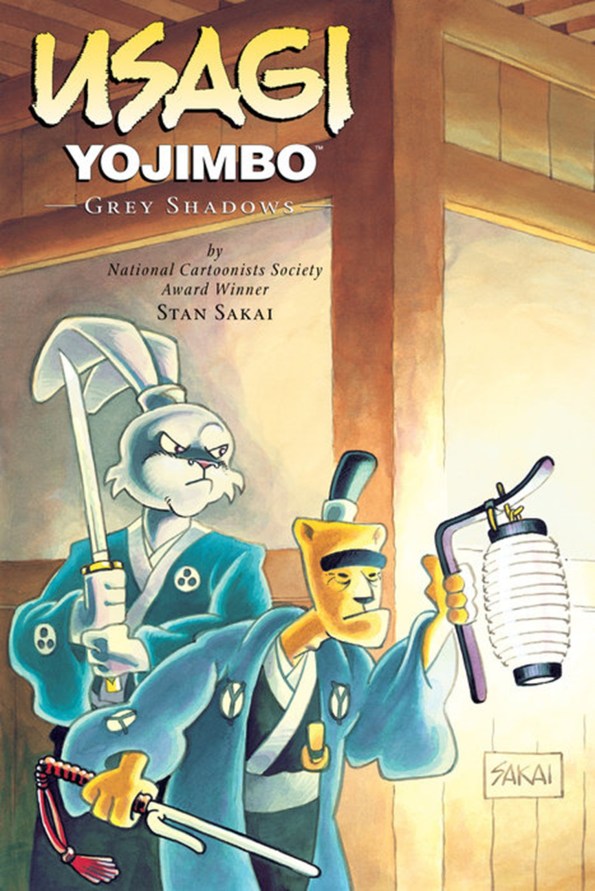
Throwback Thursday: Usagi Yojimbo: Volume 13: Grey Shadows by Stan Sakai

Usagi Yojimbo - Grey Shadows Cover

Publisher: Dark Horse Comics (Paperback – March 2000)

Series: Usagi Yojimbo – Book 13

Length: 200 pages

My Rating: 5 out 5 stars

Amazon

Welcome back to my Throwback Thursday series, where I republish old reviews, review books I have read before or review older books I have only just had a chance to read.  For this week’s Throwback Thursday I check out another epic entry in the amazing Usagi Yojimbo series by Stan Sakai with the 13th volume, Grey Shadows.

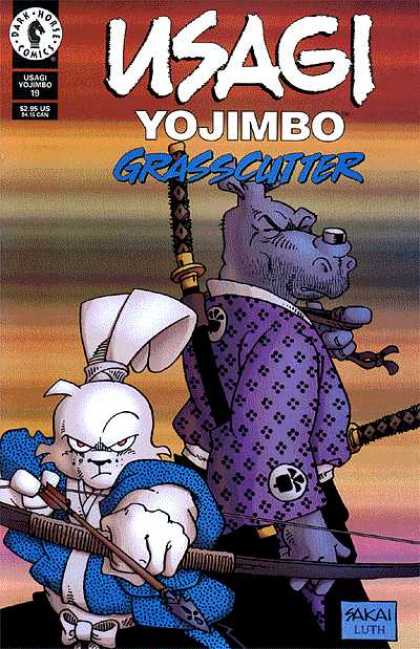
Usagi #23

I had a lot of fun reviewing the 12th volume, Grasscutter, last week and it set me down a bit of a reread journey which saw me revisit several other Usagi Yojimbo volumes.  As such I thought I would take the time to do another review of one of Stan Sakai’s comics, and luckily the next one on my list, Grey Shadows, is a particularly good one.

Grey Shadows takes place immediately after the massive events of Grasscutter and details several adventures that rabbit ronin protagonist Miyamoto Usagi goes on during this period.  Made up of issues #23-30 of the Dark Horse Comics run on the Usagi Yojimbo series, Grey Shadows returns to the series norm of featuring several shorter stories, each of which pit Usagi against a new threat or opponent.  Grey Shadows have several excellent stories, including some that focus on fantastic murder mystery elements while simultaneously introducing interesting new characters.

The first story in this volume is the intriguing and touching entry, My Father’s Swords.  This single-issue story first sees Usagi at the temple of his friend priest Sanshobo recovering from his deadly duel with the demonic spearman Jei at the end of Grasscutter.  Still troubled by the disappearance of Jei’s body and the sudden burden of being responsible for the legendary Grasscutter sword, Usagi journeys out from the temple to scout the surrounding area and determine if it is safe to move the divine blade.  His journeys eventually lead him to meet young wandering samurai, Donbori Chiaki, whose father was an old friend of Usagi’s who served with him under Usagi’s former lord.  While travelling with Chiaki, a chance encounter reveals secrets that will rock Usagi’s soul as a samurai.

Usagi #24

This was an interesting first story for Grey Shadows and it is one that I really appreciated.  I liked the excellent start that revisited key events of the previous volume and examined the burden that Usagi, Sanshobo and Gen now bear.  Not only does Sakai use this opportunity to inform the protagonists about some of the other events of Grasscutter that they were unaware of, but it also helps set up the future 15th volume, Grasscutter II, which will end this overall storyline.  Sakai also takes a little time to showcase Usagi dealing with the dark details of the defeat of his adversary Jei, especially after Jei’s body disappeared upon his defeat.  There is a great scene where a clearly shaken Usagi destroys Jei’s fallen black spear to convince himself that his foe is truly dead, although you can tell he doesn’t believe it.  I am rather impressed that Sakai manages to do such a comprehensive wrap up of the events of the previous volume in such a short amount of time, while also leaving room for another interesting story.

The main story of My Father’s Swords is pretty moving, as Usagi is immediately brought back to another trauma, his service to Lord Mifune and the Battle of Adachi Plain (see Volume 2: Samurai and Volume 11: Seasons).  Travelling with the son of an old comrade lets Usagi briefly relive his glory days, before the past is once again thrust upon him when it is revealed that his friend, Donbori Matsuo, is still alive, following his son anonymously as a cripple.  The reasons for Matsuo hiding his existence from his son and the burden he then places on Usagi to keep this secret for him is a little heartbreaking, and it provides more context about the samurai way of life Usagi is bound to.  The entirety of this storyline is handled perfectly, from the great introduction to Chiaki, the fun remembrances of Usagi’s past, to the final revelation about Matsuo that ends the story on a poignant note that will leave you very thoughtful and moved.  I enjoyed some of the clever artistic tricks in this story, such as the dark shade around Usagi when he deals with Jei’s spear, and the fun way in which Sakai slips in the beggar Matsuo into the background of several scenes, revealing his subtle surveillance of his son.  An excellent entry that not only references the events of Grasscutter but also features a powerful story of its own, My Father’s Swords proves to be a great start to this entire volume.

Usagi #25

Sakai follows up the moving first story of Grey Shadows with the dark second entry, The Demon’s Flute, a clever and memorable horror story.  The Demon’s Flute sees Usagi traversing some remote hills only to be drawn to a small town by the haunting melodies of a flute.  Once there, he discovers that the village is under attack by a mystical menace which kills villagers in utter darkness while the sound of a flute plays.  Believing it to be a ghostly figure of a flutist who wanders around with a white tokage (the dinosaur lizards that serve as this world’s main animals), the villagers implore Usagi to help save them.  However, the true evil attacking them proves to be more complicated and sinister than anyone of them believed.

The Demon’s Flute is a great story that shows just how haunting a Usagi Yojimbo story can be, especially when Sakai utilises some of the creepiest elements of Japanese mythology.  While some of the elements of the story are slightly predictable (Usagi has rocked up to save a lot of random villages over the years), the story has a great pace to it that sees Usagi attacked by dark forces he cannot overcome.  The various scenes where Usagi runs around the village chasing the darkness and the sound of a playing flute are extremely tense, and the sudden reveal of the story’s monster proves to be very thrilling.  I loved the great art that surrounded this part of the story, especially as Sakai makes great use of pure blackness to enhance the tension and threat of a scene, with Usagi often only illuminated by a small hand torch.  The final reveal of the monster and the reason for the haunting flute is pretty cool, and I liked the dark sense of honour and duty that drives even the evil and dead of this realm.  While parts of the story are wrapped up a little too neatly, this was still a brilliant entry which reaffirms my love for Sakai’s horror stories.

The next entry in Grey Shadows is the wholesome and enjoyable Momo-Usagi-Taro, which sees Usagi arrive at a large town.  However, he is almost immediately accosted by a group of orphan children who wrangle him into accompanying them to their orphanage, where he tells them an epic tale to keep them entertained.  This is a genuinely nice entry in this volume, which helps to break up the tension and serves as a gentle buffer between the darker stories in the volume.  While Sakai does take the time to do a little set up for the upcoming stories, most of Momo-Usagi-Taro is dedicated to Usagi’s story to the children, which is a retelling of the classic Momotarō folk story.  I always love it when Sakai tells traditional Japanese stories in his comic, especially as you get to see his artistic take on the legend (which usually results in the protagonist being altered to resemble Usagi), and it was great to see this classic tale brought to life in a new way.  Readers are in for a nice story here, and I loved the fun revelation at the end that the orphanage is the same one shown in Daisho, which is supported by the bounty hunter Stray Dog.

Usagi #26

Now we are getting to some of the main stories of Grey Shadows with The Hairpin Murders.  Set across two issues, The Hairpin Murders sees Usagi get involved in a murder mystery case in town when several prominent merchants are killed using a woman’s hairpin.  Teaming up with the brilliant detective, Inspector Ishida, Usagi helps with the investigation and is soon thrust into a long-hidden conspiracy that bind the victims together.  However, the closer they get to the truth the more resistance they encounter from Ishida’s superiors, forcing them to decide just how far they want to go to get justice.

This was an excellent and intriguing story that serves as one of the more impressive entries in this entire volume.  While still maintaining its comic style and focus, The Hairpin Murders reads just like a classic murder mystery story and sees the protagonist involved in a constricted investigation to find the truth.  Sakai sets up this mystery perfectly, and you are soon racing along to find out who is responsible and why.  There are a couple of great twists here, as well as some interesting connections to kabuki theatre, with the eventual reveal of the murderer and their motivations is handled really well.  The story ends on a pretty satisfying note, and it proves to be quite an intense and intriguing story.

Usagi #27

One of the best things about The Hairpin Murders is the introduction of new character Inspector Ishida, who serves as a supporting figure in the rest of Grey Shadow’s stories.  Based on real-life policeman Chang Apana (the inspiration for fictional detective Charlie Chan), Ishida is a hard-boiled police inspector who is tasked with investigating various crimes around his town, mostly murders.  Despite being restricted by feudal Japanese practices (he can’t do a proper investigation of a body), and the interference of his corrupt superiors, Ishida is a brilliant detective, able to solve complex crimes with the most basic of clues.  Ishida gets a great introduction in The Hairpin Murders, as not only do you see him investigating a tough case but you also learn more about his personality, dedication to justice and elements of his tragic past.  It is so fun to see him in action in this story, especially as he has that great fight scene that shows of his unconventional fighting style (which is surprising considering his small, hunched stature), as well as his excellent use of the cool jutte weapon (I love the jutte so much).  However, the real hint at just how complex and fascinating a character Ishida is occurs at the end of The Hairpin Murders when Ishida is presented with a massive dilemma of justice.  It is strongly implied that Ishida, who spends most of the story sticking to the rules, takes justice into his own hands, and I think it fits perfectly into his character arc, while also leaving some ambiguity about how far he went.  This really was one of the best character introductions of the entire Usagi Yojimbo series and it was so successful that Ishida would become a major recurring character in future volumes (such as Volume 32: Mysteries and Volume 33: The Hidden).

The other two-issue long story in Grey Shadows is the compelling and moving tale, The Courtesan.  In The Courtesan, Usagi runs into the scared young woman he has noticed multiple times in the last few stories and saves her from a group of masked attackers.  His actions lead to him gaining the attention of the town’s leading courtesan, the alluring Lady Maple, who begs Usagi to help save the life of her young son, who is the legitimate heir to the local lord.  However, dangerous forces within the lord’s court see Lady Maple kidnapped and her son in danger, with only Usagi able to help.

Usagi #28

This was another powerful story that really helps to make this volume stand out in terms of story building and character work.  The Courtesan is a particularly well-paced story that ties in well with the other entries of the Grey Shadow’s volume.  Sakai has come up with a pretty compelling narrative here, and the secret battle for control of the lord’s inheritance is played out with some awesome elements, such as a dive into the world of Japanese courtesans and including several great fight sequences.  The character of Lady Maple is particularly strong, as not only does Sakai make a lot of effort to highlight her elaborate beauty with his artwork, but he also shows the mother hidden underneath the fancy makeup and costume, one who is concerned solely for the welfare of her child.  This leads up to an epic and tense conclusion, as Usagi faces down all the conspirators, only for his victory to be marred by tragedy.  I loved the powerful ending this story contained, which, while sad, also ensures that several worthy characters get what they most wanted in life.  Easily one of the strongest tales in the entire volume, I always enjoy reading this impressive story.

The final entry in Grey Shadows is the fast-paced and action-packed single-issue story, Tameshigiri, which serves as an excellent conclusion to the entire volume.  Tameshigiri is another mystery story that sees Usagi assist Inspector Ishida to investigate some murders around town.  This time the two friends are looking into a series of random killings by mysterious masked samurai.  The attacks seem extremely random and lacking in motivation, but the two are soon drawn towards the acolytes of a failing sword testing school who may have a dark reason for dropping bodies around town.

Usagi #29

This was a pretty fun and cool final story for the volume, and it leaves an exciting end note for the reader.  Sakai pulls together a fantastic and compelling shorter story here that once again combines murder mystery elements with the traditional comic book action.  While the culprits of the murder are quite clear from the outset, it is pretty fun to see their plan unfold and the protagonist’s subsequent investigation into it.  The reasons behind the antagonists’ actions are pretty fascinating, and the author paints an outstanding picture of desperation and duty that drives them to kill.  I also quite liked the intriguing investigation into traditional sword testing, which ties into the story extremely well and proves to be a fascinating addition to Tameshigiri’s plot.  The entire story leads up to a massive action sequence that sees multiple participants on both sides engage in a deadly battle to the death.  Not only doe we get to see more of Inspector Ishida’s unique fighting style, but Usagi also shines in an awesome duel.  Throw in the amusing jokes about the events of the preceding story, where Ishida clearly knows Usagi is behind some of the mayhem, and you have a very entertaining entry that not only wraps up the Ishida-based storylines extremely well, but also ensures that the reader has some fun on the way out.

I must once again highlight Sakai’s brilliant artistic work in this cool volume, as Grey Shadows contains impressive examples of Sakai’s amazing style.  There are so many beautiful and intricately detailed drawings throughout this awesome volume, and I love how perfectly it enhances the already great storylines.  I particularly love the amount of detail that he throws into the various panel backgrounds, ensuring that the reader sees both the full breadth of Japan’s majestic natural landscape and the traditional feudal style buildings in the towns and villages Usagi visits.  Sakai also does incredible justice to the many battle sequences scattered throughout Grey Shadows, perfectly portraying the intricate deadly movements that make up the character’s sword play.  You always get an impressive sense of how the characters moved as they battled, and I deeply appreciated all the brilliant and brutal fight scenes.  This incredible artwork always pairs so perfectly with the written story, ensuring that this 13th volume was very spectacular and awesome to look at.

Usagi #30

As you can see, I had a lot of fun with Grey Shadows, and it proved to be another excellent entry in Stan Sakai’s Usagi Yojimbo series.  This 13th volume features several outstanding stories, which really dive into their unique protagonists and antagonists and show the full majesty of this version of feudal Japan.  Serving as a key entry in the overall series thanks to the introduction of a cool new character, Grey Shadows is a must read for all Usagi Yojimbo fans and it gets another five-star rating from me.

Amazon

Throwback Thursday: Usagi Yojimbo: Volume 12: Grasscutter by Stan Sakai

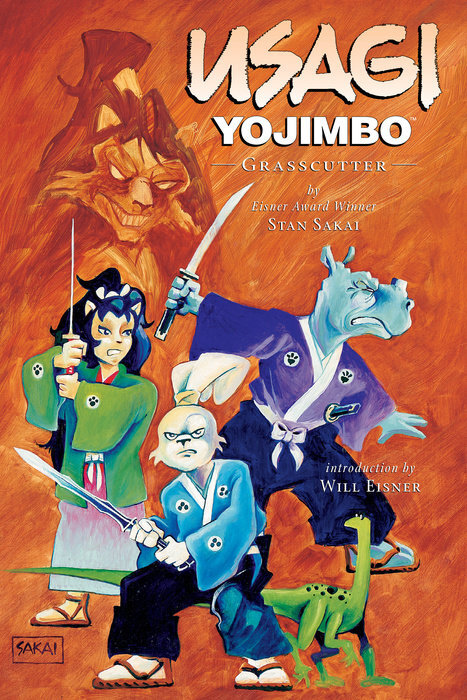
Usagi Yojimbo - Grasscutter Cover

Publisher: Dark Horse Books (Paperback – 1999)

Series: Usagi Yojimbo – Book 12

Length: 255 pages

My Rating: 5 out of 5 stars

Amazon

Welcome back to my Throwback Thursday series, where I republish old reviews, review books I have read before or review older books I have only just had a chance to read.  For my latest Throwback Thursday I return to my very favourite comic book as I look at the 12th volume in the epic Usagi Yojimbo series by Stan Sakai, Grasscutter.

Usagi #13

It has been a little while since I covered one of these Usagi Yojimbo volumes in a Throwback Thursday article.  I had a bit of trouble getting this specific volume, which kind of put everything on pause.  Despite my belief that I had a whole collection of the Usagi Yojimbo comics, it turns out I was missing the 12th volume and I honestly have no idea how I could have misplaced my copy (or did I ever really own it? Who knows?).  To fix this oversight, I recently ordered a second-hand copy from Amazon and managed to get it shipped down here from America.  Now that I finally have a full collection, I can get back to reviewing this entire epic series, which is proving to be so much fun.

A quick refresh about this series before we start: the Usagi Yojimbo comics are the incredible work of legendary comic author and artist Stan Sakai, who has been working on this series for nearly 40 years.  Made up of a ton of amazing volumes, the comic is set in an alternate version of feudal Japan populated by anthropomorphic animals.  The series follows the rabbit ronin Miyamoto Usagi, a wandering bodyguard and adventurer who gets involved in all manner of troubles as he faces off against criminals, bandits, ninja, monsters, psychopaths and ambitious lords.  Combining brilliant stories with complex characters, cool action, elaborate scenarios and outstanding artwork, this series is an absolute masterpiece and it is one that I have adored for years.

Usagi #14

The 12th volume of this series is Grasscutter, which serves as a particularly major entry in the entire Usagi Yojimbo line.  Containing issues #13-22 of the Dark Horse Comics run, this volume unusually contains a single story, rather than the multiple shorter, episodic tales typical of this series.  Bringing together several intriguing story threads from previous comics and reuniting several of the more distinctive supporting characters, Sakai tells his most ambitious tale, and the results is absolute magic.

Following a destructive war centuries ago between two rival houses, the nation of Japan is now firmly controlled by the shogun and his court, while the emperor rules only as a symbolic figure, detached from the politics of the realm.  While many are content to live within the shogun’s peace, there are some who seek power and prestige through the return of the imperial family to true power.  But with the full might of the military and the samurai behind him, only one thing could possibly inspire the people to revolt against the shogun: the legendary heaven-forged sword, Kusanagi the Grasscutter.

Usagi #15

However, this divine sword was lost generations ago in the battle that saw the Imperial family overthrown, and it now rests at the bottom of a watery strait, impossible to recover.  Undeterred by the odds against them, a small contingent of rebellious lords have initiated a conspiracy to overthrow the shogun by any means necessary.  Calling upon the powers of a mysterious witch, the conspirators hope to obtain the sword through sorcerous means.  While they succeed in freeing Grasscutter from its watery tomb, fate ensures that the sword ends up in the mostly unlikely of hands, that of the wandering samurai Miyamoto Usagi.

Unsure what to do with the legendary sword, Usagi soon finds himself pursued by the forces of the conspirators and must fight with everything he has to keep it out of their hands.  But the events of this conflict spread far beyond Usagi, and soon everyone he knows is in danger as the conspirators attempt to kill his friends Tomoe and Lord Noriyuki to stop them bringing Grasscutter to the shogun.  At the same time, the bounty hunter Gen and the rogue swordswoman Inazuma as drawn from their own scuffles into the greater battle for Grasscutter, especially when they encounter the feared demon-spearman Jei.  Can Usagi and his friends survive the overwhelming forces arrayed against them, or will the nation be thrown into war once again with the resurgence of the Grasscutter?

Usagi #16

Wow, just wow!  This is such an impressive comic that is so very epic in scope, storytelling and major character moments.  Sakai has done a brilliant job with this cool volume, and I loved the brilliant narrative he cooked up for Grasscutter, especially as it ties into so many major moments from the previous volumes.  Filled with intense action, brilliant set pieces and some beautiful art, Grasscutter is an incredible volume that, unsurprisingly, gets a full five-star rating from me.

I loved the incredible story that Sakai has featured in Grasscutter, especially as, in a departure from the series’ usual style of short stories, this volume features one massive and complex story.  This change in story length works extremely well and ensures that this volume stands out as a major entity in this epic series.  Sakai sets his narrative up carefully, with the initial issues of the comic dedicated to explaining the importance of the sword Grasscutter and how it was lost during a deadly civil war.  After establishing the significance of this weapon, the main narrative quickly gets into full swing, continuing one of the storylines from the previous volume, Seasons, and showing the members of the Conspiracy of Eight working to summon the sword from the bottom of the strait using possessed crabs (it makes sense in context).  As this is occurring, several other intriguing storylines are set up and you are soon following Usagi as he does his usual wandering routine, as well as other great side characters like Gen, Inazuma, Tomeo and Lord Noriyuki, as well as the deadly villain Jei.  Having all these characters caught up in these events makes for quite an interesting and elaborate tale, with each of them getting their own distinctive storyline that slowly merges with the others.  For example, Usagi finds himself in a desperate battle against the forces of the conspirators, Gen attempts to hunt down Inazuma for the big bounty on her head, only to run afoul of bandits and police, Tomoe attempts to save Lord Noriyuki from a treacherous ambush only to run into a far more dangerous foe, while Jei finds himself drawn towards the power of the divine sword.

Usagi #17

All these storylines come together extremely well as the story proceeds, often in some explosive and action-packed ways.  Usagi, in his pursuit of the sword, finds himself once again teaming up with Gen, only to run right into Jei when he is at his most dangerous.  Meanwhile the intense storyline surrounding Tomeo and Noriyuki has some large set pieces as the two attempt to escape the army chasing after them.  While mostly separate, these two storylines complement each other nicely, especially as the ambush on Tomeo and Noriyuki is due to the conspirators searching for Grasscutter, and it serves as a dramatic side adventure to the main story.  There are some amazing moments here, and I was particularly impressed with the storyline that saw Noriyuki come face to face with his father’s worse enemy in a complicated manner.  The big finale involves the final fight between Usagi and his mortal enemy, Jei, which sees some absolute carnage.  The subsequent damage and the impossible consequences will leave you reeling, and this entire story concludes perfectly, not only bringing the impressive narrative around Grasscutter to a satisfactory end, but also setting up some additional interesting storylines and character arcs.  This entire volume is just so damn epic, and I really appreciate the way in which Sakai journeys back to many of his previous storylines and utilises elements from them here, although it does mean that Grasscutter isn’t a great entry for first-time readers to check out.  The great combination of action, character development and intriguing world-building elements is just exceptional, and this entire comic is brilliant from start to finish.

Usagi #18

One of the main things that I always love about the Usagi Yojimbo comics is Sakai’s use of intriguing elements from Japanese culture and history to compliment his excellent original storytelling.  This is particularly true in Grasscutter as Sakai utilises some of the most iconic parts of Japanese mythology and history as the basis for much of the plot, particularly around the legendary sword Kusanagi-no-Tsurugi (Grasscutter or Grass-Cutting Sword).  Sakai, who has clearly done a ton of research here, produces an amazing interpretation of the origins of the sword, going all the way back to the Japanese creation myth and showcasing the origins of the Kami and their many descendants.  He then goes into the history of the sword, showing its discovery of the sword, the events that resulted in the name change to Grasscutter, before going all the way to the Japanese Civil War (the Genpei War), that saw the rise of the shogunate and the decline of imperial authority.  This ends with a brilliant showcase of the massive and destructive naval battle between the two factions which led to the death of the young emperor and the loss of the sword.  The loss of the sword, as recounted in The Tale of the Heike, becomes a key part of this narrative, and it is so fascinating to see its sudden return be used as a major story element.  Readers unfamiliar with Japanese history or mythology get a brilliant understanding of these cultural elements at the start of the book, and this allows the rest of the story to flow perfectly.  I deeply enjoyed how Sakai brought all these cool moments to life (even if he does simplify it in places for narrative reasons), and it ended up being an exquisite and clever start to the book.  Throw in a very detailed and fascinating notes section at the back from Sakai, explaining his research and how it influenced his story, and you have some exceedingly cool historical elements that are expertly utilised to create an epic Japanese tale.

While I had a lot of fun with the story, action and Japanese cultural elements, one of the main highlights of Grasscutter is the substantial character work that occurs within.  Due to its length and scope, Grasscutter serves as a major part of the Usagi Yojimbo series and as such, it features many of the best supporting characters from the previous volumes.  All these characters get some substantial storylines in this book, either as protagonists or villains, and it was extremely fascinating to see what happened to some of them.  Sakai melds the unique character storylines together into one cohesive and powerful narrative which does an excellent job exploring each of the characters and giving them key moments in their storylines.

Usagi #19

Unsurprisingly, much of the story focuses on the character of Usagi, who serves as the main protagonist of the story.  Thanks to his usual luck, Usagi winds up finding the blade immediately after it emerges from the water and is soon thrust into the midst of the conflict surrounding it.  This immediately puts him in a major dilemma as he is uncertain what to do with the sword, as all the sides who would claim it (the shogun, the emperor, even some of his own friends) would all use it for their own benefit and the nation would likely suffer as a result.  As such he fights incredibly hard to hold onto the blade for everyone’s good, and this forces him into some increasingly desperate battles.  Usagi gets pretty beat up and exhausted throughout this entire ordeal, and his final match with Jei pushes him to the limit and strikes him at his very core.  While he doesn’t get a major amount of development in this story, he still served as a great centre for the plot and it is always fun to follow along on one of his adventures.

You can’t have a major Usagi story without his friend, Murakami Gennosuke (Gen) showing up and trying to get paid.  The rhino bounty hunter has an excellent story which starts when he unsuccessfully tries to claim a bounty on some dead criminals he discovers in the woods.  This almost immediately backfires on him and forces him to deal with all manner of corrupt cops and murderous bandits as he attempts to make a little money.  His misadventures lead him to face off against Inazuma, the deadly swordswomen who Usagi encountered in the 10th volume, The Brink of Life and Death.  Inazuma, a former innocent girl turned sinister killer, is still being pursued by assassins and bounty hunters who want the massive price on her head.  Naturally Gen decides to chase after her, and this results in a pretty brutal fight between the two, which really showcases just how dangerous Inazuma can be.  The subsequent storylines are also fascinating as Gen gets dragged into the fight for Grasscutter by Usagi and Inazuma goes deep into her own soul when she encounters Jei.  This results in some extremely dark moments for both characters, and it was captivating to see what happened to them throughout the volume.  The final reveals about Inazuma and her future are very grim, and it sets up some excellent storylines in the future.

Usagi #20

There are also some brilliant storylines going on around the characters of Tomeo and Lord Noriyuki.  While primarily separate from Usagi and his adventures, Tomeo and Noriyuki find themselves under attack and are pursued throughout the land by murderous assassins and samurai (much like in their first appearance in Volume 1: The Ronin).  Their dangerous journey becomes even more perilous when they run into a familiar face, General Ikeda, the character so perfectly featured in the short story The Patience of the Spider from the previous volume.  Ikeda is a great character in that he is a former general who, after failing to kill Noriyuki’s father in a revolt, has spent the last several years living as a peasant, a simple life he became content with.  However, when he suddenly finds the son of his mortal enemy in his house, he must choose whether to take up the old grudge or forge a new path for himself.  Watching the internal struggle that occurs within Kieda is pretty awesome, and his interactions with the suspicious Tomeo and Noriyuki are just wonderful.  I deeply enjoyed how this story unfolded, and it was some of the best character work in the entire volume, not to mention the most action-packed.

The final major character I really to talk about is the infamous Blade of the Gods, Jei.  First appearing in the third volume, The Wanderer’s Road, the crazed killer Jei has been one of the best villains in this series, constantly following Usagi and trying to kill him (another good story was in the sixth volume, Circles).  Jei and Usagi finally come face to face again in Grasscutter when Jei recovers the sword and attempts to use it for his own dark purposes.  Sakai really goes out of his way to make Jei appear as a deadly badass in this comic, with his first appearance shows him killing an entire detachment of samurai by himself.  His subsequent wanderings see him interact with several other side characters for the first time in the series, and their reactions to his weird aura and power are brilliant.  I loved how the dark Jei is perfectly offset by his companion, the young, innocent girl Keiko, who is the only person Jei cares about and will not hurt.  They have some great moments in this comic, and it is fascinating and troubling to see the interactions between them.  However, Jei’s big moment in Grasscutter is his rematch with Usagi, which has been brewing for ages.  Watching these bitter enemies face each other again is pretty fantastic, and you get some amazing moments during their duel.  The conclusion of their fight is very clever and really alters your opinion about both Jei and Usagi, while also seeming to confirm Jei’s supernatural background.  Watching the pure fear and shock on the usually unflappable Usagi when he encounters the many mysteries of Jei is so awesome, and Jei continues to shine as a brilliant antagonist in this volume.  His intriguing final fate will leave you shocked and surprised as a new version of the character emerges.  All this character work and more really helps to turn this outstanding comic into a true masterpiece, and I have so much love for Sakai’s ability to create such amazing and iconic figures.

Usagi #21

The final thing that I want to highlight is the impressive artwork contained within Grasscutter.  As with all the Usagi Yojimbo volumes, all the art of this comic has been drawn exclusively by Sakai, which is exceedingly impressive.  His drawing skills are amazing on multiple levels as he portrays such complex adventures with a simple yet beautiful style which I have so much love for.  As with most Usagi Yojimbo comics, Grasscutter is filled with stunning drawings, from amazing landscape shots that show off the beauty of the Japanese wilderness, to close-up shots of the deadly battle sequences.  There are some amazing scenes throughout this book, although I personally really enjoyed the fantastic and powerful renderings of key moments of Japanese history and mythology that were featured in the volume’s first two issues.  Everything from the formation of the lands to the events that gave Grasscutter its name is very cool, and Sakai expertly imparts his own style into these intriguing spiritual stories.  The massive battle that ended the civil war is shown in some exquisite detail here, and I loved how he showcased this elaborate and deadly naval fight.  Of course, you cannot forget the brilliant final duel between Usagi and Jei, which was such a highlight of the story.  Sakai goes out of his way to make this fight as epic and as brutal as possible, and you get a real sense of both participants skill and determination to win.  The mystical aftermath of their fight looks extremely awesome as well, and I loved all the intriguing and unique detail Sakai featured here, including the spooky alterations that happened to one of the characters.  Another brilliant artistic outing from Sakai that perfectly supported his incredible storytelling and character work and is some must see drawing.

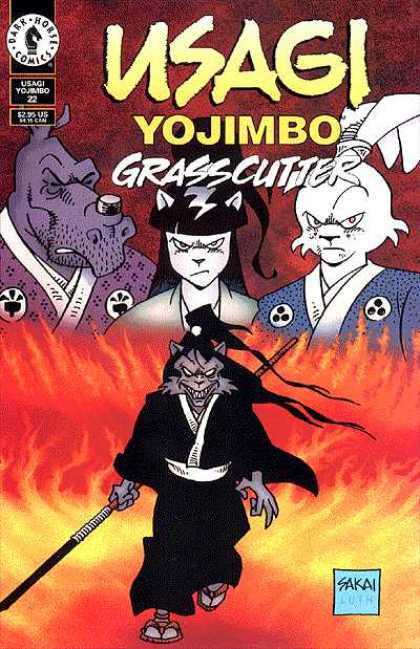
Usagi #22

As you can no doubt tell from the glowing descriptions above, I deeply enjoyed this 12th volume of the Usagi Yojimbo series.  Stan Sakai was in excellent form when he created the powerful and exciting Grasscutter, which features one of the author’s most impressive and extensive stories.  Featuring all his best characters, his great love of Japanese culture, as well as some impressive artwork, Grasscutter shines as an outstanding entry in this brilliant series, and it is one that cannot recommend enough.

Amazon

Throwback Thursday – X-Factor: Volume 1: The Longest Night

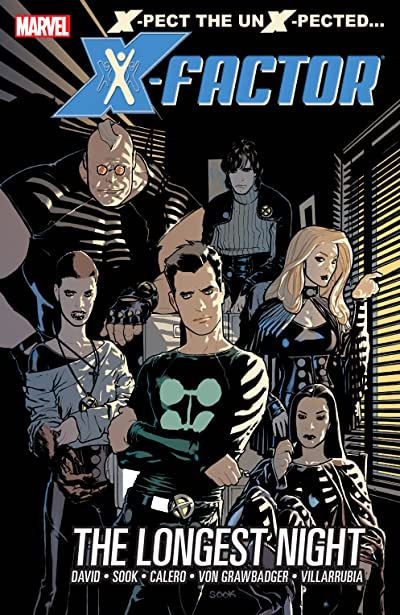
X-Factor - Volume 1 - The Longest Night

Publisher: Marvel Comics (Paperback – 7 March 2007)

Series: X-Factor (Vol. 3) – Volume One

Writer: Peter David

Pencils: Ryan Sook & Dennis Calero

Inks: Wade Von Grawbadger & Dennis Calero

Colour Art: Jose Villarrubia

Letters: Cory Petit

Length: 144 pages

My Rating: 5 out of 5 stars

Amazon

Welcome back to my Throwback Thursday series, where I republish old reviews, review books I have read before or review older books I have only just had a chance to read.  For this Throwback Thursday I look at the start of one of the best comic series I have ever had the pleasure of reading, with The Longest Night, the first volume in Peter David’s impressive and incredible X-Factor series.

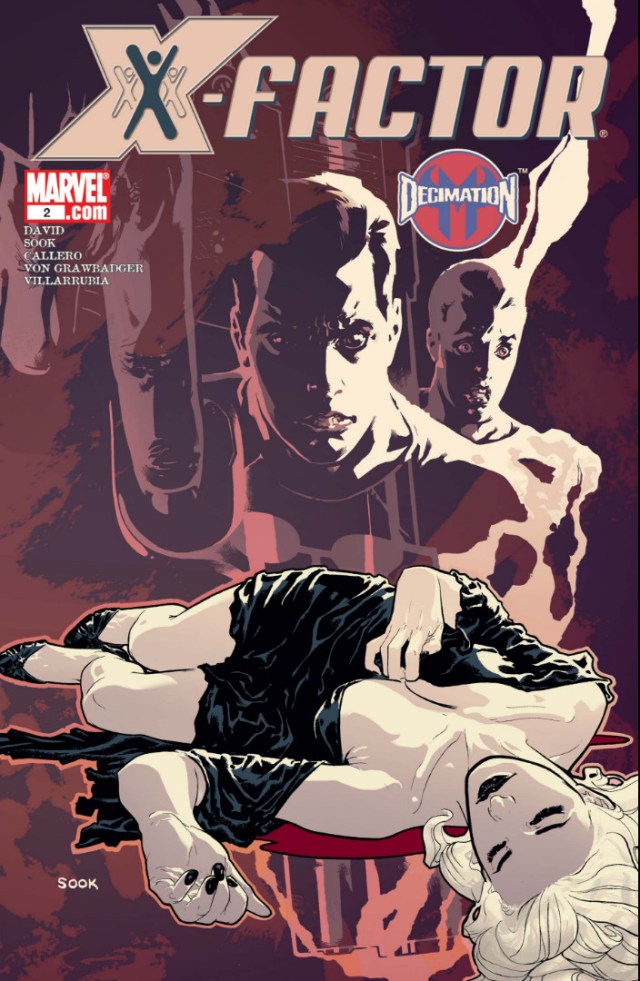
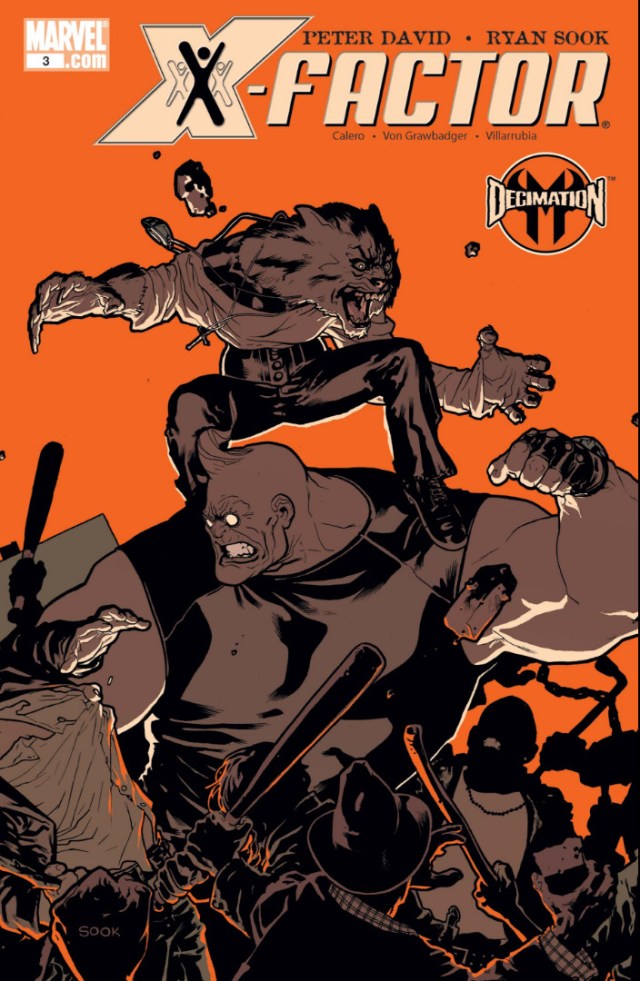
X-Factor - Vol3 - 2 Cover

There are many awesome comic series that I have a great appreciation for, but to my mind one of the most entertaining, clever and captivating series I have ever had the pleasure of reading has to be the third major version of the X-Factor title that ran between 2005 and 2013.  This series span off the limited series, Madrox: Multiple Choice, with its entire run written by Peter David, with a rotating team of talented artists.  Also known as X-Factor (Vol.3) or X-Factor Investigations, this long-running series focused on a team of mutants who formed a detective agency after the events of House of M.  Calling themselves X-Factor Investigations and led by Jamie Madrox, the Multiple Man, this series followed the team as they investigated mutant related crimes, protected the area of New York formerly known as Mutant Town, and did general superheroics, often for a fee.  Despite its odd-sounding plot, this was an incredibly good series, and it is one of my all-time favourite comic series.  I have recently done a bit of a re-read of this series and thought that it would be a good time to talk about it on my blog, starting with this first volume, The Longest Night.

X-Factor is back, and this time they are in business for themselves as X-Factor Investigations, the weirdest and only mutant run private investigative agency in New York.  Led by Jamie Madrox (the Multiple Man), made up of the ragtag group of heroes including, Strong Guy, Wolfsbane, Siryn, Rictor and Monet, X-Factor investigates the cases no-one else will, especially if it helps current and former mutants.  However, X-Factor are about to find themselves investigating the most sinister case of their brief tenure, when a new client walks in the door, accompanied by the mysterious Layla Miller.  Following the breadcrumbs given to them by Layla, X-Factor begins looking into the rival organisation, Singularity Investigations, who have dire plans for the future of all mutant kind.  At the same time, X-Factor finds itself in the middle of the deteriorating conditions in Mutant Town, as they start their own investigation into what really depowered most of the mutant species.

As their investigations continue, X-Factor find themselves encountering crazy events and dire obstacles from all sides.  Forced to protect their client from being arrested for murder, as well as the deadly attentions of Singularity Investigations, X-Factor struggles to solve the case before it is too late.  However, their actions have awoken a dangerous enemy whose knowledge of time could prove disastrous.  Can X-Factor succeed and become the team the world needs, and what role will Layla Miller play in their future, especially as she actively attempts to hide the events of House of M and Decimation from her new friends?

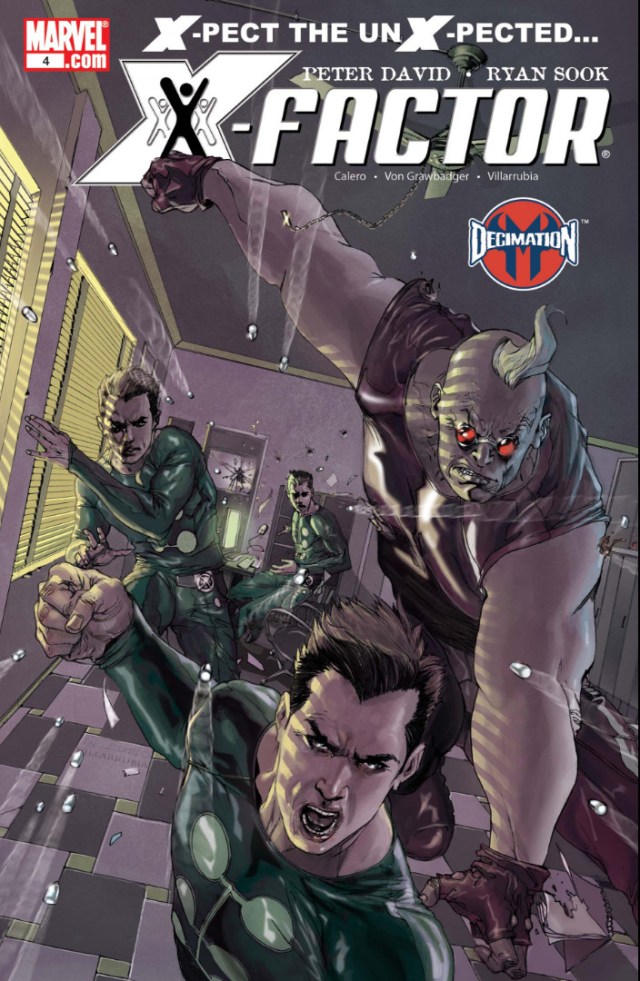
X-Factor - Vol3 - 3 Cover

The Longest Night is a brilliant and intense comic volume that serves as the perfect introduction to this outstanding X-Factor series.  Containing issues #1-6 of X-Factor (Vol. 3), The Longest Night contains an incredible and epic story by Peter David that expertly introduces the new team and sets up many of their future adventures, perfectly accompanied by the excellent art of Ryan Sook and Dennis Calero.  This incredible comic will really start your fall towards X-Factor obsession.

To start this amazing series off, David has come up with an impressive narrative that not only introduces the team but also contains several clever mysteries and dangerous threats.  The Longest Night starts off in a very interesting way, with Madrox attempting to save the life of a suicidal Rictor, while other members of the team find themselves under attack from sinister forces.  The story quickly develops, with new player Layla Miller directing X-Factor Investigations towards the mysterious Singularity Investigations, while also implementing her own mysterious agenda.  This sets the X-Factor team down a dark path as they contend with the corrupt and deadly Singularity employees as well as other malicious threats that pop up.  I deeply enjoyed the main storyline, especially as the protagonists are forced to intervene in a murder case to prove that their client is innocent, despite dangerous interference from their competitors.  This leads to some dark consequences, as one of the team is attacked and then kidnapped in scenes that strongly remind you of a dark thriller.  The new villains of this early part of the series, Singularity Investigations and their management team the Tryps, prove to be pretty sinister, and I liked some of the unique storylines that are started up around them.  There are also some impressive and clever sequences that explore the aftermath of the Decimation, as well as the current mental states of the various team members, which is extremely powerful and deeply moving.

I loved the cool style that this comic had, especially as the creative team were trying to give it a classic noir detective vibe at times.  While some of the best themes from the X-Men comics are featured within this volume, such as prejudice, dual self-hatred and love of mutant abilities, and the fallout from the House of M limited series, this comic really stands on its own, and I loved the combination of mutant issues and crime fiction.  There is a certain dark edge to many of the storylines, with the character dealing with brutal murders and attempted killings.  While much of the focus is on the darker and more mature vibes, this comic also has a wicked sense of humour behind it which I deeply enjoyed.  All the characters are pretty fun, and there are some dark and clever jokes sprinkled throughout the story, especially when it comes to group clown Madrox and resident mystery girl Layla Miller.  This combination of superheroics, dark humour and crime fiction makes for quite an impressive read, and I always find myself getting really drawn into it.  Due to how many times I have read this series of the years I also really respect The Longest Night as a first entry in the overall X-Factor (Vol.3) series.  While all the best elements haven’t been introduced yet, this comic is still off to a brilliant start, and I loved all the hints and brief mentions of the events yet to come.  Multiple storylines are perfectly set up here, and there are some great references to upcoming events and some key moments from recent comics.  This proves to be an exciting and impressive first entry in this series, and I love how it spawns so many awesome moments in the future.

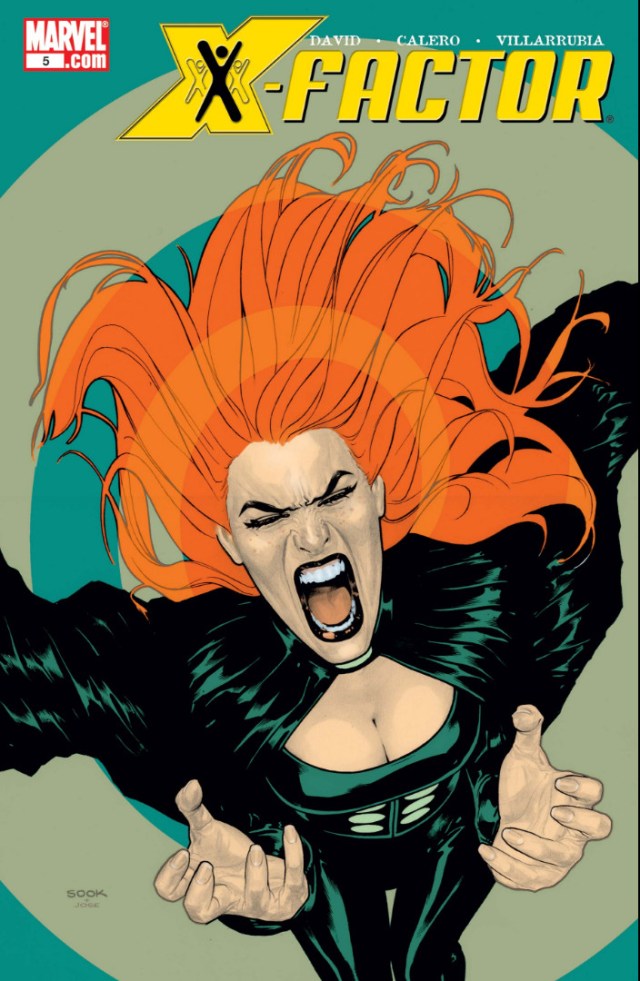
X-Factor - Vol3 - 4 Cover

One of the things that has always impressed me about this version of X-Factor is the excellent cast of characters featured.  The team is an intriguing combination of some of the more unique and enjoyable characters from the various X-Men comics.  The initial line-up featured in The Longest Night is a great example of this, as David has featured several previous X-Factor members alongside some interesting new choices.  There is a real mismatched feel to the characters, as not only are they angry and discontent, but there is some thinly veiled antagonism going on between them, despite them all being on the same team.  On top of that, they end up being some of the most damaged and complex figures you can expect to find in Marvel comics, as they are all dealing with unique personal issues.  This results in some major personality clashes and great internal struggles that really enhances the drama of the narrative and results in some brilliant storytelling.

The main character of this series is team leader Jamie Madrox, the Multiple Man.  Jamie is a very interesting figure in this series, due to the many divergent and tragic issues that result from his ability to create duplicates of himself.  Attempting to be a grounded and calm figure for the team, Jamie often finds himself undermined, not only by his time but also by his own dupes, which proves to be both entertaining and occasionally emotionally powerful.  A lot of these great elements are explored in The Longest Night, and you get a great sense of who the character is and his complex feelings, even if you haven’t read the lead-in limited series, Madrox: Multiple Choice.  Jamie cuts a great figure as a noir-inspired private detective leading a team of misfits, but in reality, he is scared and emotionally drained, even before the series starts.  Jamie ends up spending most of this comic battling his own inner demons and indecision, while also having difficulty controlling his team.  While in many ways Jamie is a tragic figure, he also serves as one of the main comic reliefs, and his smart-assed comments and dark jokes add a lot to the narrative, while barely hiding his struggles within.  I really liked how this comic spent significant time exploring Jamie’s power to create duplicates, as well as the many problems associated with it.  What makes this power very unique is the way that each of his dupes has their own personality, most of which are a manifestation of his own fears, internal struggles, inner dark side and more.  While this is often played for comedic effect, especially as his crazier dupes say some very random stuff, certain dupes show off a real mean side, such as one who pretends to be Zen, but is actually Jamie’s unpredictable side, his “X-Factor”.  This was an overall incredibly impressive introduction to Madrox, and it serves as a brilliant base to his various follow-on storylines that are such an impressive feature of the rest of this series.

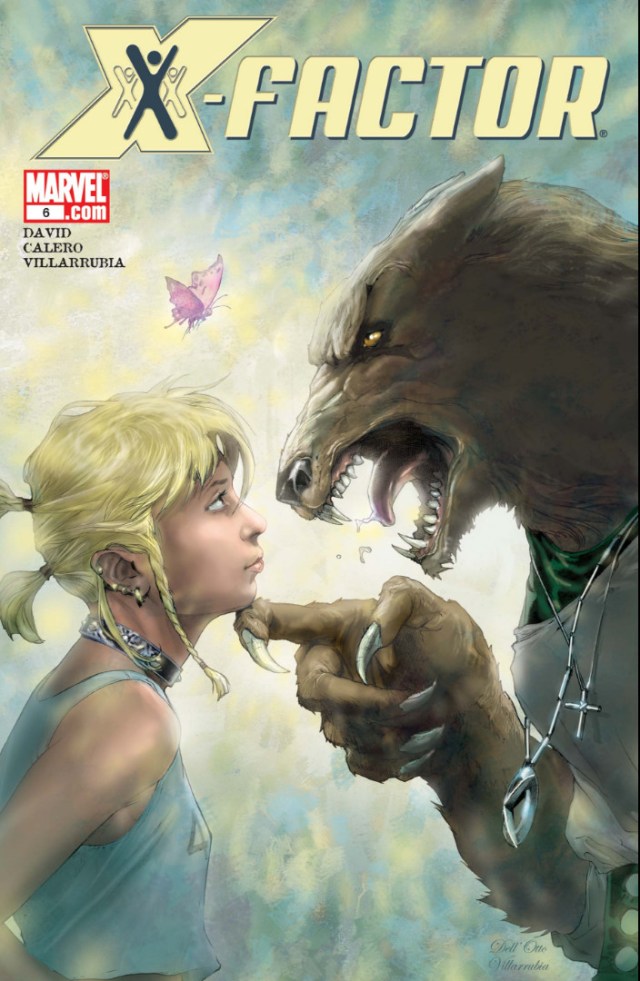
X-Factor - Vol3 - 5 Cover

Aside from Madrox, the team is made up of former X-Factor members Julio Richter (Rictor), Guido Carosella (Strong Guy) and Rahne Sinclair (Wolfsbane), as well as X-Factor newcomers Theresa Cassidy (Siryn, daughter of Banshee) and Monet St. Croix (M from the Generation X comic).  I really liked this great blend of figures as it produces some awesome and entertaining team dynamics, such as having the arrogant party girl, Monet, getting into various disputes with the other characters.  All five of these characters have some interesting moments in this volume, such as Strong Guy and Wolfsbane’s interference against an anti-mutant riot, or Monet’s brief emotional breakdown after telepathically experiencing the murder of a young woman.  However, I the best moments of this volume probably occurred with Siryn and Rictor.  Siryn, who serves as a bit of a second-in-command, has several key storylines around her, and she ends up being the one most obsessed with the actions of Singularity Investigations.  The subsequent brutal attack and creepy hostage situation she suffers from is pretty horrifying, and the resultant mental and physical damage makes for some harrowing moments.  Rictor also has a great storyline in this series, as he is the only character on the team who lost their powers in the Decimation.  This leads him to some serious depression, especially as the first scene in the comic involves his attempted suicide, which is only just stopped by the rest of the team.  The author’s compelling and thought-provoking dive into Rictor’s feelings of loss and uncertainty is pretty heartbreaking, and I loved this complex look at the terrible impacts of the Decimation.  Despite his lack of powers, Rictor still serves as a great member of the team, and his involvement in saving Siryn from a terrible situation is extremely cool and very intense.

However, my favourite member of this new version of X-Factor had to be the young and mysterious Layla Miller.  Layla was first introduced as a unique character in House of M, as she could remember the real world and bring the memories back to the various heroes.  She reappears in this volume right in the first issue, walking into office, providing information and declaring herself a member of the team.  Despite the confusion of the other people on X-Factor and the fact that she’s a child, Miller manages to stick around on the team, mainly due to her uncanny insights into the future.  This results in some brilliant and hilarious moments, especially as she can manipulate everyone around her and change events to match what she wants.  Her sarcastic manner and funny reactions really help to enhance the humour of this entire comic, and I loved seeing her change future events in the most amusing ways.  The cloak of mystery and uncertainty that David brilliantly builds up around her is very impressive, and you have no idea the real reason why she is there or what she can do, with her only explanation to that being her favourite saying: “I’m Layla Miller, I know stuff.”  Despite this secrecy, the reader ends up getting some interesting reveals about her, such as her past in the orphanage, her secret mission to stop X-Factor finding out about House of M, and her tragic self-description as the Chaos Theory butterfly, which are pretty cool, even if they result in more questions than answers.  I really loved how dark the creative team made her at times, especially in that brilliant scene where she kills a Singularity Investigations assassin by simply taking screws out of a bath.  Her confession about her motivations to the assassin just before he gets killed is pretty heartbreaking as you can sense she’s revealing a deep secret that is eating her up.  The subsequent conversation as the assassin lies dying is just so damn dark that I love it, especially as she follows up the dying man’s question about who she is with another grim “I’m Layla Miller, I know stuff.”  Throw in that final scene where Rictor confronts Layla about her manipulations, only to completely miss her bringing a dead butterfly back to life, and you have such an impressive sequence of character moments.  I have so much love for this brilliant character, and while the rest of the team is good, Layla Miller is the real X-Factor of this series.

X-Factor - Vol3 - 6 Cover

The cool story and awesome characters are very well supported by the incredible artistic work of Ryan Sook, Dennis Calero and their team.  These great artists give The Longest Night a darker feel that fits into the noir-inspired narrative extremely well.  There are brilliant examples of shading and shadow throughout the comic, and you get a real sense of the dingy nature of the story and the depressed location of Mutant Town.  I deeply enjoyed the cool character designs featured throughout The Longest Night, especially as there is an interesting combination of new styles and classic looks from other X-Men comics.  You get a real sense of the dark emotions hiding within many of the different characters, especially around the various duplicates of Madrox, who run the gauntlet from depressed, to scared, to utterly insane.  However, I felt that the best artwork was utilised around Layla Miller, and perfectly helped to capture her true nature.  I particularly loved that brilliant scene where she killed the assassin in X-Factor headquarters, especially the final few panels.  Due to her machinations the power is out, resulting in her lighting the scene of the dying man with a torch.  The first appearance with her face completely black is just so fitting, especially given her death proclamation to the killer in the panel: ‘Your heart’ll give out in about five seconds.  Your mother will mourn you … but your wife won’t”.  The following two panels with her face in the light highlights her dark expression, followed by a perfectly set up final black panel that could either represent her turning the torch off or the death of the assassin.  I also loved all the panels focused on Layla in issue #6, especially it shows her at her most emotionally compromised as she tries to describe her various issues.  Throw in the reoccurring butterfly that is both dead and alive, and you have an excellent bit of art that emphasises just how complex this figure is.  The villains of this comic are also perfectly shown in this cool artwork, and I was especially impressed with how sinister and disturbed they made the crazy kidnapper in fifth issue.  I deeply enjoyed this and so many other aspects of the art in the volume, and I think it perfectly emphasised the darker nature of this incredibly cool comic.

Overall, The Longest Night was an incredible comic that I would strongly recommend.  The awesome team of Peter David, Ryan Sock, Dennis Calero and the other artists did a fantastic job combining exquisite storytelling with outstanding characters, darker themes and wonderful artwork.  Not only does it stand on its own as an excellent read, but it also works to introduce this superb run of X-Factor and its crime-fiction related storylines.  I have so much love for this series, and I will always appreciate the way in which The Longest Night sets everything up, especially its brilliant characters.  This first volume (and indeed every volume in this series) gets a full five-star rating from me and it comes very highly recommend to anyone wanting to find a unique and powerful comic series to get into.

Amazon

A Practical Guide to Conquering the World by K. J. Parker

A Practical Guide to Conquering the World Cover

Publisher: Orbit (Trade Paperback – 11 January 2022)

Series: The Siege – Book Three

Length: 352 pages

My Rating: 5 out of 5 stars

Amazon

2022 is off to a very good start for me, especially as I have already read an amazing novel that quite frankly may end up being one of my favourite books of the year.  This awesome read was the third and final book in K. J. Parker’s clever and compelling The Siege series, A Practical Guide to Conquering the World.

Over the last few years, I have been having an incredible time reading the incredible and deeply entertaining fantasy Siege series from K. J. Parker.  Parker, a pseudonym for bestselling author Tom Holt, has come up with something very special with The Siege series that combines an interesting new fantasy world with some brilliant humour and intriguing insights into human nature and reactions.  The first entries in The Siege series, Sixteen Ways to Defend a Walled City and How to Rule an Empire and Get Away with It, were both exceptional reads and they were among my absolute favourite books of 2019 and 2020 respectfully.  As such I have been eagerly waiting for a long time, and while I was initially disappointed that A Practical Guide to Conquering the World was delayed until the start of 2022, it ended up being such a great read and worth the wait.

The Siege series is set in an alternate fantasy world that bears some interesting similarities to ancient Europe.  The first book in the series, Sixteen Ways to Defend a Walled City, introduces the Robur Empire, a Roman-esque empire that is destroyed at the start of the novel by a coalition of enemies.  The one exception to this destruction was the Robur capital, simply known as The City, which was able to survive thanks to the actions of a military engineer and conman who was able to come up with some very inventive defences.  The second book, How to Rule an Empire and Get Away with It, was set a few years later and followed a new protagonist, an actor and playwright who is forced to impersonate the City’s figurehead after his death to keep the population’s morale and unity up to keep fighting the ongoing siege.  However, this second protagonist eventually takes control of the city and manages to evacuate it, leading the people to a new life.  The third and final book, A Practical Guide to Conquering the World, occurs during and beyond the events of both the first and second novel (if these books occurred the way they are portrayed) and features a new protagonist in a different land.

Aemilius Felix Boiannes the younger is a minor diplomat and translator assigned to the Robur embassy in the mighty Echmen Empire.  Content to live a relatively blameless life away from the people that wronged him, Felix’s life is forever changed when news of the fall of Robur reaches the Echmen.  Almost killed by the Echmen for no longer having a country, Felix’s life is only spared thanks to a debt owed by barbarian princess.  Determined to no longer live by the whims of others, Felix embarks on an ambitious plan that will reshape all of history.

When the Echmen attempt to enslave the princess’s people, Felix saves her and leads her out of Echmen territory.  Able to convince his new friend to unite the various barbarian tribes, Felix utilises his knowledge as a scholar to lead them to victory over the Echmen.  However, his ambition is not limited to conquering the greatest empire in existence, Felix is determined to take over the entire world and he already has all the tools to do so.  However, not even Felix is able to foresee all the consequences of his actions, and soon the entire world will be turned upside down.  For good or for bad, the story of Felix, the most influential and dangerous man in history, is about to begin.

Well damn, now this was one hell of a read.  Parker has come up with another exceptional read here with A Practical Guide to Conquering the World, combining a brilliant and clever story with incredible humour and an entertaining and compelling look into the human psyche.  Filled with constant laughs, intriguing developments and a truly addictive narrative, this book got an easy five-star rating from me and is near impossible to put down once you start it.

I have had a lot of fun with the great stories that Parker comes up with for this cool trilogy, especially as they are exceedingly entertaining and very unpredictable, even if, due to their complexity and cleverness, they are a bit hard to explain in my inevitable glowing reviews.  Like the rest of the series, A Practical Guide to Conquering the World is a standalone novel that can be read either by itself or as a continuation of the first two books in the series.  This novel is told in the chronicle style and tells the autobiography of the protagonist, Felix, a translator and scholar who finds himself in all manner of trouble when his nation is destroyed while he is in a foreign land.  Able to survive thanks to a recent good deed, Felix is soon dragged into the politics of the nation he is trapped in and attempts to stop the Chinese inspired Echmen empire from destroying and enslaving several neighbouring barbarian tribes.  Forced to put his scholarly knowledge to the test, Felix devises multiple brilliant and unpredictable plans to not only manipulate everyone around him, but to also defeat a massive empire and bend all its power to his ultimate goal of world domination and beyond.  This story goes in some extremely fun directions, and you honestly will not be able to put it down once you start as you become engrossed in seeing what elaborate idea Felix will come up with next.  There are some fantastic ploys and captivating twists scattered throughout this novel, and it is fascinating to see this nobody slowly gain more and more power thanks to his wit and ability to understand people.  I had an outstanding time getting through this story and it is extremely hilarious and very exciting.

A Practical Guide to Conquering the World is part of a larger series which switches protagonists with each entry, providing a new and unique tale of the aftermath of the siege of the City.  This third novel starts around the same time as the first book, Sixteen Ways to Defend a Walled City, and covers several years, going past the events of the second book, How to Rule an Empire and Get Away With It.  It is really interesting to see how this third book ties into everything, especially as the protagonist only has second-hand knowledge of the events of the prior two novels and, thanks to several clever inclusions in this book, as well as the unreliability of the narrators of the other entries, you’re not even certain those events actually occurred.  While new readers don’t need to have any knowledge of the other Siege novels to enjoy A Practical Guide to Conquering the World, I had a lot of fun seeing the mentions and discussions about the events of these prior books, especially as the protagonist is very disbelieving about what he hears.  The inclusion of a recurring character from the past book increases the connection to the rest of the series, although as she is also rather cagey, you have no idea how reliable her recollection of events is.  I loved how compelling this loosely connected series turned out to be, and it was a lot of fun to see how the entire funny saga come together into one entertaining collection.

Just like with the first two books in the series, A Practical Guide to Conquering the World is set around a single protagonist, with the story reflecting their personal account of what they experienced.  This new protagonist, Felix, is another entertaining and interesting central character, a former soldier who, after making some big mistakes and paying the cost for them, is banished to a diplomatic post in another country.  This, and his ability for languages, ironically ensures that he survives the destruction of his homeland and places him in a unique position for his goals.  I personally really enjoyed the cool story that Parker places around Felix and while there are some notable similarities between him and the other protagonists of the Siege books, mainly the fact that he is a conniving and selfish person with impressive insights into human nature and reaction, I think that there are enough differences to keep readers of the series happy.  I loved the focus on his experience with languages and scholarly research, which he uses to great effect throughout the book, manipulating translations for his advantage and then coming up with obscure or historical solutions to the various problems he faces.  Watching him turn this unique knowledge to his advantage, especially once he is inadvertently placed in the centre of world-shaping events, is really cool, and I loved seeing him succeed in his goals.  Parker adds in a great attempted redemptive arc around Felix, which serves as a surprising driving force for much of what he does.  However, readers do have to take Felix on face value, as, like the previous two protagonists of the Siege books, Felix is a bit of an unreliable narrator who may or may not be altering the story to make himself sound better to history.  The final stinger of the book, which hints at the falseness of Felix’s account, is a clever and amusing touch from Parker, and you will come away wondering just how much you believe this character.

Easily the highlight of this book is the amazing humour that Parker has laced his impressive story with.  Parker has an incredible and wicked ability with subtle comedy which permeates the entirety of A Practical Guide to Conquering the World thanks to the unique abilities that occur within.  Much of this humour is derived from the eccentric protagonists’ impressive insights into the human mind, which allows him to manipulate events and people to his favour.  Thanks to some great setup and some outrageous events, the readers get to see this protagonist subtly manipulate everyone, and his explanations for how he gets away with it and the subsequent reactions are extremely amusing.  At the same time, Parker also satirises large parts of the human experience and culture, including the inefficiencies of bureaucracy, the inevitability of betrayal in the name of survival, the herd mentality of groups of people, the unpredictability of starting your own religion, and the inherent suspicion that everyone has inside them.  All of this comes together quite brilliantly throughout the book, and you will honestly be chuckling straight from the beginning, especially as the first joke, about a massive bureaucracy nearly killing the wrong person due to a case of mistaken identity, is very cleverly put together.

Overall, K. J. Parker really did not disappoint with the third and final entry in his hilarious and impressive Siege trilogy.  A Practical Guide to Conquering the World was just as fun and clever as the first two books, and I had a brilliant time reading this captivating fantasy novel.  Containing a wildly inventive narrative set around a compelling protagonist, you will fall in love with this outstanding book, especially as Parker’s comedic inclusions will keep you laughing.  A Practical Guide to Conquering the World is easily going to be one of the best books of 2022 and if you have not checked out The Siege series yet, do yourself a favour and dive into these hilarious and addictive books.

Amazon

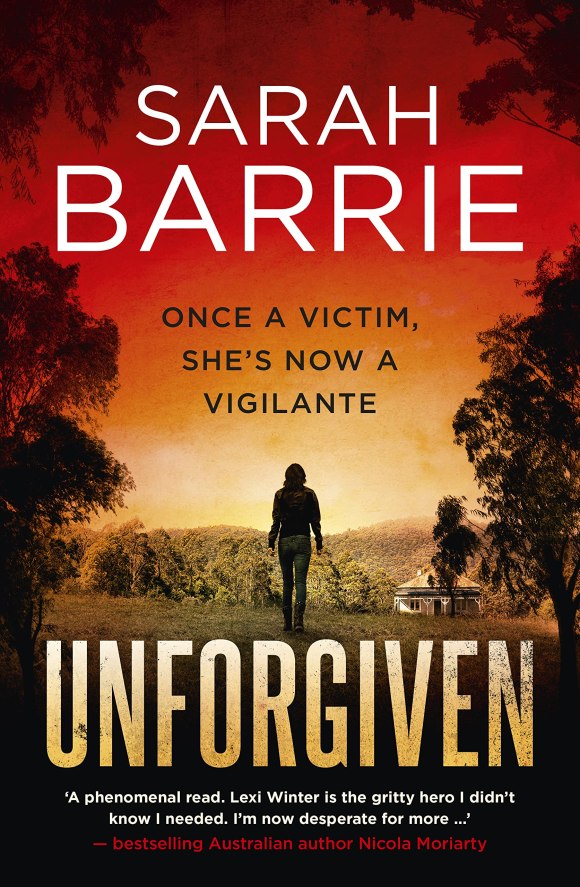
Unforgiven by Sarah Barrie

Unforgiven Cover

Publisher: HQ (Trade Paperback – 1 December 2021)

Series: Standalone/Book One

Length: 480 pages

My Rating: 5 out of 5 stars

Amazon

Talented Australian author Sarah Barrie presents one of the darkest and best Australian thriller novels of 2021 with Unforgiven, a powerful and captivating read that sets determined protagonists against the very worst of human monsters.

Years ago, the city of Sydney was haunted by a terrible paedophile and murderer known as the Spider, who kidnapped, molested and killed young girls, all on camera.  His reign of terror was ended suddenly one violent night thanks to two women, a determined rookie police officer, Rachael Langley, and one of the Spider’s young victims, Lexi Winter, who disappeared never to be seen again.

Now, after years of living on the street, Lexi has grown up tough and hard, determined to escape the tortures of her childhood through alcohol while trying to reconnect with the sister she was forced to leave behind.  However, Lexi is still obsessed with taking down monsters, and with her impressive hacking skills she spends her days tracking paedophiles, entrapping them, and ensuring they are captured by the police.  However, when her latest target proves to be particularly illusive online, she makes a fateful decision to break into his house, only to witness him being murdered.

At the same time, Rachael Langley is now a successful detective inspector, solving some of the toughest crimes in Sydney.  Still lauded for her role in stopping the Spider, Rachael lives in regret for being unable to save Lexi all those years before.  However, everything changes when a man calls her, claiming to be the real Spider and providing proof by horrifically murdering another child on camera.  Quickly establishing a police taskforce, Rachael and her team must determine if the killer is a copycat or whether Rachael captured the wrong man all those years ago.  To solve this case Rachael is going to need help from the last person who wants to see her, Lexi, but can these women work together after everything they have been through?  And what happens when their killer learns that Lexi is still alive and hunting for him?

This was an intense, grim and deeply compelling Australian crime fiction read from Barrie, who has written an amazing and powerful story that proves very hard to put down.  Unforgiven was the first of Barrie’s books that I have read, although several of her other Australian crime fiction novels are quite intriguing and I might try and read them at some point after being so captivated by this epic and moving read.  This was such an addictive novel that it gets a full five-star rating from me.

Barrie has come up with a very impressive and intense narrative for Unforgiven that sees several damaged characters dragged into the web of a dangerous and clever criminal.  The story has a great start that showcases the lives of the main protagonists, Lexi, Rachael and Rachael’s nephew and fellow police officer Finn, as well as giving some hints at the events of the original Spider case that so deeply impacted the female main characters.  After this quick set-up, the story advances in all its dark and powerful glory, as two fascinating plot lines develop.  Lexi, who has become an online vigilante hunting paedophiles on the dark web, finds herself caught up in a brutal murder when one of her targets is murdered by a mysterious figure while she is sneaking into his house.  Most of her early story involves her continued attempt to hunt paedophiles while also trying to find a way to hide the body of the murdered man, for which she gains some help from an interesting source.  At the same time, Rachael and Finn become involved in a brutal case when the man claiming to be the real Spider calls Rachael and leads them to murdered young girl, forcing them to once again dive into the unsettling world of paedophiles.

Both storylines advance at a quick and compelling pace, with each of the main protagonists facing massive challenges as they attempt to achieve their objectives.  I liked this initial separation of the storyline, and the two plotlines work well together in tandem, with the reader getting pretty caught up in both narrative threads.  At the same time, the author drip-feeds in bits and pieces of Lexi and Rachael’s pasts, especially the events that led up to the arrest of the Spider and the disappearance of Lexi.  This deepens the audiences’ connections to the two protagonists so that when their storylines inevitably connect it really enhances the impact of the scene.  Unforgiven shifts into high gear once these plotlines are joined, with all three protagonists working towards the same goals, although Lexi maintains her secrets.  Barrie starts throwing in some real curveballs here, providing a complex and intriguing case that throws the protagonists through the emotional wringer as they get closer to the big and powerful conclusion of the novel.  There are some great twists in the last half of the book and while I saw a couple of things coming, there were some fantastic surprises that really threw me.  This ends up being an outstanding and complex story, and the readers will be left wanting more, especially as Barrie leaves it open for a sequel, which I really hope she does.

While I deeply enjoyed the captivating and intense story contained within Unforgiven, this was a bit of a hard novel to read at times due to its very, very dark content.  Unforgiven focuses on the hunt for a murderous paedophile and his child exploiting friends, which inevitably leads to some depictions of the terrible acts they commit, not only to children in the current storyline, but to the protagonist Lexi back in her childhood.  Barrie really does not pull any punches here, and the book contains some very dark and grim moments that really stick in the mind.  These powerful and shocking scenes really raised the stakes of the book and ensured that the reader becomes extremely invested in seeing the protagonists achieve justice through their actions.  While I really appreciated that Barrie was trying to raise awareness and showcase just how evil some people can be, I will admit that some of these scenes did get to be a bit much at times, forcing me to stop and put the book down.  Readers are warned that Unforgiven has very strong themes of violence and abuse against children and young people.  However, if you can get past that, it is worth it, as Barrie does an excellent job telling this rough story about true human evil.

Unforgiven’s already brilliant and powerful narrative is enhanced by the impressively written and complex central characters contained within.  Barrie has gone out of her way to introduce several very damaged and compelling protagonists, each of whom add so much to the overall plot thanks to their excellent backstories and substantial development.  The most prominent and interesting of these characters are the two female leads of the book, Lexi Winter and Detective Inspector Rachael Langley, whose lives became irreparably entangled all those years ago.  These two characters serve as two of the three main point-of-view characters, with most of the story told from their perspectives.

Lexi was a great character, and I was deeply impressed with the amount of work that Barrie put into her complex and damaging past, as well as her distinctive current personality.  There were so many interesting aspects to Lexi, who immediately stands out as a protagonist thanks to her damaged personality, strong sense of deduction and observation, her badass ability with a computer and the fact that she is the only character whose chapters are told in the first person.  I loved the intriguing contradictions in her life as Lexi makes a living as an escort while devoting most of her personal life to being an online vigilante/hacker extraordinaire who specialises in taking paedophiles down.  This makes for such a distinctive character, especially once you figure in all the major impacts of her childhood that has left her such an emotional mess.  Barrie does a good job of slowly revealing all the horrors of her early life, and while some of the scenes are pretty brutal, it is amazing to see everything that the character has risen above to still be such a strong figure.  The reader swiftly gets attached to Lexi as a protagonist and it will be fascinating to see what happens to her next if Barrie decides to turn this into a series.

The other central character that I must talk about is Rachael, the veteran detective inspector whose career was built off the success of the Spider case.  Rachael is a great police protagonist, a confident, intelligent and strong figure who is able to keep most of her people in line and pursue a vigorous investigation.  However, Barrie builds in several great aspects to her character that really impact this protagonist throughout the course of Unforgiven.  Firstly, there is the guilt that Rachael still feels over her past with Lexi, especially as Rachael failed her in a way which is slowly revealed over the course of the book, especially once the two reunite and have an awkward relationship.  The other aspect is the doubt that slowly creeps into Rachael as the case proceeds, especially as the possibility that the original person convicted in the Spider case might be innocent.  This doubt, coupled with the guilt over the fact that she could be responsible for the latest deaths by not actually catching the real Spider, starts to impact her throughout the book and proves to be an intriguing motivator for some of her decisions.  These complex aspects really helped enhance the emotional power of Unforgiven and I really appreciated the intense storyline that Barrie wrote about people living in the past and accepting one’s mistakes.  I really enjoyed seeing both Lexi and Rachael in this novel, and they had some great storylines in this book.

Aside from Lexi and Rachael, there are several other great characters in Unforgiven I should mention.  The most prominent of these must be Detective Senior Sergeant Finn Carson, Rachael’s nephew and second-in-command of the investigation, who ends up being the third major point-of-view character.  Finn was an excellent male police character who serves as an interesting counterpoint to the two female protagonists.  While not as damaged as the other two, Finn has his own issues, and his viewpoint really added to the overall quality of the book.  I was also a big fan of Lexi’s neighbour Dawny, an eccentric older woman who assists Lexi in several matters, including disposing of a body (what are good neighbours for?).  Dawny was one of the funniest characters in the book and it was great to see the protagonists be completely baffled by her knowledge and ability to come up with effective solutions to problems while maintaining the batty old lady routine.  I quite liked the eventual reveal of who Dawny really was, as it fit in well with the other characters in the book, and it will be fun to see if Barrie brings her back at some point in the future.  Finally, I definitely need to highlight the villain of the book, the Spider, who is one of the most despicable fictional antagonists I have seen: a sordid child abuser and murderer who films their grisly crimes.  You quickly feel a lot of hate towards this character, even if you don’t know who they are for most of the story.  The eventual reveal and the various twists around them were quite clever and I had an amazing, if disturbing, time finding out who this monster was.  An overall exceptional character driven novel, you will quickly find yourself getting stuck following all these fascinating and compelling figures.

Unforgiven by Sarah Barrie is an outstanding and impressive read that takes the reader of a gritty and vicious ride.  Filled with a disturbing narrative and some brilliantly damaged central characters, Unforgiven is an utterly captivating read that is near impossible to put down or forget about.  Easily one of the best Australian thrillers of 2021, Unforgiven comes highly recommended and I am extremely excited to see what other incredible novels Barrie comes up with in the future.

Amazon

The Judge’s List by John Grisham

The Judge's List Cover

Publisher: Hodder & Stoughton (Trade Paperback – 19 October 2021)

Series: Standalone/The Whistler – Book Two

Length: 359 pages

My Rating: 5 out of 5 stars

Amazon

Those interested in a tense, complex and brilliant thriller should definitely check out the latest novel from legendary crime fiction author John Grisham, The Judge’s List.

Grisham is an exceedingly talented author who has been producing impressive and distinctive legal-based thrillers since his 1989 debut, A Time to Kill.  Grisham has since written over 40 novels, made up of mostly standalone reads with a couple of series thrown in, such as his Theodore Boone children’s thrillers.  Most of these books have been absolute hits, with several being turned into massive films or other adaptations such as The Firm, The Pelican Brief, The Rainmaker, and The Runaway Jury.  While I have enjoyed some of the movies that came out of his work, I haven’t actually ever read one of Grisham’s novels before.  So when I received a copy of Grisham’s latest book, The Judge’s List, I decided to check it out, not only to finally see how this author writes but because I really liked the sound of its awesome plot.

Throughout America’s long judicial history, no judge has ever been convicted or charged with murder, but that is about to change.  In Florida all criminal accusations against judges are handled by the Florida Board on Judicial Conduct, and their chief investigator is Lacy Stolz.  Still recovering from her ordeals during her last big case and forced to deal with the chronic underfunding affecting her agency, Lacy is strongly considering a new career path.  However, an intriguing new case may relight the fire within her when a mysterious woman contacts her, wishing to report a serious crime.

For years, Jeri Crosby has been hunting the man who murdered her father using every investigative trick and avenue she can find, while concealing her identity behind a series of elaborate aliases.  Jeri finally believes that she knows who killed her father, and her prime suspect is a sitting judge in Florida.  While this judge appears to be a dedicated legal professional, Jeri believes that he is the most dangerous form a serial killer capable of concealing his identity and using his vast legal and forensic knowledge to hide his tracks and keep his very existence secret from the police.

Determined to stop this killer no matter what, Jeri provides all her evidence to Lacy, who she believes can connect the pieces she cannot.  While initially reluctant to investigate a murder, even one potentially committed by a judge, Lacy is eventually dragged into the case by her own curiosity and sense of justice.  However, the suspected killer is no easy target; he is a compassionless psychopath capable of hunting down anyone who has ever wronged him and permanently ending them.  Now he has both Lacy and Jeri on his list of potential victims, and he is coming for both of them!

This was an amazing novel from Grisham which proves that I really should have read some of his stuff a long time ago.  The Judge’s List has a captivating and clever narrative that pits two determined women against a lethal and brilliant killer determined to survive no matter the costs.  Serving as a sequel to Grisham’s previous novel, The Whistler, The Judge’s List was an outstanding thrill ride that I had an incredible time reading.

I deeply enjoyed the amazing story of The Judge’s List as Grisham came up with an extremely clever and impressive thriller narrative.  The author starts things off extremely quickly, reintroducing the protagonist of The Whistler, Lacy Stoltz, and bringing her into contact with new character Jeri Crosby, who tells Lacy the story about the man who murdered her father.  Grisham drip feeds the details of who the killer is and what they have done to the reader, ensuring that they have just enough to whet their curiosity, without overloading them.  Thanks to the compelling and unique story that the clearly fearful Jeri tells, the readers are swiftly wrapped up in the plot, and this brilliant introduction ensures that they will come back for more.  The novel swiftly continues from here as Jeri reveals more details about the murderer she is stalking, setting him up as a real monster who is seemingly supernatural in his ability to avoid detection and destroy those hunting him.  As Lacy gets closer to starting the investigation, you start to get some scenes shown from the perspective of the killer, whose intense and chilling point of view serves as a grim counterpoint to that of the protagonists.  While Grisham initially keeps the identity of the killer hidden during his scenes to help cast doubt on Jeri’s story, you soon get a very good picture of who the killer is and why they are committing their crimes.

This proves to be an exceptional setup for when the killer become aware of the investigation and starts to take some drastic measures to eliminate their pursuers and fulfil their master plan.  I loved the impressive and clever cat-and-mouse game that soon develops as the killer attempts to stay one step ahead of the protagonists while also discovering who they are and how they can be eliminated.  There are some powerful and brutal moments in this second part of the book, and I honestly had a very hard time putting it down once I got concerned for the characters.  This second half of the book was just outstanding and it all leads up to an intriguing and surprising conclusion.  While I might have preferred a more legal-based ending, perhaps with some sort of trial, I appreciated the brilliant moves that the antagonist pulled and it was an overall satisfying and fantastic way to wrap this excellent story up.

I had a great time with the impressive writing style in this book and it has definitely made me want to check out more of Grisham’s work in the future.  The author tells a clever and sharp story, and there are some amazing twists and turns that I didn’t see coming.  I appreciated how the author revealed the identity of the killer quite early in the book and the rest of the narrative follows the protagonists’ attempts to prove it and then catch him, which was a refreshing change.  Thanks to the cool plot point of the killer being a well-respected genius judge, this proves to be a very complex and intense investigation, and you are honestly uncertain if the protagonists will succeed in their investigation.  I found the inclusion of a judicial conduct board to be an interesting investigative base for the narrative, and it was fascinating to see Grisham utilise his legal knowledge to make this organisation and the characters associated with it feel very realistic.  The author’s use of various perspectives worked well here, especially as you get some amazing shots from the antagonists’ point of view, and you really end up with a full and distinctive plot.  I can say with confidence that readers need no knowledge of any of Grisham’s previous books to enjoy The Judge’s List despite it being a sequel to The Whistler.  I deeply enjoyed the story this book contained and the way that Grisham told it, and it proved to be very addictive.

I also need to highlight the great characters contained within The Judge’s List, especially its two central protagonists, Lacy Stoltz and Jeri Crosby.  Lacy is the returning protagonist from The Whistler, and Grisham introduces some great storylines around her that impact how she investigates the case in this book.  Lacy is still traumatised and damaged after the murder attempt that occurred in the first book, which makes her reluctant to get involved with another dangerous case, especially with the increased profile her previous success has given her.  Lacy has also reached a bit of a mid-life crisis here as she is facing stagnation in both her career and her romantic life.  This becomes a major part of her character as the book progresses, and it was interesting to see her try and balance them with her role in the case.  I also liked the intriguing reluctant investigator angle that Grisham worked into this character, as Lacy isn’t convinced that she should be involved with a murder case.  However, her inherent curiosity and sense of justice keep dragging her back into the investigation despite her better judgement, and it makes for an intriguing story angle.  I had a great time getting to know Lacy in this book and I would love to see more of her in the future.

The other major protagonist is Jeri Crosby, who has been hunting the book’s killer for years.  The author does an amazing job with this character, and you soon get introduced to a dedicated woman deeply obsessed with finding the person who murdered her father.  I loved the great storylines written around Jeri, and it was amazing to see the various impacts of her obsession, including failed relationships and estrangements from family.  Despite her obsession, Jeri is a very collected and cautious person who has adapted to hunt the monster that killed her father.  For most of the book Jeri appears to be extremely paranoid, due to her belief that the killer can track down any pursuer and make them disappear, and I loved how Grisham justified her concerns.  Watching this character finally get to bask in the success of her lifelong venture is pretty cool, although I do question some of Jeri’s choices during the final stages of the case.  Still, this was a brilliant bit of character work here and I deeply enjoyed diving into the psyche of this obsessed character.

While I deeply enjoyed the protagonists of The Judge’s List, the true standout character must be its complex and dangerous antagonist who serves as a brilliant counterbalance to Lacy and Jeri.  Grisham has gone out of his way to produce a truly impressive and distinctive antagonist here, and I loved the concept of a murderous judge who uses their position and knowledge to get away with their crimes.  The author sets them up perfectly, first introducing the idea of the killer through Jeri’s eyes, and then fleshing them out in person with several excellent and thrilling chapters shown from their perspective.  From there, you find yourself caught in the mental web of an unrepentant killer, who acts on petty grudges for their own self-satisfaction.  You really get a sense of what this villain is capable as the book continues, and I found myself really starting to hate him, which is enraging as he manages to slip a lot of nets and proves to be near impossible to catch.  Grisham does a brilliant job diving into the head of this great antagonist, and the reader is given a powerful view into their motivations and history, ensuring that they know how and why he became a killer.  I really enjoyed following this excellent antagonist, and I thought that his character arc went perfectly, and it was fascinating to see the lengths they will go to win, no matter the personal cost.

Overall, The Judge’s List was an intense and impressive novel from John Grisham, which is making me really regret not checking out any of his books sooner.  This latest novel had a brilliant and powerful plot that takes the reader deep into the mind of a demented killer.  Filled with complex and compelling character moments and a thrilling and twist-filled narrative, I had an exceptional time reading The Judge’s List and it comes extremely highly recommended.  I will definitely be reading more books from Grisham in the future, and I cannot wait to see what other outstanding novels he has written.

Amazon

Kill Your Brother by Jack Heath

Kill Your Brother Cover

Publisher: Allen & Unwin Australia (Trade Paperback – 30 November 2021)

Series: Standalone

Length: 339 pages

My Rating: 5 out of 5 stars

Amazon     Book Depository

One of Australia’s most brilliant and potentially psychotic crime fiction authors, Jack Heath, returns with a powerful and captivating thriller, Kill Your Brother, which was one of the best pieces of Australian fiction I read all year.

Would you kill your brother to save your own life?

That is the question that Elise Glyk is forced to ask herself after being placed in an impossible situation.  Elise, a disgraced athlete hated by the entire country, is a woman on a mission.  Her brother, Callum, a popular local teacher, has been missing for a month, and the police have been unable and unwilling to find him.  Determined to locate Callum, Elise’s investigation eventually leads her to a dilapidated local farm, where she is shocked to discover her brother being held prisoner in a modified septic tank.  However, before she can rescue him, Elise is captured and thrown into the same hole as her brother.

Their captor is heartbroken former sheep farmer Stephanie Hartnell, who believes that Callum is responsible for her daughter’s death and has been attempting to force him to confess to his supposed crimes.  However, Stephanie doesn’t have room for two prisoners, and while she doesn’t want to hurt the innocent Elise, she needs to make sure that she won’t immediately go to the police.  To that end, she offers Elise a deal: kill your brother and you’re free to go.

Not even considering the deal, Elise attempts to find another way to gain their freedom.  Trying to find a way to escape while also working to prove Callum’s innocence to Stephanie, Elise hopes that someone will eventually be able to find them before time runs out.  However, the more Elise digs into her brother’s story, the more inconsistencies she discovers.  What is her brother really hiding, and how will either sibling react when the truth comes out?

Kill Your Brother was an awesome and impressive novel that I powered through in a couple of days due to its incredible narrative and amazing twists.  This was a great standalone book from Jack Heath, an author from my home city of Canberra, who has written some fantastic thrillers over the years.  This includes his bestselling Timothy Blake series, the third book of which, Hideout, was one of my favourite pieces of Australian fiction in 2020Kill Your Brother was originally released as an Audible original audiobook, with the paperback version I read subsequently rewritten and adapted into a novel format.  I had an outstanding time reading this book, and it was an excellent and impressive Australian thriller.

This book has an incredible story that takes the reader on a powerful thrill ride that they cannot get off if they tried.  Told using several character perspectives, Kill Your Brother quickly launches into the book’s deadly and compelling scenario, with Elise, a universally hated woman, attempting to find her brother.  Her hunt, which has been going on for months, has been largely unsuccessful, and the evidence found at her brother house’s, combined with her own reputation, means that everyone in her life constantly brushes her off.  However, Elise’s perseverance pays off when she finds Callum being held in a septic tank in Stephanie Hartnell’s backyard.  Posing as a private investigator, Elise tries to reason with Stephanie while plotting an escape, but she is soon forced into the ultimate no-win situation when given the option to kill her brother.  From there, the story devolves even further, with several escape attempts and mounting danger from their captor, and the two siblings turning against each other as their situation gets more desperate.  As the story progresses, several viewpoints on the situation and the events leading up to it are presented.  As the protagonist attempts to survive you get an interesting view of what Callum is accused of, and the eventual reveal of the full picture really influences the rest of the narrative.  This all leads up to the gripping and deadly finale in which every secret comes out and no-one is left untouched by the revelations and accompanying violence.

I really cannot exaggerate how awesome this cool narrative is.  Heath has gone out of his way to make Kill Your Brother’s story as clever and thrilling as possible, and I loved every single second that I spent reading it.  This book is filled with some brilliant twists and reveals, and Heath does a wonderful job of setting each of them up and slowly revealing them as the book progresses.  I honestly did not see half the twists coming and I loved how several small and seemingly inconsequential details eventually come back with amazing significance towards the end.  Heath also perfectly utilises a series of flashbacks that examine Elise’s past, showing why she is so disliked, while also revealing several clues about her family and the circumstances that lead to her brother’s imprisonment.  This was a really good standalone read, and potential readers are guaranteed a satisfying ending after getting stuck into the unique mystery and scenario.  I deeply enjoyed how this novel flowed, and there were no obvious issues with this being an adaption of an audiobook novella.  The impressive combination of character history, twisty writing and fast-paced storytelling ensured that I was deeply addicted within a few pages of starting.

One of the things that I must highlight is the fantastic central protagonist, Elise.  Elise is a brilliantly complex and sympathetic figure due to her complicated and tragic past, which has led to her current ostracism from her community and the hatred of the entirety of Australia.  I really enjoyed the impressive and complex backstory that surrounds this interesting and unique protagonist, especially as Heath did a great job of gradually introducing the full character history as the book progressed.  The whole angle is perfectly portrayed, including her motivations and the distinctly unfortunate events surrounding her disgrace, as well as the predicted reaction of the ordinary Australian sports fans.  This compelling and damaging backstory gives her quite an interesting insight and set of emotions regarding the events around her, as well as some intense determination to survive no matter the odds.  This helps produce a really fascinating character driven narrative, and I deeply enjoyed seeing the captivating and emotionally rich development that surrounded this brilliant protagonist.

I also deeply appreciated the way that Heath captured the feel of small-town Australia in his writing.  Most of the story is set in the fictional town of Warrigal, which draws a lot of inspiration from the small rural settlements throughout Australia, such as Braidwood, where Heath apparently wrote a good portion of this novel.  I really think that Heath did an amazing job of portraying the attitudes and mindsets of people in these sorts of locations, and you get an impressive sense of the location.  Watching the protagonist attempt to deal with the challenges of being the biggest pariah in her small town is pretty fascinating, and it was also compelling to see some of the limitations of a police investigation in this location, especially when it comes to locating a missing teacher.  The impacts of growing up in such a location also become a major part of the protagonist’s backstory, especially as the pressures of succeeding and representing her family and town drive her to make some mistakes.  I also must highlight the tiny pit that the protagonist and her brother find themselves held captive in.  Heath ensures that the reader gets the full sense of claustrophobia and the feeling of being trapped as the book progresses, especially once the characters become weaker and start turning on each other.  This intense and claustrophobic setting really helps to amp up the tension, and you will feel very uncomfortable during the scenes set down there.  Finally, I had a lot of fun with the author’s occasional visits to Canberra throughout the book, mainly because it was interesting to see the author’s take on my home city.  Overall, these settings are perfectly portrayed and the reader gets a real sense of them, especially the small-town lifestyles.  These work in the narrative extremely well, and it was a lot of fun to see the various characters’ experiences and impressions of them.

Kill Your Brother was an exceptional read from Jack Heath, who is quickly becoming one of Australia’s most impressive thriller writers.  This brilliant, dark and exceedingly clever thriller takes the reader on an incredible ride, and I loved seeing all the unique and captivating twists and turns that Heath came up with.  Focused around an amazingly complex protagonist and making full use of the rural Australian landscape, Kill Your Brother’s story is just incredible, and I am still reeling about some of the twists it contains.  This is a highly recommended read that gets a well-deserved five-star rating from me.  I am extremely excited to see what Heath writes next.

Amazon     Book Depository

Cytonic by Brandon Sanderson

Cytonic Cover

Publisher: Gollancz (Audiobook – 23 November 2021)

Series: Skyward – Book Three

Length: 14 hours and 28 minutes

My Rating: 5 out of 5 stars

Amazon

One of the best authors of fantasy and science fiction in the world today continues his incredible and brilliant Skyward young adult science fiction series, with the third epic instalment, Cytonic.

This was another incredible book from the amazingly talented Brandon Sanderson, who I would say is one of the top authors in the world today.  Debuting back in 2005, Sanderson has written many brilliant and complex fantasy and science fiction novels and was personally selected to finish off Robert Jordan’s iconic The Wheel of Time series.  Sanderson has since written a great collection of books, most of which have been part of his interconnected Cosmere universe.  This includes his groundbreaking The Stormlight Archive series, which started in 2010 with The Way of Kings, as well as his bestselling Mistborn series.  While the extremely prolific Sanderson is constantly adding to his Cosmere novels, he has also been working on several other series, such as his Skyward books.

The Skyward series are an excellent young adult science fiction series that follows the character of Spensa Nightshade, a misfit who rose to become a fighter pilot to defend her planet from alien invaders.  Made up of Skyward and Starsight, this great series has proven to be truly fantastic, and these first two novels were amongst the best books of 2018 and 2019 respectfully.  The first book detailed Spensa’s training as a pilot, which saw her save her planet and discover that her people were intentionally trapped on their planet in a penal colony.  The second book, Starsight, followed Spensa as she infiltrated the alien capital in disguise to discover what the aliens wanted, and what plans they had for her planet.  However, after being betrayed, Spensa learns that the Superiority government want to use the mysterious interdimensional beings known as the Delvers as weapons against the humans.  This third book in the series, Cytonic, follows on immediately after the events of Starsight and continues Spensa’s adventure, showing what happened to her after she dove into a Superiority interdimensional portal at the end of the second book.  Sanderson also released several novellas around the same time as Cytonic, including Sunreach, Redawn and Evershore, which add context to the universe and focus on some of the side characters from the previous novels.

Following her dive into the mysterious portal in the middle of Starsight to escape the Superiority, Defiant Defence Force pilot and amateur spy, Spensa Nightshade, finds herself in all manner of trouble when she arrives in the realm known as the Nowhere.  The Nowhere is a unnatural and chaotic dimension outside our universe that hosts the Delvers, destructive creatures that are being manipulated by the Superiority into destroying humanity, especially the psychically empowered beings known as Cytonics, such as herself.

Determined to find out more about both the Delvers and her own Cytonic abilities, Spensa remains in the Nowhere to find the clues that will uncover the history behind her own power and that of her enemies.  However, the Nowhere is a weird and mysterious place, made up of floating fragments of multiple planets and filled with all manner of creatures, alien pirates and Superiority forces.  Worse, the very nature of the Nowhere slowly changes the people within it, draining their memories and making them forget everything important to them.

Alone except for her unhinged ship AI, M-Bot, and a forgetful intergalactic explorer, Spensa begins her quest.  As Spensa hunts down fragments from the past, she soon finds herself under attack from the Delvers, who are desperate to destroy her and the threat she poses to their entire race.  With mysterious monsters, dangerous physics and hostile aliens closing in on her, Spensa is thrust into the great adventure she always wanted.  However, the closer she gets to the truth about herself and the delvers, the more she begins to realise just how high the cost of knowledge and power can be.

This was an exceptional and addictive read from Sanderson, who once again takes the reader on a complex and powerful ride.  Cytonic was an excellent continuation of the unique story started in Skyward and then expanded on in Starsight, and I love the powerful journey contained in this novel.  Featuring a brilliant combination of a clever narrative, a unique new setting and some amazingly entertaining characters, this was an exceptional read that gets a full five-star rating from me.

I deeply enjoyed this incredible narrative, especially as it continues the cool plot from the previous two novels.  One of the best things about this series is the amazing amount of variance in storylines, with the first book reading like a flight academy story (teenage Top Gun), while the second book was an espionage book set in the heart of alien territory.  This third book turned out to be a wild and epic adventure novel, which places the protagonist in a unique and dangerous new setting and requires her to complete a great quest to save her friends and escape.  This great change of tone really made for a compelling read, and I loved the inventive pivots featured in this book.

Cytonic starts right after the events of Starsight, quickly resolving the cliffhanger from the second book, while also placing Spensa immediately in danger yet again.  Once the new main character, Chet, is introduced, Cytonic’s story quickly sets the protagonist on her mission, travelling to one location after another to learn the past of the universe and her enemies.  There are some brilliant sequences set throughout this part of the book, as Spensa gets to grips with the strange new dimension she has found herself in, while also enjoying the cool adventure she is having.  Around halfway through the book, several key new characters are introduced, as Spensa is forced to join an alien pirate gang to advance any further into the Nowhere.  What follows are some brilliant character moments as Spensa starts to find her place in this dimension, while also worrying about her friends back home.  After some intense and exciting space fighter fights, Spensa and her companions eventually get towards the end run of the book, learning everything they came to while trying to escape the Delvers.  The final major sequence of the book is loaded up with an intense amount of action, drama and major twists, as everything you think you know is changed around, and some big events occur that will rock you right in the feels.  This was a brilliant and extremely fast-paced narrative, with the protagonists never sitting still for long as they encounter danger and adversity around every corner.  Despite the intense pace, Sanderson also works a lot of character development and emotional encounters throughout the book, and you get an extremely well-balanced story that is very easy to get addicted to.

I deeply enjoyed Sanderson’s excellent writing style which helped to make Cytonic particularly accessible and fun to read.  Told exclusively from the perspective of Spensa, the reader gets a detailed and upfront examination of all the events occurring in front of her in addition to her own hilarious observations and reactions.  I find that the Skyward novels have a very different tone from some of Sanderson’s other works, and I appreciate the cool and perfect combination of intense science fiction elements, with compelling character development, impressive action sequences and outrageous and exciting humour that was featured in Cytonic.  The various fighter combat sequences are particularly good, and while they aren’t as plentiful as some of the other Skyward novels, there are still some exciting and elaborately written scenes that pit Spensa against other pilots or entities in high-stakes combat.  I will say that Cytonic does, at times, seem like a bridging novel in the series, setting up events for the big finale and sidelining several supporting characters.  However, I still really liked this great read, and I had an amazing amount of fun with its clever adventure framing.

Before starting Cytonic I was a little worried about how easy it was going to be for me to follow, especially as it had been nearly two years since I read Starsight, and I might have forgotten a lot of detail.  I was also concerned because I did not have a chance to read any of the novellas that Sanderson released around Cytonic, which some readers claimed were vital to the plot.  I personally felt that I was able to read this book without a refresher as Sanderson ensured that certain key details were summarised within the text extremely well, and I was swiftly able to remember anything that might have slipped my mind.  I also found that my enjoyment didn’t suffer from having not read any of the novellas, mainly because it was such a Spensa focused story.  The novellas detailed events that occurred back on Detritus and the Superiority during Spensa’s absence, and they only have minor impacts on the plot.  As such, readers can manage without them, although I think I will read them soon to find out what else has been happening in the wider universe.  One of the other things that I really appreciated about Cytonic is that it is extremely appealing to a wide range of readers.  While it is marketed as a young adult novel to teenagers, I honestly think that readers of most age ranges can really enjoy this book.  Older readers will deeply appreciate the complex characters and intriguing science fiction elements, while younger fans will love the cool action and hilarious humour.  Combined, this makes for an awesome read that I would strongly recommend to anyone interested in a great science fiction read.

I really must rave about the fantastic setting and universe building contained within Cytonic.  Sanderson really went all out expanding the Skyward universe in this latest novel, and the reader gets a ton of information as key elements from the previous novels are finally explained in full, such as Cytonics and the Delvers.  While readers may occasionally feel overwhelmed by all the new inclusions and background information that Sanderson shoved into this novel, I personally found it really fascinating and I appreciated having several questions answered.  There are some great scientific and character elements built into who and what Cytonics, Delvers, and the Nowhere are, and I think they were woven into the exciting plot extremely well.  Established elements from the previous two novels are also reintroduced expertly throughout Cytonic, and it was great to get some updates on the history, disputes and characters that were such a cool feature of the first two novels.  I particularly loved the fun reimagining of key parts of human culture that have been warped by years of retellings and misunderstandings.  Spensa’s love of stories ensures that several of these are featured throughout Cytonic, and it was always amusing to hear distorted version of well-known movies and books, such as Spensa’s epic and hilarious retelling of The Lion King.

I also need to gush about the incredible new setting of the Nowhere, which serves as the primary location for the entire narrative.  The Nowhere is a weird and haunting dimension outside of real space that is filled with all manner of wonder and danger.  Revolving around a faux-star containing Delvers, the rest of the Nowhere contains a ton of floating fragments of land and soil, containing all manner of elements from the planets they originated from.  This makes for a brilliant and shifting landscape which was really fun to explore and even more cool to fly over.  However, the real brilliance of this setting lies in the impact it has on the characters’ minds.  People stuck in the Nowhere, which includes pirates, miners, outcasts and anyone the Superiority wants to get rid of, are slowly having their memories, personality and sense of time sucked away by the weird space, with only certain figments of reality slowing the process down.  This naturally has some substantial impacts on the plot and the characters, with Spensa constantly trying to hold on to what is important to her.  This exceptionally clever and inventive setting is a great backdrop to this amazing narrative, and it was extremely cool to see Spensa and her friends try to navigate and overcome the various elements of the Nowhere.  Sanderson is a true master of creating unique and captivating universes, and I cannot wait to see what happens in this one next.

There is no way that you cannot talk about one of Sanderson’s novels without highlighting the many exceptional and complex characters featured within.  Cytonic, and the Skyward series in general, is a perfect example of this, as the readers are treated to a range of unique and entertaining protagonists, each of whom add an incredible amount to the overall story.  Due to the events of the plot, there is a much more limited range of characters in this novel, although the three main characters more than make up for it with their bold personalities and captivating backstories.

The most prominent of theses is point-of-view character and main protagonist Spensa Nightshade.  Spensa is a great character who has gone through an amazing amount during the trilogy, transforming to loner weirdo child who was reviled as the daughter of a traitor, to a heroic pilot, then to a daring spy.  In this third book, she becomes a wilderness adventurer on a quest to save her people, which plays perfectly to her personality, which has been warped by her youth of listening to wild stories.  As such, Spensa has a great time in this book, and it is deeply entertaining to see her adventure around and become a space pirate.  While there are a lot of fun moments with Spensa, Sanderson also takes the time to once again dive into her personality, showing how much she has grown since the start of the first book, as well as the unique relationships she has formed.  Spensa is faced with some hard choices in this book as she attempts to return home, and there is an impressive examination of her damaged psyche, especially surrounding all the responsibilities that have been thrust upon her.  This makes for a complex and compelling portrayal in this novel, and while you may laugh at Spensa’s antics you know that there is a lot going on within her head.  There are some interesting developments around Spensa in this book, particularly when it comes to her Cytonic powers, and it will be fascinating to see how she further develops in the next novel.

I also deeply enjoyed the character of M-Bot, the silly and distracted artificial intelligence who Spensa discovered in a crashed ship in the first book.  After being disassembled by the Superiority in Starsight, M-Bot now flies around in a tiny cleaning drone and finds himself going through some big changes.  In particular, he has gained full sapiency in this book, and he immediately goes on an emotional bender, trying to understand the complex feelings he is now experiencing, while also dealing with his sense of betrayal after Spensa abandoned him in the previous book.  This dive into sentience adds some really entertaining layers to M-Bot in Cytonic, and he is even more amusing and charming than before, which I didn’t think was possible.  Readers will swiftly fall in love with M-Bot again, and it was so much fun following him around, especially as he continues to develop his unique friendship with Spensa.  M-Bot has some amazing moments and ridiculous dialogue in this book, and you will not be prepared for everything that occurs with him.

The other major character of this book is new protagonist Chet Starfinder, a human Cytonic explorer who lives in the Nowhere and decides to help Spensa achieve her goals and escape back to her universe.  Chet is an eccentric being who combines aspects of all the famous literary explorers into his personality, thanks to his love of stories and his inability to remember life outside of the Nowhere.  Readers will enjoy getting to know Chet, and it was fascinating to see the cool dynamic that grows between him and Spensa as they take on a fun partnership to traverse the Nowhere.  Sanderson opens some big questions surrounding who Chet is at the start of Cytonic, and it was a lot of fun finding out who exactly he was and what his motivations for helping Spensa are.  I deeply enjoyed Chet’s unique and compelling storyline and he proved to be a brilliant addition to the novel.

Aside from these main three characters, Cytonic also features an interesting supporting cast.  Most of these characters are new, with characters from the preceding novels barely featured here (they appear in the accompanying novellas).  These new characters are the trapped inhabitants of the Nowhere who find Spensa and become part of her journey.  These include the Broadsiders, an alien pirate band who Spensa joins and swiftly grows close to thanks to their inclusive nature and love of great pilots.  It was fascinating to see Spensa, who has had to fight for inclusion her entire life, gain some more friends, even though she knows she can’t stay with them.  There are some great figures amongst this bunch, and I loved some of the unique alien features they had.  Sanderson reintroduced one of the best characters from the Starsight in the book, who proves to be quite an entertaining and lovable inclusion, even if they are experiencing some memory issues.  Some of the main series antagonists have minor appearances in this book, plotting from afar and setting some evil plans in motion.  While it would have been interesting to see more about them, especially as they were only introduced in the prior novel, I think keeping them mostly apart from Spensa worked in the context of the unique plot that Sanderson was trying to develop.  I also deeply enjoyed the strange creatures known as the Delvers.  The Delvers are dangerous and powerful interdimensional beings who exist on a whole other form of reality and consciousness.  Sanderson does a fantastic job exploring what exactly these beings are, and you get a real sense of their dangerous emotions and outlook on life.  I really appreciated the author’s clever use of these seemingly less than humourous monsters as the antagonists of this book, and it proved to be a welcome addition to the plot.  Every character in this book is extremely awesome, and readers will have an exceptional time exploring their complex personalities as the plot unfolds.

While I did receive a physical copy of this book, I chose to enjoy the audiobook version of Cytonic instead to fit it into my reading schedule.  This proved to be an extremely wise decision as the audiobook was a fantastic way to check Cytonic out, something I had previously found when listening to Skyward.  There are actually two versions of the Cytonic audiobook available, but I chose to listen to the Sophie Aldred version, as she was the narrator who I listened to previously.  This version of Cytonic had a run time of just under 14 and a half hours, making it a relatively quick audiobook to get through, especially once I got incredibly hooked on the story.  I really enjoyed listening to Cytonic and I found that the audiobook version helped my appreciation of both the new setting of the Nowhere and the various cool space fighter sequences featured throughout.  Aldred is an outstanding narrator, and I had an exceptional time with the various voices she featured throughout Cytonic.  She hits the character of Spensa perfectly, fully capturing her daring and adventurous personality, and enhancing all her many quirks.  I also loved the cool voice she used for M-Bot, including the fun accent, which fully showed of his computer origin, as well as the many unusual behavioural quirks that have developed within him.  This great narration deeply enhanced this already cool novel and I had a wonderful time listening to this incredible audiobook.

With the third entry in the epic Skyward series, Cytonic, acclaimed author Brandon Sanderson continues to shine as one of the absolute best modern fantasy and science fiction writers out there.  Cytonic is another captivating and impressive young adult science fiction read that perfectly continues the outstanding narrative from the previously Skyward novels.  Featuring some incredible characters, an intense and moving narrative, and a bold and inventive new setting, Cytonic is an exceptionally awesome read that you will get addicted to.  I had a fantastic time with this novel and I cannot wait to see how Sanderson wraps up this series in the future.

Cytonic Cover 2

Amazon
Star Wars: Thrawn Ascendancy: Lesser Evil by Timothy Zahn

Star Wars - Thrawn Ascendancy - Lesser Evil Cover

Publisher: Del Rey/Penguin Random House Audio (Audiobook – 16 November 2021)

Series: Thrawn Ascendancy – Book Three

Length: 23 hours and 13 minutes

My Rating: 5 out of 5 stars

Amazon

The undisputed master of Star Wars extended fiction, Timothy Zahn, returns with final book in the Thrawn Ascendancy series, Lesser Evil, which brings this excellent prequel trilogy to a fantastic and dramatic end.

Out of all the awesome authors who have contributed to the Star Wars extended universe over the years, few are more talented or highly regarded than Timothy Zahn.  Zahn, who is one of the key architects of the original extended universe (now rebranded as Star Wars Legends), is probably best known for his original trilogy of Star Wars novels, which started with Heir to the EmpireHeir to the Empire served as the introduction of several major extended universe characters, such as Mara Jade; however, his most iconic creation is probably the legendary character of Grand Admiral Thrawn.

Grand Admiral Thrawn is an intriguing and complex figure considered the greatest tactician in the entire Star Wars canon.  Serving as a major figure in the Imperial Navy, Thrawn was the brilliant antagonist of Heir to the Empire and other major Star Wars Legends novels.  The subsequent popularity of Thrawn saw him eventually introduced into the Disney canon in the Star Wars: Rebels animated series, as well as a future live-action appearance.  This also resulted in Zahn being contracted to write six new Thrawn-centric novels.  The Thrawn trilogy (made up of Thrawn, Alliances and Treason), detailed Thrawn’s introduction, rise and career in Imperial Navy and filled in some of the gaps of the show.  Zahn followed this up with the Thrawn Ascendancy trilogy, which served as a prequel to the original trilogy.

The Thrawn Ascendancy series is set during the Clone Wars period and takes place in the Chaos, the unexplored area of space outside of the main galaxy of the Star Wars series, and focuses on Thrawn’s species, the Chiss.  As such, the series is primarily set in and around the Chiss Ascendancy and focuses on several threats to the Ascendancy that Thrawn attempts to overcome.  This series has so far consisted of Chaos Rising and Greater Good, both of which were extremely cool, filled with detailed battles, fun new characters, and some intense political machinations.  Now this brilliant trilogy comes to an end, with a final chapter telling the full story of Thrawn’s greatest victory and lowest moment.

For thousands of years, the legendary Chiss Ascendancy has been one of the greatest powers within the Chaos, keeping its people safe from the alien races who seek to conquer or destroy them.  Confident in its own power and determined not to interfere in the lives of its neighbours, the Chiss maintain their borders through the Expansionary Defence Fleet.  However, in recent months, the Ascendancy has found itself under attack from a dangerous and manipulative force that seeks to utterly destroy the Chiss.  After defeating a potential external invader and weathering an attempt to drag some of the Ascendancy’s powerful families into conflict, the threat to the Chiss appears to be over.  However, these were merely a precursor to a much more sophisticated and dangerous attack by a new alien race, known as the Grysk.  Led by the dangerous and manipulative Jixtus, the Grysk seek to unleash a deadly, multi-pronged assault against the Chiss to rip the ascendancy apart inside and out.

As Jixtus traverses the planets of the Ascendancy, manipulating the great Chiss families towards civil war, his powerful fleet lies just outside its borders, waiting to attack.  With the Chiss getting closer and closer to a devastating internal and external conflict, the fate of the Ascendancy lies in the hands of Senior Captain Mitth’raw’nuruodo (Thrawn), the Chiss Expansionary Defence Fleet’s most brilliant and unconventional commander.  Having defeated the previous attacks on the Ascendancy, Thrawn is the only person that fully understands the oncoming danger and he is determined to stop Jixtus and permanently end the threat he represents.  However, Thrawn has long worn out the patience of the ruling families, and he now finds himself hamstrung by politics and personal grievances.  To save his people, Thrawn will be forced to break all the rules he has sworn to uphold.  But just how far will Thrawn go to defeat his enemy, and what consequences will his actions have on himself and the future of the Chiss Ascendancy?

Lesser Evil was another brilliant and exceptional read from Zahn that did an amazing job of wrapping the complex Thrawn Ascendancy series to an end.  Containing some awesome and unique Star Wars elements, Lesser Evil fills in all the gaps between this trilogy and the sequel Thrawn trilogy, and I think it ended up being one of Zahn’s strongest recent novels.

This novel contains an amazing narrative that brings together all the elaborate and compelling storylines from the previous Thrawn Ascendancy novels and provides a satisfying and fantastic conclusion to the trilogy.  The novel starts off right after the events of Greater Good, with several characters dealing with the aftermath of the near civil war and Thrawn’s latest unofficial mission.  The story quickly introduces the book’s antagonist, the master manipulator Jixtus, as he starts his grand plan to destroy the entire Chiss Ascendancy.  This brings out an impressive amount of intrigue, infighting and dissent, which forces many of the protagonists to attempt to slow it down.  At the same time, Thrawn engages in his own mission to try and identify the enemy’s master plan, which reintroduces several key storylines and settings from the previous novels and helps tie them into the plot of this book.  Zahn also throws in a series of flashback interludes that dive into key parts of Thrawn’s past and give some context to his current mindset and plans.  This all leads up to the big conclusion in which the great adversaries, Thrawn and Jixtus, finally meet in battle.  Lesser Evil proves to be a particularly exciting and intriguing read, and I loved the brilliant combination of world building, political intrigue, character development and fantastic battle sequences.  I had a lot of fun with this story, and it was one of the strongest in the entire Thrawn Ascendancy trilogy.

I really enjoyed how Zahn told this final entry in the series.  The great use of multiple character perspectives not only allows for a richer story that examines all angles of the conflict but it also presents several impressive character driven storylines that were wonderful to follow.  In addition, Zahn once again lays onto the universe building by expanding the reader’s knowledge of the alien Chiss Ascendancy and their domain outside of the main galaxy of the Star Wars universe.  This universe building excellently comes into play as the novel progresses, especially as the antagonist’s plan relies on manipulating the politics and history of the various ruling families.  I really appreciated this cool extended look into this intriguing setting, especially as it ties into some of Zahn’s prior work.  Due to the extensive and elaborate Star Wars lore contained within Lesser Evil, this book is probably best read by experienced fans of the franchise who will appreciate all the inclusions.  It is also highly recommended that readers check out the first two novels in this trilogy first, as the storylines of Lesser Evil are very strongly tied into them.

Lesser Evil contains some intriguing connections to the wider Star Wars universe and canon that long-term fans of the franchise will deeply appreciate.  These connections mainly revolve around Thrawn’s prior appearances and fills in many gaps that were left open from the Thrawn trilogy.  This includes the full reason why the original series began with Thrawn banished from his people and left stranded on an alien planet.  It has been pretty clear since the first Thrawn Ascendancy novel that this entire trilogy has been leading up to this moment, and Zahn did not disappoint, including a moving and complex reason for the banishment that played perfectly into the character’s personality and the events of the previous novels.  Zahn also layers in a ton of intriguing connections to his Star Wars Legends novels that fans will deeply enjoy.  For example, parts of Lesser Evil are deeply connected to Zhan’s previous novel, the now non-canon Outbound Flight, which also focused on a younger Thrawn.  Parts of Outbound Flight’s story and setting have been adapted into the Thrawn Ascendancy trilogy, such as some elements of Chiss culture and some supporting characters, and it was interesting to see Zahn retrofit his previous works for the new canon.  In addition, key flashbacks within Lesser Evil take place in a version of Outbound Flight’s narrative, and while I did think this was cool, Zahn did not include a lot of context, so readers unfamiliar with his prior book may be left a little confused.  Still, this was a clever homage to the author’s prior works, and I appreciated Zahn’s fascinating references to his now defunct novels.

One of the strongest things about Lesser Evil was the great array of characters featured throughout.  There is a very strong cast in this final book, with most of the key characters having been established in the previous Thrawn Ascendancy novels or re-introduced from some of Zahn’s Star Wars Legends novels.  All the major characters featured in Lesser Evil have some amazing story arcs and Zahn spends a lot of time fleshing out their personalities, motivations, and histories, which deeply enhances this brilliant narrative.

The most prominent of these characters is Thrawn himself, who has an epic showing in Lesser Evil after being somewhat underutilised in Greater Good. Lesser Evil proves to be a defining novel for Thrawn, especially as he encounters his true enemy, the Grysk, for the first time.  The reader is also given insights into certain previously unseen relationships that Thrawn had, namely with his adopted brother, Thrass.  It also finally reveals the reasons why he was banished from the Chiss and marooned on the deserted alien planet by the start of Thrawn.  I deeply enjoyed the cool character arc surrounding Thrawn in this book, and Zahn does a great job once again highlighting his unique personality and motivations.  Despite being a little less sinister in literary form than in Star Wars Rebels, Thrawn has a harsh edge here, and the reader gets some great insights into his constant motivation of protecting the Chiss Ascendancy.  Throughout the course of the book, it becomes deeply apparent that Thrawn will risk everything to achieve his goal, and I loved how heartless Thrawn can become when dealing with his enemies.  This motivation and background go a long way to exploring Thrawn’s actions while serving the Empire, and fans of this fantastic character will deeply appreciate this compelling story arc.  Zahn also answers several intriguing questions about Thrawn’s past in this book, and it proved incredibly fascinating to see this great character expanded even further.

I must once again highlight the great way in which Zahn displays his central protagonist.  As with his previous appearances in Zahn’s novels, Thrawn is one of the few characters whose perspective is not shown; instead all his actions and interactions are viewed through the eyes of his friends, allies, and even a couple of enemies.  I have always felt that this was a very clever technique from Zahn as it helps to highlight just how mysterious and distinctly complex his protagonist is.  Readers are only given glimpses into his brilliance, and it allows for increased suspense and surprise throughout the novel as the reader often has no idea what Thrawn is thinking or how he plans to get out of a certain situation.  The use of other observers also really helps to highlight the tactical ploys Thrawn employs, especially as he usually is forced to explain his insights, strategies, and the entire scope of his plans to the less tactically gifted people he is working with.  These elaborate explanations, coupled with the observations of the relevant side character, ensures that the readers get a much more detailed picture of Thrawn’s observations and subsequent tactics.  I have often compared this to how Watson amps up the deductive ability of Sherlock Holmes by having Sherlock explain everything to him, and the result is pretty much the same here.  I deeply enjoyed this fantastic use of perspective and I love everything that Zahn did with his iconic protagonist throughout Lesser Evil, and indeed the entire Thrawn Ascendancy series.

If Thrawn was Sherlock Holmes, then I would say that antagonist Jixtus was the Professor Moriarty of the Thrawn Ascendancy series.  A member of the mysterious Grysk species, Jixtus has been a shadowy figure throughout the proceeding novels, influencing events from the shadows and sending out proxies to fight Thrawn and the Chiss.  This comes to an end in Lesser Evil as Jixtus takes a personal hand in attacking the Chiss Ascendancy.  Jixtus proves to be an excellent and brilliant counterpoint to Thrawn and it is fascinating to see the battle of minds between them, especially as both have alternate strengths.  While Thrawn is tactically brilliant, Jixtus is better at personal manipulation and politics, something Thrawn struggles with.  As such, there is a real battle of styles here in Lesser Evil and the result is pretty brilliant.  I also really appreciated how you also never see any part of the book told from Jixtus’ perspective, ensuring that he is just as mysterious and ethereal as Thrawn.  I loved how Zahn portrays Jixtus in this novel; he comes across as an incredibly dangerous and malevolent being, even though you never see his face.

The other new character I wanted to focus on in this book was Thrass (Mitth’ras’safis), Thrawn’s friend and fellow member of the Mitth family.  Thrass is an interesting character, initially introduced in the previous canon as Thrawn’s brother.  There have only been hints of him in the Thrawn Ascendancy novels, and this final book finally features in him to a degree, showing him in a series of flashback interludes set in Thrawn’s past.  Thrass is shown to be a Mitth politician who finds himself befriending and then partnering with Thrawn through a series of adventures.  The two complement each other extremely well, with Thrass serving as a bridge for the more unconventional Thrawn, while also supporting him with his political knowledge.  Thrass’s scenes proved to be a great inclusion to the novel and I felt the author did a great job re-introducing the character, even if only for flashback sequences.  I really appreciated the author’s examination about how this friendship, and later brotherhood, was vital to Thrawn’s growth and current abilities, and I particularly enjoyed the examination about how Thrass helped develop Thrawn’s flair for the dramatic.  Fans of Zahn’s Legend’s work will deeply enjoy the new appearance of this established character in Lesser Evil, and I think it was an interesting and fun choice from the author, that ended up working incredibly well.

I must also highlight how Zahn featured the other recurring characters from the Thrawn Ascendancy series.  Pretty much all the major characters from the previous two novels are featured strongly in Lesser Evil, and there are some remarkably good storylines set around them.  Thrawn’s crew aboard the Springhawk get a decent amount of focus throughout this book, particularly Samakro, Thalias and Che’ri, and each of their storylines are nicely concluded.  In addition, I loved the continued use of Ziinda, another Senior Captain, who, after barely averting a civil war in the previous book, finds herself subsequently vilified and forced into a new family.  Ziinda proves to be a vital part of the plot, and it was great to see how much she had developed since the previous novel, especially as Zahn starts her on the path to becoming as determined as Thrawn.  Zahn also makes great use of Roscu, a former member of the Expansionary Defence Fleet who had issues with Thrawn in Chaos Rising. Roscu is initially set up as a secondary antagonist, especially as her mistrust of Thrawn, his friends, and all the rival families, drives her to do some stupid things.  However, Zahn slowly turns her into a surprisingly sympathetic character as the novel progresses and you end up really rooting for her.  I also loved Qilori, a supposedly neutral Pathfinder with a grudge against Thrawn; and Thurfian, the Mitth Patriarch who views Thrawn and his actions as a threat to his family and the Chiss as a whole.  These two serve as interesting secondary antagonists to the story, and it was great to see their outraged reaction to Thrawn’s actions, as well as their own attempts to end him.  These characters, and many more, added so much to this book, and I loved seeing all their arcs conclude with the trilogy.

I cannot talk about a Zahn Star Wars novel without highlighting the amazing and exciting space battles featured within.  No one does a space battle in Star Wars fiction better than Zahn, who devotes an impressive amount of time and detail into making them as impressive, thrilling, and tactically awesome as possible.  The reader gets a detailed mental impression of the space engagements that occur, and you can practically feel every shot, roll, or manoeuvre.  Lesser Evil was a particularly good example of this, featuring several great battle scenes, including one massive and action-packed confrontation towards the end.  Each sequence was beautifully rendered and perfectly portrayed, with the reader getting the full sense of everything that happened.  Throw in the distinctive technology of the Chiss, as well as the tactical abilities of Thrawn, and you have some of the most unique and brilliant battles in all of Star Wars fiction, especially as there is a great focus on larger cruisers and battleships, rather than smaller fighter craft.  I deeply enjoyed every battle sequence in this book, and fans of fights in space are in for a real treat here.

Unsurprisingly, I ended up checking out the audiobook version of Lesser Evil, rather than reading a psychical copy.  I cannot overemphasise just how amazing the Star Wars audiobooks are, thanks to their usual amazing combinations of impressive voice acting, clever sound effects and moving Star Wars music.  Lesser Evil is a great example of this, and I had a wonderful time getting through this brilliant audiobook, even with its extensive 23+ hours run time (it would rank 17th on the current version of My Longest Audiobook I Have Ever Listened To list).  I must once again highlight the cool sound effects that were utilised throughout the audiobook to great effect.  These effects, most of which have been taken from Star Wars films and animated shows, add so much depth and power to the audiobook’s scenes, building up a strong atmosphere around the words.  Sounds like blaster fire or roaring engines really help to bring the listeners into the centre of the book’s climatic scenes, while even smaller scenes get a boost thanks to having crowd noises or computer sounds lightly running in the background.  The audiobook also makes good use of the iconic Star Wars score in various parts.  While not featured as heavily as other Star Wars audiobooks, in several places the amazing orchestral music from the films is utilised to give some major scenes a dramatic punch.  This is particularly true in some of the battle sequences, and the listeners are treated to some of the more exciting or moving tunes, which makes the battles or major moments feel bigger and more important.

In addition to this great use of sound effects and epic Star Wars music, Lesser Evil’s audiobook also benefited immensely from the narration of Marc Thompson.  Thompson is an amazing narrator (one of my personal favourites), who has contributed his voice to a huge range of Star Wars novels, including all of Zahn’s previous Thrawn and Thrawn Ascendancy novels, and other audiobooks such as Scoundrels, Light of the Jedi, The Rising Storm, Dark Disciple and more.  Thompson has such a great range for Star Wars fiction, and he can produce some amazing and fitting voices for the various characters featured within.  Most of these voices are continuations of the ones used in the previous Thrawn Ascendancy novels, and I enjoyed the consistency from the previous two books.  I must also really highlight Thompson’s epic Thrawn voice, that perfectly captures the character’s essence, and which is incredibly close to Lars Mikkelsen’s voice from Star Wars: Rebels.  I also loved the voice that Thompson assigned to Jixtus, and the dark and sinister tones perfectly fit this awesome villain.  Thompson also cleverly modulated his voice for certain alien races to capture the unique characteristics Zahn assigned to them in his writing.  You really get a sense about how alien and strange these creatures are, which helped bring me into the zone.  This was another exceptional Star Wars audiobook, and this is easily the best way to enjoy this clever and impressive novel.

With the brilliant and captivating Lesser Evil, the legendary Timothy Zahn brings his awesome Thrawn Ascendancy trilogy to an end in a big way.  Loaded up with excellent universe building, an outstanding story, some excellent characters and some truly impressive space battles, Lesser Evil is probably the best entries in the entire Thrawn Ascendancy trilogy.  I loved how Zahn brought the trilogy’s various storylines together in this final novel, providing an exciting and captivating conclusion that perfectly leads into the original Thrawn trilogy.  Thanks to all of this and more, Lesser Evil gets a full five stars from me and comes extremely highly recommended, especially in its audiobook format.  I have had an incredible time reading the various Thrawn novels over the last few years and I really hope that Timothy Zahn continues to explore his iconic protagonist in the future, especially once Thrawn gets his long overdue live action debut.

Amazon