The Shadow Casket by Chris Wooding

The Shadow Casket Cover

Publisher: Gollancz (Audiobook – 16 February 2023)

Series: The Darkwater Legacy – Book Two

Length: 32 hours and 37 minutes

My Rating: 5 out of 5 stars

Amazon

Chris Wooding continues The Darkwater Legacy in a big way with his second awesome and massive entry in this great fantasy series, The Shadow Casket.

I was recently in the mood for more epic fantasy reads, so I finally got around to checking out The Shadow Casket by Chris Wooding, which has been on my to-read list for most of the yearThe Shadow Casket is the sequel to Wooding’s exceptional 2018 novel, The Ember Blade, which I had a ton of fun reading back when it originally came out.  The Ember Blade followed a band of revolutionaries, including two young teens caught up in the carnage, as they fought to free their country from an evil empire that had conquered it a generation before.  Featuring a classic fantasy adventure plot with some awesome real-life overtones and loaded with a ton of great characters, a powerful story, and a fantastic new world, The Ember Blade was such a great read, and it got an easy five-star read from me.  I have been eagerly awaiting a sequel for some time now, and Wooding finally delivered his second Darkwater Legacy book this year with The Shadow Casket, which took the reader on another dark and captivating journey.

It has been three years since the destructive events at Hammerholt, when the ragtag band of revolutionaries, known as the Dawnwardens, managed to steal back the sacred Ember Blade and kill the Krodan Emperor’s son, seemingly lighting the fires of revolution.  However, despite the Dawnwardens’ hope that recovering the Ember Blade would encourage their people to rise in revolt, the powerful Krodan empire still reigns over Ossia, bringing new levels of terror in their occupation.  With revolution still as far away as ever, the Dawnwardens, and the Ember Blade’s champion, young Aren of Shoal Point, are forced to take a risk that could turn the tide of war.

Taking the Ember Blade out of hiding, the Dawnwardens travel to the Reaches in the far north of Osia, where the wild and rebellious clans of the Fell Folk fight amongst themselves.  Hoping to recruit the fractious clans to their cause, the Dawnwardens soon find themselves once again under attack from the Krodans and their deadliest weapons, the malevolent dreadknights.  Forced to flee with new allies and returning friends, the Dawnwardens embark on mission to find out what the Krodans are truly doing in Osia and just how far they are willing to go to maintain order.

Finding their first successes since the events of Hammerholt, the Dawnwardens form a new plan to finally strike back at the Krodans and start the revolution they have long hoped for.  However, no matter how hard they fight, the Dawnwardens constantly find themselves outmatched by the dreadknights and their foul magic.  To survive this insidious threat, the Dawnwardens hope to call upon the ancient magic of a lost artefact, the Shadow Casket, which has the potential to either save them or doom the world.  But with deadly foes facing them at every corner, and traitors within their own ranks, can the heroes succeed, or will their revolution finally be cut down?

Wooding continues his epic series in a big way with The Shadow Casket, producing an exceptional and captivating novel that was quite a treat to read.  Expertly following the existing storylines from the first book while also providing an awesome new adventure, The Shadow Casket was a gripping and powerful novel that I had an absolute blast reading.

I really loved the amazing story that Wooding came up with for The Shadow Casket, which is massive in every sense of the word.  Told from many different perspectives, The Shadow Casket has a very powerful character-driven plot that really gets you involved in the lives of all the protagonists while advancing the compelling main plot.  The transition to three years after the events of The Ember Blade was a very interesting overarching choice for this new book, but it was one that works very well, and I loved the realistic detail that the protagonist’s previous adventures didn’t magically save the day as they had hoped.  Wooding starts events off at a somewhat slow pace, which was definitely necessary as he had to re-establish all the key story elements, while also introducing the new setting of Northern Ossia and the Fell Folk.  This does mean that the initial chapters of the book might drag a little for some readers, especially those who did not read The Ember Blade first, although I appreciated the refresher on all the protagonists after all this time.  This early part of the book also sets up many plot points for the rest of The Shadow Casket, and Wooding did an outstanding job laying down a lot of groundwork here.

Things do speed up quickly after the reintroductions are done, as all hell breaks loose around the protagonists in some amazing scenes.  This early part of the book also brings back Cade and Klyssen, who were seemingly killed off at the end of The Ember Blade.  This honestly isn’t that much of a spoiler as both come back very early in the plot, and frankly it wasn’t too surprising considering the deliberate ambiguity of their “deaths” in the previous book.  Their return sets up some great character-driven plots which are very well explored in the first half of the book and have some major impacts on the overall story.  The protagonists soon find themselves involved in several distinctive character-focused quests, including the liberation of a prison camp, the machinations of a traitor, and an intriguing dive into a magical organisation that was only lightly featured in the first book.  These various storylines blend into one cohesive plot, and I liked the early focus on world building and character growth in the aftermath of the first book.  Wooding works in an interesting blend of intrigue, action, adventure, and even some horror elements, which really enhanced the classic adventure quest vibe he was trying to replicate.  I did have issues with an ungainly love triangle that got a lot of attention in the first half of The Shadow Casket, which sapped my enjoyment in places.  However, the other complex storylines that were occurring simultaneously did make up for this, and it thankfully does not last the entire length of the book.

The second half of The Shadow Casket is where things really picked up, and it features all the awesome story moments that the author had been expertly building up.  This includes a deadly adventure quest to a lethal island, which amped up the intensity of the plot, especially as secrets are revealed and tragedy awaits several characters.  These storylines and more, all lead up to epic final quarter of the novel, where the protagonists have their long-awaited mass confrontation with the enemy.  Wooding really set up everything leading up to this final quarter perfectly, and I was very excited going into it, especially as it featured a massive siege.  While there is a focus on the action in this final part of the book, Wooding also amps up the intrigue, as various parties make their moves to betray or mislead either side of the conflict.  The author plays this plot line about betrayal and intrigue perfectly, and there were times when you honestly didn’t know who was betraying who, which was so much fun to see.  This last quarter honestly has a bit of something for everyone, and I loved the inherent tragedy, the gritty battles, and the awesome resolution to so many different plotlines and character arcs.  I also really enjoyed the multitude of clever twists and reveals that Wooding layered in this part of the book, especially as I did not see several of them coming despite the great setup surrounding them.  The final play of the protagonists was particularly brilliant, and the unique siege tactics were quite inventive.  While I did think a few things were wrapped up a little too easily or positively at the end, this was honestly a very strong conclusion for this second entry, and it sets up many great storylines for the rest of the series.  I really came away from The Shadow Casket feeling very satisfied, and I cannot wait to see how my heart will get broken in the next book.

I felt that Wooding did a rather wonderful job of presenting his elaborate narrative to the reader, and his fantastic style definitely drew me into the story.  While there are a lot of positives to the author’s writing, the main thing that I was mostly grateful for was how easy he set everything up so that I could dive back into this series.  As I mentioned above, it has been over four years since I read The Ember Blade, itself a hefty read, so I was initially worried that I wouldn’t remember all the key details and get a little lost.  However, Wooding expertly led readers, both new and old, into his new book and those well-thought-out and slower paced introductory chapters really filled in all the gaps for me.  As such, there wasn’t a single moment that I was lost about what was going on, which considering how elaborate The Shadow Casket gets, is pretty damn impressive.

While The Shadow Casket is a great continuation of The Ember Blade, it also has a bit of a different tone to it.  The focus on failure, regret and fighting losing battles was quite interesting and reflected the continued failed rebellion nicely.  The book itself also comes across as more of an adventure novel, with the protagonists constantly moving and taking on new quests and journeys, rather than the more heist focused revenge plot of the first book.  This ensured that The Shadow Casket stood out a lot more than I was expecting, and it really didn’t feel like a sequel or a tired middle book.  Wooding has a great sense for pacing, and the fantastic mixture of action, character growth and betrayal and intrigue helped to turn this into quite an impressive read.  I have so much love for the multiple elaborate espionage storylines that emerged, and Wooding ensured that the reader never knew what was coming.  The excellent use of multiple character perspectives really helped with this, and it was compelling and often very moving to see the various internal struggles, history and biases that drove the characters to do what they do.  The clever alternate views of the same events also helped to create a much more expansive and captivating plot, and I think that Wooding did a great job of splitting the story up, ensuring that all the key characters got their time to shine.  There was the occasional rough chapter transition that added a touch of confusion at times, but this was usually pretty harmless, and I found the overall narrative to be very powerful and bound together excellently.  Throw in a ton of brilliant and brutal action sequences, including the extended battle at the end, and The Shadow Casket has so much going for it that you will find it very hard to put down.

One of the things I liked most about The Ember Blade was the elaborate and complex world that the book was set in.  In particular, the focal nation of Ossia was such an interesting main setting, especially as it was occupied by its stronger neighbour, who had ruled it for years.  This portrayal of Ossia had a lot of similarities to occupied France during World War II, especially as the invading Krodans were an obvious stand-in for Nazis/fascism.  This occupied fantasy nation had a certain realism to it that deeply enhanced the story, especially as the characters interacted with collaborators, rebels and locals who believed the Krodans were helping them, all while witnessing examples of Krodan cruelty.  These issues were further compounded by the fact that Ossia was already a rather fractious nation, and their lack of cooperation and unity helped the Krodan conquest years before.  Wooding continued to expand on this examination of occupied Ossia in The Shadow Casket, especially as revolution and uprisings were such an important part of the plot.  I loved the intriguing plot point about how, despite the protagonist’s actions in the first book, most of Ossia was still too cowed or wracked with infighting to join in the rebellion, making the sacrifices in the first book seem pointless.  This ensured that occupied Ossia continued to be a dangerous and compelling setting for much of the story, and Wooding doubled down on the Krodan comparisons to Nazis, especially as the Krodan’s engaged in massive retaliation strikes against the Ossian populace while also rounding up a minority group into concentration camps.  These intriguing details add a lot to the plot, and it was interesting to see how they continued from the first book.

Wooding also worked in quite a lot of world building as he sought to explore new areas within the larger fantasy realm.  This includes several intriguing and deadly new locations, such as a swamp full of dark spirits and the lethal island of Yaga, where ogres and magical slavers reign supreme.  These areas, which serve as cool settings for several key parts of the book, are great to explore, adding in some very distinctive risks, and it served as a compelling expansion of an already great world.  However, the most significant new setting is probably the northern area of Ossia known as the Reaches.  A hilly area populated by warring tribes, this part of Ossia was culturally segregated from the more urbanised southern setting before the Krogans arrived, and now is even more oppressed.  A large chunk of the novel revolves around the complex tribal politics and history of this region as the protagonists attempt to bring them together as allies while also striking back at the forces oppressing them.  Several of the best sequences, including the final battle, are set around here, and I loved the craggy and isolated feel that Wooding gave this setting.  The author also does a wonderful job expanding on some of the fantasy aspects of his series.  While there were quite a number of great and freaky magical and fantasy elements in the first book, The Shadow Casket really dives into this further, showing several different batches of magic.  This includes a fascinating examination of the Ossian druids, whose magical conclave in the first half of the novel serves as a major plot setting.  There is also a fantastic and dark examination of the magic being used by the Krogans to create their more elaborate weapons.  This look at Krogan mysticism is pretty fascinating and serves as a great contrast to their usual anti-magic dogma.  It also leads to some of the darker scenes in the book, including the exploration of a corrupted prison camp, which honestly bordered more on horror than anything else.  There are some fantastic and complex hints at the dangers to come, and I cannot wait to see how dark and compelling Wooding makes his setting in the future.

However, the most impressive and memorable part of The Shadow Casket has to be the outstanding and elaborate character work that Wooding expertly inserted into the story.  The Shadow Casket has an exceptional and memorable cast, which includes a great combination of characters from The Ember Blade, as well as several intriguing new figures.  All the characters are damaged and complex, especially after the events of The Ember Blade, and thanks to the author’s excellent use of alternating perspectives, you get to see into their minds and find out what drives them and what their intentions are.  I deeply appreciated how well the character stories altered and drove the main narrative and Wooding’s excellent character work really gets you invested in everyone’s personal journey.

As with The Ember Blade, the main character of The Shadow Casket is Aren of Shoal Point.  A teenager drafted into the rebellion by circumstances, Aren is trying to live up to his own legend after masterminding the Ember Blade heist and being declared champion.  Now a figurehead leader chafing under the responsibilities and expectations of everyone around him, Aren starts the book with a lot of his usual certainty and confidence gone, especially as the disappointments of the last three years are hanging over him.  Most of his arc involves him trying to decide whether he deserves all the fame and trust people are putting into him, as well as wondering what his destiny is.  I really liked this compelling character arc that Wooding came up with for Aren, especially as it is totally understandable that he would feel these doubts with his complex history.  While Aren probably was a more passive protagonist than some readers were hoping for, I felt his early mindset of following others fit nicely into the uncertainty he felt, and Wooding did a great job of portraying this and his eventual regained confidence.  Aren also proves to be a linchpin character for The Shadow Casket, mainly because so many other character arcs are defined by the relationships that Aren has formed over the years.  While a couple of these relationships do have some flaws in them, the rest are exceedingly emotionally rich and Aren’s connections help the other characters to grow and develop alongside him.  Aren continued to be an outstanding and complex protagonist for this second Darkwater Legacy novel and I look forward to seeing how he develops in the future.

One of the other major characters I need to highlight is Cade, Aren’s childhood friend who was forced into the adventures in the last book before heroically sacrificing himself at the end of The Ember Blade.  Cade returns quite early in The Shadow Casket, having spent three years away from his friends.  However, he is now carrying some dark secrets and a new hidden history that defines most of his actions throughout The Shadow Casket.  Cade had one of the best and most powerful character arcs in the entire novel, which I will not elaborate on too much here to avoid spoilers.  However, it was extremely well written and added some much-needed emotional depth to Cade’s character.  Wooding does an outstanding job of expanding on Cade’s character arc and story from the first book and the examination of the complex relationship between Aren and Cade resulted in some of the most moving moments in the book.

There are several great antagonistic characters in The Shadow Casket, including sinister Krodan officials and several hidden traitors, but my favourite villainous figure has to be the great character Klyssen.  A member of the Krodan secret police, Klyssen was the primary villain of The Ember Blade, and Wooding takes the opportunity to develop him further in some fantastic ways in the sequel.  Not only does he provide an alternative viewpoint to the Krodans but Wooding manages to make Klyssen into a surprisingly sympathetic character in The Shadow Casket.  Thanks to the events of The Ember Blade, Klyssen starts this new book scarred, disgraced, demoted and divorced, and is now at something of a moral and emotional crossroads.  Now driven by personal reasons, Klyssen has a bit of a redemption arc in The Shadow Casket, and it is honestly a sign of just how good Wooding is at writing characters that you actually feel sorry for this previously despicable villain.  Klyssen ends up being one of the more complex and damaged figures in the entirety of this second book, and I loved his more nuanced mindset and desperate motivations, which make his chapters particularly compelling and emotionally charged.  You really begin to feel for Klyssen, even if you don’t want to, and I really appreciated the complex additional development Wooding worked into him for this sequel.

Of course, I cannot talk about characters in The Shadow Casket without mentioning Grub, who honestly might be one of the most entertaining and hilarious figures I have ever had the pleasure to read.  Gruff, crude and inappropriate in every way imaginable, Grub is a slippery and self-obsessed figure who never fails to get a laugh thanks to his jokes, selfish mindset, fun observations on the people around him, and pure disinterest in what is actually happening.  Thanks to this humour, Grub has some of the best chapters in the entire book, and you always know you are in for a good time.  However, Wooding also creates a particularly complex and intriguing story arc around Grub that really resonates with the reader.  Coming from a culture that venerates heroic actions and tales, Grub was exiled from his people after claiming another person’s deeds.  As such, a lot of Grub’s sVVavsdtoryline involves him trying to redeem himself by become a hero, which really does not come naturally to him due to his selfish nature and upbringing.  This honesty proves to be one of the more complex story arcs in the entire book and you really get invested in his attempts to do the right thing.  A lot of this story revolves around his unlikely friendship with Aren, who serves as Grub’s moral compass, and their compelling relationship is one of the most heartwarming parts of the entire book.  I cannot emphasise just how much fun Grub is as a character, and it honestly is impossible not to fall in love with him, especially with the fantastic depth Wooding adds to his story.  While I would read an entire book about Grub, I think that Wooding did a good job not overusing him in The Shadow Casket, and blending in the other characters extremely well.

Other significant characters include Vika, a powerful druid whose connection with the spirits and the gods offers the only hope against the Krodan dreadknights.  Wooding weaves a fantastic narrative around Vika that dives into her unique and desperate personality while also using her as a focus for the more mystical elements of the book.  I quite enjoyed seeing Vika develop into more of a powerful magical user, although the emotional cost associated with it turns her into a bit of an unpredictable figure.  Wooding really laces Vika’s narrative with some powerful tragedy and distinctive moments, and while I felt that the ending of her arc could have been handled a little better, she was still an outstanding and enjoyable protagonist to follow.

I also need to highlight Mira, the team’s strategist and leader of the Dawnwardens, who comes up with elaborate plans and schemes in the name of liberation.  While Mira does not have as many chapters assigned to her as I would have liked, Wooding does a lot with her in a short amount of time, and I liked how dark the character got as the book progressed.  The dour knight Harod also proves to be an excellent protagonist, mainly because so much of his arc is based around his grief after losing the woman he loved in the last book.  Wooding does a good job expanding a bit on the typically emotionally devoid Harod in this book, especially when a fantastic new secondary character is introduced, and his martial focussed chapters have some heavy personal weight to them.  Throw in the team’s hunter, Fen, whose arc mostly survives an unenjoyable love triangle, and several great new characters, including a troubled revolutionary and a mysterious fighter with his own agenda and this proved to be an exceptionally rich novel in terms of outstanding characters.  This fantastic mixture of compelling cast members really helped to turn The Shadow Casket into an extremely powerful read and I cannot wait to see how these characters develop in the rest of the series.

Like with many epic fantasy novels, I chose to check out The Shadow Casket on audiobook, which I found to be an awesome experience.  Elaborate fantasy novels always come across better in the audiobook format for me, especially when there is a ton of detail and world building, and this was once again the case with The Shadow Casket.  Wooding’s deeply impressive setting was so much cooler when it was read out to me, and I definitely absorbed a lot more detail in this format.  It also helped that they brought back narrator Simon Bubb for this second audiobook in the series.  Bubb does such a good job highlighting all the cool action, fantastic detail, and unique features of this series in The Shadow Casket, and I really liked how effortlessly he moved events along.  Bubb also has a very good handle on the massive cast featured with this book, coming up with original and fitting voices and accents for all the characters, and bringing out all their inherent emotion and struggles.  Highlights for me include the amazing characters of Klyssen, Aren and Grub, all of who really shine through in this format in the most entertaining ways, and I cannot emphasise enough how well Bubb captures all these elaborate figures.  Coming in at over 32.5 hours, The Shadow Casket is a hefty audiobook to get through, and it is one of the longest audiobooks I have ever listened to (coming in at number five on the current list).  I did struggle a bit to get through The Shadow Casket quickly due to its length, and there were a few times where I got a bit fatigued and had to take a break for a while.  However, the compelling story kept dragging me back in, and I maintain that The Shadow Casket is very much worth checking out on audiobook, especially as this format gives you the very best experience.  The great voices, fun depiction of detail, and enhanced story absorption more than make up for the length, and The Shadow Casket audiobook comes very highly recommended as a result.

Overall, this is a very impressive book, and if I did not get it across with the massive review above, I really enjoyed The Shadow Casket.  Chris Wooding is really writing something special with his Darkwater Legacy series and The Shadow Casket proved to be an exceptional second entry.  While I did have a couple of issues with length and some character elements, the sheer power and complexity of the story ensures that The Shadow Casket gets a full five-star rating from me and I had such an incredible time getting through this amazing book.  This is easily one of the best fantasy series currently going and I cannot wait to see how it continues, even if I have to wait a while for the third book to appear.  Highly recommended, all fans of epic fantasy need to get into this series.

Amazon

The Book That Wouldn’t Burn by Mark Lawrence

The Book That Wouldn't Burn Cover

Publisher: Harper Voyager (Ebook – 1 May 2023)

Series: The Library trilogy – Book One

Length: 570 pages

My Rating: 5 out of 5 stars

Amazon

One of the world’s inventive and compelling fantasy authors returns with one of his best novels yet, the highly addictive and ambitious novel, The Book That Wouldn’t Burn, which sets off his new The Library trilogy.

Few authors have had the impact on the fantasy genre than Mark Lawrence has in the last few years, as the author has truly impressed readers throughout the world with his unique and captivating novels that routinely blend fantasy and science fiction elements.  His series include The Broken Empire trilogy, The Red Queen’s War series, and The Book of the Ancestor series.  I myself only started reading Lawrence’s work a couple of years ago with his compelling The Book of the Ice series, which followed several powered teens on a grim frozen planet.  I had an outstanding time with this series, which included The Girl and the Stars and The Girl and the Mountains.  While I still have to read the third book, The Girl and the Moon, I really enjoyed these books, and it was a pretty clever series.  As such, I was very keen to check out Lawrence’s new novel, The Book That Wouldn’t Burn, especially as it had a very intriguing plot synopsis behind it.

Throughout the world, there is nothing more important, more significant, nor more permanent than the library.  Built inside a mountain near the great city of Crath, the library contains an impossible number of books fitted within innumerable rooms that no one person can access.  The sheer amount of knowledge contained within the library represents the greatest power in the world, allowing its keepers and the King of Crath to wield great control in the world.  Into this vast and elaborate repository of knowledge and secrets, two young people are about to meet in unusual circumstances.

Livira is a young girl raised in the Dust, the desolate wasteland that surrounds Crath.  Plucky, curious, and incapable of giving up, Livira is a rarity among her people as she seeks to know more about the world outside her home.  But when the alien sabbers destroy her village and kill her people, Livira finds herself lost in the wilderness.  Rescued and brought to Crath, Livira soon becomes certain that her future lies in the library.  Overcoming prejudice and her own humble background, Livira learns to navigate the library and soon begins to find out some of its deeper secrets.  However, the most mysterious of these might be another strange inhabitant of the library, Evar.

Evar and his small family have known nothing but the library their entire lives.  Released after unknown eons frozen as children inside the library’s mysterious Mechanism, Evar and his siblings have grown up in a vast chamber of the library, learning from the books and becoming masters of specialised subjects.  However, Evar has always desired more and has long tried to find a way to leave their book filled prison.  His discovery of a portal within his home soon leads him to a place outside of time where he meets an exploring Livira.  Together, the two attempt to find the true history of the library and the threats it has withstood over the years.  But dark evils haunt the library, and soon the two explorers must find a way to uncover the truth behind the sabbers, their own history, and other deadly threats waiting for them in the future.  Can these two children of the library survive the revelations in front of them, or will the truth tear them apart in ways they can’t even understand?

Well damn, now this was a seriously impressive and epic book.  Lawrence has honestly outdone himself here with this incredible read, and this might be one of the best books he is ever written, which is saying something.  The Book That Wouldn’t Burn features one of the most elaborate settings and narratives you are likely to see in fantasy fiction, and this results in a powerful and moving read that will keep you guessing time and time again.  I had an exceptional time reading The Book That Wouldn’t Burn, and it would be impossible for me to give it anything less than a five-star rating.

The Book That Wouldn’t Burn is told from two separate perspectives, that of Livira and Evar, and covers their very different lives and experiences within the libraries.  These two character-driven storylines are initially kept separate from each other as Lawrence spends a good chunk of the book introducing the protagonists, setting up their unique stories, and bringing together the elaborate setting that the story is based around.  Both of these storylines are very interesting and fun off the bat, with Livira having her life torn apart, only to find purpose in the library, while Evar details his life lived purely within the library.  While both storylines are really good, I initially got drawn into Livira’s the most, especially as her outsider perspective of the library allows you to really appreciate how alien and strange the massive house of books is.  Livira’s storyline advances at an extended clip, covering years of her life as she learns, grows, and fully develops her adventurous personality as she seeks to fully understand the secrets of the library and everything within it.  Evar’s storyline on the other hand is a little more sedate in its pacing, as it is set only along the course of a few days as he tries to finally understand the structure that has kept him prisoner for so many years.

The first half of the book that showcases these two characters’ initial introduction and growth are pretty damn entertaining, and it does a wonderful job of setting the scene for Lawrence’s elaborate story and background location.  However, the story doesn’t find its true strength until the two protagonists meet and their storylines becomes a lot more intertwined.  Due to the impossible physics and requirements of the library, there is a compelling time element to the meetings between the characters, which Lawrence captures masterfully, and which really alters their perspectives of each other.  Once they are able to properly interact, the two characters grow close and spend an interesting chunk of the novel exploring their respective worlds, as well as the history of the library.  Lawrence really lays the world building on thick during these parts of the book, and it serves to bring the two protagonists together, which just ensures the last act of the book is as tragic, moving and devastating as possible.  The author drops some massive bombshell twists around two-thirds of the way through, which completely throws you and makes you rethink everything you have thought about the preceding narrative.  I honestly was pretty damn shocked at this epic and devastating revelation, and while I had already been pretty damn addicted to the story by this point, this was the moment I realised what a masterpiece The Book That Wouldn’t Burn truly was.

The final third of the novel gets even better as certain background elements of Livira’s storyline finally come to fruition and her entire life begins burning around her.  This causes her and many of the supporting characters from her part of the book to end up interacting with the characters from Evar’s storyline, which is a very interesting change of pace from the previous parts of the book.  There are also some frenetic conflicts and some very dark moments as everything you have previously known about the settings, the characters and the history of the library is thrown around in some excellent and compelling ways.  There are several great new twists in this final section of the book, and Lawrence gets very metaphysical with the reveals, relying on his setting’s unique temporal properties to mess with your mind and bring you surprise after surprise.  I really loved just how cool and complicated this novel got towards the end, and Lawrence leaves an awesome and open conclusion for you to enjoy while drawing you in towards the next book in the series.  I came away from this narrative desperately wanting more, especially after being blown away by all the twists within the book, and I cannot wait to see what happens next.

Those who are familiar with Lawrence will know that he is a very impressive and talented author, and I really liked how he developed his story and displayed all its outstanding elements to the reader.  The Book That Wouldn’t Burn is a particularly complex read, loaded with damaged characters, elaborate storylines and an inventive major setting.  Lawrence approaches his latest novel with his usual flair and imagination, expertly showcasing every clever detail of this world to the reader and keeping them enthralled the entire way through.  Due to the complexity of the story, you really need to dive into every single word that Lawrence writes, and it honestly took me a little longer to get through this lengthy novel than I expected, mainly because of how much focus I needed to fully appreciate everything.  That said, it has a very good pace to it and there is never really a dull moment as you are constantly drawn into what is happening or the elaborate depictions of the library.

I felt that the author’s use of two narrators was particularly effective, especially as they give very different views of what is happening around them and the setting they find themselves in.  The extra expansiveness of the separate narration really helps to expand the scale of the book, and it takes some major temporal shifts for the two protagonist’s storylines to align.  Once they do, the two separate character arcs intertwine extremely well, and I loved seeing their interactions through each other’s eyes, as well as the elaborate adventures they find themselves involved with.

Lawrence also was very skilled at setting up some of the book’s big twists, and while many of them surprised me when I read them, looking back you could see the subtle clues leading up to them, and you really appreciate just how clever the author was in the earlier stages of the book.  The initial big twist is probably the best, and you really have to love how careful Lawrence was with some of the dialogue and character descriptions to pull that off.  Some of the subsequent twists are a little less shocking, mainly because you are on guard at that point, but I did like how well some of the reveals based around the protagonist’s journey through time were utilised and hinted at in earlier scenes.  The fact that there are completely different faces to some of the major early figures of the book was very cool, and it was clear that the author had a very impressive plan while writing the early stages of the book.  These excellent writing elements, and more, served to enhance an already captivating story, and I cannot get past how well Lawrence set everything up.

There is no way I can move forward without talking about the elaborate library setting that was such an epic centrepiece of The Book That Wouldn’t Burn.  I love how the author’s ultimate major setting is a library, which is something that all readers can really appreciate.  While we can all imagine a pretty massive or full library, Lawrence amped that imagination up to an 11 in this book, describing a seemingly impossible structure, made up of innumerable rooms filled with massive climbable bookshelves and a seemingly infinite number of books and tomes.  The sheer scale of this setting when described by Lawrence boggles the mind to a degree, and it really is an outstanding setting for this story as it is the perfect place for exploration, adventure, and even habitation.  The library naturally features Lawrence’s trademark blend of fantasy and science fiction elements, and the structure has a transdimensional or alien feel to it, as the protagonists find different mechanisms within the structure, as well as strange and unique ways to travel through it.  This blend of fantasy and science fiction elements worked particularly well, especially as you get to experience an intriguing contrast between ancient advanced technology and endless shelves of paper books.

The more unique elements of the library, including the portals, the robotic guardians, the locked doors, and more, are worked into the plot extremely well, and it was fascinating to see how they impacted the story, especially while the characters attempted to find out their origins.  The time travel aspects of the library proved to be particularly awesome, and I loved how Lawrence used them, and other cool features, to twist the narrative in some powerful and unexpected directions, completely changing everything you thought you knew.  It was also really effective how Lawrence explored the library through two very different sets of eyes, as Livira and Evar see it in different ways based on their respective history and cultures.  These alternate views added even more depth to the epic setting, and you have to love the continued focus on exploration, especially when it resulted in some of the best scenes in the book.  Honestly, I could go on and on for pages about just how impressive this outstanding setting is, so let me just be blunt and say: read The Book That Wouldn’t Burn, as you really won’t be disappointed when it comes to this elaborate library setting and the dark world it inhabits.

The final thing that I really need to highlight are the great characters contained within The Book That Wouldn’t Burn, which Lawrence did an outstanding job pulling together.  There is a rich and compelling cast of characters featured within this novel, and their unique stories and experiences play a big role in how the story develops.  However, most of the character work is saved for the point of view protagonists, Livira and Evar.  Both characters have intriguing and tragic backgrounds brought about by encounters with sabbers, and they have found sanctuary within the library as a result.  However, this is where their storylines differ as Livira seeks out the treasures of the library and works to get deeper within, while Evar looks to escape and find a whole new world to explore. This leads to some very conflicted character moments, and it was fascinating to see how these characters’ intriguing histories influences their understanding of the world and what they want.  Both protagonists are well established and utilized by the author in The Book that Wouldn’t Burn, and their distinctive character arcs give the book a different flavour chapter to chapter as you explore both their lives.

I personally enjoyed Livira a little more as a protagonist, as her adventurous spirit, drive to be the best and sheer pluck were quite entertaining to see, especially as it allowed her to uncover so many cool secrets about the library.  However, you also have to appreciate the darker background and narrative around Evar, a man trapped all his life in the library, and who has known only limited contact and love in his life.  Evar’s entire life has been nothing but uncertainty, abandonment and a certain amount of inadequacy as he has only known a few other people, each of whom are the absolute experts in their fields.  These two protagonists, when they meet, prove to be a powerful and interesting combination, and Lawrence was quite masterful and subtle when it came to weaving their chapters together.  You really appreciate the pain, loss and sacrifices that both protagonists make throughout the book, and the bond they formed together, soon becomes such a key part of the story.  While they do experience some major, mind-blowing setbacks, you grow really attached to both of them, and seeing them continue and dive even deeper into the unknowable heart of the library, makes for powerful reading.

Aside from Livira and Evar, The Book That Wouldn’t Burn features an extensive and compelling cast of supporting characters, whose interaction with the protagonists adds some intriguing elements to the plot, especially as many of them are filled with some great surprises.  Both Livira and Evar’s storylines had some excellent supporting figures whose appearances are primarily limited to their respective narrator’s timeline.  My favourite supporting character in the Livira chapters had to be Malar, a rough and tough solider who becomes Livira’s protector mostly against his will.  His gruff attitude is a fun contrast to Livira’s bright and curious nature, and they have some entertaining scenes together, especially as he grows to care for her, and Lawrence works in some particularly compelling story elements around him in the later part of the book.

Evar’s chapters also feature a great range of supporting characters, and due to the more constricted nature of his story and setting, you get to know them a lot better than some of the cast associated with Livira.  These characters include Evar’s adopted siblings, Starval, Kerrol and Clovis, who were also trapped in the Mechanism as children and grew up with him in the library.  However, unlike Evar, who emerged relatively normal, each of Evar’s siblings were warped by the knowledge of the Mechanism and are now masters of a particular subject, including assassination and espionage, war and psychology.  Each of these siblings is now fairly damaged as a result of their complex upbringings and childhood traumas, and it was fascinating to see their unique mindsets, especially through the eyes of Evar, who holds a special place in each of their hearts.  These characters were all raised by the animatronic constructs, the Assistant and the Soldier, servants of the library who took charge of them, and I liked the fun interactions that resulted from them, especially once Lawrence worked his twisty magic on them.  All of these characters and more are pretty damn interesting, and I loved how complex and emotionally charged their interactions became.

Frankly I could go on and on about this book, but I still do not think I would really be able to fully encapsulate just how much I enjoyed The Book That Wouldn’t Burn.  This complex and clever fantasy novel is a true masterpiece from Mark Lawrence, who utilised all his impressive writing skills and imagination to create a unique and powerful read.  The Book That Wouldn’t Burn’s elaborate narrative and massive library setting really grabbed my attention and I had such an epic time getting through this outstanding novel.  Easily one of the best fantasy books of 2023, you need to check The Book That Wouldn’t Burn out, especially if you are already a fan of Mark Lawrence’s amazing works.

Amazon

The Will of the Many by James Islington

The Will of the Many Cover

Publisher: Gallery/Saga Press/Audible Studios (Audiobook – 23 May 2023)

Series: Hierarchy – Book One

Length: 28 hours 14 minutes

My Rating: 5 out of 5 stars

Amazon

Talented Australian author James Islington delivers one of the best fantasy books of 2023 with the compelling and complex novel, The Will of the Many, an exceptional read that I had a brilliant time reading.

I am always on the lookout for epic fantasy novels to sink my teeth into, and one that caught my eye when it was first announced was the intriguing book, The Will of the Many.  Set in a cool new magical school setting, The Will of the Many sounded liked a very fun novel and I instantly wanted to read it.  It helped that it was written by James Islington, an Australian author who had been on my radar for a while thanks to his fantastic Licanius trilogy.  While I have not had a chance to check out the Licanius books, I was very keen to dive into The Will of the Many and I was glad I got the chance a couple of weeks ago.  The Will of the Many is the first book in Islington’s new Hierarchy series, which looks set to be a major addition to the fantasy landscape especially after this incredible first book

The Catenan Republic, known as the Hierarchy, rules the world, conquering and enslaving everything before it using its unique magic of Will, which drains power, strength and mental energy from the lower classes and passes it up to those above.  To gain true power and control in the Hierarchy citizens need to battle their way to the top of the pyramid of power and influence, and only those with drive, ambition, connections or no choice can rise.

Vis is an orphan boy with a hidden past, a quick mind, and an utter disdain for the entire Hierarchy.  Lodged in a Catenan orphanage, Vis bides his time while searching for an escape from a future of ceding his Will to the higher echelons of the Hierarchy.  However, his entire life is turned upside down when a powerful Catenan nobleman offers him a chance he never expected.  Ulciscor Telimus is convinced that there are dark dealings going on at the Hierarchy’s most prestigious school, the Academy, and he needs someone to go undercover and discover what has been hidden there.  If he succeeds, he will be adopted into Ulciscor’s influential family and be given a choice about his future.

Reluctantly agreeing to Ulciscor’s terms, Vis prepares to attend the Academy, only to discover it is a dangerous place of corrupt ambition, deadly secrets and deep rivalries.  To succeed, Vis will have to rise through the Academy’s ranks by any means necessary without losing who he is as a person.  But this will be no easy task, as deadly politics, long-buried power and a murderous rebel group all seek to control him.  Worse, the more he advances, the greater the chance that his secret past will be uncovered and his enemies will put him to death.  Can Vis survive against the terrible burden that is weighing him down or will he be ground down by the unstoppable Hierarchy just like everyone else?

Islington has created a pretty exceptional fantasy novel with The Will of the Many.  Featuring a powerful, intense and character-driven plot, all set within an outstanding new fantasy world, The Will of the Many had me hooked pretty early on and I dedicated a lot of time to reading it.  I really got drawn into Islington’s amazing inventiveness and this book gets an easy five-star rating from me thanks to how damn good it is.

I have lot of love for the epic and captivating narrative that Islington set up in The Will of the Many, especially as he simultaneously tells a brilliant introductory story while also expertly setting up the rest of the series.  There are some awesome scenes in the start of this book, including an intense fight club sequence, which do an excellent job getting the reader across some key aspects of the plot, while also showcasing the emotional range and complexity of the protagonist, through whose eyes the entire story unfolds.  I was honestly already very hooked by this point in the story, but Islington quickly picks up the pace and ensures that this character-driven narrative heads off in some very compelling directions.  The introduction of Ulciscor soon presents the idea of the Academy and the dark conspiracies around it, and Islington starts the gradual process of getting the protagonist to the school environment.  Ulciscor is a great addition to the plot, especially as he plays off Vis very well, and the early sequences with him result in some major world expansion and plot movement.  It also sets up the book’s established formula of adventure, world building, politics, mystery and espionage, that carries through the rest of the story, and which ends up being a very heady combination.

Islington keeps building the story as The Will of the Many progresses, and pretty much every new revelation or intriguing world detail is really fun to behold.  There is some good early action, as well as a couple of twists that I liked at this point, but the story is still very much on track for the promised magical school setting.  However, before we get there, there are a series of cool and fascinating training montages which build up Vis as a character and really highlight the difficult tasks to come.  There is also a deeper dive into the complexities of the tasks and the secrets surrounding them, and Islington does an impressive amount of set-up in this first third.  However, the real highlight of this first part of the book is a very surprising and explosive occurrence that pushes Vis into the limelight, while also ensuring that he is caught between some very dangerous people.  This big scene is extremely memorable, bloody and very well-written, and if you weren’t riveted to The Will of the Many before, you sure as hell were now.

From there the story turns into a more magical school focused narrative, which was something that I was really looking forward to.  This intriguing setting had some great elements to it, and the story set within the Academy was a brilliant and compelling blend of education, entertaining rivalries, compelling personal interactions, and a series of secrets, as Vis attempts climb up the ranks, while also completing some of the objectives the various groups trying to control him have forced him to do.  I honestly had a ton of fun during the scenes set in the Academy, and I liked how Islington built up the setting and the fantasy elements behind it, while also slowly advancing the story and the character development.  The substantial part of the novel set in or around the Academy has some fantastic moments to it, including a few big scenes where Vis is forced to encounter deadly enemies, hard tasks, or the secrets from his past, and each of these major moments expertly expands on some part of the plot or universe you are already enjoying, whether it be secrets of the world, or some political machinations that will come back to bite the protagonist later.

Everything leads up to a major extended concluding sequence as the final test of the Academy brings all manner of trouble to the protagonist in a variety of cool and intriguing ways.  Not only do some big secrets come to life but Vis manages to learn more about the magical secrets of the world and the Hierarchy, while also being forced to deal with deadly attacks and threats from a variety of corners.  There are so many epic moments in this final section of the book, and Islington did an incredible job of tying together his many, many story threads to ensure that a variety of previous hints and revelations are well utilised.  I loved some of the elaborate tests and set-ups featured here, and it was very fun to see the protagonist try to run them while also dealing with major threats from every angle.  This final sequence has some massive moments, including major betrayals, compelling reveals about the wider world, and a very tragic death, all of which served as the perfect cherry to an already outstanding story.  While many secrets and hanging storylines are resolved by the end of the plot, quite a few still remain for the sequels.  Islington has already set up some big moments and unique ideas for the future, and I am very curious to see how they turn out.

As you can no doubt tell from my expansive summary above, I really loved this captivating narrative in The Will of the Many and I think that Islington did a really good job of presenting this complex and impressive story to the reader.  The entire book has an outstanding pace to it, and there is barely a scene that is not filled with something exciting or entertaining, whether it be a moving character moment, some compelling world building, or a thrilling bit of action.  I honestly flew through this lengthy novel, and there was no point of the book where I not highly invested in the plot nor gripped by the events unfolding.  The author’s use of a first-person perspective from the character of Vis was a very good choice of narration that allowed the author to tell a compelling character-driven story that simultaneously explored a cool new setting from the outside, while also cleverly capturing all the key elements of the plot.  The intense balancing act of lies, politics, outside influences and personal relationships that the protagonist has to maintain really shines through as a result of this use of perspective, and it was deeply compelling to see Vis attempt to overcome all the obstacles in front of him.  The intense action scenes were particularly good, and Islington perfectly portrays the desperate violence, the life-and-death confrontations, and even some complex but exciting maze running, in ways that grab the reader’s attention and keep them fully engaged.  I personally loved how Islington included so many different compelling storylines, plot points, and fascinating detail into every single page of the book, and you really cannot help but get addicted as a result.

I always love seeing a cool fantasy setting for a new series, and Islington produced a pretty intriguing and compelling one for The Will of the Many.  Much of the main setting of the book sees Islington expand on an ancient Roman society, by adding in some intriguing new details like magic, powered constructs, a rigidly hierarchical community, and a deep political divide between the military, governance and religion bodies.  This results in a very interesting background for much of the story, and Islington showcases it all through the eyes of Vis, a hostile outsider with an established hatred of the Hierarchy, which works to showcase it in even more detail, especially as Vis focuses on both the negatives and the positives of the political and cultural structures around him.  I really enjoyed the clever balance of political concerns, oppressed citizenry and unique inclusions about status and magical power that were explored as a result, and it was fantastic to see them utilised in the plot, especially as Vis has to balance all of them throughout his many guises and missions.  The most fascinating part of this whole setting has to be the focus Will, the magic of the Hierarchy, which sees people at the bottom of society sacrifice part of their strength, drive and health to those above them.  The higher up in the Hierarchy you are, the more people you have ceding their strength to you, and this gives you greater powers, including better physical attributes, the ability to control and manipulate materials to certain purposes, and other magical abilities.  Islington does a really good job of exploring and expanding on this intriguing magical system throughout The Will of the Many, especially as the narrator is also learning about it as he goes.  The author has clearly put some time and great thought into this magical system, treating it like an established science, and I liked seeing the range of abilities it produces, as well as its related social and cultural impacts.  Islington makes sure to highlight that this is not a perfect society, and the cracks that Vis witnesses throughout The Will of the Many should result in some outstanding and compelling ongoing storylines.

I need to point out that one of the main reasons I chose to grab The Will of the Many is that it had a magical school setting.  I love, love, love magical school settings in fantasy fiction, and it is one of the best backgrounds for an excellent fantasy story (make sure to check out my recent list about my favourite books with magical school settings).  The Academy in The Will of the Many is an amazing example of this, and I enjoyed how Islington utilised it as a primary location for the book’s plot.  Just like the rest of the Hierarchy, the Academy is a rigidly hierarchical place based around a pyramid structure, with the most talented students at the top, and the other students below battling to take their place.  This made for a great background of study, competition and rivalries for much of the plot, and it was fun to see the protagonist try to reach the higher classes in a short time period, especially as he was required to overcome numerous obstacles while also coming to terms with the distinctive social structure of the Academy.  Islington adds a further twist to this education setting by introducing the Labyrinth as a unique educational and testing tool.  Essentially, the Labyrinth sees participants run through an elaborate maze while being chased, manipulating a magical gauntlet to move around walls and doors, all to prove that the participant has the concentration and focus to control vast amounts of Will.  Islington did an outstanding job of showcasing this Labyrinth in multiple scenes of The Will of the Many, and it produces some very exciting and compelling scenes, especially when the stakes around it get very high.  There is also a very complex, and highly enjoyable final test that serves as a great background for much of the final confrontation.  Islington clearly has a highly inventive streak when it comes to these unique fantasy inclusions, and I personally loved every second spent in this highly competitive magical school setting.  I hope that we see more of it in the future, and this was honestly one of the better magical schools that I have personally seen in fantasy fiction.

I also must highlight the captivating and nuanced characters that were featured within The Will of the Many, especially the main protagonist, Vis, through whom we see most of the events occurring.  Vis is an outstanding central protagonist, as he is a highly educated individual who sees all the flaws in the society he is forced to live in, and goes into the story with many secrets around him, including the fact that he is secretly the deposed prince of a realm recently conquered by the Hierarchy.  Due to his many losses, his outsider status, and the sheer resentment he holds towards the Hierarchy and those who use Will, Vis has a great deal of anger, bitterness and lack of social ability that he needs to overcome.  Vis proves to be the perfect character for the complex and morally grey narrative that Islington envisions, as Vis has to put all his learned deceit and ability to keep secrets and survive to good use to infiltrate the Hierarchy and the Academy, while being blackmailed by several different people.  Vis has an interesting analytical mind, and I wonderful time seeing him try to work through the various problems, conflicts, and hostile situations he encounters, especially as nearly everything about him is a lie that he needs to keep straight.  Despite his past and the pressures he is under, he is still a mostly kind and noble figure, trying to stay true to his original ideals while still doing what is right in a very corrupt world, and it was wonderful to see him grow throughout the course of the story and finally learn to trust again.  I grew quite attached to Vis as the story continued, and it really hurts to see him suffer time and time again, especially once he comes to terms with the traumas of his past.  I am very excited to see his story continue in the future, especially as it seems like it is going to get quite complex and multifaceted in the next book.

The rest of the cast of The Will of the Many is also very strong, and I liked the compelling and varied supporting characters that Vis has to interact with, including classmates, his new adopted family, rivals, political opponents, high-ranking members of the Hierarchy, and a dedicated group of rebels with dark plans for the future.  The powerful and intriguing interactions that occurred between Vis, who is often lying about his intentions, and these other fantastic characters results in some amazing scenes, and I loved the unique relationships that Vis was able to form with them.  You grow pretty attached to some of these characters as well, and I had my heart broken with one major fatality towards the end of the novel.

To check out this impressive novel I chose to grab an audiobook copy of The Will of the Many, which proved to be a pretty exceptional way to enjoy this fantastic read.  I have a lot of love for the audiobook format when it comes to massive fantasy novels, especially as I find myself really able to absorb the complex narratives and vast new worlds extremely well when listening to it.  This was definitely the case with The Will of the Many audiobook which really allowed me to get to grips with the powerful story it contained, and I lapped up every second that I listened to.  It definitely helped that The Will of the Many audiobook featured an outstanding narrator in the form of Euan Morton, whose work I have previously enjoyed in several Star Wars audio productions (Tarkin, Dooku: Jedi Lost and Doctor Aphra).  Morton has a unique voice that I felt gave The Will of the Many some real gravitas and impact when read out, especially with the distinctive, accented tone he utilised for both Vis and the main narration of the story.  This specific great voice was pretty impressive, and it really helped to make the protagonist’s speech really stand out throughout the audiobook.  The rest of the accents and tones he utilised for the other characters in the book really worked, and I loved how much range Morton had, covering a range of different characters perfectly and gifting them very fitting voices.  All this really helps to make The Will of the Many an absolute pleasure to listen to, and I cannot recommend this format enough to people interested in this book.  With a run time of just over 28 hours, The Will of the Many audiobook does represent a substantial time challenge for potential listeners (it is the 10th longest audiobook I’ve ever listened to).  However, I would say it is well worth the investment, especially as it does not take long for you to get obsessed with this awesome book and its elaborate story.  An exceptional audiobook that is easily the best way to enjoy this amazing fantasy tale.

Unsurprisingly, I loved The Will of the Many, and it was a pretty great introduction to James Islington’s brilliant writing and inventiveness.  The Will of the Many is a captivating fantasy read that makes excellent use of its dark setting and magical school focus to craft a powerful, character-driven tale.  This is easily one of the best fantasy novels of 2023 so far and I would strongly recommend it to anyone wanting an epic read to really lose themselves in.  An exceptional novel that perfectly sets up a bold new fantasy series!

Amazon

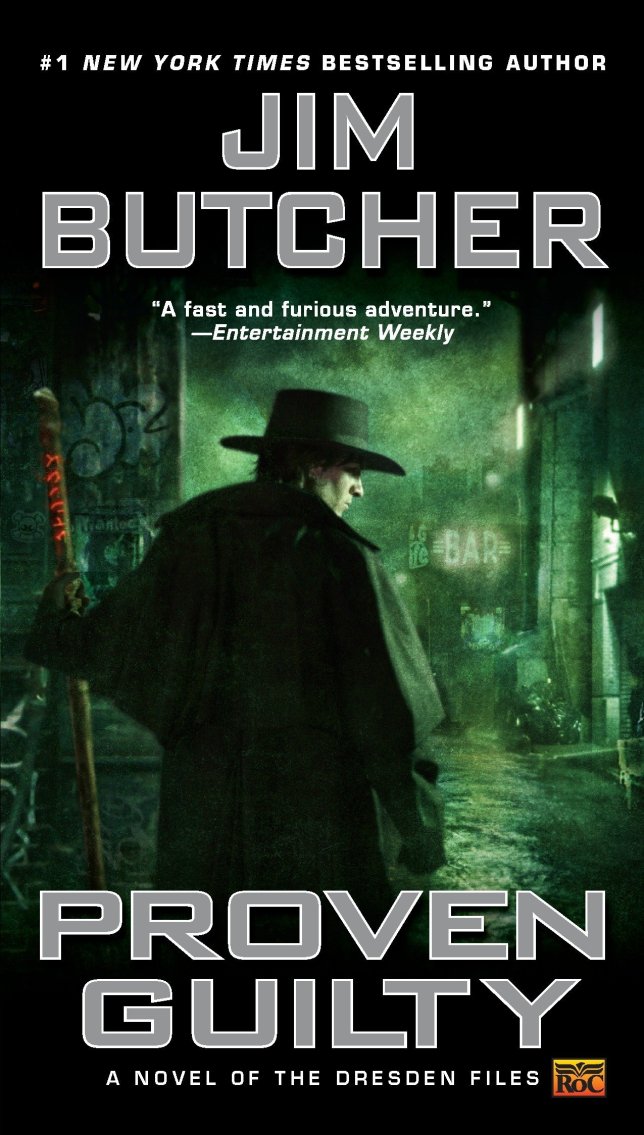
Proven Guilty by Jim Butcher

Proven Guilty Cover

Publisher: Penguin Audio (Audiobook – 1 February 2006)

Series: Dresden Files – Book Eight

Length: 16 hours and 16 minutes

My Rating: 5 out of 5 stars

Amazon

Welcome back to my Throwback Thursday series, where I republish old reviews, review books I have read before or review older books I have only just had a chance to read.  This week I dive into another awesome entry in the exceptional Dresden Files series by Jim Butcher with Proven Guilty.

I have been having an outstanding time reading Butcher’s iconic and fantastic Dresden Files books over the last couple of years.  One of the absolute best urban fantasy series ever written, the Dresden Files follows titular wizard and supernatural protector, Harry Dresden, as he investigates a series of crimes and magical conspiracies in Chicago.  I got into these books back in 2020 and have been slowly getting through the series from the start, with most of the entries getting five-star reviews from me as I go.  This includes the outstanding novels, Storm Front, Fool Moon, Grave Peril, Summer Knight, Death Masks, Blood Rites, Dead Beat and Battle Ground, as well as the novella The Law.  I had so much fun reading the previous novels that I just had to dive into the eighth book this week with Proven Guilty, which proved to be another amazing read.

A year after officially becoming a Warden for the White Council of Wizards, Harry Dresden is chafing under his new role, especially the part that forces him to punish young practitioners with no real knowledge of the magic they wield.  However, he must put aside his concerns when he is warned about black magic being used in Chicago, forcing him to start a new investigation into the city’s magical underbelly.

His investigations soon lead him to a seemingly normal horror movie convention where mysterious and sinister events are taking place.  Brought in by one of the convention’s staff, Molly Carpenter, the daughter of holy knight Michael Carpenter, Dresden soon finds himself attempting to stem a series of supernatural attacks against innocent humans.  The dangerous perpetrators all appear in the form of classic horror movie monsters, and their deadly attacks soon leaves a trail of mayhem across the convention.  Forced to circumnavigate the police and other dangers waiting for him, Dresden works to hold back the dark supernatural tide, only to discover dangerous secrets that shock him to his core.

Working with his faithful dog, his vampiric half-brother, a cop with her own problems, and the most dangerous mother on the planet, Dresden attempts to right all the wrongs in front of him.  But to succeed, he’ll need to confront the forces of the Nevernever, a rogue White Court Vampire, dangerous creatures forged from fear, and even the White Council itself.  Can Dresden succeed or will his actions lead to even more suffering for those he cares about the most?

Butcher keeps his epic Dresden Files going in an amazing way with this eighth book, and I had an outstanding time reading Proven Guilty.  Featuring an elaborate plot that effortless combines mystery and supernatural elements in modern day Chicago, while also serving as a key entry in the wider Dresden Files, Proven Guilty is a powerful and deeply captivating read that I had a great time listening to.  I have so much love for this fantastic series, and Proven Guilty got another five-star rating from me as a result.

Proven Guilty has an outstanding story to it which sees the protagonist go up against a cohort of deadly enemies, some of which are disguised as horror movies creatures.  I will admit that the start of the book was a tad slow, and I honestly thought that this was going to be more of a filler novel than anything else.  However, it soon develops into an excellent story that loads up a cool mystery with some exciting encounters, deep emotional moments, strong character development, and the continuation or creation of several major storylines for the entire series.  A conflicted Dresden is dragged into everything when Molly Carpenter requests his help, and he soon finds himself looking into the mysterious events at the horror convention.  The main story goes in some very interesting directions, and I liked the great combination of investigation and fantasy elements as it continued, while several compelling side stories see Dresden facing even more danger and mystery.  Several of these storylines came together quite nicely as the book continued, and Dresden soon identifies the main perpetrator of the threat, as well as other forces taking advantage of their actions.  The impact of the big reveal of who was responsible wasn’t as significant for me, as I’d had that spoiled in advance, but it was still well crafted, especially the motivations behind it.  However, the real meat of the story revolves around darker designs as unknown forces manipulate Dresden and his allies to do their bidding.  This results in some very impressive scenes, including a massive magic battle in the Fae realm, and I loved how everything came together while also leaving some big mysteries open for later in the series.  I also really enjoyed the complex wrap-up chapters, which saw Dresden go up against the White Council in some very intense scenes, as well as providing some excellent emotional resolutions that I deeply appreciated.  Everything comes together perfectly, and this proves to be a fantastic new addition to already impressive series.

Butcher applies his usual excellent writing style to Proven Guilty, which always works well to convey his complex narratives.  Like the rest of the series, Proven Guilty moves at a swift pace, quickly taking readers from one intriguing scene to the next, all of which is great in its own particular way, whether it be character interactions, plot developments, or lore downloads.  At the same time, readers are treated to a great blend of fantasy elements, emotional moments, and a compelling investigation storyline, all of which is overlayed with a fun and signature bout of humour and snark, often directed from the protagonist.  You really get drawn into Proven Guilty as a result, and I always love Butcher’s approach to the urban fantasy style, especially as both his unique fantasy world and the cool investigative story arcs work so well together.  Like the rest of the Dresden Files books, Proven Guilty can be read as a standalone novel, although Butcher is juggling a few ongoing storylines and character arcs that had been built up in the previous entries.  While the author always does a good job of recapping key events and reintroducing key characters, I really do feel that at this point in the series readers need to have enjoyed some of the previous books to get the full emotional and story impact Butcher is conveying.  I do really need to critique one part of Butcher’s writing style for Grave Peril though, particularly how he oversexualised a teenage female character.  The Dresden Files have always featured over-the-top descriptions of women, and while Butcher has gotten better about them as the series continues, he backslid here in Proven Guilty when it came to this character.  While I do get what he was trying to do from a literary perspective, i.e. showing the vulnerability and confusion of teenagers, and how they act out a result, it honestly felt really icky to me, and I think the book would have been better off without it.  Apart from that though, Proven Guilty is very well written, and I had a wonderful time getting through it.

I always really enjoy how well Butcher manages to utilise cool and complex fantasy elements into his narratives and Proven Guilty has some outstanding examples of this.  Thanks to Dresden’s promotion to Warden in the last book, he is now a very prominent member of the White Council, and this provides him some bigger insights into the council and its members.  This results in some great political scenes, as well as a deeper dive into the council’s law enforcement wing, which exists to hunt down and punish magic users who break the laws of magic.  I found this to be pretty interesting and compelling, especially as the council’s determination to enforce the laws leads to some dark moments in the plot, and I liked the clever comparisons between them and the Chicago PD.  The case also sees a return of the Fae Summer and Winter Courts, both of which have been featured heavily in the past, and Butcher has a lot of fun revisiting both and expanding the lore surrounding them.  One of the most pivotal moments of the plot sees Dresden and his allies invading one of the most significant locations of the Winter Court, and I loved the carnage that resulted.  As always, the various scenes of magical battle and encounters are a great highlight of Proven Guilty, and Butcher has a real talent for making the featured spells feel intense and spectacular.  I also rather enjoyed the use of a horror convention (SplatterCon!!!) as a major background for the plot, especially as it allowed for a menagerie of movie monsters to emerge and attack the convention goers.  There were a ton of fun homages here as a result, and it was very entertaining to see Dresden face off against several iconic monsters in some great scenes.  These fantasy elements merge with the rest of the plot extremely well, and it was fun to see Dresden dive through the worst parts of his world to save the day.

One of the major highlights of all the Dresden Files novels in the fantastic cohort of characters that Butcher features and Proven Guilty is no exception to this as the author has utilised another fantastic group of figures, each of whom brings something emotional or compelling to the plot.  The most prominent of these is naturally series protagonist Harry Dresden, who serves as the book’s main voice.  Cocky, confident, emotionally damaged and highly conflicted, Dresden makes a great focal character and I have deeply enjoyed seeing his personal journey throughout this series.  While still responsible for most of the book’s humour thanks to his jokes and fun observations about the other characters and all things magic, Dresden is decidedly a little more serious in Proven Guilty, especially as he is still recovering from some of the traumas of the previous books, including his injuries, his possession by a fallen angel, emotional conflicts with those closest to him, and the guilt over being forced to kill two people in his previous adventure.  This provides a noticeable change to Dresden in this book, and I felt that Butcher did a wonderful job showcasing this in several emotionally charged confrontations and scenes.  At the same time, Dresden is also dealing with his misapprehensions for working for the White Council as a Warden, especially as he is having trouble believing in all their rules.  This leads him into even greater conflict as the book continues, especially when he finds out who is truly responsible for the latest evils he uncovers.  All these personal issues and traumas help to provide a deep emotional layer to the plot, and it was one that Butcher masterfully addressed, providing some compelling and satisfying resolutions to several of them.  I particularly liked how Dresden’s story is coming full circle in some ways, and it will be interesting to see how that plays out in the future.

Aside from Dresden, there are a ton of other great characters featured through Proven Guilty who add their own flavour to the plot.  This includes an excellent range of new figures and well-established supporting characters, and I liked the mixture of storylines and character arcs that emerged.  Dresden’s usual allies, Karrin Murphy and Thomas Raith are very well utilised again here, both as supporting characters for Dresden’s adventures, and as individuals with considerable personal and professional issues to deal with.  Molly Carpenter, a minor figure from the previous novels, returns in a big way here and serves as an intriguing new addition to the plot.  While I have some major concerns about Molly’s portrayal at times, her storyline had some great depth and it will be interesting to see how that develops in the future.  This use of Molly also allowed a great focus on her mother Charity, another minor character from the previous novels, who gets a fantastic showing in Proven Guilty, especially as she shows herself to be an absolute badass.  Throw in Harry’s giant dog Mouse, who is one of my favourite characters in this series now, and differing voices of Dresden’s two supernatural advisors, Bob and Lasciel, the angel and demon on his magical shoulder (both literally and figuratively), and you have a pretty outstanding cast here, and one that I always have a great time following.

As always with one of the Dresden Files novels I really need to highlight the exceptional and awesome audiobook versions which are my favourite way to enjoy this amazing books.  The format really lends itself to the intense action, fast-paced storytelling and great characters contained within Proven Guilty, and I really found myself powering through this great audiobook in no time at all.  With a run time of over 16 hours, this is one of the longer Dresden Files audiobooks, but I still managed to knock it off in a few days, as I never got sick of listening to it.  The main reason for this is the outstanding narration of actor James Marsters, who has lent his powerful voice to the entire Dresden Files series.  Marsters effortlessly dives into the story each time, and he brings some real gravitas and feeling to the plot and characters.  The various voices he produces does each member of the complex cast great justice and I love how well he portrays their feelings, interactions, and personalities.  This is mostly easily seen in main character Harry Dresden, who is suffering from a lot of different abuses by this point in the series.  Marsters really does such a great job showcasing his various emotional and personal issues and I am always so impressed with how the narrator just gets this complicated character and brings that out with his voice.  This great performance does so much to enhance the experience of listening to Proven Guilty on audiobook and I cannot recommend this format enough to people interested in checking out this cool Dresden Files entry.

Unsurprisingly, I had an outstanding time with Proven Guilty and it proved to be an excellent continuation of Jim Butcher’s epic Dresden Files series.  Featuring another brilliant story, some fantastic character growth, and even more magic and mayhem, Proven Guilty was a ton of fun to get through, and I have so much love for this series.  Indeed, I had such an incredible time with Proven Guilty that I have already started listening to the next book in the series, White Night, which I will hopefully review next week. I honestly can’t give Proven Guilty a higher compliment than that, and this is a pretty damn amazing read.

Amazon

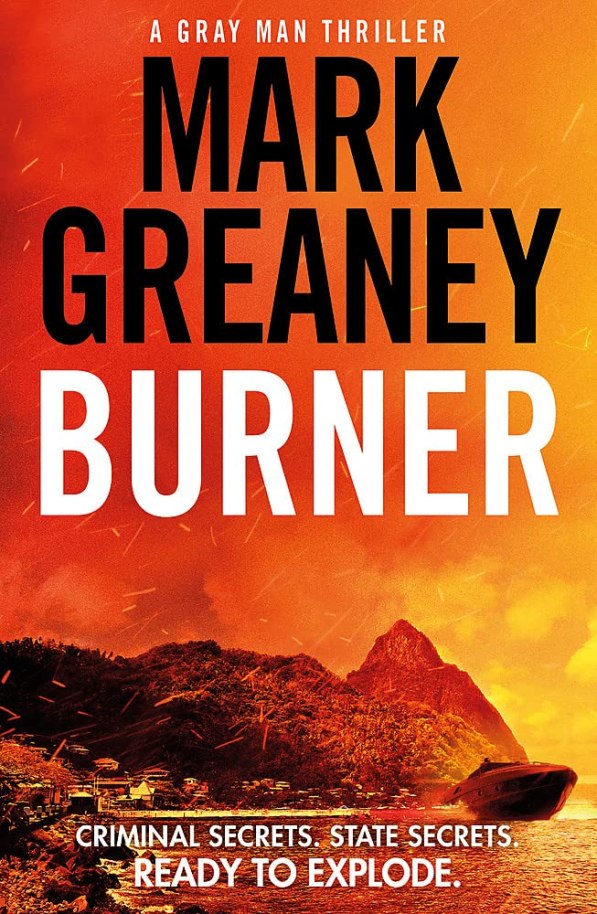
Burner by Mark Greaney

Burner Cover

Publisher: Sphere/Audible (Audiobook – 21 February 2023)

Series: Gray Man – Book 12

Length: 16 hours and 37 minutes

My Rating: 5 out of 5 stars

Amazon

The epic and captivating Gray Man series by legendary thriller author Mark Greaney returns with another exciting spy thriller entry, Burner, which thrusts the protagonists into the middle of some major real-world events.

Nothing starts off the thriller field of 2023 quite like the latest Gray Man novel from leading author Mark Greaney.  Greaney is a very impressive author who has been killing it throughout the genre for years.  Not only has he produced some cool standalone books, such as last year’s exciting action romp Armored, or the cool military thriller he co-wrote with Hunter Rawlings IV, Red Metal (one of my favourite books and audiobooks of 2019), but he has also written the exceptional Gray Man spy thriller books.  Following legendary assassin Court Gentry, better known as the Gray Man, as he gets involved in several deadly situations, the Gray Man books are one of the leading spy thriller series and I have deeply enjoyed the epic and powerful adventures that Greaney has so far released.  I personally have had an exceptional time with several of the Gray Man books, including Greaney’s debut novel, The Gray Man (which got a film adaptation last year), as well as the later entries such as Mission Critical, One Minute Out (one of my favourite books and audiobooks of 2020), Relentless (one of my favourite books and audiobooks of 2021) and Sierra Six (one of my favourite books and audiobooks of 2022).  His latest release is the outstanding Burner, which was one of my most anticipated novels of 2023.  The 12th book in the Gray Man series, Burner was a particularly intense read with a fantastic story behind it.

Alex Velesky is a Ukrainian expat living in Switzerland, whose comfy life as a notorious mover of immoral money has been hollow ever since the death of his family back in Ukraine at the start of the invasion.  Going through the motions, Velesky is suddenly given an opportunity to strike back at Russia when a disenfranchised Russian intelligence agent provides him with a trove of secret financial data.  This data, when combined with information from his own bank, reveals all the Russian bribes paid out to the West, and could damage not only Russia’s foreign intelligence apparatus but also the delicate negotiations to re-open the Russian economy to the wider world.

Immediately targeted by Russians determined to kill him and reclaim the data before it can leak out, Velesky finds himself hunted throughout Switzerland.  His only chance of survival seems to lie in rogue intelligence officer Zoya Zakharova, a woman hunted by her former employers in both Russia and the CIA, who is determined to get him and his information to New York, where it can be deciphered and released.  But Velesky and Zoya soon find themselves being stalked by an elite unit of Russian military operators who have no qualms about killing anyone in their way.

However, the Russians aren’t the only people interested in the data, as the CIA wants to claim it for themselves.  Determined to keep their interest in it quiet, the CIA reach out to Court Gentry, the Gray Man, to capture Velesky before the Russians do.  However, Court is unaware of the full significance of the data he is reclaiming, and that he will have to compete against the love of his life, Zoya.  Soon caught between the competing interests of the CIA and Russian intelligence, Court and Zoya decide to work together to keep Velesky alive.  But with the dangerous data revealing dark dealings in the highest levels of government, can even these two legendary spies survive?

Wow, Greaney really can’t miss when it comes to the Gray Man books.  Burner was another exceptional novel that had me hooked from the very beginning all the way to the final, devastating encounter.  The blend of exceptionally written action scenes, spy thriller elements, complex characters and the utilisation of contemporary issues makes Burner really stand out, even alongside the other epic Gray Man books.  This was another easy five-star rating from me as Greaney once again shows why he is currently leading the spy thriller genre.

Burner’s story is a pretty impressive and intense thrill ride that takes the reader across multiple continents in a blaze of glory and excitement.  The book starts whilst the Russian invasion of Ukraine is ongoing and introduces the reader to interesting new character, Alex Velesky, who receives information about all of Russia’s illegal financial transactions from a disaffected Russian operative.  If he can take this information, as well as data stolen from his bank, to a certain forensic accountant in New York, he will be able to disrupt Russia’s international intelligence efforts while also weakening their position against Ukraine.  However, he soon finds a deadly Russian kill team on his tail, and is only saved by reluctant operative Zoya Zakharova, who eventually believes his story and attempts to get him to New York.  However, the Russians and the CIA both want the data, and this drags in Court Gentry.  On the run from the CIA and unsatisfied with his current job sinking Russian mega-yachts, Court is given a chance to get back into the agency’s good books by helping them recover the data.  This sees him engage in a massive fight in Caribbean, before flying to Europe to find and capture Velesky and begin searching for him and the Russians.  This results in a brilliant collection of scenes as the various sides engage in elaborate tradecraft to try and outsmart the others, resulting in a particularly epic extended sequence on a train.  The resulting carnage and revelations make for some exceedingly gripping content and sets the final third of the book up extremely well.  I protagonists are forced into a series of deadly battles on a tight timeline to achieve their goals.  There are surprises, shocking deaths, elaborate fights and the resolution of several character arcs, all of which wraps up with a particularly epic, split-scene sequence that ends everything on a high note.  I was engrossed in this exceptional narrative the entire way through, and it will be very interesting to see where Greaney takes this series next.

Greaney brings all his impressive writing skills to the table with Burner, and his ability to set a dramatic and powerful scene honestly turns the already outstanding narrative into something truly special.  While I did find a few pieces of dialogue to be a bit weak and robotic, and Greaney did decide to fit in the annoying trope that two women working together must be bitchy to each other, this was mostly a very strongly written spy thriller book.  Like all the previous Gray Man books, Burner has an outstanding pacing to it that quickly draws the readers in and ensures that they stick around for the entire ride.  The action scenes are brutal and have a great veneer of realism that ensures that you can easily imagine every punch, shot or stab.  The focus on tradecraft is a particularly fascinating element to the entire story, and you must love the multiple scenes that show the characters utilising their training to outmanoeuvre their opponents.  Greaney also brings in the perfect blend of intense action focused scenes and story building, real-world issues, and character moments throughout the course of Burner and there honestly wasn’t a single moment that I wasn’t hooked on everything that was going on.  Burner also proves to be a rather interesting and significant entry in the wider Gray Man series, which long-running fans are going to appreciate.  While Burner can easily be read as a standalone novel thanks to the author’s concise and effective description of prior events, this book does continue several interesting storylines from the previous books, including Court’s fugitive status, his relationship with Zoya, and the examination of both main characters’ places in the world.  Several recurring characters from the series also make their return here, including some entertaining antagonists, and I loved how Greaney worked them into the plot.  I had a lot of fun seeing some of these call-backs to previous stories and plotlines, and Greaney leaves this book in an interesting place for the future.

I really need to mention Greaney’s exceptional use of multiple character perspectives throughout Burner.  Greaney casts a very wide net when it comes to the perspectives being followed and while primary characters, such as Court Gentry and Zoya Zakharova, do get a lot more focus, you also see a lot of events occurring through the eyes of other characters, including several antagonists.  This gives the reader a much more expansive narrative that not only lets you understand the motivations of every significant character but also allows you to see how the antagonists are responding to the actions of the protagonists, which adds intensity to the plot.  However, the best advantage is the way that Greaney utilises these perspectives to make some of his biggest sequences really pop.  In these key sequences, the point of view constantly moves around the various characters as the story unfolds and this helps to produce a particularly intricate and powerful viewpoint of how events are going down.  This is particularly evident in the book’s best extended sequence where multiple point-of-view characters, including Court, Zoya, Alex, the antagonistic Russian hit team, a lone CIA agent and more find themselves converging on a train to Switzerland.  As the scene continues, Greaney keeps quickly moving the point-of-view around from one of the characters to the next, including a couple of minor characters who are mostly there as witnesses.  Watching every character’s reactions, moves and countermoves really enhances the power of the scene as Greaney first uses it to build up tension before the inevitable firefight begins, and then switches it up to ensure that the resulting battle is even more epic as you see every shot both sides make.  Greaney uses this excellent balance of perspectives through several of Burner’s key scenes, including the big finale, and each sequence comes off much better as a result.  I cannot emphasise how effectively Greaney utilised this throughout Burner, and it was a major highlight for me.

One of the most distinctive things about Burner was the excellent and memorable use of contemporary events to enhance the already enjoyable spy thriller narrative.  Greaney has never shied away from referring to current conflicts, politics and events, and in Burner he goes for the most infamous current conflict in a big way by strongly featuring the Russian invasion of Ukraine.  Greaney pulls no punches when describing the conflict and he artfully and powerfully paints the entire invasion as the act of barbarism and greed that it is.  While no political leaders are names, multiple Ukrainian and Russian characters are featured throughout the plot and through them Greaney examines multiple sides of the conflict, ensuring that readers are fully aware of what is happening, who is responsible, and just how bad things are.  The Russian government are shown to be extremely corrupt, starting the war and then poorly preparing their own troops, all in the name of obtaining more money for the Russian elites to exploit.  This focus on corrupt money is a major part of the plot as the characters spend the entire book trying to identify funds being syphoned out of Russia to the West, either to escape sanctions or to be used for bribes or operation money by Russian intelligence.  The discussion about bribes to influential westerners is pretty interesting, especially as it seems to be a dig at certain politicians and news reporters, and it ended up being a very fascinating plot focus.  While it might seem a little insensitive to use a current conflict in a thriller novel, I personally felt that this was a master touch by Greaney.  Having the book focused on something that is such a big part of current world events ensured that I was even more invested in the story while rooting for the protagonists to succeed.  I really must compliment Greaney for using his book to shine a light on this conflict, and I feel that his warnings about how the war could end are very important.

I also need to highlight the great characters contained within Burner as Greaney brings back several of his best recurring protagonists, while also introducing some cool new figures.  This includes series protagonist Court Gentry, who has another outstanding adventure in Burner.  Court is his usual fun and effective self in this latest book, and it was great to see him utilise his skills and over-the-top abilities to achieve the mission.  Despite this, there isn’t an awful lot of character development around Court in this one, except for updating his status with the CIA.  Instead, most of the character development in this book was reserved for major recurring character and Court’s love interest, Zoya Zakharova.  Zoya last appeared in the 10th book, Relentless, which saw Court abandon her to keep her alive after he became wanted by the CIA again.  This had a major impact on Zoya’s psyche due to her previous abandonment issues and this, combined with the guilt she feels for being a former Russian spy, sends her into a massive spiral, and at the start of Burner she is an alcoholic, cocaine addicted mess.  A lot of her storyline deals with her attempts to move forward from her guilt, and she takes the mission with Alex Velesky to redeem herself.  Greaney does an outstanding job of showcasing Zoya as a woman in crisis, and I felt that this was an interesting and realistic jump in her character arc, especially after everything she’s been through in the series.  Naturally her life gets even more complicated once she is reunited with Court, which forces her to deal with some major feelings.  Greaney smartly keeps these two characters apart for a substantial part of the book and they are unaware of each other’s presence even while working the same case.  This means that when they finally do meet, the emotional pay-off is even more rewarding, and there are some great sequences with them as the story continues.  This ended up being a very substantial story for both characters and it was great to finally get some closure on the open relationship threads.

Aside from Court and Zoya, most of the other major characters are new additions to the Gray Man series, and Greaney does an outstanding job of building these characters up quickly during their initial appearances in Burner.  The most prominent of these is Alex Velesky, a Ukrainian banker working in Switzerland who ends up with the incriminating Russian data and is motivated to expose it after the death of his family.  Greaney frames an exceptionally good redemption arc around Alex in Burner as the character, who is feeling guilty for the years he’s spent illegally moving Russian money, attempts to finally reveal all the crimes he’s been apart of.  Alex’s entire arc is masterfully written by Greaney, and he proves to be an outstanding part of this book.  The other major new character was Angela Lacey, a rookie CIA operative who is sent to work with Court.  Shown to be a bit naïve, yet highly capable, Angela proves to be an interesting inclusion to Court’s mission, and he ends up become a bit of a mentor to her.  Angela is forced to grow up a lot in this book, especially when manipulated by her superiors, and it looks like Greaney has some interesting plans for her in the future.  Other great characters include a deadly new Russian assassin Luka Rudenko, slippery recurring antagonist Sebastian Drexler, and even Court’s old CIA handler Suzanne Brewer, who is up to her old diabolical tricks.  All these impressive characters add a lot to the plot of Burner, especially as Greaney takes the time to explore all their motivations and deeper secrets, and their inclusion results in some amazing sequences and confrontations.

While I did receive a paperback copy of Burner, I ended up listening to this awesome book on audiobook, mainly because I have had some great experiences with the Gray Man audiobooks in the past.  The Burner audiobook ended up being another excellent production that I managed to knock off quickly, even with a run time of over 16 and a half hours.  In my opinion, this audiobook format greatly enhanced the already epic story contained within Burner in several notable ways.  Not only does the action sequences really pop as you have them read out to you, by the format also works well to enhance the tension of some of the extended sequences involving multiple characters.  Just listening to all the players making their moves at the same time really drags you into the intense and explosive scenes and I was riveted through the scene on the train, or the final massive battle.  It also helped that Burner once again featured the exceptional vocal talents of Jay Snyder, who has lent his voice to all the previous Gray Man audiobooks.  Snyder, who was already one of my favourite audiobook narrators, has an outstanding voice that really fits the spy thriller genre.  His performances always capture the intensity, chaos, and destruction of any scene he narrates, while at the same time he manages to move the book along at a quick pace that really keeps the audience drawn in.  Snyder also has an excellent and fitting range of voices that he deploys throughout the audiobook, and I loved hearing the voices he assigns to some of the returning favourites.  His tone for Court Gentry fits perfectly, and all the other major player get some great voices with well performed accents.  All this ensures that the audiobook is an incredible way to enjoy the latest Gray Man novel and I cannot recommend the Burner audiobook enough.

I could go on more about Burner (trust me, I really could), but I think it is fair to say that I deeply enjoyed this latest Gray Man novel from Mark Greaney.  Greaney has been on a roll with his last few Gray Man books, and I honestly think that Burner is one of the better novels he has released recently.  The impactful story, great characters, compelling content and impressive writing ensured that I was enthralled throughout the entirety of Burner, and I honestly couldn’t put it down at times, especially during some of the big action sequences.  This was such an epic book, and I can already guarantee Burner is going to end up as one of my top books and audiobooks of 2023.  Highly recommended!

Amazon

Throwback Thursday: Blood Rites by Jim Butcher

Blood Rite Cover

Publisher: Penguin Audio (Audiobook – 3 August 2004)

Series: Dresden Files – Book Six

Length: 13 hours and 5 minutes

My Rating: 5 out of 5 stars

Amazon

Welcome back to my Throwback Thursday series, where I republish old reviews, review books I have read before or review older books I have only just had a chance to read.  For my latest Throwback Thursday I keep diving into the epic Dresden Files urban fantasy series with the impressive sixth book, Blood Rites.

Last week, in my review for the outstanding fifth book in the Dresden Files series, Death Masks, I mentioned how I had also started listening to the next book in the series, Blood Rites.  I honestly had so much fun reading Death Masks last week (as I did with the rest of the Dresden Files series, such as Storm Front, Fool Moon, Grave Peril, Summer Knight, Battle Ground and The Law), that I had to immediately dive into the next book as soon as I could.  The sixth novel in the series, Blood Rites, was another epic novel which had an impressive and captivating plot to it.

Harry Dresden, Chicago’s resident wizard and protector from the paranormal, continues to eke out a deadly living through his chaotic career of odd mystical jobs while also defending the city against the worst monsters lurking in the shadows.  However, his latest job may place him in the most uncomfortable spot yet, on the set of an adult movie, which finds itself under attack from a deadly and relentless curse.

Taking the case as a favour to his vampire friend and suspicious ally Thomas Raith, Dresden goes undercover on set and attempts to discover who is responsible for cursing the movie’s cast and crew, and why.  However, Dresden’s heroics on set make him a target, and he soon finds the curse striking at him, attempting to end his investigation before he can find the magical murderer.  Worse, enemies old and new are bursting out of the shadows, as two separate courts of vampires attempt to strike Dresden down.

As Dresden continues to search for the murderer wielding the curse, he is forced to fend off attacks from the lethal Black Court.  Led by a powerful elder vampire with a serious grudge against Dresden, the Black Court will stop at nothing to destroy him and any of his friends that gets in their way.  However, the greatest threat may reside in the White Court, to which Thomas belongs.  The White Court vampires are manipulative and subtle killers, using their alluring presence to suck the life out of everyone they touch.  Caught between warring members of the White Court family, Dresden must use all his wits to escape their wrath and uncover hidden truths if he is to survive.  But what secret from the past connects Dresden to the White Court and their machinations, and is Dresden really ready for the dark knowledge waiting for him?

Whelp, it seems that it is pretty impossible for Butcher to write a dud novel.  Blood Rites is an exceptional addition to the wider Dresden Files series, and it was another one that I have no choice but to give a full five-star review to.  Featuring an intense and deeply captivating narrative, Blood Rites was an incredible read and I quickly got sucked into its unique story, compelling mysteries and dark, damaged characters.

I just loved the elaborate, dark and powerful narrative that Butcher featured in Blood Rites, as the author comes up with a complex tale that expertly brings together a dark urban fantasy with a thrilling murder mystery storyline.  Like the rest of the Dresden Files books, Blood Rites exclusively follows protagonist and point-of-view character Harry Dresden as he finds himself forced to face off against a series of dangers and threats at the same time.  The most prominent of these includes an investigation into a deadly curse aimed at the female employees of an adult entertainment studio, which sees Dresden go undercover on set to try and save the remaining cast and determine who the killer is.  This also leads him into a confrontation with the White Court of the vampires, especially when his vampire friend, Thomas Raith, requests his help.  At the same time, vampires from the Black Court are after Dresden for his actions in Grave Peril, which forces him to call in some major backup to take them on.  Unfortunately, this also leads him into conflict with his supposed allies, as well as his former mentor, when secrets from the past are revealed.  Dresden is also hit with a whole bundle of personal drama, especially when he discovers unfortunate truths about his long-dead mother, and there is an interesting growth in the relationship between him and several supporting characters.

As a result, there are many plot elements scattered around Blood Rites, which makes for quite an elaborate overall story.  Luckily, Butcher does an excellent job of introducing all these separate narrative threads to the reader, and you swiftly get drawn into all of them.  After a good and necessary bit of setup, the story roars off at a quick and captivating pace, and the reader has a great time jumping from storyline to storyline.  Everything starts to come together near the middle of the book, where you get some excellent action scenes, including a particularly funny death sequence involving a vampire and a frozen turkey, and the fallout of these scenes leads to some great dramatic moments with big personal revelations.  Following this, the story zooms along, and you soon find a partial and problematic solution to the murder case, while the protagonist is also forced to deal with an all-out assault on the Black Court, while also dealing with dark secrets from his allies.  The attack on the Black Court was one of the best sequences in the book, and the surrounding drama results in some major revelations that fans of the series will lap up.  The remaining storylines then come together perfectly for the finale, as Dresden solves the murder and faces off against its overall architect in a brilliant and extended dark sequence.  I loved how this entire narrative unfolded, and some of the concluding notes will leave you wanting to dive into the rest of the series to see what happens next.

To bring Blood Rites’ great story to life, Butcher utilises his typical style and techniques, which I always immensely enjoy.  The entire narrative is paced perfectly, and you quickly get drawn into the various plotlines, especially with their great combination of characters, intriguing plots, fantasy elements, and dramatic moments.  All of this is overlayed with Butcher’s distinctive humour, most of which is expelled through his cocky point-of-view protagonist, and it helps to enhance the overall powerful and entertainment of the book, especially when the protagonist tries to deflect from his many issues with comedy.  The narrative pretty much goes non-stop, and you get bounced through multiple excellent and powerful scenes, all of which are very fun to see.  I loved how the author balanced out action, character growth, universe building and more in each of the sequences, and there is something quite entertaining and fun for all manner of readers.  I wasn’t as keen on Butcher’s continued attempts to spice up the story with more adult themes, such as the adult film set or the lust-inducing White Court vampires, although it was pretty tame compared to some of the scenes in the last book (that bondage scene, yikes!), and Butcher wove some very compelling narratives around all of them that I deeply enjoyed.  I did enjoy how inclusive Butcher made this novel to new readers, and anyone could easily jump into Blood Rites and enjoy it, even if they haven’t read a Dresden Files book before.  However, there is also a lot to appeal to established fans of the series, especially as there are multiple major reveals and secrets featured here, many of which will lead to big story moments down the track.  As such, I deeply appreciated how this story came together, and pretty much everyone will have a great time getting through it.

I really enjoyed some of the cool fantasy elements featured throughout Blood Rites as Butcher seeks to expand on the lore and magic of his unique universe.  There are some great and intriguing fantasy inclusions here, with the obvious focus being on the various Vampire Courts.  The three main factions of Vampires have all been featured in previous books, although most of the focus has been on the Red Court, whom Dresden is at war with.  Blood Rites, however, has a far bigger spotlight on the two of the other courts who have major differences in powers and appearances.  Most of the focus is on the White Court, who are essentially this universe’s version of succubi, extremely beautiful and seductive creatures who feed off the life energy of those who desire them.  The White Court go on to become a major faction in the Dresden Files series, but this is one of the first books that fully explores them in substantial detail.  As such, you quickly get across their unique abilities, strengths, weaknesses and powers throughout this book, and they come across as quite a distinctive group as a result.  You really get to understand their entire society and worldview, as well as seeing some very different members of the factions, and Butcher writes some compelling storylines around them, while also putting in some very vivid depictions of their powers in action.  I loved how sinister and villainous members of the White Court appear at times, and there is something quite insidious about their abilities that creeps out the protagonists and reader.  A truly complex and excellent group that I had a lot of fun exploring.

Almost in direct comparison to the White Court is the Black Court.  The Black Court are a completely different group of living dead, portrayed more like the classic vampires from Bram Stoker’s novel (indeed, the Dracula novel was an elaborate propaganda attack by their enemies).  Shown as ugly, decaying, blood-hungry creatures that are more monsters than their original human forms, the Black Court are a much more obvious threat with much clearer motives.  There are some brutal and powerful scenes featuring the Black Court in this book, and it was really interesting to see Dresden and his allies go up against them with some classic vampire-hunting weapons, albeit with some fun modern twists to them.  I also deeply appreciated the fantastic parallels between the Black Court and the White Court vampires featured in the Blood Rites; whilst they are both extremely dangerous, their diverse methods and powers troubled Dresden in different ways.  These cool vampires, plus some other great new supernatural threats, added a lot to the complexity of the narrative and I loved the excellent detail and lore that Butcher imbued them with.

As usual, one of the highlights of this Dresden Files book is the compelling and impressive characters the story revolves around.  Butcher features an intriguing and fantastic group of characters in this book, with a compelling blend of established supporting characters and several new figures, many of whom will go on to have substantial roles in the rest of the series.  I had a brilliant time with all these characters, especially as Butcher endeavours to write some outstanding and distinctive storylines around them.

As usual, the most prominent character is Harry Dresden, the wizard protagonist and point-of-view character of the series.  Like most of the recent books, Blood Rites is an emotionally damaging book for Dresden.  Not only is he forced to deal with another harrowing case that racks his sanity, but he also finds out some long-buried secrets that prove quite damaging to behold.  In particular, there is a deep dive into his past and his missing family, both of which are hard subjects for him, and he finds himself with some unexpected connections that he has long been missing.  It was truly fascinating to see this long buried and painful part of Dresden’s past explored, and Butcher ensures that the reader gets struck in the feels with some of the powerful scenes that are explored.  Other interactions and reveals see Dresden re-evaluate some of his relationships in this novel, and there were some intriguing and harsh discussions between him and other characters as a result.  I did think that Butcher is over-playing the whole chivalrous-to-a-fault aspect of Dresden, as he continues to be a tad sexist and constantly underestimates woman, usually to his own detriment.  It’s honestly getting a little old, and I hope it gets phased out a bit in future books.  Still, I deeply enjoyed the fantastic development around Dresden in Blood Rites, and it greatly enhanced the narrative.

This book also featured a great appearance from previous supporting characters Karrin Murphy and Thomas Raith, who both play a major role in Blood Rites.  This proved to be quite a pivotal novel for both characters, and I really appreciated the way that Butcher built on their previous appearances and used them to write some impressive and powerful storylines around them.  This proves to be one of the more intriguing looks at Murphy so far in the series, especially as it dives into her complicated family life, and I liked the early hints here about the future relationship between her and Dresden.  Murphy gets dragged far further into Dresden’s magical activities than ever before here, and she is forced to balance her responsibilities as a cop with the necessity of killing monsters, something she has great difficulty with.  An overall badass character, Murphy has some brilliant and action-packed scenes in Blood Rites, and I love how well she serves as a foil to the more ridiculous Dresden.

Thomas, on the other hand, gets quite an intense and deeply personal storyline here as you get the most in-depth look at this elusive and compelling vampire character.  Not only do you get a great look at the rest of his family as the book explores the White Court, but you finally find the reasons why he is always helping Dresden, which leads to some emotional and compelling scenes.  A lot of time is also spent exploring the battle between Thomas’s humanity and the monster within, especially when it comes to feeding on those around him.  This comes to a head when his need to feed and survive hurts someone close to him and he has trouble coming to terms with what he’s done, especially when Dresden harshly confronts him.  Throw in his complicated family and intense daddy issues, and Thomas goes through the emotional wringer in this book, which proves to be very illuminating.  Butcher sets Thomas up as quite a substantial supporting character in this book, and I look forward to seeing more of him in the future.

Aside from these main characters, there is also a great collection of supporting characters who add a lot to the story, and there are some awesome appearances here.  I really enjoyed seeing more of mysterious mercenary Kincaid in this book, especially after his fun appearance in Death Masks.  Kincaid is a badass killer who is hired by Dresden to kill the Black Court, only to end up being a bigger threat to Dresden when the wizard lacks to money to pay him.  Kincaid has some excellent and action-packed scenes, and I was intrigued by his backstory, especially the hints at his dark, dark past.  I also loved the use of Dresden’s mentor, Ebenezar McCoy, an older wizard who raised him and taught him magic.  Butcher writes some amazing scenes around McCoy, especially once Dresden finds out just how many secrets the old man has been keeping from him.  Throw in a batch of great vampire characters (including the sinister Lord Raith and the compelling Lara Raith), some entertaining members of the adult film industry (including the fantastic diva Trixie Vixen), and the first appearance of Mouse, Dresden’s puppy, and you have an amazing cast of characters here that Butcher gleefully and impressively wraps the story around.  Each of these characters is very fun and intriguing in their own way, and I loved the elaborate and moving scenes that they star in.

Naturally I chose to check out Blood Rites on audiobook, which I maintain is the absolute best way to enjoy the Dresden Files books.  The captivating story and excellent characters really fit into this format extremely well, and I find myself absorbing the narrative and the author’s fantastic style a lot better this way.  With a runtime of just over 13 hours, Blood Rites is the noticeably longer than the previous books in the series (they get progressively longer and longer as the series goes, with some later books like Cold Days reaching nearly 19 hours in length).  Despite the increased run time, I still found myself knocking this audiobook off in no time at all, especially once I got stuck into the excellent and powerful story.  I must also highlight the incredible voice work of the always awesome James Marsters, who did another spectacular job narrating this fantastic novel.  At this point in the series, Marsters has really hit his stride when it comes to narrating, and he voices each audiobook with some impressive passion, effortlessly bringing the dark events and complex characters to life and ensuring that everything sticks in the listener’s mind.  All the characters are voiced extremely well, with the highlight again being protagonist Harry Dresden, who Marsters inhabits effortlessly.  He really understands the character’s anguish, pain, and dark humour, and this comes across in his narration perfectly.  Thanks to his epic performance in Blood Rites, and the other Dresden Files audiobooks, Marsters remains one of my favourite audiobook narrators, and I cannot recommend the Blood Rites audiobook enough as a result.

My dive into the early Dresden Files novels continues to be incredibly epic, as I once again fell in love with one of Jim Butcher’s unique reads, Blood Rites.  This fantastic novel has so much going for it, and I had a brilliant time exploring the powerful urban fantasy/crime fiction based narrative.  Featuring a deeply compelling mystery, a ton of intriguing parallel storylines, and some impressive and emotionally charged character development, Blood Rites is another exceptional book that is so much fun to get through.  Honestly, if I didn’t have such a backlog of awesome recent audiobook releases, I would probably be diving into the seventh Dresden Files novel right now, but hopefully I will get a chance later this year.  If you haven’t checked out the Dresden Files books after my previous glowing reviews, then you really need to get your butt into gear and start reading them now!

Amazon

Throwback Thursday: World War Z by Max Brooks

World War Z Cover

Publisher: Random House Audio (Audiobook – 14 May 2013, originally published 12 September 2006)

Series: Standalone

Length: 12 hours and 9 minutes

My Rating: 5 out of 5 stars

Amazon

Welcome back to my Throwback Thursday series, where I republish old reviews, review books I have read before or review older books I have only just had a chance to read.  For my latest Throwback Thursday review I take a look at the zombie horror classic, World War Z by Max Brooks, a truly epic and outstanding read.

One of the biggest novels that I have been meaning to read for ages was the highly regarded zombie novel, World War Z, also known as World War Z: An Oral History of the Zombie War.  Written by Max Brooks as a follow-up to his first book, the non-fictional The Zombie Survival Guide, World War Z is a unique novel that fully examines a zombie apocalypse from multiple perspectives.  I had heard some great things about this novel, and I even enjoyed the movie adaptation when it came out (more on that later).  Unfortunately, I never got a chance to read it and I kind of figured for a while that it might stay in my to-read pile for a while.  However, it moved much higher up my list of books to check out after I read Brooks’s 2020 novel, Devolution, which was one of my favourite novels of 2020 (as well as one of my favourite all-time horror novels).  I had also heard a lot of praise for World War Z‘s awesome audiobook edition, so when my wife and I needed some entertainment during a recent cross-country road trip, this was our first choice.

Plot Synopsis:

The Zombie War came unthinkably close to eradicating humanity. Max Brooks, driven by the urgency of preserving the acid-etched first-hand experiences of the survivors from those apocalyptic years, traveled across the United States of America and throughout the world, from decimated cities that once teemed with upwards of thirty million souls to the most remote and inhospitable areas of the planet. He recorded the testimony of men, women, and sometimes children who came face-to-face with the living, or at least the undead, hell of that dreadful time. World War Z is the result. Never before have we had access to a document that so powerfully conveys the depth of fear and horror, and also the ineradicable spirit of resistance, that gripped human society through the plague years.

Ranging from the now infamous village of New Dachang in the United Federation of China, where the epidemiological trail began with the twelve-year-old Patient Zero, to the unnamed northern forests where untold numbers sought a terrible and temporary refuge in the cold, to the United States of Southern Africa, where the Redeker Plan provided hope for humanity at an unspeakable price, to the west-of-the-Rockies redoubt where the North American tide finally started to turn, this invaluable chronicle reflects the full scope and duration of the Zombie War.

Most of all, the book captures with haunting immediacy the human dimension of this epochal event. Facing the often raw and vivid nature of these personal accounts requires a degree of courage on the part of the reader, but the effort is invaluable because, as Mr. Brooks says in his introduction, “By excluding the human factor, aren’t we risking the kind of personal detachment from history that may, heaven forbid, lead us one day to repeat it? And in the end, isn’t the human factor the only true difference between us and the enemy we now refer to as ‘the living dead’?”

Note: Some of the numerical and factual material contained in this edition was previously published under the auspices of the United Nations Postwar Commission.

Holy hell, that was an exceptional book!  I loved the powerful and expansive narrative contained within World War Z as Brooks attempts to fully encapsulate the entire experience of a zombie apocalypse in impressive detail.  Literally all the good things I heard about this book were true, and I loved his unique and very captivating way of capturing the horrors of this sort of experience, both from the zombies and other humans.  An exceptional and impressively inventive read, World War Z gets an easy five-star read from me.

I cannot get over how awesome and distinctive World War Z was as a concept.  Rather than a traditional novel, Brook’s masterpiece is written as an epistolary novel, written as in-universe oral history anthology of a zombie apocalypse.  The book, which was compiled by this universe’s version of Max Brooks, contained multiple testimonials and interviews, as Brooks seeks out and talks to multiple people who experienced the apocalypse and pulls together their various unique stories.  This book contains around 40 individual stories set out across five chapters which look at the various stages of the zombie war, from its origins all the way up to the postwar ‘new normal’.

At this point I need to make a quick note about the version of World War Z that we checked out.  There are a couple of different World War Z audiobooks out there, but for our trip we listened to the World War Z: The Complete Edition, which combines two separate audiobook adaptations of the novel, and contains all the stories from the original book.  I did look over a paperback edition of World War Z before I started this review, and it looks like our audiobook version covered the full stories well, although I did notice that some of the stories were shortened or missing minor parts.  In addition, the audiobook version did not feature any of the paperback’s footnotes, which contained technical details and notes from the author.  However, I don’t think I lost out on too much of the plot from some of these missing gaps.

I really fell in love with the various individual stories contained with World War Z as Brooks went out of his way to produce the most unique and moving tales that he could.  These are mostly standalone tales, although there are a few interesting crossovers as the book continues, with some character’s mentioning events or supporting figures from other stories in their interviews.  However, as you follow the stories within these five chapters (made up of Warnings, Blame, The Great Panic, Turning the Tide, and Good-Byes), you get a full sense of the entire war, and it quickly comes apparent how cleverly Brooks was crafting everything here.  I personally deeply enjoyed both the individual shorter tales and the much larger connected story of World War Z, and I was deeply impressed with the excellent writing style behind it.  Brooks is a true master of writing deeply personal, character-driven tales of survival, and you swiftly become attached to the various protagonists as they tell their unique stories.  The action within is gruesome, fast-paced and deeply terrifying, and there are multiple over-the-top descriptions of zombie and human violence that will stick with you forever.  This was easily one of the best zombie novels I have read in terms of storytelling and action, and everything about this tale is so damn compelling.

As I mentioned, there are roughly 40 separate stories contained within this anthology, each of which contains its own unique protagonist, supporting characters, settings and unique circumstances.  Naturally, with so many stories you have a bit of a range in terms of storytelling, with some being substantially better than others.  However, I felt that Brooks did a very good job of writing each of these stories extremely well, and there were none that particularly dragged the novel down.  There is a real mixture of narratives here, with particularly gruesome horror stories mixed in with more human-focused narrative, political plotlines, military thrillers, stories that balance on the edge of science fiction, and everything in between.  The spread of these stories works pretty well, with Brooks providing an entertaining mixture of storylines throughout the book so readers aren’t constantly bombarded by tales of horror or tragedy.  Instead, there are often fascinating, humorous and humanising stories thrown in amongst the horror.  This works to make the entire novel flow at a fantastic pace.

While pretty much all these stories are fun and tell some outstanding tales of the zombie apocalypse, there are a few that stood out to me as being a cut above the rest.  I had some early fun with the Stanley MacDonald storyline, which showed an amoral illegal surgeon in Brazil unwittingly transfer a zombie heart into a patient, which led to one of the earliest outbreaks in South America.  The Jesika Hendricks plot showed a brilliant, if very dark, take on ordinary citizens trying to flee the zombies only to experience the other dangers of surviving the winter in a desperate community.  There are several amazing and cynical storylines, such as the Breckinridge Scott and Grover Carison testimonies that showcase the capitalist opportunism that surrounded the initial outbreaks.  I also really liked the South African focused storyline around Paul Redeker, which showed a former Apartheid strategist using his stark and brutal plans to save the country from the undead hordes.  I loved the particularly inventive and clever testimony surrounding the character of Arthur Sinclair Junior, which focuses on how America was reorganised after the initial stages of the war, with the country setting its sights towards industry, construction and warfare, which really highlights the author’s impressive insights into the world.

Two other fantastic World War Z storylines set in Japan focus on two unique individuals, one an “otaku” (a computer-obsessed outsider who tried to live entirely online), and a blind “hibakusha” (a person affected by the atomic bombs used in WWII).  Both characters were outsiders in Japan before the zombie war, but the zombie invasion changed their entire lives and led to them becoming renowned warriors and survivors against all the odds.  These two storylines are extremely compelling, and I loved the way that the author utilised unique subsections of Japanese society and tried to imagine how those sorts of people would survive the zombies.  There was also a really intense storyline, told by Admiral Xu Zhicai, that details a Chinese submarine’s attempt to escape the zombies with their families, which turns into a brilliant, powerful and occasionally disturbing tale of survival, loyalty and family.  I also must mention the Terry Knox testimony that details the actions aboard the International Space Station and the Darnell Hackworth story that looks at the US army’s canine units that helped scout and herd zombies (yay for mini dachshunds, the real heroes of this book).  However, out all the testimonies featured within World War Z, my favourite had to be the ones focussing on soldier Todd Wainio.  Todd battled the zombies at multiple stages of the war, and his multiple entries paint a pretty grim picture but are easily some of the best depictions of the horror of the zombies and the challenges faced by the armed forces.  His first testimony about the army’s initial inability to combat the zombies is very chilling, and it was fascinating to hear about the changes to his training and equipment as the military adapted to fight this new and strange enemy.  I am honestly just scratching the surface of these testimonials here, as pretty much all of them were great in their own way.  However, the ones I mentioned here were my personal favourites, and I had a blast listening to them and seeing how they fit into the wider narrative.

For me, one of the main highlights of World War Z was Brooks’s incredible inventiveness and insights when it came to envisioning a potential world-wide zombie apocalypse.  Thanks to his amazing range of stories, Brooks showcases a vast global catastrophe that impacts everyone no matter where they are.  I loved his depiction of how the apocalypse emerged, and rather than a continuous attack that pretty much destroys everything in a single day, Brooks imagines a gradual catastrophe that is initially ignored and mishandled before it spreads uncontrollably.  This is covered in the early chapters of the book with some substantial skill, and you really get to see how and why everything falls apart, with appropriate zombie violence included.  While there is an understandable focus on America, I found it fascinating to see how Brooks imagined different countries would deal with this crisis, with different culturally informed strategies, and there are even some compelling references to real-life figures (the Nelson Mandela facsimile reacts in a very different way than you’d expect).  The author really dives into all the details of a zombie attack and examines all the pros and cons of various strategies humans could utilise, from fleeing, staying in defensible positions, or fighting back.  There are some brilliant testimonies that cover all of them, and Brooks’s dark depictions of unprepared or overconfident humans failing to understand the threats in front of them and paying the price for it are shocking, bleak and captivating.  Brooks also comes up with some truly unique and clever problems or impacts of the zombies, many of which are referenced or experienced by multiple characters, including floating zombies, marine zombies, feral children who survived without their parents, looters, civil wars, and even crazed humans pretending to be zombies.

These intriguing insights from Brooks’s imagination are further expanded on in the later chapters of the novel, where the author explores how the world order changed because of the zombie war.  Again Brooks dives into multiple countries here, and it was fascinating to witness which countries the author imagines will be destroyed by the zombies and which would thrive.  I really enjoyed his examinations of the way that America needed to reorganise itself and its subsequent battleplans, which were perfectly covered by several of the best characters.  Seeing countries likes Russia, China, Japan and more change in drastic ways a result of this apocalypse was really cool and compelling, especially as the author covers it in such a reasonable and logical manner.  Countries like Cuba and the West Indies thriving due to their isolation was pretty fascinating, and they stood as an interesting contrast to more prominent countries that were disadvantaged or never stood a chance thanks to their socioeconomic issues or unsuitable landscapes.  I loved some of the unique issues that some countries experienced, such as the infested Paris catacombs or the mystery around North Korea, and they leave some intriguing afterthoughts as a result.  Brooks also cleverly examines other unique impacts that the zombies are having on the world, such as extinctions (goodbye whales), changes in global relations, and long-term problems, and I was deeply fascinated and enthralled by all this impressive thinking.  All of this compelling insight and imagination really enhances the stories being told by various characters, especially as they all impact humanity’s potential survival, and I really lost myself in the author’s powerful and impressive vision of a zombie apocalypse.

While World War Z is primarily about survival and the wider impacts of a zombie apocalypse, Brooks also takes the time to cover a few interesting themes.  In particular, he uses this novel about zombies to examine humanity.  While there is a certain overlying theme about the indomitable human spirit and our ability to triumph no matter the odds, there are some very noticeable depictions of the worst parts of human nature.  I found his initial depictions of most people ignoring or ridiculing the slow rising zombie threat to be pretty realistic (keep in mind that this was written 14 years before COVID).  There are also some major critiques about corruption and government incompetence in the face of disaster that I also found to be very intriguing and insightful.  Many of the early chapters that talked about military attempts to fight back had some interesting parallels to the wars in the Middle East, and I really appreciated the author’s clever critiques of these conflicts through the medium of a zombie war.  I felt that Todd’s testimony about the first major battle of the zombie war was a great example of this, as he regales the reader with how politically motivated leadership and incompetence led to a massacre.  All of this added a thought-provoking and entertaining edge to many of the storylines in the novel, especially the earlier testimonies, and I felt that Brooks did an amazing job bringing some of his own insights and critiques into his writing.

As I mentioned a few times above, I listened to the extended audiobook adaptation of this novel, which I personally felt was the absolute best way to enjoy this epic read.  Running at just over 12 hours in length, we absolutely powered through the World War Z audiobook during our road trip, and it served as an excellent entertainment for a long drive.  I often find that having a story read out to you really helps you to absorb everything about the story, and this was particularly true with World War Z.  Not only did the narration allow you to focus on all the details of the testimonials, but the horror elements and action felt a lot more intense, especially when you were dragged into some of the more gruesome scenes.  I also feel that the audiobook version of World War Z had a better flow than the paperback novel.  The testimonials with the audiobook are a lot more separated out, treated as a new chapter each time the narrator changes.  This is very different from the paperback version, which throws multiple testimonials in a quick fire manner, with everything crammed together into the five chapters.  As such, I really felt the audiobook helped to highlight the uniqueness of each testimonial and you really got to focus on each story a lot more.

However, easily the best thing about the World War Z audiobook was the truly impressive voice cast that were featured within.  Brooks, a voice actor himself, recruited a crack team of international actors to fill out his cast, including several A-listers, who give some outstanding and amazing performances.  All these actors really dive into their various roles here, conveying the emotion, fear and insights of their protagonists, and their great voice work definitely enhanced the already cool stories of their characters.  I deeply enjoyed all their voice work throughout the audiobook, and I know that I enjoyed several testimonies even more because of the talented actors voicing them.  This cast is led by Brooks himself, who voices the interviewer, asking all the questions and meeting all the various figures the novel is set around.  Brooks does a really good job here, and his calm, collected interviewing style and additional narration helps to set the scene for the entire novel and moves the other character’s stories along at a great pace.

Aside from Brooks, there are a good 40 or so voice actors featured in the World War Z audiobook, and I was pretty impressed with all their performances.  Some standout early performances include a brief appearance from Nathan Fillion as Canadian soldier Stanley MacDonald; Paul Sorvino, who gives a very fun performances as the sketchy doctor Fernado Oliveira; and Martin Scorsese, who gives an unrepentant portrayal of corrupt businessman Breckinridge Scott.  Other great performances include Kal Penn as Sardar Khan, an Indian soldier who serves an excellent witness to an act of heroism; the late, great David Ogden Stiers, who brings Ukrainian solider Bohdan Taras Kondratiuk to life perfectly as he watches a great act of evil from his government; Common as dog trainer Darnell Hackworth; and Rob Reiner as “The Whacko” a radical politician/former Vice President who shares his strong opinions in a very fun outing.  I really need to highlight some intriguing voice performances from Simon Pegg, who does a pretty good Texan accent in the role of Grover Carlson; and Alfred Molina, whose Australian accent was pretty accurate (a rare talent).

The performances of Masi Oka and Frank Kamai really brought to life the two Japanese characters I mentioned above, as does Ric Young for Chinese Admiral Xu Zhicai’s elaborate testimony.  I also really need to highlight the brilliant work of Alan Alda in this book as he voices pivotal administrator Arthur Sinclair Junior.  Alda, whose voice I have loved since M*A*S*H, perfectly inhabits the role of this intriguing figure, and I loved hearing his narration of how America’s economy was changed.  However, out of all the voice actors in World War Z, my favourite was the always impressive and remarkable Mark Hamill, who voiced standout character Todd Wainio.  Hamill was one of the main reasons why Todd was such a great character, and I loved his outstanding performance as a former ground soldier recounting all the horror of the front line of the zombie war.  There is so much weariness, trauma and cynicism in Hamill’s voice as he narrates Todd’s testimony, and you really feel the character’s resentment and anger.  The way that Hamill describes all the gruesome gore and zombie violence was just so great, and his impressive range and tone helped to really enhance the insanity and horror of the moment.  These voice actors, and the rest of the impressive cast, are extremely epic here, and they turned this production into something extremely impressive.

A quick final note about the World War Z film.  Until I read this book, I really did not appreciate how wildly off-book the film adaptation was.  None of the true magic from the original story appears in the film at all, as they turned it into a generic action flick rather than a clever analysis of how a zombie apocalypse would change the world.  While I did enjoy the World War Z movie on its own, it is a terrible adaptation, with only small elements from the book appearing in the film.  While I can appreciate that this is not the easiest book to turn into a film, they didn’t even try.  I really do hope that someone does a proper adaptation of World War Z at some point, as it frankly deserves a lot better than what it got (perhaps a television series with each episode recreating one of the testimonies).

As you can clearly tell from the massive essay above, I deeply enjoyed World War Z by Max Brooks.  This was easily one of the best zombie novels I have ever read, and it definitely deserves its epic and highly regarded status.  Brooks’s distinctive and brilliant story was just plain amazing and I loved the outstanding combination of smaller testimonies coming together into one connected and thought-provoking tale.  The author cleverly examines every single aspect of a potential zombie apocalypse, and you find yourself not only loving the insane horror elements, but the fascinating political and social impacts that come with such an invasion.  Best enjoyed in the full audiobook format which features so many impressive voice actors, World War Z comes extremely highly recommended and I cannot hype it up enough!

World War Z Cover 2

Amazon

The Last Graduate by Naomi Novik

Last Graduate Cover

Publisher: Del Rey (Trade Paperback – 28 September 2021)

Series: Lesson Two of the Scholomance

Length: 388 pages

My Rating: 5 out of 5 stars

Amazon

Prepare to return to the deadliest magical school of all time in The Last Graduate, the epic second lesson of the Scholomance series by bestselling fantasy author Naomi Novik.

Novik is a fantastic author who has produced some excellent fantasy novels throughout her career, including her bestselling Temeraire series (set during a re-imagined Napoleonic War fought with dragons), as well as her standalone reads Uprooted and Spinning Silver.  However, I personally know Novik best from her awesome 2020 book, A Deadly Education, which was one of my favourite books from last yearA Deadly Education had an awesome story that followed Galadriel “El” Higgins, a student in the Scholomance, a lethal magical school filled with all manner of magical monsters known as maleficaria (mals).  This was an outstanding read with a really clever and intense narrative, and I have been really looking forward to seeing how the story continued for a while now.  As a result, I was excited when I found out that the sequel, The Last Graduate, was coming out, and it swiftly became one of my most anticipated reads for 2021.

Following her daring mission to reactivate the school’s defences and kill as many maleficaria as possible, El finally thinks she has a chance to relax and prepare for her gruelling final year at the Scholomance.  Not only must she continue her exhaustive magical studies, but the entire year leads up to a lethal graduation ceremony, where the students must run a gauntlet of mals at the school’s entry hall to escape back into the real world.  Now with allies, friends and even an extremely odd love interest in moody warrior mage Orion Lake, El has a chance of escaping the Scholomance without being forced to rely on her immense affinity for the most destructive spells in existence, which could result in the entire student body being vaporised.

However, the sentient Scholomance appears to have different ideas for El and resolves to make her life as difficult as possible, assigning her impossible classes and isolated study periods.  Worse, it appears that the school is deliberately funnelling as many mals towards El as possible to kill her and steal her magical energy.  Determined to defeat the school and escape, El is forced to make some new alliances to survive the year and make it to graduation.  At the same time, she needs to navigate her unusual relationship with Orion, especially after receiving a mysterious warning from her mother to stay away from him.

The closer El gets to graduation, the harder life becomes, especially after the scope of her magical abilities is revealed to the entire school.  Now targeted by rival factions within the Scholomance and unsure who she can trust, El will need to pull together every terrible power at her command to survive.  However, not everything is what it seems in the Scholomance, and the school has one final lesson to teach El: sometimes there are things far more important than surviving.

Wow, just wow, now that was a damn impressive sequel.  The Last Graduate is an epic and incredible read that proved to be utterly addictive in all the right ways.  I had an absolute blast reading this exceptional fantasy novel and I ended up powering through the last half of the novel in a couple of hours, only to be utterly traumatised by its cliffhanger ending.  It was so much fun getting back into this detailed and compelling setting, and it was great to see the main characters continue to evolve throughout, even if they lead to tragedy and heartbreak.   This was an outstanding read that gets a full five-star rating from me.

This latest book from Novik contains a pretty epic narrative which covers El’s entire final year within the Scholomance.  The story continues immediately after the end of A Deadly Education, and I would strongly recommend reading the first book before attempting The Last Graduate, as the initial Scholomance book contained a lot of interesting detail and character development that is useful to understand.  This second book starts off at a good, restrained pace, mostly settling things down after the fast-paced conclusion of A Deadly Education and allowing the protagonist and point-of-view character, El, to settle back into the rhythms of the school.  The author utilises a very detail-rich brand of storytelling, which helps to produce quite a rich a vibrant novel, even if it did slow down my initial reading speed.  However, the pace picks up significantly once it becomes apparent that things in the school have changed, as El finds herself the only person in the school being attacked by mals.  This troubling situation forces her to turn to her friends and new allies to survive, especially as she is convinced that the school itself is out to get her.  This eventually leads to the reveal that El is an all-powerful force of destruction, which greatly alters the balance of power in the school, as El is caught between the various enclaves who view her as a major weapon both inside the Scholomance and in the national rivalries outside of it.  This results in an immense amount of drama and conflict, as El fights to remain neutral and survive, while also coming to terms with who she is and the terrible magical system she finds herself a part for.

All this drama, fighting and conflict leads up to the big event of the book, the graduation gauntlet, something that the author has been building up since the start of the series.  However, nothing goes as expected with graduation, as everything about it, including the lead-in and the training is very different than in previous years.  The reasons why are finally revealed as part of a very interesting twist which changes everything about how you thought the novel was going to end.  This alteration leads to an excellent conclusion which perfectly works in all the story elements that have set up throughout the course of the two novels.  The final scenes are extremely dramatic, with some big moments and epic displays of magic that will keep you on your toes.  I honestly could not put the book down during this part of the novel as I was desperate to see how everything ended, and then we got to the very last sentence.  Ooh, that last sentence, how much I hate and love you at the same time.  Novik sets up a really massive cliffhanger that was both perfect and enraging at the very same time.  I was literally yelling my shock and frustration at the book (and Novik by extension) as I read and re-read that sentence, as I could not believe that she left it like that.  I mean, mad respect for setting it up and making me care so much for the characters so that I was deeply impacted by it, but at the same time, how dare you make me feel like that.  Naturally, the third and final book in the Scholomance series is now one of my most anticipated reads for 2022 (which is what Novik intended, evil genius that she is), and I am extremely eager to see what happens next.

I deeply appreciate the awesome setting that is the Scholomance.  This sentient magical school is such a dark and wonderful setting, and Novik has built it up perfectly throughout the course of the series.  I absolutely love this brilliantly perverse version of the classical magical school setting, especially as Novik has spent an amazing amount of time establishing it, providing the reader with a ton of detail and anecdotes about the education, living arrangements and many, many, hazards involved with living there.  This detail continues in The Last Graduate, as Novik expands on the school, showing more fantastic elements to it, and even throwing in a few intriguing changes that impact the status-quo of everybody there.  There is so much fun detail here, and I loved the examination of how living in such a dangerous and enclosed building would impact the people living there.  There is one amazing scene where El channels a lot of magic into the school, accidentally restarting a simulation of the outdoors.  The subsequent wave of grief from all the students at seeing the sun again was pretty terrible, and it showed just how damaging this situation is, even though it is saving their lives.  I also really appreciated the interesting new changes that Novik introduced to school, especially as it significantly alters what you think you knew about it.  I also liked how Novik also provided some additional detail of the wider world outside the Scholomance, expanding on some of the details that were already set up in A Deadly Education.  There are several hints about big events occurring outside of the school which will probably come into play in the third novel, and there is also an interesting examination about the rivalries between the various enclaves, magical societies with selective membership and strong political power.  I cannot wait to see what awesome new details and settings that Novik will add into her next book, and I have no doubt it will be really cool to learn about.

Aside from that outstanding story, the epic finale, and the wildly inventive setting, I also must highlight the great characters featured within the novel.  There is an interesting and memorable array of characters featured throughout the Scholomance series, although most of the book focused on protagonist El.  El is a fantastic and intense character, mainly because she holds a mythical level of destructive power, an incredible affinity for combat and death spells, and is also some form of prophesised destroyer, which caused her father’s side of her family to try and kill her (a bold move for pacifists).  This, as well as the fact that her power makes everyone she encounters subconsciously uneasy, turned El into quite a guarded person, and much of the first book focused on her coming out of her shell and finally making friends.  This development continues in The Last Graduate, as El is forced to make even more friends and alliances.  This has a pretty positive impact on her personality, especially as she learns to trust people, and while she still has a mostly prickly disposition, she does mellow out a little more.  There is also a rather interesting major plot point when the full range of her powers becomes apparent to the entire school.  This makes her a target for everyone in the school, with the various enclave students either trying to recruit her or kill her.  This forces El once again into a defensive mode, although she is eventually able to overcome for the greater good of herself and the school.  I deeply appreciated El’s growth as a character in this novel, and it was great to see this wildly unstable and sassy protagonist once again.

The other major character of the book is El’s love interest, Orion Lake.  Orion is another interesting protagonist, as he is a powerful mage with a hero complex who gains his powers from killing mals.  A member of the exclusive and powerful New York enclave, Orion is considered more of an asset than a person by his family, which has resulted in everyone seeing him as either a god or a weapon.  This, combined with his love for fighting monsters, has left Orion a little messed up, and he ends up imprinting on El as she is the first character to treat him like a normal person and call him out for his stupid heroic mindset.  Orion is a very complex and nuanced character, and it has been interesting to see him develop, especially as you only really get to see him through El’s cynical eyes.  While he is a little less utilised in this novel, he still has several interesting challenges, including having substantially less magical energy and power due to him encountering very few mals in his final year.  There is also the rather awkward but sweet romance he has with El.  Both these characters are messed up in their own unique ways, but together they nearly make one emotionally function human.  Their romance is a major part of the book’s plot, and Novik works in some compelling and moving storylines around it.  I felt that all of Orion’s character arc was really well written, and I deeply appreciated the way that Novik cleverly set up some key moments surrounding him.

Aside from El and Orion, The Last Graduate contains a fantastic array of supporting characters in the form of the other Scholomance students.  While Novik did introduce most of these characters up in A Deadly Education, I felt that they got a lot more attention in The Last Graduate, with the author taking the time to explore them a little further.  I quite liked the increased focus on these supporting characters, as there are an interesting array of personalities, powers and allegiances, which helped make the plot more exciting and filled with intrigue.  I particularly enjoyed the various members of El’s alliance, each of whom get a few key moments throughout the book and prove to be quite fun to follow.  I also must highlight El’s new familiar, a mouse called Precious, who gains a sort of sentience throughout the book, and immediately starts trying to sabotage El and Orion’s relationship.  Each of these characters added something fun to the overall tapestry of The Last Graduate’s story, and I look forward to seeing what happens to all of them in the final book.

With The Last Graduate, the amazing Naomi Novik has substantially jumped up my list of favourite authors, even if I am severely annoyed with her about that brilliant, if cruel, cliffhanger.  This excellent second novel in the Scholomance series is one of the best books I have read all year, and it is a highly recommended read.  I had an outstanding time once again exploring this messed-up magical school, and the complex characters and unique storylines helped to create an intense and powerful read.  I honestly cannot wait to read the third and final book in this series, even though I fully expect Novik to do everything in her power to break my heart.  If you have not started reading the Scholomance series, you are missing out big time!

Amazon