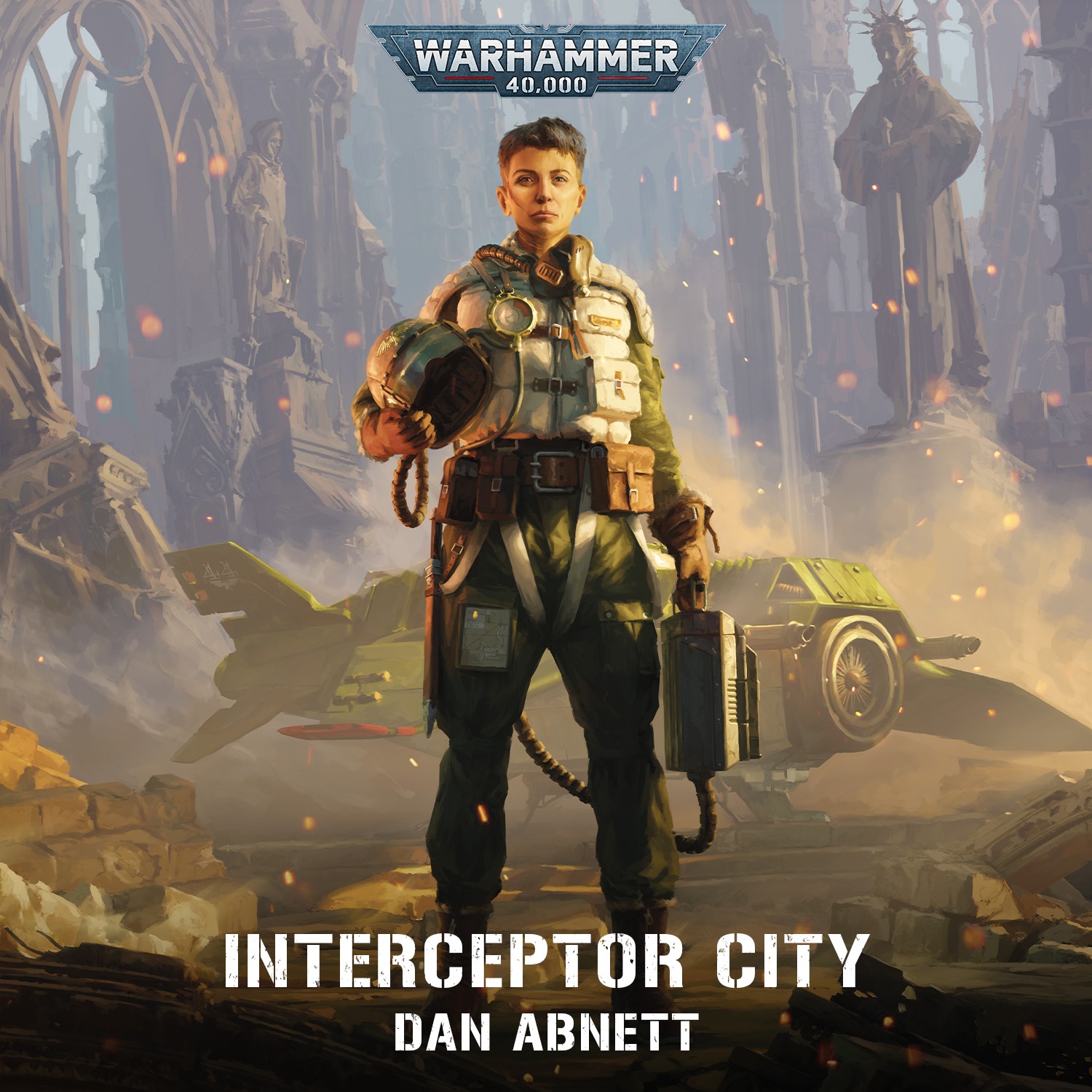
Warhammer 40,000: Interceptor City by Dan Abnett

Publisher: Black Library (Audiobook – 22 February 2025)

Series: Sabbat World Crusades/Warhammer 40,000

Length: 15 hours and 35 minutes

My Rating: 5 out of 5 stars

Amazon

Take to the skies once more as legendary Warhammer 40,000 author Dan Abnett presents another ambitious and rip-roaring novel of dogfights and explosive characters in the incredible novel, Interceptor City.

Dan Abnett is an author who I have mentioned multiple times in this blog, primarily because he is one of the best and most prolific writers of Warhammer fiction.  Abnett’s impressive work is a substantial pillar of the extended Warhammer 40,000 universe, especially with his entries in the Horus Heresy range, as well as his own various unique series, several of which are amongst some of my very favourite pieces of Warhammer 40,000 fiction.  This includes his outstanding Eisenhorn novels (XenosMalleus and Hereticus), his long-running Gaunt’s Ghosts books (First and Only, Ghostmaker, Necropolis, Honour Guard, The Guns of Tanith, Straight Silver and Sabbat Martyr), as well as gripping standalone titles like Titanicus. However, one of his very best books is the exceptional Double Eagle, for which Abnett has just released a sequel.

Double Eagle was an incredible novel first released in 2004 that sought to add a new, unique vantage point to the author’s Sabbat Worlds Crusade, the massive, multi-planet war served as a background the Gaunt’s Ghosts books.  Double Eagle followed members of a regiment of fighter pilots as they sought to control the skies above the Sabbat Worlds.  An intense, beautifully written, character-driven novel, Double Eagle got an easy five-star rating from me thanks to its outstanding and epic dogfights and examples of fighter-on-fighter combat.  Double Eagle was easily one of the best Warhammer books I have ever read, and I was very excited to find out that Abnett was finally releasing a sequel.

The Emperor protects, the Aeronautica remembers!

It has been more than 20 years since the battle to save Enothis and the Sabbat Worlds Crusade continues to rage, with millions of soldiers from the Imperium of Man fighting and dying to claim the planets from the arch-enemies grasp.  For some the crusade seems like a distant event, but for those on the scarred planet of Lysander, war is a daily occurrence, especially as the air forces of Chaos constantly seek to destroy the Imperial defenders with massive bomber flights.  The latest front of this campaign is the ruined hive city of Vesperus, which the enemy is using as cover to launch bombing attacks where the Imperials least expect it.  In response, the fighter pilots of the Aeronautica Imperialis have been ordered to secure the destroyed spires and massive building and turn Vesperus into a city of interceptors.

Into this precarious warzone flies former famed fighter pilot Bree Jagdea.  No longer the heroic ace who led her squadron to victory on Enothis, Jagdea now only pilots cargo haulers, determined to stay out the fighting.  However, an encounter with an old comrade leads her back into danger when she agrees to help the war effort by driving a needed replacement fighter to the Circus 66 squadron, currently serving in the ruins of Vesperus.  Planning to leave immediately after dropping off her precious cargo, Jagdea instead finds herself conscripted to join the ranks of the squadron as they face overwhelming odds against massed opposition from the forces of Chaos.

With no way out of the fight, Jagdea must once again contend against opponents in the sky if she wants survive and escape this new hellish posting.  However, this is not the air combat she is familiar with, instead the fighting in Vesperus is a cramped and deadly affair as their fighter aircraft must fight amongst the devastated and towering buildings of the Hive, where even the slightest error could result in death.  Forced to adapt to the new urban conditions Jagdea attempts to bring out her former skills and talent to survive the enemy all around her.  But with mysterious deaths haunting the squadron and the addictive thrill of danger once again luring her in, can Jagdea once again become a hero, or will she finally face her fate in the sky?

Well damn, now that’s how you do a sequel!  Dan Abnett continues to showcase why he is one of the very best authors of Warhammer fiction with the exceptional Interceptor City.  A particularly intense and captivating read that brings back one of Abnett’s best protagonists, Interceptor City was everything I hoped it would be, and more, as this novel simply blew me away.  One of my new favourite Warhammer 40,000 novels, Interceptor City gets a very easy five-star rating from, and I love the unique direction Abnett took this long-awaited sequel.

I have so much love for the narrative in Interceptor City, especially as Abnett decided to provide something very special for this sequel.  Abnett could have produced another open-skied flying story set right after the events of Double Eagle, and this probably would have been good enough to keep most Warhammer fans happy.  Instead, the author decided to raise the stakes in a big way by producing a deep and intense character-driven novel that brings back and focusses solely on a traumatised and retired version of his previous novel’s protagonist 20 years after the events of the first book, and places them into an impossible combat situation amongst suffocating spires and devastated city blocks to produce some outstanding action.

Told exclusively from the point of view of protagonist Bree Jagdea, Interceptor City went in some very interesting directions that bring the reader quickly into the fray.  Effectively setting up the unique situation on Lysander and Jagdea’s current emotional state, the story soon introduces some of the key supporting characters, before bringing Jagdea to the thick of the fighting in the devastated hive city of Vesperus.  Forced by circumstances to once again fly in combat, Jagdea finds herself in a new craft alongside an insane group of pilots trying to survive against impossible odds.  This results in the powerful main body of the plot as the traumatised Jagdea attempts to survive in an array of lethal fights amongst the massive, destroyed buildings of the Vesperus hive.

Abnett works in some incredible aerial sequences throughout Interceptor City, and you really become absorbed in the elaborate flying duels amongst the ruined buildings.  There is a great character-driven story here as Jagdea remembers her old instincts and slowly adapts to the new flying conditions she is forced to fight in.  At the same time as the brilliant action sequences, Jagdea also gets to know the other eccentric members of her new squadron, and there are some amazing character moments as she tries to understand their desperation, insanity and unique methods, while also trying to improve the survival rate of the less experienced pilots.  The flying scenes get more intense as the plot continues, especially as Jagdea regains her confidence, and you begin to understand more of the squadron’s madnesses.  There are some truly impressive story moments here, including a harrowing survival sequences and multiple complex aerial fights, that are cleverly worked together into one coherent and compelling plot.  Thanks to a great subplot, the later part of the book has a darker edge of mystery that requires to protagonist to try and understand the deeper motivations of the supporting cast.  While the solution of this mystery is somewhat obvious, it proves to be very well set up, and Abnett utilises it to masterfully increase the novel’s tension and stakes.  Interceptor City ends on a dark but fun note, as Abnett bucks against the expected final confrontation and allows the protagonist to end events on her own terms in a very over-the-top fashion.  This proved to be an extremely addictive narrative that really dives into the heart of the protagonist and provides some powerful and action-packed moments.

I loved this amazing Warhammer 40,000 novel, and I felt that Abnett presented it in such an impressive way.  Cleverly settling in as a standalone novel amongst the author’s other Sabbat World Crusade books, Interceptor City features a somewhat different style from Double Eagle, which works to make this sequel stand out on its own.  Rather than the extensive, multiple viewpoints that Double Eagle featured, Interceptor City is told exclusively from the perspective of the damaged protagonist Bree Jagdea.  While this does mean that you don’t get the full-picture war story that made Double Eagle cool, it allowed Abnett to really dive into his impressive protagonist’s story and showcase her personality and emotional state.  This ensured that this sequel was a particularly powerful and complex read, especially as Jagdea is a shadow of her former self after burning out as a pilot and crashing at her peak.  Now back into the cockpit, Jagdea is forced to come to terms with her own fears and doubt, as well as try the legacy of her past actions.  Abnett did an exceptional dive into Jagdea’s mind throughout Interceptor City, and he utilised the sole viewpoint to really explore her fears, hopes and the reasons behind her retirement.  This proved to be quite exceptional, and while readers are advised to read Double Eagle first to see this protagonist at her flying peak, new readers can easily dive into Interceptor City and appreciate its powerful emotional heart.  Throw in an over-the-top cast of eccentric pilots and killers with some additional complex and fascinating stories that the protagonist gets to know and trust, and Interceptor City has an impressive amount of character work that I found really fascinating.  Abnett layers this was a very grimdark tone, which allows the reader to full appreciate the desperate situation the protagonists are, and readers come away with an intense and impressive appreciation for the story.

While the great writing and the impressive focus on the protagonist’s mind ensures Interceptor City had an amazing story, the true highlight of this book is the outstanding depictions of aerial combat.  Abnett somehow managed to exceed his various impressive aerial sequences from Double Eagle in this sequel, and the resulting scenes of fighter-on-fight combat were so damn impressive, especially as the author describes them in exceptional detail.  The change of scenery from open skies to cramped urban flight conditions was extremely smart, and it ensured that Interceptor City’s flight scenes really stood out.  While the protagonist isn’t facing the overwhelming numbers of enemy fighters she encountered in Double Eagle, she is now forced to deal with small groups of skilled pilots amongst the wreckage of Vesperus, flying at impossible speed where even the slightest mistake could lead to death.  This results in some extremely nerve-wracking and claustrophobic sequences, as the protagonist tries to simultaneously fight and survive the dangerous environment she is flying through.  These fight sequences were so damn cool, and I loved how Abnett slowly improved the protagonist’s performance with each flight to reflect her growing confidence and mastery of the new location.  It is honestly impossible to stop reading Interceptor City during any of these sequences, especially the massive high-stakes ones at the end, and I frankly could not believe how Abnett made the dogfights and flying scenes even more epic in this outstanding sequel.

As is my preference with all things Warhammer, I chose to check out Interceptor City on audiobook rather than seeking out a physical copy.  Warhammer audiobooks are so damn good, and I love how well the elaborate and dangerous Warhammer 40,000 setting comes across when it is read out by a skilled narrator.  Abnett’s Warhammer 40,000 novels are a great example of this, as his compelling character and intense, tailored action really comes across on audiobook, especially in the hands of one of my favourite narrators Toby Longworth.  Longworth, who has lent his voice to most of Abnett’s books, really understands the best way to present the author’s fantastic narratives, and I love his cool take on all his Warhammer novels.  This was particularly true with Interceptor City, as Longworth did a masterful job bringing this complex tale to life, moving the main plot along at a quick pace and ensuring the action sequences were as epic as possible.  The passionate way he reads out the complex dogfights is just brilliant, and I found myself getting more and more drawn into these scenes as Longworth effortlessly vocalises every turn of the fighter and every lethal explosion in a tense and powerful manner.  You really got a sense of the protagonist’s desperation and the claustrophobic flying conditions she experienced thanks to this narration, and I was honestly on the edge of my seat for some of these outstanding sequences.  Throw in Longworth’s great array of compelling voices, which perfectly match the character they are assigned to, unique space accents and all, and the full impact of this amazing Warhammer 40,000 novel really comes out in the audiobook format.  Coming in with a run time of 15 and a half hours, Interceptor City is an epic audiobook to get drawn into, and I powered through this format in no time at all.  I actually wished it was a longer audiobook, it was that much fun, and as such I cannot recommend this format enough.

Dan Abnett was once again on fire with this exceptional and impossibly impressive Warhammer 40,000 novel.  A worthy sequel with its own incredible narrative, Interceptor City was a blast from start to finish and I had such a great time getting through this ambitious read.  Powerful, exciting, and loaded with some of the best Warhammer action sequences you are likely to read, Interceptor City comes highly recommended, and this might be one of my new favourite books.  I cannot wait to see what awesome Warhammer 40,000 novel Abnett writes next, and I hope we don’t have to wait another 20 years to see a new aerial adventure from this amazing author.
Amazon

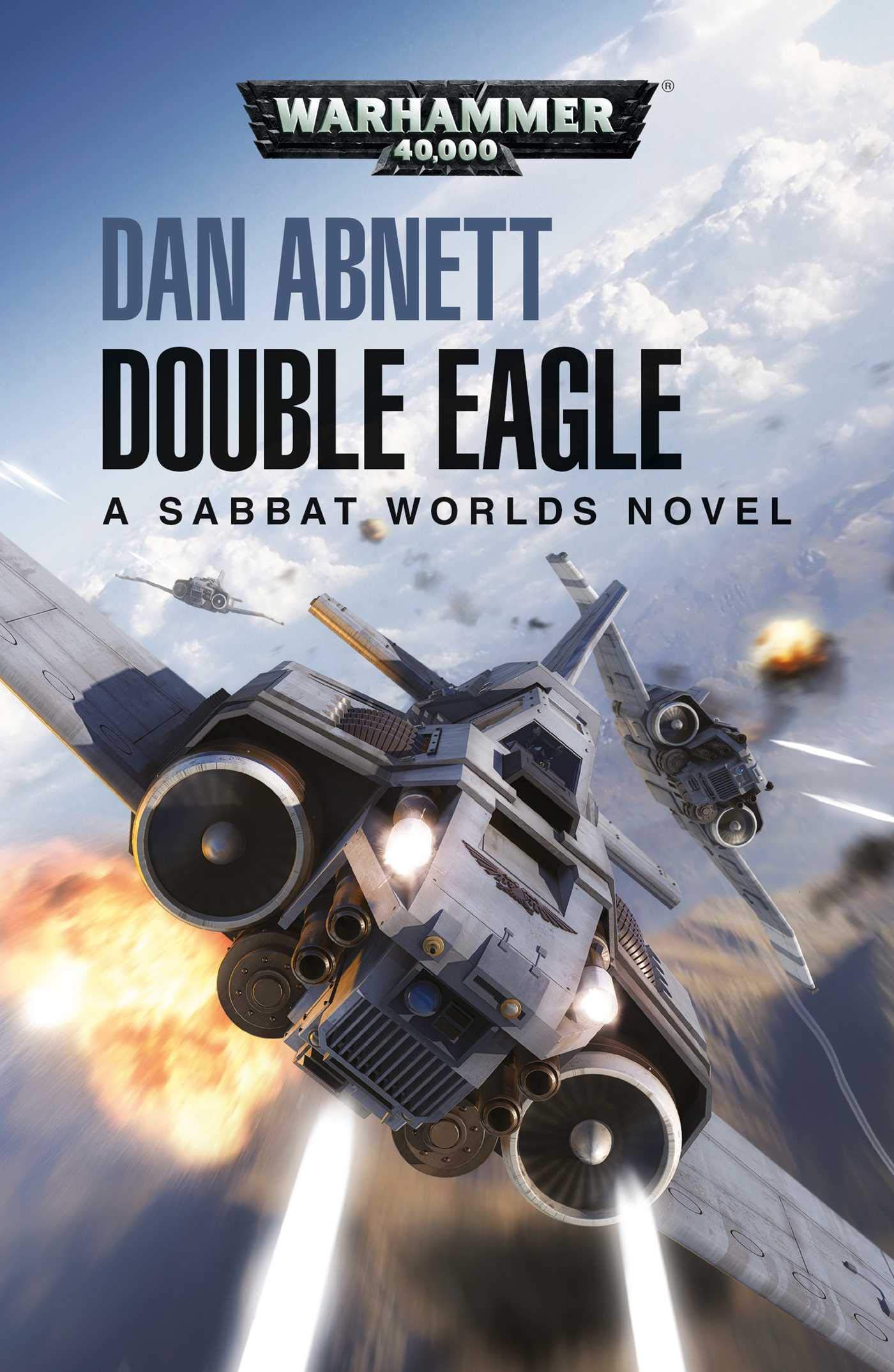
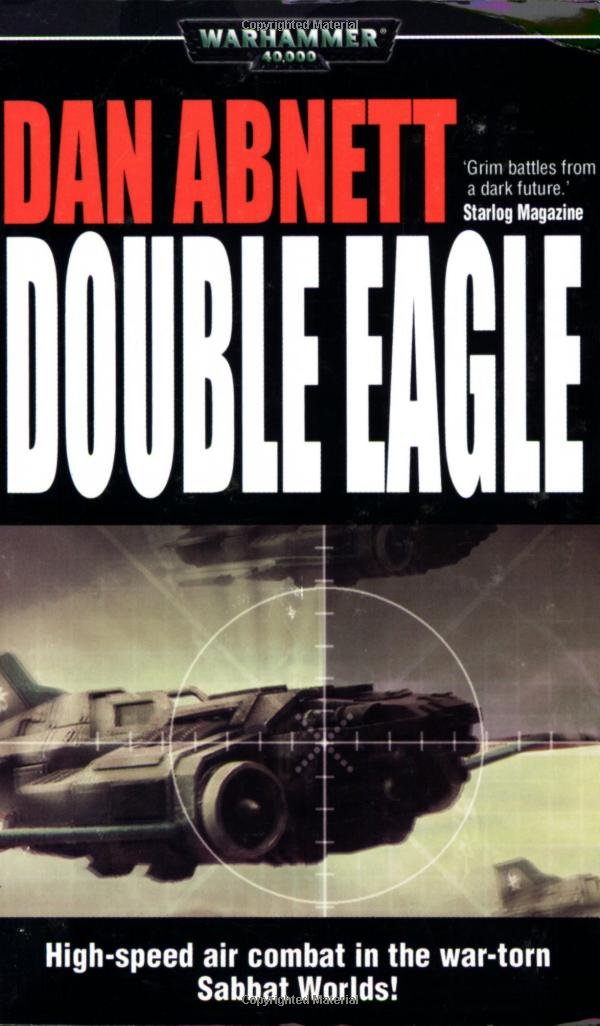
Warhammer 40,000: Double Eagle by Dan Abnett

Publisher: Black Library (Audiobook – 1 January 2004)

Series: Warhammer 40,000/Sabbat Worlds

Length: 10 hours and 16 minutes

My Rating: 5 out of 5 stars

Amazon

The master of Warhammer fiction, Dan Abnett, takes to the skies with the deeply addictive and ultra epic fighter pilot novel Double Eagle.

Readers familiar with this blog will know that I have been extremely damn obsessed with Warhammer fiction the last couple of years, having spent a substantial amount of time reading and reviewing numerous books from the franchise.  Of the many Warhammer fiction authors I have read during this period, one of the most impressive is the legendary Dan Abnett, who has written so many exceptional and powerful books around the franchise, including several series considered to be the seminal texts of the extended universe.  I have had a ton of fun with many of his books, including his brilliant Eisenhorn trilogy (Xenos, Malleus and Hereticus), and he has multiple entries in my current favourite Warhammer 40,000 books list.  However, his best-known series is the iconic Gaunt’s Ghosts books, which I am currently in the middle of reading.

The Gaunt’s Ghosts books are a beloved and key series of Warhammer 40,000 fiction that seeks to give readers a moving look at the lives of the frontline human soldier in this grimdark universe.  Set in an extended, multi-planet campaign, known as the Sabbat Worlds Crusade, the Gaunt’s Ghosts books follow a ragged regiment of soldiers as they attempt to survive the dark servants of Chaos coming for them.  I am having an exceptional time reading the Gaunt’s Ghosts series, and in 2024 alone I have read two particularly epic entries, Straight Silver and Sabbat Martyr.  However, before I dive any further into the series, I decided to read the spin-off novel, Double Eagle, which I have had on my to-read list for a while now.  Double Eagle was an interesting and unique novel that follows members of an airmen wing who were introduced in the fifth Gaunt’s Ghosts book, The Guns of Tanith.  Set after their mission with the Ghosts, Double Eagle follows these pilots, including a few characters from The Guns of Tanith, in a brutal new campaign.

War has engulfed the Sabbat World system as the forces of the Imperium of Man attempt to reclaim multiple worlds invaded by the forces of Chaos.  After years of fighting, the Imperium’s crusade has reached a tipping point, with victory or defeat for the entire campaign hanging on the results of a few key battles.  While the fighting is fierce throughout the system, nowhere is it more desperate than the beleaguered world of Enothis.

After failing to conquer the Chaos footholds on Enothis, the infantry and armoured forces of the Imperium are in full retreat, attempting to traverse miles of hostile terrain to return to safe territory, all while being harassed by relentless enemy aircraft.  With the fate of the planet in the balance, the commanders of the crusade deploy multiple squadrons of Imperial fighters and bombers to Enothis to turn the entire conflict into an air war.  If the Imperial pilots can hold back the advancing tides of Chaos and allow the ground forces to regroup the war for Enothis may be won.  But if the airmen fail, then Enothis and the entire Sabbat Worlds campaign is doomed.

Amongst the pilots sent to Enothis are the elite flyers of the Phantine Air Corps.  Veterans from the recent war to liberate their home planet of Phantine, the pilots of the Phantine Air Corps are determined to do their bit in this new conflict.  But the battle for Enothis will be unlike anything seen before, as thousands of Chaos aircraft descend on the planet, hoping to obliterate the defenders.  Severely outnumbered, can even the dogged Phantine pilots hold back the approaching tide of dark air machines before the planet is conquered, especially with an unnaturally skilled Chaos ace stalking the skies, determined to bring every opposing pilot down in flames?

Just when I think that Dan Abnett couldn’t impress me even more, I go and read Double Eagle.  A brilliant, intense, and exceptionally well-written novel that focuses on a particularly cool aspect of the Warhammer universe, Double Eagle blew me away with its great characters and elaborate air combat sequences.  I had an incredible time with Double Eagle, and it gets an easy five-star rating from me.

I deeply, deeply enjoyed Double Eagle, as Abnett took the brief of a Battle of Britain-inspired Warhammer 40,000 story and applied his usual impressively detailed style and powerful character-driven storytelling to produce an outstanding and addictive read.  Perfectly spinning off from the previous Gaunt’s Ghosts books and bringing the reader to another adventure in the expansive Sabbat World Crusades, Double Eagle has a brilliant narrative loaded with action that goes hard and fast for your feels and refuses to let go once it has you firmly in your grasp.

Double Eagle starts off quickly, getting the reader across the brutal new campaign and the importance of the aerial war that emerges, you are soon introduced to multiple characters and shown some initial awesome sequences with some explosive dogfights.  From there the story moves at a fast but smart pace, as you follow several distinctive and often overlapping character arcs throughout the length of the brutal campaign on Enothis.  You really get dragged into each major protagonist’s story as they attempt to survive the flying war.  There are some excellent battle scenes in this first half of the book and Abnett really shows how epic he can make a fighter pilot dogfight very early on.  The characters each experience some highs and lows in the first half of the book, and it doesn’t take you long to get attached the protagonists and their complex personal tales within the confines of the main story.

However, it is the second half of the book where everything comes together perfectly.  Each of the protagonists experience some version of personal loss or difficulty, and the impact of the war slowly drains them, taking them to some dark places.  Abnett sets up a brilliant underdog narrative around the protagonists, as the massive fleet of Chaos airships seek to crush them.  You can really see the parallels between this narrative and the Battle for Britain at this point, especially as the tired and severely outnumbered Phantine fighters and their local allies attempt to hold back the overwhelming and often Germanic-inspired forces coming for them.  Everything leads up to a massive final confrontation, as the protagonists engage in a series of brutal and drawn-out dogfights and aerial confrontations as we lead up to the finale.  While a couple of the character arcs leading up to this are a tad unsurprising, the way that Abnett writes them makes you love every second it.  The author brings everything to an epic close with continued and captivating action that honestly is impossible not to react to at times.  There are some very powerful moments at the closes, especially when some characters get everything they want, and you come away from Double Eagle wishing Abnett had made this book even longer.

Abnett once again masterfully crafts his compelling narrative together in such an effective way that I honestly just couldn’t stop listening to this book.  Making excellent use of multiple complex perspectives, you are swiftly drawn into the lives of several ordinary soldiers drafted into the deadly aerial war against a massive opposing fleet.  Featuring a range of complex characters arcs, Abnett expertly balances the character-driven plot between the various perspectives, while also featuring an epic war story that hits in all the right places.  Abnett’s use of quick-fire perspective changes works to create an excellent and fast-paced narrative, and it works especially well in some of the novel’s more intense sequences.  Speaking of action, you can’t talk about Double Eagle without discussing the amazing and epic aerial fight scenes and dogfights that make the book so damn distinctive.  Abnett did a remarkable job of harnessing the energy and feel of classic World War II fighter combat and bringing it into the Warhammer 40,000 universe.  Featuring many, many awesome sequences of aerial combat, Double Eagle really feels like you’re in a futuristic Battle for Britain as you witness fights between small groups of fighters fending off mass raids from Chaos forces, as well as sequences from the perspective of Imperial bombers.  The resulting dogfights between advanced fighter craft works so damn well in the context of the story, and you are treated to some truly epic sequences.  I was constantly enthralled by the brilliant aerial combat and flight sequences, and Abnett did an exceptional job expressing the intensities of flight, the ultra-fast pace nature of the combat, and the craziness of a massed aerial battle.  I could have honestly spent many, many more hours listening to Abnett’s descriptions of aerial combat, and there are so many excellent writing elements to this book that drag you in.

Double Eagle also proved to be an interesting and particularly strong Warhammer 40,000 novel that is really going to appeal to a wide range of readers.  Spinning off from the Gaunt’s Ghosts books, Double Eagle is tailor made for fans of the original series, although familiarity with the Gaunt’s Ghosts books isn’t necessary to enjoy this epic book.  While there are a few references, returning characters, and discussions about the overarching Sabbat Worlds Crusade, for the most part any reader can easily dive into Double Eagle and follow the story with no issues at all.  As with most tie-in books in the franchise, Double Eagle is best enjoyed by existing Warhammer fans, who will once again enjoy Abnett’s compelling insights into the canon.  I know that I really loved the exploration of Warhammer 40,000 air combat, and I loved how Abnett explored the physics, as well as the reasons why aerial fighters are still utilised in a universe where space travel exists.  However, I also felt that Double Eagle would serve as a pretty good entry point to any new readers interested in finding out why the Warhammer 40,000 universe is so damn cool.  Indeed, readers who are a fan of aerial focused military fiction or World War II fighter combat fiction can very easily jump into the new world here, as Abnett really presents a tale they would enjoy.  I need to read more Warhammer books from Abnett (I have several currently in my queue), and I currently very excited to read the recently announced sequel to Double Eagle, Interceptor City, which is set to be released later this year.

I found that the writing element that really brought Double Eagle together where the excellent characters at the heart and soul of the plot.  Focusing on several intriguing pilot characters, Abnett dove into the mindset of these flyers and did an amazing job capturing their love of the air and their desire to be the best.  However, as the book continues, you see a darker side to many of these characters, as the toil of war drags them down into their own mental hells.  While it did take me a little while to get across every protagonist, I eventually got drawn into the excellent character-focused storylines that Abnett set up in Double Eagle, and it was great to see the return of several characters introduced in The Guns of Tanith.  This includes the Phantine flight commander, Bree Jagdea, and the bombardier Oskar Viltry.  Jagdea proves to be a great centre for much of the plot, and her steady determination to keep her flight together and survive the various rigors of war, really strike a chord with the reader.  Viltry’s narrative is a little more complex, as the veteran pilot is suffering from trauma after being shot down and captured in The Guns of Tanith.  Certain about his own impending death, Viltry spends much of the book as a morose and depressed figure, until he finds someone worth living for.  Viltry’s storyline proves to be particularly heartfelt, especially as he has a relatively nice romance angle, and I felt that Abnett really captured his trauma and desire for a better life.

Aside from Jagdea and Viltry, Double Eagle also features several other impressive perspective characters who really bring the narrative together.  This includes young Phantine pilot, Vander Marquall, who serves as a major protagonist.  A rookie pilot fighting in his first campaign, Marquall has a massive desire to prove himself.  His obsession with becoming an ace and being respected becomes an overwhelming part of his character, and you find yourself occasionally disliking him, while also simultaneously cheering him on.  Thanks to his interactions with the other characters, Marquall gets some much-needed perspective at times (that scene with his mechanic at the end was brilliant), and I felt he had one of the most complex, dark and relatable storylines in the entire book.  Abnett rounds out the characters with local pilots August Kaminsky, a wounded veteran no longer allowed to fly, and Enric Darrow, a rookie without a plane after getting shot down in the opening scenes by the novel’s big bad.  While parts of Kaminsky and Darrow’s storylines are a little predictable, you really get invested in their various battles, especially as Abnett produces some interesting character moments and interactions for them.  I especially loved the hilarious exchanges between Kaminsky and Jagdea during one fun sequence, and Darrow proves to be a very likeable and determined young character to get behind.  These main characters, plus an excellent supporting cast, were great to follow in Double Eagle, and it will be awesome to continue at least one survivor’s story in the upcoming sequel.

It should come as no surprise to anyone that I ended up listening to Double Eagle on audiobook, as there is frankly no better way to enjoy an epic Warhammer 40,000 novel.  While I always gush about how much I enjoy a Warhammer audiobook, I frankly really need to emphasise just how impressive and exceptional Double Eagle was in this format.  The many, many aerial combat sequences come across so damn well when they are read out to you, and I loved how easily it was to visualise the fast-paced and exceptional flight scenes.  You really get lost in the battles when you listen to them, and I was frankly buzzing the entire time I was listening to Double Eagle.  Part of the reason this audiobook was so damn good was the inclusion of one of my favourite audiobook narrators Toby Longworth.  Longworth has lent his voice to most of Abnett’s Warhammer 40,000 novels in recent years, and frankly the two are a match made in heaven.  The story comes across so effectively in Longworth’s voice, and he really makes every scene, especially the exciting action sequences, that little more epic.  I also really love the fantastic and compelling voices he uses for the various characters.  While a couple of character voices sounded the same as those Longworth used in the Gaunt’s Ghosts audiobooks, I felt that they perfectly fit every figure they were assigned to, and you really get drawn into the matching character arcs as a result.  Frankly this audiobook was perfect, and I had so much fun listening to it.  With a run time of just over 10 hours, the Double Eagle audiobook is very easy to power through, and that is exactly what I did.

With an elaborate, powerful and addictive story about glorious battles in the sky, Double Eagle was a particularly epic Warhammer 40,000 novel that proves impossible not to fall in love with.  Another exceptional novel from Dan Abnett, who once again shows why he is one of the best authors of Warhammer fiction, Double Eagle had me hooked from the very first chapter, and I honestly couldn’t stop reading it until the very end.  This book comes very highly recommended, and I cannot wait to read the sequel later this year.

Amazon

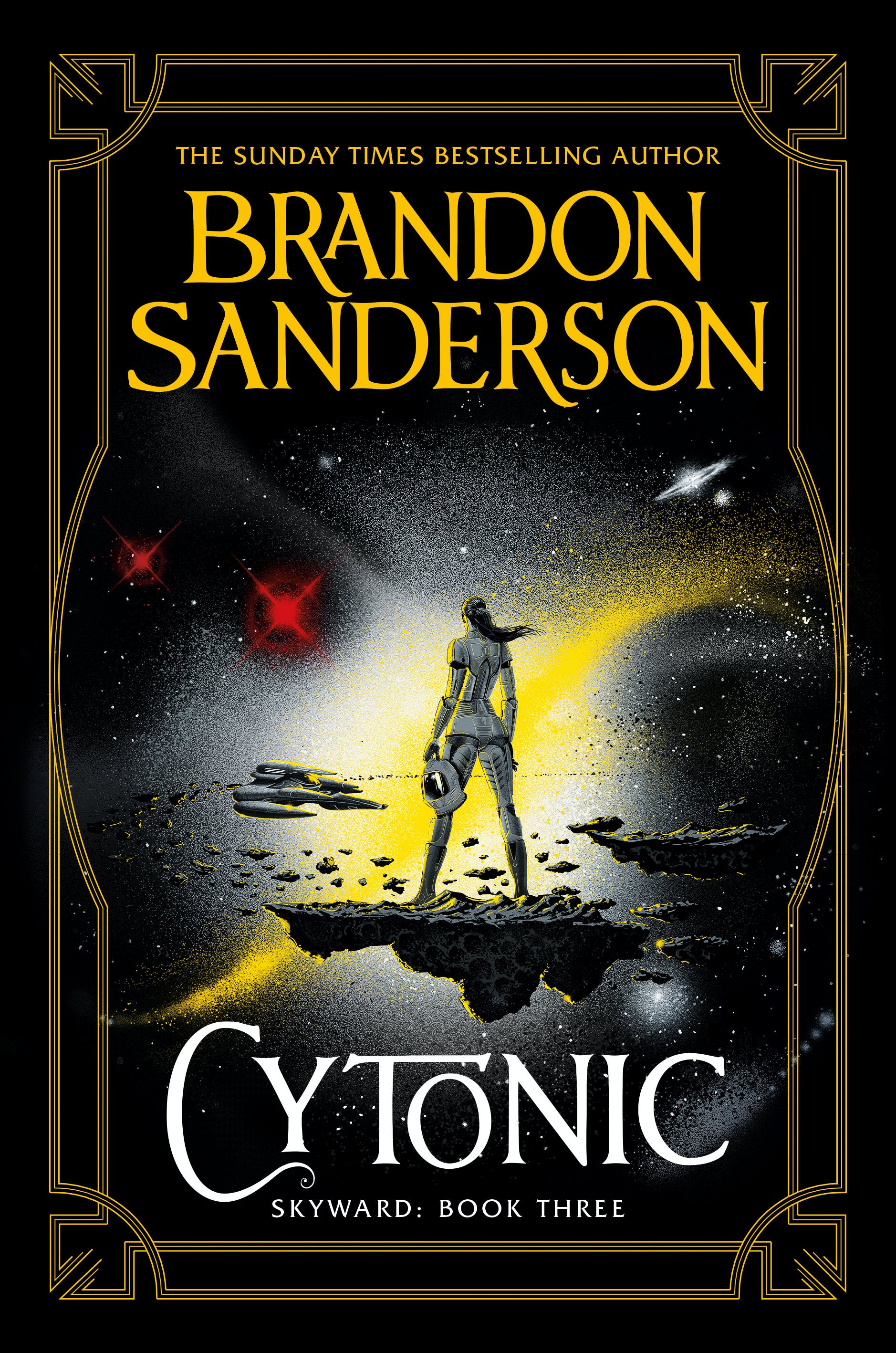
Cytonic by Brandon Sanderson

Cytonic Cover

Publisher: Gollancz (Audiobook – 23 November 2021)

Series: Skyward – Book Three

Length: 14 hours and 28 minutes

My Rating: 5 out of 5 stars

Amazon

One of the best authors of fantasy and science fiction in the world today continues his incredible and brilliant Skyward young adult science fiction series, with the third epic instalment, Cytonic.

This was another incredible book from the amazingly talented Brandon Sanderson, who I would say is one of the top authors in the world today.  Debuting back in 2005, Sanderson has written many brilliant and complex fantasy and science fiction novels and was personally selected to finish off Robert Jordan’s iconic The Wheel of Time series.  Sanderson has since written a great collection of books, most of which have been part of his interconnected Cosmere universe.  This includes his groundbreaking The Stormlight Archive series, which started in 2010 with The Way of Kings, as well as his bestselling Mistborn series.  While the extremely prolific Sanderson is constantly adding to his Cosmere novels, he has also been working on several other series, such as his Skyward books.

The Skyward series are an excellent young adult science fiction series that follows the character of Spensa Nightshade, a misfit who rose to become a fighter pilot to defend her planet from alien invaders.  Made up of Skyward and Starsight, this great series has proven to be truly fantastic, and these first two novels were amongst the best books of 2018 and 2019 respectfully.  The first book detailed Spensa’s training as a pilot, which saw her save her planet and discover that her people were intentionally trapped on their planet in a penal colony.  The second book, Starsight, followed Spensa as she infiltrated the alien capital in disguise to discover what the aliens wanted, and what plans they had for her planet.  However, after being betrayed, Spensa learns that the Superiority government want to use the mysterious interdimensional beings known as the Delvers as weapons against the humans.  This third book in the series, Cytonic, follows on immediately after the events of Starsight and continues Spensa’s adventure, showing what happened to her after she dove into a Superiority interdimensional portal at the end of the second book.  Sanderson also released several novellas around the same time as Cytonic, including Sunreach, Redawn and Evershore, which add context to the universe and focus on some of the side characters from the previous novels.

Following her dive into the mysterious portal in the middle of Starsight to escape the Superiority, Defiant Defence Force pilot and amateur spy, Spensa Nightshade, finds herself in all manner of trouble when she arrives in the realm known as the Nowhere.  The Nowhere is a unnatural and chaotic dimension outside our universe that hosts the Delvers, destructive creatures that are being manipulated by the Superiority into destroying humanity, especially the psychically empowered beings known as Cytonics, such as herself.

Determined to find out more about both the Delvers and her own Cytonic abilities, Spensa remains in the Nowhere to find the clues that will uncover the history behind her own power and that of her enemies.  However, the Nowhere is a weird and mysterious place, made up of floating fragments of multiple planets and filled with all manner of creatures, alien pirates and Superiority forces.  Worse, the very nature of the Nowhere slowly changes the people within it, draining their memories and making them forget everything important to them.

Alone except for her unhinged ship AI, M-Bot, and a forgetful intergalactic explorer, Spensa begins her quest.  As Spensa hunts down fragments from the past, she soon finds herself under attack from the Delvers, who are desperate to destroy her and the threat she poses to their entire race.  With mysterious monsters, dangerous physics and hostile aliens closing in on her, Spensa is thrust into the great adventure she always wanted.  However, the closer she gets to the truth about herself and the delvers, the more she begins to realise just how high the cost of knowledge and power can be.

This was an exceptional and addictive read from Sanderson, who once again takes the reader on a complex and powerful ride.  Cytonic was an excellent continuation of the unique story started in Skyward and then expanded on in Starsight, and I love the powerful journey contained in this novel.  Featuring a brilliant combination of a clever narrative, a unique new setting and some amazingly entertaining characters, this was an exceptional read that gets a full five-star rating from me.

I deeply enjoyed this incredible narrative, especially as it continues the cool plot from the previous two novels.  One of the best things about this series is the amazing amount of variance in storylines, with the first book reading like a flight academy story (teenage Top Gun), while the second book was an espionage book set in the heart of alien territory.  This third book turned out to be a wild and epic adventure novel, which places the protagonist in a unique and dangerous new setting and requires her to complete a great quest to save her friends and escape.  This great change of tone really made for a compelling read, and I loved the inventive pivots featured in this book.

Cytonic starts right after the events of Starsight, quickly resolving the cliffhanger from the second book, while also placing Spensa immediately in danger yet again.  Once the new main character, Chet, is introduced, Cytonic’s story quickly sets the protagonist on her mission, travelling to one location after another to learn the past of the universe and her enemies.  There are some brilliant sequences set throughout this part of the book, as Spensa gets to grips with the strange new dimension she has found herself in, while also enjoying the cool adventure she is having.  Around halfway through the book, several key new characters are introduced, as Spensa is forced to join an alien pirate gang to advance any further into the Nowhere.  What follows are some brilliant character moments as Spensa starts to find her place in this dimension, while also worrying about her friends back home.  After some intense and exciting space fighter fights, Spensa and her companions eventually get towards the end run of the book, learning everything they came to while trying to escape the Delvers.  The final major sequence of the book is loaded up with an intense amount of action, drama and major twists, as everything you think you know is changed around, and some big events occur that will rock you right in the feels.  This was a brilliant and extremely fast-paced narrative, with the protagonists never sitting still for long as they encounter danger and adversity around every corner.  Despite the intense pace, Sanderson also works a lot of character development and emotional encounters throughout the book, and you get an extremely well-balanced story that is very easy to get addicted to.

I deeply enjoyed Sanderson’s excellent writing style which helped to make Cytonic particularly accessible and fun to read.  Told exclusively from the perspective of Spensa, the reader gets a detailed and upfront examination of all the events occurring in front of her in addition to her own hilarious observations and reactions.  I find that the Skyward novels have a very different tone from some of Sanderson’s other works, and I appreciate the cool and perfect combination of intense science fiction elements, with compelling character development, impressive action sequences and outrageous and exciting humour that was featured in Cytonic.  The various fighter combat sequences are particularly good, and while they aren’t as plentiful as some of the other Skyward novels, there are still some exciting and elaborately written scenes that pit Spensa against other pilots or entities in high-stakes combat.  I will say that Cytonic does, at times, seem like a bridging novel in the series, setting up events for the big finale and sidelining several supporting characters.  However, I still really liked this great read, and I had an amazing amount of fun with its clever adventure framing.

Before starting Cytonic I was a little worried about how easy it was going to be for me to follow, especially as it had been nearly two years since I read Starsight, and I might have forgotten a lot of detail.  I was also concerned because I did not have a chance to read any of the novellas that Sanderson released around Cytonic, which some readers claimed were vital to the plot.  I personally felt that I was able to read this book without a refresher as Sanderson ensured that certain key details were summarised within the text extremely well, and I was swiftly able to remember anything that might have slipped my mind.  I also found that my enjoyment didn’t suffer from having not read any of the novellas, mainly because it was such a Spensa focused story.  The novellas detailed events that occurred back on Detritus and the Superiority during Spensa’s absence, and they only have minor impacts on the plot.  As such, readers can manage without them, although I think I will read them soon to find out what else has been happening in the wider universe.  One of the other things that I really appreciated about Cytonic is that it is extremely appealing to a wide range of readers.  While it is marketed as a young adult novel to teenagers, I honestly think that readers of most age ranges can really enjoy this book.  Older readers will deeply appreciate the complex characters and intriguing science fiction elements, while younger fans will love the cool action and hilarious humour.  Combined, this makes for an awesome read that I would strongly recommend to anyone interested in a great science fiction read.

I really must rave about the fantastic setting and universe building contained within Cytonic.  Sanderson really went all out expanding the Skyward universe in this latest novel, and the reader gets a ton of information as key elements from the previous novels are finally explained in full, such as Cytonics and the Delvers.  While readers may occasionally feel overwhelmed by all the new inclusions and background information that Sanderson shoved into this novel, I personally found it really fascinating and I appreciated having several questions answered.  There are some great scientific and character elements built into who and what Cytonics, Delvers, and the Nowhere are, and I think they were woven into the exciting plot extremely well.  Established elements from the previous two novels are also reintroduced expertly throughout Cytonic, and it was great to get some updates on the history, disputes and characters that were such a cool feature of the first two novels.  I particularly loved the fun reimagining of key parts of human culture that have been warped by years of retellings and misunderstandings.  Spensa’s love of stories ensures that several of these are featured throughout Cytonic, and it was always amusing to hear distorted version of well-known movies and books, such as Spensa’s epic and hilarious retelling of The Lion King.

I also need to gush about the incredible new setting of the Nowhere, which serves as the primary location for the entire narrative.  The Nowhere is a weird and haunting dimension outside of real space that is filled with all manner of wonder and danger.  Revolving around a faux-star containing Delvers, the rest of the Nowhere contains a ton of floating fragments of land and soil, containing all manner of elements from the planets they originated from.  This makes for a brilliant and shifting landscape which was really fun to explore and even more cool to fly over.  However, the real brilliance of this setting lies in the impact it has on the characters’ minds.  People stuck in the Nowhere, which includes pirates, miners, outcasts and anyone the Superiority wants to get rid of, are slowly having their memories, personality and sense of time sucked away by the weird space, with only certain figments of reality slowing the process down.  This naturally has some substantial impacts on the plot and the characters, with Spensa constantly trying to hold on to what is important to her.  This exceptionally clever and inventive setting is a great backdrop to this amazing narrative, and it was extremely cool to see Spensa and her friends try to navigate and overcome the various elements of the Nowhere.  Sanderson is a true master of creating unique and captivating universes, and I cannot wait to see what happens in this one next.

There is no way that you cannot talk about one of Sanderson’s novels without highlighting the many exceptional and complex characters featured within.  Cytonic, and the Skyward series in general, is a perfect example of this, as the readers are treated to a range of unique and entertaining protagonists, each of whom add an incredible amount to the overall story.  Due to the events of the plot, there is a much more limited range of characters in this novel, although the three main characters more than make up for it with their bold personalities and captivating backstories.

The most prominent of theses is point-of-view character and main protagonist Spensa Nightshade.  Spensa is a great character who has gone through an amazing amount during the trilogy, transforming to loner weirdo child who was reviled as the daughter of a traitor, to a heroic pilot, then to a daring spy.  In this third book, she becomes a wilderness adventurer on a quest to save her people, which plays perfectly to her personality, which has been warped by her youth of listening to wild stories.  As such, Spensa has a great time in this book, and it is deeply entertaining to see her adventure around and become a space pirate.  While there are a lot of fun moments with Spensa, Sanderson also takes the time to once again dive into her personality, showing how much she has grown since the start of the first book, as well as the unique relationships she has formed.  Spensa is faced with some hard choices in this book as she attempts to return home, and there is an impressive examination of her damaged psyche, especially surrounding all the responsibilities that have been thrust upon her.  This makes for a complex and compelling portrayal in this novel, and while you may laugh at Spensa’s antics you know that there is a lot going on within her head.  There are some interesting developments around Spensa in this book, particularly when it comes to her Cytonic powers, and it will be fascinating to see how she further develops in the next novel.

I also deeply enjoyed the character of M-Bot, the silly and distracted artificial intelligence who Spensa discovered in a crashed ship in the first book.  After being disassembled by the Superiority in Starsight, M-Bot now flies around in a tiny cleaning drone and finds himself going through some big changes.  In particular, he has gained full sapiency in this book, and he immediately goes on an emotional bender, trying to understand the complex feelings he is now experiencing, while also dealing with his sense of betrayal after Spensa abandoned him in the previous book.  This dive into sentience adds some really entertaining layers to M-Bot in Cytonic, and he is even more amusing and charming than before, which I didn’t think was possible.  Readers will swiftly fall in love with M-Bot again, and it was so much fun following him around, especially as he continues to develop his unique friendship with Spensa.  M-Bot has some amazing moments and ridiculous dialogue in this book, and you will not be prepared for everything that occurs with him.

The other major character of this book is new protagonist Chet Starfinder, a human Cytonic explorer who lives in the Nowhere and decides to help Spensa achieve her goals and escape back to her universe.  Chet is an eccentric being who combines aspects of all the famous literary explorers into his personality, thanks to his love of stories and his inability to remember life outside of the Nowhere.  Readers will enjoy getting to know Chet, and it was fascinating to see the cool dynamic that grows between him and Spensa as they take on a fun partnership to traverse the Nowhere.  Sanderson opens some big questions surrounding who Chet is at the start of Cytonic, and it was a lot of fun finding out who exactly he was and what his motivations for helping Spensa are.  I deeply enjoyed Chet’s unique and compelling storyline and he proved to be a brilliant addition to the novel.

Aside from these main three characters, Cytonic also features an interesting supporting cast.  Most of these characters are new, with characters from the preceding novels barely featured here (they appear in the accompanying novellas).  These new characters are the trapped inhabitants of the Nowhere who find Spensa and become part of her journey.  These include the Broadsiders, an alien pirate band who Spensa joins and swiftly grows close to thanks to their inclusive nature and love of great pilots.  It was fascinating to see Spensa, who has had to fight for inclusion her entire life, gain some more friends, even though she knows she can’t stay with them.  There are some great figures amongst this bunch, and I loved some of the unique alien features they had.  Sanderson reintroduced one of the best characters from the Starsight in the book, who proves to be quite an entertaining and lovable inclusion, even if they are experiencing some memory issues.  Some of the main series antagonists have minor appearances in this book, plotting from afar and setting some evil plans in motion.  While it would have been interesting to see more about them, especially as they were only introduced in the prior novel, I think keeping them mostly apart from Spensa worked in the context of the unique plot that Sanderson was trying to develop.  I also deeply enjoyed the strange creatures known as the Delvers.  The Delvers are dangerous and powerful interdimensional beings who exist on a whole other form of reality and consciousness.  Sanderson does a fantastic job exploring what exactly these beings are, and you get a real sense of their dangerous emotions and outlook on life.  I really appreciated the author’s clever use of these seemingly less than humourous monsters as the antagonists of this book, and it proved to be a welcome addition to the plot.  Every character in this book is extremely awesome, and readers will have an exceptional time exploring their complex personalities as the plot unfolds.

While I did receive a physical copy of this book, I chose to enjoy the audiobook version of Cytonic instead to fit it into my reading schedule.  This proved to be an extremely wise decision as the audiobook was a fantastic way to check Cytonic out, something I had previously found when listening to Skyward.  There are actually two versions of the Cytonic audiobook available, but I chose to listen to the Sophie Aldred version, as she was the narrator who I listened to previously.  This version of Cytonic had a run time of just under 14 and a half hours, making it a relatively quick audiobook to get through, especially once I got incredibly hooked on the story.  I really enjoyed listening to Cytonic and I found that the audiobook version helped my appreciation of both the new setting of the Nowhere and the various cool space fighter sequences featured throughout.  Aldred is an outstanding narrator, and I had an exceptional time with the various voices she featured throughout Cytonic.  She hits the character of Spensa perfectly, fully capturing her daring and adventurous personality, and enhancing all her many quirks.  I also loved the cool voice she used for M-Bot, including the fun accent, which fully showed of his computer origin, as well as the many unusual behavioural quirks that have developed within him.  This great narration deeply enhanced this already cool novel and I had a wonderful time listening to this incredible audiobook.

With the third entry in the epic Skyward series, Cytonic, acclaimed author Brandon Sanderson continues to shine as one of the absolute best modern fantasy and science fiction writers out there.  Cytonic is another captivating and impressive young adult science fiction read that perfectly continues the outstanding narrative from the previously Skyward novels.  Featuring some incredible characters, an intense and moving narrative, and a bold and inventive new setting, Cytonic is an exceptionally awesome read that you will get addicted to.  I had a fantastic time with this novel and I cannot wait to see how Sanderson wraps up this series in the future.

Cytonic Cover 2

Amazon

Star Wars: Victory’s Price by Alexander Freed

Star Wars - Victory's Price Cover

Publisher: Random House Audio (Audiobook – 2 March 2021)

Series: Star Wars: Alphabet Squadron – Book Three

Length: 16 hours and 19 minutes

My Rating: 5 out of 5 stars

Amazon

One of the best Star Wars tie-in series comes to an epic and impressive end, as Alexander Freed presents Star Wars: Victory’s Price, the amazing third and final entry in the awesome Alphabet Squadron trilogy.

Since its inception in 2014, the current Star Wars extended universe has featured an amazing range of novels that tie into the various movies and television series.  One of the best has been the Alphabet Squadron trilogy from acclaimed author Alexander Freed.  Alphabet Squadron is a particularly compelling trilogy that follows a fantastic group of mismatched Rebel and Imperial pilots who continue to fight in the aftermath of Return of the Jedi.  This series has so far featured two excellent entries: the great introductory novel Alphabet Squadron, and the outstanding second entry, Shadow Fall, both of which I have deeply enjoyed.  As a result, I have been looking forward to seeing how the series ends and I think that Freed has left the best to last with this epic and powerful read.

The Emperor and Darth Vader may be dead, and the second Death Star destroyed, but the war is far from over.  Nearly a year after the battle of Endor, conflict still reigns in the galaxy between the forces of the New Republic and the remnants of the Empire.  In nearly every battlefield, the Empire’s forces are in retreat and disarray, apart from the notorious pilots of the 204th Imperial Fighter Wing, better known as Shadow Wing.  Led by the dangerous Imperial TIE Fighter ace, Colonel Soran Keize, Shadow Wing continue to bring death and destruction to the Empire’s enemies, slipping away when their vile deeds are done.

However, despite their skills and strategies, Shadow Wing is in constant danger as New Republic forces, under the command of General Hera Syndulla, are pursuing them.  Syndulla is determined to end the threat of Shadow Wing utilising the ragtag pilots of the unique unit known as Alphabet Squadron, each of whom has a score to settle with Shadow Wing, to lead the fight against them.  However, the members of Alphabet Squadron, Wyl Lark, Chass na Chadic, Nath Tensent and Kairos, are still recovering from their last traumatic encounter with Shadow Wing on Cerberon, as well as the revelation that their former leader, Yrica Quell, was an active participant of Operation Cinder, the Emperor’s genocidal last order to destroy multiple disloyal planets.

As Hera and Alphabet Squadron attempt to find their prey, they begin to discover just how dangerous the cornered Shadow Wing has become, as their opponents begin to enact a new version of Operation Cinder.  Worse, Alphabet Squadron are shocked to discover that Yrica Quell is still alive and has re-joined her old comrades in Shadow Wing.  As the two forces engage in battle again, the loyalties of Alphabet Squadron will be tested like never before while Quell attempts to determine just whose side she is truly on.  The conflict will finally end above the skies of Jakku, as the Imperial and New Republic fleets engage in their final battle.  Can Alphabet Squadron finally put an end to the evils of Shadow Wing, or will Soran Keize’s master plan change the entire galaxy forever?

Now this is what all pieces of Star Wars fiction should be like.  Victory’s Price is an exceptional and impressive novel that had me hooked from the very beginning.  Not only does Freed do an amazing job of wrapping up the Alphabet Squadron trilogy but he also provides the reader with fantastic action sequences and some outstanding characters.  This is easily one of the best Star Wars novels I have read in ages and it gets a full five-star rating from me.

For this final book, Freed has come up with a powerful story set within the iconic Star Wars universe.  Starting right after the events of Shadow Fall, Victory’s Price sees the members of Alphabet Squadron separated and traumatised as their protracted and personal conflict with Shadow Wing begins.  This leads into a series of exciting encounters and battles in space as Alphabet Squadron pursues Shadow Wing during their latest mission, while the leader of Shadow Wing hatches a plan to end the war on his terms.  At the same time, each of the characters attempts to deal with issues or distress raised in the previous novels, whether it be Quell’s conflicted loyalties or Chass’s post-fight trauma.  All of this leads to some epic and impressive final confrontations as the two sides meet for the very last time.  This was an extremely good character-driven read, and I loved the very cool way that Freed finished off this amazing series.

While it is an amazing Star Wars novel, Freed focuses more on the war part of the book, turning this into a gritty story of survival, loyalty and conflict, which makes for a powerful piece of fiction.  While obviously best enjoyed by those readers familiar with the rest of the series, Victory’s Price is a very accessible novel which new readers can follow without any trouble.  Thanks to the awesome use of multiple character perspectives, Victory’s Price has an excellent flow to it, and the readers are supplied with clever twists, cool action sequences and impressive character moments as the protagonists come to terms with their place in the universe and the constant fighting.  This ended up being quite an intense tale of war and life, which not only perfectly wrapped up the Alphabet Squadron series but which also had me engrossed from the very minute I started reading it.

One of the major things that I liked about this book was the way in which it added to the Star Wars expanded universe.  This series has always done a cool job of exploring what happened after Return of the Jedi, and it is always interesting and somewhat more realistic to see that the war did not end as soon as the Emperor died.  However Freed has painted this period as a particularly dark and deadly part of the war, and I love seeing how he envisioned what happened to members of the New Republic and Empire after Endor.  Victory’s Price focuses on the very end of the civil war, showing another side of the events that lead up to the battle of Jakku and fitting its original characters into this conflict.  This is a cool part of the book, and I loved seeing another version of the epic battle of Jakku, a major conflict that has been featured in several other novels and pieces of fiction.  Freed also takes the time to explore and answer several other intriguing questions, such as the mystery behind the Emperor’s messengers, the creepy red-clad droids who project holograms of the Emperor’s face, which sought out various Imperial commanders after Endor and ordered the various genocides of Operation Cinder.  The solution surrounding the messengers ends up being rather intriguing, and there are even some clever parallels to World War II in there.  Due to the intriguing elements of Star Wars lore featured within, Victory’s Price, like the rest of the Alphabet Squadron series, will probably be enjoyed most by major fans of the franchise, but there are a lot of compelling elements that readers of all knowledge bases will appreciate.  This was truly an exceptional piece of Star Wars fiction and I cannot wait to see what Freed adds to the canon next time.

I really must highlight the outstanding action scenes that Freed came up with for this book.  I am a man who likes his Star War’s action, and I have to say that Victory’s Price has some of the best sequences that I have ever had the pleasure of enjoying.  Due to the novel’s focus on fighter pilots, there are naturally a huge number of amazing combat scenes as the rival pilots engage in complex battles in space.  Freed has saved the best for last in this final Alphabet Squadron novel, as the opposing pilots find themselves fighting in a range of unique situations.  The battle scenes are extremely well crafted, filled with elaborate details and fantastic depictions of complex manoeuvres and clever tactics that are guaranteed to keep you on the edge of your seat with their intense action.  They are also quite emotionally rich, as you witness your favourite characters constantly face near-death experiences in this final entry in the series.  Highlights of these great battle sequences included two fantastic duels between the protagonists and the leader of Shadow Wing, which sees some fancy flying between some of the most skilled pilots in the series in some very distinctive landscapes.  I also really loved the final, elaborate battle set above Jakku, which proved to be a major part of the second half of the book.  Not only do you get the desperate and packed main conflict between the entire New Republic and Imperial fleets, which features destruction and death in every direction, but you also get a more private and quiet final battle between a group of Alphabet Squadron led New Republic fighters and Shadow Wing.  This smaller pitched battle between the two sides fits perfectly into the midst of the wider conflict and is filled with personal turmoil and antagonism as these two rival squadrons meet for a final time.  All these battles come out as being extremely epic and powerful, and I loved every second of the gritty and deadly fights they contained.

While I have a lot of love for Victory’s Price’s epic story, intense action, and clever Star Wars connections, easily the best thing about this book are the complex and well-written characters.  Each of the major characters featured in Victory’s Price have been introduced in the previous Alphabet Squadron novels with some complex and powerful storylines.  In Victory’s Price, all these great arcs reach a climax as the characters meet their final destiny and their stories comes to an end.  I really enjoyed the satisfying conclusions that Freed came up with for his outstanding characters, although in many ways it was sad to see their stories finish.  Still, I really appreciated all the great character arcs contained in this final novel, and Freed ensures they go through the emotional wringer before they go.

At the forefront of these outstanding characters are the five members of Alphabet Squadron who have served as the focal point for the entire series.  The pilots in Alphabet Squadron, so named for their use of a different Rebel Alliance fighter (A-Wing, X-Wing, B-Wing, U-Wing and Y-Wing), are layered and complex individuals, each of whom has experienced their own trauma or betrayal throughout the course of the lengthy war.  All five of these original characters have gone through significant development throughout the course of the previous two novels, and Freed does an exceptional job continuing their journeys in this final book.

The main protagonist of this series is Yrica Quell, a former member of Shadow Wing, who joined Alphabet Squadron in the first novel to help neutralise her former Imperial comrades.  However, it was eventually revealed that Quell, despite claiming she defected from the Empire after refusing to participate in Operation Cinder, aided in the destruction of a planet.  This revelation caused a massive rift in her relationship with the rest of Alphabet Squadron, and she ended up reuniting with Shadow Wing at the end of the second novel.  In this final book, it is revealed that Quell has infiltrated Shadow Wing to bring them down from the inside.  However, upon spending time with her Imperial comrades, she begins to experience doubts about her plan, especially as she sees that the Imperials are just as damaged by the war as she and the New Republic pilots are.  Her plans are further complicated due to her relationship with the leader of Shadow Wing, Soran Keize, her former mentor and the person who initially convinced her to defect to the New Republic.  Quell still has an immense amount of respect for Keize, and strongly believes in several of his plans.  This re-remembered loyalty to Shadow Wing strongly conflicts with her friendships with Alphabet Squadron and the guilt she feels for her role in Operation Cinder, placing Quell in a major quandary for most of the book.  This uncertainty and inner conflict is a really clever part of Quell’s story, and the reader is deeply impacted by her struggle and conflicted loyalties.  This was easily one of the best and most powerful character arcs in Victory’s Price and I really appreciated the outstanding character story that Freed set around Quell.

Victory’s Price also spends a significant amount of time following Quell’s fellow Alphabet Squadron members, Wyl Lark and Chass na Chadic, both of whom have compelling arcs that highlight different aspects of warring soldiers.  Wyl Lark is the young, optimistic member of the squadron who took over leadership at the end of the second novel.  Lark has developed a significant amount throughout the course of this series, and it is great to see him come into his own as a leader and pilot.  However, despite his apparent ease at the role, Lark is plagued by doubts and concerns about the morality of this fight, especially as it conflicts with some of the teachings of his race.  He spends a great deal of this final book coming to terms with his morals, and even attempts to once again contact the members of Shadow Wing to try and find some common ground or a way to end the conflict.  His actions go a long way to humanising the antagonists of the novel and his hope is a refreshing beacon of light in this darker Star Wars book.  I deeply enjoyed seeing the way in which Lark attempts to change the outcome of the war his way, and it was a fascinating addition to the story.

Chass, on the other hand, is easily the most damaged character in the entire series.  A music-loving veteran pilot who is more afraid of the end of the war and her inevitable slide into irrelevance and despair than her own death, Chass has always been on edge throughout the series.  However, in Victory’s Price, Chass is even more traumatised, especially after learning of the betrayal of her love interest, Quell (which is an intriguing LGBT+ relationship for a Star Wars novel) and has since turned to the teachings of a cult to gain some clarity.  Despite this, Chass is still driven by her anger and her rage and is constantly lashing out at everyone around her, with her death wish a constant anchor around her neck.  Freed has written a complex and moving story around Chass and her suffering, and I deeply appreciate the portrayal of her as a troubled veteran.  I think that Chass’s story comes to a fantastic end in this final novel, especially as she gets closure with several important people in her life.  Both characters are incredibly well written and are fantastic examples of Freed’s exceptional writing ability.

Next up are the final two Alphabet Squadron pilots, Nath Tensent and Kairos.  While both characters have been somewhat overshadowed throughout the series, Freed has developed some intriguing storylines around them which come full circle perfectly in this final novel.  Nath Tensent, a pilot who served both the Empire and the Rebels during the war, has an enjoyable and likeable personality and is the sort of guy who quickly becomes everyone’s best friend.  However, despite the easygoing façade he projects to the world, even Nath is feeling the effects of the war and the constant worry and responsibility is getting to him.  This is particularly exacerbated in Victory’s Price when he becomes a decorated military hero with greater responsibilities and is forced to balance his own selfish goals with the lives of people who look up to him, as well as his very strong concerns for Wyl Lark.  This results in a particularly clever and enjoyable arc, and it was great to see him finally take some responsibility in this war.  I liked the way in which Freed ended Nath’s storyline, especially as it potentially opens another series in the future.

The final member of the squadron is the mysterious Kairos, an alien of unknown origin with a strong hatred for the Empire and terrifying combat skills.  Despite her intriguing introduction in Alphabet Squadron, Kairos was somewhat left out of the second book after receiving an injury.  However, this is more than rectified in Victory’s Price, as Kairos is featured more prominently and we finally get to see some of her backstory.  Freed comes up with quite the intriguing, if tragic, story for Kairos, and it was fascinating to see her unique alien beliefs and culture, as well as a powerful story of renewal and redemption that accompanies her.  Kairos becomes quite close to two characters in this book, especially after the closest people in her life died in the previous novel, and it was great to see her finally connect, even if only for a short while.  Freed did a fantastic job setting up Kairos’ story in the previous two novels, and I personally loved finally getting some answers regarding this curious character’s identity.

Aside from the members of Alphabet Squadron, several other characters are also shown in great prominence throughout this book.  The one I liked the most was Hera Syndulla, the New Republic general commanding Alphabet Squadron.  Hera is one of the few characters in this novel who Freed did not come up with, as Hera originated in the Star Wars: Rebels animated series and serves as a bridging character to the larger franchise.  Due to how much I love Star Wars: Rebels, I have really enjoyed seeing more of Hera in this series, not only because I am very curious about her post-Rebels life but because she also serves as a great mentor character to the members of Alphabet Squadron.  Hera features a lot more prominently in this final novel and her perspectives are shown nearly as much as the members of Alphabet Squadron.  This extra perspective really added a lot to the story as a whole and I personally really enjoyed seeing Hera take charge and attempt to hunt down Shadow Wing, while also attempting to determine the course of the entire war.  I also really enjoyed the fact that this book shows Hera’s role in the battle of Jakku, which as the largest space battle in the entire civil war, you had to assume she would be a part of.  Hera is naturally a bit of a badass in this battle, as you would expect, and I appreciated that Freed featured more of her in this novel.

The other major character featured within Victory’s Price is Colonel Soran Keize.  Keize is a fantastically complex character who serves as the leader of Shadow Wing and Quell’s Imperial mentor.  Despite nominally being the antagonist of this book, Keize is portrayed as a more of a tragic and misunderstood figure, one who is sick of war and who only has the best concerns of his men at heart.  As a result, Keize is running his own game throughout Victory’s Price and works to get the best result for the members of Shadow Wing.  His convictions, sense of honour and understandable motivations make him a hard character to dislike, and his role in mentoring Quell ensures that she is extremely conflicted when it comes to betraying him.  Keize is also probably the best pilot in this entire series, as he is regarded as the Empire’s ace of aces, and Victory’s Price is where you get to see him soar as he engages in several great battles and duels.  Thanks to this, and his curious character development, Keize is a great character to follow, and I really enjoyed the unique tale Freed told through him.

Freed also focuses on some of the other pilots on both the New Republic and Imperial sides.  This results in a great combination of complex side or minor characters, each of whom have their own reasons for fighting in the war.  Freed attempts to show that, despite fighting on different sides of the war, these characters really are not that different.  Instead, all of them are soldiers, with several similarities, including their own trauma, PTSD and issues with the war that they are fighting in.  I think it is a testament to Freed’s writing ability that he was able to get me to care about members of the Imperial navy, and it was pretty spectacular the way in which he attempted to show the humanity buried deep within them.  It does mean that the action sequences more emotionally loaded and potentially devastating as you end up not wanting to see some of the pilots dying, but I really appreciated the way in which Freed took the time to explore these compelling side characters.

While I have previously enjoyed the first two Alphabet Squadron novels in their paperback format, circumstances required me to check out Victory’s Price as an audiobook instead, which was pretty damn awesome.  Not only did Victory’s Price feature the usual blend of iconic sound effects and music that makes all Star Wars audiobooks such a treat to enjoy, but I found that the story flowed incredibly well in this format.  With a lengthy runtime of 16 hours and 19 minutes, I absolutely blasted through this book as I became so engrossed in the awesome story and the way in which it was performed as an audiobook.  I also thought that the use of the iconic Star Wars music in the Victory’s Price was particularly impressive, and not only did the music make several of the extended space battle sequences even more epic, but they also really highlighted some of the most emotional scenes in the book and made them strike my soul even more emphatically.  I also really enjoyed the amazing narration from January LaVoy, who has previously provided her voice to the other Alphabet Squadron books.  LaVoy is a particularly skilled narrator whose work on the Star Trek: Discovery tie-in novel, Die Standing, I really enjoyed.  Not only does LaVoy present the awesome details of Victory’s Price in a quick and exciting manner, making each of the action scenes sound particularly cool, but she also provides some great voices for the various characters.  Each of the main characters gets a unique voice which fits them perfectly and which really helps the listener get to grips with their personalities and inner thoughts.  While all of the character’s voices were done extremely well, the best voice that LaVoy did was probably Hera Syndulla’s, which sounded extremely close to the character’s voice in the Star Wars Rebels animated series.  All of this helps to make Victory’s Price’s audiobook an immensely enjoyable experience and I would highly recommend this format to anyone and everyone.

Star Wars: Victory’s Price is an exceptional and powerful novel from Alexander Freed that is one of the best books I have so far read in 2021.  Featuring a dark and gritty war story set during a fascinating period of Star Wars history, Victory’s Price perfectly wraps up the impressive Alphabet Squadron trilogy while also providing some cathartic conclusions to outstanding character arcs that Freed has built up during the previous book.  I absolutely loved this final novel (hence the massive review), and I think that this was probably the best entry in the entire series.  A highly recommended read, especially if you have already enjoyed the rest of the trilogy, this was a truly epic Star Wars novel.

Amazon