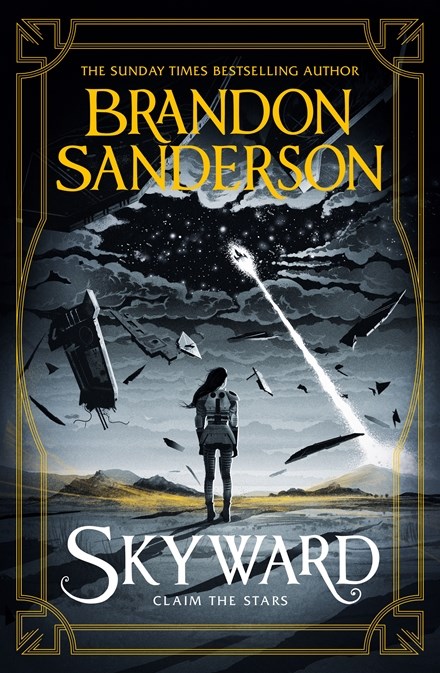
Skyward by Brandon Sanderson

Skyward Cover.jpg

Publishers: Gollancz

                        Audible Studios

Publication Date – 6 November 2018

Amazon

Legendary fantasy and science fiction author Brandon Sanderson once again delivers an incredible five-star read with Skyward, a brilliant young adult science fiction story that follows the journey of an energetic young protagonist at she attempts to claim the stars.

As of right now, I have only had the opportunity to read one of Sanderson’s novels, the epic fantasy book, The Way of Kings, which was easily one of the best fantasy reads of the last decade and which I gave a five-star review here.  After enjoying The Way of Kings I was keen to see how Sanderson’s writing ability translated to the young adult science fiction genre.  I have to say I was in no way disappointed, as Sanderson once again creates an amazing and exciting piece of literature, all set within an incredibly detailed new fictional landscape.  Skyward is the first book in Sanderson’s planned Skyward series, which is to be made up of a total of four books.  The second book in this series, Starsight, has apparently already been written, with a release planned for November 2019, while the third and fourth books, both yet untitled, already have tentative release dates in 2021 and 2022.  Starsight is already on my must-read list for next year, and will appear in my Waiting-on-Wednesday series of blog posts the moment the cover gets released.

Far in the future and on another planet, humanity has been under constant attack for hundreds of years.  A mysterious alien race known as the Krell pursued the human fleet across the stars, forcing it to crash on a desolate planet.  Those humans that survived were forced to flee below the planet’s surface, hiding in caves and only re-emerging when they gained the ability to create space fighters capable of fighting off the alien craft.  Now the Defiance Defence League (DFF) fights a constant war against the Krell, who are determined to wipe out the DFF’s main base and the production facilities beneath it.

Since she was a young girl, Spensa Nightshade has always dreamed of becoming a DDF pilot, the elite defenders of humanity, in order to claim the stars.  However, years ago, her father deserted during the most famous battle in DDF history and was shot down by his comrades.  Having been forced to live for years as a daughter of a coward, Spensa is eager to forge her own heroic destiny, but the DDF will never accept her into their flight program.

But with the war going badly and new pilots needed, Spensa is given a chance to join the DDF, thanks to the actions of her father’s old wingmate.  Joining a class of misfit cadets who dub themselves Skyward Flight, Spensa learns to fly the DDF’s ships against the Krell and quickly shows her determination and skill.  However, her father’s legacy is constantly weighing her down, whether by the sabotage of the DDF or the constant fear that deep down she might also be a coward.  With the Krell attacks getting worse, will Spensa find her place as a pilot, or will a terrible secret from the past come back to haunt her?  And through it all, what role will the ancient spaceship Spensa discovers have on the fate of humanity?

I not only received a physical copy of Skyward from Hachette Australia, but I also listened to a copy of this book in its audiobook format, which is narrated by Sophie Aldred and goes for just a little over 15 hours.  Both versions are pretty cool.  The trade paperback version of this novel contains a couple of great maps at the start of the novel that some readers may find useful when it comes to navigating around the story.  There is also a series of intriguing drawings throughout the book that show off several of the ships, both human and alien, that are featured in the story, all of which are juxtaposed against the main ships that the protagonist and her wingmates train and fight in.  The later parts of the book also contain some fantastic illustrations of flight manoeuvres and abilities, which prove informative when utilised with Skyward’s many aerial flight sequences.  I personally preferred the audiobook format of Skyward to the physical copy, as it allowed me to enjoy the many action-packed aerial scenes a whole lot more.  I also loved the narration by Aldred, who was able to create a number of excellent voices for the book’s various characters.

The reason I am giving Skyward such a high-star review is because it is an incredible piece of young adult science fiction that not only has an amazing story but which also contains several outstanding characters and some of the best ship-to-ship action sequences I have ever seen, all of which is combined with Sanderson’s trademark knack for large-scale world building.

I had a lot of fun with the story contained within this book, as Sanderson sets forth a layered and powerful narrative for the reader to enjoy.  Told primarily from the point of view of the protagonist, Spensa, Skyward contains a fantastic coming-of-age storyline set within a flight academy where the cadets learn how to fly in defence of their planet.  I always love a good school based learning narrative, and Sanderson has created an outstanding version of this, where the main characters spend most of the story learning the theory behind flying, while also engaging in real-life combat situations as they train.  As a result, there are heartbreaking losses, great emotional connections forged, and secrets and hints about the overall story slowly released to the reader, all while the protagonist is forced to contend with the machinations of a biased authoritarian figure who even gets to narrate a few chapters to highlight the reasons for her actions.  Overall this is an addictive and exciting story that will really stick in the reader’s imagination.

Sanderson has once again created a detailed and captivating new world in which to set his new series.  The book is set within a new planet that humans from Earth crashed upon years ago in the past, fleeing from a mysterious alien force.  For years the humans lived a nomadic lifestyle in the caves beneath the planet before finally fighting back using newly fabricated fighter craft.  Sanderson has created a fantastic world to host this story, exploring a society forced to live in caves and eventually creating a military base on the surface.  I love how the author has created a ton of new societal rules and features, as well as a world above and beneath the surface of this alien planet.  There is also some really cool and unique technology that comes into play throughout the book, especially in the many aerial combat sequences.  The aliens are mostly a mystery for the entirety of the novel, although I did really enjoy the reveals about them.  I imagine Skyward’s fictional universe will be expanding out in the future instalments of this series and I am very excited to see where this goes.

Some of the best things about this book are the excellent characters that the author has populated his story with.  Of particular note is the main protagonist and point-of-view character, Spensa, who is a really fun and complex character to see this story through.  Spensa is a great character whose life has always been defined by her father’s legacy.  As a result, she puts on an extremely brave and aggressive front to everyone she meets as she tries to convince people she is not a coward.  Because of this, Spensa is quite an eccentric character, spouting out long expositions about how she will harm her opponents, which is quite amusing at times.  However, as the reader gets further into the book, they find out how vulnerable she truly is, as deep down her father’s actions and legacy have had quite an impact on her.  As she progresses into flight training and becomes more and more like her father, she must content with the trials of war, emotional issues with her friends and loved ones, the DDF’s indoctrination against cowards and the secrets that have been kept from her.  The internal conflict and fear that follows is really well written by Sanderson and forms a captivating emotional centre for this amazing narrative.

Quite a lot of time is spent looking at the other cadets that make up Skyward Flight.  Each member of this flight has a unique personality and is given a callsign to make them more distinctive.  There is a fun camaraderie between these characters, and they form quite a close-knit team.  Sanderson spends significant time building up several of these characters, and Spensa, much like the reader, gets quite attached to them.  As a result, when tragedy hits the team, there are some significant emotional blows that come with it.  I liked how the different friendships and relationships help Spensa grow as a character, as she started out the book a bit of a loner.  These side characters are absolutely fantastic, and add another great emotional feature to Skyward’s story.

While Spensa and Skyward Flight are all great characters, my favourite character in all of Skyward had to be the sentient spaceship, M-Bot.  M-Bot is an advanced spaceship who, for various reasons, is obsessed with mushrooms, spends much of the book cracking bad jokes and forms a close relationship with Spensa, the human who discovers it.  M-Bot has to be one of the funniest and quirkiest characters in the whole book, providing several of the book’s best jokes and funniest lines.  The ship’s relationship with Spensa is really well written, as it attempts to balance its existing command code with its new friendship.  This results in some amazing scenes, and I never thought before this book that I would get emotional about a spaceship.  M-Bot is particularly great in the audiobook version, as Aldred gives the ship an excellent Irish accent that really fits the character’s personality perfectly and makes M-Bot stand out throughout the book.

Easily my favourite thing about Skyward has to be the insane and incredibly well-written aerial combat sequences that fill this book.  All of the battles take place within the planet’s atmosphere among falling debris fields, resulting in some elaborate and exciting dog-fights between the DDF fighters and the Krell.  Quite a number of battles feature throughout Skyward, as the protagonist and her companions attempt to stop the Krell destroying humanity’s only hope of leaving the planet.  The author spends significant time exploring the physiology of these aerial fights, including the various tactics, training and technology utilised by the DDF and the Krell.  In particular, Sanderson has created some unique technology to help create some truly amazing combat sequences, including light-lances, which are energy beams that the DDF fighters use to not only throw Krell fighters around but to also help their ships do precise and elaborate manoeuvre around the falling debris.  I also loved how Spensa and her flight got better as the book progressed, reflecting their training and their ability to work together as a team.  All of these battle scenes are fast paced and incredibly well written, and the reader constantly finds themselves placed into the middle of these epic battle sequences.  I found that the audiobook version of Skyward was particularly effective at bringing me into these combat scenes, and I was often on the edge of my seat as I listened to them.  There are a number of these amazing sequences throughout the book, whether they were real battles or simulations.  Highlights for me have to be a high-speed chase through a giant, ancient factory crashing down to the ground, or the final high-stakes battle that serves as an epic conclusion to the whole story.  These battles are truly an amazing feature of Skyward, and I cannot wait to see what incredible aerial battles feature in the future books of this series.

Skyward is one of my favourite books of 2018 and is definitely one of the best young adult books I have read this year.  Brandon Sanderson once again cements his legacy as one of modern fiction’s best fantasy and science fiction authors, as readers are treated to an epic science fiction read set in a rich and detailed new world.  Featuring some amazing characters and outstanding depictions of aerial combat between humans and aliens, this book comes highly recommended.  I have made no secret about how much I am looking forward to future entries in this series and cannot wait to see where Sanderson takes this story next.

My Rating:

Five Stars

Amazon

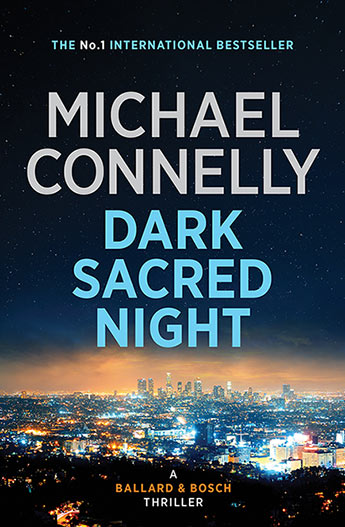
Dark Sacred Night by Michael Connelly

Dark Sacred Night.jpg

Publishers: Orion

                       Hachette Audio

Publication Date – 30 October 2018

Amazon

Legendary crime author Michael Connelly returns for another clever and technically detailed crime thriller that teams up his iconic and most utilised protagonist, Harry Bosch, with his recently created female protagonist, Renée Ballard.

In the chaotic world of the LAPD, Renée Ballard is an outsider who has found herself permanently on the graveyard shift of the Hollywood beat.  Returning to the near-abandoned station after a callout, Ballard is surprised to find a stranger rifling through her unit’s filing cabinets.  The intruder is maverick retired detective Harry Bosch, formally of the LAPD, now currently working as a contractor for the San Fernando police.

Bosch is working a cold case for personal reasons.  The victim, a 15-year-old runaway, Daisy Clayton, was brutally murdered several years before and Bosch has gotten close to the girl’s devastated mother.  Initially kicking him out the station, Ballard’s subsequent investigation of Bosch’s actions reveals the full details of the case to her and she finds herself drawn to Bosch’s hunt for justice.  As the two outsider detectives join forces in order to solve the case, they are once again thrust into the grimy underworld of Hollywood.  But as they attempt to find justice, a cornered killer, departmental politics and the dangerous suspects of the two detectives other investigations may cause the case to come crashing down around them.

Michael Connelly is a prolific and award-winning crime novelist who has been writing since 1992.  During that period he has written over 30 books, all of which are set in the same shared universe.  Connelly’s debut book, The Black Echo, introduced his most iconic character, Harry Bosch, who has been the protagonist of 21 of Connelly’s books, as well as being a supporting character in several other books.  Due to the author’s focus on this character, Connelly’s extended crime universe is often referred to as the Harry Bosch universe.  Connelly has also written a number of other thrillers in this universe, featuring several other protagonists, such as lawyer Mickey Haller, reporter Jack McEvoy and investigator Terry McCaleb.  Many of the characters introduced in previous books often have small roles in later books, while Bosch has had interactions with most of Connelly’s other protagonists.  The second protagonist in Dark Scared Night, Renée Ballard, is a more recent creation who was introduced in the 2017 novel The Late Show, and this is her first interaction with Bosch in Connelly’s wider universe.

Outside of the literary world, Connelly’s works have been adapted to film and screen.  His Harry Bosch novels have been adapted into the current Bosch television series, which will air its fifth season in 2019.  Two of his books have also been adapted into movies.  His novel, Blood Work was adapted into film in 2002 with Clint Eastwood, while his first legal novel, The Lincoln Lawyer was adapted into film in 2011 with Matthew McConaughey.

Dark Sacred Night is an excellent piece of crime fiction that presents the reader with a series of interesting investigations, told from the perspectives of two fantastic police protagonists.  I listened to this book in its audiobook format, which is jointly narrated by Christine Lakin and Titus Welliver, and runs for 10 hours and 39 minutes.  Dark Sacred Night primarily focuses on the investigation into a cold case of a young runaway girl who was brutally killed nine years previously.  This central case is massively intriguing and takes the reader deep into the sordid and disturbing criminal nightlife of Hollywood.  The main case is a gritty and unique investigation as the protagonists are forced to rely on different methods than they would usually utilise to solve the case.  Rather than having any recent evidence, the detectives are forced to rely on old interviews and pieces of police intelligence to identify any potential suspects or witnesses.  This is an intriguing way to investigate an old crime, and I really enjoyed the way they were forced to utilise this less substantial evidence to find their killer.  This method results in the protagonists identifying and investigating several distinctive suspects, and the reader is presented with a series of false leads and suggested possibilities.  I was able to identify who the killer was quite early in the book, but I still had a lot of fun following the investigation to its conclusion.

I really enjoyed the way that Connelly seeded a large number of smaller cases throughout the novel for the protagonists to solve, as well as a number of examples of police work in action.  There is an interesting split here as Ballard, the full-time detective, is given a series of more official and everyday crimes to solve, such as a suspicious death, a missing persons, a theft, trespassing and a kidnapping that she investigates to various degrees throughout the book.  Bosch, on the other hand, only has one case, an old, unsolved gang execution that he is pursuing in San Fernando and which is the focus for a good portion of his chapters.  The inclusion of these smaller cases is a clever move from Connelly as it breaks up the story from a pure focus on the main case and presents a wider viewpoint of crime and policing in the book’s setting.  It also allows the author to showcase his protagonists’ divergent investigative skills and presents the readers with an additional number of compelling mysteries and adventures that they can sink their teeth into.  Some of these additional cases tie into the main mystery in some surprising ways and clues or suspects may be revealed through this.

All of these mysteries do an amazing job showing of the author’s obvious knowledge of police procedures and law enforcement techniques.  Connelly, a former crime reporter for the Los Angeles Times, has an amazing grasp of the minutiae of police work and he expertly inserts these details into his story.  As a result his police characters mostly investigate crimes, examine evidence and file the paperwork in a way that feel extremely realistic and which adds a huge amount to the books authenticity.  Connelly’s police characters even feel like real cops, as the way that they act or think feels like real life police would act.  All of this combines with the amazing mysteries to create a first-rate piece of crime fiction.

Dark Sacred Night is the first time that Connelly’s main protagonist, Bosch, engages with the author’s newest protagonist, Ballard.  There are some interesting similarities between the two characters, which makes for a great story.  Both detectives have a similar maverick style when it comes to investigating crimes, and both have been screwed over by LAPD politics and had their careers impacted as a result.  As a result, both characters are dogged in their pursuit of criminals, especially those guilty of sex crimes, and both are willing to bend the rules to get their suspects.  However, the main difference between them is how far they will go to get justice.  While Ballard is happy to bend rules, she doesn’t go too far over the line or deliberately hurt or damage her suspects.  Bosch on the other hand has a much more flexible idea of where the line is and engages in some questionable behaviour that could be seeing as going too far. The two characters work well together during this book, and I hope that Connelly continues to use his latest protagonist in the future, especially as there are some interesting stories available when it comes to her complex police past.

The audiobook version of Long Dark Night is a great way to enjoy this crime novel and I found that I quickly powered through the book with this format.  The audiobook format utilises two separate narrators to describe the adventure contained within, broken up by whichever protagonist is narrating that chapter.  For example, Christine Lakin narrates the chapters told from Ballard’s point of view, while Titus Welliver narrates Bosch’s chapters.  Both of these narrators have great voices for their central characters, and both of them fit in perfectly in this gritty crime drama.  Lakin captures Ballard’s character perfectly, and you get a real sense of the no-nonsense and wary personality that is Ballard every time you hear Lakin’s voice.  Welliver’s voice, on the other hand, is deep and gruff and really fits Bosch’s old school and veteran personality.  Overall there is some fantastic voice work in the audiobook format of Dark Sacred Night, and I found that listening to this mystery really drew me into the middle of this investigation and helped me remember certain details and clues.

This latest book from veteran crime author Michael Connelly is a fantastic mystery thriller that draws the reader in with two outstanding protagonists and a series of captivating mysteries.  Dark Sacred Night is written in a way that is very easy to get into and the reader can enjoy the full mystery without any details of the previous books in Connelly’s shared universe.  As a result, despite it being such a late book in this long-running series, Dark Sacred Night is also the perfect place to start your investigation into the crime sensation that is Michael Connelly.  First rate crime fiction at it’s very best, this is an outstanding release from Connelly that is guaranteed to draw the reader into the dark and intriguing world of mysteries.

My Rating:

Four and a half stars

Amazon

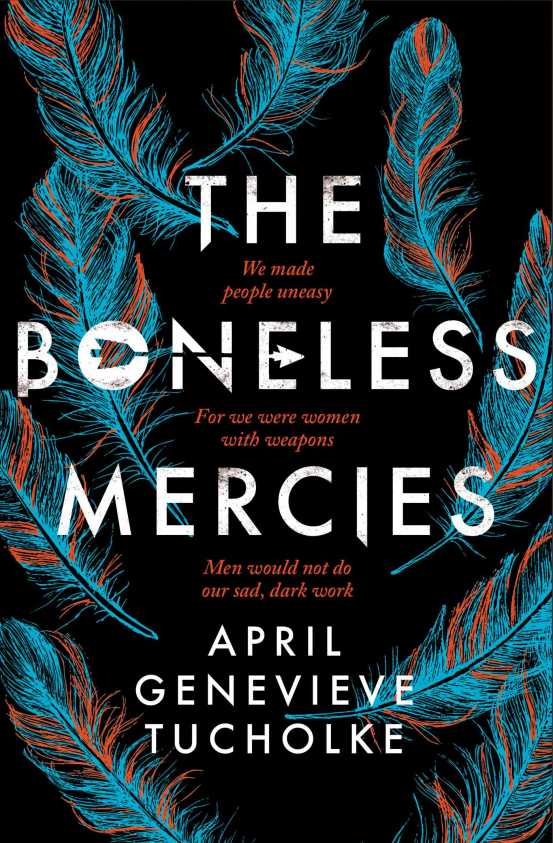
The Boneless Mercies by April Genevieve Tucholke

The Bonless Mercies Cover.jpg

Publisher: Simon & Schuster

Publication Date – 2 October 2018

Amazon     Book Depository

In the dark and cold realm of Vorseland, life is hard and death is easy.  This is especially the case for young women Frey, Ovie, Juniper and Runa, who eke out a living as Boneless Mercies.  Mercies are those people who travel the land exchanging mercy killings for coin in order to alleviate suffering, both mental and physical, in those living in the harsh land.  Only women can become Boneless Mercies, as men cannot do this dark and sad work.

While their roles as Mercies have provided this group of young women with an escape from the horrors or uncertainties of their previous lives, each of them, as well as their young male companion Trigve, seeks something different from this depressing routine of death dealing.  Runa dreams of joining the Quicks, the bands of forest-dwelling hunters and revellers with mastery of the bow; the former Sea Witch Juniper wants to return to her sisters; while Ovie seeks companionship after the trials of her previous life.  But their leader, Frey, wants something very different: fame and glory.

Hearing of a dangerous monster roaming in a far-off land, killing all the men and terrorising the landscape, the girls decide to change their fate and become heroes.  In order to reach their destination, they first have to engage on a dangerous journey through a harsh countryside.  First finding themselves caught up in the middle of a war between rival factions of witches, the Mercies find acceptance and camaraderie in the land they have come to save.  But as the monster they’ve come to face makes an appearance, the girls must finally face up to their destinies.  Will they be able to defeat a creature that so many have already died facing?

The Boneless Mercies is the fourth and latest book from dark fantasy young adult author April Genevieve Tucholke, whose previous works include the two books of the Between series, Between the Devil and the Deep Blue Sea and Between the Spark and the Burn, as well as her 2016 standalone novel, Wink Poppy Midnight.  All three of these previous novels dealt with a young adult supernatural romance set in a modern-day location.  The Boneless Mercies is Tucholke’s first foray into her own fantasy world, and it is the first book that is not as focused on a major romantic subplot.  The Boneless Mercies serves as a great standalone novel, although it has potential as the first book in a new series that either follows the characters introduced in this volume or that utilises Tucholke’s fantasy landscape.

The overall story of The Boneless Mercies is an interesting creation from Tucholke, as it is a good combination of character development, world building and searches for glory.  The premise of this story is unique.  Four professional mercy killers seeking better lives for themselves through fighting monsters is a fantastic pitch from the author that really drove me to read this story.  The author has made a clear attempt to emulate the sagas of old, and it is easy to note its similarities to Beowulf, especially when it comes to the monster.  The book’s central characters helped reinforce this by reciting several sagas that exist within their fantasy world, even coming up with a few verses for their own adventure.  I was a bit surprised about how only the last third of the book focused on the protagonists’ hunt for the monster; the antagonist that was such a focus of the book’s blurb and publication material, and instead a lot more of the book was spent focusing on the adventure getting there.

This actually works out really well, with the characters’ involvement with the various witch characters serving as the centre of the book.  The protagonists find themselves recruited to fight in a war between two rival factions of witches, which leads to some tough and damaging choices for Frey while the also allowing Tucholke to create a harrowing extended sequence in deadly marsh landscape.  The reversal of gender roles within the story is another great part of the story, and it is intriguing to see women in a more central role of these saga storylines in both the protagonists and antagonist roles.  The Boneless Mercies contains a unique and memorable central story that will prove to be appealing to a huge audience.  With several exciting romps through Tucholke’s new fantasy landscape, the book has an excellent conclusion, as well as several plot threads that could lead to intriguing future stories in the same universe.

Tucholke has woven some wonderful character dynamics into this story and introduced several intriguing protagonists for the reader to enjoy.  The book’s five main characters, Frey, Ovie, Juniper, Runa and Trigve, have all found an escape from their terrible past lives by coming together and following each other down the destructive path of the mercy killing trade.  Each of the characters has their own distinctive traits.  Frey is the big sister and reluctant leader of the group, and must struggle to balance her own desires with the needs of the people under her care.  Runa is the rebellious and free-spirited member of the group, eager to live the carefree life of a Quick in order to escape the horrors of her past.  Juniper is the dreamer, and her minor magical abilities and connection with the Sea Witches are essential to the plot in the middle of the book.  Ovie is the tough, no-nonsense member of the group, and is the group’s main warrior, teaching the others how to fight.  Despite some insights into her past, Ovie is the character who is explored the least out of each of the characters, although she does serve as a bit of a moral compass for Frey’s decision.

The main male character, Trigve is also an interesting inclusion, as he fills the role of the assistant and bastion of knowledge that the girls, especially Frey, go out of the way to protect.  This is a noticeable and intriguing change in the traditional gender roles within an adventurer group, and it is interesting to note that Trigve is usually sent away by the girls before any of the big action scenes.  His relationship with Frey is also one of the book’s main romantic subplots, and I liked the complex and mostly unspoken relationship these two characters had.  Overall, all of these main characters are great additions to the book, and Tucholoke spends considerable time exploring how these characters, all of whom have been forced to sever their previous connections, have come together into a surrogate family.  I really appreciated watching the characters’ relationships with each other build, as that worked really well to make the reader connect with each of them and become concerned with their fates.  The slow reveal of each character’s previous lives and the events that drove them to the other Boneless Mercies was also handled wonderfully and worked with the other story elements to create a powerful overarching narrative.

I also enjoyed the great new fantasy world that Tucholke created for this novel.  The author really gets to grips with the harsh, cold and unforgiving scenery of her Norse-inspired landscape of Vorseland, and the reader gets a real idea of why many inhabitants are tempted to employ the Boneless Mercies.  There are also a number of fantastic elements included throughout this world that really help make it an amazing location for this intriguing adventure.  The various bands of different fantasy professionals, such as the Boneless Mercies or the Quicks, give it an interesting flair.  The various groups of witches, including Marsh Witches, Sea Witches and even a group of pig mystics, become deeply entangled in the main story, and will also be significant players in any future books set in this universe.  This is an excellent and creative new fantasy world from Tucholke that works incredibly well for this book’s story.

April Tucholke has created an exciting and intense piece of young adult fiction in her latest novel, The Boneless Mercies.  Creating an intriguing narrative around a group of female former mercy killers embarking on a quest for glory in a dark and saga-rich fantasy landscape is a masterstroke from Tucholke, especially when she combines it with a fantastic story and close-knit and likeable group of protagonists.  The strong female characters make this an excellent one for a young adult audience, and I enjoyed the story’s darker background and storylines.  Special appreciation goes to the book’s great covers as well; the copy I had an iridescent feather design which was cool, but I also really enjoyed the excellent cover with the red wolf and the protagonist’s shadows.  Overall, The Boneless Mercies is a great piece of young adult fiction which presents the reader with something enjoyably different from the classic fantasy adventure.

My Rating:

Four stars

Amazon     Book Depository

Archenemies by Marissa Meyer

Archenemies Cover

Publisher: Pan

Publication Date – 6 November 2018

Amazon     Book Depository

Following on from her immensely popular 2017 release, Renegades, Meyer continues her exciting tale of superpowered duplicity and intrigue with Archenemies, the second book in the Renegades trilogy.

In an alternate version of Earth, superpowers exist and those that have them are known as prodigies.  For most of this world’s history, prodigies were tormented and persecuted and many were forced to live in hiding.  That was until the Age of Anarchy, when the world’s villainous prodigies rose up and established their own world order of chaos and destruction, led by the notorious Ace Anarchy.  It was not until the rise of the superhero syndicate, the Renegades, that order was restored and prodigies were accepted as a part of society.  While most people see the Renegades as symbols of hope and virtue, there are some who have good reason to hate them.

Nova is one of these people, and her hatred has led her to live a dangerous double life.  Most of the world knows her as Insomnia, a recent recruit to the Renegades, who serves as a member of a patrol team in Gatlon City, the location of the Renegade’s headquarters.  However, Nova is also secretly Nightmare, the niece of Ace Anarchy and a member of the Anarchists, a group of villains dedicated to destroying the Renegades.  Hating the Renegades for the role she believes they played in the death of her parents, Nova has infiltrated the superhero team in the hope of discovering all their secrets in order to destroy them from within.

While she has so far maintained her cover, Nova’s mission has become complicated due to her relationship with Adrian, and the son of the people she holds most responsible for her family’s tragedy.  But Adrian has secrets of his own.  While he leads Nova’s patrol team as Sketch, Adrian is also living a double life as the Sentinel, a vigilante superhero acting outside of the codes and restrictions of the Renegades.  Although Adrian was only attempting to help, his actions as the Sentinel have placed a target on his back, and the Renegades are determined to stop rogue prodigies.

While Nova is determined to complete her primary mission and retrieve a powerful artefact from within the Renegades’ headquarters, both hers and Adrian’s lives are about to get even more complicated.  The Renegades have revealed a game-changing new weapon which forces the two young prodigies to question everything they know about what justice is.  Can they keep their respective secrets from each other, or are their worlds about to come crashing down around them?

Archenemies is the latest book from bestselling young adult author Marissa Meyer, and the second book in her Renegades trilogy.  The first book in the trilogy, Renegades was one of last year’s most successful young adult hits.  Readers may also be familiar with some of Meyer’s other young adult works include The Lunar Chronicles, a series that focuses on a dystopian science fiction reimagining of classic fairy tales; Heartless, a prequel novel to Alice in Wonderland; and the young adult graphic novel series Wires and Nerve.

This second book in the trilogy continues Meyer’s incredible story of superhero intrigue and adventure.  The central story is a captivating tale told from the point of view of both Nova and Adrian and follows them as they attempt to live their double lives in this exciting world.  The storyline that follows Nova attempting to hide her affiliations with the Anarchists as she infiltrates the Renegades is a thrilling and exhilarating narrative.  Nova is constantly on edge as she must allay the suspicions and investigations into her background and her motivations for performing certain tasks around the Renegades’ headquarters.  The character must also deal with the emotional turmoil that she experiences as she struggles to stay on her original mission of betraying the Renegades, despite some conflicting feelings she develops.  The sections of the book that focus on Adrian are also very compelling, especially as his is the direct opposite to Nova’s story, as he begins to disobey the rules of the Renegades to engage in some illegal vigilante work.  His struggles about whether to keep up his activities become a major part of his storyline, especially as he experiences some severe consequences for going into the field without backup.  He is also determined to keep his identity as the Sentinel hidden from Nova, as she particularly dislikes the Sentinel, although Adrian gets the reason for the dislike completely wrong.

These two separate storylines combine together really well into one central narrative, and Meyer does an incredible job showing how the secret actions of one of the point-of-view characters impacts on the other character.  For example, part of Adrian’s storyline focuses of his investigation into the death of his mother, a famous superhero, and his search leads him to believe that Nightmare holds the answers he is looking for.  This becomes a big problem for Nova, as she has managed to fool most of the world into believing that Nightmare is dead, and Adrian’s investigation could blow her cover.  There are also several fantastic scenes where one of the protagonists comes across a clue that the reader knows could reveal the other character’s dual lifestyle.  The suspense that Meyer creates during these sequences is subtle but effective, as the reader is left holding their breath, waiting to see if this will be the event that will lead to the inevitable part of the trilogy when the two characters find out about each other.  This second book also contains some interesting hints towards some major reveals that are likely to occur in the final book of this trilogy, as well as some urgent plot points that can only lead to some intense and action-packed scenes in Meyer’s next release.

Meyer also continues the intriguing romance angle between the two main characters that began in the first book of the trilogy.  Rather than being ultra-intense, this romantic subplot comes across as more of a slow burn, as Nova and Adrian both like each other but are reluctant to act on their feelings due to the dual lives they are secretly leading.  Nova does spend most of the book attempting to heat this relationship up, but this is more in an attempt to seduce Adrian in order to help her further her goals for the Anarchists.  However, she truly has feelings for him, which continue to develop throughout the course of Archenemies.  There are several nice scenes throughout the book as the two point-of-view characters attempt to initiate the relationship, and despite the deceitful backdrop of the story, their relationship starts to feel like a genuine, heartfelt romance.  The eventual reveals about both characters’ secret identities will no doubt result in some significant drama within the next book, and readers will be interested to see the final result of this relationship.  For those interested in a less complicated romantic story, there is also a lighter romance angle between Renegades side characters Smokescreen and Red Assassin.  Their sweet and awkward flirting and courtship will be instantly recognisable and relatable to most readers, and you can’t help but hope that the two characters will realise how much they like each other.

I quite enjoyed the fantastic world that Meyer has created for the Renegades trilogy.  A world filled with superpowered beings is an excellent place to set an intrigue-studded young adult series such as this.  The creative and thrilling story of infiltration and morality is amplified by the rich number of superhero elements throughout the book.  There are a huge number of diverse superpowers, as well as mysterious and dangerous artefacts and weapons.  Meyer has created a number of interesting and unique superpowers, including a woman who makes practical weapons out of her own blood and a man whose power is to make people see the wonder in everything.  The sheer amount of different powers and technology available thanks to the author’s imagination allows for a number of cool fight scenes and action sequences throughout the book, which plays wonderfully with the other elements of the story.  A superb and creative background location.

While Archenemies’s dramatic story and fun superhero-based location forms a fantastic base for this novel, one of my favourite parts of the book was the moral and ethical issues raised by various characters throughout the story.  Both point-of-view characters have different opinions about whether the Renegades or the Anarchists are in the right and what constitutes justice.  While Nova’s opinions about the Renegades could potentially be explained away as brainwashing from her uncle and the other Anarchists, several of the actions and attitudes she encounters while undercover seem to justify her beliefs.  Her belief that the Anarchists might be in the right is supported by the fact that most of the remaining members of the team of villains seem to be really nice people who are supportive and helpful to Nova.  Several members also have somewhat tragic backgrounds which highlight why they choose to live their lives apart from the rest of society.  Adrian, on the other hand, has been raised to believe in the Renegades’ methods and code, but he has started to find them too restrictive and begins fighting crime outside them in his guise as the Sentinel.  However, he finds himself targeted by the Renegades for doing heroics outside of their code, and begins to wonder if they are making the right decisions, a feeling that becomes amplified thanks to his interactions with Nova.  Meyer further complicates matters by diving into the history of the prodigy persecution and discussing how it only ended when the villains rose up and took control, and this current golden age of super heroes only exists because they did.

This moral debate about what a group of superheroes should be able to do is further amplified by the introduction of the Renegades’ new weapon, Agent N, a formula that can permanently remove the powers of any prodigy.  Nova, in her guise as Insomnia, argues strongly against the Renegades’ policy of wilfully administrating Agent N against any rogue prodigy they encounter, believing that they don’t have the right to decide who gets to have powers and who doesn’t.  While her debates are mostly ignored by her team members, her concerns are validated thanks to the actions of a rogue team of Renegades who abuse Agent N in the field.  There is a great scene when Adrian as the Sentinel attempts to stop them committing a terrible crime, and these rogue Renegades actually believe they are still morally superior to Sentinel because they are members of a super team, and he’s not.  Despite her misgivings, Nova still utilises Agent N to achieve her own goals, and justifies it as being for the greater good.  Thanks to a series of escalating situations within the story, by the end of the book, the reader is left wondering which side, if either, is completely in the right, which personally has got me very excited for the final book in the trilogy.

Archenemies, the second book in the Renegades trilogy, is a captivating and excellent read from Meyer which presents a superb story about dual identities in a morally grey superhero universe.  While aimed at a young adult audience, this series will prove to be incredibly intriguing to older readers and is easily suitable for a younger teen audience.  Probably best read after enjoying the first book in the trilogy, Archenemies is still quite easy to follow for those who chose to enter the Renegades series at the second book, due to its detailed descriptions of major plot points that occurred earlier in the series.  I had a lot of fun with Archenemies and will definitely be checking out the final book in the trilogy when it comes out next year.  An incredible adventure from Meyer, this book comes highly recommended.

My Rating:

Four and a half stars

Amazon     Book Depository

The Pearl Thief by Fiona McIntosh

The Pearl Thief Cover.jpg

Publisher: Michael Joseph

Publication Date – 29 October 2018

Amazon     Book Depository

From acclaimed Australian author Fiona McIntosh comes a deep and powerful tale of loss, revenge and the traumatic shadows of World War II.

Severine Kassel is one of the Louvre’s top curators of antique jewellery and specialises in identifying pieces plundered by the Nazis during World War II.  Seconded to the British Museum in 1963, Severine maintains a careful image of mystery, distance, French elegance and control.  However, that image is shattered completely the moment Severine sets eyes on the Byzantine pearls, an incredible artefact of mysterious providence on loan to the museum.  Severine knows exactly what the pearls are and may be the only person in the world who knows their full history.  She also remembers the last time she saw them: in 1941 in the hands of the man who murdered her family, the brutal Nazi Ruda Mayek.

As she recovers from the shock of seeing the pearls again, Severine reveals to the world that she is actually Katerina Kassowicz, and her story is one of sorrow and torture.  Katerina was the daughter of a prominent Jewish family in Prague during the war.  Her family attempted to flee the Nazi purge but was betrayed by a man they considered a friend, Mayek, and only Katerina survived, although her life was never the same.

With the discovery of the pearls, it becomes apparent that Mayek may still be alive.  Desperate to hunt down the man who took everything from her, Katerina begins a desperate investigation to find him and get her revenge.  Assisted by the mysterious Daniel, a Mossad agent, Katerina’s only clue is the lawyer handling the transaction of the pearls.  As Katerina’s search intensifies, old wounds are opened and life-changing secrets are revealed.  But as she gets closer to the truth, she begins to wonder who is actually hunting who.

Australian Fiona McIntosh is a fantastic author with a diverse and intriguing bibliography to her name.  She has been writing since 2001 and initially focused on the fantasy genre with her debut book Betrayal, which formed the first book in the Trinity series.  She wrote several fantasy books over the next nine years, including The Quickening trilogy, the Percheron series and the Valisar trilogy.  During this time she also wrote several pieces of children’s fiction, including the Shapeshifter series, as well as the adult crime Jack Hawksworth series under the pen-name Lauren Crow.  In 2010, McIntosh switched to historical dramas and has written a number of these books, mostly featuring female protagonists.  Examples include the 2012 release The Lavender Keeper and last year’s epic The Tea Gardens.

 The Pearl Thief is the latest piece of historical drama from McIntosh.  It plunges the reader right into the heart of occupied Czechoslovakia and explores the horrific impacts that World War II had on the book’s main character while also providing the reader with an intense thriller in the 1960s.  Told from the point of view of several characters, the book follows an interesting format.  This first part of the book mostly follows Katerina and Daniel in Paris, and is set around Katerina telling her life story to Daniel and recounting what happened to her and her family during the war.  These flashbacks are different in style, being told from the first person perspective to highlight that Katerina is telling the story, rather than the third person perspective utilised during the rest of the book.  These flashback chapters are also visually distinctive due to the use of italicised font.  The second half of the book follows the protagonist’s hunt for Mayek, and features a different style to the first half of the book.  This different style includes the uses several more point-of-view characters, in particular the lawyer Edward, and the focus on more individualised storylines fitting into one overarching narrative.

The way that McIntosh chooses to tell this story is not only distinctive, but it is a great way to tell this dark and complex narrative.  By presenting the main character’s World War II storyline first, the author sets up just how evil the book’s antagonist is, which ups the stakes for the second half of the book as the reader is desperate to see Mayek receive the justice he deserves.  This dislike for the antagonist helps the reader stay focused on the story and makes them more eager to quickly get to the conclusion of the book to see if the protagonists succeed in catching him.  This early storyline also highlights just how damaged Katerina, and in some regards side character Daniel, really are and what impacts the war had on them.  As a result, the reader is a lot more attached to them and is keen to see how they reconcile their hatred and grief while also attempting to move past these events nearly 20 years after the end of the war.  Both parts of this book are very captivating and do a fantastic job of drawing the reader in to this deep and dramatic story.

This is a fairly grim tale and McIntosh does not pull any punches, especially when it comes to showcasing the horrors the Jewish community experienced during World War II in countries such as Czechoslovakia.  There are some very disturbing sequences throughout these flashbacks, especially when Katerina describes the final fate of her family, and the reader cannot help but feel sorrow and anger at the horror these characters and their real life historical equivalents suffered.  McIntosh focuses on the physical impacts and the persecution that these people suffered and the mental stresses and long-term emotional damage that these actions inflict both during the war and well into the 1963 storyline for the survivors.  These emotional scenes start right from the front of the book, with the first chapter showing the Kindertransport, mercy trains that got Jewish children out of Czechoslovakia and forced a permanent separation between parents and their children.  This opening scene is very emotional, and the readers are left wondering what they may have done in a similar situation.  There are also some quite dark scenes in the second half of the book, as the main characters are forced to relive the horrors they experienced and deal with the emotional fallout and the darkness they feel when it comes to Mayek.  McIntosh’s frank and grim depictions of these events turn this book into an incredible drama, and readers will be left with a memorable and emotional vision of these events.

The Pearl Thief is a deep and captivating historical drama from exceptional Australian author Fiona McIntosh.  Featuring some highly detailed and realistically dark flashback story to World War II as well as a thrilling hunt for a despicable war criminal in the 60s, this is a highly emotional and dramatic piece of literature that is well worth checking out.

My Rating:

Four stars

Amazon     Book Depository

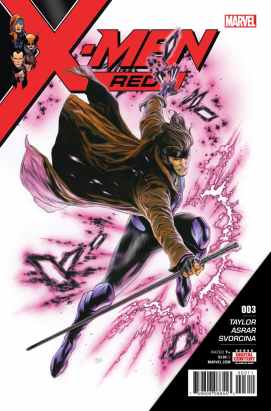
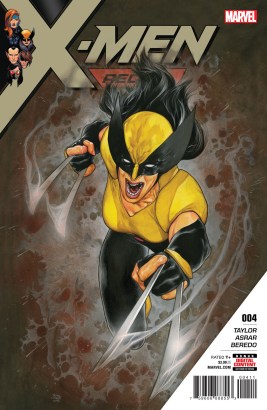
X-Men Red Volume 1: The Hate Machine by Tom Taylor, Mahmud Asrar and Pascal Alixe

X-Men Red Volume 1 Cover.jpg

Publisher: Marvel Comics

Publication Date – 18 September 2018

Amazon     Book Depository

Writer Tom Taylor and his artistic team have created an excellent and thought-provoking new X-Men series that not only follows the reintroduction of one of comics’ most interesting characters to the turbulent Marvel Universe but once again examines the real world problems of hatred and prejudice.

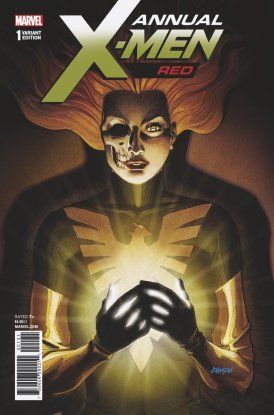
X-Men_Red_Annual_Vol_1_1_Johnson_Variant.jpg

For years, Jean Grey’s fate has always been tied to the universe-ending Phoenix Force, the cosmic entity of rebirth and destruction that is constantly seeking the most powerful host it can find.  However, following her latest resurrection during the events of Phoenix Resurrection: The Return of Jean Grey, Jean has renounced the Phoenix power once and for all and is now determined to live her life on her own terms.  Still one of the most powerful mutants in the entire world, Jean Grey sets out to restore her connections and find her place in a world that has changed dramatically since her last death.

The one thing that hasn’t changed is the fact that mutants are still feared and hated by a world that doesn’t understand them.  Despite all the adventures and endeavours of Charles Xavier and his X-Men, animosity towards mutants has never been higher.  Determined to change the world for the better, the resurrected founding member of the X-Men sets out to achieve her vision for the future and change world opinion about mutants once and for all.  To do that, Jean first attempts to create a mutant nation at the UN.  But when she is framed for the murder of politician, Jean is declared a criminal and mutants are subject to greater hatred from mankind.

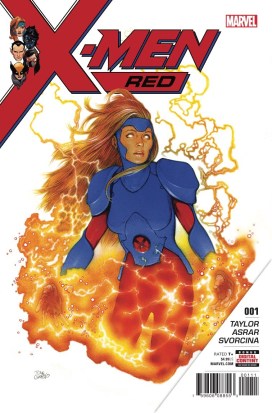
X-Men_Red_Vol_1_1.jpg

Realising that someone must be behind the recent upswing in anti-mutant sentiment and determined to protect those mutants targeted by hatred, Jean forms a new team of X-Men, made up of Nightcrawler, Storm, Namor, Gambit, Gentle, Wolverine (Laura Kinney – X-23), Honey Badger (Wolverine’s adorable clone) and newcomer Trinary.  But even as Jean and her team fight to save those mutants being targeted, more hatred and attacks are occurring around the world.  The sinister Cassandra Nova is determined to wipe mutants out once and for all and views Jean Grey as the greatest threat to this goal.

Following the end of his All-New Wolverine series, Australian author Tom Taylor returns at the head of a brand new X-Men series, X-Men Red, which takes fans back to the basics of the X-Men franchise.  Volume 1 of X-Men Red is made up of issues #1-5 of this new series, as well as Annual #1.  After enjoying Taylor’s work in All-New Wolverine (check out my review here: https://unseenlibrary.com/2018/09/08/all-new-wolverine-volumes-1-6-complete-series-by-tom-taylor/), I was excited to see him continue to work with Marvel, especially as it allows him to expand on characters and story elements he introduced in his previous Marvel series.  Most of the artistic work in this new series has been produced by veteran artist Mahmud Asrar, who has significant work in DC, Image, Marvel and other publishers.  X-Men fans may be familiar with his work on All-New X-Men and Wolverine and the X-Men.  Asrar was the main artist for issues #1-5, while the work on Annual #1, which is placed at the start of the volume, was drawn by Pascal Alixe.

X-Men_Red_Vol_1_2.jpg

It is always fun when starting a new superhero team comic book series made up of established characters to see which heroes the creative team will include in their version of the team.  Taylor has certainly chosen an intriguing and previously unseen mixture of characters for this new X-Men series, and it is interesting to see which characters he focuses on.  The central character of this new team is the newly resurrected Jean Grey, the red in the series title.  This is one of the few times we see Jean step up to lead a team, as she is no longer in the shadow of her mentors or former lovers.  Aside from Jean, the main team members are Nightcrawler, Wolverine and Honey Badger, who are featured in all the issues contained within this first volume.  It was great to see Nightcrawler given such a prominent role in the comic, and it feels like it’s been a while since he’s been such a major character within an X-Men series.  I also liked new character Trinary, who is introduced in this series and is given an interesting set of powers.  Trinary is from India, and has technopathy powers, or the ability to manipulate technology.  Introduced as a new mutant who is attempting to fight the good fight in her own way, Trinary is given a key role in the series understanding the full nature of the technological attacks of the volume’s antagonist, while also taking over a sentinel to use as the team’s new primary source of transportation.  I think this character is given a great introduction, and could have an interesting future in the Marvel universe.  Other characters, Namor, Gentile, Gambit and Storm join the team at various points in the volume, and have a slightly reduced role, appearing for some of the big team ups, with only some short introductory storylines.

I was especially happy to see Taylor transplant the main characters of his previous All-New Wolverine series, Wolverine and Honey Badger, into his next project.  As I mentioned in my previous review, this version of Wolverine, Laura Kinney, also known as X-23, has always been one of my favourite X-Men characters, so I was very happy to see her used again in this series.  She plays a similar role in this team to the original Wolverine, as the silent infiltrator and bodyguard who is loyal to the team’s leader, who in this case is Jean rather than Professor X.  Just like in All-New Wolverine, the heart and soul of this series is definitely Honey Badger, Laura’s clone, who, as well as being a full member of the team, is the series’ comic relief.  Her humorous interactions with all the other characters in the book, especially the stern and serious characters, add a good amount of levity to the book.  Having her refer to Namor as Abs-lantis, or making Gambit hurriedly justify his actions for blowing up Honey Badger by saying it was “for strategic reasons” is particularly amusing and definitely made me smile.  However, the best line in the book has to be given to Wolverine, who casually replies to Jean’s amusement about Laura’s excitement about being in an underwater city with “Being Wolverine doesn’t make me impervious to the wonder of a #$%@%$& mermaid”.

X-Men_Red_Vol_1_3.jpg

One of the most defining things about the start of this new series is how it focused on the evolution of the character of Jean Grey.  Despite being a founding member of the X-Men, Jean’s most significant storylines have usually been about her relationships with Cyclops and Wolverine, or her connection to the Phoenix Force.  Now, after coming back to life, Jean has stepped out of these currently deceased characters’ shadows and starts her own attempt to change the world, as she is no longer content to return to her old life.  Essentially, Taylor is trying to set Jean up as the new Professor X, with her own vision for mutant kind and her determination to change the world for the better and end the current level of hatred and prejudice.  While she has her own unique style and vision, there are a lot of call backs to the original Professor X, including the standard “To me, my X-Men” saying that Professor X and other X-Men leaders utilised throughout X-Men history.  I also enjoyed seeing a Jean Grey that is no longer defined by her relationship with the Phoenix Force, especially as Jean lets it be known that the Phoenix Force was holding her back.

It was also nice to see Jean repair the relationships she previously lost with several prominent X-Men characters, as well as establishing new relationships with characters she’s never had a chance to meet before.  This is particularly prevalent in Annual #1, which starts the volume, as she reunites with her surrogate X-Men family, which is heart-warming, especially as there is a focus on her friendship with Nightcrawler, who spends the volume as her BFF.  I also really enjoyed seeing her think about her relationships with Cyclops and Wolverine.  For the first time in X-Men history, Jean is alive when Cyclops and Wolverine are both dead, and must focus on the world without the two men she’s loved.  As such, she spends time adventuring with the daughters of these two men, Rachel Grey and the new Wolverine, and meeting up with them is one of the first priorities she has returning to the world.  I liked how one of the definitive love triangles of Marvel Comics is acknowledged in this new series, even though two points of the triangle are currently dead, and the focus of Jean’s relationship with the next generation of these characters was a clever idea.  I’ll be very interested to see what relationships are explored in the future, with all sorts of different iterations or offspring of Jean and Cyclops out in the world at the moment.  It will also be very intriguing when the original Wolverine is resurrected to see what role he plays in this series, as the creative team will have to have a look at the relationships that this character has with Jean, the current Wolverine and Honey Badger, a new daughter character he’ll have to interact with.
X-Men_Red_Vol_1_4.jpg

Since its earliest days, X-Men has always been about the fight against prejudice, as the hatred the mutant characters experience has often been seen as an analogy for social issues such as racism, anti-Semitism and homophobia.  Taylor and the creative team behind X-Men Red continue this tradition of using their X-Men series to reflect social issues, in this case focusing on modern issues such as the latest rise of the extreme right-wing, intense nationalism, islamophobia, fear and concern about refugees and migrants, as well as racism.  All of these social issues are reflected in the portrayed hatred of mutants in this volume, with various elements of recent world events shown directed towards the mutant characters.  For example, you have Poland attempting to use their military to round up and detain mutants, similar to how some countries have been using their military to stop or detain refugees.  In another very unconcealed scene, rioters carrying tiki torches start attacking mutants, not considering them people, and even killing one mutant counter protestor, in events that are reminiscent of those of Charlottesville.  There is also a focus on the damage or the impact that social media and the internet can have on these events, as many of the anti-mutant events or rhetoric are contained online.  This will be very familiar to readers, as it is impossible not to see the online hatred that many anonymous people direct towards various groups around the world, and at least the one in the comic may be the result of supervillain plot.  Overall this focus on prejudice is a familiar subject to X-Men readers, and many will appreciate how the creative team have tried to bring in modern issues in this new series.  The creative team do end Volume 1 with a message of hope, with some of these antagonist people given a proper understanding of an opposing viewpoint, momentarily giving up their hatred and prejudice, and is something aspire for in the real world.

The artwork within Volume 1 of X-Men Red is just gorgeous and a real highlight of the book.  As mentioned above, Alixe does the artwork for Annual 1, while Asrar does the artwork for issues #1-5.  Both artists’ works are visually distinctive and give the reader something different when it comes to character design, displays of power and fight sequences.  Asrar in particular does some gorgeous backdrops and landscapes, as the stories he is illustrating see the characters go to all sorts of locations, including India, underwater cities and Wakanda.  There are a lot of well-drawn action scenes throughout this volume, although I found the final pages of issue #1 to be some of the most powerfully drawn in the entire volume.  Not only is there a somewhat graphic scene for a Marvel comic but the final panel shows the look of despair on the main characters as the volume’s antagonist makes her first move.  The artistic team of X-Men Red have outdone themselves in this first volume, creating some superbly drawn artworks that are catch the eye and the imagination.

X-Men_Red_Vol_1_5.jpg

X-Men Red takes this new version of this iconic superhero team back to the sort of storylines that made the X-Men such a smash hit in the first place.  With a resurrected Jean Grey taking the lead, Australian author Tom Taylor and his creative team have cleverly brought current social issues to the forefront of their new series while also doing some superb character work, including redefining one of the original X-Men.  This is a great start to an amazing new comic series and a fantastic read for fans of the X-Men franchise.

My Rating:

Four and a half stars

Amazon     Book Depository

An Easy Death by Charlaine Harris

An Easy Death Cover.jpg

Publisher: Piatkus

Publication Date – 2 October 2018

Amazon     Book Depository

Gunslingers versus wizards in a dystopian alternate timeline of America, what more could you possibly want in a fun and captivating action novel?

Down in Texoma, one of the small countries forged out of the remnants of a fractured United States, Lizabeth Rose makes a living as a gunnie, a gunslinger for hire.  Despite being one of the best shots in Texoma, Lizabeth finds herself short of employment after her team is killed getting a group of refugees up to New America.

In need of a new gig, Gunnie Rose is less than cautious about accepting work from two grigori, wizards from the Holy Russian Empire.  The two grigori need Lizabeth’s help to find a fugitive member of their order, there is just one problem: the fugitive mage was killed some weeks prior, and Lizabeth was the person who pulled the trigger.  Undeterred, the grigori require a member of his lineage, so Lizabeth agrees to help them find the dead man’s brother, while keeping her role in his death secret.

Setting off on a journey through the barren and hostile landscape of an alternate history America, Lizabeth and the two wizards encounter all sort of dangers as they attempt to find the missing man.  From bandits to religious fanatics, their journey through the small towns is eventful and very bloody, especially when it becomes apparent that a faction of grigori are tracking them, determined to stop the trio completing their mission.  Can Lizabeth keep her clients safe, and what will happen when they find out who she really is?

An Easy Death is the latest book from bestselling author Charlaine Harris, who has written over 40 books in her career, staring with her 1981 debut, Sweet and Deadly.  Harris is possibly best known for her Sookie Stackhouse series, alternatively known as The Southern Vampire Mysteries, which was adapted into the incredibly popular True Blood television show.  In addition to this, she has also written the long-running Aurora Teagarden Mystery crime series and the Midnight Texas series, both of which have also had some form of television adaption in recent years.  An Easy Death is the first book in Harris’s new Gunnie Rose series, which presents the reader with a fast-paced adventure is an intriguing new setting.

I have to admit that I typically don’t read Harris’s books and she isn’t an author I have really gotten into before, although I did enjoy the first season of True Blood a few years ago.  However, after reading this book’s cool synopsis I decided to check this out, and I’m quite glad I did, after powering through it in about a day and thoroughly enjoying the fun story and the electrifying action.

I was impressed by the unique version of America that Harris has created for her new series.  Within the Gunnie Rose universe, the United States of America broke apart years before when FDR was killed before his inauguration as president.  In the following years, Canada and Mexico expanded into America, while smaller countries were formed from the remnants of various states.  A large amount of the book is set in Texoma, a collation of Texas, Oklahoma, New Mexico and part of Colorado.  Texoma is your typical old-west locale, with desserts and dry scenery, long roads and several small towns and cities, all of which are fantastic locations for this sort of high-octane modern western.  I quite enjoyed this alternate history version of America, and it was fascinating to see Harris’s vision of how historical America could have broken up, and the crazy world it might have turned into.  While this first story was primarily set within the location of Texoma, as well parts of New America and Mexico, I’m sure that Harris will take Gunnie Rose through the rest of these new countries and locations in future books.

Harris also explores another intriguing nation that was formed in the aftermath of the breakup of America, the Holy Russian Empire.  Within the context of this universe, Tsar Nicholas and his family managed to escape the Russian revolution and fled to California, where they and their armada were given sanctuary.  Following the breakup of America, the Tsar and his armies turned California and Oregon into The Holy Russian Empire.  The country is now ruled by the sickly Tsar Alexei, who has been kept alive by the magic of Grigori Rasputin.  While the characters don’t physically visit this nation, quite a lot of time is spent examining the internal politics of the Holy Russian Empire, and the reader is given a detailed explanation of how such a country came into existence and why their mission is so important.  Those readers who are familiar with the history around the Russian revolution will appreciate Harris’s explanation for this new country, as well as the suggested consequences of the Russian royal family surviving their infamous execution.

Another interesting part of An Easy Death is the use of magic throughout the story, as well as the author’s explanation of how it came to be an open power within the Holy Russian Empire.  The main reason magic is a thing in this universe is Grigori Rasputin, who, like the Russian royal family, managed to survive the events of the Russian Revolution.  Once the Russians were safe in America, Rasputin revealed the full power of his wizards, known as grigori by the rest of America, while international magic users, especially those hidden in Britain, journeyed to the Holy Russian Empire to gain sanctuary.  This is an intriguing idea from Harris, which coincidently allows her to feature a number of powerful magic users throughout this story.  As a result, this book is filled with some crazy magical fight scenes, graphic attack spells, as well as a number of scary magical creations that hunt the book’s protagonists throughout the story.  All of this is a great feature of the book, and one that works surprisingly very well in an alternate history western adventure.

A book that follows a gunslinger travelling across a dystopian America with two wizards was always going to be about the action.  Harris creates a fast-paced adventure that is filled with exciting action sequences as our protagonist goes toe-to-toe with bandits, fellow gunslingers and even a full complement of rogue grigori.  There are a number of great battle sequences throughout this story as a result, as the main character engages in some intense shootouts with her opponents.  The whole idea of an old-west gunslinger versus a wizard in combat is a very amusing idea, and Harris uses it to great advantage, having Lizabeth engage in fire fights with several different magical characters.  These scenes are pretty crazy, and it is fun watching the bullets and the spells fly in both directions.  Overall, this is a very action based novel, and the reader can simply sit back and enjoy all the carnage, complete with some very extreme and graphic sequences that stick in the mind.

Charlaine Harris’s new book is an outrageous and exhilarating action extravaganza that provides the reader with a healthy dose of fun and fire fights.  Thanks to a creative setting of an alternate timeline America, this book is filled with all sorts of crazy elements, including wizards and professional old-west-style gunslingers, who spend the entire book duking it out in fast-paced scenes.  An Easy Death is a thrilling read that is easy to enjoy and hard to put down, and an excellent start to a bold new series from Harris.

My Rating:

Four stars

Amazon     Book Depository

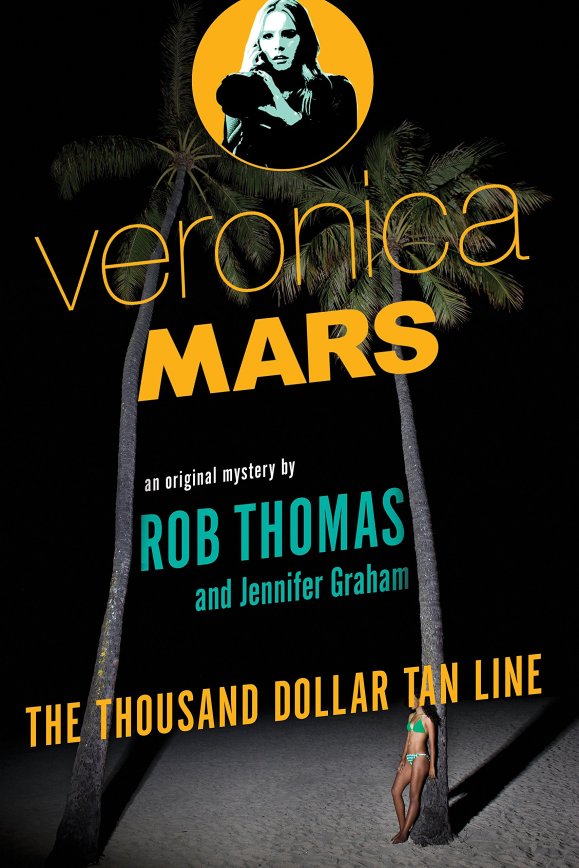
Throwback Thursday: Veronica Mars: The Thousand-Dollar Tan Line by Rob Thomas and Jennifer Graham

Veronica Mars - The Thousand Dollar Tan Line Cover

Publishers: Vintage Books

                        Random House Audio

Publication Date – 25 March 2014

Amazon

Reviewed as part of my Throwback Thursday series, where I republish old reviews, review books I have read before or review older books I have only just had a chance to read.

For this week’s Throwback Thursday, I will be looking at the thrilling and enjoyable first tie-in novel to the Veronica Mars franchise, The Thousand-Dollar Tan Line.

Veronica Mars was a highly regarded (at least for the first two seasons) teen crime television series that aired for three seasons between 2004 and 2007.  The show, staring Kristen Bell in her breakout role as the titular character, was an incredibly fun and compelling mixture of teen drama and serious investigation.  Veronica Mars is a teenage private investigator who finds herself investigating the murder of her best friend, following a cover up by the town’s rich and powerful inhabitants.  The first two seasons featured epic season-long mysteries, while the third season contained two half-season mysteries.  Each episode also featured a mystery-of-the-week storyline that would often play some part in that season’s overarching storyline.  In addition to the intriguing and complex mystery based storylines, fans of the show could also enjoy the heartfelt drama and romance between the show’s main characters, as well as the interesting social dichotomy of the show’s main location, Neptune, California.  Unfortunately, the show was cancelled after its third season, and fans were given an unsatisfactory and incomplete series finale.

However, due to support of the Veronica Mars hardcore fans, referred to as “Marshmallows”, as well as an incredibly successful Kickstarter campaign, the show was revived with a 2014 Veronica Mars feature film.  This new movie was set nine years after the show’s third season and showed Veronica’s return to Neptune.  The creators attempted to capitalise on the success of the Veronica Mars film by creating some additional material in the Veronica Mars universe.  This included the meta web series Play it Again, Dick as well as two novels set in the aftermath of the movie.  The Thousand-Dollar Tan Line was the first of these novels released, coming out the same month as the Veronica Mars movie, while the second book, Mr. Kiss and Tell was published a year later in 2015.  Both books were written by series creator Rob Thomas and short story author Jennifer Graham, and Thomas has stated that they are both considered to be cannon.

I only ended up watching the Veronica Mars show a few years ago, but found myself really getting into the excellent storylines and memorable characters.  I managed to avoid any spoilers so I was able to enjoy the incredible mysteries of the first two seasons, both of which were very clever, with complicated and hard to predict solutions.  After enjoying both the shows and the movies, I also decided to check out the associated books and obtained an audiobook copy of The Thousand-Dollar Tan Line, which I have listened to several times.  With the recent announcement of a Veronica Mars revival series airing in 2019 to be set five years after the events of the film, I decided this would be the perfect opportunity to re-listen to and review The Thousand-Dollar Tan Line as part of my Throwback Thursday series.  I am particularly interested to see if Thomas will continue to consider this book as canon when the new series of the show is released, as there are significant narrative developments that may prove hard to explain to those who haven’t read this book.

Neptune, California is usually the home of sun, sand, the ultra-rich, their low-income employees and a corrupt sheriff’s department.  But something else has descended on Neptune: spring breakers.  With busloads of college students descending on Neptune, the town has been turned into one long and boozy event.  It’s all fun and games until one girl disappears from a party and her case is picked up by the conservative media as a call to action against Neptune and spring break.

After nine years away, Veronica Mars has returned to Neptune, the town where she experienced so many traumatic events.  After saving her former/current boyfriend Logan from a murder investigation, Veronica has given up her career as a lawyer and has returned to her old addiction, private investigating.  With her father still recovering from a suspicious car crash, Veronica has taken over Mars Investigations and is desperately trying to keep the business afloat with small, petty cases.

With the media storm around the missing girl intensifying, Veronica is called in to find her before Neptune’s spring break economy is ruined.  Diving into the parties and sordid holiday fun, Veronica soon finds that the house that the girl disappeared from is owned by a dangerous pair of brothers with serious criminal connections.  Though Veronica is convinced that the owners of the house are behind the disappearance, the case becomes even more complicated when a second girl disappears from the same house.  Worse, the second girl has a shocking connection to Veronica’s past that will rock her to the core.

While it would have been easy for the authors just to create a lazy tie-in novel, Thomas and Graham actually created a complex and multi-layered mystery narrative that serves to keep the readers excited and guessing the entire time they are enjoying it.  There is quite a lot going on within this mystery storyline, as for most of it, the protagonist is uncertain about what crime she is actually investigating.  There are a lot of false leads, suspects, hidden clues and several pulse-pounding scenes in which Veronica finds her life threatened as she attempts to uncover a major break in the case.  The final conclusion of the investigation is pretty clever and has a few sneaky twists that are hard to see coming.  The authors also amp up the drama during certain parts of the book as Veronica is forced to confront some heavy subjects from her past, as well as the anger and despair of the people she is investigating.  There is also further antagonism between Veronica and the towns’ corrupt sheriff, who Veronica is actively investigating for corruption, as well as a dramatic fight with her father, Keith, who is dismayed by his daughter’s decision to remain in Neptune as a private investigator, a decision which caused her much grief in the past.

One of the more interesting things about the original show was the social makeup of the fictional setting of the town of Neptune.  In the show, Neptune is home to both a rich upper class, known as the “09ers” in reference to Neptune’s fictional postcode, and the people who work for them or are employed in the town’s businesses and local economy.  As a result, several of the episodes of the original series focused on this discrepancy between these two distinct social classes, which was often represented by the rich students receiving unfair advantages at Neptune High.  This was continued in the 2014 Veronica Mars movie, which showed that the sheriff’s department had become especially corrupt and were more focused on protecting the rich and powerful than arresting real criminals, as seen when they framed a side character, Weevil, with a planted gun.  The Thousand-Dollar Tan Line continues to explore how corrupt the city has become under the new sheriff, and how incompetent the police have become.  This is shown early on in the book when Veronica is hired by the Neptune Chamber of Commerce to find the missing girls, as the town’s business leaders lack confidence in the sheriff’s investigative skills.  When Veronica queries why they still support him, they make it clear that his policy of doing what the richer citizens want makes him a desirable tool.  There are also some dark reveals about the serious crimes he turns a blind eye to in order to avoid confrontation and stay in power.

While there is less focus on the town’s social divide, the authors did add a new element to the plot of this Veronica Mars book: spring breakers.  The plot of this book shows the town completely overrun with drunk, drugged-up and sexually excited college students keen to enjoy the beaches and parties of Neptune.  Thomas and Graham pull no punches when it comes to these descriptions, attempting to fully encapsulate the chaotic and at times dangerous activities that the students get up to, often highlighting how their behaviour at times degenerates to the level of a drunken mob.  This spring break background serves as an entertaining and intriguing background for the murder mystery storyline.  There is a good amount of humour watching Veronica acting the part of a drunken sorority girl as she attempts to blend in with the crowd, as this is in complete opposition to her usual prickly demeanour.  This spring break storyline will also be an interesting read for those planning to check out the upcoming revived season of Veronica Mars, which is apparently going to focus on a spring break serial killer which initiates a conflict between the upper and lower classes of the town.

As this is a tie-in book to a television and movie franchise, The Thousand-Dollar Tan Line appeals to fans of Veronica Mars the most.  Readers will be relieved to see that Veronica still maintains her trademark sarcasm and the jaded personality she developed at a young age when she learned how much other people sucked.  This book is set only a few months after the Veronica Mars film, and shows the aftermaths of the events that occurred during it.  Long-time Veronica Mars characters Wallace Fennel, Keith Mars and Cindy “Mac” Mackenzie all appear in the book in significant roles, while minor movie antagonist, Dan Lamb, returns in a similar role for this book.  In addition, other popular characters like Logan Echolls, Dick Casablancas, Eli “Weevil” Navarro and Cliff McCormack have smaller roles within the book.  While it is good to see them again, their minor appearances have mainly been added in for fan service.  One of the most memorable things about this book for fans of the show are the significant developments that happen in Veronica’s personal life, as a character from her past returns with some massive changes.  While these developments serve an important part of the book’s plot and offer some excellent and well-appreciated emotional moments, I will be very surprised if they carry through into the new season of the television show.  Overall, The Thousand-Dollar Tan Line serves as a fantastic addition to the Veronica Mars franchise and contains a huge number of elements that will prove extremely appealing to fans of the original show.

The Thousand-Dollar Tan Line is definitely one of those novels that is best enjoyed in its audiobook format.  This is because the Rob Thomas and the producers of the audiobook were able to get Kristen Bell to come in and narrate this version of the book.  As Kristen Bell does a bit of in-show narration, it makes sense for her to continue it here, with Veronica serving as the only point-of-view character.  Having her narrate the actions of the book and everything she sees makes it feel a lot like the television show and gives it a natural and authentic feel.  It was also pretty amusing to hear Bell do the voices of her co-stars from the shows and movies throughout the book.  I think she does a pretty good job of her narration of the other character’s voices, as there are distinctive approximations of all the relevant characters, in addition to new voices for the exclusive book characters.  Overall, if fans of this franchise are keen to experience a new Veronica Mars adventure, this is their best option.  Written by the show’s creator and voiced by its lead actresses, the audiobook version of The Thousand-Dollar Tan Line is essentially just another episode of the show, and is the best way for fans of the Veronica Mars show to enjoy.  At 8 hours 43 minutes, it is a quick audiobook to get through.

The Thousand-Dollar Tan Line is an excellent piece of the amazing Veronica Mars franchise which presents the reader with a continuation of this fun universe and allows fans of the show to see what happens next to their favourite characters.  Featuring a clever and intricate central mystery that twists and turns in multiple unexpected ways, this book is a fantastic read as told by its iconic protagonist.  Best enjoyed in its audiobook format with the voice of Veronica Mars herself, Kristen Bell, narrating the story, this is a recommended read for all fans of the fans of the show, and may prove to be an intriguing introduction for newcomers to the franchise.

My Rating:

Four and a half stars

Amazon

Throwback Thursday: Star Wars: Ahsoka by E. K. Johnston

Ahsoka_novel_cover

Publishers: Disney Lucasfilm Press

                        Penguin Random House Audio

Release Date – 11 October 2016

Amazon

Reviewed as part of my Throwback Thursday series, where I republish old reviews, review books I have read before or review older books I have only just had a chance to read.

The apprentice lives.  One of the best Star Wars characters that originated outside of the live-action movies returns in this action-packed, character-driven novel, which follows Ahsoka Tano’s adventures after the destruction of the Jedi Order.

Those people familiar with my previous reviews may have noticed that I am a bit of a Star Wars fan, having reviewed several pieces from the current Disney Star Wars extended universe in the last few months.  Therefore, it should not come as a surprise to anyone that I have watched and enjoyed the Star Wars: The Clone Wars and Star Wars Rebels animated television shows.  Both of these shows are very well done, can be appreciated by a varied audience and contain a large amount of the classic Star Wars heart and respect for the franchise’s lore and history that was missing in some of the more recent movies.  While many memorable characters were introduced in these shows, perhaps the most significant to the lore is the titular character of this book, Ahsoka Tano, Anakin Skywalker’s apprentice.

For those of you failing to remember Anakin having an apprentice in the live-action movies, you are not going crazy; Ahsoka has yet to appear in any live action movie.  She was instead introduced in The Clone Wars animated movie and served as one of the main characters of The Clone Wars television series, all of which take place in the years between Attack of the Clones and Revenge of the Sith.  Despite being one of the most popular characters on the show, Ahsoka would leave the Jedi Order at the end of the fifth season of The Clone Wars and only appear in the sixth season as part of a short vision sequence.  As a result, fans of the both the show and the character were frustrated and confused about what Ahsoka’s fate was and whether she had survived the events of the third prequel movie.  Fans didn’t get their answer until a couple of years later, at the end of the first season of Star Wars Rebels, where it was revealed that Ahsoka had survived the Jedi purge, becoming a member of the early Rebel Alliance.  Ahsoka, now wielding a pair of white lightsabers, became a key character in the second season of Star Wars Rebels, in which she was still an incredibly cool and powerful warrior.  She was utilised to perfection in this new show and had what is easily the best scene in the entire run of Star Wars Rebels: her long-awaited confrontation with Darth Vader.  The sheer emotion and intensity as Ahsoka finally came face-to-face with her old master and discovered that he was responsible for the fall of the Jedi was just amazing and is one of my favourite moments from all of television.

Following her appearance in Star Wars Rebels, Disney commissioned a young adult Ahsoka book, which was announced on 31 March 2016, one day after the Star Wars Rebels season 2 finale.  This book was released in late 2016 and was written by young adult author and Star Wars fan E. K. Johnston.  Ahsoka was Johnston’s first foray into Star Wars fiction, although she is currently working on Queen’s Shadow, a young adult novel focused on a post The Phantom Menace Padme Amidala, set to be released next year.  I have no doubt that a review for Queen’s Shadow will appear on this website in due time.  Now, with the recent announcement of a seventh season of The Clone Wars and the reveal that Ahsoka will be appearing in this new season, I decided to check out this book to see if it did the character any justice.  I chose to enjoy this as an audiobook, rather than read a physical copy.

During the Clone War, Ahsoka Tano was a fierce warrior and a commander of the Republic’s clone troopers.  However, after the devastation of Emperor Palpatine’s Order 66, which saw the clones turn on the Jedi, everything changed.  Fighting on Mandalore, far away from her master, Anakin Skywalker, Ahsoka is unaware of his fall to the dark side of the Force, and only just manages to escape the purge of the Jedi Order.

Now, one year after the fall of the Republic and the rise of the new Galactic Empire, the former Padawan is in hiding on the outskirts of the galaxy, trying to avoid any Imperial attention.  Living under an assumed name and with her trusty dual lightsabres gone, Ahsoka scrapes a living as a mechanic, intentionally distancing herself from the Force in order to hide her Jedi abilities.

Ahsoka journeys to a remote farming settlement on the Outer Rim moon of Raada.  Settling into her new life and making connections with its inhabitants, Ahsoka believes that she has finally found her sanctuary.  But her hopes of a peaceful life in her new home are quickly dashed when the Empire arrives, imposing their totalitarian rule on the people of Raada.  The agricultural potential of the moon is vital to the future of the Empire, and the workers are being forced to farm a new and mysterious plant.  Determined to help her new friends and wanting to make a difference, Ahsoka uses her wartime experience to help form a resistance in order to undermine Imperial control.

But when she is forced to reveal her full powers in order to save her friends, she once again finds herself on the run.  However, this time her actions have not gone unnoticed.  Her old ally, Senator Bail Organa wants her to join his fledgling rebellion, while the sinister Inquisitor, the Sixth Brother, arrives on Raada with plans to capture her, using Ahsoka’s friends as bait.

Because I am a fan of the titular character, I did go into Ahsoka with some rather high expectations.  Luckily I quite enjoyed Ahsoka, powering through this book quickly while appreciating how Ahsoka’s new adventure fit into the existing Star Wars chronology.  This story is very good, with an excellent blend of character development, Star Wars lore and some scintillating action and adventure.  The book contains a well-paced narrative that not only features Ahsoka’s personal story, but also examines the viewpoint of several side characters, in order to move the plot along, while also showing the impacts of Ahsoka’s actions from a different viewpoint.

This book is mainly focused on the adventures of Ahsoka, and fans of the animated show will appreciate seeing how she not only managed to survived the purge of the Jedi, but how she became the hardened rebel agent we encountered in Star Wars Rebels.  I feel that anyone who reads this book will appreciate the considerable amount of character development and insight that occurs with the titular character.  At the start of the book, Ahsoka is afraid, hiding who and what she is from the world while also denying herself access to the Force.  She is filled with regrets, concerns for her missing Jedi family and guilt not just about surviving but also about leaving the Jedi Order before its fall.  Throughout the book, her adventures, the new friendships she develops, the people she helps and the role she plays on Raada all help her to find a new purpose, as well as re-establishing her connection with the Force.

There are a number of great scenes featuring or concerning Ahsoka in this book.  These include her battle with the Sixth Brother, the forging of her new white lightsabres and the epic scene where she unleashes her Force abilities for the first time in a year.  It was also intriguing to see her advising the farmers in guerrilla tactics and helping them sabotage the Imperial occupation.  Fans of Ahsoka will appreciate the similarities this has to one of the character’s most significant arcs from The Clone Wars that featured her training a guerrilla army to combat a Separatist invasion, including a young Saw Gerrera (Forest Whitaker’s character in Rogue One).  I also enjoyed Johnston’s focus on the connection between Ahsoka and the female character Kaedan Larte.  It was great seeing this character help get Ahsoka out of her shell, and the subtle romantic feelings between the two of them was an interesting character direction for Ahsoka.  Overall, I thought Ahsoka contained an incredible take on its titular character, as Johnston not only provides the reader with a much clearer picture of Ahsoka’s fate following The Clone Wars, but also provides a powerful look at her thoughts and feelings following the destruction of the Jedi.

In addition to exploring the fates of one of their favourite characters, fans of the franchise are also treated to another intriguing look at events in the Star Wars universe not covered in the movies or television shows.  Ahsoka is set one year after the events of Revenge of the Sith, and shows the early days of Imperial control in the galaxy.  There is a palpable and well-utilised feeling of dread throughout the book as the various point-of-view characters encounter the steady increases in Imperial control as their military expands its influence.  It is fascinating to see the early Imperial military machine in action, especially when it comes to controlling and pacifying smaller planets and moons.  One of the most interesting aspects of this is the type of troops being utilised.  By this point in the Star Wars’ chronology, the Empire has started to phase out their clone troopers, replacing them with the human stormtroopers that appear in the original trilogy.  During her encounters with them, Ahsoka notes that these stormtroopers are still quite green and are nowhere near the clones’ level of competency when it comes to battle, controlling territory or dealing with Jedi.  This changeover in troop type for the Empire has not really been covered in too much detail before and is quite fascinating to see.

The exploration of the Empire’s methods of hunting down the remaining Jedi is also intriguing, as one of Vader’s Inquisitors serves as the book’s main antagonist.  The Sixth Brother is shown not only hunting fully trained Jedi like Ahsoka but also tracking down Force-sensitive children for his masters.  The extent of the Inquisitor’s power and influence is explored in some detail here, and I enjoyed seeing Ahsoka’s impression of these Inquisitors’ skills and actions, especially as the Inquisitors were also trained by Darth Vader.  Readers will also note the obligatory hints at the creation of the Death Star throughout the plot of the book, which is an important part of the overall Star Wars chronology.

These early days of the Imperial military is not the only thing covered in the book, as Johnston also explores the opening actions that would lead to the formation of the Rebel Alliance.  Johnston uses minor Star Wars character Bail Organa to great effect here, showing the work he beings immediately after his heroics in Revenge of the Sith to oppose the Emperor.  Ahsoka also features several cameos from other characters in the Star Wars cannon, and readers can look forward to seeing fan favourite characters Darth Maul, Obi-Wan Kenobi, R2D2, a young Princess Leia and the Grand Inquisitor.  This is a compelling and insightful addition to the Star Wars extended universe, and readers will be amazed by this new viewpoint into one of the franchise’s most volatile periods.

As I mentioned above, I chose to listen to the audiobook version of Ahsoka rather than track down a physical copy to read.  This was mainly because the creators of the Ahsoka audiobook managed to score Ashley Eckstein as the narrator.  Eckstein is the actor who voices Ahsoka in both The Clone Wars and Star Wars Rebels, and I loved the idea of having the definitive voice of the character narrate this crucial Ahsoka story to me.  As Ahsoka is the most prominent point-of-view character, this works out incredibly well, and the reader can enjoy hearing Ahsoka tell the story of what is around her.  Eckstein also provides excellent voice work for all the other speaking characters that feature in the book, as each of these characters were given a distinctive voice that does not feel out of place.

While I really enjoyed hearing Eckstein narrate the story, another benefit of listening to Ahsoka on audiobook is the use of the iconic Star Wars music, as well as the book’s cool use of sound effects.  The creators of the Ahsoka audiobook have inserted John Williams’s iconic score from the movies into a variety of the book’s scenes.  While this is slightly distracting in one or two places where the music did not quite fit properly, it works incredibly well for most of the book.  Several of the story’s big scenes, such as the pivotal battle sequence where Ahsoka reveals her Jedi powers for the first time since she went into hiding, are underscored by this music.  With this grand and powerful music playing in the background, these scenes are given a real epic quality that you just do not get from reading a psychical copy of the book.  It also serves to make Ahsoka feel a lot more connected to the movies, as the listeners are provided with a score that is instantly recognisable as belonging to this franchise.  In addition to the spectacular musical inclusions, the audiobook also features a range of relevant sound effects that really add to the book’s atmosphere and authenticity.  These sound effects range from droid noises and the sounds of ships starting up, to background music when the characters hang out in the cantina.  None of these sound effects distracts from the story and for some of the battle scenes, the lightsabers and blasters sounds really add to the reader’s excitement and involvement in the action.  Another thing I found fun while listening to Ahsoka on audiobook was the producer’s use of some sort of voice modulator for when Eckstein narrates the voices of stormtroopers or other characters wearing helmets.  This is a nice touch and really speaks to the producer’s attention to detail.  I am unsure how effective this would have been if Darth Vader had appeared in the book, but I’m sure I would found the end result amusing one way or another.

Clocking in at just over seven hours long, this is an easy book to get through and the inclusion of the classic Star Wars music, fun sounds effects and the definitive voice of the titular character make it an excellent way to experience this fantastic story.

Ahsoka has been written with a young adult audience in mind, and is definitely an enjoyable book for younger readers who are curious about the Star Wars universe, are fans of the animated shows, or are just looking for an exciting adventure in space.  That being said, the book does not pull any punches, and features an extended torture scene and quite a few deaths, including one particularly gruesome kill by the Sixth Brother.  While some of this can be a tad heavy, I personally feel that anyone mature enough to be familiar with the Star Wars franchise is probably going to be mature enough to not be affected by this violence.  Despite being intended for a young adult audience, Ahsoka, like many of the Star Wars young adult range, is definitely a series that can be appreciated by an older audience, especially those familiar with the franchise and the titular character.

Overall, I was very happy that I checked out Ahsoka, as it not only provided greater insight into the history of one of my favourite Star War’s characters but also painted a detailed and intriguing picture about the early days of the Empire.  Featuring a surprisingly deep and emotional story, this is a fantastic addition to the Star Wars extended universe that will appeal to fans of the amazing animated show, while also offering character based adventure to the more casual reader.  Definitely best to check out in the audiobook format, readers will love how this morphs this impressive Star Wars story into a memorable experience that becomes very difficult to turn off.

My Rating:

Four stars

Amazon

If you enjoy Star Wars fiction, check out some of my previous reviews:

https://unseenlibrary.com/2018/08/12/star-wars-thrawn-alliances-by-timothy-zahn/

https://unseenlibrary.com/2018/05/30/star-wars-last-shot-by-daniel-jose-older/

Annex by Rich Larson

Annex Cover.jpg

Publication Date: Orbit

Australian Publication Date – 25 September 2018

World Publication Date – 24 July 2018

Amazon     Book Depository

From exciting new author Rich Larson comes an absorbing young adult science fiction debut that makes use of creepy alien elements, excellent characters and fantastic LGBT inclusions to create a powerful and creative read.

When a gigantic alien ship arrives above Earth and isolates an entire city, all the children that are trapped with the aliens are kidnapped and infested with parasitic life forms, while the adults are clamped and inserted with mechanical devices that turn them into mindless drones.

For the small group of children that escape captivity, the disappearance of all the adults offers them a life of fun and adventure.  Falling under the leadership of the charismatic Wyatt, this group of survivors, the Lost Boys, are living the high life, with their newly attached parasites giving them the ability to vanish objects for brief periods of time.  While life is fun, they must continue to avoid the mechanical whirlybirds, the pod-like spaceships and the terrifying Othermothers hunting them in the streets.

For Violet, this new world allows her the opportunity to live the life she’s always wanted and to be the person she’s always wanted to be.  But Violet’s new life on of the city streets changes dramatically when she finds a new escapee, Bo, and takes him under her wing.  Bo has the most powerful parasite the group has ever seen and is capable of permanently vanishing larger objects.  It also appears the alien invaders want him back and are deploying hordes of their creatures to capture him.

Sensing an opportunity, the Lost Boys use Bo to fight back against the aliens while trying to uncover what plans they have for the rest of the planet.  Breaking into the massive hovering mother ship, Violet and Bo team up with the mysterious Mr Gloom to end this alien threat once and for all.  But these two young people will quickly find that the biggest threat to them may be far closer to home than they realise.

Annex is the first novel from Rich Larson and is the first book in The Violet Wars series, with the second book of this intriguing series, Cypher, already on its way.  This is a wonderful debut from Larson, which contains a surprisingly intense and at times dark story that will prove to be enjoyable to a wide range of readers.

There are a number of great features of Annex that readers will enjoy; however, one of the most noticeable features is the creepy and well-written descriptions of the aliens and events that the book’s main characters encounter.  There are a lot of inventive and twisted creatures, technology and even body modifications that can be found throughout this book, and Larson’s skilled writing helps brings them to life in the reader’s imagination.  I was particularly impressed, and a little freaked out, by Larson’s unique creation the Othermothers.  The Othermothers are unsettling clones of the escaped children’s mothers, perched upon long skeletal metal legs, who chirp out random phrases in the mothers’ voices in an attempt to lure the escaped children to them and then capture them.  Because of Larson’s descriptive writing, these creatures are horrifying and really stood out for me among the other alien antagonists the heroes encountered.  Special mention should also be made of the shadowy Mr Gloom, a strange adult they encounter whose appearance is not quite human and who has a range of powerful abilities.  I am not going to reveal too much about Mr Gloom because he appears about two-thirds into the book and I do not want to spoil too much about him.  I did find him to be quite a fun character.  Larson’s descriptions of Mr Gloom are fantastic, especially when it comes to exploring his shadow based abilities, which are a treat to read about.

In addition to the alien creatures and characters that are encountered through the book, readers should also keep an eye on the leader of the Lost Boys, Wyatt.  Wyatt is at first presented as a talented leader who has managed to bring the Lost Boys together and keep them alive.  However, there is much more to this character than he initially presents, and his real personality begins to be revealed to the heroes and the readers as the book progresses.  This is some incredible character work from Larson, and the revelation of Wyatt’s true motivations and persona is done perfectly, resulting in some excellent dramatic scenes and some really dark twists.  The author’s use of two separate point-of-view characters, Violet and Bo, works really well when it comes to viewing Wyatt, as the reader is able to observe his different manipulations, his moods and the cracks that appear in his outer façade.  This is a very intriguing character that dramatically changes the narrative of Annex in a number of ways, and the scenes exploring Wyatt are some of the best written in the entire book.

One of the key aspects of Annex that will prove to be an interesting addition for the reader is one of the main protagonists, Violet.  Violet is a tough–as-nails kicker of alien ass who is also a young transgender girl who has used the lack of adults following the invasion to finally live her life the way she always wanted to.  This is an amazing portrayal of a transgender character, as the author creates a stimulating backstory for Violet that examines her past and explores how she became her current self while also exploring the fears and people that stopped her from fully expressing her identity.  The book also explores how intrinsic this identity can be and how devastating attacks about identity can be, even during an alien apocalypse.  Violet is a well-rounded character, and Larson skilfully displays her other fears, her independence, her new friendship with Bo and her relationships with the other Lost Boys.  Violet helps to elevate this book to the next level and make it into a terrific piece of young adult fiction.

This book is an interesting addition to the young adult genre that definitely highlights the empowerment of young people.  The human characters of this book are all quite youthful and yet manage to thrive in a hostile alien landscape that has incapacitated all of the adults.  Watching these young people come together as a tight-knit group is an intriguing part of this book, and it is interesting to see the subtle techniques Wyatt uses to turn them into his own little army, such as with initiation rites, slogans and other forms of manipulation.  Overall, watching this group overcome without adult help the obstacles of being among the aliens oppressing them is a great part of the book.  This makes it an interesting read for the young adult audience, especially for those who love to see transgender characters in fiction.

Annex by Rich Larson is an excellent debut and is recommended for those younger readers looking for a science fiction adventure that they can relate to.  With some creepy aliens, intriguing characters and a deep look at transgender issues among today’s youth, this is an exhilarating read from a promising new author.

My Rating:

Four stars

Amazon     Book Depository