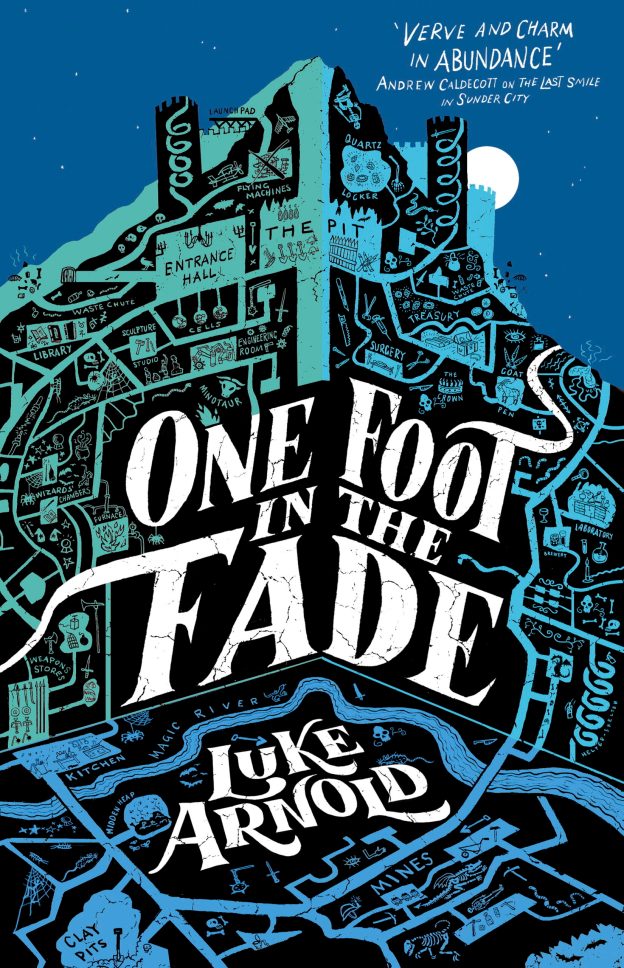
One Foot in the Fade by Luke Arnold

One Foot in the Fade Cover

Publisher: Orbit (Trade Paperback – 26 April 2022)

Series: Fetch Phillips – Book Three

Length: 439 pages

My Rating: 4.75 out of 5 stars

Amazon     Book Depository

One of Australia’s fastest rising fantasy authors, Luke Arnold, returns with the third novel in his Fetch Phillips series, the fantastic and impressive One Foot in the Fade.

Back in 2020, Australian actor turned author Luke Arnold made his fantasy debut with his first Fetch Phillips novel, The Last Smile in Sunder City.  This very clever and intense read, which ended up being one of my favourite debuts of 2020, was set in the unique landscape of Sunder City, a formerly majestic fantasy city facing hard times in a world that has just lost all its magic, causing all the fantasy creatures and beings who lived there to become deformed and dying beings.  The story focused on the character of Fetch Phillips, a human private investigator responsible for the disaster, who tries to redeem himself by helping the disenfranchised former magical beings.  Arnold followed it up later that year with a sequel, Dead Man in a Ditch, which was just as impressive and exciting as the first book.  Both these novels were extremely good, and they perfectly set up Arnold’s intriguing and magic-less universe.  I have been rather keen to see how the story continues so I was quite excited when I received a copy of the third book, One Foot in the Fade, a few weeks ago.

A new dawn has risen in the formerly magical Sunder City.  Under the leadership of human business mogul Thurston Niles, the city is entering a technological age, leaving behind its mystical roots and providing everyone, both human and former magical being, with cars, guns and electricity to service their needs.  Most are content with the new way of life, all except man-for-hire Fetch Phillips.  Still ridden with guilt for the role he played in destroying the world, Fetch spends his days taking on odd jobs for former magical beings while also desperately searching for any way to bring back the magic.

After his latest assignment, recovering stolen artefacts still containing traces of their power, ends badly, Fetch’s hopes for bringing back magic are at an all-time low, until a new clue literally and fatally lands at his feet.  An Angel has fallen from the sky at a great height, his formerly decayed wings once again feathered and whole, clearly the result of magic.  But who or what is responsible for reinvigorating the unfortunate Angel’s magic?

Desperate to uncover the roots of this new mystery, Fetch discovers a former Genie, Khay, whose body is slowly losing its hold on reality.  Still apparently capable of granting wishes, including returning a person’s magic to them, Khay may be the best chance for Fetch to redeem himself.  However, in order to make her powerful enough to bring magic back, Khay requires a legendary crown located at the deadly and isolated Wizard city of Incava.  Pulling together a small team, Fetch embarks for Incava to reclaim the crown.  But the further Fetch goes on his quest, the more he begins to realise that not everything is as it seems.  Blinded by his obsession with magic and redemption, Fetch walks a dangerous path that may end up damning him once again.

This was another extremely awesome read from Arnold who continues to showcase his impressive talent as a fantasy author.  One Foot in the Fade did a brilliant job continuing from the previous Fetch Philips novels, and I loved revisiting the deformed and depressed world of Sunder City.  Loaded with complex characters and powerful settings, this latest story was particularly captivating, and I think that One Foot in the Fade is probably Arnold’s best novel yet.

I really appreciated the powerful and intriguing narrative contained with One Foot in the Fade as Arnold has come up with some deeply fascinating and intense storylines that make this novel very hard to put down.  Taking place shortly after Dead Man in a Ditch, One Foot in the Fade’s story places Fetch Phillips right into the action as he attempts to recover some magical artefacts.  Thrown off by his villainous corporate antagonist, Fetch falls into despair, only to immediately find a dead angel whose magic has been returned to them.  This leads him into a hunt for the being responsible for the miracle, quickly finding Khay, who reunites his faith and hope in magic.  Bringing together a new team of comrades, Fetch travels outside of Sunder City on an epic quest to retrieve a legendary magical crown in order to empower Khay’s abilities.  This works as a particularly fun and exciting centre to the entire narrative, and Arnold really pumps up the action and danger in this part of the book, seeing the protagonists deal with all manner of dangers, deadly creatures, former allies with their own agendas, a mysterious secret society, a giant Minotaur, and even some surprising and very dark magic.

I had an absolute blast with the first two-thirds of the novel, especially with all its action, intriguing new characters and world building; however, it is the final third that really turns One Foot in the Fade into something truly special as Arnold adds in some intense and intriguing twists.  Despite Fetch’s best efforts, everything turns pear-shaped on him as some of the supporting characters are revealed to be far darker and more damaged than he ever believed.  Thanks to some big and dramatic tragedies, Fetch is forced to make some hard decisions that will deeply impact him and change the entire course of the story.  These later twists and revelations are pretty well set up throughout the first two-thirds and the novel, and I really appreciated the way in which Arnold brought the entire story together in such a clever and enjoyable way.  While there are a few excessive plot points that slightly distract the main story, One Foot in the Fade’s narrative was pretty tight and never really slows down.  I love the cool blend of dark fantasy, detective noir and urban fantasy elements contained within this impressive read, and Arnold has come up with a pretty bleak, character-driven narrative that really gets to the heart of the protagonist while also exploring the possibilities of redemption.  The reader will find themselves getting quite drawn into this epic story, and I myself powered through most of it in a single night.  Despite the author’s best efforts to recap the necessary background, One Foot in the Fade is a little hard to read by itself and I feel that most readers should read the first two books in this series first, although this is hardly a chore.  I really enjoyed the hopeful end note of this third novel, and I cannot wait to see where the rest of the series goes from here.

While the Fetch Phillips novels all have great narratives to them, their best qualities are the unique and striking settings.  Primarily set in the once majestic and glorious Sunder City on the fantasy continent of Archetellos, the stories generally explore how the city has changed since magic left the world.  The first two books in this series saw Sunder City as a decaying metropolis, filled with depressed and dying magical beings who were trying to adapt to the new world.  However, in the second book, an industrious human company is starting to provide technological alternatives to everything formerly powered by magic.  Since then, the entire feel and tone of the city has changed, with Sunder City transforming into an industrious and factory orientated city, with 1920’s-esque technology like cars, firearms (that everyone carries) and neon signs.  I really appreciated the brilliant and logical way that Arnold keeps changing the feel and look of his great setting every novel, especially as every change seems to match the series’s overarching noir feel.  I had a lot of fun seeing the comparisons between the setting’s current technology and the former magical glory, and watching the protagonist compete against the march of progress.  Arnold doubles down with the world building in One Foot in the Fade, with some interesting new additions that I found really fascinating.  Not only are we introduced to multiple new magical races, all of whom have been impacted by the death of magic in their own unique ways, but a large portion of the novel takes place outside of Sunder City, as the characters head to another former major settlement, the Wizard city of Incava.  The journey to and into Incava showcases multiple new interesting features about the larger continent of Archetellos, and I appreciated how much time Arnold put into expanding it.  Incava itself proves to be a particularly haunting and deadly setting for a good part of the book, and the various dangers within really amp up the action-packed story.  Overall, Arnold remains well on top of the cool settings in this novel, and readers will once again be entranced by the fantastic and distinctive setting of this series.

One Foot in the Fade also boasts a great array of complex and damaged characters whose personal journeys and intense pain really enhance the impressive narrative.  This is particularly apparent in series protagonist and first-person narrator Fetch Phillips, a man with a particularly intense backstory.  Due to bad choices in his past, Fetch is moderately responsible for the death of magic in the world and all the bad things that went with it.  This led him into an extremely dark spiral and he has spent the rest of the books trying to redeem himself.  However, this has not been easy, especially as he was forced to go up against his magical mentor and best friend in the second novel and his guilt is at an all-time high at the start of One Foot in the Fade.  As such he is particularly obsessed with bringing back magic in this novel and embarks on the quest to repower his new Genie friend and redeem himself no matter the cost.  This obsession blinds him (and by extension the reader) to the risks of what he is doing, and he ends up endangering his friends, while also ignoring some troubling signs from other characters that hinted at the books tragic ending.  This is easily the most obsessed we have seen Fetch throughout the entire series, and it really fits into his brilliantly written character arc which sits at the core of the moving narrative.  Watching him continue to try and fail is always very heartbreaking, and you really feel for Fetch throughout this novel, even with all the mistakes he’s made.  As such, he serves as an excellent centre for the story, and I have a great time following his personal tale, especially as Arnold has also imbued him with a good sense of humour.  The author also sets up a few intriguing character developments and changes throughout One Foot in the Fade that I think will lead to some very compelling storylines in the future, so I look forward to seeing where Fetch goes in the future.

Aside from Fetch, Arnold has filled this novel with a substantial collection of excellent supporting characters, each of whom adds their own distinctive flair to the narrative as well as a complex and often damaging relationship with the protagonist.  One Foot in the Fade features a combination of new and existing supporting characters, and it was interesting to see who returned after the events of the last book.  It was great to see more of former Witch and academic Eileen, one of Fetch’s main compatriots, who helps him throughout most of the book.  Eileen serves as Fetch’s sense of reason, and her more measured approach to the tasks at hand balance well with the protagonist’s more impulsive nature.  I also enjoyed seeing more of futurist company leader Thurston Niles, who is serving as something of an overarching series antagonist.  Thurston, who was introduced in the second book, is the human businessman whose company is responsible for the industrialisation of Sunder City and all its new technology.  While his appearances are a little brief in this novel, he serves as an excellent alternative human character to Fetch and I am really enjoying their rivalry.  Despite appearing as the villain due to his desire to replace magic completely with technology, Thurston has more layers and he actually appears to enjoy Fetch’s efforts to bring back magic.  Their various interactions in this novel are pretty entertaining, and I look forward to seeing their conflict continue in the rest of the series.

The author also introduces several great new characters in One Foot in the Fade, and their interesting and often self-contained storylines are pretty impressive.  My favourite was Theodor, a Werewolf adventurer who Fetch and his friends hire to help get to Incava.  Despite being disfigured and partially disabled (Werewolves and other shape-changers were also partially transformed into dark human-animal hybrids without their magic), Theodor is a badass hunter and tracker who quickly becomes one of the more likeable figures in the novel.  Theodor serves as a mentor to many of the characters, especially Fetch, and it was fun to watch him teach the city slickers how to survive out in the wilds.  Due to the way that Theodor’s storyline in One Foot in the Fade ends I am very curious to see if or how he returns in the future, and I am sure that Arnold will come up with some plot points elements for him.  The other impressive new character was Khay, the Genie who serves as the book’s sentient McGuffin.  Arnold paints a tragic picture around Khay as a Genie literally fading away due to the death of magic.  Only able to survive through certain magical objects and granting wishes to people, namely returning their magic, Kay is just as obsessed as Fetch to achieve their objective.  However, there is a powerful and captivating alternate side to Khay, and the consequences of her actions will have some lasting impacts in the entire series.  These outstanding characters, and more, are an impressive and very important part of One Foot in the Fade, and I really appreciate how much effort Arnold put into making them so relatable and memorable.

With One Foot in the Fade, Australian author Luke Arnold continues to showcase his amazing literary talent, bringing together an epic new story with his already distinctive characters and settings.  Thanks to the powerful and intense new narrative, this third Fetch Phillips novel is probably Arnold’s best novel so far and it is really worth checking out.  I cannot wait to see how Arnold impresses me with the next book.
Amazon     Book Depository

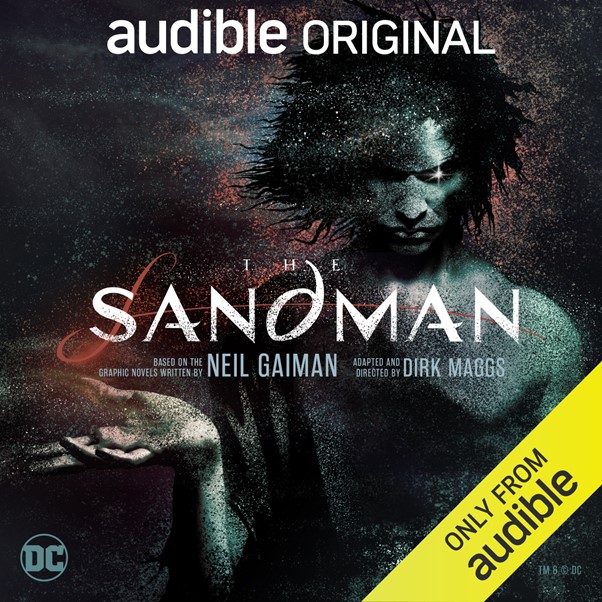
The Sandman – Act 1 (Audiobook) by Neil Gaiman and performed by a full cast

Sandman Act 1 Cover

Publisher: Audible Original (Audio Drama – 15 July 2020)

Series: The Sandman

Script: Neil Gaiman and Dirk Maggs (script adapter)

Director: Dirk Maggs

Cast: Neil Gaiman, James McAvoy, Kat Dennings, Taron Egerton, Riz Ahmed, Samantha Morton, Bebe Neuwirth, Andy Serkis, Michael Sheen, Justin Vivian Bond, Arthur Darvill, William Hope, Mathew Horne, Reginald D. Hunter, Sue Johnston, Paterson Joseph, Josie Lawrence, Anton Lesser, Joanna Lumley, Miriam Margolyes, Tom Alexander, Stephen Critchlow, Blake Ritson, Oris Herhuero, Karen Batke, Ray Porter, Michael Roberts, Kerry Shale, Andrew James, Simon Vance, Sandra Dickinson, Ellen Thomas, Cathy Tyson, Sandra-Mae Luyx, Amaka Okafor, Shey Greyson, Laurel Lefkow, Harry Myers, Mack Keith Roach, Laurence Bouvard, Toby Longworth, Daniel Weyman, Samantha Beart, Cliff Chapman, Felicity Duncan, Julia Winwood, Nicholas Boulton, John MacMillan, Tracy Wiles and Adam Thomas Wright.

Length: 11 hours and 2 minutes

My Rating: 5 out of 5 stars

Amazon

Thanks to a lengthy and productive road trip, I have finally breached the realm of dreams and explored the iconic and powerful creation that is Neil Gaiman’s The Sandman.  In this review I check out the first act of its impressive full-cast audiobook adaptation.

Back in 1989, mind-bending author Neil Gaiman unleashed his most iconic comic creation when he introduced the complex and dark The Sandman.  Centred on the mysterious character of Dream, the anthropomorphic personification of dreams, The Sandman was a clever and intense hybrid of horror, fantasy and superhero storylines released as part of the Vertigo comic imprint, which was associated with the DC Comics universe.  This series was considered a revolutionary success and its unique and colourful story cemented Gaiman’s legacy in comic circles, as The Sandman and its spinoffs are still very highly regarded.

Now I must make a bit of a confession: I have never actually read The Sandman and it is a bit of a gap in my comic book knowledge.  I just never seemed to be in a position to read these comics despite hearing how good they were.  However, with the upcoming television adaptation of The Sandman set for release later this year, I thought that it was about time that I tried to check it out.  Luckily, the good folks at Audible decided to make this rather easy for me as they recently released a full-cast audiobook adaptation of The Sandman.  Not only was this a great opportunity for me to check out this cool comic in my favourite format, but this adaptation featured a truly remarkable cast of actors, with the production pulled together by the highly acclaimed Dirk Maggs.

There are many strange, unusual and powerful creatures inhabiting the universe, but only seven siblings, known as the Endless, are truly immortal.  The Endless, each a personification of a human concept, have their own realms and powers, with the most mysterious and unique belonging to Dream.  Known by many names, including Morpheus, he is the manifestation of all dreams and stories, and governs the Dreaming, the vast realm made up of creation’s collected dreams.  Unchanging since the dawn of time, Morpheus’s eternal life is about to get more complicated than he ever believed.

Summoned by a mystical cult seeking to capture his sister, Death, Morpheus finds himself trapped and powerless on Earth.  Stripped of his tools of office and placed within a magical cage, Morpheus is kept as a prisoner for over 70 years.  When he eventually escapes from his captors, Morpheus returns to his realm only to find it in tatters, with several of his servants missing and his own powers greatly weakened.  To ensure the continued stability of the Dreaming, Morpheus must endeavour to regain his full strength by recovering his lost tools of power.

However, this is no easy task as all three items have been scattered across the world and are now in the hands of several dangerous foes.  To obtain them, he will have to contend with human magician John Constantine, face down Lucifer and battle the malicious Justice League foe known as Doctor Destiny.  From dangerous demons to rogue dreams and even his own siblings, Morpheus will face great challenges and unique creations on his road back from capture.  But even if Morpheus does succeed, is he prepared for the full chaos his absence has wrought on the world?

I’ve been exceedingly foolish by neglecting The Sandman for so long.  This is such a unique and epic tale that contains powerful looks at revenge, change, human perception and the power of dreams and stories, and so much more, as Gaiman cleverly examines elements of the human psyche through the eyes of an elusive immortal.  The impressive and exceedingly memorable story contained within these early entries of The Sandman, are deeply captivating and I found myself really getting drawn into the amazing narrative and distinctive characters.  Throw in an exceptional voice cast and a brilliant audiobook production, and I honestly have no choice but to give this a full five-star review.

When I first heard about The Sandman audiobook I did wonder if it would provide a more abridged version of the narrative.  However, it appears that this production was a pretty faithful and full adaptation of issues #1-20 of The Sandman comic.  As such you get an intense and fully developed story that is guaranteed to grasp your attention and send your imagination into overdrive, especially by the two major storylines contained within these first 20 issues.  The first of these, the “More than Rubies” storyline, examines Morpheus’s capture by human occultists in the early 20th century, his decades-long imprisonment, his eventual escape, and his subsequent attempts to recover his tools of office to regain his lost power.  This storyline serves as a pretty awesome and captivating start to the entire production and it contains several distinctive and addictive chapters.  The initial chapters that deal with Morpheus’s imprisonment set up a lot of major storylines for the rest of the series, give you some fantastic early impressions of this world, introduce some key concepts and provide readers with their first compelling look at the main character.  From there, the story gets even more exciting as you follow Morpheus as he attempts to recover his items of power from some dangerous individuals.  This sets up some brilliant chapters as he deals with everyone’s favourite magician, John Constantine, in a horrific tale that provides readers with their first glimpse at the true danger of dreams.  From there, Morpheus goes straight to hell as he attempts to retain his helm from an army of demons while also dealing with the nefarious Lucifer in what is possibly one of the most entertaining parts of the entire production.  That is then followed by a particularly dark storyline that sees Morpheus forced to contend with damaged DC comics supervillain Doctor Destiny, who is using Morpheus’s own powers to destroy the world.  This initial main storyline is particularly good, with an amazing and captivating flow to it that is guaranteed to make you a fan of The Sandman.

The other major storyline of this first act of The Sandman sees Morpheus attempt to contend with a new dangerous threat impacting the Dreaming.  This threat turns out to be young woman, Rose Walker, who is a powerful Dream Vortex.  To fully understand her, Morpheus finds himself getting involved in her hunt for her missing brother, and soon finds himself in conflict with several of his missing creations, each of whom has their own agenda in the real world.  At the same time, Morpheus must contend with the machinations of his powerful siblings as they attempt to manipulate him for his own ends.  This second major storyline, The Doll’s House, is an extremely good follow-up to the introductory issues and continues several plot points, with several characters returning in interesting ways.  Indeed, as you traverse through this storyline, it becomes apparent how much the author set up in the initial major storyline, and this helps to make The Doll’s House flow extremely well.  This major storyline itself is pretty damn fun, and I liked how it split between Morpheus and several of the other major players, particularly Rose Walker and The Corinthian.  The entire thing goes in some rather interesting directions, from the traumatised dreaming mind of a young boy also containing several lost superheroes, to a serial killer convention where some of Morpheus’s most dangerous creations have arrived.  This entire storyline is pretty damn twisty and trippy in places, but it comes together extremely well and has some amazing high points to it.  I particularly enjoyed the sequences depicting the serial killer convention, which was both entertaining and disturbing in equal measures but which also has an outstanding payoff to it.  The Doll’s House ends the major storylines on an extremely high note and it will ensure that you will come back for the second act desperately wanting more.

Aside from the two main storylines, The Sandman also contains several filler arcs that take place around the main storylines, including all the stories contained in the collected volume Dream Country.  While I would usually be a little disappointed to have a gap occur between some of the main storylines like this, it worked really well.  Not only do these filler chapters serve as a bit of a palate cleanser, breaking up the major storylines, but they also provide a lot of additional context for the wider The Sandman universe by expanding on many of the supporting characters, such as Morpheus’s relatives or some of the strange people he encounters through his travels.  Each of these storylines lasts for a single chapter (an issue from the comic), and are fairly self-contained, coming together and concluding in short order.  Each of these filler stories is quite intriguing in their own right, especially as these stories are a little more metaphysical and often contain a dark, thought-provoking cautionary tale.  There is also an interesting range of settings and time periods for many of these stories, as some occur many years before the events of the major storylines, due to the immortal nature of Morpheus and his siblings.  I honestly enjoyed each of these separate storylines, not only because of the fantastic ways that they expanded The Sandman universe but because of the way that each story hit a different emotional note.  My favourite was probably Men of Good Fortune (issue #13 of the comic), a brilliant story that sees Morpheus and Death encounter a man, Hob Gadling, who is certain of his desire never to die.  Intrigued, Morpheus ensures his immortality and arranges to meet him once every 100 years in the same tavern.  So begins a fantastic story that skips across centuries as you see Hob continue to exist and change through the centuries.  Watching him achieve the highs and lows of an immortal is deeply fascinating, as is his compelling and deeply personal interactions with Morpheus as they discuss his experiences and his desires to stay alive.  The conclusion of this story proves to be particularly moving, and it helps to humanise Morpheus after several issues of him being emotionally distant.  Other interesting filler arcs include Morpheus meeting with Death and following her around in her complex and sad duties, another sees William Shakespeare, who years earlier made a Faustian bargain with Morpheus, debut A Midsummer’s Night Dream to a host of elven nobility in a touching performance.  All these filler arcs, and more, add a certain gravitas to the overall book, and I think that they really helped to enhance the major storylines they were set around.

I was really impressed with all these major and minor storylines, especially as the writing behind them was particularly powerful and brilliant.  Everything flows together extremely well and you can see that Gaiman is setting up a ton of fascinating storylines for the future, while also ensuring that the current plot points stand on their own and are extremely fun.  Everything about this story is interesting, and while the author does occasionally go in some zany, grotesque and unique directions, it generally proves to be entertaining and eventually fits back into the major storylines in a great way.  Gaiman seeks to create a massive and powerful epic that not is not only filled with action and excitement but which causes the reader to stop and think about certain states of being or metaphysical aspects such as dreaming.  This is often achieved, especially in the audiobook format, with distinctive and powerful dialogues that showcase the unique attributes of the characters and the dramatic and dangerous situations they find themselves in.

I personally loved how there were a range of different styles and elements featured throughout the plot as The Sandman didn’t conform to one particular genre.  The story could at any time jump from unique fantasy adventure to a deep character driven narrative or end up being a bleak and deeply disturbing horror tale.  For example, one of the best chapters in this act of The Sandman was a dark, disturbing and somewhat detached horror narrative they fit in right after a chapter involving the Justice League and certain Batman villains.  In this story the deadly Doctor Dee, having stolen Morpheus’s dream stone, holds several people hostage in a diner over the course of a day.  Throughout this day (which is counted down hour by hour for some impressive dramatic impact), Doctor Dee toys with his pets, diving deep into their personal lives and using disturbing elements from their past to manipulate their emotions and their reactions.  This results in several extremely disturbing hours as the bad doctor makes them experience lust, despair, hatred, animalist urges, religious zeal and more to entertain him as he waits, and it turns this chapter into a horrific experience in between some more action packed or fantasy issues.  This frequent change in genre really helps to make this first act stand out, and all the different storylines and elements work well with the overall dark gothic theme of The Sandman.  It also helps to make The Sandman a bit more accessible to different readers as there is something here for all fans of horror, fantasy and comics, although some basic knowledge of DC and Vertigo comics may be somewhat helpful.

This story is greatly helped by the complex and exceedingly memorable characters featured throughout.  The most notable of these characters is the titular Sandman himself, central character Dream/Morpheus, an immortal anthropomorphic personification who lives in creation’s dreams and serves as their lord and master.  I loved how Morpheus is portrayed in this first act as the reader really gets to sink their teeth into the character and find out what makes him tick.  Gaiman ensures you get the most out of Morpheus by immediately showing him at his worst, imprisoned for decades by humans with his powers stolen from him.  While you don’t get a lot of insight into who or what he is at the beginning, once he escapes you find out everything you need about his motivations, responsibilities and personalities.  Gaiman initially paints Morpheus as a callous and detached being, removed from humanity and more concerned with his own needs and realm than the people he interacts with.  While it does make it a little harder to root for him in some of the earlier storylines, I think this coldness helped to stoke some real mystery around the character and you wanted to find out more about him and his past.  Once the first major story arc ends and you get into some of the filler stories, especially the one involving the interaction with his sister Death, you start to understand him a lot better and soon see that his a basically good person, just with some major personality flaws brought on by his immortal existence and purpose.  Don’t get me wrong, at times he is still a pretty hard character to like, especially when details about his love life are revealed, but he is generally a lot more likeable than most of the other immortal or non-human characters you encounter, and you get really invested in his continual struggles.  By the end of his first act you will become extremely addicted to his story arc, and I cannot wait to see how Morpheus’s narrative continues in the future.

Gaiman has come up with an eclectic and distinctive group of characters to support the story, with a fantastic combination of original characters, mythological figures and even a few established DC and Vertigo comic characters.  These great characters are featured to various degrees throughout the story, with some being continuously used, while others only get brief flashes.  All of them are pretty fantastic, and I loved seeing how Gaiman worked them into his brilliant narrative.  There are so many notable characters throughout this first act to talk about, especially as they were portrayed by some outstanding actors (more on that later), and I could honestly spend pages talking about all of them, however, in the interests of saving time I might just limit it to my absolute favourites.  I must highlight Dream’s sister Death; rather than a traditional mournful or skeletal figure, Death is shown as a cheerful young woman who bears great compassion and kindness to those she reaps.  This is a really interesting change to the usual personification of Death you see in fiction, and it works really well, especially as Death here serves as a great positive foil to her dour brother Dream and the other Endless.  As such, she swiftly becomes a favourite character to follow, especially with her many different appearances.  I also must mention Gaiman’s great use of John Constantine, everyone’s favourite drunk English wizard, who has a notable chapter towards the start of the story.   Lucifer himself is also brilliant as a brief secondary antagonist, and Gaiman lays some interesting story seeds here for him.  The comedic duo of Cain and Abel brings some fun to several stories, as does Morpheus’s servant, Matthew the Raven.  Rose Walker serves as an excellent protagonist of the second major storyline, and I enjoyed her very English protector, Gilbert, who has some intriguing scenes.  Finally, I was rather impressed with the great early antagonist Doctor John Dee, better known as the Justice League villain Doctor Destiny.  Gaiman went out of his way to make Doctor Dee as creepy and deranged as possible in this comic and he has some outstanding, if shockingly horrifying, scenes throughout the More than Rubies storyline.  He, and other great villains like The Corinthian, add some intriguing danger and a ton of depravity to the story, and I had an absolute blast getting to know all these great characters.

As I mentioned before, I chose to check out the full-cast audio adaptation of The Sandman rather than reading the original comics, and this greatly impacted my experiences of how I absorbed this unique story.  However, while I probably missed out on some brilliant artwork, I think that this audio adaptation was the perfect way to enjoy this elaborate and massive story.  As far as I can tell, the audio production faithfully adapts all the comic storylines throughout its run, with the movement and action of the comic page replaced with narration, sound effects and probably altered dialogue where necessary for the benefit of the listener.  While this is probably a little different than the comic, I think that it captured the tone, characters, and intent of The Sandman exceedingly well, and the resulting production is pretty damn impressive.  Not only does it feature some brilliant acting, but the production team makes outstanding use of a ton of cool sound effects and some moving music to create something extremely special.

While this audio production has many great features, without a shadow of a doubt its most defining aspect is the incredibly stacked voice cast who bring the various characters to life.  Someone clearly sold their soul to get the eventual cast for The Sandman, as some exceedingly talented actors are featured here giving some intense and powerful performances.  These great performances deeply enhance the entirety of The Sandman and turn this already outstanding story into something that you will listen to again and again.  This voice cast is led by the insanely talented James McAvoy, who voices main character Morpheus.  McAvoy is extremely good in this production, showcasing all his acting range to bring this complex character to life in all his dark, gothic and detached glory.  Thanks to the way he voices the character, listeners really get a sense of how ethereal and distant Morpheus can be, as well as the intense weight of the events of this story and the relationships he has formed.  You really get the full gambit of Morpheus’s emotions during this first act and McAvoy covers them all perfectly, embodying the character’s rage, sorrow, impatience and intense regret extremely well.  This performance really serves to enhance the character of Morpheus in this production of The Sandman, and McAvoy was the perfect actor to helm this entire series.

The rest of the voice cast is just as impressive, with several major celebrities featured here.  Taron Egerton has a notable time voicing the iconic John Constantine and his pretty damn good here, bringing the distinctive magician to life extremely well.  Edgerton brilliantly brings forth Constantine’s full emotional range throughout The Sandman, and you get a great sense of his cheeky demeanour which overlays his insane amount of guilt and despair.  This was a very good version of Constantine, and indeed after listening to this production, Edgerton would be my choice for Constantine if they chose to do another major movie with him.  In addition, Kat Dennings has a major role in this audiobook as Death.  Dennings is pretty amazing here, and she brings some real life (pun intended) to this major role, showcasing this character’s intense warmth and friendliness, as well as her exasperations when it comes to her brother.  Dennings really made this unique character her own, and I deeply enjoyed her performance.  I also had a lot of fun with Andy Serkis who voices Matthew the Raven, Dream’s messenger and servant.  Matthew is a fairly comedic role which Serkis fills perfectly, giving the raven a sarcastic and everyman feel that fit the lines really well and helped to make him a very distinctive and fun figure.

Other big-name actors include Bebe Neuwirth, who perfectly voices a prophetic cat with aspirations to change the world through dreaming.  Riz Ahmed is pretty terrifying as The Corinthian and you get some major serial killer vibes from his performance.  Arthur Davill has a great couple of appearances as William Shakespeare, while the legendary Joanna Lumley has an unfortunately short appearance as Lady Johanna Constantine, although she gets her time to shine in future productions.  Likewise, Michael Sheen has only a short appearance as Lucifer Morningstar, although he brings some incredible flair to the character, dripping style, venom and power.  Like Joanna Lumley, Sheen will get his time to shine in future instalments of this audio series, so don’t be too disappointed with his limited appearances here.  I loved William Hope as Doctor Dee, as he gives the villain some deep malevolence and insanity.  Michael Roberts and Kerry Shale are fun as Cain and Able respectfully, while Paterson Joseph has a great sequence as The Demon Choronzon.  I was also very happy to see that one of my favourite audiobook narrators, Ray Porter, was featured here, voicing multiple supporting characters.  All of Porter’s portrayals were very fun, although I think he was best as Gilbert, providing some fun British pomp to the character.  Finally, Neil Gaiman himself has a massive role in this production as the Narrator, which is pretty damn appropriate.  Gaiman is great as the narrator, with his distinctive voice perfectly moving the story along, as he describes events, actions and settings, as well as providing a massive dose of exposition.  I was really impressed with Gaiman’s continued performance here, and I honestly don’t know if anyone else could have done such an impactful and meaningful job of it.  I am honestly only just scratching the surface of this cast, as there are a ton of other actors featured throughout The Sandman in some way.  However, all of them are extremely good and their work on this show is just superb.

As you can no doubt tell from the elaborate and long-winded review above, I had an outstanding time with this audio production of The Sandman, and I am so very happy that I got to finally experience Neil Gaiman’s amazing series.  Everything about this audiobook was impressive, with an elaborate and dark narrative, gritty characters, fantastic performances and some incredible world building.  There is truly something for everybody here, as readers unfamiliar with The Sandman can easily jump in and learn everything they want to know about the series (I’m now ready for that upcoming Netflix series), while established fans will no doubt enjoy it performed by such a talented team of actors.  I had such a good time listening to this first act that once I finished, I immediately jumped into listening to the second act, which has an even better and expanded voice cast.  I will hopefully review that in a few weeks, but in the meantime do yourself a favour and listen to this incredible audio production of The Sandman, as you will not regret it.

Amazon

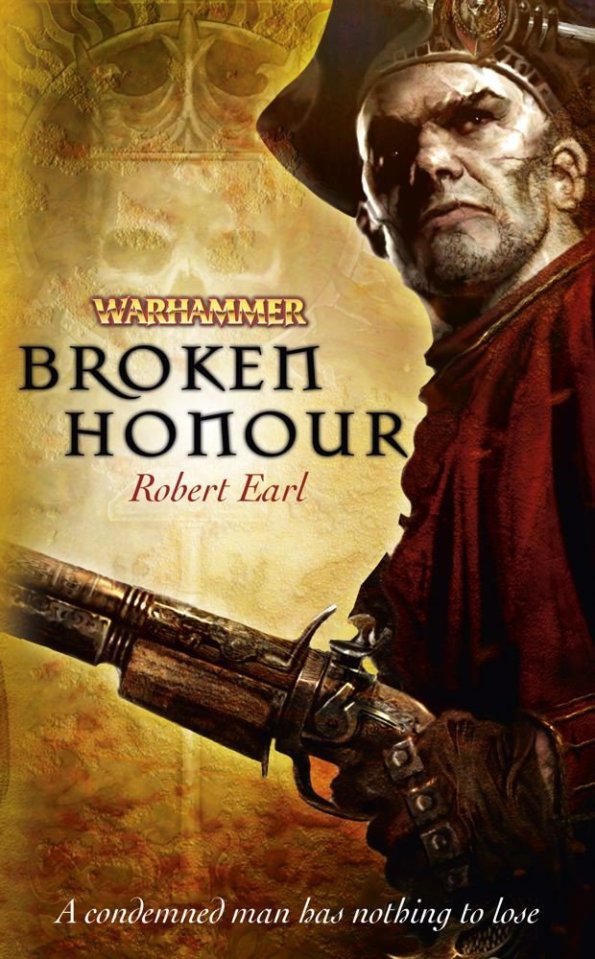
Throwback Thursday – Warhammer: Broken Honour by Robert Earl

Warhammer - Broken Honour Cover

Publisher: Black Library (Paperback – 22 February 2011)

Series: Warhammer Fantasy

Length: 411 pages

My Rating: 4 out of 5 stars

Amazon

Welcome back to my Throwback Thursday series, where I republish old reviews, review books I have read before or review older books I have only just had a chance to read.  For my latest Throwback Thursday, I look at a cool standalone entry in the Warhammer Fantasy canon with the 2011 novel, Broken Honour by Robert Earl.

Damn it has been fun getting back into Warhammer fiction over the last couple of years, especially as there have been so many amazing and epic recent additions to the franchise.  I have really been having fun with the huge variety of stories associated with these iconic tabletop games, and while I have been mostly focused on the science-fiction based Warhammer 40,000 novels, I have also been dabbling with the Warhammer Fantasy subgenre.  Set in a chaotic and war-ridden world filled with all manner of creatures from classic fantasy, the Warhammer Fantasy novels contain fun and dark adventures, such as the Gotrek and Felix novels (check out my reviews for Trollslayer, Skavenslayer, Daemonslayer, Dragonslayer and Beastslayer).  I was lucky to recently find several cool Warhammer books in a second-hand shop, and I immediately dived into a particularly fun fantasy novel, Broken Honour, written by a new-to-me author, Robert Earl, who had written various other interesting Warhammer novels.  Set before the 2015 destruction of this setting and the start of the Age of Sigma, Broken Honour was a fantastic and entertaining read with a great story to it.

Chaos has once again invaded the realms of man, this time in the Imperial state of Hochland.  The ravenous beastman hordes are emerging from their deep forest lairs to begin their annual raids of the human settlements to destroy, despoil and feast on the people within.  As the armies of Hochland gather to repel them, they find themselves outmatched and outsmarted at every turn.  A powerful and dangerously intelligent beastman lord has risen to command the herd, and his unusual tactics may spell the end for every human living in Hochland.

As the Hochland baron and his advisors attempt to withstand the new threat advancing towards them, they desperately seek out any fighting men they can find.  Sensing opportunity, mercenary Captain Eriksson, a veteran fighter for sale currently only missing a regiment to command, arrives at the capital.  Keen to take advantage of the current chaos, Eriksson buys the freedom of a large group of prisoners to form a new free company.  Promised freedom and pardons for their crimes if they fight, the prisoners form a reluctant and ill-trained regiment, the Gentleman’s Free Company of Hergig, who hope to avoid the brunt of the battle in the back.

However, Eriksson and his troops soon find themselves in the very thick of the fighting, as those above them seek to use his unit to in the very worst ways.  Forced to contend with ravenous monsters, political intrigue, and a villainous lord with everything to lose, Eriksson and the Gentleman’s Free Company of Hergig will need to come together and hone their skills if they are to survive.  Can this band of rogues, thieves and criminals regain their lost honour and find redemption on the battlefield, or will they find only death and destruction as humanities most bestial enemies come to claim them?

Broken Honour was an awesome addition to the Warhammer Fantasy canon that I had an amazing time getting through.  Earl produced an exceedingly exciting and action-packed read that is essentially The Dirty Dozen in the Warhammer Fantasy universe (it is also comparable to the Last Chancers series from Warhammer 40,000).  Obviously, with a plot like that, I knew that I was going to have a lot of fun with this book, and Earl really did not disappoint.  While the narrative is a tad by the numbers, it is a pretty cool military fantasy narrative that is worked well into the Warhammer Fantasy setting.  The entire story flows really well, with the antagonists introduced up front and the protagonist, Eriksson, and his unwilling soldiers brought in quickly after that.  From there you follow the paroled Free Company as they are dragged from one conflict to the next and forced to contend with overwhelming odds.  As such, the book is loaded with a ton of outstanding action and brutal fight sequences that are guaranteed to keep you entertained.  Earl makes excellent use of multiple character perspectives to tell a deep and wide-ranging narrative, and you soon get dragged into several different character arcs, including several surrounding the antagonists.  Not only do you get to see into the heart of the beastman camp, but there are several brilliant sequences told from the perspective of a villainous Hochland noble who is trying to kill the protagonists.  This all ends up being a pretty exciting and fantastic story, and I found myself getting really caught up in the novel, powering through it very quickly.  Everything comes together really well into a great self-contained adventure, although a couple of character arcs didn’t get the conclusions that they deserved, and some storylines are never revisited, despite Earl leaving the story open for a sequel.  Despite that, Broken Honour was an excellent, easy novel to check out, and you are guaranteed to have a great time reading it.

I really liked how well Broken Honour slotted into the established Warhammer Fantasy setting, and this was a great addition to the overall canon.  Earl focuses his narrative around two particularly intriguing factions from the game here, the villainous beastmen and the human armies of the Empire, specifically from the state of Hochland.  I loved the insight into both, especially the beastmen, and the author really brings them to life in exquisite detail.  You can really feel the monstrous power, the Chaos infused evil and the beast-like mentalities contained within these creatures, and they prove to be excellent and brutal antagonists for the entire novel.  At the same time, there are some awesome insights into the soldiers of the Empire, and I loved the various depictions of their battle tactics and the various regiments.  While Earl does dive into these various Warhammer factions throughout Broken Honour, readers don’t need to know too much about them to enjoy the series, as the author does an amazing job introducing them and explaining what they are, and any fan of fantasy or dark fantasy would have a great time with this book.  Indeed, Broken Honour would serve as an excellent introduction to the Warhammer Fantasy canon for those readers unfamiliar with its details, as the story encapsulates the constant struggles and battles that occur within it, as well as the fun and larger-than-life characters it focuses on.  As such, this is a really good and entertaining Warhammer novel that will really appeal to both established fans and potential newcomers.

I really must highlight some of the great characters featured within Broken Honour, as Earl has come up with a wonderful and compelling group of figures to set the story around.  Most of the plot naturally revolves around the members of the Gentleman’s Free Company of Hergig, who are formed to face the threat within it.  Made up of over 120 former criminals, you don’t get to know all the members, but most of the ones who are featured are extremely fun and very memorable.  The leader, Captain Eriksson, proves to be a canny veteran who can manipulate events and his superiors in his favour to field a force in the war and get a lot of money.  Despite his mercenary attitude, Eriksson proves to have a conscious and builds up a fair bit of loyalty to his men, and this character growth really helps endear him to the reader.  Most of the other named Free Company members are a rather interesting and cool.  The drummer boy, Dolf, for example, proves to be an excellent human MacGuffin in the narrative as political plots revolve around his survival.  Other members of the Free Company that stood out to me include the tired veteran Sergeant Alter, the possibly mad former warrior priest Gunter, and the wily quartermaster Porter, whose moneymaking schemes and remarkable survival ability rounds out the character dynamics extremely well.

While I had fun with these protagonists, the best characters within Broken Honour are easily the baddies, with several great antagonist figures really coming together perfectly throughout the book.  The most prominent of these is Beastlord Gulkroth, who leads the beastman armies in the book.  Empowered by dark magics which have enhanced him even further than the rest of his kind, Gulkroth proves to be an intimidating and compelling figure in the novel, especially as his grasp of strategy, tactics and patience are highly unusual amongst his race.  Gulkroth spends the bulk of the novel balancing this newfound intelligence against his bestial nature, and it proves extremely interesting to see both sides of his personality come into conflict, especially as it impacts how his army attacks.  While Gulkroth is a fascinating figure, the best antagonist is Viksberg, a cowardly noble who was the sole human survivor of the first battle in the book thanks to his spinelessness behaviour.  Despite this, he manipulates the situation to make him appear as a hero and gets promoted as a result, killing anyone who knows the truth of his actions.  This eventually forces him to contend with Eriksson’s regiment, as one of them is a witness to his crimes, and he tries to get all of them killed on multiple occasions.  Viksberg’s continued attempts to kill the protagonists through indirect means really adds to the intrigue and enjoyment of the entire novel, and it was exceedingly entertaining to watch his various plots unfold.  Earl really goes out of his way to make Viksberg as despicable as possible, and you end up really disliking the entitled bugger, especially as he gets better characters killed.  You end up rooting against Viksberg in the hope that he’ll get his just deserts, only to be disappointed when he manages to survive to fight another day, which is both frustrating and extremely fun.  These brilliant antagonists, and all the other characters, add so much to the overall plot of Broken Honour, and I really appreciated the work that Earl put into his various characters.

Overall, Broken Honour by Robert Earl was an awesome and deeply entertaining Warhammer novel that I had a delightful time with.  The straightforward story is very exciting and contains some impressive character arcs that unfold to produce a riveting tale, while also providing all the action and bloodshed I could ever want in the iconic Warhammer Fantasy setting.  While I am a little disappointed that Earl didn’t write any additional novels featuring the characters in Broken Honour, I still had an awesome time with this book and it’s a great read for both Warhammer fans and those general fantasy readers.  Highly recommended!

Amazon

Waiting on Wednesday – Master of Furies and Glacier’s Edge

Welcome to my weekly segment, Waiting on Wednesday, where I look at upcoming books that I am planning to order and review in the next few months and which I think I will really enjoy.  I run this segment in conjunction with the Can’t-Wait Wednesday meme that is currently running at Wishful Endings.  Stay tuned to see reviews of these books when I get a copy of them.  In this week’s Waiting on Wednesday I check out some awesome upcoming novels from two of my favourite all-time fantasy authors.

Out of all the fantasy authors currently writing, there are two in particularly who I will always make time for in my reading schedule no matter how busy I am.  This is because I am a major old-school fan of these authors, as I have been reading them for decades and they were responsible for some of my first major obsession with fantasy fiction.  These two authors are Raymond E. Feist and R. A. Salvatore, both of whom are insanely talented masters of the fantasy genre who have substantial number of books under their belts.  I have so much love both authors and I have honestly read most of their respective works over the years and enjoyed every word of them.

Feist is best known for his epic Riftwar Cycle, a massive connected series that saw a classic fantasy world invaded by various beings from across a connected series of universes.  Starting off with Magician and incorporating, amongst others The Empire trilogy (cowritten by Jenny Wurst), this is an exceptional series, and one that all true fantasy fans need to check out.  Salvatore on the other hand has a bit more of a diverse writing portfolio having produced a couple of intriguing and connected series throughout his career.  While he has done some substantial work on his Corona universe, such as his recent The Coven trilogy (featuring the outstanding Child of a Mad God, Reckoning of Fallen Gods and Song of the Risen Gods), Salvatore will always be best known for his Drizzt Do’Urden novels.  Set in the Forgotten Realms shared universe, the Drizzt Do’Urden novels encompasses multiple connected trilogies and series, all focused on Salvatore’s iconic Drow protagonist and his friends, as they go on various fantasy adventures through a dangerous landscape.  Both authors have created some great works over the years and luckily for me they are both going strong and creating some intriguing new works, including two great books for later this year.

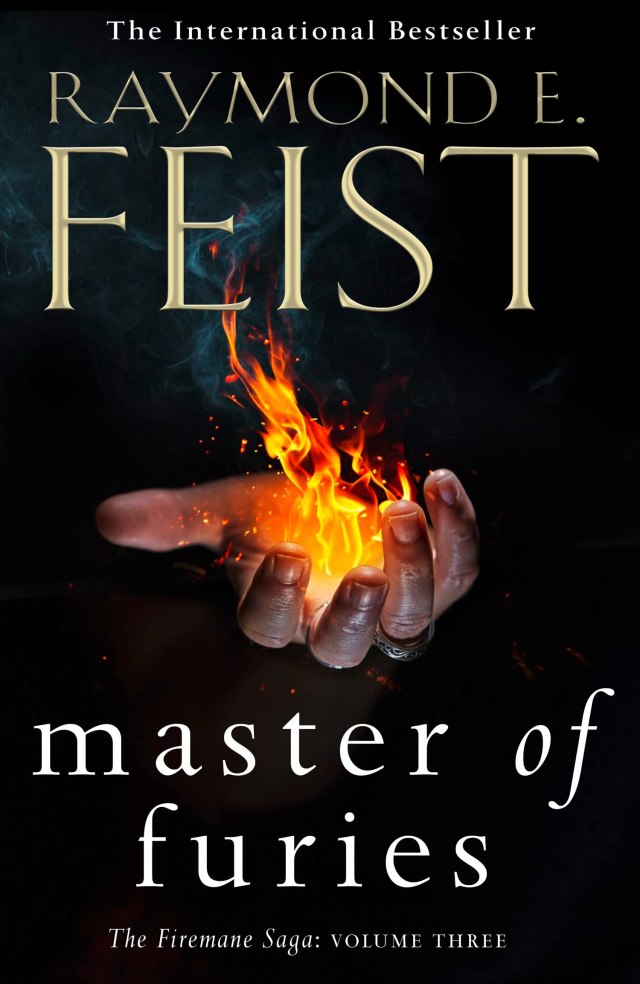
Master of Furies Cover

Amazon     Book Depository

The first of these books is Master of the Furies by Raymond E. Feist which is currently set for release in July.  Master of the Furies is the third and final book in the Firemane Saga, an excellent series in Feist’s new fantasy universe that features some classic elements as various compelling characters find themselves thrust into a vast and mysterious conflict.  I have had a brilliant time with the first two entries in the series, King of Ashes and Queen of Storms, with both novels containing a fantastic narrative, clever world building and interesting characters.  After the fantastic and game changing events of Queen of Storms, the series will wrap up with Master of Furies, but it sounds like there is still plenty of epic adventure to come.

Synopsis:

From King of Ashes to Queen of Storms, it’s all built up to this–the thrilling conclusion to legendary New York Times bestselling author Raymond E. Feist’s epic Firemane saga.

War has swept across Marquensas. Ruthless raiders have massacred the inhabitants of Beran’s Hill, including Gwen, the beloved wife of Declan Smith. Hollow of heart, his hopes burned to ashes, Declan swears to track down and destroy the raiders, an ambition shared by Baron Daylon Dumarch, whose family was massacred as they fled the capital.

Meanwhile Hava, whose gift for piracy has seen her acquire the treasure ship Borzon’s Black Wake and the swift Azhante sailing vessel, Queen of Storms, and won her the name of “the Sea Demon,” is closing in on the whereabouts of those who unleashed the murderous hordes.

Her husband, Hatushaly, the last remaining member of the ruling family of Ithrace, the legendary Firemanes, seeks to control the magical powers he has inherited. He is able now to visualize and even travel among the filaments of energies that power all existence: the furies. But will he be able to channel his magic in time to combat the deepest, darkest threat the world of Garn has ever faced?

This final book sounds really cool and I am highly interesting in seeing how the various storylines that Feist has set up will come together here.  The main story will probably focus on the character of Hatushaly, who has been set up as a fiery saviour for most of the trilogy, and it will be great to finally see some magic out of him.  The pirate-based adventures around Hava will also be extremely awesome, especially as Feist has some real talent with nautical combat sequences and adventures.  However, I mostly looking forward to the part of the book following Declan Smith, who has probably been my favourite character of the series so far.  A talented blacksmith who keeps finding himself in battle, Declan’s dream of a simple life was burned up very suddenly in the last book and he now looks set for a massive revenge arc against the mysterious raiders who have been targeting the various characters throughout the series.  I am really looking forward to seeing what happens to Declan, as well as the other characters, and I am very hopeful that Master of Furies will all come together into a brilliant and fun final novel.

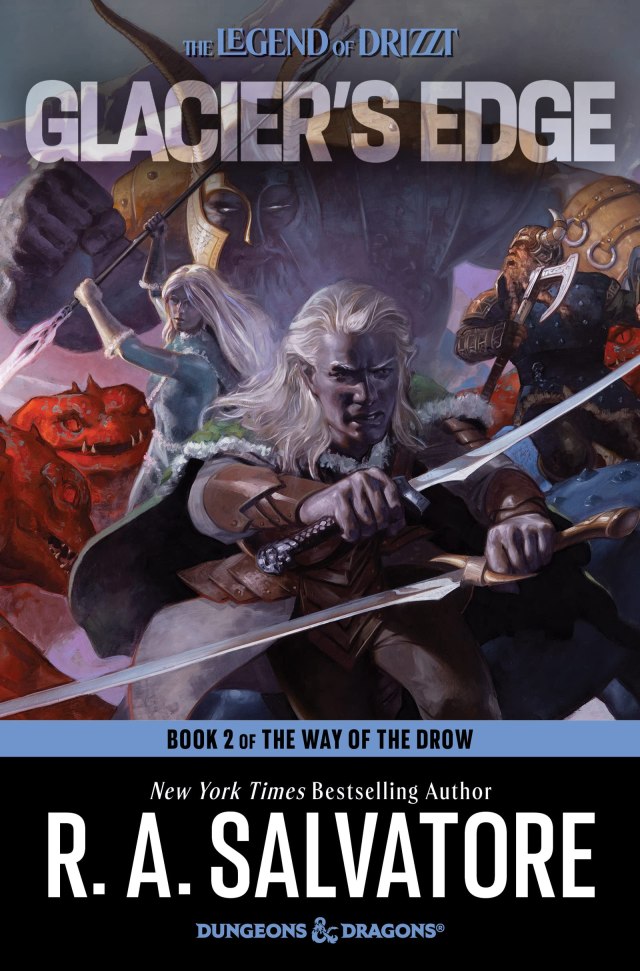
Glacier's Edge Cover

Amazon     Book Depository

The other book I am very excited for is Glacier’s Edge by R. A. Salvatore.  Part of Salvatore’s massive Drizzt Do’Urden connected series, Glacier’s Edge will be the second book in the current The Way of the Drow series, following on from last years release, Starlight Enclave, while also continuing some other storylines from the previous Generations trilogy (Timeless, Boundless and Relentless).  The Way of the Drow novels takes the series back to its adventuring and exploration roots as some of the key characters set out to explore a hidden Drow settlement, which ended rather badly for them.  Set for release in August, Glacier’s Edge will continue this intriguing storyline and see the rest of the series’ recurring heroes take up the fight.

Synopsis:

There’s a lot that Jarlaxle doesn’t know: is he the lone survivor of the raid on the slaad fortress, can he even find a way to get out, and beyond his immediate predicament, could he possibly escape the ice caverns and get help for his friends?

However, what Jarlaxle does know is that if he plans to come back—if Catti-brie, Entreri, and Zaknafein are to have any hope of surviving—he’s going to have to bring back far more firepower. An army of aevendrow seems unlikely, so he must go home and pull together a team with great skill and unimaginable power.

But how will he get home? Will such a collection of warriors and mages come to his aid? And even if he manages all that, will it be enough? For Jarlaxle has seen the slaadi’s power and their god in a most personal and terrifying way.

Trapped in the ice while the world is on fire, Jarlaxle is in a race against time—and burdened with a magical secret—to save a peaceful city and his companions.

And he’s running out of tricks in his bag of holding… 


Glacier’s Edge
sounds like another pretty impressive novel and I am very excited to check it out.  I love the idea of a novel mostly dedicated to the tricky Jarlaxle, one of Salvatore’s more entertaining characters.  Watching him trying to escape a frozen wasteland without any of his magic to bring back some of the other protagonists is going to be fun, and I can’t wait to see what interesting new elements are brought into the plot as a result.  I imagine that Salvatore will try and continue some of the fascinating character work that was featured in the previous novel, and I am intrigued to see how some of the series more complex protagonists further develop.  Overall, Glacier’s Edge looks set to be another epic novel and I cannot wait to get my hands on it.

Honestly, just based on who is writing these upcoming books, there was no way I wasn’t going to get copies of Master of Furies and Glacier’s Edge when they come out.  I already know that I will have a great time with Feist and Salvatore’s latest novels, and I really want to see how their respective series continue.  2022 is turning out to be a pretty awesome year for fantasy fiction, and these additional novels are going to keep making it even better.

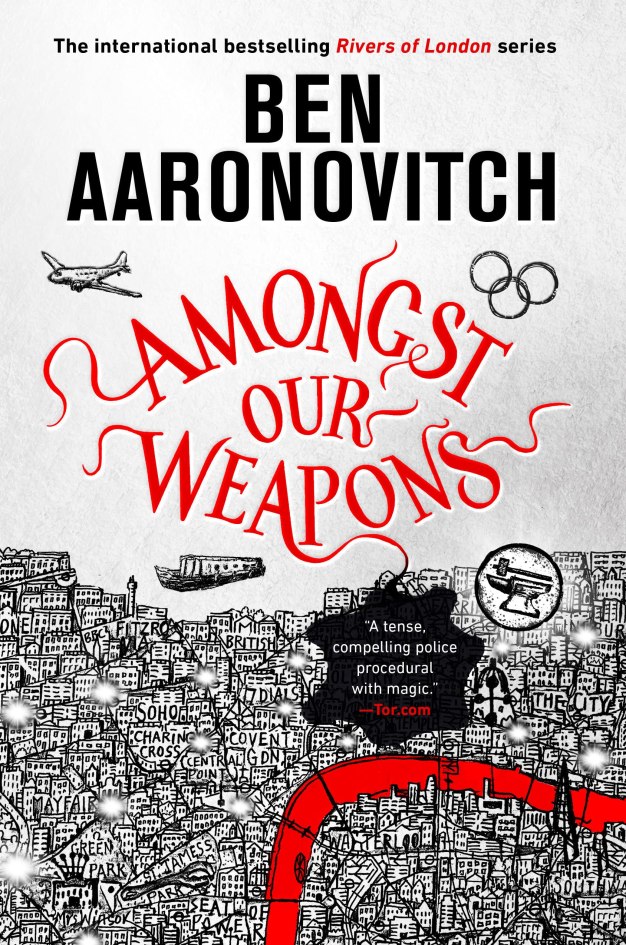
Amongst Our Weapons by Ben Aaronovitch

Amongst our Weapons Cover

Publisher: Orion (Trade Paperback – 12 April 2022)

Series: Rivers of London – Book Nine

Length: 406 pages

My Rating: 5 out of 5 stars

Amazon     Book Depository

One of the leading lights in the urban fantasy genre, the exceedingly talented Ben Aaronovitch, returns with the latest epic book in his brilliant Rivers of London series, Amongst our Weapons.

For the last 10 years, the fantasy world has been exceedingly impressed by the fantastic writings of Ben Aaronovitch, who came up with a real winner with his Rivers of London series (also known as the Peter Grant series).  Aaronovitch, who already had some major nerd cred as a writer of two Doctor Who serials, debuted the first book in this series, Rivers of London, back in 2011.  This book told the story of Peter Grant, a young Metropolitan Police officer who is assigned to a specialised branch of the Met that deals with magic and supernatural incidents.  This intriguing debut combined magical elements with a classic police procedural format to create an epic and captivating read.  The author has since expanded this series out to several novels, as well as a range of novellas, short stories, and even a graphic novel series, all of which continue the story of Peter Grant and Aaronovitch’s unique magical world.  I have had a lot of fun over the last few years with this series, and I have greatly enjoyed Aaronovitch’s last two entries, Lies Sleeping and False Value.  Aaronovitch is back with another exceptional read in his ninth Rivers of London novel, Amongst our Weapons, which continues the excellent format and presents the reader with an awesome new mystery.

The London Silver Vaults are a renowned underground market for silverware in the heart of London.  They are highly secured and constantly monitored, so getting away with any sort of crime in the vaults is impossible.  So when a crazed would-be robber is brutally killed in the middle of the vaults with no witnesses or cameras catching the act, the Met are forced to call in their secret weapon, Peter Grant and his fellow detectives from the Special Assessment Unit, better known as the Folly.

Specialising in investigating magical incidents, Peter and his team are quickly able to determine that the death and the murder’s subsequent escape were a result of powerful magic.  Taking the lead on the case, Peter hopes to catch the killer quickly, but are quick to discover that their investigation is about to get far too complicated.  Ancient magics and unknown powers are loose around London, and after discovering a second body, the Folly team begin to investigate the members of a mysterious college cult from Manchester that has been inactive for years.  As more attacks occur, it becomes apparent that members of the cult are being hunted down and that their killer appears to be a vengeful, spear-wielding angel.

Determined to get to the bottom of the killings, Peter dives into the history of the cult and the mysterious artefacts they uncovered.  His investigation will lead him all over England, from the colleges of Manchester all the way to the dismal North.  But even as he begins to uncover the truth behind the killings and the being responsible, does even the full might of the Folly have the power to stop an angel and the deadly magic gifted to her?  Worse, another party has involved themselves in the case, someone that Peter knows far too well.  Can Peter solve this case before it is too late, and how will he deal with the greatest challenge of his life, becoming a father to his two magical twins?

Wow, Aaronovitch continues to massively impress me, bringing together another brilliant and unique urban fantasy read.  Once again bringing together an outstanding story that features distinctive fantasy elements with a clever mystery, Amongst our Weapons was a fantastic read that I had an incredible time reading.  This book was pretty damn awesome and gets a full five-star rating from me.

I had an absolute blast with the story contained within Amongst our Weapons as Aaronovitch has once again cleverly combined complex fantasy elements with a compelling murder mystery investigation, resulting in a deeply entertaining and addictive story.  Aaronovitch starts this latest novel off strong, with the protagonist and his team immediately thrust into an investigation of a man with a mysterious magical hole blown into his chest and no witnesses who saw what happened.  This intriguing start quickly becomes even more enticing, as a second murder is soon discovered, as well as other unusual signs and discoveries at the various crime scenes.  However, the excitement does not end there, as Aaronovitch also fits in an early encounter with the powerful murder, who appears to be an exceedingly deadly angel of vengeance, as well as the sudden reappearance of recurring antagonist Lesley May, Peter’s former partner who now acts as a magical mercenary.  Throw in some great character driven storylines about the protagonist’s family, as his river goddess wife is about to give birth, and you have quite an exceptional start to the novel.  Indeed, once all these elements were set up, I was hopelessly hooked on the story, and it proved extremely hard to put this book down at all.

The rest of the narrative flows on from here extremely strongly, as the characters launch an exhaustive and intense investigation not only into the murders but into the origins of certain magical items and the history of the college cult who appear to be targeted.  This takes the protagonist on a bit of a fieldtrip outside London, exploring Manchester and the North, and introducing the characters to some intriguing new magical elements.  While parts of the story here did get a bit bogged down when it came to exploring some of the more complex new fantasy inclusions, I flew through the second part of the book, especially as it is laced with several brilliant and imaginative confrontations between the protagonist and the book’s various antagonists.  Everything comes together extremely well in the lead-up to the conclusion, which results in a fantastic battle that helps resolve everything perfectly.  I did think that it got a little too metaphysical in places, but I still deeply enjoyed this great conclusion, which should really satisfy every reader, while also setting up some interesting storylines for the future.

Aaronovitch has such a distinctive writing style for the Rivers of London series, which is put to great use throughout Amongst our Weapons.  Like most of the Rivers of London novels, Amongst our Weapons can be read as a standalone read, with Aaronovitch doing a great job of rehashing some of the relevant continued storylines when they become relevant to the ongoing story.  This book features the usual awesome blend of magic, crime fiction and character-led storylines, wrapped up with a great sense of fun and humour, which helps to produce quite an entertaining and captivating read.  I particularly loved how the author makes his novels feel like a police procedural with magic, and this is perfectly on display in Amongst our Weapons, as the protagonists engage in elaborate investigation into several unique deaths.  It is so much fun to watch these magic-wielding protagonists do research, official police investigations, paperwork, evidence collecting and various theorising as they examine both the magical and human sides of the case, and I always love how well these elements can be fit into a seemingly typical murder mystery storyline.  Everything flows extremely well through this novel, and while I think there are some minor pacing issues towards the middle, readers will power through this entire book once they get caught up in the mystery and the magic.

I have always been really impressed with the distinctive and captivating fantasy elements contained within the Rivers of London novels, which prove to be intrinsic and outstanding parts of the book.  Rather than use classic fantasy elements, the magic and unique creatures featured within this series are a lot more abstract with a focus on energy manipulation, creatures from alternate universes and godlike beings who get their powers by being embodiments of important locations.  This really gives the novels a great, unique feel that is brilliantly enhanced by the way that the various characters treat magic in an almost scientific way, especially from a policing perspective, as the protagonists are effectively investigating and monitoring it in London.  This fantastic way of examining magic proves to be quite effective in Amongst our Weapons, as you get to see all manner of theorising, analyses and scientific conclusions drawn up as the protagonists attempt to identify and quantify the new forms of magic they are dealing with, especially when they come face to face with an unknown being of immense power.  This cool magic is also quite stunningly described throughout the novel, and I loved seeing its unique and clever use throughout the various magical confrontation sequences, and there is nothing more awesome than reading about a couple of wizards face off against an apparent angel.  I find all the cool magical elements quite fascinating to explore, and I loved seeing some of the world building that occurred throughout Amongst our Weapons, with some new groups of magical users introduced or referenced throughout.  Aaronovitch actually sets up some intriguing new world-building elements throughout Amongst our Weapons, and I look forward to seeing how this expands in some of the future novels.

Finally, I really must highlight the outstanding characters featured within Amongst our Weapons, who really help to turn this awesome story into something truly special.  This cast is headlined by the book’s main protagonist and point-of-view character, Peter Grant, who I really have a lot of fun with.  Grant is a funny and bold protagonist, who has been really growing since the first novel, not only in personality and responsibility but also in magical talent.  He serves as a brilliant protagonist for Amongst our Weapons, and his dogged and clever investigation of the unusual events moved the story along at a swift and enjoyable pace.  While his police work is a major part of the character, this latest novel also focuses again on his personal life, showing his unique marriage to a river (well, the living embodiment of a river), and the upcoming birth of his likely magical children.  This puts some major responsibility on Peter’s head, which he struggles to deal with, still taking risks with his work.  Watching him obsessively chase after the culprit while also trying to balance the upcoming birth of his children was a great part of the novel, and it really helped to make the reader feel attached to him.  However, I personally loved his outstanding sense of humour throughout this novel, as much of the book’s comedic elements are thanks to this protagonist’s funny statements and clever observations about the outrageous events he is witnessing.

Aside from this excellent and relatable protagonist, Amongst our Weapons features a large and diverse cast of figures, including a combination of new people associated with the case and a huge batch of recurring characters who have been perfectly set up before.  Most of the recurring characters are re-introduced extremely well, and even new readers should be able to follow who is who amongst this unique cast of magic users and professional police officers who work together to solve crimes.  My favourite supporting character is Detective Chief Inspector Thomas Nightingale, head of the Folly and the last official wizard.  A gentlemanly figure who fought in World War II, Nightingale serves as a great mentor as well as a badass magician able to throw down with the worst creatures or dark magic users.  While not featured as heavily here as in previous novels, Nightingale has some great moments throughout Amongst our Weapons, and it was awesome to see him squaring off against the winged antagonist.  Aaronovitch also sets up some interesting storylines for him in this book, and it sounds like he will have a much more altered role in the future.  The other major character I should highlight is Lesley May, who serves as a secondary antagonist throughout this book.  Lesley, who spends most of the book as a mercenary character attempting to undermine the police’s investigation, is a great addition to the plot and I am extremely glad that Aaronovitch brought her back for this novel.  Not only do you get more of the regret-filled interactions with Peter but she serves as a great foil for the protagonists, and it was really fun to see her get involved and attempt to manipulate the situation to her advantage.  All these characters, and many more, are great additions to the fantastic and complex plot of the book, and I deeply enjoyed seeing the fantastic and powerful interactions between them.

The Rivers of London series continues to shine as one of the best and impressive urban fantasy series with Amongst our Weapons.  Ben Aaronovitch is such a talented author, and I deeply enjoyed distinctive and captivating stories he crafts, especially with its outstanding blend of unique fantasy and memorable murder mystery elements.  Amongst our Weapons is one of my favourite books from Aaronovitch I have read so far and it is a highly recommended for all fantasy fans.  If you aren’t exploring the Rivers of London, then you are really missing out!

Amazon     Book Depository

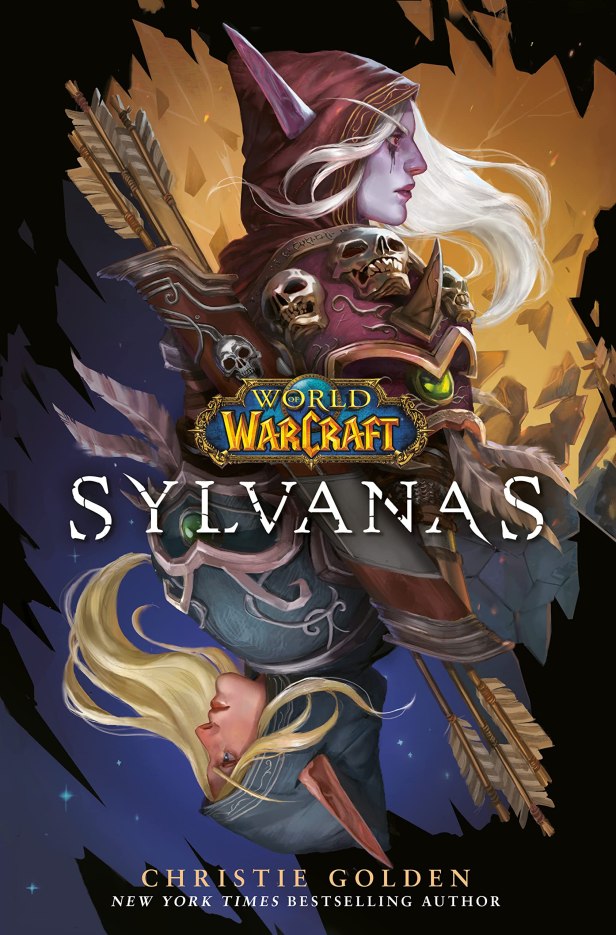
World of Warcraft: Sylvanas by Christie Golden

World of Warcraft - Sylvanas Cover

Publisher: Penguin Random House Audio (Audiobook – 29 March 2022)

Series: World of Warcraft

Length: 15 hours and 38 minutes

My rating: 4.5 out of 5 stars

Amazon

Prepare to find out everything you every wanted to know about one of Warcraft’s most complex characters with the brilliant Sylvanas by the always impressive Christie Golden.

There have been some great tie-in novels coming out this year across multiple franchises.  While I have mostly been sticking to Star Wars and Warhammer novels, I recently decided to dive back into the fiction surrounding a personal favourite franchise of mine, the Warcraft games.  It may surprise some people to know that the Warcraft games, which includes the absolute institution that is World of Warcraft (WOW), has a massive extended universe surrounding it, with multiple novels and comics working to enhance and support the game’s already impressively deep lore.  I have had a lot of fun with some of these over the years, but I was particularly intrigued when I managed to get a copy of the latest tie-in novel, Sylvanas by Christie Golden.  Not only did this book cover the life of one of the best characters in this franchise, Sylvanas Windrunner, but it was also written by the amazingly talented Christie Golden, an absolute master of tie-in fiction.  Golden has written some impressive Warcraft novels, including Before the Storm and the brilliant War Crimes, and she has also written tie-in novels to multiple other franchises, including one of my all-time favourite Star Wars novels, Dark Disciple.  As such, I am always really keen to check out any of Golden’s additions to this complex canon, and this turned out to be a particularly great book.

Few inhabitants of the world of Azeroth have had more of an impact on its recent history and the devastating events that have befallen it than the infamous Sylvanas Windrunner.  The Banshee Queen of the Forsaken, Sylvanas has held many titles, names and positions as she has witnessed and manipulated the entire realm for both her people and herself.  However, Sylvanas has a far deeper goal than power; she also seeks to realign the injustices of life and the meaninglessness of death, finally achieving the peace and happiness that she and the world deserve.  To that end, Sylvanas has aligned herself with the mysterious and otherworldly afterlife entity known as the Jailer.  Bound to his side and now a fugitive from both the Alliance and the Horde, Sylvanas seeks to bring his goals to fruition, no matter the cost.  However, her final task from the Jailer appears to be the most difficult, securing the fealty of imprisoned human king Anduin Wyrnn.

Reluctant to force service upon Anduin against his will, Sylvanas attempts to sway him to their side through subtler means.  To that end, she regales him with the story of her life, believing its lessons will convince Anduin of the necessity of her actions and help bind him to the Jailer’s cause.  With her captive audience listening close, Sylvanas reveals the key events from her life that shaped her, including her childhood and the tragedies of the Windrunner family, her death and damned resurrection at the hands of Arthas, and her eventual ascension to leadership of the Horde as Warchief.

However, amongst these tales of tragedy, triumph and a deep despair, Sylvanas also reveals her history with the Jailer and her first journey to the Maw.  Discovering a dark truth behind the veil of death, Sylvanas hopes to end the injustices and terrible consequences that awaits all souls, including her, by helping the Jailer achieve her goals.  But to achieve victory, Sylvanas was forced to become a force of destruction, bringing war to Azeroth and forcing another conflict between the Alliance and the Horde.  However, her worst actions may be yet to come as the Jailer’s plan for Anduin will require Sylvanas to become what she hates the most.  Daughter, sister, hero, unwitting pawn, rebel queen, Warchief, and monster, the truth of Sylvanas is revealed, and you’ll have to decide whether she is Azeroth’s greatest hero or worst villain.

Golden continues to add more and more depth to the Warcraft canon with this rich and clever novel that serves as the ultimate guide to one of the franchise’s best characters.  I had an absolute blast with this exceptional read that expertly turned the established history of Sylvanas Windrunner into a powerful and moving tale of family, tragedy and the consequences of choices.

Sylvanas contains a brilliant character-driven narrative that I think perfectly tells the tale of Sylvanas Windrunner, expanding out her life and providing details and insights about her that have never been shown in various other parts of the Warcraft fiction.  Starting during the events of the Shadowlands expansion, where Sylvanas is holding Anduin prisoner, the story soon morphs into a chronicle tale as the titular character recounts her entire life story to Anduin.  Starting off during her childhood, the first substantial part of the novel is focused on Sylvanas’s early life, the complex family relationships she had, her surprising rise to the rank of Ranger General, and her first encounter with tragedy.  This initial section of the novel, which covers most of Sylvanas’s life before her appearance in the games, is extremely detailed as Golden firmly establish this part of her life and show how her early relationships and losses would shape the rest of her life.  While this first part of the book is intriguing and vital to the story, it was a tad less exciting than I was hoping and ended up being one of the slowest parts of the novel, although once the first real tragedy occurs, it does speed up to an entertaining pace.

Following this substantial introduction, Sylvanas’s story starts to feature some major time skips, with the narrative jumping to her encounter with Arthas and subsequent death, which is shown a bit more theatrically and briefly than you would expect.  The rest of the story happens at a blistering pace, with many of the key moments of the character’s life briefly shown as the story powers through the events of the various games and expansions.  There are some fascinating moments and scenes in this second half of the book, and I had a great time seeing Sylvanas’s resurrection and enslavement to Arthas, her rebellion against her deathless master, her rise to become a leader of the Forsaken and her early days as a member of the Horde.  The story really skips along extremely quickly here, although it slows down at times to highlight Sylvanas’s interactions with the Jailer and the various things she did as his command.  These scenes are some of the most important parts of the book, as they try to highlight when and how Sylvanas started working with this villain, as well as her motivations for joining him.  These pivotal scenes are extremely interesting, and Golden masterfully works in the novel’s earlier character development into Sylvanas’s reasons for her actions.  The rest of the novel showcases Sylvanas’ more villainous turn, until she completely becomes the antagonist we encounter in Shadowlands and the end of Battle for Azeroth, which brings us full circle to the interludes between Sylvanas and Anduin.  The book ends on a fantastic and compelling note, recreating a scene from the game, and serving as a fitting conclusion to Sylvanas’s story, while also providing the reader with some much needed hope and satisfaction at a potential happy ending in the future.

Golden used some interesting storytelling techniques throughout Sylvanas, and most of them paid off extremely well to create an intense and exciting story.  While many Warcraft novels are more concerned with immediate action and intrigue, Sylvanas works well as a chronicle story which focuses on its protagonist’s complex and damaged psyche, as well as an intense portrayal of family and the difficulties and joys associated with it.  Through her reminiscing, the protagonist highlights her story extremely well, and I liked the clever use of several interludes to take the story back to the present for Sylvanas to debate her actions and choices with Anduin, whose pensive and compassionate insights add to the emotional weight of the narrative.  Both these past events and the storyline set in the present have some great moments, and I loved the novel’s overarching theme of the importance of free-will and choice, especially as the protagonist is a person who often found the events of her life and death, controlled by others.  There is an excellent balance of story elements featured throughout Sylvanas, with Golden featuring a great blend of intense character moments with cool action scenes, fun interactions and attempts to bring the novel into the established events of the wider Warcraft universe.  However, I did have some issues with the pacing of the novel.  While most of the novel flowed well, I really disliked how the author would spend a substantial amount of time going over some periods of the characters life in high detail, before quickly jumping through multiple years of subsequent events in extremely short order.  While I could see the author’s reasons for doing this, it did limit the impact of the narrative and there were multiple interesting events and characters that were only lightly featured.  Still, I had a great time getting through the plot elements that the author included, and they ended up resulting in an excellent and intense character driven story that featured some very powerful moments as the protagonist goes through absolute hell and back.

Sylvanas ended up being a particularly interesting inclusion in the wider Warcraft canon and it is one that I am extremely glad I decided to check out.  Due the multiple appearances and impacts that this titular character has had, the plot of Sylvanas encompasses the events of all the Warcraft games, including the entirety of WOW (at this point).  At the same time, the novel also ties into some of the other books, comics and other pieces of extended Warcraft fiction that are out there, particularly some that were written by Golden.  As a result, there are an awful lot of references, locations and iconic events going on in here, and Golden does an excellent job to bring all of these to life throughout the novel, with a focus on Sylvanas’s role in them.  I loved seeing so many key moments from the games and the other extended fiction re-featured or referenced throughout this novel and it was fascinating to see how they connected with the events of this book.  While Golden does really try to explain the context or importance of all of them, some readers unfamiliar with the games (or who may have stopped playing in recent years), may have difficulty at times following what is happening.  This is partially mitigated by the fact that Golden chooses to avoid or only lightly feature multiple events, especially those covered in the games, other novels and comics (several of Golden’s books are only lightly brushed on).  While I can understand Golden trying to avoid unnecessarily rehashing events that Warcraft fans would have seen before, it was one of the main reasons for the pacing issues, as it ensured that the events of the character’s childhood, which has not really been seen before, got so much focus early on.  It also requires readers to have a bit of an idea of what happened in many of the other novels and comics, especially if you wanted to get the full emotional impact.  Still, attentive readers generally should not have any issues following the book’s plot, and established fans of the franchise will really love the intriguing world building elements and revealed character histories, especially those that help to fill in several of the gaps surrounding the Jailer and their actions.

Unsurprisingly, Sylvanas also proves to be a major character study of its intriguing protagonist Sylvanas Windrunner who serves as the main point of view character as she recounts her life story.  This was one of the main things that drew me to Sylvanas, as I have been a big fan of this character ever since Warcraft III.  Golden does a brilliant job featuring this titular protagonist here, and Sylvanas ends up being both a great recreation of the characters life and an in-depth study of one particularly damaged person’s darkest emotions.  I was really impressed with how much additional depth Golden added to this already well-established character, and there are some fascinating details included here that help to explain so much about her and her actions in the latest expansions.  Thanks to the chronicle style of the novel, you get an intense look at her life, and find out all her pivotal moments and the emotions she experienced throughout them.  Golden provides a particularly impressive focus on the character’s mostly previously unseen childhood and family life, which serves as a good basis for much of the character-driven narrative.  Her earlier tragedies and heartbreaks have a great lasting impact on her and serve as some of her motivation for serving the Jailor.  From there the story covers most of her appearances in the various games, and it is fascinating to get the new Sylvanas-orientated perspectives of these events, which adds substantially to the novel’s drama as you see Sylvanas reacting to the various terrible events, including her murder and subsequent enforced enslavement by Arthas.  Golden does a brilliant job of highlighting the character’s despair, anguish and helplessness during this period, and the change into the life-long hatred that infected her was extremely powerful, and many of these moments tie into the book’s overall them of choice and free will.  However, some of the most fascinating moments occurred after the Lich King’s death (at the end of the second WOW expansion), when Sylvanas, cheated of her revenge, takes some drastic actions never seen in the games.  These actions lead her to first meet the Jailer and her eventual villainous actions, and I think that Golden was extremely successful in finally showcasing the character’s motivations, which were a little clouded in the actual game.  As such, Sylvanas ends up being show as a far more sympathetic character in this novel, which ties into her great redemption arc in the game, and you end up getting very attached to her story.  This novel really was the ultimate Sylvanas Windrunner experience and I loved learning even more about this brilliant character.

Aside from Sylvanas herself, this novel contains a massive cast of supporting characters who have varying degrees of impact on the overall story.  Due to the scope of the book’s plot, this supporting cast ends up encapsulating most of the major characters from the various Warcraft games, which is a bit excessive.  Many of these characters are only included for brief moments or are featured merely as mentions, and it can be a bit overwhelming to be bombarded with character names, especially from some more obscure figures.  However, I liked how the use of all these characters and the various interactions they had with Sylvanas helped to set up her place in the universe, and Golden does ensure that the reader is aware of the reason why the character is there and what role they play in Sylvanas’s life.

While there is a huge cast of supporting characters, several do shine through in the plot, and it was great seeing the various relationships they have with Sylvanas.  For example, all the members of Sylvanas’ family are featured throughout the book, particularly in the first half, and Golden really captures the impact, joys and struggles of family, and showcases how the extreme nature of these can really impact a character’s life.  The inclusion of the least famous Windrunner sibling, Lirath, really adds to the overall story, especially due to the unique relationship they had with Sylvanas.  I have to say that I really enjoyed how much Nathanos Marris (eventually becoming Nathanos Blightcaller) was featured in this novel, and Sylvanas contains an in-depth exploration of the unique relationship they had with the protagonist both in life and in death.  This adds some intriguing depth to the actions of this supporting character, and it was fascinating to see how the loyalties and attachments of this character were formed, as well as the unusual romance they formed which lasted lifetimes.  The brief scenes of iconic villain Arthas were pretty intense, and I appreciated the look at the torment he inflicted upon Sylvanas, especially as it becomes such a big part of her life story.  The use of Alliance leader King Anduin Wyrnn as Sylvanas’s audience for her story was extremely good as well, especially as the kind and hopeful Anduin serves as a great foil to the more cynical Sylvanas.  Watching these two jab at each other in the interludes was an excellent and emotional part of the novel, with Anduin trying to convince her back into the light at the same time she’s trying to bring him towards her side.  These scenes get even more intense and emotional when you realise that the entire reason for these conversations is that Sylvanas is trying to be merciful and give Anduin a choice to serve, something Sylvanas was never given.  All these characters, and more, really help to tell the full story of Sylvanas and are an impactful and powerful inclusion in the overall narrative.

Like most tie-in novels I enjoy, I chose to check out Sylvanas in its audiobook format, which was outstanding.  This was mainly because Sylvanas was narrated by legendary voice actor Patty Mattson, who voices Sylvanas Windrunner in WOW.  There was absolutely no way I was going to turn down listening to a story about Sylvanas that is narrated by the ultimate voice of the character, especially after her epic performances in some of the recent cinematics.  Unsurprisingly, Mattson did an incredible job with this audiobook, and hearing Sylvanas telling her own tale really helps to bring you into the narrative in a big way.  Mattson does some excellent alterations to her voice to portray a younger Sylvanas in some of the earlier scenes, and it was also extremely cool to have Mattson recreate some of the most awesome lines from the games and cinematics throughout the plot.  Thanks to this impressive narration, the Sylvanas audiobook has an amazing flow to it, and you will swiftly find yourself powering through it, even with its 15 hour and 38 minute long runtime.  The ultimate way to enjoy Sylvanas, the audiobook format comes extremely highly recommended as it really enhanced my enjoyment of this novel.

Overall, Sylvanas by Christie Golden is a brilliant and impressive novel that serves as an excellent tie-in to the Warcraft franchise.  Containing a powerful and entertaining character driven narrative, Sylvanas serves as a definitive study of the damaged and brilliant game character, Sylvanas Windrunner, and I had an outstanding time seeing their entire character arc come together here.  A must-read for all Warcraft fans, especially those enjoying the recent expansions, Sylvanas is an amazing read that I had so much fun with.

Amazon

The Hunger of the Gods by John Gwynne

The Hunger of the Gods Cover

Publisher: Orbit (Audiobook – 14 April 2022)

Series: The Bloodsworn Saga – Book Two

Length: 22 hours and 57 minutes

My Rating: 5 out of 5 stars

Amazon     Book Depository

Extremely talented dark fantasy John Gwynne returns with one of my most anticipated fantasy novels of 2022, The Hunger of the Gods, the epic second entry in The Bloodsworn Saga.

Last year, the fantasy world was aflame with discussion about a certain novel from acclaimed author John Gwynne, best known for his The Faithful and the Fallen series and its sequel Of Blood and Bone trilogy.  While I wasn’t initially intending to check this book out, the sheer amount of positive feedback and reviews convinced me that I was clearly missing out, so I grabbed a copy and ended up being deeply impressed by the elaborate fantasy saga it contained.  That novel was The Shadow of the Gods, a Norse inspired dark fantasy tale that saw three intriguing protagonists explore a deadly new fantasy world wrecked by the last battle of the dead gods, and filled with monsters, warbands and powered humans tainted by the divine ancestors.  I had an exceptional time with this great book, which really met all my expectations and ended up being one of my favourite books and audiobooks of 2021 (it also topped my favourite new-to-me authors list and best covers of 2021 list, it was just that damn awesome).  I deeply enjoyed the fantastic and elaborate tale this novel contained, and I could not wait to see how it would be continued.  As such, when I received a copy of the sequel, The Hunger of the Gods, which featured another awesome fantasy cover and plot synopsis, I immediately started reading it and was once again thrust into world of gods and heroes.

The dread dragon god, Lik-Rifa the soul-stealer, has been released from her ancient tomb and now all of Vigrid lies in peril.  Determined to unleash a new era of blood, death and conquest upon the lands, Lik-Rifa immediately begins to gather around her horde of Tainted warriors, including her own descendants, the dragon-born, terrible monsters and a cult of followers, all slaved to her will.  Hope looks bleak, especially as the warring human kingdoms remain unaware that Lik-Rifa is free and about to unleash fresh horrors upon them.

Amongst this chaos, the deadly Orka continues her hunt for her stolen son, taken by Lik-Rifa’s followers.  Now revealed as the legendary and infamous warrior, the Skullsplitter, Orka will not rest until she has her son and her vengeance, no matter the obstacles.  While Orka continues her quest, her former warband of secretly Tainted warriors, the Bloodsworn, head south, determined to rescue one of their members, while their newest initiate, Varg, continues his attempts to find vengeance for his sister.  Meanwhile, Elvar is forced to fulfil the blood oath she took to rescue another child from the dragonborn, and needs to convince her now leaderless warband, the Battle-Grim, to follow her.

As these brave warriors each take their own steps to destiny, they will all face dangerous challenges and horrendous odds.  Orka will need to come to grips with the wolf lying deep in her heart as she attempts the impossible: defying a god.  Varg and the Bloodsworn will travel to a distant land to achieve their goals, only to meet tragedy and loss.  Elvar finally attempts to claim the responsibility of leadership that she has always desired.  However, despite all their bravery and skill in arms, none of these heroes are going to be capable of fighting Lik-Rifa directly.  Instead, Elvar and her company will attempt a desperate plan, using forbidden magic to bring a dead god to life and bind it to their will.

Wow oh wow, what an incredible and awesome read.  Gwynne continues to showcase why he is one of the best current authors of fantasy fiction with The Hunger of the Gods, which perfectly continues the impressive Bloodsworn Saga in a big way.  Featuring tons of bloody action, impressive new fantasy elements, complex characters, and a powerful and elaborate narrative that is the very definition of epic, The Hunger of the Gods was another five-star read from Gwynne that is easily one of the better books I have read so far this year.

The Hunger of the Gods has an outstanding and impressive story that instantly grabs the reader’s attention and ensures that they are unable to put the book down until the very last page.  This sequel kicks off right after the epic conclusion of The Shadow of the Gods and quickly follows up on all the big revelations and events that occurred there, especially the release of the giant dragon god, Lik-Rifa, who serves as a suitably sinister and epic main antagonist for the series.  Just like the first book, The Hunger of the Gods’ narrative is told from a series of split storylines, each one focused on a specific point-of-view character.  All three character-specific storylines from The Shadow of the Gods are continued here, following Orka, Varg and Elva.  These existing storylines go in some exciting and interesting directions in The Hunger of the Gods, and I loved how the author expanded on the character’s growth and individual journeys from the first novel, while also keeping some of the existing dynamics and elements.  Gwynne also adds in two new point-of-view characters, as antagonists Gudvarr and Biorr, who were good secondary characters from The Shadow of the Gods, get their own intriguing storylines here.  These new character arcs are impressively entertaining, providing great alternate perspectives to deepen the story, while also working into the existing storylines extremely well.  All five storylines go in some great directions throughout the course of the novel, and there are some absolutely brilliant moments, twists and revelations that occur throughout, especially as many of these storylines started to come together more.  I had an excellent time seeing where everything went, and Gwynne really did a great job taking all these character stories in some appropriate directions.  Every single storyline end on an amazing note and the conclusions are guaranteed to drag readers back for the third Bloodsworn novel.

This second book in The Bloodsworn Saga is written pretty damn perfectly as Gwynne continues his magic to produce an addictive and distinctive read.  The Hunger of the Gods retains the excellent tone introduced in the first novel, ensuring that everything comes across as a Norse adventure story set within a unique, dark fantasy realm.  Everything about this book is handled extremely well, from the exceptional pacing, which ensures that you fly through this massive novel, to the intense and brutal action that is installed in every section of the book, guaranteeing that readers get that much needed adrenalin rush.  Gwynne utilises an interesting writing style here that really emphasises repetition and unique dialogue to help to make the story feel more and more like an epic Norse saga.  Just like the preceding novel in The Bloodsworn Saga, I think that The Hunger of the Gods had just the right blend of action, humour, character growth, world building and darker elements to create an excellent and enticing read.  I also have to say that I was quite impressed with how Gwynne was able to avoid middle book syndrome here, as in many ways The Hunger of the Gods was even better than The Shadow of the Gods.  While the story does slow down in places to help build up certain settings or plot elements, there is always something interesting or compelling going on, and I can honestly say that I was not bored at any point in the book.  You could almost read The Hunger of the Gods by itself with no knowledge of the preceding book and still have a brilliant time with it, especially with the detailed synopsis of the prior novel at the start.

The best thing about how this story is written is the exceptional use of multiple character perspectives.  The story perfectly flits between the five separate characters arcs throughout the novel, with a different character being focused on with each new chapter.  Thanks to the inclusions of two new characters, readers of this sequel get to enjoy a much deeper story here, especially as the new characters are associated with some of the series’ antagonists, providing some fantastic new elements.  I think the additional characters worked really well, as while the existing three protagonists are great, their storylines needed to be spaced out more in this sequel.  All five separate character storylines play off each other perfectly as the novel continues, telling an immense narrative that, while connected, still contains a fair bit of individuality as you follow their specific adventure.

I liked finally being able to see some interactions between the various protagonists and I loved seeing these outstanding and well-written characters finally come together in some intense scenes, allowing the reader to see these distinctive characters viewed through the eyes of the other protagonists.  The author had a great sense of which perspectives needed to featured at certain times, and there were some amazing contrasts as certain exciting storylines were played off each other, especially when you were able to see two sides to certain major battles or events.  In addition, this is one of those rare multi-narrative fantasy novels where it is near impossible to choose a favourite storyline or character to follow.  Each of the five storylines offers the reader something different, from a bloody revenge story, to an intriguing look at the book’s main antagonists, and all of them work extremely well in the context of the wider story.  I will say that Orka’s brilliant quest for her son has some amazing action scenes and powerful character moments, while the camaraderie and excellent larger-scale battles of Varg’s storyline ensured that I was excited to hear from this character.  In addition, Gudvarr provides some great political intrigue from the perspective of a true weasel, which was so very fun to watch.  However, I honestly had a great time with every single character, and there was not a moment that their individual stories did not enhance the overall quality of The Hunger of the Gods.

I really must highlight the incredible dark fantasy setting of The Bloodsworn Saga that is expertly used again in The Hunger of the Gods after Gwynne took the time to set it up in the first novel.  The harsh land of Vigrid, with its warring Jarls, terrifying monsters, long-dead gods, glory-seeking warbands and the feared and exploited Tainted, works so well as a background to this epic story and it really helps to expand the bloody adventures featured within.  I loved how Gwynne uses classic Norse elements like shield walls, longboats, weaponry and mindsets, and I still really love seeing this in a fantasy context, especially when combined or used against the monsters and Tainted characters.  This is further enhanced with the continued use of Norse inspired terms and dialogue throughout the novel, and it helps to give this entire series such a distinctive feel (although I kind of wish that he would stop trying to continually make “thought cage” an alternative to a person’s skull).  While the author spends a bit of time continuing these elements from the first book, The Shadow of the Gods also features some brilliant world building as Gwynne provides intriguing enhancements to the existing gods, land and people, which were already extremely intriguing.  There are also some examinations of the neighbouring nation of Iskidan, which was mentioned a few times in the first book.  Iskidan, which has elements of historical China, the Middle East and the Byzantine Empire in its construction, serves as an intriguing counterpoint to Vigrid, and it was fascinating to learn more about it.  I also loved a couple of cool, if freaky new monsters, that were featured in this book, although the flesh burrowing insect monster and the nightmare inducing tongue eaters, are a bit on the gruesome side (readers who don’t like body modifying monsters are warned to stay away).  All these awesome elements are fitted in the book perfectly, and I loved this continued dive into the dark and gruesome world Gwynne has lovingly created.

While the awesome narrative, clever storytelling and dark fantasy setting are amazing parts of the book, I would be extremely remiss if I didn’t highlight the incredible character work that Gwynne did within The Hunger of the Gods.  Just like the first book in The Bloodsworn Saga, The Hunger of the Gods features an impressive and captivating cast of characters, each of whom are expertly featured and who add some fantastic elements to the overall story.  This is particularly true for the wonderful and memorable characters from whose perspective this epic tale unfolds.  Gwynne did an incredible job introducing these excellent characters in the first book, and it was great to see two previous supporting characters promoted up to the central cast.  All five main characters are exceptional and their unique personalities and goals ensure that every chapter is different from the last which helps to produce an awesome and expansive read.

The first of these characters is Orka, an incredibly dangerous warrior who is hunting for her lost son and vengeance for her murdered husband.  Orka is a brilliant and complex figure who is easily one of the most exciting and enjoyable characters in the entire series.  Due to her single-minded determination and bloodlust, pretty much all Orka’s chapters read like a bloody revenge trip that is essentially a dark fantasy version of Taken.  Gwynne continues this excellent trend with Orka in this second novel and it was great to see this implacable warrior travel across this land, killing everyone who gets in her way as she takes big risks.  However, Gwynne adds in some extra elements to Orka’s tale in The Hunger of the Gods, especially following the revelations made at the end of The Shadow of the Gods that Orka is both Tainted and the former leader of the Bloodsworn, the legendary killer known as the Skullsplitter.  Orka actually comes across as a lot more bestial in this second book, especially after the big massacre she created at the end of The Shadow of the Gods that unleashed her inner monster.  As such, there are more scenes of Orka trying to contain her rage and anger, and there were some fantastic and clever portrayals of her inner beast throughout the book.  We also see some of Orka’s guilt and regret as the novel explores how she left the Bloodsworn and the relationships she sacrificed for the sake of her unborn son.  I also quite enjoyed seeing her as a reluctant leader in this novel as she finds herself in charge of a small team of warriors and monsters.  This enhances her sense of guilt and remembrances of her previous time with the Bloodsworn, and it adds some fun drama and even a mentoring arc as continues her work with her young student, Lif.  Orka’s storyline goes in some great directions throughout The Hunger of the Gods, and you will be enthralled with her tale right up until the last line of this book.

I also had a lot of fun with Varg in this book.  Varg, or as his warband knows him, Varg No-Sense, was probably my favourite character in The Shadow of the Gods and he continues to be an excellent part of this sequel.  While he doesn’t develop as much as some of the other characters in The Hunger of the Gods, Varg still remains an enjoyable figure.  Most of the appeal revolves around his friendship and growing sense of acceptance with his fellow Bloodsworn, and I liked seeing him continue to develop as a warrior and a free person, especially as starts to create some meaningful relationships.  Like Orka, a lot of Varg’s personal storyline deals with his desire for vengeance, as well as his issues controlling his Tainted rage, and I liked seeing how this complemented and contrasted with Orka’s experiences.  This is particularly noticeable when it comes to how he deals with loss, something he is not good at, especially when some good friends fall throughout the story.  As a result, there are some great moments for Varg in this novel, and his chapters are filled with some of the funniest supporting characters and best battle sequences.  I did find it interesting that Varg didn’t have the biggest impact on the overall storyline in this novel, even during his own chapters, but Gwynne is clearly planning some big things for him in the future, which I am really looking forward to.

Elvar, also has a great storyline in The Hunger of the Gods, and I honestly think that out of all the characters, she has the most development in this book.  Due to where her story from The Shadow of the Gods ended up (dragon gods rising and all), I was extremely excited to see more from Elvar in this novel, and it really did not disappoint as she immediately gets into action, resurrecting gods and bending them to her will.  Quite a lot of major plot elements occur through Elvar’s eyes, and she proves to be an excellent focus for all these key storylines.  I liked how Elvar grew up quite a lot in this sequel, especially after the traumatic betrayals of the previous book, and she ends up with a very different mindset throughout this sequel, especially when it comes to leadership and her need for fame.  Watching her grow and take control of the Battle-Grim is a compelling part of this novel, and it was awesome to see her come to terms with her new responsibilities.  It was also great to see how a lot of Elvar’s story comes full circle in this novel, especially when it comes to her personal history and family, and her final chapters in this novel are some of the best in the book.  I am once again extremely keen to see how Elvar’s story continues in the rest of the series, and Gwynne has left her in an incredible spot for the future.

Like I mentioned above, I was really impressed with Gwynne’s decision to start utilising two additional point-of-view characters in The Hunger of the Gods, and it really helped to turn this sequel into a much more detailed and compelling read.  Part of the reason this works so well is that these two additional characters are both complex and excellent characters, and their chapters act as a great continuation of some of the minor storylines from the first book.  The first of these characters is Biorr, former member of the Battle-Grim who was revealed to be a spy planted by Lik-Rifa’s followers and who ended up betraying and killing the Battle-Grim’s leader.  While it would be easy to hate Biorr for his actions, he becomes quite a sympathetic character.  Not only does he spend most of the book feeling intense guilt for his actions, but he also paints a pretty grim picture of his previous life as a slave, showcasing the hardships he and his fellow Tainted have suffered.  As such, you can understand many of his reasons for why he is helping Lik-Rifa, especially as she is promising a new world order for people like him.  Despite this he is still quite conflicted, and he acts as a more moderate antagonist.  This changes towards the end of the book, especially after he meets a certain divine being, and he starts to become a bit colder and more determined to support Lik-Rifa.  Despite being one of the least action-packed storylines in the novel, Biorr’s chapters were an excellent and entertaining part of the novel.  I particularly enjoyed the intriguing alternate views they gave of the main group of antagonists, making them seem more reasonable and complex, and the inclusion of Biorr greatly enhanced the entire narrative for the best.

The other new point-of-view character is Gudvarr, the conceited lordling who hunted Orka in the last book and was a particularly annoying antagonist.  I must admit that I was initially surprised that out of all the great supporting characters, Gudvarr was the one who was upgraded to main cast.  However, it soon became apparent why he was used, as Gwynne had some real fun turning him into one of the entertainingly despicable characters in the entire novel.  Gudvarr is the absolute epitome of arrogance, petty cruelty and cowardice throughout this book, and it is near impossible to have any respect for him, as he lies, brownnoses and attempt anything to gain power and reputation, often with disastrous results.  Gwynne goes out of his way to make him seem as conceited and cowardly as possible throughout the novel, mainly through his inner monologue, where he constantly hides all his insults and most cowardly thoughts to avoid getting into trouble with actual warrior.  He is such a little arseling in this novel, and you can’t help but hate him, especially as he has the devil’s luck and frustratingly manages to wiggle out of every single disaster he finds himself in.  Despite this, or perhaps because of it, I grew to really enjoy Gudvarr’s chapters as everything he did was hilarious in a sneaky and spiteful way, and it is just so damn entertaining to see him get pushed around then overcome more powerful and confident characters.  The Gudvarr chapters also provide some fantastic insight into another group of antagonists, loaded with political intrigue and deceit from one of the main courts of Vigrid.  I had an absolute blast following Gudvarr throughout the novel, and the way that his storyline in this novel comes to an end is just so perfect and really showcases what an absolute cowardly snake he is.  I cannot wait to see him get his eventual just deserts (or maybe he’ll be the only survivor), and he ended up being on of my surprisingly favourites in The Hunger of the Gods.

Aside from these main five characters, The Hunger of the Gods is filled with a massive raft of supporting characters, with a distinctive cast associated with each of the point-of-view storylines.  Gwynne handles these supporting characters beautifully; despite the cast list going on for six pages, you get to know all of them and fully appreciate everything they bring to the story.  Most of these characters support their respective storylines incredibly well and many of the characters either stand on their own as distinctive figures or have some brilliant interactions with the main characters.  Many of my favourites were members of the Bloodsworn band, with the hilarious and witty Svik being the best example of this with his tall tales, love of cheese, and calming attitude towards Varg, while an additional storyline about his connection to Orka adding some intriguing depth to his character.  You really get to enjoy many of the key Bloodsworn members, although this does mean you become way too emotionally strained when they get hurt or killed.  I also really grew to enjoy returning character Lif in this book as he continues to grow as a warrior through Orka’s tutelage.  Watching him develop is a great part of the Orka chapters, and he proves to be an excellent foil to the brutal main character.  I loved the deeper look at many of the series’ main antagonists throughout The Hunger of Gods, especially with the two new character perspectives, and it was great to see a different side to their plans and motivations.  The multiple resurrected or freed god characters proved to be an excellent addition to this second novel, with the main characters brought into their renewed war one way or another.  These gods really changed the entire story, and it was fascinating to see their interactions with the main characters, as well impact they have on everyone’s psyches.  These great characters, and many more, all added a ton to the story, and I loved how their various arcs and storylines came together.  It will be fascinating to see if anybody else becomes a point-of-view protagonists in the future (my money is on Lif), and I can’t wait to see what happens to these brilliant characters in the future.

While I was lucky enough to receive a physical copy of The Hunger of the Gods, I ended up listening to the audiobook version of it instead, which was an extremely awesome experience.  With a runtime of just under 23 hours, this is a pretty lengthy audiobook (the 19th longest audiobook I’ve ever listened to) and requires a substantial investment of time.  However, this is more than worth it as hearing this epic tale read out to you is a brilliant experience.  Not only does it ensure that you become deeply trapped in the elaborate story and are able to absorb all the great detail, but it also fits with the book’s inherit theme of an oral saga.  One of the best features of this audiobook is impressive narrator Colin Mace, a man with a ton experience narrating elaborate fantasy and science fiction audiobooks (such as The Black Hawks by David Wragg).  Mace has a commanding and powerful voice that really fits the theme of this universe and perfectly conveys all the violence, grim settings and powerful elements of the dark fantasy world.  He does a particularly good job with the character voices as well, as every character has a distinctive tone that fits their personality and actions extremely well.  I loved some of the great voices that he comes up with, including deep-voiced warriors, snivelling cowards, strange creatures, ethereal gods and more, and it helped to turn The Hunger of the Gods audiobook into quite an experience.  As such, I would strongly recommend this audiobook format as the way to enjoy The Hunger of the Gods, and I fully intend to check out the rest of this series on audiobook when it comes out.

John Gwynne continues to dominate the fantasy genre with his incredible Bloodsworn Saga.  The amazing second entry, The Hunger of the Gods, is another exceptional read that takes you on a wild and deadly adventure through Gwynne’s impressively put together dark fantasy world.  Containing an epic and powerful story, chock full of action, Norse fantasy elements and impressive characters, The Hunger of the Gods was one of the best reads of 2022 so far and I had an outstanding time reading it.  In some ways The Hunger of the Gods ended up being a better novel than the first entry in the series and is an absolute must read for all fantasy fans.

Amazon     Book Depository

Top Ten Tuesday – My Favourite Books with Dragons on the Cover

Top Ten Tuesday is a weekly meme that currently resides at The Artsy Reader Girl and features bloggers sharing lists on various book topics.  For this week’s Top Ten Tuesday participants are tasked with listing their top books that have covers with a specific design element chosen by the blogger, for example books with certain colours, items or animals on their cover.  I thought that this was a pretty clever idea for a topic and I decided to go big with it and choose book covers that have the ultimate animal for my list, dragons.

Let’s face it, we all love dragons!  They are some of the coolest creatures in mythology, with multiple cultures having their own version or alteration of the dragon in their storytelling traditions.  Due to how iconic there are, the use of dragons in storytelling naturally transferred itself across to the world of fantasy fiction, becoming one of the most classic and well utilised monsters or companion creatures in books and movies, such as The Hobbit and the A Song of Ice and Fire series.  As such there are multiple book covers out there that feature dragons to some degree and I was curious to see which ones amongst them were my favourite.

To pull this list together, I had a think about all the best books that featured cool dragon-related cover art.  There were quite a few of these awesome, dragon-covered novels so I decided to limit myself to only using books that I have actually read.  In addition, because dragon-centric series tend to use images of the creatures across multiple entries, I will limit myself to one novel from each franchise, just to create a bit of variety.  This still leaves me with a pretty impressive collection of novels to choose from and I had to do some severe cutting to get it down to a top ten list with my typical honourable mentions section.  I think the list turned out pretty well as there are some great novels below with awesome dragon imagery on their covers.

I will quickly note that I did have a couple of issues finding good quality pictures of some of the relevant covers I wanted to feature here, particularly for some of the older novels, but I have still tried to feature them as best I can.  Apologies in advance if some of them don’t turn out perfect.

Honourable Mentions

The Voyage of the Forgotten by Nick Martell

The Voyage of the Forgotten Cover 2

I love the cover but chose to only feature this as an honourable mention as the book hasn’t come out yet.


A Darkness at Sethanon by Raymond E. Feist

A Darkness at Sethanon Cover

A couple of the alternate covers for this great book feature dragons on them, but this was the best looking one of them.


She Who Became the Sun by Shelly Parker Chan

She Who Became the Sun Cover


Usagi Yojimbo: The Dragon Bellow Conspiracy by Stan Sakai

Usagi Yojimbo The Dragon Bellow Conspiracy

A great use of a dragon in the cover, even if the dragon in the title is more of a metaphor for firearms.

Top Ten List:

The Shadow of the Gods by John Gwynne

The Shadow of the Gods Cover

An incredible novel with an incredible cover.  Easily one of the best uses of dragons in cover art that you are likely to ever see.


Dragonslayer by William King

Dragonslayer Cover Combined

This fantastic Warhammer tie-in novel is spoiled for choice when it comes to dragons on its various covers.


Guards! Guards! by Terry Pratchett

Guards! Guards! Cover 2

One of the best Discworld novels by Terry Pratchett, I love how well the dragon is used, both in this original cover, and in the novel’s exceedingly clever mystery.


Black Leviathan by Bern Perplies

Black Leviathan Cover

An extremely epic and distinctive cover for a fun action fantasy novel.  Black Leviathan, which is the English edition of Perplies’s original, German novel, The Dragon Hunter, actually has two fantastic cover variants with dragons on them, although I think the one the English version shown above is a lot more visually impressive.

Black Leviathan alternate cover


The Bone Ships by R. J. Barker

The Bone Ships Cover

All three books in Barker’s The Tide Child trilogy featured iconography of the series’ water-dragons, but I think the first entry, The Bone Ships, looks the best.


Eldest by Christopher Paolini

Eldest Cover

You can’t have a dragon-based list without featuring an entry from Paoloini’s Inheritance Cycle.  All four novels in this series featured dragons on their cover, although I think that this cover from Eldest was the most striking.


The Priory of the Orange Tree by Samantha Shannon

The Priory of the Orange Tree Cover

A very beautiful cover for this complex and intricate fantasy novel.


Warcraft: Day of the Dragons by Richard A. Knaak

Warcraft - Day of the Dragon Cover

Several great Warcraft and World of Warcraft tie-in novels feature dragons on their covers, but my favourite of these is Day of the Dragons by Richard A. Knaak, which was an awesome story.


Harry Potter and the Goblet of Fire by J. K. Rowling

Harry Potter and the Goblet of Fire Cover

Was there ever a chance I wasn’t going to feature this classic cover on this list? Of course not.

Harry Potter and the Goblet of Fire Cover 2


Dragonclaw by Kate Forsyth

Dragonclaw Cover

The original cover of the first entry in Australian author Kate Forsyth’s The Witches of Eileanan series, Dragonclaw, had a great dragon picture on it, and it serves as an excellent first impression of an amazing fantasy book.


Well, that’s my list.  As you can see there are some incredible books out there that make great uses of dragons on their covers.  All the above novels are really good, and you will have an incredible time reading them, while also appreciating their stunning, dragon-filled covers.  I had a lot of fun coming up with this list, and I will have to think about replicating it with another creature, item or colour in the future.  In the meantime, let me know what your favourite books with dragons on the cover are in the comments below.

Waiting on Wednesday – The Ballad of Perilous Graves by Alex Jennings

Welcome to my weekly segment, Waiting on Wednesday, where I look at upcoming books that I am planning to order and review in the next few months and which I think I will really enjoy.  I run this segment in conjunction with the Can’t-Wait Wednesday meme that is currently running at Wishful Endings.  Stay tuned to see reviews of these books when I get a copy of them.  In this rather late Waiting on Wednesday article I check out an amazing upcoming fantasy debut, The Ballad of Perilous Graves by Alex Jennings.

The Ballad of Perilous Graves Cover

I am always extremely keen to check out fascinating and fun debut novels each year and 2022 is already shaping up to be a particularly good year for fresh and talented new authors.  One of the more interesting and unique sounding debuts that has recently caught my eye is the upcoming book, The Ballad of Perilous Graves by Alex Jennings.  Set for release in June 2022, this excellent novel will tell a magical and musical story in an alternate version of New Orleans, as two wizards attempt to save their city from a dangerous lost spell.  I am extremely intrigued by this upcoming book and I cannot wait to get stuck into this cool new magical world, especially with its music-based magic system.  I honestly believe that The Ballad of Perilous Graves has some real potential and I look forward to seeing Jenning’s unique debut come to life.

Synopsis:

In a fantastical version of New Orleans where music is magic, a battle for the city’s soul brews between two young mages, a vengeful wraith, and one powerful song in this vibrant and imaginative debut.

Nola is a city full of wonders. A place of sky trolleys and dead cabs, where haints dance the night away and Wise Women keep the order, and where songs walk, talk and keep the spirit of the city alive. To those from Far Away, Nola might seem strange. To failed magician, Perilous Graves, it’s simply home. Then the rhythm stutters.

Nine songs of power have escaped from the magical piano that maintains the city’s beat and without them, Nola will fail. Unexpectedly, Perry and his sister, Brendy, are tasked with saving the city. But a storm is brewing and the Haint of All Haints is awake. Even if they capture the songs, Nola’s time might be coming to an end.

Waiting on Wednesday – The Voyage of the Forgotten by Nick Martell

Welcome to my weekly segment, Waiting on Wednesday, where I look at upcoming books that I am planning to order and review in the next few months and which I think I will really enjoy.  I run this segment in conjunction with the Can’t-Wait Wednesday meme that is currently running at Wishful Endings.  Stay tuned to see reviews of these books when I get a copy of them.  In this slightly belated Waiting on Wednesday article I take a look at one of my most anticipated fantasy releases for 2022, the awesome and epic upcoming The Voyage of the Forgotten by impressive author Nick Martell.

The Voyage of the Forgotten Cover

Amazon     Book Depository

Over the last two years, fantasy fans have been absolutely blessed by the incredible talent of new author Nick Martell who has already made a substantial impact on the genre in a very short amount of time.  Debuting in 2020, Martell started his fantasy journey with the first The Legacy of the Mercenary Kings novel, The Kingdom of Liars.  This impressive novel told the captivating tale of Michael Kingman, the troubled scion of a formerly great house in the Kingdom of Hollow whose fortunes were erased after Michael’s father apparently killed the King’s oldest son.  Determined to prove his father’s innocence, Michael investigates the Hollow court in an attempt to find out who was truly responsible.  Along the way, he clashes with fractious royals, dangerous magic users, powerful mercenaries, and insidious hidden immortals, all of whom want him dead, while also trying to come to grips with his new magical abilities that slowly result in the loss of his memories.  Michael was eventually able to discover who was responsible for the murder, but only after he was framed for the death of the current king, narrowly avoiding execution.  I had an outstanding time with this exceptional novel’s brilliant story and powerful characters, and The Kingdom of Liars ended up being one of my favourite books (and audiobooks) of 2020, as well as one of the best debuts of the year.

While I was already suitably impressed with Martell’s first novel, the author amazed me even more last year when he released the sequel, The Two-Faced QueenThe Two-Faced Queen was an exceptional follow-up to The Kingdom of Liars that masterfully expanded on the events of the first novel.  Not only where several intriguing new story elements introduced, such as a notorious serial killer, dragons and even more immortals, but we also got some great new characters, substantial world building, and even more fantastic twists and revelations.  The most substantial of these characters was Michael’s love interest, the queen of Hollow, Serena (the titular Two-Faced Queen), who spends most of the novel trying to kill Michael for the death of her father.  This resulted in a pretty complex and exceptional novel that I powered through extremely quickly as I tried to see how everything unfolded.  In many ways, The Two-Faced Queen surpassed Martell’s first novel, and it was easily one of the best books and audiobooks of 2021.

After having such an exceptional time with the first two books in The Legacy of the Mercenary King series (which is such an excellent series name), I have naturally been extremely keen to read the third book in this series.  This third novel is The Voyage of the Forgotten, which is currently set for release in November 2022.  While I was a little disappointed that its release date was knocked back towards the end of the year, I am still very excited for this novel and I have been eagerly waiting to find all the details I can about it.  Not only do we have a synopsis for it, but they have also released both of the covers for it, which look extremely awesome, and distinctive (I think I like the above UK cover more than the US cover below, but both are great in their own way).

Synopsis:

In this twistingly beautiful and epically thrilling conclusion to the fantasy trilogy The Legacy of the Mercenary King, Michael, the infamous Kingkiller, and Serena, the Hollow Queen, race against the odds to have the future they’ve worked so hard to protect…or risk bringing about the end of the world.

Michael Kingman has discovered his destiny, but the distance to what he wants, namely a life with Serena, the queen of Hollow kingdom, is as wide as the world, and just as cruel.

Meanwhile, Dark, the realm’s most fearsome mercenary, Michael’s sometime mentor, and son of his nemesis, Angelo, is trying to keep Michael in line, for his own purposes as he too has a hidden agenda. Michael comes to realize that he is outclassed by powers that have been working for centuries to bring about a fresh end to the world filled with those he loves. But when has merely being overpowered ever stopped Michael from getting what he wants?

To prevent what may bring about the end times Michael must gather his remaining allies and push himself to achieve the impossible because the alternative is worse than he can imagine: it’s not just the beginning of the end of the world, it’s being alone and forgotten.

In this epic conclusion, The Voyage of the Forgotten brilliantly wraps up the stories fans have fallen in love with as the characters struggle against odds that seem impossible to overcome.

I really like the sound of the above synopsis, and it is pretty clear that The Voyage of the Forgotten is set to be a pretty awesome read.  While some of the details here seem a little vague, it is clear that Martell looks set to bring together many key storylines here.  In particular, it looks like the plans of several of the major antagonists or villains he has faced in the previous books are about to start coming together, forcing Michael to step in and stop them.  I hope that we get some vital answers to certain plot points here as well as further explanation of who the key players are and what their motivations are, which will be great to see.

One of the things I find most interesting about this synopsis is the fact that The Voyage of the Forgotten is apparently going to be the final book in the series.  This is a bit surprising to me; due to the sheer number of storylines, interesting supporting characters and major plot arcs, I honestly thought/hoped this would be a longer series.  I am actually a tad worried that Martell may have trouble wrapping everything up in a single book, there are just that many story elements to conclude, but I have learnt to rely on Martell’s writing ability, so I am sure that this will come up really well.  I am actually very tempted to go back and do a reread of Martell’s first two novels to make sure I have all the particulars in my head before I read the final story (they are just that detailed).  I cannot wait to see how everything comes together and I am hoping for a very satisfying and captivating conclusion, no doubt filled with tragedy, intense action and impressive magical inclusions.

Look, I think it is very clear from the lengthy introductory paragraphs above that I am particularly keen to grab The Voyage of the Forgotten.  Nick Martell has already so deeply impressed me with his first two books that I know I am going to deeply enjoy this epic read.  I am very eager to see how this outstanding series concludes, and I am extremely confident that The Voyage of the Forgotten is going to end up being one of the best books of 2022.

The Voyage of the Forgotten Cover 2