Star Wars: Thrawn Ascendancy: Lesser Evil by Timothy Zahn

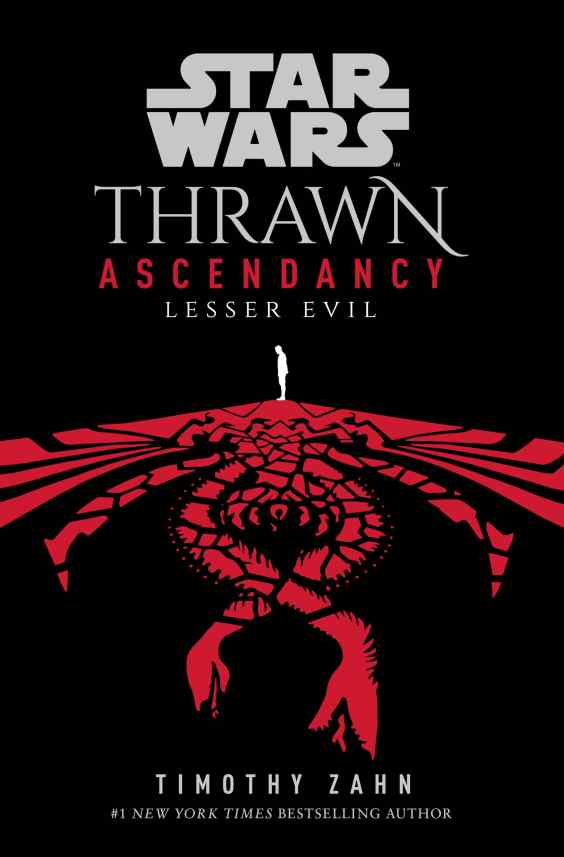
Star Wars - Thrawn Ascendancy - Lesser Evil Cover

Publisher: Del Rey/Penguin Random House Audio (Audiobook – 16 November 2021)

Series: Thrawn Ascendancy – Book Three

Length: 23 hours and 13 minutes

My Rating: 5 out of 5 stars

Amazon

The undisputed master of Star Wars extended fiction, Timothy Zahn, returns with final book in the Thrawn Ascendancy series, Lesser Evil, which brings this excellent prequel trilogy to a fantastic and dramatic end.

Out of all the awesome authors who have contributed to the Star Wars extended universe over the years, few are more talented or highly regarded than Timothy Zahn.  Zahn, who is one of the key architects of the original extended universe (now rebranded as Star Wars Legends), is probably best known for his original trilogy of Star Wars novels, which started with Heir to the EmpireHeir to the Empire served as the introduction of several major extended universe characters, such as Mara Jade; however, his most iconic creation is probably the legendary character of Grand Admiral Thrawn.

Grand Admiral Thrawn is an intriguing and complex figure considered the greatest tactician in the entire Star Wars canon.  Serving as a major figure in the Imperial Navy, Thrawn was the brilliant antagonist of Heir to the Empire and other major Star Wars Legends novels.  The subsequent popularity of Thrawn saw him eventually introduced into the Disney canon in the Star Wars: Rebels animated series, as well as a future live-action appearance.  This also resulted in Zahn being contracted to write six new Thrawn-centric novels.  The Thrawn trilogy (made up of Thrawn, Alliances and Treason), detailed Thrawn’s introduction, rise and career in Imperial Navy and filled in some of the gaps of the show.  Zahn followed this up with the Thrawn Ascendancy trilogy, which served as a prequel to the original trilogy.

The Thrawn Ascendancy series is set during the Clone Wars period and takes place in the Chaos, the unexplored area of space outside of the main galaxy of the Star Wars series, and focuses on Thrawn’s species, the Chiss.  As such, the series is primarily set in and around the Chiss Ascendancy and focuses on several threats to the Ascendancy that Thrawn attempts to overcome.  This series has so far consisted of Chaos Rising and Greater Good, both of which were extremely cool, filled with detailed battles, fun new characters, and some intense political machinations.  Now this brilliant trilogy comes to an end, with a final chapter telling the full story of Thrawn’s greatest victory and lowest moment.

For thousands of years, the legendary Chiss Ascendancy has been one of the greatest powers within the Chaos, keeping its people safe from the alien races who seek to conquer or destroy them.  Confident in its own power and determined not to interfere in the lives of its neighbours, the Chiss maintain their borders through the Expansionary Defence Fleet.  However, in recent months, the Ascendancy has found itself under attack from a dangerous and manipulative force that seeks to utterly destroy the Chiss.  After defeating a potential external invader and weathering an attempt to drag some of the Ascendancy’s powerful families into conflict, the threat to the Chiss appears to be over.  However, these were merely a precursor to a much more sophisticated and dangerous attack by a new alien race, known as the Grysk.  Led by the dangerous and manipulative Jixtus, the Grysk seek to unleash a deadly, multi-pronged assault against the Chiss to rip the ascendancy apart inside and out.

As Jixtus traverses the planets of the Ascendancy, manipulating the great Chiss families towards civil war, his powerful fleet lies just outside its borders, waiting to attack.  With the Chiss getting closer and closer to a devastating internal and external conflict, the fate of the Ascendancy lies in the hands of Senior Captain Mitth’raw’nuruodo (Thrawn), the Chiss Expansionary Defence Fleet’s most brilliant and unconventional commander.  Having defeated the previous attacks on the Ascendancy, Thrawn is the only person that fully understands the oncoming danger and he is determined to stop Jixtus and permanently end the threat he represents.  However, Thrawn has long worn out the patience of the ruling families, and he now finds himself hamstrung by politics and personal grievances.  To save his people, Thrawn will be forced to break all the rules he has sworn to uphold.  But just how far will Thrawn go to defeat his enemy, and what consequences will his actions have on himself and the future of the Chiss Ascendancy?

Lesser Evil was another brilliant and exceptional read from Zahn that did an amazing job of wrapping the complex Thrawn Ascendancy series to an end.  Containing some awesome and unique Star Wars elements, Lesser Evil fills in all the gaps between this trilogy and the sequel Thrawn trilogy, and I think it ended up being one of Zahn’s strongest recent novels.

This novel contains an amazing narrative that brings together all the elaborate and compelling storylines from the previous Thrawn Ascendancy novels and provides a satisfying and fantastic conclusion to the trilogy.  The novel starts off right after the events of Greater Good, with several characters dealing with the aftermath of the near civil war and Thrawn’s latest unofficial mission.  The story quickly introduces the book’s antagonist, the master manipulator Jixtus, as he starts his grand plan to destroy the entire Chiss Ascendancy.  This brings out an impressive amount of intrigue, infighting and dissent, which forces many of the protagonists to attempt to slow it down.  At the same time, Thrawn engages in his own mission to try and identify the enemy’s master plan, which reintroduces several key storylines and settings from the previous novels and helps tie them into the plot of this book.  Zahn also throws in a series of flashback interludes that dive into key parts of Thrawn’s past and give some context to his current mindset and plans.  This all leads up to the big conclusion in which the great adversaries, Thrawn and Jixtus, finally meet in battle.  Lesser Evil proves to be a particularly exciting and intriguing read, and I loved the brilliant combination of world building, political intrigue, character development and fantastic battle sequences.  I had a lot of fun with this story, and it was one of the strongest in the entire Thrawn Ascendancy trilogy.

I really enjoyed how Zahn told this final entry in the series.  The great use of multiple character perspectives not only allows for a richer story that examines all angles of the conflict but it also presents several impressive character driven storylines that were wonderful to follow.  In addition, Zahn once again lays onto the universe building by expanding the reader’s knowledge of the alien Chiss Ascendancy and their domain outside of the main galaxy of the Star Wars universe.  This universe building excellently comes into play as the novel progresses, especially as the antagonist’s plan relies on manipulating the politics and history of the various ruling families.  I really appreciated this cool extended look into this intriguing setting, especially as it ties into some of Zahn’s prior work.  Due to the extensive and elaborate Star Wars lore contained within Lesser Evil, this book is probably best read by experienced fans of the franchise who will appreciate all the inclusions.  It is also highly recommended that readers check out the first two novels in this trilogy first, as the storylines of Lesser Evil are very strongly tied into them.

Lesser Evil contains some intriguing connections to the wider Star Wars universe and canon that long-term fans of the franchise will deeply appreciate.  These connections mainly revolve around Thrawn’s prior appearances and fills in many gaps that were left open from the Thrawn trilogy.  This includes the full reason why the original series began with Thrawn banished from his people and left stranded on an alien planet.  It has been pretty clear since the first Thrawn Ascendancy novel that this entire trilogy has been leading up to this moment, and Zahn did not disappoint, including a moving and complex reason for the banishment that played perfectly into the character’s personality and the events of the previous novels.  Zahn also layers in a ton of intriguing connections to his Star Wars Legends novels that fans will deeply enjoy.  For example, parts of Lesser Evil are deeply connected to Zhan’s previous novel, the now non-canon Outbound Flight, which also focused on a younger Thrawn.  Parts of Outbound Flight’s story and setting have been adapted into the Thrawn Ascendancy trilogy, such as some elements of Chiss culture and some supporting characters, and it was interesting to see Zahn retrofit his previous works for the new canon.  In addition, key flashbacks within Lesser Evil take place in a version of Outbound Flight’s narrative, and while I did think this was cool, Zahn did not include a lot of context, so readers unfamiliar with his prior book may be left a little confused.  Still, this was a clever homage to the author’s prior works, and I appreciated Zahn’s fascinating references to his now defunct novels.

One of the strongest things about Lesser Evil was the great array of characters featured throughout.  There is a very strong cast in this final book, with most of the key characters having been established in the previous Thrawn Ascendancy novels or re-introduced from some of Zahn’s Star Wars Legends novels.  All the major characters featured in Lesser Evil have some amazing story arcs and Zahn spends a lot of time fleshing out their personalities, motivations, and histories, which deeply enhances this brilliant narrative.

The most prominent of these characters is Thrawn himself, who has an epic showing in Lesser Evil after being somewhat underutilised in Greater Good. Lesser Evil proves to be a defining novel for Thrawn, especially as he encounters his true enemy, the Grysk, for the first time.  The reader is also given insights into certain previously unseen relationships that Thrawn had, namely with his adopted brother, Thrass.  It also finally reveals the reasons why he was banished from the Chiss and marooned on the deserted alien planet by the start of Thrawn.  I deeply enjoyed the cool character arc surrounding Thrawn in this book, and Zahn does a great job once again highlighting his unique personality and motivations.  Despite being a little less sinister in literary form than in Star Wars Rebels, Thrawn has a harsh edge here, and the reader gets some great insights into his constant motivation of protecting the Chiss Ascendancy.  Throughout the course of the book, it becomes deeply apparent that Thrawn will risk everything to achieve his goal, and I loved how heartless Thrawn can become when dealing with his enemies.  This motivation and background go a long way to exploring Thrawn’s actions while serving the Empire, and fans of this fantastic character will deeply appreciate this compelling story arc.  Zahn also answers several intriguing questions about Thrawn’s past in this book, and it proved incredibly fascinating to see this great character expanded even further.

I must once again highlight the great way in which Zahn displays his central protagonist.  As with his previous appearances in Zahn’s novels, Thrawn is one of the few characters whose perspective is not shown; instead all his actions and interactions are viewed through the eyes of his friends, allies, and even a couple of enemies.  I have always felt that this was a very clever technique from Zahn as it helps to highlight just how mysterious and distinctly complex his protagonist is.  Readers are only given glimpses into his brilliance, and it allows for increased suspense and surprise throughout the novel as the reader often has no idea what Thrawn is thinking or how he plans to get out of a certain situation.  The use of other observers also really helps to highlight the tactical ploys Thrawn employs, especially as he usually is forced to explain his insights, strategies, and the entire scope of his plans to the less tactically gifted people he is working with.  These elaborate explanations, coupled with the observations of the relevant side character, ensures that the readers get a much more detailed picture of Thrawn’s observations and subsequent tactics.  I have often compared this to how Watson amps up the deductive ability of Sherlock Holmes by having Sherlock explain everything to him, and the result is pretty much the same here.  I deeply enjoyed this fantastic use of perspective and I love everything that Zahn did with his iconic protagonist throughout Lesser Evil, and indeed the entire Thrawn Ascendancy series.

If Thrawn was Sherlock Holmes, then I would say that antagonist Jixtus was the Professor Moriarty of the Thrawn Ascendancy series.  A member of the mysterious Grysk species, Jixtus has been a shadowy figure throughout the proceeding novels, influencing events from the shadows and sending out proxies to fight Thrawn and the Chiss.  This comes to an end in Lesser Evil as Jixtus takes a personal hand in attacking the Chiss Ascendancy.  Jixtus proves to be an excellent and brilliant counterpoint to Thrawn and it is fascinating to see the battle of minds between them, especially as both have alternate strengths.  While Thrawn is tactically brilliant, Jixtus is better at personal manipulation and politics, something Thrawn struggles with.  As such, there is a real battle of styles here in Lesser Evil and the result is pretty brilliant.  I also really appreciated how you also never see any part of the book told from Jixtus’ perspective, ensuring that he is just as mysterious and ethereal as Thrawn.  I loved how Zahn portrays Jixtus in this novel; he comes across as an incredibly dangerous and malevolent being, even though you never see his face.

The other new character I wanted to focus on in this book was Thrass (Mitth’ras’safis), Thrawn’s friend and fellow member of the Mitth family.  Thrass is an interesting character, initially introduced in the previous canon as Thrawn’s brother.  There have only been hints of him in the Thrawn Ascendancy novels, and this final book finally features in him to a degree, showing him in a series of flashback interludes set in Thrawn’s past.  Thrass is shown to be a Mitth politician who finds himself befriending and then partnering with Thrawn through a series of adventures.  The two complement each other extremely well, with Thrass serving as a bridge for the more unconventional Thrawn, while also supporting him with his political knowledge.  Thrass’s scenes proved to be a great inclusion to the novel and I felt the author did a great job re-introducing the character, even if only for flashback sequences.  I really appreciated the author’s examination about how this friendship, and later brotherhood, was vital to Thrawn’s growth and current abilities, and I particularly enjoyed the examination about how Thrass helped develop Thrawn’s flair for the dramatic.  Fans of Zahn’s Legend’s work will deeply enjoy the new appearance of this established character in Lesser Evil, and I think it was an interesting and fun choice from the author, that ended up working incredibly well.

I must also highlight how Zahn featured the other recurring characters from the Thrawn Ascendancy series.  Pretty much all the major characters from the previous two novels are featured strongly in Lesser Evil, and there are some remarkably good storylines set around them.  Thrawn’s crew aboard the Springhawk get a decent amount of focus throughout this book, particularly Samakro, Thalias and Che’ri, and each of their storylines are nicely concluded.  In addition, I loved the continued use of Ziinda, another Senior Captain, who, after barely averting a civil war in the previous book, finds herself subsequently vilified and forced into a new family.  Ziinda proves to be a vital part of the plot, and it was great to see how much she had developed since the previous novel, especially as Zahn starts her on the path to becoming as determined as Thrawn.  Zahn also makes great use of Roscu, a former member of the Expansionary Defence Fleet who had issues with Thrawn in Chaos Rising. Roscu is initially set up as a secondary antagonist, especially as her mistrust of Thrawn, his friends, and all the rival families, drives her to do some stupid things.  However, Zahn slowly turns her into a surprisingly sympathetic character as the novel progresses and you end up really rooting for her.  I also loved Qilori, a supposedly neutral Pathfinder with a grudge against Thrawn; and Thurfian, the Mitth Patriarch who views Thrawn and his actions as a threat to his family and the Chiss as a whole.  These two serve as interesting secondary antagonists to the story, and it was great to see their outraged reaction to Thrawn’s actions, as well as their own attempts to end him.  These characters, and many more, added so much to this book, and I loved seeing all their arcs conclude with the trilogy.

I cannot talk about a Zahn Star Wars novel without highlighting the amazing and exciting space battles featured within.  No one does a space battle in Star Wars fiction better than Zahn, who devotes an impressive amount of time and detail into making them as impressive, thrilling, and tactically awesome as possible.  The reader gets a detailed mental impression of the space engagements that occur, and you can practically feel every shot, roll, or manoeuvre.  Lesser Evil was a particularly good example of this, featuring several great battle scenes, including one massive and action-packed confrontation towards the end.  Each sequence was beautifully rendered and perfectly portrayed, with the reader getting the full sense of everything that happened.  Throw in the distinctive technology of the Chiss, as well as the tactical abilities of Thrawn, and you have some of the most unique and brilliant battles in all of Star Wars fiction, especially as there is a great focus on larger cruisers and battleships, rather than smaller fighter craft.  I deeply enjoyed every battle sequence in this book, and fans of fights in space are in for a real treat here.

Unsurprisingly, I ended up checking out the audiobook version of Lesser Evil, rather than reading a psychical copy.  I cannot overemphasise just how amazing the Star Wars audiobooks are, thanks to their usual amazing combinations of impressive voice acting, clever sound effects and moving Star Wars music.  Lesser Evil is a great example of this, and I had a wonderful time getting through this brilliant audiobook, even with its extensive 23+ hours run time (it would rank 17th on the current version of My Longest Audiobook I Have Ever Listened To list).  I must once again highlight the cool sound effects that were utilised throughout the audiobook to great effect.  These effects, most of which have been taken from Star Wars films and animated shows, add so much depth and power to the audiobook’s scenes, building up a strong atmosphere around the words.  Sounds like blaster fire or roaring engines really help to bring the listeners into the centre of the book’s climatic scenes, while even smaller scenes get a boost thanks to having crowd noises or computer sounds lightly running in the background.  The audiobook also makes good use of the iconic Star Wars score in various parts.  While not featured as heavily as other Star Wars audiobooks, in several places the amazing orchestral music from the films is utilised to give some major scenes a dramatic punch.  This is particularly true in some of the battle sequences, and the listeners are treated to some of the more exciting or moving tunes, which makes the battles or major moments feel bigger and more important.

In addition to this great use of sound effects and epic Star Wars music, Lesser Evil’s audiobook also benefited immensely from the narration of Marc Thompson.  Thompson is an amazing narrator (one of my personal favourites), who has contributed his voice to a huge range of Star Wars novels, including all of Zahn’s previous Thrawn and Thrawn Ascendancy novels, and other audiobooks such as Scoundrels, Light of the Jedi, The Rising Storm, Dark Disciple and more.  Thompson has such a great range for Star Wars fiction, and he can produce some amazing and fitting voices for the various characters featured within.  Most of these voices are continuations of the ones used in the previous Thrawn Ascendancy novels, and I enjoyed the consistency from the previous two books.  I must also really highlight Thompson’s epic Thrawn voice, that perfectly captures the character’s essence, and which is incredibly close to Lars Mikkelsen’s voice from Star Wars: Rebels.  I also loved the voice that Thompson assigned to Jixtus, and the dark and sinister tones perfectly fit this awesome villain.  Thompson also cleverly modulated his voice for certain alien races to capture the unique characteristics Zahn assigned to them in his writing.  You really get a sense about how alien and strange these creatures are, which helped bring me into the zone.  This was another exceptional Star Wars audiobook, and this is easily the best way to enjoy this clever and impressive novel.

With the brilliant and captivating Lesser Evil, the legendary Timothy Zahn brings his awesome Thrawn Ascendancy trilogy to an end in a big way.  Loaded up with excellent universe building, an outstanding story, some excellent characters and some truly impressive space battles, Lesser Evil is probably the best entries in the entire Thrawn Ascendancy trilogy.  I loved how Zahn brought the trilogy’s various storylines together in this final novel, providing an exciting and captivating conclusion that perfectly leads into the original Thrawn trilogy.  Thanks to all of this and more, Lesser Evil gets a full five stars from me and comes extremely highly recommended, especially in its audiobook format.  I have had an incredible time reading the various Thrawn novels over the last few years and I really hope that Timothy Zahn continues to explore his iconic protagonist in the future, especially once Thrawn gets his long overdue live action debut.

Amazon

Mind Bullet by Jeremy Robinson

Mind Bullet 2

Publisher: Podium Audio (Audiobook – 23 November 2021)

Series: Standalone/Infinite Timeline

Length: 11 hours and 42 minutes

My Rating: 5 out of 5 stars

Amazon     Book Depository

The deliciously twisted mind of bestselling science fiction thriller author Jeremy Robinson returns with another epic and over-the-top adventure, Mind Bullet, a fantastic and captivating read.

Robinson is an outstanding author whose work I first checked out earlier this year.  Known for his Nemesis Saga and Chess Team series, Robinson is currently working on a collection of partially connected standalone novels, all of which are set within the same extended universe and which are leading up to some massive crossover novels.  I was lucky enough to read one of Robinson’s other 2021 releases earlier this year, The Dark, which was a captivating and deeply entertaining read with a bonkers story to it.  I had a wonderful time with The Dark, which got a full five-star rating from me, and it made me an instant fan of this cool writer.  As such, I was extremely intrigued when I saw that he had another novel coming out this year.  This book, Mind Bullet, was another unique and fascinating read from Robinson with a killer plot to it that I just had to pick up and check out.
In the world of high-level international assassination, Jonas is something of a legend.  Raised by two honourable killers, Jonas had set out on his own, taking on the most dangerous and difficult of jobs and succeeding in some extremely flashy ways.  Despite the ostentatious techniques used in some of his kills, Jonas has managed to stay out of the limelight and out of sight from conventional law enforcement due to fact that none of his targets ever shows any signs of violence.  That is because Jonas has a secret: he has telekinesis and can blow a small hole into people’s brains merely by concentrating on them, an unexplained ability he calls Mind Bullet.

However, despite all his success and the accompanying wealth, Jonas is unhappy and depressed.  Alone except for his sarcastic and possibly psychotic AI, Bubbles, Jonas is still grieving the loss of his dead parents, convinced that someone killed them and got away with it.  As his depression and loneliness results in Jonas taking more and more dangerous jobs, Bubbles decides to intervene for his own good.  Playing matchmaker, Bubbles determines that Madee, a local Thai food delivery woman and part-time thief, would be perfect for him.  After an awkward first meeting where Madee attempts to rob him, the two loners start to hit it off.  However, true love is about to get interrupted by the worst kind of gate crasher, the assassin group known as the Shrieking Ninja.

Angered by one of Madee’s burglaries, the Shrieking Ninjas attempt to break into Jonas’s house and kill them both.  Barely escaping from the Shrieking Ninjas’ mysterious and powerful master, Jonas goes on the run with Madee, hoping to find a way to get them off their trail for good.  However, the disastrous and very public encounter at his house has raised unwelcome attention and Jonas is shocked to find that a $10 million bounty has been placed on his head.  A mysterious organisation is determined to capture Jonas by any means necessary, and every elite assassin and hitman in America is willing to collect.  Pursued by a legion of outrageous killers, Jonas, Madee and Bubbles find themselves thrust into the midst of a dark and deadly conspiracy that lies in the heart of Jonas’s past and the secrets behind his lethal abilities.  Can this unusual group survive the onslaught headed their way, or will they be buried by a legion of lethal killers with their own unique abilities?

Wow, just wow, this novel was the absolute definition of fun.  Robinson did another amazing job with Mind Bullet, producing an intense and exciting novel that is wildly addictive and incredibly entertaining.  Featuring a brilliant, fast-paced story, Mind Bullet had me hooked from the very second I started listening to it, and I ended up powering through it in a few short days.  An outstanding and compelling read, this novel also got a five-star rating from me.

Mind Bullet has an awesome and deeply entertaining narrative that is extremely easy to read and even easier to get addicted to.  Robinson starts off strong with an audacious assassination involving an airborne car, an unethical AI, psychic powers and a parachute, which serves as the perfect introduction to Jonas and his assistant, Bubbles.  From there the story quickly evolves, with Jonas meeting the mysterious Madee while being forced to defend her from the outrageous Shrieking Ninjas (that name says it all).  Following that encounter, Jonas and Madee are forced to contend with continued attacks from even more unusual and deadly assassins, each of whom steal the scene they’re in, either by their unique methods or dangerous powers not unlike Jonas’s.  The protagonists are thrust into deadly situation after deadly situation, picking up new friends as progressively more dangerous foes attack with devastating effect.  This amazing and compelling narrative contains the right blend of forward action and intriguing backstory, as the attacks awaken memories from Jonas’s past, which he also seeks to explore.  After a series of interesting reveals after the halfway point of the book, the protagonists are thrust into their most dangerous situation yet when they encounter the book’s big bads, in an epic and twisty confrontation that brings everything together and ensures everything is out on the table.  All this leads up to an explosive conclusion that wraps up the story and the character arcs exceedingly well, while also leaving the door open for appearances in future Robinson books.

This entire story was extremely intense and addictive from the very beginning, and I had an outstanding time getting through it, and loved every single development, explosive encounter, and fantastically weird new character.  Despite its myriad elements, the entire narrative came together extremely well, and the readers are left feeling extremely satisfied, especially as this is a mostly self-contained story.  I felt that Robinson’s use of single first-person perspective to tell the whole story worked extremely well, especially as the point-of-view character was particularly entertaining and enjoyable.  Like most of Robinson’s stories, Mind Bullet’s narrative contained a great combination of humour, action, character growth and sheer insanity, which helps to produce a deeply entertaining and compelling plot that grabs the reader’s attention and holds on tight.  While substantially less dark in tone and character development than Robinson’s prior book, The Dark, Mind Bullet has serious moments which contrast extremely well with the inherent silliness to produce an overall epic read.  I honestly loved every second of this story, and there are some brilliant scenes featured throughout it, from massive and elaborate fight scenes, brutal psychic brawls both in reality and the mental plain, as well as several simpler scenes that deal with the characters and show their growth as people.

It is interesting to note that this book is part of Robinson’s wider Infinite Timeline, a collection of mostly unconnected novels set in the same overarching universe.  Robinson is currently making a play to combine the plots and characters of these standalone novels, and several upcoming novels will feature multiple characters from across the canon.  As such, Mind Bullet contains multiple references to Robinson’s prior works, mainly Tribe and The Dark, which are part of the same loosely connected storyline (the books of which are are going to have their first crossover in 2022’s Khaos).  There is also a surprising appearance from some of the protagonists of Robinson’s other books, which hints at the bigger crossover later in the series in Singularity (this universe’s version of Avengers: Endgame).  While readers can easily enjoy Mind Bullet without any knowledge of Robinson’s prior books, a couple of scenes and references might be a bit weird without context, especially as a few characters are briefly parachuted (or teleported) in.  Still, readers should be able to follow what is going on without too much difficulty, especially as Robinson does provide some explanation or interesting reaction from the protagonist, and hopefully these appearances will encourage them to check out some of the author’s other books.  I personally really enjoyed these inclusions, and it was fun to see how Robinson is getting more and more blatant with the connections between the various novels.  I am really looking forward to seeing how this entire series comes together, and I really need to go back and read some of Robinson’s other books before this happens.

One of the things that Robinson truly excels at as an author is his ability to produce some complex and relatable characters.  This is particularly true in Mind Bullet, which features a fantastic cast of compelling and relatable protagonists and antagonists with intriguing plot threads that the reader will quickly get invested in.

The most prominent character of this novel is the point-of-view protagonist, Jonas, the dangerous assassin with a heart of gold.  In many ways, Jonas was a pretty typical protagonist for Robinson, a confident and fun-loving figure who cracks a ton of jokes and has their own unique style and a liking for obscure pop culture.  I had a lot of fun following the adventure through Jonas’s eyes, especially as his hilarious view of all the outrageous stuff occurring around him and his constant quips kept me in stiches for most of the novel.  Despite this entertaining outer facade, once you dig deeper Jonas proves to be a lot more complex and emotionally damaged.  The character is chronically depressed and bored, especially after the mysterious car crash that killed his parents, and at the start of the book he has a substantial subconscious death wish.  The character evolves for the better as the novel progresses, especially as he starts to make some connections with the various side-characters.  These friendships and deeper relationships really change him for the better, although they also uncover a range of secrets from the past.  I loved the dive into the character’s psychic abilities, especially as he goes through a trial-by-fire against a range of powerful foes, each of whom is deadlier than the last.  It was also cool and intriguing to explore his hidden, traumatic past, which the author does extremely well through several clever flashback sequences.  The eventual reveal of who or what Jonas really is was done very well, and it will be interesting to see how the author expands on that in some of the future books.

My other favourite character in Mind Bullet was probably the sassy and potentially crazy artificial intelligence, Bubbles.  Bubbles, whose origins and capabilities are also unknown, is Jonas’s assistant and best friend, whose personality is growing based on her interactions with Jonas.  Thanks to the unique experiences she has gained living alongside a quipping assassin, Bubbles has developed quite a sarcastic and entertaining personality, and nearly every interaction with Bubbles results in an inappropriate joke or shocking comment which is pretty hilarious.  Like Jonas, Bubbles also develops a bit throughout the novel, and it was fascinating to see the author’s viewpoint about nature vs nurture when it comes to this character’s personality and emotions.  Despite being an AI, Bubbles is quite a caring being, even if she has developed some homicidal tendencies (especially towards ducks), and I appreciated the unique bond she forms first with Jonas, and then with some of the characters in the book.  Bubble’s meddling in Jonas’s life to keep him alive is particularly sweet, even if she tries to cover it with analytics, and it ended up being one of the major character threads of this book.  An outstanding and brilliant AI character who you will fall in love with!

Aside from Jonas and Bubbles, there are some other amazing characters throughout Mind Bullet.  Madee is another sassy and strong-willed female character (most of Robinson’s characters are sassy and sarcastic), whose break-in to Jonas’s house triggers all the events of the book.  Madee is another fun character, and I really loved the entertaining romance that bloomed between her and Jonas, despite their awkward, computer assisted meeting.  Robinson plays it pretty smart with Madee, and I loved some of the great twists surrounding her, even if by the final reveal it is apparent there is more going on with her.  Jonas also bands together with a group of other complex and entertaining characters, most of whom get pulled into his orbit as the world explodes around him.  While I did think the inclusion of several attractive female characters helping Jonas did appear a little harem-like, each of them proves to be a valuable member of the team, and I liked some of the fun character arcs surrounding them.  I also really need to highlight the fun collection of killers that come after the protagonists throughout Mind Bullet, especially as Robinson went out of his way to produce some wild and truly ridiculous figures here, including incompetent Neo Nazis, stereotypical gun-toting Texans, and foul-mouthed murderous nuns.  There are also a group of dangerous psychic killers, each of whom has their own unique history with Jonas, and whose compelling range of powers results in some dramatic action sequences when they try to fight the protagonists.  I had an outstanding time getting to know all these brilliant characters, and the sheer range of captivating figures really helps to make Mind Bullet stand out.

When Mind Bullet came out I absolutely had to grab this book in audiobook format.  This is because Mind Bullet was narrated by the incredibly talented R. C. Bray, who is one of my all-time favourite audiobook narrators (check out his narration of Michael Mammay’s Planetside, Spaceside and Colonyside).  Bray, who has narrated most of Robinson’s works, did another incredible job here, lending his fantastic and powerful voice to this wild and entertaining book.  Bray really gets Robinson’s fantastic protagonists and writing style, and he was soon moving this brilliant novel along and an ultra-fast pace, ensuring that listeners power through its 11 hour and 42 minute runtime in a very short order.  Bray really dives into the characters of the book, and I loved how he brought Jonas to life, ensuring that the reader gets the full sense of his humour, unique worldview and deeper inner struggles.  The rest of the character are also portrayed perfectly as well, especially Bubbles, and I loved the cool and amusing voices that he provides to each of them.  Bray obviously has a lot of fun here with this book, and the fantastic voices he uses for some of the more unique moments and characters are extremely entertaining and memorable.  I especially loved the ultra-serious and dramatic voice that he used for the formal name-drooping introduction of each major character’s names or codenames (which appear in the printed version in massive bold print).  I really appreciated this fun and entertaining take on the audiobook narration, and you will fall in love with Bray’s brilliant voice and entertaining style if you check out the audiobook version of this novel.

Overall, Mind Bullet is another epic and incredible read from the exceptional Jeremy Robinson.  Robinson’s latest book is crazy in all the right ways, and readers will deeply enjoy the wild and unpredictable ride that the characters go on.  Featuring an amazing group of characters, some fantastic humour, and some massive memorable scenes, Mind Bullet is an outstanding novel that I had an awesome time getting through.  Highly recommended to anyone looking for something fun, especially in its audiobook format, you need to check this book out!

Amazon     Book Depository

Waiting on Wednesday –2022 Star Wars Tie-in Novels

Welcome to my weekly segment, Waiting on Wednesday, where I look at upcoming books that I am planning to order and review in the next few months and which I think I will really enjoy.  I run this segment in conjunction with the Can’t-Wait Wednesday meme that is currently running at Wishful Endings.  Stay tuned to see reviews of these books when I get a copy of them.  For this week’s Waiting on Wednesday, I check out four awesome Star Wars novels guaranteed to dazzle me in early 2022.

It has been a pretty awesome year for Star Wars novels, and I have had a wonderful time reading some of the fantastic 2021 books that tie into the elaborate Star Wars extended universe.  Well it looks like 2022 is going to be just as incredible as there are even more Star Wars novels on the way, with several great new entries in the franchise set for release in the next few months.  As all the relevant details of the earlier releases are available I thought I would take this opportunity to highlight them, especially as many are likely to become some of my favourite reads of the new year.

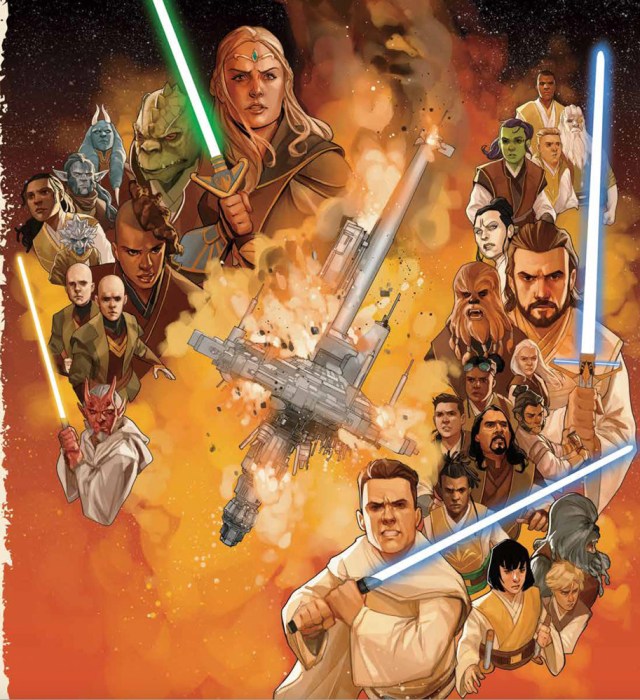
The first book I want to feature in this article is the exciting and fantastic sounding new entry in The High Republic range of Star Wars novels, The Fallen Star by Claudia Gray.  The High Republic books are a massive interlocked multi-media project that seeks to expand the canon universe by focusing on a range of interesting storylines from the High Republic era of Star Wars History, hundreds of years before the Skywalker Saga.  This series has already featured some exception novels, comics and audio dramas, and I am deeply excited to see what happens in the High Republic storylines next, especially after some recent compelling developments.

Star Wars - The Fallen Star

The Fallen Star looks set to be a particularly intriguing read, as it is continuing some of the main High Republic storylines that were set out in the epic preceding novels, Light of the Jedi and The Rising StormThe Fallen Star currently has a release date of 4 January 2022 and I think it has an immense amount of potential, especially as it is written by the talented Claudia Gray, who did such a wonderful job on her previous Star Wars novel Master & Apprentice.

Synopsis:

In this gripping sequel to Star Wars: The Rising Storm, the light of the Jedi faces its darkest hour.

Time and again, the vicious raiders known as the Nihil have sought to bring the golden age of the High Republic to a fiery end. Time and again, the High Republic has emerged battered and weary, but victorious thank to its Jedi protectors-and there is no monument to their cause grander than the Starlight Beacon.

Hanging like a jewel in the Outer Rim, the Beacon embodies the High Republic at the apex of its aspirations: a hub of culture and knowledge, a bright torch against the darkness of the unknown, and an extended hand of welcome to the furthest reaches of the galaxy. As survivors and refugees flee the Nihil’s attacks, the Beacon and its crew stand ready to shelter and heal.

The grateful Knights and Padawans of the Jedi Order stationed there finally have a chance to recover-from the pain of their injuries and the grief of their losses. But the storm they thought had passed still rages; they are simply caught in its eye. Marchion Ro, the true mastermind of the Nihil, is preparing his most daring attack yet-one designed to snuff out the light of the Jedi.

Star Wars - The Fallen Star Cover 3

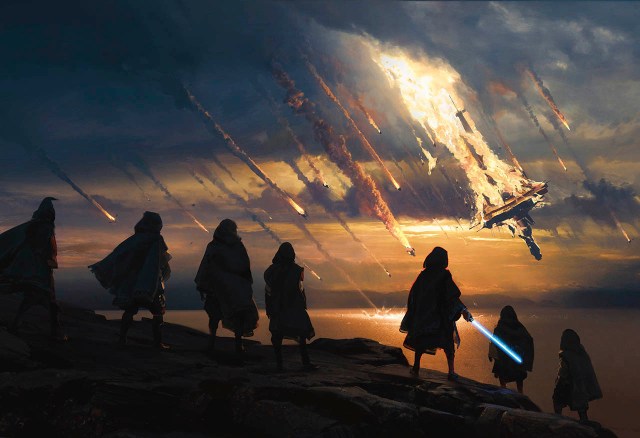
I really love the sound of this cool upcoming novel, and I think that The Fallen Star will end up being one of the best Star Wars books of 2022.  It is clear from the plot synopsis that the Nihil, the High Republic’s fascinating main villains, are planning to attack Starlight Beacon, which has served as a central location of the previous novels.  Considering some of the chaos that the Nihil have already caused in the previous High Republic books (the attack on the Republic Fair was just plain crazy), this will no doubt be a major and devastating event, and I am expecting a pretty dangerous death toll.  There has been some cool official artwork released that shows a falling satellite, hinting at a massive cataclysmic event occurring within the book, and I for one cannot wait to see what happens there.

Star Wars - The Fallen Star Cover 2

I am also extremely invested in some of the amazing characters that have been introduced in previous pieces of High Republic fiction, and who will no doubt be strongly featured in The Fallen Star.  These characters have been extremely well set up and most of them have gone through some substantial development and devastating moments.  I look forward to seeing what happens to some of them in The Fallen Star, and I am particularly keen to see how the Jedi survivors of The Rising Storm are faring after that novel’s terrible events.  I have heard rumours that one of the Jedi characters may potentially fall to the Dark Side of the Force, and I will be interested to see if or who it will happen to (there are at least two potential options).  Whatever happens, I think we are in for a wild ride with The Fallen Star and I am planning to read it the moment it comes out.

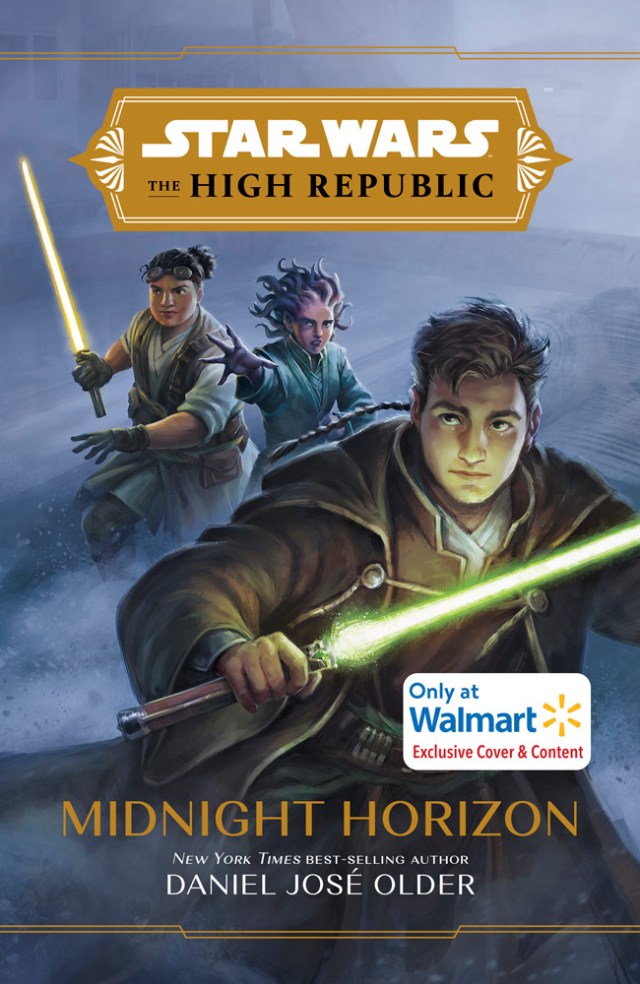
Star Wars - Midnight Horizon Cover

The next Star Wars novel I want to discuss is Midnight Horizon by Daniel José Older.  Older is a talented author who has been contributing several great novels to the Star Wars canon ever since his 2018 novel, Last ShotMidnight Horizon will be a young adult High Republic novel that will follow some younger Jedi and their masters as they attempt to defeat another Nihil threat.

Synopsis:

After a series of staggering losses, the Republic seems to finally have the villainous Nihil marauders on the run, and it looks like there’s light at the end of the tunnel. Until word comes of a suspected Nihil attack on the industrial cosmopolitan world of Corellia, right in the Galactic Core.

Sent to investigate are Jedi Masters Cohmac Vitus and Kantam Sy, along with Padawans Reath Silas and Ram Jomaram, all fighting their own private battles after months of unrelenting danger. On Corellia, Reath and Ram encounter a brazen young security specialist named Crash, whose friend was one of the victims of the Nihil attack, and they team up with her to infiltrate Corellia’s elite while the Masters pursue more diplomatic avenues. But going undercover with Crash is more dangerous than anyone expected, even as Ram pulls in his friend Zeen to help with an elaborate ruse involving a galactic pop star.

But what they uncover on Corellia turns out to be just one part of a greater plan, one that could lead the Jedi to their most stunning defeat yet….

This sounds like another extremely fun novel from Older and I am very excited to see what cool adventures happens here.  Set for release on 1 February 2022, Midnight Horizon will follow on from some of the previous High Republic young adult novels such as Into the Dark and Out of the Shadows, especially as it follows the character of Padawan Reath Silas and his master who have appeared in both of these books.  It also serves as a continuation of Race to Crashpoint Tower, with the character of Ram Jomaram, also being featured here.  I cannot wait to see what happens to these characters in Midnight Horizon, and I think it will turn out to be another awesome adventure.  I am also curious to see the High Republic version of Corellia and it will be fascinating to see what sort of attack the Nihil can pull off here.  Midnight Horizon is another High Republic novel that I think has a lot of potential, especially with its fantastic cover up above and I look forward to reading it.

Star Wars - Midnight Horizon Cover 2

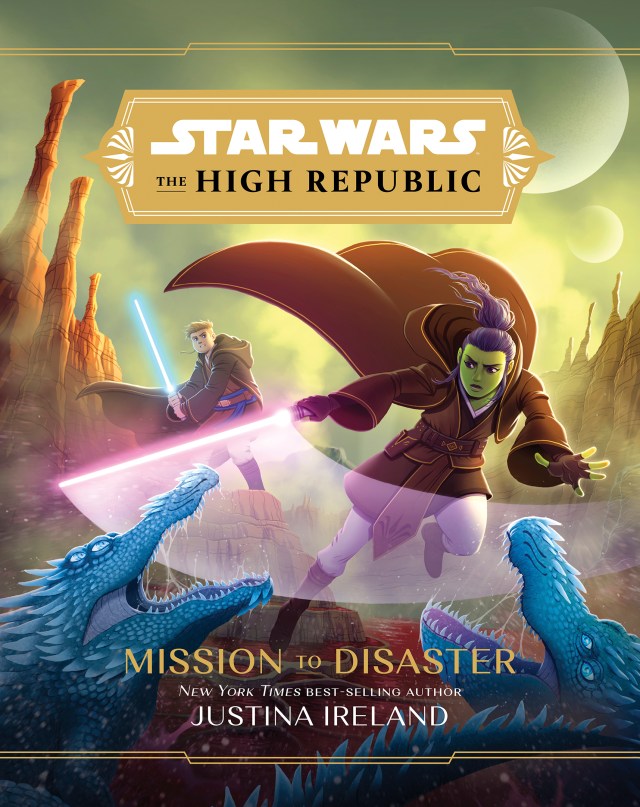
I also wanted to mention the upcoming junior High Republic novel, Mission to Disaster by Justina Ireland.  While I do not usually tend to read some of the junior or young reader Star Wars books, I may make an exception for Mission to Disaster.  This is because it will follow on from Ireland’s last novel, Out of the Shadows, and features the fun team of Vernestra Rwoh and Imri Cantaros.  I look curious to see what happens to these two characters next, and I will probably quickly read Mission to Disaster to continue the interesting storyline they had in their last book.

Star Wars - Mission to Disaster Cover

Synopsis:

The Jedi think the dreaded Nihil marauders have been all but defeated. Their leader is on the run and their numbers have dwindled. Jedi Knight Vernestra Rwoh hopes this means she will finally have time to really train her Padawan, Imri Cantaros―but reports of a Nihil attack on Port Haileap soon dash those hopes. For not only have the Nihil attacked the peaceful outpost, they have abducted Vernestra and Imri’s friend, Avon Starros. The two Jedi set off for Port Haileap, determined to figure out where the Nihil have taken their friend. Meanwhile, Avon must put her smarts and skills to the ultimate test as she fights for survival among the Nihil―and uncovers a sinister plan. Can Vernestra and Imri find their friend before disaster strikes?

The final book I want to talk about here is the amazing sounding Brotherhood by Mike Chen.  Rather than another High Republic book, the early May 2022 release, Brotherhood, will instead focus on the team of Obi-Wan Kenobi and Anakin Skywalker during the Clone Wars.

Star Wars - Brotherhood Cover

Synopsis:

Obi-Wan Kenobi and Anakin Skywalker must stem the tide of the raging Clone Wars and forge a new bond as Jedi Knights in a high-stakes adventure set just after the events of Star Wars: Attack of the Clones.

The Clone Wars have begun. Battle lines are being drawn throughout the galaxy. With every world that joins the Separatists, the peace guarded by the Jedi Order is slipping through their fingers.

After an explosion devastates Cato Neimoidia, the jewel of the Trade Federation, the Republic is blamed and the fragile neutrality of the planet is threatened. The Jedi dispatch Obi-Wan Kenobi, one of the Order’s most gifted diplomatic minds, to investigate the crime and maintain the balance that has begun to dangerously shift. As Obi-Wan investigates with the help of a heroic Neimoidian guard, he finds himself working against the Separatists who hope to draw the planet into their conspiracy—and senses the sinister hand of Asajj Ventress in the mists that cloak the planet.

Amid the brewing chaos, Anakin Skywalker rises to the rank of Jedi Knight. Despite the mandate that Obi-Wan travel alone—and his former master’s insistence that he listen this time—Anakin’s headstrong determination means nothing can stop him from crashing the party, and bringing along a promising but conflicted youngling.

Once a Padawan to Obi-Wan, Anakin now finds himself on equal—but uncertain—footing with the man who raised him. The lingering friction between them increases the danger for everyone around them. The two knights must learn a new way to work together—and they must learn quickly, to save Cato Neimoidia and its people from the fires of war. To overcome the threat they face they must grow beyond master and apprentice. They must stand together as brothers.

This sounds like another pretty fantastic Star Wars novel and I am extremely keen to get my hands on this one.  I love the entire Clone Wars period of Star Wars history (if you have seen The Clone Wars animated series you know why) and I am very keen to explore more of it here.  I love the idea of two Jedi attempting to solve a crime on a hostile Separatist World, which will no doubt result in much conflict, suspicion and political treachery.  I am also really keen to see the author’s take on the relationship between Anakin and Obi-Wan.  These two characters have always had an interesting and well-defined dynamic (when they’re not trying to kill each other), and I am curious to see how much this changes in the immediate aftermath of Anakin becoming a Jedi.  No doubt some of this tension and conflict will tie-into the upcoming Obi-Wan Kenobi television series that is coming out soon, and it is possible that Brotherhood might be connected to the planned show in some way.  Throw in an early sighting of Ventress, the awesome Dark Side assassin, and I think that Brotherhood is going to be a pretty exceptional read.

Well that is about it for upcoming Star Wars books at the moment.  There are a few other novels that have been announced for later in the year like Shadow of the Sith and Padawan, but I might wait until the covers are released before I cover them in a Waiting on Wednesday article.  E. K. Johnston’s third and final Padmé Amidala novel, Queen’s Hope, is also due for release in April after it was delayed, although I have previously covered that before.  I am deeply, deeply excited for all these cool upcoming Star Wars novels and I cannot wait to see what outstanding adventures happens within all of them.

Waiting on Wednesday – Upcoming Warhammer 40,000 Novels

Welcome to my weekly segment, Waiting on Wednesday, where I look at upcoming books that I am planning to order and review in the next few months and which I think I will really enjoy.  I run this segment in conjunction with the Can’t-Wait Wednesday meme that is currently running at Wishful Endings.  Stay tuned to see reviews of these books when I get a copy of them.  For my latest Waiting on Wednesday column, I look at four awesome upcoming novels set in the turbulent and grim future of the Warhammer 40,000 universe.

Readers familiar with this blog will know that I am a massive sucker for tie-in novels, and I am very well acquainted with several fandoms who have extensive expanded universes.  One of the more interesting ones that I have recently been getting into are the amazing and deeply exciting Warhammer extended universes.  Built around the various table-top games of Games Workshop and published by the Black Library, the Warhammer novels, are a massive collection of compelling and action-packed novels that add some outstanding backstory and extended universe inclusions to the already well-established lore introduced in the background of the various races and factions.

Throughout the last year or so I have been really getting into the Warhammer fiction, having read some incredible and fun novels, including the first three Gotrek and Felix novels, Trollslayer, Skavenslayer and Daemonslayer, from the Warhammer Fantasy franchise.  However, I have primarily been getting into the incredible science fiction adventures that make up the Warhammer 40,000 universe.  Warhammer 40,000 fiction is set far in the future and envisions a dark and gothic universe, filled with constant warfare between a range of colourful and chaotic groups.  I have had an outstanding time with several great books set in this universe, including Deathwatch: Shadowbreaker, Kal Jerico: Sinner’s Bounty, Fire Made Flesh and The Twice-Dead King: Ruin.  Each of these novels has been pretty epic, and I am very much in the mood to read more of these books.  Luckily for me, there are huge number of new releases on the horizon, and four interesting books coming out here in Australia in the first half of 2022 have already caught my attention.

The first of these books is the intriguing and intense sounding Steel Tread by Andy Clark.  Steel Tread will be part of the Astra Militarum series, and will follow a group of Imperial Guard, the basic human soldiers, as they face off against the forces of Chaos.  In particular, the book will follow a tanker who is transferred to a new unit and must learn to command a new tank with an unusual crew.

Steel Tread Cover

Synopsis:

The Astra Millitarum are a blunt instrument of violence, wrought on a galactic scale. This new series from Black Library will explore some of their regiments.

On the war-torn world of Croatoas, the armies of the Astra Militarum do battle with the twisted servants of the Ruinous Powers. Against the backdrop of this increasingly desperate conflict, tanker Hadeya Etsul finds herself consolidated into a Cadian regiment, and placed in command of the Leman Russ Demolisher Steel Tread. Haunted by nightmares, surrounded by a dysfunctional crew and striving to find her place amidst a proud and insular regiment with a culture so different from her own, Etsul must guide her crew to victory. But, as her regiment rolls out beneath the poisonous light of the Great Rift to join a death-or-glory offensive, the crew of Steel Tread are about to face the fight of their lives. If they cannot learn to work as one, how can they hope to survive?

This cool first novel has a lot of potential and is set for release right at the start of 2022.  Steel Tread looks set to be a classic and powerful war story and I am extremely excited to once again get to grips with the common human solider in this universe of gods, monsters and demons.  I love the idea of an awesome tank-based story, especially as the author, Andy Clark, has a great deal of experience writing some cool science fiction and fantasy Warhammer stories.  I cannot wait to see how this book turns out, and I am expecting a dark and brooding science-fiction version of Fury.

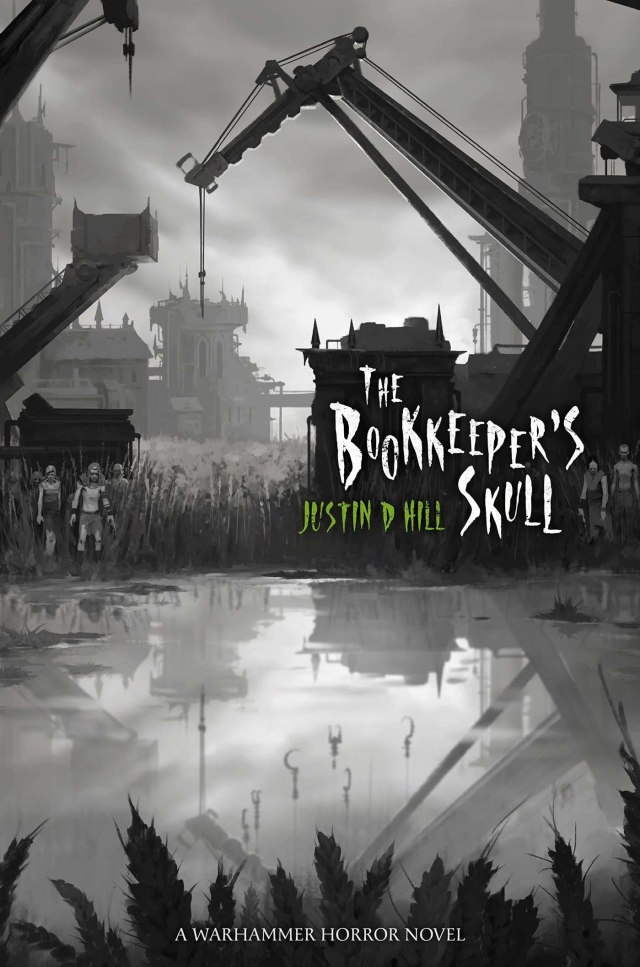
The next Warhammer 40,000 novel that I want to read is The Bookkeeper’s Skull by Justin D. Hill.  The Bookkeeper’s Skull will be an inclusion in the Warhammer Horror sub-series, which sets terrifying and creepy horror tales in the wider Warhammer universe.  This is a bit of a win-win for me, as I have been keen to read more horror and Warhammer books, so this should be a good opportunity for me.  The Bookkeeper’s Skull will be set on an agricultural world in the Warhammer 40,000 universe, which has descended into madness as one young man attempts to stop the horrors and blasphemy of Chaos.

The Bookkeeper's Skull Cover

Synopsis:

Spine-chilling tales set in the Worlds of Warhammer.

On the capital world of Potence, young enforcer cadet Rudgard Howe is caught up in a bitter internecine feud to inherit his father’s position of Chief Enforcer. As the tithe fleets approach, he is sent on his first mission to ensure that the planet’s distant agri-facilities fulfil their quotas to the God-Emperor.

Farmed with serfs and managed by ex-Militarum soldiers, the agri-facilities are places of shocking brutality and hopelessness. But when he is sent to the outlying farmstead of Thorsarbour, Rudgard discovers a community where the crops are left to rot as the inhabitants indulge in the bloody ecstasy of a sanguinary cult.

As Rudgard imposes the strict Lex Imperialis upon the farmstead, he begins to uncover a place where sanity is rapidly slipping. But he is just one step along this nightmarish mission when a series of cruel deaths threatens to dismantle everything he has ever known about the Imperium, his faith in the Emperor, and the strength of his very soul.

This is another awesome sounding novel with a really interesting plot to it.  Deranged Chaos cultists are a fantastic part of Warhammer lore, and I am extremely intrigued to see a dark and trippy horror novel written around it.  The Bookkeeper’s Skull is a relatively short novel, so this will no doubt be an extremely fast-paced read, with a lot of nightmares and insanity compressed into it.  I am very keen to read my first Warhammer Horror novel, and I cannot wait to see how dark and scary a horror novel in this universe can be.

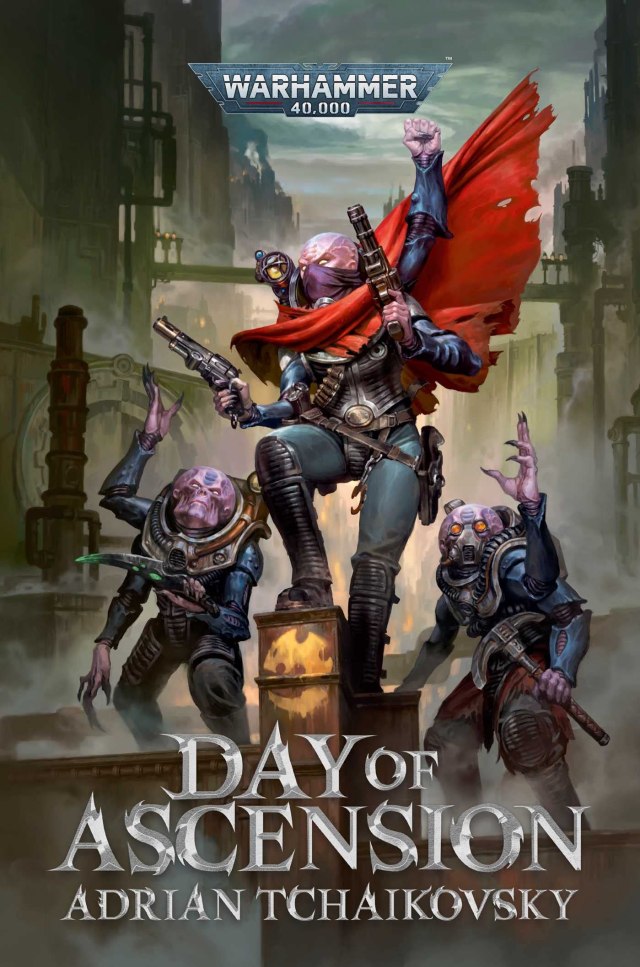
The third book I wanted to highlight in this article is Day of Ascension by bestselling science fiction author Adrian Tchaikovsky.  Tchaikovsky is an extremely highly regarded science fiction author best known for his epic Shadows of the Apt series, and I have been really keen to read some of his work for a while.  Day of Ascension will be Tchaikovsky’s first Warhammer 40,000 novel and will examine one of the more unique and terrifying creatures in Warhammer canon, the Genestealers.

Day of Ascension Cover

Synopsis:

Exciting new Warhammer 40,000 novel from Adrian Tchaikovsky

On the forge world of Morod, the machines never stop and the work never ends. The population toil in the mines and factoria to protect humanity from the monsters in the void, while the Adeptus Mechanicus enjoy lives of palatial comfort.

Genetor Gammat Triskellian seeks to end this stagnant corruption. When he learns of a twisted congregation operating within the shadows, one which believes that the tech-priests are keeping the people from their true salvation – a long-prophesied union with angels – he sees in them an opportunity to bring down Morad’s masters and reclaim the world in the name of progress.

But sometimes, the only hope for real change lies in the coming of monsters.

Now this sounds like a very intriguing novel, and it will probably end up being one of the more unique and compelling Warhammer reads of 2022.  I absolutely love the plot for Day of Ascension described in the synopsis above, especially as Tchaikovsky will be combining a planned revolution with the introduction of a Genestealer Cult.  Genestealer Cults are the forerunners of the Tyranids, an insidious and unstoppable alien species, that range ahead of the wider Tyranid fleets infiltrating societies, infecting human populations, and causing rebellion and chaos.  The Genestealers are some of the most dangerous and scary Warhammer creatures, and storyline about an idealistic revolutionary becoming involved with them while not realising that they are planning to consume the entire planet and kill everyone, sounds pretty damn awesome.  This novel has an insane amount of potential, especially in Tchaikovsky’s very capable hands, and I cannot wait to see this fantastic and incredible story unfold.

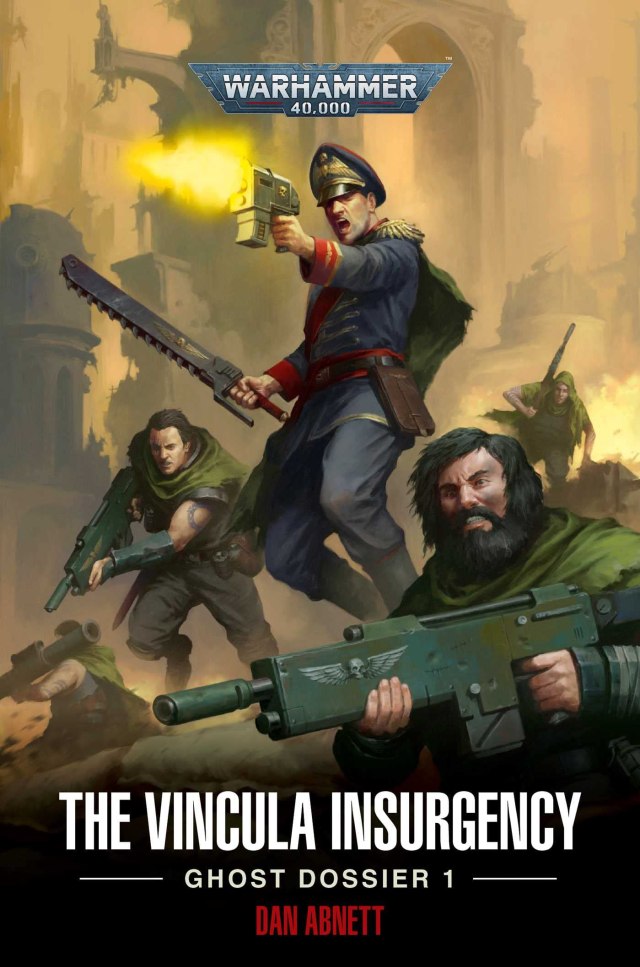
The final book in this article is the very cool Gaunt’s Ghosts prequel novel, The Vincula Insurgency by one of the most highly regarded and prolific authors of Warhammer fiction, Dan Abnett.  The Gaunt’s Ghosts books are wildly considered to be one of the best and most iconic pieces of Warhammer 40,000 fiction, perfectly highlighting the many battles and issues surrounding the Imperial Guard.  Following a small and tragic Imperial Guard regiment, the Tanith First and Only, the Gaunt’s Ghost series ran for years, and only finished in 2019 with the release of the 16th and final book.  I read the first book in this series, First and Only, earlier this year, and it was an exceptional and clever military read, perfectly capturing the many issues of the common solider in the trenches.  As such, I am extremely keen to read a new entry in the series, especially as it contains an interesting prequel narrative.

The Vincula Insurgency Cover

Synopsis:

 Gaunt’s Ghosts are back in a fresh new look at the beginning.

The war may be over, but duties remain for the brave soldiers of the Astra Militarum. In the ruined border town of Vincula, the newly formed Ghosts of Tanith, along with their commander Ibram Gaunt, find themselves in a thankless police action, trying to establish a permanent peace. But what exactly is stalking them through the shadowed streets, and what dark secrets will the untested, new-founded Ghosts learn about themselves? The Vincula Insurgency is an intense new combat thriller of the Ghosts’ early days, pulled directly from the ultra-classified Ghost Dossier.

This should be another captivating and interesting inclusion in the Warhammer 40,000 canon from Abnett.  Another relatively shorter entry, this first book in the Ghost Dossier series, is currently set for release in May 2022 (although a version was released earlier this year) and will no doubt be a fantastic, fast-paced read.  I love the idea of a very early Gaunt’s Ghosts story set right after the tragic loss of their planet and before they fully come together as a regiment.  There should be some really interesting and compelling storylines in this novel and I cannot wait to see what early horrors the Ghosts were forced to face.

As you can from the above, there are some extremely cool Warhammer 40,000 novels coming out in the next few months.  Each of the above sound extremely amazing and I am really keen to check them all out.  I think the above collection of books really highlights the fascinating and fantastic range of this franchise, and I look forward to expanding my Warhammer 40,000 knowledge very soon.

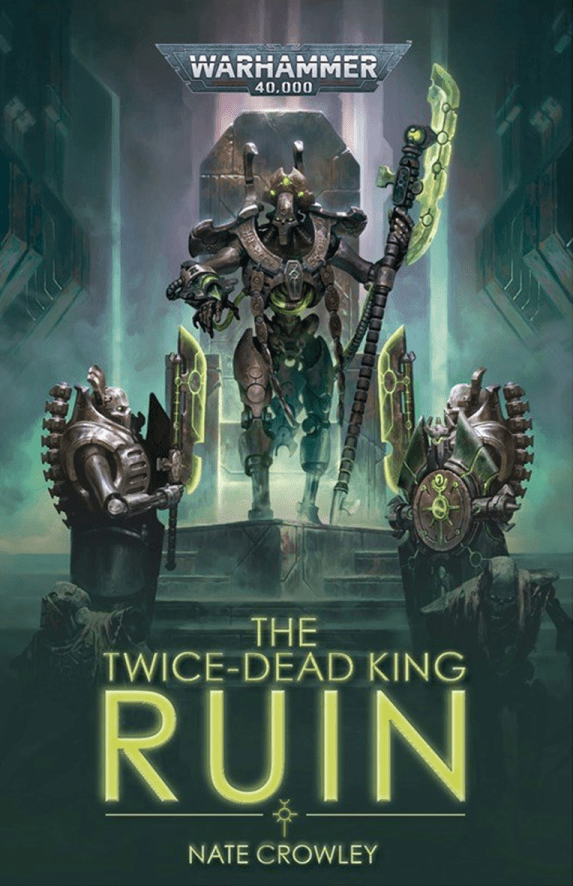
Warhammer 40,000: The Twice-Dead King: Ruin by Nate Crowley

The Twice-Dead King - Ruin Cover

Publisher: Black Library (Audiobook – 9 October 2021)

Series: Twice Dead King – Book One

Length: 11 hours and 22 minutes

My Rating: 4.75 out of 5 stars

Amazon     Book Depository

Intriguing new author Nate Crowley presents one of the most complex and fascinating Warhammer 40,000 novels I had the pleasure of reading, The Twice-Dead King: Ruin, an epic and thrilling novel that explores one of the most intriguing races in the canon, the Necrons.

I have been having a lot of fun listening to a bunch of awesome Warhammer 40,000 (Warhammer 40K) novels over the last year, with some great examples including Deathwatch: Shadowbreaker by Steve Parker, Kal Jerico: Sinner’s Bounty by Joshua Reynolds, Fire Made Flesh by Denny Flowers, and First and Only by Dan Abnett.  While I have deeply enjoyed all these novels, I felt that it was time to go outside of the novels that typically focus on this universe’s human characters and instead read something with a more unique subject matter.  As such, when I saw that The Twice-Dead King: Ruin had recently been released, I instantly grabbed a copy, and I am really glad that I did.

Ruin is the first novel in The Twice-Dead King series, which looks set to explore the Necrons and their place in the current Warhammer 40K universe.  This was the second Warhammer 40K novel from author Nate Crowley, who previously released the intriguing Ork-centric novel, Ghazghkull Thraka: Prophet of the Waaagh!, as well as several short stories/novellas set in the universe.  Crowley makes full use of his talent for getting into the mind of fictional aliens to create an excellent and enjoyable read that I had a wonderful time listening to.

In the chaotic and war-striven future of the 41st millennium, many powerful and dangerous races fight for domination and destruction.  However, no race is more mysterious or feared than the immortal beings known as the Necrons.  The Necrons are an ancient and ruthless race who, thousands of years ago, sacrificed their mortality and humanity to defeat a powerful enemy as well as death itself.  Forced into thousands of years of hibernation after their great victory, the Necrons are now slowly awakening to reclaim their empire by destroying all life in the galaxy.

However, despite their intense belief in themselves, the Necrons are a dying race, gradually being whittled down by time, madness, and the unceasing tide of organic life they are forced to constantly fight against.  None know this better that Oltyx, a bitter and resentful Necron Lord who has been banished to the wretched border world of Sedh.  Once heir to the throne of a mighty and glorious dynasty, he now only has control of a small garrison of degraded warriors who are slowly dwindling under constant attacks from Ork raiders attempting to invade the Necron empire.

As Oltyx dreams about vengeance and reclaiming his birthright, he finds himself facing an immense threat that could spell the doom of his dynasty and the entire Necron race.  The invading Orks are only the precursor of a larger and much more powerful enemy, one his small force has no chance of defeating.  With no other option, Oltyx is forced to return to his dynasty’s crownworld and beg for reinforcements from the court who cast him out.  However, his return uncovers something far more disturbing than he could have ever imagined.  A twisted horror now lies within the heart of Oltyx’s dynasty, bringing only madness and bloodshed with it.  To ensure his people’s survival, Oltyx must face the curse of the Necrons and the pure horror of a twice-dead king.

Ruin is an exceptional and captivating tie-in novel that perfectly combines an intriguing and addictive narrative with large amounts of Warhammer 40K lore and some great character work.  This is a perfectly paced story that does an exceptional job introducing the complex setting and character and placing them into an intense and emotionally rich adventure.  While the initial start of the book is a tad slow due to the necessity of throwing in so much Necron lore, it swiftly picks up speed and excitement within the first few chapters.  I personally became really attached to this novel a couple of chapters in when the protagonist and point-of-view character, Oltyx, attempts to determine the best way to defend his planet against the Ork invaders, while also simultaneously mulling over the failures of his personal history.  There was one amazing extended sequence that saw Oltyx attempting to analyse a vision from his past to come up with a perfect plan, while also watching a massive force of Orks approaching.  This scene perfectly blended a fun Warhammer battle with alien history and a complex character moment, all set to a timer that was counting down to the start of combat.  From there the story gets even more enjoyable, as after getting up close and personal with the real horrors of the Necrons, the protagonist discovers that there is a bigger danger approaching: humans.  From there, Oltxyx is forced to journey back to his home planet to beg for help, but instead finds a secret more terrible and disturbing than he could ever imagine.  After some severe lows, combined with a couple of family reunions of variable enjoyment, the story leads up to an impressive and epic conclusion, loaded with war, destruction and sacrifice.  This satisfying and moving conclusion wraps up this leg of the story extremely well and treats the reader to some outstanding action sequences and some major emotional moments that will define the protagonist for the entire series.  An overall brilliant and deeply memorable narrative, I powered through this cool book and loved every second of it.

Ruin was also a pretty impressive entry in the overall Warhammer 40K canon, especially as it contains an outstanding look at one of the franchises more unique races, the Necrons, who are extremely underrepresented in the extended fiction.  Crowley has done a brilliant job here with Ruin, and I loved the distinctive and compelling Warhammer 40K story it contained.  The author has made sure to load up this book with a ton of detail, information and settings unique to this massive franchise, and fans will no doubt love immersing themselves in this cool lore.  Ruin also contains several massive and well-written battle sequences that will easily remind readers of the table-top games that this franchise is built around and which really increase the epic nature of this novel.  The immense amount of somewhat more obscure lore may turn off readers new to Warhammer 40K fiction.  However, I think that most new readers can probably follow along pretty well here, especially as Crowley has a very descriptive and accessible writing style, and Ruin proves to be an excellent and compelling introduction to the Necrons.

I was deeply impressed by how Crowley featured the Necrons in Ruin, especially as he provides a deep explanation of their history and personalities, while also making this somewhat aloof race extremely sympathetic.  The Necrons are a very interesting race within the Warhammer 40K canon, with a look that can be best summed up as Ancient Egyptian Terminators.  They also have a backstory that is somewhat similar to the Cybermen from Doctor Who, in that they are formally organic beings who were transplanted into metal bodies, with only a few members (mostly the former nobility) maintaining their personalities, memories and emotions.  This makes them a very hard species to get a handle on, and most of their appearances in the expanded fiction feature them as cold antagonists.  However, Crowley really went out of his way to showcase the deep and rich culture, history and personalities contained within this race, and the reader ends up getting an impressive and comprehensive look at them throughout Ruin.

This book contains so many intriguing and compelling details about the Necrons, and the reader gets a real crash-course, including why they gave up their humanity to become metallic monsters.  Crowley attempts to cover every single detail about the Necron way of life in this book, and Ruin is filled with cool discussions about current Necron biology, how their components work, how they communicate, and what the mindset of these immortals truly are.  The readers are left with a vision into the complex and hierarchical minds of this unique race, and you get some compelling insights into who they are and why they do what they do.  In addition, Crowley really attempts to highlight just how tragic the Necrons really are as a race, with a deep and compelling look at what they truly gave up when they become the metal beings we all know.  Crowley paints the Necrons as a dying race, despite the apparent immortality bestowed upon them, as the finite members are slowly being worn down by combat, disrepair, and madness.  There is a particularly fascinating look at how the transition from flesh to metal has deeply impacted the psyche of many of its members, as some have been driven into a deep depression while others are turned into crazed cannibals.  This fascinating and comprehensive examination helps to turn the Necrons into quite a sympathetic race throughout Ruin, and you end up rooting for them as the book progresses, even when they are fighting humans.  While the Necrons have never been my favourite race/faction in the Warhammer 40K canon, I deeply appreciated seeing a novel from their point of view, and Crowley’s excellent writing has helped to alter my opinion about them.  I must admit that it was extremely fun to see their perspective on the events of the Warhammer 40K universe, as well as their opinions about the other races inhabiting it (the protagonist makes a very intriguing comparison between Necrons and Space Marines that really sticks in the mind).  This was a perfect Necron novel, and readers will come away with a whole new appreciate for their backstory and plight.

Another thing that I deeply enjoyed about Ruin was the complicated protagonist, Oltyx, a disgraced Necron noble who has been banished to a desolate and worthless frontier planet for his transgressions.  At the start of Ruin, Oltyx is an angry and arrogant creature, weighed down by his bitterness and resentment, and is not a particularly fun character.  However, as the story progresses, Crowley adds layer upon layer of complexity to him, using a mixture of flashbacks, personal insights, revelations, and alternate perspectives of his memories.  This slowly turns him into a sympathetic and compelling figure, showing him as one of the few nobles to truly care about the future of his people, whole also exploring his concerns about the madness and apathy that could one day claim him.  As the story progresses, and he reencounters the members of his family and has more visions of his past, Oltyx continues to evolve into a much more likable character, especially as he deals with great adversity and tragedy.  This adversity gives him some great appreciation for his race, even the lower tiers, and he soon comes away a well-rounded figure with an interesting future ahead of him.  This was an overall exceptional introduction to this character and Crowley has set up this figure up perfectly for the future entries in this series.

Aside from Oltyx proper, there were a couple of other fun figures I must highlight in this book.  Five of these characters are actually part of Oltyx himself, as the protagonist has installed five subminds into his head in order to help him achieve his mission.  These five subminds each provide different insights to a range of subjects, including doctrine, aliens, combat, strategy, and analytical analysis.  The various subminds each have their own personalities, based on their design, and it is fun to see them interact with Oltyx in his head and with each other.  While some of the subminds are focused on more than others, they prove to be an intriguing inclusion in the story, especially as they also grow and develop alongside Oltyx, especially once he comes to appreciate them more.  The subminds also help compensate for the general lack of other side characters in the novel, which are a result of both isolated planets and the general lack of remaining sentience amongst the Necrons.

The other major side character I want to talk about is Djoseras, Oltyx’s brother, who the protagonist blames for his exile.  Djoseras is an excellent mentor character who was just as deeply impacted by the transition to a metal body as his brother.  Despite Oltyx’s bitter memories about him, nothing about Djoseras is as cut-and-dry and you initially believe.  Once you encounter him in person and see some additional memories for Oltyx, you really grow to appreciate Djoseras more, especially once you see him lead an army in battle.  Oltyx’s multiple encounters with Djoseras add some outstanding emotional elements to the story, and each of his appearances were complex and compelling.  Other side characters are introduced in this book, although most of them were only featured for a short time.  However, they will probably have a bigger role in the future novels in this series, and Ruin serves as a good introduction to them.

I grabbed a copy of Ruin in its audiobook format, which proved to be an outstanding way to enjoy Ruin, especially as it allows listeners to really absorb all the cool and impressive details contained within this compelling read.  This novel has a decent runtime of over 11 hours and features some brilliant voice work from narrator Richard Reed.  Reed is a talented narrator who has been a major fixture of the Warhammer audiobook scene in the last few years, and I really loved the awesome job he did here with Ruin.  Reed has a great voice for this impressive science fiction epic, and he manages to move the story along at a quick and thrilling pace which allowed me to finish off this novel in a few short days.  Each of the major characters are gifted their own distinctive voice throughout Ruin, which fits them perfectly and ensures that the reader always knows who is talking.  I particularly enjoyed the fun voice work set around the protagonist’s five subminds, especially as they are similar, yet slightly different, to that of the protagonist.  I also really appreciated Reed’s voice work during certain big scenes, such as when attempting to emulate a crowd of mad, chanting Necrons, and his great narration really helped to enhance these scenes.  An exceptional and deeply entertaining audiobook outing, I would strongly recommend this format to anyone interested in enjoying this fantastic epic.

With Ruin, the first The Twice-Dead King book, brilliant author Nate Crowley, has provided Warhammer 40K fans with an exceptional and powerful introduction to the mysterious Necron faction.  Featuring a captivating, action-packed narrative, a complex protagonist, and an excellent examination of the complex Necrons, Ruin is a must read for all fans of the franchise.  This is easily one of the best Warhammer 40K tie-in novels I have had the pleasure of reading and I cannot wait to see what Crowley adds to this franchise in the future.  This series is set to continue with the second entry, The Twice-Dead King: Reign, and I cannot wait to see what happens next.

Make sure to also check out my review for the second The Twice-Dead King novel, Reign.

Amazon     Book Depository

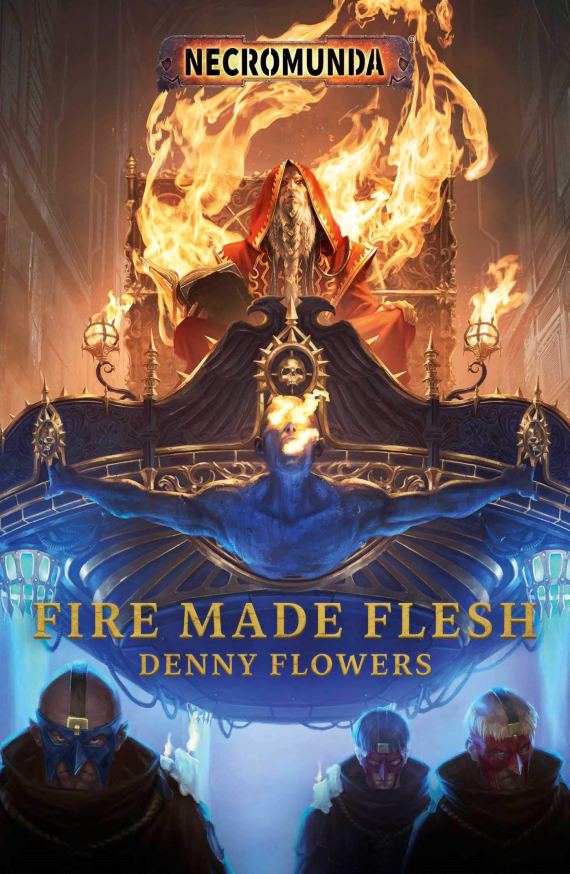
Fire Made Flesh by Denny Flowers

Fire Made Flesh Cover

Publisher: Black Library (Audiobook – 5 June 2021)

Series: Necromunda

Length: 13 hours and 29 minutes

My Rating: 4.25 out of 5 stars

Amazon     Book Depository

Prepare to return to the violent and deadly world beneath the hive cities of Necromunda, as Denny Flowers presents an outstanding and compelling entry in the Warhammer 40,000 universe with Fire Made Flesh.

Over the last year or so I have been having fun exploring the immense extended universe that has sprung up around the Warhammer 40,000 and Warhammer Fantasy tabletop games.  I have so far read several cool entries in the Gortrex and Felix fantasy series (Trollslayer, Skavenslayer and Daemonslayer), as well as the awesome science fiction reads First and Only and Deathwatch: Shadowbreaker.  However, my favourite Warhammer novel so far was the deeply entertaining Kal Jerico: Sinner’s Bounty, which was part of the Necromunda sub-series, another tabletop game set in the gothic Warhammer 40,000 universe.

The Necromunda games and extended universe are all set in and around the towering and immense hive city, Hive Primus, capital of the industrial planet of Necromunda.  Hive Primus is a city of billions, with the inhabitants crammed together in a massive hive structure located both above and below ground.  Necromunda fiction is primarily based in the Underhive, the foundational layers of the hive and below, made up of tunnels, habitation zones and caverns, most of which have been abandoned as the hive was built up.  The Underhive is filled with various gangs and feuding families who fight in these tunnels for riches, dominance and glory.  This unique landscape makes for some impressive stories, such as the awesome narrative of the latest Necromunda novel, Fire Made Flesh.

Deep underneath Hive Primus many secrets and treasures lay hidden in the darkness, waiting to be found by bold adventurers, but none are spoken of with more reverence than the lost habitation dome, Periculus.  Periculus was once a flourishing base of commerce where both sanctioned trade and illicit dealings were held, and vast wealth was accumulated.  However, Periculus was mysteriously abandoned years ago when its inhabitants were killed, and all knowledge of its location has been lost.  Now, after years of searching, someone has rediscovered the dome, and all hell is about to break loose.

Believing that the ruins of Periculus hold innumerable treasures and opportunities, various gangsters, Guilders, hive scum and opportunists have descended into the Underhive, hoping to stake their claim.  However, none of the people moving towards Periculus are more dangerous than the revered Lord Silas Pureburn of the Guild of Fire.  Holding a monopoly on energy production in the Underhive and gifted with a holy flame from the God Emperor himself, Pureburn inspires loyalty and religious fervour wherever he goes.  However, behind his holy facade of purity and flame lies a dark soul determined to dominate everything and everyone he encounters.  One of the few people to see the truth about Pureburn is young Guilder Tempes Sol.  Sol, a scion of the Mercator Lux, the Guild of Light, has found himself bested by Pureburn many times, and he is determined to discover the truth behind his improbable works.  After an unholy accident scars Sol and leaves him with an unusual power, he is forced to flee his guild and travel to Periculus, where his only hope of redemption lies in exposing Pureburn as a fraud.

However, upon arriving at Periculus, Sol discovers a settlement on the edge.  Pureburn has gathered around him an army of religious fanatics who control Periculus through fear, fire and bloodshed.  Determined to stop his insidious influence before it is too late, Sol attempts to forge alliances with other newly arrived inhabitants of Periculus who have been disadvantaged by Pureburn.  However, the deeper Sol dives into Pureburn’s actions, the more danger he finds himself in, as this seemingly holy man hides a dark and disturbing secret.  Worse, even more terrible dangers are affecting people within the dome, as twisted creatures roam the shadows, and the humans are struck with a dark rage that drives them to great acts of violence.  As the forces within gather for a final deadly confrontation, the fate of both Periculus and the entirety of Hive Primus hangs in the balance.

Fire Made Flesh was an interesting and impressive read that did an amazing job of bringing the twisted maze of the Necromunda Underhive to life.  This was actually the debut novel of author Denny Flowers, who has previously written some fun Necromunda short fiction and novellas but had yet to produce a full-length book.  This turned out to be a pretty awesome first novel from Flowers, and I had an outstanding time getting through the intense story, especially with its unique locales and outrageous characters, and it was a fantastic piece of Necromunda fiction.

At the heart of Fire Made Flesh lies a compelling and intense story that showcases the unique and deadly battle for control of Periculus.  After some set-up to show the rediscovery of the lost dome, Flowers starts establishing the various characters and their motivations, exploring how and why they are heading to Periculus.  Told from multiple character perspectives, the reader gets an interesting look at each point-of-view character, as well as the people they travel with.  While this was a good introduction to the many complex aspects and figures of the novel, it did make the pacing of the first third of Fire Made Flesh a tad slow, with a couple of difficult sections.  However, these pacing issues are resolved around halfway through Fire Made Flesh, once all the primary characters make it to Periculus.  From that point onward, the book really picks up, especially as the reader has grown attached to protagonists by this point.  From there the rest of the story is extremely fast, with a big moment two-thirds in, resulting in utter bedlam across Periculus and thrusting each of the characters into extreme danger.  After several intense and action-packed sequences, the entire narrative gets wrapped up extremely well in a satisfying conclusion, with each of the fun character arcs set up throughout the book coming together wonderfully.  I had an absolute blast with this narrative, and I felt that it had the right blend of action, intrigue, character development and Warhammer 40,000/Necromunda detail, to keep every reader happy.  I was really impressed by how Flowers was able to bring the disparate storylines together into one entertaining read, and I ended up powering through the last half of the novel in less than a day.  I also deeply enjoyed some of the cool twists and reveals right near the end, as they contained some excellent character moments.  Interestingly, the story is left open for a sequel, and I know I will be curious to see what happens in the Underhive next time.

Fire Made Flesh is an excellent addition to the Necromunda range of fiction, and I appreciated how Flowers attempted to examine and recreate the various elements of the unique landscape and culture featured within this fictional location.  Flowers really dived into the lore surrounding Necromunda, and the reader is soon engulfed in discussions about the social order, technology, and religious zeal of the Hive City.  While the author did a good job of trying to give context to this setting and its various features, readers may get a little overwhelmed with all the unique lore elements that are shovelled into it, especially at the front of the book when Flowers was trying to set everything up.  While I managed to keep my head around what was happening and what the characters were talking about, I could easily see a reader who has less experience with Warhammer 40,000/Necromunda lore, being a bit more confused and potentially getting lost.  Still, this ended up being a great Necromunda novel, and I loved the way in which the author featured the various gangs and controlling interests.  I especially enjoyed the in-depth examination of the Guilders, Hive Primus’s merchant class, who provide the various services to keep the settlements running.  Fire Made Flesh features members from the various guilds, each of whom have different professions, including slavers, energy providers, fuel dispensers and corpse grinders (people who process bodies to produce corpse-starch, the hive’s primary food source).  Readers get a pretty intense crash course in Necromunda lore in this book and will end up having a good understanding of how Underhive works.  There are a lot of details that will appeal to long-term fans of the Necromunda game and its associated extended fiction, and they will no-doubt love to see another entertaining and dark adventure.  While there are some connections to previous novels, including some of Flower’s short-fiction, I would say its easy enough for most people familiar with the Warhammer 40,000 universe to jump into this book without getting too lost, and even general science fiction fans should be able to have fun with this novel.

Flowers also makes great use of the dark and dangerous setting that is the Underhive throughout Fire Made Flesh.  The Underhive is already an awesome and well-established setting, but Flowers really tried to show just how hostile and unpredictable it could be.  There are some great descriptions of the tight walkways, giant caverns and isolated settlements which prove to be an outstanding backdrop to the dark narrative, and I had a lot of fun exploring some new locations in this novel.  Periculus itself is also an impressive setting, as the reader is treated to an intriguing look at a newly formed town that is slowly getting to its feet in the ruins of an abandoned settlement, and all the strife that comes as a result.  The depictions of the town surrounded by monsters, coated with powdered bone, and filled with fractious groups with enflamed personalities, really helps to set the mood for much of the novel, especially as it all comes crumbling down again.  I deeply enjoyed this cool setting and I think that it was an exceptional addition to a fun novel.

I also had a lot of fun with the compelling collection of characters featured in Fire Made Flesh.  Flowers made use of several entertaining point-of-view characters throughout this novel, including several protagonists of his previous short fiction reads, and this results in a vibrant and well set-up blend of personalities and compelling personas.  The central protagonist is Tempes Sol, the young Guilder genius who spends his days attempting to understand power, electricity, and technology.  Tempes has a rather rough journey in this novel, mostly brought on by his obsession with stopping the book’s antagonist, Pureburn, who has bested him in several prior encounters.  However, this time Tempes is suffering from the after-effects of a psychic attack, which has gifted him strange lightning abilities associated with his cybernetic upgrades.  Cast out of his guild and on the run, Tempes is a desperate figure in this novel, attempting to show the hypocrisy of Pureburn while also trying to redeem himself and understand his new powers.  I felt that Tempes had a very interesting storyline in this novel, and I found his personal growth and the exploration of his personal technology to be quite fascinating.  I wasn’t the biggest fan of his impulsive behaviour and self-righteous personality, but he did start to shed those as the novel progressed, while also developing a certain amount of savviness, especially when it came to some of his supposed allies.  It looks like Flowers is setting Tempes up for some interesting storylines in the future, and I would be quite keen to see this protagonist in another book at some point.

I was also a big fan of the antagonist of Fire Made Flesh, Lord Silas Pureburn.  Pureburn is another Guilder character who specialises in bringing fire and fuel to isolated communities, even when it shouldn’t be possible.  This, and his family’s legacy as keepers of a holy flame, sees him given religious reverence by the general population, as well a collection of devoted, if deranged, followers, who view him as a celebrated champion of the Emperor.  However, Pureburn is really a deceitful and manipulative being, who cares only for profit and his own selfish goals.  Flowers does an amazing job setting this antagonist up and the reader is soon pretty sick of his hypocrisy and arrogance, something that become really apparent after you read a few of his point of view chapters.  Pureburn ends up annoying or alienating every single protagonist in this book, which results in a loose alliance as everyone attempts to take him down.  I love a villain so evil that he brings different people together, and this was a great antagonist to hate, especially once you find out the true source of his power.

Aside from this compelling protagonist and entertaining antagonist, this novel also featured a great range of additional characters with whom the reader gets to spend time with.  My personal favourite had to be Lord Credence Sorrow, a corpse grinder contracted to bring food to Periculus against his will.  Sorrow is a lover of fine things, and his enjoyment of delicate items and gourmet food is at odds with his profession of turning corpses into edible powder.  This character has a brilliant amount of flair, and all his scenes are particularly entertaining, especially as he keeps finding himself stuck between some dangerous employers, resulting in quite a fun and fitting overarching storyline.  I also had a great time with the oddball partnership of Caleb Cursebound, the self-proclaimed ninth most dangerous man in the Underhive, and his silent Ratskin partner Iktomi.  These two make a great pair, especially as Caleb has all the bluster and personality, while Iktomi has a wicked amount of lethal skill, making them a surprisingly effective team, and I loved the entertaining odd-couple vibes that they gave out throughout the book.  I also must highlight Anquis, a member of the notorious Delaque family of spies and infiltrators.  Anguis spends most of the novel helping Tempes achieve his goals with her intelligence-gathering and manipulations.  However, it soon becomes quite clear that Anguis is playing her own games, and no one, especially Sol, knows what she is really after.  The final character I want to talk about is Virae the Unbroken, a Chain Lord (slaver) and pit fighter, who is hired to capture unlucky civilians and bring them to Periculus for labour purposes.  Despite initially appearing as a blunt and unforgiving figure, Virae soon proves to be one of the most complex and best-written characters in the entire novel.  Virae is a former slave herself, who proved herself to be tough and unbreakable, resulting in her title and her eventual promotion to slaver.  However, she really struggles with her profession in this novel, especially after many of her charges die on the journey to Periculus.  Her battles for survival, especially in the face of Pureburn’s evilness are pretty excellent, and I loved her eventually transformation into a bloody figure of vengeance.  This turned out to be an outstanding collection of characters, and I deeply appreciated how Flowers used them to enhance Fire Made Flesh’s great narrative and make it even more exciting and compelling.

I decided to grab the audiobook version of Fire Made Flesh.  This format has a decent run time of around 13 and a half hours, and I ended up powering through it in only a few days, especially once the story started to get very exciting and fun.  I had an outstanding time getting through this audiobook, and one of the main reasons for this was the impressive narration of Joe Jameson, whose work I have previously highlighted in awesome fantasy audiobooks like King of Assassins by R. J. Barker, and The Kingdom of Liars and The Two-Faced Queen by Nick Martell.  These previous works by Jameson have been some of best audiobooks of their respective release year, and Jameson is easily one of my favourite narrators.  He has an outstanding voice for fantasy and science fiction, and I love the way he can make a story move at a fast pace while also ensuring that the listener is absorbing all the detail and obscure lore with interest.  Jameson did a really good job of voicing each of the characters within Fire Made Flesh, and while some of the voices were very similar to those he used in the other books, I think that they fitted this new group of characters extremely well.  You get a real sense of the various emotions and personalities of each of these characters, and his affinity for voicing outrageous figures such as religious zealots and conniving businessmen proved very useful here.  I had a great time with this audiobook, and it was an amazing way to enjoy this dark and compelling story.

Fire Made Flesh by Denny Flowers is an exciting and captivating novel in the Necromunda series.  This is an entertaining and intense science fiction read that makes full use of the unique Warhammer 40,000 universe, the cool setting of the Underhive, and some great and memorable new characters, to produce an electrifying tale.  I had a fantastic time reading this book and I cannot wait to see what other adventures wait for this outrageous group of characters in any future Necromunda novels Flowers writes.

Amazon     Book Depository

Top Ten Tuesday – My Favourite Lightsaber Duels

Top Ten Tuesday is a weekly meme that currently resides at The Artsy Reader Girl and features bloggers sharing lists on various book topics.  The official topic for this week’s Top Ten Tuesday was around favourite book settings (a shout out to magical schools), however, I am going to something extremely different (it’s very, very off topic) and instead have a go at listing and ranking my favourite lightsaber duels from the Star Wars franchise.

Anyone who has ever seen a Star Wars movie or television show will know the amazing cultural phenomenon that is the lightsaber duel.  Inspired by the duels from Japanese samurai films, a classic lightsaber duel features two opposing enemies, one armed with a brilliant blue or noble green energy blade, fighting against their evil opponent wielding a menacing red blade.  First appearing in the very first Star Wars film all those years ago, the lightsaber duel is an essential staple of the franchise, and something about the clashing blades of light has resonated with fans throughout the years.  Naturally, every new filmmaker or animator has attempted to put their own unique spin on the classic duel, with many different variations of fighting style, number of opponents and lightsaber types, featured in the subsequent films and extended media.  However, no matter how complex or unique it gets, the fans always appreciate these epic flashes of combat, even if most are brief by design to keep up the emulation of samurai sword fights or pistol duels from Westerns.  After enjoying the cool new show, Star Wars: Visions, which featured multiple inventive lightsaber duels, I thought I would take this opportunity to try and list some of my favourite duels from the Star Wars franchise.  This is a topic I have been considering for a while, and it fits nicely with some recent lists I have done, such as my recent list ranking the various Star Wars films, and my previous list about my favourite anime series.

To pull this list together, I started writing down all my favourite lightsaber duels from films, television shows and animated series to see how many there were.  I decided early on to exclude duels from static media such as comics or tie-in novels, which I might explore in a later Top Ten Tuesday.  I also limited this list to proper lightsaber duels, where all the key participants have a lightsaber, so this excludes a few cool moments, such as Vader cutting down rebels in Rogue One or Luke destroying those droids in The Mandalorian.

Despite these limitations, I ended up with an extremely substantial number of fights, so I ended up turning this into a Top 20 list, just to show off how nerdy I can be (I mean, how much I appreciate the franchise).  I still had to cull a few good fights out, but I was able to come up with 20, which I eventually ranked based on a range of considerations, from the quality of the duel, the emotions or story surrounding it, the impacts of the duel on the wider film or series and a range of other factors.  I am also marking for cool uses of the Force or other techniques, if they don’t take too much away from it primarily being a lightsaber duel.  I am pretty happy with how the below list turned out, and it should be interesting to see how my opinion’s rank up compared to other Star Wars fans out there.  Be warned that I might go into some details about some key moments in the Star Wars films and shows, so be aware that a Spoiler Alert is in effect.

Top Ten List (Ranked in Descending Order): 

20. Satele Shan and Kao Cen Darach vs Darth Malgus and Darth Vindican – Star Wars: The Old Republic

The Old Republic

The first entry on this list comes from an intro cinematic from the Star Wars: The Old Republic computer game.  Set thousands of years before the Skywalker Saga, this battle sees two Jedi facing off against two Sith in an epic battle on a space station.  Beautifully rendered and extremely well-coordinated, this is a particularly impressive fight, with the four combatants facing off in a brilliant and brutal fight, moving across a hanger bay.  This battle features a range of awesome moves and techniques, including one Jedi throwing his lightsaber to block a blow about to kill his apprentice, as well as some awesome dual wielding moments.  I love this fight so much as it is beyond awesome, however, it does gets marked down for being a cinematic in a non-canon game that I never played and featuring some characters with no introduction.  However, it is still an amazing fight, and it is well worth looking up on Youtube if you want some outstanding Star Wars excitement.


19. Ahoska Tano vs Inquisitors – Star Wars: Rebels

Ahsoka vs Inquisitors

“Unexpected, but not unwelcome.”  Ever since her dramatic resignation from the Jedi Order at the end of the fifth season of The Clone Wars, fans were eager to see Ahoska in action again, which happened halfway through the second season of Star Wars: Rebels.  Appearing in a heroic burst of light to save Kanan and Ezra from two Imperial Inquisitors, Ahsoka calmly ignited her new white lightsabers for the first time and set to work against the two Jedi-hunters.  Ahsoka easily takes her opponents out, even using the Force to overpower her opponent’s control of their red lightsaber.  This impressive display of skill and technique really showed viewers how much better Ahoska had gotten over the years and made us anticipate her next major fight even more.


18. Obi-Wan Kenobi vs Darth Vader – A New Hope

A New Hope Poster

Next we have the very first lightsaber duel ever, with the iconic encounter between Obi-Wan Kenobi and Darth Vader in the original Star Wars film.  This fight pits the former master and apprentice against each other for the first time in years, and eventually ends with Obi-Wan opening himself up to a blow to merge with the Force: “You can’t win, Darth; if you strike me down I will become more powerful than you can possibly imagine.”  While this is a major moment in the franchise and I still get chills when Obi-Wan dies, it suffers from rather lacklustre choreography compared to their clashes in the prequel films.  Still, this set the template for all future duels and showed the world how amazing a battle between two space wizards with laser swords could be.


17. Darth Maul vs Pre Vizsla – Star Wars: The Clone Wars

Prez Vizsla vs Maul

The only duel on this list that features a participant who wasn’t a Force user, this cool duel takes place in the fifth season of The Clone Wars.  After forming an alliance with the Mandalorian splinter faction, Death Watch, to take over Mandalore, Darth Maul eventually tires of his new partners and challenges the head of Death Watch, Pre Vizsla, to a duel for the planet.  Bound by his society’s martial traditions, Vizsla accepts the duel and fights using the ancient Mandalorian relic, the black-bladed lighsaber known as the Darksaber.  What follows is an intense fight to the death between two skilled foes, with Vizsla also using all his Mandalorian weapons and jetpack to even the fight.  This was a very fun and brutal duel, with both combatants pushed to the limits.  There are some very cool elements to this, from the great contrast of the black and red blades to the fantastic use of Mandalorain weaponry and fists to try and win.  While the result of the fight is never in doubt, it is a much closer battle than you would imagine and shows just how badass a determined Mandalorian could be.


16. Kanan and Ezra vs Grand Inquisitor – Star Wars: Rebels

Kanan vs Grand Inquisitor

The climactic battle of the first season of Star Wars: Rebels, this fight pitted the big bad of the season, the Grand Inquisitor, against Jedi Kanan and his apprentice Ezra in the engine room of a Star Destroyer.  Relying on trickery and strategy to compensate for his own lack of skill, Kanan is eventually able to beat the Inquisitor after gaining focus from seeing Ezra fall to the Inquisitor’s spinning lightsaber.  I loved the cool range of techniques in this fight, and it was cathartic to see Kanan finally get his groove back and face his demons.  The snipping of the handle of the Inquisitor’s lightsaber was clever, and it leads to one of my favourite lines in the entire series: “There are some things far more frightening than death”, a statement that was proven true in a recent comic.  A great fight that set the tone for some other epic duels later in the series.


15. Yoda vs Count Dooku – Attack of the Clones

Attack of the Clones Cover

This one mainly makes the list for the sheer laughter and amusement it generates.  After Sith Lord Count Dooku soundly thrashes Anakin and Obi-Wan, he encounters his former master, Yoda.  Unable to defeat him using the Force, Dooku resorts to his blade, but is severely outmatched when Yoda pulls out his own lightsaber and proceeds to do some elaborate and fast-paced flips around him, whirling his green lightsaber like a demon.  This is a really entertaining scene and I still remember the sheer excitement and amusement I had in me when I saw Yoda first appear and pull out his lightsaber.  However, the CGI really hasn’t held up too well with this fight, and it is one of the more ridiculous moments in an already silly film.  Still, it was a very entertaining duel, so I had to feature it on this list.


14. Obi-Wan Kenobi and Adi Gallia vs Darth Maul and Savage Opress – Star Wars: The Clone Wars

Kenobi and Adi Gallia vs Maul and Opress

Another entry from The Clones Wars animated show, this duel features Obi-Wan and fellow Jedi Adi Gallia facing off against a recently resurrected Darth Maul and his apprentice/brother Savage Opress.  This is a brutal fight, as the two Jedi find themselves severely outmatched, with Opress quickly killing Adi with his horns.  Obi-Wan is then forced to fight by himself, fleeing to a nearby pirate ship and facing his opponents with two lightsabers, something rarely seen from Kenobi.  This fight gets really close and personal in the narrow corridors of the ship, and Kenobi is only just spared from being eviscerated by a last-minute kick to the shin.  A really great fight that shows off how dangerous these two Sith brothers could be, it was an excellent inclusion on this list.


13. Rey vs Kylo Ren – The Rise of Skywalker

The Rise of Skywalker Poster

In the sequel series we have the duel between Rey and Kylo Ren on the ruins of the Death Star.  Now both fully trained in the Force, the two have a swift and deadly fight, which only ends when Kylo freezes as he feels his mother dying.  This is a beautifully shot scene, and I love the great use of environment and both opponents’ use of the Force to block blows and even control a lightsaber remotely.  However, I think the finale of the fight was a bit lame and not cut together well, which takes a little lustre off the entire duel.  Still a great entry though.


12. Obi-Wan Kenobi and Asajj Ventress vs Darth Maul and Savage Opress – Star Wars: The Clone Wars

Kenobi and Ventress vs Maul and Opress

Another fight featuring Darth Maul and Savage Opress against two opponents, this duel sees Kenobi reluctantly teaming up with an old enemy, the former Sith assassin Asajj Ventress, who has her own issues with Opress.  Forced to use one of Ventress’s blades, you get the unique visual of Kenobi wielding a red saber, and the fight quickly devolves into a close brawl in a cargo ship.  The range of different styles and moves on display in this fight is great, and I love seeing the slippery Ventress facing off against the powerful blows of Opress.  The fight between Kenobi and Maul is extremely personal, especially once Maul starts taunting his opponent about the death of his master.  Emotionally unbalanced, Kenobi is unable to keep up with Maul, and he and Ventress are eventually forced to flee.  I love the blend of character moments, animation, and ferocity in this fight, and it is a particularly impressive moment from this great series.


11. Yoda vs Emperor Palpatine – Revenge of the Sith

Revenge of the Sith Poster

Next up we have a duel between the preeminent Jedi and Sith of their era, Yoda and the newly crowned Emperor Palpatine.  Confronting Palpatine in his office, Yoda and his foe face off with blades in an impressive ballet of laser sword.  The two fighters quickly end up in the iconic and massive Senate chambers, with both opponents jumping from platform to platform before eventually resorting to throwing parts of the room at each other.  A fantastic and brilliant duel that displays just as much mastery of the Force as skill with the lightsaber, this was a climatic moment and a great alternate main fight for the finale of the prequel trilogy.


10. Ronin vs Bandit Leader – Star Wars: Visions

Star Wars Visions - The Duel

I had to include this awesome duel from the recent Star Wars: Vision series.  Featured in the first animated feature, aptly titled The Duel, this fight takes place in an alternate universe and sees a wondering Ronin facing off against a bandit leading a raid on a village.  It is soon revealed that both the Ronin and the Bandit Leader are Sith warriors and face each other with their lightsabers in a complex and beautiful duel around the village and down a river.  This is an outstanding and compelling duel, which really was one of the best bits of the entire Visions range.  I love the incredible blend of Star Wars and classic Japanese imagery, and the whole thing felt like something out of a samurai film.  One of the most unique duels on this list, I had a lot of fun with this one and it was really cool to see.


9. Rey vs Kylo Ren – The Force Awakens

The Force Awakens Poster

Another duel featuring Rey and Kylo Ren, this was their first fight, featured at the end of The Force Awakens.  As one of the first lightsaber duels of the sequel trilogy, this fight had a lot riding on it, and did not disappoint.  This fight pits an injured and emotionally unbalanced Kylo Ren against an untrained Rey as the planet falls apart around them.  While their styles and abilities are not as polished as in their later fight, it still has a physicality and rawness to it that was missing from all the preceding live action lightsaber fights.  The blend of colours and movements was outstanding, as was the decision to feature it in a snow setting, which really made the whole fight pop.  A great and amazing fight that was a fantastic conclusion to an outstanding movie.


8. Darth Maul and Savage Opress vs Darth Sidious – Star Wars: The Clone Wars

Darth Sidious Duel

There was no way I could exclude this awesome gem from the list, especially as it is one of the best things featured in the entire The Clone Wars series.  Set during the fifth season, this fight occurs when Palpatine makes a rare transition into his Darth Sidious persona and travels to Mandalore to bring his former apprentice to heel.  Breaking into the palace, Sidious confronts Maul and his apprentice Savage Opress and quickly engages them in a battle.  Dual wielding two lightsabers, Sidious, who is voiced by Tim Curry for some extra sinisterness, is a machine, combining his superior lightsaber skills with his amazing powers of the Dark Side.  Despite some strong opposition, he makes short work of the two brothers, killing Opress and torturing Maul with his lightning.  This was a high-octane fight that really adds to the presence and power of Sidious, showing everyone why he is the ultimate Sith Master who no one should cross.


7. Obi-Wan Kenobi vs Darth Maul – Star Wars: Rebels

Kenobi vs Maul

I have featured several battles between Obi-Wan Kenobi and Darth Maul on this list, but their final duel is one of their best.  Set in the third season of Star Wars: Rebels, long after the events of their last encounter in The Clone Wars (when Maul killed the woman Kenobi loved), Maul succeeds in tracking Kenobi to Tatooine.  Reluctant to face Maul again, Kenobi is drawn into the fight when Maul threatens to find whoever he is protecting on Tatooine.  Facing off at night across a dying fire, the two meticulously take their position before finally striking.  Evoking the feel of a classic samurai film to the extreme, their fight is lightning fast and over after only a few strokes, with Maul falling to ground in Kenobi’s arms.  While this is a short duel, the whole point is that is serves as the final note in the conflict between two epic rivals.  I love all the imagery and subtlety of this scene, and it shows that a good fight really does not need to be chock full of flips and counters.  The last moments between Kenobi and Maul are great, and Maul finally at peace after years of trying to kill Kenobi was the perfect way to end their rivalry.


6. Luke Skywalker vs Darth Vader – Return of the Jedi

Return of the Jedi Poster

The final clash between father and son is the next entry on this list, with the climatic duel between Luke Skywalker and Darth Vader in the second Death Star.  Provoked by Vader and the Emperor, Luke eventually takes up his blade and faces off in the throne room.  Despite some reluctance to face his father, Luke is eventually called to action after Vader discovers that Luke has a sister.  The anger and ferocity in the subsequent sequence is brilliant, especially when combined with the epic score loudly blaring in the background.  You can feel the strength and hatred of the blows as Luke teeters towards the Dark Side and it was an amazing fight that ended up being the last live-action lightsaber duels for nearly 20 years.


5. Ahsoka Tano vs Darth Vader – Star Wars: Rebels

Ahsoka vs Vader

The moment that Anakin’s apprentice was introduced, we knew that one day Ahsoka Tano would face off against Darth Vader, we just didn’t know when, especially after The Clone Wars was prematurely cancelled.  It finally happened at the end of the second season of Star Wars: Rebels, when Ahsoka and Vader encounter each other in a Sith temple.  Already convinced that Vader is her former master, Ahsoka confronts him, only for Vader to declare he had killed Anakin long ago: “Anakin Skywalker was weak, I destroyed him” (which was true, from a certain point of view).  Desiring vengeance, Ahsoka engages in a fast-paced duel around the temple, proving to be a match for Vader with her incredible skill.  There are actually a few parts to this fight (including some of it shown in a later fourth season episode due to time travel), but it leads up to the big finale where Ahsoka blindsides a distracted Vader and partially destroys his helmet.  The subsequent “Ahsoka!” from Vader chills me every time, especially with the background score, and because Vader’s voice changes midway through from that of James Earl Jones to Matt Lanter, who voiced Anakin in The Clone Wars.  The confirmation that Anakin was Vader is heartbreaking to see for Ahsoka, especially as her attempts to reach him fall on deaf ears.  They continue to fight in the temple as it falls apart, with both barely coming out of it.  Not only is this a beautifully choreographed fight that showcase both fighter’s differing abilities, but it is one of the most emotional duels on this list.  I love this fight so much, especially as it is a perfect conclusion to a long-awaited moment in Star Wars history.


4. Luke Skywalker vs Darth Vader – The Empire Strikes Back

The Empire Strikes Back Poster

While the final duel between Luke Skywalker and Darth Vader is impressive, I personally prefer their first fight.  Taking place in the bowels of Cloud City, the unprepared Jedi in training attempts to defeat Vader and quickly shows off some of his new skills.  However, he is outmatched by Vader and is soon forced to endure a one-sided beating.  The duel ends with Luke losing a hand and being confronted by the ghastly truth that his opponent is his father.  Easily one of the most iconic moments in all of film history, and all thanks to a powerful and brutal lightsaber duel.


3. Ahsoka Tano vs Darth Maul – Star Wars: The Clone Wars

Siege_of_Mandalore

The final animated duel on this list is the epic fight between Ahsoka Tano and Darth Maul that recently occurred in the seventh and final season of The Clone Wars.  After returning to the Jedi, Ahsoka leads a battalion of clones to help liberate Mandalore from Maul.  Eventually confronting him in the throne room, the two discuss the menace of Sidious and the fate of Anakin, before engaging in their fight.  Due to this being the set-piece of the entire anticipated seventh season, the showrunners and animators dedicated a lot of time to getting this scene perfect.  This included bring backing the original Darth Maul, martial artist Ray Park, to provide motion capture for the duel to ensure the character moved properly.  All this preparation paid off, as the fight is beyond epic, containing some fast and furious action, with some witty dialogue from Ahsoka.  Broken into two parts, including a vertigo-inducing scene on some thin rafters, this was a brilliant duel with an insane amount of skill and precision featured throughout.


2. Obi-Wan Kenobi and Qui-Gon Jinn vs Darth Maul – The Phantom Menace

The Phantom Menace Poster

While there were several glaring issues with The Phantom Menace, the one thing that everyone could agree was awesome, was the epic and extensive duel between Darth Maul and the Jedi Obi-Wan Kenobi and Qui-Gon Jinn.  The moment \ Maul reveals his dual-bladed lightsaber and the incredible Duel of the Fates musical score starts blaring, all bets are off as the three combatants engage in one of the best fights ever seen in cinema.  The three fighters fight across the palace, right down into the heart of the city.  Maul eventually succeeds in killing Qui-Gon when the fighters are separated by a series of force fields, only for an anguished Kenobi to finally beat him and cut him in half (although even that’s not enough to keep a good Sith down).  This brilliant duel easily outshone anything that viewers had seen before, and it set the tone for every single movie or television lightsaber fight that was to follow.


1. Obi-Wan Kenobi vs Anakin Skywalker – Revenge of the Sith

Anakin vs Kenobi

I don’t think anyone is going to be too surprised about what my final entry is; it had to be the epic fight between Obi-Wan Kenobi and Anakin Skywalker at the climax of Revenge of the Sith.  Set up throughout the entire prequel trilogy, this fight was a long time coming and saw the former master face his corrupted pupil in a brutal fight on the volcanic planet of Mustafar.  Despite some terrible dialogue, this was a perfect duel, with both fighters giving it their all in an extended and utterly captivating fight.  The two are evenly matched and use every technique and move to fight their enemy.  Throw in a hostile environment of flying molten rocks, rivers of lava, and even some classic rope swing shenanigans.  Thanks to another epic musical score, there is a not a single moment of this fight that is dull or unexciting and every blow is laced with emotion and hatred as the two former brothers try their hardest to kill each other.  Look, if you’re reading this list, you know how awesome this fight is, and frankly to this day, nothing has come close to beating it.


Well that’s the end of this list.  As you can see from the above, I clearly have too much time on my hands, but I think it was worth it.  I had a lot of fun coming up with this list, and all of these epic lightsaber duels are so damn awesome.  This might be another list I will update over the years, especially if some of the upcoming Star Wars shows have some cool fights in them.  Let me know what you think of my list in the comments below, and make sure to tell me your opinions about the best Star Wars lightsaber duels.

The Dark by Jeremy Robinson

The Dark Cover

Publisher: Podium Audio (Audiobook – 13 July 2021)

Series: Infinite Timeline

Length: 10 hours and 25 minutes

My Rating: 5 out of 5 stars

Amazon

Prepare for a literal journey into darkness with one of the most unique and insanely entertaining horror novels of 2021, The Dark by Jeremy Robinson.

Jeremy Robinson is a bestselling author of science fiction and horror who has been producing some amazing novels of the last few years.  Since his debut in the early 2000s, Robinson has written a massive number of novels, including several fantastic sounding series, such as his Nemesis Saga, as well as a big collection of compelling standalone novels.  I have been meaning to read some of Robinson’s books for a while, especially as one of his series, the Chess Team novels, are part of a somewhat shared universe with Jonathan Maberry’s Joe Ledger novels.  After seeing several mentions of Chess Team in Maberry’s novels, I got curious and had to have a look at Robinson’s catalogue of work.  I really love the sound of some of Robinson’s books, especially his Chess Team novels, which follow a special forces team at work against mythical threats, and the Nemesis Saga, which presents a new look at the Kaiju genre.  Before diving into these series, I thought it might be good to get an idea of Robinson’s writing style, and so I decided to read his latest standalone novel, The Dark.  I am extremely glad that I decided to check this out, as The Dark ended up being an incredible horror read that I deeply enjoyed.

Miah Gray is a messed up former army soldier, struggling with PTSD and other symptoms after his time in Afghanistan.  Now living with his mother, sister and stepfather in an upscale New Hampshire neighbourhood, Miah spends most of his time being the neighbourhood’s resident weirdo, avoiding his troubles with prescribed cannabis and holding out hopes that his crush, Jen, will notice him.  Managing to convince Jen to get high and watch a meteor shower on his roof one night, Miah thinks that his life is finally turning around.  However, nothing in his wildest dreams could prepare him for what is to come next.

Awakening the next morning, Miah and Jen are shocked to discover that the sun has been blotted out and the entire neighbourhood has been plunged into darkness.  With no communications, limited power, and no working artificial lights, Miah and his family attempt to adjust to the crazy events occurring around them.  All available evidence suggests that an obscure religious doomsday prophecy about three days and three nights of darkness is coming true, with the lore indicating that the only way to survive is to barricade yourself in your home and cover the windows.  Despite the blacked-out sun, Miah is dubious about this being a religious event, until a bright light from the heavens brands his forehead with an old Norse rune and an unholy army of demons invades.

Dark shapes are twisting their way through the neighbourhood, luring people outside and brutally dragging them away to an unknown fate, while even more terrifying figures lurk in the shadow.  Attempting to ride out the storm at home, Miah is forced into action when his parents are taken.  Leading a small group of survivors through the horrors outside, Miah attempts to save who he can while also trying to find a way to rescue those who were taken.  But as Miah and his friends flee through the surrounding demons and devils, a far more dangerous threat is waiting to assail them.  The rune on Miah’s head is starting to change him into something angry and inhuman.  Now forced to resist his own mind, Miah will need to dig deep than ever before if he wants to survive what is coming, even as it drags him straight to the gates of Hell.

Wow, now that was awesome.  When I started this novel, I strongly suspected I was going to love it, especially as it had a fantastic sounding plot, but I was unprepared for how much fun The Dark turned out to be.  Robinson has created an exceptional and dark horror novel that keeps you on the edge of your toes from the very start all the way to the finish.  I had an outstanding time listening to this book and there was no way I could give anything less than a five-star rating.

Robinson has come up with a pretty awesome story for The Dark, and I loved this unique horror tale.  The Dark has a great start to it, and the author manages to do a lot in a very short amount of time, thoroughly introducing the main character, Miah, while also setting up several of the other major supporting characters.  The novel’s big change from normal times to darkness occurs early in the novel, as soon as all groundwork has been established, so the protagonist can run right into the craziness.  It does not take long for events to go sideways, with danger and despair all around as everything goes to hell, literally.  The centre of the novel is extremely entertaining, as the protagonist meets a range of different people hunkering down through the apocalypse and slowly builds up a fun group of survivors.  At the same time, some of the characters, including Miah, are forced to face an inner evil that has been brought on by these dark events.  This internal battle for control and the elements that introduce it are very cleverly established, and it adds a fantastic new edge to the plot, especially as at times it seems like the only point-of-view protagonist is about to irrevocably snap.  All this leads up to an epic conclusion as the protagonist journeys to a very evil place and comes face to face with some startling revelations and immense horrors, as well as some interesting story threads for the future.

I felt that this was an exceptional story, and I deeply enjoyed the outstanding combination of action, horror and comedy that was expertly bundled throughout the novel.  It is rare to find a story that can alternately thrill, traumatise, and entertain in short succession, but The Dark does that in spades.  It was gloriously entertaining and there was honestly not a single moment in this book that failed to keep my attention.  The action sequences are crisp and fantastic, and you get a real sense of the intense violence happening all around the protagonist.  I also really loved the horror feel that this novel had, especially as Robinson is a master of building up tension and suspense.  Readers should be aware that there are a quite a few extremely gory scenes throughout the book, and Robinson does not hold back on the gruesome descriptions.  I liked how the author switched the tone of the novel around two-thirds of the way through, with the horror focus moving away from fear of the unknown to a more extreme and science fiction based narrative.  I did think that the sudden appearance of certain groups in the big finale were a bit coincidental and could have been telegraphed slightly better, but this really did not cut down on my enjoyment of the story, and I was still blown away with the cool action sequences that were featured in this part of the book.  This was a really good standalone horror story, and I was deeply impressed with the exceptional narrative that Robinson featured in this book.

One of the things that I really appreciated about The Dark were the cool monsters and horror elements that Robinson came up with.  The entire concept of the novel revolves around dangerous creatures who come out during an eclipse of the sun that covers the entire setting in darkness, while also wreaking havoc on human technology.  Not only are these monsters pretty freaky and deadly, but Robinson builds up an intriguing mythology around them.  Because the protagonists have no idea what they are facing, the entire phenomenon is attributed to a religious event, especially as there is a coincidental Christian prophecy about three days and three nights of darkness which will purge those who leave their house.  Once the monsters appear, the characters initially identify them as demons, due to their unique look, ability to replicate voices and their dark and disturbing laughter.  I found these attempts by the protagonists to understand what is happening to them to be really fascinating, and it involves some fun looks at mythology and ancient lore.  The character’s understanding of these creatures evolves and changes over time, as there are some new freaky bits of context, and I thought it was pretty cool the way that Robinson was able to adapt these horror elements.  I also must highlight the terrifying setting of Hell, where the protagonists eventually end up.  There are some pretty dark and excessively gruesome aspects to this location, and it was a very fitting location for the big finale.  Overall, I really liked the cool creatures and mythology that Robinson brings to The Dark and it was so much fun to see these monsters tear through a typical suburban neighbourhood.

Easily one of the best things about The Dark were the complex and impressive characters that the narrative was set around.  The most prominent of these was central protagonist and point-of-view character, Miah, a former soldier who returned from the war even more messed up then before.  Initially a bit of a weirdo loner, Miah soon evolves into a more heroic figure, especially as he takes the lead during the demonic invasion, saving several people he comes across and leading the survivors to either safety or battle.  Miah is a very deep protagonist, and I really enjoyed the impressive and powerful examination of his inner trauma and the mental burdens he carries after his time in the army.  Robinson really tries to make Miah as complex as possible, and he even works some of his own personal experiences with trauma into his protagonist’s psyche.  It was great to see him evolve throughout the course of the book, especially once he has the fate of several other people on his hands, and these events help him grow and overcome his previous experiences.  Miah is also an extremely entertaining protagonist to follow, especially as he has a great sense of humour, is constantly high and initially does not take anything seriously, even when all the lights go out.  This combination results in Miah doing some unusual things, including wearing one of his sister’s skirts for the first third of the novel (it’s weird, but it works).  Most of the book’s humour comes from his flippant narration of the weird events occurring around him, and even once stuff gets really serious, he still has plenty of fun jokes or odd observations about what he encounters.  I loved his outrageous outlook on the world, and I ended up really appreciating Robinson’s fantastic choice of protagonist.

Aside from Miah, Robinson also comes up with some other fantastic characters who go through these apocalyptic events with him.  All these characters are set up extremely well when they are introduced, and Robinson does a great job quickly examining their personalities and expanding on them throughout the course of the book.  There are several fun characters featured throughout The Dark, although my favourite two are probably Bree and Emma, two younger girls who end up part of Miah’s group.  Despite their youth, these two characters are extremely capable and quickly adapt to the weird new world that they live in.  This is in part due to them being branded like Miah, which slowly changes their personalities, turning them into something different.  Both characters react to their branding in different ways, with the eight-year-old Bree more swiftly losing her humanity.  It was pretty fun to see this young kid become more and more bloodthirsty as the novel progresses, and there are some great moments where Miah tries to control her.  It looks likes Robinson has some plans for both Miah and Bree in the future (Demon Dog and Laser Chicken for the win), and I look forward to them turning up again.

While I was checking out some of Robinson’s novels, one of the things that stood out to me was that all his novels have been converted to my favourite format, the audiobook, and that a good proportion of these were narrated by R. C. Bray.  Bray is a very talented and entertaining narrator, whose work I have previously enjoyed in some of Michael Mammay’s science fiction novels, Planetside and Colonyside (the latter being one of the better audiobooks I have listened to so far this year).  After seeing Bray’s name attached to The Dark, there was no way that I was not going to grab it on audiobook, which proved to be a very, very smart decision.

The Dark audiobook has a runtime of just under ten and a half hours, although I found myself absolutely powering through it, especially once I got into the story.  I felt that the audiobook format worked extremely well with The Dark’s first-person perspective, and the audiobook was able to progress at a really quick pace.  Bray really shined as a narrator in The Dark, and I loved the way that he presented the horrifying and intense events occurring around the characters.  Bray does an excellent job voicing the various characters in The Dark, and I particularly liked the way that he dove into voicing central protagonist Miah.  While I was initially a little dubious that Bray, who I have only previously heard voicing tough military characters, would manage with a more immature character like Miah, it ended up working really well.  Bray expertly gets inside the head of the main character voicing, and he quickly portrays Miah in all his doped-up, entertaining glory.  I think that Bray had a lot of fun voicing Miah (despite certain comments that the character makes about fancy audiobook narrators), and he did a great job presenting both the goofy side of the character and his more serious nature.  This ability to dive into Miah’s personality really enhanced the character and the overall story and I really enjoyed all the emotion that Bray threw into him.  I also liked some of the other voices that he did for The Dark, with all the characters ending up with some distinctive and fitting voices, even the younger ones.  This excellent voice work really helps to turn The Dark into an outstanding audiobook production, and I would strongly recommend this format to anyone interested in checking out The Dark.  Also, it has bloopers at the end, which were pretty damn fun.

While The Dark is a standalone novel that can be read with no prior knowledge of Robinson’s other works, it does have interesting connections that I need to mention.  There is a big reveal at the end of the book which ties The Dark together with a previous standalone novel that was a released a couple of years ago.  While I have not read this previous novel, it was a fun connection, and, after deeply enjoying The Dark, it got me in the mood to check out some of Robinson’s other books.  I also looked at Robinson’s website after finishing The Dark and there was a very interesting post about this that has made me appreciate this novel a little more.  Apparently The Dark is an entry in a wider joint universe, known as the Infinite Timeline, which already features several novels that Robinson has released in recent years.  The Dark is part of a sub-series within this universe, and it is linked together with the above-mentioned previous novel and an upcoming novel, Mind Bullet.  This sub-series will continue to become even more linked, eventually leading to another novel, Khaos, before it, and two other sub-series, made up of 11 novels in total, will have a big crossover in the 2023 novel, Singularity.  While this does not impact who can check out The Dark, I think it is pretty awesome that Robinson is attempting to create this massive joint universe, and it has really got me intrigued.  I am now extremely tempted to try and check out the rest of the entries in this joint universe before Singularity is released, and it should be a very interesting couple of years if I do.

Overall, The Dark by Jeremy Robinson was an epic and relentlessly exciting horror novel that I had an incredible time reading.  Thanks to its captivating story, complex characters and unique horror elements, The Dark was an outstanding book and it ended up being one of the most entertaining and compelling audiobooks I have enjoyed all year.  A definite must-read for anyone in the mood for a fun and intense horror novel, The Dark comes highly recommended and gets a full five stars from me.  I think I will end up trying some more of Robinson’s novels in the future, especially in their audiobook format, and I cannot wait to see what other crazy adventures and outrageous events he features in his books.

Amazon

Star Wars: The High Republic: Out of the Shadows by Justina Ireland

Star Wars - Out of the Shadows Cover

Publisher: Disney Lucasfilm Press (Audiobook – 27 July 2021)

Series: Star Wars – The High Republic

Length: 10 hours and 50 minutes

My Rating: 4 out of 5 stars

Amazon     Book Depository

The marvels and terrors of the High Republic era of Star Wars history continues with the latest fantastic and exciting young adult tie-in novel, Star Wars: Out of the Shadows by Justina Ireland.

The High Republic is an interconnected collection of novels, comics, audio dramas and other pieces of media produced by top Star Wars authors, set hundreds of years before the films.  Starting in January 2021, this compelling multimedia project features several great pieces of fiction, including the awesome introductory novel Light of the Jedi by Charles Soule, the impressive The Rising Storm by Cavan Scott, and the entertaining young adult novel Into the Dark by Claudia Gray.  The latest High Republic novel, Out of the Shadows, is another compelling young adult novel that continues several key storylines from previous High Republic novels.  This was the second Star Wars book from author Justina Ireland, who previously wrote the High Republic junior novel, A Test of Courage.

Death, destruction, pirates, and plant monsters!  The Republic may be at the height of its culture and influence, but it is in some major trouble.  Following the devastation that occurred during the Republic Fair at Valo, the Republic are at war with the marauders known as the Nihil, with the Jedi leading the efforts to hunt them down.  But in the far corners of space, the Nihil are planning something new, something that could change the very fabric of the galaxy.

Sylvestri Yarrow is a young pilot and captain of a dilapidated ship, who is doing the best she can to keep her crew above water after the death of her mother.  However, when her ship is suddenly pulled out of hyperspace in a remote area of space with a boarding party of Nihil raiders waiting for her, she has no choice but to abandon her home.  Determined to get some form of justice, Sylvestri heads to Coruscant to convince someone of the dangers, but no one is willing to listen to a teenage pilot from the frontier until the unscrupulous and ultra-wealthy Xylan Graf appears and makes her an offer she cannot refuse.

In exchange for a new ship and a substantial number of credits, Sylvestri will accompany Xylan to the area of space where she lost her ship to help him disprove rumours of a dangerous Nihil weapon and to convince a senator into giving his family access to valuable hyperspace lanes.  Despite her misgivings about the plan, and the trustworthiness of Xylan, Sylvestri agrees to accompany him.  However, the Senator has a caveat: Xylan must take along some unimpeachable observers of her choosing, Jedi.  Now accompanied by young Jedi Knight Vernestra Rwoh, her Padawan Imri Cantaros, Master Cohmac Vitus, his apprentice Reath Silas, and, awkwardly, Sylvestri’s ex-girlfriend Jordanna Sparkburn, the team heads out to the wilds of space.  But the Nihil are always watching and waiting from the shadows, and their plans could spell doom for everyone.  Can Sylvestri and her new Jedi friends survive the dangers ahead of them, or will terrible secrets from her past threaten to overwhelm everyone once they are dragged out of the shadows.

Out of the Shadows proved to be a fun and compelling entry in this great new Star Wars series that I had a fantastic time listening to.  Featuring a great story and some excellent characters, this novel continues several key storylines from the previous High Republic novels and presents a strong and action-packed adventure.

Ireland has come up with a pretty good story for Out of the Shadows, resulting in a very exciting read.  Set around a year after Ireland’s last novel, A Test of Courage, and a short period after the events of the last major High Republic novel The Rising Storm, Out of the Shadows ties together several intriguing story threads set around some compelling characters.  The book starts out quick, with each major characters introduced in short order through a series of separate point-of-view chapters.  These early introductions do a good job of establishing the characters’ histories, personalities and motivations, and sending them on their various story paths.  The first third of the novel moves quickly, with each character getting some compelling moments, such as Sylvestri getting involved with unscrupulous businessman Xylan Graf, while Jedi Vernestra and her friends get a taste of the dangerous frontier life on their way to Coruscant.  This results in a fun mixture of plot inclusions, from some captivating political intrigue in Sylvestri’s storyline to some more action in Vernestra’s story combined with some interesting examinations of the Jedi and the Force.

These storylines combine around halfway through the book, with the key characters (except for one point-of-view antagonist) coming together and working as a team.  While it did have some good moments, I felt the middle part of the novel dragged a little, and there was not a great deal of excitement there.  However, it did set up the conclusion nicely, with Sylvestri and the Jedi coming face to face with the Nihil in less-than-ideal circumstances.  After a short confrontation, the story goes into overdrive, with the characters racing through several events all the way up to the end, including one event that might have some major ramifications for the High Republic storylines.  Strangely enough, while the second act was a little slow, the final part of the novel was way too quick, with a lot happening in a very short amount of time.  Still there were some great moments in these end scenes, including a couple of good twists, and it also sets up some further adventures extremely well.  All the key characters get gratifying conclusions to their various storylines, and readers are left feeling pretty satisfied with how events turned out.  Ireland makes sure to layer her story with some great action sequences, and there are some entertaining moments spread throughout the book.  I had a wonderful time reading this cool story, and it ended up being a rather good Star Wars book.

This latest Star Wars novel is marketed towards a young adult audience, and I felt that it was a particularly good read for teenagers.  Not only does it feature several teenage characters kicking ass, including a girl who became a Jedi Knight at age 15, but it also contains a clever and enjoyable story that does not pander to the younger age group or shy away from violence or controversial topics.  Ireland did a great job diving into the teenage mindset, and I felt that the various teenage characters featured in this novel were well portrayed as competent and complex figures.  I also liked the strong LGBT+ elements that Ireland featured throughout the novel, especially between Sylvestri and Jordanna Sparkburn, and it is cool that it is being shown so prominently in these novels.  Like many young adult Star Wars novels, this book is can be easily enjoyed by older Star Wars fans, who will appreciate the intriguing story and fascinating developments to the wider High Republic universe.  Younger readers will also probably have a good time with this novel, especially as Ireland does not go too over the top with the violence and romance, and as such I felt that this was an accessible novel to fans of all ages.

Out of the Shadows’ narrative is a continuation of several previous High Republic novels, which readers may need a bit of pre-knowledge about to fully enjoy.  Not only does this novel continue to expand the High Republic series and make frequent references to characters and events primarily featured in Light of the Jedi or The Rising Storm; it also serves as a direct continuation of two previous books.  This includes Ireland’s first Star Wars novel, A Test of Courage, as well as earlier 2021 release, Into the Dark, with key characters and storylines continued in Out of the Shadows.  Readers unfamiliar with these previous novels might also have a hard time following what is happening in Out of the Shadows, although I did think Ireland had a good go at making this novel accessible to readers, no matter their knowledge base.  Some key events of previous novels are explored in some detail, and I had no trouble following what was happening or who the characters were, even though I haven’t read A Test of Courage.  Ireland also blended the various existing storylines together extremely well, and this helped to turn Out of the Shadow into a key entry in the overall High Republic series, especially as it continues to show the galactic machinations of the Nihil.  It also looks like several storylines, mainly surrounding Ireland’s primary protagonist Vernestra Rwoh, will be continued in some future novels and I will have to try to read Ireland’s next novel, Mission of Disaster, even though I have avoided the junior High Republic novels in the past.

One of the things that particularly impressed me about Out of the Shadows was the excellent collection of characters that Ireland fit into her narrative.  There is a substantial central cast in this book, including some new additions and some characters who have appeared in previous High Republic novels.  The author does a good job of introducing and exploring these key characters throughout the novel, and you get some interesting and intense character development occurring, which really adds to the narrative.

These characters include Sylvestri Yarrow, a young pilot who finds herself dragged into the middle of this adventure.  Sylvestri is a tough frontier girl with a big independent streak and a massive chip on her shoulder when it comes to both the Nihil and the Jedi, and she goes through a lot in this novel.  Serving as one of the main point-of-view characters, Sylvestri offers a very interesting view on the events occurring and has some deep connections to the Nihil plot without even realising it.  She also forms an intense and fantastic relationship with Jordanna Sparkburn, her ex-girlfriend, who suddenly re-enters her life.  Jordanna is a frontier deputy responsible for defending her planet from Nihil raiders, which has seen her fight in quite a few battles.  Brought into the story after the Jedi help her to defend her home, Jordanna accompanies them to Coruscant and then gets wrapped up the main story.  Mainly introduced as the tough girl still interested in Sylvestri, Jordanna gains a lot of depth as a character as the story progresses, especially as she has experienced a lot of trauma after being forced into multiple battles.  A lot of this comes out when Sylvestri is in trouble, and Jordanna goes on a bit of a killing spree with a unique Nihil weapon she has obtained.  This scene really adds a lot to how the reader sees her, and it proves to be quite fascinating.  I was also a big fan of Jordanna’s giant alien cat, Remy, a dangerous creature who is just a big kitten at heart, especially when she bonds with some of the other characters.

I also enjoyed the great Jedi characters featured in Out of the Shadows.  These include Jedi Knight Vernestra Rwoh and her Padawan Imri Cantaros, who were the main characters of A Test of Courage and are now Ireland’s go-to Star Wars protagonists.  These two Jedi make for a unique pairing, as Vernestra is a brilliant Jedi prodigy, becoming a Knight at a very young age, while Imri is only slightly younger and has a unique ability to perceive emotions.  Vern is a particularly striking character, particularly with her lightwhip (a lightsaber modified to also be used as a whip) and I enjoyed seeing the challenges that a very young Knight would face.  Her unique connection to the force also connects her to another interesting character in the High Republic canon, and it sets her up for some big storylines in the future.  The other major Jedi characters are Jedi Master Cohmac Vitus and his apprentice Reath Silas.  Cohmac and Reath were previously heavily featured in a previous young adult novel, Into the Dark, and it was great to see them again.  Despite being the apprentice, Reath is the more prominent character, with several point-of-view chapters to himself.  While it was great to see more of Reath and Cohmac, they are a little underutilised, and I would have liked to see more about them, especially with Reath’s unique connection to one of the antagonists.

The other two characters who were a lot of fun in this book are Nan and Xylan Graf, two complex figures who are playing their own games.  Nan is a young Nihil spy and infiltrator who previously encountered Reath while the two were trapped on a space station together.  Serving as one of Marchion Ro’s most loyal soldiers, Nan is entrusted with an important treasure and is subsequently forced to navigate the Nihil’s internal feuding and plotting to survive.  Nan provides a fantastic alternate perspective for much of the events of the novel as she is used to show what is happening in the Nihil camp.  I liked her use in this book, and while I would have enjoyed a much more intense confrontation with Reath when they are inevitably reunited, I did enjoy how Nan’s story arc dramatically changed towards the end of the novel, which should be interesting for future High Republic novels.  The other character is Xylan Graf, the ultimate rich-kid master manipulator.  Xylan is the scion to the exceedingly powerful and rich Graf family, who organises the entire expedition, seemingly to gain rights to a valuable sector of space.  Xylan is an extremely flashy and stylish figure, and it is quite entertaining to see the other characters react to his eccentricities.  He is also quite a sly operator, cooking up plans and spinning tales to keep everyone happy.  He is so slippery that you honestly don’t know what he is planning for most of the novel, and I felt that he was a very compelling and fun addition to the cast.  All of the above characters were really fun and I hope they reappear in some of the future High Republic entries.

I made sure to grab a copy of Out of the Shadows’ audiobook format, which proved to be an interesting experience.  While I tend to really enjoy Star Wars audiobooks due to the cool production inclusions they usually feature, I ended up being a little disappointed with Out of the Shadow’s audiobook.  This was mainly because it lacked the iconic Star Wars musical score or background sound effects that all the other Star Wars audiobooks have, which made for a more subdued listening experience.  While this didn’t make Out of the Shadows impossible to enjoy, it was a very noticeable departure from the typical fun I have with Star Wars audiobooks, and several scenes could have benefited from being enhanced by some emotional music.  Still, I enjoyed the production, mainly because narrator Keylor Leigh does a really good job telling the story.  Leigh, who previously narrated Ireland’s A Test of Courage, has a great voice for teenage characters.  I felt that Leigh gave each of the key protagonists a unique and fitting voice, and she also ensured that the narrative moved along at a quick and exciting pace.  In addition, with a runtime of just under 11 hours, this is a relatively quick listen, which dedicated listeners can power through in no time at all.  As a result, this is a good format to enjoy Out of the Shadows on, although I really do wish that it had featured the usual strong Star Wars production values.

Star Wars: Out of the Shadows by Justina Ireland is an awesome and captivating High Republic tie-in novel, which continues to explore this unique period in Star Wars history.  Containing a fun story and some great characters, this novel serves as a key entry in the High Republic series, following several fascinating plot threads from some previous novels.  Readers are in for an excellent time with this novel, and Out of the Shadows proves to be an exciting and compelling experience.

Amazon     Book Depository

Throwback Thursday – The Death of Superman

Death of Superman Poster

Studio: Warner Bros. Animation and DC Entertainment

Series: DC Universe Animated Original Movies – Film 32 / DC Animated Movie Universe – Film 11

Directors: Sam Liu and Jake Castorena

Writer: Peter J. Tomasi

Producers: Sam Liu and Amy McKenna

Length: 81 Minutes

My Rating: 5 out of 5 stars

Welcome back to my Throwback Thursday series, where I republish old reviews, review content I have enjoyed before or review older books I have only just had a chance to read.  This week, after the fun I’ve had recently reviewing Batman: Assault on Arkham and Batman: Under the Red Hood, I continue to check out some awesome DC comic book animated features, with the impressive and powerful The Death of Superman.

Easily one of the most iconic comic book arcs of all time is the 1992/1993 storyline, The Death of Superman, which (spoiler alert) saw Superman die at the hands of new villain Doomsday.  Not only did the act of actually killing off Superman shock the world but the series was a massive financial success, becoming one of the bestselling comics of all time.  Due to its popularity, DC have attempted to adapt the storyline multiple times, with Smallville, the animated Justice League show, and Batman v Superman: Dawn of Justice, all using elements of it in one form or another.  There has even been another direct animated attempt at recreating the storyline, with the 2007 release, Superman: Doomsday, the very first film of the DC Universe Animated Original Movies.  However, in my opinion, none of them successfully conveyed the tone or the fantastic story as well as the 2018 animated film, The Death of Superman.

Directed by Sam Liu and Jake Castorena and written by Peter J. Tomasi, The Death of Superman is an incredible and amazing film that really gets to grips with the original comic, while also adding in some unique details to create a memorable and deeply moving experience.  As the 32nd instalment in the DC Universe Animated Original Movies, it also sat in the joint DC Animated Movie Universe, and was a major instalment in this series, setting up several storylines that would later be utilised in later entries, such as the final film, Justice League Dark: Apokolips War.  Featuring an awesome story, a fantastic voice cast and some exceptional animation, The Death of Superman is easily one of the best films in the entire DC Animated Movie Universe and is one of my all-time favourite animated comic book adaptions.

After saving the world multiple times, both by himself and with the Justice League, Superman reigns as one of the planet’s most popular superheros, inspiring the world with his spirit and determination to do good.  His latest act of heroics saved the mayor of Metropolis from the notorious Intergang, who made use of a large arsenal of advanced weaponry, likely supplied by an apparently incarcerated Lex Luthor.  However, despite his larger-than-life personality, Superman is also Clark Kent, a down-to-earth man from small-town America, trying to make his new relationship with fellow reporter Lois Lane work.  As Clark finally opens himself up to Lois and reveals his biggest secret to her, a brand-new threat arrives on Earth, bringing with it only death and destruction.

A mysterious meteorite has rapidly entered the solar system and crashed down on Earth, landing in the ocean.  When a team sent by Luthor and a group of Atlantean soldiers arrive, they find that the meteorite was a containment pod, and inside is something monstrous.  Killing everyone it encounters, the beast escapes the ocean and makes landfall, heading towards the largest population centre it can find, Metropolis.  With no-one able to slow it down, and even the Justice League powerless against it, it falls to Superman to engage it as Earth’s last standing defender.

Engaging in battle in the heart of Metropolis, Superman and the monster, Doomsday, begin a bloody battle that tears through the streets and levels buildings.  Superman may by the strongest person on the planet, but his new foe is a deranged and unstoppable killing machine, concerned with only death, destruction, and dominance.   Can Superman once again prevail and defeat his foe or has the Man of Steel finally met his match.  Whatever, happens, the world with never be the same again, and everyone who Superman has inspired may suddenly have to deal with the death of their greatest champion.

I must admit that when I first saw that they were doing yet another adaption of The Death of Superman comic, I was a little ambivalent, as I have not been too impressed by some of the other versions out there.  However, I still grabbed a copy as soon as it came out, and I was frankly blown away by how good it was.  This film has everything you could want in a brilliant animated feature, including an exceptional story and some amazing actors, but what this film has in abundance is heart.  Throughout its run time, you swiftly become attached to the great characters contained within, especially Superman and Lois, and then you are forced to watch as they suffer the most tragic moment of their lives.  This results in an extremely moving and powerful film, which became an instant classic in my book, and it is one that I have no problem awarding a full five-star rating.

When writing this film, Peter J. Tomasi had to do a lot with a limited amount of time.  Not only did he have to produce a pretty accurate adaption of the original Death of Superman comic, but he also had to work it into the wider DC Animated Movie Universe, which had already had its own unique history.  He easily succeeded on both fronts, as The Death of Superman contains an excellent and powerful story, that I have an extremely hard time faulting in any way whatsoever.  The story starts off with a shot of Superman saving the city and painting a pretty rosy picture of himself as Metropolis’s favourite son and defender.  After the title card, which contains the grim name of the film, the movie works to quickly introduce all the key characters, relationships, and settings, most of which had only been briefly touched on in the preceding DC Animated Movie Universe films.  This makes for a rather light-hearted start to the film; however, it also works to get you to know the characters and other key aspects of the Superman mythos and backstory, and all the setup is essential for you to get the full emotional and dramatic reactions during the second half of the film.  I also liked the way in which the film is tied into the other films of the universe, mostly using the Justice League, especially Batman and Wonder Woman, and it was great to see more of that version of the League.  All of this serves as a great set-up for the intense and action-packed second act, which is where all the action and mayhem begins.

About halfway through, the film really picks up the action with the Justice League, sans Superman, engaging Doomsday in a small town.  The action here is fast and furious, as the various members of the League get their best shots in and are then taken down in some quite brutal ways.  While this is happening, Clark is on a date with a frustrated Lois, where he finally reveals to her that his is Superman.  This date scene is done really well, and Lois’s reaction to the revelations runs the full range of emotions, especially once Superman, forced to leave to confront the threat reveals his other secret: that he loves her.  This is a great scene, and it is one that helps solidify the relationship and emotional bond between Superman and Lois while also making the viewer care for the characters just a little bit more.  However, the focus is quickly changed back to the fight with Doomsday, who has managed to take out the entire League, with only Wonder Woman hanging in.  As she falls, Superman steps in and begins a massive and brutal fight throughout Metropolis.  The creative team behind The Death of Superman really do not hold back here, as they present a knockdown brawl between the two, with Superman forced to also try and save civilians as they fight.  Their battle is a truly intense and amazing extended sequence, and there are some outstanding scenes featured throughout it.  You get some great reaction shots from the various supporting characters, and Lois and Lex Luthor have some outstanding moments as well, as they get involved for various reasons.  However, despite everything, it soon becomes clear just how indestructible and dangerous Doomsday is, and how even Superman doesn’t stand a chance.

The entire film leads up to the final climatic sequence, where the inevitable finally happens and Superman dies taking down Doomsday.  This entire scene is done perfectly, with a near-defeated Superman spurred on to make one final effort against Doomsday as the monster advances towards a seemingly hopeless Lois, who reveals to a downed Clark that she loves him too.  The blow itself is beautifully rendered with a powerful and lethal shot to Doomsday, but it is the aftermath that really turns this film into a five-star watch, as Superman is fatally impaled on a spike.  Watching a grieving Lois slowly release that the love of her life is dying in her arms is so hard to watch, and the creative team really turn up waterworks with Superman giving some touching last words: “what a lucky man I was”.  The eventual death is extremely moving, with the entire world witnessing his death and Lois’s grief, while standing in absolute shock.  Even the Justice League is moved to tears, with the usually taciturn Batman’s reaction being the most telling.  This entire sequence is deeply enhanced by a brilliant orchestral score that really plays up the emotion of the scene and strikes home every time you hear it.  This is such a powerful and impactful sequence, and it is swiftly followed by a moving funeral, with all the major characters in attendance, and then a final shot of several characters reacting in a post-funeral grief while Superman superfan Bibbo Bibbowski narrates a fitting final prayer for the character.  This entire sequence leaves me breathless, even after several re-watches, and it easily one of the most moving animated sequences I have watched.  The film then does a decent wrap-up, with several concluding sequences and post-credit scenes setting up the events of the sequel film.  However, it is the moving conclusion that will stick with you well past the films end, as it really brought everything about this movie together.

While I would be plenty happy with this film with only the outstanding story and amazing conclusion, The Death of Superman is also backed up with some incredible animation and a fantastic musical score which deeply enhance this fantastic film.  The animation is really great, and I loved the designs for the various characters, most of which hark back to their original comic book appearances.  The most impressive animation is reserved for the excellent and impactful action sequences involving Doomsday.  The animators show no hesitation in showing the blood and gore as Doomsday literally tears through everything in his way.  The initial fight with the Justice League is brilliant, especially as Doomsday brutally counters all their unique abilities and absolutely destroys them.  However, it is the giant fight with Superman which is the true highlight of The Death of Superman.  This fight is pretty extraordinary, and the animators really highlight the desperation and inspiration of the two participants.  Each of them is well and truly battered, and it is really shocking to see all the damage that Superman takes throughout the fight.  There is also some very dramatic damage to the city of Metropolis, with even the Hall of Justice being turned to a pile of rumble as these two duke it out.  I cannot emphasise how awesome this animation is, and it was so cool to see these battles unfold.

I also really need to highlight the fantastic use of music throughout this film, which works well in concert with the animated sequences.  The Death of Superman features an exceptional orchestral score, with the various tunes often harking back to classic Superman music.  This music is used perfectly throughout the various scenes in this film and help to really enhance the drama or emotion of the scene.  There are some great scenes with music throughout the film, although nothing tops the fantastic climatic sequence I mentioned above.  This animation and music are so very awesome, and it was an absolute joy to behold.

This film contains a pretty cool range of different characters, including iconic heroes, major Superman supporting characters and even a few more obscure characters.  This helps to turn The Death of Superman into quite a unique and fun film, and I really loved the range of reactions and character arcs that it contained.

Unsurprisingly, the most highlighted character in the film is Superman, who is voiced by Jerry O’Connell, who voiced the character in most of the DC Animated Movie Universe entries.  Up until this point, I felt that Superman was a bit underutilised.  Most of the previous films have focused on Superman’s relationship with Wonder Woman, while also featuring him as the League’s powerhouse.  However, this is easily Superman’s film, as the writers take substantial time to examine his history, relationships, inner personality and the duality between Superman and his Clark Kent persona.  You really get some intense insights into both versions of the same person, especially when you see his evolving relationship with Lois, and you swiftly grow to care for him in a way that some of the recent live-action films really didn’t make you.  His character really shines through during the battle with Doomsday, as he refuses to stay down, especially when people’s lives are on the line, and even risks himself to save his most hated enemy.  His sheer determination and intensity is really inspirational, and it starts to hurt a little inside to see him get beaten down by his opponent.  I felt that O’Connell does such a great job portraying Superman, and he really brings out the best of the character, showing his true heart and soul, and making him such a likeable character, who, despite his alien heritage, was still so very human.  I was really impressed and shocked by how much I grew to love Superman by the end of this film, which of course, ensures that you are so moved by the final scenes.  Seeing this character die in Lois’s arms in front of the world is just heartbreaking, and you guaranteed to be moved by his portrayal in this film.

While there is a natural focus on Superman, in many ways The Death of Superman is just as much a film about Lois Lane.  Voiced by the talented Rebecca Romijn, this version of Lois is bold and fearless in her career but also a little guarded in her personal life, especially as she senses that Clark is hiding something from her.  This film really builds up Lois extremely well in its short run-time, and you get a great sense of who she is and what she cares about.  I felt that the character had some amazing chemistry with Clark, which really isn’t surprising as Romijn is married to O’Connell in real life, so I’m sure they channelled a lot of that film.  I really was impressed by the way they showed Lois’s growing relationship with Clark as the film progresses, and the revelation about Superman’s true identity at the centre of the film really helps to solidify it, especially once Clark declares his love for her.  The subsequent battle sees Lois go through hell, as she chases the fight throughout Metropolis and has to watch Superman continuously get beaten up.  The scene where she tries to distract Doomsday and then gives up as he turns towards her is so dramatic, especially as she follows it up with her own declaration of love for Clark.  The final grief laden scene with Superman really moves me every time, and I felt that the sheer emotion coming off Lois was just amazing.  This might be one of my all-time favourite portrayals of Lois Lane, especially as Romijn does some exceptional follow ups in later DC Animated Movie Universe films.

The other major character I really want to highlight is Lex Luthor, who was voiced by the always entertaining Rainn Wilson.  Like Superman, Lex had been really underutilised in the DC Animated Movie Universe; his reveal in the Throne of Atlantis post-credit scene really did not pan out in a meaningful way in Justice League vs. Teen Titans.  However, this dramatically changed in The Death of Superman as they go out of their way to build up the showcase and show him as the maniacal yet brilliant businessman and criminal mastermind.  The creative team did a lot with Luthor in a short amount of time, and you get a really good idea of his genius, his various plans, and his unrelenting antagonism with Superman, born out of jealousy.  He proves to be a good secondary antagonist for the film, eventually turning into an erstwhile ally, abet for his own purposes, and he has some great scenes.  I was particularly impressed by Rainn Wilson’s voice work in this film, as he brings all the arrogance he can to the film, while also giving character a bit of a slimy edge.  I think he really captured Luthor’s various nuances, and ensures you see him lose his cool when faced with defeat.  I really liked the scene where Luthor can only watch in horror as Superman, despite being beat to hell, saves his life, and that results in some interesting changes in the later films.  I also liked how they captured a bunch of fun aspects of Luthor’s character from the 1990 comics, such as a nod to the Lex Luthor II persona that appeared in The Death of Superman comic.

I also need to highlight the main antagonist, Doomsday.  Despite not saying anything, Doomsday is a major presence, mainly due to his brutality and capability for destruction.  Doomsday is perfectly introduced and I loved the slow reveal of his true form, as the suit containing him is destroyed after several fights.  I must again really highlight how cool he looks in a fight, and the battles between the Justice League, Wonder Woman and Superman are just so damn impressive and pretty intense.  This was a really good portrayal of the character that perfectly harkens back to its comic origins, and it was a nice palate-cleanser after his cave-troll look in Batman v Superman: Dawn of Justice.

The Death of Superman also contains a pretty substantial supporting cast of characters, each of whom add a fair bit to the overarching narrative of the film.  Some of the most prominent of these are the various members of the Justice League, with most of the actors from the earlier DC Animated Movie Universe films reprising their roles.  Each of these characters and their actors have been perfectly introduced in the previous films, so they are inserted into The Death of Superman with minimal effort and form a fantastic cohort around Superman.  The leading two characters are probably Batman, voiced by Jason O’Mara, and Wonder Woman, voiced by Rosario Dawson.  Both characters have unique relationships with Superman, particularly Wonder Woman, and his death really impacts them both.  I also liked the combination of Green Lantern (Nathan Fillion) and Flash (Christopher Gorham), who form a fun comedic duo, while also having some great action moments.  I had a great laugh during the Justice League meeting scene where Flash does a good imitation of Batman joining the PTA of Damien’s school, and Batman’s glaring reaction is pretty funny.

I also loved the inclusion of a couple of unique Superman supporting characters.  Despite the role he played in the original comic, I was really surprised to see so much of Bibbo Bibbowski, Superman’s biggest fan, in this film.  Bibbo is a bit of a dated character, to be honest, but he slides into this film really well, and I loved the voice work done by Charles Halford.  His comedic interactions with both Superman and Clark Kent in the early parts of the film are pretty fun, and there is something amusing about a big, rough sailor type fanboying about a superhero.  It also proves to be quite heartbreaking to see this fan watch Superman die in front of him, and you can see it really breaks him.  I felt that Bibbo’s Hail Mary prayer at the end, which overscored some great visuals of people in mourning, and the subsequent breakdown on the dock was quite touching.  I also liked Erica Luttrell’s Mercy Graves, especially as she forms a great counterpoint to Luthor, especially as she calls him out on some of his more outrageous plans.  Overall, I think that this film was incredibly well cast, and I loved the fantastic group of characters that they brought together.

The Death of Superman is a truly great and powerful animated film that continues to reign as one of my absolute favourite animated comic book adaptions.  Featuring a near-perfect adaption of one of the most iconic comic stories of all time, The Death of Superman is intense, exciting, and downright heartbreaking, as it shows the greatest hero in his final battle.  I was moved to tears the first time I saw this film, and I have so much love and admiration for the work the creative team did to revitalise the character of Superman in one short film.  A highly recommend film to watch, this is one of the better Superman adaptations (live action or animated) I have ever seen.