Terra Incognita by Simon Turney

Publisher: Head of Zeus (Ebook – 12 September 2024)

Series: Standalone

Length: 407 pages

My Rating: 4.5 out of 5 stars

Amazon

Simon Turney continues to explore the Roman Empire with his latest novel Terra Incognita, a fantastic read that proves to be one of the top historical fiction adventure novels of 2024.

Simon Turney, who also writes as SJA Turney, is a fantastic author who has been penning various intriguing historical novels for several years now.  I have enjoyed a couple of his books in the past, including the deeply compelling read, Commodus, which was part of his Damned Emperors series.  2024 has proven to be another good year for Turney, as he managed to also to impress me with the first book in his Agricola series, InvaderInvader was a very fun military novel that followed the early career of a famous Roman general and his potential involvement with Boudica’s rebellion.  I deeply enjoyed Invader, and I am very keen for the sequel, Warrior, which is set for release in early 2025.  However, before Warrior comes out, I was very happy to receive a copy of Turney’s intriguing novel Terra Incognita.  Providing his own take on a truly fascinating adventure hinted at in Roman historical records, Terra Incognita was an awesome read I was excited to check out.

Rome, 61 AD.  Under the rule of Emperor Nero, the Roman Empire is a wealthy and powerful civilisation covering much of Europe and Africa.  However, Nero is eager to expand the range of his control even further and sets his eyes down the River Nile.  Desiring to conquer the mysterious and reportedly rich lands and kingdoms below Egypt, Nero devises an elaborate plan to learn more about the world beyond his borders.

Under the command of an ambitious tribune, Nero sends two centuries of his elite Praetorian Guard into the African wilds with orders to follow the Nile until they find the source of the river.  If they succeed, they are to offer tribute to the river’s spirits, and ensure favourable waters for any subsequent invasion of the lands that follow.  However, reaching these fabled waters alive will prove to be an arduous journey.

Travelling down the Nile, the soldiers of Rome experience great hardships as they make their way to their empire’s borders.  But even greater challenges wait beyond, as the Romans will have to overcome bandits, hostile kingdoms, disease, inhospitable desert, fierce beasts and the madness of their own commander.  Can the Romans make it to their goal alive, or will the insanity of their Emperor and the impossible mission he’s set for them destroy even these elite soldiers?

Terra Incognita was as an outstanding and epic historical read that I honestly could not stop reading.  Presenting a powerful and deeply compelling narrative of trials, tribulations, and the dark side of ambition and duty in the wilds of Africa, Turney expertly grabs the reader in with his elaborate historical adventure tale and refused to let go.

I really loved the fun and distinctive story that Turney sets up in Terra Incognita, which proved to be particularly captivating and gripping to me.  A fictional account of the two Praetorian centuries the historical record indicates Nero reportedly sent to find the source of the River Nile, Terra Incognita is an exciting, entertaining and occasionally grim book, that just keeps loading compelling misadventure after compelling misadventure.  Told from the perspective of the venture’s two centurions, Sempronius Densus and Claudius Faventinus, you witness the full extent of the expedition through their eyes, from its hopeful if apprehensive start, all the way to its grim conclusion, and you will love every single second of it.

The narrative itself starts off as a classic Roman historical adventure, as it follows its protagonists down into Egypt.  This early part of the book is very much focused on introducing the characters and setting the scene for the adventures to come, and the readers get some fun sights of Roman occupied Egypt, while also experiencing the initial hurdles of the expedition.  However, once they leave Egypt and journey into land owned by the Kushites, Rome’s southern neighbour in Africa at the period, things start to unravel for them, as they come under attack, encounter greater setbacks, and are beset by bad omens.

The second half of the book sees the Romans enter unexplored territory and encounter the world beyond their known borders.  The already tired and demoralised soldiers face a lengthy and grim trudge deeper into Africa, with things getting worse for them the further they get away from home.  Trapped in their mission by their stubborn and seemingly unkillable commander, the book takes on a real Heart of Darkness vibe as their commander’s obsession drives them forward no matter the consequences.  Things continue to get more and more desperate for the protagonists as they continue, and you are constantly on the edge of your seat waiting to see what disaster or intriguing new turn of events they are likely to stumble across next.  After an increasingly tense series of events, Turney brings the reader to a deeply interesting and compelling conclusion, which fit the overall themes of obsession, insanity and a desire to survive perfectly.  This ended up being an excellent and well-crafted standalone narrative, and I had such a brilliant time getting through this elaborate adventure.

Turney is probably one of the top current authors of Roman historical fiction, and he clearly had a lot of fun bringing this elaborate novel together through his great writing.  Written as one continuous and compelling historical adventure, readers are really drawn into the epic tale of exploration and insanity that evolves, and Turney does a wonderful job of blending historical inclusions with a deep and powerful narrative.  I think the author had the right elements of action, exploration, history and personal stories in Terra Incognita, and it’s hard not to get drawn into the constant adventure and the interaction with new obstacles and societies.

In addition to the well-written story, I really must highlight the excellent main characters of Terra Incognita, especially as you see the entire disastrous expedition through the eyes of the group’s two centurions, Sempronius Densus and Claudius Faventinus.  Cast as the group’s sensible, disciplined and stubborn hearts, the two centurions doggedly lead their soldiers on, forced to serve as a buffer between the disgruntled Praetorian Guard, and their increasingly unhinged commander.  While there sometimes isn’t a lot to distinguish between the two centurions, you grow attached to them, especially as they are forced into impossible situations time and time again and are compelled by duty to continue.

However, the best character in the book is easily the expedition’s leader, Tribune Lucius Curtius Lupus.  An ambitious and regal figure, the tribune serves as a great foil to the sensible protagonists in the first half of the book, especially as his bluster, unreasonable orders and lack of common sense ensure that the centurions are forced to work against him to continue.  However, once the Romans find themselves in the African wilds, the tribune really turns into a fantastic character.  Due to a mixture of illness, pettiness and fear, the tribune becomes continuously more detached from the reality of the situation they are in and keeps dragging his mutinous soldiers further down into Africa.  Absolutely driven by obsession, Lupus refuses to stop until Nero’s orders are fulfilled, no matter the cost to the troops, and every action forces his centurions to decide whether to support him or kill him.  I loved the constant battle of duty and practicality that emerged, as the two centurion protagonists attempt to find their line in the sand against the tribune, only to allow him to make more bad decisions.  It also proves quite amusing to see the continued tribulations that the tribune survives, so much so that his soldiers become to believe his mission is blessed by the gods.  It’s hard not to both love and hate Tribune Lupus as the book unfolds, and I felt that Turney’s use of him was perfect, especially as there are some interesting parallels between him and a key figure from Heart of Darkness/Apocalypse Now.

Finally, I need to highlight the excellent historical inclusions featured within Terra Incognita.  Turney does an outstanding job bringing the wild and uncharted territories of Africa to life through his excellent writing, and you are constantly envisioning the elaborate landscapes and intriguing people that the Romans may have encountered on this expedition.  I also really appreciated how Turney utilised and expanded on details from the Roman historical records as well more modern understandings of the period in his story.  The depiction of several different tribes, nations and kingdoms that likely existed along the Nile at that point in history was fascinating.  I also enjoyed seeing how Turney envisioned the Roman’s reactions to the various crazy creatures, obstacles and unusual people they would have encountered, including crocodiles, hippopotamuses, and some of Africa’s more impassable terrain.  These obstacles also led to some interesting solutions, and I particularly appreciated Turney’s idea for a potential malaria treatment/preventative.  Throw in some great depictions of the Roman soldiers themselves, something the author has a lot of experience showcasing, and this was a great historical book with some unique features.

Terra Incognita was an outstanding standalone book from Simon Turney that provides readers with an awesome historical adventure.  Fast-paced, addictive, and loaded with some fantastic intensity, especially around the great characters, Terra Incognita was an epic read that comes very highly recommended.

Amazon

The Book That Wouldn’t Burn by Mark Lawrence

The Book That Wouldn't Burn Cover

Publisher: Harper Voyager (Ebook – 1 May 2023)

Series: The Library trilogy – Book One

Length: 570 pages

My Rating: 5 out of 5 stars

Amazon

One of the world’s inventive and compelling fantasy authors returns with one of his best novels yet, the highly addictive and ambitious novel, The Book That Wouldn’t Burn, which sets off his new The Library trilogy.

Few authors have had the impact on the fantasy genre than Mark Lawrence has in the last few years, as the author has truly impressed readers throughout the world with his unique and captivating novels that routinely blend fantasy and science fiction elements.  His series include The Broken Empire trilogy, The Red Queen’s War series, and The Book of the Ancestor series.  I myself only started reading Lawrence’s work a couple of years ago with his compelling The Book of the Ice series, which followed several powered teens on a grim frozen planet.  I had an outstanding time with this series, which included The Girl and the Stars and The Girl and the Mountains.  While I still have to read the third book, The Girl and the Moon, I really enjoyed these books, and it was a pretty clever series.  As such, I was very keen to check out Lawrence’s new novel, The Book That Wouldn’t Burn, especially as it had a very intriguing plot synopsis behind it.

Throughout the world, there is nothing more important, more significant, nor more permanent than the library.  Built inside a mountain near the great city of Crath, the library contains an impossible number of books fitted within innumerable rooms that no one person can access.  The sheer amount of knowledge contained within the library represents the greatest power in the world, allowing its keepers and the King of Crath to wield great control in the world.  Into this vast and elaborate repository of knowledge and secrets, two young people are about to meet in unusual circumstances.

Livira is a young girl raised in the Dust, the desolate wasteland that surrounds Crath.  Plucky, curious, and incapable of giving up, Livira is a rarity among her people as she seeks to know more about the world outside her home.  But when the alien sabbers destroy her village and kill her people, Livira finds herself lost in the wilderness.  Rescued and brought to Crath, Livira soon becomes certain that her future lies in the library.  Overcoming prejudice and her own humble background, Livira learns to navigate the library and soon begins to find out some of its deeper secrets.  However, the most mysterious of these might be another strange inhabitant of the library, Evar.

Evar and his small family have known nothing but the library their entire lives.  Released after unknown eons frozen as children inside the library’s mysterious Mechanism, Evar and his siblings have grown up in a vast chamber of the library, learning from the books and becoming masters of specialised subjects.  However, Evar has always desired more and has long tried to find a way to leave their book filled prison.  His discovery of a portal within his home soon leads him to a place outside of time where he meets an exploring Livira.  Together, the two attempt to find the true history of the library and the threats it has withstood over the years.  But dark evils haunt the library, and soon the two explorers must find a way to uncover the truth behind the sabbers, their own history, and other deadly threats waiting for them in the future.  Can these two children of the library survive the revelations in front of them, or will the truth tear them apart in ways they can’t even understand?

Well damn, now this was a seriously impressive and epic book.  Lawrence has honestly outdone himself here with this incredible read, and this might be one of the best books he is ever written, which is saying something.  The Book That Wouldn’t Burn features one of the most elaborate settings and narratives you are likely to see in fantasy fiction, and this results in a powerful and moving read that will keep you guessing time and time again.  I had an exceptional time reading The Book That Wouldn’t Burn, and it would be impossible for me to give it anything less than a five-star rating.

The Book That Wouldn’t Burn is told from two separate perspectives, that of Livira and Evar, and covers their very different lives and experiences within the libraries.  These two character-driven storylines are initially kept separate from each other as Lawrence spends a good chunk of the book introducing the protagonists, setting up their unique stories, and bringing together the elaborate setting that the story is based around.  Both of these storylines are very interesting and fun off the bat, with Livira having her life torn apart, only to find purpose in the library, while Evar details his life lived purely within the library.  While both storylines are really good, I initially got drawn into Livira’s the most, especially as her outsider perspective of the library allows you to really appreciate how alien and strange the massive house of books is.  Livira’s storyline advances at an extended clip, covering years of her life as she learns, grows, and fully develops her adventurous personality as she seeks to fully understand the secrets of the library and everything within it.  Evar’s storyline on the other hand is a little more sedate in its pacing, as it is set only along the course of a few days as he tries to finally understand the structure that has kept him prisoner for so many years.

The first half of the book that showcases these two characters’ initial introduction and growth are pretty damn entertaining, and it does a wonderful job of setting the scene for Lawrence’s elaborate story and background location.  However, the story doesn’t find its true strength until the two protagonists meet and their storylines becomes a lot more intertwined.  Due to the impossible physics and requirements of the library, there is a compelling time element to the meetings between the characters, which Lawrence captures masterfully, and which really alters their perspectives of each other.  Once they are able to properly interact, the two characters grow close and spend an interesting chunk of the novel exploring their respective worlds, as well as the history of the library.  Lawrence really lays the world building on thick during these parts of the book, and it serves to bring the two protagonists together, which just ensures the last act of the book is as tragic, moving and devastating as possible.  The author drops some massive bombshell twists around two-thirds of the way through, which completely throws you and makes you rethink everything you have thought about the preceding narrative.  I honestly was pretty damn shocked at this epic and devastating revelation, and while I had already been pretty damn addicted to the story by this point, this was the moment I realised what a masterpiece The Book That Wouldn’t Burn truly was.

The final third of the novel gets even better as certain background elements of Livira’s storyline finally come to fruition and her entire life begins burning around her.  This causes her and many of the supporting characters from her part of the book to end up interacting with the characters from Evar’s storyline, which is a very interesting change of pace from the previous parts of the book.  There are also some frenetic conflicts and some very dark moments as everything you have previously known about the settings, the characters and the history of the library is thrown around in some excellent and compelling ways.  There are several great new twists in this final section of the book, and Lawrence gets very metaphysical with the reveals, relying on his setting’s unique temporal properties to mess with your mind and bring you surprise after surprise.  I really loved just how cool and complicated this novel got towards the end, and Lawrence leaves an awesome and open conclusion for you to enjoy while drawing you in towards the next book in the series.  I came away from this narrative desperately wanting more, especially after being blown away by all the twists within the book, and I cannot wait to see what happens next.

Those who are familiar with Lawrence will know that he is a very impressive and talented author, and I really liked how he developed his story and displayed all its outstanding elements to the reader.  The Book That Wouldn’t Burn is a particularly complex read, loaded with damaged characters, elaborate storylines and an inventive major setting.  Lawrence approaches his latest novel with his usual flair and imagination, expertly showcasing every clever detail of this world to the reader and keeping them enthralled the entire way through.  Due to the complexity of the story, you really need to dive into every single word that Lawrence writes, and it honestly took me a little longer to get through this lengthy novel than I expected, mainly because of how much focus I needed to fully appreciate everything.  That said, it has a very good pace to it and there is never really a dull moment as you are constantly drawn into what is happening or the elaborate depictions of the library.

I felt that the author’s use of two narrators was particularly effective, especially as they give very different views of what is happening around them and the setting they find themselves in.  The extra expansiveness of the separate narration really helps to expand the scale of the book, and it takes some major temporal shifts for the two protagonist’s storylines to align.  Once they do, the two separate character arcs intertwine extremely well, and I loved seeing their interactions through each other’s eyes, as well as the elaborate adventures they find themselves involved with.

Lawrence also was very skilled at setting up some of the book’s big twists, and while many of them surprised me when I read them, looking back you could see the subtle clues leading up to them, and you really appreciate just how clever the author was in the earlier stages of the book.  The initial big twist is probably the best, and you really have to love how careful Lawrence was with some of the dialogue and character descriptions to pull that off.  Some of the subsequent twists are a little less shocking, mainly because you are on guard at that point, but I did like how well some of the reveals based around the protagonist’s journey through time were utilised and hinted at in earlier scenes.  The fact that there are completely different faces to some of the major early figures of the book was very cool, and it was clear that the author had a very impressive plan while writing the early stages of the book.  These excellent writing elements, and more, served to enhance an already captivating story, and I cannot get past how well Lawrence set everything up.

There is no way I can move forward without talking about the elaborate library setting that was such an epic centrepiece of The Book That Wouldn’t Burn.  I love how the author’s ultimate major setting is a library, which is something that all readers can really appreciate.  While we can all imagine a pretty massive or full library, Lawrence amped that imagination up to an 11 in this book, describing a seemingly impossible structure, made up of innumerable rooms filled with massive climbable bookshelves and a seemingly infinite number of books and tomes.  The sheer scale of this setting when described by Lawrence boggles the mind to a degree, and it really is an outstanding setting for this story as it is the perfect place for exploration, adventure, and even habitation.  The library naturally features Lawrence’s trademark blend of fantasy and science fiction elements, and the structure has a transdimensional or alien feel to it, as the protagonists find different mechanisms within the structure, as well as strange and unique ways to travel through it.  This blend of fantasy and science fiction elements worked particularly well, especially as you get to experience an intriguing contrast between ancient advanced technology and endless shelves of paper books.

The more unique elements of the library, including the portals, the robotic guardians, the locked doors, and more, are worked into the plot extremely well, and it was fascinating to see how they impacted the story, especially while the characters attempted to find out their origins.  The time travel aspects of the library proved to be particularly awesome, and I loved how Lawrence used them, and other cool features, to twist the narrative in some powerful and unexpected directions, completely changing everything you thought you knew.  It was also really effective how Lawrence explored the library through two very different sets of eyes, as Livira and Evar see it in different ways based on their respective history and cultures.  These alternate views added even more depth to the epic setting, and you have to love the continued focus on exploration, especially when it resulted in some of the best scenes in the book.  Honestly, I could go on and on for pages about just how impressive this outstanding setting is, so let me just be blunt and say: read The Book That Wouldn’t Burn, as you really won’t be disappointed when it comes to this elaborate library setting and the dark world it inhabits.

The final thing that I really need to highlight are the great characters contained within The Book That Wouldn’t Burn, which Lawrence did an outstanding job pulling together.  There is a rich and compelling cast of characters featured within this novel, and their unique stories and experiences play a big role in how the story develops.  However, most of the character work is saved for the point of view protagonists, Livira and Evar.  Both characters have intriguing and tragic backgrounds brought about by encounters with sabbers, and they have found sanctuary within the library as a result.  However, this is where their storylines differ as Livira seeks out the treasures of the library and works to get deeper within, while Evar looks to escape and find a whole new world to explore. This leads to some very conflicted character moments, and it was fascinating to see how these characters’ intriguing histories influences their understanding of the world and what they want.  Both protagonists are well established and utilized by the author in The Book that Wouldn’t Burn, and their distinctive character arcs give the book a different flavour chapter to chapter as you explore both their lives.

I personally enjoyed Livira a little more as a protagonist, as her adventurous spirit, drive to be the best and sheer pluck were quite entertaining to see, especially as it allowed her to uncover so many cool secrets about the library.  However, you also have to appreciate the darker background and narrative around Evar, a man trapped all his life in the library, and who has known only limited contact and love in his life.  Evar’s entire life has been nothing but uncertainty, abandonment and a certain amount of inadequacy as he has only known a few other people, each of whom are the absolute experts in their fields.  These two protagonists, when they meet, prove to be a powerful and interesting combination, and Lawrence was quite masterful and subtle when it came to weaving their chapters together.  You really appreciate the pain, loss and sacrifices that both protagonists make throughout the book, and the bond they formed together, soon becomes such a key part of the story.  While they do experience some major, mind-blowing setbacks, you grow really attached to both of them, and seeing them continue and dive even deeper into the unknowable heart of the library, makes for powerful reading.

Aside from Livira and Evar, The Book That Wouldn’t Burn features an extensive and compelling cast of supporting characters, whose interaction with the protagonists adds some intriguing elements to the plot, especially as many of them are filled with some great surprises.  Both Livira and Evar’s storylines had some excellent supporting figures whose appearances are primarily limited to their respective narrator’s timeline.  My favourite supporting character in the Livira chapters had to be Malar, a rough and tough solider who becomes Livira’s protector mostly against his will.  His gruff attitude is a fun contrast to Livira’s bright and curious nature, and they have some entertaining scenes together, especially as he grows to care for her, and Lawrence works in some particularly compelling story elements around him in the later part of the book.

Evar’s chapters also feature a great range of supporting characters, and due to the more constricted nature of his story and setting, you get to know them a lot better than some of the cast associated with Livira.  These characters include Evar’s adopted siblings, Starval, Kerrol and Clovis, who were also trapped in the Mechanism as children and grew up with him in the library.  However, unlike Evar, who emerged relatively normal, each of Evar’s siblings were warped by the knowledge of the Mechanism and are now masters of a particular subject, including assassination and espionage, war and psychology.  Each of these siblings is now fairly damaged as a result of their complex upbringings and childhood traumas, and it was fascinating to see their unique mindsets, especially through the eyes of Evar, who holds a special place in each of their hearts.  These characters were all raised by the animatronic constructs, the Assistant and the Soldier, servants of the library who took charge of them, and I liked the fun interactions that resulted from them, especially once Lawrence worked his twisty magic on them.  All of these characters and more are pretty damn interesting, and I loved how complex and emotionally charged their interactions became.

Frankly I could go on and on about this book, but I still do not think I would really be able to fully encapsulate just how much I enjoyed The Book That Wouldn’t Burn.  This complex and clever fantasy novel is a true masterpiece from Mark Lawrence, who utilised all his impressive writing skills and imagination to create a unique and powerful read.  The Book That Wouldn’t Burn’s elaborate narrative and massive library setting really grabbed my attention and I had such an epic time getting through this outstanding novel.  Easily one of the best fantasy books of 2023, you need to check The Book That Wouldn’t Burn out, especially if you are already a fan of Mark Lawrence’s amazing works.

Amazon

Quick Review – The Investigators by Anthony Hill

The Investigators Cover

Publisher: Michael Joseph (Trade Paperback – 7 March 2023)

Series: Standalone

Length: 349 pages

My Rating: 4 out of 5 stars

Amazon

The always compelling Anthony Hill returns with another highly detailed dive into Australian history with The Investigators, a fascinating and extensive read that focuses on a truly unique historical voyage.

Fans of Australian fiction will be well aware that there are a ton of outstanding authors out there at the moment who seem dedicated to exploring some of the more obscure or deeply interesting moments in colonial Australian history.  Due to the attention these books get from Australian publishers I tend to read a few of these each year and I always appreciate the love these authors clearly have for the country’s history and their desire to set interesting stories about it.  One of the more notable of these is Canberran author Anthony Hill, who has written several novels that cover different figures and events connected with the European settlers in Australia.  I have enjoyed a couple of his books over the years, including last year’s intriguing read, The Last Convict, which told the life story of Australia’s last surviving convict.  His new book, The Investigators, takes a new path as it focuses on a particularly noteworthy nautical voyage, that of Matthew Flinders and the HMS Investigator.

Plot Synopsis:

‘Our discoveries have been great, but the risks and misfortunes many.’

John Franklin always wanted to be a sailor. As a volunteer in the Royal Navy at age fourteen, he found himself in the Battle of Copenhagen, but nothing could prepare him for the adventure of a lifetime, when he set off in 1801 with his cousin Matthew Flinders on HMS Investigator as it sought to chart the first circumnavigation of Australia.

Taking on responsibility for the chronometers, under the jealous eye of Flinders’ younger brother, the young midshipman found all the action, adventure and excitement he’d hoped for in his new life at sea. It inspired him to become one of the great navigators and explorers of the 19th century.

However, he wasn’t quite so prepared for the other challenges that life onboard had in store – the rivalries with fellow shipmates, the shortages of food, and the harsh realities of what they encountered in the colonies. Danger, disease and death seemed to follow in their wake, and even the Investigator herself was at serious risk of destruction, having to flee to Koepang in present-day Indonesia for repair.

The history books tell us that the first circumnavigation of Australia was completed on this voyage – but award-winning and bestselling author Anthony Hill tells us how it was achieved. The Investigators is an unforgettable story of high adventure, exploration, shipwreck and survival as a young sailor comes of age.

This was a pretty interesting book from Hill that I personally had a great time getting through, even though I know it’s not going to be everyone’s cup of tea.  As you can tell from the plot synopsis, The Investigators tells the complete story of the HMS Investigator, under the command of Matthew Flinders, as it made its incredible journey to circumnavigate Australia, the first recorded voyage to do so.  Told from the perspective of young midshipman, John Franklin, who himself goes on to become a notable captain and explorer, The Investigators covers the entirety of the voyage, including its delayed beginning and chaotic conclusion in extreme detail, focusing on every major occurrence that was recorded in the historical record.

Now, I must admit that this is a part of Australian history that I was not particularly familiar with, which is a shame, as it was pretty extraordinary.  However, that is no longer the case, as Hill really goes out of his way to showcase the voyage in all its historical detail.  No stone is left unturned as Hill takes the reader through the entire course of the voyage, and it proves to be extremely interesting to see just what the crew went through.  The full extent of this journey is exceedingly fascinating, and while most of the voyage is focused on exploration and cartography, which is interesting in its own way, there are more exciting features such as disasters, deaths, feuds, politics, first contacts, starvation, disease, the French, and even a major shipwreck.  This naturally results in quite the intense narrative, and I found myself hooked as I continued on trying to find out what happened throughout this voyage.

While the voyage of the HMS Investigator is pretty interesting, I will admit that Hill’s writing style was at times rather dry.  This is mainly because he was determined to fit as much historic detail into his book as possible, and this often bogs down the flow the story.  For portions of its run, The Investigators felt more like a non-fiction history book or a biography rather than a novel, especially when some of the sections are filled with substantial amounts of historical context or details about what future impacts certain events or discoveries would have.  It also did not help that some of the dialogue was lifted from quotes in historical journals, all in the name of realism, which produced some of the clunkiest moments in the book.  While Hill does try to mitigate this at times, such as by focusing the story on a young, eager character with his own exciting future rather than the complex captain on his most iconic voyage, it did get hard to get through the detail rich text at times.  As such, this is going to be a harder novel for some readers to enjoy, especially if you were looking for an exciting story rather than a historical treatise.  Still, I personally found it to be compelling and I loved how deep that Hill went into the events.  The highly detailed examinations of everything, even day-to-day events on the ship or the many intricacies of exploration, proved to be quite fascinating, and I loved seeing absolutely everything that occurred on this voyage and Hill’s take on them.

Overall, The Investigators by Anthony Hill is an interesting and complex read that fans of Australian or nautical history are going to have an amazing time with.  Hill really dives into this extraordinary tale out of history and readers come away with a complex appreciation for every single aspect of this epic trip.  While Hill’s writing will probably not be for everyone, the sheer amount of history within is well worth the read and I had a great time learning more about the HMS Investigator.  This will be a great book for those with a love of history.

Amazon

Starlight Enclave by R. A. Salvatore

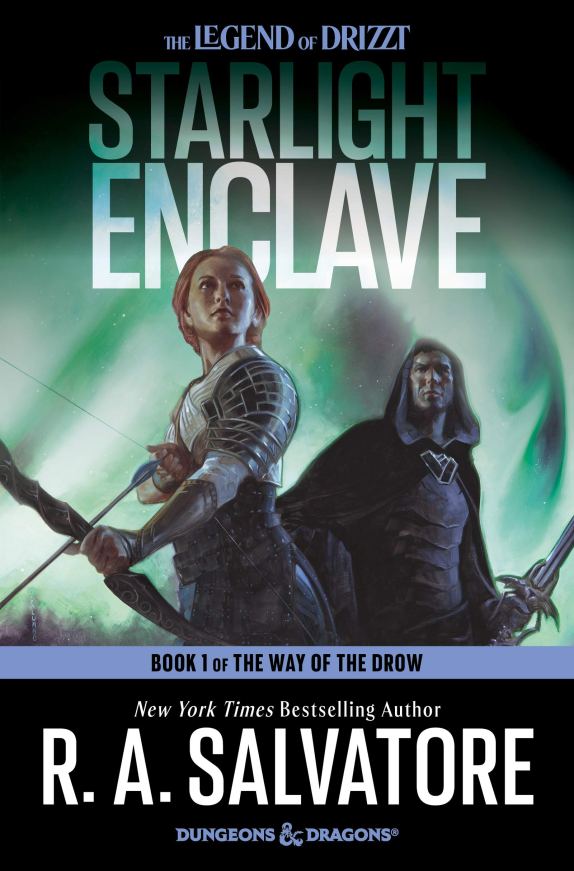
Starlight Enclave Cover

Publisher: HarperAudio (Audiobook – 3 August 2021)

Series: The Way of the Drow – Book One

Length: 14 hours and 49 minutes

My Rating: 4.5 out of 5 stars

Amazon     Book Depository

The icon of the fantasy world, R. A. Salvatore, returns with a new adventure set in the world of his acclaimed Drizzt Do’Urden novels, with Starlight Enclave, the first book in The Way of the Drow trilogy.

Salvatore is an absolute legend amongst fantasy writers, having been an impressive leading figure for over 30 years with a massive catalogue of more than 60 novels.  I have long been a fan of Salvatore, who has written some of my absolute favourite fantasy novels over the years.  While he has written several great series, the author is still best known for his iconic, long-running Drizzt Do’Urden novels, which are set within the shared Forgotten Realms universe.  Salvatore has had a particularly busy couple of years, simultaneously writing two separate series, including The Coven trilogy (Child of a Mad GodReckoning of a Fallen God and Song of a Risen God), as well as the three books in the Drizzt focused Generations series (TimelessBoundless and Relentless).  All six of these recent novels have been pretty incredible, with Song of a Risen God and Boundless being amongst some of my favourite audiobooks of 2019 and 2020 respectfully.  As a result, I was pretty excited when I saw that Salvatore had another Drizzt Do’Urden novel coming out and I made sure to grab a copy of Starlight Enclave as soon as I could.

Two years after the miraculous end to the Drow siege of Gauntlgrym, peace reigns throughout the Forgotten Realms.  However, while some revel in the hard-won tranquillity, others worry about the future.  Despite having cemented his rule over the pirate city of Luskan, the Drow rogue Jarlaxle is deeply troubled by the difficulties plaguing his people.  Despite the apparent magical miracle that showed her as a false gold, the demonic Spider Queen Loth is still worshiped in the dark Drow city of Menzoberranzan, and civil war appears likely as the powerful Drow houses battle for the city’s soul.

Determined that Loth be thrown down once and for all, Jarlaxle looks for every advantage and weapon he can get his hands on.  One of his more ambitious plans leads him to arm his closest friend, the recently resurrected Zaknafein Do’Urden, with two mighty swords of power, including the notorious blade Khazid’hea, better known as Cutter.  With a sly and dark intelligence of its own, Khazid’hea has corrupted many wielders over the years, and its last master, the half-Drow Doum’wielle, may prove to be the missing piece in Jarlaxle’s latest master plan.  Unfortunately, Doum’wielle was lost years before, thrown through a magical portal to the far north, and to find her Jarlaxle will need to embark on another dangerous quest.

Gathering three mighty companions in Zaknafein, the human priestess Cattie-brie and the former assassin Artemis Entreri, Jarlaxle leads them to the extreme far north, a place few have travelled.  However, they are unprepared for just how dangerous this northern land can be, with new foes and mysterious phenomenon they have no idea about.  But there are far great surprises waiting in store for them, ones that could change the very fabric of the world and alter the course of the upcoming Drow civil war.

Starlight Enclave is another compelling and fun fantasy novel from Salvatore who continues to expand and polish his iconic characters and settings with another great adventure narrative.  This latest book contains a fantastic story that not only takes the series back to its bold adventurous roots, but which also sets up a great new trilogy that will no doubt be some of my favourite books of the next couple of years.

This new book contains a distinctive and powerful narrative that starts off a couple of years after the events of the previous novel, Relentless.  The story starts off by setting the scene for a substantial amount of the plot while also recapping some key events of the previous novels in this very long-running series.  It took me a little while to initially get into this book, but once the story got to a fantastic and intense sea battle around 50 pages in, I was pretty hooked.  From there, the story diverts into two distinctive paths, the first following Jarlaxle and his companions as they venture out into the north, while a second following main series protagonist Drizzt Do’Urden, as he takes his daughter Brie to meet his martial arts master, Grand Master Kane.  While initially pretty evenly split, the Jarlaxle adventure storyline quickly becomes the dominant narrative thread, with Drizzt’s storyline stopping about halfway through.  I personally was fine with this; by this point, I was really enjoying the unique and cool tale being told around the four adventurers as they discover new lands and great dangers in the far north.  This second half of the novel is very intriguing, and Salvatore ensures that there is a great blend of action, character development and world building.  Just like with most of Salvatore’s novels, the fight scenes within Starlight Enclave are a thing of beauty and the author does an amazing job bringing the various fantasy battles to life, so much so the reader feels like they are in the room with them.  The narrative eventually ends a bit of a cliffhanger that places most of the characters in mortal peril and which serves as a pretty cool conclusion to this great tale.  I had a wonderful time getting through this story, and I am very intrigued to see how the narrative continues in the rest of the trilogy.

Due to Starlight Enclave being part of the long running Drizzt Do’Urden series, there is a bit of a question about how easy it is for new readers to enjoy this latest book.  I will admit that there might be some difficulties for those unfamiliar with the series.  Salvatore has built up quite a lot of background lore in the last 30+ years, and large amount of this comes into play throughout the book as there are a substantial number of references to previous adventures and characters.  In addition, new readers might not be familiar with Salvatore’s writing style, which is very similar to how he wrote the original novels back in the 1980s, and as a result, they have a more classic fantasy adventure feel to them.  As someone familiar with the previous adventures (although I could use a refresher) and the author’s style, I managed to get into this novel quite well, although I could potentially see new readers having a bit of a harder time breaking into them.  Salvatore does take the time to explain the relevant bits of lore, and readers that pay attention should be able to follow the story without any substantial problems.  I do think that, at this point, most of Salvatore’s novels are probably best read by his long-term fans, but newer readers will probably find something that they enjoy within them.

Unlike the previous trilogy of novels, which was set in more established settings, Starlight Enclave takes the reader on a big adventure into some brand-new areas of this massive fantasy world.  Most of the story takes place in the far, far in the north of the planet, where very few southerners have ventured.  This is a pretty unforgiving land of ice and snow, which proves a real challenge to survive in.  Salvatore does a really good job bringing this snowy landscape to life, and it proves to be an excellent and treacherous setting for the story, especially as the protagonists soon discover that their magic does not work the same way as it does in the south, severely weakening them.  Salvatore also does some major world-building in this book, as he introduces some big new civilisations and opponents.  While I won’t go into too much detail about them here, I will say that it is a pretty major new inclusion, and it is clearly one that is going to have some significant impacts on the Drizzt Do’Urden series going forward.  Some of the new major locations and races are extremely cool and Salvatore has successfully introduced some great and intriguing new entries into this wider world.  I look forward to seeing how these elements are expanded in the future novels, and I have a feeling they are going to produce a few great surprises down the line.

You can’t talk about one of Salvatore’s novels without mentioning the fun and compelling characters.  Starlight Enclave is a great example of this, as it includes a fantastic range of characters, with both intriguing new characters to beloved long-running figures from the overarching series.  Over the last couple of Drizzt Do’Urden novels, Salvatore has noticeably moved away from some of his classic protagonists and has started to focus on the unique combination of the Drow characters of Jarlaxle and Zaknafein.  I quite like these two great characters, especially the constantly manipulative and canny Jarlaxle, and together they form a fantastic pairing who play off each other’s personalities perfectly.  The inclusion of other main characters, Cattie-brie and Artemis Entreri rounds out the main quartet nicely and presents a great group of veteran adventurers who are each looking for something very different, whether it be hope, redemption or the long-lost joy of adventure.  Long-term fans of Salvatore’s books may be a little disappointed that some major characters, such as Regis and Wulfgar, are overlooked in this novel, but I was personally more than happy with the four main characters Starlight Enclave ended up focusing on.

The other character who got a bit of attention in Starlight Enclave is the overarching series’ main protagonist, Drizzt Do’Urden, who is the focus of the book’s secondary storyline.  Like some of the other major characters, Drizzt has not been as heavily featured in the last few books as Salvatore experiments with different protagonists.  This is still true in Starlight Enclave, with less than a quarter of the book given over to Drizzt’s adventure.  Drizzt still shines as a character, especially as he is going through quite a lot.  Drizzt is facing a bit of a crisis of faith and self-identity, brought on by his unique experiences in the previous trilogy when he ascended to a higher plain of existence to escape a deadly foe.  Brought back by the love of his family, Drizzt still isn’t all there, and it is quite fascinating to see the more distracted and spiritual version of the character.  Due to this development, Drizzt’s scenes tend to be quite philosophical in nature rather than action orientated, and there are several detailed discussions and debates about religion and the morality of the Drow.  While not as exciting, Drizzt’s scenes are pretty interesting and form a great counterpoint to the other storyline.  Salavatore is clearly building to something big here surrounding Drizzt, and I feel like there are going to be some other major changes around him in the coming novels.  Still, it was nice to see a somewhat more peaceful Drizzt in this book, and after all these years, I had a smile to see him as a father rather than a warrior.

To enjoy this cool novel, I ended up grabbing the audiobook version of Starlight Enclave, which was narrated by Victor Bevine.  This audiobook has a pretty decent runtime of just under 15 hours, which I was able to get through in around a week.  I really enjoyed this version of the book, and I felt that it helped me get more entrenched in the landscapes and detailed fantasy world that Salvatore produced.  Bevine, who has narrated a substantial number of Salvatore’s previous novels, does another great job here, and it was great to once again here his take on the various characters, especially as there is a bit of continuity from the previous audiobooks I have enjoyed.  Bevine does a good job portraying each of the characters contained within Starlight Enclave, and I like the fun accents he does for the various races, especially the dwarves, who get some fun Scottish tones.  Bevine ensures that this audiobook moves along at a fast and exciting pace, and I always enjoy hearing his narration of these exciting and compelling adventures.

In the amazing Starlight Enclave, the iconic R. A. Salvatore continues to expand his impressive and long-running Drizzt Do’Urden series with another bold adventure novel.  This great novel does an awesome job setting up the cool new The Way of the Drow trilogy with a unique and exciting story and some compelling world-building.  I had a wonderful time getting through Starlight Enclave and it is an excellent read, especially for those established fans of the author who will no doubt love to see another classic fantasy tale.  An overall outstanding book, I am extremely excited to see how the rest of this new series unfolds.

Amazon     Book Depository