The Moscow Offensive by Dale Brown

the moscow offensive cover

Publisher: Corsair

Australian Publication Date – 11 December 2018

World Publication Date – 5 June 2018

Amazon

An intense and exhilarating military thriller filled with advanced military robots duking it out across America, now that sounds like my sort of novel!  Prepare for an explosive technological thriller as Dale Brown, the bestselling author of the Patrick McLanahan series, returns with his latest novel, The Moscow Offensive.

For years, Russia’s ambition to conquer the entire world and defeat the United States has been growing, with its leaders unleashing a series of advanced weapons against the West.  Russia’s dominance was only held in check thanks to the actions of United States pilot Patrick McLanahan, who utilised America’s most innovative technology to counter the Russian attacks.  However, with McLanahan now believed dead, the brilliant and manipulative Russian president, Gennadiy Gryzlov, sets forth a new attack.  Secretly buying a large airfreight company, Gryzlov uses this proxy business to ferry weapons and military personnel into the United States undetected.  Identifying a string of high-value targets, Gryzlov attempts to cripple the United States from within, and strike its citizens with terror.

The only force that might be able to stand up to Gryzlov’s machinations is the legendary Iron Wolf Squadron and their parent private military company, Scion Aviation International.  Formed by McLanahan and former United States President Kevin Martindale, the Iron Wolf Squadron utilises their advanced Cybernetic Infantry Devices (CIDs), twelve-foot-tall piloted combat robots, whose technology and weapons are capable of overpowering conventional military forces.  Currently employed by Poland and its Alliance of Free Nations, the Iron Wolf Squadron is responsible for knocking back several of Russia’s attempted invasions and more ambitious bids for power.  However, their success in Poland has alienated America’s selfish and paranoid president, Stacy Anne Barbeau, who is determined to bring Martindale and Scion down.

Taking advantage of President Barbeau’s incompetence, Gryzlov is able to launch a series of attacks, placing the blame on the Iron Wolf Squadron.  Now targeted by both the Americans and the Russians, a small detachment of Iron Wolf Squadron CIDs, led by Patrick McLanahan’s son Brad, deploy to the United States to counter the Russians and reveal their involvement.  However, the Russians have succeed in reverse-engineering combat robots of their own, and are now fully capable of going toe-to-toe with the Iron Wolf Squadron.

Dale Brown is one of the world’s leading authors of the technological and military thriller genre, having written a huge number of high-octane, electrifying reads since the 1980s.  The Patrick McLanahan series is his main body of work and started in 1987 with his debut novel, Flight of the Old Dog.  This series has mostly focused on the adventures of its titular character, Patrick McLanahan, across a variety of different military situations, inside and outside of the United States armed forces.  These novels have generally been set around the same time as their publication date, meaning that the characters have aged and matured with the series.  As a result, in later years, Patrick McLanahan has taken a back seat from the action, with the role of main series protagonist taken up by his son, Brad McLanahan.  The Moscow Offensive is the 22nd book in the series, and continues with some of the storylines from the previous books in the series.  A 23rd book is already in the works, and The Kremlin Strike is set to come out in early May 2019.

I had not previously read any books in the Patrick McLanahan series before, and while I thought the synopsis sounded pretty awesome, I was not too sure what to expect from it.  After reading it I found The Moscow Offensive to be an incredible novel with some fantastic thriller elements and outstanding action sequences.  The overall story of this book is extremely compelling, and I had a very hard time putting this book down as I really loved this wide-ranging thriller storyline.  I was a little worried about coming into a series 22 books in, but I found that the author did a fantastic job in The Moscow Offensive of introducing the reader to his thriller universe.  Throughout this book, Brown provides the reader with ample descriptions and discussions about the book’s characters, technology specs and the relevant history of the various military organisations, countries and fictional military actions.  As a result, it is really easy for readers unfamiliar with Dale Brown’s work to come into the Patrick McLanahan series with The Moscow Offensive, and at no point while reading it was I lost or confused about any of the book’s plot elements.

The international thriller elements of this book and the utilisation of current world politics were some of my favourite inclusions in The Moscow Offensive.  I liked how the author inserted bits and pieces of real world political and social issues into his writing to create an intriguing and familiar background for the story.  On top of this, he also includes the more outrageous elements from his previous novels, including the Iron Wolf Squadron, whose pilots command high tech robots to stop Russia from invading Poland and other Eastern European countries.  This is a fun mesh of realistic and out-there settings which I found to be an incredible basis for this novel.

The intelligence battle between the United States and Russia has been a firm and dependable element for innumerable thrillers over the years, and Brown constructs a fantastic story around this battle.  The battle is more one sided in The Moscow Offensive, as Brown makes great use of an incompetent United States President character, the use of which has become a much more common element in fiction in recent years (hard to imagine why).  It is utterly fascinating to see the various ways that Brown comes up with to attack America and damage the country’s military infrastructure.  These attacks have a range of different purposes, from outright attacking the US military, to setting the President against the Iron Wolf Squadron.  All of these international and militarist thriller elements are an awesome part of this book, as not only do they help create a great story, but the reader is able to consider the realism of a such a story.

In addition to the cool international thriller elements of this book, I liked the deep look at military technology both real and fictional.  Brown, a former US Air Force aviator, has an excellent understanding of modern military hardware and the people that use them, creating an outstanding militaristic narrative as a result.  The descriptions and analyses of Russian and American weapons, planes and other vehicles are very intriguing and give the book another deep sense of realism.  Of course the most epic inclusions in this book are the CIDs, the large, manned combat robots that the Iron Wolf Squadron have utilised in several of Brown’s previous books to frustrate the Russians in battle.  These machines really amp up this series to new heights, and in The Moscow Offensive, Brown ups the ante by having the Russians develop their own combat robots in response to their defeats against the Iron Wolf Squadron.  This adds a whole new element to the book, as the United States is attacked by these machines and finally has to deal with the devastation they can cause.  Both sides having these machines is incredibly intriguing, as it really allows the author to examine the advantages of these potential machines in a military setting and showcase what sort of damage they could potentially do, even to their creators.  These advanced military elements are a terrific part of The Moscow Offensive, and I was really impressed with how Brown was able to combine it with the book’s other thriller elements to create a captivating read.

The Moscow Offensive contains a faction of Americans fighting a covert war with the Russians, with both sides utilising advanced combat robots.  As a result, this book is packed full of action and there are a number of fantastic high-tech battle sequences.  Without a doubt, the CIDs and their Russian counterparts really are the stars of the book.  These two sets of machines go up against a range of conventional military opponents in some massively destructive and very one-sided scenes.  Brown cleverly saves the combat between the two opposing groups of combat machine until the end of the book, and does a fantastic job at pumping up the hype for their eventual confrontation.  This final climatic battle does not disappoint, as the two sides engage in a brutal and devastating fight that is well worth the wait.

Dale Brown has once again provided the reader with an extremely fun piece of fiction, as he continues his ambitious, clever and entertaining Patrick McLanahan series.  As someone coming into Brown’s fictional universe for the first time, I was blown away by the intense action and outstanding thriller elements contained within this book and it is easily one of my favourite new series.  As a result, I highly recommend The Moscow Offensive to new readers and those existing fans of the series.  This is an excellent choice for anyone looking for some insane action or a truly unique story.

My Rating:

Four and a half stars

Amazon

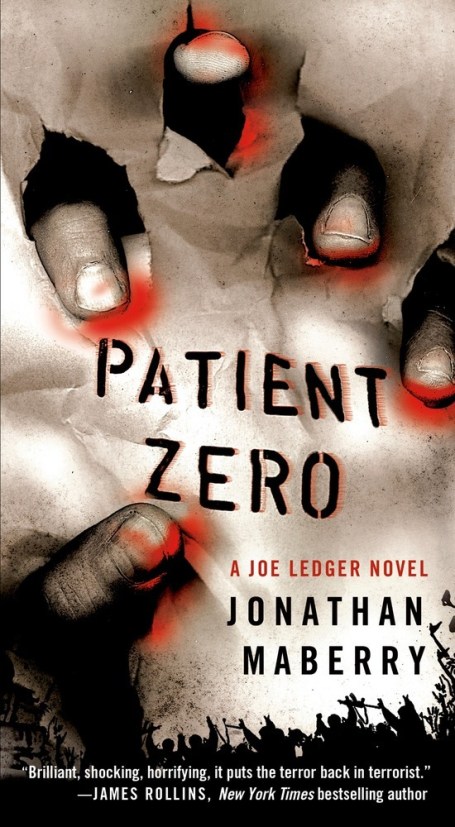
Throwback Thursday: Patient Zero by Jonathan Maberry

Patient Zero Cover.jpg

Publishers: St. Martin’s Griffin

                       Blackstone Audiobooks

Publication Date – 3 March 2009

Amazon     Book Depository

Reviewed as part of my Throwback Thursday series, where I republish old reviews, review books I have read before or review older books I have only just had a chance to read.

A couple of weeks ago I listened to and reviewed the latest book in Jonathan Maberry’s Joe Ledger series, Deep Silence, and found myself hooked on the insane, mad science based thriller adventure.  After enjoying Deep Silence and giving it a five-star review, I started checking out some of the previous books in the Joe Ledger series that I had not had a chance to read before, and found myself enjoying the plot concepts of the other books in the series.  The moment I finished listening to Deep Silence, I immediately jumped back to the first book in the series, Patient Zero, to review as part of my Throwback Thursday series.

When Baltimore detective Joe Ledger is assigned to a joint terrorism taskforce, he thinks it is an opportunity to fight back against the people responsible for 9/11.  What he was not expecting was to have a crazed man try to bite him on his first raid with the taskforce after discovering a warehouse filled with terrorists.  His elation about a job well done is destroyed when he encounters one of the terrorists again later that week.  There is just one problem: Ledger knows that he killed him during the first raid.  Someone has created a terrifying bio-weapon that can turn ordinary people into zombies, and worse, they have supplied this virus to a destructive terrorist organisation that plans to release it within the United States.

As the full extent of the horror being unleashed against them is revealed, Ledger finds himself recruited into a newly created covert organisation that was set up to handle extraordinary threats such as this.  Known as the Department of Military Sciences (DMS), this organisation wields the latest technology and the country’s brightest scientists under the command of the mysterious Mr Church.  As a member of the DMS, Ledger leads an elite team of combat specialists in the field in an attempt to contain any attempts to unleash the virus on the population and to destroy those who have already been infected.  As Ledger’s investigation progresses, he uncovers an elaborate conspiracy that will have devastating impacts for all of humanity.  But with the fate of the world in the balance, it soon becomes clear that there is a traitor within the DMS who has no qualms about unleashing a zombie apocalypse.

I have to admit that after absolutely loving Deep Silence, I had very high expectations when I started reading Patient Zero.  Luckily I was not disappointed and found that Patient Zero had a fantastic action based storyline that makes good use of its mad science elements to create an intense and very enjoyable novel that sets up all the elements for this future series.  I also chose to check out the first book in this series in its audiobook format, which, at just under 15 hours, is a great way to enjoy this high-octane story.

Hands down, the best thing about this novel has to be the zombies and the way that Maberry has created a compelling and intricate thriller story around this classic horror story concept.  The thriller aspect of this is really clever.  Rather than being the central antagonists themselves, the zombies are a tool being utilised in a wide-reaching conspiracy that the protagonists have to unravel in order to figure out the origins and endgames of the book’s true antagonists.  These thriller elements are quite detailed, and Maberry utilises a number of chapters told from the antagonists’ point of view to add some depth to the conspiracy and showcase the extent of their plot, as well the problems these groups have.  The protagonists also have to deal with potential traitors in their ranks, advanced science that they do not understand and a surprisingly organised, devious and well-equipped terrorist organisation.  All of this is an extremely captivating thriller storyline, and I love how Maberry has managed to utilise the book’s zombie element to help flesh this out.

Maberry has also created a unique and intriguing zombie origin for this book that is based on potential real-life science.  The zombies in this book are the result of a disease rather than a supernatural calamity.  They have been created by some advanced science and extreme mutations of existing diseases and viruses, such as prion diseases.  As a result, Maberry and his characters spend a lot of time examining the potential science behind this zombie virus, which pulls the reader in as they consider how close something this crazy could be to a reality.  I was really struck by the way that Maberry tried to show the horror that these creatures would inflict on the people who encounter them, and the sheer terror that they inflect on normal humans.  The point-of-view protagonists spend significant time explaining how terrifying and emotionally damaging it is to have to encounter and fight these infected people, as well as how guilty they feel about having to kill them.  There are quite a few parts of the book where the characters discuss how damaging these events are to them, and it really adds some emotional gravitas to this story.  Maberry is a prominent author of zombie fiction, so it is no surprise that he is able to create quite a number of awesome and terrifying scenes featuring the zombies as they attack and kill all around them.  There are also some interesting zombie deviations that appear and offer some unique elements to the story.  Overall this is an incredible and memorable addition to this story and one that will really appeal to fans of zombies and the horror genre.

Action is a major part of the Joe Ledger series, as the protagonist leads an elite special forces unit against all these elite scientific threats.  As a result, there are a huge number of action sequences throughout this novel and the reader is constantly left with a racing pulse.  There are so many great fast-paced elements throughout Patient Zero for action junkies to enjoy.  Maberry is always great at describing special forces tactics in his stories, and I enjoyed seeing them used against the unique threats in this book.  There are a number of excellent firefights throughout the story, and the author has a great mind to examining the psychology of a gun battle.  Maberry’s love of martial arts and close-combat fighting once again shines through in Patient Zero, as his protagonist is an expert fighter who has innumerable hand-to-hand fights with a number of different opponents.  While the above actions scenes are all extremely awesome, the best scenes have to revolve around the desperate fight between these elite soldiers and the horde of zombies that they encounter.  These scenes are really fantastic and watching the special forces characters fight tooth and nail against a horde of zombies becomes a captivating and powerful part of this book.  There are quite a few crazy action scenes throughout Patient Zero for the reader to look out for and which are defiantly a highlight of the book.  I personally found that listening to these scenes in the audiobook format really brought me into the centre of the action, and it was an excellent way to enjoy this element.

Patient Zero is an excellent introduction to the Joe Ledger series and contains a number of elements that will continue into the rest of the series.  I came to this book having first read the 10th and latest book in the series, Deep Silence.  As a result, I was really intrigued to see what characters were introduced in the first book and which ones do not appear in the final book of the series.  There are some interesting differences between Patient Zero and Deep Silence that I found quite fascinating.  For example, the opponents and technology in this first book are a lot more realistic, as Maberry has yet to start utilising the Lovecraft-inspired aliens which feature in some of the later Joe Ledger novels.  The head of the DMS, the mysterious Mr Church, also comes across as a much colder character in this first book, as well as someone who is more comfortable with civilian deaths and sacrifice if it results in the survival of the rest of the world.  That being said, there are some familiar elements.  Ledger is still an incredibly sarcastic and funny protagonist, and the author tries to highlight a huge range of varied viewpoints to show the whole range of the plot the DMS is trying to unravel.  Patient Zero serves as a great introduction to the DMS, and I really enjoyed seeing the early days of this organisation.  I also love how everyone is quite confused about what this organisation is and the mystery around Mr Church, who appears to have an incredible amount of influence and power in Washington.  For example, at one point he actually tells the president of the United States that he is wasting his time and hangs up on him in, an action an incredulous Ledger describes as “bitch-slapping the president”.

Patient Zero is an incredible first novel in Jonathan Maberry’s incredible Joe Ledger series and one that serves as a fantastic introduction for readers unfamiliar with this series.  Featuring all sorts of mad science, impressive action sequences, a five-star thriller storyline and a ton of amazing zombies, this is an outstanding novel and one that proves very hard to put down.  After loving this book, as well as the latest book in this series, Deep Silence, I am now fully determined to read the rest of the books in the Joe Ledger series.  Fully expect to see a review for The Dragon Factory very soon; I have no doubt that I will really enjoy that book as well.

My Rating:

Five Stars

Amazon     Book Depository

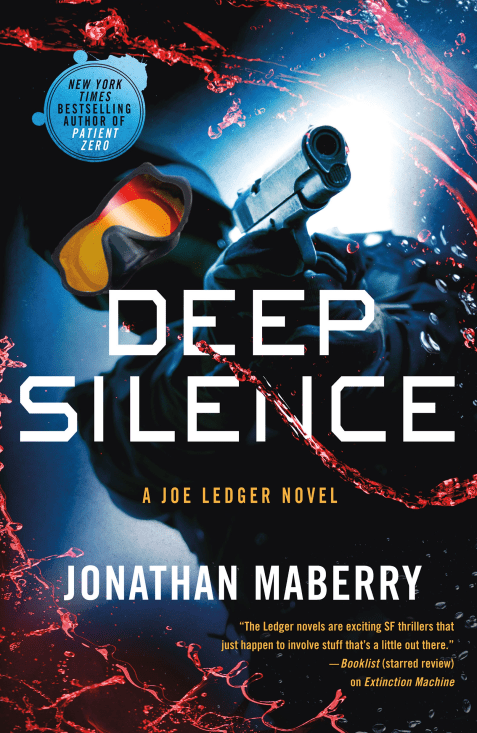
Deep Silence by Jonathan Maberry

Deep Silence Cover.png

Publishers: St. Martins Griffin

                        Macmillan Audio

Publication Date – 30 October 2018

Amazon     Book Depository

From horror legend Jonathan Maberry comes the 10th book in his weird-science based horror, thriller, science fiction Joe Ledger series, which takes the reader on a wild joyride through a world gone mad in this five-star adventure.

I have to admit that Maberry is not an author that I have had much experience with before.  The only work of his I have previously read was a fun short story that was featured in a volume of zombie short stories he jointly edited with George A. Romero in 2017 that I previously reviewed here.  However, I am extremely happy that I decided to check out this latest book as it exposed me to this incredible series, which I enjoyed immensely.  I can think of no greater praise for this novel then to say that upon finishing it, I immediately dropped everything and started reading the first book in the series, Patient Zero, which I will be reviewing in the next few weeks as part of my Throwback Thursday series.

I chose to listen to Deep Silence on audiobook rather than read a physical copy.  The audiobook format of this book is just under 16½ hours long and is narrated by Ray Porter, who has worked on several other books in the series.

In this latest book, a Russian splinter group have developed a powerful weapon with pieces of alien crystal seeded throughout the planet.  This new weapon can cause devastating earthquakes on a level never before seen and has the potential to destroy the entirety of the United States.  The weapon also has a chilling side effect: it causes people around the epicentre of the quake to engage in violent acts of madness, from suicide to ferocious attacks on others.  The first attack targets Washington, with mass violence erupting around the Capitol building.

America’s only hope may be the top-secret rapid response organisation, the Department of Military Sciences (DMS).  For years, the DMS has been the only line of defence against the insane science America’s enemies are utilising and developing in this new age of wonders.  From deadly diseases, ancient forbidden technologies, extreme acts of genetic manipulation, the latest forms of cyber and electronic attack, and even weaponised zombies, the DMS, led in the field by Captain Joe Ledger, has managed to stop all these threats and more.  Utilising the latest military and espionage equipment and the best and brightest soldiers and scientists America has to offer, the DMS operates just outside the government and can go further than any other agency can.

However, while the DMS attempts to combat this latest threat, they find themselves hindered by a megalomaniac President whose stupidity and paranoia make him more afraid of the DMS than the group unleashing earthquakes across his country.  As Joe and his team attempt to hunt down the origins of this attack they must contend not only with a dangerous Russian force but also with agents of their own Government and devices that can drive even the most dedicated DMS agent insane.  But as the Russians attempt to force the eruption of the Yellowstone caldera, the greatest threat may come from the creatures the technology was stolen from.

Deep Silence is the 10th book in Maberry’s Joe Ledger series, which started in 2009 with Patient Zero.  Maberry has been writing since 2006, with his debut book Ghost Road Blues forming the first book in the Pine Deep Trilogy.  Since then, Maberry has written a huge number of books, most of which have a horror theme or focus.  Apart from his Joe Ledger series, Maberry is probably best known for his Rot & Ruin series, a young adult zombie apocalypse series.  Aside from his fictional novels, Maberry has also written several comics for Marvel as well of a number of non-fiction books, which tend to focus on Maberry’s passions for martial arts and the supernatural.

Deep Silence is an exceptional book that combines together a number of genres, including science fiction, thriller, horror, military fiction and spy thrillers into one very captivating narrative.  The end result is a non-stop thrill ride that perfectly utilises the series’s bizarre nature and advanced science to create a devastating threat and a larger-than-life protagonist to face it.  There are so many amazing elements to this book, from its continuation of an enjoyable series, to the very weird elements that come into play, to the excellent writing style and enjoyable characters.  Once I started reading this book I just could not stop, and it is easily one of my favourite books of this year.

From what I understand, the Joe Ledger series started off mostly focusing on the mad sciences that humans are able to create and use against each other.  However, in recent books, the series has taken on a more Lovecraftian vibe, with unknown aliens, space demons and incredibly insane technology.  Deep Silence in particular seems to relate back to several of these previous alien technology based novels, as the devices, technology and motives that the book’s antagonists utilise are closely related to the adventures that occurred in previous books.  That being said, there is still the continuous use of more advanced human technologies utilised by many of the book’s characters, especially those working for the DMS.  All the crazy gadgets that they use are pretty impressive, but none (with one or two major exceptions) are outside the realm of possibility and reflect technologies that could potentially exist.  Indeed, in the introduction to Patient Zero, Maberry actually confirms that most of the technology he describes in his books is currently used or could soon be used by intelligence organisations around the world today.

One of the challenges of coming into a series late is the reader’s lack of knowledge about the universe’s background information, lore and the development of its main characters and the extent of their relationships.  Maberry does an incredible job bridging this gap throughout Deep Silence, providing the reader with descriptions of previous events, recaps of character descriptions and history and making use of a number of references to previous missions and adventures captured in the other books in the Joe Ledger series.  There are also a number of scenes that appeared to be callbacks to previous books, although the author was able to describe the pertinent details of these events.  As a result, I was never lost at any point and really appreciated the recaps and detailed descriptions the book’s various point-of-view characters provided throughout the novel.  It also made me very curious about some of the previous books in the franchise, and I am now very interested in checking out some of these insane and fun-sounding adventures.  As a result, Deep Silence is an excellent book if you want to get an idea of what the Joe Ledger series is all about.  At the same time, established fans of this long-running series will be interested to see the significant changes that occur to the book’s main characters, as well as the scenes detailing where the series will potentially be going in the future.

One of the things that I really enjoyed about Deep Silence was the way that Maberry presents the book’s narrative from multiple perspectives and across a range of different time periods.  Because of this, the reader is given a far wider view of the overall narrative.  Not only do they get to see the protagonists attempting to investigate and stop what is going on, but they get to see the antagonists coming up with their plans, discovering and researching their doomsday device over a period of years and then implementing their mission.  This also allows the reader to get a far deeper understanding of the antagonist’s objectives and mindscapes in committing these acts and what it costs them mentally and emotionally.  Nearly all the fun and eccentric characters working in the DMS get a few scenes told from their point of view.  This provides the reader with some high level, but easy to follow, scientific discussions, hacking sequences and the utilisation of incredibly exciting-sounding advanced espionage technology.  There is also a focus within Deep Silence of the politics around and behind the DMS, and how the organisation’s leader, the mysterious Mr Church (who is totally an alien, right?), deals with these situations.

While all of the other point-of-view characters are entertaining and it is intriguing to view their sides of the story, the best character has to be the series’s main protagonist, Joe Ledger.  Ledger is the extremely dangerous and slightly disturbed leader of the DMS field team, and has been at the forefront of all the adventures in this series.  It is interesting to note that Ledger is the only character in this book whose story is told from the first person perspective, which is fortunate because Ledger is one of the biggest smartasses in fiction, especially within the privacy of his head.  Nearly every single piece of the book told from Ledger’s point of view is filled with jokes, wisecracks, and exaggerated or sarcastic thoughts.  Ledger has some incredibly humorous observations about the world around him, especially the eccentric characters he encounters, and his thoughts are just as likely to be self-deprecating as they are to be insulting about the people he has to deal with.  He is also an eccentric being who does some incredibly funny things, from having fun with his opponents to humming the Mission Impossible theme as he breaks into a safe.  However, beneath this humorous exterior there is a deeply damaged character who is severely impacted by events that have occurred before and during this series.  Maberry spends significant time diving into this character’s history and psyche, which quickly gives the reader, even readers previously unfamiliar with the series, a good understanding of his life and the events that define him.  His deep and fractured mind becomes a key part of this story, especially when it encounters mind-altering alien crystal and events beyond the realm of human comprehension.  All of this helps create an amazing and incredibly relatable central character whom the reader becomes incredibly drawn to, and as a result, Ledger is one of the best things about this book.  Special mention should also be given to Ledger’s combat dog Ghost, who appears in nearly all the same scenes as Ledger and is just as much of an enjoyable character as his owner.

While the mad science elements and characters are great, Maberry has also ensured that this is the perfect book for those action junkies looking for fast-paced thrills.  Ledger is an absolute beast throughout this book and engages in a number of fantastic fights in a variety of different scenarios.  Maberry channels his love of martial arts through this character and includes a number of detailed and very quick fight scenes as Ledger dismantles his opponents with efficient skill.  The other characters are no slouches and there are number of great action sequences I enjoyed.  Two of my favourites have to be two separate and extended sequences which see Ledger and DMS’s Echo Team engage in massive fire fights with a range of opponents.  These scenes are absolutely incredible and make the reader feel like they are really in the middle of a gun battle.  The author takes pains to try and highlight how methodical and calm professional teams can be during battles while also highlighting the various strategies and combat advantages used.  The multiple perspectives come into play here perfectly, as the different members of Echo Team engage in various encounters around the main battle, really highlighting what an effective special ops team can accomplish in the field.  Maberry enhances the fun and the action to a crazy degree by also utilising the advanced technology available to the DMS agents.  This not only includes some insane and deadly weaponry, which is very cool in action, but also other pieces of advanced technology such as drones, body armour, goggles, and enhancements for Ghost that help turn the battles into massive and enjoyable set pieces.

Nothing, however, can top the sheer insanity that unfolds when the book’s antagonists unleash their super weapon against the world.  Maberry’s descriptive and skilled writing really brings these scenes to life.  The sheer devastation of the earthquakes that he describes is just incredible and very disturbing.  But nothing is more crazy or electrifying then the scenes where the people who are affected by the strange energy given off by the weapon go insane and start participating in a violent rampage against themselves or against each other.  Maberry pulls no punches here and all the violence is on full display, from terrible acts of violence against anyone around them to disturbing suicides or episodes of self-harm.  In many of these scenes the author attempts to get into the head of these characters and watch them slowly unfold from within.  This mostly prevalent with his protagonist, Joe Ledger, but other characters’ thoughts are shown.  Let’s just say you’ll never look at the Beatles song Revolution 9 the same again.  The biggest example of this insanity happens around the Capitol building in Washington DC, and quite frankly it reminded me of the church scene in Kingsman: The Secret Service, with the protagonists stuck in the middle of a crazy mob.

One of the more intriguing parts of Deep Silence is the side character of the President of the United States of America.  While this character is never explicitly named in the book, he is clearly supposed to be a Trump analogue.  The character is an easily manipulated, short-tempered, Twitter-obsessed moron who puts his own needs far above those of the country he is governing.  The resemblance to Trump is uncanny, and Maberry does an incredible job mirroring his arrogance and personality throughout the book.  While this character is a great addition by itself, Maberry spends a lot of time exploring how a character like this would deal with the advanced technology and extreme catastrophes that are a major part of this series.  The results are frustrating for the reader as they are forced to sit there and watch this character make all the wrong decisions and serve his own agenda or self-interest.  It was also very intriguing watching this President go up against the DMS as he routinely targets the department out of fear and ignorance.  The new political reality of Washington becomes a major factor throughout Deep Silence, and Maberry is understandably critical about how things are being run and the insanity currently gripping Washington.  It was very interesting to see Maberry incorporate the current unpredictable political reality of America into his new book, and readers will be very intrigued to see how this might impact the future of his long-running series.

I listened to the audiobook version of Deep Silence, narrated by Ray Porter.  The audiobook version does go for over 16 hours, so it’s one of the longer ones I have listened to lately.  That being said, due to its exceptional content, I found myself making a variety of excuses just to keep listening to this audiobook, and got through it very quickly.  The audiobook is an incredible way to experience this book, and I would highly recommend it, mainly because of Ray Porter’s narration.  Porter absolutely nails all of the characters and provides a number of amazing voices to fully capture the diverse accents and attitudes of this eccentric group of characters.  I was particularly enthralled with the calm, cool voice he gifted to the DMS Director, Mr Church, which really reminded me of Tom Hanks’s voice.  Special mention should also be given to his narration of the President.  The narrator created a fantastic Trump-like voice that fully conveyed the character’s high opinion of himself, as well as his dismissive and arrogant nature.  I actually had a visceral reaction when I heard that voice the first time, it was that good.  Porter’s narration for Joe Ledger was also perfect, as he does an incredible job portraying Ledger’s high-energy musings and the full tone of his personality.  Porter’s voice peaks and rises to meet the full intent of any of Ledger’s sentences, and he is a master at conveying Ledger’s innate sarcasm.  At the same time, he is also able to make his voice more serious and subdued during the darker scenes in which Ledger is deep within his head or his memories.  This is sterling work from Porter, and one of the best audiobook narrations I have ever listened to.  As a result, I highly recommend that the audiobook version of Deep Silence as the best way to experience this novel.

Bestselling author Jonathan Maberry once again takes his audience on a captivating thrill ride in the Joe Ledger Series.  Deep Silence provides the reader with an extraordinary and very engrossing story that proves extremely hard to put down.  Equally enjoyable for established fans of this long-running series and new readers who have yet to experience Maberry’s work, readers can and will have an incredible amount of fun with this book.  Best enjoyed in audiobook format, Deep Silence is guaranteed to make you a dedicated fan of the author and easily gets a five-star rating from me.

My Rating:

Five Stars

Amazon     Book Depository

Archenemies by Marissa Meyer

Archenemies Cover

Publisher: Pan

Publication Date – 6 November 2018

Amazon     Book Depository

Following on from her immensely popular 2017 release, Renegades, Meyer continues her exciting tale of superpowered duplicity and intrigue with Archenemies, the second book in the Renegades trilogy.

In an alternate version of Earth, superpowers exist and those that have them are known as prodigies.  For most of this world’s history, prodigies were tormented and persecuted and many were forced to live in hiding.  That was until the Age of Anarchy, when the world’s villainous prodigies rose up and established their own world order of chaos and destruction, led by the notorious Ace Anarchy.  It was not until the rise of the superhero syndicate, the Renegades, that order was restored and prodigies were accepted as a part of society.  While most people see the Renegades as symbols of hope and virtue, there are some who have good reason to hate them.

Nova is one of these people, and her hatred has led her to live a dangerous double life.  Most of the world knows her as Insomnia, a recent recruit to the Renegades, who serves as a member of a patrol team in Gatlon City, the location of the Renegade’s headquarters.  However, Nova is also secretly Nightmare, the niece of Ace Anarchy and a member of the Anarchists, a group of villains dedicated to destroying the Renegades.  Hating the Renegades for the role she believes they played in the death of her parents, Nova has infiltrated the superhero team in the hope of discovering all their secrets in order to destroy them from within.

While she has so far maintained her cover, Nova’s mission has become complicated due to her relationship with Adrian, and the son of the people she holds most responsible for her family’s tragedy.  But Adrian has secrets of his own.  While he leads Nova’s patrol team as Sketch, Adrian is also living a double life as the Sentinel, a vigilante superhero acting outside of the codes and restrictions of the Renegades.  Although Adrian was only attempting to help, his actions as the Sentinel have placed a target on his back, and the Renegades are determined to stop rogue prodigies.

While Nova is determined to complete her primary mission and retrieve a powerful artefact from within the Renegades’ headquarters, both hers and Adrian’s lives are about to get even more complicated.  The Renegades have revealed a game-changing new weapon which forces the two young prodigies to question everything they know about what justice is.  Can they keep their respective secrets from each other, or are their worlds about to come crashing down around them?

Archenemies is the latest book from bestselling young adult author Marissa Meyer, and the second book in her Renegades trilogy.  The first book in the trilogy, Renegades was one of last year’s most successful young adult hits.  Readers may also be familiar with some of Meyer’s other young adult works include The Lunar Chronicles, a series that focuses on a dystopian science fiction reimagining of classic fairy tales; Heartless, a prequel novel to Alice in Wonderland; and the young adult graphic novel series Wires and Nerve.

This second book in the trilogy continues Meyer’s incredible story of superhero intrigue and adventure.  The central story is a captivating tale told from the point of view of both Nova and Adrian and follows them as they attempt to live their double lives in this exciting world.  The storyline that follows Nova attempting to hide her affiliations with the Anarchists as she infiltrates the Renegades is a thrilling and exhilarating narrative.  Nova is constantly on edge as she must allay the suspicions and investigations into her background and her motivations for performing certain tasks around the Renegades’ headquarters.  The character must also deal with the emotional turmoil that she experiences as she struggles to stay on her original mission of betraying the Renegades, despite some conflicting feelings she develops.  The sections of the book that focus on Adrian are also very compelling, especially as his is the direct opposite to Nova’s story, as he begins to disobey the rules of the Renegades to engage in some illegal vigilante work.  His struggles about whether to keep up his activities become a major part of his storyline, especially as he experiences some severe consequences for going into the field without backup.  He is also determined to keep his identity as the Sentinel hidden from Nova, as she particularly dislikes the Sentinel, although Adrian gets the reason for the dislike completely wrong.

These two separate storylines combine together really well into one central narrative, and Meyer does an incredible job showing how the secret actions of one of the point-of-view characters impacts on the other character.  For example, part of Adrian’s storyline focuses of his investigation into the death of his mother, a famous superhero, and his search leads him to believe that Nightmare holds the answers he is looking for.  This becomes a big problem for Nova, as she has managed to fool most of the world into believing that Nightmare is dead, and Adrian’s investigation could blow her cover.  There are also several fantastic scenes where one of the protagonists comes across a clue that the reader knows could reveal the other character’s dual lifestyle.  The suspense that Meyer creates during these sequences is subtle but effective, as the reader is left holding their breath, waiting to see if this will be the event that will lead to the inevitable part of the trilogy when the two characters find out about each other.  This second book also contains some interesting hints towards some major reveals that are likely to occur in the final book of this trilogy, as well as some urgent plot points that can only lead to some intense and action-packed scenes in Meyer’s next release.

Meyer also continues the intriguing romance angle between the two main characters that began in the first book of the trilogy.  Rather than being ultra-intense, this romantic subplot comes across as more of a slow burn, as Nova and Adrian both like each other but are reluctant to act on their feelings due to the dual lives they are secretly leading.  Nova does spend most of the book attempting to heat this relationship up, but this is more in an attempt to seduce Adrian in order to help her further her goals for the Anarchists.  However, she truly has feelings for him, which continue to develop throughout the course of Archenemies.  There are several nice scenes throughout the book as the two point-of-view characters attempt to initiate the relationship, and despite the deceitful backdrop of the story, their relationship starts to feel like a genuine, heartfelt romance.  The eventual reveals about both characters’ secret identities will no doubt result in some significant drama within the next book, and readers will be interested to see the final result of this relationship.  For those interested in a less complicated romantic story, there is also a lighter romance angle between Renegades side characters Smokescreen and Red Assassin.  Their sweet and awkward flirting and courtship will be instantly recognisable and relatable to most readers, and you can’t help but hope that the two characters will realise how much they like each other.

I quite enjoyed the fantastic world that Meyer has created for the Renegades trilogy.  A world filled with superpowered beings is an excellent place to set an intrigue-studded young adult series such as this.  The creative and thrilling story of infiltration and morality is amplified by the rich number of superhero elements throughout the book.  There are a huge number of diverse superpowers, as well as mysterious and dangerous artefacts and weapons.  Meyer has created a number of interesting and unique superpowers, including a woman who makes practical weapons out of her own blood and a man whose power is to make people see the wonder in everything.  The sheer amount of different powers and technology available thanks to the author’s imagination allows for a number of cool fight scenes and action sequences throughout the book, which plays wonderfully with the other elements of the story.  A superb and creative background location.

While Archenemies’s dramatic story and fun superhero-based location forms a fantastic base for this novel, one of my favourite parts of the book was the moral and ethical issues raised by various characters throughout the story.  Both point-of-view characters have different opinions about whether the Renegades or the Anarchists are in the right and what constitutes justice.  While Nova’s opinions about the Renegades could potentially be explained away as brainwashing from her uncle and the other Anarchists, several of the actions and attitudes she encounters while undercover seem to justify her beliefs.  Her belief that the Anarchists might be in the right is supported by the fact that most of the remaining members of the team of villains seem to be really nice people who are supportive and helpful to Nova.  Several members also have somewhat tragic backgrounds which highlight why they choose to live their lives apart from the rest of society.  Adrian, on the other hand, has been raised to believe in the Renegades’ methods and code, but he has started to find them too restrictive and begins fighting crime outside them in his guise as the Sentinel.  However, he finds himself targeted by the Renegades for doing heroics outside of their code, and begins to wonder if they are making the right decisions, a feeling that becomes amplified thanks to his interactions with Nova.  Meyer further complicates matters by diving into the history of the prodigy persecution and discussing how it only ended when the villains rose up and took control, and this current golden age of super heroes only exists because they did.

This moral debate about what a group of superheroes should be able to do is further amplified by the introduction of the Renegades’ new weapon, Agent N, a formula that can permanently remove the powers of any prodigy.  Nova, in her guise as Insomnia, argues strongly against the Renegades’ policy of wilfully administrating Agent N against any rogue prodigy they encounter, believing that they don’t have the right to decide who gets to have powers and who doesn’t.  While her debates are mostly ignored by her team members, her concerns are validated thanks to the actions of a rogue team of Renegades who abuse Agent N in the field.  There is a great scene when Adrian as the Sentinel attempts to stop them committing a terrible crime, and these rogue Renegades actually believe they are still morally superior to Sentinel because they are members of a super team, and he’s not.  Despite her misgivings, Nova still utilises Agent N to achieve her own goals, and justifies it as being for the greater good.  Thanks to a series of escalating situations within the story, by the end of the book, the reader is left wondering which side, if either, is completely in the right, which personally has got me very excited for the final book in the trilogy.

Archenemies, the second book in the Renegades trilogy, is a captivating and excellent read from Meyer which presents a superb story about dual identities in a morally grey superhero universe.  While aimed at a young adult audience, this series will prove to be incredibly intriguing to older readers and is easily suitable for a younger teen audience.  Probably best read after enjoying the first book in the trilogy, Archenemies is still quite easy to follow for those who chose to enter the Renegades series at the second book, due to its detailed descriptions of major plot points that occurred earlier in the series.  I had a lot of fun with Archenemies and will definitely be checking out the final book in the trilogy when it comes out next year.  An incredible adventure from Meyer, this book comes highly recommended.

My Rating:

Four and a half stars

Amazon     Book Depository

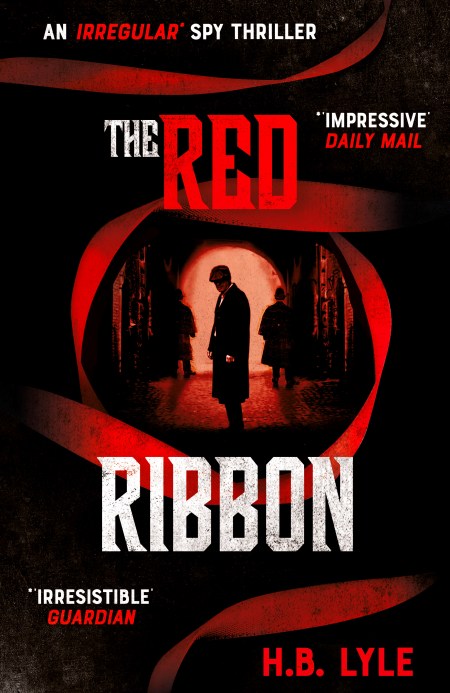
The Red Ribbon by H. B. Lyle

The Red Ribbon Cover.jpg

Publisher: Hodder & Stoughton

Publication Date – 23 August 2018

Amazon     Book Depository

Return to pre-World War I London for another compelling spy adventure in H. B. Lyle’s second book, The Red Ribbon, which is set in the same universe as Sherlock Holmes and features three exciting characters with an intriguing look at early 20th century British history and espionage.

In London, in 1910, Captain Vernon Kell is still attempting create a secret intelligence service capable of protecting England from foreign spies and infiltrators.  Despite the early success of the Secret Service Bureau, Kell’s organisation is constantly under pressure from the country’s politicians and is in danger of being absorbed into Special Branch of London’s police.

Unfortunately, Kell’s only agent, Wiggins, is distracted with his own cases and unwilling to play the political games needed to help the service survive.  Wiggins is the former leader of Sherlock Holmes’s street urchin surveillance organisation, the Baker Street Irregulars, and has picked up a few of his old master’s deductive tricks while retaining his lower-class charm and street smarts.  Wiggins is obsessed with finding the infamous anarchist, Peter the Painter, the man responsible for the death of one of Wiggins’s oldest friends, and is scouring the streets for him.

Looking for a missing girl on behalf of one of his contacts, Wiggins begins to investigate a mysterious embassy located in the affluent neighbourhood of Belgravia.  The embassy is actually a high-class brothel frequented by the rich and powerful of London.  When another girl associated with the embassy is found murdered, Wiggins attempts to find justice; however, the embassy is under the protection of someone Wiggins knows well: Tommy, a fellow former member of the Irregulars.

However, Wiggins’s personal investigations intersect with his work for Kell, as the two of them hunt for the source of a series of leaks at the highest level of government.  With the help of Kell’s wife, the suffragist Constance, Wiggins and Kell must find the connection between the events occurring around London in order to keep the country safe from sinister foreign influences.

The Red Ribbon is the follow-up to Lyle’s debut novel, The Irregular: A Different Class of Spy, and is the second book in the Irregular Spy Thriller series.  This is a great series that will appeal to a huge range of readers, as Lyle combines compelling historical fiction elements with a thrilling espionage story that has fictional links with one of the most iconic book series of all time, Sherlock Holmes.

The story within The Red Ribbon is split between the book’s three main protagonists and takes a look at each character’s different and exciting adventures.  Wiggins and Kell continue their missions from the first book, and while their investigations are ostensibly separate from each other, they eventually intersect in several clever ways.  The relationship between Wiggins and Kell is an important part of these two storylines, as Kell despairs of Wiggins’s personal investigations and wants Wiggins to solely work missions for the service.  The third focal character is Kell’s wife, Constance, who was a supporting character in the first book.  Constance becomes a much more significant character in The Red Ribbon, as the book focuses on her involvement with the suffragist and suffragette movements.  Both Wiggins and Kell become involved with Constance’s storyline in different capacities, while Constance provides significant assistance with her husband’s espionage work.  With three semi-connected stories, it does at times feel like there is too much going on for one cohesive narrative.  However, each of the stories comes together quite well in the end and provides the reader with an extremely captivating overarching narrative.

Having three separate storylines allows Lyle to highlight the differences in social classes during this historical period and highlights how different groups of people were treated.  Kell, as the influential gentleman, is forced to constantly deal with the upper-class politics and attitudes during his attempts to keep the service going.  Wiggins, who was raised on the street, deals more with the average Londoner and experiences the poverty and desperation many of them encounter.  He must also deal with the distain of the upper classes in the course of his espionage work.  While he is clearly the most competent agent in the entire British service, he is constantly looked down upon and ignored by his government superiors.  There are also several instances where Wiggins is assigned to infiltrate labour movements, something he is very reluctant to do due to his world views and background.  This divide often serves to create some significant tension with Kell, who, despite fully understanding Wiggins’s value, skills and point of view, is often exasperated by him.  The beefed-up storyline around Constance allows the reader a significant look at the suffragist movement and the early battles these women fought for equality.  In The Red Ribbon, Constance joins the much more militant suffragettes, and is constantly infuriated by the reactions of the male politicians and their oppressive policies.  The oppression of women also becomes a major point of conflict between Kell and Constance which results in a decline in their relationship, although the final payoff of this storyline is quite sweet.  I really enjoyed the way that Constance and Wiggins developed a fun comradery in this book, as their poor treatment by the upper-class men allow them to bond, with Wiggins even teaching Constance some anti-surveillance techniques.

Lyle cleverly incorporates several important historical events into this book, such as the funeral of Edward VII, the Black Friday suffragettes and suffragists protest outside Parliament and the Siege of Sidney Street.  These events are quite significant in their own right, and Lyle spends substantial time filling in their background and ensuring the reader is aware of why they are happening and why they are important.  However, they also serve as very compelling background events for the plot of The Red Ribbon and work well to enhance this already fascinating story.  In addition to these intriguing and important historical events, Lyle has also packed a number of historical figures into this story.  Quite a few prominent politicians and British civil servants have significant roles in the plot, including a young Winston Churchill, which makes the story feel a lot more authentic.  The author’s continued use of the enigmatic Peter the Painter as one of the book’s principal antagonists is another brilliant stroke, and the reader is provided with some intriguing theories about who he actually was and what his eventual fate was.  Lyle does slightly go overboard by adding in some other famous historical figures in small cameo roles, and the shoehorning in of people such as Charlie Chaplin and members of the 1910 British Antarctic Expedition seems a bit unnecessary.  That being said, it was amusing to watch Chaplin use his drunken tramp routine to help Wiggins escape a conflict in a theatre.

One of my favourite components of this book was the author’s detailed and unique look at British espionage and counter espionage in the early 20th century.  One of the book’s protagonists, Captain Kell, is an actual historical figure who is credited for creating Britain’s domestic spy service, which morphed into the modern MI5.  This fictionalised account of the early days of this organisation are quite fascinating, especially when the author looks at some of its early challenges, the political battles Kell might have had to face, and the sort of work this organisation was originally looking at.  In addition to the domestic espionage work, the protagonists of The Red Ribbon find themselves drawn into one of the most infamous espionage incidents of the era: the capture of British agents Captain Trench and Lieutenant Brandon in Germany in 1910.  This is a highly fictionalised account of the incident, as Lyle has inserted Kell and Mansfield Cummings, one of the founders of MI6, as being there.  It plays marvellously in Kell’s overall storyline, while also featuring some great scenes as the three protagonists’ attempt to evade arrest by the Germans.  Trench and Brandon are not portrayed in the best light, as Lyle has used them to further the class prejudices in Britain, portraying the two soldiers as quite incompetent spies who are captured as a result of wilfully ignoring Wiggins’s advice due to him not being a gentleman.

Another fun part of The Red Ribbon is the connection the book shares with the Sherlock Holmes novels.  The Irregular Spy Thriller series is set in the same universe as the Sherlock Holmes books.  Wiggins was mentioned several times in Arthur Conan Doyle’s original works as the leader of the Baker Street Irregulars.  As a result, Wiggins comes across as a rougher Sherlock Holmes, who uses the classic deductive method while also fighting, drinking and speaking in a lower-class manner.  As in the first book of this series, the great detective himself makes a brief appearance, providing Wiggins with a case-breaking suggestion, while casually enjoying his retirement.  The use of the Sherlock Holmes elements is definitely a defining element of the book, and while it is mostly used to draw interested readers into this historical spy thriller, Lyle successfully uses it to create a unique and enjoyable main protagonist.

B. Lyle has followed up his superb 2017 debut with another fun and exhilarating read. Continuing to use his Sherlock Holmes inspired character to great effect, Lyle weaves a full and captivating narrative that presents several unique stories chock full of adventure, mystery and interesting historical content. The Red Ribbon is an amazing second outing from Lyle which also sets up an exciting concept for a third book in the series.

My Rating:

Four and a half stars

Amazon     Book Depository

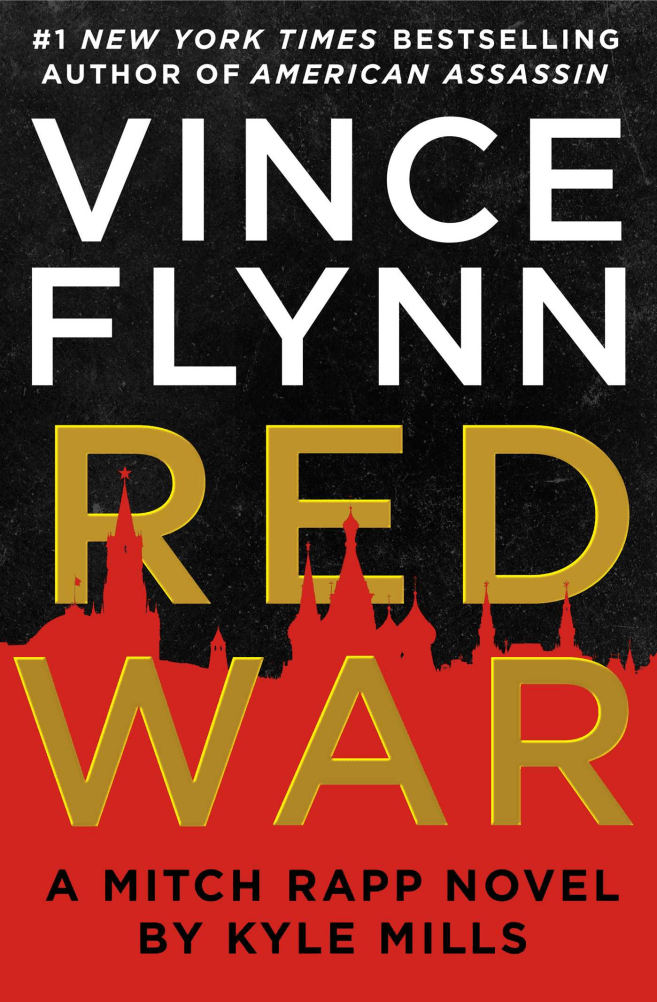
Red War by Kyle Mills (based on the series by Vince Flynn)

Red War Cover

Publisher: Simon & Schuster

Publication Date – 25 September 2018

Amazon     Book Depository

From the minds of two outstanding thriller writers comes Red War, the latest book in the iconic Mitch Rapp spy series.  This newest addition is an exhilarating and action-packed espionage novel that incorporates a captivating look at modern global politics into its exciting and enjoyable narrative.

For years, Russian president Maxim Krupin has ruled his country with an iron fist, and even recent setbacks to his ambitious plans in the Middle East have not lessened his power or influence.  However, Krupin is about to encounter an opponent even he may not be able to overcome: cancer.  With an inoperable brain tumour impacting his actions, the once calculating and selectively destructive strongman begins openly targeting all his enemies and opponents in order to retain his power and to distract attention away from his illness.

The Americans, especially the CIA, are alarmed and surprised by the Russian president’s sudden and unpredictable moves.  Uncertain of the motivations behind them, the CIA assign legendary covert operative Mitch Rapp to investigate and counter Krupin’s more aggressive moves, including the attempted assassination of Krupin’s former problem solver, Grisha Azarov.  When Rapp and the CIA uncover proof about Krupin’s medical condition, they begin to realise just how desperate and dangerous their opponent is.  With Russian troops massing on the border of Europe, it appears Krupin may even be willing to start a war with the West in order to maintain his position.  With World War III just around the corner, Rapp is given an impossible task: infiltrate Russia and assassinate the man many consider to be the most powerful person in the world.  Will Rapp and his allies succeed in this dangerous mission, or will their actions lead the world to the very brink of a nuclear war?

This is the 17th book in the Mitch Rapp series, which began in 1999 with the first book, Transfer of Power, which was written by Vince Flynn as a follow-up to his 1997 debut, Term Limit, which is set in the same universe as the Mitch Rapp books.  Following Flynn’s death in 2013, the series was continued by fellow thriller writer Kyle Mills, who has written 17 books since 1997, including the last three Mitch Rapp novels.  The Mitch Rapp books are a fast-paced and action-packed series that focuses on American espionage, and often features the titular character’s brutal war on Islamic terrorists.  Some who are unfamiliar with the books may have seen the film adaption of Flynn’s 2010 prequel novel, American Assassin, which was released in 2017, featuring Dylan O’Brien of Teen Wolf and The Maze Runner fame, as well as Batman himself, Michael Keaton.

In this latest book, Mills continues the series trend of providing the reader with eventful and compelling adventures.  Red War is chock full of action and combat as the protagonists attempt to counter the Russian president, the president’s personal assassin and the whole Russian army.  Readers will find plenty to keep them entertained, from small tactical skirmishes around the world between American and Russian covert forces, to large-scale battles and wars, with some devastating results.  While the main protagonist, Mitch Rapp, is starting to get a little old, he is still the same killing machine he has always been, and he powers through the vast majority of his opponents.  However, some of the other characters he encounters are the cream of the Russian army and have been enhanced by a combination of extreme training and performance-enhancing drugs.  This results in some very hectic shoot-outs and fight sequences, although there is very little doubt that Rapp will succeed.  A lot of these fights are tactical in nature as Rapp seeks to outsmart larger or more formidable forces he finds himself up against, resulting in some scenes with slower pacing that are used to create a more intense, but equally exciting, action sequence.  In addition, there are some fairly outrageous sequences throughout the book that readers will really enjoy.  For example, in a later part of the book Rapp suddenly finds himself leading an unusual army against his opponents, and a scene earlier in the book he decides to utilise a rocket-propelled grenade launcher in a fight after he starts “getting sick of these drugged-up, thirtysomething terminators whom Krupin was churning out”.

Mills has also made sure to include detailed examinations of the various intelligence-gathering and espionage techniques that his characters employ, as well as several scenes exploring the opposing nations planning and tactical sessions.  It is always fun to read about fictional tactical and intelligence meetings, especially in novels like Red War, when you see both these discussions from both sides of the conflict in order to focus on the various moves and countermoves each opposing side utilises.  In Red War, the motivation behind the Russian president’s actions is revealed to the reader within the first few pages of the book; however, all the American characters, and even some of the Russian characters, have no idea why he has escalated his campaign against his opponents.  It is very captivating to watch the various actions Krupin takes to not only stay in power, but also hide his illness from his own people.  As the book progresses and this becomes harder for him to manage, it is interesting to see the Americans begin to put the pieces together and see how well their theory fits into place.  Both the American and Russian characters do a lot of espionage and counterespionage moves throughout the novel as the Americans attempt to uncover the Russian leader’s unpredictable next move, while Krupin and his agents attempts to take out his various rivals while also frustrating the Americans.  The descriptions of these espionage moves and techniques feel very realistic, and there is enough going on to keep any lover of spy fiction very happy.

One of the most compelling and notable things about Red War is the way that it brushes on current politics and uses many recent real-world events in its story, by either referencing them or attributing them to the book’s fictional characters.  One of the main antagonists, the Russian president Krupin, is an athletic and powerful strongman that is clearly supposed to be a fictional version of Vladimir Putin, with several similar character attributes, including a propensity to use staged hunting propaganda shots out in the snow to promote his rugged, masculine image.  Many of Krupin’s actions and decisions throughout the book match those of Putin, down to the character revealing he utilises social media to influence international politics.  As a result, while the book focuses on a fictional antagonist, the reader is left thinking about what would happen if something similar were to happen to Putin or another world leader, and how other nations would respond.  The American and Russian characters discuss geopolitics throughout the book as they make their plots and plans, and many of the events they discuss have happened in the real world.  This allows the readers, especially those familiar with current world affairs, to enjoy a much more realistic read, especially when the characters look at real world events to justify their actions or responses.  These real-world inclusions help to turn Red War into a much more intriguing read for the readers that does an amazing job capturing its audience’s attention and interest.

Despite being the 17th book in the Mitch Rapp series, Red War is a very approachable book that is very easy for readers unfamiliar with the series to enjoy.  A perfect read for those who are intrigued by a fun and exciting plot concept, Red War delivers all the action and espionage you could possibly want, with some incredibly fascinating insights and references to modern global politics.  Mills has once again forged an incredible story from Vince Flynn’s original thriller universe, and fans of this series will not be disappointed by this latest offering.

My Rating:

Four and a half stars

Amazon     Book Depository

AWOL: Agent Without Licence by Andrew Lane

AWOL Agent Without Licence Cover.jpg

Publisher: Piccadilly Press

Publication date – 12 July 2018

Amazon     Book Depository

From a veteran author of young adult fiction comes this brilliant spy thriller that introduces a younger audience to the joys of modern espionage.

Kieron Mellor and his best friend, Sam, are typical teenagers living the ‘greeb’ lifestyle in Newcastle, England, with their biggest problem revolving around how to get tickets to the next rock show.  But when they witness a man being kidnapped in their local mall, they are thrust into the world of covert espionage and a plot to unleash untold destruction on the world.  Noticing that the kidnapped man has dropped a set of glasses and an earpiece, Kieron picks them up, only to discover that they are part of a high tech virtual reality kit that can provide the user with a database of information about anything they see.  They also connect Kieron to Bex, a secret agent on mission in Mumbai who is in desperate need of his help.

Bex’s handler, the man who was kidnapped, was using the technology currently in Kieron’s possession to remotely assist Bex with her mission.  Bex was observing a deal for information about nuclear weapons, but the disappearance of her handler resulted in her losing her target.  With no other options, Bex is forced to utilize Kieron and Sam’s help in order to complete her mission and stop an act of mass destruction.  However, the Newcastle teens have problems of their own; a fanatical right-wing extremist group and a mole inside Bex’s organisation are hunting them for the missing glasses, and they have no intention of leaving any witnesses alive.

Agent Without License is the first book in Lane’s AWOL series of young adult spy thrillers.  The second novel in this series, Last Safe Moment, is already set to be released later this year and will continue to follow the characters introduced in this first book.  Lane already has significant experience writing novels for a younger audience, with eight books in his bestselling Young Sherlock Holmes series, as well as his Lost Worlds and Crusoe Adventures books.  Other works from Lane include his science fiction based Netherspace series and several books set in the Dr Who extended universe.

The AWOL series is aimed towards a younger generation of reader and has been advertised for children in the 9-12 age range.  I felt that this book is an ideal read for that demographic, and it reminded me of some of the books that really caught my imagination when I was that age, including the Artemis Fowl and Alex Ryder novels.  While there is some violence and implied deaths within the storyline, it isn’t overly graphic and won’t traumatise the younger readers.  That being said, the overarching spy storyline isn’t dumbed down, and its intended audience will enjoy the realism and the references to events, ideologies and prejudices that currently affecting the real world.  There are also discussions about some mature themes, although nothing is too extreme or adult.  These small inclusions will be appreciated by the younger audience, as they will enjoy seeing some of these mature issues which they are likely already aware of included in their fiction.  Lane does make the obligatory attempts to tap into modern youth culture in order to appeal to his readers’ interests; fortunately, however, he does not go too overboard with his attempts like some authors do, and readers are not inundated with a flood of unnecessary pop culture references.  The author has also included multiple examples of the two teen heroes outsmarting older antagonists.  This is always a fun feature for the younger audience to enjoy, and these teen protagonists have some very inventive, and in some cases quite direct, solutions to the problems they encounter.  Overall, Agent Without License will prove to be an excellent read for the audience in its suggest age range.  Older readers will also have a blast with this book and enjoy the fantastic spy thriller elements.

For his AWOL series, Lane has leveraged his significant espionage experience to create intriguing novels with a sense of realism to their spy aspects.  In Agent Without License, the author lays down a foundation of tradecraft and spy techniques for the reader to enjoy as his protagonists attempt to save the world.  Lane explores the basics of spying in this book and provides information about current espionage agencies and how they impact on real world politics.  As a result, this is a fun and informative introduction to the spy thriller genre, and the younger readers will appreciate the exciting and mature content of this story.

One of the best parts of Agent Without Licence is the advanced technology that the protagonists use to help complete their mission.  This technology comes in the form of glasses and an ear piece, and is known as Augmented Reality Computer Capability (ARCC).  The ARCC is essentially Google Glass on steroids, and allows the operator to access information on anything they, or the person they are connected to, can see or interact with.  This is an awesome piece of fictional technology that sounds like an item espionage operatives could possibly already have access to.  Watching the young protagonist, Keiron, become acquainted with and learn to operate the glasses is an enjoyable part of the story which plays in well with the book’s espionage elements.  The information that Keiron obtains for himself and Bec is quiet interesting, and the ARCC technology provides them with threat analyses, escape routes, background history of the buildings they are going into, facial recognition and recording capabilities.  This is a seriously cool part of the book, and the technology’s presentation and use is a great element that will make the readers eager for glasses like these to appear on the market.

Agent Without License contains two separate but connected storylines and alternates between the two different point of view characters in each chapter.  One of the storylines focuses on Keiron in Newcastle, while the other follows Bex in India.  These storylines overlap throughout the chapters, and the characters are in constant communication with each other.  The different storylines are usually occurring at the same time, although Lane does occasionally move one storyline slightly ahead or behind to create some dramatic thrills.  Some of the most intriguing scenes feature Kerion communicating information through the ARCC glasses to Bex.  There is a fantastic interrogation sequence in which Bex uses the ARCC technology to stay in communication with Kerion as he provides her with the tools to crack her target and get the answers she is looking for.  This breakup in storylines also helps highlight the differences in espionage ability between the trained operative, Bex, and the amateur but highly skilled teenagers, Kerion and Sam.

Andrew Lane has produced a wonderful and highly enjoyable novel that is a fresh and exciting take on the teenage spy book and an excellent gateway into the world of spy thrillers.  Agent Without Licence is an ideal read for its intended younger demographic, while at the same time containing a range of mature story elements that will appeal to all ages.  This is a fantastic first instalment in a great new series that is highly recommended for young readers looking for a great adventure story.

My Rating:

Four stars

Amazon     Book Depository

Word of Warcraft: Before the Storm by Christie Golden

Before the Storm Cover.jpg

Publisher: Titan Books

Publication Date – 12 June 2018

Amazon

War is once again coming to Azeroth in the brand new World of Warcraft novelisation from the queen of tie-in books and Blizzard Entertainment’s new in-house novelist Christie Golden.

The world of Azeroth is constantly at war, and for generations its inhabitants have known nothing but conflicts and threats.  Perhaps the greatest enemy that the people of Azeroth ever faced were the demonic Burning Legion, who are the root of many of the world’s great conflicts.  Now, after a devastating campaign, the Burning Legion has finally been defeated, although Azeroth’s victory came at a great cost.  As his final act of destruction, the leader of the Burning Legion, the Titan Sargeras, struck a great blow against Azeroth, plunging his gigantic sword into the surface of the planet and leaving a gaping wound in the side of the world.

Now both factions of Azeroth, the Alliance and the Horde, can finally recover and come to terms with the destruction caused by their demonic foes and the dramatic changes that have rocked their hierarchies.  Following the death of his father, young Anduin Wrynn has inherited the throne of the human kingdom of Stormwind, and serves as the new leader of the Alliance.  At the same time, the Horde is now under the sway of its new Warchief, the banshee queen of the Forsaken, Sylvanas Windrunner.  Both new leaders must come to terms with the running of their respective factions and the current peace blessing the land.

But there is always tension simmering between the Alliance and the Horde, and many predict that a new conflict is just around the corner, especially when both sides make a startling discovery: the blow from Sargeras’s sword has caused the very essence of Azeroth to bleed forth from the ground.  This new substance, known as Azerite, is extremely powerful, containing the very strength of Azeroth, and with the potential to be used as a mighty weapon by whichever side controls it.

As both factions investigate the wound in Azeroth and this strange new material, King Anduin seeks to finally forge peace between the Alliance and the Horde.  In order to achieve this peace, Anduin embarks on an ambitious plan to win the Forsaken to his cause and gain the trust of Sylvanas.  But Sylvanas has her own vision for the future of Azeroth, and woe betide anyone who stands between the Dark Lady and her goals.  Will peace finally be achieved, or will the discovery of Azerite result in a new war between the Alliance and the Horde?  And what role will Calia Menethil, long lost sister of the Lich King Arthas Menethil, play in this new era?  One thing is certain: the Battle for Azeroth starts here.

Before the Storm is the latest tie-in book to the massive Warcraft video game franchise.  People who have never played these games may be surprised to know that this franchise has a rich narrative history.  The original Warcraft games came with a substantial amount of lore and plot that were in some ways just as revolutionary as the game’s mechanics.  This tradition of great storytelling has continued over the years, and every single one of the games has contained a range of intricate and compelling storylines.  Many of these stories are incredibly elaborate and have great potential for future adaptations.  For example, this reviewer would be especially keen to see the corruption of Arthas and the rise of the Lich King told on the big screen.

The game’s narrative tradition has also resulted in a huge number of tie-ins that are mostly targeted towards fans of the game.  There are currently over 30 Warcraft books, as well as a number of comics and even some manga.  The vast majority of these adaptations are considered canon, and have been subsequently referenced in the plot of the games, including the franchise’s main game, the MMORPG World of Warcraft.  For example, in one of the previous novels, The Shattering: Prelude to Cataclysm, Cairne Bloodhoof a major character from Warcraft III: Reign of Chaos and the leader of the Taurens in World of Warcraft, is killed off, and this carried through to the game in several different ways.  Before the Storm is the latest book in this extended universe, and has been released as a tie-in for the upcoming Battle for Azeroth expansion, which is out in August.

The author of this latest novel, Christie Golden, has a bibliography of over 50 books, and has substantial experience writing tie-in books for big franchises.  In addition to her debut Ravenloft trilogy, Golden has written 15 Star Trek novels, five Star Wars books, and a number of full-length and short story tie-ins for franchises such as Assassin’s Creed, Invasion America, Buffy the Vampire Slayer and Angel.  Golden has also written a number of books for Blizzard, with five books based on Starcraft and 10 based around the Warcraft games.  Her previous Warcraft novels include stories that help cement the franchise’s established lore, the official novelisation of the recent Warcraft movie, and novels that have established the plot prior to several of World of Warcraft’s expansions.  For example, her 2014 novel, War Crimes, heavily set up the Warlords of Draenor expansion, while also presenting an elaborate novel that highlighted the crimes of the previous expansions main antagonist.  Golden has incredible knowledge of Warcraft’s lore and narrative history, having provided significant contributions to it in the past, and readers will appreciate the way that this new book connects with several of her previous Warcraft novels.

Before the Storm is a fun and exciting fantasy novel that has been expertly set within the World of Warcraft universe.  The narrators visit a number of key locations that feature within the games and Golden has done an amazing job of describing these distinctive and well-explored background settings.  There are some great locations used within the story, including several of the game’s main cities, such as Stormwind, Ironforge, Orgrimmar and the Undercity.  People familiar with the latest expansions will also love the addition of the Netherlight Temple, the priest class hall, as a key setting within this book, as it is such a unique and niche location within the game.

A large proportion of the novel is told from the perspectives of the leaders of the Alliance and the Horde, Anduin Wrynn and Sylvanas Windrunner.  If the awesome trailer for Battle for Azeroth is anything to judge by, the next World of Warcraft expansion will focus heavily on these two characters as they lead their factions into a large-scale war against each other.  Golden has made sure to explore both of these respective characters’ mindsets and examine potential future motives for the upcoming in-game conflict.  Other parts of the story are told from the perspective of a range of minor characters, many of whom are actually interactable NPCs within the game.  This range of perspectives gives a wide angle viewpoint of the story being told in both the book and the game, and allows the author to show off the different motivations and differences between the two rival factions.  Players will also love to see this story woven around minor NPCs they may have interacted with in the game, especially as this book may explain why they may have moved or disappeared in future versions of the game.  This is a great adaptation of the current World of Warcraft universe and Golden has successfully transplanted several key and iconic aspects of the game into this book, creating an excellent addition to this extended universe.

While a number of the different Warcraft races are featured within Before the Storm, many readers will enjoy Golden’s focus on the undead playable race, the Forsaken.  While many of the franchise’s previous novels have featured Forsaken characters, Golden has chosen to do a deeper examination of this race now that their ruler is the Warchief of the Horde.  There are some particularly interesting discussions about the role the Forsaken play within Azeroth and how the other races view them.  Readers will be intrigued by the examination about their current level of humanity, and whether they can still maintain connections to the family they had before they died, and will be intrigued by Golden’s fascinating analysis.

As an official World of Warcraft tie-in, Before the Storm is naturally a desirable read for those who are familiar with the franchise and the game’s current storylines.  As mentioned above, there are a ton of elements that will appeal to those gamers currently awaiting the next expansion, as this book ties in to its central storyline.  However, Golden makes sure to elaborate on a range of prior events in the franchise and this will ensure that former players will be able to jump in and follow from when they were last familiar with the story.  In addition, Golden’s writing is fairly accessible, and the game elements don’t massively overwhelm the story, ensuring that readers unfamiliar with the games will be able to enjoy this fantastic fantasy adventure without getting too lost.

Christie Golden has once again created a fun and electrifying novelisation of the Warcraft universe.  Before the Storm is a great tie-in to the upcoming game release, Battle for Azeroth, and serves as an excellent precursor of the exciting stories that will feature within the new expansion.  Making full use of the franchise’s significant lore and a range of iconic settings, Golden has produced a deep and thrilling fantasy tale that that will massively appeal to all fans of the Warcraft games.

My Rating:

Four stars

Amazon

The Greater Good by Tim Ayliffe

The Greater Good Cover

Publisher: Simon & Schuster

Publication Date – 23 April 2018

Amazon

Australian author Tim Ayliffe presents a fantastic debut thriller set in iconic Sydney that delves into the heart of politics and the role of the media in the modern world.

John Bailey was a brilliant war correspondent for the Australian paper, The Journal.  However, his life took a downward turn when he was kidnapped in Iraq and tortured for several months.  Now, years later, Bailey is living a life of alcoholism and self-destruction, only occasionally contributing articles to The Journal.

However, when a prostitute is found murdered in her high-end Sydney apartment, his editor and old friend, Gerald Summers, sends him to investigate the crime, claiming that Bailey is the only person he trusts to report the story.  The prime suspect in the case is an influential political advisor who had a close relationship with the victim.  When Bailey encounters the advisor, he claims to have information that will clear his name, while at the same time implicating his boss, the defence minister.

After a run-in with an old friend in the CIA, Bailey soon realises that there is much more to this story than a simple murder.  Investigating further, he soon discovers that the murder was committed to cover up a massive conspiracy that the defence minister is linked to.  When witnesses to the crime start turning up dead and the police are pressured to drop their investigation, Bailey is determined to uncover the truth and publish the full story.  But powerful people are invested in keeping this case quiet, and Bailey soon finds himself in their crosshairs.

This is an exciting and high-energy first book from Ayliffe, who makes full use of his journalistic experience and political insights to create a smashing thriller with a tangible Australian presence.  The investigation into the conspiracy and its associated murders works well as the heart of this story, and readers are invited along on a wild thrill ride as the protagonists rush through this murky world of Australian politics and espionage in a quest to find the truth.

The character of Bailey serves as a great central narrator for this frenetic story, and readers will love the maverick approach he has to investigating the case and the lack of restraint of manners he has when it comes to dealing with Sydney’s political and financial elite.  Ayliffe also spends a significant amount of time attempting to humanise his main character by examining his past as a prisoner and the effects his PTSD has had on his life and career.  There are some great, emotional scenes as Bailey attempts to get over his problems with the help of other characters, and Bailey comes across as a much more grounded and damaged protagonist as a result.  The other main narrator in The Greater Good is Sharon Dexter, who serves as the official police investigator and Bailey’s main love interest.  Her investigation focuses more on cover-ups, sexism, and corruption in the police force, and these parts of the book serve as a great counterpoint to the sections featuring Bailey.

Ayliffe has made full use of his political knowledge and insight throughout this book.  A large amount of the plot revolves around both Australian and international politics, and readers will be amazed at the potential conspiracy he is able to create.  Various Australian political elements are dragged into the story and play a key part of the plot.  These include discussions about pre-selections of federal seats, government spending and the role of several federal government agencies.  World politics and the current status of Australia on the world stage are also examined within the story.  There is a large focus on the expanding role of China, and the discussion about whether Australia should strengthen its relationship with this new world power or whether it should maintain its current relationship with the United States.  This discussion is a key part of understanding the plot, and plays out in the book in a similar manner to current debates on the subject within Australia.  This adds a real sense of realism to the story and makes readers, especially those familiar with current Australian news and politics, very thoughtful.

Throughout The Greater Good, the main characters are attempting to obtain evidence of a conspiracy so that they can print it in their newspaper, The Journal.  As a result, the role of print media in keeping government’s honest and uncovering political corruption is examined in some detail.  It is clear that Ayliffe, a career Australian journalist, is very supportive of the media remaining in this role, and many of his characters are quite critical of attempts to stall the publication of these stories.  This allegorical analysis of the current role of media in politics and society is an intriguing part of the book and many readers will find this exceedingly relevant in light of recent world events.

Readers also need to keep an eye out for Ayliffe’s clever and entertaining inclusion of characters that are clearly based on real life Australian personalities.  For example, the fictional Australian Prime Minister is described as an athletic man who is known for his fun runs and surfing, in a way reminiscent of former Prime Minister Tony Abbott.  In addition, certain plot twists towards the end of the book will also remind the audience of another previous Prime Minster.  Another example is a minor character who is introduced as a prominent talk show radio host.  This character appears to be a composite creation of several of Australia’s right-wing radio commentators and comes across in a very similar manner to these real life presenters.  These cheeky additions are a fun inclusion that will amuse readers with even a passing knowledge of these Australian personalities.

In many ways The Greater Good can be considered a love letter to the author’s home city of Sydney, as it contains a number of different locations and references that will be quite familiar to Sydneysiders.  The narrator visits a number of different suburbs within Sydney, including Palm Beach, King Street, Finger Wharf at Woolloomooloo, Bondi and Chinatown, and also frequents some real life Sydney venues, such as Harry’s Café de Wheels.  Not only is the food, geographical location and description of this Sydney café described in the text, but the author has also included a write-up of the restaurant’s owners and its history.  In addition to furnishing the story with real life Sydney locations, Ayliffe also includes brief references to events and occurrences that Australians would recognise the significance of, such as Australian rugby, lockout laws and the current ice epidemic.  While none of these locations or occurrences is essential to the plot, they do add a certain sense of reality to the entire novel, and Australian readers will enjoy seeing locations and scenarios that they recognise and understand.

Tim Ayliffe’s debut novel, The Greater Good, is a fun and exhilarating political crime thriller that is guaranteed to electrify and entertain in good measure.  Making full use of Ayliffe’s extensive knowledge of Australian politics, culture and media, this very topical book is an excellent read for Australian audiences and those international readers keen to explore Australia’s potential for thrillers.

My Rating:

Four stars

Amazon

The Juliet Code by Christine Wells

The Juliet Code Cover

Publisher: Michael Joseph

Publication Date – 30 April 2018

Amazon     Book Depository

From acclaimed Australian author Christine Wells comes this touching and memorable tale of love, captivity and endurance in the darkest of times.

During World War II, Juliet Barnard was a British agent working for the Special Operations Executive.  A skilled wireless operator, she was one of the few female agents that were dropped into occupied France to meet contacts and pass intelligence back to the Allies.  While initially successful, she was only active in France for a short time before the Nazis captured her.  Trapped in a prison that specialised in interrogating captured spies and infiltrators at Paris’s Avenue Foch, Juliet endured torture, drugging and manipulation and came out of the prison a different person.

Now, two years after the end of the war, Juliet is still recovering from her ordeal and trying to continue a relationship with Felix, the man she fell in love with during her training.  Claiming to be suffering from memory loss, Juliet has managed to avoid providing any details about her time at Avenue Foch or about the man who held her captive, Sturmbannführer Strasser.  Finding Strasser is the last thing Juliet wants to happen, because he knows a dark secret about Juliet – a secret she would kill to protect.  However, when Juliet meets Mac, an SAS officer turned Nazi hunter whose sister served in the war with Juliet, her guilt compels her to return to Paris to help him locate Strasser.

This is the third book from Wells, who has previously written two English-based historical stories that feature a strong, female protagonist.  The Juliet Code is the second book from Wells that focuses on British spy activities during World War II; her previous novel, The Traitor’s Girl, focused on a World War II MI5 operative.  The Juliet Code is another excellent and intense romp into the history of World War II, and Wells has done an amazing job of creating this unique and emotional story.  This book is a combination of a great dramatic story and a two-stage historical spy thriller wrapped up with a poignant romantic subplot.

Wells has injected considerable drama and emotion into her story, especially through her main character, Juliet, who goes through substantial emotional changes throughout the book.  Before she is dropped into France, Juliet is portrayed as a shy girl, unsure of her abilities as a potential spy but eager to do her duty to her country.  After the war she is more hardened individual who is suffering from guilt, both due to being one of the few agents to survive capture and because of her own actions during the war.  These changes in the character are made obvious to the reader, not just because of Wells’s great writing ability but also because she switches between the mid-war and post-war scenes multiple times.  Wells slowly reveals the main character’s wartime secret, which is a central part of the plot.  While there are some hints to what this secret is early in the book, the full reveal is not done until later in the story, and makes use of a moving and artfully constructed confession scene.

The Juliet Code is set in the 1940s, and Wells has broken the story up into two distinct periods.  The first period starts in 1943 and continues for the rest of the war, examining the main character’s training, her infiltration of occupied France and her time as a captive at Avenue Foch.  The parts of the book set during the war are very intriguing and are some of the most appealing scenes from a historical fiction viewpoint.  The sections that feature Juliet training and actively spying in France were some of my favourite parts of the plot, and I loved reading Wells’s descriptions about the French resistance networks, the British covert activities, their espionage techniques and the counteroperations the Nazis were undertaking to catch the operatives active in France.  There are also some significant descriptions of how the British wireless transmitters functioned and British coding techniques.  These very technical parts of the book contain some fascinating information while also providing the reader with a good understanding of this technology and what the operators were doing with it.  There are also a number of scenes that follow Juliet after she is captured and held as an enemy spy in Paris.  These parts of the book are, by necessity, darker in nature, depicting how these spies, especially female operatives, were treated during this period.  There are also thorough descriptions of the historical locations used as prisons in Paris.

The second part of the book is set in 1947 and features Juliet and her companions revisiting the sites of Juliet’s captivity and attempting to hunt down her jailer.  This part of the book comes across as more of a traditional spy thriller, and contains some vivid descriptions of post-war France.  There are some examinations of how the Allies and the Soviets were attempting to capture or recruit former members of the Nazi regime, as well as some interesting looks into the post-war espionage that was occurring at this time.  Wells also revisits characters and locations encountered by the protagonist during the war, and these scenes are used to provide clues to locate Strasser while also providing additional hints about what happened to Juliet during her captivity.

Among the defining features of The Juliet Code are the realistic and detailed characters that the reader gets to enjoy.  They feel so realistic because these characters were inspired by real historical figures who served in similar capacities during the war.  This touch of realism adds a lot to the book and serves as an inspirational reminder of those unsung heroes of British espionage.  These fictional facsimiles do interact with a few real historical figures within the book, and readers will be captivated as they find out which of these unique wartime stories are actually historical fact.

Wells has included an enticing romantic subplot between the characters of Juliet and Felix.  Readers will be able to feel the affection that these two characters have for each other, as well as the loss they experience as a result of Juliet’s capture.  Their relationship is also masterfully woven into the main story, and elements of their romance become key plot points, such as some personal romantic poems that actually contain transmitter codes.  Thankfully, Wells decided not to invest too much time in a love triangle between Juliet, Felix and Mac, although she does include the initial and somewhat entertaining jealousy you would come to expect from this situation.  Overall, the romantic subplot is both absorbing and nicely subtle, as it does not overwhelm the rest of the story.

Australian author Christine Wells once again delivers an elegant piece of literature that makes full use of its well-paced dramatic story and an utterly stimulating historical setting and content.  Fans of historical fiction will love The Juliet Code’s dive into World War II spycraft and counterespionage, as well as the excellent and electrifying thriller that blazes through post-war France.  This is a phenomenal novel that sticks in the mind and will appeal to wide array of readers.

My Rating:

Four stars

Amazon     Book Depository