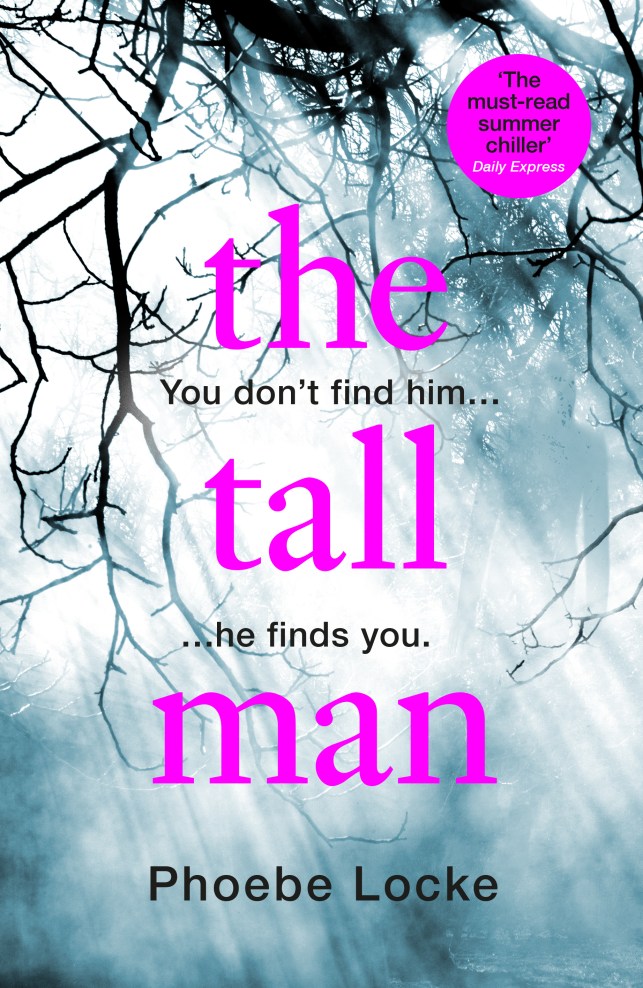
The Tall Man by Phoebe Locke

The Tall Man Cover

Publisher: Wildfire

Publication date – 12 June 2018

Amazon     Book Depository

Prepare to explore an urban legend in this dark and complex thriller from author Phoebe Locke, whose inclusion of a number of disturbing horror elements that have been influenced from the Slender Man phenomenon turn this exciting story into a must-read book for horror fans.

For years the mysterious Tall Man has haunted the minds of many people throughout England, but is he a figment of their imagination, evidence of their mental instability, or something far more real?  In the 1990s, three girls pledge their loyalty to the Tall Man in the dark woods around their home.

In 2000, a young mother flees the demons of her past and abandons her newborn baby.  16 years later she returns to her family, believing the threat from the Tall Man has passed, but something is still stalking her and her daughter.

In 2018, after a teenager is cleared of murder in a controversial and highly publicised trail, she embarks on a worldwide tour, followed by a documentary film crew.  Is she an innocent victim, or is she the latest tool of the Tall Man?  Each of these events is connected to this sinister figure, but is he the powerful legend that these people believe he is?  You decide, but remember, The Tall Man can make you special if you let him.

The Tall Man is the debut book from Phoebe Locke and is an intricate and deeply unsettling thriller that will hold an interesting appeal to fans of the horror genre.  Overall The Tall Man is a fantastic thriller that makes full use of its horror elements to create an effective story that is both compelling and creepy at the same time.  Locke has written in a number of shocking twists and turns for the reader to enjoy, while all of her characters are either afraid of or have been damaged by interactions with the Tall Man.  The constantly haunting Tall Man is an interesting and unique addition to this story, and its effect on the book’s plot and the characters is truly powerful.

The book is broken into three parts, each focusing on different time periods during the 1990s, 2016 with a couple of chapters in 2000, with the final part set in 2018.  Each of these parts is told from the viewpoint of different but related characters and is somewhat distinctive in style.  The stories are also interconnected in a variety of ways, although the significance and full connections are not revealed until later in the book in some powerful and emotional scenes.

Without a doubt, the most intriguing and noticeable part of The Tall Man that readers will enjoy is Locke’s clever utilisation of one of the most interesting horror phenomenon in the world today, the Slender Man.  The Slender Man is a fascinating fictional character introduced around 10 years ago that has had a surprising influence on society and some specific people.  With the Slender Man film coming out in a few weeks, Locke has chosen a great time to use a pastiche of Slender Man in her story.

The Tall Man elements are a remarkable part of the book, and Locke has used them to full effect to enhance her story and to make the thriller elements more disturbing and creepy.  Locke has included a number of references to the Slender Man lore, including his shadowy presence and his targeting of young children.  There are also some captivating elements to the book that have been clearly influenced by real events tied to the Slender Man.  This includes Locke’s own fictional version of the infamous Waukesha Stabbing incident of 2014, which is key plot point within the book and results in several shocking twists that will really stick in the reader’s memory.  Locke also ensures that the reader is constantly left wondering about whether the Tall Man is a real supernatural being or whether he is a mere fantasy in the minds of the main characters that becomes a group delusion among the other characters.  This element of uncertainty is a fantastic addition to this book and readers will be considering what the answer is long after they have finished reading The Tall Man.

While the storyline set in 2016 represents the most significant storyline plot-wise, I personally enjoyed the chapters set in 2018 the most.  These chapters are based around a documentary film crew who are trying to make sense of an incident that occurred in the 2016 storyline.  The documentary makers in the 2018 storyline are essentially trying to come up with the next bestselling true crime series, and there are several allusions to current documentaries, such as the Making of a Murderer series or the real-life Beware the Slenderman documentary that was released on HBO in 2017.  As a result, the reader is taken behind the scenes to follow the filmmakers as they research the Tall Man phenomenon.  This part of the book features detailed examinations of Locke’s Tall Man lore, and how it has affected a number of people, including the other storyline’s main characters.  It is interesting to see how Locke’s fictionalised Tall Man differentiates from the classic story of The Slender Man, and readers will enjoy examining how Locke has created a fictional replica of an already fictional character.  The 2018 storyline also has a series of hints about the climax of the book’s other storylines, all of which were chronologically set before it, and it was fascinating tying these hints together with the actual storyline.

 The Tall Man is the perfect read for those looking for something special and who aren’t afraid of some eerie horror in complex and heart-pounding thrillers.  With her debut book, Locke has proven that she is definitely an author to look out for and I’m excited to see what she comes up with next.

My Rating:

Four stars

Amazon     Book Depository

The Fire Court by Andrew Taylor

The Fire Court Cover

Publisher: Harper Collins

Australian Publication Date – 19 March 2018

World Publication Date – 5 April 2018

Amazon     Book Depository

Bestselling author Andrew Taylor returns to the 1660’s and the scorched city of London with the thrilling murder mystery, The Fire Court.

It has only been a few short months since the Great Fire of London ravaged the city, killing many and destroying a large number of houses and buildings.  The city is now finally rebuilding itself, aided by the Fire Court, an incorruptible institution that examines legal cases around the rebuilding and ensures the best result for the city.  While the Fire Court is supposed to be neutral in all cases, there are some who seek to use it their advantage.

James Marwood, a low-level government official, is one of the few people in London doing better now than before the fire.  However, James is still caring for his ailing father, a convicted traitor whose mind has been affected by his time as a prisoner.  When his father claims to have found a murdered woman at the site of the Fire Court, James initially assumes that his father imagined the situation.  But when his father is run down in the street and killed, James begins to suspect he may have actually witnessed a murder.

As James begins to look into this possibility, he soon finds evidence that connects his suspicions to an upcoming Fire Court case that will decide who will rebuild a number of profitable properties.  His investigation once again leads him to an old acquaintance of his, Cat Lovett, the daughter of a regicide.  James previously helped Cat escape retribution for her father’s crimes, and he now turns to Cat and her new employer to gather information on the upcoming case.

When more people connected to the case turn up dead and their investigation is hampered by influential members of the court, James and Cat begin to suspect that the Fire Court may not be as incorruptible as they thought.  It soon becomes clear that death is once again stalking the streets of London and this time they will not escape unscathed.

The Fire Court is the follow-up to Taylor’s 2016 hit, The Ashes of London.  Taylor is a veteran author and has significant experience writing a range of different genres and novel types.  He has produced over 40 novels since 1982, mainly focusing on crime fiction, with some of his more recent books featuring captivating historical elements.

Taylor’s last book, The Ashes of London, was a fantastic piece of historical crime fiction that made full use of its distinctive setting of the Great Fire of London.  Having the characters solve a crime and explore the city during the immediate aftermath of such a devastating historical event was masterstroke from Taylor which has resulted in a superb and memorable piece of literature.  In The Fire Court, Taylor returns to this fascinating period to show how much rebuilding happened in the six months after the destructive fire.  The focus on the historical Fire Court that was instituted in the aftermath of this event is the most intriguing part of Taylor’s new book, and readers will be extremely interested in learning more about this unique bit of history.  Taylor does a tremendous job of introducing the role that the Fire Court played in the rebuilding of the city and how it worked.  The reader is treated to several scenes that feature cases before the court, showing how the verdicts were reached.  Several of the Fire Court’s actual judges are included as characters, which is a nice touch of historical realism.  Overall, the examination and inclusion of the historical Fire Court is a notable piece of this novel and readers will appreciate how Taylor has interlaced his complex murder mystery with this interesting historical setting.

In addition to the fire-related historical elements, Taylor has also done an outstanding job of displaying what the city of London would have looked like in the 1660s.  During their investigation of the crime the protagonists visit large and varied swathes of the city which are vividly described, which brings readers right in to the middle of this vibrant and bustling city.  This base historical setting is well written, and readers will enjoy this incredible romp back in time.

The central plot of this novel revolves around a powerful murder mystery storyline and investigation.  The Fire Court is told from the perspective of three separate narrators – James, Cat and Jemima – each of whom tries to find answers in their own way.  The investigation into the murder is very intense, and what initially starts as a single potential murder spirals into a series of killings as the culprits attempt to cover up their crimes.  This overall storyline is well written, filled with suspense, and very compelling.  Readers will be captivated by the way fire is used by both the protagonists and the antagonists throughout the book.  The use of such a tool is significant, as all the London-based characters know the power of fire and its destructive potential.  It is a potent symbol of criminal wrongdoing in this series, and the audience will be shocked by how it affects the lives of the protagonists in this book.  In addition to the symbolic use of fire, Taylor also includes a significant twist at the conclusion of the investigation that will leave the reader reeling and thinking for a very long time.

Taylor has produced a remarkable and enjoyable murder mystery that makes full use of its unique setting.  Readers will love the detailed examination of the aftermath of London’s most destructive fire and will find themselves enthralled by an excellent mystery with one hell of an ending.  This is a highly recommended read from an exceptional author.

My Rating:

Four stars

Amazon     Book Depository

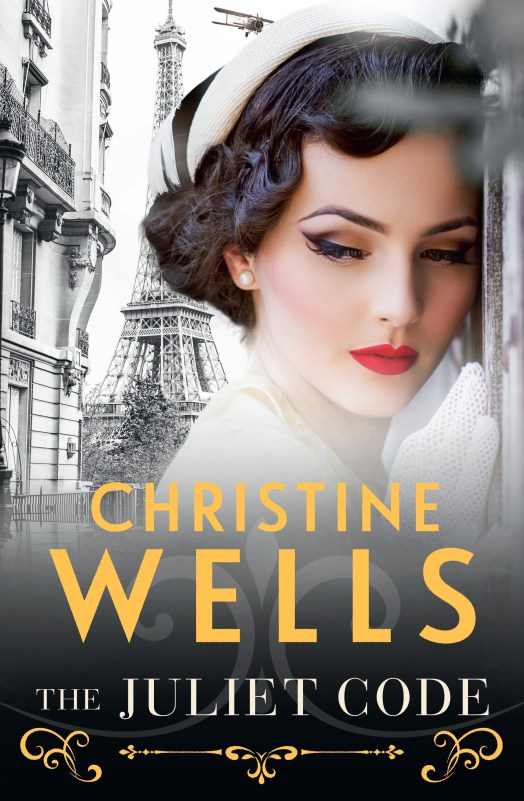
The Juliet Code by Christine Wells

The Juliet Code Cover

Publisher: Michael Joseph

Publication Date – 30 April 2018

Amazon     Book Depository

From acclaimed Australian author Christine Wells comes this touching and memorable tale of love, captivity and endurance in the darkest of times.

During World War II, Juliet Barnard was a British agent working for the Special Operations Executive.  A skilled wireless operator, she was one of the few female agents that were dropped into occupied France to meet contacts and pass intelligence back to the Allies.  While initially successful, she was only active in France for a short time before the Nazis captured her.  Trapped in a prison that specialised in interrogating captured spies and infiltrators at Paris’s Avenue Foch, Juliet endured torture, drugging and manipulation and came out of the prison a different person.

Now, two years after the end of the war, Juliet is still recovering from her ordeal and trying to continue a relationship with Felix, the man she fell in love with during her training.  Claiming to be suffering from memory loss, Juliet has managed to avoid providing any details about her time at Avenue Foch or about the man who held her captive, Sturmbannführer Strasser.  Finding Strasser is the last thing Juliet wants to happen, because he knows a dark secret about Juliet – a secret she would kill to protect.  However, when Juliet meets Mac, an SAS officer turned Nazi hunter whose sister served in the war with Juliet, her guilt compels her to return to Paris to help him locate Strasser.

This is the third book from Wells, who has previously written two English-based historical stories that feature a strong, female protagonist.  The Juliet Code is the second book from Wells that focuses on British spy activities during World War II; her previous novel, The Traitor’s Girl, focused on a World War II MI5 operative.  The Juliet Code is another excellent and intense romp into the history of World War II, and Wells has done an amazing job of creating this unique and emotional story.  This book is a combination of a great dramatic story and a two-stage historical spy thriller wrapped up with a poignant romantic subplot.

Wells has injected considerable drama and emotion into her story, especially through her main character, Juliet, who goes through substantial emotional changes throughout the book.  Before she is dropped into France, Juliet is portrayed as a shy girl, unsure of her abilities as a potential spy but eager to do her duty to her country.  After the war she is more hardened individual who is suffering from guilt, both due to being one of the few agents to survive capture and because of her own actions during the war.  These changes in the character are made obvious to the reader, not just because of Wells’s great writing ability but also because she switches between the mid-war and post-war scenes multiple times.  Wells slowly reveals the main character’s wartime secret, which is a central part of the plot.  While there are some hints to what this secret is early in the book, the full reveal is not done until later in the story, and makes use of a moving and artfully constructed confession scene.

The Juliet Code is set in the 1940s, and Wells has broken the story up into two distinct periods.  The first period starts in 1943 and continues for the rest of the war, examining the main character’s training, her infiltration of occupied France and her time as a captive at Avenue Foch.  The parts of the book set during the war are very intriguing and are some of the most appealing scenes from a historical fiction viewpoint.  The sections that feature Juliet training and actively spying in France were some of my favourite parts of the plot, and I loved reading Wells’s descriptions about the French resistance networks, the British covert activities, their espionage techniques and the counteroperations the Nazis were undertaking to catch the operatives active in France.  There are also some significant descriptions of how the British wireless transmitters functioned and British coding techniques.  These very technical parts of the book contain some fascinating information while also providing the reader with a good understanding of this technology and what the operators were doing with it.  There are also a number of scenes that follow Juliet after she is captured and held as an enemy spy in Paris.  These parts of the book are, by necessity, darker in nature, depicting how these spies, especially female operatives, were treated during this period.  There are also thorough descriptions of the historical locations used as prisons in Paris.

The second part of the book is set in 1947 and features Juliet and her companions revisiting the sites of Juliet’s captivity and attempting to hunt down her jailer.  This part of the book comes across as more of a traditional spy thriller, and contains some vivid descriptions of post-war France.  There are some examinations of how the Allies and the Soviets were attempting to capture or recruit former members of the Nazi regime, as well as some interesting looks into the post-war espionage that was occurring at this time.  Wells also revisits characters and locations encountered by the protagonist during the war, and these scenes are used to provide clues to locate Strasser while also providing additional hints about what happened to Juliet during her captivity.

Among the defining features of The Juliet Code are the realistic and detailed characters that the reader gets to enjoy.  They feel so realistic because these characters were inspired by real historical figures who served in similar capacities during the war.  This touch of realism adds a lot to the book and serves as an inspirational reminder of those unsung heroes of British espionage.  These fictional facsimiles do interact with a few real historical figures within the book, and readers will be captivated as they find out which of these unique wartime stories are actually historical fact.

Wells has included an enticing romantic subplot between the characters of Juliet and Felix.  Readers will be able to feel the affection that these two characters have for each other, as well as the loss they experience as a result of Juliet’s capture.  Their relationship is also masterfully woven into the main story, and elements of their romance become key plot points, such as some personal romantic poems that actually contain transmitter codes.  Thankfully, Wells decided not to invest too much time in a love triangle between Juliet, Felix and Mac, although she does include the initial and somewhat entertaining jealousy you would come to expect from this situation.  Overall, the romantic subplot is both absorbing and nicely subtle, as it does not overwhelm the rest of the story.

Australian author Christine Wells once again delivers an elegant piece of literature that makes full use of its well-paced dramatic story and an utterly stimulating historical setting and content.  Fans of historical fiction will love The Juliet Code’s dive into World War II spycraft and counterespionage, as well as the excellent and electrifying thriller that blazes through post-war France.  This is a phenomenal novel that sticks in the mind and will appeal to wide array of readers.

My Rating:

Four stars

Amazon     Book Depository

Nucleus by Rory Clements

Nucleus Cover.jpg

Publisher: Zaffre

Australian Publication Date – 1 March 2018

World Publication Date – 25 January 2018

Amazon     Book Depository

In June 1939, war is on the horizon.  While many in England still hope to avoid another conflict with the Germans, it is becoming clearer that war may be unavoidable.  Nazi Germany is aggressively moving throughout Europe, while back in England the IRA has embarked on a new bombing campaign.

While the world watches and waits, many governments have turned their focus towards a dangerous new arms race.  Advances in nuclear fission have allowed scientists to envision a potentially game-changing weapon: an atomic bomb.  Many believe that the research at Cambridge’s Cavendish Laboratory will lead to the creation of the first bomb, and the laboratory is now the subject of intense scrutiny.

While holidaying in America, Cambridge professor Tom Wilde is summoned to the White House to meet President Roosevelt.  The president requests that Wilde use his position to spy on the research at Cavendish and report their progress to the Americans.  Upon his return to Cambridge, Wilde begins to suspects that Nazi spies may have infiltrated the laboratory when one of the Cavendish researchers is brutally murdered.  As he investigates further, he learns that the murder may be connected to a wealthy family with Nazi sympathies and the famous movie star sister of one of his colleagues.  Wilde is forced into a web of spies and assassins as he tries to discover what terrible plans the Nazis have for Cavendish.  What does his long-lost cousin have to do with this plot, and how do these attacks tie into a kidnapped child that Wilde’s girlfriend, Lydia, is searching for in Germany?

Nucleus is a pulse-pounding thriller that combines mysterious events and spycraft with a dark historical background and a grounding in nuclear physics.  This is the second book in Clements’ Tom Wilde series, and the follow-up novel to his 2017 bestseller, Corpus, which was a stunning historical thriller that featured a plot against the royal family.

Clements has a lot of experience with historical thrillers, having previously examined espionage during the Elizabethan era in his acclaimed John Shakespeare series.  In Nucleus, Clements combines several intriguing storylines into one compelling plot that will draw the reader into the book’s many mysteries.  With a series of hidden adversaries, twisting character loyalties and several shocking conclusions, Clements tells a first-rate thriller that combines well with his story’s historical setting and locations.

Clements uses his latest book to once again explore the period of calm immediately before World War II.  Clements does a masterful job of depicting the dread and apprehension filling England as the whole country found itself drawing closer and closer to war.  This bleak and foreboding historical period is the perfect setting for Clements’ thriller, especially as the characters realise the major repercussions their actions could have on the world.

The historical locations used throughout Nucleus are an essential part of the book and add a lot to the story.  Clements once again returns to the Cambridge backdrop that was one of the defining features of Corpus.  The academic background is used less during this book, but the reader is compensated by being able to see the famous Cavendish Laboratory.  There is also a harrowing journey into Nazi Germany for one of the characters, Lydia, which Clements uses to full effect, highlighting the terror many German citizens felt during that time and their attempts to flee the country before it was too late.  Another highlight of the scenes set in Nazi Germany was the interesting focus on some of the groups attempting to get refugees out of the country, such as the Quakers and the staff at the British Embassy.  The reader also experiences Lydia’s palpable dread as she comes into direct contact with the dark mechanisms of the Nazi machine, and these scenes contain an amazing and appropriate level of suspense.

Due to it being a major plot point for Nucleus, Clements spends a significant amount of time focusing on the state of nuclear science in the 1930s.  Clements does a good job of explaining the science in some detail without it getting too complicated.  As a result, the reader receives a basic understanding of nuclear science of the time, at least enough to appreciate what the spies and nuclear physicist characters within the book are up to and are attempting to achieve.  This is a good balance to have and it allows the reader to experience the fascinating early history of nuclear fission and the early arms race for the atomic bomb.

By infusing his excellent storytelling with a dark historical period, Clements once again delivers with an exhilarating historical thriller.  Featuring a gritty and captivating storyline and making full use of its excellent historical setting, Nucleus is guaranteed to blow you away.

My Rating:

Four and a half stars

Amazon     Book Depository

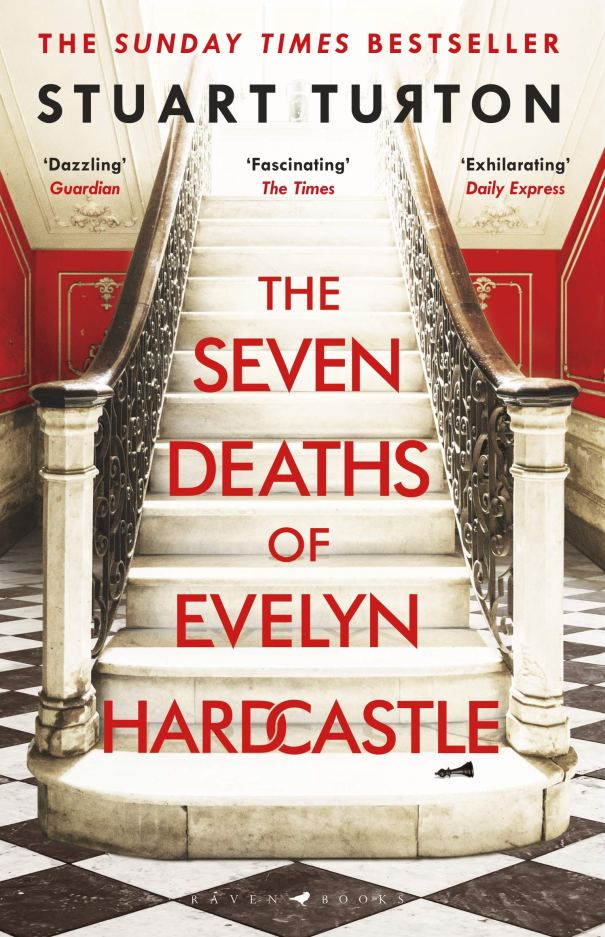
The Seven Deaths of Evelyn Hardcastle by Stuart Turton

The Seven Deaths of Evelyn Hardcastle Cover

Publisher: Raven Books

Publication Date – 8 February 2018

Amazon     Book Depository

A classic and complex murder mystery in an English manor combines with ingenious elements from fantastic genres to create one of the best new releases of 2018.  Reading like the outrageous combination of Groundhog Day, Inception, Downton Abby and Sherlock Holmes written by Agatha Christie, The Seven Deaths of Eveyln Hardcastle is the triumph debut from outstanding new author Stuart Turton.

In a turn-of-the-century country manor, Blackheath, a group of distinguished family guests have gathered for the first time since a terrible incident many years ago.  Before the end of the weekend’s masquerade, a terrible crime will be committed.  A young woman will be killed, and no one will realise that her death was the result of murder.

Inserted into the middle of all this chaos is Aiden Charles, who awakens with no memory of who he really is.  Aiden thinks at first that he is a cowardly doctor with amnesia until a man wearing a plague mask reveals that nothing is as it seems.  Aiden is an outsider, inhabiting and controlling the body of the doctor through unknown means.  The plague doctor reveals that Aiden has been trapped within the manor and is being forced to repeatedly relive the same day again and again, awakening each morning in a different host and living the entire day in their body.

There is only one way Aiden can earn his freedom: solve the murder of Evelyn Hardcastle, the estranged daughter of the manor’s owners.  If Aiden can solve the murder by the end of his eighth day, he will be able to leave.  If he fails to solve the murder his memory will be erased and the cycle will start again.

Using the abilities and connections of his eight very different hosts, Aiden must navigate the halls of Blackheath and the various guests who have arrived for the party.  However, Blackheath has a dark history of murder and betrayal that still casts a shadow to this day.  Every one of its inhabitants has a secret, and many of the guests would willingly kill to protect theirs.

Aiden is also forced to overcome several unnatural problems associated with his circumstances.  While the bodies he inhabits all hold the means to solving the crime, he is forced to balance the varied personalities of his hosts, each of which causes him to act or think in a very different way.  The longer he remains trapped in Blackheath, the more powerful the personalities are.

It also soon becomes apparent that Aiden is not as alone as he thought.  Two other people like him have also been trapped in Blackheath, but only one of them can solve the murder and earn their freedom.  One of his competitors appears to be trying to help him, but Aiden may not be able to trust the mysterious Anna, even though her name is the only thing from his past life that he can remember.  The third competitor has taken on the persona of a murderous footman and has no qualms about killing all of Aiden’s hosts to remove him from the competition.  Can Aiden solve an unsolvable crime before all his hosts are killed, or will he be trapped forever within Blackheath?

The Seven Deaths of Evelyn Hardcastle is a fantastic read that features a unique and imaginative combination of genres.  The basis of the story is a complicated murder mystery placed within the setting of a British manor house.  However, there is a certain and mysterious fantastic element that makes the narrator relive the day over and over again within a new host.  The murder mystery, the manor house setting and the time travelling body swapping, combine together perfectly into a tremendously addictive narrative.

At the heart of the story is an intense and compelling mystery that quickly becomes the main draw for the reader.  Solving the murder of Evelyn Hardcastle requires the protagonist to discover and expose every single secret and lie within the manor.  The sheer amount of details and enigmas that Turton has included with the book are so immense that it takes nearly eight different perspectives of the same sequence of events to get them all together.  Even then, the reader will be amazed by every single twist and turn that it takes to get to the final reveals.  The time travel and body  switching elements of the plot cleverly tie in and enhance the book’s mystery elements.  These elements allow the reader to see multiple versions of the same event, provide a wide variety of different perspectives on the clues, and pull together different testimonies from the same characters as they are questioned by the various hosts.

In addition to enhancing the murder mystery elements, the time travel and body switching aspects of the novel also help to increase the pacing and suspense throughout the book.  The transition between the main character’s various hosts is not as linear as it first appears.  Not only does the narrator switch to his next host once a day is over, he can also switch back to a previous host when he one of his hosts is knocked out, falls asleep or is killed.  This allows the reader to flip through these hosts when a lot of action is occurring, especially when the narrator’s various hosts are targeted in quick succession.  Additional suspense is also introduced due to many of the incidents within the story being out of sync with the narrator.  Various events have been put into place by either future hosts of the narrator or by characters from different points of the book’s timeline.  As a result, the reader has no idea why some events are happening, especially at the start of the book, and it is cool when the various causes of these events are revealed throughout the later parts of the book.

An appealing part of The Seven Deaths of Evelyn Hardcastle is the eight unique hosts for the main character to possess.  Each of these hosts has their own strengths and weaknesses, and it is intriguing watching the main character try and work out what they are.  They also have their own distinctive personalities that affect the main character in different and subtle ways.  The hosts also have their own way of dealing with people or situations, and this affects how the main character reacts and goes about his investigation.  It is intriguing to see how he changes from host to host.  In addition, there is no certainty about who the main character’s future hosts are going to be.  While there are hints, the reader doesn’t know until the narrator wakes up in the body, so the reader can’t help but examine the other characters with whom the narrator interacts in case they are a future host.  There are also some interesting scenes in which the narrator attempts to find and interact with a future version of himself.  Turton’s use of multiple hosts for his narrator is an important and distinctive part of this book that cleverly adds additional mystery to the narrative while also providing suspense and a changing array of personalities and challenges for the protagonist.

Representing a masterful combination of crime fiction and otherworldly attributes, The Seven Deaths of Evelyn Hardcastle is pure enthrallment that is guaranteed to transfix all eyes to its pages.  As one of the best releases of 2018, I cannot recommend this book enough.

My Rating:

Five Stars

Amazon     Book Depository

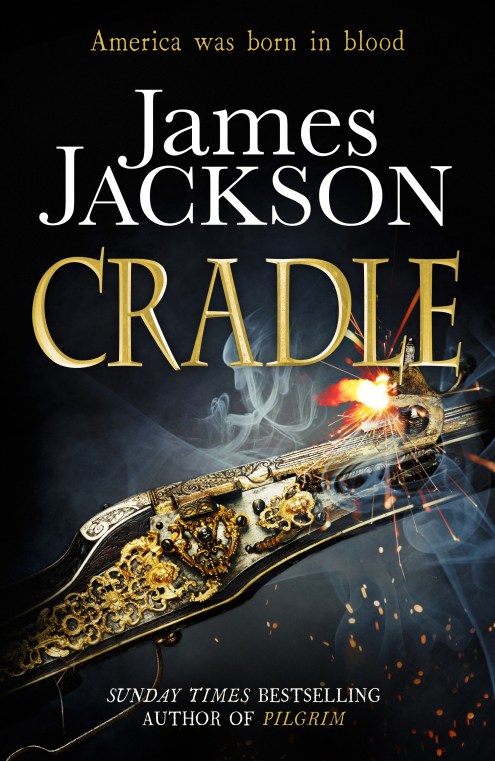
Cradle by James Jackson

Cradle Cover

Publisher: Zaffre

Australian Publication Date – 1 January 2018

World Publication Date – 2 November 2017

Amazon     Book Depository

Death, despair and political espionage!  Welcome to the dawn of America in Cradle, the latest book from historical fiction veteran James Jackson.

1607 AD. Jamestown, on the shore of Virginia, is England’s first colony in the New World.  Life is a dangerous struggle for survival, with the settlers forced to endure starvation, disease and relentless attacks from the natives.  Worse, Jamestown has the ire of its namesake, King James of England, who is violently opposed to the settlement.

However, while Jamestown suffers from the king’s displeasure, Prince Henry supports the mission and views Jamestown as a symbol of England’s ambition and colonial intent.  Resolute that Jamestown must succeed, the young prince instructs intelligencer Christian Hardy to travel to Virginia and ensure its survival against any threats.  In response, the king instructs his chief advisor, Hardy’s former employer, the spymaster Robert Cecil, to sabotage the colony.

Hardy finds Jamestown near starvation and constantly under attack by warriors of the Powhaten nation.  The town survives only through the actions of a brave few, including the legendary John Smith, while split loyalties, incompetence and dissent ensure that the colony moves closer to destruction.  As Hardy works to save the town, a far more insidious threat approaches: his old foe, the deadly renegade Realm.

This is the ninth book from Jackson and his third to feature the character of Christian Hardy as its protagonist.  A fourth book, Blood Rock, featured the Hardy’s father, also named Christian Hardy, as its protagonist.  Cradle is a direct sequel to Jackson’s previous novel, the action-packed Treason, which featured a captivating account of the Gunpowder Plot.

Jackson continues his examinations of some of the more interesting and unique areas of history, this time looking at the initial days of the Jamestown settlement.  The early settlement of Virginia falls within a turbulent time in world history, and creation of Jamestown itself is a fascinating example of colonisation gone wrong.  Jackson does an amazing job of capturing and conveying the brutality and depravation that the inhabitants of the town experienced during their ill-planned expedition.  The descriptive writing provides the reader with a vivid picture of the violent battles, ghastly conditions, cannibalism and torture that the settlers were forced to endure.

Readers will be love the large amount of well-researched historical detail about Jamestown that Jackson has included in Cradle.  The story covers a number of key events which occurred in America and England which affected the colony, and Jackson has made sure to include a large number of real life historical figures who were part of the Jamestown community.  Jackson’s dedication to historical detail shines through, as some of the events incorporated into the plot only have minor mentions in the historical record.  One particular inclusion that many will find enticing is a more accurate and realistic account of James Smith and Pocahontas.  People familiar with the Disney version of the story will find this retelling of events particularly enlightening.

A noticeable feature of Jackson’s novels, whether historical or contemporary, is his love of spies and espionage.  Many of his novels that focus on historical events include subplots or detailed examinations of espionage going on behind the scenes.  This is extremely prevalent in the novels featuring Christian Hardy, as they focus on the intelligence-gathering that started under the reign of Queen Elizabeth I.  Fans of this historical espionage will not be disappointed, as a large portion of Cradle is spent examining the espionage that may have been manipulating Jamestown, both in Virginia and back in Europe.  In addition, Jackson has done a superb job of combining the political thriller storylines into this historical fiction novel and including alternative but plausible motives for the actions of real historical figures.  The fictional character of Hardy is seamlessly inserted into this historical novel, and readers will enjoy watching him influence and bring about real historical events, like the brutal death of John Ratcliffe, who many may remember as the main antagonist of Disney’s Pocahontas.

The ninth book from James Jackson is an over-the-top account of the circumstances surrounding the original Jamestown settlement.  Featuring highly detailed and brutal descriptions of the formation of America and making full use for Jackson’s propensity for thrilling spy stories, Cradle is perfect for those looking for some exhilarating action and adventure in their historical fiction.

My Rating:

Four stars