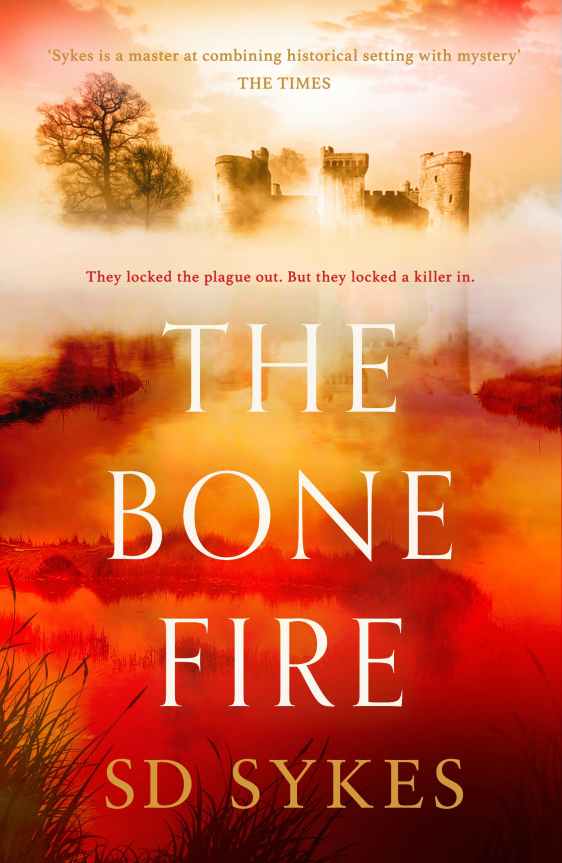
The Bone Fire by S. D. Sykes

The Bone Fire Cover

Publisher: Hodder & Stoughton (Hardcover – 25 July 2019)

Series: Somershill Manor Mystery – Book Four

Length: 310 pages

My Rating: 4.5 out of 5 stars

Amazon     Book Depository

In the mood for a clever and captivating historical murder mystery? Look no further than the latest book from the brilliant S. D. Sykes, The Bone Fire, which continues the adventures of her reluctant 14th century murder-solving protagonist, Oswald de Lacy, who this time finds himself stuck in a unique situation.

After several years of respite, the Plague returns to England in 1361. As a survivor of the original outbreak in 1350, Oswald de Lacy, lord of Somershill in Kent, knows the devastation the sickness can bring. Desperate to save his family, he accepts an invitation from one of his friends, Godfrey, to shelter for the winter in his remote castle in the Romney Marsh with a select company of friends and allies. The rules are simple: once the de Lacy family enters the castle, the gates will be closed and no-one will be allowed to leave until the Plague has passed.

Arriving just ahead of the Plague with his wife, son, mother and valet, de Lacy finds that Godfrey’s castle is a grim refuge filled with a disagreeable group of fellow guests and servants. Despite this, the castle appears to be the safest place for them, especially with the Plague already ravishing the outside countryside. That is until their host is found murdered in his own library.

As the residents deal with the shock of losing the lord of the castle, other bodies are discovered within the castle walls. With nowhere to run except onto the plague-infested island outside the castle walls, de Lacy must once again rely on his talent for solving mysteries to save the day. However, it soon becomes apparent that de Lacy is up against a ruthless killer who delights in violence and is seemingly able to move about the castle undetected. Can de Lacy solve this crime before it is too late, or will he and his family face a fate worse than the sickness keeping them trapped within the castle?

The Bone Fire is the fourth book in Sykes’s Somershill Manor Mystery series, which started back in 2014 with Plague Land. The Somershill Manor Mystery books are an intriguing historical mystery series which follows the investigations of its protagonist in the land devastated by the Black Death. I had not previously read any of Sykes’s books, although her preceding release, City of Masks, is probably one of the books I most regret not reading in 2017.

I was initially drawn to The Bone Fire by the beautiful cover and the really cool-sounding plot, and I thought that this novel had some real potential. I am extremely glad I decided to get a copy of this book, as I was blown away by the fantastic and clever story. Sykes does an excellent job of combining a complex and compelling murder mystery with a unique and fascinating historical setting. The entire story is extremely fast paced, and I found myself racing through the book in no time at all, especially as it proved to be pretty darn hard to disengage from the fantastic story.

Those readers who have not had the opportunity to read any of Sykes’s books can easily enjoy The Bone Fire without any foreknowledge of the previous entries in the Somershill Manor Mystery series. Each of the books in the series can be read as a standalone novel, although existing readers will note the continuation of character arcs from the earlier entries in the series. Some information from the previous books does play a role in the story, including how the protagonist survived the first outbreak of the Plague, however Sykes always does a careful job of reintroducing these elements in The Bone Fire well before they become relevant to the plot.

At the heart of this book lies an excellent murder mystery storyline, as the protagonist is forced to investigate a series of killings in a remote English castle. Sykes has come up with a thrilling murder mystery storyline that follows a twisting and intriguing investigation. The protagonist has a huge bevy of potential suspects, each of whom has their secrets and schemes, which de Lacy has to unravel in order to get to the bottom of the murders, and there are a variety of motives for the killings occurring in the castle. The case goes in some very interesting directions, and the end result was very satisfying, with some well-plotted-out twists and some truly unique motivations for a murder. I had a great time trying to figure out who the killer was, and this was a terrific storyline to centre the book upon.

While the murder mystery storyline is an excellent part of this book, readers will also be entranced by Sykes’s use of a fascinating historical setting. Like the first two books in this series, the author has set the story in the midst of plague-ravished England. However, unlike the previous books, which dealt with the first bout of the Black Death between 1348-51, this story is set in 1361, when a second plague hit the country. This time the populace, including all the characters in this book, were much more aware of how deadly the Plague could be and took steps to try and avoid it. Sykes does an amazing job capturing the subsequent sense of despair, fear and paranoia that emulates from people who previously experienced the Plague, and it makes for a fantastic emotional background to the story. The various theories and ideas of the cause of the Plague are pretty fascinating, as are the methods with which the protagonists attempt to protect themselves from its influence. It also results in some heartbreaking, if not cruel, decisions from the protagonist, who is still traumatised from his experiences during the first sickness, and results in some dramatic character moments.

I really enjoyed the way that Sykes utilised the Plague and other intriguing historical aspects, such as religion, to enhance the murder mystery storyline of this book. The restrictions of the Plague keeping the residence within the castle helped make the story feel like a classic whodunnit in places with a small group of suspects trapped in an enclosed location and only one investigator trying to sort out the entire case. The historical setting also resulted in a number of intriguing potential motives for the story, such as religious differences, complex inheritances, arranged marriages and even clocks, all of which adds a compelling edge to the story.

The Bone Fire by S. D. Sykes is an exciting and gripping historical murder mystery that is really worth checking out. The author did a fantastic job creating a clever mystery storyline that perfectly utilises its bleak and intriguing historical setting. The end result is a terrific fourth book from Sykes that was a lot of fun to read. It is safe to say that Sykes’s Somershill Manor Mystery series is now firmly on my reading radar, and I will be keeping an eager eye out for the next book in the series.
Amazon     Book Depository

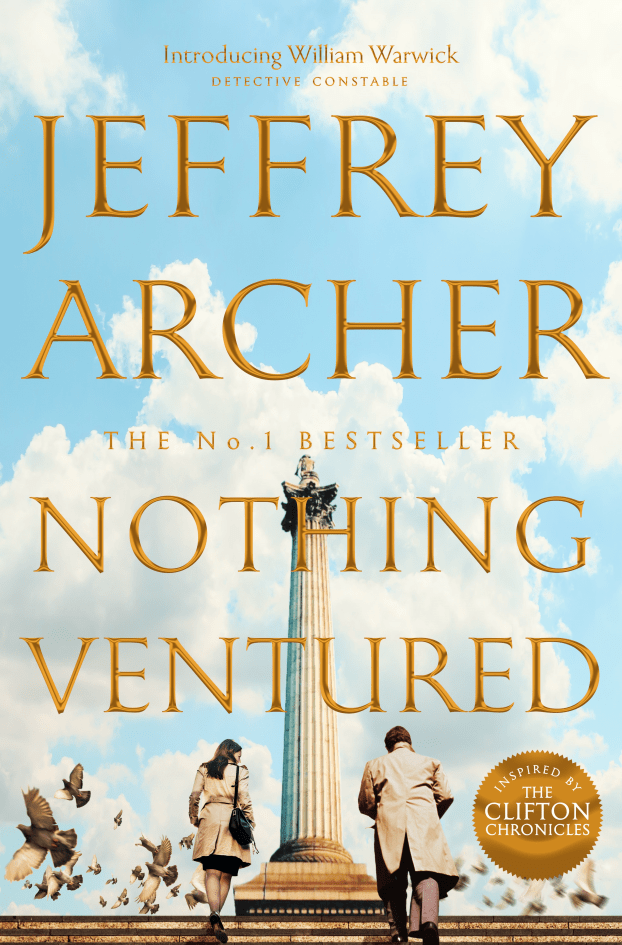
Nothing Ventured by Jeffrey Archer

Nothing Ventured Cover

Publisher: Macmillan (Trade Paperback – 10 September 2019)

Series: William Warwick series – Book 1

Length: 323 pages

My Rating: 4 out of 5 stars

Amazon

One of the biggest names in modern fiction, Jeffrey Archer, returns with Nothing Ventured, an intriguing piece of historical crime fiction that starts up his brand-new William Warwick series.

William Warwick, son of a respected London defence attorney, has always dreamed of becoming a detective in the London Metropolitan Police Force. Despite the opposition of his father, William enrols as a trainee police officer at the start of the 1980s after finishing university. Armed with determination, sharp observation skills, an education in fine art and a can-do spirit, William is unaware of the adventures in store for him.

After quickly making the rank of detective constable, William is assigned to Scotland Yard’s Arts and Antiquities squad. While also investigating of a series of different art crimes and frauds across London, the squad is mainly concerned with capturing Miles Faulkner, a criminal mastermind responsible for the thefts and forgeries of some of the most expensive art in England. All previous attempts to capture Faulkner have failed miserably, as the criminal is always two steps ahead of the police.

As William becomes more and more involved in investigating the various crimes Faulkner is organising, he makes a crucial breakthrough when he befriends Faulkner’s wife, Christina. Christina is willing to return a valuable stolen Rembrandt from Faulkner’s personal collection in return for help from the police. Can Christina be trusted, or will Faulkner once again evade justice and continue his dastardly schemes? In addition, what happens when William falls head over heels in love with Beth, a research assistant at the museum the Rembrandt was stolen from, whose family secrets may drive a terrible wedge between her and William?

I have mentioned before how Jeffrey Archer, or the Lord Archer of Weston-super-Mare as a Member of the British House of Lords, is one of the more colourful professional novelists in the world today. Archer has produced over 30 diverse books since 1976, including several standalone novels, a bestselling long-running series, several collections of short stories, three plays, three non-fiction books about his time spent in prison, and four children’s books. I have read several of his books in the past, although I only have his 2018 book, Heads you Win, currently reviewed on my blog at the moment.

Nothing Ventured is a fantastic new novel from Archer and is the first book in a planned eight-part William Warwick crime fiction series. The William Warwick series actually has a very interesting origin, as William Warwick served as the protagonist of a fictional series of books written by the main character in Archer’s most iconic series, the Clifton Chronicles, Harry Clifton. Following the end of the Clifton Chronicles in 2016 and several requests from his fans to expand on the adventures of Warwick, Archer started on this series. The William Warwick series will examine the career of its titular character and show the various cases he investigates that helped him to become a great detective.

This series is off to a good start with Nothing Ventured, as Archer creates a compelling and enjoyable read that does a fantastic job introducing the readers to his new protagonist and showing the early days of his police career. Archer has always excelled at creating historical fiction narratives that focus on the lives of specific characters, and Nothing Ventured is no exception. Within this book, the reader gets a great idea of the character of Warwick and sees the struggles and early influences that drive him to become a successful police detective. The reader is also introduced to a bevy of interesting side characters, many of whom are set up to be major friends, colleagues, love interests or antagonists of Warwick through the future books of the series. Overall, Archer does a superb job setting up his overarching series in Nothing Ventured, and the intriguing mysteries explored within, as well as the introduction of a likeable new protagonist, should ensure readers will check out future instalments of this series.

One of the most intriguing aspects about Nothing Ventured was the focus on the artistic world and the subsequent fraud or theft that accompanies it. At the start of the book, the protagonist studies art history at university and subsequently develops a life-long love for the artistic greats. This appreciation of art becomes an important part of his future career, as it helps him join the Arts and Antiquities squad. Throughout the course of Nothing Ventured, Warwick and his colleagues investigate a number of different instances of art fraud, including forgeries of famous works, fraudulent signatures of historical figures and the forging of fake antique coins, among several other interesting examples. I thought that this was an absolutely fascinating focus for this book, and I really enjoyed reading about all the different ways art fraud could be committed. It also allowed for a number of unique and compelling mysteries, and readers will enjoy seeing the diverse outcomes that result from these cases. I also enjoyed the various discussions about art that permeated the book’s narrative. Archer is obviously very passionate and knowledgeable about classic artworks and antiquities, and this shines through in his writing. I am hoping that this focus on art will continue in future books of the William Warwick series, as it really helped set this book apart from some other historical mystery series.

The focus on the art world in Nothing Ventured also allowed Archer to introduce a great antagonist in the form of Miles Faulkner. Faulkner is a criminal mastermind who specialises in crimes involving art and is the bane of the Arts and Antiquities squad. Faulkner is a great gentleman-thief character, who is in many ways quite similar to Warwick, especially when it comes to his love and appreciation of artistic works. However, unlike Warwick, he uses his knowledge for his own benefit and is a fantastic master criminal. I really enjoyed the various ways that Faulkner was able to outsmart the police in this book, and he proved to be a worthy opponent to Warwick and his colleagues. The reveal of the true depths of Faulkner’s intelligence and deviousness in the last sentence of the book is masterfully done and Archer is clearly setting the character up as one of the major antagonists of this series. I look forward to seeing him return in future entries in this series, and I am sure he will continue to be a great villain.

Readers should also keep an eye out for the chapters in which Archer splits the focus between two separate events occurring at the exact same time. This is done a couple of times throughout the course of the book, and these split chapters are a lot of fun to read. They are mostly done to highlight the differences between two similar events happening in different areas; for example, showing two different police operations occurring at the same time, or two unrelated court cases with implications for the protagonist that are running in separate court rooms. The inclusion of these simultaneous events was done really cleverly in places, and it resulted in a couple of amazing and compelling chapters which I felt were some of the book’s best scenes. I hope that Archer continues to utilise this writing technique in the future books of this series, as it was a true highlight of Nothing Ventured.

Jeffrey Archer has once again created a thrilling and intriguing novel that focuses on the life of an English protagonist in a historical fiction setting. Nothing Ventured is the compelling first instalment of a crime fiction series with some real potential. Within this first book of the William Warwick series, Archer has come up with an intriguing life story to follow, introducing some great characters and producing some captivating mysteries and criminals that readers will love to unravel in future books. The massive planned William Warwick series should ensure Archer remains one of the bestselling historical fiction authors for the next eight years, and I look forward to seeing how the career and life of the titular main character progresses in the next instalment of the series.

Amazon

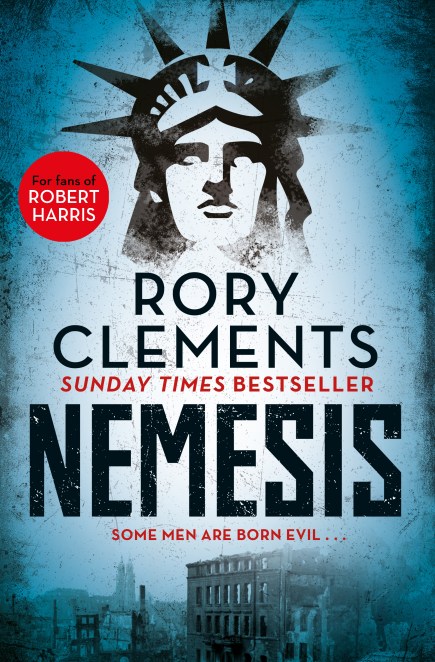
Nemesis by Rory Clements

Nemesis Cover.jpg

Publisher: Zaffre (Trade Paperback Format – Australia – 3 March 2019)

Series: Tom Wilde – Book 3

Length: 317 pages

My Rating: 4 out of 5 stars

Amazon     Book Depository

Historical thriller and murder mystery author Rory Clements returns with the third book in his electrifying and clever Tom Wilde series, Nemesis.

August 1939.  War is on the horizon, and while most of the world is preparing for the next great conflict, Cambridge Professor Tom Wilde is enjoying a holiday in France with his partner, Lydia.  That is, until a mysterious man alerts him to the fact that one of his former students, an idealistic young man by the name Marcus Marfield, is currently being held in an internment camp on the France-Spain border after his involvement in the Spanish Civil War.  When Wilde finds Marfield at the camp he moves quickly to secure his release, and they flee the country just as the Germans begin their invasion of Poland.

Back in England, the country moves to a war footing, as the Allies attempt to persuade America to join them against the Nazis.  While many Americans oppose joining the war, the sinking of the passenger ship the SS Athenia may be the spark that brings them into the war.  With the Nazis attempting to convince the world that Churchill orchestrated the sinking of the Athenia to galvanise American support against Germany, Wilde and his companions return to Cambridge.

Once back in the city, Wilde begins to notice a change come over Marfield.  At first attributing it to his shell shock following his battles in Spain, a series of mysterious deaths around Cambridge all seem to link to the recently returned Marfield.  These events are tied to a deadly conspiracy to keep America out of the war for good.  A spy ring is active in Cambridge, and Wilde must find a way to uncover it before it is too late.  Can Wilde once again avert disaster, and what role does Marfield play in this conspiracy?

After the excellent first two books in his Tom Wilde series, Corpus and Nucleus, Clements continues the adventure of his series’ titular character, Tom Wilde, as he investigates a series of Nazi espionage activities around Cambridge in the lead-up to World War II.  I have quite enjoyed this series in the past and was looking forward to continuing the story in Nemesis.  The latest book is a thrilling story that takes place just at the outset of the war and utilises the several historical events and figures to turn this into quite an intriguing tale.

Nemesis is a really good historical thriller which combines a great spy story with the historical context of early World War II.  The previous books in the Tom Wilde series have all contained compelling and complex mysteries with huge implications for England and the allies, and Nemesis is no different.  Clements has crafted together an excellent mystery that has massive, worldwide implications, and I really enjoyed unravelling the mystery, especially as the author presents all sorts of doublecrosses, twists, cover-ups and mysterious deaths to confuse the reader away from the main goal of the antagonists.  The antagonists’ master plan is quite out there, and it is one of those plots that would have had massive historical implications.  I quite like the role that new character Marcus Marfield played in this plot, as the protagonists and the reader are constantly trying to work out what his secrets are and what kind of person he truly is.  Overall, I found the thriller and mystery elements of this book to be quite clever and captivating, and readers will enjoy uncovering the full extent of the antagonist’s overall plot.

One of the most interesting parts of the Tom Wilde series so far was its setting during the chaotic pre-World War II period.  In Nemesis, Clements sets his story right at the start of the war and immediately shows all the panic and preparation that followed this declaration of war.  Clements did a fantastic job portraying the low-key sense of dread and paranoia that the inhabitants of England would have felt in the build-up to the war in the previous books in the series, and in Nemesis these feelings are realistically amplified now that the war has begun.  The author has quite a good grasp on a number of historical events and feelings during this period, and I quite liked seeing the Cambridge viewpoint of the war.  The Cambridge setting has always been a fantastic highlight of this series, but it was quite intriguing to see the author incorporate all the various changes to the city that occurred as a result of the war into his novel.  Clements dives deep into the Cambridge lifestyle when it comes to the war, whether it involves the removal of the rare books from the colleges, the preservation of the stained glass windows, the roles that the professors were being assigned in the war effort or even the many Communist professors throwing away their party membership cards when it became clear that the Soviets were supporting the Nazis.

Clements also ties his story in quite closely with one of the more interesting early events of World War II: the sinking of the passenger liner the SS Athenia as it sailed across the Atlantic.  I was deeply fascinated not only with the depictions of this event, but the discussions and conspiracy theories that resulted from it.  This was especially true when it came to the examination about the sinking of the ship being used to bring the United States into the war.  The likelihood of America joining in the war became a major part of the story, and it was interesting to see what the European characters thought about America’s reluctance to enter the war, especially as one of the protagonists is an American character, and one of the chief architects of America’s isolationist policy, Joe Kennedy, was the United States Ambassador to England at the time.  I thought that the historical elements that Clements explored were a real highlight of this book, and readers will enjoy his literary examination of these events.

While the main focus of the book’s story is a conspiracy and the start of the war, Clements does take his time to continue to develop a number of the characters introduced in the previous books.  For example, Wilde continues to deepen his relationship with his romantic partner, Lydia, and I quite liked the role that Lydia played in investigating the case alongside Wilde.  There is also a significant focus on Wilde’s American friend Jim Vanderberg and his family, especially as Vanderberg’s family are passengers aboard the Athenia.  Phillip Eaton, the British spy who was hit by a car in the last book of the series makes a return in Nemesis, and the reader gets to see his struggles to recover from his horrific injuries while still working as an intelligence officer.  A number of intriguing new characters are introduced in this book and it will be interesting to see what role they and the existing characters will play in any future entries in this series.

In the latest book of his enjoyable Tom Wilde series, Nemesis, Rory Clements once again delivers a captivating historical thriller that brings the reader into the early days of World War II.  Featuring an incredible overarching mystery and some detailed examinations of intriguing historical events and settings, Nemesis is a deeply interesting book that is well worth checking out.  I am very curious to see where Clements takes the series next, and I look forward to seeing what impact Thomas Wilde will have on the rest of World War II.

Amazon     Book Depository

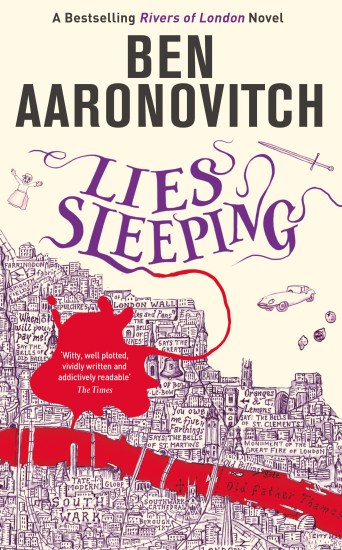
Lies Sleeping by Ben Aaronovitch

Lies Sleeping Cover.jpg

Publishers: Gollancz and Orion Audio (Audiobook format – 15 November 2018)

Series: Rivers of London – Book 7

Length: 10 hours 25 minutes

My Rating: 5 out of 5 stars

Amazon     Book Depository

Prepare to dive headfirst into one of the best urban fantasy series in the world today, with the seventh book in Ben Aaronovitch’s Rivers of London series, Lies Sleeping.

London is a magical place, especially for Peter Grant, Detective Constable and apprentice wizard.  Peter is a member of an elite unit of the London Metropolitan Police, known as the Folly, which is tasked with investigating magical crimes and protecting the city from all sorts of magical threats.  The person at the top of the Folly’s most wanted list is Martin Chorley, also known as the Faceless Man, a magical criminal mastermind who is determined to do whatever it takes to gain power.  However, despite the Met and the Folly’s considerable resources, Chorley is always able to stay one step ahead of those chasing him.

During a routine attempt to subtly panic several of Chorley’s known associates, a magical creature attacks a potential witness.  Peter’s investigation soon reveals that the witness had ordered the forging of a large and mysterious bell, which Chorley is desperate to get his hands on.  As Peter and his team dig deeper in the bell’s construction, they quickly begin to realise that Chorley is the final stages of his master plan, a plan tied deeply into the heart of London’s dark and bloody history, and one which could cause untold disaster for the entire city.

As the clock ticks down, Peter needs to work out the connection between London’s past and the mysterious magical events occurring all over the city.  Can Peter and his team once again save the day, or will their adversary finally obtain the power he has always desired?  Moreover, what will Peter do when he comes face to face with the woman who betrayed him to Chorley, his old partner in the Met, Lesley May?

Ben Aaronovitch is a highly regarded author with an interesting writing history to his name.  His writing career began back in the late 1980s and early 1990s, when he wrote a couple of Doctor Who television serials, including the highly regarded serial Remembrance of the Daleks, as well as three entries in the Virgin New Adventures series of Doctor Who books.  The Virgin New Adventure series chronicled the adventures of the Doctor after the television show’s hiatus in 1989.  Aaronovitch’s three entries in this book series sound incredibly interesting, although they were considered to be somewhat controversial at the time due to their more adult content.  Aaronovitch did not get around to writing his fantasy work until 2011, when he wrote the urban fantasy Rivers of London.  This was the first book in the author’s Rivers of London series of books (alternatively known as the Peter Grant series or the PC Grant series), for which the author is best known for.  The Rivers of London series is very highly regarded, and Aaronovitch has worked hard to expand on the story and universe of this series, writing a number of novellas, short stories and graphic novels on top of the series’ main seven books.

Before Lies Sleeping, I had never got around to reading any of Aaronovitch’s books, despite hearing good things about his main series.  As a result, I was very happy that I finally managed to check out the series earlier this year.  I did receive a trade paperback edition from Hachette Australia, but in the end, I chose to listen to the audiobook version of this book, narrated by Kobna Holdbrook-Smith.  I have to say that I was extremely impressed with this brilliant book and found that I really enjoyed the excellent and captivating story.  Lies Sleeping easily gets a full five-star rating from me, and I fully intend to go back and check out the other books in this series.  This book is an excellent blend of the fantasy and crime fiction genres, both of which come together perfectly to create an extremely compelling and complex read.

Lies Sleeping will prove to be extremely appealing to huge range of people; not only pre-existing fans of the series but also those readers who have not read any of the Rivers of London books before.  As a first-time Aaronovitch reader, I found that it was incredibly easy to step in and enjoy this series, as the author did a fantastic job making Lies Sleeping accessible to everyone.  While Aaronovitch has created a huge amount of lore around his series, including in his novellas and comics, the reader does not need to have any knowledge of these or the previous six books in the series to fully understand the entirety of Lies Sleeping’s story.  However, those readers who do have experience with this series will love how the story continues to development, as well as the massive and surprising twists that occur throughout the book.

At the core of this book lies a series of intriguing mysteries that take place throughout London.  In order to achieve his villainous goals, the antagonist has embarked on a series of seemingly random and chaotic crimes and ventures, all of which apparently form part of his master plan.  These various mysteries or criminal events were really interesting, and I liked trying to work out how they would all come together.  I particularly liked how various parts of these mysteries were deeply tied into the history of London, and the protagonist needed to gain a historical understanding of some of various myths and legends surrounding London.  Watching the protagonist attempt to unwind the complex plan of the book’s villains was extremely compelling, and I had a great time trying to work out what was happening myself.  One or two threads of these mysteries did go unsolved in this book, and I will be curious to see if they are picked up in any of the future entries in this franchise.

Aaronovitch is clearly a very creative writer, as he utilises a huge range of different and fairly unique fantasy elements throughout this book.  While there are a large number of wizards, spells and elvish beings throughout the book, the main focus is on the titular rivers of the series.  The more common magical beings encountered in this series are the personifications of the various rivers and waterways (current and historical) that flow through and around London.  These beings are similar to gods, although the term genius loci may be more appropriate, and have a huge range of powers.  These are a really intriguing addition to the book, and it was interesting to see the protagonist attempt to deal and interact with the various river characters, including his girlfriend, Beverly Brooke (yes, the main character of this series is dating a river).  There is also a huge range of other genius loci, or similar beings, that are featured within the story, including the mysterious and insane Mr Punch.  The magic that the human characters utilise is complex and slightly less ostentatious than some classic pieces of fantasy, but when the master wizards get to work it can be quite impressive.

One of the things I liked best about this book is how the author could create a realistic British police narrative and ensure magic became part of the procedure.  The Folly may be a special branch of the Metropolitan Police, but it is still part of the police force, and as such the characters are forced to follow standard procedure when investigating magical crimes.  Having these elite magical characters fill out paperwork and other various elements of day-to-day police life was deeply amusing.  I did like seeing how regular law enforcement tactics, anti-crime strategies and police combat techniques could be utilised against magical opponents.  The overall fantasy elements of this book are really enjoyable, but I really liked to see them be blended with a classic British police story.

Aaronovitch has done a fantastic job creating a huge and intriguing group of characters for this series.  The protagonist of Lies Sleeping and the Rivers of London series is Peter Grant, police officer and official wizard’s apprentice.  Peter is the sort of protagonist I really enjoy (sarcastic, funny and determined) so I quite enjoyed having him narrate the story, making a number of great jokes throughout.  The other police characters make up a great supporting and diverse cast, with a range of different abilities and characteristics.  I especially liked the classy and wise Detective Chief Inspector Thomas Nightingale, the last officially sanctioned English wizard and Peter’s mentor.  He is an extremely charming and old-fashioned character who has a huge amount of magical power at his fingertips and who can be quite intimidating if he puts his mind to it.  I also quite enjoyed the other magical characters that appeared throughout the book, as Aaronovitch has created a bevy of river gods and associated genius loci characters.  I liked how many of these ancient characters portrayed modern characteristics and ways of speaking, even when talking in a historical context.  Long-time readers of the series will also enjoy the further exploration of several recurring characters, including finally revealing the backstory of the mysterious Mr Punch.

While the protagonists and supporting cast are great characters, I really liked the antagonists in this story.  The main villain of the story is Martin Chorley, also known as the Faceless Man.  He is an excellent antagonist who is built up as a master planner, master magician and crazy villain before you even see him in the book.  His master plan was fairly complex, and the character’s overall arc in this book featured some massive twists that I did not see coming.  Lesley May is another really complex character who is a great addition to the series.  Her relationship with Peter is one of the best parts of the book, as even after her betrayals earlier in the series, he is still trying to save her from herself.  The way this works out in the end is quite dramatic, and it will be interesting to see where it goes from there.

While a large part of this book is set out more as a slow and steady police procedural, there are some fantastic action sequences within Lies Sleeping.  These come about when the protagonist attempts to stop the plans of the Faceless Man, and all manner of chaos erupts.  Nothing highlights this better than an extended action sequence which involves Peter chasing after a van on a bicycle, throwing fireballs, while all manner of debris is magically flung at him and several pursuing police vehicles.  The magical duels between some of the participants, mainly Nightingale and Martin Chorley, can be particularly impressive, but I personally liked how many of the confrontations devolved into fist fights as both sides attempt to distract the other and disrupt their castings.  Plus, where else are you likely to see British police with truncheons attempt to fight evil wizards?  These amazing action sequences really added to the story, and it was great to see all this magic in action, rather than being theorised the entire time.

While I would have already been tempted to give Lies Sleeping a five-star review, the thing that definitely clinches it for me is the amazing audiobook adaption of the novel, narrated by actor Kobna Holdbrook-Smith.  At nearly 10 hours and 30 minutes, this is a moderately easy audiobook to get through, and I had an absolute blast listening to it.  Holdbrook-Smith has an amazing voice and his work narrating this audiobook was just incredible.  His voice for protagonist and story narrator Peter perfectly encapsulated the character and got the full force of his witty and enjoyable personality across to the reader.  I really liked all the voices that Holdbrook-Smith created for the various characters featured throughout Lies Sleeping, especially for some of the magical creatures, who had an air of ancient wisdom in their voices.  However, without a doubt my favourite voice was the one for Nightingale.  The voice chosen for Nightingale is full of all sorts of old British class, and I thought it fit the character perfectly and was one of my favourite parts of this whole audiobook.  Aside from the outstanding voice work, I also quite liked the jazzy music that was played at the start of each chapter.  It gave the book a real noir private investigator feel, and I like how it added to the tone of the book as a whole.  The audiobook version of this book also helped me understand the story a bit better as an outsider to the series, and that, combined with Holdbrook-Smith’s brilliant voice work, makes me completely happy to recommend the audiobook format of Lies Sleeping.

Aaronovitch once again delivers a spectacular read that expertly combines amazing fantasy and crime fiction elements into one widely outstanding narrative.  There are so many excellent elements to this book, and I had absolutely loved my first foray into the Rivers of London series.  I strongly recommend listening to the Lies Sleeping audiobook, narrated by the very talented Kobna Holdbrook-Smith, but those readers who prefer to read their books will also find much to enjoy about this fantastic book.  This is one of the best urban fantasy books I have ever had the pleasure of reading.  I fully intend to go back and check out all the preceding books in this series, and I can’t wait to see where the series goes next.  Five stars all the way.

Amazon     Book Depository

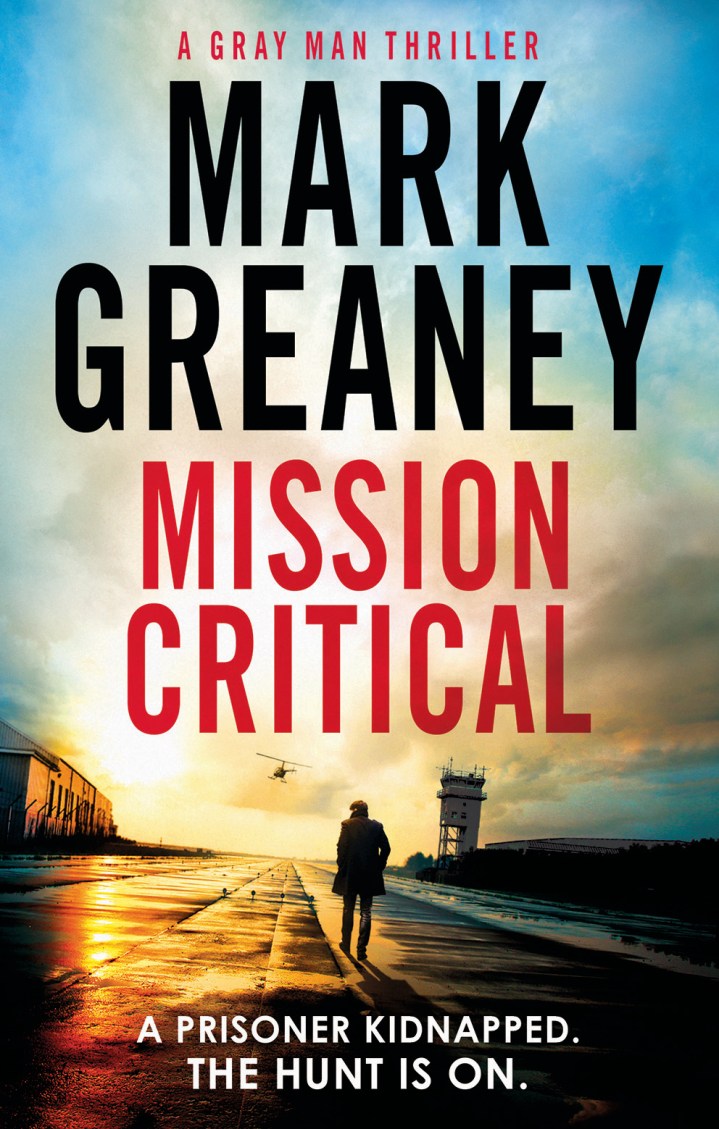
Mission Critical by Mark Greaney

Mission Critical Cover

Publisher: Sphere (Trade Paperback Edition – 26 February 2019)

Series: Gray Man – Book 8

Length: 513 pages

My Rating: 4 out of 5 stars

Amazon     Book Depository

Bestselling author Mark Greaney returns with another entertaining and fast-paced instalment in his enjoyable Gray Man spy thriller series.

Court Gentry used to be a ruthless covert assassin known as the Gray Man, a highly skilled killer considered a legend in the clandestine circles.  However, times change, and Gentry now finds gainful employment as a CIA hitter, one of three elite agents that make up the Agency’s super-secret Poison Apple program.  Going under a new codename, Violator, Gentry is redirected aboard a CIA flight in Europe.  Tensions rise when the plane’s other passengers, a team of heavily armed agents, attempt to remove Gentry from the flight in order to protect their prize, a hooded man who may have knowledge that could identify a mole within the CIA.

Allowed to remain on the plane, Gentry finds himself thrust into the middle of a firefight when the plane lands in England.  A team of mercenaries ambush the plane, overcoming the CIA and MI6 agents waiting to meet the flight and taking the kidnapped man for themselves.  Gentry gives chase to the surviving mercenaries to regain the kidnapped man and soon finds himself investigating the case by himself.

As Gentry attempts to uncover what is going on in England, one of Poison Apple’s other operatives, the former Russian agent Zoya Zakharova, finds herself under attack in her CIA safe house.  With Zoya going off the radar, Gentry’s handlers are convinced that a mole within the CIA is tipping of a dangerous opponent.  Gentry and his team are soon the only agents who can stop a devastating attack that could bring the West to its knees.

Mark Greaney is a highly regarded spy thriller writer who has some substantial works to his name.  He was Tom Clancy’s co-author for legendary espionage author’s final three books, Locked On, Threat Vector and Command Authority.  Following Clancy’s death in 2013, Greaney continued to write an additional four novels in Clancy’s Jack Ryan Universe.  Aside from the books he wrote with Clancy, Greaney has his own series, the bestselling Gray Man series, which started in 2009 with the author’s debut book, The Gray ManMission Critical is the eighth book in the Gray Man series.

This was an incredibly thrilling story which contains hell of a lot of action and espionage.  I really liked the sound of Mission Critical’s plot synopsis and was glad that I picked up a copy of this book, as the action and intrigue did not stop the entire time.  At over 500 pages long, I was worried that this might drag in some places, but I found myself fairly absorbed by the awesome plot and sufficiently pumped up by the huge number of firefights, close combat sequences and high-speed chases.

I loved the spy thriller storyline that was a prominent part of Mission Critical.  Greaney weaves together a number of plotlines to create a fantastic overall spy thriller narrative.  Because Mission Critical is told from a number of perspectives, including those of the protagonists and antagonists, the reader gets a great idea of all the action, spycraft and dirty tricks that both sides employ to complete their respective missions.  Greaney obviously has a large amount of knowledge about the espionage world, and I loved all his depictions about the inner workings of spy agencies, rogue operatives and the various tricks and techniques that agents employ.  I also liked Greaney’s depiction of the inner politics of the CIA and how that might impact on missions and the distribution of resources, as well as a look at the CIA’s relationship with other countries’ intelligence agencies.

I really liked some of the characters featured within this book.  The protagonist, Court Gentry (and I have to point out how much I love that name), is a solid and dependable badass agent to anchor this series.  He’s your typical thriller protagonist, with some badass skills and a reputation to match.  I loved his anti-authoritarian vibe, and I also quite enjoyed how he actually got his ass handed to him multiple times throughout the book, rather than being unbeatable in every encounter.  I was also impressed that Greaney kept showing him being slowed down by his injuries, rather than having him at 100% for every encounter like some other authors do.  Zoya is also a good protagonist for this story; let’s face it, a sexy Russian agent never goes amiss in a spy thriller.  The author dives into this character’s background quite a bit in Mission Critical, and her connections to the plot and the antagonists were explored in an intriguing manner.  The third Poison Apple operative, Zack Hightower, aka Romantic, was used a little less than his comrades, but he was a fun addition to the team, adding some humour to the story, especially when it came to his codename, as well as some complex history and camaraderie with Gentry.  The Poison Apple program handler, Suzanne Brewer, also adds some great things to the story.  A career-orientated CIA administrator, she has to try and play straight-woman to the three anti-authority, disrespectful operatives that are under her command.  The fact that she does not want to be working with these people and is at times actively sabotaging them to try and get a different posting adds some really intriguing elements to the story, and I liked watching her work against her agents for her own selfish ends.

Mission Critical is the eighth book in Greaney’s Gray Man series.  While this latest entry does feature a number of characters from the previous books in the series, readers are not required to have read any of the previous books to enjoy this story.  I felt that Greaney did an excellent job of explaining any elements from the previous entries in the series that become relevant throughout Mission Critical.  Fans of the Gray Man series will probably really enjoy the deeper examination of Zoya’s history and backstory, as well as her inclusion in the other Poison Apple agent’s operations.

Overall, Mission Critical was a deeply entertaining espionage novel that is bound to keep readers absorbed with its excellent action and thriller elements.  It is easily enjoyable for both existing fans of the franchise and new readers alike.  I had a lot of fun reading this book and I powered through all 500+ pages in fairly short order.  I am planning to keep an eye out for Greaney’s next book, Red Metal, a really cool-sounding war thriller that is coming out in July this year.

Amazon     Book Depository

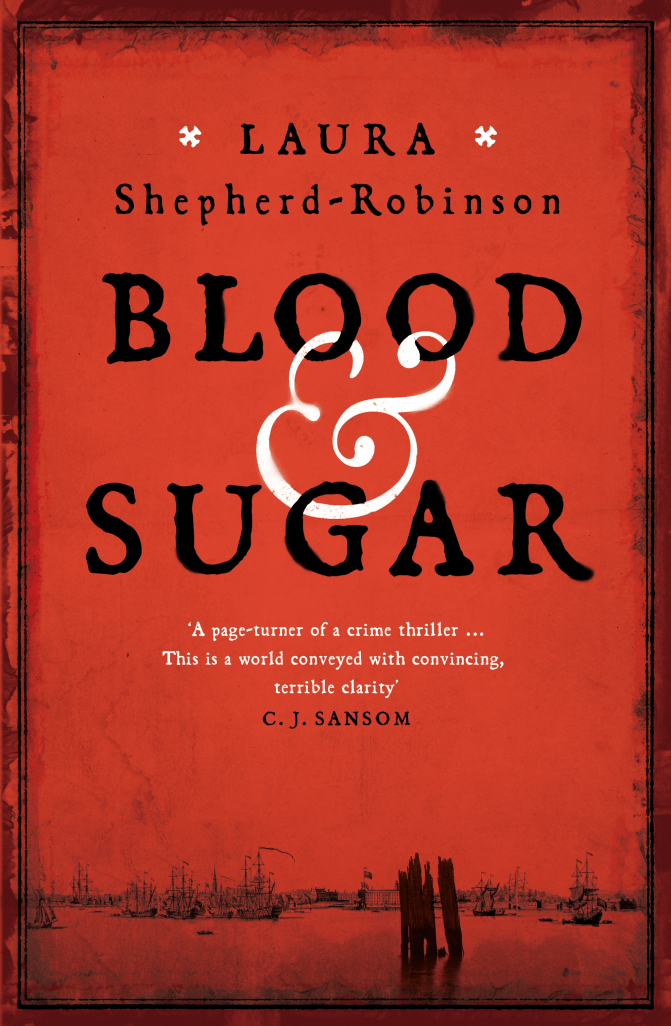
Blood & Sugar by Laura Shepherd-Robinson

Blood & Sugar Cover

Publisher: Mantle (Trade Paperback edition – 24 January 2019)

Series: Standalone/Book 1

Length: 432 page

My Rating: 5 out of 5 stars

Amazon     Book Depository

From the creative mind of Laura Shepherd-Robinson comes this powerful, dark and extremely captivating historical murder mystery, which might just be one of the most impressive debuts of early 2019.

In June 1781, a horrific murder is discovered on the dock of the slaver port of Deptford, outside of London.  The body has been brutally tortured in a variety of ways associated with the slave trade, and his chest has been branded with a slaver’s mark.  The dead man was Tad Archer, a passionate abolitionist who had been causing trouble throughout Deptford as part of his abolitionist campaign.

Days later, Captain Harry Corsham, a war hero who fought in the American Revolution, currently attached to the War Office and about to embark on a promising career as a politician, receives a visit from Tad’s sister, who is searching for her missing brother.  Tad, an old estranged friend of Harry’s, was apparently in Deptford to expose a secret that could potentially end the British slave trade.  Travelling to Deptford, Harry discovers the terrible fate of Tad and is determined to bring his killer to justice.

In order to discover who is responsible for his friend’s the murder, Harry must uncover the secret that Tad believed could permanently end the slave trade.  But as Harry investigates further, he finds himself embroiled in a conspiracy that reaches to the very heart of the realm.  Powerful forces wish to see murder covered up and anyone connected to the dark secret silenced.  Harry soon finds himself on the wrong side of men who can easily destroy his career and family.  Undeterred, Harry presses on with his investigation, but he may prove to be unprepared for the cruel killer stalking him through Deptford.

Blood & Sugar is the debut novel of Laura Shepherd-Robinson, a fantastic new voice in the historical murder mystery genre.  Shepherd-Robinson has created an outstanding novel that masterfully blends a fantastic and clever murder mystery with some powerful and evocative historical content.  The result is a terribly addictive novel that highlights this debuting author’s obvious ability to craft an excellent and compelling story.  From how the story is written, Blood & Sugar will probably be a standalone novel, although I do hope that Shepherd-Robinson sticks with the historical fiction and murder mystery genres, as she has an amazing talent with both.

At the heart of this amazing book is a complex and intriguing murder mystery that sets the book’s protagonist off on a dangerous and dark investigation of the slave trade.  While the investigation is originally focused on the murder of Tad Archer, it spirals out into to encapsulate several additional murders and a larger and more widespread conspiracy which may or may not be connected to the initial murder.  Each of these mysteries is clever, well thought-out and guaranteed to grab the reader’s curiosity and keep them going through the story to work out the incredible solution.  The author has also populated her story with a number of distinctive and complex characters, each of whom has their own hidden secrets and dark pasts.  In order to solve Blood & Sugar’s overarching mystery, the protagonist has to unravel each of these character’s lies and personal secrets, each of which add a new layer to book’s excellent plot.  These characters are all extremely self-serving and naturally suspicious, providing the reader with a huge pool of potential suspects.  The investigation into each of these mystery elements is extremely well written, and I really loved all the solutions to the book’s various mysteries.  I was really impressed with the conclusion to each of the personal mysteries that are uncovered throughout the narrative, and some of them were extremely satisfying to see come to a conclusion.

In addition to the outstanding mystery storyline, Shepherd-Robinson has also created an amazing and realistic historical setting for her story.  I felt that the author did a terrific job capturing the essence of 18th century England, from the streets of London to the docklands of Deptford.  There was a particular focus on the then port town of Deptford, which served as a major plot focus for the book, as well as several other riverside locations.  I loved this examination of Deptford, and I found the examination of this part of its dark history to be absolutely fascinating.  These locations serve as an appropriately dingy setting for such a dark story, and I really enjoyed it.

A major part of this book was the focus on the evil slave trade that was a major business during the 18th century in England.  As part of the plot, the author spends a significant amount of time exploring every facet of English slavery and the slave trade in the 1780s, including the economics behind it, the burgeoning abolitionist movement, slave laws throughout England during this period and how it was a major part of Deptford’s economy and way of life.  These details are extremely interesting and disconcerting, as Shepherd-Robinson pulls no punches when it comes to describing the brutal actions of the slavers and the cold business that they practiced.  The slave trade also serves as an incredibly effective background motive and catalyst for the murders and the conspiracy that the protagonist finds himself drawn into.  The author crafts an incredibly captivating mystery storyline around the English slave trade, and I was both intrigued and appalled to find that certain horrendous elements of this plot were based around a real-life historical slave event.  Blood & Sugar is definitely a must-read for those unafraid to learn more about the cruelty of the English slave trade and who wish to see it creatively used as a major plot point in this captivating story.

While Blood & Sugar featured a number of duplicitous and villainous characters who serve as excellent antagonists, Shepherd-Robinson has also crafted a compelling and layered protagonist to tell this story as the book’s narrator.  On the surface, Captain Harry Corsham is your typical English hero, a former soldier determined to find the man responsible for the death of his friend.  However, as the book progresses, the reader finds out that there is a lot more to Harry’s character than first meets the eye.  Harry is a deeply conflicted character in many ways, but throughout this book he struggles with his opinions about slavery and the abolitionist movement.  In his past he was a strong supporter of abolishing the slave trade, but since he has entered politics and married into an influential family, he is more aware of the current political realities around the slave trade.  But as he spends more and more time investigating the Deptford slave traders, he finds himself being drawn more and more into the abolitionist way of thinking.  The author has also written in a fairly realistic portrayal of PTSD for Harry after the horrors he experienced fighting in the American Revolution.  This is an intriguing character trait, and one that comes into play the more horrors that Harry experiences during this book.  Shepherd-Robinson has also included some amazingly well-written and very surprising personal developments for her protagonist that really change everything in the latter half of the book.  All these character elements add layers to this central protagonist, and I liked the emotional and ethical impacts that they caused on the story.

Overall, I thought that Blood & Sugar was a powerful and captivating historical murder mystery that expertly combines an intriguing and clever mystery storyline with some first-rate historical backgrounds and plot points.  This is an exceptional debut from Laura Shepherd-Robinson which showcases her amazing talent and superb ability as a writer.  This was an easy five stars from me, and I am really excited to see what sort of story this fresh and inventive author writes next.

Amazon     Book Depository

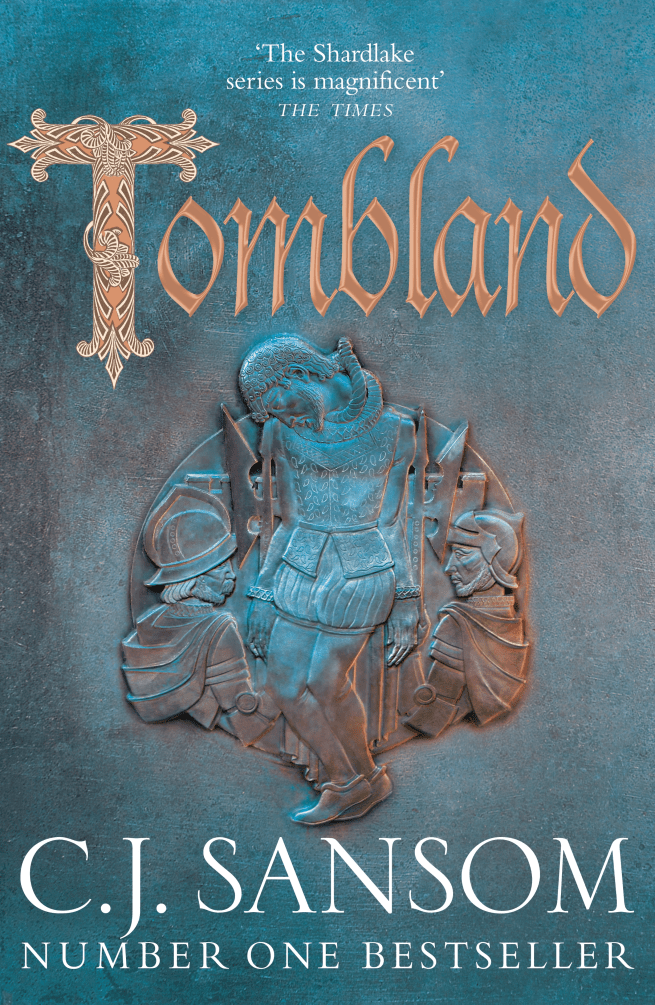
Tombland by C. J. Sansom

Tombland Cover

Publisher: Mantle

Publication Date – 18 October 2018

Amazon

One of the best historical fiction authors in the world today creates another exceptional piece of literature with Tombland, the epic historical crime fictional book set during the fictionally unexplored events of Kett’s Rebellion.

It is the summer of 1549, and King Henry VIII has been dead for two years.  The young Edward VI is on the throne, while his uncle, Edward Seymour, the Duke of Somerset, rules the country as Lord Protector.  However, the country is slowly descending into chaos as a long, unsuccessful war with Scotland, religious conflict, poverty and the corrupt actions of the rich landowners are raising discontent among England’s peasant population.

In the midst of this, Matthew Shardlake is working as a lawyer for the King’s sister, the young Lady Elizabeth.  When a distant relative of Lady Elizabeth’s mother, Anne Boleyn, is found murdered near Norwich and her husband, John Boleyn, is accused of the crime, the case could have political implications for Elizabeth.  Matthew is sent to organise a legal defence of John and to investigate whether or not he committed the crime.  Travelling with his assistant Nicholas, Matthew travels to Norwich and begins to examine the details of the case.  Meeting up with their old friend Jack Barak, the three friends are convinced of John’s innocence, but malevolent forces intervene to disrupt their defence.  As several deaths occur around Norwich, Matthew’s investigation is disrupted by events outside of his control.

A well-organised peasant rebellion erupts around the city, throwing everything into chaos.  Led by the charismatic Robert Kett, the rebels march on Norwich and set up a large camp outside the city, filled with thousands of disenfranchised peasants.  Captured by the rebels, Matthew and his companions find themselves in the midst of a dangerous and divisive situation.  Nicholas’s established views about the superiority of gentlemen sees him imprisoned, while Barak finds much in common with the peasants and their cause.  Matthew is forced to make a decision about where his loyalties lie, as Kett wishes him to assist in organising trials for the landowners they have captured.  As the rebellion drags on, Matthew finds evidence about the Boleyn murder case in the camp.  Following these leads, Matthew soon uncovers a terrible conspiracy that will not only endanger John Boleyn and his lawyers but could affect the fates of every peasant in Kett’s Rebellion.

C. J. Sansom is one of historical fiction’s most highly regarded authors, having written a series of amazing novels in the genre. His most significant body of work is the Matthew Shardlake series, which follows the titular lawyer as he finds himself forced to solve a series of elaborate mysteries during the Tudor period. All the books in this series are extremely impressive, as they all feature clever mysteries and an excellent use of the book’s historical setting.  In addition to this series, he has also written a standalone historical thriller, Winter in Madrid, as well as an alternate history novel, DominionTombland is the seventh book in the Matthew Shardlake series and Sansom’s first book since 2014, but considering the sheer amount of detail and the length of the text, this is hardly surprising.

Tombland is another epic novel from Sansom and one that I really enjoyed reading and ranked as one of my top 10 reads for 2018.  This book contains an outstanding combination of an intense and complex murder mystery and some amazing historical settings and storylines.  All of these elements are extremely amazing by themselves, but together they create one of the best reads of the year.  While I really loved this book, potential readers really need to set aside a lot of time to get through Tombland.  It has over 800 pages of story, with an additional 50 plus pages of the author’s historical notes and discussions about what events he included.  In addition, each page has such a rich amount of detail and plot that I found myself getting through this book at a lot slower pace than I usually would.  While it does take a while to get through Tombland, I personally believe it is well worth the effort, as the incredible story within had me hooked from the very first page.

This book has an intricate and powerful investigation angle, as Matthew and his associates attempt to solve a terrible murder that they believe their client has been wrongfully accused of.  The mystery part of this book is very well done and features an elaborate and intriguing solution that is slowly revealed throughout the course of the book.  Sansom introduces a significant number of potential suspects, all of whom have substantial motives to kill the victim, designed to throw the reader off the scent of the real solution.  I liked how the case continued to expand out as the book went on, as the protagonists not only attempt to solve the original murder but must also investigate several murders committed to cover up the initial acts, as well as several attempts to eliminate John Boleyn.  There are several major and surprising twists throughout the investigation, as a number of small clues and characters that at first appear minor turn out to have major implications for the overarching mystery.  The solutions to the mysteries at the end of the book reveal a dark and powerful motive that has severe consequences for several of the characters involved.  Overall, Tombland contained an outstanding central mystery, which is guaranteed to keep the reader deeply curious and engaged with this fantastic text.

One of the most interesting features of Tombland is the fact that Sansom has set it during Kett’s Rebellion of 1549.  This is a somewhat obscure piece of history that many readers might not be familiar with, but it is an incredibly fascinating event of English history.  Sansom does a masterful job of portraying the entirety of the rebellion throughout the novel and use it as a fantastic secondary storyline as the protagonists witness the beginning and end of the mystery.

Sansom does an outstanding job covering the events of this rebellion, including the events that led up it and caused the peasants to rise up against the rich landowners.  As a result, he expertly examines all the events and conditions that were making the peasants and poor of Norwich, and the rest of England, discontented with the way the country was being run.  In order to do this, a number of relevant elements are effortlessly inserted into the story and become key parts of the plot.  These elements include discussions about the poorly run war in Scotland contributing to armed deserters on the rebels’ side, talks about the political structure of the country and thoughts about the religious disagreements and schisms that were rife in the country during that period.  One of the most fascinating and significant elements that apparently led to the rebellion was the rich landowners’ focus on sheep farming and the creation of large sheep enclosures rather than the growth of traditional crops.  Before reading Tombland I would never have thought that sheep farming would have the potential to be a cause of rebellion; however, Sansom is able to explain in some significant detail how sheep farming and enclosures were negatively impacting many poorer individuals in England, and how it became a key part of Kett’s Rebellion.

In addition to covering the causes of the rebellion, Sansom’s narrative grows to cover the entire length of this intriguing event.  All sorts of elements of it are explored, and readers get an excellent idea of how the peasants were organised, what their motivations were, what sort of actions they were undertaking, how the government reacted to it and what the overall attitude of the participants was.  This was all boundlessly fascinating, and as the reader gets deeper and deeper into the book it becomes harder to put the book down as they become extremely curious about what the overall fate of this group of people was, especially after the reader gets an idea of how big the rebellion was and what sort of victories they were able to obtain.  The final results of this rebellion and the long-term impacts it had on the country are really interesting to hear about, and I had an amazing time seeing all the significant events that occurred during this underexamined historical rebellion.

As always, I was immensely impressed with the sheer amount of research that Sansom did and the historical detail that resulted from it.  Tombland includes over 50 pages of the author’s notes about the event and the conclusions he drew from his extensive research.  While these 50 pages are extremely interesting to read, the revelations about how many of the events the protagonist witnesses actually occurred were astounding, and it sounds like Sansom was able to recreate nearly every significant event of Kett’s Rebellion throughout the course of Tombland, with some necessary dramatic flourishes to create the overall story.  It was amazing how many of these events actually occurred, and how many of the secondary characters were actually real-life people who had significant impacts on the outcome of the rebellion.  Readers will also be amazed by the historical details that Sansom has included on every page of this book and will have a hard time forgetting the events of 1549 and Kett’s Rebellion.

There are several other elements I enjoyed in this book, including the seamless ways that the investigative storyline combines with the historical background of Kett’s Rebellion.  So many characters that are potential witnesses or suspects in the murders that the protagonists are investigating become key figures in the historical events that occurred around Norwich.  Suspects and witnesses are also found in the rebel camp, and I liked how the key to crime and the downfall of the rebels were both in the same place.  I also enjoyed the examination of 16th century English legal procedures and the depictions of murder trials, and found the scenes featuring them very fascinating.  The book’s focus on the divide between the rich and the poor is also a great addition to the story and gets a significant look in throughout the entire book, and it is a discussion that is still relevant to this day.

C. J. Sansom once again hits his literary ball out of the park with Tombland, another five-star historical mystery that has the perfect combination of compelling mystery and intriguing historical elements. With an incredibly addictive overall narrative and a focus on a fascinating historical event that is rarely used in other pieces of historical fiction. One of my favourite reads of 2018, I highly recommend this book, especially for people who love a great mystery.

My Rating:

Five Stars

Amazon

Dracul by Dacre Stoker and J. D. Barker

Dracul Cover

Publisher: Bantam Press

Publication Date – 2 October 2018

Amazon     Book Depository

You think you know the story of Dracula?  Prepare to have your understanding of one of history’s greatest horror novels completely turned on its head as Bram Stoker’s great-grandnephew presents a captivating new story of horror based off Bram Stoker’s notes and his original version of the iconic book.

The year is 1868, and a young Bram Stoker has barricaded himself in the top room of an abandoned abbey.  This room has crosses carved on every wall, mirrors hanging from every angle and garlic smeared around the door frame, while Bram himself is armed with roses, holy water and a rifle.  Outside the room lurks an ancient evil, its greatest desire to enter the room and claim the man waiting within.  As Bram waits for the sun to rise, he writes in his journal, desperate to describe the events that lead to this moment.

The tale he tells is an intriguing tale of horror and mystery set in the midst of 19th century Ireland.  Bram was born a sickly youth whose constant illness stopped him from leaving his bed for most of his early life.  One of the few points of comfort in his life was his nanny, Ellen Crone, who nursed him through the worst of his maladies.  Bram seemed destined for a short life, until one day a miracle occurs and Bram’s sickness is cured by the mysterious intervention of Nanny Crone.  But as Bram and his sister Matilda investigate the suspicious behaviour and abilities of Nanny Crone, she disappears, leaving behind questions about who, or what, she really was.

Years later, it appears that Ellen Crone has returned, as strange and bloody events haunt the lives of Bram, Matilda and their older brother Thornley.  As they investigate further they find that the mysterious Ellen Crone has not aged a day, is accompanied by those who died years earlier and has a strange hypnotic hold over Bram.  But even as the siblings attempt to find answers, they soon realise a far more powerful and malevolent creature is hunting in Ireland, one who will forever change the life of the Stoker family.

This is one of the most intriguing books of 2018, as it is a reimagining of the origin of one of the world’s most iconic horror novels, Dracula, which was originally published in 1897 by author Bram Stoker.  The authors of this new book are the team of established horror writer J. D. Barker, and Bram Stoker’s great-grandnephew Dacre Stoker.  This is not the first Dracula book that Dacre Stoker has had his hand in, as he also wrote the 2009 book, Dracula the Un-dead with Ian Holt, which serves as the official sequel to the original Dracula.

Dracul is a clever and compelling read that takes a deeper look at the story behind the classic horror novel.  The plot of this novel is apparently based upon Bram Stoker’s notes, journals and around 100 pages that were culled from the original draft of Dracula by his editors.  As a result, the authors of Dracul strongly hint that Bram Stoker and his family actually encountered a vampire, and that his experiences led him to publish Dracula as a warning to people about the dangers that were hidden around them and the apparent weaknesses of these creatures.  There is a great quote at the very start of this novel that the authors attribute to Bram Stoker and indicate was part of Dracula’s original preface: “I am quite convinced that there is no doubt whatever that the events here described really took place, however unbelievable and incomprehensible they might appear at first sight.”

This new novel by Stoker and Barker is an outstanding piece of fiction.  Not only is it a powerful piece of horror fiction in its own right but it has a number of clever and intriguing connections to Dracula.  The horror elements of this book are fantastic, and the authors do a great job of highlighting the dread that surrounds the protagonists as they investigate the horrors that surround them and their family.  There are a number of great scenes throughout this book where the characters encounter supernatural elements that slowly seek to drive them mad with fear or horror, and the attacks come from a variety of sources.  I have to mention the fact that the monster who inspires Dracula is particularly fearsome in Dracul and the authors really paint him as a powerful and soulless being far beyond the comprehension of the human protagonists.  I really loved the overall story of Bram and the other Stokers as they find themselves bound to this adventure at an early age and slowly encounter all the horrors around them.  There are some very clever turns throughout this book, and there are some surprising twists.  This is a great chronicle of Bram’s life and the writers even try to answer some interesting unanswered questions, like why Bram Stoker left instructions to have his body immediately cremated upon his death, an unusual custom for the time.

I really loved the way that this story is told, especially as Stoker and Barker have set large portions of this story out in a similar manner to the original Dracula novel.  Like Dracula, a large part of Dracul’s story is told in an epistolary format, featuring a series of diary entries from Bram and Thornley Stoker, as well as several letters from Matilda Stoker.  This serves to provide the reader with a large amount of backstory to the Stoker lives and show how they initially met their first vampire and the crazy events that followed them uncovering her secret.  This epistolary format is used for around the first two thirds of Dracul, and these journal entries are interlaced with short chapters set in the story’s present, with Bram stuck at the top of a tower and an evil force trying to get into him.  These scenes are particularly awesome, as they show strange forces trying to get through the door in front of Bram, while the protagonists utilise a number of techniques to force it back.  As the book continues, the reader is given a view into why Bram is up in the tower, what he is facing and the truth to everything that is happening to him, revealing a completely different story than you were expecting.  All of this is a fantastic and unique way to tell this story, and I felt it added a lot to the book, especially as the lack of knowledge about what Bram was facing in the tower at the start of the book really increased the book’s early horror elements.  These notes are also an item within the story, as the characters combine their journals together and the letters to Nanny Crone appear in a number of places that the protagonists are exploring.  At one point, the characters even arrange some of the older journals together to form a more coherent story, indicating that these journals and letters formed the basis of Bram Stoker’s original novel, and play into the idea that the events of Dracul could have actually happened.

While this book is a fantastic horror novel in its own right, fans of Dracula will appreciate how this book calls back to the original novel in a number of captivating ways.  For example, the major character of Nanny Crone has her backstory explored at one point and her real name is revealed to be Countess Dolingen of Gratz.  Fans of Stoker’s work may recognise her as a vampiric character featured in Bram Stoker’s 1914 short story, Dracula’s Guest.  While very little about this character was revealed in Dracula’s Guest, Stoker and Barker flesh her out in this book, creating a fascinating backstory for her and an interesting connection to Dracula, perhaps even explaining why she featured in Dracula’s Guest.  There are a number of other interesting features of Dracul that call back to the original novel.  For example, a large part of Dracul is set in Whitby, England, a major setting in Dracula.  I also really enjoyed the inclusion of real life historical figure Ármin Vámbéry as a major character in this book.  Vámbéry, a noted scholar and a close friend of Bram Stoker, is considered by some to be the inspiration for Professor Van Helsing in Dracula, and in Dracul he plays a similar role, understanding the threat that is before them and providing the Stokers with the tools to fight against the Vampires.  I also really appreciated the vampiric lore that Stoker and Barker put into Dracul, as the vampire characters only have the vampiric traits found around the time that Dracula was published, and not the ideas that have been included in more recent versions of the vampire legend.  As a result, Dracul comes across as an intricate and clever tribute to Dracula, which fans of the original novel will greatly appreciate.

Dacre Stoker and J. D. Barker have produced an incredibly exciting and deeply fascinating novel that breathes new life into the familiar story of Dracula.  Setting the plot around the life of a pre-Dracula Bram Stoker and his family is an amazing idea that works incredibly well to create a dark and captivating horror story.  One of the more unique books of 2018, Dracul is definitely worth checking out, especially if you have an appreciation for one of fiction’s greatest and most iconic monsters.

My Rating:

Four and a half stars

Amazon     Book Depository

Heads You Win by Jeffrey Archer

Heads You Win Cover.png

Publisher: Macmillan

Publication Date – 30 October 2018

Amazon

From the mind of one of modern fiction’s most controversial authors comes a two-in-one fantastic and elaborate piece of historical fiction that utilises an intriguing narrative device to create one of 2018’s most unique stories.

Young student Alexander Karpenko is the bright, talented and ambitious child of two hardworking citizens of the Soviet Union.  Living in Leningrad in 1968, Alexander’s dream is to become the first democratically elected president of his country.  However, when he is betrayed and his father is killed by the KGB, Alexander and his mother realise that their only hope is to flee Russia and make a new life for themselves in another country.

Arriving at the docks, Alexander and his mother are given a choice between two different ships: one heading to London or one heading to New York.  The decision is made by the flip of a coin, and Alexander’s life splits into two separate paths: one where he heads to Britain and one where he heads to America.  Alexander arrives in these countries with great ambition and a desire to succeed no matter what.

Over the next 30 years, in both these lives, Alexander finds success in a two separate ways.  He fights his way up from the bottom as a lowly immigrant to an influential person, overcoming obstacles and antagonists along the way.  Both Alexanders’ journeys are inspirational, but no matter what these two Alexanders accomplish, the fate of their home country is always on their minds, and the shadow of the Soviet Union constantly surrounds them.

Jeffrey Archer is a rather interesting individual, with a very eventful and controversial background.  A former British MP, Archer is probably better known for the various accusations of fraud he has attracted throughout his life, and he has even spent some time in jail as a result.  However, rather than let that ruin his public profile, Archer has used his experience and imagination to create a number of fascinating novels, many of which utilise aspects of his political, academic or professional life or expertise to some degree.  As a result, Archer is now one of the most high-profile authors in the world and has written over 20 adult novels, including the three books in his Kane and Abel series and the seven books in his bestselling Clifton Chronicles.  On top of that, Archer has also written a number of short stories, a couple of plays, several children’s books and his Prison Diaries, three non-fiction novels that chronicle his life in prison.

Heads You Win is an extremely fascinating novel from Archer, which takes his protagonist on two separate adventures through over 30 years of American and British history and life.  Archer utilises a very clever divergent timelines narrative device (think Sliding Doors), which creates two separate timelines around the different outcomes of one event, in this case, the outcome of a coin toss.  As a result, in one timeline, the protagonists and his mother get on a ship to London, while in another timeline they board a ship bound for New York.  This is a very interesting concept to utilise in this story, and one that works to create two separate narrative threads to follow.  Both of these storylines focus on the protagonist attempting to find his place in the country that he eventually ends up in, and then moves onto the protagonist becoming a powerful and influential individual in his own way, all the while dealing with the terrible people that seem to inhabit Archer’s world.

I rather enjoyed both of the separate storylines in this book, and had a lot of fun seeing the different or similar ways that the protagonist attempted to make his fortune in each lifetime.  The differences between these two storylines happen right away, as in the London timeline, Alexander and his mother find themselves on a nice ship with a friendly crew who mostly want to help, while the New York timeline finds them in a poorly maintained vessel with a self-serving crew who seek to exploit the two main characters.  I found it rather fascinating to see the way that their treatment and the environments they find themselves in change the way in which they act.  For example, Alexander’s experience in the English setting encourage him to seek the full Cambridge academic lifestyle, while his American counterpart was less focused on his formal education and learned more on the street.

Both of these divergent timelines feature an intriguing look at the cities and countries that the protagonists end up in, and both serve as a good historical backdrop to each of the main storylines, featuring several real historical events and some historical characters.  For example, the Alexander who ends up in the American timeline is forced to fight in the Vietnam War, while the British Alexander rubs elbows with a number of the country’s prominent politicians.  I liked how the divergent ways that the two separate protagonists gained their power and prestige matched the country that there were in.  The American Alexander became rich through his business acumen and financial brilliance, while the British Alexander went the academic route and eventually become deeply involved with the British political system, something close to the author’s heart.  Not only does this help match the locations and people that the protagonist deals with, but it allows the two separate stories to diverge out slightly, with the British storyline containing political intrigue, while the American storyline reads a little bit more like a financial thriller.  While the focus on the protagonist’s two adopted homelands is a great part of this novel, the protagonist’s history in the Soviet Union is a major part of this story.  The initial chapters capture the uncertainty and despair that inhabitants of the Soviet Union would have felt in the 1960s, while the character’s subsequent visits helped highlight the obvious differences between the Soviet Union and the countries that Alexander escaped to.  There is also a rather exciting reveal about one of the Russian characters towards the end of the book that will prove to be the most memorable part of Heads You Win, and is definitely something to look out for.

While I enjoyed the divergent timelines narrative device that Archer employed throughout Heads You Win I did feel that he could have done more with it.  I would have loved to see a bit more crossover between the two separate timelines, and, for example, see how key characters from one storyline would have fared without their Alexander in their lives.  Instead there is minimal crossover between these two separate storylines, which feels like a bit of a missed opportunity.  I am also not the biggest fan of what these quick crossovers revealed, as it strongly hinted that both storylines actually exist together at the same time, and as a result, there are two Alexanders existing in the world at the same time.  This is a bit of a weird twist, and while it does not negatively impact the vast majority of either storyline, it does result in a conclusion that some may find slightly confusing.  As a result, while this did slightly mark down my rating of Heads You Win, the split storyline concept is a fantastic and unforgettable part of this book and makes it quite a distinctive read.

This latest novel from one of the world’s most colourful professional authors is a fun, historical thrill ride that features a very unique and memorable narrative device.  With a great look at two different countries during the same historical time period and featuring two separate by similar stories of life, adversity and success, this is an extremely enjoyable novel that will appeal to a varied range of readers.  Heads You Win is definitely worth checking out, and I am planning to keep an eye out for the next read from Archer.

My Rating:

Four stars

Amazon

War of the Wolf by Bernard Cornwell

War of the Wolf Cover.jpg

Publisher: Harper Collins

Publication Date – 24 September 2018

Amazon

Uhtred of Bebbanburg returns in another rich historical adventure set in the heart of post-Roman Britain in this incredible and first-rate story from historical fiction legend Bernard Cornwell.

In the early 10th century, after many years of trials and tribulations, Uhtred has at last achieved his lifelong goal of reclaiming his ancestral fortress of Bebbanburg.  Finally able to claim his independence from Wessex and the Saxon Christians who have always treated him with scorn and hostility for his pagan beliefs, Uhtred seeks to move away from the politics, battles and backstabbing that has been his life for so long.  However, his new peaceful life is about to be interrupted by the interventions of enemies new and old.

In the outside world, King Edward of Wessex has made his move on the kingdom of Mercia, and has finally achieved his father’s dream of uniting the Christian kingdoms of Britain into one nation.  The only remaining country outside of his control is the Kingdom of Northumbria, ruled by Uhtred’s son in law, Sigtryggr.  These events have led to dangerous changes and new alliances for the remaining factions living outside of Edward’s control.

When a mysterious priest sends Uhtred on a mission to save Edward’s maligned firstborn son and Uhtred’s former ward, Æthelstan, from a Mercian siege, he finds himself outmanoeuvred by a new army of Danes who have come to claim Northumbria for themselves.  Faced with great loss, Uhtred finds himself in a brutal fight against an opponent who seems to have mystical powers at his command.  At the same time, the politics of the Wessex court threaten to start a war on another front, as the various contenders for the fading Edward’s throne seek to gain position, and many of the potential heirs want Uhtred dead.  With enemies all around and not enough men at his back, the odds look grim for Uhtred.  But, despite years of brutal battles and the ravages of age, Uhtred is still the most feared warrior in all of Britain, and he’s about to show everyone why he is always a force to be reckoned with.

War of the Wolf is the 11th book in The Last Kingdom series of historical fiction books from Bernard Cornwell.  To my mind, Bernard Cornwell has to be considered one of the greatest authors of historical fiction in the world today, both in the quantity of books he has written and the quality of their content.  Cornwell has been writing since 1981 and has produced more than 55 novels in his career, the vast majority of which are either set in England or focus on English characters out in the world.  The sheer scope of Cornwell’s work is incredible, as he has covered vast tracts of world history, including several more obscure eras not regularly covered by other historical fiction authors.  He is possibly best known for his long-running Richard Sharpe series, which followed the adventures of a British soldier and commander during and around the time of the Napoleonic Wars.  The Richard Sharpe series featured 24 books and was adapted into the British television series, Sharpe, featuring Sean Bean as the titular character.  Other series that Cornwell has published include the American Civil War series The Starbuck Chronicles, the Arthurian legends series The Warlord Chronicles and the Grail Quest novels, which are set during the early years of the Hundred Years’ War.  Cornwell has also produced a number of standalone novels, including several sailing based modern thrillers and a number of intriguing individual historical novels.  These standalone novels cover a huge range of different topics, from the prehistoric English story in Stonehenge, to the war novel Azincourt, the excellent examination of one of the more interesting battles of the American Revolutionary War in The Fort and the thriller set among Shakespeare’s theatre company in Fools and Mortals, which I have previously reviewed here.

The Last Kingdom series, alternatively known as the Saxon Stories, the Saxon Tales, the Warrior Chronicles or the Saxon Chronicles, started in 2004 and is Cornwell’s second–longest-running series, with 11 books currently written, and more set for the future.  The Last Kingdom series is the second of Cornwell’s series to be adapted for television, with a third season of The Last Kingdom television just starting yesterday.  I have always been a massive fan of this series, especially as one of the books in the series, Sword Song, was one of the first pieces of historical fiction I ever read and which helped get me into the genre.  This is a fantastic series, as each of the books contains an electrifying adventure set during a period of history often overlooked or underutilised by other historical fiction authors.  I have routinely reviewed several books in this series over the years, many of which will appear in future additions of my Throwback Thursday series of reviews.

War of the Wolf is another incredible outing from Cornwell that once again focuses on the life of his grizzled and battle-tested protagonist, Uhtred of Bebbanburg.  Uhtred is a superb series protagonist who has witnessed the changing political and religious landscape of this period of post-Roman Britain.  Originally a Christian Saxon, he is captured by pagan Danes as a child after the death of his father and the theft of his Uhtred’s ancestral fortress of Bebbanburg (modern day Bamburgh Castle in Northeast England) by his uncle.  Raised by the Danes, Uhtred gains an appreciation for their culture and even starts practicing their religion.  Uhtred is eventually forced into the service of the last remaining Christian kingdom of Wessex and its pious King Alfred (Alfred the Great).  Even with several falling outs between the two, Uhtred serves Alfred and his family for many years as his most ferocious warrior and war leader, participating in several of the defining battles of the era.  Throughout the series, Uhtred is constantly torn between the Christian Saxons and the invading pagan Danes.  Despite being born as a Christian in a formerly Christian kingdom, Uhtred finds more in common with the Danes after being raised by one of their noble families and taking on their religion.  While he’d rather fight alongside the Danes, circumstances force Uhtred to swear oaths of loyalty to various Saxon kings, especially Alfred, despite the hatred and disdain they show towards him for retaining his pagan faith.  These dual loyalties are a key part of the character, and often result in much internal and external conflict for Uhtred and form the basis of a number of excellent storylines.  Cornwell uses the character of Uhtred extremely well to highlight the differences between the Danes and the Saxons, as well as the importance of religion to these warring groups, especially when it comes to the somewhat insidious spread of Christianity to the Danes.

These storylines continue in War of the Wolf, as one of Uhtred’s oaths sends him into battle once again.  This sets up the main story of the new book perfectly, as Uhtred is forced to deal with the politics and betrayals of the Saxons, while also fighting against a dangerous pagan opponent.  I liked how Cornwell has continued to focus on Uhtred’s ties to the warring factions of Britain, and his attempts to reconcile his loyalties with his sense of honour and right and wrong.  I also really enjoyed the way that Cornwell has aged up his protagonists throughout the series.  Many authors will try to fit a number of adventures in to a short period of time in order to keep their protagonists in the same age range.  Cornwell, who has based many of the key occurrences of his books on real-life historical events, has instead chosen to age up his protagonist as he outlives several historical figures.  As a result, in War of the Wolf, Uhtred is no longer the young warrior he was at the start of the series, but is now an old sword in his 60s.  This is an intriguing narrative element from Cornwell, who has been slowly building up to this over the last few books in the series.  Not only has Cornwell been slowly ageing him but he’s been making him a more canny and crafty individual, able to rely on his brains and experiences more than his sword arm, although he still finds himself in the middle of every battle.  In the latest book, this leads Uhtred to think more about the future of the people he cares about than his own future, as he realises he is getting closer to death.  This is another fantastic outing featuring one of Cornwell’s best protagonists, and I am excited to see that he has left the series open for several additional stories in the future.

One of the more interesting parts of The Last Kingdom series is Cornwell’s outstanding research and his focus on historical details and events that are often not part of the public consciousness.  I can think of no better way to highlight this then to mention that while I was doing a post-Roman Britain archaeology course at university, my lecturer actually included several books from The Last Kingdom series on his suggested reading list among the usual textbooks and scholarly articles.  The previous books have all featured major battles or political events that helped decide the future of England, and his fictional point-of-view character often finds himself discussing the events with significant historical figures.  Smaller details, such as the traditional names and spellings of historical people and places, give all of these books an incredibly authentic feel and really make the reader think they are back in this time period.  As a result, these books are extremely intriguing for those fans of history and I cannot speak highly enough of the level of historical detail or insight Cornwell shows in his work.  Cornwell continues his trend of interesting historical features in War of the Wolf, as he examines several key events during this period.  This includes the annexation of the Kingdom of Mercia by King Edward of Wessex following the death of his sister Æthelflæd, the Queen of Mercia, and the subsequent rebellion by the Mercians.  There is also focus on the submission of King Sigtryggr of Northumbria to King Edward, and focuses on the events that led up to it.  Uhtred also finds himself embroiled in the politics around who would rule Sussex following the future death of Edward.  All of this is incredibly fascinating and form an amazing background for the rest of the book’s story.

Intense action sequences have always been a major part of this series, with the large-scale fight scenes between the various warring factions battling around the British countryside.  Cornwell does an excellent job replicating the battle tactics and techniques of the Saxons and the Danes, especially the standard technique of the shield wall, where the two opposing sides line up their shields and advance at each other.  The battles are always incredibly detailed and pull no punches when it comes to the gruesome realities of war and combat.  War of the Wolf in particular has quite a few great battle sequences, including one extended siege sequence towards the end of the book at an old Roman fort.  I also loved the inclusion of the úlfhéðnar, the fabled wolf berserkers, who become a major part of the story, as Uhtred and his soldiers must find a way to overcome these dangerous opponents.  It was quite interesting to see how these sorts of legendary historical fighters would actually fare in battle, and the author presents both the advantages and disadvantages of using them.  Special mention should also be given to the dual between the two opposing ‘sorcerers’ during the climactic battle that was extremely entertaining and one of the more amusing parts of the entire book.

Cornwell has once again delivered a five-star classic piece of historical fiction with the latest book in his bestselling The Last Kingdom series.  Filled with fantastic action, amazing historical context and focusing on a well-established and amazingly fleshed and complex protagonist, War of the Wolf is an incredible read that comes highly recommended.  Even after 11 books, this is still one of my favourite series and I’m very excited to get the next edition.

My Rating:

Five Stars

Amazon