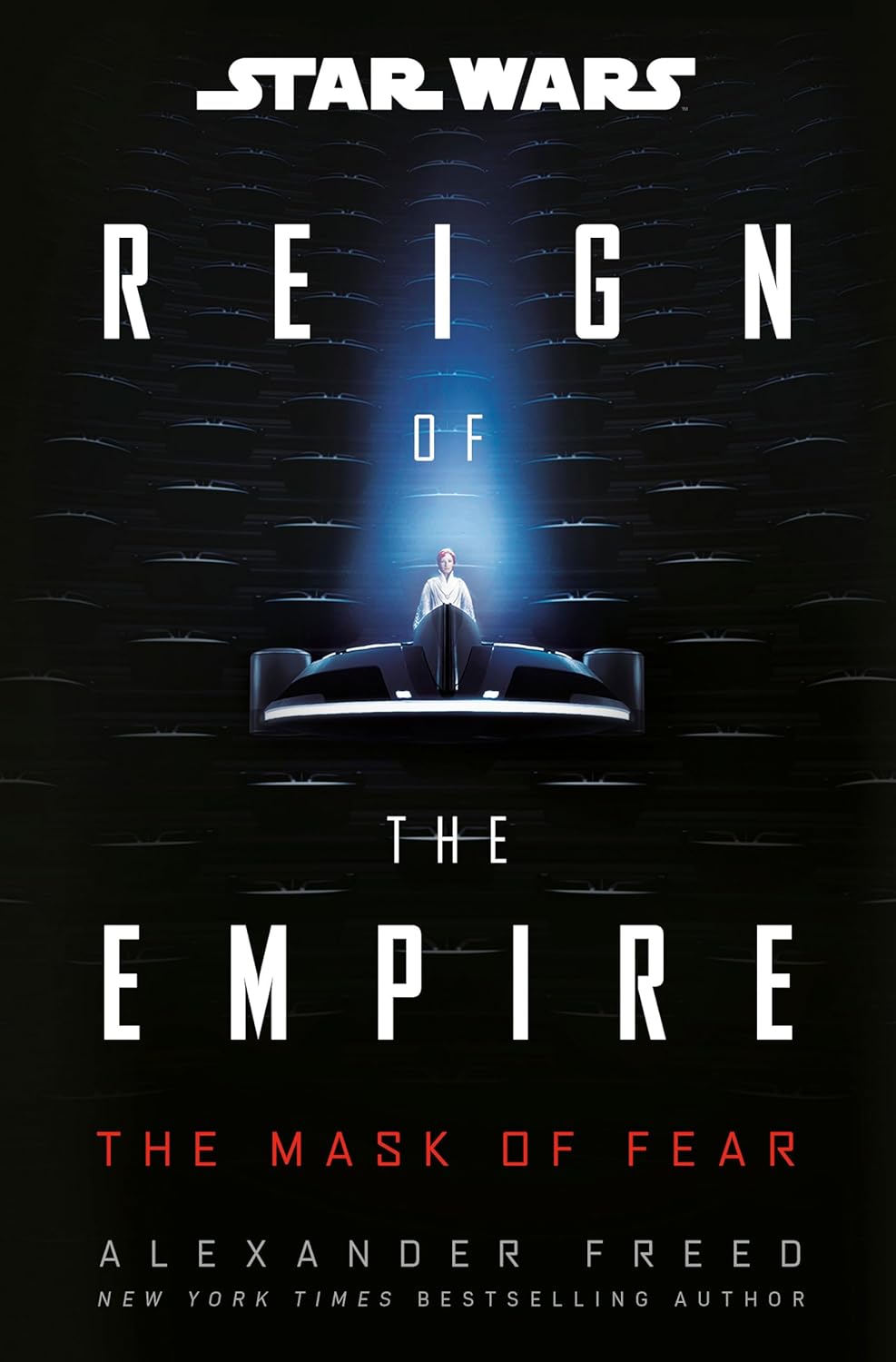
Star Wars: Reign of the Empire: The Mask of Fear by Alexander Freed

Publisher: Penguin Random House Audio (Audiobook – 25 February 2025)

Series: Reign of the Empire – Book One

Length: 16 hours and 51 minutes

My Rating: 4.5 out of 5 stars

Amazon

One of the top authors of Star Wars extended fiction, Alexander Freed, presents a compelling and complex inclusion to the franchise with The Mask of Fear, a powerful Star Wars novel that is a must-read before the upcoming second season of Andor.

There are some impressive authors writing Star Wars fiction at the moment, but one of my favourites is Alexander Freed, primarily because of his Alphabet Squadron trilogy.  An awesome series that followed a group of New Republic pilots in the immediate aftermath of Return of the Jedi, the Alphabet Squadron novels (Alphabet Squadron, Shadow Fall and Victory’s Price), are amongst some of my favourite Star Wars books, and I loved Freed’s dark take on the universe following the happy ending of the original trilogy.  As such, I was very intrigued when I heard that Freed was working on a new Star Wars trilogy set during one of my favourite periods of the franchise’s history, with the cool Reign of the Empire trilogy.

The Reign of the Empire trilogy is an ambitious series that seeks to chronicle the rise of the Empire and provides some cool new history in the current Disney canon.  Set immediately after Revenge of the Sith, the Reign of the Empire follow several key supporting characters from the films, as well as some new figures, as they attempt to navigate the galaxy following the formation of the Empire.  The first book in this series, The Mask of Fear, proved to be extremely fascinating, and I loved the compelling direction that Freed took the story.


Plot Synopsis:

Before the Rebellion, the Empire reigns, in book one of a trilogy told through the eyes of Mon Mothma, Bail Organa, and Saw Gerrera – for fans of Andor.

“In order to ensure the security and continuing stability, the Republic will be reorganized into the first Galactic Empire! For a safe and secure society!”

With one speech, and thunderous applause, Chancellor Palpatine brought the era of the Republic crashing down. In its place rose the Galactic Empire. Across the galaxy, people rejoiced and celebrated the end to war—and the promises of tomorrow. But that tomorrow was a lie. Instead the galaxy became twisted by the cruelty and fear of the Emperor’s rule.

During that terrifying first year of tyranny, Mon Mothma, Saw Gerrera, and Bail Organa face the encroaching darkness. One day, they will be three architects of the Rebel Alliance. But first, each must find purpose and direction in a changing galaxy, while harboring their own secrets, fears, and hopes for a future that may never come, unless they act.


The Mask of Fear
was another impressive and unique Star Wars novel from Freed, who sought to bring together a complex narrative of early rebellion and fear, as various people witness the rise of a tyrannical government.  Clever, intense and cleverly addressing some real-world parallels, The Mask of Fear was extremely good, and it served as a brilliant start to an excellent new Star Wars trilogy.

Freed produced a particularly intricate and complex narrative for The Mask of Fear that really sets the scene for the trilogy in a fantastic character-driven read.  I must warn potential readers that this is a very slow-burn narrative, with a focus on politics, character development, and Star Wars lore, and as such the book doesn’t have a ton of action in it at the start.  Instead, Freed follows the experiences of several different characters as they face the early days of the Empire’s rise and the end of the Clone Wars, with the narrative broken down across several character perspectives, including Mon Mothma, Bail Organa, a former Separatist operative who is forced to team up with Saw Guerra, and a couple of Imperial spies who find out the hard way that their Empire isn’t everything it’s cracked up to be.  This interesting combination of characters allows The Mask of Fear to go in a few compelling directions, including a political narrative around Mon Mothma, an adventure-laden investigation by Bail Organa, who tries to prove that the Jedi was set-up by the Emperor, a dark journey of revenge by the former Separatist, while the two spies find their stories interacting with the other characters as they try to investigate them.

As I mentioned above, the first half of The Mask of Fear is a little dry and slow-paced, but it nicely explores the universe after Revenge of the Sith and provides some dark context to how the Republic was changed into the Empire.  Mon Mothma’s story lies at the heart of the book, as she tries to bring about a legislative end to the Emperor’s reign, and this compelling political tale meshes well with the more action focused or espionage laden chapters of the other protagonists.  Things start to get a lot more interesting and intense once some of the characters start to interact with each other, including with a few action sequences, and Freed ensures that narrative gets realistically dark as you begin to understand the full evil of the Empire.

Everything leads up to the climatic final third of The Mask of Fear, where most of the major storylines of the book start to come together.  Thanks to the complicated story elements Freed set up in the earlier stages of the book, the reader finds themselves quite hooked at this point, especially as the characters find themselves in real peril.  I really enjoyed how Freed wrapped up a couple of the story arcs in The Mask of Fear, especially in one scene were a previously moral character finds the dark side of conflict.  Freed rewards the reader by providing a big moment of hope towards the end of the book, although this is swiftly taken away just to highlight what sort of Star Wars series this is going to be.  I really enjoyed this final section of the book, as the dark result of all the character’s plans galvanises them and leads them into a new direction.  I felt that this story came together extremely well, and while it was initially a little hard to get invested in it, Freed’s excellent establishment of the characters, narrative and overarching setting, ensured that it became a really gripping narrative.

The Mask of Fear was a very well-written novel from Freed, who expertly sets up a cool new Star Wars novel trilogy with some intriguing disparate elements to it.  The blend of politics, intrigue and action made for quite a compelling read, and I felt the author’s excellent use of multiple character perspectives led to a very rich and complex read that hit a lot of great boxes for me.  In addition, Freed does an amazing job placing this into the larger Star Wars canon, especially as he spends a lot of time exploring the very early days of Imperial rule, which is such a fascinating period in the franchise’s history.  The author perfectly blends compelling Star Wars lore about the fallout of the Clone Wars and the start of the Empire with his own story, and the resulting narrative is very fascinating.  While not every reader is going to love the complex political inclusions, I personally really enjoyed them, and this book helped to fill in some interesting gaps in how the Republic from the prequel films becomes the Empire.  As such, The Mask of Fear is a novel geared more towards hardcore Star Wars fans, although anyone who’s seen the original and prequel trilogies, or who wants to get a little more universe history before the second season of Andor comes out will probably have an amazing time with this book.

Speaking of politics, it’s hard not to notice some interesting real-life parallels that The Mask of Fear has with political realities of the world right now.  Freed would have written this book in 2024, and he paints a grim picture of the Empire’s new political and social reality within this book, which includes gross corruption, manipulation of the media, disinformation and other despicable practices, which will probably be quite familiar to readers now.  For example, the portrayal of a legislative body transferring most of its power to a popular-supported executive who then makes radical right-wing changes is jarringly close to how 2025 is turning out in some ways.  I found that these real-world parallels made the story that much more fascinating, and the reader ends up really feeling for the emotional turmoils of the protagonists.  One particular part of Freed’s portrayal of the Empire that I personally appreciated was the decision not to feature any of the franchise’s main villains, but instead focused on the people joining the administration purely for their own goals or benefit, who start revelling in the power they now have, or the lower level supporters who finally believe that they have a worthy leader.  In some ways this makes the Empire seem even eviler, as much like certain real-world governments, it’s obvious that the Empire was corrupt from top to bottom since the beginning.  As such, The Mask of Fear proved to be a masterful examination of how such fascist governments come into being and stay in power, and it was interesting, if a little scary, to see how the ultimate evil empire from fiction is being mirrored in the world today.

While the amazing story elements and intriguing examination of politics is a highlight of this book, for me, the best part of The Mask of Fear was the brilliant and damaged characters that Freed featured, especially his five major protagonists.  Each of these protagonists, which includes a compelling mixture of established characters and new figures written for this novel, has fascinating plot arcs behind them, as each of them tries to find their place in the new book.

Of these, I personally enjoyed the compelling storylines around future Rebel leaders Mon Mothma and Bail Organa the most.  Mon Mothma, who has been so well used in recent shows like Star Wars Rebels and Andor, had a compelling showing here in The Mask of Fear, and it was fascinating to see what happened to her in the immediate aftermath of the Empire’s takeover.  Portrayed as an ambitious politician already under attack by the new administration, Mon’s storyline around her attempts to curtail the Emperor’s power through political means and to keep power in the Senate is interesting, and I really enjoyed seeing the version of Mon who still believed in the institution she was apart of.  Freed weaves together an excellent combination of storylines around Mon, including her political troubles, personal issues, trauma from past arrests and her own growing disillusion with her political colleagues.  Mon’s storyline in The Mask of Fear starts her on the path to becoming the future Rebel leader, as she is forced to take deadly action in protection of her ideals, while also learning just how ruthless the new Emperor and his administration is.

The storyline surrounding Bail Organa on the other hand was a little more action and adventure focused, as he began his own journey towards rebellion.  Portrayed as the only person in the Empire who actually knows that the Emperor is a Sith Lord, Bail spends much of the book desperately trying to fight back by clearing the Jedi’s name.  You can really feel the despair in Bail as he tries to solve the situation in a manner he believes is right, only to hit roadblocks and disinterest from even his potential allies who disregard the Jedi who Bail knows are innocent.  This allows for some very intense scenes, especially as Bail crosses some major boundaries to chase his goals, and you really sympathised with everything Bail is going through.  Bail’s storyline was really well written, and I really enjoyed Freed’s realistic portrayal of what this character would be going through.  His storylines ended up melding nicely with the rest of the cast, especially Mon Mothma’s, and I loved how Freed showed them as having some noticeable political and personal friction.

The rest of the main point-of-view cast of The Mask of Fear includes three original characters, who provide intriguing alternate views about the Empire.  This included Soujen, a cybernetically enhanced Separatist infiltrator who awakens from hibernation to find that the government that made him was defeated, and he has to decide who or what he is going to fight for now.  A complex figure who believed in the Separatist cause, Soujen provides a compelling alternate view of events from the Clone Wars and the formation of the Empire.  Freed works an interesting and intense storyline around Soujen, as he is forced to confront the impact of his actions and the realisation that he might not have achieved anything with his fighting.  I loved how dark some of Soujen’s scenes got, as well as the realistic emotional outbursts as the character refuses to give up the war.  Soujen’s storyline is one of the most impactful in the entire story, as his more destructive approach forces the other characters to act against him.  There were some very complex interactions that occurred as Soujen tried to achieve his objectives, including a certain amount of tragedy which hits the reader hard.  The other key perspective characters are two imperial intelligence operatives, made up of an elderly spy who doesn’t fit in with the new regime and her young apprentice from the slums of Coruscant.  They both go on compelling journeys throughout the book, with the veteran tailing Bail, while the younger journeys into the morass of the extremist groups supporting the Emperor.  I really enjoyed seeing both coming to realise the problems with the Empire they’re solving in their own different ways, and both their perspective character arcs supported the other storylines extremely well.

This main cast is supported by an interesting array of figures, including supporting characters from the main shows, who have a big impact on the story.  The most prominent of these is Saw Gerrera, who, despite having a big role in the plot, doesn’t serve as a major perspective character.  Freed does an excellent job portraying Saw in this book, and it proves fascinating to see the character’s journey to become an extremist fighter begin in this book, as he initiates the first militant rebellion against the Empire.  This mostly rounds out the main cast, and as I mentioned above there is a distinct lack of major antagonists in this book, with neither the Emperor or Darth Vader appearing.  However, there is an array of self-serving middle management administrators and agents, pro-Imperial vigilantes and politicians supporting the new Empire, who prove to be quite dangerous and corrupt in their own way, especially as they oppose and attempt to remove the protagonist when they oppose the Emperor.  An overall excellent collection captivating character arcs in this book which really enhanced The Mask of Fear’s narrative in some impressive ways.

As with most Star Wars novels that I check out, I chose to enjoy The Mask of Fear on audiobook, which proved to be an outstanding way to enjoy this captivating read.  Star Wars audiobooks always do such a great job of capturing the atmosphere and excitement of the franchise’s extended universe, and I love how awesome they can make a story.  The Mask of Fear was a great example of this, and the complex narrative of politics, betrayal and damaged characters, really came to life when read out by the talented January LaVoy.  LaVoy, who specialises in reading female-led fiction, including extended universe books such as Star Trek: Die Standing and Freed’s Alphabet Squadron books, did an outstanding job narrating this awesome novel, and I loved how well she captured the key characters.  Her voice work for Mon Mothma was particularly good, and I liked the fun voices that accompanied some of the other intriguing female characters.  LaVoy also ensured that the story moved at a swift pace, and readers found themselves really drawn in, even with the book’s politically heavy content.  It helped that The Mask of Fear featured the typical array of iconic sound effects and music from the Star Wars films, which are put to great use throughout the production.  The sound effects in particular were cool, giving extra life to some scenes, especially those involving firefights, vehicles and crowds, while the music was used to add some outstanding gravity or excitement to key moments.  The combination of the amazing narration and the cool Star Wars sound inclusions helped to make The Mask of Fear something truly wonderful to listen to, and this is easily the best way to enjoy this fantastic novel.

Alexander Freed kicks off his Reign of the Empire trilogy in a big way with this captivating novel.  An outstanding addition to the Star Wars canon that dives into one of the franchise’s most intriguing periods, The Mask of Fear was an intriguing, character-driven novel that examines the fallout of war, political upheaval and the rise of evil.  Highly recommended, especially on audiobook, The Mask of Fear is a must-read for all Star Wars fans.

Amazon

Star Wars: Victory’s Price by Alexander Freed

Star Wars - Victory's Price Cover

Publisher: Random House Audio (Audiobook – 2 March 2021)

Series: Star Wars: Alphabet Squadron – Book Three

Length: 16 hours and 19 minutes

My Rating: 5 out of 5 stars

Amazon

One of the best Star Wars tie-in series comes to an epic and impressive end, as Alexander Freed presents Star Wars: Victory’s Price, the amazing third and final entry in the awesome Alphabet Squadron trilogy.

Since its inception in 2014, the current Star Wars extended universe has featured an amazing range of novels that tie into the various movies and television series.  One of the best has been the Alphabet Squadron trilogy from acclaimed author Alexander Freed.  Alphabet Squadron is a particularly compelling trilogy that follows a fantastic group of mismatched Rebel and Imperial pilots who continue to fight in the aftermath of Return of the Jedi.  This series has so far featured two excellent entries: the great introductory novel Alphabet Squadron, and the outstanding second entry, Shadow Fall, both of which I have deeply enjoyed.  As a result, I have been looking forward to seeing how the series ends and I think that Freed has left the best to last with this epic and powerful read.

The Emperor and Darth Vader may be dead, and the second Death Star destroyed, but the war is far from over.  Nearly a year after the battle of Endor, conflict still reigns in the galaxy between the forces of the New Republic and the remnants of the Empire.  In nearly every battlefield, the Empire’s forces are in retreat and disarray, apart from the notorious pilots of the 204th Imperial Fighter Wing, better known as Shadow Wing.  Led by the dangerous Imperial TIE Fighter ace, Colonel Soran Keize, Shadow Wing continue to bring death and destruction to the Empire’s enemies, slipping away when their vile deeds are done.

However, despite their skills and strategies, Shadow Wing is in constant danger as New Republic forces, under the command of General Hera Syndulla, are pursuing them.  Syndulla is determined to end the threat of Shadow Wing utilising the ragtag pilots of the unique unit known as Alphabet Squadron, each of whom has a score to settle with Shadow Wing, to lead the fight against them.  However, the members of Alphabet Squadron, Wyl Lark, Chass na Chadic, Nath Tensent and Kairos, are still recovering from their last traumatic encounter with Shadow Wing on Cerberon, as well as the revelation that their former leader, Yrica Quell, was an active participant of Operation Cinder, the Emperor’s genocidal last order to destroy multiple disloyal planets.

As Hera and Alphabet Squadron attempt to find their prey, they begin to discover just how dangerous the cornered Shadow Wing has become, as their opponents begin to enact a new version of Operation Cinder.  Worse, Alphabet Squadron are shocked to discover that Yrica Quell is still alive and has re-joined her old comrades in Shadow Wing.  As the two forces engage in battle again, the loyalties of Alphabet Squadron will be tested like never before while Quell attempts to determine just whose side she is truly on.  The conflict will finally end above the skies of Jakku, as the Imperial and New Republic fleets engage in their final battle.  Can Alphabet Squadron finally put an end to the evils of Shadow Wing, or will Soran Keize’s master plan change the entire galaxy forever?

Now this is what all pieces of Star Wars fiction should be like.  Victory’s Price is an exceptional and impressive novel that had me hooked from the very beginning.  Not only does Freed do an amazing job of wrapping up the Alphabet Squadron trilogy but he also provides the reader with fantastic action sequences and some outstanding characters.  This is easily one of the best Star Wars novels I have read in ages and it gets a full five-star rating from me.

For this final book, Freed has come up with a powerful story set within the iconic Star Wars universe.  Starting right after the events of Shadow Fall, Victory’s Price sees the members of Alphabet Squadron separated and traumatised as their protracted and personal conflict with Shadow Wing begins.  This leads into a series of exciting encounters and battles in space as Alphabet Squadron pursues Shadow Wing during their latest mission, while the leader of Shadow Wing hatches a plan to end the war on his terms.  At the same time, each of the characters attempts to deal with issues or distress raised in the previous novels, whether it be Quell’s conflicted loyalties or Chass’s post-fight trauma.  All of this leads to some epic and impressive final confrontations as the two sides meet for the very last time.  This was an extremely good character-driven read, and I loved the very cool way that Freed finished off this amazing series.

While it is an amazing Star Wars novel, Freed focuses more on the war part of the book, turning this into a gritty story of survival, loyalty and conflict, which makes for a powerful piece of fiction.  While obviously best enjoyed by those readers familiar with the rest of the series, Victory’s Price is a very accessible novel which new readers can follow without any trouble.  Thanks to the awesome use of multiple character perspectives, Victory’s Price has an excellent flow to it, and the readers are supplied with clever twists, cool action sequences and impressive character moments as the protagonists come to terms with their place in the universe and the constant fighting.  This ended up being quite an intense tale of war and life, which not only perfectly wrapped up the Alphabet Squadron series but which also had me engrossed from the very minute I started reading it.

One of the major things that I liked about this book was the way in which it added to the Star Wars expanded universe.  This series has always done a cool job of exploring what happened after Return of the Jedi, and it is always interesting and somewhat more realistic to see that the war did not end as soon as the Emperor died.  However Freed has painted this period as a particularly dark and deadly part of the war, and I love seeing how he envisioned what happened to members of the New Republic and Empire after Endor.  Victory’s Price focuses on the very end of the civil war, showing another side of the events that lead up to the battle of Jakku and fitting its original characters into this conflict.  This is a cool part of the book, and I loved seeing another version of the epic battle of Jakku, a major conflict that has been featured in several other novels and pieces of fiction.  Freed also takes the time to explore and answer several other intriguing questions, such as the mystery behind the Emperor’s messengers, the creepy red-clad droids who project holograms of the Emperor’s face, which sought out various Imperial commanders after Endor and ordered the various genocides of Operation Cinder.  The solution surrounding the messengers ends up being rather intriguing, and there are even some clever parallels to World War II in there.  Due to the intriguing elements of Star Wars lore featured within, Victory’s Price, like the rest of the Alphabet Squadron series, will probably be enjoyed most by major fans of the franchise, but there are a lot of compelling elements that readers of all knowledge bases will appreciate.  This was truly an exceptional piece of Star Wars fiction and I cannot wait to see what Freed adds to the canon next time.

I really must highlight the outstanding action scenes that Freed came up with for this book.  I am a man who likes his Star War’s action, and I have to say that Victory’s Price has some of the best sequences that I have ever had the pleasure of enjoying.  Due to the novel’s focus on fighter pilots, there are naturally a huge number of amazing combat scenes as the rival pilots engage in complex battles in space.  Freed has saved the best for last in this final Alphabet Squadron novel, as the opposing pilots find themselves fighting in a range of unique situations.  The battle scenes are extremely well crafted, filled with elaborate details and fantastic depictions of complex manoeuvres and clever tactics that are guaranteed to keep you on the edge of your seat with their intense action.  They are also quite emotionally rich, as you witness your favourite characters constantly face near-death experiences in this final entry in the series.  Highlights of these great battle sequences included two fantastic duels between the protagonists and the leader of Shadow Wing, which sees some fancy flying between some of the most skilled pilots in the series in some very distinctive landscapes.  I also really loved the final, elaborate battle set above Jakku, which proved to be a major part of the second half of the book.  Not only do you get the desperate and packed main conflict between the entire New Republic and Imperial fleets, which features destruction and death in every direction, but you also get a more private and quiet final battle between a group of Alphabet Squadron led New Republic fighters and Shadow Wing.  This smaller pitched battle between the two sides fits perfectly into the midst of the wider conflict and is filled with personal turmoil and antagonism as these two rival squadrons meet for a final time.  All these battles come out as being extremely epic and powerful, and I loved every second of the gritty and deadly fights they contained.

While I have a lot of love for Victory’s Price’s epic story, intense action, and clever Star Wars connections, easily the best thing about this book are the complex and well-written characters.  Each of the major characters featured in Victory’s Price have been introduced in the previous Alphabet Squadron novels with some complex and powerful storylines.  In Victory’s Price, all these great arcs reach a climax as the characters meet their final destiny and their stories comes to an end.  I really enjoyed the satisfying conclusions that Freed came up with for his outstanding characters, although in many ways it was sad to see their stories finish.  Still, I really appreciated all the great character arcs contained in this final novel, and Freed ensures they go through the emotional wringer before they go.

At the forefront of these outstanding characters are the five members of Alphabet Squadron who have served as the focal point for the entire series.  The pilots in Alphabet Squadron, so named for their use of a different Rebel Alliance fighter (A-Wing, X-Wing, B-Wing, U-Wing and Y-Wing), are layered and complex individuals, each of whom has experienced their own trauma or betrayal throughout the course of the lengthy war.  All five of these original characters have gone through significant development throughout the course of the previous two novels, and Freed does an exceptional job continuing their journeys in this final book.

The main protagonist of this series is Yrica Quell, a former member of Shadow Wing, who joined Alphabet Squadron in the first novel to help neutralise her former Imperial comrades.  However, it was eventually revealed that Quell, despite claiming she defected from the Empire after refusing to participate in Operation Cinder, aided in the destruction of a planet.  This revelation caused a massive rift in her relationship with the rest of Alphabet Squadron, and she ended up reuniting with Shadow Wing at the end of the second novel.  In this final book, it is revealed that Quell has infiltrated Shadow Wing to bring them down from the inside.  However, upon spending time with her Imperial comrades, she begins to experience doubts about her plan, especially as she sees that the Imperials are just as damaged by the war as she and the New Republic pilots are.  Her plans are further complicated due to her relationship with the leader of Shadow Wing, Soran Keize, her former mentor and the person who initially convinced her to defect to the New Republic.  Quell still has an immense amount of respect for Keize, and strongly believes in several of his plans.  This re-remembered loyalty to Shadow Wing strongly conflicts with her friendships with Alphabet Squadron and the guilt she feels for her role in Operation Cinder, placing Quell in a major quandary for most of the book.  This uncertainty and inner conflict is a really clever part of Quell’s story, and the reader is deeply impacted by her struggle and conflicted loyalties.  This was easily one of the best and most powerful character arcs in Victory’s Price and I really appreciated the outstanding character story that Freed set around Quell.

Victory’s Price also spends a significant amount of time following Quell’s fellow Alphabet Squadron members, Wyl Lark and Chass na Chadic, both of whom have compelling arcs that highlight different aspects of warring soldiers.  Wyl Lark is the young, optimistic member of the squadron who took over leadership at the end of the second novel.  Lark has developed a significant amount throughout the course of this series, and it is great to see him come into his own as a leader and pilot.  However, despite his apparent ease at the role, Lark is plagued by doubts and concerns about the morality of this fight, especially as it conflicts with some of the teachings of his race.  He spends a great deal of this final book coming to terms with his morals, and even attempts to once again contact the members of Shadow Wing to try and find some common ground or a way to end the conflict.  His actions go a long way to humanising the antagonists of the novel and his hope is a refreshing beacon of light in this darker Star Wars book.  I deeply enjoyed seeing the way in which Lark attempts to change the outcome of the war his way, and it was a fascinating addition to the story.

Chass, on the other hand, is easily the most damaged character in the entire series.  A music-loving veteran pilot who is more afraid of the end of the war and her inevitable slide into irrelevance and despair than her own death, Chass has always been on edge throughout the series.  However, in Victory’s Price, Chass is even more traumatised, especially after learning of the betrayal of her love interest, Quell (which is an intriguing LGBT+ relationship for a Star Wars novel) and has since turned to the teachings of a cult to gain some clarity.  Despite this, Chass is still driven by her anger and her rage and is constantly lashing out at everyone around her, with her death wish a constant anchor around her neck.  Freed has written a complex and moving story around Chass and her suffering, and I deeply appreciate the portrayal of her as a troubled veteran.  I think that Chass’s story comes to a fantastic end in this final novel, especially as she gets closure with several important people in her life.  Both characters are incredibly well written and are fantastic examples of Freed’s exceptional writing ability.

Next up are the final two Alphabet Squadron pilots, Nath Tensent and Kairos.  While both characters have been somewhat overshadowed throughout the series, Freed has developed some intriguing storylines around them which come full circle perfectly in this final novel.  Nath Tensent, a pilot who served both the Empire and the Rebels during the war, has an enjoyable and likeable personality and is the sort of guy who quickly becomes everyone’s best friend.  However, despite the easygoing façade he projects to the world, even Nath is feeling the effects of the war and the constant worry and responsibility is getting to him.  This is particularly exacerbated in Victory’s Price when he becomes a decorated military hero with greater responsibilities and is forced to balance his own selfish goals with the lives of people who look up to him, as well as his very strong concerns for Wyl Lark.  This results in a particularly clever and enjoyable arc, and it was great to see him finally take some responsibility in this war.  I liked the way in which Freed ended Nath’s storyline, especially as it potentially opens another series in the future.

The final member of the squadron is the mysterious Kairos, an alien of unknown origin with a strong hatred for the Empire and terrifying combat skills.  Despite her intriguing introduction in Alphabet Squadron, Kairos was somewhat left out of the second book after receiving an injury.  However, this is more than rectified in Victory’s Price, as Kairos is featured more prominently and we finally get to see some of her backstory.  Freed comes up with quite the intriguing, if tragic, story for Kairos, and it was fascinating to see her unique alien beliefs and culture, as well as a powerful story of renewal and redemption that accompanies her.  Kairos becomes quite close to two characters in this book, especially after the closest people in her life died in the previous novel, and it was great to see her finally connect, even if only for a short while.  Freed did a fantastic job setting up Kairos’ story in the previous two novels, and I personally loved finally getting some answers regarding this curious character’s identity.

Aside from the members of Alphabet Squadron, several other characters are also shown in great prominence throughout this book.  The one I liked the most was Hera Syndulla, the New Republic general commanding Alphabet Squadron.  Hera is one of the few characters in this novel who Freed did not come up with, as Hera originated in the Star Wars: Rebels animated series and serves as a bridging character to the larger franchise.  Due to how much I love Star Wars: Rebels, I have really enjoyed seeing more of Hera in this series, not only because I am very curious about her post-Rebels life but because she also serves as a great mentor character to the members of Alphabet Squadron.  Hera features a lot more prominently in this final novel and her perspectives are shown nearly as much as the members of Alphabet Squadron.  This extra perspective really added a lot to the story as a whole and I personally really enjoyed seeing Hera take charge and attempt to hunt down Shadow Wing, while also attempting to determine the course of the entire war.  I also really enjoyed the fact that this book shows Hera’s role in the battle of Jakku, which as the largest space battle in the entire civil war, you had to assume she would be a part of.  Hera is naturally a bit of a badass in this battle, as you would expect, and I appreciated that Freed featured more of her in this novel.

The other major character featured within Victory’s Price is Colonel Soran Keize.  Keize is a fantastically complex character who serves as the leader of Shadow Wing and Quell’s Imperial mentor.  Despite nominally being the antagonist of this book, Keize is portrayed as a more of a tragic and misunderstood figure, one who is sick of war and who only has the best concerns of his men at heart.  As a result, Keize is running his own game throughout Victory’s Price and works to get the best result for the members of Shadow Wing.  His convictions, sense of honour and understandable motivations make him a hard character to dislike, and his role in mentoring Quell ensures that she is extremely conflicted when it comes to betraying him.  Keize is also probably the best pilot in this entire series, as he is regarded as the Empire’s ace of aces, and Victory’s Price is where you get to see him soar as he engages in several great battles and duels.  Thanks to this, and his curious character development, Keize is a great character to follow, and I really enjoyed the unique tale Freed told through him.

Freed also focuses on some of the other pilots on both the New Republic and Imperial sides.  This results in a great combination of complex side or minor characters, each of whom have their own reasons for fighting in the war.  Freed attempts to show that, despite fighting on different sides of the war, these characters really are not that different.  Instead, all of them are soldiers, with several similarities, including their own trauma, PTSD and issues with the war that they are fighting in.  I think it is a testament to Freed’s writing ability that he was able to get me to care about members of the Imperial navy, and it was pretty spectacular the way in which he attempted to show the humanity buried deep within them.  It does mean that the action sequences more emotionally loaded and potentially devastating as you end up not wanting to see some of the pilots dying, but I really appreciated the way in which Freed took the time to explore these compelling side characters.

While I have previously enjoyed the first two Alphabet Squadron novels in their paperback format, circumstances required me to check out Victory’s Price as an audiobook instead, which was pretty damn awesome.  Not only did Victory’s Price feature the usual blend of iconic sound effects and music that makes all Star Wars audiobooks such a treat to enjoy, but I found that the story flowed incredibly well in this format.  With a lengthy runtime of 16 hours and 19 minutes, I absolutely blasted through this book as I became so engrossed in the awesome story and the way in which it was performed as an audiobook.  I also thought that the use of the iconic Star Wars music in the Victory’s Price was particularly impressive, and not only did the music make several of the extended space battle sequences even more epic, but they also really highlighted some of the most emotional scenes in the book and made them strike my soul even more emphatically.  I also really enjoyed the amazing narration from January LaVoy, who has previously provided her voice to the other Alphabet Squadron books.  LaVoy is a particularly skilled narrator whose work on the Star Trek: Discovery tie-in novel, Die Standing, I really enjoyed.  Not only does LaVoy present the awesome details of Victory’s Price in a quick and exciting manner, making each of the action scenes sound particularly cool, but she also provides some great voices for the various characters.  Each of the main characters gets a unique voice which fits them perfectly and which really helps the listener get to grips with their personalities and inner thoughts.  While all of the character’s voices were done extremely well, the best voice that LaVoy did was probably Hera Syndulla’s, which sounded extremely close to the character’s voice in the Star Wars Rebels animated series.  All of this helps to make Victory’s Price’s audiobook an immensely enjoyable experience and I would highly recommend this format to anyone and everyone.

Star Wars: Victory’s Price is an exceptional and powerful novel from Alexander Freed that is one of the best books I have so far read in 2021.  Featuring a dark and gritty war story set during a fascinating period of Star Wars history, Victory’s Price perfectly wraps up the impressive Alphabet Squadron trilogy while also providing some cathartic conclusions to outstanding character arcs that Freed has built up during the previous book.  I absolutely loved this final novel (hence the massive review), and I think that this was probably the best entry in the entire series.  A highly recommended read, especially if you have already enjoyed the rest of the trilogy, this was a truly epic Star Wars novel.

Amazon

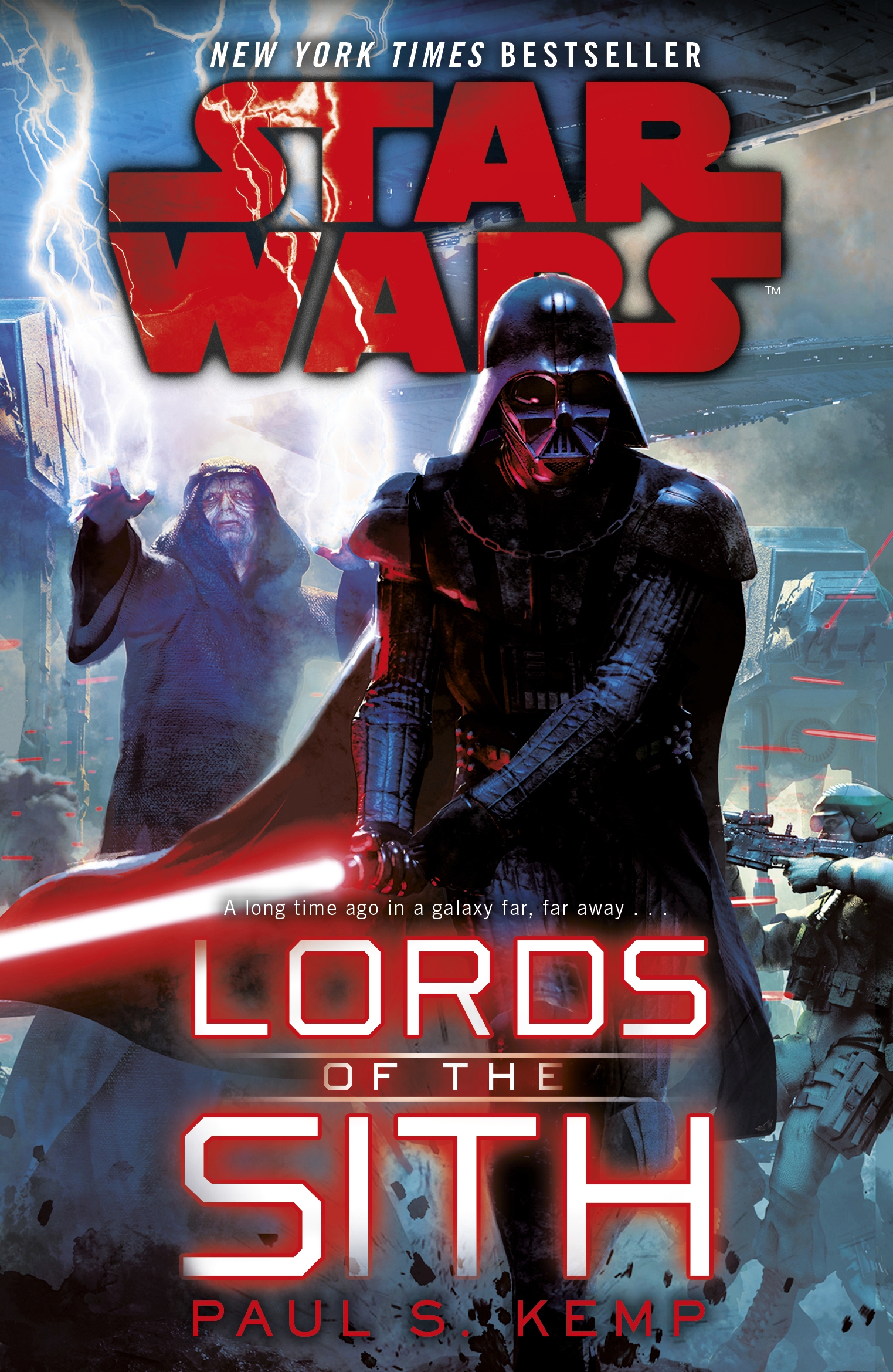
Throwback Thursday: Stars Wars: Lords of the Sith by Paul S. Kemp

Lords of the Sith Cover

Publisher: Penguin Random House Audio (Audiobook – 28 April 2015)

Series: Star Wars

Length: 10 hours and 56 minutes

My Rating: 4.5 out of 5 stars

Amazon

Reviewed as part of my Throwback Thursday series, where I republish old reviews, review books I have read before or review older books I have only just had a chance to read.

For my second Throwback Thursday article of this week (what can I say, I was in the zone for reviewing older content) I check out a fast-paced and addictive Star Wars novel that was released a couple of years ago, with Star Wars: Lords of the Sith by Paul S. Kemp.

It is the early days of the Galactic Empire. Under the reign of Emperor Palpatine, few openly oppose imperial rule, and those that do are swiftly dealt with by Palpatine’s ruthless apprentice, Darth Vader. But as the power and influence of the Emperor and Vader grow, so does their desire to rule and oppress every planet in the galaxy, and with that comes the first sparks of rebellion.

The planet Ryloth knows all about oppression and invasion. Following a brutal occupation during the Clone Wars, Ryloth now finds itself under the control of the Empire, which strips the planet of its natural resources while using the people for slave labour. In opposition to this occupation, an aggressive resistance moment has arisen, led by idealistic leader Cham Syndulla and his comrade Isval, a vengeful former slave. Thanks to their excellently placed sources, Syndulla’s resistance has been able to launch some substantial attacks against the Empire, but their actions have gained the attention of the Emperor and Vader. In a bid to assert his dominance on Ryloth, the Emperor sets out on a rare mission to the planet, accompanied by Vader. However, this is the opportunity that Syndulla has been waiting for.

Upon the Imperial’s arrival above Ryloth, the resistance fighters are able to do the impossible and blow up their Star Destroyer. Forced to abandon ship, the two Sith lords find themselves trapped on the dangerous surface of Ryloth with no means to communicate with Imperial command and no reinforcements on the horizon. In a bid to liberate the galaxy from their dark rule, Syndulla and Isval gather all their forces and resources to hunt the Emperor and Vader down. Surrounded by enemies, inhospitable terrain and terrible native fauna, the two Sith Lords appear to be at their most vulnerable. However, what Syndulla and his team fail to realise is that their prey are two of most dangerous beings in the galaxy, and together they are a force of unnatural destruction. Can the resistance fighters take on Emperor and Vader, and what happens when the two Sith lords work out that their biggest threat is each other?

Now this is a rather fantastic and captivating Star Wars novel that I have been wanting to check out for a while now due to the book’s cool concept. This is the first book that I have read by Paul S. Kemp, a fantasy author who has been writing since the early 2000s. His first novel, Twilight Falling debuted in 2003, after the author released several pieces of short fiction. Kemp then went on to write several fantasy series and standalone novels, including The Erevis Cale trilogy, The Twilight War trilogy and the Egil and Nix books, most of which fell within the Forgotten Realms shared fantasy fiction universe. Kemp has also written a few Star Wars novels, including Crosscurrent, The Old Republic: Deceived and Riptide, which were part of the old Star Wars Legends canon. Lords of the Sith is Kemp’s first novel in the new Star Wars canon, and he presents the reader with a fun and fast-paced novel that has some intriguing elements to it.

Kemp pulls together an excellent Star Wars novel that has a great story, is full of breathtaking action scenes and features compelling dives into some iconic Star Wars characters and elements of the universe. While I came for all the fun action that was bound to feature in a story surrounding the Emperor and Vader fighting against overwhelming odds, I stayed for the intriguing story that is full of betrayal and manipulations. The author does a fantastic job of utilising multiple character perspectives to tell a fuller story, which showed the perspectives of not only Vader and Syndulla’s resistance but also two Imperial officers stationed on Ryloth: one who is loyal to the Emperor and one who has been working for the resistance. This helped produce a really clever narrative, and it was interesting to see where Kemp took the story throughout Lords of the Sith.

The story is set five years after the events of Revenge of the Sith and focuses on the Emperor and Vader encountering some of the earliest forms of rebellion against the Empire. There are some strong elements from the extended Star Wars universe in this book, most notably with the inclusion of Cham Syndulla, a character who appeared in two Star Wars animated series, The Clone Wars and Star Wars Rebels, and is the father of Hera Syndulla, one of the main characters from Rebels (who is featuring in a lot of other pieces of Star Wars fiction at the moment). However, this is definitely a novel that can be enjoyed by the more casual Star Wars fan, and no real knowledge of the extended universe is needed to follow the plot. As always, though, those readers who are fans of some of the extended universe fiction are probably going to enjoy this book a little more. I myself enjoyed seeing the exploration of the early days of the Empire, an examination of Cham Syndulla’s history between the two animated shows and some exploration of the planet of Ryloth.

Without a doubt, the highlight of this book has to be the amazing action sequences featuring Darth Vader and the Emperor. Kemp went out of his way to show off just how badass these two characters can be, and he did not hold back any punches. Vader and the Emperor get into some major scrapes throughout the book, as they hunt or are hunted by members of the Ryloth resistance or some of the deadly creatures that reside on the planet’s surface. Needless to say, these two characters use all of their deadly Force abilities to take down swathes of opponents, and they come across as pretty impressive characters, especially in the eyes of some of the other point-of-view characters. I loved the reactions from characters like Syndulla or Isval, especially as it becomes more and more apparent to them that their opponents are something too much for them. I have always loved comics and books that showed off how badass Vader and the Emperor can be, and this is one of the better examples of this. Kemp started this book off strong by having Vader crash his fighter onto a ship to board it, before systematically taking down the crew one by one, while Syndulla and Isval are forced to listen from another ship (accompanied by Vader breathing heavily into a comms unit to freak everyone out). This is then followed by a plethora of other cool sequences, which includes Vader and the Emperor decimating a massive swarm of Ryloth’s apex predators and a particularly cool sequence where Vader started force choking several characters aboard a separate spaceship while he was flying upside down above them. All of this was exceedingly cool, and I loved Kemp’s amazing imagination when it comes to these two characters.

I also quite liked the intriguing examination of the unique relationship between Darth Vader and the Emperor that became an interesting central focus of the plot. While the story doesn’t show the Emperor’s point of view, you get Vader’s take on the situation, and through his eyes you see his perceptions of the Emperor, his thoughts on the partnership they have formed, and the knowledge that it will eventually end with Vader attempting to kill Palpatine to take his place. Palpatine, for his part, spends most of the story devising tests and challenges to get into Vader’s head and to ensure that his apprentice is loyal and has no thoughts of overthrowing him at the moment. I liked the compelling and clever examination of these two characters’ mindsets that Kemp pulled together, and I felt that he had a great handle on the personalities of these iconic Star Wars characters. I also rather enjoyed Kemp’s portrayal of the Emperor’s manipulative and purely evil nature, as it is revealed that everything that happens throughout the book is due to his design, and he threw away thousands of Imperial lives to achieve his goals. The revelation of this to some of key characters in this book makes for a great scene and I think that it really encapsulated just how evil the Emperor could be, which was pretty awesome.

Like with most Star Wars books that I read, I ended up checking out the audiobook format of Lords of the Sith, which was narrated by Jonathan Davis. This audiobook runs for just under 11 hours, and can be powered through quite quickly, especially once the listener hears the opening action sequence read out to them. I have to once again highlight that use of the cool music and sound effects that are included in all Star Wars audiobooks in order to enhance the story. Lords of the Sith had some great sound inclusions throughout its run time, and I felt that these definitely had a major impact on my enjoyment of this book. This audiobook features the audio talents of skilled narrator Jonathan Davis, whose work I have previously enjoyed in Star Wars books such as Master & Apprentice and Dooku: Jedi Lost. Davis does an incredible job narrating this book and he comes up with some impressive voices for the various characters featured throughout it. I particularly liked the great voices he came up for key characters like the Emperor and Darth Vader (with the help of some appropriate sound effects) and Cham Syndulla, and they sounded a lot like their appearances in the movies and animated shows. As a result, I really powered through this excellent audiobook, and I would strongly recommend this format to anyone who wants to check out Lords of the Sith.

Lords of the Sith is a fun and exceedingly entertainingly Star Wars novel that I had an outstanding time listening to. Kemp comes up with an exciting and action-packed story that not only explores some intriguing aspects of the expanded Star Wars universe, but which also contains some over-the-top action sequences that shows just how awesome a Star Wars novel can be. Lords of the Sith comes highly recommended to anyone looking for a fantastic and enjoyable read, and I hope that Kemp writes some more Star Wars novels in the future.

Amazon