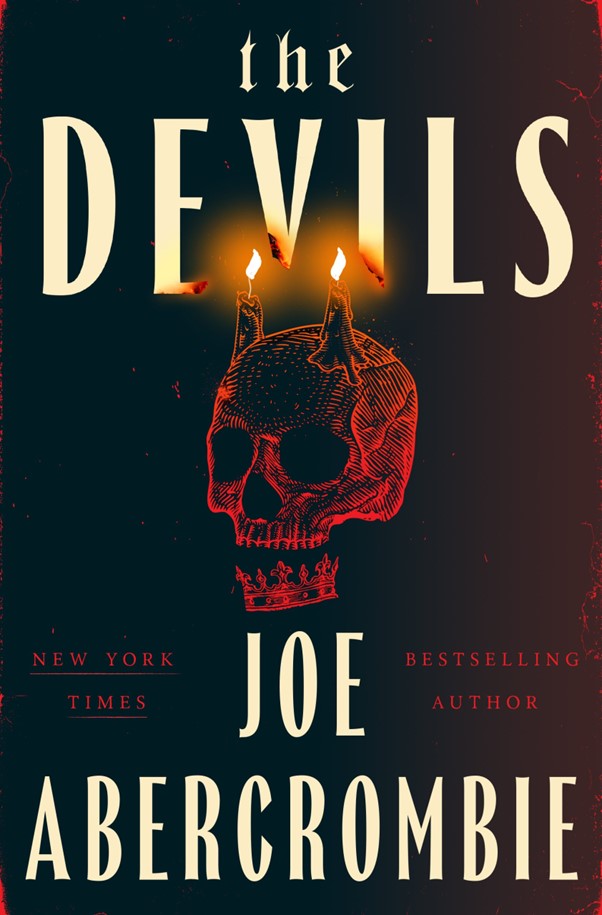
The Devils by Joe Abercrombie

Publisher: Gollancz/Macmillan Audio (Audiobook – 13 May  2025)

Series: The Devils – Book One

Length: 25 hours and 7 minutes

My Rating: 5 out of 5 stars

Amazon

The master of grimdark fantasy fiction presents a bold and over-the-top new story with The Devils, an outstanding, addictive and highly entertaining read that you will not be able to turn away from.

Joe Abercrombie is an impressive and compelling author who has been wowing fantasy fiction authors with his complex reads for nearly 20 years.  While he has written some other cool books, like his Shattered Sea trilogy, Abercrombie is best known for his iconic First Law series of dark fantasy novels, that followed a group of highly damaged people as they tried to survive war, magic and politics in a messed-up fantasy world.  I really enjoyed the original First Law trilogy, and Abercrombie has cleverly expanded it out over the years, including with three standalone novels and his sequel Age of Madness trilogy.  The Age of Madness novels were ones that I particularly enjoyed reading, and A Little Hatred (one of my favourite books of 2019), The Trouble With Peace (one of my favourite books and audiobooks of 2020) and The Wisdom of Crowds (one of my favourite books and audiobooks of 2021), were very highly rated by me, and I could not get enough of this series.

Needless to say, I am a pretty big fan of Abercrombie’s novels, and I have been eagerly awaiting a new book from him since I finished The Wisdom of Crowds.  While I had hoped that we would be getting a new First Law novel, Abercrombie instead decided to present readers with something a little different with his new The Devils series.  Starting off with The Devils, this series is another clever dark fantasy series, set in an alternative, magic filled version of medieval Europe.  One of my most anticipated books of 2025, The Devils sounded so damn good, especially with its crazy plot and intriguing new setting.

The lands of Europe are in dire peril.  Between the constant wars, dangerous monsters, ruinous famines and deadly plagues, the various kingdoms of Europe are in poor condition, barely held together by the fractured church.  However, the real danger lies outside its borders, as the mysterious elves gather their power in the Holy Lands, preparing for another invasion of Europe that will surely lead to the destruction of all humanity.

In response to the growing threat of the elves, the church and its juvenile pope determine that a new ruler needs to be placed upon the Serpent Throne of Troy after its evil sorcerous empress dies.  With all four of the empress’s duplicitous and power-hungry sons unfit for the crown, the church surprisingly finds that their ideal candidate is a lowly street thief from the Holy City called Alex.  A ferrety sneak with no noble bearing or confidence, Alex is shocked to discover that she is really the long-lost Princess Alexia Pyrogennetos of Troy, destined to reunite the churches of Europe by claiming the throne.

Turning the reluctant and terrified Alex into a potential princess is one thing, but getting her to Troy is a far more difficult prospect, especially as her rival contenders to the throne are stalking Europe with their deadly, magically enhanced followers, determined to claim Troy for themselves.  To succeed in marching Alex through the European hellscape and placing her on the Serpent Throne, the church will need far more than prayers and the blessing of saints; they are going to need devils.  Luckily, such devils are close at hand. 

Deep within the Holy City lies the Chapel of Holy Expediency, which binds dangerous heretics and monsters and forces them to seek redemption through holy missions for the pope.  Led by the hapless Brother Diaz, the congregation of the Chapel of Holy Expediency is charged with getting Alex to Troy and placing her on the throne.  But can a terrified monk, an immortal knight, an arrogant necromancer, an invisible elf, a sarcastic vampire, an uncontrollable Viking werewolf and the most experienced woman in Europe succeed in making a street-rat an empress, or will their new mission only bring even more death and destruction to the continent? 

Joe Abercrombie once again shows why he is one of the very best authors of dark fantasy fiction with his captivating and deeply impressive new novel.  The Devils was an ultra-entertaining read that perfectly introduced the author’s intriguing setting and populated it with highly amusing characters and dark deeds.  Exciting, clever and loaded with over-the-top humour, The Devils was an absolute joy to listen to, and I loved every second I spent with it.  One of the most addictive novels of 2025 so far, The Devils gets a very-well deserved five-star rating from me, and readers are guaranteed an extra fun time with this crazy novel.

I absolutely loved the cool and highly entertaining story that Abercrombie came up with for The Devils, which was essentially a fun dark fantasy iteration of The Dirty Dozen/Suicide Squad narrative with some amazing monsters.  Providing a quick introduction to the key characters, the reader soon becomes highly invested in the narrative, as the memorable and very amusing protagonists begin their trek to Troy.  What follows is a classic travelling adventure story with some dark and comedic twists, as the protagonists encounter all manner of foes on the way to their destination, which they are forced to dispatch with ruthless efficiency.  While parts of this story start to become a tad formulaic, especially as the protagonists are intercepted multiple times by one of Princess Alexia’s cousins, with each encounter resulting in a deadly battle for survival against different occult forces, you are generally so entertained by the compelling characters, interesting interactions, and over-the-top action sequences, you don’t even really mind.  Abercrombie works to break up these encounters with some fun side quests, as well as altering the circumstances by having the characters occasionally split up into unlikely pairings, exploring the fun alternate medieval Europe that works as such an effective setting for this book.  This allows for some interesting changes of pace in the main quest narrative, while also allowing for some outrageous character moments as the reader gets to know the protagonists a little better.

Everything nicely leads up to the last third of The Devil, which sees the protagonists arrive at their destination against the odds.  Without going into much detail, things naturally go to hell, and everybody is forced to fight for their lives.  This chaotic series of events isn’t unexpected, as the reader is waiting for the other shoe to drop the entire book, but the who and the how of it makes for great reading.  Some excellent twists come to life here, often revealed in a fun meta way, and, while you see a couple of them coming, the entire ball of surprises and reveals make for quite an exciting end sequence.  These twists are well backed up by some of the grittiest action sequences in the entire book, and you are constantly on your feet waiting to see what happens next.  The entire novel ends on a tragic, if thoughtful note, especially when you’re left to consider who the true monsters of the story are.  An overall impressive narrative, that blends alternate history and classic adventure narrative threads with Abercrombie’s wild imagination to create something exceedingly entertaining and addictive.

The Devils was a very fun and well-written story as Abercrombie provides a very intense and hard-hitting tale, bound together by dark humour, over-the-top sequences, and complex characters.  Abercrombie once again showcases his skill at balancing multiple distinctive perspectives to tell an integrated and ongoing narrative, with the story cleverly bouncing between the viewpoint of several impressive protagonists.  The continued switches between the characters allows for a very elaborate narrative, and the reader is drawn into both the overarching plot and the more personal battles of the protagonists.  I liked how Abercrombie was able to tailor the descriptive narration of each of the perspective chapters to suit the character it was following, and each chapter has a slightly different tone as a result.  However, this is a very dark overall story, as the characters encounter outrageous scenarios of death and destruction, and the resulting carnage allows for some intense moments.  I will say that The Devils did feel a little sillier than some of Abercrombie’s previous novels, although the author uses this extra layer of ridiculous energy to full effect to tell an extremely addictive story.

As you would expect from Abercrombie, the intense action sequences are a highlight of The Devils, with the many brutal sequences coming to life thanks to the author’s great descriptive style.  There was a certain casualness to some of the fights, especially those featuring the plot’s more dangerous killers, and which was enhanced by the clever overall narration of the writing.  I loved how Abercrombie set out all his scenes, with a lot of subtle humour revolving around cynical description of events, especially as the author provides some ironic results and meta commentary.  This more subtle writing of events is counterbalanced by the over-the-top humour of the dialogue, especially when it comes to certain characters.  A lot of the dialogue gets downright filthy at times, with some very adult discussions coming out in outrageous fashion.  While this excessive crass language had the potential to distract from the story, I think that Abercrombie got the right balance, with the ridiculously rude dialogue fitting in well amongst the crazy events of the plot.  While the combination of ugly events, adult humour and cooky carnage isn’t going to be everyone, I think most fantasy fans are going to have a ton of fun with it, especially as it plays into Abercrombie’s grimdark style.  Throw in a clever alternative medieval Europe as the elaborate setting which will delight history buffs with the intricate differences, and The Devils was a very impressive read that perfectly plays the author’s strengths and talent for entertaining and dark fantasy fiction.

Fans of Abercrombie will know that the author specialises at making damaged and captivating characters to set his narratives around, and The Devils is no exception to this.  The author introduces an amazing cast of complex and memorable characters in The Devils, and I love the very impressive storylines that emerge around them.  This includes six separate perspective protagonists, two major supporting characters, and an array of interesting figures throughout Europe who play various roles in the outcome of the plot.  Abercrombie does an excellent job of introducing and utilising this complex cast, with all the major characters getting their chance to shine in some impressive ways.  While some of the characters in The Devils didn’t quite have the complexity of the protagonists from the First Law books, Abercrombie instead amps up the entertainment aspect of these figures, introducing several particularly hilarious, ridiculous and highly relatable monsters, each of whom added a great deal to the overall reading experience.

The first two characters I want to talk about are major perspective protagonists, Brother Diaz and the newly discovered princess, Alex.  Despite neither being members of the titular devils, both have major roles in this book and are shaped by their experiences with the monstrous pawns of the church.  Brother Diaz, a simple monk who is brought in to guide the devils, is initially shown to be a hapless and terrified figure, clearly out of his depth when it comes to the dangerous mission he has been entrusted with.  Abercrombie has a lot of fun showcasing him as a useless social climber at the start of the novel, and he initially has more of a comedic role in the plot.  However, as the story progresses, Diaz starts to gain a little confidence as he continues to survive, and you soon see flashes of the man he could be.  Despite falling to temptation (repeatedly), Diaz ends up being quite a stalwart figure in the book, and I loved some of the scenes where he got to show off his intelligence (including one particularly entertaining legal battle).  The way in which Abercrombie subtly added more and more depth to Diaz’s personality as the story continued was very impressive, and his growth as a character was a highlight of the book.  The author also ensured that Diaz was one of the more relatable characters in The Devils, especially as he continuously makes mistakes, finds himself shaken by his fears and failings, yet continues to try to do the right thing.

Much like Diaz, the other non-devil perspective protagonist, Alex, is also shown to be an imperfect figure who finds themselves thrust into events outside of their control.  Initially shown as a simple thief, Alex, or Princess Alexia Pyrogennetos, is ill prepared for the events before her, and is forced to rise to the occasion when she is declared long-lost royalty.  Mostly shown as the book’s damsel in distress, Alex is generally scared and lacking confidence, especially as she knows she is not the princess everyone wants her to be.  Like Diaz, Abercrombie writes Alex slowly rising to the occasion throughout course of The Devils’ plot, as she learns to fight back and become a leader.  I really liked following Alex’s journey in The Devils, and while the journey to the character finding her self-confidence is a long and bloody affair featuring some good twists, it ended up being a powerful part of the book’s overarching narrative.

Outside of Alex and Diaz, a lot of time is also spent following the other perspective members of The Devils, including Balthazar, Sunny and Vigga, who are a necromancer, an elf and a werewolf respectively.  These three characters are amazing, and I liked how well they played off each other and the rest of the cast with a great mixture of serious and more comedic elements.  For example, Balthazar (or to introduce him properly, Balthazar Sham Ivan Draxi), is a highly arrogant figure who chafes at being captured and controlled by the church.  Much of his story focuses on his many attempts to break the Papal binding compelling him to help Alex, while also dealing with the realisation that he is helpless against those he considers his lesser.  Much of the entertainment around Balthazar is his complete lack of self-awareness or humility, especially within his own mind, and while there are times when it appears that he is going to become a better person, he usually returns to his old personality when he hits a wall.  Sunny the elf, on the other hand, is a far more sensible character, who serves as the team’s shadow thanks to her ability to become invisible.  Despite her nice and helpful personality, Sunny is shown as an alien creature, incapable of understanding the humans who generally hate and fear her.  Imbued with a more subtle humour than her fellow devils, Sunny proves to be quite an interesting figure, especially when you examine her past and her dark experiences with humans.  Probably one of the more likeable and selfless figures in the book, Sunny’s arc adds a lot to the overall story, especially through her unlikely romance angle, and Abercrombie clearly had fun writing the various scenes where she traipses around invisible.

One of the more memorable cast members of The Devils is Vigga, a former Viking raider who was cursed as a werewolf and then captured by the church.  Crass, constantly controlled by her urges, incapable of self-restraint and particularly deadly, even when not a massive wolf, Vigga powers through the entirety of The Devils’ narrative, leaving a major impression whenever she appears.  Featuring some of the more visceral and entertaining perspectives of the book, which includes a combination of hungry sequences from her wolf mind and her more entertaining insights as a human with no impulse control and an inability to focus on anything, Vigga is responsible for a large part of The Devils’ chaotic and outrageous tone, and the book would not be anywhere near as fun without her.  However, as this is Abercrombie, there are quite a few darker moments in Vigga’s story, and you soon become absorbed with her attempts to pull together her fractured mind and control the monster within, especially when she gets close to her travelling companions.  The dark depression that occasionally befalls her because of her uncontrolled actions adds some major drama to certain tragic parts of The Devils’ plot, and Vigga comes away as one of the more sympathetic, if scary, characters in the book.

While the above perspective characters are all particularly impressive, my favourite was the team’s resident knight, Jakob of Thorn.  An old soldier cursed with immortality who has been fighting battles on behalf of the church and God for hundreds of years, Jakob is a tired and haggard figure bound by his many vows.  Suffering from the degradation of his body due to age and the many injuries inflicted on him, Jakob is weariness personified as he attempts to deal with his pain, and the guilt from his long history of death and service to the church.  Readers familiar with the author will know that Abercrombie specialises at writing tired old warriors who are sick of the death and destruction they cause, and Jakob of Thorn is one of his better ones (which is saying a lot).  I loved all of Jakob’s scenes, especially as he doggedly continues to fight despite his pain, often providing some of the book’s best quotes and insights.  Unsurprisingly, Abercrombie makes Jakob suffer a lot in this novel (what else would this sadistic author do with an immortal character?), and you learn a lot about his resolve and psyche as a result, especially as he knows he is the biggest monster of them all.  I really think that Jakob’s grittier and more self-aware perspective chapters helped to balance out the more outrageous character arcs in The Devils, and he was a perfect addition to this outstanding narrative.

The final two major characters I want to highlight are Baron Rikard, an ancient vampire, and Baptiste, a rogue hired to keep the devils in check, who seems to have experience with every profession possible in Europe.  Both these characters are excellent additions to the plot and manage to shine through, despite not being perspective characters.  Indeed, I felt that their role in the book was enhanced by the readers not having direct insights about their motivations or actions, and instead you get to enjoy the mystery surrounding them as you see them through the eyes of the other characters.  Baron Rikard, who serves as a fun, sarcastic figure who only helps when it suits him, proves to be a great inclusion in the plot, especially as his gentlemanly manners and demeaner makes him stand out amongst the other characters.  While a ridiculously charming figure (especially when he starts talking about dumplings), you are initially given the impression that Rikard is another trapped monster keen to escape his binding.  However, Abercrombie nicely turns this assumption on its head as the story continues, and I really enjoyed the character’s revealed motivation, especially as it shades all the character’s actions in a new light.

Baptiste, on the other hand, is a suave and entertaining figure whose impact on the book would be diminished if you got a deeper look at her thoughts, motivations or true history.  I particularly enjoyed how well Baptiste served as a foil to Balthazar, and they had a great back and forth that helped to define them both.  Throw in a range of other impressive supporting characters, including a barrage of outrageous or diabolical antagonists, and the cast of The Devils was something very special.  I cannot emphasise enough just how much fun all these characters were, and their moving and complex arcs and interactions really helped to give some powerful meat to The Devils’ entertaining narrative.  You really come away with some conflicted feelings for many of the protagonists, especially as none of your favourites have a truly happy ending, and it will be interesting to see what happens to the survivors in the future entries of the series.  A special shoutout as well to the fun artwork depicting several of these characters in The Devils paperback, especially as the artist really captures how the author wrote these colourful protagonists.

While I did receive a physical copy of The Devils, I ended up listening to this novel on audiobook, which was a fantastic choice.  Not only did the audiobook version allow for a fuller immersion in Abercrombie’s new fantasy universe and his crazy action sequences, but it also featured the superb voice of actor Steven Pacey.  Pacey, who is one of my favourite audiobook narrators, previously lent his voice to the audiobook versions of Abercrombie First Law novels, and he frankly does a perfect job of capturing the author’s unique tone and style.  Abercrombie’s complex writing, witty dialogue and excessive humour really come to the fore when read out by Pacey, and the narrator’s tone and cadence in The Devils always perfectly matched the intended mood of the scenes, no matter how dark or over-the-top they became.  Pacey also does some very entertaining and highly fitting voices for the key characters of The Devils, and it is amazing how well he captures all these outrageous figures.  All the defining character details, including the timid nature of Brother Diaz, the arrogance of Balthazar, the pain and weariness of Jakob, the wry amusement of Baron Rikard, the unearthly nature of Sunny and the sheer wildness of Vigga are all amazingly highlighted by Pacey’s various voices, and really come to love the characters the way that Pacey reads them out.  Thanks to Pacey’s brilliant acting and evident love for the content, this was an incredible listen, and I really cannot emphasise enough just how effectively he narrated this crazy story.  I flew through the books lengthy, 25-hour runtime due to this brilliant narration and epic narrative, and I honestly don’t believe that anyone but Steven Pacey could make Abercrombie’s amazing novels come to life in the same way.  An exceptional audiobook and one of the best things I have so far listened to in 2025.

With his trademark blend of chaos, fantastic humour and complex characters, Joe Abercrombie presents one of the very best books and audiobooks of 2025 with The Devils.  A unique and very entertaining fantasy adventure novel, The Devils pushed everything to 11 and beyond, ensuring that you couldn’t turn away.  An exceptional read from start to finish, I had so much fun with The Devils and I cannot wait to see how Abercrombie will continue this series in the future.
Amazon

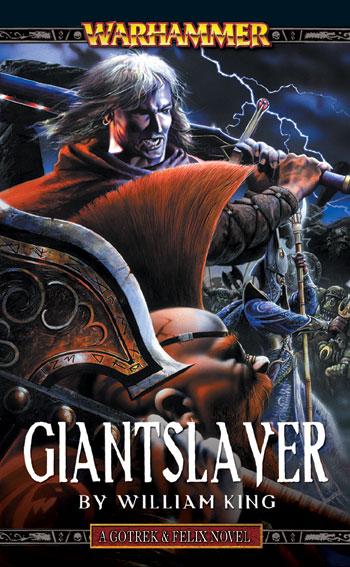
Throwback Thursday – Warhammer: Giantslayer by William King

Giantslayer Cover

Publisher: Black Library (Audiobook – 3 April 2003)

Series: Gotrek and Felix – Book Seven

Length: 10 hours and 23 minutes

My Rating: 4.5 out of 5 stars

Amazon

Welcome back to my Throwback Thursday series, where I republish old reviews, review books I have read before or review older books I have only just had a chance to read.  After having a ton of fun listing my favourite Warhammer 40,000 novels last week, I dive back into Warhammer Fantasy in a big way with the seventh epic entry in William King’s Gotrek and Felix series, Giantslayer.

While the Warhammer franchise has many great series, few are as iconic or long-lasting as the epic Gotrek and Felix books.  Following a doomed dwarf Slayer Gotrek Gurnisson and his human chronicler Felix Jaeger as they travel across the Warhammer Fantasy landscape, trying to find a worthy death for Gotrek, these books are amazing and fun action-packed reads guaranteed to keep you entertained with their excellent stories.  Each of these books is an outstanding read in their own way, and I have had a wonderful time getting through the previous Gotrek and Felix books by King, including Trollslayer, Skavenslayer, Daemonslayer, Dragonslayer, Beastslayer and VampireslayerGiantslayer actually marks the end of William King’s run on the Gotrek and Felix series, and he brings his tenure of the series to a powerful and impressive end.

Following their arduous and costly battle against the vampires of Sylvania, Gotrek, Felix and their companions attempt to deal with the losses they all have suffered.  However, the evils of the Old World are never considerate of grief, and soon the heroes find themselves attacked by a horde of beastmen.  Following them to their lair, they discover a mysterious cavern full of tunnels pulsing with unnatural power.

Separated from their friends and dragged through an unnatural gateway, Gotrek and Felix find themselves transported to the legendary island of Albion, home of ancient tribes, dark forces, and massive giants.  Fate brings the two companions into contact with the legendary High Elven mage Teclis, who has journeyed to Albion to uncover the source of dangerous magical energy that threatens to sink the High Elves’ home island of Ulthuan and devastate the rest of the world.

Reluctantly agreeing to work with the elf mage, Gotrek and Felix travel across Albion, attempting to uncover the cause of the latest magical threat facing the world.  They soon discover that the island is far from tranquil; instead it is a dark land corrupted by magical power and the dangerous legacy of the Old Ones, the mysterious beings who created the world.  Worse, the island has been invaded by the dark forces of Chaos who are determined to harness Albion’s unique magic for themselves.  Caught between dark sorcerers, corrupted giants, an army of greenskins and the long-lasting enmity that exists between elves and dwarves, can Gotrek and Felix work with Teclis to save the world, or will the Slayer finally find his doom on Albion?

Giantslayer was another great and highly entertaining Gotrek and Felix novel that successfully showcased the outrageous protagonists while further exploring the elaborate Warhammer Fantasy universe.  This was another amazing book from William King, and I felt that he ended his run on this series on a great note, especially as Giantslayer contained a fantastic and fast-paced story.  Taking place in the immediate aftermath of Vampireslayer, Giantslayer quickly thrusts the protagonists into the midst of the action while simultaneously introducing the reader to the character of Teclis, who serves as a great additional central character.  The first few chapters of the book are pretty trippy in places, especially as all the characters find themselves trapped in a mystical realm, and the subsequent escape results in some fantastic sequences.  The characters are then transported to Albion and must explore this intriguing new landscape while trying to overcome their many personal issues, namely the animosity between Gotrek and Teclis, which adds a fun edge to the entire narrative.

King expands the story as the book continues, introducing the reader to several fantastic supporting characters from amongst the people of Albion, and soon shapes the major threat facing the world, namely the forces of Chaos overwhelming the magical energy of the island for their nefarious purposes.  King utilises an excellent series of villains at this point of the novel, including the recurring sorcerous twins who have been dogging the protagonists since Dragonslayer.  Everything eventually leads up to the massive final confrontation as the protagonists and their allies find themselves in the middle of a massive three-sided battle as they attempt to achieve their goal.  There is a ton of action, sacrifice, magical duels, and of course a giant, in this last part of the book, and King really built up an explosive and powerful conclusion to the entire novel.  I really enjoyed how this entire book came together, and it was great to see the characters embark on a final adventure under King’s reign.  While the story itself can be read as a standalone, the author does fit in a ton of references to the previous entries in the series and long-time readers will enjoy the cool callbacks.

I think that King did an interesting job of wrapping up his run on this series with this final fantastic action story, and fans of his writing style will not be disappointed with Giantslayer.  This is very much another epic hack and slash Warhammer novel, and King always manages to make that style of novel stand out, especially with his excellent attention to detail and ability to make all the fun action really pop.  The use of multiple perspectives, including through Felix, Teclis and several antagonists’ eyes, gives the reader a very wide narrative to explore, and I loved the fantastic and fun moments that emerged through their adventures.  King utilises very quick pacing for this book, so it is quite easy to power through it, especially as there is really never a dull moment as the characters jump from one deadly scenario to another.  I do have to be a little critical and point out that King is a somewhat repetitive writer; if he finds a phrase, description, or sentence that he likes, he tends to overuse it slightly throughout the plot.  This is particularly noticeable after seven Gotrek and Felix books and readers of this series will no doubt know what phrases I am talking about (wool cloaks and beads of blood).  However, while this repetition is occasionally distracting, it honestly didn’t mess up my enjoyment of the story too much and I had a ton of fun getting through Giantslayer.

Giantslayer also serves as a particularly interesting and lore-heavy addition to the Gotrek and Felix books as King spends a lot of time diving into the history of the Warhammer Fantasy world and the original creators, the Old Ones.  The book is primarily set on the island of Albion, the setting for the 2001 Warhammer Fantasy campaign series, Dark Shadows, and the author really leans heavily into the setting, showing the rain drizzled island in all its swampy and deadly glory.  King sets it a little before the events of Dark Shadows, and much like the campaign’s descriptions the island of Albion is shown as a very Celtic landscape, very much inspired by Scotland.  This serves as a brilliant background to the main story, and I loved seeing the characters traverse and fight across the various settings to achieve their goal.  As one of the few Warhammer Fantasy books set on Albion, fans of the Dark Shadows campaign can have a bit of fun with Giantslayer, and it was great to learn a little more about the local societies and the history of the island.  History really is a major part of the book, and the protagonists end up finding a lot of about Albion and the Old Ones as the story continues.  This includes a dive into the Path of the Old Ones, a series of magical gateways existing outside of the main reality which can be traversed.  The sequences set within this gateway are very trippy and dark, especially as they have been invaded by daemons, and King really knows how to make all these unique locations stand out with his excellent writing.  As a long-time Warhammer Fantasy fan who can remember the Dark Shadows campaign, I really liked the heavy lore inclusions in this book and I felt that King utilised them perfectly throughout Giantslayer to tell a powerful narrative with some really heavy stakes for the protagonists.

I need to highlight the great characters contained within Giantslayer, especially as you get to see more of the titular protagonists, Gotrek Gurnisson and Felix Jaeger.  This odd-couple pair of suicidal Slayer and pragmatic human is always a ton of fun, and King keeps this up all the way to the end, as the two characters play off each other perfectly.  Gotrek’s glee at each encounter is usually only matched by Felix’s understandable reluctance to travel into the dangerous places their quests take them, and you can always count on a sarcastic and fatalistic statement from Felix, and it makes for some amazing, if slightly predictable scenes.  King has never done a lot of character development when it comes to these protagonists and this continues again in Giantslayer.  Gotrek remains the same old unstoppable and unflappable Slayer that he always has been, constantly diving into danger, with the author never showing his perspective or providing too many hints at this past.  While King does however provide some intriguing insights in Gotrek’s seemingly unkillable nature, this was pretty much a status-quo book for Gotrek, which still has its fun moments.  Felix also had some minimal growth in this book, although King does dive into the emotional impacts that the previous adventures have had on the character, which does provide some insights into his cynical and reluctant personality.  I did like the more scholarly bent that was shown around Felix in this novel as he learns more about the history of the world and it was fun to see him finally get the idea to start writing the books that have introduced all the prior Gotrek and Felix adventures.

While the character work around Gotrek and Felix was minimal in Giantslayer, King more than makes up for this with the inclusion of the master mage Teclis, one of the more significant High Elf characters in the game.  Teclis is a very fascinating character in the lore, and I deeply enjoyed how King portrayed him throughout Giantslayer.  King amped up the arrogant, ethereal and ancient qualities of Teclis in his storytelling, and you can really feel how apart from the various human characters he is, especially in the many scenes that he narrates.  Teclis is also, by his nature, a rather darker cynical figure, even compared to other elves, and it was great to see this featured throughout the book, especially when it comes to his dealings with the other characters.  Despite this, he is still a good person whose sole concern is the preservation of his homeland and the rest of the world.  I think that King utilised him perfectly throughout Giantslayer and he served as a great alternative narrator to Felix.  I loved seeing this iconic mage in action, and it was especially fun to see him interact with Gotrek considering how antagonist dwarfs and elves are with each other.  The two engage in a petty war of words for most of the book, which proves to be highly amusing, as these usually collected characters end up bickering like children.  This makes for an extremely unique dynamic throughout the novel that I found to be highly entertaining.  King backs up Teclis with a series of great supporting characters and intriguing villains, all of whom add a certain amount of flair and strength to the story.  While King once again fails to include any substantial or distinctive female characters, except for a few minor figures, I enjoyed the excellent character inclusions to the series and you get really invested in some new personal stories in this book.

While I did manage to get a physical copy of Giantslayer (as part of the Gotrek and Felix omnibus), I ended up listening to it on audiobook out of convenience, and due to my love of the format.  Coming in at just under 10 and a half hours, this is rather easy audiobook to get through quickly, and I manage to knock it out in a couple of days.  Like most of the Gotrek and Felix books, the audiobook format for Giantslayer was very fun and I loved how it managed to enhance the epic nature of the book.  Not only does it really showcase King’s elaborate descriptions of the Warhammer world, but it also ensured that all the many action scenes really popped as you were drawn right into the heart of the battle through the cool narration.

It helped that the listener was once again treated to the awesome narration of Jonathan Keeble, a veteran voice actor and audiobook narrator who has lend his voice to a huge number of Warhammer audiobooks, including all the Gotrek and Felix books.  Keeble is a particularly skilled narrator, not only because he produces a huge number of distinctive voices but because he brings a high level of excitement to his performances that really drags the listener in.  I love how Keeble’s voice speeds up to match the carnage and the enthusiasm and energy that permeate his voice as he describes every blow or crazy moment makes you feel like you are sitting there watching it.  I also love the very fitting voices that he brings to all the characters, all of which are pretty damn perfect and a lot of fun.  The gruff and brutal voice of Gotrek and the sarcastic, scared, yet determined tones of Felix are still just as good here as they were in Trollslayer, and all the new voices introduced by Keeble in the Giantslayer audiobook work just as well.  I loved the more ethereal and arrogant voice that Keeble used for Teclis, which really fit King’s portrayal of the character in the novel, and the cool Scottish accents that the natives of Albion spoke with were very distinctive and helped to really characterise these awesome supporting figures.  Keeble also brings a great range of monster voices to the book to fit the various Chaos creatures, orcs and giants that are such a prominent feature of the plot, and I loved how dedicated he got to bringing these creatures to life with his narration.  Keeble is a very talented narrator, and his performance adds so much to this audiobook while also helping to enhance the already exciting narrative of Giantslayer.  As such, I would highly recommend the audiobook version of this book, and you are guaranteed to have a ton of fun listening to it.

Overall, I felt that William King brought his run on the iconic Gotrek and Felix to an end in a fantastic way with Giantslayer which was another awesome and electrifying entry in the series.  Featuring an epic, lore-rich story, a ton of action, and the complex and enjoyable characters that King has spent seven books developing, Giantslayer is King at his best and all Warhammer fans will have a blast with this outstanding novel.  This entire impressive series has been so much fun to get through and King’s work on these books really stand the test of time as the Gotrek and Felix series are still the premier Warhammer Fantasy books.  I will hopefully dive into the next book in the series, Orcslayer, later this year, and while it will be odd not to have it written by King, I am very intrigued to see what Nathan Long brings to the franchise.

Amazon

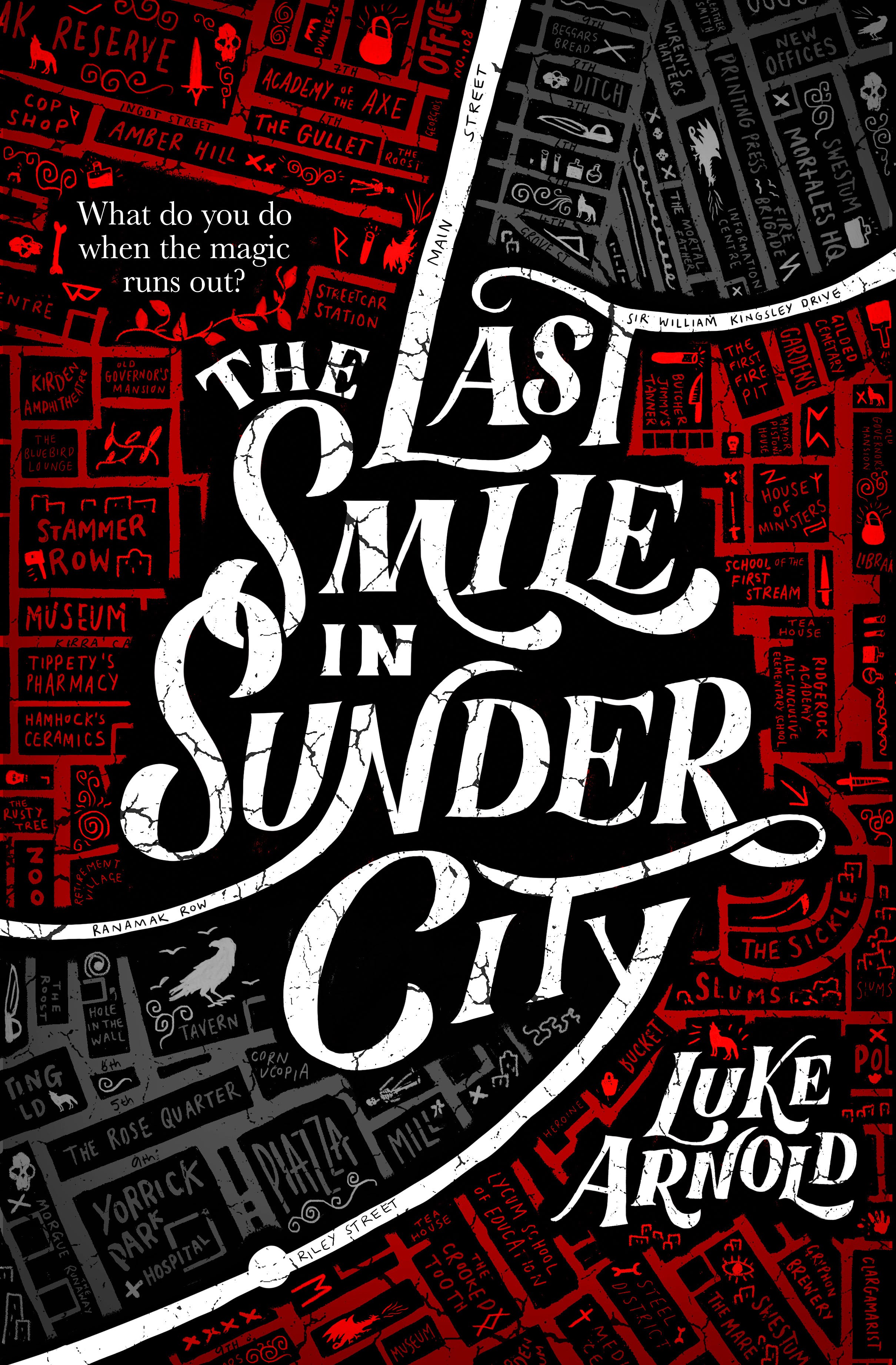
The Last Smile in Sunder City by Luke Arnold

The Last Smile in Sunder City

Publisher: Orbit (Trade Paperback – 6 February 2020)

Series: Fletch Phillips Archives – Book One

Length: 318 pages

My Rating: 4.75 out of 5 stars

Amazon

From debuting Australian author Luke Arnold comes The Last Smile in Sunder City, an absolutely superb piece of fantasy fiction that presents a unique and powerful story of loss, redemption and despair in fantastic new universe.

The Last Smile in Sunder City is the debut novel of Australian actor Luke Arnold. Arnold, who has appeared in a number of Australian television shows and movies, is probably best known internationally for playing Long John Silver in the pirate adventure series Black Sails. Arnold has now made the rather interesting career change to writing fantasy fiction with this first book, which is the start of a new series known as the Fetch Phillips Archives. I have actually been looking forward to The Last Smile in Sunder City for a little while now, as I liked the intriguing-sounding plot synopsis and I thought that this book had some real potential.

The continent of Archetellos has always had magic, with nearly every race or being having some access to the power that ran through the lands, extending their lives and giving them rare and amazing abilities. With these powers, the magical races ruled Archetellos, until the humans, the only race not gifted with magic, attempted to steal it for themselves. This resulted in the event known as the Coda, which saw all magic erased from the world. Overnight, the multitudes of beings who relied on magic for their very existence either died or were stricken down. The few survivors of these former magical races are now deformed, crippled and slowly dying in pain.

Fetch Phillips has been many things in his life (a guard, a peacekeeper, a soldier and a criminal) but now he is barely eking out a living as a man for hire in the former magical industrial hub known as Sunder City, which has been suffering ever since its magical fires went out. For a small fee Fetch will help you with whatever problem you have, although his sobriety will cost you extra. He only has only one condition: he won’t work for humans; his only clients are those former magical beings who need his help, because it’s Fetch’s fault that their magic is gone and never coming back.

Fetch’s latest case sees him hired by a school that specialises in teaching the children of former magical creatures. One of their professors, an ancient vampire who is slowly turning to dust, has gone missing, and the school is desperate to find him. Diving into the shady underbelly of the city, Fetch attempts to find some trace of the vampire or anyone who wanted to hurt him. But when one of the vampire’s students, a young siren, also disappears, Fetch needs to step up his game to find them. However, even without magic there are still monsters in Sunder City, and Fetch may not be able to survive his encounter with them.

This was a really impressive piece of fantasy fiction. With The Last Smile in Sunder City, Arnold has absolutely nailed his debut, presenting a clever and captivating fantasy mystery which makes full use of its inventive setting and excellent central protagonist to create an impressive and memorable book. This is a truly enjoyable story that contains a fascinating central mystery that blends extremely well with the book’s fantasy elements. I had a great time unravelling the full extent of this intriguing story, and Arnold takes the plot in some very interesting directions, producing some excellent twists and clever false leads. This is less of an action-based novel and more of an exploratory story which sets out the world and features a man of the city running through his contacts to investigate a curious disappearance. I think this worked out extremely well for this book, as it fitted into the book’s classic PI vibe while serving as a great introduction to the city which is no doubt going to be the main setting for any future books in this series. Arnold has also created a couple of fantastic subplots which not only help to explore the world but also help to expand on the compelling darker tone that has been injected into this book.

Without a doubt, the major highlight of this book is the deeply inventive and fascinating new world that Arnold has produced. When I first read The Last Smile in Sunder City’s plot synopsis about a world where magic no longer existed, I was intrigued and thought that it sounded like an interesting idea. However, I was not prepared for just how impressive and creative this turned out to be. In order to tell his story, the author first created a detailed fantasy world that was filled with a huge variety of classic magical creatures of all shapes and sizes, where magic was the ultimate power and in which humans, who have no access to magic, are second-class citizens. While this would have been an interesting place to set a fantasy mystery, the author immediately flips this setting on its head by showing how humans attempted to steal the magic from its source (via an animation intended for children that was cut across by the protagonist’s memories, which was a fantastic way to introduce this plot point), and how their intrusion resulted in the complete destruction of magic.

This of course leads to a very interesting world, as now all the creatures and beings who previously survived on magic have had their lives irreversibly altered. Arnold spends a good part of the book exploring the impact of this loss of magic, examining the impacts on the previously immortal elves who all suddenly died from old age, the werewolves and other shapeshifters who found themselves deformed and stuck at the halfway point between human and animal, the vampires who all lost their fangs and are slowly crumbling to dust, sirens whose human husbands all simultaneously left them, and so much more. There are also some cool examinations of the change in status quo, with humans now becoming the dominant species on the continent thanks to their superior numbers (humans were not affected by the Coda) and their ability to use technology as a substitute for the magic that used to run everything. Of course, humans being humans, there are a couple of examples of humanity taking revenge against the magical creatures that previously dominated the continent, which the author does a good job of working into the plot. All of this proves to be an extremely fascinating and enjoyable overarching backdrop to the story of The Last Smile in Sunder City, and I really have to congratulate Arnold on his amazing imagination. Every detail about this creative world was really cool, and I loved seeing how his vision of a fantasy realm bereft of magic come to life.

The main location of this book is the titular Sunder City. Sunder City is a former magical metropolis which has suffered in the post-Coda period. Once a place of marvels and magically-powered industry, the city is now a shell of its former self, with most magical beings now living in slums and struggling to get by without their abilities. There is a bit of a Depression-era vibe to Sunder City, especially as Arnold does an excellent job of imbuing much of the city with a sense of despair, resentment and hopelessness. This really turned out to be a fantastic city to serve as the book’s primary setting, and I really enjoyed the protagonist’s exploration of it as he attempts to find the missing people. There are some really intriguing elements to this city which are worked into the overarching mystery plot extremely well, such as a hostile police force, businesses catering to former magical creatures and gangs of humans trying to cause trouble. All of this is pretty amazing, and I look forward to seeing more adventures and mysteries take place in Sunder City, especially if the author spends time looking at new types of former magical creatures that weren’t featured in this first book.

In addition to the compelling story and outstanding settings, Arnolds rounds out this awesome book with an intriguing central protagonist, Fetch Phillips. Fetch, who also serves as the book’s narrator, is a drunk, depressed and broken man, who is essentially a classic noir PI in a fantasy world. While Fetch can at times be funny or entertaining, mostly due to his sarcastic and confrontational style, his defining characteristics are his overwhelming guilt and despair. This is due to the fact that he is largely responsible for the humans destroying magic, which resulted in so much death and suffering. The full story behind Fletch’s involvement in this atrocity is chronicled in the book through a series of flashbacks which show his origin, the friendships he formed and the events and emotions that led up to his darkest moment. Due to his role in the causing the Coda, and the fact that he betrayed the trust of several friends, Fletch is filled with all manner of self-loathing and must now deal with his complicated emotions towards other humans, who he detests, and the former magical creatures he is compelled to help, most of whom now hate him. Despite all this darkness, there is a little bit of light within Fletch as he struggles against his demons and his past to find redemption and live up to a promise he made. I thought that this portrayal of Fletch was a great part of the book, and I loved the complexity that Arnold has imparted on his protagonist. I also really enjoyed the way that the author showed off the character’s past, centring the flashbacks on the four tattoos he has on his arm, and exploring the meaning behind them. This mixture of the mystery in the present and the look at the events in the character’s past worked really well together, and they help show off an amazing central protagonist who is going to be a fantastic centrepiece for this series going forward.

The Last Smile in Sunder City by Luke Arnold is a superb and highly addictive fantasy mystery that presents the reader with a fantastic and thrilling story. While the book is mostly a clever and enjoyable mystery, its true strengths are the unique and captivating settings and the complicated, well-written protagonist, both of which help to transform this amazing novel into a first-rate read. Thanks to this excellent debut, Arnold has proven that he is a talent to be reckoned with in the fantasy genre, and I am looking forward to seeing what he produces next. The Last Smile in Sunder City comes highly recommended, and I think many people are going to enjoy this exciting new Australian author.

Amazon

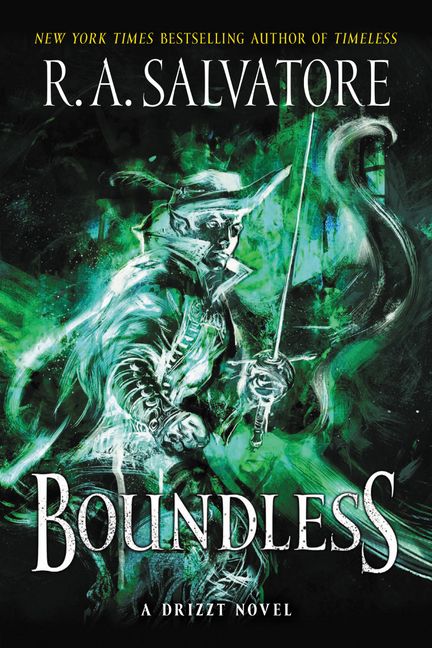
Boundless by R. A. Salvatore

Boundless Cover

Publisher: HarperAudio (Audiobook – 10 September 2019)

Series: Generations – Book 2

Length: 13 hours and 3 minutes

My Rating: 4.5 out of 5 stars

Amazon     Book Depository

From one of the world’s leading writers of fantasy fiction, R. A. Salvatore, comes an exciting and captivating new adventure that focuses on the author’s best-known protagonists, the Drow (dark elf) ranger Drizzt Do’Urden, his father Zaknafein, the rogue Jarlaxle and the Companions of the Hall.

Centuries ago, one Drow warrior was feared and respected above all others in the dark elf city of Menzoberranzan, the legendary weapon master Zaknafein. Even before the events that would eventually force him to sacrifice himself to save the life of his beloved son Drizzt Do’Urden, Zaknafein was never content with his life in Menzoberranzan. Sickened by the evil matriarchal system that rules the city in the name of the dark goddess Lolth, Zaknafein found himself trapped in the service of the ambitious Matron Malice Do’Urden. His only solace is his friendship with Jarlaxle, the charismatic leader of the mercenary band Bregan D’aerthe, with whom he forms a close bond. However, even this friendship is not immune to strife, as influential forces within Menzoberranzan attempt to turn the ranks of Bregan D’aerthe against Zaknafein.

Years later, Zaknafein has been mysteriously returned to life, finding himself in a strange new world, living within the dwarven kingdom of Gauntlgrym. Despite being reunited with his son, Drizzt, Zaknafein is once again lost; his inherent Drow distain for all non-dark elf life is making it hard for him to fit in with Drizzt’s dwarf, halfling and human friends and family. But as Zaknafein, with the help of Jarlaxle, attempts to find a new path, he is once again beset by dark and powerful opponents.

An ambitious family of human nobles from Waterdeep has combined forces with the ruler of Neverwinter, Lord Neverember, and a minor clan of dwarfs, in an attempt to topple Gauntlgrym’s king, Bruenor, and claim the elemental magical powers the great dwarven kingdom safeguards. While normally such foes would prove little threat to King Bruenor and his allies, these new enemies command a massive and ever-growing army of demons capable of overwhelming even Gauntlgrym’s substantial defences. In addition, their opponents are supported by a noble Drow House from Menzoberranzan whose matron, in a bid to become Lolth’s most favoured servant, is determined to be the Drow who finally captures Zaknafein and Drizzt. As father and son fight for their lives against their new enemies, they soon find themselves pursued by creatures far more sinister and destructive than anything they have seen before. Can the Companions of the Hall prevail, or will evil finally defeat the last bastion of light in the Forgotten Realms?

Boundless is another outstanding and incredibly enjoyable piece of fantasy fiction from one of my all-time favourite authors, the legendary R. A. Salvatore, who is easily one of the top fantasy authors of all time. This is actually the second novel from Salvatore this year, with the second book in his The Coven trilogy, Reckoning of Fallen Gods, having come out in January, and the final book in this trilogy, Song of the Risen God, is set for release in January 2020. In Boundless, Salvatore has once again returned to the iconic Forgotten Realms universe to produce another excellent story set around the character of Drizzt Do’Urden.

The dark elf ranger, Drizzt Do’Urden, is easily the most iconic and popular character that Salvatore has ever created. One of the few moral dark elf characters in all of the Forgotten Realms (the large-scale interconnected universe which has been the setting for a huge number of fantasy novels over the years), Drizzt has been one of Salvatore’s main recurring protagonist for over 30 years, ever since Salvatore’s debut novel, The Crystal Shard. I have long been a fan of Drizzt, mainly because of Salvatore’s amazing second trilogy of books, The Dark Elf trilogy, which told a captivating tale of a young Drizzt Do’Urden. Boundless is the 35th book to follow the adventures of Drizzt and his companions (if you include The Sellswords trilogy) and is the sequel to last year’s exciting fantasy adventure, Timeless. Boundless is also the second book in Salvatore’s current trilogy that focuses on Drizzt, known as the Generations trilogy, which is set to conclude next year in the final book, Relentless (a synopsis of which is already available online).

Boundless was an absolutely fantastic read which takes the reader on an epic thrill-ride through a demon invasion, the dark political underbelly of Menzoberranzan and into the heart and mind of one of Salvatore’s more complex and intriguing characters. Making exceptional use of two separate timelines, Salvatore tells a compelling and intricate story that combines a desperate battle for survival in the present with adventures in the past. Filled with action, adventure, amazing fantasy elements and an epic conclusion, this was a first-rate read that I greatly enjoyed.

This book was essentially impossible to put down from the moment I started listening to it, as Salvatore starts it off with an action packed prologue that sees a large force of halflings, dwarves and Drizzt face off against the horde of demons that were unleashed in Timeless. After this action-packed introduction, the book is then split into four parts, two of which follow the resulting battle for Gauntlgrym and the surrounding lands in the present (the present being Dalereckoning 1488), while the other two parts go back years before the events of the first book in The Dark Elf trilogy, Homeland, and tell a story of a younger Zaknafein and Jarlaxle in Menzoberranzan.

The parts set in the present offer a pretty exciting range of action and adventure as the story is split between several of the fun characters that Salvatore has introduced in all of his Forgotten Realms books. For example, throughout these parts you get to see the destructive siege of Gauntlgrym from the perspective of Bruenor, Zaknafein, Jarlaxle and the Bouldshoulder brothers (who originated in The Cleric Quintet, another one of Salvatore’s Forgotten Realms series). At the same time as Drizzt is being pursued throughout the land by a powerful magical construct, Wulfgar is caught up in an invasion of Luskan by a powerful fleet of monsters, and Regis teams up with Dahlia and Artemis Enteri to investigate their demonic opponents in Waterdeep. This was a fantastic blend of storylines in the present-day parts of the book, and I really enjoyed seeing the various adventures and perils assailing this great group of protagonists. All of the storylines in this part of the book were a lot of fun, and I really enjoyed the larger narrative that they were telling. These modern-day storylines end with a major cliff-hanger which is going to make me really want to check out the next book in this trilogy.

While the parts of the book set in Dalereckoning 1488 are pretty awesome, I have to admit that I much preferred the half of the book set back in the past. This part of the book was set over a period of several years and follows a younger Zaknafein and Jarlaxle as they navigate the highs and lows of their original friendship in the darkness of Menzoberranzan. I really liked this storyline, as it not only contained the politics, backstabbing and casual murder that makes all the stories set in Menzoberranzan so much fun, but it also explores Zaknafein’s psyche and starts to explain why he was a different Drow to the other members of his race when he was first introduced in The Dark Elf trilogy. It was also interesting to see the early days of Jarlaxle’s rise as a mercenary leader, and there is also a number of intriguing scenes that feature other Drow characters, such as Drizzt’s mother, Matron Malice, who have been dead for a while. As a result, these parts of the book serve as an excellent prequel to The Dark Elf trilogy, of which I am a massive fan. In addition, these chronologically earlier parts of the book serve to introduce some of the Drow antagonists who are threatening the characters in the present day, and it really interesting to see how the actions of Zaknafein and Jarlaxle hundreds of years in the past are impacting on the future.

I really loved this combination of the two separate timelines in the book and felt that it helped create a fantastic overall narrative. The earlier storyline of Drow house politics, friendships and small-scale grudges contrasts well with the intense war and near constant peril that makes up the 1488 storyline and helps to create a much more compelling book. I also really enjoyed how story elements, such as the exploration of Zaknafein and Jarlaxle’s friendship, or the examination of the cruel dynamics of Drow society, continued on from one part of the book to the next, and it was interesting to see how relationships and minds can change over time.

If there is one guarantee in life, it is that a Drizzt Do’Urden novel is going to feature some fancy swordplay and a ton of action. Boundless is no exception to this rule, as Salvatore has once again furnished his story with all manner of intense and detailed action and battle sequences, as his protagonists fight a variety of opponents. This makes for an exciting and really enjoyable read, as it always fun to see the various ways the Companions of the Hall engage in battle, especially since they have built up quite an impressive array of magical weapons and abilities after 35 books. In addition, Salvatore has come up with some unique and powerful opponents for this book, including two powerful magical constructs that are all but invincible and require extreme measures to combat. The parts of the book set in Menzoberranzan’s past also feature a wide array of dazzling duels and battles from Zaknafein, as he is forced to prove that he is the best weapons master in the city. The author shows off some truly impressive fight sequences in the parts of the book focusing on Zaknafein’s earlier life and Salvatore does a fantastic job providing the reader with a blow-by-blow account of what is happening. I also really liked how the author included several scenes that showed Zaknafein training for future battles in which he attempts to work out the best way to perform some elaborate or near-impossible combat move, which of course would then be utilised in a later fight. Needless to say, those looking for their next dose of fantasy action should look no further than Boundless, as Salvatore has once again provided one hell of a hit.

While I did read a physically copy of the previous book in the series, Timeless, for Boundless I ended up listening to the audiobook format instead. Boundless’s audiobook is narrated by Victor Bevine and runs for just over 13 hours, which only took me a few days to get through. I ended up having a great time listening to Boundless, especially as listening to a blow-by-blow of the amazing action sequences really helped bring these scenes to life for me. Bevine did a fantastic job of breathing life into the book’s various characters, and I really enjoyed the way that he captured the personalities of several of the characters with his performance. I also appreciated the way that he was able to emulate a number of very different characters and species throughout the course of the audiobook. Not only did he come up with sly and calculating voices for the various Drow characters, but he was also able to affect an impressive brogue for the various dwarven characters in the book. This is a fantastic range, and I quite enjoyed all of the voices that Bevine came up with. As a result, I would definitely recommend the audiobook version of Boundless to anyone who is interested, and I think that I will try to listen to next book in the trilogy.

Overall, Boundless is an outstanding and incredible new release from Salvatore, and I loved every second that I was reading it. Featuring a ton of action and some really cool plot elements, Salvatore tells a clever and intricate story that sets some high stakes for his beloved characters. Not only am I excited to see where the story goes in the next book, but I also have a very strong urge to go back and check out Salvatore’s The Dark Elf trilogy, where some of the fantastic characters explored in this book were first introduced. With this latest novel, Salvatore continues to show why he is one of the biggest names in fantasy fiction, and it is thanks to books like Boundless that I will continue to grab every new Salvatore release I can get.

Amazon     Book Depository