Throwback Thursday – Warhammer: Grudge Bearer by Gav Thorpe

Grudge Bearer Cover

Publisher: Black Library (Paperback – 12 June 2005)

Series: Warhammer Fantasy

Length: 250 pages

My Rating: 4 out of 5 stars

Amazon

For this week’s Throwback Thursday I am doing a double feature.  In addition to my review of the awesome Warhammer 40,000 novel Lords of the Night by Simon Spurrier, I am also doing a quick review of the classic Warhammer Fantasy novel, Grudge Bearer by Gav Thorpe.

I have a lot of love for all forms of Warhammer fiction across the various genres, but I will always have a soft spot in my heart for the intense and elaborate adventures that took place in the Warhammer Fantasy realm.  Before its destruction, the Warhammer Fantasy universe featured a raft of epic novels and stories, most of which tied into the gaming events surrounding the various campaigns or model releases.  While I haven’t read nearly as much Warhammer Fantasy books in recent years as Warhammer 40,000 fiction, there are still some amazing books there, including the Gotrek and Felix books by William King (Trollslayer, Skavenslayer, Daemonslayer, Dragonslayer, Beastslayer, Vampireslayer and Giantslayer), Van Horstmann by Ben Counter, Runefang by C. L. Werner and Broken Honour by Rober Earl.

All of these fantasy books have been very impressive, and I am always keen to check out more from this awesome setting.  As such, I eagerly read the second-hand copy of Grudge Bearer by Gav Thorpe earlier this year.  Thorpe has been one of the main authors of Warhammer fiction over the years, with books across the various sub-series.  I know him from his outstanding Warhammer 40,000 Last Chancers novels, which followed a doomed group of convicts sent to complete a suicide mission.  The first two books in this series, 13th Legion and Kill Team, were so much fun, and I can’t wait to get my hands on the rest of the Last Chancers books.  Grudge Bearer was the first Warhammer Fantasy novel of his I have read and it proved to be an excellent book that focussed on some of the most entertaining and determined figures in the Warhammer Fantasy canon, the dwarfs.

Plot Synopsis:

When his father dies, Barundin, prince of Zhufbar, becomes king of that realm and lord of one of the mightiest outposts of the ancient and powerful dwarf empire. Over the centuries that follow, he sets out to right many of the wrongs done to his people, fulfilling ancient grudges and bringing death to his foes as he wages war against his father’s killers, and strives to protect Zhufbar from the dark forces of Chaos.


Grudge Bearer
ended up being quite a fun and quick paced read that I had a wonderful time getting through.  As the somewhat sparse plot synopsis above indicates, Grudge Bearer follows Barundin, a prince who becomes king of Zhufbar, a dwarf stronghold after his father’s death in battle.  Due to the betrayal of a local human lord whose cowardice resulted in his father’s death, Barundin swears a grudge against the man who betrayed him and becomes determined to get appropriate vengeance.  However, before he can marshal enough of his forces and resources to lead an army into an assault on the lord’s castle, he needs to get his realm in order.

As such the book turns into a series of short stories, which cover different periods of Barundin’s reign and the events that lead up to him attempting to settle his grudge.  While the first two chapters deal with the events that result in Barundin becoming king, each of the following chapters is essentially a connected short story, that see the protagonist and his forces go up against a series of different traditional Dwarf enemies, including the forces of Chaos, the skaven and goblins, as well as deal with other issues, such as an overly-inventive dwarf engineer and Barundin’s attempts to get married.  Each of these stories are pretty intriguing in their own right, giving some fantastic insights into the dwarfs as a race, and they come together to tell an intriguing and action-packed overarching story.  Most of these stories result in a pretty typical hack-and-slash battle, and Thorpe has a good eye for action, producing intense and bloody scenes throughout Grudge Bearer.  Some of the stories within this book are really cool, and I especially loved the eventual resolution of the grudge against the treacherous human lord and his family, especially as it proves just how ridiculously determined the dwarfs can be.  I did think the overall end of Grudge Bearer was a little sudden, especially as it could resulted in one more fantastic battle, but this ended up being a pretty strong and easy to read piece of Warhammer Fantasy fiction.

Now I do have to get a little cynical in that while Grudge Bearer is good, it was a marketing tool to help boost sales for the 6th edition of the Dwarfs Warhammer Army book that also came out in 2005.  I actually recall reading a few extracts from Grudge Bearer that appeared in White Dwarf, so I had a couple of early moments ruined for me.  Still, Grudge Bearer was a pretty fun book to read, and Thorpe clearly had fun exploring the lore and diving into what makes the dwarfs tick, both in combat and in real life.  The compelling focus on the dwarven grudge was particularly fun, and it was interesting to see how much their desire for vengeance ruled their lives.  It also covers several quite a substantial period of Warhammer Fantasy history due to the long lives of the dwarf protagonists, and it was very entertaining to see them watch their human neighbours go through major historical events while the dwarfs constantly remain the same.  There was even a tie-in to the Storms of Chaos campaign that happened in the game the year before, so there is a lot going on for established fans.  At the same time, Grudge Bearer serves as a pretty good starting point for those readers unfamiliar with either the dwarfs or the Warhammer Fantasy setting and it makes for a great introductory novel.

One thing that I was a little disappointed by in Grudge Bearer is that we didn’t get to see more of the legendary White Dwarf character.  The White Dwarf had a pretty major role at the start of the book, and there are even some hints to his origin at the start, but after this initial appearance we never see him again, which I think was a bit of a waste.  It would have been cool to see him come back a few times to offer advice or help in battle, possibly while providing more clues to who he really is.  I know this is a pretty minor complaint which doesn’t dramatically impact my enjoyment of Grudge Bearer, but it was something that bothered me as I was reading as a wasted opportunity.

Overall, Grudge Bearer was a fun action and lore packed novel that managed to fit in several fantastic and exciting shorter stories.  Containing one of the best and compact examinations of the always entertaining dwarf faction you will likely see in a Warhammer Fantasy novel, Grudge Bearer is well worth checking out, especially if you were a fan of the tabletop game and its lore back in the day.

Amazon

Throwback Thursday – Warhammer: Giantslayer by William King

Giantslayer Cover

Publisher: Black Library (Audiobook – 3 April 2003)

Series: Gotrek and Felix – Book Seven

Length: 10 hours and 23 minutes

My Rating: 4.5 out of 5 stars

Amazon

Welcome back to my Throwback Thursday series, where I republish old reviews, review books I have read before or review older books I have only just had a chance to read.  After having a ton of fun listing my favourite Warhammer 40,000 novels last week, I dive back into Warhammer Fantasy in a big way with the seventh epic entry in William King’s Gotrek and Felix series, Giantslayer.

While the Warhammer franchise has many great series, few are as iconic or long-lasting as the epic Gotrek and Felix books.  Following a doomed dwarf Slayer Gotrek Gurnisson and his human chronicler Felix Jaeger as they travel across the Warhammer Fantasy landscape, trying to find a worthy death for Gotrek, these books are amazing and fun action-packed reads guaranteed to keep you entertained with their excellent stories.  Each of these books is an outstanding read in their own way, and I have had a wonderful time getting through the previous Gotrek and Felix books by King, including Trollslayer, Skavenslayer, Daemonslayer, Dragonslayer, Beastslayer and VampireslayerGiantslayer actually marks the end of William King’s run on the Gotrek and Felix series, and he brings his tenure of the series to a powerful and impressive end.

Following their arduous and costly battle against the vampires of Sylvania, Gotrek, Felix and their companions attempt to deal with the losses they all have suffered.  However, the evils of the Old World are never considerate of grief, and soon the heroes find themselves attacked by a horde of beastmen.  Following them to their lair, they discover a mysterious cavern full of tunnels pulsing with unnatural power.

Separated from their friends and dragged through an unnatural gateway, Gotrek and Felix find themselves transported to the legendary island of Albion, home of ancient tribes, dark forces, and massive giants.  Fate brings the two companions into contact with the legendary High Elven mage Teclis, who has journeyed to Albion to uncover the source of dangerous magical energy that threatens to sink the High Elves’ home island of Ulthuan and devastate the rest of the world.

Reluctantly agreeing to work with the elf mage, Gotrek and Felix travel across Albion, attempting to uncover the cause of the latest magical threat facing the world.  They soon discover that the island is far from tranquil; instead it is a dark land corrupted by magical power and the dangerous legacy of the Old Ones, the mysterious beings who created the world.  Worse, the island has been invaded by the dark forces of Chaos who are determined to harness Albion’s unique magic for themselves.  Caught between dark sorcerers, corrupted giants, an army of greenskins and the long-lasting enmity that exists between elves and dwarves, can Gotrek and Felix work with Teclis to save the world, or will the Slayer finally find his doom on Albion?

Giantslayer was another great and highly entertaining Gotrek and Felix novel that successfully showcased the outrageous protagonists while further exploring the elaborate Warhammer Fantasy universe.  This was another amazing book from William King, and I felt that he ended his run on this series on a great note, especially as Giantslayer contained a fantastic and fast-paced story.  Taking place in the immediate aftermath of Vampireslayer, Giantslayer quickly thrusts the protagonists into the midst of the action while simultaneously introducing the reader to the character of Teclis, who serves as a great additional central character.  The first few chapters of the book are pretty trippy in places, especially as all the characters find themselves trapped in a mystical realm, and the subsequent escape results in some fantastic sequences.  The characters are then transported to Albion and must explore this intriguing new landscape while trying to overcome their many personal issues, namely the animosity between Gotrek and Teclis, which adds a fun edge to the entire narrative.

King expands the story as the book continues, introducing the reader to several fantastic supporting characters from amongst the people of Albion, and soon shapes the major threat facing the world, namely the forces of Chaos overwhelming the magical energy of the island for their nefarious purposes.  King utilises an excellent series of villains at this point of the novel, including the recurring sorcerous twins who have been dogging the protagonists since Dragonslayer.  Everything eventually leads up to the massive final confrontation as the protagonists and their allies find themselves in the middle of a massive three-sided battle as they attempt to achieve their goal.  There is a ton of action, sacrifice, magical duels, and of course a giant, in this last part of the book, and King really built up an explosive and powerful conclusion to the entire novel.  I really enjoyed how this entire book came together, and it was great to see the characters embark on a final adventure under King’s reign.  While the story itself can be read as a standalone, the author does fit in a ton of references to the previous entries in the series and long-time readers will enjoy the cool callbacks.

I think that King did an interesting job of wrapping up his run on this series with this final fantastic action story, and fans of his writing style will not be disappointed with Giantslayer.  This is very much another epic hack and slash Warhammer novel, and King always manages to make that style of novel stand out, especially with his excellent attention to detail and ability to make all the fun action really pop.  The use of multiple perspectives, including through Felix, Teclis and several antagonists’ eyes, gives the reader a very wide narrative to explore, and I loved the fantastic and fun moments that emerged through their adventures.  King utilises very quick pacing for this book, so it is quite easy to power through it, especially as there is really never a dull moment as the characters jump from one deadly scenario to another.  I do have to be a little critical and point out that King is a somewhat repetitive writer; if he finds a phrase, description, or sentence that he likes, he tends to overuse it slightly throughout the plot.  This is particularly noticeable after seven Gotrek and Felix books and readers of this series will no doubt know what phrases I am talking about (wool cloaks and beads of blood).  However, while this repetition is occasionally distracting, it honestly didn’t mess up my enjoyment of the story too much and I had a ton of fun getting through Giantslayer.

Giantslayer also serves as a particularly interesting and lore-heavy addition to the Gotrek and Felix books as King spends a lot of time diving into the history of the Warhammer Fantasy world and the original creators, the Old Ones.  The book is primarily set on the island of Albion, the setting for the 2001 Warhammer Fantasy campaign series, Dark Shadows, and the author really leans heavily into the setting, showing the rain drizzled island in all its swampy and deadly glory.  King sets it a little before the events of Dark Shadows, and much like the campaign’s descriptions the island of Albion is shown as a very Celtic landscape, very much inspired by Scotland.  This serves as a brilliant background to the main story, and I loved seeing the characters traverse and fight across the various settings to achieve their goal.  As one of the few Warhammer Fantasy books set on Albion, fans of the Dark Shadows campaign can have a bit of fun with Giantslayer, and it was great to learn a little more about the local societies and the history of the island.  History really is a major part of the book, and the protagonists end up finding a lot of about Albion and the Old Ones as the story continues.  This includes a dive into the Path of the Old Ones, a series of magical gateways existing outside of the main reality which can be traversed.  The sequences set within this gateway are very trippy and dark, especially as they have been invaded by daemons, and King really knows how to make all these unique locations stand out with his excellent writing.  As a long-time Warhammer Fantasy fan who can remember the Dark Shadows campaign, I really liked the heavy lore inclusions in this book and I felt that King utilised them perfectly throughout Giantslayer to tell a powerful narrative with some really heavy stakes for the protagonists.

I need to highlight the great characters contained within Giantslayer, especially as you get to see more of the titular protagonists, Gotrek Gurnisson and Felix Jaeger.  This odd-couple pair of suicidal Slayer and pragmatic human is always a ton of fun, and King keeps this up all the way to the end, as the two characters play off each other perfectly.  Gotrek’s glee at each encounter is usually only matched by Felix’s understandable reluctance to travel into the dangerous places their quests take them, and you can always count on a sarcastic and fatalistic statement from Felix, and it makes for some amazing, if slightly predictable scenes.  King has never done a lot of character development when it comes to these protagonists and this continues again in Giantslayer.  Gotrek remains the same old unstoppable and unflappable Slayer that he always has been, constantly diving into danger, with the author never showing his perspective or providing too many hints at this past.  While King does however provide some intriguing insights in Gotrek’s seemingly unkillable nature, this was pretty much a status-quo book for Gotrek, which still has its fun moments.  Felix also had some minimal growth in this book, although King does dive into the emotional impacts that the previous adventures have had on the character, which does provide some insights into his cynical and reluctant personality.  I did like the more scholarly bent that was shown around Felix in this novel as he learns more about the history of the world and it was fun to see him finally get the idea to start writing the books that have introduced all the prior Gotrek and Felix adventures.

While the character work around Gotrek and Felix was minimal in Giantslayer, King more than makes up for this with the inclusion of the master mage Teclis, one of the more significant High Elf characters in the game.  Teclis is a very fascinating character in the lore, and I deeply enjoyed how King portrayed him throughout Giantslayer.  King amped up the arrogant, ethereal and ancient qualities of Teclis in his storytelling, and you can really feel how apart from the various human characters he is, especially in the many scenes that he narrates.  Teclis is also, by his nature, a rather darker cynical figure, even compared to other elves, and it was great to see this featured throughout the book, especially when it comes to his dealings with the other characters.  Despite this, he is still a good person whose sole concern is the preservation of his homeland and the rest of the world.  I think that King utilised him perfectly throughout Giantslayer and he served as a great alternative narrator to Felix.  I loved seeing this iconic mage in action, and it was especially fun to see him interact with Gotrek considering how antagonist dwarfs and elves are with each other.  The two engage in a petty war of words for most of the book, which proves to be highly amusing, as these usually collected characters end up bickering like children.  This makes for an extremely unique dynamic throughout the novel that I found to be highly entertaining.  King backs up Teclis with a series of great supporting characters and intriguing villains, all of whom add a certain amount of flair and strength to the story.  While King once again fails to include any substantial or distinctive female characters, except for a few minor figures, I enjoyed the excellent character inclusions to the series and you get really invested in some new personal stories in this book.

While I did manage to get a physical copy of Giantslayer (as part of the Gotrek and Felix omnibus), I ended up listening to it on audiobook out of convenience, and due to my love of the format.  Coming in at just under 10 and a half hours, this is rather easy audiobook to get through quickly, and I manage to knock it out in a couple of days.  Like most of the Gotrek and Felix books, the audiobook format for Giantslayer was very fun and I loved how it managed to enhance the epic nature of the book.  Not only does it really showcase King’s elaborate descriptions of the Warhammer world, but it also ensured that all the many action scenes really popped as you were drawn right into the heart of the battle through the cool narration.

It helped that the listener was once again treated to the awesome narration of Jonathan Keeble, a veteran voice actor and audiobook narrator who has lend his voice to a huge number of Warhammer audiobooks, including all the Gotrek and Felix books.  Keeble is a particularly skilled narrator, not only because he produces a huge number of distinctive voices but because he brings a high level of excitement to his performances that really drags the listener in.  I love how Keeble’s voice speeds up to match the carnage and the enthusiasm and energy that permeate his voice as he describes every blow or crazy moment makes you feel like you are sitting there watching it.  I also love the very fitting voices that he brings to all the characters, all of which are pretty damn perfect and a lot of fun.  The gruff and brutal voice of Gotrek and the sarcastic, scared, yet determined tones of Felix are still just as good here as they were in Trollslayer, and all the new voices introduced by Keeble in the Giantslayer audiobook work just as well.  I loved the more ethereal and arrogant voice that Keeble used for Teclis, which really fit King’s portrayal of the character in the novel, and the cool Scottish accents that the natives of Albion spoke with were very distinctive and helped to really characterise these awesome supporting figures.  Keeble also brings a great range of monster voices to the book to fit the various Chaos creatures, orcs and giants that are such a prominent feature of the plot, and I loved how dedicated he got to bringing these creatures to life with his narration.  Keeble is a very talented narrator, and his performance adds so much to this audiobook while also helping to enhance the already exciting narrative of Giantslayer.  As such, I would highly recommend the audiobook version of this book, and you are guaranteed to have a ton of fun listening to it.

Overall, I felt that William King brought his run on the iconic Gotrek and Felix to an end in a fantastic way with Giantslayer which was another awesome and electrifying entry in the series.  Featuring an epic, lore-rich story, a ton of action, and the complex and enjoyable characters that King has spent seven books developing, Giantslayer is King at his best and all Warhammer fans will have a blast with this outstanding novel.  This entire impressive series has been so much fun to get through and King’s work on these books really stand the test of time as the Gotrek and Felix series are still the premier Warhammer Fantasy books.  I will hopefully dive into the next book in the series, Orcslayer, later this year, and while it will be odd not to have it written by King, I am very intrigued to see what Nathan Long brings to the franchise.

Amazon

Throwback Thursday: Warhammer: Vampireslayer by William King

Vampireslayer Cover 2

Publisher: Black Library (Audiobook – August 2021)

Series: Gotrek and Felix – Book Six

Length: 11 hours and 13 minutes

My Rating: 4.75 out of 5 stars

Amazon     Book Depository

Welcome back to my Throwback Thursday series, where I republish old reviews, review books I have read before or review older books I have only just had a chance to read.  For my latest Throwback Thursday I continue my recent obsession with Warhammer Fantasy fiction by checking out another entry in the iconic Gotrek and Felix series by William King, Vampireslayer.

I have been on a real roll with looking at the cool fiction associated with the now defunct Warhammer Fantasy tabletop game over the last few weeks, including the fantastic novels Runefang and Van Horstman.  However, few Warhammer Fantasy books have grabbed my attention or interest more than the Gotrek and Felix series, which serves as one of the central pillars of Warhammer fiction.  The Gotrek and Felix books, which were originally written by William King, follow the titular characters, dwarf slayer Gotrek Gurnisson and his sworn human companion Felix Jaeger, as they journey around the Warhammer Fantasy realm, finding monsters to fight and kill, all in the hope of finding a worthy death for Gotrek.  This is an awesome and unbelievably exciting fantasy series that take the reader to some of the darkest parts of the Warhammer Fantasy world and sees them face off against all manner of crazy foes.

I have had an absolute blast getting through the Gotrek and Felix books over the last year, as there have been some cracking reads in there.  The previous books, Trollslayer, Skavenslayer, Daemonslayer, Dragonslayer and Beastslayer, have all had their own unique charm, and all of them have been well written and compelling reads.  Vampireslayer is the sixth book in the series, and as the name suggests, it pits Gotrek, Felix and their allies against one of the most dangerous creatures in the Warhammer canon, an ancient and deadly vampire count.

Following their victory at the siege of Praag, Gotrek, Felix and their surviving allies, have finally been able to relax after a never-ending series of battles. However, the ever-restless Gotrek is still determined to find a worthy death to fulfil his suicidal oath, and Felix knows it is only a matter of time before they journey out to face the rising hordes of Chaos that are building around the realms of man.  But before Gotrek and Felix can head out, a new evil rears its head; one that is far more cunning and ancient than anything they have faced before.

After accepting a job from a wealthy Praag nobleman, Gotrek and Felix find themselves investigating a mysterious man who is attempting to steal one of their client’s treasured artifacts.  But the closer they look, the more apparent it becomes that their target is no ordinary man, but a powerful ancient vampire named Adolophus Krieger, who has been stalking the streets of Praag, feasting on the innocent.  Determined to slay this beast, Gotrek and Felix’s confrontation goes poorly, when the vampire outsmarts them, steals the artifact and takes their companion, Ulrika Magdova, hostage.

Determined to save Ulrika and get their revenge on their foe, Gotrek and Felix, as well as their allies, Snorri Nosebiter, Max Schreiber and Ulrika’s father, Ivan Straghov, pursue the vampire lord.  To kill Krieger, they will have to travel to one of the most dangerous places in the Old World, the haunted lands of Sylvania.  Controlled by the Vampire Counts for generations, Sylvania is a wicked place where the dead never rest, and dark creatures lurk around every corner.  Worse, their foe is powered by an ancient artefact forged by Nagash and has designs on becoming the supreme vampire ruler, leading them in a new war against the living.  With the odds stacked against them, Gotrek, Felix and their companions must dig deep if they are to kill Krieger, rescue Ulrika and save the world.  But after spending time trapped with the vampire, can Ulrika truly be saved?

King once again shows why his Gotrek and Felix books were the defining Warhammer Fantasy series with this epic and fast-paced read.  Vampireslayer is easily one of the stronger entries in the series and takes its distinctive protagonists on an intense and captivating adventure that I deeply enjoyed.

Vampireslayer had an amazing fantasy narrative, and I think this was one of King’s more impressive and enjoyable stories.  Taking off right after Beastslayer, the initial story sees Gotrek, Felix and their allies still at the city of Praag, planning out their next adventures.  They quickly find themselves dragged into another adventure when a distant relative of Ulrika reaches out to them for help with a mysterious threat.  This initial part of the book was rather interesting, and not only does it have some great follow-ups from the previous entry in the series but it also sets up the narrative and the current characters really well.  There is a fantastic cat-and-mouse game going on in the early stages of the novel, as the protagonists attempt to discern the new evil they are going up against, while their vampiric assailant, Adolophus Krieger, puts his plans into motion.  Following the first encounter between the heroes and the vampire, which is set up and executed to drive up anticipation for later interactions, Krieger escapes and the protagonists are forced into a deadly chase across the world.

The rest of the novel is primarily set in the dread realm of Sylvania, and sees the protagonists chase after the vampire and his kidnapped victim.  This second part of the book is filled with some fun and exciting classic horror elements as the protagonists go up against a variety of foes from the vampire count’s army.  There is a lot of great action, fantastic chases, and some substantial character development occurring during this part of the novel, as the author brings together many of the threads from earlier in Vampireslayer, while also introducing some intriguing new supporting characters.  King makes particularly good use of multiple character perspectives throughout this part of the book, and I loved seeing the conflicted thoughts of the main protagonists (minus Gotrek as usual), as well as the many plots of the villain and his new minion.  This all leads up to the big confrontation between the protagonists and their foe at the legendary Drakenhof Castle, as the heroes face off against an army of the undead and the vampire himself.  The action flows thick and fast here, and King pulls no punches, showing the brutal and dark nature of the Warhammer Fantasy universe.  I did think that the final confrontation was a bit rushed, with the anticipated battle against Krieger lasting only a short while, but it was pretty fun to see.  There are a couple of good tragic moments in this conclusion, as well as some interesting developments for some long-running supporting characters, and King brings everything to a good close as a result.

I think that one of the things that made this story particularly enjoyable was that it was a lot more focused than some of the other books in the series.  This was mainly because it was the first book since Skavenslayer not to feature a sub-story that focused on recurring villain, Grey Seer Thanquol.  While Thanquol’s perspective was good for Skavenslayer, its use in the following novels, while usually very fun and entertaining, seemed a bit unnecessary and often affected the pacing or stole the impact away from the book’s actually antagonists.  This became more and more apparent in Dragonslayer and Beastslayer, especially when Thanquol’s actions rarely had any impact on the main plot.  As such, not having a Thanquol focused side story in Vampireslayer was a bit of a blessing, and it really increased the impact of the remaining storylines.  It also ensured that the parts of the book told from Krieger’s perspective really pop, as he was the only villain you could focus on.  I had a brilliant time with this impressive story and it ended up being an excellent adventure to follow.

Vampireslayer proved to be a pretty awesome entry to the wider Warhammer Fantasy universe, and I loved the cool details and references that King added in.  Like most of the books in the Gotrek and Felix saga, Vampireslayer can be read as a standalone novel (probably more so than the last three books in the series), and very little pre-knowledge about the Warhammer Fantasy or the previous books in the series is required to enjoy this excellent book.  King does a great job of once again introducing the key elements, recurring characters, and wider evils of this universe, ensuring that new readers get the information they need without making it too repetitive or boring for established fans.

One of the things that makes Vampireslayer standout a little more from some of the recent entries in the series is the move away from Chaos focused opponents and instead brings in a new faction from the universe in the form of a vampire and his undead hordes.  This is a fantastic change of pace, and I rather enjoyed seeing one of the more compelling factions from the game, even though I have bad memories of facing my brother’s Vampire Counts army.  King does a brilliant job diving into the lore and history of vampires and the general undead in the Warhammer universe, and the protagonists get a good crash course on them, which new readers will deeply appreciate.  I loved seeing a vampire antagonist in this novel, especially as it is one of the classic Vampire Counts types (a Von Carstein vampire).  This vampire has a lot of the classic European elements associated with Dracula, and it was fun to see the protagonist deal with this sort of creature, especially as Krieger takes the time to taunt them in a way they’ve never dealt with before.  King also adds in several of cool units from the Vampire Counts book, and it was pretty fun to see them in action in some brilliant fight scenes.  I also deeply enjoyed the dark setting of Sylvania, where much of the story takes place.  Sylvania, a Warhammer realm based deeply on Transylvania and ruled over by vampires, has always captured my imagination and it was fun to see it used in Vampireslayer.  You really get the sense of fear and despair surrounding the countryside, and all the locals, many of whom are just a step away from becoming some form of creature, are a depressing and scared group.  Watching the characters attempt to traverse this land was really entertaining, and I think all these awesome Warhammer Fantasy elements helped to make this great story even more impressive.

I also found some of the character work in Vampireslayer to be pretty intriguing, as King examines several great characters in this book.  The central two characters are naturally Gotrex and Felix, although not a great deal of character development went towards them in this book.  Gotrex is his usual gruff, murderous and unreadable self, who is essentially shown as an unkillable beast at this point, and you really don’t get much more from him, especially as Gotrex’s perspective is deliberately not shown.  Felix also doesn’t get much growth in this book, although he does serve as a primary narrator, recording and observing the events of the book.  Despite this lack of growth, Felix is a great everyman character to follow and it is really entertaining to see his quite reasonable reaction to facing off against the evils that gravitate towards Gotrek.

A large amount of focus went to the supporting characters of Max Schreiber and Ulrika Magdova, who have been major parts of the series since Daemonslayer.  The attention on both has been growing substantially through the last couple of books, especially in Beastslayer, and they had a massive presence in Vampireslayer.  Max, the team’s wizard, is pushed to the brink in this book after investigating a dangerous magical artefact and having his companion Ulrika kidnapped.  Max, who has always had a crush on Ulrika (it was pretty creepy at first, but better now), becomes obsessed with saving her before its too late, and this drives him to some extremes in this book.  Ulrika, on the other hand, must survive the evil attentions of the book’s villain, especially once the vampire takes an unhealthy obsession with her.  I must admit that I have always found Ulrika to be a fairly annoying character (which isn’t great when she’s usually the only female figure in the books), however, this was one of her best appearances as she goes through a physical, mental and magical wringer.  Her attempts to resist the vampire are extremely powerful and her eventual fall to darkness is one of the more compelling and best written parts of the book.  This was an excellent outing for both these supporting characters, and it actually serves as a wonderful final hurrah, as I know they don’t appear in many books in the future.

The final character from Vampireslayer that I need to talk about is the book’s primary antagonist, the titular vampire Adolophus Krieger.  Krieger, a centuries-old creature with connections to Vlad von Carstein, serves as a brilliant villain for this adventure novel, especially as King takes a substantial amount of time to dive into his history, personality and motivations.  Rebelling against his sire and attempting to become the next vampiric master of the Old World, Krieger is shown as a complex and intense being with some major issues.  Not only does he have to temper his intense ambition, but he also finds himself mentally deteriorating towards savagery and must constantly fight for control as his afterlife’s goals comes to fruition.  King does a great job capturing this compelling figure throughout the book, and I particularly enjoyed his introductory chapters where his temper and inability to suffer fools is shown with gruesome results.  Krieger has a brilliant presence throughout the novel, and he was a great villain opposite Gotrek and Felix with his gentlemanly airs (he has a great comeback to a line from Snorri Nosebiter).  I deeply enjoyed all the outstanding characters in Vampireslayer, and King did some superb work with them throughout this novel.

After reading paperback versions of Dragonslayer and Beastslayer, I’ve finally gotten back onto the Gotrek and Felix audiobooks with Vampireslayer, which was a lot of fun to listen to.  The audiobook format did an amazing job of capturing the dark tone and fast-paced action of this intense novel, and I felt that listening to Vampireslayer on audiobook really helped me appreciate a lot of the book’s more interesting details.  With a runtime of just over 11 hours, this is an easy audiobook to power through, and I personally managed to get through it in a few days.  This great audiobook was further enhanced by the excellent narration of Jonathan Keeble, who has narrated most of the other Gotrek and Felix audiobooks.  Keeble has an amazing voice for this sort of novel, and I loved the fantastic way he was able to move the story along at a brilliant pace while also enhancing the book’s horror and action elements.  I particularly loved the range of excellent voices he attributes to the various characters, many of which are carried over from his previous audiobook experiences.  All the characters get some distinctive and very fitting tones here, which I think worked extremely well.  Examples of some of the best voices include Felix, whose calm voice of reason, serves as the narrator’s base tone for most of the story; Gotrek, who is given a gruff and menacing voice that contains all the character’s barely restrained anger and regret; and even the new vampire character, Adolophus Krieger, who is gifted a French/European accent to match the classic vampire vibe that goes with the Vampire Counts characters in Warhammer, and the character’s likely origins as a Bretonnian Knight.  This expert voice work was extremely good and I had a brilliant time listening to this version of Vampireslayer.  As such, this format comes highly recommended and it is usually one of the best ways to enjoy a cool Warhammer novel.

Vampireslayer was another epic entry in the fantastic and ultra-fun Gotrek and Felix series by William King.  Bringing in a great new opponent who pushes the protagonists to new lows, this was an excellent adventure novel that shows some of the best parts of the Warhammer Fantasy world.  With a captivating and fast-paced narrative, this was one of the better entries in the series and I had an outstanding time getting through Vampireslayer.  An awesome read for all Warhammer and general fantasy fans, especially on audiobook.  I love this series so much!
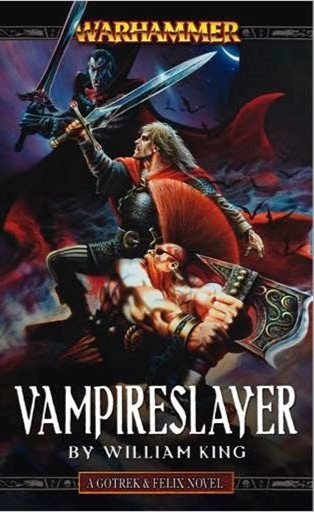
Vampireslayer Cover

Amazon     Book Depository

Throwback Thursday – Warhammer: Dragonslayer by William King

Dragonslayer Cover Combined

Publisher: Black Library (Paperback – November 2020)

Series: Gotrek and Felix – Book Four

Length: 271 pages

My Rating: 4.5 out of 5 stars

Amazon     Book Depository

For this week’s Throwback Thursday I check out another volume in the incredibly entertaining Gotrek and Felix Warhammer Fantasy series, Dragonslayer, by William King.

I have been having fun over the last year checking out several cool Warhammer 40,000 and Warhammer Fantasy tie-in novels, especially as all of them place great stories inside their respective elaborate extended universes.  Some of the most exciting and compelling of these Warhammer books have been part of the Gotrek and Felix series, which follows a doomed dwarven Slayer and his human companion as they face all manner of monsters and evils across the Warhammer Fantasy landscape.  I have so far had a lot of fun reading the first three books in this series, Trollslayer, Skavenslayer and Daemonslayer, all of which were some of the best pre-2021 releases I read this year.  I recently grabbed a couple more Gotrek and Felix novels second-hand, and I had a great time quickly reading the next entry in the series over the Christmas break, Dragonslayer, another fun and enjoyable read that has an action-packed narrative to it.

After their daring exploits in the Chaos Wastes, dwarf Slayer Gotrek Gurnisson and his rememberer, Felix Jaeger, return to the lands of Kislev in triumph, having rescued the survivors of a lost dwarven stronghold.  However, their victory is short lived, as danger begins to assail them the moment they return in the form of the skaven forces of their arch-enemy Grey Seer Thanquol.  Worse, their voyage has revealed a giant horde of Chaos warriors advancing towards the lands of Kislev, determined to bring destruction and death to all before them.

To warn the people of Kislev, Gotrek, Felix, and their companions travel by dwarf airship towards the capital.  However, their voyage is disrupted by an unnatural storm and an attack from a legendary dragon determined to rip them asunder.  Barely escaping with their lives, the adventurers find themselves stuck in the World’s Edge Mountains and forced to pull into the Slayer Keep of Karak Kadrin.  There they discover that the dragon that attacked them, Skjalandir, has been terrifying the mountains for months.  Determined to finally meet his mighty doom, Gotrek and his fellow Slayers head out to destroy the beast, accompanied by a reluctant Felix and their Kislev allies.  Beset on all sides by ravening orcs, desperate bandits, and a massive dragon of immense destructive potential, can even the legendary team of Gotrek and Felix survive, or will Gotrek finally find his longed-for death at the hands of the mightiest beast in the realm?

This was another very fun and intense novel from King, who once again provides the reader with an exciting and compelling dive into the Warhammer Fantasy universe.  Dragonslayer was a very good entry in the long-running Gotrek and Felix series, and I deeply enjoyed its cool and fast-paced narrative that sees the protagonists fight all manner of foes and dangers.  Filled with impressive monsters, a hilarious sense of humour and all manner of action, Dragonslayer was a fantastic read that I powered through in a few short days.

Just like all previous Gotrek and Felix novels, Dragonslayer starts off fast and never really slows down, as the various characters are thrust into one dangerous situation after another all the way up to the last page.  The first quarter of the book is firmly focussed on continuing the antagonist-centric storyline from Daemonslayer, with Grey Seer Thanquol’s planned attack from the last book finally coming to fruition.  This opening scene is pretty fun, even if it does feel a little disconnected from the following narrative, and I loved seeing more of enjoyable antagonist Thanquol.  Following this enjoyable first encounter, the protagonists head off on a new quest which is quickly detoured by an encounter with a dragon.  The dragon’s first big appearance is pretty devastating, and I loved how much of a threat this monster is made out to be, especially as the protagonists don’t come out unscathed.  The next section of the book is mostly devoted to character development and world building, as the protagonists prepare for their next adventure and gain some interesting new companions.  At the same time, Thanquol engages in another mostly unconnected storyline that sees him encounter and set up the dangerous Chaos horde that will be the major threat of the next novel.  The final third of the novel is primarily dedicated to the protagonist’s quest towards the dragon’s lair, where they encounter not only the beast but various other foes as well.  This leads up to some amazing battle sequences, the highlights of which include the deadly confrontation with the wounded and mutated dragon, and a fun full-on war scene between two forces determined to kill each other and the protagonists.  The book had an entertaining and exciting conclusion with a fun lead-in to the next novel, and I had a fantastic time getting through this brilliant and excellent read.

King has a great easy-to-read style that I really connect with in the Gotrek and Felix novels, which ensures that all fantasy fans can easily enjoy it, especially with the fast-paced narrative and crazy action scenes.  I like the author’s use of multiple character perspectives to tell a rich and impressive adventure story, and you get some fun alternate viewpoints and storylines as a result.  This is particularly apparent in the action sequences, as you see the various participants of the battle as they encounter the same foes or other narrators, and results in a much fuller and bloodier picture.  The action scenes themselves are great, filled with compelling fights that really get the blood pumping as the protagonists face off against a variety of foes.  While a couple of fights were a little shorter than I would have liked, King more than makes up for it with some of the big encounters, especially against the dragon.  I loved the two major dragon scenes, and King crafts some excellent and hard-hitting fight sequences against it, loaded with character deaths and intense brutality.  I also loved one fun final battle sequence that read like a pitched battle from the Warhammer Fantasy universe, Goblin Fanatics and Doom Diver catapults included.

Like most of the previous Gotrek and Felix books, Dragonslayer is pretty accessible to new readers, and there is no major requirement to check out any of the previous novels first, especially as King’s books tend to repeat certain elements from the preceding entries.  As such, unfamiliar readers can easily jump in here, although the Thanquol attack at the start of the books does come a little out of nowhere if you haven’t read Daemonslayer.  I would say that Dragonslayer did feel like a bit of a bridging novel in places, especially as it continued several plot points from Daemonslayer while also taking the time to set up a potentially bigger evil in the next book, but I still had a lot of fun with it.  I still really believe that the Gotrek and Felix novels are an excellent place for new Warhammer fans to start out, especially as they mostly read like classic fantasy novels rather than intense tie-in reads.  The readers get some great details about the extended Warhammer Fantasy universe here, and King expertly introduces several key locations while also featuring some of the more recognisable factions.  I really appreciate how King makes sure to reintroduce all these races in each of his novels, and it ensures that new readers can appreciate what is going on and why certain factions are acting the way they do.  This ended up being a particularly strong Gotrek and Felix entry, and I cannot wait to see what happens in this universe next.

Dragonslayer has a rather interesting cast headlined by the two central characters, Gotrek and Felix, who have another great adventure here.  Gotrek is his usual gruff self in this novel, and you don’t get a lot of development surrounding him in Dragonslayer, especially as King never shows his perspective, no doubt to highlight his secret past and the aura of unbreakable strength and confidence he gives off.  Felix, on the other hand, gets most of the plot’s attention, and it was fun to see him continue to grow as a character.  While he still has certain understandable apprehensions about the quests he follows Gotrek on, Felix has grown into quite a capable adventurer over the last few books, and it was fun to see him accompany his friend into near-certain death once again.  I enjoyed the intriguing storyline around his magical sword which was quietly introduced in the first book and which reaches its full potential here as a dragon-slaying item.  I also enjoyed the compelling examinations of Felix’s personality and resolve, especially when it comes to the oath he swore to Gotrex, as he is forced to make some big decisions here when faced with an alternate future.

Dragonslayer also features a fun supporting cast, including several intriguing characters from Daemonslayer who get an extended role here.  This includes Felix’s love interest (and the only significant female character), the Kislev noblewoman Ulrika, who ends up accompanying the main protagonists on their latest adventure.  Ulrika is an interesting character who I have mixed feelings about during the book.  While I did like how King featured a strong and complex female character (something lacking from some of his previous novels), I honestly could not stand the terrible romance that she has with Felix.  The two of them continuously bounce from being madly in love to hating each other over petty things, and it ends up getting annoyingly repetitive.  This terrible relationship made me hate Ulrika a little as the book progressed, and I kind of wanted her to get eaten by the dragon (in my defence, it would have made for a good dramatic moment).

Another character who got an expanded role in this book was the human wizard Max Schreiber, who becomes quite an intriguing addition to the plot.  Max becomes a key part of the team in this book, and his insight into magic and the wider events of the Warhammer Fantasy universe are great additions to the plot, helping to expand the reader’s knowledge.  At the same time, Max also comes across as a bit of a creeper due to his unrequited love of Ulrika, which causes him to do some stupid things.  You honestly start to worry that Max is going to do something sinister as the story continues, and I have no doubt that will become a major plot point in the future.

I also must quickly mention the mad dwarf engineer Malakai, who goes on a fun mission of vengeance here in this book to fight the dragon who crashed his beloved airship.  Malakai, who speaks with a Scottish brogue just to make him seem even wilder, is a deeply entertaining figure in this book, combining a Slayer’s death wish with a love of advanced weaponry.  It was so much fun to see this insane character advancing on his foes with explosives and giant guns, and I am still laughing about his cart-loaded gatling gun.

While there is a great focus on recurring characters, King also spend some time introducing several interesting new characters.  The best of these are the four new dwarf Slayer characters, Steg, Bjorni Bjornisson, Ulli Ullisson and Grimme, who accompany the protagonists on their quest to slay the dragon.  All four Slayers have diverse personalities, backgrounds and fun quirks that make them interesting in their own way.  King ends up doing a lot with these four characters in the 100 or so pages that they end up being featured, and there are some great story arcs drawn around them.  I quite enjoyed the compelling narrative around Ulli, a young dwarf forced to become a Slayer for his cowardice, especially as it had a good resolution.  I also must highlight Bjorni’s constant lewd stories and declarations, which add so many laughs to the book, especially as he makes some outrageous claims about his romantic conquests.  I did think he could have done a little more with the intriguing and incredibly taciturn Grimme, but overall these four characters were great additions to the plot and I look forward to seeing some of them again in the future.

The final characters I need to point out are the extremely amusing antagonist team of Grey Seer Thanquol and his minion Lurk Snitchtongue, two skaven characters who serve as secondary antagonists for Dragonslayer.  Thanquol and Lurk are really amusing characters who perfectly encapsulate the snivelling and duplicitous skaven race, with their constant talk of betrayal, self-gain and incompetence.  It is always so much fun seeing the two of them at it, and every one of their scenes is chock full of hilarious statements and continuous thoughts of treachery.  King adds in a very fun change to the dynamic between these two characters in Dragonslayer, with the previously small and deferential Lurk having been mutated into a massive beast, which gives him increased confidence.  This makes him strongly consider killing Thanquol several times throughout the book, and the two are constantly eyeing each other off.  This proves to be a hilarious addition to the plot, and I loved seeing Thanquol on the back foot with his minion after two books of pushing him around.  While they are not the most dangerous of villains at this point, they do make for an intriguing alternate viewpoint, especially as their storylines are mostly separate from that of the protagonists.  While they are a tad detached from the main narrative, their encounters and experiences add to the general tapestry of the series and help to set up the villains of the next Gotrek and Felix book.

With Dragonslayer by William King, the Gotrek and Felix books continue to impress me as one of the all-time best and most enjoyable Warhammer tie-in series.  I had an amazing time getting through this cool book, especially as it features all the best aspects of the series, including tons of fun action, great characters, and major Warhammer Fantasy settings.  Readers are guaranteed to have a blast with this book, and I loved every single second of danger, combat and dragon fighting Dragonslayer contained.  A fun and fantastic read, I look forward to checking out the rest of the books in this series, especially the fifth entry, Beastslayer.

Amazon     Book Depository

Throwback Thursday – Daemonslayer by William King

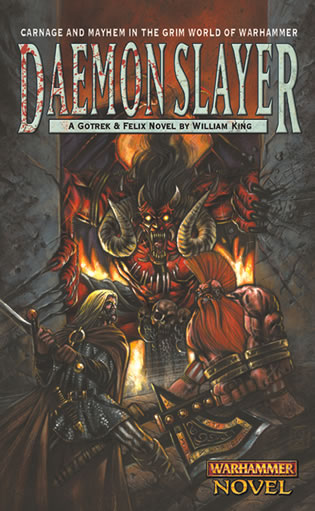
Daemonslayer Cover

Publisher: Black Library (Audiobook – October 2000)

Series: Gotrek and Felix – Book Three

Length: 9 hours and 38 minutes

My rating: 4.75 out of 5 stars

Amazon     Book Depository

Welcome back to my Throwback Thursday series, where I republish old reviews, review books I have read before or review older books I have only just had a chance to read.  For this Throwback Thursday, I am doing a bit of a double feature by reviewing two of the outstanding entries from the iconic Warhammer Fantasy franchise’s Gotrek and Felix series by the brilliant William King.  I have just published a review for the second book in the series, Skavenslayer, and, after some rapid audiobook listening, I have also pulled together a review for the third book, Daemonslayer.

After the epic conclusion of the battle of Nuln in Skavenslayer, Dwarf Slayer Gotrek Gurnisson receives a mysterious message and immediately sets out on the road, convinced that this missive may be the key to finding his much desired glorious death.  Accompanied as always by his companion, the former poet turned reluctant adventurer Felix Jaeger, Gotrek marches to the northern parts of the Empire to meet his destiny.

Arriving at their destination, Gotrek and Felix learn that a group of dwarfs are planning an expedition to find the lost dwarf stronghold of Karag Dum, and they want Gotrek to accompany them.  Destroyed in ages past, Karag Dum now lies in the middle of the Chaos Wastes, the most dangerous place in the entire world.  Wracked by the shifting winds of magic, marauding war bands, mutating warpstone and the foul essence of Chaos, no one can cross the Chaos Wastes and survive, and only death, madness or mutation awaits those who try.  However, expedition leader Borek Forkbeard has come up with an ambitious plan to fly over the Chaos Wastes in a giant, experimental airship, designed by an unstable engineer turned Slayer.

Determined to make up for previous failed attempt to reach Karag Dum, Gotrek agrees to accompany the expedition, with an inspired Felix accompanying him.  However, even with all the advantages that the airship provides, this will still be a perilous journey.  Many dangerous things lurk in the Chaos Wastes that will not hesitate to destroy the dwarven company for their dark gods.  At the same time, Gotrek and Felix’s old foe, Grey Seer Thanquol, plots from the shadows, determined to claim the airship for the Skaven cause.  But the very worst dangers will be found at Karag Dum.  A terrible foe lies within, waiting for revenge and determined to destroy all before him.  Can even the legendary Gotrek and Felix stand up to the wrath of a deadly Bloodthirster of Khorne, especially one who appears destined to kill Gotrek and destroy all who stand with him?

I am having so much fun getting through this cool series and I really wish I had checked it out many years ago.  Daemonslayer is another incredible read that continues the fantastic Gotrek and Felix adventures that started in Trollslayer and were continued in Skavenslayer.  William King has come up with a pretty intense story for this third entry in the series, and I loved the change in writing style featured within it.  An exciting and character-driven tale, this was easily the best entry in the series so far, and I deeply enjoyed the time I spent getting through it.

Daemonslayer contains an impressive and intense narrative that proves to be extremely addictive and a lot of fun to read.  Unlike the previous novels in the series, which featured a collection of short stories, Daemonslayer is actually a complete story with one continuous narrative.  This is an interesting change of pace, and one that I think works extremely well, especially as it cut down on some of the repetition that was an issue in Trollslayer and to a lesser extent in Skavenslayer.  King writes a fantastic story that quickly gets into the action and adventure as the protagonists embark on an epic and potentially lethal quest.  While not a collection of short stories, King does break the book up into several distinctive sections, each filled some unique plot points and antagonists.  These sections are pretty linear and flow into each other extremely well, resulting in a very cohesive and entertaining narrative.  Like the rest of the novels in the Gotrek and Felix series, readers do not need a lot of background knowledge about the Warhammer Fantasy world to enjoy this book.  While I would probably suggest reading Skavenslayer first, Daemonslayer can be read as a standalone book, and all readers are generally in for a good time with this novel.

The action and adventure flies pretty fast and thick throughout Daemonslayer, with highlights including a lengthy battle against an army of Skaven towards the start of the novel, exploration in the dark tunnels of Karag Dum and the final epic fight sequence against the hordes of Chaos.  King is particularly skilled at writing exciting and powerful battle sequences, and I loved how he managed to bring the uniqueness of a large-scale Warhammer battle to life.  Part of this is because the author makes great use of multiple character perspectives throughout Daemonslayer, which allows for a richer narrative as you get to see many different angles of the same story.  This works particularly well in the first battle against the Skaven, as you get to see Grey Seer Thanquol controlling his forces, as he desperately tries to kill Gotrek and Felix.  I did think that some of the Thanquol scenes in the second half of the novel were a bit weak, especially as they were more concerned with setting up his appearance in the next novel, Dragonslayer, than influencing the plot of Daemonslayer.  Still, these scenes were great, and you are always guaranteed a laugh when dealing with this ruthless Skaven.  While there is a noticeable focus on action and death, King also works in some fantastic comedy and humour, which makes this book an absolute treat to read.  I also appreciated how dark and emotional several scenes became, especially when the protagonists are faced with the grim realities of certain terrible situation.  All of this is worked into quite an impressive adventure story, which ends up being extremely addictive and enthralling to get through.

I loved the great use of setting throughout Daemonslayer, especially as King features some of the darkest and most dangerous locations in the entire Warhammer Fantasy canon.  The most notable of these is the notorious Chaos Wastes, a dark and dangerous wasteland, completely corrupted by the Chaos gods and filled with all manner of mutants, monsters, beastmen, worshipers of Chaos and Daemons, who gather and fight throughout the wastes.  While the Chaos Wastes are primarily shown from above, King makes sure to produce some gruesome and disturbing depictions of the landscape and its inhabitants, and it proves to be a pretty horrific backdrop for a good part of the story.  I do wish that a little more of the story had been spent on the ground within the Wastes, but it was probably a wise choice to avoid, as the story could easily become bogged down there.  I also really enjoyed the lost dwarf hold of Karag Dum, where the last third of the book takes place.  King was clearly drawing some inspirations from Tolkein’s Mines of Moria when he came up with this location (Moria is also known as Khazad-dûm), with hidden doors, ancient treasures, despoiling opponent, and a giant fiery demon boss.  The scenes set within this hold are pretty claustrophobic, and King makes sure to use the dark location to its full advantage during fight scenes.  You really get a sense of the decay and destruction that has occurred within this setting over the years, and it is pretty easy to feel the despair of the various dwarf characters.  Both these major settings are really impressive, and they prove to be an excellent and fitting backdrop to a very fun and intense story.

A major strength of this book is its characters, as King continues to produce a range of complex and distinctive figures to populate his tales.  This includes protagonists Gotrek and Felix, who find themselves on their most dangerous mission yet.  Felix continues to be used as the novel’s primary point-of-view character, and it is fascinating to see his continued evolution from cowardly fop to dangerous warrior.  Despite his continued caution and reluctance to engage in fights, Felix is now regarded by everyone as a heroic figure, and he accompanies Gotrek on this latest quest with only a minimum of forbearance, despite being given an out by his friend.  King has really hit his groove when it comes to portraying Felix, and the character reigns supreme as a sarcastic, but loyal friend.  I have really grown to like Felix, and readers will become pretty invested in his tale.

After being overlooked a bit in Skavenslayer, Gotrek has a lot more focus on him in Daemonslayer, as he re-visits one of his old failures and reunites with some of his dwarf kin.  For most of the novel, Gotrek is his usual gruff and battle-hardened self, still searching for his doom while managing to kill anything that he comes across.  While this is always a lot of fun, King makes sure to feature some deeper character elements in this novel, by highlighting some of his inner feelings and giving hints at his past.  There are several compelling mentions of Gotrek’s pre-Slayer life in this book, as well as some early hints at the character’s true destiny and the dark fate surrounding him.  King also shows a surprising amount of emotion in the character for this book, and Gotrek has some moving scenes with Felix as he contemplates the mistakes of his past and his many regrets.  I really enjoyed seeing how the character’s friendship with Felix has developed over the course of the last few books, and there is even a scene where Gotrek admits he is apprehensive about journeying to the Chaos Wastes and even lets Felix know he does not have to follow him.  While all this character development is great, King also makes sure to continue to portray Gotrek as an absolute badass in Daemonslayer, as he goes up against a ton of different enemies and opponents.  The various fight scenes with Gotrek are so much fun, although I do worry that King is perhaps making Gotrek a little too overpowered, especially as he manages to defeat a Bloodthirster, literally the most dangerous creature in the entire Warhammer canon (admittedly Felix helps a lot).  I still really love this great character and I cannot wait to see what other crazy adventures he goes on in the future.

Just like his previous books, King loads Daemonslayer up with a great range of supporting characters, and several of the characters introduced in this novel end up becoming major recurring figures in the Gotrek and Felix series.  Probably my favourite was Snorri Nosebiter, a fellow dwarf Slayer, who has had way too many blows to the head.  Snorri proves to be a fun companion to Gotrek and it was interesting to see a character who makes the titular protagonist seem sane in comparison.  There was also a fun character in Varek Varigsson, who is essentially the dwarf version of Felix, except with a range of explosive devices.  In addition, you cannot overlook the dwarf engineer turned Slayer, Malakai Makaisson, and I had a good chuckle when the characters discuss the fates of his previous, unfortunately named ships.  I also really liked that King reused two of his most entertaining characters from the previous novel, the Skavens Grey Seer Thanquol and Lurk Snitchtongue.  Both serve as secondary antagonists in the story, and prove to be excellent comic reliefs, especially as their schemes constantly go against them.  It looks like King has some fun plans for Snitchtonuge in the future, and I liked the fun changes he went through.

As I did for Skavenslayer, I really need to point out the extreme lack of female characters in this book.  Daemonslayer literally had only one named female character, Ulrika Magdova, who naturally falls in love with Felix the first time they lay eyes on each other.  While this is pretty lazy writing on King’s part, at least Ulrika is a much better written character than the females featured in Skavenslayer.  Ulrika is a badass Kislev fighter, who proves to be a dangerous fighter (of course, Felix has to be just a little bit better).  Still, I have a feeling she is going to be a bit of a damsel in distress in some of the future novels, and I hope that King balances it out with some additional female characters in the future.  Overall, there are some great characters featured throughout Daemonslayer and I look forward to seeing the ones who survive in some of the other Gotrek and Felix novels.

I ended up grabbing the audiobook format of Daemonslayer, narrated by Jonathan Keeble.  With a relatively short runtime of 9 hours and 38 minutes, the Daemonslayer audiobook is an easy audiobook to get through, and I managed to finish it off quickly.  The audiobook format proves to be a great way to enjoy this excellent book, especially as it allows the fantastic and chaotic landscape and characters to come to life in all their ghastly glory.  Keeble continues to impress as the narrator of this series, and I love the amazing array of voices he brings to the table.  Daemonslayer really highlights just how varied his voice can be as Keeble produces a substantial number of different accents and vocal tones to capture the rich and unique cast.  This includes Scottish-sounding dwarfs, Russian-esque Kislev lancers, humans with cultured British accents and the mad, loud voice of Snorri Nosebiter.  Keeble also has to voice the various inhuman monsters that the protagonists encounter, from the great Skaven characters, to the monstrous daemons and warriors of Chaos, all of which prove very fitting and amusing.  He also brings an immense amount of passion to his narration that deeply enhances the experience of anyone listening to the book.  The way in which he gets into the various fight sequences is amazing, and you can hear the sheer excitement in his voice as he reads.  This is especially true in the final epic fight scene, and the listener soon finds themselves on the edge of their seat as Keeble works his way up to the conclusion.  This is really an impressive and amazing format to enjoy Daemonslayer in, and I cannot recommend this audiobook enough.

Daemonslayer by William King is an exceptional and amazing entry in the fantastic Gotrek and Felix tie-in series.  This awesome novel contains an epic and intense story, as its two iconic protagonists continue to explore the dark and deadly Warhammer Fantasy world.  Filled with action, adventure, comedy and some dramatic character moments, Daemonslayer is an outstanding novel that comes highly recommended for all Warhammer fans.  I look forward to seeing how the rest of the series turns out and I am really enjoying my current jaunt into the world of Warhammer tie-in fiction.

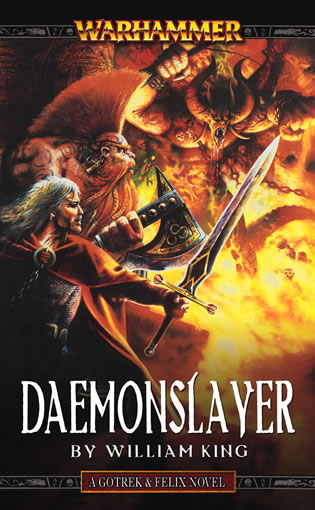
Daemonslayer 2 Cover

Amazon     Book Depository

Relentless by R. A. Salvatore

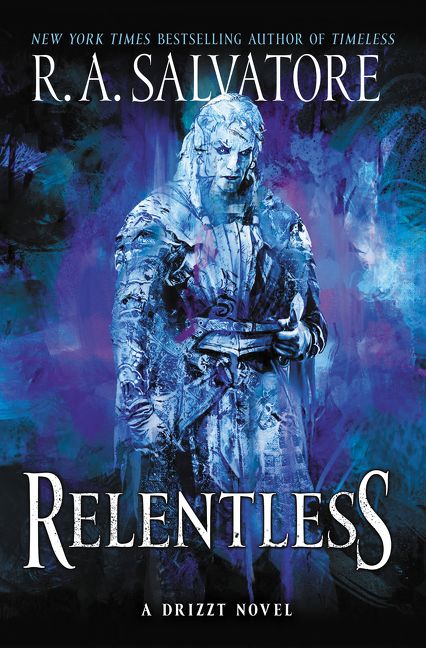
Relentless Cover

Publisher: Harper Audio (Audiobook – 28 July 2020)

Series: Generations – Book Three

Length: 15 hours and 9 minutes

My Rating: 4.5 out of 5 stars

Amazon     Book Depository

Legendary fantasy author R. A. Salvatore brings his latest trilogy of novels to an epic conclusion with his 2020 release, Relentless, the third and final book in the Generations trilogy.

War has once again come to the Forgotten Realms, as the Drow hordes of Menzoberranzan march to reclaim the soul of one of their own, the previously dead sword master Zaknafein Do’Urden.  Centuries ago, Zaknafein sacrificed his life to save his son, Drizzt Do’Urden, allowing him to become the greatest hero the lands had ever seen.  Thanks to the help of a mysterious Drow priestess, Zaknafein has been returned to life and finally reunited with his son.  However, their reunion has been far from perfect, as Zaknafein has trouble understanding some of his son’s choices, including his unusual companions and his marriage to a human.  Worse, Drow fanatics, utterly loyal to the dark god of Chaos, Loth the Spider Queen, have declared war on the surface, determined to capture and kill Zaknafein and Drizzt and everyone who stands with them.

A massive army of demons has invaded the dwarven kingdom of Gauntlgrym, trapping Zaknafein, the rogue Jarlaxle, Drizzt’s life-long friends and the legendary Companions of the Hall inside, while dark forces attack their allies on the surface.  At the same time, the massed armies of the Drow city of Menzoberranzan have been forced to war and now occupy the tunnels surrounding Gauntlgrym, cutting off any chance of escape.  However, all of this pales in comparison to the greatest tragedy that has occurred in the lands outside of Gauntlgrym, where a demonic device of great power tracked and disintegrated Drizzt as he tried to destroy the mechanical creature.

While things seem dire, the Companions of the Hall are far from defeated, and every man, dwarf, halfling and rogue dark elf is ready to fight.  As Zaknafein, Gauntlgrym’s dwarf king Bruenor and their allies attempt to hold back the hordes besieging them by any means possible, the barbarian warrior Wulfgar works to reclaim the city of Luskan with a small force of warriors.  As the battle begins in earnest, heroes will rise, empires will fall, and the world will change forever.  However, the fate of everyone involved in this battle may lay in Zaknafein’s secret history, as demons from his past come back to haunt him once again.

R. A. Salvatore has produced another incredible and wonderful fantasy read that takes several of his most iconic characters on a dark and dangerous journey. Salvatore is one of my favourite fantasy authors, having produced an immense and awesome collection of novels over the years. While he has written several series, such the novels set in his Corona universe (including his other 2020 release, Song of the Risen God), his main body of work is set within the shared Forgotten Realms fantasy universe and primarily follows the adventures of the Drow ranger Drizzt Do’Urden and his heroic companions.  Relentless is the third entry in the latest Drizzt Do’Urden trilogy of books, known as the Generations trilogy, which includes the preceding novels Timeless and Boundless.  This series continues the adventures of Drizzt and his companions, but features an intriguing new angle in the return of Drizzt’s father, who died in the 1990 novel, Homeland.  This has so far proven to be an impressive and exciting trilogy from Salvatore that contains an intriguing new narrative and pays homage to his earlier novels in the overarching series.  I have been looking forward to Relentless for some time, especially after the really cool cliffhanger that Salvatore featured at the end of Boundless.

In this latest book, Salvatore tells a complex and action-packed story that makes use of multiple character perspectives to tell an epic and exciting tale, especially after establishing so many excellent plot points in the previous two novels.  As he did in the other entries in this series, Salvatore features two distinct timelines throughout this impressive book.  Relentless is broken up into four separate parts (not including the prelude), with two of these parts set during in the universe’s modern era, depicting the current day battle for Gauntlgrym and the lives of the author’s beloved protagonist, while the other two parts of the novel are set deep in the past.  These two parts of the novel are set hundreds of years before the current events and follow Zaknafein, Jarlaxle and several other Drow characters during their younger days.  Both of these distinctive storylines have their own appeals, and I had a fantastic time reading both of them.

I probably enjoyed the prequel storylines the most, as I really enjoyed the deeper look at Zaknafein’s past and its intriguing implications on the events of Salvatore’s earlier books.  These prequel storylines are loaded with fantastic depictions of life in the chaotic and evil Drow city of Menzoberranzan, and it was extremely entertaining to see all the backstabbing, politics and brutal battles for supremacy that are a distinguishing feature of day-to-day Drow life.  These prequel storylines also contain some of the best action sequences in the book, mainly because they focus on the character of Zaknafein, the greatest sword fighter in the world, and Salvatore always portrays his epic fight sequences in intricate detail, capturing the sheer majesty of the character’s fighting ability.  I also quite enjoyed seeing more of the young, up-and-coming version of the Drow mercenary and conman, Jarlaxle, as he manipulates the entirety of the city, and all of his scenes are extremely fun.  This earlier storyline in Relentless is a great continuation of the other prequel storylines that appeared in the previous entries in the Generations trilogy, and I really enjoyed how this entire expanded storyline concludes.  It was fascinating to see how the events of Zaknafein’s past impacted the main storyline, and I felt that this was an outstanding addition to Relentless’s story.

While I did prefer the prequel storyline, the contemporary story contained within the other two parts of the book is still pretty epic in its own right, as it features a desperate fight for survival against the antagonists of the series.  Salvatore goes big for these parts of the book, featuring massive battles for supremacy, major character moments and some universe-changing twists and turns.  Like the prequel storyline, this main narrative thread flows on extremely well from the previous Generations books, and the author provides a satisfactory conclusion to the war which was set up in the last two novels.  The author more strongly utilises multiple character perspectives in these parts of the book, which I felt helped to tell a richer and more exciting story, especially as you got to see the action unfold from the eyes of many established characters.  A lot of the plot points established in the prequel storylines were masterfully exploited throughout these main parts of the book, and I think that the combination of time periods worked extremely well to create a powerful and memorable narrative.  The major events that occurred at the end of Relentless were rather interesting, and it looks like Salvatore has some intriguing plans for any future novels set in this universe.  Overall, this was an extremely enjoyable tale filled with some great action, well-established characters, and an incredible combination of compelling and varied storylines.

While I usually find all of Salvatore’s books to be extremely accessible to general fantasy fans who are unfamiliar with his prior works, Relentless is book probably best enjoyed by people who have read the rest of the entries in the Generations trilogy and who have some decent knowledge of the other Drizzt Do’Urden novels.  This is mainly because Relentless serves as the conclusion to the connected storylines established in Timeless and Boundless, and the story has gotten quite complex at this point, especially with the prequel storyline focusing on the young Zaknafein, which was carefully cultivated in the prior two novels.  While new readers can probably still follow and enjoy Relentless, fans of Salvatore’s work are going to be the ones who get the most out of it, especially as this latest book ties into some of the author’s earliest works.  For example, the prequel storyline has some extremely strong connections to one of the author’s earliest books, Homeland.  The Generations trilogy’s past-based storyline has primarily served as a compelling prequel to Homeland, and this latest book contains several scenes that shed new light on this previous book.  Indeed, some of the best scenes in Relentless serve as a direct precursor to key events of Homeland or provide alternate viewpoints to them, allowing for some fascinating new context and information.  I personally have always had a lot of love for Homeland, which is one of Salvatore’s best novels, and I really appreciated seeing this new take on the plot.  As a result, this is a must-read for fans of Salvatore’s fantastic series and readers are in for a real treat.

Another great part of this book were the excellent characters featured throughout the various time periods.  As has been the case with the other books in the Generations trilogy, much of the character development revolves around Zaknafein, as both time periods have a fascinating focus on him.  Salvatore continues to explore various parts of Zaknafein’s character throughout Relentless, both in the past and present, and it was great to see how he has evolved throughout the course of the trilogy.  I particularly enjoyed seeing Zaknafein’s development in the prequel storyline, especially as you get several extra scenes discussing Zaknafein’s conflicted feelings when Drizzt was born.  Salvatore spends a lot of time establishing how Zaknafein became the person who would eventually sacrifice his own life for his son, and it was great to see this whole new side of this iconic and fantastic character.

Several other characters featured throughout Relentless really stood out to me.  Foremost of these is of course the rogue Drow criminal and conman, Jarlaxle, who is a prominent character in both timelines.  Jarlaxle is so much fun to see in action, whether he is manipulating someone or getting involved in a fight with his fantastic arsenal of insane magical weapons and tools.  Drizzt, who is nominally the main character of this trilogy, and indeed most of Salvatore’s Forgotten Realms novels, was notably absent throughout this book, having been disintegrated at the end of Boundless.  Salvatore works his apparent death into the story extremely well, creating some emotionally deep moments as his friends mourn his passing and try to work out how to move on.  I think that Salvatore utilised his absence from the story to full effect, especially as it allowed other characters to have their moment to shine.  Drizzt’s eventual resurrection, which was so predictable it is not even really a spoiler, was set up beautifully and I really liked how it tied into some of the more mystical events of some previous Salvatore novels.  Aside from these Drow characters, the rest of the Companions of the Hall have major moments throughout Relentless, and each of them has a key storyline set around them.  Bruenor, Wulfgar, Regis, Catti-brie, Artemis Enteri and more are all utilised throughout the story, and it was great to see all of them in action.  Salvatore also focuses on several other side characters who have appeared in prior novels, and there are some notable storylines and character arcs scatter amongst them that will no doubt bear fruit in future Drizzt Do’Urden novels.  Overall, Relentless continues Salvatore’s exceptional character work, and it was fantastic to see all these complex personalities come to life.

Rather than grab a physical copy of Relentless I ended up getting this cool fantasy novel on audiobook, which was a fantastic way to enjoy Salvatore’s latest release.  The audiobook format of Relentless has a run time of just over 15 hours, which, while fairly substantial for an audiobook, is easy enough to get through once you become engrossed in the excellent narrative and is definitely worth the time investment.  I really enjoyed listening to this great book and I found that it was the perfect way to absorb all the unique fantasy elements and Salvatore’s intriguing twists.  Part of the reason why I enjoyed this format so much was the excellent voice work from narrator Victor Bevine.  Bevine is a veteran audiobook narrator who has provided his vocal talents to a huge number of Salvatore’s previous novels, including the other two entries in the Generations trilogy.  It is cool having the continuity of Bevine’s voice after enjoying so many Salvatore audiobooks, and I really enjoy the tone that he uses for this story.  Bevine moves Relentless along at a quick pace, and the listener never finds themselves stuck in a slow part of the novel.  I also quite enjoyed the excellent voices that Bevine utilised throughout the book.  Not only did these voices perfectly fit the characters they were assigned to, helping to bring them to life, but I loved all the fun accents he used for the various races featured within the book, such as the Scottish brogue that each dwarven character had.  All of this really enhanced my enjoyment of Relentless and this is a fantastic novel to check out on audiobook.

Relentless is another exceptional and epic read from the master of fantasy fiction, R. A. Salvatore, as he wraps up another amazing trilogy with a remarkable and memorable bang.  Salvatore remains at the top of his game for Relentless, providing the reader with a complex, multifaceted storyline, studded with intense action, fantastic characters and some really clever story elements.  I had an outstanding time reading this awesome book and I cannot wait to see what magic and mayhem Salvatore comes up with in his next captivating read.  Highly recommended.

Amazon     Book Depository

Timeless by R. A. Salvatore

Timeless Cover.jpg

Publisher: Harper Voyager

Publication Date – 4 September 2018

Amazon     Book Depository

From one of fantasy’s most legendary writers, R. A. Salvatore, comes another electrifying adventure of swords and steel, as Salvatore once again presents a thrilling tale of his iconic protagonist, the dark elf Drizzt Do’Urden.

Centuries ago, the city of Menzoberranzan gave birth to a drow whose talents with the blade were unsurpassed by any other practitioner.  This drow’s name was Zaknafein.  Desired by an ambitious noble house and its twisted Matron, Malice, Zaknafein would become a pawn in the battle of intrigue and positioning that have eternally plagued Menzoberranzan.  His only relief from his arduous life was his friendship with the young mercenary Jarlaxle.

Years later, a young Drizzt Do’Urden fled the city and the violent ways of his people.  However, his escape was only capable thanks to the twofold sacrifice of his father, Zaknafein, who not only allowed himself to be sacrificed to the dark goddess Lolth but also willed his resurrected body to its absolute destruction in order to stop its hunt for Drizzt in the catacombs of the Underdark.  Not only was Zaknafein his father; he was also the man responsible for Drizzt’s moral code and, most importantly, the man who taught Drizzt how to fight, turning him into the most skilled sword wielder in all of Faerun.

But now, after years of Drizzt’s adventures on the surface world, something truly amazing has happened: Zaknafein has been returned to life and has found his way to the surface world.  No-one is certain how he has been resurrected or why, but Zaknafein is determined to be reunited with his son, even if he has changed far more than he could ever imagine.

The world has also changed in the last few years.  The Sword Coast is undergoing a period of rare peace.  The dwarves, led by Drizzt’s friend King Bruenor Battlehammer, rule in Gauntlgrym, while the city of Luskan is secretly ruled by Jarlaxle and his mercenary band, Bregan D’aerthe.  With their territories connected by magical gates, Bruenor, Jarlaxle and the halfling community of Bleeding Vines have formed an alliance, ensuring the security of the realm.  However, the ambitious and greedy Lord Neverember, ruler of Neverwinter, is a constant thorn in their side as he plots to steal power from the lands around him.  While usually only a minor nuisance, Neverember has been making deals with a mysterious noble house of Waterdeep and a minor dwarven clan for vast sums of money.  As the allies investigate further, they uncover the start of a destructive demonic conspiracy that could destroy all they have built.  What foul plans are being hatched, and what will happen with Drizzt and Zaknafein find themselves in the middle of a demon stronghold?

R. A. Salvatore is one of the most experienced and enduring authors of fantasy fiction in the world today. Having written more than 60 fantasy books since his 1988 debut, Salvatore has created a number of worlds and characters across his career, from his 12 books in the Corona universe, which includes the 2018 release Child of a Mad God, to his Chronicles of Ynis Aielle trilogy, The Crimson Shadow series, The Cleric Quintet and The Spearwielder’s Tale trilogy. Salvatore is also somewhat infamously known for his foray into Star Wars fiction, with his 1999 release, Vector Prime, which saw the canonical death of Chewbacca in the original expanded universe, a decision that has since been retconned following the Disney acquisition of the franchise.  However, his most iconic and popular books would have to be his long-running series that follows the adventures of the dark elf Drizzt Do’Urden.

The character of Drizzt Do’Urden was first introduced in Salvatore’s debut novel, The Crystal Shard, which is also the first book in The Icewind Dale trilogy.  The Icewind Dale trilogy is set within the Forgotten Realms universe, a large-scale interconnected collection of fantasy books from a range of different authors, all set within the titular Forgotten Realms, a spinoff location of the Dungeons & Dragons roleplaying franchise.  The Icewind Dale trilogy featured a band of powerful characters including Drizzt, the dwarf chieftain Bruenor Battlehammer, the barbarian warrior Wulfgar, the halfling thief Regis and Bruenor’s adopted human daughter, Catti-brie.  While these characters all had their own adventures within this series, it was clear that Salvatore had intended to focus his series on Wulfgar and make him the main protagonist.

However, the character of Drizzt proved to be particularly popular with the fans.  A large amount of this may be a result of the characters anomalous nature, as not only is Drizzt a dark elf living above the surface, but he was one of the few good dark elves in fantasy fiction at that point in time.  The dark elves, also known as the drow, are a race of dark-skinned elves who live in the Underdark, the dark catacombs that lie under the continent of Faerun, in the world of Abeir-Toril.  In the Forgotten Realms universe, dark elves are generally an evil and self-serving race who consider themselves superior to the other races in the Forgotten Realms and often conduct destructive raids against the surface world.  As a result of this popularity, Salvatore chose to focus on Drizzt more and more as his series progressed.  This included establishing the character as one of the greatest practitioners of the sword in the Forgotten Realms, as well as introducing an equally matched adversary, Artemis Entreri.

This focus on Drizzt continued into Salvatore’s second Forgotten Realms series, The Dark Elf trilogy, which was a prequel series to The Icewind Dale trilogy.  The Dark Elf trilogy focused on the birth of Drizzt in the dark elf city of Menzoberranzan, a female-led society dedicated to the worship of the demonic spider god Lolth.  While this is where Drizzt was raised and first learnt how to wield his iconic dual blades, the character of Drizzt never fit in, except with his father Zaknafein, who tried to teach him that the dark elves, especially those dedicated to the worship of Lolth, were evil.  Drizzt would escape Menzoberranzan at the end of the first book in the trilogy, Homeland, and spend the next two books exploring the world outside the city, eventually coming to the surface and finding his home in the Icewind Dale.  Since then, Drizzt and his companions have undergone a number of adventures both above and below the surface of Faerun, with numerous changes impacting these protagonists.  Timeless is the 34th book to feature Drizzt or his companions, and is one of the few ongoing series still being produced in the Forgotten Realms universe.

Timeless is the first book in Salvatore’s new Noname trilogy, and while the series is invariably going to focus on Drizzt, this first book mostly takes a look at the returning Zaknafein.  As a result, the majority of the story is set in the current chronology of Salvatore’s universe and sees Zaknafein attempting to find his place in the new world he has returned to, while also exploring a new threat to the Companions of the Hall (Drizzt and his friends).  There is also a second timeline that is set many years before the events of Homeland and focuses on the early life of Zaknafein.  While both storylines are enjoyable, I found myself drawn more to the prequel storyline, which focused more on the elaborate and exciting intrigues of the drow and how Zaknafein and Jarlaxle became the drow we all came to know and love.  The contemporary storyline is mostly focused on the reuniting of Zaknafein and Drizzt after their many years apart, both in and out of text.  Their emotional reunion forms the heart of this storyline, while Zaknafein’s exploration of this new world he finds himself in is an intriguing part of the book.  A side effect of this is that some of the longstanding characters, such as Wulfgar and Bruenor, have a reduced role in the book.  While I hope they feature more later in this trilogy, I felt the story was able to survive without them.  This book also spends a lot of time setting up the storyline and threats that will form the focus of this new series.  To that end, Salvatore has done an incredible job, creating several intriguing storylines that readers will enjoy following in future books and presenting the protagonists with a number of potential threats for the series.  However, Salvatore has also ensured that the reader will be hit with some severe emotional gut-punches in this first instalment, ensuring that they are dragged into the next book in this trilogy.  I enjoyed going back and forth between these two separate storylines.  Each of these storylines complemented the other one perfectly and highlighted the character of Zaknafein in more detail.

While The Icewind Dale trilogy and the series that followed it are excellent pieces of fantasy fiction, my favourite Drizzt Do’Urden series has always been The Dark Elf trilogy, which I consider one of the best origin story arcs in all of fantasy fiction.  As a result, I was always going to enjoy any novel tied to this prequel trilogy.  Timeless contains a number of call-backs to this original trilogy and works to provide the reader with some interesting and unexplored backstory for the great character of Zaknafein, including how he became associated with the house of Do’Urden.  It also shows the formation of his distinctive character traits, such as his sense of mercy, his hatred of the female dark elves who enslaved him and his intense rebellion against the drow’s patron goddess, Lolth.  Some of the most emotional parts of this original trilogy revolved around Drizzt and Zaknafein as they attempted to escape from the harsh landscape of Menzoberranzan and Zaknafein’s eventual sacrifices to save his son from Lolth’s evil grasp.  Therefore it was amazing to see the two of them finally reunite after all these years in the most appropriate manner possible: a duel.  Watching Drizzt slowly realise that the person fighting against him is actually his long lost father is incredible and something that I really enjoyed.

It was also a lot of fun to see the earlier days of one of my favourite characters, Jarlaxle.  Jarlaxle is a flamboyant and deceptively cunning drow mercenary who is one of the most compelling characters in Salvatore’s books.  The character was first introduced in the second book of The Dark Elf trilogy, Exile, and quickly revealed himself to be a very memorable character.  Salvatore utilised him in a number of his follow-up series, and even gave him his own trilogy with Artemis Entreri.  I was therefore very happy to see him in both timelines of Timeless, as it provides the reader with some great entertainment as well as answering some interesting questions, like how he came up with his distinctive look.  His bromance with Zaknafein was another fun part of both storylines, and I liked seeing the previous connection these two great characters had with each other.  Overall, fans of Salvatore’s preceding books, especially The Dark Elf trilogy will love Timeless and become engrossed in seeing one of the most impactful characters in Drizzt’s life return after more than 20 years and 30 books.

As you would expect from a novel about Drizzt Do’Urden and Zaknafein, two of the most pumped-up sword users in all of fantasy fiction, there is an absolute ton of action and swordplay in this book.  Throughout the course of Timeless, the father and son duo engage in a number of exciting battles and extravagant duels as they face off against a variety of different foes in both of the book’s timelines.  There is so much going on in this book for readers to enjoy, from battles against demonic foes to Zaknafein and Jarlaxle taking on the most devious of drow opponents they can find in the prequel timeline.  The halfling Regis, who is generally one of the most entertaining characters in Salvatore’s books, also has an amazing sequence as he infiltrates a hidden vault, using a combination of alchemy, daring do and the well-honed thieves’ instincts and skills he has been displaying since The Crystal Shard.  Jarlaxle also steals any fight scene he is involved with, using his various magical devices and hidden weapons to cause all manner of chaos against his opponents, resulting in some of the most entertaining parts of the books.

However, easily the best action sequences have to be the duels between Drizzt and Zaknafein.  These two blade masters are generally regarded as the two best fighters in all of the Forgotten Realms and have not faced each other since the early 1990s.  As a result, Salvatore presents several highly detailed duels between the father and son.  These duels are written in incredible detail and Salvatore does a fantastic job highlighting the speed, intensity and skill that these two combatants have as they battle against each other in scenes which hark back to their original amazing duels in Homeland.  Ultimately, Salvatore is once again able to capture the magic that these two combatants had in their original appearances and their fights take on a completely new edge with the emotional intensity of these characters’ reunion.

Salvatore has once again provided his readers with an exhilarating adventure that pits the monsters and villains of the Forgotten Realms against your favourite fantasy heroes.  This is definitely a book that will have the most impact for existing fans of Salvatore’s Forgotten Realms novels, and as such I really enjoyed Timeless.  While newer readers may have a little trouble following the plot after 34 books worth of backstory (39 if you include The Cleric Quintet), Salvatore’s writing will ensure they get an electrifying adventure that will encourage them to look back at the original books in this series.  An outstanding fantasy adventure from one of the best writers in the business, this is fantastic read that is well worth checking out.

My Rating:

Four and a half stars

Amazon     Book Depository