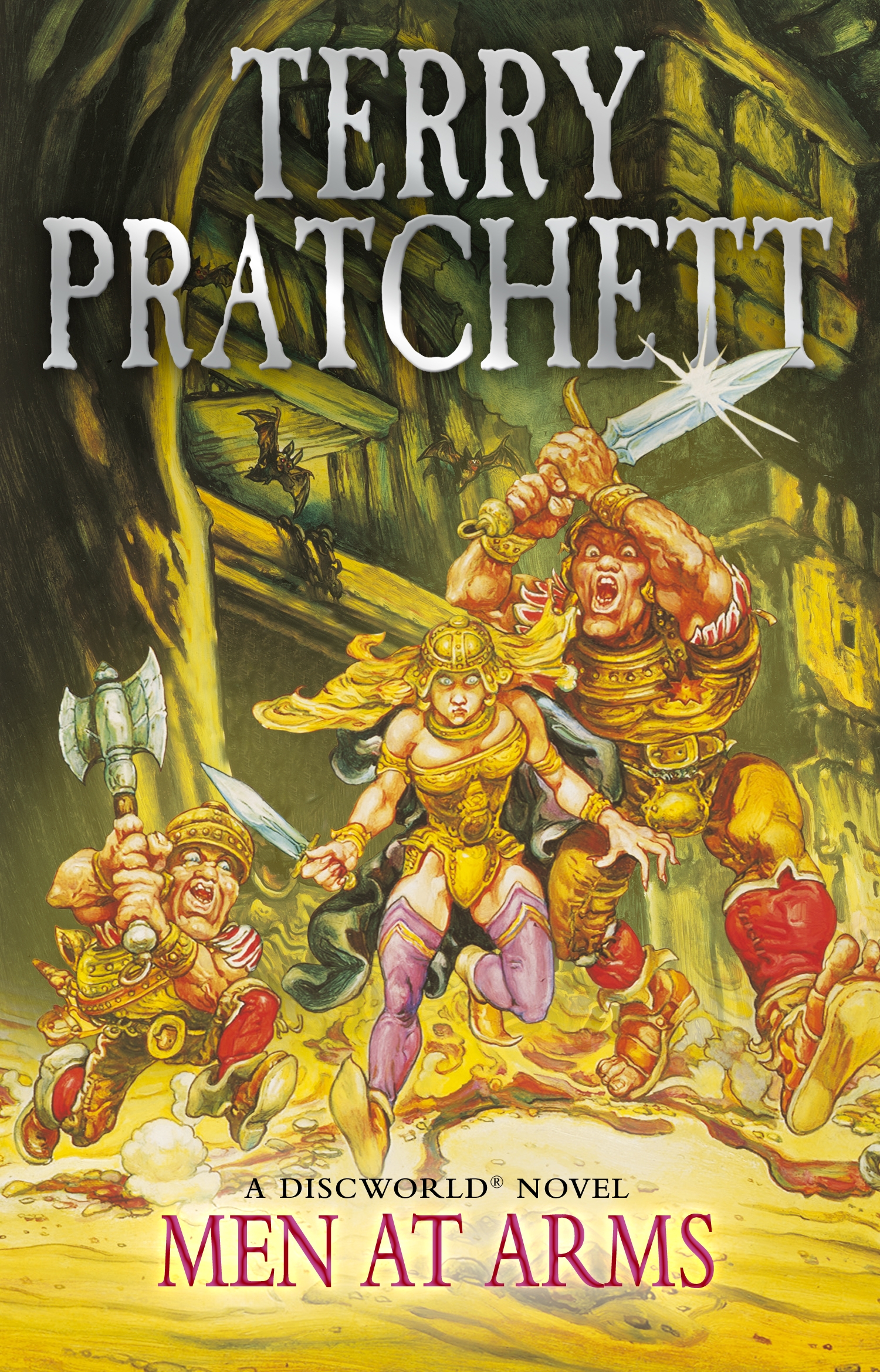
Men at Arms by Terry Pratchett

Publisher: Gollancz/Penguin Random (Audiobook – 1993)

Series: Discworld – Book 15/City Watch – Book Two

Length: 12 hours and 58 minutes

My Rating: 5 out of 5 stars

Amazon

After yet another re-read, the classic fantasy satire novel, Men at Arms remains as one of my favourite Discworld novels by the late, great Terry Pratchett, especially as its new audiobook version breaths fresh life into the always impressive novel.

Readers of this blog will have noticed that I have been on a real Discworld rampage lately, having re-read several books from my absolute favourite fantasy series.  Much of this is due to the recent release of a cool new audiobook version of all the Discworld books, featuring an awesome array of new narrators and vocal talents.  This new format has proven particularly awesome for books like Pyramids, Moving Pictures and Small Gods, and I have been eager to see how some of the books in my favourite Discworld sub-series, the City Watch books, come across with the new narrators.

While I have a lot of love for all the books in Terry Pratchett’s Discworld, my absolute favourites come from the City Watch sub-series.  Following the unlikely members of the Ankh-Morpork City Watch, a rag-tag team of guards generally looked down upon by the entire city, the City Watch books features an exceptional combination of fantasy and crime fiction elements, wrapped up in Pratchett’s usual satirical humour, as the protagonists investigate a series of dastardly crimes in the supernatural Discworld.  The series started perfectly with the awesome novel Guards! Guards!, which I reviewed last year, and Pratchett did an outstanding job following this up with the brilliant sequel, Men at Arms.

After saving the sprawling and eternally crime-ridden city of Ankh-Morpork from a fire-breathing dragon, the men of the Night Watch are still at work protecting the city, even though most of the city wishes they didn’t exist.  Despite their previous escapades, it’s a bad time to be a copper in Ankh-Morpork, with species tension between the dwarfs and the trolls at boiling point, while the powerful guilds disregard the Watch’s non-existent authority.  Worse, the Night Watch has been forced to accept three diversity hires, and must now contend with a mad dwarf, a thick troll and a woman (gasp) amongst their ranks.

Despite this, when an explosion at the Assassin’s Guild literally rocks the city, it falls to Captain Samuel Vimes and his small squad to investigate the heist hidden by the blast, despite the deliberate orders of the city’s tyrannical ruler to stop.  Determined to wrap up the case before his impending marriage and retirement, Vimes is soon forced to contend with a series of unusual, but seemingly linked murders, many of which have been caused by a lethal weapon never seen on the Disc.

With riots on the streets, and assassins and fools dodging their questions, all the members of the watch, including their contentious recruits, will need to work together to solve the murders before the city descends into chaos.  But how will they fare when going up against the most dangerous criminal mind the city has ever seen, one determined to bring back the Ankh-Morpork’s ancient kings, while wielding a dangerous new weapon that could change the entire Disc forever?

Even after many, many re-reads, Men at Arms continues to shine as one of Pratchett’s better books.  Featuring an epic crime fiction narrative, loaded with impressive characters, fantastic humour and great use of Pratchett’s iconic Discworld setting, Men at Arms is a complex, emotionally charged and deeply moving read that I could honestly read 100 times and still not get bored with.  A brilliant novel that unsurprisingly gets an instant five-star rating from me.

Pratchett wrote some exceptional narratives throughout his career, but few stand up to Men at Arms in terms of complexity, cleverness and emotional impact.  Expertly reintroducing the cast of Guards! Guards!, while also bringing in some impressive new support characters, Men at Arms starts off an excellent pace, as Pratchett cleverly examines the changes to the characters, sets up the new case, while also showcasing the motivations of the apparent main antagonist.  From there, it doesn’t take long for a dark series of crimes to take place, with Vimes and his squad investigating despite the apathy of the rest of the city.  Pratchett does a lot of excellent set up in the early part of the book, and the reader soon becomes invested in the investigation, especially as the book begins to follow a series of deaths, some of which were caused by a particularly deadly weapon that modern readers will be all-too familiar with.  Some great character arcs are also introduced here, as the extended cast all hit their own various problems they are forced to overcome, with Vimes dreading his eventual retirement, Carrot feeling the added responsibility, the fun buddy-cop arc between Detritus and Cuddy, and Angua dealing with her own problems.  The author sets up and expands on these arcs throughout the book perfectly, providing additional emotional impact, as well as some interesting side angles on the main storyline.

While the first half of the novel sets everything up perfectly, it is in its second half where Men at Arms truly shines.  Pratchett keeps raising the stakes of the story, with more victims, run-ins with the shadowy antagonist, and the Watch characters attempting to understand the nature of the weapon that has been turned against the city.  The author throws in some interesting wrinkles to the case, which shadow who the true villain is, while other events throw emotional shade across several of the characters.  The various connected character arcs start to come together perfectly as the book continues, and you go into the final stretch with a range of emotions around you.  While ostensibly a comedy, Pratchett chooses to hit the tragedy element of the plot really hard in the lead up to the finale, with some big moments that will leave you speechless.  The big end reveal and confrontation is exceptional, and I loved how well all the storylines and cleverly setup plot points came together.  Everything leads up to a very desperate struggle that helps to define some of the main characters in some very powerful ways.  Pratchett chooses to leave the book on a hopeful note that sets the expanded course for the future City Watch books, while also providing some interesting insights into one of the main characters and his role in the city.  An overall epic narrative that twists, turns and keeps you guessing, while constantly entertaining and emotionally charged.

As with his other books, Pratchett perfectly sets out Men at Arms with impeccable writing, and I loved how this complex novel came about.  Featuring his usual impressive blend of fantasy and humour elements at its base, Men at Arms is both intriguing and quite funny in equal measures, and I love the subtle comedy that runs through it.  Many of these scenarios involve classic fantasy scenarios being seen through the eyes of self-aware characters, allowing the situation to be taken up to an 11, with sarcastic commentary from the witnesses.  This humour is well enhanced by several of its best characters, including a fantastic new buddy cop routine, with members of two separate and historically antagonistic species forced to work together and eventually becoming friends.  Some of the other hilarious moments in the book include unlikely members of the city’s population being conscripted into the Watch, unfunny clowns, unconventional investigation methods, and other subtle humour.  You also have to love the brilliant footnotes that seek to enhance the story and showcase just how ridiculous the Discworld is by providing additional details about the universe and the people within it.  All this results in a brilliant and highly entertaining fantasy read, and that’s before you even get to the great crime fiction elements of the story.

As with Guards! Guards!, Men at Arms stands out from the rest of the Discworld series due to the way that Pratchett provides a complex and compelling crime fiction narrative.  Focused on an explosive heist that eventually results in a series of brutal murders, Men at Arms tries to envision how firearms would disrupt the Discworld.  This allows for quite a captivating crime fiction narrative, which I feel was a much better mystery than Guards! Guards!.  Advancing more into police procedural territory than its predecessor, the mystery of Men at Arms proves to be top rate, with the protagonists going after an already known villain for much of the book.  Much of the early story involves the protagonists trying to unfurl the antagonist’s plan and discover how he committed the crime, which allows for some great scenes as the Watch inexpertly investigate.  Pratchett cleverly twists the fact that think you know who the antagonist is towards the end of the book, and I love how well he switched this key story element, especially as the implied true villain of the story is far more sinister than just evil humans.  I really enjoyed how well Pratchett sets up this mystery in Men at Arms, and even after so many re-reads there are still additional subtle clues and foreshadowing that I’m only just picking up on.  The police procedural elements of the story are also extremely well handled, with a lot of humour focused around three very unlikely recruits joining the already scruffy outsiders who make up the Watch.  All these elements come together extremely perfectly and allow for readers of various genres to come into Men at Arms and have an incredible time.

Due to Pratchett’s excellent writing style, Men at Arms does work quite well as a standalone novel, and new readers can generally enjoy this book without any prior knowledge of the Discworld series, especially once they get caught up in the cool story and amazing humour.  However, I do feel that to get the best experience with Men at Arms, readers really do need to have checked out Guards! Guards! first.  The continuing storylines, history of the city and character arcs all come into play extremely well in Men at Arms, and you get a much more complete experience viewing all City Watch novels in order.  There is also a continuation of some character arcs from the standalone novel, Moving Pictures, especially as a few major characters from there get a recurring role in this new sub-series.  As such, I would say that Men at Arms is a novel more aimed towards Pratchett’s established fans, with those who loved Guards! Guards! guaranteed to enjoy its impressive sequel and the compelling direction Pratchett starts to take the City Watch books in.  It helps that the author continued to explore the crumbling and crime-ridden city that is Ankh-Morpork in this Men at Arms, providing even more details about its governance, mindset and people.  This includes really expanding on the species tension between the dwarfs and trolls and showcasing it as a major plot point while also paralleling real-life racial tensions.  This focus on dwarf and troll conflict becomes a major plot point of the Discworld going forward (especially in the later City Watch books), and its setup here was spectacular.  Combine that with the changes that happen to the Watch at the end of the book, and Men at Arms is an important entry in the wider Discworld context, especially as so many key City Watch storylines start here.

While there are so many amazing writing elements to Men at Arms, few things top the exceptional character work that ensured that this novel was far more than just a funny fantasy novel with crime fiction elements.  Instead, the complex and heartfelt dives into its extensive main cast ensured that Men at Arms was one of the more powerful and emotionally charged entries in the Discworld (a very impressive feat).  The combination of returning protagonists from previous books, as well as a few outstanding new characters, allows for a range of different plot perspectives and personal storylines, and Pratchett effortlessly works to make you invested in all these character arcs before hitting you with intense tragedy and powerful moments.

At the centre of the plot lies main character Captain Samuel Vimes, the cynical veteran leader of the Night Watch, who has finally found happiness and romance in his life.  Now on course to retire and become a man of leisure, Vimes must deal with the horror of becoming the thing he hates most: a rich civilian.  Dealing with it by diving into one last investigation, Vimes finds himself facing everything he hates about his job, including bureaucracy and the whims of powerful people, resulting in some brilliantly chaotic scenes.  While it does seem that Vimes’s role in this story is slightly diminished compared to in other City Watch books, especially in the centre, he is still a major part of the book, and Pratchett writes some excellent storylines around him being the dogged and worn-down investigator pushing against authority and trying to solve one more crime.  The focus on his identity as a copper, the sacrifices he makes for his fellow officers, as well as the horror at having to give up the job are major parts of his character arc, and there are some truly heartbreaking moments when he realises he must give it all up.  This is well balanced with his heartwarming romance with his unlikely partner, Lady Sybil Ramkin, whose well-meaning support and determination help to make Vimes a better person.  However, it is the major sequence when Vimes finally encounters the antagonist which really provides the best look at the character.  Forced to decide between being a good cop or a figure of vengeance (a battle that rears its ugly head for Vimes many times during the series), Vimes truly hits his mental and moral limit as he faces down his adversary, and it is one of the most powerful scenes in the entire Discworld series.

While Vimes is the main character of the City Watch series, the focus of Men at Arms is a little more skewed more towards Corporal Carrot Ironfoundersson, as Pratchett expands on his excellent introduction in Guards! Guards!.  Now firmly a part of Ankh-Morpork society, Carrot has evolved from naïve newcomer to a seasoned police officer who knows literally everyone in the city.  Fully utilising his natural charisma, Carrot proves to be a major force for law and order in the city.  I loved how much Pratchett enhanced Carrot in this sequel, as his personality evolves due to his role and responsibility, and despite still appearing quite naïve and obedient, Carrot showcases some impressive intelligence driving much of the investigation.  I especially appreciated the various scenes where Carrot managed to outfox many of the city’s more dangerous figures who fall for the dumb copper routine.  Despite his new confidence and ability to bring out loyalty in others, Pratchett makes sure to show that Carrot isn’t infallible, and you see some vulnerability at times. Carrot also serves as the moral centre of the book, bringing out the best in the other members of the Watch.  His interactions with Vimes in the final confrontation were very heartfelt, especially as he keeps the man he admires most from doing the wrong thing, while the way he handles the antagonists goes to show that he is truly a good man, who you better pray you never face.  I also think that his talk with Vetinari at the end of the book was one of the best scenes in Men at Arms, especially as he truly surprises the Patrician, while also dancing around the tricky subject of Carrot’s potential position as heir to the throne.  His decision to refuse power and ensure that Vimes will be there instead really helps you keep faith in the good of people, and this was frankly Carrot’s best book.

I also have to highlight the fantastic and fun duo that was the newly instated watchmen, Cuddy and Detritus, the later of whom previously appeared in Moving Pictures.  An unusual dwarf and the thickest of trolls, the two make for a particularly unlikely and chaotic duo, which Pratchett uses to full effect as the book continues.  Thanks to the enmity that exists between their respective species, Cuddy and Detritus spend much of the early part of Men at Arms bickering with each other, including in one scene in the middle of a riot.  However, after being forced to work together, the two form a grudging bond, especially when Cuddy stops seeing Detritus as a dumb troll.  I loved how well Pratchett took the classic odd-couple police partner trope and twisted it around the compelling species-rivalry theme of the book, and the fun dynamic that forms between the new friends is a major highlight of the book.  The various sequences that follow the big scene that defines these two partners are some of the most powerful in the entire Discworld.

Following on the heels of Cuddy and Detritus is Angua, the other new recruit to the Night Watch.  Angua is an interesting figure in the story, mainly because she’s one of the few people able to see how ridiculous the entire Night Watch is.  The subsequent storylines surrounding her potentially doomed romance with Carrot and her desire to keep her status as a werewolf secret from everyone, add some excellent alternate perspectives to the plot, and Pratchett did an outstanding job setting her up as a compelling figure for the rest of the series.  It helped that for this first book she worked as a bit of a double act with the small talking street dog, Gaspode, who also previously appeared in Moving Pictures.  Gaspode proves to be a fantastic wise-cracking counterpoint to Angua, and it was hilarious to watch him mess with the various human characters who refuse to believe he can talk.  Their resulting storylines about investigating the crime as canines, as well as the unlikely dog rebellion brewing within the city, works well with the other character focused arcs, and it was fun to get a little more closure on Gaspode’s story after his previous appearance.

Other great supporting characters in Men at Arms includes the returning members of the City Watch, Sergeant Colon and Corporal Nobbs.  While not as well utilised in this book as the rest of the City Watch series, they still prove to be a fantastic addition to the supporting cast.  Entertaining backers to the various other character-driven storylines, both show interesting depths in this book, whether it’s Colon acting as a put-upon drill sergeant, or Nobby’s use of his quartermaster past to obtain a collection of weapons.  Other members of the city also prove to extremely entertaining, with the tyrannical Lord Vetinari being the highlight.  The way in which Vetinari manipulates Vimes throughout the entire novel, while also understanding the true nature of most of the city’s residents is highly impressive, and I love that he stayed on as a major character after Guards! Guards!.  Throw in a complex arrangement of well-hidden antagonists, including an idea of violence that takes on a familiar form, and the cast of Men at Arms proves quite exceptional.  I really cannot emphasise just how much these carefully written character arcs and complex personal storylines increased the impact and emotional power of this novel, and you will come away loving everything about them.

I doubt anyone will be too surprised that I am about to write several paragraphs about Men at Arms’s epic audiobook formats, which I have long described as the very best way to enjoy Pratchett’s stories.  I honestly love all the Discworld audiobooks and luckily for connoisseurs, there are two outstanding versions of the Men at Arms audiobook that you can check out.

The first of these is the classic edition that was released back in 1996 and which is read by Nigel Planer.  Planer, who is one of my favourite audiobook narrators, lent his voice to most of the early Discworld novels, and is a key reason why I love Discworld books in this audio format.  Planer unsurprisingly does an amazing job with Men at Arms, especially as he perfectly captures Pratchett’s complex humour and intense story arcs with his brilliant narration, with every element of the book coming across in an exceptional and addictive manner.  This includes the brilliant characters, many of whom Planer previously voiced in other Discworld books.  Planner does an amazing job once again diving into these unique characters throughout Men at Arms, and the way he effortlessly portrays each character and shows their full personality and emotional range is just amazing.  He frankly provides the definitive portrayal for all the City Watch characters, and I honestly love the passion he brings to the Men at Arms audiobook. 

While the Nigel Planer audiobook version is always going to be a favourite of mine, I also have come to deeply appreciate the latest Men at Arms audiobook.  Part of a newly released collection of Disworld audiobooks that feature an interesting array of British talents bringing their vocal skills to Pratchett’s classic tales, this new Men at Arms audiobook is very impressive and is just as easy to get lost in at the classic Planer version.  Featuring the amazing cast of Jon Culshaw, Peter Serafinowicz and Bill Nighy, this Men at Arms audiobooks has a runtime just short of 13 hours, which is a few hours longer than Planer version.  However, the excellent array of narrators really makes it worth a listen.

The heart of this new Men at Arms’ audiobook is British radio and television personality Jon Culshaw, who dove into this role in a very impressive manner.  Culshaw really makes the story his own with his take on the novel and the characters, resulting in a very different feel that fans of the original Planer version will really appreciate.  Part of the reason why it was so good was that Culshaw brought back the excellent character voices and tones he previously used in Guards! Guards!, many of which provide great and often gritty new takes on some classic characters.  This includes a much rougher and despair filled Vimes, which fits the darker places Pratchett took the character in Men at Arms, especially when he goes up against the system.  His voice for Carrot captures the same keenness and naiveté that we saw in the previous book, however Culshaw’s vocal work also backed up Carrot’s excellent character development as the protagonist came into his own.  His voices for Lord Vetinari and Nobby Nobbs were also a ton of fun, with the dark and insister tones of Vetinari stealing every scene he is in, while Culshaw’s Nobby voices sounded appropriately similar to David Bradley or Jon Pertwee, which is just hilarious.  Culshaw also did an excellent job with several newly introduced City Watch characters, and I felt he got ever new additional cast members’ voice down perfectly.  My favourite was probably the troll Detritus, as Culshaw worked hard to showcase his massive and rocky troll nature, as well as his serious and slow personality.  This excellent vocal work from Culshaw ensured that the core of this Men at Arms audiobook was extremely impressive, and I really could listen to Culshaw’s take on these epic characters all day long.

As with all books in this new collection of Discworld audiobook’s, Culshaw’s main narration was perfectly backed up by recuring voices of Bill Nighy and Peter Serafinowicz. Both play key parts in this audiobook, with Nighy providing the narration for the footnotes, while Serafinowicz was the voice of Death whenever he appeared. These performances were once again perfect, and I especially loved Nighy’s excellent work with the vital, comedic footnotes.  Nighy really enhances the impact and value of these footnotes with his calm and impressive voices, and I especially loved his take on some of the more entertaining footnotes, including one where he partially sings a bad folk song.  Serafinowicz’s role in Men at Arms is also very fun, as he brings the fan-favourite character of Death to life.  Death has several great appearances in Men at Arms, and hearing Serafinowicz’s excellent voice suddenly appear amongst the general narration really increases the impact of the character.  Both Bill Nighy and Peter Serafinowicz’s inclusions were extremely fun, and I felt that they were combined with Culshaw’s main narration in a very impressive way.  These three brilliant British talents ensured that the new version of Men at Arms was particularly impressive, and while the original audiobook will always remain one of my favourite ways to enjoy Men at Arms, this new version is very much worth a listen and will likely inspire a new generation of Discworld fans.

Well, I think that my above excessive ramblings have probably made the point by now that I deeply enjoyed Men at Arms by Terry Pratchett.  One of the best Discworld and City Watch novels, Men at Arms was a glorious, captivating and moving read that perfectly blended crime fiction, fantasy and satire into one truly addictive and impactful book.  Clever, sharp and loaded with truly exceptional characters, Men at Arms was Pratchett at his very best, and I cannot recommend this book enough, especially on audiobook.  I can think of no higher praise for Men at Arms than to once again state that I will never get bored with this exceptional book, and it inspired me to continue the series and re-listen the next City Watch book, Feet of Clay.
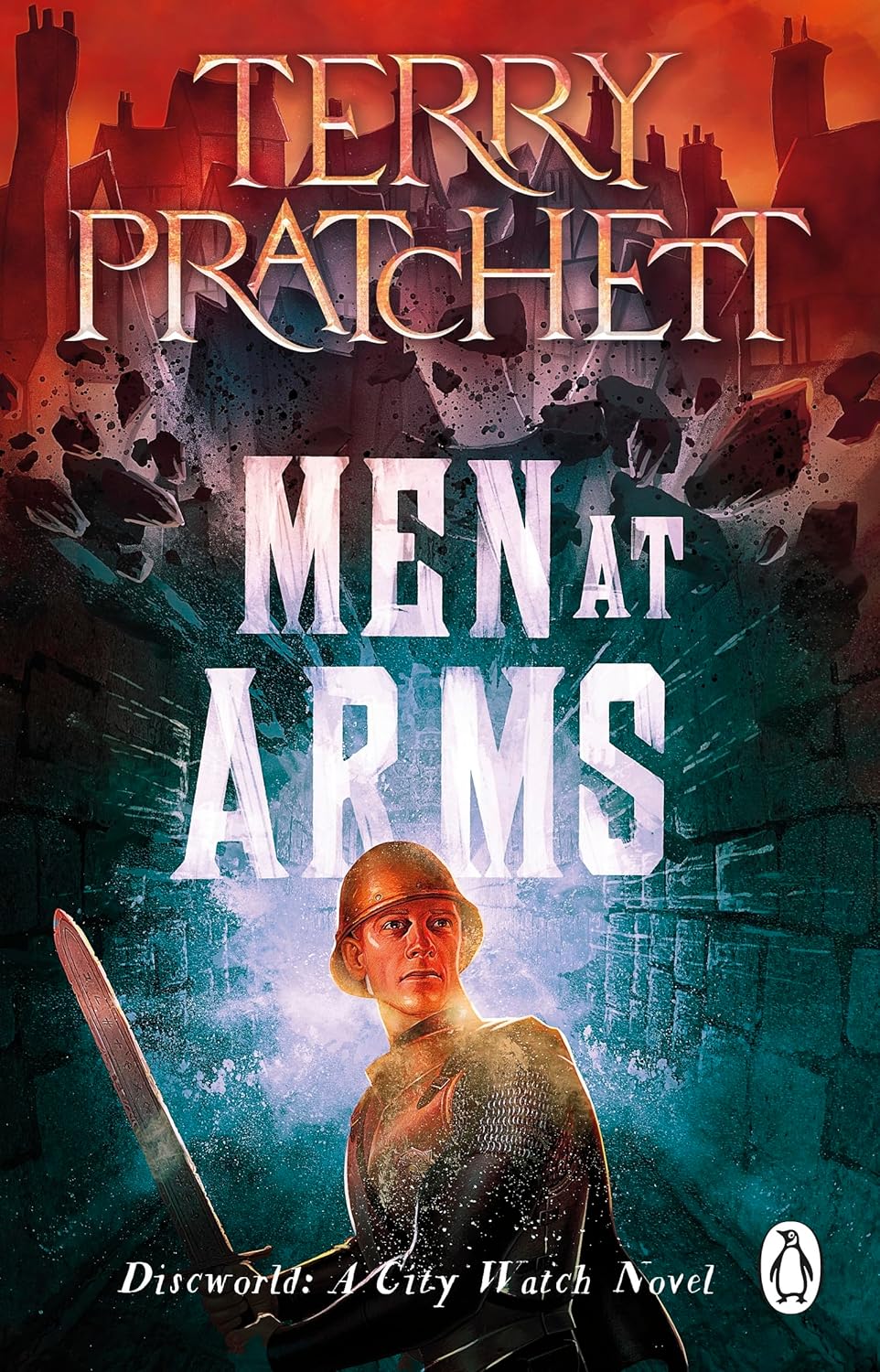
Amazon

Throwback Thursday – Warhammer: Grudge Bearer by Gav Thorpe

Grudge Bearer Cover

Publisher: Black Library (Paperback – 12 June 2005)

Series: Warhammer Fantasy

Length: 250 pages

My Rating: 4 out of 5 stars

Amazon

For this week’s Throwback Thursday I am doing a double feature.  In addition to my review of the awesome Warhammer 40,000 novel Lords of the Night by Simon Spurrier, I am also doing a quick review of the classic Warhammer Fantasy novel, Grudge Bearer by Gav Thorpe.

I have a lot of love for all forms of Warhammer fiction across the various genres, but I will always have a soft spot in my heart for the intense and elaborate adventures that took place in the Warhammer Fantasy realm.  Before its destruction, the Warhammer Fantasy universe featured a raft of epic novels and stories, most of which tied into the gaming events surrounding the various campaigns or model releases.  While I haven’t read nearly as much Warhammer Fantasy books in recent years as Warhammer 40,000 fiction, there are still some amazing books there, including the Gotrek and Felix books by William King (Trollslayer, Skavenslayer, Daemonslayer, Dragonslayer, Beastslayer, Vampireslayer and Giantslayer), Van Horstmann by Ben Counter, Runefang by C. L. Werner and Broken Honour by Rober Earl.

All of these fantasy books have been very impressive, and I am always keen to check out more from this awesome setting.  As such, I eagerly read the second-hand copy of Grudge Bearer by Gav Thorpe earlier this year.  Thorpe has been one of the main authors of Warhammer fiction over the years, with books across the various sub-series.  I know him from his outstanding Warhammer 40,000 Last Chancers novels, which followed a doomed group of convicts sent to complete a suicide mission.  The first two books in this series, 13th Legion and Kill Team, were so much fun, and I can’t wait to get my hands on the rest of the Last Chancers books.  Grudge Bearer was the first Warhammer Fantasy novel of his I have read and it proved to be an excellent book that focussed on some of the most entertaining and determined figures in the Warhammer Fantasy canon, the dwarfs.

Plot Synopsis:

When his father dies, Barundin, prince of Zhufbar, becomes king of that realm and lord of one of the mightiest outposts of the ancient and powerful dwarf empire. Over the centuries that follow, he sets out to right many of the wrongs done to his people, fulfilling ancient grudges and bringing death to his foes as he wages war against his father’s killers, and strives to protect Zhufbar from the dark forces of Chaos.


Grudge Bearer
ended up being quite a fun and quick paced read that I had a wonderful time getting through.  As the somewhat sparse plot synopsis above indicates, Grudge Bearer follows Barundin, a prince who becomes king of Zhufbar, a dwarf stronghold after his father’s death in battle.  Due to the betrayal of a local human lord whose cowardice resulted in his father’s death, Barundin swears a grudge against the man who betrayed him and becomes determined to get appropriate vengeance.  However, before he can marshal enough of his forces and resources to lead an army into an assault on the lord’s castle, he needs to get his realm in order.

As such the book turns into a series of short stories, which cover different periods of Barundin’s reign and the events that lead up to him attempting to settle his grudge.  While the first two chapters deal with the events that result in Barundin becoming king, each of the following chapters is essentially a connected short story, that see the protagonist and his forces go up against a series of different traditional Dwarf enemies, including the forces of Chaos, the skaven and goblins, as well as deal with other issues, such as an overly-inventive dwarf engineer and Barundin’s attempts to get married.  Each of these stories are pretty intriguing in their own right, giving some fantastic insights into the dwarfs as a race, and they come together to tell an intriguing and action-packed overarching story.  Most of these stories result in a pretty typical hack-and-slash battle, and Thorpe has a good eye for action, producing intense and bloody scenes throughout Grudge Bearer.  Some of the stories within this book are really cool, and I especially loved the eventual resolution of the grudge against the treacherous human lord and his family, especially as it proves just how ridiculously determined the dwarfs can be.  I did think the overall end of Grudge Bearer was a little sudden, especially as it could resulted in one more fantastic battle, but this ended up being a pretty strong and easy to read piece of Warhammer Fantasy fiction.

Now I do have to get a little cynical in that while Grudge Bearer is good, it was a marketing tool to help boost sales for the 6th edition of the Dwarfs Warhammer Army book that also came out in 2005.  I actually recall reading a few extracts from Grudge Bearer that appeared in White Dwarf, so I had a couple of early moments ruined for me.  Still, Grudge Bearer was a pretty fun book to read, and Thorpe clearly had fun exploring the lore and diving into what makes the dwarfs tick, both in combat and in real life.  The compelling focus on the dwarven grudge was particularly fun, and it was interesting to see how much their desire for vengeance ruled their lives.  It also covers several quite a substantial period of Warhammer Fantasy history due to the long lives of the dwarf protagonists, and it was very entertaining to see them watch their human neighbours go through major historical events while the dwarfs constantly remain the same.  There was even a tie-in to the Storms of Chaos campaign that happened in the game the year before, so there is a lot going on for established fans.  At the same time, Grudge Bearer serves as a pretty good starting point for those readers unfamiliar with either the dwarfs or the Warhammer Fantasy setting and it makes for a great introductory novel.

One thing that I was a little disappointed by in Grudge Bearer is that we didn’t get to see more of the legendary White Dwarf character.  The White Dwarf had a pretty major role at the start of the book, and there are even some hints to his origin at the start, but after this initial appearance we never see him again, which I think was a bit of a waste.  It would have been cool to see him come back a few times to offer advice or help in battle, possibly while providing more clues to who he really is.  I know this is a pretty minor complaint which doesn’t dramatically impact my enjoyment of Grudge Bearer, but it was something that bothered me as I was reading as a wasted opportunity.

Overall, Grudge Bearer was a fun action and lore packed novel that managed to fit in several fantastic and exciting shorter stories.  Containing one of the best and compact examinations of the always entertaining dwarf faction you will likely see in a Warhammer Fantasy novel, Grudge Bearer is well worth checking out, especially if you were a fan of the tabletop game and its lore back in the day.

Amazon

Throwback Thursday – Trollslayer by William King

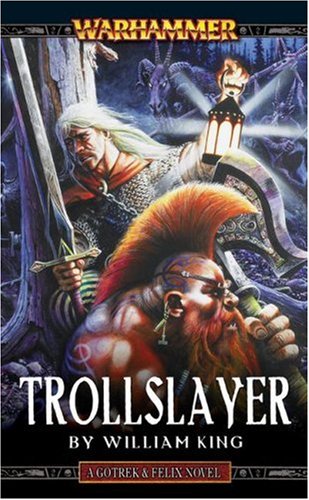
Trollslayer Cover 2

Publisher: Games Workshop (Audiobook – August 1999)

Series: Gotrek and Felix – Book One

Length: 9 hours and 55 minutes

My Rating: 4.5 out of 5

Amazon     Book Depository

Welcome back to my Throwback Thursday series, where I republish old reviews, review books I have read before or review older books I have only just had a chance to read.  In this latest Throwback Thursday article, I review a classic Warhammer Fantasy novel, the iconic Trollslayer by William King.

Over the last year or so, I have started to get back into the exciting and captivating extended universe that surrounds the Warhammer tabletop game franchise.  The Warhammer games are a lot of fun to play, but I have always deeply enjoyed the rich and extensive universe that has formed around it.  This is particularly true when it comes to the extensive literary world that has been created, with a huge collection of unique novels added every year.  I personally have barely scratched the surface of this franchise, having only recently read the exciting Space Marine novel Deathwatch: Shadowbreaker, and the fun crime novel Kal Jerico: Sinner’s Bounty.  For this review, however, I veer away from the science fiction based Warhammer 40,000, and instead look at a book in the Warhammer Fantasy universe.

The Warhammer Fantasy universe is set on a fantasy world where various races and factions fight for power, immortality, dark deities, and a general desire for bloodshed (Blood for the Blood God, Skulls for the Skull Throne!) in both large-scale battles and smaller skirmishes.  I love the fantastic and thrilling world of Warhammer Fantasy, especially as I used to play (my preferred factions were the Empire and the Lizardmen).  While there are many great novels set in this universe, the most recognisable and well-established series are the Gotrek and Felix books.

The Gotrek and Felix novels are some excellent dark fantasy books that follow the titular heroes, Gotrek Gurnisson and Felix Jaeger, as they traverse their world, facing every single monster, demon or villain they can find.  Created by William King, this long-running series has also been authored by fellow writers Nathan Long, Josh Reynolds and David Guymer, the last of whom has just released the latest entry, Gitslayer.  I have always heard good things about this series over the years, and I have previously enjoyed some of the short stories featured online or in the White Dwarf magazine.  As a result, when I had the brainwave to expand my knowledge of the Warhammer canon, this is one of the main series I wanted to check out, and to do so properly, I had to start with the original novel, TrollslayerTrollslayer, which was originally released in 1999, is an interesting novel that features seven original Gotrek and Felix short stories, including Geheimnisnacht, which was originally written as a one-off in 1988.  These seven stories have been bundled together into one continuous narrative, which proves to be an excellent and entertaining fantasy adventure.

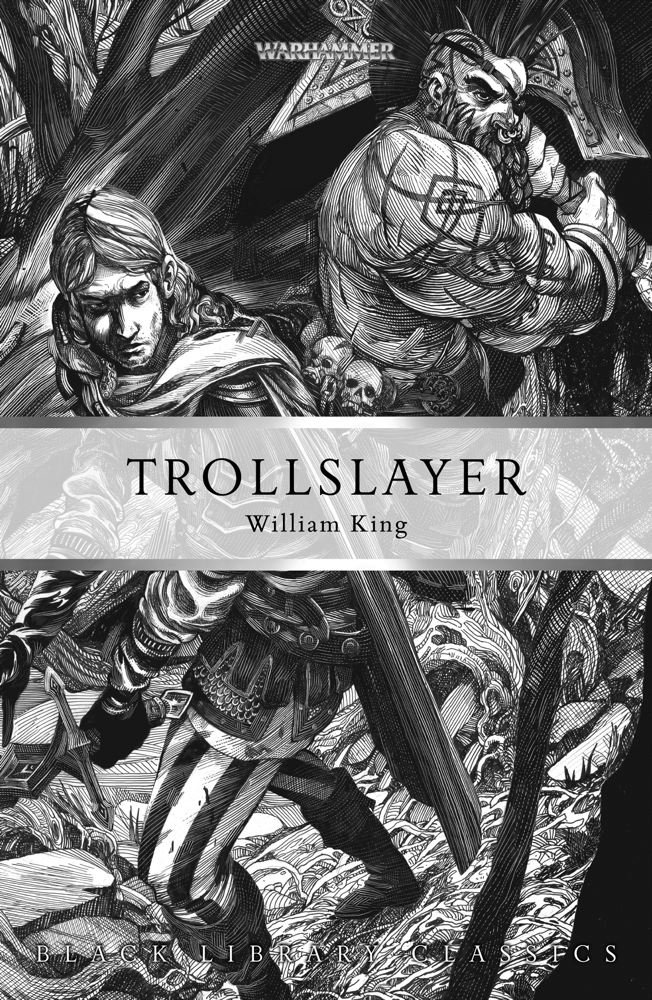
Trollslayer Cover

Felix Jaeger, the son of a wealthy merchant and student in the Imperial capital Altdorf, used to live a blameless and dull life until he met the deranged Gotrek Gurnisson.  The son of a wealthy merchant and student in the Imperial capital Altdorf, Felix’s life was changed forever when Gotrek saved his life.  Gotrek is a Slayer, a dwarf who, after committing a terrible crime, has sworn to seek out a glorious death in battle, and who now wanders the world to find a foe worthy of killing him.  After a particularly damaging night of drinking, Felix drunkenly swears to follow him on his adventures to compose an epic ballad about Gotrek’s glorious death.

Bound by his oath, Felix now reluctantly accompanies Gotrek wherever he goes.  Their latest adventures will take them far and wide, as they venture throughout the Empire and beyond, travelling to the notorious holdings of the Border Princes, the mountainous realms of the dwarves and even under the halls of the conquered dwarf city of Karak Eight Peaks.  While they experience many unique discoveries and locations, one thing remains the same: enemies lurk around every corner, and Gotrek and Felix are forced to battle against some of the most dangerous creatures in existence, including orcs, goblins, trolls, the undead, mutants, beastman and more.

However, the most dangerous foe they face may be something far more insidious and unknowable.  The fell powers of Chaos are gathering throughout the land, and Gotrek and Felix seem to constantly become wrapped up in their plots and vile missions.  With danger and deadly foes all around, will Gotrek find the glorious death he seeks, and will Felix be able to survive whatever might foe eventually manages to kill his companion?

Wow, that was a cool novel I really should have read years ago.  Trollslayer was a fantastic and exciting novel that does a great job exploring some of the more dangerous settings in the Warhammer Fantasy world with two amazing characters.  Featuring seven dark and compelling short stories, Trollslayer is an outstanding book, and I had an incredibly fun and entertaining time getting through its audiobook format.  Banded together by some journal entries which bring the separate stories together, Trollslayer has a fantastic joint narrative that presents the reader with a collection of epic adventures.

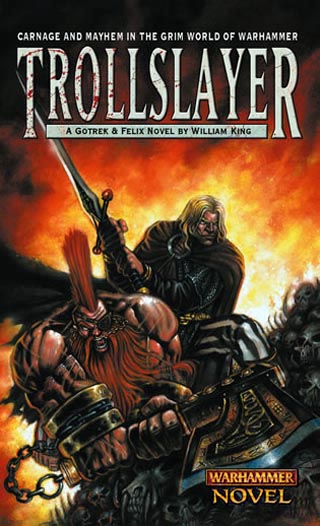
TrollSlayer-john-gravato-Gotrek-and-Felix-1st-edition-cover

The book begins with the original Gotrek and Felix short story, Geheimnisnacht (Night of Secrets).  The two companions are stuck out in the dangerous forests of the Empire during Geheimnisnacht, an auspicious night of the year.  After nearly being run over by a dark carriage on the road, Gotrek and Felix investigate the actions of a dangerous Chaos coven out in the woods, and find more than they bargained for.  This is a rather entertaining and short entry in Trollslayers that serves as a fun introduction to the main protagonists and their quest.  King does a great job setting up both characters and you soon get a fantastic glimpse into their compelling personalities.  The author presents a very dark story within this first tale, as the heroes discover and fight the true horrors of chaos.  An excellent and intense opening story that will get you pumped up for the rest of the book.

The next entry contained within Trollslayer is called Wolf Riders, which sees Gotrek and Felix at the very edge of the Empire with plans to venture to the fallen dwarf stronghold of Karak Eight Peaks.  After encountering a beautiful young woman, Felix convinces Gotrek to join the doomed expedition of a cursed, banished noble family as they journey to the Border Lands to set up their own settlement.  Hired on as guards, the two heroes are forced to protect the caravan against a ravenous Greenskin horde, who are determined to destroy every one of them.  However, the true threat may lie within the convoy, as it soon becomes clear that someone has their own nefarious plans to kill everyone journeying with them.  Wolf Riders is an incredible second entry in the collection of stories, and it is easily one of the best tales in Trollslayer.  Not only does it reinforce the likeability of the two protagonists, but it also contains its own compelling and impressive narrative.  King manages to achieve a lot in Wolf Riders, introducing a cohort of great characters, showing several intense action sequences, and even presenting a clever and malicious mystery.  The entire narrative comes together extremely well, and readers are soon wrapped up in the compelling tale of redemption and bloodshed, which culminates in a tragic and memorable ending that forever changes one protagonist.

The third story is The Dark Beneath the World, which follows on immediately after Wolf RidersThe Dark Beneath the World sees Gotrek, Felix and some new companions journey into the dwarf stronghold of Karak Eight Peaks, which was infamously conquered by greenskins and Skaven in ages past.  Seeking treasure, holy relics and a glorious battle, the adventurers will face untold horrors in the halls beneath the city.  However, nothing will prepare them for the true dangers of Karak Eight Peaks, as the restless dead are stirring in response to a monstrous presence.  This was another great story that really highlights have exciting and action packed one of these stories can be.  I love how King takes his great characters right into the heart of one of the most iconic and dangerous settings in the entire Warhammer canon, and it proves to be an amazing backdrop to this compelling story.  A brutal hack and slash epic with some very intense moments, this is an excellent and fast-paced addition to Trollslayer that was an extremely thrilling read.

From powerful action to great humour, the next entry is the slightly shorter The Mark of Slaanesh.  This story sees Gotrek and Felix return to the Empire, where they encounter some malicious cultists of the Chaos god Slaanesh in a small town.  Unfortunately for Felix, Gotrek is suffering from amnesia after a blow to the head.  Forced to shepherd a docile Slayer through the town’s many dangers, Felix takes drastic action to bring his friend back to his senses.  The Mark of Slaanesh represents a very intriguing change of pace, with more of a focus on humour, as a weary Felix is forced to contend with a pacifist Dwarf Slayer, an eccentric doctor, and comedic mutants.  There are several extremely funny moments in this short story, which helped to turn The Mark of Slaanesh into one of the most entertaining entries in the entire novel.  I particularly appreciate how King was able to craft together such a despicable central antagonist in quite a short period of time, and it was great to see his implied comeuppance towards the end of the story.

King again rapidly switches gears with the next entry in the book, Blood and Darkness, a grim war story set in the darkest forest in the Empire.  This story sees Gotrek and Felix come across a ravished village within the Drakwald Forest, which has been utterly destroyed by beastmen.  Finding a young survivor, Kat, Gotrek and Felix escort her through the woods to the next village.  However, a vengeful and ambitious champion of Chaos is close behind them, with unholy plans for Kat and anyone else she comes across.  Blood and Darkness is another exceptional entry in the series, which is probably my overall favourite Trollslayer story.  Loaded with action, fantastic new characters and a particularly gruesome premise, Blood and Darkness really stands out from some of the other stories in this book, and I was blown away by how dark King made the narrative.  I really loved the story’s complex antagonist, and the entire plot surrounding Kat comes full circle in a great way.  While it is a tad creepy to see just how young Kat is in this story, especially as Felix apparently falls in love with her in a future novel (she gets aged up like 20 years before this happens, but it is still weird), this was an impressive and powerful story that really showed how complex, powerful and mature a Warhammer story can be.

The penultimate story in Trollslayer is The Mutant Master, which again switches pace and has a more humorous tilt to it.  After being attacked on the road by a swarm of mutants, the protagonists arrive at a struggling village and soon discover that the mutants are being controlled by a sorcerer in a nearby tower.  Betrayed by the villagers, Gotrek and Felix find themselves as prisoners and soon must deal with an insidious sorcerer who shares a history with Felix.  This was another great short story that places the protagonists into a uniquely dangerous position.  King includes some excellent humour in this novel, especially in the scene where Felix and the sorcerer have a very entertaining encounter, which proves that everyone, even dark sorcerers, fall to pieces when encountering former classmates.  While much of this story is dedicated to humour, the author fits in a particularly dark moment towards the end of the novel, which pushes one protagonist further than ever.  Another awesome and memorable story, I powered through this one extremely quickly.

The final entry in this book is the intense Ulric’s ChildrenUlric’s Children sees Felix trudging through a snowed-in forest, attempting to escape the cold and the wolves.  When they hear the sounds of a fight up ahead, Felix gets separated from Gotrek, and ends up getting captured by a dangerous group of soldiers.  The soldier’s leaders end up being revealed as cultists of the Chaos god Tzeentch, who are desperate to capture a mysterious family living nearby, who have strange powers and strengths.  Caught up in their conflict, Felix soon finds himself trapped in a manor house with two very different monsters and must try to overcome the powers of Chaos that threaten to consume him.  This was another fantastic story that serves as a great conclusion to the entire novel.  While I think that Ulric’s Children was one of the weaker stories in Trollslayer, it was still a compelling and thrilling tale which readers will enjoy.  I loved the inclusion of werewolves in this novel and it was fun to see Felix attempt to overcome a dangerous foe without Gotrek’s determined backup.  With some intriguing foes and an exciting story, this is a fun and fantastic entry in the book which will leave readers wanting more Gotrek and Felix in the future.

King really has loaded Trollslayer with an amazing range of different stories that highlight the gritty adventures of two memorable and loveable characters.  I had a great time getting through each of the short stories contained within this novel, and I think that the author did a good job combining seven shorter stories together into one cohesive tale.  I love how each of the stories has some impressive action set pieces, and readers are given an in-depth look at the true dangers and darkness that inhabits the Warhammer world.  King has also ensured that each tale contains a compelling blend of humour, dramatic character development and dark fantasy elements, all of which produce an outstanding overall narrative.  It was also very cool to see just how dark and gruesome King could make his narratives, and quite a few elements of this book closely bordered the horror genre.  Since the stories were originally published in instalments, readers are in for some repetition, especially as King rehashes Gotrek and Felix’s origin in every entry, and you also get quick summaries of their prior adventures.  While this and other pieces of repetition (for example, Gotrek runs his finger over his axe blade in every tale) can be a bit annoying at times, I personally thought it was a small price to pay for such an awesome and epic book.

One of the most impressive things about Trollslayer is the complex and distinctive characters.  Naturally, the main characters are series protagonists Gotrek Gurnisson and Felix Jaeger, both of whom prove to be really fantastic and exciting characters.  King has come up with an exceptional pairing in these two characters, and I absolutely love the combination of a doomed dwarf Slayer and a disgraced human with a penchant for poetry.

As the primary narrator of the separate stories in this book, Felix gets a great deal of attention, and you really get to grips with his superb character throughout the book.  I loved the depiction of a former arrogant dandy who finds himself in a situation well over his head, and Felix has a “fun” time facing off against all sorts of monsters in this book.  While most of the novel depicts him as a bit of a coward, Felix does manage to achieve some major heroics and you cannot help but sympathise with the terrible situations he finds himself in.  While the use of multiple short stories does tend to backslide Felix’s character at times (he reverts to a coward at the start of each story), I did enjoy seeing some of the excellent development that occurs around Felix.  Not only does he grow more confident in his own abilities, but he also becomes harder with each adventure, especially as he experiences tragedy and despair around every corner.  It was actually hard to see how some of the more tragic events of the book affected him, but I really appreciated the amazing character work that King worked around him.

The titular Trollslayer, Gotrek Gurnisson, is one of the most beloved figures in Warhammer Fantasy lore, and a magnificent character who I really enjoyed.  Much of Gotrek’s past is shrouded in mystery, and all you really know is that he is a mighty warrior who previously committed some great crime that still haunts him to this day.  Determined to find a glorious death, Gotrek willingly walks into the most dangerous of places, but always survives, much to his displeasure (even doomed dwarves are far too stubborn and proud to simply let an enemy kill them).  King mostly paints Gotrek as a crude, rude and bloodthirsty being, which is a lot of fun to see.  However, there is so much more to Gotrek than killing and fighting, and you see several glimpses of his true inner self in this book, especially when he thinks about the past.  I loved how King keeps Gotrek as a mostly enigmatic figure, mostly by not showing any of the story from his point of view, and the reader is never quite sure what he is thinking or planning.  All of this results in an excellent and memorable protagonist, and I am deeply intrigued to see what sort of adventures he has in the future, as well as any revelations about his past.

Aside from Gotrek and Felix, Trollslayer contains a range of interesting and compelling characters, several of whom act as point-of-view figures at various parts of the book.  King does a really good job of introducing and utilising so many unique figures throughout his various stories, and it is simply amazing how well he can develop and establish his character in such a short amount of time.  Even though you only see some characters for a few pages, you quickly become quite invested in their stories, which is the sign of a really good author.  However, readers are advised not to get too attached to anyone, as most of the side characters will come to a gruesome and tragic end.  Still, these supporting characters are really fun, and I look forward to seeing what unique figures are introduced in future Gotrek and Felix books.

Trollslayer also features the dark and well-established background setting of the Warhammer Fantasy world, with the protagonists adventuring through many iconic locations.  King makes excellent use of this fantastic background throughout his story, and I loved seeing all the cool locations, interesting factions and dangerous monsters contained within the story.  This actually serves as a really good introduction to the Warhammer Fantasy world, and readers unfamiliar with the various aspects of Warhammer will learn a lot here.  King can really craft together some dark and dangerous locations with his writing, and I love how spooking and claustrophobic some of his settings felt, especially the ancient dwarven catacombs and the haunted, monster infested forests.  I also loved the sheer range of different creatures and races featured within Trollslayer, as the author includes as many foes as possible.  It was extremely awesome to see Gotrek and Felix cut their way through various greenskins, monsters, and servants of Chaos, and there is something for all fantasy fans within this book.  I am extremely keen to see what other monsters and races are utilised in the future novels, and I am sure they will be pretty amazing.

I ended up listening to the Trollslayer audiobook format, which was an outstanding way to experience the awesome adventures contained within this book.  With a decent run time of just under 10 hours, I powered through this audiobook in a matter of days, especially once I got caught up in the fantastic depictions of intense action and dark creatures.  I was also really drawn in by the impressive narration of Jonathan Keeble, who has lent his voice to all the Gotrek and Felix audiobooks, as well as several other Warhammer projects and some of my favourite historical fiction novels, such as the Eagle of the Empire series.  Keeble has an epic voice, and the sheer passion that he brings to Trollslayer is immediately obvious, especially during the action scenes, where his excited voice captures the intensity and movement of the fights.  I also felt that Keeble did an exceptional job bringing all of the characters to life in an impressive way.  I particularly loved the gruff voice that he used for Gotrek, which fit the doomed dwarf warrior perfectly, and he also does a really good job voicing the often terrified Felix.  I also found some of the voices that he used for the supporting characters to be really fun and fitting, and I had a lot of love for a couple of the crazed sorcerers/alchemists they encounter, which were quite amusing.  All of this helps to turn the Trollslayer audiobook into an outstanding experience, and I think that this will be the format I check out the future Gotrek and Felix novels out in.  I might also have to consider listening to some historical fiction novels on audiobook in the future, especially as I know that Keeble will do a wonderful job narrating them.

Trollslayer by William King is an exceptional and clever Warhammer Fantasy novel that showcases the exciting and powerful adventures of the iconic Gotrek and Felix.  Serving as the main introduction to these two iconic heroes, Trollslayer contains seven outstanding and wildly entertaining short stories with some fantastic and wacky plots.  Readers who check out Trollslayer are in for a heck of a lot of fun and will swiftly become fans of this great duo and their outrageous adventures.  A highly recommended read, I suddenly have some major plans to check out more Gotrek and Felix novels in the future.

Amazon     Book Depository

Boundless by R. A. Salvatore

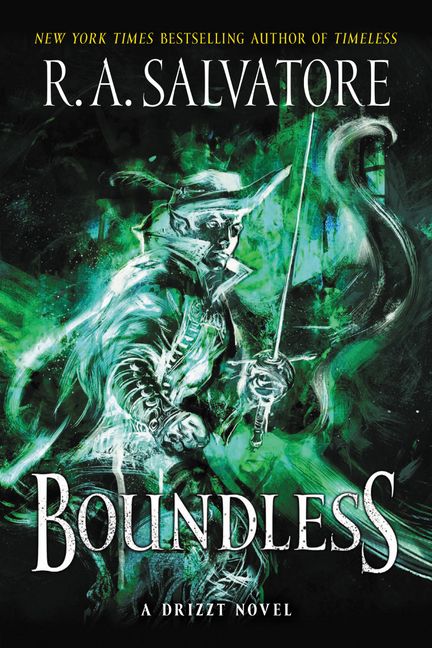
Boundless Cover

Publisher: HarperAudio (Audiobook – 10 September 2019)

Series: Generations – Book 2

Length: 13 hours and 3 minutes

My Rating: 4.5 out of 5 stars

Amazon     Book Depository

From one of the world’s leading writers of fantasy fiction, R. A. Salvatore, comes an exciting and captivating new adventure that focuses on the author’s best-known protagonists, the Drow (dark elf) ranger Drizzt Do’Urden, his father Zaknafein, the rogue Jarlaxle and the Companions of the Hall.

Centuries ago, one Drow warrior was feared and respected above all others in the dark elf city of Menzoberranzan, the legendary weapon master Zaknafein. Even before the events that would eventually force him to sacrifice himself to save the life of his beloved son Drizzt Do’Urden, Zaknafein was never content with his life in Menzoberranzan. Sickened by the evil matriarchal system that rules the city in the name of the dark goddess Lolth, Zaknafein found himself trapped in the service of the ambitious Matron Malice Do’Urden. His only solace is his friendship with Jarlaxle, the charismatic leader of the mercenary band Bregan D’aerthe, with whom he forms a close bond. However, even this friendship is not immune to strife, as influential forces within Menzoberranzan attempt to turn the ranks of Bregan D’aerthe against Zaknafein.

Years later, Zaknafein has been mysteriously returned to life, finding himself in a strange new world, living within the dwarven kingdom of Gauntlgrym. Despite being reunited with his son, Drizzt, Zaknafein is once again lost; his inherent Drow distain for all non-dark elf life is making it hard for him to fit in with Drizzt’s dwarf, halfling and human friends and family. But as Zaknafein, with the help of Jarlaxle, attempts to find a new path, he is once again beset by dark and powerful opponents.

An ambitious family of human nobles from Waterdeep has combined forces with the ruler of Neverwinter, Lord Neverember, and a minor clan of dwarfs, in an attempt to topple Gauntlgrym’s king, Bruenor, and claim the elemental magical powers the great dwarven kingdom safeguards. While normally such foes would prove little threat to King Bruenor and his allies, these new enemies command a massive and ever-growing army of demons capable of overwhelming even Gauntlgrym’s substantial defences. In addition, their opponents are supported by a noble Drow House from Menzoberranzan whose matron, in a bid to become Lolth’s most favoured servant, is determined to be the Drow who finally captures Zaknafein and Drizzt. As father and son fight for their lives against their new enemies, they soon find themselves pursued by creatures far more sinister and destructive than anything they have seen before. Can the Companions of the Hall prevail, or will evil finally defeat the last bastion of light in the Forgotten Realms?

Boundless is another outstanding and incredibly enjoyable piece of fantasy fiction from one of my all-time favourite authors, the legendary R. A. Salvatore, who is easily one of the top fantasy authors of all time. This is actually the second novel from Salvatore this year, with the second book in his The Coven trilogy, Reckoning of Fallen Gods, having come out in January, and the final book in this trilogy, Song of the Risen God, is set for release in January 2020. In Boundless, Salvatore has once again returned to the iconic Forgotten Realms universe to produce another excellent story set around the character of Drizzt Do’Urden.

The dark elf ranger, Drizzt Do’Urden, is easily the most iconic and popular character that Salvatore has ever created. One of the few moral dark elf characters in all of the Forgotten Realms (the large-scale interconnected universe which has been the setting for a huge number of fantasy novels over the years), Drizzt has been one of Salvatore’s main recurring protagonist for over 30 years, ever since Salvatore’s debut novel, The Crystal Shard. I have long been a fan of Drizzt, mainly because of Salvatore’s amazing second trilogy of books, The Dark Elf trilogy, which told a captivating tale of a young Drizzt Do’Urden. Boundless is the 35th book to follow the adventures of Drizzt and his companions (if you include The Sellswords trilogy) and is the sequel to last year’s exciting fantasy adventure, Timeless. Boundless is also the second book in Salvatore’s current trilogy that focuses on Drizzt, known as the Generations trilogy, which is set to conclude next year in the final book, Relentless (a synopsis of which is already available online).

Boundless was an absolutely fantastic read which takes the reader on an epic thrill-ride through a demon invasion, the dark political underbelly of Menzoberranzan and into the heart and mind of one of Salvatore’s more complex and intriguing characters. Making exceptional use of two separate timelines, Salvatore tells a compelling and intricate story that combines a desperate battle for survival in the present with adventures in the past. Filled with action, adventure, amazing fantasy elements and an epic conclusion, this was a first-rate read that I greatly enjoyed.

This book was essentially impossible to put down from the moment I started listening to it, as Salvatore starts it off with an action packed prologue that sees a large force of halflings, dwarves and Drizzt face off against the horde of demons that were unleashed in Timeless. After this action-packed introduction, the book is then split into four parts, two of which follow the resulting battle for Gauntlgrym and the surrounding lands in the present (the present being Dalereckoning 1488), while the other two parts go back years before the events of the first book in The Dark Elf trilogy, Homeland, and tell a story of a younger Zaknafein and Jarlaxle in Menzoberranzan.

The parts set in the present offer a pretty exciting range of action and adventure as the story is split between several of the fun characters that Salvatore has introduced in all of his Forgotten Realms books. For example, throughout these parts you get to see the destructive siege of Gauntlgrym from the perspective of Bruenor, Zaknafein, Jarlaxle and the Bouldshoulder brothers (who originated in The Cleric Quintet, another one of Salvatore’s Forgotten Realms series). At the same time as Drizzt is being pursued throughout the land by a powerful magical construct, Wulfgar is caught up in an invasion of Luskan by a powerful fleet of monsters, and Regis teams up with Dahlia and Artemis Enteri to investigate their demonic opponents in Waterdeep. This was a fantastic blend of storylines in the present-day parts of the book, and I really enjoyed seeing the various adventures and perils assailing this great group of protagonists. All of the storylines in this part of the book were a lot of fun, and I really enjoyed the larger narrative that they were telling. These modern-day storylines end with a major cliff-hanger which is going to make me really want to check out the next book in this trilogy.

While the parts of the book set in Dalereckoning 1488 are pretty awesome, I have to admit that I much preferred the half of the book set back in the past. This part of the book was set over a period of several years and follows a younger Zaknafein and Jarlaxle as they navigate the highs and lows of their original friendship in the darkness of Menzoberranzan. I really liked this storyline, as it not only contained the politics, backstabbing and casual murder that makes all the stories set in Menzoberranzan so much fun, but it also explores Zaknafein’s psyche and starts to explain why he was a different Drow to the other members of his race when he was first introduced in The Dark Elf trilogy. It was also interesting to see the early days of Jarlaxle’s rise as a mercenary leader, and there is also a number of intriguing scenes that feature other Drow characters, such as Drizzt’s mother, Matron Malice, who have been dead for a while. As a result, these parts of the book serve as an excellent prequel to The Dark Elf trilogy, of which I am a massive fan. In addition, these chronologically earlier parts of the book serve to introduce some of the Drow antagonists who are threatening the characters in the present day, and it really interesting to see how the actions of Zaknafein and Jarlaxle hundreds of years in the past are impacting on the future.

I really loved this combination of the two separate timelines in the book and felt that it helped create a fantastic overall narrative. The earlier storyline of Drow house politics, friendships and small-scale grudges contrasts well with the intense war and near constant peril that makes up the 1488 storyline and helps to create a much more compelling book. I also really enjoyed how story elements, such as the exploration of Zaknafein and Jarlaxle’s friendship, or the examination of the cruel dynamics of Drow society, continued on from one part of the book to the next, and it was interesting to see how relationships and minds can change over time.

If there is one guarantee in life, it is that a Drizzt Do’Urden novel is going to feature some fancy swordplay and a ton of action. Boundless is no exception to this rule, as Salvatore has once again furnished his story with all manner of intense and detailed action and battle sequences, as his protagonists fight a variety of opponents. This makes for an exciting and really enjoyable read, as it always fun to see the various ways the Companions of the Hall engage in battle, especially since they have built up quite an impressive array of magical weapons and abilities after 35 books. In addition, Salvatore has come up with some unique and powerful opponents for this book, including two powerful magical constructs that are all but invincible and require extreme measures to combat. The parts of the book set in Menzoberranzan’s past also feature a wide array of dazzling duels and battles from Zaknafein, as he is forced to prove that he is the best weapons master in the city. The author shows off some truly impressive fight sequences in the parts of the book focusing on Zaknafein’s earlier life and Salvatore does a fantastic job providing the reader with a blow-by-blow account of what is happening. I also really liked how the author included several scenes that showed Zaknafein training for future battles in which he attempts to work out the best way to perform some elaborate or near-impossible combat move, which of course would then be utilised in a later fight. Needless to say, those looking for their next dose of fantasy action should look no further than Boundless, as Salvatore has once again provided one hell of a hit.

While I did read a physically copy of the previous book in the series, Timeless, for Boundless I ended up listening to the audiobook format instead. Boundless’s audiobook is narrated by Victor Bevine and runs for just over 13 hours, which only took me a few days to get through. I ended up having a great time listening to Boundless, especially as listening to a blow-by-blow of the amazing action sequences really helped bring these scenes to life for me. Bevine did a fantastic job of breathing life into the book’s various characters, and I really enjoyed the way that he captured the personalities of several of the characters with his performance. I also appreciated the way that he was able to emulate a number of very different characters and species throughout the course of the audiobook. Not only did he come up with sly and calculating voices for the various Drow characters, but he was also able to affect an impressive brogue for the various dwarven characters in the book. This is a fantastic range, and I quite enjoyed all of the voices that Bevine came up with. As a result, I would definitely recommend the audiobook version of Boundless to anyone who is interested, and I think that I will try to listen to next book in the trilogy.

Overall, Boundless is an outstanding and incredible new release from Salvatore, and I loved every second that I was reading it. Featuring a ton of action and some really cool plot elements, Salvatore tells a clever and intricate story that sets some high stakes for his beloved characters. Not only am I excited to see where the story goes in the next book, but I also have a very strong urge to go back and check out Salvatore’s The Dark Elf trilogy, where some of the fantastic characters explored in this book were first introduced. With this latest novel, Salvatore continues to show why he is one of the biggest names in fantasy fiction, and it is thanks to books like Boundless that I will continue to grab every new Salvatore release I can get.

Amazon     Book Depository