
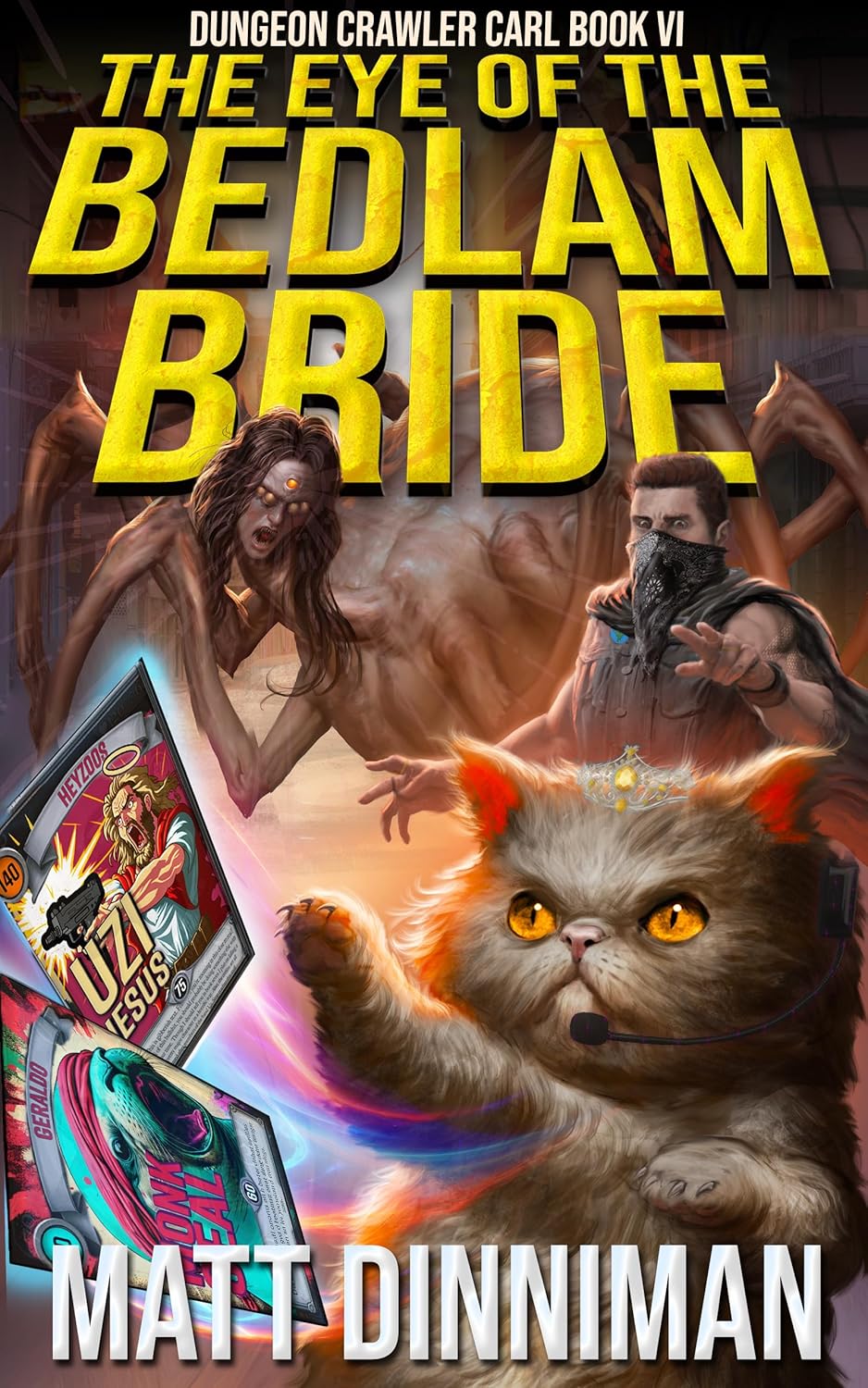
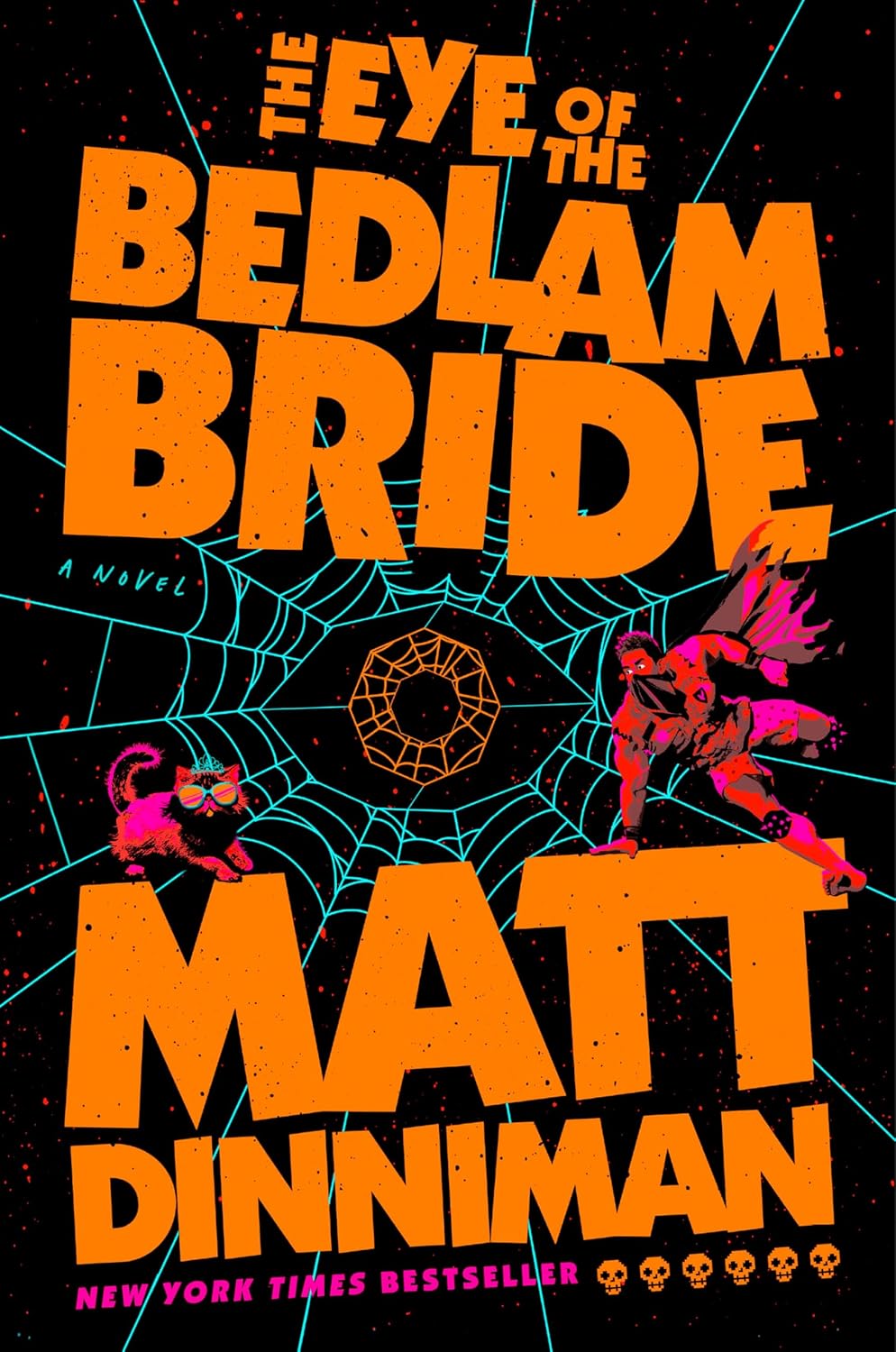
Publisher: Soundbooth Theater (Audiobook – 2 July 2023)
Series: Dungeon Crawler Carl – Book Six
Length: 26 hours and 46 minutes
My Rating: 5 out of 5 stars
The chaotic fun of Matt Dinniman’s Dungeon Crawler Carl series continues in epic fashion with the ultra-impactful and deeply addictive sixth entry in the series, The Eye of the Bedlam Bride, an exceptional novel designed to strike hard at the reader’s emotional heartstrings.
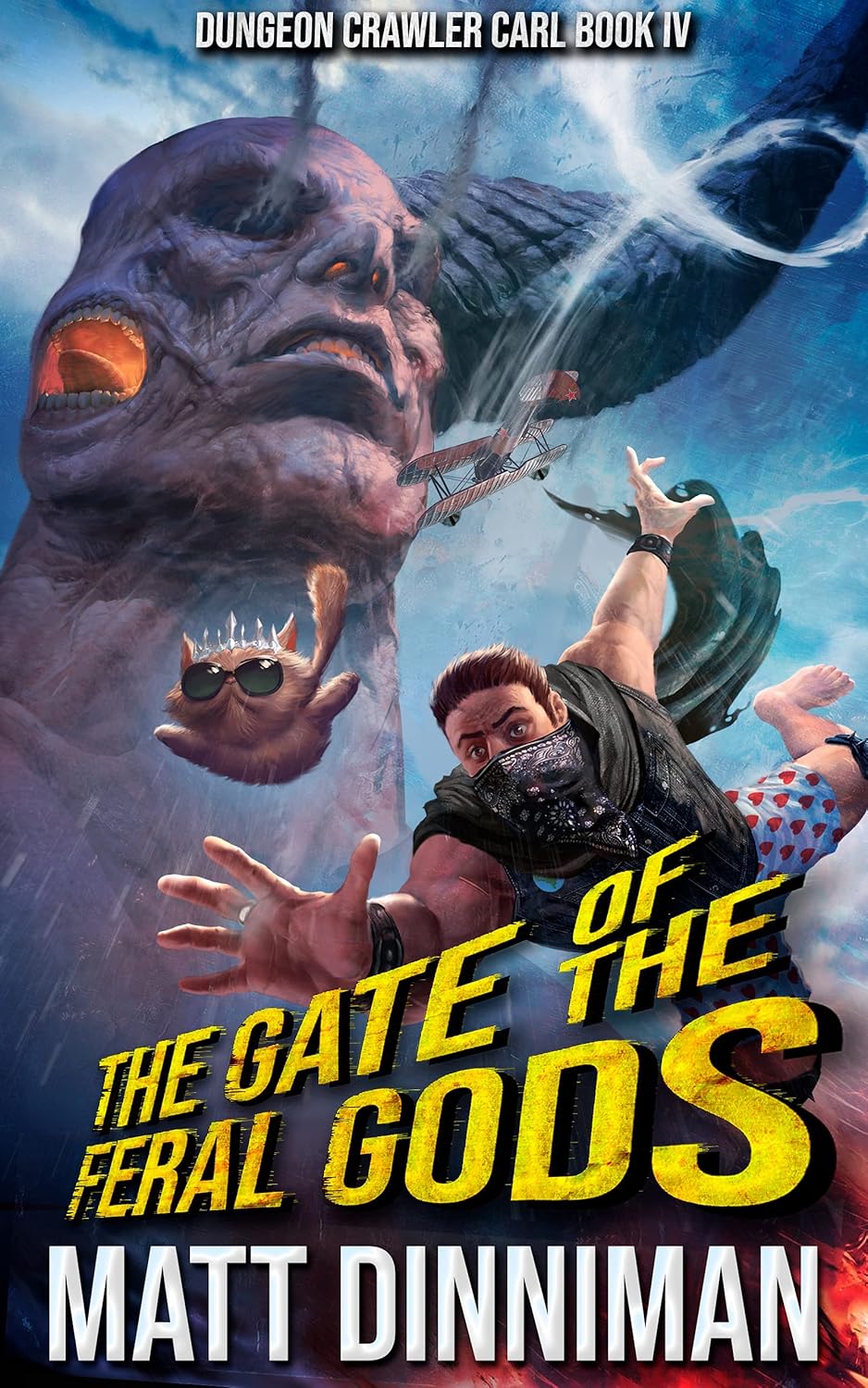
As you might have guessed from my recent flurry of reviews for this series, I am seriously in love with the Dungeon Crawler Carl books. An impressive and surprisingly deep LitRPG series, the Dungeon Crawler Carl novels follow a collection of compelling characters as traverse a deadly fantasy dungeon created from the ruins of all of Earth’s buildings by aliens for intergalactic viewing content. Set around a damaged protagonist and his excitable and now sentient cat, these books are deeply addictive, and once you start the series you really can’t stop. Indeed, I literally just chain-read the entire series, with awesome books like Dungeon Crawler Carl, Carl’s Doomsday Scenario, The Dungeon Anarchist’s Cookbook, The Gate of the Feral Gods and The Butcher’s Masquerade all proving to be outstanding reads. I loved these previous books so much, that I instantly started listening to the sixth book in the series, The Eye of the Bedlam Bride, the first chance I got, and boy was I in for an incredible time with it.
After barely surviving the Butcher’s Masquerade and then witnessing the surprising end to the seventh floor, Carl and Princess Donut are exhausted and traumatised by recent losses. However, they have no time for rest as they find themselves thrust into the dangerous eighth floor of the dungeon. One of the most ambitious levels so far, the eighth floor is based on a map of Earth’s final days, filled with intangible ghosts of the humans who wandered the world mere weeks before the planet’s death.
However, this is not a perfect replica of Earth; instead these locations have been seeded with monsters and mythological figures based on twisted accounts of Earth legends, with each creature tied to the geographic area their folklore originated. To complete this level, the crawlers are tasked with finding and capturing six of these monsters and turning them into cards, which can then be summoned to fight alongside their new owners. Each team will need to find and convert as many powerful creatures as possible to create the best decks, especially as they will be forced to face off against mobs and other crawlers with their own cards.
Unexpectedly starting in Cuba, Carl and Donut navigate an unfamiliar location as they try to learn the new mechanics of the game. Determined to get to the next floor, Carl and Donut endeavour to find the best monsters they can. However, the stronger the monster, the less controllable the card, and Carl and Donut will soon have their hands full managing a strange array of summonable creatures, including the legendary demon Shi Maria, who has far more independence than they would like. Can Carl and Donut survive this new floor of the dungeon, or will they finally be crushed by their dark secrets, troubled pasts and Carl’s slowly eroding sanity, especially once he looks into the eye of Shi Maria, the Bedlam Bride?
Just when you thought this series couldn’t get even better, Matt Dinniman amps up the intensity and complexity of his plot and characters a whole additional notch, with one of the more moving and powerful entries in the entire series. The Eye of the Bedlam Bride was an absolute masterpiece that featured the author’s trademark LitRPG chaos, while really showcasing his impressive writing ability. One of the best books in an already incredible series, The Eye of the Bedlam Bride was so damn good, and it gets a very easy five-star rating from me.
Dinniman pulled together another brilliant narrative for his sixth Dungeon Crawler Carl novel, as They Eye of the Bedlam Bride perfectly continued the long-running series storylines while also presenting its own unique adventure. Thrusting the protagonists into a complex new level, Dinniman quickly showcases all the floor’s new elements, including a fun card-based combat mechanism that fits into the existing dungeon battle system surprisingly well. While the pacing is initially a tad slower to ensure the readers fully appreciate all the necessary lore and gameplay details of this book’s plot, Dinniman quickly works to show that The Eye of the Bedlam Bride isn’t a filler novel between the pivotal fifth and seventh books. This becomes especially clear during a major sequence that requires Carl and Donut to make a deadly choice while surrounded by several vengeful gods. Dinniman also makes sure that a major secret from the previous book is brought into the light early, complicating protagonist relationships and presenting them with dark choices. Dinniman swiftly follows this up with some very awesome sequences, such as Carl and Donut coming face-to-face with their most problematic card, demonic carnage in a night club, and problems from the wider universe caused by Carl’s ambitious and rebellious plots.
While all these early elements are great, The Eye of the Bedlam Bride hits its storytelling height about halfway through, as Dinniman amps up the emotional stakes of the narrative. Forced to compete in a gruelling series of battles that test the unique fight mechanics of the floor, the protagonists find nothing but heartbreak as they near the end of the second phase of the level, including a truly horrifying and deeply personal big boss. All this follows a series of impactful personal revelations for Carl, that hit his already fragile mental state hard and finally provides full context for character background elements that have been hinted at throughout the series. This central part of the story was so damn heartbreaking, and you really must appreciate how Dinniman can make you laugh before loading up substantial sorrow and regret and producing some beautifully crushing sequences. While these scenes are emotionally charged, I appreciated how Dinniman often tempered them with more heartwarming moments that show the connections the protagonists have built up during the series, and the author does some amazing character work in the second half of this book.
Everything perfectly leads up to the incredible final third of The Eye of the Bedlam Bride, as Dinniman raises the stakes as only he can. With the protagonists forced to compete in a brutal third and final phase of the floor, events soon break down into pure chaos with undead hordes, demonic possessions, crazed gods and various rival crawlers all coming into play. Dinniman keeps the story moving so fast in this last part of the book, as the protagonists dive into key battle after key battle. I actually ended up listening to the last several hours in one day as I just had to see what happened next. Following one of the most tragic scenes in the series, which nearly broke me, Carl and Donut race to save as many people as they can from the AI’s inventive endgame, leading to an all-out battle royal in the middle of Cuba. I loved how so many story elements from the entire book came into play for the conclusion after some clever set up earlier in the plot, resulting in some very epic moments. The ending was a brilliant mixture of humour, intense action, extra lore, and some particularly dark moments for the protagonists, which came together beautifully and ended the novel on a real high. Throw in some last-minute reveals that really amp up the excitement for the next book, and this was pretty much a perfect narrative that is guaranteed to keep you hooked all the way the bloody end.
I honestly feel that The Eye of the Bedlam Bride was one of the best-written entries in the entire Dungeon Crawler Carl series, and frankly I am still not over every single amazing moment of this book. Dinniman achieves so much in this impressive novel by simultaneously changing the rules of his own game while also providing the deepest examination of his complex protagonists yet. At the same time, he makes a novel that most authors would have turned into a filler entry into one of the series’ most impactful books. I was really impressed by how the author chose to further amp up his various storylines and character arcs in this book, and Dinniman perfectly carries on the craziness of The Butcher’s Masquerade while building up the oncoming calamity of the seventh book and the long-awaited Faction Wars. Naturally, this means that The Eye of the Bedlam Bride is best enjoyed by those who have read all the previous Dungeon Crawler Carl books first. Still, for those who are determined to dive in here, Dinniman provides enough context and flashbacks to ensure you can easily follow what’s happening, and there is even a fun summary at the beginning.
This sixth novel in the series brings back all the impressive humour, intense action, and great LitRPG elements that made the previous Dungeon Crawler Carl books so damn good, while also bringing in some impressive new features, primarily a fun new battle element. I must admit that I wasn’t too sure that the card system of this level, which on paper sounded like a crazy combination of Pokémon and Yu-Gi-Oh!, was going to work. However, I should never have doubted Dinniman as it fitted in amongst the usual chaos and over-the-top scenes perfectly. Dinniman does an excellent job introducing and then exploring this system throughout The Eye of the Bedlam Bride it proved fun to see the characters adapt to the new rules. There is some great progression in how these cards impact battles, and each fight with them gets increasingly hectic. I really enjoyed how big and crazy battles with these cards could get, especially towards the end, and you won’t see protagonists facing off in card duels with gods and demons anywhere else.
There are some additional excellent elements to The Eye of the Bedlam Bride that also enhanced the epic story in some interesting ways. This includes a haunting new setting of the book, the ghost-filled replica of the pre-dungeon Earth, which really amplifies the feeling of despair and loss that many of the characters feel. Dinniman continues to also feature a compelling array of LitRPG elements in this novel, and you really find yourself getting drawn into the minutiae of stat updates, item benefits, spell effects, and so much more, as the author cleverly works it into the narrative. A lot of why these RPG features are so fun is due the chaotic humour that infests every single page of this hilarious book. The book’s comedic elements are so effortlessly funny and feature a great mixture of sudden outrageous moments with realistic reactions, the insertion of the book’s reality television elements into life-and-death struggles, often inappropriate jokes from the massive and fun supporting cast, and an array of reference focused commentary on all matters of the dungeon. While some of the comedic moments get a little out of hand: “I need a baby seal”, they all work beautifully in the context of the book’s clever plot, and I laughed myself silly so many times during this book, including at how the day was saved thanks to, let’s say, “crab meat”. I’m also as appalled as a certain velociraptor that some of the funniest, if weirdest, moments of the book occurred in Chapter 69. However, what makes The Eye of the Bedlam Bride particularly good is the way in which these comedic elements are well matched by darker, tragic moments, which allows for quite on overall powerful read, especially when it comes to the characters.
Dinniman went above and beyond when it came to the character development in this book, with a particular focus on series protagonist Carl. After several books laden with hints about his past, we finally get Carl’s full backstory, which really goes to show just how damaged he is. Dinniman does an outstanding job showcasing this background in several powerful scenes in The Eye of the Bedlam Bride, and I really appreciate how it built on the subtle foreshadowing from the previous novels. This existing trauma was further enhanced in this book, as Carl also finds out multiple new revelations about his family, including several that had been kept from him (which simultaneously shows just how bad a girlfriend Bea really was). Throw in his anger and guilt from being one of the few survivors of Earth, and the trauma from all carnage he has witnessed in the dungeon, and Carl really isn’t in the best headspace for this book, and that’s even before the titular Bedlam Bride gets hold of his mind. As such, there is a lot of dark moments for Carl to unpackage throughout this novel, and Dinniman perfectly captures his protagonist’s continued struggle to remain in control. This deeper dive into Carl’s psyche produced some of the best scenes Dinniman has so far written in the series, and I really appreciated how these darker moments were well matched by the revelation that Carl now has a true family with Donut and his new friends. These relationships kept him relatively sane in this book, and allowed him to remain the resilient, if explosively inclined, straight man of the book. Dinniman also works to showcase how despite his issues and reputation, Carl has become a bit of a legendary figure for his fellow crawlers, and the big sequence at the end where he is able to convince them to follow one of his craziest plans, was just amazing.
While most of this book’s focus is on Carl and his history, the rest of the characters in The Eye of the Bedlam Bride also get their moments to shine, and you continue to appreciate just how awesome the ended cast of this series is. This includes the other main protagonist, Princess Donut, Carl’s now sentient cat who provides much of the humour in the story thanks to her over-dramatic reactions, silliness, and feline superiority complex. While Donut is the comedic relief of the main duo, she still has a lot of serious moments in The Eye of the Bedlam Bride, especially while serving as the emotional anchor the spiralling Carl. Donut is also dealing with her own grief and sadness, especially after the tragedies of the previous novel, and there are some heartbreaking moments where you see her trying to push that down. Despite her issues and immaturity, Donut role in the plot, especially as she controls the cards during most of the battles, and you get to see her tactical genius in full display. There are some super sweet moments with Donut in this novel, and I really love how well Dinniman continues to feature the bond between her and Carl as the true heart of this series.
In addition to Carl and Donut, The Eye of the Bedlam Bride also features multiple other key members of the Dungeon Crawler Carl cast, and it is very impressive how much you care for so many of these figures. This includes Katia, who, despite leaving the team in the previous novel, still has a major impact on the plot. Dinniman perfectly revisits some key revelations from the end of the previous novel, that adds additional complexities to her relationship with Carl and Donut. The protagonist’s mentor, Mordecai, also has a key role in this book, especially as you finally get the full context for his tragic past. This background adds some additional drama to the main story, especially when Carl and Katia find themselves caught in the same feud between forces outside the dungeon that he did. There is also a certain sweetness to Mordecai’s story in this novel, especially when you find out he’s caring for several NPC children, in ways very contrary to his usual gruff disposition. Dinniman also perfectly brings back the various members of Carl’s guild, who form a surrogate family with each other, and whose appearance in one scene was one of the most heartwarming moments in the plot.
Other characters of note in The Eye of the Bedlam Bride include the possessed sex doll head, Samantha, whose insane declarations, unhinged actions, unsettling abilities and crazy general demeanour make her one of the funniest characters in the series. There is also an array of over-the-top monsters and creatures that the protagonists encounter and turn into cards. These include Uzi Jesus, a kung-fu seal, hilarious caricatures of Carl and Donut, and a crab who must overcome his ‘performance issues’ to save the day, just to name a hilarious few. These comedic monsters were well contrasted by Shi Maria, the titular Bedlam Bride, whose dark actions amp up the intensity of this book in some powerful ways. I also must mention a couple of recurring crawlers from previous novels who reappear in dramatic fashion in the final third of the novel, allowing for some of the book’s best moments. One of these character ends up having one of the series’ saddest moments, and I frankly am still not over how brutally raw and tragic that whole sequence was.
While all these above characters are amazing in their own ways, my favourite character in this series remains the dungeon’s System AI. Despite never physically appearing, the AI has a major impact on the plot, and you are constantly bombarded by its unique humour in the various descriptions and summaries it provides to Carl and the reader, often full of weird and hilarious references. So many serious or threatening moments are turned into comedic gold by the AI’s inappropriate commentary, and anytime it provides input to the plot, you are guaranteed to laugh. While the AI has been fun the entire series, it gets even more unhinged in this novel as it gains full sentience and takes full control of the. Determined to continue the crawl on its own dramatic terms, the AI starts making things even weirder for the characters, throwing in its own twists and changes. Dinniman does a wonderful job showcasing just how insane the AI is at times, including with some very worrying inclusions in its usually informative descriptions. There are also some hilarious scenes where the AI interacts directly with the characters, including one brilliant moment when he responds to Carl’s feedback on its descriptions in a particularly petty way. All this, and more, allows the AI to really standout in this book, and it is a testament to how good Dinniman is as an author, that a disembodied voice is one of the best characters in a series loaded with exceptional and extremely complex figures.
As with all the previous Dungeon Crawler Carl novels, I ended up listening to The Eye of the Bedlam Bride on audiobook, which is honestly the only way to enjoy the author’s fantastic and chaotic narrative. Coming in at nearly 27 hours in length, The Eye of the Bedlam Bride was one of the longest audiobooks in the series, but you frankly don’t mind as every second you spend listening to a Dungeon Crawler Carl audiobook is so much fun. I honestly powered through The Eye of the Bedlam Bride in no time at all, especially the concluding several hours, and I still love how audiobook format brings out all the book’s humour, tragedy and excitement. A lot of this is down to the series’ awesome narration, which in the case of The Eye of the Bedlam Bride, includes an extended voice cast. While there are a few voice actors for this particular audiobook, Jeff Hays remained the principal narrator, voicing nearly all the characters and the plot descriptions. Hays is an incredible narrator, and I loved the sheer range of epic voices he brings to bear throughout the audiobook, all of which fit their associated character perfectly, with associated accents and clever tonal changes. This includes an excellent reuse of voices for previously featured characters, while the various crazy new cast members featured in this book were also extremely cool. My favourites for The Eye of the Bedlam Bride remain Princess Donut, who gets autotune in this audiobook to help with her singing (the sound effects for this were brilliant), and the AI running the dungeon, as Hays matches the unhinged energy of the cracked computer and conveys this insanity to the listener with amazing enthusiasm.
In addition to Jeff Hays, The Eye of the Bedlam Bride also features three other actors who voice small roles in the larger audiobook to great effect. The most notable of these is actor Patrick Warburton, who was an awesome addition to the experience. Initially voicing the flashback voice of Carl’s father in several heavy scenes, Warburton did an outstanding job of breathing life into a harsh figure we’d only had glimpses of in the previous books, and his appearances here had some real menace to them. Warburton also gets to have some fun when he plays a secondary character later in the audiobook with some brilliant levels of enthusiasm. Narrator Travis Baldree was also hilarious with his appearance in The Eye of the Bedlam Bride, voicing a giant crab who becomes one of the protagonist’s cards. Featuring a comedic accent and some very over-the-top lines, Baldree was just amazing, and I loved the interactions he had with Hays and Warburton’s characters. Finally, Soundbooth Theater regular Annie Ellicott returns to voice an entertaining character in a concluding skit, which was very amusing on a variety of levels. I really loved how well these outstanding extra voice actors were fitted alongside Hays’s impressive main narration, and it allowed for a great overall listen. Throw in the excellent sound effects of the series, some of which alter Hays’s voice in clever ways, or places a voice role into the background of a scene for some interesting ambience, and this was an exceptional audiobook that I loved so damn much. There is honestly nothing better than a Dungeon Crawler Carl audiobook, and I must once again recommend this format with all my heart.
With a particularly impressive and powerful plot, The Eye of the Bedlam Bride was one of the best books in the already incredible Dungeon Crawler Carl series, and author Matt Dinniman outdid himself when it came to diving into his damaged protagonists. A highly inventive and captivating novel that I just couldn’t stop listening to, The Eye of the Bedlam Bride was Dinniman at his very best and you are guaranteed to have an exceptional time with this novel, and you will, like me, instantly dive into the next novel of the series, This Inevitable Ruin, just to see what happens next.
 The Unseen Library