
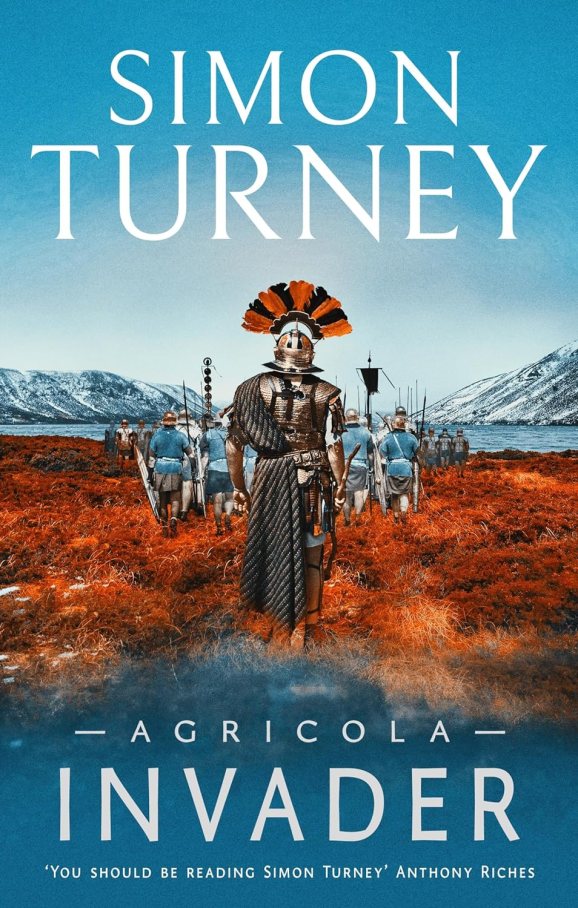
Agricola: Invader by Simon Turney

Agricola - Invader Cover

Publisher: Head of Zeus (ebook – 14 March 2024)

Series: Agricola – Book One

Length: 352 page

My Rating: 4.5 out of 5 stars

Amazon

I was in the mood for a compelling historical adventure, and the intriguing upcoming novel Invader, the first book in the Agricola series, seemed like the perfect choice, especially with the always impressive Simon Turney at the helm.

Simon Turney, who also writes as SJA Turney, is a well-established historian and historical fiction author who has been producing complex and action-packed reads for years.  Predominantly known for his Roman historical fiction works, including the Marius’ Mules, Tales of the Empire, Praetorian, Roman Adventure and Damned Emperors series, as well as the Knights Templar and Wolves of Odin books, Turney has a substantial catalogue of fantastic books to his name.  I have had some great experiences with Turney in the past, especially as I loved his 2019 novel Commodus, which perfectly captured the life of one of Rome’s most complex Emperors.  I have been meaning to read more from Turney for years and I finally got the chance when I received an early copy of his upcoming book, Invader.  The first book in a new series that will follow the life of famous Roman general Gnaeus Julius Agricola, a historical figure Turney is very familiar with, Invader was a great read that covered Agricola’s first military command.

58 AD, Rome.  Teenager Gnaeus Julius Agricola is the son of a distinguished Roman family that has languished into poverty since the death of his father.  Determined to bring honour and glory back to his family’s name, Agricola sets out to prove himself to the people or Rome through military service.  Utilising the last favour owed to his family, Agricola secures a posting as Tribune in the province of Britannia.

Determined to make the most of his opportunity, Agricola finds himself assigned to the staff of Roman general Suetonius Paulinus, who is about to launch an ambition campaign to capture more of the island and pacify the resentful tribes.  Marching across Britannia, Agricola begins to show himself a capable leader, especially while be forced to deal with rebelling locals, dangerous rivals, and an incompetent commander.

Soon, the war leads to the ancient stronghold of the druids, where Agricola finds his star on the rise.  However, great disaster awaits the Romans back at the heart of the province.  The warrior queen Boudicca has risen in revolt, determined to wipe out all the Romans in Britannia.  With the fate of the entire colony hanging in the balance, can Agricola help find a way to ensure victory for the Romans, even with the odds firmly stacked against them?

Invader was an epic and compelling piece of historical fiction from Turney, who starts up an awesome new series in a big way.  Loaded with action, intriguing characters, and some great historical detail, Invader was a highly addictive read that I was able to power through in two days.

Turney came up with an excellent story for the first Agricola book that quickly grabbed my attention and ensured I couldn’t stop reading.  Told exclusively from the focus on the new series, historical figure Gnaeus Julius Agricola, Invader serves to both introduce the protagonist, while also highlighting some of his early adventures.  The author starts the book off quick, setting the scene for the protagonist and ensuring you’re invested in his ambitions, before dropping him into a particularly chaotic period of the Roman occupation of Britania.

Thanks to the setting, most of the story focuses on General Paulinus’s massive campaign to conquer more territory and destroy the druids, which is a fascinating historical backdrop, especially considering where it led.  I liked how Turney primarily showed one leg of the invasion as the protagonist accompanied one of the split forces through a lengthy march of suppression, colonisation and negotiation.  This results in several interesting encounters and situations, especially as Agricola is desperate to prove himself against the enemy, while also dealing with internal issues, including a rival Tribune and a drunk commander.  This combination of obstacles helps to create a compelling story, and I enjoyed seeing the characters simultaneously involved with internal politics and external fights.  There are some great battles featured here, and this lengthy march of Agricola’s central force through the miserable British landscape proves to be one of the best parts of the entire book.

The rest of the story only gets better, as the protagonist and the supporting characters find themselves involved in two key conflicts, the Roman invasion of the island of Mona and Boudica’s revolt back in the settled provinces.  These scenes are loaded with more action as Turney does an excellent job of setting the protagonist right into the centre of the conflict, and the resulting chaotic warfare, personal worries and other issues really works to tell an engrossing story.  I was initially a little surprised that Turney chose to condense these two major events into the second half of the book, as you probably could have written a whole second Agricola novel about them.  However, after finishing the story, I think it worked well and honestly wasn’t too rushed.  This entire part of the novel proved to be highly entertaining and exciting, and I honestly couldn’t put it down as I waited to see how everything ended.  Turney also sets everything up nice for a sequel/continuing series, and it will be interesting to see how that turns out, especially now that we have the protagonist’s earliest adventures, a potential long-term rival, and a connection to the province Agricola is most known for.

I loved the historical elements that Turney featured in Invader as he did an outstanding job of capturing the feel of both the wild, unexplored areas of Britania and the conquering Roman legions advancing through it.  I loved the author’s great depictions of the various Roman units featured throughout Invader, and you really get a sense of the order, battle tactics and arrangements of a Roman army.  Turney also expertly portrays the intriguing events surrounding General Paulinus’s massive invasion of inner Britannia and, to a lesser degree, the events that led to Boudica’s uprising.  Many of the key recorded moments of these historical events are showcased in an amazing way in Invader, including some major battles, figures and locations.  I rather enjoyed how we saw these events from the perspective of a Roman soldier on campaign, who had no idea about the upcoming revolt that they would have to fight against, nor the wider political issues that led up to it.  Instead, you see how the army was forced to react and the resulting actions that led them to face off in the final battle against Boudicca.  As such, Invader proved to be a particularly impressive historical read, and I cannot wait to see how Turney portrays other key events that Agricola was involved within in future books of this series.

In addition to showcasing the historical events, Turney also features an intriguing range of characters who make up the story.  Most of this is shown through the eyes of series protagonist Gnaeus Julius Agricola, who serves as the point of view character.  Agricola is a historical figure that Turney is very familiar with, and Turney really does a great job featuring him.  While Agricola is generally strongly covered in historical texts (his son-in-law is one of the few surviving historical sources of the period), only a little is known about Agricola’s first visit to Britannia as a young man.  Turney does a great job of portraying Agricola as a hungry young man looking to prove himself, and I think he presented a great potential story about the character.  Watching Agricola battle against everything holding him back was very entertaining, and I look forward to seeing what happens next in the series.  Naturally, Turney places Agricola in the middle of every major battle or encounter he could find, mainly to flesh out the sparse historical notes, and it was interesting to see the combination of ambition, dedication, tactical ability and pride that the author imagined this figure would have in his youth.  Invader also features a great range of supporting characters, both from history and fictional inclusions, who all add a lot to the story.  Standouts include a frustrating rival for the protagonist, a drunk and unpredictable commander who the protagonist is forced to work around, and a native slave, Luci, with whom the protagonist forms an unusual friendship.  I really enjoyed these characters, and it will be interesting to see how their stories continue in the rest of the series.

Overall, Invader was an impressive piece of historical fiction from Simon Turney.  Featuring a great historically important protagonist, Invader served as a brilliant first entry in the new Agricola series, and I really enjoyed the intense and intriguing story that emerged.  Exciting, entertaining, and highly addictive, Invader was an outstanding read that comes highly recommended.  I had an awesome time reading Invader, and I cannot wait to see how Turney captures the rest of Agricola’s complex life throughout this series.
Amazon

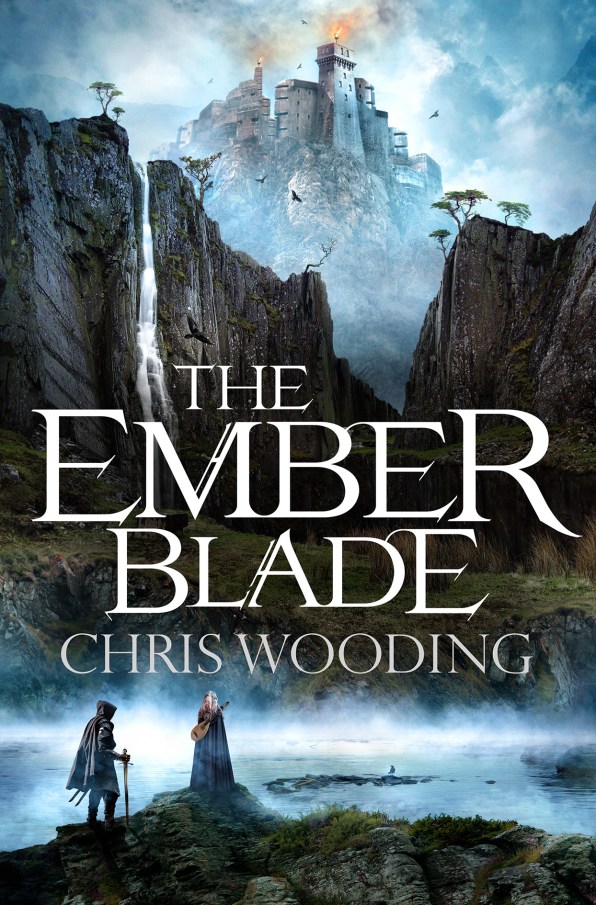
The Ember Blade by Chris Wooding

the ember blade cover

Publisher: Orion (Audiobook – 20 September 2018)

Series: The Darkwater Legacy – Book 1

Length: 30 hours and 40 minutes

My rating: 5 out of 5 stars

Amazon

If you are looking for an elaborate and exciting fantasy epic to really sink your teeth into look no further than The Ember Blade, the impressive first book in Chris Wooding’s The Darkwater Legacy.

The Ember Blade is a massive fantasy book that was released in late 2018 by veteran author Chris Wooding. I somehow completely failed to realise that this book was coming out until I saw it on the shelves of my local bookshop, and while I thought that it had a lot of potential due to the cool sounding plot, I was unfortunately unable to fit it into my reading schedule last year. However, as it was one of the books I most regret not reading in 2018, I decided to listen to the audiobook format of The Ember Blade, narrated by Simon Bubb, a little while ago. I have to say that I was not disappointed; Wooding, who has previously written such books as the Braided Path, Malice and Tales of the Ketty Jay series, has created a bold and inventive new fantasy tale in this book. Featuring a great story, an amazing group of characters and set in a massive and creative fantasy world, this was an exceptional book that I am really glad I listened to it.

A generation ago, the once proud nation of Ossia was invaded by the brutal Krodan Empire, and not even Ossia’s legendary defenders, the Dawnwardens, could stop them. Now the Krodans rule Ossia with an iron fist, installing their own religion and way of life, and treating the Ossians like second-class citizens in their own land. Any acts of dissent are quickly crushed, and those few that fight for Ossian freedom are quickly being rounded up. The only Ossians who flourish are those who accept Krodan rule and attempt to assimilate into their way of life, like Aren, the son of a wealthy Ossian collaborator. Aren has spent his whole life being told that the Krodans saved his country and that their laws, religion and rule are fair and beneficial for everyone. However, he is about to learn the dark side of Krodan rule.

When his farther is suddenly arrested and executed as a traitor, Aren and his best friend Cade are taken to a forsaken Krodan labour camp where they are expected to work until they die. With his hopes and dreams for the future crushed, Aren decides that it is finally time to rebel and engineers an escape from the camp with Cade and another prisoner. Despite all their planning, their escape seems doomed to fail until a mysterious band of fighters intervene at the last minute. However, their salvation is a double-edged sword, as the leader of this group, Garric, is a vengeful figure from Aren’s father’s past, who bears a terrible grudge against his entire family.

Forced to travel with this band, Aren and Cade discover that they are amongst some of the last Ossian rebels in the entire country. As they flee, pursued by a tenacious member of Krodan’s secret police and his three terrifying minions, they are told of Garric’s ambitious plan to break into an impenetrable fortress and steal the Ember Blade, an ancient artefact of Ossian rule that could be used to rally the country to their cause. However, in order to even have a chance to steal the blade, they must overcome treachery, the indifference of a conquered people, and their own personal demons unless they wish to be overwhelmed by the evil forces arrayed against them.

Wooding has come up with a pretty spectacular plot for this book, and I really enjoyed the places that this compelling story went. While the beginning of the book is a little slow, mainly to establish the setting and the friendship between Aren and Cade, it does not take long for the plot to get really exciting, when the two main characters introduced at that point are thrown into a prison camp. The story continues at an excellent and captivating pace from then on in, as the characters get wrapped up with Garric and his band as they attempt to free Ossia from the Krodans. This whole story is pretty fantastic, as it blends together a bunch of different fantasy adventure storylines into one satisfying narrative. For example, throughout the course of the book, you have an exploration of life within a Krodan prison camp, a complex prison break, a pursuit throughout all of Ossia by the Krodans, an exploration of a long-abandoned and magically haunted palace, treachery and plotting throughout the towns and cities of Ossia, all finished off with an elaborate heist and prison break scenario within an impenetrable castle and the dramatic consequences that result from their actions. While you would imagine that having all of these plot aspects within one novel would be a bit too much, I think that Wooding did an excellent job balancing all these intricate storylines together into one outstanding overall narrative. Sufficient time is spent on all of the various parts of the book, which not only ensures that various plot points are well-constructed and impactful but also allows the various character dynamics and relationships to come into effect while also slotting in some world building. All of this leads to an incredible and truly addictive story which I absolutely loved and which also sets up a number of intriguing plot points for future books in this series.

While The Ember Blade’s story is pretty amazing, the real strength of this book is the fantastic group of characters. The author has come up with several outstanding and complex protagonists, each of whom has an elaborate backstory which the reader learns all about through the course of the story, as many of them are utilised as a point-of-view character for a several chapters. There were some truly fantastic and memorable characters throughout this story, and I really enjoyed their various motivations and the way that they interacted with each other. The further you get into the book, the more you find yourself getting wrapped up in each character’s unique personality and finding out what makes them tick, until you actually start to care for them. However, fair warning in advance, some of these characters that you grow to like will not survive until the end of the book, and Wooding goes on a little bit of a killing spree with some of his creations (although I think there is a good chance one or two might come back in a future book).

The Ember Blade features a number of great characters that I could talk about, but for the sake of brevity I might just focus on the most important characters, Aren and Cade. These two Ossian youths are great central protagonists for this story, and they form a pretty fun and emotional duo for most of the book. Aren and Cade are dragged into the events of this book because of their friendship, and the two of them try to stick together, as they end up being the only person each of them has. However, throughout the course of this book, their friendship is tested by a lack of hope, conflict over ideals, love and feelings of betrayal, which makes for some very emotional reading. Both characters are really interesting, and both bring a lot to the story. While Aren is the central protagonist of the series, Cade is the story’s heart and soul, telling all manner of bad jokes and regaling his companions with the old stories of the land. Aside from the periods of time when he is infected with hopelessness or bitterness, Cade mostly remains the same character throughout the course of the book and does not develop too much. Aren, on the other hand, goes through a great deal of character development throughout the book, as he starts to become more disillusioned with the Krodan regime. Due to his upbringing, Aren is slow to realise the evils of the Krodans, even when his father is murdered and he is thrown into a deathcamp. However, several confrontations with Cade, discussions with Garric and actually seeing all the evil that the Krodans perpetrate help convince him of the benefit of rebelling against them and being a hero. This is not a straight progression; instead, the author creates a much more deviated course to greatness for our hero, as he is forced to betray someone he respects, is betrayed in turn by his own countrymen, must overcome his own prejudices and learn to deal with his sense of entitlement and his resentments, all before he become a better person. All of this makes for some great reading, and these two make a fantastic pairing.

Quite a lot of time is also spent on the character of Garric, who probably shares top billing with Aren as the book’s main protagonist. Garric is a freedom fighter whose own country is no longer willing to fight. Obsessed with victory, no matter the cost, Garric has become a very angry and bitter man over the years, especially due to a past interaction with Aren’s father. Despite this past hurt, his code of honour requires him to rescue Aren, and subsequent events force him to spend time with the son of the man he hated the most in the world. We learn a great deal about Garric throughout the course of the book, and despite his outer veneer of hatred and anger, most of which is directed at Aren, he is shown to be a good man and a hero. However, his need for vengeance against the Krodans slowly consumes him throughout the course of the book, and he begins to risk everything, even the lives of the people who trust him, to achieve his goal. I really liked the character of Garric, mainly because he has such an outstanding and well-written character arc in this book, the course of which goes into some dark and destructive directions and was deeply compelling to witness.

There is no way I can review this book without mentioning my favourite character, Grub, since, according to himself, “Grub is the greatest”. Grub is a Skarl, a warrior whose people journey out from an icy wasteland to do mighty deeds in order to have them tattooed on their body. Joining in on Aren and Cade’s escape plan, Grub spends the majority of the book boasting about the deeds that earned him his tattoos and making himself sound like the greatest warrior of all time. Grub is mostly used as a comic relief, and his jokes, outlandish boasts, coarse behaviour, amusing nicknames for the other characters and habit of constantly talking about himself in the third person make him the funniest protagonists in the book. However, like most of Wooding’s characters, Grub’s life is a lot more complicated than you would expect. Grub is not what he appears to be and bears a secret shame that makes him an outcast from his own people. In order to return, Grub must redeem himself by performing the most heroic or cunning of deeds and remains with the protagonists because he believes that participating in their adventures are exactly what he needs, that and he plans to rob them of the Ember Blade. However, as the book progresses, Grub, who has never known friendship or acceptance, begins to bond with several of the protagonists, especially Aren, which could alter his eventual plans.

As you can see from the examples above, Wooding has done an excellent job inserting complex and appealing characters into his story. Favourites I haven’t yet mentioned include a powerful druid and her dog, who provide much of the book’s magical elements; a fearless female hunter with poor social skills, who is a love interest for both Aren and Cade; an intelligent Ossian woman whose ambitions are thwarted by the inherent sexism of the Krodans, and who gets some of the best revenge against a mansplaining ass by beating him in a strategy game; and more. The author even shows a couple of chapters from the point of view of The Ember Blade’s main antagonist, the Krodan secret police commander Klyssen, which humanises him a little and shows why he is so determined to hunt down our protagonists. All of these characters add a large amount to the story, and it was a real pleasure to follow their adventures and learn all about their lives.

In addition to the fantastic roster of characters that the excellent story followed, I have to say that I was also impressed with the bold new fantasy world that Wooding created. Not only is the primary setting of the nation of Ossia a complex and dangerous location that helps create a thrilling and enjoyable read, but the author spends a lot of time expanding out the entire world, furnishing the reader with some fascinating depictions of some of the other cultures and races that live in the world. Thanks to the fact that one of the point-of-view characters is a bit of a storyteller, we get a really good idea of the history of the world, much of which has some sort of bearing on the current story, or could potentially become an interesting part of a future book. In addition, due to the examination of several of the protagonists, we also get a good basis for some of the other nations that are mentioned throughout the story, all of which sound really fascinating. I particularly liked the sound of the Skarl, Grub’s race, and I would definitely love to read a story set in their frozen necropolises. Wooding also introduces some supernatural elements in this book, including some ancient god-like monsters who are likely to be the major opponents of any future books in the series, as well as a cursed, magical castle which our protagonists find themselves trapped in for a substantial part of the book. I also quite enjoyed the potion-based magical system of the druids that was utilised by one of the primary characters, and I will be intrigued to see more of what sort of magic the Krodans have.

While the rest of the world introduced in The Ember Blade has a lot of potential in future books, I did really like the main location of this book, the conquered nation of Ossia. Ossia has been under Krodan rule for around a generation at the point of this story, and the people are becoming more accustomed to their conquered status. This situation bears some very strong similarities to Nazi-occupied France, with the Krodans infecting the country with their rules and ideals over a conquered nation, and utilising collaborators and violent retaliations to rule with an iron fist. Not only are the Krodans depicted in quite a Teutonic way, but it is clear that they are participating in some form of ethnic cleansing, as the entire population of a gypsy facsimile race in their empire has been rounded up and taken to an unknown location. All of this really helps to up the stakes for the protagonists, as they must not only overcome all the Krodans they come across but also contend with being sold out by members of their own nation. This chance of betrayal from fellow Ossians is quite disheartening to many of the characters, and it makes them wonder at times why they are fighting to free these people, when it is quite obvious that many amongst them do not want to be free. In addition to all of this, I have to mention the dreadknights, the strange, dangerous and seemingly indestructible elite soldiers of the Krodan Empire, who have been unleashed to hunt down and kill the protagonists. These dreadknights are terrifying beings whose unrelenting pursuit of your favourite characters (and indeed they bear responsibility for the deaths of some of these characters) really adds a lot of tension to the story. There was something of the Ringwraiths from The Lord of the Rings in their manner and bearing, and there is a lot of mystery surrounding their origins. I am very curious to see if we learn more of these creatures in the rest of the series, and I have a vague feeling that Wooding is going to make them even more horrifying in the future.

As I mentioned above, I ended up listening to the audiobook version of The Ember Blade, which was narrated by Simon Bubb. Considering the physical copy of this book is around 800+ pages, it should come as no surprise that the audiobook format is going to be fairly substantial. It runs for 30 hours and 40 minutes, which actually makes it the eighth-longest audiobook I have ever listened to. As a result, it did take me a pretty long time to get through this book, but once I started getting really into the story, I went out of my way to try and finish it off as quickly as possible. I am actually really glad that I listened to the audiobook version of this book, as I felt that it really helped me absorb the enjoyable story and detailed setting. Bubb had a great, steady narration voice for this book, and his take on the story and the characters really helped to keep my attention glued to the book. As a result, I would strongly recommend the audiobook format of The Ember Blade to those people interested in checking this book out, as you will have a lot of fun listening to it.

The Ember Blade is a modern-day fantasy masterpiece from Chris Wooding, and I am extremely glad that I managed to get a chance to read it this year. Wooding has come up with a detailed and captivating plot which combines exceedingly well with the book’s excellent group of characters and intriguing new fantasy world to create a first-rate story. This was an outstanding read which does a fantastic job introducing The Darkwater Legacy, which, if Wooding continues to write this well, has potential to become a truly great fantasy series. A highly recommended read that gets a full five out of five stars from me, this is essential reading for all fans of the fantasy genre.

Amazon