Murtagh by Christopher Paolini

Murtagh Cover

Publisher: Penguin (Audiobook – 7 November 2023)

Series: The Inheritance Cycle – Book Five

Length: 24 hours and 32 minutes

My Rating: 4.5 out of 5 stars

Amazon

Bestselling author Christopher Paolini returns to the iconic world of Alagaësia with Murtagh, a powerful novel that continues his original series while focusing on a complex and damaged protagonist.

I am very excited about this review as it offers me the first chance to review a recently released Paolini fantasy novel.  I am a massive fan of Christopher Paolini, having read every single novel he has written in his impressive career, including the science fiction Fractalverse series (To Sleep in a Sea of Stars and Fractal Noise).  However, the series that most readers will associate him with are the Inheritance Cycle novels.

The Inheritance Cycle is an awesome young adult fantasy series that follows a young man who bonds with a dragon to take down an evil tyrant.  A particularly iconic series, the original Inheritance Cycle consists of Eragon, Eldest, Brisingr and Inheritance, and it told a complex, well-established and exciting tale that saw the protagonist, Eragon, rise to great heights and eventually defeat the big bad.  I was gifted the Inheritance Cycle novels when I was growing up and it became a favourite fantasy series that I read multiple times.  While I tend to view it with a more critical eye these days, I still love it and its powerful adventure.  Due to how much I enjoy this series, I have been eagerly awaiting a sequel for years, and I was so damn excited when I found out that Paolini was releasing a follow-up book.  Murtagh was one of my most anticipated reads for 2023, especially when I saw that it was going to follow one of the best characters from the original series.

A year has passed since the war to free Alagaësia ended and the evil king Galbatorix was killed at the hands of the Dragon Rider Eragon and his companions.  Peace now reigns across the land as the people look to rebuild.  But there are two beings in Alagaësia who will never find peace: Eragon’s half-brother, Murtagh, and his dragon, Thorn.  Already reviled for being the son of the traitorous Dragon Rider, Morzan, Murtagh is hated by every race in Alagaësia for the involuntary role he played in Galbatorix’s evils.  Finally freed from Galbatorix’s iron control, Murtagh and Thorn travel the outskirts of the land, trying to find a semblance of harmony that has been lacking their entire lives.

However, the troubles of the world are always lurking, and the pair soon discover that not everything is as peaceful as it seems.  Following warnings and whispers from an ancient dragon spirit, Murtagh and Thorn become aware of a dark conspiracy building in the land, as unusual rumours of brittle ground, the scent of brimstone and mysterious beings reach their ears.

Determined to stop a new evil rising and wreaking havoc, the exiled rider and dragon begin their own investigation and soon uncover the source of this evil: a mysterious cult whose influence stretches across all the races and nations of Alagaësia.  Due to their surprising power and ability to manipulate the world, Murtagh and Thorn might be the only people capable of stopping them, and they set out to investigate.  However, they are unprepared for the dangerous witch at the centre of this cult, as well as the deadly power she represents.  Can Murtagh and Thorn defeat this evil before it is too late, or will they once again find themselves enthralled to a dangerous power beyond their comprehension?

Christopher Paolini returns with another outstanding book that takes the reader on an exciting and emotionally rich adventure which also cleverly expands his already elaborate setting.  While I am sure my review might be partially influenced by nostalgia, I found Murtagh to be an exceptional read that brings back all the things I loved about the original novels while also showcasing Paolini’s increased ability as an author.

For this new book, Paolini goes backs to basics and creates a classic epic fantasy around one of his most damaged and compelling characters.  Starting off a year after the climatic events of Inheritance, Murtagh follows the titular protagonist and his dragon as they try to unwrap a mysterious warning given to them in the last book.  This warning and an obsession with redeeming themselves leads Murtagh and Thorn to investigate troubling rumours and encounter a group of dangerous warriors and infiltrators utilising powerful magic.  This forces Murtagh into a search for knowledge while once again traversing areas of Alagaësia where he is the most wanted.  There are some intriguing moments as Murtagh embarks on a series of side quests that will allow him to achieve his goal, including infiltrating a city, killing a giant fish, encountering old “friends” and uncovering corruption at the heart of a regiment of city guard.  While I will admit that parts of this novel get a little slow in places, Paolini does a great job of reintroducing key elements of lore, building up a new growing threat and showcasing the main character elements of the protagonists, including their trauma, the bond between rider and dragon, and their unfairly given outcast status.

The second half of the book is extremely strong as Murtagh and Thorn come face to face with their new enemy, the witch Bachel and her unusual followers.  Paolini writes this entire half of the book extremely well, as Murtagh attempts to at first subtly uncover what Bachel is plotting and what power she controls.  Naturally things go wrong and this leads to a pretty dark and traumatic part of the story where Murtagh is at his lowest point.  This part of the book is painful to read, especially as you have really grown to care for the protagonist, but it is so damn well-written and emotionally charged.  Everything leads up perfectly to a much needed and exceptionally presented climax, where Murtagh manages to fight back and the resulting carnage is very therapeutic after all the dark scenes the reader has been forced to experience.  The big confrontation was very epic and really tied into the author’s excellent characterisation of the protagonists, allowing for some impressive moments.  The conclusion is both hopeful and worrying as a new big-bad looms on the horizon, and there are still many secrets left to unwrap.

I really liked how Murtagh came together as Paolini presents a powerful, character-driven read that really tries to capture the heart and feel of a classic epic.  Murtagh really had all the best elements of Paolini’s first book, with a lone character and his dragon navigating through a complex world, searching for a big bad on the horizon.  I loved these story elements, including the loosely connected quests, the elaborate and dark interactions in the second half of the book, as well as the general menace implied by the world’s new hidden threat.  This story is so damn good and served as an interesting continuation of the original Inheritance Cycle novels, adding to the overall plot of the series, while also allowing the new protagonist to strike out on his own and encounter the world on his terms.  Paolini really hits the right balance of elements in Murtagh, with a great focus on character work blending nicely with the complex story and great focus on expanding Alagaësia.  While this series is usually marketed as young adult fantasy fiction, I honestly would consider Murtagh to be more of an adult book due to its elaborate story, big world, and complex older characters.  Despite that, younger readers can still really sink their teeth into Murtagh as an early fantasy experience, and Paolini really hits the right balance of violence and other themes that ensures Murtagh is very palatable to a range of readers.

As I have made clear a few times already, Murtagh is a sequel to Paolini’s Inheritance Cycle series, where quite a lot of plot, character histories and elements about the world of Alagaësia were introduced.  Due to it being a direct sequel, a large amount of this detail was essential for Murtagh, which does put newer readers at a disadvantage.  I think Paolini did a good job of reintroducing these relevant story elements where needed, so new readers can dive into this book without too many issues.  However, the re-establishment of these elements does take a little time, so there might be some occasional blind spots for these newer readers, especially towards the beginning of the book.  As such, established Inheritance Cycle fans will get a lot more out of Murtagh than new readers, and there are tons of incidental references and callbacks that will make a lot more sense as a result.  I was just so glad to finally get a new Inheritance Cycle book, especially one with such an elaborate and well-written story that connects to the original books in some creative and meaningful ways.

One thing I have always particularly loved about Paolini’s works is the insane amount of effort and detail he puts into developing his elaborate fantasy world.  He did an outstanding job of this in the Inheritance Cycle, and the resulting world was filled with a fantastic history, some classic fantasy elements, and a complex evil empire ruled over by an all-controlling madman.  I had an outstanding time exploring Alagaësia when I was younger, and so one of the things I was most excited about with Murtagh was seeing how much this fantasy world has changed in the aftermath of the protagonist’s victory.  Paolini delivers this in spades, showcasing some intriguing changes as the nations rebuild, the other races once again integrate with humanity, and the compelling legends of Eragon’s victory over Galbatorix are built up, even if Murtagh’s role in that victory are largely forgotten.  Many of the well-established rules of magic and Dragon Riders are brought back for this sequel, and Paolini makes sure to reintroduce them effectively for new readers.

It was quite interesting to see Murtagh’s less-knowledgeable take on much of this fantasy lore, especially as that cleverly tied it with his more brutal tutoring in magic than Eragon had in the original series.  Indeed, Murtagh’s insights into many elements of this world are very different to those of the previous protagonists, and this helped to make a lot of the novel a lot more grounded and approachable.  While it was great to see these familiar elements again, I also liked the new fantasy features of Alagaësia that Paolini came up with for Murtagh.  While I won’t give too much away here, the new big bad of the series is very intimidating, and I loved how well Paolini set them up.  The author is subtle with this introduction, and its gradual reveal really increases its threat level, as it seems potentially even more dangerous than Galbatorix.  I look forward to seeing how Paolini expands on this, and I was so impressed with how much additional world building was featured in Murtagh.

A major highlight of this book had to be the compelling character arcs that formed the basis of the book.  Murtagh is extremely character driven, perhaps even more so than the other Inheritance Cycle novels, and Paolini writes an exceptional story around his characters.  Naturally most of this focus revolves around the titular character of Murtagh, who is the only point of view character in the novel.  I was happy that Paolini decided to focus an entire novel on Murtagh, as he was such a great character in the original trilogy whose perspective you never got to experience.  The son of a monstrous traitor who served Galbatorix, Murtagh eventually rebelled and tried to escape his fate, only to be captured again after meeting Eragon in the first book.  Forced to serve Galbatorix against his will, thanks to the torture levelled against his newly hatched dragon, Murtagh ended up being the secondary antagonist of the series, especially once it was revealed he was Eragon’s half-brother.  Murtagh was eventually able to free himself from Galbatorix’s control at the climactic battle however, despite the role he played in killing the big-bad, he is still very much reviled by the people due to the atrocities and murders he was forced to commit.

As such, the plot of Murtagh is essentially what happens if a somewhat redeemed Darth Vader (there are a lot of parallels between the two characters), was wondering the land trying to atone for the evils he caused and reflecting on all the mistakes in his life.  I loved that we got to see this unique and compelling character focus, and it proves to be a very intense and powerful central storyline, especially as Murtagh is forced to relive a lot of the pivotal moments of his plot from the original novels, in addition to some previously unseen backstory.  You really get to experience Murtagh’s regrets, despair and self-loathing, and Paolini does a great job of focusing on that, while also introducing some additional growth as Murtagh comes to terms with who he is.  Paolini writes a fantastic redemption arc in this novel, and Murtagh really grows into a character you can care for.  Naturally, Paolini rewards you for caring by showing some extended scenes of Murtagh suffering in some major ways, and some of these sequences, especially in the second half, pull at the heartstrings.  The author expertly ties this suffering into Murtagh’s journey of self-discovery, and the scenes where he overcomes major adversity again proves to be some of the most powerful in the entire book.  I also appreciated how Paolini portrayed him in a very different way to Eragon, as he is more angry, impatient, and less-well trained in many of the arts of magic.  The author portrays these differing character elements in an extremely impressive way, and the character history surrounding the protagonist really explains why Murtagh is so separate from his fellow Dagon Rider and half-brother.  I honestly was so impressed with how Murtagh was showcased in this book and he ended being a pretty exceptional character.

Due to their mental connection, Murtagh’s dragon Thorn is also a major character in the novel, and he proves to be an excellent alternative protagonist as a result.  Thorn proves to be a fun and over-protective companion to Murtagh, especially with their joint history of abuse, and Paolini always does a great job of showcasing the soul bond that exists between a dragon and rider.  In many ways, Thorn is very similar to Saphira from the original Inheritance Cycle novels, being proud, predatory and occasionally playful (very much like a cat).  However, unlike Saphira, Thorn has gone through a substantial amount of trauma thanks to the machinations of Galbatorix, who used magic to age him quickly and tortured him the entire way to make him even more vicious.  It was fascinating to see a psychologically traumatised dragon , especially as certain things set him off, and watching him try to mentally heal alongside his human is a very heartwarming part of the novel.  While he does suffer at times alongside Murtagh, he also gets to cut loose at the end in a particularly cathartic, if destructive, sequence, which was really great.

Murtagh also features an interesting array of new supporting characters, who ensure some interesting interactions with the two protagonists.  There is a noticeable lack of major characters from the original Inheritance Cycle novels, which I thought was a very clever move as it helped this novel to stand on its own.  I did think that one or two good characters from the previous novel, such as Angela, might have fit into this storyline well, but I’ll settle for seeing them later, especially after how successful their absence worked here.  As such, the supporting cast of Murtagh are all new characters, and Paolini did an outstanding job of introducing them and working them into the plot.  While many of these characters did not appear in the story for a long period, namely because of the protagonist’s transitory narrative, several characters did stand out.

I loved the Urgal shaman Uvek Windtalker who Murtagh encounters in the second half of the novel, whose interaction with the protagonist leads to some powerful scenes.  However, the true standout character in Murtagh had to be the main antagonist, Bachel.  A powerful which and apparent profit, Bachel is a mysterious and aloof figure, who proves to be quite sinister.  You end up getting quite a good look at just how malicious, arrogant and dangerous Bachel and her minions can be as the book continues, and Paolini does a remarkable job of building her up as someone to really despise.  This ensures that you are really pumped up for the big confrontations with her at the end of the novel, and I liked just how effective the author was able to make her.  These characters and more really help to push the narrative of Murtagh in some awesome directions, and I liked the more unique figures that were featured in this latest entry in the Inheritance Cycle.

While I did receive a paperback copy of Murtagh, I ended up listening to the audiobook version instead.  This is mainly because the last few times I enjoyed the Inheritance Cycle I chose to listen to the audiobook format, and I wanted some continuity from that since they brought back Gerard Doyle, the narrator from the original Inheritance Cycle, to voice this latest entry.  Doyle does an amazing job of narrating Murtagh, and I felt that he really enhanced the impact and enjoyment I had of the story.  Not only has he got a great basic tone that helps move the plot and lore heavy parts of the book along at a good pace, but he also has some excellent takes on the character voices.  His powerful voice for the titular character really hits all the right notes, and I love the range of emotion he can bring to this figure.  He brings back the classic ‘dragon’ voice for Thorn that featured in the other Inheritance Cycle books, and I loved the somewhat bestial nature to it, as well as the ethereal nature of a mental communication.  The rest of the intriguing cast is also well captured by Doyle, and he especially makes the main antagonist pretty sinister at times.  This outstanding voice work really drew me into the Murtagh, and I easily absorbed a lot more of the intense detail and lore in this format.  Coming in at 24 hours and 32 minutes, this is a pretty long audiobook (it would rank 15th on my current Longest Audiobook I’ve Listened To list), but it really worth a listen, especially if you enjoyed the original Inheritance Cycle novels in this format.

I think the multi-page ramblings above make it clear that I had an excellent time with Murtagh.  Christopher Paolini did an outstanding job of continuing his iconic Inheritance Cycle series, and I loved the compelling direction he is taking this story.  I also love how much Paolini appears to have improved as a writer, especially when it comes to complex character work, and I cannot wait to see what the next stage in Murtagh and Thorn’s journey is.  Murtagh is very-much worth the read, especially if you grew up reading the Inheritance Cycle books like I did.
Amazon

Dragon Mage by M. L. Spencer

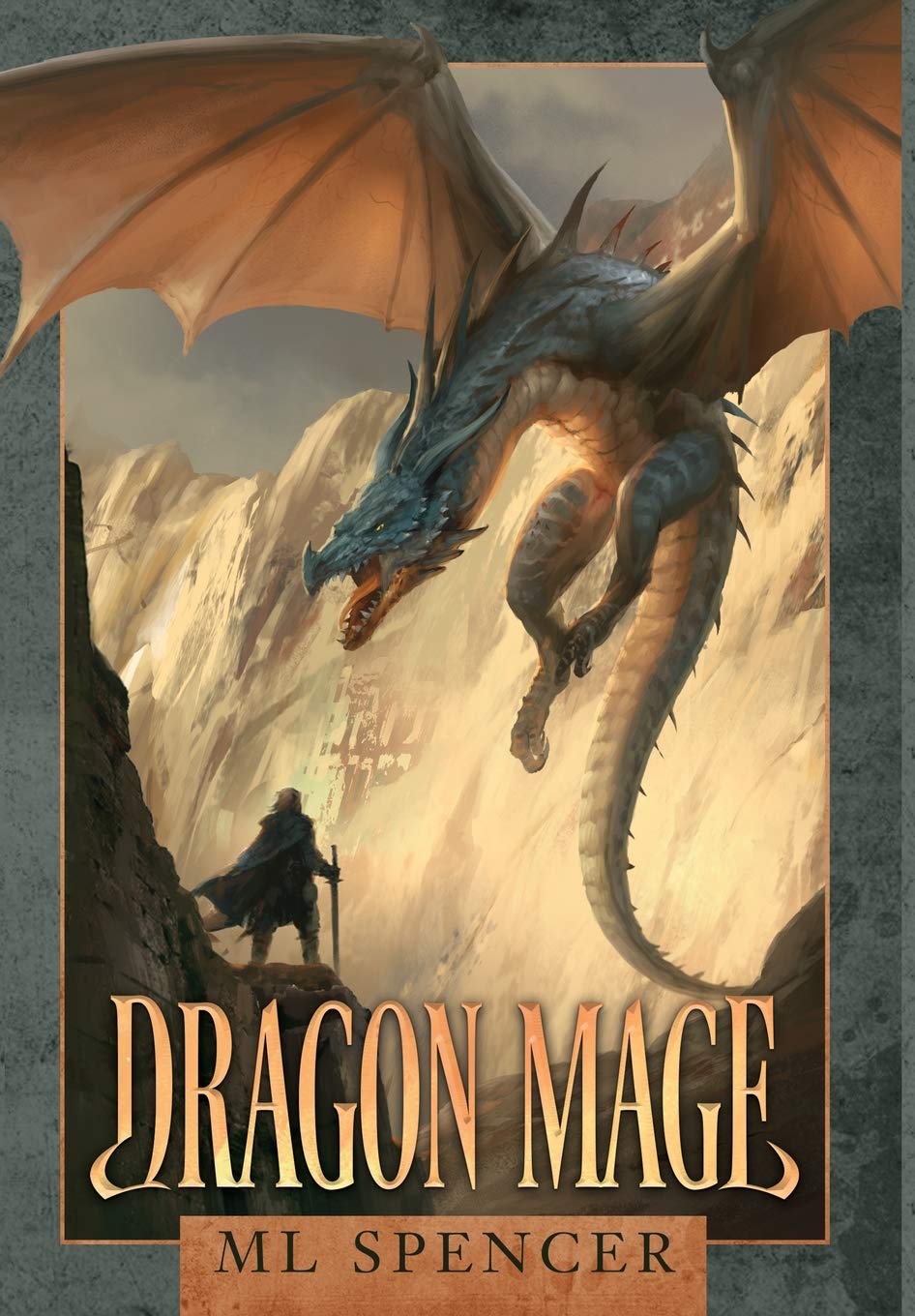
Dragon Mage Cover

Publisher: Stoneguard Publications/Podium Audio (Audiobook – 19 December 2020)
Series: Rivenworld – Book One

Length: 27 hours and 18 minutes

My Rating: 5 out of 5 hours

Amazon

Prepare for an epic fantasy adventure with a great classic feel to it, as awesome author M. L. Spencer presents the massive and captivating fantasy novel, Dragon Mage.

Back in 2020, the fantasy book world was abuzz with talk about the compelling and impressive fantasy fiction epic, Dragon Mage by M. L. Spencer, who was already known for her Rhenwars Saga and Chaos Cycle books.  While I have not had the opportunity to read any of her previous works, Dragon Mage definitely caught my eye, especially with the very cool cover with the awesome art.  While I never got the chance to read this book when it was first released, I did grab an audiobook copy of it and have been looking for an opportunity to listen to it for some time.  When I found myself in the mood for some great high fantasy a few weeks ago, I decided it was finally time to listen to Dragon Mage, especially as a future Rivenworld book is apparently on the horizon, and boy did I have an outstanding time with it.

Aram Raythe is a simple lad from a small fishing village in the middle of nowhere.  A strange boy with a love of knots and an inability to understand people, Aram thinks that he will go through life alone and hopes for a quiet existence as a sailor.  However, Aram has a secret that he has never told anyone: he can see the colourful strands that make up the world, and he can manipulate them to do magic.

When a bard arrives at the village, seeking an apprentice, Aram uses his powers to help the only person who was ever nice to him, fellow teen Markus Galliar, get chosen; however, he is unprepared for the chaos that this action will unleash upon his life.  While the bard, who recognises his potential, attempts to take him to safety, Aram accidently unleashes his power to cause a rift in the world.  Soon the village is visited by an Exilari sorcerer, who captures Aram and Markus, seeking to drain Aram’s essence and use it to power his own magical abilities. 

Aram’s destiny lies not in the torturous extraction cellars of the Exilari but with an order of dragon riders from another world.  When fate drags him to them, Aram will find acceptance and friendship for the first time in his life, as well as the opportunity to fight against the Exilari, their dark allies in this new world, and the ancient monsters who control them.  But to do that, Aram will need to learn to tap into the massive power lying deep within him and figure out how to use it to become a true Champion, the most powerful beings in two worlds.  Can Aram become both a Champion and a dragon rider, and what role will Markus play in his turbulent life?

I am really regretting not reading this book when it first came out.  While it was a lengthy read, Dragon Mage proved to be an excellent and captivating high fantasy adventure, and it was exactly what I was in the mood for.  Featuring an elaborate and massive narrative, complete with unique fantasy elements and some exceptional characters, Dragon Mage was an outstanding book that gets a full five-star rating from me.

Spencer produced an extremely epic and complex narrative for Dragon Mage that I had a particularly awesome time getting through.  Now, I do have to admit that Dragon Mage has a pretty lengthy story and it takes a considerable amount of time and effort to get through it.  In addition, the narrative does get a bit slow in places, especially at the beginning, and there were a few points where I struggled to make progress.  However, if you set aside the time for it and make an effort to keep going, I guarantee that it is more than worth it, as it unfolds into an epic, multidimensional coming-of-age story that has a real classic fantasy vibe to it.  The impressive, self-contained tale within will keep you entertained and stick with you well after you have finished reading it.

The story itself starts off with an extended introduction to the main characters of Aram and Markus, which showcases their personalities, histories and views of the world, while also featuring their first meeting and the start of their friendship.  I struggled a little to get through this opening part of Dragon Mage, mainly because I did not initially connect with Aram and his distinctive personality.  However, once you get several chapters in, the excitement starts to increase, as you see the full potential of the protagonist, as well as the introduction of a brilliant antagonist, Sergan Parsigal, who really moves the narrative along.  He quickly captures the two protagonists, which leads to several brilliant scenes, including an awesome and exciting escape from monsters from outside of reality.  From there, the story evolves into more of a magical school narrative, which I naturally loved (see my recent list about favourite books with magical schools in them), although it doesn’t last too long, as Spencer throws in a pretty dark twist and a heartbreaking time skip.

Following this time skip, the story evolves again, with Markus and Aram separated for a while after Markus rescues Aram.  The two characters soon develop in different story arcs, with Aram spending time in a completely new world, which sees him finally starts to explore his full potential.  After some more chapters in a whole different magical school setting, the main characters converge again, with some great drama.  Without going into too much detail, the rest of Dragon Mage keeps building on the plot from the first half of the book, and the characters are thrown into a ton of deadly situations as they continue to grow and discover their destiny.  Spencer layers the rest of Dragon Mage with a great combination of adventure, war, character development, training, romance, friendship, conflict and tragedy, which comes together into an extremely powerful narrative.  There are some truly epic scenes throughout this second half of the book, and you really grow attached to all the major characters in the book, which Spencer will make you pay for in some dark sequences.  Some of the major appeal is watching the slow but steady growth of the protagonist as he evolves from being unconfident and isolated to a powerful hero, helped along by the friendships he forms with those close to him.  Everything ends with a massive pulse-pounding confrontation that will keep you on your toes and ensure you cannot put down this book as you wait to see how everything turns out.  Readers will come away from Dragon Mage extremely satisfied, and the author leaves open some intriguing storylines for the future, that I hope the author will continue. 

One of the things that I particularly appreciated about Dragon Mage was the elaborate and compelling fantasy elements that Spencer introduced.  Dragon Mage actually features two separate realities, which were previously joined before being separated into The World Above and The World Below during a historical cataclysm.  These worlds can still be journeyed through by breaches caused by magic users and much of the plot revolves around the characters trying to stop an evil plot to recombine the words in a new cataclysm.  The book starts off in The World Above, a typical medieval setting which is ruled over by a despotic empire controlled by an order of magicians known as the Exilari, who gain their power through draining the essence of anyone with magical potential.  The second half of the book is set in The World Below, which features a range of magical creatures, including dragons, magical horses, and other creatures.  The World Below is in the grip of deadly war between an evil demigod (one of several who rule both worlds) and an order of dragon riders, who serve as its primary protectors.  Spencer does a great job introducing both worlds throughout the course of Dragon Mage and while they might not be as heavily explored as if there was only one world, you get a good sense of how they different and the histories that surround them.  Both are very distinct in their own way and I had a lot of fun seeing both, especially as they provide a compelling contrast to each other as two halves of the same coin.  I really like the switch between worlds that occurred halfway through the book and having the focus change to the more magical World Below made for quite an enjoyable and exciting read. 

I was also a fan of the unique magical elements contained within Dragon Mage, which, as the name suggests, is big on magic and dragons.  The magic itself is quite interesting, if a little ethereal in its description, and there are a few different versions of it.  The primary form of magic is shown through Aram’s eyes and is tied into the strands of energy that make up the world.  These strands, which only a few people can see, can be manipulated and tied into knots by the magic user for various magical effects.  This is a very unique system, and it ties in well with Aram’s peculiarities, especially as he spends much of the early part of the book obsessed with knots without anyone understanding why.  This results in some awesome displays of magic, and I found Aram’s perception of the magic and how it works to be extremely fascinating.  Other forms of magic include Markus’ magical immunity, natural passive magic from other characters and items, as well as the magic of the Exilari, which they gain be stealing the essence from magic users like Aram.  The destructive Exilari make for exceptional villains in this book, especially as they bask in their stolen power in a very creepy way, and I deeply appreciated that Spencer spent the time to explore their organisation, especially as the protagonists spend time in their training facility.

Then of course, there are the dragons, which inhabit The World Below.  I always enjoy a good dragon focused story, and this one was pretty fun as Spencer goes for a sentient dragon that bonds with a rider.  While this has been done before, I think that Spencer altered it enough, especially as quite a lot of the book is dedicated to them and their place in the world.  The author spends a substantial time exploring the bond between human and dragon, and you get to see the entire process, from the initial training of the human recruits, the hatching of the dragons, their bonding, and then their eventual use in combat.  There are a huge number of dragon characters in this book, and you get to see inside many of their minds and their bonds, especially as Aram can communicate with all of them.  The bond itself is a deep and personal connection, and I loved the scenes that examine how lethally strong it is, with human or dragon rarely surviving the death of their partner.  Having the emotional connection to a dragon becomes a key aspect of several of the key characters and it was really moving to see characters who have lost a lot in their life find new companionship with a soul bonded dragon.  The subsequent scenes of dragon combat are extremely awesome, and I appreciated that Spencer introduced some equalisers to make sure that they didn’t come across as too overpowered.  I had a wonderful time with all the fantasy elements in this great book and Spencer made great use of all her unique or fun elements to enhance and tell a brilliant story.

On top of the elaborate narrative and compelling fantasy elements, I was also very impressed by the amazing characters that Spencer featured in Dragon Mage.  The story revolves around an outstanding cast of complex and damaged characters, each of whom brings their own light and pull to the book.  Spencer sets all of these characters up extremely well, and while it might take you a while to appreciate a couple of them, once you do, you become extremely invested in their story and want to find out what is going to happen to them next.

The most prominent character in Dragon Mage is the extremely unique character of Aram Raythe, and this book is primarily his story from childhood to adulthood.  Aram is a particularly fascinating choice for central protagonist; while he is shown to be a chosen one with great power, he also portrayed as socially inept and with many strange behaviours.  I believe that Spencer wrote Aram as an autistic character (or the fantasy equivalent), especially as he is usually described as a Savant.  I personally really enjoyed this, as you don’t see a lot of autistic characters in fiction, and it was a great twist on the classic chosen one story.  Aram has a very different viewpoint of the world, and once you understand him you find that he is one of the sweetest and nicest fantasy protagonists you are likely to find, and you really start to care.  Unfortunately, Spencer decides to punish you for caring for this character, as the author puts Aram through all manner of hell and torture which really ups the emotional impact of the story.  Not only does Aram already have a distinct lack of confidence and social issues, but he is also repeatedly tortured and is deeply traumatised for much of the book.  There is also a hidden history to his parentage and a ton of secrets that his mentors are keeping from him that will cause him further grief and impact his confidence.  Watching him overcome all of this is very moving, and it is nice to seem him find some friends and slowly build up his confidence.  Of course, there is still a lot of trauma coming for him, and you will continue to suffer as you watch him grow.  Personally, I deeply appreciated Aram’s powerful character arc and it was one of the most enjoyable and compelling things about Dragon Mage.  His entire character history and personality really set him apart from other fantasy protagonists and I appreciated the work that Spencer put into developing him and making him so appealing to the reader, especially as it pays off once he finally finds his confidence and starts to truly become a Champion.

While much of the narrative focuses on Aram, Dragon Mage is also the story of Markus Galliar, who befriends Aram early in the story and shares in many of his adventures as they become close.  Markus becomes fascinated by Aram and his unique view of the world, especially when Aram tries to help him escape his abusive father.  This friendship soon takes on new heights once Markus discovers Aram’s abilities and he starts to become his protector, a job helped by his own immunity to magic.  Constantly forced together, they form a strong bond which survives being captured by the Exilari and several other misadventures.  Despite being separated several times throughout the book, the two keep getting drawn back together and Spencer writes a great continuous narrative about their strong connection.  The two share a very heartwarming friendship throughout Dragon Mage, and I really appreciate the interesting dynamic they form which sees Markus act as both protector and social guide, even when Aram develops his immense power.  While this did have the potential to be a bit one-note, and indeed Spencer did feature way too many scenes of Markus worrying about Aram or waiting over his sick bed, I felt that the author featured a great balance with their relationship, which really pays off once Aram matures and becomes a better friend.  The author also ensures that Markus develops outside of his friendship with Aram, and he soon becomes his own man, forced to deal with the horrors of his past to survive.  Markus ends up being an extremely compelling and well-rounded protagonist and the author used him perfectly in combination with his unique central character.

Aside from Aram and Markus, I also really need to highlight two other excellent major characters in Esmir Revin and Sergan Parsigal.  Esmir is a former dragon rider and Warden to the last Champion, who died due to his failure.  Locked in his own despair and regret, as well as the distain of everyone around him, Esmir is given new life when he encounters Aram and Markus and begins training them to be Champion and Warden.  I really enjoyed Esmir as a character, especially as Spencer really captured his grief, regret, and self-loathing over his past mistakes.  Watching him become a gruff, but kind teacher, represented a great redemption arc in the book and I felt that he was a particularly complex and enjoyable supporting figure that the author did a great job with.

I was also really drawn to the character of Sergan Parsigal, who is one of the major villains of Dragon Mage.  The Exilari sorcerer who discovers and initially captures Aram and Markus, Sergan is an ambitious and powerful magic user who seeks to turn his discovery to his advantage.  Highly arrogant and malicious, Sergan cuts a distinctive and sinister figure throughout the story, even when he appears to be on the protagonist’s side, especially as he spends most of the book gobbling up magical essence to power his own spells.  I loved how Spencer portrayed him as both an adversary and a mentor to Aram and Markus at different points of the book and he ends up forming quite a complex relationship with the protagonists.  While at times Sergan is shown to be potentially thoughtful and caring, especially during an early conversation with Aram, he keeps reverting to his own selfish form, and he ended up being one of the best and most complex antagonists in this entire story.  I had a wonderful time with these brilliant characters and I’m barely scratching the surface, as Spencer featured a range of great supporting figures and villains throughout the novel, all of whom deeply enhanced this amazing narrative.

To check out this impressive fantasy read, I chose to grab Dragon Mage on audiobook, which is my go-to for massive pieces of fantasy fiction like this.  With a runtime of over 27 hours (currently the 13th longest audiobook I have ever listened to), the Dragon Mage audiobook represents a substantial time investment for audiobook fans, although I personally think it was worth it.  I tend the find that the audiobook format really enhances my appreciation of the elaborate words that authors create, but it also really brings me into the narrative.  This was definitely the case with Dragon Mage, as this format did an outstanding job enhancing the story and I loved hearing all the intense detail about Spencer’s new, unique world and its fantasy elements.  It also helped that they got an excellent narrator for Dragon Mage in the form of Ben Farrow, who did a remarkable job here.  Farrow is a deeply impressive narrator who perfectly brought this story to life and moved it along at a crisp pace.  Not only was he able to recount the massive amount of detail and lore that Spencer fit into the story, but Farrow also came up with a huge selection of fitting voices for all the characters in Dragon Mage.  Using a range of different tones and accents, Farrow dove into the cast, and I loved how he was able to capture each character’s essence with his voices.  For example, he perfectly showcases Aram’s hope and childlike wonder at the world, while also capturing his fear, uncertainty, and lack of confidence, especially after all the hell he goes through in the early chapters of the book.  Other characters are expertly portrayed as well, and I loved how Farrow showcased Markus’ determination, Esmir’s weariness, and even Sergan’s intense arrogance and distain for everyone else.  This outstanding voice work helped to turn the Dragon Mage audiobook into something very special, and I had an exceptional time listening to it.  I would strongly recommend the audiobook version for anyone interested in checking out Dragon Mage and you are in for an excellent and captivating time if you do.

Overall, Dragon Mage was an amazing fantasy novel that really showcased M. L. Spencer’s skill as an author of epic fantasy.  Featuring a captivating narrative that follows great characters around an elaborate new fantasy world, Dragon Mage is exciting, moving and awesome in all the right ways.  I had an exceptional time reading this outstanding read and I look forward to seeing how Spencer will follow it up in the future.  Recommended reading for anybody looking from some classic fantasy fun.

Amazon

Throwback Thursday: The Inheritance Cycle by Christopher Paolini

Inheritance Cycle.png

Publishers: Paolini LLC, Knopf Books, Random House AudioBooks

Publication dates:

Eragon – 2002                    Amazon     Book Depository

Eldest – 2005                     Amazon     Book Depository

Brisingr – 2008                  Amazon     Book Depository

Inheritance – 2011            Amazon     Book Depository

Reviewed as part of my Throwback Thursday series, where I republish old reviews, review books I have read before or review older books I have only just had a chance to read.

For my first edition of Unseen Library’s Throwback Thursday series, I have decided to review an important series from my youth, the Inheritance Cycle.  Loved by many, strongly criticised by others, the Inheritance Cycle is a highly inventive young adult fantasy series with an epic narrative of good versus evil

Released between 2002 and 2011, the Inheritance Cycle is the first series from author Christopher Paolini and contains four books.  Since its initial release, the first book in the series, Eragon, has been adapted into a movie starring Jeremy Irons, John Malkovich, Robert Carlyle, Djimon Hounsou and Rachel Weisz.  Despite its strong cast, the movie was a poor adaption of the source material and flopped both critically and financially.  As is often the case, however, the books are stronger than the film.

Eragon Cover.png

I received a copy of Eragon as a birthday gift a short time after its initial release in 2002 and powered through it in short order, as I was instantly hooked by the ambitious plot, massive amounts of lore, and the inventive fantasy elements.  Following Eragon I made sure to grab every other book in the Inheritance Cycle as soon as they came out and I considered it one of my favourite series.  Having re-listened to the entire Inheritance Cycle a few times on audiobook I still massively enjoy the series, although I have noticed a few flaws with the franchise.

The books are all set in the world of Alagaësia, a land filled with classic fantasy elements such as dragons, elves, dwarfs and magic, in addition to a few unique creatures and powers.  Many years before the start of the series, an order known as the Dragon Riders were formed to keep peace and harmony in Alagaësia.  The elven and human Riders were bound to their sentient dragons and formed a lifelong partnership with them, gaining powerful magical abilities as a result.  Following years of peace, the Dragon Riders were wiped out by a crazed former member of the order, Galbatorix, and his followers.  After destroying the Riders and driving the dragons to near extinction, Galbatorix conquered the human kingdoms of Alagaësia and forced the elves and dwarfs into hiding.

Eldest Cover.png

The first book in the series, Eragon, starts with the titular character, the young human Eragon, receiving one of the last surviving dragon eggs, which hatches forth the dragon Saphira.  Following an attack by Galbatorix’s servants, Eragon, Saphira and their mentor, Brom, are forced to flee their village of Carvahall and travel throughout Alagaësia before finally joining up with the rebel organisation, the Varden.  Along the way, Eragon and Saphira lose Brom, encounter the mysterious Murtagh, and rescue the elf Arya from Galbatorix’s captivity.

The following books in the series follow Eragon and Saphira as they lead the fight against Galbatorix while also learning about their powers and the history of the riders.  They encounter new mentors, find out terrible secrets about Eragon’s past, and eventually confront Galbatorix in a final battle.  At the same time, Eragon’s cousin Roran becomes a fugitive from the crown and must lead the entire village of Carvahall in an epic journey to the Varden.  There is also a focus on young political rebel Nasuada, who becomes leader of the Varden in the second book, and examines the trials and tribulations of leading a war against an all-powerful magic tyrant.

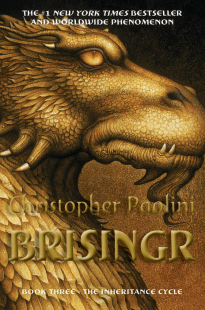
Brisingr Cover.png

The last two times that I enjoyed the books in the Inheritance Cycle, I chose to listen to them by audiobook, which are narrated by the outstanding Gerard Doyle.  Eragon is the shortest audiobook at 16 hours 27 minutes, while Inheritance, the finale, clocks in at 31 hours 28 minutes.  I am a huge fan of listening to books with large amounts of internal lore, history and background as it means I am less likely to miss an interesting fact or accidently skip over something with tired eyes.  As Paolini has created a massive amount of background lore and detail to accompany his story, I would heartily recommend listening to the Inheritance Cycle, as I felt that I absorbed so much more from the series as a result.  Doyle is an excellent narrator for this series, and at no point did I find his voice work either distracting or annoying.  His character voices are done very well, and he was able to produce excellent voices for both the male and female characters, as well as the various fantasy species.  I particularly enjoyed the Scottish accent that Doyle attributed to the character of Murtagh, as I felt it fit the character perfectly and made him very distinctive throughout the series.  Other features of the audiobook editions of this series that might appeal to potential listeners are the exclusive interviews with the author that were included at the end of two of the books.

Without a doubt, the best feature of this entire series is the sheer amount of imagination and lore that Paolini has invested in his book’s settings and history.  Each of the books in the Inheritance Cycle contains an incredible amount of background information, elaborate settings and a huge range of fantasy creatures, each with their own skills and history.  Paolini’s immense creativity is particularly evident in the series’ complex rules of magic that are a major feature of all the books.  The detailed explanation provided in Eragon is massively expanded upon in the later books in the series, and represents a significant part of the narrative.  It is also incredible to consider that Paolini created a completely new language for this magic.  With huge amounts of effort expended in creating complex lore, magic and history for all the races and peoples of Alagaësia, it is worth reading this entire series just to see all of these wonderful inclusions.

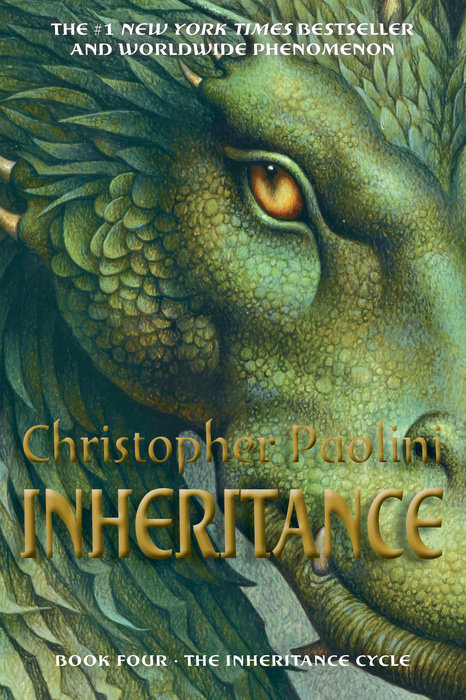
Inheritance Cover.png

There are some amazing story elements contained within the Inheritance Cycle books.  Paolini has created an epic fantasy adventure that draws the reader in and makes them care about the battle for Alagaësia.  This series has everything from impressive duels to large-scale battles that range from small groups of soldiers fighting to massive pitched battles and sieges.  There is also a significant amount of magic, politics, intrigue, romance, family and everything else that makes up a great fantasy story.  The main character, Eragon, is a classic hero coming into his great power storyline that fantasy fans will appreciate and enjoy.  However, I personally thought that the storylines that focused on Eragon’s cousin Roran were the best parts of the entire series, and business really picked up when he was made a point of view character in Eldest.  Roran is a much more grounded and likable character than Eragon, especially as he has to rely on his skill, cunning and luck to survive in a world where massive monsters and powerful magicians run rampart.

The first book, Eragon, is the only edition in the Inheritance Cycle that is told completely from the viewpoint of its titular character.  This book is a superb introduction to the series and spends significant time laying down the groundwork for the next three books.  Some great characters are introduced within this first novel, and there are a range of terrific battle scenes, the establishment of some fantastic relationships and some deep emotional moments.

The second book, Eldest, is another amazing part of this series.  Eragon spends a significant part of the book physically crippled following the final battle in Eragon, and Paolini’s descriptions of his despair and hopelessness are particularly vivid.  I am a real sucker for fantasy teaching sequences, so the scenes where Eragon learns magic, history and other subjects in the elven kingdom were really enjoyable for me.  However, the standout parts of this book focus on Eragon’s cousin Roran and the inhabitants of Carvahall.  Eragon’s actions in the first book results in Carvahall being targeted by Galbatorix and his forces, and Roran and the villages must first defend their home and then attempt to flee to the Varden.  Their exodus has some great scenes, including an extended voyage at sea, and is it fascinating to see how Eragon’s adventures impact the people he left behind.  Special mention should also be made of the scenes told from the viewpoint of Nasuada as she takes control of the Varden and leads its invasion of Galbatorix’s kingdom.  The final battle sequence of the book is another huge highlight, as the reader gets to see Eragon unleash his new powers in a massive battle scene.  The combination of the book’s three storylines into one conclusion is particularly enjoyable and epic, and there are some amazing battles and several important character revelations for the protagonist.

The third book, Brisingr, represents another fun addition to the series.  Eragon sets out on a journey of discovery during his arc.  Of particular note is the extremely intriguing look at dwarf politics and emotional reveals about Eragon’s heritage and family.  Roran’s arc is action-packed and exciting as it focuses on his role as a new member of Varden as he works his way up to becoming a high-ranking commander in the army.  The devastating conclusion to this book provides an emotional punch to the reader as one of the most likable characters meets their end.

Inheritance, the final book in the Inheritance Cycle, draws this story to its epic conclusion.  Readers who have enjoyed the first three entries in this series will have no choice but to see how this adventure ends.  Once again Roran’s arc shines through as the most enjoyable part of the entire book.  Not only does this arc focus on his own fantastic siege storyline, but it is through Roran’s eyes that we watch the massive battle for Galbatorix’s capital.  While Eragon and most of the other supporting characters are fighting Galbatorix, Roran is the only point of view character observing the fierce street-to-street combat happening in the city below.  Roran’s epic battles in this sequence more than make up for certain deficits with the main fight between the remaining Dragon Riders above.  That being said, Eragon, Arya and Angela’s earlier confrontation with a group of fanatical priests in tunnels below an ancient temple has a certain sinister edge to it that will appeal to some readers.  Offering a satisfying conclusion with a number of intriguing storylines left open for future books, this is a superb final chapter for the entire Inheritance Cycle.

While this series has a lot of great features and positive points in its favour, there are a few negative issues that need to be addressed.  When it was released, one of the main criticisms the Inheritance Cycle received was about its similarities to other works, and it’s honestly not hard to see some striking resemblances to the original Star Wars movies.  The Dragon Riders are extremely similar to Jedi, down to the unbreakable, colour-coded swords.  Obi-Wan Kenobi’s monologue from A New Hope about the destruction of the Jedi can pretty much be substituted for Brom’s description of the fall of the Riders.  The main character, Eragon, is essentially Luke Skywalker.  When we first encounter him he is living with a gruff uncle and suddenly receives a MacGuffin (in this case a dragon egg rather than a droid) that dramatically changes his life.  The arrival of the MacGuffin results in the death of his guardian and he flees the only home he knows with a mentor character.  The mentor character, Brom, the former Rider, has way too many similarities with Obi-Wan as he gives the protagonist his early, uncompleted training, provides him with his first weapon, and then dies about two-thirds through the first volume.  In the course of the first book Eragon also meets up with a rogue-like character, rescues a trapped female who he first sees from a distance (through magical scrying rather than a hologram) who later turns out to be a princess, and then flees to a rebel stronghold for an epic confrontation.  In later books Eragon meets a Yoda-like character in Oromis and finds he is related to the Darth Vader equivalent, Murtagh (after Murtagh obtains a red sword).  He eventually faces the Emperor-like villain, Galbatorix, at the very end of the series, and is forced to have a final duel with Murtagh in front of him.  Upon Galbatorix’s death and the utter destruction of his ultimate base, the heroes liberate the whole world from the control of the evil empire and Eragon sets out to teach a new generation of Riders.

These are only some of the more obvious similarities to Star Wars, and they are pretty glaring; however, this has never ruined the series for me.  Other criticisms about similarities to fantasy works such as Lord of the Rings, due to the inclusions of dwarfs and elves are a bit harder to credit, as these are hardly unique fantasy races anymore and Paolini does a fantastic job creating distinctive histories and traits for these races.

One thing that I really disliked about the series, however, is the terrible romantic arc between Eragon and the elf Arya.  Eragon pretty much falls in love with her the second he sees her, but Arya is strongly opposed to his romantic advances for various reasons.  Eragon’s unrelenting pursuit of her, especially in the second book, is very uncomfortable, and his depression and self-pitying attitude following her rejections are some of the worst parts of the series.  While their relationship in the third and fourth books becomes more natural and builds up as a result of mutual respect, I’m personally glad that Paolini doesn’t pull the trigger on their relationship at the end of the series.

I was also not a big fan of the extreme amount of self-doubt that Paolini injected into his protagonist, possibly to counterbalance the overpowered nature of Eragon.  Eragon spends way too long feeling sorry for himself, and the scenes where he deals with these feelings of inadequacy and doubt are some of the hardest to get through.  These character flaws, along with the Arya romance subplot, make it hard for the reader to like Eragon at times, and are part of the reason that I feel Roran is the better hero in the series.

While they did have some amazing parts, the third and fourth books in the series did seem to drag at times.  While I enjoyed Brisingr, when you view the whole series, I feel that Paolini could have probably gotten away with turning the series into a trilogy and simply incorporating some of the key story points into Inheritance instead.  The final conclusion of Inheritance is also a bit clichéd, especially when, out of nowhere, Eragon is able to use magic to make Galbatorix understand all the pain his actions have caused.  It’s a pretty weak way to end this epic confrontation, but luckily the reader isn’t too disappointed, especially with the epic Roran storyline down in the city ramping up the action in this part of the book.

Despite the above criticisms, I still rate all of the books in the Inheritance Cycle four stars out of five.  While this rating may be slightly bolstered by nostalgia, I do believe that this is an excellent series that will appeal to many fantasy fans, especially those younger readers who are only just starting to read the genre.  With an absolutely incredible amount of fantasy details, world history and established lore, I am still amazed by Paolini’s sheer imagination every time I go back to this series.  There are some electrifying storylines within all four of these books, as well as enough action, be it physical, mental or magical, to make any action junkie’s pulse run wild.  Readers looking for the next epic fantasy series to enjoy will find an incredible adventure awaits within the Inheritance Cycle.

My Rating (Series and Each Book):

Four stars