The Dragon in Winter by Jonathan Maberry

Publisher: Macmillan Audio (Audiobook – 20 August 2024)

Series: Kagen the Damned – Book Three

Length: 20 hours and 57 minutes

My Rating: 5 out of 5 stars

Amazon

The damned rush to their final battle in the epic dark fantasy novel, The Dragon in Winter, which brings an exceptional conclusion to author Jonathan Maberry’s Kagen the Damned series.

As I mentioned in my recent review for the author’s other 2024 release, NecroTek, I am a huge fan of Jonathan Maberry, having really gotten into his elaborate and deliciously gritty thrillers and other pieces of fiction since I started this blog.  While I am most familiar with the author’s long-running Joe Ledger series, one of his more intriguing recent bodies of work has been the Kagen the Damned series.  A dark fantasy fiction series that follows a highly damaged figure who seeks bloody revenge after the dastardly Witch-king uses magic to destroy his kingdom and kill the royal children in his care, the Kagen the Damned books were an incredible pivot into the fantasy fiction genre for Maberry that I deeply enjoyed.  Both of the previous books in the series, Kagen the Damned (one of my favourite books and audiobooks of 2022) and  Son of the Poison Rose (one of my favourite books and audiobooks of 2023) were five-star reads, and I have so much love for this series (which also includes the novella I Say Your Name in the Dark Nights) due to its elaborate storytelling, damaged characters, and intriguing take on the fantasy genre.  Because of how impressive the first two entries in this series are, I have been eagerly awaiting the third and seemingly final book, The Dragon in Winter, for a long time, and it was one of my most anticipated books of 2024.

Nearly a year after the bloody massacre that saw the dread Witch-king of Hakkia conquer the former Silver Empire in a single night, the war to reclaim the throne is finally here.  As the Witch-king continues to plot, planning to ascend to godhood, his enemies have rallied around the unlikely figure of Captain Kagen Vale, better known as Kagen the Damned.

Once the loyal guardian of the Silver Empire’s heirs, Kagen has survived despair, damaging revelations and damnation from his gods to stand against the Witch-king and gain the bloody vengeance he so desperately needs.  Having proven his valour in combat and his ability to face off against the darkest of magic, Kagen has managed to gather a massive army of rebels, outlaws and the soldiers of various allied nations determined to stop the Witch-king for good.  But this army of flesh and blood men will not be enough to stand against the destructive power of the Witch-king alone.

As magic continues to return to the land, Kagen and his allies soon find themselves beset by the Witch-king’s sinister powers and dread allies, as vampires, demons, magic users and other fell creatures emerge, determined to keep the Witch-king on his bloody throne.  To survive, Kagen will need to find magic of his own that will allow him to withstand the Witch-king’s power.  But the more he looks, the darker secrets he unravels, and soon everything he thought he knew about the world will come tumbling down around him.  Worse, an even more dangerous threat is rising in the frozen north, as a tortured dragon calls out in despair and is answered by a being of unimaginable power.  Can Kagen stop the Witch-king before his dark plans come to pass, or will the dread flames of vengeance consume the entire world?

What an outstanding end to one of my favourite new fantasy trilogies!  The Dragon in Winter was another exceptional novel from Jonathan Maberry that serves as a fitting and powerful end to the Kagen the Damned dark fantasy series.  Loaded with insane action, brilliantly damaged characters, and some fantastic storytelling, The Dragon in Winter was an incredible book that perfectly utilises Maberry’s distinctive style.  I had an amazing time listening to this impressive book, and it gets an easy five-star rating from me, especially on audiobook.

Maberry had to achieve a lot with this third Kagen the Damned novel, as not only did readers require a satisfying end to the trilogy, but this book needed a distinctive story much like the previous entries.  I feel that Maberry achieved both these goals, as The Dragon in Winter was a compelling and dark read that provided a great mixture of adventure, war, intrigue and character growth, all while continuing and concluding the storylines from the previous books.  This third novel starts shortly after Son of the Poison Rose and sees Kagen taking on the role of general by leading a small army against the Witch-King’s forces, while the previously established story threads about the various nations building their armies to join the war come to fruition.  Maberry does a great job of resetting the scene in these early chapters, and not only do you get to see the situation from Kagen’s perspective but multiple scenes are shown from the antagonists’ side as they make their preparations to foil the protagonist and his allies.

Much of the middle of the story follows Kagen and his unlikely allies as they prepare for the inevitable final confrontation, attempting to gain additional ways to fight against the Witch-king.  While some of Kagen’s sequences aren’t entirely necessary for the full advancement of the plot (the goblin cave sequence, for example), they are all generally intense and character building, and they all tie in nicely amongst the other storylines about war preparations and the Witch-king unleashing his dark minions upon the world.  A secondary major storyline focuses on the characters of Jheklan and Faulker, Kagen’s brothers, who journey up to the frozen Winterwilds in search of the last dragon.  This storyline proves to be quite an interesting addition to the story, as while the characters are disconnected from the rest of the plot due to distance, their actions have big impacts on the overarching narrative.  This middle part of the story ends with a major confrontation between a memorable supporting character and a dark set of antagonists, which was not only very awesome but helped to set the scene for the rest of the book.

The final third of The Dragon in Winter is all action and excitement as the final battle of the war is unleashed on multiple fronts.  Maberry expertly brings all the various ongoing storylines to the boil, as the protagonists find themselves in mortal peril.  There is a little bit of everything here, including massive war sequences, smaller battles with huge sacrifice and big revelations finally coming to the surface.  The author keeps the tension extremely high during this third act, and you are constantly on the edge of your seat, especially as your favourite characters face doom and destruction at every turn.  I loved the way many of these storylines came together, and while a couple of big moments were easy to see coming (although for me that just increased the anticipation), there were also some reveals I couldn’t have predicted.  This includes the book’s massive twist that turns around much of what you thought you knew for the last two entries in the series.  I felt that this twist was very clever, especially when you consider the subtle hints leading up to it, and I appreciated how it changed the emotional impact of some previous scenes.  Everything leads up to the big final confrontation, which was as bloody and hard-hitting as you would expect.  This confrontation was chaos, carnage and catastrophe, and I felt that it was a fitting end to a dark trilogy that revelled in bloodshed.  While I do feel that the final boss takedown was a tad anticlimactic due to who got the kill, and Maberry reigned in the tragedy far more than I expected, this conclusion was extremely awesome, and I hung on every word right to the very end.  Everything was very nicely wrapped up, although there is potential for Maberry to revisit this series in the future, which could result in some more gripping adventures.

I always love the way that Maberry manages to apply his distinctive writing style to all his novels, no matter the genre, and it always works to create a powerful and exciting read, especially in The Dragon in Winter.  The large number of short chapters allows for a quick pace, and you are constantly jumping from sequence to sequence, eager to see what will happen next.  Maberry also excels at featuring a huge range of alternating perspectives as the book continues, with the point of view jumping around various interesting characters chapter to chapter.  While much of this focuses on the main protagonist, you are often following many of the fascinating and fun supporting characters as they go about their own adventures.  There are also multiple chapters shown from the perspective of the villain or his minions, and I love how the reader are constantly let into the antagonist’s plans, which helps to raise tension as you worry that they are one step ahead.  Throw in several additional perspective chapters from one-off characters, which often help to highlight some of the darker events going on in the wider setting, and this great jump in perspectives allows for a particularly complex and layered narrative that is so fun to navigate.  Of course, the real highlight of any Maberry book is the exceptional action sequences that pump some massive excitement into the plot.  Maberry is extremely talented at envisioning fight scenes of any size or shape, and I found myself constantly enthralled by the many, many battles that were contained in The Dragon in Winter.  This includes deep personal battles, running skirmishing or even a truly massive full-on war sequence with unique participants, all of which come across extremely well thanks to the author’s powerful and descriptive writing that captures every sword thrust or slice of the protagonist’s blades.

The Dragon in Winter continues to exhibit many of the dark fantasy elements that made the first two Kagen the Damned books so awesome to read.  Maberry really dove into the genre with a vengeance in this series, and I love how he pulled together a rich and powerful fantasy world loaded with both unique features and classic fantasy creatures and monsters.  Thanks to the author’s detailed writing and tendency to effectively recap key elements of the series, readers can easily absorb all the key elements of this universe, and it proves to be fascinating to take in, especially as Maberry loads it with secrets, deep history, and hints of other lands yet to be visited.  Of course, as this is Maberry, there is also a strong Lovecraftian vibe to this universe, as many of the elder gods and other associated beings have a place in this realm.  The author does a great job of exploring these classic Lovecraftian creatures throughout the course of the series, and the way they are worked into the main plot of The Dragon in Winter is extremely clever, especially if you have seen examples of them in some of Maberry’s other series.  For readers expecting a typical fantasy read, I should warn that The Dragon in Winter, like the rest of the Kagen the Damned series, gets very dark and brutal at times, and there are a lot of strong references to violence, torture, sexual assault and other troubling features that probably won’t appeal to every reader.  I feel that while Maberry occasionally goes a bit overboard with these darker inclusions, for the most part it helps to create a powerfully grim overarching tone that raises the stakes and ensure you are constantly rooting for the protagonist to succeed and bring a bit of justice to the world.  It also works very well alongside the awesome action sequences, and for those fans of some very bloody fights, including those featuring pure evil fantasy and horror creatures, you are in for an amazing time here.

While the action, setting and clever storytelling is an exceptional part of The Dragon in Winter, I also need to highlight the various impressive characters featured throughout this book.  Due to The Dragon in Winter being the last entry in this trilogy, Maberry spends much of this book finalising key character storylines, allowing for a much more personal entry in the series that will really appeal to those readers who have grow attached the protagonists in the first two books.  As such, this final Kagen the Damned novel features an array of great characters who are so well written and who often feature their own powerful and personal character arcs. 

Like with the rest of the series, much of the book’s character work is focussed on the main protagonist, Kagen Vale, who thanks to the dark deeds he has witnessed has been given the title Kagen the Damned.  A moody and deadly figure, Kagen has gone through so much despair and darkness in this series, and it has been a powerful journey following him this far.  Maberry did an outstanding job continuing Kagen’s story in The Dragon in Winter, and it was great to see how far Kagen has come, especially as he now uses his inner darkness, past trauma, and even the damnation of his gods, to fuel his desire to fight.  While he has overcome many of his past traumas, Kagen does experience new ones in The Dragon in Winter, as he finally understands the full scope of the evils unleashed upon the world, including by his own people.  This allows for some more dramatic sequences from the protagonist, and part of the emotional strength of the story is watching Kagen overcome even these revelations, especially with the help of his friends.  I have really appreciated how well Maberry has written Kagen’s pain and deeper heart throughout the series, and it was fantastic to see some of this pain finally come to an end in this final novel.

Aside from Kagen, the rest of the supporting cast proves to be quite exceptional, and there are many fascinating characters you become attached to as a result.  I personally loved seeing more of Kagen’s two friends and comrades, Tuke and Fillia, who form a hilarious put powerful trio as they fight together against the odds.  Essentially Kagen’s conscience and voice of reason, Tuke and Filia are the perfect supporting characters to the protagonist, and I love how they constantly anticipate Kagen’s behaviour and manipulate events to ensure he does what they want.  However, they also have their own compelling adventures outside of Kagen, especially when they lead the final battle, and you care nearly as much for them (if not more) than you do Kagen by the end of things.  Maberry also invests a lot of time in The Dragon in Winter to the amusing characters of Jheklan and Faulker Vale, Kagen’s brothers and mischievous adventurers.  While they have had minor appearances in the previous novels, Maberry only featured them as major, fleshed out characters in this final book, as they lead their own expedition to the frozen Winterwilds.  While they are relatively new figures, the reader quickly becomes intrigued by their storylines, especially as it is loaded with adventure and a certain comedic charm thanks to the brother’s juvenile nature.  However, while they are often unserious, when the chips are down Jheklan and Faulker get serious quick, and Maberry ensured that they encounter some real tragedy that shows the true heart of these figures.

While there are other great supporting characters I could talk about, including a vengeful widow and a scarily powerful vampire elf, I want to finish by mentioning the various villains, who are some of the best characters in The Dragon in Winter.  This includes the sinister Witch-king and his court, who are constantly plotting to destroy the world and kill Kagen.  The Witch-king is particularly malevolent in this book, and Maberry continues to build on the revelations surrounding him in this final book, providing even more fun context and twists.  I also love the continued focus on the Witch-king’s terrified advisors, Lord Nespar and Jakob Ravensmere, who find themselves way over their heads as they try to serve their lord and their own agendas.  However, the devilishly fun character known as the Prince of Games easily steals every scene he is in, and I loved his constant manipulations and chaotic nature, especially as it brings great fun to the Witch-king’s dark court.  The Prince of Games, who has some interesting links to some of Maberry’s other series, perfectly rounded out this cast of villains, and I really appreciate how much depth and complexity these antagonists, and indeed every character in the Kagen the Damned series, brought to the overall story.

As with all Maberry’s previous books, I chose to check out The Dragon in Winter on audiobook, which is the best format to enjoy the author’s captivating narratives in.  Maberry’s short chapters, elaborate world building, intense action and over-the-top characters really come to life when they are read out loud, especially when it is done by the legendary Ray Porter.  Porter has long perfected the tones to get the most out of Maberry’s writings and his infectious and compelling voice expertly captures the inherent dark nature of Maberry’s writing and helps to send the crazy scenes of carnage straight into the listener’s head.  The narrator knows exactly how to portray Maberry’s great, larger-than-life protagonists and villains, and you can easily imagine each of the figures and their actions as Porter reads them out.  I particularly enjoy how well Porter captures the various emotional states of these characters, and you always hear the despair, anger or fear of each of these figures when they speak.  This especially true for the primary protagonist, Kagen, and I always appreciate how well the narrator showcases his many dark emotions as he goes through the wringer time and time again.  Throw in some truly chilling voices for the various villains and evil monsters that the protagonists encounter, and Porter’s performance was once again exceptional, allowing for quite an awesome audiobook.  With a runtime just short of 21 hours, this is a long audiobook to check out, although you really don’t mind as it becomes hard to stop listening to The Dragon in Winter, especially during the various climatic or intense sequences.  I had such a great time listening to The Dragon in Winter, and this such an amazing format to enjoy this latest Maberry novel on.  Indeed, I loved it so much I listed it as one of my favourite audiobooks of 2024, even before I finished it, so do yourself a favour and check out this novel on audiobook right away.

Thanks to its powerful story, intense action and damaged characters, The Dragon in Winter was another incredible read from Jonathan Maberry that I could not get enough of.  One of the best books of 2024, The Dragon in Winter was an outstanding final entry in the Kagen the Damned series, and I loved every single second I spent reading it.  Highly recommended on all formats, especially those read out by Ray Porter, The Dragon in Winter is so damn good, and it will be interesting to see if Maberry decides to return to the fantasy genre again the future.  In the meantime, we’re only a few months off from Maberry’s next book, Burn to Shine, which will probably be one of the best things I read in 2025.
Amazon

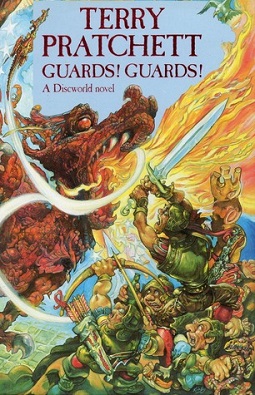
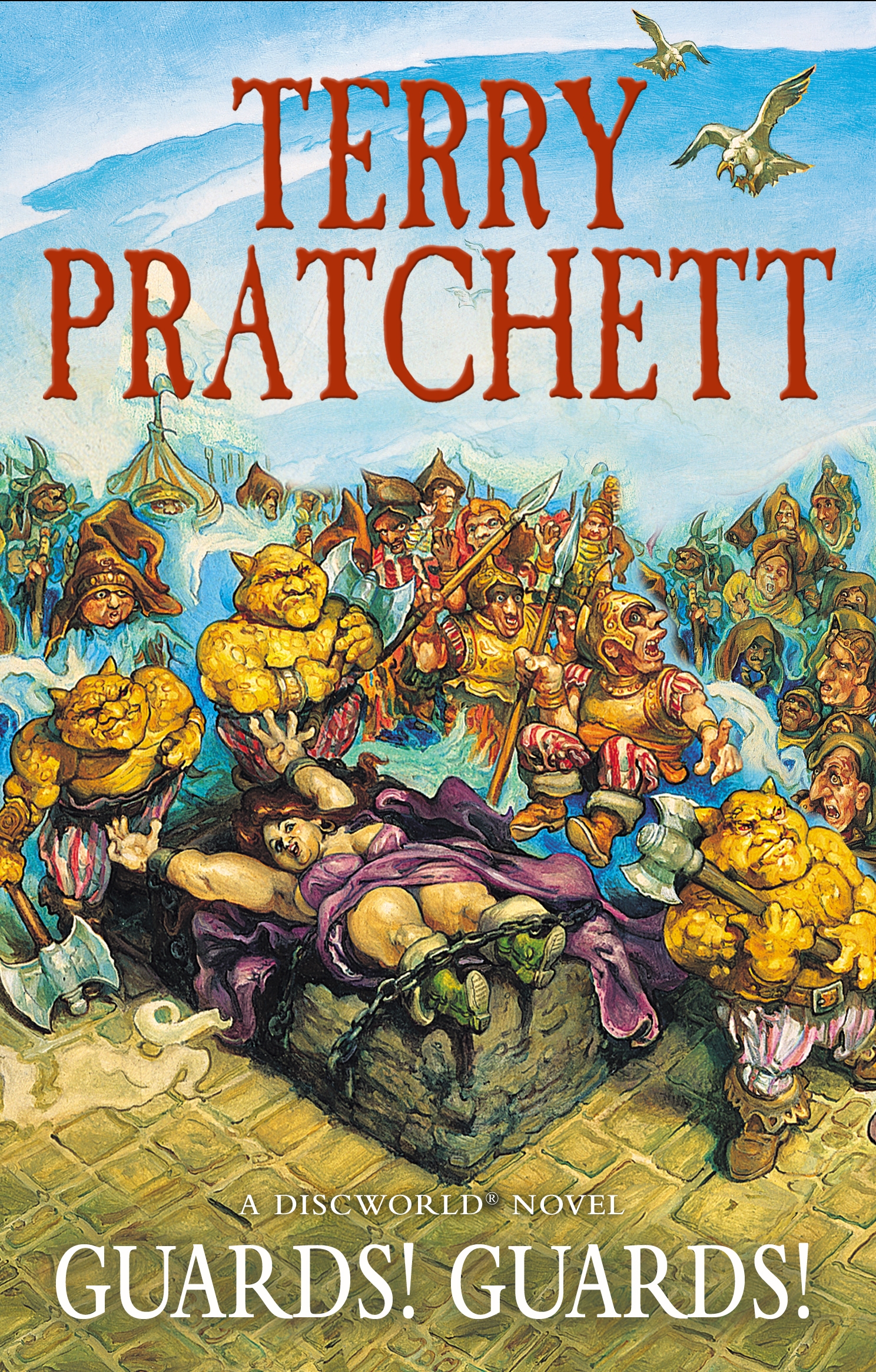
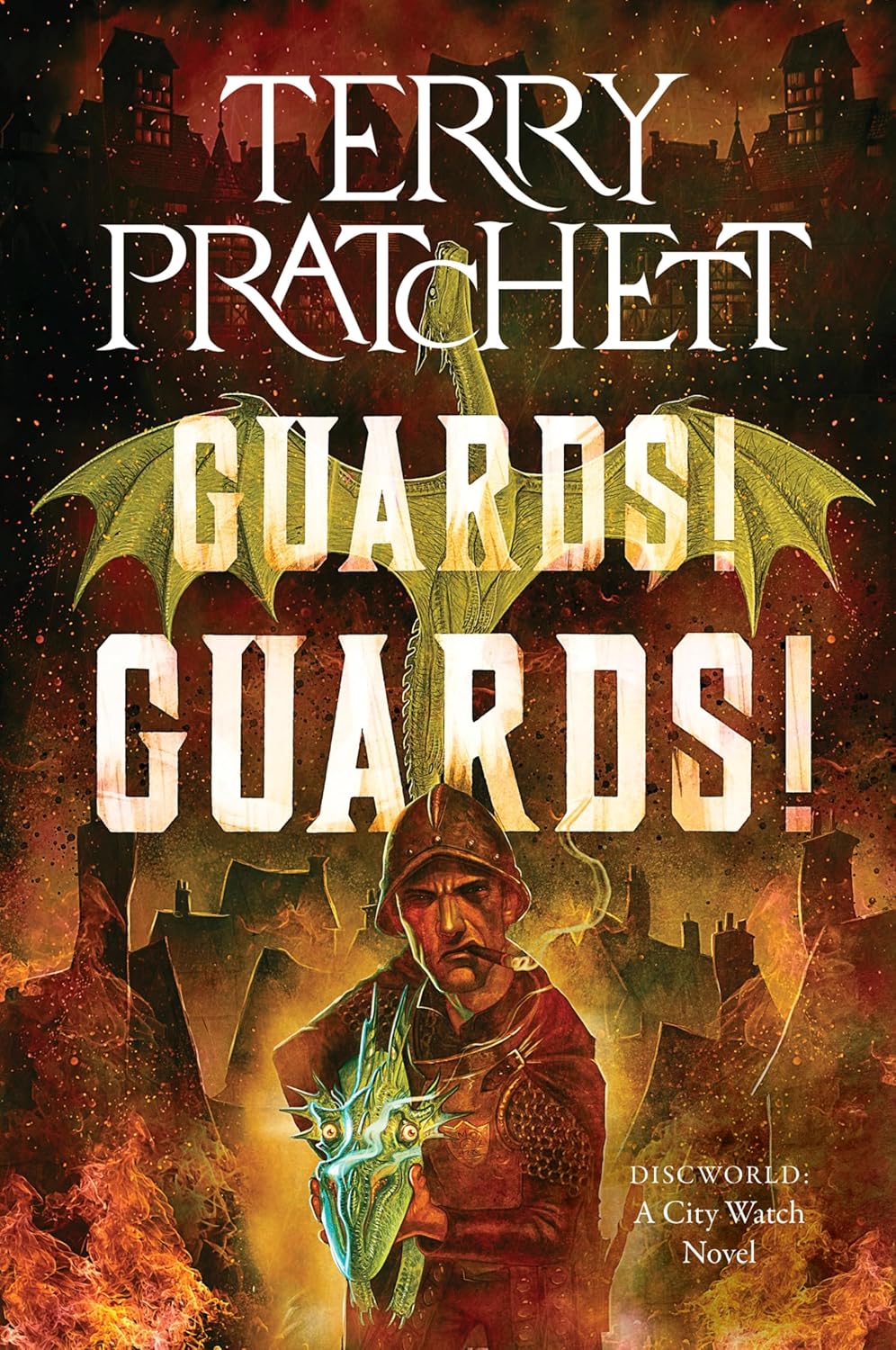
Guards! Guards! by Terry Pratchett

Publisher: Gollancz/Penguin Audio (Audiobook – 1989)

Series: Discworld – Book 8 / City Watch – Book One

Length: 13 hours and 29 minutes

My Rating: 5 out of 5 stars

Amazon

I recently revisited one of my favourite books in Terry Pratchett’s iconic Discworld series, Guards! Guards!, and I just had to review it to showcase how much fun this series can be.

I have never made any secret of the fact that I love all things Terry Pratchett as the Discworld books were one of the formative series of my youth.  A massively popular series set on a flat world carried through space on the back of a giant turtle and four elephants, the Discworld books present a range of unique fantasy adventures, backed with exceptional comedy and satire.  This series is so much fun, and I honestly love every single Discworld book, having read them all multiple times, usually while laughing myself silly.  Indeed, I am such a big fan of this series that I named my blog after a location in the universe.  Despite my overwhelming love for this series, I haven’t reviewed many Discworld books (the exception being Moving Pictures and The Last Continent).  That changes with my review of the outrageously funny Guards! Guards! which I recently enjoyed while on a road trip.

Guards! Guards! is a particularly entertaining addition to the Discworld series that I have a lot of love for.  Serving as the first book in the City Watch sub-series, Guards! Guards! sees Pratchett blend his typical fantasy and comedy elements with a complex murder mystery.  This book follows the ragtag city watch of this world’s main recurring city, Ankh-Morpork, as they try to solve a series of deaths caused by a monstrous murder weapon.  Due to its brilliant and hilarious story, as well as the fact that it perfectly sets up the rest of the awesome City Watch books, I generally consider Guards! Guards! to be one of my absolute favourite Discworld novels, and I have featured it in various Top Ten Tuesday lists over the years.

On the fantastical and impossible Discworld no place is more dangerous, corrupt or morally unhealthy as the legendary and stinking city of Ankh-Morpork.  The Disc’s largest city, Ankh-Morpork has many terrors haunting its urban depths, where life is cheap and death lurks around every corner.  However, not even the hardest criminals, deadliest wizards or most manipulative politicians are prepared for an ancient and malevolent creature that is about to be unleashed upon the city.

A shadowy secret brotherhood has engineered an elaborate plan to seize power in Ankh-Morpork through use of an unlikely weapon, a dragon.  Summoning a fully formed fire-breathing dragon to cause terror, the brotherhood hopes to use the resulting carnage to bring in their own puppet to control the city.  However, the dragon has its own ideas about what sort of terror it wants to bring down on humanity.

With the rest of the city powerless against the dragon, it falls to the ramshackle Ankh-Morpork Night Watch and its depressed captain, Sam Vimes, to try and stop it.  The only problem is the Watch are the biggest joke in the city, incapable of standing up to normal crime, never mind carnage caused by magical dragon.  But with an unnaturally keen new recruit guilting them into action, and a terrifying dragon fanatic with a crush on Vimes keeping them in line, the Watch is going to try and save the day, even if no-one wants them to.

Guards! Guards! still reigns supreme as one of my top Discworld novels from the always impressive Terry Pratchett.  Featuring a unique plot, loaded with an outstanding mix of mystery, humour and fun fantasy elements, Guards! Guards! brilliantly sets up one of Pratchett’s best sub-series while presenting its own epic and powerful story.  An exceptional read from start to finish, this book gets a very easy five-star rating from me, and I love it so damn much.

The plot of Guards! Guards! is so damn clever and is peak Pratchett in its inventiveness and impressive characters.  Presenting an entertaining and humourous noir murder investigation in a fantasy series, Guards! Guards! has a lot of moving parts to it, including some impressive character-driven story arcs, all of which come together beautifully for a particularly intense and insane story.  Starting off very strong with some great introductions to various key characters, including the young and keen Carrot Ironfoundersson, who journeys to the massive and corrupt city of Ankh-Morpork to join the Night Watch, providing fresh blood, irrepressible honesty and uncontrolled enthusiasm to the small squad of rejects and failures currently staffing it.  Carrot’s arrival corresponds with the start of a bold conspiracy, as a secretive mystic brotherhood plots to dethrone the Patrician and take over the city.  The initial scenes of this book are extremely good, and I love how Pratchett expertly sets up the entire narrative with some hilarious moments, including the opening sequence with the Elucidated Brethren of the Ebon Night, whose petty ideology shows you just what sort of criminal minds we are truly dealing with.

Things go in a chaotic direction as the Night Watch, led by the drunk and depressed Captain Vimes, witness a direct murder by dragon and begin their own investigation into the matter.  Pratchett expertly pivots the story around from its comedic fantasy start into a complex police procedural/noir murder investigation, as the protagonists try to find out why the dragon is terrifying the city and who benefits from the apparent crime.  At the same time, several great character arcs emerge, including a truly nice, if unconventional romance, new friendships, and a fun analysis of dragon mythology.  There is a great twist about halfway through the book as the down-and-out Night Watch witness an interesting change to the classic dragon fantasy tale that sees a unique king take over the city.

The final third of the book is some of Pratchett’s strongest writing, as Vimes identifies the true culprit and must work to undo the damage they caused.  There are some great moments in this last part of the book as Pratchett presents his own unique and hilarious take on classic fantasy tropes, including the famed million-to-one shot, the heroic rescue, and the successful defeat of a dragon.  I felt that the identity of the main villain of the story was very clever, and Pratchett sets it up well with subtle clues, although if you know Pratchett’s thoughts on certain government positions it’s not too surprising.  Still, the final confrontation between the protagonists and this villain is great, and being literal has never been so deadly.  Pratchett leaves Guards! Guards! on a hopeful note, and it’s impossible not to come away with a smile on your face.

Pratchett was really on-point when it came to writing Guards! Guards! and I loved how perfectly it came together.  As with all books in the Discworld series, Guards! Guards! features an exceptional mixture of fantasy and humour elements, as the unusual and cynical Discworld produces some unusual situations, layered in with a great plot and some fantastically complex characters.  A lot of the humour is derived from classic fantasy scenarios that are taken up to 11 and shown in outrageous manners, accompanied by sarcastic comments from the characters as they witness them.  For example, this book serves as an ode to the guards and watchmen from classic fantasy fiction, and there are some funny scenes when these self-aware guards realise how expendable they are in a fantasy story.  However, Guards! Guards! also features a brilliant third element as Pratchett also features a compelling crime fiction read, accompanied with an addictive murder mystery.

The blend of fantasy and crime fiction elements works incredibly well, and it is highly entertaining to watch a serious investigation consider magic, suddenly appearing dragons, and the unique background setting of Ankh-Morpork.  I also loved how many clever and subtle jokes Pratchett was able to weave in because of these crime fiction inclusions, and he ends up lovingly roasting so many classic tropes from police procedurals and noir detective novels.  Despite having read this book many times, I still laugh like crazy at all the humourous moments in Guards! Guards!, especially as you always discover a new joke or pun you previously missed.  I honestly don’t have time to list all the funny scenes in Guards! Guards!, but favourites include the various meetings of the petty and mostly incompetent Elucidated Brethren, Carrot’s naïve overreactions upon discovering crime in the city, and various musings on how to achieve a perfect, million-to-one chance.  Pratchett once again expertly backs up his humour in Guards! Guards! with a series of entertaining footnotes spread throughout the book, that prove to be nearly as much fun as the main story.  These brilliant footnotes contain additional jokes, sarcastic comments, or interesting expansions of the Discworld universe, and they always bounce off the main story perfectly, providing extra laughs and food for thought where necessary.  I really cannot emphasise just how well this blend of genres worked with Pratchett’s unique and endearing humour, and it proves impossible not to have an exceptional time while reading this book.

As with most Discworld books, Guards! Guards! works exceedingly well as a standalone novel, and I feel that anyone wanting a laugh could easily jump in and follow the story without any issues.  Due to its early position in the shared Discworld universe, you don’t have to know anything about the other entries in the overarching series to jump right in, as Pratchett goes a tad light on some of the more outrageous Discworld elements.  As such, I consider Guards! Guards! to be one of the very best entry novels to new Discworld readers.  It also proves to be a brilliant first book in one of Pratchett’s best sub-series, and so many key details of the subsequent City Watch books are introduced here.  This includes some excellent early looks at the chaotic city of Ankh-Morpork and key recurring characters in the larger universal plot.  Ankh-Morpork is a great background setting for Guards! Guards! and it was the first book completely set within the bounds of the city.  I loved seeing this crazy city in even more detail, and all the fun elements set up here help to make it an epic setting.  As such, this is a great book for any Discworld reader, new or old, and it’s one of my favourites for very good reason.

As with pretty much all of Pratchett’s works, the key things that made Guards! Guards! so impressive were the amazing and unique characters that were featured throughout the plot.  Pratchett had a real knack for producing complex, multi-layered figures who can be both comedic and tragic at the same time, and who you couldn’t help but love.  Guards! Guards! was a particularly good example of this, as Pratchett featured a range of brilliant and entertaining characters who would go on to be become major recurring figures in the Discworld canon.  Indeed, Guards! Guards! is one of the most significant books for new characters, and it is frankly amazing how many exceptional major and iconic figures were introduced here.  Each of these characters were so well written, and you have to love both their specific arcs in this book, as well as how they were expanded on in later works.

The most prominent character in Guards! Guards! is Captain Samuel Vimes.  A cynical and damaged man whose habit of calling out social inequities has seen him assigned to the joke position as head of the Night Watch, which he deals with by drinking vast amounts of alcohol.  A parody of every hard-drinking cop and private eye in classic noir fiction, Vimes starts the book with no prospects and too many dead friends.  Given new purpose when the dragon appears in the city, Vimes turns his innate rebellion to a purpose and tries policing and detecting.  Pratchett does an exceptional job setting up Vimes here in Guards! Guards!, and it is no wonder he goes on to be one of his top protagonists.  Vimes’s depressed investigative method proves quite successful, and it was entertaining to watch Vimes attempt to solve the case while sarcastically calling out his fellow citizens’ base stupidity and selfishness.  Pratchett also sets up an impressive redemption arc around Vimes, which comes about through a combination of trusted colleagues, romance, and a renewed determination to uphold the law.  While he ends the book still irritated with the world, the road forward to Vimes doing bigger and better things is well established, and you really get drawn into his arc as a result.

Another impressive character is naïve and innocent City Watch recruit, Carrot Ironfoundersson.  Due to his complex home situation and a late life revelation that he’s human rather than a dwarf (being six and a half feet tall wasn’t a clue to him), Carrot is sent to Anhk-Morpork with a desire to become a watchman, which he incorrectly believes is a noble calling.  Thanks to his literal personality and highly moral upbringing, Carrot proves to be an anathema to the lawless folks of Anhk-Morpork, as he comes to town bringing justice, enforcing obscure laws, and actually arresting thieves: “change your ways”.  A brilliant parody of ultra-righteous fantasy kings, Carrot serves as an outstanding comic relief for much of the book, especially when it comes to his wholesome interactions with the exceedingly criminal inhabitants of the city.  However, beneath his comedic cover, Carrot is written as a complex figure of change, and his ability to inspire the other characters, either through guilt or determination, leads to some big moments.  Pratchett did an amazing job with Carrot in Guards! Guards!, and it was fascinating to see how he evolves from his initial innocent personality, to a more clever, but still determined, character.

Aside from Vimes and Carrot, the other two watch characters are Sergeant Fred Colon and Corporal Nobby Nobbs, both of whom are excellent and solid comedic characters.  The stereotypical fat sergeant and dodgy corporal, Pratchett has fun setting them up as unassailable fixtures of the Night Watch as they do the jobs nature intended for them, and I love how they play off each other.  While Colon has some hilarious scenes, including his attempt at archery and his various ill-timed run-ins with the dragon, you can tell that Pratchett had a lot more fun writing Nobby.  While not all his over-the-top characteristics from the series are shown in Guards! Guards!, Nobby is still a particularly entertaining figure.  Between his coarse language, petty criminal mindset, and uncharacteristic foppish behaviours, every scene with Nobby is highly amusing, and I love how Pratchett expanded off clever stereotypes about lifetime corporals to create this wayward figure.

Outside the members of the City Watch, there are a fantastic array of figures who help to make Guards! Guards! a particularly enthralling story.  This includes one of the few female characters in the book, Sybil Rankin, a dragon-loving heiress who ends up being Vimes’s unlikely love interest.  Deliberately written as the direct opposite of a noir femme-fatale in both personality and appearance, Sybil is a force of nature, using her accumulated nobility to pull the Night Watch, especially Vimes, into her orbit.  It proves impossible not to like Sybil as you watch her confidently go after Vimes or try to put the dragon to heel, and she ends up being one of the most complicated female characters that Pratchett wrote (which is saying a lot when you think of some of his other great female characters).

The other major character that I want to separately highlight is the Patrician of Ankh-Morpork, Lord Havelock Vetinari.  While he has appeared in previous Discworld novels (notably Sourcery), this is the first book that showcases him as a full character.  Generally depicted as a Machiavellian mastermind and one of the few people capable of controlling the chaotic city, Vetinari has some great early scenes.  However, it’s not until the second half of the book when you realise just how fantastic a character he is.  Deposed by the false king, Vetinari initially appears to be completely powerless in the dungeons, until Vimes is thrown in with him and begins to realise that he is still in control, especially as he’s managed to cultivate a new intelligence network (procured by providing wartime strategy to magical rats), while also getting locked in a dungeon specifically designed to keep him safe.  His subsequent scenes tormenting the book’s real antagonist and talking about the nature of humanity with Vimes really cement him as an impressive figure, and the seeds for his many later inclusions as the Disc’s ultimate political mastermind are well sown here.

While I know I’ve been going on a bit about characters (blame Pratchett for being such a good writer), I just need to highlight a few more figures who have a great role in Guards! Guards!.  This includes the Librarian, one of Pratchett’s most iconic characters, who proves to be just as much fun outside of a wizard focused book, and it was entertaining seeing him interact with a separate group of friends.  You get a great introduction to the character of Cut-My-Own-Throat Dibbler, whose mercantile tendencies are on full display here.  The unusual swamp dragon Errol proves to be an unlikely pet, and his arc about finding love and his true form was particularly heartwarming.  Finally, I must mention the book’s great antagonist, who fully embraces the mad tendencies that his position demands.  While I won’t go into too much detail about who he is, I will say I loved seeing his various internal rants about the world, and the scenes with his incompetent henchmen were so damn funny.  All these characters, plus even more hilarious figures, are instrumental to so much of Guards! Guards! brilliant charm and humour, and after being introduced to them here, it’s impossible not to follow them on their full journey.

I have had the pleasure of reading Guards! Guards! in a couple of different formats over the years, but to my mind the best way to enjoy this book, and indeed any Discworld novel, is on audiobook.  The Discworld audiobooks are something very special, and I find that the unique stories, excellent humour and elaborate characters really come across when read out by a passionate narrator.  With the recent re-release of various Discworld audiobooks, there are now two different unabridged versions of Guards! Guards! fans can enjoy, and I want to highlight them both here.

The first Guards! Guards! audiobook is the original version with the talented Nigel Planer, who narrated 22 of the original 23 Discworld audiobooks.  Guards! Guards! is one of his best performances, and it set the scene nicely for many of his subsequent Discworld audiobooks, especially as he settled on a lot of key character voices and tones here.  While it has been a little while since I’ve listened to Planer’s version of Guards! Guards!, I have enjoyed it so many times it is permanently engrained in my head (I used to grab the tape cassette version out of my local library all the time).  Planer, who does all the voices himself, really captures the essence of Pratchett’s storytelling and excels at expressing the author’s unique humour through his vocal work.  I also felt that his portrayal of many of the key characters was second to none, and he really brought to life all the City Watch protagonists, as well as some other long-running figures, in some impressive ways.  He would revisit many of these voices in multiple subsequent performances, and it is a testament to his skill that the initial tones he came up with here, worked so well in the later books.  I frankly have so much love for Planer’s original take on Guards! Guards!, which definitely still stands the test of time, and his excellent and heartfelt voice work defines many of the City Watch characters for me.

While Nigel Planers original version is perfect, current Discworld fans may be more familiar with the latest audiobook production of Guards! Guards!, which was part of a recent re-recording of all the Discworld books.  These new audiobooks each feature a different famous British performer voicing the main plot, while acclaimed actors Peter Serafinowicz and Bill Nighy have key roles in every single production.  While these have been out for a little while, I only just listened to my first one .  Coming in at a runtime of 13 and a half hours, which is a tad longer than the roughly 10-hour long Planer version, this Guards! Guards! audiobook was extremely fun, and it served as excellent entertainment on a recent road trip.

The new version of the Guards! Guards! audiobook is primarily voiced by British radio and television personality Jon Culshaw.  Culshaw is amazing in the role, and I was deeply impressed with his take on the Guards! Guards! characters.  Each unique character comes across extremely well in Culshaw’s capable hands, and I enjoyed his take on their unique characteristics and eccentric personalities.  He perfectly showcased protagonist Samuel Vimes’s drunken despair and depression, while various other key members of the watch, such as the extremely keen Carrot and the more cautious Colon, are shown extremely well.  I also felt that Culshaw did an incredible job with several complicated figures from the story, such as the infamous watchman Nobby Nobbs, who Culshaw gifts a gruff and weaselly voice that sounded a lot like David Bradley or Jon Pertwee.  His Lord Vetinari is also amazing, and the deep and threatening tones really capture the character’s dangerous nature.  Finally, I felt that his take on the main female character, Sybil Ramkin, was just perfect, and you really got the full blast of her big personality and excessive aristocratic characteristics.  Many of the other side characters were also perfectly portrayed to my mind, and I must highlight the excellent way in which he disguised the voice of the main antagonist during some key secret society scenes.

Culshaw’s primary narration is well backed up by Peter Serafinowicz and Bill Nighy in their respective roles.  Serafinowicz provides the voice of Death whenever he appears in this audiobook, which works out extremely well even with Death’s relatively minor role in Guards! Guards!.  Serafinowicz has an exceptional Death voice, and hearing it suddenly appear throughout Guards! Guards! is so damn epic, especially during one scene where Death is hiding amongst the soon-to-be deceased.  Nighy, on the other hand, narrates the various footnotes.  Nighy was a perfect choice for this, and his calm, consistent tones, echoing Peter Jones’s similar role in The Hitchhiker’s Guide to the Galaxy radio and TV editions really highlighted the subtle comedy of these footnotes.  I felt that all three of these distinctive actors really vibed together in the Guards! Guards! audiobooks, and the switch between them was seamless, allowing for a particularly awesome listen.  Throw in an interesting short afterword about fantasy elements by acclaimed author Ben Aaronovitch, and this proved to be a remarkable and compelling audiobook I could not get enough of.  While Nigel Planer’s original narration of Guards! Guards! is always going to live in my head rent free, I felt that this new version more than lived up to the hype surrounding it, and I really appreciated the unique and powerful performances these new narrators brought to the table.  Frankly both of the audiobook versions comes highly recommended by me, and it is impossible to be dissatisfied by them at all.

Whew, well in case you could guess from this massive review (it got away from me), I love Guards! Guards! and I have some very strong feelings for it.  One of Terry Pratchett’s best Discworld novels, Guards! Guards! is the perfect blend of fantasy, crime fiction and humour that you could ever want, and I always get wrapped up in its elaborate story.  A wildly entertaining and comedic novel from start to finish, Pratchett added so much heart to this book, and you get drawn into the impressive characters and compelling, crime fiction plot.  A brilliant start to the City Watch subseries, Guards! Guards! is so damn good, and I know I will be reading it many more times in my life.  I can think of no better way to emphasise just how amazing Guards! Guards! is than to mention that I used it to introduce the Discworld to my wife, who is now powering through the series on her own.  So do yourself a favour and check this book out now!

Amazon

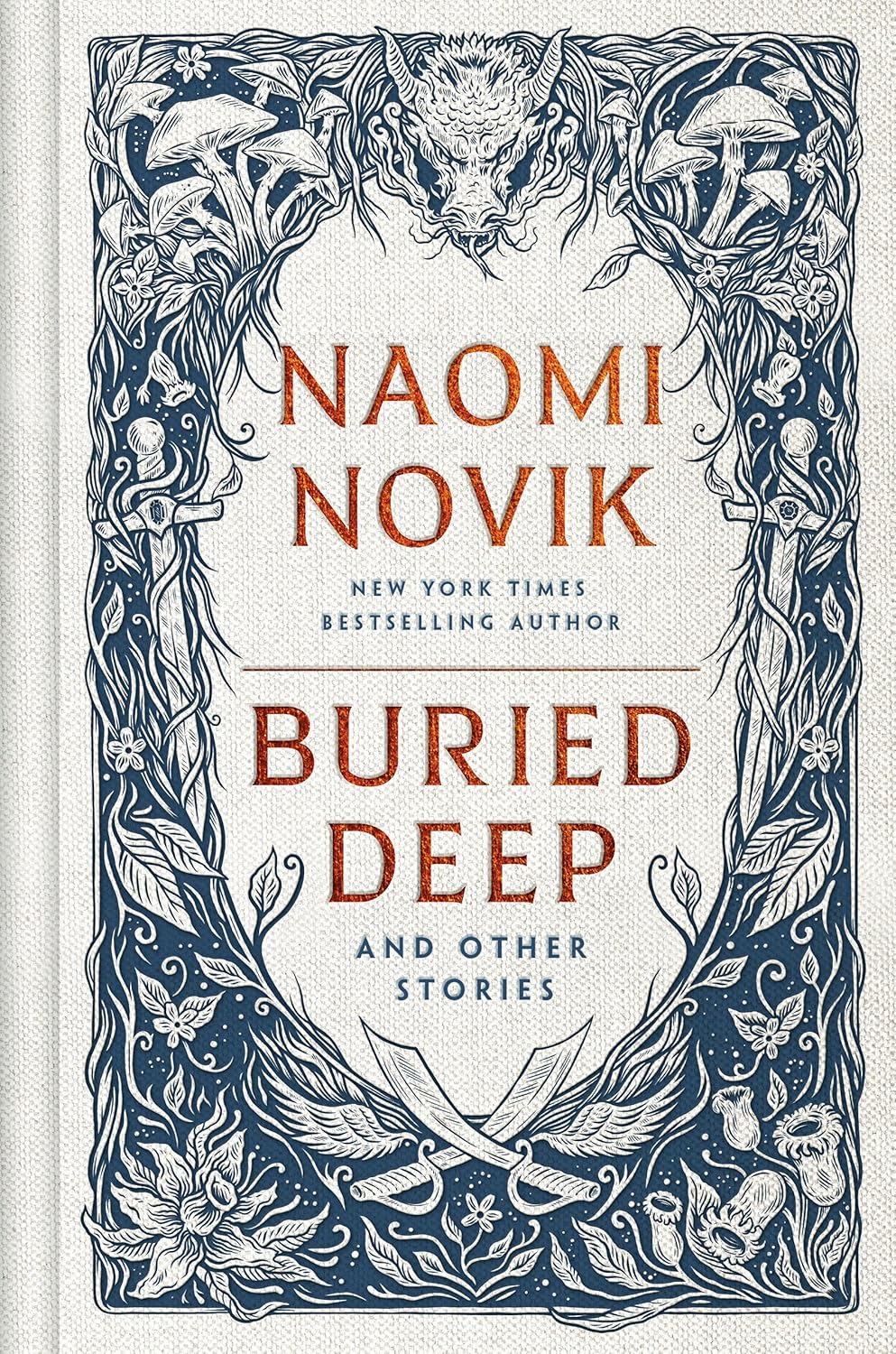
Buried Deep and Other Stories by Naomi Novik

Publisher: Del Rey (Trade Paperback – 17 September 2024)

Series: Standalone/Short Story Collection

Length: 433 pages

My Rating: 4.5 out of 5 stars

Amazon

A must-read for all fans of fantasy author Naomi Novik is the excellent and highly enjoyable short story collection, Buried Deep and Other Stories.  Featuring an intriguing combination of stories from across Novik’s imagination and established fantasy universes, Buried Deep and Other Stories was a particularly awesome read that I had a lot of fun getting through.

Naomi Novik is a well-established and impressive fantasy author who has produced some amazing works over the years.  Best known for her iconic Temeraire series, which envisioned the Napoleonic Wars with dragons, Novik has produced some great books and stories over the years, including some interesting standalone works.  I best know Novik from her excellent Scholomance books, which showcased a dark and impressive take on the magic school genre.  The Scholomance books, made up of A Deadly Education (one of my favourite books of 2020), The Last Graduate (one of my favourite books of 2021) and The Golden Enclaves (one of my favourite books of 2022), were all extremely awesome, and this remains one of my all-time favourite book trilogies.  As such, I was very interested in reading more from Novik and Buried Deep and Other Stories offered an amazing opportunity to explore her varied writings.

Buried Deep and Other Stories contains an auspicious 13 short stories, which run the gambit from entertaining to moving and bring together both previously published short stories and new tales fresh from the author’s imagination.  While some of the reads are standalone stories, there were also entries from Novik’s more familiar universes, all of which comes together to make quite an awesome overall volume.  I was initially drawn to this book by the promise of a continuation of series I’ve previously read, but I ended up staying for the whole inventive array, especially as you are gifted a vision into Novik’s future works.

Novik starts the book off strong with the fast-paced story, Araminta, or, The Wreck of the Amphidrake, a Regency-style adventure with fantasy elements that follows a young, adventurous woman who wants more than a planned marriage.  A chance pirate attack and a gender-morphing amulet provide the opportunity she is looking for while also leading to various amorous adventures.  This was a very fun, and slightly randy, swashbuckling adventure that successfully highlights the author’s flair for combining historical periods with her own fantasy ideas.  This proved to be a great first entry to Buried Deep and Other Stories, and I appreciated that Novik started things off fun.

Novik kept the book going strong with the amazing Afterhours, which serves as a follow-up to her awesome Scholomance trilogy.  I must admit that of all the stories in this book, Afterhours was the one that I was most excited for, primarily because I had such a great time with the Scholomance novels, and I really wanted to see how the universe continued.  Novik did not disappoint with a captivating story set a couple of years after The Golden Enclaves, with a look at a new class studying at the Scholomance magical school.  Despite the Scholomance evolving and becoming less exclusive, some things remain the same, with the unusual witch Beata, finding her school life made difficult by the rich and powerful enclave students, including her roommate.  Desperate to survive, Beata and her friends break curfew to obtain rare supplies, only to encounter some of the remaining monsters roaming the school.

This proved to be an entertaining and wonderful return to the Scholomance series, and I for one was glad to get a look at the school and its unusual setup following the chaotic events of the original trilogy.  Novik does an excellent job expanding on her existing universe, and fans of the series will love this continuation, as well as a major cameo at the end.  However, this story is open to reader’s unfamiliar with the Scholomance books, especially as Novik focuses the plot on a protagonist unaware of the full details of the previous books, allowing for an excellent outsider’s perspective as you explore the setting’s unique features.  It was great to return to this iconic setting, and Afterhours was a fun read that both stood on its own, while also providing some awesome moments to the author’s existing readers.

The third story in this book, Vici, is a quick but highly fun entry that ties into the dragon taming world of Novik’s Temeraire universe.  Indeed, Vici shows the origin of the universe’s entire dragon riding premise with a Roman historical tale that sees a young Mark Antony hatch a dragon egg.  Novik produces a particularly entertaining and hilarious story, as her irresponsible Mark Antony (inspired by James Purefoy from the Rome television series), finds himself in all manner of trouble, made worse by his impressionable talking dragon.  I loved this simple but highly effective story, which not only expertly works dragons into Roman history, but which also keeps the reader extremely amused with some great humour and over-the-top moments.  One of the funniest stories in Buried Deep and Other Stories, and a wonderful mood lightener between other heavier entries.

This leads us to the book’s titular short story, Buried Deep, which serves as a powerful retelling of the Minotaur myth.  Told from the perspective of King Minos’s daughter, Ariadne, Buried Deep follows her journey to becoming a priestess of the shrine that holds her brother, Minotaur, as he stalks the labyrinth under the island.  Novik seeks to cast both Ariadne and Minotaur in a more sympathetic light, showing them as victims of their father’s schemes, with Ariadne seeking to undermine Minos by using the labyrinth to enhance her reputation.  Thanks to its deep emotional edge and near gothic style, Buried Deep proved to be a particularly unique and memorable take on the Minotaur myth, and I loved seeing Ariadne’s perspective of events.  You really appreciate her bond with Minotaur and the pain that his imprisonment has on her, and this was one of the more moving entries in Buried Deep and Other Stories.  This story effectively showcased Novik’s ability to transform well-established stories and myths, and I’m glad Buried Deep was featured here.

The next story is the fantastic entry, Spinning Silver.  A clever take on the classic Rumpelstiltskin fairytale, this story follows Miryem, the daughter of a village moneylender, who takes over her weak father’s business and becomes a successful businesswoman.  A boast about her ability to make money brings her to the attention of a malicious faerie who demands that she prove her ill-timed words three times by turning his silver coins into gold.  What follows is a fantastic and clever series of events as Miryem uses her business sense and quick thinking to technically fulfill the terms of the magical contract while also trying to get out of the unfavourable marriage promised as a reward.

I really loved Spinning Silver for a multitude of reasons, especially as it has a compelling narrative that brilliantly retells a famous fairytale in a darker and more modern manner, while also featuring a great historical Russian setting.  This proved to be a particularly enthralling tale of fortitude and tough decisions that also subtly examines the historical hardship of the Jewish population of Eastern Europe.  Spinning Silver is also an interesting inclusion as it bears the same name as one of the author’s novels.  This short story, which was published a few years before the Spinning Silver novel, was the inspiration for Novik’s later book, with the author reusing elements from it.  While readers who have already enjoyed the Spinning Silver novel will see some similarities between it and this short story, the entry in Buried Deep and Other Stories is very much worth checking out as Novik takes this short story in a different direction to give it quicker and more definitive conclusion.  I think that the Spinning Silver short story works a little better than the overall novel, mainly because the concept was more focused and reached its key points sooner, but both prove to be excellent reads.  This honestly proved to be one of the strongest entries in Buried Deep and Other Stories, and I see why Novik chose to expand it into a novel.

The fun continues with the fantastic story Commonplaces, which serves as the author’s unique entry in the Sherlock Holmes mythos.  Set after the events of the classic Sherlock Holmes short story, The Final Problem, Commonplaces focuses on the character of Irene Adler after she hears about the events at Reichenbach Falls.  This was a short but sweet story that provides an interesting modern look at the impact Holmes has on the characters he encounters.  Novik’s take on Adler, which only utilises details from A Scandal in Bohemia, is particularly authentic, and doesn’t fall into the exaggeration that many of her current popular culture portrayals are known for.  Shown solely from Adler’s perspective, you get some great interpretations into her personality, as well as her observations of the enigmatic Holmes.  I felt the story went in some very interesting and memorable directions, and I liked how it both cleverly referenced A Scandal in Bohemia but also covered a potential romance between Holmes and Adler in its own way.  Novik adds in a few subtle implications about Holmes’ romantic interests and inclinations, which I thought was a nice touch, and the resulting story effectively ties up the entire storyline between these two iconic figures.  An overall fantastic story, Commonplaces is a fun and quick short that will appeal to a lot of readers.

Novik continues to delight with the seventh entry, ironically named Seven, which was one of my favourite stories in Buried Deep and Other Stories.  Set in a unique fantasy city called Seven, the story is set around the city’s famous ceramics trade, which constantly ensures that the city is surrounded by seven giant singing statues.  Whenever one of the statues breaks, a replacement is made from a beautiful yet deadly special clay by the city’s then master clay-shaper.  Seven primarily follows Kath, a clay-shaper’s widow, who takes over her husband’s business with the help of grouchy kiln master and ceramic devotee Grovin, and eventually forms a reputation as a radical artist due to the simplicity of her pots and ceramics.  Chosen to build the next singing statue, Kath is initially reluctant due to the life-shortening nature of the special clay, until the machinations of Grovin forces her hand.

I really loved Seven, and I think it is the story that best showcases how imaginative and skilled Novik is as an author.  I was deeply impressed with how effectively Novik was able to build up a new fantasy city and then set up a complex and character-driven tale that debated art versus practicality in only 25 pages.  You easily get drawn into the struggle of Kath as she becomes a famous artist and creator with all the trouble that entails, while simply trying to provide for her family.  Novik works this initial premise extremely well, and then cleverly twists the entirety of Seven into a tale the examines the dark side of art appreciation.  This darkness is conveyed by the complex and gruff character of Grovin, a man who only loves the beauty of ceramics, and whose desire to see more of Kath’s art forces him to some dark places.  I loved the ironic twist that forces Grovin to live a life less devoted to the arts to get what he wants, and I really appreciated how Novik explored his obsession, and the differing views of what ceramics represent between the two main characters.  If I had one complaint, it would be that the story wasn’t long enough; I would love to have seen a more concrete conclusion than the philosophical end Novik came up with, but this was still an exceptional story that really hooked me in with its creativity and unique focus.

Continuing onwards, Novik throws in two great short stories that break up the book in preparation for the longer stories towards the end, with Blessings and Lord Dunsany’s TeapotLord Dunsany’s Teapot is a tale of magic and imagination in the depths of horrifying war, while Blessings is a fun story about a young baby who gets over-blessed by six drunk and competitive fairy godmothers.  Both these stories have their own unique flavour, and I liked how well they played off each other in short order.  Lord Dunsany’s Teapot was a quick magical story with descriptive dark war elements to it that highlight the need for an escape from horror, while Blessings was an excellent comedic take on the fairy godmother trope from popular fairytales.  I enjoyed both these stories, although Blessings was probably my favourite due to its hilarious, quick-fire content.

Next up we have the tenth entry in Buried Deep and Other Stories, with the book’s only science fiction contribution.  Seven Years From Home is a striking story about futuristic colonialism in which a young diplomat from an ever-increasing galactic federation visits a prospective new member planet where a war is brewing between new, technological reliant colonists and the original settlers of the planet who have genetically modified themselves and are now in tune with nature.  This was an interesting take on the classic story of technologically advanced colonists warring with nature-loving natives with an outsider amid the natives learning their ways.  However, Novik takes her story in some different directions, with the natives proving to be far more adaptable than you would expect, and I loved this brilliant and intriguing tale.  While it features a great story, Novik ensures that Seven Years From Home really stands out thanks to the protagonist, who finds herself caught between her loyalties to her home empire and the new friends she makes on her adventures.  There were some great scenes as the protagonist becomes even more conflicted with her choices, especially as the information she sends home keeps the war going, and her attempts to find the same mindset of her hosts.  This story ends with some touching tragedy and a great twist, and I felt that Novik’s foray into science fiction was a fantastic success.

Continuing, we have the book’s second foray into the Temeraire universe with the fabulous entry Dragons & Decorum.  Set to the backdrop of the Napoleonic War that the main Temeraire books are based on, Dragons & Decorum is a reimagining of Pride and Prejudice with dragons.  The primary story sees Elizabeth Bennett becoming a Longwing captain in the Aerial Corps, flying her dragon as professional soldier, much to the horror of her mother.  However, despite her new role, Elizabeth still finds herself drawing the attention of Mr Darcy, and the two engage in a tumultuous courtship, with even more complexity thanks to Elizabeth’s romance-obsessed dragon and the ongoing war.  Novik clearly had fun working elements of her dragon-focused world into this literary classic, and I loved her fantastic take on the classic book, especially as dragons add new entertaining angles to the romance.  I felt that the author perfectly blended the more outrageous elements of her universe with the Pride and Prejudice plot, while also cleverly imitating Jane Austen’s writing style.  The result is a particularly amusing entry that will appeal to both fantasy fans and Jane Austen fans, and I just love the hilarious impacts any book’s relationship to the Temeraire universe can have.

On the home streak we have the intriguing and dark story, Castle Coeurlieu, which saw the very young bride of a castle lord grow close to her similarly aged stepson and learn the unusual history of the castle in which they live, including several stories about people visiting a mysterious tower within its bounds.  When plague strikes the region and her new friend flees to the tower, the protagonist follows, only to discover unusual occurrences, including three women playing with cards inscribed with the fate of the castle’s inhabitants.  While Castle Coeurlieu wasn’t my favourite entry in Buried Deep and Other Stories, it proved to be a compelling darker story that added in some grimmer elements towards the end of the book.  I enjoyed the different layers of lore surrounding the setting, and the curious young protagonist was well written and provided a great view to the plot.  An overall interesting addition to the volume, that serves as a great buffer between two of its biggest stories.

The final story contained within Buried Deep and Other Stories is the captivating adventure tale, The Long Way Round.  The longest entry in the collection, The Long Way Round was probably the story I was most looking forward to reading outside of After Hours, mainly because it provides readers with the first glimpse at Novik’s next upcoming book, currently titled Folly, following two siblings, canny sailor Tess and brilliant boat-builder Aston, who embark on a journey to cross the seemingly empty seas surrounding their known world and try to discover new lands.  Forcibly accompanied by their High Lord, a young wizard looking to prove himself, Tess, Aston and their crew set out on their adventure, only to make some unexpected discoveries with major implications for their entire world.

Featuring a great combination of likeable characters, well-written nautical elements, and a compelling new world filled with unique elements, The Long Way Round was a particularly addictive entry in Buried Deep and Other Stories.  Novik once again does a remarkable job effectively building up the scenario and the new fantasy realm in a short run time, and readers quickly find themselves getting invested in the protagonist’s journey, especially as the author does an excellent job exploring their motivations and desires.  The set-up and apprehension of the first part of The Long Way Round is well balanced by the subsequent mystery contained in the second half of the story, as the protagonists find what they seek, even if they are uncertain what it is.  Novik provides the reader with a series of stimulating and intriguing visuals and curious elements, and you really get into the spirit of the adventurous narrative elements.  This honestly proved to be an addictive read, and I found the clever, character-driven nautical adventure to be moving and fascinating at the same time.  I also found myself coming away from The Long Way Round extremely curious about Novik’s next book, and I will be interested to see whether it will be a direct sequel to this or something set further in the future.  Either way, the mystery of the titular follies is something I hope to explore in the future, and I am now even more excited for Novik’s next book whenever it comes out.

Overall, Buried Deep and Other Stories turned out to be an awesome short story volume from Naomi Novik that showed me her true range and skill as a fantasy author.  This book provides a fantastic collection of works, that hit you on every part of the emotional spectrum, including fun comedic reads and darker, tragedy charged narratives.  I was also particularly impressed by the inclusion of unique standalone stories whose elaborate fantasy concepts were well established and the expertly utilised to tell compelling stories.  The blend of original stories and windows into the author’s current and upcoming fantasy universes also ensured that readers of Buried Deep and Other Stories are in for a brilliant time.  It proved very easy to jump between these different fantasy worlds, and I felt that all readers can appreciate and follow the stories contained within, even if they were tied into the author’s other series.  As a fan of Novik’s writings, it was great to get some additional stories from her various universes, and the final story, The Long Way Round, has really gotten me excited to check out her next book.  Folly (or whatever its name may change to) is now very high on my to-read list, and I hope we see it soon.  As for Buried Deep and Other Stories, this was an incredible and fantastic short story collection that comes highly recommended for fans of Naomi Novik, as well as general fantasy fans looking for some compelling, shorter reads.

Amazon

Murtagh by Christopher Paolini

Murtagh Cover

Publisher: Penguin (Audiobook – 7 November 2023)

Series: The Inheritance Cycle – Book Five

Length: 24 hours and 32 minutes

My Rating: 4.5 out of 5 stars

Amazon

Bestselling author Christopher Paolini returns to the iconic world of Alagaësia with Murtagh, a powerful novel that continues his original series while focusing on a complex and damaged protagonist.

I am very excited about this review as it offers me the first chance to review a recently released Paolini fantasy novel.  I am a massive fan of Christopher Paolini, having read every single novel he has written in his impressive career, including the science fiction Fractalverse series (To Sleep in a Sea of Stars and Fractal Noise).  However, the series that most readers will associate him with are the Inheritance Cycle novels.

The Inheritance Cycle is an awesome young adult fantasy series that follows a young man who bonds with a dragon to take down an evil tyrant.  A particularly iconic series, the original Inheritance Cycle consists of Eragon, Eldest, Brisingr and Inheritance, and it told a complex, well-established and exciting tale that saw the protagonist, Eragon, rise to great heights and eventually defeat the big bad.  I was gifted the Inheritance Cycle novels when I was growing up and it became a favourite fantasy series that I read multiple times.  While I tend to view it with a more critical eye these days, I still love it and its powerful adventure.  Due to how much I enjoy this series, I have been eagerly awaiting a sequel for years, and I was so damn excited when I found out that Paolini was releasing a follow-up book.  Murtagh was one of my most anticipated reads for 2023, especially when I saw that it was going to follow one of the best characters from the original series.

A year has passed since the war to free Alagaësia ended and the evil king Galbatorix was killed at the hands of the Dragon Rider Eragon and his companions.  Peace now reigns across the land as the people look to rebuild.  But there are two beings in Alagaësia who will never find peace: Eragon’s half-brother, Murtagh, and his dragon, Thorn.  Already reviled for being the son of the traitorous Dragon Rider, Morzan, Murtagh is hated by every race in Alagaësia for the involuntary role he played in Galbatorix’s evils.  Finally freed from Galbatorix’s iron control, Murtagh and Thorn travel the outskirts of the land, trying to find a semblance of harmony that has been lacking their entire lives.

However, the troubles of the world are always lurking, and the pair soon discover that not everything is as peaceful as it seems.  Following warnings and whispers from an ancient dragon spirit, Murtagh and Thorn become aware of a dark conspiracy building in the land, as unusual rumours of brittle ground, the scent of brimstone and mysterious beings reach their ears.

Determined to stop a new evil rising and wreaking havoc, the exiled rider and dragon begin their own investigation and soon uncover the source of this evil: a mysterious cult whose influence stretches across all the races and nations of Alagaësia.  Due to their surprising power and ability to manipulate the world, Murtagh and Thorn might be the only people capable of stopping them, and they set out to investigate.  However, they are unprepared for the dangerous witch at the centre of this cult, as well as the deadly power she represents.  Can Murtagh and Thorn defeat this evil before it is too late, or will they once again find themselves enthralled to a dangerous power beyond their comprehension?

Christopher Paolini returns with another outstanding book that takes the reader on an exciting and emotionally rich adventure which also cleverly expands his already elaborate setting.  While I am sure my review might be partially influenced by nostalgia, I found Murtagh to be an exceptional read that brings back all the things I loved about the original novels while also showcasing Paolini’s increased ability as an author.

For this new book, Paolini goes backs to basics and creates a classic epic fantasy around one of his most damaged and compelling characters.  Starting off a year after the climatic events of Inheritance, Murtagh follows the titular protagonist and his dragon as they try to unwrap a mysterious warning given to them in the last book.  This warning and an obsession with redeeming themselves leads Murtagh and Thorn to investigate troubling rumours and encounter a group of dangerous warriors and infiltrators utilising powerful magic.  This forces Murtagh into a search for knowledge while once again traversing areas of Alagaësia where he is the most wanted.  There are some intriguing moments as Murtagh embarks on a series of side quests that will allow him to achieve his goal, including infiltrating a city, killing a giant fish, encountering old “friends” and uncovering corruption at the heart of a regiment of city guard.  While I will admit that parts of this novel get a little slow in places, Paolini does a great job of reintroducing key elements of lore, building up a new growing threat and showcasing the main character elements of the protagonists, including their trauma, the bond between rider and dragon, and their unfairly given outcast status.

The second half of the book is extremely strong as Murtagh and Thorn come face to face with their new enemy, the witch Bachel and her unusual followers.  Paolini writes this entire half of the book extremely well, as Murtagh attempts to at first subtly uncover what Bachel is plotting and what power she controls.  Naturally things go wrong and this leads to a pretty dark and traumatic part of the story where Murtagh is at his lowest point.  This part of the book is painful to read, especially as you have really grown to care for the protagonist, but it is so damn well-written and emotionally charged.  Everything leads up perfectly to a much needed and exceptionally presented climax, where Murtagh manages to fight back and the resulting carnage is very therapeutic after all the dark scenes the reader has been forced to experience.  The big confrontation was very epic and really tied into the author’s excellent characterisation of the protagonists, allowing for some impressive moments.  The conclusion is both hopeful and worrying as a new big-bad looms on the horizon, and there are still many secrets left to unwrap.

I really liked how Murtagh came together as Paolini presents a powerful, character-driven read that really tries to capture the heart and feel of a classic epic.  Murtagh really had all the best elements of Paolini’s first book, with a lone character and his dragon navigating through a complex world, searching for a big bad on the horizon.  I loved these story elements, including the loosely connected quests, the elaborate and dark interactions in the second half of the book, as well as the general menace implied by the world’s new hidden threat.  This story is so damn good and served as an interesting continuation of the original Inheritance Cycle novels, adding to the overall plot of the series, while also allowing the new protagonist to strike out on his own and encounter the world on his terms.  Paolini really hits the right balance of elements in Murtagh, with a great focus on character work blending nicely with the complex story and great focus on expanding Alagaësia.  While this series is usually marketed as young adult fantasy fiction, I honestly would consider Murtagh to be more of an adult book due to its elaborate story, big world, and complex older characters.  Despite that, younger readers can still really sink their teeth into Murtagh as an early fantasy experience, and Paolini really hits the right balance of violence and other themes that ensures Murtagh is very palatable to a range of readers.

As I have made clear a few times already, Murtagh is a sequel to Paolini’s Inheritance Cycle series, where quite a lot of plot, character histories and elements about the world of Alagaësia were introduced.  Due to it being a direct sequel, a large amount of this detail was essential for Murtagh, which does put newer readers at a disadvantage.  I think Paolini did a good job of reintroducing these relevant story elements where needed, so new readers can dive into this book without too many issues.  However, the re-establishment of these elements does take a little time, so there might be some occasional blind spots for these newer readers, especially towards the beginning of the book.  As such, established Inheritance Cycle fans will get a lot more out of Murtagh than new readers, and there are tons of incidental references and callbacks that will make a lot more sense as a result.  I was just so glad to finally get a new Inheritance Cycle book, especially one with such an elaborate and well-written story that connects to the original books in some creative and meaningful ways.

One thing I have always particularly loved about Paolini’s works is the insane amount of effort and detail he puts into developing his elaborate fantasy world.  He did an outstanding job of this in the Inheritance Cycle, and the resulting world was filled with a fantastic history, some classic fantasy elements, and a complex evil empire ruled over by an all-controlling madman.  I had an outstanding time exploring Alagaësia when I was younger, and so one of the things I was most excited about with Murtagh was seeing how much this fantasy world has changed in the aftermath of the protagonist’s victory.  Paolini delivers this in spades, showcasing some intriguing changes as the nations rebuild, the other races once again integrate with humanity, and the compelling legends of Eragon’s victory over Galbatorix are built up, even if Murtagh’s role in that victory are largely forgotten.  Many of the well-established rules of magic and Dragon Riders are brought back for this sequel, and Paolini makes sure to reintroduce them effectively for new readers.

It was quite interesting to see Murtagh’s less-knowledgeable take on much of this fantasy lore, especially as that cleverly tied it with his more brutal tutoring in magic than Eragon had in the original series.  Indeed, Murtagh’s insights into many elements of this world are very different to those of the previous protagonists, and this helped to make a lot of the novel a lot more grounded and approachable.  While it was great to see these familiar elements again, I also liked the new fantasy features of Alagaësia that Paolini came up with for Murtagh.  While I won’t give too much away here, the new big bad of the series is very intimidating, and I loved how well Paolini set them up.  The author is subtle with this introduction, and its gradual reveal really increases its threat level, as it seems potentially even more dangerous than Galbatorix.  I look forward to seeing how Paolini expands on this, and I was so impressed with how much additional world building was featured in Murtagh.

A major highlight of this book had to be the compelling character arcs that formed the basis of the book.  Murtagh is extremely character driven, perhaps even more so than the other Inheritance Cycle novels, and Paolini writes an exceptional story around his characters.  Naturally most of this focus revolves around the titular character of Murtagh, who is the only point of view character in the novel.  I was happy that Paolini decided to focus an entire novel on Murtagh, as he was such a great character in the original trilogy whose perspective you never got to experience.  The son of a monstrous traitor who served Galbatorix, Murtagh eventually rebelled and tried to escape his fate, only to be captured again after meeting Eragon in the first book.  Forced to serve Galbatorix against his will, thanks to the torture levelled against his newly hatched dragon, Murtagh ended up being the secondary antagonist of the series, especially once it was revealed he was Eragon’s half-brother.  Murtagh was eventually able to free himself from Galbatorix’s control at the climactic battle however, despite the role he played in killing the big-bad, he is still very much reviled by the people due to the atrocities and murders he was forced to commit.

As such, the plot of Murtagh is essentially what happens if a somewhat redeemed Darth Vader (there are a lot of parallels between the two characters), was wondering the land trying to atone for the evils he caused and reflecting on all the mistakes in his life.  I loved that we got to see this unique and compelling character focus, and it proves to be a very intense and powerful central storyline, especially as Murtagh is forced to relive a lot of the pivotal moments of his plot from the original novels, in addition to some previously unseen backstory.  You really get to experience Murtagh’s regrets, despair and self-loathing, and Paolini does a great job of focusing on that, while also introducing some additional growth as Murtagh comes to terms with who he is.  Paolini writes a fantastic redemption arc in this novel, and Murtagh really grows into a character you can care for.  Naturally, Paolini rewards you for caring by showing some extended scenes of Murtagh suffering in some major ways, and some of these sequences, especially in the second half, pull at the heartstrings.  The author expertly ties this suffering into Murtagh’s journey of self-discovery, and the scenes where he overcomes major adversity again proves to be some of the most powerful in the entire book.  I also appreciated how Paolini portrayed him in a very different way to Eragon, as he is more angry, impatient, and less-well trained in many of the arts of magic.  The author portrays these differing character elements in an extremely impressive way, and the character history surrounding the protagonist really explains why Murtagh is so separate from his fellow Dagon Rider and half-brother.  I honestly was so impressed with how Murtagh was showcased in this book and he ended being a pretty exceptional character.

Due to their mental connection, Murtagh’s dragon Thorn is also a major character in the novel, and he proves to be an excellent alternative protagonist as a result.  Thorn proves to be a fun and over-protective companion to Murtagh, especially with their joint history of abuse, and Paolini always does a great job of showcasing the soul bond that exists between a dragon and rider.  In many ways, Thorn is very similar to Saphira from the original Inheritance Cycle novels, being proud, predatory and occasionally playful (very much like a cat).  However, unlike Saphira, Thorn has gone through a substantial amount of trauma thanks to the machinations of Galbatorix, who used magic to age him quickly and tortured him the entire way to make him even more vicious.  It was fascinating to see a psychologically traumatised dragon , especially as certain things set him off, and watching him try to mentally heal alongside his human is a very heartwarming part of the novel.  While he does suffer at times alongside Murtagh, he also gets to cut loose at the end in a particularly cathartic, if destructive, sequence, which was really great.

Murtagh also features an interesting array of new supporting characters, who ensure some interesting interactions with the two protagonists.  There is a noticeable lack of major characters from the original Inheritance Cycle novels, which I thought was a very clever move as it helped this novel to stand on its own.  I did think that one or two good characters from the previous novel, such as Angela, might have fit into this storyline well, but I’ll settle for seeing them later, especially after how successful their absence worked here.  As such, the supporting cast of Murtagh are all new characters, and Paolini did an outstanding job of introducing them and working them into the plot.  While many of these characters did not appear in the story for a long period, namely because of the protagonist’s transitory narrative, several characters did stand out.

I loved the Urgal shaman Uvek Windtalker who Murtagh encounters in the second half of the novel, whose interaction with the protagonist leads to some powerful scenes.  However, the true standout character in Murtagh had to be the main antagonist, Bachel.  A powerful which and apparent profit, Bachel is a mysterious and aloof figure, who proves to be quite sinister.  You end up getting quite a good look at just how malicious, arrogant and dangerous Bachel and her minions can be as the book continues, and Paolini does a remarkable job of building her up as someone to really despise.  This ensures that you are really pumped up for the big confrontations with her at the end of the novel, and I liked just how effective the author was able to make her.  These characters and more really help to push the narrative of Murtagh in some awesome directions, and I liked the more unique figures that were featured in this latest entry in the Inheritance Cycle.

While I did receive a paperback copy of Murtagh, I ended up listening to the audiobook version instead.  This is mainly because the last few times I enjoyed the Inheritance Cycle I chose to listen to the audiobook format, and I wanted some continuity from that since they brought back Gerard Doyle, the narrator from the original Inheritance Cycle, to voice this latest entry.  Doyle does an amazing job of narrating Murtagh, and I felt that he really enhanced the impact and enjoyment I had of the story.  Not only has he got a great basic tone that helps move the plot and lore heavy parts of the book along at a good pace, but he also has some excellent takes on the character voices.  His powerful voice for the titular character really hits all the right notes, and I love the range of emotion he can bring to this figure.  He brings back the classic ‘dragon’ voice for Thorn that featured in the other Inheritance Cycle books, and I loved the somewhat bestial nature to it, as well as the ethereal nature of a mental communication.  The rest of the intriguing cast is also well captured by Doyle, and he especially makes the main antagonist pretty sinister at times.  This outstanding voice work really drew me into the Murtagh, and I easily absorbed a lot more of the intense detail and lore in this format.  Coming in at 24 hours and 32 minutes, this is a pretty long audiobook (it would rank 15th on my current Longest Audiobook I’ve Listened To list), but it really worth a listen, especially if you enjoyed the original Inheritance Cycle novels in this format.

I think the multi-page ramblings above make it clear that I had an excellent time with Murtagh.  Christopher Paolini did an outstanding job of continuing his iconic Inheritance Cycle series, and I loved the compelling direction he is taking this story.  I also love how much Paolini appears to have improved as a writer, especially when it comes to complex character work, and I cannot wait to see what the next stage in Murtagh and Thorn’s journey is.  Murtagh is very-much worth the read, especially if you grew up reading the Inheritance Cycle books like I did.

Amazon

Fool’s Gold by Jon Hollins

9780356507651

Publisher: Orbit (Paperback – 26 July 2016)

Series: The Dragon Lords – Book One

Length: 517 pages

My Rating: 4 out of 5 stars

Amazon     Book Depository

Prepare for all manner of craziness and exceedingly entertaining fun as Jon Hollins presents an amazing book about heists and dragons with Fool’s Gold.

A few months ago, whilst perusing my local book fair, I happened upon a copy of Fool’s Gold by Jon Hollins (a pseudonym for fantasy author Jonathan Wood), which really grabbed my attention.  The first book in Hollins’ The Dragon Lords trilogy, Fool’s Gold had a fantastic plot synopsis which involved heists and dragons.  I was very intrigued by this cool book, which sounded so very fun, so naturally I made sure to grab it.  As a result, it was nice and handy when I was in the mood for a fun fantasy book, and boy was I entertained by this cool read.

In the fantasy land of Avarra, there are many different magical creatures and beings who infest the world and bring all manner of chaos with them.  However, no creature is as dangerous, arrogant, and domineering as the dragons, especially members of the destructive Consortium who have taken over the isolated nation of Kondorra and rule it as overlords.  Employing a private army, the dragons impose massive taxes on the lands surrounding their lairs, driving the people into poverty and forcing many to lose everything.

It is only a matter of time before something gives, and when Willett Fallows loses his farm to greedy dragon who controls his village, he snaps and becomes a fugitive.  On the run, Will finds himself in the most unusual of situations after a chance meeting with four unlikely wanderers in a nearby cave, including a skilled warrior woman, a murderous lizard man, a dragon obsessed academic with explosive magical powers, and his village’s local insane drunkard.  Together the five new companions come up with an ambitious plan to steal all the gold from the local dragon lord and make their escape.

However, when their heist unsurprisingly goes wrong the friends find themselves in a surprising position as the nation’s apparent saviours.  Suddenly worshipped by a massive following, the companions must find a way to escape both the deadly retribution coming their way and their own insane devotees.  But no matter how hard they try, all their plans seem to backfire until they find themselves in the middle of a deadly religious war against the dragons.  Can they pull off one more con to destroy the Consortium, or is everyone about to end up dead in a field of fire?

Fool’s Gold is an exceedingly fun and very entertaining read that I was able to finish off in a few days, especially once I got caught up in its exciting and fast-paced narrative.  Hollins sets everything up very quickly, with the new fantasy world introduced, the dragon’s control of Kondorra established, and all five of the main characters brought together.  While I wasn’t the biggest fan of the extremely coincidental meeting that saw all the protagonists meet up in the first few chapters, the story evolves at a much more appropriate pace from there, with the characters quickly planning their theft of the local dragon’s hoard.  I was a little surprised at how fast the first heist came about, as I figured it would be a long-term plan that would unfold much later in the book.  However, featuring this heist early on really works, as it sets up the rest of the story extremely well while also showcasing early just how crazy and over-the-top this book is going to be.  The chaotic results of the first heist see the protagonists incorrectly declared religious saviours destined to bring down the dragons.  Suddenly leading a ragtag army, the protagonists are forced to engage in several more attempted heists and plots against other dragons and their minions.  While these plans often backfire in very funny ways, the protagonists keep failing upwards and must keep the con going while dealing with a multitude of problems, including deranged followers, immense responsibility, and deep personal issues.  This all leads up to the final confrontation with the dragon Consortium, with the characters unleashing their most ambitious plan yet.  Watching this final plan come together is pretty damn awesome, and the insane battles and crazy results that follow were so damn epic.  I ended up really loving this compelling and very fun story, which Hollins leaves open for some intriguing sequels in the future.

Fool’s Gold is an incredibly fast-paced novel with a great writing style that makes it very easy to power through.  The author has a brilliant and wicked secret of humour that infects his writing, and I found myself chuckling the entire way through, not just because of the jokes but because of the insane scenarios that resulted.  I was also deeply impressed with how well Hollins brought together several genres to create a compelling and hilarious read.  The book initially appears to be a classic fantasy read, as the author quickly and effectively sets up an intriguing new fantasy world at the start of the book, which contains several classic fantasy creatures and elements that are likely going to get expanded on in the sequels.  However, it soon becomes apparent that this isn’t going to be a typical fantasy book, especially as the very modern sense of humour and language that Hollins employs gives it a whole new tint.  I often enjoy when authors feature contemporary language and attitudes in fantasy novels, and I felt that Hollins uses it to great effect in Fool’s Gold, giving the book a distinctive tone.  The author further brings in the brilliant heist elements to the book, which I deeply enjoyed thanks to all the fantastic plans and cons.  It proved to be extremely fun to see all these elaborate and weird heists get planned out and executed in a fantasy universe, and it combines extremely well with the humorous tone and fantasy elements of the book.  I deeply enjoyed how this captivating story came together, and I can’t wait to see how the next books in the series pan out.

I also really liked the cool characters featured in Fool’s Gold, especially as Hollins came up with a very eclectic and damaged group of central figures.  The book primarily revolves around five protagonists, each of whom have multiple chapters told from their perspective and who unite as a team very early in the book.  This includes Willett Fallows, the former farmer who turns to heist planning after the dragon’s greed takes everything from him.  There is also the fantastic pair of Lette and Balur, a female adventurer looking to settle down and her lizard man companion who loves all forms of violence and is determined to fight and kill the biggest opponents he can find, in this case dragons.  There is also Quirk, a former mage turned academic who arrives in Kondorra to study the dragons and finds herself dragged into the group’s plans so she can get a closer look at the dragons and their lairs.  Finally, there is Firkin, a local drunk whose failure years ago to defeat the dragons drove him mad and who finds new life during the new adventures. 

All five characters are pretty crazy in their own way, and I think they made for quite an intriguing and amusing focus for the narrative, especially all the interesting growth Hollins makes use of.  Will’s evolution from a farmer to a master strategist was very well written and I appreciated the compelling examination of how the power he started to wield was potentially corrupting him, especially when he holds the lives of so many in his hands.  The inevitable romance between Will and Lette was handled well throughout the book and it came across as a natural and well-developed relationship.  Balur, the battle-loving lizard man was easily one of the most entertaining characters in the novel, and I loved seeing his mad rages and various attempts to kill the dragons they encounter, especially as it results in an incredibly funny and hilariously brutal final fight at the end of the book.  I was also quite impressed that Hollins was able to keep up Balur’s unique style of speech for much of the story.  Firkin’s rise from unpredictable drunk to unpredictable drunken religious mouthpiece and rabblerouser was exceedingly funny in places, especially as you are never quite sure whether he is actually insane or just messing with everyone.  I did find his continued crazy speech a bit too much at times, although the occasional hints at his deeper intelligence and sanity made up for that.  However, the best character work was probably reserved for Quirk as Hollins really dives back into her history as a child soldier/mage who was gently rehabilitated and taken into the academic lifestyle.  Quirk finds herself reverting to her old destructive magical ways throughout the course of the adventure and she must figure out who she truly wants to be.  I had a great time with all the cool characters in this book, although I do wish that the greedy and arrogant dragons might have gotten a little more development.  Overall, I would say that the characters were some of the best parts of Fool’s Gold and look forward to seeing more of them in the future.

Unsurprisingly, I had a pretty wonderful time with Fool’s Gold and it ended up being as thrilling and compelling as I hoped it would be.  Jon Hollins wrote a wildly entertaining and very funny fantasy heist narrative for Fool’s Gold, which came equipped with some great fantasy elements and a bunch of excellent characters.  I really enjoyed Fool’s Gold and I will have to try to grab the next two books in the Dragon Lords trilogy, especially when I’m in the mood for some crazy, over-the-top adventure and excitement. 

Amazon     Book Depository

Dragon Mage by M. L. Spencer

Dragon Mage Cover

Publisher: Stoneguard Publications/Podium Audio (Audiobook – 19 December 2020)
Series: Rivenworld – Book One

Length: 27 hours and 18 minutes

My Rating: 5 out of 5 hours

Amazon

Prepare for an epic fantasy adventure with a great classic feel to it, as awesome author M. L. Spencer presents the massive and captivating fantasy novel, Dragon Mage.

Back in 2020, the fantasy book world was abuzz with talk about the compelling and impressive fantasy fiction epic, Dragon Mage by M. L. Spencer, who was already known for her Rhenwars Saga and Chaos Cycle books.  While I have not had the opportunity to read any of her previous works, Dragon Mage definitely caught my eye, especially with the very cool cover with the awesome art.  While I never got the chance to read this book when it was first released, I did grab an audiobook copy of it and have been looking for an opportunity to listen to it for some time.  When I found myself in the mood for some great high fantasy a few weeks ago, I decided it was finally time to listen to Dragon Mage, especially as a future Rivenworld book is apparently on the horizon, and boy did I have an outstanding time with it.

Aram Raythe is a simple lad from a small fishing village in the middle of nowhere.  A strange boy with a love of knots and an inability to understand people, Aram thinks that he will go through life alone and hopes for a quiet existence as a sailor.  However, Aram has a secret that he has never told anyone: he can see the colourful strands that make up the world, and he can manipulate them to do magic.

When a bard arrives at the village, seeking an apprentice, Aram uses his powers to help the only person who was ever nice to him, fellow teen Markus Galliar, get chosen; however, he is unprepared for the chaos that this action will unleash upon his life.  While the bard, who recognises his potential, attempts to take him to safety, Aram accidently unleashes his power to cause a rift in the world.  Soon the village is visited by an Exilari sorcerer, who captures Aram and Markus, seeking to drain Aram’s essence and use it to power his own magical abilities. 

Aram’s destiny lies not in the torturous extraction cellars of the Exilari but with an order of dragon riders from another world.  When fate drags him to them, Aram will find acceptance and friendship for the first time in his life, as well as the opportunity to fight against the Exilari, their dark allies in this new world, and the ancient monsters who control them.  But to do that, Aram will need to learn to tap into the massive power lying deep within him and figure out how to use it to become a true Champion, the most powerful beings in two worlds.  Can Aram become both a Champion and a dragon rider, and what role will Markus play in his turbulent life?

I am really regretting not reading this book when it first came out.  While it was a lengthy read, Dragon Mage proved to be an excellent and captivating high fantasy adventure, and it was exactly what I was in the mood for.  Featuring an elaborate and massive narrative, complete with unique fantasy elements and some exceptional characters, Dragon Mage was an outstanding book that gets a full five-star rating from me.

Spencer produced an extremely epic and complex narrative for Dragon Mage that I had a particularly awesome time getting through.  Now, I do have to admit that Dragon Mage has a pretty lengthy story and it takes a considerable amount of time and effort to get through it.  In addition, the narrative does get a bit slow in places, especially at the beginning, and there were a few points where I struggled to make progress.  However, if you set aside the time for it and make an effort to keep going, I guarantee that it is more than worth it, as it unfolds into an epic, multidimensional coming-of-age story that has a real classic fantasy vibe to it.  The impressive, self-contained tale within will keep you entertained and stick with you well after you have finished reading it.

The story itself starts off with an extended introduction to the main characters of Aram and Markus, which showcases their personalities, histories and views of the world, while also featuring their first meeting and the start of their friendship.  I struggled a little to get through this opening part of Dragon Mage, mainly because I did not initially connect with Aram and his distinctive personality.  However, once you get several chapters in, the excitement starts to increase, as you see the full potential of the protagonist, as well as the introduction of a brilliant antagonist, Sergan Parsigal, who really moves the narrative along.  He quickly captures the two protagonists, which leads to several brilliant scenes, including an awesome and exciting escape from monsters from outside of reality.  From there, the story evolves into more of a magical school narrative, which I naturally loved (see my recent list about favourite books with magical schools in them), although it doesn’t last too long, as Spencer throws in a pretty dark twist and a heartbreaking time skip.

Following this time skip, the story evolves again, with Markus and Aram separated for a while after Markus rescues Aram.  The two characters soon develop in different story arcs, with Aram spending time in a completely new world, which sees him finally starts to explore his full potential.  After some more chapters in a whole different magical school setting, the main characters converge again, with some great drama.  Without going into too much detail, the rest of Dragon Mage keeps building on the plot from the first half of the book, and the characters are thrown into a ton of deadly situations as they continue to grow and discover their destiny.  Spencer layers the rest of Dragon Mage with a great combination of adventure, war, character development, training, romance, friendship, conflict and tragedy, which comes together into an extremely powerful narrative.  There are some truly epic scenes throughout this second half of the book, and you really grow attached to all the major characters in the book, which Spencer will make you pay for in some dark sequences.  Some of the major appeal is watching the slow but steady growth of the protagonist as he evolves from being unconfident and isolated to a powerful hero, helped along by the friendships he forms with those close to him.  Everything ends with a massive pulse-pounding confrontation that will keep you on your toes and ensure you cannot put down this book as you wait to see how everything turns out.  Readers will come away from Dragon Mage extremely satisfied, and the author leaves open some intriguing storylines for the future, that I hope the author will continue. 

One of the things that I particularly appreciated about Dragon Mage was the elaborate and compelling fantasy elements that Spencer introduced.  Dragon Mage actually features two separate realities, which were previously joined before being separated into The World Above and The World Below during a historical cataclysm.  These worlds can still be journeyed through by breaches caused by magic users and much of the plot revolves around the characters trying to stop an evil plot to recombine the words in a new cataclysm.  The book starts off in The World Above, a typical medieval setting which is ruled over by a despotic empire controlled by an order of magicians known as the Exilari, who gain their power through draining the essence of anyone with magical potential.  The second half of the book is set in The World Below, which features a range of magical creatures, including dragons, magical horses, and other creatures.  The World Below is in the grip of deadly war between an evil demigod (one of several who rule both worlds) and an order of dragon riders, who serve as its primary protectors.  Spencer does a great job introducing both worlds throughout the course of Dragon Mage and while they might not be as heavily explored as if there was only one world, you get a good sense of how they different and the histories that surround them.  Both are very distinct in their own way and I had a lot of fun seeing both, especially as they provide a compelling contrast to each other as two halves of the same coin.  I really like the switch between worlds that occurred halfway through the book and having the focus change to the more magical World Below made for quite an enjoyable and exciting read. 

I was also a fan of the unique magical elements contained within Dragon Mage, which, as the name suggests, is big on magic and dragons.  The magic itself is quite interesting, if a little ethereal in its description, and there are a few different versions of it.  The primary form of magic is shown through Aram’s eyes and is tied into the strands of energy that make up the world.  These strands, which only a few people can see, can be manipulated and tied into knots by the magic user for various magical effects.  This is a very unique system, and it ties in well with Aram’s peculiarities, especially as he spends much of the early part of the book obsessed with knots without anyone understanding why.  This results in some awesome displays of magic, and I found Aram’s perception of the magic and how it works to be extremely fascinating.  Other forms of magic include Markus’ magical immunity, natural passive magic from other characters and items, as well as the magic of the Exilari, which they gain be stealing the essence from magic users like Aram.  The destructive Exilari make for exceptional villains in this book, especially as they bask in their stolen power in a very creepy way, and I deeply appreciated that Spencer spent the time to explore their organisation, especially as the protagonists spend time in their training facility.

Then of course, there are the dragons, which inhabit The World Below.  I always enjoy a good dragon focused story, and this one was pretty fun as Spencer goes for a sentient dragon that bonds with a rider.  While this has been done before, I think that Spencer altered it enough, especially as quite a lot of the book is dedicated to them and their place in the world.  The author spends a substantial time exploring the bond between human and dragon, and you get to see the entire process, from the initial training of the human recruits, the hatching of the dragons, their bonding, and then their eventual use in combat.  There are a huge number of dragon characters in this book, and you get to see inside many of their minds and their bonds, especially as Aram can communicate with all of them.  The bond itself is a deep and personal connection, and I loved the scenes that examine how lethally strong it is, with human or dragon rarely surviving the death of their partner.  Having the emotional connection to a dragon becomes a key aspect of several of the key characters and it was really moving to see characters who have lost a lot in their life find new companionship with a soul bonded dragon.  The subsequent scenes of dragon combat are extremely awesome, and I appreciated that Spencer introduced some equalisers to make sure that they didn’t come across as too overpowered.  I had a wonderful time with all the fantasy elements in this great book and Spencer made great use of all her unique or fun elements to enhance and tell a brilliant story.

On top of the elaborate narrative and compelling fantasy elements, I was also very impressed by the amazing characters that Spencer featured in Dragon Mage.  The story revolves around an outstanding cast of complex and damaged characters, each of whom brings their own light and pull to the book.  Spencer sets all of these characters up extremely well, and while it might take you a while to appreciate a couple of them, once you do, you become extremely invested in their story and want to find out what is going to happen to them next.

The most prominent character in Dragon Mage is the extremely unique character of Aram Raythe, and this book is primarily his story from childhood to adulthood.  Aram is a particularly fascinating choice for central protagonist; while he is shown to be a chosen one with great power, he also portrayed as socially inept and with many strange behaviours.  I believe that Spencer wrote Aram as an autistic character (or the fantasy equivalent), especially as he is usually described as a Savant.  I personally really enjoyed this, as you don’t see a lot of autistic characters in fiction, and it was a great twist on the classic chosen one story.  Aram has a very different viewpoint of the world, and once you understand him you find that he is one of the sweetest and nicest fantasy protagonists you are likely to find, and you really start to care.  Unfortunately, Spencer decides to punish you for caring for this character, as the author puts Aram through all manner of hell and torture which really ups the emotional impact of the story.  Not only does Aram already have a distinct lack of confidence and social issues, but he is also repeatedly tortured and is deeply traumatised for much of the book.  There is also a hidden history to his parentage and a ton of secrets that his mentors are keeping from him that will cause him further grief and impact his confidence.  Watching him overcome all of this is very moving, and it is nice to seem him find some friends and slowly build up his confidence.  Of course, there is still a lot of trauma coming for him, and you will continue to suffer as you watch him grow.  Personally, I deeply appreciated Aram’s powerful character arc and it was one of the most enjoyable and compelling things about Dragon Mage.  His entire character history and personality really set him apart from other fantasy protagonists and I appreciated the work that Spencer put into developing him and making him so appealing to the reader, especially as it pays off once he finally finds his confidence and starts to truly become a Champion.

While much of the narrative focuses on Aram, Dragon Mage is also the story of Markus Galliar, who befriends Aram early in the story and shares in many of his adventures as they become close.  Markus becomes fascinated by Aram and his unique view of the world, especially when Aram tries to help him escape his abusive father.  This friendship soon takes on new heights once Markus discovers Aram’s abilities and he starts to become his protector, a job helped by his own immunity to magic.  Constantly forced together, they form a strong bond which survives being captured by the Exilari and several other misadventures.  Despite being separated several times throughout the book, the two keep getting drawn back together and Spencer writes a great continuous narrative about their strong connection.  The two share a very heartwarming friendship throughout Dragon Mage, and I really appreciate the interesting dynamic they form which sees Markus act as both protector and social guide, even when Aram develops his immense power.  While this did have the potential to be a bit one-note, and indeed Spencer did feature way too many scenes of Markus worrying about Aram or waiting over his sick bed, I felt that the author featured a great balance with their relationship, which really pays off once Aram matures and becomes a better friend.  The author also ensures that Markus develops outside of his friendship with Aram, and he soon becomes his own man, forced to deal with the horrors of his past to survive.  Markus ends up being an extremely compelling and well-rounded protagonist and the author used him perfectly in combination with his unique central character.

Aside from Aram and Markus, I also really need to highlight two other excellent major characters in Esmir Revin and Sergan Parsigal.  Esmir is a former dragon rider and Warden to the last Champion, who died due to his failure.  Locked in his own despair and regret, as well as the distain of everyone around him, Esmir is given new life when he encounters Aram and Markus and begins training them to be Champion and Warden.  I really enjoyed Esmir as a character, especially as Spencer really captured his grief, regret, and self-loathing over his past mistakes.  Watching him become a gruff, but kind teacher, represented a great redemption arc in the book and I felt that he was a particularly complex and enjoyable supporting figure that the author did a great job with.

I was also really drawn to the character of Sergan Parsigal, who is one of the major villains of Dragon Mage.  The Exilari sorcerer who discovers and initially captures Aram and Markus, Sergan is an ambitious and powerful magic user who seeks to turn his discovery to his advantage.  Highly arrogant and malicious, Sergan cuts a distinctive and sinister figure throughout the story, even when he appears to be on the protagonist’s side, especially as he spends most of the book gobbling up magical essence to power his own spells.  I loved how Spencer portrayed him as both an adversary and a mentor to Aram and Markus at different points of the book and he ends up forming quite a complex relationship with the protagonists.  While at times Sergan is shown to be potentially thoughtful and caring, especially during an early conversation with Aram, he keeps reverting to his own selfish form, and he ended up being one of the best and most complex antagonists in this entire story.  I had a wonderful time with these brilliant characters and I’m barely scratching the surface, as Spencer featured a range of great supporting figures and villains throughout the novel, all of whom deeply enhanced this amazing narrative.

To check out this impressive fantasy read, I chose to grab Dragon Mage on audiobook, which is my go-to for massive pieces of fantasy fiction like this.  With a runtime of over 27 hours (currently the 13th longest audiobook I have ever listened to), the Dragon Mage audiobook represents a substantial time investment for audiobook fans, although I personally think it was worth it.  I tend the find that the audiobook format really enhances my appreciation of the elaborate words that authors create, but it also really brings me into the narrative.  This was definitely the case with Dragon Mage, as this format did an outstanding job enhancing the story and I loved hearing all the intense detail about Spencer’s new, unique world and its fantasy elements.  It also helped that they got an excellent narrator for Dragon Mage in the form of Ben Farrow, who did a remarkable job here.  Farrow is a deeply impressive narrator who perfectly brought this story to life and moved it along at a crisp pace.  Not only was he able to recount the massive amount of detail and lore that Spencer fit into the story, but Farrow also came up with a huge selection of fitting voices for all the characters in Dragon Mage.  Using a range of different tones and accents, Farrow dove into the cast, and I loved how he was able to capture each character’s essence with his voices.  For example, he perfectly showcases Aram’s hope and childlike wonder at the world, while also capturing his fear, uncertainty, and lack of confidence, especially after all the hell he goes through in the early chapters of the book.  Other characters are expertly portrayed as well, and I loved how Farrow showcased Markus’ determination, Esmir’s weariness, and even Sergan’s intense arrogance and distain for everyone else.  This outstanding voice work helped to turn the Dragon Mage audiobook into something very special, and I had an exceptional time listening to it.  I would strongly recommend the audiobook version for anyone interested in checking out Dragon Mage and you are in for an excellent and captivating time if you do.

Overall, Dragon Mage was an amazing fantasy novel that really showcased M. L. Spencer’s skill as an author of epic fantasy.  Featuring a captivating narrative that follows great characters around an elaborate new fantasy world, Dragon Mage is exciting, moving and awesome in all the right ways.  I had an exceptional time reading this outstanding read and I look forward to seeing how Spencer will follow it up in the future.  Recommended reading for anybody looking from some classic fantasy fun.

Amazon

The Hunger of the Gods by John Gwynne

The Hunger of the Gods Cover

Publisher: Orbit (Audiobook – 14 April 2022)

Series: The Bloodsworn Saga – Book Two

Length: 22 hours and 57 minutes

My Rating: 5 out of 5 stars

Amazon     Book Depository

Extremely talented dark fantasy John Gwynne returns with one of my most anticipated fantasy novels of 2022, The Hunger of the Gods, the epic second entry in The Bloodsworn Saga.

Last year, the fantasy world was aflame with discussion about a certain novel from acclaimed author John Gwynne, best known for his The Faithful and the Fallen series and its sequel Of Blood and Bone trilogy.  While I wasn’t initially intending to check this book out, the sheer amount of positive feedback and reviews convinced me that I was clearly missing out, so I grabbed a copy and ended up being deeply impressed by the elaborate fantasy saga it contained.  That novel was The Shadow of the Gods, a Norse inspired dark fantasy tale that saw three intriguing protagonists explore a deadly new fantasy world wrecked by the last battle of the dead gods, and filled with monsters, warbands and powered humans tainted by the divine ancestors.  I had an exceptional time with this great book, which really met all my expectations and ended up being one of my favourite books and audiobooks of 2021 (it also topped my favourite new-to-me authors list and best covers of 2021 list, it was just that damn awesome).  I deeply enjoyed the fantastic and elaborate tale this novel contained, and I could not wait to see how it would be continued.  As such, when I received a copy of the sequel, The Hunger of the Gods, which featured another awesome fantasy cover and plot synopsis, I immediately started reading it and was once again thrust into world of gods and heroes.

The dread dragon god, Lik-Rifa the soul-stealer, has been released from her ancient tomb and now all of Vigrid lies in peril.  Determined to unleash a new era of blood, death and conquest upon the lands, Lik-Rifa immediately begins to gather around her horde of Tainted warriors, including her own descendants, the dragon-born, terrible monsters and a cult of followers, all slaved to her will.  Hope looks bleak, especially as the warring human kingdoms remain unaware that Lik-Rifa is free and about to unleash fresh horrors upon them.

Amongst this chaos, the deadly Orka continues her hunt for her stolen son, taken by Lik-Rifa’s followers.  Now revealed as the legendary and infamous warrior, the Skullsplitter, Orka will not rest until she has her son and her vengeance, no matter the obstacles.  While Orka continues her quest, her former warband of secretly Tainted warriors, the Bloodsworn, head south, determined to rescue one of their members, while their newest initiate, Varg, continues his attempts to find vengeance for his sister.  Meanwhile, Elvar is forced to fulfil the blood oath she took to rescue another child from the dragonborn, and needs to convince her now leaderless warband, the Battle-Grim, to follow her.

As these brave warriors each take their own steps to destiny, they will all face dangerous challenges and horrendous odds.  Orka will need to come to grips with the wolf lying deep in her heart as she attempts the impossible: defying a god.  Varg and the Bloodsworn will travel to a distant land to achieve their goals, only to meet tragedy and loss.  Elvar finally attempts to claim the responsibility of leadership that she has always desired.  However, despite all their bravery and skill in arms, none of these heroes are going to be capable of fighting Lik-Rifa directly.  Instead, Elvar and her company will attempt a desperate plan, using forbidden magic to bring a dead god to life and bind it to their will.

Wow oh wow, what an incredible and awesome read.  Gwynne continues to showcase why he is one of the best current authors of fantasy fiction with The Hunger of the Gods, which perfectly continues the impressive Bloodsworn Saga in a big way.  Featuring tons of bloody action, impressive new fantasy elements, complex characters, and a powerful and elaborate narrative that is the very definition of epic, The Hunger of the Gods was another five-star read from Gwynne that is easily one of the better books I have read so far this year.

The Hunger of the Gods has an outstanding and impressive story that instantly grabs the reader’s attention and ensures that they are unable to put the book down until the very last page.  This sequel kicks off right after the epic conclusion of The Shadow of the Gods and quickly follows up on all the big revelations and events that occurred there, especially the release of the giant dragon god, Lik-Rifa, who serves as a suitably sinister and epic main antagonist for the series.  Just like the first book, The Hunger of the Gods’ narrative is told from a series of split storylines, each one focused on a specific point-of-view character.  All three character-specific storylines from The Shadow of the Gods are continued here, following Orka, Varg and Elva.  These existing storylines go in some exciting and interesting directions in The Hunger of the Gods, and I loved how the author expanded on the character’s growth and individual journeys from the first novel, while also keeping some of the existing dynamics and elements.  Gwynne also adds in two new point-of-view characters, as antagonists Gudvarr and Biorr, who were good secondary characters from The Shadow of the Gods, get their own intriguing storylines here.  These new character arcs are impressively entertaining, providing great alternate perspectives to deepen the story, while also working into the existing storylines extremely well.  All five storylines go in some great directions throughout the course of the novel, and there are some absolutely brilliant moments, twists and revelations that occur throughout, especially as many of these storylines started to come together more.  I had an excellent time seeing where everything went, and Gwynne really did a great job taking all these character stories in some appropriate directions.  Every single storyline end on an amazing note and the conclusions are guaranteed to drag readers back for the third Bloodsworn novel.

This second book in The Bloodsworn Saga is written pretty damn perfectly as Gwynne continues his magic to produce an addictive and distinctive read.  The Hunger of the Gods retains the excellent tone introduced in the first novel, ensuring that everything comes across as a Norse adventure story set within a unique, dark fantasy realm.  Everything about this book is handled extremely well, from the exceptional pacing, which ensures that you fly through this massive novel, to the intense and brutal action that is installed in every section of the book, guaranteeing that readers get that much needed adrenalin rush.  Gwynne utilises an interesting writing style here that really emphasises repetition and unique dialogue to help to make the story feel more and more like an epic Norse saga.  Just like the preceding novel in The Bloodsworn Saga, I think that The Hunger of the Gods had just the right blend of action, humour, character growth, world building and darker elements to create an excellent and enticing read.  I also have to say that I was quite impressed with how Gwynne was able to avoid middle book syndrome here, as in many ways The Hunger of the Gods was even better than The Shadow of the Gods.  While the story does slow down in places to help build up certain settings or plot elements, there is always something interesting or compelling going on, and I can honestly say that I was not bored at any point in the book.  You could almost read The Hunger of the Gods by itself with no knowledge of the preceding book and still have a brilliant time with it, especially with the detailed synopsis of the prior novel at the start.

The best thing about how this story is written is the exceptional use of multiple character perspectives.  The story perfectly flits between the five separate characters arcs throughout the novel, with a different character being focused on with each new chapter.  Thanks to the inclusions of two new characters, readers of this sequel get to enjoy a much deeper story here, especially as the new characters are associated with some of the series’ antagonists, providing some fantastic new elements.  I think the additional characters worked really well, as while the existing three protagonists are great, their storylines needed to be spaced out more in this sequel.  All five separate character storylines play off each other perfectly as the novel continues, telling an immense narrative that, while connected, still contains a fair bit of individuality as you follow their specific adventure.

I liked finally being able to see some interactions between the various protagonists and I loved seeing these outstanding and well-written characters finally come together in some intense scenes, allowing the reader to see these distinctive characters viewed through the eyes of the other protagonists.  The author had a great sense of which perspectives needed to featured at certain times, and there were some amazing contrasts as certain exciting storylines were played off each other, especially when you were able to see two sides to certain major battles or events.  In addition, this is one of those rare multi-narrative fantasy novels where it is near impossible to choose a favourite storyline or character to follow.  Each of the five storylines offers the reader something different, from a bloody revenge story, to an intriguing look at the book’s main antagonists, and all of them work extremely well in the context of the wider story.  I will say that Orka’s brilliant quest for her son has some amazing action scenes and powerful character moments, while the camaraderie and excellent larger-scale battles of Varg’s storyline ensured that I was excited to hear from this character.  In addition, Gudvarr provides some great political intrigue from the perspective of a true weasel, which was so very fun to watch.  However, I honestly had a great time with every single character, and there was not a moment that their individual stories did not enhance the overall quality of The Hunger of the Gods.

I really must highlight the incredible dark fantasy setting of The Bloodsworn Saga that is expertly used again in The Hunger of the Gods after Gwynne took the time to set it up in the first novel.  The harsh land of Vigrid, with its warring Jarls, terrifying monsters, long-dead gods, glory-seeking warbands and the feared and exploited Tainted, works so well as a background to this epic story and it really helps to expand the bloody adventures featured within.  I loved how Gwynne uses classic Norse elements like shield walls, longboats, weaponry and mindsets, and I still really love seeing this in a fantasy context, especially when combined or used against the monsters and Tainted characters.  This is further enhanced with the continued use of Norse inspired terms and dialogue throughout the novel, and it helps to give this entire series such a distinctive feel (although I kind of wish that he would stop trying to continually make “thought cage” an alternative to a person’s skull).  While the author spends a bit of time continuing these elements from the first book, The Shadow of the Gods also features some brilliant world building as Gwynne provides intriguing enhancements to the existing gods, land and people, which were already extremely intriguing.  There are also some examinations of the neighbouring nation of Iskidan, which was mentioned a few times in the first book.  Iskidan, which has elements of historical China, the Middle East and the Byzantine Empire in its construction, serves as an intriguing counterpoint to Vigrid, and it was fascinating to learn more about it.  I also loved a couple of cool, if freaky new monsters, that were featured in this book, although the flesh burrowing insect monster and the nightmare inducing tongue eaters, are a bit on the gruesome side (readers who don’t like body modifying monsters are warned to stay away).  All these awesome elements are fitted in the book perfectly, and I loved this continued dive into the dark and gruesome world Gwynne has lovingly created.

While the awesome narrative, clever storytelling and dark fantasy setting are amazing parts of the book, I would be extremely remiss if I didn’t highlight the incredible character work that Gwynne did within The Hunger of the Gods.  Just like the first book in The Bloodsworn Saga, The Hunger of the Gods features an impressive and captivating cast of characters, each of whom are expertly featured and who add some fantastic elements to the overall story.  This is particularly true for the wonderful and memorable characters from whose perspective this epic tale unfolds.  Gwynne did an incredible job introducing these excellent characters in the first book, and it was great to see two previous supporting characters promoted up to the central cast.  All five main characters are exceptional and their unique personalities and goals ensure that every chapter is different from the last which helps to produce an awesome and expansive read.

The first of these characters is Orka, an incredibly dangerous warrior who is hunting for her lost son and vengeance for her murdered husband.  Orka is a brilliant and complex figure who is easily one of the most exciting and enjoyable characters in the entire series.  Due to her single-minded determination and bloodlust, pretty much all Orka’s chapters read like a bloody revenge trip that is essentially a dark fantasy version of Taken.  Gwynne continues this excellent trend with Orka in this second novel and it was great to see this implacable warrior travel across this land, killing everyone who gets in her way as she takes big risks.  However, Gwynne adds in some extra elements to Orka’s tale in The Hunger of the Gods, especially following the revelations made at the end of The Shadow of the Gods that Orka is both Tainted and the former leader of the Bloodsworn, the legendary killer known as the Skullsplitter.  Orka actually comes across as a lot more bestial in this second book, especially after the big massacre she created at the end of The Shadow of the Gods that unleashed her inner monster.  As such, there are more scenes of Orka trying to contain her rage and anger, and there were some fantastic and clever portrayals of her inner beast throughout the book.  We also see some of Orka’s guilt and regret as the novel explores how she left the Bloodsworn and the relationships she sacrificed for the sake of her unborn son.  I also quite enjoyed seeing her as a reluctant leader in this novel as she finds herself in charge of a small team of warriors and monsters.  This enhances her sense of guilt and remembrances of her previous time with the Bloodsworn, and it adds some fun drama and even a mentoring arc as continues her work with her young student, Lif.  Orka’s storyline goes in some great directions throughout The Hunger of the Gods, and you will be enthralled with her tale right up until the last line of this book.

I also had a lot of fun with Varg in this book.  Varg, or as his warband knows him, Varg No-Sense, was probably my favourite character in The Shadow of the Gods and he continues to be an excellent part of this sequel.  While he doesn’t develop as much as some of the other characters in The Hunger of the Gods, Varg still remains an enjoyable figure.  Most of the appeal revolves around his friendship and growing sense of acceptance with his fellow Bloodsworn, and I liked seeing him continue to develop as a warrior and a free person, especially as starts to create some meaningful relationships.  Like Orka, a lot of Varg’s personal storyline deals with his desire for vengeance, as well as his issues controlling his Tainted rage, and I liked seeing how this complemented and contrasted with Orka’s experiences.  This is particularly noticeable when it comes to how he deals with loss, something he is not good at, especially when some good friends fall throughout the story.  As a result, there are some great moments for Varg in this novel, and his chapters are filled with some of the funniest supporting characters and best battle sequences.  I did find it interesting that Varg didn’t have the biggest impact on the overall storyline in this novel, even during his own chapters, but Gwynne is clearly planning some big things for him in the future, which I am really looking forward to.

Elvar, also has a great storyline in The Hunger of the Gods, and I honestly think that out of all the characters, she has the most development in this book.  Due to where her story from The Shadow of the Gods ended up (dragon gods rising and all), I was extremely excited to see more from Elvar in this novel, and it really did not disappoint as she immediately gets into action, resurrecting gods and bending them to her will.  Quite a lot of major plot elements occur through Elvar’s eyes, and she proves to be an excellent focus for all these key storylines.  I liked how Elvar grew up quite a lot in this sequel, especially after the traumatic betrayals of the previous book, and she ends up with a very different mindset throughout this sequel, especially when it comes to leadership and her need for fame.  Watching her grow and take control of the Battle-Grim is a compelling part of this novel, and it was awesome to see her come to terms with her new responsibilities.  It was also great to see how a lot of Elvar’s story comes full circle in this novel, especially when it comes to her personal history and family, and her final chapters in this novel are some of the best in the book.  I am once again extremely keen to see how Elvar’s story continues in the rest of the series, and Gwynne has left her in an incredible spot for the future.

Like I mentioned above, I was really impressed with Gwynne’s decision to start utilising two additional point-of-view characters in The Hunger of the Gods, and it really helped to turn this sequel into a much more detailed and compelling read.  Part of the reason this works so well is that these two additional characters are both complex and excellent characters, and their chapters act as a great continuation of some of the minor storylines from the first book.  The first of these characters is Biorr, former member of the Battle-Grim who was revealed to be a spy planted by Lik-Rifa’s followers and who ended up betraying and killing the Battle-Grim’s leader.  While it would be easy to hate Biorr for his actions, he becomes quite a sympathetic character.  Not only does he spend most of the book feeling intense guilt for his actions, but he also paints a pretty grim picture of his previous life as a slave, showcasing the hardships he and his fellow Tainted have suffered.  As such, you can understand many of his reasons for why he is helping Lik-Rifa, especially as she is promising a new world order for people like him.  Despite this he is still quite conflicted, and he acts as a more moderate antagonist.  This changes towards the end of the book, especially after he meets a certain divine being, and he starts to become a bit colder and more determined to support Lik-Rifa.  Despite being one of the least action-packed storylines in the novel, Biorr’s chapters were an excellent and entertaining part of the novel.  I particularly enjoyed the intriguing alternate views they gave of the main group of antagonists, making them seem more reasonable and complex, and the inclusion of Biorr greatly enhanced the entire narrative for the best.

The other new point-of-view character is Gudvarr, the conceited lordling who hunted Orka in the last book and was a particularly annoying antagonist.  I must admit that I was initially surprised that out of all the great supporting characters, Gudvarr was the one who was upgraded to main cast.  However, it soon became apparent why he was used, as Gwynne had some real fun turning him into one of the entertainingly despicable characters in the entire novel.  Gudvarr is the absolute epitome of arrogance, petty cruelty and cowardice throughout this book, and it is near impossible to have any respect for him, as he lies, brownnoses and attempt anything to gain power and reputation, often with disastrous results.  Gwynne goes out of his way to make him seem as conceited and cowardly as possible throughout the novel, mainly through his inner monologue, where he constantly hides all his insults and most cowardly thoughts to avoid getting into trouble with actual warrior.  He is such a little arseling in this novel, and you can’t help but hate him, especially as he has the devil’s luck and frustratingly manages to wiggle out of every single disaster he finds himself in.  Despite this, or perhaps because of it, I grew to really enjoy Gudvarr’s chapters as everything he did was hilarious in a sneaky and spiteful way, and it is just so damn entertaining to see him get pushed around then overcome more powerful and confident characters.  The Gudvarr chapters also provide some fantastic insight into another group of antagonists, loaded with political intrigue and deceit from one of the main courts of Vigrid.  I had an absolute blast following Gudvarr throughout the novel, and the way that his storyline in this novel comes to an end is just so perfect and really showcases what an absolute cowardly snake he is.  I cannot wait to see him get his eventual just deserts (or maybe he’ll be the only survivor), and he ended up being on of my surprisingly favourites in The Hunger of the Gods.

Aside from these main five characters, The Hunger of the Gods is filled with a massive raft of supporting characters, with a distinctive cast associated with each of the point-of-view storylines.  Gwynne handles these supporting characters beautifully; despite the cast list going on for six pages, you get to know all of them and fully appreciate everything they bring to the story.  Most of these characters support their respective storylines incredibly well and many of the characters either stand on their own as distinctive figures or have some brilliant interactions with the main characters.  Many of my favourites were members of the Bloodsworn band, with the hilarious and witty Svik being the best example of this with his tall tales, love of cheese, and calming attitude towards Varg, while an additional storyline about his connection to Orka adding some intriguing depth to his character.  You really get to enjoy many of the key Bloodsworn members, although this does mean you become way too emotionally strained when they get hurt or killed.  I also really grew to enjoy returning character Lif in this book as he continues to grow as a warrior through Orka’s tutelage.  Watching him develop is a great part of the Orka chapters, and he proves to be an excellent foil to the brutal main character.  I loved the deeper look at many of the series’ main antagonists throughout The Hunger of Gods, especially with the two new character perspectives, and it was great to see a different side to their plans and motivations.  The multiple resurrected or freed god characters proved to be an excellent addition to this second novel, with the main characters brought into their renewed war one way or another.  These gods really changed the entire story, and it was fascinating to see their interactions with the main characters, as well impact they have on everyone’s psyches.  These great characters, and many more, all added a ton to the story, and I loved how their various arcs and storylines came together.  It will be fascinating to see if anybody else becomes a point-of-view protagonists in the future (my money is on Lif), and I can’t wait to see what happens to these brilliant characters in the future.

While I was lucky enough to receive a physical copy of The Hunger of the Gods, I ended up listening to the audiobook version of it instead, which was an extremely awesome experience.  With a runtime of just under 23 hours, this is a pretty lengthy audiobook (the 19th longest audiobook I’ve ever listened to) and requires a substantial investment of time.  However, this is more than worth it as hearing this epic tale read out to you is a brilliant experience.  Not only does it ensure that you become deeply trapped in the elaborate story and are able to absorb all the great detail, but it also fits with the book’s inherit theme of an oral saga.  One of the best features of this audiobook is impressive narrator Colin Mace, a man with a ton experience narrating elaborate fantasy and science fiction audiobooks (such as The Black Hawks by David Wragg).  Mace has a commanding and powerful voice that really fits the theme of this universe and perfectly conveys all the violence, grim settings and powerful elements of the dark fantasy world.  He does a particularly good job with the character voices as well, as every character has a distinctive tone that fits their personality and actions extremely well.  I loved some of the great voices that he comes up with, including deep-voiced warriors, snivelling cowards, strange creatures, ethereal gods and more, and it helped to turn The Hunger of the Gods audiobook into quite an experience.  As such, I would strongly recommend this audiobook format as the way to enjoy The Hunger of the Gods, and I fully intend to check out the rest of this series on audiobook when it comes out.

John Gwynne continues to dominate the fantasy genre with his incredible Bloodsworn Saga.  The amazing second entry, The Hunger of the Gods, is another exceptional read that takes you on a wild and deadly adventure through Gwynne’s impressively put together dark fantasy world.  Containing an epic and powerful story, chock full of action, Norse fantasy elements and impressive characters, The Hunger of the Gods was one of the best reads of 2022 so far and I had an outstanding time reading it.  In some ways The Hunger of the Gods ended up being a better novel than the first entry in the series and is an absolute must read for all fantasy fans.

Amazon     Book Depository

Throwback Thursday – Warhammer: Dragonslayer by William King

Dragonslayer Cover Combined

Publisher: Black Library (Paperback – November 2020)

Series: Gotrek and Felix – Book Four

Length: 271 pages

My Rating: 4.5 out of 5 stars

Amazon     Book Depository

For this week’s Throwback Thursday I check out another volume in the incredibly entertaining Gotrek and Felix Warhammer Fantasy series, Dragonslayer, by William King.

I have been having fun over the last year checking out several cool Warhammer 40,000 and Warhammer Fantasy tie-in novels, especially as all of them place great stories inside their respective elaborate extended universes.  Some of the most exciting and compelling of these Warhammer books have been part of the Gotrek and Felix series, which follows a doomed dwarven Slayer and his human companion as they face all manner of monsters and evils across the Warhammer Fantasy landscape.  I have so far had a lot of fun reading the first three books in this series, Trollslayer, Skavenslayer and Daemonslayer, all of which were some of the best pre-2021 releases I read this year.  I recently grabbed a couple more Gotrek and Felix novels second-hand, and I had a great time quickly reading the next entry in the series over the Christmas break, Dragonslayer, another fun and enjoyable read that has an action-packed narrative to it.

After their daring exploits in the Chaos Wastes, dwarf Slayer Gotrek Gurnisson and his rememberer, Felix Jaeger, return to the lands of Kislev in triumph, having rescued the survivors of a lost dwarven stronghold.  However, their victory is short lived, as danger begins to assail them the moment they return in the form of the skaven forces of their arch-enemy Grey Seer Thanquol.  Worse, their voyage has revealed a giant horde of Chaos warriors advancing towards the lands of Kislev, determined to bring destruction and death to all before them.

To warn the people of Kislev, Gotrek, Felix, and their companions travel by dwarf airship towards the capital.  However, their voyage is disrupted by an unnatural storm and an attack from a legendary dragon determined to rip them asunder.  Barely escaping with their lives, the adventurers find themselves stuck in the World’s Edge Mountains and forced to pull into the Slayer Keep of Karak Kadrin.  There they discover that the dragon that attacked them, Skjalandir, has been terrifying the mountains for months.  Determined to finally meet his mighty doom, Gotrek and his fellow Slayers head out to destroy the beast, accompanied by a reluctant Felix and their Kislev allies.  Beset on all sides by ravening orcs, desperate bandits, and a massive dragon of immense destructive potential, can even the legendary team of Gotrek and Felix survive, or will Gotrek finally find his longed-for death at the hands of the mightiest beast in the realm?

This was another very fun and intense novel from King, who once again provides the reader with an exciting and compelling dive into the Warhammer Fantasy universe.  Dragonslayer was a very good entry in the long-running Gotrek and Felix series, and I deeply enjoyed its cool and fast-paced narrative that sees the protagonists fight all manner of foes and dangers.  Filled with impressive monsters, a hilarious sense of humour and all manner of action, Dragonslayer was a fantastic read that I powered through in a few short days.

Just like all previous Gotrek and Felix novels, Dragonslayer starts off fast and never really slows down, as the various characters are thrust into one dangerous situation after another all the way up to the last page.  The first quarter of the book is firmly focussed on continuing the antagonist-centric storyline from Daemonslayer, with Grey Seer Thanquol’s planned attack from the last book finally coming to fruition.  This opening scene is pretty fun, even if it does feel a little disconnected from the following narrative, and I loved seeing more of enjoyable antagonist Thanquol.  Following this enjoyable first encounter, the protagonists head off on a new quest which is quickly detoured by an encounter with a dragon.  The dragon’s first big appearance is pretty devastating, and I loved how much of a threat this monster is made out to be, especially as the protagonists don’t come out unscathed.  The next section of the book is mostly devoted to character development and world building, as the protagonists prepare for their next adventure and gain some interesting new companions.  At the same time, Thanquol engages in another mostly unconnected storyline that sees him encounter and set up the dangerous Chaos horde that will be the major threat of the next novel.  The final third of the novel is primarily dedicated to the protagonist’s quest towards the dragon’s lair, where they encounter not only the beast but various other foes as well.  This leads up to some amazing battle sequences, the highlights of which include the deadly confrontation with the wounded and mutated dragon, and a fun full-on war scene between two forces determined to kill each other and the protagonists.  The book had an entertaining and exciting conclusion with a fun lead-in to the next novel, and I had a fantastic time getting through this brilliant and excellent read.

King has a great easy-to-read style that I really connect with in the Gotrek and Felix novels, which ensures that all fantasy fans can easily enjoy it, especially with the fast-paced narrative and crazy action scenes.  I like the author’s use of multiple character perspectives to tell a rich and impressive adventure story, and you get some fun alternate viewpoints and storylines as a result.  This is particularly apparent in the action sequences, as you see the various participants of the battle as they encounter the same foes or other narrators, and results in a much fuller and bloodier picture.  The action scenes themselves are great, filled with compelling fights that really get the blood pumping as the protagonists face off against a variety of foes.  While a couple of fights were a little shorter than I would have liked, King more than makes up for it with some of the big encounters, especially against the dragon.  I loved the two major dragon scenes, and King crafts some excellent and hard-hitting fight sequences against it, loaded with character deaths and intense brutality.  I also loved one fun final battle sequence that read like a pitched battle from the Warhammer Fantasy universe, Goblin Fanatics and Doom Diver catapults included.

Like most of the previous Gotrek and Felix books, Dragonslayer is pretty accessible to new readers, and there is no major requirement to check out any of the previous novels first, especially as King’s books tend to repeat certain elements from the preceding entries.  As such, unfamiliar readers can easily jump in here, although the Thanquol attack at the start of the books does come a little out of nowhere if you haven’t read Daemonslayer.  I would say that Dragonslayer did feel like a bit of a bridging novel in places, especially as it continued several plot points from Daemonslayer while also taking the time to set up a potentially bigger evil in the next book, but I still had a lot of fun with it.  I still really believe that the Gotrek and Felix novels are an excellent place for new Warhammer fans to start out, especially as they mostly read like classic fantasy novels rather than intense tie-in reads.  The readers get some great details about the extended Warhammer Fantasy universe here, and King expertly introduces several key locations while also featuring some of the more recognisable factions.  I really appreciate how King makes sure to reintroduce all these races in each of his novels, and it ensures that new readers can appreciate what is going on and why certain factions are acting the way they do.  This ended up being a particularly strong Gotrek and Felix entry, and I cannot wait to see what happens in this universe next.

Dragonslayer has a rather interesting cast headlined by the two central characters, Gotrek and Felix, who have another great adventure here.  Gotrek is his usual gruff self in this novel, and you don’t get a lot of development surrounding him in Dragonslayer, especially as King never shows his perspective, no doubt to highlight his secret past and the aura of unbreakable strength and confidence he gives off.  Felix, on the other hand, gets most of the plot’s attention, and it was fun to see him continue to grow as a character.  While he still has certain understandable apprehensions about the quests he follows Gotrek on, Felix has grown into quite a capable adventurer over the last few books, and it was fun to see him accompany his friend into near-certain death once again.  I enjoyed the intriguing storyline around his magical sword which was quietly introduced in the first book and which reaches its full potential here as a dragon-slaying item.  I also enjoyed the compelling examinations of Felix’s personality and resolve, especially when it comes to the oath he swore to Gotrex, as he is forced to make some big decisions here when faced with an alternate future.

Dragonslayer also features a fun supporting cast, including several intriguing characters from Daemonslayer who get an extended role here.  This includes Felix’s love interest (and the only significant female character), the Kislev noblewoman Ulrika, who ends up accompanying the main protagonists on their latest adventure.  Ulrika is an interesting character who I have mixed feelings about during the book.  While I did like how King featured a strong and complex female character (something lacking from some of his previous novels), I honestly could not stand the terrible romance that she has with Felix.  The two of them continuously bounce from being madly in love to hating each other over petty things, and it ends up getting annoyingly repetitive.  This terrible relationship made me hate Ulrika a little as the book progressed, and I kind of wanted her to get eaten by the dragon (in my defence, it would have made for a good dramatic moment).

Another character who got an expanded role in this book was the human wizard Max Schreiber, who becomes quite an intriguing addition to the plot.  Max becomes a key part of the team in this book, and his insight into magic and the wider events of the Warhammer Fantasy universe are great additions to the plot, helping to expand the reader’s knowledge.  At the same time, Max also comes across as a bit of a creeper due to his unrequited love of Ulrika, which causes him to do some stupid things.  You honestly start to worry that Max is going to do something sinister as the story continues, and I have no doubt that will become a major plot point in the future.

I also must quickly mention the mad dwarf engineer Malakai, who goes on a fun mission of vengeance here in this book to fight the dragon who crashed his beloved airship.  Malakai, who speaks with a Scottish brogue just to make him seem even wilder, is a deeply entertaining figure in this book, combining a Slayer’s death wish with a love of advanced weaponry.  It was so much fun to see this insane character advancing on his foes with explosives and giant guns, and I am still laughing about his cart-loaded gatling gun.

While there is a great focus on recurring characters, King also spend some time introducing several interesting new characters.  The best of these are the four new dwarf Slayer characters, Steg, Bjorni Bjornisson, Ulli Ullisson and Grimme, who accompany the protagonists on their quest to slay the dragon.  All four Slayers have diverse personalities, backgrounds and fun quirks that make them interesting in their own way.  King ends up doing a lot with these four characters in the 100 or so pages that they end up being featured, and there are some great story arcs drawn around them.  I quite enjoyed the compelling narrative around Ulli, a young dwarf forced to become a Slayer for his cowardice, especially as it had a good resolution.  I also must highlight Bjorni’s constant lewd stories and declarations, which add so many laughs to the book, especially as he makes some outrageous claims about his romantic conquests.  I did think he could have done a little more with the intriguing and incredibly taciturn Grimme, but overall these four characters were great additions to the plot and I look forward to seeing some of them again in the future.

The final characters I need to point out are the extremely amusing antagonist team of Grey Seer Thanquol and his minion Lurk Snitchtongue, two skaven characters who serve as secondary antagonists for Dragonslayer.  Thanquol and Lurk are really amusing characters who perfectly encapsulate the snivelling and duplicitous skaven race, with their constant talk of betrayal, self-gain and incompetence.  It is always so much fun seeing the two of them at it, and every one of their scenes is chock full of hilarious statements and continuous thoughts of treachery.  King adds in a very fun change to the dynamic between these two characters in Dragonslayer, with the previously small and deferential Lurk having been mutated into a massive beast, which gives him increased confidence.  This makes him strongly consider killing Thanquol several times throughout the book, and the two are constantly eyeing each other off.  This proves to be a hilarious addition to the plot, and I loved seeing Thanquol on the back foot with his minion after two books of pushing him around.  While they are not the most dangerous of villains at this point, they do make for an intriguing alternate viewpoint, especially as their storylines are mostly separate from that of the protagonists.  While they are a tad detached from the main narrative, their encounters and experiences add to the general tapestry of the series and help to set up the villains of the next Gotrek and Felix book.

With Dragonslayer by William King, the Gotrek and Felix books continue to impress me as one of the all-time best and most enjoyable Warhammer tie-in series.  I had an amazing time getting through this cool book, especially as it features all the best aspects of the series, including tons of fun action, great characters, and major Warhammer Fantasy settings.  Readers are guaranteed to have a blast with this book, and I loved every single second of danger, combat and dragon fighting Dragonslayer contained.  A fun and fantastic read, I look forward to checking out the rest of the books in this series, especially the fifth entry, Beastslayer.

Amazon     Book Depository

Black Leviathan by Bernd Perplies

Black Leviathan Cover

Publisher: Tor (Trade Paperback – 25 February 2020)

English Edition Translated by Lucy Van Cleef

Length: 331 pages

My Rating: 4.25 out 5 stars

Amazon

Get ready for an exciting fantasy adventure from acclaimed German author, Bernd Perplies, with Black Leviathan, an extremely fun and inventive novel that is essentially Moby Dick with dragons.

Bernd Perplies is a best-selling German fantasy and science fiction writer who debuted in 2008 with his first book, Son of the Curse Bringer. He has since authored several different series, including the Star Trek Prometheus trilogy, which he co-wrote with Christian Humberg and which were the first Star Trek books licensed to be written outside of the United States. Black Leviathan was initially released back in 2017 in Germany under the title The Dragon Hunter, and it is the first book in his Sea of Clouds series. This is the first one of Perplies’s solo books to be released in English (his Star Trek books got an English releases), and it was translated by Lucy Van Cleef.

Welcome to the Cloudmere, a floating expanse of thick cloud, mists, floating islands and mountain tops high above the ground. Thanks to the magical kyrillian crystals, which allow anything holding them to float in the air, airships now also fly through the Cloudmere attempting to harvest the useful resources available in this harsh landscape. The most valuable of resources come from the dragons, the ferocious beasts that soar amongst the clouds and mountains. Various species of dragons exist, each with their own special talents and defences, and each of which are valuable in their own way. However, hunting dragons is a dangerous occupation, and only the bravest, the most skilled or the extremely desperate set out into the Cloudmere as a drachenjäger, a dragon hunter.

Lian is a young man living in the floating city of Skargakar. The city’s entire economy revolves around the hunting and processing of dragons, and Lian himself makes a small earning carving kyrillian crystals. Lian also looks after his father, Lonjar Draksmasher, a famed drachenjäger of yesteryear whose injuries have driven him to drink. But when Lonjar is murdered in front of him, Lian instinctively gets revenge on the criminal who killed him, and now needs to get out of town quickly or face the wrath of his victim’s father, the most dangerous crime lord in the city. Taking up his father’s magical hunting spear and accompanied by his best friend, Canzo, Lian seeks work aboard one of the many drachenjäger ships leaving the city. The only one willing to take them on is the infamous Carryola.

Boarding the Carryola they find themselves working with an eclectic and effective crew of drachenjägers, and Lian believes that he has reached relative safety. However, the captain of the Carryola, Adaron, has an obsession that may prove to be the doom of Lian and the rest of the crew. Adaron is determined to hunt down and kill the Firstborn Gargantuan, a rare Black Leviathan dragon, a creature out of legends and one of the most destructive beings lurking in the Cloudmere. Now caught between a powerful dragon and a crazed captain, Lian must find a way to survive, but he quickly learns that death is always lying just around the corner in the Cloudmere.

This turned out to be a fantastic and deeply enjoyable fantasy adventure novel which I had an absolute blast reading. Black Leviathan features a fast-paced and action-packed story of a group of dragon hunters flying around in the sky chasing after a mythical and gigantic dragon, and what’s not to love about that? Perplies introduces a ship full of distinctive and compelling characters (most of whom you shouldn’t get too attached to), including an obsessive and ruthless captain, and sets them up against a powerful foe. This results in quite a fun and exciting novel, and I enjoyed some of the intriguing directions that Perplies took the story. While some elements of the story are a little bit typical of action adventure novels, such as characters whose death is a foregone conclusion the moment you meet them, this was an excellent story that is extremely easy to enjoy, and very hard to put down.

One of the best parts of Black Leviathan is the clever and inventive new world that Perplies has created as a backdrop for his fun story. The author did an outstanding job producing a unique fantasy world up in the clouds, filled with all manner of sentient races, exotic locations and intriguing magical technologies, all of which prove to be really fascinating to explore throughout the course of the story. The Cloudmere is an amazing location for a fantasy novel, and I really enjoyed seeing an entire book spent up in the clouds, either in floating cities or aboard magically powered airships. However, the highlight of this new world has to be the various species of dragons that roam the Cloudmere and dragon hunters that chase after them. Black Leviathan features a world where dragon hunting is a vast and profitable industry, and it is really quite interesting to see the various aspects of dragon hunting and its subsequent applications within this novel. There are some obvious similarities between this fictional dragon hunting industry and the real-life historical whale hunting industry and was really cool to see Perplies reinvent this iconic historical trade with fantasy creatures, floating ships and a sea of clouds.

The dragon hunting aspect of the book also results in some pretty incredible action sequences. There are some really exciting and fun dragon hunting scenes featured throughout Black Leviathan and watching the crew of an airship attempt to take down a dragon in mid-air was easily some of my favourite parts of the entire book. Perplies came up with some very clever hunting techniques for his drachenjäger, and it was very cool to see all of them unfold, especially as many require the protagonist to jump onto the back of the targeted dragon and kill them while riding on their back. This fantasy world also has many different types of dragon with a variety of different abilities (some breath fire, some have sword-like tails), each of which results a different sort of hunt with its own range of difficulties. Of course, the biggest hunt of all is when they catch up with Gargantuan, the titular Black Leviathan, the largest and most powerful dragon in the Cloudmere. That hunt goes about as well as expected, and it was extremely exciting to see the crew attempt to use their tried-and-tested techniques against this beast.

I mentioned at the start of this review that Black Leviathan was a bit like Moby Dick. That is because it features a captain who is obsessed with killing a specific rare beast who wronged him years ago, in this case a black dragon rather than a white whale. The entirety of this feud is actually shown in this book, as the first two chapters deal with Adaron’s first ship getting destroyed by Gargantuan, with nearly all his friends dying, including his fiancé, whose hand he was holding when she was eaten (with Adaron left holding her severed arm). As a result, the Adaron we see in the present is a much harder man who bears a great hatred for all dragons and is determined to find and kill Gargantuan no matter the cost. This results in a great story of obsession and hatred as Adaron scours the Cloudmere for his prey, while also attempting to kill any other dragon he comes across. The author has done a great job showing Adaron as an eccentric and damaged character from the first time the protagonist meets him. Not only does he order his own whipping every time a member of his crew gets killed by a dragon but he also keeps the skeletal hand of his fiancé in his cabin as a constant reminder of his mission to kill his prey. However, as the book progresses, it becomes more and more obvious that his obsession with finding Gargantuan has driven him insane. Not only does Adaron sacrifice his crew’s safety to locate the dragon but he ignores the concerns of the people serving under them and he even utilises dark practices to find his prey. This all results in a great final showdown with Gargantuan at the end of the book, and I think that the author did an amazing job concluding this captivating story arc.

Black Leviathan by Bernd Perplies is an excellent and deeply enjoyable fantasy adventure that combines a great central story with an extremely creative fantasy world to create a compelling and fun read. This book is filled to the brim with action and adventure and is guaranteed to get any fantasy lover’s pulse racing. I really loved this book, and I look forward to any future English releases of Perplies work. I do note that Perplies released a second book in this series in 2018, The World Finder, and hopefully we’ll get to see that in English in the next year or so.

u1_978-3-596-29671-2

Amazon

Waiting on Wednesday -Highfire by Eoin Colfer

Welcome to my weekly segment, Waiting on Wednesday, where I look at upcoming books that I am planning to order and review in the next few months and which I think I will really enjoy.  I run this segment in conjunction with the Can’t-Wait Wednesday meme that is currently running at Wishful Endings. Stay tuned to see reviews of these books when I get a copy of them. For my latest Waiting on Wednesday, I check out Highfire, a fun upcoming novel from one of my favourite childhood authors, Eoin Colfer.

Highfire Cover.jpg

For those readers unfamiliar with him, Eoin Colfer is a highly acclaimed young adult fiction author who has written a number of entertaining and eccentric novels over the past 20 years. He is best known for his Artemis Fowl novels, a young adult series which followed a young prodigy criminal mastermind as he at first attempts to manipulate, and eventually befriend, a hidden enclave of technologically advanced fairies living at the centre of the Earth. The Artemis Fowl series featured eight books, starting with 2001’s Artemis Fowl and ending in 2012 with The Last Guardian, and a movie adaption of the first book is set to be released next year.  I absolutely loved the Artemis Fowl books when I was younger, and they were some of the earliest books that I would regularly re-read as a kid (although it has been a few years since the last time I reread them).

In addition to the Artemis Fowl novels, Colfer has also written a number of intriguing books and series, including The Supernaturalist, the W. A. R. P. series, Half Moon Investigations (which was adapted into a children’s show of the same name on the BBC), Iron Man: The Gauntlet, Airman and The Wish List. I have not had the pleasure of checking out several of these books, although my editor has. Most of them sound like Colfer’s trademark blend of oddball comedy, unique scenarios and outrageous characters. I did read The Wish List when it came out, and that was an awesome book that perfectly combined fantasy elements with humour and heart-warming emotion and drama.

As a result, when I saw that Colfer was releasing a new book I was instantly intrigued. Researching further, I found that Highfire will be one of Colfer’s rare forays into adult fiction and will focus on another unusual but entertaining-sounding fantasy scenario.

Goodreads synopsis:

From the New York Times bestselling author of the Artemis Fowl series comes a hilarious and high-octane adult novel about a vodka-drinking, Flashdance-loving dragon who lives an isolated life in the bayous of Louisiana—and the raucous adventures that ensue when he crosses paths with a fifteen-year-old troublemaker on the run from a crooked sheriff.

In the days of yore, he flew the skies and scorched angry mobs—now he hides from swamp tour boats and rises only with the greatest reluctance from his Laz-Z-Boy recliner. Laying low in the bayou, this once-magnificent fire breather has been reduced to lighting Marlboros with nose sparks, swilling Absolut in a Flashdance T-shirt, and binging Netflix in a fishing shack. For centuries, he struck fear in hearts far and wide as Wyvern, Lord Highfire of the Highfire Eyrie—now he goes by Vern. However…he has survived, unlike the rest. He is the last of his kind, the last dragon. Still, no amount of vodka can drown the loneliness in his molten core. Vern’s glory days are long gone. Or are they?

A canny Cajun swamp rat, young Everett “Squib” Moreau does what he can to survive, trying not to break the heart of his saintly single mother. He’s finally decided to work for a shady smuggler—but on his first night, he witnesses his boss murdered by a crooked constable.

Regence Hooke is not just a dirty cop, he’s a despicable human being—who happens to want Squib’s momma in the worst way. When Hooke goes after his hidden witness with a grenade launcher, Squib finds himself airlifted from certain death by…a dragon?

The swamp can make strange bedfellows, and rather than be fried alive so the dragon can keep his secret, Squib strikes a deal with the scaly apex predator. He can act as his go-between (aka familiar)—fetch his vodka, keep him company, etc.—in exchange for protection from Hooke. Soon the three of them are careening headlong toward a combustible confrontation. There’s about to be a fiery reckoning, in which either dragons finally go extinct—or Vern’s glory days are back.

A triumphant return to the genre-bending fantasy that Eoin Colfer is so well known for, Highfire is an effortlessly clever and relentlessly funny tour-de-force of comedy and action.

I mean really, what more did I really need to see to know that I was going love this book to death? This plot just sounds amazing, pure and simple, and I just know I am going to laugh my head off throughout the entirety of the book. If a drunk dragon hiding out in the Louisiana swampland is not a recipe for comedy gold, I do not know what is.

The characters in this book sound pretty cool, and I love that Colfer will continue his wonderful habit of creating odd-couple protagonists, such as Artemis and Holly Short in Artemis Fowl, or Meg Finn and Lowrie McCall in The Wish List. An ancient dragon and a young Cajun swamp criminal should make for a great pair, and I am really looking forward to the fun and tear-jerking friendship that will no doubt form between them. In addition, the antagonist of the story, Regence Hooke, sounds like he is going to be a very over-the-top and entertaining villain (he solves problems with a grenade launcher and wants to sleep with the protagonist’s mother, need I say more?), and I look forward to enjoying his antics in this book.

I think that we all know Highfire is going to be a pretty fantastic and enjoyable read and I am really looking forward to it. So far there are two interesting-looking covers for this book. I prefer the one above that has the dragon talon holding the martini glass, although the cover below has a certain swampy elegance to it. The book is set to be released in January 2020, and I am glad that I will be able to start my year with such a fun story.

Highfire Cover 2.jpg