Star Wars: The High Republic: Path of Deceit by Tessa Gratton and Justina Ireland

Star Wars - Path of Deceit Cover

Publisher: Disney Lucasfilm Press (Audiobook – 4 October 2022)

Series: Star Wars: The High Republic – Phase Two

Length: 8 hours and 10 minutes

My Rating: 4.5 out of 5 stars

Amazon

The second phase of The High Republic begins with an absolute banger as the team of Tessa Gratton and Justina Ireland introduce Star Wars fans to a bold new young adult novel that ends up being epic in all the right ways with Path of Deceit.

For the last two years, Star Wars extended fiction has been firmly focused on the compelling multimedia project, The High Republic.  Set centuries before the prequel films, The High Republic takes readers to a whole new period of Star Wars history, where the Republic and the Jedi were at the absolute height of their power and influence.  However, not everything is perfect, and the Jedi characters are soon forced into conflict with dangerous forces bent on destroying them.  The first phase of The High Republic introduced readers to this new time period extremely well, while also setting up several fascinating characters, as well as the villainous Nihil, a group of space marauders who seek to destroy the order that the Republic represents.  I quickly fell in love with this cool new Star Wars subseries, and I enjoyed the massive range of different media present in this first phase, including comics, manga, children’s books, audio productions and a ton of novels.  The main story of this series is expertly told across the three main adult books, Light of the Jedi, The Rising Storm, and The Fallen Star, while other compelling, and often vital, stories take place in young adult books like Into the Dark, Out of the Shadows and Midnight Horizon, the associated comic series, as well as the audio production Tempest Runner.  This entire first phase came together extremely well, and I was really impressed with the range of stories they told, as well as the excellent new characters and elaborate new universe expansions that occurred.

After completing the first phase earlier this year, the various writers associated with The High Republic project, have just embarked on their ambitious second phase of High Republic fiction.  The second phase goes back even further into Star Wars history by being set 150 years before the events of the previous High Republic books.  The idea is that the second phase will act as a prequel to the first, showing how the Nihil were formed and the reasons behind their leader’s hatred for the Jedi.  These details will no doubt become extremely important for the third phase, while also helping the reader understand why the events of the first phase unfolded.  The first book in this second phase is Path of Deceit, written by the team of Star Wars fiction newcomer Tessa Gratton and established Star Wars writer Justina Ireland, who made a name for herself in the first phase with her young adult and middle school books.  Both authors really throw their heart into Path of Deceit, and the result in a fantastic and captivating read that presents Star Wars fans with something very epic indeed.

It is a time of exploration and discovery in the galaxy as the Republic enters an age of expansion.  Under the guidance of the Jedi, teams have been sent into the furthest corners of the Outer Rim, seeking out new planets, civilisations, and people to add to the delicate tapestry of life, diplomacy and trade that forms the basis for the Republic.  However, not all the discoveries being made are good, and many dangers lurk out in the far reaches of space.

Of these dangers, the most benign appear to be a small Force cult on the remote planet of Dalna.  Known as the Path of the Open Hand, this group believe that the Force should be free, and that no one should have the power to use and abuse it, including the Jedi.  Led by the charismatic Mother, the Path of the Open Hand is small, but features a fervent congregation of believers, including a hopeful young woman, Marda Ro.

Marda Ro always dreams of leaving Dalna to preach the message of the Path throughout the galaxy.  However, protected by her free-spirited cousin Yana Ro and held back by the Mother, Marda appears destined to remain always on Dalna.  That is until two Jedi, Jedi Knight Zallah Macri and her Padawan Kevmo Zink, arrive on Dalna, investigating the theft of several Force artifacts from surrounding systems.  Believing that the thefts are related to the Path, the two Jedi begin to investigate the group, and Marda and the young Kevmo soon form a tight bond as their connection grows.  However, not everything is as it seems on Dalna, and soon the Mother reveals a dark secret that will reverberate throughout the galaxy for centuries to come.

I have to admit that even before I started reading Path of Deceit, I kind of had some doubts about whether I was going to really enjoy it.  Not only was I surprised that this second phase of the High Republic was starting out with a young adult book, rather than the upcoming adult novel, Convergence, but I was also apprehensive about the reverse time skip between phases.  Setting this second phase 150 years before the events of the first phase was a bold choice, especially considering that The High Republic is a prequel series in itself.  However, if Path of Deceit is any indication of what is to come, then the entire second phase of The High Republic is going to be pretty damn impressive and fit into the wider High Republic extremely well.  The team of Gratton and Ireland did a remarkable job here, producing a slick, slow-burn Star Wars story that introduces many key elements of this new timeline while also giving some fantastic hints of what is to come.  I had an absolute blast getting through this book, and it is has definitely gotten me excited for the next round of High Republic fiction.

I was deeply, deeply impressed with the captivating story that the authors came up with for Path of Deceit.  Due to its position in this new High Republic phase, Gratton and Ireland had to achieve quite a lot during the narrative, not only introducing key characters and settings, but also tying them into the wider High Republic history.  However, I think they achieved this goal extremely well, and the subsequent story is very intriguing and intense.  I do need to warn people that the Path of Deceit does start of fairly slow and takes a long while for all its excellent storylines to pay off.

The book is primarily set on the planet of Dalna and follows three young central characters as they find themselves caught up in the actions of the mysterious Path of the Open Hand.  These central characters include Marda Ro, a devout member of the Path, her cousin Yana Ro, who leads the Path’s covert unit that steal Force artifacts, and Kevmo Zink, who arrives on the planet to investigate the Path and the recent thefts.  The first half of the book sees the various characters gradually get to know each other, while Marda and Kevmo grow closer, despite their different viewpoints of the Force.  As the story continues, you start to see some cracks in the serene appearance of the Path, with Yana growing more and more determined to leave as she begins to see the Mother for what she really is.  However, even with a few action scenes and a great flood sequence, the story is still moving at a gradual pace, with the authors laying down some subtle hints of what is to come.  All that changes in the last quarter of the novel, as everything comes together in a big and shocking way.  While the narrative appears to be heading in one certain direction, the authors suddenly unleash a pretty major twist that really surprised me.  This twist was extremely brilliant, not only because of how well set up it was but because its execution was very sudden and a major gamechanger.  The entire tone of the novel changes after that, with the characters taking on new roles, and you see just how well-connected Path of Deceit is to the books of Phase One.  This twist honestly makes you really appreciate the slow and careful pace of the rest of the book, and you realise just how cleverly they were setting everything up.  The entirety of Path of Deceit ends on an excellent and powerful note, and the reader is left eagerly looking forward to seeing how the rest of this second phase comes together.

The team of Gratton and Ireland set out this story in a very awesome way, and I felt that everything came together extremely well to enhance the fantastic narrative.  The split between the three main perspectives helped to produce a balanced and multifaceted narrative, and I liked seeing the distinctive alternate viewpoints of the cool events occurring.  While the pacing was initially a bit slow and there was a little less action than your typical Star Wars novel, Path of Deceit makes up for it by focusing more on the characters, setting up the new version of the universe, and featuring a great young adult story that will really appeal to the teenage audience.  The way that the characters interact and focus on their attractions is very typical of most young adult books, but I felt that it didn’t get too over-the-top.  Instead, it is just enough to help bring the younger reader in, while also still being intense and compelling enough to keep older readers still attached and entertained.  I personally deeply enjoyed how the story was presented, especially once the pace increased towards the end, and this entire novel was an absolute joy to read.

As I mentioned before, quite a lot of importance is attached to whether Path of Deceit did a good job featuring the relevant Star Wars and High Republic elements.  I say that Gratton and Ireland strongly succeeded, as they not only provided a great viewpoint of this new period of Star Wars fiction but they also provided some captivating and clever links to the first phase.  While most of the focus of Path of Deceit is primarily on one planet, so you don’t get the full galaxy view, I did like the initial glimpse of this universe.  There is a real Western frontier vibe to the entire setting, with explorers, settlers, pilgrims, and people looking for a fresh start interacting with new elements from the Outer Rim.  There are also some hints about how this version of the Republic and the Jedi are set up, and there is a very good mixture of elements that I think are going to come together very well in the future.  I also really enjoyed the mysterious and captivating Path of the Open Hand, who were introduced as an alternative Force cult who are completely opposed to the actions of the Jedi.  Their curious viewpoint of the Force, and their methods for preserving it, make for quite a fascinating group and I deeply enjoyed how they developed.  As for connections to the first High Republic phase, well let us say that Path of Deceit is a very key novel regarding this, as several key characters with connections to the future are brilliantly set up here.  So many key elements or organisations from the first phase are introduced in a completely different form here, and you will be surprised at the origins of some of the best bits from the established High Republic books.  I loved some of the impressive set up that Gratton and Ireland featured in Path of Deceit, and this young adult novel is a very key part of this phase of the High Republic, with story elements from it set to reverb through certain upcoming books all the way to the future in the third phase.

Now, one of the main questions I am sure many people are wondering is how much knowledge of the High Republic and wider Star Wars universe people need to enjoy Path of Deceit.  Naturally, as the introductory book in the second phase of an established Star Wars sub-series, people who have read the previous High Republic books are going to have a better time with Path of Deceit that readers who have not.  Not only do you have a better idea of what the earlier Star Wars period are going to look like, but you also will appreciate some of the revelations that appear in this book and have a better ability to make connections between this phase and the previous one.  As such I would strongly recommend checking out all the key previous High Republic content first (the three adult books at the very least), as you a really going to have a better time with Path of Deceit that way, especially as the big twist towards the end makes a lot more sense if you do.  However, this isn’t the absolute worst book to start the High Republic with, and maybe reading the prequel second phase first is a better way of enjoying these books.  Either way, Gratton and Ireland do a good job of making this book pretty accessible to new readers, and I think that anyone with a decent knowledge of Star Wars fiction will probably be able to enjoy and appreciate this book.

Path of Deceit contains a great group of central characters that the authors do an excellent job of introducing.  This includes three intriguing teenage protagonists who have a complex and fascinating narratives that see them engage with this new world in very different ways.  Marda Ro is the devoted adherent to the Path of the Open Hand, who believes in their mission and their leader with all her heart.  Marda has a deeply compelling and well-laid-out story arc in Path of Deceit that eventually sees her question her believes and connections to the Path once she meets Jedi Padawan Kevmo Zink.  Already feeling disconnected from the galaxy and people due to her species, which is renowned and reviled for unknown reasons, Marda was a real emotional tinderbox in this book, and her relationship with Kevmo only complicates this further.  However, the events of the book change her in a way no-one could really predict, even with the hints her name contain, and her metamorphosis from sweet character to something else is very clever and quite impactful.  I have a feeling that she is going to have one of the best character arcs in the entire second phase, and I look forward to seeing how her narrative completely unfolds.

I also like the storylines surrounding the main Jedi character, Padawan Kevmo Zink, and Marda’s cousin Yana Ro, both of whom have their own distinctive arcs that I was quite intrigued by.  Kevmo Zink is a great young Jedi character who is drawn by his own romantic urges and desire for connections as much by the Force.  Kevmo serves as a great newcomer character to Dalna and the Path of the Open Hand and provides a great alternate perspective to Marda’s strict commitment to their ways.  He also serves as an intriguing love interest to Marda, and the classic Star Wars relationship between a conflicted Jedi and a forbidden girl made for some great reading, without being too silly or over-the-top.  I had a lot of fun with Kevmo, and I liked his infectious humour and his extremely positive view of the universe.  His storyline also goes in some very surprising directions, and this ended up being a very intriguing character to follow.  Yana Ro on the other hand is a more wild and exciting addition to the cast, who acts extremely differently to her cousin Marda.  A less indoctrinated member of the Path, Yana knows that there is something rotten at their heart, and seeks a way out, mainly by stealing Force artifacts for the Mother.  Her journey is very emotionally rich, and a little bit tragic, and I had a wonderful time seeing her storyline come to fruition, especially as it puts her in a very exciting position for future entries in the series.  Yana’s realistic viewpoint of the Path, as well as her own species’ inclinations and reputation, stands in great contrast of that of Marda, and her more grounded and aggressive mindset also makes her stand out compared to Kevmo.  As such, there is a good balance of personalities in Path of Deceit amongst the point of view protagonists, and this helps to produce a fantastic and compelling read.

There are also several great side characters who add their own spice to the story.  The most prominent of these is Kevmo’s Jedi master, Zallah Macri, an extremely serious Jedi Knight who serves as Kevmo’s mentor and guide.  Zallah is a suitable cautionary figure throughout the book, trying to keep Kevmo focused on the Force and their investigation, despite his obsession with Marda.  The other side character I really want to focus on is the Mother, the Path of the Open Hand’s mysterious leader who has managed to take over the cult through to her apparent strong connection to the Force.  The Mother serves as a rather compelling antagonist throughout the book, especially as you spend most of the time wondering if she is really Force sensitive, or whether she is running a long con on her followers.  An aloof and secretive antagonist, it soon becomes very clear that the Mother has her own objectives and plans that run contrary to that of her followers, and the full extent of them proves to be very exciting and destructive.  I felt that the Mother was an excellent alternative character for Path of Deceit, especially as her plans have some major long-term impacts on the point-of-view characters, and she has some dark secrets that need to be explored further.  These, and other characters, really add to the overall strength on the novel and I deeply enjoyed the way that Gratton and Ireland introduced them and took them through a fascinating emotional ride.

As with most Star Wars novels, I chose to check out Path of Deceit’s audiobook format, which was a pleasurable and fun experience as always.  At just over eight hours, this was a relatively quick audiobook, and I managed to knock it out pretty quickly.  This format did an excellent job of presenting Path of Deceit’s compelling narrative, and I had fun having this book read out to me.  However, the real joy of a Star Wars audiobook always lies in the excellent extra production elements that have been added in.  The classic Star Wars sound effects are used very well throughout Path of Deceit’s audiobook, and hearing blasters, lightsabers and even the sounds of people in the crowds, helps to drag listeners into the story and its surrounding universe.  However, I am always more impressed with the fantastic use of the iconic Star Wars musical score that is threaded through multiple scenes in the audiobook.  Path of Deceit has a pretty cool selection of scores playing throughout it, and I liked how the music often reflected the more rural setting and the mystical elements it was exploring.  The various bits of music work extremely well at enhancing key scenes throughout the book, and there were several times when the careful application of these tunes enhanced the emotional impact of the entire book.

On top of the cool sound effects and powerful musical inclusions, much of my enjoyment of Path of Deceit’s audiobook lies in the excellent narrator who was telling the story.  Path of Deceit is narrated by actress Erin Yvette, who has done a lot of voice work recently in the video game space.  While Yvette hasn’t provided narration for too many Star Wars books yet, she did a great job here in Path of Deceit, and I loved how she read out the book.  Yvette’s voice fits the young adult tone of this Star Wars novel extremely well, and she ensures that the compelling tale is effectively shared out to the listener.  In addition, she also provides a range of excellent voices to the various characters featured throughout the book.  Each of her voices really fits the respective character, and you get a real sense of their nature, their bearing, and their emotional state as you hear Yvette narrate them.  Not only does she capture the youthful nature of characters like Kevmo Zink and Marda Ro well, but she also gets the proper Jedi character Zallah Macri, the more self-serving voice of Yana Ro, and the mystical, manipulative voice of the Mother, down perfectly.  This voice work is pretty damn impressive, and when combined with audiobook’s sound effects and outstanding Star Wars music, it helps to turn the Path of Deceit audiobook into an outstanding experience.  This was such an awesome way to enjoy this latest High Republic novel, and audiobook remains my absolute favourite way to enjoy a Star Wars tie-in book.

I am feeling a heck of a lot better about the second phase of the High Republic after powering through Path of Deceit.  The wonderful team of Tessa Gratton and Justina Ireland produced an outstanding young adult Star Wars novel that did a lot of remarkable things.  Featuring a well-crafted story that slowly but surely hooks you and some fantastic characters, Path of Deceit charts its own course while also brilliant tying into the High Republic novels that have come before.  I can’t wait to see where this phase goes following this impressive story in Path of Deceit and I am planning to read the next High Republic book as soon as I can.
Amazon

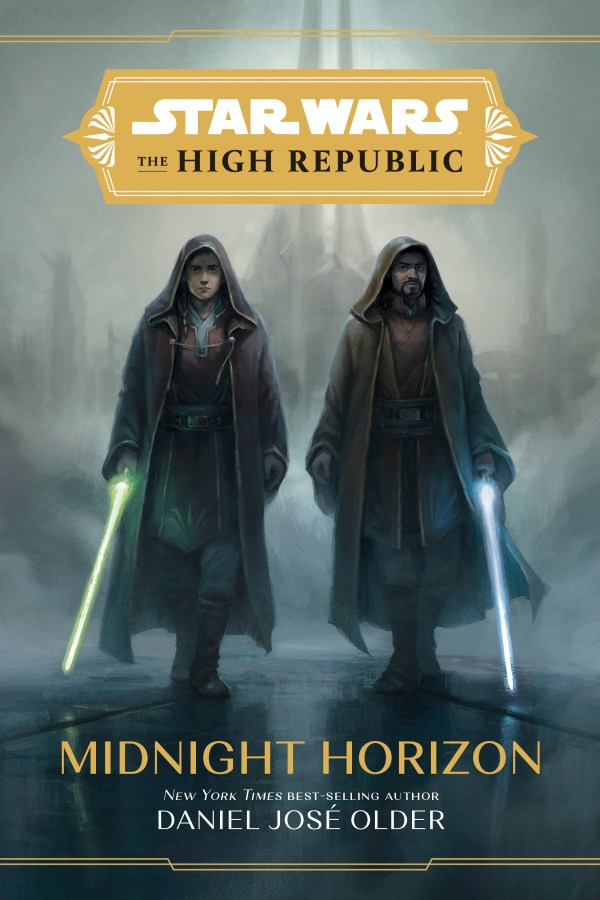
Star Wars: The High Republic: Midnight Horizon by Daniel José Older

Star Wars - Midnight Horizon Cover

Publisher: Disney Lucasfilm Press (Audiobook – 1 February 2022)

Series: Star Wars – The High Republic

Length: 10 hours and 5 minutes

My Rating: 4.75 out of 5 stars

Amazon     Book Depository

The first phase of The High Republic Star Wars novels continues to come to an intriguing end with the phase’s third young adult entry, Midnight Horizon, a deeply exciting and fun novel from the talented Daniel José Older.

Since the start of 2021, fans of Star Wars fiction have been granted a unique treat in the form of The High Republic books, a Star Wars sub-series set hundreds of years before the events of the films.  Set at the height of the Republic, the High Republic era is loaded with dangers for the Jedi, particularly that of the Nihil, dangerous raiders who seek to raid, pillage, and destabilise order, while their mysterious leader attempts a far more ambitious plan: the destruction of the Jedi.  Broken down into three phases, the first phase was pretty epic and set up the entire High Republic premise extremely well.  This phase has featured a great collection, including the three main adult novels, Light of the Jedi, The Rising Storm, The Fallen Star; some intriguing young adult books; the audio drama Tempest Runner; two awesome comic book series; as well as some other media releases.  However, this first phase has come to an end, and I just managed to finish off one of the novels that served as its conclusion with Midnight Horizon.

Midnight Horizon is the third young adult fiction novel set within the first High Republic phase, and it is probably the best.  This book was written by Daniel José Older, who has authored several great Star Wars novels over his career, including Last Shot, which was one of the books that started my recent obsession with Star Wars extended fiction, and who has been one of the key contributors to The High RepublicMidnight Horizon is set around the same time as the last adult book of the phase, The Fallen Star, and continues storylines from some of the previous books, including the other two young adult books Into the Dark and Out of the Shadows, as well as the Star Wars Adventures comic series and the junior novel Race to Crashpoint Tower.

Following the devastating Nihil attack on the Republic Fair, the Nihil raiders are finally on the run from the Jedi of Starlight Beacon.  However, not everything is as it seems, and several mysterious events and attacks are beginning to occur around the galaxy.  One of the more alarming rumours of Nihil activity has been sent from the planet of Corellia, home of the galaxy’s premier shipyards, where a now missing diplomatic bodyguard was attacked by mysterious killers wearing Nihil garb.

Determined to ensure that the chaos of the Nihil does not spread to the core planets of the Republic, the Jedi dispatch the small team of Jedi Masters Cohmac Vitus and Kantam Sy, as well as Padawans Reath Silas and Ram Jomaram, to investigate.  All four Jedi have substantial experience dealing with the Nihil, but each of them is going through their own personal internal battles as they struggle to deal with recent losses.  Nevertheless, the Jedi embark upon their investigation into Corellia and soon find unusual help from young security specialist Crash, the employer and friend of the missing bodyguard.

While Cohmac and Kantam attempt to investigate through official channels, Reath and Ram work with the chaotic Crash and her unusual security specialists to infiltrate Corellia’s high society.  Crash believes that one of her elite clients has knowledge about the Nihil infiltrators and embarks on an ambitious plan to draw them out, setting up Jedi associate Zeen as a famous singer.  However, nobody is prepared for the Nihil’s plans, both on Corellia and at Starlight Beacon, and chaos is about to be unleashed upon the Jedi and all of Corellia.  Can the Jedi stand against their foe when all hope seems lost, or will the Nihil continue to sweep across the entire galaxy?

Midnight Horizon was an exceptional entry in the High Republic series, and I was particularly impressed with the cool and epic story it contained.  Older came up with a brilliant and powerful narrative that combines a fast-paced story with great characters and some interesting High Republic developments.

This entry in the High Republic range had a very distinctive and compelling young adult story that sees all manner of chaos and action befall its protagonists.  Older wrote a very fast-paced, character driven narrative that takes the reader to the world of Corellia.  Drawing in an interesting team of entertaining and chaotic protagonists, all of whom are going through some major issues, Older sets them on a path to a major confrontation, while all of them try to come to terms with their roiling emotions.  The author sets most of the story up extremely well at the start of the book, and the reader soon gets quickly invested in seeing the Jedi investigate the Nihil on Corellia.  The story goes in some very interesting directions as everyone tries to identify the Nihil plot, with the best ones following the two Jedi Padawans as they team up with young bodyguard Crash.  Crash has some elaborate and over-the-top plans that she drags them into, including tricking a rare species eating diva named Crufeela, and this proves to be a lot of fun, while also setting up the final act of the story.  At the same time, Older also throws in some intriguing flashbacks to one of the character’s pasts, as well as showing a few scenes outside of Corellia, all of which adds some greater context to the story as well as adding to the amazing emotional depth of the novel.

Everything comes together brilliantly in the final third of Midnight Horizon, where the Nihil plot on Corellia is revealed, simultaneously occurring at the revelation of the fall of Starlight Beacon (which you knew was coming).  I must admit that until this final third, I kind of found Midnight Horizon to be a bit by the numbers, although undeniably fun, but the way everything came about near the end was pretty awesome, as the characters are thrust into an all-out war.  There are multiple pitched battles, tragic deaths and surprise reveals occurring during this part of the book, and you are constantly hit with big moment after big moment as it continues.  I honestly couldn’t stop at this point in the book, as I desperately wanted to see what happened next, and I was sure that I was seconds away from bursting into either tears or cheers.  My determination to continue really paid off, as Older saved the best revelation for right near the end as there is a really big moment that changes everything and is sure to get every Star Wars fan deeply excited.  Older leaves everything on an exciting and powerful note, and readers will come away feeling deeply moved.  It will definitely keep them highly interested in The High Republic as a whole.

The author really worked to give Midnight Horizon an extremely fast pace, and it is near impossible not to swiftly power through this book as it blurs around you.  Shown from the perspective of all the key protagonists, you get a great sense of all the impressive events occurring throughout the book, while also getting some powerful and intense examinations into their respective heads.  Older presents the reader with an excellent blend of universe building, character work, humour and action throughout Midnight Horizon, and there is a little something for everyone here, guaranteeing that it keeps your constant interest and attention.  I do think that the story as a whole could have benefited from greater development of the book’s villains.  They honestly came a bit out of nowhere towards the end and you really didn’t get an appreciation of who they were (some of it is explored in some of Older’s other works).  I really wish that Older would have shown a few more scenes from the villain’s point of view, highlighting the establishment of their plans a little better, and I felt that really would have increased the impact of the book, but I still had a lot of fun with it.

Midnight Horizon also proved to be a pretty good young adult novel, especially as it shows multiple compelling and well-written teenage characters in dangerous situations, and I loved the powerful exploration of their unique issues, especially the constant uncertainty and doubt about what they are doing.  There are also some major LGBT+ elements scattered throughout this novel, which I thought were done really well, as you get a range of different relationships, orientations, sexualities and fluid genders throughout the book, and I loved seeing this sort of inclusivity in Star Wars.  I also liked the easier flow that Older featured in the novel, which I felt was associated with the younger characters, and it worked quite well to quickly and efficiently tell this book’s fantastic narrative.  While this is a young adult book, there are some great darker themes that all readers will appreciate, and I loved how it developed into a brutal and powerful war at the end.

Midnight Horizon proved to be an interesting entry in the wider High Republic series, as it served as one of the last books in the first phase.  Since it is set alongside The Fallen Star, the readers get a whole other side of this key tragedy in Midnight Horizon, as the established characters all witness the fall of Starlight Beacon and the corresponding changes to the galaxy.  At the same time, it does some interesting exploring of the key planet of Corellia during this period, gives some hints about some events that will appear in the upcoming second High Republic phase, while also setting up some other key moments for the future.  However, the most significant thing that Midnight Horizon does for the High Republic is continue and conclude multiple key storylines and character plot lines that were started in other bits of work, such as the other High Republic young adult books.  It also provides an intriguing sequel to Older’s junior fiction novel, Race to Crashpoint Tower, and actually serves as the conclusion to The High Republic Adventures comic series, also written by Older.  The High Republic Adventures was one of the major comic lines for this phase of the sub-series, and fans of it really need to check this book out as it details the fates of several of its main characters.  I had a great time seeing how some of these storylines continue in Midnight Horizon, and Older did a great job of bringing everything together in this novel, while also making it quite accessible to newer readers who haven’t had a chance to read the comics.  That being said, good knowledge of the preceding High Republic works is probably a good thing to have for this novel, although Older does make sure to give as much background as possible as he goes.

As I have mentioned a few times throughout this review, Midnight Horizon was highly character focused, as the author brings in an interesting collection of main characters to base the story around.  All the major point-of-view characters have been featured in previous pieces of High Republic fiction before (mostly in Older’s work), and the author ensures that they all get detailed and compelling storylines in this novel that not only revisit their complex appearances in previous books, but also brings all their storylines to an intriguing close for this phase.  Older also spend a substantial time diving into the minds of these protagonists, which added some impressive emotional depth to the book, as all the characters experience deep traumas or regrets, especially after fighting the Nihil for so long.  This resulted in quite a moving read, and while I do think that Older might have used a few too-many supporting characters, this ended up being an exceptional character focused novel, and I really appreciated the clever way the author explored his protagonists and showed the events of this book through their eyes.

The best two characters in this book are the two Jedi Padawans, Reath Silas and Ram Jomaram, who serves as Midnight Horizon’s heart and soul.  I was particularly keen to see Reath Silas again, as he has been the constant protagonist of the High Republic young adult books and is a pretty major figure as a result.  Older is the third Star Wars author who has featured Reath as one of their main characters, and I do like how consistent the various authors have been while showcasing his growth and emotional damage.  Reath is going through quite a lot in Midnight Horizon, as he continues to try and balance his duty as a Jedi with the mass trauma he has experience in the last two books, his conflicted emotions, penchant for personal connections, and general uncertainty about what he is doing.  Despite this, he proves to be a steadfast and dependable character, and it is hard not to grow attached to his continued story, especially as he has developed so much from the first book from scholarly shut-in to badass warrior.  Reath’s narrative comes full circle in Midnight Horizon, and fans of this character will really appreciate how Older features him in this book.

I also had a lot of fun with Ram Jomaram, who was such a joy to follow.  Ram is an eccentric and unusual Padawan who first appeared in the concurrently released The Rising Storm and Race to Crashpoint Tower.  A mechanical genius with poor social skills and who is always accompanied by a group of Bonbraks (tiny sentient creatures), Ram brings most of the fun to the book with his antics and complete lack of situational awareness.  While I initially didn’t like Jam (mainly because I found out he was the Jedi who first came up with calling cool things “Wizard”), he really grows on you quickly with is exceedingly perky personality.  It was so much fun to see him in action throughout the book, and he gets into some unusual situations as a result.  Despite mostly being a friendly and cheerful figure, Ram is also going through some major emotions in Midnight Horizon, as he witnessed his home planet get ravaged by the Nihil in The Rising Storm, and he is now very uncertain about the emotions he feels while getting into battle.  This sees Ram form a great friendship with Reath throughout the book, and the two play off each other extremely well, bringing not only some fun humour but an interesting mentor-mentee connection.  Ram ends up showing everyone just how much of a badass he is towards the end of the book, and I honestly had an amazing time getting to know this character.

There is also an interesting focus on the two Jedi Masters, Cohmac Vitus and Kantam Sy.  Both go through some interesting and major moments in Midnight Horizon, and you really get some powerful insights from both.  Cohmac’s story is an intense and intriguing examination of trauma as you see this Master continue to struggle with his history and inability to process emotion.  These issues have been building within Cohmac since his introduction in Into the Dark, and it was fascinating to see them continue to impact him here, especially once he discovers what happened at Starlight Beacon to one of his closest friends.  Kantam Sy is a nonbinary character who has been primarily featured in The High Republic Adventures comic.  You get a much more in-depth look at Kantam in this book, especially as Older spends time developing several flashbacks around him that examine his complex past as one of Yoda’s students.  Kantam’s team-up with Cohmac proves to be an intriguing part of the book’s plot, and it was compelling to see the more balanced Kantam witness Cohmac’s building anger and frustration.

The final two major characters are Zeen and Crash, both of whom have some interesting storylines in this book.  Zeen, a Force-sensitive teen who assists the Jedi, is one of the main characters from The High Republic Adventures comic, and many of her storylines are finished off here a little abruptly although in some interesting ways.  Most of her storyline is focused around her growing romantic relationship with Padawan Lula Talisola, who she has been close with during the series, and the resultant internal conflict as she tries to decide whether to act on it.  There are also some more damaging emotional moments for Zeen as she comes to terms with the actions of her old friend Kamerat and the tragedy of Starlight Beacon.  The other character is Alys Ongwa, better known as Crash, a diplomatic protection officer who specialises in protecting Corellia’s fractious and deadly political elite.  Crash is an interesting character who was first introduced in a one-shot comic written by Older, Crash and the Crew Do What They Do, and it was interesting to see her brought back here.  A skilled bodyguard and leader, Crash is an intense and highly motivated figure who enacts multiple crazy schemes to get what she wants, while also trying to be a good friend and boss.  Crash hits some major crossroads in Midnight Horizon, especially when she is forced to balance her oath as a bodyguard against justice for her friend and the safety of her city, and she is constantly forced to keep her own intense emotions in check.  I found Crash to be one of the most entertaining and enjoyable figures in Midnight Horizon and watching her and her chaotic crew of bodyguards in action is a lot of fun, especially when she plays of all the other protagonists really well, bringing out the recklessness in all of them.  However, Crash is also quite emotionally vulnerable, and it was nice to see her try to become a better friend while also working on her romantic attachments to a beautiful alien singer and lifelong friend.  I had a wonderful time with all these major characters in Midnight Horizon, and Older did a remarkable job highlighting them and ensuring the reader was aware of their many issues.

As with most Star Wars novels I read, I chose to grab a copy of Midnight Horizon’s audiobook format, which was the usual exceptional experience.  Featuring a short run time of just over 10 hours, Midnight Horizon is a quick and fun audiobook to get through, and I loved the various ways this format enhanced the fantastic story.  As usual, Midnight Horizon features all the amazing Star Wars sound effects for lightsabers, blasters and ships, which are used to punctuate the story elements being described and perfectly bring listeners into the moment.  It also made good use of some of the classic Star Wars music, which, even though it was used a little more sparingly in Midnight Horizon, deeply added to the atmosphere of the book and perfectly enhanced the emotional impact of several key scenes.

While the sound effects and music where as cool as always, the thing that really impressed me about the Midnight Horizon audiobook was the great choice of narrator in Todd Haberkorn.  I didn’t realise that Haberkorn was going to narrate this book until I started listening to it, and I was pretty blown away the second I realised that I got to listen to an audiobook read by Natsu himself.  I am a massive fan of Haberkorn’s work as the English voice actor for dubs of awesome anime like Fairy Tail and Full Metal Alchemist Brotherhood, so it was really cool to have him narrate this audiobook.  Not only that, but Haberkorn did an outstanding job bringing the various characters to life in Midnight Horizon and moving the story along at a blistering and fantastic pace.  Haberkorn’s voice perfectly fit the frenetic energy of this story, and I loved the distinctive and very fitting voices he gifted to the novel’s eccentric characters.  He also had a lot of fun voicing some of the unique alien creatures featured in the book, such as the Bonbraks, and he got to do a particularly good Yoda voice as well.  I had an absolute blast listening to Haberkorn narrate this awesome audiobook, and when combined with the great music and impressive sound effects, this was an exceptional way to listen to Midnight Horizon.  I would highly recommend this format as a result, and it probably added a few points to my overall rating because of how impressive it was.

Overall, Midnight Horizon was an excellent High Republic young adult novel that was a real treat to read.  Daniel José Older came up with an outstanding and fun story that was both exciting and powerful as he dives into his various fantastic and damaged protagonists.  Loaded with some awesome moments and epic developments, this was a great addition to the Star Wars canon, and I loved every second I spent listening to it.

Amazon     Book Depository

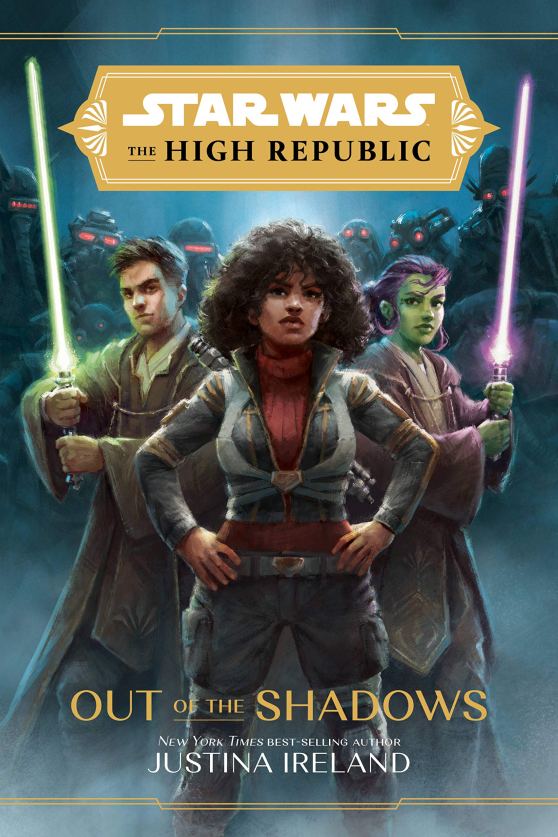
Star Wars: The High Republic: Out of the Shadows by Justina Ireland

Star Wars - Out of the Shadows Cover

Publisher: Disney Lucasfilm Press (Audiobook – 27 July 2021)

Series: Star Wars – The High Republic

Length: 10 hours and 50 minutes

My Rating: 4 out of 5 stars

Amazon     Book Depository

The marvels and terrors of the High Republic era of Star Wars history continues with the latest fantastic and exciting young adult tie-in novel, Star Wars: Out of the Shadows by Justina Ireland.

The High Republic is an interconnected collection of novels, comics, audio dramas and other pieces of media produced by top Star Wars authors, set hundreds of years before the films.  Starting in January 2021, this compelling multimedia project features several great pieces of fiction, including the awesome introductory novel Light of the Jedi by Charles Soule, the impressive The Rising Storm by Cavan Scott, and the entertaining young adult novel Into the Dark by Claudia Gray.  The latest High Republic novel, Out of the Shadows, is another compelling young adult novel that continues several key storylines from previous High Republic novels.  This was the second Star Wars book from author Justina Ireland, who previously wrote the High Republic junior novel, A Test of Courage.

Death, destruction, pirates, and plant monsters!  The Republic may be at the height of its culture and influence, but it is in some major trouble.  Following the devastation that occurred during the Republic Fair at Valo, the Republic are at war with the marauders known as the Nihil, with the Jedi leading the efforts to hunt them down.  But in the far corners of space, the Nihil are planning something new, something that could change the very fabric of the galaxy.

Sylvestri Yarrow is a young pilot and captain of a dilapidated ship, who is doing the best she can to keep her crew above water after the death of her mother.  However, when her ship is suddenly pulled out of hyperspace in a remote area of space with a boarding party of Nihil raiders waiting for her, she has no choice but to abandon her home.  Determined to get some form of justice, Sylvestri heads to Coruscant to convince someone of the dangers, but no one is willing to listen to a teenage pilot from the frontier until the unscrupulous and ultra-wealthy Xylan Graf appears and makes her an offer she cannot refuse.

In exchange for a new ship and a substantial number of credits, Sylvestri will accompany Xylan to the area of space where she lost her ship to help him disprove rumours of a dangerous Nihil weapon and to convince a senator into giving his family access to valuable hyperspace lanes.  Despite her misgivings about the plan, and the trustworthiness of Xylan, Sylvestri agrees to accompany him.  However, the Senator has a caveat: Xylan must take along some unimpeachable observers of her choosing, Jedi.  Now accompanied by young Jedi Knight Vernestra Rwoh, her Padawan Imri Cantaros, Master Cohmac Vitus, his apprentice Reath Silas, and, awkwardly, Sylvestri’s ex-girlfriend Jordanna Sparkburn, the team heads out to the wilds of space.  But the Nihil are always watching and waiting from the shadows, and their plans could spell doom for everyone.  Can Sylvestri and her new Jedi friends survive the dangers ahead of them, or will terrible secrets from her past threaten to overwhelm everyone once they are dragged out of the shadows.

Out of the Shadows proved to be a fun and compelling entry in this great new Star Wars series that I had a fantastic time listening to.  Featuring a great story and some excellent characters, this novel continues several key storylines from the previous High Republic novels and presents a strong and action-packed adventure.

Ireland has come up with a pretty good story for Out of the Shadows, resulting in a very exciting read.  Set around a year after Ireland’s last novel, A Test of Courage, and a short period after the events of the last major High Republic novel The Rising Storm, Out of the Shadows ties together several intriguing story threads set around some compelling characters.  The book starts out quick, with each major characters introduced in short order through a series of separate point-of-view chapters.  These early introductions do a good job of establishing the characters’ histories, personalities and motivations, and sending them on their various story paths.  The first third of the novel moves quickly, with each character getting some compelling moments, such as Sylvestri getting involved with unscrupulous businessman Xylan Graf, while Jedi Vernestra and her friends get a taste of the dangerous frontier life on their way to Coruscant.  This results in a fun mixture of plot inclusions, from some captivating political intrigue in Sylvestri’s storyline to some more action in Vernestra’s story combined with some interesting examinations of the Jedi and the Force.

These storylines combine around halfway through the book, with the key characters (except for one point-of-view antagonist) coming together and working as a team.  While it did have some good moments, I felt the middle part of the novel dragged a little, and there was not a great deal of excitement there.  However, it did set up the conclusion nicely, with Sylvestri and the Jedi coming face to face with the Nihil in less-than-ideal circumstances.  After a short confrontation, the story goes into overdrive, with the characters racing through several events all the way up to the end, including one event that might have some major ramifications for the High Republic storylines.  Strangely enough, while the second act was a little slow, the final part of the novel was way too quick, with a lot happening in a very short amount of time.  Still there were some great moments in these end scenes, including a couple of good twists, and it also sets up some further adventures extremely well.  All the key characters get gratifying conclusions to their various storylines, and readers are left feeling pretty satisfied with how events turned out.  Ireland makes sure to layer her story with some great action sequences, and there are some entertaining moments spread throughout the book.  I had a wonderful time reading this cool story, and it ended up being a rather good Star Wars book.

This latest Star Wars novel is marketed towards a young adult audience, and I felt that it was a particularly good read for teenagers.  Not only does it feature several teenage characters kicking ass, including a girl who became a Jedi Knight at age 15, but it also contains a clever and enjoyable story that does not pander to the younger age group or shy away from violence or controversial topics.  Ireland did a great job diving into the teenage mindset, and I felt that the various teenage characters featured in this novel were well portrayed as competent and complex figures.  I also liked the strong LGBT+ elements that Ireland featured throughout the novel, especially between Sylvestri and Jordanna Sparkburn, and it is cool that it is being shown so prominently in these novels.  Like many young adult Star Wars novels, this book is can be easily enjoyed by older Star Wars fans, who will appreciate the intriguing story and fascinating developments to the wider High Republic universe.  Younger readers will also probably have a good time with this novel, especially as Ireland does not go too over the top with the violence and romance, and as such I felt that this was an accessible novel to fans of all ages.

Out of the Shadows’ narrative is a continuation of several previous High Republic novels, which readers may need a bit of pre-knowledge about to fully enjoy.  Not only does this novel continue to expand the High Republic series and make frequent references to characters and events primarily featured in Light of the Jedi or The Rising Storm; it also serves as a direct continuation of two previous books.  This includes Ireland’s first Star Wars novel, A Test of Courage, as well as earlier 2021 release, Into the Dark, with key characters and storylines continued in Out of the Shadows.  Readers unfamiliar with these previous novels might also have a hard time following what is happening in Out of the Shadows, although I did think Ireland had a good go at making this novel accessible to readers, no matter their knowledge base.  Some key events of previous novels are explored in some detail, and I had no trouble following what was happening or who the characters were, even though I haven’t read A Test of Courage.  Ireland also blended the various existing storylines together extremely well, and this helped to turn Out of the Shadow into a key entry in the overall High Republic series, especially as it continues to show the galactic machinations of the Nihil.  It also looks like several storylines, mainly surrounding Ireland’s primary protagonist Vernestra Rwoh, will be continued in some future novels and I will have to try to read Ireland’s next novel, Mission of Disaster, even though I have avoided the junior High Republic novels in the past.

One of the things that particularly impressed me about Out of the Shadows was the excellent collection of characters that Ireland fit into her narrative.  There is a substantial central cast in this book, including some new additions and some characters who have appeared in previous High Republic novels.  The author does a good job of introducing and exploring these key characters throughout the novel, and you get some interesting and intense character development occurring, which really adds to the narrative.

These characters include Sylvestri Yarrow, a young pilot who finds herself dragged into the middle of this adventure.  Sylvestri is a tough frontier girl with a big independent streak and a massive chip on her shoulder when it comes to both the Nihil and the Jedi, and she goes through a lot in this novel.  Serving as one of the main point-of-view characters, Sylvestri offers a very interesting view on the events occurring and has some deep connections to the Nihil plot without even realising it.  She also forms an intense and fantastic relationship with Jordanna Sparkburn, her ex-girlfriend, who suddenly re-enters her life.  Jordanna is a frontier deputy responsible for defending her planet from Nihil raiders, which has seen her fight in quite a few battles.  Brought into the story after the Jedi help her to defend her home, Jordanna accompanies them to Coruscant and then gets wrapped up the main story.  Mainly introduced as the tough girl still interested in Sylvestri, Jordanna gains a lot of depth as a character as the story progresses, especially as she has experienced a lot of trauma after being forced into multiple battles.  A lot of this comes out when Sylvestri is in trouble, and Jordanna goes on a bit of a killing spree with a unique Nihil weapon she has obtained.  This scene really adds a lot to how the reader sees her, and it proves to be quite fascinating.  I was also a big fan of Jordanna’s giant alien cat, Remy, a dangerous creature who is just a big kitten at heart, especially when she bonds with some of the other characters.

I also enjoyed the great Jedi characters featured in Out of the Shadows.  These include Jedi Knight Vernestra Rwoh and her Padawan Imri Cantaros, who were the main characters of A Test of Courage and are now Ireland’s go-to Star Wars protagonists.  These two Jedi make for a unique pairing, as Vernestra is a brilliant Jedi prodigy, becoming a Knight at a very young age, while Imri is only slightly younger and has a unique ability to perceive emotions.  Vern is a particularly striking character, particularly with her lightwhip (a lightsaber modified to also be used as a whip) and I enjoyed seeing the challenges that a very young Knight would face.  Her unique connection to the force also connects her to another interesting character in the High Republic canon, and it sets her up for some big storylines in the future.  The other major Jedi characters are Jedi Master Cohmac Vitus and his apprentice Reath Silas.  Cohmac and Reath were previously heavily featured in a previous young adult novel, Into the Dark, and it was great to see them again.  Despite being the apprentice, Reath is the more prominent character, with several point-of-view chapters to himself.  While it was great to see more of Reath and Cohmac, they are a little underutilised, and I would have liked to see more about them, especially with Reath’s unique connection to one of the antagonists.

The other two characters who were a lot of fun in this book are Nan and Xylan Graf, two complex figures who are playing their own games.  Nan is a young Nihil spy and infiltrator who previously encountered Reath while the two were trapped on a space station together.  Serving as one of Marchion Ro’s most loyal soldiers, Nan is entrusted with an important treasure and is subsequently forced to navigate the Nihil’s internal feuding and plotting to survive.  Nan provides a fantastic alternate perspective for much of the events of the novel as she is used to show what is happening in the Nihil camp.  I liked her use in this book, and while I would have enjoyed a much more intense confrontation with Reath when they are inevitably reunited, I did enjoy how Nan’s story arc dramatically changed towards the end of the novel, which should be interesting for future High Republic novels.  The other character is Xylan Graf, the ultimate rich-kid master manipulator.  Xylan is the scion to the exceedingly powerful and rich Graf family, who organises the entire expedition, seemingly to gain rights to a valuable sector of space.  Xylan is an extremely flashy and stylish figure, and it is quite entertaining to see the other characters react to his eccentricities.  He is also quite a sly operator, cooking up plans and spinning tales to keep everyone happy.  He is so slippery that you honestly don’t know what he is planning for most of the novel, and I felt that he was a very compelling and fun addition to the cast.  All of the above characters were really fun and I hope they reappear in some of the future High Republic entries.

I made sure to grab a copy of Out of the Shadows’ audiobook format, which proved to be an interesting experience.  While I tend to really enjoy Star Wars audiobooks due to the cool production inclusions they usually feature, I ended up being a little disappointed with Out of the Shadow’s audiobook.  This was mainly because it lacked the iconic Star Wars musical score or background sound effects that all the other Star Wars audiobooks have, which made for a more subdued listening experience.  While this didn’t make Out of the Shadows impossible to enjoy, it was a very noticeable departure from the typical fun I have with Star Wars audiobooks, and several scenes could have benefited from being enhanced by some emotional music.  Still, I enjoyed the production, mainly because narrator Keylor Leigh does a really good job telling the story.  Leigh, who previously narrated Ireland’s A Test of Courage, has a great voice for teenage characters.  I felt that Leigh gave each of the key protagonists a unique and fitting voice, and she also ensured that the narrative moved along at a quick and exciting pace.  In addition, with a runtime of just under 11 hours, this is a relatively quick listen, which dedicated listeners can power through in no time at all.  As a result, this is a good format to enjoy Out of the Shadows on, although I really do wish that it had featured the usual strong Star Wars production values.

Star Wars: Out of the Shadows by Justina Ireland is an awesome and captivating High Republic tie-in novel, which continues to explore this unique period in Star Wars history.  Containing a fun story and some great characters, this novel serves as a key entry in the High Republic series, following several fascinating plot threads from some previous novels.  Readers are in for an excellent time with this novel, and Out of the Shadows proves to be an exciting and compelling experience.

Amazon     Book Depository

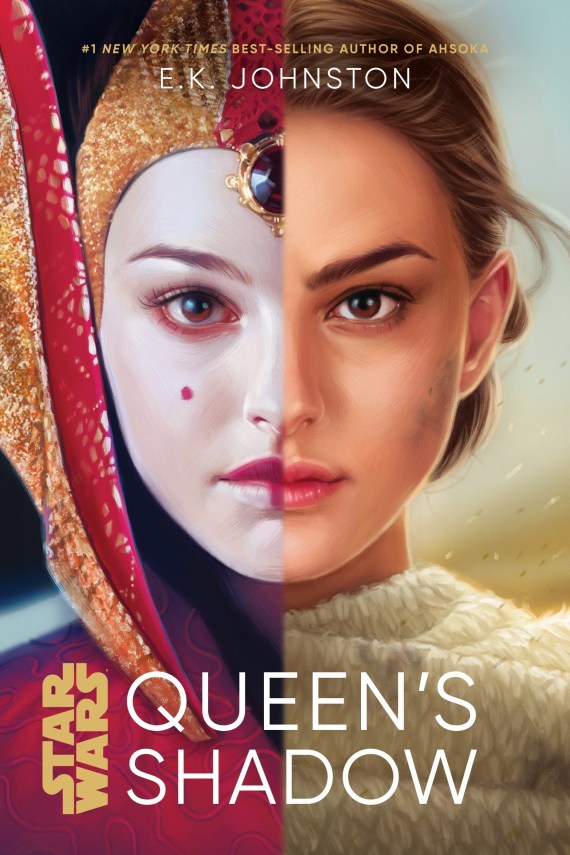
Star Wars: Queen’s Shadow by E. K. Johnston – Audiobook Review

QueensShadow Cover.jpg

Publishers: Disney Lucasfilm Press and Listening Library (5 March 2019)

Series: Star Wars Extended Universe

Length: 8 hours 22 minutes

My Rating: 4 out of 5 stars

Amazon

The female protagonist of the Star Wars prequel movies, Padmé Amidala, gets a story mostly worthy of her, as young adult fiction author E. K. Johnston attempts to bridge the character gap between the first two Star Wars prequel movies in Queen’s Shadow, the first Star Wars novel of 2019.

While The Phantom Menace had its flaws, one of the things that the first Star Wars prequel film did right was the character of Queen Amidala, the young, fierce and strong democratically elected Queen of Naboo, who was able to lead her people to freedom.  Portrayed by a young Natalie Portman, the character appeared in the other two prequel movies, where her relationship with Anakin Skywalker became a key plot point of the entire series.  While I am not the biggest fan of how Padmé was portrayed in the second and third prequel films, I was quite excited to read a novel that explored the character in more detail, especially one written by Johnston, who did such a fantastic treatment on the popular character Ahsoka Tano in her one previous foray into Star Wars fiction.  After my previous awesome experiences with Star Wars audiobooks, such as Ahsoka, I chose to listen to this book’s audiobook format, which was narrated by Catherine Taber.

Four years after ensuring the defeat of the Trade Federation on Naboo, Queen Padmé Amidala has served the last elected terms of office and is no longer Queen.  Now free of the responsibilities of ruling, Padmé and her loyal handmaidens now have time to think about a new future.  However, before Padmé can put any plans in place the new Queen of Naboo presents her with a job she cannot refuse: become the new representative of Naboo in the Galactic Senate.

Accepting the role, Senator Amidala travels to Coruscant, the capital of the Galactic Republic, to take up her seat, accompanied by a completely new support staff.  She is quick to discover that her experiences as a ruler have not prepared her for the demanding and treacherous world of galactic politics.  The Senate is a hotbed of corruption and bureaucracy, and Padmé is already considered by many to be a puppet of Chancellor Palpatine.  She also has number of powerful enemies throughout the galaxy who seek not only to discredit her but also to kill her.

However, Padmé Amidala is used to being underestimated, and with Sabé, her former decoy and shadow, watching her back, she begins to forge the political alliances she needs to finally bring some change the galaxy.

This was an interesting piece of Star Wars fiction that I quite enjoyed.  However, it is not without its flaws, and there were a few things that I disliked about the story that resulted in me dropping my overall rating slightly.  But before I talk about the parts of the story that I had issue with, I want to mention the elements of this book that I enjoyed quite a bit.

Queen’s Shadow is an amazing Padmé Amidala story that helps redeem the character after her less than stellar showings in the second and third Star Wars prequel movies.  This book helps make people forget about the helpless, pregnant damsel from Revenge of the Sith (although some deleted scenes from that movie do show some of the politics she was involved with), and instead focuses on her role as a canny political operator.  I was also quite happy that Anakin did not appear as a character in this book; I preferred to see Amidala stand on her own without being defined by her relationship with a Jedi.

Johnston did a spectacular job of creating a novel that bridges the gaps in Padmé’s story between the first and second prequel movies.  At the end of The Phantom Menace Padmé is still queen of Naboo, but by the start of Attack of the Clones she has become a senator, with very little discussion in the movies concerning how this came about.  While I am sure that some of the books and comics in the old Star Wars extended universe would have covered this period of Padmé’s life, Queen’s Shadow is one of the first stories to explore this in the new Disney owned and operated Star Wars extended universe.

The author spends a significant amount of time focusing on Padmé’s early days in the Galactic Senate, including how she formed some of her early alliances, such as with Bail Organa and Mon Mothma, and how she became such a significant force in the Senate.  In addition to this, we get to see how and why several of the minor Naboo characters from The Phantom Menace left Padmé’s side, and how several new characters, such as her new handmaidens and her security guard, Gregar Typho, came into her service.  In addition to serving as a bridge between the two prequel movies, Queen’s Shadow also ties into The Clone Wars animated television show, showing Padmé’s first contact and initial relationships with some of the characters who originated in the animated show, such as Senators Rush Clovis and Mina Bonteri.  While the book does spend time setting up events for Attack of the Clones, Johnston ensures that Padmé and the other main characters reflect on the events that occurred during The Phantom Menace, and the people that helped them during these adventures, such as Qui-Gon Jinn and little Anakin Skywalker.  Overall, I felt that this really helped tie in the events between the two books and is an excellent new piece of Star Wars cannon.

In my opinion, one of the cleverest parts of The Phantom Menace was the revelation towards the end of the film that Queen Amidala was actually being played by two separate actresses: Natalie Portman and Keira Knightley.  In the context of the film, Natalie Portman’s character, Padmé, was the real queen of Naboo, while Keira Knightley’s character, Sabé, was a decoy used for security purposes.  While Padmé portrayed the Queen at the start of the movie, when the Trade Federation invaded there was a subtle switch and Sabé took on the role while Padme could be seen disguised as a nondescript handmaiden in the background.  The two characters would then switch between portraying Queen Amidala throughout the film, with Sabé taking on the role whenever there was a chance the Queen could be captured or killed, while Padmé took on the role herself when official discussions or speeches needed to be made.  Handmaiden Padmé also got her own scenes when Sabé was taking on the role as Queen, allowing the viewers to see this side of the character.  This was and still is an amazing and ingenious part of the movie, which worked due to the similarity in appearances between the two then relatively unknown actresses, a downplaying of Knightley’s role in the film, as well as because of the elaborate makeup, hairstyles and dresses that Queen Amidala wore.  As a result, the general audience were quite surprised at the time, especially as cast lists were not as easily available on the internet at the time.

As a result, I was extremely happy that Johnston chose to explore the utilisation of the queen’s decoy in some detail throughout this book.  Quite a lot of time is spent discussing the techniques behind the Amidala persona, from the distracting makeup and costumes, to the quick-change techniques that Padmé and her handmaidens utilise, and even several discussions about the ‘Amidala voice’, the imperious tone that Portman and Knightly both performed in The Phantom Menace.  I found this entire exploration of this decoy angle incredibly fascinating, and it gave me a completely new appreciation for how the decoys were utilised in the first prequel film.  The decoys were also a key part of Queen’s Shadow, as Padmé still continues to utilise them as a senator, allowing her to avoid danger and slip away at social gatherings so she can undertake other covert tasks.  The scenes where they utilise them are quite intriguing, and I liked the author’s thoughts on the psychology behind the effectiveness of the decoys and how they are still an effective technique in an advanced science fiction society.  It was interesting to note that both of Padmé’s decoys who appear the films, Sabé and Cordé (who was blown up at the start of Attack of the Clones), have major roles in this book, with both taking on the Amidala persona at some point in the story.

While it was intriguing to see Cordé learn to take on the role of Amidala in this book, the original decoy, Sabé, was a much bigger part of the plot.  Sabé has a significant role within the book and is actually Queen’s Shadow’s secondary protagonist, performing undercover work on Padmé’s behalf.  The relationship between Padmé and Sabé was a really interesting and emotional subplot to explore, as Sabé is quite loyal to the former queen.  How Sabé defines herself as Padmé’s friend and confidant is a significant part of Sabé’s story, and Johnston spends time attempting unravel this complicated relationship.  The overall result is a fascinating inclusion to this story, and one that adds some real emotional depth to the story.

In addition to the focus on the decoy characters, Johnston also spends time looking at the role of Padmé’s royal handmaidens, the young hooded women who followed Padmé around in the first film.  I had never really given the handmaidens much thought before this book, apart from how Padmé was able to hide her identity by taking up a handmaiden’s garb for several parts of the film.  However, Johnston does a fantastic job of explaining the actual role of these characters as Padmé’s confidants, covert operatives, undercover bodyguards and potential body doubles.  I really liked how Johnston was able to turn these minor characters from the films into a significant part of her book, and it was quite interesting to see them be deployed to help with Padmé’s political moves.  Each of the handmaidens, both those who only appeared in The Phantom Menace and those who only appeared in Attack of the Clones, are explored in some detail throughout the book.  The reader gets a real sense of each of the characters personalities, what skills they bring to Padmé’s table and the fates of those handmaidens who served Padmé during the invasion of Naboo are also explained by this book.  This look at the handmaidens is an excellent part of the book, and one that I actually found quite fascinating.

Aside from the look at Padmé and her associates, Queen’s Shadow also examines a number of other aspects of the Star Wars universe during this time period.  For example, there is quite a large focus on politics, both on Naboo, and within the Galactic Senate.  The galactic politics in particular is quite intriguing, and I liked seeing Padmé’s initial impression of Senate procedure and its many shortcomings.  Johnston has also included some fun media articles throughout the book, showing how negative news coverage is being used to disadvantage or advantage Padmé’s political ambitions, which I found to be quite amusing.  There are also some hints at the coming Separatist movement, as several planets are showing discontent with the Republic and certain actions are taking place to undermine security throughout the galaxy.  All of the features are pretty interesting, and I had fun reading about them throughout this book.

Now, while I obviously quite enjoyed many of the elements that Johnston explored in this book (having gone on about them for over two pages), I have to admit that the overall story is actually a bit boring in places and the story really does not go anywhere.  There are some big points, including a quick assassination attempt, piracy, large-scale disasters and potential political crisis, but many of these events has any real significance, follow through or any sort of actual conclusion.  This could potentially be alright if Queen’s Shadow is the start of a larger storyline or a new book series, but I am not too sure how likely that is.  Not only is there no real indication that Johnston will be continuing this story, but the epilogue of the book kind of puts a damper on that, which I will discuss below.

BEWARE SPOILERS BELOW:

The epilogue of the book shows Padmé’s funeral, as shown at the end of Revenge of the Sith.  While I did like how Johnston alluded to the funeral at the start of Queen’s Shadow’s by using the same descriptions of Padmé’s floating flower-covered body, and the funeral does put a final end to the story.  The epilogue did show Sabé talking with Senator Organa, so this book could potentially set up a follow-up book focusing on the former decoy either joining the Rebel Alliance or investigating Padmé’s death.  However, this does not really fit with some of the open story points from this book, as the Trade Federation are the most likely people behind the assassination attempts and the piracy, and who cares about the Trade Federation after Revenge of the Sith?  In addition, this book only really explored around a year of Padmé’s life as a senator, and I think it would make more sense to follow more of Padmé’s early political career, especially as there is still around five more years until Attack of the Clones begins.  I suppose you could maybe do a split-timeline story that follows Padmé and Sabé before and after Revenge of the Sith, with the two storylines coming together, although I am not sure how well that would work.  I would like to see Johnston explore this more and give her overall story more shape, I just do not know how likely that is at this point.

END OF SPOILERS

While the somewhat pointless story does bring Queen’s Shadow rating down a bit, its audiobook features really help raise it up again, especially with its excellent narrator Catherine Taber.  The audiobook version of Queen’s Shadow runs for around eight hours and 20 minutes, so it is an easy book to get through quickly.  Catherine Taber is the actress who voiced Padmé in The Clone Wars animated show and is also the most recent person to portray the character on screen.  As a result, she is the perfect narrator for this book, as she already perfected a great Natalie Portman imitation voice for the show.  Taber did a fantastic job narrating this book, as she not only is the perfect voice for Padmé but also has an amazing range for the other characters featured in the book.  I appreciated how she was able to craft similar voices for the handmaiden characters, many of whom were chosen to be handmaidens because they were physical and audible matches to Padmé.  This is particularly true of Sabé, and as a result Taber ensures she has pretty much the same voice that Padmé does.  Other high points of Taber’s narration include her rendition of the Amidala voice, as well as the creepy tones she utilises for Chancellor Palpatine, especially when he kept saying “my dear”.  As always, the producers of this Star Wars audiobook load up this version with all sorts of sound effects and classic Star Wars music.  I felt that these sound effects and music really helped enhance the story, and gave it some real atmosphere, and I liked the way that certain things, such as holo-messages between the characters, were altered to make them sound more realistic.  I would strongly recommend the audiobook format of Queen’s Shadow as the best way to enjoy this story, and I thought it was just wonderful.

Queen’s Shadow is marketed as a young adult novel, and it is quite a good novel for a younger audience to enjoy, with only minor sexual references, coarse language, drug use and violence throughout the book.  However, there really is not any upper age limit on enjoying this book, and older readers can just as easily explore Johnston’s story.  While there is no age limit, readers should ideally be a Star Wars fan to fully enjoy Queen’s Shadow.  At the very least, readers should have watched all of the prequel films first to get a full handle on what is happening.  While I imagine someone with no prior knowledge of Star Wars might be able to enjoy reading this, it is probably not the best young adult science fiction book to pick out.  As a result, this book is recommended more for established fans of the franchise, and as a pretty hard-core Star Wars fan myself, I know I enjoyed all of the references and character exploration that Johnston did a lot more.

In the end, I decided to award Queen’s Shadow four stars out of five.  While I really loved all the intriguing elements that Johnston explored in this book, the lagging story did make it a little harder to enjoy.  That being said, I would not hesitate to grab another Star Wars book from Johnston, as she has an outstanding understanding and appreciation of the Star Wars universe.  I do hope that this story is continued in some way, and if it does, I will definitely check out the audiobook version of it, especially if it is narrated once again by Catherine Taber.  Interesting reading, Queen’s Shadow is worth checking out, especially if you are an established fan of the Star Wars franchise.

Amazon

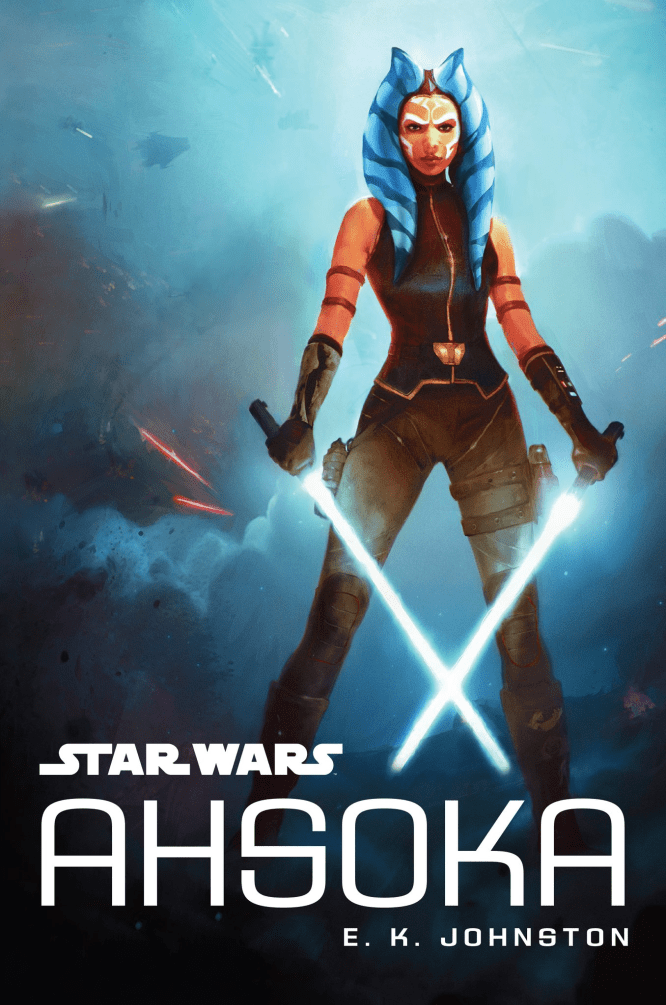
Throwback Thursday: Star Wars: Ahsoka by E. K. Johnston

Ahsoka_novel_cover

Publishers: Disney Lucasfilm Press

                        Penguin Random House Audio

Release Date – 11 October 2016

Amazon

Reviewed as part of my Throwback Thursday series, where I republish old reviews, review books I have read before or review older books I have only just had a chance to read.

The apprentice lives.  One of the best Star Wars characters that originated outside of the live-action movies returns in this action-packed, character-driven novel, which follows Ahsoka Tano’s adventures after the destruction of the Jedi Order.

Those people familiar with my previous reviews may have noticed that I am a bit of a Star Wars fan, having reviewed several pieces from the current Disney Star Wars extended universe in the last few months.  Therefore, it should not come as a surprise to anyone that I have watched and enjoyed the Star Wars: The Clone Wars and Star Wars Rebels animated television shows.  Both of these shows are very well done, can be appreciated by a varied audience and contain a large amount of the classic Star Wars heart and respect for the franchise’s lore and history that was missing in some of the more recent movies.  While many memorable characters were introduced in these shows, perhaps the most significant to the lore is the titular character of this book, Ahsoka Tano, Anakin Skywalker’s apprentice.

For those of you failing to remember Anakin having an apprentice in the live-action movies, you are not going crazy; Ahsoka has yet to appear in any live action movie.  She was instead introduced in The Clone Wars animated movie and served as one of the main characters of The Clone Wars television series, all of which take place in the years between Attack of the Clones and Revenge of the Sith.  Despite being one of the most popular characters on the show, Ahsoka would leave the Jedi Order at the end of the fifth season of The Clone Wars and only appear in the sixth season as part of a short vision sequence.  As a result, fans of the both the show and the character were frustrated and confused about what Ahsoka’s fate was and whether she had survived the events of the third prequel movie.  Fans didn’t get their answer until a couple of years later, at the end of the first season of Star Wars Rebels, where it was revealed that Ahsoka had survived the Jedi purge, becoming a member of the early Rebel Alliance.  Ahsoka, now wielding a pair of white lightsabers, became a key character in the second season of Star Wars Rebels, in which she was still an incredibly cool and powerful warrior.  She was utilised to perfection in this new show and had what is easily the best scene in the entire run of Star Wars Rebels: her long-awaited confrontation with Darth Vader.  The sheer emotion and intensity as Ahsoka finally came face-to-face with her old master and discovered that he was responsible for the fall of the Jedi was just amazing and is one of my favourite moments from all of television.

Following her appearance in Star Wars Rebels, Disney commissioned a young adult Ahsoka book, which was announced on 31 March 2016, one day after the Star Wars Rebels season 2 finale.  This book was released in late 2016 and was written by young adult author and Star Wars fan E. K. Johnston.  Ahsoka was Johnston’s first foray into Star Wars fiction, although she is currently working on Queen’s Shadow, a young adult novel focused on a post The Phantom Menace Padme Amidala, set to be released next year.  I have no doubt that a review for Queen’s Shadow will appear on this website in due time.  Now, with the recent announcement of a seventh season of The Clone Wars and the reveal that Ahsoka will be appearing in this new season, I decided to check out this book to see if it did the character any justice.  I chose to enjoy this as an audiobook, rather than read a physical copy.

During the Clone War, Ahsoka Tano was a fierce warrior and a commander of the Republic’s clone troopers.  However, after the devastation of Emperor Palpatine’s Order 66, which saw the clones turn on the Jedi, everything changed.  Fighting on Mandalore, far away from her master, Anakin Skywalker, Ahsoka is unaware of his fall to the dark side of the Force, and only just manages to escape the purge of the Jedi Order.

Now, one year after the fall of the Republic and the rise of the new Galactic Empire, the former Padawan is in hiding on the outskirts of the galaxy, trying to avoid any Imperial attention.  Living under an assumed name and with her trusty dual lightsabres gone, Ahsoka scrapes a living as a mechanic, intentionally distancing herself from the Force in order to hide her Jedi abilities.

Ahsoka journeys to a remote farming settlement on the Outer Rim moon of Raada.  Settling into her new life and making connections with its inhabitants, Ahsoka believes that she has finally found her sanctuary.  But her hopes of a peaceful life in her new home are quickly dashed when the Empire arrives, imposing their totalitarian rule on the people of Raada.  The agricultural potential of the moon is vital to the future of the Empire, and the workers are being forced to farm a new and mysterious plant.  Determined to help her new friends and wanting to make a difference, Ahsoka uses her wartime experience to help form a resistance in order to undermine Imperial control.

But when she is forced to reveal her full powers in order to save her friends, she once again finds herself on the run.  However, this time her actions have not gone unnoticed.  Her old ally, Senator Bail Organa wants her to join his fledgling rebellion, while the sinister Inquisitor, the Sixth Brother, arrives on Raada with plans to capture her, using Ahsoka’s friends as bait.

Because I am a fan of the titular character, I did go into Ahsoka with some rather high expectations.  Luckily I quite enjoyed Ahsoka, powering through this book quickly while appreciating how Ahsoka’s new adventure fit into the existing Star Wars chronology.  This story is very good, with an excellent blend of character development, Star Wars lore and some scintillating action and adventure.  The book contains a well-paced narrative that not only features Ahsoka’s personal story, but also examines the viewpoint of several side characters, in order to move the plot along, while also showing the impacts of Ahsoka’s actions from a different viewpoint.

This book is mainly focused on the adventures of Ahsoka, and fans of the animated show will appreciate seeing how she not only managed to survived the purge of the Jedi, but how she became the hardened rebel agent we encountered in Star Wars Rebels.  I feel that anyone who reads this book will appreciate the considerable amount of character development and insight that occurs with the titular character.  At the start of the book, Ahsoka is afraid, hiding who and what she is from the world while also denying herself access to the Force.  She is filled with regrets, concerns for her missing Jedi family and guilt not just about surviving but also about leaving the Jedi Order before its fall.  Throughout the book, her adventures, the new friendships she develops, the people she helps and the role she plays on Raada all help her to find a new purpose, as well as re-establishing her connection with the Force.

There are a number of great scenes featuring or concerning Ahsoka in this book.  These include her battle with the Sixth Brother, the forging of her new white lightsabres and the epic scene where she unleashes her Force abilities for the first time in a year.  It was also intriguing to see her advising the farmers in guerrilla tactics and helping them sabotage the Imperial occupation.  Fans of Ahsoka will appreciate the similarities this has to one of the character’s most significant arcs from The Clone Wars that featured her training a guerrilla army to combat a Separatist invasion, including a young Saw Gerrera (Forest Whitaker’s character in Rogue One).  I also enjoyed Johnston’s focus on the connection between Ahsoka and the female character Kaedan Larte.  It was great seeing this character help get Ahsoka out of her shell, and the subtle romantic feelings between the two of them was an interesting character direction for Ahsoka.  Overall, I thought Ahsoka contained an incredible take on its titular character, as Johnston not only provides the reader with a much clearer picture of Ahsoka’s fate following The Clone Wars, but also provides a powerful look at her thoughts and feelings following the destruction of the Jedi.

In addition to exploring the fates of one of their favourite characters, fans of the franchise are also treated to another intriguing look at events in the Star Wars universe not covered in the movies or television shows.  Ahsoka is set one year after the events of Revenge of the Sith, and shows the early days of Imperial control in the galaxy.  There is a palpable and well-utilised feeling of dread throughout the book as the various point-of-view characters encounter the steady increases in Imperial control as their military expands its influence.  It is fascinating to see the early Imperial military machine in action, especially when it comes to controlling and pacifying smaller planets and moons.  One of the most interesting aspects of this is the type of troops being utilised.  By this point in the Star Wars’ chronology, the Empire has started to phase out their clone troopers, replacing them with the human stormtroopers that appear in the original trilogy.  During her encounters with them, Ahsoka notes that these stormtroopers are still quite green and are nowhere near the clones’ level of competency when it comes to battle, controlling territory or dealing with Jedi.  This changeover in troop type for the Empire has not really been covered in too much detail before and is quite fascinating to see.

The exploration of the Empire’s methods of hunting down the remaining Jedi is also intriguing, as one of Vader’s Inquisitors serves as the book’s main antagonist.  The Sixth Brother is shown not only hunting fully trained Jedi like Ahsoka but also tracking down Force-sensitive children for his masters.  The extent of the Inquisitor’s power and influence is explored in some detail here, and I enjoyed seeing Ahsoka’s impression of these Inquisitors’ skills and actions, especially as the Inquisitors were also trained by Darth Vader.  Readers will also note the obligatory hints at the creation of the Death Star throughout the plot of the book, which is an important part of the overall Star Wars chronology.

These early days of the Imperial military is not the only thing covered in the book, as Johnston also explores the opening actions that would lead to the formation of the Rebel Alliance.  Johnston uses minor Star Wars character Bail Organa to great effect here, showing the work he beings immediately after his heroics in Revenge of the Sith to oppose the Emperor.  Ahsoka also features several cameos from other characters in the Star Wars cannon, and readers can look forward to seeing fan favourite characters Darth Maul, Obi-Wan Kenobi, R2D2, a young Princess Leia and the Grand Inquisitor.  This is a compelling and insightful addition to the Star Wars extended universe, and readers will be amazed by this new viewpoint into one of the franchise’s most volatile periods.

As I mentioned above, I chose to listen to the audiobook version of Ahsoka rather than track down a physical copy to read.  This was mainly because the creators of the Ahsoka audiobook managed to score Ashley Eckstein as the narrator.  Eckstein is the actor who voices Ahsoka in both The Clone Wars and Star Wars Rebels, and I loved the idea of having the definitive voice of the character narrate this crucial Ahsoka story to me.  As Ahsoka is the most prominent point-of-view character, this works out incredibly well, and the reader can enjoy hearing Ahsoka tell the story of what is around her.  Eckstein also provides excellent voice work for all the other speaking characters that feature in the book, as each of these characters were given a distinctive voice that does not feel out of place.

While I really enjoyed hearing Eckstein narrate the story, another benefit of listening to Ahsoka on audiobook is the use of the iconic Star Wars music, as well as the book’s cool use of sound effects.  The creators of the Ahsoka audiobook have inserted John Williams’s iconic score from the movies into a variety of the book’s scenes.  While this is slightly distracting in one or two places where the music did not quite fit properly, it works incredibly well for most of the book.  Several of the story’s big scenes, such as the pivotal battle sequence where Ahsoka reveals her Jedi powers for the first time since she went into hiding, are underscored by this music.  With this grand and powerful music playing in the background, these scenes are given a real epic quality that you just do not get from reading a psychical copy of the book.  It also serves to make Ahsoka feel a lot more connected to the movies, as the listeners are provided with a score that is instantly recognisable as belonging to this franchise.  In addition to the spectacular musical inclusions, the audiobook also features a range of relevant sound effects that really add to the book’s atmosphere and authenticity.  These sound effects range from droid noises and the sounds of ships starting up, to background music when the characters hang out in the cantina.  None of these sound effects distracts from the story and for some of the battle scenes, the lightsabers and blasters sounds really add to the reader’s excitement and involvement in the action.  Another thing I found fun while listening to Ahsoka on audiobook was the producer’s use of some sort of voice modulator for when Eckstein narrates the voices of stormtroopers or other characters wearing helmets.  This is a nice touch and really speaks to the producer’s attention to detail.  I am unsure how effective this would have been if Darth Vader had appeared in the book, but I’m sure I would found the end result amusing one way or another.

Clocking in at just over seven hours long, this is an easy book to get through and the inclusion of the classic Star Wars music, fun sounds effects and the definitive voice of the titular character make it an excellent way to experience this fantastic story.

Ahsoka has been written with a young adult audience in mind, and is definitely an enjoyable book for younger readers who are curious about the Star Wars universe, are fans of the animated shows, or are just looking for an exciting adventure in space.  That being said, the book does not pull any punches, and features an extended torture scene and quite a few deaths, including one particularly gruesome kill by the Sixth Brother.  While some of this can be a tad heavy, I personally feel that anyone mature enough to be familiar with the Star Wars franchise is probably going to be mature enough to not be affected by this violence.  Despite being intended for a young adult audience, Ahsoka, like many of the Star Wars young adult range, is definitely a series that can be appreciated by an older audience, especially those familiar with the franchise and the titular character.

Overall, I was very happy that I checked out Ahsoka, as it not only provided greater insight into the history of one of my favourite Star War’s characters but also painted a detailed and intriguing picture about the early days of the Empire.  Featuring a surprisingly deep and emotional story, this is a fantastic addition to the Star Wars extended universe that will appeal to fans of the amazing animated show, while also offering character based adventure to the more casual reader.  Definitely best to check out in the audiobook format, readers will love how this morphs this impressive Star Wars story into a memorable experience that becomes very difficult to turn off.

My Rating:

Four stars

Amazon

If you enjoy Star Wars fiction, check out some of my previous reviews:

https://unseenlibrary.com/2018/08/12/star-wars-thrawn-alliances-by-timothy-zahn/

https://unseenlibrary.com/2018/05/30/star-wars-last-shot-by-daniel-jose-older/