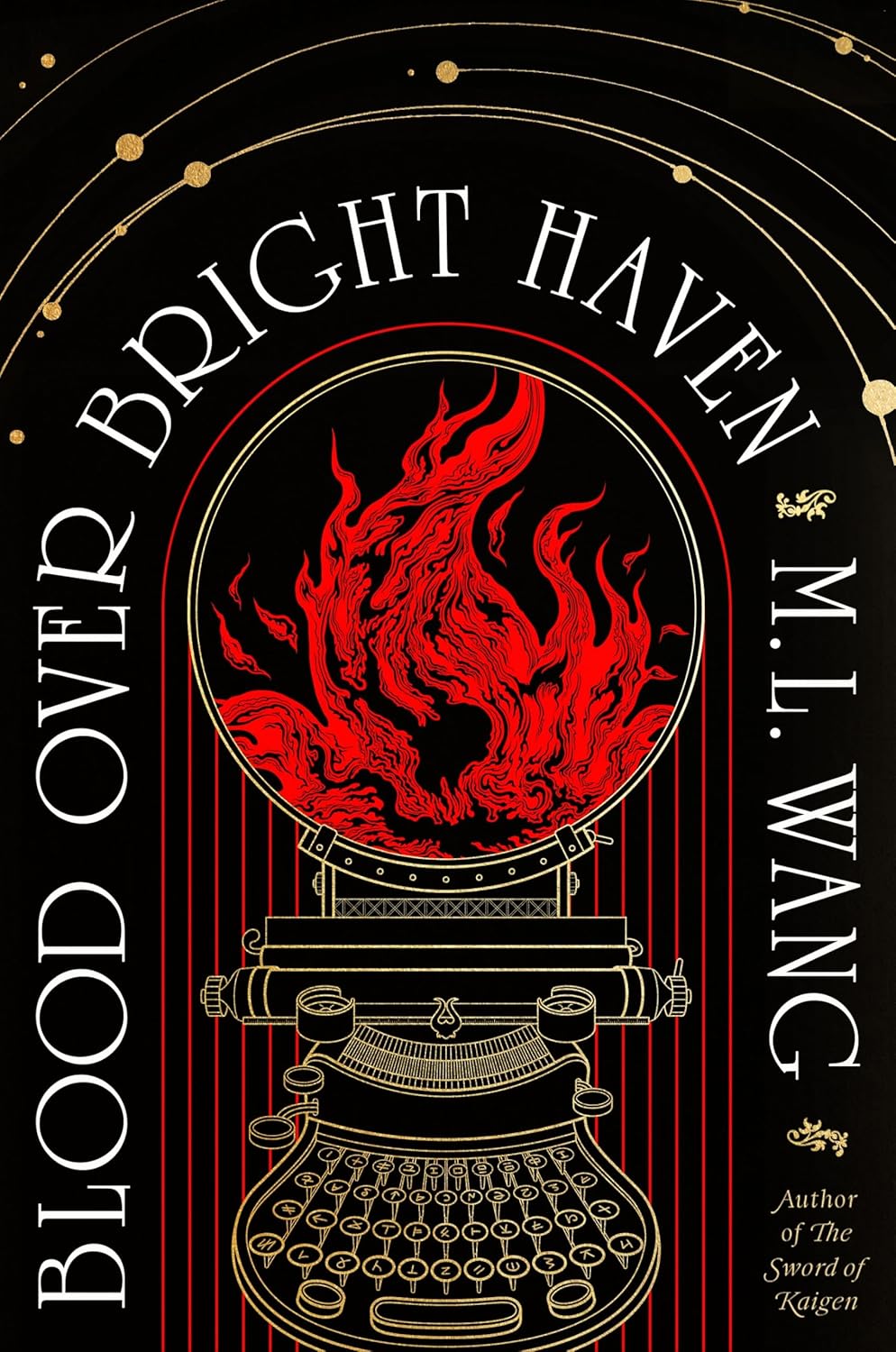
Blood Over Bright Haven by M. L. Wang

Publisher: Del Rey (Trade Paperback – 29 October 2024)

Series: Standalone

Length: 431 pages

My Rating: 5 out of 5 stars

Amazon

One of the biggest rising stars in fantasy fiction, M. L. Wang, effortlessly showcases her amazing talent with the outstanding read, Blood Over Bright Haven.

M. L. Wang is an awesome author who I have been hearing a lot about over the last few years. Debuting back in 2018 with her first book, The Sword of Kaigen, Wang blew away the fantasy crowd with this intriguing debut fantasy novel that featured a compelling Asian inspired setting and theme. While I have yet to have the pleasure of reading The Sword of Kaigen, it is currently high on my to-read list, especially as it has received an exceptional amount of love in fantasy circles.  As such, this has made me very curious about Wang, so when I saw that her new book, Blood Over Bright Haven, was coming out in Australia, I made sure to grab a copy of it.  Wang’s second adult fantasy novel, Blood Over Bright Haven was originally self-published in 2023, although I think I will be counting it as a 2024 release later this year.  I really loved the sound of this cool book from Wang, and boy did Blood Over Bright Haven deliver, as it proved to be an epic and highly impressive read.

In a world full of death, despair and fear, the city of Tiran serves as a gleaming beacon of civilisation and safety.  Protected by a magical dome that keeps out the destructive Blight, a mysterious occurrence that destroys everything it touches, Tiran has managed to survive while the rest of the world withers away.  Many of Tiran’s citizens believe that the dome, and the magic that powers it, are a gift from the city’s forefathers and only they have the right to benefit from it.  However, not everyone is treated the same within Tiran.

Sciona is a talented young mage seeking to become the first women ever admitted to the High Magistry at the University of Magics and Industry.  After studying for 20 years Sciona finally proves herself worthy to become a highmage and is excited to push the field of magic forward with her inventive techniques and unparalleled ambition.  However, despite everything she has achieved, when Sciona arrives at the university, she is treated with scorn and derision by her male colleagues and assigned only a janitor to help her rather than a qualified assistant.

Determined to show everyone what she is capable of, Sciona sets out to pioneer new ways of harnessing magical power that will allow Tiran’s dome to be expanded.  Forced to work with the tools in hand, Sciona decides to train her new assistant, the Kwen janitor Thomil, and soon discovers a bright and focused mind.  A former hunter from the plains who sort sanctuary with the city after seeing his entire tribe torn apart by the Blight, Thomil has lived within the oppressive Tiranish system for ten years, trying to survive the city’s prejudice for the Kwen.

Despite their differences, Sciona and Thomil form a formidable team, especially when Sciona begins using Thomil’s knowledge of the world outside of Tiran to good use.  But their work will uncover a dark secret, one rooted at the heart of Tiran’s history and their ability to harness magic.  Can Sciona and Thomil overcome the shocking truth before them to ensure both their people’s survival, or will everything they know come crashing down?

Well damn, now that was a particularly awesome book!  While I had high hopes for Blood Over Bright Haven, this honestly blew me away as Wang produced a truly inventive and powerful novel loaded with dark twists, complicated characters, and a unique magical system.  I could not stop reading Blood Over Bright Haven once I started as this was such an addictive and memorable read.  As such, I have very little choice but to award Blood Over Bright Haven a well-deserved five-star rating, and this was easily one of the best fantasy books I read in 2024.

Wang brings together an addictive and complex stand-alone fantasy narrative for Blood Over Bright Haven that I am frankly still not over due to its very clever twists and dark turns.  Starting off with a great prequel scene that sets the stage for much of the drama to come, you are soon introduced to main character Sciona as she works to become a highmage in the male-dominated magical trade of the city.  The fantastic entrance exam for the High Magistry was honestly the part of the book that first really grabbed my attention, and I loved how it simultaneously introduced the ambitious protagonist and several key plot points, all while presenting the basics for the novel’s distinctive magical system.  I really cannot emphasise how well these initial scenes set the rest of Blood Over Bright Haven up, and you really plunge into the rest of the story from there.

From there the book quickly evolves into a complex story that is part intriguing magical research story part societal piece, as Sciona tries to overcome the inherent sexism of her colleagues while also working with her new assistant Thomil.  Thomil, a Kwen from outside of the city, provides some further insights into the plight of the refugees in the city, which really amps up the excellent social commentary that the author is making.  Thomil’s introduction also allows Wang to further dive into the complex elements of the book’s magic as Sciona teaches him the basics to make him a better assistant.  You swiftly become attached to this new partnership between the idealistic and academic Sciona and the more pragmatic Thomil, and their combined dive into magical theory and the deeper issues of the city proves fascinating, right up until you hit the book’s big twist about halfway through.  Now, I don’t want to reveal too much about this twist because it is so damn impactful, but I also really want to gush about how clever it is.  I must commend Wang for how effectively she set up elements of this reveal in the first half of the book and I was really impressed with how it made so much sense looking back.  It also completely changes the entire tone and context of much of the previous plot, which is frankly brilliant, and you go into the next part of the book a little traumatised as a result.

Naturally the second half of the book is very dark, as Sciona and Thomil try to move past the terrible secrets they have learned.  This results in multiple brilliant scenes, as Sciona has her eyes full opened to all the secrets and lies around her.  I particularly enjoyed the great sequence where Sciona overcomes the initial trauma of learning the book’s big secret by completely outthinking a doctor (who’s alchemical ‘cures’ is another grim plot inclusion which allusions to the historical medical treatment of women), and her somewhat naïve attempts to rationalise everything going on.  Wang takes the reader into the final third of the book with some major moments as the protagonists go on the offensive and try to show the city the truth, even if they don’t want to see it.  I particularly enjoyed the protagonist’s initial inventive attempt to sway people to her cause, which backfires in some shocking, if predictable ways, and everything is set up nicely for the final big twist, which I had honestly been hoping for most of the book.  Wang wraps everything up brilliantly, and there is a bleak, yet hopeful, conclusion, which I think fit the powerful overarching narrative extremely well.  You honestly come out of finishing Blood Over Bright Haven extremely thoughtful, and I cannot emphasise enough just how complex, compelling and clever this entire story was.

I deeply enjoyed how Wang set out her outstanding story, and I really found myself drawn to her compelling writing style in Blood Over Bright Haven.  A very impressive and though-provoking stand-alone fantasy read, Wang balances a lot of great elements in her writing and sets it out extremely well for the reader to appreciate.  The focus on some complex and highly relatable protagonists, whose perspective of the story allows to fully appreciate the hidden horrors of the plot, works extremely well, and I got so drawn into the various elements of the story as a result.  Wang also proves effective at changing the tone of the book to match the plot, and I appreciated how the feel of the book went from a determined tale of magical research against the odds to something far bleaker.  The background setting of Tiran was also extremely effective at helping to showcase the various social issues and concerns that Wang was strongly alluding to with her writing, and the more you learned about the city, the more you understand the points that the author was making.  Wang also proved very effective at hiding the set-up for her big twists throughout her writing, including in examining history and magical theory, which is something I really appreciated.  All the elaborate elements and reveals are extremely well foreshadowed in the earlier parts of the book, and I really enjoyed how everything came together in this plot.

As I have mentioned quite a few times above, I loved the compelling fantasy elements of the Blood Over Bright Haven, which were extremely inventive and highly memorable.  This includes the magical city of Tiran, which, in addition to providing societal elements for the plot, also had a compelling history tied around magic and religion.  However, the best fantasy elements of Blood Over Bright Haven was the truly unique magical system that so much of the plot was focussed on.  In this case, magic revolves around a spellograph, essentially a magical steam-punk computer/typewriter, that allows its wielder to perform magic by setting out specific tasks and drawing energy from an alternate dimensional plain.  While this sounds a bit clunky, it works extremely well, and Wang does an impressive job of setting it out and explaining it to the reader.  The more you learn about this elaborate system, the more you appreciate Wang’s inventiveness, as she clearly put a lot of thought into the various processes and aspects of her system.  The author furthers this by focusing much of the narrative around the protagonist’s magical research, and the reader finds themselves following all of Wang’s thoughts and complex in-universe theories to their inevitable conclusions.  This outstanding magical system adds so much to the book, especially as so much of story’s darker moments are tied into understanding the full extent of how the citizens of Tiran came by their magic and how they utilise it.  This was easily one of the more inventive new sorcerous concepts that I have seen in fantasy fiction for a while, and I cannot emphasise enough about how impressive I found it.

Finally, I need to highlight the great characters who Wang’s impressive narrative was set around, the brilliant, self-absorbed magical student Sciona and the former hunter turned desperate refugee Thomil.  While on paper they sound like the leads of a rom-com, Wang has some elaborate and deep storylines around them that allow for some massive emotional depth and character growth.  The two characters play off each other extremely well in the first half of the book, being an interesting duo trying to prove to the world what they can do.  Both characters represent the oppressed classes of Tiran, and it was fascinating to see the different ways in which they try to address it, from Sciona trying to prove herself to those who will never respect her, while Thomil learns to knuckle under to survive, despite his pride and deep fury.  While there is a little bit of a romantic edge to them at the start, the big reveal at the centre of the novel and their wildly different, but understandable, reactions to it, drives a big wedge, especially as it forces Sciona to finally fully address the many ills of her society, while Thomil comes to understand just how badly he has been wronged.  I felt that both protagonists had some brilliant changes in their personality in the second half of the book, especially Sciona, who loses everything she previously believes in.  Their subsequent interactions are laced with tension, especially as Sciona still attempts to see good in those around her, while Thomil has a more realistic viewpoint.  Despite this, Thomil still tries to help her, and their final interactions, especially once Sciona finally understands everything, is very heartfelt and moving.  These two protagonists are so well written, and Wang’s ability to dive into their minds and hit them with dark emotional curveballs created some gripping and powerful moments.  Throw in Thomil’s wild, but entertaining niece, and a group of fantastic villains whose entitlement, selfishness, and determination to continue institutionalised oppression (cough, sounds familiar, cough), really make you hate them, and this proved to be an outstanding character-driven book.

M. L. Wang is easily one of my favourite new fantasy authors as Blood Over Bright Haven was so damn good. The epic combination of compelling narrative, extremely inventive fantasy elements, effective social commentary, and great characters made for a particularly impressive read, which sticks in your mind long after you put Blood Over Bright Haven down. I honestly cannot recommend this fantastic book enough, and you are in for an incredible treat if you decide to pick it up.  As for myself, I am planning to check out The Sword of Kaigen in the new year, as I really want to read more awesome fantasy fiction from this brilliant new author.
Amazon

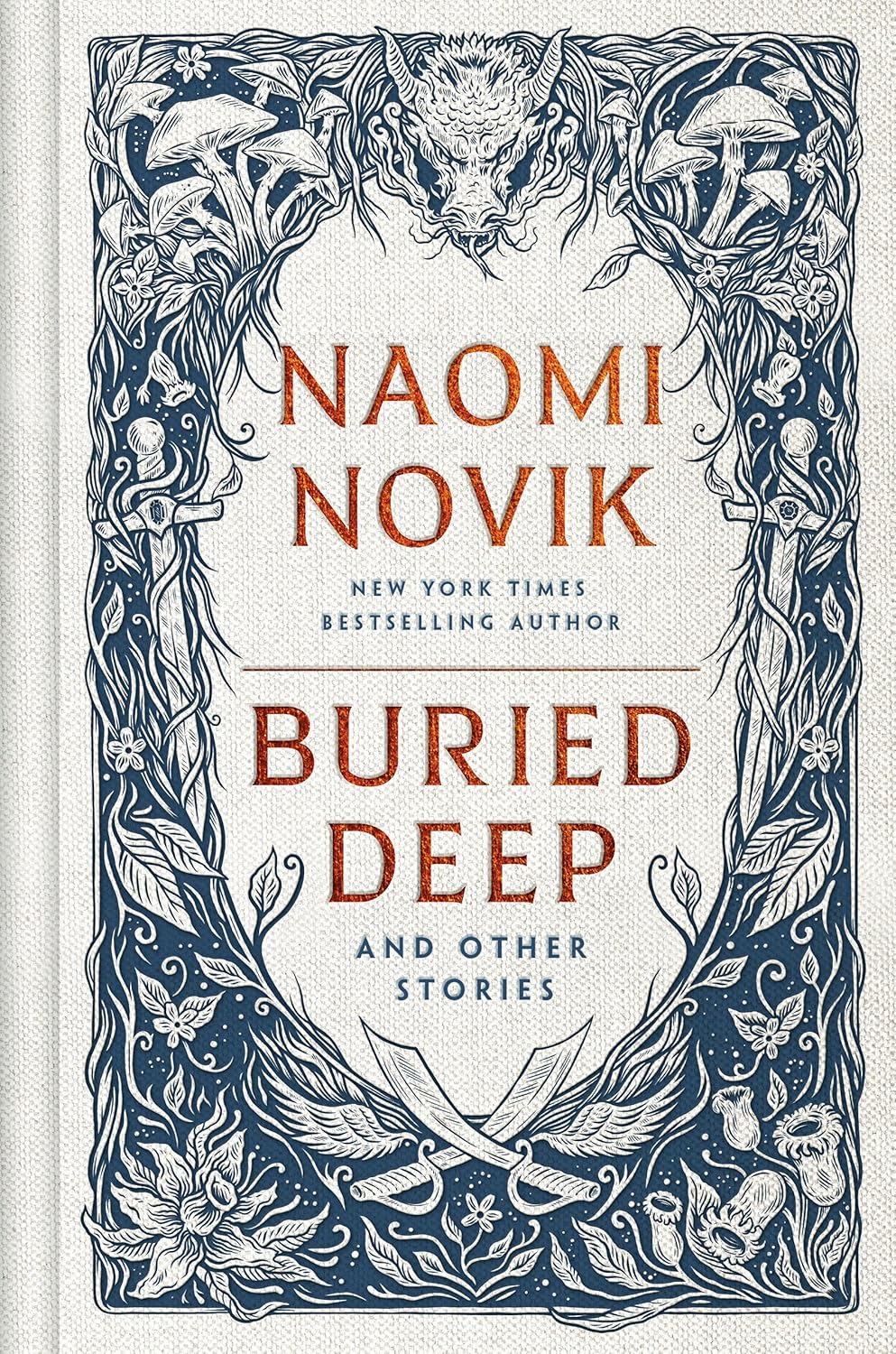
Buried Deep and Other Stories by Naomi Novik

Publisher: Del Rey (Trade Paperback – 17 September 2024)

Series: Standalone/Short Story Collection

Length: 433 pages

My Rating: 4.5 out of 5 stars

Amazon

A must-read for all fans of fantasy author Naomi Novik is the excellent and highly enjoyable short story collection, Buried Deep and Other Stories.  Featuring an intriguing combination of stories from across Novik’s imagination and established fantasy universes, Buried Deep and Other Stories was a particularly awesome read that I had a lot of fun getting through.

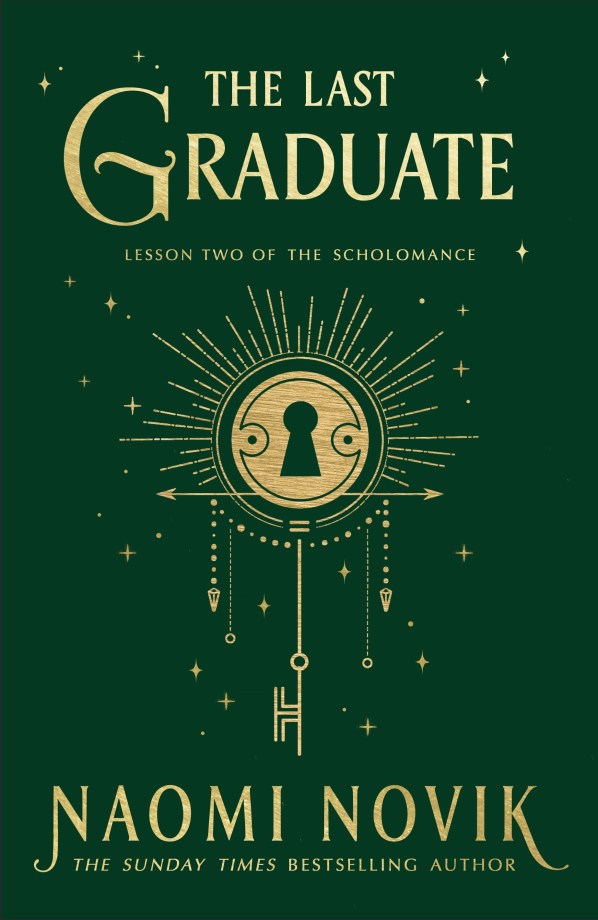
Naomi Novik is a well-established and impressive fantasy author who has produced some amazing works over the years.  Best known for her iconic Temeraire series, which envisioned the Napoleonic Wars with dragons, Novik has produced some great books and stories over the years, including some interesting standalone works.  I best know Novik from her excellent Scholomance books, which showcased a dark and impressive take on the magic school genre.  The Scholomance books, made up of A Deadly Education (one of my favourite books of 2020), The Last Graduate (one of my favourite books of 2021) and The Golden Enclaves (one of my favourite books of 2022), were all extremely awesome, and this remains one of my all-time favourite book trilogies.  As such, I was very interested in reading more from Novik and Buried Deep and Other Stories offered an amazing opportunity to explore her varied writings.

Buried Deep and Other Stories contains an auspicious 13 short stories, which run the gambit from entertaining to moving and bring together both previously published short stories and new tales fresh from the author’s imagination.  While some of the reads are standalone stories, there were also entries from Novik’s more familiar universes, all of which comes together to make quite an awesome overall volume.  I was initially drawn to this book by the promise of a continuation of series I’ve previously read, but I ended up staying for the whole inventive array, especially as you are gifted a vision into Novik’s future works.

Novik starts the book off strong with the fast-paced story, Araminta, or, The Wreck of the Amphidrake, a Regency-style adventure with fantasy elements that follows a young, adventurous woman who wants more than a planned marriage.  A chance pirate attack and a gender-morphing amulet provide the opportunity she is looking for while also leading to various amorous adventures.  This was a very fun, and slightly randy, swashbuckling adventure that successfully highlights the author’s flair for combining historical periods with her own fantasy ideas.  This proved to be a great first entry to Buried Deep and Other Stories, and I appreciated that Novik started things off fun.

Novik kept the book going strong with the amazing Afterhours, which serves as a follow-up to her awesome Scholomance trilogy.  I must admit that of all the stories in this book, Afterhours was the one that I was most excited for, primarily because I had such a great time with the Scholomance novels, and I really wanted to see how the universe continued.  Novik did not disappoint with a captivating story set a couple of years after The Golden Enclaves, with a look at a new class studying at the Scholomance magical school.  Despite the Scholomance evolving and becoming less exclusive, some things remain the same, with the unusual witch Beata, finding her school life made difficult by the rich and powerful enclave students, including her roommate.  Desperate to survive, Beata and her friends break curfew to obtain rare supplies, only to encounter some of the remaining monsters roaming the school.

This proved to be an entertaining and wonderful return to the Scholomance series, and I for one was glad to get a look at the school and its unusual setup following the chaotic events of the original trilogy.  Novik does an excellent job expanding on her existing universe, and fans of the series will love this continuation, as well as a major cameo at the end.  However, this story is open to reader’s unfamiliar with the Scholomance books, especially as Novik focuses the plot on a protagonist unaware of the full details of the previous books, allowing for an excellent outsider’s perspective as you explore the setting’s unique features.  It was great to return to this iconic setting, and Afterhours was a fun read that both stood on its own, while also providing some awesome moments to the author’s existing readers.

The third story in this book, Vici, is a quick but highly fun entry that ties into the dragon taming world of Novik’s Temeraire universe.  Indeed, Vici shows the origin of the universe’s entire dragon riding premise with a Roman historical tale that sees a young Mark Antony hatch a dragon egg.  Novik produces a particularly entertaining and hilarious story, as her irresponsible Mark Antony (inspired by James Purefoy from the Rome television series), finds himself in all manner of trouble, made worse by his impressionable talking dragon.  I loved this simple but highly effective story, which not only expertly works dragons into Roman history, but which also keeps the reader extremely amused with some great humour and over-the-top moments.  One of the funniest stories in Buried Deep and Other Stories, and a wonderful mood lightener between other heavier entries.

This leads us to the book’s titular short story, Buried Deep, which serves as a powerful retelling of the Minotaur myth.  Told from the perspective of King Minos’s daughter, Ariadne, Buried Deep follows her journey to becoming a priestess of the shrine that holds her brother, Minotaur, as he stalks the labyrinth under the island.  Novik seeks to cast both Ariadne and Minotaur in a more sympathetic light, showing them as victims of their father’s schemes, with Ariadne seeking to undermine Minos by using the labyrinth to enhance her reputation.  Thanks to its deep emotional edge and near gothic style, Buried Deep proved to be a particularly unique and memorable take on the Minotaur myth, and I loved seeing Ariadne’s perspective of events.  You really appreciate her bond with Minotaur and the pain that his imprisonment has on her, and this was one of the more moving entries in Buried Deep and Other Stories.  This story effectively showcased Novik’s ability to transform well-established stories and myths, and I’m glad Buried Deep was featured here.

The next story is the fantastic entry, Spinning Silver.  A clever take on the classic Rumpelstiltskin fairytale, this story follows Miryem, the daughter of a village moneylender, who takes over her weak father’s business and becomes a successful businesswoman.  A boast about her ability to make money brings her to the attention of a malicious faerie who demands that she prove her ill-timed words three times by turning his silver coins into gold.  What follows is a fantastic and clever series of events as Miryem uses her business sense and quick thinking to technically fulfill the terms of the magical contract while also trying to get out of the unfavourable marriage promised as a reward.

I really loved Spinning Silver for a multitude of reasons, especially as it has a compelling narrative that brilliantly retells a famous fairytale in a darker and more modern manner, while also featuring a great historical Russian setting.  This proved to be a particularly enthralling tale of fortitude and tough decisions that also subtly examines the historical hardship of the Jewish population of Eastern Europe.  Spinning Silver is also an interesting inclusion as it bears the same name as one of the author’s novels.  This short story, which was published a few years before the Spinning Silver novel, was the inspiration for Novik’s later book, with the author reusing elements from it.  While readers who have already enjoyed the Spinning Silver novel will see some similarities between it and this short story, the entry in Buried Deep and Other Stories is very much worth checking out as Novik takes this short story in a different direction to give it quicker and more definitive conclusion.  I think that the Spinning Silver short story works a little better than the overall novel, mainly because the concept was more focused and reached its key points sooner, but both prove to be excellent reads.  This honestly proved to be one of the strongest entries in Buried Deep and Other Stories, and I see why Novik chose to expand it into a novel.

The fun continues with the fantastic story Commonplaces, which serves as the author’s unique entry in the Sherlock Holmes mythos.  Set after the events of the classic Sherlock Holmes short story, The Final Problem, Commonplaces focuses on the character of Irene Adler after she hears about the events at Reichenbach Falls.  This was a short but sweet story that provides an interesting modern look at the impact Holmes has on the characters he encounters.  Novik’s take on Adler, which only utilises details from A Scandal in Bohemia, is particularly authentic, and doesn’t fall into the exaggeration that many of her current popular culture portrayals are known for.  Shown solely from Adler’s perspective, you get some great interpretations into her personality, as well as her observations of the enigmatic Holmes.  I felt the story went in some very interesting and memorable directions, and I liked how it both cleverly referenced A Scandal in Bohemia but also covered a potential romance between Holmes and Adler in its own way.  Novik adds in a few subtle implications about Holmes’ romantic interests and inclinations, which I thought was a nice touch, and the resulting story effectively ties up the entire storyline between these two iconic figures.  An overall fantastic story, Commonplaces is a fun and quick short that will appeal to a lot of readers.

Novik continues to delight with the seventh entry, ironically named Seven, which was one of my favourite stories in Buried Deep and Other Stories.  Set in a unique fantasy city called Seven, the story is set around the city’s famous ceramics trade, which constantly ensures that the city is surrounded by seven giant singing statues.  Whenever one of the statues breaks, a replacement is made from a beautiful yet deadly special clay by the city’s then master clay-shaper.  Seven primarily follows Kath, a clay-shaper’s widow, who takes over her husband’s business with the help of grouchy kiln master and ceramic devotee Grovin, and eventually forms a reputation as a radical artist due to the simplicity of her pots and ceramics.  Chosen to build the next singing statue, Kath is initially reluctant due to the life-shortening nature of the special clay, until the machinations of Grovin forces her hand.

I really loved Seven, and I think it is the story that best showcases how imaginative and skilled Novik is as an author.  I was deeply impressed with how effectively Novik was able to build up a new fantasy city and then set up a complex and character-driven tale that debated art versus practicality in only 25 pages.  You easily get drawn into the struggle of Kath as she becomes a famous artist and creator with all the trouble that entails, while simply trying to provide for her family.  Novik works this initial premise extremely well, and then cleverly twists the entirety of Seven into a tale the examines the dark side of art appreciation.  This darkness is conveyed by the complex and gruff character of Grovin, a man who only loves the beauty of ceramics, and whose desire to see more of Kath’s art forces him to some dark places.  I loved the ironic twist that forces Grovin to live a life less devoted to the arts to get what he wants, and I really appreciated how Novik explored his obsession, and the differing views of what ceramics represent between the two main characters.  If I had one complaint, it would be that the story wasn’t long enough; I would love to have seen a more concrete conclusion than the philosophical end Novik came up with, but this was still an exceptional story that really hooked me in with its creativity and unique focus.

Continuing onwards, Novik throws in two great short stories that break up the book in preparation for the longer stories towards the end, with Blessings and Lord Dunsany’s TeapotLord Dunsany’s Teapot is a tale of magic and imagination in the depths of horrifying war, while Blessings is a fun story about a young baby who gets over-blessed by six drunk and competitive fairy godmothers.  Both these stories have their own unique flavour, and I liked how well they played off each other in short order.  Lord Dunsany’s Teapot was a quick magical story with descriptive dark war elements to it that highlight the need for an escape from horror, while Blessings was an excellent comedic take on the fairy godmother trope from popular fairytales.  I enjoyed both these stories, although Blessings was probably my favourite due to its hilarious, quick-fire content.

Next up we have the tenth entry in Buried Deep and Other Stories, with the book’s only science fiction contribution.  Seven Years From Home is a striking story about futuristic colonialism in which a young diplomat from an ever-increasing galactic federation visits a prospective new member planet where a war is brewing between new, technological reliant colonists and the original settlers of the planet who have genetically modified themselves and are now in tune with nature.  This was an interesting take on the classic story of technologically advanced colonists warring with nature-loving natives with an outsider amid the natives learning their ways.  However, Novik takes her story in some different directions, with the natives proving to be far more adaptable than you would expect, and I loved this brilliant and intriguing tale.  While it features a great story, Novik ensures that Seven Years From Home really stands out thanks to the protagonist, who finds herself caught between her loyalties to her home empire and the new friends she makes on her adventures.  There were some great scenes as the protagonist becomes even more conflicted with her choices, especially as the information she sends home keeps the war going, and her attempts to find the same mindset of her hosts.  This story ends with some touching tragedy and a great twist, and I felt that Novik’s foray into science fiction was a fantastic success.

Continuing, we have the book’s second foray into the Temeraire universe with the fabulous entry Dragons & Decorum.  Set to the backdrop of the Napoleonic War that the main Temeraire books are based on, Dragons & Decorum is a reimagining of Pride and Prejudice with dragons.  The primary story sees Elizabeth Bennett becoming a Longwing captain in the Aerial Corps, flying her dragon as professional soldier, much to the horror of her mother.  However, despite her new role, Elizabeth still finds herself drawing the attention of Mr Darcy, and the two engage in a tumultuous courtship, with even more complexity thanks to Elizabeth’s romance-obsessed dragon and the ongoing war.  Novik clearly had fun working elements of her dragon-focused world into this literary classic, and I loved her fantastic take on the classic book, especially as dragons add new entertaining angles to the romance.  I felt that the author perfectly blended the more outrageous elements of her universe with the Pride and Prejudice plot, while also cleverly imitating Jane Austen’s writing style.  The result is a particularly amusing entry that will appeal to both fantasy fans and Jane Austen fans, and I just love the hilarious impacts any book’s relationship to the Temeraire universe can have.

On the home streak we have the intriguing and dark story, Castle Coeurlieu, which saw the very young bride of a castle lord grow close to her similarly aged stepson and learn the unusual history of the castle in which they live, including several stories about people visiting a mysterious tower within its bounds.  When plague strikes the region and her new friend flees to the tower, the protagonist follows, only to discover unusual occurrences, including three women playing with cards inscribed with the fate of the castle’s inhabitants.  While Castle Coeurlieu wasn’t my favourite entry in Buried Deep and Other Stories, it proved to be a compelling darker story that added in some grimmer elements towards the end of the book.  I enjoyed the different layers of lore surrounding the setting, and the curious young protagonist was well written and provided a great view to the plot.  An overall interesting addition to the volume, that serves as a great buffer between two of its biggest stories.

The final story contained within Buried Deep and Other Stories is the captivating adventure tale, The Long Way Round.  The longest entry in the collection, The Long Way Round was probably the story I was most looking forward to reading outside of After Hours, mainly because it provides readers with the first glimpse at Novik’s next upcoming book, currently titled Folly, following two siblings, canny sailor Tess and brilliant boat-builder Aston, who embark on a journey to cross the seemingly empty seas surrounding their known world and try to discover new lands.  Forcibly accompanied by their High Lord, a young wizard looking to prove himself, Tess, Aston and their crew set out on their adventure, only to make some unexpected discoveries with major implications for their entire world.

Featuring a great combination of likeable characters, well-written nautical elements, and a compelling new world filled with unique elements, The Long Way Round was a particularly addictive entry in Buried Deep and Other Stories.  Novik once again does a remarkable job effectively building up the scenario and the new fantasy realm in a short run time, and readers quickly find themselves getting invested in the protagonist’s journey, especially as the author does an excellent job exploring their motivations and desires.  The set-up and apprehension of the first part of The Long Way Round is well balanced by the subsequent mystery contained in the second half of the story, as the protagonists find what they seek, even if they are uncertain what it is.  Novik provides the reader with a series of stimulating and intriguing visuals and curious elements, and you really get into the spirit of the adventurous narrative elements.  This honestly proved to be an addictive read, and I found the clever, character-driven nautical adventure to be moving and fascinating at the same time.  I also found myself coming away from The Long Way Round extremely curious about Novik’s next book, and I will be interested to see whether it will be a direct sequel to this or something set further in the future.  Either way, the mystery of the titular follies is something I hope to explore in the future, and I am now even more excited for Novik’s next book whenever it comes out.

Overall, Buried Deep and Other Stories turned out to be an awesome short story volume from Naomi Novik that showed me her true range and skill as a fantasy author.  This book provides a fantastic collection of works, that hit you on every part of the emotional spectrum, including fun comedic reads and darker, tragedy charged narratives.  I was also particularly impressed by the inclusion of unique standalone stories whose elaborate fantasy concepts were well established and the expertly utilised to tell compelling stories.  The blend of original stories and windows into the author’s current and upcoming fantasy universes also ensured that readers of Buried Deep and Other Stories are in for a brilliant time.  It proved very easy to jump between these different fantasy worlds, and I felt that all readers can appreciate and follow the stories contained within, even if they were tied into the author’s other series.  As a fan of Novik’s writings, it was great to get some additional stories from her various universes, and the final story, The Long Way Round, has really gotten me excited to check out her next book.  Folly (or whatever its name may change to) is now very high on my to-read list, and I hope we see it soon.  As for Buried Deep and Other Stories, this was an incredible and fantastic short story collection that comes highly recommended for fans of Naomi Novik, as well as general fantasy fans looking for some compelling, shorter reads.

Amazon

Star Wars: The High Republic: Convergence by Zoraida Córdova

Star Wars - Convergence Cover

Publisher: Del Rey/Penguin Random House Audio (Audiobook – 15 November 2022)

Series: Star WarsThe High Republic

Length: 13 hours and 28 minutes

My Rating: 4.75 out of 5 stars

Amazon     Book Depository

The next phase of the High Republic is in excellent form as outstanding author Zoraida Córdova presents a particularly awesome new tie-in novel with Star Wars: Convergence.

For last couple of years, the focus of the Star Wars extended universe has been The High Republic, an intriguing prequel series of tie-in media that expands and explores the iconic Star Wars universe in the centuries before the Skywalker Saga.  Set hundreds of years before The Phantom Menace, the High Republic series examines the Republic and the Jedi at the height of their influence, as well as the many dangers they encountered during this time.  I have had an awesome time with the High Republic series, and there are some excellent stories contained within this elaborate prequel sub-series, written by a great collection of writers.  Highlights so far include the main novels Light of the Jedi, The Rising Storm and The Fallen Star, as well as great young adult novels such as Midnight Horizon, all of which come very highly recommended.

The latest batch of High Republic books are currently part of the second phase of the series, which acts as a prequel to the first and upcoming third High Republic phases.  Set even further back in the Star Wars timeline, the second phase provides intriguing context to the previous entries, including the origins of the main antagonists and the reason for their hatred of the Jedi.  I have so far read the preceding second phase novel, The Path of Deceit, a fantastic young adult read, and I have been excited for Convergence for some time.  Written by talented new Star Wars author Zoraida Córdova, Convergence was an amazing read that I had a wonderful time listening to.

It is a time of great expansion, exploration and diplomatic strides in the galaxy as the Republic seeks to expand its influence.  Led by the Jedi, Republic pathfinder teams are constantly journeying out into the furthest reaches of the galaxy, seeking out new civilizations and planets.  However, not everyone is excited to see the Republic or the Jedi, and chaos is always around the corner.

Nowhere is this clearer than the closely neighbouring planets of Eiram and E’ronoh, which have been at war for generations.  Bound to the fighting by hatred and years of conflict, the end of both planets looks to be near, as the war has resulted in nothing but drought, starvation and despair.  However, after an unexpected tragedy brings the two heirs of Eiram and E’ronoh together for the first time, a solution to the ongoing war comes clear and the mediating Republic are able to broker a marriage alliance between the two royal families.

But before wedding preparations can begin, an attempt is made on the lives of the young couple, which once again brings the planets close to war.  Determined to keep the peace, young Jedi Knight Gella Nattai is chosen to act as the couple’s bodyguard and journeys across both planets with them as they attempt to sell the peace to their people.  A serious and dedicated Jedi, Gella is unprepared for another companion for the journey as Republic Chancellor Kyong also sends her son, Axel Greylark, to represent the Republic.  A rogue and cad of the highest quality, Axel swiftly gets under the group’s skin, especially as his disdain for all Jedi, including Gella, is plainly evident.  However, the new companions need to work as a team, as they find themselves caught in a deadly conspiracy that can impact not only the warring planets but the entire Republic.  Can they get to the bottom of this plot before it is too late, and are they truly ready for the consequences if they do?

Damn, now this was a pretty awesome Star Wars novel from a very talented author.  Córdova came up with a remarkable and powerful narrative for Convergence that not only contained its own brilliant character-driven plot, but which also sets up some awesome narrative threads for the future.  I had an amazing time getting through Convergence, and it was one of the better Star Wars books I read in 2022.

Córdova brings out an impressive and complex story for Convergence that drags you in quickly and hits you with a ton of great elements from this new High Republic era.  Primarily set around the war-torn twin worlds of Eiram and E’ronoh, Convergence starts off with the two once again on the brink of war after an unfortunate space battle.  However, the battle leads to the intervention of the Jedi and the Republic, who attempt to force peace, as well as the chance meeting between the planet’s two royal heirs.  What follows is a compelling bout of political intrigue, as the two planets negotiate, while various elements with ulterior motives try to sabotage it.  This early part of the book is pretty damn compelling, as the author spends a good amount of time introducing the complex characters as well as the well-crafted background setting and war story arc.

Thanks to some mysterious murders and sabotages, the middle of Convergence evolves into an exciting road-trip narrative, as the two royals, their new Jedi bodyguard and the unrepentant party boy Axel Greylark, embark on a goodwill mission to both planets, which results in further action and adventure, while also taking the time to build up the four main characters and establish some intriguing relationships between them.  After some excellent and often heartbreaking sequences, the story enters a whole new phase as the deadly outside influences trying to disrupt the peace process are revealed.  There are series of great twists and turns around here, including one massive reveal that severely impacts a major character, and everything you think you know about the plot is changed as hidden motivations are revealed.  The last third of the book is easily the most exciting, as you wait for the various characters to explode when everything is brought to the light and the full scope of the various plots are revealed.  The author really amps up the action towards the end, including one of the most chaotic wedding sequences in Star Wars history, and there is no shortage of intense interactions as certain characters come face to face.  Everyone walks away from Convergence with their emotional and excitement buckets filled and I really appreciated the fantastic swings that Córdova took in this major High Republic book.

I deeply enjoyed how this excellent narrative came together, and Córdova has a great writing style that lends itself to an intense character-driven plot.  Told from multiple compelling character perspectives, Córdova has produced an excellent narrative that combines adventure, intrigue and character growth with the lore-heavy Star Wars universe.  While there is plenty of action and some great universe building featured here, most of the book is constructed around intense character emotions as the central protagonists attempt to overcome their pasts and the dangerous secrets they all hide.  The author keeps the pace of Convergence’s narrative pretty constant throughout, and there were no major areas that slowed down or got stuck, and I enjoyed the continued build-up of disasters and betrayals that occurred.  The various action scenes featured throughout a very well written and make sure to highlight both the emotion behind each battle, but the iconic Star Wars elements such as the Jedi.  There is also a great sense of mystery and betrayal throughout the book that gives it a powerful overarching tone, and you really get drawn in trying to see how the characters are going to implode with their own inner chaos.  It really proved quite impossible not to enjoy this captivating read, and I really think that Córdova showcased just how impressive her writing ability is with this outstanding read.

In addition to having an outstanding story, Convergence also serves as a great entry in the second phase of the High Republic and I loved how it continued certain awesome storylines as a key novel in this sub-series.  I have mentioned a couple of times previously on my blog that I was surprised they started off the second phase of this sub-series with the young adult book, Path of Deceit.  However, after getting through Convergence, I now completely understand why they did this, as the more subtle Path of Deceit really helped to set up certain key overarching plot elements, as well as the wilder aspect of this period of the Star Wars timeline.  Convergence had a narrower narrative focus which, which really benefited from not having to introduce a whole new batch of major antagonists in too much detail.  Córdova was able to expertly utilise and then expand some of the elements from Path of Deceit throughout Convergence’s narrative, which I think really enhanced the overall story, and made it a bit more gripping and connected with the wider series.  I do think that at this point in the High Republic, Convergence is a very hard novel for those non-Star Wars fans to easily jump in and fully appreciate.  A lot of the joy of Convergence and the other books in the prequel second phase is in seeing the origins of key characters, organisations or events that are featured or discussed in the first phase.  As such, you can only fully appreciate this book if you have read a few of the key novels from the first phase, and this makes Convergence a little less accessible as a result.  Luckily, Convergence really is geared towards established fans of the franchise, who are guaranteed to have a wonderful time with this book.

I really must highlight the outstanding settings that were such a key part of Convergence’s narrative and tone.  Part of this comes from the even earlier timeline that the book is set in, as this period of the High Republic is a lot wilder and less civilized in places, more resembling a space western than the golden age seen in the first phase.  While the story doesn’t spend a lot of time in the wider Star Wars universe, you get an idea of the different society and times in this new phase, and it really feels like a period of flux and new ideas.  However, the story primarily takes place on the twin worlds of Eiram and E’ronoh, both of which have been featured to a degree during the first phase (Into the Dark and The Fallen Star for example).  Both planets are shown in even more detail in Convergence, especially as the characters spend most of the book there.  Stuck in an endless cycle of war and destruction, both Eiram and E’ronoh are in very dire straits when Convergence begins, which adds a great layer of politics, strife, and desperate characters to the narrative.  The protagonists are forced to dive into the history and culture of both planets to resolve the war, which reveals some major emotional edges as the dark similarities and differences between them make peace seem impossible.  Córdova does a remarkable job highlighting both planets throughout the course of Convergence and I really cannot emphasise how impressive they were as a background setting, especially as there is a tangible tension and threat of violence permeating both.  I deeply enjoyed this cool setting and I look forward to seeing another author’s take on these planets, and the wider Star Wars universe at this time in the next High Republic books.

While I loved the epic story and impressive Star Wars elements, the best part about Convergence for me was the exceptional characters that Córdova introduced and strongly featured throughout the course of the narrative.  Each character is pretty intriguing in their own way, and many are clearly set to become central figures in this second phase and will no doubt be reutilised again by other authors in the future.  The plot of Convergence, however, primarily rests around four complex and well-written protagonists who tend to serve as the main point-of-view characters of the book.

The first two characters I need to talk about are Jedi Knight Gella Nattai and political scion Axel Greylark, who form an intriguing odd-couple pairing for much of the book.  Gella is naturally the more serious and stoic Jedi character, who is dealing with regrets and uncertainty after a failed mission that saw the order lose confidence in her.  Now forced to work under more experienced Jedi Masters, Gella is uncertain what her future holds, but her impulsive nature brings her into the middle of the conflict on the two warring planets.  She is eventually relegated to the role of bodyguard for the royal characters and is teamed up with Axel, who is easily the most entertaining and fun character in this entire book.  The son of one of the Supreme Chancellors, Axel is a pampered rogue and troublemaker who spends most of the book gambling, flirting and doing irresponsible things (think Lando dialled up to 11).  Introduced in a very entertaining early chapter which ends with him shooting up an illegal casino, Axel is sent by his mother to the twin planets as her envoy and is recruited as an extra bodyguard when things go bad.  He immediately goes to work annoying Gella, not just because of her uptight personality, but because he also has a great dislike of the Jedi in general after they failed his family as a child.  While it is easy to see Axel as a one-note character, he is one of the most complex figures in the entire novel and he has one of the best character arcs.  I loved the unique partnership he formed with Gella, which initially begins with great antagonism but eventually morphs into something else, that really changes both for the better.  Of course, there is a further great twist around Axel that changes the entirety of his story, and it will be fascinating to see how that evolves in some future books.

The other two major characters are the heirs to Eiram and E’ronoh, Princess Xiri A’lbaran of Eiram and Prince Phan-tu Zenn of E’ronoh, who suddenly find the fate of both worlds resting on their shoulders when they have a chance meeting.  Both are very different from each other as Xiri is a tough and practical warrior from a proud lineage, while Phan-tu is a kind and somewhat gentle former orphan who was adopted into the royal family.  Despite their differences, both are dedicated to their respective planets and initiate the peace process through an arranged marriage that will unite their houses.  While initially uncertain of each other, the two begin to grow closer as the book continues, not only because of their duty but because of their legitimate feelings as they prove themselves to their future spouse.  The author features a slow-burn romance between the two that builds throughout the course of the story and has a lot of roadblocks to it, including both characters’ families and pasts filled with tragedy.  Xiri and Phan-tu prove to be exceptional partners as the book proceeds, and I also really enjoyed the fantastic friendship group they formed with Gella and Axel during their travels, as the four stay to play off each other perfectly.  These four end up really carrying the book on their shoulders, and I really must compliment Córdova on how well they were crafted and the amazing stories woven around them.  Backed up by an amazing supporting cast of big personalities, this was an amazing character-focused book, and I cannot wait to see how some of these figures are featured in future High Republic works.

I doubt that anyone who is familiar with my blog and my love for Star Wars novels is going to be too surprised that I chose to check out Convergence on audiobook rather than reading the physical book I received.  I love, love, love all the Star Wars audiobooks, especially as the production team behind them always features iconic Star Wars sound effects and music throughout the runtime, which I find adds to the overall ambience and emotional impact of the plot.  Convergence was another exceptional example of this, and I especially enjoyed how the awesome music made every major scene feel that little more epic.  At the same time, Convergence also featured the outstanding voice work of Marc Thompson, who is easily one of the best Star Wars audiobook narrators of all time.  I always enjoy Thompson’s brilliant voice work in Star Wars fiction (such as in the audiobooks for Thrawn, Chaos Rising, Greater Good, Lesser Evil, Scoundrels, Dark Disciple and more), and he once again hit it out of the park in Convergence, giving each of the characters their own distinctive voice that really brought out their personalities and inner emotions.  I really loved some of the cool voices that Thompson brought out for Convergence, especially as they were well tailored for the relevant characters and their backgrounds, and this ended up being an epic performance from him that allowed listeners to power through the audiobook.  Coming in with a runtime of roughly 13 and a half hours, Convergence has a decent length, but dedicated listeners should have no trouble powering through it quickly.  I personally thought this was an outstanding way to enjoy this amazing book, and I even featured Convergence on my favourite audiobooks of 2022 list before I’d even finished it.

The brilliant High Republic series of Star Wars fiction continues to roll on at an unstoppable pace with the latest epic read, Convergence by Zoraida Córdova.  Featuring an exceptional plot, amazingly complex characters and serving as an intriguing prequel to the previous run of High Republic books, Convergence was an outstanding read that I cannot recommend enough.  One of the best Star Wars books of 2022, Convergence was extremely impressive and captivating and I am now very excited to check out all the High Republic entries of 2023.

Amazon     Book Depository

The Golden Enclaves by Naomi Novik

The Golden Enclaves Cover Better

Publisher: Del Rey (Trade Paperback – 20 September 2022)

Series: Lesson Three of the Scholomance

Length: 408 pages

My Rating: 5 out of 5 stars

Amazon

Naomi Novik ends her addictive and clever Scholomance trilogy in a big way with the very impressive The Golden Enclaves, which takes the protagonists out of the school and into a whole new world of trouble.

For the last few years I have been having an epic time with the exceptional Scholomance series by acclaimed author Naomi Novik.  Novik, who is best known for her Temeraire series, as well as the standalone novels Uprooted and Spinning Silver, has been absolutely killing it with the Scholomance books, which serve as a compelling, dark homage to classic magical school fantasy novels.  Set within the deadly magic school, the Scholomance, the trilogy follows a group of teenage magic users who are attempting to hone their skills while surviving the school and the many dangerous magical creatures, known as maleficaria (mals) who inhabit it.  The first book, A Deadly Education, introduced the reader to protagonist Galadriel “El” Higgins, a loner student who has a big secret, she is an unbelievably powerful magic user, capable of easily unleashing destructive magic that could level cities.  Teaming up with Orion Lake, a mal hunter with a hero complex, El attempts to survive the school and ensure her and her friends survive.  A Deadly Education was an excellent read and it ended up being one of my favourite books of 2020.  Novik followed it up perfectly last year with The Last Graduate (one of my favourite books of 2021), which brilliantly continued the story while also ending it on a traumatic cliff-hanger which I may never forgive Novik for.  Needless to say, I have been extremely excited for The Golden Enclaves and it was one of my most anticipated reads for 2022.

After trapping most of the worlds mals in the Scholomance and untethering it from reality, El looks to have finally defeated fate.  Instead of turning into the city-destroying dark witch she was prophesied to become, she is now a hero who has saved generations of young magic users from needing to hide in the deadly school.  However, her victory has come at a great cost, as the love of her life, Orion Lake, chose to stay behind in the dying school to wage his eternal war against the mals, including the ravenous maw-mouth that finally claimed him.

Traumatised, El attempts to regain her sanity at home, her only plan to one day implement her dream of ending the elite enclave system and using the Golden Stone sutras book she liberated from the school to bring about a new era of magical communities.  However, fate still has other ideas in store for her, and El is about to come face-to-face with the full horrors that her world has in store for her.

Someone is attacking the previously protected enclaves, striking at their very cores, and inflicting untold damage on those who rely on them for shelter.  When two fall within days of El coming back into the real world, she is recruited to find out who is responsible and hunt them down before an all-out enclave war erupts amongst the world’s magic users.  However, El is far more concerned with finding a way back into the Scholomance, the school she fought so hard to destroy, and attempt to either save Orion or kill the maw-mouth that ate him.  However, her mission will lead her to a dark truth that lies at the very heart of the enclave system and which will turn the entire world on its head.  Worse, it will finally force El to face the truth, that she really is destined to be a destroyer, no matter how much she hates it.

There is a lot to unpack here with The Golden Enclaves and it is partly one of the reasons why it has taken me so long to write a review for it.  I honestly did not know what to expect when The Golden Enclaves was released, especially as it was missing the great dark magic school setting which was one of the things that I most liked about the first two books.  It was also clear that Novik would have to work very hard to follow on from her last book after she left it on such a major and heartbreaking cliff-hanger, and I did not know if this book would live up to all these expectations.  Despite these concerns, I dove into The Golden Enclaves as soon as I got my hands on it, as I desperately wanted to see how everything was going to end.  I quickly powered through the book itself and I found the final product to be extremely interesting and not at all what I was expecting.  I did end up giving this book a full five-star rating, but this rating comes with some caveats.

Firstly, I should state that I really loved The Golden Enclaves and I felt that it perfectly wrapped up the series.  Not only do the main characters get some further interesting development, as well as even more trauma and emotional damage, but the story goes in some very unique directions which ties together all the various loose ends.  The story itself is pretty fast paced, if loaded with a lot of fantasy exposition, and follows on right from the events of The Last Graduate.  The impact of Orion Lake’s decision to stay behind in the Scholomance really messes with El and she spends a good part of the book attempting to come to terms with it, often in some very unhealthy ways.  However, before she can get too bereaved, she is forced to help the enclaves (magical communities that offer protection from mals to magic users) to try and discover who is responsible for destroying them.  This results in a compelling, multi-continent trip where she visits various magic communities, gets involved with deadly world politics, as well as checking in with the supporting cast from the first two books, trying to discover answers.  El also searches for a way to rescue Orion from the Scholomance, which culminates in her visiting the mostly destroyed school and finding out some heartbreaking revelations about the man she loves.  Those aren’t the only big secrets El and her companions uncover as they soon discover the true terrible price of the enclave system, as well as who is truly behind the destruction of the enclaves and why.  Novik layers these revelations perfectly, so each new one is even more impactful than the last, culminating in a particularly major gut punch regarding El and her prophesied destiny.  All this leads up to a fantastic and complex final confrontation where El is faced with a terrible choice and must try to find a way out of it.  Everything ends on an interesting and mostly satisfying conclusion, which I think ended the series on the right hopeful note, especially after all the dark trauma the characters have witnessed.

While the story itself is pretty compelling, I personally don’t think it stood on its own legs as much as the first two books in the series.  Not only does it get a bit slow in places, but parts of the big conclusion are a little weak and not as impressive as I was expecting.  Readers also really need to have read the first two books in the series; The Golden Enclaves would be pretty hard to appreciate without some context going in.  For these reasons and a few more (I really missed the school), I might have been tempted to give this a lower rating if not for the big revelations which are deeply connected to the events of the first few books.  Novik expertly ties the entire series together in The Golden Enclaves and if you look at this novel from a larger series perspective, than it is a pretty exceptional book with some very awesome moments to it.  You soon release just how clever Novik has been with her first two novels as she previously set up every big revelation in The Golden Enclaves extremely well.  The various discussions about the enclaves, the outside world and the character’s history comes full circle in this final entry and every lingering question you ever had is answered completely here.  I was so damn impressed with how everything was wrapped up, especially with some emotionally devastating discoveries that were in line with the darker tone of this series, that I honestly could not put this book down.  Novik really is an extremely talented author with an exceptional ability for planning out long-term storylines and this book really proves it.

In addition, I also deeply appreciated how Novik expanded and explained various fantasy elements that she introduced in the previous books and merged them into her outstanding story.  While many of these fantasy elements, such as enclaves, maw-mouths, the creation of the Scholomance and the magical politics that dominate the world, have been discussed in the prior novels, Novik brings everything about them together in this final read and it works extremely well.  The secret histories and crazy lore behind these events are fully revealed in The Golden Enclaves, and the true horror about magic and what people have done to hold onto it is pretty damn shocking.  Novik does a remarkable job in filling in all the gaps she purposefully left out of the first two books and the reader finally gets to appreciate just how complex and integral to the plot they truly were.  She also has a lot of fun expanding out the magical universe substantially in this final book as the reader is finally introduced to some settings outside of the magical school.  I loved the elaborate international enclaves that the protagonist visits throughout this final book and the subsequent political squabbles, discussions of magical castes and the larger worldview of magic becomes a fascinating part of the book.  All this intriguing expansion, as well as the impressive revelations about certain magical elements in the previous books, mostly make up for the lack of the magical school setting you’ve come to love so much, and I think that Novik handled a story outside of the Scholomance extremely well.

The final thing I want to mention is the outstanding character work contained within The Golden Enclaves.  While I don’t want to go into too much detail here, I think that Novik hit the main characters out of the park in this final book and I loved the brilliant examinations of trauma, grief and deep psychological damage that many of them had after spending years inside a hellish death school.  El continues to shine as the main protagonist and only point-of-view character, and her expansive, if highly cynical worldview, helps you get stuck into the narrative.  El goes through a huge emotional roller coaster in The Golden Enclaves, as she is wracked with guilt, grief and anger for much of it, especially after her perceived failure to save Orion from himself.  Watching her break down at the start of the book is extremely heartbreaking, and she never really seems to recover as she keeps finding herself getting dragged into crazy events in the real world.  Many of these events impact her even further, especially once she realises just how evil many of the enclavers are, and she must work very hard to not unleash her destructive fury.  However, one major final revelation really knocks her around, especially as it ties into her extended family who have long abandoned her, as well as her destined place in the world.  I deeply appreciated the outstanding work that Novik put into El, and I also really enjoyed the supporting cast who were featured here as well.  Many of your favourite characters from the first two books make another appearance here, and it was very interesting to see how they were dealing with the aftermath of their Scholomance education, as well as seeing their place in the wider world.  There are a few surprising choices for major supporting characters in The Golden Enclaves, and some interesting interactions that resulted.  Without spoiling too much, I will say that Orion does appear in The Golden Enclaves, and the storylines around him, especially the deep dive into his past, prove to be an outstanding and traumatic part of the plot.  An exceptional expansion of the amazing character work that was such as distinctive feature of the first two novels.

Overall, The Golden Enclaves proved to be an epic final chapter in Naomi Novik’s amazing Scholomance series and I had an outstanding time reading it.  While I did think that The Golden Enclaves had a few flaws, the way that Novik used it to tie the entire series together blew my mind and I was so deeply impressed with how every loose thread and inventive fantasy element was dragged together to create an outstanding final inclusion.  The subsequent shocking and dark revelations, powerful character work and the compelling expansion of Novik’s fantasy universe help to make this a pretty incredible book and it is one that I had a wonderful time reading.  I really cannot get over how well set up this final novel was and I think that it serves as a brilliant conclusion to one of my most favourite recent fantasy series.  As such, I have to award The Golden Enclaves a five-star rating as one of the better books of the year, especially as I don’t think Novik could have written a more powerful and moving end to the incredible Scholomance books.

Amazon

Star Wars: The Princess and the Scoundrel by Beth Revis

Star Wars - The Princess and the Scoundrel Cover

Publisher: Del Rey (Trade Paperback – 16 August 2022)

Series: Star Wars

Length: 348 pages

My Rating: 4 out of 5 stars

Amazon     Book Depository

Outstanding author Beth Revis presents an intriguing and enjoyable new entry in the extended Star Wars canon, with the fantastic tie-in novel, The Princess and the Scoundrel.

2022 has been a rather interesting year for Star Wars fiction.  While the focus has primarily been on the High Republic sub-series, several great authors have produced some awesome reads set around the various film trilogies (such as Star Wars: Brotherhood by Mike Chen).  However, one of the most exciting recent Star Wars tie-in novels is a character-driven read that focuses on the relationship between Han Solo and Princess Leia, The Princess and the Scoundrel, which was written by exciting author Beth Revis.  Revis, who already has some experience with the Star Wars canon, having written the 2017 novel, Rebel Rising, came up with an awesome story in The Princess and the Scoundrel that I had a wonderful time reading.  Not only does The Princess and the Scoundrel explore an interesting period of the complex and inspiring Star Wars canon, but it also contained a fantastic romantic heart that will appeal to a wider range of readers.

Goodreads Synopsis:

The Death Star is destroyed. Darth Vader is dead. The Empire is desolated. But on the forest moon of Endor, amongst the chaos of a changing galaxy, time stands still for a princess and her scoundrel.

After being frozen in carbonite, then risking everything for the Rebellion, Han is eager to stop living his life for other people. He and Leia have earned their future together, a thousand times over. And when he proposes to Leia, it’s the first time in a long time he’s had a good feeling about this. For Leia, a lifetime of fighting doesn’t truly seem over. There is work still to do, penance to pay for the dark secret she now knows runs through her veins. Her brother, Luke, is offering her that chance—one that comes with family and the promise of the Force. But when Han asks her to marry him, Leia finds her answer immediately on her lips . . . Yes.

But happily ever after doesn’t come easily. As soon as Han and Leia depart their idyllic ceremony on Endor for their honeymoon, they find themselves on the grandest and most glamorous stage of all: the Halcyon, a luxury vessel on a very public journey to the most wondrous worlds in the galaxy. Their marriage, and the peace and prosperity it represents, is a lightning rod for everyone in the galaxy—including Imperial remnants still clinging to power.

Facing their most desperate hour, the soldiers of the Empire have dispersed across the galaxy, retrenching on isolated worlds vulnerable to their influence. As the Halcyon travels from world to world, one thing becomes abundantly clear: The war is not over. But as danger draws closer, Han and Leia find that they fight their best battles not alone but as husband and wife.

I had a fantastic time getting through The Princess and the Scoundrel as Beth Revis wrote a pretty awesome and captivating Star Wars novel that covered a lot of bases.  Split between the alternating perspectives of Han and Leia, The Princess and the Scoundrel takes off right after Return of the Jedi.  While the victorious Rebellion plans their next moves, Han and Leia decide to make the most of their sudden freedom to get married after their traumatic year apart.  While both are still reeling from the events of the original trilogy, they come together in a fun wedding scene, before leaving on a glamorous trip that will be part honeymoon part propaganda show.  While initially trying to enjoy their honeymoon, both quickly fall into their old patterns, with Han chafing at the formality, while Leia continues to try and do her work as an ambassador and planner.  Arriving at an isolated ice planet, Han and Leia soon discover a destructive Imperial plot and must come together as a couple to thwart it.  This ended up being a really distinctive read, as Revis worked a more romantic plotline into the always entertaining Star Wars canon.  I loved seeing this fantastic tale of Han and Leia’s first adventure as husband and wife, and Revis ensured readers got an excellent blend of action, intrigue, and character development, as you witnessed these two amazing protagonists try to come together as a married couple.  There is a little something for everyone in this great read, and I found myself getting caught up in the action and the impressive focus on two of my favourite fictional characters.  An overall brilliant book that is really easy to enjoy and appreciate.

The Princess and the Scoundrel proved to be a very interesting addition to the current Star Wars canon.  While the romance between Han and Leia was strongly explored in the previous Legends canon, the current Disney canon has not featured it as much, and as such you see some fascinating events from their lives here for the first time.  Revis paints quite a fun picture of the sudden wedding these two have, which features entertaining interruptions from several key characters, some tricky manoeuvrings from Lando to get Han into a nice outfit, and, of course, a ton of Ewoks, while the honeymoon is as chaotic as you would expect from these two.  As such, this is a pretty key book for all fans of these two iconic characters, and I think that Revis hit an excellent tone when it came to some of these key events.  The author also fits in a lot of fantastic references and moments that a lot of Star Wars fans will appreciate, most of which are covered in a very fun way.  For example, the characters finally address that infamous kiss between Luke and Leia at the start of The Empire Strikes Back, with Han and Luke having a rather awkward conversation about it, before agreeing never to bring it up again.  Revis also makes quite good use of an interesting Han Solo villain from one of the previous canon books, and it was great to see some continuation from the previous intriguing storyline.  That, and several other amusing references, help to make this quite a key book for Star Wars fans, and I had a wonderful, nerdy time getting through it.

Aside from the direct references to the book, I was personally intrigued to see more about the period of Star Wars history that occurred in the immediate aftermath of the Death Star’s destruction in Return of the Jedi.  Despite the death of the Emperor, the war between the Empire and the Rebellion (now renamed as the New Republic), is still ongoing, and indeed some of the toughest fighting is still to come.  Several authors have covered this frenetic period in the current canon with some recent books, such as the Alphabet Squadron trilogy by Alexander Freed (made up of Alphabet Squadron, Shadow Fall and Victory’s Price).  However, I particularly enjoyed how The Princess and the Scoundrel covered this period, as it shows events literally hours after the end of the film.  Quite a bit is shown of the Rebellion’s initial strategies following the battle of Endor, as well as the Empire’s reactions to the death of the Emperor and the sudden shift in power.  While some of the wider campaigns aren’t shown, you get an interesting idea of what the military and political situation was at the time, which I deeply enjoyed.  Revis also spends time examining how members of the general public reacted to the news, and there is an interesting variation of responses.  Not only did some people straight out disbelieve that the events even occurred, with many assuming it was fake propaganda from the Rebellion, others who were associated with the Empire, or who had members of their family aboard the Death Star, acted quite hostile to the change in the established status quo.  These diverse reactions not only reflected some current real-world societal issues, but also provided a compelling insight into just how much influence the Empire had, even on the way to its downfall.  Throw in some hints and previews of the upcoming Operation Cinder, and this proved to be a very interesting addition the Star Wars canon that many established fans will really enjoy.

One of the strongest elements of The Princess and the Scoundrel is its impressive focus on the two main characters, Han Solo and Princess Leia.  While this book does contain a lot of action, intrigue and fantastic Star Wars elements, at its heart it is a romance novel between two well-established and complex characters, both of whom have experienced a lot of trauma and anguish in recent years.  Revis does a remarkable job of diving into both characters throughout the course of The Princess and the Scoundrel, and you really get a sense of their feelings, concerns and traumas following their victory.  However, there is also a great focus on their relationship, and you can really see the strong bond they have, even if they are still coming to terms with their feelings and their wildly different personalities.  I felt that Revis painted a realistic view of their relationship, which contains some difficulties early on, especially with their independent streaks.  However, the author also shows that the two characters are much stronger together, and they can work through any issues that come their way.  I think that this much better than just showing them having a fairy tale relationship, and I really appreciated the authors compelling take on one of the most iconic relationships in fiction.

Aside from their relationship, Revis also did a great job of diving into the complex emotional issues facing both central characters.  For example, Revis makes sure to explore the trauma surrounding Han after being trapped in carbonite for over a year.  Not only did he miss out on a lot of key events in his friends’ lives, but at this point of the book he has only been awake again for a few days, and some of his decisions are based on his concerns and fears about being trapped again.  Leia is also going through a lot after the discovery that Luke is her brother and, more importantly, that Darth Vader was her father.  As such, Leia spends much of the book attempting to reconcile the fact that her real father was a genocidal maniac who tortured her and is partially responsible for destroying her home planet.  This proves to be quite a deep and intriguing part of her character arc, especially since, unlike her newly discovered brother, she is unable to forgive Vader for everything he did.  There is also an interesting look at Leia’s early attempts to connect with the Force, after Luke reveals her Jedi potential.  Watching her attempts at using the Force is very fascinating, especially as she battles with her feelings about Vader while doing so and is reluctant to even try to use the abilities that he could do.  All these unique character examinations, and more, really help to showcase just how complex and traumatised Han and Leia were at this period, and how much their relationship helped them get past it.

Star Wars: The Princess and the Scoundrel by Beth Revis is an amazing read that provides Star Wars fans with something a little different to the typical tie-in novel.  Featuring a continuation of one of film’s most iconic romances, The Princess and the Scoundrels is at times touching and romantic, while also exploring the grim realities of the war-torn galaxy, all topped off with some classic Star Wars action and humour.  With an outstanding focus and understanding of its two main characters, The Princess and the Scoundrel was a fantastic novel that is well worth checking out.

Amazon     Book Depository

Star Wars: The High Republic: The Fallen Star by Claudia Gray

Star Wars - The Fallen Star

Publisher: Del Rey/Penguin Random House Audio (Audiobook – 4 January 2022)

Series: Star Wars – The High Republic

Length: 13 hours and 31 minutes

My Rating: 4.5 out of 5 stars

Amazon     Book Depository

The awesome new focus of Star Wars fiction, the intriguing High Republic range, continues to shine brightly with the latest epic adult novel, The Fallen Star, a dark and impressive entry by the extremely talented Claudia Gray.

Ever since its start at the beginning of 2020, the High Republic multimedia project has presented some unique Star Wars stories that I have deeply enjoyed.  Set in the golden age of the Republic and the Jedi, hundreds of years before the films, The High Republic focuses on a different generation of Jedi facing off against the murderous raiders known as the Nihil.  This series has so far produced some excellent gems across various forms of media, including novels, comics, audio dramas and other cool entries written by some of the best authors of Star Wars fiction.

While there is an interesting spread of fiction in The High Republic, the key storylines are generally contained in the main adult novels such as The Fallen Star, and the previous novels, Light of the Jedi by Charles Soule, which introduced the High Republic era and the Nihil, and The Rising Storm by Cavan Scott, which saw the Nihil launch a bold attack at the very heart of the Republic.  Other cool entries, such as the young adult novels Into the Dark and Out of the Shadows, and the audio drama Tempest Runner, added to this tapestry, and it has resulted in a fantastic and compelling overarching narrative and setting.  As such, I have been very excited to see where this franchise goes next, especially as The Fallen Star acts as one of the finales to the current phase of High Republic fiction.  Written by Claudia Gray, who previously authored the incredible Master & Apprentice (one of my favourite Star Wars novels), this was an epic book with a fantastic adventure story.

Following the brutal Nihil attack on the Republic Fair, the entire galaxy is hunting for the Nihil, determined to destroy them and their mysterious leader, the Eye, once and for all.  However, the Republic and the Jedi are unaware that the true Eye of the Nihil is the fearsome Marchion Ro, who plans to devastate the Jedi and the Republic headquarters, Starlight Beacon.  A massive space station out in the Outer Rim, Starlight Beacon was intended to bring light and cooperation to the most remote areas of the galaxy.  Staffed by some of the most powerful Jedi, Starlight Beacon stands a symbol of hope and determination, but that is about to change.  Determined to make the Jedi and the Republic pay, Ro sends his cohorts on a deadly mission to destroy Starlight Beacon from the inside, causing a massive explosive that rips through the station, causing chaos and destruction, as Starlight Beacon loses all power.

Determined to save the station and its inhabitants no matter what, the Jedi try to restart the station before it is too late.  However, something else is aboard Starlight Beacon, something ancient, unseen and bearing an insatiable hunger that drives it to hunt and feast on Jedi.  With their abilities to connect with the Force disrupted by the foul beasts stalking them, the Jedi will need the help of everyone on the station, including weird pilots, annoying droids and rogue Nihil, to save the people around them.  But even their combined abilities might not be enough to save Starlight Beacon from its imminent destruction, nor from monsters capable of turning even the most skilled Jedi into dust.

The Fallen Star was an incredible book from Claudia Gray that does an excellent job of continuing the impressive High Republic storylines.  Gray has come up with a very unique Star Wars tale that sees some of this era’s best characters trapped in an impossible and dangerous situation.  Loaded with a ton of action, some major plot moments, interesting storyline continuation and a ton of character development, this was an excellent novel that proves very easy to get drawn into.

Honestly the best way to describe The Fallen Star’s story is as a nautical disaster story, like Titanic or The Poseidon Adventure, in space.  This novel begins with the initial stages of the disaster as a small team of Nihil saboteurs infiltrate Starlight Beacon and systematically take out the station.  These early parts of the novel have a great sense of tension, as the reader is forced to watch the Nihil continue to succeed while the Jedi remain oblivious.  The story starts to pick up as the Nihil plan goes into effect, not only because of the explosion that knocks Starlight Beacon out of orbit, but because several unseen creatures immediately start to attack the Jedi in brutal mind-bending ways while also disrupting their connection to the Force.  The true disaster narrative takes over from here as the characters attempt to survive the destruction while also trying to save the station.  Gray really dives into character psychology here, as the Jedi are forced to overcome their guilt and the building fear of the creatures attacking, while the other characters try to determine whether to focus on self-preservation or helping those around them.  The last two-thirds of the book is purely devoted to the attempts to survive the station’s slow destruction, and Gray really does not let up the plot intensity.  Every time the protagonists seem to make some progress or success they are immediately hit with obstacles or tragedy that seek to overwhelm them.  This leads to some impressive and confronting moments throughout the book, and you honestly will be surprised and shocked by some of the deaths or twists that occur.  While there are one or two fake-outs designed to ramp up the feels, you will come away from this book being extremely moved and a little emotionally drained.

This was a very well put together novel; it has an amazing flow to it, and once the various disasters start up, the pace and stakes of the novel just keep jumping higher and higher.  The use of multiple character perspectives helps to tell a massive and impressive story, and you really get the full sense of how deadly and disastrous the events of the book are.  I loved how well Gray layered tension and grief into the non-stop action of the plot, and you are honestly left reeling or yelling at the book, wishing to help the characters you have become extremely attached to.  Gray also is also very skilled at detailing some fun and compelling action and disaster sequences, which works extremely well to showcase all the chaos and destruction occurring around.  I did find that there were a few plot gaps here and there throughout the novel, most likely because the full extent of this event will be featured in other High Republic media, such as the main comic series, although this didn’t impact the story too dramatically.  Overall, thanks to its powerful moments, character growth and great action, and you have an outstanding narrative that hits all the right notes at the right time.

In addition to its excellent narrative, The Fallen Star is also a great new entry in the High Republic sub-series.  Gray does an impressive job of continuing the events from the previous pieces of High Republic fiction, and aspects from most of the preceding novels are strongly featured here.  I deeply enjoyed seeing the return of several great characters and the continuation of some interesting story arcs, and Gray brings them together to create an outstanding Star Wars story.  Like most of the High Republic series, The Fallen Star is probably best read by fans of the expanded literary universe, especially as much of the build-up for this period was in the prior novels.  While I would recommend at least reading The Light of the Jedi and The Rising Storm first, people with a basic knowledge of Star Wars should be able to follow what is happening here, as Gray does a good job of recapping key events.  While there are a few good reveals here, there is still an aura of mystery around other parts of the book, particularly the character of Marchion Ro and the real motivations of the Nihil.  An epic conclusion to this phase of the High Republic novels, I will be interested to see if any other reveals or revelations occur in the connected comics.

Star Wars - The Fallen Star Cover 3

To support her fantastic narrative, Gray makes use of an excellent collection of great characters, and I loved the mixture of protagonists and antagonists that she chose.  Not only are the protagonists of the previous adult High Republic books heavily featured, but Gray also makes strong use of characters from young adult novels like Into the Dark and Out of the Shadows.  This amazing blend of character perspectives really helped to craft a unique and interesting book, and it was great to see the different protagonists react to the situation.  Readers should be aware that Gray has gone on a bit of a killing spree here, and several fan favourite characters may not survive.  These deaths really help to ratchet up the tension and emotional weight of this novel, and you will really be left reeling.  While I might question the wisdom of killing off as many characters as they did, especially as the High Republic has a greater need of recognisable characters than other Star Wars novels, I think they all worked in the context of the plot and served the overall narrative extremely well.

The most prominent characters of The Fallen Star are the Jedi protagonists of Light of the Jedi and The Rising Storm.  These Jedi go through some big moments in The Fallen Star, especially as they face disaster and failure on a scale they have rarely seen before.  Gray works in some very interesting changes in the various Jedi’s characterisation because of the unseen monsters let loose on the station who disrupt the Jedi’s connection to the Force, which messes with their heads.  As a result, for most of the book the Jedi are scared, uncertain and irritable, which is a fun and clever change of pace that I felt added to the high-stakes disaster narrative extremely well.  The most prominent of these characters include Stellan Gios, Bell Zettifar, Elzar Mann, who have had some excellent character arcs in the previous novels, and it was great to see them again.

The first of these is Elzar Mann, who has been a standout figure due to his battles with his emotions, his romantic feelings towards fellow Jedi Avar Kriss, and his inadvertent connection to the Dark Side of the Force.  Following this dark moment, Mann has gone into a deep meditation retreat with a unique spiritual guide, who is teaching him to have a different perspective on life.  As a result, when Mann returns to Starlight Beacon just before the first attack, he has mostly cut himself off from the Force.  While this impacts his ability and mentality as a Jedi, his lack of a Force connection ensures that he is one of the only Jedi not incapacitated by the monsters roaming the station, which forces him take on more responsibility during the crisis.  I liked seeing this side of Mann, and it was great to watch him attempt to step up and protect his more responsible friends.  Unfortunately, Mann also experiences some big losses and failures in this novel which really strike him hard.  The final few chapters of The Fallen Star have some major moments for this character, and there was some brilliant development occurring here.  Gray did an incredible job expanding on one of the best and most complex High Republic protagonists here, and I loved Mann’s story in this book.

I also deeply enjoyed the story arc that surrounded apprentice Bell Zettifar.  Bell has gone through a lot in the last two books, especially as his master was killed before him in The Rising Storm.  This has led to some excellent and dark moments for Bell, and Gray does a wonderful job continuing them here as Bell struggles for most of this book, dealing with intense doubt and a sense of failure that gets enhanced by the influence of the strange creatures stalking the station.  I enjoyed seeing Bell slowly regain his confidence as he finds himself in the middle of another crisis and it led to some great and heartfelt moments, even as Bell suffered even more personal tragedies.

I must also highlight the continued story of Stellan Gios, the Jedi Master and rising star of the Order who was such a fantastic figure in The Rising Storm.  Stellan starts this book off as the new Marshal of Starlight Beacon, but he is still impacted by the doubts and trauma of the last Nihil attack at the Republic Fair.  Thanks to this and the influence of the Nihil’s monsters, Stellan shows a very different side to his character in The Fallen Star, being more petty, angry, and dispirited.  This is such a substantial change to what we have previously seen out of Stellan that it really hammers home just how dangerous the Nihil monsters are.  Watching Stellan battle with his emotions is pretty intense, and it proved to be exceptional to see him slowly overcome everything that is happening to him.  Gray writes an amazing couple of moments for Stellan in this book, and you end up with an impressive appreciation of this character by the end of this awesome book.

Aside from these main three figures, The Fallen Star also features an interesting array of supporting Jedi characters.  This includes the friendliest and fluffiest Jedi of all-time, the Wookie Burryaga, who everyone loves due to his kind nature and innate connection to the Force.  Burryaga forms a moving friendship with Bell, and he is easily one of the best supporting characters in the entire novel.  I also liked the reappearance of the Jedi Wayseeker, Orla Jareni, a semi-rogue Jedi who offers her own insights into the Force.  I will say I was surprised that there was barely any Ava Kriss in this novel.  Kriss, who is frequently touted as the main protagonist of the High Republic, has barely appeared in any of the novels since The Light of the Jedi, being more of a feature in the comics.  I feel that she leaves a noticeable absence in the novel, especially as the other character seem to reference how awesome she is in every second sentence.  Still, I think it worked without her, although I hope they use her more in the future.

Aside from the Jedi characters, Gray also makes exceptional use of an interesting collection of other characters trapped aboard the station who offer a great alternate viewpoint to the various Jedi.  What is interesting is that most of these characters are creations of Gray’s who first appeared in her last High Republic book, Into the Dark.  This includes the crew of the Vessel, a unique and unusual ship that transports Mann and Orla Jareni to Starlight Beacon and then gets trapped there.  The Vessel is crewed by a very entertaining trio of characters who balance each other out nicely.  This includes owner Affie Hollow, who plays straight woman to her unusual crew, and is a great central adventurer and emotional base for much of the book.  However, Affie is very much overshadowed by the rest of the crew, including captain Leox Gyasi, who is essentially a space hippy.  Leox is a wildly entertaining figure, with his Zen mindset, pacifistic tendencies, unique way of talking, and outrageous sense of humour, and you will quickly fall in love with him as the book progresses, especially in the few scenes where he gets serious.

The most solid member of the Vessel’s crew is Geode, a Vintian who ends up being the heart and soul of not only the Vessel but all of Gray’s High Republic novels.  Geode is essentially a sentient rock who never talks, rarely moves, and for most of his first appearance in Into the Dark, you were half convinced was some sort of elaborate prank and was really just a rock.  However, Geode ends up being a remarkable figure, capable of great feats of ingenuity and courage, while also being a social genius and a massive flirt.  I cannot emphasise how hilarious it is to see all the outrageous things that the other characters attribute to this silent, giant rock, especially as he just sits there for the entire book.  However, the other characters can apparently all see the “facial” expressions he gives off, and he is apparently quite an emotional and thoughtful character, who ends up being the solution to several problems.  Honestly, having a motionless rock as a major supporting character should not work, but it really does in The Fallen Star, and I loved every second that was spent on him.  I enjoyed seeing all these characters return, and I hope that Gray brings them back in the future, although I do worry the Geode joke might eventually becomes too overused.

Former Nihil members Nan and Chancey Yarrow perfectly rounded out the main cast aboard Starlight Beacon.  Both have had some interesting appearances in the young adult books, and it was great to see them here.  Nan is another character created by Gray and is a young and zealous Nihil member, while Chancey is a brilliant scientist working for the Nihil while also promoting her own agenda.  After leaving the Nihil and starting their own partnership, Nan and Chancey get captured by the Jedi and are being questioned about Starlight Beacon when events kick off.  Freed by the Nihil infiltrators, they spend most of the book on the fence about where their loyalties lie as they try to find their own way to escape.  This results in a fantastic and compelling alternate viewpoint to the book, and I loved seeing these two morally grey characters interact with the more selfless protagonists.  Gray comes up with a great dynamic between Nan and Chancey, which is semi mother-daughter in nature, and there are some interesting moments as Nan struggles to overcome her loyalty to the Nihil.  Their storyline comes to a very interesting and powerful end, and I will be deeply intrigued to see what happens to them next.

I want to make a final mention about the antagonists of The Fallen Star, especially as there is a rather unusual dynamic with this book.  This because, in many ways, the main villain of the story isn’t the Nihil, but is instead time, despair, impossible choices, panic, and human nature.  To a degree, these basic, uncontrollable elements end up causing more damage, and the impossible battle against them results in much of the book’s most dramatic and powerful moments.  There are a few proper villains in this book, such as series antagonist Marchion Ro.  Despite only being in it for a short while, Marchion cuts a distinctive and menacing figure in The Fallen Star, especially as he instigates the next stage of his master plan.  There are some interesting developments around Marchion here, and although they are probably saving any major revelations for his upcoming comic limited series, I felt that he continues to shine as the main villain of The High Republic.  The rest of the Nihil aren’t shown as much in this book, although I did enjoy the examination of the fear and hatred associated with them, especially after all the pain and suffering they caused.  I was very intrigued by the mysterious Nihil controlled monsters that infest Starlight Beacon and mess with the Jedi.  Despite the fact you never see them, they are incredibly intimidating, effortlessly defeating the Jedi and sending them on some dangerous head-trips.  I cannot wait to find out more about them in the future, especially as they are bound to explore their history more, and it should lead to interesting discoveries.  Overall, The Fallen Star had an exceptional group of characters and their intense, compelling and entertaining story arcs really elevated this around exciting novel.

I will come as very little surprise to anyone familiar with this blog that I chose to check out The Fallen Star audiobook.  I have so much love for Star Wars audiobooks, and this ended up being a very good example of how fantastic this format could be as it combines impressive narration with clever sound effect and epic music.  With a run time of 13 and a half hours, this is a somewhat shorter Star Wars audiobook.  I had a wonderful time getting through the story in this format, and I found that the compelling narrative became even more intense when read to me.  This is particularly true in such a trauma and action laden book like The Fallen Star, with the awesome medium of the audiobook helping to enhance the danger and despair of the situation.  The use of sound effects and music was once again superb, and I loved how hearing the distinctive sound of blasters, lightsabers and other pieces of Star Wars technology, helped to bring me into the story and enhance the events being described.  I also cannot overemphasise how awesome it is to hear the incredible and iconic Star Wars music during this plot as well.  Whenever the music is played, especially during some of the more dramatic or action-packed sequences, it really enhances the impact of the moment, drawing the listener in and ensuring that they are perfectly entrapped by the events occurring.

You can’t talk about this audiobook without mentioning the epic voice work of the narrator Marc Thompson.  At this point in his career, Thompson is essentially Star Wars royalty, as he has narrated so many amazing Star Wars audiobooks over the years.  He is easily one of my favourite audiobook narrators and I loved his work on previous audiobooks like Thrawn, Chaos Rising, Greater Good, Lesser Evil, Scoundrels, Dark Disciple and more.  He once again does a great job on The Fallen Star, bringing all the characters to life and moving the story along at a swift pace.  I loved the consistency in voices from all the previous High Republic books he narrated, and he also did a great job voicing characters from other books he hasn’t worked on.  All the characters have very distinctive and fitting voices, which included some very distinctive accents, which helped to highlight the characters and what they did.  I also loved the sheer emotional range that Thompson was able to fit into these great characters, ensuring that all the intense emotions were on full display.  It was pretty intense hearing all the character’s despair, anger and grief as everything they knew and loved was burned around them, and it makes for some incredible sequences.  This was easily the best way to enjoy this cool Star Wars novel, and I would strongly recommend The Fallen Star audiobook to anyone interested in checking this book out.

Overall, Star Wars: The Fallen Star by Claudia Gray is an excellent read that I would strongly recommend.  Featuring a clever, action packed, and emotionally rich, character driven story, The Fallen Star brilliantly continues the outstanding High Republic series, and you will love the dark places this story goes. I deeply enjoyed this cool book and I cannot wait to see what happens in this brilliant sub-series next.  Long live the High Republic!

Star Wars - The Fallen Star Cover 2

Amazon     Book Depository

Star Wars: Thrawn Ascendancy: Lesser Evil by Timothy Zahn

Star Wars - Thrawn Ascendancy - Lesser Evil Cover

Publisher: Del Rey/Penguin Random House Audio (Audiobook – 16 November 2021)

Series: Thrawn Ascendancy – Book Three

Length: 23 hours and 13 minutes

My Rating: 5 out of 5 stars

Amazon

The undisputed master of Star Wars extended fiction, Timothy Zahn, returns with final book in the Thrawn Ascendancy series, Lesser Evil, which brings this excellent prequel trilogy to a fantastic and dramatic end.

Out of all the awesome authors who have contributed to the Star Wars extended universe over the years, few are more talented or highly regarded than Timothy Zahn.  Zahn, who is one of the key architects of the original extended universe (now rebranded as Star Wars Legends), is probably best known for his original trilogy of Star Wars novels, which started with Heir to the EmpireHeir to the Empire served as the introduction of several major extended universe characters, such as Mara Jade; however, his most iconic creation is probably the legendary character of Grand Admiral Thrawn.

Grand Admiral Thrawn is an intriguing and complex figure considered the greatest tactician in the entire Star Wars canon.  Serving as a major figure in the Imperial Navy, Thrawn was the brilliant antagonist of Heir to the Empire and other major Star Wars Legends novels.  The subsequent popularity of Thrawn saw him eventually introduced into the Disney canon in the Star Wars: Rebels animated series, as well as a future live-action appearance.  This also resulted in Zahn being contracted to write six new Thrawn-centric novels.  The Thrawn trilogy (made up of Thrawn, Alliances and Treason), detailed Thrawn’s introduction, rise and career in Imperial Navy and filled in some of the gaps of the show.  Zahn followed this up with the Thrawn Ascendancy trilogy, which served as a prequel to the original trilogy.

The Thrawn Ascendancy series is set during the Clone Wars period and takes place in the Chaos, the unexplored area of space outside of the main galaxy of the Star Wars series, and focuses on Thrawn’s species, the Chiss.  As such, the series is primarily set in and around the Chiss Ascendancy and focuses on several threats to the Ascendancy that Thrawn attempts to overcome.  This series has so far consisted of Chaos Rising and Greater Good, both of which were extremely cool, filled with detailed battles, fun new characters, and some intense political machinations.  Now this brilliant trilogy comes to an end, with a final chapter telling the full story of Thrawn’s greatest victory and lowest moment.

For thousands of years, the legendary Chiss Ascendancy has been one of the greatest powers within the Chaos, keeping its people safe from the alien races who seek to conquer or destroy them.  Confident in its own power and determined not to interfere in the lives of its neighbours, the Chiss maintain their borders through the Expansionary Defence Fleet.  However, in recent months, the Ascendancy has found itself under attack from a dangerous and manipulative force that seeks to utterly destroy the Chiss.  After defeating a potential external invader and weathering an attempt to drag some of the Ascendancy’s powerful families into conflict, the threat to the Chiss appears to be over.  However, these were merely a precursor to a much more sophisticated and dangerous attack by a new alien race, known as the Grysk.  Led by the dangerous and manipulative Jixtus, the Grysk seek to unleash a deadly, multi-pronged assault against the Chiss to rip the ascendancy apart inside and out.

As Jixtus traverses the planets of the Ascendancy, manipulating the great Chiss families towards civil war, his powerful fleet lies just outside its borders, waiting to attack.  With the Chiss getting closer and closer to a devastating internal and external conflict, the fate of the Ascendancy lies in the hands of Senior Captain Mitth’raw’nuruodo (Thrawn), the Chiss Expansionary Defence Fleet’s most brilliant and unconventional commander.  Having defeated the previous attacks on the Ascendancy, Thrawn is the only person that fully understands the oncoming danger and he is determined to stop Jixtus and permanently end the threat he represents.  However, Thrawn has long worn out the patience of the ruling families, and he now finds himself hamstrung by politics and personal grievances.  To save his people, Thrawn will be forced to break all the rules he has sworn to uphold.  But just how far will Thrawn go to defeat his enemy, and what consequences will his actions have on himself and the future of the Chiss Ascendancy?

Lesser Evil was another brilliant and exceptional read from Zahn that did an amazing job of wrapping the complex Thrawn Ascendancy series to an end.  Containing some awesome and unique Star Wars elements, Lesser Evil fills in all the gaps between this trilogy and the sequel Thrawn trilogy, and I think it ended up being one of Zahn’s strongest recent novels.

This novel contains an amazing narrative that brings together all the elaborate and compelling storylines from the previous Thrawn Ascendancy novels and provides a satisfying and fantastic conclusion to the trilogy.  The novel starts off right after the events of Greater Good, with several characters dealing with the aftermath of the near civil war and Thrawn’s latest unofficial mission.  The story quickly introduces the book’s antagonist, the master manipulator Jixtus, as he starts his grand plan to destroy the entire Chiss Ascendancy.  This brings out an impressive amount of intrigue, infighting and dissent, which forces many of the protagonists to attempt to slow it down.  At the same time, Thrawn engages in his own mission to try and identify the enemy’s master plan, which reintroduces several key storylines and settings from the previous novels and helps tie them into the plot of this book.  Zahn also throws in a series of flashback interludes that dive into key parts of Thrawn’s past and give some context to his current mindset and plans.  This all leads up to the big conclusion in which the great adversaries, Thrawn and Jixtus, finally meet in battle.  Lesser Evil proves to be a particularly exciting and intriguing read, and I loved the brilliant combination of world building, political intrigue, character development and fantastic battle sequences.  I had a lot of fun with this story, and it was one of the strongest in the entire Thrawn Ascendancy trilogy.

I really enjoyed how Zahn told this final entry in the series.  The great use of multiple character perspectives not only allows for a richer story that examines all angles of the conflict but it also presents several impressive character driven storylines that were wonderful to follow.  In addition, Zahn once again lays onto the universe building by expanding the reader’s knowledge of the alien Chiss Ascendancy and their domain outside of the main galaxy of the Star Wars universe.  This universe building excellently comes into play as the novel progresses, especially as the antagonist’s plan relies on manipulating the politics and history of the various ruling families.  I really appreciated this cool extended look into this intriguing setting, especially as it ties into some of Zahn’s prior work.  Due to the extensive and elaborate Star Wars lore contained within Lesser Evil, this book is probably best read by experienced fans of the franchise who will appreciate all the inclusions.  It is also highly recommended that readers check out the first two novels in this trilogy first, as the storylines of Lesser Evil are very strongly tied into them.

Lesser Evil contains some intriguing connections to the wider Star Wars universe and canon that long-term fans of the franchise will deeply appreciate.  These connections mainly revolve around Thrawn’s prior appearances and fills in many gaps that were left open from the Thrawn trilogy.  This includes the full reason why the original series began with Thrawn banished from his people and left stranded on an alien planet.  It has been pretty clear since the first Thrawn Ascendancy novel that this entire trilogy has been leading up to this moment, and Zahn did not disappoint, including a moving and complex reason for the banishment that played perfectly into the character’s personality and the events of the previous novels.  Zahn also layers in a ton of intriguing connections to his Star Wars Legends novels that fans will deeply enjoy.  For example, parts of Lesser Evil are deeply connected to Zhan’s previous novel, the now non-canon Outbound Flight, which also focused on a younger Thrawn.  Parts of Outbound Flight’s story and setting have been adapted into the Thrawn Ascendancy trilogy, such as some elements of Chiss culture and some supporting characters, and it was interesting to see Zahn retrofit his previous works for the new canon.  In addition, key flashbacks within Lesser Evil take place in a version of Outbound Flight’s narrative, and while I did think this was cool, Zahn did not include a lot of context, so readers unfamiliar with his prior book may be left a little confused.  Still, this was a clever homage to the author’s prior works, and I appreciated Zahn’s fascinating references to his now defunct novels.

One of the strongest things about Lesser Evil was the great array of characters featured throughout.  There is a very strong cast in this final book, with most of the key characters having been established in the previous Thrawn Ascendancy novels or re-introduced from some of Zahn’s Star Wars Legends novels.  All the major characters featured in Lesser Evil have some amazing story arcs and Zahn spends a lot of time fleshing out their personalities, motivations, and histories, which deeply enhances this brilliant narrative.

The most prominent of these characters is Thrawn himself, who has an epic showing in Lesser Evil after being somewhat underutilised in Greater Good. Lesser Evil proves to be a defining novel for Thrawn, especially as he encounters his true enemy, the Grysk, for the first time.  The reader is also given insights into certain previously unseen relationships that Thrawn had, namely with his adopted brother, Thrass.  It also finally reveals the reasons why he was banished from the Chiss and marooned on the deserted alien planet by the start of Thrawn.  I deeply enjoyed the cool character arc surrounding Thrawn in this book, and Zahn does a great job once again highlighting his unique personality and motivations.  Despite being a little less sinister in literary form than in Star Wars Rebels, Thrawn has a harsh edge here, and the reader gets some great insights into his constant motivation of protecting the Chiss Ascendancy.  Throughout the course of the book, it becomes deeply apparent that Thrawn will risk everything to achieve his goal, and I loved how heartless Thrawn can become when dealing with his enemies.  This motivation and background go a long way to exploring Thrawn’s actions while serving the Empire, and fans of this fantastic character will deeply appreciate this compelling story arc.  Zahn also answers several intriguing questions about Thrawn’s past in this book, and it proved incredibly fascinating to see this great character expanded even further.

I must once again highlight the great way in which Zahn displays his central protagonist.  As with his previous appearances in Zahn’s novels, Thrawn is one of the few characters whose perspective is not shown; instead all his actions and interactions are viewed through the eyes of his friends, allies, and even a couple of enemies.  I have always felt that this was a very clever technique from Zahn as it helps to highlight just how mysterious and distinctly complex his protagonist is.  Readers are only given glimpses into his brilliance, and it allows for increased suspense and surprise throughout the novel as the reader often has no idea what Thrawn is thinking or how he plans to get out of a certain situation.  The use of other observers also really helps to highlight the tactical ploys Thrawn employs, especially as he usually is forced to explain his insights, strategies, and the entire scope of his plans to the less tactically gifted people he is working with.  These elaborate explanations, coupled with the observations of the relevant side character, ensures that the readers get a much more detailed picture of Thrawn’s observations and subsequent tactics.  I have often compared this to how Watson amps up the deductive ability of Sherlock Holmes by having Sherlock explain everything to him, and the result is pretty much the same here.  I deeply enjoyed this fantastic use of perspective and I love everything that Zahn did with his iconic protagonist throughout Lesser Evil, and indeed the entire Thrawn Ascendancy series.

If Thrawn was Sherlock Holmes, then I would say that antagonist Jixtus was the Professor Moriarty of the Thrawn Ascendancy series.  A member of the mysterious Grysk species, Jixtus has been a shadowy figure throughout the proceeding novels, influencing events from the shadows and sending out proxies to fight Thrawn and the Chiss.  This comes to an end in Lesser Evil as Jixtus takes a personal hand in attacking the Chiss Ascendancy.  Jixtus proves to be an excellent and brilliant counterpoint to Thrawn and it is fascinating to see the battle of minds between them, especially as both have alternate strengths.  While Thrawn is tactically brilliant, Jixtus is better at personal manipulation and politics, something Thrawn struggles with.  As such, there is a real battle of styles here in Lesser Evil and the result is pretty brilliant.  I also really appreciated how you also never see any part of the book told from Jixtus’ perspective, ensuring that he is just as mysterious and ethereal as Thrawn.  I loved how Zahn portrays Jixtus in this novel; he comes across as an incredibly dangerous and malevolent being, even though you never see his face.

The other new character I wanted to focus on in this book was Thrass (Mitth’ras’safis), Thrawn’s friend and fellow member of the Mitth family.  Thrass is an interesting character, initially introduced in the previous canon as Thrawn’s brother.  There have only been hints of him in the Thrawn Ascendancy novels, and this final book finally features in him to a degree, showing him in a series of flashback interludes set in Thrawn’s past.  Thrass is shown to be a Mitth politician who finds himself befriending and then partnering with Thrawn through a series of adventures.  The two complement each other extremely well, with Thrass serving as a bridge for the more unconventional Thrawn, while also supporting him with his political knowledge.  Thrass’s scenes proved to be a great inclusion to the novel and I felt the author did a great job re-introducing the character, even if only for flashback sequences.  I really appreciated the author’s examination about how this friendship, and later brotherhood, was vital to Thrawn’s growth and current abilities, and I particularly enjoyed the examination about how Thrass helped develop Thrawn’s flair for the dramatic.  Fans of Zahn’s Legend’s work will deeply enjoy the new appearance of this established character in Lesser Evil, and I think it was an interesting and fun choice from the author, that ended up working incredibly well.

I must also highlight how Zahn featured the other recurring characters from the Thrawn Ascendancy series.  Pretty much all the major characters from the previous two novels are featured strongly in Lesser Evil, and there are some remarkably good storylines set around them.  Thrawn’s crew aboard the Springhawk get a decent amount of focus throughout this book, particularly Samakro, Thalias and Che’ri, and each of their storylines are nicely concluded.  In addition, I loved the continued use of Ziinda, another Senior Captain, who, after barely averting a civil war in the previous book, finds herself subsequently vilified and forced into a new family.  Ziinda proves to be a vital part of the plot, and it was great to see how much she had developed since the previous novel, especially as Zahn starts her on the path to becoming as determined as Thrawn.  Zahn also makes great use of Roscu, a former member of the Expansionary Defence Fleet who had issues with Thrawn in Chaos Rising. Roscu is initially set up as a secondary antagonist, especially as her mistrust of Thrawn, his friends, and all the rival families, drives her to do some stupid things.  However, Zahn slowly turns her into a surprisingly sympathetic character as the novel progresses and you end up really rooting for her.  I also loved Qilori, a supposedly neutral Pathfinder with a grudge against Thrawn; and Thurfian, the Mitth Patriarch who views Thrawn and his actions as a threat to his family and the Chiss as a whole.  These two serve as interesting secondary antagonists to the story, and it was great to see their outraged reaction to Thrawn’s actions, as well as their own attempts to end him.  These characters, and many more, added so much to this book, and I loved seeing all their arcs conclude with the trilogy.

I cannot talk about a Zahn Star Wars novel without highlighting the amazing and exciting space battles featured within.  No one does a space battle in Star Wars fiction better than Zahn, who devotes an impressive amount of time and detail into making them as impressive, thrilling, and tactically awesome as possible.  The reader gets a detailed mental impression of the space engagements that occur, and you can practically feel every shot, roll, or manoeuvre.  Lesser Evil was a particularly good example of this, featuring several great battle scenes, including one massive and action-packed confrontation towards the end.  Each sequence was beautifully rendered and perfectly portrayed, with the reader getting the full sense of everything that happened.  Throw in the distinctive technology of the Chiss, as well as the tactical abilities of Thrawn, and you have some of the most unique and brilliant battles in all of Star Wars fiction, especially as there is a great focus on larger cruisers and battleships, rather than smaller fighter craft.  I deeply enjoyed every battle sequence in this book, and fans of fights in space are in for a real treat here.

Unsurprisingly, I ended up checking out the audiobook version of Lesser Evil, rather than reading a psychical copy.  I cannot overemphasise just how amazing the Star Wars audiobooks are, thanks to their usual amazing combinations of impressive voice acting, clever sound effects and moving Star Wars music.  Lesser Evil is a great example of this, and I had a wonderful time getting through this brilliant audiobook, even with its extensive 23+ hours run time (it would rank 17th on the current version of My Longest Audiobook I Have Ever Listened To list).  I must once again highlight the cool sound effects that were utilised throughout the audiobook to great effect.  These effects, most of which have been taken from Star Wars films and animated shows, add so much depth and power to the audiobook’s scenes, building up a strong atmosphere around the words.  Sounds like blaster fire or roaring engines really help to bring the listeners into the centre of the book’s climatic scenes, while even smaller scenes get a boost thanks to having crowd noises or computer sounds lightly running in the background.  The audiobook also makes good use of the iconic Star Wars score in various parts.  While not featured as heavily as other Star Wars audiobooks, in several places the amazing orchestral music from the films is utilised to give some major scenes a dramatic punch.  This is particularly true in some of the battle sequences, and the listeners are treated to some of the more exciting or moving tunes, which makes the battles or major moments feel bigger and more important.

In addition to this great use of sound effects and epic Star Wars music, Lesser Evil’s audiobook also benefited immensely from the narration of Marc Thompson.  Thompson is an amazing narrator (one of my personal favourites), who has contributed his voice to a huge range of Star Wars novels, including all of Zahn’s previous Thrawn and Thrawn Ascendancy novels, and other audiobooks such as Scoundrels, Light of the Jedi, The Rising Storm, Dark Disciple and more.  Thompson has such a great range for Star Wars fiction, and he can produce some amazing and fitting voices for the various characters featured within.  Most of these voices are continuations of the ones used in the previous Thrawn Ascendancy novels, and I enjoyed the consistency from the previous two books.  I must also really highlight Thompson’s epic Thrawn voice, that perfectly captures the character’s essence, and which is incredibly close to Lars Mikkelsen’s voice from Star Wars: Rebels.  I also loved the voice that Thompson assigned to Jixtus, and the dark and sinister tones perfectly fit this awesome villain.  Thompson also cleverly modulated his voice for certain alien races to capture the unique characteristics Zahn assigned to them in his writing.  You really get a sense about how alien and strange these creatures are, which helped bring me into the zone.  This was another exceptional Star Wars audiobook, and this is easily the best way to enjoy this clever and impressive novel.

With the brilliant and captivating Lesser Evil, the legendary Timothy Zahn brings his awesome Thrawn Ascendancy trilogy to an end in a big way.  Loaded up with excellent universe building, an outstanding story, some excellent characters and some truly impressive space battles, Lesser Evil is probably the best entries in the entire Thrawn Ascendancy trilogy.  I loved how Zahn brought the trilogy’s various storylines together in this final novel, providing an exciting and captivating conclusion that perfectly leads into the original Thrawn trilogy.  Thanks to all of this and more, Lesser Evil gets a full five stars from me and comes extremely highly recommended, especially in its audiobook format.  I have had an incredible time reading the various Thrawn novels over the last few years and I really hope that Timothy Zahn continues to explore his iconic protagonist in the future, especially once Thrawn gets his long overdue live action debut.

Amazon

The Last Graduate by Naomi Novik

Last Graduate Cover

Publisher: Del Rey (Trade Paperback – 28 September 2021)

Series: Lesson Two of the Scholomance

Length: 388 pages

My Rating: 5 out of 5 stars

Amazon

Prepare to return to the deadliest magical school of all time in The Last Graduate, the epic second lesson of the Scholomance series by bestselling fantasy author Naomi Novik.

Novik is a fantastic author who has produced some excellent fantasy novels throughout her career, including her bestselling Temeraire series (set during a re-imagined Napoleonic War fought with dragons), as well as her standalone reads Uprooted and Spinning Silver.  However, I personally know Novik best from her awesome 2020 book, A Deadly Education, which was one of my favourite books from last yearA Deadly Education had an awesome story that followed Galadriel “El” Higgins, a student in the Scholomance, a lethal magical school filled with all manner of magical monsters known as maleficaria (mals).  This was an outstanding read with a really clever and intense narrative, and I have been really looking forward to seeing how the story continued for a while now.  As a result, I was excited when I found out that the sequel, The Last Graduate, was coming out, and it swiftly became one of my most anticipated reads for 2021.

Following her daring mission to reactivate the school’s defences and kill as many maleficaria as possible, El finally thinks she has a chance to relax and prepare for her gruelling final year at the Scholomance.  Not only must she continue her exhaustive magical studies, but the entire year leads up to a lethal graduation ceremony, where the students must run a gauntlet of mals at the school’s entry hall to escape back into the real world.  Now with allies, friends and even an extremely odd love interest in moody warrior mage Orion Lake, El has a chance of escaping the Scholomance without being forced to rely on her immense affinity for the most destructive spells in existence, which could result in the entire student body being vaporised.

However, the sentient Scholomance appears to have different ideas for El and resolves to make her life as difficult as possible, assigning her impossible classes and isolated study periods.  Worse, it appears that the school is deliberately funnelling as many mals towards El as possible to kill her and steal her magical energy.  Determined to defeat the school and escape, El is forced to make some new alliances to survive the year and make it to graduation.  At the same time, she needs to navigate her unusual relationship with Orion, especially after receiving a mysterious warning from her mother to stay away from him.

The closer El gets to graduation, the harder life becomes, especially after the scope of her magical abilities is revealed to the entire school.  Now targeted by rival factions within the Scholomance and unsure who she can trust, El will need to pull together every terrible power at her command to survive.  However, not everything is what it seems in the Scholomance, and the school has one final lesson to teach El: sometimes there are things far more important than surviving.

Wow, just wow, now that was a damn impressive sequel.  The Last Graduate is an epic and incredible read that proved to be utterly addictive in all the right ways.  I had an absolute blast reading this exceptional fantasy novel and I ended up powering through the last half of the novel in a couple of hours, only to be utterly traumatised by its cliffhanger ending.  It was so much fun getting back into this detailed and compelling setting, and it was great to see the main characters continue to evolve throughout, even if they lead to tragedy and heartbreak.   This was an outstanding read that gets a full five-star rating from me.

This latest book from Novik contains a pretty epic narrative which covers El’s entire final year within the Scholomance.  The story continues immediately after the end of A Deadly Education, and I would strongly recommend reading the first book before attempting The Last Graduate, as the initial Scholomance book contained a lot of interesting detail and character development that is useful to understand.  This second book starts off at a good, restrained pace, mostly settling things down after the fast-paced conclusion of A Deadly Education and allowing the protagonist and point-of-view character, El, to settle back into the rhythms of the school.  The author utilises a very detail-rich brand of storytelling, which helps to produce quite a rich a vibrant novel, even if it did slow down my initial reading speed.  However, the pace picks up significantly once it becomes apparent that things in the school have changed, as El finds herself the only person in the school being attacked by mals.  This troubling situation forces her to turn to her friends and new allies to survive, especially as she is convinced that the school itself is out to get her.  This eventually leads to the reveal that El is an all-powerful force of destruction, which greatly alters the balance of power in the school, as El is caught between the various enclaves who view her as a major weapon both inside the Scholomance and in the national rivalries outside of it.  This results in an immense amount of drama and conflict, as El fights to remain neutral and survive, while also coming to terms with who she is and the terrible magical system she finds herself a part for.

All this drama, fighting and conflict leads up to the big event of the book, the graduation gauntlet, something that the author has been building up since the start of the series.  However, nothing goes as expected with graduation, as everything about it, including the lead-in and the training is very different than in previous years.  The reasons why are finally revealed as part of a very interesting twist which changes everything about how you thought the novel was going to end.  This alteration leads to an excellent conclusion which perfectly works in all the story elements that have set up throughout the course of the two novels.  The final scenes are extremely dramatic, with some big moments and epic displays of magic that will keep you on your toes.  I honestly could not put the book down during this part of the novel as I was desperate to see how everything ended, and then we got to the very last sentence.  Ooh, that last sentence, how much I hate and love you at the same time.  Novik sets up a really massive cliffhanger that was both perfect and enraging at the very same time.  I was literally yelling my shock and frustration at the book (and Novik by extension) as I read and re-read that sentence, as I could not believe that she left it like that.  I mean, mad respect for setting it up and making me care so much for the characters so that I was deeply impacted by it, but at the same time, how dare you make me feel like that.  Naturally, the third and final book in the Scholomance series is now one of my most anticipated reads for 2022 (which is what Novik intended, evil genius that she is), and I am extremely eager to see what happens next.

I deeply appreciate the awesome setting that is the Scholomance.  This sentient magical school is such a dark and wonderful setting, and Novik has built it up perfectly throughout the course of the series.  I absolutely love this brilliantly perverse version of the classical magical school setting, especially as Novik has spent an amazing amount of time establishing it, providing the reader with a ton of detail and anecdotes about the education, living arrangements and many, many, hazards involved with living there.  This detail continues in The Last Graduate, as Novik expands on the school, showing more fantastic elements to it, and even throwing in a few intriguing changes that impact the status-quo of everybody there.  There is so much fun detail here, and I loved the examination of how living in such a dangerous and enclosed building would impact the people living there.  There is one amazing scene where El channels a lot of magic into the school, accidentally restarting a simulation of the outdoors.  The subsequent wave of grief from all the students at seeing the sun again was pretty terrible, and it showed just how damaging this situation is, even though it is saving their lives.  I also really appreciated the interesting new changes that Novik introduced to school, especially as it significantly alters what you think you knew about it.  I also liked how Novik also provided some additional detail of the wider world outside the Scholomance, expanding on some of the details that were already set up in A Deadly Education.  There are several hints about big events occurring outside of the school which will probably come into play in the third novel, and there is also an interesting examination about the rivalries between the various enclaves, magical societies with selective membership and strong political power.  I cannot wait to see what awesome new details and settings that Novik will add into her next book, and I have no doubt it will be really cool to learn about.

Aside from that outstanding story, the epic finale, and the wildly inventive setting, I also must highlight the great characters featured within the novel.  There is an interesting and memorable array of characters featured throughout the Scholomance series, although most of the book focused on protagonist El.  El is a fantastic and intense character, mainly because she holds a mythical level of destructive power, an incredible affinity for combat and death spells, and is also some form of prophesised destroyer, which caused her father’s side of her family to try and kill her (a bold move for pacifists).  This, as well as the fact that her power makes everyone she encounters subconsciously uneasy, turned El into quite a guarded person, and much of the first book focused on her coming out of her shell and finally making friends.  This development continues in The Last Graduate, as El is forced to make even more friends and alliances.  This has a pretty positive impact on her personality, especially as she learns to trust people, and while she still has a mostly prickly disposition, she does mellow out a little more.  There is also a rather interesting major plot point when the full range of her powers becomes apparent to the entire school.  This makes her a target for everyone in the school, with the various enclave students either trying to recruit her or kill her.  This forces El once again into a defensive mode, although she is eventually able to overcome for the greater good of herself and the school.  I deeply appreciated El’s growth as a character in this novel, and it was great to see this wildly unstable and sassy protagonist once again.

The other major character of the book is El’s love interest, Orion Lake.  Orion is another interesting protagonist, as he is a powerful mage with a hero complex who gains his powers from killing mals.  A member of the exclusive and powerful New York enclave, Orion is considered more of an asset than a person by his family, which has resulted in everyone seeing him as either a god or a weapon.  This, combined with his love for fighting monsters, has left Orion a little messed up, and he ends up imprinting on El as she is the first character to treat him like a normal person and call him out for his stupid heroic mindset.  Orion is a very complex and nuanced character, and it has been interesting to see him develop, especially as you only really get to see him through El’s cynical eyes.  While he is a little less utilised in this novel, he still has several interesting challenges, including having substantially less magical energy and power due to him encountering very few mals in his final year.  There is also the rather awkward but sweet romance he has with El.  Both these characters are messed up in their own unique ways, but together they nearly make one emotionally function human.  Their romance is a major part of the book’s plot, and Novik works in some compelling and moving storylines around it.  I felt that all of Orion’s character arc was really well written, and I deeply appreciated the way that Novik cleverly set up some key moments surrounding him.

Aside from El and Orion, The Last Graduate contains a fantastic array of supporting characters in the form of the other Scholomance students.  While Novik did introduce most of these characters up in A Deadly Education, I felt that they got a lot more attention in The Last Graduate, with the author taking the time to explore them a little further.  I quite liked the increased focus on these supporting characters, as there are an interesting array of personalities, powers and allegiances, which helped make the plot more exciting and filled with intrigue.  I particularly enjoyed the various members of El’s alliance, each of whom get a few key moments throughout the book and prove to be quite fun to follow.  I also must highlight El’s new familiar, a mouse called Precious, who gains a sort of sentience throughout the book, and immediately starts trying to sabotage El and Orion’s relationship.  Each of these characters added something fun to the overall tapestry of The Last Graduate’s story, and I look forward to seeing what happens to all of them in the final book.

With The Last Graduate, the amazing Naomi Novik has substantially jumped up my list of favourite authors, even if I am severely annoyed with her about that brilliant, if cruel, cliffhanger.  This excellent second novel in the Scholomance series is one of the best books I have read all year, and it is a highly recommended read.  I had an outstanding time once again exploring this messed-up magical school, and the complex characters and unique storylines helped to create an intense and powerful read.  I honestly cannot wait to read the third and final book in this series, even though I fully expect Novik to do everything in her power to break my heart.  If you have not started reading the Scholomance series, you are missing out big time!

Amazon

Star Wars: Shadow Fall by Alexander Freed

Star Wars - Shadow Fall Cover

Publisher: Del Rey (Trade Paperback – 23 June 2020)

Series: Star Wars: Alphabet Squadron – Book Two

Length: 393 pages

My Rating: 4.5 out of 5 stars

Amazon

Strap in and prepare yourself for some intense combat out in the black of space, as Alexander Freed returns with another exciting and compelling Star Wars novel, Star Wars: Shadow Fall.

In the wake of the death of the Emperor and the destruction of the second Death Star above Endor, the once mighty Galactic Empire is on its last legs as they face a determined and continuous assault from the forces of the New Republic.  Amongst the New Republic troops fighting to end the tyranny of the Empire are the ragtag fighter group known as Alphabet Squadron.  Formed by New Republic Intelligence and serving under legendary Rebel General Hera Syndulla, Alphabet Squadron’s mission is to hunt down and destroy the elite TIE fighter pilots of the 204th Imperial Fighter Wing, known as Shadow Wing, who have been terrorising the galaxy and are one of the greatest threats to the New Republic’s success.

Following their recent victory, which saw Shadow Wing’s base destroyed and their commanding officer killed, Alphabet Squadron are assisting with the lengthy siege of the Imperial system of Cerberon.  Led by former Imperial pilot Yrica Quell, herself a deserter from Shadow Wing, the five pilots of Alphabet Squadron are finally starting to work together as a team.  However, while they are happy to help Syndulla with her latest vital campaign, the squadron is still determined to finish off the remaining members of Shadow Wing before they cause more chaos and destruction.  Working with their New Republic Intelligence handler, Caern Adan, Quell believes she may have come up with a plan to trap her former Imperial comrades.  However, Quell has severely underestimated just how ruthless Shadow Wing has become.

Quell’s former mentor and commanding officer, Imperial fighter ace Soran Keize, has returned and taken control of Shadow Wing.  Determined to keep his people alive while inflicting as much damage as possible to the New Republic, he launches an attack against the Cerberon system that manages to bypass the trap laid for him.  Scattered, the members of Alphabet Squadron must each fight their own battles throughout Cerberon as they all attempt to survive and strike back.  However, as they face their greatest challenge to date Alphabet Squadron soon begins to realise that their most dangerous threat may not be the pilots of Shadow Wing, but the terrible secrets their own leader is keeping.

Star Wars: Shadow Fall is a fantastic and impressive Star Wars novel that examines the immediate aftermath of the original Star Wars trilogy while focusing a group of complex and damaged characters.  Shadow Fall is the fifth Star Wars novel from science fiction author Alexander Freed, and it serves as the second book in his Alphabet Squadron trilogy, which started last year with Star Wars: Alphabet SquadronAlphabet Squadron was an excellent first novel in this series, thanks to its exciting story which did an amazing job introducing the reader to each of the main characters of the titular Alphabet Squadron (so called because each member flies a different model of Rebel ship, i.e. one X-Wing, one Y-Wing and so on).  Freed’s latest novel is an outstanding sequel to Alphabet Squadron which continues the amazing character arcs and war-based narrative, while also adding in some excellent new elements.  While I really enjoyed the prior novel from Freed, I personally felt that Shadow Fall was a stronger book than Alphabet Squadron and I ended up really getting into this powerful and action-packed story.

This latest book from Freed contains an epic and enjoyable character-driven war story that follows the pilots of Alphabet Squadron as they attempt to subdue the Empire once and for all.  This proves to be a rather elaborate and multifaceted narrative as Freed utilises the key members of Alphabet Squadron as point-of-view characters.  While Shadow Fall initially has all the squadron members together, each of them goes on their own adventures throughout the book, breaking it up into several distinctive storylines.  Each of these storylines is rather intriguing and emotionally charged, especially as all the characters go through their own voyages of discovery.  These storylines are all confined to the same star system and each has its own take on the war occurring throughout Cerberon, especially as Freed also features a number of chapters from the point-of-view of the novel’s main antagonist, which allows the reader to see the plans and issues surrounding Shadow Wing.  All of this helps to create a compelling and exhilarating read, particularly as Shadow Fall contains a number of exciting and well written action sequences, including a series of amazing and impressive ship to ship combat scenes.  The characters get into some unique and deadly battles throughout the course of this book, and I really loved seeing all the intense fighting out in space.  Overall, this was a fantastic story and it ended up being quite a remarkable and addictive read.

One of the big things that I liked about Shadow Fall was the way that it continued to explore the turbulent period of Star Wars history that follows in the immediate aftermath of the death of the Emperor.  This period within the Star Wars universe has so much potential for great fiction and I feel that Freed does an outstanding job utilising it within his novels and showing off the battles that occurred.  There is a real gritty and dark feeling to this book, as both sides are involved in a lengthy and bitter conflict.  I really liked the darker and more desperate conflict that Freed portrays throughout this book, as both sides get pushed into some corners as they battle throughout the system.  This turned out to be an excellent setting and I really found it fascinating to see this vision of the post Return of the Jedi universe, especially as there was no instant victory for the Rebels as the movies suggest.  I look forward to seeing more of the war as the Alphabet Squadron series progresses and it will be interesting to see what battles and scenarios occur in the final book.

Readers interested in checking this series out do not need to have too much knowledge about the Star Wars extended universe; a general knowledge of the movie franchise should suffice.  However, like all pieces of tie-in fiction, those readers who are familiar with the more obscure bits of the fandom’s lore and history will get a lot more out of these books than casual readers.  I would also strongly suggest that people who want to read Shadow Fall should go back first and try Alphabet Squadron, as this will allow readers to get a better idea of the various characters and their histories and ensure that their actions have greater impact.  However, if you are determined to start here, I felt that Freed made Shadow Fall pretty accessible, summarising certain key events from the prior book and also providing some wider background information about the Star Wars universe during the period the novel is set.

One of the reasons that this story is so impactful and enjoyable is that Freed has anchored his narrative on the memorable and flawed characters that are Alphabet Squadron.  Thanks to the author’s use of multiple character viewpoints, the reader gets an in-depth understanding of all the key characters and their various story arcs and development.  A large amount of the book’s plot continues to focus on the leader of Alphabet Squadron and X-Wing pilot, Yrica Quell.  Quell is a former Imperial pilot and member of Shadow Wing, who defected after the end of the war, claiming that she attempted to stop her squadron from implementing Operation Cinder, a series of genocides ordered by the Emperor in the event of his death.  However, it was revealed at the end of Alphabet Squadron that she was actually a willing participant in Operation Cinder and only defected because her commanding officer, Soran Keize, ordered her to leave.  Quell is still haunted by her actions and is attempting to find redemption by working for the New Republic to hunt down her old squadron, while at the same time being blackmailed by her handler, Caern Adan, who is keeping the information about her crimes secret.  There are several great scenes throughout this book that deal with Quell’s guilt and fear of being found out as she attempts to come to terms with all she has done and tries to become the good person everyone believes she is.  However, chaotic events towards the middle of the book undo some of her progress and force her to really look deep into herself.  Quell easily has the best character arc entire book and her entire dramatic storyline is extremely well-written and emotionally rich.  It looks like Freed is taking this character in some interesting directions and it will get see what happens next.  I also enjoyed certain LGBT+ inclusions surrounding Quell (and some other characters), and it always great to see more of that added into the Star Wars universe.

Several other members of Alphabet Squadron get their own fascinating storylines and character arcs.  First up you have Wyl Lark, the team’s young A-wing fighter pilot, who is still shaken after his encounters with Shadow Wing during the first book.  Lark is a complicated character within this novel, as due to the past trauma he has started to experience some real weariness at all the fighting.  He also bears some inner conflict thanks to his past interaction with an unnamed member of Shadow Wing, who he knows only as Blink (due to the condition of their TIE fighter in the first book), which has made him believe that the Imperials are more human than most New Republic fighters believe.  This makes him act out in some odd ways, potentially endangering himself and others.  Regardless, Lark also takes on a big leadership role within this book as he finds himself in charge of a mixed force of New Republic soldiers and pilots who he must rally together to stop the machinations of Shadow Wing.  This forces him to make some tough decisions and results in some excellent character development, which is probably going to become a key part of the next entry in the series.

The book also focuses on Chass na Chadic, the pilot of the squadron’s B-Wing.  Chass is also an emotional mess throughout the book, which causes her to act out in an aggressive and reckless manner.  However, Chass’s difficulties are a result of her own addiction to combat and danger and her worries about what she is going to do after the war.  Chass also has a rather intriguing storyline that sees her forced to seek shelter with a growing cult after she is shot down.  This only adds to her emotional confusion as, while this organisation has some very valid points about the war, Chass has her own problematic history with cults which severely colours her opinions.  A fourth member of Alphabet Squadron who also gets a fair bit of attention is Y-Wing pilot Nath Tensent.  Nath gets a little less use than Quell, Lark and Chass in this book, and rather than getting his own individual storyline he ends up being more of a supporting character to the other members of Alphabet Squadron.  I liked how Nath, after getting the revenge he desired in the first book, started taking on more of a mentor role within the team and he ends up being the glue that keeps them somewhat together.  His experience, easygoing manner and ability to socialise with everyone really helps to balance out the team, and I think it was good decision from Freed to have at least one point-of-view protagonist not be an emotional wreck.  I have to admit that I really liked seeing all of these complex and damaged protagonists and their various storylines and development became a powerful part of the book’s story.

Aside from these main four members, Shadow Fall also features several other great New Republic characters.  This includes the fifth and final member of Alphabet Squadron, Kairos, the mysterious scarred alien pilot of the team’s U-Wing.  Kairos does not get a lot of use throughout this book and is barely seen or mentioned after the first 100 pages.  Despite this, there are a few minor reveals about her shrouded past, and I can only hope that we find out a lot more about her in the final book.  There is actually a lot more of a focus on the supporting character of Caern Adan, the New Republic Intelligence officer who has been leading the hunt for Shadow Wing, as well as his companion, IT-O, a former Imperial torture droid turned therapist.  I found Caern’s use within Shadow Fall to be rather compelling, especially after he was portrayed as such a despicable and self-serving character in the first novel.  Freed dives into this Caern’s background in this novel and shows how he became the harsh, calculating person you met in Alphabet Squadron, as well as exploring his history with IT-O and Kairos.  This examination into his past, as well as his present-day adventures with Quell, helps generate a bit of sympathy for him and he ends up becoming a bit of a tragic character as a result.  I was also really glad to see more of New Republic General Hera Syndulla, who fans would know as one of the main protagonists of the Star Wars Rebels animated television show.  Hera was a great character on the show and in recent years she has been featured as a key Rebel commander in the expanded fiction (with her ship, Ghost, having brief cameos in two separate live action Star Wars movies).  I am always happy to learn more about Hera’s story post-Star Wars Rebels, especially as she has a great role as the wise overall commander throughout this book, and Star Wars Rebels fans will get sad in one or two places, such as when she wistfully asks if anyone has a Jedi hidden away.  Overall, these were some great supporting characters and I enjoyed Freed’s focus on them.

In addition to all the members of the Alphabet Squadron and the various New Republic supporting characters, Shadow Fall is also a tale of Imperial pilot Soran Keize.  After spending most of the first book trying to forget his past and exploring the post Imperial galaxy, Soran returns to claim his place as leader of Shadow Wing.  Soran is another compelling character who ends up serving as an alternate point-of-view character for roughly a third of the book.  I always love it when authors show the story from the antagonist’s perspective, and this ended up working incredibly well in this novel.  Not only do we get to see Soran’s complex motivations for returning to his wing and restarting the fight with the New Republic, but through his eyes we also get a better idea of how the Imperial remnant is fighting and surviving at this point of the war.  Freed adds some real desperation to the Imperial characters as they start to deal with the fact that they are going to lose the war, and there are some interesting discussions about the Imperial pilots having to change tactics, as they no longer have access to the vast resources they were previously used to.  Despite his at times merciless tactics, Soran’s viewpoint really helps to humanise the Imperial antagonists and, in many ways, they are mirrors to the New Republic characters, as both teams are fighting for their ideals and beliefs.  That being said, none of the Imperial characters aside from Soran popped out to me, and I had a hard time really caring about them in any way or remembering who they were.  Still, it was great to get more of an Imperial viewpoint in this novel, and I look forward to seeing what happens to them in the final entry in the Alphabet Squadron series.

Star Wars: Shadow Fall by Alexander Freed is another outstanding and enjoyable Star Wars novel that serves as an exceptional sequel to last year’s Alphabet SquadronShadow Fall is an extremely captivating and addictive read, especially as Freed features an amazing action-packed story, fun Star Wars elements and some incredibly complex and compelling characters whose damaged personalities and scarred pasts really stick in the reader’s minds.  I had an awesome time reading Shadow Fall and I cannot wait to see how Freed finishes off this darker Star Wars series.

Amazon