
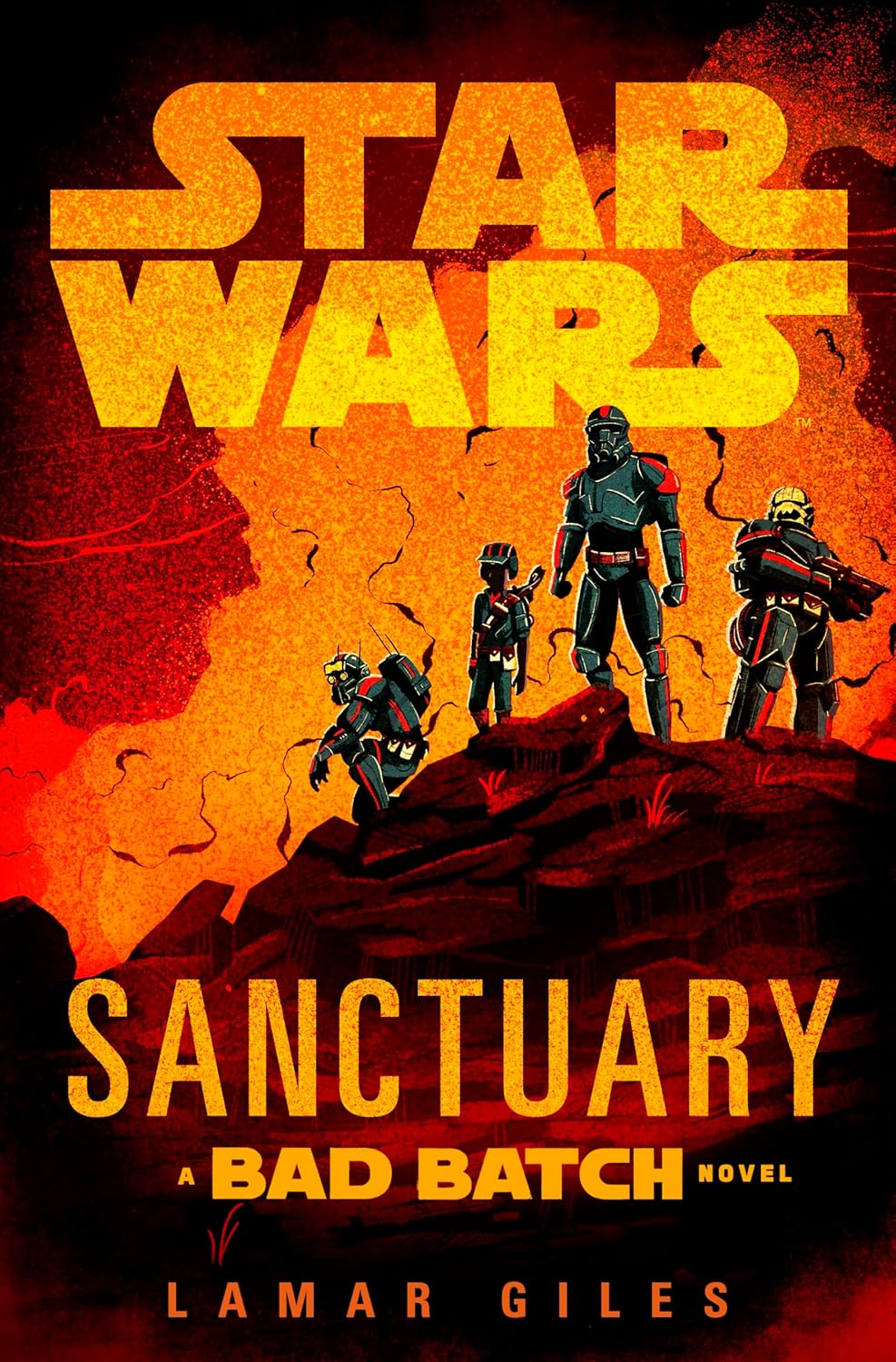
Star Wars: Sanctuary by Lamar Giles

Publisher: Random House Audio (Audiobook – 6 August 2025)

Series: Star Wars – The Bad Batch

Length: 11 hours and 46 minutes

My Rating: 4.75 out of 5 stars

Amazon

New Star Wars author Lamar Giles presents an epic and highly entertaining novel that follows everyone’s favourite group of rogue clones, with the Bad Batch focused novel, Sanctuary.

2025 has been an awesome year for Star Wars fiction.  Between the intense political novel, The Mask of Fear by Alexander Freed, and the upcoming Darth Vader-focused novel, Master of Evil by Adam Christopher, there are some interesting and heavy books coming out to further the lore of this iconic franchise.  However, there have also been some highly entertaining entries in this canon, including the fantastic novel Sanctuary.  Written by young adult fiction author Lamar Giles, Sanctuary is the author’s very first Star Wars novel, having previously written a short story in an anthology book.  A tie-in to The Bad Batch animated series, Sanctuary was an intriguing adult Star Wars novel that wasn’t originally on my reading radar.  However, in the mood for an audiobook from a familiar franchise, I decided to check it out, and boy was I glad that I did.

After turning on the Empire and deciding to live their own lives, the members of Experimental Clone Force 99, better known as the Bad Batch, are on the run, taking odd jobs and helping the innocents of the galaxy.  Made up of the grizzled Hunter, brilliant Tech, loveable powerhouse Wrecker and child prodigy Omega, the Bad Batch members have become an unlikely family.  However, after a series of dangerous missions, the members of the squad are tired, especially with their former comrades Echo and Crosshair on their own separate journeys. 

Needing a safe place to rest, the Bad Batch have found sanctuary on the planet of Pabu.  An idyllic settlement hidden from the eyes of the Empire, Pabu appears to be the perfect place for the clones to finally settle down and escape the constant battles.  However, before they can enjoy the peace of their new home, they’ll first have to help rebuild it.  With the settlement desperate for resources after a massive tidal wave, the members of the Bad Batch team up with pirate and self-proclaimed liberator of treasures, Phee Genoa, who promises an easy payday.

Hired to recover a valuable relic from an auction house, the crew’s ploy to steal it is quickly discovered, forcing them to revert to their usual fugitive ways.  However, their escape plan becomes complicated when Phee insists that they take on a second job, ferrying a mysterious couple to safe harbour.  Going against his better judgement, Hunter agrees to take on the passengers, but soon discovers that their new cargo has many secrets.  Forced to contend with an obsessive ISB agent and murderous tycoon with dangerous connections, the Bad Batch will risk it all for their new home.  But have they finally found an enemy too dangerous to defeat?

Sanctuary was an excellent and very entertaining Star Wars novel that proved a lot of fun to read.  Perfectly bringing the characters from The Bad Batch to life for an exciting new adventure, Sanctuary was an outstanding read that featured a compelling and action-packed story of love and life in the Star Wars universe.

Giles pulled together a captivating and very fitting narrative for Sanctuary, the serves as a great addition to The Bad Batch show, while also telling its own unique story.  Set towards the end of second season of the series, right after the events of the 13th episode, Pabu, Sanctuary is a fast-paced, character-driven story that takes the protagonists into the gritty underbelly of the Star Wars universe.  Starting with a very entertaining heist sequence, which goes about as well as any of the team’s plans, the titular Bad Batch and their pirate associate Phee Goena, escape with the loot, planning to sell it to a wealthy buyer.  At the same time, they take on two passengers, pregnant woman Keshiri Sohi and her masked partner Kuuto, who require smuggling across the galaxy.  Giles does a great job setting up all these initial story elements, and he quickly adds in some compelling complications that add some exciting drama to the narrative.  This includes a righteous ISB agent, Supervisor Sendril Crane, who is hunting their passengers, as well as the squad’s potential buyer, Cellia Moten, who would prefer to kill Phee Goena rather than pay her.

After an excellent shootout sequence halfway through the book where the protagonists are forced to simultaneously resist both Crane and Moten, the book slightly slows down as Giles works in some excellent story elements for both the protagonists and antagonists.  This includes growing drama between the Bad Batch and their passengers over their various secrets and lies, which also ties in nicely to internal conflicts amongst the team.  At the same time, Crane finds himself in the sinister orbit of the highly connected Cellia Moten, with the two trying to manipulate the other for their secrets and influence.  After a series of personal scenes for the protagonists that finally get them on the same page, Giles moves the story towards the end game, with the antagonists finding out where they are hiding.  This results in a series of awesome action sequences, with all the protagonists forced to fight to escape.  All the book’s characters, including its two villains, have their moment to shine here, and there are some powerful examinations of the relationship between new characters Crane and Sohi.  After some suitably climatic moments, the book ends on a high note that fans will really enjoy.  Giles also adds in an excellent cameo at the end that serves as a cathartic conclusion to another character’s story, and which I thought was a fitting and fun way to end the book.

I really enjoyed Giles’s writing style for Sanctuary, especially as he managed to achieve a lot in this novel.  Not only do we get a fantastic Bad Batch focused narrative loaded with action, adventure and other exciting Star Wars elements, but Giles also managed to include some powerful, personal moments, as various character dramas from both the show and this specific novel are played out.  The result was a slick and fast-paced novel that quickly draws the reader in with its easy humour and fun focus on The Bad Batch’s entertaining characters.  Thanks to some excellently timed shifts in character perspective, all the key members of Sanctuary’s cast have their moment to shine.  I particularly loved parts of the book that showcased the antagonist’s journey, which served as outstandingly entertaining contrast to some of the more character-driven chapters around the protagonists.  The combination of intrigue and Imperial politics in these scenes, as well as the mind games between to delightfully devious villains, was a true highlight of the book, and it allowed Giles to up the stakes of the plot, especially when it starts diving into some deeper Star Wars elements with some excellent references.

As a fan of The Bad Batch animated series I personally really enjoyed Sanctuary as Giles perfectly captured the tone and humour of the show.  Working as a great tie-in, Sanctuary fills in some interesting gaps between two of the show’s episodes, and the author does an excellent job of examining some of the issues the characters are facing during this period.  While naturally geared towards those familiar with The Bad Batch, Giles ensures that Sanctuary isn’t too show-lore dependent, and most general Star Wars fans will be able to read this book and have a great time.  Indeed, those unfamiliar with the animated series get a good glimpse at the humour and character dynamics in this novel, and it could serve as a good entry point to show.  Even if they don’t, the author also adds in a bunch of references that anyone familiar with Star Wars will be able to appreciate.  I felt that Giles did an excellent job exploring the period the novel is set in, the early days of the Empire a couple of years after the events of Revenge of the Sith, which is one of the more fascinating times in the franchise’s lore, and it was interesting to see how some of the new characters fit into this time.  As such, Sanctuary is going to appeal to a wide range of readers, and it’s a great read for fans of the Star Wars extended universe.

I have already mentioned a few times the excellent character work in Sanctuary as Giles features a great cast for this book.  Naturally for a Bad Batch book, the titular cast get much of the focus in Sanctuary, with excellent portrayals of Hunter, Tech, Wrecker and Omega.  Giles expertly captures their personalities from the show and reproduces them in Sanctuary.  As such, you are given some very interesting insights into the minds of each of these characters at this point in the series, with a particular focus on each clone’s glance towards the future and what they want out of life.  While there are some interesting alternating characters here amongst the cast, including Omega trying to become more independent, Tech’s unlikely romance with Phee, and Wrecker’s simple desire to blow things up, much of the character development for the main cast revolves around Hunter.  Giles spends a large amount of time diving into Hunter’s issues with losing control and no longer being a soldier, as well as some of the resentment he has from Crosshair’s abandonment of the squad.  This results in several fractious family moments, especially as Hunter’s caution tends to put him at odds with the rest of the team’s desires, and his distrust of Phee and their new passengers causes some noticeable friction.  These character dramas are a compelling part of the book’s overall plot, although Giles also does a good job of showcasing the more happy-family version of the Bad Batch, which fans of the show will appreciate, considering we all know what’s coming in a few episodes time.  That being said, I’m not sure I can forgive Giles for his line about Tech’s grapnel gun never failing him.

Aside from the titular Bad Batch, Giles features several additional outstanding characters, including returning show favourite Phee Genoa.  A free-spirited pirate and treasure hunter, Phee was a breath of fresh air amongst the stuffier clone soldier protagonists, and it was entertaining to see the unique interactions she had with the other characters.  Her antagonism of the rigid Hunter was particularly fun, especially as it brought up some much-needed drama, however, it was her relationship with Tech that was a true highlight of the book.  Giles did a good expanding on the feelings hinted at in the show, and they proved to be a very distinctive couple as a result.  I felt this gave some of the upcoming events of the animated series a little bit more of a tragic air, as you try to imagine what could be, and you end up liking them in a very bittersweet way.  The main cast of protagonists were well rounded out by new figures Keshiri Sohi and the masked Kuuto.  Mysterious passengers with secret pasts who cause all manner of trouble for the main cast, Sohi and Kuuto spend much of the book seemingly untrustworthy with their own agendas.  However, thanks to some excellent reveals, as well as a couple of good flashbacks, you grow to understand the complexity around their actions, and they proved to be a compelling addition to the cast as a result.

While I really enjoyed the protagonists, I felt they somewhat got overshadowed by the book’s impressive antagonists.  This includes ISB Supervisor Sendril Crane, a diligent and intense figure on the heels of Sohi and Kuuto.  Crane has a brilliant introduction in this book, which shows off his intelligence and ruthlessness, and he only gets better from there as you come to understand his background as a spy and his obsession with Sohi.  While Crane proves to be a ruthless adversary, he is well matched by Sanctuary’s other main antagonist, Cellia Morten.  An ultra-rich, politically connected tycoon with a penchant for murder, Morten is shown to be an outstandingly deranged figure early on, and she swifty amps up her evilness as the book continues.  Giles does an exceptional job sculpting Morten into the very worst rich villain he could, especially once her motivations for killing are revealed, and it was very fun for to eventual face reality on the real power structure in the galaxy.  While both serve as great antagonists to the main cast, the real beauty of these villainous characters occurs when they interact with each other, which results in a series of manipulative conversations which are thoroughly entertaining.  I particularly enjoyed how Morten continuously got the better of the normally unflappable Crane, especially in their first meeting when she gets out being arrested by asking if he had been sent by her good friend Sheev, with her use of namedropping and connections only getting better from there.  These two antagonists played off each other perfectly, and their battle of wits and cruelty, was even more entertaining than their hunt for the protagonists.  All these great characters added so much to my enjoyment of Sanctuary, and I loved the amazing arcs and interactions that emerged.

Naturally, I ended up listening to Sanctuary on audiobook, rather than seeking out a physical copy, as the audiobook format is the absolute best way to enjoy a Star Wars novel.  I love how incredible a Star Wars novel can sound when read out, and this was particularly true with Sanctuary, as all the awesome action and great characters were so much more impactful and fun in this format.  A lot of this is due to the narration of Marc Thompson, who does an exceptional job voicing all the characters and bringing the entire book to life.  Thompson, who is one of my favourite audiobook narrators, has long been one of the top narrators of Star Wars fiction thanks to his brilliant vocal talents and ability to impersonate various characters from the shows (see my previous reviews of Thrawn and Scoundrels by Timothy Zahn and Dark Disciple by Christie Golden).  His skill was on full display in Sanctuary, especially as he perfectly voiced Hunter, Tech and Wrecker throughout this novel, as well as several other characters from the show.  I was honestly so impressed by how he managed to accurately he was able to voice the three main clones from the show, with each of their distinctive but similar voices, coming across so damn close to their voice actor in the show, Dee Bradley Baker.  At the same time, he also does a good take on Wanda Sykes’s character Phee Genoa, and even does a passible voice for Omega, which includes the New Zealand accent of actress Michelle Ang. 

Thompson’s outstanding narration is further enhanced by the fantastic inclusion of Star Wars sound effects and music, which is an outstanding part of all Star Wars audiobooks.  The entire story really comes to life when you can hear crowd sounds and blaster fire amongst the dialogue, while the iconic Star Wars music makes several scenes just a little more epic, especially when they help remind you of moments from the films.  These extra audio inclusions pair perfectly with Thompson’s narration, and it honestly felt like you were listening to an episode of The Bad Batch with this audiobook.  I really enjoyed this full listening experience, and I ended up powering through Sanctuary’s near 12-hour long runtime in no time at all.  This was such a great listen, and this was honestly one of the better audiobooks I had the pleasure of listening to in 2025.

With a brilliant story, fun characters and a ton of action, Lamar Giles’ Star Wars novel, Sanctuary, was an outstanding hit.  An excellent tie-in novel that follows the entertaining characters from The Bad Batch animated series, Sanctuary was an impressive and exciting novel that had me hooked very early on.  A deeply compelling and addictive read, Sanctuary comes very highly recommended, especially on audiobook, and all Star Wars fans are going to have a great time with this awesome read.
Amazon

Throwback Thursday – Justice League: The Flashpoint Paradox

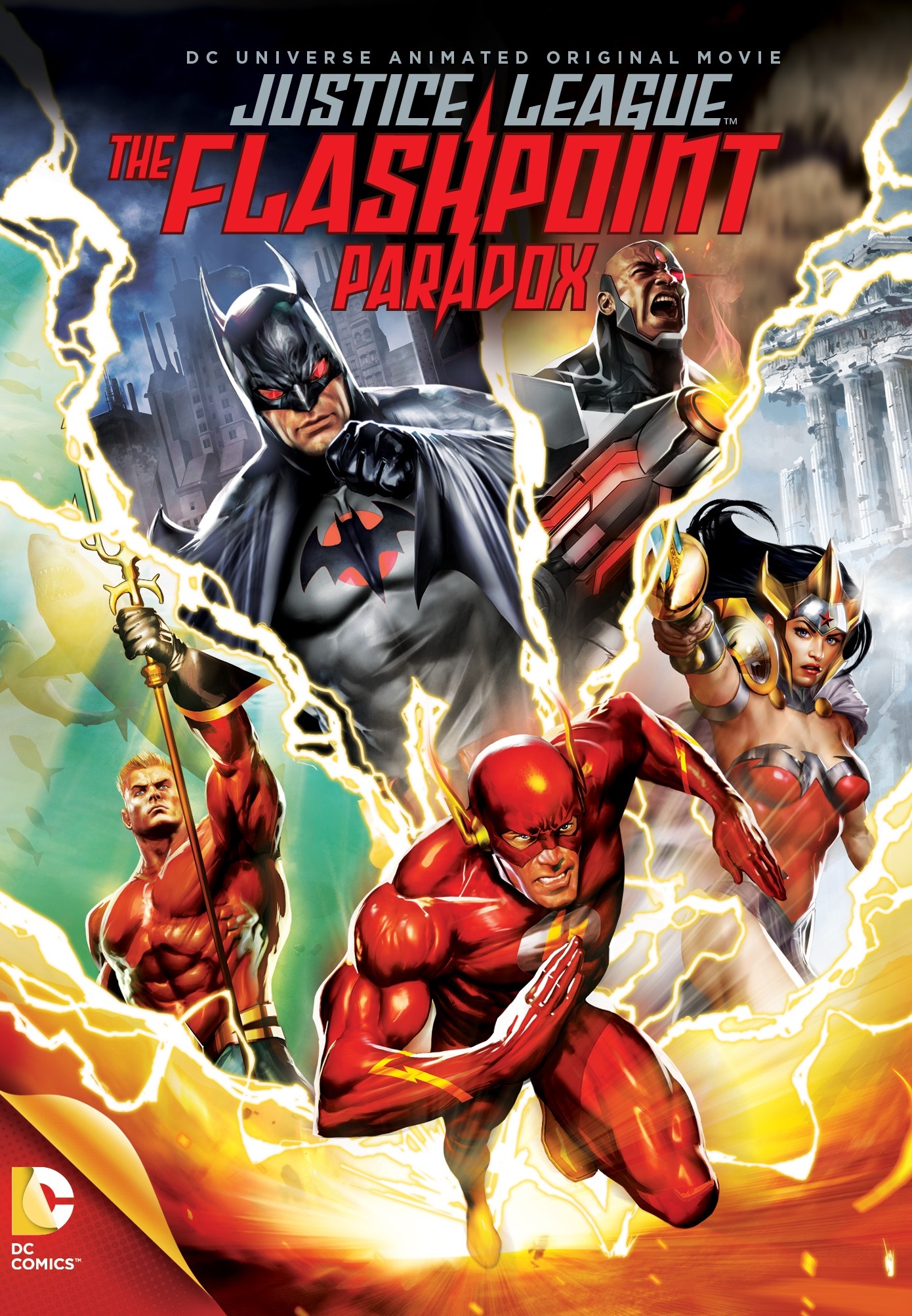
The Flashpoint Paradox Poster

Studio: Warner Bros. Animation and DC Entertainment

Series: DC Universe Animated Original Movies – Film 18 / DC Animated Movie Universe – Film One

Director: Jay Oliva

Writer: Jim Krieg (Based on the comic by Geoff Johns and Andy Kubert)

Producer: James Tucker

Length: 81 minutes

My Rating: 5 out of 5 stars

Welcome back to my Throwback Thursday series, where I republish old reviews, review content I have enjoyed before or review older books I have only just had a chance to read.  For this week’s Throwback Thursday, I dive into a pretty damn awesome DC Comics animated film that is highly relevant at the moment with the awesome Justice League: The Flashpoint Paradox.

Like many comic book fans in the world, I went out last weekend for the epic new film offering, The Flash, which ended up being pretty damn good.  The film had a lot of great elements to it, including the return of Michael Keaton as Batman, the introduction of a great new Supergirl, and a fantastic examination of the Flash mythos.  I was also very happy to see a fresh new take on the iconic Flashpoint comic, and it will be interesting to see how that impacts any upcoming live action DC films.  While I liked what they did with the Flashpoint story, I don’t think that The Flash was the absolute best adaptation of the Flashpoint comic; instead that honour goes the focus of this article, the 2013 animated film, Justice League: The Flashpoint Paradox.

Before we talk about the film, I should give a little background about the Flashpoint comic.  Flashpoint was a major 2011 comic event, written by Geoff Johns, whose work I have deeply enjoyed in comics like Rogues’ Revenge and Teen Titans, and pencilled by Andy Kubert.  Flashpoint was a compelling alternate timeline story that ended up resetting the main DC Universe in a big way.  While I honestly have very little love for the resulting changes it caused (I will never forgive DC for The New 52), the Flashpoint comic itself is pretty good, featuring some unique and stunning ideas within it.

Flashpoint has been adapted a few times in recent years, including in several seasons of The Flash television series, and the current The Flash film takes a lot from it.  While these other adaptations are pretty good, I think that The Flashpoint Paradox did the most with it, mainly because it sticks a lot closer to the source material and provides a very gritty animated film with a brilliant cast behind it.  Directed by veteran animated film director Jay Oliva (who has directed several of my favourite animated comic book films) and written by Jim Krieg, The Flashpoint Paradox is pretty damn awesome film and it is one that I have rewatched multiple times over the years.

Barry Allen is the Flash, founding member of the Justice League, the fastest man alive and the greatest hero Central City has ever known.  However, despite all he has done and everyone he has saved, Barry still cannot shake the trauma of his mother’s murder, a tragedy that has haunted him since his childhood.  After defeating several of his greatest foes, including his archenemy, the Reverse-Flash Eobard Thawne, Barry awakens to find himself in a new world, one where his mother is still alive and the Flash never existed.  Despite the joy he feels about his mother, this new world is no paradise, instead it is on the brink of ruin.  The Atlanteans, under the command of Aquaman, and the Amazons, led by Wonder Woman, are at war, and their relentless battling and disdain for humanity, has seen the destruction of much of Europe and the death of hundreds of millions of people.

Determined to find out what is happening and to stop the war between the Atlanteans and the Amazons before it destroys the world, Barry seeks out the one man who he thinks can help him, Batman.  However, the Batman he encounters is far different from the one he knows and has very little desire to save the world.  Worse, it soon becomes apparent that the changes to the world have been caused by Thawne, whose obsession with destroying the Flash could lead to unbelievable destruction.  To save the day, Barry needs to find a way to regain his powers and unite the scattered heroes of this reality.  But with all-out war in front of him, and his own trauma catching up behind, can the Flash stop Thawne before it’s too late?  And even if he succeeds, is he truly ready for the revelations that await him?

The Flashpoint Paradox was a pretty epic film that I have a lot of love for, especially as it blends a compelling story with great aesthetics, slick animation and a brilliant cast to produce something pretty damn awesome and a lot of fun to check out.

The creative team behind The Flashpoint Paradox did an outstanding job bringing this film together and one of the main reasons it works is the fantastic and intense story behind it.  The film itself is an exceptional adaptation of the original Flashpoint comic and much of it is a close and deliberate match to the source material.  That being said, it’s not a straight adaption as they needed to make it more accessible and take the story out of the main comic universe.  The film starts off with an exceptional sequence where the Flash faces off against the Rogues and the Reverse-Flash, who ambush him at the Flash Museum.  This scene, which sees a series of bombs threaten Flash and Central City, manages to achieve a lot of essential story points, including introducing Flash, showcasing his bitter rivalry with the self-destructive Thawne, and presenting the established version of the various Justice League characters who will later appear in the alternate timeline.  It’s also a very entertaining scene in several great ways, not only because the banter between Flash and Thawne is pretty brutal, but because it shows each member of the Justice League in action as they disarm a bomb in their own unique way.  This great intro really sets up the rest of the film, especially thanks to the clever references to Barry’s mothers’ death, and while it does make it a little more obvious whose ultimately responsible for events, it was a pretty damn epic start.

The middle part of the film is where the meat of the story is developed, as Barry arrives in the alternate universe and attempts to find out what is going on.  This part of the film resembles the source material the closest as they are pretty much doing a straight adaptation of the Flashpoint comic at this point.  However, they manage to really show off the grim reality of this new timeline very effectively in a short amount of time, and you really get to appreciate just how murderous the Amazons and the Atlanteans are, as well as how dark a world without the Justice League can be.  The creative team tell a very impactful story in this part of the film, and you must love the powerful interactions between Barry and the new Batman, as well as the emotional impacts of Barry realising just how much his universe has changed.  Everything is well capped off by the infiltration into the lab holding Superman, which is honestly way darker than what they did in the recent Flash film, especially with the horrifying aesthetics around the captured Superman.  At the same time, the growing sense of doom in the world is intensifying as the two superhuman armies prepare for war in London, and the tension is well and truly ratcheted up before the final phase of the film.

Everything leads up perfectly to the final act of The Flashpoint Paradox, which frankly is the best and most impactful part of this entire exceptional film.  The final third of the film is essentially an all-out war sequence, as the various characters descend into a three-way battle in the ruins of London, with the Atlanteans, the Amazons, and the human resistance, which includes the protagonists, fighting to kill as many enemies as possible.  This sequence is dominated by several excessively brutal fights between the heroes, and so many characters end up dead in some pretty horrible ways.  Not only are these action scenes highly polished and exciting, but they are also emotionally powerful, as the various character arcs and elements come full circle.  The best scenes are probably shared between Barry and Thawne, as they fight through the battle, debating what has happened to the world.  There are some outstanding revelations here, especially if you aren’t familiar with the source material or the other Flashpoint adaptations, and the moment when Barry figures out what truly happened is just heartbreaking, especially with Thawne’s taunting.  There is so much dramatic tension floating around, especially as Barry witnesses the full onslaught of the battle in front of him, and everything tilts on the edge of destruction.  The final brutal moments of this fight are so damn epic, and it leads up to some painful farewells and some tough decisions from Barry that will shake him forever.  This built-up emotion remains to the very end of the movie, especially as Flash manages to get closure for himself and others, and I really appreciated just how well the film ended.

On top of the epic plot and amazing concluding third, I also need to really highlight the impressive animation, stylistic choices, and fantastic musical score that accompanied it.  The animation in particular is awesome, and I loved the brilliant and iconic character designs that it depicted, especially as there is a mixture of classic character depictions, and the alternate versions that appeared in the Flashpoint universe.  The grim nature of the Flashpoint timeline serves as a powerful backdrop to the plot of The Flashpoint Paradox, and it was fantastic to see the DC universe in an even darker and more desperate light.  The best animation is naturally saved for the multiple impressive fight sequences scattered throughout the film, especially in the big war sequence at the end, and the brutality and sheer ferocity of the fights and battles are quite distinctive.  The animators honestly show no hesitation in showing blood, gore, death and even brains throughout this film, and it is even more brutal than The Flash film or the original comics, as there is barely a second in the final war where someone isn’t dying in some dramatic fashion.  There is some outstanding attention to detail during these various battles, whether it be a brutal fight in the sky, an intense duel between Cyborg and Aquaman in the middle of a warzone, or a high-speed fight through the midst of over combatants, and these are expertly portrayed and guaranteed to keep your interest with its high concept impact.  The cool time travel sequences are also a great highlight, and the clever animation around them really dial up the intensity of the film, especially during certain seminal scenes.  I’m also a big fan of the way that the major characters are presented throughout this film, and I appreciated how their designs change at various points of the film depending on which timeline is being watched.  The alternate costumes or depictions are well contrasted by the classic costumes shown at the start of the film, and I also love the subsequent subtle changes that appear at the end of the film to represent the further changes that have been created.

I also must talk about the fantastic use of music throughout this film, which works perfectly in concert with the animated sequences.  There are some great orchestral scores and tunes that are featured throughout the film, often in the most impact scenes, and I really liked how well they were used to enhance emotion or drama in a very powerful way.  Some of the very best scenes, including several particularly tense or pivotal sequences at the end come across as so much better thanks to the music that was overscoring it, and this really drew me further into the plot.  Combined this great music with the excellent graphics and The Flashpoint Paradox turns out to be an exceptional watch that I cannot get away from.

While the adapted plot and amazing stylistic choices help to turn this film into something special, I cannot walk away from this review without talking about the incredible cast of actors who bring this elaborate story to life.  The Flashpoint Paradox features a pretty hefty and impressive group of voice actors who each dive into their respective characters and bring forth some of the more iconic figures from the DC universe, as well as their alternate versions, in some pretty epic ways.  There is a great combination of classic character depictions, as well as the more nuanced and, in many cases, evil versions from the alternate timeline, that are featured in The Flashpoint Paradox, and the creative team brilliantly balanced the two throughout the plot.

At the centre of The Flashpoint Paradox is the Barry Allen version of the Flash, who embarks upon one of the most important missions of his life.  Expertly voiced by Justin Chambers (of Grey’s Anatomy fame), this version of the Flash is much more closely related to the classic comic portrayals (rather than Ezra Miller’s quirky version) and is an experienced and competent crime fighter.  Despite being one of the more stable superheroes out there, Barry is still haunted by the murder of his mother and his failure to save her.  Chambers really dives into this role and perfectly voices the full emotional spectrum out of Barry, showing all the deep inner pain, as well as his inherent hope, all of which really comes out throughout the film.  There are so many powerful scenes featuring Barry in the film, from his initial confusion over the new timeline, the emotional meeting with his mother, the despair at how the world turned out, and his absolute shocked resignation at who is responsible.  I also felt that the writers did an outstanding job of capturing the entire personality, key history and mythos of the Flash within this film, and you really understand his decisions and how he interacts with the other heroes.  I particularly loved his shock and pain at seeing what his friends have become in this alternate timeline, and it is so damn compelling.  Honestly, there are so many powerful moments here and I have a whole new level of respect for Chambers thanks to this film as he honestly was just magical here.

On top of the Flash, I really need to highlight two figures from the new timeline who perfectly mesh with the main character and show off just how dark events are.  The most prominent of these is easily this universes Batman, who was voiced by another Grey’s Anatomy alumni, Kevin McKidd.  Rather than being an older version of Bruce Wayne, this version of Batman is his father Thomas Wayne, who took on the cowl after Bruce was killed in Crime Alley and Martha became this universe’s Joker.  McKidd goes full on growly here for Batman, and the result is a grizzled, violent, and very murderous Dark Knight who has given up on the world in many ways.  I loved this fantastic and clever take on Batman in The Flashpoint Paradox, and it is so damn epic to watch Barry attempt to work with this very different Batman.  The shared connection of knowing Bruce gives these characters a powerful emotional bond, and McKidd kills it in several emotionally charged scenes, showcasing this Batman’s hidden heart.

I also have a lot of love for the cool version of Cyborg that appears in The Flashpoint Paradox, and honestly this is probably the grimmest and most powerful portrayal you are likely to see.  Voiced by a young Michael B. Jordan, this Cyborg is the only real superhero left in America and has been modded out into a massive tank figure who runs national security.  Out of all the figures in the film, Cyborg has the most impressive change in characterisation between timelines, especially as he goes from teenage figure to actual adult, and this is one of the first animated films that really showed what he could offer the wider DC universe.  Jordan provides a pretty good and slightly robotic voice for Cyborg here, and I loved how he was portrayed as a level-headed peacemaker, trying to save the world.  While still a little naive and idealistic, he really lives up to all the hype surrounding him in his initial introductions, especially during the final bloody battle scenes.  He honestly goes full out in this war, and it was so damn cool to see just how dangerous he could be.

While the more heroic (or anti-heroic for Batman) characters above were great, this film would be nothing without its villains.  The most prominent of these is easily Flash’s archnemesis Eobard Thawne, better known as the Reverse Flash.  Voiced by the very talented C. Thomas Howell, Thawne is a brilliant and powerful figure in The Flashpoint Paradox, mainly because he has such a tangible hatred for Barry and his legacy.  While he is the main villain of the story, he only appears in a few short scenes, but Howell makes each and every one of them count.  The sheer contempt and bile that drips from every sentence is so important for the performance, and you quickly understand just how much he wants to destroy him, even if that means losing his own life.  Thawne’s best sequence occurs at the end of the film when he finally appears to mock Barry and reveal everything that has been done.  The joy, satisfaction and mocking appreciation for Barry is just perfect, and he has such a great villain monologue here.  Howell has one of the strongest performances in The Flashpoint Paradox and I deeply appreciated how he brought such a fun and compelling villain to life.

In addition to Thawne, The Flashpoint Paradox features two other outstanding and particularly unique antagonists in the form of militarised and anti-human versions of Aquaman and Wonder Woman.  Both characters have been twisted by a failed romance and the hatred that followed Wonder Woman’s slaying of Aquaman’s wife, and they are now brutally engaged in war to kill each other and the rest of the world.  I loved these darker and more murderous forms of these iconic characters, especially after they are shown in their more heroic guises at the start of the film, and their complex war is a destructive backdrop to the intense narrative.  Like Reverse-Flash, both are consumed by hatred, and they are willing to destroy the world rather than lose.  Despite that, there is still an obvious, if twisted, love between them, which makes their fight even more tragic.  I loved how both characters are portrayed, although I especially like how badass they make Aquaman here, especially as this was released in the pre-Jason Momoa days when Aquaman was still a bit of a joke.  Watching him destroy everyone in The Flashpoint Paradox really sets him up as a massive threat, and I deeply appreciated this fantastic change to the character.  I also loved the great casting behind these characters as well.  Aquaman is portrayed by legendary actor Cary Elwes, who honestly disappears into the role, providing a much more gruff and commanding voice than I have heard in his previous works.  The voice of Wonder Woman is provided by veteran voice actor Vanessa Marshall (Hera Syndulla from Star Wars Rebels), who is reprising the role she previously portrayed in Justice League: Crisis on Two Earths.  Both actors really get these iconic characters down perfectly, especially in their darker moments, and I loved how well they were utilised in the film, especially as they enhance the emotional power and looming threat of the narrative.

On top of the great performances above, I also must commend the use of several excellent supporting actors in smaller roles who did an outstanding job.  I as particularly happy that several actors who had previously voiced certain characters in other films and shows revisited their roles here, including some big names.  The most noticeable of these is the late great Kevin Conroy, who does an exceptional (as always) job of voicing the Bruce Wayne Batman at the beginning and end of the story.  Conway has several amazing scenes, including a particularly emotional sequence at the end that will have you in tears.  Other performers include Nathan Fillion providing a cocky voice to the Hal Jordan Green Lantern, Dana Delany once again voicing Lois Lane after voicing her the DC Animated Universe (Superman: The Animated Series, Justice League and Justice League Unlimited), and Ron Perlman revisiting his epic Teen Titans performance as Deathstroke for a short scene.  Other notable actors and characters include Danny Huston doing a quick dash as General Sam Lane and Dee Bradley Baker (the voice of all the clones in Star Wars animation, as well as several hundred other credits) doing a fantastic Etrigan the Demon.  However, my favourite of these side characters is Danny Jacobs’s portrayal of the Wildstorm Comics character Grifter.  Grifter is a brutally effective figure in the final third of the film, and he has some outstanding interactions with other characters like Batman.  This cast, and more, all add so much to the film with their brilliantly portrayed characters, and I am still blown away by the calibre of the cast that was brought together here.

I think it is pretty obvious from the lengthy rant above that I have a lot of love for Justice League: The Flashpoint Paradox, and it is one of those animated films that I have watched so many times.  Thanks to its amazing cast, fantastically adapted story, intense animation and general darker vibe, The Flashpoint Paradox is a pretty spectacular animated film, and I honestly think it has the best execution of the Flashpoint comic.  It also has an awesome legacy, especially as it sets up the DC Animated Movie Universe and has impacts that range all the way to the final film, Justice League Dark: Apokolips War.  As such, I really must give this film a full five-star rating and it is a must-watch for all comic fans, especially those who like their animation a little more adult and emotionally charged.