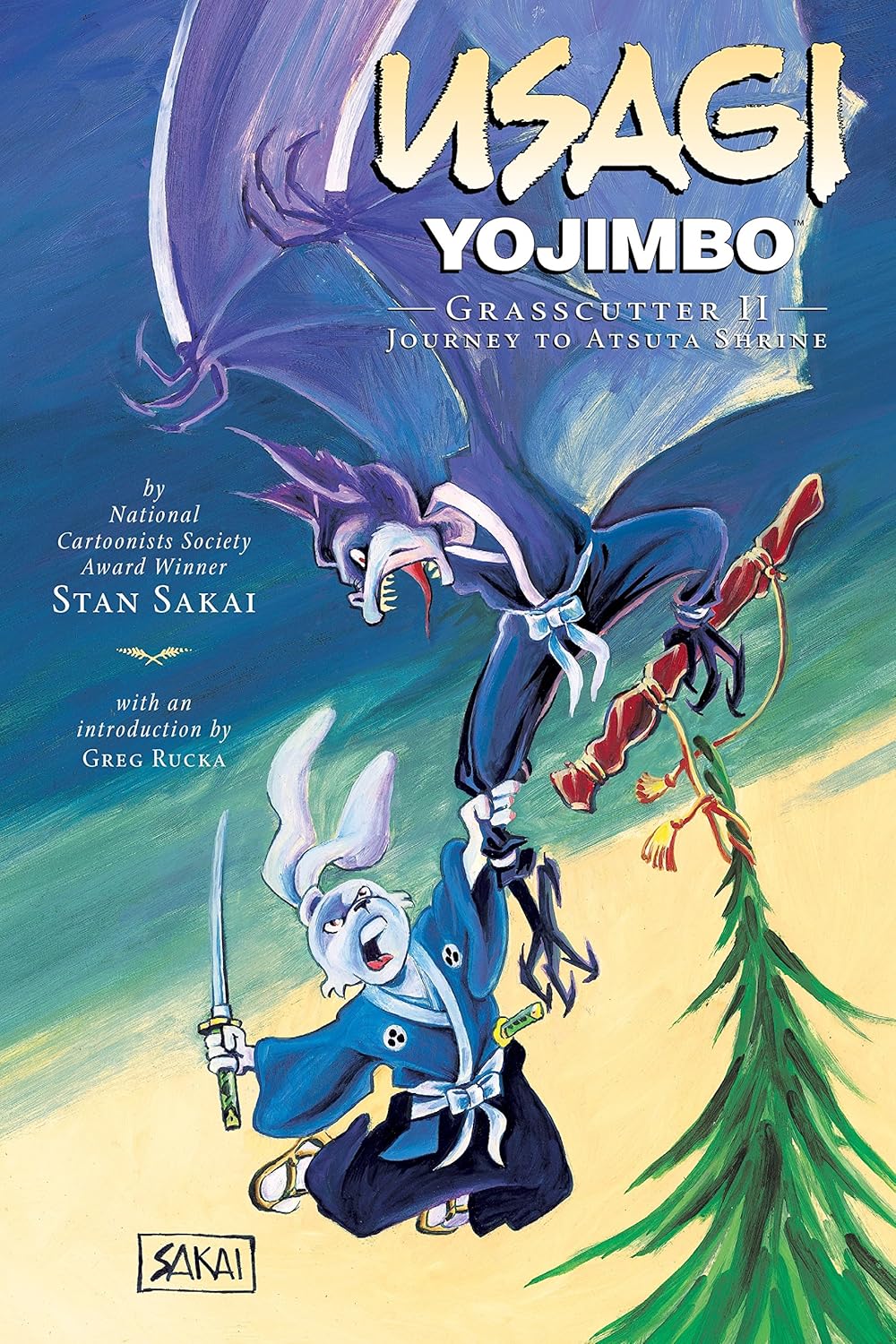
Usagi Yojimbo: Volume 15: Grasscutter II- Journey to Atsuta Shrine by Stan Sakai

Publisher: Dark Horse Comics (Paperback – 1 February 2002)

Series: Usagi Yojimbo – Volume 15

Length: 184 pages

My Rating: 5 out of 5 stars

Amazon

The classic adventures of Usagi Yojimbo continue as I look back at the 15th brilliant volume, Grasscutter II – Journey to Atsuta Shrine, one of Stan Sakai’s more ambitious and powerful comics, which sees the protagonist and his friends caught up in the tides of fate and history.

Ever since I read the recently released 40th volume of Stan Sakai’s iconic Usagi Yojimbo comic series, The Crow, I have been in a major Usagi Yojimbo mood, so I decided to go back and continue reviewing the older volumes of this classic comic, which follows a rabbit ronin in a version of Feudal Japan populated with anthropomorphised animals.  I reviewed the first 14th volumes during COVID lockdown, and had a lot of fun doing so, especially as Usagi Yojimbo is one of my favourite comic series.  I have been meaning to restart reviewing the older comics for a while, and I’m not going to throw away this sudden surge of creative energy, so this is the perfect time to bring out my review for the 15th volume in the series, Grasscutter II.
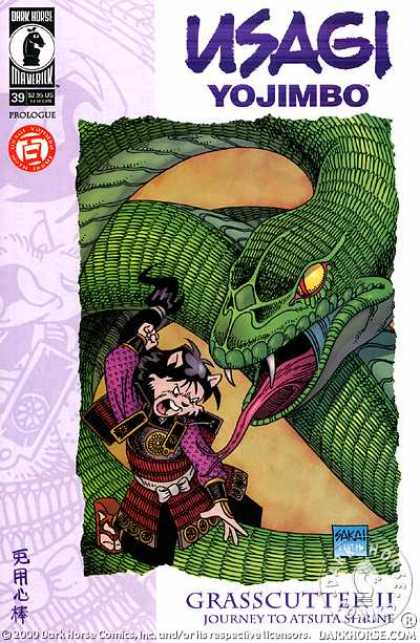
Grasscutter II is one of Sakai’s most impressive comics in the series.  Featuring issues #39-45 of the first Dark Horse Comics run on the Usagi Yojimbo series, Grasscutter II serves as the gripping sequel and conclusion to the intense and pivotal story contained in the 12th volume, Grasscutter.  This previous volume saw Usagi and his friends become embroiled in the recovery of the legendary sword Kusanagi and the foiling of a major plot to rebel against the Shogun.  A dark and compelling entry in the series, Grasscutter featured an amazing story with major implications for the Usagi Yojimbo series.  This was such a key volume, and it is interesting to see how Sakai follows it up here, especially as he needed to make Grasscutter II’s story in just as epic, if not more impressive.

Following dark events of magic and death, few people are aware that the legendary Imperial sword Kusanagi has been recovered from the sea.  Forged by the gods and wielded as a symbol of Imperial authority for generations, Kusanagi, or the Grasscutter sword has the potential to reshape the power structure of Japan, as whoever holds it could rally all the country to their cause, bringing war and destruction to a currently peaceful nation. 
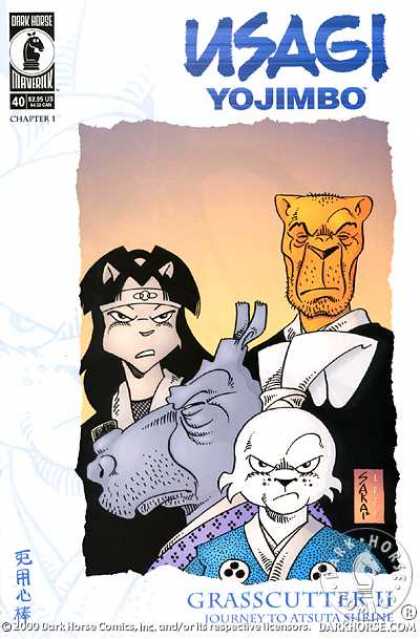
Hidden at a small temple, the sword is currently guarded by the honourable samurai Miyamoto Usagi, the irrepressible bounty hunter Gen, and the head priest Sanshobo.  However, the three know that they cannot keep the sword hidden for long, with dangerous foes seeking to uncover its secrets.  The only place that the sword will be truly safe and out of the hands of those who would use it for political gain is the sacred shrine of Atsuta, where a replica of the sword currently rests.

Embarking on a noble quest, Usagi, Gen and Sanshobo hope to sneak the sword to the shrine before anyone knows they have it.  However, the road to safety is long, and it soon becomes apparent that dangerous foes know exactly what they are carrying.  Pursued by two rival ninja clans who will stop at nothing to possess the sword as fuel for their own dark ambitions, Usagi and his comrades will need to fight tooth and nail to survive and keep the sword out of their hands.  But with old friends and new bitter rivals revealing themselves, can even Usagi and his skilled companions avoid the tragedy that stalks them?
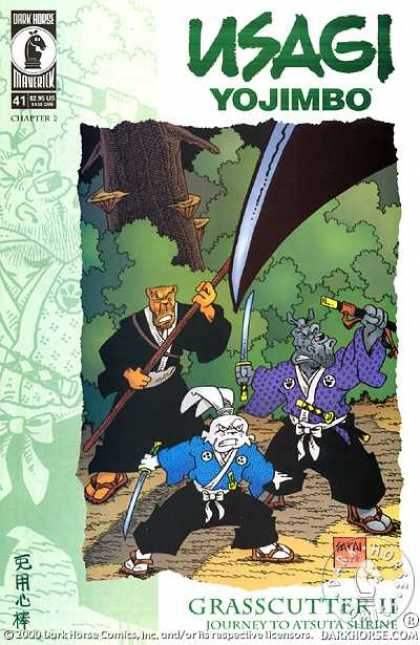
Grasscutter II was an epic and captivating classic entry in one of the best ongoing comic series.  Serving as an effective follow up to the bloody events of Grasscutter, Grasscutter II blended together a ton of outstanding action with some great character moments to create a memorable and beautifully drawn addition to the series that gets a very easy five-star rating from me.

This 15th volume of the Usagi Yojimbo series has a very gripping and intense storyline that seeks to combine Japanese history and mythology with the author’s action-packed style.  Starting with a beautifully drawn prologue that gives some interesting historical and mythological context to the sacred shrine of Atsuta, Sakai quickly moves into the main story, with Usagi, Gen and Sanshobo starting their journey to the shrine after being forced to protect the sword in the previous volume, Demon Mask.  At the same time, two rival bands of ninja, the Komori ninja and Neko ninja, discover that the existence of the sword and move quickly to intercept the companions, hoping to claim it for their own conflicting reasons.  The Neko ninja, led by Chizu, who has a complicated history with Usagi, catch up to the protagonists around the same time as the Komori ninja, leading to a wild three-way brawl.  Forced to work together, Chizu joins Usagi and his friends to recover the sword, which raises some interesting conflicts and issues, especially as Chizu has very different plans for the Kusanagi sword.
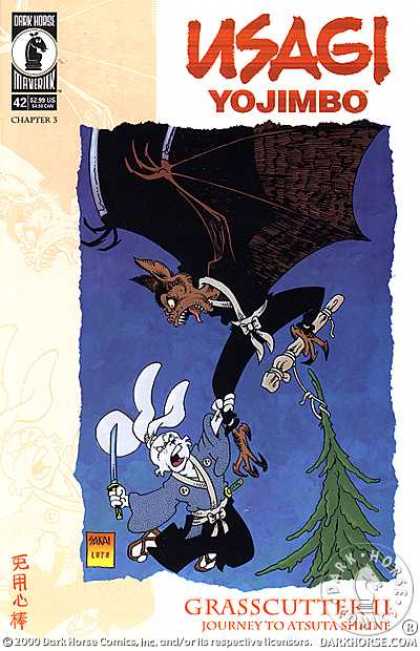
The second half of Grasscutter II is epic the entire way through, as Sakai continues to feature impressive action, while also allowing several character arcs to develop and conclude in tragic ways.  This includes the companions meeting up with the excellent supporting character Ikeda, who had such a great redemption arc in the previous Grasscutter volume.  Following some initial betrayal from Chizu, Usagi, Gen and Sanshobo follow her and enter battle with the Komori ninja, which ends in a dark moment of honour and loyalty from another interesting supporting figure.  While this initially seems to wrap up the main story, a fun twist ensures that Grasscutter II enters a fantastic concluding arc that sees that protagonists enter one last battle before achieving their goal.  This big battle is one of the most brutal and intense in the entire volume, and results in the book’s final tragic moment, which proves to be a fitting end to one amazing figure.  Loaded with powerful emotion, sacrifice and grief, this ending to Grasscutter II wraps up the entire story perfectly and ensures you are hooked all the way to the final blow.

This was another great volume from Sakai that successfully pushes the overall narrative of the series onwards and results in some intriguing changes to the comics, both in this book and the future.  As with all of Sakai’s work, Grasscutter II features a great combination of action, intrigue, character work and beautiful art that comes together perfectly to create an exceptional comic that is impossible not to finish in one sitting.  There are some truly great moments in Grasscutter II that help to make it stand out amongst Sakai’s other outstanding work, including the cool battle sequences.  The various scenes that feature the protagonists caught between two different schools of ninja were the best, and Sakai had fun showcasing the scary fighting ability of the blade-winged Komori ninja, as well as the established tricks of the Neko ninja.  This fantastic clash of styles allowed for some brilliant sequences, which were so damn epic to see unfold.  While I had a lot of fun with Grasscutter II, I must say that it probably isn’t the best volume of Usagi Yojimbo to start the comic on.  While Sakai does a good job revisiting some of the key plotlines and characters, you probably should read the previous Grasscutter volume to fully appreciate the plot, as well as some of the other earlier volumes to understand some of the character arcs.  Still, this is a very impressive Usagi Yojimbo entry, and a key read for established fans of the series who will have an exceptional time with Grasscutter II.
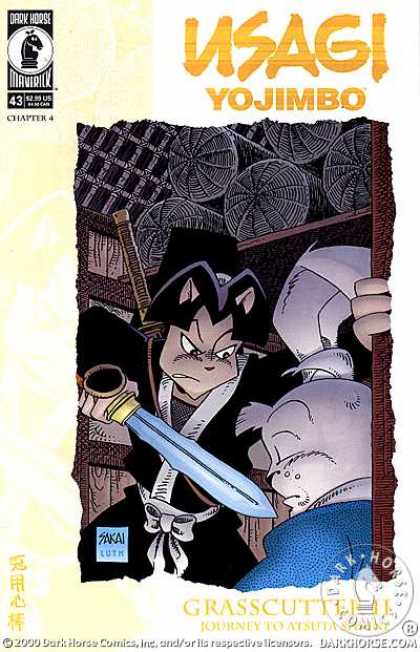
While fans will probably enjoy Grasscutter II’s exceptional action the most, I personally thought that it was some of the great character work in this volume that helped to make it particularly good.  Thanks to the volume featuring one extended storyline, Sakai takes his time to set up some outstanding character moments that work perfectly alongside the complex narrative and cool artwork.  While Usagi and Gen are their usual fun selves (there opposing views on honour, duty and what is right is always fun), I thought it was several returning supporting characters who really stole the show in Grasscutter II, especially as Sakai wove some great storylines around each of them.  This includes the former samurai turned monk Sanshobo, who has been an excellent recurring figure since his introduction in the series’ 10th volume, The Brink of Life and Death.  Not only does he mesh well with Usagi and Gen, acting as a voice of reason between the two strong-willed characters, but Sakai also brings one of his main character arcs full circle when he encounters his former lord.  Sanshobo has some great moments in Grasscutter II, especially his grief at the end, and I liked how Sakai utilised him as part of the main trio.

Another impressive character in Grasscutter II is Ikeda, who Sakai has built up as a wonderful figure.  Introduced in the moving story, The Patience of the Spider (contained in the 11th volume, Seasons) and expanded on in the first Grasscutter story, Ikeda is a former lord and general who learned to enjoy the quiet life of a peasant after his defeat.  Reunited by chance here with his former retainer Sanshobo, Ikeda proves to be an interesting addition to the cast.  Not only do his insights into the Neko ninja, who he greatly distrusts due to his history with them, result in a key plot point, but he is also once again tempted to achieve power, something he decides against in a great continuation of his storyline.  However, it is in the final sequence where Ikeda’s full character is revealed, where he serves as a willing rearguard to the companions to ensure the Neko ninja don’t get the Grasscutter sword.  His big battle sequence is very well portrayed, especially with how Sakai features his old war wound, and his final scene is one of the most badass inclusions in any Usagi Yojimbo comic.  An extremely well-written and complex character who is used to his full potential in this last appearance.
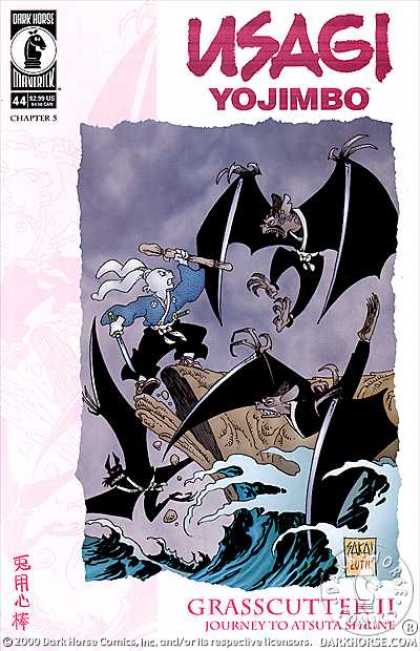
The final characters I want to mention are the various members of the Neko ninja who appear in this volume, primarily as antagonists.  Long-time opponents of Usagi, the Neko ninja represent the more classic ninja styles in the Usagi Yojimbo universe and prove to be great foils to the protagonist’s samurai style.  This includes their leader, Chizu, who has a long and complicated history with Usagi.  Simultaneously serving as both an alternate protagonist, antagonist and potential love interest to Usagi, Chizu has a lot of storylines in Grasscutter II, which Sakai makes full use of.  Forced to hunt for the Grasscutter sword against her better judgement, Chizu desires nothing more than to throw the sword back into the ocean to keep it out of anyone’s hands, and will betray anyone, including Usagi for that goal.  This results in some intriguing personal issues amongst the protagonists, especially as Usagi tries to see the best in her, while Gen forms an instant, mutual dislike of her.  Chizu’s inner conflicts become a key part of the plot, and her appearance here will have major impacts for her storyline going forward, especially when it comes to her ambitious number two, Kagemaru, who has been angling for power for several volumes now.  Kagemaru proves to be a ruthless alternate antagonist in Grasscutter II, and I liked how well Sakai set him up as both a physical and political threat going forward.  The final Neko ninja character I should mention is Saru, a former member of the clan betrayed by Kagemaru in the previous volume.  Seeking revenge on Chizu, who Saru believes was behind the betrayal, Saru stalks Chizu for much of the volume, resulting in some excellent sequences of ninja-on-ninja violence.  A compelling figure, Saru ends up redeeming herself in a particularly moving sequence and makes an impact despite her relatively short appearance.  These great ninja characters, and indeed the entire case of Grasscutter II, deeply enhanced the impact of the comic’s narrative, and I had an outstanding time seeing their arcs unfold.

As with all the Usagi Yojimbo comics I review, I must highlight the outstanding artwork that is such a brilliant feature of Grasscutter II.  Featuring Sakai’s classic pre-colour style of drawing, Grasscutter II’s art is very visually impactful, and I loved the fantastic black-and-white panels that cleanly show the complex actions and characters.  Every panel is extremely striking, and I love how effectively Sakai showcases everything in such detail, including the actions of his many characters.  I am always impressed with how well Sakai implies movement and activity with his drawings, and you really get the flow the scene from his panels.  I particularly appreciate how well the intense fight sequences come across in Grasscutter II, especially as there are so many scenes of carnage that occur within this volume.  The various battles, which usually involve a range of ninja, are so well drawn, and I loved the complex array of combat that flitters along the pages.  Some of these scenes are quite elaborate, and I loved seeing all the multiple black-clad figures moving around the established cast, especially in some of the bigger fight sequences.
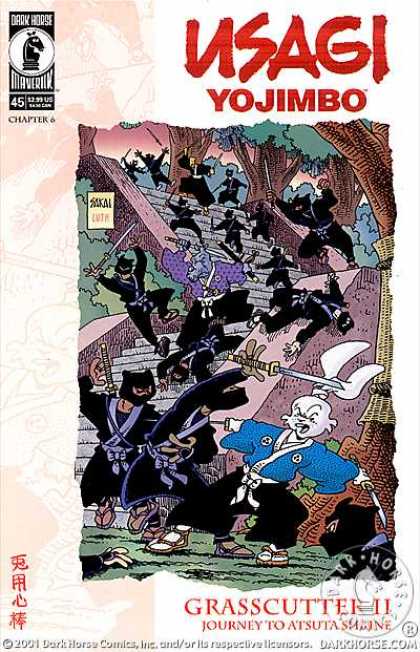
In addition to great fights, Sakai does a great job capturing the emotive nature of his cast with his fantastic drawings of the major characters.  The intense reactions of many of his characters help to make the scene pop, and I love how well Sakai showcases the emotional range that the story elicits.  Highlights include the final face of one badass warrior while the grief of another usually calm figure really hammers home the seriousness of the moment.  All this amazing action and great character drawings is perfectly supported by Sakai’s trademark drawings of the picturesque Japanese landscapes, towns and temples that serve as an amazing backdrop to the main story.  Sakai has some real talent of showcasing Feudal Japan with his artwork, and you can often feel the world through which the characters are trapsing.  I particularly appreciated Sakai’s portrayals of a wild oceans beneath a ragged cliff, which was a setting for several of the volume’s more visually powerful panels.  The harsh waves striking around the combatants was especially impactful, and you could almost feel the wave’s strength as the characters fight at their edge.  Throw in Sakai’s interesting take on a classic Japanese legend at the very start of the volume in the prologue and Grasscutter II’s art comes together in a truly perfect manner, especially as this volume features some of the artist’s most ambitious fight sequences.

Based on my rambling paragraphs above, I think it is safe to say that I had an amazing time reading the 15th Usagi Yojimbo volume, Grasscutter II.  Featuring the exceptional storytelling and artwork of the legendary Stan Sakai, Grasscutter II achieves so much with its ambitious plot, long-term, character driven storytelling, and amazing sequences of combat and chaos.  A brilliant, classic addition to a truly incredible comic series, Grasscutter II comes highly recommend, and I had such a great time getting through it yet again.

Amazon

Usagi Yojimbo: Volume 40: The Crow by Stan Sakai

Publisher: Dark Horse Comics (Paperback – 21 January 2025)

Series: Usagi Yojimbo – Volume 40

Length: 152 pages

My Rating: 5 out of 5 stars

Amazon

Stan Sakai’s iconic Usagi Yojimbo comic series powers through to its 40th volume, with the compelling and action-packed collection, The Crow, which proves to be another intense and impressive read.

Readers of this blog will know that I have a lot of love for the amazing Usagi Yojimbo series by Stan Sakai, which has remained one of my favourite comic series for years.  Following a rabbit ronin in an alternate version of Feudal Japan populated by anthropomorphic animals, the Usagi Yojimbo series combines cool art and great characters with a fantastic Japanese samurai aesthetic to create a particularly awesome comic series.  I love the various elaborate stories and scenarios that Sakai comes up with for the Usagi Yojimbo comics, and it is a real highlight of my reading year to check out the new Usagi Yojimbo volume.

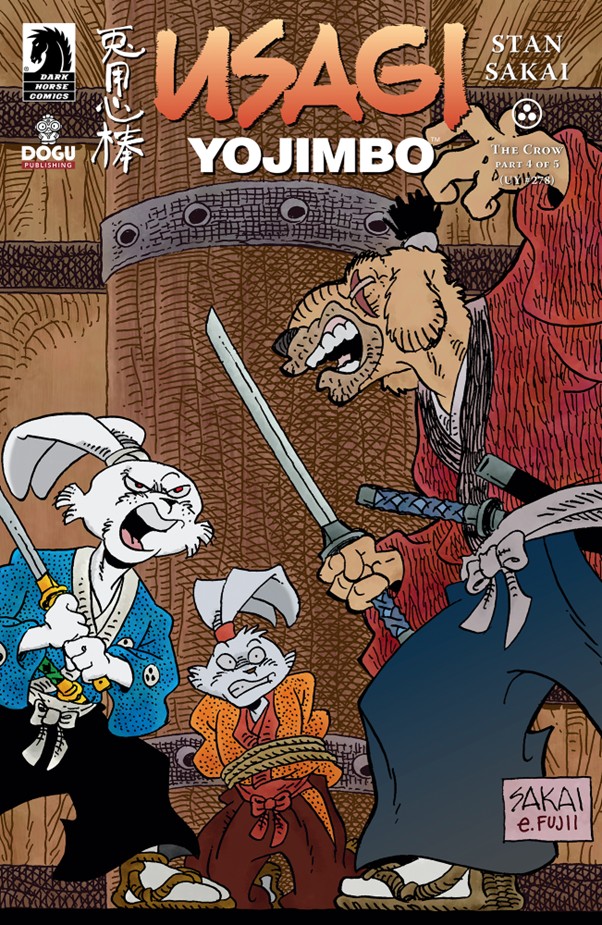
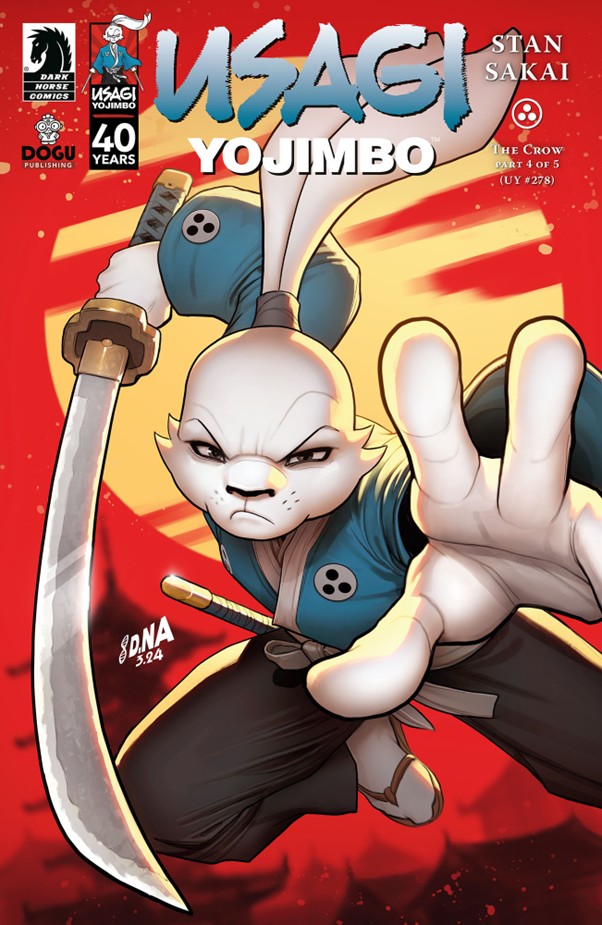
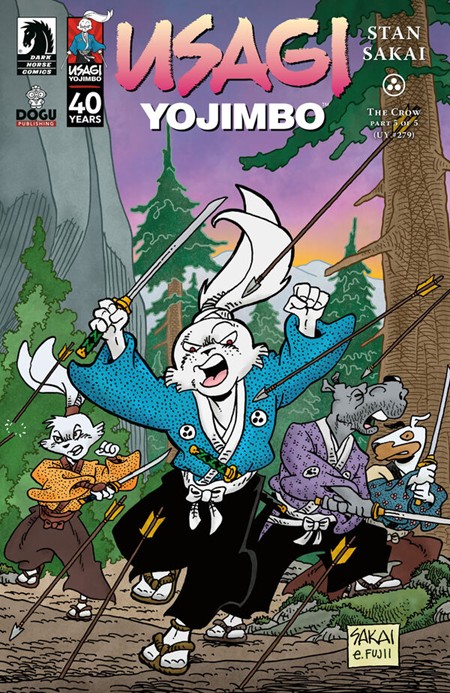
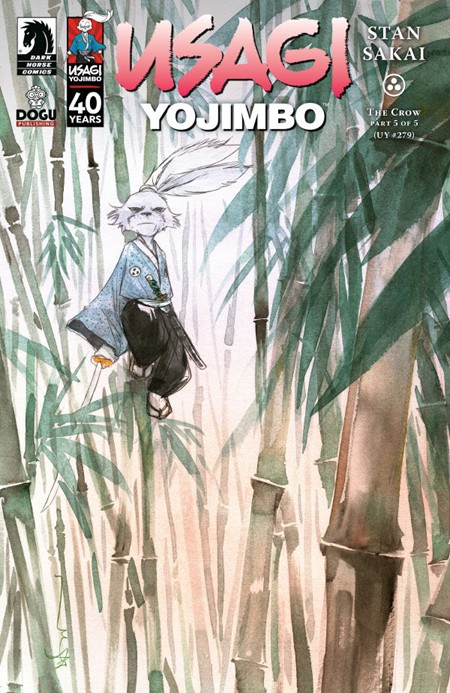
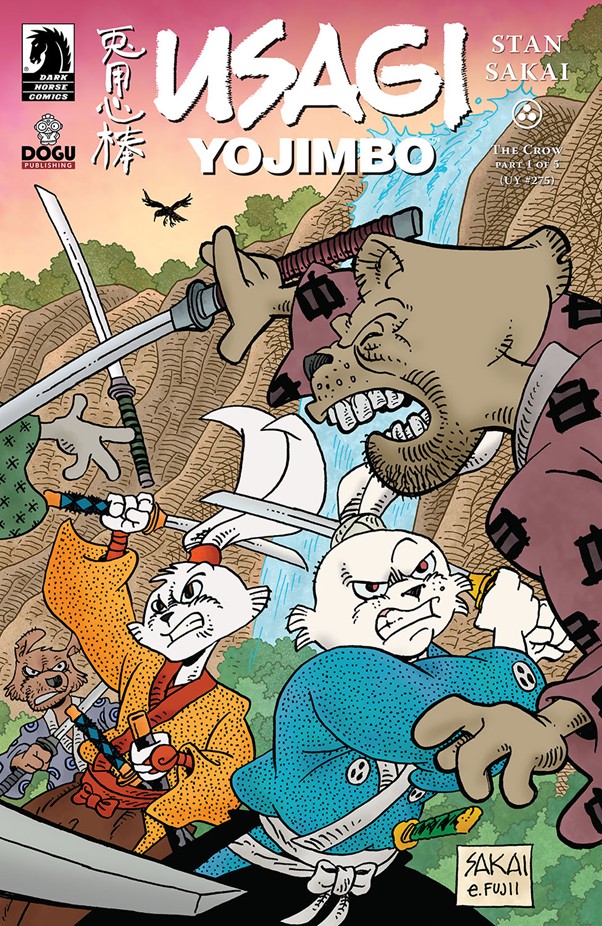
This latest volume, The Crow, is the 40th collected volume of the long-running Usagi Yojimbo comic and contains issues #275 to #279 of the series.  This is the second volume of the current Dark Horse Comics run of Usagi Yojimbo, which started last year with volume 39, Ice and Snow (one of my favourite books of 2024), and continues some of the ongoing storylines from the other recent volumes.  This volume is once again written and drawn by Sakai, with Hi-Fi Colour Design colouring in Sakai’s illustrations.  The Crow was another interesting addition to the series I was really looking forward to, as it follows Usagi and his unlikely companions into deadly danger.

Following their encounter in the mountains with the murderous Jei, Miyamoto Usagi and his cousin, Yamamoto Yukichi, have finally escaped the freezing north of Japan and have journeyed to warmer climes.  However, just because they are out of the ice and snow doesn’t mean they have escaped trouble.

Closing in on the nearest town, Usagi and Yukichi come across a man being attacked by four ruffians.  Interceding in the fight and driving the attackers off, Usagi and Yukichi initially believe that the man they rescued was a merchant being robbed.  However, when they arrive at their destination, they find the place overrun by disreputable bounty hunters on the hunt for a big reward, including Usagi’s old companions Gen and Stray Dog.  Once again conned into paying for lunch, Usagi and Yukichi are shocked to discover that the focus of the bounty hunters’ attention is the person they saved, a dangerous bandit warlord known as Jimmu due to his crow companion.

Despite their intentions to avoid the hunt for Jimmu, the two rabbit ronin find themselves dragged into the fight by the deadly mercenary Inuyoshi, another acquaintance of Usagi who is also seeking Jimmu’s bounty.  Initially forced into conflict with Inuyoshi, Usagi and his friends soon find themselves unlikely allies of Inuyoshi’s bounty hunter band, as they must work together to take down Jimmu and his massive bandit army.  But with skilled warriors on both sides, and no mercy on the horizon, will Usagi and his associates survive unscathed?

The Crow was another exceptional comic from Sakai, who continues his Usagi Yojimbo series with masterful style.  Featuring one major story that pitted the protagonists against an array of deadly warriors, The Crow had me hooked from the very beginning, and I finished the entire volume within an hour of getting my hands on it.  An outstanding comic with great art and some brilliant character arcs, The Crow unsurprisingly gets a full five-star rating from me and was so damn good.

I felt that The Crow had a particularly strong story behind it, as Sakai continues his recent trend of featuring a single multi-issue story in the volume, rather than a series of smaller short stories like in many of his earlier volumes.  This allowed the author to produce a complex, interwoven narrative that features several intriguing character-focused storylines.  Featuring the old classic start, with Usagi and Yukichi rescuing a traveller from assailants, you are drawn into familiar Usagi Yojimbo ground of bandits and bounty hunters, as the rabbit samurai encounter two of Usagi’s oldest companions, the money-focused Gen and Stray Dog.  This allows for some excellent early story tension, as the naïve and highly honourable Yukichi clashes with the morally flexible and cynical bounty hunters, especially when they discover that the traveller Yukichi helped was the notorious bandit chief Jimmu.  Sakai quickly moves the story into its central arc, when Yukichi is kidnapped by returning figure Inuyoshi, who seeks to keep Usagi, Gen and Stray Dog out of his hunt for Jimmu.

This kidnapping arc proved to be quite interesting, especially as the formerly honourable Inuyoshi verbally clashes with Yukichi and is forced to find his honour in the face of betrayals within his own gang of bounty hunters.  I really enjoyed some of the compelling interactions between some of the cast in the central part of the story, and Sakai cleverly works events so that Usagi and his friends can find and rescue Yukichi.  This central part of the story also features some great action sequences, especially a brutal, multi-page ambush by Jimmu who robs a merchant convoy.  The revelation about the true size of Jimmu’s bandit army inevitably results in Usagi’s group teaming up with Inuyoshi to find and defeat Jimmu, which results in a massive battle that takes up most of the final quarter of the volume.  This battle was everything you could hope for, and Sakai is in fine form with his drawings as he portrays the various fights.  The final duels between bounty hunters and Jimmu have some outstanding and memorable moments, and Sakai ensures there is some powerful tragedy that will live with a certain protagonist.  Sakai ensures that all the key character-driven story arcs are well wrapped up, and there are some touching moments that perfectly define some of the major protagonist’s personalities or struggles in this volume, which I felt made The Crow really stand out.  A very impressive overall story from Sakai, that shows just how interesting and intense his writing can be, even when he returns to his well-trodden tales of bandits and bounty hunters.

One of the things that I felt Sakai did particularly well in The Crow was to feature an array of great characters, whose combined arcs come together extremely well in the context of the larger story.  There is an awesome collection of characters in this volume, including old favourites, returning one-shot figures, and some intriguing new characters who proved to be excellent additions to the overall story.  Sakai does an excellent job balancing a number of these character storylines within the course of The Crow’s four issues, and there are some moving and compelling moments as a result.

A lot of the volume focuses on the three longer-term recurring members of the cast, Gen, Stray Dog and Usagi himself, who are the veteran presence in The Crow.  While they are featured quite prominently, Sakai doesn’t provide a massive amount of development for them, as they mostly fall into the same routines as they previously have, with Gen being the money-fixated conman, Stray Dog being the seemingly selfish and unfriendly killer, while Usagi is his usual honourable self.  I did like how Sakai once again painted Usagi more as a mature and world-weary figure, especially when compared to Yukichi, and it was interesting to see how much more realistic he is here than in some of his earlier encounters with Gen and Stray Dog.  Sakai also has fun once again featuring the dichotomy of Stray Dog, whose selfish outer-shell is cleverly balanced by his actual charitable actions, which are used to great effect for a secondary character towards the end of the volume.  Finally, Gen was his usual self, although considering how fun that is, I was happy with the result.

While these three long-running figures were well utilised, I felt that Sakai did his work with two more recent, returning additions to the Usagi Yojimbo universe with Yamamoto Yukichi and the mercenary Inuyoshi.  Yukichi, Usagi’s cousin introduced in volume 36: Tengu War!, has proven to be an interesting traveling companion for the protagonist, especially as he is very similar to a younger Usagi.  His naivety and unbending belief in honour without compromise is on full display in this volume, especially in his first interaction with Gen and Stray Dog, and it is interesting to compare him to the now more flexible Usagi.  Inuyoshi on the other hand is an intriguing figure who was introduced in the story The Sword of Narukami in the series’ 27th volume, A Town Called Hell.  A formerly honourable samurai betrayed by his lord’s heir, Inuyoshi has become a much more deadly and disreputable figure since his last encounter with Usagi.  I really liked how Sakai devolved Inuyoshi since his last appearance, both in his art and personality, as while he still maintains some of his honour, he has become even more ruthless, going so far as to capture Yukichi to keep Usagi and his companions away.  These two characters are in a way antithesis of each other, with one strictly holding onto samurai ideals while the other has abandoned them and is now more interested in money and survival.  The two play off each other extremely well, despite some major fractious moments, and I liked how they both gain something from the experience, with Yukichi getting a lesson in the real world, while Inuyoshi remembers some of his old honour.  Inuyoshi’s appearance here also perfectly wraps up some of the open storylines from The Sword of Narukami, and I appreciated that Sakai finally provided some closure for a one-off tale from several years ago.

Aside from these great major characters, Sakai rounds out the cast of The Crow with some additional fun figures who each add some fantastic elements to the comic.  The volume’s main antagonist, Jimmu, proves to be a ruthless and competent outlaw leader, and I liked how his crow companion gave him a distinctive edge and allowed for some intriguing and well-drawn battle scenes.  The street urchin, Isamu, was a great mischievous figure who reminded me of a young, but brave, version of the recurring Snitch character.  Isamu has some fantastic interactions with some of the main characters, and it wouldn’t surprise me if we see more of him in the future.  Finally, Sakai has fun including a comedic merchant duo who get caught up in one of Jimmu’s raids.  Their entertaining banter during several scenes had me chuckling, especially when their newly discovered brotherhood is ruined by some ill-matched confessions, and they provided an excellent bit of humour amongst the darker story elements.  These great characters all filled their roles perfectly, and I deeply enjoyed how effectively Sakai utilised them in this fantastic narrative.

As with all the Usagi Yojimbo comics, I really need to highlight Sakai’s exceptional artwork featured within The Crow.  Sakai does another remarkable artistic job in this latest volume, and the comics are just gorgeous as he effortlessly brings his elaborate stories and characters to life with his amazing drawings.  All the characters are lovingly drawn, and their resultant actions, especially the cool battle sequences, are so intense and expressive.  I was particularly impressed with Sakai’s portrayal of rival samurai Inuyoshi, who had previously appeared once some years ago.  It was absolutely fascinating to see how Sakai’s drawing style has changed in the intervening years (I had a look at A Town Called Hell after reading The Crow), as Inuyoshi has so much more detail and depth in this appearance.  His scarred and somewhat more deranged appearance perfectly matched his darker personality, and I really think that he looked even more impressive in colour, which has only been a recurring feature since volume 34, Bunraku and Other Stories

These excellent character drawings are only matched by Sakai’s superb landscape drawings, which provide beautiful and powerful pictures of the story’s background setting.  These background drawings, whether they be depictions of historic Japanese towns or of the shaded natural forests, come across extremely well, and you really feel yourself becoming immersed in the setting as a result.  I must once again mention the awesome action scenes scattered throughout The Crow.  Sakai is a master of drawing epic sword clashes in his comic style, and you can feel every thrust and cut that the various samurai characters make.  Highlights for me this time included two massive group battle sequences that each have their own fantastic moments, cool duels against the bandit leader and his bird companion, and a somewhat graphic but very well-drawn decapitation panel which was both epic and gnarly.  This art once again perfectly enhances and compliments Sakai’s outstanding writing, and I love how even after 40 Usagi Yojimbo volumes, Sakai is still producing such masterful and moving pictures.

Stan Sakai continues to impress and wow me with his outstanding Usagi Yojimbo comic series.  This latest volume, The Crow, was another captivating comic, loaded with striking drawings, intense action, and some excellent samurai characters.  I felt that The Crow was a particularly strong entry in this always incredible series, and I am so very glad we were gifted a volume this early in the year.  I am hoping that we will get another volume later in 2025, but until then, do yourself a favour and make sure to check out the first exceptional 40 volumes of one of the best ongoing comic series.

Amazon

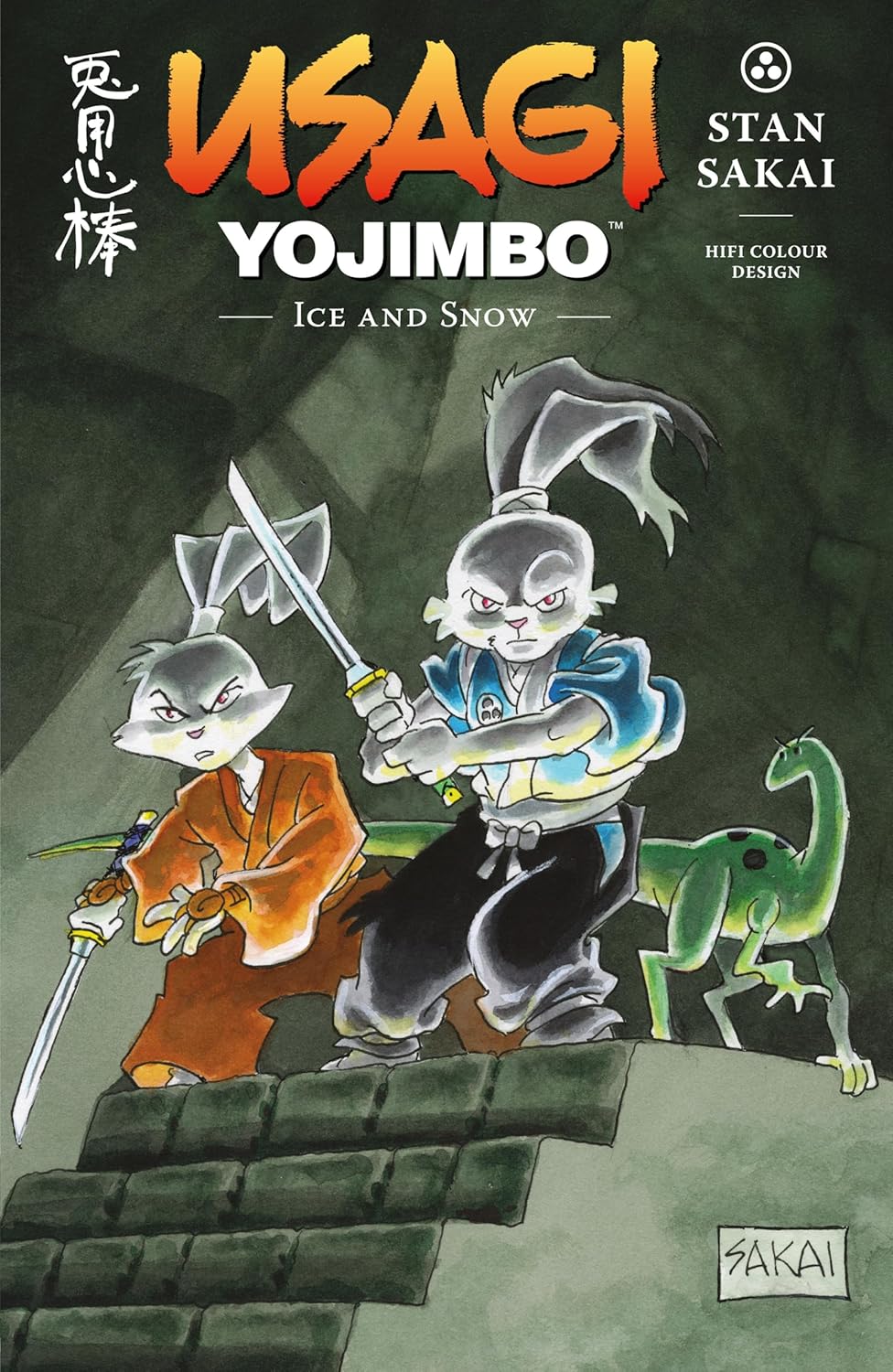
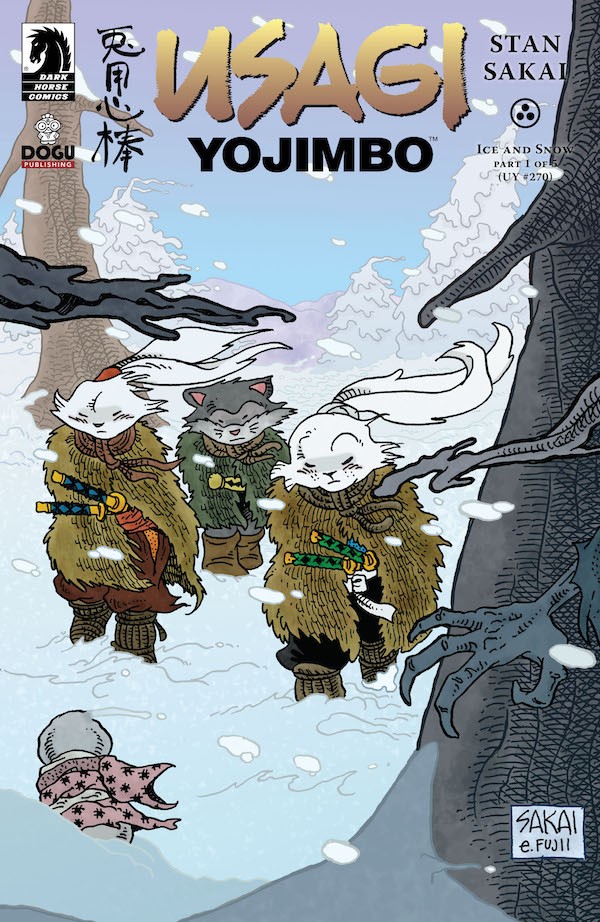
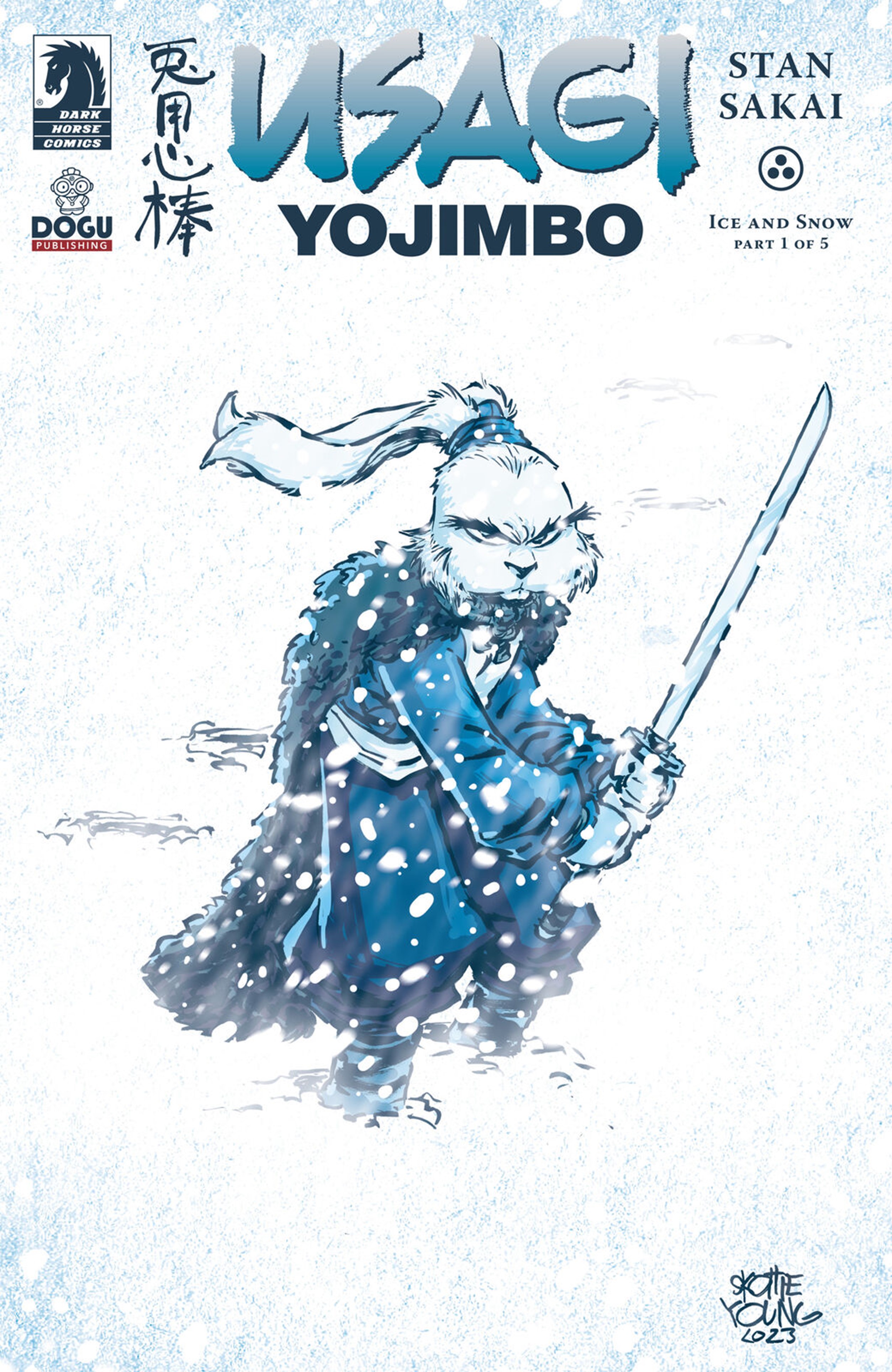
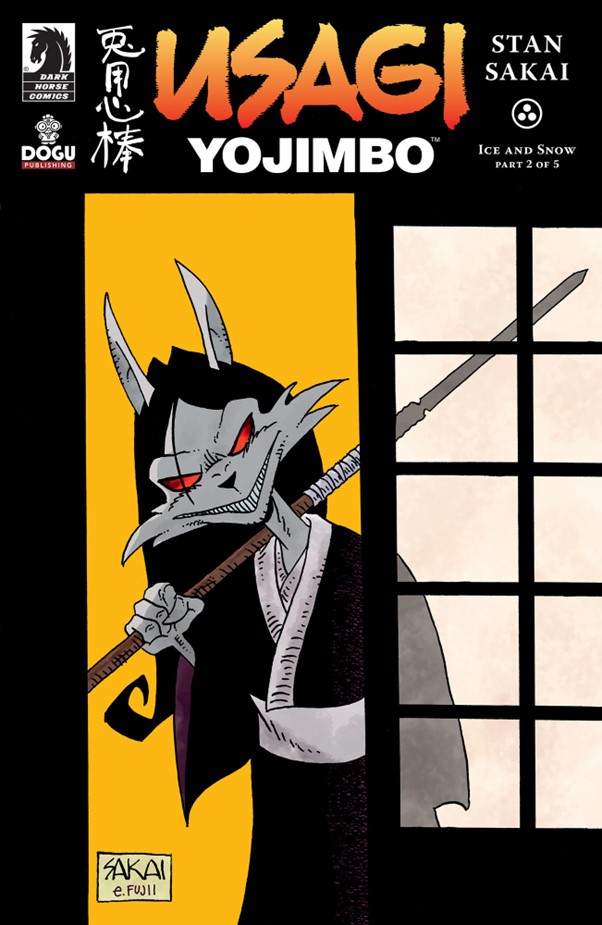
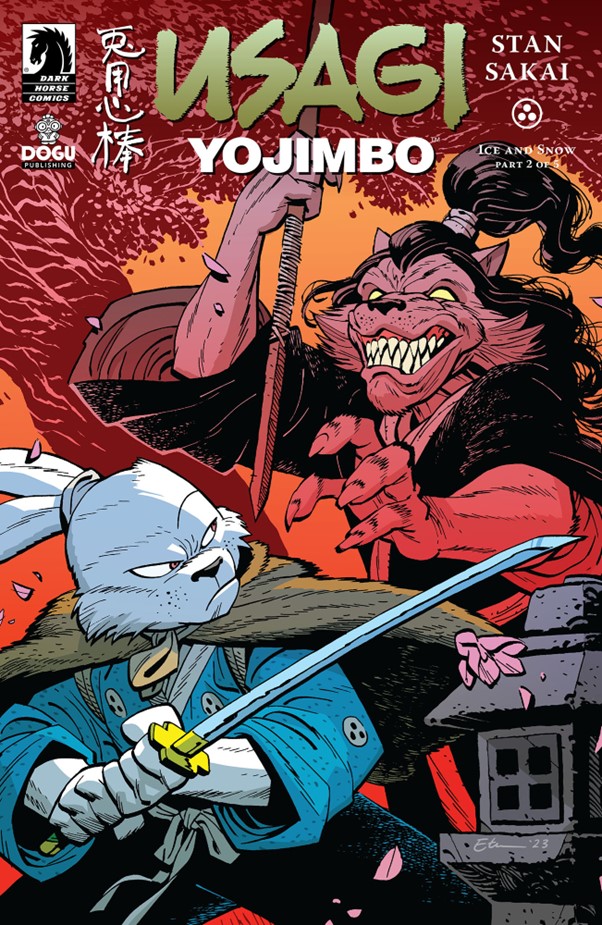
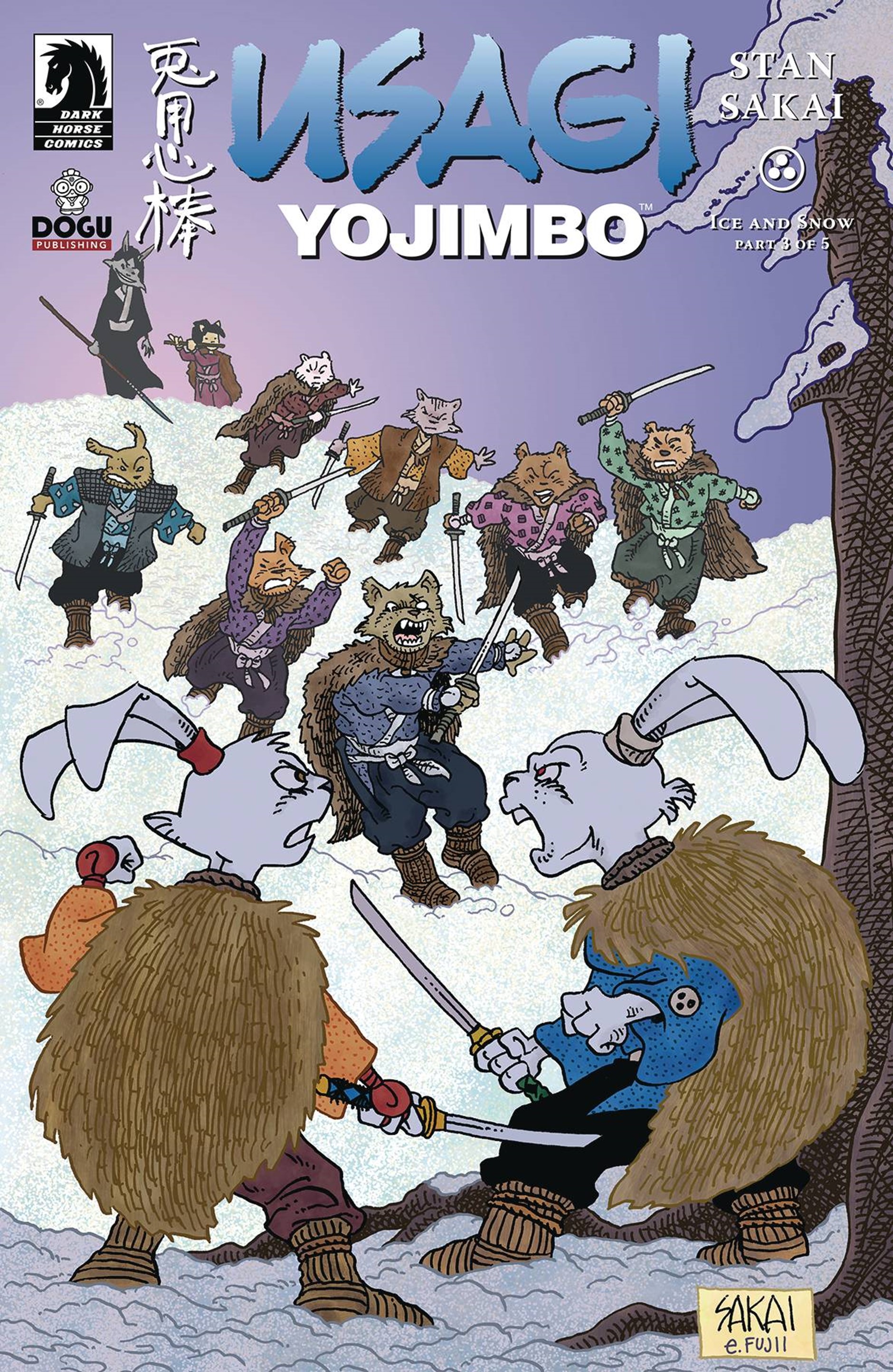
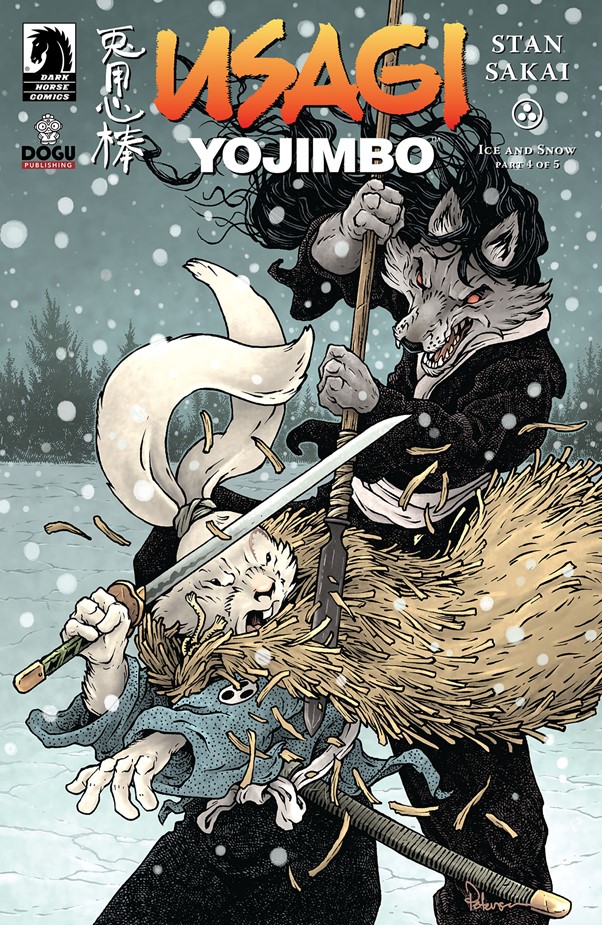
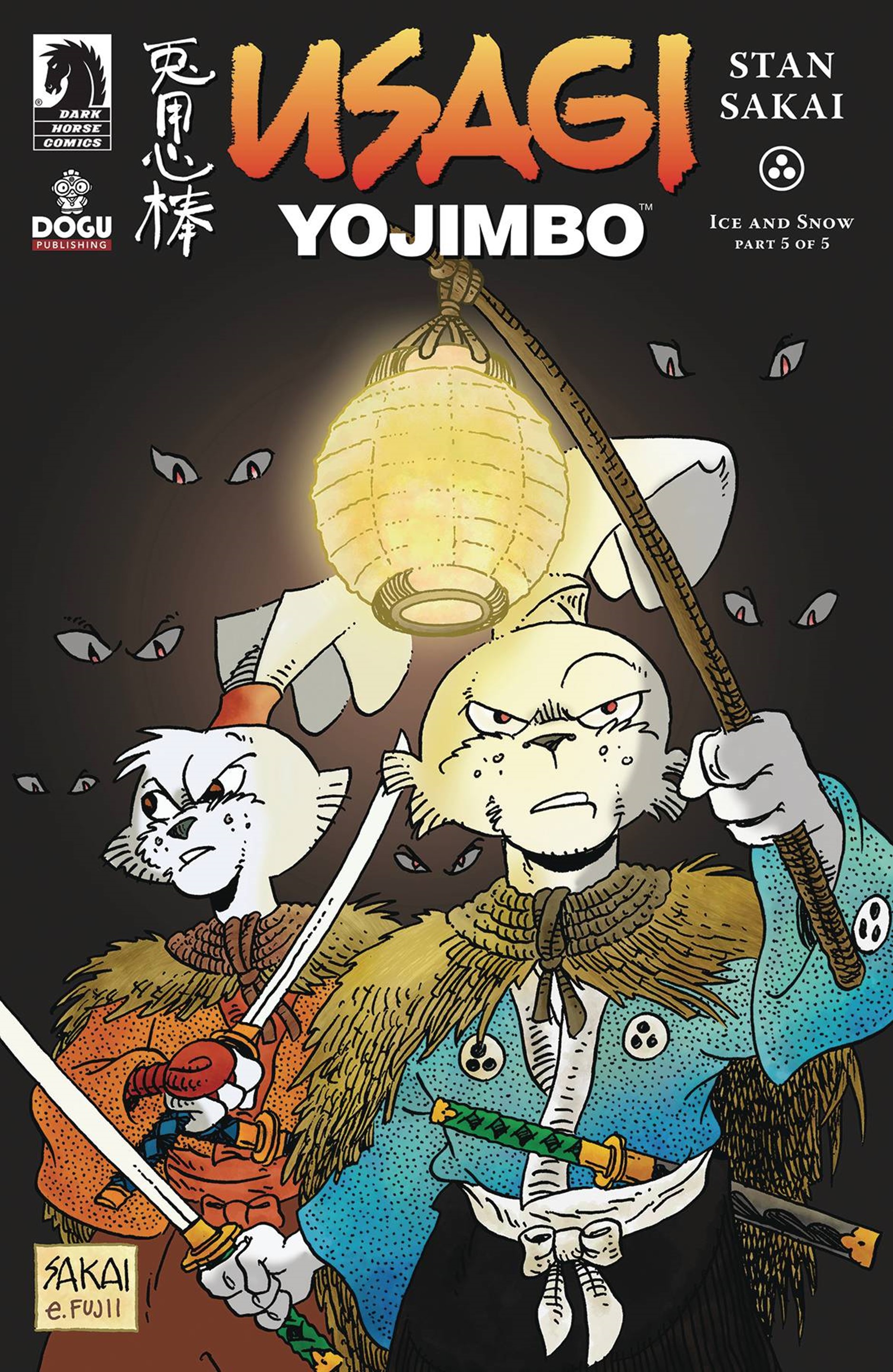
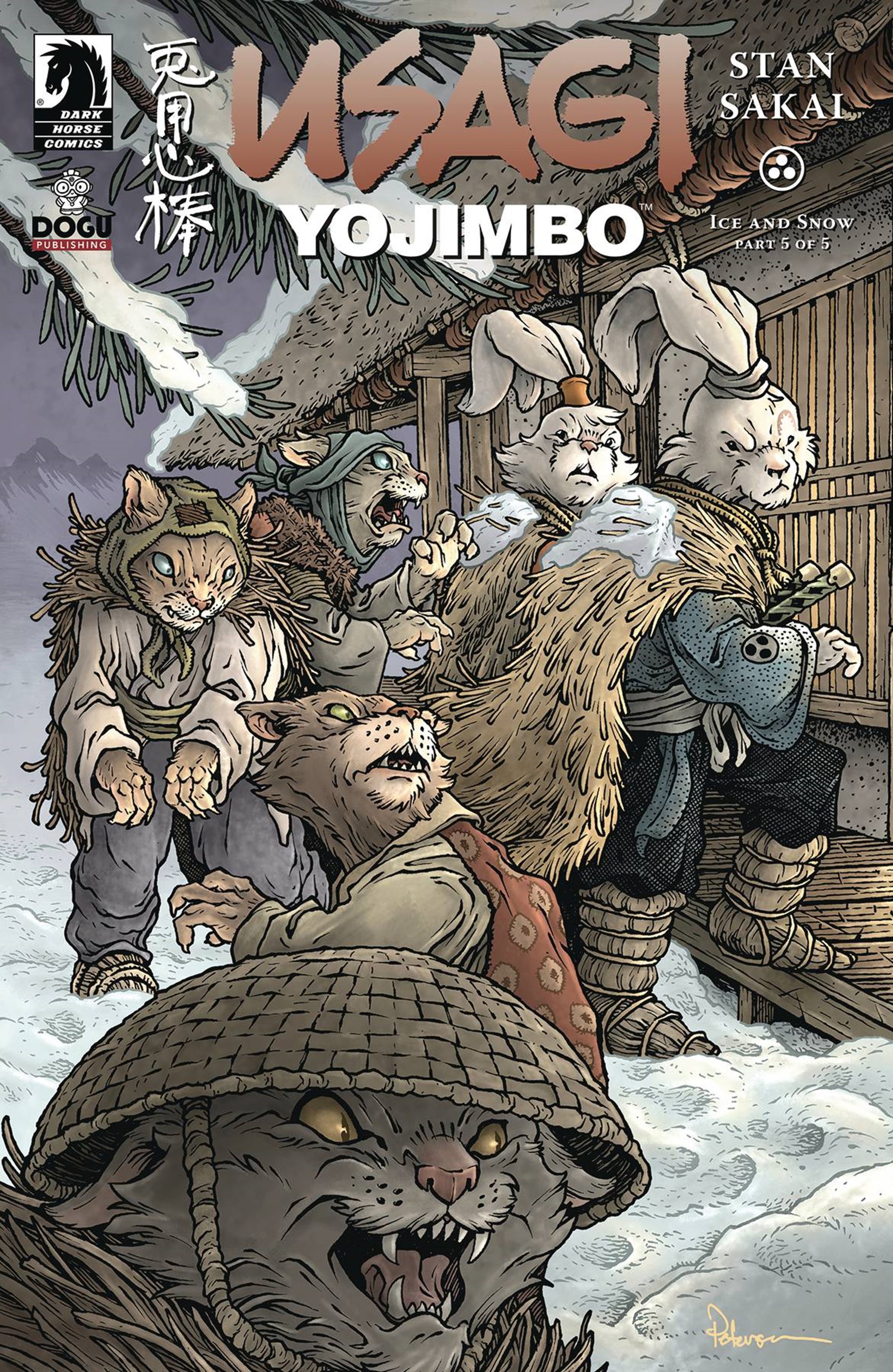
Usagi Yojimbo: Volume 39: Ice and Snow by Stan Sakai

Publisher: Dark Horse Comics (Paperback – 26 November 2024)

Series: Usagi Yojimbo – Volume 39

Length: 160 pages

My Rating: 5 out of 5 stars

Amazon

Acclaimed comic author and artist Stan Sakai continues his iconic Usagi Yojimbo series in a big way with the exceptional 39th volume, Ice and Snow.

Fans of this blog will know that I am a massive fan of the incredible Usagi Yojimbo comic series, which I have been reading for many years and is one of my favourite comic book series.  The brainchild of Stan Sakai, who both writes and draws the comic, Usagi Yojimbo is a unique series that follows a rabbit ronin samurai as he wanders around an anthropomorphic feudal Japan, getting involved in all manner of deadly and dangerous adventures, both mundane and supernatural.  The Usagi Yojimbo comics are so much fun, and I love the compelling stories, distinctive artwork and memorable characters who are contained within its beautiful pages.  This series has been so damn awesome of late, with some amazing coloured volumes, including Bunraku and Other Stories (one of my favourite books of 2020), Homecoming (one of my favourite books of 2021), Tengu War! and Crossroads (both of which were among my favourite books of 2022) and The Green Dragon (one of my favourite books of 2023).

This latest volume, Ice and Snow, is an intriguing addition to the series as it continues to follow some of the storylines from the previous volumes while also featuring a single overarching narrative rather than several shorter stories.  Ice and Snow is also the series’ return to Dark Horse Comics, who previously published the series for 22 years (from Volume 8: Shades of Death to Volume 33: The Hidden).  This return to Dark Horse has allowed for another intriguing read that featured a major confrontation between Usagi and one of his most dangerous foes.

Miyamoto Usagi, travelling ronin and occasional Yojimbo, continues to wander the lands, seeking adventure and helping his friends where possible.  Now travelling with his cousin Yukichi, Usagi finds himself moving through the cold and snowy mountain tops of Northern Japan, having just escaped a confrontation between rival ninja clans in the pair’s last adventure.  Determined to return to warmer climates, Usagi and Yukichi once again find themselves in trouble amongst the mountain peaks.

Cold and seeking shelter, Usagi and Yukichi encounter nothing but bandits and mysterious creatures as they continue their journey.  Desperate for warmth, they decide to spend the night inside the hut of strange woman, only to find themselves trapped by the cold heart of a dangerous spirit, Yuki-Onna, the lady of the snow, who is determined to feast on them.

However, the attentions of a powerful spirt of the snow are the least of Usagi and Yukichi’s problems, as a far more terrifying monster haunts the mountains.  The demonic black spearman Jei, the Blade of the Gods, has long hunted Usagi, believing that by killing the rabbit ronin he will ascend to godhood.  Now leading a group of mountain bandits, Jei relentlessly chases after Usagi and Yukichi, determined to end their feud once and for all.  Can Usagi once again weather the dark storm that is the unstoppable Jei, or will this be the moment he finally falls to his deranged nemesis’s black blade?

Ice and Snow was another amazing volume from Sakai that provides a cool new adventure for the author’s iconic protagonist.  Featuring an excellent main storyline loaded with peril and dark confrontation, Ice and Snow had me hooked the entire way through, especially as it featured Sakai’s gorgeous artwork.

Made up of five separate issues, Ice and Snow features a powerful single storyline which plays to the author’s strengths as he places his protagonists in mortal danger against foes new and old.  The story starts immediately after the events of the previous volume, The Green Dragon, with Usagi and his current travelling companion, Yukichi, still moving through the frigid mountains of Northern Japan.  Encountering the usual array of bandits, Usagi and Yukichi are thrust into action quickly and the initial combat sets the scene nicely for the rest of the comic.  The two soon move from mortal concerns to the supernatural, as the mysterious woman that Usagi and Yukichi seek shelter with predictably turns out to be a deadly monster (Usagi really should know better by this point), determined to eat their lifeforce. 

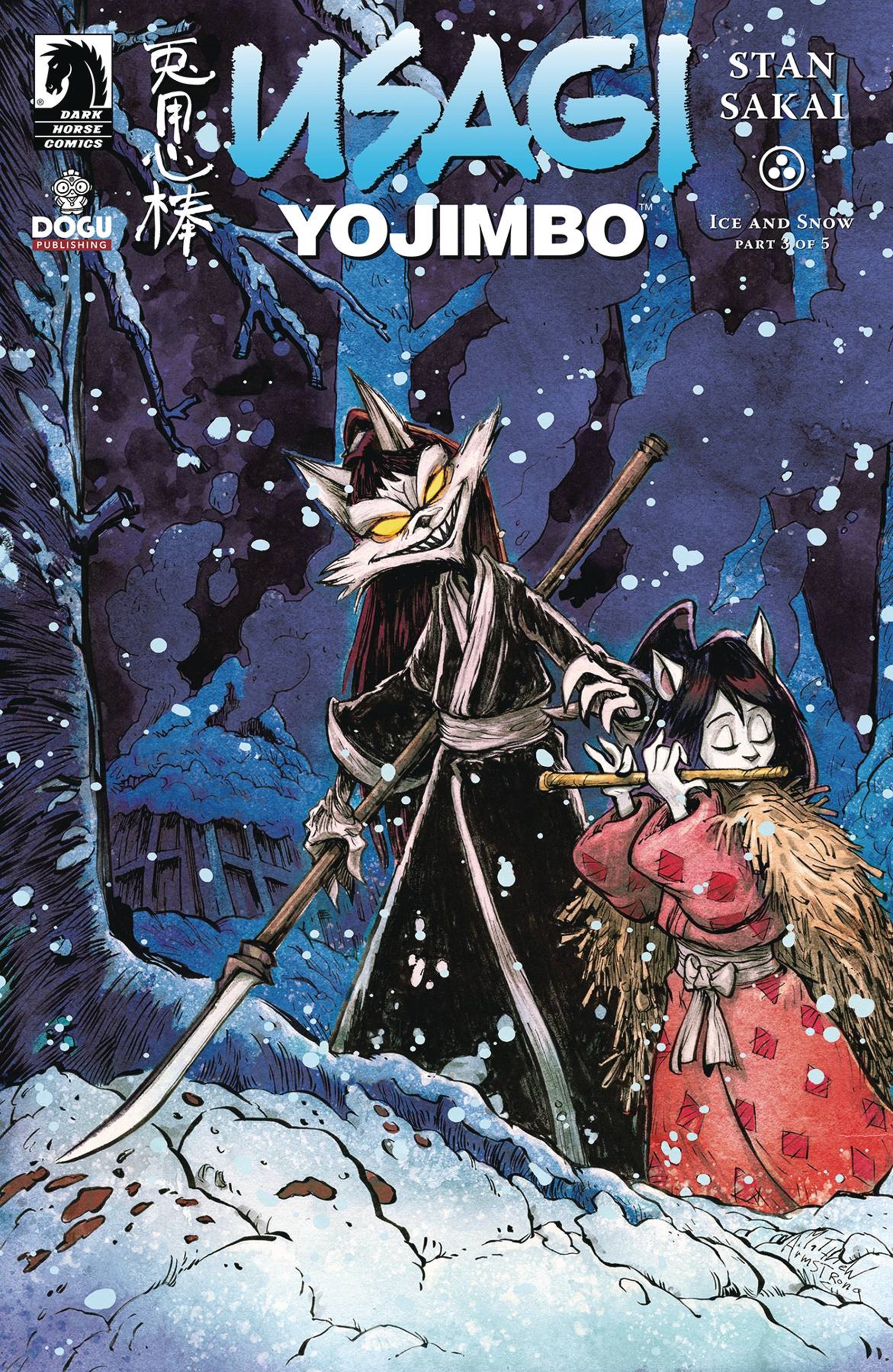
While these initial battles between Usagi, Yukichi and their various opponents are compelling and exciting, especially the intense fight against Yuki-Onna that was so well showcased by Sakai’s artwork, the best part of the early story involves the return of deranged supernatural warrior Jei.  Travelling with his young companion, Keiko, Jei brings his trademark terror to the local bandits, taking over their gang with violence and fear.  However, when he discovers that Usagi is nearby, he leads his new forces on a lethal hunting mission.  Jei honestly steals the entire comic in these sequences, as he terrorises and murders various members of the bandit gang to make his point.  There is also a fantastic fight between Jei and Yuki-Onna, which was a fantastic battle of the monsters that really highlights Jei as a powerful supernatural threat.

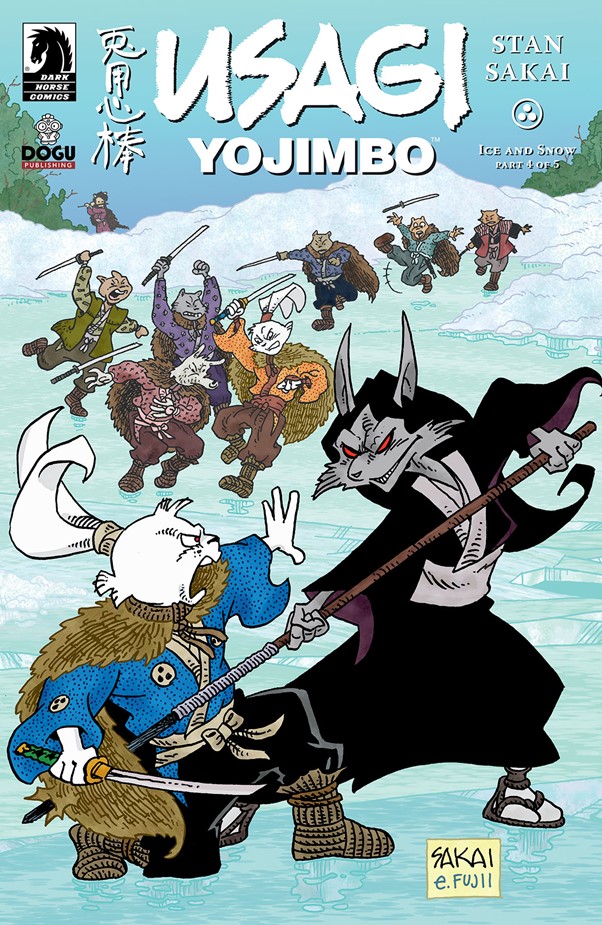
The final major sequence of the comic involves Jei catching up to Usagi and engaging in a brutal fight on a frozen river.  The sheer fear that is shown by the usually implacable Usagi really highlights to the reader just how dangerous Jei is, and I love how well Sakai utilises him as a villain here.  The battle between the two was dark, personal and pushes Usagi more than his usual fights, especially as the sinister Jei just won’t stop coming for him.  Sakai makes sure to have no conclusive end to this conflict, as Usagi will continue to be hunted and haunted by Jei.  This is honestly the best end you could imagine at this point in the series, especially as it plays into the horror movie inspiration for Jei, and readers are left wanting another awesome encounter between the two. 

The final issue in Ice and Snow wraps up this mountainous arc of the series on a somewhat ironic note, as Usagi, Yukichi, and the few survivors of Jei’s bandits seek shelter in an isolated village, only to encounter more monsters in the form of cat demons.  This last battle serves as a great horror cherry at the end of an impressive supernatural Usagi Yojimbo volume, and Sakai had fun with the artwork around the monstrous opponents.  I really enjoyed the overall narrative that Sakai stuck into this volume, and frankly I had and exceptional time with the high-threat, quick paced, multi-issued narrative that took up the entire volume.

This was probably one of the stronger recent Usagi Yojimbo stories, and I loved watching the protagonists attempt to survive an onslaught of supernatural foes.  Sakai cleverly continues a multitude of long-running storylines, including the winter journey from the last couple of volumes, which sees Usagi act as a wise mentor to his younger companion, Yukichi.  However, I was extremely happy that we got to see the continued enmity between Usagi and Jei that has been such an impressive part of the series since the third volume, The Wanderer’s Road (which was first released in 1989).  Inspired by Jason from the Friday the 13th series, Jei is a brilliant villain, and Sakai has done a wonderful job to continuously make him the most intimidating figure in the entire franchise.  Jei honestly seems unstoppable at times, and I love the way he manages to destroy all his opponents except the final rabbit, Usagi.  Sakai manages to make Jei even more sinister by continuing to include Jei’s unlikely travelling companion, Keiko.  A young child who accompanies and is cared for by Jei, Keiko is a true innocent who has been adopted by the Jei as a herald.  Watching this harmless child play in the background of Jei’s various atrocities honestly makes the entire situation even more creepy, and she is such a brilliant part of the antagonist’s aesthetic, especially now that her flute which warns people of Jei’s coming (I loved Usagi’s dark comments about this at the end of issue 4).  Combine this with Usagi’s absolute dread at encountering Jei again, as well as the sheer certainty of his inevitable return, and Jei was so damn intimidating here it was just amazing.

I can’t move away from this latest Usagi Yojimbo volume without highlighting the brilliant artwork that Sakai features within his comic.  Every page of this comic is loaded with well-drawn and powerful pieces of art, which effortlessly combine with the compelling writing to tell the powerful story.  Drawn exclusively by Sakai and featuring colouring from Hi-Fi Colour Design, the art in Ice and Snow is beautiful and highly impactful, as Sakai showcases the actions of his characters and the settings they find themselves in.  While every scene is fantastic in its own way, I must highlight the multiple nature shots featured throughout Ice and Snow.  Sakai channels his love for winter throughout this volume, and you are gifted with some breathtaking drawings of the snow-covered landscape the characters are travelling through.  These landscape shots are so pretty, especially now they are in colour, and the contrast between the white of the snow and the orange sky is amazing.  This includes some wonderful full-page drawings that feature multiple characters within them and all of them look so damn cool.
In addition to the wonderful landscapes and backgrounds that each of the outdoor scenes contain, I also must highlight how well the character actions are drawn throughout Ice and Snow.  Sakai does such an effective job of drawing his characters moving around the world, and you can easily envision what movements are implied from each picture.  The artist’s drawings work really well to portray combat, as the multiple sword fights and other encounters look so cool, and you can see the moving swirl of combat around each panel.  Some of these fight scenes are really dramatic and well set out, and I loved how effectively showcases the skill of his protagonists.

I also love at how impactful some of the character drawings were in this volume, especially when it came to the monsters that Usagi encountered.  Not only do we get some cool cat demons in the last issue, but the lady of the snow, Yuki-Onna, has a great monstrous look around her that makes her seem quite intimidating.  I personally loved the cool panel where an enflamed Yuki-Onna flees from Usagi, and the screaming skull shots that resulted from it were freaky.  However, it is the drawings of Jei that really hit me the hardest in Ice and Snow.  Sakai cleverly backs up his great writing around this character by showing him at his psychotic best, with his unnatural face and expression looking so awesome.  Jei was honestly intimidating or crazy in every single panel he appeared in, and I loved how scary he comes across in colour.  I especially love how impressive the fight between Jei and Usagi looked, as the desperation of their battle and the powerful emotion on both participants faces (with Keiko playing in the background) really hammers home the hatred and fear shared between the two.  I particularly enjoyed this really cool panel where a near-defeated Jei emerges from the frozen river to strike one more time.  Not only does this look so awesome, but it is a clever homage to Jei’s Friday the 13th inspiration, with the deranged killer getting one last surprise swing in.  All these impressive drawings were so amazing to look at, and I loved how Sakai’s artistic style is as impactful and powerful as ever.
Based on my gushing review above, I guess it is obvious that I had an exceptional time with this latest Usagi Yojimbo volume, Ice and Snow, which featured a powerful story loaded with the author’s best supernatural inclusions.  Stan Sakai’s writing and drawings are still very impressive, and I love how moved I was by them in Ice and Snow, even after all these years of being an Usagi Yojimbo fan.  This was such a great comic and it gets a very easy, if inevitable, five-star rating from me.  I cannot wait to continue this series into 2025, especially as the next volume is out very soon and features another awesome sounding story. 

Amazon

Top Ten Tuesday – Titles with Animals in Them

Top Ten Tuesday is a weekly meme that currently resides at The Artsy Reader Girl and features bloggers sharing lists on various book topics.  For this week’s Top Ten Tuesday, participants are tasked with listing their top books with animals in the title.  This is a rather interesting topic and it has several similarities to other topics that have been featured as part of the Top Ten Tuesday meme before.

I ended up coming up with quite a few good books that had animals in the titles, far too many if I’m going to be honest as it turns out it is quite a common practice to feature some form of animal in a title.  To make this list a little more manageable, I decided to exclude any mythical creatures or animals from this list, mainly because I don’t think that was in the spirit of the topic, but also because this book would end up being very similar to my recent list that looked at book covers featuring dragons.  When this exclusion still left me with way too-many options, I decided to further limit myself by restricting this list to only one book per author.  This ensured that I had reasonable input from several authors who favour animal-themed titles, or who I have a great deal of books from.  The resultant list, which still required some cutting, ended up looking pretty good and I think that I ended up covering the top books I have read with animals in the titles. So let us see what made the cut.

Honourable Mentions:

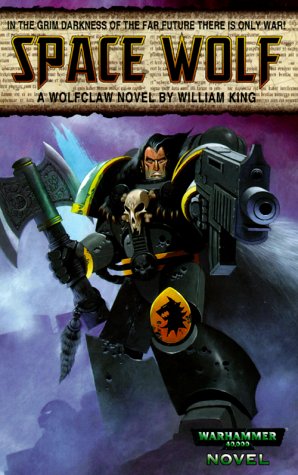
Space Wolf by William King

Space Wolf Original Cover

Following the genetically enhanced and wolf-like members of the Space Wolves Space Marine chapter, this intriguing Warhammer 40,000 is pretty damn awesome, and the title fits extremely well.

Amazon


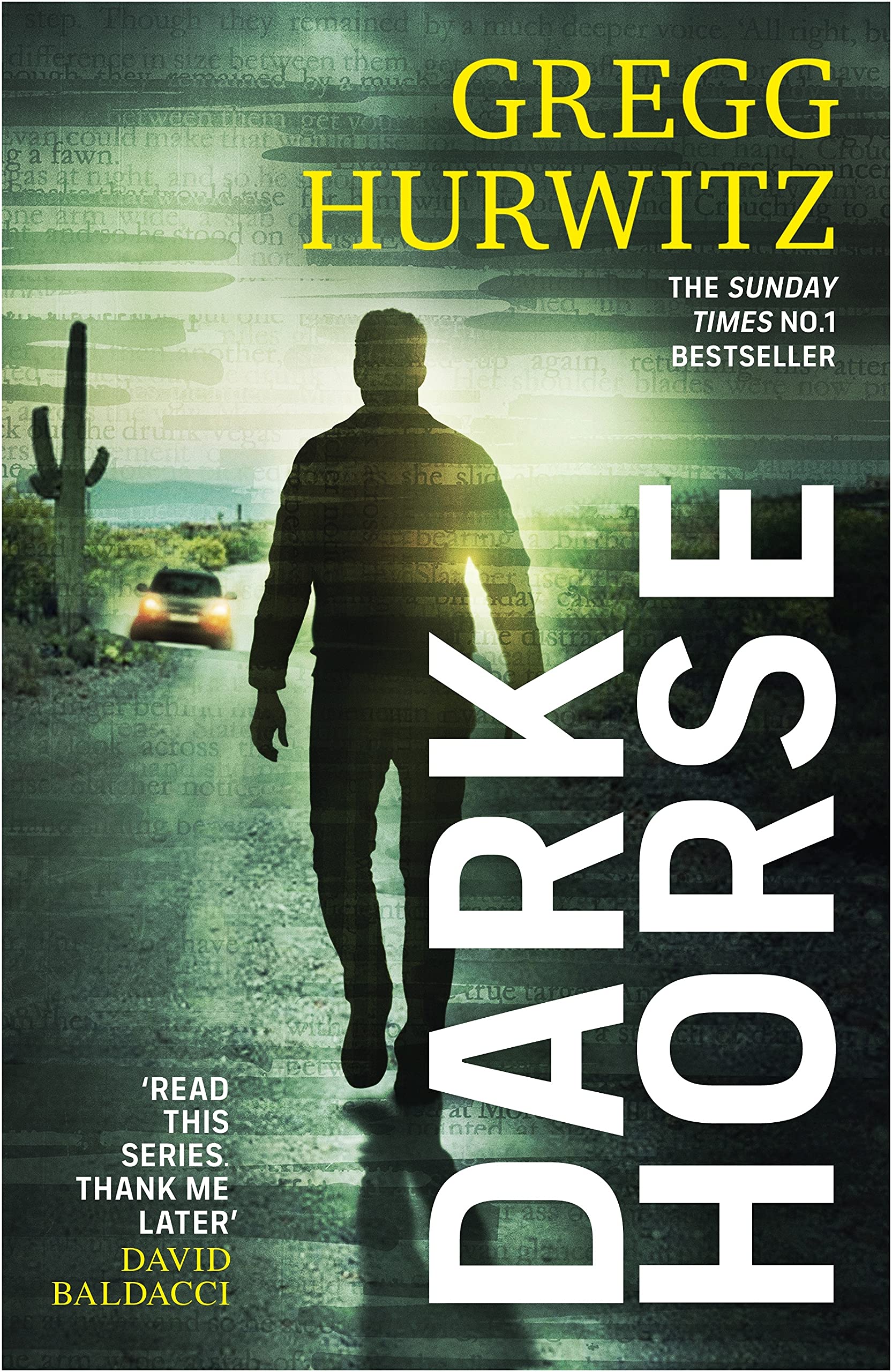
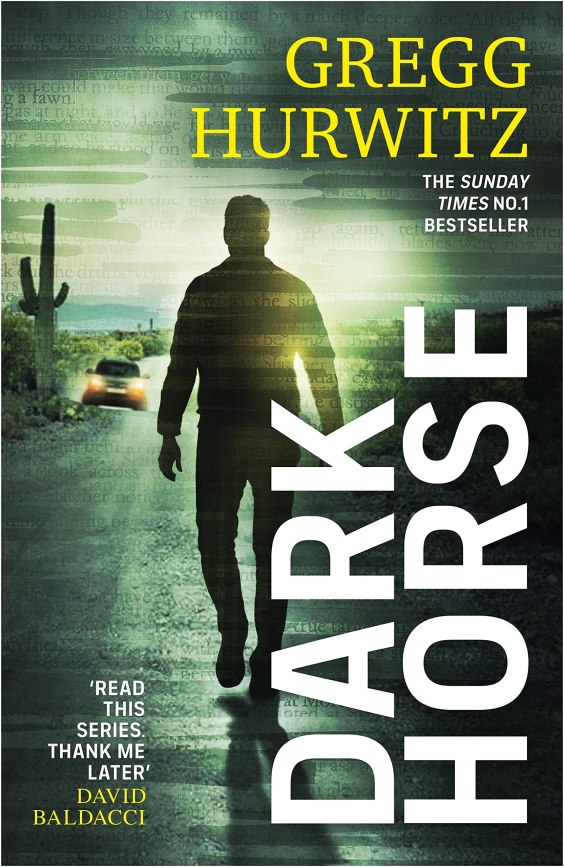
Dark Horse by Gregg Hurwitz

Dark Horse Cover

A great entry in Hurwitz’s awesome Orphan X series, Dark Horse was a fantastic book and its animal-themed title had great multiple meanings within the plot.

Amazon


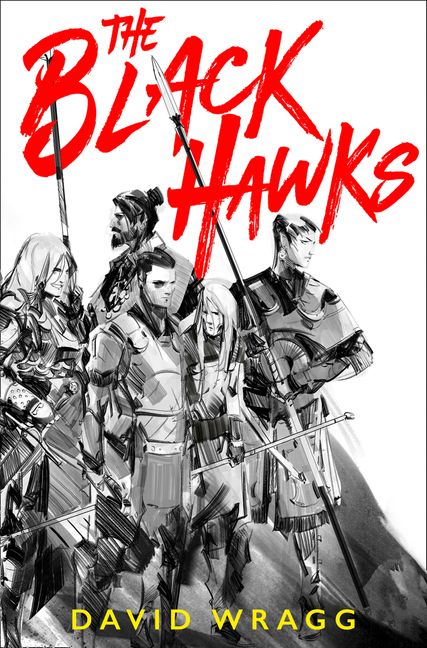
The Black Hawks by David Wragg

The Black Hawks Cover

An amazing and captivating fantasy read; The Black Hawks references the titular mercenary group the book follows who get into all manner of trouble in a dark fantasy realm.

Amazon


The Bear Pit by S. G. MacLean

The Bear Pit Cover

An excellent historical murder mystery which features a fighting bear as a potential suspect and lethal murder weapon.

Amazon

Top Ten List:

Usagi Yojimbo: Volume 5: Lone Goat and Kid by Stan Sakai

Usagi Yojimbo Lone Goat and Kid Cover

Now, realistically I could include any of the Usagi Yojimbo comics on this list, as Usagi is Japanese for rabbit.  However, I chose to ignore that and instead the animal in the title I am focusing on can be found in the fifth collected volume, Lone Goat and Kid.  A great addition in the Usagi Yojimbo series, this is a pretty epic volume, and I loved the story focussing on the titular Lone Goat and Kid, who are animal parodies of Lone Wolf and Cub.  I really like the fun homage contained in this title, which is why I included this volume, rather than the later volumes Fox Hunt and Red Scorpion, which I could have also used.

Amazon


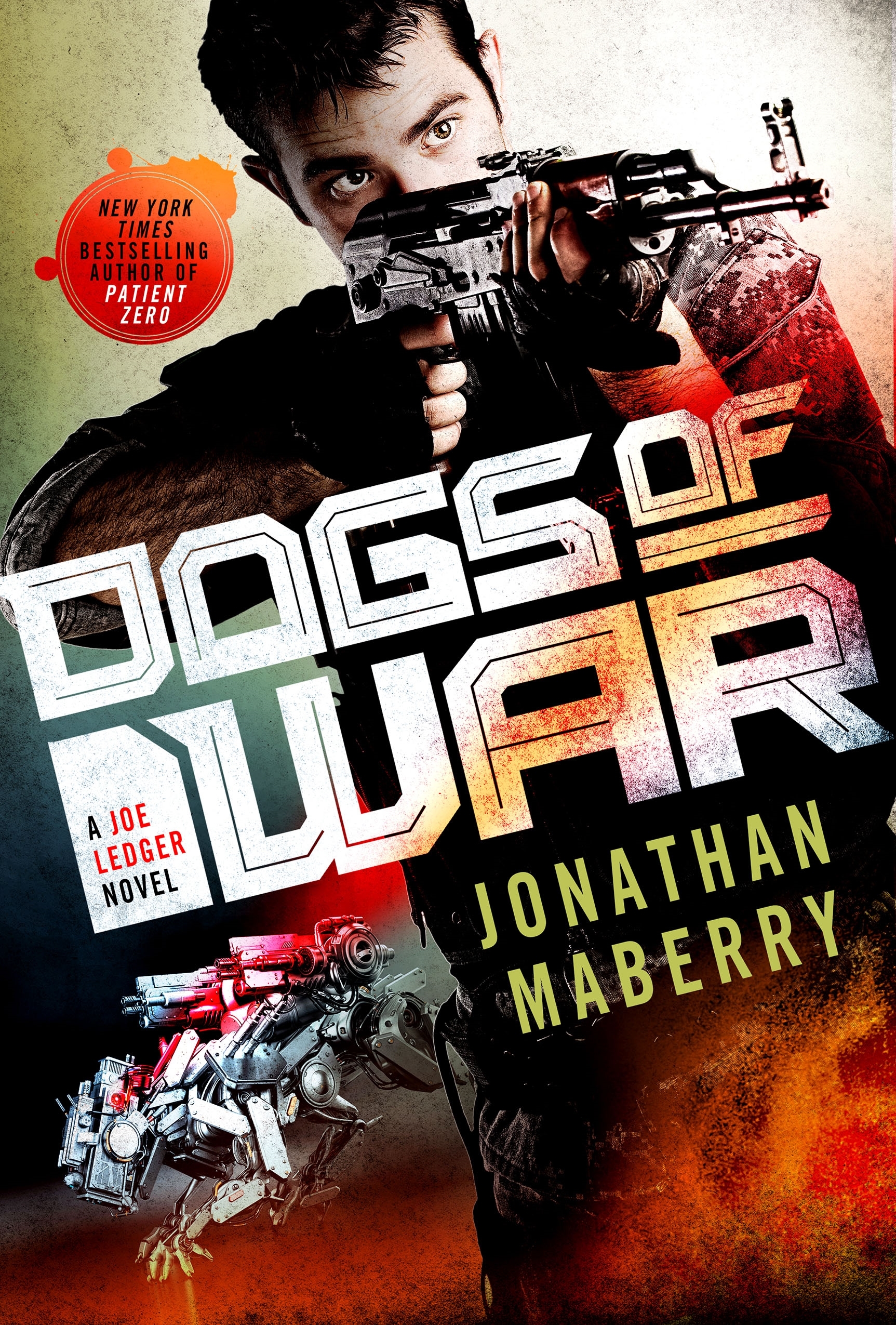
Dogs of War by Jonathan Maberry

Dogs of War Cover

The always amazing Joe Ledger series by Jonathan Maberry has some great titles to it, but the only one I could fit here was the fantastic novel Dogs of War.  This was an outstanding read, and while the title, Dogs of War, is a play on the famous saying, it also refers to robotic attack dogs featured within the book.  As such, I had to include this here, and this book is an outstanding addition to the series.

Amazon


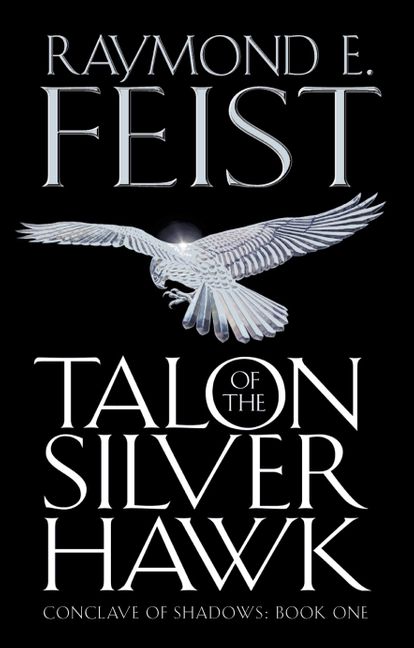
Talon of the Silver Hawk by Raymond E. Feist

Talon of the Silver Hawk Cover

Legendary fantasy author, Raymond E. Feist has featured a couple of animals into his fantasy titles over the year, such as with King of Foxes, but the one I’m going to focus on in this list is Talon of the Silver Hawk, which was the first Feist novel I ever read.  Not only is this an incredible and eye-catching title, but Talon of the Silver Hawk also references the main character, who gains his name early in the novel when he witnesses a hawk on a vision quest.  An epic inclusion that has a very special place in my heart.

Amazon


The Fifth Elephant by Terry Pratchett

Fifth Elephant

I’m featuring a few of my favourite authors on this list and that includes the legendary Terry Pratchett who used animal names in a few of his books.  I was very tempted to use one of my favourite Discworld books, Hogfather, here, although that is more of a character name rather than a reference to an animal.  So instead, I used The Fifth Elephant, which is a fantastic and impressive entry to the series.  Elephants are a very important part of the Discworld books, as four of them hold up the titular Discworld while standing on-top of a giant turtle, so The Fifth Elephant is a title that is guaranteed to get reader’s attention.  The book itself is a compelling addition to the City Watch sub-series and this entry sees the main characters to travel to a Transylvania-esque land, which has been gifted great riches by the crashing fifth elephant, to solve several murders and resolve political discord.  This is an outstanding entry in the series and I’m glad I could feature it on this list. 

Amazon


Death of the Black Widow by James Patterson and J. D. Barker

Death of the Black Widow Cover

An excellent, animal-themed book title I wanted to highlight was Death of the Black Widow by the excellent team of James Patterson and J. D. Barker.  The black widow in the title refers to a mysterious, supernatural figure who seduces and kills many people over an extended period.  I had an amazing time with this novel, which was one of my favourite books of 2022, and I will admit the cool title was one of the reasons I chose to read Death of the Black Widow.

Amazon


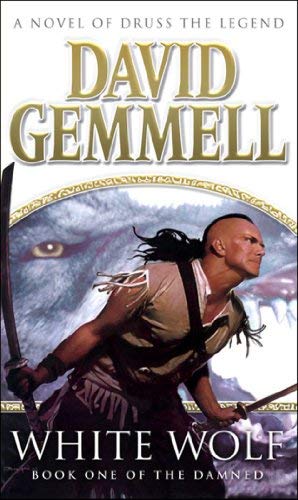
White Wolf by David Gemmell

White Wolf Cover

One of the more interesting books I wanted to feature on this list was the epic fantasy novel White Wolf by the late, great David Gemmell.  I’ve mostly only ever talked about Gemmell’s debut novel, Legend, on this blog, but I also deeply enjoyed one of his later novels, White Wolf.  Following a deadly warrior who attempts and fails to leave his life of violence behind, White Wolf is an incredible novel that has so many great moments to it.  This was one of the earlier big pieces of fantasy that I read when I was younger, and it has stuck with me for years.  I have been meaning to go back and read this series for a while and White Wolf is one of the main reasons for this.

Amazon


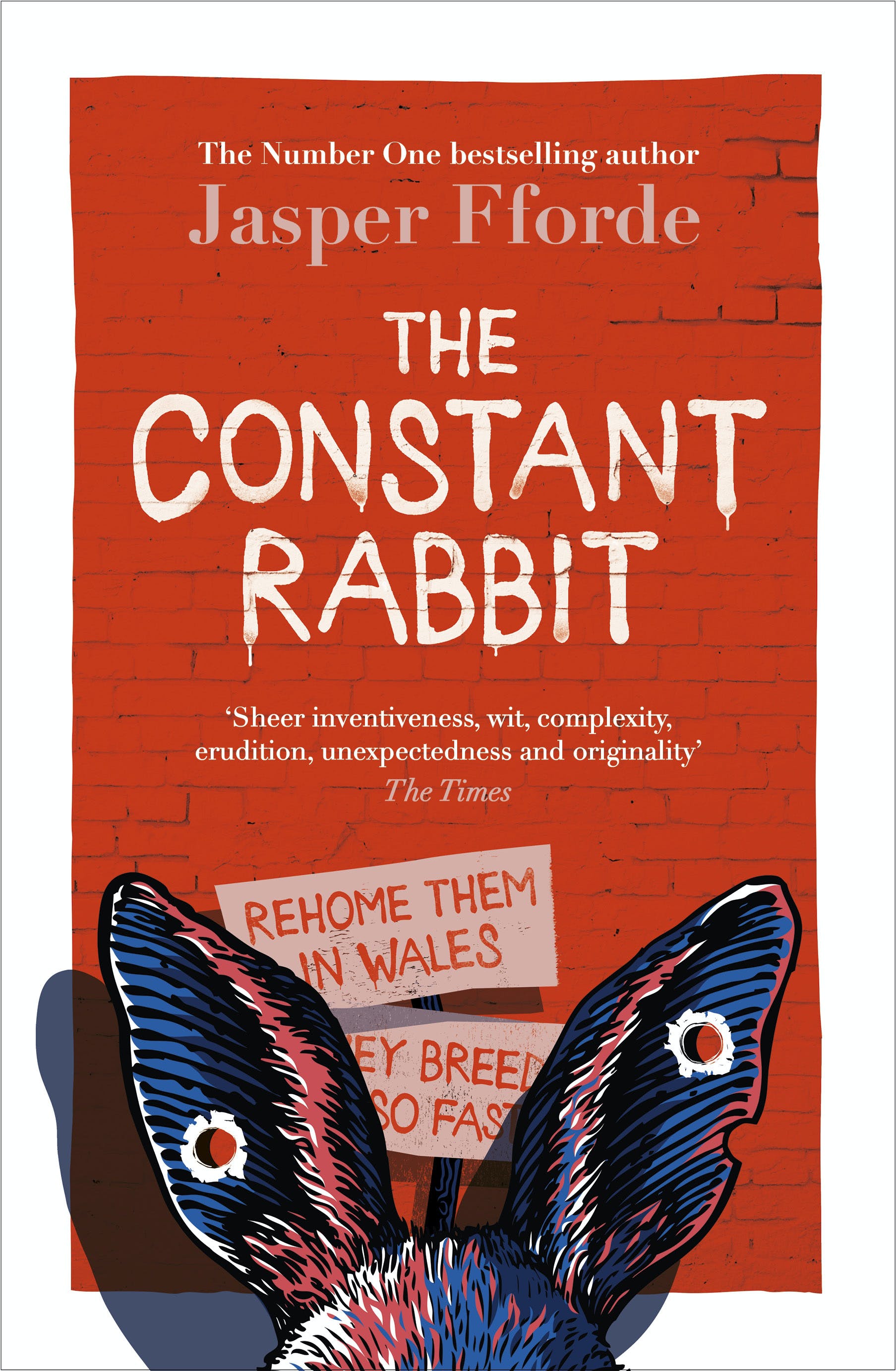
The Constant Rabbit by Jasper Fforde

The Constant Rabbit Cover

When it came to books with animals in the titles, I just to include The Constant Rabbit by Jasper Fforde, which is such an awesomely fun book.  The Constant Rabbit is a complex novel set in a version of England where anthropomorphic rabbits have emerged and started living with humans.  This ended up being a very impressive novel that is simultaneously inventive, hilarious and a brilliant parody of British politics.  One of my favourite books of 2020 and a great addition to this list.

Amazon


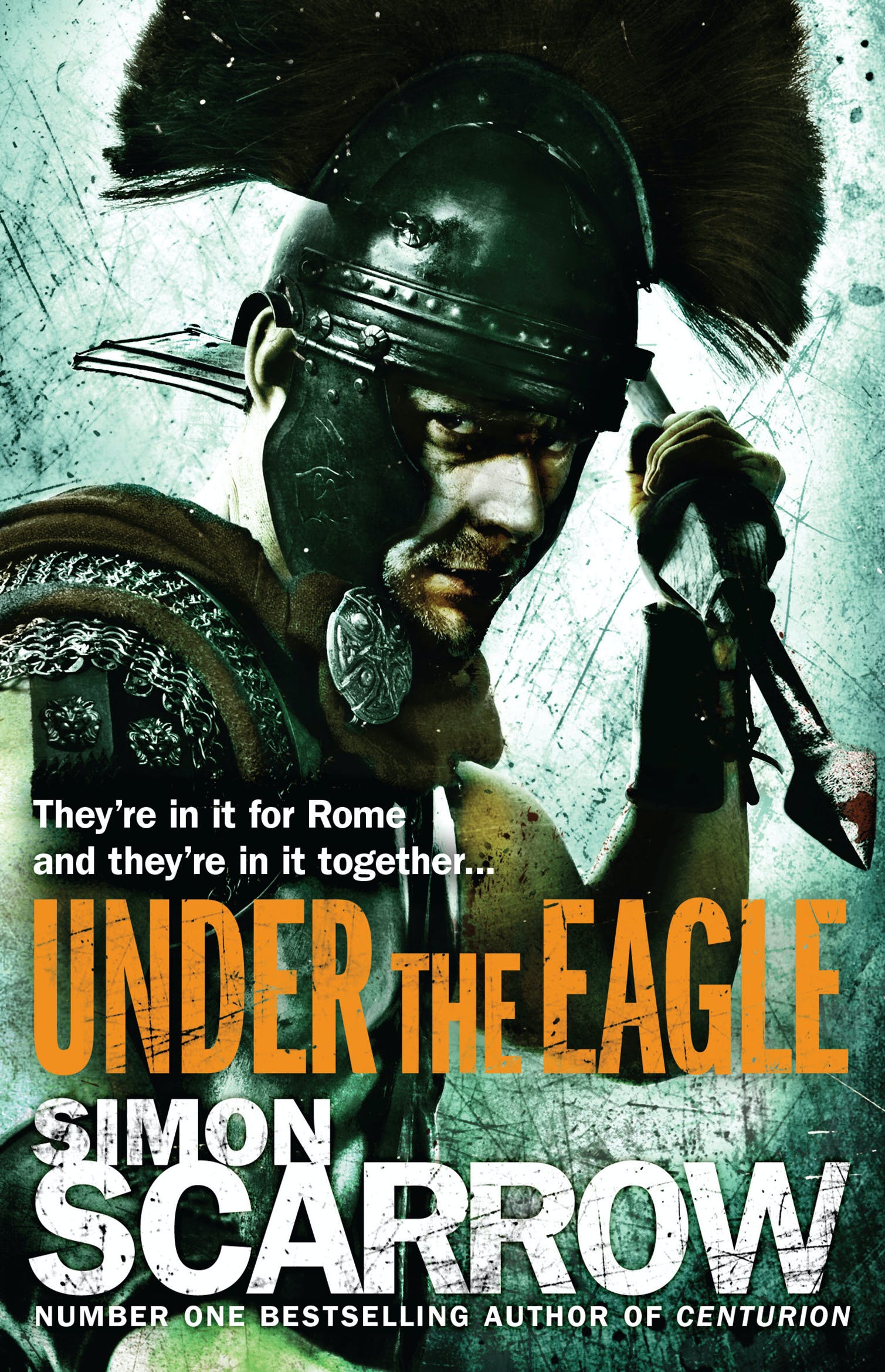
Under the Eagle by Simon Scarrow

Under the Eagle Cover

Out of all the authors I’m featuring on this list, few have as many books with animals in the title than historical fiction author Simon Scarrow.  That is because his long-running Eagles of the Empire series, features eagle in the titles of the first seven books (i.e. The Eagle’s Conquest, The Eagle and the Wolves and The Eagle in the Sand), as well as some other animals, like The Blood Crows.  I decided to feature the very first book in the series, Under the Eagle, which is a brilliant introduction to a gripping and powerful Roman history series, and which comes highly recommended.

Amazon


The Ballad of Songbirds and Snakes by Suzanne Collins

The Ballad of Songbirds and Snakes Cover

Next, we dive into Suzanne Collins’ The Hunger Games series, which had a lot of bird imagery involved with it.  While the third book does have an animal in the title with Mockingjay, I decided against featuring it as this was a fictional species.  Instead, I decided to feature the prequel novel Collin’s released a couple of years ago with The Ballad of Songbirds and Snakes, which features two separate animals in the title.  This was an excellent prequel to the very cool young adult trilogy and I look forward to seeing it turned into a movie later this year.

Amazon


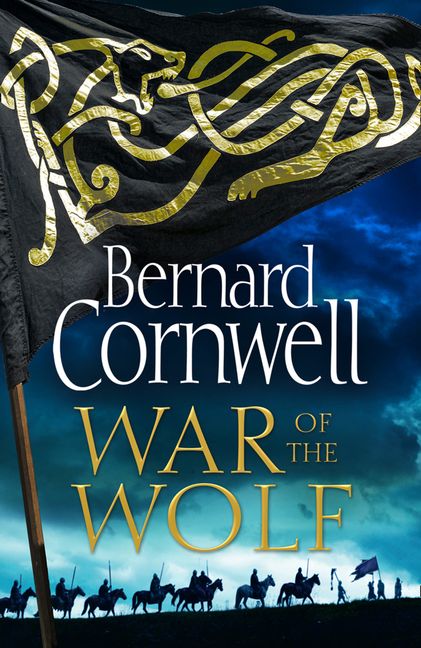
War of the Wolf by Bernard Cornwell

War of the Wolf Cover

The final entry on this list is War of the Wolf by Bernard Cornwell, which served as a great addition to his long running Saxon series.  This great book sees the aging protagonist engage in another series of battles against enemies on all fronts.  Serving as the beginning of the end of this brilliant series, I have a lot of love for War of the Wolf and it was an outstanding addition to both the Saxon series and this list.

Amazon


Well, that’s the end of my list.  It turns out that I’ve read a good number of books with animals in the title, so this ended up being a great list for me in the end.  I am pretty happy with how this turned out and it was fun to figure what to include. Let me know what your favourite books with animals in the titles are in the comments below.

Top Ten Tuesday – My Favourite Audiobooks from the First Half of 2022

Top Ten Tuesday is a weekly meme that currently resides at The Artsy Reader Girl and features bloggers sharing lists on various book topics.  The official topic for this week is Books Covers That Feel Like Summer, but I am going to do something a little different and instead look at my favourite audiobooks from the first half of 2022.  This is a continuation of my Top Ten list from a few weeks ago that featured my favourite overall novels from the first half of 2022.

People familiar with my blog will know that I have a great deal of love for the audiobook format, and it is one of the main ways that I tend to check out books.  Each year I enjoy a great number of different audiobooks and use the format to check out recent releases and older novels.  I have been enjoying audiobooks for years, and it is amazing the various ways in which listening to a book can enhance your enjoyment.  A great narrator can really bring you into the story, and I find that listening to a book enhances the amount of detail that you can take in.  In addition, other features, such as captivating voices, music and sound effects can really make an audiobook something special, and there some great examples of that out there.  This year alone I have listened to several outstanding audiobooks, includes some of my favourite books from early 2022.  Because I love this format so much, I thought I would take this opportunity to highlight my favourite audiobooks from the first half of the year.

To pull this list off I had a look at all the 2022 releases that I listened to on audiobook to figure out my favourites.  It turns out that I have already gone through quite a few this year so there was a very large collection of potential additions to this list.  I was eventually able to whittle it down to the ten audiobooks I consider to be the best, as well as a generous honourable mention section.  There is a bit of a crossover with my previous Favourite Books from the First Half of 2022 list, but I think there are enough new additions to make this list worthwhile.  I did prioritise audiobook production and narration over story in a few places, as outstanding narration or use of music and sound effects can enhance the plot.  I also ended up having to include quite a few Warhammer audiobooks in this list, not just because they were awesome, but because I have also listened to an inordinate amount of them in the first half of this year.  Despite this slight lack of diversity, I am pretty happy with how the overall list turned out and I think that the below entries really highlight what my favourite audiobooks from the first half of the year are.

Honourable Mentions:

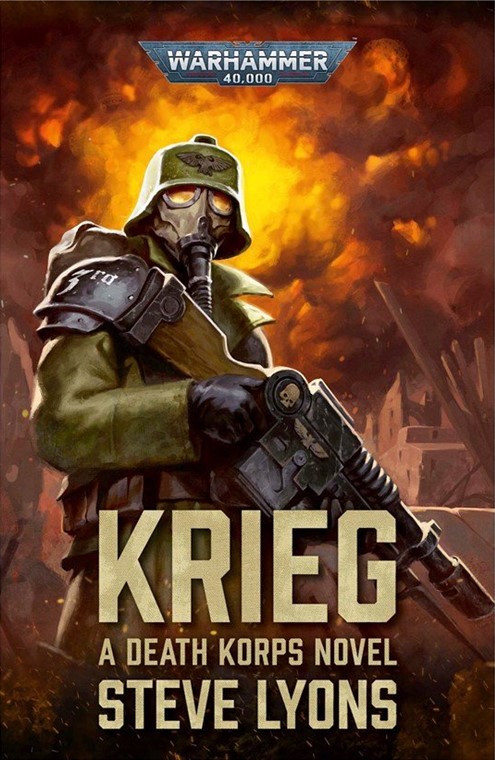
Krieg, written by Steve Lyons and narrated by Timothy Watson

Warhammer 40,000 - Krieg Cover

An intriguing and action-packed Warhammer 40,000 audiobook that follows one of the more unique Imperial Guard regiments.


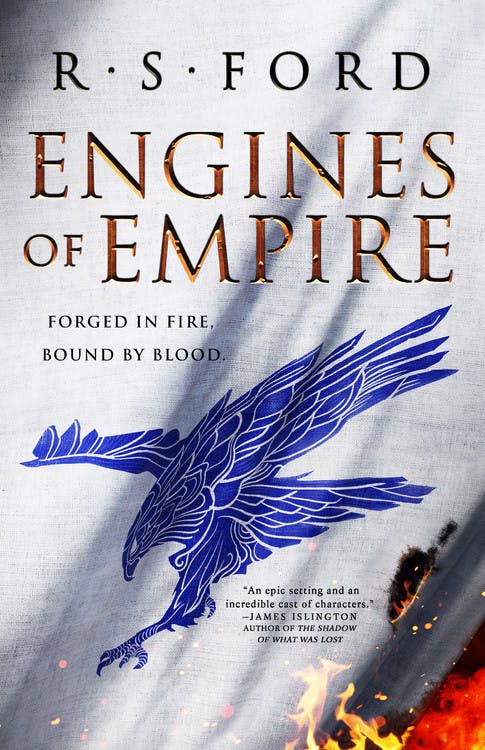
Engines of Empire, written by Richard S. Ford and narrated by a full cast

Engines of Empire Cover

A great start to a new fantasy series brought to life by a talented team of voice actors.


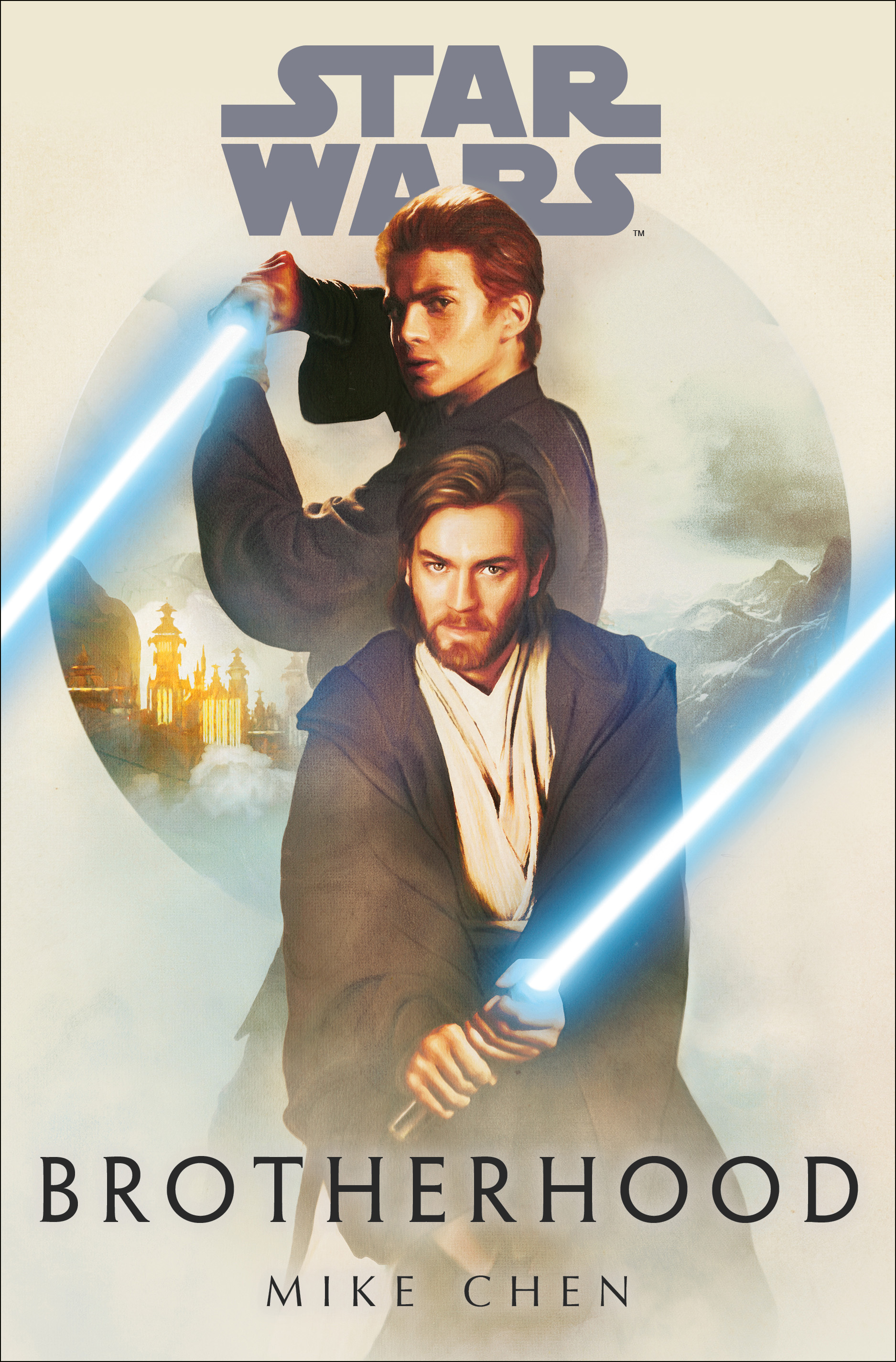
Star Wars: Brotherhood, written by Mike Chen and narrated by Jonathan Davis

Star Wars - Brotherhood Cover

A fantastic Star Wars novel that featured the excellent voice of Jonathan Davis and the exceptional music and sound effects that make every Star Wars audiobook a wonderful treat.


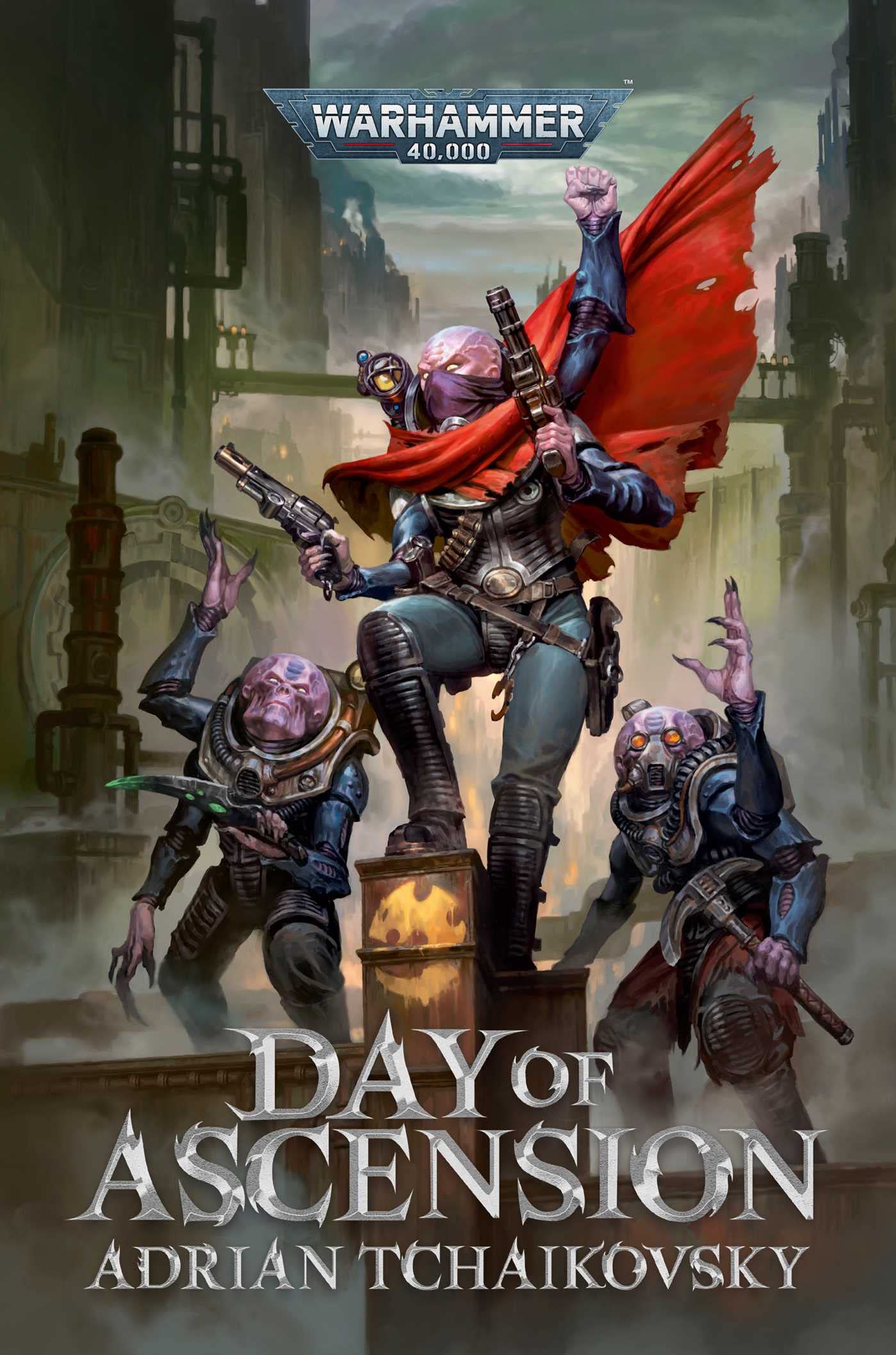
Day of Ascension, written by Adrian Tchaikovsky and narrated by Harry Myers

Day of Ascension Cover

Adrian Tchaikovsky’s freaky and fun Warhammer 40,000 debut is made even better by its audiobook format, narrated by the amazing Harry Myers.

Top Ten List:

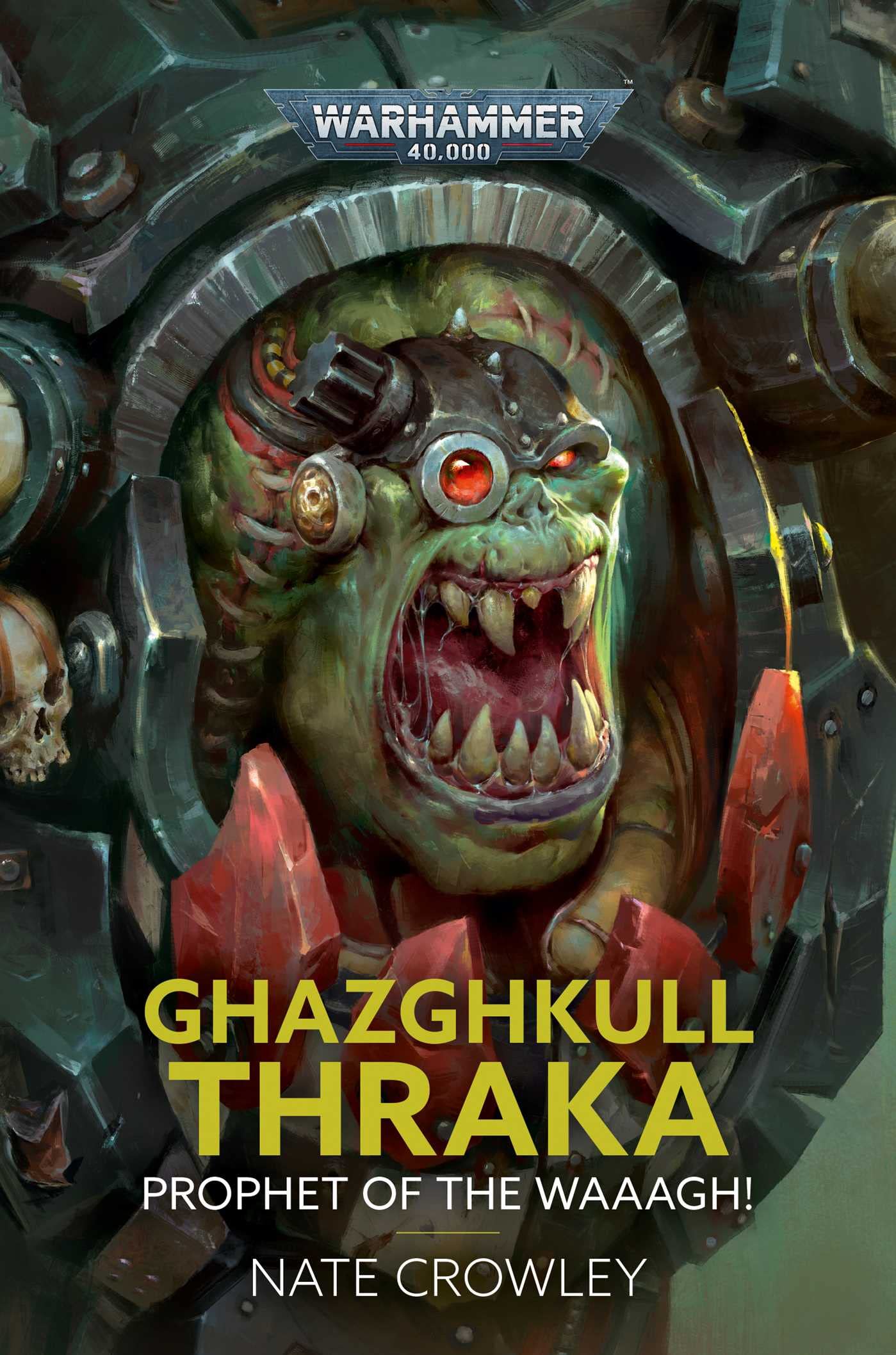
Ghazghkull Thraka: Prophet of the Waaagh!, written by Nate Crowley and narrated by Kelly Hotten, Paul Putner and Jon Rand

Ghazghkull Thraka - Prophet of the Waaagh! Cover

An awesome Warhammer 40,000 novel about the legendary Ork warlord, Ghazghkull Thraka.  Crowley does a wonderful job writing a brilliant deep dive into this amazing figure and the excellent team of Kelly Hotten, Paul Putner and Jon Rand, really bring all the distinctive and over-the-top characters to life in an impressive fashion with their narration.  One of the best Warhammer audiobooks I have ever listened to.


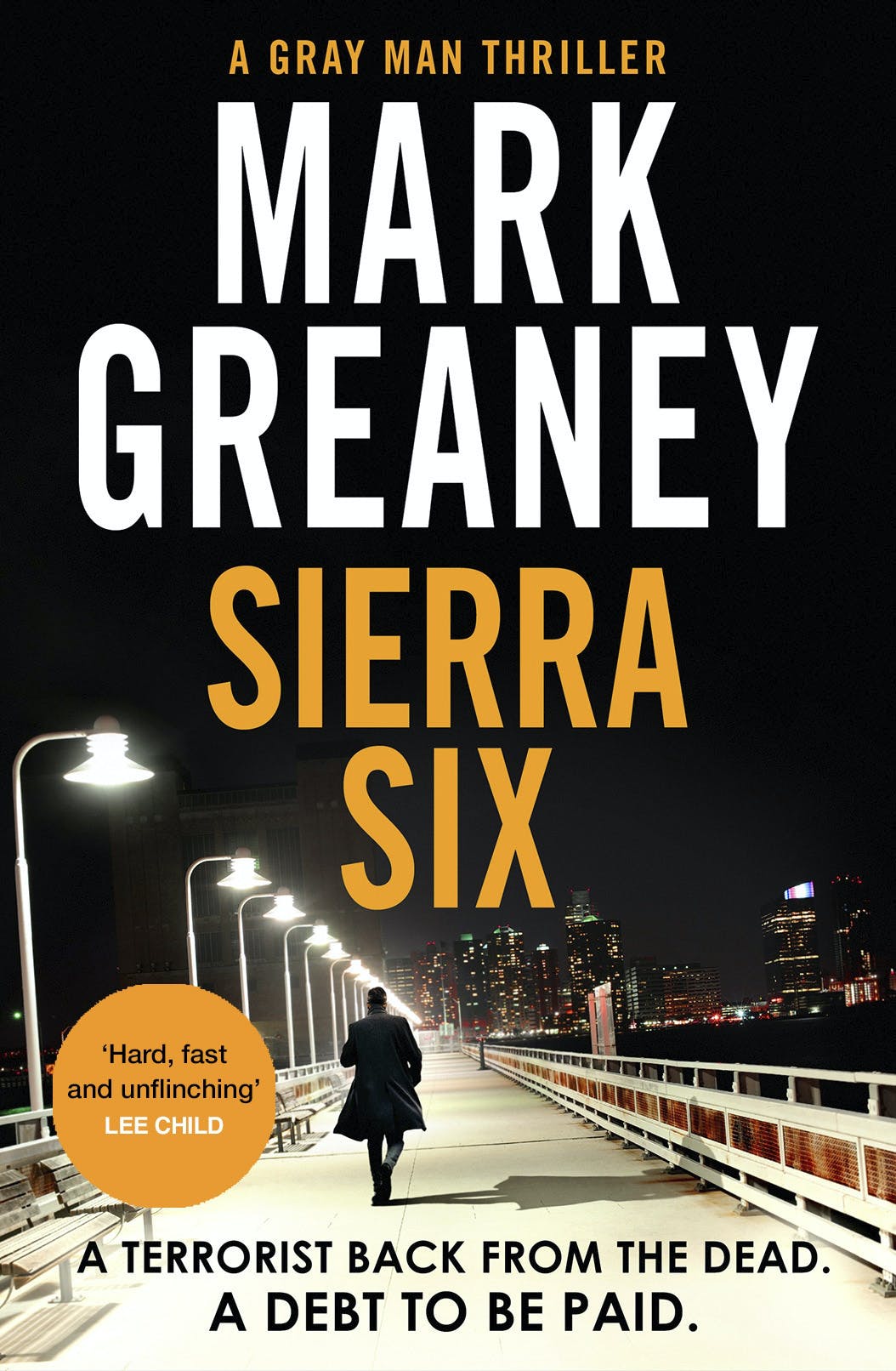
Sierra Six, written by Mark Greaney and narrated by Jay Snyder

Sierra Six Cover

Mark Greaney’s The Gray Man series continues to shine with this latest entry in the series that explores the early days of the character, while also presenting him with an intense modern adventure.  Narrated by the always incredible Jay Snyder, this was a superb audiobook that is really worth listening to.


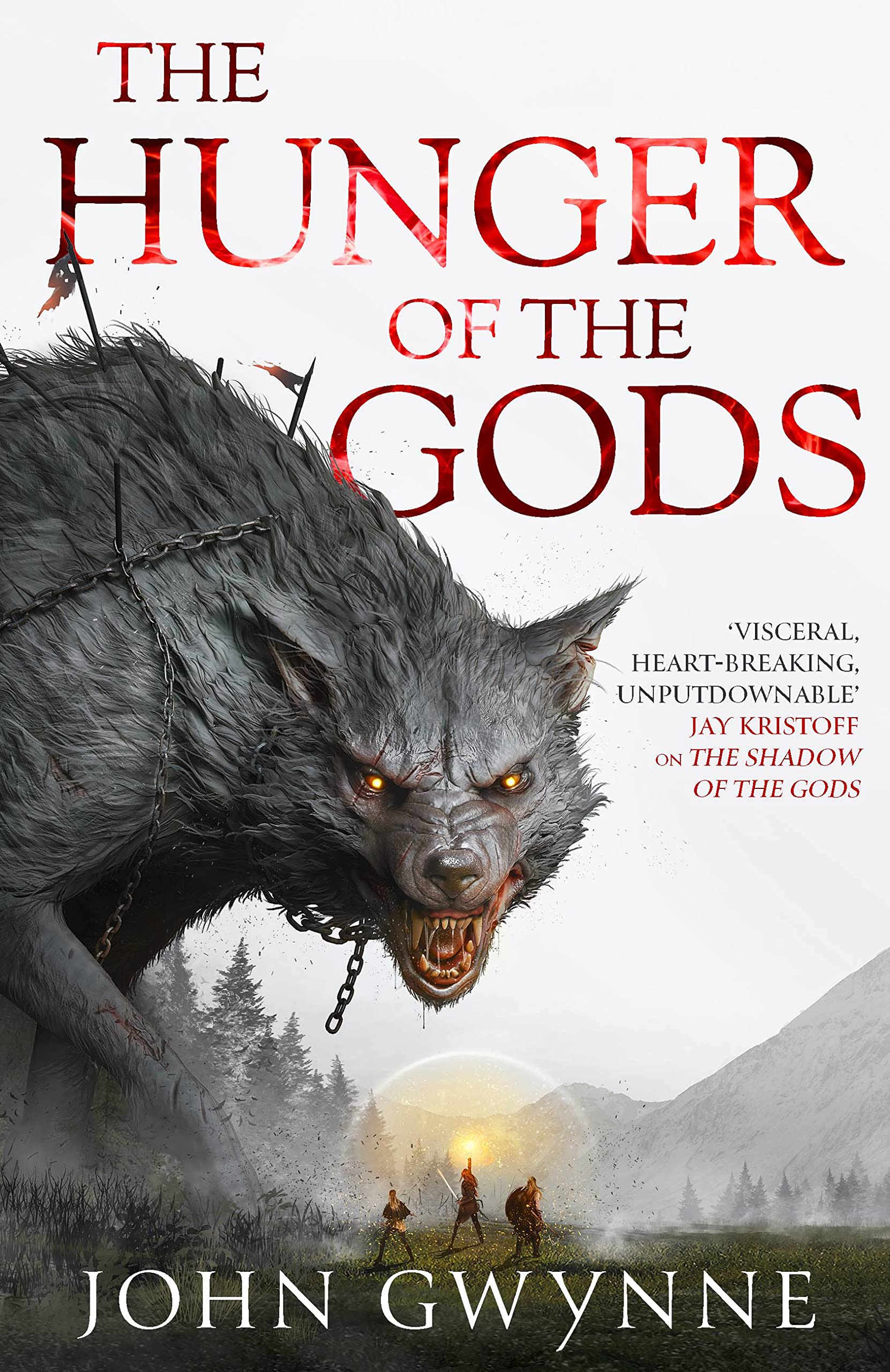
The Hunger of the Gods, written by John Gwynne and narrated by Colin Mace

The Hunger of the Gods Cover

Colin Mace helps to enhance John Gwynne’s already deeply impressive The Hunger of the Gods to even greater levels in this outstanding audiobook.  Easily the best way to enjoy this epic novel.


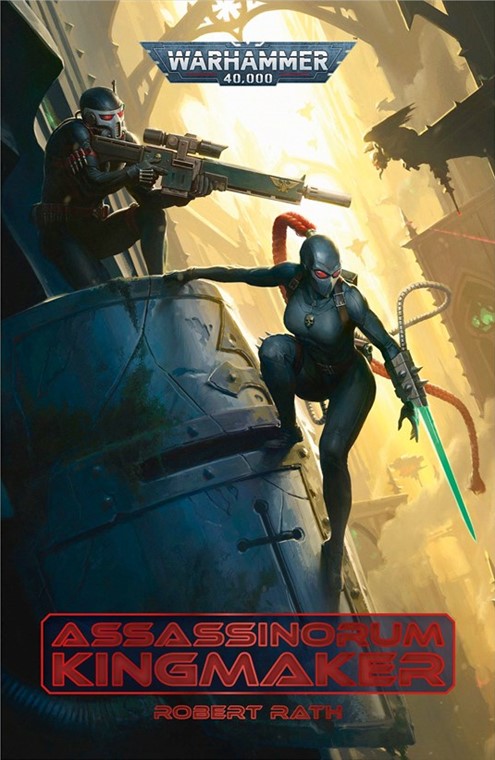
Assassinorum: Kingmaker, written by Robert Rath and narrated by Gareth Armstrong

Assassinorum Kingmaker Cover

I have so much love for this amazing Warhammer 40,000 novel that sets legendary Imperial assassins against giant medieval inspired mecha.  Everything about this book is awesome and Gareth Armstrong’s excellent narration really helps to bring all the cool battles and intrigue to life.


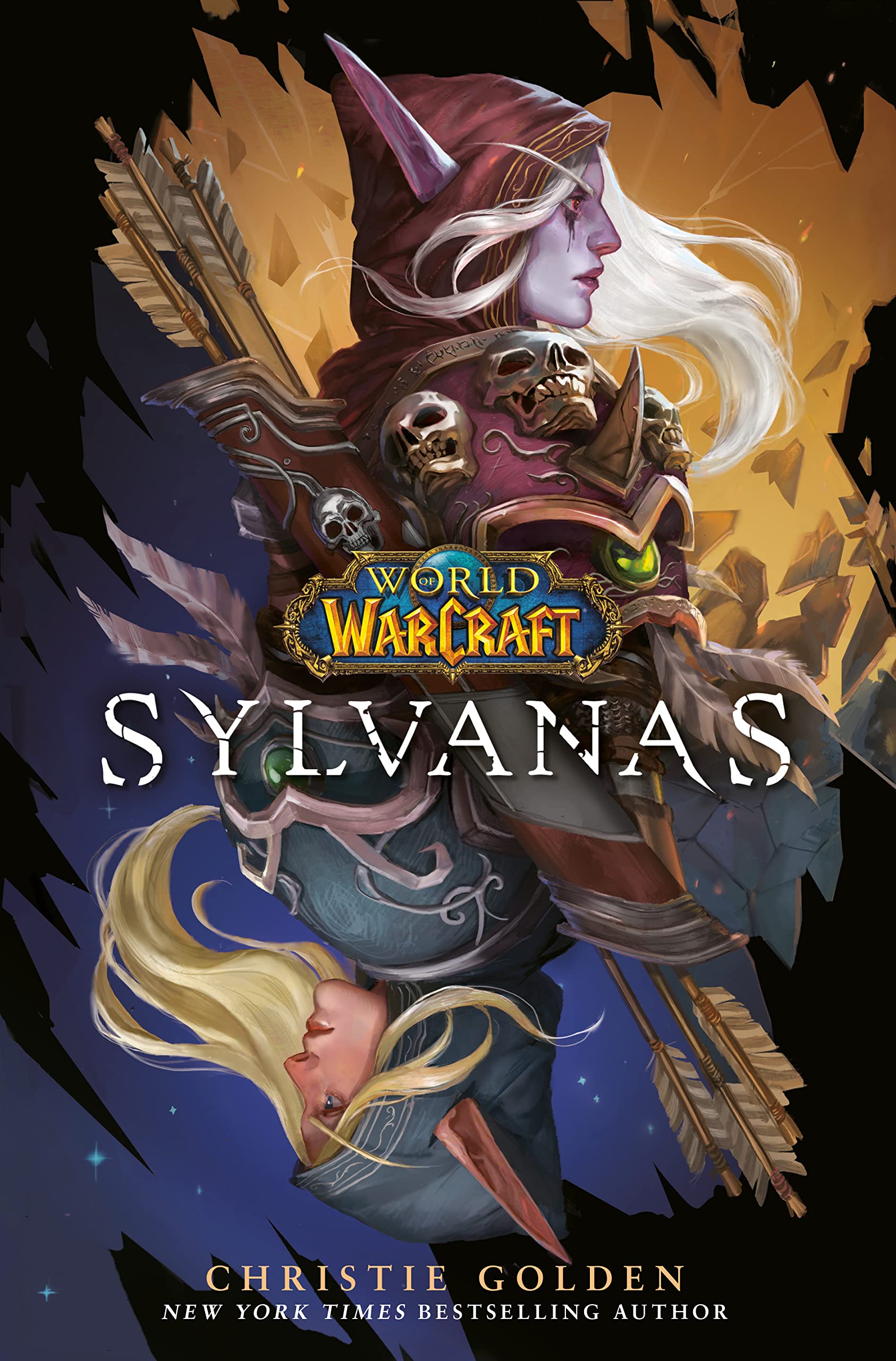
Sylvanas, written by Christie Golden and narrated by Patty Mattson

World of Warcraft - Sylvanas Cover

A book about the life of Sylvanas Windrunner read by the voice of the character from the World of Warcraft games.  Need I say more?


Star Wars: The Fallen Star, written by Claudia Gray and narrated by Marc Thompson

Star Wars - The Fallen Star

Legendary Star Wars narrator Marc Thompson ensured that the audiobook version of this latest major entry in The High Republic series novels was a real hit.  Perfectly combining Thompson’s amazing voice with the franchise’s classic sound effects and music, this was another exceptional Star Wars audiobook that deeply enhanced the awesome disaster narrative Claudia Gray had created.


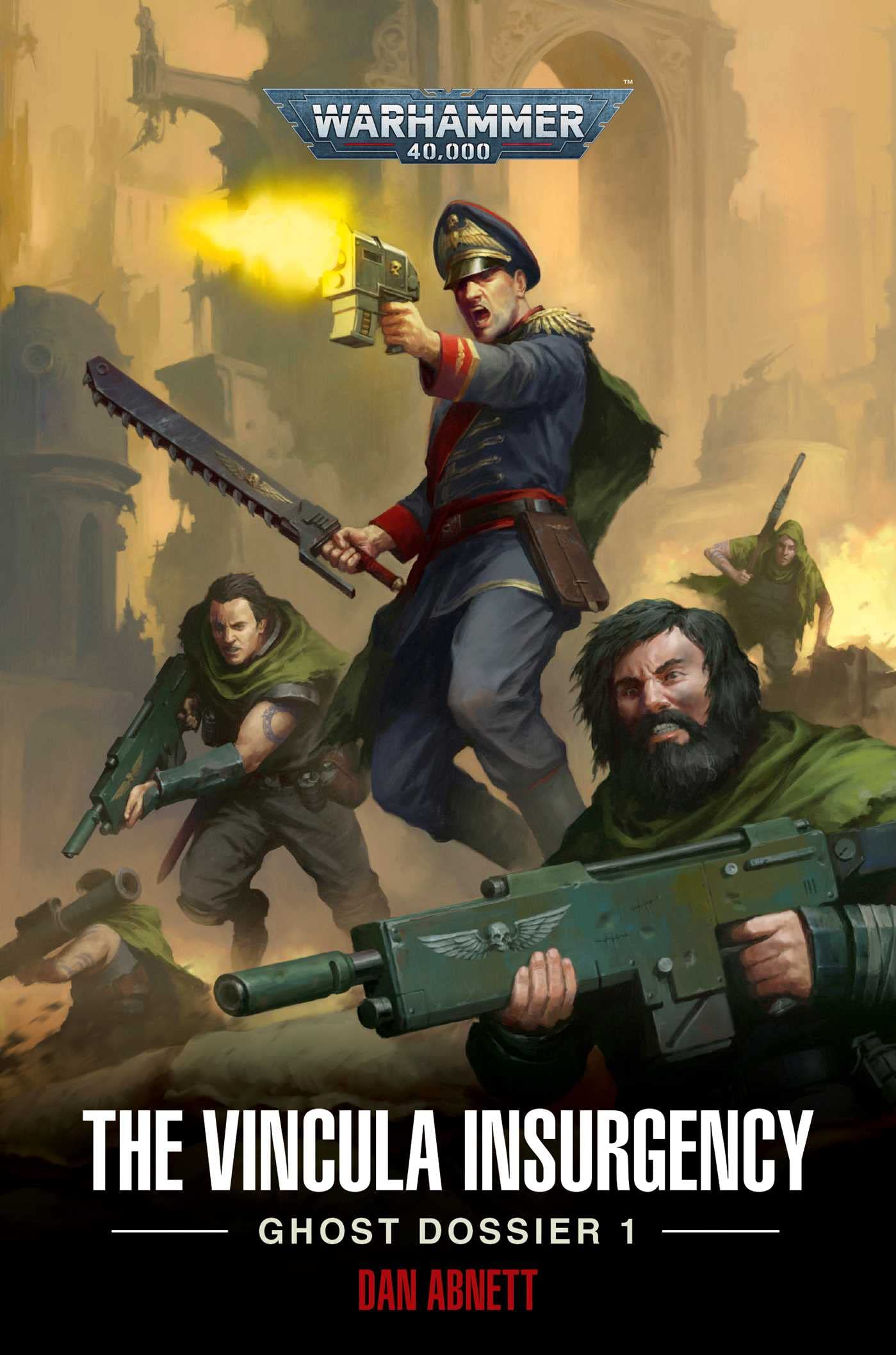
The Vincula Insurgency, written by Dan Abnett and narrated by Toby Longworth

The Vincula Insurgency Cover

Dan Abnett’s outstanding return to his iconic Gaunt’s Ghosts series wouldn’t be complete without Toby Longworth providing some fantastic narration.  This was a short, but extremely sweet Warhammer 40,000 audiobook, and I loved both the intense story, and the excellent way Longworth brought the characters to life.


Dark Horse, written by Gregg Hurwitz and narrated by Scott Brick

Dark Horse Cover

Gregg Hurwitz provided another impressive entry in the Orphan X series this year with Dark Horse, and narrator Scott Brick was once again there to ensure that the audiobook version was a top-notch experience.


Steel Tread, written by Andy Clark and narrated by Remmie Milner

Steel Tread Cover

The already cramped and intense atmosphere Andy Clark brought into this compelling tank-focussed Warhammer 40,000 novel, was greatly enhanced in its audiobook format, as you got to really feel what the characters were experiencing.  Throw in some amazing narration from Remmie Milner and this proved to be an exhilarating and deeply addictive audiobook to check out.


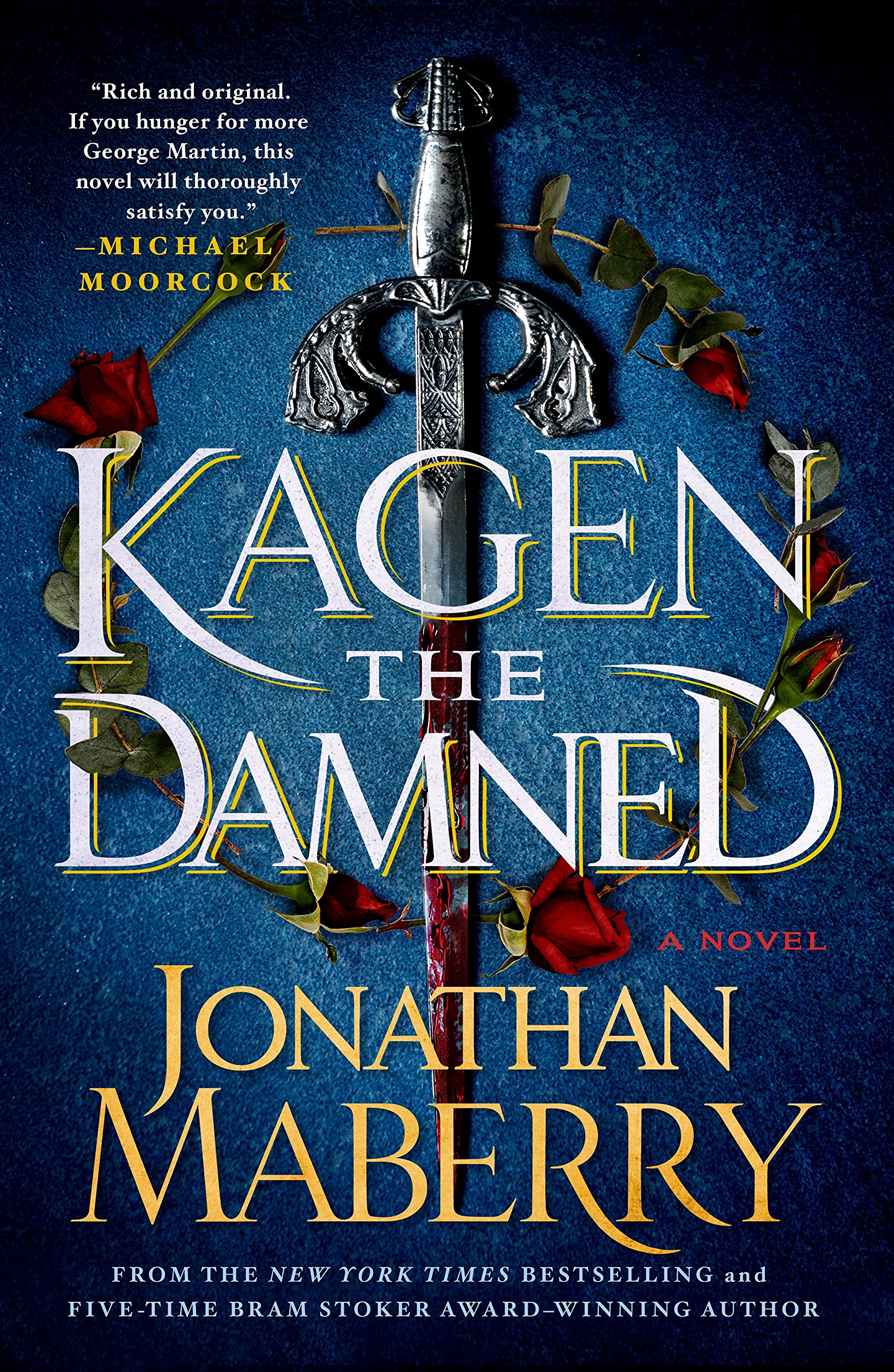
Kagen the Damned, written by Jonathan Maberry and narrated by Ray Porter

Kagen the Damned Cover

The final entry on this list is the shocking and complex dark fantasy novel, Kagen the Damned, by the always incredible Jonathan Maberry, which I am currently listening to.  Thanks to the exceedingly violent story, very damaged characters, elaborate world building, and the epic voice work from one of my favourite audiobook narrators, Ray Porter, I am having an exceptional time listening to Kagen the Damned, and I had to feature on this list, even though I haven’t finished it yet.  Review to follow soon, but spoiler alert, this probably going to get a full five-star rating from me.


Well, that’s the end of this latest list.  As you can see, there have been some very good audiobooks out in the first half of 2022, even my list is a little Warhammer 40,000 heavy.  It will be interesting to see which books make the cut later in the year, especially as I currently have several major 2022 audiobooks currently sitting on my phone, waiting to be listened to.  While I get to that, make sure to let me know what your favourite audiobooks of 2022 are in the comments below.

Throwback Thursday: Usagi Yojimbo: Volume 14: Demon Mask by Stan Sakai

Usagi Yojimbo - Demon Mask Cover

Publisher: Dark Horse Comics (Paperback – March 2001)

Series: Usagi Yojimbo – Book 14

Length: 224 pages

My Rating: 5 out of 5 stars

Amazon

Welcome back to my Throwback Thursday series, where I republish old reviews, review books I have read before or review older books I have only just had a chance to read.  In this latest Throwback Thursday I once again dive into the awesome and elaborate world of Usagi Yojimbo as I check out the 14th epic volume, Demon Mask.

It feels good to be on a Usagi Yojimbo review streak here at The Unseen Library, and I have been having a lot of fun diving into some of the awesome middle volumes of one of my absolute favourite comic series.  My last two Throwback Thursday reviews of the 12th Usagi Yojimbo volume, Grasscutter, and the 13th volume, Grey Shadows, were really fun to pull together, and I really had no choice but to also have a look at the 14th volume this week with Demon Mask.

Usagi #31

Demon Mask is another excellent addition to the Usagi Yojimbo series that unsurprisingly gets a full five-star rating from me.  Exclusively written and drawn by Stan Sakai, this impressive entry once again follows the rabbit ronin Miyamoto Usagi as he continues his action-packed adventures through the anthropomorphic animal filled version of feudal Japan this series is set in.  Containing issues #31-38 of the Dark Horse Comics run on the series, as well as a few additional issues from associated magazines, Demon Mask continues the trend of featuring several shorter stories, while also leading back towards the next volume, Grasscutter II, which will contain a big crossover story.  I deeply enjoyed all the cool stories in this volume, and there are some real classics here.

The first story contained within Demon Mask is the entertaining and elaborate tale, The Inn on Moon Shadow Hill.  In this story, a travelling Usagi comes across a mysterious inn surrounded by strange sights and an unusual group of patrons.  The land surrounding the inn is apparently haunted, filled with all manner of monsters, demons and obakemono (haunts), which attracts many wealthy individuals to the safe inn to watch.  However, Usagi is soon drawn into a hefty wager with an arrogant merchant and must travel outside the inn to encounter the haunts and the forces behind them.

This is quite an amusing story that perfectly combines Sakai’s fantastic humour with his love of classic Japanese monsters and haunts.  The entire story comes together really well, first introducing the situation, and then forcing Usagi outside to face the ghosts after making a bet.  The subsequent reveal of the various monsters and creatures is pretty spectacular, and Sakai goes out of his way to include as many uniquely Japanese legendary creatures as possible, especially in one breathtaking and elaborate panel.  I really enjoyed the fun twist that occurred here, especially as it allowed Usagi to win his bet with the merchant, and his over-the-top explanation of what he experienced was pretty damn amusing with all the exaggerated facial expressions and reactions from Usagi and his audience.  This ends on a very satisfying and entertaining note, and The Inn on Moon Shadow Hill ended up being a fantastic and light-hearted start to the entire volume.

Usagi #32

Following on from the first fun story is the touching tale, A Life of Mush.  In this story Usagi encounters a brash peasant boy, Eizo, who wishes to become a warrior to avoid the farmer’s simple lifestyle (a life of eating mush).  However, Eizo soon grows tired of Usagi’s honourable warrior philosophy and attempts to befriend a group of bandits, only to discover that there is more to life and battle than brashness and toughness.  This was a great shorter story that presents an interesting outside perspective on the life of a warrior in this setting.  I liked the comparison between a child’s view of a warrior to Usagi’s intense dedication and spiritual thoughts, which in fairness, does seem a little more boring.  The subsequent events provide a fantastic lesson on perception and life choices, as Eizo and the bandits he encounters discover just how tough a true warrior like Usagi can be.  A compelling and thoughtful addition to the volume, A Life of Mush was a powerful and clever read.

The next story is a shorter entry, Deserters, which brings us back to the iconic Neko Ninja and their leader, Chizu.  Deserters examines a tragic tale of two Neko Ninja, Take and Saruko, who attempt to leave the Neko Ninja and start a new life together.  Captured by their fellows, they are taken before Chizu for trial, and must soon face the treachery and manipulation of Chizu’s ambitious second in command, Kagemaru.  This was another excellent shorter entry in Demon Mask, especially as it combines some quick, but efficient, character introductions, with some inherent tragedy and betrayal.  The result of the story, while a little predictable, ends up being very moving, and you can’t help but feel for the star-crossed lovers.  I also really like how this shorter entry turns out to be an interesting bridging story between several of the plot lines in the 11th volume, Seasons, and some of the big storylines in the next few volumes.  A surprisingly important and powerful story, Deserters is a great read that adds a lot to the overall volume.

Usagi #33

Up next, we have the rather entertaining and fun story, A Potter’s Tale, which makes great use of amusing coincidences to create a fantastic and hilarious story.  A Potter’s Tale sees the notorious thief, Samo, steal a precious jewel from a wealthy merchant and have to stash it.  Choosing an unfired pot in a small pottery shop, Samo makes the vessel distinctive before he is brought in for questioning.  Unfortunately, Usagi is staying with the same family of potters and chaos ensues when Usagi and his friends take a liking to Samo’s inadvertent innovation.

This is a great story that always gets a good laugh out of me when I read it.  While a rather quick story, Sakai manages to achieve a lot with it, setting up the base of the humour quickly and ensuring that the reader becomes invested with both the potters and the caddish thief.  The subsequent fantastic use of surprises, reveals and coincidences results in some amusing scenes, especially when the unlucky thief discovers that he must give up all his ill-gotten loot to fix his mistake.  The reveal that all his endeavours are for naught and his loot has returned to its original owner, in a roundabout way, is pretty entertaining, as is the ironic comeuppance he gets for his actions.  Sakai makes sure to enhance this story by featuring a compelling look at traditional Japanese pottery making (I love it when he examines authentic Japanese industries or art forms), and there are some beautiful sequences drawn as a result.  Easily one of the most entertaining stories in this volume, I deeply enjoyed A Potter’s Tale, and it is always guaranteed to crack me up.

Usagi #34

Sakai follows this funny story with another shorter entry, The Missive, which sees Nakamura Koji’s request for a duel reach Usagi’s master, Katsuichi.  Reflecting on the matter of honour brought before him, Katsuichi remembers a moment from Usagi’s childhood and the lessons it contains.  This was another quick but excellent entry from Sakai, which once again highlights how much he can do with only a few short pages.  Not only do we get an excellent bridging storyline between a good entry in the 11th volume, Seasons, and another future volume, but you also get an interesting reveal about a major supporting character.  Throw in an amusing childhood tale about a young Usagi, and you have an entertaining and unique entry that helps to break up the flow of the overall volume.

Now we get to the main event of the volume, with the three-issue story, The Mystery of the Demon Mask.  After receiving a dire warning about his future, Usagi ventures into a new town, only to witness a deadly duel between a fellow ronin and a mysterious opponent wearing a demon mask.  Encountering the police, including the venerable Inspector Kojo, Usagi soon learns that the killer, known as Demon Mask, has been targeting and killing ronin around town.  Helping with the investigation, Usagi encounters all manner of potential suspects as he also finds himself firmly in Demon Mask’s sites.

Usagi #35

The Mystery of the Demon Mask is probably the best story in the entire volume, and Sakai has put a lot of effort into developing a powerful and elaborate murder mystery storyline in this unique Japanese setting.  The entire story has a great flow to it, quickly introducing the villain, the murderous Demon Mask, and then introducing Usagi to the various players involved in the investigation.  From there Usagi is thrust into several dangerous situations as Demon Mask stalks him and other masterless samurai around the town.  There are several complex and intriguing characters introduced during this story, each of whom is a potential suspect.  This story ends on a big finale, with Demon Mask exposed as he faces off against Usagi in a deadly duel.  Sakai does a brilliant job of revealing who the killer is, and I really appreciated the various subtle clues scattered throughout the story to set this up.  This ended up being quite a fantastic murder mystery story that works extremely well despite the limitations of the shorter comic form.  The motivations behind the killer are pretty heartbreaking, and I really appreciated Sakai’s portrayal of their madness and grief.  There is an excellent focus on fighting and duels throughout this story, especially as Demon Mask engages several skilled samurai in personal combat, and I loved seeing all these fights unfold.  An excellent entry that has a brilliant balance of mystery, complex characters, classic Japanese elements and comic book action.

Following on from this awesome murder mystery story, we have another intriguing dive into Japanese mythology and monsters with the spooky story, Kumo.  In this story, Usagi, who is eager to reach his friends, takes a shortcut across the mountains and finds himself in an isolated village, surrounded by an unusual number of spiders and an insane amount of webbing.  When the innkeeper’s daughter is kidnapped in an improbable attack, it becomes apparent that something more is haunting the village, and that Usagi’s only hope might be another traveller in town, Sasuke.

Usagi #36

This was another particularly good entry in Demon Mask; I always love Sakai’s more supernatural narratives.  The story premise is somewhat typical, with Usagi arriving in a troubled town that needs his help, this time in defeating the monsters haunting them.  The subsequent conflict with this threat gets pretty wild, not just because of the cool monster (in this case a Spider Goblin and her giant spider minions), but also because it introduces the intriguing side character of Sasuke.  Sasuke, also known as The Demon Queller, is a mystical monster hunter who travels around Japan taking down supernatural threats (no doubt with Kansas blaring in the background).  Sasuke goes on to become a major recurring character within this series, having most recently appeared in the 34th volume, Bunraku and Other Stories (where he does some cool Demon Slayer-esque sword fighting).  However, he gets a very awesome introduction here in Kumo, with Sakai perfectly setting up the character’s mystique, as well as his powerful magical abilities.  This story literally sees Sasuke summon up a giant frog to fight a Spider Goblin, which has so many levels of awesome to it, and I loved seeing the magic on monster fight that ensures.  Another fantastic story that makes excellent use of Japan’s rich spiritual and mythological past, I always have an outstanding time reading Kumo.

The final major story in this volume is the intriguing tale, Reunion.  Usagi returns to the monastery of his friend, priest Sanshobo, only to discover it under attack by brigands, apparently after a rich merchant sheltering inside.  Working with Sanshobo and a recovered Gen, Usagi must find a way to overcome the brigand horde and save the monastery from attack.  However, the real threat may already be inside the walls, and soon Usagi, Sanshobo and Gen must overcome a dangerous enemy determined to take the most precious treasure, the legendary sword Grasscutter.

Usagi #37

Reunion was another fun entry which ended the main Demon Mask stories on a compelling and interesting note.  While a distinctive story itself, Reunion is primarily focused on setting up the events of the following major volume, Grasscutter II.  This presents a fun scenario where Sanshobo’s temple is attacked (again, it honesty gets attacked a lot), while the real danger remains inside the wall.  There are several fun parts to this story, from Usagi’s attempted infiltration of the gang, the many fight scenes against to the bandits, to the dangerous confrontation against the disguised adversaries within the temple.  This proved to be an excellent story, and it was great to see Sanshobo and Gen again, especially as they prepare for their next epic adventure.

While Reunion concludes the main stories, this volume also has a couple of shorter stories that were contained in other publications, such as Dark Horse Presents (vol. 1) #140, Dark Horse Presents Annual #3, Wizard Magazine #3, Oni Double Feature #11, and Dark Horse Extra #20-23.  These short stories provide a couple of quick, highly amusing tales which leave the reader smiling as they close the volume.  Sakai achieves a lot in these shorter stories, and each has an entertaining or moving story, even if they only last for only a page.  The most detailed of these was the entertaining Death and Taxes, which sees Usagi fighting bandits for a conniving and amusingly clever peasant.  There is also the sweet little story, A Funny Thing Happened on the Way to the Tournament, which shows a young Usagi meeting his future friend (and love interest) Tomoe Ame when they were children.  The short but powerful Netsuke sees Usagi reflect on a former comrade, while The Leaping Ninja has a hilarious one-page tale about an acrobatic infiltrator who leaps before he looks.  The final story was the intense Tsuru, which sees Usagi encounter a member of the Koroshi assassins with a love for paper cranes, who has a contract out on Usagi, resulting in a fantastic duel.  Despite their length, each of these stories features all of Sakai’s usual attention to detail and excellent story writing, and it was great to see these excellent examples of the creators shorter writing style.

Usagi #38

I must once again highlight all the incredible artwork featured in this impressive volume, as Sakai continues to showcase all his amazing artistic talent.  Pretty much every panel in this volume is filled with some excellent and powerful art, as Sakai tells his complex tales.  There is the usual brilliant focus on Japanese landscapes and towns, and Sakai has such a talent for capturing all the elaborate cultural elements of the period, as well as the beautiful locations that dotted Japan.  While all the art is really well drawn in this volume, I definitely have to highlight a few panels in particular.  The first story, The Inn on Moon Shadow Hill, has so many great drawings of creatures and haunts from Japanese folklore, and there is one brilliant panel were all of them are they facing Usagi at once.  The spider goblin and her minions in Kumo are also very cool and spooky, and the various scenes where they fight a samurai like Usagi and the magical Sasuke are pretty extraordinary.  I also loved the awesome character design on the antagonist Demon Mask from the main story.  Not only does it bear an interesting similarity to Usagi’s main foe, Jai (who himself is based on a character with distinctive mask), but it looks so dangerous and intimidating, especially when they silently engage in battle.  I deeply enjoyed the exceptional artwork in Demon Mask, and Sakai has once again shown how much feeling and emotion he can portray with his brush and ink.

Another week, another epic and incredible Usagi Yojimbo volume reviewed on my blog.  The 14th volume of this outstanding series, Demon Mask, was another awesome comic as Stan Sakai provides his usual blend of impressive writing, stunning artwork, and powerful characters.  Featuring several memorable and exciting short stories, Demon Mask serves as an excellent and wonderful entry in this wider series, and it is one that I always look forward to reading.  A highly recommended read, Sakai really can do no wrong with this exceptional series.

Amazon

WWW Wednesday – 9 March 2022

WWW Wednesday is a weekly meme hosted by Taking on a World of Words, where bloggers share the books that they’ve recently finished, what they are currently reading and what books they are planning to read next. Essentially you have to answer three questions (the Three Ws):

What are you currently reading?
What did you recently finish reading?
What do you think you’ll read next?

So, let’s get to it.

What are you currently reading?

A Great Hope by Jessica Stanley (Trade Paperback)

A Great Hope Cover

I just started reading this intriguing Australian political drama novel, A Great Hope by debuting author Jessica Stanley.  This compelling novel follows a political family in Australia following the death of their famous politician father.  I have only made a little progress on this novel, but so far I am enjoying its fascinating story and interesting dive into Australian politics.


Sierra Six by Mark Greaney (Audiobook)

Sierra Six Cover

I also started the latest Mark Greaney Gray Man novel today, Sierra Six.  This novel continues to tell the story of Court Gentry, the legendary assassin known as the Gray Man, and this latest entry dives back into his first mission for the CIA.  I am only a short way into this book, but it is so far proving to be pretty awesome.  Due to how cool the rest of the series (The Gray Man, Mission Critical, One Minute Out and Relentless) have been, I am expecting great things from this book and I look forward to seeing all the carnage unfold.

What did you recently finish reading?

Her Perfect Twin by Sarah Bonner (Trade Paperback)

Her Perfect Twin Cover


Dark Horse by Gregg Hurwitz (Audiobook)

Dark Horse Cover


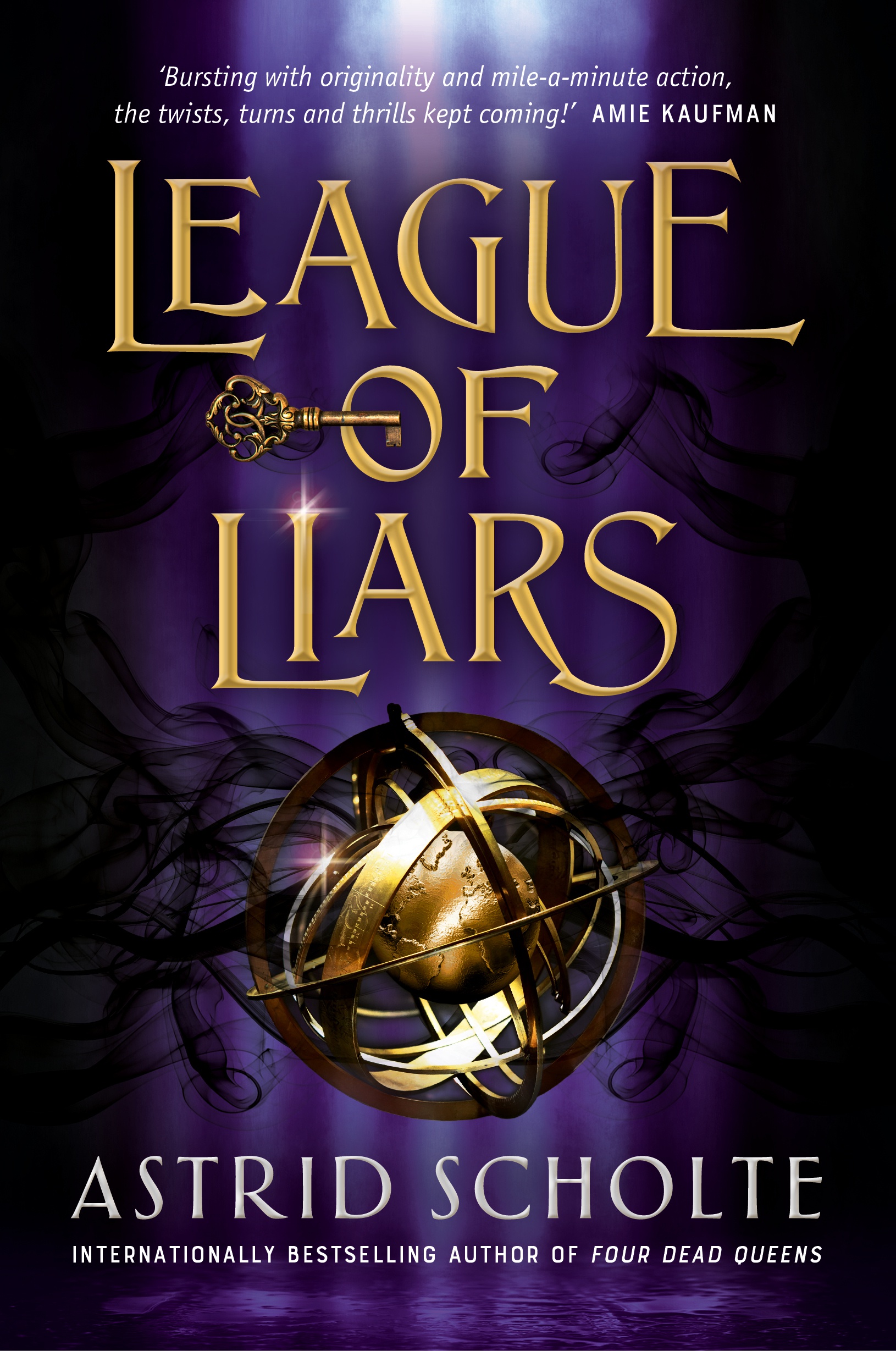
League of Liars by Astrid Scholte (Paperback)

League of Liars Cover 2


Warhammer 40,000: Krieg by Steve Lyons (Audiobook)

Warhammer 40,000 - Krieg Cover


36 Streets by T. R. Napper (Paperback)

36 Streets Cover

What do you think you’ll read next?

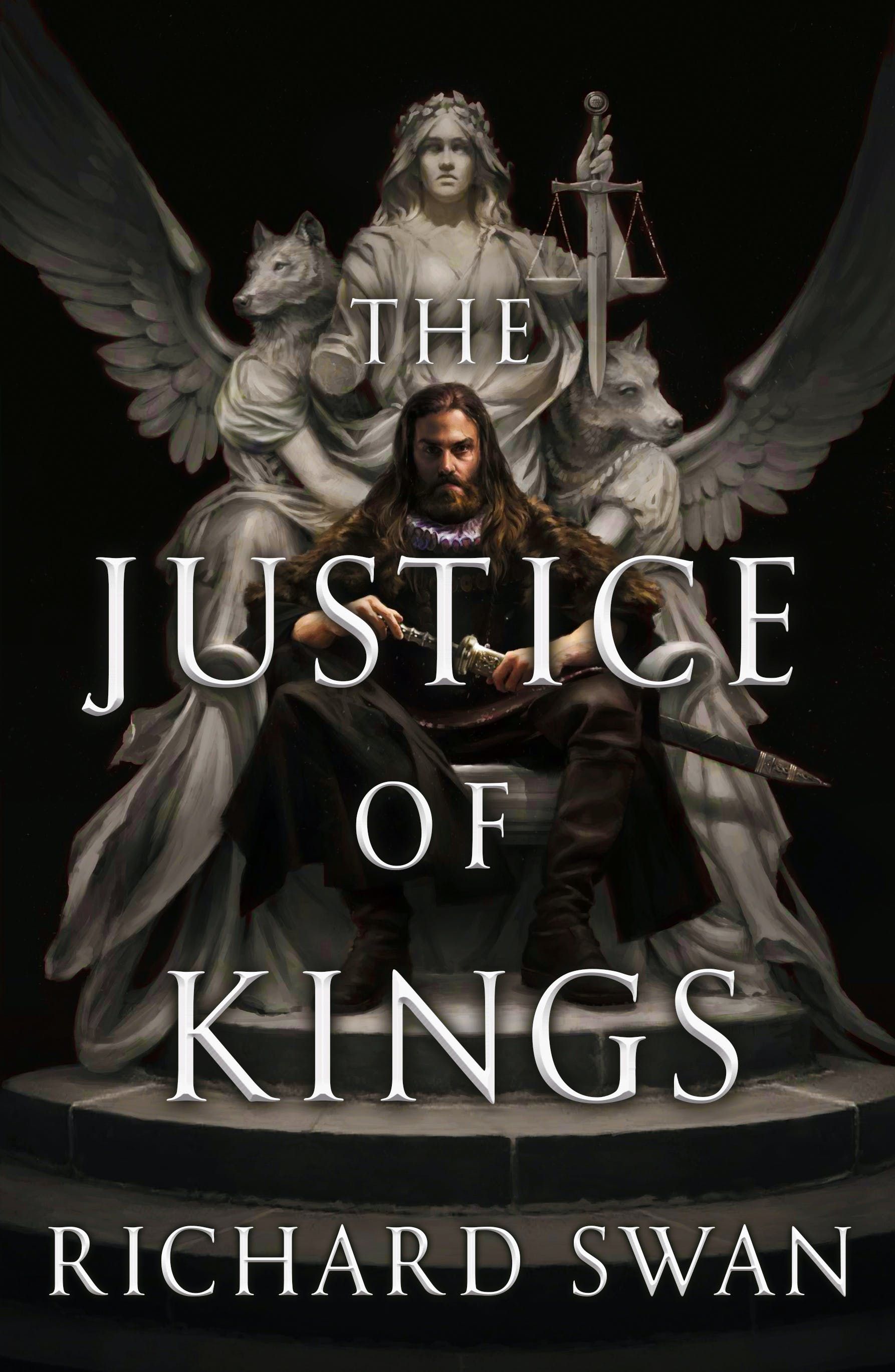
The Justice of Kings by Richard Swan

The Justice of Kings Cover


That’s it for this week, check back in next Wednesday to see what progress I’ve made on my reading and what books I’ll be looking at next.

Dark Horse by Gregg Hurwitz

Dark Horse Cover

Publisher: Michael Joseph (Audiobook – 15 February 2022)

Series: Orphan X – Book Seven

Length: 454 pages

My Rating: 5 out of 5 stars

Amazon     Book Depository

One of the top spy thriller authors in the world today, Gregg Hurwitz, returns with the latest book in his exciting and captivating Orphan X series, Dark Horse.

Over the last few years, I have been having an absolute blast checking out the epic Orphan X series by Hurwitz, which has featured some amazing and extremely fun reads.  The series started back in 2016 with Orphan X, which introduced the former government assassin turned vigilante known as Orphan X.  Since then, the Orphan X series has expanded to seven great books, each of which pushed the protagonist against some dangerous and ruthless foes.  I have deeply enjoyed the last few books, including Out of the Dark, which set Orphan X against the corrupt President of the United States; Into the Fire, which was one of the top audiobooks of 2020; and Prodigal Son, a fantastic and exciting dive into the world of advanced military technology.  All these novels have been really good and I was quite excited to see what Hurwitz had planned for his latest book, Dark Horse.

After barely surviving a deadly explosion in his sanctuary, Evan Smoak, the former government assassin known as Orphan X, has returned to his mostly usual life.  Once again taking up his persona as the elite vigilante, the Nowhere Man, Evan attempts to balance his dangerous activities with the unusual romantic and familial bonds he has formed.  However, his latest case will push him like none before as he finds himself thrust into a deadly and conflict between two notorious criminal organisations.

Aragon Urrea is a lifelong criminal who has established himself in south Texas as a major underworld figure.  Operating a subtle and profitable undercover drug smuggling operation, Aragon has set himself as the patron of his local area, supplying employment, help and justice to those who need it, while ensuring the love and loyalty of everyone surrounding him.  However, despite all his power and influence, Aragon has one weak spot, his teenage daughter, Anjelina, who is kidnapped by one of the most vicious and notorious drug cartels.  Now held captive in the cartel’s impregnable stronghold, Aragon has no way to rescue her, and in desperation he turns to a man even more dangerous than him, the Nowhere Man.

Despite his misgivings about working for a drug kingpin, Evan soon finds himself drawn to Aragon’s side to save Anjelina, and discovers his new client is an honourable man worthy of his help.  Forced to contend with dangerous murderers, drug dealers and psychopaths, Evan starts his attempt to infiltrate the cartel’s ranks and enter their fortress.  However, what he discovers inside the fortress will change the entire mission and force Evan to attempt an impossible rescue.  But can even the Nowhere Man defeat an entire drug cartel by himself, or has this legendary spy finally met his match?

This was another great novel from Hurwitz that combines an intense and action-soaked story with deep character moments and powerful self-examinations, all of which comes together into one heck of a novel.  I had a brilliant time with Dark Horse, and it was an awesome continuation of the Orphan X series.

Dark Horse has an excellent narrative that I found to be extremely captivating and fun, especially as it pits the protagonist against a brutal drug cartel.  The story has an interesting start, introducing the client and his kidnapped daughter, before resetting the story towards Evan and showing how he survived the cliff-hanger conclusion of the last novel.  From there, Evan is slowly drawn into Aragon Urrea’s life as the drug lord convinces him to save his daughter, which eventually leads to the Nowhere Man attempting to infiltrate the rival cartel.  This leads to some impressive and dark scenes as Evan draws the attention of the cartel and starts to gain the trust of their deranged leader.  This central part of the book is very powerful, especially as the protagonist finds out several complications to his plans and witnesses the true evil of his target.  At the same time, Evan is dealing with multiple personal problems, as issues with his friends, family and love interest all impact upon his mind, resulting in a richer narrative.  This all leads up to the epic and destructive final major sequence where Orphan X is unleashed and takes out his opponents in some very clever and brutal ways.  The book ends on a satisfying conclusion which touches on many of the brilliant character moments built up throughout the novel, while certain hints at the events of future novels will ensure that you come back for me.

I love how Hurwitz told the cool story in Dark Horse.  Like the rest of the novels in the series, Dark Horse can be read as a bit of a standalone read, although Orphan X fans will really enjoy seeing the continuation of certain storylines, especially those raised in the last couple of books.  Readers are in for the suspense, intense and highly detailed action, and intriguing dives into the complex character that have been such a distinctive feature of this series, and I loved how they improved the cool new story Hurwitz came up with.  The scenes set down in Mexico are particularly dark, and I found myself inevitable drawn to the over-the-top depictions of cartel country and the dangerous people living there.  I also need to highlight a particularly gruesome scene inside a drug house in San Bernardino, which will leave you shocked and reeling, especially with Hurwitz’s descriptive writing.  There was a very interesting focus on ethics, morality and personal emotion throughout Dark Horse, with two very different drug organisations shown.  Evan’s attempts to decide whether the person he is trying to help is a good person become a key part of the story, and I enjoyed the captivating comparisons between the protagonist and the various people he interacts with throughout the novel.  I do think that Hurwitz could have perhaps sacrificed a little of this philosophical introspection and replaced it with some more action or suspense in a few of the slower parts of the novel, but overall this was an impressive and highly enjoyable read.

Hurwitz has once again loaded his novel with some complex and intriguing characters who add a substantial amount to the story.  The most prominent of these is main protagonist Evan Smoak, the titular Orphan X.  Evan is a particularly complicated figure who Hurwitz has been carefully building over the entire series.  Raised since childhood to be an assassin, Evan lacks many of the appropriate social skills people are supposed to have.  This, combined with his intense OCD and lack of emotional awareness, ensures he has difficulties adjusting to everyday life now that he is mostly retired from his assassin work.  His many issues cause multiple strains on his relationships in Dark Horse and it is very compelling to see him continue to adapt and improve as a person.  Evan also experiences many revelations in this novel, especially when it comes to the complex people and families he encounters.  Seeing people who strive to be good like him while also supporting evil or illegal actions really impacts him, and it proves to be very intriguing to see him attempt comprehend what sort of person he is and the people he is dealing with.

In addition to Evan, Dark Horse contains an interesting collection of supporting character who round out the story and ensure that the main character’s life is even more complex and meaningful.  Dark Horse makes use of a good combination of recurring characters from the previous novel and several new figures, including several over-the-top and menacing antagonists.  A large amount of focus is placed on new character, Aragon Urrea, who in many ways is a similar figure to Evan, as he is a genuinely good person, but he does bad things to achieve his goals.  There is also the character of Anjelina, who finds herself as a secondary point-of-view character in parts of Dark Horse.  A young, scared teenager, Anjelina makes some dangerous decisions in this novel and Hurwitz throws in some great surprises about her actual motivations and mindset.  I also really enjoyed seeing more of some of the recurring characters from the previous novels.  Evan’s main love interest, Mia, goes through some dark moments in this book, which adds to the emotional weight on the protagonist’s shoulders.  It was also cool to see more of Joey and Peter, Evan’s substitute children, whose interactions with the protagonist go to show how unprepared and damaged he truly is.  Throw in the residence of Evan’s building, who have some entertaining and frustrating interactions with Evan, and you have a fantastic cast for this novel that proves to be extremely fascinating to follow.

While I did receive a physical copy of this novel, I ended up listening to the audiobook version of Dark Horse, which was a fun and enjoyable experience.  Dark Horse’s audiobook has a run time of just over 15 hours, and proves to be easy enough to power through, especially when you get caught up in the cool story.  I loved having this cool action-packed story read to me, and I found it helped me to really envision the great fight scenes, as well as context with the multitude of compelling characters.  This great audiobook also features the impressive voice work of Scott Brick, a veteran narrator of thriller audiobooks, including the previous Orphan X books, as well as entries in the Cotton Malone series by Steve Berry (The Malta Exchange, The Warsaw Protocol and The Kaiser’s Web).  Brick has an excellent voice that really lends itself to the spy thriller genre.  I felt that he perfectly captured many of the great characters in this novel, and he ensured that their full range of emotions and reactions were on full display.  This amazing voice work helped to turn the Dark Horse audiobook into a real treat, and I am very glad that I decided to enjoy it in this format.

With the awesome and impressive Dark Horse, Gregg Hurwitz presents an excellent continuation to his outstanding Orphan X series.  Containing an epic story filled with cool action, entertaining sequences and impressive characters, Dark Horse is a captivating and addictive read that is really worth checking out.

Amazon     Book Depository

Throwback Thursday: Usagi Yojimbo: Volume 13: Grey Shadows by Stan Sakai

Usagi Yojimbo - Grey Shadows Cover

Publisher: Dark Horse Comics (Paperback – March 2000)

Series: Usagi Yojimbo – Book 13

Length: 200 pages

My Rating: 5 out 5 stars

Amazon

Welcome back to my Throwback Thursday series, where I republish old reviews, review books I have read before or review older books I have only just had a chance to read.  For this week’s Throwback Thursday I check out another epic entry in the amazing Usagi Yojimbo series by Stan Sakai with the 13th volume, Grey Shadows.

Usagi #23

I had a lot of fun reviewing the 12th volume, Grasscutter, last week and it set me down a bit of a reread journey which saw me revisit several other Usagi Yojimbo volumes.  As such I thought I would take the time to do another review of one of Stan Sakai’s comics, and luckily the next one on my list, Grey Shadows, is a particularly good one.

Grey Shadows takes place immediately after the massive events of Grasscutter and details several adventures that rabbit ronin protagonist Miyamoto Usagi goes on during this period.  Made up of issues #23-30 of the Dark Horse Comics run on the Usagi Yojimbo series, Grey Shadows returns to the series norm of featuring several shorter stories, each of which pit Usagi against a new threat or opponent.  Grey Shadows have several excellent stories, including some that focus on fantastic murder mystery elements while simultaneously introducing interesting new characters.

The first story in this volume is the intriguing and touching entry, My Father’s Swords.  This single-issue story first sees Usagi at the temple of his friend priest Sanshobo recovering from his deadly duel with the demonic spearman Jei at the end of Grasscutter.  Still troubled by the disappearance of Jei’s body and the sudden burden of being responsible for the legendary Grasscutter sword, Usagi journeys out from the temple to scout the surrounding area and determine if it is safe to move the divine blade.  His journeys eventually lead him to meet young wandering samurai, Donbori Chiaki, whose father was an old friend of Usagi’s who served with him under Usagi’s former lord.  While travelling with Chiaki, a chance encounter reveals secrets that will rock Usagi’s soul as a samurai.

Usagi #24

This was an interesting first story for Grey Shadows and it is one that I really appreciated.  I liked the excellent start that revisited key events of the previous volume and examined the burden that Usagi, Sanshobo and Gen now bear.  Not only does Sakai use this opportunity to inform the protagonists about some of the other events of Grasscutter that they were unaware of, but it also helps set up the future 15th volume, Grasscutter II, which will end this overall storyline.  Sakai also takes a little time to showcase Usagi dealing with the dark details of the defeat of his adversary Jei, especially after Jei’s body disappeared upon his defeat.  There is a great scene where a clearly shaken Usagi destroys Jei’s fallen black spear to convince himself that his foe is truly dead, although you can tell he doesn’t believe it.  I am rather impressed that Sakai manages to do such a comprehensive wrap up of the events of the previous volume in such a short amount of time, while also leaving room for another interesting story.

The main story of My Father’s Swords is pretty moving, as Usagi is immediately brought back to another trauma, his service to Lord Mifune and the Battle of Adachi Plain (see Volume 2: Samurai and Volume 11: Seasons).  Travelling with the son of an old comrade lets Usagi briefly relive his glory days, before the past is once again thrust upon him when it is revealed that his friend, Donbori Matsuo, is still alive, following his son anonymously as a cripple.  The reasons for Matsuo hiding his existence from his son and the burden he then places on Usagi to keep this secret for him is a little heartbreaking, and it provides more context about the samurai way of life Usagi is bound to.  The entirety of this storyline is handled perfectly, from the great introduction to Chiaki, the fun remembrances of Usagi’s past, to the final revelation about Matsuo that ends the story on a poignant note that will leave you very thoughtful and moved.  I enjoyed some of the clever artistic tricks in this story, such as the dark shade around Usagi when he deals with Jei’s spear, and the fun way in which Sakai slips in the beggar Matsuo into the background of several scenes, revealing his subtle surveillance of his son.  An excellent entry that not only references the events of Grasscutter but also features a powerful story of its own, My Father’s Swords proves to be a great start to this entire volume.

Usagi #25

Sakai follows up the moving first story of Grey Shadows with the dark second entry, The Demon’s Flute, a clever and memorable horror story.  The Demon’s Flute sees Usagi traversing some remote hills only to be drawn to a small town by the haunting melodies of a flute.  Once there, he discovers that the village is under attack by a mystical menace which kills villagers in utter darkness while the sound of a flute plays.  Believing it to be a ghostly figure of a flutist who wanders around with a white tokage (the dinosaur lizards that serve as this world’s main animals), the villagers implore Usagi to help save them.  However, the true evil attacking them proves to be more complicated and sinister than anyone of them believed.

The Demon’s Flute is a great story that shows just how haunting a Usagi Yojimbo story can be, especially when Sakai utilises some of the creepiest elements of Japanese mythology.  While some of the elements of the story are slightly predictable (Usagi has rocked up to save a lot of random villages over the years), the story has a great pace to it that sees Usagi attacked by dark forces he cannot overcome.  The various scenes where Usagi runs around the village chasing the darkness and the sound of a playing flute are extremely tense, and the sudden reveal of the story’s monster proves to be very thrilling.  I loved the great art that surrounded this part of the story, especially as Sakai makes great use of pure blackness to enhance the tension and threat of a scene, with Usagi often only illuminated by a small hand torch.  The final reveal of the monster and the reason for the haunting flute is pretty cool, and I liked the dark sense of honour and duty that drives even the evil and dead of this realm.  While parts of the story are wrapped up a little too neatly, this was still a brilliant entry which reaffirms my love for Sakai’s horror stories.

The next entry in Grey Shadows is the wholesome and enjoyable Momo-Usagi-Taro, which sees Usagi arrive at a large town.  However, he is almost immediately accosted by a group of orphan children who wrangle him into accompanying them to their orphanage, where he tells them an epic tale to keep them entertained.  This is a genuinely nice entry in this volume, which helps to break up the tension and serves as a gentle buffer between the darker stories in the volume.  While Sakai does take the time to do a little set up for the upcoming stories, most of Momo-Usagi-Taro is dedicated to Usagi’s story to the children, which is a retelling of the classic Momotarō folk story.  I always love it when Sakai tells traditional Japanese stories in his comic, especially as you get to see his artistic take on the legend (which usually results in the protagonist being altered to resemble Usagi), and it was great to see this classic tale brought to life in a new way.  Readers are in for a nice story here, and I loved the fun revelation at the end that the orphanage is the same one shown in Daisho, which is supported by the bounty hunter Stray Dog.

Usagi #26

Now we are getting to some of the main stories of Grey Shadows with The Hairpin Murders.  Set across two issues, The Hairpin Murders sees Usagi get involved in a murder mystery case in town when several prominent merchants are killed using a woman’s hairpin.  Teaming up with the brilliant detective, Inspector Ishida, Usagi helps with the investigation and is soon thrust into a long-hidden conspiracy that bind the victims together.  However, the closer they get to the truth the more resistance they encounter from Ishida’s superiors, forcing them to decide just how far they want to go to get justice.

This was an excellent and intriguing story that serves as one of the more impressive entries in this entire volume.  While still maintaining its comic style and focus, The Hairpin Murders reads just like a classic murder mystery story and sees the protagonist involved in a constricted investigation to find the truth.  Sakai sets up this mystery perfectly, and you are soon racing along to find out who is responsible and why.  There are a couple of great twists here, as well as some interesting connections to kabuki theatre, with the eventual reveal of the murderer and their motivations is handled really well.  The story ends on a pretty satisfying note, and it proves to be quite an intense and intriguing story.

Usagi #27

One of the best things about The Hairpin Murders is the introduction of new character Inspector Ishida, who serves as a supporting figure in the rest of Grey Shadow’s stories.  Based on real-life policeman Chang Apana (the inspiration for fictional detective Charlie Chan), Ishida is a hard-boiled police inspector who is tasked with investigating various crimes around his town, mostly murders.  Despite being restricted by feudal Japanese practices (he can’t do a proper investigation of a body), and the interference of his corrupt superiors, Ishida is a brilliant detective, able to solve complex crimes with the most basic of clues.  Ishida gets a great introduction in The Hairpin Murders, as not only do you see him investigating a tough case but you also learn more about his personality, dedication to justice and elements of his tragic past.  It is so fun to see him in action in this story, especially as he has that great fight scene that shows of his unconventional fighting style (which is surprising considering his small, hunched stature), as well as his excellent use of the cool jutte weapon (I love the jutte so much).  However, the real hint at just how complex and fascinating a character Ishida is occurs at the end of The Hairpin Murders when Ishida is presented with a massive dilemma of justice.  It is strongly implied that Ishida, who spends most of the story sticking to the rules, takes justice into his own hands, and I think it fits perfectly into his character arc, while also leaving some ambiguity about how far he went.  This really was one of the best character introductions of the entire Usagi Yojimbo series and it was so successful that Ishida would become a major recurring character in future volumes (such as Volume 32: Mysteries and Volume 33: The Hidden).

The other two-issue long story in Grey Shadows is the compelling and moving tale, The Courtesan.  In The Courtesan, Usagi runs into the scared young woman he has noticed multiple times in the last few stories and saves her from a group of masked attackers.  His actions lead to him gaining the attention of the town’s leading courtesan, the alluring Lady Maple, who begs Usagi to help save the life of her young son, who is the legitimate heir to the local lord.  However, dangerous forces within the lord’s court see Lady Maple kidnapped and her son in danger, with only Usagi able to help.

Usagi #28

This was another powerful story that really helps to make this volume stand out in terms of story building and character work.  The Courtesan is a particularly well-paced story that ties in well with the other entries of the Grey Shadow’s volume.  Sakai has come up with a pretty compelling narrative here, and the secret battle for control of the lord’s inheritance is played out with some awesome elements, such as a dive into the world of Japanese courtesans and including several great fight sequences.  The character of Lady Maple is particularly strong, as not only does Sakai make a lot of effort to highlight her elaborate beauty with his artwork, but he also shows the mother hidden underneath the fancy makeup and costume, one who is concerned solely for the welfare of her child.  This leads up to an epic and tense conclusion, as Usagi faces down all the conspirators, only for his victory to be marred by tragedy.  I loved the powerful ending this story contained, which, while sad, also ensures that several worthy characters get what they most wanted in life.  Easily one of the strongest tales in the entire volume, I always enjoy reading this impressive story.

The final entry in Grey Shadows is the fast-paced and action-packed single-issue story, Tameshigiri, which serves as an excellent conclusion to the entire volume.  Tameshigiri is another mystery story that sees Usagi assist Inspector Ishida to investigate some murders around town.  This time the two friends are looking into a series of random killings by mysterious masked samurai.  The attacks seem extremely random and lacking in motivation, but the two are soon drawn towards the acolytes of a failing sword testing school who may have a dark reason for dropping bodies around town.

Usagi #29

This was a pretty fun and cool final story for the volume, and it leaves an exciting end note for the reader.  Sakai pulls together a fantastic and compelling shorter story here that once again combines murder mystery elements with the traditional comic book action.  While the culprits of the murder are quite clear from the outset, it is pretty fun to see their plan unfold and the protagonist’s subsequent investigation into it.  The reasons behind the antagonists’ actions are pretty fascinating, and the author paints an outstanding picture of desperation and duty that drives them to kill.  I also quite liked the intriguing investigation into traditional sword testing, which ties into the story extremely well and proves to be a fascinating addition to Tameshigiri’s plot.  The entire story leads up to a massive action sequence that sees multiple participants on both sides engage in a deadly battle to the death.  Not only doe we get to see more of Inspector Ishida’s unique fighting style, but Usagi also shines in an awesome duel.  Throw in the amusing jokes about the events of the preceding story, where Ishida clearly knows Usagi is behind some of the mayhem, and you have a very entertaining entry that not only wraps up the Ishida-based storylines extremely well, but also ensures that the reader has some fun on the way out.

I must once again highlight Sakai’s brilliant artistic work in this cool volume, as Grey Shadows contains impressive examples of Sakai’s amazing style.  There are so many beautiful and intricately detailed drawings throughout this awesome volume, and I love how perfectly it enhances the already great storylines.  I particularly love the amount of detail that he throws into the various panel backgrounds, ensuring that the reader sees both the full breadth of Japan’s majestic natural landscape and the traditional feudal style buildings in the towns and villages Usagi visits.  Sakai also does incredible justice to the many battle sequences scattered throughout Grey Shadows, perfectly portraying the intricate deadly movements that make up the character’s sword play.  You always get an impressive sense of how the characters moved as they battled, and I deeply appreciated all the brilliant and brutal fight scenes.  This incredible artwork always pairs so perfectly with the written story, ensuring that this 13th volume was very spectacular and awesome to look at.

Usagi #30

As you can see, I had a lot of fun with Grey Shadows, and it proved to be another excellent entry in Stan Sakai’s Usagi Yojimbo series.  This 13th volume features several outstanding stories, which really dive into their unique protagonists and antagonists and show the full majesty of this version of feudal Japan.  Serving as a key entry in the overall series thanks to the introduction of a cool new character, Grey Shadows is a must read for all Usagi Yojimbo fans and it gets another five-star rating from me.

Amazon

WWW Wednesday – 2 March 2022

WWW Wednesday is a weekly meme hosted by Taking on a World of Words, where bloggers share the books that they’ve recently finished, what they are currently reading and what books they are planning to read next. Essentially you have to answer three questions (the Three Ws):

What are you currently reading?
What did you recently finish reading?
What do you think you’ll read next?

So, let’s get to it.

What are you currently reading?

Her Perfect Twin by Sarah Bonner (Trade Paperback)

Her Perfect Twin Cover

I haven’t had much of a chance to read this book this last week but I am still enjoying this fantastic novel.  I am hoping to finish it off in the next few days and I can’t wait to see how it ends.


Dark Horse by Gregg Hurwitz (Audiobook)

Dark Horse Cover

I have nearly finished this awesome audiobook which takes Hurwitz’s complex protagonist on another dark mission.  Dark Horse has an outstanding story and I am deeply enjoying this intense and powerful novel.  I will probably finish this off in the next day or so and I cannot wait to see how it all ends.

What did you recently finish reading?

Star Wars: Bounty Hunters: Volume 3: War of the Bounty Hunters

Star Wars - Bounty Hunters - Volume 3 - War of the Bounty Hunters Cover

What do you think you’ll read next?

Sierra Six by Mark Greaney

Sierra Six Cover


That’s it for this week, check back in next Wednesday to see what progress I’ve made on my reading and what books I’ll be looking at next.