Dracul by Dacre Stoker and J. D. Barker

Dracul Cover

Publisher: Bantam Press

Publication Date – 2 October 2018

Amazon     Book Depository

You think you know the story of Dracula?  Prepare to have your understanding of one of history’s greatest horror novels completely turned on its head as Bram Stoker’s great-grandnephew presents a captivating new story of horror based off Bram Stoker’s notes and his original version of the iconic book.

The year is 1868, and a young Bram Stoker has barricaded himself in the top room of an abandoned abbey.  This room has crosses carved on every wall, mirrors hanging from every angle and garlic smeared around the door frame, while Bram himself is armed with roses, holy water and a rifle.  Outside the room lurks an ancient evil, its greatest desire to enter the room and claim the man waiting within.  As Bram waits for the sun to rise, he writes in his journal, desperate to describe the events that lead to this moment.

The tale he tells is an intriguing tale of horror and mystery set in the midst of 19th century Ireland.  Bram was born a sickly youth whose constant illness stopped him from leaving his bed for most of his early life.  One of the few points of comfort in his life was his nanny, Ellen Crone, who nursed him through the worst of his maladies.  Bram seemed destined for a short life, until one day a miracle occurs and Bram’s sickness is cured by the mysterious intervention of Nanny Crone.  But as Bram and his sister Matilda investigate the suspicious behaviour and abilities of Nanny Crone, she disappears, leaving behind questions about who, or what, she really was.

Years later, it appears that Ellen Crone has returned, as strange and bloody events haunt the lives of Bram, Matilda and their older brother Thornley.  As they investigate further they find that the mysterious Ellen Crone has not aged a day, is accompanied by those who died years earlier and has a strange hypnotic hold over Bram.  But even as the siblings attempt to find answers, they soon realise a far more powerful and malevolent creature is hunting in Ireland, one who will forever change the life of the Stoker family.

This is one of the most intriguing books of 2018, as it is a reimagining of the origin of one of the world’s most iconic horror novels, Dracula, which was originally published in 1897 by author Bram Stoker.  The authors of this new book are the team of established horror writer J. D. Barker, and Bram Stoker’s great-grandnephew Dacre Stoker.  This is not the first Dracula book that Dacre Stoker has had his hand in, as he also wrote the 2009 book, Dracula the Un-dead with Ian Holt, which serves as the official sequel to the original Dracula.

Dracul is a clever and compelling read that takes a deeper look at the story behind the classic horror novel.  The plot of this novel is apparently based upon Bram Stoker’s notes, journals and around 100 pages that were culled from the original draft of Dracula by his editors.  As a result, the authors of Dracul strongly hint that Bram Stoker and his family actually encountered a vampire, and that his experiences led him to publish Dracula as a warning to people about the dangers that were hidden around them and the apparent weaknesses of these creatures.  There is a great quote at the very start of this novel that the authors attribute to Bram Stoker and indicate was part of Dracula’s original preface: “I am quite convinced that there is no doubt whatever that the events here described really took place, however unbelievable and incomprehensible they might appear at first sight.”

This new novel by Stoker and Barker is an outstanding piece of fiction.  Not only is it a powerful piece of horror fiction in its own right but it has a number of clever and intriguing connections to Dracula.  The horror elements of this book are fantastic, and the authors do a great job of highlighting the dread that surrounds the protagonists as they investigate the horrors that surround them and their family.  There are a number of great scenes throughout this book where the characters encounter supernatural elements that slowly seek to drive them mad with fear or horror, and the attacks come from a variety of sources.  I have to mention the fact that the monster who inspires Dracula is particularly fearsome in Dracul and the authors really paint him as a powerful and soulless being far beyond the comprehension of the human protagonists.  I really loved the overall story of Bram and the other Stokers as they find themselves bound to this adventure at an early age and slowly encounter all the horrors around them.  There are some very clever turns throughout this book, and there are some surprising twists.  This is a great chronicle of Bram’s life and the writers even try to answer some interesting unanswered questions, like why Bram Stoker left instructions to have his body immediately cremated upon his death, an unusual custom for the time.

I really loved the way that this story is told, especially as Stoker and Barker have set large portions of this story out in a similar manner to the original Dracula novel.  Like Dracula, a large part of Dracul’s story is told in an epistolary format, featuring a series of diary entries from Bram and Thornley Stoker, as well as several letters from Matilda Stoker.  This serves to provide the reader with a large amount of backstory to the Stoker lives and show how they initially met their first vampire and the crazy events that followed them uncovering her secret.  This epistolary format is used for around the first two thirds of Dracul, and these journal entries are interlaced with short chapters set in the story’s present, with Bram stuck at the top of a tower and an evil force trying to get into him.  These scenes are particularly awesome, as they show strange forces trying to get through the door in front of Bram, while the protagonists utilise a number of techniques to force it back.  As the book continues, the reader is given a view into why Bram is up in the tower, what he is facing and the truth to everything that is happening to him, revealing a completely different story than you were expecting.  All of this is a fantastic and unique way to tell this story, and I felt it added a lot to the book, especially as the lack of knowledge about what Bram was facing in the tower at the start of the book really increased the book’s early horror elements.  These notes are also an item within the story, as the characters combine their journals together and the letters to Nanny Crone appear in a number of places that the protagonists are exploring.  At one point, the characters even arrange some of the older journals together to form a more coherent story, indicating that these journals and letters formed the basis of Bram Stoker’s original novel, and play into the idea that the events of Dracul could have actually happened.

While this book is a fantastic horror novel in its own right, fans of Dracula will appreciate how this book calls back to the original novel in a number of captivating ways.  For example, the major character of Nanny Crone has her backstory explored at one point and her real name is revealed to be Countess Dolingen of Gratz.  Fans of Stoker’s work may recognise her as a vampiric character featured in Bram Stoker’s 1914 short story, Dracula’s Guest.  While very little about this character was revealed in Dracula’s Guest, Stoker and Barker flesh her out in this book, creating a fascinating backstory for her and an interesting connection to Dracula, perhaps even explaining why she featured in Dracula’s Guest.  There are a number of other interesting features of Dracul that call back to the original novel.  For example, a large part of Dracul is set in Whitby, England, a major setting in Dracula.  I also really enjoyed the inclusion of real life historical figure Ármin Vámbéry as a major character in this book.  Vámbéry, a noted scholar and a close friend of Bram Stoker, is considered by some to be the inspiration for Professor Van Helsing in Dracula, and in Dracul he plays a similar role, understanding the threat that is before them and providing the Stokers with the tools to fight against the Vampires.  I also really appreciated the vampiric lore that Stoker and Barker put into Dracul, as the vampire characters only have the vampiric traits found around the time that Dracula was published, and not the ideas that have been included in more recent versions of the vampire legend.  As a result, Dracul comes across as an intricate and clever tribute to Dracula, which fans of the original novel will greatly appreciate.

Dacre Stoker and J. D. Barker have produced an incredibly exciting and deeply fascinating novel that breathes new life into the familiar story of Dracula.  Setting the plot around the life of a pre-Dracula Bram Stoker and his family is an amazing idea that works incredibly well to create a dark and captivating horror story.  One of the more unique books of 2018, Dracul is definitely worth checking out, especially if you have an appreciation for one of fiction’s greatest and most iconic monsters.

My Rating:

Four and a half stars

Amazon     Book Depository

The Boneless Mercies by April Genevieve Tucholke

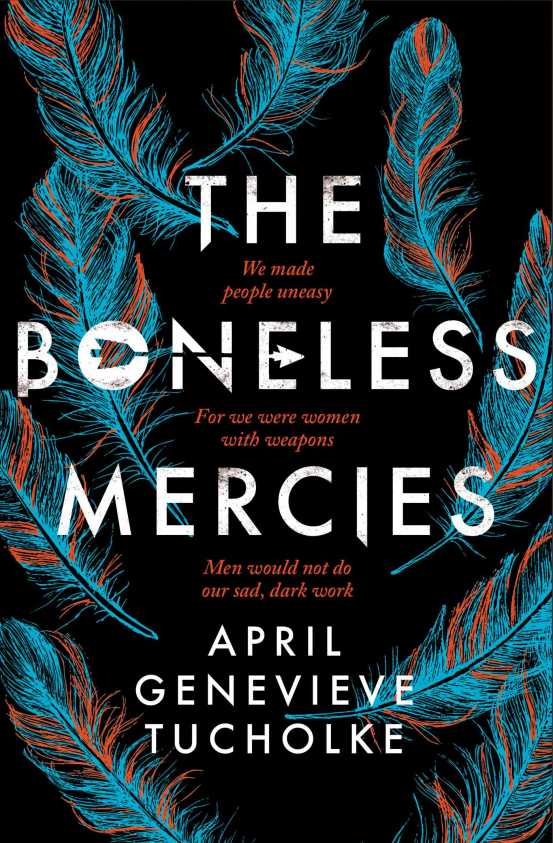
The Bonless Mercies Cover.jpg

Publisher: Simon & Schuster

Publication Date – 2 October 2018

Amazon     Book Depository

In the dark and cold realm of Vorseland, life is hard and death is easy.  This is especially the case for young women Frey, Ovie, Juniper and Runa, who eke out a living as Boneless Mercies.  Mercies are those people who travel the land exchanging mercy killings for coin in order to alleviate suffering, both mental and physical, in those living in the harsh land.  Only women can become Boneless Mercies, as men cannot do this dark and sad work.

While their roles as Mercies have provided this group of young women with an escape from the horrors or uncertainties of their previous lives, each of them, as well as their young male companion Trigve, seeks something different from this depressing routine of death dealing.  Runa dreams of joining the Quicks, the bands of forest-dwelling hunters and revellers with mastery of the bow; the former Sea Witch Juniper wants to return to her sisters; while Ovie seeks companionship after the trials of her previous life.  But their leader, Frey, wants something very different: fame and glory.

Hearing of a dangerous monster roaming in a far-off land, killing all the men and terrorising the landscape, the girls decide to change their fate and become heroes.  In order to reach their destination, they first have to engage on a dangerous journey through a harsh countryside.  First finding themselves caught up in the middle of a war between rival factions of witches, the Mercies find acceptance and camaraderie in the land they have come to save.  But as the monster they’ve come to face makes an appearance, the girls must finally face up to their destinies.  Will they be able to defeat a creature that so many have already died facing?

The Boneless Mercies is the fourth and latest book from dark fantasy young adult author April Genevieve Tucholke, whose previous works include the two books of the Between series, Between the Devil and the Deep Blue Sea and Between the Spark and the Burn, as well as her 2016 standalone novel, Wink Poppy Midnight.  All three of these previous novels dealt with a young adult supernatural romance set in a modern-day location.  The Boneless Mercies is Tucholke’s first foray into her own fantasy world, and it is the first book that is not as focused on a major romantic subplot.  The Boneless Mercies serves as a great standalone novel, although it has potential as the first book in a new series that either follows the characters introduced in this volume or that utilises Tucholke’s fantasy landscape.

The overall story of The Boneless Mercies is an interesting creation from Tucholke, as it is a good combination of character development, world building and searches for glory.  The premise of this story is unique.  Four professional mercy killers seeking better lives for themselves through fighting monsters is a fantastic pitch from the author that really drove me to read this story.  The author has made a clear attempt to emulate the sagas of old, and it is easy to note its similarities to Beowulf, especially when it comes to the monster.  The book’s central characters helped reinforce this by reciting several sagas that exist within their fantasy world, even coming up with a few verses for their own adventure.  I was a bit surprised about how only the last third of the book focused on the protagonists’ hunt for the monster; the antagonist that was such a focus of the book’s blurb and publication material, and instead a lot more of the book was spent focusing on the adventure getting there.

This actually works out really well, with the characters’ involvement with the various witch characters serving as the centre of the book.  The protagonists find themselves recruited to fight in a war between two rival factions of witches, which leads to some tough and damaging choices for Frey while the also allowing Tucholke to create a harrowing extended sequence in deadly marsh landscape.  The reversal of gender roles within the story is another great part of the story, and it is intriguing to see women in a more central role of these saga storylines in both the protagonists and antagonist roles.  The Boneless Mercies contains a unique and memorable central story that will prove to be appealing to a huge audience.  With several exciting romps through Tucholke’s new fantasy landscape, the book has an excellent conclusion, as well as several plot threads that could lead to intriguing future stories in the same universe.

Tucholke has woven some wonderful character dynamics into this story and introduced several intriguing protagonists for the reader to enjoy.  The book’s five main characters, Frey, Ovie, Juniper, Runa and Trigve, have all found an escape from their terrible past lives by coming together and following each other down the destructive path of the mercy killing trade.  Each of the characters has their own distinctive traits.  Frey is the big sister and reluctant leader of the group, and must struggle to balance her own desires with the needs of the people under her care.  Runa is the rebellious and free-spirited member of the group, eager to live the carefree life of a Quick in order to escape the horrors of her past.  Juniper is the dreamer, and her minor magical abilities and connection with the Sea Witches are essential to the plot in the middle of the book.  Ovie is the tough, no-nonsense member of the group, and is the group’s main warrior, teaching the others how to fight.  Despite some insights into her past, Ovie is the character who is explored the least out of each of the characters, although she does serve as a bit of a moral compass for Frey’s decision.

The main male character, Trigve is also an interesting inclusion, as he fills the role of the assistant and bastion of knowledge that the girls, especially Frey, go out of the way to protect.  This is a noticeable and intriguing change in the traditional gender roles within an adventurer group, and it is interesting to note that Trigve is usually sent away by the girls before any of the big action scenes.  His relationship with Frey is also one of the book’s main romantic subplots, and I liked the complex and mostly unspoken relationship these two characters had.  Overall, all of these main characters are great additions to the book, and Tucholoke spends considerable time exploring how these characters, all of whom have been forced to sever their previous connections, have come together into a surrogate family.  I really appreciated watching the characters’ relationships with each other build, as that worked really well to make the reader connect with each of them and become concerned with their fates.  The slow reveal of each character’s previous lives and the events that drove them to the other Boneless Mercies was also handled wonderfully and worked with the other story elements to create a powerful overarching narrative.

I also enjoyed the great new fantasy world that Tucholke created for this novel.  The author really gets to grips with the harsh, cold and unforgiving scenery of her Norse-inspired landscape of Vorseland, and the reader gets a real idea of why many inhabitants are tempted to employ the Boneless Mercies.  There are also a number of fantastic elements included throughout this world that really help make it an amazing location for this intriguing adventure.  The various bands of different fantasy professionals, such as the Boneless Mercies or the Quicks, give it an interesting flair.  The various groups of witches, including Marsh Witches, Sea Witches and even a group of pig mystics, become deeply entangled in the main story, and will also be significant players in any future books set in this universe.  This is an excellent and creative new fantasy world from Tucholke that works incredibly well for this book’s story.

April Tucholke has created an exciting and intense piece of young adult fiction in her latest novel, The Boneless Mercies.  Creating an intriguing narrative around a group of female former mercy killers embarking on a quest for glory in a dark and saga-rich fantasy landscape is a masterstroke from Tucholke, especially when she combines it with a fantastic story and close-knit and likeable group of protagonists.  The strong female characters make this an excellent one for a young adult audience, and I enjoyed the story’s darker background and storylines.  Special appreciation goes to the book’s great covers as well; the copy I had an iridescent feather design which was cool, but I also really enjoyed the excellent cover with the red wolf and the protagonist’s shadows.  Overall, The Boneless Mercies is a great piece of young adult fiction which presents the reader with something enjoyably different from the classic fantasy adventure.

My Rating:

Four stars

Amazon     Book Depository

Spinning Silver by Naomi Novik

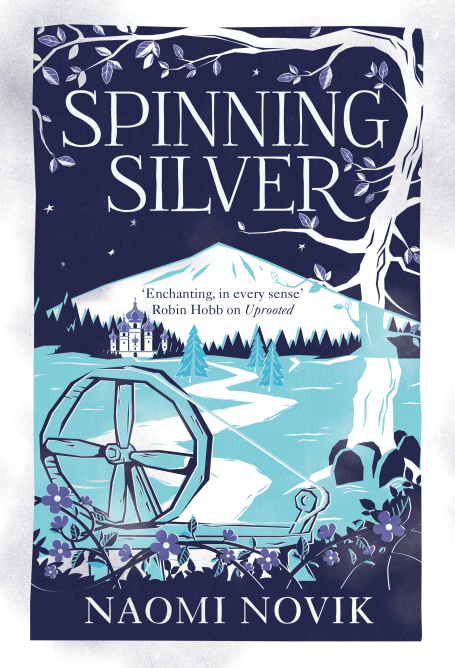
Spinning Silver Cover.png

Publisher: Macmillan

Publication Date – 10 July 2018

Amazon     Book Depository

From award-winning fantasy author Naomi Novik comes an innovative novel that repackages the classic fairy tale Rumpelstiltskin and portrays a fresh and much darker take on a story no longer fit for children.

Miryem is the daughter of an ineffective village moneylender, whose kind nature is taken advantage of by their neighbours.  Forced to harden her heart and take over the family business, Miryem is soon successful in her new career and quickly turns her family’s fortunes around.  As her business grows, rumours soon spread that she has the ability to turn silver into gold.  But words have power, and this boast has been overheard by the king of the Staryks, powerful fairies who hold dominion over winter.  The Staryk king sets Miryem an impossible task: to turn three increasing amounts of silver coins into gold.  If she fails, she dies, but if she succeeds, an even worst fate awaits her: marriage to the cruel king in his harsh kingdom of ice.

Forced to find a way to escape her life of captivity, Miryem finds a common cause with Irina, the daughter of a powerful nobleman.  Irina has caught the attention of the Tsar and has used magical Staryk silver to win his hand in marriage.  However, the Tsar has a dark secret that could threaten the realm, and Irina must find a way to survive his terrible powers.  With no other choice, Miryem, Irina and Miryem’s servant, Wanda, embark on a daring quest to free themselves from these terrible forces.

The story within Spinning Silver is told through first person narrations from a variety of the characters featured within the book.  The three main characters, Miryem, Wanda and Irina, each have their own adventures and narrate the vast majority of the book.  Other side characters, such as Wanda’s younger brother, Stepon, and Irina’s old maid, Magreta, also narrate several parts of the book, although these sections are usually tied into the storylines of the main characters.

Naomi Novik is an exciting name in fantasy fiction, best known for her nine Temeraire books set in an alternate version of 19th century Europe in which the English and French fought the Napoleonic War with the help of dragons.  Her latest book, Spinning Silver, is more reminiscent of her 2015 release, UprootedUprooted, which is currently being looked at for a movie adaptation, was a standalone fantasy novel that utilised common fairy tale elements to create a unique and enthralling tale.

Spinning Silver is a dark and gripping fantasy story that is a loose adaption of the story of Rumpelstiltskin.  The book’s main character, Miryem, is this story’s version of the local village girl who runs afoul of the magical creature.  However, rather than being a miller’s daughter whose father claims she can weave straw into gold, Miryem is a money lender and businesswoman who earns gold through her business acumen and mercantile skill.  Her initial challenge to change a material, in this case silver, into gold is done in a much more practical way than making a deal with a supernatural force.  This is a fantastic and modern twist on a key point of this classic story, and Novik follows up with an inventive fantasy narrative which uses other key elements from the original fairy tale to an amazing effect.

Novik weaves several other unique story points from Rumpelstiltskin into this story, and readers will enjoy seeing several memorable elements of a story they have known since childhood inserted into a new and more adult fantasy tale.  For example, in the fairy tale, the imp Rumpelstiltskin appears to the miller’s daughter three times to spin straw into gold.  The first time he appears he demands the daughter’s necklace as payment for this gift, while during his second visit he demands her ring.  Novik reverses this in her story, by having Miryem use the silver she has been given to create a ring and a necklace, which she can then sell to raise the gold she requires.  Another example is the idea of the miller’s daughter having to fill three rooms with gold to marry the king and stay alive.  In Spinning Silver, the fairy king demands that Miryem turn all the silver in three rooms into gold or else be killed.  Novik instils her character with a certain amount of logic, which allows her to come up with a simple and clever solution to this task.  Other parts of the book that have their roots in the fairy tale include the fairy king only allowing Miryem to ask three questions every night, his unwillingness for anyone to know his name and the general death sentence hanging over her head should she fail any of her undertakings.  Novik’s ingenious use of elements associated with Rumpelstiltskin is a highlight of this book which results in a bold and captivating new story.

In many ways, this is a story about exploitation, as the main characters try to overcome their situation and take control of their own lives.  For example, Wanda and her bothers live with an abusive father, and Wanda attempts to use her connections to Miryem to earn enough money to flee.  Another character, Irina, is initially exploited by her father, who sees her as a political tool rather than a daughter.  However, her exploitation by her eventual husband, the Tsar, is far worse, and Irina is forced to think of some inventive ways to manipulate the Tsar and his demonic ally in order to gain her freedom and keep her people alive.  While Miryem does have a loving family, the entire village exploits Miryem and her family.  Miryem is forced to become a hardened moneylender and then must outsmart the Staryk king to stay alive.  Watching the characters change their nature and way of thinking in order to overcome the people using them is a fantastic piece of this story.

Like her previous book, Uprooted, Novik has set her book in an Eastern European landscape, during an unknown period of history.  Despite the Germanic origins of Rumpelstiltskin, the setting of Spinning Silver feels somewhat more like Russian or Slavic in origin, with Tsars and Russian currency included in the narrative.  The dark, snow-filled forests that surround the story’s towns and cities are the perfect backdrop for this story, and Novik does an amazing job of conveying the cold and hidden menace that they contain.  Several of the characters in the book, including Miryem, are Jewish, and Novik spends time exploring how this group were treated and exploited.  There are many examples of the other characters, especially the inhabitants of Miryem’s village, treating these characters poorly, which reflects the poor treatment that the Jewish population suffered throughout Eastern Europe, while also focusing on the role they often played as moneylenders.  Overall, the dark Eastern European setting helps turn the usual child-friendly story into something colder and more hostile, and it is fascinating to see Novik’s supernatural and fantasy elements included in this historical situation.

Naomi Novik has completely reinvented one of our oldest and best-known fairy tales into a deeply fascinating and captivating story.  This book highlights Novik’s fantastic understanding and utilisation of key elements of the original tale and makes full use of its deeply haunting setting and compelling dark twists.  Spinning Silver is an excellent outing from Novik, who once again shows why she is one of the most creative minds in fantasy fiction.

My Rating:

Four stars

Amazon     Book Depository

The Traitor God by Cameron Johnston

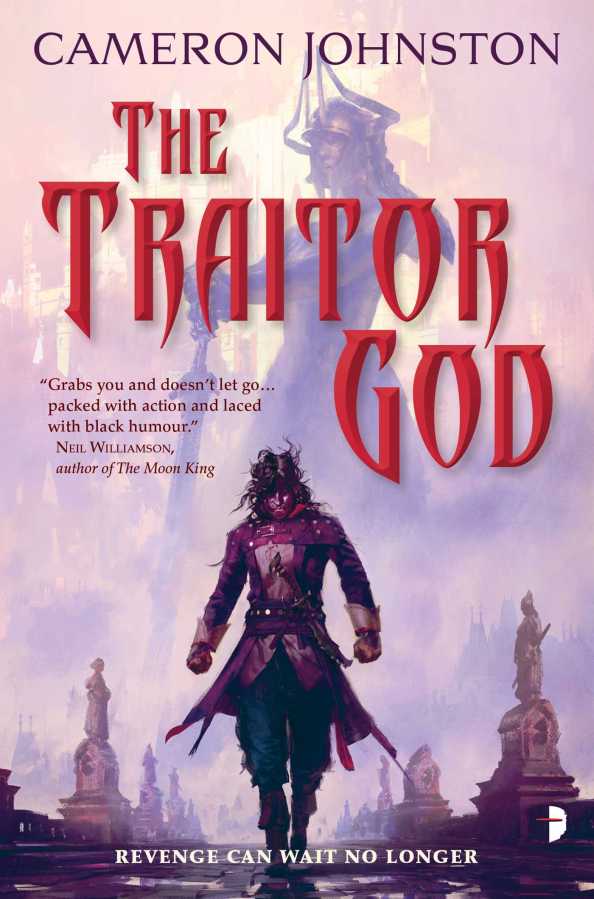
The Traitor God Cover

Publisher: Angry Robot

Publication date – 5 June 2018

Amazon

Prepare yourself for dark magic and a powerfully inventive adventure in The Traitor God, one of 2018’s best fantasy debuts from exciting new author Cameron Johnston.

Ten years ago, reviled mind-bending magician Edrin Walker fled his home city of Setharis with demons biting at his heels.  On that night, a god died, his mentor disappeared and Edrin’s memories of the events surrounding his exile were erased from his mind.  All Edrin remembers is that he made a deal with somebody extremely powerful.  In exchange for him leaving the city, this mysterious figure guaranteed the safety and long life of his closest friends.

Edrin has spent the last 10 years wandering the wilderness, living day to day and evading the creatures hunting him.  Content with his decision and new life, his exile ends the moment he witnesses the death of his best friend, Lynas.  In one terrible night, Lynas was brutally murdered and skinned alive, and Edrin saw every minute of it through their powerful mental link.  Now, with nothing left to lose, Edrin will return home, his only intention to burn everyone and everything until he finds the person responsible for his friend’s death.

However, returning to Setharis is a dangerous proposition.  Not only is he still being hunted by demons, but the Arcanum, Setharis’s governing body of magicians, will kill him the moment they find out he is still alive.  Beyond caring, Edrin will risk everything to get revenge, and woe betide any man, magician, demon or god who gets in his way.

This is an extraordinary first novel from Johnston, who has produced a stylish and highly addictive sword and sorcery fantasy adventure with a morally corrupt protagonist, a great new fantasy setting and a huge number of magical battle sequences.

The Traitor God contains an impressive dark fantasy action story that effortlessly captures the reader’s imagination and attention and drags them through every page of the book.  What starts as a revenge investigation and rampage turns into a fight for the future of an entire city, as mysterious forces are unleashed.  The story is told solely from the perspective of the protagonist, Edrin, and as a result it has been noticeably infected with his dark humour and well-developed scepticism.  The familiar storyline of a hero returning home and finding that everything has changed works well within The Traitor God.  Readers will enjoy watching the powerful magician manipulate the new generation of criminals and bystanders who are unfamiliar with what he can do.  While the eventual revelation of who is responsible for the murder is a tad predictable, the investigation getting there is amazing, and fans will enjoy seeing the protagonist confront his enemies.  The scope of the villain’s evil plot is quite impressive and results in some massive scenes towards the end of the book.  I really enjoyed the cunningness and ingenuity of the protagonist and had fun watching him come up with clever solutions to the difficult and unique problems he encounters.  There is one amazing scene towards the end of the book when his plan to finish off a powerful antagonist is slowly revealed to the reader.  The reveal of the protagonist’s master plan, which is kept hidden from the reader due to magical plot elements, is done perfectly within this scene, and the audience will enjoy the clever ideas and dark humour used within.

The vast majority of the plot of Johnston’s book is set within the city of Setharis, which is controlled by an army of powerful magicians.  The city is a great setting for this dark fantasy novel as the protagonist is forced to conduct his investigation through its corrupt and crime-ridden streets.  It is clear that Johnston has spent significant time creating Setharis, and Edrin explores vast swathes of it during his adventures.  The exploration of the Arcanum is particularly intriguing, and readers will be shown the noticeable differences between the sanctuary of magicians and the dwellings where the city’s poor live.  Edrin’s observations about the inequalities and corruption of the Arcanum are unique among the book’s magicians.  This allows Johnston to show off the arrogance of the other magicians, which plays into the plot while at the same time endearing Edrin to the reader.  The setting of Setharis is an amazing part of this novel, and readers will look forward to returning to it in Johnston’s future works.

One of the best parts of The Traitor God is the sheer amount of exceptional magical and fantasy elements that have been packed into it by the author.  Edrin has unique magical mind powers that allow him to control people he encounters, and these are surprisingly dark powers for a fantasy protagonist to have.  These powers are intriguing, as they are known and feared throughout Johnston’s fantasy world, and Edrin suffers significant discrimination as a result.  The scenes where Edrin uses his mind-bending abilities are well presented by Johnston, as he successfully endeavours to show the effect Edrin’s power has on the other character’s minds.

The other magicians that feature in The Traitor God also have magical powers that catch the reader’s imagination when they are presented in the book.  The book features magicians with powers to nullify the magic of other magicians, sniffers who can smell and identify magicians from a distance, magicians who use body enhancement magic to become epic soldiers, and one extremely skilled hydromancer.  Johnston has also created some fascinating rules and abilities that affect all of the magicians within the book, including Edrin, and result in some wonderful story elements.  A great example of this revolves around the rule that magic permeates every cell of a magician’s body and leaks out of them into items like their clothing or bedding.  Johnston uses this fact to great effect throughout the story, as his protagonist is constantly forced to find constructive ways to avoid enemies who can detect his magic.  The author has also created memorable descriptions of the way that magicians are forced to access their magical power.  Johnston establishes that magicians within The Traitor God have to be careful about the magic they draw into themselves, lest they burn themselves out or go mad with power.  There are several scenes where Edrin is forced to draw large amounts of magic into himself to face powerful opponents or save the lives of his friends, and the resultant internal battles to retain control and his sanity are a fantastic part of the narrative.

While Johnston goes into incredible detail about the rules and roles of the magicians of Setharis, he has also included some alternative magical users who do not follow the same rules.  The comparison between these two different groups of magic users is quite distinctive, and scenes where they come into conflict with each other are quite destructive and highly enjoyable.  Johnston has made sure to include a number of unique demonic creatures the hunt and harry the protagonist.  These creatures are quite distinctive, and Johnston cleverly ties their hunting ability into his rules about magical scents and detection.  The most memorable magical creature within the book is also the largest, and results in some significant, fast-paced and explosive scenes throughout the book.  Overall, the electrifying and distinctive magical and fantasy elements within The Traitor God are one of the book’s most intriguing characteristics and highlight just how imaginative and creative Johnston is.

There are a tremendous number of action-filled sequences throughout the book as the main character and his allies fight criminals, demons, magicians and gods.  As a result, The Traitor God will appeal to wide range of readers eager to get their latest dose of intense fantasy action.  There are brawls, chases, complex magical duels, fights with monstrous foes, large-scale magical warfare within a city, and even a fight between two gigantic magical constructs.  Various elements that Johnston sets up when describing the city of Setharis or the magical abilities and rules of his magician characters often come into play during these scenes, and the author does a great job of winding his own lore into these fantastic sequences.  Those drawn to magical and fantasy action and battles will find all their needs and more are met within this book.

In his debut book, Cameron Johnston has shown that he is author with an immense and powerful imagination and the ability to skilfully transcribe his ideas into a powerful narrative.  The Traitor God is a fantastic piece of dark fantasy, with some incredibly thrilling action and adventure subplots.  This book is a highly recommended read, and Johnston is an author that fantasy fans will need to keep an eye on.

My Rating:

Four and a half stars

Amazon

Fallen Gods by James A. Moore

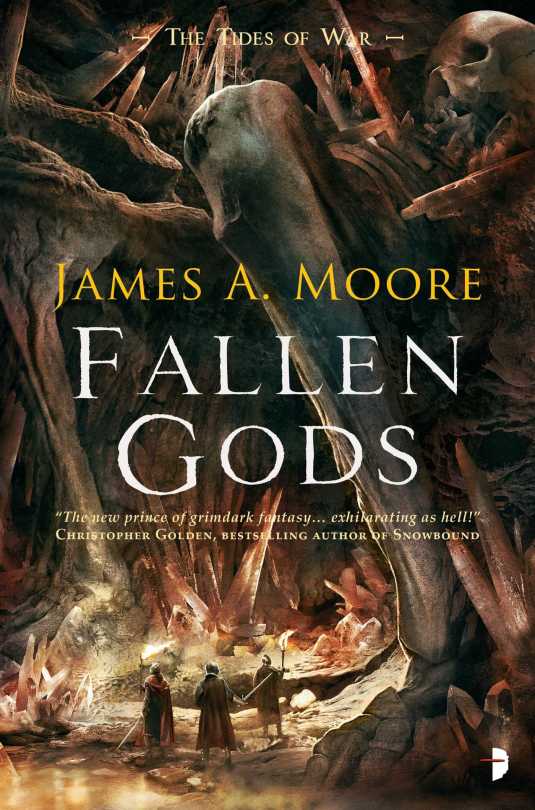
Fallen Gods Cover

Publisher: Angry Robot

Publication Date – 2 January 2018

Amazon     Book Depository

Those looking for a fast-paced action fantasy adventure to really get the blood pumping should prepare themselves for Fallen Gods, the latest novel from one of the leading authors in dark fantasy, James A. Moore.

Brogan McTyre, former soldier of the Kingdom of Stennis Brae, is a damned man.  After the Grakhul, the servants of his world’s cruel gods, took his entire family, Brogan risked everything to save them from being sacrificed.  Although he failed, his actions resulted in the disruption of sacred rites, a desecration he compounded by killing or enslaving all of the Grakhul.  Now with the gods angered beyond all belief, their dark heralds, the He-Kisshu, have unleased terrible storms and intense acts of destruction across the Five Kingdoms.  The only way they will stop the destruction and avert armageddon is with the sacrifice of Brogan and his companions.

Now Brogan and his men, including his loyal second-in-command, Harper Ruttket, are being hunted.  Everyone is out to capture them – not just the servants of the gods but anyone seeking to survive the oncoming destruction.  As Brogan and his men flee across the Five Kingdoms, their adversaries start to become more powerful and demonic in nature, and not even an army of mercenaries will be able to save them.  Their only hope might be an item of immense power: a sword containing the heart of a slain god hidden within the Broken Mountains.

Elsewhere, Myridia the Grakhul leads her remaining sisters to salvation while trying to avoid the shadowy Night People hunting them.  Niall Leraby and Tully, two freed former sacrifices, seek safety in Niall’s home city of Edinrun but find it already in the grips of an intense magical madness.  Brogan’s former king, Bron McNar, and his fellow rulers of the Five Kingdoms must find a way to appease the gods before their lands and people are completely destroyed.  Beron the slaver seeks revenge against Brogan and the men who brought the wrath of the gods down on him and his people.  But Beron is serving a darker master; one who may prove to be an even greater threat to the world then the gods.

As the world he knows breaks down around him, can Brogan claim the power he needs to survive, and will it be enough to stop the utter chaos he has unleashed?

James A Moore is a renowned author of dark fantasy and horror who has written more than 40 books in his career.  Some of his previous works include the Serenity Falls trilogy, the Seven Forges series and the Subject Seven series.  Fallen Gods is the second book in The Tides of War series and is the sequel to his 2017 action extravaganza, The Last Sacrifice.

This is a perfect book for readers who are looking for an action-packed adventure story.  Moore has made sure to include a large number of varied battles and fight sequences through this book, as well as several other intense action scenes.  These action sequences are also enhanced by the author’s use of crazy and inventive fantasy creatures that are encountered by the book’s characters.  In addition to the unique creatures that Moore introduced in the previous book in this series, the characters within Fallen Gods are also forced to contend with numerous new creatures and opponents.  Not only do they encounter rampaging gods, magically powered soldiers and maddened slavers, they are also forced to contend with corrupted and demonically mutated Grakhuls and He-Kissus that are even more freaky than the original versions.  As a result, this is an extremely fun dark fantasy book than contains enough action to excite any reader with a pulse.

As soon as a reader starts Fallen Gods it will quickly become obvious that there is a lot going on within this book.  Moore makes use of several recurring narrators throughout the books and is constantly implementing quick-fire changes between them.  Each of the narrators has their own unique storyline filled with their own side characters and adventures throughout different parts of Moore’s fantasy world.  There are also several interludes told from the perspectives of minor characters and groups away from the story’s main characters.  Whilst many of these interludes contain key plot points and set up later scenes with one or more of the main characters, a number have been included to explore the rest of the Five Kingdoms.  In particular, they show how a range of different characters are experiencing the wrath of the gods and the associated destruction, as well as the various ways in which they are attempting to survive.  Moore does a great job of tying the varied storylines and interludes together at the end of the book, as most of the main and minor characters have been subtly placed in or have had their focus turned towards a singular location where they will all meet up.  As a result, Moore is able to showcase large portions of his fantasy landscape to the reader whilst also expanding on his fascinating narrative of a world suffering divine punishment and the craziness that results.

While there are a number of positives to Moore having such a huge range of narrators and storylines, Fallen Gods does seem a bit overcrowded at the start.  However, readers should be reassured that each of the individual storylines is very easy to follow and they should have no problem viewing all of the storylines together as one cohesive and enjoyable plot.  That being said, new readers could possibly benefit from starting with the first book in the series, The Last Sacrifice.  While Moore does a really good job of explaining the vast majority of the book’s story elements, there are one or two features that may confuse new readers when they are first introduced.  Most of these are eventually explained later in the book, so readers will only be in the dark for a short period of time.  However, there is at least one plot element that originated within The Last Sacrifice which could prove to be slightly confusing to the uninitiated.  That said, if a reader wishes to start their exploration of this series with Fallen Gods, they should have no problem enjoying this excellent action adventure.

Overall, this is an exciting and highly charged book that makes the most of its dark fantasy premise.  Readers will love the overarching story of a world experiencing the wrath of its vengeful gods, which Moore masterfully tells with his huge range of narrators and point-of-view characters.  This is a fantastic sequel to The Last Sacrifice, and I can’t wait to see what madness occurs in the next instalment of this series.

My Rating:

Four stars

Amazon     Book Depository