Mind Bullet by Jeremy Robinson

Mind Bullet 2

Publisher: Podium Audio (Audiobook – 23 November 2021)

Series: Standalone/Infinite Timeline

Length: 11 hours and 42 minutes

My Rating: 5 out of 5 stars

Amazon     Book Depository

The deliciously twisted mind of bestselling science fiction thriller author Jeremy Robinson returns with another epic and over-the-top adventure, Mind Bullet, a fantastic and captivating read.

Robinson is an outstanding author whose work I first checked out earlier this year.  Known for his Nemesis Saga and Chess Team series, Robinson is currently working on a collection of partially connected standalone novels, all of which are set within the same extended universe and which are leading up to some massive crossover novels.  I was lucky enough to read one of Robinson’s other 2021 releases earlier this year, The Dark, which was a captivating and deeply entertaining read with a bonkers story to it.  I had a wonderful time with The Dark, which got a full five-star rating from me, and it made me an instant fan of this cool writer.  As such, I was extremely intrigued when I saw that he had another novel coming out this year.  This book, Mind Bullet, was another unique and fascinating read from Robinson with a killer plot to it that I just had to pick up and check out.

In the world of high-level international assassination, Jonas is something of a legend.  Raised by two honourable killers, Jonas had set out on his own, taking on the most dangerous and difficult of jobs and succeeding in some extremely flashy ways.  Despite the ostentatious techniques used in some of his kills, Jonas has managed to stay out of the limelight and out of sight from conventional law enforcement due to fact that none of his targets ever shows any signs of violence.  That is because Jonas has a secret: he has telekinesis and can blow a small hole into people’s brains merely by concentrating on them, an unexplained ability he calls Mind Bullet.

However, despite all his success and the accompanying wealth, Jonas is unhappy and depressed.  Alone except for his sarcastic and possibly psychotic AI, Bubbles, Jonas is still grieving the loss of his dead parents, convinced that someone killed them and got away with it.  As his depression and loneliness results in Jonas taking more and more dangerous jobs, Bubbles decides to intervene for his own good.  Playing matchmaker, Bubbles determines that Madee, a local Thai food delivery woman and part-time thief, would be perfect for him.  After an awkward first meeting where Madee attempts to rob him, the two loners start to hit it off.  However, true love is about to get interrupted by the worst kind of gate crasher, the assassin group known as the Shrieking Ninja.

Angered by one of Madee’s burglaries, the Shrieking Ninjas attempt to break into Jonas’s house and kill them both.  Barely escaping from the Shrieking Ninjas’ mysterious and powerful master, Jonas goes on the run with Madee, hoping to find a way to get them off their trail for good.  However, the disastrous and very public encounter at his house has raised unwelcome attention and Jonas is shocked to find that a $10 million bounty has been placed on his head.  A mysterious organisation is determined to capture Jonas by any means necessary, and every elite assassin and hitman in America is willing to collect.  Pursued by a legion of outrageous killers, Jonas, Madee and Bubbles find themselves thrust into the midst of a dark and deadly conspiracy that lies in the heart of Jonas’s past and the secrets behind his lethal abilities.  Can this unusual group survive the onslaught headed their way, or will they be buried by a legion of lethal killers with their own unique abilities?

Wow, just wow, this novel was the absolute definition of fun.  Robinson did another amazing job with Mind Bullet, producing an intense and exciting novel that is wildly addictive and incredibly entertaining.  Featuring a brilliant, fast-paced story, Mind Bullet had me hooked from the very second I started listening to it, and I ended up powering through it in a few short days.  An outstanding and compelling read, this novel also got a five-star rating from me.

Mind Bullet has an awesome and deeply entertaining narrative that is extremely easy to read and even easier to get addicted to.  Robinson starts off strong with an audacious assassination involving an airborne car, an unethical AI, psychic powers and a parachute, which serves as the perfect introduction to Jonas and his assistant, Bubbles.  From there the story quickly evolves, with Jonas meeting the mysterious Madee while being forced to defend her from the outrageous Shrieking Ninjas (that name says it all).  Following that encounter, Jonas and Madee are forced to contend with continued attacks from even more unusual and deadly assassins, each of whom steal the scene they’re in, either by their unique methods or dangerous powers not unlike Jonas’s.  The protagonists are thrust into deadly situation after deadly situation, picking up new friends as progressively more dangerous foes attack with devastating effect.  This amazing and compelling narrative contains the right blend of forward action and intriguing backstory, as the attacks awaken memories from Jonas’s past, which he also seeks to explore.  After a series of interesting reveals after the halfway point of the book, the protagonists are thrust into their most dangerous situation yet when they encounter the book’s big bads, in an epic and twisty confrontation that brings everything together and ensures everything is out on the table.  All this leads up to an explosive conclusion that wraps up the story and the character arcs exceedingly well, while also leaving the door open for appearances in future Robinson books.

This entire story was extremely intense and addictive from the very beginning, and I had an outstanding time getting through it, and loved every single development, explosive encounter, and fantastically weird new character.  Despite its myriad elements, the entire narrative came together extremely well, and the readers are left feeling extremely satisfied, especially as this is a mostly self-contained story.  I felt that Robinson’s use of single first-person perspective to tell the whole story worked extremely well, especially as the point-of-view character was particularly entertaining and enjoyable.  Like most of Robinson’s stories, Mind Bullet’s narrative contained a great combination of humour, action, character growth and sheer insanity, which helps to produce a deeply entertaining and compelling plot that grabs the reader’s attention and holds on tight.  While substantially less dark in tone and character development than Robinson’s prior book, The Dark, Mind Bullet has serious moments which contrast extremely well with the inherent silliness to produce an overall epic read.  I honestly loved every second of this story, and there are some brilliant scenes featured throughout it, from massive and elaborate fight scenes, brutal psychic brawls both in reality and the mental plain, as well as several simpler scenes that deal with the characters and show their growth as people.

It is interesting to note that this book is part of Robinson’s wider Infinite Timeline, a collection of mostly unconnected novels set in the same overarching universe.  Robinson is currently making a play to combine the plots and characters of these standalone novels, and several upcoming novels will feature multiple characters from across the canon.  As such, Mind Bullet contains multiple references to Robinson’s prior works, mainly Tribe and The Dark, which are part of the same loosely connected storyline (the books of which are are going to have their first crossover in 2022’s Khaos).  There is also a surprising appearance from some of the protagonists of Robinson’s other books, which hints at the bigger crossover later in the series in Singularity (this universe’s version of Avengers: Endgame).  While readers can easily enjoy Mind Bullet without any knowledge of Robinson’s prior books, a couple of scenes and references might be a bit weird without context, especially as a few characters are briefly parachuted (or teleported) in.  Still, readers should be able to follow what is going on without too much difficulty, especially as Robinson does provide some explanation or interesting reaction from the protagonist, and hopefully these appearances will encourage them to check out some of the author’s other books.  I personally really enjoyed these inclusions, and it was fun to see how Robinson is getting more and more blatant with the connections between the various novels.  I am really looking forward to seeing how this entire series comes together, and I really need to go back and read some of Robinson’s other books before this happens.

One of the things that Robinson truly excels at as an author is his ability to produce some complex and relatable characters.  This is particularly true in Mind Bullet, which features a fantastic cast of compelling and relatable protagonists and antagonists with intriguing plot threads that the reader will quickly get invested in.

The most prominent character of this novel is the point-of-view protagonist, Jonas, the dangerous assassin with a heart of gold.  In many ways, Jonas was a pretty typical protagonist for Robinson, a confident and fun-loving figure who cracks a ton of jokes and has their own unique style and a liking for obscure pop culture.  I had a lot of fun following the adventure through Jonas’s eyes, especially as his hilarious view of all the outrageous stuff occurring around him and his constant quips kept me in stiches for most of the novel.  Despite this entertaining outer facade, once you dig deeper Jonas proves to be a lot more complex and emotionally damaged.  The character is chronically depressed and bored, especially after the mysterious car crash that killed his parents, and at the start of the book he has a substantial subconscious death wish.  The character evolves for the better as the novel progresses, especially as he starts to make some connections with the various side-characters.  These friendships and deeper relationships really change him for the better, although they also uncover a range of secrets from the past.  I loved the dive into the character’s psychic abilities, especially as he goes through a trial-by-fire against a range of powerful foes, each of whom is deadlier than the last.  It was also cool and intriguing to explore his hidden, traumatic past, which the author does extremely well through several clever flashback sequences.  The eventual reveal of who or what Jonas really is was done very well, and it will be interesting to see how the author expands on that in some of the future books.

My other favourite character in Mind Bullet was probably the sassy and potentially crazy artificial intelligence, Bubbles.  Bubbles, whose origins and capabilities are also unknown, is Jonas’s assistant and best friend, whose personality is growing based on her interactions with Jonas.  Thanks to the unique experiences she has gained living alongside a quipping assassin, Bubbles has developed quite a sarcastic and entertaining personality, and nearly every interaction with Bubbles results in an inappropriate joke or shocking comment which is pretty hilarious.  Like Jonas, Bubbles also develops a bit throughout the novel, and it was fascinating to see the author’s viewpoint about nature vs nurture when it comes to this character’s personality and emotions.  Despite being an AI, Bubbles is quite a caring being, even if she has developed some homicidal tendencies (especially towards ducks), and I appreciated the unique bond she forms first with Jonas, and then with some of the characters in the book.  Bubble’s meddling in Jonas’s life to keep him alive is particularly sweet, even if she tries to cover it with analytics, and it ended up being one of the major character threads of this book.  An outstanding and brilliant AI character who you will fall in love with!

Aside from Jonas and Bubbles, there are some other amazing characters throughout Mind Bullet.  Madee is another sassy and strong-willed female character (most of Robinson’s characters are sassy and sarcastic), whose break-in to Jonas’s house triggers all the events of the book.  Madee is another fun character, and I really loved the entertaining romance that bloomed between her and Jonas, despite their awkward, computer assisted meeting.  Robinson plays it pretty smart with Madee, and I loved some of the great twists surrounding her, even if by the final reveal it is apparent there is more going on with her.  Jonas also bands together with a group of other complex and entertaining characters, most of whom get pulled into his orbit as the world explodes around him.  While I did think the inclusion of several attractive female characters helping Jonas did appear a little harem-like, each of them proves to be a valuable member of the team, and I liked some of the fun character arcs surrounding them.  I also really need to highlight the fun collection of killers that come after the protagonists throughout Mind Bullet, especially as Robinson went out of his way to produce some wild and truly ridiculous figures here, including incompetent Neo Nazis, stereotypical gun-toting Texans, and foul-mouthed murderous nuns.  There are also a group of dangerous psychic killers, each of whom has their own unique history with Jonas, and whose compelling range of powers results in some dramatic action sequences when they try to fight the protagonists.  I had an outstanding time getting to know all these brilliant characters, and the sheer range of captivating figures really helps to make Mind Bullet stand out.

When Mind Bullet came out I absolutely had to grab this book in audiobook format.  This is because Mind Bullet was narrated by the incredibly talented R. C. Bray, who is one of my all-time favourite audiobook narrators (check out his narration of Michael Mammay’s Planetside, Spaceside and Colonyside).  Bray, who has narrated most of Robinson’s works, did another incredible job here, lending his fantastic and powerful voice to this wild and entertaining book.  Bray really gets Robinson’s fantastic protagonists and writing style, and he was soon moving this brilliant novel along and an ultra-fast pace, ensuring that listeners power through its 11 hour and 42 minute runtime in a very short order.  Bray really dives into the characters of the book, and I loved how he brought Jonas to life, ensuring that the reader gets the full sense of his humour, unique worldview and deeper inner struggles.  The rest of the character are also portrayed perfectly as well, especially Bubbles, and I loved the cool and amusing voices that he provides to each of them.  Bray obviously has a lot of fun here with this book, and the fantastic voices he uses for some of the more unique moments and characters are extremely entertaining and memorable.  I especially loved the ultra-serious and dramatic voice that he used for the formal name-drooping introduction of each major character’s names or codenames (which appear in the printed version in massive bold print).  I really appreciated this fun and entertaining take on the audiobook narration, and you will fall in love with Bray’s brilliant voice and entertaining style if you check out the audiobook version of this novel.

Overall, Mind Bullet is another epic and incredible read from the exceptional Jeremy Robinson.  Robinson’s latest book is crazy in all the right ways, and readers will deeply enjoy the wild and unpredictable ride that the characters go on.  Featuring an amazing group of characters, some fantastic humour, and some massive memorable scenes, Mind Bullet is an outstanding novel that I had an awesome time getting through.  Highly recommended to anyone looking for something fun, especially in its audiobook format, you need to check this book out!
Amazon     Book Depository

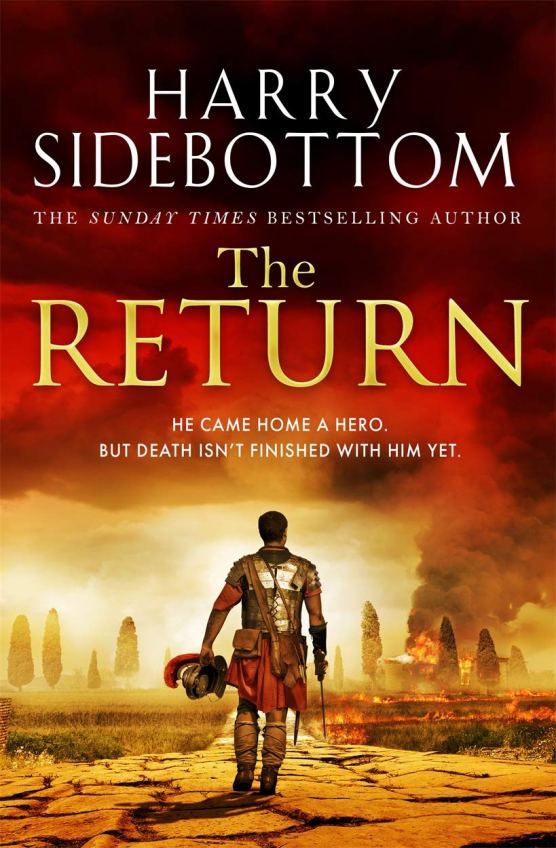
Quick Review – The Return by Harry Sidebottom

The Return Cover

Publisher: Zaffre (Trade Paperback – 11 June 2020)

Series: Standalone

Length: 307 pages

My Rating: 4.5 out of 5 Stars

Amazon

Bestselling historical fiction author Harry Sidebottom takes you on a dark and compelling adventure into the mind of a haunted Roman soldier as he returns home only to find more death waiting for him with, The Return.

Harry Sidebottom is an impressive author specialising in exciting and detailed Roman historical fiction novels, whose work I have been enjoying for years.  Sidebottom has so far written two amazing series, the Warrior of Rome series, which followed a barbarian turned Roman general, Ballista, as he attempts to survive the machinations and wars of the Empire, and The Throne of the Caesar’s novels that examined some of the more obscure and chaotic Roman Emperors.  In recent years Sidebottom has started experimenting with some compelling standalone novels.  The first of these, The Last Hour, brought back Ballista and set him on a fast-paced adventure through Rome in a manner reminiscent of the television series 24.  His next novel The Lost Ten, featured a group of 10 mis-matched Roman soldiers who are sent on an infiltration mission into enemy territory to break a high value target out of prison.  His third standalone novel was The Return, which came out last year.  I read it a little while ago and failed to provide a timely review for it.  However, as Sidebottom’s latest novel, The Burning Road, has just been released, I thought I would take this opportunity to quickly review The Return so I have a clean slate when I get my hands on a copy of his latest book.

Synopsis:

He came home a hero.
But death isn’t finished with him yet . . .

145BC – CALABRIA, ANCIENT ROME. After years of spilling blood for Rome, Gaius Furius Paullus has returned home to spend his remaining days working quietly on the family farm.

But it seems death has stalked Paullus from the battlefield. Just days after his arrival, bodies start appearing – murdered and mutilated. And as the deaths stack up, and panic spreads, the war hero becomes the prime suspect. After all, Paullus has killed countless enemies on the battlefield – could he have brought his habit home with him?

With the psychological effects of combat clouding every thought, Paullus must use all his soldier’s instincts to hunt the real killer. Because if they are not brought to justice soon, he may become the next victim.

The Return was an intriguing and compelling novel that contains a brilliant and dark historical murder mystery.  Like some of his previous novels, Sidebottom has blended some unique crime fiction/thriller elements with his traditional historical settings and storylines.  As such, The Return reads like an interesting combination of historical fiction and a darker crime novel, specifically Scandi noir.  This results in a clever and compelling character driven narrative that follows a dark and conflicted Roman protagonist who is forced to investigate a series of murders in his grim and forbidding village.  The author does a wonderful job of blending his historical elements with the compelling crime fiction storyline, and the reader is soon treated to a harrowing and exciting murder investigation.  There is some brilliant use of a darker location, including a forbidding forest, as well as a lot of focus on his haunted protagonist, especially through a series of flashbacks.  All this comes together into an excellent narrative, and it was fascinating to see Sidebottom’s damaged protagonist dive head long into danger while trying to solve the murder and prove his own innocence.  While I did think that the solution to the mystery and the culprits behind the murder was a little obvious, this ended up being an excellent and impressive novel.  Sidebottom really takes the readers on a harrowing and enjoyable ride here, and I ended up getting through it in a few short days.

I was deeply impressed with the dark and guilt-ridden protagonist who Sidebottom set this great story around.  Paullus is a recently returned soldier who received much acclaim during Rome’s war with ancient Greece, but he is also haunted by his actions there, particularly around the fates of two of his comrades.  Thanks to his guilt he constantly sees the Furies, the Roman goddesses of vengeance and retribution, who remind him of the wrongs he commits.  To avoid seeing them Paullus dives headfirst into danger, as the threat of death is the only thing that alleviates his guilt.  This helps turns Paullus into a fascinating and deeply complex figure who has some interesting interactions with his own emotions and the people from his pre-war life who don’t understand what he is going through.  Sidebottom utilises a series of flashbacks to showcase Paullus’ military career and you slowly get the entire story of the protagonist’s heroic past, as well as the event that led to his intense guilt and heartache.  While I did think that Sidebottom might have been a tad heavy-handed with the flashbacks (it makes up nearly half the novel), I did really appreciate the sheer amount of work he put into his great protagonist.  The author did an impressive job of simulating the guilt, fear and anger of a war veteran attempting to re-enter society and it was really compelling to see.  I also deeply appreciated the author’s trick of personifying this guilt into visions of the supernatural Furies, especially as it is never fully established whether they are there or just figments of his damaged mind.  The use of Paullus as the central protagonist really enhanced The Return’s excellent story and he was an outstanding investigator for this fantastic murder mystery.

I also really enjoyed the cool historical fiction elements contained within this novel.  The Return takes place in 145BC, which is one of the earliest times that Sidebottom has explored in his historical fiction novels.  I deeply enjoyed the exploration of this time, especially as Sidebottom features more obscure conquests and locations.  The central location of the story, Calabria in Southern Italy, proved to be a fantastic and interesting setting, especially as this region of Italy contained two distinctive social groups, the Roman settlers and the original inhabitants.  Due to their historical support of Hannibal during the Punic Wars which saw them forced to give up their lands, the locals are treated as second-class citizens by the Romans, who use them as slave labour.  This adds some extra drama and intrigue to the story as these local tribes get caught up in the paranoia and despair around the hunt for the murderer.  I also really appreciated Sidebottom’s examination of the Roman invasion of Greece that the protagonist fought in.  This is one of the more obscure conflicts from Roman history and the author provides a detailed account of the causes, battles, and eventual consequences of the conflict.  I deeply enjoyed exploring this period in the flashback chapters, as there were some detailed and powerful battle sequences which featured some distinctive clashes between Greek and Roman military styles.  Throw in some Greek and Roman mythology as a potential cause for the murders or the protagonists’ actions, and you have quite a brilliant historical tale.  These grim and bloody historical elements blended perfect with the darker story that Sidebottom was telling and it was absolutely fascinating to see how they were incorporated into The Return’s compelling, multi-genre style.

Overall, The Return was an epic and complex novel that continued to showcase Harry Sidebottom’s amazing talent as a writer.  This fantastic novel ended up being one of the more unique historical fiction books I have ever read and I deeply enjoyed the cool combination of classic Roman history and darker crime fiction elements, especially when shown through the eyes of an extremely damaged protagonist.  This book comes highly recommended, and I cannot wait to get my hands on Sidebottom’s latest novel, The Burning Road.

Amazon

Throwback Thursday: Green Arrow (2001): Volume 3: The Archer’s Quest by Brad Meltzer, Phil Hester and Ande Parks

Green Arrow Archer's Quest

Publisher: DC Comics (Paperback – 1 September 2004)

Series: Green Arrow Vol. 3 – Volume Three

Writer: Brad Meltzer

Penciller: Phil Hester

Inker: Ande Parks

Colourist: James Sinclair

Letterer: Sean Konot

Length: 175 pages

My Rating: 5 out of 5 stars

Amazon

Welcome back to my Throwback Thursday series, where I republish old reviews, review books I have read before or review older books I have only just had a chance to read.  For this week’s Throwback Thursday I check out an all-time favourite comic of mine, the third volume of the epic 2001 Green Arrow relaunch, The Archer’s Quest.

The late 1990s and early 2000s were an outstanding time for DC Comics, who produced an amazing number of epic and fascinating comic series that combined brilliant storytelling with fantastic artwork.  While there are several great series I enjoy from this period (Teen Titans comes to mind), one of my absolute favourites was the awesome 2001 relaunch of Green Arrow.  Also recorded as Green Arrow Vol. 3, this series resurrected the original Green Arrow, Oliver Queen, some years after his death.  I have an amazing amount of love for this comic; not only was it one of the first series I ever really got into but it still really stands up after all this time.  This is easily one of my all-time favourite comic book series, and the absolute pinnacle of this series was the simple, yet amazingly effective fourth volume, The Archer’s Quest.

While I probably should review some of the proceeding volumes of this series first before talking about The Archer’s Quest (such as the first volume, Quiver by Kevin Smith), I recently re-read this fantastic comic, so it has been on my mind all week.  Containing issues #16-21 of this outstanding series, The Archer’s Quest is a brilliant and captivating comic tale that really gets to grips with the protagonist as he embarks on a journey vital to his identity and history.  Featuring the brilliant writing of bestselling author Brad Meltzer (author of several amazing thriller novels, as well as some impressive DC Comics), and the artistic stylings of Phil Hester and Ande Parks, this is an exceptional comic which gets a five-star rating from me.

Green Arrow - #16

Following his unexpected resurrection after his violent death, Oliver Queen, the Green Arrow, has been returned to Earth, ready to continue the good fight.  However, no man can come back from the grave without a heavy heart, and Oliver Queen has more skeletons in his closet than most of his fellow heroes.  A chance discovery that the villain, Catman, attended his funeral leads Oliver back to his old friend, Shade, the immortal being Green Arrow trusted to round up certain artefacts of Oliver’s superhero career that could reveal his secret identity. 

Discovering that Shade failed to get several of Oliver’s most precious keepsakes, Oliver embarks on a cross-country road-trip to recover them himself.  Accompanied by his former sidekick, Roy Harper, Oliver begins visiting some of the locations most important to himself and his career as a superhero.  From the ruins of the Arrowcave to the Justice League’s orbiting Watchtower and even the Flash Museum in Central City, Oliver and Roy will attempt to find these items from the past in order to safeguard their future.

However, this will be no simple road trip, as the two heroes encounter some unexpected dangers and surprising opposition, including fellow hero the Flash and the angry zombie Solomon Grundy.  Worse, this journey will uncover some dark secrets from the past that Oliver has long hoped to keep quiet.  Can Oliver recover his treasures without his friends and family discovering who he really is, or has the past finally come back to destroy this resurrected hero?

Green Arrow - #17

The Archer’s Quest is a fantastic and powerful Green Arrow comic that takes the protagonist and his former sidekick on a wild and extremely personal adventure.  Before reading this, if you had ever pitched me a comic based around the idea of a recently resurrected superhero going on a road trip, I might have been a little dubious.  Well, it turns out that I would have been dead wrong, as Brad Meltzer produced an intense, captivating and emotionally rich narrative that is not only extremely entertaining but which contains some excellent character work, some brilliant references to the classic Green Arrow comics, and which dives deep into the psyche of a troubled and complex protagonist. 

The narrative of The Archer’s Quest starts extremely strong, with Green Arrow meeting Superman at Oliver Queen’s grave.  This is a fantastic opening scene, especially once Superman hands over a series of photographs of the funeral, and I loved the focus on the harrowing realities following a resurrection.  The sombre mood is broken when Green Arrow notices a stranger in his photo amongst his closest friends.  This leads him to hunt down Catman, which also reveals the hand of Shade and the revelation that certain items from Oliver’s past are still out in the open.  This forces Green Arrow into a road trip, hunting for his artefacts and dealing with friends, enemies and family.  The first chapter packs in some much-needed action, as Green Arrow goes toe-to-toe with Solomon Grundy in an epic and brutal fight, that ends with a surprising, and gruesome, win from the protagonist.  From there, Meltzer and the artists pile up the emotional and the feels by having Oliver encounter several fellow heroes who he has complex relationships with, while also building up the nostalgia factor, with the reveal of classic Green Arrow items, locations and characters.  All this leads to some major moments, from an attempted proposal to a moving and long-awaited conversation between father and son.  However, Meltzer saves the absolute best for last with a startling revelation about the past that shows Oliver’s true character and serves as a powerful end to the entire story.  This was a beautiful, character driven story, and I think Meltzer hit all the right notes.  The pacing is perfect and there is a fantastic blend of action, character development and emotional discovery, which all comes together into one outstanding story.  The Archer’s Quest is addictive and dramatically intense from start to finish, I can read and re-read this comic for years (and I probably will).

Green Arrow - #18

One of the things that I really enjoyed about this amazing comic is the way in which Meltzer and the artists turned it into a homage to the Green Arrow comics.  The creative team spend a substantial amount of time diving back into the history and lore of the character and his comics, working them into the story in very meaningful ways.  So many key aspects of the Green Arrow comics are referenced or alluded to in some way, as the characters journey around some iconic locations, including the Arrowcave, to obtain the artefacts.  Through this dive into the past, the creative team manage to perfectly capture the various eras of Green Arrow, including the classic Golden Age comics, the grittier Silver Age comics, the road trip era with Green Lantern (which this comic really tries to emulate), and The Longbow Hunters period.  This wide range of references makes for a very intriguing and compelling comic, and it helps turn The Archer’s Quest into a must-read for all Green Arrow fans.  I loved the clever range of different artefacts that protagonists are trying to recover, including the diamond-tipped arrow from Green Arrow’s first appearance in Justice League of America, his official invitation to the Justice League, and the truck that he and Green Lantern used in their iconic road trip.  These cool artefacts really help to ramp up the nostalgia while simultaneously including key modern story elements hidden within.  The cool funeral sequence at the start of the comic also allows the creative team to reference and include a vast range of supporting characters and allies from the original comics, with a range of different figures from Oliver’s career appearing to pay their respect.  I deeply appreciated the modern analyses and descriptions of the items, locations, complex relationships, character designs, weaponry (why all the boxing gloves?) and prior adventures included in this comic, and it helps to produce a comprehensive account of these iconic events, while also bringing them up to speed with more modern comic lines.  You can really tell that the creative team behind The Archer’s Quest had a lot of affection for the preceding Green Arrow comics, and this outstanding comic proves to be an amazing and captivating love-letter to the Emerald Archer.

I deeply enjoyed the epic characters that this amazing comic followed, especially as Meltzer uses this story to dive deep into the psyche and relationships of the protagonists, especially Oliver Queen, the titular Green Arrow.  This version of the character is only recently returned from the grave, and this becomes a major part of his identity throughout the comic, driving him to fix some of the mistakes of his past while also ensuring that he never hurts his family again.  Thanks to the entire comic being narrated by Oliver, you get some very intriguing insights into Green Arrow’s mindset during this period, and you really get to know who he is and what his motivations are.  Rather than some of the typical portrayals of him as a liberal, generic arrow slinger, the creative team attempt to show him as a complex veteran hero, still deeply impacted by his resurrection and uncertain about his place in the world.  A lot of The Archer’s Quest’s narrative involves Green Arrow attempting to find pieces of his past that are significant or potentially damaging to him, and as such you get an amazing look into key events of Oliver’s past, as well as his current priorities and concerns.  I really enjoyed the storylines involved with him trying to reconcile or repair relationships with his former friends and allies, as well as an interesting development in his romantic partnership with Black Canary.

Green Arrow - #19

One of the best things about this comic is the way that Meltzer portrays Oliver as a more morally ambiguous figure, willing to make a deal with a supervillain, lie to those closest to him, and initiating undercover actions to protect identities.  There is also some great evidence of the self-destructive tendencies that would be a major defining feature of this series, as well as the complex decisions that affect those closest to him.  As such, he keeps many secrets, even from his former sidekick, such as his main motivation for recovering his old truck is to secure the Green Lantern ring Hal Jordan hid in there years ago.  However, the biggest secret involves the revelation that he always knew that his son, Conner, existed, and that he pretended he did not know who he was when they first met.  This revelation is slowly and cleverly revealed throughout the comic, first with Oliver subtly making the recovery of its hiding place his main priority, and then in the final scenes after he has a heart-to-heart with Conner, when he reveals the secret photo.  The narration during this scene sums up Green Arrow in this series perfectly: “You’re a bastard Oliver Queen.  You knew.  You always knew.  And the worst part is…. it’s still your secret.” and the entire sequence ensures you will never look at this character again in the same way.  I also musty highlight the great inclusion about Green Arrow secretly coming up with plans to protect secret identities if a hero died.  Not only is this vital to the plot of The Archer’s Quest, but it also hints at the great storyline that Meltzer would eventually use in his epic Identity Crisis, which features a proactive team of heroes mind-wiping villains and destroying personalities.  This outstanding and layered portrayal of Green Arrow in this comic is one of the defining characteristics of The Archer’s Quest, and I am blown away with this brilliant character work every time I read this volume.

The other major character of this novel is Roy Harper, his former sidekick (now Arsenal), who Oliver calls in to help him hunt down Catman.  I really enjoyed the inclusion of Roy in this comic, especially as he had been overly featured in this series (he was mostly appearing in Titans).  As such, we had not really gotten a glimpse at the current relationship between former mentor and sidekick, which has always been strained since the infamous heroine incident.  The Archer’s Quest did an amazing job bringing them back together again, and Roy really gets into the swing of the adventure, with the two characters getting back into their adventuring groove.  However, the comic also deals with the inherent mistrust between the two characters, with Roy upset that Oliver trusted Shade more than him to protect his identity after his death.  The two end up working through these issues throughout this comic, and it ended up being a fun and powerful reunion that long-term Green Arrow fans will deeply enjoy.

Green Arrow - #20

Aside from Green Arrow and Roy Harper, this comic also makes great use of several other supporting character who either bring the protagonist back to his past, or help to add some emotional weight to the story.  This includes brilliant inclusions of two fellow superheroes, Kyle Rayner and Wally West, the versions of Green Lantern and the Flash who were active at the time.  Both these younger heroes bear a major legacy that results in some complicated and moving interactions with Oliver.  One of the most important is Kyle Rayner, who has taken over the mantle of Green Lantern following the corruption and eventual death of Green Arrow’s best friend, Hal Jordan.  Since Oliver’s resurrection, their relationship has been strained, with Oliver having trouble accepting him.  This all finally comes to a head with Oliver travels to the Watchtower and encounters the young Lantern, and they have a massive heart-to-heart.  The revelations that Oliver has trouble accepting a new Lantern instead of his best friend, as well as the emotional burden Kyle also bears, especially around his first loss as a superhero (women in refrigerators man, that stuff will mess you up), all comes out, and leads to an amazingly moving scene.

I also loved the great interaction that Oliver had with Wally West outside the Flash Museum, after Wally is warned that Oliver is planning to break into it.  The two characters have a great stare-down, which sees the usually jovial Flash incredibly serious at Oliver’s attempted trespass.  Oliver’s narration about this event is pretty great, especially noting that Wally’s usual short attention span is overridden by his love of Barry Allen’s memory.  These two interactions with Green Lantern and Flash are short but extremely powerful, and it was amazing to see the strain on Oliver at being still alive, while the roles of his friends have been passed on to the next generation.  Despite the serious nature of these scenes, both had an entertaining ending with Oliver managing to outsmart his younger colleagues: “That old, lying son of a b…”.  I also liked the inclusion of Superman at the start of the comic, which was both entertaining, and played into the resurrection storyline perfectly with Superman feeling guilty about not being able to save Oliver when he died, while also being a bit of an expert on coming back to life himself.  I also enjoyed the fantastic conclusion of the Flash arc, especially as the entire break-in was to retrieve a costume-filled ring that the Flash made for Green Arrow years before, and which was a nice nod to the great friendship they used to have.

While this volume of Green Arrow does not have an antagonist per se (except for Solomon Grundy and Oliver’s self-destructive behaviour), it does feature a couple of great supervillains in a supporting role.  The first of these is Shade, the immortal shadow-powered gentleman who, despite being a villain, gained Green Arrow’s trust years ago, and was entrusted by Oliver to fulfil his post-death wishes (always chose an immortal).  Shade is a fantastic inclusion to this comic, especially as his inclusion enhances the implication that Green Arrow is a much more morally grey hero than you would initially believe.  The interactions between Shade, Green Arrow and Roy Harper are really good, and I liked the explanations for why he was unable to fulfil all his duties (I wouldn’t want to annoy Jay Garrick either).  I also really need to highlight the excellent inclusion of Thomas Blake, better known as Catman, in his first appearance in comic form in years.  Catman has always been a bit of a joke character due to his gimmick (which simultaneously rips off Catwoman and Batman at the same time), but in this comic he is shown to be a shell of even his previous ridiculous self, who is looked down on by the entire supervillain community.  Hired by Shade as his agent, Catman is hunted down by Green Arrow after attending his funeral, only to show him as an overweight and unthreatening loser.  This entire comic paints him as quite the pathetic figure and shows the downsides of being a fourth-rate villain who turned on some very powerful people.  While his appearance in this comic was more entertaining than deep, it does beautifully set up his later appearances in such comics as Villains United and Secret Six and serves as his inspiration for becoming the ultra-badass we see there.  These two villains perfectly rounded out the main cast of The Archer’s Quest, and both inclusions were fantastic and intriguing additions to the overall plot.

Green Arrow - #21

This amazing and complex narrative is perfectly backed up by some excellent artwork from the team of Hester and Parks, who really bring this story to life in exquisite detail.  This entire comic is drawn in fantastic detail with some beautiful scenes, fantastic backdrops (including some iconic Green Arrow locations, lovingly brought to life) and entertaining sequences.  This includes some brilliant and powerful action sequences, and the artists pay particular attention to the flight, movement, and destructive potential of the arrows.  I particularly liked the awesome fight scene between Green Arrow and Solomon Grundy, which was filled with some brutal action in the tight confines of the former Arrowcave and featured some great narration from the protagonist.  I loved the character designs featured in the comic, and the classic look of Green Arrow and his companions was great.  The artists do a great job portraying emotion on the face of the characters, especially surrounding Oliver and his multiple examples of anguish and conflict.  I also appreciated the play of emotion on some of the other characters faces, especially Flash when Oliver arrives at the Flash Museum.  Seeing the grim and dark look on Flash’s face as he tries to stop Oliver is really surprising and impactful, and the artists do a fantastic job of showcasing a tense stare-down between the two as the sun starts to rise.  However, in my opinion, the best drawn sequence in the entire comic occurs at the front of the volume, when Oliver contemplates his funeral.  Shown in a series of polaroids, you see the various grieving mourners and it was fantastic to see several obscure figures from Oliver’s past appear to pay their respect.  This beautifully drawn scene is short, but it sets the scene for the rest of the volume extremely well and is an excellent way to start this fantastic comic.  I loved the way the comics in The Archer’s Quest were drawn, and they ensured that the outstanding story reached its full potential.

Overall, I have an insane amount of love for this third volume of this classic Green Arrow series, and it comes highly recommended.  The Archer’s Quest is a brilliant and powerful comic arc that perfectly combines a clever and nostalgic story, with some intense character development and a fun and enjoyable art style.  Meltzer’s narrative in this fantastic Green Arrow comic so damn amazing, and I deeply enjoyed his take of this iconic character.  I deeply enjoyed The Archer’s Quest, and it easily one of my favourite comic volumes of all time.  I am hoping to review the rest of this Green Arrow series in some future Throwback Thursday series, and I look forward to highlighting all the amazing storylines that were contained in this incredible run.

Amazon

The Bone Ship’s Wake by R. J. Barker

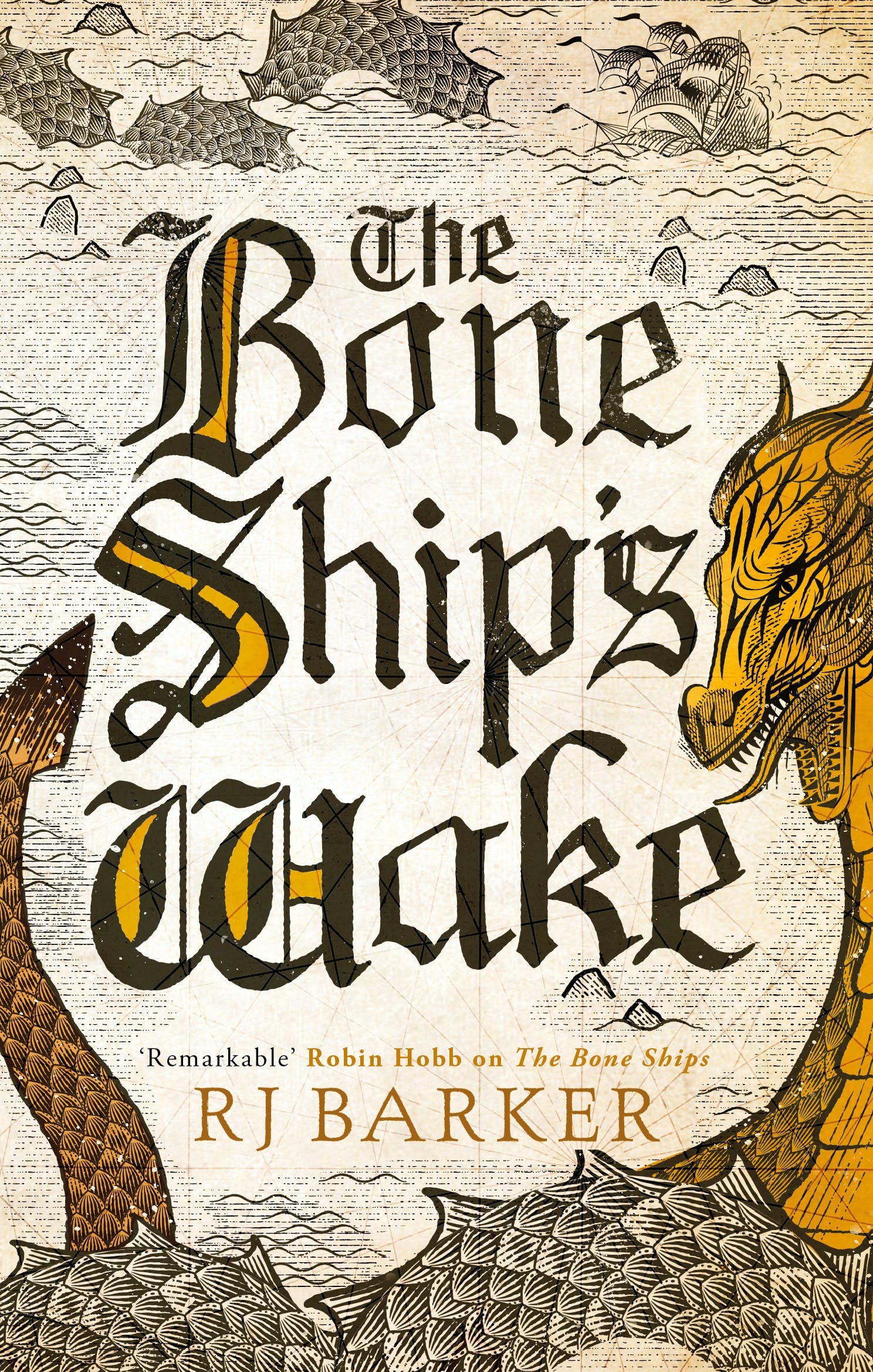
The Bone Ship's Wake Cover

Publisher: Orbit/Hachette Audio (Audiobook – 28 September 2021)

Series: The Tide Child Trilogy – Book Three

Length: 20 hours and 49 minutes

My Rating: 5 out of 5 stars

Amazon     Book Depository

One of the fastest rising fantasy authors in the world today, the brilliant and exceedingly talented R. J. Barker, brings The Tide Child trilogy to an end in epic fashion with the exceptional and powerful The Bone Ship’s Wake, one of the best fantasy reads of 2021.

There have been some really impressive fantasy authors producing great reads over the last few years, but in my opinion none have been as consistently amazing and addictive as R. J. Barker.  Barker burst onto the scene in 2017 with Age of Assassins, the first book in The Wounded Kingdom trilogy, and soon followed it up with two additional outstanding reads, Blood of Assassins and King of Assassins.  While I have a lot of love for this brilliant trilogy, especially the final novel King of Assassins, Barker has since eclipsed it with his second series, The Tide Child trilogy.

The Tide Child trilogy is a grim and powerful series that follows a unique set of characters in an exceptional, character driven, adventure tale.  The Tide Child books are set in a dark fantasy world, primarily made up of deadly oceans and seas which have produced a harsh breed of warring humans.  The inhabitants of this world traverse these oceans in ships made of the harvested bones of sea dragons, known as the keyshans, the creation of which led to the mass extinction of these dragons.  The first novel in this series, The Bone Ships, set the scene for this great series and introduced the primary characters as they set out on an epic quest to hunt the last sea dragon aboard the boneship, Tide Child.  This was an exceptional read that ended up being one of the best books and audiobooks of 2019.  Barker followed this up in 2020 with Call of the Bone Ships, a great sequel that saw the crew of Tide Child engage in a rebellion against the established order.  Call of the Bone Ships ended on a pretty massive cliffhanger that set the scene for an exceptional and stunning conclusion.  As such, the final entry in this trilogy, The Bone Ship’s Wake, was one of my most anticipated reads of 2021, and Barker did not disappoint here, as he produced an epic and captivating read.

It has been a year since the climactic battle that saw the boneship Tide Child and the rebel fleet barely escape the wrath of the Hundred Isles after being forced to abandon shipwife Meas Gilbryn.  In that time, loyal deck keeper Joron Twiner has taken on the mantle of leadership for the rebel black ships and turned them into a fleet of marauding pirates.  Now known by all as the feared Black Pirate, Joron constantly raids the Hundred Isles, determined to weaken its fleet and devastate its defences for an invasion from the rival Gaunt Islands, Joron’s only true priority is to discover the location of his lost commander and rescue her.

After a particularly vicious raid nearly sees the destruction of Tide Child, Joron is only more determined to find the shipwife before the entire fleet is lost.  With time running out for Joron thanks to the insidious keyshan’s rot that is slowly eating away at his body, Joron embarks on an ambitious plan to find and rescue Meas by returning to the most dangerous place in the world, the capital city of the Hundred Isles.

Accompanied by a small crew, Joron hopes to infiltrate the city and force Meas’s location from the ruthless rule of the Hundred Isles, Meas’ estranged mother.  However, all Joron will discover is blood and betrayal, as dangerous forces seek to take control of the oceans for their own nefarious ends.  Worse, Joron must continue to struggle with the dangerous legacy of the magical gullaimes, who believe that he is the Caller, the man who can sing up the keyshans and use them to destroy the world.  Will Joron and his crew succeed against impossible odds, or will the final voyage of the Tide Child result only in the death of everyone and everything Joron loves and cares about?

Well damn, now that was an incredibly awesome book.  I have said time and time again that Barker seems to get better with every book he writes, and I honestly believe that The Bone Ship’s Wake is the very best so far.  The Bone Ship’s Wake has an exceptional narrative filled with emotion, tragedy and powerful action on the high seas, which perfectly wraps up this epic series and provides the reader with an emotional and captivating goodbye.  Easily one of the best books of the year, The Bone Ship’s Wake gets a full five-star rating from me.

This final entry in The Tide Child trilogy has an extremely powerful, character-driven narrative to it, which perfectly continues the epic tales told in the preceding novels while also providing an extremely satisfying and moving conclusion to the entire series.  Told nearly exclusively from the perspective of central protagonist Joron Twiner, The Bone Ship’s Wake starts one year after Call of the Bone Ships, with some major changes occurring to the world and the characters during this period.  Told in three parts, this book has a bit of a slower introduction, which Barker uses to full effect to highlight the situation the characters find themselves in, while also reintroducing all the key elements of the fantasy world.  The first part of the novel is primarily used to show how far Joron has come, placing him in command of a ship as he faces off against his enemies.  This outstanding introduction sets up several key storylines while also featuring a tense and detailed chase out on the seas, with deadly and monstrous consequences.  The second part of the novel follows a desperate Joron, after leaving his ship and most of his crew behind, as he embarks on a dangerous all-or-nothing quest to save his shipwife and bring her back to the fleet.  This second part is loaded with some major dramatic moments, intrigue, treachery, and politics, which does an outstanding job expanding the already captivating storylines, while also serving as a great buffer from the nautical heavy start and end of the novel.  The story goes in some amazing directions here, and Barker throws in some captivating and surprising twists that alter everything you thought about how the story would end.

All this leads up to the conclusion of the novel, which sees the surviving primary characters caught in a desperate situation on the high seas.  After some daring actions and clever plans which have some unfortunate costs, all the characters are perfectly set up for their final places the series’ brilliant storyline.  This last part of the novel is deeply thrilling and powerful, and it honestly proves impossible to put it down as you wait to see how everything comes to an end.  Barker really amps up the desperation and hopelessness during this part of The Bone Ship’s Wake, as the crew of Tide Child and its allies are pressed in some destructive naval actions.  It all leads up to one final gambit, with the lives and the hopes of the survivors held in the balance.  This epic conclusion is extremely dramatic and powerful, with some big sacrifices and major character moments that will leave you breathless and deeply moved.  I thought that this amazing conclusion perfectly wrapped up the entire series, with all the key storylines and character arcs coming to a very satisfying and emotional end.  I loved every single second I spent getting through this exceptional story, and every brilliant turn, clever revelation and powerful character moment is still firmly engrained in my mind.

I really need to highlight Barker’s fantastic writing style, which brings this brilliant story to life.  It has been an absolute pleasure to see Barker grow as an author throughout the last few years, especially as he utilises more and more complex techniques with each passing novel.  The Bone Ship’s Wake is a particularly good example of this, as an amazingly well paced novel that slowly builds momentum as the story requires, with the intensity of the book turning on a dime, from the deep slowness of sailing to the fast pace of an epic nautical battle.  This is often accentuated by the author’s great use of repetition, with key sentences throughout the novel repeated multiple times to build up tension or to highlight the rapidity of duty aboard a ship.  This pacing and repetition almost gives The Bone Ship’s Wake a pulse, and you can feel the rhythmic build towards the high points of a novel.

I was once again deeply impressed by Barker’s incredible ability to produce a nautically focused novel.  Nautical novels require an insane amount of detail and dedication to work, and Barker has done that in spades throughout The Tide Child trilogy.  Thanks to Barker’s ultra-detailed writing style, life aboard the boneships is brought to life for the reader, showcasing every single action of the crew or movement of the ship.  The reader gets an amazing sense of what is happening aboard Tide Child, and you feel that you are aboard the ship itself, watching the crew in action.  This works particularly well during some of the intense, high-concept naval battles, where the actions of multiple ships are followed, ensuring that the reader gets a great idea about what is going on.  Barker also works in a lot of ship details that are unique to the series’ fantasy universe, allowing for a much more distinctive and compelling time at sea.  The combination of traditional nautical elements and fantasy features, such as ships crafted from dragon bone, ultra-powerful bolt throwers, wind calling bird men and the various monsters stalking the deeps is particularly striking and really helps this cool trilogy stand out.  This is honestly one of the best series set on a ship you are ever likely to read, and I am still so impressed with how well Barker was able to feature it in his novels.

I also must highlight the cool, dark fantasy world that Barker has created for this series.  Throughout this trilogy Barker has put an amazing amount of work into crafting this complex and deadly fantasy world, containing hostile oceans with only a few small islands, where the inhabitants are forced to fight on ships made from dragon bone.  I have had an outstanding time exploring this complex and compelling landscape, and I have a lot of love for some of the more unique details, including the enslaved gullaime (bird-like windtalkers), crazy monsters, the gender reversed human society which includes subtle changes like ships being consider male by their crews, and the constant naval warring and raiding such a landscape has created.  Barker does some very interesting expansions in this final entry, resulting in some substantial changes and journeys to new locations within the world.  There are some cool new creatures, including a mist-spewing kraken, as well as some fascinating and intense developments amongst the established creatures, including the gullaimes and the keyshans.  I similarly appreciated the way Barker examined the troubles with his female dominated society, especially as the motivations for some of the antagonists are closely tied into it.  Overall, I had a wonderful time with my last exploration of this unique and dangerous setting, and I cannot wait to see what sort of distinctive setting Barker comes up with next, although I already know it will be pretty incredible.

You cannot talk about any novel in The Tide Child series without praising the outstanding character work that Barker has done.  Each of these novels has done an exceptional job of building up all the major characters, from the central point-of-view perspective, to the various supporting characters found upon the central ship setting.  I have deeply enjoyed seeing each of these characters develop into better and well-rounded figures as this series has progressed, and Barker makes sure to give them an impressive send-off in this final entry.  Pretty much all the key surviving characters get some great moments throughout The Bone Ship’s Wake, and most of their associated storylines come to an end, one way or another.  This naturally results in some intense emotional moments throughout the novel, especially as readers of this series will have become deeply attached to a lot of these characters, and you will not be prepared for how some of these characters go out!

Just like in the previous two novels, the central focus of The Bone Ship’s Wake was on Joron Twiner, the deck keeper (first mate) of Tide Child, who has grown from scared drunkard to experienced officer within the course of the series.  Twiner has gone through an incredible amount during the last two books, and when we first see him again in The Bone Ship’s Wake, he is a very different person.  Joron has since lost a leg and is now infected by the keyshan’s rot, an incurable disease that is slowly eating him alive.  Despite this, he has finally taken on command of his vessel and an extended fleet and fashioning himself a new persona, that of the Black Pirate, a notorious killer of ill-repute.  This is a fascinating change for Joron, and it is absolutely amazing to see how the differences between this character and the one we first saw in The Bone Ships.  While this change is substantial, it has been well built up in the last few books, and it was great to finally see Joron take on the command he was always meant to have.  Despite this, Joron still has some uncertainty dogging his steps that proves great to explore, especially as he is hesitant to risk the lives of those under his command on his missions.  Joron is also forced to deal with the insane prophecy and power hanging over his head, as he is forced to contemplate his ability to summon the sea dragons and potentially end the world.  Throw in his unwillingness to take on the role of his mentor, and the extreme guilt he feels for all the lives he has taken in her name since the conclusion of the last book, and you have a quite a conflicted figure, desperate to do anything to redeem himself.  This makes for some amazing character moments, and I really appreciated the sheer amount of development that went into Twiner in this novel.  A lot of Twiner’s storylines come full circle in this novel, and there are some extremely satisfying moments  between him and the other characters in the novel.  I deeply enjoyed this flawed and uncertain protagonist throughout this series, and Baker ensures that he is given a fitting and powerful ending.

The novel also spends a lot of time examining Tide Child’s shipwife, Meas Gilbryn, also known as Lucky Meas.  When we last saw Meas, she was surrendering herself to the Hundred Isles to give her fleet a chance to escape.  In the year that follows, she has been brutally tortured by her captors, who are attempting to gain all her secrets, especially regarding the sea dragons.  Due to her capture, and the primary focus on Joron, we don’t see that much of Meas for the first half of The Bone Ship’s Wake, and when we finally do, she is very different.  Rather than the always confident captain we are used to, we have a broken and brooding figure, unsure of the correct actions to take and unprepared for how much her legend has spread in the year she has been gone.  This makes for a very interesting counterpoint to the growth in Joron, and it is fascinating to see the slight role reversal that occurs between them.  I loved this exceptional character change that occurred around Meas, and Barker uses it to full effect to create some dramatic and emotionally charged moments.  The author also ensures that several lingering questions about Meas are answered, especially as she finally gets some closure with members of her family, such as her mother.  It was also amazing to see the unique relationship she forged with Joron come full circle, as the man she chose to be her second surpasses her.  The outstanding character work surrounding Meas, especially when it comes to her connection to Joron, added so much to the overall quality of this novel, and it was great to see how Barker altered and explored this character in The Bone Ship’s Wake.

I have to highlight the outstanding storylines surrounding the Gullaime, the ship’s windtalker of legendary power, who is destined to destroy the world alongside Joron.  This humanoid bird creature is always an entertaining figure in the novel, due to their unique appearance and outrageous behaviour and Barker does an exceptional job giving unique avian features to it.  However, like the other characters, the Gullaime goes through some big events in this final novel, especially once certain species detail is revealed, as well as the full scope of its powers and prophesised responsibilities.  Out of the all the characters in this series, the Gullaime is probably the easiest to like, and the end of its story cuts deep to the heart.

I also really appreciated Cwell’s storyline in this novel, especially after all the changes that occurred around her in this series.  Cwell initially started as a secondary antagonist who led a mutiny against Joron in the previous novel.  Despite this, Joron spared her life and kept her as his shadow, a silent bodyguard always watching his back.  This final book really explores the extent of this bond forged between them, as Cwell’s loyalty is tested multiple times throughout the course of the novel.  Barker is such a canny writer when it comes to Cwell, and it was fascinating to see some of her final depths in this book, especially as you honestly have no idea what she is going to do and whether she will end up betraying Joron.  It was also great to see more of Farys, the young woman Joron mentored through the series, and who now finds herself as his second.  Farys has a complex and compelling storyline in this novel, and I really appreciated how much time Barker put into enhancing her role in this final novel.  I also want to give callouts to recurring characters Mevans, Solemn Muffaz and Aelerin the courser, who all have some great moments in this novel, and whose roles each had their own emotional weight.  There is also a certain interesting reveal about one side character, right at the end of the novel that was a little surprising to me, but which I really appreciated, especially as Barker set up some great hints about them as the novel progressed.  Overall, all the side characters in this book are extremely awesome, and I am so deeply impressed with the work that Barker put into them, and the outstanding impacts that had on this already epic and captivating tale.

While I did receive a physical copy of The Bone Ship’s Wake, I ended up enjoying this novel in its audiobook format, not only for scheduling reasons but because I knew that I would have an amazing experience with it.  The Bone Ship’s Wake’s audiobook format has a substantial runtime of just under 21 hours, which does require a substantial time investment to enjoy.  I can guarantee that the time spent is well worth it, as the audiobook format perfectly gets the reader into the flow of the story and the detailed fantasy world of the series, and I found myself really absorbing all the many details Barker places into his writing.  I was also deeply impressed with the narration of Jude Owusu, who really threw himself into voicing the various books in The Tide Child trilogy.  Owusu has a brilliant voice that perfectly fit the epic, marine based tale, and which perfectly translated every single action and move to the listener.  Owusu has an excellent range of voices for the various characters featured throughout the novel, and each character ended up with a distinctive voice that perfectly fit their personality and demeanour.  I particularly enjoyed the weird and hyper-excited voices he utilised for the various gullaime characters, fully highlighting their birdlike characteristics in his voicing.  I felt that the narrator did an amazing job of injecting all the relevant emotion into the tale, and you have no doubt what the characters are feeling as they speak.  This brilliant and powerful voice work really helped to bring this epic tale to life, and I loved every single second of this fantastic audiobook.  This format comes very highly recommend, and it was easily one of the best audiobooks I have had the pleasure of listening to in 2021.

With The Bone Ship’s Wake, the final incredible and epic entry in The Tide Child trilogy, the unstoppable R. J. Barker has once again shown the world he is the future of the fantasy genre.  This outstanding and captivating nautical fantasy novel masterfully wrapped up one of the best trilogies I have ever read, ensuring that the reader will be emotionally blasted by this brilliant and clever tale.  The entire story came together perfectly, and fans of this series will be amazed and moved by the fates of so many well-established characters.  Not only was this Barker’s best book to date, but The Bone Ship’s Wake is also one of the most impressive novels I have enjoyed all year.  An exceptional five-star read that comes very highly recommended, especially in its audiobook format.  Anyone who loves fantasy needs to read this series!

Amazon     Book Depository

The Last Graduate by Naomi Novik

Last Graduate Cover

Publisher: Del Rey (Trade Paperback – 28 September 2021)

Series: Lesson Two of the Scholomance

Length: 388 pages

My Rating: 5 out of 5 stars

Amazon

Prepare to return to the deadliest magical school of all time in The Last Graduate, the epic second lesson of the Scholomance series by bestselling fantasy author Naomi Novik.

Novik is a fantastic author who has produced some excellent fantasy novels throughout her career, including her bestselling Temeraire series (set during a re-imagined Napoleonic War fought with dragons), as well as her standalone reads Uprooted and Spinning Silver.  However, I personally know Novik best from her awesome 2020 book, A Deadly Education, which was one of my favourite books from last yearA Deadly Education had an awesome story that followed Galadriel “El” Higgins, a student in the Scholomance, a lethal magical school filled with all manner of magical monsters known as maleficaria (mals).  This was an outstanding read with a really clever and intense narrative, and I have been really looking forward to seeing how the story continued for a while now.  As a result, I was excited when I found out that the sequel, The Last Graduate, was coming out, and it swiftly became one of my most anticipated reads for 2021.

Following her daring mission to reactivate the school’s defences and kill as many maleficaria as possible, El finally thinks she has a chance to relax and prepare for her gruelling final year at the Scholomance.  Not only must she continue her exhaustive magical studies, but the entire year leads up to a lethal graduation ceremony, where the students must run a gauntlet of mals at the school’s entry hall to escape back into the real world.  Now with allies, friends and even an extremely odd love interest in moody warrior mage Orion Lake, El has a chance of escaping the Scholomance without being forced to rely on her immense affinity for the most destructive spells in existence, which could result in the entire student body being vaporised.

However, the sentient Scholomance appears to have different ideas for El and resolves to make her life as difficult as possible, assigning her impossible classes and isolated study periods.  Worse, it appears that the school is deliberately funnelling as many mals towards El as possible to kill her and steal her magical energy.  Determined to defeat the school and escape, El is forced to make some new alliances to survive the year and make it to graduation.  At the same time, she needs to navigate her unusual relationship with Orion, especially after receiving a mysterious warning from her mother to stay away from him.

The closer El gets to graduation, the harder life becomes, especially after the scope of her magical abilities is revealed to the entire school.  Now targeted by rival factions within the Scholomance and unsure who she can trust, El will need to pull together every terrible power at her command to survive.  However, not everything is what it seems in the Scholomance, and the school has one final lesson to teach El: sometimes there are things far more important than surviving.

Wow, just wow, now that was a damn impressive sequel.  The Last Graduate is an epic and incredible read that proved to be utterly addictive in all the right ways.  I had an absolute blast reading this exceptional fantasy novel and I ended up powering through the last half of the novel in a couple of hours, only to be utterly traumatised by its cliffhanger ending.  It was so much fun getting back into this detailed and compelling setting, and it was great to see the main characters continue to evolve throughout, even if they lead to tragedy and heartbreak.   This was an outstanding read that gets a full five-star rating from me.

This latest book from Novik contains a pretty epic narrative which covers El’s entire final year within the Scholomance.  The story continues immediately after the end of A Deadly Education, and I would strongly recommend reading the first book before attempting The Last Graduate, as the initial Scholomance book contained a lot of interesting detail and character development that is useful to understand.  This second book starts off at a good, restrained pace, mostly settling things down after the fast-paced conclusion of A Deadly Education and allowing the protagonist and point-of-view character, El, to settle back into the rhythms of the school.  The author utilises a very detail-rich brand of storytelling, which helps to produce quite a rich a vibrant novel, even if it did slow down my initial reading speed.  However, the pace picks up significantly once it becomes apparent that things in the school have changed, as El finds herself the only person in the school being attacked by mals.  This troubling situation forces her to turn to her friends and new allies to survive, especially as she is convinced that the school itself is out to get her.  This eventually leads to the reveal that El is an all-powerful force of destruction, which greatly alters the balance of power in the school, as El is caught between the various enclaves who view her as a major weapon both inside the Scholomance and in the national rivalries outside of it.  This results in an immense amount of drama and conflict, as El fights to remain neutral and survive, while also coming to terms with who she is and the terrible magical system she finds herself a part for.

All this drama, fighting and conflict leads up to the big event of the book, the graduation gauntlet, something that the author has been building up since the start of the series.  However, nothing goes as expected with graduation, as everything about it, including the lead-in and the training is very different than in previous years.  The reasons why are finally revealed as part of a very interesting twist which changes everything about how you thought the novel was going to end.  This alteration leads to an excellent conclusion which perfectly works in all the story elements that have set up throughout the course of the two novels.  The final scenes are extremely dramatic, with some big moments and epic displays of magic that will keep you on your toes.  I honestly could not put the book down during this part of the novel as I was desperate to see how everything ended, and then we got to the very last sentence.  Ooh, that last sentence, how much I hate and love you at the same time.  Novik sets up a really massive cliffhanger that was both perfect and enraging at the very same time.  I was literally yelling my shock and frustration at the book (and Novik by extension) as I read and re-read that sentence, as I could not believe that she left it like that.  I mean, mad respect for setting it up and making me care so much for the characters so that I was deeply impacted by it, but at the same time, how dare you make me feel like that.  Naturally, the third and final book in the Scholomance series is now one of my most anticipated reads for 2022 (which is what Novik intended, evil genius that she is), and I am extremely eager to see what happens next.

I deeply appreciate the awesome setting that is the Scholomance.  This sentient magical school is such a dark and wonderful setting, and Novik has built it up perfectly throughout the course of the series.  I absolutely love this brilliantly perverse version of the classical magical school setting, especially as Novik has spent an amazing amount of time establishing it, providing the reader with a ton of detail and anecdotes about the education, living arrangements and many, many, hazards involved with living there.  This detail continues in The Last Graduate, as Novik expands on the school, showing more fantastic elements to it, and even throwing in a few intriguing changes that impact the status-quo of everybody there.  There is so much fun detail here, and I loved the examination of how living in such a dangerous and enclosed building would impact the people living there.  There is one amazing scene where El channels a lot of magic into the school, accidentally restarting a simulation of the outdoors.  The subsequent wave of grief from all the students at seeing the sun again was pretty terrible, and it showed just how damaging this situation is, even though it is saving their lives.  I also really appreciated the interesting new changes that Novik introduced to school, especially as it significantly alters what you think you knew about it.  I also liked how Novik also provided some additional detail of the wider world outside the Scholomance, expanding on some of the details that were already set up in A Deadly Education.  There are several hints about big events occurring outside of the school which will probably come into play in the third novel, and there is also an interesting examination about the rivalries between the various enclaves, magical societies with selective membership and strong political power.  I cannot wait to see what awesome new details and settings that Novik will add into her next book, and I have no doubt it will be really cool to learn about.

Aside from that outstanding story, the epic finale, and the wildly inventive setting, I also must highlight the great characters featured within the novel.  There is an interesting and memorable array of characters featured throughout the Scholomance series, although most of the book focused on protagonist El.  El is a fantastic and intense character, mainly because she holds a mythical level of destructive power, an incredible affinity for combat and death spells, and is also some form of prophesised destroyer, which caused her father’s side of her family to try and kill her (a bold move for pacifists).  This, as well as the fact that her power makes everyone she encounters subconsciously uneasy, turned El into quite a guarded person, and much of the first book focused on her coming out of her shell and finally making friends.  This development continues in The Last Graduate, as El is forced to make even more friends and alliances.  This has a pretty positive impact on her personality, especially as she learns to trust people, and while she still has a mostly prickly disposition, she does mellow out a little more.  There is also a rather interesting major plot point when the full range of her powers becomes apparent to the entire school.  This makes her a target for everyone in the school, with the various enclave students either trying to recruit her or kill her.  This forces El once again into a defensive mode, although she is eventually able to overcome for the greater good of herself and the school.  I deeply appreciated El’s growth as a character in this novel, and it was great to see this wildly unstable and sassy protagonist once again.

The other major character of the book is El’s love interest, Orion Lake.  Orion is another interesting protagonist, as he is a powerful mage with a hero complex who gains his powers from killing mals.  A member of the exclusive and powerful New York enclave, Orion is considered more of an asset than a person by his family, which has resulted in everyone seeing him as either a god or a weapon.  This, combined with his love for fighting monsters, has left Orion a little messed up, and he ends up imprinting on El as she is the first character to treat him like a normal person and call him out for his stupid heroic mindset.  Orion is a very complex and nuanced character, and it has been interesting to see him develop, especially as you only really get to see him through El’s cynical eyes.  While he is a little less utilised in this novel, he still has several interesting challenges, including having substantially less magical energy and power due to him encountering very few mals in his final year.  There is also the rather awkward but sweet romance he has with El.  Both these characters are messed up in their own unique ways, but together they nearly make one emotionally function human.  Their romance is a major part of the book’s plot, and Novik works in some compelling and moving storylines around it.  I felt that all of Orion’s character arc was really well written, and I deeply appreciated the way that Novik cleverly set up some key moments surrounding him.

Aside from El and Orion, The Last Graduate contains a fantastic array of supporting characters in the form of the other Scholomance students.  While Novik did introduce most of these characters up in A Deadly Education, I felt that they got a lot more attention in The Last Graduate, with the author taking the time to explore them a little further.  I quite liked the increased focus on these supporting characters, as there are an interesting array of personalities, powers and allegiances, which helped make the plot more exciting and filled with intrigue.  I particularly enjoyed the various members of El’s alliance, each of whom get a few key moments throughout the book and prove to be quite fun to follow.  I also must highlight El’s new familiar, a mouse called Precious, who gains a sort of sentience throughout the book, and immediately starts trying to sabotage El and Orion’s relationship.  Each of these characters added something fun to the overall tapestry of The Last Graduate’s story, and I look forward to seeing what happens to all of them in the final book.

With The Last Graduate, the amazing Naomi Novik has substantially jumped up my list of favourite authors, even if I am severely annoyed with her about that brilliant, if cruel, cliffhanger.  This excellent second novel in the Scholomance series is one of the best books I have read all year, and it is a highly recommended read.  I had an outstanding time once again exploring this messed-up magical school, and the complex characters and unique storylines helped to create an intense and powerful read.  I honestly cannot wait to read the third and final book in this series, even though I fully expect Novik to do everything in her power to break my heart.  If you have not started reading the Scholomance series, you are missing out big time!

Amazon

The Housemate by Sarah Bailey

The Housemate Cover

Publisher: Allen & Unwin (Trade Paperback – 31 August 2021)

Series: Standalone

Length: 454 pages

My Rating: 5 out of 5 stars

Amazon     Book Depository

Impressive Australian author Sarah Bailey returns with The Housemate, an outstanding and intense murder mystery that takes a complex protagonist through a dark journey as they attempt to solve an infamous murder.

It was the crime that shocked all of Australia: one night, after a fractious party in the suburbs of Melbourne, three female housemates would become infamous for all the wrong reasons.  In the morning, one of the housemates is found brutally murdered, another is found covered in her blood, while the third goes missing and her body is never found.  Dubbed the Housemate Homicide, the unexplained murder, the mysterious disappearance, and the subsequent controversial court case has baffled and enthralled the country for years.  This includes Olive Groves, a journalist who got her first big break covering the murder and who then became obsessed with cracking the case.

Nine years later, the body of the missing housemate is found in a remote property in the Victorian countryside.  Despite dealing with her own dark personal issues, Olive is assigned to cover the story, and soon finds herself once again dragged into her deepest obsession.  Teamed up with millennial podcaster Cooper Ng, Olive begins to immerse herself in the details of the murder, reigniting her fiery obsession.

As Olive and Cooper work to uncover new details about the case and the three women at the heart of it, they start to make some startling discoveries.  None of the housemates were what they seemed, and all had dark and terrible secrets that have remained hidden for years.  What really happened to these three friends, and what secret was so terrible that they would kill to protect it?  Olive is about to discover that there is a dark conspiracy at work throughout this case, one whose roots may lay far closer to home than she ever imagined, and whose discovery may end up breaking her.

This was an incredible and extremely clever dark murder mystery from Sarah Bailey, who has previously produced some impressive and compelling pieces of Australian fiction.  The Housemate was pretty exceptional read and I quickly found myself getting really caught up in this remarkable and well-written piece of crime fiction.  The author weaved together a dark and compelling tale of betrayal, murder and tainted love, featuring an extremely damaged protagonist and multiple epic twists.

The Housemate has a pretty amazing and memorable murder mystery narrative that follows a reporter as she attempts to uncover the truth behind an infamous cold case.  Bailey does a great job setting up the plot of this book in the early pages, showing the protagonist’s involvement in reporting the initial discovery of the murder, before initiating a time skip nine years in the future.  Once there, the author spends a little time exploring how the protagonist’s life has changed in the intervening years, before swiftly starting the next stage of the mystery, with the discovery of a body out in the Victorian countryside that has connections to the murders.  The rest of the book flows by at a quick pace after this, as the reader gets stuck into the re-opened investigation.  Bailey starts the various twists flying early, and the reader is soon struck with a series of theories, leads, potential suspects and connected side characters, all of which add to the overall tapestry of the mystery, while also serving to keep you guessing about who is responsible for the murder, and that isn’t even mentioning the compelling flashbacks from the surviving housemate.

As the investigation continues, The Housemate’s story continues to get even more complex, as the personal life of the protagonist, Olive, gets dragged into the plot, especially as Olive is in a complex relationship with the widower of the primary police investigator of the original case.  This results in some extremely intense moments as Olive begins to suspect everyone, which has a major impact on her grip on reality.  I deeply appreciated the psychological thriller aspects that were worked in, as the reader starts to really question Olive’s grip on her sanity, and it helped to make the story even darker and more unpredictable.  Everything really kicks off in the final third of the novel, especially after the case becomes even more potentially convoluted and connected to a wider conspiracy.  There were some great reveals in this final third of the novel, and a pretty major and surprising event that really changes everything.  I found myself absolutely glued to this book in the final stages, as I couldn’t wait to see what happened.  While I did think that the author was a little too heavy handed when it came to suggesting that one particular character was the murderer, I thought the eventual reveal of who was behind everything was extremely clever.  The solution to the historic murder was very impressive, especially as some of the elements were set up extremely early in the novel and you didn’t even realise it.  I really loved the impressive way the case was wrapped up, although the end of the final confrontation was a tad too coincidental for my taste.  Still, it was a really great way to finish the novel, and I was well and truly hooked by this awesome and dark tale of murder.

You can’t talk about The Housemate without mentioning the author’s great characters, especially protagonist, Olive Groves (a fun name).  Olive is a complex and damaged woman, who has been obsessed with the novel’s central case ever since she saw the suspected killer and the various family members emerging from the house during the initial media coverage.  Years later, Olive now has a complex life, as she is living with the controlling widower of the cop who was originally investigating the crimes, something she is immensely guilty and conflicted about.  Her already fragile mental state is put at risk when she starts working on the latest developments in the Housemate Homicides case, which reawakens her long-dormant obsession.  This obsession drives her to investigate the case by any means and takes her to some dark spaces as she tries to get into the head of the three housemates and figure out what happened to them.  Olive slowly goes downhill as the novel progresses thanks to a combination of stress, obsession, anger, and multiple personal reasons, such as the actions of her emotionally abusive partner and her own massive guilt for sleeping with him while his wife was still alive.  Olive has a big breakdown towards the end of the novel, especially after a major surprise event, and it was fascinating to see such a dramatic and powerful burst of emotion.  This compelling personal crisis is perfectly worked into the plot of the book, and it really helped to enhance the main murder mystery storyline, especially as you become really concerned for Olive’s mental and physical safety.  I appreciated the way in which Bailey wrapped up Olive’s character arc by the end of the novel, and I cannot emphasise what an impressive bit of character work Bailey did around her.

Aside from Olive, there is a great collection of complex side characters throughout the novel, each of whom play a vital role in the case.  The main one is Cooper Ng, the socially shy tech expert and social media whiz who is assigned to help Olive investigate, with the two required to develop a new podcast for their paper.  Cooper is a fun and energetic figure who stands as the complete opposite to Olive’s gruffer and irritable personality.  Cooper and Olive make for an interesting partnership throughout the book, and it was fun to see them combine their vastly different skills and experiences.  The author also spends a bit of time examining each of the three housemates who were at the centre of the book’s mystery.  It initially appears that all three were bright and optimistic students when the fateful night occurred.  However, as the book progresses you begin to see that they are a lot more complex than that, with all three involved in something dodgy.  Seeing how they were driven to the events that occurred the night of the killing is pretty fascinating, and I really appreciated the dark and intense storyline that Bailey weaved around them.  All these characters, and more, added a lot to the story, and I loved the fantastic and realistic interactions that occurred within.

The final thing that I wanted to highlight about The Housemate was its interesting examination of Australian journalism.  I have always rather liked journalist protagonists in fiction, due to their less formal way of investigating crimes, and this worked very well in the context of The Housemate, with Olive employing some interesting methods to get answers.  The focus on obtaining information for a story rather than attempting to bring someone to justice is very compelling and I loved seeing the protagonists setting up stories and podcasts.  I also quite enjoyed the interesting examination of the evolving form of journalism that was represented by the two main characters, Olive and Cooper.  Olive is the more old-school reporter, who just wants to do good journalism without resorting to popular gimmicks.  Cooper, on the other hand, is the flash new kid, focusing on social media and podcasting, which he sees as the future of journalism.  This fun comparison between reporting styles formed an interesting basis for their partnership, especially as they are brought together to do a podcast on the murders, and I felt that this was a great inclusion to an already exciting and entertaining narrative.

The Housemate by Sarah Bailey was an exceptional and captivating read that I had an outstanding time reading.  Featuring a dark and thrilling mystery storyline, this Australian murder mystery was incredibly addictive, especially once you get caught up in the unique investigation and complex personal life of the protagonist.  I really enjoyed seeing this fantastic story come together, and I was really impressed with how Bailey tied her brilliant mystery together.  Easily one of the best pieces of Australian fiction I have read all year, The Housemate gets a full five-star rating from me and is a very highly recommended read.

Amazon     Book Depository

The Councillor by E. J. Beaton

The Councillor Cover

Publisher: Daw Books (Hardcover – 20 July 2021)

Series: The Councillor – Book One

Length: 442 pages

My Rating: 4.5 out of 5 stars

Amazon     Book Depository

Australian author E. J. Beaton presents an excellent and compelling fantasy debut with The Councillor, an outstanding and impressive read.

Elira is a country still recovering from a fractious war a generation ago spurred on by the tyrannical magic-wielding White Queen.  The heroic Sarelin Brey, known as the Iron Queen, defeated the White Queen and led the subsequent hunt for the elementals, powerful magical users, who were forced into hiding.  Now, Elira once again stands on the brink of ruin when a mysterious assassin manages to kill the Iron Queen, an act that threatens to split and destroy the entire nation.

The queen’s last act before her death was to name her loyal companion, the palace scholar Lysande Prior, Councillor.  As Councillor, it is Lysande’s duty to choose the next ruler of Elira from the four city rulers and to ensure a peaceful transition of power.  As the city rulers arrive at the palace, Lysande is convinced that one of them may have orchestrated the Iron Queen’s murder.  Using her position as Councillor and the upcoming decisions around Elira’s future to her advantage, Lysande begins to investigate each of the city rulers to find who is responsible for her friend’s death.

As the investigation continues, Lysande soon learns much about the city rulers, including the secrets that they harbour.  Forced to balance her investigation with her responsibilities to the people, Lysande begins to revel in the power that she has been granted, even as her problematic addiction to a magical narcotic threatens her self-control.  However, the closer she gets to the truth, the more Lysande begins to understand that there is a dark threat rising, one that could overwhelm Elira for good.  The White Queen is returning, and this time there is no mighty Iron Queen to stop her, only a brilliant scholar with a bright vision for her nation.

The Councillor was an impressive debut fantasy novel from Beaton, who combines some intriguing characters with a powerful fantasy narrative laden with political intrigue, espionage and one character’s personal journey from scholar to ruler.

Beaton utilises a pretty awesome story in The Councillor, and it is one that I quickly became quite addicted to.  Told exclusively from the point-of-view of protagonist Lysande, the novel has a powerful start with one of the major characters killed off, leaving Lysande and the entire nation in chaos, especially as it appears that a notorious magical villain has returned years after her famous defeat.  From there the protagonist attempts to identify the agent responsible for her friend’s death, believing it to be one of the four arriving nobles vying for the throne.  This results in a compelling storyline where Lysande investigates the secrets of the city rulers, while also becoming increasingly involved in the politics of the realm after being unexpectedly placed in a position of power.  As The Councillor progresses, it evolves into a very captivating piece of political intrigue as Lysande and the city rulers tour the country, attempting to rule together, initiate plans to stop the growing influence of the White Queen, while also attempting to achieve their own goals.  There are some great misdirects and red herrings featured throughout this part of the book, as Beaton attempts to disguise who the antagonist is and what the agendas of the various other politicians are.  This all leads up to a big and explosive conclusion where the traitor is revealed and several great storylines come together, resulting in some awesome action and clever political storylines.  While I was able to guess who the traitor was in advance, Beaton did a great job setting them up, and I did find the methods of the antagonist very surprising, especially the fun super-weapon that was hinted at throughout the book.  The final scenes wrap up the entire narrative extremely well and do a great job setting up the next novel in the series.  I look forward to seeing where the narrative goes from here and I think that the series has some amazing potential.

I really enjoyed the cool and memorable fantasy world that Beaton introduced in her first novel, and it serves as a great setting for the awesome story.  The nation of Elira is broken up into several distinctive political and climate zones, based around a city state, resulting in fascinating group of different and proud people.  I loved the fun blend of cultures featured within this nation, especially as it results in some compelling and entertaining cultural and political clashes.  There is a great focus on the history of Elira, especially as it relates to the previous war against the White Queen, with the scholar protagonist attempts to uncover the full truth behind the past to determine the country’s future.  There are also a ton of LGBT+ elements associated with the setting, which I really appreciated and which helped to make the setting even richer.  Add to that several hostile nations surrounding Elira, a rampaging magical queen full of vengeance, and a covert network of independent magical users with their own agenda, and you have a fantastic combination of groups and political ideals, which helps to makes the compelling narrative even more exciting.  This all proves to be pretty damn awesome, especially as Beaton does a wonderful job describing the rich and vibrant countryside of her setting, allowing the reader to have an outstanding time exploring this new nation.  I really enjoyed this captivating setting and I look forward to seeing how the author expands it in her next novel.

Easily the best thing about The Councillor are the complex and intense characters featured throughout the story.  This includes main protagonist Lysande, who is forced to endure quite a lot of growth and betrayal during the story.  Beaton weaves a powerful and intense narrative around Lysande, an orphan who was chosen to become the Iron Queen’s companion and who grew into a brilliant scholar and thinker.  After the queen’s death, Lysande is forced to become both a ruler and politician, and she finds herself excelling in the role, especially as it allows her to use her skills as a scholar and researcher to her advantage.  Due to Lysande being the point-of-view protagonist, Beaton takes a lot of time exploring her personality, feelings, and history, and it does not take long for the reader to become attached to her, especially as she finds herself in a dangerous and complex personal and political situation.  It proved to be extremely compelling to see Lysade take the political stage for the first time, and I loved the way she adapted to the intrigue and deceit, especially once she started to revel in it.  It was pretty cool to see a scholar attempt to take the throne, resulting in a very different hero from what most fantasy fans would expect.  I also enjoyed the way that the author ensured that Lysande is a bit of a flawed protagonist, especially as she is controlled by her addiction to Chimera Scale, a magical narcotic that gives her energy and different insights to the world.  This growing reliance on Chimera Scale impacts her severely throughout the novel, especially as it covers up some deeper secrets about her, which come to fore later in the novel.  An overall exceptional main character, I am very intrigued about where this story will take Lysande next.

Aside from Lysande, The Councillor features a fantastic collection of supporting characters, each of whom add a lot the story.  The main four supporting characters are the city rulers who arrive in court to put their cases for being the next monarch.  Beaton spends a bit of time building up each character, and it proves quite enjoyable learning their flaws, personalities and secrets, especially as any of them could potentially be villainous.  The most prominent of these city rulers is the mysterious and manipulative Luca Fontaine, a dangerous bastard son who became city ruler after killing his family.  Presented as a dark figure with a love of intrigue, espionage and advanced politics, Fontaine has some outstanding back and forth with Lysande, which were extremely enthralling and compelling, and Fontaine swiftly becomes one of the more entertaining and likeable characters in the novel.  I did think that Beaton could have toned down Fontain’s manipulative side just a little, especially as it made him too obvious a suspect for being the traitor, however, I don’t think this had too much of a negative impact on the narrative.  Aside from the city rulers, the book has some interesting focus on Lysande’s advisors and guards, each of whom hep her in their own unique way.  I particularly enjoyed Lysande’s new maid, Litany, especially once her real purpose in the court is revealed.  This great supporting cast proves to be a lot of fun to follow, and I really appreciated the time and detail that the author put into setting them up.

Overall, I found The Councillor to be an outstanding and deeply entertaining fantasy read with a really addictive and compelling narrative.  Australian author E. J. Beaton did an excellent job with her first book, and this is a must read for anyone who loves a fantasy tale laden with clever political intrigue.  A highly recommend fantasy debut, I cannot wait to see where Beaton takes this series next.

Amazon     Book Depository

The Dark by Jeremy Robinson

The Dark Cover

Publisher: Podium Audio (Audiobook – 13 July 2021)

Series: Infinite Timeline

Length: 10 hours and 25 minutes

My Rating: 5 out of 5 stars

Amazon

Prepare for a literal journey into darkness with one of the most unique and insanely entertaining horror novels of 2021, The Dark by Jeremy Robinson.

Jeremy Robinson is a bestselling author of science fiction and horror who has been producing some amazing novels of the last few years.  Since his debut in the early 2000s, Robinson has written a massive number of novels, including several fantastic sounding series, such as his Nemesis Saga, as well as a big collection of compelling standalone novels.  I have been meaning to read some of Robinson’s books for a while, especially as one of his series, the Chess Team novels, are part of a somewhat shared universe with Jonathan Maberry’s Joe Ledger novels.  After seeing several mentions of Chess Team in Maberry’s novels, I got curious and had to have a look at Robinson’s catalogue of work.  I really love the sound of some of Robinson’s books, especially his Chess Team novels, which follow a special forces team at work against mythical threats, and the Nemesis Saga, which presents a new look at the Kaiju genre.  Before diving into these series, I thought it might be good to get an idea of Robinson’s writing style, and so I decided to read his latest standalone novel, The Dark.  I am extremely glad that I decided to check this out, as The Dark ended up being an incredible horror read that I deeply enjoyed.

Miah Gray is a messed up former army soldier, struggling with PTSD and other symptoms after his time in Afghanistan.  Now living with his mother, sister and stepfather in an upscale New Hampshire neighbourhood, Miah spends most of his time being the neighbourhood’s resident weirdo, avoiding his troubles with prescribed cannabis and holding out hopes that his crush, Jen, will notice him.  Managing to convince Jen to get high and watch a meteor shower on his roof one night, Miah thinks that his life is finally turning around.  However, nothing in his wildest dreams could prepare him for what is to come next.

Awakening the next morning, Miah and Jen are shocked to discover that the sun has been blotted out and the entire neighbourhood has been plunged into darkness.  With no communications, limited power, and no working artificial lights, Miah and his family attempt to adjust to the crazy events occurring around them.  All available evidence suggests that an obscure religious doomsday prophecy about three days and three nights of darkness is coming true, with the lore indicating that the only way to survive is to barricade yourself in your home and cover the windows.  Despite the blacked-out sun, Miah is dubious about this being a religious event, until a bright light from the heavens brands his forehead with an old Norse rune and an unholy army of demons invades.

Dark shapes are twisting their way through the neighbourhood, luring people outside and brutally dragging them away to an unknown fate, while even more terrifying figures lurk in the shadow.  Attempting to ride out the storm at home, Miah is forced into action when his parents are taken.  Leading a small group of survivors through the horrors outside, Miah attempts to save who he can while also trying to find a way to rescue those who were taken.  But as Miah and his friends flee through the surrounding demons and devils, a far more dangerous threat is waiting to assail them.  The rune on Miah’s head is starting to change him into something angry and inhuman.  Now forced to resist his own mind, Miah will need to dig deep than ever before if he wants to survive what is coming, even as it drags him straight to the gates of Hell.

Wow, now that was awesome.  When I started this novel, I strongly suspected I was going to love it, especially as it had a fantastic sounding plot, but I was unprepared for how much fun The Dark turned out to be.  Robinson has created an exceptional and dark horror novel that keeps you on the edge of your toes from the very start all the way to the finish.  I had an outstanding time listening to this book and there was no way I could give anything less than a five-star rating.

Robinson has come up with a pretty awesome story for The Dark, and I loved this unique horror tale.  The Dark has a great start to it, and the author manages to do a lot in a very short amount of time, thoroughly introducing the main character, Miah, while also setting up several of the other major supporting characters.  The novel’s big change from normal times to darkness occurs early in the novel, as soon as all groundwork has been established, so the protagonist can run right into the craziness.  It does not take long for events to go sideways, with danger and despair all around as everything goes to hell, literally.  The centre of the novel is extremely entertaining, as the protagonist meets a range of different people hunkering down through the apocalypse and slowly builds up a fun group of survivors.  At the same time, some of the characters, including Miah, are forced to face an inner evil that has been brought on by these dark events.  This internal battle for control and the elements that introduce it are very cleverly established, and it adds a fantastic new edge to the plot, especially as at times it seems like the only point-of-view protagonist is about to irrevocably snap.  All this leads up to an epic conclusion as the protagonist journeys to a very evil place and comes face to face with some startling revelations and immense horrors, as well as some interesting story threads for the future.

I felt that this was an exceptional story, and I deeply enjoyed the outstanding combination of action, horror and comedy that was expertly bundled throughout the novel.  It is rare to find a story that can alternately thrill, traumatise, and entertain in short succession, but The Dark does that in spades.  It was gloriously entertaining and there was honestly not a single moment in this book that failed to keep my attention.  The action sequences are crisp and fantastic, and you get a real sense of the intense violence happening all around the protagonist.  I also really loved the horror feel that this novel had, especially as Robinson is a master of building up tension and suspense.  Readers should be aware that there are a quite a few extremely gory scenes throughout the book, and Robinson does not hold back on the gruesome descriptions.  I liked how the author switched the tone of the novel around two-thirds of the way through, with the horror focus moving away from fear of the unknown to a more extreme and science fiction based narrative.  I did think that the sudden appearance of certain groups in the big finale were a bit coincidental and could have been telegraphed slightly better, but this really did not cut down on my enjoyment of the story, and I was still blown away with the cool action sequences that were featured in this part of the book.  This was a really good standalone horror story, and I was deeply impressed with the exceptional narrative that Robinson featured in this book.

One of the things that I really appreciated about The Dark were the cool monsters and horror elements that Robinson came up with.  The entire concept of the novel revolves around dangerous creatures who come out during an eclipse of the sun that covers the entire setting in darkness, while also wreaking havoc on human technology.  Not only are these monsters pretty freaky and deadly, but Robinson builds up an intriguing mythology around them.  Because the protagonists have no idea what they are facing, the entire phenomenon is attributed to a religious event, especially as there is a coincidental Christian prophecy about three days and three nights of darkness which will purge those who leave their house.  Once the monsters appear, the characters initially identify them as demons, due to their unique look, ability to replicate voices and their dark and disturbing laughter.  I found these attempts by the protagonists to understand what is happening to them to be really fascinating, and it involves some fun looks at mythology and ancient lore.  The character’s understanding of these creatures evolves and changes over time, as there are some new freaky bits of context, and I thought it was pretty cool the way that Robinson was able to adapt these horror elements.  I also must highlight the terrifying setting of Hell, where the protagonists eventually end up.  There are some pretty dark and excessively gruesome aspects to this location, and it was a very fitting location for the big finale.  Overall, I really liked the cool creatures and mythology that Robinson brings to The Dark and it was so much fun to see these monsters tear through a typical suburban neighbourhood.

Easily one of the best things about The Dark were the complex and impressive characters that the narrative was set around.  The most prominent of these was central protagonist and point-of-view character, Miah, a former soldier who returned from the war even more messed up then before.  Initially a bit of a weirdo loner, Miah soon evolves into a more heroic figure, especially as he takes the lead during the demonic invasion, saving several people he comes across and leading the survivors to either safety or battle.  Miah is a very deep protagonist, and I really enjoyed the impressive and powerful examination of his inner trauma and the mental burdens he carries after his time in the army.  Robinson really tries to make Miah as complex as possible, and he even works some of his own personal experiences with trauma into his protagonist’s psyche.  It was great to see him evolve throughout the course of the book, especially once he has the fate of several other people on his hands, and these events help him grow and overcome his previous experiences.  Miah is also an extremely entertaining protagonist to follow, especially as he has a great sense of humour, is constantly high and initially does not take anything seriously, even when all the lights go out.  This combination results in Miah doing some unusual things, including wearing one of his sister’s skirts for the first third of the novel (it’s weird, but it works).  Most of the book’s humour comes from his flippant narration of the weird events occurring around him, and even once stuff gets really serious, he still has plenty of fun jokes or odd observations about what he encounters.  I loved his outrageous outlook on the world, and I ended up really appreciating Robinson’s fantastic choice of protagonist.

Aside from Miah, Robinson also comes up with some other fantastic characters who go through these apocalyptic events with him.  All these characters are set up extremely well when they are introduced, and Robinson does a great job quickly examining their personalities and expanding on them throughout the course of the book.  There are several fun characters featured throughout The Dark, although my favourite two are probably Bree and Emma, two younger girls who end up part of Miah’s group.  Despite their youth, these two characters are extremely capable and quickly adapt to the weird new world that they live in.  This is in part due to them being branded like Miah, which slowly changes their personalities, turning them into something different.  Both characters react to their branding in different ways, with the eight-year-old Bree more swiftly losing her humanity.  It was pretty fun to see this young kid become more and more bloodthirsty as the novel progresses, and there are some great moments where Miah tries to control her.  It looks likes Robinson has some plans for both Miah and Bree in the future (Demon Dog and Laser Chicken for the win), and I look forward to them turning up again.

While I was checking out some of Robinson’s novels, one of the things that stood out to me was that all his novels have been converted to my favourite format, the audiobook, and that a good proportion of these were narrated by R. C. Bray.  Bray is a very talented and entertaining narrator, whose work I have previously enjoyed in some of Michael Mammay’s science fiction novels, Planetside and Colonyside (the latter being one of the better audiobooks I have listened to so far this year).  After seeing Bray’s name attached to The Dark, there was no way that I was not going to grab it on audiobook, which proved to be a very, very smart decision.

The Dark audiobook has a runtime of just under ten and a half hours, although I found myself absolutely powering through it, especially once I got into the story.  I felt that the audiobook format worked extremely well with The Dark’s first-person perspective, and the audiobook was able to progress at a really quick pace.  Bray really shined as a narrator in The Dark, and I loved the way that he presented the horrifying and intense events occurring around the characters.  Bray does an excellent job voicing the various characters in The Dark, and I particularly liked the way that he dove into voicing central protagonist Miah.  While I was initially a little dubious that Bray, who I have only previously heard voicing tough military characters, would manage with a more immature character like Miah, it ended up working really well.  Bray expertly gets inside the head of the main character voicing, and he quickly portrays Miah in all his doped-up, entertaining glory.  I think that Bray had a lot of fun voicing Miah (despite certain comments that the character makes about fancy audiobook narrators), and he did a great job presenting both the goofy side of the character and his more serious nature.  This ability to dive into Miah’s personality really enhanced the character and the overall story and I really enjoyed all the emotion that Bray threw into him.  I also liked some of the other voices that he did for The Dark, with all the characters ending up with some distinctive and fitting voices, even the younger ones.  This excellent voice work really helps to turn The Dark into an outstanding audiobook production, and I would strongly recommend this format to anyone interested in checking out The Dark.  Also, it has bloopers at the end, which were pretty damn fun.

While The Dark is a standalone novel that can be read with no prior knowledge of Robinson’s other works, it does have interesting connections that I need to mention.  There is a big reveal at the end of the book which ties The Dark together with a previous standalone novel that was a released a couple of years ago.  While I have not read this previous novel, it was a fun connection, and, after deeply enjoying The Dark, it got me in the mood to check out some of Robinson’s other books.  I also looked at Robinson’s website after finishing The Dark and there was a very interesting post about this that has made me appreciate this novel a little more.  Apparently The Dark is an entry in a wider joint universe, known as the Infinite Timeline, which already features several novels that Robinson has released in recent years.  The Dark is part of a sub-series within this universe, and it is linked together with the above-mentioned previous novel and an upcoming novel, Mind Bullet.  This sub-series will continue to become even more linked, eventually leading to another novel, Khaos, before it, and two other sub-series, made up of 11 novels in total, will have a big crossover in the 2023 novel, Singularity.  While this does not impact who can check out The Dark, I think it is pretty awesome that Robinson is attempting to create this massive joint universe, and it has really got me intrigued.  I am now extremely tempted to try and check out the rest of the entries in this joint universe before Singularity is released, and it should be a very interesting couple of years if I do.

Overall, The Dark by Jeremy Robinson was an epic and relentlessly exciting horror novel that I had an incredible time reading.  Thanks to its captivating story, complex characters and unique horror elements, The Dark was an outstanding book and it ended up being one of the most entertaining and compelling audiobooks I have enjoyed all year.  A definite must-read for anyone in the mood for a fun and intense horror novel, The Dark comes highly recommended and gets a full five stars from me.  I think I will end up trying some more of Robinson’s novels in the future, especially in their audiobook format, and I cannot wait to see what other crazy adventures and outrageous events he features in his books.

Amazon

The Enemy Within by Tim Ayliffe

The Enemy Within Cover

Publisher: Simon & Schuster (Trade Paperback – 28 July 2021)

Series: John Bailey – Book Three

Length: 353 pages

My Rating: 4.5 out of 5 stars

Amazon

One of Australia’s fastest rising crime fiction authors, Tim Ayliffe, returns with another impressive and brilliantly relevant novel, The Enemy Within.

Ayliffe is a great author whose work I have been really enjoying over the last couple of years as he sets some fantastic stories around contemporary Australian subjects.  Debuting in 2018, this journalist wrote a compelling and intriguing first novel with The Greater Good, which looked at political corruption and the growing influence of China in Australia.  He followed it up in 2019 with State of Fear, which looked at Islamic terrorism and featured a dramatic and impactful story.  Now Ayliffe checks out the complete opposite end of the political spectrum in The Enemy Within, which features a look at growing right-wing radicals.

As the smoke from devastating January 2020 bushfires covers Sydney, investigative reporter John Bailey is covering a far more dangerous threat in the suburbs.  Barely recovered from the traumatic events that took the love of his life from him, Bailey is now working for a news magazine.  His first story will cover the re-emergence of right-wing nationalists and white supremacist groups in Australia.  Attending one of their meetings, where a controversial American social media star whose entrance into the country has gained much political opposition and protest, Bailey attempts to gain the pulse of this movement, only to face violence and an anti-media mentality from the crowd.

Working on his story, Bailey has no idea of the chaos that is about to rain down on his life.  After he meets with an old contact and informant, Bailey’s house is raided by the Australian Federal Police.  The police are investigating him for a story he ran back while he was a war correspondent that highlighted the alleged war crimes Australian soldiers committed in the Middle East.  Armed with a warrant granting them access to his phone, computer and all his files, the police tear through Bailey’s life and throw him in gaol for attempting to impede their search.

With the entire nation’s media covering his plight, Bailey is released from prison and soon discovers that someone orchestrated the police raid to delete evidence from the rally.  Attempting to investigate further, Bailey is shocked when his contact ends up dead in mysterious circumstances and the police fail to investigate.  With Sydney on the verge of a race war, Bailey continues his investigation and soon uncovers proof about a dangerous conspiracy that aims to shake the very foundations of Australian life.  With only his old friend CIA agent Ronnie Johnson as backup, Bailey attempts to stop this plot before it is too late.  But with a seemingly untouchable enemy targeting him from the shadows, has Bailey finally met an opponent even more determined than he is?

This was an awesome and captivating novel from Ayliffe who once again produces an intense, character-driven narrative.  Set around some very relevant and controversial topics, The Enemy Within is a powerful and exciting novel that takes the reader on a compelling ride.  I had a fantastic time reading this clever book and I loved the fascinating examinations of one of the more insidious threats facing Australia.

Set in the blistering, smoke covered streets of early 2020 Sydney, this story starts with protagonist John Bailey engaged in a controversial story about the rising far-right wing.  After a predictably violent confrontation, the narrative takes off like a shot, with the protagonist investigating a series of concerning events, including several murders, racial attacks, and a re-opened investigation into an old story of his that sees the AFP raid his house.  Each of these separate investigative threads are drawn together as the book progresses, and the reader is treated to an impressive and deadly conspiracy with several clever allusions to real-world issues and events.  This was a very exciting and captivating novel to get through, and I found myself reading it extremely quickly, nearly finishing it off in a day.  The story leads up to an awesome and intense conclusion, where Bailey uncovers the entire scope of the plot and races to stop it.  While the identity of some of the participants is very clear since the character’s introductions, their full plan, methods, and reach are more hidden and it was great to see the protagonist uncover them all, especially as several were cleverly hidden in innocuous moments earlier in the novel.  There is even an excellent twist towards the end of the book that reveals a well-hidden antagonist, which I particularly enjoyed as it was so skilfully inserted into the story.  I ended having an excellent time getting through this amazing narrative, and this might be one of the best stories that Ayliffe has so far written.

One of the things that I have always enjoyed about the John Bailey novels is the way in which so much of the amazing story was tied to how extremely damaged the titular protagonist is.  John Bailey is a veteran reporter whose previous life as a war correspondent has left him extremely broken, especially after being tortured by a dangerous terrorist leader.  This eventually led to him becoming an alcoholic, which ruined his career and separated him from his family.  However, since the start of the series, Bailey has shown some real character growth, although this is usually accompanied by some traumatic events or tragic moments.  In The Enemy Within, as Bailey is still recovering from the loss of his lover at the end of State of Fear.  Despite making some strides to recover, Bailey is still reeling from the loss, and this becomes a major aspect of his character in this latest book.  This is especially true as Ayliffe does an outstanding job of highlighting the grieving process and showing Bailey’s feelings of despair.  It was really moving to see Bailey in this novel, and I was glad to see him continue to recover from all the bad events of his life, including stopping drinking and getting a dog.  However, Bailey still has an unerring knack to annoy the subjects of his stories, and he ends up getting into all sorts of danger.  It was great to see him getting to the root of this story by any means necessary, and I continued to appreciate his impressive development.

I also love the way that the each of Ayliffe’s novels feature some fascinating contemporary issues facing Australia or the wider world.  In The Enemy Within, the main issue is the rise of Australian right-wing and white supremacist groups in recent years.  Like in the rest of the world, these groups have been becoming a bit more prominent recently in Australia, and Ayliffe does an excellent job analysing this issue throughout his novel.  The author does a deep examination of the movement as the story progresses, and the reader is given a good insight into their concerns, motivations, and the reasons why the movement has been gaining progress in recent years.  There are some clever parallels between the events or people portrayed in the novel and real life, which was interesting to see.  Examples of this include the government allowing controversial right-wing figures into the country despite protests, and the reactions of certain right-wing media groups.  I liked how Ayliffe once again featured the character of Keith Roberts, a right-wing commentator who is a pastiche of several Australian radio personalities.  It was also quite fascinating to see how the concerns and motivations of the right-wing groups were extremely like some of the Islamic terrorists featured in State of Fear, with both groups feeling disconnected from and attacked by mainstream Australian society.  Not only is this extremely fascinating and thought-provoking but it also serves as an amazing basis for Ayliffe’s narrative.  The author does a fantastic job of wrapping his thrilling story around some of these elements, and it makes the overall narrative extremely relevant.

I also must highlight another significant contemporary inclusion that was featured in The Enemy Within, and that was the Australian Federal Police’s raids on Bailey’s house.  This police raid is a direct reference to a series of controversial raids that occurred on several media organisations, including ABC News (who Ayliffe works for), in relation to articles they published.  Ayliffe uses these real-life examples to really punch up what happens within The Enemy Within, and he produces some realistic scenes that were comparable to this.  The subject of the articles that prompt the raids are also very similar and feature another topic that is quite controversial in Australia in the moment, that of alleged war-crimes by Australian soldiers fighting in the Middle East.  Just like with the other divisive topics featured in this novel, Ayliffe did a fantastic job re-imagining these events in his novel, and it produces some excellent inclusions that will particularly resonate with an Australian audience.  I deeply appreciated the way in which he was able to work these events into his story, and I think that it made The Enemy Within a much more compelling and distinctive read.

I have to say that I also really loved the author’s use of setting in The Enemy Within.  This latest book is set in early 2020, when Sydney was surrounded by some of the worst bushfires in Australian history and the entire city was covered in smoke for months.  Ayliffe does an excellent job portraying these terrible conditions, no doubt drawn from his own personal experiences, and the reader gets a good idea of how difficult life was under those conditions (it certainly brought me back to that time, although we didn’t have it quite as bad down in Canberra).  Ayliffe uses this unique setting to full effect throughout the book and it provides some fitting atmosphere for the narrative, especially as the landscape reflects the simmering tensions flaring up within the city.  This was one of the more distinctive features of The Enemy Within, and I really appreciated the way the author used it to enhance his great story.  I also quite enjoyed the throwaway references to COVID-19, with none of the characters particularly concerned about it considering everything else that was happening, and I have no doubt that Ayliffe’s next novel will make great use of the pandemic in some way.

With his latest novel, The Enemy Within, Tim Ayliffe continues to showcase why he is one of the best new writers of Australian crime fiction.  The Enemy Within had an awesome and incredible story that perfectly brings in amazing contemporary Australian issues and settings, which are expertly worked into a thrilling novel.  I had an outstanding time reading this fantastic read and it comes highly recommended.

Amazon

Prisoner by S. R. White

The Prisoner Cover

Publisher: Headline (Trade Paperback – 31 August 2021)

Series: Hermit – Book Two

Length: 421 pages

My Rating: 4.5 out 5 stars

Amazon     Book Depository

Prepare for a twisty and dark Australian murder mystery novel as author S. R. White presents the compelling and powerful Prisoner.

Deep in rural Northern Australia, a dead body has been found in the middle of a dank and dangerous swamp.  The corpse is staged to appear like a crucifixion, with the man’s arms and legs tied to poles, and his chest caved in with several blows.  Called to the scene of the crime, Detective Dana Russo soon discovers that the victim was a convicted rapist who had only been released from prison a few hours earlier and whose crime occurred only a short walk away from his murder site.

Determined to get to the bottom of this unusual murder, Russo and her team swiftly begin tearing apart the victim’s life in prison and find that he had been in communication with two local sisters who offered him a place to stay once he was released.  Investigating the sisters, they discover a unique pair of siblings who have been irreparably damaged by trauma and abuse and who live separate from the rest of society.  Believing that the solution to the mystery may lay with them, Russo brings them both in for questioning, but finds them uncooperative and elusive.

Under pressure to solve the crime, the detectives slowly unwind an intriguing case, concerning corruption, drugs and prison gangs.  However, the further they dig, the more apparent it becomes that the sisters are hiding some dark secrets about themselves and the victim.  Forced to dig deep within herself, Russo uses the memories of her own traumatic childhood to analyse the suspects and find some common understanding with them.  Can Russo break through these two unlikely suspects, or will the solution to this murder never be revealed?

This was a pretty cool and captivating novel from former British Police officer turned author S. R. White.  Prisoner is White’s second novel and serves as a sequel to his 2020 debut, Hermit.  This proved to be a fantastic read and I deeply enjoyed the intriguing and powerful narrative, especially as White loads his book with a complex mystery and some deeply damaged characters.  I got pretty hooked on this book as it progressed and ended up finishing it in only a couple of days.

Prisoner contains a very impressive and compelling narrative that I really found myself getting drawn into.  The novel mostly starts off focusing on the murder, with the discovery of the body in the first few pages, and then the protagonists immediately jump into the investigation, including the interrogation of one of the main suspects.  As the story progresses, you get some other interesting elements thrown in, mostly around Dana Russo and one of her other colleagues as they deal with some dark personal history.  There is also a captivating subplot regarding internal police politics that produces a real shakeup in the department and has some potential series-wide ramifications.  However, most of the story remains on the mystery, and I really appreciated the creativity and darkness that the author fits into the case.  Despite being a sequel to White’s first book, Prisoner can easily be read as a standalone novel, and no prior knowledge of the characters or the setting is needed.  I felt that the entire narrative progressed along at a great pace, and there were no slow bits throughout the book, as the reader was either reading about the case or dealing with the intense personal demons of the various characters.

I must highlight the fantastic writing style that White featured throughout this novel.  While most of the focus of Prisoner is on central character Russo, the author makes good use of multiple perspectives, mainly of the other detectives on the investigation team, to move the story along and provide some alternate points of view and different investigative threads.  White utilises a very detailed writing style, which encourages a slower reading pace to make sure you don’t miss anything, and I felt that enriched the mystery and increased the realism of the plot.  I also must highlight the incredibly detailed descriptions of the swampy landscape that surrounded the crime scene and the Northern Australian town where the plot is set.  White paints a grim picture of small, isolated community on its last legs, where even the landscape has turned against it.  You can really feel the stickiness and deadliness of the swamps, and it proves to be quite a haunting background to several scenes.  I also must mention the really fun and unique take that several of the characters had on the film Signs.  This film, which I personally rather enjoyed, is brought up several times and becomes a key plot point.  While that does sound a little strange, its inclusion worked surprisingly well, and the subsequent discussions and insightful analysis of the film and its themes, ended up fitting into the overall narrative quite seamlessly, helping to create quite a unique tale.

I also deeply enjoyed the crime fiction/mystery elements of Prisoner, which really helped to turn this into quite a compelling and exciting story.  White crafts together a really clever and psychologically intense mystery for this book, and I had a wonderful time seeing the protagonists unwind it.  The author sets up a great methodical criminal investigation, with the characters slowly uncovering clues, backstory and various suspects throughout the story.  While the police do achieve an impressive amount in just a couple of days, there is a gritty sense of realism to much of the story, and I really enjoyed seeing the police in action.  The best part of the investigation is easily the focus on interrogations as the protagonist engages two uncooperative suspects in several separate interviews throughout the course of the book.  These interrogation sequences are among some of the best parts of the entire book, as Russo really dives into the pasts and minds of her suspects, which also requires her to reach back and harness some of her own trauma to break through to them.  This, combined with the rest of her team’s investigation, proved to be quite fascinating, and I really enjoyed seeing the cooperative work and professional skills involved.  I also quite enjoyed the solution to the murder, especially as White comes up with quite a unique and dark motivation for the crime.  There are several good suspects and motivations for the murder, which at times made me question who the killer might be.  However, I thought the overall resolution of the mystery was extremely clever, and it really made great use of the dark psychology of some of the characters.

One of the biggest highlights of this book were the damaged and traumatised central characters, who White spent a substantial amount of time exploring throughout the course of the story.  This includes a mixture of characters who previously appeared in Hermit and some new characters brought in for Prisoner.  This includes central protagonist Dana Russo, the detective in charge of the investigation.  Dana had a very traumatic childhood, brought on by an abusive mother who beat and emotionally tormented her following her father’s death.  While this was revealed in the previous novel, it was recounted once again in Prisoner, especially as details of the case end up mimicking parts of Dana’s life.  The protagonist is forced to dive deep into her prior experiences to help solve this case, and it was fascinating to see how she could instantly spot signs of abuse, as well as rationalise the various reasons behind it and the impacts it can have on a young person.  The protagonist also uses her experiences to get into the minds of her two main suspects, resulting in some intense and extremely powerful interrogation scenes, where both suspect and interrogator are broken down at the same time.  White also produces some more revelations about Dana’s terrible childhood, including a certain reveal on the last page that was pretty memorable, and I really liked the compelling picture he painted around this impressive leading character.

The other characters who proved to be extremely compelling were the main suspects of the murder case, Suzanne and Marika Doyle.  The Doyle siblings are instantly identified as persons of interest in the case due to their house’s proximity to the crime scene and the fact that they wrote to the victim in prison and helped to organise his parole, despite having never met him.  Upon examination of their history, as well as an insightful look at their house, it soon becomes apparent that both siblings had a hard childhood because of their controlling mother.  Their life story becomes a key part of the overarching plot as Russo attempts to uncover their full history and personalities, as she believes it is important to solve the case.  The eventual reveals about the siblings and their relationship, their past and their emotional states is extremely captivating, and White paints quite a dark and troubled narrative around them that was really fascinating.  The way that this ties into the murder and their relationship with the victim is very clever, and White really outdid himself making these two sibling suspects.

I also must give a quick shout out to the character of Lucy Delaney, one of Dana’s co-workers and an invaluable resource in the case.  Dana and Lucy got quite close to each other in the previous novel, with Dana revealing some of her childhood trauma to her, something she rarely does.  In this novel, you get a much closer look at Lucy, who reveals some of her own personal issues, and the shared grief becomes a major part of her connection to Dana.  Unfortunately for Lucy, she gets dragged into some internal police politics, which impact her and her secrets quite severely and will likely become a recurring issue in the series, especially if the relationship between Dana and Lucy progresses.  Aside from Lucy, I felt that the police characters represented an interesting blend of personalities and skills, such as the wily veteran Mike or the similarly damaged officer Ali, who helped to give the film more personality.  It will be interesting to see how these characters are featured in the future, and I look forward to learning more about them.

Prisoner by S. R. White is a clever and moving piece of Australian crime fiction that proved to be a real treat to read.  White has produced a deep and compelling murder mystery narrative that focuses on a fantastic group of damaged protagonists and suspects, and who have some dark stories to tell.  I really loved the more methodical and grounded police investigation angle of this book, especially the inclusion of some powerful interrogation sequences, and I was impressed with how the narrative unfolded.  An excellent and captivating murder mystery, Prisoner comes highly recommended, and you will have a great time getting through the latest book from this fantastic Australian author.

Amazon     Book Depository