Quick Review – Everyone Who Can Forgive Me is Dead by Jenny Hollander

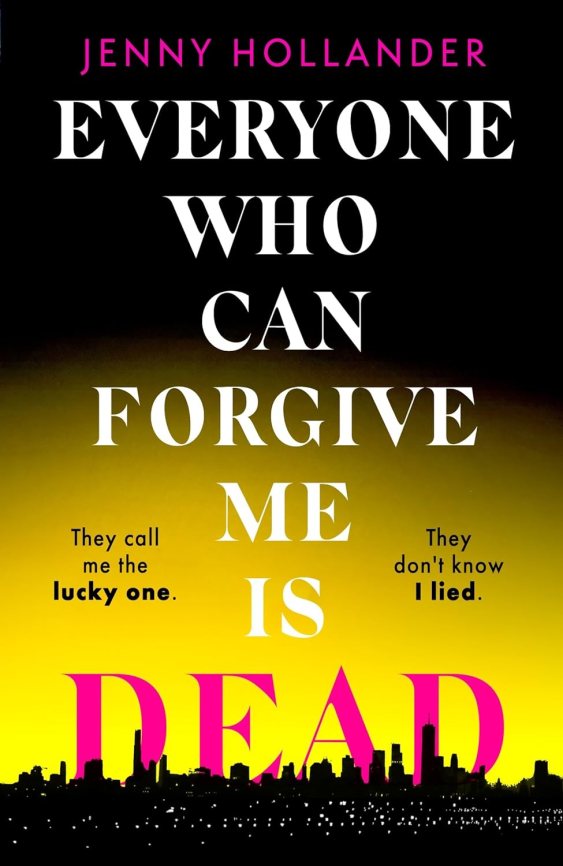
Everyone Who Can Forgive Me is Dead Cover

Publisher: Constable (Trade Paperback – 13 February 2024)

Series: Standalone

Length: 326 pages

My Rating: 4.25 out of 5 stars

Amazon

Debuting author Jenny Hollander presents a memorable first book with Everyone Who Can Forgive Me is Dead, an excellent read that provides a powerful insight into grief and trauma.

Plot Synopsis:

THEY CALL ME THE LUCKY ONE. THEY DON’T KNOW I LIED.

Nine years ago, Charlie Colbert’s life changed for ever.

On Christmas Eve, as the snow fell, her elite graduate school was the site of a chilling attack. Several of her classmates died. Charlie survived.

Years later, Charlie has the life she always wanted at her fingertips: she’s editor-in-chief of a major magazine and engaged to the golden child of the publishing industry.

But when a film adaptation of that fateful night goes into production, Charlie’s dark past threatens to crash into her shiny present.

Charlie was named a ‘witness’ in the police reports. Yet she knows she was much more than that.

The truth about that night will shatter everything she’s worked for. Just how far will she go to protect it?


Everyone Who Can Forgive Me is Dead
is an outstanding first book from Hollander, who provides a gripping and intense narrative for readers to get stuck into.  Told through the eyes of main character Charlie Colbert, the story quickly engrosses you.  Charlie has rebuilt her life after a brutal attack years ago, but when secrets from the past threaten to come forth, Charlie is forced to interact with her fellow survivors once again.  At the same time, Charlie also begins reliving the events leading up to that fateful night in her head, desperately trying to remember everything that happened to truly understand everything that she’s been running from.

The resulting story is very good, and Hollander has come up with a gripping, character-driven book that you can really sink your teeth into.  The combination of past and present storylines is quite effective, and I liked how you got to see the protagonist’s dark reactions in the present while slowly learning about the events that traumatised her and the people involved.  The way in which Hollander reveals all the secrets of the past is handled exceptionally well, and I loved the combination of flashbacks, discussions in the present, and quotes from fictional news articles that hint at what happened.  The full events of the past storyline turn out to be far more complicated than you initially think, and the author throws in some incredibly clever twists.  I honestly was surprised at some of the more brilliant reveals that come to light, and you really appreciate Hollander’s ability to misdirect the audience into assuming certain things happened.  The full reveal and the fallout in the present for the protagonist are pretty amazing, and I loved how everything came together.  The reader really comes away feeling satisfied, especially as everyone gets what they truly deserve at the end.

While I loved the intricate story that Hollander pulled together for Everyone Who Can Forgive Me is Dead, I think the most distinctive aspect of the book is the author’s focus on trauma and how different people deal with it.  This is mainly done through the eyes of the main character, Charlie, who is forced to continuously live with the trauma, guilt and emotional damage that followed the college massacre.  While a lot of this trauma results in a memory black hole for the protagonist, you get to see other aspects of it as the book continues, as she is dragged back into the past and begins to relive all the dark feelings that emerge.  The author’s portrayal of how a person would deal with such events, as well as how it would impact their memory, feels extremely realistic, and you can really feel the emotional damage done to Charlie and those closest to her as they try to help.  Other characters are also forced to deal with the trauma in other ways, and the different levels of regret, involvement and despair prove to be a captivating part of the book.  Throw in a cynical, if realistic, look at how the public idolises dark events, and Everyone Who Can Forgive Me is Dead proves to be quite an emotional rollercoaster.  This emotional charge really enhances the impact of the book, and I deeply appreciated how Hollander worked the protagonist’s attempts to remember and overcome her past into the overarching story.

Overall, I found Everyone Who Can Forgive Me is Dead to be an excellent and compelling first novel from Jenny Hollander that is really worth checking out.  Thanks to the great blend of personal storytelling, moving emotion, and dark secrets, readers come away from Everyone Who Can Forgive Me is Dead deeply moved, and I look forward to seeing what intriguing reads Hollander writes in the future.

Amazon

Skin Game by Jim Butcher

Skin Game Cover

Publisher: Penguin Audio (Audiobook – 27 May 2014)

Series: Dresden Files – Book 15

Length: 15 hours and 49 minutes

My Rating: 5 out of 5 stars

Amazon

I was once again in the mood for a guaranteed hit, so I looked no further than Jim Butcher’s exceptional Dresden Files series, with the 15th book Skin Game.

As readers of this blog will know, for the last couple of years I have been having a wonderful time getting through Jim Butcher’s iconic Dresden Files series.  One of the most well-known and impressive urban fantasy series, the Dresden Files follow the titular wizard, Harry Dresden, as he investigates magical crimes and protects Chicago from supernatural threats.  This series is so damn cool, and I have loved the unique combination of mystery, great characters, and intensive world building as Butcher pulls together a brilliant, modern fantasy universe.  I honestly have loved every single book in the Dresden Files series, although I feel that the last few additions I have read, including Changes, Ghost Story and Cold Days are Butcher at his finest, especially as he really built in some elaborate and original stories.  As such, I had no reservations about checking out the 15th book in the series, Skin Game, especially as it had a pretty damn awesome plot behind it.

Harry Dresden, Chicago’s sole practicing wizard and the new anointed Winter Knight, is in trouble.  Trapped on his island in the middle of Lake Michigan with a magical parasite in his head, Dresden has only days left to live.  Salvation soon appears when his boss, Queen Mab, arrives on the island, offering to save him.  However, nothing from Mab is ever free, and the conditions for her help might prove even more lethal.

To pay off an old debt, Mab has loaned out Dresden to one of his most hated and dangerous foes, the fallen angel Nicodemus Archleone.  To further his dark goals, Nicodemus is planning to break into the personal vault of the Greek god Hades to loot several valuable artefacts.  However, Nicodemus can’t do it alone and he hires a group of rogues, thieves and specialists, as well as Dresden, to pull off the job.  If they succeed, they will all come away insanely rich, but if they fail, their souls be trapped forever in the underworld.

As the job proceeds, it quickly becomes apparent that Nicodemus has no intention of letting any of his heist crew live, especially Dresden and his allies.  To survive, Dresden needs to work out how to both counter the many obstacles between them and the treasure they seek, while also finding a way to stop Nicodemus without breaking the agreements that bind the two together.  Can Dresden outsmart one of the most treacherous and deceptive beings in all creation while keeping everyone alive?  Let the games begin!

Wow, what an awesome book.  I am constantly impressed with how Butcher continues to produce outstanding and epic reads throughout this series, and nearly every Dresden Files book is better than the last.  Skin Game was a pretty great example of this, as Butcher produces one of his most entertaining stories yet with so many twists, betrayals and fantastic revelations.

I cannot emphasise enough just how cool the plot of Skin Game is, especially as Butcher comes up with a particularly clever and exciting heist storyline that the narrative is centred around.  After effectively following through from the events of the prior novel, the reader is soon thrust into the new scenario, which sees Dresden forced to work for his old enemy Nicodemus.  This leads to a classic heist scenario, with Dresden meeting Nicodemus’s unique crew, gathering up new members, and pulling together the resources need to break into the vault, even if the target is a much more supernatural than usual.  Butcher also adds in the fantastic dynamic between Dresden and Nicodemus as they plot against each other.  Both knows that the other is planning to betray them at some point, however they are forced to play by the rules in public to preserve the magical bargain between Nicodemus and Mab.  This leads to a great series of betrayals, manipulations and confrontations, as Dresden walks a thin line while trying to stop Nicodemus.  At the same time, several great recurring characters are brought back, which results in some powerful and personal character-driven storylines that I really got invested in.

There are so many great story elements ongoing through the bulk of Skin Game’s narrative, that by the time you get to the main event, the heist, you are extremely hooked.  The heist in question is everything you would hope it to be, as Dresden and his erstwhile crew of rogues, engage in some daring exploits to achieve their goals.  They are some brilliant set pieces, intriguing revelations, and several brutal twists, including one heartbreaking moment surrounding the main antagonist.  Everything leads up to the inevitable betrayal which sees Dresden and Nicodemus finally face off after dancing around each other all book.  I loved some of the scenes that followed, especially as there is a particularly great twist shown through a well-placed flashback that changes your entire perspective of the earlier story.  A subsequent sequence also presents some of the most emotionally charged moments of Skin Game, especially when it comes to one of my favourite supporting characters.  Everything gets wrapped up nicely by the end, and I loved some of the final revelations in the book, especially when you finally understand who was running the true game and why.

Butcher applies his usual excellent writing skills to Skin Game, and I love how effectively he tells this latest powerful and entertaining story; since it is once again told solely from the perspective of the protagonist, you are treated to Dresden’s typically amusing take on the events occurring around him.  This proves to be quite funny at times, although Butcher adds in a good level of drama and highly personal character development which I think balances out the book and ensures Skin Game can hit you at multiple emotional levels.  I love how Butcher experimented a bit with elements of Skin Game’s writing, especially with how he worked in some very clever, and well planned out twists and revelations, which I felt was one of the strongest points of the novel.  Butcher also really amps up the unique action, intrigue and adventure of the story, and I was constantly engrossed with how the story was going.  The depictions of the underworld and its defences were very striking, and I loved some of the unique scenarios Dresden found himself in.   This entire story come across extremely well with the writing, and I enjoyed every second I spent listening to it.

One of the things I have enjoyed getting through the Dresden Files series is how accessible Butcher makes each novel, as any entry in the series can be read somewhat independently from the others.  However, the deeper you get into the Dresden Files, the more the new book references elements from previous novels, while also building on existing storylines and character arcs.  Skin Game is a great example of this, as new readers can come in and have a wonderful time reading it, especially as Butcher does a good job explaining all the key plot points new readers might be unfamiliar with.  However, established fans of the series will get a lot more out of this book, as Butcher continues or concludes several amazing storylines here.  In particular, there are a lot of references to the last two books that featured Nicodemus as an antagonist, Death Masks and Small Favour, as Dresden continues his deadly fight against his old foe, while remembering all the previous battles that have occurred.  Several great character arcs also come full circle in Skin Game, which proves to be quite moving, especially to those readers who have laboured through the rest of the series and are already quite attached to the main cast.  As such, I probably would recommend reading the rest of the series before trying out Skin Game, mainly because you are in for a much more impactful time if you do so.  However, for those who want a fun and moving fantasy heist novel, you can easily dive into Skin Game and have an outstanding time witnessing all the betrayal, lies and deceit.

As always, one of the best elements of this Dresden Files novel was the exceptional character work.  Butcher always excels at creating complex and powerful character arcs that showcase the many different layers of each excellent protagonist and villain, and Skin Game is no exception.  Indeed, Skin Game was one of the best character-focused books Butcher has released, as it features an interesting cast and some deep and intense character arcs that showcase just how much many of the protagonists have changed.

Naturally, most of the focus of Skin Game revolves around protagonist and point-of-view character, Harry Dresden.  The wizard defender of Chicago, Dresden has gone through a hell of a lot in the last few books, which starts to catch up to him in Skin Game.  While he is still his usual flippant and disrespectful self, you can really see the cracks forming in Dresden’s psyche, especially as he balances the many responsibilities and traumas afflicting him.  Not only is his personality being altered by his decision to become the Winter Knight, but he is dealing with so much guilt for some of his recent actions.  This has made Dresden start to doubt himself, and he has trouble at times seeing whether he is still the same good guy he was at the start of the series, especially when some of his friends start to lose faith in him.  However, thanks to the help of those closest to him, Dresden regains a bit of himself as Skin Game continues, although the dark battles along the way once again take their toll on him.  Butcher works in some extremely powerful and emotional scenes around Dresden in Skin Game, especially as he finally gets closure with some other characters, including his daughter (the scene where they finally talk nearly had me in tears).  While Butcher really did amp up the heavy emotion around Dresden here, you still get a healthy dose of the protagonist’s distinctive with and humour, especially when it comes to the outrageous events, he finds himself in.  The unique situation where Dresden is forced to work with one his enemies prove a rich ground for the protagonist’s humour to come out.  It also allowed the reader to see how much smarter and more mature Dresden has become after fighting against all comers for over a decade.  I really loved how Dresden was able to anticipate many of the coming betrayals and pull together a particularly effective counter that shook up everything.  Butcher does such a great job writing Dresden, and it has been extremely fun to see this character once again grow.

Aside from Dresden, Skin Game featured an excellent collection of recurring characters from the previous books, each of whom had their own unique and powerful character arc that Butcher expertly continued with.  This includes Karrin Murphy, the former cop, who Dresden recruits as his muscle for the job.  Murphy is always one of the best characters in a Dresden Files novel, and Skin Game was a great example of this, as she once again serves as Dresden’s unwavering backup and conscience.  Skin Game proves to be a major novel for Murphy, especially as they finally resolved the romantic tension between Dresden and Murphy that had been building since the first book, Storm Front.  I really appreciate how well Butcher kept up the will-they/won’t-they atmosphere of these two characters for so long, and it was great to finally get some closure on that, even if I know I’m going to get my heart broken in Battle GroundSkin Game also saw the return of one of Butcher’s best characters, Michael Carpenter, the former Knight of the Cross who has been out of action for several books.  Michael gets back into the fray for this novel, and it was so good to finally see him return to his old ways.  The ultimate good-guy character, Michael is always a reassuring presence in any Dresden Files novel, and the interactions he has with Dresden are some of the most moving in the entire book, especially as he provides Dresden insights and emotional support like no one else can.

While I love Murphy and Michael, probably my favourite supporting character in the book is Waldo Butters.  The nerdy and kind medical examiner has been getting a real glow-up as the series continues, and you finally see how serious he has become by the events of Skin Game, especially after having to hold down the fort during Dresden’s enforced absence.  The events of the last few years have really changed Butters, and some of the interactions he has with Dresden are surprisingly intense, especially as Butters no longer trusts the main character.  Butcher had a lot of fun turning Butters into a magical superhero in Skin Game, and I loved some of the unique magical inventions that Butters uses to face off against forces way outside his weight class.  There is also the major turning point for Butters at the end of the book, where he shows just how noble he truly is, and the universe rewards him in a big way.  In many ways, Butter is the true MVP of Skin Game, and his future storyline looks very bright, especially as Butcher could easily do a whole spinoff series focused solely on him.

Of course, no Dresden Files book would be complete without a great villain, and Skin Game has one of the very best with the return of Nicodemus.  A fallen angel possessing an ancient, evil human, Nicodemus is a particularly suave and dapper figure, who always makes a huge impact when he appears.  Nicodemus falls into the role of heist leader extremely well, and I loved the fun dynamic that emerges between him and Dresden, especially as they both hate each other and known that betrayal is imminent on both fronts.  Some of the confrontations he has with the protagonists are pretty brutal, and you get to see just how dangerous he can be as a villain.  While Nicodemus is mostly his usual calm self for most of the book, certain big events push him over the edge, especially as he makes some big sacrifices.  It was both satisfying and a little heartbreaking to see him so damaged as a result, especially when the truth about the events are fully revealed.  I cannot wait to see Nicodemus return in some future books, especially as he is going to be even more dangerous and desperate.  Throw in a truly entertaining and dangerous group of fellow heisters, old enemies, Dresden’s loveable dog, Mouse, and a fantastic Greek god who proves surprisingly similar to the protagonist, and you have an incredible group of characters who help turn Skin Game into something truly special.

Unsurprisingly, I chose to listen to Skin Game on audiobook, which is frankly the best way to enjoy a Dresden Files book.  Coming in with a runtime of just under 16 hours, Skin Game was a decently long audiobook, although I was able to power through it very quickly, especially after getting caught up in Butcher’s impressive story.  As always, the audiobook format really enhances Skin Game’s presentation, and the novel’s humour, intense action and great characters really come through when read out.  Most of this is due to one of my favourite narrators, actor James Marsters, who has lent his voice to all the books in the series.  Marsters is so damn entertaining as a narrator, and I love how well he inhabits the various characters featured in the book, especially the protagonist.  Each character is given a very fitting voice, whether it be the dapper voice of Nicodemus, the calm tones of Michael Carpenter, or the hilariously British voice of Binder (which always reminds me of Spike).  Not only are these voices entertaining, but Marsters does such a good job of conveying emotion and feeling through his characters, including through the protagonist’s deep narration.  This was such a great way to enjoy Skin Game, and I cannot recommend the audiobook format of this book enough.

Overall, Skin Game proved to be an exceptional and highly addictive addition to Jim Butcher’s always impressive Dresden Files series.  Loaded with an outstanding heist story, amazing characters, and tons of sacrifice and betrayal, Skin Game was a particularly strong Dresden Files book and one I cannot recommend enough.  An incredible read that gets a very easy five-star rating from me.

Amazon

Murtagh by Christopher Paolini

Murtagh Cover

Publisher: Penguin (Audiobook – 7 November 2023)

Series: The Inheritance Cycle – Book Five

Length: 24 hours and 32 minutes

My Rating: 4.5 out of 5 stars

Amazon

Bestselling author Christopher Paolini returns to the iconic world of Alagaësia with Murtagh, a powerful novel that continues his original series while focusing on a complex and damaged protagonist.

I am very excited about this review as it offers me the first chance to review a recently released Paolini fantasy novel.  I am a massive fan of Christopher Paolini, having read every single novel he has written in his impressive career, including the science fiction Fractalverse series (To Sleep in a Sea of Stars and Fractal Noise).  However, the series that most readers will associate him with are the Inheritance Cycle novels.

The Inheritance Cycle is an awesome young adult fantasy series that follows a young man who bonds with a dragon to take down an evil tyrant.  A particularly iconic series, the original Inheritance Cycle consists of Eragon, Eldest, Brisingr and Inheritance, and it told a complex, well-established and exciting tale that saw the protagonist, Eragon, rise to great heights and eventually defeat the big bad.  I was gifted the Inheritance Cycle novels when I was growing up and it became a favourite fantasy series that I read multiple times.  While I tend to view it with a more critical eye these days, I still love it and its powerful adventure.  Due to how much I enjoy this series, I have been eagerly awaiting a sequel for years, and I was so damn excited when I found out that Paolini was releasing a follow-up book.  Murtagh was one of my most anticipated reads for 2023, especially when I saw that it was going to follow one of the best characters from the original series.

A year has passed since the war to free Alagaësia ended and the evil king Galbatorix was killed at the hands of the Dragon Rider Eragon and his companions.  Peace now reigns across the land as the people look to rebuild.  But there are two beings in Alagaësia who will never find peace: Eragon’s half-brother, Murtagh, and his dragon, Thorn.  Already reviled for being the son of the traitorous Dragon Rider, Morzan, Murtagh is hated by every race in Alagaësia for the involuntary role he played in Galbatorix’s evils.  Finally freed from Galbatorix’s iron control, Murtagh and Thorn travel the outskirts of the land, trying to find a semblance of harmony that has been lacking their entire lives.

However, the troubles of the world are always lurking, and the pair soon discover that not everything is as peaceful as it seems.  Following warnings and whispers from an ancient dragon spirit, Murtagh and Thorn become aware of a dark conspiracy building in the land, as unusual rumours of brittle ground, the scent of brimstone and mysterious beings reach their ears.

Determined to stop a new evil rising and wreaking havoc, the exiled rider and dragon begin their own investigation and soon uncover the source of this evil: a mysterious cult whose influence stretches across all the races and nations of Alagaësia.  Due to their surprising power and ability to manipulate the world, Murtagh and Thorn might be the only people capable of stopping them, and they set out to investigate.  However, they are unprepared for the dangerous witch at the centre of this cult, as well as the deadly power she represents.  Can Murtagh and Thorn defeat this evil before it is too late, or will they once again find themselves enthralled to a dangerous power beyond their comprehension?

Christopher Paolini returns with another outstanding book that takes the reader on an exciting and emotionally rich adventure which also cleverly expands his already elaborate setting.  While I am sure my review might be partially influenced by nostalgia, I found Murtagh to be an exceptional read that brings back all the things I loved about the original novels while also showcasing Paolini’s increased ability as an author.

For this new book, Paolini goes backs to basics and creates a classic epic fantasy around one of his most damaged and compelling characters.  Starting off a year after the climatic events of Inheritance, Murtagh follows the titular protagonist and his dragon as they try to unwrap a mysterious warning given to them in the last book.  This warning and an obsession with redeeming themselves leads Murtagh and Thorn to investigate troubling rumours and encounter a group of dangerous warriors and infiltrators utilising powerful magic.  This forces Murtagh into a search for knowledge while once again traversing areas of Alagaësia where he is the most wanted.  There are some intriguing moments as Murtagh embarks on a series of side quests that will allow him to achieve his goal, including infiltrating a city, killing a giant fish, encountering old “friends” and uncovering corruption at the heart of a regiment of city guard.  While I will admit that parts of this novel get a little slow in places, Paolini does a great job of reintroducing key elements of lore, building up a new growing threat and showcasing the main character elements of the protagonists, including their trauma, the bond between rider and dragon, and their unfairly given outcast status.

The second half of the book is extremely strong as Murtagh and Thorn come face to face with their new enemy, the witch Bachel and her unusual followers.  Paolini writes this entire half of the book extremely well, as Murtagh attempts to at first subtly uncover what Bachel is plotting and what power she controls.  Naturally things go wrong and this leads to a pretty dark and traumatic part of the story where Murtagh is at his lowest point.  This part of the book is painful to read, especially as you have really grown to care for the protagonist, but it is so damn well-written and emotionally charged.  Everything leads up perfectly to a much needed and exceptionally presented climax, where Murtagh manages to fight back and the resulting carnage is very therapeutic after all the dark scenes the reader has been forced to experience.  The big confrontation was very epic and really tied into the author’s excellent characterisation of the protagonists, allowing for some impressive moments.  The conclusion is both hopeful and worrying as a new big-bad looms on the horizon, and there are still many secrets left to unwrap.

I really liked how Murtagh came together as Paolini presents a powerful, character-driven read that really tries to capture the heart and feel of a classic epic.  Murtagh really had all the best elements of Paolini’s first book, with a lone character and his dragon navigating through a complex world, searching for a big bad on the horizon.  I loved these story elements, including the loosely connected quests, the elaborate and dark interactions in the second half of the book, as well as the general menace implied by the world’s new hidden threat.  This story is so damn good and served as an interesting continuation of the original Inheritance Cycle novels, adding to the overall plot of the series, while also allowing the new protagonist to strike out on his own and encounter the world on his terms.  Paolini really hits the right balance of elements in Murtagh, with a great focus on character work blending nicely with the complex story and great focus on expanding Alagaësia.  While this series is usually marketed as young adult fantasy fiction, I honestly would consider Murtagh to be more of an adult book due to its elaborate story, big world, and complex older characters.  Despite that, younger readers can still really sink their teeth into Murtagh as an early fantasy experience, and Paolini really hits the right balance of violence and other themes that ensures Murtagh is very palatable to a range of readers.

As I have made clear a few times already, Murtagh is a sequel to Paolini’s Inheritance Cycle series, where quite a lot of plot, character histories and elements about the world of Alagaësia were introduced.  Due to it being a direct sequel, a large amount of this detail was essential for Murtagh, which does put newer readers at a disadvantage.  I think Paolini did a good job of reintroducing these relevant story elements where needed, so new readers can dive into this book without too many issues.  However, the re-establishment of these elements does take a little time, so there might be some occasional blind spots for these newer readers, especially towards the beginning of the book.  As such, established Inheritance Cycle fans will get a lot more out of Murtagh than new readers, and there are tons of incidental references and callbacks that will make a lot more sense as a result.  I was just so glad to finally get a new Inheritance Cycle book, especially one with such an elaborate and well-written story that connects to the original books in some creative and meaningful ways.

One thing I have always particularly loved about Paolini’s works is the insane amount of effort and detail he puts into developing his elaborate fantasy world.  He did an outstanding job of this in the Inheritance Cycle, and the resulting world was filled with a fantastic history, some classic fantasy elements, and a complex evil empire ruled over by an all-controlling madman.  I had an outstanding time exploring Alagaësia when I was younger, and so one of the things I was most excited about with Murtagh was seeing how much this fantasy world has changed in the aftermath of the protagonist’s victory.  Paolini delivers this in spades, showcasing some intriguing changes as the nations rebuild, the other races once again integrate with humanity, and the compelling legends of Eragon’s victory over Galbatorix are built up, even if Murtagh’s role in that victory are largely forgotten.  Many of the well-established rules of magic and Dragon Riders are brought back for this sequel, and Paolini makes sure to reintroduce them effectively for new readers.

It was quite interesting to see Murtagh’s less-knowledgeable take on much of this fantasy lore, especially as that cleverly tied it with his more brutal tutoring in magic than Eragon had in the original series.  Indeed, Murtagh’s insights into many elements of this world are very different to those of the previous protagonists, and this helped to make a lot of the novel a lot more grounded and approachable.  While it was great to see these familiar elements again, I also liked the new fantasy features of Alagaësia that Paolini came up with for Murtagh.  While I won’t give too much away here, the new big bad of the series is very intimidating, and I loved how well Paolini set them up.  The author is subtle with this introduction, and its gradual reveal really increases its threat level, as it seems potentially even more dangerous than Galbatorix.  I look forward to seeing how Paolini expands on this, and I was so impressed with how much additional world building was featured in Murtagh.

A major highlight of this book had to be the compelling character arcs that formed the basis of the book.  Murtagh is extremely character driven, perhaps even more so than the other Inheritance Cycle novels, and Paolini writes an exceptional story around his characters.  Naturally most of this focus revolves around the titular character of Murtagh, who is the only point of view character in the novel.  I was happy that Paolini decided to focus an entire novel on Murtagh, as he was such a great character in the original trilogy whose perspective you never got to experience.  The son of a monstrous traitor who served Galbatorix, Murtagh eventually rebelled and tried to escape his fate, only to be captured again after meeting Eragon in the first book.  Forced to serve Galbatorix against his will, thanks to the torture levelled against his newly hatched dragon, Murtagh ended up being the secondary antagonist of the series, especially once it was revealed he was Eragon’s half-brother.  Murtagh was eventually able to free himself from Galbatorix’s control at the climactic battle however, despite the role he played in killing the big-bad, he is still very much reviled by the people due to the atrocities and murders he was forced to commit.

As such, the plot of Murtagh is essentially what happens if a somewhat redeemed Darth Vader (there are a lot of parallels between the two characters), was wondering the land trying to atone for the evils he caused and reflecting on all the mistakes in his life.  I loved that we got to see this unique and compelling character focus, and it proves to be a very intense and powerful central storyline, especially as Murtagh is forced to relive a lot of the pivotal moments of his plot from the original novels, in addition to some previously unseen backstory.  You really get to experience Murtagh’s regrets, despair and self-loathing, and Paolini does a great job of focusing on that, while also introducing some additional growth as Murtagh comes to terms with who he is.  Paolini writes a fantastic redemption arc in this novel, and Murtagh really grows into a character you can care for.  Naturally, Paolini rewards you for caring by showing some extended scenes of Murtagh suffering in some major ways, and some of these sequences, especially in the second half, pull at the heartstrings.  The author expertly ties this suffering into Murtagh’s journey of self-discovery, and the scenes where he overcomes major adversity again proves to be some of the most powerful in the entire book.  I also appreciated how Paolini portrayed him in a very different way to Eragon, as he is more angry, impatient, and less-well trained in many of the arts of magic.  The author portrays these differing character elements in an extremely impressive way, and the character history surrounding the protagonist really explains why Murtagh is so separate from his fellow Dagon Rider and half-brother.  I honestly was so impressed with how Murtagh was showcased in this book and he ended being a pretty exceptional character.

Due to their mental connection, Murtagh’s dragon Thorn is also a major character in the novel, and he proves to be an excellent alternative protagonist as a result.  Thorn proves to be a fun and over-protective companion to Murtagh, especially with their joint history of abuse, and Paolini always does a great job of showcasing the soul bond that exists between a dragon and rider.  In many ways, Thorn is very similar to Saphira from the original Inheritance Cycle novels, being proud, predatory and occasionally playful (very much like a cat).  However, unlike Saphira, Thorn has gone through a substantial amount of trauma thanks to the machinations of Galbatorix, who used magic to age him quickly and tortured him the entire way to make him even more vicious.  It was fascinating to see a psychologically traumatised dragon , especially as certain things set him off, and watching him try to mentally heal alongside his human is a very heartwarming part of the novel.  While he does suffer at times alongside Murtagh, he also gets to cut loose at the end in a particularly cathartic, if destructive, sequence, which was really great.

Murtagh also features an interesting array of new supporting characters, who ensure some interesting interactions with the two protagonists.  There is a noticeable lack of major characters from the original Inheritance Cycle novels, which I thought was a very clever move as it helped this novel to stand on its own.  I did think that one or two good characters from the previous novel, such as Angela, might have fit into this storyline well, but I’ll settle for seeing them later, especially after how successful their absence worked here.  As such, the supporting cast of Murtagh are all new characters, and Paolini did an outstanding job of introducing them and working them into the plot.  While many of these characters did not appear in the story for a long period, namely because of the protagonist’s transitory narrative, several characters did stand out.

I loved the Urgal shaman Uvek Windtalker who Murtagh encounters in the second half of the novel, whose interaction with the protagonist leads to some powerful scenes.  However, the true standout character in Murtagh had to be the main antagonist, Bachel.  A powerful which and apparent profit, Bachel is a mysterious and aloof figure, who proves to be quite sinister.  You end up getting quite a good look at just how malicious, arrogant and dangerous Bachel and her minions can be as the book continues, and Paolini does a remarkable job of building her up as someone to really despise.  This ensures that you are really pumped up for the big confrontations with her at the end of the novel, and I liked just how effective the author was able to make her.  These characters and more really help to push the narrative of Murtagh in some awesome directions, and I liked the more unique figures that were featured in this latest entry in the Inheritance Cycle.

While I did receive a paperback copy of Murtagh, I ended up listening to the audiobook version instead.  This is mainly because the last few times I enjoyed the Inheritance Cycle I chose to listen to the audiobook format, and I wanted some continuity from that since they brought back Gerard Doyle, the narrator from the original Inheritance Cycle, to voice this latest entry.  Doyle does an amazing job of narrating Murtagh, and I felt that he really enhanced the impact and enjoyment I had of the story.  Not only has he got a great basic tone that helps move the plot and lore heavy parts of the book along at a good pace, but he also has some excellent takes on the character voices.  His powerful voice for the titular character really hits all the right notes, and I love the range of emotion he can bring to this figure.  He brings back the classic ‘dragon’ voice for Thorn that featured in the other Inheritance Cycle books, and I loved the somewhat bestial nature to it, as well as the ethereal nature of a mental communication.  The rest of the intriguing cast is also well captured by Doyle, and he especially makes the main antagonist pretty sinister at times.  This outstanding voice work really drew me into the Murtagh, and I easily absorbed a lot more of the intense detail and lore in this format.  Coming in at 24 hours and 32 minutes, this is a pretty long audiobook (it would rank 15th on my current Longest Audiobook I’ve Listened To list), but it really worth a listen, especially if you enjoyed the original Inheritance Cycle novels in this format.

I think the multi-page ramblings above make it clear that I had an excellent time with Murtagh.  Christopher Paolini did an outstanding job of continuing his iconic Inheritance Cycle series, and I loved the compelling direction he is taking this story.  I also love how much Paolini appears to have improved as a writer, especially when it comes to complex character work, and I cannot wait to see what the next stage in Murtagh and Thorn’s journey is.  Murtagh is very-much worth the read, especially if you grew up reading the Inheritance Cycle books like I did.

Amazon

House of Open Wounds by Adrian Tchaikovsky

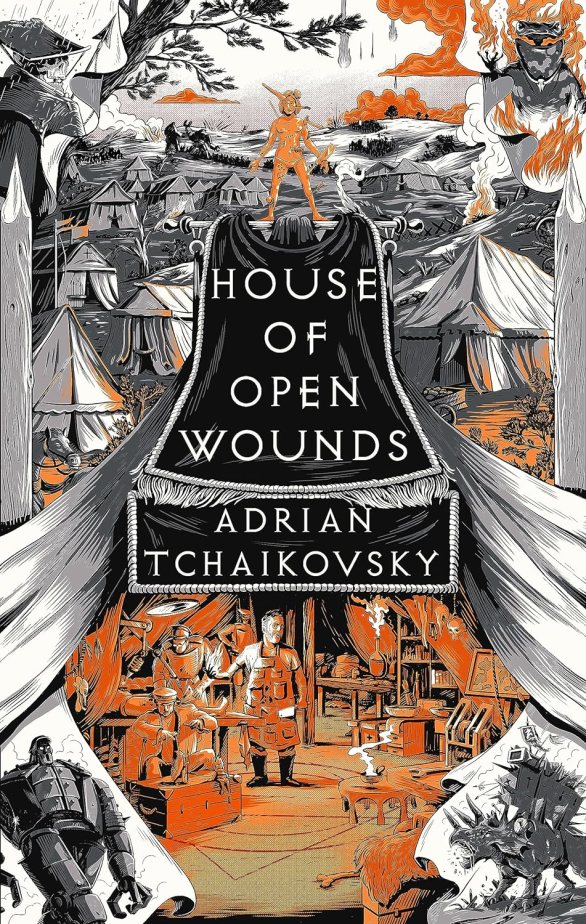
House of Open Wounds Cover

Publisher: Head of Zeus (Ebook – 7 December 2023)

Series: The Tyrant Philosophers – Book Two

Length: 636 pages

My Rating: 5 out 5 stars

Amazon

The always deeply impressive Adrian Tchaikovsky returns with an exceptional and remarkable piece of fantasy fiction, House of Open Wounds, which presents the reader with a particularly unique and ruthlessly entertaining story, chock full of brilliant characters.

Few fantasy authors have the range and style of Adrian Tchaikovsky, whose distinctive contributions to the science fiction and fantasy fields are quite remarkable.  While Tchaikovsky has written several highly regarded series, I have only just scratched the surface of his works, having read a few of his recent reads.  This includes his first foray into the Warhammer 40,000 universe, with the captivating standalone read, Day of Ascension, as well as the brilliant and elaborate novella, Ogres.  However, my favourite book from Tchaikovsky so far would have to be the outstanding City of Last Chances.

The first book in The Tyrant Philosophers series, City of Last Chances was an outstanding read that I had the pleasure of enjoying earlier this year.  Set around a conquered city with several unique magical inclusions, City of Last Chances introduced the reader to a cool new world and told a range of character driven stories about resistance, religion and sacrifice.  City of Last Chances got a very easy five-star rating from me, and it honestly was one of the best books and audiobooks I enjoyed in the first half of 2023.  I had such a brilliant time with City of Last Chances that when Tchaikovsky announced he was releasing a sequel in the second half of 2023, I was ecstatic.  This sequel, House of Open Wounds, continued some of the complex storylines Tchaikovsky started in City of Last Chances, and it was one of my most anticipated books for the second half of the year.

There are few nations more feared or relentless than the ever-expanding Palleseen.  A rising empire of zealots who are determined to bring Perfection and Correctness to an imperfect world, the Palleseen have advanced out of their homeland in an unstoppable wave, wiping out all religion and superstition as they go.  As cities and kingdoms fall before their military might, their armies leave behind mounds of dead and wounded soldiers who require tending in field hospital tents just behind the frontline.

Into this chaos is thrust the god smuggler Yasnic.  A former priest, miracle healer and occasional rebel, whose previous experiences with the Palleseen saw him hanged, attacked and banished from his city, Yasnic has experienced many upheavals throughout his life.  Saved from another execution by the army bureaucracy, Yasnic and his box of orphan gods arrive at the frontlines, where he has been assigned to work in an unorthodox medical unit.

Made up of a mixture of former priests, gods, magicians, alchemists, artificers, necromancers and led by a gigantic brute known as the Butcher, the experimental medical unit treats the soldiers no one else can save and recycles the rest into the war effort.  Entrusted to save the Palleseen soldiers, but doomed if anyone ever discovers the full extent of their abilities, the surgeons and orderlies of this unit ply their bloody trade as best they can while living as part of an unusual family, but the arrival of Yasnic could change everything.

As Yasnic works to fit into the unit and save lives, his unusual connections to the weakened and hidden gods of the world slowly begin to cause chaos throughout the army.  Not only is he aware of the divine forces that secretly hang around the hospital, but his own illegal and crotchety God is determined to bring miracles to the Palleseen, whether that want them or not.  As an outbreak of impossible healing and sudden pacifism spreads through the regiment, can Yasnic keep himself and his gods alive, or will the full force of the Palleseen zealots come crashing down upon him?

This was another epic and truly remarkable novel from Tchaikovsky that had me hooked the entire way through.  Featuring a dark, bloody and fun story, House of Open Wounds was a particularly distinctive read that told its own captivating story while continuing some of the best elements from City of Last Chances.  Funny, thoughtful and moving in equal measures, House of Open Wounds was an incredible and addictive novel that gets another very easy five-star rating.

I was very impressed with the exceptional and moving narrative that Tchaikovsky pulled together for House of Open Wounds, and I was hooked the second I got into it.  After the events of City of Last Chances, the reader is thrust into a new part of Tchaikovsky’s fantasy world as you find yourself imbedded in a Palleseen battalion following the members of an unusual but effective military hospital.  Like City of Last Chances, House of Open Wounds is strongly character driven, as you follow the personal stories surrounding each of these unusual outsider characters and learn about their complex pasts while watching their lives play out in the present.  Much of the plot revolves around returning protagonist Yasnic and his God, who are drafted into the unit, and you get to see his experiences of the other characters, the wars, and the internal Palleseen bureaucracy.  Most of the first half of House of Open Wounds is dedicated to exploring the new cast of characters and introducing their unique stories, as they find themselves closely following a bloody and dangerous war.  This part of the book is primarily focused on the healing and medical work of the protagonists, as well as diving into their reasons for being there and the unique skills they bring to the surgical table.  Apart from that, there isn’t an amazing amount of major plot progression here, except when Yasnic starts to mix things up around the battalion.  While this pace is a little slow, this first half of the book was really fun and enjoyable, as you find yourself getting really lost in the characters’ lives, unique struggles, desires, and experiences.  It also helps that many of these character details, as well as the mundane events of the hospital, eventually lead to bigger things later in the main plot, and Tchaikovsky does an outstanding amount of set up here.

The plot picks up a lot more in the second half, when the main battalion moves to a different warzone and find themselves involved in a substantial fight that really pushes the medical unit to its limits.  The new battles, as well as the intriguing location they find themselves in, move several of the character arcs in some big directions, and you find out more and more about each of the main characters as a result.  The constant chaos that surrounds Yasnic also starts to take its toll on the main story, as his strangeness and the double-edged miracles he occasionally brings cause him to make enemies and upset the delicate balance of the Palleseen army.  At the same time, the Palleseen war machine starts to alienate the members of the medical unit, who find their talents being stolen to create weapons.  Everything leads up to the big finale, where the protagonists attempt to free themselves with an elaborate and ambitious plan.  This plan makes great use of all their individual skills and histories, and so many little details and elements from the story are used to bring a fun and creative conclusion to the book.  Each of the fascinating character arcs conclude nicely and I loved how Tchaikovsky masterfully brought everything together in a satisfying and entertaining way.

Tchaikovsky utilises his typical excellent and distinctive writing style to convey this elaborate and entertaining narrative to the reader, and I had such a wonderful time seeing it unfold.  As with the previous novel in the series, Tchaikovsky relies very heavily on perspective changes to tell a multilayered, character-driven story.  Like the previous book, many of the major characters are initially showcased in their own chapter at the beginning, which often leads to additional cast introductions.  As the book progresses, the chapters feature perspective changes so you can see more interactions and a wider view of the entire story.  I loved the immediate deep background on several of these characters, and while you still often must wait a while to get their full story, you learn enough to like them in the opening parts of the novel.  Tchaikovsky makes full use of these characters to tell a fantastic story, and I loved how well he showcases some unique events through their eyes.  As with the previous book, House of Open Wounds has a range of tones as Tchaikovsky works hard to produce the right balance of humour, excitement, and moving and powerful character moments.  The multiple detailed and confronting scenes of the bloody battlefield hospitals are well balanced out by the fantastic and subtle humour, which often comes from the outrageous situations that occur throughout the book, as well as the various character’s unique outlooks on life.  This made for a particularly compelling book as you found yourself moving from comedic scene to a more dramatic or tragic moment with frequent regularity, as you find yourself stuck onboard a well-thought-out emotional roller coaster.

House of Open Wounds proves to be an intriguing and clever follow-up to City of Last Chances, especially as the author deepens the lore surrounding this fantasy world and brings back two fantastic protagonists.  Readers of City of Last Chances will have an absolute blast with this book, as you get some interesting follow up to Yasnic’s compelling storyline while also seeing a different side to the antagonistic nation from the first book.  This is a somewhat loose follow-up, and you really don’t need to have read City of Last Chances to enjoy House of Open Wounds.  In many ways this is a good standalone novel, especially as most of the focus is on a whole new group of protagonists, and even Yasnic is given a new name for much of the book.  Tchaikovsky does ensure that some of the key details and plot points from the first book are carried over when needed, although he does leave a bit of context out in places so as not to overwhelm new readers.  As such, House of Open Wounds is a very accessible read, although established fans of Tchaikovsky are going to particularly enjoy this, especially if they loved City of Last Chances.

One thing you can always rely on Tchaikovsky to do is to pull together an elaborate and deeply compelling world to set his stories around.  This is extremely true in this series as Tchaikovsky has come up with a war-torn landscape filled with magic, gods, demons and a new rising empire.  The author did some interesting set up for this world in the previous novel, although the plot there was primarily contained inside a single city.  In House of Open Wounds, the reader gets to see a bigger chunk of this world, even though much of the plot takes place either on the battlefield or in the camp behind the lines.  Despite this, you get a better idea of the politics, wars and conquests that have taken place in recent history, and you particularly learn more about the Palleseen.  The Palleseen are a group of ideological zealots dedicated to bringing their version of perfection to the world, which primarily involves breaking everything down into logic and reason, and doing away with superstitions and beliefs.  As such, their goal is to rid the world of gods, deities and other superstitions, usually by conquering the lands and bringing them under the control of their relentless bureaucracy.  Most of this book is dedicated to exploring the nature of their war machine, and you really get to see just how corrupt and ambitious some of their members are as a result.

I loved the focus on the military hospital and the war camp for most of the book, especially as seeing the various members of Palleseen camp allows the reader to fully understand the many problems, compromises and cruelties the Palleseen experience on their road to perfection.  Tchaikovsky throws in some great critiques of militarisation and empire building throughout the book as you see these perfect Palleseen become racked with pride, ambition and greed to prove themselves and advance up the ranks.  Their determination to win means they turn a blind eye to gods and superstitions when it suits them, and that results in the experimental medical unit that serves as the centre of the book.  However, while they appear to only want the assembled gods, alchemists, and other strange magics for healing, really they are working to corrupt them into terrible weapons to further their war capability.  There are several great storylines that see the Palleseen turning benevolent tools and creatures into highly inventive tools of war, and it serves as a major plot point and motivation for several characters, including a few Palleseen who have enough of their colleague’s lust for power.  Combine that with the returning minor gods, who end up having their own impact on several characters, and the reader comes away with a very cynical look at the Palleseen, and empires in general, which both ridicules them and shows just how malevolent and insidious they can be.

The real key that pulls together House of Open Wounds is the huge array of memorable and complex characters that are introduced throughout the course of the plot.  Tchaikovsky does a remarkable job of introducing and swiftly building up some truly amazing characters in this novel, and their compelling and often traumatic personal stories become so highly ingrained in the plot as a result.  There are so many great protagonists and supporting figures in this novel, and I was personally impressed with how all of them were original characters that were not built up in the prior novel.

The main exception to this rule is Yasnic and his god, both of whom were introduced in City of Last Chances and who are masterfully inserted into this sequel.  Yasnic was honestly one of Tchaikovsky’s best characters in City of Last Chances and I was so glad to see more of him here, especially as the author somehow manages to work in even more development after all the defining character moments that shaped him in the prior novel.  Since we last saw him, Yasnic has moved on from being the last priest of a forgotten god and has instead become a more generalised religious figure, offering shelter and assistance to fallen and orphaned gods who no longer have any power or believers by carrying them around in a box on his back.  After everything he has gone through, including his own crisis of faith, Yasnic now has a different view of the world, although he is still being haunted by his demanding and petty god.  Yasnic has some wonderful moments in this book as he tries to fit into his new role while also hanging onto the trappings of his old life.  Desperate to save everyone he can, Yasnic finds his views and pacifism really badly damaged by the constant war and the relentless and orderly Palleseen, and he is forced to make some haunting compromises.  You really get some very interesting insights into Yasnic’s mind in this book, especially as you see how the aftermath of him abandoning his position as a priest impacted him.  You cannot help but feel for the extremely likeable Yasnic at times, as he is thrust into tragic and heartbreaking positions against his will, and his quiet determination and general positivity pluck at your heartstrings.  Throw in some great new friends, an unusual but surprisingly wholesome love interest and a series of unfortunate misunderstandings that frustrate even this gentle soul, and Yasnic once again stands out as a particularly awesome and likeable protagonist.

The other side of Yasnic’s character resides in the body of his tiny, stumpy, and petty deity, God, a former major healing god who has lost all his worshippers apart from Yasnic, but still maintains his powerful healing abilities.  However, God refuses to heal anyone unless they swear a vow of pacifism, and if they cause harm to someone in any way, it will result in their wounds automatically returning, generally resulting in a sudden death.  Thanks to his stubbornness, pride, and his whiny focus on Yasnic’s soul, God was one of the most entertaining characters in City of Last Chances, and I am really glad that Tchaikovsky brought him back for House of Open Wounds.  While he is still a judgemental, mischievous and ugly angel on Yasnic’s shoulder in this sequel, you get to learn more about God and why he refuses to help save people.  There are some surprisingly emotional scenes where God expresses why he is so bitter and you really get a much better understanding of his angry mind, especially when Yasnic makes the same mistakes, adding to God’s sadness.  I also loved how well God played off Yasnic as he proves to be a surprising and entertaining counterpoint to the humble and nice former priest.  While most of their dialogue is quite contentious, with God trying to control his increasingly independent former priest, you can see deep down that God cares about Yasnic, and they form quite an interesting and fun duo.  Tchaikovsky took God’s character arc in some interesting directions towards the end of House of Open Wounds, and I have a feeling he is going to be a real nuisance to people in the next book.

House of Open Wounds also features quite a fun range of supporting characters, each of whom has their own compelling story to tell.  This primarily includes the crazy and unusual group of associated healers and hospital workers that work in the experimental hospital unit, as well as the competitive and dangerous Palleseen officers controlling their destinies.  I won’t go into too much detail here, as I could honestly go one for a paragraph about each, but I was really impressed with how well Tchaikovsky set each of them up and explored their histories and stories as the booked continued.  There are some brilliant and very well fleshed out character arcs everywhere in House of Open Wounds, and I loved just how compelling a story Tchaikovsky was able to make as a result.

Adrian Tchaikovsky once again shows why he is one of the absolute best authors of complex and intelligent fantasy fiction with this outstanding and epic read.  House of Open Wounds is a deeply clever, compelling and moving read that hooks the reader with its unique scenarios, fantastic humour, and memorable characters.  I loved every single second I spent reading this novel and I really appreciated the amazing way Tchaikovsky chose to continue the great story started in City of Last Chances.  I cannot wait to see what over elaborate fantasy stories Tchaikovsky creates in this universe in the future, and this epic novel is one of the best pieces of fantasy fiction I enjoyed in 2023.

Amazon

Throwback Thursday – Lord of the Night by Simon Spurrier

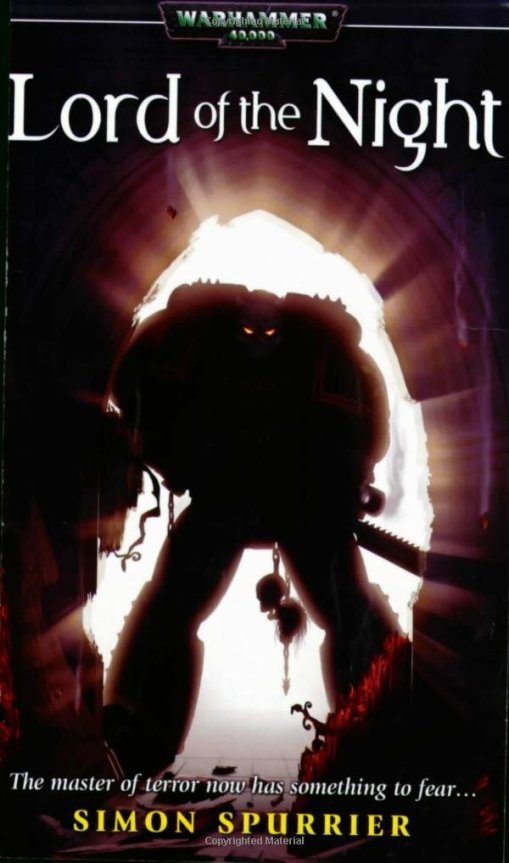
Lord of the Night Cover

Publisher: Black Library (Paperback – 25 January 2005)

Series: Warhammer 40,000

Length: 413 pages

My Rating: 4.75 out of 5 stars

Amazon

Welcome back to my Throwback Thursday series, where I republish old reviews, review books I have read before or review older books I have only just had a chance to read.  This week I check out an impressive and dark older entry from the excellent Warhammer 40,000 extended universe, Lord of the Night by Simon Spurrier.

Readers of this blog will know that I have a lot of love for the always intense and fun Warhammer 40,000 fiction, having read quite a bit of it this year.  One of the better older pieces of this fiction I managed to check out this year was the awesome novel Lord of the Night by acclaimed author Simon Spurrier.  Spurrier is an excellent author who is best known for his work on various graphic novels and comics series across the major companies.  I have read a couple of his comics over the years, although my favourite is probably his run on the original Doctor Aphra series (check out my reviews for the awesome volumes Unspeakable Rebel Superweapon and A Rogue’s End).  Spurrier also wrote several Warhammer 40,000 novels back in the mid-2000s, including the highly regarded Lord of the Night.  I was lucky enough to get a copy of Lord of the Night second-hand, and I ended up reading it while away on holiday.  Unsurprisingly I loved it, as Spurrier came up with a powerful story about two complex characters caught up in a deadly game of cat and mouse.

Interrogator Mita Ashyn of the Ordo Xenos is newly arrived in the service of veteran Inquisitor Kaustus after the death of her previous master.  Desperately trying to earn her place amongst the Inquisitor’s haughty acolytes and her mysterious new master, Mita is isolated due to the taint associated with her advanced psychic powers.  Seeking alien cultists on the hive-world of Equixus, Mita is tasked with rooting out minor corruption and heresy.  However, when an ancient ship crash lands on the planet, Mita receives psychic warnings of a dark and terrible foe.

Ten thousand years ago at the end of the Horus Heresy, Commander Sahaal was chosen by his crazed Primarch, Konrad Cruz, as the heir to the Night Lords legion of Space Marines.  However, before Sahaal could take command of the Legion, his Primarch’s most sacred artefact was stolen, and Sahaal’s pursuit of the thief saw him trapped out in the depths of space for millennia.  Awaking on his crashed ship on Equixus, Sahaal finds the artefact gone, stolen by thieves from the planet.  Determined to claim lordship of his legion, Sahaal will stop at nothing to reclaim what is rightfully his, no matter how many people he has to kill.

As Sahaal begins a deadly campaign of fear in the underbelly of Equixus, Mita appears to be the only person in the Inquisitor’s retinue concerned about the danger.  Working against the wishes of her master, Mita attempts to destroy the traitor Astartes that has invaded the city before it is too late.  However, Sahaal is a master of urban warfare and soon his solo campaign of destruction has the entire hive on its knees.  As the two lost souls move to confront each other, they soon discover that there are even greater secrets at work than either of them realises, and soon the fate of Equixus hangs in the balance.

This was a powerful and compelling Warhammer 40,000 story from Spurrier that had me hooked from the very beginning.  Focussed on the two unique perspective characters of Mita and Sahaal, Spurrier sets up an intriguing and vicious story with great thriller elements in a fantastic and gloomy hive-city setting.  Starting off with some effective set-up that introduces both protagonists and their complex lives, Lord of the Night soon evolves into an impressive cat and mouse scenario between the two as Mita fights to stop Sahaal before he recovers his prize and destroys the city from within.

This leads to all manner of chaos and destruction, as Sahaal initiates a brutal urban warfare campaign by enlisting the help of a curious raft of unconventional allies, while Mita manipulates the city’s official resources to her use.  While this battle rages, Spurrier also introduces some compelling and highly important side storylines which see Mita trying to gain the respect and aid of her secretive Inquisitor master, while Sahaal comes to terms with his missing years, his complex past, and what it is to be a Night Lord.  This leads up to several great confrontations before all the characters finally come together a brutal final sequence.  There are some great reveals here, especially about who is pulling all the strings surrounding the characters, and I loved some the brilliant twists that emerged.  The book ends on a pretty dark note, with both protagonists getting what they wanted, even though it nearly destroys them, and this ended up being quite an epic and captivating read.

I love how dark and intense Spurrier made this novel, and it has such an elaborate and complex narrative surrounding it.  The split between the two main characters works extremely well to tell an elaborate and multilayered story, and I enjoyed how the two separate arcs bounced off each other, with both dealing with betrayals, personal lows and the realisation that nothing is as it seems.  The grim setting of the hive city is also very impressive, and there is a reason that Warhammer 40,000 authors use it as a prime location for their stories.  The multiple layers of tunnels, caverns, and cityscapes makes for an outstanding background to this story of urban warfare and bloody revenge, and you can easily feel the confinement, corruption and fear that Spurrier envisions in this epic location.

Lord of the Night also turns out to be quite an impressive and elaborate piece of Warhammer 40,000 fiction.  Spurrier clearly has a great appreciation and love for the lore, and it really shows in his portrayal of both a secretive Inquisitor squad and the Night Lords Space Marines.  While Inquisitors are well covered in Warhammer 40,000 fiction, such as the Eisenhorn books by Dan Abnett (Xenos, Malleus and Hereticus), I personally loved seeing a book focussing on a Night Lord, especially as they are a little unrepresented in the extended universe fiction.  Spurrier really dives into what it is to be a Night Lord, especially during the Horus Heresy and before their full corruption, and his primary Night Lord character gives the reader a full course on how to terrorise and manipulate a city to get what you want.  It was so cool to see a Night Lord in all his fear-bringing glory, and it made for quite a dark and bloody read as a result.  Spurrier also does a great job of exploring some of the wider lore of the Warhammer 40,000 universe and working it into the plot of Lord of the Night.  This ensures that readers a little less familiar with the canon can enjoy this book fairly easily and not have to worry about external lore details.  That being said, fans of the franchise are always going to get a little more out this book and Lord of the Night proved to be a particularly good earlier novel in the canon, especially with its great insights into both the protagonist and antagonist.

One of the things that I most liked about Lord of the Night was the complex and impressive protagonists that the story was set around.  Despite being on different sides, Mita Ashyn and Sahaal have a lot in common with each other, having been lost and reviled in various different ways.  Mita proves to be a great example of how dark and unfair the Warhammer 40,000 universe is, as the thing that makes her a useful servant to the Imperium, her psychic abilities, also ensures that everyone sees her as unclean and tainted.  Watching her desperately trying to prove herself to the Inquisitor, his cronies, and the people of Equixus, only to be rejected and reviled, is very heartbreaking, and you can’t help but feel for Mita as she is routinely betrayed, spurned, or ignored.  Spurrier does some wonderful work with Mita as Lord of the Night continues, and it was great to see her find her confidence, fight back against those who oppress her, and start to question her superior and the teachings that bound her and her powers.  Watching her come to terms with her place in the Imperium, and still try to do the right thing was extremely powerful, and it leads to some impressive and emotionally charged scenes.

Sahaal also prove to be a surprisingly deep and complex character to follow.  Before reading Lord of the Night, I thought Sahaal would be a deranged Chaos Space Marine, and indeed the first few scenes with Sahaal show him to be a deadly and remorseless killer who uses terror as an effective weapon.  However, as the book continues, you start to realise that there is more to Sahaal than meets the eyes.  While he kills to achieve his goals, often in brutal ways, some of the interactions he has with his surprising allies, as well as a series of compelling flashbacks, paint him in a somewhat noble light defined by his loyalty to his Primarch and his ideals for control and order.  This paints a bit more as a victim of circumstance rather than a full Chaos infected traitor, and it was fascinating to see him act very differently from other antagonistic Space Marines characters.  There are some intriguing hidden depths to Sahaal that are revealed towards the end of the book, especially when certain manipulations are uncovered, and there are some good revelations regarding his actual mindset and mental status.  I also loved the scene where he is finally reunited with his beloved Legion, only to realise just how far they have fallen in his absence.  Sahaal ends up having some intriguing interactions with Mita throughout the course of the book, and the two play off each other perfectly, representing different angles of betrayal, loyalty and misunderstood misuse.  I deeply appreciated how well Spurrier utilised both of these point of view characters in Lord of the Night and the helped to turn this into quite an amazing read.

Overall, Lord of the Night was an exceptional read and a wonderful piece of Warhammer 40,000 fiction.  Simon Spurrier does an excellent job of bringing together two amazing, misunderstood characters together in a brutal battle across a terrified city and I was hooked the entire way through this plot.  Clever, intense, and loaded with some intriguing pieces of Warhammer lore, Lord of the Night is an outstanding read and it was one of the better pre-2023 Warhammer 40,000 novels I enjoyed in 2023.

Amazon

Holly by Stephen King

Holly Cover

Publisher: Hodder & Stoughton/Scribner (Audiobook – 5 September 2023)

Series: Holly Gibney

Length: 15 hours and 24 minutes

My Rating: 5 out of 5 stars

Amazon

The master of thrills and chills, Stephen King, returns with his latest exceptional read, the powerful and gruesome thriller Holly, an outstanding and utterly gripping read that brings back an amazing original protagonist.

Fans of this blog will be aware that I have been in a bit of a Stephen King mood recently, especially being quite a latecomer to his books.  I have had a wonderful time reading some of his latest works, including Later, Billy Summers and Fairy Tale, each of which has been great in its own way.  I have also been keeping a firm eye out for any upcoming books from King, and I was highly intrigued when I saw that he was releasing Holly in the second half of 2023.

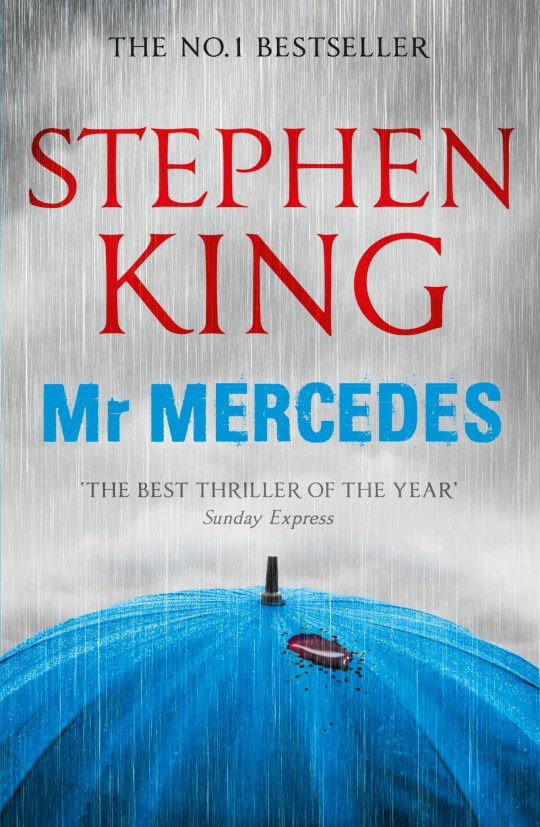
Holly, which was one of my most anticipated books of the year, serves as a continuation of the adventures of protagonist Holly Gibney.  Holly Gibney, who first appeared in Mr Mercedes, is a unique and damaged figure who ended serving a vital supporting role in all three Bill Hodges books, as well as the horror-filled thriller, The Outsider (both of which have been adapted into awesome television series).  Holly is the first full novel where this quirky figure will be the main protagonist (although there was the novella, If It Bleeds), and I was very intrigued to see how that turned out.  I even went back and read Mr Mercedes for the first time so I would have a better idea of the character and their fascinating story.

It is the height of the 2021 COVID pandemic, and Holly Gibney is reeling from the sudden death of her domineering and stubborn mother.  Initially planning to take some time off, Holly finds herself drawn to a new case when distraught mother Penny Dahl calls the Finders Keepers detective agency hoping to get help in finding her missing daughter, Bonnie.  With her partner, Pete, out of commission with COVID, Holly decides to take on the case by herself, especially when Penny’s desperation breaks through to her.

Diving into the case to distract herself from her deep personal concerns, Holly begins to uncover all the details surrounding Bonnie’s sudden disappearance.  But the further she digs, the more sinister the case becomes, especially when it becomes apparent that more than one person has disappeared in the same residential area.  To uncover the truth, Holly will need to find out more about these other disappearances.

However, Holly is unaware of a deadly threat watching her from the suburban shadows.  Professors Rodney and Emily Harris are octogenarians living an easy life as semi-retired academics.  But this old married couple is keeping a dark and unimaginable secret in their basement, one that will shake Holly to her very core.  Can Holly find out what really happened to Bonnie and the other missing persons before the clever and patient professors make their move?

Wow, just wow!  This was such an exceptional and powerful read, and it is one of the best books I have ever read from Stephen King.  Featuring an exciting, emotionally charged and highly gruesome story that will leave you breathless and horrified, Holly had me hooked from the second I started it and it refused to let me go even after I finished it.  Intense, clever, and oh so beautifully disturbing, Holly gets an easy five-star review from me for so many delicious reasons.

Holly has an epic and addictive narrative that grabs the reader’s attention right off the bat, especially as you are immediately introduced to the horrifying schemes of the antagonists.  This great introduction perfectly leads into the main story, which focuses on the protagonist’s investigation into the disappearance of a missing girl.  This is very much a character driven plot, as the protagonist simultaneously deals with her troubled history and roiling emotions following the death of her mother.  King features a range of intriguing character perspectives throughout the course of Holly, showcasing different angles to the case and introducing several additional personal stories.  Thanks to these intriguing perspectives, especially those surrounding Holly herself, the investigative storyline rolls along at a fast and exciting pace, and Holly quickly begins to realise something nefarious did happen to her client’s daughter, as well as other people in the same area.  King backs up these revelations with great flashback chapters that showcase the actual sinister deeds of the antagonists, while also giving you some fascinating insights into who they are and what drives them to commit these insanities.

The resulting story continues at a fast and compelling clip, as you get further drawn into both Holly’s case and the intriguing history of the Harrises and the people whose lives they impact.  King writes a very tight and captivating investigative storyline around the protagonist, and I liked how Holly methodically finds connections and identifies new victims through a series of fun character interviews.  Thanks to the flashback sequences, the reader already knows what the Harrises have done and what Holly is going to find as her investigation continues, which gave the protagonist’s scenes more of an edge as you wait for her to uncover the full horrors awaiting her.  As this unfolds, you are also gifted to several compelling and emotionally charged scenes around Holly, as well as several other great supporting figures, as they go about their damaged and complex lives.  This includes a large sub-story thread around returning character Barbara Robinson, whose foray into the literary world proves quite powerful and personal, while also revealing several major clues in the case.  These multiple character-driven storylines are pretty fascinating and captivating in their own way, and they pull together perfectly into one cohesive and bloody narrative that you can’t prove away from.

While the first two thirds of Holly are extremely cool and addictive, the third act is where everything comes together, and boy is it glorious.  King came up with an excellent and very impressive conclusion that keeps you irresistibility hooked up to the end.  Several lingering questions, such as the fates of characters, are cleverly and gruesomely answered in the leadup to Holly pulling the clues together.  At the same time, the author also revolves several key character arcs and storylines, which set up these various figures for the big confrontations, for better or for worse.  I love how King maneuverers all the characters around through chance, tragedy and mistakes so that there is the maximum risk for his protagonists, and you are seriously left wondering who is going to survive and how the entire story will unfold.  The climatic scenes are pretty damn memorable, as King brings everything together in a brutal way that only he could envision.  The shock, the emotional damage and the horrors that are revealed are extremely powerful and cool, and you will come away from Holly disturbed and satisfied in equal measure.

While I already had a great deal of respect for King’s writing ability before reading this book, I have to say that I was even more deeply impressed with how he pulled Holly together.  This fantastic book was the perfect blend of mystery, suspense and character-driven narrative, and there was frankly not a single second that I did not enjoy.  The way that the author told his complex narrative is outstanding, and I loved how the perspective switches between the various intriguing characters, as well as featuring flashback chapters that range from heartfelt to highly sinister.  The constant changes in focus helped to create a very compelling and elaborate read, and showcasing all the key characters ensures that the reader gets a much more complete and powerful narrative, especially during the main investigative storyline.  While I liked the protagonist’s narrative, some of the best scenes were those that focused on the antagonists and their sinister secrets in the basement.  The Harrises’ scenes are pure and exquisite horror that had me shuddering and shivering the entire way through, especially when you find out exactly what they are doing and why.  I cannot fully express how gruesome King made this part of the book, and I could not stop reacting at his horrifying descriptions at times; it was that damn dreadful.  Combine that with the highly personal and relatable character arcs, and this ended up being an exceptional read that you will have a hard time putting down.

While Holly is part of a larger series of books and stories that feature the main character of Holly Gibney in some way, King makes sure to cover all the relevant details from these previous works where needed, and this can be read as a standalone novel.  Both I and my wife (who hasn’t read any of the books, but did watch the Mr Mercedes television series), were able to follow every point of this book without any issue, although established King readers will probably have fun seeing the story continue from these previous reads.  As such, Holly is an easy and compelling read to check out, even if you are unfamiliar with King’s work, and you are guaranteed to have fun with it.

I cannot talk about Holly without discussing the outstanding and beautifully written characters that help to turn this amazing novel into such a classic and exceptional read.  King has always excelled at wrapping his elaborate narratives around powerful and distinctive protagonists and villains, and Holly is a brilliant example of this.  The heart of the tale lies in the motivations and actions of Holly’s excellent cast, and the simultaneous examination of their lives and the case is so very addictive.

The most prominent of these characters is titular protagonist Holly Gibney, who returns this time as the main character of her own book.  Holly is such a fascinating and complex figure to focus a story around, and while much of her development occurred in previous novels, King still has a lot to work with here.  Already somewhat emotionally damaged and immature, especially after a lifetime of anxiety and manipulation, Holly has only come out of her shell in recent years thanks to the help of her friends and her new career as a private investigator.  However, the death of her mother brings up a whole new bag of issues, especially as it uncovers additional layers of manipulation that Holly had previously been unaware of.  Most of Holly’s scenes see her try to deal with continual feelings of guilt, betrayal and regret that results from these revelations, while the words of her mother continue to play in her head, influencing her decisions.  While this pain and uncertainty is a big part of Holly’s personality, King expertly balances this with some more positive character aspects, including her expert investigation skills, the emotional strength she draws from her friends, and her unyielding determination to find the truth.  King really did a great job of reintroducing and utilising Holly here, and I felt that she served as an excellent central protagonist of her own novel.  I did think that King really didn’t write Holly as a woman in her mid-50s, as she felt a lot younger than she should have, but a lot of this is due to how emotionally immature the character is due to her hard life.  Honestly, her unique insights, thoughts and relationships are extremely refreshing and so much fun, and I would read so many more novels that have Holly Gibney as the main protagonist.

While Holly is a great protagonist, this book would be nothing without the fantastic figures of Rodney and Emily Harris, who might be some of the best villains that King has ever written (which is saying something).  The Harrises are quickly shown to be anything but the harmless retired academics they present to the world, especially when readers are treated to a view of their basement.  I don’t want to give too much away here, because you really need to read King’s excellent buildup to fully experience the horror around them, but they are gloriously and exceptionally sinister.  Part of this is because their age belies how dangerous and malicious they truly are, with other characters constantly underestimating them, and watching these frail figures commit acts of utter evil is very shocking.  Other elements of their sinister nature are derived from the initial secrecy surrounding their motivations as well as the uncertainty around whether their actions are normal human evil or something more unnatural.  King does such a good job of diving into the mind of these characters throughout the course of Holly, and you really get some powerful and captivating insights into who they are and why they are committing their crimes.  The author works in a complex layer of fear, regret, love and insanity underneath their actions, you can kind of empathise with their desires and understand why they are doing what they are doing.  However, these brief flashes of empathy only ensure that the reader is even more repulsed by their actions, especially when you also get the points of view from their victims.  Honestly, I could go on, but I think I will just leave it here and say that Rodney and Emily Harris are exceptional villains, and you won’t be the same after visiting their basement.

Aside from the complex protagonist and the amazing villains, Holly is also loaded with a great cast of supporting characters, each of whom have their own moments to shine.  Many of these are returning figures from the previous Bill Hodges books, such as Jerome and Barbara Robinson, Holly’s friends and emotional support.  Both Jerome and Barbara have had a lot of growth in the previous novels, and it was great to see their stories continue in Holly.  Barbara in particular has a fascinating and moving character arc in this novel, as her horrifying experiences from the previous books inspire her to write haunting poetry.  This proves to be an intriguing and moving side storyline for part of the book, which, while it does have certain implications for the main investigation, also expands on Barbara’s creativity and highlights the joy that writing and creativity in all forms can bring to a person.  Barbara’s mentor, elderly poet Oliva Kingsbury, also proves to be a wonderful additional to the cast, and her canny insights and elaborate experiences add some great depth to parts of the novel.  I also need to highlight the poor unfortunates who serve as the victims of this story.  While many of them are only briefly featured throughout Holly, King ensures that each of them is effectively and emotionally highlighted.  While each of them is primarily shown at their very worst, you really get a sense of who they are, and the inherent tragedy of their lives and what is being done to them, will stick with you.  All these characters and more are so perfectly written by King, and their unique journeys and powerful emotions, help to drive Holly’s narrative in some outstanding directions.

King also injects an interesting level of social commentary into Holly by strongly featuring some of the key events of the last couple of years into this story.  Holly is King’s first novel set during COVID times, and he really tries to showcase how life was changed during this period.  The characters are constantly talking about masks, vaccines, and the impact of the pandemic on their lives.  While this is somewhat repetitive and traumatic for people trying to put that behind them, I felt that it was a perfect reenactment of how life was a few years ago.  The characters encounter all manner of different mindsets and opinions about the pandemic and other key events during this time, which will be instantly recognisable to readers, and I liked seeing the protagonists react to it, especially when it plays into their own personal experiences.  While King mostly speaks through his protagonists, there is a certain level of social commentary, and you can feel that King has some strong opinions about recent events.  While this commentary might not be for everyone, I really appreciated it and I felt that it gave the story some more realism, especially when the author sticks his narrative right in the middle of recent major events.

While I did get a physical copy of Holly, I decided to check out the audiobook version instead, because I had a road trip that this was the perfect accompaniment for, and also because they got the perfect narrator in Justine Lupe, who plays the character of Holly Gibney in the Mr Mercedes television series.  I love it when audiobooks get fun and appropriate narrators with connections to related media, and Justine Lupe was easily one of the best examples of this.  Not only does she perfectly capture Holly’s spirit, emotions and personality due to her experiences with Mr Mercedes, but she also does an amazing job narrating the rest of the story and bringing the other characters to life.  Lupe really dives into all the members of this brilliant cast in a great way, and I love how each of them is gifted a distinctive and fitting voice, such as how she made the Harrises sound both innocent and sinister at the same time.  I was really impressed with Holly’s perfect choice in casting, and I loved the continuation on from the existing portrayal of the titular protagonist.  Coming in at around 15 and a half hours, the Holly audiobook has a decent length to it, but once you start listening to it, you really can’t stop.  As such, I would strongly recommend this audiobook to anyone interested in checking out Holly in all its gory glory, especially if you also enjoyed the Mr Mercedes television series.

I could go on about Holly, but the point is that this latest Stephen King novel is pretty damn exceptional.  Perfectly blending established characters and an elaborate new narrative with some gruesome and intense elements, Holly had me hooked from the first scene thanks to its brilliant storytelling.  Dark, shocking and deeply personal, there is so much to love about Holly, and it was one of the strongest King stories that I have had the pleasure of reading.  I honestly cannot recommend this book enough, both to new readers and established King fans, and Holly is easily one of the best books of 2023.

Amazon

The Shadow Casket by Chris Wooding

The Shadow Casket Cover

Publisher: Gollancz (Audiobook – 16 February 2023)

Series: The Darkwater Legacy – Book Two

Length: 32 hours and 37 minutes

My Rating: 5 out of 5 stars

Amazon

Chris Wooding continues The Darkwater Legacy in a big way with his second awesome and massive entry in this great fantasy series, The Shadow Casket.

I was recently in the mood for more epic fantasy reads, so I finally got around to checking out The Shadow Casket by Chris Wooding, which has been on my to-read list for most of the yearThe Shadow Casket is the sequel to Wooding’s exceptional 2018 novel, The Ember Blade, which I had a ton of fun reading back when it originally came out.  The Ember Blade followed a band of revolutionaries, including two young teens caught up in the carnage, as they fought to free their country from an evil empire that had conquered it a generation before.  Featuring a classic fantasy adventure plot with some awesome real-life overtones and loaded with a ton of great characters, a powerful story, and a fantastic new world, The Ember Blade was such a great read, and it got an easy five-star read from me.  I have been eagerly awaiting a sequel for some time now, and Wooding finally delivered his second Darkwater Legacy book this year with The Shadow Casket, which took the reader on another dark and captivating journey.

It has been three years since the destructive events at Hammerholt, when the ragtag band of revolutionaries, known as the Dawnwardens, managed to steal back the sacred Ember Blade and kill the Krodan Emperor’s son, seemingly lighting the fires of revolution.  However, despite the Dawnwardens’ hope that recovering the Ember Blade would encourage their people to rise in revolt, the powerful Krodan empire still reigns over Ossia, bringing new levels of terror in their occupation.  With revolution still as far away as ever, the Dawnwardens, and the Ember Blade’s champion, young Aren of Shoal Point, are forced to take a risk that could turn the tide of war.

Taking the Ember Blade out of hiding, the Dawnwardens travel to the Reaches in the far north of Osia, where the wild and rebellious clans of the Fell Folk fight amongst themselves.  Hoping to recruit the fractious clans to their cause, the Dawnwardens soon find themselves once again under attack from the Krodans and their deadliest weapons, the malevolent dreadknights.  Forced to flee with new allies and returning friends, the Dawnwardens embark on mission to find out what the Krodans are truly doing in Osia and just how far they are willing to go to maintain order.

Finding their first successes since the events of Hammerholt, the Dawnwardens form a new plan to finally strike back at the Krodans and start the revolution they have long hoped for.  However, no matter how hard they fight, the Dawnwardens constantly find themselves outmatched by the dreadknights and their foul magic.  To survive this insidious threat, the Dawnwardens hope to call upon the ancient magic of a lost artefact, the Shadow Casket, which has the potential to either save them or doom the world.  But with deadly foes facing them at every corner, and traitors within their own ranks, can the heroes succeed, or will their revolution finally be cut down?

Wooding continues his epic series in a big way with The Shadow Casket, producing an exceptional and captivating novel that was quite a treat to read.  Expertly following the existing storylines from the first book while also providing an awesome new adventure, The Shadow Casket was a gripping and powerful novel that I had an absolute blast reading.

I really loved the amazing story that Wooding came up with for The Shadow Casket, which is massive in every sense of the word.  Told from many different perspectives, The Shadow Casket has a very powerful character-driven plot that really gets you involved in the lives of all the protagonists while advancing the compelling main plot.  The transition to three years after the events of The Ember Blade was a very interesting overarching choice for this new book, but it was one that works very well, and I loved the realistic detail that the protagonist’s previous adventures didn’t magically save the day as they had hoped.  Wooding starts events off at a somewhat slow pace, which was definitely necessary as he had to re-establish all the key story elements, while also introducing the new setting of Northern Ossia and the Fell Folk.  This does mean that the initial chapters of the book might drag a little for some readers, especially those who did not read The Ember Blade first, although I appreciated the refresher on all the protagonists after all this time.  This early part of the book also sets up many plot points for the rest of The Shadow Casket, and Wooding did an outstanding job laying down a lot of groundwork here.

Things do speed up quickly after the reintroductions are done, as all hell breaks loose around the protagonists in some amazing scenes.  This early part of the book also brings back Cade and Klyssen, who were seemingly killed off at the end of The Ember Blade.  This honestly isn’t that much of a spoiler as both come back very early in the plot, and frankly it wasn’t too surprising considering the deliberate ambiguity of their “deaths” in the previous book.  Their return sets up some great character-driven plots which are very well explored in the first half of the book and have some major impacts on the overall story.  The protagonists soon find themselves involved in several distinctive character-focused quests, including the liberation of a prison camp, the machinations of a traitor, and an intriguing dive into a magical organisation that was only lightly featured in the first book.  These various storylines blend into one cohesive plot, and I liked the early focus on world building and character growth in the aftermath of the first book.  Wooding works in an interesting blend of intrigue, action, adventure, and even some horror elements, which really enhanced the classic adventure quest vibe he was trying to replicate.  I did have issues with an ungainly love triangle that got a lot of attention in the first half of The Shadow Casket, which sapped my enjoyment in places.  However, the other complex storylines that were occurring simultaneously did make up for this, and it thankfully does not last the entire length of the book.

The second half of The Shadow Casket is where things really picked up, and it features all the awesome story moments that the author had been expertly building up.  This includes a deadly adventure quest to a lethal island, which amped up the intensity of the plot, especially as secrets are revealed and tragedy awaits several characters.  These storylines and more, all lead up to epic final quarter of the novel, where the protagonists have their long-awaited mass confrontation with the enemy.  Wooding really set up everything leading up to this final quarter perfectly, and I was very excited going into it, especially as it featured a massive siege.  While there is a focus on the action in this final part of the book, Wooding also amps up the intrigue, as various parties make their moves to betray or mislead either side of the conflict.  The author plays this plot line about betrayal and intrigue perfectly, and there were times when you honestly didn’t know who was betraying who, which was so much fun to see.  This last quarter honestly has a bit of something for everyone, and I loved the inherent tragedy, the gritty battles, and the awesome resolution to so many different plotlines and character arcs.  I also really enjoyed the multitude of clever twists and reveals that Wooding layered in this part of the book, especially as I did not see several of them coming despite the great setup surrounding them.  The final play of the protagonists was particularly brilliant, and the unique siege tactics were quite inventive.  While I did think a few things were wrapped up a little too easily or positively at the end, this was honestly a very strong conclusion for this second entry, and it sets up many great storylines for the rest of the series.  I really came away from The Shadow Casket feeling very satisfied, and I cannot wait to see how my heart will get broken in the next book.

I felt that Wooding did a rather wonderful job of presenting his elaborate narrative to the reader, and his fantastic style definitely drew me into the story.  While there are a lot of positives to the author’s writing, the main thing that I was mostly grateful for was how easy he set everything up so that I could dive back into this series.  As I mentioned above, it has been over four years since I read The Ember Blade, itself a hefty read, so I was initially worried that I wouldn’t remember all the key details and get a little lost.  However, Wooding expertly led readers, both new and old, into his new book and those well-thought-out and slower paced introductory chapters really filled in all the gaps for me.  As such, there wasn’t a single moment that I was lost about what was going on, which considering how elaborate The Shadow Casket gets, is pretty damn impressive.

While The Shadow Casket is a great continuation of The Ember Blade, it also has a bit of a different tone to it.  The focus on failure, regret and fighting losing battles was quite interesting and reflected the continued failed rebellion nicely.  The book itself also comes across as more of an adventure novel, with the protagonists constantly moving and taking on new quests and journeys, rather than the more heist focused revenge plot of the first book.  This ensured that The Shadow Casket stood out a lot more than I was expecting, and it really didn’t feel like a sequel or a tired middle book.  Wooding has a great sense for pacing, and the fantastic mixture of action, character growth and betrayal and intrigue helped to turn this into quite an impressive read.  I have so much love for the multiple elaborate espionage storylines that emerged, and Wooding ensured that the reader never knew what was coming.  The excellent use of multiple character perspectives really helped with this, and it was compelling and often very moving to see the various internal struggles, history and biases that drove the characters to do what they do.  The clever alternate views of the same events also helped to create a much more expansive and captivating plot, and I think that Wooding did a great job of splitting the story up, ensuring that all the key characters got their time to shine.  There was the occasional rough chapter transition that added a touch of confusion at times, but this was usually pretty harmless, and I found the overall narrative to be very powerful and bound together excellently.  Throw in a ton of brilliant and brutal action sequences, including the extended battle at the end, and The Shadow Casket has so much going for it that you will find it very hard to put down.

One of the things I liked most about The Ember Blade was the elaborate and complex world that the book was set in.  In particular, the focal nation of Ossia was such an interesting main setting, especially as it was occupied by its stronger neighbour, who had ruled it for years.  This portrayal of Ossia had a lot of similarities to occupied France during World War II, especially as the invading Krodans were an obvious stand-in for Nazis/fascism.  This occupied fantasy nation had a certain realism to it that deeply enhanced the story, especially as the characters interacted with collaborators, rebels and locals who believed the Krodans were helping them, all while witnessing examples of Krodan cruelty.  These issues were further compounded by the fact that Ossia was already a rather fractious nation, and their lack of cooperation and unity helped the Krodan conquest years before.  Wooding continued to expand on this examination of occupied Ossia in The Shadow Casket, especially as revolution and uprisings were such an important part of the plot.  I loved the intriguing plot point about how, despite the protagonist’s actions in the first book, most of Ossia was still too cowed or wracked with infighting to join in the rebellion, making the sacrifices in the first book seem pointless.  This ensured that occupied Ossia continued to be a dangerous and compelling setting for much of the story, and Wooding doubled down on the Krodan comparisons to Nazis, especially as the Krodan’s engaged in massive retaliation strikes against the Ossian populace while also rounding up a minority group into concentration camps.  These intriguing details add a lot to the plot, and it was interesting to see how they continued from the first book.

Wooding also worked in quite a lot of world building as he sought to explore new areas within the larger fantasy realm.  This includes several intriguing and deadly new locations, such as a swamp full of dark spirits and the lethal island of Yaga, where ogres and magical slavers reign supreme.  These areas, which serve as cool settings for several key parts of the book, are great to explore, adding in some very distinctive risks, and it served as a compelling expansion of an already great world.  However, the most significant new setting is probably the northern area of Ossia known as the Reaches.  A hilly area populated by warring tribes, this part of Ossia was culturally segregated from the more urbanised southern setting before the Krogans arrived, and now is even more oppressed.  A large chunk of the novel revolves around the complex tribal politics and history of this region as the protagonists attempt to bring them together as allies while also striking back at the forces oppressing them.  Several of the best sequences, including the final battle, are set around here, and I loved the craggy and isolated feel that Wooding gave this setting.  The author also does a wonderful job expanding on some of the fantasy aspects of his series.  While there were quite a number of great and freaky magical and fantasy elements in the first book, The Shadow Casket really dives into this further, showing several different batches of magic.  This includes a fascinating examination of the Ossian druids, whose magical conclave in the first half of the novel serves as a major plot setting.  There is also a fantastic and dark examination of the magic being used by the Krogans to create their more elaborate weapons.  This look at Krogan mysticism is pretty fascinating and serves as a great contrast to their usual anti-magic dogma.  It also leads to some of the darker scenes in the book, including the exploration of a corrupted prison camp, which honestly bordered more on horror than anything else.  There are some fantastic and complex hints at the dangers to come, and I cannot wait to see how dark and compelling Wooding makes his setting in the future.

However, the most impressive and memorable part of The Shadow Casket has to be the outstanding and elaborate character work that Wooding expertly inserted into the story.  The Shadow Casket has an exceptional and memorable cast, which includes a great combination of characters from The Ember Blade, as well as several intriguing new figures.  All the characters are damaged and complex, especially after the events of The Ember Blade, and thanks to the author’s excellent use of alternating perspectives, you get to see into their minds and find out what drives them and what their intentions are.  I deeply appreciated how well the character stories altered and drove the main narrative and Wooding’s excellent character work really gets you invested in everyone’s personal journey.

As with The Ember Blade, the main character of The Shadow Casket is Aren of Shoal Point.  A teenager drafted into the rebellion by circumstances, Aren is trying to live up to his own legend after masterminding the Ember Blade heist and being declared champion.  Now a figurehead leader chafing under the responsibilities and expectations of everyone around him, Aren starts the book with a lot of his usual certainty and confidence gone, especially as the disappointments of the last three years are hanging over him.  Most of his arc involves him trying to decide whether he deserves all the fame and trust people are putting into him, as well as wondering what his destiny is.  I really liked this compelling character arc that Wooding came up with for Aren, especially as it is totally understandable that he would feel these doubts with his complex history.  While Aren probably was a more passive protagonist than some readers were hoping for, I felt his early mindset of following others fit nicely into the uncertainty he felt, and Wooding did a great job of portraying this and his eventual regained confidence.  Aren also proves to be a linchpin character for The Shadow Casket, mainly because so many other character arcs are defined by the relationships that Aren has formed over the years.  While a couple of these relationships do have some flaws in them, the rest are exceedingly emotionally rich and Aren’s connections help the other characters to grow and develop alongside him.  Aren continued to be an outstanding and complex protagonist for this second Darkwater Legacy novel and I look forward to seeing how he develops in the future.

One of the other major characters I need to highlight is Cade, Aren’s childhood friend who was forced into the adventures in the last book before heroically sacrificing himself at the end of The Ember Blade.  Cade returns quite early in The Shadow Casket, having spent three years away from his friends.  However, he is now carrying some dark secrets and a new hidden history that defines most of his actions throughout The Shadow Casket.  Cade had one of the best and most powerful character arcs in the entire novel, which I will not elaborate on too much here to avoid spoilers.  However, it was extremely well written and added some much-needed emotional depth to Cade’s character.  Wooding does an outstanding job of expanding on Cade’s character arc and story from the first book and the examination of the complex relationship between Aren and Cade resulted in some of the most moving moments in the book.

There are several great antagonistic characters in The Shadow Casket, including sinister Krodan officials and several hidden traitors, but my favourite villainous figure has to be the great character Klyssen.  A member of the Krodan secret police, Klyssen was the primary villain of The Ember Blade, and Wooding takes the opportunity to develop him further in some fantastic ways in the sequel.  Not only does he provide an alternative viewpoint to the Krodans but Wooding manages to make Klyssen into a surprisingly sympathetic character in The Shadow Casket.  Thanks to the events of The Ember Blade, Klyssen starts this new book scarred, disgraced, demoted and divorced, and is now at something of a moral and emotional crossroads.  Now driven by personal reasons, Klyssen has a bit of a redemption arc in The Shadow Casket, and it is honestly a sign of just how good Wooding is at writing characters that you actually feel sorry for this previously despicable villain.  Klyssen ends up being one of the more complex and damaged figures in the entirety of this second book, and I loved his more nuanced mindset and desperate motivations, which make his chapters particularly compelling and emotionally charged.  You really begin to feel for Klyssen, even if you don’t want to, and I really appreciated the complex additional development Wooding worked into him for this sequel.

Of course, I cannot talk about characters in The Shadow Casket without mentioning Grub, who honestly might be one of the most entertaining and hilarious figures I have ever had the pleasure to read.  Gruff, crude and inappropriate in every way imaginable, Grub is a slippery and self-obsessed figure who never fails to get a laugh thanks to his jokes, selfish mindset, fun observations on the people around him, and pure disinterest in what is actually happening.  Thanks to this humour, Grub has some of the best chapters in the entire book, and you always know you are in for a good time.  However, Wooding also creates a particularly complex and intriguing story arc around Grub that really resonates with the reader.  Coming from a culture that venerates heroic actions and tales, Grub was exiled from his people after claiming another person’s deeds.  As such, a lot of Grub’s sVVavsdtoryline involves him trying to redeem himself by become a hero, which really does not come naturally to him due to his selfish nature and upbringing.  This honesty proves to be one of the more complex story arcs in the entire book and you really get invested in his attempts to do the right thing.  A lot of this story revolves around his unlikely friendship with Aren, who serves as Grub’s moral compass, and their compelling relationship is one of the most heartwarming parts of the entire book.  I cannot emphasise just how much fun Grub is as a character, and it honestly is impossible not to fall in love with him, especially with the fantastic depth Wooding adds to his story.  While I would read an entire book about Grub, I think that Wooding did a good job not overusing him in The Shadow Casket, and blending in the other characters extremely well.

Other significant characters include Vika, a powerful druid whose connection with the spirits and the gods offers the only hope against the Krodan dreadknights.  Wooding weaves a fantastic narrative around Vika that dives into her unique and desperate personality while also using her as a focus for the more mystical elements of the book.  I quite enjoyed seeing Vika develop into more of a powerful magical user, although the emotional cost associated with it turns her into a bit of an unpredictable figure.  Wooding really laces Vika’s narrative with some powerful tragedy and distinctive moments, and while I felt that the ending of her arc could have been handled a little better, she was still an outstanding and enjoyable protagonist to follow.

I also need to highlight Mira, the team’s strategist and leader of the Dawnwardens, who comes up with elaborate plans and schemes in the name of liberation.  While Mira does not have as many chapters assigned to her as I would have liked, Wooding does a lot with her in a short amount of time, and I liked how dark the character got as the book progressed.  The dour knight Harod also proves to be an excellent protagonist, mainly because so much of his arc is based around his grief after losing the woman he loved in the last book.  Wooding does a good job expanding a bit on the typically emotionally devoid Harod in this book, especially when a fantastic new secondary character is introduced, and his martial focussed chapters have some heavy personal weight to them.  Throw in the team’s hunter, Fen, whose arc mostly survives an unenjoyable love triangle, and several great new characters, including a troubled revolutionary and a mysterious fighter with his own agenda and this proved to be an exceptionally rich novel in terms of outstanding characters.  This fantastic mixture of compelling cast members really helped to turn The Shadow Casket into an extremely powerful read and I cannot wait to see how these characters develop in the rest of the series.

Like with many epic fantasy novels, I chose to check out The Shadow Casket on audiobook, which I found to be an awesome experience.  Elaborate fantasy novels always come across better in the audiobook format for me, especially when there is a ton of detail and world building, and this was once again the case with The Shadow Casket.  Wooding’s deeply impressive setting was so much cooler when it was read out to me, and I definitely absorbed a lot more detail in this format.  It also helped that they brought back narrator Simon Bubb for this second audiobook in the series.  Bubb does such a good job highlighting all the cool action, fantastic detail, and unique features of this series in The Shadow Casket, and I really liked how effortlessly he moved events along.  Bubb also has a very good handle on the massive cast featured with this book, coming up with original and fitting voices and accents for all the characters, and bringing out all their inherent emotion and struggles.  Highlights for me include the amazing characters of Klyssen, Aren and Grub, all of who really shine through in this format in the most entertaining ways, and I cannot emphasise enough how well Bubb captures all these elaborate figures.  Coming in at over 32.5 hours, The Shadow Casket is a hefty audiobook to get through, and it is one of the longest audiobooks I have ever listened to (coming in at number five on the current list).  I did struggle a bit to get through The Shadow Casket quickly due to its length, and there were a few times where I got a bit fatigued and had to take a break for a while.  However, the compelling story kept dragging me back in, and I maintain that The Shadow Casket is very much worth checking out on audiobook, especially as this format gives you the very best experience.  The great voices, fun depiction of detail, and enhanced story absorption more than make up for the length, and The Shadow Casket audiobook comes very highly recommended as a result.

Overall, this is a very impressive book, and if I did not get it across with the massive review above, I really enjoyed The Shadow Casket.  Chris Wooding is really writing something special with his Darkwater Legacy series and The Shadow Casket proved to be an exceptional second entry.  While I did have a couple of issues with length and some character elements, the sheer power and complexity of the story ensures that The Shadow Casket gets a full five-star rating from me and I had such an incredible time getting through this amazing book.  This is easily one of the best fantasy series currently going and I cannot wait to see how it continues, even if I have to wait a while for the third book to appear.  Highly recommended, all fans of epic fantasy need to get into this series.

Amazon

Throwback Thursday – Mr Mercedes by Stephen King

Mr Mercedes Cover 1

Publisher: Hodder & Stoughton (Paperback – 3 June 2014)

Series: Bill Hodges – Book One

Length: 407 pages

My Rating: 5 out of 5 stars

Amazon

Welcome back to my Throwback Thursday series, where I republish old reviews, review books I have read before or review older books I have only just had a chance to read. Is this week’s Throwback Thursday, I am going back to some of the older works of the legendary Stephen King lately, starting with his compelling and intense psychological thriller, Mr Mercedes, an excellent and captivating read that I had an outstanding time reading.

I have to admit that I don’t have a lot of experience with Stephen King’s books, having only read some of his more recent releases, such as Later, Billy Summers (one of my favourite novels of 2021), and Fairy Tale.  However, I have been keeping an eye out for King’s upcoming novels, including his next book, Holly, which is out very soon.  In preparation for Holly’s release, I decided to go back and read an earlier King novel, Mr Mercedes, especially as it serves as the introduction of the titular character from the upcoming book, and boy was I glad to try this fantastic novel out.

On a dark and cold morning in a depressed mid-western city, a desperate crowd gathers outside a jobs fair, hoping to turn their lives around.  However, many never got the chance, as a lone driver in a stolen Mercedes drives into the crowd, killing eight people and wounding more, before managing to escape.  This gruesome crime has haunted the community, and especially detective Bill Hodges, who was unable to catch the “Mercedes Killer” before he retired.

Years later, Hodges is living the solitary and depressed life of a former police officer who has seen too much.  Barely managing to get through each day, Hodges is suddenly revitalised when he receives a disturbing letter from someone claiming to be the Mercedes Killer.  Now more determined than ever to hunt down this killer and bring him to justice, Hodges jump-starts an unofficial investigation, hoping that his prey’s decision to contact him will be his biggest mistake.

Hodges’s new search leads him back to the owner of the Mercedes, who committed suicide from the guilt of her car being used in such a horrendous attack.  Teaming up with the dead woman’s sister and a band of unlikely helpers, Hodges begins to finally unravel the case.  However, the Mercedes Killer is a far more dangerous prey than Hodges ever realised.  Not only is he obsessed with killing Hodges, but he also has a nefarious plan that will rock the city to its core.  Can Hodges finally defeat his nemesis before it is too late, or will the Mercedes Killer once again get away with an outrageous act of violence?

This was a very impressive novel from King, who masterfully explores the psychological thriller genre the way only he can.  Featuring some powerful and complex characters, an elaborate cat-and-mouse plot, and King’s intense and addictive writing style, Mr Mercedes is a masterful novel that proves near impossible to put down.

I loved the powerful and captivating story that King pulled together for Mr Mercedes, as the author really dives into this dark story in a big way.  Starting with the gruesome and over-the-top Mercedes killing, which definitely sets the scene for much of the book, the main plot begins years later, with the retired Bill Hodges receiving a letter from the Mercedes Killer, who is attempting to persuade Hodges to kill himself.  However, Hodges instead enters into an off-the-books investigation, attempting to goad the Mercedes Killer into making a mistake while also connecting with the sister of the case’s key witness.  Half the book also focuses on the character of Brady Hartfield, the Mercedes Killer, who has become obsessed with ending Hodges, while also launching a new attack.  Disturbed, and determined to win, Brady’s perspective adds a great narrative edge to Mr Mercedes, and you are soon swept up in his complex emotional journey, especially once he realises that Hodges is on his tail.

The plot develops at a pretty fast and compelling pace, and you swiftly get drawn into each perspective character’s unique view on life and the grizzly events unfolding around them.  King really focuses on the dark and damaged minds of each of his characters, and the ongoing narrative is littered with compelling and fascinating dives into each of their pasts and the events that led them to where they are now.  The author also introduces several great supporting characters, each of whom adds their own unique elements to the book, whether it’s by helping Hodges with his investigation or by adding to the emotional fire that burns within both main characters.  Most of the story is devoted to the cat-and-mouse chase between Hodges and Brady, especially as they come closer and closer to confronting each other and digging at each other’s psyche.  King really moves the story along in the second half, thanks to a massive moment that really shatters the somewhat comfortable narrative that had been building at that point.  Everything leads up to the big and inevitable conclusion, as Brady attempts to unleash his master plan and Hodges and his allies close in on him.  This big confrontation is pretty damn interesting and intense, especially as a surprising third party takes the lead, but it leaves a fantastic and satisfying conclusion that readers will deeply appreciate and will leave you wanting more of the great characters and King’s unique style.

This awesome story was well backed up by King’s uncanny and wonderful writing style, and he really had me hooked the entire way through.  While early parts of the book where a tad slow in places, especially as King was building up the main two characters, once the full psychological dance between Hodges and the Mercedes Killer truly begins, you really cannot pull away from this great novel.  The mounting tension as these characters make their respective plays is so damn effective, and you get drawn into the dark mental battle between them.  King’s use of multiple perspectives really helps to enhance the brilliant story, and the captivating look into all the key characters’ minds is such an essential part of the book that it proves hard to turn away from these tragic and damaged figures.  I honestly could not put this book down in places, especially the last third, as the tension, emotional power and tragedy that King had built up by then was extremely palpable.  This was probably one of the better King novels I have read so far, especially as it had an excellent conclusion that fit the earlier themes of the book, and I deeply appreciated how well he explored the darker areas of the mind.

As I mentioned above, one of the main highlights of Mr Mercedes were the complex and highly damaged characters that were such a vital part of the plot.  King always excels at effectively utilising impressive and highly realistic character driven narratives in his books, and Mr Mercedes was no exception to this.  The major figures featured in this book were also highly unique and complex in their own way, often with some distinctive and understandable psychological damage that defines them and which they spend much of the book trying to overcome.  These highly personal and compelling character elements were really well woven into Mr Mercedes’ plot, and you really get drawn into each character’s own damaged journeys, as well as the intriguing relationships that they form.

The main character of Mr Mercedes is retired police detective Bill Hodges, who serves as a dogged and solid protagonist.  A rugged and tired figure who has seen too much, Hodges was an awesome retired cop character, and King did an outstanding job of capturing his loneliness and regret, especially in the early stages of the book.  However, this burns away when the killer contacts him, and he once again has a purpose.  I felt that this change in character focus was very well done and you easily understand why he dives back in the case, desperate to solve that one lingering case.  While initially driven by obsession, Hodges soon develops more reasons to live, as he connects with several of the other characters in the book and each connection makes him want to live that little bit more.  It was also interesting to see him revisit and reflect on his previous actions as a police officer, especially when he connects with the family of the witness he falsely accused of negligence, and the insights and empathy he develops now he is no longer a cop is quite touching.  You really grow to appreciate Hodges as a character as the book continues, especially as you see him once again enjoying life, and King’s portrayal of a man who suddenly rediscovers his purpose is very well done.  Of course, this opens him up to even greater tragedy, and watching him suffer cuts you to the core.  Thanks to the television adaptation of the book, I could only envision Hodges as Brendon Gleeson, which I think fit the depictions shown in the book, and I really enjoyed seeing this gruff, no-nonsense figure in action.

I also really need to highlight the excellent work that King puts into creating the antagonist of Mr Mercedes, Brady Hartfield, the titular Mercedes Killer.  I have read many good villains of the years, but frankly, the Mercedes Killer was one of the best, mainly because of how quickly and effectively King makes you despise him.  King does such a good job of introducing and utilising the character of Hartfield throughout Mr Mercedes, and his dual life and obsession with Hodges become a key part of his chapters.  The character’s sheer arrogance, distain and disregard for human life are so well written, and you understand just how deranged and damaged Hartfield is in just a few pages of his introduction.  King does take the time to build up Hartfield as a character, showcasing his traumatic past, formulative family events and unsettling relationship with his mother, all of which helps the reader understand how he become the monster he currently is and why he does the things he does.  However, even with that, it proves very hard to find any sympathy for the character, especially as every scene of his features an arrogant and hateful internal diatribe about the people he encounters and the world around him.  I deeply appreciated how King was able to capture Hartfield’s sociopathic superiority complex and inherent sense of greater intelligence with his writing, and it was such a key part of Hartfield’s character.  This ensures that when things do not go his way or when he is outsmarted by Hodges, a man he views as his inferior, he takes it badly, and watching Hodges manipulate Hartfield this way was a fantastic part of the book.  This is honestly one of the better King villains I have so far had the pleasure of reading and his obsession with Hodges and being the smartest man in the room, was so damn well written.

Aside from the main perspective characters of Hodges and Hartfield, King also features several other intriguing figures in Mr Mercedes who also add a great deal to the plot in a supporting role.  I personally really enjoyed the character of Janelle Patterson, who serves as Hodges’ main love interest.  Janelle was a feisty and highly likeable figure in the book, and I actually really enjoyed the heartfelt connection she formed with Hodges, especially as they filled an emotional hole in each other’s lives.  Janelle’s self-involved sister, Olivia Trelawney, also proves to be a great inclusion, despite being dead by the time the main plot starts.  King builds her into a complex and tragic figure, and it was intriguing to see her sense of reality combat with guilt and despair in several flashback scenes.  Jerome, the wisecracking teenager who serves as Hodges’s assistant and tech support added some great humour to the story, and his loyalty to Hodges ensured the reader grew quite attached to him, while also getting worried as Hartfield circled around.  However, probably the most unique supporting character was Holly Gibney, who, as I mentioned above, is getting her own spin-off story soon.  Initially shown as emotionally damaged and barely able to function, Holly doesn’t strike you as having protagonist potential.  However, thanks to her bond with Hodges and certain shocking events breaking her out of her trauma shell, Holly ends up becoming a key supporting figure, able to assist in the case due to her unique insights and life experiences.  Despite only being in the book for a relatively short amount of time, Holly really shines through as a complex and exciting figure who the reader quickly gravitates to.  As such, by the end of the book you very much understand why Holly goes on to become her own protagonist, and I look forward to seeing how much she further developed when I grab King’s next novel.

Overall, Mr Mercedes was just as good as I had been led to believe, if not better.  Stephen King did a masterful job with this powerful and captivating dark psychological thriller, and I got so wrapped up in the awesome battle of damaged minds that emerged.  Featuring an excellent story, some exceptionally complex protagonists, and King’s infallible character-focused writing style, Mr Mercedes was a joy to read from start to finish, and I have to give it a full five-star rating as a result.  I cannot wait to dive into King’s next book, Holly, when I get my hands on it in the next week, and I have no doubt that will also blow me away.

Mr Mercedes Book Two

Amazon

The Traitor by Anthony Ryan

The Traitor Cover

Publisher: Orbit (Audiobook – 11 July 2023)

Series: Covenant of Steel – Book Three

Length: 19 hours and 15 minutes

My Rating: 5 out of 5 stars

Amazon

Acclaimed fantasy author Anthony Ryan brings his epic and exceptional Covenant of Steel trilogy to an end in a massive way with the impressive third and final book, The Traitor.

Over the last three years I have had an outstanding time getting my first taste of the works of leading fantasy author Anthony Ryan.  A veteran author who has been enthralling fantasy audiences for over a decade, Ryan has several highly regarded series under his belt, including his Raven’s Shadow books, the Slab City Blues series, the Seven Swords series and The Draconis Memoria trilogy.  However, I have so far only had the opportunity to read his latest body of works, The Covenant of Steel trilogy, which has been more than enough to make me a major fan of this author.

The Covenant of Steel books are an outstanding series that follows an intriguing and well-developed protagonist, the notorious Alwyn Scribe.  Told in a chronicle format written by Alwyn, the Covenant of Steel books follow the protagonist as he embarks upon a powerful and exciting character journey that sees him overcome his bandit past to take on several new roles, including that of a scribe, soldier and knight, all while serving the mysterious religious figure, Lady Evadine Courlain.  I have had an epic time with this series over the last few years, and the first two books, The Pariah (one of my favourite books and audiobooks of 2021) and The Martyr (one of my favourite books and audiobooks of 2022) have been exceptional five-star reads that proved near impossible to put down.  Loaded with action, intrigue, a fantastic new world, and some complex characters, this series is so damn good, and I have been eagerly awaiting the third and final book for a while.  This third book, The Traitor, was one of my most anticipated reads for 2023, and I was so excited when I finally got the chance to listen to it.

Alwyn Scribe is a man in real trouble.  Now a renowned knight, general, spymaster, and trusted advisor, the former outlaw has relentlessly championed the cause of his lady, the Risen Martyr Evadine Courlain, and ensured she is now the most beloved and influential religious figure in all of Albermaine.  But what if he made a terrible mistake?

Cryptic visions from the past have warned Alwyn that, despite her claims to be a servant of the divine Seraphile, Evadine actually serves the Malecite, the source of all evil in the land, who will use her to bring about a cataclysmic future.  Blinded by love, Alwyn is convinced that these visions are false, and he is determined to keep Evadine alive and ensure that her vision of a united Albermaine are brought to life, even if that means starting another destructive war.

However, the closer Evadine gets to achieving her goal, the more Alwyn begins to realise that she is no longer the same woman that he swore his life to.  Her messages of peace and tolerance have been replaced by the fires of puritanical fury, and Evadine soon launches a brutal crusade to rid the country of her enemies and place herself on the throne as an Ascendant Queen.  But is she truly corrupted by the Malecite or is her brutal work a necessity to keep Albermaine safe from a greater evil?  As a devastating civil war is unleashed upon the kingdom, Alwyn will be forced to choose whose side he is truly on and what he is willing to sacrifice to keep the world from burning.

Well damn, Ryan really didn’t disappoint with this fantastic and powerful conclusion to the fantastic Covenant of Steel trilogy.  Weaving together all the elaborate elements from his first two books and then lighting everything you love on fire, The Traitor was a complex and deeply enjoyable read that I honestly couldn’t stop listening to.  Powerful, thrilling, and oh so beautifully dark, The Traitor was a perfect ending to the Covenant of Steel trilogy that got an easy five-star rating from me.

The Traitor has a heck of a powerful narrative to it that takes the protagonist and the reader to the emotional limit.  After an effective and entertaining recap of the previous two books, The Traitor starts in the immediate aftermath of the previous novel, The Martyr, with Alwyn leading Evadine’s army to war against the dangerous Ascendant Arnabus and his forces, resulting in a major, religious war.  This initial conflict is the focus for a good part of the early story, and it serves as a great warm-up for the rest of the plot, allowing for some much-needed character reintroductions and development, while also providing some intriguing new context for the main story.  This initial fight only serves as a taste for the wars to come, as Evadine seeks to overthrow the current order and rule herself.  This incoming conflict ensures that the first half of The Traitor has a range of great story elements to it, with a mixture of intrigue, political manoeuvrings, espionage, and battles, ensuring that every second of The Traitor at this point is highly entertaining.  This also serves as an excellent prelim for the anticipated change in the middle of the book, where the protagonist is finally forced to confront the fact that Evadine is no longer the woman he fell in love with.

Due to the reveal at the end of The Martyr, you had to know that Evadine was going to have some sort of fall from grace in this final novel, and when it comes, boy does it come hard.  The betrayals, shocks and losses at this point are exceedingly impactful, and you soon realise that Ryan intends to go full scorched earth with his storytelling, forcing the reader to deal with some major tragedies.  I liked the dark turns that occurred at this point in The Traitor, especially as Ryan had been hinting at them since book one, and it was awesome to get some payoff for the previous dark predictions.  This forces Alwyn to make some tough choices, and there is a major and compelling change in the protagonist’s objectives and loyalties for the second half of the book.  Thanks to the great setup at the start, as well as the major events in the middle, the reader will be very strongly caught in the narrative at this point, and even though the final half of The Traitor slows down in places, you really cannot put it down.  Ryan really dives into the lore of his land in this second half, which provides some very unique scenes and moments, even if some of these story elements got a little away from the author.  Still, this part of the book has some pretty impactful moments, and you will not be prepared for some of the key touching events.

Everything leads up to a final confrontation, which releases three books worth of pent-up emotion and revelations in some spectacular scenes.  While part of this confrontation is a bit more metaphysical than it needed to be, you honestly will be blown away with how it all comes to an end, especially as there is layer upon layer of tragedy involved, and I deeply enjoyed the compelling and satisfying resolutions that followed.  This entire story was a fantastic read from start to finish, and I really loved how Ryan wrapped up so many of his ongoing storylines and arcs here.  While most plot points are finalised here, a couple do remain unresolved, and it wouldn’t surprise me if we get a sequel series at some point.  I personally would be very keen for that, as I had such an exceptional time seeing this elaborate trilogy and ongoing narrative come together in some excellent ways.

I have always really enjoyed how Ryan set out the previous Covenant of Steel books, and he did a fantastic job of continuing his awesome writing style in this third and final book.  The author sets out The Traitor using a chronicle style told from the protagonist’s perspective, which is such an effective writing tool.  This deeply personal vision of events, combined with the author’s regretful insights of the future, really helps to drag the reader into the story, and Ryan really makes the most of this story format the entire way through.  Like with the rest of the trilogy, Ryan keeps up a pretty steady pace in The Traitor, and there aren’t a lot of quiet moments in the book.  The author really hit the right blend of powerful character focus, fantasy world building, and storytelling loaded with intrigue and action, and there is generally something for everyone here.

I loved the darker, more tragic feel that The Traitor had, especially compared to the earlier books, and it was easy to tell that this is the final book in the series.  While the detailed plot recap and cast list at the front of the book is very helpful at reminding readers of prior events, readers unfamiliar with The Pariah and The Martyr probably won’t be able to jump into this final novel too easily as there are so many details from the first two books that reader’s need to be aware of to fully appreciate the impacts of this story. As such, people new to the series should really head back to the start, and I guarantee you will have a great time doing so.  I really enjoyed how this awesome book came together, and Ryan’s ability to weave together an intense read with so many layers to it is very impressive.

One of the great highlights of the Covenant of Steel series has been the exceptional and detailed fantasy realm that the book has been set in, shown through the eyes of the narrator as he explores it.  The reader has been given a very detailed look at these settings throughout the last two novels, and it has served as a great background to the plot.  Primarily a medieval landscape dominated by a quasi-Christian religion, this background setting initially didn’t have a lot of fantasy elements to it except for a couple of wandering beings with strange powers.  But Ryan slowly built up the fantasy elements throughout the book, with cumulation of magic occurring about halfway through The Martyr, which I think was an excellent choice, as it allowed him to instead focus on character growth, other world building elements, and the general politics and wars of the realm, in excellent detail.  A lot of these political and religious elements are strongly explored throughout The Traitor, especially in the first half, and Ryan had a lot of fun showcasing the land’s dark turn towards religious conflict as his character’s embark on a bitter holy war.  The dark and destructive changes to this well utilised setting are very notable, disturbing and compelling, and it was fascinating to see how much everything changed throughout the course of the series.

The Traitor does get a lot more fantasy heavy in the second half of the book, as the protagonist returns to a hidden realm and fully experiences the mysterious magic and powers that reside there to counter the dark visions of Evadine.  I do think that there might have been a few too many magical inclusions here, as the plot did get a tad convoluted in places.  Still, Ryan definitely had some fantastic and unique ideas here, and many of these fantasy elements have been utilised in the past to great effect.  One particular ability that emerges actually brings part of the story around full circle, and it allowed for some very compelling interactions with characters from the past that I quite enjoyed.  The fantasy revelations that emerge during the big concluding confrontation are very over the top, which some readers might have issues with.  However, I quite enjoyed it, and it lead to a particularly dark final meeting between protagonist and antagonist that had me hooked the entire time.  This really was an awesome fantasy series, loaded with cool settings and unique features, and I hope that we might get to revisit them in the future, especially as the events of this book will leave Albermaine a much darker and traumatised setting.

Easily my favourite element of The Traitor, and indeed the entire Covenant of Steel trilogy, has been the complex, damaged and memorable characters that the story has focussed on.  Ryan has come up with an exceptional group of protagonists and villains over the course of the trilogy, and there are some deeply elaborate character arcs ongoing throughout the last two books.  Many of these continue and conclude here in The Traitor, and Ryan really went out of his way to finalise the development of his characters in some powerful ways that will really strike the reader in the feels.

The main character of The Traitor is once again Alwyn Scribe, who serves as the primary narrator of the trilogy as he recounts his historical adventures.  Alwyn has been a particularly compelling character throughout the series, mainly because you get to see him grow from a common outlaw to key advisor of the Risen Martyr as she begins her campaign across the country.  Ryan has done such a great job telling Alwyn’s unique tale in the previous books, and the reader should already be highly invested in his story before The Traitor even starts.  Of course, this ensures that the reader is hit even harder by some of the big moments of the book, as Alwyn goes through a lot here.  Not only is he still involved in a series of deadly wars and political battles, but now he finds himself being torn between love and his sense of right and wrong, as Evadine becomes more and more unstable.  Watching Alwyn continue to justify Evadine’s actions, even though deep down he knows she’s in the wrong, is both frustrating and understandable, as you realise just how much he is devoted to her.  This sense of frustration is only enhanced by the constant recriminations Alwyn throws towards his past self as he narrates his own story, and you can feel the regret pouring of the pages there.  While I won’t give too much away here, Alwyn ends up going through quite a lot in The Traitor, and the emotional toil that inflicts is pretty terrible, especially as he has to make some bitter and ruthless choices.  It was very touching and intense to see Alwyn’s story come full circle in some ways, especially as there are some intriguing callbacks to his past, and all the major impactful moments that affect Alwyn are expertly portrayed by the author.  Despite everything he goes through, Alwyn still maintains much of his humour, wit, ingenuity, and disrespectful attitude that were such a great part of the Covenant of Steel trilogy.  It was so much fun to once again get his unique take on events, and he ended up being a pretty perfect narrator for this fantastic series.

The other major character that I have to talk about is Evadine Courlain, the Risen Martyr and Alwyn’s love interest, who has been such a significant figure in the last two books.  A religious leader who inspired people with her visions, Evadine has always been a fascinating character, especially as you are never quite sure if she is actually divinely chosen, a delusional madwoman, or something even worse.  After the reveal at the end of The Martyr that Evadine might be an avatar of evil, you come into The Traitor naturally highly suspicious of her, and Ryan caters to these expectations by ensuring that she quickly starts to descend into further darkness.  Despite Alwyn’s continual attempts to restrain her, and justify her actions to the reader, Evadine becomes more of a darker figure as she pursues her various wars, although initially never going quite far enough to alienate her friends.  Of course, that changes about halfway through the book, and when she goes dark, she goes dark in a big way, turning into quite a fantastic and sinister antagonistic figure.  I really loved how Ryan turned Evadine here, and it is such an outstanding cumulation of so many key story arcs from the first two books.  Despite everything she does, there is still a powerful bond between Alwyn and Evadine that deeply impacts both of them, and it was fascinating to see these great characters walk the thin line between love and hate again and again.  The complex interactions between these two characters at various different points of The Traitor are beautifully written, and you have to appreciate just how damaged and dangerous their bond got at times.  Evadine honestly was the perfect counterpoint to Alwyn in The Traitor, and I cannot emphasise how impressive her entire story arc ended up being.

In addition to Alwyn and Evadine, Ryan has loaded The Traitor with an exceptional cast of supporting characters who add a great deal to the impact of the story.  This supporting cast is mostly made up of figures from the first two books, as Ryan brings back many of the old favourites and seeks to wrap up many of the intriguing storylines that have been such a fantastic part of the series.  Highlights include Alwyn’s returning comrades, such as the unstable but very likeable Ayin, disgraced knight Wilhum, former outlaw Tiler, outlaw queen turned legitimate Duchess Lorine, and Juhlina, also known as the Widow.  These characters, and more end up having some interesting roles throughout The Traitor, and it was fascinating to see the various sides that many of them chose, especially as the plot continued.  I liked some of the surprising directions Ryan took a few of these returning characters, and there are some interesting choices, romances and entertaining fates that were wonderful to see.  Ryan also features several great new characters who got a good introduction and utilisation in The Traitor, even if it was only for a single book.  Quite a few of these characters were cast in antagonistic roles, which I think worked really well, and it was amazing how quickly Ryan was able to turn some of these characters into quite hateable figures.

While I did really enjoy the return of so many great characters featured within The Traitor, readers should be warned that Ryan does go on a bit of a murder spree here.  While I won’t give too much away here, several great characters meet an untimely end in The Traitor, and this honestly gets pretty heartbreaking.  While I usually don’t love it when authors kill off most of their characters in a finale, I think it worked quite well in The Traitor, especially as each death served an important narrative purpose.  It also helped that for many of these characters, Ryan worked to resolve their storylines in advance, so readers got some closure with them, even as they were taken away.  As such, The Traitor turns into quite a bloody and impactful read at times, and you will not be prepared for just how grim and tragic it gets when it comes to your favourite Covenant of Steel characters.  I really cannot emphasise just how good Ryan’s character work is though, and I hope we see some of the surviving figures again in the future.

I ended up grabbing a copy of the audiobook version of The Traitor, mainly because it has been the format that I have enjoyed the rest of the Covenant of Steel books in.  Coming in at a bit over 19 hours, this is a decently long audiobook, but I absolutely flew through it once I got caught up in the exceptional story.  This format really lent itself to Ryan’s writing style and epic storytelling, and I deeply appreciated how listening to The Traitor allowed me to absorb all the key character moments, action and world building a lot better.  My enjoyment of this book was enhanced even further by the return of narrator Steven Brand, who has given his voice to most of Ryan’s audiobooks.  Brand is a very talented narrator with a great voice that fits this darker fantasy novel extremely well, especially as he perfectly encapsulates the protagonist, Alwyn Scribe.  Brand really brings Ryan’s chronicle style to life in Alwyn’s voice, and I really loved his take on the protagonist and all the other characters.  The sheer despair, weariness and self-loathing that Brand envisions in Alwyn’s voice at times is really moving, and I deeply appreciated how expertly he dove into the role of the main character.  The rest of characters in The Traitor also receive some great, fitting voices, and the entire cast really came to life, if but briefly.  I honestly had such a great time listening to The Traitor on audiobook and this is easily my preferred way to enjoy this fantastic book.  As such, this format comes highly recommended, and it will probably end up being one of my top audiobooks of 2023.

Honestly, after how much fun I had with the first two books in this series, as well as my lengthy write-up above, it should come as no surprise that I deeply enjoyed The Traitor.  Anthony Ryan brought his epic Covenant of Steel trilogy to a near perfect end, and I cannot emphasise enough how great and impactful this exceptional novel was.  Featuring some excellent dark moments, powerful character development, and an outstanding war-focused narrative, The Traitor delivered everything I wanted and more.  Easily one of the best fantasy books of 2023 so far, The Traitor was a joy to read from start to finish, and I am so glad I got the experience this awesome and amazing fantasy trilogy.

Amazon

The Drowning Girls by Veronica Lando

The Drowning Girls Cover

Publisher: Harper Collins Australia (Trade Paperback – 5 July 2023)

Series: Standalone

Length: 323 pages

My Rating: 4.5 out of 5 stars

Amazon

Rising Australian crime fiction author Veronica Lando presents a particularly intense and captivating read in her latest gritty release, The Drowning Girls.

Port Flinders in the north of Australia is a desperate town, suffering from depleted fishing and a poor economic future.  The only thing that is keeping the tiny town going is its infamous Drowning Girl Festival, which draws vast crowds of tourists to the town’s mangrove-lined shores each year.  The festival honours a statue that is symbolically dropped into the water in a seemingly harmless bit of fun, recognising an old legend that a woman must be sacrificed each year to revitalise the town’s fishing.  But not everyone thinks that the legend is untrue, especially as a tragic drowning of two girls 25 years earlier seemed to save the town.

As the new festival beings, Nate Bass arrives, set to temporarily fill in as the town’s sole teacher.  Forced to take the job after an incident at his last school, Port Flinders is the last place Nate ever wanted to come back to, as he has history with the town and its sinister festival.  However, the past has a way of coming back to haunt everyone, and soon a new development in the towns infamous history emerges.

A dead woman is pulled from the water at the height of festivities, but is she the victim of an unfortunate drowning accident, or has someone sacrificed her to the ocean?  As Nate finds himself drawn to the case, he is forced to dive back into his tragic childhood to events that have haunted him for 25 years, especially when the identity of the drowned woman is revealed.  To discover the truth, the past and present will need to come together, but is Nate ready to reveal his biggest mistake to the world?

The Drowning Girls was a very distinctive and captivating bit of Australian fiction by Lando which deeply impressed me when I checked it out.  Set around a compelling rural Australian setting with some major baggage associated with it, The Drowning Girls has a great story to it that features an excellent blend of mystery, emotional dives into the past, and some major character moments that really drew me in.

The story itself is told through two separate perspectives, that of Nate Bass, the town’s substitute teacher who returns during the height of the Drowning Girl Festival, and a young boy nicknamed Tack, who provides an intriguing alternate perspective of certain events.  Both get embroiled in the mysterious drownings that occur in Port Flinders in different ways, and their character-driven narratives swiftly come together to tell a story of tragedy, friendship, and secrets.  Nate’s story serves as the central focus of much of The Drowning Girl’s plot, and his exploration of the town’s history, the mindset of its people, and the impact of the festival adds some great depth to the story, especially as the author introduces some excellent supporting characters/suspects in the case.  The story revolving around Tack is an interesting coming-of-age tale, which shows the young protagonist trying to fit in around Port Flinders, while also learning about the mysteries of the festival.  This secondary storyline is a little harder to get into at the start, but the intriguing inclusions it features have some fantastic and fascinating impacts on the larger story.

There is a great reveal about halfway through the book that completely changes everything you thought you knew about The Drowning Girls’ plot, and which brings the two separate storylines together in an outstanding way.  I loved how Lando turned everything around at that point, and it led to a pretty addictive and exceptional second half of the book, which I honestly had a hard time putting down.  There are even more excellent twists revealed towards the end of the book, as well as some deeper dives into the protagonist, as he explores all the trauma from his past, as well as the deadly events from 25 years earlier.  The full extent of both the drownings in the past and the present are intense and very clever, and the elaborate and dramatic mystery that Lando came up with is extremely impressive and moving.  This entire story comes together pretty perfectly, and the full extent of the book’s tragic and moving storyline results in some truly shocking moments.  I honestly did not see the book’s big conclusion coming, and the Lando ensured that readers will come away from The Drowning Girls shocked and deeply moved.

There are a lot of great elements to The Drowning Girls that I enjoyed, and Lando has a real talent for writing and creativity that really connected with me.  Her creation of the fictional town of Port Flinders is fantastic, and she does a remarkable job of capturing the feel of a dying tourist town in Australia’s far north.  Everything about this town, including the crippling isolation, the rowdy tourists, the oppressive feel of the surrounding mangroves, and the various people who choose to call such a location home, feels highly realistic and it works into the dark storyline of The Drowning Girls extremely well.  I also loved the intense feelings invoked by the mysterious festival that is such a key part of the book’s plot, and you have to love the dark symbolism that Lando chose to associate with it.  You can almost understand the desperation that some of the town’s residents feel when it comes to the festival, and I felt that it was an outstanding and creepy plot focus that really stood out.  However, one of the best elements of The Drowning Girls was the main protagonist, Nate Bass, who has a complicated past and a deep and traumatic connection to the town.  Seeing the slow unravelling of Nate’s personal history is an outstanding and moving part of the book, and you really get attached to him as a result.  Watching him unload his guilt, trauma and resentment is some of the most powerful parts of the book, and you really must appreciate everything that Lando puts her protagonist through.  Thanks to the author’s great use of the split storyline, as well as the fantastic blend of drama and mystery that emerges throughout the narrative, The Drowning Girls’ story really shines through, and I came away with a huge appreciation for Lando’s style.

The Drowning Girls by Veronica Lando is one of the more unique and complex Australian crime fiction books I have so far read this year, and I was really impressed with how compelling and dark she was able to make it.  Featuring a clever and twisted mystery with some major character moments, The Drowning Girls is a highly recommended read and easily one of my favourite pieces of Australian fiction in 2023 so far.

Amazon