Throwback Thursday – Justice League: The Flashpoint Paradox

The Flashpoint Paradox Poster

Studio: Warner Bros. Animation and DC Entertainment

Series: DC Universe Animated Original Movies – Film 18 / DC Animated Movie Universe – Film One

Director: Jay Oliva

Writer: Jim Krieg (Based on the comic by Geoff Johns and Andy Kubert)

Producer: James Tucker

Length: 81 minutes

My Rating: 5 out of 5 stars

Welcome back to my Throwback Thursday series, where I republish old reviews, review content I have enjoyed before or review older books I have only just had a chance to read.  For this week’s Throwback Thursday, I dive into a pretty damn awesome DC Comics animated film that is highly relevant at the moment with the awesome Justice League: The Flashpoint Paradox.

Like many comic book fans in the world, I went out last weekend for the epic new film offering, The Flash, which ended up being pretty damn good.  The film had a lot of great elements to it, including the return of Michael Keaton as Batman, the introduction of a great new Supergirl, and a fantastic examination of the Flash mythos.  I was also very happy to see a fresh new take on the iconic Flashpoint comic, and it will be interesting to see how that impacts any upcoming live action DC films.  While I liked what they did with the Flashpoint story, I don’t think that The Flash was the absolute best adaptation of the Flashpoint comic; instead that honour goes the focus of this article, the 2013 animated film, Justice League: The Flashpoint Paradox.

Before we talk about the film, I should give a little background about the Flashpoint comic.  Flashpoint was a major 2011 comic event, written by Geoff Johns, whose work I have deeply enjoyed in comics like Rogues’ Revenge and Teen Titans, and pencilled by Andy Kubert.  Flashpoint was a compelling alternate timeline story that ended up resetting the main DC Universe in a big way.  While I honestly have very little love for the resulting changes it caused (I will never forgive DC for The New 52), the Flashpoint comic itself is pretty good, featuring some unique and stunning ideas within it.

Flashpoint has been adapted a few times in recent years, including in several seasons of The Flash television series, and the current The Flash film takes a lot from it.  While these other adaptations are pretty good, I think that The Flashpoint Paradox did the most with it, mainly because it sticks a lot closer to the source material and provides a very gritty animated film with a brilliant cast behind it.  Directed by veteran animated film director Jay Oliva (who has directed several of my favourite animated comic book films) and written by Jim Krieg, The Flashpoint Paradox is pretty damn awesome film and it is one that I have rewatched multiple times over the years.

Barry Allen is the Flash, founding member of the Justice League, the fastest man alive and the greatest hero Central City has ever known.  However, despite all he has done and everyone he has saved, Barry still cannot shake the trauma of his mother’s murder, a tragedy that has haunted him since his childhood.  After defeating several of his greatest foes, including his archenemy, the Reverse-Flash Eobard Thawne, Barry awakens to find himself in a new world, one where his mother is still alive and the Flash never existed.  Despite the joy he feels about his mother, this new world is no paradise, instead it is on the brink of ruin.  The Atlanteans, under the command of Aquaman, and the Amazons, led by Wonder Woman, are at war, and their relentless battling and disdain for humanity, has seen the destruction of much of Europe and the death of hundreds of millions of people.

Determined to find out what is happening and to stop the war between the Atlanteans and the Amazons before it destroys the world, Barry seeks out the one man who he thinks can help him, Batman.  However, the Batman he encounters is far different from the one he knows and has very little desire to save the world.  Worse, it soon becomes apparent that the changes to the world have been caused by Thawne, whose obsession with destroying the Flash could lead to unbelievable destruction.  To save the day, Barry needs to find a way to regain his powers and unite the scattered heroes of this reality.  But with all-out war in front of him, and his own trauma catching up behind, can the Flash stop Thawne before it’s too late?  And even if he succeeds, is he truly ready for the revelations that await him?

The Flashpoint Paradox was a pretty epic film that I have a lot of love for, especially as it blends a compelling story with great aesthetics, slick animation and a brilliant cast to produce something pretty damn awesome and a lot of fun to check out.

The creative team behind The Flashpoint Paradox did an outstanding job bringing this film together and one of the main reasons it works is the fantastic and intense story behind it.  The film itself is an exceptional adaptation of the original Flashpoint comic and much of it is a close and deliberate match to the source material.  That being said, it’s not a straight adaption as they needed to make it more accessible and take the story out of the main comic universe.  The film starts off with an exceptional sequence where the Flash faces off against the Rogues and the Reverse-Flash, who ambush him at the Flash Museum.  This scene, which sees a series of bombs threaten Flash and Central City, manages to achieve a lot of essential story points, including introducing Flash, showcasing his bitter rivalry with the self-destructive Thawne, and presenting the established version of the various Justice League characters who will later appear in the alternate timeline.  It’s also a very entertaining scene in several great ways, not only because the banter between Flash and Thawne is pretty brutal, but because it shows each member of the Justice League in action as they disarm a bomb in their own unique way.  This great intro really sets up the rest of the film, especially thanks to the clever references to Barry’s mothers’ death, and while it does make it a little more obvious whose ultimately responsible for events, it was a pretty damn epic start.

The middle part of the film is where the meat of the story is developed, as Barry arrives in the alternate universe and attempts to find out what is going on.  This part of the film resembles the source material the closest as they are pretty much doing a straight adaptation of the Flashpoint comic at this point.  However, they manage to really show off the grim reality of this new timeline very effectively in a short amount of time, and you really get to appreciate just how murderous the Amazons and the Atlanteans are, as well as how dark a world without the Justice League can be.  The creative team tell a very impactful story in this part of the film, and you must love the powerful interactions between Barry and the new Batman, as well as the emotional impacts of Barry realising just how much his universe has changed.  Everything is well capped off by the infiltration into the lab holding Superman, which is honestly way darker than what they did in the recent Flash film, especially with the horrifying aesthetics around the captured Superman.  At the same time, the growing sense of doom in the world is intensifying as the two superhuman armies prepare for war in London, and the tension is well and truly ratcheted up before the final phase of the film.

Everything leads up perfectly to the final act of The Flashpoint Paradox, which frankly is the best and most impactful part of this entire exceptional film.  The final third of the film is essentially an all-out war sequence, as the various characters descend into a three-way battle in the ruins of London, with the Atlanteans, the Amazons, and the human resistance, which includes the protagonists, fighting to kill as many enemies as possible.  This sequence is dominated by several excessively brutal fights between the heroes, and so many characters end up dead in some pretty horrible ways.  Not only are these action scenes highly polished and exciting, but they are also emotionally powerful, as the various character arcs and elements come full circle.  The best scenes are probably shared between Barry and Thawne, as they fight through the battle, debating what has happened to the world.  There are some outstanding revelations here, especially if you aren’t familiar with the source material or the other Flashpoint adaptations, and the moment when Barry figures out what truly happened is just heartbreaking, especially with Thawne’s taunting.  There is so much dramatic tension floating around, especially as Barry witnesses the full onslaught of the battle in front of him, and everything tilts on the edge of destruction.  The final brutal moments of this fight are so damn epic, and it leads up to some painful farewells and some tough decisions from Barry that will shake him forever.  This built-up emotion remains to the very end of the movie, especially as Flash manages to get closure for himself and others, and I really appreciated just how well the film ended.

On top of the epic plot and amazing concluding third, I also need to really highlight the impressive animation, stylistic choices, and fantastic musical score that accompanied it.  The animation in particular is awesome, and I loved the brilliant and iconic character designs that it depicted, especially as there is a mixture of classic character depictions, and the alternate versions that appeared in the Flashpoint universe.  The grim nature of the Flashpoint timeline serves as a powerful backdrop to the plot of The Flashpoint Paradox, and it was fantastic to see the DC universe in an even darker and more desperate light.  The best animation is naturally saved for the multiple impressive fight sequences scattered throughout the film, especially in the big war sequence at the end, and the brutality and sheer ferocity of the fights and battles are quite distinctive.  The animators honestly show no hesitation in showing blood, gore, death and even brains throughout this film, and it is even more brutal than The Flash film or the original comics, as there is barely a second in the final war where someone isn’t dying in some dramatic fashion.  There is some outstanding attention to detail during these various battles, whether it be a brutal fight in the sky, an intense duel between Cyborg and Aquaman in the middle of a warzone, or a high-speed fight through the midst of over combatants, and these are expertly portrayed and guaranteed to keep your interest with its high concept impact.  The cool time travel sequences are also a great highlight, and the clever animation around them really dial up the intensity of the film, especially during certain seminal scenes.  I’m also a big fan of the way that the major characters are presented throughout this film, and I appreciated how their designs change at various points of the film depending on which timeline is being watched.  The alternate costumes or depictions are well contrasted by the classic costumes shown at the start of the film, and I also love the subsequent subtle changes that appear at the end of the film to represent the further changes that have been created.

I also must talk about the fantastic use of music throughout this film, which works perfectly in concert with the animated sequences.  There are some great orchestral scores and tunes that are featured throughout the film, often in the most impact scenes, and I really liked how well they were used to enhance emotion or drama in a very powerful way.  Some of the very best scenes, including several particularly tense or pivotal sequences at the end come across as so much better thanks to the music that was overscoring it, and this really drew me further into the plot.  Combined this great music with the excellent graphics and The Flashpoint Paradox turns out to be an exceptional watch that I cannot get away from.

While the adapted plot and amazing stylistic choices help to turn this film into something special, I cannot walk away from this review without talking about the incredible cast of actors who bring this elaborate story to life.  The Flashpoint Paradox features a pretty hefty and impressive group of voice actors who each dive into their respective characters and bring forth some of the more iconic figures from the DC universe, as well as their alternate versions, in some pretty epic ways.  There is a great combination of classic character depictions, as well as the more nuanced and, in many cases, evil versions from the alternate timeline, that are featured in The Flashpoint Paradox, and the creative team brilliantly balanced the two throughout the plot.

At the centre of The Flashpoint Paradox is the Barry Allen version of the Flash, who embarks upon one of the most important missions of his life.  Expertly voiced by Justin Chambers (of Grey’s Anatomy fame), this version of the Flash is much more closely related to the classic comic portrayals (rather than Ezra Miller’s quirky version) and is an experienced and competent crime fighter.  Despite being one of the more stable superheroes out there, Barry is still haunted by the murder of his mother and his failure to save her.  Chambers really dives into this role and perfectly voices the full emotional spectrum out of Barry, showing all the deep inner pain, as well as his inherent hope, all of which really comes out throughout the film.  There are so many powerful scenes featuring Barry in the film, from his initial confusion over the new timeline, the emotional meeting with his mother, the despair at how the world turned out, and his absolute shocked resignation at who is responsible.  I also felt that the writers did an outstanding job of capturing the entire personality, key history and mythos of the Flash within this film, and you really understand his decisions and how he interacts with the other heroes.  I particularly loved his shock and pain at seeing what his friends have become in this alternate timeline, and it is so damn compelling.  Honestly, there are so many powerful moments here and I have a whole new level of respect for Chambers thanks to this film as he honestly was just magical here.

On top of the Flash, I really need to highlight two figures from the new timeline who perfectly mesh with the main character and show off just how dark events are.  The most prominent of these is easily this universes Batman, who was voiced by another Grey’s Anatomy alumni, Kevin McKidd.  Rather than being an older version of Bruce Wayne, this version of Batman is his father Thomas Wayne, who took on the cowl after Bruce was killed in Crime Alley and Martha became this universe’s Joker.  McKidd goes full on growly here for Batman, and the result is a grizzled, violent, and very murderous Dark Knight who has given up on the world in many ways.  I loved this fantastic and clever take on Batman in The Flashpoint Paradox, and it is so damn epic to watch Barry attempt to work with this very different Batman.  The shared connection of knowing Bruce gives these characters a powerful emotional bond, and McKidd kills it in several emotionally charged scenes, showcasing this Batman’s hidden heart.

I also have a lot of love for the cool version of Cyborg that appears in The Flashpoint Paradox, and honestly this is probably the grimmest and most powerful portrayal you are likely to see.  Voiced by a young Michael B. Jordan, this Cyborg is the only real superhero left in America and has been modded out into a massive tank figure who runs national security.  Out of all the figures in the film, Cyborg has the most impressive change in characterisation between timelines, especially as he goes from teenage figure to actual adult, and this is one of the first animated films that really showed what he could offer the wider DC universe.  Jordan provides a pretty good and slightly robotic voice for Cyborg here, and I loved how he was portrayed as a level-headed peacemaker, trying to save the world.  While still a little naive and idealistic, he really lives up to all the hype surrounding him in his initial introductions, especially during the final bloody battle scenes.  He honestly goes full out in this war, and it was so damn cool to see just how dangerous he could be.

While the more heroic (or anti-heroic for Batman) characters above were great, this film would be nothing without its villains.  The most prominent of these is easily Flash’s archnemesis Eobard Thawne, better known as the Reverse Flash.  Voiced by the very talented C. Thomas Howell, Thawne is a brilliant and powerful figure in The Flashpoint Paradox, mainly because he has such a tangible hatred for Barry and his legacy.  While he is the main villain of the story, he only appears in a few short scenes, but Howell makes each and every one of them count.  The sheer contempt and bile that drips from every sentence is so important for the performance, and you quickly understand just how much he wants to destroy him, even if that means losing his own life.  Thawne’s best sequence occurs at the end of the film when he finally appears to mock Barry and reveal everything that has been done.  The joy, satisfaction and mocking appreciation for Barry is just perfect, and he has such a great villain monologue here.  Howell has one of the strongest performances in The Flashpoint Paradox and I deeply appreciated how he brought such a fun and compelling villain to life.

In addition to Thawne, The Flashpoint Paradox features two other outstanding and particularly unique antagonists in the form of militarised and anti-human versions of Aquaman and Wonder Woman.  Both characters have been twisted by a failed romance and the hatred that followed Wonder Woman’s slaying of Aquaman’s wife, and they are now brutally engaged in war to kill each other and the rest of the world.  I loved these darker and more murderous forms of these iconic characters, especially after they are shown in their more heroic guises at the start of the film, and their complex war is a destructive backdrop to the intense narrative.  Like Reverse-Flash, both are consumed by hatred, and they are willing to destroy the world rather than lose.  Despite that, there is still an obvious, if twisted, love between them, which makes their fight even more tragic.  I loved how both characters are portrayed, although I especially like how badass they make Aquaman here, especially as this was released in the pre-Jason Momoa days when Aquaman was still a bit of a joke.  Watching him destroy everyone in The Flashpoint Paradox really sets him up as a massive threat, and I deeply appreciated this fantastic change to the character.  I also loved the great casting behind these characters as well.  Aquaman is portrayed by legendary actor Cary Elwes, who honestly disappears into the role, providing a much more gruff and commanding voice than I have heard in his previous works.  The voice of Wonder Woman is provided by veteran voice actor Vanessa Marshall (Hera Syndulla from Star Wars Rebels), who is reprising the role she previously portrayed in Justice League: Crisis on Two Earths.  Both actors really get these iconic characters down perfectly, especially in their darker moments, and I loved how well they were utilised in the film, especially as they enhance the emotional power and looming threat of the narrative.

On top of the great performances above, I also must commend the use of several excellent supporting actors in smaller roles who did an outstanding job.  I as particularly happy that several actors who had previously voiced certain characters in other films and shows revisited their roles here, including some big names.  The most noticeable of these is the late great Kevin Conroy, who does an exceptional (as always) job of voicing the Bruce Wayne Batman at the beginning and end of the story.  Conway has several amazing scenes, including a particularly emotional sequence at the end that will have you in tears.  Other performers include Nathan Fillion providing a cocky voice to the Hal Jordan Green Lantern, Dana Delany once again voicing Lois Lane after voicing her the DC Animated Universe (Superman: The Animated Series, Justice League and Justice League Unlimited), and Ron Perlman revisiting his epic Teen Titans performance as Deathstroke for a short scene.  Other notable actors and characters include Danny Huston doing a quick dash as General Sam Lane and Dee Bradley Baker (the voice of all the clones in Star Wars animation, as well as several hundred other credits) doing a fantastic Etrigan the Demon.  However, my favourite of these side characters is Danny Jacobs’s portrayal of the Wildstorm Comics character Grifter.  Grifter is a brutally effective figure in the final third of the film, and he has some outstanding interactions with other characters like Batman.  This cast, and more, all add so much to the film with their brilliantly portrayed characters, and I am still blown away by the calibre of the cast that was brought together here.

I think it is pretty obvious from the lengthy rant above that I have a lot of love for Justice League: The Flashpoint Paradox, and it is one of those animated films that I have watched so many times.  Thanks to its amazing cast, fantastically adapted story, intense animation and general darker vibe, The Flashpoint Paradox is a pretty spectacular animated film, and I honestly think it has the best execution of the Flashpoint comic.  It also has an awesome legacy, especially as it sets up the DC Animated Movie Universe and has impacts that range all the way to the final film, Justice League Dark: Apokolips War.  As such, I really must give this film a full five-star rating and it is a must-watch for all comic fans, especially those who like their animation a little more adult and emotionally charged.
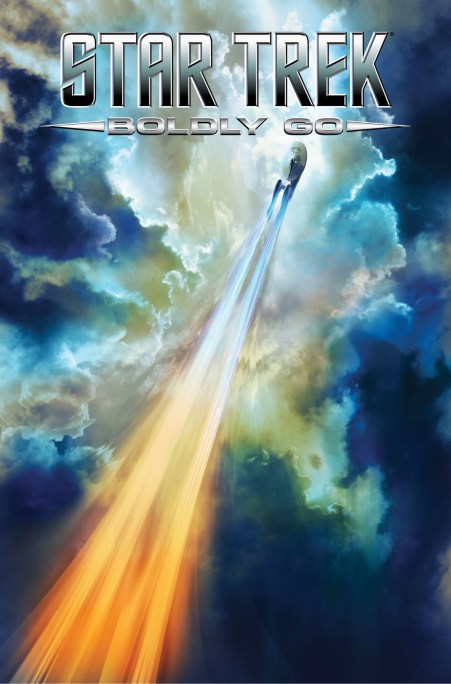
Throwback Thursday – Star Trek: Boldly Go, Volume 1 by Mike Johnson and Tony Shasteen

Boldly_Go_Vol._1.jpg

Publisher: IDW Publishing

Publication Date: 25 July 2017

Length: 136 pages

My Rating: 4.5 out of 5 stars

Amazon     Book Depository

Reviewed as part of my Throwback Thursday series, where I republish old reviews, review books I have read before or review older books I have only just had a chance to read.

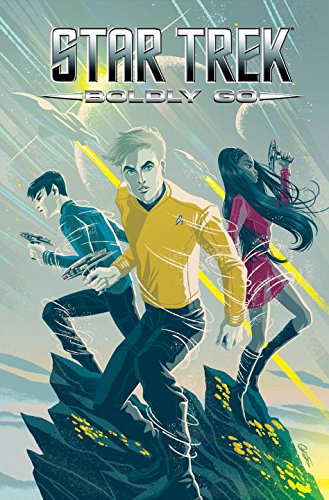
In this Throwback Thursday, get ready to explore the first volume of an intriguing Star Trek comic book series, Boldly Go, which presents the reader with clever new story directions spinning off from the alternate timeline Star Trek movies.

I think it is time to admit to myself that I am starting to get rather hooked on Star Trek extended universe fiction. Like my obsession with everything from the Star Wars extended universe, all it took for me to dive into this new fandom was reading a few compelling Star Trek books. Amazing titles such as Available Light and The Captain’s Oath made me realise that there are some pretty interesting Star Trek books out there. I just started listening to another Star Trek audiobook today (The Antares Maelstrom by Greg Cox, which is pretty good so far). As a result, when I recently saw some other reviewers talking about a cool-sounding Star Trek comic book series that came out a couple of years ago, I immediately went and grabbed a copy of the first volume (I am very impressionable like that). What I found was an extremely compelling Star Trek adventure that had some truly intriguing and clever elements to it.

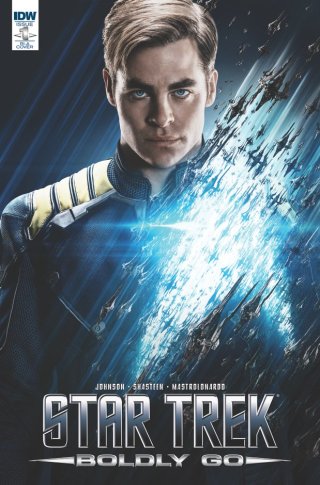
Star_Trek_Boldly_Go,_issue_1_RE.jpg

Star Trek: Boldly Go was an ongoing canon comic book series which started in 2016 and was set in the same continuity as the 2009 Star Trek film and its sequels. This continuity is an alternate timeline to the main Star Trek universe, which is known as the Kelvin Timeline due to the deviation that started with the time traveller Nero’s destruction of the U.S.S. Kelvin (Kirk’s father’s ship). This series was written by Mike Johnson, who has a lot of experience writing Star Trek comic book series, and featured contributions from several different artists. Boldly Go was the second ongoing series set in this timeline, following the 2011 Star Trek series which ran for 60 issues and was also written by Mike Johnson (which apparently had some really interesting-sounding storylines and which I might have to check out as well).

Star_Trek_Boldly_Go,_Issue_1_RI-A.jpg

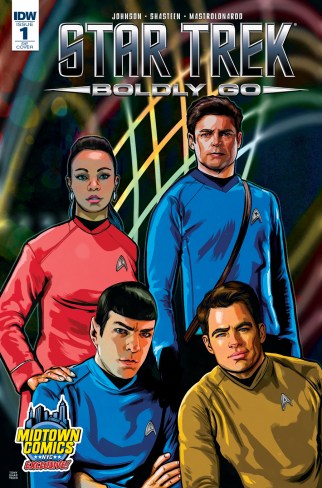
Following the destruction of the U.S.S. Enterprise in Star Trek Beyond, the entire crew have been temporarily reassigned to new posts while they wait for their ship to be rebuilt. While Spock and Uhura are living on New Vulcan and Scotty is a lecturer at Starfleet Academy on Earth, Sulu, McCoy and Kirk are still serving out amongst the stars. Kirk has taken command of the U.S.S. Endeavour with McCoy begrudgingly at his side, and Sulu is serving a one-year exploration mission aboard the U.S.S. Concord.

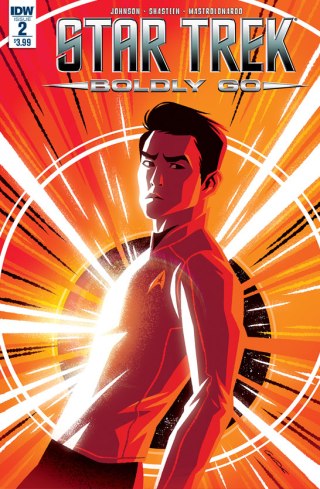
Star_Trek_Boldly_Go,_issue_2.jpg

Events outside of their control will soon bring the former crew of the Enterprise back together, when the Concord encounters a ship of unknown design on the edge of Federation space. The ship is extremely powerful and technologically advanced and it attacks without warning, easily carving off pieces of the Concord with its destructive weapons. As alien boarders abduct members of the crew and devastate the ship, only one thing is certain: resistance is futile!

Star_Trek_Boldly_Go,_Issue_2_RI-A.jpg

The Borg Collective, one of the most dangerous races in the entire galaxy, have arrived in this version of Federation space nearly 100 years earlier than they were supposed to. Their motives are unclear, but as they attack several Federation vessels and settlements it is clear that they are en route to the capital of the Romulan Empire, Romulus. Answering the Concord’s distress call, Kirk and the Endeavour follow the Borg sphere after picking up Spock and Uhura. Forced to enter Romulan space, can Kirk and his crew save the abducted humans and defeat the Borg, or will actions provoke war with the Romulans? And what connection do the Borg have to the events that made this alternate timeline and formed this version of the Enterprise’s crew?

Star_Trek_Boldly_Go,_issue_3

This first volume of Boldly Go is a massive ball of fun that I had a great time reading. Not only does it feature a captivating and enjoyable story with some real cool twists; it also takes this Star Trek universe in some interesting directions. Featuring issues #1-6, this first volume starts a few months after the events of Star Trek Beyond and continues several of the fun storylines explored in the movies and the 2011 ongoing comic book series.

Star_Trek_Boldly_Go,_Issue_3_RI-A.jpg

This first volume features a bunch of interesting storylines. Issues #1-4 contain the volume’s major storyline, the invasion of the Borg into Federation and Romulan space. This is an extremely action-packed storyline, and I really enjoyed seeing the Borg, who are probably the best Star Trek antagonists ever created, go up against the classic crew of the Enterprise. The entire Borg storyline is cleverly written, with high stakes and explosive action sequences, and it has some really cool moments. If you have ever wanted to see what would happen if the Borg tried to assimilate Spock (and let’s face it, who wouldn’t find that awesome) then this is the comic for you.

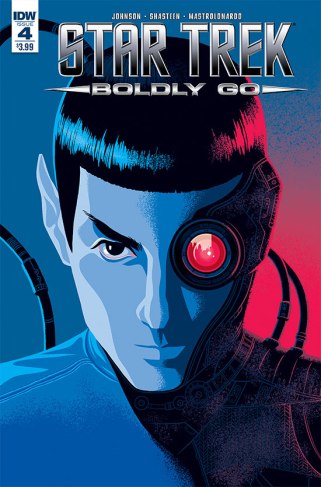
Star_Trek_Boldly_Go,_issue_4.jpg

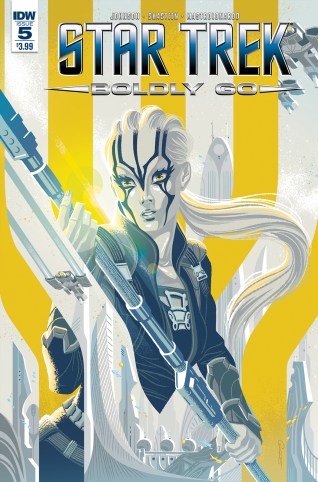
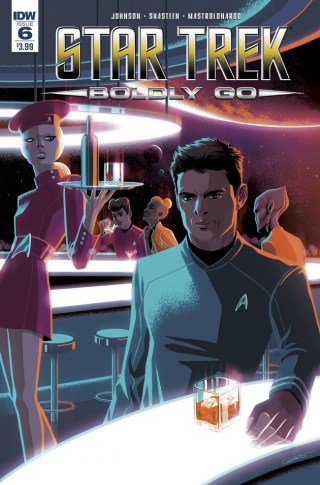
Issues #5 and #6 contain two different, intriguing storylines. Issue #5 contains a rather emotional story that examines the history of the fan-favourite character from Star Trek Beyond, Jaylah. Told chronologically backwards, this issue shows Jaylah’s tragic life trapped on the planet Altamid, and then goes further back to explore how she and her family were marooned there and the events of her past that would eventually lead her to Starfleet. The sixth and final issue in the volume continues some of the storylines from the first four issues of the series, reunites the always funny Scotty with the rest of the main characters and shows a rather curious story about an extremely advanced species of aliens interfering with the Endeavour in violation of their own version of the Prime Directive.

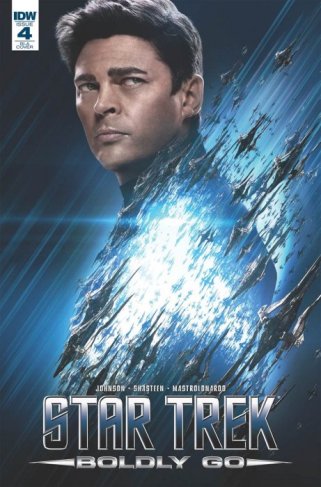
Star_Trek_Boldly_Go,_Issue_4_RI-A.jpg

While all of the storylines featured within this first volume are compelling and filled with emotional plot developments, it was also cool to see this version of the Enterprise crew once again. I really liked seeing how their adventures continued post-Star Trek Beyond, especially because, at the moment, it looks like Beyond is going to be the last film in this particular series of Star Trek films (which is a real shame, as some of the plans for the next instalment sounded particularly awesome). I did feel that the creative team of this comic did a fantastic job capturing the tone of the new movies and the personalities of these versions of the characters, and overall I found the story within this volume to be quite impressive.

Star_Trek_Boldly_Go,_issue_5.jpg

In addition to the great story, dedicated Star Trek fans will find some of plot inclusions to be extremely interesting, as they draw on some unique pieces of Star Trek lore. This volume features alternate timeline versions of characters from the original series, such as Captain Terrell, an older version of whom previously appeared in The Wrath of Khan, and there are intriguing hints at features of the Romulan Empire, such as the feared Tal Shiar. I also cannot get past how awesome it was to see the Borg in this timeline. Jackson has previously experimented with having this version of the original Enterprise crew interact with classic villains from other Star Trek shows. For example, they encountered Q in Jackson’s previous comic book series set in the Kelvin Timeline. However, it was particularly cool having the crew fight the Borg, and it resulted in a number of amazing scenes.

Star_Trek_Boldly_Go,_Issue_5_RI-A

I found the explanation for why the Borg were in Federation space during this time period to be extremely clever. In the main Star Trek universe, the Borg did not attack the Federation until the events of Star Trek: The Next Generation, set around 100 years after the start of The Original Series. However, in this comic, the Borg were attracted to the Federation much sooner than expected. The reason for this is eventually shown to be because Nero, the antagonist of the 2009 Star Trek film, constructed his massive ship, the Narada, out of Borg technology. This naturally drew the attention of the Borg, who travelled to Federation space at a much quicker rate than they did in their original appearance. While this explanation is pretty fascinating by itself, it actually results in some interesting connections with the main Star Trek universe. Technically, this alternate timeline is still considered to be within the canon of the main universe, as it was created when characters from this timeline, Nero and Spock from The Original Series, travelled back to the day Kirk was born. As a result, if the Narada contained Borg technology, then it is reasonable to assume that the Romulans are experimenting with captured Borg material in the main universe after The Next Generation ended. This has subsequently been somewhat confirmed, as the recent Comic Con trailer for the upcoming television series Picard showed images of Romulans dissecting Borg prisoners. As Picard is going to be set after the destruction of Romulus in the main Star Trek universe, it appears that this comic actually predicted events from the show before it was even in production (or else the creators of the show read this comic). This deep dive into Star Trek lore is really cool, and it is interesting to see ideas spawned in this comic have impacts in an upcoming show.
Star_Trek_Boldly_Go,_issue_6

This volume of Star Trek Beyond features some fantastic artwork from a variety of skilled artists. The main artist for the first five issues is Tony Shasteen, with Davide Mastrolonardo serving as colourist. Their combined artwork is pretty spectacular, and I really enjoyed it. Not only did they do a fantastic job of recreating the alternate timeline versions of the Enterprise crew, but the drawings of space, battles and the destruction of the Borg are amazing. I particularly liked the character designs of the Borg drones, especially when some of the Starfleet characters are converted into drones. I was also really impressed by an extended sequence that took place in Spock’s mind, where the Borg infiltrated his memories of several events of the 2009 film, and they made for a great scene. Issue #6 was drawn by Chris Mooneyham, with J. D. Mettler doing the colours. This naturally results in a noticeably different art style for this final issue, but this team does a great job of portraying some interesting scientific anomalies in space. Overall, the artwork featured within this volume is exciting and very well-done, and I had a great time seeing how the artists rolled out this adventure.

Star_Trek_Boldly_Go,_Issue_6_RI-A.jpg

Volume 1 of Star Trek Beyond is a fantastic comic book that is really worth checking out. The creative team have done a wonderful job portraying a new story that takes place in the aftermath of the last Star Trek movie. There are some really compelling story ideas taking place in this volume, and Johnson made sure to go big by bringing in a fantastic bunch of antagonists from The Next Generation. Best read by existing fans of the Star Trek franchise who will enjoy the creative team’s unique take on the characters and their adventures, this comic will also be appreciated by casual Star Trek fans who have only seen the more recent movies. I am extremely glad I decided to explore this Star Trek comic book series, and I will definitely be grabbing the next two volumes of this series when I next visit the comic book shop. This first volume gets four and a half stars from me and is an outstanding piece of Star Trek fiction.

Boldly_Go_Vol._1 (2).jpg

Amazon     Book Depository

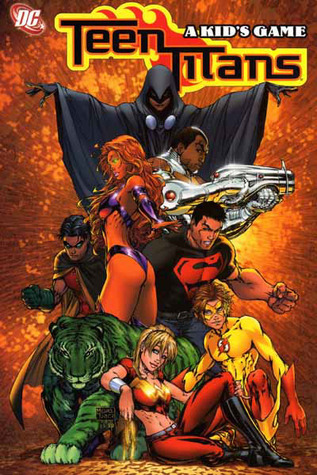
Throwback Thursday – Teen Titans Volume 1: A Kid’s Game

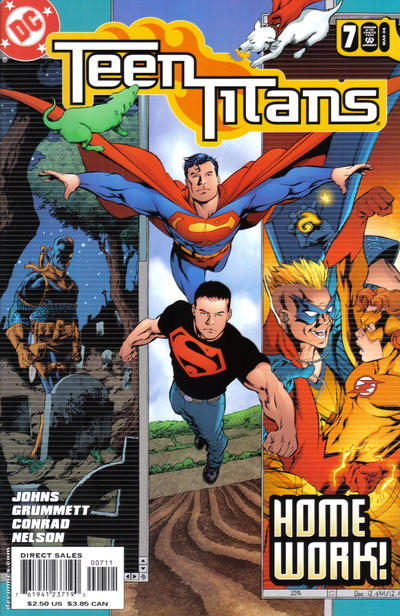
Teen Titans 1 Cover.jpg

Publisher: DC Comics (Paperback Edition – 1 April 2004)

Series: Teen Titans (2003)

My Rating: 5 out of 5 stars

Writer: Geoff Johns

 Artists:  Mike McKone

                Tom Grummett

                Marlo Alquiza

                Nelson

                Jeromy Cox

Amazon

Reviewed as part of my Throwback Thursday series, where I republish old reviews, review books I have read before or review older books I have only just had a chance to read.

Ever since I mentioned Geoff Johns’ 2003 Teen Titans series in one of my Top Ten lists last week, I have wanted to revisit the series.  I have always loved this run of Teen Titans the most.  Something about the combination of storylines, characters and this version of the artwork always spoke to me.  It was also one of the first comic series that I read and subsequently went out of my way to get every collected edition.  Even years later I still love dusting this series off, so I figured this would be a good time to go back and have a try at reviewing parts of this series.  That is why for this Throwback Thursday I will be looking at the first collected volume of the series, Teen Titans: A Kid’s Game.

Teen_Titans_v.3_1.jpg

The Teen Titans are a team of teenaged heroes in the DC universe, usually the sidekicks of the universe’s adult heroes, but also featuring several characters without mentors.  The first formation of the Teen Titans occurred in 1964 and featured the original Kid Flash (Wally West), Robin (Dick Grayson) and Aqualad (Garth).  After a short while the original Wonder Girl (Donna Troy) joined their ranks and the team started calling itself the Teen Titans before it was given its own series.  Teen Titans was DC’s attempt to appeal to the younger generation of comic book fans, and it proved to be an extremely successful series, featuring a number of DC’s younger characters, including Green Arrow’s sidekick, the original Speedy (Roy Harper), who is considered a founding member of the team.  Teen Titans went through a number of different relaunches, with probably their most famous one occurring in 1980 with the launch of the New Teen Titans series, which brought back most of the original Titans, revamped Changeling to Beast Boy and introduced a number of iconic characters, including Cyborg, Starfire and Raven.  It also introduced several of the team’s most famous villains, including Deathstroke and Trigon.  The Teen Titans are one of DC’s most iconic superhero teams and have been featured in a number of media platforms, including the amazing Teen Titans animated show, Teen Titans Go (the less said the better), the dark and surprisingly good live action Titans and a number of key story and character elements have been included in the awesome Young Justice animated show.

Teen Titans went through a number of relaunches throughout the 1980s and 1990s, but the one most relevant to the 2003 Teen Titans comic series is the 1999 Titans comic series, which followed the adventures of adult versions of the original Teen Titans, most of whom had new superhero personas.  At the same time, DC launched the Young Justice comic book series (which I have talked about before) incorporating the younger generation of sidekicks (for example a new and younger Robin and Wonder Girl).  Both these series ended after the 2003 crossover limited series, Titans/Young Justice: Graduation DayGraduation Day featured a number of important events, including the sudden death of longstanding Titans member Omen; however, the most significant event was the death of the original Wonder Girl, Donna Troy.  The resultant despair and guilt following the death of this significant character led to both the Titans and Young Justice dissolving in what was to be conclusion of both these series.

Teen_Titans_v.3_2

However, shortly after this, Geoff Johns started this specific run on Teen Titans, which combined elements of the cancelled Young Justice and Titans series, with the main four characters from Young Justice teaming up with some of the classic Teen Titans.  Another new series of Outsiders started around the same time and was heavily linked to this run of Teen Titans and featured Dick Grayson and Roy Harper.  This specific run of Teen Titans lasted until 2011, when DC initiated their New 52 relaunch (which I may or may not have some issues with).  Geoff Johns was the principle writer of this series until the 2005-06 Infinite Crisis limited series, which was a significant story point for all of DC’s titles at that point.  Due to the fact that Johns was the principle writer of the Infinite Crisis series, several of the younger Teen Titans (Superboy and Wonder Girl in particular) played a key part in this big crossover event, and several storylines from the 2003 Teen Titans turned out to be heavily linked to the crossover event.

Following the tragic events of Graduation Day, the young heroes that made up the superhero team Young Justice are lost.  Tim Drake (Robin), Conner Kent (Superboy) Bart Allen (Impulse) and Cassandra Sandermark (Wonder Girl) dissolved the team in their grief over losing the original Wonder Girl, Donna Troy, and have been avoiding each other since her funeral.  They may be the sidekicks of the greatest heroes in the world, but they are all missing their friends.  Despite their reluctance to team up again, each of them accepts an invitation from Victor Stone (Cyborg) to form a new version of the Teen Titans.  With a new base in San Francisco and other veteran Titans members Starfire and Beast Boy to help as mentors, Cyborg wants to bring these young heroes together again and forge an effective team.

Teen_Titans_v.3_3.jpg

However, before Cyborg can attempt to work with the four new Titans and convince them to stay on the team, a massive explosion rips through Alcatraz, endangering tourist lives.  As the Teen Titans mount a rescue, one of them is ambushed by the team’s oldest and most dangerous adversary, the world’s best assassin, Deathstroke the Terminator.  Deathstroke has long had a complicated relationship with the Teen Titans, but this time it looks like he wants to put the team down for good.  Claiming that kids should not wear costumes, he attempts to take out each member of the team, but what is the real reason behind his attack?  Can this new version of the Teen Titans survive the ruthless assassin?  What role will recently reborn Titan Raven play? Moreover, what will happen when the Justice League arrives to shut them down?

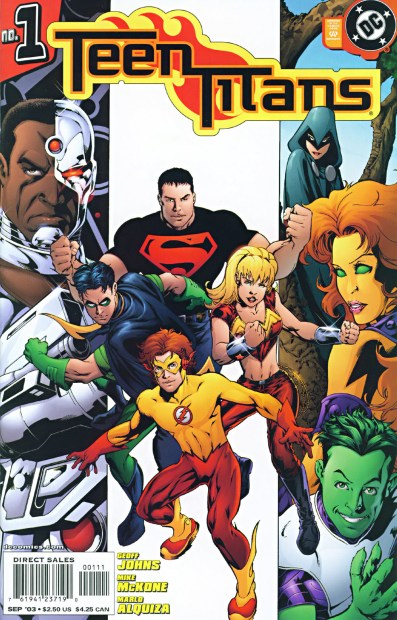
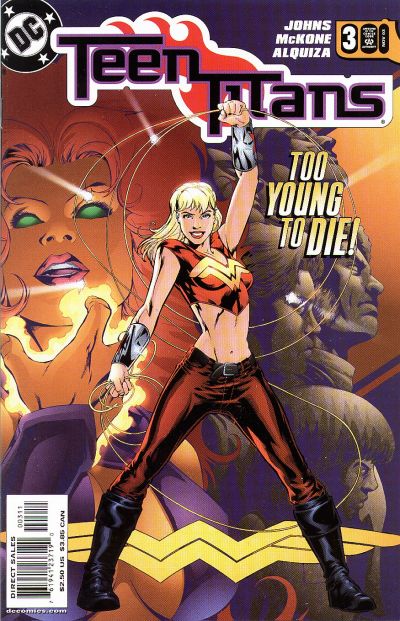
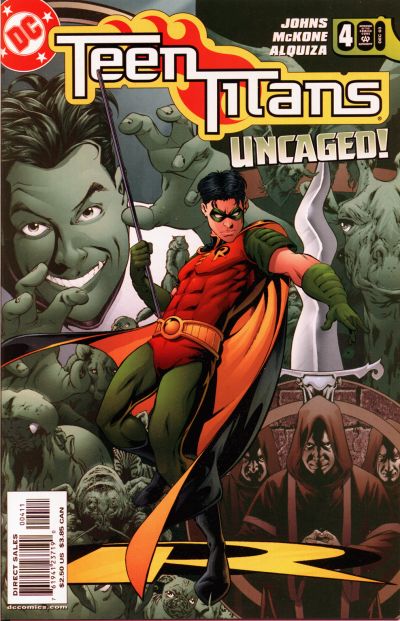
As I mentioned above, I am a huge fan in general of this entire run of Teen Titans, but this has to be one of the best instalments in the entire series.  Geoff Johns and his creative team came out of the gate swinging with this one and started the series off with a bang.  Not only does A Kid’s Game feature a fantastic storyline and contain some excellent character work, but it also serves as an outstanding first instalment of what turned out to be one of DC’s most consistent and captivating comic book series between 2003 and 2011.  The A Kids Games collected edition is made up of Teen Titans (2003) #1 – 7 and also features parts from Teen Titans/Outsiders Secret Files 2003, which can be useful for those readers unfamiliar with the characters, or at least that incarnation of them.

Teen_Titans_v.3_4.jpg

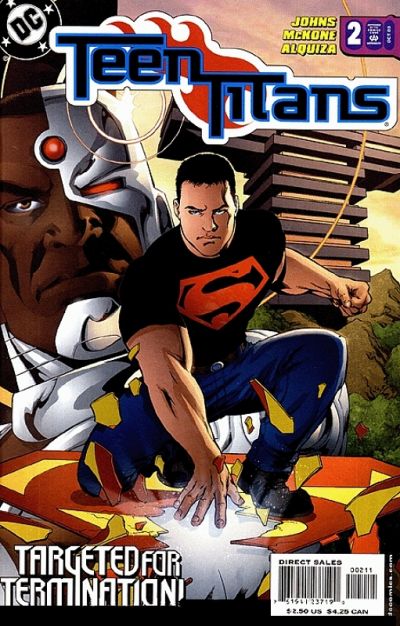
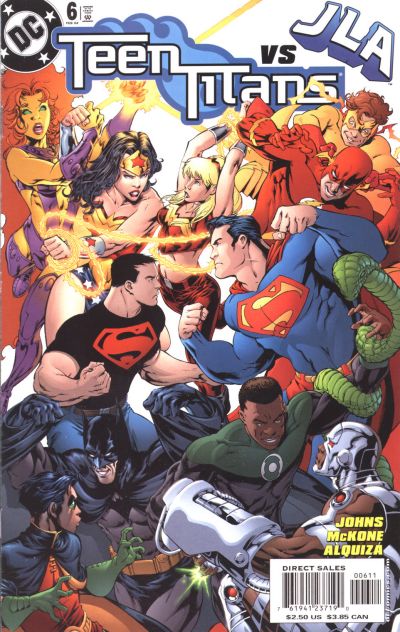
The storyline contained within A Kid’s Game has a lot of fantastic elements to enjoy within it.  The initial formation of the team is handled very well, as each of them is shown to be lonely or unsatisfied with their lives without their friends, and despite their misgivings decide to join up.  The follow-up battle between the team and Deathstroke is really good, and the team learning how to fight together while uncovering their antagonist’s motivations is very exciting.  Deathstroke has a hell of an entrance in this volume when he kneecaps Impulse at the end of the second issue in what is a pretty shocking and memorable moment.  I personally loved the storyline that occurred right after this in Teen Titans 2003 #6, when the Justice League, including the mentors of each of the younger Teen Titans’ members, show up and try to meddle with how the team is run.  This results in some chaotic action and a huge amount of amazing comic book drama, as the sidekicks fight and vent their well-justified frustrations to their mentors while also coming to terms with the guilt they feel over Donna Troy’s death.  I really cannot speak highly enough about this part of the volume, and I think this was what made me initially fall in love with the series.  The final storyline shows each of the characters during the school week, when it really helps to highlight the issues that being a part of the Teen Titans is helping them face.

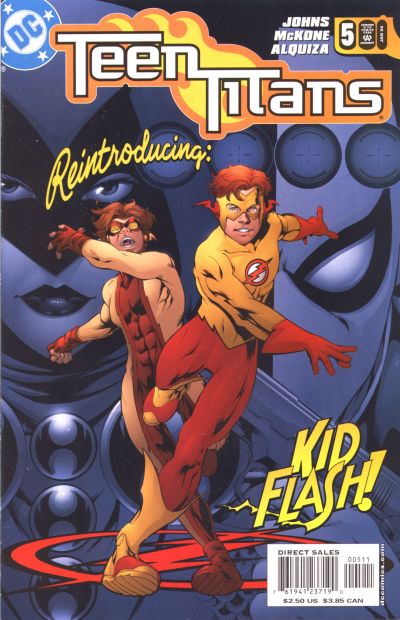
One of the things that I really like about this volume is that each issue contains a shocking reveal at the end.  I know that some comics overuse this, but I felt that Johns and his team were pretty justified in doing this, as they were trying to up the stakes during these first comics in their new series.  A lot of significant and surprising things are revealed during each of these issues, many of which would have ground-shaking impacts not just for the Teen Titan, but for the DC universe as a whole (Spoilers ahead).  This happens right in the first issue, with the reveal that half of Superboy’s DNA comes from Lex Luthor.  Other big events occurring at the end of each issue are the kneecapping of Impulse, the revelation that Jericho was still alive inside Deathstroke, Bart’s first appearance as Kid Flash, Wonder Woman showing up to start the brawl between the League and the team and the reveal that Lex Luthor is the person leaking information about Superboy’s genetics to Robin.  Even the quiet, final issue of this volume has a big reveal at the end, with the revelation that Rose Wilson is now working with her father Deathstroke.

Teen_Titans_v.3_5.jpg

The creative team behind this original run obviously had a great appreciation for some of the preceding Teen Titans series, as they utilise a number of key characters from these earlier series.  I personally thought that the issues contained with A Kid’s Game did a fantastic job of blending these old school Teen Titans storylines and character together with the former Young Justice characters, creating an excellent new dichotomy for the team.  This blend of the old and new helped create an excellent new series and was one of the best features of John’s run, and I also enjoyed the respect he showed towards the old Young Justice series.  I was also really impressed in hindsight with how well Johns and his team set up or hinted at a number of future storylines or character developments in these initial issues.  Many of these storylines (such as Superboy being a mixture of Superman and Lex Luthor’s DNA, Wonder Girl being related to Ares, Rose Wilson joining with Deathstroke, the resurrection of Raven and Jericho and the new Brother Blood) would have impacts for years to come and some are even utilised in comic series, television shows and animated movies to this day.  The creators of A Kid’s Game did an incredible job including them this early in the series, and they were really good introductions.

One of the best things about the entire 2003 run of Teen Titans is the focus on the characters and their development throughout the series.  While other volumes of this series feature some great character moments, nowhere is this more prevalent than within the issues that make up A Kid’s Game.  Most of the focus within this book is on the four characters, Robin, Superboy, Impulse and Wonder Girl, who are moving over from Young Justice to the Teen Titans.  The creators take a significant look at each of them and really work to develop each of them as substantial characters and develop them deeper than what they were within Young Justice.  With this impressive focus on developing and utilising these characters to their full potential, it is no wonder that they were utilised as such major characters during the Infinite Crisis storyline and beyond.  I also like how the older members of the team had to step up and assume a leadership role that readers had not seen before.  As a result, Cyborg and Starfire attempted to fill these leadership roles, while the slightly younger and less mature Beast Boy acts as the bridge between the two generations.  I thought that these new roles were really clever and added some new dynamics to the team.  I was also really impressed with how the creators focused on the trauma that all of the team members were feeling in the wake of Donna Troy’s death.  Each of them was racked with guilt after they were unable to help stop her death, and the anger and grief that each of them was feeling was extremely evident throughout the volume.

Teen_Titans_v.3_6.jpg

Another incredible part of this initial volume was the strong look at the relationship between the sidekicks and their mentors.  Despite the high regard each of their mentors holds in the superhero world, each of these sidekicks has issues that stem from how they perceive or are treated by their mentor.  The creative team really go out of their way to highlight these issues, and many are quite clever.  For example, Superboy, who is living as Conner Kent, appears to be frustrated at living a quiet life in Smallville, but as the story progresses it becomes clear that he is having trouble living up to the legacy of not only Superman but Clark Kent as well.  Robin is stuck wondering what his future holds and it soon becomes clear that he is reluctant to become like Batman, despite the fact that his is more like him than any of the Robins that came before him.  Wonder Girl is extremely angry and rebellious throughout this volume and is beginning to doubt her mentor Wonder Woman.  This is revealed to be a side effect of her trauma at the death of Donna Troy, and it soon becomes clear that she is one most impacted by the former Wonder Girl’s death.  Finally, Bart is sick of being considered not good enough to be part of the Flash legacy, as his own mentor does not think he is responsible enough to bear the Flash name (which is ironic, considering he is the only one of these young heroes whoever takes up their mentor’s mantle).  As a result, he acts like he does not care, while deep down he craves approval and Flash’s respect.  Bart easily shows the most growth within this volume, as he takes the Kid Flash mantle for himself, dedicates himself to learning all he needs to be a hero and vows to leave the Flash in his shadow.  All of these character issues come to a head perfectly when the Justice League arrives unannounced at Titan’s Tower and they try to meddle with their sidekicks lives and there are some amazing and cathartic moments between the younger heroes and their mentors.  His is comic book character work at its very best.

I have to note the great job the artistic team does throughout these first seven issues.  There are some great new character designs, such as Superboy’s iconic new look of jeans and a superman t-shirt, something that is still utilised within the Young Justice television show.  I also liked the way that Bart looked in the Kid Flash outfit.  The artwork on the action sequences is also pretty awesome, and there are a huge number of eyepopping scenes throughout this volume.  That shot of Kid Flash getting kneecapped is very impressive and really sticks with you.  Overall, there is some fantastic artwork, which works really well with the outstanding story and character work to create an excellent first volume.

Teen_Titans_v.3_7

Teen Titans: A Kid’s Game is an amazing first volume in the 2003 Teen Titans series.  I cannot speak highly enough about the storylines and the way that the creative team handle the complex young heroes.  A spectacular start to an incredible run one of DC’s most iconic series.  I fully intend to review some other volumes in this Teen Titans in the future so stay tuned for them.

Amazon

Runaways Volume 2: Best Friends Forever by Rainbow Rowell and Kris Anka

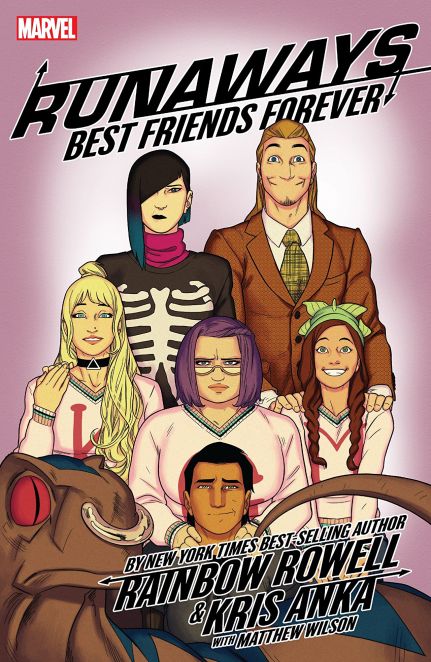
Runaways Volume 2 Cover.jpg

Publisher: Marvel Comics

Publication Date – 30 October 2018

Amazon     Book Depository

Recently reunited and still coming to terms with being a family again, the adventures of Marvel Comics’ favourite group of misfit youths continues in Best Friends Forever, the second volume of young adult author Rainbow Rowell and artist Kris Anika’s run on Runaways.

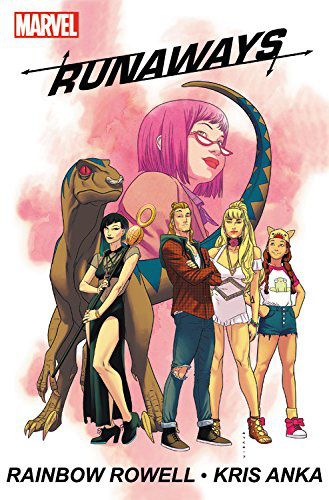
The Runaways, Chase, Gert, Karolina, Nico, Victor, Molly and Old Lace are finally back together and living in one of their parents’ old hideouts.  While most of the team have grown up since the last time they were all together, this does not mean that they have their lives together.  Each of the Runaways has their issues to deal with, be it Gert’s recent return to life after several years of being dead, Karolina’s relationship problems or Victor’s current existence as a disembodied head.  The only one who appears to have their life even remotely together is the team’s youngest and at times wisest member, Molly, who is enjoying her time in middle school.  But even Molly is having problems, as she is faced with a hard choice and must consider whether she actually wants to grow up.

Runaways_Vol_5_8.jpg

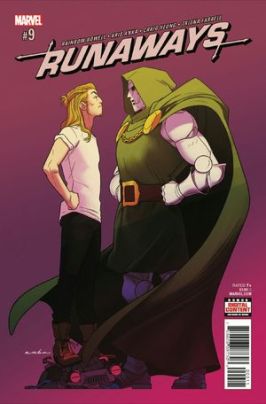
As Molly deliberates over the dilemma presented to her, a barrage of other arrivals impact on the Runaways.  Karolina’s girlfriend, Julie Power of Power Pack fame, is in town, which causes significant drama for Karolina and Nico, while Dr Doom has apparently appeared on their doorstep, determined to find Victor.  Can a team rife with squabbles, drama and internal strife come together to face the problems before them, or will their significant changes be too much to bear?

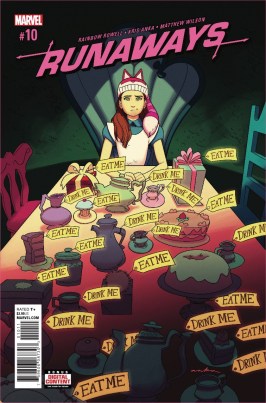
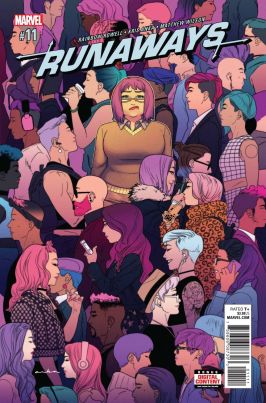
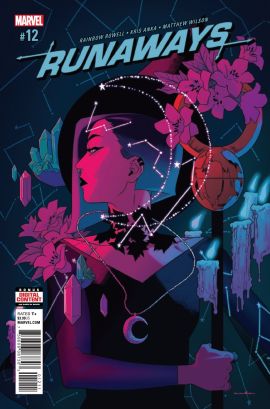
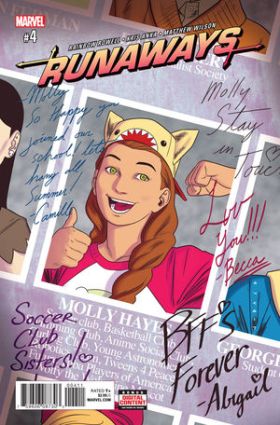
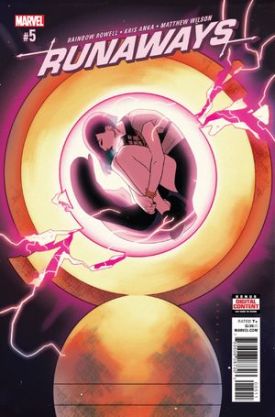
Runaways is still one of my favourite Marvel series.  After the revamp earlier this year, previously reviewed here, these fantastic characters are still going strong.  In this second volume, Rowell, Atkins and their creative team continue to produce some outstanding and emotional stories that are based more on the relationships between the main characters than the traditional crime-fighting storylines contained within other comics.  While they do go up against a couple of superpowered opponents within this story, none of these antagonists is truly evil, and their motivations and history are a lot more morally ambiguous than some of the previous Runaways stories.  The creative team do a fantastic job of blending highly emotional storylines with a bunch of fun and heart-warming sequences, filled with random and funny elements, such as an errant Doombot.  This all comes together into one fantastic overall story that hits all the right buttons.  This second volume contains issues #7 – #12 of this new run on Runaways.

Runaways_Vol_5_9.jpg

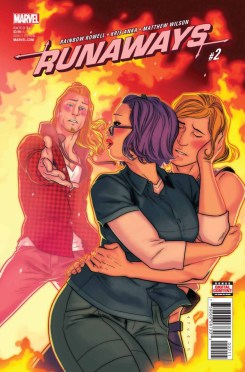
One of the main aspects of this second volume of Runaways is the continued focus on the relationships between the series’ main characters.  Most of these characters are still coming to terms with being back together after all of them attempted to live lives outside of their team.  Quite a bit of Volume 2 involves the characters trying to determine what roles they have within this surrogate family, and the fact that they are not as close as they used to be.  What I liked is the way that Chase, usually the most immature member of the team, attempts to become the father of the group, matching up with the traditional female leader of the team, Nico, as the team’s mother.  This new parental role is highlighted in a funny couple of scenes where Chase and Nico use magic to become Molly’s legal guardians, a shortcut way that “seems totally legit and great”.  A lot of this volume is also focused on the romantic relationships between several of the group’s characters, including the relationship between Gert and Victor and the new romantic feelings between Nico and Carolina.  I thought the lead-in to both these relationships worked out very well and sets up some interesting potential in future volumes.  I am also very curious to see how the friendship between Victor and Chase is going to be impacted as a result of this new relationship in future volumes of this series.  I liked the way that the relationships and romantic considerations that featured between Carolina and Julie and Carolina and Nico were handled very well and with great sensitivity, and showed great representations of LGBT+ relationships.

Runaways_Vol_5_10.jpg

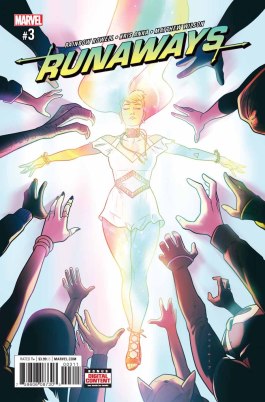
I also appreciated the way that Rowell and Anika continued to focus on the emotional and mental damage that the team’s exploits have had on these characters over their entire comic book history.  In this second volume, there is a significant focus on Victor, who was mentally and physically damaged during his previous appearances in Vision.  Chase and Doombot’s attempts to rebuild Victor during this volume prove to be a particularly vivid trigger for Victor, and leads to some significant emotional moments.  There is also a look at Victor’s fear of vibranium because of its addictive and mind-altering impact on him, which drove him to commit terrible acts in a previous series.  The creative team also take a look at the life of old team member Klara, the young powered girl the team rescued from abuse back in 1907 during a time-travel adventure.  It was previously revealed that Klara had been taken away from the team by the state and is now in a loving household.  A brief section of this volume is dedicated to the team finding her and attempting to bring her back into the fold, but Klara refuses to come back, as she is happy in her new life.  You have to appreciate Klara’s sound reasoning for not wanting to come back to the team, due to the death and multiple problems experienced in the previous adventures.
Runaways_Vol_5_11.jpg

One of the most significant issues that the character’s experiences have had on them is based around their negative opinions of adults.  Most of the truly terrible things in their lives have been the result of the plans of the adults they encounter, and their distrust of most adult characters has been a long-running aspect of the series.  It is interesting to see that this carries through to the new series, even though several of the characters are now actually adults.  This viewpoint is most prevalent in Gert, whose death during one of the previous run of this series means she still shares the beliefs these characters had while they were fugitives.  However, the rest of the team also have a hard time trusting other adults, such as when they assume Klara’s new adopted parents have to be evil, as every adult they have previously dealt with in similar circumstances were also evil or abusive.  This viewpoint has significant plot impacts in this second volume, as Molly, given the opportunity to stay young forever, talks to several of the other Runaways in an attempt to subtly work out their thoughts on growing up.  Most of the characters, including non-team member Julie Powers, talk somewhat negatively about their current lives and regret growing up, which tempts Molly to accept the chance to stay young.  The final message of this storyline strongly implies that growing up isn’t so bad, as even the antagonist, a young girl who has stayed 13 for 50 years, does not always want to be young.  It was also interesting to see Klara try to correct the team when they say that no adults can be trusted; having had a loving family relationship, she no longer believes that.

Runaways_Vol_5_12.jpg

The second volume of this run of Runaways continues to make use of some fun artwork throughout the various issues.  The character designs continue to be fun, and it is interesting to see some new looks and some constantly changing character designs, especially for the trendy Nico.  The art is often used for comedic affect.  Victor has a fun use throughout the book, and it is pretty humorous to see the head floating around in a number of scenes, even in a middle of a fight scene.  I also loved how throughout the course of the volume, he was given more and more advanced mobility upgrades in each scene that he appeared in, each more comedic than the last.  For example, at the start of the volume he is mostly transported in other character’s hand, his own momentum or in a backpack.  However, as the volume continues he is variously attached to a Roomba, a small tracked rover, several helium balloons (so he can get the feeling on flight back again) and eventually a new drone.  All of these are slightly ridiculous and fun, but they do not take away from the emotional nature of several scenes, and I must point out some of the awesome drawings that hint at the issues Nico is having with her magic.

The second volume of this new series of Runaways, Best Friends Forever, is another strong and emotional addition to this new version of this young adult superhero comic.  I really appreciated the creative teams continued focus on the character relationships and the emotional aspects of the characters’ lives.  Best Friends Forever is another fantastic addition to this powerful new run of Runaways, and I am excited to see what happens to this great group of characters next.

My Rating:

Four and a half stars

Amazon     Book Depository

Runaways Volume 1: Find Your Way Home by Rainbow Rowell and Kris Anka

Runaways Volume 1 Cover.jpg

Publisher: Marvel Comics

Publication Date – 8 May 2018

Amazon

From bestselling young adult fiction author Rainbow Rowell and exciting Marvel artist Kris Anka comes the revival we have all been waiting for, with the return of Runaways.

Years ago, six young friends found out a terrible truth: their parents were members of a supervillain group known as The Pride and were working towards the destruction of the planet.  Uncovering their hidden powers and strengths, these friends, genius Alex Wilder, the sorceress Nico Minoru (Sister Grimm), alien Karolina Dean (Lucy in the Sky), mutant Molly Hayes (Princess Powerful/Bruiser), mad scientist offspring Chase Stein (Talkback) and proud dinosaur owner and daughter of two time travellers Gertrude Yorkes (Arsenic with her deinonychus, Old Lace), became the Runaways to escape their parents’ evil plans.

Runaways 2.png

After the death of Alex and all of their parents, the surviving Runaways become family and even brought in new members, including the cyborg Victor, the Skrull Xavin and the time displaced mutant Klara.  While the team’s plans to live in peace were often disrupted by their forced heroics, for a time they were happy.  But even the best families have a hard time staying together in the Marvel Universe, and following the death of Gert, Xavin’s forced departure for the stars, the events of Murderworld and the elevation of several members to the Avengers, the Runaways have gone their separate ways.

However, one former Runaway has had a hard time letting go of the past.  Stealing a time machine, the team’s wildcard member, Chase, has gone back in time to fix his biggest regret: the death of his girlfriend, Gertrude.  But being brought back to life several years in the future is tough, and all Gertrude wants to do is reunite with her friends, even if they are now older than her.  Chase is his old goofy self, but Nico and Carolina have moved on with their lives, , Victor is now just a head and Molly has moved in with her grandmother.  Will the Runaways get together again, or have their subsequent adventures affected their relationships too much? And who is the evil scientist stalking them from afar?

Runaways_Vol_5_2.jpg

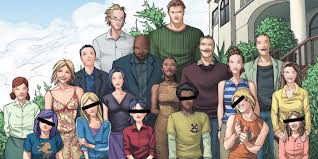
Runaways was a ground breaking series originally released in 2003 that focused on a fresh new group of heroes with no previous connections to other characters in the Marvel Universe.  Created by Brian K Vaughan of Y: The Last Man and Saga fame and artist Adrian Alphona, Runaways represents some of their most significant work with Marvel.  Runaways was an exciting tale of teenage rebellion which was amplified by the superhero elements.  Featuring some incredibly iconic characters, the initial series of Runaways featured a fantastic enclosed story about crime and heroics in Los Angeles with only minimal inclusions from the outside Marvel Universe.  Featuring characters who acted in a contrary way to the other superheroes by actively avoiding fights, making fun of costumes and team names (they never actually referred to themselves as the Runaways) and only using superhero monikers ironically, this was a fun series with some clever new ideas.

Following this initial run, the story became a more traditional superhero series, focusing on the adventures of the titular heroes as they fought crime and other threats in LA.  There were a series of great adventures during this period, which included memorable events such as the tragic loss of Gert, Xavin’s sacrifice, several team-ups with the Young Avengers and involvements in the Civil War and Secret Invasion crossover events.  The series would abruptly end in 2009, and readers would have to wait years to see a significant follow-up.  The characters have appeared in several other series, including Daken: Dark Wolverine and Avengers Academy.  However, the characters would not significantly return until Avengers Arena, where Nico and Chase found themselves trapped in Murderworld, and Avengers Arena’s follow up series, Avengers Undercover, which saw the return of Alex Wilder.  At the same time, Victor would join the cast of Avengers A.I.  An alternate version of the Runaways got their own series as part of the 2015 Secret Wars crossover even, and Nico would eventually become a member of the female Avengers team in A-Force.
Runaways 1.png

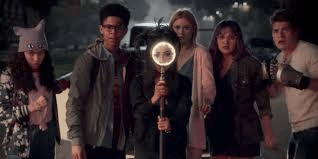
With the release of 2017s Runaways television show, a new comic series of Runaways was announced by Marvel which saw the first run of the original characters in nearly nine years.  This new series is helmed by acclaimed young adult fiction author Rainbow Rowell and dedicated Marvel artist Kris Anka.  Volume 1 of their run of Runways, Find Your Way Home, contains issues #1-6 of the series, with a second volume to be released in October 2018.

Runaways has long been one of my favourite series, and is probably one of the best comic examinations of young teenage characters that Marvel has ever produced.  As a result, I was very excited to get my copy of Find Your Way Home, and headed into this new series with high expectations.  I was not at all disappointed by the result and really enjoyed this new series.  This first volume expertly captures the heart and soul of the original series, reunites several fan favourite characters, and skilfully addresses all the tragic events that have impacted this team over the last few years.

Runaways_Vol_5_3.jpg

The first thing that can be seen in this series is the extreme emotional damage that most of the characters have experienced over the last few years and the strain this has placed on the team.  Because of all the pressures in their lives, the Runaways have disbanded and each have gone their separate ways.  This appears to have affected team members Nico and Chase the most because of their traumatic experiences in the Avengers Arena series.  Nico comes across as very emotionally compromised from the very first scene, while Chase is still obsessed with his greatest tragedy, the sacrifice Gertrude made to save his life.  The other Runaways are just as damaged in their own separate ways.  Karolina is apparently trying to live a normal life, but while she seems unhappy, she is the most reluctant to re-join the team, and her eventual return results in emotional upheaval between her and Nico.  After dying, Gert finds herself alive again in the future with older versions of her friends, as well as an adult boyfriend.  She spends most of the volume trying to deal with these significant changes, the fact that her only real family fractured after her death, and the emotional trauma she experienced dying.  After his death in Vision, Victor spends the entire series as a disembodied head, and keeps his status hidden for most of the volume as he tries to work out if he wants to remain online and re-join the team.  Of all the characters, Molly seems to be the most together, as she is being looked after by her grandmother and is her usually bubbly and high-energy self.  However, her behaviour disguises the fact she knows about some of the deep problems happening around her, and her emotional breakdown at the end of the volume is quiet heartbreaking to behold.  Overall, the creative team handle these deep emotional issues well, and I really appreciated the fact that they did not deny or shy away from the trauma that these characters experienced in other Marvel series.

Runaways_Vol_5_4.jpg

Despite the high level of emotional trauma, there are quite a few very nice moments within the book that fans of the original Runaways series will really appreciate.  The team coming together at the end of the volume to save Molly and Gert is an amazing moment.  After viewing all of the above trauma, it was also great to see the team decide to get back together to become each other’s emotional support.  I also challenge anyone not to get emotional during the scene where Gertrude is reunited with Old Lace, as the two mentally connected friends are finally reunited for the first time in years.  Once again, the youngest Runaway, Molly, is the heart and soul of the team, and it is great to see that despite her age, she is still one of the most emotionally mature, giving sage advice and actually being the only person to notice the threats around them or the fact that Victor’s head is rolling his eyes at the events around him.  I also love that she still has the same Marvel fangirl attitude that she had in the original series, as she spends time wearing Captain Marvel inspired leggings.  Here’s hoping she gets to have some fun interactions with the rest of the Marvel Universe as she did before (the issue she spent running around with Wolverine is one of the funniest bits in Runaways’ previous run).

Runaways_Vol_5_5.jpg

One of the more interesting parts of this volume is that it focuses more on the character interactions than on action or adventure.  There really is not too much violence until the end of the book, and even then their biggest fight is against a group of psychic cats whom they do not actually want to hurt or kill.  I think that this is a good choice for the first volume, as this allows them to really focus on the characters, while also showing off the difference this series has to a classic comic book story.  Despite the lack of action, the series starts with one of the best scenes in the entire volume, when Chase appears in the middle of Nico’s apartment with a mortally wounded Gert.  Nico, despite her shock and the implications of what Chase has done, tries to use her magic to try to save Gert.  While Nico is a powerful magic user, all her magic is tied up in The Staff of One, her parent’s magical staff that has bonded to Nico’s body.  The Staff of One can bend reality to what Nico requests, however, it will only do the specific spell once.  This far along in their adventures, Nico has used a lot of spells already, including ‘heal’, and must use a range of more obscure or very specific statements to try and achieve her goals.   The first sequence where she uses a huge range of different spells really shows off the unique and in some ways limited nature of Nico’s powers and really shows emotional depth right off the bat as the characters get more and more desperate in their attempts to save Gert, and there is palpable relief when they manage to save her.

Runaways_Vol_5_6.jpg

This series of Runaways has a new artist at its helm, Kris Anka, and as a result the art style of Find Your Way Home is slightly different from the previous series.  It still works well to show off the story, and the depictions of the characters’ superpowers being used are pretty cool.  The new character designs are interesting, as Nico, Chase and Karolina are each given a different design to reflect how they’ve aged up since the last series.  Nico looks particularly worn and sad at the start of the comic, and is definitely showing off the strain of her adventure.  Anka has created an interesting look for Chase, and he now looks like a cross between a beach bum and a mad scientist.  The other characters, Molly, Victor, Gert and Old Lace retain similar styles to those they had in the previous series.  These similarities make a lot of sense, as Gert has time-travelled from the previous series, Victor is a cyborg head and Old Lace is a dinosaur.  The artist has also chosen not to change Molly’s age too much, and thankfully she retains her distinctive looks and hats.  One of the highlights of Anka’s work is the dinosaur Old Lace, and quite a lot of the book’s humour can be seen in her funny reactions and antics.  Overall, I really enjoyed the new art style of the book and found that the new character designs suited the book’s necessary changes.

Runaways return in top form with this fantastic first volume, which sticks true to the core of the beloved original series while also going off in some interesting new directions.  Rowell has created an intense narrative that expertly plucks at the heartstrings and examines all the problems and horrors that this group of young heroes have experienced since their initial run.  This is a superb new start to an excellent series.  I’m so happy to have my Runaways back, and I can’t wait to see how they resolve some storylines from the original series.  This is definitely a must-read for fans of the original series, but this is also the perfect chance for new readers to find out about this awesome superhero family.

My Rating:

Five Stars

Amazon