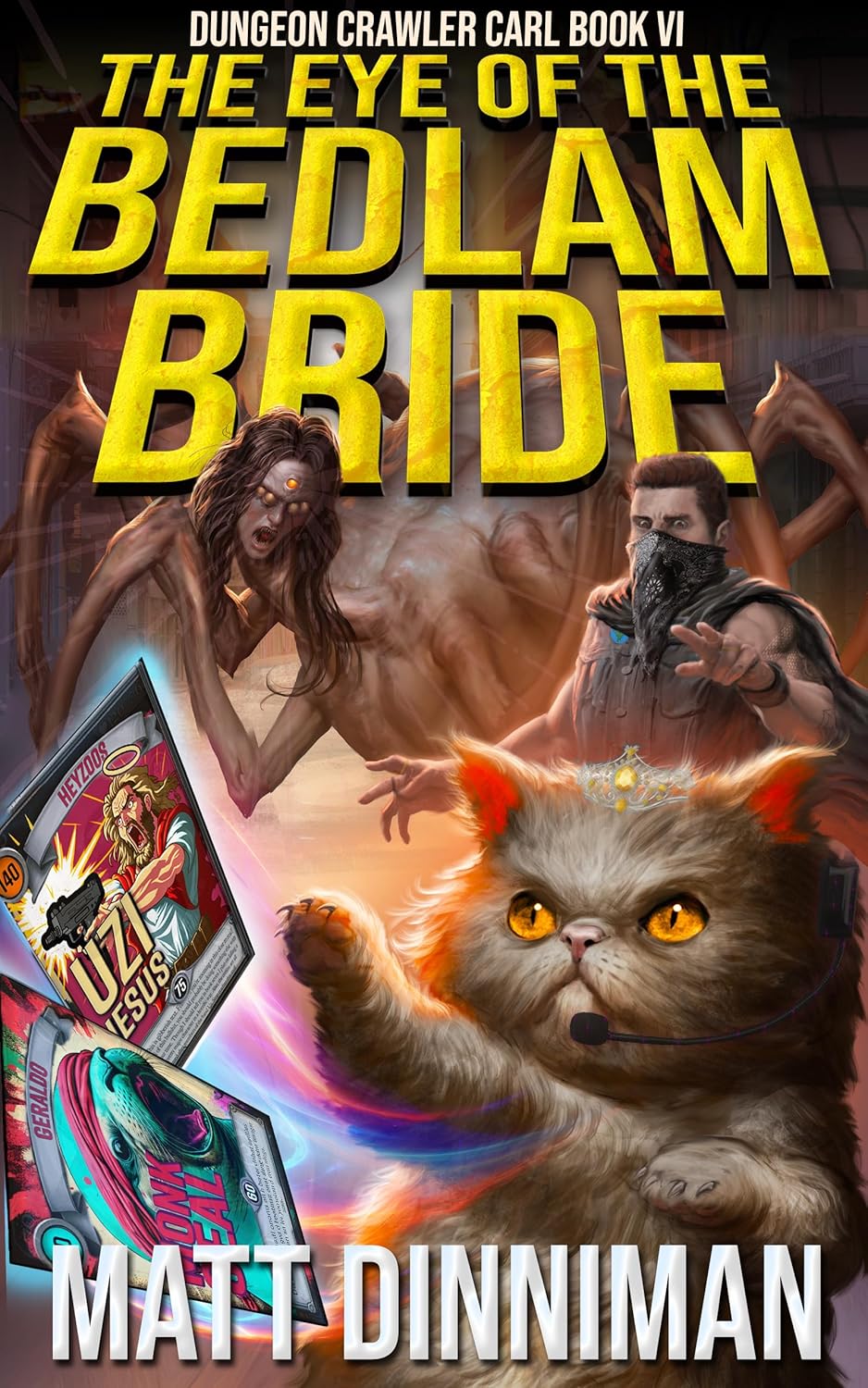
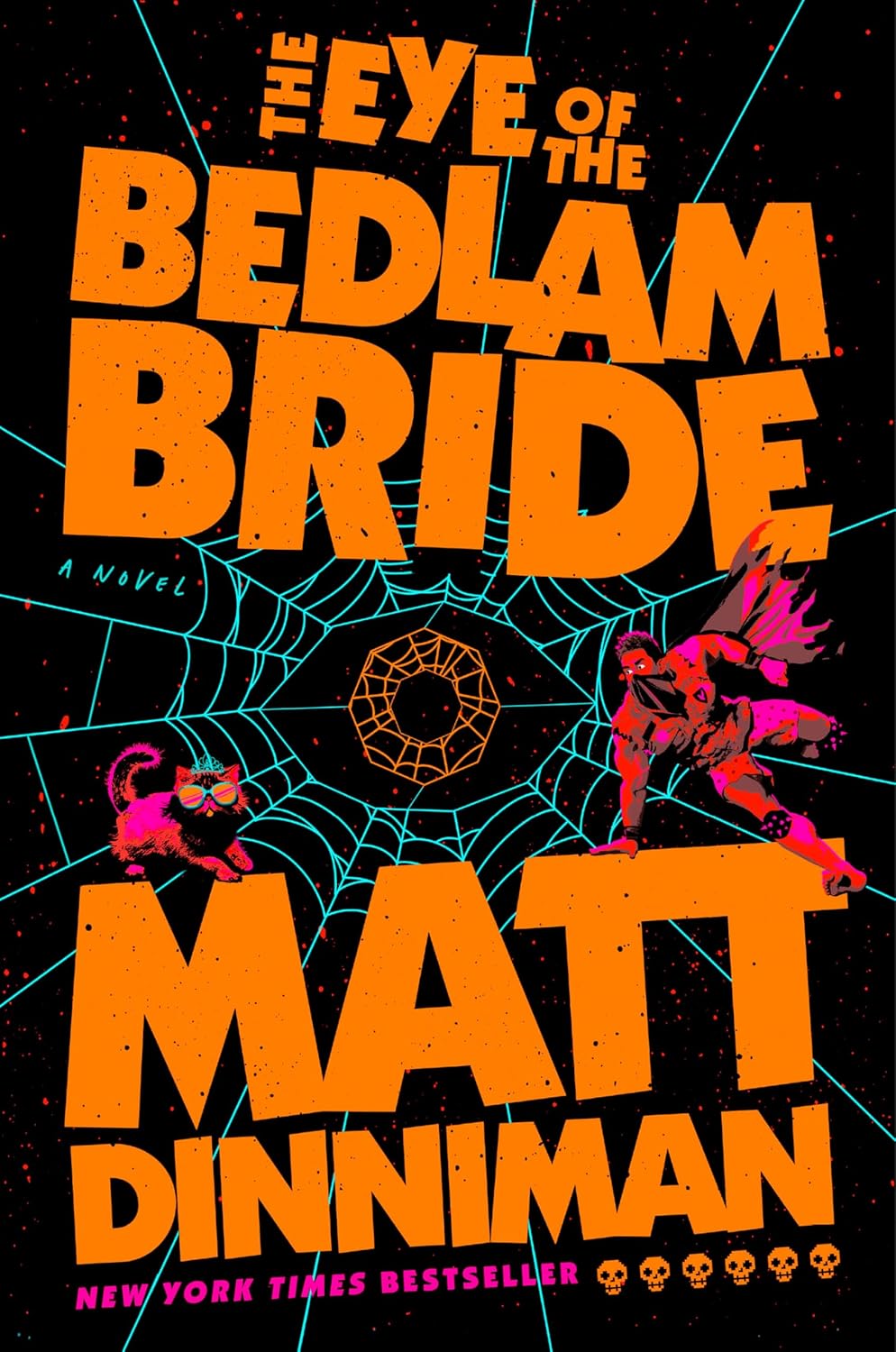
The Eye of the Bedlam Bride by Matt Dinniman

Publisher: Soundbooth Theater (Audiobook – 2 July 2023)

Series: Dungeon Crawler Carl – Book Six

Length: 26 hours and 46 minutes

My Rating: 5 out of 5 stars

Amazon

The chaotic fun of Matt Dinniman’s Dungeon Crawler Carl series continues in epic fashion with the ultra-impactful and deeply addictive sixth entry in the series, The Eye of the Bedlam Bride, an exceptional novel designed to strike hard at the reader’s emotional heartstrings.

As you might have guessed from my recent flurry of reviews for this series, I am seriously in love with the Dungeon Crawler Carl books.  An impressive and surprisingly deep LitRPG series, the Dungeon Crawler Carl novels follow a collection of compelling characters as traverse a deadly fantasy dungeon created from the ruins of all of Earth’s buildings by aliens for intergalactic viewing content.  Set around a damaged protagonist and his excitable and now sentient cat, these books are deeply addictive, and once you start the series you really can’t stop.  Indeed, I literally just chain-read the entire series, with awesome books like Dungeon Crawler Carl, Carl’s Doomsday Scenario, The Dungeon Anarchist’s Cookbook, The Gate of the Feral Gods and The Butcher’s Masquerade all proving to be outstanding reads.  I loved these previous books so much, that I instantly started listening to the sixth book in the series, The Eye of the Bedlam Bride, the first chance I got, and boy was I in for an incredible time with it.

After barely surviving the Butcher’s Masquerade and then witnessing the surprising end to the seventh floor, Carl and Princess Donut are exhausted and traumatised by recent losses.  However, they have no time for rest as they find themselves thrust into the dangerous eighth floor of the dungeon.  One of the most ambitious levels so far, the eighth floor is based on a map of Earth’s final days, filled with intangible ghosts of the humans who wandered the world mere weeks before the planet’s death.

However, this is not a perfect replica of Earth; instead these locations have been seeded with monsters and mythological figures based on twisted accounts of Earth legends, with each creature tied to the geographic area their folklore originated.  To complete this level, the crawlers are tasked with finding and capturing six of these monsters and turning them into cards, which can then be summoned to fight alongside their new owners.  Each team will need to find and convert as many powerful creatures as possible to create the best decks, especially as they will be forced to face off against mobs and other crawlers with their own cards.

Unexpectedly starting in Cuba, Carl and Donut navigate an unfamiliar location as they try to learn the new mechanics of the game.  Determined to get to the next floor, Carl and Donut endeavour to find the best monsters they can.  However, the stronger the monster, the less controllable the card, and Carl and Donut will soon have their hands full managing a strange array of summonable creatures, including the legendary demon Shi Maria, who has far more independence than they would like.  Can Carl and Donut survive this new floor of the dungeon, or will they finally be crushed by their dark secrets, troubled pasts and Carl’s slowly eroding sanity, especially once he looks into the eye of Shi Maria, the Bedlam Bride?

Just when you thought this series couldn’t get even better, Matt Dinniman amps up the intensity and complexity of his plot and characters a whole additional notch, with one of the more moving and powerful entries in the entire series.  The Eye of the Bedlam Bride was an absolute masterpiece that featured the author’s trademark LitRPG chaos, while really showcasing his impressive writing ability.  One of the best books in an already incredible series, The Eye of the Bedlam Bride was so damn good, and it gets a very easy five-star rating from me.

Dinniman pulled together another brilliant narrative for his sixth Dungeon Crawler Carl novel, as They Eye of the Bedlam Bride perfectly continued the long-running series storylines while also presenting its own unique adventure.  Thrusting the protagonists into a complex new level, Dinniman quickly showcases all the floor’s new elements, including a fun card-based combat mechanism that fits into the existing dungeon battle system surprisingly well.  While the pacing is initially a tad slower to ensure the readers fully appreciate all the necessary lore and gameplay details of this book’s plot, Dinniman quickly works to show that The Eye of the Bedlam Bride isn’t a filler novel between the pivotal fifth and seventh books.  This becomes especially clear during a major sequence that requires Carl and Donut to make a deadly choice while surrounded by several vengeful gods.  Dinniman also makes sure that a major secret from the previous book is brought into the light early, complicating protagonist relationships and presenting them with dark choices.  Dinniman swiftly follows this up with some very awesome sequences, such as Carl and Donut coming face-to-face with their most problematic card, demonic carnage in a night club, and problems from the wider universe caused by Carl’s ambitious and rebellious plots.

While all these early elements are great, The Eye of the Bedlam Bride hits its storytelling height about halfway through, as Dinniman amps up the emotional stakes of the narrative.  Forced to compete in a gruelling series of battles that test the unique fight mechanics of the floor, the protagonists find nothing but heartbreak as they near the end of the second phase of the level, including a truly horrifying and deeply personal big boss.  All this follows a series of impactful personal revelations for Carl, that hit his already fragile mental state hard and finally provides full context for character background elements that have been hinted at throughout the series.  This central part of the story was so damn heartbreaking, and you really must appreciate how Dinniman can make you laugh before loading up substantial sorrow and regret and producing some beautifully crushing sequences.  While these scenes are emotionally charged, I appreciated how Dinniman often tempered them with more heartwarming moments that show the connections the protagonists have built up during the series, and the author does some amazing character work in the second half of this book.

Everything perfectly leads up to the incredible final third of The Eye of the Bedlam Bride, as Dinniman raises the stakes as only he can.  With the protagonists forced to compete in a brutal third and final phase of the floor, events soon break down into pure chaos with undead hordes, demonic possessions, crazed gods and various rival crawlers all coming into play.  Dinniman keeps the story moving so fast in this last part of the book, as the protagonists dive into key battle after key battle.  I actually ended up listening to the last several hours in one day as I just had to see what happened next.  Following one of the most tragic scenes in the series, which nearly broke me, Carl and Donut race to save as many people as they can from the AI’s inventive endgame, leading to an all-out battle royal in the middle of Cuba.  I loved how so many story elements from the entire book came into play for the conclusion after some clever set up earlier in the plot, resulting in some very epic moments.  The ending was a brilliant mixture of humour, intense action, extra lore, and some particularly dark moments for the protagonists, which came together beautifully and ended the novel on a real high.  Throw in some last-minute reveals that really amp up the excitement for the next book, and this was pretty much a perfect narrative that is guaranteed to keep you hooked all the way the bloody end.

I honestly feel that The Eye of the Bedlam Bride was one of the best-written entries in the entire Dungeon Crawler Carl series, and frankly I am still not over every single amazing moment of this book.  Dinniman achieves so much in this impressive novel by simultaneously changing the rules of his own game while also providing the deepest examination of his complex protagonists yet.  At the same time, he makes a novel that most authors would have turned into a filler entry into one of the series’ most impactful books.  I was really impressed by how the author chose to further amp up his various storylines and character arcs in this book, and Dinniman perfectly carries on the craziness of The Butcher’s Masquerade while building up the oncoming calamity of the seventh book and the long-awaited Faction Wars.  Naturally, this means that The Eye of the Bedlam Bride is best enjoyed by those who have read all the previous Dungeon Crawler Carl books first.  Still, for those who are determined to dive in here, Dinniman provides enough context and flashbacks to ensure you can easily follow what’s happening, and there is even a fun summary at the beginning.

This sixth novel in the series brings back all the impressive humour, intense action, and great LitRPG elements that made the previous Dungeon Crawler Carl books so damn good, while also bringing in some impressive new features, primarily a fun new battle element.  I must admit that I wasn’t too sure that the card system of this level, which on paper sounded like a crazy combination of Pokémon and Yu-Gi-Oh!, was going to work.  However, I should never have doubted Dinniman as it fitted in amongst the usual chaos and over-the-top scenes perfectly.  Dinniman does an excellent job introducing and then exploring this system throughout The Eye of the Bedlam Bride it proved fun to see the characters adapt to the new rules.  There is some great progression in how these cards impact battles, and each fight with them gets increasingly hectic.  I really enjoyed how big and crazy battles with these cards could get, especially towards the end, and you won’t see protagonists facing off in card duels with gods and demons anywhere else.

There are some additional excellent elements to The Eye of the Bedlam Bride that also enhanced the epic story in some interesting ways.  This includes a haunting new setting of the book, the ghost-filled replica of the pre-dungeon Earth, which really amplifies the feeling of despair and loss that many of the characters feel.  Dinniman continues to also feature a compelling array of LitRPG elements in this novel, and you really find yourself getting drawn into the minutiae of stat updates, item benefits, spell effects, and so much more, as the author cleverly works it into the narrative.  A lot of why these RPG features are so fun is due the chaotic humour that infests every single page of this hilarious book.  The book’s comedic elements are so effortlessly funny and feature a great mixture of sudden outrageous moments with realistic reactions, the insertion of the book’s reality television elements into life-and-death struggles, often inappropriate jokes from the massive and fun supporting cast, and an array of reference focused commentary on all matters of the dungeon.  While some of the comedic moments get a little out of hand: “I need a baby seal”, they all work beautifully in the context of the book’s clever plot, and I laughed myself silly so many times during this book, including at how the day was saved thanks to, let’s say, “crab meat”.  I’m also as appalled as a certain velociraptor that some of the funniest, if weirdest, moments of the book occurred in Chapter 69.  However, what makes The Eye of the Bedlam Bride particularly good is the way in which these comedic elements are well matched by darker, tragic moments, which allows for quite on overall powerful read, especially when it comes to the characters.

Dinniman went above and beyond when it came to the character development in this book, with a particular focus on series protagonist Carl.  After several books laden with hints about his past, we finally get Carl’s full backstory, which really goes to show just how damaged he is.  Dinniman does an outstanding job showcasing this background in several powerful scenes in The Eye of the Bedlam Bride, and I really appreciate how it built on the subtle foreshadowing from the previous novels.  This existing trauma was further enhanced in this book, as Carl also finds out multiple new revelations about his family, including several that had been kept from him (which simultaneously shows just how bad a girlfriend Bea really was).  Throw in his anger and guilt from being one of the few survivors of Earth, and the trauma from all carnage he has witnessed in the dungeon, and Carl really isn’t in the best headspace for this book, and that’s even before the titular Bedlam Bride gets hold of his mind.  As such, there is a lot of dark moments for Carl to unpackage throughout this novel, and Dinniman perfectly captures his protagonist’s continued struggle to remain in control.  This deeper dive into Carl’s psyche produced some of the best scenes Dinniman has so far written in the series, and I really appreciated how these darker moments were well matched by the revelation that Carl now has a true family with Donut and his new friends.  These relationships kept him relatively sane in this book, and allowed him to remain the resilient, if explosively inclined, straight man of the book.  Dinniman also works to showcase how despite his issues and reputation, Carl has become a bit of a legendary figure for his fellow crawlers, and the big sequence at the end where he is able to convince them to follow one of his craziest plans, was just amazing.

While most of this book’s focus is on Carl and his history, the rest of the characters in The Eye of the Bedlam Bride also get their moments to shine, and you continue to appreciate just how awesome the ended cast of this series is.  This includes the other main protagonist, Princess Donut, Carl’s now sentient cat who provides much of the humour in the story thanks to her over-dramatic reactions, silliness, and feline superiority complex.  While Donut is the comedic relief of the main duo, she still has a lot of serious moments in The Eye of the Bedlam Bride, especially while serving as the emotional anchor the spiralling Carl.  Donut is also dealing with her own grief and sadness, especially after the tragedies of the previous novel, and there are some heartbreaking moments where you see her trying to push that down.  Despite her issues and immaturity, Donut role in the plot, especially as she controls the cards during most of the battles, and you get to see her tactical genius in full display.  There are some super sweet moments with Donut in this novel, and I really love how well Dinniman continues to feature the bond between her and Carl as the true heart of this series.

In addition to Carl and Donut, The Eye of the Bedlam Bride also features multiple other key members of the Dungeon Crawler Carl cast, and it is very impressive how much you care for so many of these figures.  This includes Katia, who, despite leaving the team in the previous novel, still has a major impact on the plot.  Dinniman perfectly revisits some key revelations from the end of the previous novel, that adds additional complexities to her relationship with Carl and Donut.  The protagonist’s mentor, Mordecai, also has a key role in this book, especially as you finally get the full context for his tragic past.  This background adds some additional drama to the main story, especially when Carl and Katia find themselves caught in the same feud between forces outside the dungeon that he did.  There is also a certain sweetness to Mordecai’s story in this novel, especially when you find out he’s caring for several NPC children, in ways very contrary to his usual gruff disposition.  Dinniman also perfectly brings back the various members of Carl’s guild, who form a surrogate family with each other, and whose appearance in one scene was one of the most heartwarming moments in the plot.

Other characters of note in The Eye of the Bedlam Bride include the possessed sex doll head, Samantha, whose insane declarations, unhinged actions, unsettling abilities and crazy general demeanour make her one of the funniest characters in the series.  There is also an array of over-the-top monsters and creatures that the protagonists encounter and turn into cards.  These include Uzi Jesus, a kung-fu seal, hilarious caricatures of Carl and Donut, and a crab who must overcome his ‘performance issues’ to save the day, just to name a hilarious few.  These comedic monsters were well contrasted by Shi Maria, the titular Bedlam Bride, whose dark actions amp up the intensity of this book in some powerful ways.  I also must mention a couple of recurring crawlers from previous novels who reappear in dramatic fashion in the final third of the novel, allowing for some of the book’s best moments.  One of these character ends up having one of the series’ saddest moments, and I frankly am still not over how brutally raw and tragic that whole sequence was.

While all these above characters are amazing in their own ways, my favourite character in this series remains the dungeon’s System AI.  Despite never physically appearing, the AI has a major impact on the plot, and you are constantly bombarded by its unique humour in the various descriptions and summaries it provides to Carl and the reader, often full of weird and hilarious references.  So many serious or threatening moments are turned into comedic gold by the AI’s inappropriate commentary, and anytime it provides input to the plot, you are guaranteed to laugh.  While the AI has been fun the entire series, it gets even more unhinged in this novel as it gains full sentience and takes full control of the.  Determined to continue the crawl on its own dramatic terms, the AI starts making things even weirder for the characters, throwing in its own twists and changes.  Dinniman does a wonderful job showcasing just how insane the AI is at times, including with some very worrying inclusions in its usually informative descriptions.  There are also some hilarious scenes where the AI interacts directly with the characters, including one brilliant moment when he responds to Carl’s feedback on its descriptions in a particularly petty way.  All this, and more, allows the AI to really standout in this book, and it is a testament to how good Dinniman is as an author, that a disembodied voice is one of the best characters in a series loaded with exceptional and extremely complex figures.

As with all the previous Dungeon Crawler Carl novels, I ended up listening to The Eye of the Bedlam Bride on audiobook, which is honestly the only way to enjoy the author’s fantastic and chaotic narrative.  Coming in at nearly 27 hours in length, The Eye of the Bedlam Bride was one of the longest audiobooks in the series, but you frankly don’t mind as every second you spend listening to a Dungeon Crawler Carl audiobook is so much fun.  I honestly powered through The Eye of the Bedlam Bride in no time at all, especially the concluding several hours, and I still love how audiobook format brings out all the book’s humour, tragedy and excitement.  A lot of this is down to the series’ awesome narration, which in the case of The Eye of the Bedlam Bride, includes an extended voice cast.  While there are a few voice actors for this particular audiobook, Jeff Hays remained the principal narrator, voicing nearly all the characters and the plot descriptions.  Hays is an incredible narrator, and I loved the sheer range of epic voices he brings to bear throughout the audiobook, all of which fit their associated character perfectly, with associated accents and clever tonal changes.  This includes an excellent reuse of voices for previously featured characters, while the various crazy new cast members featured in this book were also extremely cool.  My favourites for The Eye of the Bedlam Bride remain Princess Donut, who gets autotune in this audiobook to help with her singing (the sound effects for this were brilliant), and the AI running the dungeon, as Hays matches the unhinged energy of the cracked computer and conveys this insanity to the listener with amazing enthusiasm.

In addition to Jeff Hays, The Eye of the Bedlam Bride also features three other actors who voice small roles in the larger audiobook to great effect.  The most notable of these is actor Patrick Warburton, who was an awesome addition to the experience.  Initially voicing the flashback voice of Carl’s father in several heavy scenes, Warburton did an outstanding job of breathing life into a harsh figure we’d only had glimpses of in the previous books, and his appearances here had some real menace to them.  Warburton also gets to have some fun when he plays a secondary character later in the audiobook with some brilliant levels of enthusiasm.  Narrator Travis Baldree was also hilarious with his appearance in The Eye of the Bedlam Bride, voicing a giant crab who becomes one of the protagonist’s cards.  Featuring a comedic accent and some very over-the-top lines, Baldree was just amazing, and I loved the interactions he had with Hays and Warburton’s characters.  Finally, Soundbooth Theater regular Annie Ellicott returns to voice an entertaining character in a concluding skit, which was very amusing on a variety of levels.  I really loved how well these outstanding extra voice actors were fitted alongside Hays’s impressive main narration, and it allowed for a great overall listen.  Throw in the excellent sound effects of the series, some of which alter Hays’s voice in clever ways, or places a voice role into the background of a scene for some interesting ambience, and this was an exceptional audiobook that I loved so damn much.  There is honestly nothing better than a Dungeon Crawler Carl audiobook, and I must once again recommend this format with all my heart.

With a particularly impressive and powerful plot, The Eye of the Bedlam Bride was one of the best books in the already incredible Dungeon Crawler Carl series, and author Matt Dinniman outdid himself when it came to diving into his damaged protagonists.  A highly inventive and captivating novel that I just couldn’t stop listening to, The Eye of the Bedlam Bride was Dinniman at his very best and you are guaranteed to have an exceptional time with this novel, and you will, like me, instantly dive into the next novel of the series, This Inevitable Ruin, just to see what happens next.
Amazon

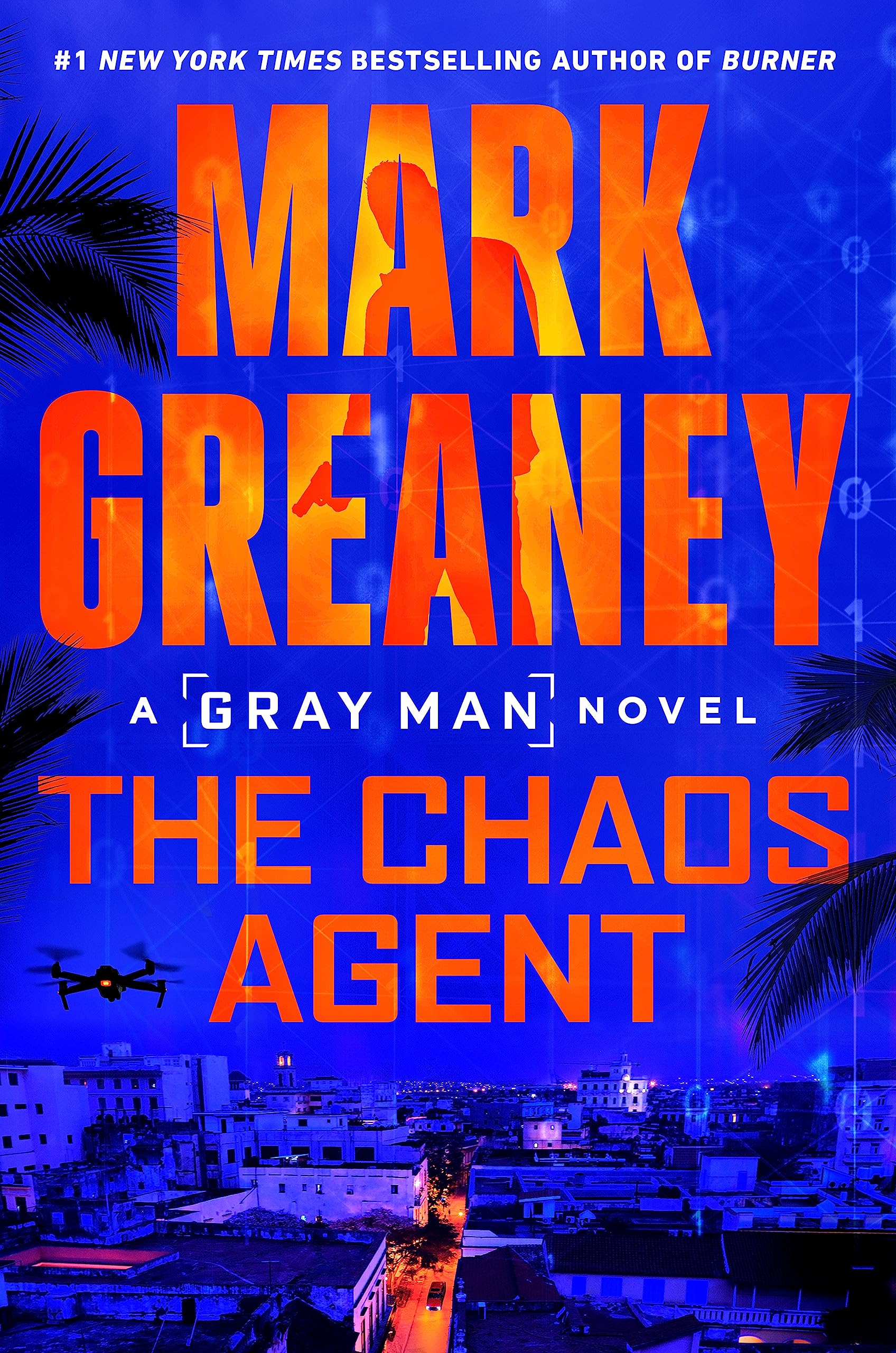
The Chaos Agent by Mark Greaney

The Chaos Agent Cover

Publisher: Sphere/Audible (Audiobook – 20 February 2024)

Series: Gray Man – Book 13

Length: 17 hours and 34 minutes

My Rating: 5 out of 5 stars

Amazon

One of the leading authors of the spy thriller genre, Mark Greaney, returns with another epic entry in his iconic Gray Man series, The Chaos Agent.

Readers of this blog will know that I am a massive fan of thriller author Mark Greaney, who has been wowing the world with his elaborate and exciting stories for years.  Ever since I started reading thrillers, Greaney has been a major figure in my yearly reading schedule, with books like Armored and Red Metal (cowritten with Hunter Ripley Rawlings IV), ensuring that he became a must-read author for me.  However, his most iconic body of work is his Gray Man series, which follows legendary former CIA agent and assassin Court Gentry, known as the Gray Man, as he engages in carnage across the world.  This series, which people may be familiar with thanks to the Netflix adaptation, is so damn good, and I really love the elaborate and intense stories that emerge.  This includes the impressive first novel The Gray Man, as well as later books like Mission CriticalOne Minute Out (one of my favourite books and audiobooks of 2020), Relentless (one of my favourite books and audiobooks of 2021) and Sierra Six (one of my favourite books and audiobooks of 2022) and Burner (one of my favourite books and audiobooks of 2023).  Naturally, I grabbed Greaney’s latest novel, The Chaos Agent, the first chance I could, and it proved to be another amazing read.

Across the world, elite scientists are being murdered in a series of elaborate and well-coordinated assassinations.  The killers are well equipped, well prepared, and seem capable of striking across multiple countries.  The only connection between the killings is the area of expertise the victims are known for, as someone is targeting the world’s leading experts in artificial intelligence and robotics.

As the killings continue, it appears that only two major assassins aren’t involved in the plot, the Gray Man, Court Gentry, and his lover Zoya Zakharova.  Hiding out in Central America after their last mission once again forced them to become fugitives, Court and Zoya are seeking the quiet life together after all their years apart.  But an assassin’s work is never done, and soon an old family friend of Zoya’s seeks them out, hoping that they can help identify the individuals behind the attack.  Initially reluctant to get involved, Court and Zoya soon find themselves targeted by association, and must flee an army of dangerous killers and mysterious advanced combat drones.

Forced to find out who is hunting them, Court and Zoya soon discover that the killings are linked to a deadly proposed artificial intelligence weapon that could change everything about modern warfare.  To discover what’s truly going on, the two former agents and their allies need to investigate the one survivor of the ongoing assassinations.  But with their target now protected by an old friend of theirs, Zack Hightower, in an isolated fortress, Court and Zoya will need to use all their connections and luck to find the truth before it’s too late?

The Chaos Agent was another excellent novel from Greaney, who continues to highlight why he is one of the world’s leading spy thriller writers.  This latest Gray Man novel ended up being a lot of fun, especially as Greaney goes a little overboard with the plot, and I deeply enjoyed the resulting adventure.

Greaney came out of the bag with something very exciting in The Chaos Agent, which is mainly down to how over-the-top and crazy the main narrative ended up being.  This story starts off relatively low-key, with a couple of random killings, and an update on the lives of the protagonist, Court Gentry, and his partner Zoya Zakharova.  Naturally, it doesn’t take long for Gentry and Zakharova to get dragged into the action, and this starts an intense fugitive arc for them, as they find themselves being hunted by various killers across central America.  At the same time, the other supporting characters of the book are investigating the worldwide plot around the assassination of various AI experts.  This results in a compelling investigation angle that continues for a large portion of The Chaos Agent, and it was fun to not completely know the identity of the book’s antagonist until towards the end.  This first half of The Chaos Agent definitely got my attention, and the compelling action, intense mystery, and intriguing characters help to draw the reader in.

The second half of The Chaos Agent is where things start to get particularly interesting, as Greaney amps up the story and throws it into overdrive.  In particular, the antagonists get even more crazy, which is well shown in an intense action sequence involving Gentry and Zakharova in contact’s house in Central America.  These additional opponents give The Chaos Agent a real science fiction edge to them, and it was a gloriously over-the-top inclusion that I really loved.  The various character storylines soon come together after that, as all the characters end up in Cuba investigating who is truly behind everything and why.  There are some cool sequences here, including complex and intricate multi-perspective operations as various players manoeuvre around each other to achieve their goals.  This all leads up nicely to the big extended finale, where all hell breaks loose as Greaney sets up a massive firefight with various sides thrown into the mix.  The action here is intense, with the carnage flying thick and fast, and with so many perils coming for the protagonists.  It all ends on a pretty big cliffhanger that will play nicely into the next book in the series, especially as two major supporting characters find their situation drastically changed due to their decisions.

I deeply enjoyed how this cool novel unfolded, and Greaney utilises his trademark writing style to great effect with this excellent story.  The high-intensity action, fast-paced plot, and intriguing overarching storyline came together wonderfully, and it proves very hard not to get drawn into The Chaos Agent as a result.  I particularly love how Greaney so effortlessly jumps between different character perspectives throughout the course of the book, which allows for a more complex and enhanced story.  These quickfire changes in perspective also work extremely well in some of the book’s more intense sequences, especially as seeing the various participants continuously react to other character’s actions, allows for some outstanding scenes.  Good examples of this include a sequence in the Cuban docks where Gentry and a rival assassin move around each other trying to simultaneously protect or kill their target.  These scenes, and more, are true highlights of this book, and I love how well they were able to incorporate the particularly eccentric inclusions that Greaney featured within The Chaos Agent.

As with most of the books in the Gray Man series, The Chaos Agent can easily be read as a standalone novel.  Greaney does a good job of recapping any the relevant key events from the prior novels where needed so new readers can enjoy this book without knowing anything about the rest of the series.  That being said, established Gray Man readers will probably get a little more out of The Chaos Agent, especially when it comes to seeing how the various character relationships unfold.  It also helps that this proved to be a particularly memorable entry in the series.  Not only does Greaney go all out with his very inventive and exciting story, but there is a great combination of story elements there that everyone can enjoy.  The intense action pairs well with a deep dive into modern technology elements, and Greaney pulls together an intriguing mystery about who is behind everything, rather than showing the antagonist from the get-go.  While some of the twists around the true antagonist are a little predictable, Greaney played them out well, and they worked into the massive status quo changes at the end of the book.  I will admit that I did find some of Greaney’s writing, including the dialogue, to be a little robotic at times in The Chaos Agent, which is kind of ironic when you consider the story focus.  The way some parts of the writing or dialogue came together just didn’t feel right to me at times, and that slightly decreased my enjoyment of the book.  Still, the awesome story more than made up for it, and I felt this was an awesome addition to the overall series, especially as the epic ending has got me extremely excited for the next book.

One of the things that I really enjoyed about The Chaos Agent was Greaney’s intriguing look at the future of AI and how it could be utilised in the military and intelligence fields.  Greaney clearly did some research on the subject, and several characters spend significant time lecturing about the potential advantages and dangers of AI weaponry.  I found this to be utterly fascinating, and this ends up being quite a key part of the book, especially once the protagonists find themselves beset by advanced drones and other distinctive weaponry.  As I mentioned above, Greaney uses this AI concept to make The Chaos Agent a little more science fiction than his previous novels.  While I won’t go into too much detail here, as frankly it is best experienced in the context of the story, some of these elements were very outrageous, and it made the story quite fun with some unique action.  While it was very over-the-top, Greaney did paint everything with a film of realism, and I came away from The Chaos Agent with a healthy respect and fear for the potential future of AI in the military, especially as Greaney is probably right and someone will use it to kill the rest of us.

Aside from the complex writing and cool AI elements, The Chaos Agent’s story is also enhanced by a great cast of characters who are cleverly showcased throughout the plot.  This includes protagonist Court Gentry and his partner Zoya Zakharova, who were reunited in the last book.  Gentry and Zakharova form an effective team as the main protagonists of The Chaos Agent, and it was fun to see them in action again.  However, Greaney also adds in an element of dissention, especially as neither really has the ability to trust other people, and they are both concerned about their potential future.  Their combined storyline goes in some interesting directions, and the final twist of the book ensures that their relationship will be a big part of the next entry in the series.  Greaney also brings back fun recurring character Zack Hightower, who worked with Gentry and Zakharova in the past.  Hightower is always great value for money, and he had an interesting run in The Chaos Agent as he’s hired as security for a tech billionaire being targeted.  Hightower ends up being an integral part of the book, and it was great to see him working with Gentry and Zakharova again, especially as his new job leads to some dark moments for him.  Throw in an excellent supporting cast, which includes some recurring faces and some new intriguing antagonists, and this ended up being an excellent book that makes fantastic use of its characters.

I have always found that the best way to enjoy one of the Gray Man novels is to listen to it in its audiobook format, which really enhances the story.  This is once again true for The Chaos Agent, which turned out to be such an epic listen.  The audiobook format, which has a substantial runtime of 17 and a half hours, proved to be a lot of fun, and I deeply appreciated how well it enhanced Greaney’s already fun story and writing style.  The constant movement between perspective characters, especially in the action sequences, comes across really well, and the intense fights feel so much more real and impactful when they are read out.  It helps that The Chaos Agent was once again narrated by Jay Snyder, who has voiced all the other Gray Man novels.  Snyder has a great vocal range that really lends itself to a spy thriller novel like The Chaos Agent, and all the over-the-top tough characters are captured extremely well in this audiobook, with Snyder expertly bringing back recurring voices from the previous Gray Man audiobooks.  The rest of the extended cast also get appropriate and fitting tones, and you can see Snyder is really trying to get the voices to match the characters.  This includes accents, as Snyder tries to capture many of the ethnicities captured within The Chaos Agent’s story, including a pretty good attempt at the New Zealand accent.  As such, I really found myself getting drawn into The Chaos Agent’s story while listening to it, and while Snyder can also be a tad robotic at times, this audiobook format was a pretty exceptional way to enjoy this amazing book.

Overall, The Chaos Agent was another excellent addition to one of the very best spy thriller series currently running.  Mark Greaney always goes all out with his amazing Gray Man novels, and The Chaos Agent is one of his most intense and gripping reads yet.  Clever, compelling, and featuring some particularly fun story features, The Chaos Agent is an excellent read that gets another five-star rating from me.

Amazon

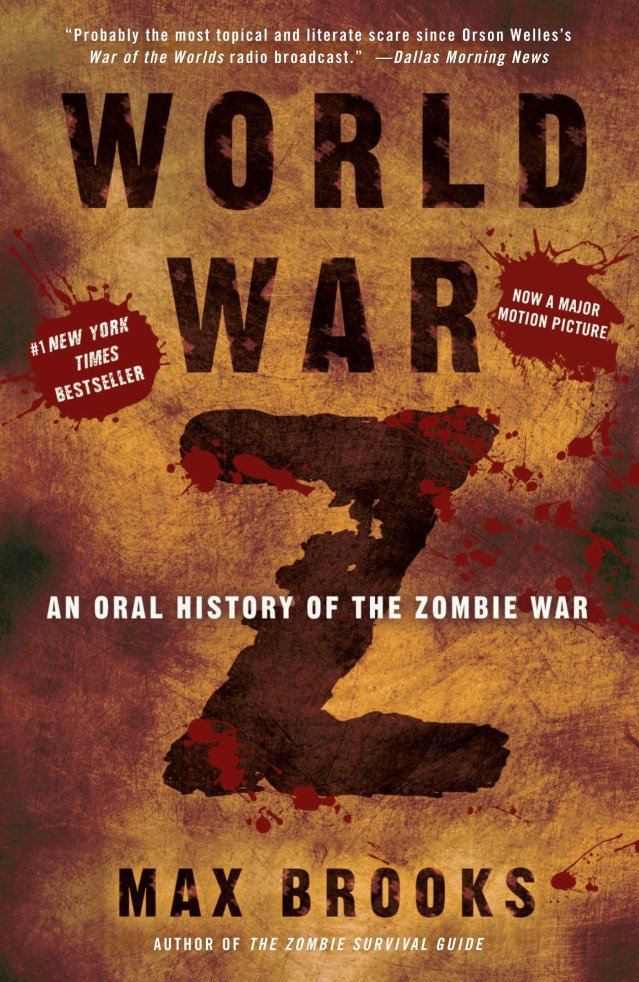
Throwback Thursday: World War Z by Max Brooks

World War Z Cover

Publisher: Random House Audio (Audiobook – 14 May 2013, originally published 12 September 2006)

Series: Standalone

Length: 12 hours and 9 minutes

My Rating: 5 out of 5 stars

Amazon

Welcome back to my Throwback Thursday series, where I republish old reviews, review books I have read before or review older books I have only just had a chance to read.  For my latest Throwback Thursday review I take a look at the zombie horror classic, World War Z by Max Brooks, a truly epic and outstanding read.

One of the biggest novels that I have been meaning to read for ages was the highly regarded zombie novel, World War Z, also known as World War Z: An Oral History of the Zombie War.  Written by Max Brooks as a follow-up to his first book, the non-fictional The Zombie Survival Guide, World War Z is a unique novel that fully examines a zombie apocalypse from multiple perspectives.  I had heard some great things about this novel, and I even enjoyed the movie adaptation when it came out (more on that later).  Unfortunately, I never got a chance to read it and I kind of figured for a while that it might stay in my to-read pile for a while.  However, it moved much higher up my list of books to check out after I read Brooks’s 2020 novel, Devolution, which was one of my favourite novels of 2020 (as well as one of my favourite all-time horror novels).  I had also heard a lot of praise for World War Z‘s awesome audiobook edition, so when my wife and I needed some entertainment during a recent cross-country road trip, this was our first choice.

Plot Synopsis:

The Zombie War came unthinkably close to eradicating humanity. Max Brooks, driven by the urgency of preserving the acid-etched first-hand experiences of the survivors from those apocalyptic years, traveled across the United States of America and throughout the world, from decimated cities that once teemed with upwards of thirty million souls to the most remote and inhospitable areas of the planet. He recorded the testimony of men, women, and sometimes children who came face-to-face with the living, or at least the undead, hell of that dreadful time. World War Z is the result. Never before have we had access to a document that so powerfully conveys the depth of fear and horror, and also the ineradicable spirit of resistance, that gripped human society through the plague years.

Ranging from the now infamous village of New Dachang in the United Federation of China, where the epidemiological trail began with the twelve-year-old Patient Zero, to the unnamed northern forests where untold numbers sought a terrible and temporary refuge in the cold, to the United States of Southern Africa, where the Redeker Plan provided hope for humanity at an unspeakable price, to the west-of-the-Rockies redoubt where the North American tide finally started to turn, this invaluable chronicle reflects the full scope and duration of the Zombie War.

Most of all, the book captures with haunting immediacy the human dimension of this epochal event. Facing the often raw and vivid nature of these personal accounts requires a degree of courage on the part of the reader, but the effort is invaluable because, as Mr. Brooks says in his introduction, “By excluding the human factor, aren’t we risking the kind of personal detachment from history that may, heaven forbid, lead us one day to repeat it? And in the end, isn’t the human factor the only true difference between us and the enemy we now refer to as ‘the living dead’?”

Note: Some of the numerical and factual material contained in this edition was previously published under the auspices of the United Nations Postwar Commission.

Holy hell, that was an exceptional book!  I loved the powerful and expansive narrative contained within World War Z as Brooks attempts to fully encapsulate the entire experience of a zombie apocalypse in impressive detail.  Literally all the good things I heard about this book were true, and I loved his unique and very captivating way of capturing the horrors of this sort of experience, both from the zombies and other humans.  An exceptional and impressively inventive read, World War Z gets an easy five-star read from me.

I cannot get over how awesome and distinctive World War Z was as a concept.  Rather than a traditional novel, Brook’s masterpiece is written as an epistolary novel, written as in-universe oral history anthology of a zombie apocalypse.  The book, which was compiled by this universe’s version of Max Brooks, contained multiple testimonials and interviews, as Brooks seeks out and talks to multiple people who experienced the apocalypse and pulls together their various unique stories.  This book contains around 40 individual stories set out across five chapters which look at the various stages of the zombie war, from its origins all the way up to the postwar ‘new normal’.

At this point I need to make a quick note about the version of World War Z that we checked out.  There are a couple of different World War Z audiobooks out there, but for our trip we listened to the World War Z: The Complete Edition, which combines two separate audiobook adaptations of the novel, and contains all the stories from the original book.  I did look over a paperback edition of World War Z before I started this review, and it looks like our audiobook version covered the full stories well, although I did notice that some of the stories were shortened or missing minor parts.  In addition, the audiobook version did not feature any of the paperback’s footnotes, which contained technical details and notes from the author.  However, I don’t think I lost out on too much of the plot from some of these missing gaps.

I really fell in love with the various individual stories contained with World War Z as Brooks went out of his way to produce the most unique and moving tales that he could.  These are mostly standalone tales, although there are a few interesting crossovers as the book continues, with some character’s mentioning events or supporting figures from other stories in their interviews.  However, as you follow the stories within these five chapters (made up of Warnings, Blame, The Great Panic, Turning the Tide, and Good-Byes), you get a full sense of the entire war, and it quickly comes apparent how cleverly Brooks was crafting everything here.  I personally deeply enjoyed both the individual shorter tales and the much larger connected story of World War Z, and I was deeply impressed with the excellent writing style behind it.  Brooks is a true master of writing deeply personal, character-driven tales of survival, and you swiftly become attached to the various protagonists as they tell their unique stories.  The action within is gruesome, fast-paced and deeply terrifying, and there are multiple over-the-top descriptions of zombie and human violence that will stick with you forever.  This was easily one of the best zombie novels I have read in terms of storytelling and action, and everything about this tale is so damn compelling.

As I mentioned, there are roughly 40 separate stories contained within this anthology, each of which contains its own unique protagonist, supporting characters, settings and unique circumstances.  Naturally, with so many stories you have a bit of a range in terms of storytelling, with some being substantially better than others.  However, I felt that Brooks did a very good job of writing each of these stories extremely well, and there were none that particularly dragged the novel down.  There is a real mixture of narratives here, with particularly gruesome horror stories mixed in with more human-focused narrative, political plotlines, military thrillers, stories that balance on the edge of science fiction, and everything in between.  The spread of these stories works pretty well, with Brooks providing an entertaining mixture of storylines throughout the book so readers aren’t constantly bombarded by tales of horror or tragedy.  Instead, there are often fascinating, humorous and humanising stories thrown in amongst the horror.  This works to make the entire novel flow at a fantastic pace.

While pretty much all these stories are fun and tell some outstanding tales of the zombie apocalypse, there are a few that stood out to me as being a cut above the rest.  I had some early fun with the Stanley MacDonald storyline, which showed an amoral illegal surgeon in Brazil unwittingly transfer a zombie heart into a patient, which led to one of the earliest outbreaks in South America.  The Jesika Hendricks plot showed a brilliant, if very dark, take on ordinary citizens trying to flee the zombies only to experience the other dangers of surviving the winter in a desperate community.  There are several amazing and cynical storylines, such as the Breckinridge Scott and Grover Carison testimonies that showcase the capitalist opportunism that surrounded the initial outbreaks.  I also really liked the South African focused storyline around Paul Redeker, which showed a former Apartheid strategist using his stark and brutal plans to save the country from the undead hordes.  I loved the particularly inventive and clever testimony surrounding the character of Arthur Sinclair Junior, which focuses on how America was reorganised after the initial stages of the war, with the country setting its sights towards industry, construction and warfare, which really highlights the author’s impressive insights into the world.

Two other fantastic World War Z storylines set in Japan focus on two unique individuals, one an “otaku” (a computer-obsessed outsider who tried to live entirely online), and a blind “hibakusha” (a person affected by the atomic bombs used in WWII).  Both characters were outsiders in Japan before the zombie war, but the zombie invasion changed their entire lives and led to them becoming renowned warriors and survivors against all the odds.  These two storylines are extremely compelling, and I loved the way that the author utilised unique subsections of Japanese society and tried to imagine how those sorts of people would survive the zombies.  There was also a really intense storyline, told by Admiral Xu Zhicai, that details a Chinese submarine’s attempt to escape the zombies with their families, which turns into a brilliant, powerful and occasionally disturbing tale of survival, loyalty and family.  I also must mention the Terry Knox testimony that details the actions aboard the International Space Station and the Darnell Hackworth story that looks at the US army’s canine units that helped scout and herd zombies (yay for mini dachshunds, the real heroes of this book).  However, out all the testimonies featured within World War Z, my favourite had to be the ones focussing on soldier Todd Wainio.  Todd battled the zombies at multiple stages of the war, and his multiple entries paint a pretty grim picture but are easily some of the best depictions of the horror of the zombies and the challenges faced by the armed forces.  His first testimony about the army’s initial inability to combat the zombies is very chilling, and it was fascinating to hear about the changes to his training and equipment as the military adapted to fight this new and strange enemy.  I am honestly just scratching the surface of these testimonials here, as pretty much all of them were great in their own way.  However, the ones I mentioned here were my personal favourites, and I had a blast listening to them and seeing how they fit into the wider narrative.

For me, one of the main highlights of World War Z was Brooks’s incredible inventiveness and insights when it came to envisioning a potential world-wide zombie apocalypse.  Thanks to his amazing range of stories, Brooks showcases a vast global catastrophe that impacts everyone no matter where they are.  I loved his depiction of how the apocalypse emerged, and rather than a continuous attack that pretty much destroys everything in a single day, Brooks imagines a gradual catastrophe that is initially ignored and mishandled before it spreads uncontrollably.  This is covered in the early chapters of the book with some substantial skill, and you really get to see how and why everything falls apart, with appropriate zombie violence included.  While there is an understandable focus on America, I found it fascinating to see how Brooks imagined different countries would deal with this crisis, with different culturally informed strategies, and there are even some compelling references to real-life figures (the Nelson Mandela facsimile reacts in a very different way than you’d expect).  The author really dives into all the details of a zombie attack and examines all the pros and cons of various strategies humans could utilise, from fleeing, staying in defensible positions, or fighting back.  There are some brilliant testimonies that cover all of them, and Brooks’s dark depictions of unprepared or overconfident humans failing to understand the threats in front of them and paying the price for it are shocking, bleak and captivating.  Brooks also comes up with some truly unique and clever problems or impacts of the zombies, many of which are referenced or experienced by multiple characters, including floating zombies, marine zombies, feral children who survived without their parents, looters, civil wars, and even crazed humans pretending to be zombies.

These intriguing insights from Brooks’s imagination are further expanded on in the later chapters of the novel, where the author explores how the world order changed because of the zombie war.  Again Brooks dives into multiple countries here, and it was fascinating to witness which countries the author imagines will be destroyed by the zombies and which would thrive.  I really enjoyed his examinations of the way that America needed to reorganise itself and its subsequent battleplans, which were perfectly covered by several of the best characters.  Seeing countries likes Russia, China, Japan and more change in drastic ways a result of this apocalypse was really cool and compelling, especially as the author covers it in such a reasonable and logical manner.  Countries like Cuba and the West Indies thriving due to their isolation was pretty fascinating, and they stood as an interesting contrast to more prominent countries that were disadvantaged or never stood a chance thanks to their socioeconomic issues or unsuitable landscapes.  I loved some of the unique issues that some countries experienced, such as the infested Paris catacombs or the mystery around North Korea, and they leave some intriguing afterthoughts as a result.  Brooks also cleverly examines other unique impacts that the zombies are having on the world, such as extinctions (goodbye whales), changes in global relations, and long-term problems, and I was deeply fascinated and enthralled by all this impressive thinking.  All of this compelling insight and imagination really enhances the stories being told by various characters, especially as they all impact humanity’s potential survival, and I really lost myself in the author’s powerful and impressive vision of a zombie apocalypse.

While World War Z is primarily about survival and the wider impacts of a zombie apocalypse, Brooks also takes the time to cover a few interesting themes.  In particular, he uses this novel about zombies to examine humanity.  While there is a certain overlying theme about the indomitable human spirit and our ability to triumph no matter the odds, there are some very noticeable depictions of the worst parts of human nature.  I found his initial depictions of most people ignoring or ridiculing the slow rising zombie threat to be pretty realistic (keep in mind that this was written 14 years before COVID).  There are also some major critiques about corruption and government incompetence in the face of disaster that I also found to be very intriguing and insightful.  Many of the early chapters that talked about military attempts to fight back had some interesting parallels to the wars in the Middle East, and I really appreciated the author’s clever critiques of these conflicts through the medium of a zombie war.  I felt that Todd’s testimony about the first major battle of the zombie war was a great example of this, as he regales the reader with how politically motivated leadership and incompetence led to a massacre.  All of this added a thought-provoking and entertaining edge to many of the storylines in the novel, especially the earlier testimonies, and I felt that Brooks did an amazing job bringing some of his own insights and critiques into his writing.

As I mentioned a few times above, I listened to the extended audiobook adaptation of this novel, which I personally felt was the absolute best way to enjoy this epic read.  Running at just over 12 hours in length, we absolutely powered through the World War Z audiobook during our road trip, and it served as an excellent entertainment for a long drive.  I often find that having a story read out to you really helps you to absorb everything about the story, and this was particularly true with World War Z.  Not only did the narration allow you to focus on all the details of the testimonials, but the horror elements and action felt a lot more intense, especially when you were dragged into some of the more gruesome scenes.  I also feel that the audiobook version of World War Z had a better flow than the paperback novel.  The testimonials with the audiobook are a lot more separated out, treated as a new chapter each time the narrator changes.  This is very different from the paperback version, which throws multiple testimonials in a quick fire manner, with everything crammed together into the five chapters.  As such, I really felt the audiobook helped to highlight the uniqueness of each testimonial and you really got to focus on each story a lot more.

However, easily the best thing about the World War Z audiobook was the truly impressive voice cast that were featured within.  Brooks, a voice actor himself, recruited a crack team of international actors to fill out his cast, including several A-listers, who give some outstanding and amazing performances.  All these actors really dive into their various roles here, conveying the emotion, fear and insights of their protagonists, and their great voice work definitely enhanced the already cool stories of their characters.  I deeply enjoyed all their voice work throughout the audiobook, and I know that I enjoyed several testimonies even more because of the talented actors voicing them.  This cast is led by Brooks himself, who voices the interviewer, asking all the questions and meeting all the various figures the novel is set around.  Brooks does a really good job here, and his calm, collected interviewing style and additional narration helps to set the scene for the entire novel and moves the other character’s stories along at a great pace.

Aside from Brooks, there are a good 40 or so voice actors featured in the World War Z audiobook, and I was pretty impressed with all their performances.  Some standout early performances include a brief appearance from Nathan Fillion as Canadian soldier Stanley MacDonald; Paul Sorvino, who gives a very fun performances as the sketchy doctor Fernado Oliveira; and Martin Scorsese, who gives an unrepentant portrayal of corrupt businessman Breckinridge Scott.  Other great performances include Kal Penn as Sardar Khan, an Indian soldier who serves an excellent witness to an act of heroism; the late, great David Ogden Stiers, who brings Ukrainian solider Bohdan Taras Kondratiuk to life perfectly as he watches a great act of evil from his government; Common as dog trainer Darnell Hackworth; and Rob Reiner as “The Whacko” a radical politician/former Vice President who shares his strong opinions in a very fun outing.  I really need to highlight some intriguing voice performances from Simon Pegg, who does a pretty good Texan accent in the role of Grover Carlson; and Alfred Molina, whose Australian accent was pretty accurate (a rare talent).

The performances of Masi Oka and Frank Kamai really brought to life the two Japanese characters I mentioned above, as does Ric Young for Chinese Admiral Xu Zhicai’s elaborate testimony.  I also really need to highlight the brilliant work of Alan Alda in this book as he voices pivotal administrator Arthur Sinclair Junior.  Alda, whose voice I have loved since M*A*S*H, perfectly inhabits the role of this intriguing figure, and I loved hearing his narration of how America’s economy was changed.  However, out of all the voice actors in World War Z, my favourite was the always impressive and remarkable Mark Hamill, who voiced standout character Todd Wainio.  Hamill was one of the main reasons why Todd was such a great character, and I loved his outstanding performance as a former ground soldier recounting all the horror of the front line of the zombie war.  There is so much weariness, trauma and cynicism in Hamill’s voice as he narrates Todd’s testimony, and you really feel the character’s resentment and anger.  The way that Hamill describes all the gruesome gore and zombie violence was just so great, and his impressive range and tone helped to really enhance the insanity and horror of the moment.  These voice actors, and the rest of the impressive cast, are extremely epic here, and they turned this production into something extremely impressive.

A quick final note about the World War Z film.  Until I read this book, I really did not appreciate how wildly off-book the film adaptation was.  None of the true magic from the original story appears in the film at all, as they turned it into a generic action flick rather than a clever analysis of how a zombie apocalypse would change the world.  While I did enjoy the World War Z movie on its own, it is a terrible adaptation, with only small elements from the book appearing in the film.  While I can appreciate that this is not the easiest book to turn into a film, they didn’t even try.  I really do hope that someone does a proper adaptation of World War Z at some point, as it frankly deserves a lot better than what it got (perhaps a television series with each episode recreating one of the testimonies).

As you can clearly tell from the massive essay above, I deeply enjoyed World War Z by Max Brooks.  This was easily one of the best zombie novels I have ever read, and it definitely deserves its epic and highly regarded status.  Brooks’s distinctive and brilliant story was just plain amazing and I loved the outstanding combination of smaller testimonies coming together into one connected and thought-provoking tale.  The author cleverly examines every single aspect of a potential zombie apocalypse, and you find yourself not only loving the insane horror elements, but the fascinating political and social impacts that come with such an invasion.  Best enjoyed in the full audiobook format which features so many impressive voice actors, World War Z comes extremely highly recommended and I cannot hype it up enough!

World War Z Cover 2

Amazon