
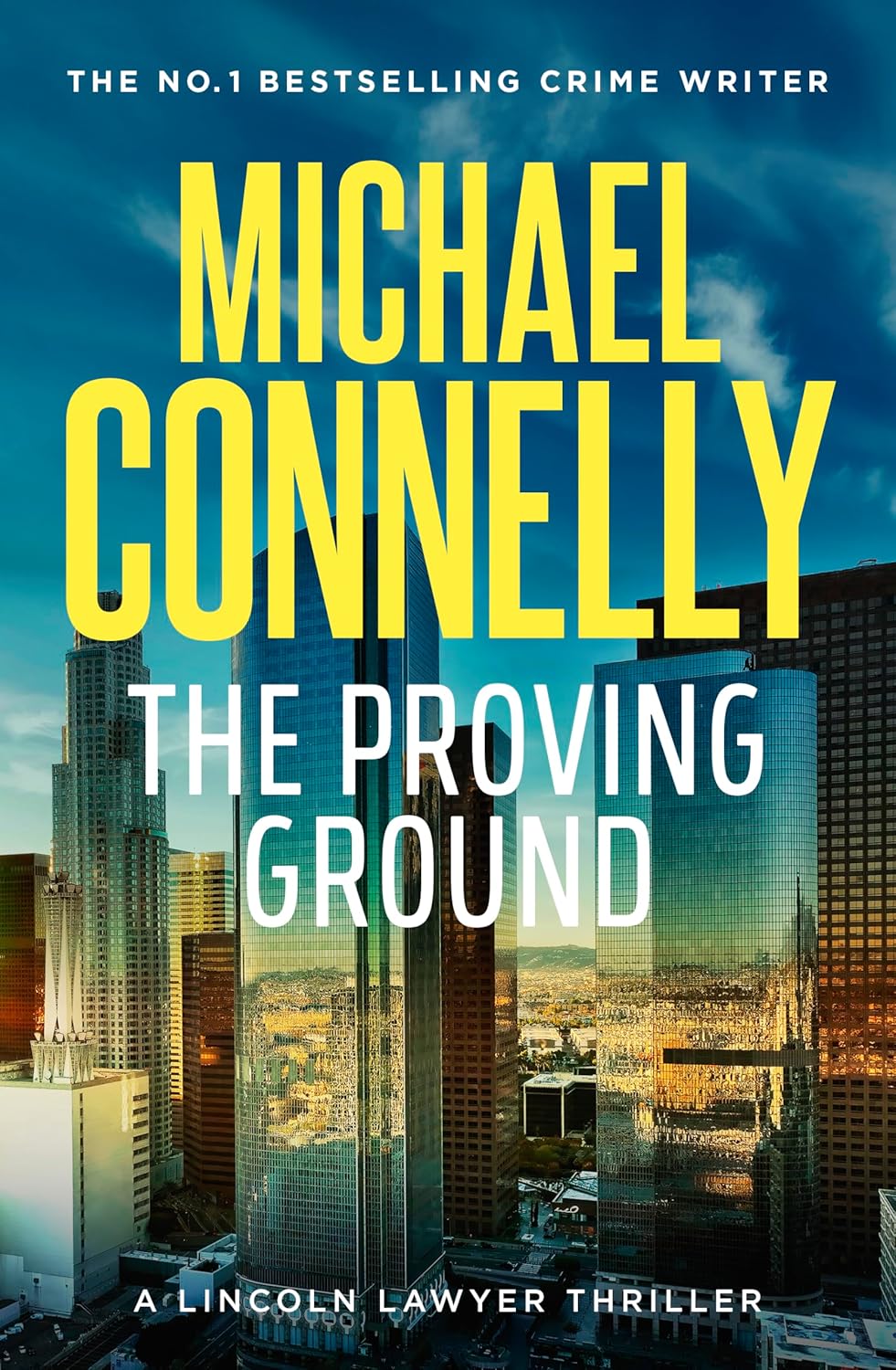
Publisher: Allen & Unwin (Trade Paperback – 21 October 2025)
Series: Lincoln Lawyer – Book Eight
Length: 389 pages
My Rating: 5 out of 5 stars
The always outstanding Michael Connelly continues to showcase his ability to hit all the crime fiction sub-genres with another wonderful and deeply compelling legal thriller, the new Lincoln Lawyer novel The Proving Ground.
2025 proved to be another outstanding year for acclaimed crime fiction author Michael Connelly, as he not only introduced a new protagonist in his fantastic novel Nightshade (one of my favourite books from the first half of 2025), but he also continued his very entertaining Lincoln Lawyer series with the amazing book, The Proving Ground. Entries in the Lincoln Lawyer series, which has previously featured such awesome books as The Law of Innocence and Resurrection Walk, are always a guaranteed fun read, and I was excited for The Proving Ground for a while, especially as it had a very intriguing plot.
Plot Synopsis:
From #1 New York Times bestselling author Michael Connelly, the Lincoln Lawyer is back with a case against an AI company whose product may have been responsible for the murder of a young girl.
Mickey Haller has moved from criminal to civil court, but murder remains in his sights—in particular, the case of a chatbot encouraging the killing of a teenage girl.
Mickey files a civil lawsuit against the artificial intelligence company responsible for the chatbot and instantly finds himself on the wild frontier of the billion-dollar AI industry. Grappling with a terrifying lack of regulation and data overload, Haller partners with journalist Jack McEvoy. But they are up against mega-forces, and even the bravest whistleblower faces grave danger.
In 1997, IBM’s Deep Blue defeated chess master Garry Kasparov with an unexpected gambit. In a Herculean new match of man vs machine, can Haller pull off a winning play for humanity?
The Proving Ground was a very impressive new novel from Connelly that cleverly set his most entertaining protagonist against a complex real-world issue. Featuring an intense and extremely thought-provoking narrative, The Proving Ground was an addictive read, and I easily got swept up in Connelly’s latest captivating tale.
Connelly pulled together an excellent and clever narrative for The Proving Ground, which quickly throws readers into the legal action and ensures you become engulfed in the complex case. Starting off in the early stages of the case, the author soon introduces you to the latest lawsuit protagonist Mickey Haller is engaged in, suing a major artificial intelligence company, for the encouraging actions of its teenage-focused chatbot. From there you watch as Mickey and his team, which now also features another major Connelly protagonist, Jack McEvoy (from The Poet, The Scarecrow and Fair Warning), attempt to pull together a suitable case of culpability against the company. At the same time, Haller continues to try and find redemption by getting a dying former client released from prison. There is also a dive into the protagonist’s personal life, with a returning love interest once again causing drama in his life after a major real-world natural disaster.
The main plot moves at a fast pace as it focuses on the case, with Mickey dealing with various pitfalls, traps and the machinations of his opponents to try and win the trial. Connelly keeps the intensity of these proceedings at a high boil the entire way through the book, and there is barely a slow moment in The Proving Ground as the protagonist utilises his trademark tricks, unique arguments and clever legal surprises to make ground. The personal nature of the case, as well as the dark implications around AI, make for very dramatic reading, and I honestly could not stop reading The Proving Ground at times, as I was very eager to see how everything came together. Connelly also got the balance right between the main case, and the side stories, with the primary focus on the AI trial proving to be a real winner. Everything comes to a very dramatic head towards the end of the novel where, after the near destruction of Haller’s case, the protagonist engages in his final clever gambit. I really loved how this main trial came together, and while it did end a little too suddenly, I appreciated that Connelly was trying to show some realism in how these sorts of legal cases usually go. I also do think that Connelly could have ditched out the secondary storyline in The Proving Ground, but the attempt to show Haller’s continued growth did ensure it had its place. Overall, this was quite a strong story, and I felt that The Proving Ground was an especially clever addition to the Lincoln Lawyer series.
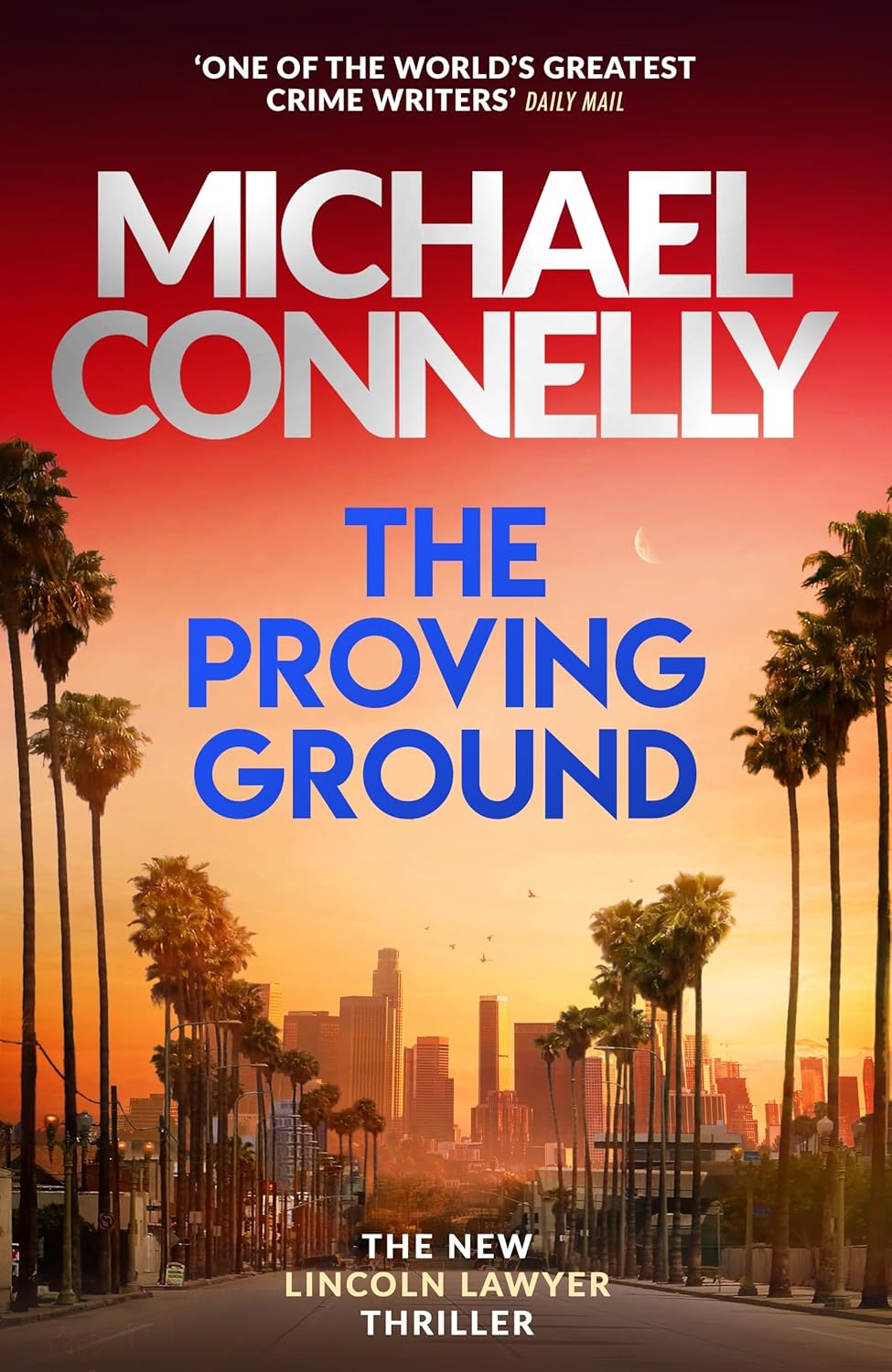
I quite enjoyed how The Proving Ground came together, and Connelly worked hard to keep the book as captivating and emotionally charged as possible. Featuring a particularly compelling central legal case that dives into a major real-world concern, The Proving Ground was an interesting transition away from the criminal cases that the Lincoln Lawyer series is known for. Indeed, at times The Proving Ground felt more like a legal drama rather than a legal thriller, as there was lack of traditional criminals and high-stakes police elements that Connelly has previously featured. Still, this was very much a highly exciting read, especially in the multiple cleverly constructed courtroom sequences, where the alternating legal strategies, arguments and growing antagonism between the rival lawyers, really dragged in the readers. The excellent central focus on Haller as the first-person perspective protagonist added to the thrill of the plot, as you were constantly there when Haller encountered the many swerves and twists that defined the case. While the tone of The Proving Ground was mostly serious, Connelly did add in some fantastic bursts of humour, which helped to remind the reader that this was a Lincoln Lawyer novel. Much of this involved the over-the-top reactions that Haller’s opponents had to the protagonist’s strategies, but I also chuckled at some fantastic references and clever jokes added in throughout the book, especially those related to AI. This ended up being an accessible standalone novel that will appeal both to general legal thriller enthusiasts, as well as established fans of Connelly, and I think most readers are going to have an outstanding time with this book.
One of my favourite aspects of The Proving Ground was the way that Connelly so effectively and cleverly examined and showcased real-world issues. This primarily involves the central element of artificial intelligence, which the author uses to increase the stakes of the plot and ensure that readers are educated about a complex subject likely to impact them in the future, if it hasn’t already done so. As part of this, Connelly dives into the whole concept of AI and its potential role in society in a notably detailed manner, examining its applications, its potential for harm, and how it will likely change the way people think and interact in the future. This was a very well-balanced and thought-provoking look at a subject many people are worried in real life, and I felt that Connelly did an exceptional job examining it through a contemporary lens in this book. Many of the conclusions about the potential for AI to be abused if not carefully regulated and tailored to its intended audiences was quite troubling, and the reader comes away really thinking about how AI is being used and where it could go from here.
Connelly also takes the opportunity with The Proving Ground to dive into some more recent world issues, notably those occurring in America. The use of Los Angeles as the author’s preferred setting helped with this immensely, and there were some very interesting looks at how the city started to change in 2025. The wildfires that hit the city early this year come into play in a big way during The Proving Ground, especially for some of the secondary storylines, and Connelly tried to capture the authentic fear, anger and despair that these events would have on people caught up in them. This compelling dive into real-world events greatly enhanced the plot of The Proving Ground, and I was very impressed with how Connelly utilised them and portrayed them with his amazing writing.
The final element of The Proving Ground that I want to highlight is the great characters, who Connelly expertly writes and utilises in his compelling story. Most prominent of these is the main point-of-view protagonist, Mickey Haller, whose continues to try to move away from the grubby world of criminal defence by focusing his practice on helping those in need. This redemptive phase of Haller has been ongoing for the last couple of Lincoln Lawyer books, and I’ve enjoyed the character’s attempt at growth in his work, especially as it seems to confuse many of the other characters Haller interacts with, especially his legal opponents. Haller’s attempts to also make up for the mistakes of his past, both in his relationships and his previous defeats, were also well explored in some of The Proving Ground’s secondary storylines, and I very much enjoyed the direction that Connelly continues to take with his high-flying lawyer protagonist.
Aside from Haller, The Proving Ground also follows a compelling group of characters involved with the main case, including the recurring members of Haller’s legal team. While these characters aren’t explored as deeply in this novel as they are on the Netflix adaptation (an adaptation which is cheekily referred to in several books, including The Proving Ground), you still see some elements about how they are going and adapting to Haller’s change in legal clients and focus, with Cisco’s concerns about Haller not needing an investigator for his civil cases being a very interesting point. I also quite enjoyed how Connelly crossed over this novel with another one of his major protagonists by bringing in reporter Jack McEvoy as a major supporting character. McEvoy turned out to be an exceptional part of the book, especially as the concerns with AI really fit this character’s history of writing about controversial and potentially dangerous new technologies. The interaction between Haller and McEvoy, two characters Connelly has developed apart, felt very natural, and I liked how well he fit in as a member of Haller’s team. Throw in some other well-written and emotionally charged characters, including grieving parents, flawed and sometimes hostile witnesses, two entertainingly conniving antagonistic lawyers, and a particularly arrogant CEO, and the cast of The Proving Ground was quite exceptional, and you will love getting drawn into their personal struggles.
Michael Connelly produces another top crime fiction read with the wonderful and highly addictive legal novel, The Proving Ground. An impressive continuation of the always entertaining Lincoln Lawyer series, The Proving Ground was an incredible read, and one that comes very highly recommended. Due to how deeply compelling I found it, The Proving Ground gets a five-star rating from me, and I will be including it on my best of 2025 list later tonight.

 The Unseen Library