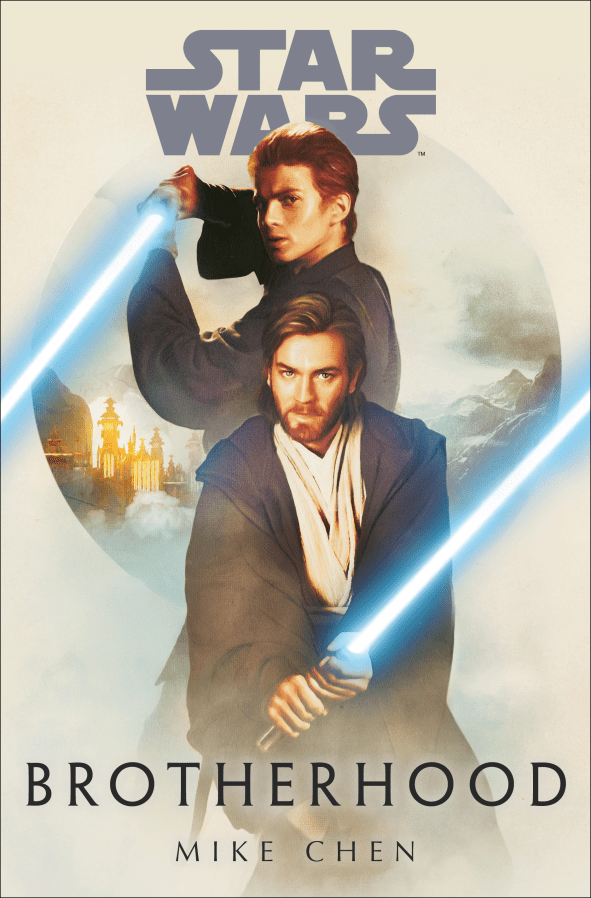
Star Wars: Brotherhood by Mike Chen

Star Wars - Brotherhood Cover

Publisher: Penguin Random House Audio (Audiobook – 10 May 2022)

Series: Star Wars

Length: 12 hours and 46 minutes

My Rating: 4.25 out of 5 stars

Amazon     Book Depository

2022 is a great time to be a Star Wars fan as we are currently being bombarded with a string of awesome shows, cool comics, and fantastic novels (a movie also would be nice, but apparently there are issues there).  Fans like me are currently having a great time with the Obi-Wan Kenobi live-action show that has been all manners of fun, especially as it brings Ewan McGregor and Hayden Christensen back to their iconic roles as Obi-Wan Kenobi and Anakin Skywalker.  However, this is not the only recent Star Wars release that focuses on this iconic duo, as author Mike Chen presents Star Wars: Brotherhood.  This is Chen’s first Star Wars novel and follows these two great characters as they embark on a dangerous political adventure right after the events of the film, Attack of the Clones.

It is dark days for the galaxy as the destructive Clone Wars between the Republic and the Separatists have just begun.  As the galaxy splits down the middle and more and more systems join the war on opposing sides, the Jedi begin to take a new role as soldiers, the fragile peace they have long guarded slowly disappearing.

When an explosion devastates the neutral planet of Cato Neimoidia, home of the Trade Federation, the Republic is blamed by Count Dooku and the Separatists.  Desperate to keep Cato Neimoidia from joining the Separatists, the Jedi dispatch Obi-Wan Kenobi to the planet to investigate the explosion and attempt to maintain the peace.  However, Obi-Wan has his work cut out from him as he encounters a hostile planet, blinded by mourning and a long history of prejudice from the Republic.  Worse, not everyone wants him to solve the crime, as Count Dooku’s sinister agent, Asajj Ventress, is also on Cato Neimoidia, attempting to turn the populace against the Republic.

At the same time, Anakin Skywalker has been promoted to the rank of Jedi Knight and works to balance his new responsibilities with his secret marriage.  Despite orders not to intervene on Cato Neimoidia, when Obi-Wan finds himself in himself trouble, Anakin races to help him, dragging along a promising Jedi youngling.  However, with their relationship forever changed by Anakin’s promotion, can the two Jedi brothers still work together as they attempt to grow beyond master and apprentice?

This was a fantastic new addition to the Star Wars canon that fans of the franchise are really going to enjoy.  Containing an interesting character-driven story, Brotherhood was a great first outing from Chen, who successfully explored some of the best characters and settings of the Star Wars universe.

Brotherhood has a rather interesting multi-perspective narrative that I felt was pretty good.  This cool Star Wars novel is set right at the start of the Clone Wars and seeks to not only highlight some early aspects of the conflict but also dive into the minds of the iconic protagonists, Obi-Wan Kenobi and Anakin Skywalker.  The book has a strong start to it, with a devastating bombing going off on a neutral planet that forces Kenobi to investigate by himself.  Arriving on a planet thick with emotion, undue influences and conspiracies, Kenobi finds himself in all manner of danger, while his former apprentice, Anakin, is forced into a far less interesting mission.  Chen does a good job introducing the key elements of this book, and you soon get invested in the protagonists’s storylines, as well as the deeper emotions raging within them and other supporting characters about the bombing and wider events in the galaxy.

While I liked the start of the book, the centre of Brotherhood honestly dragged for me.  Now part of this is because I had to have a break from audiobooks for a few weeks, but even when I started listening to Brotherhood again, I had a hard time making much progress.  The slow investigation and Anakin’s slightly lumbering narrative, combined with the occasionally unnecessary plot around Mil Alibeth, just didn’t hold my attention as much as I had hoped, and it ended up being a bit of slog to get through it.  Luckily, the pace really picks up towards the end as the various storylines start to coalesce into a more compelling and exciting read.  I managed to get through the final third of the novel a heck of a lot quicker, and I was substantially invested in the characters, including a few supporting figures, and the narrative as a result.  Everything comes together pretty well in the end and Chen delivers a mostly satisfying conclusion that hints at the wider threat to come.  An overall entertaining, if slightly staggered narrative, I did have a lot of fun getting through it.

I mostly enjoyed how Brotherhood was written, as Chen did an outstanding job of blending compelling plot elements with deep character development and some fantastic universe-building.  The main story itself features a mixture of investigation, conspiracy and personal conflicts, as Obi-Wan visits a hostile planet impacted by all manner of anger and mistrust.  The author makes excellent use of multiple character perspectives to tell a complete and wide-ranging narrative.  While a good portion of the plot focuses on the main two characters, Chen routinely throws in the perspective of several great supporting figures, including some antagonists, and it was fantastic to get some alternate views on the events occurring.  As I mentioned above, I found the pacing was a bit off in the middle of the novel, and there were certain parts of the story that I had a harder time getting through.  For the most part, though, the book flowed pretty well, and the switch between various characters helped facilitate that.  While this is primarily a character-focused book, I did think that Chen did spend way too much time having his characters over-analyse everything in their heads, as the constant contemplation of their emotions or actions slowed the story down in places.  However, I did think that the author was particularly good at capturing action, with some brilliant and intense scenes featured throughout the book.  The ones that really shined to me where the sequences that showcased the Jedi character’s abilities in battle, as Chen made them come to life in a vibrant and powerful way.  Overall, I thought that this was a mostly well written story, I loved how Chen’s distinctive style helped to enhance the narrative in places.

Brotherhood proves to be a particularly interesting piece of Star Wars fiction as Chen sought to not only expand on the main characters but also explore the wider universe during the early Clone Wars period.  Written mostly as a standalone novel, Brotherhood has a lot of interesting canon elements that established fans of the franchise will deeply enjoy.  The book is closely connected with both the events of the second prequel film, Attack of the Clones, and the following Clone Wars animated series.  It was also apparently written somewhat in sync with another 2022 Star Wars novel, Queen’s Hope by E. K. Johnston, which I haven’t had a chance to read.  However, despite this, most readers familiar with the films should easily be able to jump in and read Brotherhood without any issues as Chen does a great job of explaining all the key characters, concepts and other elements.  There is also a ton of stuff for established fans of the franchise to enjoy as Chen spends a bit of time adding in some interesting elements and some great fan service.

One of the more interesting things featured within this novel is the examination of the early days of the Clone Wars.  This hasn’t been greatly explored in the current canon too much, so it was cool to see the start of the war, with some of the earlier battles, conflicts and issues surrounding this galactic civil war.  Chen spends a bit of time showcasing how the Clone Army was incorporated into the existing Republic structure, as well as the militarisation of the Jedi as they became commanders and generals.  There is also an interesting examination of the rise of extremism during the Clone Wars, as various factions start to cause trouble outside the actions of the main armies.  As a result, Brotherhood serves as an excellent bridging novel between Attack of the Clones and some of the preceding material, and I loved how Chen spent time setting up a few things for the Clones Wars animated series, although the sudden and unexplained appearance of a female clone was a bit odd.  I also had a lot of fun seeing some of Palpatine’s machinations here as he subtly manipulates events to get the Jedi even more involved in the war and more integrated with the clones.  There are also some key moments of the corruption of Anakin that occur here, and it was fascinating to see the moment that Anakin revealed his massacre of the Sand People to his future master.

While I deeply appreciated all the above, the most fascinating bit of Star Wars universe-building in Brotherhood had to revolve around the planet of Cato Neimoidia, the capital of the Trade Federation as Chen really went out of his way to explore this planet and its people, the Neimoidians.  For years the Neimoidians have mostly been seen as the exploitive and evil villains from The Phantom Menace and were never really explored in that much detail.  Chen spends a massive part of the book providing a deeper look at them and it soon becomes quite a compelling part of the novel.  In particular, the Neimoidians and their Trade Federation are shown to be mostly neutral, trying to stay out of the war and disavowing the actions of Nute Gunray and his faction who are supporting the Separatists.  When Obi-Wan arrives at Cato Neimoidia, he is introduced to their rich culture, unique society and a distinctive mindset that relies heavily on calculation and risk-assessment.  However, Obi-Wan soon discovers that there is far more to being a Neimoidian than he ever realised, as the Neimoidians have a long history of being ignored, ridiculed and prejudiced against by the Republic.  This long history of abuse, combined with the bombings on their planet, proves to be a deeply captivating and powerful part of the story.  All these great Star Wars elements add a lot to the narrative of Brotherhood, and I had an outstanding time seeing all the clever new ways that Chen worked to expand and explore this iconic universe.

While the story and Star Wars universe are key parts of this book, Chen spends most of his time working on the characters.  Brotherhood features a great cast of point-of-view protagonists who all have their own deep and unique journey through the book.  However, the focus is on the pairing of Obi-Wan Kenobi and Anakin Skywalker, whose relationship lies at the core of the book.  Both characters are featured very heavily throughout Brotherhood, and you are soon deeply invested in their individual narratives as well as their joint story.  Chen paces out their appearances together very well, and you get to see them act as both a team and independently, although one of the main themes of the book is the examination of how well they work together as a team and how close they are.  The author spends a lot of time exploring the unique relationship this master and apprentice duo have especially now that Anakin has become a full Jedi and they are now equals.  This proves to be a fascinating element to focus on and I loved how powerful the character work around the pair and their relationship was.

On an individual level, Chen spares most of the focus to look at Anakin, who is going through a lot at this point in his life.  Not only is he dealing with the sudden abilities of having to be a Jedi, but he is now secretly married to Padme, is trying to get used to his new robotic hand, and also bearing some anger and guilt at his actions of Tatooine.  This presents many complications for Anakin, and he is constantly battling his emotions, desires and the feelings of disconnection that he feels to the rest of the Jedi.  Chen does a great job of exploring the complex emotions and history surrounding Anakin, and you get a real sense of the inner conflict he feels all the time, especially when it is reflected in other characters.  He does end up coming to grips with many of these issues as the book progresses, although some of them remain, leading to darker events in the future.  The author’s focus on Obi-Wan is a little less intense, although there are still some very interesting elements there.  Most of Obi-Wan’s concerns reflect his current mission as he finds himself dealing with a culture he doesn’t understand and whose emotions he has trouble responding to.  At the same time, Obi-Wan is deeply concerned for Anakin, and his constant worries and examinations of their strained relationship deeply impact him.  I found it fascinating to see Obi-Wan’s observations during this period, especially as he witnesses and chooses to ignore some warning signs around Anakin.  Chen does a good job of trying to establish the more confident and wiser version of Obi-Wan that we see in The Clone Wars and Revenge of the Sith, and I it was very fun to see him negotiating and investigation on Cato Neimoidia.

Aside from these central characters, Brotherhood contains some other great characters whose storylines prove quite fascinating.  The most prominent of these is Jedi youngling Mil Alibeth, whose unique connection to the Force makes her very sensitive to the pain people are feeling, so much so that she spends much of her earliest appearances trying to cut herself off from the Force.  Mil finds an unlikely mentor in Anakin in this novel, and I appreciated the impromptu master-apprentice relationship they formed, especially as it benefits them both.  Two Neimoidian characters, royal guards Ruug Quamom and Ketar Kor, also serve a significant role in the story, although in two different ways.  The younger Ketar, whose family suffered greatly due to Republic prejudice, is extremely hostile to Obi-Wan and becomes a secondary antagonist, driven by his rage, anger and the manipulations of others.  Ruug, on the other hand, is a veteran soldier and commando whose more cynical world view, a result of her long life of violence and black ops missions, allows her to see past her emotions and investigate the bombing properly.  This results in Ruug becoming an ally to Obi-Wan as she tries to find the truth to save her people from more pain.  Ketar and Ruug serve as interesting counterpoints to the Neimoidian emotional spectrum, and their separate impacts on the story are extremely fascinating.  You really grow to like Ruug through the book, especially as she sticks to her principles, while Ketar, despite being an easily manipulated idiot, is one of the more understandable Star Wars antagonists you will encounter in, and his dive towards extremism is both powerful and understandable.

I also loved seeing fan favourite The Clone Wars’ character Asajj Ventress in this book, who serves as Brotherhood’s primary antagonist.  The events of this book represent Ventress’s first canon interactions with Obi-Wan and Anakin, and it was fascinating to see them attempt to work out who or what Ventress is.  Ventress ends up being very slippery and manipulative throughout Brotherhood, and she swiftly outmanoeuvres Obi-Wan by playing to the Neimoidian prejudices and emotions.  I loved seeing this early Ventress appearance, and her conversations with Obi-Wan are really fun, especially as Ventress’s sarcasm, venom and contempt shine through in every sentence, only to be met by Obi-Wan’s politeness.  This ended up being a great first major outing for Ventress, and I really enjoyed seeing how her rivalry with the Jedi began.  The interactions, development and introductions of these great characters serve to really strengthen Brotherhood as a whole and I had a great time seeing Chen’s interpretations about all this amazing figures.

Naturally, I decided to check out the audiobook version of Brotherhood, which turned out to be an excellent decision.  The Brotherhood audiobook was a fun experience that once again makes great use the classic and iconic Star Wars sound effects and music to enhance the story.  At 12 hours and 46 minutes, this is a pretty standard length for a Star Wars audiobook, although it took me a little while to get through it.  I had a lot of fun again with the sound effects which do a great job providing the ambient noise of the story that helps to bring the listener into the story.  In addition, the always awesome Star Wars score is utilised to amazing effect during key parts of the book, and it is really impressive how much John Williams’s epic music can increase the impact of a scene.

In addition to the music and sound effects, the Brotherhood audiobook is greatly enhanced by its excellent narrator, Jonathan Davis.  Davis is one of the best Star Wars narrators out there and his outstanding voice has been well utilised over the years.  I have personally enjoyed Davis works in several fantastic audiobooks such as in Lords of the Sith, Kenobi, Maul: Lockdown, Master & Apprentice, Dooku: Jedi Lost, Doctor Aphra and Tempest Runner, and he is always great value for money.  This was once again true for Brotherhood, as Davis does an outstanding job presenting the complex story to the listener while also bringing the various characters to life.  Davis does a particularly good Obi-Wan Kenobi voice, which really helped here considering the character’s prominence in the plot.  The rest of his voices are also very good, with multiple major and iconic characters come across in distinctive ways that fit how they have been portrayed in other media, particularly Yoda.  In addition, the various new characters introduced in Brotherhood are also gifted fantastic and appropriate voices that allow the listener to distinguish who is talking.  This excellent voice work, alongside the music and sound effects, really helps listeners to enjoy the compelling story and this is easily the best format to enjoy Brotherhood in.

This was another awesome addition to the rapidly expanding canon of the Star Wars universe.  Mike Chen’s Brotherhood had an impressive and compelling narrative that not only explores some intriguing areas of Star Wars lore, but which also perfectly features two of its most iconic protagonists.  A fantastic read that will appeal to anyone currently enjoying the Star Wars universe, Brotherhood is really worth checking out and I look forward to seeing what other awesome novels are added to this brilliant, expanded universe later this year.
Amazon     Book Depository

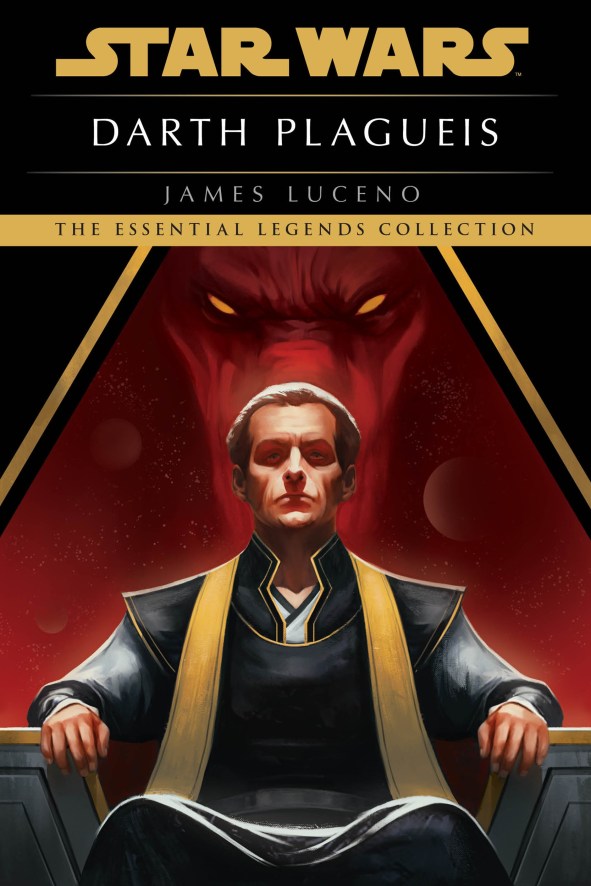
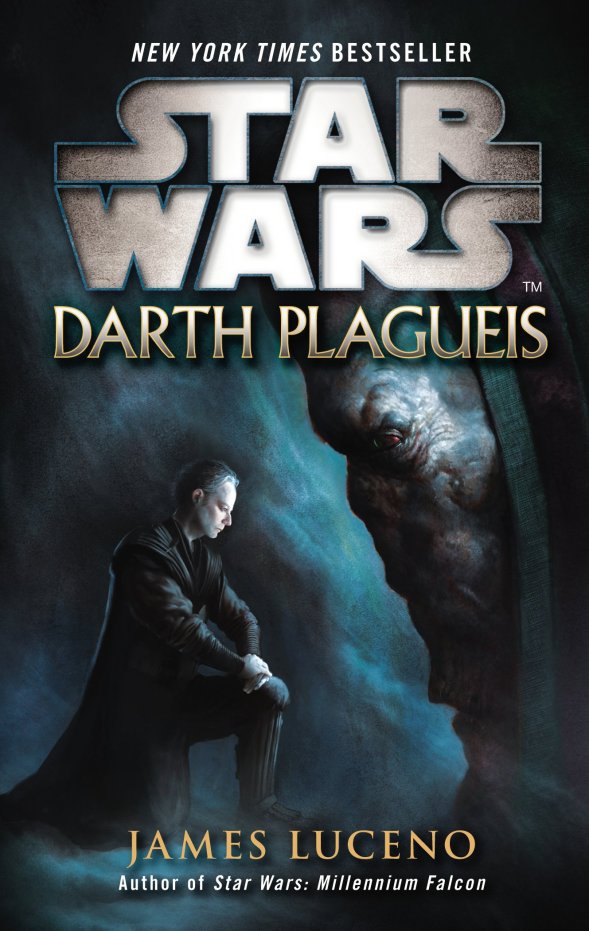
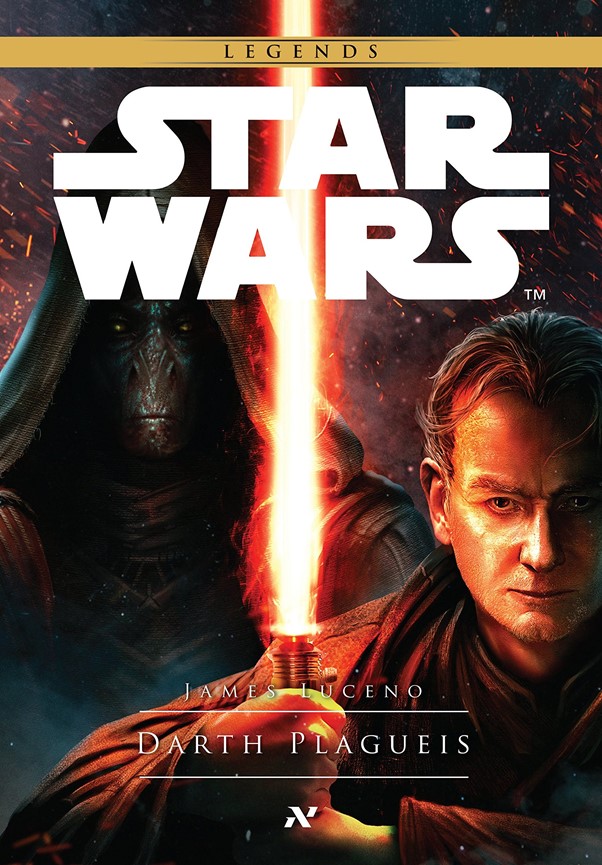
Throwback Thursday: Star Wars: Darth Plagueis by James Luceno

Star Wars - Darth Plagueis Cover

Publisher: Random House Audio (Audiobook – 10 January 2012)

Series: Star Wars Legends

Length: 14 hours and 45 minutes

My Rating: 4.75 out of 5 stars

Amazon

Welcome back to my Throwback Thursday series, where I republish old reviews, review books I have read before or review older books I have only just had a chance to read.  In my latest Throwback Thursday I look at one of the more interesting novels from the Star Wars Legends universe, Darth Plagueis by James Luceno.

With Star Wars day on the horizon, I have decided to go back and check out some of the key books in the now defunct Star Wars Legends universe.  While no longer canon, there are still some amazing books in the Legends range, including some that will no doubt serve as an inspiration for some future shows or movies.  I have already enjoyed several Legends books, such as Maul: Lockdown, Scoundrels and Death Troopers, but there are still more epic reads that I really want to check out.  Probably the one I was most interested in reading was the epic Darth Plagueis by James Luceno.  Luceno, who also wrote the fantastic novel Tarkin in the current Disney canon, is a very talented author, and I was very excited in checking out his take on the elusive and mysterious Darth Plagueis.

“Did you ever hear the tragedy of Darth Plagueis the Wise?”

Throughout the long and bloody history of the Republic, many Sith lords have risen to threaten the peace and order maintained by their hated rivals, the Jedi.  While some have put complex and deadly plans into effect, few have reached the pinnacle of power, influence or mastery of the Dark Side of the Force as the mysterious Darth Plagueis, whose malign guidance shaped the galaxy in terrible ways and introduced a great darkness.

Upon killing his master and obtaining all the power he ever desired, Darth Plagueis set out to continue his order’s greatest goal: destroying the Jedi and claiming the Republic as his own.  Using his position as a powerful member of the Banking Clan, Darth Plagueis worked to manipulate the Republic into chaos and slowly lead the Jedi to a war they had no hope of winning.  However, even a Sith as powerful as Darth Plagueis is unable to do everything on his own, and he soon seeks out a powerful Force user to take on as his apprentice, a talented politician from Naboo known only as Palpatine.

Renaming Palpatine Darth Sidious, Plagueis begins manipulating events to ensure that his apprentice becomes a major power in the Senate, planning to elevate him to the role of Supreme Chancellor while also destroying those opponents who threaten their plans.  However, despite the importance of their plan, Plagueis’s main desire is not the defeat of the Jedi but of a far older enemy, death itself.  Diving into the mysteries of the Force, Plagueis will explore avenues of power not seen for millennia as he attempts to become the immortal master of the galaxy.  But his obsession with endless life could yet be his greatest undoing.

Wow, Luceno did not disappoint with this fantastic Star Wars novel.  Darth Plagueis is an impressive and captivating read that perfectly tells the story of a particularly elusive figure.  Bringing in some heavy Star Wars elements from the extended lore, Luceno has crafted a brilliant character-driven story that I had an extraordinary time listening to.

Luceno has come up with an interesting story for the Darth Plagueis novel that achieves several goals at once.  Not only does it tell the complete story of this legendary Sith Lord but it provides some interesting context for other pieces of Star Wars fiction, while also containing a powerful story of intrigue, betrayal and darkness.  Set over a period of roughly 35 years and told from the perspectives of Darth Plagueis and Darth Sidious (with a few scenes seen from other characters, like Darth Maul), this brilliant novel does an excellent job of exploring the primary characters while also showing their malicious actions across various theatres of the Star Wars universe.  While the novel starts off a little slow, you soon become engrossed in the story as you encounter multiple layers of manipulation and politics as Plagueis attempts to control the galaxy and make his major plans.  The story is broken into three distinct periods, the first showing some of Plagueis’s early movements as a Sith Master and his initial meeting and recruitment of Sidious.  The second part of the book, set 20 years before the events of The Phantom Menace, showcases Sidious as he becomes established as a Senator as Plagueis contends with some dangerous opponents and plots as he sets up the earliest stages of his master plan.  The final third of the novel is set in the lead-up/during the events of The Phantom Menace, where you see many of the storylines come together, as well as the final chapters of the relationship between Plagueis and Sidious.

I had a really great time with this compelling story, and it is one that I feel will appeal to a lot of Star Wars fans.  While I was a little surprised at the suddenness of some of the time skips, I felt that all three major parts of the novel were really good, and I loved how well they flowed together to create one coherent and fantastic read.  The three separate time periods allow for a massive story, while also featuring some of the key moments of the main character’s lives.  Featuring a ton of intriguing and heavy bits of Star Wars lore, parts of the story do drag a little in places, especially as there is a little less action than your typical Star Wars novel.  However, I found all the politics, machinations and expansions of the Star Wars lore to be extremely fascinating, and there is a brilliant story hidden in there.  The story is also not completely bereft of action, and there are some pretty cool fight sequences scattered throughout the book, including some that show off Plagueis’s full, terrifying abilities.  This story had an excellent tone and pace to it, and I feel that everything came together extremely well and I was pretty enraptured by every damn moment of it.

Star Wars - Darth Plagueis Cover 2

This was a really good Star Wars novel, and it is one that will appeal to a wide range of fans, especially those who enjoyed the Legends range.  While Darth Plagueis is technically no longer canon, Luceno really went out of his way to connect it to the wider Star Wars canon, which is something I really appreciated about this book.  In many ways, Darth Plagueis serves as the ultimate companion to the prequel films as Luceno attempted to fill in some plot holes and unexplained bits of the movies, by exploring the entirety of the Sith’s rise to power.  Bringing in a ton of obscure lore, you get an unparalleled view of how Plagueis and Sidious manipulated events in the Legends canon to lead to the events of the films, and this really helps to fill in some gaps.  Luceno also includes multiple moments from The Phantom Menace film throughout the story, and it was pretty fascinating to see why parts of the antagonist’s plot came together like they did, as well as some excellent alternate views of certain key scenes.  I also deeply enjoyed how Darth Plagueis tied into a ton of other pieces of Star Wars Legends fiction, including books, comics and games.  Multiple prior novels are mentioned or connected to this novel in some way, and I felt that Luceno did a really good job of inserting elements from the already massive extended universe into his book and connecting the stories together and giving all of them more context and interest.  All these connections helped to create a novel that is particularly compelling and intriguing to dedicated Star Wars fans, who will love seeing the events of this book unfold.  While those fans who have only seen the movies will probably be able to enjoy this book easily enough (with only some minor confusion to some of the more obscure parts of the lore), this is a novel best enjoyed by readers who have checked out some other Star Wars Legends books and will appreciate how it fits into that wider version of the canon.

I did like a lot of the universe-building that Luceno did in this novel, as the author explored some fascinating parts of the Legends universe.  Not only does the reader get to experience a lot of obscure elements of Star Wars lore, including aliens, technology, locations and other cool things, but this also serves as one of the most impressive looks at the Sith and the Dark Side of the Force.  Due to the deep examinations of the Sith and its history by Plagueis, as well as other elements contained in the training of Palpatine, the reader is flooded with knowledge about these Dark Side users and their ways, which proves to be quite intriguing.  I had a brilliant time learning more about these deep elements of lore, especially as the characters talk about practicalities as well as history.  The difference between various forms of the Dark Side are very cool, as you see some comparisons between Plagueis’s more scientific based usage of the Force and the Dark Side sorcery preferred by Sidious.  I also found the characters’ own description and assessment of the Sith and the Force to be surprisingly deep, as the characters see themselves as more of a necessary force there to save the galaxy and the Republic from the Jedi.  Darth Plagueis also contains some fantastic detail about the history of the planet Naboo, which I also found really fascinating.  Darth Plagueis goes out of its way to explore the history of the planet and the reasons why it became a political and economic factor in the Republic in the lead-up to The Phantom Menace, and I loved seeing the political strife and manipulation that led to this initial war, as well as the rise of characters like Palpatine and Amidala.  These brilliant pieces of lore are so much fun to learn about, and I had an incredible time finding out more about the Sith in this canon.

Of course, one of the best bits of the lore that Luceno examines in this novel is the role that Darth Plagueis had in the Star Wars universe.  First mentioned in that iconic monologue in Revenge of the Sith, Plagueis remained a mostly shadowy and unknown figure until the release of this book, which serves as the ultimate guide to the character and his history.  Luceno, who at this point had been planning a Darth Plagueis story for years, does a brilliant job of telling the full story of this great character, and you get an outstanding focus on his entire life, especially his time as a Sith Master.  Plagueis, a Muun also known as Hego Damask, is portrayed as a thoughtful, powerful and manipulative being with a surprising nobility and dignity to him.  Fitted with an intriguing backstory and motivations, you see him grow into an extremely powerful Sith Lord throughout the course of the book, and it was fascinating to see all his plans and machinations.   The most significant part of the character’s motivations is his hunt for immortality through the force.  As such, you get a fantastic look at his obsessive experiments and research, as he tries to uncover this ultimate secret.  I felt that Luceno did an incredible job of working this mysterious character into the wider Star Wars canon.  There are some great moments throughout this book that show this shadowy figure manipulating key events from the shadows to bring about the events of the prequel films.  I particularly loved how Luceno fit Plagueis into some scenes from The Phantom Menace, and it is very fun to imagine him watching these moments from just outside camera shot.  This really was an incredible examination and exploration of this character, and I had so much fun finally finding out who Darth Plagueis was and how he was connected to the wider story.  Despite this story no longer being canon, this novel is really the only guide to Darth Plagueis, and it wouldn’t surprise me if it is used as the primary source material for anyone wanting to introduce him in a future film or television series.

While this book does tell the story of Darth Plagueis, in many ways it is just as much about Palpatine as it provides readers with an outstanding look at his early history.  Essentially set during the time he was Darth Plagueis’s apprentice, you get some amazing insights into who Palpatine is and how he turned to the Dark Side of the Force.  Portrayed as manipulative and insidious since birth, you get to see Palpatine at his most evil and dangerous as he learns about the Force and the Sith.  I loved how you get to see various stages of Palpatine’s early life, from his teenage years where he first learns about his powers, to his middle age where he becomes a young ambitious senator and apprentice, to his time as an experienced manipulator and Force user just before coming Supreme Chancellor.  I had a brilliant time seeing Palpatine grow as both a Sith and a politician throughout this book, and you get some fantastic views of his early interactions with key players in the Star Wars canon.  I also deeply enjoyed seeing his intriguing dynamic with Darth Plagueis.  In pretty much all his other appearances, Star Wars fans only ever see the confident and controlling Palpatine who has no-one above him.  However, in Darth Plagueis, you see a somewhat more subservient Palpatine who is forced to bow to the will of one more powerful.  Watching working under another is an interesting change of pace, although some reveals towards the end of the book (and in some other novels, such as Maul: Lockdown), show that he is never as loyal as Plagueis believes.  This truly was an outstanding depiction of Palpatine and it was so awesome to see more about our favourite soon-to-be emperor.

Aside from Plagueis and Palpatine, the Darth Plagueis novel is loaded with a ton of interesting supporting characters, many of whom had roles in the films, animated series or other pieces of Legends fiction.  These intriguing characters help to create the novel’s rich tapestry of politics, intrigue and betrayals, and all of them served some fantastic roles in the book.  I particularly enjoyed seeing the inclusion of other Sith characters like Count Dooku and Darth Maul, especially as this novel serves as a bit of an origin story for both, as you see Palpatine obtaining and training Maul as well as Plagueis and Palpatine manipulating Dooku to leave the Jedi.  I also enjoyed the intriguing look at Plagueis’s own master, Darth Tenebrous, whose brief role showed a whole other aspect to the Sith as he had his own distinctive style.  I did think that the crowd of supporting figures with their own story elements slowed the pace of the novel down a little in the middle of the book, but I ended up having a brilliant time enjoying the story set around the awesome main characters.

Unsurprisingly, I chose to listen to Darth Plagueis on audiobook rather than seeking out a physical copy of this excellent novel.  I naturally had a very fun time listening to this version of the book, which not only featured a brilliant narrator but also made excellent use of the typical Star Wars audiobook production elements.  Darth Plagueis is loaded with cool sound effects and awesome Star Wars music, all of which add to the ambiance of the story in various ways.  I particularly liked the use of John Williams’s iconic scores throughout this audiobook, which did a great job of enhancing several scenes and increasing their emotional impact.  This was particularly true for some of the darker moments in the book, as some of the music associated with the Sith, the Dark Side and death/destruction, are blasted at full volume during some key moments, such as Palpatine discovering his destructive abilities for the first time, or during a couple of massacres.  This awesome music was so cool to hear during these scenes, and you really got an increased sense of the powerful emotions and dark deeds that were going on.

I also deeply enjoyed the epic narration, as this fantastic audiobook features the vocal talents of actor Daniel Davis (whom audiences of taste will recognise as Niles from The Nanny).  Davis gives a powerful and commanding performance here, bringing some major gravitas to the role and the characters.  His voice work for the titular character, Darth Plagueis, is really good, and you get a fantastic sense of the character’s power and wisdom as the novel continues.  Davis also does a brilliant job of voicing multiple characters and species from the Star Wars films, sounding quite close to their original actors.  I loved the voice work for Palpatine, capturing much of the villain’s iconic voice, while also giving it a youthful tilt for the earlier parts of the book.  Other characters, such as Count Dooku and Darth Maul, are also expertly portrayed here, and I particularly liked Davis’s take on Christopher Lee’s amazing voice.  This outstanding voice work, combined with the sound effects and music, helped to turn this into an exceptional listen that I deeply enjoyed.  With a run time just under 15 hours, this is a descent sized Star Wars audiobook, but listeners can power through it in no time at all.  This format comes highly recommended and you will have an outstanding time listening to the Darth Plagueis audiobook.

Overall, Darth Plagueis is an impressive and addictive Star Wars Legends novel that I had an incredible time reading.  James Luceno really excels at telling complex narratives that examine character origins, and Darth Plagueis did a wonderful and comprehensive job of expanding on a mostly unknown figure.  I loved learning everything about this awesome Star Wars figure, and Luceno wove an outstanding tale of intrigue and power around him and his apprentice.  An absolute must read for all fans of the Star Wars extended universe, I cannot wait until they finally introduce this complex figure into the current canon.

Star Wars - Darth Plagueis Cover 3

Amazon

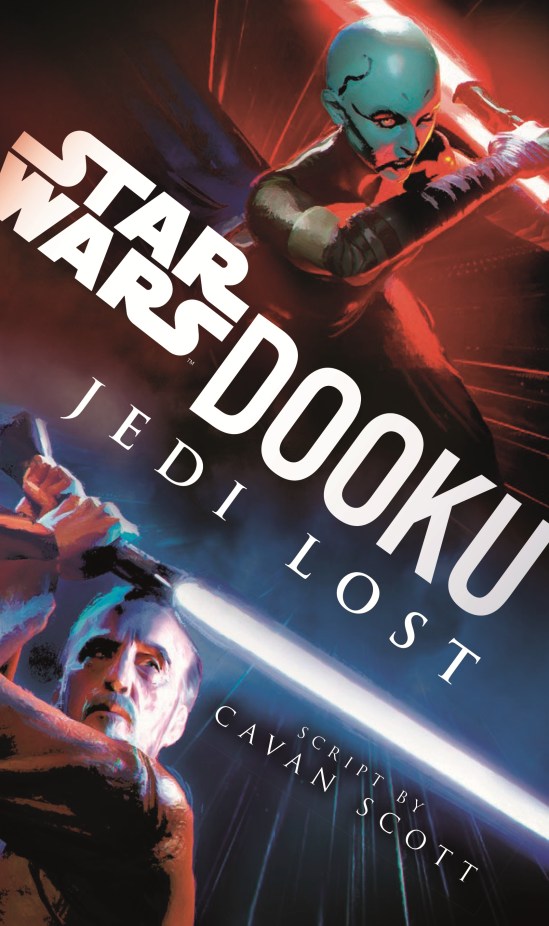
Star Wars: Dooku: Jedi Lost

Dooku - Jedi Lost Cover

Publisher: Penguin Random House Audio (Audio Production – 30 April 2019)

Script: Cavan Scott

Cast: Orlagh Cassidy, Euan Morton, Pete Bradbury, Jonathan Davis, Neil Hellegers, Sean Kenin, January LaVoy, Saskia Maarleveld, Carol Monda, Robert Petkoff, Rebecca Soler and Marc Thompson.

Length: 6 hours and 21 Minutes

My Rating: 4.5 out of 5 stars

Amazon

Prepare for another deep dive into the Star Wars canon with an audio drama that explores the past of one the biggest villains from the prequel movies, Count Dooku, with Dooku: Jedi Lost.

Dooku: Jedi Lost was one of the more interesting pieces of Star Wars fiction that was released last year. Based on a script written by Cavan Scott, an author who has written a multitude of comics, novels and radio drama tie-ins for several different franchises, Jedi Lost was originally released as an audio production featuring several different actors, with the script also released in novel format a few months later. I have been meaning to check out this unique story for some time, as it was one of the few pieces of Star Wars fiction that I did not read in 2019. This is actually one of the first entries I am ticking off my Books I Wish I Read in 2019 list (barring The Russian by Ben Coes, which was an honourable mention), and I am really glad I decided to check this piece of fiction out.

For many in the galaxy, Count Dooku of Serenno is one of the most dangerous and evil villains that ever lived. The leader of the ruthless Separatists during the Clone Wars, apprentice to Darth Sidious and master of several ruthless assassins, Dooku is rightfully feared and hated by many. However, he once was one of the most respected and powerful members of the Jedi Council. A former apprentice to Yoda himself, and the mentor to two exceptional Padawans, Rael Averross and Qui-Gon Jinn, Dooku dedicated decades of his life to the Jedi, before suddenly leaving and taking a different path. But how did such a revered Jedi turn to the dark side of the Force? That is a question that Dooku’s new apprentice, Asajj Ventress, is trying to understand when she is given a mission to find Dooku’s missing sister. Searching for leads through Dooku’s journals and messages, Ventress is given unprecedented access into Dooku’s past.

The son of the ruthless Count of Serenno, Dooku was abandoned as baby by his father the moment his abilities with the Force were identified, only to be rescued by Yoda. Upon learning the truth about his birth years later, Dooku struggles with balancing his duties as a Jedi with his connections to his family and home planet. Conflicted, Dooku finds comfort in his friendship with the troubled young Jedi Sifo-Dyas and the mysterious Jedi Master Lene Kostana, whose mission of locating and studying Sith artefacts fascinates Dooku and leads him to his first experiences with the dark side of the Force. As Dooku rises through the ranks of the Jedi Order, he finds himself stymied by the bureaucracy and corruption of the Republic and the hypocrisy of the Jedi Council. As the first waves of darkness fall across the galaxy, how will the younger Dooku react, and what will Ventress do when she realises what sort of person her new master is?

Dooku: Jedi Lost is an incredible and deeply captivating piece of Star Wars fiction that cleverly dives into the past of one of the franchise’s most iconic villains to present a compelling and intriguing story. I ended up listening to the full cast audio production of Jedi Lost, and I really enjoyed this fantastic and intriguing book. The plot of Jedi Lost is uniquely set across several different time periods, with the details of Dooku’s life being relayed to a younger Ventress at the start of her Sith apprenticeship through journal entries, detailed messages, oral histories and even some visions of the past. Scott did an excellent job of setting his story across multiple time periods, which allowed Jedi Lost to showcase the life of the titular character while also presenting an exciting, fast-paced and at times dramatic narrative that includes several plot threads that jump from timeline to timeline. All of this results in an excellent Star Wars story which features some fascinating inclusions to the franchise’s lore and which is enhanced by the incredible audio production.

At the centre of this book lies an intriguing and captivating exploration of one of the most significant antagonists in the Star Wars canon, Count Dooku. Jedi Lost contains quite a detailed and compelling backstory for this character, and you get to see a number of key events from his life. This includes his complicated childhood, the forbidden communication he had with his sister, the connection he maintained with his home planet, parts of his apprenticeship under Yoda, the tutelage of his own two apprentices, his time on the Jedi council, his first brushes with the dark side of the Force and finally the chaotic events that led him to leave the Jedi order and take up his position as Count of Serenno. Every part of this background proved to be extremely fascinating and it paints Dooku as a much more complex character, with understandable motivations and frustrations. He actually comes across as a much more sympathetic person thanks to this production, and readers are going to have an amazing time finding out what events and betrayals drove him away from the Jedi and towards his new master. The storytelling device of having Ventress read and analyse Dooku’s old messages and journal entries ensures that the story quickly jumps through the events of his life, and no key events really seem to be missing. I personally would have like to see some more detail about Dooku’s training under Yoda or his teaching of his apprentices, although I appreciate that this was already an expansive production and there was a limit on what could be included in the script. I also wonder what sort of story this could have turned into if this was told exclusively from Dooku’s point of view, however, this first-person narration probably wouldn’t be as feasible as a full cast audio production. Overall, those fans who check out Jedi Lost are in for quite an in-depth and fascinating look at the great character that is Count Dooku, and I am sure many will enjoy this exciting examination of his backstory.

In addition to exploring the character of Count Dooku, Jedi Lost also presents those dedicated Star Wars fans with a new canon look at the Star Wars universe before the events of The Phantom Menace. You get an intriguing look at the Republic and the Jedi Order in the years leading up to events of the Skywalker Saga, and it was fascinating to see the similarities and differences between the various eras in the Star Wars lore. In particular, I found in interesting to see that the groundwork for the Clone Wars and the fall of the Jedi order had already begun, with ineffectual leadership, corruption in the Senate and complacency in the Jedi Council all eventually leading the dark events of the future. Jedi Lost also shows the earlier days of several Jedi who were supporting characters in either the movies or the animated shows. In particular, this entry focuses on Sifo-Dyas, the Jedi who foresaw the Clone Wars and was manipulated into creating the Republic’s clone army. The story explores how Dooku and Sifo-Dyas were close friends growing up, while also showing the origin of his prescient powers, and he proved to be a rather compelling side character. Jedi Lost also saw the introduction of Jedi Master Lene Kostana to the canon. Lene Kostana was a rebellious Jedi who scoured the galaxy for Sith artefacts in the belief that the Sith were going to rise again. She proved to be an interesting mentor character for Dooku, and her recklessness and unique way of thinking had some major impacts in Dooku’s character development.

I also liked how this piece of Star Wars fiction focused on the early career of Asajj Ventress, one of the best Star Wars characters introduced outside of the movies. Much of the story is set immediately after Dooku claims Ventress as his apprentice and personal assassin, which allows the reader a compelling view of Ventress’s early brushes with the dark side of the Force and the initial corruption and manipulation she experienced under Dooku. This proved to be quite an interesting part of the novel, especially as the reader got to see Ventress’s thoughts and reactions to several revelations about Dooku’s past. Thanks to the way that the audio production is set out, Scott also included a rather cool element to Ventress’s character in the way that she is hearing the voice of her dead former Jedi Master and mentor, Ky Narec. While Ky Narec’s voice was mainly included to allow Ventress to share her thoughts in this audio production without becoming a full-fledged narrator, this ethereal character gives the reader a deeper insight into Ventress’s character. I also enjoyed the discussion about Ventress’s past with Narec, and it helped produce a much more in-depth look at this fascinating character from the expanded universe.

Like most pieces of expanded universe fiction, Jedi Lost is best enjoyed by fans of the Star Wars franchise, who are most likely to appreciate some of the new pieces of lore and interesting revelations. This production also bears some strong connections with another piece of Star Wars tie-in fiction that was released last year, Master & Apprentice by Claudia Gray. Master & Apprentice was one of the most impressive Star Wars novels released last year, and it featured a story that focussed on Dooku’s apprentices, Rael Averross and Qui-Gon Jinn. Jedi Lost heavily references some of the events that occurred or are represented in Master & Apprentice, and it was interesting to see the intersections between the two separate pieces of fiction. I particularly enjoyed seeing more of the unconventional Jedi, Rael Averross, and it was great to see some additional interactions between the proper and noble Dooku, and this rough former apprentice. Despite all of this, I believe that Jedi Lost can easily be enjoyed by more casual Star Wars fans, although some knowledge about the prequel films is probably necessary.

People familiar with this blog are going to be unsurprised to learn that I chose to listen to the audio production of Jedi Lost rather than read the book that was produced from the script. I have a well-earned appreciation for Star Wars audiobooks, which are in a league of their own when it comes to production value; however, Jedi Lost is on another level to your typical Star Wars audiobook. As I mentioned above, Jedi Lost was released as a full cast audio production, which is essentially an audio recording of a play. This was the first piece of Star Wars fiction I had experienced in this medium, and I really loved how it turned out. The cast did an amazing job with the script, and they acted out a wonderful and highly enjoyable production which I thought was just incredible. The production runs for just over 6 hours and 20 minutes, and they manage to fit a lot of plot into this shorter run-time (in comparison to normal Star Wars audiobooks), as the use of dialogue results in a lot less narration. Due to the way Jedi Lost is structured, with Ventress reading out journal entries or having Dooku’s tale told to her, there is a little more narration of events then a production like this would usually have. I think this was necessary to ensure the reader was clear on what was going on at all times, and it didn’t ruin the overall flow of Jedi Lost in any way.

Jedi Lost features a very impressive and talented group of actors who go above and beyond to make this an awesome audio production. As you can see from the cast list above, this production made use of 12 separate narrators, each of whom voice a major character (with some of the actors also voicing some minor characters as well). Many of these narrators have expansive experience with voicing Star Wars audiobooks, and I have actually had the pleasure of listening to several of these actors before, including Euan Morton (Tarkin by James Luceno), Jonathan Davies (Master & Apprentice), Sean Kenin (Death Troopers by Joe Schreiber), Robert Petkoff (multiple Star Trek novels, most recently Picard: The Last Best Hope by Una McCormack) and Marc Thompson (Dark Disciple by Christie Golden, Loki: Where Mischief Lies by Mackenzi Lee and Scoundrels and Thrawn by Timothy Zahn).

There is some truly outstanding audio work done in this production, with several actors producing near-perfect replication of several iconic characters from the Star Wars franchise. I particularly have to praise Orlagh Cassidy for her exceptional portrayal of Asajji Ventress; her take on the character sounded exactly like the Ventress that appeared in The Clone Wars animated show. I was also deeply impressed by Jonathan Davis’s Qui-Gon Jinn and Marc Thompson’s Yoda, both of which were incredible replications of the characters from the movies. Davis also did a great job once again portraying Rael Averross, a fun character who he first brought to life in Master & Apprentice, and I loved the somewhat laidback voice he provides for Rael, especially as it reminds me of an older cowboy character from a western (I personally always picture Sam Elliott when I hear it). Other standout stars in this production include Euan Morton, who came up with a great take on the titular character Count Dooku. Morton was able to produce an impressive and commanding presence for this character, and he did a great job modulating the character’s voice to represent the various jumps in age that the character experienced. The same can be said for Saskia Maarleveld’s Jenza and Sean Kenin’s Sifo-Dyas, whose characters also aged extremely well throughout the course of the production. I also really loved the voice that Carol Monda provided for new character Lene Kostana, and I felt that it fit the character described in Jedi Lost extremely well. I honestly loved all the rest of the voices that were provided throughout this production, and each of them brought some real magic to Jedi Lost.

Just like with a normal Star Wars audiobook, one of the standout features of the Jedi Lost production was the incredible use of the franchise’s iconic music and sound effects. I really cannot emphasise enough how amazing it is to have one of John Williams’s epic scores playing in the background of a scene. Not only does it really get you into the Star Wars zone, but this music markedly enhances the mood of any part of the book it is playing in. Hearing some of the more dramatic scores during a touching or tragic scene really helps the reader appreciate how impactful the sequence truly is, and nothing gets the blood pumping faster during an action sequence than Duel of the Fates or some other fast-paced piece of Star Wars music. The sound effects utilised throughout this production are not only really cool but they also have added significance for an audio production like Jedi Lost which relies on dialogue rather than narration to establish the scene. Having the various classic Star Wars sound effects reflect what is going on can be really helpful, and often the clash of lightsabers and the pew-pew of blaster bolts give life to a battle sequence. I always appreciate the way that certain sound effects can help paint a picture of what is happening in the room that the dialogue is taking place. Having the susurration of a crowd or the light hum of a starship engine in the background always makes a book seem more impressive, and it makes for a fun overall listen.

Dooku: Jedi Lost was an incredible and wonderful production which I had an extremely hard time turning off. Cavan Scott’s clever and intricate script, combined with the outstanding audio production, is a truly awesome experience which I deeply enjoyed. I loved learning more about the character of Count Dooku, and I think that Scott came up with a fantastic and intriguing background for the character. Jedi Lost is an excellent piece of Star Wars fiction, and I am extremely happy that I listened to it. Highly recommended to all Star Wars fans, and if you decide to check out Jedi Lost, you have to listen to the spectacular audio production, which is just amazing.

Amazon

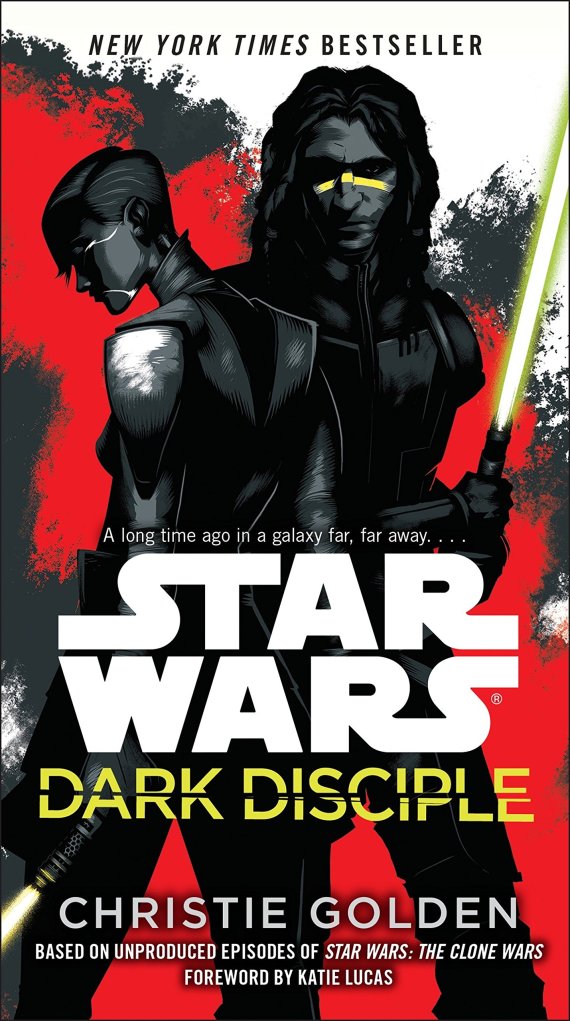
Throwback Thursday: Star Wars: Dark Disciple by Christie Golden

Star Wars Dark Disciple Cover

Publisher: Penguin Random House Audio (Audiobook – 7 July 2015)

Series: Star Wars

Length: 11 hours and 11 minutes

My Rating: 4.5 out of 5 stars

Amazon

Reviewed as part of my Throwback Thursday series, where I republish old reviews, review books I have read before or review older books I have only just had a chance to read.

For this week’s Throwback Thursday, I go back and check out an amazing piece of Star Wars fiction with Star Wars: Dark Disciple by tie-in fiction extraordinaire Christie Golden. Dark Disciple is a compelling and intense Star Wars novel that features two fan-favourite characters from the extended universe in a fantastic adventure that is deeply connected with The Clone Wars animated series.

A Jedi shall not know anger. Nor hatred. Nor love!

For years, the galaxy has been locked in one of the most destructive struggles it has ever known, the Clone Wars. Led by the ruthless Sith Lord Count Dooku, the Separatists have engaged in a gruelling and bloody conflict with the Republic that has led to the death of countless innocents. While the guardians of the Republic, the Jedi, have tried in vain to capture Dooku and end the war, their methods appear inadequate to stop him. After a particularly brutal massacre, the Jedi Council do the unthinkable and sanction the assassination of Count Dooku, believing that only his death will bring peace to the galaxy.

To that end, the Council turns to maverick Jedi Master Quinlan Vos. Unpredictable, brash and experienced in undercover work, Vos is the perfect candidate for this dangerous mission. However, this is not a one-man job. In order to track down Dooku, infiltrate his defences and defeat him in battle, Vos is going to need a partner. At the suggestion of Master Yoda, Vos seeks out the one person who knows the Count better than anyone else, Dooku’s former apprentice and assassin, Asajj Ventress.

After losing everything she held dear at the hands of Dooku, Ventress is desperate to leave her past as a Sith behind. But her hatred for Dooku is all-consuming, and she jumps at the chance to finally kill him. However, Ventress believes that Dooku can only be defeated by someone empowered by their emotions and able to access the dark side of the Force. Tutoring Vos in the methods of her race, the Nightsisters, Ventress is able to make Vos stronger and more powerful as he sits on the knife’s edge between the light and the dark side. But this balance is fragile at best, and all it will take is a single push for Vos to fully embrace the darkness. Between the machinations of Dooku, terrible secrets from the past and his growing feelings for Ventress, can Vos remain true to his vows and complete his mission, or have the Jedi have unleashed a great new evil upon the galaxy?

Dark Disciple is an intriguing addition to the Star Wars canon which not only has some major connections to the popular Star Wars: The Clone Wars animated series but also contains a cool and at times dramatic story about love, darkness within and redemption. Dark Disciple was actually based on a script for eight unproduced episodes of The Clone Wars that were never made due to the Disney buyout of Star Wars and the subsequent cancellation of the animated show. These episodes were written by The Clone Wars screenwriter Katie Lucas (who provides a foreword for this book) and subsequently adapted into this book by acclaimed science fiction and fantasy author Christie Golden. Golden has authored many tie-in novels for various franchises, and I have previously enjoyed her World of Warcraft novels, including War Crimes (probably my favourite piece of Warcraft fiction) and Before the Storm. While Golden had written a few pieces of Star Wars fiction before this book, Dark Disciple ended up being her first novel in the current canon. In the end, this turned out to be an excellent read and I was really impressed in the way that Golden ended up turning this cool script into a deep and compelling novel.

Seeing as it is based off an unused script for the show, this book obviously has some strong connections to The Clone Wars television show. This book is set a little while after the events of the already aired episodes of The Clone Wars and continues their range of storylines a little further. Not only does Dark Disciple contain several characters whose main appearance was in the animated show, but it also refers to events from several episodes, including episodes that Katie Lucas wrote herself. As a result, Dark Disciple is probably best enjoyed by those readers who are familiar with the show, who will have a greater appreciation of the book’s various story elements. That being said, anyone who has seen the Star Wars prequel movies will be able to easily follow what is going on, and will no doubt enjoy the complex story it contains.

Fair warning to fans of The Clone Wars series, though: you are going to experience some sense of crushing disappointment after reading this. The book itself is pretty damn awesome, but it’s supremely disappointing that the story contained within this novel never featured as the amazing extended arc for the animated series it clearly would have been. While I really loved this novelisation, I cannot help but imagine how emotional and explosive it would have been acted out and animated as part of the show. As I review this book, it is actually less than a month until the release of the seventh and final series of The Clone Wars. While I am deeply excited for this final season, after reading this book I am a little sad as I know that the storyline contained within Dark Disciple is unlikely to be featured in it.

That being said, I really enjoyed the fact that this book focuses on two amazing characters from the animated series, Asajj Ventress and Quinlan Vos. Ventress and Vos are fan-favourite characters who have had significant appearances within the expanded Star Wars universe. Ventress is best known for her role within The Clone Wars universe (first appearing in the original 2003 Clone Wars show), where she first served as a major antagonist, before developing into more of an anti-hero. Ventress ended up being the focus of several major arcs within The Clone Wars series, some of which were written by Katie Lucas. Her success in the animated series saw her utilised in several books and comics set in the same period, although most of these are no longer canon. Vos also has an interesting origin as he was first seen as a background character in The Phantom Menace. Thanks to his cool look and some fan interest, the character was given a fleshed-out origin story as a Jedi and subsequently utilised in several works of expanded fiction. This included books and comics and an appearance in one episode of The Clone Wars. While Ventress and Vos had several interactions in the old Star Wars Legends canon, Dark Disciples is actually the first time that they meet in the current canon. Their whole relationship is a major part of the story, and I liked how it formed and developed throughout the course of the book.

I really enjoyed how Ventress was utilised in this book. Ventress is one of the best original characters in The Clone Wars, and I have always loved the gradual journey to redemption that occurred within her story arc. As a result, a book where she is one of the main characters is deeply intriguing to me and I was excited to see how she continued to evolve after her last appearance in the animated series. There are some major developments for Ventress in this book, and if you ever enjoyed this character in the animated series and wanted to know her ultimate fate than you need to read this book. Personally, I think that this was an amazing continuation to the character arcs that had been featured within the shows, and as I mentioned above, I am disappointed that it was never included as part of The Clone Wars. In adapting the script into this novel, Golden makes sure to really cover the background of this character, so those readers who are unfamiliar with the shows will be able to understand her complex and tragic backstory. I also think that Golden did an amazing job of capturing the complex character that was Ventress in this book, getting past her prickly outer layer to see the more complicated emotional person within. This was a near perfect examination of one of the best Star Wars characters who never appeared in a movie, and after reading this book it will be a shame not to see more of her in any of the planned animated shows.

Perhaps the most compelling part of this book is the complex and gripping central tale about Quinlan Vos’s fall to the dark side of the Force. This was an intrinsic part of the book’s overall plot, as Vos and Ventress both believed that having the easy power obtained by dark side users was the only way to defeat Dooku. This turn to the dark side is spurred on by lies, revelations and intense emotions, and it necessitates some deep dives into Vos and Ventress’s respective psyches, resulting in some dramatic and personal moments from both of these great characters. Watching Vos’s slow decline as he slips further and further away from the light side is painful at times, especially when you just know he is eventually going to turn. Even then, despite realizing it was coming, the point when he fully breaks bad for the first time (yellow eyes included) is pretty powerful, as he lashes out at the only person he has, and will ever, truly love. In many ways, Vos’s fall reflects Anakin’s later turn in Revenge of the Sith, in that he believes learning about the dark side is for the greater good, the Jedi Council pushes him to do something he has moral issues with and his emotional connections to a women push him over the edge. There are also some amazing scenes in the later part of the book where the reader is unsure whether Vos is actually evil or is just pretending to have fallen to fool his foes, which leads to a lot of uncertainty and hostility from the other Jedi and Ventress as they try to work out his plan. Overall, this was an outstanding centre for this book, and the complex web of deceit, deeper examination of how one falls to the dark side and all the drama surrounding this part of novel, was really cool to read.

One of the other parts of the story that I found to be interesting was the depiction of some of the other Jedi in this book. Throughout this story the Jedi, particularly the members of their ruling council, are shown to be walking a bit of a darker path thanks to the impacts of the Clone Wars. While not attempting to learn more about the dark side of the Force, members of the Council are beginning to propose action that they usually wouldn’t consider, such as the assassination of Dooku, or the execution of Vos and Ventress. This is a really intriguing take on their characterisation which plays in well with the future events of Revenge of the Sith, where their boldness in attempting to take over the Republic to protect it or Mace Windu’s attempt to kill Chancellor Palpatine backfires on them. Windu in particular comes across as a bit of an arse in this book, and the rest of the council (with the exception of Yoda and Kenobi) seem like meek followers going along with him. I thought that this aspect of the books was pretty interesting, and it liked seeing some hints of this once wise and noble Jedi Council beginning to act more rashly and dramatically.

Like most of the Star Wars books that I look at for my Throwback Thursday articles, I ended up listening to the audiobook version of Dark Disciple, which was narrated by Marc Thompson and ran for just over 11 hours. I have mentioned several times before about how I find Star Wars audiobooks to be a step above most other audiobook productions I listen to, and Dark Disciple was yet another awesome example of just how cool they can be. This audiobook in particular does an excellent job of utilising the huge range of iconic Star Wars sound effects to create an exciting or appropriate atmosphere for much of the story, and there is nothing cooler than hearing lightsaber or blaster sound effects during a battle sequence. In addition, this format also features some of the incredible and memorable music from the films. John Williams’s epic score from the prequels was on full display in this book, with some of his most awesome pieces being used throughout several scenes to great effect. Nothing amps up an action scene quite as much as having the pulse pumping Duel of the Fates playing in the background, while hearing the mournful composition known as Anakin’s Betrayal playing during the scenes where Vos is turning to the dark side of the Force is a real emotional gut punch that brings back memories of Vader and the Emperor killing all the Jedi. This was actually one of the best utilisations of Star Wars music in an audiobook that I have so far experienced, and I really loved how much it increased my enjoyment of this fantastic audiobook.

In addition to the cool sound effects and dramatic music, the audiobook also benefited from the talented voice work of Marc Thompson. Thompson is a veteran narrator of Star Wars audiobooks, having worked on a huge number of their tie-in books since 2007. I have previously listened to two Star Wars books narrated by Thompson, Thrawn and Scoundrels, and with both of these I was really impressed with the realistic and clever voices that he came up with for some of iconic Star Wars characters. Dark Disciple is another exceptional example of Thompson’s skill, as he was able to reproduce the voices of several of the book’s major characters. Not only does he do an amazing job replicating Ventress’s voice, but he also produced excellent examples of Yoda, Count Dooku and Obi-Wan Kenobi’s voices from The Clone Wars show. This is some first-rate voice work which, when combined with all the extra sound effect and musical inclusions, made Dark Disciples an absolute treat to listen to, and I cannot recommend this format highly enough.

Star Wars: Dark Disciple by Christie Goldie is an outstanding and highly enjoyable piece of Star Wars fiction that I had an amazing time listening to. Featuring a first-rate story that revolves around two amazing characters and their complicated relationship to the force (and each other), Dark Disciple is one of the better Star Wars novels that I have had the pleasure of reading. A perfect tie-in to the amazing The Clone Wars animated series, this book is a must read for all fans of that series, especially before the seventh and final season is released. Dark Disciple comes highly recommend and is a force to be reckoned with.

Amazon

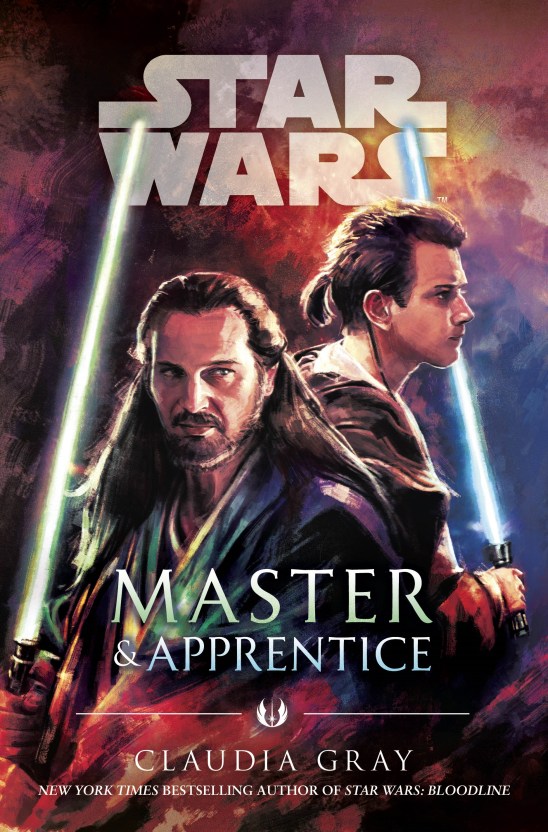
Star Wars: Master & Apprentice by Claudia Gray – Audiobook Review

Master & Apprentice Cover

Publisher: Random House Audio (16 April 2019)

Series: Star Wars

Length: 11 hours and 42 minutes

My Rating: 4.75 out of 5 stars

Amazon

2019 is shaping up to be an amazing year for fans of the new Star Wars extended universe, a group of which I consider myself to be a proud member, with so many awesome Star Wars books and comics being released.  After reviewing the first Star Wars book for 2019, Queen’s Shadow, a few weeks ago, I have been really looking forward to getting to grips with the franchises second 2019 novel, Master & Apprentice by Claudia Gray.

Master & Apprentice is a canon Star Wars novel set around eight years before the events of Star Wars Episode I: The Phantom Menace.  It focuses on two of the main characters from this prequel movie, Jedi Knight Qui-Gon Jinn and his Padawan, Obi-Wan Kenobi.

Qui-Gon Jinn is an experienced and powerful Jedi Knight, having been trained in the Force by the legendary Count Dooku, who himself was trained by Master Yoda, and is ready to face any threat or danger that lies in front of him.  However, his greatest challenge may prove to be his own Padawan, Obi-Wan Kenobi.  The two Jedi are polar opposites to each other: while Obi-Wan is by-the-book and rigid in his respect of rules and protocol, Qui-Gon routinely shows very little regard for the rules and laws that bind the Jedi and constantly finds himself at odds with the Jedi Council.  Despite years of working together, the two Jedi struggle to understand each other.  Qui-Gon sees every mistake of Obi-Wan’s as his own, while Obi-Wan is unable to understand the reasoning behind Qui-Gon’s actions, nor his obsession with the ancient Jedi prophecies that many see as dangerous and unreliable.  Their tenuous and strained relationship is further tested when Qui-Gon is unexpectantly offered a place on the Jedi Council, a move that would likely end their partnership.  With feelings of betrayal and failure hanging over both of them, they are suddenly assigned a critical mission that is likely to be their last as master and apprentice.

Fellow Jedi Rael Averross, another former apprentice of Dooku, has requested Qui-Gon’s help with a difficult political dispute on the planet of Pijal.  Averross has been serving as regent for the planet’s young queen, who is days away from ascending to the throne and signing an important treaty.  A series of attacks which has rocked the planet is apparently the work of The Opposition, a band of political performance artists turned terrorists.  Once the two Jedi arrive on the planet, they quickly find that the situation is far more complicated than initially believed.  With corruption and secrets around every corner, Qui-Gon and Obi-Wan attempt to get to the bottom of everything, even utilising a pair of jewel smugglers to help with their inquiries.  However, their investigations are hampered by their opposing points of view, which only worsen when Qui-Gon places great stock in a dark vision of the future he has foreseen.  Can they overcome their differences to unravel the plot, or will they fail their mission?

Claudia Gray, also known as Amy Vincent, is a prolific and experienced author, best known for her first body of work, the Evernight series, which started in 2008.  Since then she has written a number of other series, including the Spellcaster, Firebird and Constellation series, as well as the standalone novel Fateful.  Gray also has a huge amount of experience writing Star Wars fiction, having previously written three Star Wars tie-in novels in the new extended universe, including Lost Stars, Bloodline and Leia, Princess of Alderaan.  As a result, the story of Qui-Gon Jinn and Obi-Wan Kenobi is in safe hands as Gray produces an outstanding, compelling and character-driven novel that delves deep into the Star Wars lore to create an amazing story.

Master & Apprentice presents a clever and exciting story that sees the protagonist attempt to uncover the mysterious events unfolding on Pijal, while also dealing with their many personal and emotional issues.  The story is told from the perspective of a range of characters in the book, and each of them adds their own thoughts and experiences to the story.  The overall story arc on Pijal becomes quite complex, with many different and intriguing sides to the conflict, and the people behind the events are not who you think.  I had an amazing time enjoying this book.

In this fantastic piece of fiction Gray goes into some intriguing parts of the Star Wars universe and lore.  This is actually the furthest back the new extended universe books go, so it offers the reader a great opportunity to see some of aspects of the pre-movie Star Wars universe.  While there are some hints at the events to come, as well as references to some major characters in the upcoming movies, the book contains a significant amount of new content and antagonists.  It is actually quite refreshing to read a Star Wars book that is not tied into the Skywalker family or featuring the Empire or the First Order as an antagonist.  I quite enjoyed the look at the pre-The Phantom Menace universe, including the new planet of Pijal, and the inclusion of the immoral Czerka Corporation, who previously appeared in the pre-Disney Star Wars universe.  While those fans of the Star Wars franchise who like to consume more than the movies will absolutely love this book, Master & Apprentice should prove to be fairly easy to read for those people who have at least seen The Phantom Menace, as it is a pretty intriguing science fiction adventure.

Those readers who are interested in a deeper dive into the Jedi of the Republic era are in for a real treat in this book, as Gray delves into aspects of their history and lifestyle.  Throughout Master & Apprentice there are a number of scenes set in the Jedi Temple, as well as a number of discussions about how and why the Jedi do what they do.  Perhaps one of the key things highlighted in this book is how the traditional Jedi master and apprentice program worked.  Several different apprenticeships are shown, and the reader gets a good idea of what is entailed in this relationship, what training the Padawans go through and how the process turns them into the eventual guardians of peace in the galaxy.

One of the most unique and fascinating aspects of Star Wars and Jedi lore that Gray examines are the fabled Jedi prophecies.  The prophecies were created long ago by an ancient group of Jedi sages, and are reputed to reveal events from the future.  The prophecies become a key part of the story, as not only do they drive a wedge between Qui-Gon and Obi-Wan but they are also shown to have a major influence over Dooku when Qui-Gon was his Padawan.  The prophecies have been mentioned in the movies before, with the most famous prophecy about the coming of a chosen one who will bring balance to the Force, referring to Anakin Skywalker/Darth Vader.  While the chosen one prophecy is referenced in Master & Apprentice, several other prophecies are mentioned, including one that comes true in this book.  I was really quite intrigued by the author’s examination of the prophecies; while they have been mentioned in the movies, I did not know too much about them.  Dedicated fans will no doubt have fun trying to tie some of these prophecies into the movies and other associated pieces of Star Wars media.  For example, there is one that clearly refers to Princess Leia that is repeated a couple of times.  I personally was very curious about one prophecy that was mentioned towards the end of the book, which was referenced as being obsessed over by Count Dooku.  It was a particularly portentous-sounding prophecy, and I wonder if it will have anything to do with recent revelations in the trailer for the next Star Wars movie, The Rise of Skywalker.

The story contained within Master & Apprentice is a strong, character-driven affair which features a compelling central cast, each of whom gets an in-depth analysis from Gray.  Not only is there some compelling examinations of the main two characters, Qui-Gon and Obi-Wan, but Gray also introduces several intriguing and entertaining new characters who really add a lot to the story.

There is a great examination of the younger Qui-Gon Jinn and Obi-Wan Kenobi in this book, as Gray examines not only the relationship between the two characters but also aspects of their past and their personalities.  When the two characters are introduced in the first prequel film, The Phantom Menace, very little is known about them, save that Obi-Wan is nearing the end of his apprenticeship and the two of them disagree on certain matters, such as the future of Anakin Skywalker.  Master & Apprentice offers a whole new, deeper examination of these characters and explores how these two Jedi came together and appeared so close, despite some differences in their personalities and styles.  I thought that this deep dive into the relationship between these key movie characters was utterly fascinating, and it made me reconsider aspects from the movie.  The strained relationship between the two characters becomes a major factor of the book, and Gray creates an emotional storyline around it as Qui-Gon and Obi-Wan work to overcome their issues while facing external threats.  This was an excellent part of the book which readers will quite enjoy.

In addition to looking at their relationship and how the two characters become close, Gray also looks at other aspects of their past.  This is particularly true for Qui-Gon, as Gray spends time highlighting Qui-Gon’s apprenticeship to Dooku and his friendship with Rael through a series of flashbacks.  These flashback scenes are quite interesting as they show several key events that were responsible for turning Qui-Gon into the character he was in the movie and go a long way to explain why he was such a hesitant master for most of Master & Apprentice.  There was also an intriguing and extended look at how and why Qui-Gon became so obsessed with the Jedi prophecies.  Qui-Gon’s research and fascination with the prophecies becomes a major part of the book, which really appealed to me, and which also explains a lot about the Qui-Gon’s actions in The Phantom Menace.  For example, it explains why Qui-Gon was so sure that he had found the Chosen One in Anakin Skywalker, and why he was determined to train him, even if it meant defying the will of the council.  These storylines also explain certain aspects of Obi-Wan’s personality that occur within the movies.  For example, the bond and respect that are formed between Obi-Wan and his master explain why he was so willing to take on Anakin as an apprentice after Qui-Gon’s death in The Phantom Menace.  It also adds another layer to Anakin’s betrayal in Revenge of the Sith, as Anakin has not only betrayed Obi-Wan and the Jedi but also Qui-Gon’s memory and his belief in Anakin as the chosen one.  This might explain why Obi-Wan, upon defeating Anakin, so passionately shouted “YOU WERE THE CHOSEN ONE.”  There were also some cute aspects to Obi-Wan’s life that are explained, such as why he had such an aversion to flying and how he was able to ride the lizard mount in Revenge of the Sith.  I quite liked how both characters developed over the course of the book, and I felt that Gray did an amazing job bringing these characters to life and providing an excellent story about their past.

While Gray’s portrayal of the main two characters is really good, I also have to say how much I loved some of the side characters that the author introduced in this book.  My favourite has to be Rael Averross, the unconventional Jedi who has a connection to Qui-Gon’s past.  Rael Averross is pretty much the opposite of all the Jedi readers would mostly be familiar with.  He’s a hard drinking, womanising (which he claims is technically not against the rules of being a Jedi), death stick using scoundrel, who hates nearly every aspect of being a Jedi Knight.  He was an extremely entertaining character whose actions and scruffy appearance are part of a persona the character has created to disguise the guilt, fear and resentment from his past.  I also liked how he was the only character able to identify and point out what the actual result of someone fulfilling the prophecy and finding the chosen one, something that every other Jedi apparently missed.  Rael was such an interesting counterpoint to the other Jedi characters in Master & Apprentice, and his influence on a young Qui-Gon was quite intriguing.  It will be interesting to see if Rael shows up again (I believed he is used in a recent Star Wars audiobook, Dooku: Jedi Lost) as he has the potential to be a key character in the new Disney expanded universe.

Other characters utilised within this book are the two jewel smugglers co-opted by the Jedi to be their guides on Pijal, Pax and Rahara.  While both these characters are a lot of fun, the standout one has to be Pax.  Pax is a gaudy and socially inept character whose inability to interact with other people is due to the fact he was raised by a ship full of protocol droids.  Pax is full of sass, sarcasm and insults, and is easily the most entertaining character in this entire book.  Rahara is also a great character.  A former slave of the Czerka Corporation, Rahara is the more normal of the two characters.  However, her former enslavement still haunts her and drives much of her more noble actions in this book.  Individually, both these characters are pretty cool, but together they form a great team who play off each other well.  Their emotional attachment to each other is another great part of the book and seeing the lengths that the usually pragmatic Pax will go to for Rahara is very heart-warming.

There were also a few flashback scenes featuring Qui-Gon’s mentor and future Star Wars antagonist Count Dooku.  All of these scenes were shown from the point of view of Qui-Gon as Dooku’s apprentice, and they paint a picture of a rigid and severe Jedi who was already showing signs of being tempted to the Dark Side of the Force.  This was a very intriguing portrayal, although I believe that the audiobook Dooku: Jedi Lost, which was released around the same time as Master & Apprentice, contains a lot more of Dooku’s backstory and motivations, and I am definitely going to check this other audiobook out at some point.

As usual, I was deeply, deeply impressed with the audiobook version of this Star Wars book.  The company behind these audiobooks really go the extra mile to make them special, and these tie-in novels are quickly becoming my favourite series to listen to rather than read.  The Master & Apprentice audiobook runs for 11 hours and 42 minutes, and I found that I was able to get through this book quite quickly.  I always find I absorb a lot more of the story with the audiobook format, and with this book I was really able to enjoy the character strife, as well as the new world building that Gray included.  Props need to be given to the amazing sound effects that seem to permeate nearly every single scene in this book.  Firstly, I absolutely love how the incredible and iconic music from the Star Wars movies is used during some of the book’s major scenes.  The music, especially some of the big orchestral moments that defined key parts of the original Star Wars movies, is quite incredible and it does an amazing job of forcefully dragging the reader into the story.  The additional sound effects used throughout the book easily replicate the actions going on around the characters, often using established and recognisable sound from the movies.  I also loved how some of the sound effects could be so effective at creating an appropriate background for the scene by adding in engine noises or the susurration of a loud crowd.

The audiobook format of Master & Apprentice is narrated by Jonathan Davis, who has previously provided his voice to several other Star Wars audiobooks.  I was deeply impressed with Davis’ incredible voice acting range in this book, as the voices he comes up with for the characters are outstanding.  For example, he produces incredible voices for the book’s two main characters, Qui-Gon and Ob-Wan as he damn near succeeds in replicating the two actors voices from The Phantom Menace.  On top of that, his Yoda voice is spot-on, and sounded just like Frank Oz in the movies.  I also liked the voices that the narrator came up with for some of his new characters.  His voice for Rael, for example, does an amazing job capturing the character’s personality, including his more carefree attitude, and the simmering anger that exists for most of his interactions with Qui-Gon.  I also quite like the voice and tone he uses for Pax, and the character’s inbuilt arrogance and emotional shallowness really shine through.

Master & Apprentice is so far my favourite Star Wars book of 2019, and I absolutely fell in love with its excellent story and powerful character work.  Gray takes her readers deep into the Star Wars lore, allowing fans of the franchise to further examine two of the best characters from The Phantom Menace movie.  The combination of Jonathan Davis’ exceptional narration and the production company’s perfect use of classic Star Wars music and sound effects resulted in an absolutely fantastic audiobook that comes highly recommended.  This is one hell of a book, and I cannot wait to see how the rest of the year’s Star Wars books turn out.

Amazon