
Warhammer 40,000: Oaths of Damnation by Robbie MacNiven

Publisher: Black Library (Audiobook – 24 August 2024)

Series: Warhammer 40,000

Length: 10 hours and 57 minutes

My Rating: 4.5 out of 5 stars

Amazon

Prepare to follow the most damned heroes in the Warhammer 40,000 canon in the impressive and intense new novel from Robbie MacNiven, Oaths of Damnation.

Recurring readers of this blog will know that I am constantly in the mood for fun and exciting Warhammer 40,000 action, which is why I listened to the awesome new book, Oaths of Damnation, the moment I could.  Written by new-to-me veteran Warhammer author Robbie MacNiven, a man with a lot of experience writing about complex Space Marines, Oaths of Damnation was one of the more intriguing Warhammer 40,000 books of 2024, and I really loved the opportunity to check out the infamous Exorcists Space Marines Chapter.

In the far, war-torn future, the Imperium of Man is under constant attack from the forces of the Chaos gods and their deadly daemon servants.  Few within the Imperium, even amongst the legendary Space Marines of the Adeptus Astartes, can fight against the daemons of Chaos on an equal footing, but there is one Space Marines Chapter, the Exorcists, that takes the battle to them in the most unorthodox and heretical of ways.

The Exorcists are an elite and secretive Chapter of Space Marines who make the ultimate sacrifice to fight the forces of Chaos.  Willingly accepting daemonic possession as part of their initiation, prospective Exorcists need to banish the daemon within themselves to join the Chapter.  Those who succeed become fierce warriors who are now resistant to the corruption of Chaos at the cost of their own fractured souls.  However, those that fail suffer a fate worse than death as they become Broken Ones, living prisons for the daemons summoned and expelled by the rest of the Chapter.  Few in the Imperium know the sacrifices that this Chapter makes to fight the enemy; if it were to become common knowledge, all the Exorcists would be put to the flame as heretics.

As such, when a dark conspiracy sees a Broken One containing a powerful daemon, the Red Marshal, escape from the Exorcists custody, the Chapter sends a unit of its elite Hexbreakers to hunt it down before their secrets are exposed.  Led by the dogged Almoner-Lieutenant Daggan Zaidu and powerful psyker Codicier Torrin Vey, the Exorcists strike force journeys to Fidem IV, a planet littered with ancient battlefields, to hunt down the Broken One and destroy the daemons within.

But as the Exorcists battle across the planet looking for their prey, it soon becomes clear that members of the Word Bearers traitor Space Marines Legion are on Fidern IV, seeking the Broken One for their own sinister purposes.  Worse, a dangerous connection exists between Zaidu and the Red Marshal, one that could endanger the entire mission.  Can the Hexbreakers succeed and hunt down the Broken One before it is too late, or will their Chapter’s darkest secret be unleashed upon the entire Imperium in a wave of blood?

Oaths of Damnation was a particularly intriguing and intense Warhammer 40,000 novel that really showcased MacNiven’s skill as an author.  Featuring a detailed look at a particularly cool faction in the Warhammer 40,000 canon, Oaths of Damnation was an excellent and exciting read that constantly grabbed my attention and refused to let go.

I really enjoyed the fantastic narrative contained within Oaths of Damnation, especially as MacNiven was able to produce a book that allowed him to tell his own distinctive story while also expertly highlighting the Exorcists Chapter.  Oaths of Damnation’s story starts off strong, with a look at the Broken One’s bloody escape from the Exorcists’ custody, which effectively sets up the Red Marshal as a deadly antagonist.  The following story moves at a quick pace as. With only a minimal amount of exposition and introduction, the protagonists set forth to Fidern IV to find the escaped Broken One, only to encounter opposition from the desperate daemon and the Word Bearers.

What follows is a series of intense and well-written battle sequences as the Exorcists pursue their target across the planet and fight against the various forces of Chaos.  MacNiven ensures a compelling story structure, as the protagonists face determined opposition, brutal fights and unexpected setbacks on the way to victory.  The author also spends time diving into the psyche of several key characters, which adds some intriguing intensity of the plot, especially as many find themselves distracted or conflicted by the mission.  MacNiven anchors the end of story on two massive action set-pieces that push the Exorcists to the limit and force them to face their internal and external daemons.  I liked some of the fun, if not unexpected, twists that MacNiven threw in in the lead up to the final battle, and the constant prophetic hints about dark events to come really enhanced the intensity of the plot towards the end.  The final confrontation is particularly impactful and moving, especially as there are some major sacrifices being made and all manner of carnage to behold.  I really appreciated the dark ending that MacNiven left the story on, and no-one should come into Oaths of Damnation looking for a happy ending.

MacNiven did an outstanding job capturing the dark and grim nature of the Warhammer 40,000 universe with his writing, and I felt that this was an extremely strong read overall.  While there are some complex lore events contained within, for the most part Oaths of Damnations was an accessible novel, even for those readers unfamiliar with the canon (although some basic Warhammer 40,000 knowledge would be helpful).  The author does an excellent job exploring the plot through the perspective of multiple complex characters, which resulted in a very compelling read, as many of the protagonists are forced to continually overcome their literal inner daemons.  I felt that this focus on damaged characters, as well as the intriguing examination of some unique Warhammer lore, helped Oaths of Damnation escape the ‘bolter porn’ label that many Space Marine novels are painted with.  That being said, Oaths of Damnation does have some particularly striking action sequences that fans of Warhammer 40,000 battles will really enjoy.  MacNiven clearly has a gift for showcasing Space Marines in all their martial glory with his writing, and you really get a sense of their power, intensity, and sheer destructive capability.  I also deeply enjoyed how he richly depicted their fighting capability and style, and the way in which he detailed the impacts of the bolt shells, the durability of the power armour, and the strength of their attacks, was honestly some of the best representations of Space Marines in combat I have ever seen.  I really cannot emphasise how impactful MacNiven’s writing style was, and Oaths of Damnation is a great book for all Warhammer fans, especially those buzzing for some Adeptus Astartes action after playing Space Marine 2.

A major highlight of this book for Warhammer 40,000 fans is the inclusion of the very cool Space Marines Chapter, the Exorcists.  A band of secretive and hidden Space Marines who willingly allow themselves to be possessed so they can learn to fight daemons better is an awesome concept, and MacNiven did an outstanding job showcasing this to the readers of Oaths of Damnation.  With only minimal lore dumps at the start of the novel, MacNiven ensures that the reader gets a sufficient and intriguing idea of who the Exorcists are and how they become lethal daemon fighters, and it proves fascinating to dive deeper and deeper into their Chapter as the book continues.  Not only is there is a great focus on how and why they damn themselves, but I also really appreciated the comprehensive way in which MacNiven tried to explore the other side effects of becoming an Exorcists, as well as the unique culture that they share.  The concept of the lingering bond that each Exorcist holds with their Never-brother, the daemon that possessed them, so much so that they still hear fragments of their voices and gain personality traits or combat abilities reminiscent of their former possessor, was particularly cool, and the author does an excellent job of showcasing it.  MacNiven also expertly covers the concept of the Orison Cults, social and ceremonial cults of the Exorcists dedicated to specific rituals and combat styles, and which serve a vital part in the larger Exorcists culture.  It was fascinating to see the ways that the now practically soulless Exorcists try to retain their humanity throughout their day to day lives, and how they replace the holes in their being with ritual and false comradery.  This combination of Exorcists’ lore, and MacNiven’s compelling dive into the deeper motivations and minds of its members, made for outstanding reading and it fun to see this complex and damaged Chapter in action.

I also have a lot of love for the compelling main characters featured within Oaths of Damnation.  While Space Marine characters in Warhammer fiction can sometimes be a little dull, the main two protagonists of this book, Almoner-Lieutenant Daggan Zaidu and Codicier Torrin Vey, each has a complex background and connection to the target that ensures that the reader is drawn into their story.  Zaidu’s is particularly fun, as Zaidu feels substantial guilt and anger at the damage caused by the Red Marshal, as it was the daemon that formerly possessed him.  Determined to end the connection between them once and for all, Zaidu lets his recklessness control him in many parts of the book, and it was deeply compelling to see how obsessed he became.  Vey on the other hand is a veteran Space Marines librarian, who stands as the beacon of knowledge to the group.  The man responsible for Zaidu’s possession by the Red Marshal, Vey bears a lot of guilt within himself, and he works hard to keep Zaidu safe from his own anger, impatience and desperation to kill his Never-brother.  Vey and Zaidu play off each other perfectly throughout Oaths of Damnation with their troubled mentor/mentee relationship, and MacNiven makes sure to hit all the right emotional notes to get the reader involved in their tales of personal woe.

In addition to Zaidu and Vey, MacNiven provides some fantastic alternative perspectives from several other members of the Exorcists who journey to Fidem IV.  As with the main two characters, each of these Exorcists are deeply troubled and damaged because of their former daemonic possession, and each then battles with the side-effects of the process, as well as the lingering taint of their Never-brothers.  This ensures that Oaths of Damnation has a rather dour tone to it at times, but seeing these damaged, yet highly determined and loyal Space Marines in battle is powerful and really drags the reader in.  The Exorcist characters are well balanced by a raft of compelling and distinctive villains, including a darkly charismatic Dark Apostle with great ambitions and a weary veteran Word Bearer who has started to question his role in the universe.  However, the most important villain is the fallen daemon known as the Red Marshal, who hungers for freedom and a return to power.  You get several intriguing trips into the Red Marshal’s mind, and I enjoyed seeing his boiling rage and determination to regain his god’s dark favour.  These great characters really helped elevate Oaths of Damnation’s plot, and I enjoyed seeing all their respective narratives unfold.

As usual, I ended up grabbing this cool Warhammer 40,000 novel on audiobook, which is my preferred way to enjoy books from this franchise.  While all Warhammer audiobooks are great, I felt that Oaths of Damnation came across particularly well in this format, and you really got dragged into the action and excitement as it was read out to you.  I personally found myself absorbing the complex lore surrounding the Exorcists a little better while listening to it, which helped with the overall impact of the story.  Oaths of Damnation also strongly benefited from the excellent narration of Charles Armstrong.  Armstrong, who previously impressed me with his narration of the Warhammer Crime audiobook, Bloodlines by Chris Wraight, did another excellent job in Oaths of Damnation as he expertly showcased the elaborate story with his voice.  I particularly enjoyed his compelling take on the various characters featured within the novel, especially the main protagonists, and he really captured their dark inner feeling and dedication in multiple scenes.  This proved to be an epic audiobook, and, with a runtime of just under 11 hours, it is one that dedicated listeners can get through fairly quickly.  I personally would recommend this format as the best way to enjoy Oaths of Damnation, or indeed any Warhammer 40,000 novel.

Oaths of Damnation was a particularly strong and exciting piece of Warhammer 40,000 fiction that I had an incredible time getting through.  Robbie MacNiven has produced another gripping and intriguing read that cleverly dives into the complex lives of a unique Space Marines chapter, and I loved every second of it.  An intense, dark and action-packed read, Oaths of Damnation really expresses the grimdark nature of the Warhammer 40,000 universe and you’ll have a very hard time escaping once you get sucked in.
Amazon

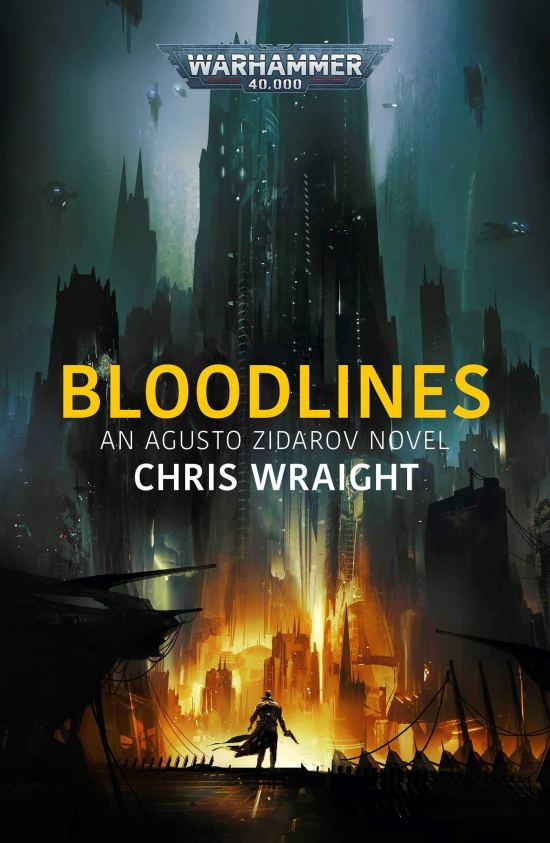
Warhammer 40,000: Bloodlines by Chris Wraight

Warhammer 40,000 - Bloodlines Cover

Publisher: Black Library (Audiobook – 8 August 2020)

Series: Warhammer Crime

Length: 8 hours and 30 minutes

My Rating: 4.75 out of 5 stars

Amazon     Book Depository

After some of my recent awesome experiences with the Warhammer Crime series, I just had to check out the outstanding novel, Bloodlines by Chris Wraight, which has one of the best pure crime fiction stories in this entire epic franchise.

Regular readers may have noticed I have been having an absolutely amazing time getting through a ton of Warhammer 40,000 novels in recent weeks as everything about this extended franchise has been so damn fun.  One of the more intriguing sub-series of Warhammer fiction I have been tearing through has been the Warhammer Crime books which, as the name suggests, blends cool crime fiction narratives with a Warhammer 40,000 settings.  The entire series is set within the massive, corrupt city of Varangantua on the planet of Alecto, and several very talented writers have come up with some exceptional novels that perfectly showcase murder, mystery and death in the midst of this great setting.  I have so far deeply enjoyed the epic entries, Dredge Runners and The Wraithbone Phoenix by Alec Worley, Grim Repast by Marc Collins, and Flesh and Steel by Guy Haley, each of which have contained different, if equally exceptional stories.  However, few have had the excellent central mystery of the very first full-length Warhammer Crime novel, Bloodlines from new-to-me author Chris Wraight, which took a veteran cop on an intensive investigation with fantastic results.

After a lifetime working for the Varangantua Enforcers, Probator Agusto Zidarov is well aware that the only certainties in the continent-spanning city are wealth, corruption and criminality.  Tired of the games played between the warring gangs, trade combines, and nobles as they battle for control of the city’s resources, Zidarov is more concerned about his own life, family and secrets.  However, when a simple missing person investigation gets unexpectantly complicated, Zidarov will find a terrible case that he can’t turn away from.

Called to the estate of wealthy business magnate Udmil Terashova, Zidarov is ordered to find her son and heir, who has gone missing.  Forced to plumb the depths of Varangantua’s underbelly, Zidarov attempts to find any trace of the boy, who has likely just disappeared taking part in the rich’s hedonistic lifestyles.  However, when an uncovered lead places him conflict with one the city’s most ruthless gangs, Zidarov soon begins to believe that there is more to this case than he initially believed.

Discovering that the gang is involved in the notorious crime of cell draining, Zidarov’s attempts to shut them down.  However, his raid ends up being a bust, and the fallout results in a dead sanctioner, a wounded probator and a full-on war between the gang and the enforcers.  Attempting to mitigate the consequences of his actions, Zidarov soon discovers that there is far more going on behind the scenes than he ever imagined as corporate interests work to influence the investigation.  To find the truth about the city’s new crime ring and the missing noble, Zidarov is forced to probe both Varangantua’s lowest gangs and wealthiest citizens.  But can Zidarov survive the encounter with his secrets and life intact?

Bloodlines is an incredible and deeply impressive Warhammer Crime novel that I had an excellent time reading, especially as Wraight perfectly blended his crime fiction story with the cool Warhammer setting.  Featuring one of the more elaborate and intriguing cases in the Warhammer Crime books I have read so far, I absolutely powered through Bloodlines and this was truly an outstanding read.

At the heart of Bloodlines lies a pretty awesome and captivating narrative building on the basic crime fiction premise of a veteran cop attempting to solve a crime no one wants investigated.  Taking its cues from classic noir entries (I was reminded a bit of Chinatown), Bloodlines follows Probator Agusto Zidarov, a family man with a cynical view of his job and his place in the city, as he gets dragged into a missing persons case.  Initially starting off a little slow, the story quickly heats up as Zidarov attempts to find the missing heir to the wealthy Terashova family, a disappearance he assumes is a simple case of young rebellion.  However, his routine investigation into the missing lad leads him to discover a cell draining operation being run by one of the major gangs, and he shifts his investigation in an attempt to shut it down.  But when his plans go wrong and his colleagues end up injured or dead, Ziadarov finds himself on everyone’s firing line.

There are some interesting jumps in the case around halfway through as the protagonist soon realises there is far more going on than he initially believed and he is forced to simultaneously investigate both the gangs and some of the wealthiest families and businesses in the city.  I loved this gradual escalation of the stakes of the crime as the book continues, as the original missing persons case is revealed to be far more complex and intriguing than initially believed when the protagonist discovers that he is being used by everyone.  At the same time, Zidarov is forced to deal with some major personal issues, as his wife begins to resent his choices, his rebellious daughter has gone missing in a city full of predators, and certain dark secrets around Zidarov threaten to come into the light.  The eventual reveal about who is responsible for the various crimes is very clever, and I liked the subtle and effective hints and clues leading up to it as the unique motivations and plots utilised intriguing aspects of the Warhammer 40,000 universe.  Wraight ends Bloodlines on a great note as Zidarov gets justice through drastic means after a very intense and powerful confrontation with one of the book’s more intriguing and complex supporting characters.  As such, you come away from Bloodlines feeling very satisfied, although you instantly want to see more of this great character, especially as the sinister connotations about Zidarov’s dark secret indicate that some tragic events are going to befall this character in the future.

The entirety of Bloodlines was laid out extremely well by Wraight, who uses a great style to tell a complex and captivating story.  Told exclusively from Zidarov’s perspective, you are given a personal and close examination of the events of the book as Zidarov slowly and methodically investigates the various crimes.  You are quickly drawn into the elaborate narrative Wraight lays out as the author does a good job of combining an excellent crime fiction storyline with intriguing character development, all set with Varangantua and the wider Warhammer 40,000 universe.  The noir inspired elements of Varangantua really stand out in this book, especially as Zidarov is forced to simultaneously investigate both the criminal cartels and some of the city’s wealthiest residents.  Bloodlines really recalls some classic noir tales, as it focuses on the experienced and dogged investigator fighting the entire system to get answers and justice, and I loved exploring even more of this enormous city and its many colourful residents.  The whole concept of cell draining, which sees thousands of people literally drained of their essence to make life-extending products, was pretty damn horrifying, and I liked how the examination of this gave Bloodline’s crimes a distinctive feel.  Wraight’s great writing style really lends itself to producing a particularly impactful and compelling crime narrative, and I loved how the entire storyline unfolded, especially with the effective twists and the well thought out foreshadowing.  I ended up coming away from this book quite enthralled and happy and I am really excited to read more books from Wraight in the future.

One of the things that I have so far found with all the Warhammer Crime entries is that readers really need very little familiarity with the wider Warhammer 40,000 universe to appreciate these great books.  Anyone interested in a compelling and intense crime fiction story set in a cool and grim futuristic city can easy dive into one of these novels, and all these books are an awesome introduction to the Warhammer fandom.  Bloodlines is no exception to this, as Wraight writes a very accessible crime fiction thriller that anyone can enjoy while simultaneously enjoying the gothic setting.  That being said, Wraight does make excellent use of several intriguing elements from the Warhammer 40,000 lore to enhance his story and there are hints and discussions about elements outside of Varangantua, such as the Imperial Guard or the wider wars of the Imperium, which fans of the franchise will deeply appreciate.  Wraight does do an amazing job of explaining these elements so that newer readers will fully appreciate them, however, established readers will always get a little bit more out of it.  For example, the full significance of Zidarov’s secret isn’t going to be too apparent to new readers, while in-the-know fans are going to get a blast out of the potential implications.  I felt that Bloodlines has a lot to offer all readers, no matter their experiences with Warhammer, and you might find yourself falling for the franchise with this first book.

Another key aspect of the Warhammer Crime series that Wraight perfectly captured in Bloodlines was the excellent utilisation of a complex and likeable central character.  Wraight’s protagonist and main point of view character, Probator Agusto Zidarov, is a deeply intriguing figure who stands out from the other protagonists in the Warhammer Crime series for being much less of a damaged outsider.  Instead, he is a veteran probator who worked his way up to his position with a very realistic view of the world around him than most other characters, and I liked his no-nonsense approach to his job and his city which has been formed from years on the job staying alive.  Despite this veteran presence and cynicism, Zidarov is still willing to do what is right, even if it endangers him, and his dogged approach to solving the case is extremely addictive, especially as Wraight puts in some deeper motivations behind them.  I really enjoyed some of the scenes where Zidarov continuously ignores his friend’s advice and keeps going forward with the case, simply explaining to them and the reader that he is unable to let it go, and he just keeps moving forward despite the inherent weariness of the character.  This determined and tired cop persona is well balanced by the family man aspect of Zidarov, which is another intriguing element that you don’t see in a lot of Warhammer fiction, as most protagonists don’t have wives or children.  Watching him attempt to balance his family responsibilities with that of his job adds some intriguing drama to the story, and I enjoyed seeing this portrait a ‘normal’ Warhammer 40,000 family.  Wraight perfectly weaves together these dual aspects of Zidarov’s personality with a certain darker, secretive thread that really shows the character in a whole new light when revealed, and which is going to have some intriguing impacts down the line.  All of this, and more, helps to make Zidarov one of the more relatable and enjoyable protagonists I have ever enjoyed in Warhammer fiction, and I really hope that Wraight produces some additional Zidarov stories soon.

Once again, I chose to listen to this cool Warhammer novel in its audiobook format, which, as always, was an excellent and deeply fun experience.  The Bloodlines audiobook did an amazing job of bringing this intense and powerful story to life in some very fun ways.  In particular, the complex central setting of Varangantua is really shown in all its corrupt glory when you hear it being described, and I loved how the fast pacing of the audiobook kept the story rolling by.  This format of Bloodlines was also greatly helped by veteran narrator Charles Armstrong, who has so far only lent his talented voice to a few Warhammer audiobooks.  Armstrong provided an excellent performance in Bloodlines, really diving into the various complex characters and helping to showcase their unique personalities and emotions.  I loved the tired and resigned voice that Armstrong came up with for the main character, which really sells the audience on Zidarov’s veteran status which is the result of an exhaustive and draining career.  Other great voices include that fun Irish accent he gifted to supporting character Brecht, which added to his entertaining nature, as well as some excellent voices the various suspects in the main case had.  All this makes the Bloodlines audiobook the very best way to enjoy this exceptional novel and with a runtime of eight and a half hours, you can power through it in no time at all.

Overall, Bloodlines was a particularly epic entry in the Warhammer Crime series, and it is one that author Chris Wraight should be extremely proud off.  Wraight did a remarkable job of blending together an intense and clever crime fiction story with the dark and grim Warhammer 40,000 setting, and the result is a brilliantly twisted case that I couldn’t turn away from.  Combined with instantly likeable character, Bloodlines proved to be extremely fun and deeply captivating, and I loved how the entire book unfolded.  As such, Bloodlines comes extremely highly recommended and you are guaranteed to love every second of it.  I look forward to seeing how Wraight continues this character in the future, and any future books featuring Zidarov are going to be something truly amazing.

Amazon     Book Depository