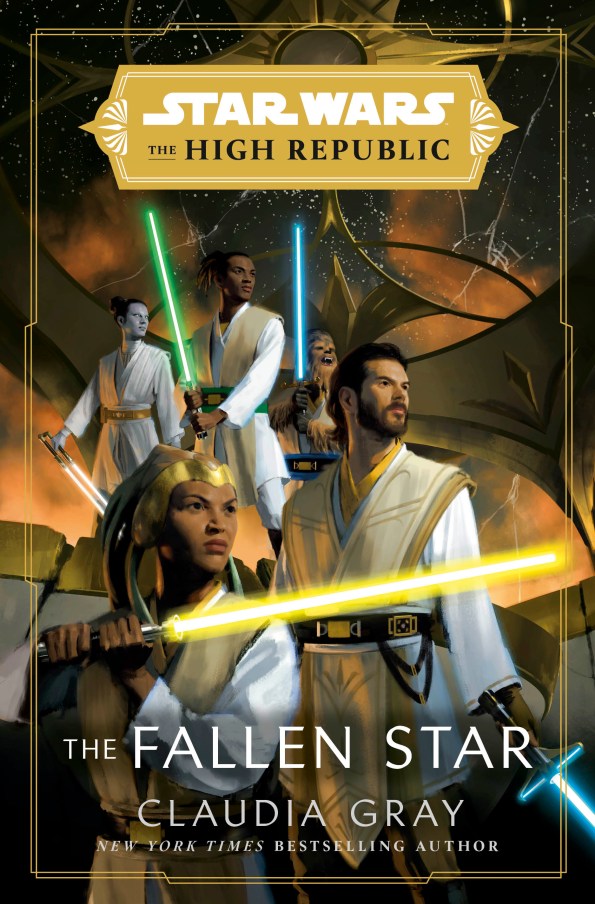
Star Wars: The High Republic: The Fallen Star by Claudia Gray

Star Wars - The Fallen Star

Publisher: Del Rey/Penguin Random House Audio (Audiobook – 4 January 2022)

Series: Star Wars – The High Republic

Length: 13 hours and 31 minutes

My Rating: 4.5 out of 5 stars

Amazon     Book Depository

The awesome new focus of Star Wars fiction, the intriguing High Republic range, continues to shine brightly with the latest epic adult novel, The Fallen Star, a dark and impressive entry by the extremely talented Claudia Gray.

Ever since its start at the beginning of 2020, the High Republic multimedia project has presented some unique Star Wars stories that I have deeply enjoyed.  Set in the golden age of the Republic and the Jedi, hundreds of years before the films, The High Republic focuses on a different generation of Jedi facing off against the murderous raiders known as the Nihil.  This series has so far produced some excellent gems across various forms of media, including novels, comics, audio dramas and other cool entries written by some of the best authors of Star Wars fiction.

While there is an interesting spread of fiction in The High Republic, the key storylines are generally contained in the main adult novels such as The Fallen Star, and the previous novels, Light of the Jedi by Charles Soule, which introduced the High Republic era and the Nihil, and The Rising Storm by Cavan Scott, which saw the Nihil launch a bold attack at the very heart of the Republic.  Other cool entries, such as the young adult novels Into the Dark and Out of the Shadows, and the audio drama Tempest Runner, added to this tapestry, and it has resulted in a fantastic and compelling overarching narrative and setting.  As such, I have been very excited to see where this franchise goes next, especially as The Fallen Star acts as one of the finales to the current phase of High Republic fiction.  Written by Claudia Gray, who previously authored the incredible Master & Apprentice (one of my favourite Star Wars novels), this was an epic book with a fantastic adventure story.

Following the brutal Nihil attack on the Republic Fair, the entire galaxy is hunting for the Nihil, determined to destroy them and their mysterious leader, the Eye, once and for all.  However, the Republic and the Jedi are unaware that the true Eye of the Nihil is the fearsome Marchion Ro, who plans to devastate the Jedi and the Republic headquarters, Starlight Beacon.  A massive space station out in the Outer Rim, Starlight Beacon was intended to bring light and cooperation to the most remote areas of the galaxy.  Staffed by some of the most powerful Jedi, Starlight Beacon stands a symbol of hope and determination, but that is about to change.  Determined to make the Jedi and the Republic pay, Ro sends his cohorts on a deadly mission to destroy Starlight Beacon from the inside, causing a massive explosive that rips through the station, causing chaos and destruction, as Starlight Beacon loses all power.

Determined to save the station and its inhabitants no matter what, the Jedi try to restart the station before it is too late.  However, something else is aboard Starlight Beacon, something ancient, unseen and bearing an insatiable hunger that drives it to hunt and feast on Jedi.  With their abilities to connect with the Force disrupted by the foul beasts stalking them, the Jedi will need the help of everyone on the station, including weird pilots, annoying droids and rogue Nihil, to save the people around them.  But even their combined abilities might not be enough to save Starlight Beacon from its imminent destruction, nor from monsters capable of turning even the most skilled Jedi into dust.

The Fallen Star was an incredible book from Claudia Gray that does an excellent job of continuing the impressive High Republic storylines.  Gray has come up with a very unique Star Wars tale that sees some of this era’s best characters trapped in an impossible and dangerous situation.  Loaded with a ton of action, some major plot moments, interesting storyline continuation and a ton of character development, this was an excellent novel that proves very easy to get drawn into.

Honestly the best way to describe The Fallen Star’s story is as a nautical disaster story, like Titanic or The Poseidon Adventure, in space.  This novel begins with the initial stages of the disaster as a small team of Nihil saboteurs infiltrate Starlight Beacon and systematically take out the station.  These early parts of the novel have a great sense of tension, as the reader is forced to watch the Nihil continue to succeed while the Jedi remain oblivious.  The story starts to pick up as the Nihil plan goes into effect, not only because of the explosion that knocks Starlight Beacon out of orbit, but because several unseen creatures immediately start to attack the Jedi in brutal mind-bending ways while also disrupting their connection to the Force.  The true disaster narrative takes over from here as the characters attempt to survive the destruction while also trying to save the station.  Gray really dives into character psychology here, as the Jedi are forced to overcome their guilt and the building fear of the creatures attacking, while the other characters try to determine whether to focus on self-preservation or helping those around them.  The last two-thirds of the book is purely devoted to the attempts to survive the station’s slow destruction, and Gray really does not let up the plot intensity.  Every time the protagonists seem to make some progress or success they are immediately hit with obstacles or tragedy that seek to overwhelm them.  This leads to some impressive and confronting moments throughout the book, and you honestly will be surprised and shocked by some of the deaths or twists that occur.  While there are one or two fake-outs designed to ramp up the feels, you will come away from this book being extremely moved and a little emotionally drained.

This was a very well put together novel; it has an amazing flow to it, and once the various disasters start up, the pace and stakes of the novel just keep jumping higher and higher.  The use of multiple character perspectives helps to tell a massive and impressive story, and you really get the full sense of how deadly and disastrous the events of the book are.  I loved how well Gray layered tension and grief into the non-stop action of the plot, and you are honestly left reeling or yelling at the book, wishing to help the characters you have become extremely attached to.  Gray also is also very skilled at detailing some fun and compelling action and disaster sequences, which works extremely well to showcase all the chaos and destruction occurring around.  I did find that there were a few plot gaps here and there throughout the novel, most likely because the full extent of this event will be featured in other High Republic media, such as the main comic series, although this didn’t impact the story too dramatically.  Overall, thanks to its powerful moments, character growth and great action, and you have an outstanding narrative that hits all the right notes at the right time.

In addition to its excellent narrative, The Fallen Star is also a great new entry in the High Republic sub-series.  Gray does an impressive job of continuing the events from the previous pieces of High Republic fiction, and aspects from most of the preceding novels are strongly featured here.  I deeply enjoyed seeing the return of several great characters and the continuation of some interesting story arcs, and Gray brings them together to create an outstanding Star Wars story.  Like most of the High Republic series, The Fallen Star is probably best read by fans of the expanded literary universe, especially as much of the build-up for this period was in the prior novels.  While I would recommend at least reading The Light of the Jedi and The Rising Storm first, people with a basic knowledge of Star Wars should be able to follow what is happening here, as Gray does a good job of recapping key events.  While there are a few good reveals here, there is still an aura of mystery around other parts of the book, particularly the character of Marchion Ro and the real motivations of the Nihil.  An epic conclusion to this phase of the High Republic novels, I will be interested to see if any other reveals or revelations occur in the connected comics.
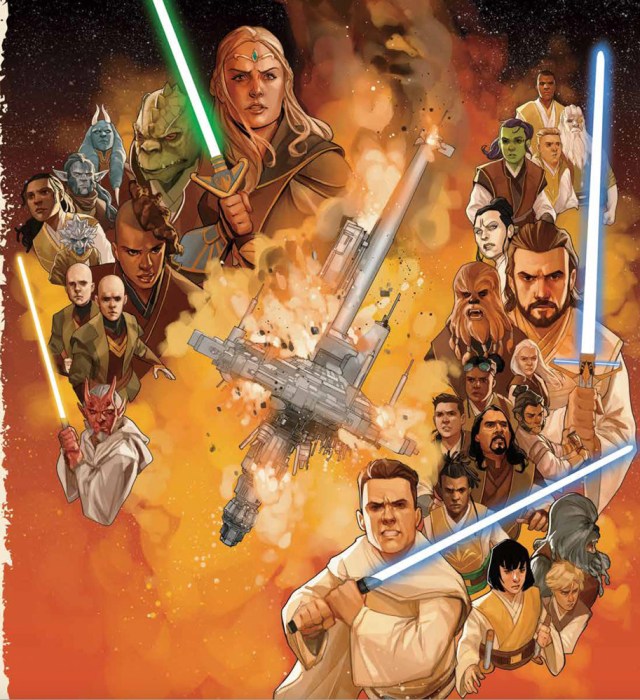
Star Wars - The Fallen Star Cover 3

To support her fantastic narrative, Gray makes use of an excellent collection of great characters, and I loved the mixture of protagonists and antagonists that she chose.  Not only are the protagonists of the previous adult High Republic books heavily featured, but Gray also makes strong use of characters from young adult novels like Into the Dark and Out of the Shadows.  This amazing blend of character perspectives really helped to craft a unique and interesting book, and it was great to see the different protagonists react to the situation.  Readers should be aware that Gray has gone on a bit of a killing spree here, and several fan favourite characters may not survive.  These deaths really help to ratchet up the tension and emotional weight of this novel, and you will really be left reeling.  While I might question the wisdom of killing off as many characters as they did, especially as the High Republic has a greater need of recognisable characters than other Star Wars novels, I think they all worked in the context of the plot and served the overall narrative extremely well.

The most prominent characters of The Fallen Star are the Jedi protagonists of Light of the Jedi and The Rising Storm.  These Jedi go through some big moments in The Fallen Star, especially as they face disaster and failure on a scale they have rarely seen before.  Gray works in some very interesting changes in the various Jedi’s characterisation because of the unseen monsters let loose on the station who disrupt the Jedi’s connection to the Force, which messes with their heads.  As a result, for most of the book the Jedi are scared, uncertain and irritable, which is a fun and clever change of pace that I felt added to the high-stakes disaster narrative extremely well.  The most prominent of these characters include Stellan Gios, Bell Zettifar, Elzar Mann, who have had some excellent character arcs in the previous novels, and it was great to see them again.

The first of these is Elzar Mann, who has been a standout figure due to his battles with his emotions, his romantic feelings towards fellow Jedi Avar Kriss, and his inadvertent connection to the Dark Side of the Force.  Following this dark moment, Mann has gone into a deep meditation retreat with a unique spiritual guide, who is teaching him to have a different perspective on life.  As a result, when Mann returns to Starlight Beacon just before the first attack, he has mostly cut himself off from the Force.  While this impacts his ability and mentality as a Jedi, his lack of a Force connection ensures that he is one of the only Jedi not incapacitated by the monsters roaming the station, which forces him take on more responsibility during the crisis.  I liked seeing this side of Mann, and it was great to watch him attempt to step up and protect his more responsible friends.  Unfortunately, Mann also experiences some big losses and failures in this novel which really strike him hard.  The final few chapters of The Fallen Star have some major moments for this character, and there was some brilliant development occurring here.  Gray did an incredible job expanding on one of the best and most complex High Republic protagonists here, and I loved Mann’s story in this book.

I also deeply enjoyed the story arc that surrounded apprentice Bell Zettifar.  Bell has gone through a lot in the last two books, especially as his master was killed before him in The Rising Storm.  This has led to some excellent and dark moments for Bell, and Gray does a wonderful job continuing them here as Bell struggles for most of this book, dealing with intense doubt and a sense of failure that gets enhanced by the influence of the strange creatures stalking the station.  I enjoyed seeing Bell slowly regain his confidence as he finds himself in the middle of another crisis and it led to some great and heartfelt moments, even as Bell suffered even more personal tragedies.

I must also highlight the continued story of Stellan Gios, the Jedi Master and rising star of the Order who was such a fantastic figure in The Rising Storm.  Stellan starts this book off as the new Marshal of Starlight Beacon, but he is still impacted by the doubts and trauma of the last Nihil attack at the Republic Fair.  Thanks to this and the influence of the Nihil’s monsters, Stellan shows a very different side to his character in The Fallen Star, being more petty, angry, and dispirited.  This is such a substantial change to what we have previously seen out of Stellan that it really hammers home just how dangerous the Nihil monsters are.  Watching Stellan battle with his emotions is pretty intense, and it proved to be exceptional to see him slowly overcome everything that is happening to him.  Gray writes an amazing couple of moments for Stellan in this book, and you end up with an impressive appreciation of this character by the end of this awesome book.

Aside from these main three figures, The Fallen Star also features an interesting array of supporting Jedi characters.  This includes the friendliest and fluffiest Jedi of all-time, the Wookie Burryaga, who everyone loves due to his kind nature and innate connection to the Force.  Burryaga forms a moving friendship with Bell, and he is easily one of the best supporting characters in the entire novel.  I also liked the reappearance of the Jedi Wayseeker, Orla Jareni, a semi-rogue Jedi who offers her own insights into the Force.  I will say I was surprised that there was barely any Ava Kriss in this novel.  Kriss, who is frequently touted as the main protagonist of the High Republic, has barely appeared in any of the novels since The Light of the Jedi, being more of a feature in the comics.  I feel that she leaves a noticeable absence in the novel, especially as the other character seem to reference how awesome she is in every second sentence.  Still, I think it worked without her, although I hope they use her more in the future.

Aside from the Jedi characters, Gray also makes exceptional use of an interesting collection of other characters trapped aboard the station who offer a great alternate viewpoint to the various Jedi.  What is interesting is that most of these characters are creations of Gray’s who first appeared in her last High Republic book, Into the Dark.  This includes the crew of the Vessel, a unique and unusual ship that transports Mann and Orla Jareni to Starlight Beacon and then gets trapped there.  The Vessel is crewed by a very entertaining trio of characters who balance each other out nicely.  This includes owner Affie Hollow, who plays straight woman to her unusual crew, and is a great central adventurer and emotional base for much of the book.  However, Affie is very much overshadowed by the rest of the crew, including captain Leox Gyasi, who is essentially a space hippy.  Leox is a wildly entertaining figure, with his Zen mindset, pacifistic tendencies, unique way of talking, and outrageous sense of humour, and you will quickly fall in love with him as the book progresses, especially in the few scenes where he gets serious.

The most solid member of the Vessel’s crew is Geode, a Vintian who ends up being the heart and soul of not only the Vessel but all of Gray’s High Republic novels.  Geode is essentially a sentient rock who never talks, rarely moves, and for most of his first appearance in Into the Dark, you were half convinced was some sort of elaborate prank and was really just a rock.  However, Geode ends up being a remarkable figure, capable of great feats of ingenuity and courage, while also being a social genius and a massive flirt.  I cannot emphasise how hilarious it is to see all the outrageous things that the other characters attribute to this silent, giant rock, especially as he just sits there for the entire book.  However, the other characters can apparently all see the “facial” expressions he gives off, and he is apparently quite an emotional and thoughtful character, who ends up being the solution to several problems.  Honestly, having a motionless rock as a major supporting character should not work, but it really does in The Fallen Star, and I loved every second that was spent on him.  I enjoyed seeing all these characters return, and I hope that Gray brings them back in the future, although I do worry the Geode joke might eventually becomes too overused.

Former Nihil members Nan and Chancey Yarrow perfectly rounded out the main cast aboard Starlight Beacon.  Both have had some interesting appearances in the young adult books, and it was great to see them here.  Nan is another character created by Gray and is a young and zealous Nihil member, while Chancey is a brilliant scientist working for the Nihil while also promoting her own agenda.  After leaving the Nihil and starting their own partnership, Nan and Chancey get captured by the Jedi and are being questioned about Starlight Beacon when events kick off.  Freed by the Nihil infiltrators, they spend most of the book on the fence about where their loyalties lie as they try to find their own way to escape.  This results in a fantastic and compelling alternate viewpoint to the book, and I loved seeing these two morally grey characters interact with the more selfless protagonists.  Gray comes up with a great dynamic between Nan and Chancey, which is semi mother-daughter in nature, and there are some interesting moments as Nan struggles to overcome her loyalty to the Nihil.  Their storyline comes to a very interesting and powerful end, and I will be deeply intrigued to see what happens to them next.

I want to make a final mention about the antagonists of The Fallen Star, especially as there is a rather unusual dynamic with this book.  This because, in many ways, the main villain of the story isn’t the Nihil, but is instead time, despair, impossible choices, panic, and human nature.  To a degree, these basic, uncontrollable elements end up causing more damage, and the impossible battle against them results in much of the book’s most dramatic and powerful moments.  There are a few proper villains in this book, such as series antagonist Marchion Ro.  Despite only being in it for a short while, Marchion cuts a distinctive and menacing figure in The Fallen Star, especially as he instigates the next stage of his master plan.  There are some interesting developments around Marchion here, and although they are probably saving any major revelations for his upcoming comic limited series, I felt that he continues to shine as the main villain of The High Republic.  The rest of the Nihil aren’t shown as much in this book, although I did enjoy the examination of the fear and hatred associated with them, especially after all the pain and suffering they caused.  I was very intrigued by the mysterious Nihil controlled monsters that infest Starlight Beacon and mess with the Jedi.  Despite the fact you never see them, they are incredibly intimidating, effortlessly defeating the Jedi and sending them on some dangerous head-trips.  I cannot wait to find out more about them in the future, especially as they are bound to explore their history more, and it should lead to interesting discoveries.  Overall, The Fallen Star had an exceptional group of characters and their intense, compelling and entertaining story arcs really elevated this around exciting novel.

I will come as very little surprise to anyone familiar with this blog that I chose to check out The Fallen Star audiobook.  I have so much love for Star Wars audiobooks, and this ended up being a very good example of how fantastic this format could be as it combines impressive narration with clever sound effect and epic music.  With a run time of 13 and a half hours, this is a somewhat shorter Star Wars audiobook.  I had a wonderful time getting through the story in this format, and I found that the compelling narrative became even more intense when read to me.  This is particularly true in such a trauma and action laden book like The Fallen Star, with the awesome medium of the audiobook helping to enhance the danger and despair of the situation.  The use of sound effects and music was once again superb, and I loved how hearing the distinctive sound of blasters, lightsabers and other pieces of Star Wars technology, helped to bring me into the story and enhance the events being described.  I also cannot overemphasise how awesome it is to hear the incredible and iconic Star Wars music during this plot as well.  Whenever the music is played, especially during some of the more dramatic or action-packed sequences, it really enhances the impact of the moment, drawing the listener in and ensuring that they are perfectly entrapped by the events occurring.

You can’t talk about this audiobook without mentioning the epic voice work of the narrator Marc Thompson.  At this point in his career, Thompson is essentially Star Wars royalty, as he has narrated so many amazing Star Wars audiobooks over the years.  He is easily one of my favourite audiobook narrators and I loved his work on previous audiobooks like Thrawn, Chaos Rising, Greater Good, Lesser Evil, Scoundrels, Dark Disciple and more.  He once again does a great job on The Fallen Star, bringing all the characters to life and moving the story along at a swift pace.  I loved the consistency in voices from all the previous High Republic books he narrated, and he also did a great job voicing characters from other books he hasn’t worked on.  All the characters have very distinctive and fitting voices, which included some very distinctive accents, which helped to highlight the characters and what they did.  I also loved the sheer emotional range that Thompson was able to fit into these great characters, ensuring that all the intense emotions were on full display.  It was pretty intense hearing all the character’s despair, anger and grief as everything they knew and loved was burned around them, and it makes for some incredible sequences.  This was easily the best way to enjoy this cool Star Wars novel, and I would strongly recommend The Fallen Star audiobook to anyone interested in checking this book out.

Overall, Star Wars: The Fallen Star by Claudia Gray is an excellent read that I would strongly recommend.  Featuring a clever, action packed, and emotionally rich, character driven story, The Fallen Star brilliantly continues the outstanding High Republic series, and you will love the dark places this story goes. I deeply enjoyed this cool book and I cannot wait to see what happens in this brilliant sub-series next.  Long live the High Republic!
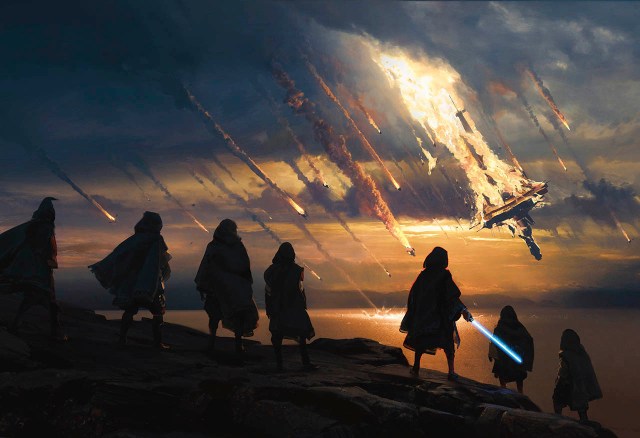
Star Wars - The Fallen Star Cover 2

Amazon     Book Depository

The Burning Road by Harry Sidebottom

The Burning Road Cover

Publisher: Zaffre (Trade Paperback – 5 January 2022)

Series: Standalone/Warrior of Rome

Length: 344 pages

My Rating: 4.75 out of 5 stars

Amazon

One of my favourite historical fiction authors, Harry Sidebottom, returns with another epic and intense historical adventure, The Burning Road, a fun-filled, action-packed thriller.

There are some amazing historical fiction authors out there now who focus on Roman history to create some excellent and compelling novels.  However, one of the best is the extremely talented Harry Sidebottom, a historian turned author who has been producing some awesome and unique reads.  I have been a major fan of Sidebottom ever since reading his debut novel, Fire in the East (an exceptional siege novel) back in 2008.  I really enjoyed his Warrior of Rome (which followed a Germanic Roman soldier, Ballista) and Throne of the Caesars series, both of which contained some exceptional historical elements.  Sidebottom has also had a lot of success recently with some standalone novels, especially his last three books, which cleverly combined his historical knowledge with elements from thriller subgenres.  This included his 2018 release, The Last Hour, which brought back Ballista and set him on a 24-esque romp through ancient Rome; The Lost Ten, which was reminiscent of special forces thrillers; and The Return, a dark and complex murder mystery that had interesting Scandi noir overtones.  I deeply enjoyed all these previous novels, and I was very excited when I received a copy of Sidebottom’s latest book, The Burning Road, a couple of weeks ago.

Sicily, 265 AD.  Throughout the strategic volcanic island, a call of freedom has been heard as a charismatic slave starts to rally his fellow enslaved workers.  The various estates and towns are in a state of uproar as vicious slaves and captured barbarian warriors rise up to kill their masters.  As the revolution gains strength and results in greater bloodshed, the fate of the island may rest in the hands of a legendary warrior, Marcus Clodius Ballista.

After years of fighting for corrupt emperors and battling deadly Roman politics, Ballista is finally free from his responsibilities, determined to enter retirement.  Whilst travelling with his eldest son, Marcus, to his estates on Sicily, their ship hits a terrible storm, forcing it aground on the west coast of the island.  Barely surviving the rough surf and destructive storm, Ballista and Marcus are soon thrust into even greater danger when a band of armed slaves mercilessly kills the other shipwrecked survivors.

Barely escaping the rampaging slaves, Ballista leads his son inland, hoping to discover what chaos has befallen Sicily.  They soon discover that the entire island is in revolution, with any non-slave at risk at being killed or brutalised.  Determined to keep his son alive and rescue his family on the other side of the island, Ballista and Marcus attempt to cross the entirety of Sicily on foot.  Constantly harassed by marauding bands of former slaves, the two Romans must find a way to survive and reach their family before it is too late.  But can the old veteran and rash youth work together to survive and save all of Sicily, or will one of Rome’s greatest warriors finally be finished off by rampaging slaves?

Wow, now this was a fun and intense novel from Sidebottom, who once again highlights his skill as a particularly inventive author of Roman historical fiction.  I deeply enjoyed The Burning Road, especially as Sidebottom once again combines compelling historical elements with an impressive and action-packed thriller storyline.

I had a lot of fun with the incredible and extremely fast-paced narrative that Sidebottom featured in The Burning Road.  While it took me a little while to get into this book (mainly because I couldn’t find any reading time), once I started, I honestly couldn’t stop, and I ended up powering through The Burning Road in less than a day.  The Burning Road has a brilliant story that pits Sidebottom’s best protagonist, Ballista, and his teenage son right in the middle of an intense slave revolt on Sicily.  Sidebottom sets this all up perfectly, with a quick prologue to establish that the slave revolt has occurred, before focusing entirely on Ballista and Marcus, who are shipwrecked off the coast of the island.  At first, the scenario reminded me of another historical fiction novel, The Gladiator by Simon Scarrow, which featured slaves revolting on Crete.  However, Sidebottom takes this in a very different direction, with a dark and non-stop story that sees the protagonist forced to navigate across the island, encountering all manner of odd characters and a ton of enemies.  The first two-thirds of the book see the protagonists on their own, walking a hellish volcanic landscape filled with murderous slaves, which was so damn cool.  Sidebottom was clearly trying to emulate some post-apocalyptic thrillers here, and there is even a scene that is a brilliant homage to The Road.  This makes for some intense and bloody sequences, and you will find yourself glued to the pages as you wait to see what danger they will encounter next.  The final third of the book sees Sidebottom return to his original writing element as Ballista is drafted into leading the defence of a besieged city.  This leads to an amazing and unique set of siege sequences, as Ballista and a small force of civilians attempt to hold back an overwhelming army of enraged slaves, which leads to a bloody and satisfying conclusion.  I loved this brilliant combination of story elements, especially the brutal walk across Sicily, and it makes for one heck of a story.

One of the best things about The Burning Road was the compelling central characters, especially as Sidebottom used it to tell a touching an enjoyable father-son story.  The first of these is Ballista, the protagonist of the Warrior of Rome series, who returns for another gruelling adventure.  As a former Germanic prince turned Roman soldier, siege expert and noble, Ballista is an old hand at danger and once again rises to the challenge even with his advancing age.  However, this time Ballista is forced to undertake his battled filled journey with his young teenage son, Marcus (also called Isangrim).  Setting Ballista and Marcus up as the main point of view characters, Sidebottom tells a fascinating tale that not only follows their desperate journey but which dives into their relationship and personality.  Due to Ballista’s military career, these two aren’t particularly close, with Marcus slightly resenting his barbarian father.  However, over the course of the book the two slowly grow closer as they face constant ordeal.  Sidebottom paces this growth in their relationship perfectly and you soon get really invested in seeing how much they begin to trust and rely on each other.  I enjoyed seeing this paternal side of Ballista, which enhanced his already complex character, and Marcus grows to become an enjoyable companion, especially as he begins to realise everything his father has done for him and how he has tried to prepare him.  This great father-son relationship becomes a major part of the book’s plot, and it put me in mind of some other similar adventures such as The Road, or even the recent God of War game (I may have imagined Ballista speaking in Christopher Judge’s voice).  This was a brilliant and powerful heart to the entire book, and it will be fascinating to see how much Marcus is featured in any of Sidebottom’s future novels.

I was also very impressed with the interesting historical detail that Sidebottom featured throughout The Burning Road.  The author has clearly done a ton of research on the various subjects contained within and there is a comprehensive reference section at the back, including a history book written by Sidebottom himself.  As such there is an amazing sense of authenticity to the setting and figures featured within The Burning Road which really helps to drag the reader into the story.  This period of Roman history has always been a rich ground for Sidebottom’s novels, and it was fascinating to see some more detail about the politics of the time.  I loved all the awesome detail about Sicily, which proves to be an exceptional and fascinating background setting for the story.  Sidebottom, who has visited Sicily many times, does a great job of filling in the historical blanks around the island and he portrays it as it would have appeared during Roman times.  All this impressive attention to environmental detail results in some cool romps through forests, mountains and ancient towns, and I think that the author really captured the historical soul of this island.  One of the big historical elements that Sidebottom invests a lot of time exploring is slavery during the Roman era.  The author includes a fascinating examination of how slaves are treated during this period, as well as some of the philosophical thought surrounding the entire process, both from the masters and the slaves.  The subsequent slave revolt really helps to highlight the Romans’ reliance on a large population of slaves to maintain their society and having the outsider Ballista explore this provided an interesting alternate perspective to the practice.  I also deeply appreciate the desperation and anger that the various slave characters had, which helped to turn them into a sympathetic enemy, even if you want the protagonists to survive more.  All this really added a lot to the overall story, and I look forward to seeing which area or historical period Sidebottom will explore next.

The Burning Road was another exceptional and epic read from Harry Sidebottom, who continues to flourish as one of the most inventive and exciting authors of historical fiction out there.  This latest novel features an intense and unique historical fiction tale chock full of action, character growth and some fascinating bits of period detail.  I had an absolute blast getting through this amazing novel, and The Burning Road comes very highly recommended as a result.

Amazon

Unforgiven by Sarah Barrie

Unforgiven Cover

Publisher: HQ (Trade Paperback – 1 December 2021)

Series: Standalone/Book One

Length: 480 pages

My Rating: 5 out of 5 stars

Amazon

Talented Australian author Sarah Barrie presents one of the darkest and best Australian thriller novels of 2021 with Unforgiven, a powerful and captivating read that sets determined protagonists against the very worst of human monsters.

Years ago, the city of Sydney was haunted by a terrible paedophile and murderer known as the Spider, who kidnapped, molested and killed young girls, all on camera.  His reign of terror was ended suddenly one violent night thanks to two women, a determined rookie police officer, Rachael Langley, and one of the Spider’s young victims, Lexi Winter, who disappeared never to be seen again.

Now, after years of living on the street, Lexi has grown up tough and hard, determined to escape the tortures of her childhood through alcohol while trying to reconnect with the sister she was forced to leave behind.  However, Lexi is still obsessed with taking down monsters, and with her impressive hacking skills she spends her days tracking paedophiles, entrapping them, and ensuring they are captured by the police.  However, when her latest target proves to be particularly illusive online, she makes a fateful decision to break into his house, only to witness him being murdered.

At the same time, Rachael Langley is now a successful detective inspector, solving some of the toughest crimes in Sydney.  Still lauded for her role in stopping the Spider, Rachael lives in regret for being unable to save Lexi all those years before.  However, everything changes when a man calls her, claiming to be the real Spider and providing proof by horrifically murdering another child on camera.  Quickly establishing a police taskforce, Rachael and her team must determine if the killer is a copycat or whether Rachael captured the wrong man all those years ago.  To solve this case Rachael is going to need help from the last person who wants to see her, Lexi, but can these women work together after everything they have been through?  And what happens when their killer learns that Lexi is still alive and hunting for him?

This was an intense, grim and deeply compelling Australian crime fiction read from Barrie, who has written an amazing and powerful story that proves very hard to put down.  Unforgiven was the first of Barrie’s books that I have read, although several of her other Australian crime fiction novels are quite intriguing and I might try and read them at some point after being so captivated by this epic and moving read.  This was such an addictive novel that it gets a full five-star rating from me.

Barrie has come up with a very impressive and intense narrative for Unforgiven that sees several damaged characters dragged into the web of a dangerous and clever criminal.  The story has a great start that showcases the lives of the main protagonists, Lexi, Rachael and Rachael’s nephew and fellow police officer Finn, as well as giving some hints at the events of the original Spider case that so deeply impacted the female main characters.  After this quick set-up, the story advances in all its dark and powerful glory, as two fascinating plot lines develop.  Lexi, who has become an online vigilante hunting paedophiles on the dark web, finds herself caught up in a brutal murder when one of her targets is murdered by a mysterious figure while she is sneaking into his house.  Most of her early story involves her continued attempt to hunt paedophiles while also trying to find a way to hide the body of the murdered man, for which she gains some help from an interesting source.  At the same time, Rachael and Finn become involved in a brutal case when the man claiming to be the real Spider calls Rachael and leads them to murdered young girl, forcing them to once again dive into the unsettling world of paedophiles.

Both storylines advance at a quick and compelling pace, with each of the main protagonists facing massive challenges as they attempt to achieve their objectives.  I liked this initial separation of the storyline, and the two plotlines work well together in tandem, with the reader getting pretty caught up in both narrative threads.  At the same time, the author drip-feeds in bits and pieces of Lexi and Rachael’s pasts, especially the events that led up to the arrest of the Spider and the disappearance of Lexi.  This deepens the audiences’ connections to the two protagonists so that when their storylines inevitably connect it really enhances the impact of the scene.  Unforgiven shifts into high gear once these plotlines are joined, with all three protagonists working towards the same goals, although Lexi maintains her secrets.  Barrie starts throwing in some real curveballs here, providing a complex and intriguing case that throws the protagonists through the emotional wringer as they get closer to the big and powerful conclusion of the novel.  There are some great twists in the last half of the book and while I saw a couple of things coming, there were some fantastic surprises that really threw me.  This ends up being an outstanding and complex story, and the readers will be left wanting more, especially as Barrie leaves it open for a sequel, which I really hope she does.

While I deeply enjoyed the captivating and intense story contained within Unforgiven, this was a bit of a hard novel to read at times due to its very, very dark content.  Unforgiven focuses on the hunt for a murderous paedophile and his child exploiting friends, which inevitably leads to some depictions of the terrible acts they commit, not only to children in the current storyline, but to the protagonist Lexi back in her childhood.  Barrie really does not pull any punches here, and the book contains some very dark and grim moments that really stick in the mind.  These powerful and shocking scenes really raised the stakes of the book and ensured that the reader becomes extremely invested in seeing the protagonists achieve justice through their actions.  While I really appreciated that Barrie was trying to raise awareness and showcase just how evil some people can be, I will admit that some of these scenes did get to be a bit much at times, forcing me to stop and put the book down.  Readers are warned that Unforgiven has very strong themes of violence and abuse against children and young people.  However, if you can get past that, it is worth it, as Barrie does an excellent job telling this rough story about true human evil.

Unforgiven’s already brilliant and powerful narrative is enhanced by the impressively written and complex central characters contained within.  Barrie has gone out of her way to introduce several very damaged and compelling protagonists, each of whom add so much to the overall plot thanks to their excellent backstories and substantial development.  The most prominent and interesting of these characters are the two female leads of the book, Lexi Winter and Detective Inspector Rachael Langley, whose lives became irreparably entangled all those years ago.  These two characters serve as two of the three main point-of-view characters, with most of the story told from their perspectives.

Lexi was a great character, and I was deeply impressed with the amount of work that Barrie put into her complex and damaging past, as well as her distinctive current personality.  There were so many interesting aspects to Lexi, who immediately stands out as a protagonist thanks to her damaged personality, strong sense of deduction and observation, her badass ability with a computer and the fact that she is the only character whose chapters are told in the first person.  I loved the intriguing contradictions in her life as Lexi makes a living as an escort while devoting most of her personal life to being an online vigilante/hacker extraordinaire who specialises in taking paedophiles down.  This makes for such a distinctive character, especially once you figure in all the major impacts of her childhood that has left her such an emotional mess.  Barrie does a good job of slowly revealing all the horrors of her early life, and while some of the scenes are pretty brutal, it is amazing to see everything that the character has risen above to still be such a strong figure.  The reader swiftly gets attached to Lexi as a protagonist and it will be fascinating to see what happens to her next if Barrie decides to turn this into a series.

The other central character that I must talk about is Rachael, the veteran detective inspector whose career was built off the success of the Spider case.  Rachael is a great police protagonist, a confident, intelligent and strong figure who is able to keep most of her people in line and pursue a vigorous investigation.  However, Barrie builds in several great aspects to her character that really impact this protagonist throughout the course of Unforgiven.  Firstly, there is the guilt that Rachael still feels over her past with Lexi, especially as Rachael failed her in a way which is slowly revealed over the course of the book, especially once the two reunite and have an awkward relationship.  The other aspect is the doubt that slowly creeps into Rachael as the case proceeds, especially as the possibility that the original person convicted in the Spider case might be innocent.  This doubt, coupled with the guilt over the fact that she could be responsible for the latest deaths by not actually catching the real Spider, starts to impact her throughout the book and proves to be an intriguing motivator for some of her decisions.  These complex aspects really helped enhance the emotional power of Unforgiven and I really appreciated the intense storyline that Barrie wrote about people living in the past and accepting one’s mistakes.  I really enjoyed seeing both Lexi and Rachael in this novel, and they had some great storylines in this book.

Aside from Lexi and Rachael, there are several other great characters in Unforgiven I should mention.  The most prominent of these must be Detective Senior Sergeant Finn Carson, Rachael’s nephew and second-in-command of the investigation, who ends up being the third major point-of-view character.  Finn was an excellent male police character who serves as an interesting counterpoint to the two female protagonists.  While not as damaged as the other two, Finn has his own issues, and his viewpoint really added to the overall quality of the book.  I was also a big fan of Lexi’s neighbour Dawny, an eccentric older woman who assists Lexi in several matters, including disposing of a body (what are good neighbours for?).  Dawny was one of the funniest characters in the book and it was great to see the protagonists be completely baffled by her knowledge and ability to come up with effective solutions to problems while maintaining the batty old lady routine.  I quite liked the eventual reveal of who Dawny really was, as it fit in well with the other characters in the book, and it will be fun to see if Barrie brings her back at some point in the future.  Finally, I definitely need to highlight the villain of the book, the Spider, who is one of the most despicable fictional antagonists I have seen: a sordid child abuser and murderer who films their grisly crimes.  You quickly feel a lot of hate towards this character, even if you don’t know who they are for most of the story.  The eventual reveal and the various twists around them were quite clever and I had an amazing, if disturbing, time finding out who this monster was.  An overall exceptional character driven novel, you will quickly find yourself getting stuck following all these fascinating and compelling figures.

Unforgiven by Sarah Barrie is an outstanding and impressive read that takes the reader of a gritty and vicious ride.  Filled with a disturbing narrative and some brilliantly damaged central characters, Unforgiven is an utterly captivating read that is near impossible to put down or forget about.  Easily one of the best Australian thrillers of 2021, Unforgiven comes highly recommended and I am extremely excited to see what other incredible novels Barrie comes up with in the future.

Amazon

Warhammer 40,000: Steel Tread by Andy Clark

Steel Tread Cover

Publisher: Black Library (Audiobook – 5 January 2022)

Series: Astra Militarum – Book One

Length: 9 hours and 50 minutes

My Rating: 4.75 out of 5 stars

Amazon     Book Depository

Prepare to dive back into the brutal chaos of the far future of the exceptional Warhammer 40,000 universe with the powerful and intense Steel Tread, a fantastic tank novel by Andy Clark.

At this point in its existence, the Warhammer 40,000 canon has advanced far from just a tabletop game and has turned into quite the complex extended universe that features a range of interesting factions, species and unique narratives.  From fantastic stories about crusading genetic Space Marines (check out my review for Deathwatch: Shadowbreaker), to unique underworld stories about warring gangs (Kal Jerico: Sinner’s Bounty and Fire Made Flesh), and narratives about ancient metal aliens (The Twice-Dead King: Ruin), this franchise has it all.  However, to my mind some of the best Warhammer 40,000 books are compelling war stories that pit ordinary human soldiers against the very worst monsters in this distinctive universe.  Examples of this include the awesome Gaunt’s Ghosts series by Dan Abnett, (check out my review for First and Only), which is pretty damn awesome.  As such I was very excited to check out the new novel from talented Warhammer author Andy Clark, Steel Tread, which looked to follow a group of tank soldiers in the worst of situations.

Following the fall of Cadia, war reigns across the universe as the forces of Chaos push further and further into Imperial space.  There are many battles occurring in this new warzone, but none are more desperate or destructive than those on the world of Croatoas, where the armies of the Astra Militarum, better known as the Imperial Guard, face off against twisted forces serving the Ruinous Powers of Chaos.

Following a devastating campaign, veteran tank gunner Hadeya Etsul is reassigned and consolidated into a Cadian regiment and placed in command of the ancient Leman Russ Demolisher tank, Steel Tread.  Already haunted by the events that destroyed her last tank and crew, Etsul is forced to adapt to her new command whilst immediately getting thrust into the midst of a new offensive.  However, rather than the well-run team she is used to, Etsul finds herself leading a dysfunctional and aggrieved crew who don’t believe she has earned the right to be either their commander or a member of a Cadian regiment.

As the campaign takes a turn for the worst, the crew of Steel Tread will need to find a way to work together if they are to survive.  The enemy has unleashed vast and terrible horrors against the Imperial forces, from dark sorcery to mutated machines, and only the very best crew will have a chance to hold out and fight back.  Can Etsul gain the respect of her crew in time, or will Steel Tread be yet another victim of the unrelenting forces of Chaos?

Wow, that was awesome!  I knew that I was going to have an amazing time reading Steel Tread, especially as it had a great synopsis, but I was unprepared for just how enjoyable it was.  Clark, who has previously written several Warhammer 40,000 novels, including his Imperial Knights books (which he makes certain homages to here), did a fantastic job with this latest novel, producing a grim and powerful tank novel that proves near impossible to stop reading.

Steel Tread has a powerful and action-packed narrative that sees a dysfunctional tank crew thrust into the middle of a hellish warzone (literally hellish) and forced to come together to face their foes.  Clark does a great job of setting the scene for this novel, introducing the conflict, the main characters, and the Chaos based antagonists, in quick succession and ensuring all the key aspects of the book are well established.  The first part of the narrative is mostly dedicated to setting up the crew dynamics and exposing the major personal conflicts that arise when a new commander appears.  This dysfunctional crew mentality continues as the characters are thrust into their first conflicts, before a major battle occurs that separates them from the rest of their command.  Surrounded by all manner of foes, including magical zombies and a terrifying giant war machine (a corrupted Imperial Knight), the crew are forced to come together, especially after overcoming some losses and major personal conflicts.  This all leads up to the big finale, in which the crew are once again thrust into a do-or-die battle and must overcome immense odds with little hopes of success.  This finale really pays off, as the readers are on the edge of their seats during the entire conclusive sequence and beyond as they wait to see what happens to the crew they’ve come to know and love.  This novel is brilliantly paced out and constantly in motion, ensuring that there are no slow spots to stumble across as they move from one excellent sequence to the next.  I loved the great combination of intense action and character moments, which results in a powerful and impressively thrilling read.

I deeply enjoyed the exquisite writing style that Clark utilised for this great novel, especially as it was written in the style of a tank based military thriller.  Clark is an amazingly detailed writer and he perfectly captures the claustrophobia of a classic tank movie.  It was brilliant to watch the six main characters crammed together inside Steel Tread as they face all manner of hell, often by themselves.  You really get a feel for all the stress, rage and fear that the characters are feeling, especially during the amazing action sequences.  All the battle scenes are written extremely well, and the author ensured that you are placed right in the middle of the action.  I really loved all the epic fights, and I really must highlight the scary and insane enemies they faced, including cultists, zombies and that awesome Chaos Knight.  I deeply appreciated the work that Clark put into describing that Chaos Knight into a fearsome and freaky war machine, especially its spider-like walking style, and it easily stole every scene it was in.  This impressive writing style really helped to enhance an already amazing story and I loved how the author was able to tell such a brutal and complex war story.

This proved to be an exceptional entry in the Warhammer 40,000 canon, and I deeply enjoyed the way in which Clark was able to transplant his impressive tank story into this universe.  While there are a few references to events in Warhammer history that set the scene for the plot, this ended up being one of those tie-in novels that can easily be read by people unfamiliar with the franchise.  Anyone who loves a good science fiction war novel can have a lot of fun with Steel Tread, although there is also a lot that Warhammer fans will really appreciate.  I loved all the references to the fall of Cadia featured throughout the book, especially as the characters are part of a Cadian regiment.  Clark spends a lot of time examining the psyche of a typical Cadian soldier, and there is an interesting focus on members of other regiments being consolidated into the usually insular and elite Cadians.  As such, you get some great insights into the different Imperial Guard regiments, including their unique traditions, and it was fascinating to see several characters, including the main protagonists, try and find acceptance with her new Cadian colleagues and subordinates.  This book does feature a ton of awesome Imperial Guard and Chaos troops, and it was great to see Steel Tread caught in the middle of it, especially as Clark does a great job of describing how the various units move and fight.  I also really loved seeing this story unfold from the common soldier’s perspective, and it was very insightful to see the tank crew when confronted by Chaos sorcery, corruption, mutations and other insanities, especially as half the time they don’t really know what they are.  Clark has produced a great tie-in to the Warhammer 40,000 universe, and this is honestly an excellent first novel for any reader interested in exploring this massive franchise.

Another feature of Steel Tread that I enjoyed was the amazing array of characters featured within.  Clark has come up with an interesting and diverse central group of protagonists for the book, with the primary six being the crew members of Steel Tread.  I had a lot of fun with these great characters, and I liked the interesting mix of personalities and backstories.  The author has hit on a few military stereotypes here as you have a new and untrusted officer, a grouchy sergeant, a religious zealot driver, a strong and mostly silent loader with a mysterious past, a young rookie eager to prove himself and a rebellious former street thug turned soldier who constantly tests the new commander.  While some of these character types seem a tad familiar, there is a reason that they work in a military fiction novel such as Steel Tread, as these diverse personalities play off each other extremely well.  There is the requisite hardship and clashes you would typically expect from this sort of crew, but they soon develop into a strong team, especially once their new commander finally gains their trust and respect.  Clark does a great job of setting all six of these main characters up and it was great to see them slowly come together through their joint experiences.  Most of the narration is done by central character Etsul, who is still dealing with the aftermath of her last devastating mission and must overcome her memories and doubts to lead the team.  This intense and compelling narration is perfectly complemented by the second narrator, the young rookie Garret Verro, who offers a slightly more hopeful counterpoint to the rest of the characters in the novel.  I really liked seeing this great group of characters come together and you really come to care for the whole crew by the end of the book.

Aside from the central six characters, there are a few other interesting figures that Clark features throughout the novel.  The main one of these is probably Steel Tread itself, as the author works to give the tank its own personality (which is helped by the fact that machines in the Warhammer 40,000 universe have their own souls, known as machine-spirits).  The old but still deadly tank (an Agamemnor-pattern Leman Russ Demolisher), really feels like a member of the crew, especially with how the other characters interact with it, and you end up feeing just as attached to the tank as you do to its human passengers.  Another great character was Lieutenant Horathio Aswold, a fellow tank commander who is consolidated into the Cadian regiment at the same time as Etsul.  Aswold is a fun and slightly eccentric character who bonds with Etsul over being the newest members of their Cadian regiment.  Aswold proved to be a fun counterpoint to Etsul, and I liked how he was a great soundboard for her concerns and doubts, especially when it comes to their new regiment.  The rest of the Imperial characters in this book are only really featured briefly, and due to most of the action occurring inside the tight confines of Steel Tread, there aren’t a lot of extended interactions between the main cast and supporting characters.  I think this smaller cast worked extremely well in the context of a tank-based novel, and it allowed the readers to get to know the main characters.  The fact that the reader never really sees the main antagonist of the novel was an interesting choice from Clark, but it honestly didn’t detract from how awesome the story was.  While it might have been cool to see a powerful traitor Space Marine attack the tank, I think that keeping him away from the protagonists and letting them face only opposing soldiers, machines and monsters helped to emphasise the fact that the characters were only a small part of a much larger war.  I hope we see more of Steel Tread and its crew in the future.

I ended up listening to the audiobook version of Steel Tread, which came in at just under 10 hours, which I ended up listening to in a few short days once I got caught up in the impressive narrative.  I felt that the audiobook format was an excellent way to enjoy this book, especially as the amazing narration really highlighted all the impressive action scenes.  The intensity, complexity and brutality of the various combat sequences is really emphasised in this format and I was engrossed in all the elaborate firefights.  Thanks to this great translation of Clark’s detailed writing style, I found myself practically seeing every shot as the book was read out, and it really helped bring me into the narrative.  I need to highlight the fantastic narration of Remmie Milner, who moved the book along at a quick and enjoyable pace.  Milner had an excellent voice for this thrilling science fiction novel and I loved the great voices she provided to each of the characters.  Not only did these amazing voices really help the reader to appreciate the emotions and thoughts of the protagonists but they highlighted the cultural differences that existed amongst the multiple Imperial Guard regiments, with the newcomers having different accents to the established Cadians.  This excellent voice work was also enhanced in a few places by some clever sound effects, such as the enhancement given when a radio was being utilised by a character.  This great voice work and design elements of the audiobook really helped to bring me into the story and I had a brilliant time listening to it.  Easily the best way to enjoy Steel Tread, this audiobook format comes highly recommended.

Overall, Steel Tread by Andy Clark was an exceptional and impressive Warhammer 40,000 tie-in novel that takes the reader on a wild and compelling ride with a great group of characters.  I loved the brilliant combination of the Warhammer universe with a brutal and grim tank-based military story.  Filled with all the awesome action any science fiction fan could want, Steel Tread was an extremely thrilling and very fun novel that is really worth checking out.  One of the best and most enjoyable Warhammer novels I have had the pleasure of reading.

Amazon     Book Depository

Star Wars: The High Republic: Tempest Runner written by Cavan Scott and performed by a full cast

Star Wars - Tempest Runner Cover

Publisher: Random House Audio (Audio Drama – 31 August 2021)

Series: Star Wars – The High Republic

Script: Cavan Scott

Cast: Jessica Almasy, Dan Bittner, Orlagh Cassidy, Sullivan Jones, January LaVoy, Kathleen McInerney, Tara Sands, Vikas Adam, Jonathan Davis, Neil Hellegers, Saskia Maarleveld, Soneela Nankani, Marc Thompson and Shannon Tyo

Length: 6 hours and 5 minutes

My Rating: 4.5 out of 5 stars

Amazon

The epic High Republic era of Star Wars fiction continues in Tempest Runner, the brilliant and captivating full-cast audio drama written by impressive author Cavan Scott.

Ever since its beginnings in early 2021, I have been having a lot of fun with the cool new focus of the Star Wars extended universe known as The High Republic.  Set hundreds of years before the Skywalker Saga, The High Republic has featured several impressive novels, comics and other media releases that tell a grim story of destruction and strife in the golden age of the Republic and the Jedi.  One of more interesting pieces of this fiction from late 2021 was this fantastic full-cast audio drama, Tempest Runner, which focused on one of this era’s best villains, the Nihil Tempest Runner, Lourna Dee.  This awesome audio drama was authored by the exceedingly talented Cavan Scott, who not only wrote my favourite High Republic book so far, The Rising Storm, but also a great previous Star Wars audio drama, Dooku: Jedi Lost.

Synopsis:

The Nihil storm has raged through the galaxy, leaving chaos and grief in its wake. Few of its raiders are as vicious as the Tempest Runner Lourna Dee. She stays one step ahead of the Jedi Order at the helm of a vessel named after one of the deadliest monsters in the galaxy: the Lourna Dee. But no one can outrun the defenders of the High Republic forever.

After the defeat of her crew, Lourna falls into the hands of the Jedi – but not before she hides her identity, becoming just another Nihil convict. Her captors fail to understand the beast they have cornered. Just like every fool she’s ever buried, their first mistake was keeping her alive.

Lourna is determined to make underestimating her their last.

Locked onto a Republic correctional ship, she’s dragged across the galaxy to repair the very damage she and her fellow Tempest Runners inflicted on it. But as Lourna plans her glorious escape, she makes alliances that grow dangerously close to friendships. Outside the Nihil – separated from her infamous ship, her terrifying arsenal, and her feared name – Lourna must carve her own path. But will it lead to redemption? Or will she emerge as a deadlier threat than ever before?

Tempest Runner ended up being an entertaining and captivating piece of Star Wars fiction.  Featuring another excellent story from Scott that not only dives into the past of great character Lourna Dee but continues the story set up in several of the past High Republic novels.  Perfectly told using a full cast of narrators, this was an outstanding audio drama that I had a wonderful time listening to.

It was clear that Scott was on quite a roll last year when it came to fantastic storytelling.  Tempest Runner is set after the events of The Rising Storm and continues several interesting storylines from this novel, as well as other pieces of High Republic fiction such as Light of the Jedi and Out of the Shadows.  Starting off with Lourna’s capture by the Jedi, the story shows her successfully hide her identity and get imprisoned aboard a Republic prison ship doing hard labour as punishment.  Trapped with some of the worst criminals in the galaxy, as well as former Nihil members who utilise her identity for her own good, Lourna is forced to survive while also coming to terms with who she is, what drives her and what she wants from the future, especially when she connects with one of the prison guards.  However, an enemy from her past has found out where she is and is determined to kill her no matter what.  This leads to several intense and brutal confrontations as Lourna is forced to once again bring out her inner monster to save herself and defeat her opponents, while also setting her path for future endeavours in the High Republic universe.

Tempest Runner’s narrative ended up being pretty intense, and I loved the cool and intriguing plot, especially as there are several fun twists and reveals, including that great one towards the end.  While this is a mostly self-contained piece of Star Wars fiction, there are multiple intriguing connections to other High Republic novels and comics.  I particularly loved how several of the best villains from the main two novels were used here, and it also sets up Lourna’s storyline for the next book in the series.  Scott employs an interesting and roundabout way of telling Tempest Runner’s story, utilising a series of flashbacks and interludes to continue the main plot which occasionally helps compensate for the lack of descriptive words that is characteristic of the audio drama format.  I really need to highlight the book’s great opening section in which the capture of the protagonist is recounted in compelling detail to the novel’s main antagonist, with the storyteller and his audience providing questions and commentary during the dramatisation of the events being discussed to provide context.  The storyline has a great blend of elements, and I loved the fantastic prison story, the intrigue of the Nihil, the fantastic revenge plot surrounding the antagonist, as well as the massive amount of character development that occurs around the main character.

Scott really went out of his way to explore the character of Lourna Dee in Tempest Runner.  Despite being one of the most distinctive and entertaining villains in the High Republic canon, very little was known about Lourna Dee before now, except that she is an unassailable badass who is even capable of hanging with a Jedi in a fight.  Tempest Runner, however, dives deep into the heart of this cool character, and I liked the complex and intriguing development and history around her.  Most of the story is dedicated to the modern Lourna, who, after being captured, attempts to turn over a new leaf in the prison system to survive.  This provides some interesting insights into her mind and motivations, especially as she is not as mindless a killer as some of the previous books would lead you to believe.  Instead, she is quite a complex and tragic figure, something that is made clear when you see the various flashbacks to her past that Scott comes up with.  These flashbacks tell a captivating tale of betrayal and heartbreak, showcasing what led an innocent girl to a life of hardship and crime.  This backstory is extremely fascinating, with some powerful moments of love, loss, and revenge.  In addition, the story also dives into how she became a member of the Nihil and rose in its ranks.  This interesting background weaved into the main plot extremely well, and I think that Scott showcased the character’s past perfectly, ensuring that it explains her current mentality and motivations.  I am deeply happy that we finally got to see this character’s backstory, and it really did not disappoint.

While most of Tempest Runner’s focus was on Lourna Dee, a couple of other characters really stood out to me.  This included Tasia, the former Nihil member who blackmails Lourna to help her survive in prison.  Tasia is a fun secondary antagonist, and it was very entertaining to see her try and make a power play on Lourna once she was no longer in control.  I also loved seeing more of Pan Eyta, a former Nihil Tempest Runner who was betrayed by Lourna in The Rising Storm.  Pan, who is dying thanks Lourna, goes on a big revenge mission here and ends up being the major antagonist of this novel.  I personally thought this was an amazing conclusion to his compelling character arc established in the previous novels and it was great to see him and Lourna have several aggressive and deeply personal confrontations throughout Tempest Runner.  I also enjoyed seeing a young version of High Republic arch-antagonist Marchion Ro, before he took control of the Nihil, as well as a glimpse of his often-discussed father Asgar Ro.  Several other supporting characters in this novel were also pretty fun, and I had a great time seeing some of their storylines unfold.

While I had to highlight Tempest Runner’s cool narrative and great characters, you can’t talk about this amazing piece of Star Wars fiction without mentioning the awesome audio drama format.  I have a lot of love for Star Wars audiobooks and audio dramas (such as Doctor Aphra), and this was a particularly good one.  The team behind this epic audio drama did an amazing job of combining Scott’s great story with a team of brilliant voice actors, as well as the typical Star Wars sound effects and music.  With a run time of just over six hours, this is a very easy audio drama to quickly power through, and I think I managed it in just over a day myself.  While some people unfamiliar with the format might have some issues regarding the full reliance on descriptive dialogue and sound effects rather than expositional text to describe action, I thought that Tempest Runner was adapted extremely well and I had an absolute blast getting through it.

I must highlight the exceptional cast of voice actors that were featured in this awesome audio drama, as the team behind it pulled together a great group of narrators, including several actors well known for their work bringing Star Wars audiobooks to life.  The most prominent actor in this group is probably Jessica Almasy, who voiced main character Lourna Dee.  Almasy brings a great deal of complexity to the role and I loved the semi-French accent she utilised throughout Tempest Runner, which was reminiscent of how Twi’lek characters speak in shows like Star Wars: Rebels.  I thought that Almasy did a brilliant job of highlighting Lourna’s true feelings and personality in this audio drama, and it was great to see her transform the character in several intense, emotional scenes.  This was some brilliant voice work and it was an amazing highlight of this exceptional production.

I also deeply appreciated the great work that the other actors contributed to Tempest Runner and its characters.  While there were a few new narrators here whose work I enjoyed, the ones that impressed me the most were established narrators from other Star Wars audiobooks.  This includes January LaVoy, who voiced the character of Tasia, providing her with some much-needed depth and spite.  LaVoy, who I loved in works such as Star Wars: Victory’s Price (one of my favourite books and audiobooks of 2021) and Star Trek: Discovery: Die Standing, was just great here and I really appreciated the characterisation her voice added to Tasia.  Marc Thompson, who has previously narrated all the main High Republic novels, as well as the Thrawn Ascendancy books (Chaos Rising, Greater Good and Lesser Evil), was another standout narrator, especially as he voiced three characters, including antagonists Pan Eyta and Marchion Ro.  Having this cool continuation from Light of the Jedi and The Rising Storm for these great villains helped me enjoy their appearances in Tempest Runner a lot more, especially as Thompson has come up with some extremely sinister and fitting voices for them.  I also had a lot of fun with Jonathan Davis (who previously narrated Master & Apprentice, Lords of the Sith and Maul: Lockdown), who voiced two characters here.  I particularly enjoyed his work on the mysterious Asgar Ro, and the calm and wise tone he utilises for him (which is reminiscent of another major Star Wars character), works perfectly to give him some great depth.  An overall exceptional collection of narrators, I had an amazing time listening to this audio drama.

With a great cast, a brilliant story and a great focus on an incredible central character, Tempest Runner was an outstanding addition to the High Republic range of Star Wars fiction.  The always impressive Cavan Scott came up with an awesome narrative for Tempest Runner and I loved learning more about fun character Lourna Dee.  A must-listen for all fans of The High Republic, you really won’t regret checking out Tempest Runner.

Amazon

All of Us Villains by Amanda Foody and Christine Lynn Herman

All of us Villains Cover

Publisher: Gollancz (Trade Paperback – 9 November 2021)

Series: All of Us Villains – Book One

Length: 388 pages

My Rating: 4.5 out of 5 stars

Amazon     Book Depository

The writing team of Amanda Foody and Christine Lynn Herman presents their first awesome joint novel, with the impressive and dark young adult fantasy book, All of Us Villains.

Foody and Herman are both established authors, having previously released cool-sounding novels and series, such as Foody’s bestselling The Shadow Game series and Herman’s The Devouring Gray novels.  While I have not had the opportunity to check out either of these authors’ previous books, I was very interested by All of Us Villains when I first heard about it a few months ago.  I loved the unique and compelling plot synopsis, and I was also intrigued by all the buzz from other reviewers.  I instantly jumped on it once I received my own copy and I was very impressed with its clever and compelling story.

In a world still powered by spells and curses, nothing is more precious than high magick, which can super-charge any spell and provide its wielder with insane amounts of power.  The only reliable source of high magick left in the world can be found in the remote city of Ilvernath, a dour and depressing settlement whose prosperity and fame can be traced to seven ancient families.  The ability to see and manipulate this high magick can only belong to one family at a time, and control ensures their prosperity for an entire generation.  However, to gain this right, each family must make an unbelievable sacrifice.

Every generation, when the Blood Moon starts to rise, a magical tournament is enacted that pits the very best of the families against each other.  However, this is no gentle tournament of magick; it is a brutal, curse-created fight to the death, with each family forced to nominate a young champion to represent them.  Only one champion can survive the tournament, and no-one ever emerges unscathed.

Twenty years after the last competition, a new Blood Moon starts to rise, and the families make ready for the latest battle for supremacy.  However, this tournament will be very different than any before.  Someone from the seven families has published a tell-all book, detailing every aspect of the tournament and informing the world of the hidden atrocities that have been committed in the name of power.  With the world now obsessed with every aspect of the tournament, all attention is now focussed on Ilvernath and the seven champions.

Thrust into the public spotlight, all seven champions must now deal with the intense infamy the tournament produces as they prepare to fight.  Forced to balance their own feelings on death and survival with the intense pressure placed upon them by their families and tradition, none are truly ready for the horrors they will be forced to endure.  However, this tournament also offers its competitors a chance to survive and end the curse that has blighted their families for centuries.  But not all the competitors are willing to give up the chance of ultimate power and are prepared to pay any price to win.  Let the games begin!

Damn, now this was a really great novel.  The brilliant new writing team of Foody and Herman produced an outstanding book in All of Us Villains, and I really got stuck into its story incredibly quickly.  The authors did a wonderful job of utilising a new version of the always popular teenage death tournament to fit into a brilliant and moving narrative.  Filled with complex characters and intense personal moments, All of Us Villains is an awesome and powerful book that I deeply enjoyed.

All of Us Villains has an excellent narrative that is a lot of fun to get into.  Focused on four of the seven participants of the latest death tournament, this is an amazing character driven story that really dives into the protagonists’ psyches as they prepare for the ultimate challenge.  The authors do an awesome job setting the scene for this fantastic story, and the readers are quickly hooked by the four complex main characters and the interesting scenario.  Roughly the first half of the book is dedicated to the setup before the tournament begins, which I think ensured the perfect balance between development and bloodshed.  You come away from the first half appreciating each of the characters and deeply caring about the outcome of the upcoming battle.  I was particularly impressed with one great early twist that surrounded one main character’s family preparations, and it added some major impact to his storyline.  Once the tournament begins, readers are in for a whirlwind of emotions and excitement as all the characters enact their strategy to win while all bearing a heavy emotional weight or magical handicap.  There are some intense and captivating sequences here and the readers are constantly on the edge of their seat, especially with some unique interactions, alliances and motivations, including one character who attempts to destroy the entire tournament from the inside.  This all leads up to a devastating and powerful conclusion, filled with death, despair, betrayal and complete emotional devastation, as all the characters make their choices and everything crumbles around them.

I really loved this cool narrative and I found myself getting really caught up in the constant heartbreak and bloodshed.  I am a massive fan of the teenage death tournament premise, and the authors do a great job of working this established story elements into their setting extremely well.  While there isn’t as much intense violence in the actual tournament as some readers would probably hope, I think that the authors’ choice to focus on the characters and their intense emotions about being forced into this fight by their families turned All of Us Villains into a better book. The authors’ use of multiple character perspectives works extremely well here, especially as it forces you to choose between your favourite characters as you try and work out who you want to survive, while also ensuring a really in-depth look at the setting and the tournament.  While I did find the final twist of this novel slightly predictable, the rest of the reveals and unpredictable actions were really cool, and I was shocked and surprised multiple times while reading.  This was also a great first entry, with the story ending on a compelling final note that will ensure that I will be coming back for the next book.  This was a deeply accessible and enjoyable read that has a lot of appeal to a vast array of varied readers, especially its intended young adult audience who will really love the complex story, clever setting and fantastic characters.

I had a lot of fun with the captivating and inventive setting and scenario that the authors have come up with for All of Us Villains.  While the world itself is a bit of a familiar alternate world with magic, the town of Ilvernath and the tournament it hosts more than makes up for it.  The authors spend a substantial amount of time establishing the setting, showcasing how the participants live, the vile history surrounding their families, as well as the tournament which plays a major role in their existence.  The people of Ilvernath, especially the seven families, are explored in detail, and it was fascinating to see the various opinions and expectations surrounding them.  This becomes even more apparent as a clever media saturation element is worked into the narrative as the tournament has been exposed to the public and has gained substantial attention, changing the entire nature of the tournament.  Excerpts from the tell-all-book that caused this attention are featured at the start of each chapter, which I deeply enjoyed.  Not only is it fascinating to see an inside perspective on the events, the families, and the tournament history, but it helps to expand the lore of this world in a fun way.  I also quite enjoyed the cool magical system of this novel, which is channelled through spell-laden rings powered.  The authors spend a lot of time exploring this magical system, especially as they show off various aspects of it, including spell/curse crafting and the subsequent casting.  You get a real sense of how this system works in a very short amount of time, and there are some unique and intense spells that get chucked into the mix, resulting in some big story moments.

The highlight of All of Us Villains is the death tournament, which gets a lot of attention and development.  The authors perfectly explain the lore, rules, and quirks of the tournament, and it is fascinating to see it unfold once the characters are thrown into it.  Cut off from the rest of the world by a magical barrier, the participants need to kill each other within a set period or else everyone left alive will die.  There are some fantastic rules and inclusions set into this tournament, including seven artefacts with their own unique benefits and seven strongholds that the champions can hold up in.  These items and strongholds have their own significance and connections to the seven families, and it was interesting to see their impact on the events of the tournament.  The authors’ clever use of excerpts from the tell-all book works extremely well to highlight elements of the tournament, and I loved all this crucial part of the book.  There are also some new elements introduced for this specific tournament, as parts of the curse start to break apart due to the unpredictable actions of the participants.  This opens new opportunities and possibilities that were quite fascinating to see.  I look forward to seeing what happens around this tournament in rest of this series, especially as more bloodshed and destruction is inevitable.

As I mentioned multiple times above, the best thing about this cool book is the fantastically complex and compelling central characters.  The focus of All of Us Villains is on the seven participants of the tournament, with a particular emphasis on the four main characters.  The authors really dive into these four characters, highlighting their personalities, emotions, and their thoughts on the tournament they are about to embark on.  Each character is very well established, and there are some extremely complex and powerful storylines and character arcs set up around them.  It is a testament to the authors’ writing that I tended to enjoy each separate perspective about equally, and there were none that I disliked more than any of the others, which is a real peril in novels with a lot of narrators.  I will say that this intense focus on only four of the main characters does detract a lot of attention and interest away from the rest of the supporting cast, especially the three other family champions, but I think it is worth it for the impressive development put into the central protagonists.

The first of these characters is Alistair Lowe, the powerful scion of the Lowe family.  The Lowes win most of the tournaments and are generally considered the villains of Ilvernath and its history due to their monstrous personalities.  Alistair has been raised his entire life to win the tournament by any means necessary and has fully accepted his role as the monster of the story, even if he isn’t as evil as everyone assumes or wants him to be.  However, an interesting and unexpected romance soon starts to change his mind and he is convinced that changing his ways and saving the others might be a good idea.  However, a particularly vicious twist towards the end of the novel completely alters the entire trajectory of his character arc and will leave you reeling in shock while it loads up the epic feels.  I felt that out of all the characters, Alistair had the most moving and complex storyline as well as the most substantial development, and he swiftly becomes the character you bond with the most.  I am deeply intrigued to see what happens to him in the next book and I have a feeling that there is both great tragedy and great evil in his future.

The next central champion is Isobel Macaslan, a bright and powerful magick user from a highly resented family.  I loved the great work that the authors put into developing her.  At first Isobel appears to be one of the most confident and enthusiastic figures in this book, especially as she is the one leaning into the publicity surrounding the tournament the most.  However, it soon becomes apparent that she was forced to be champion thanks to the machinations of her uncaring family and her former best friend, who threw her to the press.  Isobel has a lot of issues going into the tournament, with the mass attention and the unfair expectations placed upon her forcing her to take some big risks which severely disadvantage her as she enters the tournament.  Isobel ends up developing some unique connections throughout All of Us Villains, and the friendships and relationships she develops form the emotional heart of much of the narrative.  The reader sees Isobel go to some dark places in this book and it is hard to see all the heartbreak and despair she experiences.

I was also a major fan of the underdog Gavin Grieve, who has an amazingly complex and relatable story arc.  Gavin is the champion from the Grieve family, who have never won the tournament and are generally looked down upon by everyone in town.  Gavin is a sad and angry character since everyone underestimates him and his chances, while also showering him with scorn as it was apparently a Grieve who wrote the tell-all expose about the tournament.  This anger leads to him making a dangerous deal that provides him with impressive power at a great price.  This was an amazing story inclusion, especially as it turns Gavin into a bit of a beast due to finally having power and an advantage over the other families.  This leads him to do some reckless and cruel things, and it was fascinating to see the events of the tournament and its bloody legacy slowly corrupt this character before your eyes.

The final point-of-view character was Briony Thorburn, the confident wildcard.  Unlike all the other major characters, Briony wants to compete in the tournament and has spent her entire life getting ready for it, going as far as to dump her boyfriend, one of the other competitors, so she would feel less guilty about killing him.  However, events outside of her control impact her participation and she is forced to take some drastic actions.  This leads to her significantly reconsidering her position and gives her a fantastic arc about trying to save all her fellow participants and try to break the tournament once and for all.  Watching her attempt to make up for all her past mistakes while also convincing the other champions to change hundreds of years of tradition is pretty brilliant, and I found it to be a compelling arc that fleshed out the story perfectly.

In their first collaboration, the brilliant team of Amanda Foody and Christine Lynn Herman have produced one of the best young adult fantasy novels of 2021 with All of Us Villains.  This amazing novel contains an excellent story set around an intense magical teenage death tournament that takes the reader into some incredible directions.  Filled with tragedy, impressive character development, and a ton of impressive twists, All of Us Villains is an exceptional read that comes highly recommended novel.

All of us Villains Cover 2

Amazon     Book Depository

Star Wars: Thrawn Ascendancy: Lesser Evil by Timothy Zahn

Star Wars - Thrawn Ascendancy - Lesser Evil Cover

Publisher: Del Rey/Penguin Random House Audio (Audiobook – 16 November 2021)

Series: Thrawn Ascendancy – Book Three

Length: 23 hours and 13 minutes

My Rating: 5 out of 5 stars

Amazon

The undisputed master of Star Wars extended fiction, Timothy Zahn, returns with final book in the Thrawn Ascendancy series, Lesser Evil, which brings this excellent prequel trilogy to a fantastic and dramatic end.

Out of all the awesome authors who have contributed to the Star Wars extended universe over the years, few are more talented or highly regarded than Timothy Zahn.  Zahn, who is one of the key architects of the original extended universe (now rebranded as Star Wars Legends), is probably best known for his original trilogy of Star Wars novels, which started with Heir to the EmpireHeir to the Empire served as the introduction of several major extended universe characters, such as Mara Jade; however, his most iconic creation is probably the legendary character of Grand Admiral Thrawn.

Grand Admiral Thrawn is an intriguing and complex figure considered the greatest tactician in the entire Star Wars canon.  Serving as a major figure in the Imperial Navy, Thrawn was the brilliant antagonist of Heir to the Empire and other major Star Wars Legends novels.  The subsequent popularity of Thrawn saw him eventually introduced into the Disney canon in the Star Wars: Rebels animated series, as well as a future live-action appearance.  This also resulted in Zahn being contracted to write six new Thrawn-centric novels.  The Thrawn trilogy (made up of Thrawn, Alliances and Treason), detailed Thrawn’s introduction, rise and career in Imperial Navy and filled in some of the gaps of the show.  Zahn followed this up with the Thrawn Ascendancy trilogy, which served as a prequel to the original trilogy.

The Thrawn Ascendancy series is set during the Clone Wars period and takes place in the Chaos, the unexplored area of space outside of the main galaxy of the Star Wars series, and focuses on Thrawn’s species, the Chiss.  As such, the series is primarily set in and around the Chiss Ascendancy and focuses on several threats to the Ascendancy that Thrawn attempts to overcome.  This series has so far consisted of Chaos Rising and Greater Good, both of which were extremely cool, filled with detailed battles, fun new characters, and some intense political machinations.  Now this brilliant trilogy comes to an end, with a final chapter telling the full story of Thrawn’s greatest victory and lowest moment.

For thousands of years, the legendary Chiss Ascendancy has been one of the greatest powers within the Chaos, keeping its people safe from the alien races who seek to conquer or destroy them.  Confident in its own power and determined not to interfere in the lives of its neighbours, the Chiss maintain their borders through the Expansionary Defence Fleet.  However, in recent months, the Ascendancy has found itself under attack from a dangerous and manipulative force that seeks to utterly destroy the Chiss.  After defeating a potential external invader and weathering an attempt to drag some of the Ascendancy’s powerful families into conflict, the threat to the Chiss appears to be over.  However, these were merely a precursor to a much more sophisticated and dangerous attack by a new alien race, known as the Grysk.  Led by the dangerous and manipulative Jixtus, the Grysk seek to unleash a deadly, multi-pronged assault against the Chiss to rip the ascendancy apart inside and out.

As Jixtus traverses the planets of the Ascendancy, manipulating the great Chiss families towards civil war, his powerful fleet lies just outside its borders, waiting to attack.  With the Chiss getting closer and closer to a devastating internal and external conflict, the fate of the Ascendancy lies in the hands of Senior Captain Mitth’raw’nuruodo (Thrawn), the Chiss Expansionary Defence Fleet’s most brilliant and unconventional commander.  Having defeated the previous attacks on the Ascendancy, Thrawn is the only person that fully understands the oncoming danger and he is determined to stop Jixtus and permanently end the threat he represents.  However, Thrawn has long worn out the patience of the ruling families, and he now finds himself hamstrung by politics and personal grievances.  To save his people, Thrawn will be forced to break all the rules he has sworn to uphold.  But just how far will Thrawn go to defeat his enemy, and what consequences will his actions have on himself and the future of the Chiss Ascendancy?

Lesser Evil was another brilliant and exceptional read from Zahn that did an amazing job of wrapping the complex Thrawn Ascendancy series to an end.  Containing some awesome and unique Star Wars elements, Lesser Evil fills in all the gaps between this trilogy and the sequel Thrawn trilogy, and I think it ended up being one of Zahn’s strongest recent novels.

This novel contains an amazing narrative that brings together all the elaborate and compelling storylines from the previous Thrawn Ascendancy novels and provides a satisfying and fantastic conclusion to the trilogy.  The novel starts off right after the events of Greater Good, with several characters dealing with the aftermath of the near civil war and Thrawn’s latest unofficial mission.  The story quickly introduces the book’s antagonist, the master manipulator Jixtus, as he starts his grand plan to destroy the entire Chiss Ascendancy.  This brings out an impressive amount of intrigue, infighting and dissent, which forces many of the protagonists to attempt to slow it down.  At the same time, Thrawn engages in his own mission to try and identify the enemy’s master plan, which reintroduces several key storylines and settings from the previous novels and helps tie them into the plot of this book.  Zahn also throws in a series of flashback interludes that dive into key parts of Thrawn’s past and give some context to his current mindset and plans.  This all leads up to the big conclusion in which the great adversaries, Thrawn and Jixtus, finally meet in battle.  Lesser Evil proves to be a particularly exciting and intriguing read, and I loved the brilliant combination of world building, political intrigue, character development and fantastic battle sequences.  I had a lot of fun with this story, and it was one of the strongest in the entire Thrawn Ascendancy trilogy.

I really enjoyed how Zahn told this final entry in the series.  The great use of multiple character perspectives not only allows for a richer story that examines all angles of the conflict but it also presents several impressive character driven storylines that were wonderful to follow.  In addition, Zahn once again lays onto the universe building by expanding the reader’s knowledge of the alien Chiss Ascendancy and their domain outside of the main galaxy of the Star Wars universe.  This universe building excellently comes into play as the novel progresses, especially as the antagonist’s plan relies on manipulating the politics and history of the various ruling families.  I really appreciated this cool extended look into this intriguing setting, especially as it ties into some of Zahn’s prior work.  Due to the extensive and elaborate Star Wars lore contained within Lesser Evil, this book is probably best read by experienced fans of the franchise who will appreciate all the inclusions.  It is also highly recommended that readers check out the first two novels in this trilogy first, as the storylines of Lesser Evil are very strongly tied into them.

Lesser Evil contains some intriguing connections to the wider Star Wars universe and canon that long-term fans of the franchise will deeply appreciate.  These connections mainly revolve around Thrawn’s prior appearances and fills in many gaps that were left open from the Thrawn trilogy.  This includes the full reason why the original series began with Thrawn banished from his people and left stranded on an alien planet.  It has been pretty clear since the first Thrawn Ascendancy novel that this entire trilogy has been leading up to this moment, and Zahn did not disappoint, including a moving and complex reason for the banishment that played perfectly into the character’s personality and the events of the previous novels.  Zahn also layers in a ton of intriguing connections to his Star Wars Legends novels that fans will deeply enjoy.  For example, parts of Lesser Evil are deeply connected to Zhan’s previous novel, the now non-canon Outbound Flight, which also focused on a younger Thrawn.  Parts of Outbound Flight’s story and setting have been adapted into the Thrawn Ascendancy trilogy, such as some elements of Chiss culture and some supporting characters, and it was interesting to see Zahn retrofit his previous works for the new canon.  In addition, key flashbacks within Lesser Evil take place in a version of Outbound Flight’s narrative, and while I did think this was cool, Zahn did not include a lot of context, so readers unfamiliar with his prior book may be left a little confused.  Still, this was a clever homage to the author’s prior works, and I appreciated Zahn’s fascinating references to his now defunct novels.

One of the strongest things about Lesser Evil was the great array of characters featured throughout.  There is a very strong cast in this final book, with most of the key characters having been established in the previous Thrawn Ascendancy novels or re-introduced from some of Zahn’s Star Wars Legends novels.  All the major characters featured in Lesser Evil have some amazing story arcs and Zahn spends a lot of time fleshing out their personalities, motivations, and histories, which deeply enhances this brilliant narrative.

The most prominent of these characters is Thrawn himself, who has an epic showing in Lesser Evil after being somewhat underutilised in Greater Good. Lesser Evil proves to be a defining novel for Thrawn, especially as he encounters his true enemy, the Grysk, for the first time.  The reader is also given insights into certain previously unseen relationships that Thrawn had, namely with his adopted brother, Thrass.  It also finally reveals the reasons why he was banished from the Chiss and marooned on the deserted alien planet by the start of Thrawn.  I deeply enjoyed the cool character arc surrounding Thrawn in this book, and Zahn does a great job once again highlighting his unique personality and motivations.  Despite being a little less sinister in literary form than in Star Wars Rebels, Thrawn has a harsh edge here, and the reader gets some great insights into his constant motivation of protecting the Chiss Ascendancy.  Throughout the course of the book, it becomes deeply apparent that Thrawn will risk everything to achieve his goal, and I loved how heartless Thrawn can become when dealing with his enemies.  This motivation and background go a long way to exploring Thrawn’s actions while serving the Empire, and fans of this fantastic character will deeply appreciate this compelling story arc.  Zahn also answers several intriguing questions about Thrawn’s past in this book, and it proved incredibly fascinating to see this great character expanded even further.

I must once again highlight the great way in which Zahn displays his central protagonist.  As with his previous appearances in Zahn’s novels, Thrawn is one of the few characters whose perspective is not shown; instead all his actions and interactions are viewed through the eyes of his friends, allies, and even a couple of enemies.  I have always felt that this was a very clever technique from Zahn as it helps to highlight just how mysterious and distinctly complex his protagonist is.  Readers are only given glimpses into his brilliance, and it allows for increased suspense and surprise throughout the novel as the reader often has no idea what Thrawn is thinking or how he plans to get out of a certain situation.  The use of other observers also really helps to highlight the tactical ploys Thrawn employs, especially as he usually is forced to explain his insights, strategies, and the entire scope of his plans to the less tactically gifted people he is working with.  These elaborate explanations, coupled with the observations of the relevant side character, ensures that the readers get a much more detailed picture of Thrawn’s observations and subsequent tactics.  I have often compared this to how Watson amps up the deductive ability of Sherlock Holmes by having Sherlock explain everything to him, and the result is pretty much the same here.  I deeply enjoyed this fantastic use of perspective and I love everything that Zahn did with his iconic protagonist throughout Lesser Evil, and indeed the entire Thrawn Ascendancy series.

If Thrawn was Sherlock Holmes, then I would say that antagonist Jixtus was the Professor Moriarty of the Thrawn Ascendancy series.  A member of the mysterious Grysk species, Jixtus has been a shadowy figure throughout the proceeding novels, influencing events from the shadows and sending out proxies to fight Thrawn and the Chiss.  This comes to an end in Lesser Evil as Jixtus takes a personal hand in attacking the Chiss Ascendancy.  Jixtus proves to be an excellent and brilliant counterpoint to Thrawn and it is fascinating to see the battle of minds between them, especially as both have alternate strengths.  While Thrawn is tactically brilliant, Jixtus is better at personal manipulation and politics, something Thrawn struggles with.  As such, there is a real battle of styles here in Lesser Evil and the result is pretty brilliant.  I also really appreciated how you also never see any part of the book told from Jixtus’ perspective, ensuring that he is just as mysterious and ethereal as Thrawn.  I loved how Zahn portrays Jixtus in this novel; he comes across as an incredibly dangerous and malevolent being, even though you never see his face.

The other new character I wanted to focus on in this book was Thrass (Mitth’ras’safis), Thrawn’s friend and fellow member of the Mitth family.  Thrass is an interesting character, initially introduced in the previous canon as Thrawn’s brother.  There have only been hints of him in the Thrawn Ascendancy novels, and this final book finally features in him to a degree, showing him in a series of flashback interludes set in Thrawn’s past.  Thrass is shown to be a Mitth politician who finds himself befriending and then partnering with Thrawn through a series of adventures.  The two complement each other extremely well, with Thrass serving as a bridge for the more unconventional Thrawn, while also supporting him with his political knowledge.  Thrass’s scenes proved to be a great inclusion to the novel and I felt the author did a great job re-introducing the character, even if only for flashback sequences.  I really appreciated the author’s examination about how this friendship, and later brotherhood, was vital to Thrawn’s growth and current abilities, and I particularly enjoyed the examination about how Thrass helped develop Thrawn’s flair for the dramatic.  Fans of Zahn’s Legend’s work will deeply enjoy the new appearance of this established character in Lesser Evil, and I think it was an interesting and fun choice from the author, that ended up working incredibly well.

I must also highlight how Zahn featured the other recurring characters from the Thrawn Ascendancy series.  Pretty much all the major characters from the previous two novels are featured strongly in Lesser Evil, and there are some remarkably good storylines set around them.  Thrawn’s crew aboard the Springhawk get a decent amount of focus throughout this book, particularly Samakro, Thalias and Che’ri, and each of their storylines are nicely concluded.  In addition, I loved the continued use of Ziinda, another Senior Captain, who, after barely averting a civil war in the previous book, finds herself subsequently vilified and forced into a new family.  Ziinda proves to be a vital part of the plot, and it was great to see how much she had developed since the previous novel, especially as Zahn starts her on the path to becoming as determined as Thrawn.  Zahn also makes great use of Roscu, a former member of the Expansionary Defence Fleet who had issues with Thrawn in Chaos Rising. Roscu is initially set up as a secondary antagonist, especially as her mistrust of Thrawn, his friends, and all the rival families, drives her to do some stupid things.  However, Zahn slowly turns her into a surprisingly sympathetic character as the novel progresses and you end up really rooting for her.  I also loved Qilori, a supposedly neutral Pathfinder with a grudge against Thrawn; and Thurfian, the Mitth Patriarch who views Thrawn and his actions as a threat to his family and the Chiss as a whole.  These two serve as interesting secondary antagonists to the story, and it was great to see their outraged reaction to Thrawn’s actions, as well as their own attempts to end him.  These characters, and many more, added so much to this book, and I loved seeing all their arcs conclude with the trilogy.

I cannot talk about a Zahn Star Wars novel without highlighting the amazing and exciting space battles featured within.  No one does a space battle in Star Wars fiction better than Zahn, who devotes an impressive amount of time and detail into making them as impressive, thrilling, and tactically awesome as possible.  The reader gets a detailed mental impression of the space engagements that occur, and you can practically feel every shot, roll, or manoeuvre.  Lesser Evil was a particularly good example of this, featuring several great battle scenes, including one massive and action-packed confrontation towards the end.  Each sequence was beautifully rendered and perfectly portrayed, with the reader getting the full sense of everything that happened.  Throw in the distinctive technology of the Chiss, as well as the tactical abilities of Thrawn, and you have some of the most unique and brilliant battles in all of Star Wars fiction, especially as there is a great focus on larger cruisers and battleships, rather than smaller fighter craft.  I deeply enjoyed every battle sequence in this book, and fans of fights in space are in for a real treat here.

Unsurprisingly, I ended up checking out the audiobook version of Lesser Evil, rather than reading a psychical copy.  I cannot overemphasise just how amazing the Star Wars audiobooks are, thanks to their usual amazing combinations of impressive voice acting, clever sound effects and moving Star Wars music.  Lesser Evil is a great example of this, and I had a wonderful time getting through this brilliant audiobook, even with its extensive 23+ hours run time (it would rank 17th on the current version of My Longest Audiobook I Have Ever Listened To list).  I must once again highlight the cool sound effects that were utilised throughout the audiobook to great effect.  These effects, most of which have been taken from Star Wars films and animated shows, add so much depth and power to the audiobook’s scenes, building up a strong atmosphere around the words.  Sounds like blaster fire or roaring engines really help to bring the listeners into the centre of the book’s climatic scenes, while even smaller scenes get a boost thanks to having crowd noises or computer sounds lightly running in the background.  The audiobook also makes good use of the iconic Star Wars score in various parts.  While not featured as heavily as other Star Wars audiobooks, in several places the amazing orchestral music from the films is utilised to give some major scenes a dramatic punch.  This is particularly true in some of the battle sequences, and the listeners are treated to some of the more exciting or moving tunes, which makes the battles or major moments feel bigger and more important.

In addition to this great use of sound effects and epic Star Wars music, Lesser Evil’s audiobook also benefited immensely from the narration of Marc Thompson.  Thompson is an amazing narrator (one of my personal favourites), who has contributed his voice to a huge range of Star Wars novels, including all of Zahn’s previous Thrawn and Thrawn Ascendancy novels, and other audiobooks such as Scoundrels, Light of the Jedi, The Rising Storm, Dark Disciple and more.  Thompson has such a great range for Star Wars fiction, and he can produce some amazing and fitting voices for the various characters featured within.  Most of these voices are continuations of the ones used in the previous Thrawn Ascendancy novels, and I enjoyed the consistency from the previous two books.  I must also really highlight Thompson’s epic Thrawn voice, that perfectly captures the character’s essence, and which is incredibly close to Lars Mikkelsen’s voice from Star Wars: Rebels.  I also loved the voice that Thompson assigned to Jixtus, and the dark and sinister tones perfectly fit this awesome villain.  Thompson also cleverly modulated his voice for certain alien races to capture the unique characteristics Zahn assigned to them in his writing.  You really get a sense about how alien and strange these creatures are, which helped bring me into the zone.  This was another exceptional Star Wars audiobook, and this is easily the best way to enjoy this clever and impressive novel.

With the brilliant and captivating Lesser Evil, the legendary Timothy Zahn brings his awesome Thrawn Ascendancy trilogy to an end in a big way.  Loaded up with excellent universe building, an outstanding story, some excellent characters and some truly impressive space battles, Lesser Evil is probably the best entries in the entire Thrawn Ascendancy trilogy.  I loved how Zahn brought the trilogy’s various storylines together in this final novel, providing an exciting and captivating conclusion that perfectly leads into the original Thrawn trilogy.  Thanks to all of this and more, Lesser Evil gets a full five stars from me and comes extremely highly recommended, especially in its audiobook format.  I have had an incredible time reading the various Thrawn novels over the last few years and I really hope that Timothy Zahn continues to explore his iconic protagonist in the future, especially once Thrawn gets his long overdue live action debut.

Amazon

Mind Bullet by Jeremy Robinson

Mind Bullet 2

Publisher: Podium Audio (Audiobook – 23 November 2021)

Series: Standalone/Infinite Timeline

Length: 11 hours and 42 minutes

My Rating: 5 out of 5 stars

Amazon     Book Depository

The deliciously twisted mind of bestselling science fiction thriller author Jeremy Robinson returns with another epic and over-the-top adventure, Mind Bullet, a fantastic and captivating read.

Robinson is an outstanding author whose work I first checked out earlier this year.  Known for his Nemesis Saga and Chess Team series, Robinson is currently working on a collection of partially connected standalone novels, all of which are set within the same extended universe and which are leading up to some massive crossover novels.  I was lucky enough to read one of Robinson’s other 2021 releases earlier this year, The Dark, which was a captivating and deeply entertaining read with a bonkers story to it.  I had a wonderful time with The Dark, which got a full five-star rating from me, and it made me an instant fan of this cool writer.  As such, I was extremely intrigued when I saw that he had another novel coming out this year.  This book, Mind Bullet, was another unique and fascinating read from Robinson with a killer plot to it that I just had to pick up and check out.

In the world of high-level international assassination, Jonas is something of a legend.  Raised by two honourable killers, Jonas had set out on his own, taking on the most dangerous and difficult of jobs and succeeding in some extremely flashy ways.  Despite the ostentatious techniques used in some of his kills, Jonas has managed to stay out of the limelight and out of sight from conventional law enforcement due to fact that none of his targets ever shows any signs of violence.  That is because Jonas has a secret: he has telekinesis and can blow a small hole into people’s brains merely by concentrating on them, an unexplained ability he calls Mind Bullet.

However, despite all his success and the accompanying wealth, Jonas is unhappy and depressed.  Alone except for his sarcastic and possibly psychotic AI, Bubbles, Jonas is still grieving the loss of his dead parents, convinced that someone killed them and got away with it.  As his depression and loneliness results in Jonas taking more and more dangerous jobs, Bubbles decides to intervene for his own good.  Playing matchmaker, Bubbles determines that Madee, a local Thai food delivery woman and part-time thief, would be perfect for him.  After an awkward first meeting where Madee attempts to rob him, the two loners start to hit it off.  However, true love is about to get interrupted by the worst kind of gate crasher, the assassin group known as the Shrieking Ninja.

Angered by one of Madee’s burglaries, the Shrieking Ninjas attempt to break into Jonas’s house and kill them both.  Barely escaping from the Shrieking Ninjas’ mysterious and powerful master, Jonas goes on the run with Madee, hoping to find a way to get them off their trail for good.  However, the disastrous and very public encounter at his house has raised unwelcome attention and Jonas is shocked to find that a $10 million bounty has been placed on his head.  A mysterious organisation is determined to capture Jonas by any means necessary, and every elite assassin and hitman in America is willing to collect.  Pursued by a legion of outrageous killers, Jonas, Madee and Bubbles find themselves thrust into the midst of a dark and deadly conspiracy that lies in the heart of Jonas’s past and the secrets behind his lethal abilities.  Can this unusual group survive the onslaught headed their way, or will they be buried by a legion of lethal killers with their own unique abilities?

Wow, just wow, this novel was the absolute definition of fun.  Robinson did another amazing job with Mind Bullet, producing an intense and exciting novel that is wildly addictive and incredibly entertaining.  Featuring a brilliant, fast-paced story, Mind Bullet had me hooked from the very second I started listening to it, and I ended up powering through it in a few short days.  An outstanding and compelling read, this novel also got a five-star rating from me.

Mind Bullet has an awesome and deeply entertaining narrative that is extremely easy to read and even easier to get addicted to.  Robinson starts off strong with an audacious assassination involving an airborne car, an unethical AI, psychic powers and a parachute, which serves as the perfect introduction to Jonas and his assistant, Bubbles.  From there the story quickly evolves, with Jonas meeting the mysterious Madee while being forced to defend her from the outrageous Shrieking Ninjas (that name says it all).  Following that encounter, Jonas and Madee are forced to contend with continued attacks from even more unusual and deadly assassins, each of whom steal the scene they’re in, either by their unique methods or dangerous powers not unlike Jonas’s.  The protagonists are thrust into deadly situation after deadly situation, picking up new friends as progressively more dangerous foes attack with devastating effect.  This amazing and compelling narrative contains the right blend of forward action and intriguing backstory, as the attacks awaken memories from Jonas’s past, which he also seeks to explore.  After a series of interesting reveals after the halfway point of the book, the protagonists are thrust into their most dangerous situation yet when they encounter the book’s big bads, in an epic and twisty confrontation that brings everything together and ensures everything is out on the table.  All this leads up to an explosive conclusion that wraps up the story and the character arcs exceedingly well, while also leaving the door open for appearances in future Robinson books.

This entire story was extremely intense and addictive from the very beginning, and I had an outstanding time getting through it, and loved every single development, explosive encounter, and fantastically weird new character.  Despite its myriad elements, the entire narrative came together extremely well, and the readers are left feeling extremely satisfied, especially as this is a mostly self-contained story.  I felt that Robinson’s use of single first-person perspective to tell the whole story worked extremely well, especially as the point-of-view character was particularly entertaining and enjoyable.  Like most of Robinson’s stories, Mind Bullet’s narrative contained a great combination of humour, action, character growth and sheer insanity, which helps to produce a deeply entertaining and compelling plot that grabs the reader’s attention and holds on tight.  While substantially less dark in tone and character development than Robinson’s prior book, The Dark, Mind Bullet has serious moments which contrast extremely well with the inherent silliness to produce an overall epic read.  I honestly loved every second of this story, and there are some brilliant scenes featured throughout it, from massive and elaborate fight scenes, brutal psychic brawls both in reality and the mental plain, as well as several simpler scenes that deal with the characters and show their growth as people.

It is interesting to note that this book is part of Robinson’s wider Infinite Timeline, a collection of mostly unconnected novels set in the same overarching universe.  Robinson is currently making a play to combine the plots and characters of these standalone novels, and several upcoming novels will feature multiple characters from across the canon.  As such, Mind Bullet contains multiple references to Robinson’s prior works, mainly Tribe and The Dark, which are part of the same loosely connected storyline (the books of which are are going to have their first crossover in 2022’s Khaos).  There is also a surprising appearance from some of the protagonists of Robinson’s other books, which hints at the bigger crossover later in the series in Singularity (this universe’s version of Avengers: Endgame).  While readers can easily enjoy Mind Bullet without any knowledge of Robinson’s prior books, a couple of scenes and references might be a bit weird without context, especially as a few characters are briefly parachuted (or teleported) in.  Still, readers should be able to follow what is going on without too much difficulty, especially as Robinson does provide some explanation or interesting reaction from the protagonist, and hopefully these appearances will encourage them to check out some of the author’s other books.  I personally really enjoyed these inclusions, and it was fun to see how Robinson is getting more and more blatant with the connections between the various novels.  I am really looking forward to seeing how this entire series comes together, and I really need to go back and read some of Robinson’s other books before this happens.

One of the things that Robinson truly excels at as an author is his ability to produce some complex and relatable characters.  This is particularly true in Mind Bullet, which features a fantastic cast of compelling and relatable protagonists and antagonists with intriguing plot threads that the reader will quickly get invested in.

The most prominent character of this novel is the point-of-view protagonist, Jonas, the dangerous assassin with a heart of gold.  In many ways, Jonas was a pretty typical protagonist for Robinson, a confident and fun-loving figure who cracks a ton of jokes and has their own unique style and a liking for obscure pop culture.  I had a lot of fun following the adventure through Jonas’s eyes, especially as his hilarious view of all the outrageous stuff occurring around him and his constant quips kept me in stiches for most of the novel.  Despite this entertaining outer facade, once you dig deeper Jonas proves to be a lot more complex and emotionally damaged.  The character is chronically depressed and bored, especially after the mysterious car crash that killed his parents, and at the start of the book he has a substantial subconscious death wish.  The character evolves for the better as the novel progresses, especially as he starts to make some connections with the various side-characters.  These friendships and deeper relationships really change him for the better, although they also uncover a range of secrets from the past.  I loved the dive into the character’s psychic abilities, especially as he goes through a trial-by-fire against a range of powerful foes, each of whom is deadlier than the last.  It was also cool and intriguing to explore his hidden, traumatic past, which the author does extremely well through several clever flashback sequences.  The eventual reveal of who or what Jonas really is was done very well, and it will be interesting to see how the author expands on that in some of the future books.

My other favourite character in Mind Bullet was probably the sassy and potentially crazy artificial intelligence, Bubbles.  Bubbles, whose origins and capabilities are also unknown, is Jonas’s assistant and best friend, whose personality is growing based on her interactions with Jonas.  Thanks to the unique experiences she has gained living alongside a quipping assassin, Bubbles has developed quite a sarcastic and entertaining personality, and nearly every interaction with Bubbles results in an inappropriate joke or shocking comment which is pretty hilarious.  Like Jonas, Bubbles also develops a bit throughout the novel, and it was fascinating to see the author’s viewpoint about nature vs nurture when it comes to this character’s personality and emotions.  Despite being an AI, Bubbles is quite a caring being, even if she has developed some homicidal tendencies (especially towards ducks), and I appreciated the unique bond she forms first with Jonas, and then with some of the characters in the book.  Bubble’s meddling in Jonas’s life to keep him alive is particularly sweet, even if she tries to cover it with analytics, and it ended up being one of the major character threads of this book.  An outstanding and brilliant AI character who you will fall in love with!

Aside from Jonas and Bubbles, there are some other amazing characters throughout Mind Bullet.  Madee is another sassy and strong-willed female character (most of Robinson’s characters are sassy and sarcastic), whose break-in to Jonas’s house triggers all the events of the book.  Madee is another fun character, and I really loved the entertaining romance that bloomed between her and Jonas, despite their awkward, computer assisted meeting.  Robinson plays it pretty smart with Madee, and I loved some of the great twists surrounding her, even if by the final reveal it is apparent there is more going on with her.  Jonas also bands together with a group of other complex and entertaining characters, most of whom get pulled into his orbit as the world explodes around him.  While I did think the inclusion of several attractive female characters helping Jonas did appear a little harem-like, each of them proves to be a valuable member of the team, and I liked some of the fun character arcs surrounding them.  I also really need to highlight the fun collection of killers that come after the protagonists throughout Mind Bullet, especially as Robinson went out of his way to produce some wild and truly ridiculous figures here, including incompetent Neo Nazis, stereotypical gun-toting Texans, and foul-mouthed murderous nuns.  There are also a group of dangerous psychic killers, each of whom has their own unique history with Jonas, and whose compelling range of powers results in some dramatic action sequences when they try to fight the protagonists.  I had an outstanding time getting to know all these brilliant characters, and the sheer range of captivating figures really helps to make Mind Bullet stand out.

When Mind Bullet came out I absolutely had to grab this book in audiobook format.  This is because Mind Bullet was narrated by the incredibly talented R. C. Bray, who is one of my all-time favourite audiobook narrators (check out his narration of Michael Mammay’s Planetside, Spaceside and Colonyside).  Bray, who has narrated most of Robinson’s works, did another incredible job here, lending his fantastic and powerful voice to this wild and entertaining book.  Bray really gets Robinson’s fantastic protagonists and writing style, and he was soon moving this brilliant novel along and an ultra-fast pace, ensuring that listeners power through its 11 hour and 42 minute runtime in a very short order.  Bray really dives into the characters of the book, and I loved how he brought Jonas to life, ensuring that the reader gets the full sense of his humour, unique worldview and deeper inner struggles.  The rest of the character are also portrayed perfectly as well, especially Bubbles, and I loved the cool and amusing voices that he provides to each of them.  Bray obviously has a lot of fun here with this book, and the fantastic voices he uses for some of the more unique moments and characters are extremely entertaining and memorable.  I especially loved the ultra-serious and dramatic voice that he used for the formal name-drooping introduction of each major character’s names or codenames (which appear in the printed version in massive bold print).  I really appreciated this fun and entertaining take on the audiobook narration, and you will fall in love with Bray’s brilliant voice and entertaining style if you check out the audiobook version of this novel.

Overall, Mind Bullet is another epic and incredible read from the exceptional Jeremy Robinson.  Robinson’s latest book is crazy in all the right ways, and readers will deeply enjoy the wild and unpredictable ride that the characters go on.  Featuring an amazing group of characters, some fantastic humour, and some massive memorable scenes, Mind Bullet is an outstanding novel that I had an awesome time getting through.  Highly recommended to anyone looking for something fun, especially in its audiobook format, you need to check this book out!

Amazon     Book Depository

Quick Review – The Return by Harry Sidebottom

The Return Cover

Publisher: Zaffre (Trade Paperback – 11 June 2020)

Series: Standalone

Length: 307 pages

My Rating: 4.5 out of 5 Stars

Amazon

Bestselling historical fiction author Harry Sidebottom takes you on a dark and compelling adventure into the mind of a haunted Roman soldier as he returns home only to find more death waiting for him with, The Return.

Harry Sidebottom is an impressive author specialising in exciting and detailed Roman historical fiction novels, whose work I have been enjoying for years.  Sidebottom has so far written two amazing series, the Warrior of Rome series, which followed a barbarian turned Roman general, Ballista, as he attempts to survive the machinations and wars of the Empire, and The Throne of the Caesar’s novels that examined some of the more obscure and chaotic Roman Emperors.  In recent years Sidebottom has started experimenting with some compelling standalone novels.  The first of these, The Last Hour, brought back Ballista and set him on a fast-paced adventure through Rome in a manner reminiscent of the television series 24.  His next novel The Lost Ten, featured a group of 10 mis-matched Roman soldiers who are sent on an infiltration mission into enemy territory to break a high value target out of prison.  His third standalone novel was The Return, which came out last year.  I read it a little while ago and failed to provide a timely review for it.  However, as Sidebottom’s latest novel, The Burning Road, has just been released, I thought I would take this opportunity to quickly review The Return so I have a clean slate when I get my hands on a copy of his latest book.

Synopsis:

He came home a hero.
But death isn’t finished with him yet . . .

145BC – CALABRIA, ANCIENT ROME. After years of spilling blood for Rome, Gaius Furius Paullus has returned home to spend his remaining days working quietly on the family farm.

But it seems death has stalked Paullus from the battlefield. Just days after his arrival, bodies start appearing – murdered and mutilated. And as the deaths stack up, and panic spreads, the war hero becomes the prime suspect. After all, Paullus has killed countless enemies on the battlefield – could he have brought his habit home with him?

With the psychological effects of combat clouding every thought, Paullus must use all his soldier’s instincts to hunt the real killer. Because if they are not brought to justice soon, he may become the next victim.

The Return was an intriguing and compelling novel that contains a brilliant and dark historical murder mystery.  Like some of his previous novels, Sidebottom has blended some unique crime fiction/thriller elements with his traditional historical settings and storylines.  As such, The Return reads like an interesting combination of historical fiction and a darker crime novel, specifically Scandi noir.  This results in a clever and compelling character driven narrative that follows a dark and conflicted Roman protagonist who is forced to investigate a series of murders in his grim and forbidding village.  The author does a wonderful job of blending his historical elements with the compelling crime fiction storyline, and the reader is soon treated to a harrowing and exciting murder investigation.  There is some brilliant use of a darker location, including a forbidding forest, as well as a lot of focus on his haunted protagonist, especially through a series of flashbacks.  All this comes together into an excellent narrative, and it was fascinating to see Sidebottom’s damaged protagonist dive head long into danger while trying to solve the murder and prove his own innocence.  While I did think that the solution to the mystery and the culprits behind the murder was a little obvious, this ended up being an excellent and impressive novel.  Sidebottom really takes the readers on a harrowing and enjoyable ride here, and I ended up getting through it in a few short days.

I was deeply impressed with the dark and guilt-ridden protagonist who Sidebottom set this great story around.  Paullus is a recently returned soldier who received much acclaim during Rome’s war with ancient Greece, but he is also haunted by his actions there, particularly around the fates of two of his comrades.  Thanks to his guilt he constantly sees the Furies, the Roman goddesses of vengeance and retribution, who remind him of the wrongs he commits.  To avoid seeing them Paullus dives headfirst into danger, as the threat of death is the only thing that alleviates his guilt.  This helps turns Paullus into a fascinating and deeply complex figure who has some interesting interactions with his own emotions and the people from his pre-war life who don’t understand what he is going through.  Sidebottom utilises a series of flashbacks to showcase Paullus’ military career and you slowly get the entire story of the protagonist’s heroic past, as well as the event that led to his intense guilt and heartache.  While I did think that Sidebottom might have been a tad heavy-handed with the flashbacks (it makes up nearly half the novel), I did really appreciate the sheer amount of work he put into his great protagonist.  The author did an impressive job of simulating the guilt, fear and anger of a war veteran attempting to re-enter society and it was really compelling to see.  I also deeply appreciated the author’s trick of personifying this guilt into visions of the supernatural Furies, especially as it is never fully established whether they are there or just figments of his damaged mind.  The use of Paullus as the central protagonist really enhanced The Return’s excellent story and he was an outstanding investigator for this fantastic murder mystery.

I also really enjoyed the cool historical fiction elements contained within this novel.  The Return takes place in 145BC, which is one of the earliest times that Sidebottom has explored in his historical fiction novels.  I deeply enjoyed the exploration of this time, especially as Sidebottom features more obscure conquests and locations.  The central location of the story, Calabria in Southern Italy, proved to be a fantastic and interesting setting, especially as this region of Italy contained two distinctive social groups, the Roman settlers and the original inhabitants.  Due to their historical support of Hannibal during the Punic Wars which saw them forced to give up their lands, the locals are treated as second-class citizens by the Romans, who use them as slave labour.  This adds some extra drama and intrigue to the story as these local tribes get caught up in the paranoia and despair around the hunt for the murderer.  I also really appreciated Sidebottom’s examination of the Roman invasion of Greece that the protagonist fought in.  This is one of the more obscure conflicts from Roman history and the author provides a detailed account of the causes, battles, and eventual consequences of the conflict.  I deeply enjoyed exploring this period in the flashback chapters, as there were some detailed and powerful battle sequences which featured some distinctive clashes between Greek and Roman military styles.  Throw in some Greek and Roman mythology as a potential cause for the murders or the protagonists’ actions, and you have quite a brilliant historical tale.  These grim and bloody historical elements blended perfect with the darker story that Sidebottom was telling and it was absolutely fascinating to see how they were incorporated into The Return’s compelling, multi-genre style.

Overall, The Return was an epic and complex novel that continued to showcase Harry Sidebottom’s amazing talent as a writer.  This fantastic novel ended up being one of the more unique historical fiction books I have ever read and I deeply enjoyed the cool combination of classic Roman history and darker crime fiction elements, especially when shown through the eyes of an extremely damaged protagonist.  This book comes highly recommended, and I cannot wait to get my hands on Sidebottom’s latest novel, The Burning Road.

Amazon

Among Thieves by M. J. Kuhn

Among Thieves Cover

Publisher: Gollancz (Trade Paperback – 14 September 2021)

Series: Standalone/Book One

Length: 343 pages

My Rating: 4.5 out of 5 stars

Amazon

Magic, betrayal and the ultimate fantasy heist await in Among Thieves by M. J. Kuhn, one of the most exciting and compelling debuts of 2021.

Welcome to the city of Carrowwick, where life is cheap and three powerful gangs fight for supremacy and control of its notorious underground.  Out of all the thieves, rogues and assassins found within Carrowwick, no one is more feared than Ryia Cautella.  Better known as ‘the Butcher’, thanks to her uncanny skill with her twin hatchets, Ryia is sworn to notorious gang-leader Callum Clem, and is the chief enforcer and hidden blade of his Saints gang.  But while she seems content to spend her time fighting, drinking, and womanizing, deep down Ryia harbours a dark secret and a hidden past.

Thanks to an incredibly rough childhood, Ryia is in hiding from the most dangerous person in the entire realm, the Guildmaster, the powerful magic user who serves as the de facto ruler of the continent of Thamorr.  The Guildmaster runs a continent-spanning organisation whose operatives locate, capture and bind every child with magical potential in order to sell them to the highest bidder.  Forced to flee from city to city, constantly changing her identity, Ryia has no chance at a future while the Guildmaster is after her, and there is only so long that she can avoid her fate.  However, a chance encounter soon reveals a potential way out of her desperate situation, although it will mean journeying to the most dangerous place in the world, the Guildmaster’s Island, to steal a powerful magical artefact.

Determined to gain her freedom, Ryia prepares to attempt the impossible and infiltrate the Guildmaster’s Island during the annual auction where the bound and brainwashed magic users are sold.  However, not even the mighty Butcher can break into this impenetrable fortress alone.  Reluctantly forced to work with a team, Ryia sets out with a motley crew of rogues and miscreants, including a forger, a conman, a fallen soldier, and a smuggler.  But can this disparate crew pull off their impossible job, or are they all marching towards their deaths?  Worse, who among the crew can really be trusted, as every member has their own reason for being there, and none of them would hesitate to stab the others in the back to achieve their goals.  Let the heist begin!

This was a brilliant and outstandingly entertaining debut from M. J. Kuhn, who has done a remarkable job with her first book.  Among Thieves has a fun and clever story that takes its fantastically motley group of protagonists on an intense and thrilling adventure.  I loved the great blend of enthralling characters, an interesting new fantasy setting and an outstanding narrative, and this ended up being one of the best debut novels I have read in 2021.

Among Thieves has a really awesome narrative that I had an absolute blast getting through.  Frankly, I was very keen to read this novel the moment I saw it was a fantasy heist novel, as I love it when dark magical settings combine with classic crime fiction heist storylines.  Kuhn really did not disappoint as Among Thieves’ narrative is extremely well set out and does a great job bringing together its disparate genre threads.  The world, the various characters, and the dark tone of the book are set out quickly in an entertaining and easy-to-follow manner in the first 100 pages.  The reader gets a great sense of all the key players of this book, especially as the author makes excellent use of a multiple-perspective storytelling device, with all five members of the heist crew narrating several chapters within the book.

Once the scenario and the characters are established, Kuhn quickly moves into the exciting centre of the novel, which sees the protagonists infiltrating the Guildmaster’s island to find the treasure they seek and steal it.  The characters face some major adversity here, from betrayals within and without, as well as the unfortunate attention of rivals, law enforcement and the forces of their target.  This leads to several intense and entertaining scenes as the protagonists attempt to overcome these obstacles while their own personal demons and ambitions come to the surface.  There is a major twist about two-thirds through Among Thieves that is not only fun and a little unexpected but which also sets up the final arc of the novel extremely well.  This final third of the book sees the various characters make their final plays for the prize (if they still want it), while several revelations and twists are brought to the surface.  I deeply enjoyed the way that the story turned out, especially the reveal of the book’s real winner, and Kuhn chucks in some great surprises towards the end.  The entire story is an amazing blend of intrigue, action, thievery and relatable character interactions, which helps to produce a fast-paced and captivating narrative that I had a really hard time setting down.  Kuhn also makes sure to leave a few storylines wide open, which would translate into a sequel extremely well.  I really hope that the author continues this storyline in the future as I cannot wait to see how this awesome narrative finishes up.

Easily one of the best things about this amazing novel was the great mixture of unique and entertaining characters.  As I mentioned above, Among Thieves’ story features five central protagonists, the members of the heist crew, each of whom has their perspective shown at various points of the book.  This includes:

  • Ryia, a hardnosed and incredibly powerful killer who parties hard, flirts mercilessly with every female character and kicks ass in some incredibly violent ways. While Ryia appears to be a fun and entertaining character most of the time, she has a very dark past, filled with regret, betrayal, and the shocking actions of her father.  Thanks to her tendency to use humour and crassness as a distraction to hide deeper pain, Ryia proves to be both an entertaining and tragic figure, and it was deeply compelling to see her storyline unfold.  I loved the focus on her twisted loyalties, especially as she initially plans to betray her crew for her own ends.  However, she goes through some major development as the book continues, and slowly establishes some emotional connections she has been missing throughout most of her life.  A brilliant and fun central character, you will fall in love with this axe-wielding maniac.
  • Tristan, the youngest member of the group and their resident sleight of hand expert, specialising in gambling, cheating and pickpocketing. Tristan is bit of a dandy who was forced into the Saints after incurring a substantial debt, later sticking around due to his unrequited love with Ryia.  Like Ryia, Tristan has a lot of secrets from his past and is also a bit of a fugitive.  Tristan ends up being forced into some very unfortunate positions as the book continues due to various betrayals (his and other peoples), and he ends up being quite a major figure in the story.  I deeply enjoyed some of the great twists surrounding him, and it looks like Kuhn has some intriguing plans for him in the future.
  • Nash, the smuggler, a ship captain of great skill and cunning who transports the gang to the Guildmaster’s Island and helps them pull off their heist. Nash is a fun character who has some interesting storylines surrounding her inconvenient relationship with gang leader Callum Clem.  While I quite liked her as a protagonist, she was one of the least developed characters in the novel, mainly because she is the only one who didn’t have a plan to betray the gang.  Kuhn does add some interesting details to her arc towards the end of Among Thieves, as she is forced to deal with her growing attraction to Ivan, her conflicted loyalty to the insane Callum, and her own ambitions and survival instincts.
  • Ivan, the forger who serves as another entertaining character with a compelling storyline around him. Ivan is ultra-talented master of all sorts of forgery, including documents, tattoos, disguises, and everything in between.  A natural charmer and brilliant actor, Ivan manages to win the hearts of many, including Nash and the reader.  However, he also has a secret past as a freedom fighter, and he sees this job as an opportunity to free his imprisoned brother and re-start his revolution.  I found Ivan to be a funny and charming figure, and like I did with Ryia and Tristan, I deeply appreciated the inclusion of a hidden past which motivates his potential betrayal.  Ivan ends up in an interesting place at the end of the novel, and it will be fascinating to see how his gamble will play out.
  • Evelyn, the former city guard of Carrowwick and Among Thieves’ final point-of-view character. Evelyn is a complex and intense figure, a former honourable officer who is dishonoured and disinherited partially thanks to Ryia’s actions.  After a massive bender, she is convinced to join the heist crew by Callum Clem in exchange for being allowed to capture Ryia, whose imprisonment would restore her honour and position.  Evelyn has one of the best character arcs in the entire novel, especially as she plays a fish-out-of-water character, as the former cop trapped among a group of thieves.  This allows her to serve as an excellent foil to Ryia, and the two have a very adversarial relationship, which naturally develops some romantic overtones as the book progresses.  I liked how Evelyn slowly became more devious and criminally minded as the book progresses, and she was an excellent addition to the story, bring some great humour, drama and integrity (briefly) to the narrative.

Overall, I felt that Kuhn did an amazing job establishing all these main characters, and each of them brings something unique and fun to the story.  There was a pretty good balance between each of these characters, and it was very enjoyable getting to know all five of them.  That being said, having five separate motivations/planned betrayals was a bit much on top of the heist storyline, and it muddied the main plot just a little.  Still, I think that Kuhn made it work and it wasn’t too overwhelming.  All five characters have great chemistry with each other, and their distinctive perspectives helped to highlight the various mad plans and ideas in a very entertaining light.  I had an amazing time following these five rogues, and I look forward to seeing what happens to them in any future novels Kuhn writes.  I am also very curious about the side character who was cleverly given a point-of-view chapter at the end of the book, and I am sure it will result in a brilliant and villainous performance in the next book.

In addition to the awesome story and complex characters, I also was quite taken by the intriguing new fantasy world that Kuhn came up with.  Among Thieves is set in the continent of Thamorr, which is made up of five kingdoms who all pay homage to the Guildmaster, who controls the supply and demand of the magically powered supersoldiers each nation relies on.  Kuhn does a great job of introducing and setting up this new fantasy world, and the reader is soon dragged into the great crime-riddled city of Carrowwick, with its warring gangs, and the eventual travel to the Guidmaster’s island, a grim and hopeless magical fortress.  The interplay of the rival gangs, the political upheaval of several kingdoms, and the creation of obedient magical beings are all fantastic and add some great depth and background to the story.  I also loved the cool magical system Kuhn works into the narrative really well, ensuring that the control of people with magical potential becomes a major plot point.  This amazing setting serves as the perfect backdrop to the fast-paced and clever narrative, and it was quite fascinating to see the characters explore every compelling aspect of it.  It looks like this fantasy world will be massively expanded in the future novels, and I cannot wait to what cool new elements Kuhn introduces next.

With her debut novel, Among Thieves, new author M. J. Kuhn has shown herself to be an outstanding and impressive new talent on the fantasy fiction stage.  Among Thieves has an awesome and captivating heist-centric storyline, and I loved the cool combination of intense fantasy and thrilling crime fiction elements.  This all results in a powerful and intense narrative based on five brilliant and complex characters, which proves to be exceedingly addictive and thrilling.  I had an excellent time reading Among Thieves and this was easily one of the best debut novels of 2021.

Amazon