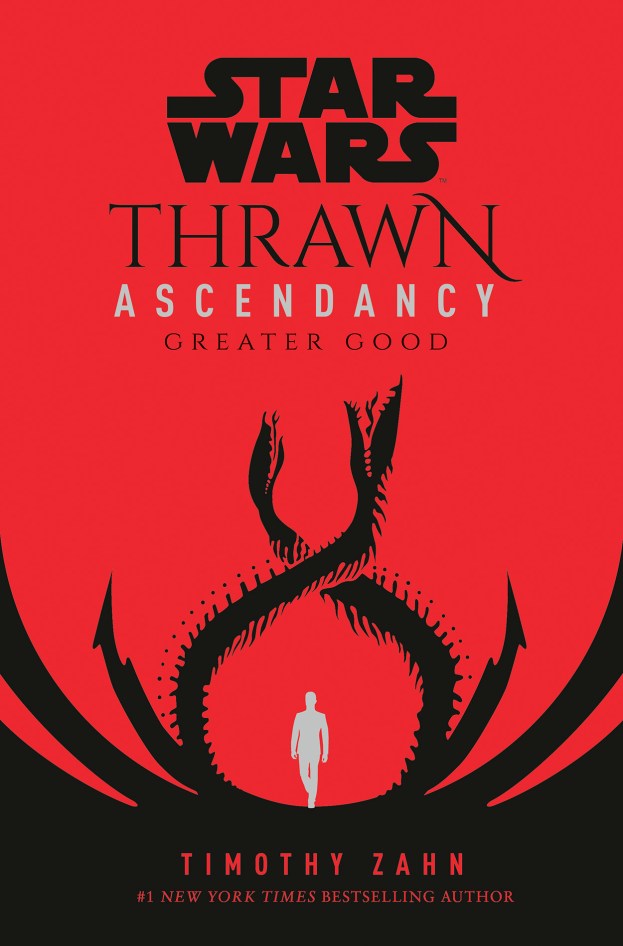
Star Wars: Thrawn Ascendancy: Greater Good by Timothy Zahn

Star Wars - Thrawn Ascendancy - Greater Good Cover

Publisher: Penguin Random House Audio (Audiobook – 27 April 2021)

Series: Thrawn Ascendancy – Book Two

Length: 16 hours and 17 minutes

My Rating: 4.75 out of 5

Amazon

One of the most impressive authors of Star Wars fiction in the world today, the legendary Timothy Zahn, returns with another epic entry in his Thrawn Ascendancy series, Greater Good, which continues to explore the early life of that awesome Star Wars character, Grand Admiral Thrawn.

Zahn is an outstanding author who has been writing Star Wars fiction since 1991, with the highly regarded Heir to the Empire.  Since then, Zahn has written several amazing Star Wars novels in both the current canon and the Star Wars Legends canon.  While I have not read all of Zahn’s Star Wars novels (yet!), the ones I have were all incredible and are some of my all-time favourite Star Wars novels (such as the awesome Star Wars: Scoundrels).  However, his most distinctive works have all surrounded the awesome character of Thrawn.

Grand Admiral Thrawn is an alien officer in the Imperial Navy, renowned for his amazing tactical knowledge, brilliance in battle and ability to discern insights about his opponents by observing their personality or culture, especially art.  Ever since his introduction in Heir to the Empire, Thrawn has been a firm favourite among the fans, so much so that he was one of the few characters from the Legends extended universe reintroduced in the new canon.  This reintroduction was done in the third season of the Star Wars: Rebels animated series, where he served as an impactful antagonist for the third and fourth season.  It also looks like Thrawn will also be getting a live-action appearance at some point in the future after his name was dropped in The Mandalorian, which is pretty damn exciting.

The character has been heavily featured in the current range of Star Wars novels, as Zahn was brought back in to write some exciting new Thrawn-based novels.  This started with a brand new Thrawn trilogy in 2017, made up of Thrawn, Alliances and Treason, which showed how Thrawn joined the Imperial Navy and his early career as an officer.  These novels were all incredible reads (Thrawn got a five-star review from me, and Treason was one of the best books I read in 2019), and I loved the character’s unique adventures.  Thrawn’s story was furthered expanded last year with Chaos Rising; the first novel in Zhan’s Thrawn Ascendancy series, which examines the character’s pre-Empire life.

While the armies of the Republic and the Separatists battle for supremacy in the Clone Wars, another deadly conflict is occurring beyond the bounds of known space.  Deep in the unexplored regions, known as the Chaos, the mighty Chiss Ascendancy have just defeated the forces of General Yiv the Benevolent, shattering his empire, the Nikardun Destiny, and bringing peace back to their territories.  As the Chiss Ascendancy returns to normal, they are unaware that they are still under attack from a malevolent and clever foe that is determined to finish off the Chiss once and for all.

On a Chiss agricultural planet, a group of peaceful and seemingly harmless aliens have arrived, seeking to temporarily make a home.  In addition to their good nature, kind hearts and unique spices, these aliens have also brought something of great value that many people will kill for.  As news of the alien’s resources spread, cracks begin to appear in the very foundation of the Ascendancy, as the various powerful families fight for supremacy.

With civil war on the horizon, the future of the Chiss Ascendancy may lay in the hands of the brilliant and infamous Senior Captain Mitth’raw’nuruodo of the Chiss Expansionary Defence Fleet.  Thrawn, who is personally responsible for the defeat of Yiv and the Nikardun, is currently investigating the origins of their attack on the Ascendancy and, in doing so, comes across a previously unknown planet destroyed by its own deadly civil war.  As Thrawn attempts to explore this new mystery, he soon finds himself in the midst of a dark conspiracy.  An unseen force is attempting to take control of the entire Chaos, and the Chiss are the greatest obstacle to their plot.  Hamstrung by politics, family ties and his own inability to see the deeper motivations of his fellow Chiss, can Thrawn stop the oncoming conflict before it is too late, or will the Chiss Ascendancy burn from the inside out?

Zahn has once again produced an exceptional and outstanding piece of Star Wars fiction that further explores the fantastic early adventures of his greatest creation.  Greater Good is an excellent middle novel in this cool trilogy, and readers will deeply enjoy this book’s blend of intricate storytelling, great characters and impressive universe-building.  All of this results in an exciting and compelling novel that quickly draws readers in and has absolutely no trouble keeping their attention.  I had an outstanding time getting through this great novel and I was able to power through its audiobook format in no time at all.

At the heart of this outstanding novel is a clever and addictive narrative that follows Thrawn and a bevy of supporting characters as the Chiss Ascendancy finds itself in danger from an indirect attack.  Greater Good follows on immediately after Chaos Rising, and examines the next stage of a compelling conspiracy against the Chiss, while also focusing on Thrawn’s battles during this period.  The author utilises a substantial number of alternate perspectives to tell a rich and varied story and, while Thrawn is the centre of much of the book’s plot, Zahn has widened the focus of the novel with several compelling storylines and characters.  These include an investigation into the origins of a Nikardun attack on a remote planet, several jaunts out into different parts of space, internal political conflicts that are a threat to Thrawn, and exciting encounters with other inhabitants of the Chaos.  There is also a substantial focus on a new plot to destroy the Chiss, which includes several compelling flashback sequences that examines the origins and initial planning of the conspiracy.  This use of flashback is pretty impressive, and while certain aspects of the antagonist’s storyline are a tad odd, it was still an interesting tale.  I really enjoyed the vast array of different storylines and character arcs that really highlighted the richness of the setting and the unique plotlines they could inspire.  While some of these storylines might seem rather disconnected at times, Zahn cleverly brings them together at the end of the novel, resulting in a very impressive and intriguing conclusion.

As with most of Zahn’s novels, Greater Good is loaded to the brim with Star Wars lore and intriguing universe-expanding ideas as the author dives deeper into the origins, culture and history of the Chiss Ascendancy.  Zahn really expands on what he introduced in his previous Thrawn and Thrawn Ascendancy novels, especially Chaos Rising, and highlights the proud Chiss warrior culture.  A vast amount of new information of the Ascendancy is featured within this latest book, and the reader gets a fascinating look at the planets, political makeup and social hierarchy of this race, especially at the family level.  Not only is this really intriguing, especially for those readers who have enjoyed Zahn’s previous additions to the Star Wars canon, but the author uses it extremely well within the plot.  Much of the main narrative, including the conspiracy that threatens to destroy the Chiss, is based on their family makeup and the accompanying politics and family mentalities that go along with that.  I felt that Zahn integrated this into the narrative extremely well, forcing the characters to navigate their unusual and insane politics in order to survive.

The author also expands the reader’s knowledge of the previously unexplored area of the Star Wars universe known as the Chaos.  The Chaos, thanks to certain celestial anomalies, is harder to navigate and transverse than regular space; it is a mess of isolated planets, unknown societies and new alien races.  Zahn introduces several new aliens throughout this novel, with each unusual race playing an interesting role in the overall story.  I love the unique Star Wars setting of the Chaos, especially as many of the established Star Wars rules and technology are not as present.  For example, the various warships have some different armaments and shielding, such as acid-filled missiles, resulting in some unique and previously unseen battle tactics.  It was also interesting to see the different takes on the Force that the inhabitants of the Chaos have come up with.  Without any Jedi present, the various races within the Chaos each have their own interpretations or uses for the Force, such as the Chiss Sky-Walkers, young children who can use the Force to help ships navigate the Chaos more effectively, and it was intriguing to encounter different views of this throughout Greater Good.  Hardcore Star Wars fans will enjoy the intriguing additions that Zahn makes to the expanded universe, and the final few pages hint at some major lore introductions occurring in the next Thrawn Ascendancy novel that I am rather curious about.

While this was a great book and piece of Star Wars fiction, I did feel that it required some pre-knowledge of Zahn’s prior works.  The narrative of Greater Good is heavily linked to the events of its preceding novel, Chaos Rising, and while the author does re-explain some of the elements or storylines, a lot of the plot does rather assume you read the first book.  Having greatly enjoyed Chaos Rising, I was able to follow this quite easily, but I could easily see some newer readers getting a little lost or overwhelmed in places.  In addition, parts of the Thrawn Ascendancy series are heavily linked to the events of the previous Thrawn trilogy, and certain references or comments might not make much sense unless you had already read these books.  As a result, I would suggest newer readers check out some of Zahn’s earlier novels first, although it is still possible to enjoy Greater Good without it.  Those readers who have enjoyed these prior books are definitely in for a great treat though and will find the deeper dive into the Chiss and Thrawn’s past to be really enjoyable.

I cannot review one of Zahn’s Thrawn-centric novels without talking about the awesome space battle sequences they contain.  Each of these awesome books features some impressive and detailed space battles as the protagonists encounter a range of ships and fleets that they must fight against.  Greater Good is a particularly good example of this, as Zahn has written several outstanding sequences that are attention-grabbing and fun.  The sheer level of detail and planning that Zahn puts into these action sequences is incredible, and you get an amazing sense of what is occurring during the battle as well as the associated tactics and plans.  The sequences involving Thrawn are easily the best, as Zahn goes out of his way to showcase the character’s tactical brilliance.  This results in some very elaborate sequences, as Thrawn quickly determines the weaknesses of his opponents and uses that knowledge to craft intricate and somewhat insane strategies to utterly defeat them.  Watching these plans come to fruition is always amazing, especially as the reader has no idea in advance what is going on in Thrawn’s mind.  Instead, you only get to see the brilliance and impact of his tactics at the same time as the other characters, and it is always a lot of fun seeing how Thrawn was able to come to his conclusions about his opponents and use them against him.  Zahn comes up with some outstanding sequences for Greater Good that are guaranteed to leave readers on the edge of their seats.

In addition to the awesome narrative, action and universe-building, Greater Good also features an awesome collection of characters, each of whom add so much to the novel.  Naturally, the most impressive character is Thrawn himself.  Even amongst his own people, Thrawn is a strange being who sees the world in a very unique way, and everyone he encounters is impressed by his tactical know-how and unnatural observational skills.  I always enjoy the way in which Zahn depicts Thrawn’s actions in the novel, as Thrawn is one of the few characters whose perspective we do not see.  Instead, Thrawn is only portrayed through the eyes of the major point-of-view characters who observe and react to his actions.  Not only does this remove the inherent difficulties in depicting Thrawn’s mind, but it really enhances the impacts of his deductions and subsequent reactions.  The observing characters view Thrawn making his moves or claiming some impossible bit of knowledge, and then slowly work out how he did it, either through their own observations or thanks to comments by Thrawn.  This is done in a similar manner to the classic Sherlock Holmes novels, with the supporting characters in Greater Good acting in the role of Watson to witness and be impressed by the protagonist’s intelligent leaps.  Like with Sherlock Holmes, the use of the outside narrator in Greater Good deeply enhances the impact of Thrawn’s action, resulting in some awesome scenes.

One of the intriguing aspects of Thrawn’s character in Greater Good that I appreciated was the way in which Zahn continued to highlight his character’s one major weakness: politics.  Thrawn has absolutely no concept of politics, family alliances or some of the inner conflicts impacting the Chiss, and as such is unable to defend himself or others against political ambitions or vindictiveness.  I always really enjoy this trait in the Thrawn novels, especially as it gives Thrawn a noticeable weakness, while also enhancing the impact his fellow supporting characters have, as all of them understand politics better and can help Thrawn in this arena.  This blindness to political realities is particularly important in Greater Good, as not only is Thrawn being attacked by politicians from within his own family but the main threat facing the Chiss is more political than militaristic in nature.  This results in a rather intriguing handicap for Thrawn throughout Greater Good, and it was cool to see the sort of plan that the character came up with to compensate for it, as well as the mistakes he then makes.  Overall, Thrawn is a pretty awesome and fascinating character to follow, and I cannot wait to see what events happen to him in the final book in the trilogy.

Aside from Thrawn, I also really enjoyed some of the supporting characters featured throughout Greater Good.  In addition to being perfect conduits to observing Thrawn’s actions, each of these characters have their own intriguing storylines, many of which are continuing from Chaos Rising.  Examples of this include Thrawn’s old friend, Admiral Ar’alani, Thrawn’s second in command Mid Captain Samakro, the former Sky-Walker Thalias, who has tied her fate with that of Thrawn, and the powerful Mitth family politician, Thurfian, who serves as a secondary antagonist.  Each of these characters is further developed in Greater Good, and I enjoyed some of the cool storylines that Zhan is coming up for them.  Thurfian’s storyline is particularly intriguing going into the next novel, as the final scenes hint that he is going to come into possession of some very interesting knowledge soon.

Zhan also introduces several great new characters throughout Greater Good, many of whose narratives are tied into the malevolent plot to destroy the Chiss.  I found myself quite intrigued by the character of Lakinda, a fellow Senior Captain in the Chiss Expansionary Defence Fleet, who serves alongside Thrawn.  Not only does Lakinda offer an intriguing alternate observation angle on Thrawn, tinged with a bit of jealously and mistrust, but this character provides greater insight into the Chiss family structure.  Lakinda is an extremely loyal member of a mid-tier Chiss family, and she often finds her loyalties conflicted as she attempts to choose between family and the fleet.  This results in some captivating and emotional sequences which really help to highlight the unusual nature of Chiss society.

I also quite liked how Zahn spends time following the main antagonist of Greater Good, the mysterious alien Haplif.  Haplif and his people have been hired by a mysterious third party to orchestrate chaos and dissent within the Chiss Ascendancy to destroy them.  As a result, he masterminds an ingenious plot to promote conflict between various members of the Ascendancy.  I really enjoyed the complex and clever plot that this character came up with, and it was really cool to see him manage to manipulate several people throughout the course of the book, and he was an interesting alternative to the previous antagonist, Yiv.  It was a little odd to see Haplif, a supposedly brilliant planner and master manipulator, find his plans constantly stymied by a spoiled teenager and a backwater rancher, but it was fun to see his arrogance work against him.  All of these characters are amazing, and I really appreciate the time and effort that Zahn put into developing them.

It will not surprise anyone that I ended up listening to this Star Wars novel’s audiobook format rather than seeking out a physical copy of the book.  I absolutely love Star Wars audiobooks, and this was another excellent example that comes highly recommended.  The Greater Good audiobook has a runtime of just over 16 hours, which, while substantial for a Star Wars novel, is extremely easy to get through, especially once you become engrossed in Zahn’s cool story.  Like most modern Star Wars audiobooks, Greater Good makes amazing use of the classic Star Wars sound effects and film score to enhance the story.  I particularly enjoyed its use in Greater Good’s various space combat sequences, and it really amps up how epic those scenes were.

The real standout of this audiobook was the outstanding narration by Marc Thompson.  Thompson is an experienced narrator of Star Wars fiction who, aside from contributing his voice to all the books in the Thrawn and Thrawn Ascendancy novels, has also narrated awesome audiobooks like Light of the Jedi, Doctor Aphra, Dooku: Jedi Lost, Dark Disciple and more.  Thompson does an incredible voice for Thrawn that is filled with the character’s control, intelligence, and gentle menace, and which is very, very close to how the character is portrayed in Star Wars: Rebels.  This amazing voice for Thrawn is easily one of the best parts of the audiobook, and it is fun to listen to the character lay out his elaborate strategies in Thompsons’s awesome tones.  Aside from Thrawn, Thompson also produces a great range of different voices for Greater Good’s supporting characters.  Each character gets their own distinctive voice, which matches their personality and physical qualities, and the listener is never in doubt about who is talking.  I also quite enjoyed how Zahn makes fun accommodations for the various different species featured within the audiobook, tailoring his voices to make them sound more alien at times.  Zahn also gives more rural accents to some of the Chiss characters featured in this novel who are from, or are located on more backwater planets, which I thought was a very nice touch.  All of these amazing features help to turn the Greater Good audiobook in an absolute treat for your ears, and it is an incredible way to enjoy this epic novel.

Thrawn Ascendancy: Greater Good is another exceptional piece of Star Wars fiction from Timothy Zahn.  Featuring his iconic and impressive creation, Grand Admiral Thrawn, Greater Good serves as an outstanding second entry in the Thrawn Ascendancy series, which charts the early life of this great character.  With a clever and exciting story, chock full of universe building, fantastic characters and some unique and memorable battle moments, Greater Good is an excellent novel that comes highly recommended.  I have so much love for Zahn’s Thrawn and Thrawn Ascendancy novels and, after really enjoying Greater Good, I am very excited to see how this series ends.  The final book in the Thrawn Ascendancy trilogy, Lesser Evil, is coming out in November 2021, and I cannot wait to get my hands on it.

Amazon

Throwback Thursday – Fool Moon by Jim Butcher

Fool Moon Cover

Publisher: Buzzy Multimedia (Audiobook – 9 January 2001

Series: Dresden Files – Book Two

Length: 10 hours and 6 minutes

My Rating: 5 out of 5 stars

Amazon

In my Throwback Thursday series I republish old reviews, review books I have read before or review older books I have only just had a chance to read.  For my latest Throwback Thursday, I continue my exploration of one of the most highly regarded urban fantasy series out there, Jim Butcher’s The Dresden Files, with the awesome and deeply captivating second entry in the series, Fool Moon.

The Dresden Files are an outstanding collection of novels that follows professional wizard and private investigator Harry Dresden in modern-day Chicago as he battles magical creatures and practitioners that threaten innocent people.  Generally considered the gold standard of the urban fantasy genre, The Dresden Files have been going for over 20 years and currently consist of 17 novels and a massive collection of short stories and novellas.  While I have been meaning to check this series out for a while, I only started reading them last year when I received a copy of the latest entry in the series, Battle GroundBattle Ground was an epic and extraordinary read that featured a mass-supernatural war in the middle of Chicago.  I absolutely loved Battle Ground and it was easily one of my favourite books and audiobooks of 2020, while Butcher was one of the best new-to-me authors I read last year.  Because of how incredible I found Battle Ground to be I have decided to go back and start reading the series right from the beginning.  I started with Butcher’s first Dresden Files novel a couple of months ago, Storm Front, which proved to be another impressive read, and I am now extremely hooked on this series.  So when I was in the mood for a fun book to break up my reading schedule, I decided to start listening to Fool Moon, and boy am I glad that I did.

Business has been slow for Harry Dresden, Chicago’s only professional wizard, after his last investigation led to all out chaos and destruction.  However, his life is once again about to get very interesting when he is dragged to a murder scene.  One of the bodyguards of a notorious crime lord Dresden has dealt with in the past has been brutally torn to shreds.  With a full moon in the sky and bloody wolf prints surrounding the victim, Dresden comes to the only conclusion he can: there is a killer werewolf stalking the city.

Diving once more into a supernatural case, Dresden attempts to find the killer before the moon rises again.  However, this may prove more difficult than he initially believes, as Chicago is currently rife with wolf-based magic practitioners, enhanced criminal gangs and monsters, each of whom could be more than capable of committing the crime.  Worse, when an associate of his turns up dead, Dresden finds himself under suspicion for the murders by the police and the FBI.

Now on the run with his reporter girlfriend and a mysterious ethereal shifter, Dresden needs to find out who or what is responsible for the murders and why they have involved him.  But with the most bestial elements of Chicago’s criminal elements coming after him and an uncontrollable and seemingly unkillable monster hunting through the night, can Dresden stop the killers before it is too late, or will the next full moon be his last?

Wow, now this was a pretty awesome second entry in the outstanding Dresden Files series.  Butcher has crafted together something really special in Fool Moon, thanks to its compelling and intense story, amazing characters, great humour and impressive fantasy additions.  I had an absolute blast getting through this book in a few short days and it was so good I have no choice but to give it a full five-star rating.

At the centre of this incredible novel is a complex and exciting narrative that sets the protagonist on a deadly journey filled with murder, mystery and monsters.  Starting with an intriguing investigation into an apparent werewolf serial killer, Fool Moon’s story eventually devolves into a survival story for the protagonist as he finds himself on the wrong side of the law, the true killers and several different groups of criminals and werewolves.  This proved to be a really impressive and addictive narrative, and I loved the outstanding blend of a detective story with magic, wizards and wolves.  The mystery angle contained within Fool Moon is particularly good, and while the culprit is revealed about two-thirds the way through for excellent story reasons, it was still a fantastic and twisty case that I enjoyed.  Butcher really invested in several excellent and memorable extended sequences in this novel that were a lot of fun to get through, including a particularly intense brawl between several antagonistic groups with Dresden in the middle, and a fantastic high-stakes final confrontation where no one is safe.  However, my absolute favourite sequence occurred in the middle of the novel and saw Dresden forced to contend with a rampaging monster in the middle of a police station.  The sheer carnage and destruction that occurred in this sequence was really cool, and readers are left on the edge of their seats as the fates of several characters hang in the balance.  I deeply enjoyed this intense scene, and it absolutely cemented Fool Moon’s place in my dark heart.  This was an incredible and powerful story, and readers who check it out are in for a thrilling and captivating treat.

A particular strength of The Dresden Files as a series is the way in which the author makes it very accessible to new readers who can easily slip into any of the books in the series, even some of the later instalments, and easily follow what is going on.  Fool Moon is a great example of this, and I felt that people unfamiliar with the rest of the series should be able to enjoy this book without any problems.  All the recurring characters in the narrative are quickly and effectively reintroduced, often in a similar manner to how they appeared in the first book, and any relevant storylines, magical abilities or prior adventures are also covered in some detail.  As a result, new readers should have no trouble enjoying this great book, and indeed this will probably turn them into a fan of the series and ensure that they check out some of the other books.  However, there are some cool connections to the first novel that dedicated readers will notice, and I liked the underlying story thread of someone plotting and planning behind the scenes to mess with the protagonist.  Overall, this a great book for all fantasy and mystery fans, especially those who like a complex, multi-genre narrative.

I love all the awesome fantasy elements that Butcher slips into his novels, and it is always great to see the weird and magical in the midst of modern-day Chicago.  Fool Moon is no exception, as Butcher has a lot of fun expanding out some of the rules of magic in this book, as well as highlighting a few additional magical denizens and powers.  While this is very cool, the real magical highlight of Fool Moon has to be the werewolves.  Most fantasy authors who feature werewolves in their story would choose just one specific type that they like and leave it at that.  Butcher, however, is not the sort of person to do stuff by half measures (check out the massive fantasy war featured in Battle Ground) and instead features five separate subtypes of werewolves, all of whom are potential suspects for the murders.  I deeply enjoyed this use of multiple werewolves throughout the novel, not only because it really helped to enhance the book’s already fantastic mystery, but because it was awesome and fascinating to see the different creature subtypes.  Each werewolf or wolf-based magic user has their own unique abilities, source of power and personalities which Dresden has to learn about and overcome if he is to survive.  These wolves include shapeshifters, demon talisman powered wolves and humans with wolf-like mentalities that make them act like berserkers.  The standout, however, is the loup-garous, a cursed individual with no control over their actions; essentially a more monstrous version of wolf man from film.  Butcher paints his loup-garous as a particularly dangerous being which is practically invincible to everything and anything it encounters, including the protagonist’s most destructive magic.  This loup-garous causes some real carnage in this book, and watching Dresden attempt to defend himself from it is pretty crazy and makes for some excellent and intense scenes.  I deeply, deeply enjoyed the epic use of werewolves in this novel and Butcher really does the old lore surrounding them justice.

It is impossible to talk about a Dresden Files novel without discussing the incredibly well-developed characters featured within.  The most prominent of these is central protagonist Harry Dresden, Chicago’s resident wizard for hire.  Dresden is an exceptionally entertaining and likeable protagonist who provides pretty much all of the book’s great humour thanks to his outrageous personality, disrespect for authority and witty observations about the events going on around him.  As such, he is a fantastic character to follow, and you really appreciate his knowledge and insights into the supernatural and the people around him.  While much of the book shows Dresden as a confident and amusing being, we do get to see more of the character’s darker side as he deals with dark and dangerous magic.  Thanks to the author’s outstanding writing style, the reader is front and centre for all of the protagonist’s slips towards darkness and despair, especially as he encounters tragedy, loss and insane opposition.  I really appreciated this examination of the protagonist’s fragile psyche, and Butcher makes sure to take him to the edge in Fool Moon.  The author also makes some additional intriguing references to Dresden’s past which hint at some traumatic events and betrayals.  Fool Moon also shows of Dresden’s full magical potential, especially as he launches some incredible attacks here, even if they do leave him very drained.  It also shows the character at his most vulnerable, as he is forced to go it alone with only the bare amount of resources and abilities.  All of this makes for an intriguing and powerful character and I really enjoyed seeing more of this awesome protagonist.

In addition to Dresden, Butcher also makes excellent use of several great supporting characters, each of whom add some fun and compelling elements to the plot.  The most prominent supporting character was probably Karrin Murphy, Dresden’s liaison in the Chicago police.  Murphy, a hardnosed professional who is one of the few police officers to believe in the supernatural, has an intriguing character arc in this novel.  This is mostly because of Dresden’s actions in Storm Front, as well as his somewhat chauvinistic determination to protect Murphy from magic, both of which ruined have Murphy’s trust in him and placed her in some hot water with the police brass.  This fractured relationship becomes a key story point in Fool Moon, especially as it leads to Murphy being quick to jump on Dresden as a potential suspect in the crimes.  This adds some compelling difficulties for the protagonist in the story, and I really appreciated the excellent drama that emerged between the two as Murphy and a repentant Dresden attempt to work out their issues.

Aside from Murphy, you have the return of Susan Rodriquez, Dresden’s love interest and a reporter for a tabloid newspaper.  Susan is an interesting counterpoint to Dresden, being an ambitious reporter determined to find out the truth of the arcane no matter what.  She has a fun and fiery relationship with Dresden in this novel, and it was interesting to see her more involved with the story, especially as she sees Dresden at his darkest and most dangerous point.  I also loved seeing more of Gentleman Johnny Marcone, the sly and powerful gangster who Dresden has previously gone up against.  Macone is a fantastic villainous character, and I love the antagonistic relationship he has with Dresden, even when the two are on the same side.  You also have to have a laugh at Bob, a guiding spirit who resides inside a skull in Dresden’s basement, as he adds some intriguing exposition and laughs in his scenes.  There were also some intriguing new characters added in this book, although I will not go into too much detail about them as it could spoil some parts of the story.  None the less, they were all really fun additions to the plot, and having so many different new magical or shapeshifting beings ensured the reader was constantly trying to work out who was the actual villain.  All in all, a fantastic group of characters, and I felt that they really helped to turn Fool Moon into an excellent and first-rate read.

One of the reasons I have been enjoying The Dresden Files books is because they have some really awesome audiobook formats.  Each of these audiobooks I have listened to have been extremely amazing, and I love the way in which they portray these fun stories in a concise and exciting manner.  The Fool Moon audiobook has a runtime of just over 10 hours, and listeners will power through this in no time at all, especially as it is really easy to become addicted to the fantastic story.  However, the main thing that I love about these audiobooks is the perfect choice of narrator in actor James Marsters (Spike from Buffy and Angel).  Marsters does an outstanding job with his narration, imbuing the various characters with some fantastic and fitting voices that expertly convey their personality, emotions and actions.  I am particularly impressed by the way in which he portrays the story’s narrator and main protagonist, Harry Dresden, and the tone he uses for him perfectly represents the sarcastic and entertaining rogue wizard.  This is one of the best examples of an audiobook narrator matching their protagonist, and it makes for some fantastic listening.  I also appreciated the way in which Marsters started really getting into his narration of certain key events in this second novel.  While he did an excellent job in Storm Front, I felt that Marsters stepped up his game in Fool Moon, and while it was not quite at the level of enthusiasm and volume that featured in Battle Ground (he was really getting caught up in the action there), it was noticeably more exciting.  This enthusiasm added a lot to the enjoyment I felt while listening to Fool Moon and I strongly recommend this format to anyone who wants to check this book out.

Fool Moon by Jim Butcher ended up being another exceptional and spectacular addition to the author’s legendary Dresden Files series.  I had an outstanding time listening to the clever and exciting narrative that Butcher came up with for his second novel and I think that the author actually stepped up his game a little with Fool Moon.  Featuring some great characters and an addictive and thrilling mystery surrounding werewolves, Fool Moon is an incredible read that I powered through in no time at all.  I can think of no higher praise for this book than to say that the moment I finished it I immediately started the next novel in the series, Grave Peril, as I still had not gotten my fill of Dresden Files goodness.  I am already making some amazing progress with Grave Peril and I am planning to review in the next week or so.  Until then, readers are strongly encouraged to check this awesome second entry in the series out, as you will not regret it.

Amazon

Quick Review – The Chase by Candice Fox

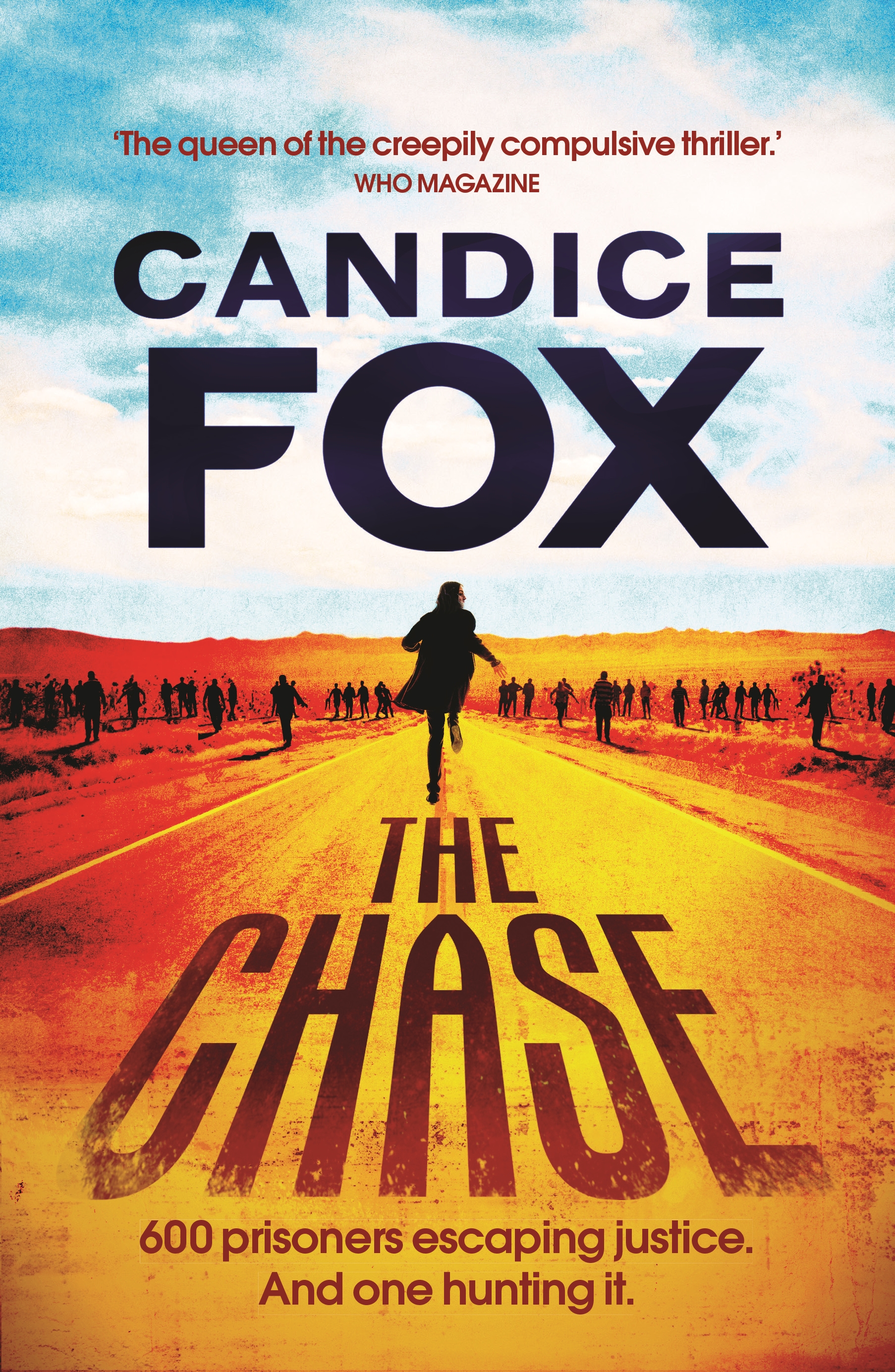
The Chase Cover

Publisher: Bantam Press (Trade Paperback – 30 March 2021)

Series: Standalone

Length: 449 pages

My Rating: 4 out of 5 stars

Amazon     Book Depository

Australian thriller author Candice Fox returns with another fast-paced and intriguing thriller novel, this time utilising an extremely fun prison break premise to create The Chase, a compelling and addictive read.

Candice Fox is a bestselling Australian author who debuted in 2014 with Hades, the first novel in her Archer & Bennett trilogy, a fantastic Australian crime series that followed two very damaged detectives.  She then followed that up with her Crimson Lake trilogy, as well as collaborating on the Detective Harriet Blue series with James Patterson.  Since then Fox, has written a couple of standalone crime fiction novels set in America, including the 2020 release Gathering Dark, which is the only previous novel of Fox’s that I have read and which proved to be a fun and fantastic book.  As a result, I was interested in reading more of Fox’s work, especially after I saw what kind of story her new novel would feature. 

Synopsis:

When more than 600 of the world’s most violent human beings pour out from Pronghorn Correctional Facility into the Nevada Desert, the biggest manhunt in US history begins.

But for John Kradle, this is his one chance to prove his innocence, five years after the murder of his wife and child.

He just needs to stay one step ahead of the teams of law enforcement officers he knows will be chasing the escapees down.

Death Row Supervisor turned fugitive-hunter Celine Osbourne is single-minded in her mission to catch Kradle. She has very personal reasons for hating him – and she knows exactly where he’s heading . . .

I am sure that I was not the only person drawn in by The Chase’s cool plot synopsis, I mean, 600 convicts escaping from prison at the same time, who can resist that?  I really enjoyed this book’s awesome story and I ended up finishing the entirety of The Chase in just over a day.  This was mainly because The Chase had such a strong and captivating start to it, with someone using deadly blackmail to instigate a mass breakout as cover to free one unknown prisoner.  This was one of the more awesome starts to a novel that I have seen, and I really loved the initial moments of this story, with the prisoners all heading off in various directions, including protagonist John Kradle, while other protagonist Celine Osbourne is left in shambles with all her Death Row charges escaping.

Fox soon breaks this narrative up into several smaller stories; you follow Kradle as he makes his escape, you also see Osbourne dealing with the fallout of the escape, and there are short descriptions of some of the other escapees and the people that encounter them.  The main two storylines surrounding Kradle and Osbourne continue in an awesome way towards the middle of the book.  I had a great time seeing Kradle attempt to evade the police and overcome an insane killer who is tagging along with him, while also heading home to solve the murder of his wife and child.  Osbourne’s story was also very compelling, as it details some of the initial hunts for the escaped fugitives, the investigation into who was responsible for the breakout, and the start of Osbourne’s obsessive hunt for Kradle.  The various smaller stories of the other escapees prove to be fun interludes to the main narratives, and Fox also includes key flashbacks to enrich the backstory of her central protagonists and showcase the reasons for emotional and combative history with each other.

Unfortunately, I found the last half of The Chase to be somewhat of a letdown after its outstanding beginning.  Kradle’s hunt for his family’s killer soon becomes one of the least interesting parts of the entire book, especially as it has no connection with the wider breakout.  His investigation is also loaded with way too many coincidences, unusually helpful witnesses, and strange motivations.  The eventual reveal of the killer was honestly pretty weak, and Kradle’s entire storyline only concludes satisfactorily due to a serendipitous appearance from a supporting character.  I was also not amazingly impressed with the identity of the person behind the prison escape, and I think that Fox missed a few opportunities, such as maybe tying Kradle’s personal investigation into a larger conspiracy.  Still, there were some fantastic highlights in this second half of the book, including Osbourne’s gradually changing relationship with Kradle, the action-packed conclusion to Osbourne’s hunt for the organisers of the prison break, as well as the extended and entertaining storyline of one escapee who managed to make the most of their situation.  While I would have loved a couple more extended storylines about some other outrageous inmates, I think that this was an overall good narrative, and I did have a lot of fun getting to the end.

I did really enjoy several of the characters featured in this fantastic novel.  The most prominent of these is John Kradle, the Death Row inmate accused of killing his wife and son.  Kradle is a likeable character, and you are quickly drawn into his desperate hunt for the person who framed him.  Fox makes great use of several flashback sequences to explore Kradle’s past, which paints an intriguing picture of a former recluse who eventually finds love and ends up raising a son by himself.  The reader does a feel a lot of sympathy for this unusual character, and he proves to be a fun protagonist to follow.  The other major character in The Chase is the supervising prison guard of Pronghom Correctional Facility’s Death Row, Celine Osbourne.  Osbourne is a strong and independent character who becomes obsessed with hunting Kradle and dragging him back to Death Row.  I really enjoyed Osbourne as a character, especially as Fox comes up with a very traumatic and clever backstory for her that perfectly explains her obsession.  Both lead characters serve as perfect focuses for The Chase’s narrative, and I had a great time seeing how their arcs unfolded, even if one was a little weaker than the other.

Fox also made use of several great side characters throughout The Chase.  My favourite is probably street hustler Walter Keeper, better known as Keeps, the one inmate at Pronghom who did not escape, as he was due to be released.  Keeps is dragged into Osbourne’s hunt for Kradle somewhat against his will due to his knowledge and intelligence.  Keeps serves as a good supporting act to Osbourne for much of the book, although his character arc goes in some very entertaining and ironic directions as the narrative progresses.  I also quite enjoyed tough-as-nails, no-nonsense, US Marshal Trinity Parker, who leads the manhunt.  Parker is a very entertaining character who serves as a perfect foil to Osbourne’s obsessions, mainly due to her absolute refusal to take any BS from her.  While I do think that Parker was a little over-the-top at times, she was still a fun addition to the cast.  The final character I want to talk about is one of the escapees, Old Axe.  Axe is a geriatric inmate who escapes from Pronghom on a whim and slowly makes his way to freedom.  I quite enjoyed the various sequences that highlighted Axe’s escape efforts, even if they were tinged with a sinister edge, but his arc was one of the more distinctive parts of the book.  All these characters were great, and I was really impressed that Fox was able to introduce them, build up their backstory and also provide satisfying conclusions for all of them in just one novel.

Overall, I really enjoyed The Chase and I felt that Candice Fox wrote a very entertaining and compelling narrative.  While this book did have its flaws, I had a fantastic time getting through it and readers will find it very hard to put this exciting novel down.  This was an awesome and addictive thriller, and I cannot wait to see what this amazing Australian author comes up with next.

Firefly: Life Signs by James Lovegrove

Firefly Life Signs

Consulting Editor: Joss Whedon

Publisher: Titan Books (Hardcover – 15 March 2021)

Series: Firefly – Book Five

Length: 377 pages

My Rating: 4.5 out of 5 stars

Amazon     Book Depository

One of my favourite tie-in series returns with another awesome Firefly novel by bestselling author James Lovegrove.  This time, Lovegrove digs up an intriguing unaired plotline for the epic science fiction series and crafts an outstanding story out of it for Firefly: Life Signs.

Set between the events of the Firefly television series and the Serenity film, Captain Malcolm Reynolds and the crew of Serenity are still scraping by, earning a living from barely legal jobs while also dealing with the consequences of their previous capers.  Life seems to be normal (well, normal for this motley crew) until they receive some shocking news: former crewmember Inara is dying from a terminal illness.

Rushing to her side, a devastated Mal learns that Inara is suffering from Kiehl’s Myeloma, an incurable form of cancer.  With only a few short weeks until Inara’s time is up, Serenity’s crew look set to lose one of their own, until a rumour reaches them of a potential cure.  Esau Weng, a maverick scientist, was rumoured to be working on a medical breakthrough that could potentially treat Inara’s condition.  However, the unethical and secretive nature of his work landed him in trouble with the Alliance, who arrested him and bundled him off to their most notorious prison.

Tracking Esau’s location, the crew are disheartened to learn that he has been sent to the prison planet of Atata, a dangerous and harsh place where the worst criminals and dissidents the verse has to offer are housed.  Inmates are abandoned on its surface and are forced to survive with no guards, no protection, and limited resources.  Worse, the planet is a frozen wasteland, nearly uninhabitable thanks to its failed terraforming, with its snow-covered surface filled with mutated animals.  Determined to save Inara no matter what, Mal organises a desperate infiltration of the prison with Zoe, Jayne and Simon.  However, finding Weng will prove to be harder than they imagined, as they are forced to deal with the deranged ruler of the prison.  Can Mal and his team find Weng before it is too late, and even if they can, will his supposed cure be enough to save Inara?

Over the last couple of years, there has been an excellent resurgence in Firefly/Serenity tie-in fiction as new publishing companies have taken charge of producing content for the franchise.  One of the best examples of this has been the new collection of Firefly novels that introduced some compelling original stories surrounding various members of Serenity’s crew.  All of these novels have been pretty awesome so far, and I have really enjoyed the awesome and impressive stories they have created.

While other authors have been lined up for these books, such as Tim Lebbon (who wrote Firefly: Generations), the MVP of this series has been James Lovegrove, who has written four out of the five novels (including this one).  His previous books have included Big Damn Hero (with Nancy Holder), The Magnificent Nine and The Ghost Machine, all three of which have been exceptional tie-in reads.  In my opinion, each of Lovegrove’s Firefly novels has been better than the last, and this continues to be the case with Life SignsLife Signs was an outstanding and clever read that explores some of the most interesting and compelling aspects of the Firefly universe while also getting to the very core of some of its iconic characters.

For his latest Firefly novel, Lovegrove comes up with an awesome narrative that is both exciting and emotionally powerful, as the crew engage in a prison break to save one of their own.  Like the rest of the Firefly books that I have had the pleasure of reading, Life Signs is an extremely fast-paced novel, which makes great use of multiple character perspectives, including all the members of Serenity’s crew as well as several new characters, to tell a complete and intriguing story.  The novel starts at pace, with the crew receiving the devastating news about Inara’s upcoming death, which hits all the characters, especially Mal, extremely hard.  From there the story splits into two linked but separate story arcs: one on the planet and one in space.  The storyline set on the prison planet is pretty good, and it was a lot of fun to see the more criminally minded Mal, Zoe and Jayne attempt to blend in, along with a faltering Simon.  Their attempts to infiltrate the criminal inhabitants of the prison ends up producing several interesting issues that they need to overcome, and they eventually engage in a desperate battle for survival out in Atata’s snowy wasteland.  There are some great twists associated with this part of the story, including a clever one surrounding an inmate who joins their team, and this was a fantastic part of the book.  At the same time, the three other members of the crew are out in space aboard Serenity and must deal with a fanatical Alliance captain who is determined to capture them, resulting in some amazing space exploits which push River to the fore.  Both these separated arcs are pretty awesome, and they come together extremely well, ensuring the reader gets a fantastic blast of action and character development.  I also enjoyed the additional emotional weight that the life-or-death storyline surrounding Inara has, and it was definitely a powerful and compelling narrative that readers are guaranteed to want to finish off as quickly as they can.

Life Signs is an intriguing and clever addition to the wider Firefly canon.  While the story is quite open to new readers or those who are unfamiliar with the franchise, this is definitely a novel best enjoyed by fans of the Firefly television show and additional tie-in media, as there are a number of fun references and major character moments that they will find particularly appealing.  One of the most interesting parts of this book is the storyline surrounding Inara having cancer.  As some Firefly fans may be aware, members of the show’s creative team have revealed that they initially planned a whole major storyline around Inara suffering from a terminal illness, which would have appeared in a future episode of the show.  They even layered a few hints about this in the first season, such as her mysterious syringe and the reasons why she was travelling on Serenity rather than a more luxurious ship.  I was very excited to hear that parts of this storyline were being used in Life Signs and I think that Lovegrove did a great job examining this interesting character thread surrounding Inara.  Not only does this result in some brilliant and dramatic moments, but Lovegrove makes sure to make mention of several of the hints that were shown in the television series, which fans will deeply appreciate.  Lovegrove provides several additional references that eagle-eyed fans will appreciate, such as the very start of the book containing a fun follow-up to one of the crew’s previous adventures.  Lovegrove also subtly ties Life Signs into some of the previous Firefly novels he wrote, including through a key supporting character, and I quite liked the continuity of the novels.  As a result, this is a perfect read for Firefly fans, although general science fiction buffs or those who enjoyed the show will have a great time with this novel as well.

As usual with Lovegrove’s Firefly novels, one of the most impressive highlights of this book is the fantastic depiction of the fantastic characters from the show.  Lovegrove has always done an amazing job of bringing these great characters to life within his novels and I really love his attention to character detail, emotion and their inner selves.  Life Signs continues this trend by thoroughly examining several members of the crew and I deeply enjoyed the emotional and enjoyable inclusions to the plot.

You can probably guess that Inara gets a bit of focus in this novel, due to the reveal that she is dying.  As I mentioned above, I really enjoyed that Lovegrove utilised this story arc in Life Signs, and the author leverages this plot to provide a fantastic and powerful dive into Inara’s character, a re-examination of her actions during the television show, as well as an exploration of her relationship with the other people aboard Serenity.  This serves to be one of the more intriguing portrayals of Inara in this series of novels, although it is rather brief as Inara spends most of the novel in a near-death state.  Due to Inara’s illness keeping her out of much of the plot, a lot of the story’s emotional weight fall to Mal, who ends up getting most of the focus of this novel.  While you do get his typical cocky attitude, fun humour and ability to annoy anyone around him, you also get to see Mal on the emotional edge during this book.  Mal is naturally devastated by the news that his unspoken love interest is dying, and he quickly latches on to any hope for her survival.  As a result, he dives into the hunt for a cure with reckless abandon and ends up taking some big risks.  Lovegrove did an amazing job portraying Mal as a bit deranged in this novel, and it was fascinating to see the usual conscientious captain seemingly prioritise Inara’s survival over the safety of his crew.  There are some amazingly dramatic and moving moments throughout this book as Mal struggles to deal with the emotions surrounding Inara’s potential death, and Firefly fans will be left on the edge of their seats as Lovegrove provides some new angles to their complex relationship.

While a good portion of the novel focuses on Mal and his concerns for Inara, the rest of Serenity’s crew also appear throughout the novel, as each of them has at least one chapter shown from their point of view.  Interestingly enough, both Tam siblings get a decent chunk of focus, with their storylines not as connected to each other’s as usual.  Simon has a great arc down on the prison planet after he is dragged along to determine if Weng can actually help Inara.  Due to his lack of criminal believability, Simon ends up having a very interesting time in the prison, especially after he befriends a seemingly innocent female inmate, who forms a romantic attachment to Simon.  This ends up causing many problems with Simon, due to his poor lying abilities and conflicted feelings over Kaylee, and it was really interesting to see how his arc ended up.  On the other hand, River spends her part of the story aboard Serenity, and is called into action when the ship is threatened by Alliance military vessels.  I loved that Lovegrove spent time exploring River’s piloting Serenity, something that is shown at the end of the Serenity film, and it was really cool to see her do some complex and insane manoeuvres.  The chapters shown from River’s point of view are amongst some of the most entertaining parts of the book, and it is always great to see this crazy genius in action.

Zoe, Wash, Kaylee and Jayne round up the main cast of this book, although each of them has more of a supporting role.  Zoe does have an intriguing storyline that sees her bond with a fellow former soldier in the prison, and there were hints back at her past as a Dust Devil, something that was initially introduced in one of Joss Whedon’s comic books.  All these characters are portrayed in exquisite detail however, and Lovegrove does a good job replicating their personalities and characteristics throughout the story.  Overall, fans of the franchise will love the way that each of the characters are utilised throughout Life Signs, and I cannot wait to see which characters are featured in the next Firefly novel.

Firefly: Life Signs is another exceptional and clever Firefly tie-in novel from the impressive James Lovegrove.  Lovegrove has come up with an exciting and clever tale that successfully utilises a planned storyline from the show and produce an addictive and memorable narrative with it.  Readers will love the awesome call back to this iconic science fiction show including the excellent portrayals of the main cast of characters.  I had an amazing time reading this book and Firefly fans are going to love every second they spend reading it.  While I cannot wait to get my hands on the next entry in this series, which looks set to be Carnival by Una McCormack, Life Signs is an outstanding novel to check out now and comes highly recommended.

Amazon     Book Depository

The Bone Maker by Sarah Beth Durst

The Bone Maker Cover

Publisher: HarperAudio (Audiobook – 9 March 2021)

Series: Standalone

Length: 16 hours and 35 minutes

My Rating: 5 out of 5 stars

Amazon

One of the leading voices in fantasy fiction, the impressive Sarah Beth Durst, returns with another epic standalone fantasy read, The Bone Maker.

Sarah Beth Durst is an amazingly talented author who has been dominating the fantasy market for the last several years.  Initially debuting with several fun young adult and middle grade novels, such as the 2009 release Ice, Durst made the jump to adult novels in 2014 with The Lost, before writing her bestselling Queens of Renthia fantasy series.  I only recently started reading Durst’s work when I checked out her 2020 novel, Race the SandsRace the Sands was a gripping standalone fantasy read that featured a thrilling tale of adventure and redemption set around monster racing in a desert kingdom.  I absolutely loved Race the Sands, and it ended up being one of my top books and audiobooks of last year, and Durst was easily one of the best new-to-me authors I checked out in 2020.  As a result, I have been really keen to see what Durst would write next, and I was excited when I heard about her new book, The Bone MakerThe Bone Maker was one of my most anticipated novels of 2021, and I ended up having a wonderful time reading it.

25 years ago, the nation of Vos was threatened by a terrible foe, the rogue bone maker Eklor, whose nightmarish creations of animal bone and mechanical components sought to overwhelm everything.  In the end, Vos was saved by five heroes who led an army to Eklor’s door to destroy him.  However, their victory came at a steep cost, as one of the heroes died a tragic death, and only four walked away from Eklor’s tower.

In the years that followed, the leader of the heroes, Kreya, has lived a life of exile, determined to resurrect her husband, Jentt, who died to stop the evil assailing their realm.  Using Eklor’s notes, Kreya has succeeded in cracking the spells needed to complete the resurrection, but bringing the dead back to life has a heavy cost.  Not only does Kreya lose a day of her life for every day that Jentt lives, but Kreya also requires human bones to complete the spell,. The bones of the dead are ritualistically burnt throughout Vos specifically to prevent bone workers using them for dark magic, so Kreya is forced to look elsewhere for her materials.  In her desperation, she decides to return to the one place she swore never to go back to: the plains outside Eklor’s tower, where the bones of those fought against Eklor’s monsters still lie.

Making the arduous and forbidden journey to Eklor’s tower, Kreya makes a terrifying discovery that threatens everything she fought for all those years ago.  With the dangers of the past threatening to overwhelm her, Kreya has no choice but to reunite her comrades 25 years after their famous victory.  But will these damaged heroes be enough to face the evil threatening to overwhelm them, or will an evil long thought destroyed arise again to finish off what it started?

Wow, Durst definitely does not disappoint as she has created another impressive and powerful fantasy novel.  I had an absolute blast reading this fantastic new book and I managed to finish it off relatively quickly, especially once I got wrapped up in the outstanding story, clever setting and the lives of her amazing protagonists.  I really enjoyed this awesome standalone fantasy read and I have to give The Bone Maker a full five-star rating.

For her latest amazing fantasy novel, Durst has come up with a very complex and powerful story that dives deep into the hearts of her fantastic characters while also taking them on an epic journey of redemption.  I have to admit when I read some of the early descriptions of The Bone Maker I assumed it was going to be the central protagonist, Kreya, going up against her old companions as they tried to stop her from resurrecting her husband.  Instead, Durst works in a very different narrative that sees Kreya encounter the enemy from her past, which forces her to bring her friends back together herself.  Durst sets up this narrative really well, and the reader gets a sense of the tragedy of Kreya and the lengths she is planning to go to reunite with Jentt.  You also get a fantastic idea of the trauma from the protagonist’s past battles with Eklor and how this has shaped their lives.  There are some great moments in the opening half of this book, including several amazing and magically charged action sequences as the protagonists go up against a range of different foes, as well as some intense drama as the five are gradually reunited and come to terms with their past failures.  I loved how the narrative gradually morphed into a bit of a political thriller in the second half of the book as the protagonist encounters an old foe in a different setting.  The flow from the various sections of the story works extremely well, and Durst weaves together a really comprehensive and powerful standalone story.  I liked the excellent blend of action, fantasy elements and intense emotion exploration, which helped to produce a very comprehensive narrative, and The Bone Maker turns into quite an epic and exceptional read.

Easily the highlights of this book are the complex and damaged central characters that the story follows.  The five main characters are heroes who previously saved Vos from a great evil, and I loved this exploration of renowned fantasy heroes years after they saved the world, the usual climax of a story.  The central character of the story is Kreya, the group’s leader, who disappeared after ensuring their previous victory, mourning her dead husband.  Kreya performs multiple attempts at resurrection at the cost of her own life, and I really appreciated the author’s interpretation of this character’s grief leading her to risk it all.  Kreya has a rough and powerful journey throughout this book as she comes back to lead her team and is forced to deal with the expectations of all those around her.  Despite the immense amount of guilt, grief and regret that Kreya experiences throughout this story, Kreya proves to be a talented leader, directing them through several unique fights, and is the only person that can hold this ragged group of characters together.  The counterpoint to Kreya’s toughness and leadership is her deceased husband, Jentt, who, after his resurrection, proves to be the heart and light of the group.  Despite his more buoyant personality, Jentt has to deal with the consequences of his resurrection, especially when he finds out the cost of his continued life, and this leads him to several harrowing mental places.

The next member of the heroes of Vos is the bone wizard Zera, who specialises in creating the best magical talismans in the world.  Zera is the only member of the group who cashed in on her fame after their victory and has grown rich off her skills and reputation.  Zera is a fantastically sarcastic and entertaining addition to the cast, as she revels in her wealth and privilege, while also providing some of the best lines in the entire novel.  Despite a sense of intense betrayal at Kreya’s abandoning of her all those years ago, Zera agrees to help her with her mission, but finds herself constantly conflicted by her feelings of resentment, her own well-hidden damage, and her changed vision of what Kreya’s relationship with her was.  As a result, she has quite a journey throughout The Bone Maker and I loved her inclusion in this novel.

The other two major protagonists are the bone reader Marso and the warrior Stran, both of whom survived the battles with Eklor in very different ways.  While Stran is reasonably mentally healthy, having chosen to live a simple life with his wife and children, Marso has been broken by both his powers and the events of the past.  These two are a great contrast to one another, and both add some intriguing elements to the overall narrative.  I quite enjoyed seeing Marso slowly rebuild his sanity throughout the book while also coming to terms with a magical power he no longer trusts.  Stran’s apparent normality and stable family life is so amazingly different from the other characters in the book that it really stands out, and I liked seeing how each character was just a little bit different.  Overall, all five of these awesome protagonist really help to make The Bone Maker a powerful and impressive read and I am extremely glad that Durst took the time to build each of these great characters up.

One of the things I really must discuss is the outstanding setting that Durst created for this great book, especially as the author did such an impressive job coming up with yet another unique world.  The land of Vos is an amazing fantasy realm, loaded up with its own blend of troubles, culture and magic, which is living in the shadows of the tragic bone wars 25 years prior.  Durst sets this new landscape up perfectly in the early stages of the novel, and the reader gets a great sense of the people and mentality of this realm, especially when it comes to the trademark bone magic.  As the novel progresses, Durst visits several fantastic and compelling parts of this land.  This includes the gigantic and wealthy capital city where many terrible events take place, the hilly landscape that makes up the majority of Vos, a mist-shrouded valley loaded up with a collection of dangerous, gigantic monsters, and the plains surrounding Eklor’s tower, where deadly secrets lurk.  These landscapes are a lot of fun to explore, and Durst works them into her narrative perfectly.  I really enjoyed all of the major locations that the protagonists visit, although my favourite has to be the valley of monsters, as some intense and action-packed sequences take place there.

In addition to the amazing setting, I also really appreciate the rich and distinctive bone magic that Durst came up with for The Bone Maker.  This type of magic features three distinctive types of bone workers, including bone readers who can use animal bones to read the future, bone wizards who create powerful bone talismans, and bone makers who inscribe bones to animate a range of constructs.  Each of these magical disciplines is explored in great detail by the author and are all strongly utilised in the plot.  I loved seeing these magical elements at work throughout the action sequences in the book, and Durst uses them to great effect, with the characters gaining flight, stealth, strength and speed in every epic fight sequence.  The various examples of bone making are also pretty cool, and you get some great magical constructs.  I liked how there was a fun contrast between the protagonists’ cuter, yet still effective constructs, and the antagonists monstrous figures, and it makes for some great combat scenes, especially when the protagonist goes big towards the end of the book.  All of these magical elements are really exceptional, and I think it is an absolute testament to Durst’s sheer imagination and creativity that she is so effectively able to come up with a brand new style of magic and a new magical realm for every single one of her standalone fantasy reads.

I ended up enjoying The Bone Maker in its audiobook format, which proved to be a fantastic way to experience Durst’s epic story.  The Bone Maker audiobook has a decent run time of 16 hours and 35 minutes, which I ended up getting through rather quickly and is not too much of challenge for dedicated listeners to finish off.  One of the best things about this great audiobook is the amazing narrator, Soneela Nankani.  Nankani is a veteran audiobook narrator, but despite her prevalence as a narrator of fantasy fiction, I have not previously had the pleasure of experiencing Nankani’s vocal talents before, although she has worked on several other fantasy novels that I am keen to check out.  Nankani was an outstanding narrator whose voice really enhanced this already amazing novel.  Not only did Nankani provide a quick and exciting tone for the entire novel, moving the story along at a brisk and enjoyable pace that continuously kept the reader’s attention; she also provided several fantastic voices for the various protagonists.  All the voices that she used were pretty impressive, and I felt that they fit the damaged and dark personalities of each of the main characters very well.  As a result, I would strongly recommend the audiobook format to anyone interested in checking out The Bone Maker as it is an amazing way to check out this compelling novel.

The Bone Maker by Sarah Beth Durst is an exceptional and captivating standalone fantasy novel that I had an amazing time reading.  Durst has produced an epic and elaborate tale of life, death and magic, which follows five damaged and broken heroes years after their supposed great victory.  There are so many awesome elements to this fantastic book, and readers are going to fall in love with The Bone Maker’s addictive narrative, powerful characters and cool magical elements.  While I did enjoy Durst’s previous novel, Race the Sands, a little more, this was still an outstanding read, which comes highly recommended.

Amazon

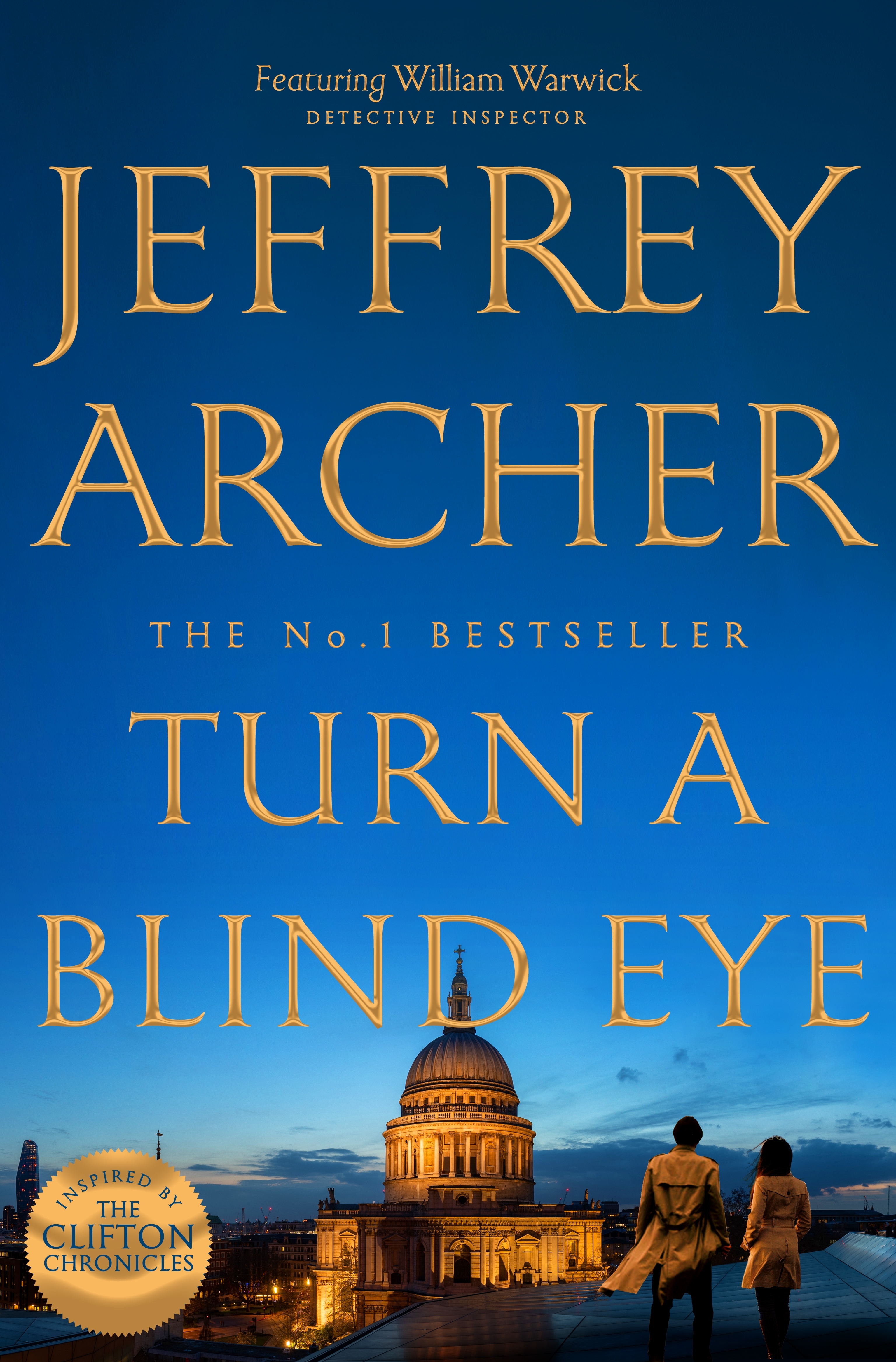
Turn a Blind Eye by Jeffrey Archer

Turn a Blind Eye Cover

Publisher: Macmillan (Hardcover – 30 March 2021)

Series: William Warwick – Book Three

Length: 330 pages

My Rating: 4.25 out of 5

Amazon

One of the world’s bestselling authors, Jeffery Archer, returns with the third exciting and enjoyable entry in his clever William Warwick series, Turn a Blind Eye.

London, 1987.  After successfully organising a high-profile raid of a notorious drug factory, William Warwick has been promoted to Detective Inspector.  However, with his promotion comes a very different assignment: exposing corruption at the heart of London’s Metropolitan Police Force.  Along with his team of detectives and officers, William begins to investigate an old friend of his from the police academy, Jerry Summers, whose affluent, high-flying lifestyle seems impossible to achieve on a police income.  Utilising several undercover operatives, William attempts to find out the truth behind Summers’s activities.

However, the investigation into Summers’s corruption is only one of William’s concerns, as the trial for drug baron Ahmed Rashidi, whose factory William’s team brought down, begins.  Rashidi’s conviction seems certain, especially with the formidable legal team of William’s father and sister arguing the prosecution’s case.  But Rashidi has hired the services of the slippery and corrupt lawyer, Booth Watson QC, whose contacts and ability to bend the rule of law puts the police’s case in serious jeopardy.  At the same time, William’s arch-nemesis, the criminal genius Miles Faulkner, has escaped from jail and is hiding out in Europe, plotting the next stage of his life of crime.  However, Miles’s sudden death proves to be a boon for his ex-wife, Christina, who uses her windfall to apparently reform and renew her friendship with William’s wife.

As William’s focus is torn between all these different cases, disaster strikes when a young female undercover officer under his command falls for Summers.  As William and his team attempt to discover just how compromised their investigation is, the young Detective Inspector finds himself under attack from all sides as enemies, both old and new, attempt to bring him down.  Can William continue his crusade to bring justice to London’s streets, or will he face the horrible realisation that more of his fellow officers are willing to turn a blind eye than he first suspected?

This was another fantastic novel from Jeffrey Archer, who has done an amazing job continuing the exciting and compelling adventures of William Warwick.  Archer is an intriguing figure who has written a number of amazing crime and historical fiction novels over the last few years, such as his iconic Clifton Chronicles.  I have been rather enjoying several of Archer’s recent novels, including the very clever Sliding Doors-esque novel, Heads You Win.  His latest series, the William Warwick books, follow the adventures of the titular protagonist, who was first introduced as a fictional detective created by one of the characters in the Clifton Chronicles.  The first two novels in this clever crime series, Nothing Ventured and Hidden and Plain Sight, were both awesome reads, and I was quite excited when I received Turn a Blind Eye a few weeks ago.  Turn a Blind Eye ended up being quite an impressive read, and I really enjoyed the compelling and fast-paced story.

Archer has come up with a great story for his latest novel which not only continues some of the amazing storylines from the previous novel but which sets the protagonist up against several new challenges and antagonists.  Archer blends a lot of great elements into Turn a Blind Eye from across the genres.  The most prominent of these is a compelling crime fiction storyline which sees the protagonist go up against several different villains, including corrupt police, art thieves and drug lords, and there are some impressive investigative angles and fun scenes featuring clever police work and investigations.  In addition, the author works in some clever legal thriller elements as the story features several courtroom sequences.  These court scenes are some of the best parts of the entire novel, especially as Archer loads them up with fun legal shenanigans as the antagonist lawyer employs some really evil tricks.  The author also makes great use of the 1980s setting as a backdrop to the main story, and I loved the exploration of this cool period during this fun historical novel.  The entire novel chugs along at a rapid pace, and readers will have a very hard time putting this book down, especially as it features some dramatic twists, clever undercover scenes and very entertaining moments.  Readers of the previous two William Warwick novels will appreciate the fantastic ways in which Archer continues the established storylines set up in the first novels, although the author does ensure that this third book is easily accessible to new readers.  I really enjoyed the fun and intriguing places where Archer took his latest novel and I cannot wait to see how he will continue his compelling story in the future William Warwick entries.

I really enjoyed the great range of characters that Archer fits into this novel, most of whom are recurring characters from the previous two entries in the series.  Archer features a rather large cast of excellent characters throughout Turn a Blind Eye, resulting in a mass of different character perspectives that makes for a compelling and vibrant blend of storylines and character arcs.  At the top of this list is William Warwick, who serves as the central figure for most of the book’s plot.  William is an exceedingly straight arrow, intently concerned with doing the right thing and bringing the villains to justice.  William has another interesting adventure in Turn a Blind Eye, where he is forced to investigate police corruption and finds himself in some strange new circumstances.  I really enjoy the linear storyline that Archer has set up for Warwick, especially as it appears that he will be investigating a whole new crime each novel, and he serves as a particularly good centre to this entire series.

In addition to the main protagonist, Turn a Blind Eye also features several other amazing characters who have some compelling arcs in this latest book.  As always, I have to start with series antagonist Miles Faulkner, the highly intelligent criminal mastermind and art fanatic with whom William has found himself in an intense feud.  Faulkner ended the last book on a high note after engaging in a bold prison escape, and this novel starts off with him fleeing to Europe before circumstances seem to take him right off the board.  This results in an interesting development for the character, although readers of the previous novels will not be surprised by the clever way in which that particular arc unfolds throughout the novel.  I also deeply enjoyed the character of Booth Watson QC, the go-to lawyer for the antagonists of this series.  Watson is a dastardly and conniving figure in this series, and readers will love all the sneaky and entertaining ways he finds to bend the laws and manipulate the legal system.  I particularly liked the way in which he serves as a counterpoint to William’s father, Sir Julian, the highly regarded and undeniably honourable legal prosecutor, and the two have an outstanding repartee with each other during the court sequences.  The other character who has a really good storyline is police officer Nicky Bailey.  Bailey, who is assigned undercover to watch the primary suspect of the corruption storyline, ends up falling in love with her target, resulting in the investigation becoming compromised.  Archer writes an impressive and dramatic arc around this character, and I was particularly moved by its intense conclusion.  All of these characters ended up adding a lot to Turn a Blind Eye’s story and I look forward to seeing some of them reappear in the next William Warwick novel.

Turn a Blind Eye was another awesome novel from Jeffrey Archer which proved to be a rather good and entertaining read.  I loved the way in which Archer has continued his fantastic William Warwick series, and the author has loaded this book with some clever and enjoyable sequences and characters.  A fun and intriguing novel that readers will power through in no time, Turn a Blind Eye is really worth checking out and comes highly recommended.

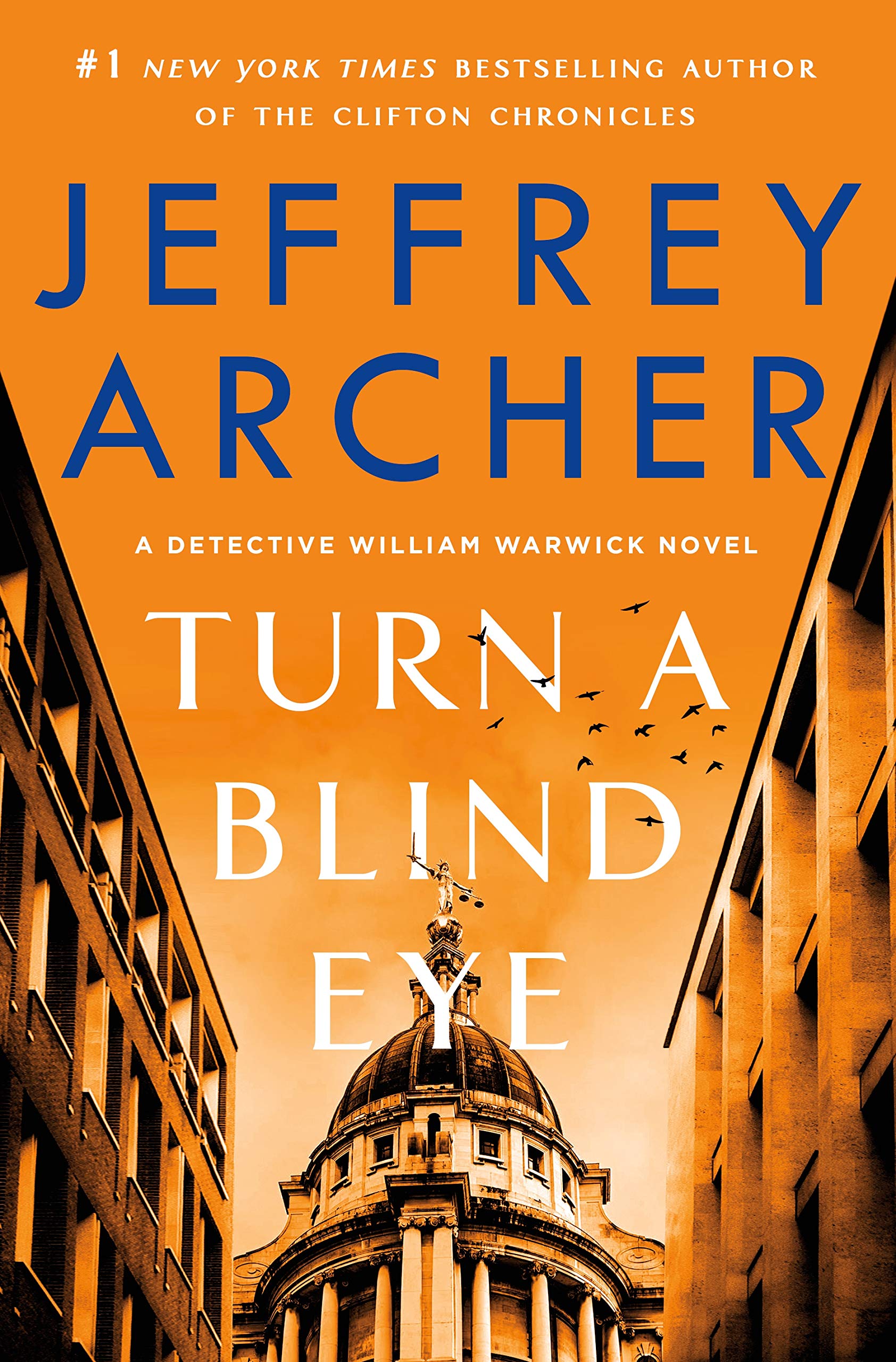
Turn a Blind Eye Cover 2

Amazon

Star Wars: Victory’s Price by Alexander Freed

Star Wars - Victory's Price Cover

Publisher: Random House Audio (Audiobook – 2 March 2021)

Series: Star Wars: Alphabet Squadron – Book Three

Length: 16 hours and 19 minutes

My Rating: 5 out of 5 stars

Amazon

One of the best Star Wars tie-in series comes to an epic and impressive end, as Alexander Freed presents Star Wars: Victory’s Price, the amazing third and final entry in the awesome Alphabet Squadron trilogy.

Since its inception in 2014, the current Star Wars extended universe has featured an amazing range of novels that tie into the various movies and television series.  One of the best has been the Alphabet Squadron trilogy from acclaimed author Alexander Freed.  Alphabet Squadron is a particularly compelling trilogy that follows a fantastic group of mismatched Rebel and Imperial pilots who continue to fight in the aftermath of Return of the Jedi.  This series has so far featured two excellent entries: the great introductory novel Alphabet Squadron, and the outstanding second entry, Shadow Fall, both of which I have deeply enjoyed.  As a result, I have been looking forward to seeing how the series ends and I think that Freed has left the best to last with this epic and powerful read.

The Emperor and Darth Vader may be dead, and the second Death Star destroyed, but the war is far from over.  Nearly a year after the battle of Endor, conflict still reigns in the galaxy between the forces of the New Republic and the remnants of the Empire.  In nearly every battlefield, the Empire’s forces are in retreat and disarray, apart from the notorious pilots of the 204th Imperial Fighter Wing, better known as Shadow Wing.  Led by the dangerous Imperial TIE Fighter ace, Colonel Soran Keize, Shadow Wing continue to bring death and destruction to the Empire’s enemies, slipping away when their vile deeds are done.

However, despite their skills and strategies, Shadow Wing is in constant danger as New Republic forces, under the command of General Hera Syndulla, are pursuing them.  Syndulla is determined to end the threat of Shadow Wing utilising the ragtag pilots of the unique unit known as Alphabet Squadron, each of whom has a score to settle with Shadow Wing, to lead the fight against them.  However, the members of Alphabet Squadron, Wyl Lark, Chass na Chadic, Nath Tensent and Kairos, are still recovering from their last traumatic encounter with Shadow Wing on Cerberon, as well as the revelation that their former leader, Yrica Quell, was an active participant of Operation Cinder, the Emperor’s genocidal last order to destroy multiple disloyal planets.

As Hera and Alphabet Squadron attempt to find their prey, they begin to discover just how dangerous the cornered Shadow Wing has become, as their opponents begin to enact a new version of Operation Cinder.  Worse, Alphabet Squadron are shocked to discover that Yrica Quell is still alive and has re-joined her old comrades in Shadow Wing.  As the two forces engage in battle again, the loyalties of Alphabet Squadron will be tested like never before while Quell attempts to determine just whose side she is truly on.  The conflict will finally end above the skies of Jakku, as the Imperial and New Republic fleets engage in their final battle.  Can Alphabet Squadron finally put an end to the evils of Shadow Wing, or will Soran Keize’s master plan change the entire galaxy forever?

Now this is what all pieces of Star Wars fiction should be like.  Victory’s Price is an exceptional and impressive novel that had me hooked from the very beginning.  Not only does Freed do an amazing job of wrapping up the Alphabet Squadron trilogy but he also provides the reader with fantastic action sequences and some outstanding characters.  This is easily one of the best Star Wars novels I have read in ages and it gets a full five-star rating from me.

For this final book, Freed has come up with a powerful story set within the iconic Star Wars universe.  Starting right after the events of Shadow Fall, Victory’s Price sees the members of Alphabet Squadron separated and traumatised as their protracted and personal conflict with Shadow Wing begins.  This leads into a series of exciting encounters and battles in space as Alphabet Squadron pursues Shadow Wing during their latest mission, while the leader of Shadow Wing hatches a plan to end the war on his terms.  At the same time, each of the characters attempts to deal with issues or distress raised in the previous novels, whether it be Quell’s conflicted loyalties or Chass’s post-fight trauma.  All of this leads to some epic and impressive final confrontations as the two sides meet for the very last time.  This was an extremely good character-driven read, and I loved the very cool way that Freed finished off this amazing series.

While it is an amazing Star Wars novel, Freed focuses more on the war part of the book, turning this into a gritty story of survival, loyalty and conflict, which makes for a powerful piece of fiction.  While obviously best enjoyed by those readers familiar with the rest of the series, Victory’s Price is a very accessible novel which new readers can follow without any trouble.  Thanks to the awesome use of multiple character perspectives, Victory’s Price has an excellent flow to it, and the readers are supplied with clever twists, cool action sequences and impressive character moments as the protagonists come to terms with their place in the universe and the constant fighting.  This ended up being quite an intense tale of war and life, which not only perfectly wrapped up the Alphabet Squadron series but which also had me engrossed from the very minute I started reading it.

One of the major things that I liked about this book was the way in which it added to the Star Wars expanded universe.  This series has always done a cool job of exploring what happened after Return of the Jedi, and it is always interesting and somewhat more realistic to see that the war did not end as soon as the Emperor died.  However Freed has painted this period as a particularly dark and deadly part of the war, and I love seeing how he envisioned what happened to members of the New Republic and Empire after Endor.  Victory’s Price focuses on the very end of the civil war, showing another side of the events that lead up to the battle of Jakku and fitting its original characters into this conflict.  This is a cool part of the book, and I loved seeing another version of the epic battle of Jakku, a major conflict that has been featured in several other novels and pieces of fiction.  Freed also takes the time to explore and answer several other intriguing questions, such as the mystery behind the Emperor’s messengers, the creepy red-clad droids who project holograms of the Emperor’s face, which sought out various Imperial commanders after Endor and ordered the various genocides of Operation Cinder.  The solution surrounding the messengers ends up being rather intriguing, and there are even some clever parallels to World War II in there.  Due to the intriguing elements of Star Wars lore featured within, Victory’s Price, like the rest of the Alphabet Squadron series, will probably be enjoyed most by major fans of the franchise, but there are a lot of compelling elements that readers of all knowledge bases will appreciate.  This was truly an exceptional piece of Star Wars fiction and I cannot wait to see what Freed adds to the canon next time.

I really must highlight the outstanding action scenes that Freed came up with for this book.  I am a man who likes his Star War’s action, and I have to say that Victory’s Price has some of the best sequences that I have ever had the pleasure of enjoying.  Due to the novel’s focus on fighter pilots, there are naturally a huge number of amazing combat scenes as the rival pilots engage in complex battles in space.  Freed has saved the best for last in this final Alphabet Squadron novel, as the opposing pilots find themselves fighting in a range of unique situations.  The battle scenes are extremely well crafted, filled with elaborate details and fantastic depictions of complex manoeuvres and clever tactics that are guaranteed to keep you on the edge of your seat with their intense action.  They are also quite emotionally rich, as you witness your favourite characters constantly face near-death experiences in this final entry in the series.  Highlights of these great battle sequences included two fantastic duels between the protagonists and the leader of Shadow Wing, which sees some fancy flying between some of the most skilled pilots in the series in some very distinctive landscapes.  I also really loved the final, elaborate battle set above Jakku, which proved to be a major part of the second half of the book.  Not only do you get the desperate and packed main conflict between the entire New Republic and Imperial fleets, which features destruction and death in every direction, but you also get a more private and quiet final battle between a group of Alphabet Squadron led New Republic fighters and Shadow Wing.  This smaller pitched battle between the two sides fits perfectly into the midst of the wider conflict and is filled with personal turmoil and antagonism as these two rival squadrons meet for a final time.  All these battles come out as being extremely epic and powerful, and I loved every second of the gritty and deadly fights they contained.

While I have a lot of love for Victory’s Price’s epic story, intense action, and clever Star Wars connections, easily the best thing about this book are the complex and well-written characters.  Each of the major characters featured in Victory’s Price have been introduced in the previous Alphabet Squadron novels with some complex and powerful storylines.  In Victory’s Price, all these great arcs reach a climax as the characters meet their final destiny and their stories comes to an end.  I really enjoyed the satisfying conclusions that Freed came up with for his outstanding characters, although in many ways it was sad to see their stories finish.  Still, I really appreciated all the great character arcs contained in this final novel, and Freed ensures they go through the emotional wringer before they go.

At the forefront of these outstanding characters are the five members of Alphabet Squadron who have served as the focal point for the entire series.  The pilots in Alphabet Squadron, so named for their use of a different Rebel Alliance fighter (A-Wing, X-Wing, B-Wing, U-Wing and Y-Wing), are layered and complex individuals, each of whom has experienced their own trauma or betrayal throughout the course of the lengthy war.  All five of these original characters have gone through significant development throughout the course of the previous two novels, and Freed does an exceptional job continuing their journeys in this final book.

The main protagonist of this series is Yrica Quell, a former member of Shadow Wing, who joined Alphabet Squadron in the first novel to help neutralise her former Imperial comrades.  However, it was eventually revealed that Quell, despite claiming she defected from the Empire after refusing to participate in Operation Cinder, aided in the destruction of a planet.  This revelation caused a massive rift in her relationship with the rest of Alphabet Squadron, and she ended up reuniting with Shadow Wing at the end of the second novel.  In this final book, it is revealed that Quell has infiltrated Shadow Wing to bring them down from the inside.  However, upon spending time with her Imperial comrades, she begins to experience doubts about her plan, especially as she sees that the Imperials are just as damaged by the war as she and the New Republic pilots are.  Her plans are further complicated due to her relationship with the leader of Shadow Wing, Soran Keize, her former mentor and the person who initially convinced her to defect to the New Republic.  Quell still has an immense amount of respect for Keize, and strongly believes in several of his plans.  This re-remembered loyalty to Shadow Wing strongly conflicts with her friendships with Alphabet Squadron and the guilt she feels for her role in Operation Cinder, placing Quell in a major quandary for most of the book.  This uncertainty and inner conflict is a really clever part of Quell’s story, and the reader is deeply impacted by her struggle and conflicted loyalties.  This was easily one of the best and most powerful character arcs in Victory’s Price and I really appreciated the outstanding character story that Freed set around Quell.

Victory’s Price also spends a significant amount of time following Quell’s fellow Alphabet Squadron members, Wyl Lark and Chass na Chadic, both of whom have compelling arcs that highlight different aspects of warring soldiers.  Wyl Lark is the young, optimistic member of the squadron who took over leadership at the end of the second novel.  Lark has developed a significant amount throughout the course of this series, and it is great to see him come into his own as a leader and pilot.  However, despite his apparent ease at the role, Lark is plagued by doubts and concerns about the morality of this fight, especially as it conflicts with some of the teachings of his race.  He spends a great deal of this final book coming to terms with his morals, and even attempts to once again contact the members of Shadow Wing to try and find some common ground or a way to end the conflict.  His actions go a long way to humanising the antagonists of the novel and his hope is a refreshing beacon of light in this darker Star Wars book.  I deeply enjoyed seeing the way in which Lark attempts to change the outcome of the war his way, and it was a fascinating addition to the story.

Chass, on the other hand, is easily the most damaged character in the entire series.  A music-loving veteran pilot who is more afraid of the end of the war and her inevitable slide into irrelevance and despair than her own death, Chass has always been on edge throughout the series.  However, in Victory’s Price, Chass is even more traumatised, especially after learning of the betrayal of her love interest, Quell (which is an intriguing LGBT+ relationship for a Star Wars novel) and has since turned to the teachings of a cult to gain some clarity.  Despite this, Chass is still driven by her anger and her rage and is constantly lashing out at everyone around her, with her death wish a constant anchor around her neck.  Freed has written a complex and moving story around Chass and her suffering, and I deeply appreciate the portrayal of her as a troubled veteran.  I think that Chass’s story comes to a fantastic end in this final novel, especially as she gets closure with several important people in her life.  Both characters are incredibly well written and are fantastic examples of Freed’s exceptional writing ability.

Next up are the final two Alphabet Squadron pilots, Nath Tensent and Kairos.  While both characters have been somewhat overshadowed throughout the series, Freed has developed some intriguing storylines around them which come full circle perfectly in this final novel.  Nath Tensent, a pilot who served both the Empire and the Rebels during the war, has an enjoyable and likeable personality and is the sort of guy who quickly becomes everyone’s best friend.  However, despite the easygoing façade he projects to the world, even Nath is feeling the effects of the war and the constant worry and responsibility is getting to him.  This is particularly exacerbated in Victory’s Price when he becomes a decorated military hero with greater responsibilities and is forced to balance his own selfish goals with the lives of people who look up to him, as well as his very strong concerns for Wyl Lark.  This results in a particularly clever and enjoyable arc, and it was great to see him finally take some responsibility in this war.  I liked the way in which Freed ended Nath’s storyline, especially as it potentially opens another series in the future.

The final member of the squadron is the mysterious Kairos, an alien of unknown origin with a strong hatred for the Empire and terrifying combat skills.  Despite her intriguing introduction in Alphabet Squadron, Kairos was somewhat left out of the second book after receiving an injury.  However, this is more than rectified in Victory’s Price, as Kairos is featured more prominently and we finally get to see some of her backstory.  Freed comes up with quite the intriguing, if tragic, story for Kairos, and it was fascinating to see her unique alien beliefs and culture, as well as a powerful story of renewal and redemption that accompanies her.  Kairos becomes quite close to two characters in this book, especially after the closest people in her life died in the previous novel, and it was great to see her finally connect, even if only for a short while.  Freed did a fantastic job setting up Kairos’ story in the previous two novels, and I personally loved finally getting some answers regarding this curious character’s identity.

Aside from the members of Alphabet Squadron, several other characters are also shown in great prominence throughout this book.  The one I liked the most was Hera Syndulla, the New Republic general commanding Alphabet Squadron.  Hera is one of the few characters in this novel who Freed did not come up with, as Hera originated in the Star Wars: Rebels animated series and serves as a bridging character to the larger franchise.  Due to how much I love Star Wars: Rebels, I have really enjoyed seeing more of Hera in this series, not only because I am very curious about her post-Rebels life but because she also serves as a great mentor character to the members of Alphabet Squadron.  Hera features a lot more prominently in this final novel and her perspectives are shown nearly as much as the members of Alphabet Squadron.  This extra perspective really added a lot to the story as a whole and I personally really enjoyed seeing Hera take charge and attempt to hunt down Shadow Wing, while also attempting to determine the course of the entire war.  I also really enjoyed the fact that this book shows Hera’s role in the battle of Jakku, which as the largest space battle in the entire civil war, you had to assume she would be a part of.  Hera is naturally a bit of a badass in this battle, as you would expect, and I appreciated that Freed featured more of her in this novel.

The other major character featured within Victory’s Price is Colonel Soran Keize.  Keize is a fantastically complex character who serves as the leader of Shadow Wing and Quell’s Imperial mentor.  Despite nominally being the antagonist of this book, Keize is portrayed as a more of a tragic and misunderstood figure, one who is sick of war and who only has the best concerns of his men at heart.  As a result, Keize is running his own game throughout Victory’s Price and works to get the best result for the members of Shadow Wing.  His convictions, sense of honour and understandable motivations make him a hard character to dislike, and his role in mentoring Quell ensures that she is extremely conflicted when it comes to betraying him.  Keize is also probably the best pilot in this entire series, as he is regarded as the Empire’s ace of aces, and Victory’s Price is where you get to see him soar as he engages in several great battles and duels.  Thanks to this, and his curious character development, Keize is a great character to follow, and I really enjoyed the unique tale Freed told through him.

Freed also focuses on some of the other pilots on both the New Republic and Imperial sides.  This results in a great combination of complex side or minor characters, each of whom have their own reasons for fighting in the war.  Freed attempts to show that, despite fighting on different sides of the war, these characters really are not that different.  Instead, all of them are soldiers, with several similarities, including their own trauma, PTSD and issues with the war that they are fighting in.  I think it is a testament to Freed’s writing ability that he was able to get me to care about members of the Imperial navy, and it was pretty spectacular the way in which he attempted to show the humanity buried deep within them.  It does mean that the action sequences more emotionally loaded and potentially devastating as you end up not wanting to see some of the pilots dying, but I really appreciated the way in which Freed took the time to explore these compelling side characters.

While I have previously enjoyed the first two Alphabet Squadron novels in their paperback format, circumstances required me to check out Victory’s Price as an audiobook instead, which was pretty damn awesome.  Not only did Victory’s Price feature the usual blend of iconic sound effects and music that makes all Star Wars audiobooks such a treat to enjoy, but I found that the story flowed incredibly well in this format.  With a lengthy runtime of 16 hours and 19 minutes, I absolutely blasted through this book as I became so engrossed in the awesome story and the way in which it was performed as an audiobook.  I also thought that the use of the iconic Star Wars music in the Victory’s Price was particularly impressive, and not only did the music make several of the extended space battle sequences even more epic, but they also really highlighted some of the most emotional scenes in the book and made them strike my soul even more emphatically.  I also really enjoyed the amazing narration from January LaVoy, who has previously provided her voice to the other Alphabet Squadron books.  LaVoy is a particularly skilled narrator whose work on the Star Trek: Discovery tie-in novel, Die Standing, I really enjoyed.  Not only does LaVoy present the awesome details of Victory’s Price in a quick and exciting manner, making each of the action scenes sound particularly cool, but she also provides some great voices for the various characters.  Each of the main characters gets a unique voice which fits them perfectly and which really helps the listener get to grips with their personalities and inner thoughts.  While all of the character’s voices were done extremely well, the best voice that LaVoy did was probably Hera Syndulla’s, which sounded extremely close to the character’s voice in the Star Wars Rebels animated series.  All of this helps to make Victory’s Price’s audiobook an immensely enjoyable experience and I would highly recommend this format to anyone and everyone.

Star Wars: Victory’s Price is an exceptional and powerful novel from Alexander Freed that is one of the best books I have so far read in 2021.  Featuring a dark and gritty war story set during a fascinating period of Star Wars history, Victory’s Price perfectly wraps up the impressive Alphabet Squadron trilogy while also providing some cathartic conclusions to outstanding character arcs that Freed has built up during the previous book.  I absolutely loved this final novel (hence the massive review), and I think that this was probably the best entry in the entire series.  A highly recommended read, especially if you have already enjoyed the rest of the trilogy, this was a truly epic Star Wars novel.

Amazon

Star Wars: The High Republic: Into the Dark by Claudia Gray

Star Wars - Into the Dark Cover

Publisher: Penguin Random House Audio (Audiobook – 2 February 2021)

Series: Star Wars – The High Republic

Length: 11 hours and 11 minutes

My Rating: 4.25 out of 5 stars

Amazon     Book Depository

The journey into the new era of Star Wars fiction known as The High Republic continues as acclaimed author Claudia Gray presents the next entry into this sub-series with the young adult novel, Star Wars: Into the Dark.

The High Republic is a fantastic Star Wars multimedia project made up of novels, comics and other pieces of Star Wars expanded universe fiction, set hundreds of years before the events of the films, showing a completely different period of Star Wars history.  This project started in January 2021 with the excellent novel, Light of the Jedi, which served as an impressive introduction to the period and the turmoils facing it.  Into the Dark, which runs somewhat concurrently with the events of Light of the Jedi, is the first young adult High Republic novel and presents an intriguing new adventure with a great group of new characters.  This young adult novel was written by the amazing Claudia Gray, author of the Evernight series, who has been making a real splash with Star Wars fiction in recent years.  Not only did she write the awesome-sounding novels Star Wars: Lost Stars, Star Wars: Bloodline and Star Wars: Leia, Princess of Alderaan (all three of which I fully intend to read in the future), but she also wrote the outstanding 2019 novel, Star Wars: Master and Apprentice, which is one of my absolute favourite Star Wars novels of all time.  As a result, I was quite keen to see Gray’s take on The High Republic era and she did not disappoint with a captivating and fascinating novel that was a lot of fun to read.

Jedi Padawan Reath Silas is about to have the adventure of his life, whether he wants it or not.  Apprenticed to the powerful Jedi Master Jora Malii, Reath is happy with his life on Coruscant where he can pursue his academic and scholarly interests.  However, his master has just accepted a dangerous new posting aboard the Starlight Beacon, a gigantic Republic-controlled space station on the frontier of the Outer Rim, far away from everything Reath has ever known. 

However, fate has a funny way of changing even the best laid plans. Reath, leaving Coruscant a few weeks after his master’s departure, finds himself caught up in the disaster sweeping through the galaxy.  Travelling aboard the unusual spaceship known as the Vessel, Reath and three other Jedi, each of whom have their own reasons for leaving the Jedi Temple and journeying into the wilds, encounter a mysterious disturbance out in hyperspace, as the remnants of the ship know as the Legacy Run, splinter out at lightspeed, destroying everything in their path.

To avoid the high-speed fragments, the Vessel makes an urgent jump out of hyperspace and finds itself trapped in an isolated portion of space with several other ships.  Forced to seek shelter in a seemingly abandoned space station, the Jedi and the Vessel’s crew attempt to work with the other ships to find a way to survive until hyperspace can once again be travelled safely.  However, great danger lies in wait aboard this station, as the various crews fight for resources and each of the Jedi are forced to fight their own inner demons.  But there are things far darker and more ancient aboard this station, and Reath and his colleagues will soon be forced to face off against a deadly foe whose reappearance could change the galaxy forever.

Into the Dark is another epic and enjoyable Star Wars novel from Claudia Gray that takes the reader on a fantastic and exciting character driven adventure.  I have been really enjoying the new High Republic pieces of Star Wars fiction and Into the Dark ended up being an awesome and compelling young adult feature that not only contains a great story, but which dives into some fascinating subjects through the eyes of its amazing characters.

Gray has come up with an excellent and enjoyable narrative for Into the Dark which not only ties in nicely with the previous entries in the High Republic line but which also sets several fantastic new characters on a captivating and emotionally trying adventure.  The author starts the story off well, introducing all the key characters in quick succession (indeed six main characters get introduced in one extended sequence), providing some hints at their compelling backstories before sending them on their way into space.  It does not take long before they get wrapped up in the chaotic events that featured in the previous High Republic novel, Light of the Jedi, forcing them to explore the main setting of the abandoned space station.  This naturally leads to a lot of exciting and intriguing events as the characters are forced to survive for a time on the station with the crews of several other ships.  During this time, a lot of story threads start to appear, such as mysterious statues, dangers from the other crews, strange writings on the wall that have significance to one key character and a lingering sense of darkness that assaults the Jedi. 

At the same time, the author dives into several of the main characters’ motivations and the events of the past that drive them, including through a series of interesting flashbacks that have some curious connections to modern day events.  The middle of the novel keeps up the excitement where, after a major event, the characters return home, only to continue to be assailed by the mysteries of the station.  There are several good twists at this part of the book, including a significant reveal about a side character that I really should have seen coming.  Eventually, all the characters reunite and return, only to get drawn into a dangerous confrontation on the station as gathered forces finally show their hand.  All of this results in an explosive and impressive conclusion that leaves some interesting story arcs open for the main characters while also ensuring that the reader gets some satisfying closure about the events of the book.  I really enjoyed this great narrative, which is filled with some clever story threads which come together extremely well into a fast-paced and compelling young adult tale that readers will get through extremely quickly.

Into the Dark is an interesting read which I felt had a wide range of appeal to a lot of different audiences.  This latest book has been marketed as a young adult novel and teenage Star Wars fans will enjoy it.  Not only is this a great Star Wars adventure but the book also features a couple of great teenage characters taking charge and attempting to initiate change, for better or worse, as the universe changes around them.  While primarily a Star Wars novel, Gray does try to make it a little more relevant to teenagers, with some discussions about relationships, drugs and sex that you wouldn’t typically see in a Star Wars novel but which fit the tone of the book quite well.  Like many Star Wars young adult novels, Into the Dark is a book that older readers will also enjoy, especially as it is tied into the main events of the High Republic era.  While I think readers unfamiliar with The High Republic could easily enjoy this book, as Gray makes the text extremely accessible, I would say that Into the Dark is probably best enjoyed by those who have read some of the previous entries in the media project, especially the opening novel Light of the JediInto the Dark has a lot of connections to Light of the Jedi, especially as a major event impacting the main protagonist of this book occurs in this preceding novel, and this latest book ties in well with the rest of the franchise while also enhancing it.  In addition, Star Wars fans will really appreciate the author’s attempt to explore deeper elements of the Force, with the Jedi characters engaging in complex rituals to combat the Dark Side energy they encounter.  The author does an amazing job examining some of the roots of the Force, as well as the mentality and abilities of the people who manipulate it, and it is a fascinating addition to the narrative.  As a result, Into the Dark can be enjoyed by a large range of people who are guaranteed to have a lot of fun with it.

Easily one of the best highlights of this book is the amazing group of new unique characters who Gray has populated this story with.  The author has come up with a great group of intriguing point-of-view characters, each of whom plays a major part in the book’s plot and who Gray spends substantial time introducing and providing some compelling development as the book progresses.  The main character of Into the Dark is Padawan Reath Silas, the bookish apprentice of a great Jedi Master.  Reath is a fantastic young adult fiction protagonist, being a teenager who is thrust into a dangerous adventure against his will and who must find his inner strength to survive and thrive.  The author does a great job developing Reath throughout the novel, especially as he experiences substantial loss and trauma that he must overcome and which changes his entire outlook on life.  This character also provides some fascinating insight into the experiences and troubles of a Jedi apprentice, especially when they encounter great uncertainty about their path.  All of this results in some excellent character moments, and it was a lot of fun to see how Reath developed. 

Another major protagonist of this book is Affie Hollow, the young teen co-pilot of the Vessel.  Affie is another great young adult character, although, as she is more worldly (or the outer space equivalent of worldly?) than the somewhat sheltered Reath, she has a bit more common sense and a heck of a lot more sass.  Affie has a pretty intriguing story arc that sees her investigate the mysterious involvement of her shipping guild, which is run by her adoptive mother, with the space station that the Vessel ends up on.  This investigation, and her own stubborn determination, places her in the middle of some dangerous situations, and she ends up having to make some emotional and ethical choices towards the end of the book.

Other major characters in the novel are two of the Jedi who accompany Reath aboard the Vessel, Orla Jareni, a Jedi set on becoming a Wayseeker, a Jedi independent of the Council, and Cohmac Vitus, a noted and hooded scholar, both of whom are leaving for the frontier for different reasons.  Orla and Cohmac are an interesting pair who are bound together by a long history and a shared trauma in their past.  The events of this novel impact both severely, as it reminds them of the first mission they completed together, which is shown to the reader through a series of intriguing flashbacks.  Despite being fully-fledged Jedi, both Orla and Cohmac are filled with doubts about their order and their purpose, although for very different reasons.  This makes them quite a fascinating pair to follow, as they admit their problems to each other and attempt to come to terms with what it is to be a Jedi Knight and the difficulties that all of them face.  There is also Dez Rydan, a younger Jedi knight who has a close connection to Reath due to them sharing the same master.  Dez is a hotshot, adventure-driven Jedi who, while fun to follow, does not get as much focus as the others, mainly due to the events of the book.  However, he goes through a substantial amount of trauma, which results in some intriguing sequences, and I quite enjoyed seeing his story progress.

While the above group of characters are all interesting and well developed, I have to say that my favourite two characters have the be the hilarious and comedic team of Leox Gyasi and Geode, the other two crewmembers of the Vessel.  Leox, the captain of the Vessel, is a space hippy, down to the outfit, speech pattern and mentality.  Described by the author as essentially being 1990s Matthew McConaughey in a spaceship, Leox has a lot of fun as he breezes through the events of Into the Dark with ease, passing out words of wisdom and advice, and generally being a nice and entertaining presence throughout the story.  While mainly the book’s comic relief (a role he fills perfectly), Leox does have a serious side, especially when it comes to protecting his young compatriot, Affie.  I also liked that the author portrays Leox as asexual, which think is great for the wider Star Wars universe, and I felt Gray introduced and handled it extremely well.  The other great character was the Vessel’s navigator, Geode.  As you may be able to guess from the name, Geode is in fact a large sentient alien rock who can apparently communicate and walk around.  If you had asked me before reading Into the Dark whether I would enjoy a character who is a mute rock, I probably would have had some issues with it, but Gray makes it work extremely well and I absolutely loved the inclusion of this character.  Since Geode does not speak out loud through the entire novel, the reader is a little uncertain whether Geode is actually alive or whether this is some elaborate joke from the characters aboard the Vessel.  Watching Affie and Leox apparently have detailed conversations with him, determine his emotional state just by looking at him, and suggesting that the character has a wild and outgoing personality is pretty hilarious, and I ended up really liking this fantastic character, who was a real solid (snigger) addition to the cast. 

Considering that the last Star Wars novel of Gray’s that I read ended up being one of the best audiobooks I read in 2019, it should come as no surprise that I chose to listen to Into the Dark’s audiobook.  Like pretty much every other Star Wars audiobook I have previously listened to, Into the Dark was pretty awesome in this format, thanks to the use of sound effects and music from the films and animated shows.  The Star Wars sound effects (which include the iconic sounds of blasters, lightsabers, star ships and so much more) add so much cool ambience to the narrative and the amazing music increases the emotional impact of a ton of awesome scenes, even though it was used a little more subtlety with this book.  I also quite enjoyed the narration of Dan Bittner, an experienced narrator whose work I have not previously had the pleasure of enjoying.  Bittner does an impressive job with Into the Dark, as he was able to move the story along at a swift pace while easily keeping the listener’s attention with his narration.  I particularly liked the cool voices that he came up with for the various characters featured in this novel, and he was able to produce distinctive voices that fit the characters really well.  I also loved the “hippie” voice that he came up with for Leox, and the good-natured, ethereal tone really stood out for me and made me laugh.  With a run time of 11 hours, this is not a very long Star Wars audiobook, and listeners should be able to power through it in short order while having a good time.  Overall, this was an impressive production, and audiobook remains my favourite way to check out a Star Wars novel.

Star Wars: Into the Dark is an outstanding and compelling young adult tie in novel that takes the reader on another amazing adventure in the Star Wars universe during the High Republic era.  The always awesome Claudia Gray has come up with a fantastic and captivating tale, anchored around several entertaining and wonderfully complex characters.  The result is an excellent Star Wars novel that will have a wide amount of appeal and is really worth checking out.

Amazon     Book Depository

Kal Jerico: Sinner’s Bounty by Joshua Reynolds

Kal Jerico - Sinner's Bounty Cover

Publisher: Black Library (Audiobook – 29 February 2020)

Series: Necromunda – Book 11

Length: 14 hours and 43 minutes.

My Rating: 4.75 out of 5 stars

Amazon

After enjoying the exciting novel Deathwatch: Shadowbreaker by Steve Parker last year I once again dive into the intricate Warhammer 40K expanded universe with another fantastic tie-in novel.  This time however, I check out the awesome pulse pounding Necromunda adventure, Kal Jerico: Sinner’s Bounty by Joshua Reynolds, which reintroduces the iconic and entertaining bounty hunter Kal Jerico.

Warhammer 40K fiction is a particularly fascinating franchise built around Games Workshop’s tabletop war game of the same name, which follows armies, heroes and monsters as they fight for supremacy in a gothic far future.  While Warhammer 40K started as models and gaming, it has since evolved into a massive expanded universe, featuring comics, video games, board games, a film, an upcoming television show and a vast collection of tie-in novels written by an impressive group of science fiction authors.  This is a really fantastic universe that I have a great deal of love for as I was a major Warhammer nerd when I was younger (heck, I’ll admit it, I’m still a Warhammer nerd).  Thanks to an incredible amount of lore, history and character bios that have been created to accompany the various iterations of the tabletop game, this universe has so much potential for great fiction and stories that are a lot of fun to explore.

While my last dive into Warhammer 40K fiction focused on the wider wars of Space Marines versus aliens, this time I am looking at something very different as I check out my first Necromunda novel.  Necromunda fiction is based around the spin-off Necromunda game which was launched in the 1990s.  Set in the same universe as the rest of Warhammer 40K, this sub-franchise takes place on the industrial planet of Necromunda, a desolate husk of a world devastated by thousands of years of pollution and expansive industrial ambition.  The stories take place within and under the Hive Cities, vast multi-layered industrial hubs resembling termite mounds that reach both high into the sky and deep underground, and which are home to untold billions of inhabitants.  Broken up with the wealthy on the top spires and the poor on the bottom and below (the Underhive), control and influence of these cities is constantly fought over by powerful clans, families, and gangs, resulting in a huge range of different conflicts, which fuel both the tabletop game and the associated fiction.  With Game Workshop’s recent relaunch of the Necromunda game a couple of years ago, several new Necromunda novels have been published, including this novel which focuses on one of the most intriguing characters ever created as part of this game, Kal Jerico.

Kal Jerico, the self-proclaimed greatest bounty hunter in Necromunda, was introduced back in 1998 in the Kal Jerico comic strip, written by Gordon Rennie and drawn by Karl Kopinski, which appeared in the Warhammer Monthly magazine.  The Kal Jerico comic ran for 30 comic strips between 1998 and 2004, although the character subsequently appeared in three Kal Jerico novels written by Will McDermott (with Gordon Rennie co-authoring the first novel), Blood Royal, Cardinal Crimson and Lasgun Wedding.  I am a bit of a Kal Jerico fan, as I was lucky enough to receive several Warhammer Monthly magazines when I was a kid and I used to really enjoy all the cool and fantastic comics contained within.  Out of all the comics, the Kal Jerico ones were always my favourite and I absolutely loved seeing the outrageous and daring adventures of this cocky bounty hunter.  My love for this character is the main reason that I decided to check Sinner’s Bounty out, and I was really interested to see a more modern take on the character years after seeing him appear in comic book form.

In the sordid depths of Hive Primus, the biggest hive city on Necromunda, a daring crime has been committed and all hell is about to break loose in the aftermath.  The infamous and manic preacher, Desolation Zoon, led a brazen robbery on a guilder tithe-hall, stealing vast quantities of weaponry, credits, imported goods and other mysterious treasures.  Now, with his band of fanatical followers, Zoon is heading downhive in an armoured mining hauler, modified with an impressive amount of firepower.  However, these zealots are not the only ones heading downhive as they are being followed by every hired gun and killer in Hive Primus, each of whom wants a piece of the massive bounty that has been placed on Zoon’s head.

At the forefront of the rogues, killers and gangers chasing after Zoon is the infamous bounty hunter Kal Jerico.  Travelling with his faithful sidekick, Scabbs, the murderous woman he was forced to marry, Yolanda, and his cyber-mastiff, Wotan, Jerico is determined to catch up to Zoon and claim both the money and the accompanying reputation boost.  To claim their prize, this unconventional team will need to traverse some of the most dangerous locations in the Underhive and face off against giant monsters, dangerous tunnel creatures and mutant cannibals, as well as all their friendly bounty hunter colleagues.

However, as they get closer to capturing Zoon, Jerico and his cohorts will swiftly discover that is far from the simple bounty mission they thought it was.  Many powerful people, both inside and outside of Hive Primus, have a stake in Zoon’s capture, and soon Jerico will face off against some old rivals who are just as likely to settle old grudges as they are to claim Zoon’s bounty.  Worst, something dark and dangerous is rising in the deeps of the Underhive, and Kal is about to find himself in the middle of a massive fight that even his unnatural good luck may be able to save him from.

Now, that was a fun novel!  Sinner’s Bounty is an awesome read that not only successfully reintroduces a fan-favourite character but which also provides a pulse-pumping science fiction adventure for reader in the mood for an exciting and captivating story.  To tell this impressive new Kal Jerico novel, the Black Library has recruited veteran tie-in author Joshua Reynolds to continue the legacy started by authors like Renni and McDermott.  Reynolds is a talented author who is well-established in Warhammer fiction, having written a substantial amount of Warhammer 40K and Warhammer fantasy novels over the years, following a wide range of different characters and storylines.  I ended up really enjoying Reynold’s Kal Jerico novel and I was deeply impressed with the excellent combination of compelling narrative, great characters, and an iconic setting, all wrapped up with a fantastic sense humour, that helped to turn Sinner’s Bounty into such an exceptional read.

Sinner’s Bounty contains an epic tale of greed, adventure and friendship in the twisting tunnels of the Underhive that provides a ton of action and excitement.  Reynolds starts this story off with a bang (well, several bangs, a multitude of bangs if I am going to be honest), setting up first the main plot catalyst in Desolation Zoon and his mission, before introducing Jerico and his partners as they encounter their first obstacle on their hunt.  This entertaining first encounter serves as a fantastic introduction to the main protagonists, and Reynolds swiftly hurries them on their way, ensuring that they encounter more of the deadly elements of life in the Underhive, such as their lethal competitors.  At the same time, Reynolds starts introducing several additional characters who embark on the same mission of catching up with Jerico and Zoon.  These additional side characters introduce some intriguing alternate viewpoints and opinions, especially as each of them have their own agendas and motivations for being there.  These alternate viewpoints work extremely well in conjunction with the main narrative around Jerico, and Reynolds starts adding more and more in as the novel progresses, with nearly every supporting character and plot point coming together towards the end of the book.  Reynolds writes up a big conclusion with every major character in the same location forced to work together to survive in a scenario that was fantastically reminiscent of The Magnificent Seven.  At the same time, every character attempts to betray each other, resulting in some extremely entertaining and fun sequences, with the reader unsure who is going to end up on top and who is going to survive.  All of this is wrapped up perfectly, with a clever and fitting conclusion to the main story, while several open story threads set up some additional stories for the future.  All of this was deeply captivating, and while I personally got hooked on the cool story within the first few pages, there is so much intense action, clever betrayals and compelling plot points, that most readers will find themselves wanting to see how this awesome book ends as quickly as possible.

While many tie-in novels in the Warhammer 40K range have a somewhat limited audience, often requiring pre-knowledge of game lore, I felt that Sinner’s Bounty was extremely accessible and can be easily enjoyed by anyone interested in a fun science fiction adventure.  Reynolds does an exceptional job introducing all the relevant elements of Necromunda throughout the course of Sinner’s Bounty, and the reader is easily able to understand what is happening and why without any issue whatsoever.  Indeed, Reynolds makes this book so accessible that I would recommend Sinner’s Bounty as a fantastic introductory novel to anyone interested in seeing what Warhammer 40K fiction is all about, especially the Necromunda subset.  At the same time, Reynolds also ensures that Sinner’s Bounty caters for established fans, as there are a ton of references to the Necromunda game, previous Kal Jerico adventures and wider Warhammer 40K lore.  Not only do huge amounts of elements from the tabletop game make it into Sinner’s Bounty’s story, but Reynolds skilfully references events that occurred within both the Kal Jerico comics and novels, recapping them for new readers while also making some jokes about the events that occurred.  This great blend of references and detail makes Sinner’s Bounty an excellent Warhammer 40K novel for all readers and you are guaranteed to have a good time no matter how familiar you are with Kal Jerico or this fictional universe.

Without a doubt one of the best highlights of this entire novel was the incredible setting of the Underhive of Necromunda.  Reynolds goes all out throughout the course of this book to bring this grim, cavernous and incredibly deadly expanded setting to life in all its gory glory, and it is spectacular.  The reader gets a real sense of how life in the dark under a massive hive city must be like and the author has included all manner of details about crumbling façade, the unusual life forms and perilous living conditions that its many, many inhabitants must face.  Naturally, this turns out to be an outstanding setting for this action-packed storyline, and I had an amazing time seeing which horror or unique landscape would appear next.  Reynolds also loads up his novel with a huge amount of additional detail about the various gangs, families, and groups that control Hive Primus and inhabit the Underhive, which proves to be deeply fascinating.  The author really goes out of his way to provide a fantastic introduction to several factions that were featured in the tabletop game, allowing readers with limited knowledge of this universe to easily follow who these groups are and how they relate to wider story and world.  All of this proved to be extremely fascinating and readers are guaranteed to want to dive back into the depths to see more outstanding adventures here.

Another impressive part of Sinner’s Bounty was the extremely likeable and distinctive characters whose adventure the readers follow during this multi-perspective narrative.  Many of these characters were originally introduced in the previous comics and novels and Reynolds does an excellent job revitalising them and fitting them into his fantastic story.  The main protagonist of Sinner’s Bounty is the titular Kal Jerico, the Underhive’s most dashing and fashionable bounty hunter.  I really enjoyed the excellent version of Jerico that appeared in this novel, and the author has styled him as a particularly bold, resourceful, vain, and exceedingly lucky figure who moves from place to place bringing chaos and destruction.  Jerico is a very entertaining character, constantly delivering witticisms and fun one-liners to his compatriots, his enemies and himself, and you cannot help but enjoy seeing everything going wrong around him as he manages to annoy or enrage everyone he comes across.  It was particularly fun to see so many other characters get drawn into the events of this book partially out of spite towards Jerico, after being bested by him in previous adventures.  Despite his outer edge of pragmatism, greed and selfishness, Sinner’s Bounty shows that Jerico has a bit of a soul when it comes to some of the other people he encounters.  Not only is he shown to care about both his companions, despite several discussions where he implies he would sell them for his own benefit, but he also has a deeply ingrained sense of honour that drives him to do the right thing, even if it puts him in greater risk.  This makes for a fantastic and enjoyable character and I had a wonderful time seeing him scamper around in the Underhive making enemies and generally pissing everyone off.

In addition to his own vaunted self, Jerico also brought along two of his long-term associates Scabbs and Yolanda, both of whom have been part of the Kal Jerico series since the beginning (Scabbs appeared in Issue #1, while Yolanda was introduced in #2).  Both characters are heavily featured in Sinner’s Bounty and proved to be an excellent addition to the story.  The most significant inclusion is probably Scabbs, Jerico’s long-time friend and sidekick with a serious skin condition (hence the name Scabbs), who often unwillingly follows Jerico into danger.  Scabbs is a fun character who serves as a great counterpoint to Jerico’s insanity, often complaining about the terrible plans and generally looking for a more intelligent way to complete the mission.  Scabbs has a rather significant character arc within Sinner’s Bounty which forces him to examine his half-ratskin (a gang/clan in Necromunda) past, especially when he encounters Amenute, a ratskin mystic who is inexplicably drawn to him.  This forces Scabbs to re-examine his loyalties to Jerico, and it is intriguing to see this character act rashly as he faces off against powerful gangs to save his new acquaintance.

Next we have Yolanda, the dangerous and unpredictable wild woman who is currently Jerico’s wife (see the previous Kal Jerico novel, Lasgun Wedding).  Despite this marital relationship with Jerico, Yolanda is a just as likely to cut her husband’s throat as she is to help him, as she only serves her own best interest or her desires to kill as many people as possible.  Yolanda is another great character, especially as the reader is constantly left waiting for her inevitable betrayal of Jerico and Scabbs (I also had a good chuckle at an early joke about a poet trying to describe Yolanda, which does not go well for the poet!).  While Yolanda is a tad one-dimensional at times, Reynolds does a good job of trying to explore her inner psyche, showcasing some interesting parallels between her and Jerico, as both fled from a cushy life in the Spire to experience the joys of the Underhive, and there are some hints of some genuine feelings for Jerico, even though the two mockingly reference their sham marriage throughout the book.  I had a lot of fun with both these supporting characters and they proved to be an excellent accompaniment to Jerico’s antics.

Aside from these three protagonists, Reynolds has also loaded up Sinner’s Bounty with a raft of side characters, each of whom has their own agenda or plan, most of which revolve around killing Jerico (the guy is very popular).  The side characters featured within this book are an intriguing combination of established Necromunda bounty hunters and power brokers (I believe several are playable characters in the tabletop game), and original characters.  As a result, the reader gets to follow a range of religious fanatics, outrageous bounty hunters, scheming gangas, deranged mutants (including an entertainingly grandiose queen) and a whole range of other intriguing figures.  Thanks to the author’s excellent use of multiple perspectives, the reader gets a useful and suitable introduction to each of these characters, ensuring that they can be easily slotted into the narrative when necessary and cause their little bit of havoc.

Out of all these supporting characters, one of my favourites had to be the Adjurator (a fancy bounty hunter) Baertrum Arturos III, who serves as a major point-of-view character and secondary antagonist for this novel.  Baertrum is a slippery and treacherous hunter who is drawn into this chase not just for money but for the opportunity to one-up Jerico, who he has a deadly rivalry with.  Baertrum’s scenes are fun to read, especially as he is usually coming up with a new way to betray the other characters, and the reader has a great time hating him throughout the book.  I also liked the character of Desolation Zoon, the mad preacher whose brazen heist is the cause of all the events of this book.  Reynolds creates a particularly intriguing character in Zoon, showcasing him as a tired old preacher who, after a lifetime of piety and bloodshed, is starting to lose his faith and question his past actions.  However, this old dog still has some holy fire in him, and readers are in for a great time seeing him lay into his enemies with sword and blistering verse in equal measure.  Zoon has some particularly fantastic exchanges with Jerico in the second half of the novel, and I really enjoyed seeing this compelling figure come to life and be utilised throughout the book.  Overall, I thought that each of the characters in this exceptional novel were pretty damn fantastic and I had an exceptional time watching them attempt to survive and betray everyone they encounter.

I chose to grab Sinner’s Bounty on audiobook, which ended up being an amazing way to experience this fantastic and compelling novel.  The Sinner’s Bounty audiobook had a decent run time of just under 15 hours, which I managed to get through in about a week with a few extended listening sessions once I really got hooked on its outrageous tale.  I had a lot of fun listening to this audiobook and I found that the cool action sequences and gloriously gory setting of the Underhive were particularly awesome in this format.  A lot of this is down to the excellent narration of the talented Mark Elstob.  Elstob, who has previously narrated a small but interesting collection of audiobooks, has a lot of fun with Sinner’s Bounty as he comes up with some unique voices for this fantastic science fiction adventure.  All of the characters are gifted with a fitting and fun voice that really captures the depth of their personality, whether they be a scheming bounty hunter, a former aristocrat or a fantastical preacher, while also modulating to match their emotional state at that time.  This makes several of the battle scenes particularly fun, especially when you have characters like Desolation Zoon shouting out religious verse during a fight.  I also really appreciated the more nasal or gravelly voices the narrator came up for the various Abhuman or mutated beings featured within the book, and it was great to have some of the more different characters identified differently (I need to give a particular shoutout to one of characters, a mutant pirate captain, to whom Elstob gives a very enjoyable Scottish accent).  Overall, this was an outstanding way to enjoy Sinner’s Bounty and I would strongly recommend it to anyone interested in this book.

Kal Jerico: Sinner’s Bounty is an outstanding Warhammer 40K novel that reintroduces the epic Kal Jerico back to his adoring public after a lengthy absence.  The always impressive Joshua Reynolds has produced another outstanding Warhammer novel, containing an exciting and compelling adventure story, equipped with an incredible setting and some fantastic characters.  This results in an addictive and entertaining novel that I had an absolutely awesome time getting through and which made me so very glad that Kal Jerico is back.  Here’s hoping that we’ll get some more Kal Jerico novels in the future, especially if they feature more of Reynolds’s epic writing.

Amazon

Prodigal Son by Gregg Hurwitz

Prodigal Son Cover

Publisher: Macmillan Audio (Audiobook – 2 February 2021)

Series: Orphan X – Book Six

Length: 13 hours and 42 minutes

My Rating: 5 out of 5 stars

Amazon     Book Depository

One of the most exciting and impressive thriller series out there returns with the sixth entry in Gregg Hurwitz’s Orphan X series, Prodigal Son.

Over the last couple of years I have really been expanding my love for the thriller genre and I have been getting into several cool series, many of which have been spectacular reads.  One of my favourites at the moment is the fantastic Orphan X series by Gregg Hurwitz.  The Orphan X series follows protagonist Evan Smoak, the titular Orphan X, a lethal and highly capable special operator who was recruited out of an orphanage when he was 12 and trained in every conceivable aspect of combat and spycraft.  After breaking from the Orphan Program and moving to Los Angeles, Evan has taken on a new moniker as The Nowhere Man, a vigilante who helps those in desperate situations as penance for his former life as an assassin.  I had a lot of fun reading the fourth book in the series, Out of the Dark, which saw Evan go up against the corrupt President of the United States.  I also deeply enjoyed the fifth book, Into the Fire, which was one of my favourite books from the first half of 2020 and one of the best audiobooks of the year.  As a result, I have been really looking forward to reading the new Orphan X novel for a while now and I was excited to see what sort of fascinating story Prodigal Son would have.

After successfully taking down the shadowy forces behind the Orphan Program, Evan Smoak is ready to retire.  With an unofficial pardon from the new President, all Evan has to do to stay off the government’s radar is to stop his activities as The Nowhere Man and live a normal life.  However, the past once again returns to haunt Evan when he receives a phone call from a woman claiming to be his long lost mother, asking for his help.

Shocked and rattled by the revelations, Evan’s curiosity and need for family drives him to meet with this woman and discover what she wants.  After tracking her down, Evan is surprised at the woman’s one request: to find and help Andrew Duran, a nobody living in LA whose life has gone off the rails.  Working a dead-end job at an impound lot, Andrew witnesses the mysterious death of a former drone pilot, and now finds himself being hunted by a pair of brutal killers.

While initially reluctant to take the case and risk his pardon, Evan’s interest is piqued when he barely survives a hellfire missile strike on Andrew’s house.  Digging deeper in the circumstances around the murder at the impound lot, Evan begins to uncover a deadly conspiracy involving a ruthless weapons contractor and his next generation drone weaponry.  However, the biggest dangers to Evan may come from a direction he would never expect, as his new client, Andrew, brings up unwanted memories from his traumatic past.  What is Andrew’s connection to Evan’s mother and his childhood and how will an emotionally compromised Evan save everyone important to him?

Wow, that was impressive.  Hurwitz has once again come up with an epic and exciting Orphan X novel that combines high-octane action, with a fantastic plot, some excellent characters and an intense amount of growth and emotional turmoil surrounding the series’ protagonist.  The combination of this results in a deeply addictive and extremely captivating read that ended up getting a full five-star rating from me, and it proved extremely hard to put Prodigal Son down.

This latest Orphan X novel contains a particularly clever and enjoyable narrative that sees Evan once again engage in a deadly mission as The Nowhere Man, although this time he is drawn in for far more personal reasons than usual.  Hurwitz starts Prodigal Son off with a fun introduction, as Evan attempts to live a peaceful life in retirement (which goes about as well as expected), before his curiosity at the cliffhanger ending of the previous novel, Into the Fire, drives him to seek out the woman claiming to be his mother.  This in turn leads him to attempt to save another lost soul from dangerous forces, as he goes up against a sociopathic tech genius and their ruthless assassins (as well as some repugnant bastards he encounters along the way).  The rest of the story progresses at an intense and enjoyable pace as Evan attempts to get to the bottom of the plot that his client finds himself in.  This results in several really impressive fight scenes, including a particularly brutal sequence in a impound lot (I will never, ever think about putting a torch in my mouth again).  Hurwitz really has a talent for writing action scenes, and I loved all the ruthless detail and fun moments that he features within them (never bring a Tesla to a gun fight).  In addition, there are some cleverly written infiltration scenes that I had fun with, especially when it comes to Evan breaking into some very high-security places with some elaborate disguises and a vape pen.  All of this comes to a head with an explosive conclusion which, while a tad predictable, was still a fun way to end the book and should make for some interesting future entries in the series.  I really enjoyed getting through Prodigal Son’s story and I found it to be particularly addictive and fun.

One of the most impressive and distinguishing highlights of the Orphan X series has always been its compelling and complex protagonist, Evan Smoak.  Evan is a highly trained professional assassin who learnt a meticulous code of honour and responsibility as a child and now seeks to redeem himself by helping those in trouble.  Thanks to his troubled and complicated past, as well as some mild OCD (brought on by a need for perfection in his work), Evan has been a particularly compelling character to follow, and there has been an intriguing subplot about his troubles connecting to other people.  However, the emotional turmoil hidden within the character really comes to a head in Prodigal Son when Evan is reunited with the woman who abandoned him as a baby.  Hurwitz really dives deep into the character’s psyche for this latest novel, presenting an intricate and powerful picture of a conflicted person, one who is torn between his long-repressed desire for family and to fit in and his training to be independent and alone.  This emotional turmoil becomes even more pronounced when several secrets and revelations come to the surface, and this really throws Evan for a lot of the book.  These added emotional distractions prove to be an intriguing part of the book’s plot, especially as it dulls Evan’s usual keen senses and amps up the risk during his missions.  Hurwitz also spends time diving back into Evan’s childhood, including through a series of flashbacks to when he was first recruited to the Orphan Program, and it was fascinating to see more of his early life, especially when it impacts on his current state of mind.  I also quite enjoyed the way in which Hurwitz explores Evan’s relationship with several other characters, and it was fascinating to see more of this killer’s paternal instincts and cravings come to life, especially after he finally comes face to face with his mother.  In addition, Hurwitz also explores his protagonist’s mentality when it comes to retirement, and it proved interesting to see how Evan reacts when he is once again exposed to danger and violence.  This is easily some of the best character development and exploration that Hurwitz has ever done, and I really appreciated the dramatic edge that it gave to Prodigal Son’s story.

Aside from Evan, this novel is filled with a selection of amazing and well-developed characters.  The most prominent of these are probably Evan’s client, Andrew, and his long-lost mother, Veronica.  Both serve as intriguing catalysts to Evan’s own development, and it was fascinating to see how their introduction to the plot impacted the protagonist’s mentality, especially when their various secrets come to life.  Andrew in particular proves to be a great addition to the plot, and I liked to see another one of Evan’s clients whose life is both upended and improved by his interactions with The Nowhere Man.  Several recurring characters from the previous Orphan X series also have some fantastic roles in this book, and I really enjoyed seeing more of Joey, a former Orphan Program participant and master hacker, who Evan treats like a little sister/daughter.  Joey is a very fun character whose style, personality and expertise in all things technological strongly clash with Evan, but together they form a great team, and they have some amusing interactions throughout the book, especially when Evan finds out that Joey is dating and instantly enters protective dad mode.  There is also the usual inclusion of the other residents of Evan’s apartment complex, including his love interest Mia and her young son Peter.  While many of the characters in this complex seem a bit weird or one-dimensional, they actually prove to be an intriguing part of the book’s plot, especially as Evan is able to reconcile his own emotional issues with some of the problems they are facing.  This is particularly true when it comes to Mia and Peter, and there are some interesting developments on that relationship throughout Prodigal Son.

Aside from these excellent side characters, Hurwitz has also come up with some fun villains for this latest novel that Evan needs to contend with.  The main three villains of the story are a pretty unique group of antagonists, including the brother-sister team of Declan and Queenie Gentner, contracted assassins who have been hired to kill Andrew and other witnesses to their boss’s plot.  Declan and Queenie are an interesting and sadistic pair of killers who prove to be a bit of a challenge for Evan throughout the book.  I really appreciated that Hurwitz spent the time developing both of them, especially Declan, who has some major childhood traumas, and I felt that their arc throughout Prodigal Son was rather clever.  The main villain of this story is the Gentner’s employer, known as the Doctor, who has access to some rather dangerous technology.  The Doctor has a very James Bond villain feel to him, right down to having an odd and distinguishing physical characteristic and a sinister vision for the future.  While a little more mystery or a twist about who the Doctor ultimately was might have worked out well, I still thought they were a great villain.  I particularly liked the inclusion of all the drones that they used, and it was really fascinating to see how the author envisioned the future of warfare and how a trained agent like Evan would deal with them.  Overall, there are some great side characters in this novel, and I look forward to seeing how Hurwitz utilises them in future Orphan X entries.

Like I did with the previous novel in the Orphan X series, I ended up choosing to listen to Prodigal Son’s audiobook format.  This was a fantastic decision as this version of Prodigal Son was well put together and proved to be an excellent way to enjoy this amazing story.  Prodigal Son has a decent run time of 13 hours and 42 minutes, which dedicated listeners can get through fairly quickly, and was narrated by the talented Scott Brick.  Brick is an exceptional narrator who has lent his voice to an impressive catalogue of audiobooks, including several excellent thrillers, such as the Steve Berry’s Cotton Malone series (I enjoyed his narration for The Malta Exchange and The Warsaw Protocol) and the rest of the Orphan X novels.  For Prodigal Son, Brick once again gives an excellent performance, providing the characters with some tough voices which fit each of the perfectly and helped to bring the story to life.  I ended up getting really wrapped up in this audiobook and I felt that it was an amazing way to experience and step inside of this fantastic novel.

Prodigal Son by Gregg Hurwitz is an exceptional and powerful read that serves a great new addition to the amazing Orphan X series.  I had an outstanding time listening to this fantastic new book, especially with its epic story and terrifically deep characters, and this is swiftly becoming one of my favourite thriller series.  Prodigal Son comes highly recommended and I cannot wait to see how Hurwitz continues this in the future.

Amazon     Book Depository