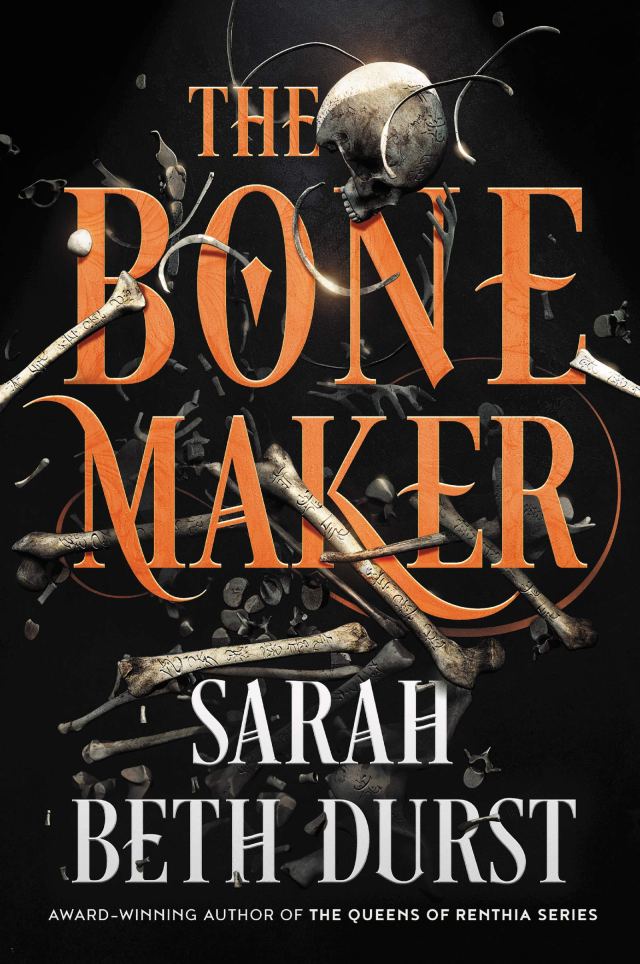
The Bone Maker by Sarah Beth Durst

The Bone Maker Cover

Publisher: HarperAudio (Audiobook – 9 March 2021)

Series: Standalone

Length: 16 hours and 35 minutes

My Rating: 5 out of 5 stars

Amazon

One of the leading voices in fantasy fiction, the impressive Sarah Beth Durst, returns with another epic standalone fantasy read, The Bone Maker.

Sarah Beth Durst is an amazingly talented author who has been dominating the fantasy market for the last several years.  Initially debuting with several fun young adult and middle grade novels, such as the 2009 release Ice, Durst made the jump to adult novels in 2014 with The Lost, before writing her bestselling Queens of Renthia fantasy series.  I only recently started reading Durst’s work when I checked out her 2020 novel, Race the SandsRace the Sands was a gripping standalone fantasy read that featured a thrilling tale of adventure and redemption set around monster racing in a desert kingdom.  I absolutely loved Race the Sands, and it ended up being one of my top books and audiobooks of last year, and Durst was easily one of the best new-to-me authors I checked out in 2020.  As a result, I have been really keen to see what Durst would write next, and I was excited when I heard about her new book, The Bone MakerThe Bone Maker was one of my most anticipated novels of 2021, and I ended up having a wonderful time reading it.

25 years ago, the nation of Vos was threatened by a terrible foe, the rogue bone maker Eklor, whose nightmarish creations of animal bone and mechanical components sought to overwhelm everything.  In the end, Vos was saved by five heroes who led an army to Eklor’s door to destroy him.  However, their victory came at a steep cost, as one of the heroes died a tragic death, and only four walked away from Eklor’s tower.

In the years that followed, the leader of the heroes, Kreya, has lived a life of exile, determined to resurrect her husband, Jentt, who died to stop the evil assailing their realm.  Using Eklor’s notes, Kreya has succeeded in cracking the spells needed to complete the resurrection, but bringing the dead back to life has a heavy cost.  Not only does Kreya lose a day of her life for every day that Jentt lives, but Kreya also requires human bones to complete the spell,. The bones of the dead are ritualistically burnt throughout Vos specifically to prevent bone workers using them for dark magic, so Kreya is forced to look elsewhere for her materials.  In her desperation, she decides to return to the one place she swore never to go back to: the plains outside Eklor’s tower, where the bones of those fought against Eklor’s monsters still lie.

Making the arduous and forbidden journey to Eklor’s tower, Kreya makes a terrifying discovery that threatens everything she fought for all those years ago.  With the dangers of the past threatening to overwhelm her, Kreya has no choice but to reunite her comrades 25 years after their famous victory.  But will these damaged heroes be enough to face the evil threatening to overwhelm them, or will an evil long thought destroyed arise again to finish off what it started?

Wow, Durst definitely does not disappoint as she has created another impressive and powerful fantasy novel.  I had an absolute blast reading this fantastic new book and I managed to finish it off relatively quickly, especially once I got wrapped up in the outstanding story, clever setting and the lives of her amazing protagonists.  I really enjoyed this awesome standalone fantasy read and I have to give The Bone Maker a full five-star rating.

For her latest amazing fantasy novel, Durst has come up with a very complex and powerful story that dives deep into the hearts of her fantastic characters while also taking them on an epic journey of redemption.  I have to admit when I read some of the early descriptions of The Bone Maker I assumed it was going to be the central protagonist, Kreya, going up against her old companions as they tried to stop her from resurrecting her husband.  Instead, Durst works in a very different narrative that sees Kreya encounter the enemy from her past, which forces her to bring her friends back together herself.  Durst sets up this narrative really well, and the reader gets a sense of the tragedy of Kreya and the lengths she is planning to go to reunite with Jentt.  You also get a fantastic idea of the trauma from the protagonist’s past battles with Eklor and how this has shaped their lives.  There are some great moments in the opening half of this book, including several amazing and magically charged action sequences as the protagonists go up against a range of different foes, as well as some intense drama as the five are gradually reunited and come to terms with their past failures.  I loved how the narrative gradually morphed into a bit of a political thriller in the second half of the book as the protagonist encounters an old foe in a different setting.  The flow from the various sections of the story works extremely well, and Durst weaves together a really comprehensive and powerful standalone story.  I liked the excellent blend of action, fantasy elements and intense emotion exploration, which helped to produce a very comprehensive narrative, and The Bone Maker turns into quite an epic and exceptional read.

Easily the highlights of this book are the complex and damaged central characters that the story follows.  The five main characters are heroes who previously saved Vos from a great evil, and I loved this exploration of renowned fantasy heroes years after they saved the world, the usual climax of a story.  The central character of the story is Kreya, the group’s leader, who disappeared after ensuring their previous victory, mourning her dead husband.  Kreya performs multiple attempts at resurrection at the cost of her own life, and I really appreciated the author’s interpretation of this character’s grief leading her to risk it all.  Kreya has a rough and powerful journey throughout this book as she comes back to lead her team and is forced to deal with the expectations of all those around her.  Despite the immense amount of guilt, grief and regret that Kreya experiences throughout this story, Kreya proves to be a talented leader, directing them through several unique fights, and is the only person that can hold this ragged group of characters together.  The counterpoint to Kreya’s toughness and leadership is her deceased husband, Jentt, who, after his resurrection, proves to be the heart and light of the group.  Despite his more buoyant personality, Jentt has to deal with the consequences of his resurrection, especially when he finds out the cost of his continued life, and this leads him to several harrowing mental places.

The next member of the heroes of Vos is the bone wizard Zera, who specialises in creating the best magical talismans in the world.  Zera is the only member of the group who cashed in on her fame after their victory and has grown rich off her skills and reputation.  Zera is a fantastically sarcastic and entertaining addition to the cast, as she revels in her wealth and privilege, while also providing some of the best lines in the entire novel.  Despite a sense of intense betrayal at Kreya’s abandoning of her all those years ago, Zera agrees to help her with her mission, but finds herself constantly conflicted by her feelings of resentment, her own well-hidden damage, and her changed vision of what Kreya’s relationship with her was.  As a result, she has quite a journey throughout The Bone Maker and I loved her inclusion in this novel.

The other two major protagonists are the bone reader Marso and the warrior Stran, both of whom survived the battles with Eklor in very different ways.  While Stran is reasonably mentally healthy, having chosen to live a simple life with his wife and children, Marso has been broken by both his powers and the events of the past.  These two are a great contrast to one another, and both add some intriguing elements to the overall narrative.  I quite enjoyed seeing Marso slowly rebuild his sanity throughout the book while also coming to terms with a magical power he no longer trusts.  Stran’s apparent normality and stable family life is so amazingly different from the other characters in the book that it really stands out, and I liked seeing how each character was just a little bit different.  Overall, all five of these awesome protagonist really help to make The Bone Maker a powerful and impressive read and I am extremely glad that Durst took the time to build each of these great characters up.

One of the things I really must discuss is the outstanding setting that Durst created for this great book, especially as the author did such an impressive job coming up with yet another unique world.  The land of Vos is an amazing fantasy realm, loaded up with its own blend of troubles, culture and magic, which is living in the shadows of the tragic bone wars 25 years prior.  Durst sets this new landscape up perfectly in the early stages of the novel, and the reader gets a great sense of the people and mentality of this realm, especially when it comes to the trademark bone magic.  As the novel progresses, Durst visits several fantastic and compelling parts of this land.  This includes the gigantic and wealthy capital city where many terrible events take place, the hilly landscape that makes up the majority of Vos, a mist-shrouded valley loaded up with a collection of dangerous, gigantic monsters, and the plains surrounding Eklor’s tower, where deadly secrets lurk.  These landscapes are a lot of fun to explore, and Durst works them into her narrative perfectly.  I really enjoyed all of the major locations that the protagonists visit, although my favourite has to be the valley of monsters, as some intense and action-packed sequences take place there.

In addition to the amazing setting, I also really appreciate the rich and distinctive bone magic that Durst came up with for The Bone Maker.  This type of magic features three distinctive types of bone workers, including bone readers who can use animal bones to read the future, bone wizards who create powerful bone talismans, and bone makers who inscribe bones to animate a range of constructs.  Each of these magical disciplines is explored in great detail by the author and are all strongly utilised in the plot.  I loved seeing these magical elements at work throughout the action sequences in the book, and Durst uses them to great effect, with the characters gaining flight, stealth, strength and speed in every epic fight sequence.  The various examples of bone making are also pretty cool, and you get some great magical constructs.  I liked how there was a fun contrast between the protagonists’ cuter, yet still effective constructs, and the antagonists monstrous figures, and it makes for some great combat scenes, especially when the protagonist goes big towards the end of the book.  All of these magical elements are really exceptional, and I think it is an absolute testament to Durst’s sheer imagination and creativity that she is so effectively able to come up with a brand new style of magic and a new magical realm for every single one of her standalone fantasy reads.

I ended up enjoying The Bone Maker in its audiobook format, which proved to be a fantastic way to experience Durst’s epic story.  The Bone Maker audiobook has a decent run time of 16 hours and 35 minutes, which I ended up getting through rather quickly and is not too much of challenge for dedicated listeners to finish off.  One of the best things about this great audiobook is the amazing narrator, Soneela Nankani.  Nankani is a veteran audiobook narrator, but despite her prevalence as a narrator of fantasy fiction, I have not previously had the pleasure of experiencing Nankani’s vocal talents before, although she has worked on several other fantasy novels that I am keen to check out.  Nankani was an outstanding narrator whose voice really enhanced this already amazing novel.  Not only did Nankani provide a quick and exciting tone for the entire novel, moving the story along at a brisk and enjoyable pace that continuously kept the reader’s attention; she also provided several fantastic voices for the various protagonists.  All the voices that she used were pretty impressive, and I felt that they fit the damaged and dark personalities of each of the main characters very well.  As a result, I would strongly recommend the audiobook format to anyone interested in checking out The Bone Maker as it is an amazing way to check out this compelling novel.

The Bone Maker by Sarah Beth Durst is an exceptional and captivating standalone fantasy novel that I had an amazing time reading.  Durst has produced an epic and elaborate tale of life, death and magic, which follows five damaged and broken heroes years after their supposed great victory.  There are so many awesome elements to this fantastic book, and readers are going to fall in love with The Bone Maker’s addictive narrative, powerful characters and cool magical elements.  While I did enjoy Durst’s previous novel, Race the Sands, a little more, this was still an outstanding read, which comes highly recommended.
Amazon

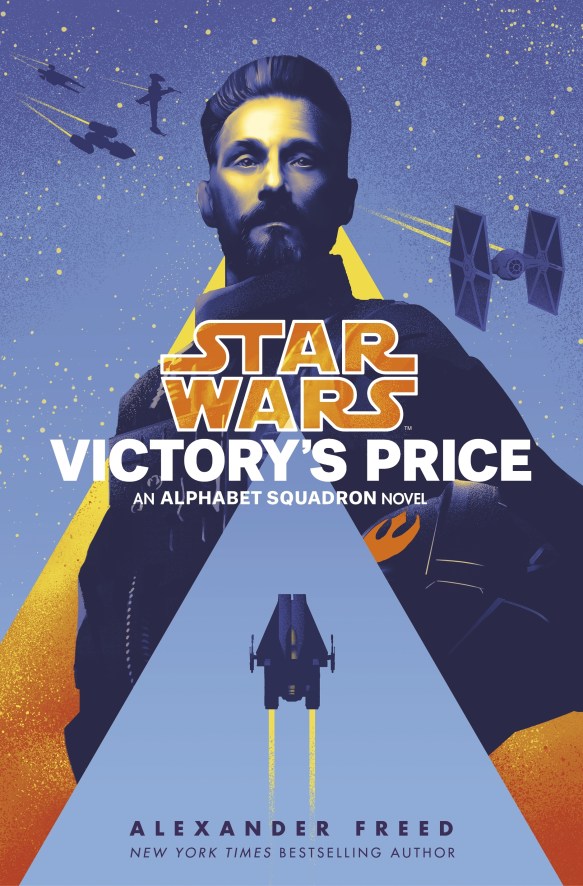
Star Wars: Victory’s Price by Alexander Freed

Star Wars - Victory's Price Cover

Publisher: Random House Audio (Audiobook – 2 March 2021)

Series: Star Wars: Alphabet Squadron – Book Three

Length: 16 hours and 19 minutes

My Rating: 5 out of 5 stars

Amazon

One of the best Star Wars tie-in series comes to an epic and impressive end, as Alexander Freed presents Star Wars: Victory’s Price, the amazing third and final entry in the awesome Alphabet Squadron trilogy.

Since its inception in 2014, the current Star Wars extended universe has featured an amazing range of novels that tie into the various movies and television series.  One of the best has been the Alphabet Squadron trilogy from acclaimed author Alexander Freed.  Alphabet Squadron is a particularly compelling trilogy that follows a fantastic group of mismatched Rebel and Imperial pilots who continue to fight in the aftermath of Return of the Jedi.  This series has so far featured two excellent entries: the great introductory novel Alphabet Squadron, and the outstanding second entry, Shadow Fall, both of which I have deeply enjoyed.  As a result, I have been looking forward to seeing how the series ends and I think that Freed has left the best to last with this epic and powerful read.

The Emperor and Darth Vader may be dead, and the second Death Star destroyed, but the war is far from over.  Nearly a year after the battle of Endor, conflict still reigns in the galaxy between the forces of the New Republic and the remnants of the Empire.  In nearly every battlefield, the Empire’s forces are in retreat and disarray, apart from the notorious pilots of the 204th Imperial Fighter Wing, better known as Shadow Wing.  Led by the dangerous Imperial TIE Fighter ace, Colonel Soran Keize, Shadow Wing continue to bring death and destruction to the Empire’s enemies, slipping away when their vile deeds are done.

However, despite their skills and strategies, Shadow Wing is in constant danger as New Republic forces, under the command of General Hera Syndulla, are pursuing them.  Syndulla is determined to end the threat of Shadow Wing utilising the ragtag pilots of the unique unit known as Alphabet Squadron, each of whom has a score to settle with Shadow Wing, to lead the fight against them.  However, the members of Alphabet Squadron, Wyl Lark, Chass na Chadic, Nath Tensent and Kairos, are still recovering from their last traumatic encounter with Shadow Wing on Cerberon, as well as the revelation that their former leader, Yrica Quell, was an active participant of Operation Cinder, the Emperor’s genocidal last order to destroy multiple disloyal planets.

As Hera and Alphabet Squadron attempt to find their prey, they begin to discover just how dangerous the cornered Shadow Wing has become, as their opponents begin to enact a new version of Operation Cinder.  Worse, Alphabet Squadron are shocked to discover that Yrica Quell is still alive and has re-joined her old comrades in Shadow Wing.  As the two forces engage in battle again, the loyalties of Alphabet Squadron will be tested like never before while Quell attempts to determine just whose side she is truly on.  The conflict will finally end above the skies of Jakku, as the Imperial and New Republic fleets engage in their final battle.  Can Alphabet Squadron finally put an end to the evils of Shadow Wing, or will Soran Keize’s master plan change the entire galaxy forever?

Now this is what all pieces of Star Wars fiction should be like.  Victory’s Price is an exceptional and impressive novel that had me hooked from the very beginning.  Not only does Freed do an amazing job of wrapping up the Alphabet Squadron trilogy but he also provides the reader with fantastic action sequences and some outstanding characters.  This is easily one of the best Star Wars novels I have read in ages and it gets a full five-star rating from me.

For this final book, Freed has come up with a powerful story set within the iconic Star Wars universe.  Starting right after the events of Shadow Fall, Victory’s Price sees the members of Alphabet Squadron separated and traumatised as their protracted and personal conflict with Shadow Wing begins.  This leads into a series of exciting encounters and battles in space as Alphabet Squadron pursues Shadow Wing during their latest mission, while the leader of Shadow Wing hatches a plan to end the war on his terms.  At the same time, each of the characters attempts to deal with issues or distress raised in the previous novels, whether it be Quell’s conflicted loyalties or Chass’s post-fight trauma.  All of this leads to some epic and impressive final confrontations as the two sides meet for the very last time.  This was an extremely good character-driven read, and I loved the very cool way that Freed finished off this amazing series.

While it is an amazing Star Wars novel, Freed focuses more on the war part of the book, turning this into a gritty story of survival, loyalty and conflict, which makes for a powerful piece of fiction.  While obviously best enjoyed by those readers familiar with the rest of the series, Victory’s Price is a very accessible novel which new readers can follow without any trouble.  Thanks to the awesome use of multiple character perspectives, Victory’s Price has an excellent flow to it, and the readers are supplied with clever twists, cool action sequences and impressive character moments as the protagonists come to terms with their place in the universe and the constant fighting.  This ended up being quite an intense tale of war and life, which not only perfectly wrapped up the Alphabet Squadron series but which also had me engrossed from the very minute I started reading it.

One of the major things that I liked about this book was the way in which it added to the Star Wars expanded universe.  This series has always done a cool job of exploring what happened after Return of the Jedi, and it is always interesting and somewhat more realistic to see that the war did not end as soon as the Emperor died.  However Freed has painted this period as a particularly dark and deadly part of the war, and I love seeing how he envisioned what happened to members of the New Republic and Empire after Endor.  Victory’s Price focuses on the very end of the civil war, showing another side of the events that lead up to the battle of Jakku and fitting its original characters into this conflict.  This is a cool part of the book, and I loved seeing another version of the epic battle of Jakku, a major conflict that has been featured in several other novels and pieces of fiction.  Freed also takes the time to explore and answer several other intriguing questions, such as the mystery behind the Emperor’s messengers, the creepy red-clad droids who project holograms of the Emperor’s face, which sought out various Imperial commanders after Endor and ordered the various genocides of Operation Cinder.  The solution surrounding the messengers ends up being rather intriguing, and there are even some clever parallels to World War II in there.  Due to the intriguing elements of Star Wars lore featured within, Victory’s Price, like the rest of the Alphabet Squadron series, will probably be enjoyed most by major fans of the franchise, but there are a lot of compelling elements that readers of all knowledge bases will appreciate.  This was truly an exceptional piece of Star Wars fiction and I cannot wait to see what Freed adds to the canon next time.

I really must highlight the outstanding action scenes that Freed came up with for this book.  I am a man who likes his Star War’s action, and I have to say that Victory’s Price has some of the best sequences that I have ever had the pleasure of enjoying.  Due to the novel’s focus on fighter pilots, there are naturally a huge number of amazing combat scenes as the rival pilots engage in complex battles in space.  Freed has saved the best for last in this final Alphabet Squadron novel, as the opposing pilots find themselves fighting in a range of unique situations.  The battle scenes are extremely well crafted, filled with elaborate details and fantastic depictions of complex manoeuvres and clever tactics that are guaranteed to keep you on the edge of your seat with their intense action.  They are also quite emotionally rich, as you witness your favourite characters constantly face near-death experiences in this final entry in the series.  Highlights of these great battle sequences included two fantastic duels between the protagonists and the leader of Shadow Wing, which sees some fancy flying between some of the most skilled pilots in the series in some very distinctive landscapes.  I also really loved the final, elaborate battle set above Jakku, which proved to be a major part of the second half of the book.  Not only do you get the desperate and packed main conflict between the entire New Republic and Imperial fleets, which features destruction and death in every direction, but you also get a more private and quiet final battle between a group of Alphabet Squadron led New Republic fighters and Shadow Wing.  This smaller pitched battle between the two sides fits perfectly into the midst of the wider conflict and is filled with personal turmoil and antagonism as these two rival squadrons meet for a final time.  All these battles come out as being extremely epic and powerful, and I loved every second of the gritty and deadly fights they contained.

While I have a lot of love for Victory’s Price’s epic story, intense action, and clever Star Wars connections, easily the best thing about this book are the complex and well-written characters.  Each of the major characters featured in Victory’s Price have been introduced in the previous Alphabet Squadron novels with some complex and powerful storylines.  In Victory’s Price, all these great arcs reach a climax as the characters meet their final destiny and their stories comes to an end.  I really enjoyed the satisfying conclusions that Freed came up with for his outstanding characters, although in many ways it was sad to see their stories finish.  Still, I really appreciated all the great character arcs contained in this final novel, and Freed ensures they go through the emotional wringer before they go.

At the forefront of these outstanding characters are the five members of Alphabet Squadron who have served as the focal point for the entire series.  The pilots in Alphabet Squadron, so named for their use of a different Rebel Alliance fighter (A-Wing, X-Wing, B-Wing, U-Wing and Y-Wing), are layered and complex individuals, each of whom has experienced their own trauma or betrayal throughout the course of the lengthy war.  All five of these original characters have gone through significant development throughout the course of the previous two novels, and Freed does an exceptional job continuing their journeys in this final book.

The main protagonist of this series is Yrica Quell, a former member of Shadow Wing, who joined Alphabet Squadron in the first novel to help neutralise her former Imperial comrades.  However, it was eventually revealed that Quell, despite claiming she defected from the Empire after refusing to participate in Operation Cinder, aided in the destruction of a planet.  This revelation caused a massive rift in her relationship with the rest of Alphabet Squadron, and she ended up reuniting with Shadow Wing at the end of the second novel.  In this final book, it is revealed that Quell has infiltrated Shadow Wing to bring them down from the inside.  However, upon spending time with her Imperial comrades, she begins to experience doubts about her plan, especially as she sees that the Imperials are just as damaged by the war as she and the New Republic pilots are.  Her plans are further complicated due to her relationship with the leader of Shadow Wing, Soran Keize, her former mentor and the person who initially convinced her to defect to the New Republic.  Quell still has an immense amount of respect for Keize, and strongly believes in several of his plans.  This re-remembered loyalty to Shadow Wing strongly conflicts with her friendships with Alphabet Squadron and the guilt she feels for her role in Operation Cinder, placing Quell in a major quandary for most of the book.  This uncertainty and inner conflict is a really clever part of Quell’s story, and the reader is deeply impacted by her struggle and conflicted loyalties.  This was easily one of the best and most powerful character arcs in Victory’s Price and I really appreciated the outstanding character story that Freed set around Quell.

Victory’s Price also spends a significant amount of time following Quell’s fellow Alphabet Squadron members, Wyl Lark and Chass na Chadic, both of whom have compelling arcs that highlight different aspects of warring soldiers.  Wyl Lark is the young, optimistic member of the squadron who took over leadership at the end of the second novel.  Lark has developed a significant amount throughout the course of this series, and it is great to see him come into his own as a leader and pilot.  However, despite his apparent ease at the role, Lark is plagued by doubts and concerns about the morality of this fight, especially as it conflicts with some of the teachings of his race.  He spends a great deal of this final book coming to terms with his morals, and even attempts to once again contact the members of Shadow Wing to try and find some common ground or a way to end the conflict.  His actions go a long way to humanising the antagonists of the novel and his hope is a refreshing beacon of light in this darker Star Wars book.  I deeply enjoyed seeing the way in which Lark attempts to change the outcome of the war his way, and it was a fascinating addition to the story.

Chass, on the other hand, is easily the most damaged character in the entire series.  A music-loving veteran pilot who is more afraid of the end of the war and her inevitable slide into irrelevance and despair than her own death, Chass has always been on edge throughout the series.  However, in Victory’s Price, Chass is even more traumatised, especially after learning of the betrayal of her love interest, Quell (which is an intriguing LGBT+ relationship for a Star Wars novel) and has since turned to the teachings of a cult to gain some clarity.  Despite this, Chass is still driven by her anger and her rage and is constantly lashing out at everyone around her, with her death wish a constant anchor around her neck.  Freed has written a complex and moving story around Chass and her suffering, and I deeply appreciate the portrayal of her as a troubled veteran.  I think that Chass’s story comes to a fantastic end in this final novel, especially as she gets closure with several important people in her life.  Both characters are incredibly well written and are fantastic examples of Freed’s exceptional writing ability.

Next up are the final two Alphabet Squadron pilots, Nath Tensent and Kairos.  While both characters have been somewhat overshadowed throughout the series, Freed has developed some intriguing storylines around them which come full circle perfectly in this final novel.  Nath Tensent, a pilot who served both the Empire and the Rebels during the war, has an enjoyable and likeable personality and is the sort of guy who quickly becomes everyone’s best friend.  However, despite the easygoing façade he projects to the world, even Nath is feeling the effects of the war and the constant worry and responsibility is getting to him.  This is particularly exacerbated in Victory’s Price when he becomes a decorated military hero with greater responsibilities and is forced to balance his own selfish goals with the lives of people who look up to him, as well as his very strong concerns for Wyl Lark.  This results in a particularly clever and enjoyable arc, and it was great to see him finally take some responsibility in this war.  I liked the way in which Freed ended Nath’s storyline, especially as it potentially opens another series in the future.

The final member of the squadron is the mysterious Kairos, an alien of unknown origin with a strong hatred for the Empire and terrifying combat skills.  Despite her intriguing introduction in Alphabet Squadron, Kairos was somewhat left out of the second book after receiving an injury.  However, this is more than rectified in Victory’s Price, as Kairos is featured more prominently and we finally get to see some of her backstory.  Freed comes up with quite the intriguing, if tragic, story for Kairos, and it was fascinating to see her unique alien beliefs and culture, as well as a powerful story of renewal and redemption that accompanies her.  Kairos becomes quite close to two characters in this book, especially after the closest people in her life died in the previous novel, and it was great to see her finally connect, even if only for a short while.  Freed did a fantastic job setting up Kairos’ story in the previous two novels, and I personally loved finally getting some answers regarding this curious character’s identity.

Aside from the members of Alphabet Squadron, several other characters are also shown in great prominence throughout this book.  The one I liked the most was Hera Syndulla, the New Republic general commanding Alphabet Squadron.  Hera is one of the few characters in this novel who Freed did not come up with, as Hera originated in the Star Wars: Rebels animated series and serves as a bridging character to the larger franchise.  Due to how much I love Star Wars: Rebels, I have really enjoyed seeing more of Hera in this series, not only because I am very curious about her post-Rebels life but because she also serves as a great mentor character to the members of Alphabet Squadron.  Hera features a lot more prominently in this final novel and her perspectives are shown nearly as much as the members of Alphabet Squadron.  This extra perspective really added a lot to the story as a whole and I personally really enjoyed seeing Hera take charge and attempt to hunt down Shadow Wing, while also attempting to determine the course of the entire war.  I also really enjoyed the fact that this book shows Hera’s role in the battle of Jakku, which as the largest space battle in the entire civil war, you had to assume she would be a part of.  Hera is naturally a bit of a badass in this battle, as you would expect, and I appreciated that Freed featured more of her in this novel.

The other major character featured within Victory’s Price is Colonel Soran Keize.  Keize is a fantastically complex character who serves as the leader of Shadow Wing and Quell’s Imperial mentor.  Despite nominally being the antagonist of this book, Keize is portrayed as a more of a tragic and misunderstood figure, one who is sick of war and who only has the best concerns of his men at heart.  As a result, Keize is running his own game throughout Victory’s Price and works to get the best result for the members of Shadow Wing.  His convictions, sense of honour and understandable motivations make him a hard character to dislike, and his role in mentoring Quell ensures that she is extremely conflicted when it comes to betraying him.  Keize is also probably the best pilot in this entire series, as he is regarded as the Empire’s ace of aces, and Victory’s Price is where you get to see him soar as he engages in several great battles and duels.  Thanks to this, and his curious character development, Keize is a great character to follow, and I really enjoyed the unique tale Freed told through him.

Freed also focuses on some of the other pilots on both the New Republic and Imperial sides.  This results in a great combination of complex side or minor characters, each of whom have their own reasons for fighting in the war.  Freed attempts to show that, despite fighting on different sides of the war, these characters really are not that different.  Instead, all of them are soldiers, with several similarities, including their own trauma, PTSD and issues with the war that they are fighting in.  I think it is a testament to Freed’s writing ability that he was able to get me to care about members of the Imperial navy, and it was pretty spectacular the way in which he attempted to show the humanity buried deep within them.  It does mean that the action sequences more emotionally loaded and potentially devastating as you end up not wanting to see some of the pilots dying, but I really appreciated the way in which Freed took the time to explore these compelling side characters.

While I have previously enjoyed the first two Alphabet Squadron novels in their paperback format, circumstances required me to check out Victory’s Price as an audiobook instead, which was pretty damn awesome.  Not only did Victory’s Price feature the usual blend of iconic sound effects and music that makes all Star Wars audiobooks such a treat to enjoy, but I found that the story flowed incredibly well in this format.  With a lengthy runtime of 16 hours and 19 minutes, I absolutely blasted through this book as I became so engrossed in the awesome story and the way in which it was performed as an audiobook.  I also thought that the use of the iconic Star Wars music in the Victory’s Price was particularly impressive, and not only did the music make several of the extended space battle sequences even more epic, but they also really highlighted some of the most emotional scenes in the book and made them strike my soul even more emphatically.  I also really enjoyed the amazing narration from January LaVoy, who has previously provided her voice to the other Alphabet Squadron books.  LaVoy is a particularly skilled narrator whose work on the Star Trek: Discovery tie-in novel, Die Standing, I really enjoyed.  Not only does LaVoy present the awesome details of Victory’s Price in a quick and exciting manner, making each of the action scenes sound particularly cool, but she also provides some great voices for the various characters.  Each of the main characters gets a unique voice which fits them perfectly and which really helps the listener get to grips with their personalities and inner thoughts.  While all of the character’s voices were done extremely well, the best voice that LaVoy did was probably Hera Syndulla’s, which sounded extremely close to the character’s voice in the Star Wars Rebels animated series.  All of this helps to make Victory’s Price’s audiobook an immensely enjoyable experience and I would highly recommend this format to anyone and everyone.

Star Wars: Victory’s Price is an exceptional and powerful novel from Alexander Freed that is one of the best books I have so far read in 2021.  Featuring a dark and gritty war story set during a fascinating period of Star Wars history, Victory’s Price perfectly wraps up the impressive Alphabet Squadron trilogy while also providing some cathartic conclusions to outstanding character arcs that Freed has built up during the previous book.  I absolutely loved this final novel (hence the massive review), and I think that this was probably the best entry in the entire series.  A highly recommended read, especially if you have already enjoyed the rest of the trilogy, this was a truly epic Star Wars novel.

Amazon

The Girls I’ve Been by Tess Sharpe

The Girls I've Been Cover

Publisher: Hodder Children’s Books (Trade Paperback – 9 February 2021)

Series: Standalone/Book One

Length: 361 pages

My Rating: 5 out of 5 stars

Amazon

From bestselling young adult author Tess Sharpe comes an outstanding and deeply impressive new novel, The Girls I’ve Been, an extremely clever and emotionally rich young adult thriller that is easily one of my favourite books of 2021 so far.

When young teen Nora O’Malley started her day, she thought that the worst thing she would have to deal with would be an awkward chance meeting with her ex-boyfriend at the local bank with her new girlfriend in tow.  However, things get decidedly worse when two armed men storm the bank, shooting wildly and demanding the manager.  When their plan goes awry, the two robbers take the staff and customers hostage, locking them in and barricading the doors.  With only a small police force in town, the nearest SWAT team hours away and the gunmen getting more and more antsy, things look grim for the hostages until Nora takes the lead.

Despite only being 17, Nora has a complicated and terrible past.  Born the daughter of a self-centred and manipulative con artist mother, Nora spent the first 12 years of her life helping her mother run her dangerous cons, first as a prop, then as an active participant, learning everything there is about lies, deceit and becoming a whole different person.  However, after their final job went terribly wrong, Nora eventually left her mother behind to escape and become Nora.  Despite living a relatively quiet life for the last five years with her long-lost sister, Nora is prepared to dive back into her past lives as a conwoman to ensure that everyone gets out this dangerous situation alive.

Using every trick and subtle deception at her disposal, Nora must try to manipulate the two robbers into letting them go, while also attempting to distract them from her friend’s escape attempts.  But as conditions in the bank get even worse, Nora begins to realise that these robbers have their own deadly plan, and that the only chance to survive is to reveal her true identity to her captors.  Nora has a deadly secret in her past, one that she has been running from for years, and which may prove to be far more dangerous than anything the robbers can throw at her.

The Girls I’ve Been is an impressive and captivating young adult thriller that I was lucky enough to receive a copy of a few weeks ago.  This is the latest novel from Tess Sharpe, an author who specialises in novels with strong female protagonists, including Barbed Wire Heart, Far From You and the Jurassic World: Fallen Kingdom tie-in novel, The Evolution of Claire.  I must admit that before receiving her latest novel, I was a little unfamiliar with Sharpe’s work, although I did hear good things about her Marvel Comics tie-in book, Captain Marvel: Liberation Run.  However, the moment I received The Girls I’ve Been, I knew that I had to read it as I really liked the cool synopsis and the fantastic-sounding plot.  I ended up powering through it in a few short days as I quickly became engrossed in the excellent and complex narrative that Sharpe weaved around her damaged protagonist.  I had an outstanding time reading this book and, considering how engrossing and powerful I found it, I have no choice but to give it a full five-star rating.

For this amazing book, Sharpe has come up with an exceptional story primarily told from the point of view of the book’s protagonist and narrator, Nora.  The author starts the story off quick, pushing the protagonist and her friends, the dramatic pairing of her hurt ex-boyfriend and her long-time crush turned recent girlfriend, into the midst of a violent and dangerous situation when the bank they are in is stormed by two gunmen.  After this explosive start, Nora quickly slips into action, plotting her escape while trying to find some way to manipulate their captors into letting them go, which in turn reveals her past as a conwoman’s daughter.  The author then starts layering in a series of fantastic flashback sequences or chapters loaded with details about the protagonist’s past or her relevant skills and experiences.  Not only do these become relevant to the current crisis that the characters find themselves in, but they also provide more context for Nora’s actions, as well as containing hints about her troubled past.  These flashbacks fit seamlessly into the main narrative, and as the book progresses and the situation in the bank gets worse, the reader becomes more and more aware of just how dangerous and messed up Nora’s childhood.  The depictions of the character’s past are exceedingly fascinating, and this entire flashback narrative proves to be an awesome addition to the plot, especially as some of her previous actions have severe consequences on current events.  Both the past and present come together extremely well to form an impressive conclusion, which also leaves open the potential for sequels in the future.  I really enjoyed this awesome overarching narrative, due to its fast-paced intensity, clever humour (I particularly liked the inclusion of text at the start of some chapters describing the progress of Nora’s various plans), and impressive character development, and it really did not take me long to get invested in the story.

Easily the best thing about The Girls I’ve Been is the extraordinary amount of character development that Sharpe puts into her point-of-view protagonist, Nora.  Nora (not her real name) is a character who has a unique outlook on life due to her past, which she is constantly haunted by.  When we are first introduced to Nora, the reader is shown a seemingly normal girl, albeit with a complex love life, but it does not take long for the reader to understand just how different she is.  Not only do we witness her immediately take control of the situation inside the bank, but soon the reader sees a powerful series of flashbacks showing the character’s chaotic early life.  Each of these great flashbacks help to produce a layered and captivating figure and it was truly fascinating to see how Nora was born and raised as a criminal conwoman.  Sharpe really dives down deep in Nora’s psyche, allowing you to see how messed up she is and how her past shaped her.  I particularly enjoyed the various flashback chapters that show her committing cons when she was younger, each time with a different name.  With each of these cons, the protagonist learns a whole new set of skills and personality traits, either because her mother demanded it to make the con work or because the trials she underwent during this job required her to learn them.  The protagonist attributes each of these traits to the distinct person she was during the job, and she calls on each of these personalities to shape her into the mostly stable and capable person that she is today.  The author pulls no punches in showing the reader all the terrible things that Nora experienced as a child, and I think she did an outstanding job capturing the lasting impact painful events would have on a young person.  Despite this trauma there is a noticeable strength to Nora that drives her to survive and help others, even if it means sacrificing herself or taking a more lethal approach to solving a problem.  Naturally, all this impressive backstory helps to produce a truly compelling protagonist who the reader cannot help to pull for, especially as Sharpe also imbues her with a sarcastic and clever sense of humour that really appealed to me.  It will be interesting to see if Sharpe continues utilising this unique character in the future and I for one would love to see what happens to her next.

In addition to Nora, Sharpe has also included several other great supporting characters who help to turn The Girls I’ve Been into a first-rate novel.  While none of these characters get as developed as Nora, Sharpe has ensured that each of them is just as complex and nearly as damaged.  The main two supporting characters are Iris, Nora’s quirky current girlfriend, and Wes, Nora’s ex-boyfriend, both of whom are trapped in the bank with her.  While you would assume that this combination of characters would result in petty drama, Sharpe has come up with an intriguing relationship dynamic between the three of them which becomes a fantastic part of the narrative.  They prove to be quite supportive of each other, as all three have experienced various forms of neglect or abuse in the past, and together they are able to face their demons and become more stable people.  I really liked the way that Sharpe utilised Iris and Wes in the story, especially as both characters have some interesting characteristics, and it was amazing to see them all develop them throughout the course of the novel.

In addition to her friends, there is also a significant focus on Nora’s family, her sister Lee, and her mother, both of whom have had a major impact on her life.  I enjoyed both characters for very different reasons.  Lee is the strong older sister who, after experiencing a similar traumatic childhood like Nora, dedicates her life to saving Nora, even if she must ruin everything she loves.  Their mother, on the other hand, is a selfish, manipulative creature, who lives for the scam and is willing to drag her children through hell to get what she wants.  Both characters are great additions to the narrative, and it was fascinating to see what motivated them and what terrible things they are willing to do for different reasons.  All these characters add so much to The Girls I’ve Been, and I was really impressed with Sharpe’s excellent work on them.

Like several of Sharpe’s previous novels, The Girls I’ve Been is marketed as a young adult fiction novel for a younger audience.  I would say that this is an exceptional novel for teenage readers, as The Girls I’ve Been contains a complex and powerful story that features a young girl forced to endure amazing hardships and overcoming them in an intelligent way.  There are some deep and emotional issues that are hit on throughout this book, including children forced to deal with abusive parents, as nearly every parental figure in this novel is either abusive or complicit through negligence.  I think the author addressed these issues in an excellent way, especially as she did not try to talk down her intended audience, and I have no doubt that these elements will strongly resonate with some readers.  In addition, Sharpe also discusses some other important issues in this novel, such as endometriosis, as well as depicting some very positive LGTB+ relationships, all of which I think a lot of teenagers will also really appreciate seeing.  The novel does contain some more mature themes and elements, which might not be appropriate for younger readers, but which make it a great teen read.  This is also one of those young adult novels that can be quite easily enjoyed by an older audience, and I think that a wide range of readers will deeply enjoy this amazing novel.

The Girls I’ve Been is an outstanding and exceptional novel that I cannot give enough praise to.  Tess Sharpe has come up with a truly impressive young adult thriller, containing an amazing story and some exceedingly compelling characters.  I had an awesome time with this book, and I cannot recommend it enough.  I look forward to seeing what Sharpe will come up with next and I can certainly say that this is an author that I will be keeping a very close eye on.  I hope that she considers a sequel to The Girls I’ve Been in the future, although this great novel already has a pretty fantastic self-contained story to it, still it might be interesting to revisits the cool characters again.  There is apparently a movie adaptation of The Girls I’ve Been in the works, starring Millie Bobby Brown.  I think that this book would make for a really good movie, and Millie Bobby Brown is a fantastic choice to play Nora (I only just watched her in Enola Holmes).  In the meantime, do yourself a favour and check out The Girls I’ve Been, because you really will not be disappointed.

Amazon

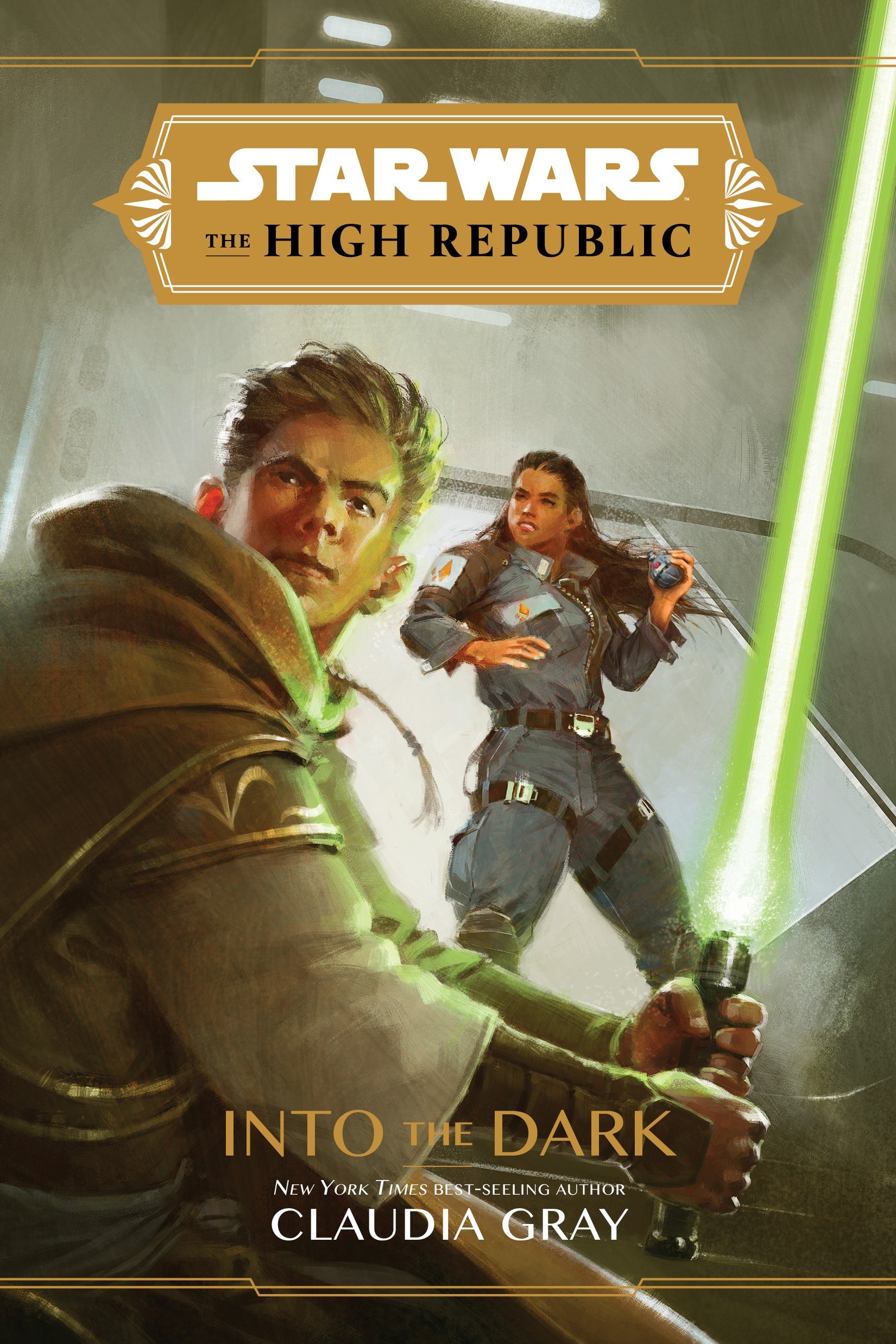
Star Wars: The High Republic: Into the Dark by Claudia Gray

Star Wars - Into the Dark Cover

Publisher: Penguin Random House Audio (Audiobook – 2 February 2021)

Series: Star Wars – The High Republic

Length: 11 hours and 11 minutes

My Rating: 4.25 out of 5 stars

Amazon     Book Depository

The journey into the new era of Star Wars fiction known as The High Republic continues as acclaimed author Claudia Gray presents the next entry into this sub-series with the young adult novel, Star Wars: Into the Dark.

The High Republic is a fantastic Star Wars multimedia project made up of novels, comics and other pieces of Star Wars expanded universe fiction, set hundreds of years before the events of the films, showing a completely different period of Star Wars history.  This project started in January 2021 with the excellent novel, Light of the Jedi, which served as an impressive introduction to the period and the turmoils facing it.  Into the Dark, which runs somewhat concurrently with the events of Light of the Jedi, is the first young adult High Republic novel and presents an intriguing new adventure with a great group of new characters.  This young adult novel was written by the amazing Claudia Gray, author of the Evernight series, who has been making a real splash with Star Wars fiction in recent years.  Not only did she write the awesome-sounding novels Star Wars: Lost Stars, Star Wars: Bloodline and Star Wars: Leia, Princess of Alderaan (all three of which I fully intend to read in the future), but she also wrote the outstanding 2019 novel, Star Wars: Master and Apprentice, which is one of my absolute favourite Star Wars novels of all time.  As a result, I was quite keen to see Gray’s take on The High Republic era and she did not disappoint with a captivating and fascinating novel that was a lot of fun to read.

Jedi Padawan Reath Silas is about to have the adventure of his life, whether he wants it or not.  Apprenticed to the powerful Jedi Master Jora Malii, Reath is happy with his life on Coruscant where he can pursue his academic and scholarly interests.  However, his master has just accepted a dangerous new posting aboard the Starlight Beacon, a gigantic Republic-controlled space station on the frontier of the Outer Rim, far away from everything Reath has ever known. 

However, fate has a funny way of changing even the best laid plans. Reath, leaving Coruscant a few weeks after his master’s departure, finds himself caught up in the disaster sweeping through the galaxy.  Travelling aboard the unusual spaceship known as the Vessel, Reath and three other Jedi, each of whom have their own reasons for leaving the Jedi Temple and journeying into the wilds, encounter a mysterious disturbance out in hyperspace, as the remnants of the ship know as the Legacy Run, splinter out at lightspeed, destroying everything in their path.

To avoid the high-speed fragments, the Vessel makes an urgent jump out of hyperspace and finds itself trapped in an isolated portion of space with several other ships.  Forced to seek shelter in a seemingly abandoned space station, the Jedi and the Vessel’s crew attempt to work with the other ships to find a way to survive until hyperspace can once again be travelled safely.  However, great danger lies in wait aboard this station, as the various crews fight for resources and each of the Jedi are forced to fight their own inner demons.  But there are things far darker and more ancient aboard this station, and Reath and his colleagues will soon be forced to face off against a deadly foe whose reappearance could change the galaxy forever.

Into the Dark is another epic and enjoyable Star Wars novel from Claudia Gray that takes the reader on a fantastic and exciting character driven adventure.  I have been really enjoying the new High Republic pieces of Star Wars fiction and Into the Dark ended up being an awesome and compelling young adult feature that not only contains a great story, but which dives into some fascinating subjects through the eyes of its amazing characters.

Gray has come up with an excellent and enjoyable narrative for Into the Dark which not only ties in nicely with the previous entries in the High Republic line but which also sets several fantastic new characters on a captivating and emotionally trying adventure.  The author starts the story off well, introducing all the key characters in quick succession (indeed six main characters get introduced in one extended sequence), providing some hints at their compelling backstories before sending them on their way into space.  It does not take long before they get wrapped up in the chaotic events that featured in the previous High Republic novel, Light of the Jedi, forcing them to explore the main setting of the abandoned space station.  This naturally leads to a lot of exciting and intriguing events as the characters are forced to survive for a time on the station with the crews of several other ships.  During this time, a lot of story threads start to appear, such as mysterious statues, dangers from the other crews, strange writings on the wall that have significance to one key character and a lingering sense of darkness that assaults the Jedi. 

At the same time, the author dives into several of the main characters’ motivations and the events of the past that drive them, including through a series of interesting flashbacks that have some curious connections to modern day events.  The middle of the novel keeps up the excitement where, after a major event, the characters return home, only to continue to be assailed by the mysteries of the station.  There are several good twists at this part of the book, including a significant reveal about a side character that I really should have seen coming.  Eventually, all the characters reunite and return, only to get drawn into a dangerous confrontation on the station as gathered forces finally show their hand.  All of this results in an explosive and impressive conclusion that leaves some interesting story arcs open for the main characters while also ensuring that the reader gets some satisfying closure about the events of the book.  I really enjoyed this great narrative, which is filled with some clever story threads which come together extremely well into a fast-paced and compelling young adult tale that readers will get through extremely quickly.

Into the Dark is an interesting read which I felt had a wide range of appeal to a lot of different audiences.  This latest book has been marketed as a young adult novel and teenage Star Wars fans will enjoy it.  Not only is this a great Star Wars adventure but the book also features a couple of great teenage characters taking charge and attempting to initiate change, for better or worse, as the universe changes around them.  While primarily a Star Wars novel, Gray does try to make it a little more relevant to teenagers, with some discussions about relationships, drugs and sex that you wouldn’t typically see in a Star Wars novel but which fit the tone of the book quite well.  Like many Star Wars young adult novels, Into the Dark is a book that older readers will also enjoy, especially as it is tied into the main events of the High Republic era.  While I think readers unfamiliar with The High Republic could easily enjoy this book, as Gray makes the text extremely accessible, I would say that Into the Dark is probably best enjoyed by those who have read some of the previous entries in the media project, especially the opening novel Light of the JediInto the Dark has a lot of connections to Light of the Jedi, especially as a major event impacting the main protagonist of this book occurs in this preceding novel, and this latest book ties in well with the rest of the franchise while also enhancing it.  In addition, Star Wars fans will really appreciate the author’s attempt to explore deeper elements of the Force, with the Jedi characters engaging in complex rituals to combat the Dark Side energy they encounter.  The author does an amazing job examining some of the roots of the Force, as well as the mentality and abilities of the people who manipulate it, and it is a fascinating addition to the narrative.  As a result, Into the Dark can be enjoyed by a large range of people who are guaranteed to have a lot of fun with it.

Easily one of the best highlights of this book is the amazing group of new unique characters who Gray has populated this story with.  The author has come up with a great group of intriguing point-of-view characters, each of whom plays a major part in the book’s plot and who Gray spends substantial time introducing and providing some compelling development as the book progresses.  The main character of Into the Dark is Padawan Reath Silas, the bookish apprentice of a great Jedi Master.  Reath is a fantastic young adult fiction protagonist, being a teenager who is thrust into a dangerous adventure against his will and who must find his inner strength to survive and thrive.  The author does a great job developing Reath throughout the novel, especially as he experiences substantial loss and trauma that he must overcome and which changes his entire outlook on life.  This character also provides some fascinating insight into the experiences and troubles of a Jedi apprentice, especially when they encounter great uncertainty about their path.  All of this results in some excellent character moments, and it was a lot of fun to see how Reath developed. 

Another major protagonist of this book is Affie Hollow, the young teen co-pilot of the Vessel.  Affie is another great young adult character, although, as she is more worldly (or the outer space equivalent of worldly?) than the somewhat sheltered Reath, she has a bit more common sense and a heck of a lot more sass.  Affie has a pretty intriguing story arc that sees her investigate the mysterious involvement of her shipping guild, which is run by her adoptive mother, with the space station that the Vessel ends up on.  This investigation, and her own stubborn determination, places her in the middle of some dangerous situations, and she ends up having to make some emotional and ethical choices towards the end of the book.

Other major characters in the novel are two of the Jedi who accompany Reath aboard the Vessel, Orla Jareni, a Jedi set on becoming a Wayseeker, a Jedi independent of the Council, and Cohmac Vitus, a noted and hooded scholar, both of whom are leaving for the frontier for different reasons.  Orla and Cohmac are an interesting pair who are bound together by a long history and a shared trauma in their past.  The events of this novel impact both severely, as it reminds them of the first mission they completed together, which is shown to the reader through a series of intriguing flashbacks.  Despite being fully-fledged Jedi, both Orla and Cohmac are filled with doubts about their order and their purpose, although for very different reasons.  This makes them quite a fascinating pair to follow, as they admit their problems to each other and attempt to come to terms with what it is to be a Jedi Knight and the difficulties that all of them face.  There is also Dez Rydan, a younger Jedi knight who has a close connection to Reath due to them sharing the same master.  Dez is a hotshot, adventure-driven Jedi who, while fun to follow, does not get as much focus as the others, mainly due to the events of the book.  However, he goes through a substantial amount of trauma, which results in some intriguing sequences, and I quite enjoyed seeing his story progress.

While the above group of characters are all interesting and well developed, I have to say that my favourite two characters have the be the hilarious and comedic team of Leox Gyasi and Geode, the other two crewmembers of the Vessel.  Leox, the captain of the Vessel, is a space hippy, down to the outfit, speech pattern and mentality.  Described by the author as essentially being 1990s Matthew McConaughey in a spaceship, Leox has a lot of fun as he breezes through the events of Into the Dark with ease, passing out words of wisdom and advice, and generally being a nice and entertaining presence throughout the story.  While mainly the book’s comic relief (a role he fills perfectly), Leox does have a serious side, especially when it comes to protecting his young compatriot, Affie.  I also liked that the author portrays Leox as asexual, which think is great for the wider Star Wars universe, and I felt Gray introduced and handled it extremely well.  The other great character was the Vessel’s navigator, Geode.  As you may be able to guess from the name, Geode is in fact a large sentient alien rock who can apparently communicate and walk around.  If you had asked me before reading Into the Dark whether I would enjoy a character who is a mute rock, I probably would have had some issues with it, but Gray makes it work extremely well and I absolutely loved the inclusion of this character.  Since Geode does not speak out loud through the entire novel, the reader is a little uncertain whether Geode is actually alive or whether this is some elaborate joke from the characters aboard the Vessel.  Watching Affie and Leox apparently have detailed conversations with him, determine his emotional state just by looking at him, and suggesting that the character has a wild and outgoing personality is pretty hilarious, and I ended up really liking this fantastic character, who was a real solid (snigger) addition to the cast. 

Considering that the last Star Wars novel of Gray’s that I read ended up being one of the best audiobooks I read in 2019, it should come as no surprise that I chose to listen to Into the Dark’s audiobook.  Like pretty much every other Star Wars audiobook I have previously listened to, Into the Dark was pretty awesome in this format, thanks to the use of sound effects and music from the films and animated shows.  The Star Wars sound effects (which include the iconic sounds of blasters, lightsabers, star ships and so much more) add so much cool ambience to the narrative and the amazing music increases the emotional impact of a ton of awesome scenes, even though it was used a little more subtlety with this book.  I also quite enjoyed the narration of Dan Bittner, an experienced narrator whose work I have not previously had the pleasure of enjoying.  Bittner does an impressive job with Into the Dark, as he was able to move the story along at a swift pace while easily keeping the listener’s attention with his narration.  I particularly liked the cool voices that he came up with for the various characters featured in this novel, and he was able to produce distinctive voices that fit the characters really well.  I also loved the “hippie” voice that he came up with for Leox, and the good-natured, ethereal tone really stood out for me and made me laugh.  With a run time of 11 hours, this is not a very long Star Wars audiobook, and listeners should be able to power through it in short order while having a good time.  Overall, this was an impressive production, and audiobook remains my favourite way to check out a Star Wars novel.

Star Wars: Into the Dark is an outstanding and compelling young adult tie in novel that takes the reader on another amazing adventure in the Star Wars universe during the High Republic era.  The always awesome Claudia Gray has come up with a fantastic and captivating tale, anchored around several entertaining and wonderfully complex characters.  The result is an excellent Star Wars novel that will have a wide amount of appeal and is really worth checking out.

Amazon     Book Depository

Throwback Thursday – Storm Front by Jim Butcher

Storm Front Cover

Publisher: Buzzy Multimedia (Audiobook – 1 April 2000)

Series: Dresden Files – Book One

Length: 8 hours and 2 minutes

My Rating: 5 out of 5 stars

Amazon

For my latest Throwback Thursday I finally check out the first novel in the epic and highly acclaimed Dresden Files series, Storm Front, by legendary author Jim Butcher, which is an amazing and impressive read.

Jim Butcher is an outstanding author who has been dominating the fantasy market for nearly 20 years.  While he has written a couple of series, including his Codex Alera books, and some standalone novels, such as the tie-in novel Spider-Man: The Darkest Hours, Butcher is easily best known for his Dresden Files novels.  These books follow the adventures of titular protagonist Harry Dresden, Chicago’s only official wizard, who solves magical crimes and serves as a protector of the innocent against a range of supernatural threats.  This series has been running since 2000 and with 17 current entries (the 18th is on the way) it is generally considered to be the gold-standard of urban fantasy series.  While I have always heard amazing things about these books, I arrived a little late to the party, having only read the 17th book, Battle Ground, last year.  Battle Ground was a pretty epic read, containing an off-the-chain fantasy war in the heart of the city, and it ended up being one of my favourite novels (and audiobooks) of 2020.  Due to how much I enjoyed this latest book, as well as a general desire to explore the rest of the series, I decided to go back and read the first entry in the series, Butcher’s debut novel, Storm Front.

Harry Dresden is a man who leads an interesting life.  As the only openly practicing magic user in Chicago (his name is even in the phonebook under wizard), Harry scrapes a living investigating small and unusual cases, such as finding lost items and performing paranormal investigations while trying to avoid the attentions of the White Council, a governing body of magical practitioners who have placed Harry on a lethal probation.  However, his latest cases are about to make his life very complicated in ways he never expected.

Two people have been murdered in a particularly gruesome manner, with their hearts bursting out of their chests during an act of passion.  Called in by the Chicago P.D., which has him on retainer as a magical consultant, Harry determines that their deaths were caused by the darkest of spells.  Despite being forbidden by the White Council to know anything about the deadly arts, Dresden begins to dive into the case, determined to find out who is responsible and how they did it.  At the same time, Monica Sells, a local housewife, has provided Dresden with a great deal of money to find her missing husband, someone who has apparently had his own recent misadventures with magic.

As Harry investigates both the murder and the disappearance, he finds himself under attack from all sides.  Not only does the most feared gangster in Chicago want him to drop the case, but the White Council views him as the prime suspect in the deaths due to his deadly past.  Worse, a shadowy figure wants him dead and is unleashing dangerous magical creatures upon him.  However, you cannot keep a good wizard down, and Harry plans to use every trick at his disposal to stay alive long enough to find the killer, even if it burns every bridge he has.

Well, that was a pretty awesome read, and one that I wish I had checked out a very long time ago.  Storm Front is an exciting and clever book that combines a compelling story with some great characters, an interesting urban fantasy setting and a fantastic, humour laden tone, all of which come together into an impressive novel.  Storm Front also serves as an excellent first novel in the wider Dresden Files series, and it was extremely interesting to see it after previously reading a more recent entry in the series.  I had an amazing time with this novel and, while it is a tad rough in places, especially compared to Butcher’s later work, I must give Storm Front a full five-star rating.

At the centre of Storm Front lies a particularly good fantasy murder mystery narrative that sees the protagonist take on some challenging cases that result in death and destruction raining down on his life.  The story starts up quickly with Dresden, whose role as a wizard is more like a supernatural PI, being employed to find a missing husband, while also helping the police solve a twisted magical double murder.  This results in a fast-paced narrative that sees Dresden investigate both cases in his own unique way, which results in dangerous complications as people attempt to either discourage him or outright kill him.  I loved how the story read a lot like a hardboiled detective fiction novel, albeit with a lot more quips and amusing jokes, and this style of writing worked extremely well with the magical elements featured throughout the book.  The narrative gets more complex as the book progresses, with additional side characters, greater lore inclusions and more sophisticated dangers, and I felt that the author was able to work all of this into story extremely well, ensuring that the reader becomes enthralled with the intense magical action, entertaining characters, and outlandish threats.  The author also throws in some clever twists, which includes the protagonist becoming the main suspect in the murders, resulting in a lot of tense and dangerous situations as he tries to avoid everyone coming after him.  All of this leads up to an epic and fantastically written conclusion which pulls all the threads of the story together and ensures that the reader is left wanting more.  If I had to make one criticism about the book, it would be that the identity of the main antagonist/murder is extremely obvious right from the outset, and that ruins a lot of the surprises that the author was clearly hoping for.  However, I still really enjoyed Storm Front’s captivating tale, and it is worth hanging around to see the story unfold.  Overall, I felt that this was an exceedingly strong story and it honestly does not take long to get hooked on it.

Easily the top highlight of this book is the outstanding protagonist and narrator, Harry Dresden (full name: Harry Blackstone Copperfield Dresden, named after famous stage magicians), the rogue and public wizard.  Dresden is an amazing and entertaining protagonist who the reader quickly becomes attached to thanks to his antics, morality, unpredictable nature and skills as magic user.  I always enjoy smartass characters, and Dresden is one of the better ones I have read.  A lot of the book’s excellent comedic undertones are thanks to Dresden’s dry and timely sense of humour as he provides some excellent quips and commentary, both out loud and in his head.  Despite being a mostly funny character, Butcher ensures that his protagonist has a hard and dark edge to him that helps to make him even more compelling and intriguing to follow.  Not only does the reader get an in-depth and comprehensive look into his troubled psyche, especially when he is experiencing guilt, trauma or despair, but there are some intriguing hints at his dark past, some of which come into play throughout the book.  I also liked how the author set up and explored Dresden’s magical ability, especially as the protagonist is not the most powerful magical user out there, although he makes up for it through trickery, training and intelligence.  I particularly liked the way in which he was able to defeat an antagonist with substantially more raw magical power with some simple tricks or the use of some psychology, and the author did a great job highlighting his protagonist’s analytical thinking as one of his key strengths.  I also have to say that I really enjoyed the fantastic look that Butcher sets up for his character, with the black duster, the staff and the Blue Beetle car, making him a very distinctive figure.  This ended up being an outstanding introduction to the character, and it will be interesting to see how he develops to the powerful badass that later appears in Battle Ground.

In addition to Dresden, the author also features an interesting collection of characters throughout Storm Front who add some additional, exciting layers to the overall story.  Each of the supporting characters in this novel is very well-written and layered, featuring some intriguing histories (although they all have secrets that will be revealed later).  Many of these characters become major figures in the larger Dresden Files series, and this serves as an excellent introduction to them.  Of all the characters a few really stood out to me, including Bob, an air spirit who inhabits a skull in Harry’s lab.  Bob is a fun, if unusual, character who has a somewhat perverted/voyeuristic streak that causes Harry all manner of trouble and leads to some very entertaining moments throughout the book.  I also quite liked the introduction of Karrin Murphy, the hardnosed Chicago detective who utilises Dresden as her magical consultant.  Karrin is a great no-nonsense character who is one of the few people to call Dresden out on his actions and who has a complex relationship with him in this book.  I really must highlight the introduction of “Gentleman” John Marcone, Chicago’s premier crime boss who is antagonistic towards Dresden for much of the book.  Marcone is portrayed is a stone-cold killer with a hidden past, and there are some great hints at what sort of recurring character he becomes in future entries in this series.  I also thought that the overall antagonist of this novel was pretty good and served as a great counterpoint to Dresden throughout the book.  Despite the identity of the antagonist being rather obvious for much of the novel, I felt that Butcher provided them some complex motivations for their actions in Storm Front, and it was intriguing to see how they slid down into using dark magic.  This antagonist has a couple of fantastic scenes in this novel, and I particularly liked the clever way in which their storyline came to an end.  Each of these side characters added so much to the book’s plot, and I had an amazing time getting to know them.

I also really enjoyed the amazing urban fantasy setting that Butcher came up with for Storm Front.  This series is set in a world where magic is semi-hidden from mortals, although there is substantial dangerous magical activity occurring in the underbelly of cities like Chicago.  The author does a great job of setting up the basics of this fantasy reality throughout the first book, and the reader is given an effective rundown of all the unique features and limitations of magic and magical creatures for these books.  Butcher made the smart choice of starting small with this first book, and while there are mentions of the wider magical world, enough to draw the curiosity of the reader, for the most part the magical elements are limited to what is relevant to the story.  I liked that the reader was not overwhelmed with lore right off the bat, especially as this allowed them to enjoy the cool story, but it is clear a lot of what was mentioned will be explored in far greater detail in the future.  The grimy and dangerous magical cityscape also served as an awesome background to the noir style story contained within Storm Front, and it was great to see the character get involved with both the criminal and magical underbelly of the city.  I had a lot of fun with this setting, and I look forward to learning more about the rules and hidden magical lore in the future.

Considering how outstanding my previous experience with a Dresden Files audiobook was, there was no way that I was not going to check out Storm Front’s audiobook format, especially as it was once again narrated by Spike himself, James Marsters (I also loved him in Torchwood and Smallville, but he was at his best in Buffy and Angel).  Unsurprisingly I had an incredible time listening to Storm Front’s audiobook and I ended up knocking it out in a couple of days, especially as it has a relatively short runtime of 8 hours.  This was an incredible audiobook, not only because the great story translated really well into the format, but also because of Marsters’ fantastic narration.  Marsters did an outstanding job narrating this story at a quick pace, drawing listeners into the story while also utilising a voice that perfectly fits Storm Front’s tone.  I also really appreciated the way in which Marsters dove into the role of the central protagonist, Harry Dresden, and he really brings this maverick character to life throughout the production, especially when it comes to encapsulating Dresden’s dry wit, strange sense of humour and enthusiasm.  Marsters did use similar voices for some of the supporting characters, however listeners are able to easily follow the story without getting confused about who is talking.  Overall, this was a pretty good performance from Marsters (this was actually one of the first audiobooks he narrated), and I know that he gets a lot better in later books, with some varied voices and even greater enthusiasm as a narrator.  As a result, I fully intend to check out the rest of the Dresden Files novels in their audiobook format and I would strongly recommend that anyone interested in this series do the same.

Storm Front by Jim Butcher is an exceptional and captivating debut novel that more than lives up to all the hype that has been generated about it in the last 20 years.  Thanks to the cool story, great characters, and fantastic setting, this was an awesome book to read, and I loved seeing this maverick wizard solving supernatural crimes in Chicago.  Storm Front also served as an incredible introduction to the wider Dresden Files novels, and I was glad to see how this entire epic series started.  I fully intend to go back and check out this entire series over the next couple of years and I am very excited to see what over intense and entertaining adventures Butcher has come up with in.

Amazon

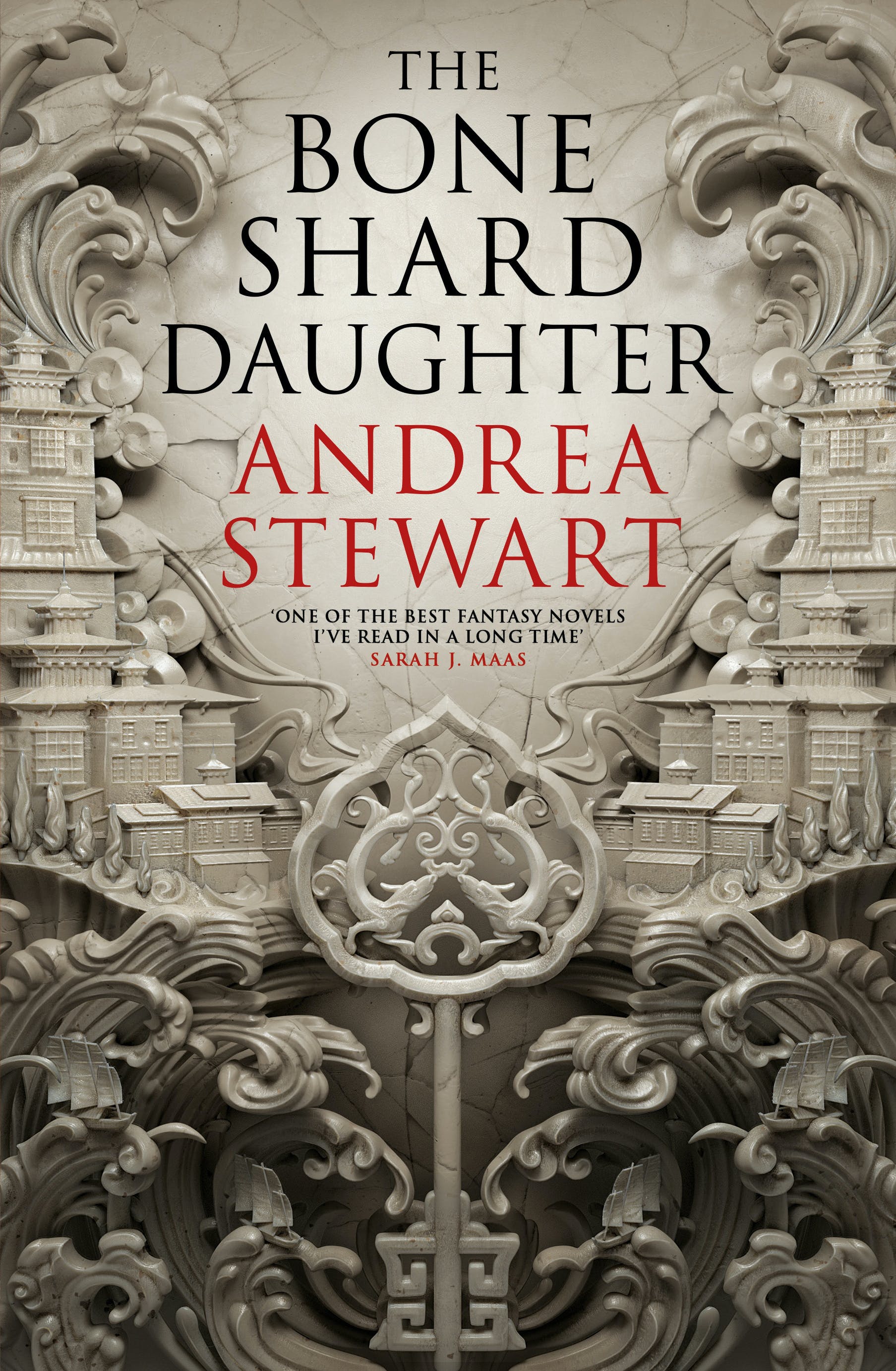
The Bone Shard Daughter by Andrea Stewart

The Bone Shard Daughter Cover

Publisher: Orbit (Trade Paperback – 8 September 2020)

Series: The Drowning Empire – Book One

Length: 439 pages

My rating: 4.5 out of 5 stars

Amazon     Book Depository

From outstanding new fantasy author Andrea Stewart comes The Bone Shard Daughter, the first entry in The Drowning Empire series and one of the best debuts of 2020.

For generations the Sukai Dynasty has ruled the floating islands of the sprawling Phoenix Empire, protecting it from a mysterious force from the past.  In exchange for the Sukai’s protection and governance, each citizen must provide the Emperor with a shard of bone from their head, which can be utilised by the royal family to bring life to magnificent and dangerous magical constructs of flesh and power.  However, as the Emperor’s influence fades, revolution and change is coming to the Phoenix Empire, and the fate of the land lies with a handful of exceptional people.

In the capital, Lin, the Emperor’s daughter, has lost her status as heir after a disease takes her childhood memories from her.  Desperate to gain her father’s respect and her rightful place on the throne, Lin embarks on a dangerous quest to unlock the secrets of her father’s palace and gain the knowledge to master her family’s dangerous bone shard magic.  However, ambition and fear will drive her to attempt the impossible: turning her father’s most powerful constructs against their creator.

Elsewhere, Jovis, a notorious smuggler, is chasing the ghosts of his past as he attempts to find a shadowy ship that took something precious from him.  As he scours the seas of the Empire, he becomes an unlikely hero to the people, saving children from the Emperor’s bone shard tithe and ensuring their safety.  His mission will take him to the island of Nephilanu, where rebels are massing, and the governor’s unruly daughter Phalue finds herself torn between love and duty.  At the same time, a mysterious woman awakens on an isolated island with no memories of her past and a desire to gain freedom.  Each of these people will find the fate of many thrust upon them, and their adventures will shake the Phoenix Empire to its foundation.  But are any of them truly prepared for the consequences of their actions?

The Bone Shard Daughter is a fantastic and clever novel from Andrea Stewart that was one of the most hyped-up fantasy releases of last year.  I have been meaning to read this excellent book for a while now and I finally got the chance to do so a couple of weeks ago.  I am extremely glad that I did as Stewart’s debut novel was an exciting and captivating book that transports the reader to a compelling and unique fantasy setting with all manner of conflicts, magic and terrible secrets.  This was an outstanding debut novel, and I had a great time reading it.

Stewart has come up with a captivating and complex character-driven narrative for her first novel, which sees several young protagonists from various walks of life attempt to survive in this brutal empire while also discovering its dangerous and earth-shattering secrets.  The Bone Shard Daughter contains four separate and distinctive storylines, each of which follows a separate protagonist (or in one case, two linked protagonists), on their own adventure of discovery.  Stewart does a fantastic job of introducing each of these storylines at the start of the novel, with some compelling opening chapters that hook the reader in different ways, whether with descriptions of complex magic, the start of an apparent kidnapping or a frantic attempt to escape from a sinking island.  Once these storylines have their hooks in the reader, Stewart starts to grow each of them throughout the course of the book, with all four of them maintaining a well-balanced pace.  While some of the storylines have a little more prominence than others, they are all really intriguing and exciting in their own right, especially as they have different focuses based on their respective protagonist’s abilities and history.  As the narrative progresses, the separate storylines start to come together as the various protagonists interact with each other, and the reader is gradually treated to a much more cohesive tale.  I felt that these unique storylines fitted together well, and Stewart ensured that they support and strengthen each other, forming a coherent and captivating narrative.  The end result is an excellent tale, filled with conflict, revenge, betrayal and magical chaos.

Stewart sets the narrative around five excellent point-of-view characters, each of whom narrates several chapters within The Bone Shard Daughter.  All five of these fantastic protagonists have their own enjoyable tale to tell, and their varied narratives helped to produce a comprehensive and rich overall narrative.  While each character has their own role to play in the novel, two of these characters in particular, Lin and Jovis, have more prominence then their fellows, especially as their chapters are told in the first person.  Lin is the young daughter of the Emperor of the Phoenix Empire, who has only recently recovered from a peculiar sickness that took away her childhood memories.  Now out of favour with her father, who instead focuses on training her rival, Bayan, Lin uses her skills for climbing, exploring and thievery to steal her father’s keys and gain access to the locked rooms of the palace.  With each key she gains, Lin obtains more information about her past and the secrets behind her family’s powerful bone shard magic.  However, the more information she uncovers, the more she becomes certain that something is wrong, and that her father is no longer fit to be emperor.  I really enjoyed the Lin storyline; not only does it give the reader the most information about this series’ distinctive bone shard magic but there is a substantial amount of intrigue and mystery surrounding Lin’s entire life which I found really fascinating to unravel.  There are some really good twists involved with Lin’s tale, and this was definitely a standout part of The Bone Shard Daughter’s overall story.

The other major character is Jovis, a skilled smuggler, sailor and navigator with a knack for getting into trouble.  Jovis is a fun and entertaining fellow with a heart of gold, who runs afoul of everyone while trying to find his lost love, Emahla, who was taken from him by an unknown ship with blue sails many years before.  While searching for the ship, Jovis finds himself caught up in the wider story when he survives the sinking of an island, managing to rescue a small child and a strange aquatic creature he names Mephi.  Returning the child to its parents, Jovis gains a reputation as a legendary hero, especially as he finds himself gaining unnatural strength and other abilities, and he soon becomes a key figure in the rebellion against the throne.  Due to his likeable personality, the adorable relationship he formed with Mephi, and his action-orientated chapters, Jovis quickly grew to become my favourite character within The Bone Shard Daughter and I deeply enjoyed seeing his adventures unfold.  Jovis proved to be the major bridging character of this novel, as he was the person who encountered many of the other protagonists, bringing their tales together and ensuring that they were all connected.  I also liked how Jovis’s story and points of reference were so different from Lin’s, due to his underprivileged start in life, as he has seen the worst that the Phoenix Empire and the Sukai Dynasty have to offer.  Jovis is also the most insightful and realistic protagonist of the bunch, able to spot the deeper and sinister motivations of some side characters that the other characters miss, and I appreciated how and why he developed these much-needed survival skills.  Overall, Jovis proved to be an exceptional and enjoyable character, and I looked forward to reading his chapters the most while getting through The Bone Shard Daughter.  There are a lot of questions left over when it comes to Jovis’s tale, especially with his relationship to Mephi, and it will be interesting to see how they unfold in future entries in this series.

In addition to the main characters of Lin and Jovis, there was the intriguing couple of Phalue, the Governor of Nephilanu’s daughter, and her girlfriend, Ranami.  Their joint storyline, which is told in the third person, follows the two as they become embroiled in a plot to overthrow Phalue’s corrupt father, with Ranami acting as the idealistic rebel while Phalue reluctantly goes along in the name of love.  This proved to be an excellent and enjoyable narrative that aims to highlight the inequality in the various classes featured throughout the empire and which seeks to explore the rebellion of the group known as the Shardless.  While neither character is featured as heavily as Lin or Jovis, Phalue and Ranami easily have the most interconnected storyline, and together they narrate nearly as many chapters as either of the main two protagonists.  While I quite enjoyed seeing Phalue and Ranami’s chapters unfold, I do have to admit that I wasn’t as invested in their storyline as I was with Lin’s or Jovis’s, as it just was not as interesting.  This was particularly true when Jovis arrives at Nephilanu, and becomes embroiled in their rebellions, as the charismatic smuggler immediately starts to steal focus from Phalue and Ranami.  I also really didn’t buy the relationship between these two as the book progressed, as there were way too many betrayals and lies by the seemingly highly moral Ranami to her girlfriend Phalue, and I am very surprised that they stayed together.  Still, there were some excellent moments in this chapter and it proved really intriguing to see.

The final point-of-view character in this novel is the mysterious Sand, who awakens on an island with no clear memories of who she is or how she arrived there.  Working with the similarly amnesiac inhabitants of her island, Sand attempts to find out something about her past, and swiftly determines that there is something very wrong with her life.  The chapters focusing on Sand and her compatriots, which are also told in the third person, are an intriguing and compelling addition to The Bone Shard Daughter but get the least amount of prominence throughout the book.  Due to the amnesiac nature of the protagonist, these chapters are shaded in mystery and uncertainty, and at first it is very unclear how they fit into the greater story, making them a little hard to get invested in.  However, as the novel progresses and more details are revealed about the island and its inhabitants, the reader swiftly begins to understand just how significant the character of Sand is and what has happened to her.  This was an interesting fourth storyline to this book, and while it was not featured as heavily or appeared to be as significant as the others, it is obviously going to be a major part of the series as a whole and was well set up.  Overall, I was deeply impressed with each of these fantastic characters and their captivating personal storylines, and it proved to be an exceptional and powerful centre to this entire novel.

In addition to the great story and excellent characters, I also really enjoyed the unique and inventive new fantasy world that Stewart created for The Drowning Empire series.  The Phoenix Empire, where the entirety of the series is set, is made up of a range of populated floating islands separated by sprawling oceans.  I quite enjoy novels that feature an oceanic or nautical theme to them, and Stewart features a number of fun sequences aboard or around boats, which here are powered by burning a magical substance to gain speed on the water ways.  I also liked the sequences set within the islands, as there is a particularly cool Asian influence to the people and settlements contained on them and I loved the unique and clever tale that they were able to inspire.  While there are some really cool elements to this setting, such as the vast and complex royal palace where Lin roams, the highlight of this world had to be the magical constructs that are powered by bone shard magic.  Each of these constructs contains a number of bone shards depending on their complexity, which give them intelligence and power, while simultaneously draining the life force out of the person from whom the shard was extracted.  Stewart, through the medium of her curious character Lin, provides a detailed and compelling examination of these constructs and the magical science behind them, and I really appreciated how the author set them up and utilised them throughout the novel.  These were a cool and distinctive part of The Bone Shard Daughter, and I look forward to seeing how Stewart expands on them in later books in her series.

The Bone Shard Daughter by Andrea Stewart is an amazing and incredible fantasy read that serves as the fantastic first entry in the cool new The Drowning Empire series and which really lived up to the hype I was hearing about it.  I had an outstanding time reading this novel and I really got lost in the inventive new fantasy world and the multiple compelling character perspectives.  This book comes highly recommended and I cannot wait to the see what happens in the series next.  The second entry in this series, The Bone Shard Emperor, is currently set for release in November this year, and I think it will end up being one of the top fantasy releases of 2021.

Amazon     Book Depository

Altered Realms: Ascension by B. F. Rockriver

Altered Realms cover

Publisher: Audible (Audiobook – 18 November 2020)

Series: Altered Realms – Book One

Length: 21 hours and 26 minutes

My Rating: 4.5 out of 5 stars

Amazon     Book Depository

In the mood for a really cool LitRPG novel?  Look no further than one of my favourite debuts of 2020, the impressive first book in the Altered Realms series, Ascension by B. F. Rockriver.

Welcome to the magical land of Entarra, an elaborate world filled with all manner of complicated people, creatures and war, where death lies just around the corner.  For simple hunter Eli Miller, his life consists of protecting his family and his small grove from outside forces, the most dangerous of which are the Adventurers.  The Adventurers are a dangerous group of seemingly immortal beings from another dimension who treat his world like their own personal playground, killing and destroying all they encounter with little concern for consequences and the lives of the citizens of Enterra.

When a group of Adventurers attack his home, killing him and his family, Eli finds his worst nightmare coming true when, after being stabbed by a mysterious blade, instead of dying he becomes an Adventurer.  Forced to become a whole new person, Eli returns to his hometown, only to discover that no-one recognises him and that he is now bound to the rules of Enterra, with quests, character sheets and a bodiless guide voicing advice in his head.

As Eli begins to explore the limitations of his new life, he soon begins to realise that his world was not what he thought it was.  Enterra Online is a vast and futuristic video game, of which he and his family were NPCs, or non-player characters.  Determined to find out if his family also somehow survived and get revenge on the people who attacked and killed him, Eli begins to play the game and soon becomes involved in a quest to save the land from the mysterious Blight.  Teaming up with fellow Adventurer Don Nutello, Eli begins to master his new character and level up.  But as the two progress even further, the finds that something is very wrong with Enterra Online.  Forced to contend with mindlessly controlled Blighted creatures, dangerous magic users and corrupted Adventurers, Eli will need to use every bit of his resolve and courage to face his destiny.  If he fails, it could mean the destruction of Enterra and every person and NPC trapped within.

This was an interesting and compelling read from a brand-new author who has created an excellent LitRPG novel.  I have to admit that the Literary Role Playing Game genre, which features fantasy or science fiction adventures set within the environments of a game (rather than a tie-in novel, like a World of Warcraft book for example), is one that I am not massively familiar with.  I have only really read one or two of these sorts of books in the past (the first two novels in Jason Segel and Kirsten Miller’s Last Reality series, Otherworld and OtherEarth are the only ones coming to mind at the moment), but it is a genre that I have always been interested in as there are some fantastic-sounding LitRPG novels out there.  A couple of weeks ago I was in the mood to try something new and thought that this would be a good place to start, especially after I came across the synopsis for Altered Realms: AscensionAscension is the debut novel of exciting new author B. F. Rockriver, which I believe was previously released in parts online, and it ended up being a particularly fun and exciting read.  This was an outstanding debut and a particularly good introduction to the LitRPG genre for me.

I thought that this was a pretty impressive first effort from Rockriver, who tells a rather intriguing tale in Ascension that felt to me like a fun combination of Sword Art Online and the upcoming Ryan Reynolds film, Free Guy, as an NPC starts to play the game he is trapped within.  Told primarily from the point of view of Eli, Ascension contains a vast and compelling narrative filled with adventure, action and substantial world-building, as Eli turns from a hapless, yet sentient, NPC into an Adventurer, and is forced to play Enterra Online the same way the human players do.  The story takes a little while to get going, with the author building up some key elements in the beginning, but once the main character gets killed and then respawned as an Adventurer, allowing for the intriguing RPG elements to work their way into the plot, the book really picks up.  The reader is than treated to an intriguing bit of world-building as the gameplay of Enterra Online is explained, before the confused protagonist is dropped back into the world, understandably freaking out.  After some false starts and the introduction of the book’s other main character, Don, Eli starts getting into the game, as he needs to gain levels and equipment to get revenge for his family.  This leads the two characters to get involved in a series of interesting quests that may directly impact the survival of the entire game, forcing them to venture towards an ancient temple to cure themselves, and the world, of a magical, sentient disease known as the Blight.  Along the way they’ll contend with dangerous creatures, friendly and malicious NPCs, hostile Adventurers with conflicting motivations and world-changing events that are impacting both the game and the humans trapped within.  All of this leads up to an epic and exciting confrontation as Eli and his friends come face to face with the corrupted Adventurers who killed his family.

This narrative proved to be extremely exciting and captivating, and I found myself getting really caught up in the adventures of this excellent and conflicted protagonist.  There are a number of amazing elements to this book, and I very much enjoyed seeing the author combine the LitRPG elements with a classic fantasy adventure tale and some cool advanced science fiction elements as well.  The author does an excellent job setting up his game world throughout Ascension and the reader quickly becomes deeply concerned with the fate of Enterra Online and all its players and NPCs.  I also loved all the very cool action sequences featured throughout the story, and there are a number of intense and deadly scenes that really stood out to me. 

I did find the writing to be a little rough in places, and there is room for Rockriver to grow as an author.  For example, there was a bit of repetition throughout the novel, as a number of key plot points kept getting brought up again and again.  While some of this repetition was done to replicate how an online game talks to its players, a lot of it was the author providing unnecessary re-examinations of certain story elements, character back story and emotional responses, which I felt interrupted the flow of the novel.  I also felt that Rockriver should have ended Ascension a lot sooner for a more climactic finish, as the novel continues for a number of chapters after the book’s big showdown.  While this later section of the novel contained a lot of interesting and enjoyable moments, I do think that perhaps the author could have saved most of them for the next entry in the series.  Still, overall this was an excellent read, especially with the inventive and exciting story, and it does set up the rest of the series quite nicely.

As I mentioned above, Ascension proved to be quite an outstanding introduction to LitRPG novels, a genre that Rockriver is clearly very passionate about.  Ascension contains a huge amount of RPG elements which are seamlessly woven into the story.  Once the protagonist wakes up as an Adventurer, every element of a classic MMORPG comes into effect, with Eli choosing a race, gaining experience, being forced to complete quests, obtaining skill points, distributing attribute points, deciding his class and a huge range of other game features a player in his situation would have to consider.  I felt that this was an incredibly realistic portrayal of what an avatar in a game would experience, and the author covers this in exceptional detail, down to the pun-ridden quest titles and the funny names of the other Adventurers Eli and Don encounter.  Rockriver has also created an impressive and vast MMORPG to serve as the setting for his novel, and it actually sounds like it would be a really cool game to play (you know, minus the ethical implications of the AI and the deadly disease which tries to turn you evil).  I have to admit that I did not quite know how all the various skill and quest updates would play throughout the book, but Rockriver did an excellent job working them into the story and it felt very natural to see Eli get an update, new skill or experience.  All the LitRPG elements also work incredibly well in some of the action sequences, and seeing the protagonist get debuffs or watch him lose health, mana and energy during a fight actually added to the intensity of the scenes.  The author also works in some intriguing twists to the gaming world, with the protagonists set to face off against a major antagonist threatening people both in the game and outside of it, and I quite enjoyed how this raised the stakes of the narrative.  Overall, I really fell in love with Ascension’s LitRPG elements, and this is definitely a genre I can see myself getting into.

I really enjoyed some of the characters featured within Ascension, as Rockriver has come up with some amazing complex figures for this clever LitRPG story.  The main character is Eli, a former NPC who is turned into an Adventurer and swiftly becomes a key figure in saving Enterra Online.  Eli proved to be a really intriguing character to follow, as he is forced to adventure whilst facing a major existential crisis.  Due to the situation surrounding his death and rebirth, Eli is an emotional mess, grieving for the loss of his family, while simultaneously finding out that they never truly existed.  This makes him a particularly deep and intriguing character to follow, as his new experiences changes his perspective completely.  Thanks to his complete lack of knowledge about anything related to online gaming, Eli proves to be the perfect protagonist for this book as every element of this game is explained to him in great detail.  I also quite enjoyed the fantastic handicap that Rockriver installed to his main character halfway through the book, as Eli learns a Berserk Rage move that forces him to lose control when he is close to death or encounters one of the players who killed him and his family.  This causes a number intense scenes throughout the book, and I really appreciated the incredible scenes that the author wrote around the first time Eli lost control, which got pretty dark and bloody.  While Eli was not the most consistent character at times, as he occasionally experiences some random personality changes, it was still really interesting to see him develop, especially as a number of intriguing elements about his past become quite essential to the plot.

Aside from Eli, the other main character in the novel is Don Nutello, a player who befriends Eli when he spawns as an Adventurer and follows him throughout the game.  Don plays a humanoid turtle race, known as a Turta, and has chosen to play him as a monk class, dressed in purple and fighting with martial arts and occasionally a staff (I wonder who his favourite ninja turtle is?).  Rockriver gives Don a particularly intriguing background as a former soldier playing Enterra Online long-term as a treatment for his PTSD, flashes of which come through into the game at times, and his role as a healer in the team is related to his former profession as a medic.  Don proves to be a particularly great supporting character to Eli, not only helping him to understand the game but giving him a different perspective on the other people playing as Adventurers.  Don also has a very appealing pacifistic edge to him, choosing not to attack people or sentient AI if he can help it, which does get the characters in trouble but helps to distinguish them from the antagonists.  Don ended up being my favourite character in the end, and I really enjoyed his unique partnership with Eli as they formed a fantastic and deep friendship over the course of the novel. 

In addition to Eli and Don, Rockriver has also loaded this book up with a series of intriguing side characters, most of whom are NPCs in Enterra Online.  I liked the contrast in how the NPCs are blissfully unaware that they are in a game, while most Adventurers are portrayed as selfish and murderous.  This is mainly because the Adventurers are unaware that the NPCs are sentient, and are playing the game the way they typically would for an MMORPG. Indeed, I routinely do all the same bad things when I play games, everyone does (or so I tell myself so I can sleep at night).  This interesting dichotomy in the perceptions of the world between these two unique groups was pretty interesting to see, and I very much enjoyed seeing a game where every NPC is fed up with the invading human players. 

I also have to highlight some of the fun Adventurer characters in the novel, most of whom are fairly typical of the sort of people you would encounter in the game.  For example, the third person to join Eli and Don’s party is Michelle, a sexy female troll with an attitude, who serves as their tank.  Michelle is one of those players who flaunts their avatar’s sexuality, even though you are a little uncertain whether they are a guy or a girl in real life. Michelle was a rather sassy and fun character to follow, and she definitely evened out the serious personalities on the team.  I also quite liked some of the selfishly antagonistic Adventurers who the heroes eventually go up against, and game players will easily see parallels between them and the worst sort of people you’ve played against online, even if some may be influenced by things outside of their control.  Each of these excellent characters adds a lot to this great book, and I look forward to seeing how they develop in the future instalments of this series, especially with some major changes impacting the Adventurers long term.

In order to enjoy Ascension I ended up grabbing the audiobook, which proved to be a fantastic way to experience the fun story.  Ascension has a pretty hefty run-time of 21 hours and 26 minutes, which is almost one of the longest audiobooks I have ever listened to.  Naturally, this took me a little while to listen to, although once I got really caught up in the story I found myself getting through it even quicker, especially with some of the epic combat sequences, which I never wanted to interrupt.  I always find that the audiobook format is a great way to fully absorb all the details contained within a novel, and this was particularly true with Ascension, as Rockriver has come up with an amazing amount of inclusions that are really great to absorb in this format.  This audiobook also featured the excellent narration of Maximillian Breed, a relatively new audiobook narrator, who has so far vocalised an interesting collection of fantasy and science fiction novels.  I felt that Breed was a great choice for this epic audiobook and I enjoyed listening to his narration of Ascension for the full 21 plus hours.  While it took me a little while to get used to his voice, I felt that it fit into the story really well, and I especially liked the somewhat robotic/computer generated tone he used whenever the system talks to the protagonist, such as during a quest update, or when it provides details about equipment or skills.  All of this makes for a great listen, and I would definitely recommend the audiobook format of Ascension to anyone interested in checking out this fun book.

Ascension by B. F. Rockriver is a fantastic and impressive debut novel that serves as an outstanding first entry in the Altered Realms LitRPG series.  Rockriver has come up with a clever and captivating tale that masterfully utilises video game elements, cool characters and some awesome action sequences to create a first-rate read.  I had an absolutely incredible time listening to this book and I cannot wait to see where the series goes next.  Rockriver is currently working on two separate novels at the moment, the second entry in the Altered Realms series, Uprising, and a companion novel, Origins, which examines the backstory of several key Altered Realms side characters.  Both sound like a lot of fun, with some superb covers (BTW how epic are the covers that Ascension had!), and I look forward to reading them.  Until then, Ascension is a guaranteed exciting read for LitRPG fans.

Altered Realms Cover 2

Amazon     Book Depository

Film Review – Batman: Soul of the Dragon

Batman - Soul of the Dragon

Studio: Warner Bros. Animation and DC Entertainment

Series: DC Universe Animated Original Movies – Film 40

Director: Sam Liu

Producer: Bruce Timm

Writer: Jeremy Adams

Length: 82 minutes

My Rating: 5 out of 5 stars

Prepare to dive into an intense and addictive DC Comics martial arts adventure with the latest entry in the DC Universe Animated Original Movies range, Batman: Soul of the Dragon, an outstanding and deeply enjoyable film that explores several amazing DC characters in a very unique way.

While The Unseen Library is primarily dedicated to providing book and comic reviews, I have in the last year been experimenting with reviews and articles about another great passion of mine, animated superhero films.  I have always had a lot of fondness for this genre and I started focusing on it more last year when I reviewed Justice League Dark: Apokolips War, and even further when I did an extended Top Ten Tuesday article listing my favourite superhero animated films, which primarily featured DC Universe Animated Original Movies.  DC continues their domination of the animation market with the very awesome Soul of the Dragon film, which serves as the 40th entry in the DC Universe Animated Original Movies range.  I had an outstanding time watching this latest animated offering and it is definitely a new favourite film of mine.

Bruce Wayne, Richard Dragon, Shiva and Ben Turner are four of the best martial artists on the planet, utilising their skills and training to become truly elite fighters.  While each of these renowned warriors are now on their own different paths, they shared a similar start on their journey as students at the secret monastery of Nanda Parbat.  Training under the legendary O-Sensei, these four, along with other notable students, not only learned the martial techniques that allowed them to become the fighters they are today but also became a close-knit family, until one terrible night changed everything for them.

Now their paths are about to cross again when Richard Dragon discovers that a fanatical organisation, the Cult of the Kobra, have stolen an ancient and dangerous artefact that Dragon and his fellow former students are intimately and tragically familiar with.  Travelling to Gotham City, Dragon recruits Bruce Wayne, who now fights criminals as the vigilante Batman, to help him stop Kobra and save the entire world.  Attempting to recover another artefact guarded by Shiva, now a feared Gotham crime boss, they soon discover just how long and deadly Kobra’s reach is.

With Shiva and Ben in tow, the four former disciples of O-Sensei prepare for the battle of their lives as they attempt to infiltrate Kobra’s island base.  However, nothing will prepare them for the dangers they will encounter, nor the horrors unleashed from their past.  Can these four dangerous fighters work together to save the world or will an ancient and deadly force be unleashed?

Batman: Soul of the Dragon is an excellent and amazing animated comic book film that proved to be an absolute treat to watch.  This is a standalone film which is directed by Sam Liu, written by Jeremy Adams and featuring Bruce Timm as an executive producer, and together these talented people have produced a fantastic and powerful feature.  Liu and Timm are the genius behind some of the best animated comic films that are out there, including Justice League vs. Teen Titans, Suicide Squad: Hell to Pay and the incredible The Death of Superman, and they have once again done an outstanding job with Soul of the Dragon, creating a unique and entertaining comic book tale.  Making excellent use of an exceptional narrative, a great group of characters and a very distinctive vibe, Soul of the Dragon is an outstanding and wonderful film that is really worth watching.

Soul of the Dragon has a particularly awesome and captivating narrative that follows its four iconic central protagonists on an epic quest to right the wrongs of their collective past.  This movie contains an original tale set in the 1970s that draws heavily from classic DC martial arts comics to create a fantastic film that not only dives into the origins of some amazing DC characters but which also presents an exciting character-driven adventure.  This movie starts off with a captivating bang with Richard Dragon discovering a sinister plot with ties to his time as a student.  The story then quickly starts to reunite the four major characters, with several impressive action set-pieces dominating the early part of this movie, all of which were a real treat to watch.  The story than takes the protagonists to an island fortress where they must face their enemy before he can unleash a terrible force of destruction.

Interspersed with the main story are a series of compelling flashbacks that follow the protagonists’ training under O-Sensei, which provide some excellent context to the main story.  I thought that the flashbacks were a particularly impressive part of the movie and I liked they expertly tied together main narrative with the past, creating a richer overall story.  I also felt that the narrative did an excellent job of introducing each of the characters while also highlighting the differences between their modern appearances and their former lives as students.  I did think that the main story was a little rushed and could have potentially used a little more plot in between the protagonists’ reunion and their arrival at the antagonists’ island.  Still, this did not impact my enjoyment of the movie too much, and the last third of the film is so damn epic and emotionally charged that you forget about this slight misstep of pacing.  All of this wraps up with a memorable and interesting ultimate conclusion, which will leave you wondering about what, if anything, is going to happen next.

Thanks to the standalone nature of this movie, potential viewers do not need to have watched any prior DC animated features to enjoy Soul of the Dragon, and indeed minimal knowledge of the various characters and comic elements is needed to follow along, as the narrative provides a fantastic and detailed introduction to all the relevant parts of the plot.  All of this makes for an epic and just plain awesome story that honours some classic DC characters and comics while also introducing them to a new generation of DC fans with this fantastic adventure.

In addition to the first-rate story, I was also impressed with how well this cool movie was put together.  It contains some outstanding animation, especially when it comes to the impressively exciting action scenes, with a particularly well-put-together car chase halfway through the film being an amazing example.  This proves to be a very action-heavy film, with a huge number of fluid combat sequences that perfectly captures the skill of the combatants and which successfully translates the style of the original martial arts comic.  Parents should be warned that this is not an animated feature for younger children, thanks to some of its over-the-top content, but everyone else is going to love seeing all the exciting fast-paced scenes unfold.  I particularly liked how this animated movie had such a distinctive and entertaining style to it, which really enhanced my enjoyment of the film.  As the story is set in to the 1970s, the creators attempted to replicate the feel and tone of the era in a number of different ways, such as the technology, locations and the animated appearances of the characters.  The creative team also made sure to include a ton of appropriate slang (you haven’t seen anything till you’ve seen Batman say: “Let’s get it on”) and an excellent instrumental musical score that is not only very 70s in its sound but which perfectly fits the movie’s distinctive narrative and tone.  Soul of the Dragon draws a lot of inspiration from classic kung fu films, especially those featuring Bruce Lee, and you can really feel the creators’ love of the genre with all the little details they chuck in.  There are also a number of fantastic allusions to classic James Bond films, including several very familiar musical themes, some entertaining lines from certain characters and even a dangerous car chase with a gadget-laden car that ends with a vehicle getting whisked away on an electromagnet attached to a helicopter (a very fun call-back to You Only Live Twice).  I absolutely loved how well this film came together, and all the exceptional animation and clever tonal shifts combine perfectly with the great story to produce an enthralling and memorable viewing experience.

In addition to have an amazing and entertaining narrative, Soul of the Dragon is backed up by a fantastic roster of characters from across the DC Comics canon, voiced by an exceptional and talented collection of actors.  While this movie contains several great supporting characters, the story is mostly set around Bruce Wayne, Richard Dragon, Shiva and Ben Turner, each of whom are heavily featured in both the main narrative and the flashbacks.  While all four of these main characters are great in their own right, a lot of their appeal lies in fantastic connection they have with each other and with their master, O-Sensei.  These great protagonists have an excellent rapport, and it proved to be really great to see them interact with each other throughout the film.

The lead of the film is probably Batman, who is voiced by David Giuntoli of Grimm fame, who provides a fantastic take on the character with his voice work.  I liked how there were two versions of Batman: the vigilante who featured in the main story and the younger student in Nanda Parbat.  This proved to be an interesting portrayal of this iconic character, as the writers attempt to explore Bruce’s determination, even as a young man, to do the impossible and fight evil no matter the cost.  It was also great to see him evolve from the student in the flashbacks to the vigilante in the main story, and there are some fun scenes that showcase him becoming a more focused and terrifying fighter when he puts on the mask.

While Soul of the Dragon is nominally a Batman movie, Bruce is somewhat overshadowed by some of the other main protagonists.  This is no fault of the character’s portrayal or characterisation; it is just because the other protagonists are just a little more exciting and enjoyable.  Part of the reason why this is the case is that Batman is the least skilled martial artist in what is essentially a kung fu movie, as it is established that his fellow students are better fighters than him (this is true in both the film and in the comics).  While this does mean that some of the other characters’ action sequences are a little more visually impressive, you instead get to see Batman fight in different ways.  There is a great focus on how Batman utilises trickery and fear to supplement his weaker fighting abilities, and there are some excellent scenes around this, including a key one towards the end of the film where he uses a combination of his gadgets, cunning, and even his own cape to defeat a superior foe.  I did think that the version of the character was a bit blasé about keeping his identity secret with his friends, and he didn’t seemed as opposed to people using lethal force as you would expect, but this was an outstanding take on Batman and I really enjoyed his appearance in this film.

One major character who was a true highlight of this movie was Richard Dragon, an iconic character who is widely regarded as one of the best fighters in the DC canon.  Despite his popularity in DC’s martial arts comics, this is the character’s first appearance outside of the comics (the Richard Dragon featured in Arrow is a different character altogether) and he voiced by The Chairman himself, Mark Dacascos.  Depicted as Asian in the film (the comic character is traditionally a red-haired Caucasian), this character looks a lot like Bruce Lee in Enter the Dragon and is portrayed as an international super spy.  Despite this being a Batman film, in many ways Richard is just as much the main character of this movie, with much of the story revolving around him.  Richard grabs focus right from the start, where he engages in some amusing spy antics, which include outwitting a James Bond-esque character in a fancy casino, effortlessly and stylishly fighting off some goons, and parachuting onto a boat filled with beautiful women (a scene very reminiscent of The Living Daylights, Bond music included), before identifying himself as “Dragon, Richard Dragon”.  Each of Dragon’s subsequent scenes are really fantastic, from the fluid and exceptional action sequences to the fun interactions he has with other characters, including an entertaining scene with a pompous bouncer.  Dacascos does an exceptional job voicing this character and he provides Richard with a confident, intelligent and generally calm air that proves to be extremely easy to enjoy, while also including some vulnerability in several amazing scenes.  All of this helps to produce an exceptional character and I am extremely glad that the introduction of Richard Dragon to a wider media went so well.

The next major character in the movie is the dangerous and delightful Shiva, who was voiced by the talented Kelly Hu.  Lady Shiva, as she is better known, is one of the deadliest assassins and martial artists in the DC canon.  I felt the creative team did an outstanding job showcasing Shiva in Soul of the Dragon, as she is portrayed as a merciless killing machine and living weapon able to destroy her opponents with minimal effort and nothing but her bare hands.  The character has some of the most brutal combat sequences, which were not only beautifully animated but which proved to be extremely entertaining to watch.  I felt that Shiva went through some fantastic character development throughout the film as she transforms from a dedicated student to a ruthless crime lord who even Batman is afraid to deal with: “I’m working up to it…”  I also really loved the choice of voice actor for this character as Kelly Hu does a sensational job bringing Shiva to life.  Hu, who is known for her comic book roles in both animation (as Cheshire in Young Justice and Karai in Teenage Mutant Ninja Turtles) and live action (as Lady Deathstrike in X-Men 2 and China White in Arrow), has previously voiced Lady Shiva in the Batman: Arkham Origins video game, and it was great to see her return to this fantastic character.  She gives this version of Shiva a particularly deadly air; you can tell with every sentence just how confident she is in her own ability and lethal potential.  Not only does Shiva have some of the best fight scenes in the movie but she also has some of the best lines, such as when she chooses her opponent in one of the big boss fights: “I’ll take the girl, her look offends me!”  I also absolutely loved one scene which saw the voice of Karai from Teenage Mutant Ninja Turtles face off against three green-clad ninjas respectfully wielding sai, nunchaku and a bo staff.  The character’s casual comment of “You know how to use those?” followed by her effortlessly taking all three out was just perfect and it has me laughing pretty heavily.  I think that Shiva was probably my favourite character in the entire movie and I am really impressed with how she was written and portrayed.

The final member of the main four characters is Ben Turner, the angry and dangerous African-American fighter better known as Bronze Tiger.  Bronze Tiger is a major martial artist in the DC canon who is probably best known for his run in the Suicide Squad comics.  Bronze Tiger is voiced by Michael Jai White, who recently portrayed the live-action version of the character in Arrow.  I really liked Bronze Tiger throughout Soul of the Dragon, as the film captures a lot of his essence from his original comic appearances and subsequently turn him into a fantastic character in this movie.  Part of the reason why is that he goes through the most development out of all the main characters, especially as several flashbacks bridge the gap between his student days and his current character, showing several pivotal events in his life.  I absolutely loved his look in this movie, as they made the decision to model him on African-American actor and martial artist, Jim Kelly, with some elements of other 70s African-American characters like Shaft and Luke Cage thrown in.  There is a particularly fun joke around this character when Richard misremembers the character’s codename as Black Samurai, a reference to the Jim Kelly movie of the same name, and the subsequent approval of the team at his actual codename of Bronze Tiger was very entertaining.  White does some excellent voice work for Bronze Tiger in this film and he successfully showcases the character’s intense anger at the start of the story before evolving it into a more zen-like persona towards the end.  I would say that Bronze Tiger was a little overshadowed by the three other protagonists, but he was still a great addition to the movie and is a fun character to follow.

Aside from the main four characters, there is a particular focus on the mentor character of O-Sensei, who is voiced in this film by the legendary James Hong.  O-Sensei is a fantastic character with an intriguing history in DC Comics, being a major figure in the lives of Richard Dragon, Shiva and Bronze Tiger.  This is actually O-Sensei’s first named appearance outside of the comics, and he proves to be a fantastic and fun addition to the movie’s narrative.  Hong portrays the character as a wise but humorous kung fu master, offering deep insights and amusing jokes in equal measure to the younger characters, while also forming them into a close family.  O-Sensei proves to be an extremely likeable character, with some deep and powerful moments that ensure that the viewer appreciates and enjoys him.  I particularly loved Hong’s voice work throughout the movie and I felt that he really dived into the character and made him stand out, especially in some later scenes in the movie where there are some intriguing twists around him.  An overall outstanding and exceptional part of the cast, I am extremely glad they got Hong for this movie.

No comic book movie will be complete without some villains, and to my mind this is where Soul of the Dragon falls a little flat.  The antagonists of this film are the members of the Cult of the Kobra (essentially DC’s version of Hydra, both of which were created by Jack Kirby).  Kobra are led by their prophet, Jeffrey Burr (voiced by Josh Keaton), backed up by his henchmen Schlangenfaust (Robin Atkin Downes), Lady Eve (Grey Griffin) and King Snake (Patrick Seitz).  While all of these characters are voiced perfectly and have some cool moments throughout the movie, such as Burr’s creepy introduction, his belief in his prophesised destiny and Schlangenfaust’s hidden abilities, I honestly found each of these villains to be a little underwhelming.  None of them (with the possible exception of Schlangenfaust) really stood out to me and they were all very generic sort of villains to the story.  That being said, Soul of the Dragon did feature two hidden antagonists at different points of film who add some major twists to the tale.  Both of these villains were rather good and moved the story along in some intriguing and entertaining directions.  I particularly loved the appearance of one antagonistic character towards the end of the movie, and while his appearance was slightly predictable, it proved to be a major highlight of the film, resulting in some outstanding scenes.  As a result, it was rather easy for me to forgive some of the downsides of the Kobra villains as the overall antagonists of this film turned out to be extremely good.

Overall, I think that Batman: Soul of the Dragon was an exceptional animated film that was a heck of a lot of fun to watch.  Thanks to its combination of an epic story, captivating and well-written characters and a tone that is a fun nod to classic and campy kung fu movies, this movie gets a full five stars from me.  This is definitely a movie I will watch multiple times in the future, and it comes highly recommended.  I very much looking forward to seeing the next entries in the DC Universe Animated Original Movies range (there is a Justice Society movie and an adaption of Batman: The Long Halloween coming out later this year), and I will have to have a go at reviewing them when they come out.

Throwback Thursday: Usagi Yojimbo: Volume 11: Seasons by Stan Sakai

Usagi Yojimbo Seasons

Publisher: Dark Horse Books (Paperback – 1999)

Series: Usagi Yojimbo – Book 11

Length: 198 pages

My Rating: 5 out of 5 stars

Amazon

Reviewed as part of my Throwback Thursday series, where I republish old reviews, review books I have read before or review older books I have only just had a chance to read.

It has been a while since I have done a Usagi Yojimbo Throwback Thursday, but after doing a Waiting on Wednesday for the next upcoming volume in this epic series, Homecoming, I was in a Usagi mood and decided to write something extra.  As a result, I check out the 11th Usagi Yojimbo volume by the legendary Stan Sakai, Seasons.

Seasons is a fantastic and spectacular entry in the series that presents the reader with a series of great Usagi Yojimbo adventures that follow the rabbit ronin Miyamoto Usagi as he traverses his version of feudal Japan during the various seasons of the year.  This is a key entry in the series as it sets up a number of storylines for the next several volumes while also introducing some great new characters.  Needless to say, I had an incredible time reading this volume of the series and I have a lot of love for a number of the stories contained within it.  Seasons contains issues #7-12 of the Dark Horse Comics run on the Usagi Yojimbo series, as well as stories taken from the Usagi Yojimbo Colour Special.  This results in 11 separate stories throughout the volume, made up of single-issue entries and a couple of shorter tales, all of which contain an impressive and deeply enjoyable story with beautiful artwork.

USagi #7

The first story featured within Seasons is The Withered Field, an epic story of samurai honour and the warrior’s way.  In this story, Usagi is visiting a famed fencing school with the hope of challenging some of its instructors to test his skill.  However, before he can issue his challenge, all of the school’s instructors are beaten by another ronin, Nakamura Koji, a skilled swordsman who demands a fight with the school’s master.  As he waits for his challenge, Usagi befriends him and discovers that he was once a famed sword master himself, who began the warrior’s pilgrimage after suffering a humiliating defeat at the hands of a mysterious and unconventional swordsman.  Now determined to find this swordsman and rechallenge him, Nakamura Koji shows great interest in Usagi, especially when they must content with treachery from the fencing school.

The Withered Field is an outstanding story that serves as a compelling and powerful start to this volume.  I really enjoyed the amazing narrative that examined honour and martial prowess, with Usagi encountering a famed warrior who is even better than he is.  This great story does an excellent job of introducing the character of Nakamura Koji, who becomes a major figure in some of the future volumes in this series and who has an interesting connection to Usagi and his past.  The entire storyline around the two ronin facing off against the fencing school is extremely cool and action packed, and it appears to take a lot of influence from the second entry in the iconic 1950s Samurai film trilogy (which follows the adventures of Miyamoto Musashi, the historical samurai who serves as an inspiration for Usagi), Duel of Ichijoji Temple, with the students attempting to stop the wandering ronin from defeating their master.  There are amazing action sequences throughout this story, with Usagi and Nakamura Koji engaging in several awesome duels.  I particularly loved the opening sequence where Koji goes through the pre-fight forms before facing off in his sparring match against a fencing school instructor.  The eventual reveal that the samurai who defeated Koji when he was younger was Usagi’s mentor, Katsuichi, comes as little surprise, but it sets up an amazing story later in the series which makes this great story a must read for fans of Usagi Yojimbo.

Seasons’ second story is the thrilling but haunting A Promise in the Snow, which sees Usagi travelling through a snowy mountain pass during the height of winter.  As he trudges along, he comes across bandits attacking an innocent merchant and his servants.  Intervening, Usagi is able to slay all the bandits, but not before they severely wound the merchant.  Usagi finds the merchant’s young daughter and promises to save her father, carrying him back to his village.  However, the mountain passes are treacherous, and Usagi must contend with harsh weather, a pack of hungry wild tokage lizards and a dangerous avalanche.  But no matter what the mountain throws at him, nothing will prepare Usagi for the great shock awaiting him at the end of his journey. 

Usagi #8

This is a great entry in this volume that features a desperate struggle for survival in a dangerous location.  Sakai came up with an epic story for A Promise in the Snow, and I really love seeing Usagi power through great trials and tribulations to keep his promise to a young girl.  There are some beautifully drawn scenes throughout this story, and Sakai does a fantastic job bringing the snowy landscape to life in all its wondrous, deadly glory.  I also loved the way in which Sakai’s drawings highlighted Usagi’s struggles to get through the tough terrain; you can see him get more and more weary with each obstacle he encounters.  This story has a fantastic ending that is reminiscent of a lot of classic ghost tales, and looking back you see that Sakai set this twist up brilliantly, with tons of little clues.  Overall, this was an exceptional story which is a true highlight of this volume.

Next up with have the action-packed, intriguing story, The Conspiracy of Eight.  In this entry, Usagi is visiting the temple of his friend, priest Sanshobo, when an injured samurai wearing the crest of the notorious Lord Hikiji arrives at the gate.  The samurai bears a dangerous letter that names eight conspirators who are plotting against the Shogun.  As Usagi and Sanshobo debate what to do with the information, a large force of ronin arrives at the temple, determined to claim the injured samurai and kill all witnesses. 

This is another fantastic entry in Seasons that once again sees Usagi drawn into a major conspiracy impacting the realm.  There are a lot of cool elements to this story, such as Usagi and Sanshobo being forced to mount a defence of the temple from a dangerous siege.  This is a great, fast-paced story, and I really liked the unique battle scenes, especially the monks with staffs facing off against sword-wielding bandits.  Many of the plot elements contained within this tale come into play in several later Usagi Yojimbo stories, including one featured later in this volume, and I think Sakai did an exceptional job introducing them in The Conspiracy of Eight.  I also liked seeing the return of Sanshobo, the wise and noble priest and former samurai general.  Sanshobo serves as a good foil to Usagi’s more impulsive nature, cautioning him about acting in the affairs of great lords and counselling him that his proposed actions could lead to the death of many people.  While mainly a figure of wisdom, Sanshobo also serves as a great leader, utilising his experiences as a general to defend his temple and keep his monks alive.  The Conspiracy of Eight ends up being a very solid and enjoyable entry in this volume and I very much enjoyed seeing Sakai solidify a great new side character.

Usagi #9

Right after The Conspiracy of Eight comes another intriguing story that is primarily set within Sanshobo’s temple, Snakes and Blossoms.  In this entry, Usagi tells two short tales to Sanshobo: one that describes a crazy misadventure he had, and another that describes some important lessons from his past.  This two shorter tales work as sub-stories to Snakes and Blossoms and ensures that it is a distinctive entry in Seasons.  The first of the shorter tales is titled Hebi, which is set shortly after the events of the final story in Volume 7: Gen’s Story and sees Usagi and Gen once again lost following one of Gen’s shortcuts.  As the two ronin wander the unused paths, Gen saves Usagi from a wild snake that attempts to kill him.  However, Gen’s heroic actions has unexpected consequences when the two travellers are confronted by a mysterious nun at an abandoned temple later that night.  This was a rather cool horror story that exemplifies the sort of weird situations that Usagi can find himself in.  I loved the way in which Sakai plays Usagi and Gen off each other, and there are some very humorous interactions between this oddball pairing.  There is also some really insane artwork in this short story, and I loved the fantastic and scary sight of a giant snake emerging from its disguise to try and kill the protagonists. 

The other short story contained within Snakes and Blossoms is the cute tale, The Courage of the PlumThe Courage of the Plum takes place during Usagi’s childhood when he is training with his master, Katsuichi.  As the two walk through the snow, Katsuichi attempts to teach his student the various hidden aspects of nature around them, including the trees, each of which can represent human virtues.  The young Usagi is particularly intrigued by Katsuichi’s description of the humble plum tree as brave, and Katsuichi schools Usagi on how this smaller tree can be braver than the mightiest of oaks.  I always enjoy the depictions of Usagi’s unorthodox training under Katsuichi, as the student and teacher have a very amusing dynamic, and The Courage of the Plum turned out to be a delightful shorter entry with some intriguing philosophical discussion and some lovely drawings of the winter landscape.  Overall, Hebi and The Courage of Plum make for a fantastic combination of tales and I quite enjoyed seeing these two unique, short stories come together.

Up next in Seasons is an amazing shorter entry, Return to Adachi Plain, which sees Usagi journey back to the site of his greatest defeat, Adachi Plain, the battlefield where his lord Mifune (named after actor Toshiro Mifune, who starred in multiple classic samurai films that Sakai references in his works, including as Miyamoto Musashi in the Samurai trilogy), was killed in front of him.  Flashing back to tragic events that started his wandering lifestyle, Usagi remembers the battle in greater detail and the reader sees not only the role he played in saving the head of his lord from mutilation but also the first time he came directly in conflict with the villainous Lord Hikiji. 

Usagi #10

Return to Adachi Plain is a fantastic entry in this series as it is essentially one big war sequence, showing Usagi amid a violent battle from his past.  This story expands on the war sequence that was shown in Volume 2: Samurai, and it was really cool to see more of this battle, especially the combat scene between Usagi and Hikiji, which serves as the origin for Usagi’s distinctive forehead scar.  A fantastic shorter story that provides greater depth to Usagi’s role in this major defeat, this battle sequence was later reused in colour in Volume 34: Bunraku and Other Stories, and the events disclosed within is likely to come up in the upcoming Volume 35: Homecoming.

The next story in this volume is a relatively short entry called The CrossingThe Crossing is set aboard a small passenger ship where a group of rowdy peasants sing and dance to a fun folk song on deck.  However, during the climax of the performance, one of the peasants accidently bumps into an arrogant samurai who takes offence and moves to kill the transgressor, until a fellow passenger intervenes.  Unfortunately for everyone involved, the Good Samaritan isn’t Usagi; instead it is the demon spearman Jei. 

This is a captivating darker story that once again highlights just how dangerous and deranged Jei, one of the best antagonists in the entire Usagi Yojimbo series, is.  Sakai has written an extremely clever tale here that does a wonderful job showcasing Jei’s compelling nature as both a defender of the innocent and a raging psychopath who views nearly everyone as evil in form or another.  It’s fantastic watching the expressions on the peasants’ faces turn from relief to absolute terror as they slowly realise just how crazy Jei is, and you have to love that entertaining ending with the unsuspecting dock worker.  The Crossing serves as an excellent follow-up to several other shorter Jei stories that appeared in recent volumes, including The Nature of the Viper (which appeared in Volume 9: Daisho) and Black Soul (which appeared in Volume 10: The Brink of Life and Death), and this ends up being an impressive and compelling filler story in this volume.

Usagi #11

The shorter entries keep on coming! The Patience of the Spider introduces a new compelling character, General Ikeda.  Ikeda is a famed warrior and general who led a revolt against the Geishu Clan years ago (when the clan was ruled by the father of Usagi’s friend Lord Noriyuki).  When his revolt fails and his army is vanquished, Ikeda and two of his retainers flee to an abandoned farm and determine that their next course of action is to hide and wait.  Using a patient web-building spider as inspiration, Ikeda and his comrades show fortitude and restraint by disguising themselves as peasants and farming the land as they wait for the opportune moment.  However, as the years pass and Ikeda gains a family and faces the many harsh trials and dangers that await a peasant farmer, he begins to see the world differently, until the once notorious general is a completely new person, one with very different desires and dreams.

The Patience of the Spider is an outstanding example of how Sakai can quickly build up an intriguing and powerful character and ensure that the reader is utterly transfixed by their tale.  While this entry is relatively short, it is very impactful and may be one of the best stories in Seasons.  The tale of General Ikeda, as he faces the many different hardships of peasant life, including drought, bandits, floods and great personal loss, while also experiencing great joy and community, is extremely well written.  It proves to be extremely captivating to see this resolute man slowly change his nature as life overcomes him.  This also proves to be an excellent introduction to the character of Ikeda, who will go on to have a substantial role in the two big Grasscutter storylines, and his amazing character arc has an exceptional start here.  A very impressive and powerful tale, The Patience of the Spider is an amazing character-driven narrative from Sakai that is an absolute treat to read.

The next story featured in Seasons is the curious tale, The Lord of the Owls, which sees Usagi encounter a strange fellow traveller.  As Usagi stops at an inn, he witnesses a group of ruffians follow after a mysterious hooded samurai walking the road with the intention of robbing him.  Following them, Usagi witnesses the figure quickly kill the bandits after first startling him with his hypnotic and powerful gaze.  This man is eventually introduced as Oyama Tadanori, the mysterious Lord of the Owls, who reputedly can see the future and who claims that his destiny is intertwined with Usagi. 

Usagi #12

This was an interesting story that presents the reader with a lot of curious and unanswered questions.  While the main story is rather good, especially when it comes to the fate of the greedy bandits, the reader is left extremely mystified by the Lord of the Owls and his powers of prediction.  This entry opens up a rather fascinating storyline that is still not complete; despite an appearance in a later comic, Usagi is still waiting to uncover more about this figure and their combined destiny.  While I am hopeful that this story will pay off somewhere down the line, but in the meantime this particular entry has some great action sequences, a fun new character and some stunning landscape shots, which makes it really worth checking out. 

Up next with have a clever story, The First Tenet, which deals with the machination and inside politics of the Neko Ninja clan.  In this entry, Kagemaru, the second in command of the Neko Ninja, makes a move to betray his commander, Chizu, by reporting some of her recent personal missions to Lord Hebi, Lord Hikiji’s chief advisor.  Hebi, who is enraged by the news that Chizu is moving the Neko Ninja against the interests of Lord Hikiji, considers supporting Kagemura but is reluctant, especially as “deceit is the first tenet of the ninja”.  However, Kagemaru has subtle ways of getting what he wants, and soon Hebi finds himself in a dangerous situation that will change the future of the Neko Ninja forever. 

The First Tenet is a great story that masterfully shows of the duplicitous internal politics of the Neko Ninja and the supporters of Lord Hikiji.  The storyline started here will eventually have some interesting implications for major side character Chizu, and Sakai does a fantastic job setting it up.  I loved all the plotting and subterfuge that appears in this story, and it proves to be a fun and clever read.  I also love the massive battle scene that occurs in the middle of the tale, and it was particularly cool to see Lord Hebi, a massive snake, finally get into a fight.  Hebi is a terrifying figure to behold in combat, and it is worth reading this story just to see that.  An excellent and exciting addition to Seasons, I really enjoyed The First Tenet, especially as it leads to a lot of outstanding ninja storylines down the road.

Usagi Colour Special - Green Persimmon

Seasons’ penultimate story is The Obakeneko of the Geishu Clan, a chilling supernatural tale that sees Usagi and his companions face off against a malignant spirit.  As Usagi draws closer to the lands of his friends in the Geishu Clan, he stops outside a ruined mansion where he suddenly recalls the last time he was there.  Flashing back to shortly after the events of Volume 4: The Dragon Bellow Conspiracy, Usagi, Gen and Tomoe are travelling back to Geishu lands and attempt to seek shelter at a beautiful mansion.  The mansion belongs to the Lady Takagi, a mysterious woman who provides them with rooms and food and seems quite happy for the company.  However, as the night continues, Tomoe grows suspicious with their host and attempts to investigate, eventually revealing that Lady Takagi is a demon who is determined to kill and eat her guests. 

This was a very fast-paced and exciting tale that provides an awesome horror edge to the stories contained with Seasons.  I love it when Sakai features iconic Japanese supernatural monsters in his tale as they always prove to be outstanding and fearsome opponents for the protagonists.  The monster featured within The Obakeneko of the Geishu Clan is no exception, and I loved the freaky tale based around her and the desperate fight for survival that Usagi and his friends are forced to undertake.  While Sakai mostly focuses on the horror aspects of this story, I liked how he included a few humorous moments, such as including a great reference to Sakai’s prior comic, Groo the Wanderer: “did I err?”, as well as the funny concluding moment that sees Usagi fleeing in terror from a couple of woodcutters.  This was a really fantastic supernatural tale and it is always cool to see Sakai’s amazing depictions of these inventive Japanese monsters.

The final story in this excellent volume is the intense and action-packed Green Persimmon.  In this story Usagi, who is on his way to the Geishu lands, comes across a dying Geishu retainer who entrusts Usagi with delivering a mysterious package to his lord.  Opening the package reveals a simple and seemingly unremarkable ceramic green persimmon.  However, moments after receiving the persimmon, Usagi is attacked by a band of armed samurai who are desperate to reclaim it at all costs.  Managing to defeat his attackers, Usagi continues along the rough and windy coast road to the Geishu lands, but he encounters even more men determined to reclaim the persimmon and is soon forced to fight for his life as his attackers employ ruthless means to kill him.

Usagi-Yojimbo-Book-11-Seasons-Print-

Green Persimmon is an awesome and fantastic story that I deeply enjoyed, and which holds a great deal of significance for me.  This was actually the first Usagi Yojimbo story that I ever read, as a colour version of this story appeared in a magazine aimed at younger teens down here in Australia when I was a lot younger.  This story really stuck with me over the years due to the exciting story and cool action sequences, and it was one of the main reasons (along with Usagi’s appearances in the Teenage Mutant Ninja Turtles cartoons) that I decided to check out the Usagi Yojimbo comics in later life.  Needless to say, I am still very impressed with Green Persimmon years later; it is an enjoyable and memorable story to end this 11th volume.  I love the fluid combat sequences in this issue, including Usagi throwing the persimmon into the air and killing all his opponents before deftly catching it, and there are also some great banter scenes between Usagi and his attackers.  I also enjoyed the epic scene where Usagi finds himself trapped within a field of flame thanks to a flurry of fire arrows around him.  Not only is it cool that Usagi successfully survives by utilising the lessons of the legend of Prince Yamato Takeru and the Grass-Cutting Sword (the full events of which are drawn by Sakai in the next volume), but when he emerges from the ground covered in soot and dirt, he looks particularly demonic and enraged as he faces his opponents, making for an epic and amazing scene.  All of this is set to a fantastically drawn background of the rugged coastal landscape, which proves to be a fantastic setting for the various combat scenes.  If I had to offer any criticism about this story, it would be that the conclusion and reveal of the purpose of the ceramic persimmon did not really go anywhere and there were no mentions of this victory over series antagonist, Lord Hikiji, ever again.  However, I still really love this entry as Green Persimmon has so many cool and impressive elements to it and it is a great end note for this volume.

Seasons is another fantastic and incredible comic by Stan Sakai that sees Usagi engage in some captivating and intriguing adventures.  Featuring a cool mixture of different Usagi Yojimbo tales, Seasons is an amazing entry in the series.  I absolutely love a lot of the stories contained within this volume, which are once again anchored by outstanding character and breathtaking artwork.  This volume gets a full five-star rating from me and comes highly recommended.  On a side note, I am very glad that I decided to do another Usagi Yojimbo comic in a Throwback Thursday article as I have a lot of fun reviewing them.  I might have to skip ahead a volume for my next Throwback Thursday, as I cannot find my copy of Volume 12, Grasscutter.  However, I will either find it or get a new copy soon, as Grasscutter is too major a storyline to miss.  I hope you enjoy the review and make sure to check out some of the other reviews I have done of this epic and amazing series.

Amazon

Call of the Bone Ships by RJ Barker

Call of the Bone Ships Cover

Publisher: Orbit (Trade Paperback – 24 November 2020)

Series: The Tide Child – Book Two

Length: 491 pages

My Rating: 5 out of 5 stars

Amazon     Book Depository

One of the biggest rising stars in fantasy fiction, the always impressive RJ Barker, returns with the second novel in The Tide Child trilogy, Call of the Bone Ships, an epic read that was one of the best fantasy releases of 2020.

Welcome back to the boneship known as Tide Child, a black ship of the damned crewed by those condemned to death for various crimes in the Hundred Isles and tasked with fighting in a war against their nation’s rivals, the Gaunt Islanders.  Following their first grand adventure, which saw Tide Child save the last of the vast sea dragons from whose bones the powerful ships are made, much has changed in the world.  The Shipwife of Tide Child, Lucky Meas Gilbryn, seeks to undermine her mother, the ruler of the Hundred Isles, by working with black ships of both nations to create a new settlement outside of their tyrannical controls.  However, their previous decision to save the last dragon has had unexpected consequences, and soon the ocean is alive with the news that more dragons have returned.  With their return comes the battle to kill the creatures and harvest their bones to create more ships, as the nation with the most ships will rule the waves.  However, the crew of Tide Child find themselves drawn into a different conflict when they chance upon a damaged ship with a hold full of dead or dying prisoners.

Attempting to find out more about the mysterious cargo, Meas and Tide Childs’ Deckkeeper, Joron Twiner, try to follow it to its original destination, only to discover that their new island sanctuary has been destroyed and its people carried off for a nefarious purpose.  As they start to fight back against their former comrades in the Hundred Isles, Tide Child finds itself in the midst of a dark conspiracy which will push the entire world into chaos and conflict.  A new war is coming to the oceans, and no-one is safe from its deadly consequences.

Well damn, how does Barker keep on doing it?  Over the last few years, RJ Barker has been one of the most consistent and outstanding fantasy fiction writers out there, producing several incredible and deeply enjoyable novels.  I was a major fan of his debut, The Wounded Kingdom trilogy, as all three novels, Age of Assassins, Blood of Assassins and King of Assassins were amazing reads, with each one being better than the last.  However, Barker’s writing was on a whole other level in 2019 when he published the first entry in The Tide Child trilogy, The Bone Ships, an epic read that detailed the trials and tribulations of a condemned crew aboard a ship made from dragon bones.  I absolutely loved The Bone Ships and it was one of my favourite books and audiobooks of 2019.  Needless to say, I was extremely eager to receive my copy of Call of the Bone Ships, and it was one of my most anticipated reads for the second half of 2020.  Unfortunately, circumstances forced me to hold off reading this novel until the end of the year, which I deeply regret as this was another awesome novel from Barker that got an easy five-star rating from me.

For Call of the Bone Ships, Barker has come up with another exciting and amazing narrative which follows a unique group of protagonists on a deadly adventure through a dark fantasy world.  Told primarily from the point of view of Tide Child’s Deckkeeper (first mate), Jordon Twiner, this is a massive character-driven story filled with action, intrigue, and betrayal.  While the first novel in this series focused on a wild adventure as a ship followed their new captain on a quest to find a sea dragon, this second novel focuses more on the politics of the Hundred Isles, as the Tide Child and their allies attacking as undercover rebels to undermine the cruel ruling hierarchy and determine what their plans are.  After an intriguing introduction, Call of the Bone Ships swiftly devolves into a war novel, as Meas and her crew begin to fight back against the oppressive Hundred Islanders who oppose them.  At the same time, Joron is forced to deal with a number of personal issues aboard the ship as he finds himself thrust into the midst of danger and betrayal as everything in his life goes to hell around him.  The plot of Call of the Bone Ships goes into some dark but captivating directions, and the Tide Child crew are hit with some major curveballs and tragic events.  All of this leads up to an impressive conclusion which is highlighted by a major and dramatic cliff-hanger that is going to require any reader of this book to desperately wait for the final entry in this series to be released.  While this book was a tad slow to start, especially if you were unfamiliar or somewhat forgetful of the events of The Bone Ships, it eventually resulted in a truly epic and outstanding story that proves impossible to put down once you get wrapped in its intense and captivating narrative.  The plot of Call of the Bone Ships has a fantastic flow on from the previous entry in the series and served as an excellent sequel, making great use of several of the story elements introduced in The Bone Ships and more than living up to the hype Barker established with the first The Tide Child novel.

One of the things that I have been most impressed with for this series is the author’s ability to create a gripping and consistently well-written maritime story.  Narratives that are primarily set aboard boats are notoriously hard to write, but Barker has risen to the challenge, writing a novel rich in naval and maritime detail, with a major fantasy fiction edge to it.  Call of the Bone Ships contains an intense amount of intriguing detail about the coming and goings aboard the ship out at sea and Barker does an amazing job highlighting the various day-to-day actions a crew are expected to undertake, as well as all the unique features that makes a ship in this fantasy universe different from real-world ships.  This impressive attention to detail translates extremely well into several naval battles and combat sequences, and it was cool to see the Tide Child engage in battle with other ships in some outstanding and beautifully written sequences.  In addition, Barker ensures that every major character in this novel had a real nautical feel to them.  Everything about these characters, from the way they spoke to how they act or think aboard the ship made you think of old sea-salts who had spent a lifetime on the waves, which helps to bring an interesting ring of realism to the story.  I also really love the intense and encapsulating atmospheres that Barker creates with his excellent writing ability, and you get a real sense of the moods of the entire ship throughout the novel, whether it be despair at something bad that has befallen the ship, or the sense of repetitive boredom that arrives from the ship doing the same action day after day with no break in routine.  All of this helps to produce a truly exceptional narrative, and I cannot emphasise how impressive the author’s various nautical inclusions are.

While the series is nominally about the dangerous events that the Tide Child finds itself involved with, in many ways its plot is driven by the growth and development of the main protagonist and point-of-view character Joron Twiner.  At the start of this series, Joron was a depressed and embittered young man who was unjustly forced aboard the black ship and made its Shipwife due to his lack of courage and determination.  But after meeting Meas and beginning to serve under her, Joron has become a competent officer who has the respect of most of his crew and who is now dedicated to Meas and her mission.  Call of the Bone Ships turns out to be a major novel for Joron as he participates in several adventures and battles, showing his skill as a commander, warrior and leader throughout the novel.  However, participation in these adventures has severe consequences as Joron gets beaten down and broken apart multiple times from injuries, betrayal and personal tragedy.  Watching Joron suffer is quite a hard part of this novel as the reader becomes extremely attached to him due to his likeable personality and sheer determination.  However, it is worth it to see Joron rise again as a stronger and much more developed person, and this ended up being a fantastic part of his personal story arc.  A lot of this book is also dedicated to Joron’s mysterious ability as the caller, someone who is prophesied by the Gullaime (the enslaved avian wind mystics who provide power to the ships) as a great saviour.  Joron, who first experienced these powers while calling a sea dragon to his aid, continues to develop certain abilities which prove to be rather effective and spectacular throughout the novel and opens up a lot of opportunities for the character.  The end of Call of the Bone Ships leaves Joron in an extremely intriguing position, and I am deeply curious about how his story will end in the final novel.

In addition to his complex protagonist, Barker also includes a literal raft of impressive and captivating characters, most of whom serve as members of Tide Child’s crew.  These great characters each have distinctive personalities and add a great deal to the narrative.  The main side character is easily Lucky Meas, the Shipwife of Tide Child who has turned her ship from a bastion of reprobates to a group of heroes with a noble purpose (mostly).  Meas is a truly inspirational character who has served as a close mentor to Joron and who continues to lead her crew with wisdom, experience, and humility.  Meas was a little less utilised in this novel than in the first book, with Joron taking more of a lead now that he has some command experience.  She was still a fantastic and distinctive character within this latest novel, and I really enjoyed where her personal story arc went, even though we still do not have that much information about her backstory.  Another great character was Tide Child’s ultra-powerful Gullaime, who continues to work along the crew, especially Joron, who has a special connection to the creature.  The Gullaime also has a rather intriguing arc in this novel, and it is clear that he will play a rather substantial role in the ending of the overall series.  The mysterious bird creature also develops a lot more as a character in this novel, especially after encountering different members of his species, although he continues to provide his entertaining tirades of broken speech to the crew.  The rest of the crew prove to be extremely compelling, and I liked the fact that Barker spent time expanding out the roles and personalities of a huge number of side characters, including giving several of them brief point-of-view chapters.  However, in some of these cases it did seem that the author only gave these characters more of a role so that he could then brutally kill them off, much to the heartbreak of the reader.  A number of these characters do get some rather substantial and enjoyable story arcs, and it will be interesting to see where the remaining members of the crew end up in the final book.

I have a lot of love for the dark and elaborate fantasy worlds that Barker creates in his novels, and the one featured in The Tide Child series is particularly amazing.  I deeply enjoyed this harsh and cruel world of small islands, deadly seas and warring nations, especially with the cool gender-bent world (for example, captains are known as Shipwives, while boats are referred to as him).  I really enjoyed returning to this amazing and creative world, especially as it proves to be an incredibly rich setting for the novel’s awesome and addictive narrative.  Barker does some excellent world-building in this second entry in the series, and you get some cool features, such as different groups of Gullaimes who lack wind powers but serve as jailers for their powered brethren, some new powers for the characters and some intriguing new locations.  All of this helped to create a more elaborate and impressive narrative and it is always cool to see more of this grim and deadly fantasy universe, especially as Barker’s awesome writing bring so many of the more impressive elements, such as the giant dragons, to life in such epic fashion.

The final thing I wanted to praise about Call of the Bone Ships were all the little details featured within the paperback version of the novel, that I would have previously missed in the first The Tide Child novel due to me checking out The Bone Ships in audiobook format.  I definitely have to highlight the impressive and intricate cover above, which was drawn by talented artist Edward Bettison.  The covers for this series are extremely cool, and I cannot wait to see what amazing design the artist comes up for the final entry in the series.  I also really liked the awesome artwork that was featured within the novel.  Not only is there a fantastic and detailed map at the very front of the book but there is also some sweet artwork at the start of each chapter, which depicts locations, creatures and characters from within the book.  Barker has also featured a short index at the end of the novel which contains some of the crew titles that were created for the series, detailing what each crew member is supposed to do.  All of these details are great and eye-catching inclusions to the novel, and I felt that it made Call of the Bone Ships just a little bit more special.

Call of the Bone Ships by RJ Barker was another epic and outstanding novel that shows why Barker is one of the most impressive new fantasy talents in recent years.  This incredible sequel to 2019’s The Bone Ships contains an exceptional and addictive story at sea, featuring rich and complex characters and all set within a creative and vibrantly dark fantasy world.  The combination of these awesome elements helps to create a captivating and powerful read which turned out to be one of the best books of the year.  I cannot recommend this novel enough.  If you have not found out about RJ Barker yet, you are really missing out!

Amazon     Book Depository