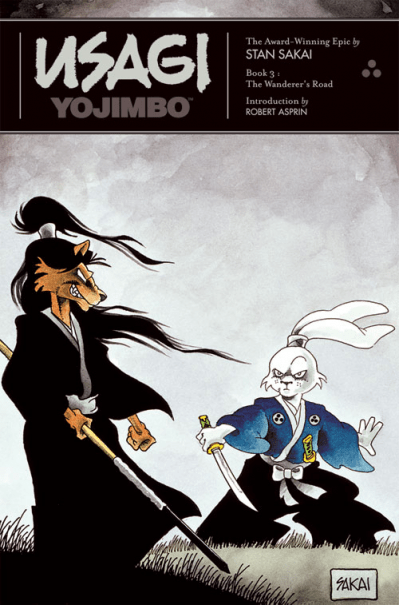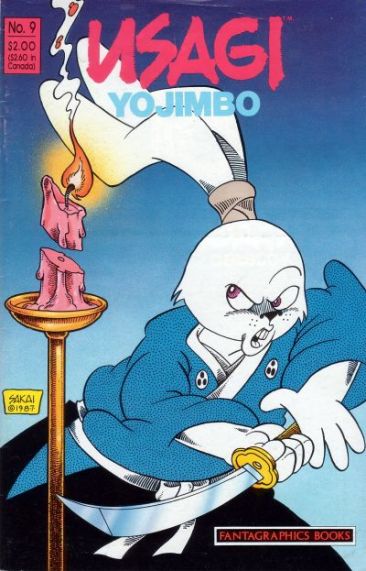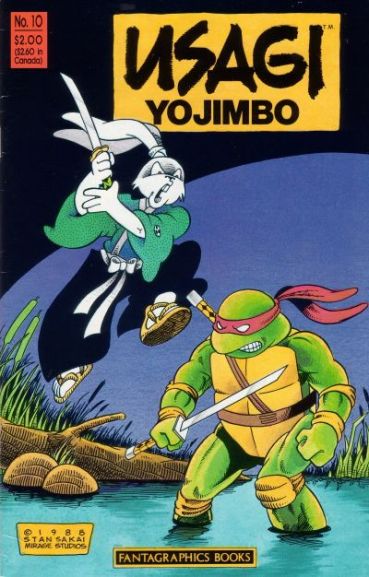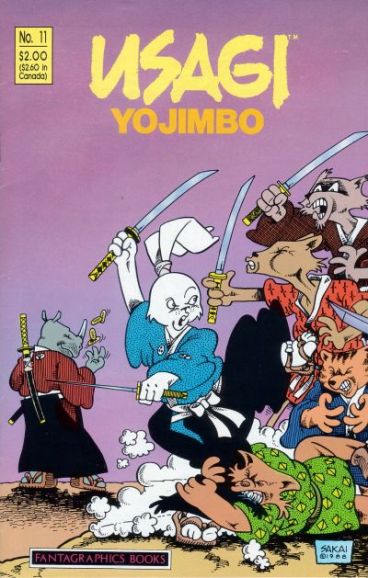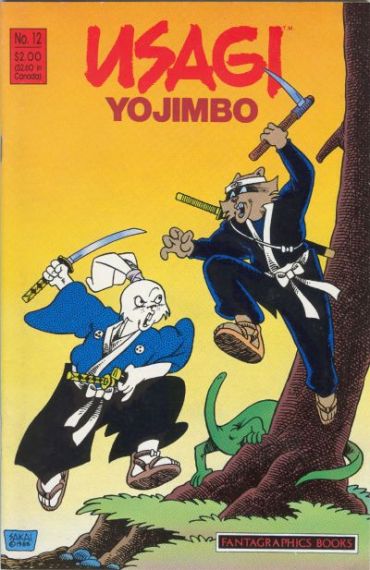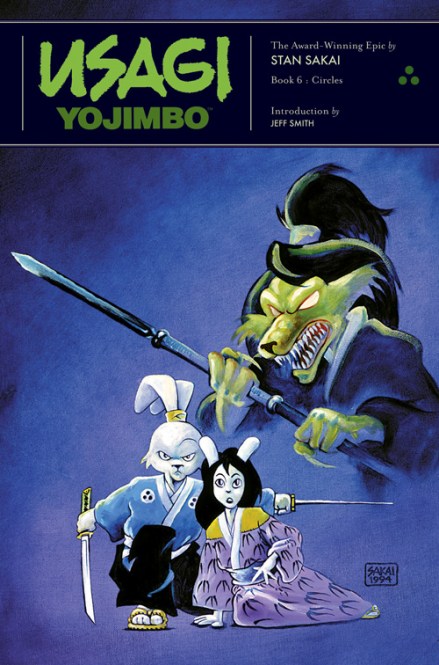
Throwback Thursday: Usagi Yojimbo: Volume 6: Circles by Stan Sakai

Usagi Yojimbo Circles

Publisher: Fantagraphics Books (Paperback – 1994)

Series: Usagi Yojimbo – Book Six

Length: 164 pages

My Rating: 5 out of 5 stars

Amazon     Book Depository

Reviewed as part of my Throwback Thursday series, where I republish old reviews, review books I have read before or review older books I have only just had a chance to read.

For this latest Throwback Thursday, after reviewing Lone Goat and Kid a couple of weeks ago, I am still in a Usagi Yojimbo mood, so I thought I would check out the sixth volume of this fantastic comic book series, Circles.
Usagi 25

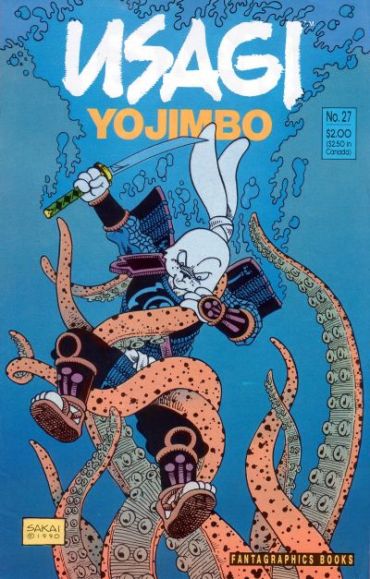
Circles is another fun and exciting addition to this excellent series which I honestly cannot praise enough (although I have been trying very hard in my last several Throwback Thursday articles). This sixth volume once again presents the reader with several outstanding and inventive stories that chronicle the adventures of the rabbit samurai, Miyamoto Usagi, as he journeys around a unique version of historical Japan. This volume contains five separate stories, derived from issues #25 – 31 of the Fantagraphics Books run on the Usagi Yojimbo series, as well as a short story taken from Critters number #50 (a comic magazine that had some early Usagi Yojimbo appearances). There are some rather amazing stories featured within this volume, and I had an incredible time reading them.

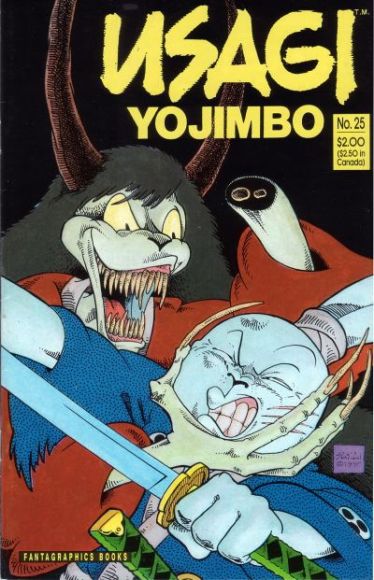
The first story contained within this sixth volume is called The Bridge, which sees Usagi encountering a demon out of Japanese folklore. During a dark a stormy night, Usagi is entering a village from across a bridge when suddenly he lashes out with his sword behind him, convinced something is sneaking up on him. When he finds nothing there, Usagi shrugs it off and enters the nearest inn, only to learn from the villagers that the bridge he just crossed has been possessed by a demon, and Usagi’s back now bears the claw marks of the demon. Awaking next morning, the villagers find a severed monstrous hand on the bridge, which Usagi appeared to have cut off the night before. Taking the hand into the inn, Usagi and villagers wait for a priest to arrive in order to perform an exorcism on the severed limb, but the demon of the bridge has other plans.
Usagi 26

This was a rather good supernatural story that sees Usagi go up against one of Japan’s many demons and monsters. Several significant elements from this story are taken from the story of the demon of Rashomon Gate, including the severing of the arm and the demon disguising itself as an old woman to recover its severed limb (although unlike the samurai in the legend, Usagi doesn’t fall for it). The demonic antagonist of this story is rather sinister in its drawing style and methods of attack, and it proves to be a dangerous opponent for Usagi. I love the extended fight on the bridge, and I especially enjoyed the way that the whole event ended, providing a side-character in the story their moment of vengeance. Overall, this was a tight, well-written story that was a lot of fun to read.

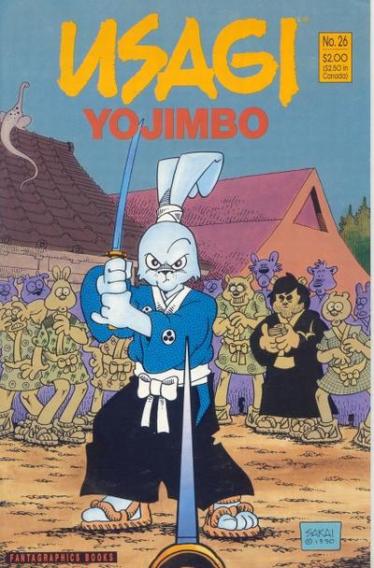
The next story in this volume is titled The Duel, and, as the name suggests, it features some duels between samurai. Usagi arrives in a village and is challenged to a public duel by the local champion while the watching villagers place bets with a travelling bookmaker, a duel that eventually results in Usagi’s opponent’s death. Completing the duel, Usagi meets and has lunch with a fellow unemployed samurai, Shubo, who subtly takes his measure. It is revealed that Shubo, who is a talented swordsman, is in league with the bookmaker who manipulates the odds of Shubo’s duels in order to make money off the betters. Shubo, who needs the money to provide for his wife and child, believes that he can beat Usagi, and the bookmaker inflates the odds in Usagi’s favour so that they can clean up when Shubo wins. Forcing Usagi into a duel, the two engage in a quick fight to death, with tragic results.
Usagi 27

This was a really clever and captivating single story that Sakai did an incredible job writing. The whole story concept is just brilliant, and Sakai sets it up and executes the plot brilliantly. There are some amazing scenes throughout The Duel, and the story features an excellent mix of comedy and tragedy which work together amazingly to produce a gripping narrative. Usagi, as the reluctant participant of this duel, is pissed at the entire affair, and his outraged reaction to the town people cheering his victory is rather good, especially as the peasants show over-the-top fake remorse in order to get him to go away so they can collect their winnings: “We are lower than the scum at the bottom of a stagnant pool!” While there is some fun and well-deserved karma coming down onto the bookkeeper who overextends himself and tries to escape, nothing quite takes away from the tragedy of Shubo’s wife and young child. The final panel of this story is incredibly heartbreaking, as it shows the wife and child waiting just outside the village for him to return. But as the light in the sky gets darker and darker, you can see the worry start to work its way onto the wife’s face, until she breaks down completely in the final panel, fully realising that her husband is dead. The wife comes across as a massively tragic character in this story, and the major impact that this final page has is a testament to how amazing Sakai’s storytelling and illustrations are.

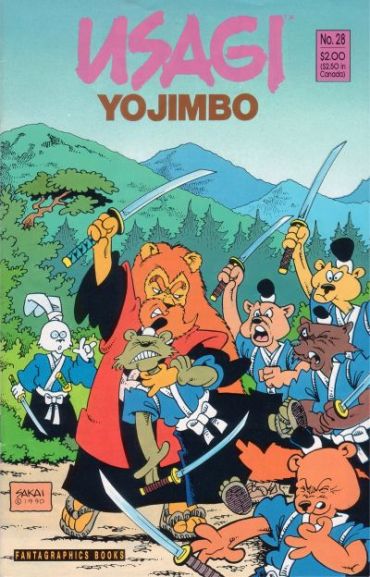
The third story in the volume is the rather short entry, Yurei, which is the story that appeared in Critters. In this tale, Usagi, who is camping at the edge of a river, awakens to find a Yurei, a ghost, floating before him. The ghost imparts her tragic story to Usagi; she was betrayed and murdered by her husband, and she now seeks justice. Usagi then awakens and finds a woman’s hairpin on the ground next to him. Thinking his encounter with the ghost was just a dream, he travels to a nearby inn and attempts to trade the pin for a meal. What he does not realise is that the innkeeper is the murderous husband from the ghost’s tale, and his discovery of the pin leads to a series of deadly events. This was a good, fast-paced story which tells a compact and intriguing tale. I loved the supernatural elements in this story, and it was interesting to see Usagi portrayed as a tool of fate, who wonders into some ghostly revenge without even realising it. This was a fantastic short entry in this volume and was great to check out.
USagi 28

The next entry in Circles is an entertaining and over-the-top tale titled My Lord’s Daughter. In this story, Usagi, who is telling a bedtime tale to children, is shown as the classic hero from Japanese legend, fighting through vast hordes of demons, monsters, and obstacles to rescue a beautiful princess from an Oni. This was a fun take on some of the traditional Japanese heroic legends, and it was cool to see Sakai draw a classic tale with Usagi as the protagonist. Sakai has some obvious fun setting the Usagi hero fearlessly against armies of demons and monsters, and he comes up with some clever fight sequences and scenes in this book, from a brutal duel with an Oni, to an underwater battle between Usagi, a shark and a giant octopus wielding several swords in its tentacles. This is an entertaining and exciting story, and I had a good laugh at the end reference to Sakai’s old comic, Groo the Wanderer.

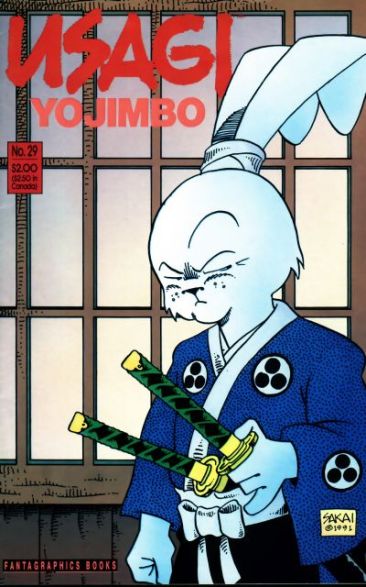
Now let us get to the fifth story of this book, which is kind of the main event of the entire volume. This is a big story, told across four issues, titled Circles. This story follows Usagi as he returns home for the first time since the events of volume one, The Ronin. There are actually a couple of distinctive parts to this story, especially the first issue, which is somewhat separate from the rest of the story (with the exception of some build-up at the end). For this first part, Usagi, on his way back home, decides to stop at his old master’s house to pay his respects to the grave marker of Katsuichi, the man who taught him how to wield a blade. The story then shows a flashback, which serves as a continuation to part of the origin story Usagi told in the second Usagi Yojimbo volume, Samurai, about Usagi’s past. In the flashback, it is shown that Usagi’s master was ambushed and seemingly killed by members of the Dogora Fencing School after Usagi beat their students in a tournament. However, upon arriving at Katsuichi’s old house, he discovers that his master is still alive, having survived the ambush, and has taken on a new student. I liked this revisit of Usagi’s origin story with Katsuichi, although the whole death scene in the flashback comes a little bit out of nowhere. Still, it was interesting to see how much Usagi has matured since he was learning the way of the sword, and it was nice to see the teacher and student reuniting. The flashback sequence is also top quality, and Sakai illustrates up a storm in this one, showing a fierce battle and some intense emotions from Usagi, who goes from a full-on berserker rage as he gets his revenge on his master’s killer to an intense grief in just a few scenes.
Usagi 29

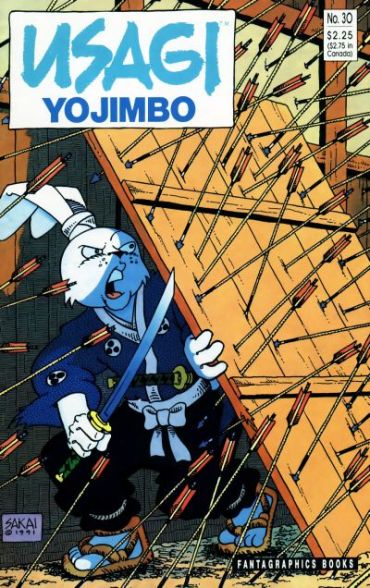
The story then continues as Usagi journeys back to his village, only to be confronted by his old childhood rival, Kenichi. It turns out that Jotaro, Kenichi’s son with Usagi’s former love, Mariko, has gone missing, and bandits are roaming the area. While Usagi and Kenichi are able to defend their town from a raiding party, the attackers reveal that Jotaro has been kidnapped by the bandits and are holding him hostage. Leading an army of local peasants against the bandit’s hideout, Kenichi and Usagi hope to rescue Jotaro and end the raids that have been plaguing them. However, what they do not realise is that the bandits are being led by the deranged and dangerous former adversary of Usagi, Jei, a mysterious and seemingly unkillable murder with a black blade, who hopes to use Jotaro to get his revenge on Usagi. But even Jei is not the most dangerous thing that lies ahead, as old resentments between Usagi and Kenichi, their shared love for Mariko and certain revelations may tear everything apart.

Wow, I have to say that the final three issues of Circles are just incredible. There is so much to unpack from them, as Sakai brings together a brilliant and powerful story. First of all, it was great to see Jei return as a villain once again. Jei, who was introduced in volume 3, The Wanderer’s Road, is an outstanding antagonist, and his continued feud with Usagi is just brilliant. The two engage in a fantastic and extended duel in this story, and Sakai did a fantastic job showing off each combatant’s skill and martial ability through his drawings. I also love the extensive battle between Kenichi’s peasant army and the bandits, which proved to be rather eye-catching. Not only is there a beautifully drawn sequence in the misty forest before the big battle in which Usagi does a great Jei impersonation to scare a bandit sentry, but Sakai illustrates a massive battle between the two forces. The massive single panel that shows the pitched battle is just impressive, and I love the detailed and entertaining scene that the author produced here.
Usagi 30

While all of the above is pretty amazing, what really makes this captivating story is the complex relationship between Usagi, Kenichi and Mariko. There are so many great layers plastered into this relationship. Usagi and Mariko were deeply in love when they were younger, and they still have great feelings for each other. However, Mariko ended up marrying Kenichi, and she is bound by duty, and her child, to him, no matter how she feels about Usagi. Kenichi, on the other hand, has always borne antagonism towards Usagi, which has been compounded over the years by their differences in skill and the fact that Usagi was chosen to serve Lord Mifune and left the village. However, Kenichi’s resentment towards Usagi is even greater, as he knows that Usagi is in love with his wife, and that these feelings are reciprocated by Mariko.

This leads to some outstanding scenes throughout this story, as these three try to come to terms with their complicated emotions. I particularly loved one scene in the middle of the story, where Usagi and Mariko discuss their feelings and reveal that they still both love each other, although Mariko makes it clear that they can never be together. The scene ends when Kenichi interrupts them, and while the look of heartbreak and shame on Mariko’s face is notable, what really gets me is the way that Kenichi’s usual stern/angry look is replaced with one of sad resignation in the last panel once he realises how Mariko still feels about Usagi. Despite this, Kenichi comes across in this story as a surprisingly honourable and well-intentioned character who puts aside his negative feelings for Usagi for the greater good, and it is a fantastic examination of a character who has mostly been antagonistic in the previous volumes. Sakai also drops a massive bombshell at the end of this story, when he reveals that Jotaro is actually Usagi’s son, and that Kenichi has known this and raised him as his own. Because of this, Mariko asks Usagi to leave and not try to settle down in their home village, as she fears it will put a wedge between Jotaro and Kenichi, who she sees as Jotaro’s true father. Usagi regretfully accepts this in another dramatic and captivating scene, although Mariko arranges for Usagi to see Jotaro as he leaves, and Usagi has a heartfelt time with his son, noting the similarities between them, and even suggesting Jotaro seek out Katsuichi as a teacher in later years. All of this is some first-rate storytelling and character development, and cannot praise Sakai enough for this amazing, emotional storyline. This is actually the last book that Kenichi and Mariko appear in (so far), and I think that Sakai did a fantastic job tying their love triangle together. All in all, Circles is easily my favourite story in this entire volume (The Duel comes close), and it is worth grabbing this volume just to check this key story out.

Usagi 31

It should come as no surprise to anyone considering all the praise I elicited above that I am giving this sixth volume of Usagi Yojimbo a full five star rating. This was another incredible comic book that features Sakai’s outstanding blend of powerful stories, memorable characters, intense action, fun references and depictions of traditional Japanese culture and history and some truly impressive artwork. I absolutely loved this volume, and this entire awesome series, comes highly recommended and is an unquestionable must-read.
Amazon     Book Depository

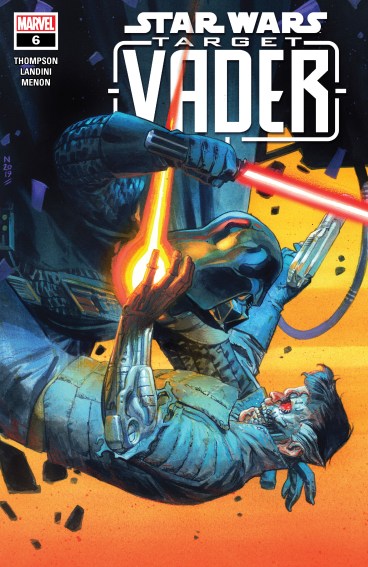
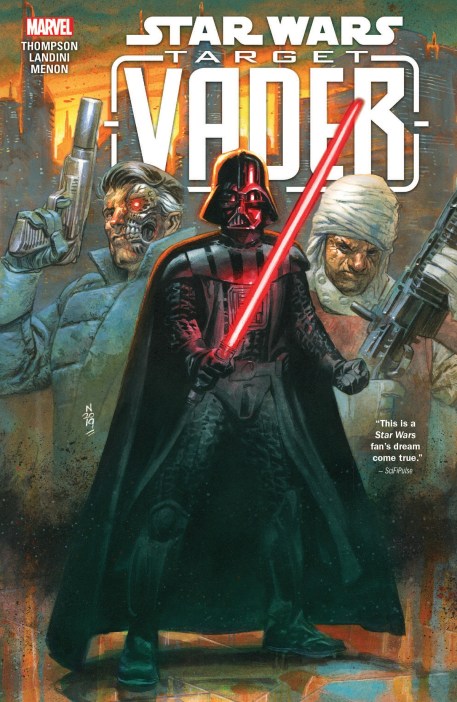
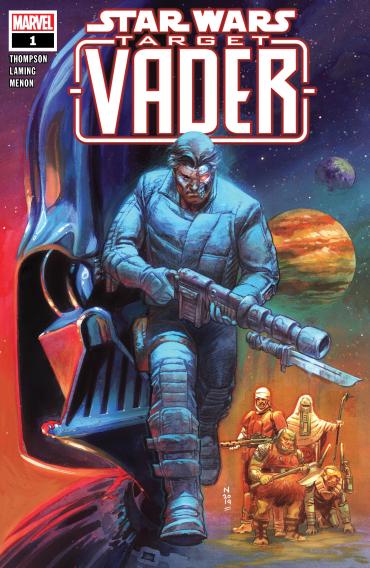
Star Wars: Target Vader

Star Wars - Target Vader

Publisher: Marvel Comics (Paperback – 11 February 2020)

Series: Standalone

Writer: Robbie Thompson.

Artists: Marc Laming (#1), Cris Bolson (#1, #5), Stefano Landini (#2-4, #6), Marco Failla (#5), Roberto Di Salvo (#5-6) and Georges Duarte (#6)

Colour Artists: Neeraj Menon (#1-4, #6) and Rachelle Rosenberg (#5-6), with Jordan Boyd (#1), Andres Mossa (#1), Federico Blee (#1, #4), Erick Arciniega (#1) and Giada Marchisio (#4).

Letterers: VC’s Clayton Cowles (#1) and Joe Caramagna (#2 – 6)

Length: 136 pages

My Rating: 4.25 out of 5 stars

Amazon

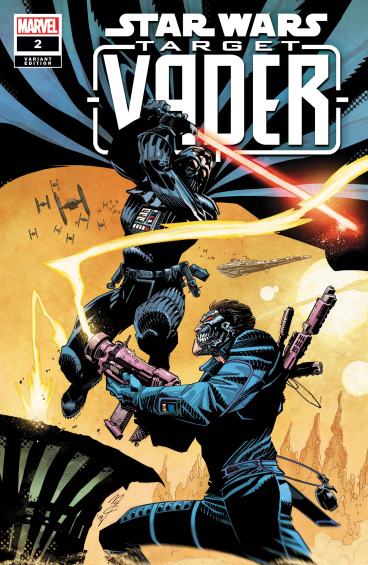
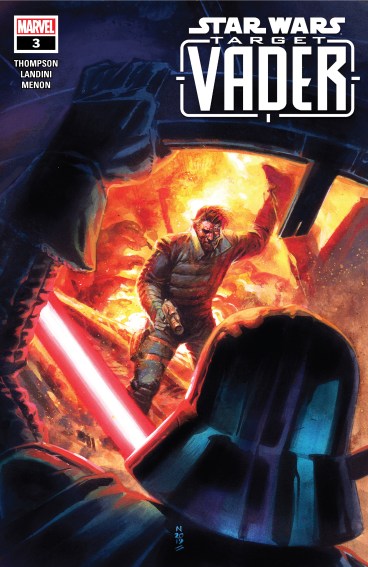
Have you ever wondered what would happen if a bunch of crazy bounty hunters went after Darth Vader? Wonder no more, as writer Robbie Thompson and a massive artistic team present Star Wars: Target Vader, a fun and action-packed adventure comic that sets a dangerous team of bounty hunters against the Dark Lord of the Sith.

TargetVader-1

There is a new criminal organisation dominating the known galaxy, calling itself The Hidden Hand. This nefarious and secretive group smuggles and sells weapons across all of Imperial Space, and while this might ordinarily be tolerated or barely noticed by the Empire, one of The Hidden Hand’s biggest clients is the Rebel Alliance, and this has attracted the worst kind of attention, in the form of Darth Vader. Vader has made it his mission to wipe out any trace of The Hidden Hand, and he has started scouring the galaxy for them, brutally destroying anyone who has had any contact or dealings with them.

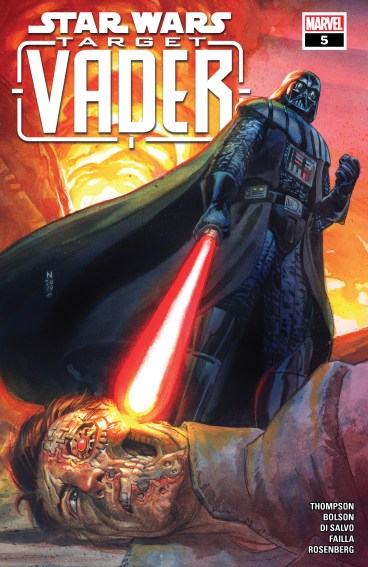
Desperate to save themselves from a violent and painful death at the hands of Vader, The Hidden Hand attempt to turn the hunter into the hunted by hiring a group of bounty hunters to go after the evil Sith Lord. The man they choose to lead this suicidal mission is the notorious Beilert Valance, a former dedicated imperial soldier turned unscrupulous bounty hunter. Valance has a long and complicated history with the Empire, and he eagerly jumps at the chance to take a shot at Vader.

TargetVader-2

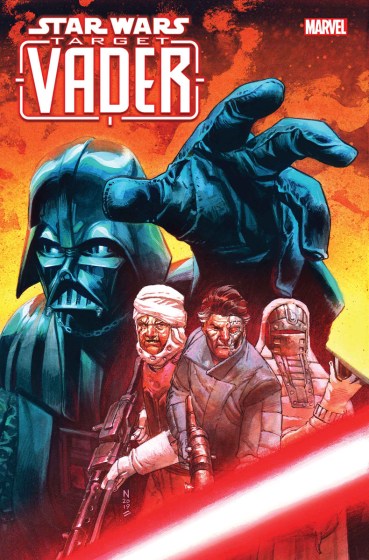
Valance finds himself in command of a crack team of bounty hunters, each of whom bears a grudge against Vader or the Empire and is willing to do anything to get their target. However, Vader is no ordinary quarry, and it will take far more than brute strength and firepower to take him down. Valance will need to make use of every ounce of skill and determination he has if the team is to succeed in their mission and kill the unkillable. But everyone involved on this mission has a secret. Who can really be trusted, and can a divided team truly bring down the most feared and dangerous man in the known galaxy?

This comic was written by Robbie Thompson, who is probably best known as a screenwriter for Supernatural, having written several excellent episodes between season 7 and 11 (including the 200th episode, which was an awesome meta musical). Thompson has moved to comic book writing in recent years, having written several series for Marvel Comics including Silk, Spidey, Dr Strange, the Solo comic adaption and Han Solo – Imperial Cadet. Target Vader also features a substantial team of artists, colour artists and letterers who helped this fun story jump off the page. The Target Vader collected edition contains issues #1 – 6 of the Target Vader limited series, which is set just before the events of The Empire Strikes Back.

TargetVader-3

Target Vader is a fantastic and enjoyable comic that I had an excellent time reading. Pretty much the moment I heard that this series was going to feature a group of bounty hunters going after Darth Vader, I knew that I had to grab it and check it out (I mean frankly, who could possibly resist such a cool concept). The creative team behind this great comic did an amazing job bringing this exciting concept together and turning it into such an awesome read, with some impressive action sequences, an intriguing look at the criminal underbelly of the Star Wars universe and a great overall story.

This was an excellent standalone comic book series, which most fans of Star Wars fiction are going to enjoy. No real familiarity with the extended Star Wars universe is required to appreciate this story; all you really need to know is that Darth Vader is a badass, the Empire is evil, bounty hunters are crazy scum, and you are going to have an entertaining time watching Vader go up against some dangerous criminals. That being said, those readers who are familiar with the expanded universe are going to get a lot more out of this comic than more causal fans, especially as it presents the reader with a great look at the bounty hunters and criminals that inhabited the galaxy during the events of the original trilogy. This will also be an interesting lead-in comic to the new ongoing Star Wars comic series, Bounty Hunters, which will also feature Valance as a lead character, and which will be set after the events of Target Vader (the Bounty Hunters series is going to be set between The Empire Strikes Back and Return of the Jedi).

TargetVader4-CoverArt

I have to say that I really enjoyed the cool story that Thompson came up with for Target Vader. As I have mentioned above, the entire scenario for this comic is pretty awesome, and it ended up producing a compelling tale of betrayal, revenge and redemption, as the various main characters each try to achieve their own goals. I liked the places this story went, and there are some fun double-crosses and betrayals set throughout this colourful landscape of the Star Wars universe. Aside from the central characters of Valance and Vader, the creative team filled this comic with a great array of side characters, including a primitive tracker; a crazed, four gun wielding slicer; a Tusken Raider sniper; and of course Dengar, the turban-wearing bounty hunter who was part of the group Vader hired in The Empire Strikes Back, and who has featured heavily in both expanded universes after the film. This diverse group of bounty hunters come together as an intriguing and entertaining team, and they nearly succeed in their mission with their unique skills. Vader of course comes across as a total badass in this comic, which is always fun to see, and I really enjoy comics that showcase this iconic villain. There is so much to love about this amazing story, and readers are guaranteed an exciting team exploring the cool narrative within this comic.

TargetVader-5

Target Vader also features a rather intriguing central character in Beilert Valance, the cyborg bounty hunter who leads the team against Vader. Valance is a character with an interesting past in Star Wars lore as he originally appeared many years ago in a Star Wars Legends comic, where had an excellent character arc. He has the distinction of being one of the few expanded universe characters from the Legends era who has been reintroduced into the new Disney Star Wars canon. Thompson is actually the writer who brought this character into the current canon, as he was first shown in the comic adaption of Solo: A Star Wars Story, and subsequently formally identified and strongly featured as a character in Han Solo – Imperial Cadet. In his latest appearance, Thompson does a deeper dive into his character, showing off a past full of fire, combat and death, as well as examining his motivations and his drive to keep on fighting no matter what. There are some interesting surprises involved with his actions in this limited series, I liked seeing his complex history with Vader, the Empire and other organisations featured within the comic. Valance is also shown to be a crafty and skilled individual who is actually a threat to Vader. His whole plan to assassinate Vader is rather clever, and the way that he is eventually able to outsmart everyone is pretty cool. Overall, Valance served as an excellent central character for this book, and I look forward to seeing more of him in the upcoming Bounty Hunters comic (Valance and Boba Fett should be a fun combination).

I also enjoyed the fantastic artwork that is shown throughout Target Vader. As you can see from the breakdown of contributors at the top of this review, this comic features the talents of a huge range of different artists, and there are some varied collaborations on each separate comic issue. Now I have to admit that I’m not the biggest fan of having so many artists contributing to one single series and I personally like a bit of consistency, but this great team (some of whose work I have seen before in comics such as Doctor Aphra, Vader: Dark Visions and Uncanny X-Men – Wolverine and Cyclops), did some amazing work in Target Vader, illustrating some awesome and action-packed sequences. There are some great explosive scenes featured within this volume, and these artists did an outstanding job showcasing all the intense action that occurred as part of the story. The artistic highlight of Target Vader has to be the massive and exciting fight between Vader and the bounty hunters, which was really cool to see. I also really enjoyed all the character designs featured within the volumes, and this team made sure to feature a number of the distinctive Star Wars alien races throughout the comic. All of this amazing artwork really enhances the enjoyable story, and readers are in for an intense visual treat with this comic.

TargetVader-6

Target Vader is an awesome and deeply exciting limited series which I had a really fun time reading. This fantastic comic features an excellent story, some impressive artwork and a bunch of great characters, all of which comes together for a captivating and enjoyable piece of Star Wars fiction. I look forward to seeing more Star Wars bounty hunter adventures in the future, and this is a wonderful and recommended read for those Star Wars fans looking for something fast-paced and very entertaining.

Amazon

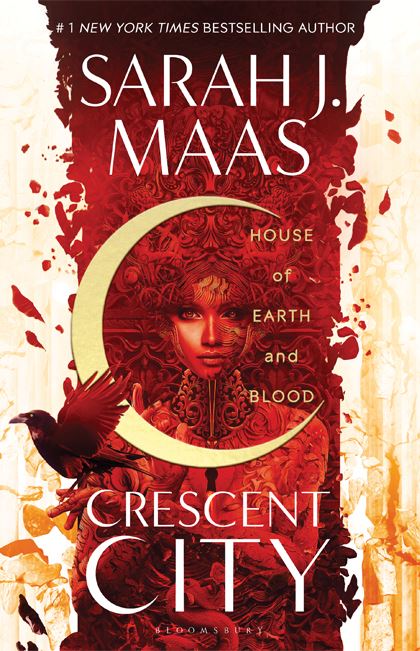
House of Earth and Blood by Sarah J. Maas

House of Earth and Blood Cover

Publisher: Bloomsbury/Audible Studios (Audiobook – 3 March 2020)

Series: Crescent City – Book One

Lenght: 27 hours and 50 minutes

My Rating: 5 out of 5 stars

Amazon

Prepare to meet your new obsession! One of the world’s top young adult fantasy fiction authors, Sarah J. Maas, breaks into the adult fantasy fiction genre in a big way with the first book in her brand-new Crescent City series.

Sarah J. Maas is an author that needs very little introduction. She is one of the most highly regarded young adult fantasy authors in the world today, having written two major bestselling series and a couple of standalone young adult novels. Maas debuted in 2012 with Throne of Glass, the first novel in her acclaimed seven-book long Throne of Glass series, and she has since gone on to write a second major series, A Court of Thorns and Roses. I have been meaning to check out some of Maas’s main series for a while now, especially Throne of Glass, as I have heard some very good things about them. Unfortunately, the only book of Maas’s that I have so far read was her DC Comics tie-in novel, Catwoman: Soulstealer, which I really enjoyed, especially as Maas had an amazing understanding of some iconic comic characters. As a result, I was interested when I heard about her new book, House of Earth and Blood, and I was curious to see how her first adult fiction novel would turn out. This is the first book in the Crescent City series, which presumably will be the author’s main body of work for the next few years. I received a physical copy of this book to review, although I eventually decided to listen to the audiobook format to fit it into my reading schedule, and I have to say I was rather impressed.

Welcome to Crescent City, a bustling metropolis where magic and technology meet in a world ruled over by all-powerful godlike creatures. Bryce Quinlan is a half-Fae, half-human, party girl at the low end of her world’s magical hierarchy, content to live her days clubbing and celebrating with her best friend, the powerful werewolf Alpha Danika Fendyr. All that changes the night Danika and her entire wolf pack are brutally slaughtered while Bryce is out partying. Bryce arrives home just in time to encounter the demon that committed the act, chasing it out into the streets before it escapes, never to be seen again.

Two years later, Bryce is a shell of her former self. Still reeling from the death of the closest person in her life, Bryce finds herself without direction or purpose. However, the revelation that a fresh wave of killings that mirror the bloody way Danika and her pack were taken out quickly changes that. Due to her experiences with the unknown species of demon and her intimate knowledge of Danika’s movements and history, Bryce is tasked by the governor of Crescent City to find who or what is summoning the destructive demons and unleashing them upon seemingly random members of the populace. However, Bryce will not be working on this case alone, as she finds herself teamed up with the governor’s personal assassin, the brooding, dangerous and surprisingly attractive fallen angel, Hunt Athalar.

Begrudgingly agreeing to work together, Bryce and Hunt start to scour the dark underbelly of their city, attempting to find any leads to who summoned the demon. However, they soon run afoul of many of Crescent City’s inhabitants, some of whom do not want the pair to uncover the truth. As they dig further, they begin to uncover a terrible conspiracy with terrible connections to Bryce’s traumatic past and which threatens all of Crescent City. However, the closer they come to the truth, the more pain and torment the two damaged souls uncover, especially as both of them try to fight the intense feelings blooming between them. With the fate of Crescent City hanging in the balance, can Bryce and Hunt get to the bottom of these killings, or will they be overwhelmed by all the hurt that is about to come their way?

Well damn, that turned out to be one hell of a book. I do have to admit that I’m not usually a fan of major romantic subplots in the novels I read (I know, typical male, Bryce would probably be calling me an Alphahole), and I was a little apprehensive that the romantic angles described in the book’s synopsis would overwhelm the fantasy story. However, any doubts I had about whether I was going to enjoy House of Earth and Blood were quickly blown away in the early stages of the story, especially once I hit the major plot development about 70 pages in. From there I was absolutely hooked on the story, as Maas kept piling on revelations, shocking moments, character development and an impressive murder mystery. I ended up really loving this amazing novel, and I ended up giving it a five-star rating.

I really enjoyed the way that Maas told this story, and this book contained an expansive and deeply addictive narrative that proved hard to put down at times. House of Earth and Blood is told from several character perspectives, most notably Bryce and Hunt, although quite a bit of the story is shown from the perspective of Bryce’s half-brother, Ruhn Danaan. Having these three main point-of-view characters results in a much more expansive story, as each of them has their own contributions to the plot, although there is a huge amount of crossover between each of their storylines. While Mass tends to focus most of her character development and storylines around Bryce, Hunt and Ruhn, there are a number of additional supporting characters, some of whom have some rather interesting roles throughout the book. Maas also includes a huge amount of foreshadowing throughout the book, hinting at several things that are to come further along in the narrative. While it is obvious where some of this foreshadowing is going, some of it was only noticeable in hindsight, and some of these more subtle inclusions made me really appreciate the author’s clever writing style.

One of the best things about this book was the incredible and intriguing new fantasy world. The Crescent City series is set on a version of Earth called Midgard, which was invaded thousands of years ago by vast armies of various magical creatures, ending humankind’s dominance of the planet. The modern world of Midgard is a chaotic and fascinating place, filled will all manner of magic and creatures who live in a hierarchal system, with all-powerful beings at the top and humans at the very bottom. There are so many cool elements to this world, from the unique magical systems, the different factions and organisations, and a vast multitude of different magical creatures with their own traits and characteristics. Maas dedicates a substantial amount of time exploring all these different elements of her new world, and the result is an impressive and vast setting which serves as a fantastic backdrop to this exciting story. I also liked the rather fun similarities between this fantasy world and the modern world, and it was interesting to see fantasy creatures running around with modern technology such as phones and guns. I also had a rather good laugh at some of the television shows that the author featured in the book, including a rather trashy-sounding True Blood inspired television show, which was made fun of relentlessly for its sexual content (which is kind of ironic considering how much sex was in this novel). Maas is clearly a master of universe building, and she has come up with a really great fantasy world that holds a lot of potential for future novels in the series, as well as opening up the possibilities of spin-off stories around some of the fantastic side characters introduced. I personally would love to see a novel based around the character of Fury Axtar, the mysterious assassin friend of Bryce, who has a minor role in the book.

In addition, Maas has also come up with a rather clever murder mystery storyline that I had an outstanding time unwrapping. The vast majority of House of Earth and Blood’s plot revolves around the murder of Danika Fendyr and her pack, as well as the similar murders that are occurring in the modern day. The subsequent investigation by Bryce and Hunt turned into a rather captivating storyline, as they explored the underbelly of their fascinating city, trying to find leads and uncover who had a motive to kill Danika. This whole mystery storyline goes to some very interesting places, and Maas comes up with a number of red herrings, alternate suspects, potential leads and side mysteries (a missing magical horn and a new street drug), all of which come together into a pretty incredible and clever narrative. I was actually rather surprised about who the culprit turned out to be, although Maas does set up the reveal rather well, and there are some rather clever hints in hindsight. That being said, while I didn’t know who the culprit was in advance, I totally knew where the final showdown with them was going to take place, and how the whole confrontation was bound to go down (there was a literal Chekov’s gun there). Still, it turned into quite a good confrontation scene, and I had a good laugh at the over-the-top way that the villain was taken down for good. This was a rather impressive element of the story, and I hope that Maas includes some more clever mysteries in her future books.

While I really loved the fantastic story, incredible world building and captivating mystery, the true centre of this book are the two compelling and exceedingly damaged main characters who Maas sets the story around, Bryce Quinlan and Hunt Athalar. Maas does some outstanding work setting these characters up, exploring their pasts and developing their personalities and emotions throughout the book. Bryce starts House of Earth and Blood as a seemingly carefree party girl with major daddy issues. However, the loss of Danika in the book’s first act severely changes her, as she has to deal with an extreme amount of guilt, isolation and social hatred in the following two years. This really alters her as a character and turns her into an extremely vulnerable person with a real emotional investment in the case, who hides all her true feelings behind a sassy and angry façade. Hunt, on the other hand, is a powerful fallen angel who lost his freedom and the love of his life in a failed rebellion against the ruling gods of the planet, and has spent the last several decades being tortured and used by the victorious archangels, and is now the personal assassin of the governor of Crescent City. Now known throughout the city as the Umbra Mortis, the Shadow of Death, Hunt is a simmering pot of anger who is resentful of how he has been treated all his life, and who is determined to be set free. Like Bryce, he is deeply invested in solving the case, as its resolution will allow him to take a serious step towards freedom, and on the surface he is the more serious of the duo. However, also like Bryce, Hunt has some major vulnerabilities and he is hurting deep inside. Both Bryce and Hunt are incredibly interesting protagonists, and I am really impressed with the layers that Maas was able bring to their characters, which added a significant amount to the story.

While Bryce and Hunt are amazing characters in their own right, the real magic comes when they are paired together. It is obvious from the start that these two are going to hook up at some point, but the journey to get there was written extremely well. The combination of these two exceedingly vulnerable and complex characters in the story is great, and it makes for some incredible and dramatic story moments, as Bryce and Hunt slowly work out all their issues and history. The way they slowly go from dislike to mutual respect to lust/romance is accompanied with a slow exchange of secrets, facts and personality reveals, and I had an amazing time seeing them come together as a couple. This turned into quite a good romantic subplot, although the two of them have some major bumps and betrayals along the way. Still, there are some rather nice moments in their relationship, from the way that they take care of each other after traumatic events, to funny reveals and mutual moments of protecting one and other. Bryce and Hunt make for a great pair, and I am really impressed with the way that Maas portrayed them and the complex story she wove around them. It looks like there are more secrets and backgrounds about both coming up in the future books, and I am looking forward to seeing where Maas takes them in the future.

While this book had some amazing elements, I did find this novel to be a tad trashy at times. As I mentioned above, this is Maas’s first foray into non-young adult fiction, and she certainly did not shy away from adding all manner of adult content into her book. While I can certainly appreciate Maas wanting to differentiate this book from some of her young-adult fiction work, I honestly think she overcompensated. This book is filled with a huge amount of adult language and sexual content, as pretty much every character in this book is crude, rude, oversexed and incredibly thirsty. While some of this served a purpose, such as showing what sort of party-girl character Bryce was before the traumatic incident, the sheer amount of stuff that Maas included was a bit over the top, and I found it to be somewhat distracting at times. This book also introduced me to the brand-new term, Alphahole. In the context of this book, an Alphahole is the term that Bryce gives to any magical male who thinks that their abilities and power give them the right to control women and run their lives, especially those women with less magical power than them (i.e. humans and half-humans like Bryce). Unfortunately, in this book pretty much every male that Bryce encounters is an Alphahole in her opinion; even the more redeemable characters like Hunt or Ruhn are deemed Alphaholes at the start of the novel, especially once they venture an opinion about her behaviour or actions. While I appreciate that this dislike for domineering men is part of Bryce’s character due to her father, and controlling guys really aren’t that cool in either fiction or real life, I do think that Maas kind of overdid their inclusion just a bit and I was honestly getting sick of hearing Alphahole as a descriptive term by the end of the book (although it became less apparent as the story progressed).

As I mentioned above, I ended up listening to the audiobook version of House of Earth and Blood. This audiobook has a runtime of 27 hours and 50 minutes and is narrated by Elizabeth Evans. I am rather glad that I decided to check out this format of the book. While I probably would have finished it off faster if I had read a physical copy (it took me a few weeks to get through the audiobook), I always feel that I absorb more of the novel when I listen to it, especially with longer books. This proved to be really useful when listening to House of Earth and Blood, as Maas packed so much plot and world building into this immense novel, and I think I ended up getting more out of this book by utilising this format. I have to say that I was also immensely impressed with Elizabeth Evans’s narration. Evans did an incredible job bringing the story to life, and her steady and emotional dictation of the story really helped me get to the end. I really loved the cool voices that Evans was able to come up with for all the characters, and I think that each of them matched the distinctive personalities of each character. Evans produced a huge range of different voices for these characters, and I really liked how she was able to alter them to reflect the ethereal or magical nature of some of the characters featured in the book, as well as hint at how powerful some of these creatures were by modulating her tone and adding a commanding quality to it. This was an impressive and deeply enjoyable audiobook adaptation, and I would strongly recommend it to anyone interested in enjoying House of Earth and Blood. That being said, be careful where you listen to this book, as it can be a little awkward to hear some of the steamy sex scenes when you are out in public. I somehow managed to be out shopping during two separate and particularly graphic scenes, and it proved very hard to keep a straight face while I was trying to grab groceries.

House of Earth and Blood is an incredible adult fiction debut from Sarah J. Maas, who has produced another outstanding and captivating read. There are so many excellent and enjoyable story elements in this book, and I absolutely loved every second I spend listening to it, even though some parts were a little over the top at times. This was an awesome start to Maas’s new Crescent City series, and I cannot wait to see what impressive and addictive story the author comes up with next. This novel comes highly recommended, and it gets a full five-star rating from me.

Amazon

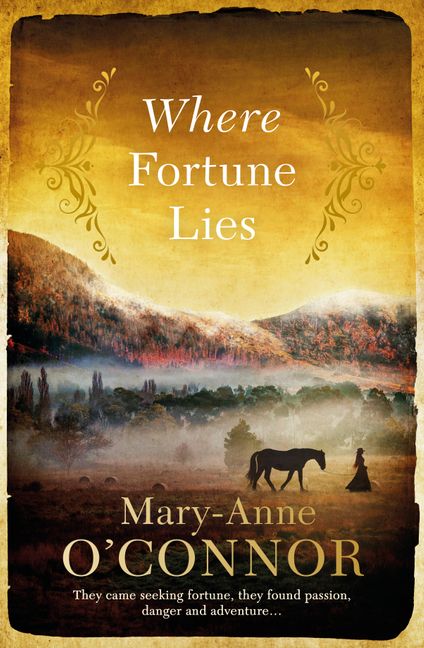
Where Fortune Lies by Mary-Anne O’Connor

Where Fortune Lies

Publisher: HQ Fiction (Trade Paperback – 23 March 2020)

Series: Standalone

Length: 394 pages

My Rating: 4.25 out of 5 stars

Amazon     Book Depository

From bestselling Australian author Mary-Anne O’Connor comes another fun and intriguing Australian historical drama, Where Fortune Lies, which tells a multi-layered story of people seeking their fortunes in colonial Australia.

1879, Ireland. Anne Brown is a beaten-down young lady, hoping to escape the harsh life of poverty and misery she sees the rest of the women in her family experience. After a particularly cruel night which sees the one good thing in her life taken away from her, Anne flees her hometown, hoping to make a new life for herself in far-flung Australia.

Several months later in London, young gentleman Will Worthington and his sister Mari are shocked to discover that their recently deceased father has changed his will. Instead of the modest inheritance they were expecting, they find that all his money has been left to a mysterious pregnant painted lady who intends to resettle in Australia. With their social standing in London destroyed, Will and Mari, along with Will’s loyal best friend, artist Charlie Turner, follow their father’s mistress to Australia to seek their fortunes.

Upon their arrival in Melbourne, Will Mari and Charlie quickly befriend local businessman Tom McIntosh and his beautiful daughter, Alice, who Will falls in love with. While Will and Mari enjoy the opportunities afforded to them in Melbourne, Charlie spends time in the Victorian Alps with Alice’s brothers, Harry and Richie, and their wild group of friends, who show him how to live the rough colonial life. While there, Charlie finds his artistic inspiration through his work with the McIntosh boys and their wild horses, as well as his love for a mysterious exotic dancer. However, danger lies on the horizon, as Harry and Richie have been covertly engaging in the deadly trade of bushranging. Soon the fates of all these young people will hang in the balance, as tough choices, dangerous loyalties and harsh heartbreaks will impact them all.

Where Fortune Lies is another fantastic read from O’Connor, who has written some exceptional historical dramas in her five-year career. I read my first Mary-Anne O’Connor book last year, In a Great Southern Land, which told an excellent story about a group of people coming to Australia in the 1850’s to participate in the gold rush and subsequent uprising at the Eureka Stockade. I quite enjoyed In a Great Southern Land and I was rather pleased that my review of it was quoted on the back of the copy of Where Fortune Lies that I received. This latest novel follows a similar concept to O’Connor’s last book, with a diverse group of characters journeying to opportunity-rich Australia in order to seek a better life, and O’Connor is once again able to weave together a rich and compelling story of love, family drama and action in the Australian wilds, and I quite enjoyed the fun blend of story elements that the author was able to come up with.

Where Fortune Lies contains a strong character-based story that follows the lives and adventures of several characters who are drawn together by fate, love and family. O’Connor does a wonderful job of introducing these key point-of-view characters, whose story the reader finds themselves getting quite attached to. I really enjoyed the way that the author spaced out the various character threads, taking the time to explore the lives of each of the separate characters. While some of the character arcs do cross over quite a bit (for example, Charlie Turner directly interacts with all the other major characters and serves as a major bridging character), other characters are kept relatively separate from each other, with only a few scenes together. However, these characters arcs still have some subtle interactions, with their actions indirectly impacting other characters’ lives, or the two characters meet or discuss each other without realising who the other person really is. I liked the method of storytelling, as it allowed the reader to get to know each character individually and see the various struggles and difficulties that they are facing, as well as how they overcome them and evolve as people. I really enjoyed each of the character arcs that O’Connor explored, and I think that all of them came to a satisfying conclusion, especially as the various threads combine together at the end of the book with all the main characters finding their final fates. Each of these character-driven storylines had a good blend of adventure, adversity, romance and drama, which I think came together extremely well as an overall narrative.

I really liked the way that O’Connor once again dived back into Australia’s past, this time looking at the turbulent 1870s, and presenting the reader with another view of the country’s iconic colonial history. Where Fortune Lies contains some fantastic examination of various parts of old-school Victoria, including the busting metropolis of Melbourne, and it was interesting to see O’Connor’s depiction of the crossing to Australia and the things that immigrants back in this period would have experienced. Most of the story, however, takes place in the rugged wilds of outback Australia, particularly in the wilderness and small towns of the Victorian Alps. O’Connor presents a fascinating exploration of these communities, and I really enjoyed her depictions of people capturing the wild horses a la The Man from Snowy River. However, the highlight of this jaunt back into history has to be the author’s focus on the bushrangers, the dangerous highwaymen who stalked the Australian outback. A good part of the book’s plot revolves around some of the characters getting involved in bushranging out of desperation or greed, and it was rather intriguing to see how society perceived these criminals. There are a number of references to real-life bushrangers, such as the Kelly Gang and Captain Thunderbolt, and I really enjoyed the parts of the book that focused on this exciting part of Australia’s history. All of this serves as an incredible background to this fun story, and I look forward to seeing what amazing part of Australia’s past O’Connor will explore in her next book.

Where Fortune Lies is another terrific Australian historical drama from O’Connor, who once again combines a captivating, character-driven narrative with an excellent depiction of Australia’s rich and vibrant history. This turned out to be an elegant and enjoyable read that features amazing romantic and dramatic plots, as well as an intriguing dive into the infamous bushrangers of Victoria. A fantastic new novel that once again sees O’Connor continues to shine as one of the most talented authors of Australian historical dramas.

Amazon     Book Depository

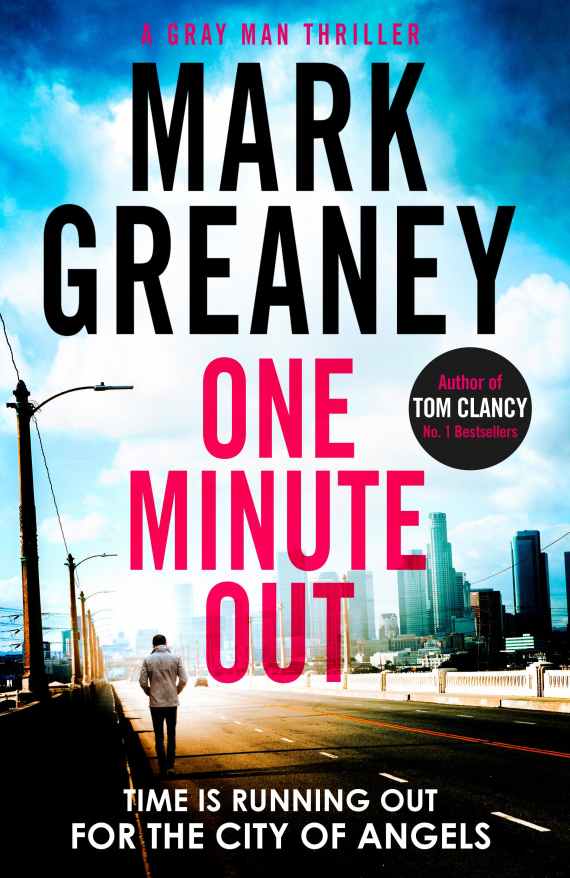
One Minute Out by Mark Greaney

One Minute Out Cover

Publisher: Sphere/Audible Audio (Audiobook – 18 February 2020)

Series: Gray Man – Book Nine

Length: 16 hours

My Rating: 4.5 out of 5 stars

Amazon     Book Depository

Bestselling thriller author Mark Greaney returns with another fast-paced and incredibly exciting novel that this time explores the dark and shocking world of human trafficking, with One Minute Out, the ninth book in his impressive Gray Man series.

Greaney is a talented thriller author who has written a number of fantastic books since his 2009 debut, including his Gray Man series and seven books in the iconic Jack Ryan series, three of which he cowrote with the legendary Tom Clancy. I started getting into Greaney’s work last year, when I grabbed a copy of his 2019 release, Mission Critical, due to its fun-sounding plot, and I ended up really liking it. Due to how much I enjoyed Mission Critical, I also decided to check out his other release for 2019, Red Metal, which he cowrote with Lt. Col. Hunter Ripley Rawlings IV. This proved to be a very smart decision as Red Metal was an incredible read that was one of my top books (and audiobooks) of the year. As a result, I was rather keen to check out the next release from Greaney when it came out, and I have been looking forward to this book for some time.

Court Gentry is the Gray Man, a rogue CIA operative turned legendary assassin with a conscience, who is known and feared across the globe for his ability to overcome the odds and kill the most well-protected target. While still secretly working for the CIA as part of an off-the-books operation, Gentry still occasionally engages in freelance assassin work, only accepting contracts on some of the world’s most evil and corrupt individuals. His latest job takes him to a remote property in Croatia, where he is hired to kill a former Serbian general and notorious war criminal who has escaped justice for years. While Gentry is able to eliminate his target, he makes a shocking discovery in the building’s cellar: a dark room full of kidnapped women.

Gentry has inadvertently stumbled upon a human trafficking ring that transports kidnapped or coerced women across the world into a life of sexual slavery and untold horrors. Despite his best attempts to rescue the women, Gentry is forced to leave them behind, due to the fear that the women have of their captors. Haunted by what he has seen and the realisation that his actions may have led to terrible repercussions for the captives he encountered, Gentry makes it his objective to relocate and free the women, no matter the cost, while also causing as much pain to the people responsible.

However, this is no ordinary mission for Gentry. The human trafficking ring he is tracking, known as the Consortium, is made up of many different criminal organisations across the world which are highly invested in keeping the operation intact. Forced to work outside his usual intelligence networks, and with no CIA backup on the horizon, Gentry teams up with rookie EUROPOL analyst Talyssa Corbu, who has a personal stake in bringing the Consortium down. Together Gentry and Corbu are able to trace the human trafficking pipeline across Eastern Europe to Italy and America. However, the Consortium is far larger than Gentry and Corbu realised, with an elite and deadly fighting force at their back. Can Gentry once again overcome the odds to bring down his opponent, or will the Consortium and their influential allies be his undoing?

Now this was an impressive and fantastic thriller novel from Greaney, who did an outstanding job with this dark and captivating read. One Minute Out is a substantial and clever book that pits the author’s capable protagonist against a host of the most despicable villains in the world today, human traffickers. Like the rest of the books in this series, One Minute Out can be enjoyed as a standalone novel, and no prior knowledge of the other Gray Man books is required to enjoy this latest entry in the series. While this book is very grim and uncomfortable at times due to its darker subject matter, this proved to be a compelling and enjoyable thriller, which is probably my favourite Gray Man novel so far.

This is a really well-written thriller novel, and Greaney came up with some amazing scenes and sequences throughout the course of this book. One Minute Out is told from a variety of different perspectives, including the protagonist, Court Gentry, several supporting characters and a number of antagonists. This helps produce a large-scale and comprehensive read that dives into several new characters while simultaneously showing off the scale of the opponents that Gentry is going up against. While a large part of the book is told from the third person, Greaney utilises a first-person perspective for the scenes that Gentry is narrating. Not only does this help Gentry’s chapters really stand out but it allows the reader to get some fantastic insights into the mind of the complex protagonists, and why he is so determined to engage in an apparent fool’s errand and help out a bunch of people he has never even met before. I have to say that I was really impressed with the multitude of amazing action sequences that filled this book, as Greaney has his protagonist engage in a number of thrilling, high-octane scenes, which I had a blast reading. While I really enjoyed all the various shootouts, infiltrations of secure targets, examples of tradecraft throughout various European cities and explosive car chases, a couple of scenes really stood out to me. These highlights included a particularly well-written sequence set underwater, as Gentry attempts to escape from several boatloads of killers with only a damaged set of scuba equipment, and a massive assault of a heavily fortified and well-guarded complex out in the dessert, with only a few seasoned ex-soldiers and an insane relic of a helicopter pilot backing him up. All of this helped make for an excellent read, and I really enjoyed where Greaney took the story at times.

One of the most compelling things about this novel is the way that Greaney has anchored his excellent thriller story around a sinister real-life trade that is currently plaguing the world, human trafficking for sexual slavery. As terrible as it is to consider in this modern day and age, human slavery is still a thing, and for many it is a profitable and stable business. Throughout the course of the novel Greaney shines a light on this foul trade, as his protagonist encounters this evil in Europe and deals with a number of characters affected by it. As the book progresses, the reader gains a huge amount of knowledge about this malevolent criminal industry from a bunch of different perspectives. As a result, there is a quite a lot of information about how trafficking rings operate, including the way that the girls are taken, manipulated and broken, as well as the ways that they are transported and sold across the world. Greaney does an outstanding job diving into this subject, presenting the reader with a grim and uncompromising view of all the horrors associated with this trade, and ensuring that no one is left uncertain about how evil the individuals behind it are. I really appreciate the way that Greaney featured it in this book, although those people who are uncomfortable with sexual violence will probably have a hard time reading this book.

I felt that the dark subject of human trafficking served as a rather intriguing plot point for this novel, and it definitely worked well with the spy thriller genre of the series. The main benefit is that it presents the reader with a truly despicable and completely unlikeable group of antagonists for Gentry to go up against. Thanks to the author’s use of multiple viewpoints, you get to see inside the heads of several of the Consortium’s leaders, and you swiftly learn that they are an extremely vile and irredeemable bunch of characters who the reader instantly roots against. I liked the way in which the story followed Gentry progressively working his way up the trafficking ladder, from the low-level way station that he accidently discovered, through the corrupt police in several Eastern European towns, to the organisation’s middle management, their larger auctions, right up the bases of the Consortium’s leader in America. This results in a variety of different opponents and obstacles that he must overcome, ranging from low level street thugs to elite South African mercenaries trained in similar methods as Gentry. I really enjoyed seeing Gentry use his espionage tradecraft to tear through the less competent criminal elements at the lower end of the group, before going up against the better trained, elite enforcers of the organisation. Thanks to the author’s depictions of them, it was quite fun to see the upper leadership of the Consortium slowly get more and more scared and desperate after each of Gentry’s operations against them, and their eventual fates turned out to be extremely satisfying.

I also quite liked the way that for the majority of the book Gentry is working outside of the system, without his usual CIA backup or resources. This forces him to engage in a less sophisticated battle against his opponents, relying more on his skills than having any backup or intelligence, which I thought made for a much more credible narrative with higher stakes. Thanks to author’s use of the first-person perspective for Gentry’s character, you get a much more in-depth explanation for his tactics and methods, which I enjoyed and found to be rather fascinating. I also enjoyed the author’s inclusion of several female side-characters, who Gentry works with to bring down the Consortium. The main one of these is Talyssa Corbu, who utilises her financial expertise to help move the plot along and point Gentry to his next target. While Corbu is a bit of a pain at the start of the book, due to her incompetence, she grew on me over time, especially as she became more determined and capable, especially when more of her backstory was revealed. I was also quite impressed with the depictions of several female characters who were taken prisoners by the traffickers, and who eventually helped Gentry take them down. Having the women work to free themselves was a nice touch by Greaney, and I particularly loved one scene where several of the women defied typical convention and helped save Gentry, with realistic explanations for how they obtained their relevant skills (thank goodness for equal opportunity Eastern European military training). All of this led to an extremely exciting and highly compelling story, and I really enjoyed the full extent of One Minute Out’s story.

I ended up listening to the audiobook format of One Minute Out, which was narrated by Jay Snyder, who has narrated several of Greaney’s books in the past. The One Minute Out audiobook ran for around 16 hours, and I was able to clear through it in a few days. I found the audiobook format to be an excellent way to enjoy the novel, and I strongly felt that listening to this book helped me connect a lot more with the story and characters. Snyder did an amazing job narrating this book, and I was especially impressed with the way that he brought all of One Minute Out’s characters to life. Not only did Snyder provide an excellent and fitting voice for Gentry, but he also produced some great voices for the other characters in the book, coming up with a range of realistic accents to show off the diversity of the cast. This turned out to be a fantastic and entertaining way to enjoy One Minute Out and I think that I will be checking out more of Greaney’s books this way in the future.

One Minute Out by Mark Greaney is an outstanding and exceptional new thriller which takes the reader on a dark and action-packed adventure around the world. This proved to be a deeply exciting and truly compelling entry from Greaney, who once again shows why he is one of the top thriller authors in the world today. This was an impressive new entry in the fantastic Gray Man series, and I cannot wait to see where Greaney takes this epic series in the future.

Amazon     Book Depository

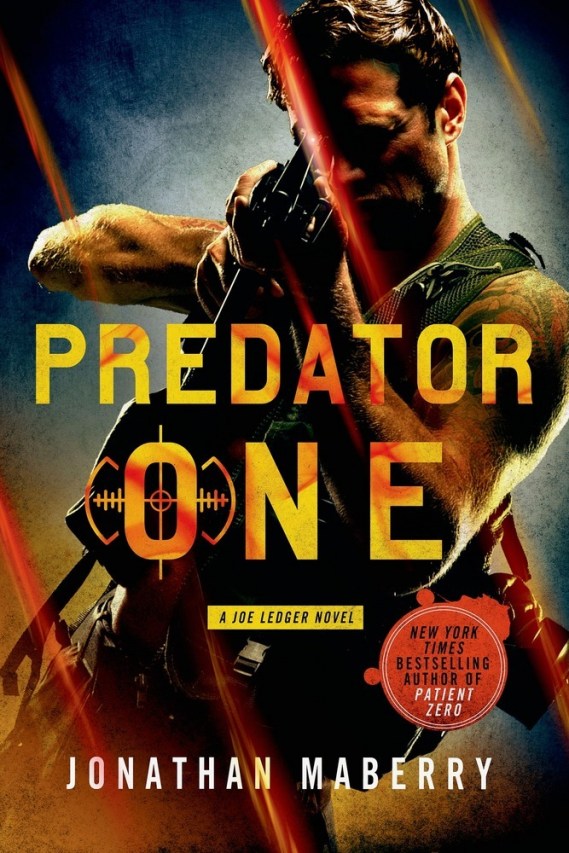
Throwback Thursday – Predator One by Jonathan Maberry

Predator One Cover

Publisher: Macmillan Audio (Audiobook – 7 April 2015)

Series: Joe Ledger series – Book Seven

Length: 16 hours and 55 minutes

My Rating: 5 out of 5 stars

Amazon     Book Depository

Reviewed as part of my Throwback Thursday series, where I republish old reviews, review books I have read before or review older books I have only just had a chance to read.

For this latest Throwback Thursday, I decided to I wanted something fast-paced and action-packed, so I went and checked out another book in Jonathan Maberry’s dark and thrilling Joe Ledger series with the seventh book, Predator One.

Those familiar with my blog will be aware of my recent love affair with the Joe Ledger series. I first encountered this series back in late 2018, and after massively enjoying the tenth book, Deep Silence, I have been slowly reading and reviewing my way through the entire series from start to finish. There are so many different things that I enjoy about these novels, including the outstanding action, gripping stories, fantastic characters and the crazy scenarios each book is set around. When combined, these elements help produce some truly incredible books, and I had an amazing time reading several Joe Ledger novels last year. I also read the first book in Maberry’s Rogue Team International series, Rage, which was one of my top books (and audiobooks) of 2019. I am hoping to finish off all the remaining books in the Joe Ledger series this year, and Predator One is the first one that I have so far checked out in 2020. I have to say that I was once again blown away with Maberry’s writing ability, as Predator One is another epic and remarkable read which gets a full five-star rating from me.

It is the opening day of the new baseball season, and Joe Ledger, point-agent for the high-tech counter terrorist organisation, the Department of Military Sciences (DMS), is enjoying a well-earned day off. Everything seems to be going well, the sun is shining, the beers are flowing, and a decorated military pilot is about to throw out the first ball. Then a model airplane flies out onto the field, a replica of the one flown by the war hero. Everyone assumes it’s a harmless prank, everyone except Ledger, who can only watch in horror as the toy plane explodes. Within seconds, a swarm of bomb-laden drones appears, devastating the crowd and leaving Ledger injured in the wreckage of the stadium.

As Ledger attempts to process what has happened, a series of coordinated attacks are taking place across America. While some of the attacks appear random, several are deliberately targeting the friends and family of key members of the DMS, attempting to distract the agency and take them off the board. It soon becomes clear that an old enemy has risen from the flames, determined to get revenge on those that they believe have wronged them in the past, including Ledger and everyone he loves. Worse, they have teamed up with a force of pure evil whose deepest wish is to torment and destroy the head of the DMS, the mysterious Mr Church.

Diving back into the action, Ledger and his team attempt to find and neutralise the source of this new threat. But at every turn, they find themselves outmatched, outmanoeuvred and severely outgunned, as the enemy has access to advanced technology that allows them to take control of America’s military vehicles, aircraft, ships and drones. As the attacks against America worsen, their opponents even gain control of Air Force One, with the President aboard, and start to fly it towards New York City. Can Ledger save the day one more time or have the DMS finally come up against an enemy even they can’t outsmart?

Wow, just wow. Predator One is another impressive and extremely captivating thriller novel that I had an outstanding time listening to. Maberry has come up with another incredible, action-packed story which utilises his trademark writing style to present a first-rate novel. Readers are treated to a multi-layered story, which cleverly features multiple character viewpoints, flashbacks and deep examinations of a several major characters’ pasts and motives. All of this allows Maberry to tell a complex and intriguing thriller story that never lets up on the excitement. The various storylines flow together perfectly thanks to the short chapters and constant dancing between different character perspectives, and all the storylines lead up to an epic and memorable conclusion. Maberry really knows how to ramp up the tension and the excitement throughout the book, and the final couple of hours are exceedingly thrilling, as several exhilarating scenarios come into effect at the same time. All of this results in a deeply exciting read, which I really loved and is another perfect Joe Ledger story.

Just like so many books in this series, amongst the best things about Predator One are the fantastic antagonists and their over-the-top plot against America, Joe Ledger and the DMS. For the main antagonist, Maberry goes back to some of the earlier books in the series, and brings back the Seven Kings organisation, which is being led by an old, established opponent of the DMS. While a new, complex villain for this book could have been fun, I really loved the author’s use of the historical antagonist, especially as they have been substantially transformed since the last book, and they are now aiming for a destructive end. This older antagonist is paired with the mysterious, evil character, Nicodemus, and together they form quite a partnership. Nicodemus is a character that has been hinted at and featured in the shadows of several previous books, so it was really cool to see him in a more substantial role. The key to Nicodemus is his extremely enigmatic persona and history, as no one quite knows who or, more importantly, what he is. He seems to have some sort of mystical abilities, and it is hinted in this book that he is some form of demon or devil, although it is never fully revealed. This mystery and mystique make for a quite an intriguing addition to the series, and the two main antagonists work together quite well as an evil, villainous pairing. On top of them, Maberry also throws in a good secondary antagonist who acts as a crooked assistant to the leader of the Seven Kings and who serves as a useful narrator, as well as the standard sexually depraved henchmen. Combined, these excellent antagonists make for a fun and exciting opposition for the main characters and they help produce some extremely interesting storylines.

I was also a major fan of the fantastic and complex master plan that Maberry envisioned for the antagonists of this book, which served as a fantastic basis of much of the story. Maberry crafted a sinister and exceedingly destructive campaign of terror and destruction that culminated in the takeover of Air Force One with the President and other key characters on board, sending it on a kamikaze mission. This proved to be a rather fun villainous storyline to follow, and I enjoyed seeing it unfold from both the protagonists’ and antagonists’ points of view, as these different perspectives led to some very intriguing scenes. I also liked the way that that the origins of the plot were explored in a series of interludes, allowing the reader to become familiar with the key players of the scheme, and get hints of the full extent of the planned destruction. It was also rather cool to see these antagonists land some real blows against the DMS. Maberry has never been shy about killing off key side characters (for example, he killed off the main secondary character and primary love interest in the second book, The Dragon Factory), and he ensures that some real damage is done to some DMS characters in Predator One. This helps add a real emotional edge to the story, and I liked the way that it upped the stakes, as well as the obvious emotional and psychological impacts that it had on some of the series’s well established, long-running protagonists.

Maberry makes sure to bring back the full and unique bevy of good-guy characters for this seventh book, most of whom have appeared in multiple books before. At the fore is the series’s titular protagonist, Joe Ledger, who is the sole first-person narrator in the book, with around a third of the story told from his point of view. Ledger is his usual witty and damaged self in this book, infecting his parts of the story with his wicked humour and sarcasm, while also unleashing his barely hidden rage and special brand of hyper-violence. Ledger goes to some dark places in Predator One, especially after his friends and allies are attacked, and the way he ends the villain is particularly gruesome and memorable. In addition to the usual examination of Ledger’s complex psyche, I really liked the way that a number of other side characters got some substantial sequences in this book. Joe Ledger series stand-out character Mr Church gets quite a lot to do in this book, and it was excellent to not only see him calmly lead his people in a severe crisis, but also react to some substantially personal attacks from the shadowy Nicodemus, who he has some obvious history with. The DMS’s psychiatrist, Rudy Sanchez, also gets quite a few scenes in this book, as he and his family come under substantial attack from the antagonists. It was really intriguing to see Rudy, whose usual role is to calm and centre the rest of the protagonists, come apart a bit in this novel, and it was quite stirring to see him pull himself together in a major way. I have to say that I also really enjoyed the inclusion of Toys as well, especially as Maberry has written a rather good redemption arc for him in this book. Thanks to the author’s use of multiple viewpoints, each of these characters, and more, get multiple moments to shine in this novel, and this helped create a full and captivating thriller tale, especially as the reader inevitably becomes invested in these characters’ survival.

I can’t go past a Joe Ledger novel without commenting on the exquisite and ultra-violent action sequences that are heavily featured throughout the book. Maberry is an expert at writing detailed and explosive action scenes, and Predator One is filled with a substantial amount of battles and fights, with all manner of armed and unarmed combat. These scenes are an absolute delight to behold, and it is always cool to see these well-crafted fights come to life. There are a number of large-scale battle sequences throughout this book, and Maberry did an amazing job switching between several fights that were happening simultaneously towards the end of the book, resulting in some extremely action-packed and exciting sections of Predator One. I really enjoy the way that the author breaks down the fight, and it is interesting to hear about the tactical reasons or destructive capabilities for certain moves or weaponry. All of this makes for a really cool book, although readers should be warned that there is a lot of extreme violence in this book that might not be for everyone, especially the graphic torture scenes.

Just like the previous Joe Ledger novels I have been lucky enough to enjoy, I chose to check out Predator One’s audiobook format, which was narrated by the exceedingly talented Ray Porter. Running at 16 hours and 55 minutes, this is one of the longer Joe Ledger audiobooks (not by much), but I found myself able to power through it in only a few days, and the audiobook format remains my favourite way to enjoy a Joe Ledger book. Porter’s outstanding narration is the highlight of this format, and I will never get tired of praising his vocal work in this format. The voices that Porter comes up with for these productions are pretty damn awesome, and he has perfected some amazing voices for the characters featured in this series. I once again have to highlight Porter’s take on Mr Church, as his version of the character has some real presences, authority and gravitas. I also liked some of the voices that he did for the villainous Nicodemus, especially as the script called for a change of accent and voice mid-sentence, something which Porter pulled off perfectly, and which made the character sound pretty sinister in this format. However, nothing can top the amazing work that Porter puts into the series’s titular protagonist, Joe Ledger, as the narrator is scarily in sync with this character, and expertly portrays all his emotion, personality and raw sarcasm. I cannot emphasise enough how impressive the Joe Ledger audiobooks are, and if you are keen to check them out, this is the format to do it in.

Predator One by Jonathan Maberry is an outstanding and captivating tale of revenge, destruction, action and war, as the author’s team of elite warriors go face to face with an army of pure evil. This was an intense and thrilling read, which I once again completely failed to put down multiple times. Filled with amazing characters, including some very well-crafted evil antagonists, a fun story, violent action sequences and some outrageous story elements, this book is relentlessly entertaining and it proved to be an impressive addition to the Joe Ledger series. Predator One comes highly recommended, especially in audiobook format, and I look forward to finishing off the final two books in the series later this year.

Amazon     Book Depository

Throwback Thursday: Usagi Yojimbo: Volume 4: The Dragon Bellow Conspiracy by Stan Sakai

Usagi Yojimbo The Dragon Bellow Conspiracy

Publisher: Fantagraphics Books (Paperback – September 1991)

Series: Usagi Yojimbo – Book Four

Length: 179 pages

My Rating: 5 out of 5 stars

Amazon     Book Depository

Reviewed as part of my Throwback Thursday series, where I republish old reviews, review books I have read before or review older books I have only just had a chance to read.

For this slightly belated Throwback Thursday, I continue my trend of the last couple of weeks by checking out another volume of Stan Sakai’s ground-breaking and utterly addictive Usagi Yojimbo series with the fourth volume, The Dragon Bellow Conspiracy. Reviewing all these Usagi Yojimbo books has proven to be a lot of fun, and I am really glad that I have been able to show off my love for this series (make sure to check out my reviews for volumes One, Two and Three). The Dragon Bellow Conspiracy is another excellent early volume in this long-running series, which features a fantastic full-volume-length story.

Usagi 13

A storm is brewing throughout feudal Japan, as war and revolution against the Shogun lie just beyond the horizon. In his fortress, the ambitious and dastardly Lord Tamakuro has been plotting. Despite appearing to be a loyal supporter of the powerful Lord Hikiji, Tamakuro has his own plans to take control of the country and rule as Shogun, utilising an army of ronin armed with teppo, black powder guns imported from the barbarian lands outside of Japan.

However, despite his best attempts at discretion, Lord Tamakuro’s actions have not gone unnoticed. His neighbour, Lord Noriyuki, has sent his trusted advisor and bodyguard, Tomoe, to investigate Tamakuro’s castle, where she discovers the hidden armaments he is planning to use in his upcoming revolution. At the same time, Lord Hikiji, suspicious of Tamakuro’s true loyalties, has sent the notorious Neko Ninja clan to infiltrate his castle. When both Tomoe and the Neko Ninja are discovered, Tamakuro makes ready for war against all his opponents.

Usagi 14

Into this vast conspiracy walks the wandering ronin Miyamoto Usagi. A friend to Lord Noriyuki and Tomoe, Usagi witnesses Tomoe being captured and rushes to Tamakuro’s castle to save her. Despite his best efforts, Usagi finds himself outmatched by the powerful forces Tamakuro has pulled together. His only chance at saving his friend and averting a civil war is to team up with the Neko Ninja, a group he his fought many times in the past. Can Usagi and his new allies succeed, or will Tamakuro’s greed engulf the entire country? And what role will blind swordspig Zato-Ino and the bounty hunter Gennosuke play in the final battle?

Usagi Yojimbo: Volume 4: The Dragon Bellow Conspiracy is an outstanding and highly enjoyable comic that I have a huge amount of love for. Containing issues #13-18 of the Fantagraphics Books run of the Usagi Yojimbo series, this fourth volume is broken down into seven separate chapters. It is a major early edition in the series, as it contains a massive and wide-reaching story. This is the first storyline that takes up an entire volume (several notable stories do this later, such as the two Grasscutter volumes and the 33rd volume, The Hidden), and it presents the reader with an epic tale of war, friendship, honour, loyalty and uneasy alliances, while featuring a number of the best Usagi Yojimbo characters.

Usagi 15

The entire story contained within this fourth volume is quite spectacular and comes with minimal build-up from the Usagi Yojimbo issues that preceded this volume. Sakai does an amazing job introducing the relevant plot and new key players surrounding this storyline, and then telling a complex and detailed narrative within the confines of this one volume. In addition to the main conspiracy storyline, the story follows several different character-based storylines, all of which come together for one big epic confrontation. I really enjoyed where Sakai took the plot of this volume, and I liked how the story was broken up into several distinctive chunks defined by the respective chapter (the chapter names, which refer to parts of a storm, identify the intensity and importance of each chapter). The entire story is rather self-contained, and I think that the author did a great job wrapping it up and giving it several satisfying conclusions.

Like many of the Usagi Yojimbo issues out there, the true heart of The Dragon Bellow Conspiracy’s story is the outstanding characters, many of whom have appeared in prior issues in the series. Usagi once again accidently finds himself in the midst of a vast conspiracy and must risk everything to save his friend and stop a war. If I am going to be honest, Usagi has one of the weaker arcs in this volume, with several of the side characters getting much more interesting storylines and more development. That being said, parts of Usagi’s story are fairly intriguing, such as when he manages to infiltrate Lord Tamakuro’s castle as a new retainer in order to rescue Tomoe, or his guilt-ridden dream sequence where his regret over his perceived failure manifests itself as a series of ghosts and monsters. Usagi also has the fun job of recruiting reluctant and unusual allies to his cause, such as the Neko Ninja or his old foe Zato-Ino. Indeed, his whole storyline is similar to classic Japanese films such as The Seven Samurai (the inspiration for The Magnificent Seven) or The Hidden Fortress (which served as an inspiration for the first Star Wars movie), as he recruits or forms alliances with various people in order to take down an evil opponent (in a castle, no less, for The Hidden Fortress fans). He also has some rather fantastic interactions with several different characters throughout the volume, and it results in some major developments in his relationships with them.

Usagi 16

While Usagi’s storyline is quite enjoyable, several returning supporting characters also have some substantial and impressive arcs throughout this book, and I really loved the way in which Sakai brings back a number of key characters from earlier issues in the series. The best character in this entire volume is the blind swordspig, Zato-Ino. Both of Ino’s previous storylines have been extremely impressive, so it was great to see him return again for another volume. Ino, who had already found some measure of peace thanks to his new companion, the tokage lizard Spot, finds some major redemption in The Dragon Bellow Conspiracy, and he easily has the most character development. An entire chapter of this volume is dedicated to the eventual fate of Ino, and it was fantastic to see him finally find what he has been desperately searching for, even if he has to lose his only friend along the way. The rhino bounty hunter, Gennosuke, once again proves himself to be a fun and endearing character throughout this volume. Initially involved in a rather humorous hunt for Ino’s bounty, he finds himself working with him to fight Lord Tamakuro’s forces, although he always intends to betray him. However, Ino’s heroic actions end up changing his mind, and he once again reveals his hidden good nature by secretly assisting Ino and selflessly helping him. This is also the volume where Gen loses his horn, with all future versions of him appearing with just a small stump on his nose. His cut-off horn is quite an iconic look for the character, and after seeing him without out for all these years in later volumes, his earlier horned appearance just looks odd.

Recurring female samurai, Tomoe, also has an extremely strong appearance in The Dragon Bellow Conspiracy, as she finds herself captured within Lord Tamakuro’s castle quite early in the volume and is forced to resist his abuses. Tomoe has some great dialogue with Usagi about how her mission and her loyalty to Lord Noriyuki are more important than her own life, and she has to talk Usagi into abandoning her for the greater good. She also has a rather fantastic sequence where she manages to remain hidden in the fortress, right after she rides through various parts of the interior on a horse. I also really liked Shingen, the Neko Ninja chief who Usagi teams up within this volume. Shingen previously appeared in the Volume 3 story, The Shogun’s Gift, where he formed a great rivalry with Usagi. While the two clash in this volume, they eventually reach a level of mutual respect and work together for the greater good. Shingen gains multiple dimensions as a character in this volume, and it was interesting to see his discussion with Usagi about honour, and how even ninja have a code of duty. His story comes to a fantastic close towards the end of the volume, but Sakai really made him one of the standout characters of the volume: “A ninja’s duty in life is death!”

Usagi 17

In addition to the excellent inclusion of several amazing returning characters, The Dragon Bellow Conspiracy also featured a couple of terrific new characters, who really helped bring this story together. The evil Lord Tamakuro was a really good villain for this volume, and Sakai did a fantastic job of showing of his greed, brutality and utter disregard for anything except his own power. Needless to say, he was a rather vile character who the reader cannot help but dislike, making his eventual comeuppance all the sweeter. The best new character in this volume has to be the leader of Tamakuro’s samurai army, Captain Torame. Torame is a loyal and capable warrior, who is forced to serve an evil lord who takes him for granted. He forms a bond with Usagi when the protagonist infiltrates the fortress under the guise of a mercenary ronin, and they have several discussions about bushido, loyalty and the ways in which a samurai must serve his lord. Usagi’s subsequent betrayal in order to rescue Tomoe enrages Torame, who takes it as a personal afront. This leads to a fantastic duel later in the volume, although not before Usagi and Torame have one final discussion, in which Usagi attempts to talk Torame into abandoning Tamakuro. Torame however refuses, as his strict adherence to the samurai code forbids him betraying his lord, even if it is clear he disagrees with Tamakuro’s plans:

“is samurai honour so important?”

“Yes”.

The result of the quick and brutal duel that follows visibly saddens Usagi, who was once again forced to fight a man he respected. This volume also sees the brief introduction of the Neko Ninja Chizu, a major recurring character in later volumes of the series, whose one scene in this book was rather fun.

The Dragon Bellow Conspiracy is an extremely action-packed volume that actually features some of the best action scenes in the entire Usagi Yojimbo series. I absolutely loved all the action sequences in this book, as Sakai did an incredible job illustrating them and bringing the fights to life. The main action set piece of this volume has to be the assault on Lord Tamakuro’s fortress by Usagi, Ino, Gen, Shingen and a force of Neko Ninja armed with explosives, as they attempt to rescue Tomoe and put an end to Tamakuro’s ambitions. This entire extended action sequence is exceedingly impressive, and it was really cool to see all the characters engage in a massive battle throughout a castle complex. I also have to say how incredibly awesome it was to see a force of ninja face off against an army of samurai, predominately armed with European muskets. This made for some incredible fight scenes, all of which I really and truly loved. I also have to highlight a couple of duel sequences that occurred earlier in the volume. The first of this was a great fight between Usagi and Shingen, as the two face off against each other in a quick fight to the death. This duel focuses on the extreme clash of styles between the two, as Usagi had to contend with all manner of traps and ambushes before he got anywhere near this foe. However, this duel pales in comparison to the awesome fight between Ino and Gen that occurred towards the middle of the volume. This two engage in an incredible and beautifully drawn fight that lasted several pages. This fight did a fantastic job showing of their respective skills with the sword, and this fight helps feed into Sakai’s love for classic Japanese films, as this duel was essentially Zatoichi vs Yojimbo. This volume featured some first-rate action, which is really worth checking out.

Usagi 18

In addition to the extremely well-drawn action sequences, Sakai has filled this volume with some truly incredibly examples of his artistic style. This volume features so many impressive and iconic Japanese buildings, landscapes, traditional outfits and other aspects of the country, that the reader can’t help but feel they have been transported back to feudal Japan. I particularly loved the way he included a number of stormy backgrounds throughout this volume. The continued artistic rendering of rain, clouds, mud, wind and storms throughout the entirety of The Dragon Bellow Conspiracy really helped to set the mood of the entire volume, and I loved how the intensity of the storm seemed to match the volume’s story. I really enjoyed how a number of pages were streaked with massive bolts of lightning across cloudy or darkened skies, and several scenes, particularly the duel between Ino and Gen, were majorly enhanced by this artistic inclusion. As usual, this art does an amazing job backing up the volume’s fantastic stories, and I was once again left stunned by Sakai’s obvious and incredible artistic talent.

Usagi Yojimbo: Volume 4: The Dragon Bellow Conspiracy, is another exceptional and captivating comic which I am awarding a full five-star rating. Sakai is a truly incredible writer and artist, and this fourth volume did a fantastic job highlighting his talents for both. Not only does this volume feature some amazing and distinctive drawings, but it also contains an outstanding and enjoyable story backed up by some awesome characters. Sakai did an awesome job bringing together several key recurring characters into a compelling and well-written narrative, which I once again fell in love with. The Dragon Bellow Conspiracy is really worth checking out, and is a must read for fans of the masterpiece that is the Usagi Yojimbo series.

UY_Book_4_HC_cover

Amazon     Book Depository

Throwback Thursday: Usagi Yojimbo: Volume 3: The Wanderer’s Road by Stan Sakai

Usagi Yojimbo The Wanderer's Road Cover

Publisher: Fantagraphics Books (Paperback – 17 January 1989)

Series: Usagi Yojimbo – Book Three

Length: 146 pages

My Rating: 5 out of 5 stars

Amazon     Book Depository

Reviewed as part of my Throwback Thursday series, where I republish old reviews, review books I have read before or review older books I have only just had a chance to read.

In this week’s Throwback Thursday, I check out the third volume of the outstanding Usagi Yojimbo comic book series, The Wanderer’s Road. I was originally planning to save this one until next week, but I just watched some episodes of the 2003 Teenage Mutant Ninja Turtles animated show today that featured Usagi, and so inspiration struck once again.

Usagi 7

The third volume of the Usagi Yojimbo series follows on from the events of the second volume, Samurai, and features several standalone adventures as the series’ titular protagonist, Miyamoto Usagi, continues to wander around this alternate version of Feudal Japan. The Wanderer’s Road features six first-rate and deeply enjoyable stories which were originally contained within issues #7 – 12 of the Fantagraphics Books’ Usagi Yojimbo series. It also contains a short bonus story from the Turtle Soup comic project which features a very special guest star.

The first of the stories featured within The Wanderer’s Road is The Tower. This story revolves around a hungry tokage lizard (the dinosaur-like lizards that infest Usagi’s world), who finds himself in a spot of bother and is chased up a tower by an angry shopkeeper, who refuses to let it down. Usagi, arriving upon the scene, decides to intervene, and attempts to rescue the tokage; however, thanks to the vindictive shopkeeper, he finds himself also trapped atop the tower. Attempting to bond with the tokage, who he names Spot, Usagi endures the conditions on the tower, while enraging the shopkeeper even more, until the story comes to a crashing end. The Tower was a fantastic start to this third volume, and it features a rather enjoyable and fun story. While it is perhaps the weakest story in this volume, only by dint of how incredible the other issues featured in The Wanderer’s Road are, it was still an excellent entry in this series, and served as a great introduction to a fun recurring character in Spot. The Tower contains some funny moments, from the way Usagi inadvertently keeps messing with the bullying shopkeeper on the ground, to the tiny turtle with a ninja mask that Sakai hides away in one of the crowd shots. All of this results in a fantastic story which I rather enjoyed.

Usagi 8

For the second story in this volume, A Mother’s Love, we go from a comedy to a tragedy. In this story, Usagi and his new companion Spot befriend an old woman on the road and accompany her back to town. Once in town, it is revealed the that old woman is the mother of a ruthless moneylender whose thugs have been terrorising the populace. After a tense night at the moneylender’s house, the old lady begs Usagi to kill her son, as she cannot bear to see the evil creature that he has turned into. While Usagi refuses her request, he is soon forced into a fight with the moneylender’s men. However, it is revealed that the old woman has manipulated the guards into attacking Usagi so that she can use the distraction to kill her son herself. When Usagi and Spot discover this, the old woman beseeches a stunned Usagi to kill her and finally put her out of her misery. A Mother’s Love is an incredible and heartbreaking story, which puts Usagi in a no-win situation. The last three pages of the books have to be one of the most heartbreaking and tragic sequence in the entire series. The teary old woman sing a lullaby as she cradles her dead son in her arms while a heartbroken and defeated Usagi watches on is extremely sad. The way that the old woman’s lullaby suddenly ends heavily implies that Usagi fulfilled the old woman’s wish and killed her. His final statement, “I do pray the Gods will be merciful…. Mother” as his despondently leaves the moneylender’s house, accompanied by Spot’s mournful cry are a sad way to end this story, but it makes for one heck of a captivating sequence. Other highlights of this book include Usagi’s large-scale fight against an army of bodyguards, the fun inclusion of Spot in several of this fights (little dude is lethal with his tail), and a stare-down scene between Usagi and the moneylender, which highlighted how intimidating Usagi can be when he wants to. All in all, a perfect and compelling story which shows just how amazing Usagi Yojimbo can be.

The next story in this volume, Return of the Blind Swordspig, is another masterpiece from Sakai, which features another outing from one of the best characters from Usagi Yojimbo, Zato-Ino, who was first introduced in The Ronin. This story sees the blind outlaw Zato-Ino travelling the road, still pursued by assassins and bounty hunters. Ambushed in the woods once again, Ino is able to fight off his attackers thanks to a timely warning from Spot, who had briefly walked away from Usagi. While Spot and Ino part ways, Ino soon catches up with Usagi, who cut off Ino’s nose the last time they met (he’s got a wooden nose in this book, it’s a transplant!). Ino follows Usagi to a nearby temple, where he is able to gain an advantage over Usagi in the dark as the two engage in an epic duel. Usagi’s life is spared only by the intervention of Spot, who stands between them, forcing Ino to back down, envious of the friendship Usagi is blessed with. Realising that the two souls have much in common, Usagi sends Spot to accompany Ino on his journey to find peace, and the two wonder off as friends.

Usagi 9

Return of the Blind Swordspig is another fantastic story that shows some complex and powerful character work. Sakai’s portrayal of Ino as a tortured and hate-filled loner is once again tragic and very moving, and it was fantastic to see him finally find a true friend and companion, something he has always desired. The way that Ino changes his travel songs from ballads about walking the roads alone to a melody about how he is grateful to have a companion is telling, and Usagi’s parting utterance of “Have a good life… both of you” matches the audience’s thoughts for these two great supporting characters. While the best thing about Return of Blind Swordspig is the continued examination of Ino’s complex personality and the progression of his character arc, I also really need to highlight the incredible swordfight in the dark between Ino and Usagi. Not only is this amazingly drawn, but the start of the duel where Ino slices the candle in half once again shows off Sakai’s love for classic Japanese movies. Slicing a candle to make a room dark is the trademark move of Zatoichi, the movie character that Ino in based upon, and Sakai backs this up by having Ino say “Now we’re both blind, Usagi” which is very similar to what Zatoichi says in these circumstances. All in all, this is an outstanding entry that really shows of Sakai’s ability to weave a powerful narrative around some exceptional characters.

The fourth story in this volume is Blade of the Gods, which introduces readers to the incredible antagonist Jei. Jei is a skilled and murderous spear-wielding samurai who wanders the land killing those he deems evil in the name of the Gods (spoiler: pretty much everyone is evil in Jei’s eyes). Encountering Usagi one night in a peasant’s hut (it is heavily implied that Jei killed the peasant before Usagi showed up), Jei suddenly declares Usagi to be evil and they engage in a brutal fight to the death both inside and outside the hut. Usagi is only saved by a blast of lighting and is left wondering if Jei was a madman or a true emissary of the gods. This was a compelling and fantastic story, which features one of the best fight sequences in the entire volume. The true highlight of this story is the introduction of Jei, who is easily one of the best characters in the entire Usagi Yojimbo universe. Jei is probably the most dangerous antagonist so far encountered in the Usagi Yojimbo series (Lord Hijiki really hasn’t revealed himself too much yet), and he serves as a wonderful recurring character. Sakai did an excellent job introducing Jei in this story, showing off his motivations, his style and the fact that he is a killer without peer and a fighter on par with Usagi. The character design for this villain is really striking, from his black-bladed spear to his pure white eyes and deranged wolf smile. I also liked the way that the reader is left wondering whether he is actually supernatural in origin or just a crazy person. While this is revealed in later volumes, the mystery of him is an exciting feature for the early Usagi Yojimbo stories that he appears in. I really love the character of Jei, who is actually based on Jason from the Friday the 13th movies (fun fact: when you use the Japanese honorific his name, Jei-san, becomes a pun on Jason), and I think that this was an excellent first appearance for him.

Usagi 10

The next story in The Wanderer’s Road is the fun entry, The Tea Cup. The Tea Cup sees the return of the bounty hunter Gen, who Usagi encounters on the road in the midst of a fight. Gen is escorting a precious tea cup to a tea master and must defend it from assassins who are trying to steal it. Accompanying Gen, Usagi helps him defend the cup with the samurai encountering a number of complications, including a band of killers, two orphaned children and the bad luck that follows Usagi and Gen when they team up. This was easily the funniest story in the entire book, thanks to the inclusion of Gen. Usagi and Gen have a hilarious relationship which is always fun to see, and they play off each other really well. This includes a number of running jokes from the previous Gen stories, the final entry in their game of sticking the other person with the lunch bill (which doesn’t go the way they planned this time) and several other hilarious scenes, including one joke that takes the entire story to come to fruition (he really was slow of mind). In this story, you get to see a bit of Gen’s softer side and the fact that, despite his rough exterior, deep down he is a good and caring person. Sakai also fills this story with a number of fantastic references to the cartoon, Groo the Wanderer, which Sakai previously did the lettering on, including a unique stylised poem at the start of the story, a fun imitation of Groo “Gen does what Gen does best”, and even cameo appearances from Sakai, Sergio Aragonés and the rest of the creative team behind Groo the Wanderer. All of this makes for a hilarious and entertaining tale, which is going to produce quite a few laughs for readers.

Usagi 11

The final full story in this volume is The Shogun’s Gift, which sees Usagi facing off against a Neko Ninja who has stolen a valuable sword from his friends Noriyuki and Tomeo of the Geishu Clan. This turned into quite an action packed and clever game of cat and rabbit (I mean cat and mouse), as Usagi puts on a great dumb samurai act to fool the ninja, Shingen. It was entertaining to watch Usagi continually encountering Shingen, especially as the ninja got more and more enraged each time Usagi appeared and casually poked holes in his story. The Shogun’s Gift ends with a great fight sequence and a rather clever bit of trickery from Usagi, which serves to turn this into a cool and enjoyable tale. I liked the introduction of Shingen, who has a big role in a future volume, and the scene where he is able to conceal the fact that he is hidden in the ceiling even after being stabbed is pretty badass. I also think that this volume did need a story that looked at the larger political picture of this world, including the nefarious plans of Lord Hikiji and the Neko Ninja, and it was good to see some more of that. Overall, this proved to be another phenomenal entry in this volume, and it served as a great concluding main story.

Usagi 12

In addition to all the big stories mentioned above, The Wanderer’s Road also contained the short bonus story, Turtle Soup and Rabbit Stew. This short story originally appeared in the Teenage Mutant Ninja Turtle comic project, Turtle Soup, and features the first encounter between Usagi and one of the turtles, in this case Leonardo. In this comical tale, Leonardo suddenly lands in Usagi’s realm and is immediately attacked by a band of ronin, while at the same time just down the road, Usagi is attacked by a group of Neko Ninja, the two fights join into one brawl, where Usagi and Leo are the only survivors. Upon seeing each other, the two assume that the other is part of the band that initially attacked them, and they run at each other to engage in battle, only for Leo to be dragged back to his Earth. This of course doesn’t stop the momentum they built up charging at each other, and it results in chaos and injury on both worlds. This was an exceedingly funny first meeting between these iconic comic characters, and this entire story is boundlessly amusing, even with its shorter size.

As you can see from my passionate descriptions above, each of the stories featured in this volume is an outstanding entry in its own right, and I deeply enjoyed each of them. I honestly cannot tell you which story in this volume was my favourite, as three in particular were quite exceptional. Sakai did a masterful job with each of these stories, and I really enjoyed how they are presented in this volume. I think that The Wanderer’s Road contains an excellent blend of stories, which range from the tragic, the dramatic and the comedic, and each of them contains some amazing examples of Sakai’s trademark artistic skill. I also think that having a volume made up entirely of shorter standalone stories also works really well, especially as Volume 3 falls between two other volumes made up of larger, multi-issue stories. The Wanderer’s Road gets another five-star rating from me, and I look forward to reviewing more Usagi Yojimbo volumes in the near future.

Amazon     Book Depository

Star Wars: Doctor Aphra: Volume 6 – Unspeakable Rebel Superweapon

Doctor Aphra Unspeakable Rebel Superweapon

Publisher: Marvel Comics (Paperback – 10 December 2019)

Series: Doctor Aphra – Volume Six

Writer: Simon Spurrier

Pencilers: Wilton Santos, Caspar Wijngaard, Andrea Broccardo and Cris Bolson

Inkers: Marc Deering, Walden Wong and Scott Hanna

Colour Artists: Chris O’Halloran and Stephane Paitreau

Letterer: VC’s Joe Caramagna

Length: 112 pages

My Rating: 5 out of 5 stars

Amazon

The most devious woman in the galaxy, Doctor Aphra, is back, and she’s got both side of the Galactic Civil War gunning for her in the sixth volume of one of the best Star Wars series out there. I have been meaning to review this volume since it first came out in December. However, I just picked up the seventh and final volume of the current run of Doctor Aphra, so I thought I would quickly review this volume first before I get around to that.

DoctorAphra-32

Doctor Aphra is one of the few ongoing Star Wars comic book series that has been released in the last couple of years, and in my opinion it is one of the strongest Star Wars series out there. The Doctor Aphra comics are set in the period of time between the fourth and fifth Star Wars films (A New Hope and The Empire Strikes Back), and follow the adventures of Doctor Chelli Aphra, renowned archaeologist, adventurer and master criminal. Aphra is an original character who was introduced in the first volume of the 2015 Darth Vader series, Vader, where she served as Darth Vader’s secret agent. Following the conclusion of the Darth Vader series, Aphra, who proved to be a very popular character, received her own spin-off series, which followed on after the events of Darth Vader and feature Aphra as she attempts to make money while trying to ensure Vader doesn’t find out that she is still alive. This series was initially written by one of the original creators of the Doctor Aphra character, Kieron Gillen, however, the second half of the series has been written by Simon Spurrier. Spurrier is the sole writer of this sixth volume of Doctor Aphra, which also features the artistic talent of a several talented artists.

In Unspeakable Rebel Superweapon, Aphra is up to her old tricks again. Despite only recently recovering from a life-threatening injury, Aphra has taken on a dangerous job robbing an alien robot death cult shrine with the help of her new sidekick and ward, Vulaada. However, while aboard the shrine, Aphra notices an ancient Jedi weapon, a sniper rifle that utilises lightsaber technology to kill opponents from vast distances. Unable to help herself, Aphra steals the rifle, starting a chaotic chain of events across the galaxy.

Already extremely unpopular with the Empire, this theft pops Aphra to the top of their most wanted list with a hefty bounty placed on her head. Captured by the Rebel Alliance first, Aphra learns that her stolen rifle is the key to a secret rebel superweapon that they plan to use to assassinate the Emperor. Sensing an opportunity to make some money and permanently get the Empire of her back, Aphra recruits her old associate, the Wookiee Black Krrsantan, in order to steal the rifle back from the Rebels. However, this puts her into conflict with her ex-girlfriend, Captain Tolvan, who is now working for Rebel Intelligence.

DoctorAphra-33

As Aphra recovers the rifle and flees to the Empire, she finds herself face to face with the mysterious Imperial Minister for Propaganda and Misinformation, Pitina Voor, the woman behind the latest Imperial manhunt for Aphra. Voor has plans for her, and Aphra is right in the middle of a vast scheme involving both the Rebels and the Empire. However, no plan has ever survived contact with the good doctor, especially when Aphra has revenge on her mind.

Unspeakable Rebel Superweapon was a superb and outstanding addition to the excellent Doctor Aphra comics, and this might actually be one of the strongest volumes in the entire series. Author Simon Spurrier tells a tight and compelling story within this volume which not only dives back into the past of the series’ titular character but which also showcases new elements of both sides of the Galactic Civil War. You also see the welcome return of several of the best characters from the series, such as Black Krrsantan and Aphra’s love interest, Captain Tolvan, as well as the introduction of an intriguing new antagonist. Featuring issues #32 – 36 of the Doctor Aphra series, this volume is a riot from start to finish (hell, the last two pages are the best in the entire volume), and I really loved the captivating tale that Spurrier wove together in these issues, especially as it features the series trademark dark humour and the focus on its self-destructive and conniving main character.

At the centre of Unspeakable Rebel Superweapon lies an amazing narrative of schemes, plots and lies as Aphra is hunted and manipulated by elements of both the Empire and the Rebel Alliance. Thanks to a recent archaeological theft, Aphra is thrust into the midst of a Rebel conspiracy to kill the Emperor and must decide what to do. Of course, Aphra being Aphra, she goes with the course of action that benefits herself the most and ends up backstabbing and manipulating both the Rebels and the Empire. This leads to some great scenes, including a heist aboard a Rebel spaceship and a sequence where Aphra hacks the entire Imperial communications system in order to sing her praises as an Imperial hero in order to avoid a summary execution. However, not everything is as it seems as the various sides are all trying to manipulate Aphra to their own ends, which results in a surprising number of different twists and turns (or as one character puts it “that is the most convoluted plan I’ve ever heard”). It was fascinating to see Aphra, the ultimate manipulator, being played by so many different sides, each of whom thinks they know how she is going to react. Aphra manages to end up on top, but it was cool to see the various ways she managed to get to the bottom of the plans surrounding her and use it to her own ends. Her motivations for doing so were really compelling, and it was amazing how the creative team had been building up to them throughout the course of the book. Of course, it doesn’t all end up Aphra’s way, and the end result of her schemes sees her come full circle to the last place she wants to be. This all makes for one hell of thrilling main storyline of intrigue and deception, and I really loved where all the twists and turns went.

DoctorAphra-34

Just as with the rest of the entries in this series, one of the best things about the Doctor Aphra series is the titular character herself. Aphra is a complex and haunted character who seemingly lacks a moral code and will only do what is in her own best interest. The character has a rather flippant and disrespectful attitude, and most of this volume’s amazing humour is down to her clever quips and humorous observations amongst the more serious Star Wars characters. One of the things that I have really enjoyed about the Doctor Aphra series has been the examination of Aphra’s self-destructive tendencies and the way that she makes the lives of everyone she comes into contact with worse. This is continued once again in Unspeakable Rebel Superweapon, as she runs from one bad situation to the next, with her every action making her life and the lives of those around her infinity more miserable and more complicated, which makes for some very dramatic and emotional sequences. This is such an expected trait that many of the characters who Aphra has dealt with in the past or who have studied her actually expect her to make these bad or selfish decisions, and I really liked the way that this was a central plot point in the intrigue and espionage storyline. I also loved Aphra’s interactions with her love interest, Captain Tolvan, especially because, during their last meeting, Aphra purposely altered her memories to make her believe she had killed Aphra in a jealous rage. While Aphra did this with the best of intentions (it was the only way to save both Aphra and Tolvan from Vader), this has obviously had a major negative impact on their relationship, and Tolvan now actively loves and hates Aphra in equal measure and apparently has zero trust in her. This is one of the many things haunting Aphra in this volume, as she clearly knows the damage she has done to woman she loves: “I broke her heart. She’s too smart to ever help me again.” Of course, this fraught relationship is another part of the intrigue surrounding Aphra, and it was rather clever the ways in which both sides tried to manipulate Aphra through it.

In addition to the all the awesome character work happening with Aphra in the present, the readers of this volume are also treated to a look back at the characters past. In particular, you finally get to see Aphra’s mother for the first time and learn the tragic circumstances around her death. This has been hinted at for some time, all the way back to the second volume of the 2015 Darth Vader series, Shadows and Secrets. As a result, it was great to finally see the full extent of this character background, and it was fascinating to see what happened and how this has impacted on the personality of Aphra. I enjoyed the way in which the scenes from the past were mirrored in the scenes from the present, and I really liked the similarities in the way that Aphra was raised with the harsh way she is treating her new ward, Vulaada. I was also impressed by the way in which seemingly innocuous details from Aphra’s past suddenly had a big impact on her current story, and the creative team did a great job hinting about these impacts throughout the entire volume. All of this helps build up a much more complex story around the character that is Aphra, and I found this dive into her past to be extremely compelling.

DoctorAphra-35

I also need to say how much I loved the parts of this book that featured Darth Vader, whose villainy and hatred for Aphra shine through in the few short scenes that he has. Aphra and Vader have a complicated history together, and Vader is desperate to kill Aphra once and for all (she’s faked her death on him a few times already), as she is the only living person in the galaxy who knows about his obsession with Luke Skywalker and his plans to overthrow the Emperor. Vader has two sequences in this book, both of which revolve around his determination to kill Aphra, no matter the perceived costs. While the first is really good, mainly due to Vader answering an Imperial officer’s request to state his rank with “Lord”, nothing quite beats the second appearance on the last two pages of the volume. After apparently beating all of her opponents, Aphra is sure of her safety due to her status as an Imperial hero, right up until Vader appears, lopping off heads with his lightsaber. The moment Aphra sees him, she knows she and Vulaada are dead, and she immediately hugs Vulaada and gets her to close her eyes. I really loved this scene, especially the resigned way in which she responds to Vulaada’s frantic belief that them being heroes is going to save them with “he doesn’t care”. This was a pretty outstanding end to the entire volume, and it was amazing to see the next chapter of the turbulent relationship between Aphra and Vader.

The Doctor Aphra series has always done a great job showing off several different sides of the Star Wars universe, including giving a closer look at parts of its criminal underbelly and its archaeological sector. However, in this book, we get to see new sides of both the Empire and the Rebel Alliance. In particular, we get to see the Empire’s Coalition for Progress, a sinister organisation led by new antagonist Pitina Voor that is dedicated to expanding and maintaining the Empire through manipulation, trickery and propaganda, rather than brute force. This is rather fascinating inclusion into the canon, and it was rather interesting to see a whole new side to the way that the Empire controlled the galaxy. Voor is also a rather intriguing character, with a unique vision for how the Empire should be run and maintained, and it was kind of fun to see her gripe about the PR problems that occur when you are being ruled by Sith Lords (I had to agree, the Emperor really isn’t adequately loveable). They also have a rather nifty little museum dedicated to some of the Empire’s greatest victories and propaganda coups, which the artistic team filled with several Easter eggs. I was also rather impressed by the way that the creative team explored the darker side of the Rebel Alliance by examining the covert and morally ambiguous actions of their intelligence agency. This is something that has been explored before in some other Star Wars entries, such as in Rogue One, but this volume of Doctor Aphra takes it to a new extreme with Rebel Intelligence apparently plotting to build a miniature Death Star in order to take out the Emperor and win the war. I rather liked this darker side of the Rebels, and it was interesting to see more of a Rebel organisation that uses less moral tactics to achieve their goals.

DoctorAphra-36

Unspeakable Rebel Superweapon features the work of several different artists, each of whom worked on a couple of different issues within the volume, which results in an interesting combination of styles. This means that this volume of Doctor Aphra contains a range of different art styles and techniques across the various issues. I actually liked the myriad changes that occurred issue to issue, and it was fantastic to see the different styles and artistic ideas that this large team produced. This volume contains some rather impressive and beautifully drawn scenes and sequences, which fit perfectly around Spurrier’s compelling story and which work really well together. The end result is a fantastically drawn and executed comic, which is a delight to look at.

This sixth volume of the always entertaining and incredible Doctor Aphra series, Unspeakable Rebel Superweapon, is an outstanding addition to the series, and it is one that I had an amazing time reading. This volume contains a complex plot of intrigue and doublecrosses, which sets the loveably dysfunctional protagonist down another road of self-destruction and manipulation in order to survive. Filled with some excellent and memorable story moments, and an incredible conclusion to this volume’s key storyline, Unspeakable Rebel Superweapon is relentlessly entertaining and endlessly captivating, and I had an absolute ball unwrapping it. A highly recommended read; if you have not read any Doctor Aphra yet, then you are missing out!

Amazon

Star Trek: Picard: The Last Best Hope by Una McCormack

Star Trek - Picard Cover

Publisher: Simon & Schuster Audio (Audiobook – 11 February 2020)

Series: Star Trek: Picard – Book One

Length: 11 hours and 40 minutes

My Rating: 4.5 out of 5 stars

Amazon     Book Depository

Get ready to dive back into the Star Trek universe with Picard: The Last Best Hope by Una McCormack, the latest Star Trek novel which ties into the events of the Picard television show. The Last Best Hope is an outstanding novel that serves as a bridge between Star Trek: The Next Generation show and the current Picard series.

Nearly 20 years before the events of Picard, both the United Federation of Planets and the Romulan Star Empire faced an unprecedented calamity. Scientists have just discovered that the Romulan sun is in the process of going supernova, turning into a destructive force that will devastate the Romulan home system and have significant negative follow-on effects on the remaining planets within Romulan Space. In order to ensure the evacuation of their people, the Romulans grudgingly request aid from the Federation, who assign Jean-Luc Picard to the mission.

Picard, promoted to the rank of admiral, quickly finds himself in charge of the largest and most difficult operation in Starfleet history. The evacuation mission is a vast undertaking, requiring Starfleet to relocate hundreds of millions of Romulans to distant planets in only a few short years. Lacking resources and manpower, Picard begins the evacuation process as best he can, with the invaluable help of his new first officer, Rafaella “Raffi” Muskier. Meanwhile, back in the Federation, Geordi La Forge attempts to come up with new ways to increase Starfleet ship production on Mars. The best solution is the creation of a new, synthetic workforce, and La Forge calls in an old colleague, the brilliant scientist Bruce Maddox, who reluctantly halts his lifelong work on artificial life to help build these new synthetics.

As the evacuation progresses, Picard takes solace in every small victory his team can achieve, but this mission seems doomed to fail. Debates from ambitious Federation politicians, distrust and fear from the Romulans they are trying to help, and interference from the Tal Shiar, the Romulan secret police, all hinder the mission. However, Picard is not one to give up easily and is determined to save every Romulan he can from the impending disaster. But even the great Jean-Luc Picard is unprepared for how his mission will end. Everything is about to change, and Picard and the galaxy will never be the same again.

Star Trek is one of those popular franchises that always produces a ton of extra content each year in the forms of novels and comics, so it was no surprise that material related to Picard would eventually be released. The Last Best Hope is the very first Picard tie-in novel, although I expect that additional books will come out in the future. Indeed, IDW has already released a Picard tie-in comic, Countdown, which I will probably check out at some point. This first Picard novel was written by veteran tie-in author Una McCormack, who has previously delivered several great Star Trek books, including last year’s Star Trek: Discovery tie-in, The Way to the Stars. McCormack does an amazing job with The Last Best Hope, producing a captivating and incredible read that expertly leads into the new show.

Before I dive too deep into this review, I think that it is necessary to point out that this book was released on the 11th of February, between the third and fourth episodes of Picard. That means that this book contains quite a few mentions of events and reveals that occur in the initial episodes of the show, especially as McCormack clearly had early access to the show’s scripts. While this ensures The Last Best Hope a much more complete and in-depth tie-in novel, it does mean that this book contains some spoilers for the television series. In addition, as I have been religiously watching Picard every week, my review is influenced by the events of the first six episodes and it also contains some spoilers from the show.

The Last Best Hope is a wide-ranging Star Trek canon novel, set across several years of Star Trek history (2381 to 2385) that explores one of the biggest prequel events mentioned within Picard, the explosion of the Romulan sun and the attempts by Picard to evacuate them. This leads into a powerful and clever novel which shows all the trials and tribulations associated with this exercise, as well as several other events that lead into the show. McCormack makes excellent use of a number of different character perspectives to create a full and rich narrative around this plot, which also explores some major Picard characters. While I did think that parts of the story ended rather suddenly, with no real lead-in to the disaster on Mars that changes everything, this book is a first-rate novel which I powered through in extremely short order.

One of the major appeals of this book is the fact that it serves as a prequel to the events of Picard and provides readers with additional background and context to the adventures currently happening in the show. This is done in a number of ways, from providing the reader with greater background about certain characters, showing the origins of a number of the storylines from the show and serving as a bridge between the events of Picard and The Next Generation. The Last Best Hope features an excellent introduction to several of the newer characters in the show, such as Agnes Jurati, Raffi, Elnor and the Qowat Milat nuns, and it was intriguing to see how these characters slotted into the pre-history of the show. At the same time, McCormack also examines what happened to several established characters from The Next Generation after the events of Star Trek: Nemesis, including Picard, Bruce Maddox, Geordi La Forge and even a little bit about Worf (he becomes captain of the Enterprise!). McCormack also provides an explanation about several key occurrences and storylines that are touched on within the show, such as the creation of the synthetic workers that destroyed Mars, Picard’s resignation from Starfleet and the extent of several key relationships. There are also some potential hints at where the show might go in the future, and I will be interested in seeing if those pan out at all. I was pleasantly surprised with how much background that McCormack was able to fit into The Last Best Hope, and the different revelations and expansions on the information provided in the show make this a fantastic read for those currently watching Picard.

The Last Best Hope features some very impressive character work, and I feel that McCormack did an excellent job capturing the personalities and histories of several key characters from the new show. I really appreciated her portrayal of Picard, and this book featured several key aspects of his character, such as his dark moods, his determination and his ability to inspire absolute loyalty in his subordinates. I liked how the reader gets to see how Picard deals with the seemingly impossible task assigned to him, especially as his emotions throughout the book range from hope to absolute despair, as multiple obstacles and problems seem to dog everything he does. One of the major parts of his character explored in this book is the way that Picard’s ideals and beliefs seem a little out of touch with the world he lives in. This is something that is shown throughout the Picard television show, as the old-school captain is now living in a much darker and more desperate world. I am really glad that McCormack tried to capture this in her novel, and it was really compelling to see Picard being completely oblivious about the darker realities of the galaxy. All of this is really compelling to see, and I think that it serves as a good basis for some of the ways Picard acts in the current show.

Aside from Picard, a number of other characters are featured throughout the book, many of whom have some really interesting and compelling stories. I personally found the tale of Raffi, Picard’s new first officer, to be particularly good, as the reader gets to see how she became so messed up and obsessed with proving that the Romulans where behind the destruction of Mars. You also get a better understanding of why she was so mad that Picard quit on her and the mission, especially after she sacrifices everything for him, thanks to the way he inspired her. McCormack also spends significant time exploring the character of Bruce Maddox, and it was especially intriguing to see this character between his appearances in The Next Generation and Picard. You also got to see the origins of his relationship with Agnes Jurati (indeed, based on release dates you learn about this relationship in this book before it is mentioned in the show), and it was great to see how it unfolded and how close the two of them were. Of course, this also has a more sinister and heartbreaking edge to it if you look back at this relationship after the events of the fifth episode of Picard. I also liked the Geordi La Forge storyline; it was interesting to see his struggle to increase Starfleet ship production. However, the best part of this portrayal occurs at the end of the book, and I will be curious to see how they show off his survivor’s guilt if the character ever appears in Picard.

One of the things that I really enjoyed about this book was the way McCormack slowly starts to alter the tone of the novel to represent the change between the lighter The Next Generation and the darker Picard shows. At the start of the book, the story is more in line with the tone of The Next Generation, with Picard embarking on a humanitarian mission with his idealism and belief in the greater good intact. However, as the mission progresses, things start to get darker, as the various obstacles to the Romulan relief mission become more apparent. The dark and callous manipulation of the Romulan leaders and Tal Shiar as well as the xenophobic politics of certain Federation politicians becomes more and more apparent, resulting in a darker tone. McCormack also attempts to replicate the more adult tone of the current show with a greater reliance on swearing (never have I seen so many F-bombs dropped in a Star Trek novel, oh the humanity!) and hints of mass murder, genocide and extinction-level events. All of this makes for a slightly different Star Trek tie-in novel experience, and I personally enjoyed some of the subtle changes McCormack made to the tone.

I personally really enjoyed seeing the entirety of Picard’s attempts to evacuate the Romulans from their soon to be exploding sun. This has been one of the most fascinating events mentioned in the show, with several parts shown or alluded to in Picard. McCormack really dived into this event, showing many of the various aspects of such an operation, including the science, politics and diplomacy associated with it. From the start, this whole mission is painted as a near impossibility, not just because of the scale of calamity and the number of people affected but because of the mindset and suspicion of the Romulans they are trying to save. To put it into context, this operation would be like the United States trying to evacuate a similar sized country that had North Korean levels of state led secrecy and distrust towards the organisation trying to save them. The sheer scale and difficultly of this mission are constantly raised, and yet Picard and his team seem to find a solution to many of the problems presented to them. Of course, anyone who has seen the first episode of the show knows how this is going to end, so seeing the characters getting so invested in their mission is a bit of an emotional blow. That being said, this book contains a lot more context for some of the Federation’s decisions, and in particular the character of Admiral Kirsten Clancy (Starfleet’s CNC in the second episode of Picard), comes across as a whole lot more sympathetic. Overall, I felt that this was an amazing expansion on the events mentioned in the show, and it was really cool to see how the whole operation unfolded.

Another great facet of The Last Best Hope which made it such an intriguing book was its compelling examination of the Romulan people. McCormack really dives into Romulan culture and society in this book, presenting some intriguing details about this race. In particular, she examines the Romulans’ deep-seated need for privacy and secrecy, which is a defining part of their species. McCormack does an excellent job highlighting how this desire for secrecy impacts them as a race and a culture (secret multi-room Romulan music for the win!), and how they barely trust other members of their own species, let alone members of the demonised Federation. Seeing how this obsession with lies, secrecy and the appearance of saving face with the Federation impacted the species’ chance for survival is a compelling and intriguing part of the book. McCormack also dives into other parts of Romulan culture and society, mainly the role of the Tal Shiar, the Romulan secret police, who have long been a shadowy force within Star Trek lore. Seeing the fear and apprehension that this organisation causes amongst ordinary Romulan citizens, as well as the lengths they will go to maintain secrecy and security, is pretty crazy and it certainly enhances an established Star Trek antagonist species. I also enjoyed seeing more of the Qowat Milat, the Romulan warrior nuns who Picard befriends and helps evacuate from Romulan space. The Last Best Hope contains several encounters with the Qowat Milat, and we get to learn a bit more about them, the role they play in Romulan society and how they interact with the Tal Shiar, with whom they have an adversarial relationship. All of this is deeply, deeply fascinating, especially for those readers who love learning about Star Trek lore, and I really enjoyed seeing all the Romulan inclusions featured in this book.

I ended up listening to the audiobook version of The Last Best Hope, which is narrated by Robert Petkoff. This new Star Trek audiobook runs for 11 hours and 40 minutes, which can be listened to fairly quickly, especially once you get stuck into the compelling story. I really enjoyed listening to The Last Best Hope, mostly thanks to the incredible voice work of Robert Petkoff. Petkoff seems to be the go-to narrator for all things Star Trek these days, as he has lent his superb vocal talents to a huge number of other Star Trek audiobook adaptions in recent years. I have previously enjoyed his work on such books as The Antares Maelstrom by Greg Cox, The Captain’s Oath by Christopher L. Bennett and Available Light by Dayton Ward. In each of these previous books, I have been greatly impressed by Petkoff’s ability to recreate the voices of key characters from the Star Trek television shows, including most of the characters in The Original Series and The Next Generation. He continues this amazing voice work in The Last Best Hope, providing near-perfect impressions of characters like Picard and La Forge, which really helps the reader immerse themselves into the story. While his impressions of some of the newer characters from Picard are not as accurate (keep in mind Petkoff would have recorded this book before Picard aired), he does provide clear and distinctive voices for each of the characters utilised in the books. I also love the accents he provides to the various alien races and nationalities in this book, and I especially enjoy hearing him attempt to replicate the speech patterns of certain aliens, like the Vulcans. Thanks to this incredible voice work, I absolutely loved listening to the audiobook for The Last Best Hope, and I would strongly recommend this format to anyone interested in this latest Star Trek novel.

Picard: The Last Best Hope by Una McCormack is an excellent and deeply captivating read which serves as a perfect prequel tie-in novel to the current Picard show. There is so much information and detail about the Star Trek universe prior to the events of the current television series contained within in this novel, and I loved seeing the author expand on the intriguing new universe that has been hinted at in the show. This is a must-read book for all Star Trek fans, especially those who have been loving Picard, and even non-Star Trek fans will enjoy this book’s powerful story and the fantastic plot device of the Romulan rescue mission. The Last Best Hope is probably the best Star Trek novel I have had the pleasure of reading so far, and I am extremely excited to see what other tie-in novels they release around the awesome new Picard series.

Amazon     Book Depository