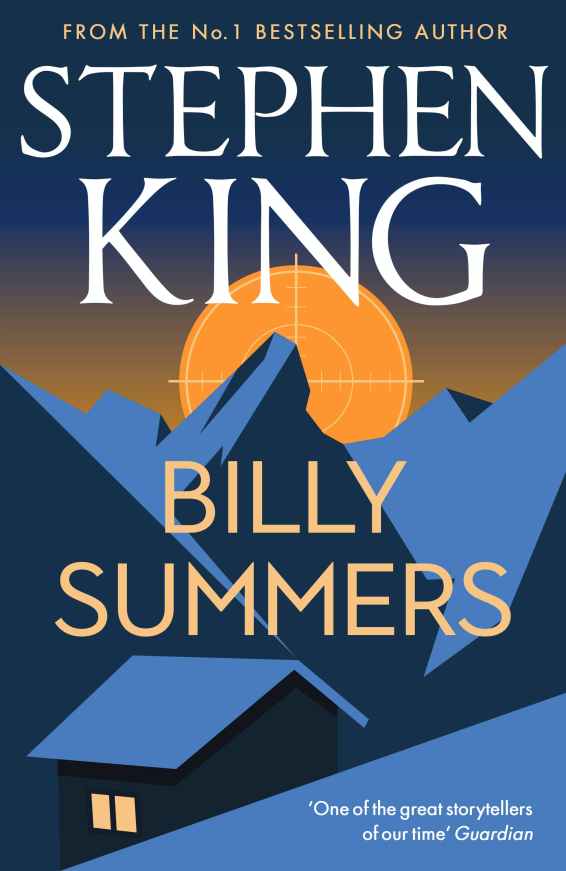
Billy Summers by Stephen King

Billy Summer Cover

Publisher: Hodder & Stoughton (Trade Paperback – 3 August 2021)

Series: Standalone

Length: 433 pages

My Rating: 5 out of 5 stars

Amazon

Stephen King returns with another exceptional read, Billy Summers, an awesome and memorable character driven thriller that has proved to be one of the best books of the year so far.

2021 has been quite an amazing year for Stephen King, who has released two outstanding and impressive novels in a short period of time.  His first book of 2021 was the interesting horror novel, Later, which followed a child who can see and talk to the recently deceased.  While I have not had a lot of experience reading Stephen King novels in the past, I really got into Later due to its likeable characters and thrilling narrative, and it ended up being one of the best audiobooks I listened to in the first part of 2021.  Due to how much I liked Later, I made sure to keep an eye out for any additional Stephen King releases, and I was extremely intrigued to see that he had a second book coming out with a great-sounding plot.  As a result, this second novel, Billy Summers, was one of my most anticipated reads for the second half of the year, and I was excited when I received my copy, especially as it contained a really cool story.

Billy Summers is an assassin and gun for hire.  A maestro with a sniper rifle and a master of elaborate escapes, there are few killers better than him.  However, for all his skills, Billy has one unusual quirk: he has a conscience and a moral code which limits him to only taking out contracts on targets he considers to be bad guys.  After a lifetime of killing, as both an assassin and a soldier, Billy wants out, and he is willing to take one final job to retire.  Luckily, his employer has a job that fits all his criteria.

Taken to the small city of Red Bluff on the East Coast of America, Billy is hired to kill a notorious gangster and killer who is currently locked up in Los Angeles but due to be extradited back to Red Bluff.  Billy’s boss wants the target dead the moment he arrives to stop him making a deal with the authorities ahead of his murder trial.  With a massive pay cheque on the line, Billy accepts the job, despite some odd stipulations.  As part of their plan to take out their target, Billy will need to take on the identity of an author working in the office complex overlooking the courthouse and maintain his cover for as long as it takes the extradition process to go through.

Despite misgivings about the job, Billy dives into the role as required and soon establishes himself as a regular figure in the office block.  As he waits for his target to arrive, Billy begins to get to know the people around him and takes the opportunity to write a memoir about his life and the decisions that led to him becoming a killer.  However, the closer he gets to the conclusion of the job, the more he suspects that nothing involved with this assassination is on the level, and that his bosses intend from him to die as well.  Making his own plans in case things go sideways, Billy prepares to end his career as an assassin on his own terms.  But then he meets Alice, and everything changes.

Well damn, how the hell does King do it?  After nearly 45 years of writing, you’d think the man would run out of unique and compelling ideas, but that apparently is not the case, as his latest book, Billy Summers, turned out to be quite an exceptional read.  King has produced an impressive and powerful story that follows a complex and well-established protagonist as he experiences life for the first time.  With some outstanding characters, a deeply thrilling storyline and some intriguing insights into the human condition, this was an outstanding read that was easily one of the best books I read in 2021 and which got a full five-star review from me.

Billy Summers contains a pretty addictive and powerful story that I found to be really cool.  The book is primarily told through the eyes of the titular Billy and shows him as he prepares to take on his final job.  King does a great job of introducing the character and the scenario, and you are soon placed into the midst of a very cool storyline as Billy moves into suburbia under an assumed identity to build his cover.  This results in some compelling character interactions, as Billy simultaneously prepares for his assassination mission with his employers while also getting close to some of the people he encounters and starts to see what a normal life feels like.  At the same time, he also builds up a third identity to use after the job is completed, which requires him to assume a different disguise and create some additional personal connections.  He also starts writing a personal memoir which tells a slightly altered version of his life story, including his rough childhood, his military career, and his early contract work.  This mixture of intriguing and fascinating story threads come together extremely well in the first half of the novel, and you get quite a unique and compelling narrative which perfectly blends thriller excitement with personal character growth.

After a big moment halfway through the novel, the entire storyline dramatically changes, especially as Billy is introduced to a key character, Alice.  While there is still a large amount of focus on the job from the first half of the novel and its consequences, the story noticeably morphs at this point, really diving into the relationship that develops between these two characters.  The storyline also moves away from some of the prior relationships that were introduced, and moves into a road trip, with Billy now accompanied by Alice.  There are some really good sequences in this second half of the novel, as well as a continued exploration of Billy’s past.  King does a fantastic job morphing the various story threads and plot ideas into a cohesive and captivating narrative, and I really enjoyed the powerful combinations.  The set pieces are a series of awesome action sequences, which help tie up several of the main story threads and lead up to the book’s epic conclusion.  While King is often criticised for his endings, I felt that Billy Summers had an exceptional and incredible conclusion that I deeply enjoyed.  This great conclusion is both tragic and memorable, and it ties together the entire novel extremely well, helping to turn Billy Summers into one of the best stories I have read all year.

I really enjoyed King’s writing style in this novel, especially as it focused a lot on character development and interactions between unique people.  The entire novel has a very philosophical bent to it, as King and his characters take time to explore the human experience, especially those aspects of life that people on the outside, such as BIlly, miss out on.  While you wouldn’t think that this would pair well with a thriller story about an assassin, it actually works extremely well, especially when combined with Billy’s journaling scenes, and readers are guaranteed to fall in love with this distinctive form of storytelling.  I also liked the author’s great use of various settings which help to show off the uniqueness of America’s landscapes.  King features several different locations, including suburbia, the inner city, the wide open road, the isolated Colorado mountains, and even some more famous locations, like fabulous Las Vegas.  Each location offers the reader and the characters something new to enjoy or appreciate, and King makes sure to capture both the beauty and the ugliness of these various settings.  While King does move away from some of his more extreme murder sprees in this novel, there are some dark moments in this book.  Not only are there some very graphic action sequences, but readers should also be warned about the sexual violence content, especially one scene where Billy enacts some justice.  I’m also slightly concerned that King might end up getting sued by Rupert Murdoch for a certain facsimile character who does some bad things.  Overall, though, I really enjoyed the way King told his latest unique story, and there is something for everyone in it.

As I mentioned above, I don’t have the most experience reading Stephen King novels, with only a few of his more recent reads under my belt.  Despite this, I was easily able to enjoy Billy Summers, especially as it is a standalone thriller with one-shot characters.  As a result, this is a book that any reader can easily pick up and get into, and I really liked how open the author made Billy Summers.  However, fans of King, as well as those people generally aware of his work, will probably have fun seeing the references to some of King’s previous books.  One of his more iconic works is referenced several times, especially as the protagonists end up spending time near a pivotal location.  While this is not particularly essential to the plot, it was a nice callback, and I think that most people will appreciate the fun self-homage.  I also found it interesting that both of King’s novels of 2021 had a compelling focus on writing, which becomes a key part of the plot.  While Later focused more on the publishing side of things, Billy Summers contains a fantastic examination of the difficulties of putting your ideas to paper as a writer, with the protagonist attempting to write his life story in his downtime.  While there are several fantastic advantages to the writing subplot, such as it being a great way to introduce the protagonist’s backstory in a compelling and episodic manner, I also quite enjoyed seeing the depiction of the writing process, and the various difficulties of telling a story.  It very much felt that King was pouring some of his own experiences with writing into these sections of the novel, and it was incredibly fun and insightful to see one of the world’s greatest authors depict the difficulties of writing in one of his novels.

Another area that Billy Summers excelled in is the fantastic central and supporting characters.  King does a remarkable job of introducing a diverse cast of characters, each of whom affect the character in various ways, either by showing him what his missing, or showing him what he is better than.  The most focused character is naturally the titular protagonist, Billy Summers, a brilliant contract killer who only kills bad people.  Billy is a remarkably complex figure, who builds several different personalities and personas around himself for professional reasons and protection.  I really enjoyed the intriguing portrayal of this character, mainly because you got to see at least four different versions of him in the first half of the book.  While the narrator is the calm and collected lover of classic novels who is basically a good guy, despite being an elite professional killer able to see every angle and work out the best way to kill someone and escape, that is a viewpoint that only the readers sees, at least at the start of the novel.  Billy hides this real side of himself from the rest of the world, effecting a less intellectual personality to his criminal associates, which he calls his “dumb self”, to fool them and think he’s less of a threat.

While his dumb self is usually enough to get by, his new assignment requires him to take up the identity of a struggling author who moves into a suburban neighbourhood and a local office block to focus on his upcoming bestseller.  Billy is forced to integrate into these social systems to keep his cover, and he soon makes friends amongst the people he meets, many of whom have an impact on him due to their honesty, innocence, and normality, all of which Billy has long given up.  He also builds up yet another identity to rent an additional house, which he plans to use as a safe house if the job goes wrong, which forces him to deal with additional normal people.  On top of that, he also takes the opportunity to write a memoir of his life, not only to maintain his cover but to satisfy his own curiosity about the writing process.  This proves to be a delicate balancing act, as he attempts to give an honest account of his past while also trying to keep up the charade of being dumb in case his employers read the story he writes.  This results in a unique, multifaceted character, and you get hints at the true nature of Billy, not just from the narration, but from seeing the similarities and differences between the various versions he presents to the world.

Billy’s life changes even further when he meets Alice, a woman who he meets at the very worst time of her life.  Saving her initially to maintain his cover, Billy soon finds himself drawn to protecting Alice, who has no-one and is having trouble getting over her trauma.  Billy soon works in a fantastic and touching relationship with Alice, as the two become close and help each other see the world in other ways.  Not only is Alice a great character in her own right, especially as King presents a very real and moving portrayal of a damaged and lost woman, but she also brings out the best in Billy.  While Alice does imprint on Billy due to her trauma, she also encourages him and gets him to continue writing his book.  This powerful bond they form soon becomes a central part of the book’s plot, and it is extremely fascinating and compelling to see what happens to them.  These exceptional characters and deep personalities really turn Billy Summers into an exceptional read, and I become severely invested in their story, even though I knew it was likely to end badly.

Stephen King has once again shows why he is the premier fiction author in the world today with another intense and exquisite read in Billy Summers.  Featuring a deep and captivating narrative about a complex character, Billy Summers was an absolute treat to read, and comes highly recommended.  Readers will swiftly fall in love with the unique narrative and compelling leading figures, and I guarantee that you will have trouble putting this excellent novel down.  Easily one of the best books of 2021, I cannot praise Billy Summers enough.
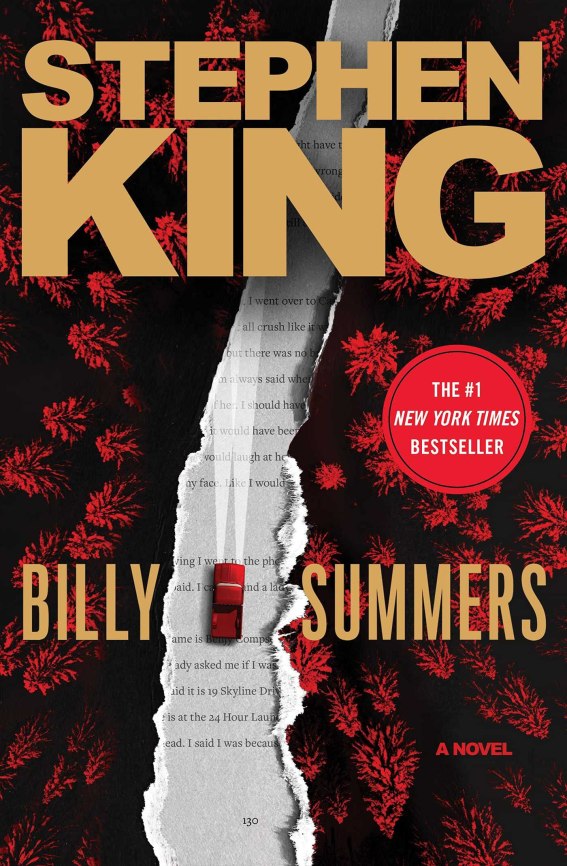
Billy Summers Cover 2

Amazon

Throwback Thursday – The Death of Superman

Death of Superman Poster

Studio: Warner Bros. Animation and DC Entertainment

Series: DC Universe Animated Original Movies – Film 32 / DC Animated Movie Universe – Film 11

Directors: Sam Liu and Jake Castorena

Writer: Peter J. Tomasi

Producers: Sam Liu and Amy McKenna

Length: 81 Minutes

My Rating: 5 out of 5 stars

Welcome back to my Throwback Thursday series, where I republish old reviews, review content I have enjoyed before or review older books I have only just had a chance to read.  This week, after the fun I’ve had recently reviewing Batman: Assault on Arkham and Batman: Under the Red Hood, I continue to check out some awesome DC comic book animated features, with the impressive and powerful The Death of Superman.

Easily one of the most iconic comic book arcs of all time is the 1992/1993 storyline, The Death of Superman, which (spoiler alert) saw Superman die at the hands of new villain Doomsday.  Not only did the act of actually killing off Superman shock the world but the series was a massive financial success, becoming one of the bestselling comics of all time.  Due to its popularity, DC have attempted to adapt the storyline multiple times, with Smallville, the animated Justice League show, and Batman v Superman: Dawn of Justice, all using elements of it in one form or another.  There has even been another direct animated attempt at recreating the storyline, with the 2007 release, Superman: Doomsday, the very first film of the DC Universe Animated Original Movies.  However, in my opinion, none of them successfully conveyed the tone or the fantastic story as well as the 2018 animated film, The Death of Superman.

Directed by Sam Liu and Jake Castorena and written by Peter J. Tomasi, The Death of Superman is an incredible and amazing film that really gets to grips with the original comic, while also adding in some unique details to create a memorable and deeply moving experience.  As the 32nd instalment in the DC Universe Animated Original Movies, it also sat in the joint DC Animated Movie Universe, and was a major instalment in this series, setting up several storylines that would later be utilised in later entries, such as the final film, Justice League Dark: Apokolips War.  Featuring an awesome story, a fantastic voice cast and some exceptional animation, The Death of Superman is easily one of the best films in the entire DC Animated Movie Universe and is one of my all-time favourite animated comic book adaptions.

After saving the world multiple times, both by himself and with the Justice League, Superman reigns as one of the planet’s most popular superheros, inspiring the world with his spirit and determination to do good.  His latest act of heroics saved the mayor of Metropolis from the notorious Intergang, who made use of a large arsenal of advanced weaponry, likely supplied by an apparently incarcerated Lex Luthor.  However, despite his larger-than-life personality, Superman is also Clark Kent, a down-to-earth man from small-town America, trying to make his new relationship with fellow reporter Lois Lane work.  As Clark finally opens himself up to Lois and reveals his biggest secret to her, a brand-new threat arrives on Earth, bringing with it only death and destruction.

A mysterious meteorite has rapidly entered the solar system and crashed down on Earth, landing in the ocean.  When a team sent by Luthor and a group of Atlantean soldiers arrive, they find that the meteorite was a containment pod, and inside is something monstrous.  Killing everyone it encounters, the beast escapes the ocean and makes landfall, heading towards the largest population centre it can find, Metropolis.  With no-one able to slow it down, and even the Justice League powerless against it, it falls to Superman to engage it as Earth’s last standing defender.

Engaging in battle in the heart of Metropolis, Superman and the monster, Doomsday, begin a bloody battle that tears through the streets and levels buildings.  Superman may by the strongest person on the planet, but his new foe is a deranged and unstoppable killing machine, concerned with only death, destruction, and dominance.   Can Superman once again prevail and defeat his foe or has the Man of Steel finally met his match.  Whatever, happens, the world with never be the same again, and everyone who Superman has inspired may suddenly have to deal with the death of their greatest champion.

I must admit that when I first saw that they were doing yet another adaption of The Death of Superman comic, I was a little ambivalent, as I have not been too impressed by some of the other versions out there.  However, I still grabbed a copy as soon as it came out, and I was frankly blown away by how good it was.  This film has everything you could want in a brilliant animated feature, including an exceptional story and some amazing actors, but what this film has in abundance is heart.  Throughout its run time, you swiftly become attached to the great characters contained within, especially Superman and Lois, and then you are forced to watch as they suffer the most tragic moment of their lives.  This results in an extremely moving and powerful film, which became an instant classic in my book, and it is one that I have no problem awarding a full five-star rating.

When writing this film, Peter J. Tomasi had to do a lot with a limited amount of time.  Not only did he have to produce a pretty accurate adaption of the original Death of Superman comic, but he also had to work it into the wider DC Animated Movie Universe, which had already had its own unique history.  He easily succeeded on both fronts, as The Death of Superman contains an excellent and powerful story, that I have an extremely hard time faulting in any way whatsoever.  The story starts off with a shot of Superman saving the city and painting a pretty rosy picture of himself as Metropolis’s favourite son and defender.  After the title card, which contains the grim name of the film, the movie works to quickly introduce all the key characters, relationships, and settings, most of which had only been briefly touched on in the preceding DC Animated Movie Universe films.  This makes for a rather light-hearted start to the film; however, it also works to get you to know the characters and other key aspects of the Superman mythos and backstory, and all the setup is essential for you to get the full emotional and dramatic reactions during the second half of the film.  I also liked the way in which the film is tied into the other films of the universe, mostly using the Justice League, especially Batman and Wonder Woman, and it was great to see more of that version of the League.  All of this serves as a great set-up for the intense and action-packed second act, which is where all the action and mayhem begins.

About halfway through, the film really picks up the action with the Justice League, sans Superman, engaging Doomsday in a small town.  The action here is fast and furious, as the various members of the League get their best shots in and are then taken down in some quite brutal ways.  While this is happening, Clark is on a date with a frustrated Lois, where he finally reveals to her that his is Superman.  This date scene is done really well, and Lois’s reaction to the revelations runs the full range of emotions, especially once Superman, forced to leave to confront the threat reveals his other secret: that he loves her.  This is a great scene, and it is one that helps solidify the relationship and emotional bond between Superman and Lois while also making the viewer care for the characters just a little bit more.  However, the focus is quickly changed back to the fight with Doomsday, who has managed to take out the entire League, with only Wonder Woman hanging in.  As she falls, Superman steps in and begins a massive and brutal fight throughout Metropolis.  The creative team behind The Death of Superman really do not hold back here, as they present a knockdown brawl between the two, with Superman forced to also try and save civilians as they fight.  Their battle is a truly intense and amazing extended sequence, and there are some outstanding scenes featured throughout it.  You get some great reaction shots from the various supporting characters, and Lois and Lex Luthor have some outstanding moments as well, as they get involved for various reasons.  However, despite everything, it soon becomes clear just how indestructible and dangerous Doomsday is, and how even Superman doesn’t stand a chance.

The entire film leads up to the final climatic sequence, where the inevitable finally happens and Superman dies taking down Doomsday.  This entire scene is done perfectly, with a near-defeated Superman spurred on to make one final effort against Doomsday as the monster advances towards a seemingly hopeless Lois, who reveals to a downed Clark that she loves him too.  The blow itself is beautifully rendered with a powerful and lethal shot to Doomsday, but it is the aftermath that really turns this film into a five-star watch, as Superman is fatally impaled on a spike.  Watching a grieving Lois slowly release that the love of her life is dying in her arms is so hard to watch, and the creative team really turn up waterworks with Superman giving some touching last words: “what a lucky man I was”.  The eventual death is extremely moving, with the entire world witnessing his death and Lois’s grief, while standing in absolute shock.  Even the Justice League is moved to tears, with the usually taciturn Batman’s reaction being the most telling.  This entire sequence is deeply enhanced by a brilliant orchestral score that really plays up the emotion of the scene and strikes home every time you hear it.  This is such a powerful and impactful sequence, and it is swiftly followed by a moving funeral, with all the major characters in attendance, and then a final shot of several characters reacting in a post-funeral grief while Superman superfan Bibbo Bibbowski narrates a fitting final prayer for the character.  This entire sequence leaves me breathless, even after several re-watches, and it easily one of the most moving animated sequences I have watched.  The film then does a decent wrap-up, with several concluding sequences and post-credit scenes setting up the events of the sequel film.  However, it is the moving conclusion that will stick with you well past the films end, as it really brought everything about this movie together.

While I would be plenty happy with this film with only the outstanding story and amazing conclusion, The Death of Superman is also backed up with some incredible animation and a fantastic musical score which deeply enhance this fantastic film.  The animation is really great, and I loved the designs for the various characters, most of which hark back to their original comic book appearances.  The most impressive animation is reserved for the excellent and impactful action sequences involving Doomsday.  The animators show no hesitation in showing the blood and gore as Doomsday literally tears through everything in his way.  The initial fight with the Justice League is brilliant, especially as Doomsday brutally counters all their unique abilities and absolutely destroys them.  However, it is the giant fight with Superman which is the true highlight of The Death of Superman.  This fight is pretty extraordinary, and the animators really highlight the desperation and inspiration of the two participants.  Each of them is well and truly battered, and it is really shocking to see all the damage that Superman takes throughout the fight.  There is also some very dramatic damage to the city of Metropolis, with even the Hall of Justice being turned to a pile of rumble as these two duke it out.  I cannot emphasise how awesome this animation is, and it was so cool to see these battles unfold.

I also really need to highlight the fantastic use of music throughout this film, which works well in concert with the animated sequences.  The Death of Superman features an exceptional orchestral score, with the various tunes often harking back to classic Superman music.  This music is used perfectly throughout the various scenes in this film and help to really enhance the drama or emotion of the scene.  There are some great scenes with music throughout the film, although nothing tops the fantastic climatic sequence I mentioned above.  This animation and music are so very awesome, and it was an absolute joy to behold.

This film contains a pretty cool range of different characters, including iconic heroes, major Superman supporting characters and even a few more obscure characters.  This helps to turn The Death of Superman into quite a unique and fun film, and I really loved the range of reactions and character arcs that it contained.

Unsurprisingly, the most highlighted character in the film is Superman, who is voiced by Jerry O’Connell, who voiced the character in most of the DC Animated Movie Universe entries.  Up until this point, I felt that Superman was a bit underutilised.  Most of the previous films have focused on Superman’s relationship with Wonder Woman, while also featuring him as the League’s powerhouse.  However, this is easily Superman’s film, as the writers take substantial time to examine his history, relationships, inner personality and the duality between Superman and his Clark Kent persona.  You really get some intense insights into both versions of the same person, especially when you see his evolving relationship with Lois, and you swiftly grow to care for him in a way that some of the recent live-action films really didn’t make you.  His character really shines through during the battle with Doomsday, as he refuses to stay down, especially when people’s lives are on the line, and even risks himself to save his most hated enemy.  His sheer determination and intensity is really inspirational, and it starts to hurt a little inside to see him get beaten down by his opponent.  I felt that O’Connell does such a great job portraying Superman, and he really brings out the best of the character, showing his true heart and soul, and making him such a likeable character, who, despite his alien heritage, was still so very human.  I was really impressed and shocked by how much I grew to love Superman by the end of this film, which of course, ensures that you are so moved by the final scenes.  Seeing this character die in Lois’s arms in front of the world is just heartbreaking, and you guaranteed to be moved by his portrayal in this film.

While there is a natural focus on Superman, in many ways The Death of Superman is just as much a film about Lois Lane.  Voiced by the talented Rebecca Romijn, this version of Lois is bold and fearless in her career but also a little guarded in her personal life, especially as she senses that Clark is hiding something from her.  This film really builds up Lois extremely well in its short run-time, and you get a great sense of who she is and what she cares about.  I felt that the character had some amazing chemistry with Clark, which really isn’t surprising as Romijn is married to O’Connell in real life, so I’m sure they channelled a lot of that film.  I really was impressed by the way they showed Lois’s growing relationship with Clark as the film progresses, and the revelation about Superman’s true identity at the centre of the film really helps to solidify it, especially once Clark declares his love for her.  The subsequent battle sees Lois go through hell, as she chases the fight throughout Metropolis and has to watch Superman continuously get beaten up.  The scene where she tries to distract Doomsday and then gives up as he turns towards her is so dramatic, especially as she follows it up with her own declaration of love for Clark.  The final grief laden scene with Superman really moves me every time, and I felt that the sheer emotion coming off Lois was just amazing.  This might be one of my all-time favourite portrayals of Lois Lane, especially as Romijn does some exceptional follow ups in later DC Animated Movie Universe films.

The other major character I really want to highlight is Lex Luthor, who was voiced by the always entertaining Rainn Wilson.  Like Superman, Lex had been really underutilised in the DC Animated Movie Universe; his reveal in the Throne of Atlantis post-credit scene really did not pan out in a meaningful way in Justice League vs. Teen Titans.  However, this dramatically changed in The Death of Superman as they go out of their way to build up the showcase and show him as the maniacal yet brilliant businessman and criminal mastermind.  The creative team did a lot with Luthor in a short amount of time, and you get a really good idea of his genius, his various plans, and his unrelenting antagonism with Superman, born out of jealousy.  He proves to be a good secondary antagonist for the film, eventually turning into an erstwhile ally, abet for his own purposes, and he has some great scenes.  I was particularly impressed by Rainn Wilson’s voice work in this film, as he brings all the arrogance he can to the film, while also giving character a bit of a slimy edge.  I think he really captured Luthor’s various nuances, and ensures you see him lose his cool when faced with defeat.  I really liked the scene where Luthor can only watch in horror as Superman, despite being beat to hell, saves his life, and that results in some interesting changes in the later films.  I also liked how they captured a bunch of fun aspects of Luthor’s character from the 1990 comics, such as a nod to the Lex Luthor II persona that appeared in The Death of Superman comic.

I also need to highlight the main antagonist, Doomsday.  Despite not saying anything, Doomsday is a major presence, mainly due to his brutality and capability for destruction.  Doomsday is perfectly introduced and I loved the slow reveal of his true form, as the suit containing him is destroyed after several fights.  I must again really highlight how cool he looks in a fight, and the battles between the Justice League, Wonder Woman and Superman are just so damn impressive and pretty intense.  This was a really good portrayal of the character that perfectly harkens back to its comic origins, and it was a nice palate-cleanser after his cave-troll look in Batman v Superman: Dawn of Justice.

The Death of Superman also contains a pretty substantial supporting cast of characters, each of whom add a fair bit to the overarching narrative of the film.  Some of the most prominent of these are the various members of the Justice League, with most of the actors from the earlier DC Animated Movie Universe films reprising their roles.  Each of these characters and their actors have been perfectly introduced in the previous films, so they are inserted into The Death of Superman with minimal effort and form a fantastic cohort around Superman.  The leading two characters are probably Batman, voiced by Jason O’Mara, and Wonder Woman, voiced by Rosario Dawson.  Both characters have unique relationships with Superman, particularly Wonder Woman, and his death really impacts them both.  I also liked the combination of Green Lantern (Nathan Fillion) and Flash (Christopher Gorham), who form a fun comedic duo, while also having some great action moments.  I had a great laugh during the Justice League meeting scene where Flash does a good imitation of Batman joining the PTA of Damien’s school, and Batman’s glaring reaction is pretty funny.

I also loved the inclusion of a couple of unique Superman supporting characters.  Despite the role he played in the original comic, I was really surprised to see so much of Bibbo Bibbowski, Superman’s biggest fan, in this film.  Bibbo is a bit of a dated character, to be honest, but he slides into this film really well, and I loved the voice work done by Charles Halford.  His comedic interactions with both Superman and Clark Kent in the early parts of the film are pretty fun, and there is something amusing about a big, rough sailor type fanboying about a superhero.  It also proves to be quite heartbreaking to see this fan watch Superman die in front of him, and you can see it really breaks him.  I felt that Bibbo’s Hail Mary prayer at the end, which overscored some great visuals of people in mourning, and the subsequent breakdown on the dock was quite touching.  I also liked Erica Luttrell’s Mercy Graves, especially as she forms a great counterpoint to Luthor, especially as she calls him out on some of his more outrageous plans.  Overall, I think that this film was incredibly well cast, and I loved the fantastic group of characters that they brought together.

The Death of Superman is a truly great and powerful animated film that continues to reign as one of my absolute favourite animated comic book adaptions.  Featuring a near-perfect adaption of one of the most iconic comic stories of all time, The Death of Superman is intense, exciting, and downright heartbreaking, as it shows the greatest hero in his final battle.  I was moved to tears the first time I saw this film, and I have so much love and admiration for the work the creative team did to revitalise the character of Superman in one short film.  A highly recommend film to watch, this is one of the better Superman adaptations (live action or animated) I have ever seen.

Throwback Thursday: Batman: Assault on Arkham

Assault on Arkham Poster

Studio: Warner Bros. Animation and DC Entertainment

Series: DC Universe Animated Original Movies – Film 20

Director: Jay Oliva and Ethan Spaulding

Writer: Heath Corson

Producer: James Tucker

My Rating: 5 out of 5 stars

Welcome back to my Throwback Thursday series, where I republish old reviews, review content I have enjoyed before or review older books I have only just had a chance to read.  For this week’s Throwback Thursday I go back and check out one of the more intriguing DC animated movies, with Batman: Assault on Arkham.

As I mentioned in a recent Top Ten Tuesday, I have been in a DC mood ever since I saw The Suicide Squad on the weekend, which was easily the best film focusing on the titular Suicide Squad.  While people only familiar with the live-action films might think that this is a low bar, those who know about the awesome catalogue of DC Comics animated films will know that there are several awesome and outstanding films that perfectly capture the feel and tone of the supervillain team and are pretty fun to watch.  Therefore, this week I will look at one of these great animated films, with Batman: Assault on Arkham.

Assault on Arkham is an amazing and fantastic film that came out in 2014 and is set in the same universe as the Arkham video game franchise (set between Arkham Origins and Arkham Asylum).  Directed by Jay Oliva and Ethan Spaulding, written by Heath Corson and produced by James Tucker, this was a memorable and fun DC Universe Animated Original Movie, which contains some of the best comic book based animated films out there.  Despite the name, Assault on Arkham is really a Suicide Squad movie, with Batman strongly featured but acting more as a side character.  This was an excellent and impressive film, which makes use of a darker tone and more adult animation to create a fitting Suicide Squad experience.  Heck, this was a much better Suicide Squad movie than the 2016 live-action film as it embraced the team’s darker side and their propensity for violence, while also featuring an impressive and clever story.

Two years before the Joker took over Arkham Asylum, the Clown Prince of Crime terrorises Gotham City, this time by threatening it with a dirty bomb.  With the Joker locked up in Arkham Asylum and refusing to talk, Batman stalks the streets of Gotham, searching for those who helped him.  His mission leads him to save the Riddler from a black-ops team of soldiers, sent by shadowy government agent Amanda Waller.  With Riddler now locked up in Arkham Asylum, Waller assembles the one force capable of breaching Arkham’s walls to find him and the information she desires, Task Force X.

Task Force X, also known as the Suicide Squad, is made up of some of the most deadly and skilled villains in the world, each of whom have been forcibly drafted onto the team and offered reduced sentences if they complete their mission.  Recruiting a team made up of Floyd Lawton (Deadshot), Harleen Quinzel (Harley Quinn), George Harkness (Captain Boomerang), Eric Needham (Black Spider), Nanaue (King Shark) and Louise Lincoln (Killer Frost), Waller sends them into Arkham with bombs implanted in their necks.

Forced to work together despite their innate distrust and dislike of each other, the Suicide Squad arrive in Gotham and make their plans to infiltrate the asylum.  However, it doesn’t take long for petty rivalries, massive manipulations, and dangerous outside influences to put all their schemes in disarray.  Working their way through the most dangerous place on the planet, the Squad soon learns a deadly secret that will change everything and set them on a bold new path.  But with Batman wise to their presence, can the Squad achieve their goals and make their escape, or will they find themselves locked up in Arkham instead.  Worse, someone far more dangerous is stalking the halls of the asylum, someone with an insane sense of humour and a desire to claim back what is his.  The Joker is loose, and he wants to play!

This is an awesome film that really does the chaotic and dangerous Suicide Squad justice.  Featuring an excellent story and serving as a clever adaption of the Suicide Squad comics and other pieces of media, this is an extremely fun movie.  Throw in an exceptional voice cast, some great interpretations of iconic characters, and some powerful animated sequences, and you have a great and impressive movie that I have long been a fan of.

At the heart of this great movie is a very compelling and exciting narrative that takes its various characters on a wild and dangerous ride to hell in back.  Assault on Arkham starts off with an excellent scene, which sees Riddler being attacked by Waller’s goons, only to be rescued by Batman in an intense and brutal fight sequence.  This then leads into an entertaining introductory sequence for the various members of the squad, with a fun reel of shots with no dialogue showing each member of the Squad showing off some of their skills before getting captured by various law enforcement groups.  These dark and sometimes gruesome introductory scenes really set the tone for the entire movie, while also providing great summaries of each of the main characters.  What follows is a fun and captivating character-driven tale as the members of the Squad arrive in Gotham and make their play to break into Arkham.  There are some fantastic clashes of personality and deep personal moments in this early part of the film, as the team initially comes together, despite their crazy differences.  This leads to an intriguing central part of the film, where the characters begin their assault on the asylum, performing a reverse prison break.  After some great scenes, the team are at large in the asylum, which leads to even more chaos, destruction, and big fight moments.  All of this leads to an explosive and dangerous final act, as the characters need to escape while being pursued by Batman and the Joker.  Caught between these extremely dangerous forces, the fractured Squad attempts to escape, facing some major defining obstacles which really bring the entire film together.  I loved the fantastic and darker story that this film featured, and the writing team did an excellent job combining brutality, humour, character development and pure craziness into one enthralling tale.  There are so many fun and thrilling moments to this outstanding film, and viewers will found themselves really getting drawn into the cool story.

The animation in Assault on Arkham is very impressive, and the creative team behind it did a great job bringing the various characters to life and placing them in some outstanding action sequences.  The movement and action in this film is pretty damn seamless, and you are in for some very fast-paced scenes that look pretty superb, especially as they feature a great mixture of lighting and multiple unique characters.  Highlights include the opening shadowy encounter between Batman and the special forces soldiers, the massive fight between Batman and the entire Suicide Squad, and the final two confrontations that occur after a big helicopter crash.  I loved the cool character designs of the various characters, especially as they mix some new looks with classic drawings.  I also felt that the creative team combined this cool animation with the excellent musical score well, and the various tunes really helped to set the scene.  There is something very dark, bloody, and adult about the designs in the film, and the end result is definitely not a kid’s cartoon.

Part of the design that I really enjoyed was the way in which the creative team attempted to emulate the style from the fantastic Batman: Arkham video games.  This film serves as a canon entry between Arkham Origins and Arkham Asylum, and the team did a great job capturing the cool style and themes that the games are famous for.  This is particularly seen in the various scenes featuring Batman, the playable character of the games, and you get to see him whip out the various gadgets and viewscreens that appeared in the games.  I particularly enjoyed the opening scene where Batman takes out a squad of soldiers in much the same way that a player would in the games, from the flips to the use of a batline.  There are also several references to the games throughout the film, from a character trying to hide in a vent, to the layout of Arkham Asylum, where you spend significant time in the first film.  Despite all these references, this film can easily be enjoyed by comic fans who have not played the video games.  Assault on Arkham is very much framed as a standalone film, and no matter your familiarity with Batman or the Arkham games, you will have a fun time watching this movie.

As I have mentioned above, this awesome film contained a really impressive and memorable take on the Suicide Squad, producing a truly great movie.  Part of this is the choice of team, as it features a compelling blend of characters that are inspired by the team first introduced in the New 52 range.  Anchored by team leader Deadshot and wildcard Harley Quinn, it also features long-time Suicide Squad member Captain Boomerang, as well as a fantastic combination of Black Spider, King Shark and Killer Frost.  While the team structure is similar to the team in the first live-action film, Assault on Arkham actually predates this film by a couple of years, and also utilises them a lot better, really showing off some more complex aspects of their personality, mainly thanks to the excellent voice cast.  This animated film also takes itself a lot less seriously than the first live-action film did, and is less afraid to show blood, sex and death.  While some of this is a tad over the top (some of the female characters are way too sexualised), I really wish that the subsequent live-action film had taken some cues from how successful this animated feature was, as that would have resulted in a much better experience.

Easily the best part of this film is the amazing characters and sensational voice cast, which really help to make it stand out.  While it does feature a lot of Batman and Joker, the main characters of this film are the Suicide Squad.  The most prominent is team leader an assassin extraordinaire, Deadshot.  Voiced by the talented Neal McDonough, a man who has voiced quite a few villains in his day, this version of Deadshot is near perfect, and contains a lot of elements from the comics that the live-action version was lacking.  While the overriding love for his daughter is still there, this version of Deadshot is a lot colder and a lot quicker on the trigger, happily massacring everyone who gets in his way.  McDonough really captures the character’s menace, killer instinct, and determination, and this Deadshot serves as the tough and often exasperated leader of the Squad.  I loved that they captured Deadshot’s crazier side (he has a massive death wish in the comics), especially as this leads to one of the best scenes in the entire film: “Mate, you just out-crazied the Joker”.  It was also cool that Deadshot had one of the most satisfying character arcs in the entire film, ending Assault on Arkham on a very entertaining and memorable note, that showed that the character was a man of his word: “Bang!”

This film also features an amazing version of iconic character Harley Quinn.  Before Margot Robbie and Kaley Cuoco put their spins on the character, veteran voice actor Hynden Walch provided her impressive voice to Harley, resulting in a fantastic and crazed female-lead.  Walch, who is probably best known for voicing Starfire in Teen Titans or Princess Bubblegum in Adventure Time, does an excellent job going a little darker with this character, producing some excellent scenes of madness and humour as Harley manages to annoy the other characters while cracking up the audience.  I loved the introduction that this character had, biting off an ear in a halfway house with Looney Tunes music playing (it’s weird, but it works).  Harley proves to be quite conflicted in this film as she finds herself stuck between her abusive ex, the Joker, and her new love interest, Deadshot (all I am going to say about the later relationship is “Yahtzee!”).  While this starts off with a very concerted attempt to kill the Joker, Harley is eventually drawn back to him, which is kind of heartbreaking.  There is some of the typical abusive relationship stuff that comes out with Harley, as she blames everyone but Joker for her problems.  This was a great portrayal of this fantastic and complex character, and I was very happy that Walch came back to portray Harley in other films such as Justice League Dark: Apokolips War.

Other great members of the Squad include Captain Boomerang, voiced by Greg Ellis.  Boomerang acts as the Squad’s comic relief, and I liked the uncaring and selfish attitude that is such a feature of the character in the original Suicide Squad comics.  Ellis really brings out the character’s smarmy and arrogant side, and I loved the amusing rivalry he formed with Deadshot, which results in a brilliant game of darts.  This movie also features the outstanding Gincarlo Esposito in the role of Black Spider, a murderous vigilante who is less than pleased at being lumped in with a group of supervillains.  Esposito brings some real gravitas to the character, and he proves to be a skilled and fun member of the team, and his inclusion results in a pretty major fake-out.  The hilarious John DiMaggio does a great King Shark in this film, and I loved the somewhat more human design of the monster and his funny dim-witted mentality.  Despite being a source of some humour, King Shark is a brutal killer, which is very much shown in his introduction where he emerges from a bathtub full of blood.  Finally, the brilliant Jennifer Hale portrays a fantastic Killer Frost (not surprising, considering she’s voiced the character in nearly every film or animated television appearance).  This version of Frost is pretty cold-blooded and proves to be a murderous addition to the team.  I liked the fun friendship that she forms with King Shark, and they prove to be a great duo.

While the Suicide Squad takes most of the film’s focus, Batman is featured pretty extensively in this film, which is really cool.  I personally was overjoyed that they got the iconic voice of Kevin Conroy for the character, and this amazing actor reprises his role from the various animated series and the Arkham games.  Batman is mostly on the outside of the story for the first half of the film, only becoming involved when the Squad enters the asylum, but once he gets involved, the results are pretty damn awesome.  This version of the character perfectly highlights the various aspects of Batman, as he kicks ass, intimates everyone he meets, outsmarts his foes, and utilises his amazing detective skills to make some big assumptions.  Featuring Batman as a side-character in his own film was an interesting choice, but it is one that really works, and it was great to see him attempt to work out the various ploys of the Squad, Waller, and the Joker.  Conroy’s voice work is of course, perfect, which isn’t surprisingly considering all the times he’s portrayed the character.  Another excellent inclusion of the legendary hero.

While most of the cast of Assault on Arkham are villains, the one that sticks out the most is the master of anarchy, the Joker.  Voiced by Troy Baker, who reprises his role from Arkham Origins, Joker really stands out as a character, which honestly isn’t that surprising.  Joker escapes his cell and starts causing chaos all over the asylum, coming into conflict with both the Squad and Batman.  This version of the Joker is the usual awesome mix of scary insanity and corny humour, and the character has several hilarious scenes throughout the film, including one of the best lines: “Denzel, what have they done to you?”  I also enjoyed the new rivalry he forms with Deadshot, as he shows some uncharacteristic jealousy over the fact that Harley has moved on.  This leads to a brutal brawl in the film’s conclusion, which is a major highlight.  Baker, who would go on to voice the Joker in several other animated features, does a pretty good job in Assault on Arkham, and does well at replicating Mark Hamill’s take on the character.  This results in an excellent villain, and I loved seeing the insane Arkham version of the character once more.

The final character I really want to highlight controls Task Force X, Amanda “the Wall” Waller.  Voiced by the incredible CCH Pounder, the definitive voice actor for the character (she is so good in Justice League Unlimited), this manipulative bureaucrat is in many ways the true villain of Assault on Arkham, turning everyone against each other to get what she wants.   She has an excellent introduction, where she manages to outsmart the Riddler, while also giving a fantastic line about riddles: “I have Google, like the rest of the world!”  From there, she proves to be a consistent badass, dragging the ruthless killers together into her Suicide Squad, bending them to her will, and then unleashing them upon the world.  Despite her plans not going as well as she hoped, Waller still manages to have a great run in Assault on Arkham, and Pounder really dives into the character’s manipulative nature and inner anger: “No one screws the Wall!”  She also has a pretty badass stare-down with Batman, actually managing to win their confrontation.  This character has a pretty amazing final moment in the film, especially as it wraps up her entire arc with Deadshot in one fantastic word.  Overall, Pounder rounds out the awesome central voice cast perfectly, and it was an absolute treat to see their performance come together.

Batman: Assault on Arkham is a fantastic and memorable animated film that is so much fun to watch.  Serving as the definitive and best film about the Suicide Squad for years, Assault on Arkham makes full use of its intense and exciting story, its brilliant design and exceptional cast and characters.  I deeply enjoy this amazing film and I have watched it multiple times ever since it was released.  A highly recommended watch, especially if, like me, you loved the latest Suicide Squad movie and want some more crazy, villain-led chaos and destruction.

Relentless by Jonathan Maberry

Relentless Cover

Publisher: Macmillan Audio (Audiobook – 13 July 2021)

Series: Rogue Team International – Book Two / Joe Ledger – Book 12

Length: 18 hours and 29 minutes

My rating: 5 out of 5 stars

Amazon     Book Depository

One of my absolute favourite series returns with an absolute bang as Jonathan Maberry produces another incredible, intense and thrilling Joe Ledger novel with Relentless, the second novel in the Rogue Team International series.

Readers of my blog will be well aware of how much I love Jonathan Maberry’s Joe Ledger series.  This science fiction thriller series, which follows the titular protagonist and his team of elite soldiers as they fight all manner of crazy scientific and supernatural threats, is so much fun and is one of my favourite series.  After reading one of these fantastic books a few years ago, I sat down and listened to the entire series, from Patient Zero, all the way to the final entry, Deep Silence.  It also led me to some of Maberry’s other novels, including last year’s excellent horror novel, Ink, which was one of my favourite books and audiobooks of 2020.  The author also started the Rogue Team International series in 2019 as a sequel series to the original Joe Ledger books, featuring the same characters and universe.  The first entry in this sequel series, Rage, got a five-star rating from me and was one of the best books and audiobooks of 2019.  Due to Rage’s epic conclusion, as well as how much I enjoy Maberry’s writing, I have been eagerly awaiting Relentless for some time now and I ended up being blown away by how awesome it was.

During Rogue Team International’s (RTI) first mission, Joe Ledger and his team faced off against the dangerous pairing of criminal mastermind Kuga and his fearsome enforcer Rafael Santoro, barely managing to stop their insidious, world-changing plot.  However, their victory came at a terrible price, as Santoro delivered fiery vengeance on his foe by killing every member of Ledger’s family in a revenge attack at Christmas.  Santoro and Kuga hoped that their destructive blow would mentally destroy their hated enemy forever; instead, it unleashed their worst nightmare.

After returning to the field, Ledger leads an RTI team to an advanced laboratory where terrible genetic, biological and cybernetic experiments are being performed.  While the mission begins as a textbook RTI operation, everything changes when Ledger comes across a room full of deformed lab subjects and their cruel tormentors.  With his already fragile psyche pushed to the limit by the death of his family, Ledger finally snaps and lets something dark and dangerous from deep within take control.  With blood and bodies trailing in his wake, Ledger abandons his team and goes truly rogue.

Accompanied only by his loyal combat dog, Ghost, Ledger rampages across Europe, killing and destroying anything related to Kuga’s operation and questioning anyone who knows where he and Santoro are.  Even more concerning for the villains, Ledger is also beginning to get close to their next major operation.  Utilising cutting edge technology, Kuga’s group have developed biologically enhanced super soldiers, equipped with some of the most destructive weapons available.  Their next plan will unleash a devastating attack within America that will change the political and social landscape for generations to come.  However, not even their most advanced troops may be enough to stop the dark thing that Ledger has become, and Kuga is soon forced to make a Faustian deal with someone, or something, whose evil eclipses Ledger’s insanity.  Can Ledger defeat his hated foes and save his own soul at the same time, or will he finally be overwhelmed by his own inner darkness?

Once again Maberry shows why he is one of the most exciting and impressive thriller writers out there as Relentless was another epic and wildly captivating novel.  This latest Rogue Team International novel contains a complex and thrilling narrative that sets its already complex main character into a horrific quest for vengeance and redemption.  Throw in an incredible amount of action, a very clever and well-written story, and some memorable characters, and you have an outstanding novel that gets a full five-star rating from me.

In Relentless, Maberry produces an extremely intense and fast-paced novel that is both character driven and loaded with some of the best action you will ever read.  Following up from the dramatic conclusion of Rage, Relentless is one of the darker and more inventive books in the Joe Ledger franchise, presenting the reader with a brutal revenge story as the protagonist puts the rogue in Rogue Team International to kill anyone associated with his foes.  Maberry once again makes great use of the unique writing style that has been such a hallmark of this series, with the novel made up of shorter chapters told from a vast number of different perspectives, including several interludes set in the past, to produce a more complex and multifaceted tale and showcase the elaborate plans of the antagonists.

However, the author also tries something new in this book, with a noticeable change of focus away from the protagonist for a good portion of the early novel to highlight some major character developments.  This results in a bit less humour during the first part of the book, but this is more than made up for with a darker and more powerful storyline.  The story focus does eventually revert to the series’ usual form about halfway through the novel, just in time for the protagonist to find himself with information about a complex and intriguing evil plot that only he can stop.  This leads to a pretty epic conclusion with some fun twists and several major moments of worry and surprise, especially as you get some massive concurrent scenes as Ledger and his allies battle the enemy in several destructive and dangerous battles.  The action throughout Relentless is typical Maberry, with some very detailed and graphic depictions of the techniques and damage done, and it is near impossible not to get sucked in the combat as the powerful scenes unfold.  Readers should be warned that parts of this novel can get a little dark and gruesome as Maberry pulls no punches, but it is very much worth sticking through the blood and guts to see the captivating narrative unfold.  I quickly became sucked into his awesome story, and I loved every second of it, managing to finish it off in extremely short order.  It looks like Maberry has some intriguing plans for the future of this series, and I for one am extremely excited for that.

Like most of the Joe Ledger/Rogue Team International novels, Maberry has made Relentless extremely accessible to new readers.  While I personally would suggest reading Rage first, due to the tragic ending that plays into the events of this novel, people unfamiliar with the preceding books can jump in here and still have an excellent time reading this book.  Maberry does an amazing job recapping all the key events of the prior novels, including character bios, descriptions of technology and summaries of various cases.  As a result, the reader is never left in the dark about what is happening and who is being talked about, although the certain significance of some characters or revelations might be slightly tempered until the protagonist describes them.  One thing I would note after having read all the Joe Ledger books in the last couple of years is that Maberry tends to reuse the same phrases and terms when it comes to describing certain characters or events.  While this was fine the first few times, by book 12 in the overall series, it is very noticeable and slightly detrimental to the flow of the story.  However, this was an overall incredible novel with more than enough unique features to make it really stand out from the rest of the books in the series.

One of the best parts of any of Maberry’s novels are the complex and likeable characters featured within them.  Over the years Maberry has produced some truly great and memorable characters for the Joe Ledger novels, and it was great to see so many of them return for Relentless, especially as most of them go through some major development.  The most prominent of these is titular protagonist Joe Ledger, who has one of his most significant roles here in Relentless.  Ledger has always been an extremely troubled and damaged protagonist, which has grown more and more apparent as the series progressed as he is forced to deal with additional traumas.  However, this is the book where he truly snaps, as he is dealing with the brutal death of every member of his family.  While Ledger starts the book mostly fine (by his already low standards), it doesn’t take him long to lose the plot.  Fans of this series will understand Ledger’s mind is already broken up into three distinct personalities, the Cop, the Modern Man, and the Killer, which together form his mostly balanced psyche.  However, the events of Rage have resulted in a fourth personality, the Darkness, which subverts Ledger’s mind and leads him to commit acts of terrible violence and destruction while massively freaking everyone out.  The Darkness completely takes over Ledger, ensuring that you don’t see into his head for a good portion of the novel, which is an interesting change considering that Ledger is the only character in the series with a first-person perspective.  While this really changes the tone of this novel, it perfectly highlights just how far-gone Ledger is.  Even when he regains control of his mind and becomes a prominent point-of-view character again, the Darkness is still there, and he has to fight hard to control it.  All this makes for quite a fantastic and deep read, and it was captivating to see the protagonist deal with the traumatic events of a previous novel in such a dramatic and destructive manner.  Maberry really amps up how dangerous Ledger can be in this novel, and there are some truly disturbing and concerning scenes when the Darkness takes over.  It will be really interesting to see how Ledger comes back from the events of this book in the future, and I am extremely curious to see what happens to the character next.

In addition to the outstanding central protagonist, Maberry fills up Relentless with great supporting characters, most of whom have been introduced in previous Joe Ledger novels.  Maberry really likes a wide spread of characters throughout his novels, resulting in an interesting group of perspectives as the various supporting characters and minor inclusions experience the events of the narrative.  It was great to see many long-running side characters return in Relentless, especially as they are severely impacted by Ledger’s walk on the dark side.  While a couple of usually major characters only have a couple of scenes in this book, the usual DMS/RTI mainstays are all there.  Ledger’s squad mates, Top and Bunny, have a particularly intriguing storyline in this novel, which sees them go undercover to infiltrate Kuga’s operation while being conflicted about Ledger’s actions.  It was also great to see more of mysterious RTI leader, Mr Church, the guy who totally isn’t some sort of avenging angel or benevolent god (those are my two top guesses at this point).  While Church doesn’t get as much focus as he has in previous books, he is still a major presence, and there some more hints at his past with one of the antagonists.  There are also a couple of fun new unique characters introduced who Ledger meets up with as he pursues his quest for vengeance.  Several of them are cool, and I look forward to seeing if they show up again.

Out of all the many supporting characters, there are two that I particularly want to focus on as they had some very strong arcs within this book.  The first is Alexander Chismer, better known as Toys, the former villain who is seeking redemption and is now a close friend of Ledger’s partner Junie.  Toys goes back into the field to find Ledger, even though they really dislike each other.  Toys is a pretty smooth operator, and it was fun to see him go back to his criminal roots, even though it was for a good cause.  When he eventually catches up to Ledger, their meeting doesn’t go amazingly well (someone gets shot), but they do end up having a rather fantastic and entertaining heart-to-heart.  The comparison between their respective paths to redemption is rather deep and fascinating, and it was very intriguing to finally see these two characters interact in an extended way.  The other character I absolutely must talk about is Ledger’s dog, Ghost, the bestest boy in all of fiction.  Ghost has a pretty rough time in this novel, as he is Ledger’s only companion during his master’s dark spells and ends up getting into some very violent confrontations.  Maberry is extremely good at writing canine characters, and most readers will find it next to impossible not to fall in love with this savage, sassy cuddle monster.  Due to the many bad circumstances that Ledger and Ghost finds themselves in, I found myself feeling a lot of worry for Ghost, especially as Ledger seemed crazy enough to hurt him at times.  The fact that I felt strongly anxious for a fictional dog should tell you all you need to know about Maberry’s ability to write likeable characters, and readers should be warned that they will be experiencing feels in this novel.

It wouldn’t be a Maberry book without some impressive and complex antagonists, and this novel is chock full of villains with an intriguing master plan.  The main antagonists of Relentless are the same as Rage, with the fun combination of Kuga and Rafael Santoro.  Both Kuga and Santoro are recurring Joe Ledger antagonists (Kuga was the main villain of Kill Switch under a different name, while Santoro was a significant antagonist in The King of Plagues).  As a result, they have an amazing amount of history with Ledger and the RTI, which makes them quite dangerous foes.  Both are a bit more unhinged in this novel, especially once it becomes clear that a deranged Ledger is on their tail, and it was great to see them slowly become a little more desperate.  Despite this, they have a pretty intense and detailed plot to make a large amount of money through the sale of their advanced weapons, technology and enhanced mercenaries.  Their master plan for destruction and manipulation is very clever and takes a while to fully become apparent to the protagonist and the reader.  Maberry lays the groundwork for this plan perfectly throughout his narrative and the eventual reveal of what they are hoping for is pretty cool and leads to several amazing scenes that play off current events really well.

In addition to the antagonists that appeared in Rage, Relentless also features one of Maberry’s most mysterious and sinister villains.  Going by the name of Mr Sunday in this book (which I assume is a fun little nod to Mr Church’s fake name), this antagonist is a very creepy and dangerous being who has had some impressive appearances before (Assassins Code, Predator One and Dogs of War for example).  The moment he appeared in this book, I knew that I was going to be in for a good time, as this character is essentially the devil incarnate (there is a strong chance he is the devil).  Maberry does an incredible job building him up once again in this novel, and he ends up terrifying his potential allies just as much as his enemies.  This character’s appearance has some major implications for Ledger and Mr Church, and it is highly implied that his appearance is causing some of Ledger’s instability.  While he is mostly just coasting off Kuga and Santoro’s plans in this book, he also has his own sinister plans which come into fruition perfectly.  As a result, he is a pretty fantastic addition to the plot, and I loved the entertaining interludes that featured his elaborate sales presentations.  It looks like Maberry has some big plans for this character in the future, and I am very excited to see what chaos he has in stall for the world next.

Aside from the main villains I mentioned above, Maberry also utilises some great supporting antagonists who act as assassins and henchmen.  This includes the deranged Eve, who was introduced in Rage and who lost her partner and lover, Adam, to Ledger.  This loss has driven her even more insane, and there are several crazy chapters shown from her perspective, and she represents the typical sexual degenerate antagonist that Maberry likes.  There is also a new henchman character in Michael Augustus Stafford, a hired gun considered one of the best assassins in the world and is often referred to as the anti-Ledger due to his similar appearance to the protagonist.  Stafford leads Kuga’s hunt for Ledger throughout Europe and America and is a dogged tail for much of the book.  There are some very intense cat-and-mouse scenes occurring between the two as they attempt to get the upper hand on each other.  I really appreciated the way in which the author took the time to building up these less prominent antagonists throughout the novel, and you get a great sense of their personalities and abilities.  I would say that they don’t live up to their full potential at the end of the novel, but it was still fantastic to see their entire storyline unfold.

Another hallmark of a great Maberry book is some of cool technology featured in the story, especially as it results in some excellent and over-the-top fight scenes.  The villains get some impressive and over-the-top toys in this novel, including biological enhancements, advanced body armour that has a lethal kick to it and massive armoured exoskeletons loaded with giant guns.  Maberry has some fun building up the capability of these devices through several of the interludes, and they do not disappoint, causing all manner of chaos and destruction around the world.  That ensures that when the protagonists encounter them they are in for a real fight, as it gives their enemies an edge against RTI agents who usually have the most advanced tech.  It was really cool to see this technology in action, and Maberry dreams up some outstanding scenes around them.  All the fight sequences featuring them in Relentless are ultra-impressive, and readers are in for some great scenes, especially as many of them involve the less destructive and sleeker RTI technology versus the purely destructive Kuga weapons.  I really enjoyed seeing these advanced weapons in use, and it helps to give some of the action scenes a major boost.

Just like I have with every other Jonathan Maberry book I have enjoyed, I ended up grabbing the audiobook version of Relentless.  I have a lot of love for the Maberry audiobooks, and in my opinion it is the best way to enjoy these cool novels.  The main reason for this is the amazing recurring narrator, Ray Porter, who has lent his voice to the audiobook versions of nearly every single one of Maberry’s novels.  Porter is one of my absolute favourite narrators, and if he is voicing something, I know I am going to love it.  This narrator always manages to deftly drag the listener in and keep their complete attention throughout the entire production.  He really dives into the various characters, ensuring every one of them has an appropriate voice, with cool accents and relevant speech patterns.  He is also extremely good at portraying emotion, and he always goes out of his way to highlight a character’s feelings in their speech patterns, whether it be excitement, grief, anger, or something darker.  This is particularly noticeable with protagonist Joe Ledger.  I have noted before at how effortlessly Porter inhabits the role of this complex character, ensuring that the reader gets his full range of feelings, including his boundless rage and outrageous sense of humour (he really gets Ledger’s sarcasm).  Porter does another amazing job in Relentless, and it was really cool to hear his take on the more unhinged Ledger, and he really helps to add an extra sense of menace and anger during the scenes where Ledger is out of control.  Each of the voices used in this book are extremely good (I would critique the voice of one Australian character, but it’s a fairly minor role), and it was an absolute joy to once again listen to his narration.  With a run time of just under 18 and a half hours, this is a rather long Joe Ledger novel, although I powered through it in less than a week due to how much fun I was having.  This version of Relentless comes highly recommended, and it is already one of the best audiobooks I have listened to all year.

Well, that was a damn impressive novel.  As you can see from my rather long and happy review above, I had an outstanding time reading Relentless by Jonathan Maberry, and I found it to be an incredible read.  The Rogue Team International series continues to be one of the most thrilling series out there, and I loved the complex damaged characters and intense storyline this latest novel contained.  Easily one of my favourite books of the year, Relentless gets a five-star rating from me and is highly recommended to anyone wanting guaranteed action, fun and comprehensive darkness.

Amazon     Book Depository

Throwback Thursday – First and Only by Dan Abnett

First and Only Cover

Publisher: Black Library (Audiobook – 1999)

Series: Gaunt’s Ghosts – Book One

Length: 10 hours

My rating: 4.5 out of 5 stars

Amazon     Book Depository

Welcome back to my Throwback Thursday series, where I republish old reviews, review books I have read before or review older books I have only just had a chance to read.  For this week’s Throwback Thursday, I check out the first entry in the Gaunt’s Ghosts series, First and Only, by Dan Abnett, which proved to be a very impressive Warhammer 40,000 novel.

You only need to look through my recent Throwback Thursdays to see that I have been in a real Warhammer mood lately.  I recently got into the Gotrek and Felix series by William King, and quickly made my way through the first three books, Trollslayer, Skavenslayer and Daemonslayer, all of which were incredibly awesome.  While I have got the fourth book, Dragonslayer, ready and waiting, I decided to take a break from the fantasy Warhammer novels and dive back into the science fiction Warhammer 40,000 universe.  While I only used to play Warhammer Fantasy, I have a great appreciation for the Warhammer 40,000 lore, and I have recently enjoyed two great books in this massive franchise, Deathwatch: Shadowbreaker and Kal Jerico: Sinner’s Bounty.

While there are several intriguing Warhammer 40,000 novels on my radar, I decided to listen to the very first entry in the acclaimed Gaunt’s Ghosts series by Dan Abnett, First and Only.  Abnett is an impressive and prolific author and comic book writer who has done a lot of work across several franchises and companies, including Marvel and DC.  While he has a massive back catalogue, Abnett is best known for his input into the Warhammer extended universe.  Abnett has written an immense number of novels for the franchise, including Warhammer Fantasy books, such as the Malus Darkblade series (on my to-read list).  Most of his work is in the Warhammer 40,000 range, where he has written several major series, including the Eisenhorn and Ravenor series, as well as several major novels in the Horus Heresy extended series.  However, the most iconic of these is the Gaunt’s Ghosts series.

The long-running Gaunt’s Ghosts series follows a regiment of Imperial Guard, the basic foot-soldiers of the Imperium of Man, a major faction in the Warhammer 40,000 universe.  Starting back in 1999 with this novel, the Gaunt’s Ghost series featured 15 individual books, as well as several short stories, and only recently finished in 2019.  The Gaunt’s Ghosts series is one of the most iconic entries in the entire Warhammer 40,000 novel range, and I have heard many positive things about it over the years.  First and Only was one of the first books published by the Black Library, the Games Workshop publishing arm, and is a major feature of their catalogue.  So I felt that I was going to take the plunge and read more Warhammer novels, this would be a pretty good place to start, and boy was I glad that I did.

In the grim darkness of the far future, there is only war….

Throughout the entirety of space, the armies of the Imperium bring the fight to their enemies on every planet, battlefield and hellscape they can find.  One of the most deadly and destructive theatres of war is the massive Sabbat Worlds Crusade, where Imperial forces fight and die to defeat the armies of Chaos and bring an entire sector back into the Emperor’s light.  Many regiments of Imperial Guard have been recruited to battle in this war, but none have a background more steeped in blood and tragedy than the Tanith First and Only.

Formed to serve in the crusades from the once verdant world of Tanith, the first regiment of Tanith Imperial Guards could only watch in horror as their planet was destroyed by the forces of Chaos, with them the only survivors.  Now under the command of Colonel-Commissar Ibram Gaunt, the men of the Tanith First and Only have taken to calling themselves Gaunt’s Ghosts, due to their superior stealth skills and in recognition of the pain they feel at being the only remnants of their planet.

Fighting in the latest phase of the crusade, the Ghosts find themselves where the fighting is thickest, using their unique skills and experiences to confound the enemy and bring about impossible victories.  However, the Ghosts are about to discover that not all battles are fought on the field, and not all enemies are in front of them.  A power struggle is brewing in the upper ranks of the Crusade’s high-command, and the Ghosts have fallen right into the middle of it.  Entrusted with a mysterious encrypted data transmission by an old friend, Gaunt soon finds himself targeted by the agents of an ambitious general.  After several devastating attacks, Gaunt is forced to choose a side, especially after he uncovers a deadly secret that could destroy everything his men have fought for.  His mission will lead him to the most dangerous battlefield in the crusade, where the lines between friend and foe have never been blurrier.

Now this was a really incredible and exciting novel.  Abnett has produced an outstanding story in First and Only, and I loved how he perfectly translated the unique feel of the Warhammer 40,000 universe into a captivating narrative.  Featuring some great characters, a dark setting, and a fantastic look at this great franchise, First and Only is a captivating and explosive novel and I had an amazing time getting through it.

Abnett has produced a pretty epic story for First and Only that not only serves as an excellent introduction to the characters and wider narrative but is also full of excitement, intrigue and action.  At its core, First and Only is a tough and gritty military action adventure, that follows the Tanith First and Only through several gory fields of battle.  The narrative is broken up into several distinctive sections, set across three separate planets and one massive spaceship, as well as several shorter scenes and flashback sequences that add context and strengthen character development.  These separate sequences flow together extremely well and form a tight and compelling overarching narrative.  I loved the way in which Abnett combined his fantastic military story with treacherous and thrilling political intrigue, as the protagonists are forced to deal with treachery from their friends and attacks from their own commanders.  The author really does a great job setting up the key plot points at the start of the book, and the entire narrative seamlessly flows on after that.  I was deeply impressed by all the amazing action sequences, and I loved the author’s use of multiple character perspectives to tell a complex and powerful narrative.  The entire narrative comes together extremely well into a big, explosive conclusion.  I really enjoyed some of the great twists that were revealed in the lead-up to the conclusion and I was pleasantly surprised by several fun turns and reveals.  An overall exciting and terrific narrative, I had an absolute blast getting through this awesome novel.

One of the best things about this fun novel is the author’s great use of the dark and gothic Warhammer 40,000 setting.  Abnett obviously has a lot of love for this universe, and he painstakingly recreates it in his novel in all its fantastic and gritty glory.  As a result, the reader is treated to some outstandingly portrayed background settings of destroyed worlds, bombarded warzones, and overpopulated Imperial worlds.  This proves to be really impressive to see, and the author makes sure to use this setting to full effect, enhancing the cool narrative and making it an excellent backing for the various fight scenes.  This attention to detail also comes into play perfectly during the book’s various action sequences, and I felt that Abnett perfectly captured the unique and chaotic feel of a Warhammer 40,000 battle scene.  I have to say that I also deeply appreciated the way in which Abnett introduced the reader to the Warhammer 40,000 universe.  I personally found that very little pre-knowledge of this extended universe is needed to enjoy this book, and while those readers familiar with the game or other Warhammer novels will obviously get a lot more out of First and Only, this is actually a pretty good way to experience Warhammer 40,000 lore for the first time.

Another cool aspect of this novel was the insightful and intriguing focus on the Imperial Guard.  The Imperial Guard are the basic grunts of the Imperial faction and are often overshadowed by the flashier Space Marines in both the tabletop game and the wider extended universe.  As a result, it was cool to see a novel that focuses on a regiment of these troopers and shows them during a deadly and bloody war.  Abnett does an outstanding job capturing this faction in First and Only, diving into the psyche of the common soldier, while also showcasing their tactics, weapons, machines and motivations.  Thanks to the author’s excellent use of multiple character perspectives, you get to see various aspects of the regiment from commander down, and I loved the fascinating combination of perspectives from all the different types of soldiers and specialists.  I also really appreciated the way in which Abnett highlighted different regiments of Imperial Guard throughout the novel, which corresponds with the varied regiments and styles that can be fielded in the tabletop game.  While most of this novel focused on the Tanith First and Only, Abnett also strongly features two other regiments, the Vitrian Dragoons and the Jantine Patricians, who act as allies and rivals to the Ghosts respectfully.  It was extremely interesting to see the variations in mentality, uniforms, and tactics between these regiments, and I really enjoyed the way in which the author highlights their diverse backgrounds and planets.  This ended up being an incredible introduction to the Imperial Guard, and I imagine that quite a few Warhammer 40,000 players gained a new appreciation for this army after reading this novel.

First and Only features a fantastic collection of characters that serve as the heart and soul of the narrative.  This book follows the adventures of the Gaunt’s Ghosts regiment, and you get to see various members of this squad in action, as well as some antagonist characters.  Abnett ensures that each of the characters featured within the novel have intriguing and well-established backstories and traits, and you quickly understand their motivations.  Much of First and Only’s focus is on the leader of the Ghosts, Colonel-Commissar Ibram Gaunt, who serves as the main protagonist. Gaunt proves to be an excellent and enjoyable main character, who serves as both the regiment’s leader and its inspirational political officer.  Abnett really develops Gaunt’s personality and backstory, and all of the flashbacks focus on his past, setting up his relationship with several of the characters featured in the novel and showing how several rivalries were formed.  Other fascinating and complex characters included Colonel Corbec, who was the main secondary antagonist; Major Rawne, an officer with a hatred for Gaunt who has a pretty traumatic time in this novel; Brin Milo, Gaunt’s adjutant with extreme perception (they are obviously setting up something there); and Colonel Flense, a guardsman from a rival regiment who bears a great grudge against Gaunt.  All these characters, and more, are really fun to follow, but readers are advised not to get too attached, as this is a brutal war story.  I will admit that I initially had a little trouble connecting to several of the characters and I lost track of who the different protagonists were.  However, once I got a further into the story, I grew to know each of the distinctive characters, and I appreciated their fun characteristics and capacities.

As I have tended to do with all Warhammer recently, I grabbed the audiobook version of First and Only.  This proved to be a fantastic decision, as the First and Only audiobook was an excellent and fun production that I was able to power through quickly.  First and Only has a decent run time of 10 hours, and features some amazing voice work from veteran narrator Toby Longworth.  Longworth, who has previously narrated a swathe of Warhammer audiobooks, does an outstanding job with this novel, and he moves the narrative along at a swift and exciting pace.  I love the range of great voices Longworth brings to First and Only, and each character is given a distinctive voice that fits their personality and background perfectly.  There is a certain grim nature to the voices of many of the main characters, which reflects the dark, gothic nature of the Warhammer 40,000 universe.  He also utilises a series of different accents for some of the various Imperial Guard regiments, which helps to distinguish their divergent backgrounds and the influence of their home world.  This amazing narration turns the First and Only audiobook into an absolute treat, and this was an incredible way to enjoy this excellent book.  As Longworth provides the narration for the rest of the Gaunt’s Ghosts audiobooks, I will probably check out the rest of this series in this format, and I already know that I will have an awesome time doing so.

First and Only by Dan Arbnett is an outstanding and fantastic novel that takes the reader on an exciting journey to the heart of the Warhammer 40,000 universe.  Featuring an incredible and epic war story that makes full use of its dark setting and amazing characters, First and Only serves as a captivating first entry in the Gaunt’s Ghost series.  I had a wonderful time listening to this book, and this was one of the best Warhammer tie-in novels I have so far had the pleasure of reading.  This novel comes highly recommended, and I full intend to check out the other entries in this series in the next few years.

First and Only Cover

Amazon     Book Depository

State of Fear by Tim Ayliffe

State of Fear Cover

Publisher: Simon & Schuster Australia (Trade Paperback – 22 July 2019)

Series: John Bailey – Book Two

Length: 390 pages

My Rating: 4.5 out of 5 stars

Amazon

One of the fastest-rising Australian thriller writers, Tim Ayliffe, follows up his impressive debut with an excellent second entry in his John Bailey series, State of Fear.

Tim Ayliffe is a talented author who debuted in 2018 with The Greater Good, the first John Bailey book.  This novel explored political corruption and international interference in Australia and made excellent use of the author’s experiences as a journalist.  I really enjoyed this first book and was rather interested when I received the second novel from Ayliffe, State of Fear, in 2019.  Unfortunately, I did not get a chance to read State of Fear when it first came out, and it has been in my to-read pile for a while, until I received a copy of the third John Bailey novel, The Enemy Within, a few weeks ago.  I rather liked the sound of the third book’s plot, and I really wanted to read and review it.  However, before checking out The Enemy Within I thought it would make more sense to read State of Fear first, and boy am I glad that I did.

Throughout his long career as a journalist and war correspondent, John Bailey has faced many dangers and been in several terrible situations.  However, his worst encounter was with the notorious terrorist mastermind, Mustafa al-Baghdadi, who kidnapped Bailey while he was reporting on the invasion in Afghanistan and relentlessly tortured him mentally and psychically.  Following his release from the terrorist group and a retirement from working in active war zones, Bailey thought that his days of dealing with terrorists was over, but he was wrong.

Speaking at a conference on Islamic terrorism in London, Bailey is horrified when a radicalised terrorist murders a woman in front of the convention centre.  Rattled, Bailey returns home to Sydney, only to find his troubles have followed him there.  The son of his former driver in Bagdad has gone missing, and Bailey has been implored to help.  Investigating, Bailey finds that the son has been in contact with some dangerous men with connections to Islamic terrorist cells.  Worse, it appears that they are planning to launch a massive attack in Sydney.

Desperate to save his friend’s son from making a terrible mistake, Bailey attempts to make sense of the terrible events unfolding in Sydney.  However, the deeper he goes, the clearer it becomes that Mustafa al-Baghdadi is back, and he is targeting Bailey personally.  As Bailey and everyone he loves comes under attack, Bailey is forced to turn to his old friend, CIA agent Ronnie Johnson, to find Mustafa and take him down.  But will they be able to stop Mustafa before it is too late, or will the world’s most dangerous terrorist destroy everything that Bailey holds dear?

State of Fear was an excellent and powerful novel that takes its great protagonist on a rough and dangerous journey through hell and back.  Ayliffe has definitely grown as an author since his first novel, and this second book is a compelling and intense novel with a well-crafted narrative.  Starting off with an intense beginning, the protagonist is swiftly shoved into his latest harrowing adventure, as the terrorist he thought he escaped violently bursts back into his life.  This is a very captivating novel, and despite its longer length I found myself powering through it in a very short amount of time.  The protagonist goes through a real wringer as he is forced to visit the ghosts of his past while trying to stop his foe’s latest plot.  Featuring a sprawling and deadly investigation through the suburbs of Sydney, the story eventually journeys back to London, where the protagonist and his friends engage in a deadly and dramatic fight to stop a deadly attack.  There is so much going on in this story, and the reader will experience outstanding action, powerful drama, and some major tragedy, especially in the novel’s dramatic conclusion.  This is a fantastic book which stands on its own and can easily be read by people unfamiliar with the other John Bailey novels.  I had an exceptional time reading State of Fear and it is really worth checking out.

Ayliffe works a lot of fun elements into this novel that make it quite a unique read.  Perhaps one of the most prominent of these is his experience and knowledge as a journalist which helps to produce a very Australian centric view of the events that are being depicted.  For example, Ayliffe includes a very detailed and compelling look at radical Islamic terrorism and how it is occurring both in Australia and in the wider world, particularly England.  Using several real-life Australian cases as basis, Ayliffe manages to expose and explore the heart of the issue, and he paints a fair and captivating picture of how individuals are lured into radical Islam as well as the consequences of their actions.  There are some very intriguing and powerful discussions included within this novel, especially around how the Islamic and migrant community in Australia feels isolated and prejudiced against, and I really appreciated the compelling inclusion in the novel.

Other intriguing elements contained within State of Fear include Ayliffe’s experiences with modern media and how journalist stories are produced and distributed.  There are some fascinating and fun journalistic scenes contained within this novel, and you have to assume that the protagonist’s extremely negative views about the swing to online social media based journalism has to reflect some of the author’s personal feelings.  Another great feature of this novel was the way in which Ayliffe once again used his novel to highlight the city of Sydney.  While a good portion of this novel is set in London (which Ayliffe also does a great job portraying), the scenes set within Sydney are a particular highlight.  The author really dives into showcasing this city, with the protagonist visiting several real-life suburbs and locations throughout the course of the book, distributing local knowledge as he goes.  As a result, this book is filled with some fun references that locals and Sydneysiders will really appreciate, and I enjoyed how Ayliffe spent the time to write a love letter to his city.

In addition to a fantastic story and excellent setting, Ayliffe also ensures that State of Fear is loaded with some complex and memorable characters.  The most prominent of these is series main protagonist and primary point of view character John Bailey.  Bailey is an outstanding veteran reporting character, and Ayliffe portrays him as a broken older news hound who is trying to balance his addictive career with holding onto his family.  This protagonist is the very definition of a damaged character, as he has experienced great trauma, both psychical and emotional, over the years thanks to his work as a war correspondent.  Despite this trauma, Bailey has experienced some major growth since the first book in the series, mainly thanks to the actions of major people in his life, and he is now a much more functional human being, allowing the reader to really connect with his struggles and damage.  Unfortunately, the events of this novel really hit him hard, as he experiences fresh pain while also revisiting his traumatic past through a series of dark flashbacks.  Despite this, Bailey keeps moving forward trying to solve the case, and it was great to see his determination and resolve, even under the worse of circumstances.  The ending of the novel is pretty bad for Bailey, and he goes through some tragic moments that will no doubt rock him for the rest of the series.  All of this makes for an incredible central protagonist, and readers will fall in love with this damaged and compelling character.

Aside from Bailey, State of Fear also contains several great supporting characters, most of whom are holdovers from The Greater Good, and who find themselves in all sorts of trouble in this book.  The most prominent of these is Bailey’s romantic partner, Detective Chief Inspector Sharon Dexter, who serves as a secondary point-of-view protagonist for parts of the book.  Dexter is a tough, no-nonsense cop whose past with Bailey led to a romantic relationship in the first book.  Despite having a very complex and unusual relationship with Bailey, Dexter proves to be an excellent supporting character, acting as the sensible and official support to Bailey who tries to keep him out of trouble.  While she has a bit of a cold exterior, especially when Bailey stuffs up or lies to her, Dexter is another character the reader can easily get attached to, and her involvement in the story is quite essentially the overall powerful narrative.

I also quite liked the inclusion of Bailey’s editor, Gerald Summers, another aging newsman who serves as Bailey’s emotional rock and best friend and who has an amazing run in this book.  Gerald is an outstanding and loveable character, which of course means he is going to suffer a little bit, so prepare yourself for that.  You also have to like Ronnie Johnson, the maverick CIA agent who spends most of his time living on Bailey’s couch, but who proves to be an effective and very dangerous operative when he needs to.  Ronnie has been a favourite character of mine ever since the first book (I mean, he kills an Australian Prime Minister Harold Holt style), and he does some cool things in this second novel.  Finally, I felt that Mustafa al-Baghdadi was a pretty good overarching antagonist for State of Fear.  Ayliffe did a good job portraying a manipulative religious zealot with grand plans for vengeance and the advancement of his cause.  Despite being hidden for most of the book, this character contains a great deal of menace, and I really enjoyed the sinister flashback sequences that featured him and Bailey.  I did think that some of his reasons for vengeance on Bailey were a bit weak (I mean, he had to know that the first thing Bailey was going to do when freed was to share what he knew with the Americans), but he was an overall great villain with major impacts on the narrative.  Each of these characters were well written and established, and I felt that their combined narratives really improved this fantastic novel.

State of Fear by Tim Ayliffe was an outstanding and captivating read that presents a powerful and moving adventure of journalist John Bailey.  Containing an intense narrative about terrorism, some unique elements and amazing characters, State of Fear is an excellent read which swiftly grabs the reader’s attention and refuses to let them go.  I had an incredible time reading this novel and I am still kicking myself for taking so long to check it out.  I have already read the third entry in the John Bailey series, The Enemy Within, and I am hoping to get a review out for it soon.

Amazon

Small Acts of Defiance by Michelle Wright

Small Acts of Defiance Cover

Publisher: Allen & Unwin (Trade Paperback – 1 June 2021)

Series: Standalone

Length: 344 pages

My Rating: 4.5 out of 5 stars

Amazon     Book Depository

Impressive debuting Australian author Michelle Wright transports the reader back to the horrors and struggles of occupied Paris with the moving historical drama, Small Acts of Defiance.

May 1940.  Following the tragic death of her father, Australian teenager Lucie and her French mother Yvonne are left without any means of supporting themselves in Australia.  Reaching out to the only family they have left, Yvonne’s estranged brother Gerard, Lucie and her mother are convinced to journey back to Yvonne’s home city of Paris to live with Gerard in his apartment.

Despite having reservations about leaving for a Europe rocked by the early stages of war, Lucie is quickly enchanted by the beauty and culture of the city.  However, shortly after their arrival, disaster strikes and the French army suffers a catastrophic defeat, allowing the Nazis to invade France and occupy Paris.  Forced to adapt to the new regime, Lucie and her family attempt to survive as well as they can.

While wishing to remain safe and unnoticed by the Nazis, Lucie is drawn into the conflict when she befriends several people around Paris who resent the German occupation.  Encouraged by their strength and determination, Lucie experiments with using her artistic talents to engage in small acts of defiance against the Nazis and the puppet Vichy French government.  However, when she witnesses the Nazis’ increased attacks against Paris’s Jewish population and the attitudes of her authoritarian uncle, Lucie is drawn even deeper into the fight.  How far will Lucie go to save her new home, and what difference can even a few small acts of defiance truly have?

Small Acts of Defiance was a fantastic and moving novel from a promising new author that did an excellent job highlighting the horrors and troubles of occupied France.  Author Michelle Wright, an Australian who has spent considerable time in Paris, has written an outstanding novel with a story that is both beautiful and devastating, as she tells the intriguing and intense tale of Lucie and her experiences during the war.

Wright has produced a fast-paced and deeply moving narrative for Small Acts of Defiance.  The author swiftly sets the scene for the main characters of Lucie and her mother, who move to Paris right before the invasion while still dealing with the traumatic aftermath of Lucie’s father’s death.  It really does not take long for the historical horror to occur, as Paris is swiftly conquered by the Nazis, although Wright ensures that there is just enough time for Lucie, and the reader, to become enchanted with the city before its occupation.  Following the invasion, you are introduced to several great supporting characters who help Lucie to fully see how evil the Nazis and their French collaborators are, especially as some of her new friends are Jewish.  This centre part of the novel is great, and it was fantastic to see Lucie find her feet while also starting her initial acts of defiance.  However, while all appears mostly right, you know that tragedy is on the horizon, especially as the Jewish characters you become close to slowly have more and more restrictions placed upon them, which can only lead to disaster and despair.  Once the inevitable happens, the story really intensifies, as the protagonist witnesses true horrors and atrocities which slowly costs her some people she is really close to.  Readers will not be prepared for how dark and tragic the book becomes, although you cannot help but keep reading, especially as there is a little bit of hope for some characters.  The conclusion of Small Acts of Defiance is pretty intense and satisfying, especially as the protagonist achieves several great things while there is some good news for the other supporting characters.  This entire narrative very well written, and I loved the dramatic and powerful tale that Wright created here.  There is so much amazing and moving character development, especially around Lucie, which really grounds the novel and helps keeps the readers glued to the pages.  Wright has a real talent for writing hard and dark scenes, and I was utterly enthralled by this powerful story.

I was deeply impressed by the sheer amount of historical detail that Wright put into her debut novel, which is no doubt a side effect of all the time she spent in Paris.  The author covers the entirety of the Nazi occupation, from the French defeat, to the chaos of the invasion and the subsequent control of the city by the Germans.  There are so many interesting details and facets of history contained within the story, and I found myself getting really engrossed in the spectacular portrayal of this key historical location.  Wright spends time focusing on the various attitudes and reactions of the citizens of Paris, which ranged from outrage to acceptance or even outright support of the new regime.  The depictions of the puppet Vichy government and its actions was particularly intriguing, especially as the author examines the reason it had some support from the French.  This is particularly shown by Lucie’s uncle, an authoritarian former solider who respected the military general put in charge of the country, and who felt disenfranchised by the previous free French government.  There was also a lot of focus on the gradual crackdown and eventual deportation of the city’s Jewish population.  Due to the protagonist befriending several Jewish characters, you get to see the various restrictive laws come into effect, and the way that the Jewish population was dehumanised and destroyed one step at a time.  All of these proved to be deeply fascinating, and I loved how Wright was able to work it all into her intense and excellent story.

One aspect of this historical detail that I found extremely intriguing was the storyline surrounding the protagonist’s attempts at defying the Nazi and Vichy governments.  Unlike most historical fiction protagonists who fight back with guns, political speeches or brazen heists, the hero of Small Acts of Defiance at first uses art to subtly push back against authority.  This is achieved by drawing pamphlets or subtle symbols of French freedom in the postcards that she sells, small things that could still get her in trouble.  As the war progresses, the protagonist gets involved in other small ways, such as helping to pass information to the Allies or assisting the city’s remaining Jewish population.  I found these small acts of resistance to be a fascinating part of the book’s plot, and it was rather interesting to see the effect that even these minor actions could have on the character’s moral.  It also resulted in some compelling comparison to some of the more radical members of the French Resistance, especially some of Lucie’s friends, who take more drastic actions and face several physical and moral consequences as a result.  While Lucie does become more involved later in the book, I felt that it was really intriguing to see the various small, non-violent ways that French citizens could have helped in the war effort, and I think that it was a fantastic part of this captivating narrative.

Small Acts of Defiance was an incredible debut from Australian author Michelle Wright that does an amazing job capturing the tragedy, division and defiance that occurred during Nazi occupation of Paris.  Featuring a moving and captivating tale that surrounds one girl’s small attempt to help her friends and her new city, Small Acts of Defiance is an outstanding historical drama that comes highly recommended.  I am very intrigued to see what additional novels Wright creates in the future, and I am extremely glad I got the opportunity to read her fantastic first novel.

Amazon     Book Depository

Throwback Thursday – Daemonslayer by William King

Daemonslayer Cover

Publisher: Black Library (Audiobook – October 2000)

Series: Gotrek and Felix – Book Three

Length: 9 hours and 38 minutes

My rating: 4.75 out of 5 stars

Amazon     Book Depository

Welcome back to my Throwback Thursday series, where I republish old reviews, review books I have read before or review older books I have only just had a chance to read.  For this Throwback Thursday, I am doing a bit of a double feature by reviewing two of the outstanding entries from the iconic Warhammer Fantasy franchise’s Gotrek and Felix series by the brilliant William King.  I have just published a review for the second book in the series, Skavenslayer, and, after some rapid audiobook listening, I have also pulled together a review for the third book, Daemonslayer.

After the epic conclusion of the battle of Nuln in Skavenslayer, Dwarf Slayer Gotrek Gurnisson receives a mysterious message and immediately sets out on the road, convinced that this missive may be the key to finding his much desired glorious death.  Accompanied as always by his companion, the former poet turned reluctant adventurer Felix Jaeger, Gotrek marches to the northern parts of the Empire to meet his destiny.

Arriving at their destination, Gotrek and Felix learn that a group of dwarfs are planning an expedition to find the lost dwarf stronghold of Karag Dum, and they want Gotrek to accompany them.  Destroyed in ages past, Karag Dum now lies in the middle of the Chaos Wastes, the most dangerous place in the entire world.  Wracked by the shifting winds of magic, marauding war bands, mutating warpstone and the foul essence of Chaos, no one can cross the Chaos Wastes and survive, and only death, madness or mutation awaits those who try.  However, expedition leader Borek Forkbeard has come up with an ambitious plan to fly over the Chaos Wastes in a giant, experimental airship, designed by an unstable engineer turned Slayer.

Determined to make up for previous failed attempt to reach Karag Dum, Gotrek agrees to accompany the expedition, with an inspired Felix accompanying him.  However, even with all the advantages that the airship provides, this will still be a perilous journey.  Many dangerous things lurk in the Chaos Wastes that will not hesitate to destroy the dwarven company for their dark gods.  At the same time, Gotrek and Felix’s old foe, Grey Seer Thanquol, plots from the shadows, determined to claim the airship for the Skaven cause.  But the very worst dangers will be found at Karag Dum.  A terrible foe lies within, waiting for revenge and determined to destroy all before him.  Can even the legendary Gotrek and Felix stand up to the wrath of a deadly Bloodthirster of Khorne, especially one who appears destined to kill Gotrek and destroy all who stand with him?

I am having so much fun getting through this cool series and I really wish I had checked it out many years ago.  Daemonslayer is another incredible read that continues the fantastic Gotrek and Felix adventures that started in Trollslayer and were continued in Skavenslayer.  William King has come up with a pretty intense story for this third entry in the series, and I loved the change in writing style featured within it.  An exciting and character-driven tale, this was easily the best entry in the series so far, and I deeply enjoyed the time I spent getting through it.

Daemonslayer contains an impressive and intense narrative that proves to be extremely addictive and a lot of fun to read.  Unlike the previous novels in the series, which featured a collection of short stories, Daemonslayer is actually a complete story with one continuous narrative.  This is an interesting change of pace, and one that I think works extremely well, especially as it cut down on some of the repetition that was an issue in Trollslayer and to a lesser extent in Skavenslayer.  King writes a fantastic story that quickly gets into the action and adventure as the protagonists embark on an epic and potentially lethal quest.  While not a collection of short stories, King does break the book up into several distinctive sections, each filled some unique plot points and antagonists.  These sections are pretty linear and flow into each other extremely well, resulting in a very cohesive and entertaining narrative.  Like the rest of the novels in the Gotrek and Felix series, readers do not need a lot of background knowledge about the Warhammer Fantasy world to enjoy this book.  While I would probably suggest reading Skavenslayer first, Daemonslayer can be read as a standalone book, and all readers are generally in for a good time with this novel.

The action and adventure flies pretty fast and thick throughout Daemonslayer, with highlights including a lengthy battle against an army of Skaven towards the start of the novel, exploration in the dark tunnels of Karag Dum and the final epic fight sequence against the hordes of Chaos.  King is particularly skilled at writing exciting and powerful battle sequences, and I loved how he managed to bring the uniqueness of a large-scale Warhammer battle to life.  Part of this is because the author makes great use of multiple character perspectives throughout Daemonslayer, which allows for a richer narrative as you get to see many different angles of the same story.  This works particularly well in the first battle against the Skaven, as you get to see Grey Seer Thanquol controlling his forces, as he desperately tries to kill Gotrek and Felix.  I did think that some of the Thanquol scenes in the second half of the novel were a bit weak, especially as they were more concerned with setting up his appearance in the next novel, Dragonslayer, than influencing the plot of Daemonslayer.  Still, these scenes were great, and you are always guaranteed a laugh when dealing with this ruthless Skaven.  While there is a noticeable focus on action and death, King also works in some fantastic comedy and humour, which makes this book an absolute treat to read.  I also appreciated how dark and emotional several scenes became, especially when the protagonists are faced with the grim realities of certain terrible situation.  All of this is worked into quite an impressive adventure story, which ends up being extremely addictive and enthralling to get through.

I loved the great use of setting throughout Daemonslayer, especially as King features some of the darkest and most dangerous locations in the entire Warhammer Fantasy canon.  The most notable of these is the notorious Chaos Wastes, a dark and dangerous wasteland, completely corrupted by the Chaos gods and filled with all manner of mutants, monsters, beastmen, worshipers of Chaos and Daemons, who gather and fight throughout the wastes.  While the Chaos Wastes are primarily shown from above, King makes sure to produce some gruesome and disturbing depictions of the landscape and its inhabitants, and it proves to be a pretty horrific backdrop for a good part of the story.  I do wish that a little more of the story had been spent on the ground within the Wastes, but it was probably a wise choice to avoid, as the story could easily become bogged down there.  I also really enjoyed the lost dwarf hold of Karag Dum, where the last third of the book takes place.  King was clearly drawing some inspirations from Tolkein’s Mines of Moria when he came up with this location (Moria is also known as Khazad-dûm), with hidden doors, ancient treasures, despoiling opponent, and a giant fiery demon boss.  The scenes set within this hold are pretty claustrophobic, and King makes sure to use the dark location to its full advantage during fight scenes.  You really get a sense of the decay and destruction that has occurred within this setting over the years, and it is pretty easy to feel the despair of the various dwarf characters.  Both these major settings are really impressive, and they prove to be an excellent and fitting backdrop to a very fun and intense story.

A major strength of this book is its characters, as King continues to produce a range of complex and distinctive figures to populate his tales.  This includes protagonists Gotrek and Felix, who find themselves on their most dangerous mission yet.  Felix continues to be used as the novel’s primary point-of-view character, and it is fascinating to see his continued evolution from cowardly fop to dangerous warrior.  Despite his continued caution and reluctance to engage in fights, Felix is now regarded by everyone as a heroic figure, and he accompanies Gotrek on this latest quest with only a minimum of forbearance, despite being given an out by his friend.  King has really hit his groove when it comes to portraying Felix, and the character reigns supreme as a sarcastic, but loyal friend.  I have really grown to like Felix, and readers will become pretty invested in his tale.

After being overlooked a bit in Skavenslayer, Gotrek has a lot more focus on him in Daemonslayer, as he re-visits one of his old failures and reunites with some of his dwarf kin.  For most of the novel, Gotrek is his usual gruff and battle-hardened self, still searching for his doom while managing to kill anything that he comes across.  While this is always a lot of fun, King makes sure to feature some deeper character elements in this novel, by highlighting some of his inner feelings and giving hints at his past.  There are several compelling mentions of Gotrek’s pre-Slayer life in this book, as well as some early hints at the character’s true destiny and the dark fate surrounding him.  King also shows a surprising amount of emotion in the character for this book, and Gotrek has some moving scenes with Felix as he contemplates the mistakes of his past and his many regrets.  I really enjoyed seeing how the character’s friendship with Felix has developed over the course of the last few books, and there is even a scene where Gotrek admits he is apprehensive about journeying to the Chaos Wastes and even lets Felix know he does not have to follow him.  While all this character development is great, King also makes sure to continue to portray Gotrek as an absolute badass in Daemonslayer, as he goes up against a ton of different enemies and opponents.  The various fight scenes with Gotrek are so much fun, although I do worry that King is perhaps making Gotrek a little too overpowered, especially as he manages to defeat a Bloodthirster, literally the most dangerous creature in the entire Warhammer canon (admittedly Felix helps a lot).  I still really love this great character and I cannot wait to see what other crazy adventures he goes on in the future.

Just like his previous books, King loads Daemonslayer up with a great range of supporting characters, and several of the characters introduced in this novel end up becoming major recurring figures in the Gotrek and Felix series.  Probably my favourite was Snorri Nosebiter, a fellow dwarf Slayer, who has had way too many blows to the head.  Snorri proves to be a fun companion to Gotrek and it was interesting to see a character who makes the titular protagonist seem sane in comparison.  There was also a fun character in Varek Varigsson, who is essentially the dwarf version of Felix, except with a range of explosive devices.  In addition, you cannot overlook the dwarf engineer turned Slayer, Malakai Makaisson, and I had a good chuckle when the characters discuss the fates of his previous, unfortunately named ships.  I also really liked that King reused two of his most entertaining characters from the previous novel, the Skavens Grey Seer Thanquol and Lurk Snitchtongue.  Both serve as secondary antagonists in the story, and prove to be excellent comic reliefs, especially as their schemes constantly go against them.  It looks like King has some fun plans for Snitchtonuge in the future, and I liked the fun changes he went through.

As I did for Skavenslayer, I really need to point out the extreme lack of female characters in this book.  Daemonslayer literally had only one named female character, Ulrika Magdova, who naturally falls in love with Felix the first time they lay eyes on each other.  While this is pretty lazy writing on King’s part, at least Ulrika is a much better written character than the females featured in Skavenslayer.  Ulrika is a badass Kislev fighter, who proves to be a dangerous fighter (of course, Felix has to be just a little bit better).  Still, I have a feeling she is going to be a bit of a damsel in distress in some of the future novels, and I hope that King balances it out with some additional female characters in the future.  Overall, there are some great characters featured throughout Daemonslayer and I look forward to seeing the ones who survive in some of the other Gotrek and Felix novels.

I ended up grabbing the audiobook format of Daemonslayer, narrated by Jonathan Keeble.  With a relatively short runtime of 9 hours and 38 minutes, the Daemonslayer audiobook is an easy audiobook to get through, and I managed to finish it off quickly.  The audiobook format proves to be a great way to enjoy this excellent book, especially as it allows the fantastic and chaotic landscape and characters to come to life in all their ghastly glory.  Keeble continues to impress as the narrator of this series, and I love the amazing array of voices he brings to the table.  Daemonslayer really highlights just how varied his voice can be as Keeble produces a substantial number of different accents and vocal tones to capture the rich and unique cast.  This includes Scottish-sounding dwarfs, Russian-esque Kislev lancers, humans with cultured British accents and the mad, loud voice of Snorri Nosebiter.  Keeble also has to voice the various inhuman monsters that the protagonists encounter, from the great Skaven characters, to the monstrous daemons and warriors of Chaos, all of which prove very fitting and amusing.  He also brings an immense amount of passion to his narration that deeply enhances the experience of anyone listening to the book.  The way in which he gets into the various fight sequences is amazing, and you can hear the sheer excitement in his voice as he reads.  This is especially true in the final epic fight scene, and the listener soon finds themselves on the edge of their seat as Keeble works his way up to the conclusion.  This is really an impressive and amazing format to enjoy Daemonslayer in, and I cannot recommend this audiobook enough.

Daemonslayer by William King is an exceptional and amazing entry in the fantastic Gotrek and Felix tie-in series.  This awesome novel contains an epic and intense story, as its two iconic protagonists continue to explore the dark and deadly Warhammer Fantasy world.  Filled with action, adventure, comedy and some dramatic character moments, Daemonslayer is an outstanding novel that comes highly recommended for all Warhammer fans.  I look forward to seeing how the rest of the series turns out and I am really enjoying my current jaunt into the world of Warhammer tie-in fiction.

Daemonslayer 2 Cover

Amazon     Book Depository

Throwback Thursday – Skavenslayer by William King

Skavenslayer Cover

Publisher: Black Library (Audiobook – December 1999)

Series: Gotrek and Felix – Book Two

Length: 10 hours and 30 minutes

My rating: 4.5 out of 5 stars

Amazon     Book Depository

Welcome back to my Throwback Thursday series, where I republish old reviews, review books I have read before or review older books I have only just had a chance to read.  The adventures of my two favourite Warhammer Fantasy protagonists, Gotrek and Felix, continues, with the second incredible and extremely fun entry in their series, Skavenslayer.

After their previous escapades throughout the Empire and beyond, wandering adventurer, outlaw, and writer Felix Jaeger is still reluctantly following the Dwarf Slayer Gotrek Gurnisson on his quest to find a glorious death.  After travelling to the Imperial city of Nuln, the two heroes attempt to make some money to support their travels.  However, danger is always around the corner, as the heroes find themselves thrust into the middle of a vast conspiracy when they take on a menial job.  The chittering and evil hordes of the Skaven are amassing beneath Nuln, determined to conquer the city by any means necessary.  Led by a dangerous and ambitious leader, the rat-men have several sinister plots to kill all the humans above and appropriate their city and technology for their own glorious purposes.  The only chance the city has to survive this chaos appears to be Gotrek and Felix, who are constantly dragged into the middle of the Skavens’ plots, thanks to fate, Skaven pettiness or terrible bad luck (both Felix’s and the Skaven’s).  Can the two heroes save Nuln from the Skaven hordes, or will Gotrek finally find the death he always seeks?

Wow, this is such a fun and entertaining series.  Skavenslayer is the second entry in the Gotrek and Felix series, which follows the two titular heroes as they journey throughout the Warhammer Fantasy world, battling all manner of monsters, demons and creatures.  After enjoying some of the excellent Warhammer 40,000 fiction out there (Deathwatch: Shadowbreaker and Kal Jerico: Sinner’s Bounty), I recently dove into the first Gotrek and Felix novel, Trollslayer, which contained several exciting and compelling short stories.  I loved the fantastic mixture of action, world-building and fun characters featured within Trollslayer, and within a couple of weeks I had started listening to SkavenslayerSkavenslayer proved to be another excellent novel, and I honestly think it was a slightly stronger novel than Trollslayer, thanks to its much more connected plot.  This was an outstanding read that has many amazing elements to it.

Skavenslayer contains an outstanding and deeply addictive narrative that follows Gotrek and Felix as they attempt to stop the Skaven plot to destroy the city of Nuln.  Skavenslayer is made up of several short stories linked together by Felix’s journal entries.  Unlike the previous novel, all six stories and the epilogue are linked, forming one continuous narrative and resulting in a tighter and more comprehensive read.

Skavenslayer’s first short story is Skaven’s Claw, which sees Gotrek and Felix employed as sewerjacks, guards who patrol the vast catacombs underneath Nuln.  On patrol, they chance upon a clandestine meeting between a Skaven and a human noble, placing Gotrek and Felix in the middle of a conspiracy involving the head of Nuln’s secret police.  Skaven’s Claw is an excellent first story that does a wonderful job establishing most of Skavenslayer’s plot details and introducing several key characters, including recurring antagonist Grey Seer Thanquol.  I loved the combination of action, world building and intrigue that was contained within Skaven’s Claw, and it results in an awesome, fast-paced story.  The Nuln sewers prove to be a claustrophobic and memorable setting for most of the battles.  I also enjoyed the use of secondary antagonist Fritz von Halstadt, a fanatical human who has been manipulated by the Skaven, as his story arc was very well established and quite compelling.  This is an awesome entry that gets Skavenslayer off to an impressive start.

Next up we have Gutter Runners, which sees the Clan Eshin assassin, Chang Squik, lead a group of Skaven Gutter Runners on a mission to kill Gotrek and Felix at the inn where they are working as bouncers.  This was a quick and action-packed story which proved to be a lot of compelling fun.  The action is swift and deadly, as the protagonists are attacked on multiple fronts, and there are several great battle scenes throughout.  This is a fun story that you can easily power through in one short sitting, and I felt that it did a great job keeping the reader’s attention after the fantastic introductory story.

The third entry is the fantastic and funny Night Raid, which focuses on the members of Clan Skyre, the insane Skaven engineers and weapon designers.  The leader of the Clan Skyre contingent, Heskit One-Eye, plans a raid on the Nuln College of Engineering to appropriate the latest human weapons and technology and obtain glory.  However, the jealous Grey Seer Thanquol organises a significant roadblock in the form of Gotrek and Felix.  This is another outstanding entry in the novel, and I consider it to be the most comedic and entertaining of the bunch.  Not only do you get to see amazing examples of Skaven backstabbing and betrayal but you also have an extremely funny and exciting sequence at the college, where all hell breaks loose when a Skaven gets stuck in a Steam Tank.  This story also serves as an excellent introduction to the various Skaven side-characters, and a lot of elements from Night Raid have major impacts on the rest of Skavenslayer’s story.

Up next, we have the disgusting and captivating story, Plague Monks of Pestilens.  In this story, a brewing plague strikes quick with deadly consequences.  However, this is no ordinary plague; it is a deadly concoction dreamt up by the demented plague monks of Clan Pestilens, led by the terrible Vilebroth Null.  Warned again by Thanquol, Gotrek and Felix attempt to stop the plague monks before it is too late.  Plague Monks of Pestilens is an amazing middle story that is pretty memorable.  Rather than the pure hack-and-slash narrative of the previous story, King works in an interesting mystery element, as Felix tries to work out where the plague monks are attacking from.  Once battle is joined, you are in for a dangerous and gruesome fight, especially as the author goes into full horror mode when describing the grotesque plague monks and their malformed, diseased bodies.  This is an extremely intense and disturbing story which really enhances Skavenslayer’s overall narrative and gives it the more serious edge it needed.

The penultimate story of Skavenslayer is Beasts of Moulder, which sees Gotrek and Felix attempt to stop the master mutators of Clan Moulder, led by Izak Grottle, try to unleash their latest creation.  This was a decent addition, although if I am being honest, it was probably the weakest entry in the entire book.  Not only are the stakes a little lower, but it repeats the pattern of the previous two entries.  I did quite enjoy the scene where Felix visits the palace, especially as everyone there assumes he is some sort of master monster hunter, but the rest of the story fell a little flat, especially the Elissa subplot.  Still, it fits into Skavenslayer’s narrative well and does a good job setting up the final story.

The last entry in Skavenslayer is the major concluding storyline, The Battle of Nuln.  In this story, both the citizens of Nuln and the Skaven army hiding beneath the streets have been afflicted by plague and famine.  In order to achieve victory, Thanquol leads a daring raid on the Countess’s palace during a ball, while the rest of the Skaven army attacks the city.  With Gotrek and Felix stuck in the middle of several Skaven plots, can they save the city before it is overwhelmed by rats, disease and vile Skaven magic?  The Battle of Nuln is an incredible and captivating entry that serves as the action-packed conclusion to the entire book.  King brings together all his fantastic storylines, and the readers are rewarded with an intense and extended war sequence, as the full wrath of the Skaven force is unleashed.  I deeply enjoyed this final story, and it did an outstanding job of providing satisfying, if occasionally lethal, conclusions to all the character arcs and storylines.  There is so much action going on in The Battle of Nuln, and I loved seeing the consequences of all the previous short stories finally come to the fore for both sides in the war.  An excellent and exciting conclusion that will put you in the mood for even more Gotrek and Felix.

I had an outstanding time getting through each of the short stories above, and not only are they fantastic reads on their own but together they form an impressive and intense overarching narrative.  King did a wonderful job crafting together all six stories, and I felt that the use of a single location and overarching antagonists worked extremely well, especially once you are introduced to the four iconic Skaven clans.  While some of the middle stories do suffer from plot repetition, this is still a great book which is extremely fun to read.  King ensures each story has a great combination of action, character development and humour, and each of the stories can easily be read on their own without a lot of context from the others.  This is also a very good Warhammer Fantasy novel, and readers only need minimal prior knowledge of the franchise, especially as King provides a great amount of detail and self-contained lore.  I felt that it came together perfectly, and readers are in for an exceptional time when they check this novel out.

One of the more entertaining and fun parts of this novel was King’s use of the Skaven as the villains of the story.  The giant rat-men known as Skaven are chaotic beings who, thanks to their spiteful nature, massive ambitions and weird array of abilities, weapons, magic and fighting techniques, are one of the most entertaining and recognisable races in the Warhammer Fantasy canon.  I think that King did a particularly good job bringing the Skaven to life in Skavenslayer, and they proved to be a very intriguing and memorable group of antagonists.  Not only does the author showcase several unique Skaven clans (each of them is covered in a short story), but he also captures the Skavens’ treacherous nature, speech pattern and insane pettiness.  While the Skaven have an elaborate plan, their own paranoia and self-serving mindset gets in the way of its success, and it is wonderful to see the various backstabbing, betrayals and plots that occur throughout the course of the book.  Despite this, they still prove to be a dangerous group of enemies, and they manage to hit the protagonists and the rest of the humans in Nuln in a big way.  I really enjoyed the way that King utilised the Skaven throughout this novel, especially as their duplicitous or cowardly actions are the catalyst for most of the book’s humour, and Skavenslayer is a fantastic and detailed introduction to this impressive Warhammer Fantasy faction.  That being said, there are only so many times you can hear a scared Skaven getting ready to “squirt the musk of fear”, and some different wording might have been better.

Another highlight of this book is its complex characters.  The most notable and prominent of these are titular protagonists, Gotrek and Felix, and it is still incredibly fun to see the unusual partnership of a doomed Dwarf Slayer and a former wealthy poet turned notorious adventurer.  Due to his position as the book’s main point of view character, much of Skavenslayer’s focus lies on Felix.  While there are still hints at his somewhat cowardly past, especially as he seems apprehensive before every single fight, Felix has become a much more fearless and dangerous being in this book, and he leads the way in several battles throughout Skavenslayer, proving himself a fantastic hero.  There are some interesting character moments for Felix throughout this book, especially as he encounters his brother, Otto, the first member of his family to reach out to him since his banishment.  There are some great comparisons between the wealthy Otto and the more adventurous Felix in Skavenslayer, and it was intriguing to see what Felix might have turned into if he was not bound to Gotrek.  I also liked how Felix developed more into his role as the sane straight man to Gotrek, and his dry humour really adds a lot of comedy to the books.  Overall, Skavenslayer is quite a strong outing for Felix, and he proves to be an outstanding central character.

Aside from Felix, the other main character is Gotrek, the mad, death-hungry Dwarf Slayer, who is constantly denied his desired doom in glorious combat due to his own unnatural skill.  Gotrek is his usual crude and disrespectful self throughout Skavenslayer, and it is an absolute joy to see him in battle, even if his portrayed as way too overpowered.  While he is a great character, Gotrek was underutilised in Skavenslayer, and he was mainly just a supporting player in the Felix-based stories, only appearing when there is a need for fighting.  Still, it was great to see him, and he does get a lot more attention in the next novel.

While Gotrek was a bit overlooked, King does a wonderful compromise by introducing an exceptional primary antagonist in the form of Grey Seer Thanquol, a powerful Skaven sorcerer who goes on to be a major recurring figure within the Gotrek and Felix novels and the wider Warhammer Fantasy universe.  Thanquol is an impressively entertaining character who represents the absolute best (or worst, depending on your point of view) of Skaven society.  He is insanely ambitious, arrogant, power-hungry and dangerous, and rose to power thanks to an unfortunate “accident” involving his predecessor, a loaded crossbow and an exploding donkey.  Due to his ambition and an unwillingness to share any glory, Thanquol spends just as much time plotting against his equally aspiring subordinates as he does attempting to conquer Nuln or kill Gotrek and Felix.  Indeed, several conflicts with the Skaven are due to Thanquol himself informing the protagonists about his rival’s plots, often through some hilarious letters which are clearly written by a Skaven (despite Thanquol’s own belief that they are masterful forgeries).  The sheer overconfidence, deluded self-belief and inability to take responsibility for his failings make Thanquol a particularly nasty antagonist, however, it is just so entertaining to see him strive and then fail, that you end up wanting him to live and succeed against his Skaven opponents.  Thanquol proves to be an excellent antagonist, and I really enjoyed seeing his alternative point-of-view which highlights the Skaven plans.  King really outdid himself coming up with this villainous rat-man, and he is one of the best things about Skavenslayer and the overall Gotrek and Felix series.

King has also filled Skavenslayer with an interesting collection of side characters who add a lot to the plot.  The author does a good job of introducing these major side characters throughout the various stories, and he manages to build them up and flesh out their personalities in a short amount of time.  There are great human supporting characters, such as Heinz and Doctor Drexler, and several fun and amusing Skaven.  The majority of these Skaven characters are leading members of the main clans who not only serve as secondary antagonists for the novel, but who are also cast as rivals to Thanquol’s rise to power.  I had a fantastic time seeing each of these Skaven characters in all their treacherous, self-serving glory, although my favourite had to be the aptly named Lurk Snitchtongue, who is a very fun and cowardly character.

If I had to make one major criticism, it would be about the complete lack of any decent female supporting characters.  While you can forgive some older fantasy books for their lack of gender diversity, it is a painfully obvious problem in Skavenslayer.  There are literally only two female characters of note within the novel, and both are badly written.  The first is Felix’s romantic partner, Elissa, who quickly becomes a major burden to the story by forming conflicts with Felix.  Their romance is thankfully over before the end of the book, and you cannot feel anything but relief as she leaves.  The other character is the ruler of Nuln, Countess Emmanuelle, who gets only a couple of lines at the end of the novel.  While her one scene does shine her in a good light, the rest of the novel hints that she is a vapid, lustful and incompetent ruler.  The underuse of female characters is probably going to be a major feature of Gotrek and Felix series in the future (for example, Daemonslayer only has one female character), however, I really hope that any who feature are written a lot better than the ones featured in Skavenslayer.

Just like I did with Trollslayer before it, I chose to listen to Skavenslayer on audiobook rather than grab a physical copy of the book.  I have a lot of love for the Warhammer Fantasy audiobooks, especially as they always perfectly capture the excitement, grim horror and elaborate fantasy of this franchise.  Skavenslayer was another great example of this, and I had a wonderful and thrilling time listening to this amazing novel in this format.  Much of the reason for this was the excellent narration by Jonathan Keeble, a brilliant narrator who has lent his voice to most of the Gotrek and Felix novels.  Keeble has an outstanding voice for dark fantasy stories such as this, and I loved the grim tone he gives to several of the characters, particularly Gotrek, as well as the sheer excitement that infects his tone whenever there is a fight sequence or dangerous scene.  Keeble also a lot of fun voicing the various Skaven characters, and he expertly mimics their high-pitched, whiney tones, which helps highlight their fickle and cowardly nature.  This excellent voice work helps turn the Skavenslayer audiobook into an absolute treat to listen to, and with a runtime of only 10 and a half hours, listeners will power through this in no time at all.

William King’s second Gotrek and Felix novel, Skavenslayer, was another outstanding and wildly enjoyable novel that I had an incredible time listening to.  Featuring a compelling connected narrative filled with intense action and fun villains, this is an amazing fantasy tale that is perfect for all Warhammer Fantasy fans.  I can think of no higher compliment for this book than to reveal that the moment I finished Skavenslayer, I immediately grabbed the next novel in the series, Daemonslayer, which proved to be just as much fun.

Skavenslayer 2

Amazon     Book Depository

The Shadow of the Gods by John Gwynne

The Shadow of the Gods Cover

Publisher: Orbit (Audiobook – 4 May 2021)

Series: The Bloodsworn Saga – Book One

Length: 18 hours and 13 minutes

My Rating: 5 out of 5 stars

Amazon     Book Depository

Prepare to dive into a dark and powerful Norse-inspired fantasy with the incredible and addictive new novel from superstar fantasy author John Gwynne, The Shadow of the Gods.  Gwynne is highly regarded fantasy author who has been making some major waves since his 2012 dark fantasy debut, Malice, the first book in The Faithful and the Fallen series.  Gwynne has so far written two major fantasy series, the four-novel long The Faithful and the Fallen, and the sequel Of Blood and Bone series.  His latest novel, The Shadow of the Gods, is the first book in The Bloodsworn Saga, which will follow a group of epic protagonists in a bloody and grim Norse-inspired fantasy world.

I must admit that until recently I had not had the pleasure of reading any of John Gwynne’s novels.  This has always seemed like a major oversight on my behalf, especially as most fantasy reviewers massively talk up Gwynne’s existing series. While my attention was drawn to this book thanks to its baller cover (I mean look at it, so awesome), it initially was not a major reading priority for me.  However, this changed once the reviews for The Shadow of the Gods started pouring in.  Within a day of its release, my inbox was getting blown up with glowing reviews, as nearly every member of the fantasy fiction community started singing the praises of Gwynne’s new book.  While I generally like making my own reading decisions, after seeing so many different reviewers claim it was one of the best books of the year, I honestly had no choice but to check it out, and boy was I glad that I did.

Hundreds of years ago, the gods fought in a brutal and fatal war in the lands of Vigrið for power, vengeance, and pride.  When the fighting stopped all the gods lay dead, the land was shattered, and hordes of monsters and demons were unleashed upon the world.  Now, after barely surviving the carnage of the god’s war, humans dominate Vigrið, with powerful jarls fighting for control of the towns while mercenary war bands quest after monsters and the most feared inhabitants of Vigrið, the Tainted.  The Tainted are human descendants of the gods who bear small remnants of their savage power, and who are now hunted out of fear and a desire to harness their power for the wars to come.

While life is always bloody in Vigrið, times are especially bleak now with war looming on the horizon, monsters roaming the wilds and sinister forces gather out of sight.  In these dark times, three dangerous people will find the fate of Vigrið resting in their hands.  These new heroes include Orka, a hunter and trapper who lives a quiet life in the wilds with her family, attempting to avoid her troubled past while raising her young son.  Meanwhile, Varg, an escaped thrall seeking answers, finds unexpected friendship by joining the legendary Bloodsworn mercenary company.  Finally, Elvar, a young noblewoman running from her family, seeks glory and battle fame as part of the Battle-Grim, another mercenary band who specialise in capturing Tainted humans.

Soon, all three of these fighters are faced with new and life-changing challenges.  Orka is forced to embark on a bloody mission of vengeance when her peaceful life is shattered and her son is taken from her.  Varg attempts to reconcile his responsibilities to the Bloodsworn and his own personal oaths, as the war band march into the wilderness to face a mysterious foe.  Elvar and the Battle-Grim embark on a legendary quest to find the final battleground of the gods.  However, all three will be unprepared for the revelations, lies and bloodshed about to be unleashed before them.  A dangerous conspiracy is forming in Vigrið that will shatter the very land and bring untold chaos to humanity.  Not all the gods are dead, and those that survive are very angry!

So, a little life lesson for me here: when the entire reviewing world says a book is good, then you can be damn sure that it will be an amazing read!  In this case, The Shadow of the Gods turned out to be an exceptional and captivating novel which provides an intense and clever story with great characters exploring a harsh and broken world.  Gwynne did an incredible job with his latest novel, and this was easily one of the best fantasy books I have read so far this year, earning an easy five-star rating from me.  The Shadow of the Gods has an incredible and powerful narrative that becomes even more addictive and exciting the further you get into it.  This is an outstanding and dark fantasy story which cleverly Gwynne has anchored to three separate point-of-view characters, Orka, Varg and Elvar.  I really liked how Gwynne came up with three separate narratives that are fun and memorable in their own unique way, and The Shadow of the Gods is stronger because of this.

The first one of these independent storylines revolves around Orka, a skilled and deadly warrior who has taken to living as an isolated hunter with her husband and young son.  Initially attempting to stay out of the politics and battles of Vigrið, and with a mysterious past surrounding her, Orka is eventually forced into action when her home is destroyed and her son is kidnapped.  What follows is a bloody and brutal revenge story, as Orka traverses the landscape in search of her son, killing everyone in her way.  Accompanied by two inexperienced fighters, Orka cuts a fantastic path of vengeance and despair throughout the world, eventually revealing just how dangerous she can be.  Orka’s story is really fantastic, and I loved seeing her on her quest for vengeance, blood and her son.  Gwynne weaves an incredible narrative around the character and takes her to some dark and dangerous places, as she is forced to contend with conspiring jarls, rogue warbands, vengeful fighters and dangerous Tainted with unknown agendas.  The author also puts some very impressive character work into Orka.  Initially shown as a mysterious being who is haunted by her past and is only just keeping her aggressive instincts in check for the sake of her family, Orka soon displays increasing violence and prowess as her storyline continues and she loses more control.  This was a fantastic and epic story, which has an outstanding ending with some extremely fun, if slightly predictable, twists to it.

The next storyline follows the amazing Varg, a former thrall who has run away after killing his owners.  In desperate need of magic to avenge his dead sister, Varg attempts to join the Bloodsworn, a highly regarded mercenary company, to make use of their seiðr-witch.  After impressing the Bloodsworn, Varg travels with them as an apprentice mercenary, unable to use the seiðr-witch until he proves his worth.  His first quest with the Bloodsworn takes him to a remote part of Vigrið to investigate missing villagers.  As Varg struggles between fulfilling his oath to his sister and starting a new life, he will experience betrayal, despair, and terrible revelations.  This is another excellent storyline which has a lot of awesome elements to it.  Not only is there a lot of action and intrigue as the Bloodsworn find themselves in the middle of the chaos infecting Vigrið, but it also serves as a fantastic tale of friendship, redemption, and camaraderie.

Varg proves to be a really good central protagonist and readers will quickly become attracted to his resilience, natural battle prowess and deep inner tragedy.  A former slave, Varg is unused to friendship or support from those around him, as the only person he could ever count on was his sister, whose death he seeks to avenge.  However, when confronted by the easy friendship of his fellow Bloodsworn brothers, Varg finds himself suffering from some dramatic inner conflict, especially as he believes himself undeserving of support and kindness, and his happiness feels like a betrayal to his dead sister.  This is an amazing bit of character work here, and I really appreciated Varg’s impressive personal story.  His background as a slave also ensures that this storyline features more background about this world than some of the other stories do, and you also get a series of training montages as Varg learns how to fight as a member of the Bloodsworn.  This storyline is further enhanced by a great band of supporting characters, especially as Varg finds himself fighting side by side with an eclectic group of unique and outrageous warriors.  There are several fantastic and enjoyable side characters featured amongst the Bloodsworn, although my favourite must be the cocky and entertaining Svik, a skilled warrior with a love of cheese and a funny tale to back it up (trust me, it is worth reading just to see him tell his cheese tale).  These supporting characters help to make Varg’s storyline the most entertaining and humorous parts of the book and it is near impossible not to fall in love with the various members of the Bloodsworn.

The final character arc featured in The Shadow of the Gods follows the young warrior, Elvar.  Elvar is the daughter of a powerful jarl who gave up a life of comfort and forced marriage to join the Battle-Grim, another notorious mercenary warband who specialise in killing monsters and trapping Tainted to sell them for profit.  After capturing an unusual family of Tainted, Elvar and the Battle-Grim embark on a quest of epic proportions that will change the world.  This was another impressive and captivating storyline which has some very unique differences from the other character arcs.  Elvar is an excellent point-of-view character with a complex past, who presents an interesting counterpoint to the other two protagonists.  While Orka and Varg and primarily motivated by family and vengeance, Elvar is primarily concerned with proving her worth to her crew, her commander, and her overbearing family, and is determined to win enough battle fame to outshine her father.  I also loved the comparisons between the Bloodsworn and the Battle-Grim, and it was interesting to see how the similarities and differences between the warbands, especially as the Battle-Grim are more concerned with wealth and reputation.  This storyline is a particularly ambitious and contains some amazing battle sequences, especially one at the start against a troll, and there is much more of a focus on fighting within a shield wall as a unit.  This storyline also has one of the best twists in the entire novel, as well as an extremely impressive ending that will have major implications for the rest of the series.

The three narratives are generally kept very separate right up until the end with only a minimal amount of crossover.  This means that the readers end up getting three distinct stories with a unique group of characters set within the same book.  I think that this was a pretty cool way to start the wider series off, especially as it let the reader see more of the universe, while also expertly establishing the main protagonists and their storylines.  At the same time, limiting the narrative to only three major characters (I understand that Gwynne usually uses more), also ensures that the story does not get too fractured, and that the reader has time to get properly invested in each storyline.  I had a wonderful time reading each of the three storylines, and I honestly enjoyed each of them pretty much equally.  This is pretty rare for novels that use multiple POV characters, as there is usually one narrator or storyline that the reader enjoys more than others.  I will admit that Elvar’s storyline did take me a little longer to get into, but I become extremely hooked on it after a few chapters.  If I had to choose an absolute favourite storyline, I would say that the Varg chapters were really appealing to me, and I enjoyed seeing his cool story of redemption, as well as his fun companions.  While the stories were primarily kept separate, a few overarching plotlines and a couple of supporting characters are shared between the three arcs.  While subtle, it does perfectly set up an overarching conspiracy that has major implications for the entire plot and which sets up the next novel perfectly.  This makes for a pretty epic novel, and it is one that no fantasy fan will be able to easily put down.

I was deeply impressed by the clever and memorable fantasy universe that Gwynne came up with for The Shadow of the Gods.  The world of Vigrið is a thrilling dark fantasy setting, filled with all manner of dangerous monsters, dead gods and roving warbands, all of which proves to be an amazing backdrop to the overall story.  I loved the beautiful combination of fantasy elements with Norse historical inspirations, and it was pretty damn cool to see Viking-esque warriors facing off against monsters and magically enhanced beings.  The author does a great job capturing the intricacies of these Norse elements, and the reader is treated to detailed depictions of Viking tactics, weapons and fighting styles, such as a several brutal shield wall sequences.  Gwynne really tries to enhance the authenticity of these elements by using the Norse names for various things, such as brynja for a coat of mail, and I really appreciated this attention to detail.  I am not entirely sure he needed to describe someone’s head as a thought-cage every single time, though, as it that was a tad annoying.  In addition to the cool Norse elements, I loved the whole concept of a land of fallen gods where their human descendants are hunted and enslaved.  This opens some great storylines, especially around how the Tainted are treated, and it proves to be rather interesting to see which characters are secretly empowered (some are more obvious than others).  I think that Gwynne did a good job of introducing all the key elements of his universe throughout the course of the book, and the reader is never unsure or confused about what is going on.  This truly was an impressively inventive new setting, and I look forward to seeing what chaos and destruction occurs throughout it in the next novel, especially after that ending.

I ended up listening to The Shadow of the Gods’ audiobook format, which turned out to be an amazing and captivating production.  The Shadow of the Gods has a substantial run time of just over 18 hours; however, listeners are guaranteed to power through it in no time at all.  I found myself really enjoying into this book’s audiobook format, especially as it really helped to bring the excellent story to life for me, with many fantastic details and thrilling fight scenes become so much clearer.  One of the main reasons that this format works so well is the excellent narration from Colin Mace, a man who has lent his vocal talents to some great novels in the past, including The Black Hawks by David Wragg (as well as its upcoming sequel, The Righteous).  Mace has a very gruff and commanding voice that perfectly fits the dark, Nordic tone of The Shadow of the Gods.  Mace does an awesome job moving the story along at a quick pace, and there is never a single slow spot for the listeners to get stuck in.  At the same time, he produces some rough and damaged voices for the various characters featured within the book which I felt fit each of them perfectly and which helped to highlight their distinctive personalities.  This results in an exquisite and memorable audiobook production, and I would strongly recommend this format to anyone interested in checking this impressive novel out.

With his latest incredible novel, the impressive John Gwynne once again shows why he is one of the leading authors of dark fantasy fiction.  The Shadow of the Gods is a fantastic and captivating read that takes the reader on thrilling adventures with some exceptional characters.  Featuring a powerful narrative and an intricate and grim new fantasy setting, The Shadow of the Gods is an outstanding and addictive novel that is one of the best fantasy books of 2021.  A highly recommended read for anyone looking for their latest dark fantasy fix, I cannot wait to see where Gwynne takes The Bloodsworn Saga next, but you have to know it is going to be something particularly epic.

Amazon     Book Depository