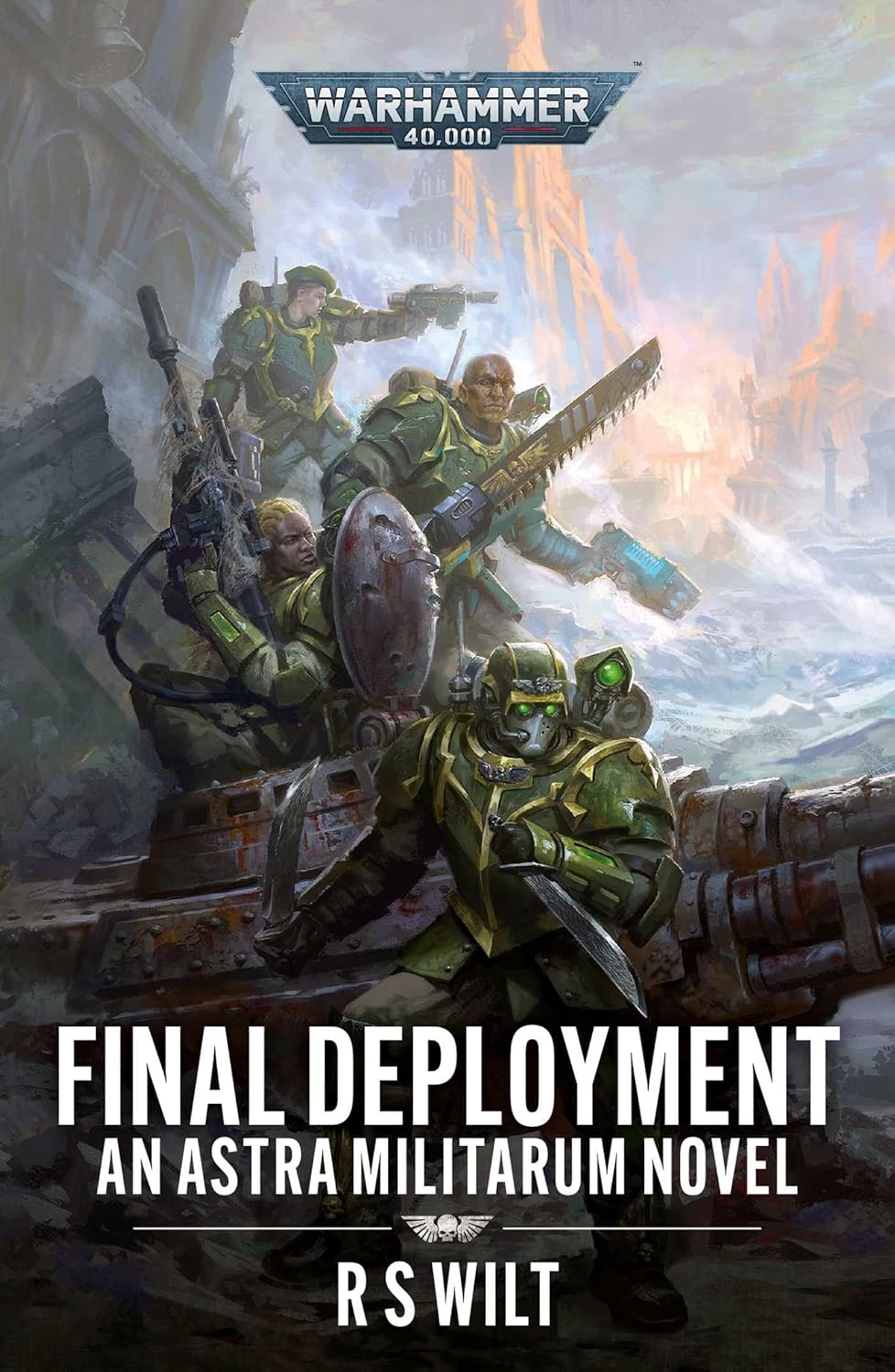
Warhammer 40,000: Final Deployment by R. S. Wilt

Publisher: Black Library (Audiobook – 30 August 2025)

Series: Warhammer 40,000

Length: 11 hours and 23 minutes

My Rating: 4.5 out of 5 stars

Amazon

Prepare for battle as R. S. Wilt presents his debut novel, Final Deployment, a captivating read that perfectly highlights bloody war in the grimdark future of the Warhammer 40,000 universe.

There are few franchises that bring me as much joy as the Warhammer 40,000 series, which follows the numerous factions of the infamously grimdark 41st millennium.  The sheer amount of imaginative stories and tales that are featured in this universe, as well as the talented authors who contribute to it, is quite impressive, and includes some major established writers.  I particularly like how the Warhammer 40,000 publishers also give some interesting opportunities to new authors looking to break into the fantasy or science fiction space.  Many aspiring authors have had their very first novel published in the Warhammer canon recently, and I deeply enjoy reading debuts from these new writers.  Examples of this include Fire Made Flesh by Denny Flowers, The King of the Spoil by Jonathan D. Beer, Ashes of Cadia by Jude Reid, Longshot by Rob Young, Deathworlder by Victoria Hayward and Lord of Excess by Rich McCormick, to name a few.  Many of these debuts are first class reads, and I’ve featured a few on my favourite Warhammer 40,000 novels lists over the years.

Due to my previous awesome experiences with debuts in this franchise, I am always very excited to check out first Warhammer 40,000 novels from new authors, especially those with epic plots.  The latest example of this is Final Deployment by R. S. Wilt, which was the author’s very first novel.  Spinning off from his previously published short story Eradicant, Final Deployment had a very exciting plot behind it that follows the most lethal human soldiers in the grimdark future, the Tempestus Scions.

In the far future, the Imperium of Man battles for survival on thousands of planet-spanning battlefields, with untold numbers of human soldiers fighting and dying every day against monsters, xenos and heretics.  Of these soldiers, none are more deadly or skilled than the Tempestus Scions.  Moulded into unquestionable killing machines from a young age with relentless training and mental manipulation, the Tempestus Scions serve as an elite force with the soldiers of mankind, taking on the missions that no other soldier could complete.

Amongst these Tempestus Scions are the fighters of First Eradicant squad of the Xian Tigers.  Led by Tempestor Traxel and “inspired” by Commissar Fennech, First Eradicant are an unusual regiment made up of several misfit Scions damaged by the battles they have seen.  Deployed to the planet of Rilis, a formerly loyal world now fighting a brutal civil war, First Eradicant is tasked with destroying the rebelling regiments and bringing order to the planet.  Utilising their superior training and equipment, First Eradicant quickly turn the tide against the enemy and being to lead the loyalist forces on Rilis to victory.  However, their success leads them discover the full strength of the traitors, as well as their dark allegiances.

After a disastrous battle that sees their loyalist allies massacred, First Eradicant find themselves facing monstrous opponents even more lethal than they are; three Chaos Space Marines from the Iron Warriors legion.  Determined to slay the ancient, genetically enhanced traitors, First Eradicant take the fight to the Iron Warriors across the planet.  However, with their leader traumatised by past battles and Commissar Fennech playing his own sinister games, can even the best human soldiers in the galaxy defeat the evolved might of the Chaos Space Marines?

R. S. Wilt starts his professional writing career off in explosive fashion with this amazing and compelling debut. Final Deployment was a deeply exciting character-driven Warhammer 40,000 story that followed several highly damaged characters as they attempted to survive the horrors of war. Intense, action-packed and deeply addictive, Final Deployment was an outstanding read that I had an incredible time getting through.

I really enjoyed the epic and deeply exciting narrative that Wilt pulled together for Final Deployment, which perfectly showcases futuristic special forces soldiers going after a deadlier opponent.  Set after the events of the author’s previous short story Eradicant, Final Deployment has a quick and effective start to it, as Wilt first sets the scene for the war on Rilis, before introducing the members of First Eradicant as they literally drop onto the scene.  Each of the protagonists, especially lethal and reckless recon trooper Norroll, gets their moment to shine in these opening scenes, which also work well to highlight Wilt’s intense writing style.  You are soon dragged into the story, and while the initial parts of the book are a tad slow, that changes with the pivotal battle around a third of the way through that sees the Chaos Space Marines arrive in bloody fashion.

Wilt did an outstanding job of changing the tone of Final Deployment after this big moment, as the protagonists find themselves heavily on the backfoot, and there are some notable PTSD elements hitting Tempestor Traxel.  The rest of the novel revolves around the protagonists attempting to hunt down and stop the Chaos Space Marines, no matter how the rest of the war is going.  The story from that point is essentially broken down into three distinctive parts, each of which showcase the very different, but equally brutal, fights against the separate deadly antagonists.  Wilt does an excellent job setting up the scenarios around these battles, which include infiltrating a deadly facility, a brutal ambush by a daemonic possessed foe, and an air drop into enemy territory, and you soon get enthralled in the protagonist’s desperate mission.  These events work extremely well as a sequential and cohesive narrative, and you get really absorbed in the mission of the slowly dwindling group of Tempestus Scions.  Everything leads up to the desperate final confrontation between the protagonists and their deadliest foe, which hits hard and keeps you guessing about who is going to survive.  I felt this entire story came together perfectly, and the ending does an excellent job wrapping up Final Deployment as a standalone Warhammer 40,000 story, with the potential left open for a sequel.  An overall excellent narrative that was quite impossible to put down at times.

While the story is very cool, I also felt that Final Deployment was extremely well written, as Wilt produces a powerful, character-driven narrative that focused on the horrors of war in the grimdark future.  Expertly utilising the iconic Warhammer 40,000 universe in this clever and brutal war story, I loved how the intense personal narratives blended with the more outrageous elements of franchise.  Wilt puts his evident skill at writing brilliant and bloody action sequences to good use in Final Deployment, and the resulting firefights and close combat sequences were some of the more intense and striking you are likely to see in Warhammer fiction.  The author maintains an excellent, fast pace throughout the entire novel, and there wasn’t a single slow moment or inclusion that didn’t play into the story in some interesting or compelling way.  I also appreciated the great use of alternate perspectives, as the story cleverly jumps between several key characters.  This is primarily utilised to showcase multiple angles to the book’s awesome action sequences, which was a ton of fun.  However, I also enjoyed how Wilt took the opportunity to examine the plot from the perspective of several interesting supporting character, including a couple of antagonists.  This helps Wilt to present an even more layered narrative, and it is always really entertaining to see the villain’s reactions to the protagonist’s actions.

Final Deployment is also an excellent and entertaining addition to the Warhammer 40,000 franchise, which works well as an exciting standalone novel.  Despite diving straight into the universe, Final Deployment is accessible to readers no matter their experience with Warhammer fiction, as the author provides a lot of intriguing universe details.  This includes the Tempestus Scions, who serve as the human faction’s ultimate special forces unit outside of the genetically enhanced Space Marines.  The author does an incredible job showcasing the skill and tactics of the Scions throughout Final Deployment, and you really appreciate that they are a highly trained and better equipped regiment.  While Wilt somewhat exaggerates the effectiveness of the Scions and their equipment for narrative purposes (especially carapace armour), you get a realistic sense of these figures in combat, and I appreciated how the characters were slowly debilitated by injuries and losses.  There is also a fascinating look at the harsh training and religious brainwashing these figures undergo, which fits the grimdark Warhammer 40,000 universe perfectly.  Other elements of Warhammer fiction are cleverly utilised here, and I loved the author’s depiction of just how dangerous Space Marines and their chaotic counterparts are compared to normal humans, even the Tempestus Scions.  The damage three Iron Warriors were able to do to the loyalist army, and the lengths the protagonists went to beat them, was so beautifully excessive, and I felt it was an appropriate amount of power scaling.  Thanks to these cool features from the Warhammer 40,000 universe, this book will primarily appeal to established fans of the franchise, although thanks to Wilt’s great writing, new readers will also have a lot of fun with it, even if they didn’t read the author’s previous short story.

While much of the appeal of Final Deployment was its epic story, great writing, and impressive action, I also felt the complex characters helped to make it even more special.  Primarily set around a group of Tempestus Scions, Final Deployment featured an intriguing look at these figures, their damaged pasts, and the struggles they experience on and off the battlefield.  Wilt does an excellent job of splitting the focus of Final Deployment over much of the extended cast, and indeed its nominal main characters, Tempestor Traxel and Commissar Fennech, don’t have that much of the book shown from their perspective.  Instead, most of the story is told through the eyes of other key members of the squad, including Norroll and the squad’s medic, Daviland.  This allows these secondary figures in the squad much more room to shine, and I felt the book was stronger as a result.  Norroll in particularly was quite a fun character.  An overly reckless Scion, Norroll finds himself caught between loyalty to Traxel and his squad, and his own death wish, and it was often really intriguing to see him in the middle of the bloodiest scenes in the book.  Daviland served as an excellent counter to Norroll’s more outrageous perspectives, especially as she is one of the saner members of the squad.  A transplant from another regiment, Daviland provides an interesting outsider’s perspective to the book, especially as she has a lot less mental damage the rest of First Eradicant.  Despite her loyalty primarily being to Fennech, Wilt writes an excellent storyline around Daviland becoming closer to her squad, and I felt that her perspective scenes were some of the more thoughtful and provided some great insights in the minds of the rest of the characters. 

Of the rest of the cast, Tempestor Traxel and Commissar Fennech, had the most presence.  Despite not serving as perspective characters, both were major parts of the book’s plot, and Wilt did an excellent job showcasing their personalities and issues through the eyes of the other protagonists.  This includes Traxel’s mental trauma at once again facing Chaos Space Marines after a previous deadly mission, and his impacted leadership adds an extra layer of difficulty to the protagonists’ mission.  Fennech, on the other hand, was a great portrayal of a classic, cold-blooded Imperial commissar, shooting allies first and never asking questions.  Fennech served an interesting role as both an ally/gun-bearing motivator, and a potential secondary antagonist to First Eradicant, especially as he questions their effectiveness and resolve.  While Fennech’s storyline doesn’t go as far as it could have, and I would have liked seeing some of the book through his steely eyes, I felt that he was an outstanding inclusion to Final Deployment’s cast that added some excellent alternative menace.

In addition to these characters, I enjoyed how the rest of First Eradicant also got their time to shine in this novel.  Featuring a mixture of existing members and later transfers from another squad, each of these characters had their own unique charm, and their compelling interactions added a lot to the novel’s enjoyment.  While there isn’t an excessive amount of development with some of these characters, which is mainly down to the mental indoctrination they’ve gone through, they were still fun to follow.  Just make sure not to get too attached to them, as the death toll in this novel is quite high.  Wilt matches these excellent perspective characters with several additional outsider characters, including several gloriously over-the-top antagonists, and the clash of styles and mentalities increased the overall fun and excitement I had with Final Deployment.

Unsurprisingly, I ended up listening to Final Deployment on audiobook, rather than seeking out a physical copy of the book.  I always find that the audiobook format brings out the very best of the grimdark Warhammer 40,000 universe and the unique characters that inhabit it, and the Final Deployment audiobook was a great example of this.  Perfectly narrated by Andrew Wincott, who previously impressed me with his voice work in Deathwatch: Shadowbreaker by Steve Parker and Huron Blackheart: Master of the Maelstrom by Mike Brooks, the intense action and harsh nature of war featured in Final Deployment really comes through in this audiobook, and I loved hearing all the intense firefight sequences come to life.  Wincott did an excellent job moving this intense story along at a quick clip, while also providing all the characters with distinctive voices that really fit their unique and gritty personalities.  The fun mixture of voices between the battle-weary human soldiers and the more unnatural forces of Chaos was extremely enjoyable, and you really get drawn into the compelling narrative as a result.  I honestly flew through the over 11-hour long audiobook in no time at all, and I loved every second I spent listening to it, especially some of the more brutal and deadly fight sequences.

Loaded with awesome action, damaged characters and an epic narrative, Final Deployment by R. S. Wilt was an incredible read and an amazing piece of Warhammer 40,000 fiction.  A fast-paced novel that follows some intense protagonists through hell and back, Final Deployment was an outstanding debut from Wilt, and comes very highly recommended, especially on audiobook.  I look forward to seeing how Wilt’s writing career continues in the future, and I am sure I will enjoy any additional contributions to the Warhammer franchise.

Amazon

Warhammer 40,000: Renegades: Lord of Excess by Rich McCormick

Publisher: Black Library (Audiobook – 6 April 2024)

Series: Warhammer 40,000: Renegades – Book Two

Length: 14 hours and 17 minutes

My Rating: 5 out of 5 stars

Amazon

Prepare to break the bounds of sensation, desire and treachery in the amazing Warhammer 40,000 novel, Lord of Excess by Rich McCormick, the second book in the fantastic Renegades series.

I have been having a great time with the huge variety of unique and elaborate Warhammer 40,000 books coming out in recent years, and it is always fun to see the impressive reads the franchise is producing.  One of the things I particularly enjoy about the Warhammer 40,000 fiction machine is the way in which it gives new authors the chance to shine, with several talented authors writing their very first book as part of the Warhammer canon.  I have already talked about one particularly good Warhammer 40,000 debut this year with Deathworlder by Victoria Hayward, but another incredible first novel I had the great pleasure of reading was Lord of Excess by new author Rich McCormick.

Lord of Excess was an exceptional book that was released as part of the loosely connected Renegades series that looks at a different band of traitor Space Marines as they make their dark way through the universe.  For example, the first Renegades book, Harrowmaster by Mike Brooks, looked at the nefarious Alpha Legion, and I am sure that future entries will dive into the other traitor legions with some fun stories.  Lord of Excess is the second Renegades book, and it provides the reader with an outstanding and unique story focussed on the ultimate beings of excess, the Emperor’s Children.

At the dawn of the Imperium, the Emperor’s Children were the master of mankind’s most loyal and revered Space Marine Legions, dedicated to the fight for humanity while seeking perfection in all things.  However, during the tumultuous events of the Horus Heresy, the Emperor’s Children followed their Primarch into treachery, and turned against their Emperor, falling into the service of the ruinous powers of Chaos.

Now, millennia later, the Emperor’s Children are a twisted remnant of their former glory.  Scattered into smaller warbands, the Emperor’s Children now only seek pleasure and sensation in hedonistic service to the Chaos God Slaanesh, the lord of obsession and excess.  One such band is the feared and infamous group known as the Adored.  Lead by the tainted Space Marine Xantine, the Adored has ravaged the galaxy for centuries, taking slaves and bringing untold torment, but Xantine has never found what he truly desires, until now.

Suddenly dropped out of the Warp, the Adored find themselves in orbit about the isolated planet of Serrine.  A wealthy and corrupt planet of the Imperium, Serrine has been long cut off from the rest of humanity due to corrupted currents of the Warp.  Sensing the opportunity to carve out a place for himself, Xantine decides to take control of Serrine, and turn it into the perfect society, dedicated to loving him.  However, making true perfection is an impossible task, and Xantine soon finds his rule challenged by both the population of Serrine and those closest to him.  Worse, there are darker forces at work within the bowels of Serrine, and soon the world will be engulfed in perfect destruction.

Lord of Excess was an exceptional and impressive Warhammer 40,000 novel that achieved so very much for the reader.  Featuring a complex and compelling tale of betrayal, deceit and corruption, loaded with fun characters and larger-than-life personalities, Lord of Excess was an entertaining and elaborate read from the very start, and I could not get enough of it.

I really loved the story contained with Lord of Excess, and I find it hard to believe that this was McCormick’s very first novel.  The plot of Lord of Excess is an elaborate and continuous tale of woe and failed ambition as it charts main character, Xantine of the Emperor’s Children, as he attempts to bring perfection to the world of Serrine.  Starting off by introducing Xantine and his renegade Space Marines, you are soon shown the world of Serrine, an isolated and mismanaged Hiveworld with plenty of its own problems, including an uprising from a genestealer cult.  Taking advantage of these chaotic events, an obsessive Xantine leads his mostly apathetic Emperor’s Children to the planet’s surface, telling the locals they are there to save them.  This proves to be an intriguing start, as the reader is shown a battle between two very different group of villains, which is essentially the equivalent of the cenobites from Hellraiser facing off against xenomorphs from Alien (with both sides using a lot of purple).  This fight against the genestealers is a fun first part of the book, and I honestly thought that McCormick was going to stretch that conflict out for the entirety of Lord of Excess.  However, the author instead chooses to cleverly end this conflict about a third of the way through the book, and the rest of the novel goes in some very interesting directions.

Following this introduction, Lord of Excess than goes through a series of time skips, as you follow the unlucky course of Serrine under the “benevolent” rule of the Emperor’s Children.  Each new version of Serrine you see is somehow worse the previous version, and it proves extremely entertaining to watch the inherent downsides of the protagonist’s twisted version of perfection.  The plot cleverly rotates between the machinations of Xantine and his Adored as they fight over the course of their warband, and several intriguing human inhabitants of Serrine, whose reaction to the fate of their planet varies across the emotional spectrum.  The plot goes in some very interesting and entertaining directions, as Xantine finds himself continuously beset by betrayal, mostly of his own making, while many others are driven to extreme lengths by Xantine’s actions, and other malign foes hiding beneath Serrine’s surface.  Things continuously get darker and darker as the plot continues, leading up to a brutal and amusing conclusion.  I loved the various elaborate twists and captivating revelations that McCormick cleverly worked into the plot, and his accompanying character work really helps to sell it.  The book ends on a fantastic note, with devilish and deserved endings for many members of the cast, and the ultimate fates of everyone really reminds you that Lord of Excess is a grimdark book focussing on deranged villains.

McCormick really showcased his effective and powerful writing style in Lord of Excess, and I loved the elaborate and multifaceted book that he ended up creating.  The fantastic story has so many deep elements to it, and it transcends the typical action-focused Warhammer fiction by providing nuanced portrayals of society, human nature, and the impossible search for perfection.  That’s not to say that there isn’t action in Lord of Excess, as McCormick loads the book with multiple over-the-top and entertaining fight sequences that prove hard not to love.  However, he also balances these battles with intriguing character work, long-running elaborate story elements, and complex depictions of intriguing Warhammer features.  The way in which the author cleverly shifts the narrative around several fantastic characters works to create a fun and layered story with many moving parts to it.  I also love how descriptive and visual McCormick got at times.  The author clearly had fun describing the many excesses and mutations of the Adored, and you really got a clear and vivid sense of the twisted nature of the beings involved.  This ended up being such an outstanding read, and McCormick did such a great job bringing his elaborate story to life in the absolute best way.

I felt that Lord of Excess was a pretty awesome Warhammer 40,000 novel, that will really appeal to a varied audience.  Established Warhammer fans will love the fantastic depictions of the Emperor’s Children featured within this book, and I love how well McCormick captured the complexities of these renegade Space Marines and the depths to which they have sunk.  While he doesn’t do a full deep dive into the history of the Emperor’s Children, McCormick provides some detailed flashbacks into their past, that Warhammer readers will appreciate, which also providing some good context for new readers.  While this book did spend a lot of time examining the Emperor’s Children, it also featured its own unique and clever narrative, which really utilised the grimdark nature of the wider Warhammer setting to its advantage.  Readers are gifted by a truly complex and intense read, and I felt that Lord of Excess is an amazing example of just how good a Warhammer 40,000 novel can be.  This would be a pretty good entry point for new readers keen to check out the elaborate Warhammer 40,000 fictional universe, especially as you can get an amazing sense of the overall cruel, deadly and often ironic nature of this fantastic overarching setting.

Easily the key strengths of Lord of Excess were the elaborate, distinctive and damaged characters that McCormick centred his story around.  There are some brilliant characters featured in this book, from ancient traitor Space Marines lost in their own obsessions, to the normal inhabitants of Serrine, whose lives are irrevocably turned upside down by the arrival of the Adored.  These elaborate character arcs are very intriguing, and McCormick expertly features them throughout his story, ensuring that the reader becomes intrigued by the fates of these various figures.  The most prominent character is the Adored leader, Xantine.  An ambitious and twisted being, Xantine finds himself drawn to the world of Serrine and sees it as an opportunity to create a perfect world, much like the previous planets the Emperor’s Children called home.  Xantine proves to be an intriguing central figure for the book, especially as you get drawn into his obsession and the disdain of his followers for his vision.  Thanks to the machinations of the daemon S’janth, who shares Xantine’s body, you get some fascinating insights into this character’s mind, and you soon appreciate the depths of his determination to be perfect, which stems from his daddy issues and dark personal history.  I loved seeing how the events of the book were driven with this figures love of perfection, and Xantine proved to be an excellent dark heart to this entire story.

In addition to Xantine, Lord of Excess features several other great characters, all of whom are damaged in fantastic and intriguing ways.  This includes the various members of the Adored, each of whom has their own unique obsessions and focuses.  McCormick really had fun when it came to these corrupted figures, and there are some delightfully over-the-top characters as a result.  These other members of the Adored often come into conflict with Xantine, primarily due to their incompatible obsessions, and I loved the barbed interactions that followed, especially as Xantine both loves and hates his fellow renegades.  While several of these characters stood out, the best one was probably Vavisk.  Vavisk, a Noise Marine, is obsessed with finding the perfect sound, and often finds himself lost in his horrifying music.  However, Vavisk is also Xantine’s closest friend, and the unique bond of brotherhood between these two figures, proves to be a key part of the book, especially as the potential for it to break is always there.

Other major characters include several inhabitants of Serrine who attempt to survive the actions of Xantine.  Due to a creation myth, many people on Serrine initially see Xantine as a destined saviour, and the eventual revelation of his true nature leads to much heartache for them.  These characters provide an outstanding alternative perspective to that of Xantine and the other Adored, and I loved seeing the various reactions to the evil that came to their planet.  Key figures include the young man Arqat, whose rage at the injustices performed against him drives him to some dark places.  The mysterious Cecily founds salvation and escape thanks to the patronage of Xantine, although her loyalty costs her deeply.  While the foppish noble Pierod, seeks to take advantage of the arrival of the Adored, which has blistering ups and downs for him.  I really enjoyed these three human characters, and their unique storylines, some of which were nearly as extensive as Xantine’s, helped to turn Lord of Excess into a particularly brilliant read as you get drawn into their various tales of woe and opportunity.  While Pierod’s story was probably the most entertaining, due to his naked ambition and greed, you honestly connect to all three of them, and it proves fascinating to see where their encounters with the Adored takes them.  McCormick writes some grim and fitting fates for all three of them, and the other humans of Serrine, and seeing the journey they take to get there, is so damn entertaining.

As with most Warhammer 40,000 novels I enjoy, I ended up grabbing Lord of Excess on audiobook, which is just the best way to appreciate a piece of Warhammer fiction.  Coming in with a runtime of over 14 hours, the Lord of Excess audiobook is a decent length, but one you can get through quickly once you become caught up in the outstanding plot.  I love how well this format highlighted the epic narrative featured with Lord of Excess, and you get a real sense of the plot’s chaotic delights, unnatural horrors, and devilish figures when they are read out to you.  It helped that the Lord of Excess audiobook was helmed by one of the very best Warhammer 40,000 narrators, Richard Reed.  Reed has been killing it in recent years with his work in Warhammer 40,000 fiction, including The Infinite and the Divine by Robert Rath, Ruin and Reign by Nate Crowley and Grim Repast by Marc Collins, all of which were greatly enhanced by his impressive voice work.  His work in Lord of Excess is particularly awesome, as he once again produces an impressive range of unique voices to fit the big personalities of the plot.  This includes multiple mutated and utterly corrupted Space Marines, and Reed provides very fitting voices for them, as well as the unlucky humans caught up in their machinations.  The over-the-top story comes out so much better because of Reed’s compelling narration, and I love how effectively he captured the various insane figures.  This amazing voice work turned the Lord of Excess audiobook into something very special, and I had an exceptional time getting through it.

Lord of Excess by Rich McCormick is an absolutely brilliant and amazing piece of Warhammer 40,000 fiction that I could not get enough of.  Expertly combining elaborate elements of the Warhammer 40,000 canon with a complex narrative and darkly damaged characters, Lord of Excess was so much fun to read, and it proves impossible not to get caught up in this epic debut.  This might be one of the smartest and most compelling pieces of Warhammer 40,000 fiction release so far in 2024.  A truly outstanding Warhammer 40,000 book from a particularly amazing new author, Lord of Excess comes very highly recommended, and Rich McCormick is an author with big things in his future.

Amazon

Warhammer 40,000: The Fall of Cadia by Robert Rath

Warhammer 40,000 - The Fall of Cadia Cover

Publisher: Black Library (Audiobook – 5 August 2023)

Series: Warhammer 40,000

Length: 19 hours and 42 minutes

My Rating: 5 out of 5 stars

Amazon

Cadia Stands!  I ended 2023 on a very high note with one of the best Warhammer 40,000 novels of the year that follows one of the biggest events in the franchise’s recent lore, The Fall of Cadia by Robert Rath.

There were several amazing Warhammer 40,000 novels released in 2023, with some of my favourites including The Lion: Son of the Forest and Warboss by Mike Brooks, The King of the Spoil by Jonathan D. Beer and Cypher: Lord of the Fallen by John French, just to name a few.  However, in terms of sheer scale, epic battles, and larger-than-life characters, my favourite will have to be The Fall of Cadia.  As the name suggests, The Fall of Cadia follows the final battle for the planet of Cadia at the end of the 13th Black Crusade, which was a major campaign in the Warhammer 40,000 tabletop game.  The original 13th Black Crusade campaign happened back in 2003, with the official result being something of a draw.  However, in 2017, Games Workshop retconned the campaign to result in a much more substantial Chaos victory, which ended up having substantial impacts on the wider lore of the franchise, effectively reshaping the entire Warhammer 40,000 universe.

This change ended up being a pretty significant event, and Games Workshop provided some major write-ups about it that summarised the events and their explosive aftermath.  Indeed, the lore events initiated in this event have already been featured in several novels, and most of the current Warhammer 40,000 fiction examines the consequences of this campaign.  However, there has yet to be a novel solely dedicated to trying to capture the entirety of the action at the end, until now with The Fall of Cadia by Robert Rath.  Rath was a great choice of author to write this book as he is a truly amazing author of Warhammer 40,000 fiction.  His previous novels, Assassinorum: Kingmaker (one of my favourite books and audiobooks of 2022) and The Infinite and the Divine, have both been exceptional five-star reads, telling elaborate, character-driven stories that cleverly capture complex aspects of Warhammer 40,000 lore and turn them into impressive and addictive reads.  As such, he was the perfect choice to write The Fall of Cadia and he succeeded in creating a deeply moving and epic novel that perfectly brought the chaotic events that ended this infamous war to life.

In the far future of the 41st Millenium, few battlefields are more significant or more soaked in blood than that of Cadia.  A fortress world for the Imperium of Man, Cadia stands in the shadow of the Eye of Terror, a blazing rift that serves as a gateway into the Warp and the realm of the Chaos gods.  For any substantial invasion by the forces of Chaos into the Imperium to be successful, Cadia needs to be taken and destroyed, and for that task the Chaos Gods have chosen the Warmaster of the Black Legion, Abaddon the Despoiler.  Abaddon is a legendary warrior of hatred and spite who alone is capable of welding together the unruly and contentious forces of Chaos.  Over the millennia, Abaddon has launched 12 Black Crusades against Cadia, leading an unholy alliance of monsters, daemons, cultists and traitor Space Marines to battle.  However, each time Cadia has held, at great cost to the desperate Imperial defenders.  But now, as the forces of Chaos appear stronger than ever before, a 13th Black Crusade has been declared, one that looks set to destroy Cadia forever.

The Fall of Cadia starts well into the 13th Black Crusade, as, after weeks of heavy fighting, the forces of Cadia and humanity once again appear victorious, with the armies of Chaos retreating on all fronts.  However, despite the apparent victory over the heretics and the dark gods of Chaos, Lord Castellan Ursarkar Creed is uneasy, believing that the victory was too easy.  As the celebrations continue, Creed is soon proved right, as the Eye of Terror disgorges a new enemy force unmatched in size and deadly potential since the legendary Horus Heresy.

At its head flies a dread Blackstone Fortress, an alien superweapon capable of intense destruction and now crewed personally by Abaddon.  Faced with this threat, Creed attempts to bring together the various elements of humanities defenders, including legendary Space Marines, virtuous Sisters of Battle, the inhuman soldiers of the Adeptus Mechanicus, and the outmatched by steely rank-and-file troops of Cadia, determined to save their home.

As the final invasion of Cadia begins, Creed organises the defence the best he can to hold back the oncoming horde on land, in the sky, in space, and even far behind Cadian lines in their seemingly safe cities.  If Creed has any hope of succeeding, he will need to bring together the scattered armies of the Imperium on Cadia into a single cohesive force, but not all of the defenders are fighting for the same goals.  Even if these armies come together, can the legendary Creed hold off the fury of Abaddon and his dark gods?  Cadia’s last stand has begun, but who will be left alive at its end?

Robert Rath continues to showcase just how varied and impressive his talent for writing Warhammer 40,000 fiction is as he captures the incredible events of the last siege of Cadia.  The Fall of Cadia is epic in every way possible, as it presents the reader with a great coverage of these key lore events and the characters involved.  Elaborate, intense, and featuring so much damn carnage and war, The Fall of Cadia is an incredibly addictive read that got a very easy five-star rating from me.

I think it is important to point out that Robert Rath had a difficult task ahead of him when he was chosen to novelise the events surrounding the end of the 13th Black Crusade.  A lot of detailed lore has been written around this event, not only in the various guides, rulebooks and other material associated with the tabletop game but also in several years worth of novels and extended fiction that focused on the aftermath of the war.  Any novelisation about these events ran the risk of being a stale retelling of events that all Warhammer 40,000 fans already know about.  However, Rath rose to the challenge and presented a powerful, intense and memorable depiction of the events that really drags the readers in while showing just how incredible and epic a piece of Warhammer fiction can be.

To tell the events of The Fall of Cadia, Rath elected to cover everything in a massive, multilayered, character-driven narrative, told from every perspective imaginable.  Starting towards the final days of the battle, when Abaddon unleashes his true invasion of Cadia, the reader is soon engrossed a range of different storylines that cover many different angles of the battle.  Not only do we get to see the overall strategy of both sides but the reader is also thrust into personal wars and fights across the theatre.  So many amazing moments are covered, including a desperate last stand in the mountains, battles in the sky and space, Chaos infiltration in the cities, criminal enterprises, even internal dissension amongst the Chaos command.  These scenes are usually shown through the eyes of a complex characters, whose desperate fight for Cadia helps to define them and presents the reader with some impressive and captivating character arcs.  All these varied conflicts are expertly portrayed by Rath, who does a wonderful job capturing the intensity, brutality and lack of humanity involved in warfare, as his characters suffer on every battlefield imaginable.  The sheer epic and destructive nature of these conflicts really come across in Rath’s writing style, and I honestly visualised many of the scenes being described in cinematic detail in my head.

The first half of the book primarily focuses on these various scattered storylines, and it was a lot of fun to see the different theatres of war, especially as you start to get attached to the major characters.  All the battles featured are pretty awesome and intense in their own way, and I really have to emphasise just how skilled Rath is at bringing all the different elaborate bits of combat to life.  The complex story pieces start to come together in the second half, especially as each of the characters find themselves drawn to the same battlefields.  I really appreciated how the storylines tied together, and there are some brilliant moments featured here.  I also felt that the multiple deus ex machina moments towards the conclusion of a big battle sequence that Rath needed to include because they were part of the lore was handled about as well as they could be.  Rath did some good set-up for the most important of them earlier in the plot, and I liked how in many instances he tried to examine it from the perspective of the common soldier looking for miracles, so it often did not seem too ridiculous.

Everything leads up to the big final battle in the last third of the novel, and despite knowing how it was going to end, I still was extremely invested in the plot and eager to see how everything came about.  A lot of this was because I deeply enjoyed the compelling character arcs of the newer protagonists, but I was also very interested in seeing how Rath envisioned some of the more essential events.  The author really did not disappoint, as these epic and groundbreaking moments were expertly showcased to the reader in a powerful and captivating way.  The big deaths were pretty shocking and hurtful, especially if you did not know they were coming, and the major conflicts were so damn epic in their scope and impact.  The final devastating blows of the war really hit hard, especially as the climatic events featured some deeply personal moments alongside the mass devastation, which made everything that much more powerful.  I really loved how everything came together, and the poetic conclusion that highlighted the final fights of the surviving protagonists is going to stay with me for some time.  I am so damn impressed with how much passion and emotion that Rath was able to stick into this massive war story, and I honestly loved every single second spent reading The Fall of Cadia.

In addition to the amazing story, I really need to highlight the impressive array of characters featured throughout The Fall of Cadia.  Rath did a wonderful job of presenting the massive events of this book through a range of intriguing character perspectives on every side of the conflict, and there is a fantastic combination of new characters and established Warhammer 40,000 figures.  The author really tried to cover The Fall of Cadia’s narrative from every single angle he possibly could, and the resulting combination of generals, common soldiers, legendary warriors, ancient traitors and other interested onlookers, helped to make this Warhammer 40,000 story even more powerful and layered.  This includes several Chaos characters, whose tainted perspectives allow for a compelling view of both sides of the conflict.  The Fall of Cadia’s character arcs are mostly self-contained for the majority of the book, with their focus usually on that particular figure or theatre of the war.  However, there are some clever and moving interactions between the characters as the novel continues, and it is testament to Rath’s writing style and ability to create a massive web of overlaying character storylines that these interactions fit together so well into a cohesive and powerful narrative.  Rath really dove into the complex lives and personalities of every character he featured, even those that died quite quickly, and the resulting character arcs really added to the emotional impact of The Fall of Cadia.  You become heavily invested in these characters as a result, and waiting to see who survives the war is an important part of experiencing this novel.

So many big personalities were expertly featured throughout The Fall of Cadia and every reader is going to come away with their own favourites.  The better character arcs I personally loved included that of Major Marda Hellsker, who is forced to lead a desperate last stand for much of the book and grows into the leadership position thrust upon her.  Captain Hanna Keztral’s exploits in the sky also make for great reading, especially as she desperately tries to gain respect whilst flying an unarmed aircraft.  You also have to love the storylines surrounding Salvar Ghent, Cadia’s premier gangster, as he tries to exploit the war to his advantage before finding himself thrust into a much more prominent role.  I particularly loved how well Ghent interacted with some of the major figures in the book, and his entire storyline was one of the most entertaining.  The insatiable Necron collector Trazyn the Infinite was also a great inclusion in the plot, and Rath clearly had fun bringing back this hilarious character after featuring him so heavily in The Infinite and the Divine, and I got a good laugh at several of his pivotal scenes and petty moments.

However, the best characters in The Fall of Cadia had to be the opposing leaders of the war, Lord Castellan Ursarkar Creed and Abaddon the Despoiler.  Both are major figures in Warhammer 40,000 lore and Rath ensured that they were done justice in this novel.  Creed is shown to be a rough but brilliant commander, capable of inspiring an entire world while also suffering from the stresses of constantly being on the losing side.  I particularly enjoyed the subsequent inclusion of Colour Sergeant Jarran Kell alongside Creed as his long-suffering aide and best friend, and the two make for a very powerful character combination for many of the scenes shown from the defenders’ perspective.  Abaddon on the other hand is presented as the absolute beast that he is, and his obsessive desire to destroy Cadia is palpable.  I deeply appreciated that Rath showcased Abaddon as the ultimate villain in this universe, and his appearances were always exceedingly impactful.  Many of Abaddon’s appearances were cleverly shown through the eyes of his loyal servant, Dravura Morkath, whose rose-tinted opinions of her master barely covered the restrained evil within this figure.  I quite enjoyed Dravura as a character, especially as she has the most intriguing insights into the Chaos ranks, and the resolution of her storyline with Abaddon might be one of the most heartbreaking in the entire book.  These characters, and so much more, were such a brilliant part of The Fall of Cadia, and they helped turn what could have been a simple retelling of the lore into a particularly powerful and moving novel.

As with most Warhammer 40,000 novels, I feel that The Fall of Cadia is going to appeal to those fans of the franchise who already have a grip on the basics of the lore and main characters and can fully appreciate just how massive an event this book was.  Due to the material the book is based on, there were a lot of crazy events and characters featured here, some of which would be obscure even to casual fans of the game.  While Rath does an outstanding job of explaining and exploring the most important of these elements, some readers might occasionally be confused at what is going on or how certain characters came into being.  Still, I feel that most new readers can still have an exceptional time with this book, especially as the epic battles, impressive characters, and heartfelt military focused story, is so damn good.  The Fall of Cadia might even be a great gateway novel for those people trying to get into Warhammer 40,000 fiction, and it sure as hell encouraged me to read more Warhammer fiction.

One of the other things that I really appreciated about The Fall of Cadia was the way that Rath tried to paint a more nuanced picture of the planet of Cadia itself.  Cadia is usually portrayed as a bastion of military prowess and resistance without some of the issues other planets in the Imperium had, so it was quite interesting to see Rath’s different take on the subject, showing Cadia to be a planet with hidden issues and dissent.  In particular, Rath examines the problematic social structure of Cadia, where the active military are notably prioritized and those people who could not fight or be assigned other roles were considered a second-class citizen.  I loved how well Rath examined and focused on the issues surrounding this unique military class system, and it became a surprising key part of the book.  Indeed, the motivations of several characters are highly tied into these issues, with many seeking to prove themselves after being considered lesser for their contributions.  It also serves as an intriguing motivation for several antagonistic figures, and I loved just how well Rath was able to weave the structure of a planet into these intriguing character traits.  This, and more, really showcased Rath’s inventiveness and appreciation for the little details of the Warhammer 40,000 universe, and it is one of the reasons why I really enjoy his novels.

As with most Warhammer 40,000 novels, I chose to enjoy The Fall of Cadia on audiobook, which proved to be a very smart decision on my behalf as it was one of my favourite audiobooks of the year.  Coming in with a runtime of just under 20 hours, The Fall of Cadia is a bit longer than your typical Warhammer 40,000 audiobook, which reflects the massive story Rath came up with for this epic read.  I really loved how well this audiobook format brought the epic nature of this narrative to life and the many battles, wars, and unique characters felt even more impressive when read out.  I enjoyed the narration of Mark Elstob, who has previously lent his voice to other great Warhammer audiobooks, including Kal Jerico: Sinner’s Bounty by Josh Reynolds.  Elstob’s narration of The Fall of Cadia is extremely good, and I loved how passionately he presented every big event and piece of action.  I really enjoyed some of the great voices he came up with for the cast of The Fall of Cadia, and every larger-than-life character was gifted a fitting tone that perfectly captured their personalities and intensity.  His voices for the opposing leaders of the battle, Abaddon the Despoiler and Ursarkar Creed, are amazing examples of this, and you really get awesome impressions of both character’s opposing determination and charisma in some outstanding sequences.  I really cannot emphasise just how incredible this audiobook version of The Fall of Cadia is and it is definitely the best way to enjoy this world-shattering story.

Overall, The Fall of Cadia is a pretty exceptional piece of Warhammer 40,000 fiction that did such an impressive job of capturing this intriguing event from the game’s substantial lore.  Robert Rath is such an impressive author, and I am really glad he had the opportunity to cut loose and present this massive inclusion to the Warhammer 40,000 franchise.  The Fall of Cadia is easily one of my favourite books of 2023, and I loved how Rath told such an epic war tale in such a powerful and memorable way.  I honestly hope they make a movie based around this book in the future, because it would be so damn spectacular.  A highly recommended read that no Warhammer 40,000 fan should be without.

Amazon

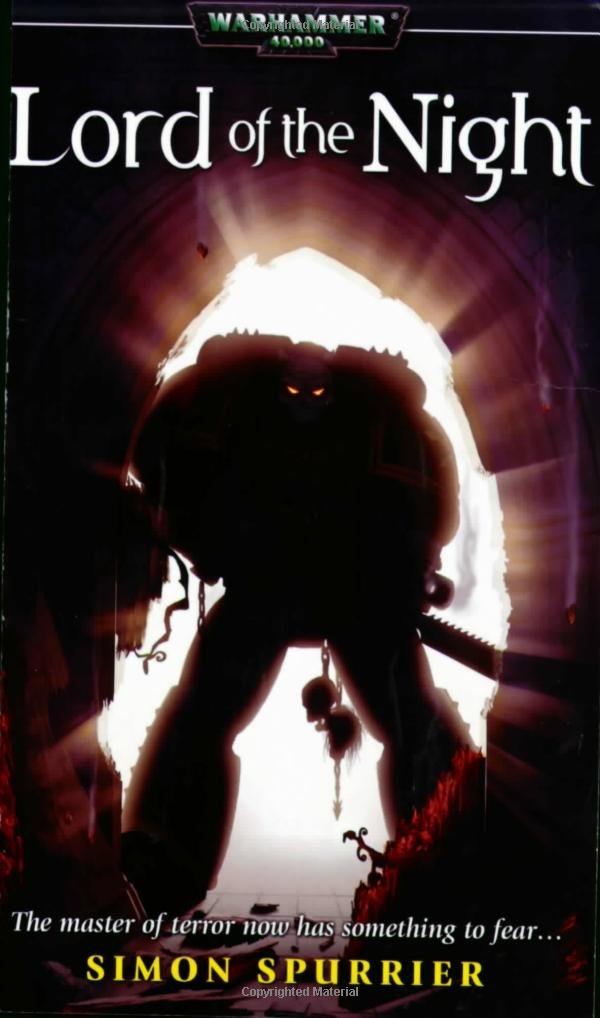
Throwback Thursday – Lord of the Night by Simon Spurrier

Lord of the Night Cover

Publisher: Black Library (Paperback – 25 January 2005)

Series: Warhammer 40,000

Length: 413 pages

My Rating: 4.75 out of 5 stars

Amazon

Welcome back to my Throwback Thursday series, where I republish old reviews, review books I have read before or review older books I have only just had a chance to read.  This week I check out an impressive and dark older entry from the excellent Warhammer 40,000 extended universe, Lord of the Night by Simon Spurrier.

Readers of this blog will know that I have a lot of love for the always intense and fun Warhammer 40,000 fiction, having read quite a bit of it this year.  One of the better older pieces of this fiction I managed to check out this year was the awesome novel Lord of the Night by acclaimed author Simon Spurrier.  Spurrier is an excellent author who is best known for his work on various graphic novels and comics series across the major companies.  I have read a couple of his comics over the years, although my favourite is probably his run on the original Doctor Aphra series (check out my reviews for the awesome volumes Unspeakable Rebel Superweapon and A Rogue’s End).  Spurrier also wrote several Warhammer 40,000 novels back in the mid-2000s, including the highly regarded Lord of the Night.  I was lucky enough to get a copy of Lord of the Night second-hand, and I ended up reading it while away on holiday.  Unsurprisingly I loved it, as Spurrier came up with a powerful story about two complex characters caught up in a deadly game of cat and mouse.

Interrogator Mita Ashyn of the Ordo Xenos is newly arrived in the service of veteran Inquisitor Kaustus after the death of her previous master.  Desperately trying to earn her place amongst the Inquisitor’s haughty acolytes and her mysterious new master, Mita is isolated due to the taint associated with her advanced psychic powers.  Seeking alien cultists on the hive-world of Equixus, Mita is tasked with rooting out minor corruption and heresy.  However, when an ancient ship crash lands on the planet, Mita receives psychic warnings of a dark and terrible foe.

Ten thousand years ago at the end of the Horus Heresy, Commander Sahaal was chosen by his crazed Primarch, Konrad Cruz, as the heir to the Night Lords legion of Space Marines.  However, before Sahaal could take command of the Legion, his Primarch’s most sacred artefact was stolen, and Sahaal’s pursuit of the thief saw him trapped out in the depths of space for millennia.  Awaking on his crashed ship on Equixus, Sahaal finds the artefact gone, stolen by thieves from the planet.  Determined to claim lordship of his legion, Sahaal will stop at nothing to reclaim what is rightfully his, no matter how many people he has to kill.

As Sahaal begins a deadly campaign of fear in the underbelly of Equixus, Mita appears to be the only person in the Inquisitor’s retinue concerned about the danger.  Working against the wishes of her master, Mita attempts to destroy the traitor Astartes that has invaded the city before it is too late.  However, Sahaal is a master of urban warfare and soon his solo campaign of destruction has the entire hive on its knees.  As the two lost souls move to confront each other, they soon discover that there are even greater secrets at work than either of them realises, and soon the fate of Equixus hangs in the balance.

This was a powerful and compelling Warhammer 40,000 story from Spurrier that had me hooked from the very beginning.  Focussed on the two unique perspective characters of Mita and Sahaal, Spurrier sets up an intriguing and vicious story with great thriller elements in a fantastic and gloomy hive-city setting.  Starting off with some effective set-up that introduces both protagonists and their complex lives, Lord of the Night soon evolves into an impressive cat and mouse scenario between the two as Mita fights to stop Sahaal before he recovers his prize and destroys the city from within.

This leads to all manner of chaos and destruction, as Sahaal initiates a brutal urban warfare campaign by enlisting the help of a curious raft of unconventional allies, while Mita manipulates the city’s official resources to her use.  While this battle rages, Spurrier also introduces some compelling and highly important side storylines which see Mita trying to gain the respect and aid of her secretive Inquisitor master, while Sahaal comes to terms with his missing years, his complex past, and what it is to be a Night Lord.  This leads up to several great confrontations before all the characters finally come together a brutal final sequence.  There are some great reveals here, especially about who is pulling all the strings surrounding the characters, and I loved some the brilliant twists that emerged.  The book ends on a pretty dark note, with both protagonists getting what they wanted, even though it nearly destroys them, and this ended up being quite an epic and captivating read.

I love how dark and intense Spurrier made this novel, and it has such an elaborate and complex narrative surrounding it.  The split between the two main characters works extremely well to tell an elaborate and multilayered story, and I enjoyed how the two separate arcs bounced off each other, with both dealing with betrayals, personal lows and the realisation that nothing is as it seems.  The grim setting of the hive city is also very impressive, and there is a reason that Warhammer 40,000 authors use it as a prime location for their stories.  The multiple layers of tunnels, caverns, and cityscapes makes for an outstanding background to this story of urban warfare and bloody revenge, and you can easily feel the confinement, corruption and fear that Spurrier envisions in this epic location.

Lord of the Night also turns out to be quite an impressive and elaborate piece of Warhammer 40,000 fiction.  Spurrier clearly has a great appreciation and love for the lore, and it really shows in his portrayal of both a secretive Inquisitor squad and the Night Lords Space Marines.  While Inquisitors are well covered in Warhammer 40,000 fiction, such as the Eisenhorn books by Dan Abnett (Xenos, Malleus and Hereticus), I personally loved seeing a book focussing on a Night Lord, especially as they are a little unrepresented in the extended universe fiction.  Spurrier really dives into what it is to be a Night Lord, especially during the Horus Heresy and before their full corruption, and his primary Night Lord character gives the reader a full course on how to terrorise and manipulate a city to get what you want.  It was so cool to see a Night Lord in all his fear-bringing glory, and it made for quite a dark and bloody read as a result.  Spurrier also does a great job of exploring some of the wider lore of the Warhammer 40,000 universe and working it into the plot of Lord of the Night.  This ensures that readers a little less familiar with the canon can enjoy this book fairly easily and not have to worry about external lore details.  That being said, fans of the franchise are always going to get a little more out this book and Lord of the Night proved to be a particularly good earlier novel in the canon, especially with its great insights into both the protagonist and antagonist.

One of the things that I most liked about Lord of the Night was the complex and impressive protagonists that the story was set around.  Despite being on different sides, Mita Ashyn and Sahaal have a lot in common with each other, having been lost and reviled in various different ways.  Mita proves to be a great example of how dark and unfair the Warhammer 40,000 universe is, as the thing that makes her a useful servant to the Imperium, her psychic abilities, also ensures that everyone sees her as unclean and tainted.  Watching her desperately trying to prove herself to the Inquisitor, his cronies, and the people of Equixus, only to be rejected and reviled, is very heartbreaking, and you can’t help but feel for Mita as she is routinely betrayed, spurned, or ignored.  Spurrier does some wonderful work with Mita as Lord of the Night continues, and it was great to see her find her confidence, fight back against those who oppress her, and start to question her superior and the teachings that bound her and her powers.  Watching her come to terms with her place in the Imperium, and still try to do the right thing was extremely powerful, and it leads to some impressive and emotionally charged scenes.

Sahaal also prove to be a surprisingly deep and complex character to follow.  Before reading Lord of the Night, I thought Sahaal would be a deranged Chaos Space Marine, and indeed the first few scenes with Sahaal show him to be a deadly and remorseless killer who uses terror as an effective weapon.  However, as the book continues, you start to realise that there is more to Sahaal than meets the eyes.  While he kills to achieve his goals, often in brutal ways, some of the interactions he has with his surprising allies, as well as a series of compelling flashbacks, paint him in a somewhat noble light defined by his loyalty to his Primarch and his ideals for control and order.  This paints a bit more as a victim of circumstance rather than a full Chaos infected traitor, and it was fascinating to see him act very differently from other antagonistic Space Marines characters.  There are some intriguing hidden depths to Sahaal that are revealed towards the end of the book, especially when certain manipulations are uncovered, and there are some good revelations regarding his actual mindset and mental status.  I also loved the scene where he is finally reunited with his beloved Legion, only to realise just how far they have fallen in his absence.  Sahaal ends up having some intriguing interactions with Mita throughout the course of the book, and the two play off each other perfectly, representing different angles of betrayal, loyalty and misunderstood misuse.  I deeply appreciated how well Spurrier utilised both of these point of view characters in Lord of the Night and the helped to turn this into quite an amazing read.

Overall, Lord of the Night was an exceptional read and a wonderful piece of Warhammer 40,000 fiction.  Simon Spurrier does an excellent job of bringing together two amazing, misunderstood characters together in a brutal battle across a terrified city and I was hooked the entire way through this plot.  Clever, intense, and loaded with some intriguing pieces of Warhammer lore, Lord of the Night is an outstanding read and it was one of the better pre-2023 Warhammer 40,000 novels I enjoyed in 2023.

Amazon

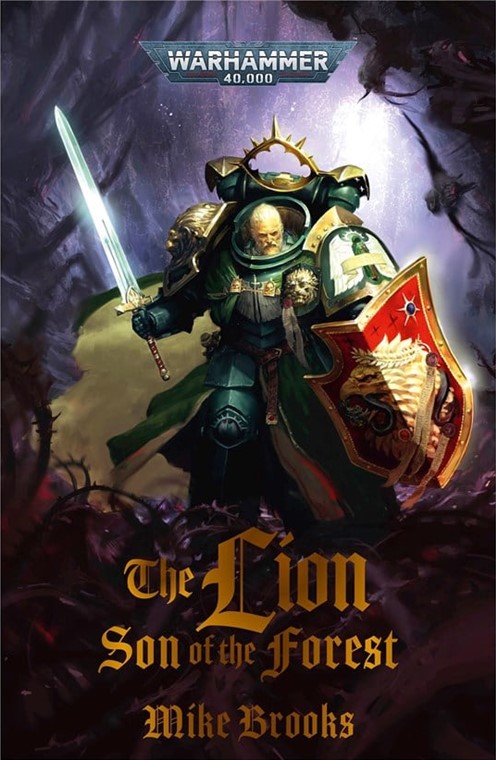
Warhammer 40,000: The Lion: Son of the Forest by Mike Brooks

The Lion - Son of the Forest Cover

Publisher: Black Library (Audiobook – 22 April 2023)

Series: Warhammer 40,000

Length: 12 hours and 15 minutes

My Rating: 4.75 out of 5 stars

Amazon

One of the fastest rising authors of Warhammer 40,000 fiction, Mike Brooks, returns with another exceptional read, this time covering one of the most significant events in recent Warhammer fiction, the return of Lion El’Johnson with The Lion: Son of the Forest.

At this point I think that my love for all things Warhammer is pretty well established, especially after my lengthy post earlier this year detailing my favourite Warhammer 40,000 novels.  I have been having a ton of fun in 2023 with this cool franchise, and I have just managed to finish off the newest Warhammer novel with The Lion: Son of the Forest.  This is the latest book from the very impressive Mike Brooks, who has been making a real name for himself in Warhammer 40,000 fiction and who seems to get better with every one of his books that I read.  His previous novel, Huron Blackheart: Master of the Maelstrom was a great read about an excellent established villain, and I had a lot of fun with his most recent book, Warboss, a highly entertaining novel about the always crazy orks.  However, I think that The Lion is probably his most ambitious and captivating novel yet as he covers the return of the Primarch of the Dark Angels, Lion El’Johnson.  This is a pretty big deal in Warhammer circles, and I was very impressed with how Brooks puts his own spin on the return to create an epic and powerful read.

At the dawn of the Imperium of Man, there was no force more deadly nor more loyal to the Emperor than the Dark Angels, the first Legion of Space Marines.  Led by their implacable and unstoppable Primarch and genefather, Lion El’Johnson, better known as the Lion, nothing was able to stop the Dark Angels as they crusaded from planet to planet dispensing the Emperor’s will.  However, following the events of the Horus Heresy and the Lion’s inability to save the Emperor, the Dark Angels imploded from within.  Treachery and years of resentment saw the Legion engage in a brutal and sudden civil war, which resulted in the destruction of the Dark Angel’s home world of Caliban, the scattering of the traitor Dark Angels throughout time and space as the Fallen, and the disappearance and apparent death of the Lion right when the galaxy needed him most.

Now in the 41st millennium, humanity is facing the greatest threat since the Horus Heresy.  The fall of Cadia spawned the Great Rift, a sprawling gap of daemon infested space that split the already crumbling Imperium in two, distributing travel, communications and coordination between humanity’s armies.  Into this darkness, the dread forces of Chaos emerge, destroying all before them, while other malign threats begin to eat away the remains of the Imperium.  The doom of all mankind seems certain, but hope is about to emerge in the most unlikely of places.

After a 10,000-year absence, the Lion awakens on the far-flung and devastated planet of Camarth, with no memory of how he got there.  Discovering one of his former sons, the Fallen Zabriel, the Lion soon discovers what has happened to the Imperium in his absence, as well as the terrible threats of the Great Rift and the forces of Chaos.  Unsure of his purpose or what has happened to him, the Lion sets out to preserve humanity from the forces trying to destroy it.  Rallying members of the Fallen from their long exile, the Lion begins a new campaign throughout the besieged systems of man, while trying to reconcile himself to everything he has lost.  But a dangerous and well-organised Chaos warband, the Ten Thousand Eyes, led by two of the Lion’s Fallen sons, are determined to destroy the returned Primarch and enact an ambitious plan with galaxy shattering consequences.  Can an isolated Lion survive the insanity of the 41st millennium, or has he returned only to face his doom?

Wow, now this was a pretty damn awesome Warhammer 40,000 novel.  Mike Brooks continues to really impress me with this cool new book, and I loved the elaborate and captivating tale contained within The Lion: Son of the Forest.  Featuring an intriguing and emotionally charged narrative that perfectly revives a key Warhammer 40,000 character, The Lion is an outstanding read and I think this is probably Brooks’ best Warhammer novel yet.

The Lion had a particularly interesting narrative that was firmly set around the return of Lion El’Johnson, and I loved the unique tale that Brooks came up.  The initial scenes of the book are quite fascinating as Brooks presents a symbol laden couple of chapters to show the Lion’s initial return, which I felt was a great way to start the story as it set up a lot of intriguing moments and gave the book quite a distinctive theme.  The introduction of two new alternate perspective characters a few chapters in helps to morph the story into a more typical Warhammer 40,000 narrative as it sees the Lion and other former members of the Dark Angels awaken in the current timeline.  The story soon sees the Lion reunite with one of his former sons and begin to reclaim a conquered Imperial planet from a notorious Chaos warband while trying to understand the new universe he’s in.  Getting back to his roots as a protector, the Lion soon is soon drawn into larger affairs, thanks a mysterious new ability he has obtained, and he sets out to do the right thing and right the wrongs of his past.  His actions not only lead him to more of his sons, ensuring that this book has a deep emotional heart to it, but it also leads him into conflict with a dangerous enemy, one that has big plans for him.

The Lion’s narrative is pretty epic in its scope and power as Brooks tells an exciting and compelling story about both the past and the present, and how one hero can make a difference.  The story features some great moments, including cool battles, emotional reunions, and dives into ancient history, as the characters come to grips with what the Lion’s return means to the greater universe.  Everything leads up to an ultra-intense finale as the Lion encounters a truly fallen son and is forced to reckon with the sins of his Legion and family.  I really enjoyed this epic narrative and Brooks sets out all the events extremely well, ensuring that readers will follow one excellent scene to the next.  While not every mystery is explained, the author does lay out some intriguing events that will grab a lot of Warhammer fans attention, and it leaves it open for more awesome books in the future.  I had an incredible time with The Lion and I managed to finish it off in a short amount of time.

This outstanding story is beautifully brought to life in Brooks’s capable hands as he deploys an excellent and captivating writing style throughout The Lion.  Brooks really had a tall order here in bringing back a key character from the Warhammer mythos and I think that he handled in an outstanding way by focusing on the emotional aspects of the character, rather than a pure action novel.  While The Lion does have some outstanding battle sequences designed to showcase just how epic a Space Marine can be, the focus is really on character development as Brooks examines three outstanding point of view figures while also telling an excellent narrative about characters trying to find their place in a strange new galaxy.

I loved how the author split the story across the three different perspectives, and I enjoyed how he made them so distinctive by using different styles and tenses for each of them.  For example, Baelor’s chapters use a third-person narration to show his struggles without going too deep into his head, the scenes shown from Zabriel’s eyes are written in a first person chronicle style as he recounts his story as if writing a journal, while the chapters focusing on the Lion are also in the third person, but feature a different, more epic style, which at times put me in mind of an older story or saga.  These different styles really fit the characters and their specific stories, and I appreciated how Brooks utilised these changes of styles to really tell a complex by subtly layering a classic Warhammer tale with pain, emotional damage, and uncertainty.

I felt that the author got the right balance of action and adventure with character growth, and you really get attached to the protagonists and their unique experiences in the Warhammer 40,000 universe.  I also loved how Brooks layered the story with a ton of Arthurian symbolism, as the Lion is meant to mirror King Arthur in this book, returning during his people’s darkest hour after dying during a war with his sons.  This included an excellent take on the Green Knight tale, with a dark Warhammer 40,000 twist to it, which also leads to one of the book’s funniest moments with a Monty Python homage.  I really got drawn into this outstanding story thanks to the way that Brooks told it, and this was an excellent and captivating read.

Now, this one of those Warhammer 40,000 novels that I probably wouldn’t recommend to new Warhammer readers as the story dives into some deep canon elements of the franchise.  Due to its focus on the return of Lion El’Johnson, a particularly important character that was only recently brought back in the game as a major event, The Lion is a key book in the Warhammer 40,000 expanded universe, and I felt readers needed a good understanding of the lore to fully appreciate its story.  This is because is strongly related to the history of the Dark Angels, and indeed all the Space Marines, and while Brooks does revisit and explain these events, having a more in-depth knowledge really does make that story that much clearer and more intriguing.  For those established fans of Warhammer 40,000 fiction, you are in for a real treat as Brooks expertly expands the lore while also providing some intriguing insights into established canon.  Seeing the Lion return and interact with his Fallen brethren was so damn cool, and it really tied into some of the best bits of Dark Angel lore that has been building for years and years.

I loved how the story examined both the current state of the Warhammer 40,000 universe, as well as the Horus Heresy, and it was fantastic to see characters who survived the Heresy arrive in the current universe and see what has been unleashed by the arrival of the Great Rift.  There are also a ton of jokes, references, and in-universe discussions that I had a lot of fun with, including intriguing new descriptions of events of the Horus Heresy, as well as more intriguing Dark Angels history.  I personally deeply enjoyed seeing the various ancient characters discuss the events that happened after they disappeared, and their reactions at the state of the Imperium, the deification of the Emperor to godhood, and what happened to the Dark Angels in the Lion’s absence, and this lead to some outstanding scenes.  The Lion proved to be a pretty epic piece of Warhammer 40,000 fiction and I was really impressed with how Brooks told such a unique and important story.

As I mentioned before, The Lion is a very powerful character driven novel as Brooks focuses on a cast of damaged and dispossessed figures thrust into an uncompromising future.  This is mostly clearly seen in the main character of Lion El’Johnson, the legendary Primarch of the Dark Angels and son of the Emperor, who returns after 10,000 years of mysterious disappearance.  Brooks paints quite the intriguing and complex picture around the Lion, showing him as a being out of time who, after experiencing some of the greatest losses and betrayals imaginable, awakens 10,000 years in the future with no idea of what happened to him.  The Lion is shocked at what the Imperium has become and how badly the universe has changed without him there.  Forced to reconcile with both this new future and his many failures, the older and wiser Lion heads back to the basics of his youth, protecting humans from monsters while also trying to reconnect with his lost sons, the Fallen, who he has mixed feelings about.  Brooks’s characterisation of the Lion is very different to what we’ve seen in previous novels, which I think a smart move, as the character is tired and lonely in this reality, and very much aware of the mistakes he has throughout his life.  Watching him relive some of the worst decisions he made during the Horus Heresy is very moving, and I loved how his insights into the past allowed him to move forward with his rediscovered sons and attempt to forgive them.  While there are a still a lot of questions around how the Lion returned (something I hope Brooks addresses in the future), I think that this was a pretty impressive return of such a key character, and I look forward to seeing more books focused on him.

The other major characters featured within The Lion are former Dark Angels who rebelled against their father thousands of years ago and were scattered throughout time and space following the destruction of Caliban.  Known collectively as the Fallen, these Space Marine characters have very complex feelings about Lion El’Johnson, especially as many believe he betrayed them and the Imperium, and they have all spent the intervening years being relentlessly hunted by the modern Dark Angels and their successor chapters.  This intriguing background was fertile ground for rich character development and backgrounds, and a large portion of the novel’s emotional depth relied heavily on the Lion meeting and reconciling with his lost sons.  Brooks produces several brilliant scenes that showcase the turbulent relationship between the Lion and the returning Fallen, and it was fascinating to see the Lion, a usually stubborn and proud character, admit that he was wrong and try to make amend to his sons.  I loved the intriguing group of characters that emerged in a supporting role as a result, especially as Brooks set them up as counterpoints to the Knights of the Round Table to match the Arthurian vibes around the Lion.

The most prominent of these supporting characters is Zabriel, the first Fallen that the returned Lion encounters, who serves as his guide to the new universe.  Zabriel has some amazing scenes in this book, especially as he provides the Lion with the first taste of the trauma the Fallen have experienced thanks to their father, and he makes sure the Lion knows that.  His well written chapters really capture his deep emotional conflict throughout The Lion, as he tries to reconcile the betrayals of the past with the hope that surrounds the revelation that Lion El’Johnson has returned.  His interactions with other members of the Fallen are really impressive as well, and I think he had some of the best chapters in the book.  Zabriel’s intriguing perspective is well matched by the other major point of view character, Baelor, a fellow Fallen who has chosen to continue following his former commander Seraphax, who he believes has a great plan to save the Imperium.  To achieve this goal, Seraphax has taken to wielding dark magic and is working with the followers of Chaos, forming the deadly warband, The Ten Thousand Eyes.  This forces Baelor to make a lot of compromises as he works to maintain his loyalty to Seraphax, even though they are doing terrible things.  The return of the Lion really throws Baelor for a loop, and there is a great undercurrent of denial to him as he tries to process all the implications that this has for him.  Brooks paints a brilliantly narrative of conflicted loyalty and duty around Baelor which worked wonderfully with all his chapters depicting the horrors of Chaos.  The rest of the Fallen characters in The Lion are very well written, and while some of them didn’t get a lot of focus, I loved some of the distinctive personalities that emerged.  It will be interesting to see how many of them are featured in the future, especially as there are still some secrets I wouldn’t mind knowing (who is The Red Whisper?), and I deeply appreciated how well Brooks featured them here.

To nobody’s great surprise, I checked out The Lion on audiobook, which is easily the best way to enjoy any good Warhammer novel.  Naturally, The Lion was pretty damn epic in this form, and everything about the book is greatly enhanced by the narration, as the epic story, amazing characters, and intriguing additions to the Warhammer universe, all come to life when read out.  I particularly enjoyed the voice work of Timothy Watson, who previously impressed me in last year’s Warhammer 40,000 audiobook, Krieg.  Watson has a wonderfully booming and commanding voice that worked well with all the powerful Space Marine characters in The Lion.  The narrators take on the confident and radiant tones of Lion El’Johnson was particularly awesome, and I really felt that he captured both the majesty of the character, as well as his deeper uncertainty and regret.  The other Space Marine characters are also extremely well captured, and I liked the fun range of voices that emerged, especially as they all seemed to fit that respective character and convey the key parts of their identity to the listener.  The villains are also cleverly narrated, and Watson goes out of his way to make them sound as inhuman as possible in places.  Coming in with a run time of over 12 hours, The Lion has a decent length for a Warhammer audiobook, although Watson’s fantastic narration moves the story along at a swift pace, ensuring that the listener is constantly hooked on the plot.  This entire production was just amazing, and I had an exceptional time listening to The Lion on audiobook, which is such an epic way to enjoy a Warhammer 40,000 novel.

Mike Brooks continues to rise through the ranks of Warhammer 40,000 authors with his outstanding new novel, The Lion: Son of the Forest.  The impressive and captivating read brilliantly brings back one of the most significant characters in the Warhammer canon and places him in an intense and deeply powerful tale of betrayal, forgiveness and displacement.  I had such an epic time with The Lion: Son of the Forest and this probably the best Warhammer book of 2023 so far.  I cannot wait to see what happens to this iconic character in the future, nor can wait to get my next Mike Brooks novel.  Highly recommended and required reading for all fans of Warhammer fiction.

Amazon

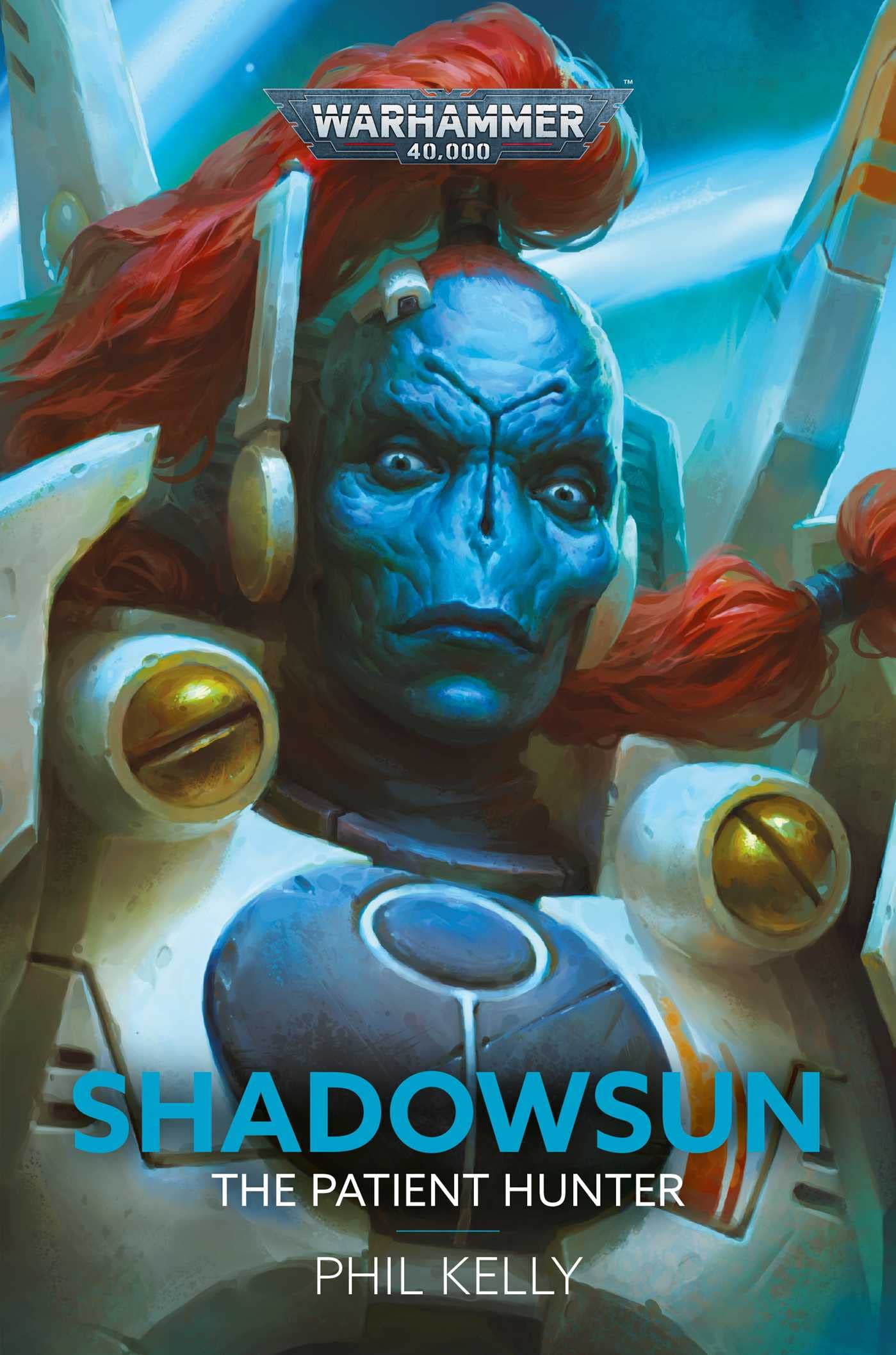
Warhammer 40,000: Shadowsun: The Patient Hunter by Phil Kelly

Warhammer 40,000 - Shadowsun Cover

Publisher: Black Library (Audiobook – 1 April 2023)

Series: Warhammer 40,000

Length: 8 hours and 13 minutes

My Rating: 4.25 out of 5 stars

Amazon

Veteran Warhammer 40,000 author Phil Kelly once again dives into his favourite topic, the T’au, with this new fast-paced and intense novel focused on the intriguing figure of Commander Shadowsun, Shadowsun: The Patient Hunter.

I have been having a lot of fun with Warhammer 40,000 novels this year, and I have already had the opportunity to read some major classics.  Many of these appeared in my recent Favourite Warhammer 40,000 novels list, and I have been keen to read more Warhammer fiction as a result.  As such, I decided to dive into one of the more recent Warhammer 40,000 novels, Shadowsun: The Patient Hunter, an excellent novel focusing on the intriguing T’au faction.  Shadowsun is the latest Warhammer 40,000 novel from Phil Kelly, who is probably best known for his work as a background writer on the various codexes and campaign books released as part of the Warhammer 40,000 tabletop game.  However, Kelly has also produced several Warhammer 40,000 novels over his career, with a particular focus on the T’au, having written several of the more prominent novels for the alien faction, including his Farsight novels and Blades of Damocles.  This latest book sees Kelly once again focus on Commander Shadowsun as she leads the latest T’au expansion, only to encounter more horrors than she ever expected.

Commander Shas’O Shaserra, better known to her foes as Shadowsun, has long led the forces of the T’au into war against all manner of foes.  A former contemporary of the legendary Commander Farsight, Shadowsun has since earned her own substantial reputation across various theatres.  Her latest action sees her leading the T’au Empire’s Fifth Sphere Expansion on the other side of the Startide Nexus, capturing many former Imperial worlds and bringing them under the sphere of the T’au’s influence.

A calculating tactician and a master of the philosophy of war that emulates the Patient Hunter, Shadowsun has known only success during this new phase of expansion.  But the surprise appearance of a massive fleet of decaying and indestructible warships soon throws all her plans into turmoil as she faces an enemy unlike anything T’au have dealt with before, the Chaos Space Marines of the Death Guard.

Ancient and deadly warriors sworn to the Chaos God of disease and decay, Nurgle, the Death Guard are a force unlike any other in the galaxy.  Employing deadly diseases, unstoppable daemons and other deranged horrors that defy all laws of physics and sanity, the Death Guard effortlessly brush through the T’au resistance.  Unable to counter their terrible tactics, Shadowsun desperately looks for a way to strike back against the Death Guard.  But with her own body consumed with disease and rivals within the T’au seeking their own sinister objectives, can even the great Commander Shadowsun succeed against these relentless opponents?

This was a pretty fun and intense Warhammer 40,000 novel from Phil Kelly, who had a great time really showing off two very different factions from the game.  Shadowsun: The Patient Hunter was a very interesting and action-packed read that will really appeal to fans of the Warhammer 40,000 franchise.

The plot of Shadowsun follows the character of Commander Shadowsun in her most lethal adventure yet.  This is a very brutal and quick-paced narrative that wastes no time diving into the action and intrigue to grab the readers full attention.  Starting with a good introduction to the character of Shadowsun and the complex politics of the T’au, the reader is soon introduced to the gruesome threat of the Death Guard, who soon make a major impact on the plot.  This takes the form of an extended and very over-the-top battle sequence on a T’au controlled human planet which Shadowsun was visiting, and she soon must contend with the full threat of the Death Guard.  Kelly really does not hold back at this part of the book, producing a brilliant and very lengthy connected sequence in which Shadowsun encounters the full, fly-infested horrors of Nurgle, as the Death Guard unleash their terrible might.  These scenes are pretty damn intense, at times bordering on pure horror, as the characters encounter diseases, decay, daemons and plague zombies, each of which test Shadowsun and her forces in very different ways.  This major sequence takes a substantial chunk of the book, and it really served to grab the reader’s attention early on with very high plot stakes.

The second half of the book deals with the fallout of this conflict, as an infected and weakened Shadowsun finds all her strategies and plans in ruin, and must find a new way to strike back, despite being hamstrung by internal T’au politics, a growing conflict between the T’au and their alien levies, and a sinister conspiracy from her superiors.  The resolution to this is a desperate boarding action against the Death Guard flagship, with Shadowsun leading a small force on a deadly suicide mission.  While not as extensive as the previous major confrontation, this final third of the book is extremely good, as Kelly envisions another complex battle that pits T’au tech against ancient, unclean horrors.  This sequence gets a little crazy in places, especially as Kelly brings in a couple of unique aliens as backup for the protagonist, and the Death Guard ship is loaded with horrors.  The big fights that emerge are extremely deadly and well written, and you will be enthralled at the carnage that emerges and the unique encounters that occur.  At the same time, the character of Shadowsun continues to grow as a warrior and a commander, fully trusting in her new squad of aliens, while also beginning to understand there is far more going on in the universe than her superiors have let her know.  Everything comes together extremely well, with a fun conclusion that is very satisfying for readers and leaves quite a few questions open that I am sure Kelly will try to answer in the future.  I liked the more metaphysical examination of the T’au towards the end of the book, and it gave the story a really unique conclusion that I will definitely remember.

I felt that Shadowsun was an overall pretty good Warhammer 40,000 novel as Kelly produced an excellent and highly exciting narrative that makes full use of the book’s action, heavy doses of lore intriguing characters.  The various fight sequences are very well written, and the author goes out of his way to try and capture the full horror and considerations of the battlefield, especially when regular soldiers face off against something strange and terrifying.  The two lengthy battles that much of the plot of Shadowsun focuses on are true highlights of the novel, and I love how intense, captivating and devastating the author made them.  Due to Kelly’s obvious passion for the game, this is a very, very detailed novel as the author goes out of his way to highlight the various factions, their motivations, and the state of the Warhammer 40,000 universe at this point in the canon timeline.  Every scene is loaded with some fascinating description of technology, lore, politics or factional history, which is fun in its way, especially for established fans of the games and the surrounding canon.  However, this does mean that Shadowsun might be a bit of a harder book for more casual readers to enjoy, as a certain level of understanding about the T’au is needed to fully appreciate the plot.  As such, I would probably recommend this book to fans of the T’au and dedicated Warhammer 40,000 readers, although newer readers will still be able to have some fun with Shadowsun.

Due to Kelly’s familiarity with the T’au, quite a lot of the book is dedicated to showing them in all their glory, from their advanced technology, their complex society, and their reliance on allied races to help their expansion.  While I am familiar with the T’au, I haven’t read a lot of books from their perspective, having instead only read books where they’re the enemy (Deathwatch: Shadowbreaker by Steve Parker and Kill Team by Gav Thorpe).  As such, I really appreciated this highly detailed and compelling focus on the T’au, and I had a lot of fun exploring their recent history, including their expansion throughout the galaxy.  There are so many great elements to their inclusion in Shadowsun, such as getting to see their awesome advanced weapons in combat, which are so very different from the human technology that most of the other Warhammer 40,000 books feature.  I also appreciated the compelling look at several of the client species that make up the T’au auxiliary forces, such as the Kroot.  Kelly features several intriguing different alien species throughout Shadowsun, making for some unique scenes as a result, and I appreciated the examination of their thoughts about the T’au allies, especially with how it plays into their faith and how they view the rest of the galaxy.

In addition, Kelly layers this book with so many complex bits of T’au day to day life, and you must admire his dedication and attention to detail.  Every conversation or discussion between T’au characters provides you some intriguing insights into their society, and I loved seeing their perfectionist mindsets or their fascinating interactions, such as those meaning-laden hand signals.  There are also some cool examinations of the various castes, their reliance on technology (such as Shadowsun’s two drone companions), and their desire to expand and bring word of the “Greater Good” to the rest of the galaxy.  While there is some definite love for the T’au throughout Shadowsun, Kelly also makes it a point to examine the darker side of their society, including the deadly secrets of the Fourth Sphere Expansion force and the typical manipulation of the Ethereal caste.  Commander Shadowsun, who starts the story off relatively naïve about some of the darker aspects of her race, begins to get an understanding of some of the secrets being kept from her, especially when she encounters some of the forces of Chaos and the secrets of the Warp.  The attempts to shut down any discussion about daemons or what happened to the allied species when they went through the Warp gave some of the T’au focused scenes a darker and more sinister edge, and it will be interesting to see whether Shadowsun continues to blindly follow the Ethereals in the future.  I also liked how Kelly really showcased the inherent arrogance of the T’au, especially when it comes to their opinion of other races in the universe, such as humans from the Imperium.  Their haughty belief that they understand the universe is quite amusing, especially when they come face to face with something completely insane.

To balance out the T’au, Kelly also strongly features the Chaos Space Marines of the Death Guard legion in Shadowsun, who are pretty epic antagonists.  Followers of the Chaos God Nurgle, the Death Guard are dedicated to all things disease, decay and corruption, which results in some pretty horrific mutations for their plague infested bodies.  The Death Guard are always pretty gruesome when featured in fiction, but I felt that Kelly did a particularly fantastic job of capturing them in their fully festering glory.  All the Death Guard encountered in this book are covered in putrefying mutations or growths to some degree, and Kelly really goes out of his way to describe just how unsettling they are.  This includes a compelling look at a Death Guard battle cruiser, whose interior is just covered in growths, mould, various liquids that fill up entire corridors, and loaded with so many other over-the-top elements, which really pop in Kelly’s talented hands.  I also loved how the author tries to capture the Death Guard’s highly positive and benevolent natures, which are reflections of their “kindly” god, Nurgle, and which honestly makes them even more sinister.  He further disturbs the reader by showing the Death Guard unleashing their full horrors on the T’au with, diseases, plague zombies, daemons, dark magic and more used against them, totally devastating them.

Watching the T’au get overwhelmed by these weird and terrifying elements is pretty intense, and the main T’au perspective character, Commander Shadowsun, keeps getting more disturbed by their unpredictable tactics and terrible weaponry.  I loved the compelling comparisons the author makes between the Death Guard and the T’au, and the two are honestly the antithesis of each other in aesthetics, combat styles, and mindset.  This ensures that their conflicts are pretty damn epic and watching the T’au forced to come up with some new tactic while freaking out made for some thrilling reading.  I did think that to make the Death Guard see even more threatening and dangerous, Kelly did slightly nerf the T’au in places, especially during their earlier battles, which fans of the faction probably won’t love, however, the protagonist makes up for that by taking out a Great Unclean One at one point.  Kelly’s decision to feature the Death Guard as the antagonists was an outstanding choice and one that made Shadowsun standout to me even more.

As with most Warhammer 40,000 novels that I have the pleasure of enjoying, I chose to check out Shadowsun on audiobook, which was a fun decision as always.  Coming in at just over eight hours, this was a quick audiobook to power through, especially when you get to some of the more epic battle scenes.  This format served to really enhance some of the best elements of the Shadowsun book, including the cool action and the sheer horror of some of the scenes where the protagonists go up against the forces of Nurgle.  Having someone reading out all the disgusting things this foul horde contains makes the book seem even more terrifying, which I deeply appreciated.  Narrator Helen McAlpine does a very good job bringing this compelling plot to life with her great voice work, and I really appreciated her take on several of the characters and big scenes within Shadowsun.  The voice that she gives to the main character of Commander Shadowsun is highly fitting, and I felt that McAlpine managed to capture her emotions, particularly that of distress of despair, very well throughout this audiobook.  Due to this, and more, I would once again strongly recommend this Warhammer 40,000 audiobook to anyone interested in checking out Shadowsun, as it is easily the best way to enjoy any book from this franchise.

Overall, Shadowsun: The Patient Hunter is an excellent Warhammer 40,000 novel and one that I really had a fun time with.  Phil Kelly did an outstanding job featuring the T’au again and it was great to get a deeper look at one of the more fascinating alien factions in the canon.  Loaded with action, horrifying moments, and some deep lore drops, Shadowsun is an awesome read that fans of Warhammer 40,000 fiction can have a lot of fun with.

Amazon

Throwback Thursday – Warhammer 40,000: Kingsblade by Andy Clark

Kingsblade Cover

Publisher: Black Library (Paperback – 1 February 2017)

Series: Imperial Knights – Book One

Length: 365 pages

My Rating: 4.5 out of 5 stars

Amazon

Welcome back to my Throwback Thursday series, where I republish old reviews, review books I have read before or review older books I have only just had a chance to read.  In my latest Throwback Thursday post I look at an exciting novel about mecha fights in the Warhammer 40,000 universe with Kingsblade by Andy Clark.

I have been having so much fun with the Warhammer 40,000 books recently, especially in my Throwback Thursday columns, as I recently published reviews for Ghostmaker, Xenos, Malleus and Hereticus by Dan Abnett, and Deus Encarmine by James Swallow.  However, the fun is not over yet as I recently read the cool 2017 novel, Kingsblade by Andy Clark, who previously impressed me with his 2022 book, Steel TreadKingsblade, a lucky find I managed to pick up in a secondhand bookshop, was an outstanding read which frankly has one of the best Warhammer covers out there, as well as a great story to match it.

War is a certainty in the far future, and the Imperium of Man is constantly under threat, especially from the fell influence of Chaos.  When a planet falls, the Imperium have many forces that can be deployed to fight the invasion, but few armies are as feared or revered as the legendary Imperial Knights, giant, ancient suits of mechanised armour that support brave pilots of regal, knightly backgrounds.

When the Imperial world of Donatos falls to heresy thanks to the disruptive influence of the Word Bearers Chaos Space Marines, the Knights of the nearby planet of Adrastapol heed the call.  Leading five noble houses of Imperial Knights, as well as substantial forces from the Astra Militarum, High King Tolwyn Draconis hopes to swiftly end the insurrection and save Donatos’s soul.  However, when a great betrayal rips the very heart out of the king’s host and the flower of Adrastapol’s Knights falls, all hope looks lost.

As the battered remnants of the Imperial Knights attempt to recover, it soon becomes clear that the fate of both Donatos and Adrastapol will lie with two unblooded Knights Errant, Danial Tan Draconis and Luk Tan Chimaeros, both of whom are reeling from the actions of their parents.  On the run, outnumbered and unsure who to trust, Danial, Luk and their comrades need to find a way to strike back against the enemy especially as the World Bearers begin a massive unholy ritual, one that threatens everything.  But can these two young Knights defeat the enemy and redeem their world, or do the betrayals of their family and former comrades run too deep?

Kingsblade was an epic and incredible Warhammer 40,000 read by Clark that I had a ton of fun with.  Featuring a mecha-laden novel that contained awesome action sequence after awesome action sequence, this was a great addition to the wider Warhammer 40,000 canon and a must read for all fans of the franchise.

I had an amazing time getting through Kingsblade’s great story, especially as Clark clearly has a lot of fun fitting in as much action and mayhem as possible.  Starting with the classic Warhammer 40,000 war story, with the brave Imperial defenders arriving to save the world of Donatos, the narrative primarily focuses on several of the Imperial Knights who arrive, especially the young bloods Danial and Luk, who are thrust into the fires of war.  The first half of the book features the typical early battles and set-up you would expect, and Clark lays down some clever hints of what is to come.  Things of course take a turn for the worse after a massive betrayal, and the protagonists soon find themselves on the run, unsure of who to trust.  The major battle that follows this betrayal is pretty damn epic, especially as there is a real sense of desperation and confusion surrounding the characters, and the chaotic fallout of this pushes the protagonists in some intriguing new directions.  The second half of the novel sees the traumatised characters attempting to fight back whilst on the run, while also dealing with the many personal issues that have arisen.  Clark does a good job of blending the enjoyable action sequences with some intense character moments during this second half, and the powerful tale of camaraderie and honour that follows is one any Warhammer fan can get behind.  Everything leads up to the big, brutal and extended final battle sequence, as the characters find themselves wrapped up in a multi-sided fight to the death.  The action flies thick and fast during this last major confrontation, and the reader finds themselves on the edge of their seat the entire time, especially as there are some lethal fights and major risks to everyone involved.  The entire story comes together in a fantastic and enjoyable way, which also remains open for the sequel, and I absolutely powered through Kingsblade, especially in that epic second half.

I think that Clark presented this exciting and powerful story in a great way, and I honestly found myself pretty hooked the entire way through.  The faster pace of the story and the constant fun action sequences are very enticing, and I felt that Clark was able to balance this well with some universe building and clever character work to create an exceptional read.  The compelling range of different character perspectives is extremely effective, and I liked seeing the variety of insights and motivations that the various characters had, especially as that gives you some very deep and compelling insights into the mindset of the Imperial Knight characters.  I also liked the additional perspectives from some of the main antagonists, especially as it allowed Clark to highlight the various plots and subterfuges that the protagonists are about to walk into and attempt to disrupt.  However, the true highlight of Kingsblade is the battle sequences, especially when it comes to the Imperial Knights.  I already knew that Clark had some great ability when it came to showcasing vehicle on vehicle combat, but Kingsblade dials that up even further by showing the Imperial Knight mecha suits in action.  The action is always fast and ferocious, and you really appreciate just how crazy and brutal the fights involving the Knights are, especially as they face a range of deadly opponents.  The complex duels between rival Knight suits are particularly impressive, and you get the full sense of their intense fights thanks to Clark’s writing style, and every thrust, blast and explosion is recorded in epic detail.  I deeply appreciated how Clark wrote this epic story, and you are guaranteed to have an exciting and fun time as you get through this amazing book.

Kingsblade also proved to be a very fun addition to the wider Warhammer canon, as Clark dove into one of the more intriguing human sub-factions, the Imperial Knights.  I have always loved the Imperial Knights in Warhammer fiction, and I read a particularly good book about them last year (Assassinorum: Kingmaker by Robert Rath), that showed one of their feudal planets.  As such, I was very excited to see more of them in another book and Kingsblade delivered that in spades.  Not only does Clark perfectly showcase the over-the-top power of the Imperial Knights in combat (so much epic mecha combat), but there is an intriguing dive into the history and society surrounding this faction.  The blend of advanced technology and historical knightly values is particularly fun, and you really get a sense of what the knights believe and how they fight as the book continues.  This intriguing and compelling focus on Imperial Knight lore is expertly featured throughout the plot and I loved seeing the ritual, pomp and knightly codes helping to drive the protagonists forward.  I also thought Clark did a good job of introducing some of the general concepts and elements of the wider Warhammer 40,000 universe into this book, and you get a good sense of what is happening and the history surrounding the franchise.  Due to this, and the fact that the history of the Imperial Knights is explored strongly throughout the plot, I felt that Kingsblade would make a pretty good introductory novel to the Warhammer 40,000 universe, especially as it showcases just how fun and over-the-top the franchise can be.  I look forward to seeing how Clark expands upon this Imperial Knight lore in future books, especially if he balances it with some more awesome mecha-on-mecha combat.

The most moving and compelling parts of Kingsblade were the excellent characters that Clark introduced and featured throughout the narrative.  While there are a ton of brilliant figures utilised in the plot, most of the focus was on the younger characters of Danial Tan Draconis and Luk Tan Chimaeros, two rookie knights and best friends in their first war.  Clark does a wonderful job of setting both these characters up early in the plot, and the two friends have very different personalities, with Danial being a cautious and seemingly unready knight, while Luk is impatient and headstrong.  However, both characters are pushed to their absolute limit after the pivotal early events of Kingsblade’s narrative which result in Danial becoming king, while Luk is considered to be a heretical traitor.  This results in some outstanding character-driven plot, as Danial attempts to find his inner courage and sense of duty, while Luk is forced to redeem himself and his name after those he trusted the most turned on him.  Clark ensures both character arcs are pretty damn powerful, and they are woven into the large plot extremely well, ensuring that victory is only obtained after these figures finally get their acts together.  I really liked the wonderful and moving narrative that was wrapped around Danial and Luk, and it will be interesting to see how that alters further in the series.  The rest of the characters in Kingsblade are also really cool, and I particularly enjoyed seeing events through several of the Chaos character’s perspective, especially once separate factions emerge and go to war.  An overall epic group of characters that are seamlessly fitted into the wider tale.

Andy Clark continues to impress me with his outstanding Warhammer fiction work as his 2017 release, Kingsblade, proved to be another smash hit.  Perfectly blending intense action with cool universe elements and complex characters, Kingsblade was pure fun from start to finish and a real pleasure to read.  I had an epic time getting through this book and I cannot recommend it enough for all fans of the Warhammer 40,000 universe.  I will have to try and get a copy of the intriguing sequel, Knightsblade, and I cannot wait to see how Clark continues this compelling and powerful narrative.

Amazon

Throwback Thursday – Warhammer 40,000: Blood Angels: Deus Encarmine by James Swallow

Deus Encarmine

Publisher: Black Library (Paperback – 1 December 2004)

Series: Blood Angels – Book One

Length: 252 pages

My Rating: 4.5 out of 5 stars

Amazon

Welcome back to my Throwback Thursday series, where I republish old reviews, review books I have read before or review older books I have only just had a chance to read.  This is actually my second Throwback Thursday post today as I also put up a review for the Warhammer 40,000 novel Xenos by Dan Abnett.  However, I have been in an extreme Warhammer mood lately so I figured I would do a double feature and review the other Warhammer 40,000 book I finished this week, the first entry in James Swallow’s Blood Angels series, Deus Encarmine.

One of the main things that really draws me into the Warhammer extended universe is that it contains works from a ton of awesome authors who have experience across the writing spectrum.  For example, James Swallow is a highly regarded thriller author who also contributed his talents to several extended universes, including the elaborate Warhammer universe.  While many readers may be familiar with his entries in the Horus Heresy sub-series, Swallow’s other major contribution to the Warhammer canon is the Blood Angels books, which provide dark adventures for one of the most iconic Space Marines chapters, the Blood Angels.  I managed to grab the first two books in this series from a second hand shop a few months ago and I just finished off the first entry, Deus Encarmine, this week.  It proved to be a fantastic and dark read that showcases the Blood Angels in a whole new light.

Out of all the Space Marines chapters who faithfully defend the Imperium of Man, few are as revered, respected or feared as the legendary Blood Angels.  The genetic descendants of the angelic primarch Sanguinius, the Blood Angels are proud warriors whose martial prowess and resolve are known across the galaxy.  However, their strength comes at a great cost, as the traumatic death of Sanguinius millennia before during the Horus Heresy still lingers in their shared genes and has the potential to drive even the best of them mad.

As the Imperium once again finds itself invaded by the forces of Chaos, one of the Blood Angels’ greatest tests is about to begin on the planet of Cybele.  A grave world dedicated to the memory of fallen Imperial warriors, Cybele is brutally invaded by Chaos Space Marines of the traitor Word Bearers legion, who overwhelm the Blood Angels honour guard stationed there and a relief force from the Blood Angels battle barge Bellus.  Only an ambitious plan by a young Battle-Brother, Arkio, turns the tide against the forces of Chaos, a victory that is considered by many to be a miracle.

As the Blood Angels follow the Word Bearers back to their base of operations, the conquered planet of Shenlong, more miracles seem to surround Arkio, leading his fellow Space Marines to believe that he is the blessed reincarnation of Sanguinius himself.  The only Blood Angel who doubts is Arkio’s older brother, Rafen, who notices strange changes in his sibling that his fellows are too blinded to see.  Only Rafen can discover whether Arkio’s gifts are a Chaos plot or the divine will of Sannguinius, but will he find out the truth before humanity’s greatest protectors are torn apart from within?

This was an excellent and captivating Warhammer novel from Swallow that tells a bleak and compelling story of faith, betrayal and family.  Making full use of the grim Warhammer 40,000 universe and the focus on the iconic Blood Angels, Deus Encarmine set up this first part of this series perfectly and you come away from this book extremely satisfied.

I really enjoyed the complex and dark story that Swallow featured in Deus Encarmine, especially as there are multiple layers to the narrative that drag you in with clever twists and turns.  Starting quickly and effectively with an extended and bloody war sequence, you really get a sense of the Blood Angels’ determination and resolve, as well as some of the deeper elements that impact them.  However, the real story doesn’t begin until after the massive battle at the start, as the characters are drawn into a deadly plot based around the Blood Angels’ history and beliefs.  Thanks to the efforts of a manipulative Inquisitor, as well as their own arrogance and faith, the Blood Angels are led to believe that the young Battle-Brother Arkio is the reincarnation of their founder, and they decide to follow him on a doomed quest to a Chaos controlled planet.  The build up to the invasion is amazing, especially as you get to see the various enemy moves to confuse the Blood Angels, as well as the failed attempts by the protagonists to discover what exactly is going on with Arkio.  Everything comes to a head when they reach their target, and the massive and brutal battle that follows reveals some dark truths about the despicable plans to destroy the Blood Angels.

I really got drawn into this awesome and compelling narrative and I loved the many impressive layers that Swallow added to it.  While many readers will be drawn in by the detailed and bloody war sequences, the real joy is in the intense manipulations and deceits that the villains unleash as the protagonists find themselves confronted by their own beliefs in dark times.  Swallow makes perfect use of the grim setting and the interesting history of the Blood Angels to turn this into an intense read, and you really get drawn in as you attempt to discover the truth behind Arkio and the enemy plan.  The author features various character perspectives to really showcase the differing views of the Blood Angels, as wells as the moves of the antagonists, and I loved how everything unfolded.  Readers come away from Deus Encarmine very satisfied, although the bleak cliff-hanger ending makes you instantly want to get out and grab the sequel.  I also felt that this was a pretty good entry novel for those readers looking to get into Warhammer fiction, as Swallow expertly introduces key elements of the wider universe and showcasing just home grim and deadly the war between Chaos and humanity can be.

Unsurprisingly, this first book in the Blood Angels series spends quite a bit of time focused on the titular chapter of Space Marines, the Blood Angels, who proved to be as awesome as always.  The Blood Angels are one of the most iconic and beloved factions in the entire Warhammer universe.  While all Space Marines are compelling and contain great potential for exciting stories (see my reviews for Deathwatch: Shadowbreaker by Steven Parker and Space Wolf by William King), the Blood Angels are particularly complex and striking figures.  Deadly and honourable warriors, the Blood Angels have a religious obsession with blood which borders on the vampiric, as well as major psychic daddy issues from their dead progenitor that can potentially drive them mad.  All this has tugged at the imagination of generations of Warhammer fans and Swallow uses that to full effect in Deus Encarmine.  Not only do you see these deadly warriors in multiple battle sequences, but Swallow dives into the history, culture and spirit of the chapter, including all the factors that helped turn them into such efficient and unstoppable killers.  All the key aspects of the Blood Angels experience are artfully captured and utilised throughout Deus Encarmine and fans of this chapter will be particularly excited, especially as Swallow adds in a ton of references and homages to various parts of the lore and previous fictional releases (I spotted a couple from Bloodquest).  I particularly loved that Swallow featured a Death Company in one of the battles, which was so damn cool as you got to see Blood Angels inflicted with the Black Rage tear apart their enemies one last time.  I also really appreciated how Swallow utilised the past and trauma of the Chapter as a key story point, and their faith and dedication to their primarch is used against them by their enemy.  All these elements, and more, make Deus Encarmine a must-read for all Space Marines fans, especially those who love to field/read about the Blood Angels, and Swallow had a wonderful time showcasing this faction.

I had a great time with the characters featured in Deus Encarmine and Swallow perfectly set them up and then inserted them into the complex tale.  Nearly all the major characters are members of the Blood Angels, and they share a joint history of suffering and bloodshed that binds them together.  While their training and history ensures some similarities, Swallow ensures that the central cast had some key differences and personalities.  The main character of Rafen was particularly compelling, and Swallow puts an interesting history around him.  His constant battle between the needs of his chapter and his loyalty to his brother is a major part of the book’s drama, and it is hard not to feel for him when he is the only one able to see that something is going terribly wrong.  The character of Arkio was also a fantastic addition to the cast, and I loved his gradual change throughout Deus Encarmine from a humble warrior to a dangerous religious figure.  Other characters, including the arrogant Sanguinary Priest Sachiel, the grizzled and suspicious veteran Koris, and even the entertaining Word Bearers characters who acted in counterpart to the protagonists, were all well written and I loved the elaborate narrative threads that Swallow wove around them.  However, my favourite character in Deus Encarmine was probably Inquisitor Stele.  Initially shown as an effective, if arrogant, ally, it is slowly revealed that Stele is a manipulative and callous being who is leading the Blood Angels towards a darker objective.  Watching him carefully and effectively divide and control the various Blood Angels characters was really awesome and I loved watching his dark scheme unfold.  I deeply enjoyed how Swallow utilised his characters in Deus Encarmine, and it will be intriguing to see who survives the deadly events of the next book.

Overall, I felt that Deus Encarmine was a pretty epic read and a powerful addition to the Warhammer canon.  James Swallow has written an excellent and captivating read here that perfectly blended intrigue, betrayal and an intense war story with the complex history and culture of the iconic Blood Angels Space Marines chapter.  An intense and addictive read, I absolutely loved this first Blood Angels and I plan to check out the sequel, Deus Sanguinius next, especially as I want to see how Swallow ends this fantastic duology.

Blood Angels Cover

Amazon

Throwback Thursday – Warhammer 40,000: Storm of Iron by Graham McNeill

Storm of Iron Cover 2

Publisher: Black Library (Audiobook – July 2002)

Series: Warhammer 40,000

Length: 11 hours and 3 minutes

My Rating: 4.5 out of 5 stars

Amazon

Welcome back to my Throwback Thursday series, where I republish old reviews, review books I have read before or review older books I have only just had a chance to read.  For this latest Throwback Thursday, I dive into some old-school Warhammer 40,000 fiction with the exceptional Storm of Iron by one of the most prolific Warhammer authors, Graham McNeill.

Readers of this blog will know that I have been really getting back into Warhammer fiction in the last few years, and I have had an outstanding time reading all the exciting and captivating reads the franchise’s extended universe contains.  I have been particularly impressed by the sheer number of talented authors who contribute to this extended universe, and I already have a few favourites due to how epic and complex their novels have turned out to be.  However, one of the main contributors to the current Warhammer canon I had not really explored yet is the superbly talented Graham McNeill.  McNeill has been writing Warhammer fiction for 20 years now, and he has produced multiple books for both the Warhammer 40,000 and Warhammer Fantasy sub-franchises.  Best known for The Ambassador Chronicles, Legend of Sigma, Ultramarines and Forges of Mars series, as well as his entries in the massive Horus Heresy series, McNeill has produced some outstanding sounding books throughout his career (including several books I really want to read) and had an incalculable impact on Warhammer fiction universe.  I however, have not had too much experience with his works, although I do have several of his novels sitting on my shelf.  I am hoping to read more of his stuff in the future, but I ended up starting with one of his earlier books, the standalone Warhammer 40,000 novel, Storm of Iron.

The Adeptus Mechanicus Forge World of Hydra Cordatus is a barren and desolate place, garrisoned by Imperial Guard of the 383rd Jouran Dragoons and members of Adeptus Mechanicus, who rule from one of the mightiest and seemingly impregnable fortresses in the galaxy.  No-one ever expected that the many wars that plague the universe would ever come to a planet as seemingly inhospitable as Hydra Cordatus, but hell has descended upon the planet in the form of Chaos Space Marines from the feared Iron Warriors legion.

Under the leadership of the dread Warsmith Barban Falk, the Iron Warriors have arrived on Hydra Cordatus in substantial numbers, determined to destroy all the Imperial defenders and take the planet’s main citadel.  After a blistering landing upon the surface of the planet that cuts off all hope of relief, the Iron Warriors deploy their full force of warriors, slaves, labourers and even several corrupt Titans to assault the enemy.  But they have not chosen an easy target, as the citadel of Hydra Cordatus is no ordinary fortress.  It is an ancient and mysterious stronghold, whose walls are designed to stymy any attack, and few foes would have a chance of defeating its defences.

However, the Iron Warriors have long been considered the greatest siege warfare specialists in all the universe.  Having honed their bloody craft for millennia since their betrayal of the Emperor, the corrupt Iron Warriors soon embark on an ambitious and fast campaign that soon threatens to completely destroy the Imperial forces.  Only the arrival of members of the Iron Warrior’s greatest enemies, the Space Marines of the Imperial Fists, gives any hope to the defenders.  But can even the legendary Imperial Fists stand against the ancient fury of the Iron Warriors?  And what secrets truly lay hidden in the depths of Hydra Cordatus’s citadel?

Well, this was a pretty damn awesome Warhammer book.  McNeill did a remarkable job with Storm of Iron, producing an intense and action-packed novel that might be one of the best siege novels I have ever had the pleasure of reading.  Loaded with impressive battle-sequence after impressive battle-sequence, as well as a ton of intriguing and fun characters, Storm of Iron was an outstanding read, and I had so much fun getting through it.

I will admit that one of the things that really drew me to Storm of Iron is that it showcases a massive siege in the gothic future of the Warhammer 40,000 universe.  I have always deeply enjoyed books with sieges in them, and the Warhammer universe is naturally filled with some good examples of this, although these mostly occurred in the fantasy focussed books.  As such, I was quite intrigued to see how a science fiction siege would occur, and McNeill really did not disappoint, painting a powerful and captivating picture and using the Iron Warriors and Imperial Fists, both of whom are known for their siege craft, as central figures in the narrative.

McNeill starts Storm of Iron off with a bang, showing the Iron Warrior’s initial move as they launch a lightning-fast raid and landing upon Hydra Cordatus in the opening chapters.  From there, the siege of the citadel starts in earnest as the Iron Warriors deploy their entire army towards it.  Told from multiple character perspectives of both the attackers and defenders, you swiftly get to know all the key players of the book and see their various personal and military struggles as the siege unfolds.  The author sets everything up perfectly, and you are soon engrossed in the novel-spanning siege, which McNeill explores in intricate detail, examining the various moves and countermoves that the two sides are doing.  You get some awesome scenes throughout Storm of Iron, and it really has everything you could want from a siege book, including artillery barrages, trench warfare, sapping, sallies, reinforcements, counterattacks and desperate fighting in breaches.  The entire story moves pretty quickly, and there are barely any pauses in between battle scenes.  Any delays that do occur serve an essential part of the plot, showing the various personal issues impacting the participants, introducing new characters, or exploring some of the hidden intrigue going on within the besieged citadel.

The story picks up even further around the middle, with the arrival of the Imperial Fists Space Marines who give the defenders more of a fighting chance.  As such, you are never quite certain how the book is going to unfold, and the battle really could go any way.  I liked how McNeill balanced the book between the Chaos and Imperial characters (or the attackers and defenders), and I deeply enjoyed seeing how each side conducted their war, especially as both had to deal with internal dissension and setbacks.  I think that the narrative had a great blend of cool story elements, and the combination of action, intrigue and character work fit the story very well.  Naturally, the best part of the book is the exceptional battle scenes, and thanks to author’s detailed depictions, it is extremely easy to envision all the intense fight sequences that unfold.  There are some outstanding scenes here, and there is a little bit of everything, included destructive ranged warfare, brutal close combat fights, desperate last stands and even some over-the-top battles between the massive Titans (essentially intense mecha warfare).  This entire story comes together pretty well, and I really liked the fantastic and dark notes that McNeill left it on.  While I wasn’t too shocked by one of the book’s main twists, there honestly wasn’t a moment where I wasn’t entertained by Storm of Iron’s story, and I had such a fantastic time seeing this entire epic siege unfold.  I managed to power through this book extremely quickly, and I had so much fun seeing how this protracted battle unfolded.  As such, this is a must-read for all those who love a good siege book, and I really appreciate the awesome story that McNeill featured here.

I love all the cool Warhammer 40,000 elements that McNeill was able to fit into this awesome book, and fans of the franchise will appreciate his attention to detail and fun depictions of the various factions and their iconic regiments/toys.  While the Imperial Guard, Adeptus Mechanicus and Imperial Fists are all featured here, this book is mainly about the Iron Warriors, and it was fascinating to see them in action.  These traitorous and corrupt siege specialists have a rich history of hatred, and while the author doesn’t go completely into their fall from grace, you get a good idea of why they turned and some of the terrors they have inflicted.  Indeed, all the depictions of the Chaos side are extremely powerful, and you get an impressive view of just how twisted and dangerous they and their dark gods are.  That being said, you get a much more nuanced viewpoint of the Chaos side here than most Warhammer books have, and it was utterly fascinating to see their views on the conflict.  That, combined with some of the secrets that the Adeptus Mechanicus are hiding, continues to reinforce one of the key concepts of the Warhammer 40,000 universe: that there really are no good guys here, just winners and dead people.  Thanks to author’s ability to highlight key universe and faction details, this is one of those Warhammer 40,000 books that could serve as a great introduction to Warhammer fiction, and if a massive and bloody siege doesn’t get your attention and make you interested in this franchise, nothing will.  As such, you don’t need to come into Storm of Iron with too much pre-knowledge of the Warhammer 40,000 universe to enjoy this book, although established fans will naturally get a lot more out of it.  I am personally glad that, of all of McNeill’s books, I chose to start with Storm of Iron, especially as it apparently sets up some of his future Warhammer entries.  In particular, it introduces one of the key antagonists of his Ultramarines series, which has long been on my to-read list, and I look forward to enjoying more of McNeill’s epic Warhammer books in the future.

I also deeply appreciated some of the excellent character work that was featured within Storm of Iron.  Due to how McNeill writes the story, the book features a huge range of different point-of-view characters, broken up between the Iron Warriors and the members of the 383rd Jouran Dragoons who are defending the citadel.  While the quick-paced story and multiple character perspectives cuts down on development a little, you do get to know all the key characters very quickly, and McNeill fits in some absolutely fascinating character arcs that I deeply enjoyed.  Three of the most interesting characters are the Iron Warriors captains who are leading the assault on Hydra Cordatus, Honsou, Forrix and Kroeger.  All three are pretty interesting in their own right, with Honsou the true believer ostracised by his comrades due to his heritage, Forrix the disillusioned veteran, and Kroeger the mad berserker who is slowly going insane serving the Blood God Khorne.  Their personal storylines are all amazing, but the real fun is seeing their interactions, especially as they all hate each other and are vying for their master’s favour.  McNeill spends a lot of time with these three villains, and you really get a sense of whole Iron Warrior’s legion through their disparate viewpoints.  I will say that I didn’t think any of the Imperial characters quite measured up to these Chaos characters, especially as McNeill really worked to make them as compelling as possible.  I did deeply enjoy the character of Guardsman Julius Hawke, a slacker who finds himself alone in the wilds and serves an interesting role in the battle.  I was also quite intrigued by Lieutenant Larana Ultorian, a defiant soldier who is captured by the Chaos forces and slowly driven insane by her forced service to them.  These characters, and more, all help to turn Storm of Iron into a much more complex and powerful read, and I had a great time explore all their unique stories and histories here.

I doubt anyone is going to be too surprised that I made sure to grab the recently released audiobook version, which in my opinion is one of the best ways to enjoy a cool Warhammer book.  The Storm of Iron audiobook was a pretty good example of this, as I quickly got drawn into it, especially as the awesome action sequences became even more epic when they are read out.  With a run time of just over 11 hours, this was a decent length Warhammer audiobook, although I managed to power through it in less than a week, mainly because of how much I got caught up in the story.  I was also pretty impressed by the narration from Michael Geary, who really dove into the various roles contained within Storm of Iron’s story.  Geary clearly had a lot of fun telling this dark tale, and I felt his fast-paced narration really added the intensity and excitement of the story.  I also felt that he did a great job bringing the various characters of Storm of Iron to life, and each of the main figures is given a unique voice or accent to help set them apart.  While I liked all the cool voices he did, Geary’s take on the various Chaos Space Marines was very memorable, especially as he really captures the cruelty, hatred and dark demonic influences that affect them.  An overall excellent Warhammer audiobook, I had such an exceptional time listening to this version of Storm of Iron, and this format comes highly recommended.

Overall, I am extremely happy that I chose to read this fantastic Warhammer 40,000 novel, and it was one of the more interesting older entries in the franchise I have so far read.  The extremely talented Graham McNeill did a wonderful job on Storm of Iron, and I had such an amazing time getting through its elaborate and action-packed narrative.  This book featured such an impressive depiction of a siege in the gothic far future, and readers are in for an intense and captivating time as they see this complex battle between besiegers and defenders unfold.  Clever, compelling, and filled with pulse-pounding fun, Siege of Iron was an excellent book and I look forward to reading more of McNeill’s Warhammer books in the future.

Storm of Iron Cover

Amazon